
S.A. Candidates to Return to Campaign Trail
Students ready for virtual elections
By ALEX HALE Sun News Editor
The Student Assembly had everything set for its spring 2020 elections. Candidates signed petitions, some squared off in a debate and the final stretch was underway for the March 16 election.
And then COVID-19 hit.
Just days before the election, President Martha E. Pollack urged students to return home as Cornell
as campaigns resume after six-month hiatus
announced the semester would continue online, and the S.A. postponed its elections. Now, during another unprecedented semester, S.A. candidates plan to reboot their campaigns.
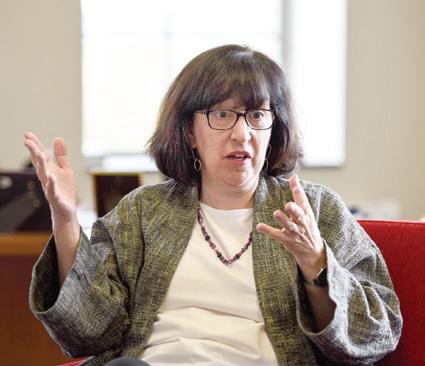
“It would be easier to do an election in the fall rather than in March when we were doing it and we were getting sent home and in the midst of the election,” said Moriah Adeghe ’21, who is currently one of the co-directors of elections and served as S.A. treasurer last year. “COVID is a lot more important
Two-T irds of Cornell Classes Held Online, Despite Hybrid Semester
By
This fall, a dorm isn’t just a bedroom. It’s a dining hall. It’s a library. And for most students, it’s also a classroom.
Cornell made national news in July for pledging to bring all students back to campus for a hybrid semester with in-person and online classes. But as thousands of students settle into their Ithaca residences, many of them aren’t trekking to lecture halls and
seminar rooms for class.
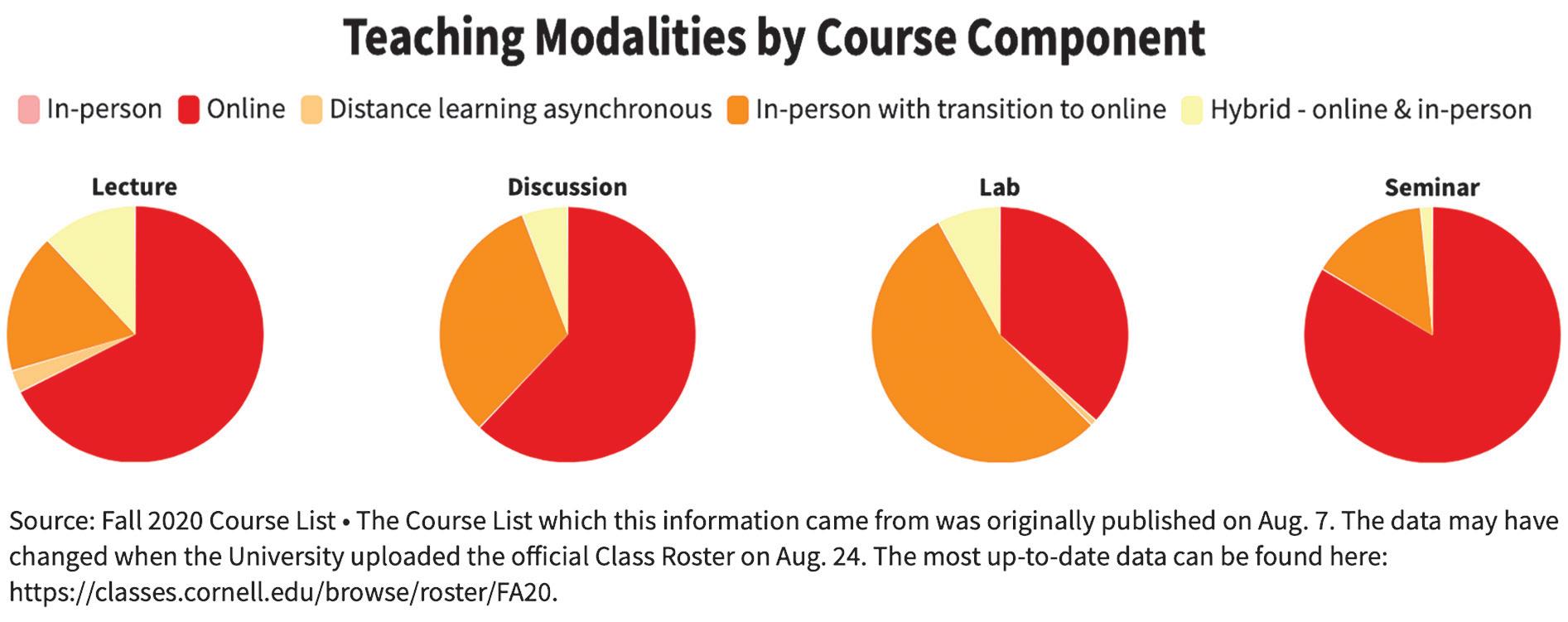
A Sun review of the class roster revealed that about two-thirds of Cornell courses are held fully online this fall. Less than 1 percent of the classes in each undergraduate college are entirely in-person, running on campus for seven weeks and ending before Thanksgiving break.
Cornell has split courses into five teaching modalities: in-person, online, distance learning asynchronous, in-person with transition
See COURSES page 3
than this election.”
To deal with the unforeseen lack of election results, the S.A. passed a resolution in March to allow students who did not graduate to keep their positions until the fall elections. It also added new co-election directors, Adeghe and Savanna Lim ’21.
“[The S.A.] anticipated a very complicated and difficult elections process this semester,” Lim said. “It’s
See ELECTIONS page 2
Testing trials
MICHAEL WENYE
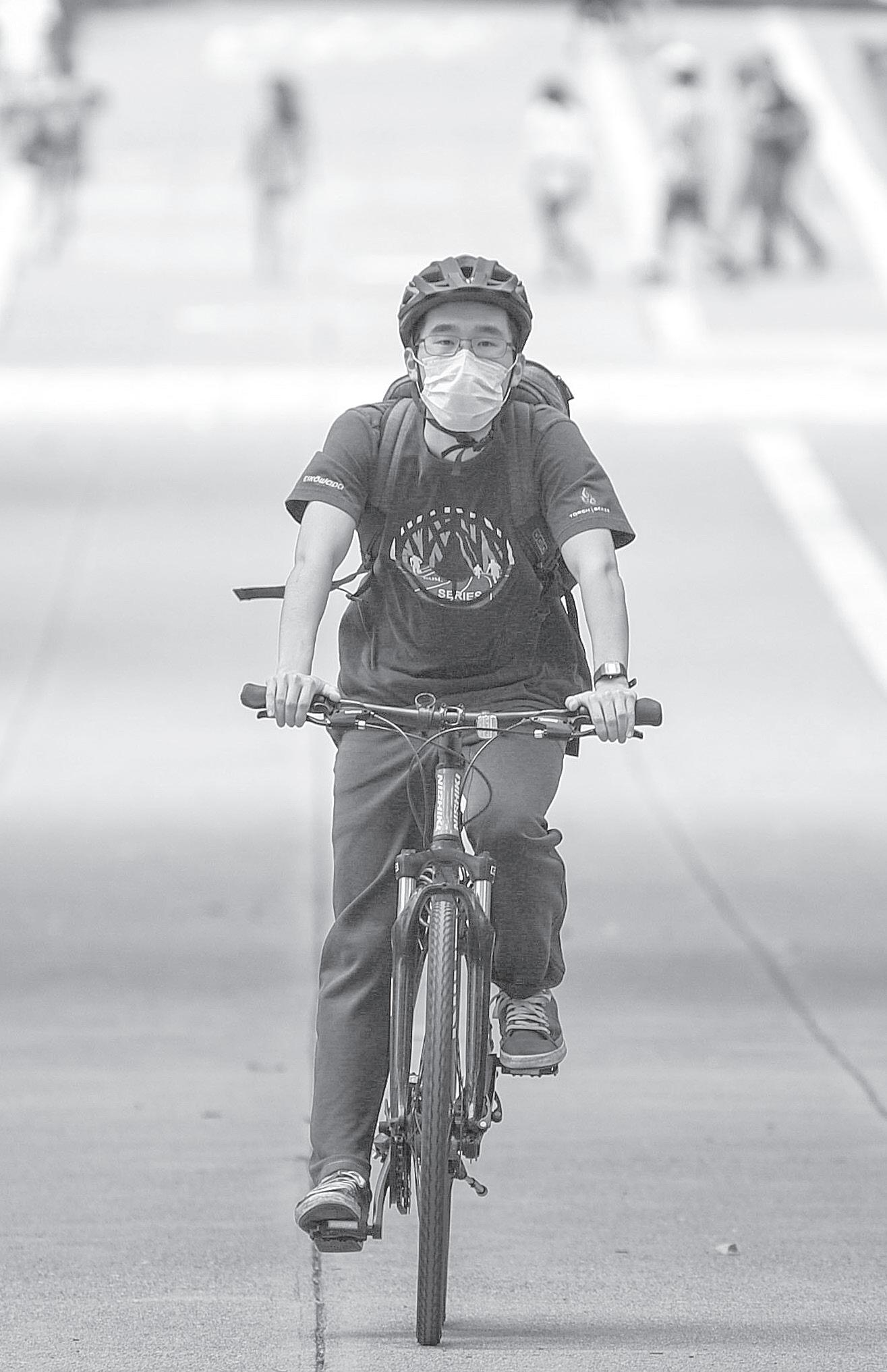
Zooming into class | Cornell is offering only about a third of its courses in person this fall.
MEGHANA SRIVASTAVA / SUN ASSISTANT NEWS EDITOR
MEGHANA SRIVASTAVA and MADELINE ROSENBERG Sun Assistant News Editors
MICHELLE ZHIQING YANG / SUN STAFF PHOTOGRAPHER
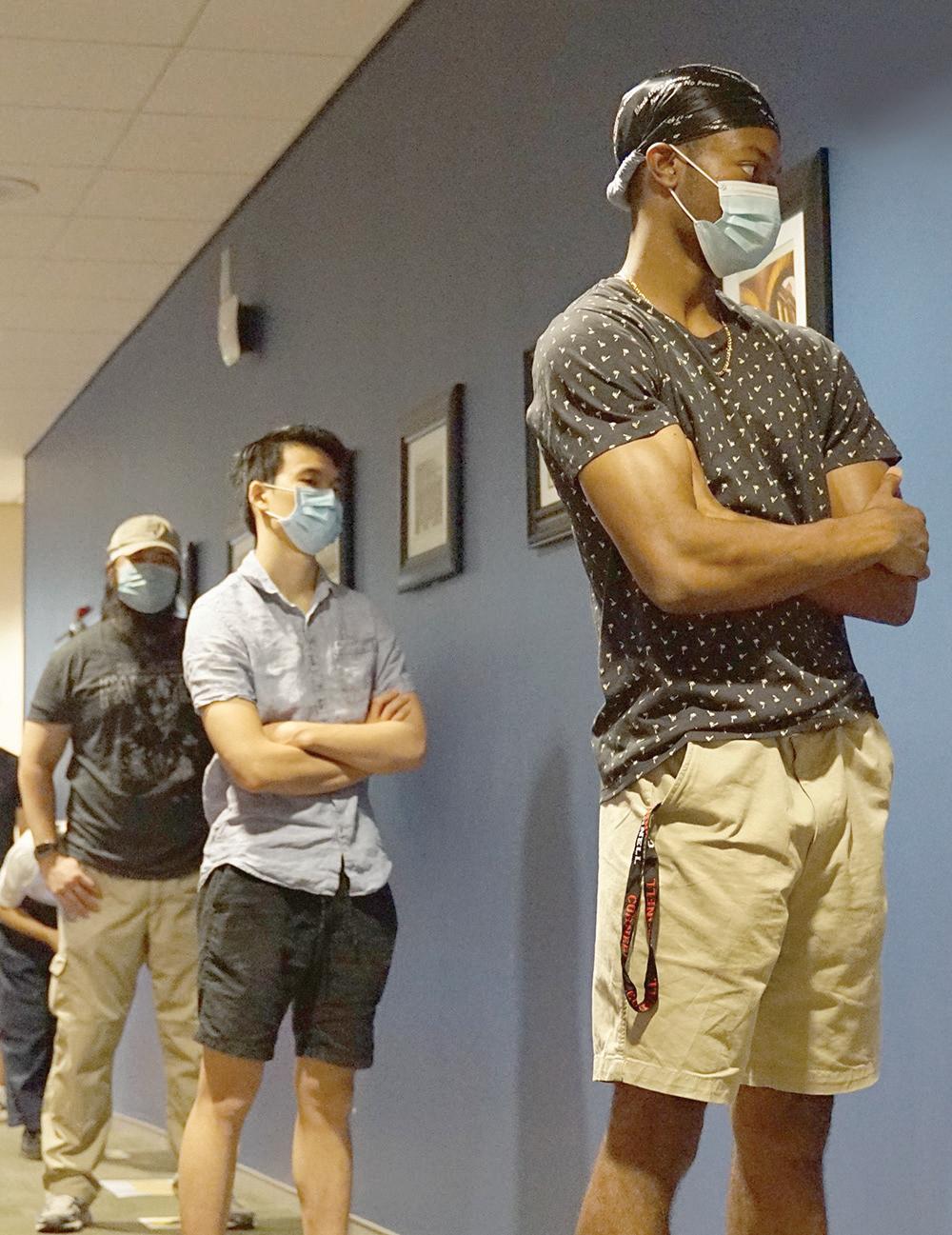
Students line up at Robert Purcell Community Center awaiting coronavirus tests Sept. 3.
The first day of surveillance testing brought long lines and scheduling complications.
Daybook
Tuesday, September 8, 2020
A LISTING OF FREE CAMPUS EVENTS
Converging High-Throughput Phenotyping And Genomics-Enabled Strategies for Accelerated Crop Improvement
11:30 - 12:20 p.m., Virtual Event
Cornell International Fair Noon - 2 p.m., Virtual Event
Sorghum Improvement in West Africa: Joint Learning And Progress in a Center of Crop Domestication 12:40 p.m., Virtual Event
A Just Transition: Centering Economic and Social Justice in the Transition to a Low-Carbon Footprint 3:30 - 4:30 p.m., Virtual Event
Language Resource Center Speaker Series: The Instruction on Heritage Language Learners
4 - 5 p.m., Virtual Event
Introduction to SAS Programming
4 - 6:30 p.m., Virtual Event
Exploring the Small Farm Dream: Is Farming Right for You?
6 - 7:30 p.m., Virtual Event
Cornell Equine Seminar Series: Dental Floating and Tooth Resorption
6 - 7 p.m., Virtual Event
Cornell Is Gorges: Finding a Sense of Place on Campus Noon, Virtual Event
Beyond Single Genes: How Receptor Networks Underpin Plant Immunity 12:40 p.m., Virtual Event
From Sustainable Forest Management to Forest Landscape Restoration: Analysis Of Two Participatory Approaches 12:40 - 1:30 p.m., Virtual Event
Engaged Cornell Learning Coffee Hour 1 - 3 p.m., Virtual Event
The Future of Our Postal Service in an Election Year And Beyond: A Congressional Conversation With Rep. Gerry Connolly 1:30 p.m., Virtual Event
Islamic Libraries From Spain to India 3 - 4:15 p.m., Virtual Event
Single Molecules Come Into Focus: Understanding RNA-Driven Regulation From First Principles 4 - 5 p.m., Virtual Event
Chinese Migrations to Monsoon Asia: The Long Historical View 5:20 - 6:10 p.m., Virtual Event
S.A. Reboots Elections Virtually After Spring Cancellation
a lot more helpful that there’s two of us working on it, as opposed to just one.”
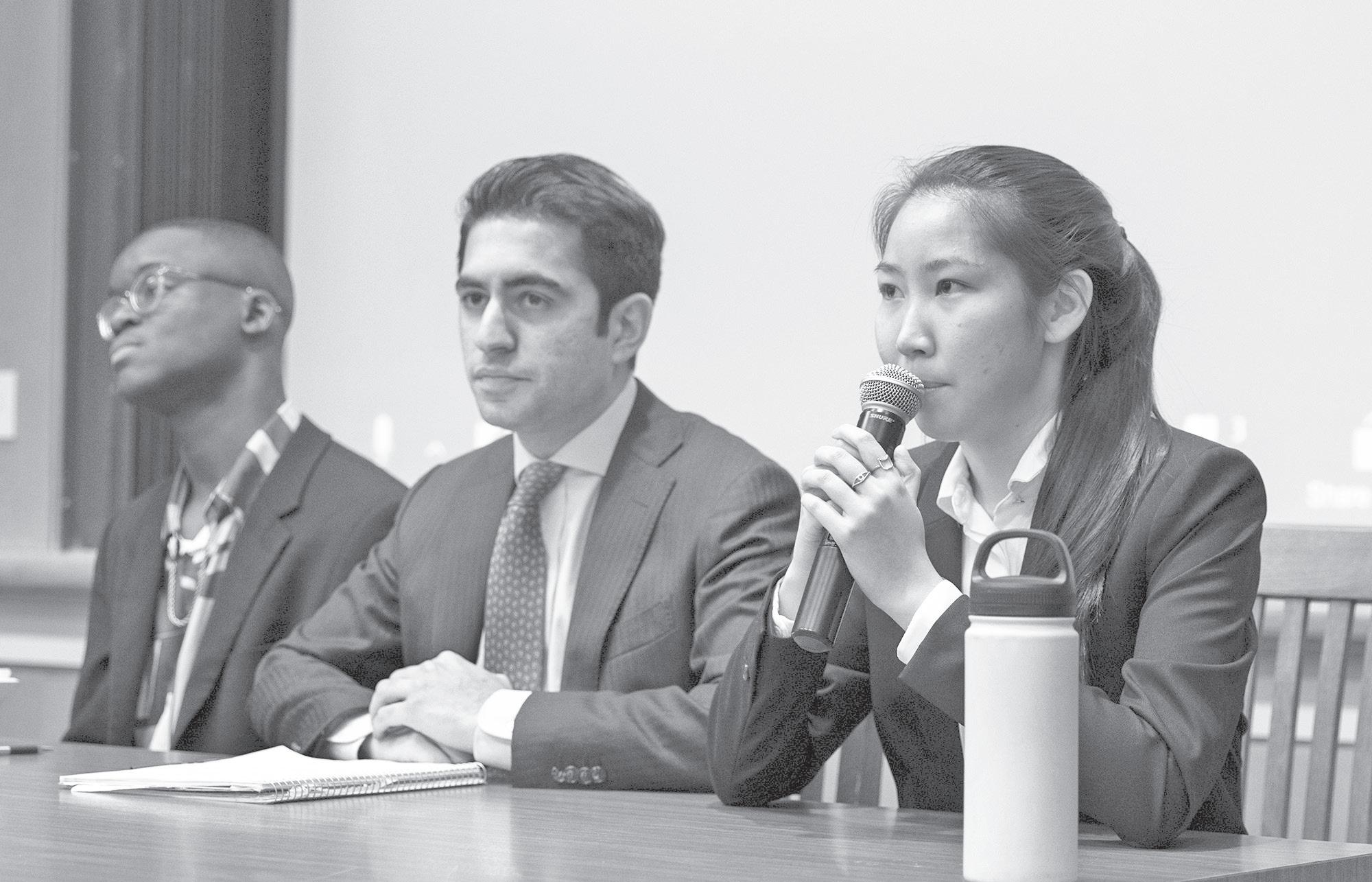
For executive vice president Catherine Huang ’21, the interim period currently makes her the highest-ranking member of the S.A., after Joe Andersen ’20 ended his term as president following graduation.
Now, Huang once again has the opportunity to vie for the body’s top position.
other spring positions — plus those typically scheduled for the fall — will happen virtually from Sept. 29 until Oct. 1.
One difference from last semester will be in how candidates can sell themselves to their fellow Cornellians. The campaigns are required to be completely virtual, a rule that prohibits once traditional campaign activities like quartercarding and chalkings..
Moriah Adeghe ’21
S.A. presidential candidates Huang, Uchenna Chukwukere ’21 and Dillon Anadkat ’21 debated, campaigned and chalked up to the voting days in March. Six months later, voting for president and the
Although the presidential candidates already debated back in March, they will face off again at a candidate forum on Sept. 24 via Zoom, according to the S.A. election calendar.
Positions that students would have voted on in the spring and still have candidates running will be closed to new candidates, but
positions that are now vacant will be open for Cornellians to run for. These include the minority students liaison at-large and the university representative to the Student Assembly.
The newly added students with disabilities representative at-large position will also be on the ballot this semester, as well as the positions that are typically elected in the fall — a transfer representative and four freshmen representatives.
Not all universities decided to cancel their elections during the pandemic. Syracuse University held its elections in April after students were sent home. Brown
University’s Undergraduate Council of Students ran theirs in April as well, but faced problems with voter turnout. Only 37 percent of Brown’s student body voted, down 16 percent from the year before.
The same concern persists six months later at Cornell. Last year, 39.9 percent of students voted, and in 2018 the number was 27 percent.
“I’m definitely worried about voter turnout. The S.A. generally has low voter turnout to begin with,” Adeghe said. “With COVID on top of that, I’m assuming that people have a lot more concerns than S.A. elec-
tions.”
Lim said she hopes the virtual version of elections could spark new interest. The process leading up to the vote will resume Wednesday with a candidate information session.
“Everything’s gonna be online and basically everyone goes to school online and kind of lives online,” Lim said. “I’m also hopeful that the pandemic and everything that’s happened from the spring until now, might spur some new interest or some really great candidates for the election.”
COVID Dashboard Fails to Report for Days
As University changes risk status to ‘yellow’ level after less than
a week of classes,
tightening restrictions on gatherings, Cornell’s online case tracking page goes silent
By ANIL OZA Sun Science Editor
Two weeks ago, Cornell set up a COVID-19 dashboard to “keep the community informed of the status of COVID19 testing.” But even as campus cases spike, delays in updating the site have prompted more questions than answers among anxious community members.
Despite a rocky week in which the University’s pandemic alert level was shifted up to “Yellow” following news that an initially 9-person cluster grew to 39 individuals, as of Monday night, the dashboard has not reported test results since Sept. 3.
As a result of the 4-day delay in pub-
“The dashboard is updated each weekday at 6 p.m. There is a two day lag in reporting results.”
VP Joel Malina
licizing test results, it is currently unclear just how close Cornell is to reaching 100 new coronavirus cases in a two-week period — a threshold that, if crossed, would force the University to temporarily suspend in-person classes and enact further restrictions.
The dashboard, which provides the daily number of tests and positive COVID-19 cases from Cornell’s testing centers, does warn that “there may be
a two-day delay between when a test is taken and when the results appear on the dashboard.”
However, it has frequently lagged behind the Tompkins County Health Department in reporting campus cases, and lacks data regarding active cases, recoveries, and differentiation between surveillance tests and other COVID-19 diagnostics. Unlike TCHD’s website, which has logged all results since the start of the pandemic, Cornell’s dashboard also only reports information for the five most recent days.
The delays cannot solely be attributed to the processing time of the test itself. At a Common Council Meeting on Sept. 2, University officials stated that the delay in reporting was the result of the time lost in exchanging data with Cayuga Health System and Tompkins County Health Department.
“The dashboard is updated each weekday at 6 p.m. There is a two day lag in reporting results as the data must be verified by the Tompkins County Health Department,” said Joel Malina, vice president for University Relations, in a later email to The Sun.
Complicating matters, Cornell is utilizing pooled testing for its surveillance program — which is not regulated by the Food and Drug Administration. Because students who test positive under a surveillance test must re-test using the FDAapproved nasopharyngeal swab, it can take days from a preliminary positive test to a confirmed case, and ensuing isolation.
It is currently unclear how the dashboard differentiates between surveillance
tests and traditional diagnostic tests, and how positive surveillance tests are reported as opposed to positive diagnostic tests.
While the current delay in releasing updated case totals is the longest so far, lagged results have dogged the dashboard since its launch.
On Aug. 28, Tompkins County Health Department reported nine new cases of COVID-19 had been confirmed after several small social gatherings. But this cluster of cases was absent from Cornell’s dashboard until Aug. 31, around 6 p.m. — at which point an additional three cases had been identified over the weekend.
On Sept. 1, TCHD reported that 12 individuals who were close contacts of those in the initial cluster had tested
In Email, President Pollack Updates Campus on Cornell’s Anti-Racist Eforts
University
debuts training courses for faculty, students
By KATHRYN STAMM Sun News Editor
In the latest in a long line of emails about anti-racism at Cornell, President Martha E. Pollack announced a number of faculty and staff initiatives and the most recent updates.
The majority of the updates were related to discussions that were held while mapping out the future of Cornell’s anti-racism work. These discussions included a Faculty Senate meeting with students from Do Better Cornell, a conversation with faculty from the American Indian and Indigenous Studies program and a series of July meetings with law enforcement agencies.
Do Better Cornell launched a massive campaign in early June after multiple police killings of Black Americans — including two petitions and sharing resources on social media. After the petitions, activists met with administration, spurring a series of Universitywide efforts.
Pollack explained that the Faculty Senate is already developing three frameworks that were previously announced: the AntiRacism Institute, a required educational program for faculty and a required class for all Cornell
students.
The Senate’s first steps were to meet with student activists about their goals Aug. 26 and to form committees in the coming weeks.
Along with the program for faculty and the class for students, a required training course for all staff will be available later this month.
The course is set to cover issues of equity and cultural competency and will have optional community chats for further engagement. The University hopes to have trained all staff by September 2021.
In staff development, a conversation with BIPOC staff resulted in the creation of three subcommittees to focus on “work-life and wellness needs, the employment life cycle and elevating the voices and successes of staff of color.”
During the conversation with AIIS faculty, Pollack’s leadership team spoke about “a public institutional statement acknowledging our land-grant history, engagement with the indigenous peoples impacted by our land grant and by Cornell’s New York campuses.”
She also wrote that she hopes for a “more overt and robust inclusion” of Native American peoples’ perspectives.
One of the biggest concerns of Do Better Cornell and other student activists is the
presence of Cornell University Police Department on campus. In response, the University has promised to strengthen community involvement in public safety — including a new community response team to act as first responders to reports of noncriminal offenses and nonviolent incidents.
In the update, Pollack wrote that the Public Safety Advisory Committee — whose chief duty is to make recommendations to improve campus security policies — is working to identify new student, staff and faculty members to join. The first meeting will be held in October.
The University’s other action surrounding police reform was a “series of meetings with representatives of regional law enforcement agencies, with a focus on understanding and sharing best practices around law enforcement interactions with communities of color.”
The meetings included members of the Cornell community and CUPD representatives, who talked about hiring practices, accountability protocols, 21st century policing and civil discourse.
Kathryn Stamm can be reached at kstamm@cornellsun.com.
positive for COVID-19. But these cases were not published on the COVID-19 dashboard until days later.
Cornell started its campus wide surveillance testing on Thursday, and despite some students who were tested on Thursday reporting they have not received results the dashboard was last updated with testing statistics
A delay in updating the dashboard also stalls the updating of Cornell’s COVID19 alert level. Currently, the dashboard indicates the campus is still in the second lowest alert level — “Yellow: Low to Moderate Risk.”
Anil Oza can be reached at aoza@cornellsun.com.
Online Classes Make Up Two-Tirds
COURSES
Continued from page 1
to online and hybrid. After online classes, in-person courses that transition online after Thanksgiving break are the most common format.
Classes that only consist of pre-recorded lectures — called distance learning asynchronous — make up less than 2 percent of the roster. Hybrid courses, which require some in-person learning, consist of nearly 9 percent of the classes offered this fall.
Approximately 80 percent of classes in the School of Industrial and Labor Relations are fully online, making it the undergraduate college with the highest percentage of all-online courses. The College of Architecture, Art and Planning has the highest percentage of in-person classes that transition online — a third of them have started in Milstein and Tjaden Hall studios.
Familiar Cornell favorites also look different this semester. The thousands of students taking introductory psychology or oceanography won’t find their professors lecturing from the Bailey Hall stage, but live from
of Fall Roster
their Zoom screens. Students taking Hotel Administraton 4300: Introduction to Wines won’t be sipping along with their professors each week, but will enjoy the course online.
Meanwhile, students are running experiments and recording data inside the Physical Sciences Building and on the engineering quad. More than half of lab classes are held in person until they transition online in December.
Most campus lecture halls sit empty, as over two-thirds of lecture classes across colleges are online only. Cornell is holding over 80 percent of seminars over Zoom, rather than around wooden tables and in cramped classrooms. And for students taking at least one in-person class, they won’t have a classmate beside them to turn to for help. Students wear masks and sit several chairs apart in lecture halls that were once packed, while their peers Zoom in from miles away. Even in a hybrid semester, students are often much farther than just six feet apart.
Meghana Srivastava can be reached at msrivastava@cornellsun.com.
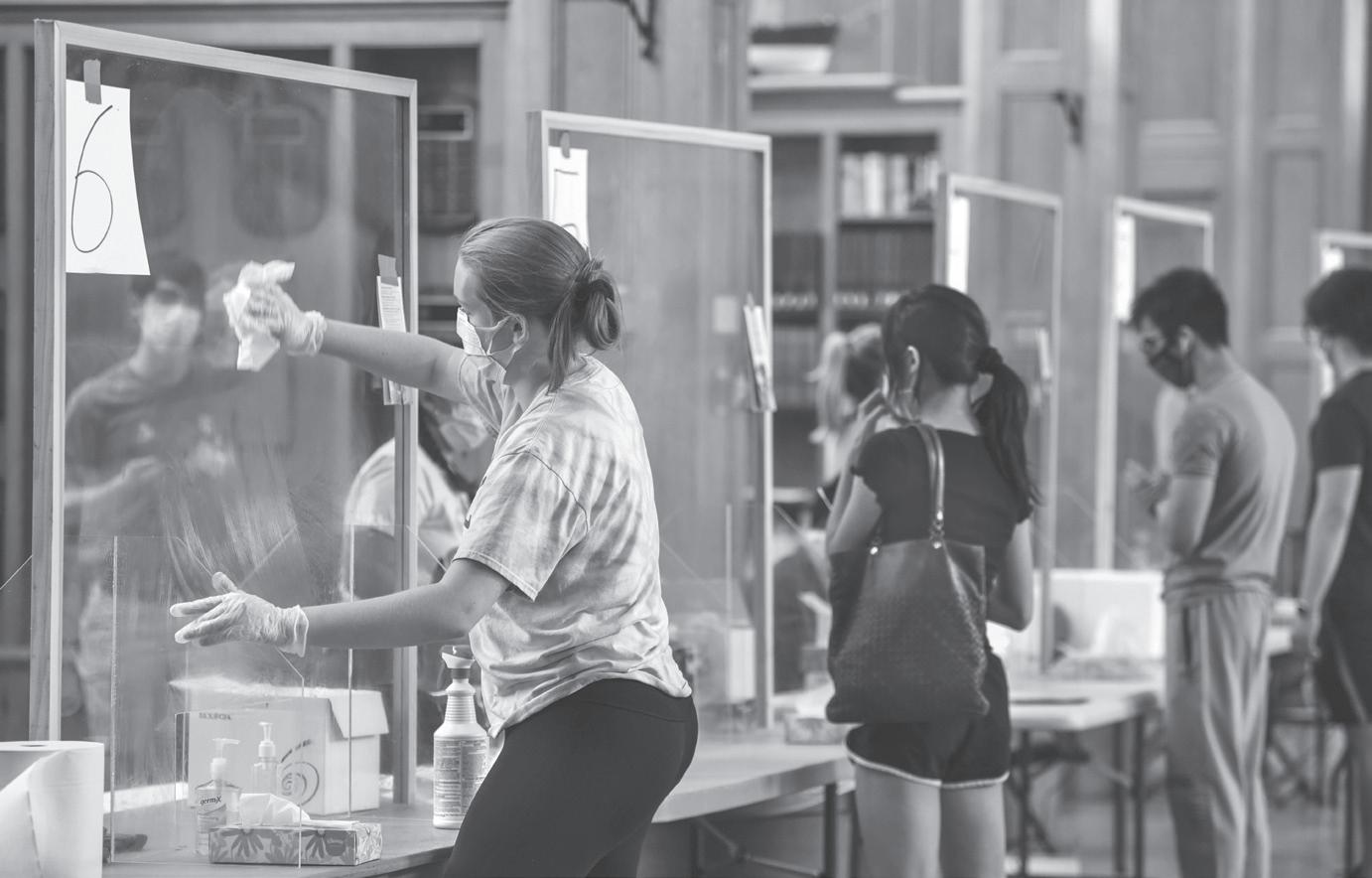
What’s the total? | As Cornell tests thousands per day in pop-up clinics like this one in Willard Straight Hall, reporting on the results of students’ twice-weekly swabs lags behind.
BORIS TSANG / SUN PHOTOGRAPHY EDITOR
SC I ENCE
Addressing Mental Health of Students During COVID
By TAMARA KAMIS and SRISHTI TYAGI Sun Senior Staff Writers
As the number of COVID-19 cases on campus continues to rise, stress associated with the pandemic has worsened mental health concerns for many students.
In a recent study from the Centers for Disease Control and Prevention, 74.9 percent of 18 to 24 year-olds reported having experienced mental health challenges, such as symptoms of anxiety and depression.
According to postdoctoral researcher Kaylin Ratner, human development, college students often struggle with mental health more as they navigate the uncertain process of becoming independent adults.
However, common parts of emerging to adulthood — such finding work — have become more challenging during the pandemic, which could exacerbate mental health concerns for some young adults, Ratner said.
Ratner explained that the prevalence of mental illnesses in young adults was already increasing pre-pandemic. These conditions, such as anxiety and depression, can alter individuals’ perception of the world, which make coping with a pandemic even more difficult for some individuals.
For example, people with depression tend to pay more attention to negative topics and struggle to be hopeful about the future, according to Ratner.
“The pandemic is rife with negative stimuli to attend to, so it would be easy to become entrapped in a vicious cycle of negative attention and mood,” Ratner said in an email to The Sun.
The pandemic’s toll on mental health
creates even more unease for Cornellians coping with pre-existing mental health conditions. Mar Buquez ’22, a first-generation low-income student who has struggled with medication-resistant depression and anxiety for over a decade, has long experienced pain due to mental illness.
Even Buquez, however, did not anticipate the struggles caused by both the pandemic and the subsequent disruption of his ketamine infusions — a treatment for depression that requires a specialized clinic. Stay-athome orders delayed Buquez’s treatment for seven months, during which he experienced panic attacks and depressive episodes.
“I think the fact that I was used to isolating made it easier to quarantine at the beginning, but as the pandemic goes on the isolation becomes more stressful,” Buquez said.
Although the pandemic has worsened the mental health of many young adults, there are ways students can support one another and improve their own mental wellbeing.
There is no “one-size-fits-all” approach for coping mechanisms, Ratner said. However, as a starting point for managing students’ mental health, Ratner recommended using mindfulness apps, staying physically active, sticking to a daily routine and limiting consumption of distressing news sources.
Melanie Little, director of youth services at the Mental Health Association in Tompkins County, also suggested trying to overcome the effects of social isolation by finding safe, distanced ways to connect with friends, family and peers.
For students, faculty and staff concerned for one another’s mental health, Ratner also suggested empathic listening as a method of
providing support.
“When people share problems, they’re not often asking you to solve that problem for them,” Ratner said. “Sometimes just being able to reflect back what you’re hearing — a skill that shows that you acknowledge and understand the speaker’s concerns — is enough for the speaker to feel validated.”
Cornell Health provides a wide range of services for students in need of mental health support. According to Dr. Alecia Sundsmo, director of Counseling and Psychological Services, CAPS will continue to offer telehealth consultation for eligible students in New York.
Students outside of New York cannot get traditional counseling from CAPS due to federal law and licensing guidelines, according to Sundsmo. However, these students can still access CAPS-led workshops and Let’s
Talk services as Cornell Health continues to explore other methods of providing support for the future.
“Cornell Health is actively exploring ways to contract with another agency that has access to a large pool of providers licensed in various jurisdictions to provide support to students outside of New York,” Sundsmo said.
Cornell Health also has a virtual support group for students impacted by COVID-19 grief, as well as other free weekly support groups. Faculty and staff can turn to the Faculty & Staff Assistance Program for free professional counseling.
Tamara Kamis can be reached at tkamis@ cornellsun.com and Srishti Tyagi can be reached at styagi@cornellsun.com.
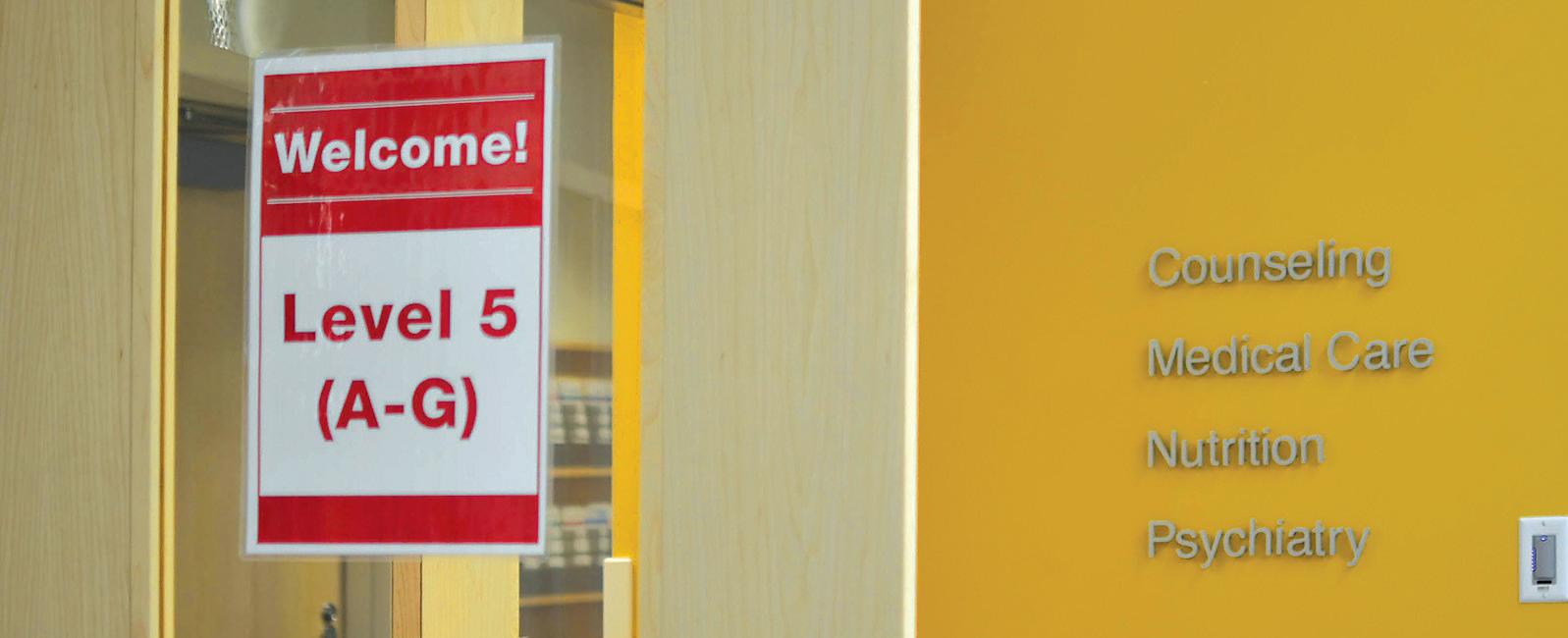
Providing Support | Cornell Health’s fifth floor has space reserved for mental health services.
ARTS & ENTERTAINMENT
Let’s Take Disco Seriously
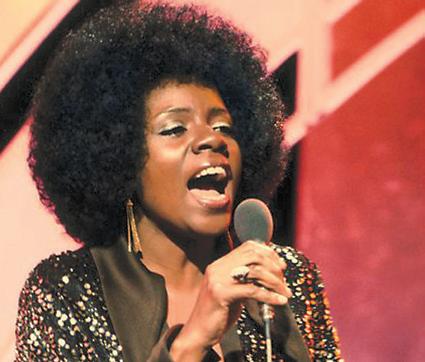
To the chagrin of history enthusiasts everywhere, many of the cultural moments most essential to American imagery have since shed their charm and disintegrated into tasteless, Halloween costume-style tropes. Disco is no exception. These days, we reduce the groundbreaking nature of disco culture to a pair of go-go boots and a metallic halter top. The vibrancy and vitality of the music that emboldened these trends has been largely forgotten.
We look not to the marginalized artists who bore the movement almost entirely on their own, but to the mainstream media fixtures who popularized it. As the style continues to weave its way through the musical food chain and into our ears, it’s undeniably clear that the disco inferno rages on — and, as Donna Summer would tell us, it’s some pretty “hot stuff.”
In order to truly understand disco’s place in the American music terrain, it is imperative to understand the 1970s as a backdrop. The countercultures and the progressivism of the preceding decade nearly pushed right-wing and even moderate Americans over the edge, leaving them to fume in the wake of their own dismissal. They craved a widespread reinstatement of more conservative social policy, and for the most part, they succeed ed. The “silent major ity” championed a leader committed to the erasure of plans designed to ease the burdens of the poor (thanks, Nixon).
The “New Right” blocked the adop tion of the Equal Rights Amendment.
U.S. engagement in proxy wars reinforced a heavily fabricated and deeply ironic sense of democracy that had come to be synony mous with the American name. However, what these con
Iservatives desired above all else was neither victory in Congress nor in the courtroom — they lusted after a restoration of conventional, establishment values. They yearned for a day when the exclusion and the (albeit superficial) stability of the 1950s would return, when nuclear families would once again join around the television for their daily dose of capitalist programming and immerse themselves wholeheartedly in the consumer society. What did they receive in return for these earnest wishes?
Bell bottoms, overflowing nightclubs and an expanding spotlight on Black performers.
Nightclubs frequented by Black, Latinx and LGBTQ partygoers were largely responsible for the genesis of the genre. Deejays harnessed their own musical expertise to nurse age-old categories of sound into an aural experience awash with unmistakable qualities of motion and animation. A waltz into any one of New York’s numerous nightlife landmarks would reveal a haven entirely separate from the orderly grid of sidewalks just beyond the door, with Midtown’s Studio 54 as the most Disco was fueled by an easily discernible commitment to the ostentatious, spawning a fashion complete with bold shapes and outlandishly loud patterns. More so than other genres, disco culture was also remarkable for its physical aspect, ranging from acrobatics performances in clubs to dance floors that filled until they practically had pulses of their own. As if all of this intrigue wasn’t enough to alarm straight-laced, religion-loving Americans in wide swaths of the country, even the most innocent of the nightly rituals were forbidden under the city’s Cabaret Law, a legal remnant of Prohibition that was only repealed in 2017.
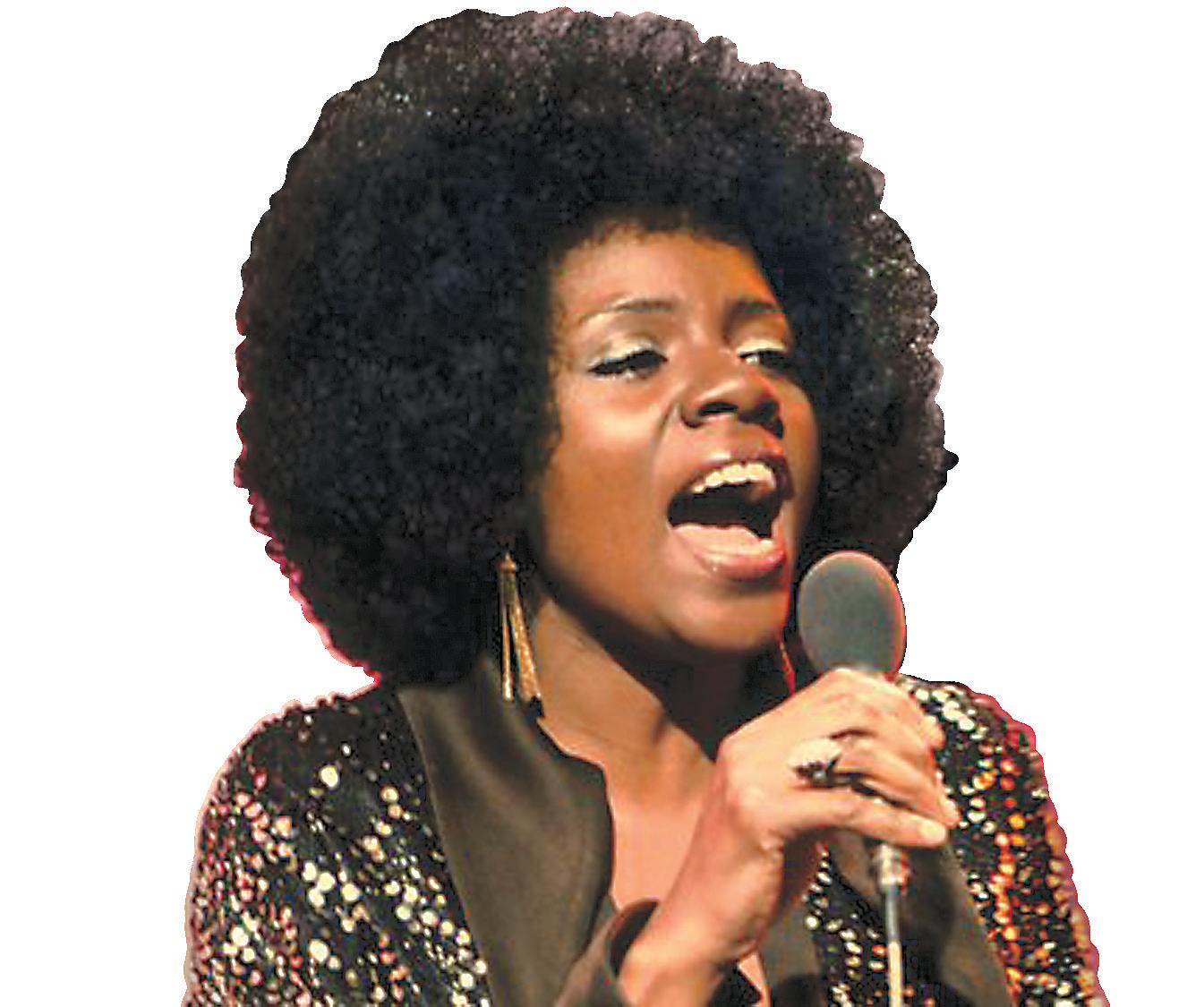
Before long, however, the narrative was carefully detached from its “provocative” roots. John Badham’s 1977 blockbuster Saturday Night Fever promoted an image of disco that was simply incongruous with the style’s origins, swapping out the Black and gay major players for John Travolta’s leather-clad Italian-
Megan Pontin
American. Similarly, the film’s soundtrack was largely monopolized by the Bee Gees, who, though achieving legend status, were not exactly representative of the population that truly cultivated disco. For example, the voices of several Black women — Sister Sledge, Chaka Khan, the Pointer Sisters, Diana Ross — that ruled the disco era were not granted spots on the record, thereby ushering them to the sidelines of a movement they were deeply responsible for creating.
By the end of the decade, hating disco had become the proxy for expressing discontent with those who had generated it. In 1979, “Disco Demolition Night” even entered the vernacular as baseball fans in Chicago destroyed not only disco records, but work by Black artists of a handful of styles.
While disco may no longer be the genre at the forefront of the American club scene, to dismiss it as entirely irrelevant would carelessly neglect an extensive and irrefutable legacy. Disco was a crucial period of experimentation for a handful of music production technologies that were coming of age in the 1970s. Remixing is perhaps the most striking example, having originated earlier in Jamaica yet achieving compelling success during disco’s heyday. Likewise, disco’s widespread utilization of synthesizers moved the innovation out of the ether and into the open, inspiring countless styles that feel at first glance utterly and completely detached from disco itself — ambient, house, ethereal wave. Even beyond these advancements, the lineup of modern artists whose sounds draw from disco is a long one, including Daft Punk, Mark Ronson and Tame Impala.
Disco thrived on a disruption of the status quo and a total refusal of the value system that prevailed at the time it was created. It derailed the notions of what was expected and accepted, highlighting communities largely ostracized from the ideals upheld in previous decades. Disco expanded the demarcations of how we conceptualize music, driving home the impression that sound bleeds into fashion and leisure and lifestyle. Disco is surviving proof that art cannot be compartmentalized from the remaining aspects of our lives — it shocks us, it shakes us, it shapes us.
Megan Pontin is a sophomore in the School of Industrial Labor Relations. She can be reached at mpontin@cornellsun.com. Rewind runs alternate Tuesdays this semester.
Animal Crossing, Empathy and Campaign Yard Signs
’ve always theorized that Animal Crossing’s popularity stems from our generation’s insecurity about never being homeowners. That, combined with the new reality of life under COVID19, was part of what drew me into the game during the early stages of the pandemic. Animal Crossing is escapism at its finest: Adorable interior design, cuddly critter friends and complete freedom to design your environment. This isn’t just my opinion; New Horizons’ producer, Hisashi Nogami, expressed upon release that he hoped Animal Crossing players around the world would use the game as an escape from COVID-19, saying, “I am very disheartened and saddened by the events happening across the world. Considering the timing, we hope that a lot of the Animal Crossing fans will use this as an escape, so they can enjoy themselves during this difficult time.”
As I adjusted to life at home, surrendering my independence and giving in to the purgatory of Zoom University, Animal Crossing was one of the few elements in my life that I felt I could control. Beyond offering a sense of security, I found that part of what drew me into the game was that Animal Crossing felt completely divorced from reality. Whenever I was in game, I turned my brain off — no COVID-19, no politics, no nothing. I even went against my nature and developed a soft spot for the notorious tycoon Tom Nook, despite his capitalist inclinations. That was all part of the magic, and in my mind the whole point of the game. To me, Animal Crossing was a guilty pleasure. So, when I heard that the Biden campaign was offering virtual yard signs to Animal Crossing players, I was a bit confused.
According to Christian Tom, the director of digital partnerships for the Biden campaign, this effort is “an exciting new opportunity for our campaign to engage and connect Biden-Harris supporters as they build and decorate their islands” — which is especially important given the shift in campaign strategies under COVID-19. Though this felt random, I realized upon further research that the Biden campaign’s appeal to Animal Crossing isn’t coming out of nowhere.
Recently, Rep. Alexandria Ocasio-Cortez (D-NY) began to use Animal Crossing to engage with Twitter followers, and after opening her DMs for the first time since the Zuckerberg hearing, immediately tweeted “Honestly never in my life did I think opening my DMs would grant me faith in humanity but the brief window actually resulted in a lot of these messages being very wholesome” accompanied by a crying emoji. Additionally, protesters in Hong Kong, PETA activists and Black Lives Matter organizers have all used the game to host digital direct action, whether that be designing in game protest signs or, in PETA’s case, storming Blather’s fish museum and asking everybody’s favorite owl to free the fish in what the organization’s Twitter described as a “cultural reset.”
It’s possible that Animal Crossing — as well as other video games — is the future of organizing under COVID-19. But, I have to wonder whether direct action loses its legitimacy when performed in a digital landscape like Animal Crossing. I can understand the importance of finding

Mira Kudva Driskell
Portrait of a Gen Z on Fire
ways to connect with one another in spite of physical separation, as well as the appeal of a format as widely popular as Animal Crossing. I can also see how, as people try to build their perfect islands, the politics of a “perfect” world could enter their minds. But I have to wonder whether demonstrations, or even yard signs, are important in a wholly digital world.
All of this feels incredibly performative.
To be fair, this sentiment may stem from the fact that I’m incredibly bitter about not being able to organize more action in person, though there are of course weekly BLM protests every Sunday. It’s also possible that I’m being misanthropic for no reason, and maybe I should embrace the warmhearted spirit of Animal Crossing and be grateful that people are connecting, even if it is via digital settings.
Still, I can’t shake a pervasive sense of discomfort. I don’t love how Animal Crossing, a game focused around building an aesthetically pleasing home and interacting with snappily dressed animals, is now being considered some sort of political frontier. Especially as people all over the world gather in person and risk their health and lives in defense of justice, should we really care about Animal Crossing demonstrations?
Yet, as I’m realizing while writing this article, perhaps the reason that people are using Animal Crossing for direct action is the same reason that I took to using the game in the first place: A desire for tenderness, and to create a better world for themself — even if it is digital.
I can recognize that desire, and I feel it as well. During the past few months, there’s been many moments where I’ve felt crushed by the sheer weight of the world, and I know I’m not alone in that. Right now, nothing feels consequential. Every time that I feel any sense of joy, it feels like a betrayal, some sort of guilty secret that I have to hide from others. Because of the state of the world, I feel as though I don’t have the right to be happy.
I can recognize that this way of thinking isn’t a good way to live. And, as we all try to find the new normal, I’m of the belief that empathy comes first. So, rather than ending on a negative note, I’ll extend some kindness towards the many people organizing through Animal Crossing, because, like everybody else, they’re simply trying to navigate the new normal.
Mira Kudva Driskell is a sophomore in the College of Agriculture and Life Sciences. She can be reached at mdriskell@cornellsun.com. Portrait of a Gen Z on Fire runs alternate Mondays this semester.
Rewind
COURTESY OF BBC
The Corne¬ Daily Sun
Independent Since 1880
138th Editorial Board
MARYAM ZAFAR ’21
Editor in Chief
JOYBEER DATTA GUPTA ’21
Business Manager
PETER BUONANNO ’21
Associate Editor
MEGHNA MAHARISHI ’22
Assistant Managing Editor
CHRISTINA BULKELEY ’21
Sports Editor
BORIS TSANG ’21
Photography Editor
CAROLINE JOHNSON ’22
News Editor
ALEX HALE ’21
News Editor
ARI DUBOW ’21
City Editor
EMMA ROSENBAUM ’22
Science Editor
BENJAMIN VELANI ’22
Dining Editor
JOHN MONKOVIC ’22
Multimedia Editor
MIKE FANG ’21
App Editor
OLIVIA WEINBERG ’22
Assistant News Editor
MADELINE ROSENBERG ’23
Assistant News Editor
LUKE PICHINI ’22
Assistant Sports Editor
HANNAH ROSENBERG ’23
Assistant Photography Editor
BRIAN LU ’23
Assistant Arts & Entertainment Editor
ANNABEL LI ’21
Assistant Money & Business Editor
LEI ANNE RABEJE ’22
Layout Editor
JOHN COLIE ’23
Blogs Editor
JOHN MONKOVIC ’22
Multimedia Editor
WINNY SUN ’20
Newsletter Editor
AMANDA H. CRONIN ’21
Senior Editor
RAPHY GENDLER ’21
Senior Editor
ALEC GIUFURTA ’21
Senior Editor
JOHNATHAN STIMPSON ’21
Managing Editor
KRYSTAL YANG ’21
Advertising Manager
JASON HUANG ’21
Web Editor
NIKO NGUYEN ’22
Design Editor
PALLAVI KENKARE ’21
Opinion Editor
SEAN O’CONNELL ’21
News Editor
KATHRYN STAMM ’22
News Editor
ANIL OZA ’22
Science Editor
EMMA PLOWE ’23
Arts & Entertainment Editor
MAIA LEE ’21
Money & Business Editor
ANYI CHENG ’21
Compet Manager
CATALINA PEÑEÑORY ’22
Assistant News Editor
MEGHANA SRIVASTAVA ’23
Assistant News Editor
EMILY DAWSON ’21
Assistant Sports Editor
BEN PARKER ’22
Assistant Photography Editor
Assistant
DANIEL MORAN ’21
& Entertainment Editor MIKE FANG ’21
’22
Dining Editor
WANG ’21
OU ’22
Editor
KRISCH ’21 Blogs Editor
SARAH SKINNER ’21 Senior Editor
PARIS GHAZI ’21 Senior Editor
NICOLE ZHU ’21
JEREMY MARKUS ’21 Senior Editor
Working on Today’s Sun
Ad Layout Mei Ou ’22
Production Deskers Sarah Skinner ’21 Dana Chan ’21 News Deskers Alex Hale ’21 Madeline Rosenberg ’22
Design Deskers Lei Anne Rabeje ’22
Science Desker Emma Rosenbaum ’22 Arts Desker Emma Plowe ’23
Letter to the Editor
Tom Reed, debate Tracy Mitrano J. D. ’95
To the Editor:
Tom Reed (R-N.Y.), you refuse to debate your opponent Tracy Mitrano J.D. ’95, for NY’s 23rd Congressional District, but recently stated: “I’m always willing to see the other side of the equation, and you do that . . . by sitting, by talking and most importantly by listening.”
I presume you adhere to your caucus tenets that state: “Every week we are in Washington, you will find Problem Solvers, proud Democrats and Republicans, seated together around a table, debating, listening, and working together to help solve these issues.”
So, why not talk face-to-face with Mitrano about the important issues in our district? How does it serve the people of C.D.-23 for you to evade a robust debate about the problems that confront our district?
Kris Hodges, Ithaca resident
WEATHER FORECAST FOR THE WEEK
We’re Not Just Being Set Up To Fail, We’re Being Set Up To Blame Each Other
On July 21 The Atlantic published an article indicating that colleges were readying themselves to blame students for failed campus re-openings. Inevitable parties and quarantine breaches would be registered as violations of some form of a Behavioral Compact, allowing universities to lay blame directly upon their students. Increasingly, however, Cornell has succeeded not only in creating metrics to blame students directly for the spread of COVID-19 but has leveraged the Compact so that students will blame one another, shielding administrators from much direct responsibility for the campus reopening.
Such internalization of responsibility and blame works in predictable ways if you understand the nature of power. The first step is an exertion of force — compelling students to sign the Compact — softened by the fallacy of choice. Cornell compels students to sign but insinuates that there is a degree of agency to promote acceptance of the terms offered. Students do technically have a choice: One could refuse to sign the Compact, but for many graduate workers this would mean a termination of employment, and for undergraduates termination or suspension of their education. Faced with this non-choice, students sign and formally, at least, accept the framing the university offers.
Step two encourages students to police one another. Students participate for a variety of reasons, not least because they become invested in these rules as a means through which to protect their own interests (the campus remaining open, their tuition money going towards the in-person instruction promised). It is also, however, easier to assign blame to concrete action than abstractions or omissions. That is to say, it is easier to blame a student for not physical distancing or for inappropriate quarantine adherence than to ask whether the university has unreasonable expectations of students or workers or is able to provide safe working conditions.
Thirdly, the often, though not uniformly, reasonable demands of the Compact work to further quash discussion of broader institutional responsibility. Physical distancing, mask wearing and limited social gatherings are all important means to keep us safe and healthy as a community. One cannot (and should not) refuse to wear a mask while on campus, but the Compact implicitly makes the claim that students are the potential source of the problem regardless of choices made by the university that otherwise leave us at risk. There’s little room to discuss the failures of, or hold the administration accountable for, poor decision-making or execution of COVID-19 safety plans because our acceptance of the general requirements to reduce community transmission are taken as an acceptance of the implications of the Compact. To be dubious of the work of the Compact can, in other words, be incorrectly read as a rebuttal of important public health measures.
student. Little serious discussion seems to have taken place about the nature of this petition, including the ethics of student policing, underlying xenophobia and cyber-bullying. Further, few questions have been raised about why the university has not condemned this petition outright which seemingly exists outside of formal complaint mechanisms. The university’s silence clarifies the Compact’s work: Not merely to influence behaviors but to divide the student body such that it won’t be the university who does the ‘disciplining,’ blaming students for a failed semester; it will be students themselves.
Despite the recent claims that the university has a ‘meticulous’ plan it seems fairer to say that many of the decisions made about the semester are unfolding in real time. Thousands of students have returned to campus from across the country in the midst of a pandemic, many of whom were forced to find quarantine accommodations other than those promised them initially. Student RAs were left without sufficient Personal Protective Equipment to facilitate move-in, resulting in a strike. The COVID-19 Dashboard that recently went live with a promise of daily updates seems incapable of providing up-to-the-minute data. Rather than questioning these structural problems, we have tacitly accepted the metrics of the Compact and the university administration has disappeared from view.
No city, state, country or organization has contained COVID-19. Even those quickest to act have found themselves unable to stamp out the virus entirely. While individual responsibility is important and many of the stipulations in the Behavioral Compact vital for the health and safety of our peers and community members, it is entirely possible that the semester will be cut short. We need to be wary of rhetoric that absolves administrators of total responsibility as we fixate on the (ir)responsibility of students. Despite all the warning the administration has received about how contagious this virus is, the clear limitations in their current plans and the significant demands that COVID-19 restrictions place upon all students (and staff and faculty), the university has opted for a residential experience this semester. The reason that you, or I or anyone else within Cornell’s community have become personally and palpably responsible for the survival of our peers is because Cornell’s administrators have chosen this path for us.
We need to hold the administration responsible for creating the conditions under which we exist as much as they will hold us responsible for individual breaches of conduct. I don’t doubt that our administrators are well meaning, and working hard to make this re-opening of the university successful. But I also don’t doubt that students are well-meaning, and working hard to make this re-opening of the university successful.
SAYS
CHANCE OF SUN FROM YOUR LOCAL
That we are disregarding the university’s responsibility in favour of blaming students is clear. With the semester barely upon us, students have launched (and at least one faculty member co-signed) a petition to expel a single first-year
The difference between these two groups, then, is that one is in charge and the other is being held accountable.
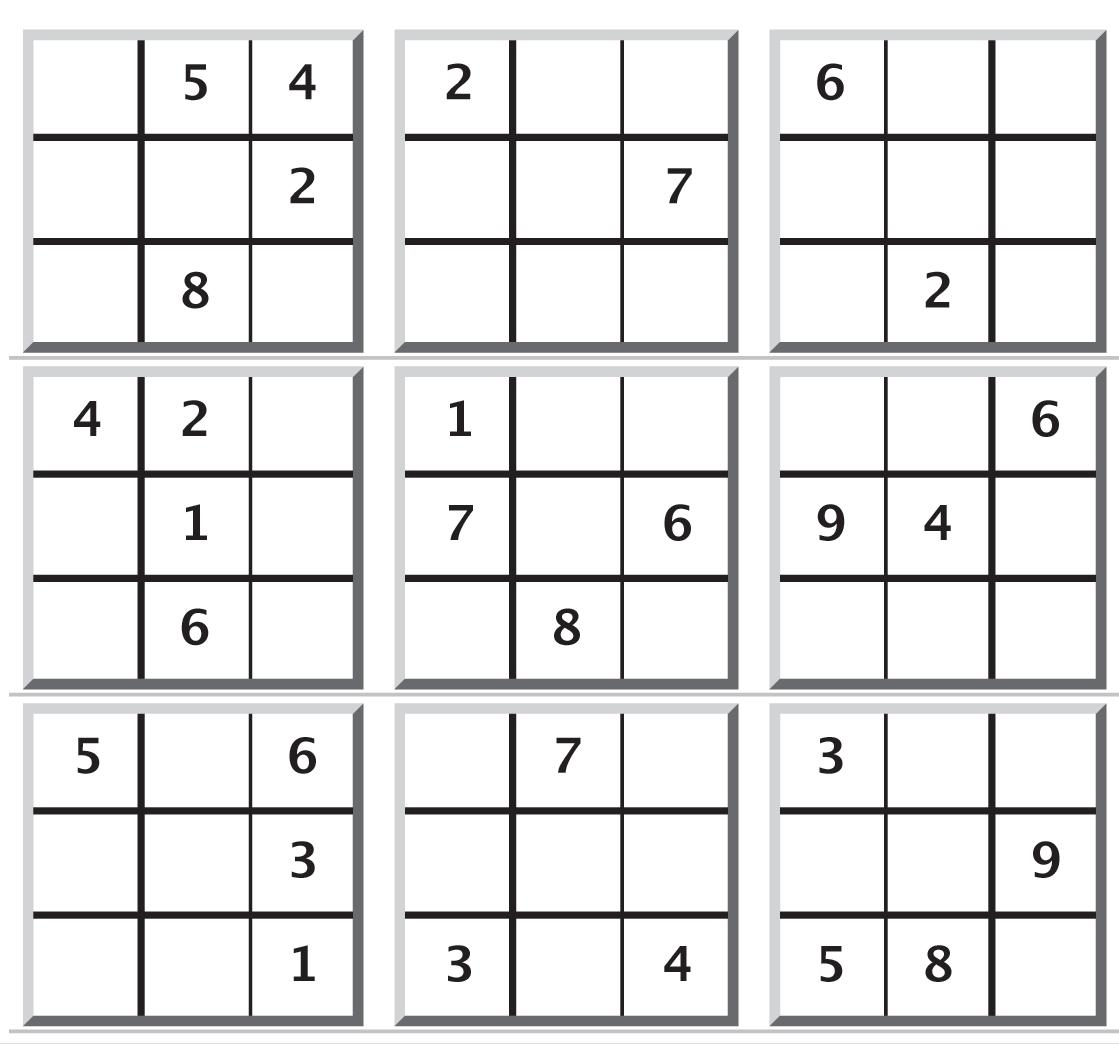
Fill in the empty cells, one number in each, so that each column, row, and region contains the numbers 1-9 exactly once. Each number in the solution therefore occurs only once in each of the three “directions,” hence the “single numbers” implied by the puzzle’s name. (Rules from wikipedia.org/wiki/ Sudoku)
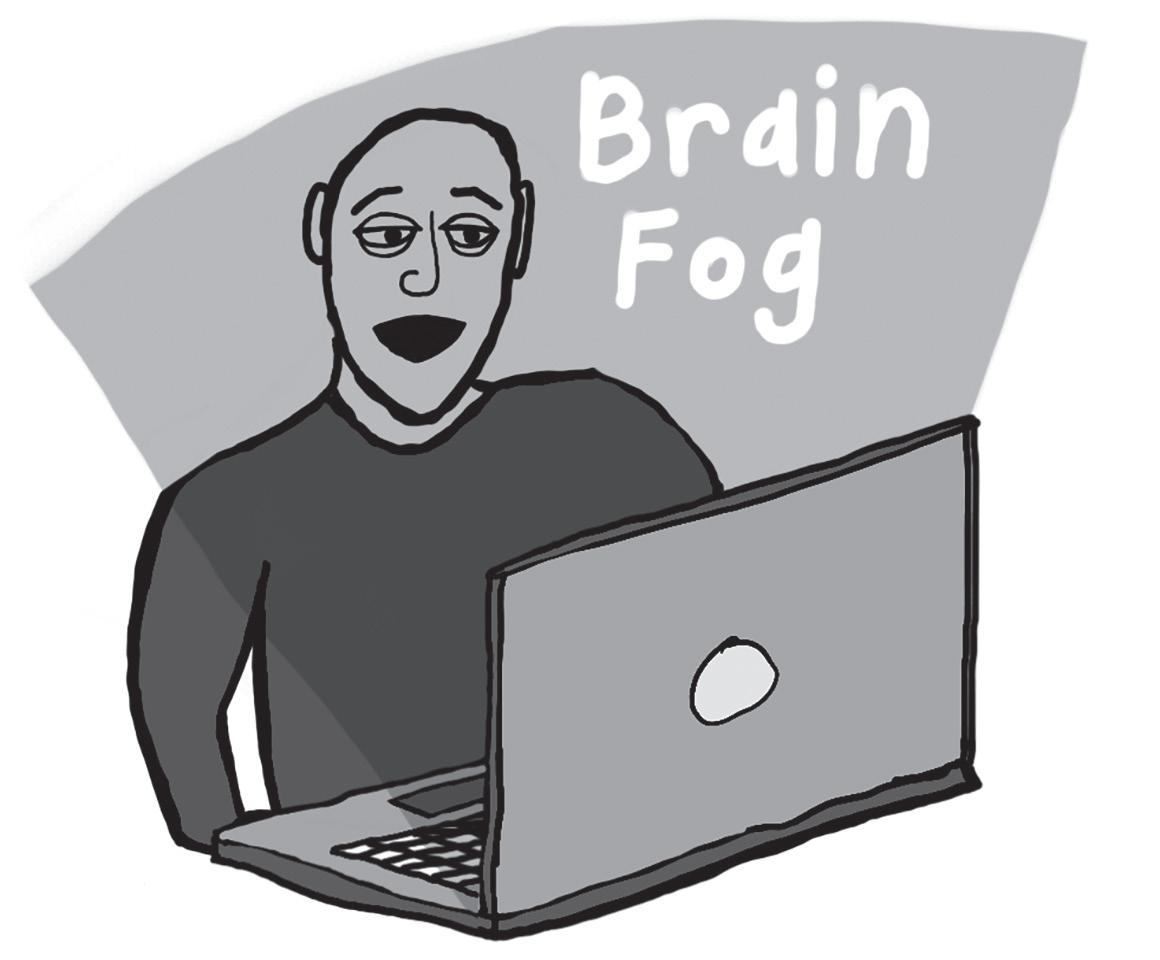
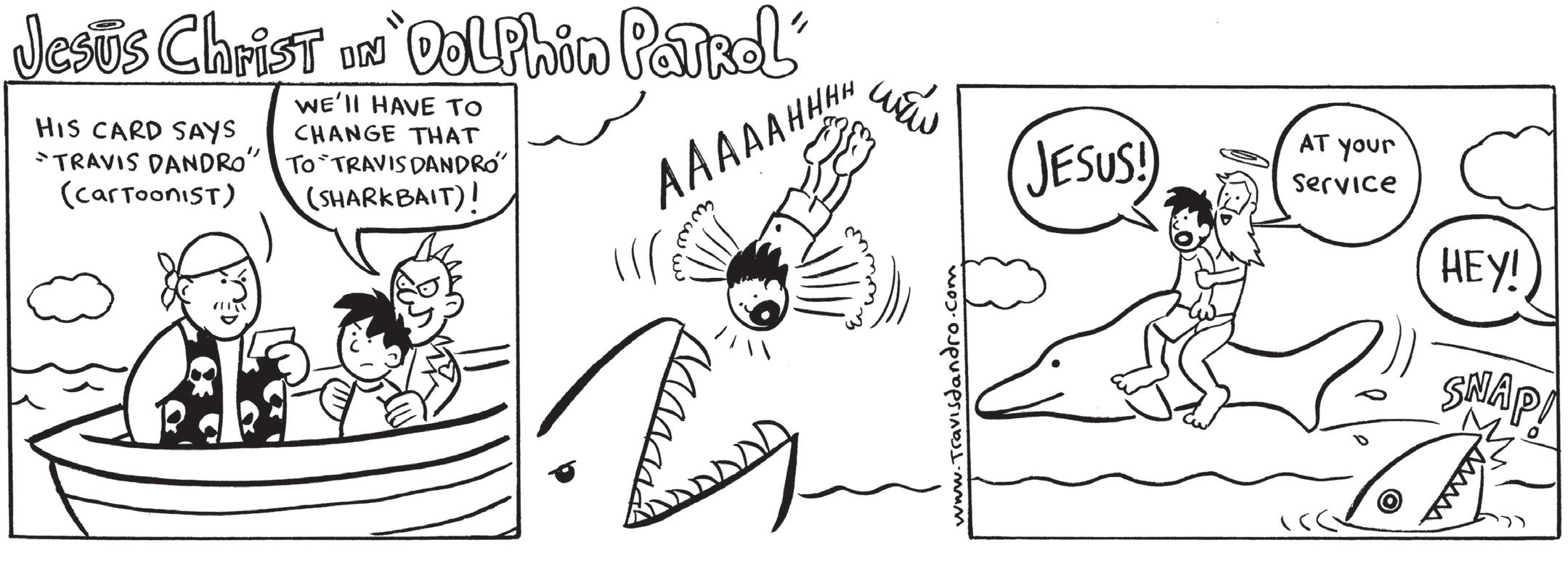
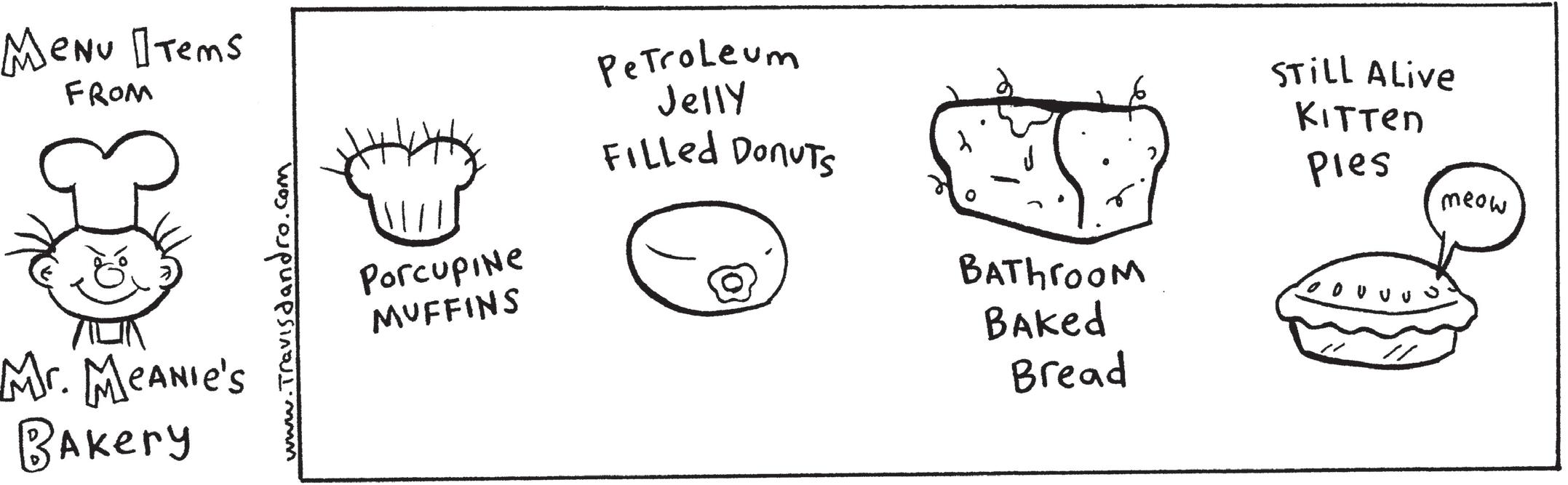
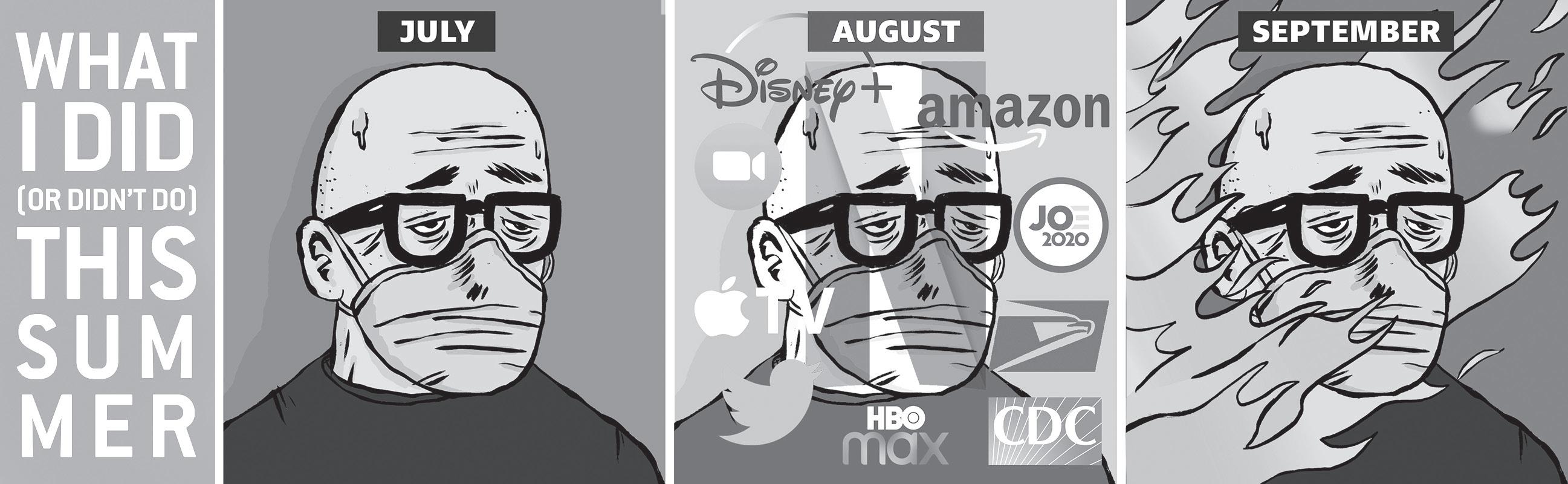


Mr. Gnu
Travis Dandro
The Sun’s Senior Athletes of the Year
MALE SENIOR ATHLETE OF THE YEAR
Jef Teat Will Return for Another Season With Red
By MIKE SEITZ Sun Staff Writer
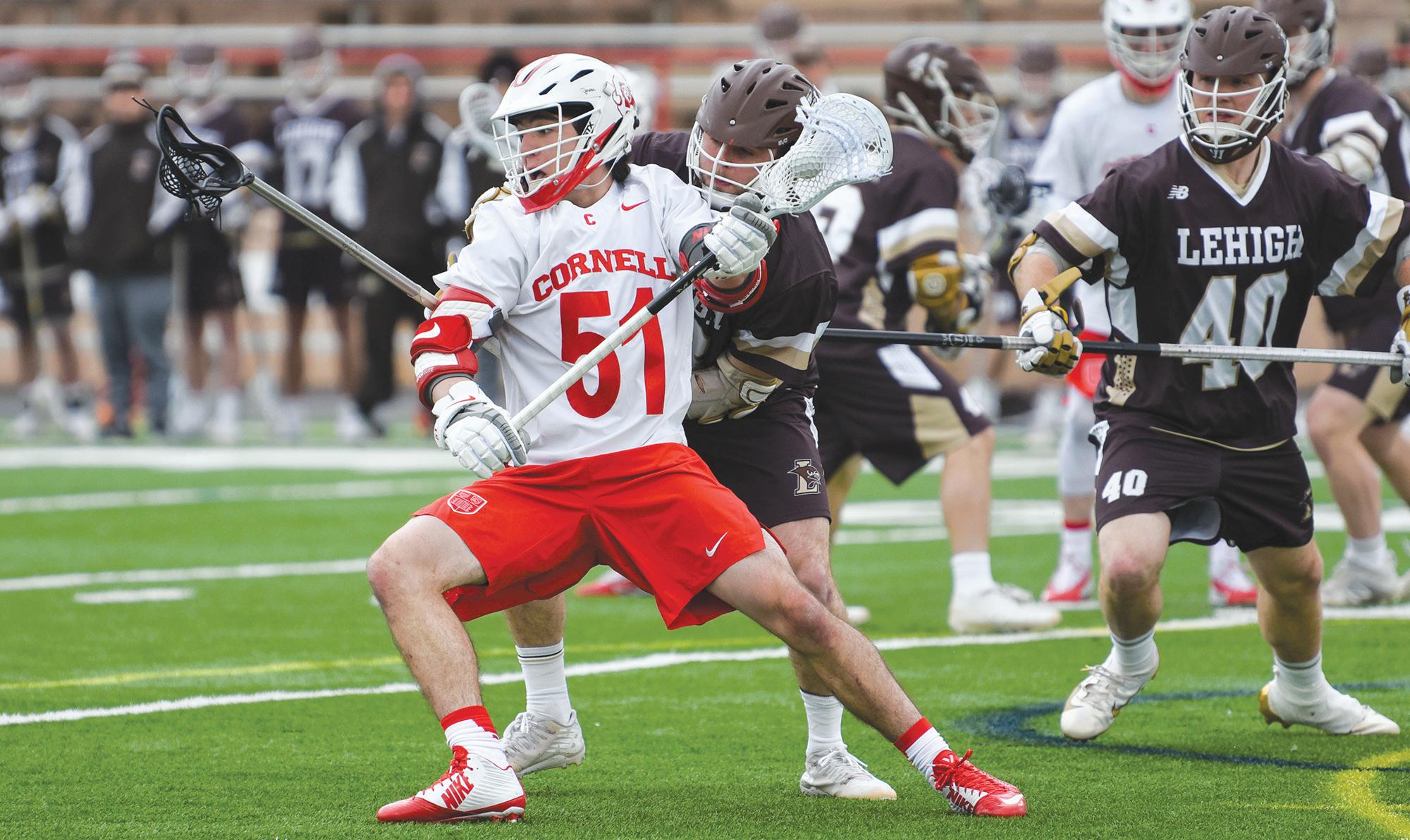
Senior attackman and captain Jeff Teat’s skill, drive and selflessness are three of the qualities that earned the Canadian box lacrosse product a place in Cornell’s record books and the title of The Sun’s Male Senior Athlete of the Year.
The hours that Teat spent honing his craft have transformed him into the phenom that he is. At 5-foot-10, 170 lbs, he is not the biggest, nor the fastest, nor the strongest. Rather, he is consistently the smartest player on the field — visualizing plays before they happen and always seeming to pick out the right pass to set up a teammate.
Teat’s career accomplishments have been nationally touted. In both 2018 and 2019, he was a nominee for the Tewaaraton Award — colloquially known as the Heisman Trophy of lacrosse. This year, he was named to the award’s watch list, but the award itself was not given due to the season’s cancellation.
From the start of his time at Cornell, it was apparent that the Brampton, Ontario native was going to be special. Scoring 72 points during his freshman year, Teat broke the freshman record previously held by attackman Rob Pannell ’13.
The next season, Teat was a catalyst for his struggling team, launching it to a 13-5 record and NCAA Tournament appearance. Teat cites the season’s Ivy League Championship victory and win over rival Syracuse in the Carrier Dome as some of his favorite moments in a Cornell uniform.
tradition from other accolades is the responsibility of the job — coaches select a junior who epitomizes pride, respect and heart.
“It means a lot knowing that the players who came before us did so much for this program both on and off the field,” Teat said.
In 2019, the team gained national attention and was featured on “The Season” documentary. Teat channeled all his power to lead the Red in points (70) and assists (36) on the big stage, but ultimately the team did not earn a bid to the NCAA Tournament.
The end-of-season disappointment fueled Teat’s fire for his senior year. Improvements showed early on in 2020, as he propelled Cornell to an undefeated 5-0 start. In what proved to be the final game of the season, the team’s biggest challenge came from Penn State. In clutch fashion, Teat stepped up when his team needed him the most. Scoring the game-tying goal with seconds left, Teat laid the groundwork for a dramatic win that was secured just moments later.
“Every time we get to put on the big red uniform it means a lot,” Teat said.
In retrospect, Teat recognized that much of his growth has actually occurred off the field — affirming that classroom lessons have deeply impacted his mentality for the future.
“Every time we get to put on the big red uniform it means a lot.”
Jeff Teat ’21
“Our 2018 playoff push was memorable. We weren’t highly rated but came out with some big wins,” he said.
Much of the team’s success stemmed from Teat’s selflessness. Facilitating a whopping 62 assists across 18 games, he led all of Division I at the time in feeds. His 99 total points stand as the 24th all-time best single season point total in NCAA Division I history.
“Teammates are the most important piece of success,” he said. “I always got to play with teammates that made playing easy.”
After being named a USILA All-American as a sophomore, it was clear that Teat was the Red’s talisman. Consequently, he earned the honor to wear the team’s symbolic hardhat in honor of the late George Boiardi ’04. The meaningful distinction that separates this
“To continue to be the best version of yourself no matter what you are doing — that’s a standard that we hold each other to all the time,” Teat said.
The future is bright for Teat, as he was selected as a draft pick in two different outdoor lacrosse professional leagues. On May 4th, the Boston Cannons of Major League Lacrosse chose Teat with the 25th pick. Two nights later, the Chaos Lacrosse Club of the Premier Lacrosse League selected him with the 12th pick.
Despite these professional opportunities, Teat will be making his return to Cornell for the 2021 season. The decision essentially replicates the process Pannell previously went through to withdraw as a senior and re-enroll for the following spring semester during lacrosse season.
While it is difficult to predict what will happen to athletics in the future, we can be sure to expect great things from The Sun’s pick for Male Senior Athlete of the Year, Jeff Teat.
Mike Seitz can be reached at mseitz@cornellsun.com.
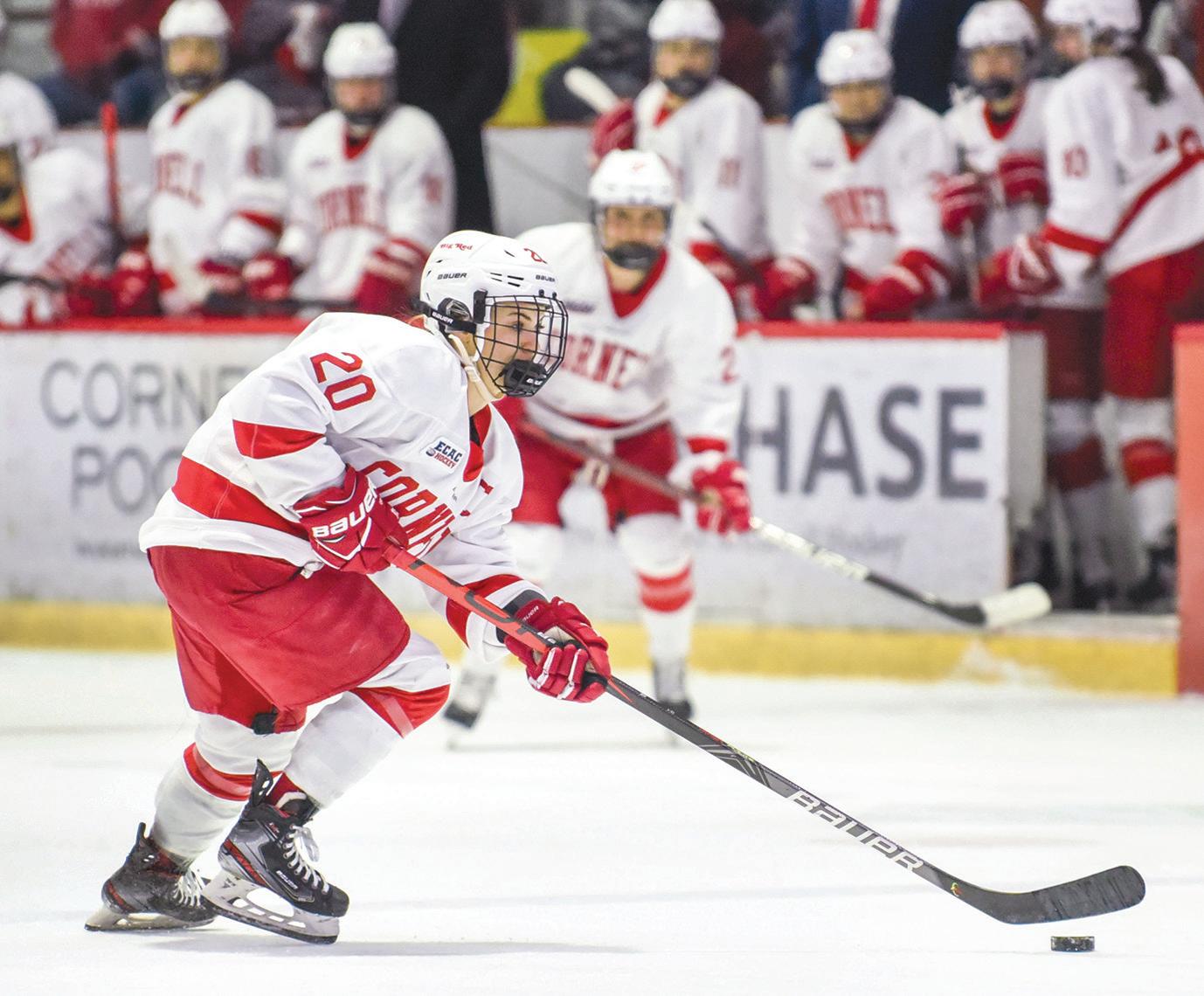
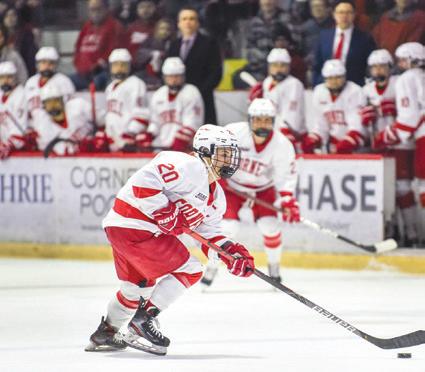
BORIS TSANG / SUN PHOTOGRAPHY EDITOR #20 | O’Neill playing a impressive game in the ECAC Championships.
FEMALE SENIOR ATHLETE OF THE YEAR
O’Neill’s Goals, Leadership Sends Cornell to No. 1 Spot
By CHRISTINA BULKELEY Sun Sports Editor
Forward women’s hockey captain Kristin O’Neill’s consistently stellar performances over four years on East Hill make her The Sun’s pick for Female Senior Athlete of the Year. O’Neill led the Red in goals every year of her NCAA career.
O’Neill’s accolades are numerous, with some of the most prominent including her time representing Team Canada in the Four Nations Cup during her junior year, being named to an AllECAC team all four years, and earning a nomination for the Patty Kazmaier Award — NCAA women’s hockey’s premier award — in both her sophomore and junior years. She also captained Cornell to a No. 1 national ranking in her senior season.
The significant contributions to the Red that O’Neill made in her first season earned her the Ivy League Rookie of the Year crown and a spot on the ECAC All-Rookie team. As a freshman, she set a program record for short-handed goals with five.
O’Neill more than avoided a sophomore slump, earning even more ECAC honors throughout the season, which culminated in an All-ECAC First Team selection. Her signature short-hand -
ed goals kept coming, breaking the Cornell career record just halfway through her second season with the Red. She led Cornell not only in goals, but also in points and assists in a season where the Red just barely missed an at-large bid to the NCAA Tournament.
In her junior campaign, Cornell would not settle for missing the national stage again and made it to the Frozen Four for the first time since 2012.
Despite missing three games in the first part of the season as she competed with Team Canada in the Four Nations Cup — in which she recorded an assist — O’Neill still notched 38 points with
“It makes me super confident that our senior class can step up.”
Kristin O’Neill ’20
Cornell, good for second-most on the team.
During that NCAA Tournament run, O’Neill recorded an assist in the 3-2 overtime win against Northeastern in the quarterfinal. Cornell would go on to lose 2-0 against Minnesota in the next tilt.
While the COVID19 pandemic might have robbed O’Neill of her crowning achievement in
the form of a national title, fans will not soon forget this year’s Cornell team, which was arguably the best in memory. Alongside seven other key seniors, O’Neill led the Red to a 28-2-3 record, with the Red’s one loss at home coming in the ECAC title game against Princeton. Cornell was set to take on Mercyhurst in Lynah Rink for the first round of the NCAAs before the tournament was canceled.
The Red’s 2019-20 season saw the team earn the nation’s best winning percentage and a No. 1 ranking in the USCHO. com polls for the final stretch of the season. Even with her four outstanding campaigns with Cornell, O’Neill often credited her classmates and the team’s chemistry with much of the Red’s overall success.
“It makes me super confident just knowing that our senior class can step up on any given day,” O’Neill said after sweeping St. Lawrence in the ECAC Quarterfinals in February. “It’s a really crucial part of our team and it’s brought us a long way. I think the underclassmen really follow our lead and that’s really awesome to have on the team.”
Christina Bulkeley can be reached at cbulkeley@cornellsun.com.
#51 | Teat showed his strength not only as a player, but also as a leader during his four years at C.U.
BORIS TSANG / SUN PHOTOGRAPHY EDITOR