Undergraduate students applying to Cornell over the next two admissions cycles won’t have to submit their test scores.
The undergraduate admissions office announced Wednesday that the University will waive SAT and ACT requirements for Fall 2023 and Fall 2024 first-year applicants — a decision that was made following ongoing COVID-19 risks.
This policy comes after Cornell became the first Ivy League University to waive SAT and ACT requirements in April 2020 for first-year applicants to any of its seven colleges.
Cornell’s decision to extend this policy
acknowledged the ongoing risks of COVID-19 in testing centers across the globe. The statement added that Cornell is also entering a two-year “deliberate experimental review” period to guide future admissions testing policy requirements.
“We will engage both in self-study about the role of testing in promoting access and success at Cornell and systematically review admission assessments in partnership with other universities and higher education organizations,” the statement reads.
Under this policy, three colleges –– the College of Agriculture and Life Sciences, the Cornell SC Johnson College of Business and the College of Architecture, Art and Planning –– will not accept
Black Muslim Students
Form Club Community
By FINLEY WILLIAMS Sun Contributor
The Pan-African Muslim Student Association has kicked off the fall semester with a new year of on-campus reconnection — after the organization’s inaugural spring 2021 semester of virtual meetings, they plan to host educational events and build community among Black Muslim students throughout the year.
Ahmed Eltahir ’22, PAMSA’s president, and Mohammad Hussein ’22, PAMSA’s marketing chair, began drafting the club’s constitution during the winter of last year. Soon after, it launched as a space for Black Muslims at Cornell.
“All of our events are catered toward ... being a space that empowers Black Muslims.”
Nasra Ismail ’22
Eltahir said that an ideal campus community makes Black Muslims feel safe and that PAMSA aims to foster an environment where students can comfortably be themselves. PAMSA plans to host its first general-body meeting within the next three weeks, Eltahir said.
“The purpose of the Pan-African Muslim Student Association shall be to create a sense of community for Black Muslims on campus,” the constitution reads. “To create this community, PAMSA shall provide a space for the education and discussion of the cultural, political, and social landscape of the Muslim and Black Diaspora convergence.”
While organizations like the Muslim Educational and Cultural Association and Black Students United focus on one of the two identities, Hussein said PAMSA aims to explore the intersection between Black and Muslim identities.
“These two combinations kind of force us to operate differently than other people,” Hussein said. “We have to face all types of different experiences that these entities bring in the
See PAMSA page 3
Campus Mediation Program Teaches Confict Resolution
After changes to Code of Conduct, student mediation may have greater prominence on campus
By KATHERINE ESTERL and VEE CIPPERMAN Sun Staff Writer and Sun News Editor
Following years of revisions and summer implementation of the new Student Code of Conduct, conflict resolution will potentially give a greater voice to students in the Campus Mediation Program. Now explicitly outlined in the code, mediation could take greater prominence in resolving campus disputes.
“[The code] is intentionally trying to be more open, more fluid, more conversational and more restorative,” said Patrick Mehler ’23, chair of the Scheinman Conflict Resolution Club.
The Campus Mediation Program comes as a collaboration between the Cornell University Office
Growing together | Students learn ways To mediate conflicts.
of Student Conduct and Community Standards and the Scheinman Institute on Conflict Resolution. It consists of two courses, ILRLR 4027: Campus Mediation Practicum and ILRLR 4029: Campus Mediation Practicum II: Advanced Issues in Restorative Justice, which train students in mediation methods.
Katrina Nobles, director of conflict programs at the Scheinman Institute, teaches both mediation courses. The classes' focus is on the practices that help students repair harms and return to their community after violating the code.
“We focus a lot on restorative practices, restorative justice within mediation and how
VEE CIPPERMAN and KAYLA RIGGS Sun News Editor and Sun Assistant News Editor
COURTESY OF KATRINA NOBLES
JULIA NAGEL / SUN ASSISTANT PHOTOGRAPHY EDITOR
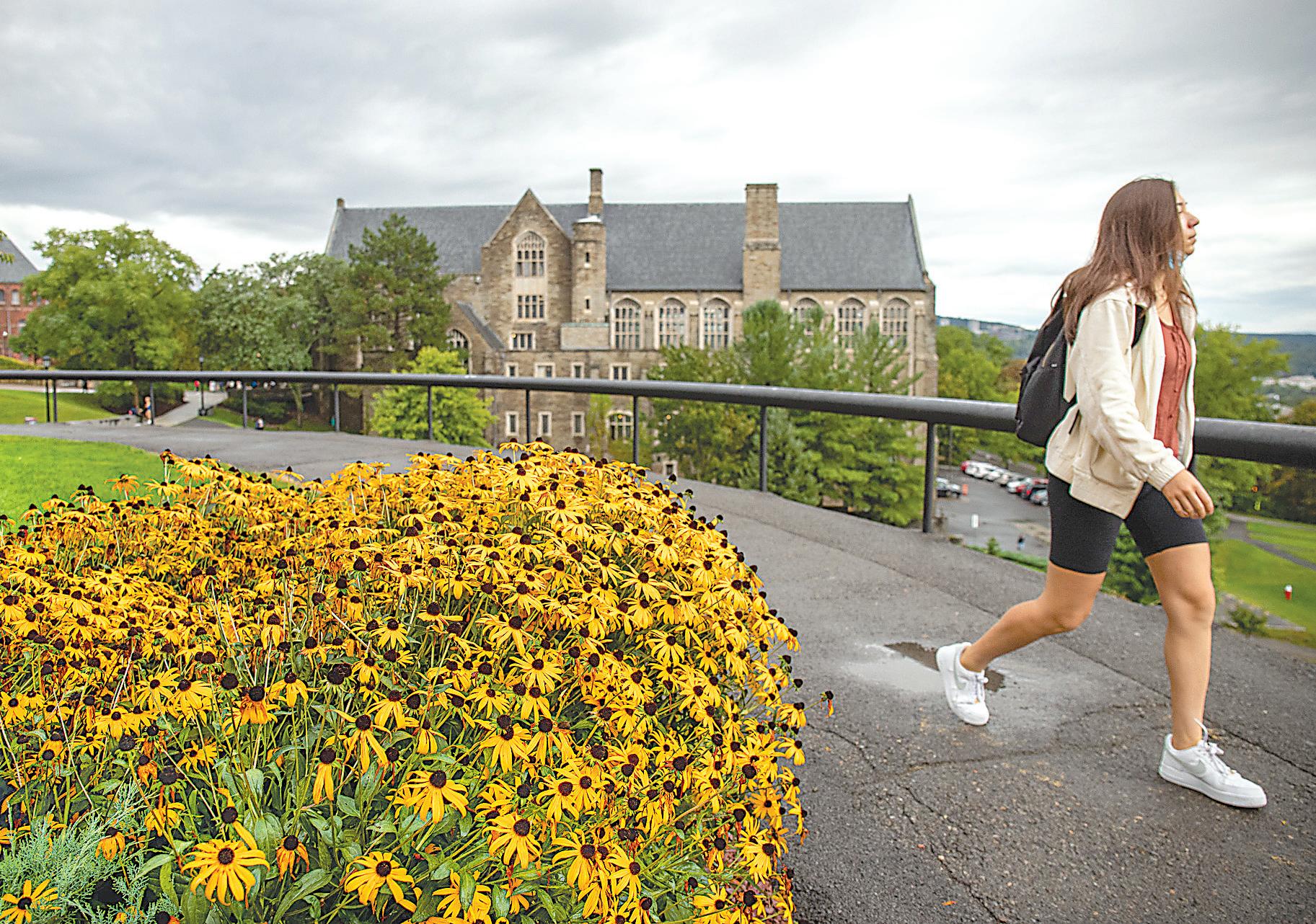
A student walks past Uris Library on a rainy day atop Libe Slope as late summer flowers bloom.
Classroom bound
Thursday, September 23, 2021
A LISTING OF FREE CAMPUS EVENTS
Today
Gender, Socialization and Norms of Restraint: Findings from the U.S. Military Academy at West Point 11:25 a.m., Virtual Event
Gatty Lecture Series: Intimate Itinerancy: Sex, Work and Chinese Women in Colonial Malay’s Brothel Economy, 1870s-1930s
12:15 p.m., Kahin Center
Midday Music in Lincoln 12:30 p.m., Lincoln Hall B20
Ian Lundberg - What is Your Estimand?
Defining the Target Quantity Connects Statistical Evidence to Theory
3 p.m., Virtual Event
Chemical Tools That IMPACT Lipid Signaling ––Chemistry Seminar
4 p.m., Baker Lab
Noura Erkakat, Palestine: Settler Colonialism, Sovereignty and Apartheid
4 p.m., Virtual Event
The Robert Chasen Memorial Poetry Reading By Ada Limón
5 p.m., Klarman Hall G70
ViBIng on Bi+ Awareness Day
5 p.m., Willard Straight Hall 215
LACS Film Series presents IXCANUL (volcano)
6 p.m., Uris Hall G08
Poetry reading | Attend a poetry reading at Klarman Hall Thursday by Ada Limón, an award-winning American poet and NYU alumna. Limón’s work has appeared in the New Yorker, Harvard Review and more.
Tomorrow
Matéa LeBeau: What Remains
8 a.m., Experimental Gallery, Tjaden Hall
Let’s Meditate With Cornell Wellness 9 a.m., Virtual Event
Siren – Listening to Another Species on Earth: C.U. Music
10 a.m., Johnson Museum of Art
Yiddish Conversation Hour Noon, Virtual Event
Robin Nagle: When the “Away” Becomes Real: Managing Garbage in New York City 12:25 p.m., Abby and Howard Milstein Auditorium
Hawaiian Humpback Whales: Scientific and Creative Perspectives
3 p.m., Johnson Museum of Art Lecture Hall
Farsi Conversation Hour
3:30 p.m., Stimson Hall, G25
Café con Leche
6:30 p.m., Anna Comstock Hall (Latino Living Center)
The Trouble With My Name 7 p.m., Virtual Event
Mike Cheng-Yu Lee, Fortepiano, Piano: C.U. Music 8 p.m., A.D. White House
COURTESY CORNELL UNIVERSITY
Cornell Waives Standardized
Testing Requirement Trough 2024
A Wednesday statement keeps Cornell test optional
TESTING
Continued from page 1
standardized test scores. The Colleges of Arts and Sciences, the College of Engineering and the College of Human Ecology, along with the School of Industrial and Labor Relations, maintains a test-optional policy for SAT and ACT scores.
Requirements for SAT subject tests, in addition to the essay section of the SAT and ACT, were also waived and will be discontinued in 2021, according to Cornell’s standardized testing website.
The decision to change standardized testing requirements has become more common in recent years. In May 2020, the University of California Board of Regents unanimously voted against requiring standardized testing in the admissions process. All eight Ivy League schools suspended testing requirements for Fall 2022.
accurately reflect teaching and learning,” writes education journalist Valerie Strauss in a March 2021 Washington Post article. “Rather, they overwhelmingly reflect levels of poverty and other non-school factors such as housing insecurity, food insecurity and access to health care.”
The Wednesday announcement also stated that Cornell will follow Ivy League testing policies for student-athlete applicants. For the current academic year, applicants who plan to participate in a varsity sport did not need to submit test scores.
This policy comes after Cornell became the first Ivy League university to waive SAT and ACT requirements in April 2020 for first-year applicants.
Many of these changes follow ongoing conversations about testing equity, an issue that has only been amplified by COVID-19’s disproportionate effect on low-income students.
“Research has shown that test scores do not
The Ivy League has not yet announced its plans for future years.
The University encourages applicants to consider their health and safety above testing.
“Please do not feel you need to take exams unless you are able to take the exam locally near your home and you feel safe in doing so,” Cornell’s current standardized test policy site reads. “As a reminder, we will evaluate your application without standardized testing.”
Vee Cipperman can be reached at ocipperman@cornellsun.com. Kayla Riggs can be reached at kriggs@cornellsun.com.
PAMSA Provides Space for Black Muslim Students
Te Pan-African Muslim Student Association cultivates community
these entities bring in the combination. There’s something special that I feel like a lot of people can relate with.”
Eltahir said that as a Black Muslim, he struggled to find a niche and build a community within Cornell’s current Muslim student organizations.
“During my time here, I noticed that in a lot of spaces, there were Black Muslims,” Eltahir said. “However, they were not engaging in a lot of traditional Muslim spaces that were available here at Cornell.”
Starting a semester with fewer COVID restrictions, PAMSA is planning more events. On Sept. 17, PAMSA hosted Mustafa Briggs, an academic in Islamic Black history, in “Beyond Bilal: Black History in Islam,” a part of his ongoing speaker series on the subject. The event took place in person on campus.
According to Nasra Ismail ’22, PAMSA’s vice president, this event helped foster a sense of pride and belonging among Black Muslims.
“He gave us an in-depth history to all the historical Black figures in Islam, our importance in the religion and emphasized our own history, because a lot of the time when it comes to Black Muslims, we oftentimes don’t feel like we’re seen as much as our Arab and South Asian counterparts,” Ismail said.
“At the end of the day, people here can shape the space to be whatever they want it to be. ”
Ahmed Eltahir ’22
Ismail said the association has more events in the works, including teaching a hijab and hair care routine and hosting a networking event with Black Muslim professionals.
“All of our events are catered toward our core message of being a space that empowers Black Muslims on campus,” Ismail said.
PAMSA Treasurer Imani Rezaka ’25 said the association’s status as both a religious and cultural group makes it eligible for funding from the ALANA Intercultural Program Board and the Cornell Interfaith Council. This funding, according to Rezaka, allows the organization to invite speakers like Briggs and implement other community-building and educational initiatives.
Though PAMSA has its own organizational goals, Eltahir said that the student membership can also meld the association into what they need.
“This is an organization for Black Muslims,” Eltahir said. “At the end of the day, we do have two cardinal goals, but people here can shape the space to be whatever they want it to be.”
Finley Williams can be reached at vlw28@cornell.edu.
PAMSA Continued from page 1
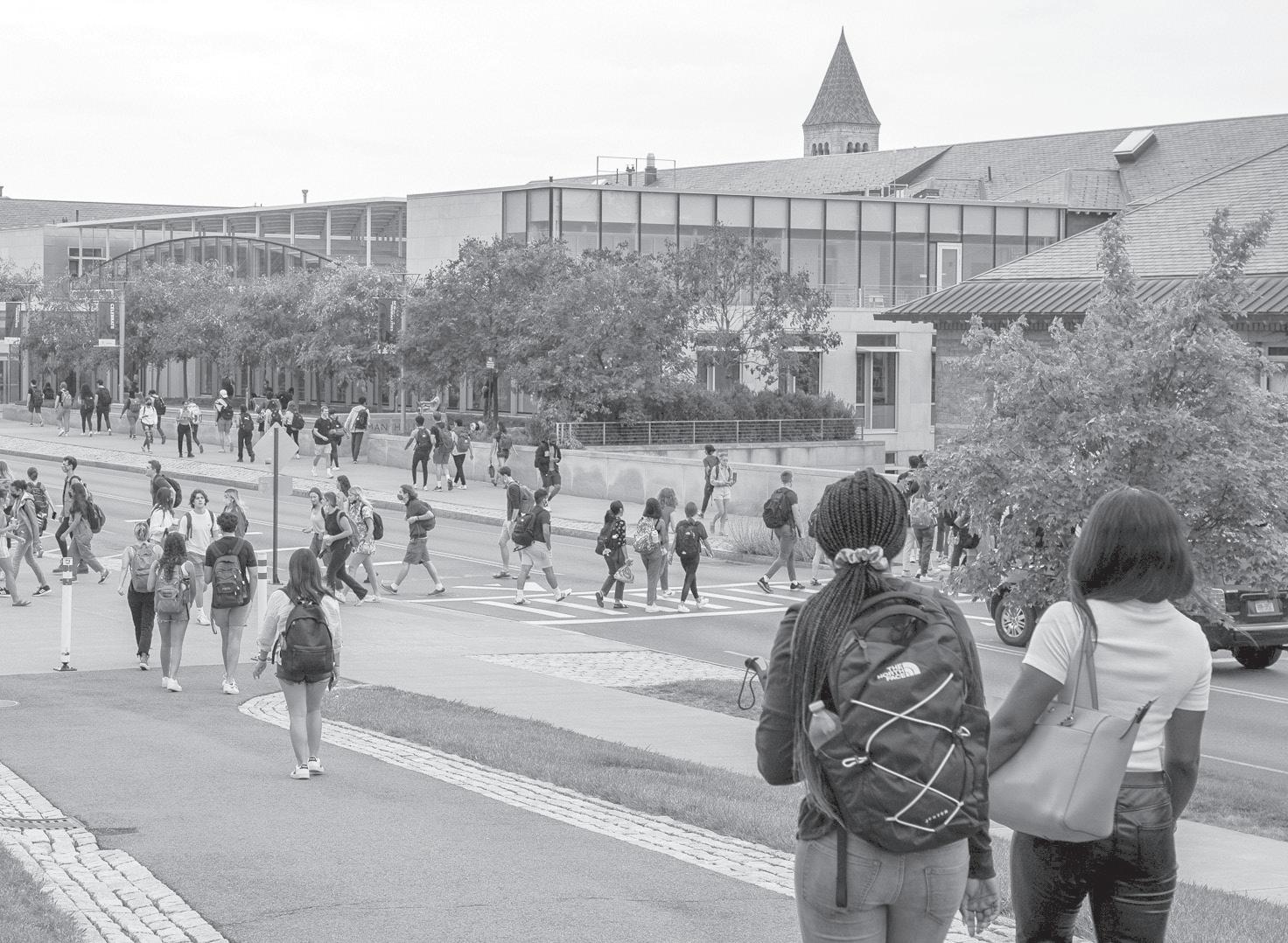
Students pack Feeney Way as they pile out of the Physical Science Building and Klarman Hall, a welcome sight after Cornell’s restrictions last academic year hindered in-person classes, events and extracurriculars.
JULIA NAGEL / SUN ASSISTANT PHOTOGRAPHY EDITOR
Students Learn Creative Methods for Addressing Conficts in Campus Mediation Practicum Classes
MEDIATION Continued from page 1
that changes the tone of the mediation,” Nobles said.
One of the biggest changes under the new code involves the people who report violations. Previously, mediations occurred between reported students and a representative from the University. Now, the direct complainant will be present.
If a resident adviser cites a student for underage drinking, for example, they may attend the mediation. If a general manager reports theft at The Cornell Store, they may attend.
Natalie Baker ’22 began mediating last semester under the old code and said she anticipates a new dynamic this semester.
“Thinking back, it didn’t really make sense to not have the other party present,” Baker said. “I think it limited how much progress we could make.”
Mediation can result in creative resolutions. Edgar O’Connell ’23 is currently taking Campus Mediation Practicum I, where he discusses potential cases and outcomes. He said students could repair harms with a complainant with personal skills –– like using graphic design expertise to create a poster for the complainant’s campus organization.
“We focus a lot on ... restorative justice within mediation and how that changes the tone.”
Katrina Nobles
“Part of the process is to ask, ‘What are everybody's strengths?’”
O’Connell said.
Mediation is voluntary and requires the consent of the complainant. But those who choose it often find resolution, according to Nobles.
“Based on my anecdotal knowledge of all of the cases we've had over the last four years,” Nobles said, “I would guess we probably have a 90 to 95 percent resolution rate.”
The code change could place more demand on the mediation program and Nobles’ students.
“I think that there is a higher number of mediation referrals coming in over the beginning of the semester than we've had in the past,” Nobles said.
That could mean a desire for increased funding or resources, Nobles said, but added that she thinks it’s too early to tell for sure, and the University has not encouraged mediation over other options. Nobles aims to document the effectiveness of mediation through ongoing research, which Mehler has assisted with.
While many mediation programs exist on college campuses, Cornell’s is one of the first and only programs attached to a for-credit course.
Interested students can enroll from across the University.
Mehler said he hopes the new codification of mediation will increase its relevance, giving students the chance to get to the root cause of conflict.
“When somebody breaks a rule in the community,” Mehler said, “we're not trying to ostracize them. We're trying to rebuild the trust, and we're trying to repair the harms that were done.”
Katherine Esterl can be reached at kesterl@cornellsun.com. Vee Cipperman can be reached at ocipperman@cornellsun.com.
Summer sunset
Sun Staf Football Picks — Week Two
LIAM MONAHAN AARON SNYDER
KATHRYN STAMM MADELINE ROSENBERG ARTS
CATHERINE ST HILAIRE
JULIA NAGEL / SUN ASSISTANT PHOTOGRAPHY EDITOR
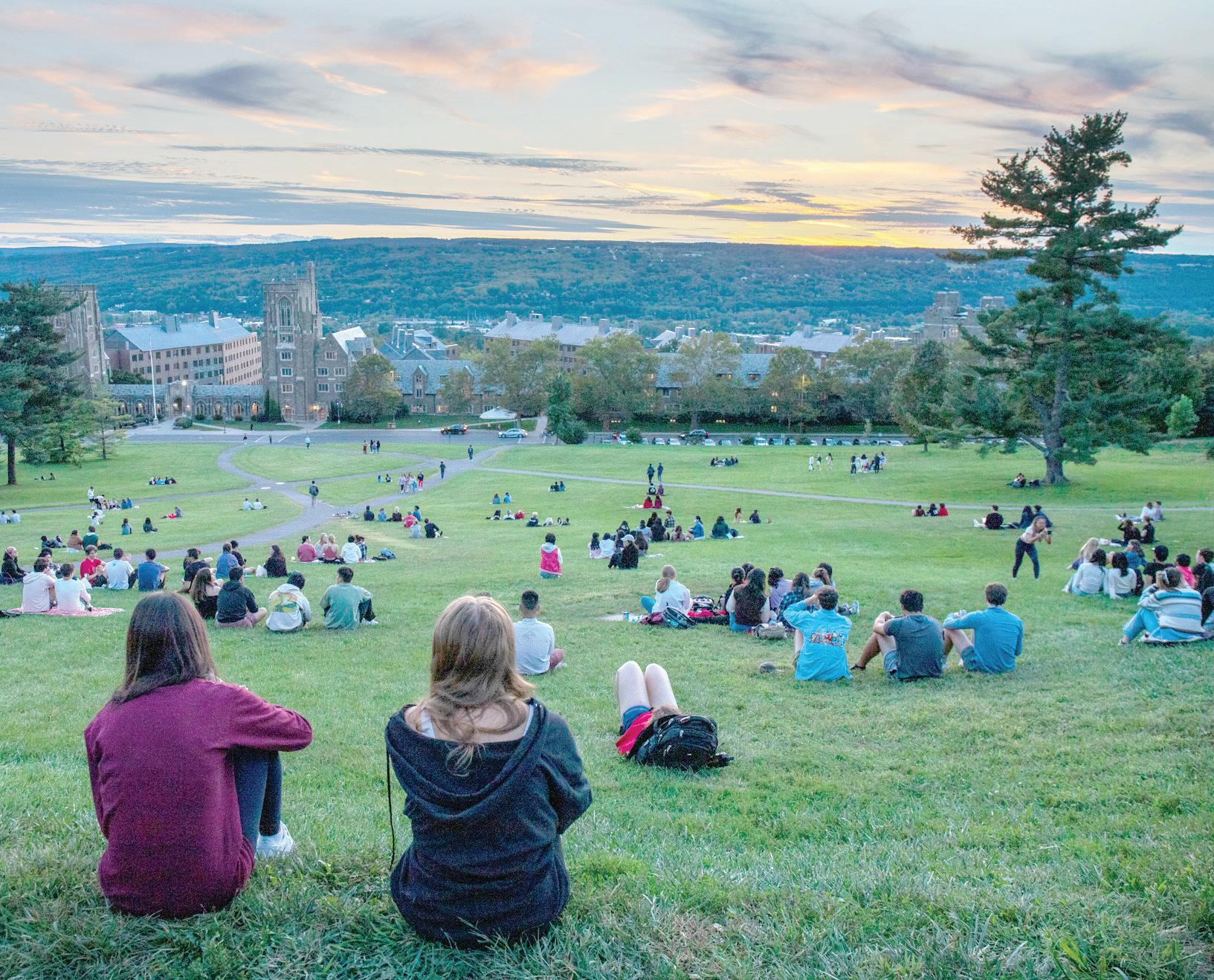
Students gather in groups to take in yet another late-summer Libe Slope sunset.
Dining Guide
Your source for good food
Milkstand Just Skims the Surface Of What’s to Come in Ithaca
By SADIE GROBERG Sun Staff Writer
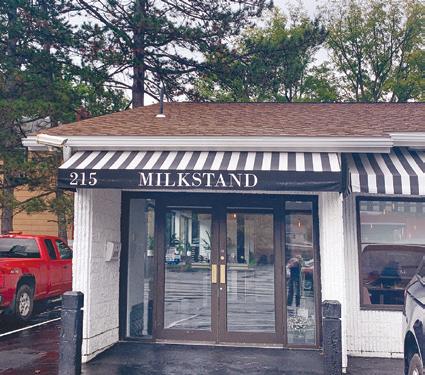
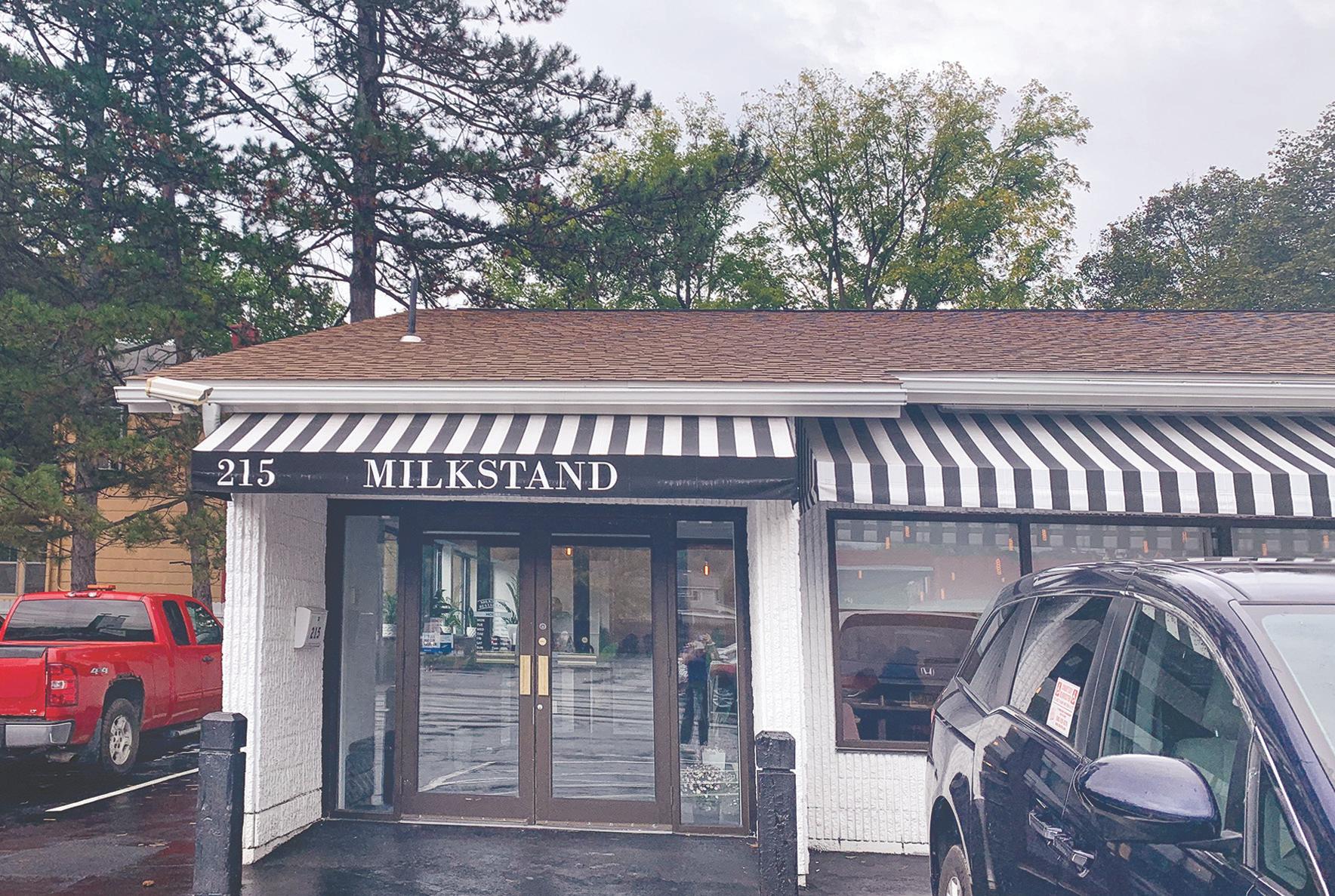
When I first arrived back in Ithaca for the fall semester, I drove down North Meadow Street and was surprised to see a bold white sign outside one of the many strips of businesses, proclaiming “HIRING — ALL POSITIONS.” I did a double-take, then did a little research and learned about a new restaurant called Milkstand that was soon to open. It doesn’t take long for news of a new eatery to spread around Cornell, and I quickly overheard the name “Milkstand” on the daily. This past week, I finally got a chance to check out the new spot, just a few days after it opened.
The restaurant is located in an old Byrne Dairy, a chain of gas station and convenience stores, founded in Upstate New York. The owners, who also run Maru Ramen across the street, named their newest business in recognition of the building’s roots.
The menu consists of typical diner food with some enhanced entrees, such as a portobello sandwich ($14) and a kale pasta with pesto ($22). There is definitely a range for diners to explore, from an array of typical omelettes ($13-$15) to the most expensive item, steak frites ($34). At this price point, Milkstand will not be replacing classics like Sunset Grill or State Street Diner as students’ Sunday morning hangover spot. However, the menu is enticing enough that it has a good chance of becoming a go-to for date nights or special brunches. The draw will likely be those more elevated dishes such as honey-butter toast ($12); still, their egg dishes do not beat Sunset or State’s in flavor, so there’s no reason for them to also surpass them in price.
As for dietary restrictions, there are four menu items marked vegan, which is enough for someone plant-based (like myself) to find something that they like. However, my rule of thumb is that for a restaurant to consider itself friendly to a specific diet, there should be one item in each menu category fulfilling those restrictions, and Milkstand has no vegan brunch offerings. They offer a gluten-free pasta substitution and a cauliflower crust for the flatbreads. I ordered a vegan flatbread, and although it could have been served hotter, I found it to be one of the better vegan imitation
dishes I’ve had in Ithaca.
Overall, what is lacking in flavor is made up for in menu offerings. It’s generally solid comfort food, and the portions seem to be generous for most menu items. Again, the more diner-style food offerings are just as good as other local spots, but you seem to pay extra for the aesthetics and the diverse range of options. As the owners and employees adjust to
the new space, they plan to add more innovative items to the menu, and perhaps some Asian dishes, inspired by one of the owners’ heritage.
It’s easy to see why Milkstand has already garnered so much attention from students. It’s easily described as an upscale diner, and the interior is unlike any other local establishment. Leather booths and marble tabletops, pink chairs at the two-tops and a long tiled counter give the restaurant a nostalgic feel, while the minimalist color palette and LED sign spelling out “The Milkstand” elevate the experience. It’s quite simply a photogenic place, and my Instagram feed has already begun to prove that.
Milkstand, along with other newer eateries like Hound & Mare, seems to fulfill an aesthetic that students crave while living upstate. Nowadays, it seems like every teenager has a food account on Instagram (myself included), and the constant desire to photograph a pretty plate can best be described by the phrase, “My phone eats first.” The urge to snap a quick shot of your meal makes sense — it’s an easy way to share your food outings with friends, and a colorful dish is probably a flavorful one. A smart restaurateur will respond to that demand by prioritizing the styling of their servings, and a really smart restaurateur will make sure their interior design looks artful, too. Milkstand has nailed this. The physical dining room is gorgeous, and the outside is well done, too — the simplistic black and white awning and marquee help to brighten up North Meadow Street.
As entrepreneurs, owners Chris Kim and Soyong Lee have done an amazing job with Milkstand. The restaurant is gorgeous and differs in many ways from what one expects of Ithaca dining. As students arrive back at school and seek newly opened indoor dining, the aesthetics of Milkstand have already made it a hot com-
modity. The menu is robust while still creating a distinct eating experience. Hopefully the coming weeks will allow the owners to perfect the execution of each meal, and maybe even add some spice (both literally and figuratively). Although the price-to-quality ratio is probably not ideal for students, the restaurant is not made to be a Collegetown establishment. They have already enjoyed
significant success among locals, and the location will probably keep their customer base at a more mature level. For the student looking to celebrate a special occasion, escape the bustle of campus or simply secure some good Instagram content, Milkstand is ready for you.
SADIE GROBERG / SUN STAFF WRITER
Sadie Groberg is a sophomore in the College of Agriculture and Life Sciences. She can be reached at sgroberg@cor-
KATHRYN STAMM ’22
in Chief
ANUSHYA ALANDUR ’23
Business Manager
CATHERINE ST. HILAIRE ’22
Associate Editor
PRANAV KENGERI ’24
Advertising Manager
ODEYA ROSENBAND ’22
Opinion Editor
JYOTHSNA BOLLEDULA ’24
News Editor
TAMARA KAMIS ’22
News Editor
CAMERON HAMIDI ’22
App Editor
KRISTEN D’SOUZA ’24
Design Editor
HANNAH ROSENBERG ’23
Photography Editor
OMSALAMA AYOUB ’22
Science Editor
PUJA OAK ’24
Layout Editor
ANNIE WU ’22
Production Editor
MIHIKA BADJATE ’23
Assistant News Editor
SERENA HUANG ’24
Assistant Business Editor
ANGELA BUNAY ’24
Assistant News Editor
JOHN COLIE ’23
Assistant Arts & Culture Editor
AMELIA CLUTE ’22
Assistant Dining Editor
WILLIAM BODENMAN ’23
Assistant Sports Editor
AARON SNYDER ’23
Assistant Sports Editor
MEGHANA SRIVASTAVA ’23
Compet Manager
ROSENBERG ’23
KOH ’23
OZA ’22
HEO ’24
CIPPERMAN ’23
UMAR ’23
PLOWE ’23
’23
VELANI ’22
PICHINI ’22
TYAGI ’22
MENDOZA ’24
ARANDA ’23
BASU ’23
RIGGS ’24
LEYNSE ’23
NAGEL ’24
’24
Iis a
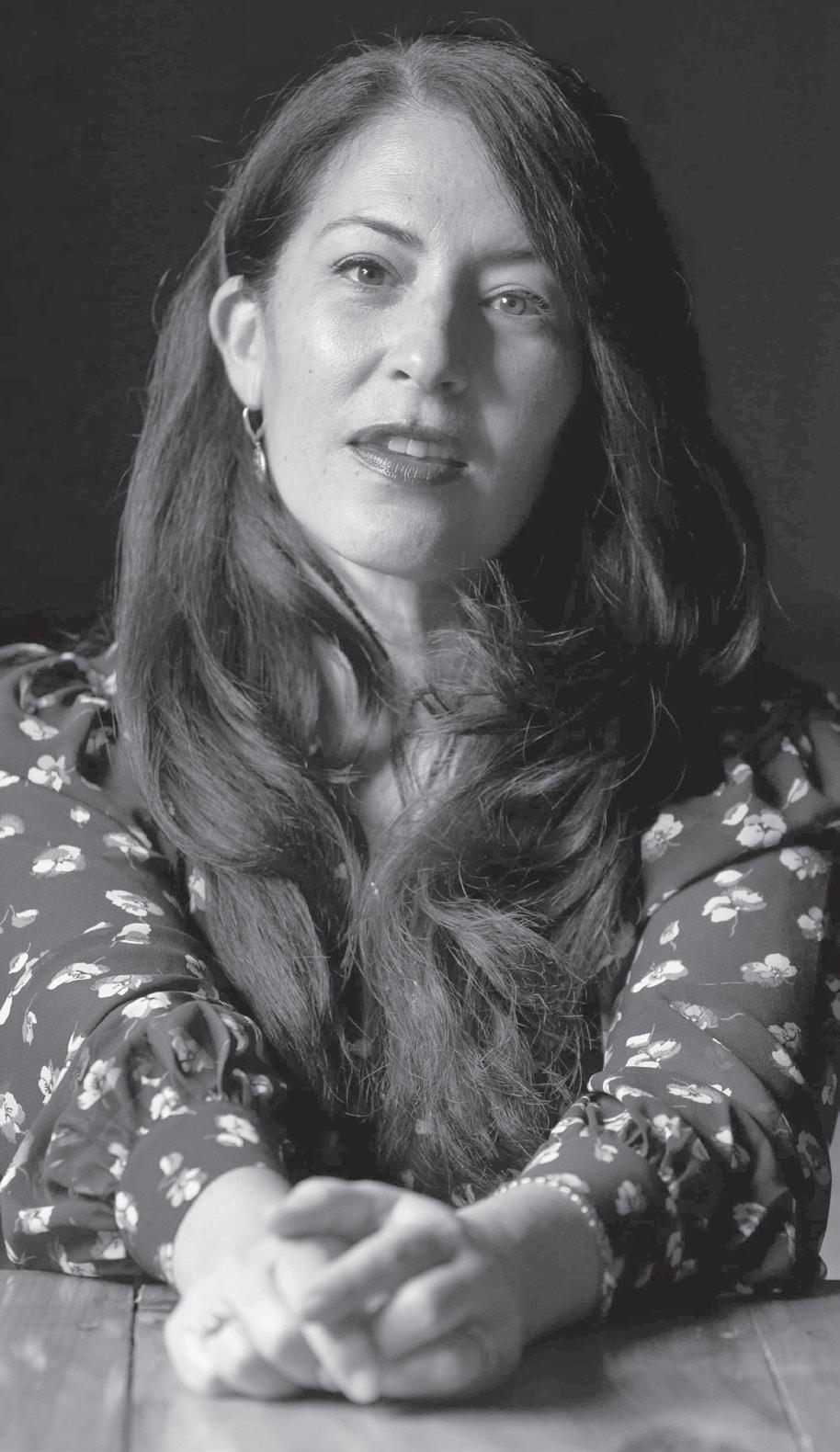
Rebecca Sparacio Te Space Between
in the
She can be reached at rsparacio@cornellsun.com. Te Space Between runs every other Wednesday this semester.
Are We the Next
‘Lost
Generation’?
t’s been three weeks of walking to class and three weeks of “the real college experience.” These three weeks have felt oddly normal with ClubFest and homecoming crowds littered with masks and bustling with the awaited conviction that this is what college is really like. These events allow for the essence of normality. Though as I walked through the Arts Quad with my friend, we talked about still feeling “lost.”
do we process loss when we are dressed up in suits doing club recruitment? I watch our generation take hedonistic measures; getting blackout drunk on weekends or believing that we are powerless to change our current situation. These ideas are reminiscent of Hemingway’s characters who travel to Europe, also get quite drunk and descend into a sort of nihilism.
Wu ’23
Rosenband ’22
Madeline Rosenberg ’23
deskers Vee Cipperman ’23 Kayla Riggs ’24
desker Alexandra Kim ’24 Pico Ross ‘22
deskers Kristen D’Souza ’24 Puja Oak ’24
desker Julia Nagel ’24 dining
Amelia Clute ’22
Will Bodenman ’23
It’s been three weeks of Ithaca’s characteristic sunsets, one of the only things that’s remained the same on campus. Sunsets of orange and violet capture day fading into night, painting a backdrop of color on our time here. As a sophomore, I’m still learning where the buildings are and I’m still being mistaken for a freshman. The word “sophomore” comes from the Greek word” sophos” meaning wise and the word “moros” meaning foolish. We, sophomores, are wise fools, Googlemapping lecture halls and navigating the wisdom our freshmen year has given us. The word sophomore captures the paradoxical nature of our reality.
The milestones we missed due to the pandemic form a pit in our stomachs
... But how do we process loss when we are dressed up in suits doing club recruitment?
It’s been three weeks of sitting at my West Campus desk, where Ernest Hemingway’s The Sun Also Rises sits on my shelf. I bought this book with a friend on the last day of classes last year; complete with the Wrigley’s double mint wrapper that the person who owned it before must have used as a bookmark. The book tells the story of the generation of young people in the 1920s who faced the aftermath of World War I. They were deemed the “lost generation” — a term originally coined by Gertrude Stein — which was used to embody the disappointment and lack of purpose these young individuals felt having survived the war. Ultimately, Hemingway concluded that although his characters were injured emotionally and physically by the war, they were not truly lost.
It’s been nearly a century since Hemingway’s book was published. Now, in a time of horrific loss due to the pandemic coupled with deep political polarization, the idea of a “lost generation” seems to echo from the past. I think that we, college students, are part of a lost generation. We have witnessed society break apart in ways that have far reaching social, political and economic implications. The milestones we missed due to the pandemic form a pit in our stomachs, allowing us to feel the gravity of time that we won’t ever get back. But how
Hemingway’s generation felt that history was moving in the right direction, that progress was being achieved. However, watching the technologies of the industrial revolution cause large scale death and destruction dampened the spirits of many, and it’s needless to say that their “war to end all wars” was no such feat. Our generation is caught in a different type of technological dilemma. Lifesaving technologies like vaccines are developed, but the effort to vaccinate people falters as it’s faced with reports of fake news and incompetent political leadership. New social media platforms like TikTok elicit nostalgia as they prompt people to dress up from past eras, repost scenes to old movies and bake banana bread. But we must ask ourselves: Is escapism the only route we are willing to take when facing the whirlwind of issues shaping our future?
We are a lost generation, but we shouldn’t want to be and we don’t have to be for long. A big part of not being lost is finding yourself and, quite literally, finding the people around you. It’s important that we help each other bounce back from a year on Zoom. Talk to the people sitting around you in class, go to dinner with someone new, text a friend you met during O-week and haven’t spoken to since, be more creative, discuss ideas in your common room, ask the hard questions. Do the opposite of what you did last year — study in the libraries if you haven’t, raise a discussion point in class if you don’t usually speak, say hello to the professor that you only met on Zoom, show up to that club or that panel or that event. Give yourself the gift of the “real college experience.”
Sometimes I can’t help but wonder what my Cornell experience would be like without the pandemic, but I think that the last page of The Sun Also Rises sums it up pretty well. The book ends with two characters Jake and Brett sitting in the backseat of a taxi. Brett says to Jake, “We could have had such a damned good time together.” Jake replies, “Isn’t it pretty to think so.”
Rebecca Sparacio
sophomore
Dyson School.
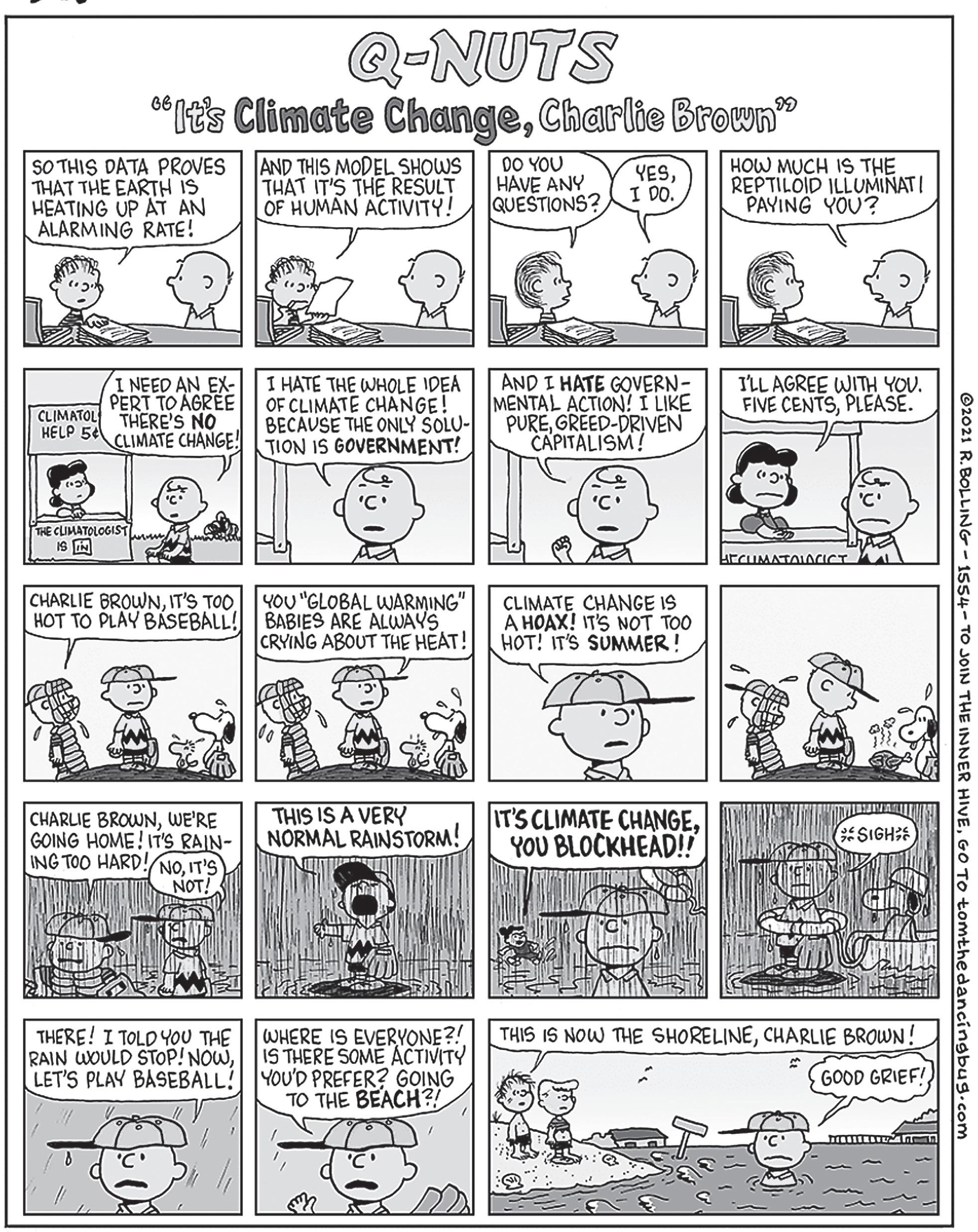
Tom the Dancing Bug by Ruben Bolling
Fill in the empty cells, one number in each, so that each column, row, and region contains the numbers 1-9 exactly once. Each number in the solution therefore occurs only once in each of the three “directions,” hence the “single numbers” implied by the puzzle’s name. (Rules from wikipedia.org/wiki/ Sudoku)
I Am Going To Be Small
Mr. Gnu by Travis Dandro
Mr. Gnu by Travis Dandro
CROSS COUNTRY
Cornell’s Cross Country Teams Dominate in Return
By ANNA HOOPER Sun Contributor
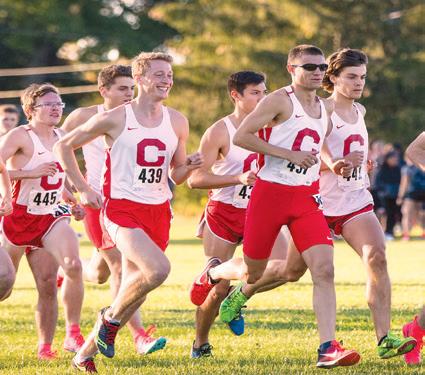
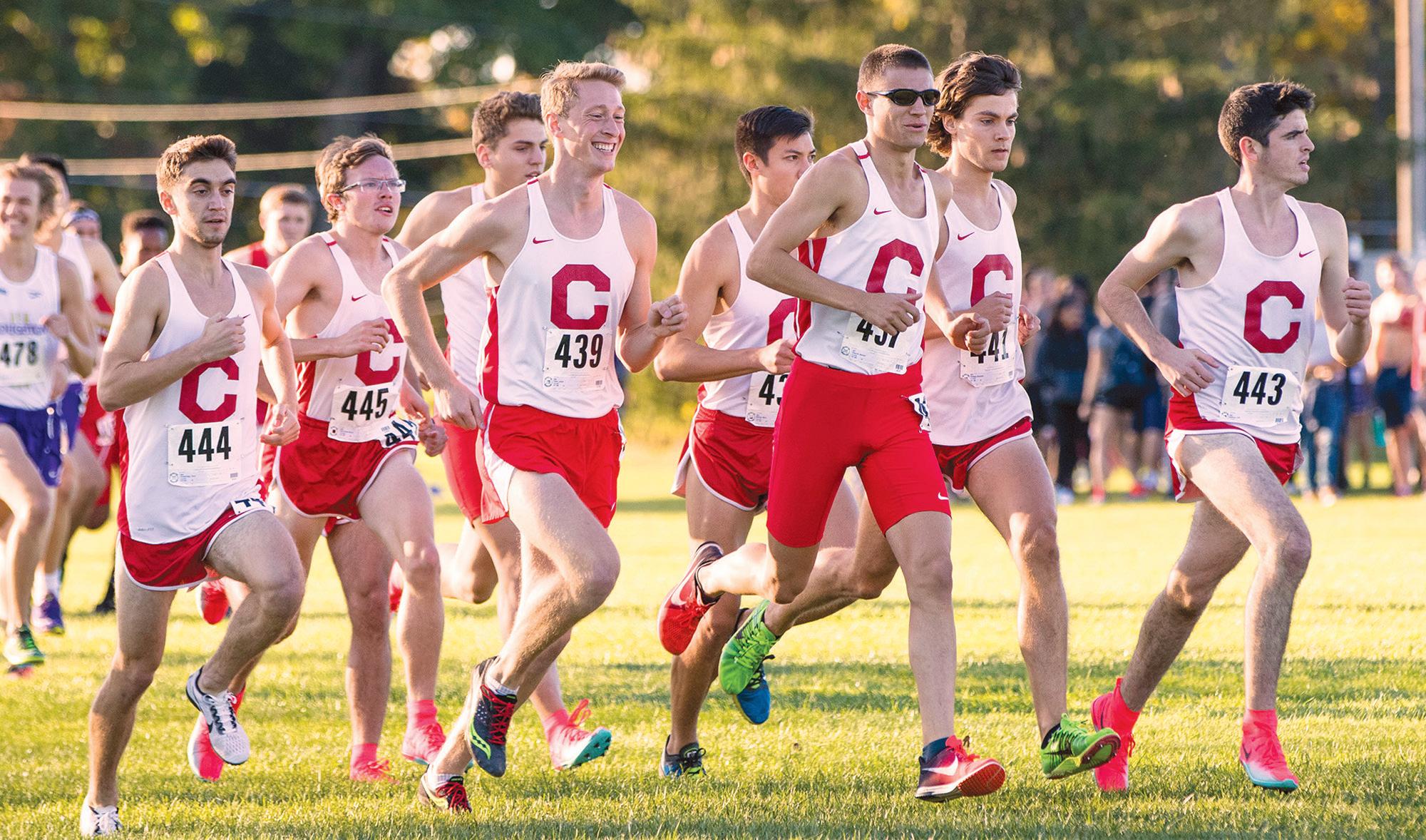
For the first time in nearly two years, Cornell’s cross country teams laced up their shoes and competed in the annual Yellowjacket Invitational at the University of Rochester. The large field of competitors proved to be no match for the Red’s domination.
The men’s team placed first in the overall team competition, racking up a total of 20 points, roughly 53 points less than Geneseo’s second.
Senior Captain Matt Fusco secured second place overall, with a time of 26:01.2, leading his team to the finish line. He was followed by junior Rishabh Prakash (3rd, 26:01.3), senior Caleb McCurdy (4th, 26:02.1), freshman Diego Aguirre (5th, 26:02.1), senior Jamie Granata (6th, 26:02.4), sophomore Thomas Foster (7th, 26:02.7) and Junior Wyatt Sulivan (8th, 26:04.0).
In the 6K women’s competition, the Red also claimed first place, with a team total of 30 points. The group was led by senior captain Isa Meyers’ first-place finish, her time buzzing in at 22:03.8.
Sophomore Isabel MacFarlane (5th, 22:25.2), senior Rebecca Hasser (7th, 22:33.9), freshman Sierra Burror (8th, 22:43.4) and Marge Dalseth (9th, 22:48.3) were close to follow. Seniors Lucy Hurt (22:57.6)
and Natalie Morris (23:07.7) placed 10th and 12th, respectively.
These successes have proven particularly noteworthy, as Cornell’s cross country teams were unable to compete last year.
“I think it made us stronger, because we're better prepared to deal with challenges that come our way,” Fusco said. “Missing all that stuff has made us better prepared to handle and deal with challenges that we might face during the season. Not everything's going to go as planned.”
After more than a year of uncertainty, Cornell’s cross country program has gained valuable assets that will
support them in future competitions.
“I think our team has always been pretty resilient and that having been in a pandemic and not really raced is just going to play to our strengths,” Meyers said.
Head Coach Mike Hendersen said that perseverance is the key to the team’s success in a long season.
“It's just continuing to persevere when you're out there running and you're tired and it's tough,” he said.
The Red races next on Oct. 1 at the Paul Short invitational, hosted by Lehigh University in Bethlehem, Pennsylvania.
Anna Hooper can be reached at ajh323@cornell.edu.
Led by Myers, Red Sailing Has Successful Weekend
By KATRIEN DE WAARD Sun Contributor
Junior skipper Lillian Myers clinched her second consecutive Faye Bennet MAISA Women’s Singlehanded Championship for the Red Sailing team this past weekend in Annapolis, Maryland — with sophomore skippers Lucija Ruzevic and Lauren Ehnot taking second and fifth place, respectively. Myers’ win secured her a spot in the LaserPerformance Women’s Singlehanded National Championship this November.
“Coming home with the title was just as rewarding as winning freshman year,” Myers
said. “Lucija is my best friend of six years. We were on the same team growing up, so for us to get first and second is so cool, and three of us [Red] in the top five, what more could you ask for?”
For the doublehanded skippers, the Red competed at home in the Cayuga Invite and Big Red Invite. In the Cayuga Invite, the Red placed third out of six, only five points behind second-place University of Pennsylvania. The Big Red Invite, on the other hand, was a less competitive event that allowed other sailors on the teams to try out competitions.
“We want to give people the opportunity to gain experience and see what they can do in competitions,” said Head Coach Brian Clancy. “There are bigger events on the horizon, so we’re not placing too much emphasis on the results from this weekend.”
Of the 23 women on the sailing roster, 14 are freshmen or sophomores competing with the Red for the first or second time, and seven sailors are juniors, whose freshman year spring seasons were cut short by COVID-19. At this past weekend’s Cayuga Invite, senior skipper Brooke Shachoy sailed doublehanded with freshman crew Amelia Neumann.
“We definitely have a young team, so it’s nice because we have a lot of room to grow together,” Shachoy said. “It’s awesome as a senior that I can be sailing with a freshman and develop the team in that way. We’re working together to try to be the best that we possibly can be, but it’s also nice for that kind of team development as well.”
The Faye Bennet Laser Radial was also sophomore Ruzevic’s first race with the Red. Although she said she struggled with low winds at her college competition debut on Saturday, Ruzevic made numerous top-four efforts on each of the eight races on Sunday, earning her a second-place finish.
Wind trouble characterized the invites both on Cayuga Lake and at the Faye Bennet. Sailing at the Cayuga Invite was delayed both mornings with breezes fading in and out, and light winds kept the Faye Bennet fleet on shore all of Saturday morning.
“It was just a lot of keeping your head out of the boat, being in turn with all the changes on the racecourse and being able to adapt,” Ruzevic said.
The sailing conditions were frustrating for the competitors, Shachoy said, as the wind picked up after Saturday morning, making racing more challenging. She added that some of the scores may have been inconsistent because of the conditions.
Still, Shachoy said she’s looking forward to future competitions with the Red.
“We’ve got a lot of good momentum going. The team practices have been awesome,” she said. “And we definitely are a young team this year, but we’ve got a lot of talent and a lot of depth.”
On Sept. 25 and 26, the Red will host the MAISA Top 9 at Merrill Family Sailing Center. Races will include women’s and co-ed doublehanded regattas.
Katrien de Waard can be reached at kd348@cornell.edu.
Yale vs. Cornell
Saturday, 12 p.m. New Haven, Conn.
Football
Reason to smile | The Red runners (seen here in a file photo) competed for the first time in nearly 700 days.
Windy | Players and coaches are challenged by windy weather at Sunday’s Cayuga Invite.