


By AMINA KILPATRICK Sun News Editor
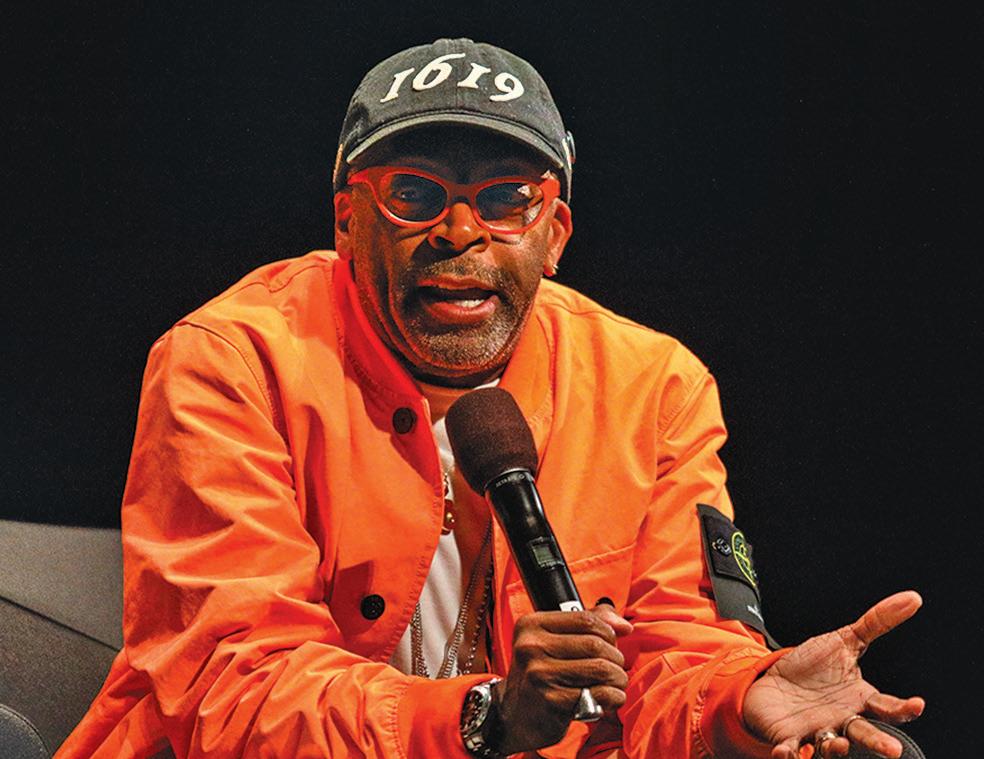
Spike Lee entered the stage sporting bright orange glasses, a matching jacket, white pants and blue sneakers accented with the same color orange.
Friday’s engaging conversation with the AcademyAward winning director took place in a sold-out Bailey Hall and featured Prof. Samantha Sheppard, performing and media arts. It was co-hosted by the Cornell University Program Board and the Multicultural Concert Funding Advisory Board.
oldest child in his family.
His foray into filmmaking began during the summer between his sophomore and junior year. He went into the summer without a major at Morehouse University and was told by his advisor that he “ran out of electives.”
“There’s no way at that time a ... black filmmaker could work his way up from the mailroom.”
Director Spike Lee
He began by speaking about his childhood and how got into films, explaining that his mother was a cinephile and always took him to movies as the
During the summer of 1977, when “everybody” was broke, Lee borrowed a Super 8 camera from his friend who was studying to be a doctor, claiming she didn’t have a use for it. He then began filming his neighborhood in his hometown of Brooklyn. This footage evolved into his first production, titled Last Hustle in Brooklyn.
‘system change, not climate change’

By TAMARA KAMIS and CALLIE MCQUILKIN Sun Staff Writer and Sun Contributor
Amidst chants of “system change, not climate change!” and “no more coal!”, hundreds of Cornell students and faculty members marched to the Commons on Friday. The march, one of over 4,000 protests occurring this week for the Global Climate Strike, called for divestment from fossil fuels and a federal Green New Deal, among other reforms. “Striking is a really influential tool,” said march orga-
nizer and Climate Justice Cornell member Ellie Pfeffer ’23. “Obviously we don’t want to strike. We want our leaders to have the courage to fight the climate crisis in a way that matches its scope. But unfortunately that’s not happening yet.”
The protest on Ho Plaza began with Colin Benedict, a member of the Mohawk nation from the Akwesasne territory, who recited the Haudenosaunee Thanksgiving Address.
By GIRISHA ARORA Sun Senior Editor
“No justice, no peace; no racist police.”
“It is our duty to fight for our freedom. It is our duty to win. We must love each other and support each other. We have nothing to lose but our chains.”
These are just a few of the slogans that resounded in front of Tompkins County Courthouse during a powerful two hour demonstration in support of Rose de Groat and Cadji Ferguson Friday evening.
The case of these two black residents that began with a controversial arrest in April has brought national debates on police brutality and systemic racism home to Ithaca.
A crowd of approximately 50 supporters of all ages gathered in support of de Groat and Ferguson on a day that earlier saw thousands marching in a community climate strike. Many speakers discussed the power that people had and the importance of grassroots movements in demanding change.
“I’ve watched my community die. I've watched my community get brutalized.”
“I’ve watched my community die. I’ve watched my community get brutalized — it breaks my heart. But to see you beautiful people all here today, I got hope,” said Phoebe Brown, a longtime Ithaca resident.
The protestors’s demands included reparations for Ferguson and de Groat, as well as disciplinary action against the officers involved. The most important request, however, was to get District Attorney Matthew Van Houten to drop all charges against de Groat.
“It’s not okay for us to have a D.A. who is not will-
Artists & Scientists Crossing Borders To Explore the Value of Pollinator Health
8 a.m. - 5 p.m., Mann Gallery, Mann Library
18th Annual Labor & Employment Law Roundtable
8:30 a.m. - 3:45 p.m., Statler Ballroom, Statler Hotel
Employee Representatives Roundtable
8:30 a.m. - 3:45 p.m., 5th Floor Statler Hall
Chemical Engineering Seminar: Richard D. Braatx 9 a.m. - 11 a.m., 255 Olin Hall
Disability Workplace Inclusion Noon - 1:30 p.m., 401 Warren Hall
Conscripting Kinsmen: Labor Contractors and Peasant-Workers in India and China 12:15 - 1:30 p.m., G08 Uris Hall
Developing and Applying Informatics Data to Project Impacts of Climate Change on Freshwater Systems 12:20 - 1:20 p.m., A106 Corson/Mudd Hall
The Role of Agroforestry in Promoting Landscape Multifunctionality in Rural and Urban Areas 12:20 p.m., 404 Plant Science Building
Being Muslim and Female in Myanmar (Burma): Two Perspectives 4:30 p.m., 404 Morrill Hall
its present and future significance.
Online Optimization and Energy 4:15 p.m., 253 Frank H. T. Rhodes Hall
Unturned Leaves: Early Women in Botanical Illustration
8 a.m. - 5 p.m., Mann Lobby, Mann Library
Plant Pathology and Plant-Microbe Biology Seminar 11 a.m. - Noon, A134 Barton Lab
A Double-Edged Sword: How and Why Resetting Performance Metrics Affects Motivation and Performance 11:40 a.m. - 1:10 p.m., 141 Sage Hall

Hong Kong on the Edge 4:30 - 6 p.m. 132 Rockefeller Hall
Kader Attia: Restitution – Reparation? 5:15 p.m., Milstein Auditorium
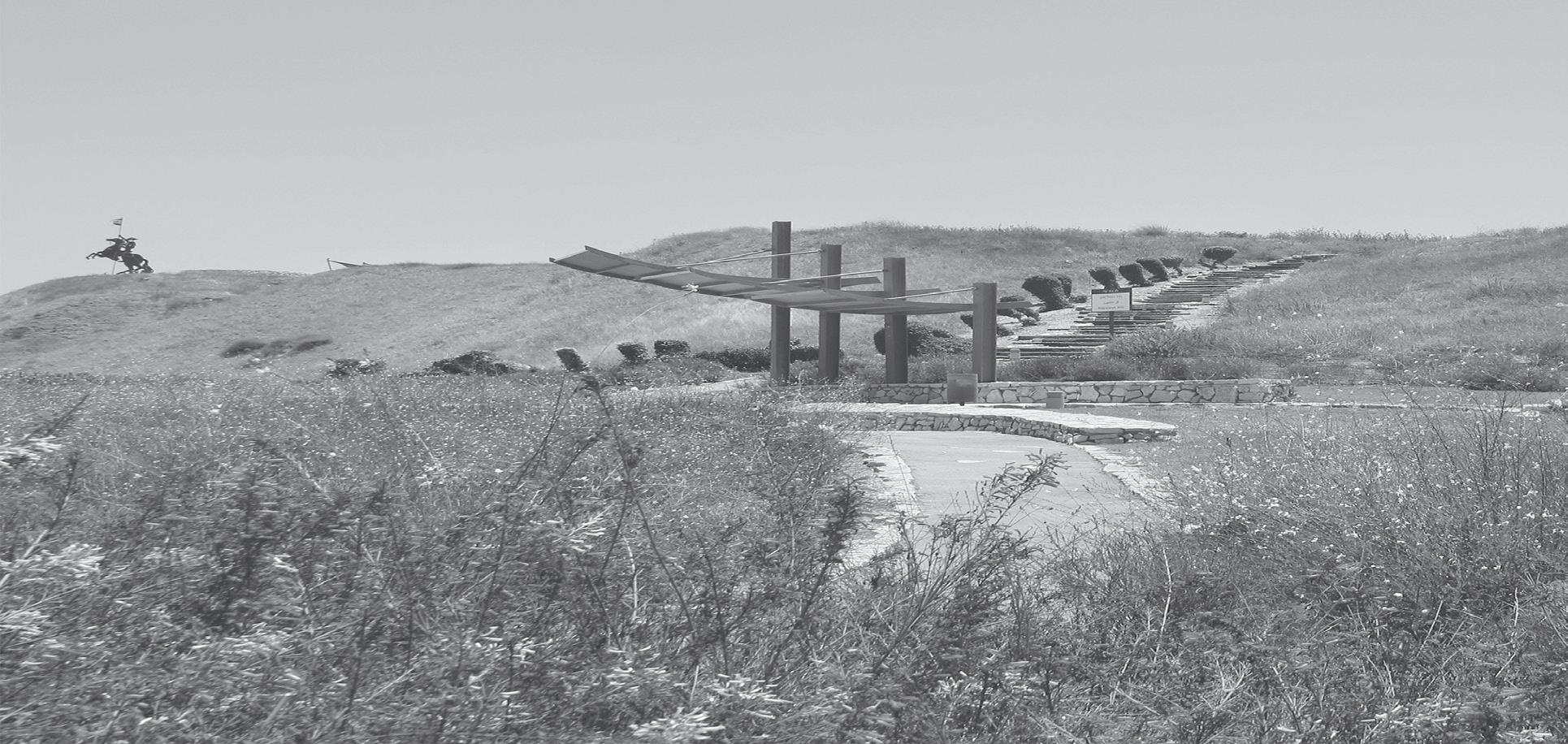
Total Archaeology at Tel Akko, Israel: New Approaches to Akko’s Past, Present and Future 6 p.m., G22 Goldwin Smith Hall
By KATHRYN STAMM Sun Staff Writer
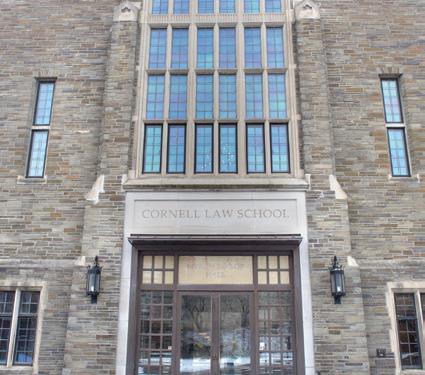
The Law School Admissions Test has officially transitioned to a fully digital exam as of the Sept. 21 exam, joining the ranks of other graduate admissions exams.
The digital exam is now administered on a tablet — provided by the Law School Admissions Council, who runs the test. While the digital version will allow the LSAC to administer more exams, deliver scores faster and provide better accommodations, some students worry about its potential inaccessibility and administrative hiccups.
“Historically, [the LSAT] has been the only diagnostic exam that law schools accept for admission,” said Monica Ingram, Associate Dean of Admissions and Financial Aid at Cornell Law School. “There is a lot riding on it; there is a lot of anxiety about it.”
Recently, Cornell Law School launched a pilot program to accept the GRE in place of the LSAT, joining peer institutions such as Harvard, Ingram said. However, all LSAT scores are released to the law schools students have applied to, per LSAC rules.
For the September test, many Cornell students had to travel to Binghamton because all the spots at the Ithaca location had filled — including President of Black Ivy PreLaw Society Lynn-Saskya Toussaint ’20, whose friend had to drive her to the testing location at 6:30 a.m. merely to ensure that she would arrive on time, she told The Sun. Another Cornell student spent over $100 taking an Uber, according to Toussaint.
But the new digital exam also presented more issues than LSAC had accounted for, Toussaint said. While nine locations around the country canceled their tests, she was optimistic about her own because it had not been cancelled.
Throughout the test, she felt confident, but was thrown off when the test proctors announced that they had lost connection to the wifi after the fourth test section.
Eventually, the proctors dismissed the students before
having a chance to complete the final section, without any further information or clarity about next steps.
“I was distraught,” Toussaint explained. “Certain people got really upset. There was one individual who was crying. People prepare for months for this exam, and their future is on the line.”
Toussaint was frustrated because she had taken off work to take the LSAT and was planning on this being her final try before moving on to the admissions process. She took the paper version in July.
After the exam, she said test takers received apologies from LSAC in an email, but no real answers. When she called, they said reimbursements weren’t likely, and they couldn’t provide any more information about when or where her rescheduled exam would be or what sections she would need to retake.
“At the homestretch, I feel like all of it was wasted,” Toussaint said. “While the exam is three hours long, the preparation for it takes months.”
ness adjustment and color filters or grayscale. Stohr was also optimistic about the interface tools to highlight text, flag questions, deselect eliminated multiple choice answers and keep track of time.
Many pre-law students on campus use various external live courses, such as Kaplan and TestMasters to prepare. Different pre-law organizations on campus often offer deals to their members to help decrease the accessibility gap to law school.
However, not everyone has access to extensive prep materials, beyond the three provided official practice tests from LSAC. This poses significant disadvantages, according to some students.
“Not everyone is going to have a tablet, not everyone is going to have the resources to simulate the exact conditions anymore.”
Lynn-Saskya Toussaint ’20
The changes to the LSAT began in July, when half of the test takers randomly received the digital exam for the first time, while the rest took the traditional paper-and-pencil format.
“The content is not changing,” said Glen Stohr, Kaplan Test Prep’s senior manager for instructional design. The LSAT teacher of 23 years recently published a book about the new digital LSAT.
“It’s the same question type, it’s the same number of questions,” he said. “The strategies and skills you’ve learned continue to apply … If you have been practicing with paper, don’t throw out the baby with the bathwater.”
For Stohr, the format changes are positives.
The digital LSAT will allow the LSAC will now be able to more than double their usual four test dates. It will also offer better accessibility options, such as larger text, bright-
By WINNY SUN Sun Staff Writer
When Julia Haber — a recent graduate of Syracuse University and the founder of branding company WAYV — approached Entrepreneurship at Cornell’s Director Zachary J. Shulman, ’87 J.D. ’90 with a proposal for an entrepreneurship pop-up event on campus, Shulman gladly agreed.
After months of planning and organizing, the pop-up, co-hosted by WAYV, Shopify and Entrepreneurship at Cornell will finally make its debut on the Arts Quad on Sept. 24-25, running from 9:30 a.m. to 6:30 p.m.
Entrepreneurship at Cornell — a university-wide initiative that discovers and cultivates the “entrepreneurial spirit” among those hailing from all corners of Cornell — is currently overseen by the deans of Cornell’s 12 participating schools.
WAYV is a branding company tailored toward college students, and Shopify is an ecommerce company that helps clients market products online.
The immersive pop-up event will be housed in a 40-foot trailer on the Quad, where students will learn about six successful independent companies that use the tools provided by Shopify to run their businesses — Think Board, Pipcorn, Final Straw, Bombas, Zandra Beauty and HexComix.
Aside from exploring and asking questions about start-up stories and business models, students will also have the opportunity to discover what kind of entrepreneurs they embody through a Buzzfeedstyle quiz.
“Each of the six companies is either purpose, profit or passion-driven. Bombas
“I think that the LSAT is already a pretty significant barrier to law school,” said Nick Shepard ’20, new member educator of Kappa Alpha Pi — a professional pre-law fraternity. “It’s like the ACT or the SAT: if you have the resources to shell out a lot of money to go and take these prep courses, you’re going to do better.”
“It makes it harder for individuals who don’t have those resources to simulate the test environment,” Toussaint said. “Not everyone is going to have a tablet, not everyone is going to have the resources to simulate the exact conditions anymore.”
“The LSAT is a test that you want to reduce the amount of variability you experience on the day of the test,” said Ishan Sharma ’20, president of KAPi.
Yet, the LSAC assures that the digital LSAT is “very easy to use,” and that because the structure of the test sections and questions will not change, the scores should have no preferencial difference.
Kathryn Stamm can be reached at kstamm@cornellsun.com.
By SHRUTI JUNEJA Sun Senior Editor
Twenty years after Cornell launched an interdisciplinary Computing and Information Science unit to “mold the next generation of tech innovators and thought leaders,” some of those leaders will return to Ithaca to share their vision for the next 20 years — just a few days before Homecoming weekend.
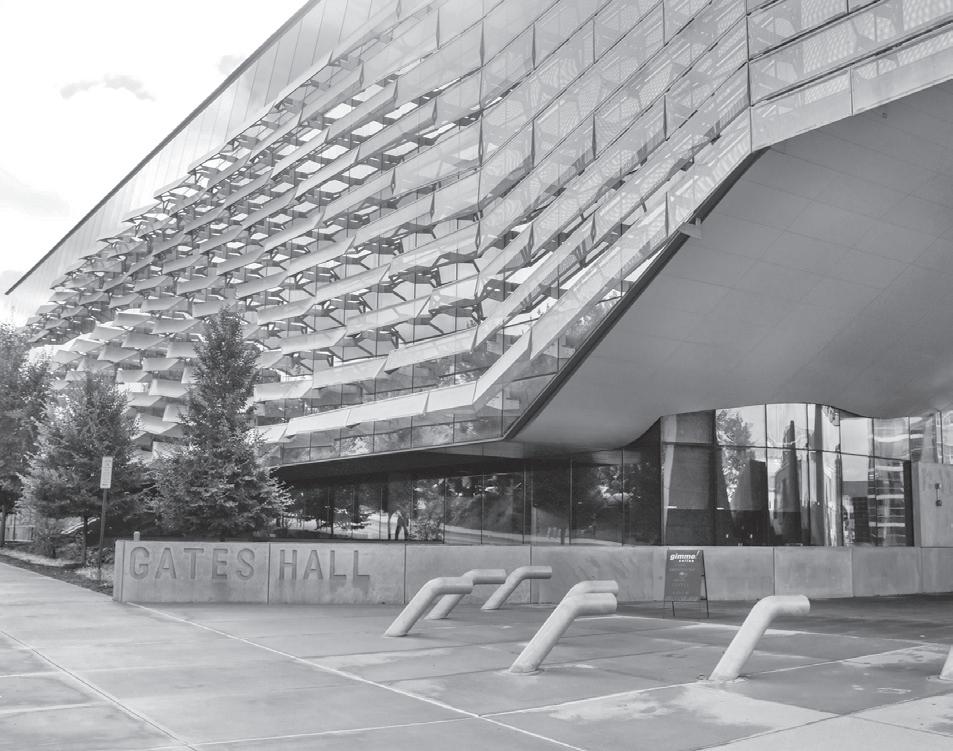
CIS houses the departments of computer science, information science and statistics and data science with faculty hailing from mulitple colleges and two Cornell campuses. It is centered in the Bill and Melinda Gates Hall in Ithaca and the Cornell Tech campus in New York City, which opened in 2017.
“In 1999, the world was wary that the Y2K bug would wreak havoc on global computer systems, the Blackberry and Matrix was released, and Prince was realizing his ultimate party year,” the the CIS@20 website states. “Here in Ithaca, New York, we were announcing the advent of Cornell Computing and Information Science [CIS], which was created to respond uniquely to the educational and scientific challenges of the advancing information age.”
In a series of events over Oct. 2-3, an array of speakers, spanning current and former Cornell presidents, various leaders from tech universities, alumni, students, corporate allies and Cornell faculty and staff will lead sessions touting themes of “Inspire, Innovate, Impact.”
“Advances in computing, insights from data and the design of digital platforms that we all use have brought about important changes in society and in academia,” Interim CIS Dean Jon Kleinberg told The Sun.
“For the past 20 years, Cornell CIS has worked to bring these ideas to students at all levels, and to incorpo-
rate them into research and scholarship across the university,” he continued. “The CIS 20th anniversary event will focus on the next steps in all these developments going forward and how we can contribute to them.” Examples of sessions range from “Conquering the Data Tsunami” and “Anticipating Societal Impact” to “The Changing Role of Computing, Information and Data Science in Society and Education: A University Leaders Panel.” The panel on “The Changing Role of Computing, Information
LEE
Continued from page 1
After making more films during his time at Morehouse, Lee said he went on to pursue graduate work at the Tisch School of the Arts within New York University, where he would later on become a tenured professor and graduate with a M.F.A.
Lee said he decided to forego a traditional route in the realm of filmmaking, turning down an internship with Columbia Pictures. He stated he did not foresee a black man being able to climb the ranks during that time.
“There’s no way at that time a young black film maker could work his way up from the mailroom,” Lee said.
After some failures with making earlier films, Lee understood that his next project needed to be cheap. This project became She’s Gotta Have It, which was shot with a budget of $175,000. Due to budgeting constraints and having to devote funds on the shot, getting the film, affording basic necessities and editing the film, Lee adopted a constrained lifestyle.
“I was hanging with the Chef. Do you know who the Chef is?” he asked Sheppard.
When she replied no, he responded “Chef Boyardee,” laughing at his own joke, while a laughter began to resound around the room. Throughout the night, Lee responded with comedic zingers at many different points.
The 90-minute conversation explored Lee’s storied history throughout the entertainment business. He mentioned his work with Nike, creating commercials for the then-new sneaker collaboration with Michael Jordan’s as part of his character Mars in the film She’s Gotta Have It
When Sheppard asked about Lee’s signature usage of double dolly shots — a filmmaking technique where the camera and actor are on a rolling track — Lee spoke about a powerful moment during the filming of Malcolm X, which starred Denzel Washington and Angela Bassett.
Lee noted one scene from the film where Washington recited one of Malcolm X’s speeches. Once Washington
had finished saying all his scripted lines, which were based off of real speeches by Malcolm X, he continued on with the speech. That was a special moment during the production, Lee said.
“What we saw, what we witnessed, was the spirit of Malcolm coming into his vessel,” Lee said.
He credits Washington’s ability to get so into character to his extensive preparation, which began a year before the shoot and included no drinking, no eating pork, reading the Quran and embodying other aspects of Malcolm’s life. That day was so powerful that some castmates, including Bassett, still get emotional thinking about that moment, according to Lee.
“The only reason why all this stuff is changing is because of her, #OscarsSoWhite.”
Director
Spike Lee
Lee followed up this moment by mentioning his favored baseball team the Yankees’ recent victory, breaking the tense room into laughter once again.
Sheppard then turned the conversation to the usage of Brooklyn as the backdrop for his stories, an important part of his personal history.
Lee mentioned how Brooklyn today is vastly different from the Brooklyn he grew up in from rising gentrification. He acknowledged his conflicted feelings, noting that while schools have improved, the property values have gone up, and police still patrol the area. However, he takes issue with people not respecting the existing culture in Brooklyn.
“Some of these neighbors you know, they come in like they been, Christopher Columbus syndrome, like you been here,” Lee said. “Motherfucker, you just got here. We’ve been here. Come with some humility, there’s a culture here.”
This year marks the 30th anniversary of his critically
acclaimed film Do The Right Thing, which earned two nominations for Best Supporting Actor and Best Original Screenplay and was deemed “culturally, historically, and aesthetically significant” and selected for the National Film Registry.
Upon reflecting on the legacy of the film, Lee returned to critics’ responses of the film back in the day and the police presence at the premieres, fear that moviegoers would emulate what was on screen.
“Because what they were saying, what these racists were saying was that black people, black moviegoers, don’t have the intelligence to make the distinction between what was on the screen and what is real life,” Lee said.
This year, Lee also earned his first Oscar, Best Adapted Screenplay, for his film Blackkklansman. His first entry into the Oscars was nearly 30 years ago. He credits the move towards a more diverse Oscars to activist April Reign who started the hashtag #OscarsSoWhite, stating the recent changes in making the voting body of The Academy more diverse.
“The only reason why all this stuff is changing is because of her, #OscarsSoWhite,” Lee said.
He also noted the parallels to his film Blackklansman losing Best Picture to Green Book and to his film Do The Right Thing to Driving Ms. Daisy
“God is a trickster,” Lee remarked.
After a discussion on the age of streaming and how it affects filmmakers, Lee concluded that it is an individual choice filmmakers must make to release their film through streaming sites, a choice that often has a monetary swing.
Lee concluded his talk with a message to parents urging them to allow kids to follow their dreams, even if it means a career in the arts.
“You gotta do what you want to do. Even with the threat of being kicked out for this or disowned by your parents,” Lee said.
“Or you’d be miserable,” Lee added.
Amina Kilpatrick can be reached at akilpatrick@cornellsun.com
and Data Science in Society and Education” will be moderated by Farhad Manjoo ’00. Manjoo — a former editor-in-chief of The Sun — is currently an opinion columnist for The New York Times who writes “about how technology is changing the world, for better and worse,” according to their bio (They also investigated how the infamous pumpkin got on top of the clock tower).
“I thought the event sounded interesting and it’s been a while since I’ve been back in Ithaca, so I thought it would be fun to come out,” Manjoo told The Sun.
President Martha E. Pollack — widely dubbed as an expert in artificial intelligence — will be featured on the panel,
along with Harvard Prof. Barbara Grosz ’69, Carnegie Mellon University President Farnam Jahanian, Stanford Professor Iain Johnstone and MIT Chancellor and Prof. W. Eric Grimson.
Pollack will also lead a fireside chat called “Creating Cornell CIS” that will include former University president Hunter R. Rawlings III, Founding CIS Dean Bob Constable and Cornell Tech Dean Greg Morrisett.
“There’s something for everyone at the event!” Leslie Morris, CIS Director of Communications, told The Sun. “A celebratory video, trending research faculty panels, an exciting domino fall, reception featuring CIS clubs and PhD student research and leaders of tech higher education talking about the impact of tech on society and education.”
The CIS@20 events will take place in Statler Ballroom, with registration free and open to the general public. Certain
segments of the event will also be livestreamed, with videos available the following week.
In conjuction with CIS@20, an exhibit at the Johnson Museum of Art is also slated for Oct. 1 to 13. Titled “Digital Technology in Art: Celebrating 20 Years of CIS,” the exhibit will spotlight works of art dedicated to promoting developments in the realm of computer and information science.
“From some of the first fine art applications of Photoshop, to early iterations of born digital art, to scientific data used to visualize effects of climate change, artists on display utilize digital technologies as both conceptual inspiration and aesthetic tool,” the event page reads.
Shruti Juneja can be reached at sjuneja@cornellsun.com.
Continued from page 3
is a sock company. It’s more purpose-driven because for every pair of socks you buy, it also donates a pair to homeless people,” said Andrea Anaya ’22, one of the student ambassadors for the pop-up experience.
“FinalStraw is more passion-driven because the company is into sustainability and would like to eliminate single-use plastics,” she added. By teaching participants the various facets of starting and operating a business and the array of resources are available to them as entrepreneurs, the two-day experience hopes to inspire students to turn ideas into realities.
“Through the pop-up, students will know that creating
a business in today’s world, with all the software possible, is quite doable,” Shulman said. According to Anaya, if this event is well received, WAYV may be able to bring more companies to campus in the future. Students will then have access to a greater variety of content and experiences — whether in the form of an exhibition, a show or an additional style.
“It’s also important to see WAYV’s broader purpose beyond this pop-up shop. It wants to open up more lines of communication … and solidify college students’ opportunities to various brands and companies,” Kelly Kim ’22, another student ambassador said.
Winny Sun can be reached at wsun@cornellsun.com.
Continued from page 1
“Indigenous sovereignty and climate change are inherently linked with each other. We [indigenous people] have been living on this continent sustainably since time immemorial,” Benedict said. Organizers continued to stress the importance of climate justice and respect for native lands over the course of the event.
Following the Haudensaunee Address, Pfeffer, along with other student leaders from CJC and Cornell ECO, taught a crowd of hundreds their “climate strike song” and distributed chant sheets.
After half an hour of rallying, they were joined by a procession of protestors from Rand Hall, the site of a simultaneous flag-raising ceremony to promote “the agency of designers” as a means to “channel concerns about the environment,” according to artistic director Rania Ghosn.
Citing the importance of youth protest, several instructors cancelled class for the strike, including Prof. Bruce Monger, environmental science, whose 1,000-person oceanography lecture is one of the largest at Cornell.
“I stress to students the importance of taking what you learn in class and acting on it,” Monger said. “Winning the climate action battle will take steadfast resolve by ordinary people.”
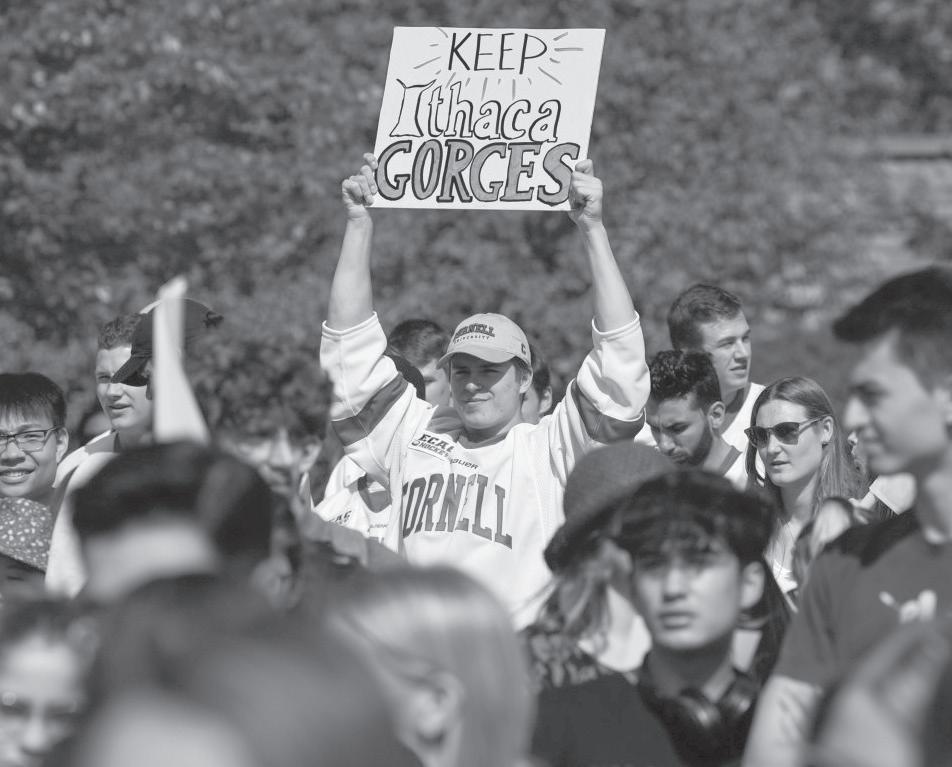
The march drew a variety of campus groups, from the Cornell Vegan Society to Pi Beta Phi and the hockey team. While some demonstrators said they were rallying out of fear for their futures, others participated because they had already felt the impact of natural disasters linked to climate change.
At the Ho Plaza rally, sophomore George DeFendini spoke about the effect of Hurricane Sandy on his hometown of Queens: “It was a scene out of a horror film and the setting was my neighborhood.”
At 11:30, DeFendini and other protesters marched to the Bernie Milton Pavilion in the
Ithaca Commons, where they joined grassroots organizers from the Sunrise Movement, Extinction Rebellion and Mothers Out Front, among other groups. There, crowds grew to nearly 1500 people, according to estimates from the Ithaca Police.
Among the demonstrators were Ithaca high school and middle school students.
“I am here because this is our planet and we only have one,” eighth-grader Aeron Jauquet said. “People need to realize, especially the government, that we are not just going to let them destroy our planet.”
Mayor Svante Myrick ’09, a major supporter of the Ithaca Green New Deal, also attended.
“Climate change is the largest threat to my future.” Myrick told The Sun. “We need to be carbon neutral citywide by 2030. And we need to get there in a way that provides economic opportunity and social justice to people who have been locked out of the system in the past.”
As for reforms the University can take, CJC emphasizes divestment from fossil fuels as a main priority.
“It is immoral that [Cornell is] profiting off of killing our future,” CJC member Nicholas Sutera ’22 said.
“The university is trying to be an organization for truth while supporting fossil fuel companies that distort the truth of climate change.”
Cornell ECO organizer Colton Poore ’20 said he wasn’t sure if the protest would lead to immediate reform. Poore is also an opinion columnist at The Sun.
“I don’t know if we’re expecting a transformative change at the local level.” But, he reflected, “I certainly view the strike as an opportunity for the sustainability movement to have a more prominent position on campus.”
Tamara Kunis and Callie McQuilkin can be reached at tkunis@cornellsun.com and cam523@cornell.edu
POLICE
Continued from page 1
ing to stand for justice for all of the people,” said Kate Salmon, who was introduced as an educator at Elizabeth Ann Clune Montessori School of Ithaca.
Even though de Groat’s charges were initially reduced to misdemeanors, she is currently slated to go to trial on November 4 for two counts of attempted assault in the second degree (a felony) and a third charge for resisting arrest (a misdemeanor). Ferguson was recently acquitted of charges of disorderly conduct with the judge citing lack of evidence.
In an interview with The Sun after the protest, de Groat described the gratitude she felt towards the community for coming out and supporting her.
“I feel like I need a thesaurus to try and find the words for this,” de Groat said. “My heart is really full, I feel overwhelmed by the support.”
The protest, organized by Black Lives Matter Ithaca, Tompkins County Showing Up for Racial Justice and the Multicultural Resource Center, featured over 10 speakers, including Prof. Russell Rickford, history.
Rickford, who later led the crowd in many chants including “no cops, no KKK, no fascist USA,” used his speech to draw attention to the problems of segregated housing in Ithaca and urged against the militarization of the police.
“We need a world without tasers and a world without prisons,” Rickford said. “A world where no people are disposable.
That’s the logic of white supremacy … we need a different logic, we need a humanist logic, we need a human rights logic.”
Rafael Aponte, a member of Black Lives Matter Ithaca, used his speech to question the role that the police had played in letting the older white man involved in the April incident go without questioning him further. The man, identified as Joseph Ming, is accused of having instigated the incident by groping one of Ferguson and de Groat’s friends.
Aponte recalled an IPD officer’s testimony from Ferguson’s trial, where the police officer said he did not question Ming further, because he “understood the man’s pedigree.” Aponte said the officer had come to this conclusion because Ming had revealed to him that he was visiting Cornell with his son.
The lack of participation from the Cornell community was brought up often through the protest, especially since Ithaca College students were there in large numbers and also led the group in several slogans.
The protest ended with the attendees staging a “die-in” on the street in front of the courthouse. This held up a Route 10 TCAT bus for approximately 30 minutes, but there were no attempts made by the driver, or another TCAT representative who arrived soon after, to try and dissipate those who were on the road.
Girisha Arora can be reached at garora@cornellsun.com.
Afew days ago, I was browsing YouTube aimlessly when I found out two of my favorite Asian pop artists of all time, Jay Chou and Mayday’s lead vocalist Ashin, had just dropped a collaboration. And the music video had quickly taken over the top spot on the trending list.
These days, I don’t listen to music in my mother tongue often, let alone keep track of the continuous rises and falls of the newest singers and artists. The small number of songs that are still on my playlist are mostly from the few artists who have been popular since at least the late 2000s and still remain relevant today (Jay Chou, JJ Lin, Mayday, G.E.M. and the likes). Among that very small group of artists, Jay Chou has barely released new music since getting married, so you should understand my excitement of finally being able to add something new to the mix.
The song, called “Won’t Cry,” seemed to be everything a fan of these two artists could want on the first listen. The lyrics are written by Chou’s long-time collaborator Vincent Fang, without whom Chou would not be where he is today. Further, the new music resembled some of Chou’s earlier romantic ballads. I was loving the song, until the video took an unexpected turn.

The video, set in Tokyo, depicts the love story between a young woman who works at a bubble tea shop, and a guy who is an emerging photographer. When the woman finds out that her boyfriend is looking into attending art school in the UK, she secretly fills out an application for him, and later surprises him with the acceptance letter, and gifts him with an expensive camera when he eventually leaves for school. Now, it becomes very clear that the lyrics are telling this story from the guy’s perspective. As the photographer looks back in his cab at his girlfriend, the lyrics say something along the lines of: “You have nothing, yet you give everything to support my dreams.”
Right then, the video and the lyrics began to rub me the wrong way, and only more so when it’s revealed that the guy ended up having a very successful career, while the woman’s life didn’t go anywhere while she pined for the guy, fantasizing about his return and their reunion. The song essentially praised the woman in the story for being unconditionally
supportive and self-sacrificial for her boyfriend, to the point of giving up on her own life and future. It reinforces not only a toxic model of romantic relationships, but also a problematic archetype of a subservient Asian woman — something that even the cheesiest Asian soap operas today do not like to depict.
I couldn’t, however, negotiate my initial liking of the song with being very much adverse to its message, until later that day when I was cycling through my musical theatre playlist, and the song “You and I” from the Broadway musical Pretty Woman came on.
The musical, based on the 1990 rom-com, received mostly mixed to negative reviews and did not stay on Broadway for long. Critics seemed to agree that simply taking the plot of a romance movie from almost thirty years ago and directly dropping it onto the stage is not the right way of adapting an older story for a modern audience.
And so I began to understand why I had in a way liked “Won’t Cry,” but could not stomach its message and the supposed “romance” in the video. In other words, I finally understood why we all seem to have “problematic faves” of one form or another. The style of the songs and the lyrics, as well as the artists who created them, are familiar and trustworthy. But that trust comes from another time — in my case, a decade ago, when I was still listening to physical Jay Chou albums on the CD player with my mom at home. But somehow the artists themselves, Chou and Fang especially, have not evolved with the times as much as they were supposed to, and the fans’ love for them is really half the need for that comforting nostalgia and half an unquestioning loyalty to their talent.
That’s not how real art comes to be. Art has always strived to reflect the times, if not stay ahead of it. When art looks back on the past, it’s always attempting to do so from a new perspective, with new eyes. Art is one of the most important ways through which the world sees and evaluates itself. To quote my favorite superhero: “It is tempting to want to live in the past. It’s familiar, it’s comfortable, but it’s also where fossils come from.”
Andrea Yang is a senior in the College of Arts & Sciences. She can be reached at ayang@cornellsun.com. Five Minutes ‘Til Places runs alternate Mondays this semester.
Like a rocket inching its way across the vacuum of space, for stretches of time, Ad Astra is stagnant and lugubrious, its lumbering and turgid runtime being both a test of patience and harbinger of despair because more interesting things don’t seem to be on the horizon. It is certainly beautifully shot (you’ll want to immediately stargaze by the time the credits roll) but thankfully, director James Gray did not seek out merely to entertain, and his work here revels in the journey of thematic exploration rather than trying to accelerate to a destination for the narrative. Truly, Ad Astra is more meditation than movie and its dialogue, more poetry than prose. Gray uses the environment of space in all of its uncertainties, dangers and wonders as a springboard to launch into a larger analysis on the human psyche, asking questions of whether meaning is found outside or inside of oneself while highlighting the dangers of compartmentalizing one’s emotions. At once relevant and prophetic, his film is an emotionally resonant and introspective study of the examined human life that isn’t afraid to ask more questions than give answers.
Set in the ominous “near future” and “in a time of hope and progress, while Ad Astra’s world is not quite as technologically advanced as other sci-fi films, it is in this construction of acute normality that Gray layers salient commentary. He knows that the generation watching has the worlds of Gravity, Interstellar, The Martian, Arrival, Blade Runner 2049 and the like in their mental orbit and he opts for something more down-to-Earth. Major Roy McBride (Brad Pitt) accepts a mission to go to Neptune in order to locate his missing father H. Clifford (Tommy Lee Jones) who is suspected to be the progenitor of dangerous power surges that could threaten all life on Earth. For the first part of his journey, Roy takes a commercial flight to the moon (big airlines like Norwegian and Virgin Atlantic have nicely adjusted to the demand for space travel) and is horrified to see how humans have crafted the moon in their own image, making it a carbon copy of Earth. “We are world-eaters” he mutters in a voice-over, while the camera pans to a shot of people dining at the newly installed Applebee’s and Subway. Gray presents a future that is familiar to audiences but that is precisely why it is so terrifying; rather than thinking of new ways of living, humans only rinse and repeat their destructive tendencies. Elsewhere on the moon, pirates run about claiming any spot of uncharted territory as their own in a sort of galactic recapitulation of Manifest Destiny. It is haunting to see this primordial greed set against this majestic lunar backdrop and Gray frequently mixes awe and disgust in the same scenes.
Audiences are first and fore-
most supposed to relate with Roy himself, but rather than frame Roy as likeable, Pitt does a brilliant job of presenting the major with weaknesses you can empathize with and vices you feel obligated to chastise. The relationality comes not from the personality traits but the tumultuous journey of self-discovery he undergoes. For Roy, he views space in its voidless, shapeless form, as his way of escape from all he experiences on Earth. His determination for solitude manifests in a veil of dutiful service, whether he is doing his psychological evaluation despite its repetitiveness or dispatching pirates a lá Mad Max: Fury Road or Fast and the Furious style. He is distant from his friends and family, particularly his wife Eve (Liv Tyler) who he sees as a distraction from him achieving his own potential. Space is a frontier of hidden discovery and limitless possibilities and Roy’s well-deserved happily ever after.
Yet once Roy finally gets on his
coveted rocket and blasts off to Neptune, he finds that his problems have not disappeared but have instead come back in full force. The pain of having to go through his adult life without a father figure resurfaces once he comes to grips with the fact that maybe his father had the chance to leave the space station on Neptune but refused to. As he goes to various checkpoints before finally landing on Neptune, he likewise realizes that he has the same detrimental and power-hungry vices his dad displayed with his own crew members. Ironically, as Roy moves farther and farther away from Earth (i.e. the source of all his anxiety) he finds he comes to grips with his own humanity and flaws. He discovers himself, more than he would like, and all the emotions that he has kept bottled up come out in torrents. Gray uses these scenes of waiting (it takes seventy-nine days to get to Neptune; the film mercifully bridges that time) to ruminate on

what humans are supposed to do when we come to the end of ourselves. Do we keep running away in denial or do we stand to make a change?
While Gray stops short of . . .
To continue reading this review, please visit www.cornellsun.com.
Zachary Lee is a senior in the College of Arts and Sciences. He can be reached at zjl4@cornell.edu.
NATALIE FUNG ’20
Web
SABRINA XIE ’21 Design
ABarbara Regenspan | Guest Room
s a recent retiree from college teaching with some time now to devote to social action in my community of Ithaca, I have closely followed the cases of young African American defendants Cadji Ferguson and Rose DeGroat since the disturbing incident on the Commons on April 6.
The facts of the case were actually undisputed at Mr. Ferguson’s trial on Aug. 30 when he was acquitted of all charges. At trial, Judge Scott Miller found that Cadji Ferguson’s single punch of a drunk white man, Joseph Ming, was a reasonable response to a private conflict, following Ming’s menacing and increasingly escalating, aggressive behavior towards Cadji and his small group of friends on the Commons that evening.
Although the prosecutor worked hard to support the claim backed by the Ithaca Police Department that officer Gregory Herz responded appropriately, with his stated focus on intervening in a dangerous public disturbance, the prosecutor’s case was stymied by the facts. Herz and another policeman body slammed to the ground both Ferguson and DeGroat, and tased Ferguson (further injuring him when incompetently removing the taser), while failing to question Mr. Ming, whom the officer judged “too drunk to respond,” sending him back to his hotel room to “sleep it off.” Yet the “fact” of the case that was most fascinating to me has gotten no attention.
When questioned at the trial by Ferguson’s lawyer about his estimation of the number of people on the Commons at the time of the incident, Herz responded, “about 75.” The lawyer then directed the officer to approach the projection of the enhanced video footage on the screen at the front of the courtroom — footage of a scan of the entire Commons’ scene that night, immediately preceding the sudden rush of the officers. The lawyer, Seth Peacock, directed Herz to count the number of people, (the images of their entire bodies readily visible to all in the courtroom). Herz counted 14. I noted that at least three of the 14 were policemen. When Peacock asked the officer to explain the discrepancy between the actual 14 people present, and his testimony that there had been 75, Herz responded that he didn’t think the numbers were important.
Those of us in the broad field of critical educational studies, and our teacher and professor allies who also make the case for genuinely interdisciplinary curriculum at all levels of schooling, understand that the capacity to separate what is real from what is imaginary is equally important and elusive. That’s why we want consciousness of the full range of human reality — from our not always rational mental processing, to the complications of unequal power relations in our social arrangements — reflected in every aspect of the curriculum.
From the standpoint of the law, Herz simply lied in the courtroom that day when he grossly inflated the number of people present, legally “helping” to discredit his case. But from the perspective of a mind infused with the internalized social structures that can actually direct neural pathways, reality gets distorted. White supremacy is an example of one such social structure, and we can surmise how the distortion is likely to play out in the case of this particular officer’s mind.
The image of (in this case) an average or below-average size black man delivering a punch to a towering, over six foot, and heavy-set white man — with these two men, in fact, surrounded by a group of only seven to nine others — can actually “appear” to be a dark monster unleashing his savage energy on a helpless victim in the company of 70 or so equally vulnerable others. Such mistaken appearances are the product of visceral damage to the human spirit and vision, in this case damage inflicted by the literal internalizing of the invisible-because-normalized politics of white supremacy.
None of the above is intended to excuse the brutality of the police in this case, nor the willingness of a reputedly liberal judicial community to allow the lives of two young African American citizens of long-term Ithaca families to be devastated by continued public humiliation and its related material costs. Rather, it’s a plea for the cultivation of a deeper level of awareness than most formal education will provide, and more importantly, a plea that we consistently and vigorously act as citizens on that deeper level of awareness to protect our democracy and our planet.
Fortunately, we experienced the beginnings of action based on such deeper awareness at both Saturday’s climate strike and the “Free Rose” demonstration at the Tompkins County Courthouse that followed. Speakers at both events repeatedly drew connections between the necessary pursuits of environmental justice and social justice. Both events were significantly led by young people — many of them young people of color — students of life and students at local schools, including some from Cornell. And both events repeatedly drew connections between the spiritual and political healing that needs to commence now, locally and globally.
Let’s all of us agree to become students who will educate our lives with deep interdisciplinary curriculum, like that available in the neighborhoods and streets of our community on Friday. And acting on the wisdom of such an interdisciplinary curriculum, let’s demand that the authorities empowered to do so free Rose DeGroat from the devastating effects of mistaken appearances.
September: Cornell’s campus is warm and breezy with remnants of summer left over, and our local fauna scurry across the quads to pick up fallen crumbs of Zeus’ mac’n’cheese. The returning students can breathe in, and almost absorb, the giddiness around campus that radiates from our puppy-eyed freshmen. They’re still blazing with the recent-grad, on-tothe-next-stage-of-my-life buzz that comes from spending the first couple of weeks on a college campus. Class of 2023, it’s true, college is a blast. You’ve got some wonderful times ahead of you, but if you think Ithaca will always be this fairytale-esque, you’re shit out of luck.
Right when you get into the groove of the school year, when you’re ahead on your classes and have started to form some meaningful friendships, it’ll hit you. That first sneeze or tickle in your throat that reminds you you’re not invincible, despite the newfound autonomy you’ve convinced yourself of after restocking your toiletries all by yourself. Ithacan winters are your kryptonite.
to the texts from friends figuring out plans for the night while you’re still stuck in bed with a jumbo-sized tissue box held to your chest, which has been generously doused in Vick’s Vaporub.
The sickness in Ithaca isn’t simply bad because you’re forced to miss your responsibilities and weekend adventures. What makes it the worst of your life is its unrelenting intensity. You’ve probably had strep throat, probably a few stomach
You’ve probably had strep throat, stomach bugs too, but have you ever tried getting out of bed, then, as if knocked down by a giant, fell back and laid like an action figure bent out of shape?
bugs too, but have you ever tried getting out of bed, then, as if knocked down by a giant, fell back and laid like an action figure bent out of shape?
Flu season is well-known by people around the world, whether you’re pro-vaccination or against it. However, Ithaca’s flu season starts early, as the temperature drops once October hits. It’s not quite cold enough to see the flocks of Canada Goose (Geese?) around campus, but cold enough to put some pep in your step on the way to class. You’re not expecting the onslaught of viral germs and bacteria that spread across Cornell like I Can’t Believe It’s Not Butter! (but we always believed).
The first time I got sick here was a couple of weeks before Thanksgiving break. My mom and dad had recently left after visiting for Freshman parents’ weekend, and I was pretty happy to see them go. No more family dinners — back to Mongolian grill at RPCC with my hall-
If you do manage to stand after the initial paralysis has worn off, a good plan of attack is to make the trek over to Cornell Health — one would think. You’ll find yourself sitting in a waiting room surrounded by people wearing masks that make you worry that there might be something even worse you can catch, and students grabbing handfuls of free condoms. Once you’re finally seen, it’ll be a five minute meeting in which you’ll be told you’re fine as long as you “drink plenty of water!” and instructed to purchase a double-priced bottle of Advil at the pharmacy. Maybe not worth the migration from North Campus.
I may have had a worse sickness than others that fall of freshman year, but I know I’m not alone; my friend was the one who gave it to me. Thanks to him I spent days watching the walls move (underlying dizziness), skipping meals (lack of hunger) and mouth-breathing (devastating congestion). He can’t take all the blame, however, freshman dorms are cesspools of germs that the vast majority of you have never been exposed to. Whether you’re coming from California, Louisiana or Illinois, you’re immune systems haven’t evolved to combat Ithacan microbes.
mates. But I have never missed my mom more than I did the morning I woke up paralyzingly ill. All I could do was remember the times when I was younger and she brought me chicken noodle soup in bed. Those bowls of health were replaced with me using all of my energy to lean over the side of my bed and hack out ungodly colors of phlegm.
During the week, you don’t mind missing some classes, but soon the work piles on and you quickly realize this is a step up from time off in high school. Yet, the weekends are worse. Your phone lights up
So as not to leave you with just but bad news, I’ll offer you a glimmer of hope: despite the eventual brutality you will face, you’ll come out stronger. It’s a rite of passage. You’re not a full-time Cornellian until you’ve brave-faced a winter and survived your first illness. The next time you feel happy to be away from your parents or guardians, just remember there won’t be anyone to bring you soup and pat your back as you cough your lungs inside out in a few weeks. Time to stock up on those vitamin C gummies.
A.J. Stella is a junior in the College of Arts and Sciences. He can be reached at astella@cornellsun.com. Stellin’ It Like It Is runs every other Friday this semester.
Imagine you are an alumnus from the Class of 2010:
You and a couple of your college friends make the trek to Ithaca to visit your old stomping grounds. After checking out campus for a little while, you head towards Collegetown for dinner.
“How about Stella’s?” your friend suggests, “It’s got great atmosphere.”
“Sounds good!”
You walk across Cascadilla Gorge and down College Avenue. You see the black awning — “COFFEE LUNCH BRUNCH STELLA’S DINNER WINE COCKTAILS.”
As you come nearer, however, you see the windows are covered with paper “FOR RENT.” No problem, you can walk a bit further and go to The Nine’s. They’ve got great atmosphere and the deep-dish pizza is delicious, you think to yourself, I remember going there with my friends during my first week on campus. Great memories. You speed walk to The Nine’s, knowing that there will be a wait when you arrive. You cross over Dryden Road and note that an empty lot occupies the former home of the Turk Brothers clothing store on the corner. On the corner across College Avenue, you see another vacant lot: I thought a buffet placed opened there, you think.
Finally, you get to The Nine’s, or at least, the former home of The Nine’s. You are heartbroken. How could such a popular and lively spot shut down? Eventually, you are able to find a place to eat: now time to hang out, catch up and chat over some drinks at one of the many bars that bring life to Collegetown.
“Let’s go to the Palms!” Everyone agrees it’s a good choice, and you walk up Dryden Road. However, you soon notice that in place of the beloved 70 year-old tavern stands a huge glass façade with windows revealing the empty and lifeless atrium of the Breazzano Center. This isn’t the Collegetown I remember, you think, where’s the life?
Fine, The Palms is gone, but at least you can still go to the Chapter House, right? This was a great spot! I remember going here the evening before graduation. You follow Dryden Road down to Eddy Street and take the steep route down Williams Street. You see the familiar building of The Chapter House, but where’s the sign? Where are the neon
lights in the windows? “Apartments for Rent,” a paper in the window reads. You’re no longer surprised; it seems that everything is closed.
You continue walking around Collegetown, noting the missing locations: Dino’s is gone as is Johnny O’s, and what happened to the Pixel Lounge? You and your friends find yourselves returning to the only remaining lively strip of town: the building with Collegetown Bagels and Rulloff’s.
Okay, you can stop imagining that you are an alumnus.
Traditionally, the liveliness of Collegetown came from the many restaurants and bars that provided sustenance, conversation and an escape from campus. But one by one they’re disappearing.
Collegetown is supposed to be the close-to-campus option for students wishing to reside in a lively town setting. It’s a spot for students to go grab a bite to eat with friends at a real restaurant that doesn’t feel like a dining hall. Traditionally, the liveliness of Collegetown came from the many restaurants and bars that provided sustenance, conversation and an escape from campus. But one by one they’re disappearing.
The liveliest remaining spot — no matter the time or day of the week — is the corner home to CTB. It shouldn’t be surprising, given how Collegetown has been changing, that this corner is next on the list to be disrupted, but the word-of-mouth concern floating around campus is apparent. CTB does not work solely because of its location. It works because of its character.
The chalked menu, the brick and wooden exterior, the classic outdoor seating space bordered by trees, flowers and a wall that contours to the natural hill of the land. Sure, the building is old, but it represents what Collegetown has
Sidney Waite | Waite, What?
Malways been about: old walls that have seen generations of students grabbing coffee in the mornings, eating with friends, going out for drinks after a rough exam — living and bringing life to Collegetown.
The plans for the building to occupy the corner of CTB is set to have a glass façade with “high-quality urban design elements,” according to the mockups for the construction. This sounds awfully like Breazzano Family Center on Dryden Road (I’m sure many readers don’t even know what this building is) — another unwelcoming faceless building that stands on the grave of lively institutions. These cold modern buildings are architecturally nice, and perhaps would be welcome additions elsewhere. But in an old, college neighborhood at a school characterized by great tradition and history, it just seems wrong. Student Agencies, which owns the building, does plan to lease the bottom space of the reconstructed building to retail. However, with the need to cover construction costs, they may jack up the rent too high for CTB (which already claims to pay the highest rent in Ithaca) and Rulloff’s to stay.
To be honest, I’m not sure if there is anything that can be done about these changes; they tend to be out of control of students. I used to think that it simply required supporting Collegetown institutions that closed due to lack of business, but CTB proves that even the successful spots aren’t safe.
It seems certain that CTB and Rulloff’s will be kicked out, at least temporarily, as construction is going to happen. CTB could relocate within Collegetown temporarily as construction takes place, but their home is that first corner of College Avenue. I hope that Student Agencies recognizes the value of institutions like CTB and Rulloff’s and is able to offer reasonable lease agreements that encourage their return. While I’ll certainly miss the current building, it seems like the minimum Student Agencies should do is work hard to ensure that the tenants that make their building so popular are welcomed back after construction.
Matthew Frucht is a junior in the College of Agriculture and Life Sciences. Comments may be sent to opinion@cornellsun.com.
y brother’s nickname for me growing up was “spell check.” Anytime he wanted to look something up or needed to write something down, he would say “spell-check, how do you spell ‘their’?” and I would rattle off the letters he requested. My brother Daniel is three years older than me, but he has always been terrible at spelling. In second grade, Daniel came home from
exclude individuals because of said impairments or differences.
Daniel is brilliant. He taught himself how to code, he has built his own computer, fixed hundreds of others and he has a nearly eidetic memory. In a lot of ways, his intellectual capabilities supersede that of some of my peers here on campus. The problem, however, is that the traditional education system often does not have the measures to aptly test his and other neurodivergent individuals’ brilliance. Neurodiversity refers to variations in the human brain that are “atypical” to what society deems to be the norm.
Disability scholars contend that what disables an individual is not their impairment or difference, but rather, the societal barriers put in place that exclude individuals because of said impairments.
school one day extremely upset and cried to our mom, insisting that his teacher thought that he was dumb. His third grade teacher laughed in my mom’s face when she mentioned Daniel going to college in the future. The teacher was amused because at nine years old, my brother still could not read. And based on her laugh, my bet is that she believed he never would.
School never became less of a struggle for Daniel. He needed resources to level the playing field between himself and his classmates — resources that our rural schools had few of.
Last year, I took ILRLR 1200: Intro to Disability Studies, and learned — and still am — about history that my K-12 education forgot to teach me. Specifically, I learned about the history of the Disability Rights Movement and the social model of disability. Disability scholars who concur with this model contend that what disables an individual is not their impairment or difference, but rather, the societal barriers put in place that
While I never thought of my brother’s learning disability as some sort of burden, it was not until I took the course that I began to question what I thought I understood about his adverse relationship with school. What if there was another way to assess Daniel’s aptitude? What if there were better programs that looked at his talents and his strengths, instead of leaning so largely on GPAs and standardized tests? Why are there little to no definitive programs at colleges to recruit people like my brother who don’t adhere to the traditional education system?
I recently learned about Landscape, an update to the College Board’s “adversity score” index that was originally released in May. Landscape aims to give universities a holistic view of their prospective students. Through the index, the College Board provides institutions of higher education with comprehensive data that is indicative of inherent disadvantages or hardships posed to these students. The idea is that with Landscape, colleges can ensure more equal opportunities between candidates. Assessments are made regarding high school and neighborhood information, such as percentage of children living under the poverty line, typical educa-
tional attainment in the area and the average crime activity in the surrounding neighborhood.
But what if Landscape, or methodologies like it, included indicators such as how students learn, or analyzed what types of resources are attributed to the disability services at the students’ high school? It is certainly important that students disclose their disability at their own volition, but that should not mean that colleges should refrain from implementing programs to engage individuals who ordinarily might not have the opportunity to be noticed because of a barrier to their learning. This is working under the assumption that the methodology is used in a non discriminatory and equitable way to encourage underrepresented students’ success.
In my brother’s case, the cards stacked up against him early in his education when his teachers doubted his intelligence and ability to even attend college. Though there are required resources made available to students with disabilities in both primary school and college, there seems to be a disconnect between the two entities which suggests to neurodivergent students that higher education is not a prospect for them.
For students on campus who have self-identified as having a learning disability, I wonder if their numbers accurately represent the number of students who would perhaps also excel at this school but because of institutionalized barriers within the system, are instead blocked from the opportunity. My guess? The current numbers do not reflect even a fraction of the potential.
ipation of [his] office within the community.” Hall also revealed his interest in going to local high schools to inform students about the resources Cornell can provide. Through college outreach programs and indexes like Landscape, institutions have demonstrated that they recognize the complexity of outside barriers. Assessing the neighborhood poverty rates and crime rates that may adversely affect potential students is evidence of this. But even with this knowledge, universities enact little to no outreach to actively consider and address the barriers that limit opportunities for students with learning disabilities. Why are universities not attempting to bridge the gap between disability services in primary schools and how they affect students’ paths to higher education?
The idea that my brother has an inherent disadvantage against him because he thinks differently from his peers is something I think about a lot. Because the reality is, institutional barriers will remain in place outside of aca-
We live in a world where some of Daniel’s best qualities are deemed problems that need fixing, instead of being rightfully celebrated.
When I asked Zebadiah Hall, director of Student Disability Services on campus, about his stance on the need for higher University engagement within the disability community, he said that he “would like to see more partic-
demic settings, where in fact they are more prominent. We live in a world where some of Daniel’s best qualities are deemed problems that need fixing, instead of being rightfully celebrated.
Sidney Malia Waite is a sophomore in the School of Industrial and Labor Relations. She can be reached at smw327@cornell.edu. Waite, What? runs every other Friday this semester.
Fill in the empty cells, one number in each, so that each column, row, and region contains the numbers 1-9 exactly once. Each number in the solution therefore occurs only once in each of the three “directions,” hence the “single numbers” implied by the puzzle’s name. (Rules from wikipedia.org/wiki/ Sudoku)


Houses, Apts, Parking
1 to 9 Bedroom
Collegetown - College Ave, Linden Ave, Dryden Rd, Bryant Ave, Cook St. 607-330-2442 info@urbanithaca.com www.urbanithaca.com
We have availability for the 2020-2021 school year beginning June 1st at Hudson heights apartments. The studios include electric, heat, water, garbage and parking. There is coin-operated laundry facilities on site. Prices start at $750 / month for a 12 month lease. If you have any questions or would like to schedule a tour contact us by phone 607-280-7660 or email: renting@ithacaLS.com
COLLEGETOWN TERRACE APARTMENTS
Spring 2020 Semester Leases Available Heat, hot water and Wi Fi included Free State of Art Fitness Center Free Shuttle Bus Service to campus Washer & Dryer in Apartments collegetownterraceithaca.com office@ithacastudentapartments.com (607) 277-1234
Now Renting
2-10 Bedroom Houses/ Apartments for 20-21. All Locations. Call today or visit our website: Certified Properties of TC Inc certifiedpropertiesinc.com 607-273-1669
2020-2021
Studio 1, 3, 8 & 11 BR Apts. Great Locations in Collegetown. 607-227-2535
1, 2 & 5 Person Apts. Overlooking Cascadilla Gorge Architecturally designed. Decks, patio, fireplaces, Jacuzzis. Furnished, parking, internet. Utilities included. 607-592-7564
3 Bedroom 1 Block from Starbucks in Collegetown Heat & hot water included. Lease starts June 2020. Parking & laundry available. www.porealty88.com 607-277-1888
H OUSE FOR R ENT
20-21 College Ave.
5 BR House Furnished. Laundry. Parking. Call 607-273-8576
20-21 Upper Eddy St. 7 BR house Furnished. Laundry. Call 607-273-8576
By EMILY DAWSON Sun Contributor
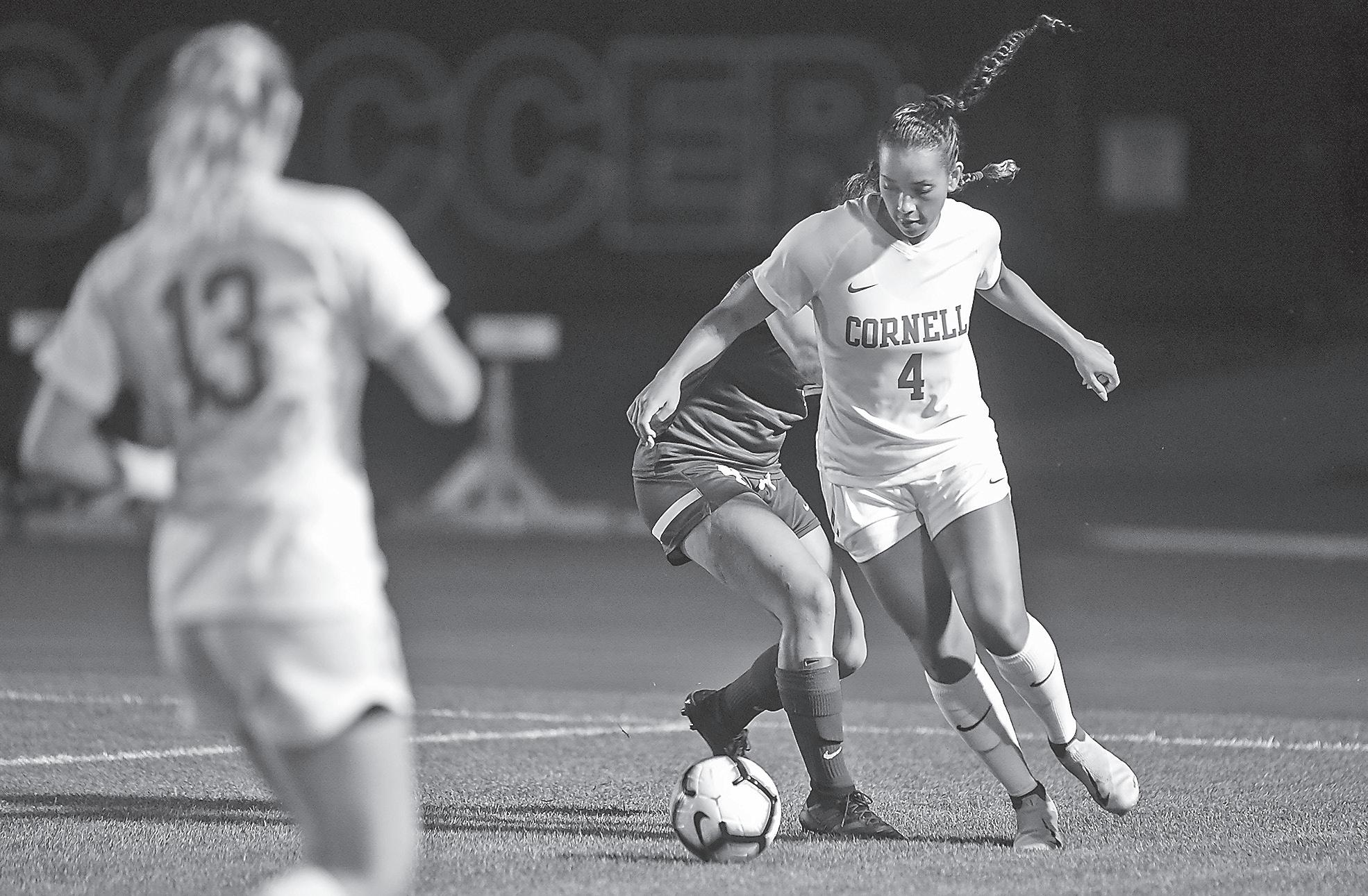
In 80-degree heat, the Red faced St. John’s University 238 miles away from its home turf on Saturday in Queens, New York.
A key player for Cornell in the matchup was senior goalkeeper Chrissy Mayer, who secured an impressive six saves over the course of the game.
However, those saves weren’t enough to keep St. John’s powerful junior forward Zsani Kajan at bay. Kajan scored both goals for St. John’s to mark the final score 2-0.
This result brought the Red’s overall record to 4-2-1.
During the game, Cornell showed great defensive effort when St. John’s attacked vigorously in the first half. Senior forward Kennedy Yearby and junior midfielder Shelby Wray also managed two shots, with Yearby’s being a shot on goal.
The Red played 21 of its 29 player roster.
Cornell played a 4-3-3 system, with nine freshmen taking the field over the course of the match. St. John’s was the first of five Cornell games that freshman goalkeeper Nicole Shulman is scheduled to miss as she competes for the Israeli team in the UEFA Women’s
Under-19 Championship.
Shulman is one of Cornell’s three current team members listed as having National Duty keeping her from playing. Even so, the Red has plenty of talent and cohesion despite missing players due to National Duty and injuries.
Even despite the loss to St. John’s, the Red is in a good position entering Ivy play. Cornell heads into playing the Ivies with a 3-0-1 home record
for the first time since 2007.
But this metric isn’t the only significant improvement for the Red — already, the team has quadrupled its win total from 2018.
This coming Saturday, Sept. 28, the Red plays Columbia at home at Berman Field. Columbia, like Cornell, boasts an overall record of 4-2-1.
However, Columbia’s 2-1-1 away results suggest the team doesn’t require a home-field
advantage in order to secure its wins.
Cornell vs. Columbia should shape up to be an exciting match after the Red’s final Ivy Tune-Up loss to St. John’s, and fans can show their support at Berman Field as the Red takes on Columbia this coming Saturday to start its Ivy League play.
NOTEBOOK Continued from page 12
seven dominated against Marist. As mentioned before, the Red only allowed the Red Foxes to rush for two yards, but more importantly, it generated strong pressure against redshirt sophomore quarterback Luke Strnad. Strnad and redshirt sophomore Austin Day had rotated throughout the first two games, but it was clear that Day was the
By the end of the game, Cornell had amassed a whopping 21 first downs, compared to Marist’s total of eight. The Red moved the ball well throughout the day.
superior option. Unfortunately for the Red Foxes, Day was unavailable against Cornell due to injury, prompting Strnad to stay under center for the entire contest. Under duress for much of the afternoon, Strnad only completed 42 percent of his passes for 218 yards along with one interception. He was sacked twice in the process.
4). Goal Line Stands:
The defense’s strong performance was best exemplified in its two successful goal-line stands. The first crucial stop came with the Red sporting a 14-7 lead. In the middle of the second quarter, Marist began knocking on the door and moved the ball down to the goal line. On fourth down, Strnad attempted a quarterback sneak from the one-yard line, only for the Red to stuff him and force a turnover on downs. Then, in the fourth quarter, Cornell possessed a two-touchdown lead, but the Red Foxes were still within reach. Marist could have cut the deficit
as it used great field position to once again reach the one-yard line. But on fourth down, senior captain Jelani Taylor and senior Justin Bedard stuffed redshirt sophomore Dazhon Miller to once again deny the Red Foxes.
5). QB Rotation:
Head coach David Archer ’05 remarked prior to the game that senior Mike Catanese and junior Richie Kenney would likely split reps under center against Marist. Early on, that was not the case. Catanese handled almost every snap before bowing out due to injury. From there, Kenney took over and closed out the game under center. Catanese performed well, completing 15-of-20 passes for yards. Where Catanese really excelled was on the ground, rushing for 79 yards and Cornell’s first two touchdowns. He did lose a fumble deep in Marist territory near the end of the first half, but all in all, it was a decent starting debut for the senior. On the other hand, Kenney struggled, only completing 3-of-7 passes for 26 yards along with an interception in the endzone. Kenney did show off his legs as he racked up 26 yards, most of which came from an impressive 24-yard run.
6). First-Down Disparity: By the end of the game, Cornell had amassed a whopping 21 first downs, compared to Marist’s total of eight. The Red moved the ball well throughout the day, whether it was Catanese or Kenney calling the shots. It was also a testament to how poorly Marist was playing. Ultimately, several mistakes — whether it was turnovers or penalties — derailed drives by Cornell and ultimately kept Marist in the game until the final minutes.
7). Penalties Galore: Unfortunately, this contest was marred by penalties from both sides. On the day, Cornell committed 11 different penalties,
which cost 117 yards. Several of these penalties came at crucial junctures, including a holding call which wiped out a touchdown run by Jake Derderian late in the third quarter. On the ensuing play, Kenney threw an interception, denying the Red an opportunity to extend its lead. Just as penalties crippled Cornell’s momentum on both sides of the ball, the same occurred for Marist. The Red Foxes were flagged for seven penalties for a total of 79 yards.
8). Special Teams:
Even with senior Nickolas Null absent due to injury, Cornell’s special teams unit played fairly well. On his lone field goal attempt, junior Garrett Patla missed wide right from 45 yards out. He did converts on all three PATs, though. Sophomore Koby Kiefer had an excellent performance. Punting in a wide variety of situations, the sophomore booted six balls for an average of 32.3 yards per punt. He notched a long of 55 yards while pinning the Red Foxes inside the one-yard line on two separate occasions. Kiefer was not perfect on the afternoon, though, as a misfire on one of his punts gave Marist favorable field position.
9). Injuries:
Though the Red escaped Poughkeepsie with a win, it did sustain some injuries along the way. One was Catanese. Catanese initially went down with a leg injury in the third quarter before reentering the game in the fourth. Then, he suffered a shoulder injury after taking a hard fall on the turf. Archer described Catanese’s injuries as cramps, suggesting that he will likely play next week. Meanwhile, sophomore center Jack Burns — a new starter on the offensive line — was shaken up after a play in the fourth quarter and did not return. His status remains to be seen.