The Corne¬ Daily Sun



By TAMARA KAMIS Sun News Editor
“No good school costs this much money,” students chanted in front of Day Hall on Friday afternoon, protesting for a more affordable education for all students.
After students, including Samuel Reveiz ’24, Logan Morales ’22, Katrina Cassell ’23 and Joseph Mullen ’24, spoke about challenges obtaining financial aid packages and difficult working conditions for student employees, organizers gave an open letter signed by over 80 students, faculty and staff to Ryan Lombardi, vice president for student and campus life. The letter called for a tuition freeze and the immediate release of all financial aid packages among other

“I would just like Cornell to become more affordable for people,” Reveiz told The Sun. “I often feel, the way this university is set up, the cards are really stacked against
lower income students.”
Both this year and last, many students have faced financial aid delays, even as tuition rises. This past year, the University increased tuition by 2.9 percent.
Jonathan Burdick, vice provost for enrollment, stated in a University press release that the University’s tuition increase this year is offset for most students by
“I would like to not be taking my classes and constantly thinking about financial aid.” Annie Stetz ’23
an increase in financial aid. However, attendees cited financial aid delays as one of their biggest concerns.
The Fees Down Cornell Movement has 14 demands, including a tuition freeze, organizing rights for all faculty, employees and student workers, a minimum wage of $15 for all student workers, and the end of the student contribution fee, student activity fee and in absentia fee. However, many organizers and participants agreed that their top priority was the immediate release of financial aid for all those still waiting.
“I think [the movement] was born mostly out of lasting frustration about the lack of financial aid being released on time, the conditions that student workers are being forced into in their workplaces, and their lack of good wages,” Mullen said in an interview with the Sun. “We want to make the protests explicitly about the economic conditions of students.”
While Mullen has received his financial aid, after some delays, student assembly representative Krinal Thakkar ’23 and people’s organizing collective member Annie Stetz ’23 still have not.
“It’s just nerve racking,” Stetz said. “I would like to not be taking my classes and constantly thinking about
financial aid.”
While Thakkar and Stetz are aware of the University’s promises that financial aid related delays in tuition would not affect enrollment, they wished that the bursar office and financial aid department would coordinate more closely so that such reassurances would not be necessary.
“Bursar holds resulting from financial aid delays will be cleared as file reviews are completed and any resulting late or finance charges will be waived,” Kevin Jensen, executive director of financial aid and Michelle BenedictJones, associate vice presi dent and university treasurer, wrote in an email to The Sun.
The office of financial aid has committed to reform student ser vices and com munications over the next

By ANGELA BUNAY Sun Assistant News Editor
After a $50 million donation from alums Peter Nolan ’80, MBA ’82 and Stephanie Nolan ’84, the School of Hotel Administration in the Cornell SC Johnson College of Business will be called the Peter and Stephanie Nolan School of Hotel Administration. In 2017, Fisk Johnson and SC Johnson donated a
combined sum of $150 million, the largest ever received by the Ithaca campus, to rename the
“This incredible gift will aid generations of future students and will support us into the next 100 years.”
Prof. Kate Walsh, Nolan School Dean
College of Business to the SC Johnson College of Business. The Nolan donation is now the latest to create a renaming of a college. The Johnson donation came with a $50 million challenge grant, a mechanism to allocate donations through competition among several organizations.
Tuesday, September 21, 2021
Cornell Service Fair
2 p.m., Arts Quad
Picturing Change: Photography and Social Justice
3 p.m. - 4 p.m., Virtual Event
Visual Culture Colloquium - Viêt Lê 4:45 p.m., Virtual Event
Mastering Applications to Graduate School
4:45 p.m. - 5:45 p.m., Virtual Event
Cornell Men’s Soccer vs Syracuse University 7 p.m., Berman Field
KATHRYN STAMM ’22
ANUSHYA ALANDUR ’23
CATHERINE ST. HILAIRE ’22
ROSENBERG ’23
KOH ’23
The Nolans’ donation will activate these challenge funds, which will direct $16 million to financial aid for students in the Johnson Graduate School of Management and the Dyson School of Applied Economics and Management. These funds will be in addition to $50 million that the Nolans earmarked for financial aid.
In a University press release, the dean of the hotel school emphasized that the donation will be beneficial to the students by providing more financial aid for students through scholarship funds.
“This incredible gift will aid generations of future students and will support us into the next 100 years,” said Prof. Kate Walsh, MPS ’90, dean of the Nolan School and E.M. Statler Professor of management.
The money will be provided to students through existing scholarship programs created by the Nolans, such as the Nolan Family Scholarship Fund for undergraduate students in the Dyson School and the Peter and the Stephanie Nolan Veterans’ Professional Scholarship Fund in the Samuel Curtis Johnson Graduate School of Management.
The Nolans have a long line of Cornell alumni, with all three of their children being Cornell graduates, and have a long history of giving back to the University.
“Education is the greatest equalizer that we have, because it truly does give everyone an equal shot.”

In 2011, the couple endowed the David J. Nolan Deanship of the Dyson School.
The deanship was named after Peter Nolan’s father, David Nolan ’49, M.S. ’51 who graduated from the Department of Agricultural Economics, which is now known as the Dyson School.
Mrs. Nolan worked for L’Ermitage Hotel Group and was a resident manager at Sunset Marquis, a California luxury hotel.
Mr. Nolan is the founder and chairman of Nolan Capital, an venture capital and private equity firm based in Hermosa Beach, California, is also currently a senior adviser at Leonard Green and Partners, a Los Angeles private equity firm, and has served on the University Board of Trustees from 2004 to 2016. He also currently serves on the Cornell SC Johnson College of Business Leadership Council as well as the Ad-Hoc Campaign Committee.
Peter Nolan ’80, MBA ’82 Angela Buny can be reached at abunay@cornellsun.com.
“Education is the greatest equalizer that we have, because it truly does give everyone an equal shot at the future,” said Peter Nolan.
The two alums are leaders in the hospitality industry, according to the announcement from the University.

By JOHN YOON Sun City Editor
On Sept. 15, the City of Ithaca’s Planning & Economic Development Committee voted to open Right to Renew legislation, which provides tenants lease security, for comments and will revisit the legislation in the next meeting to decide whether to send it to the Common Council.
The committee heard from housing advocates as well as members of the committee concerned with the proposal’s legality.
Advocates for the Right to Renew, also known as the Good Cause Eviction legislation, propose preventing landlords from evicting tenants without receiving an order from an Ithaca City Court judge so that landlords have a reasonable cause for terminating leases — like a tenant failing to pay rent. The law would do this by entitling tenants to a renewal lease and protecting them from unreasonable rate increases.
The Ithaca Tenants Union, an organization that advocates for tenant’s rights, gave a presentation to the Committee advocating for the legislation — which they have supported since July. The ITU has been an active part of protecting Ithaca tenants from predatory practices, from their help line to the tenant law clinic, which provides advisory support to tenants in need.
The ITU emphasized that for the displacement cases that they have handled through their help line, 72 percent were explicitly related to nonrenewals, instances where tenants do not have a lease renewal.
The ITU argued that redistributing power from landlords to tenants will never make people’s lives worse off.
“Tenants having more power is better for us as a class of people,” said Genevieve Rand, one of the presenters for the Ithaca Tenants Union.
The ITU representatives objected to one of the committee’s proposed grounds for eviction — a tenant’s unreasonable refusal to allow their landlord access to the unit or premise.They argued that landlords often abuse their ability to access tenant’s housing to scare the tenant, especially if they stand up to their landlords.
Throughout the discussion of the legislation, Donna Fleming (D-3rd Ward) shared concerns about the legality of the legislation, and said she
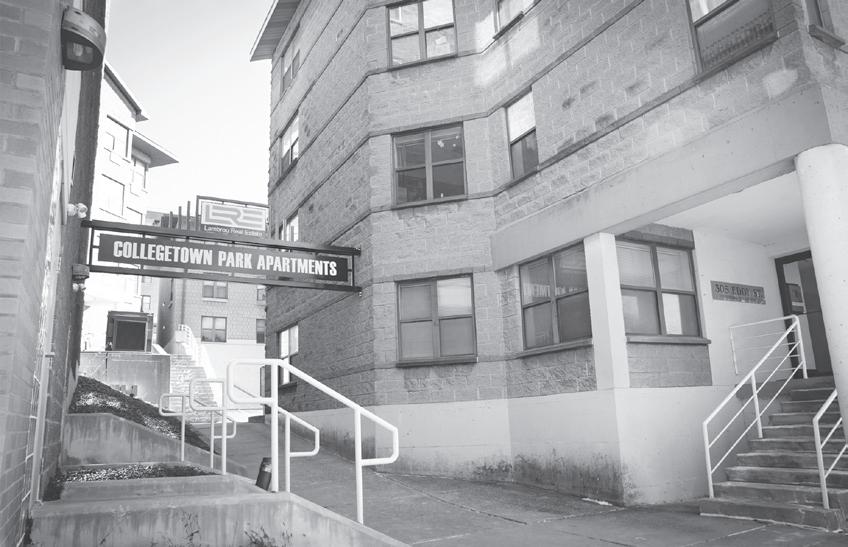
Housing | Ithaca’s Planning & Economic Development Committee voted to open new
would vote against sending it to Council.
“I don’t see how you can force somebody to renew a contract that has come to its legal mutually agreed upon termination date,” Fleming said. “I do not believe the state can force one party to renew a contract with another party. I just don’t get that.”
Laura Lewis (D-5th Ward), agreed with Fleming’s concerns, saying there are many reasons a landlord would choose to not renew a lease. Lewis emphasized that while the Council is trying to protect tenants with the least resources from unscrupulous landlords, there are still those who are flexible and work with their tenants.
In response, Seph Murtagh (D-2nd Ward), defended the importance of the bill in protecting tenants from the common practice of landlords of either selling the property tenants had lived in or renovating and renting it for a higher rate.
“This is not even necessarily an unscrupulous landlord, I think it’s a pretty rational thing for a landlord to say I want to get more profit out of this building,” Murtagh said. “That has a human cost, however, for the people that are living there and I do think this legislation creates an opportunity to at least give tenants an understanding of what their rights are under the law.”
The Committee will revisit the matter in October, and can vote to decide whether they wish to send the legislation to the Common Council.
reached at johnyoon@cornellsun.com.
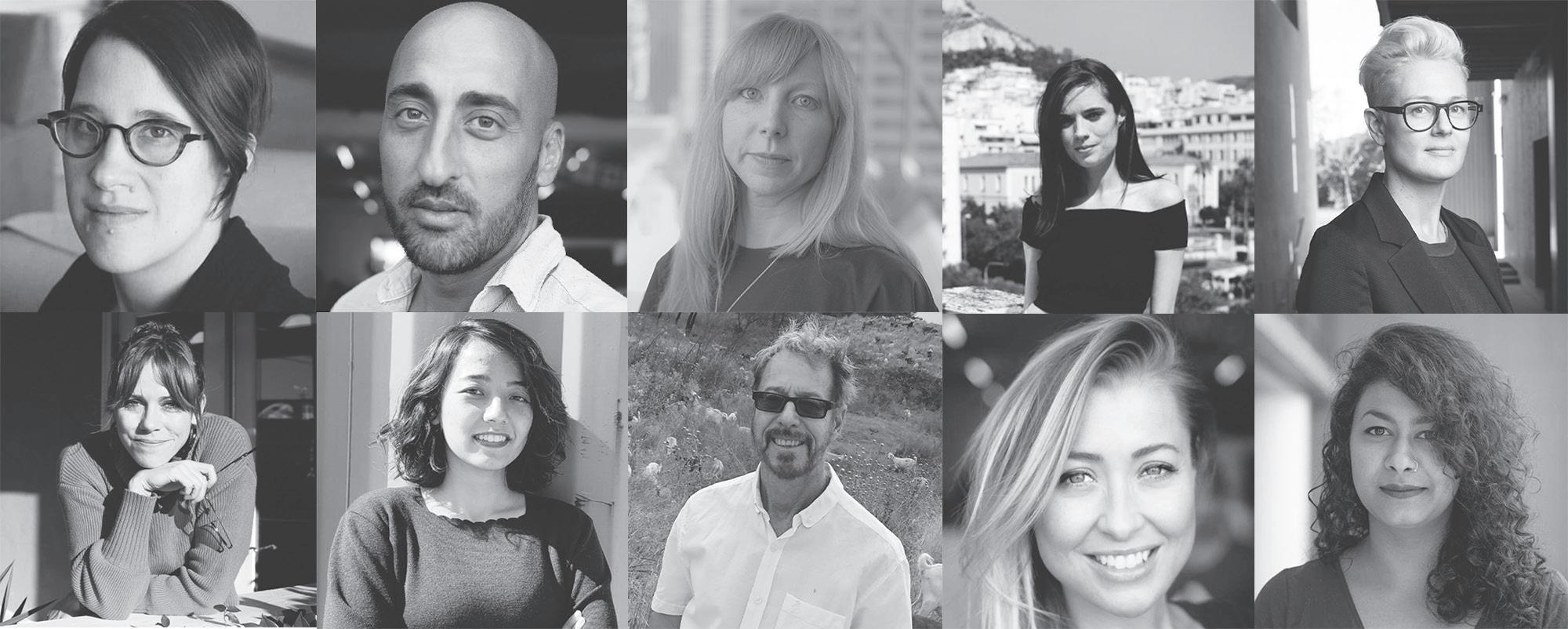
Paynter, a postdoctoral associate at the Mario Einaudi Center for International Studies.
On Sept. 22, Cornell’s Migrations Initiative is bringing together a panel of journalists and academics for a discussion on the challenges of reporting on migration.
The event, titled “Migration in the Media,” will center on how to produce stories about complex border issues to bring about change. The speakers will discuss questions of representation in reporting, the media’s effects on creating dominant narratives, the politicization of migration and other issues in migration reporting and storytelling.
The event will be moderated by Director of the East Asia Program, Prof. Andrea Bachner, comparative literature, and Eleanor
Speakers on the panel will includes include Douglas Herman and Sonia Nandzik-Herman, co-founders of the ReFOCUS Media Labs Foundation, journalists Nazanin Froghi, Tanvi Misra Katy Fallon and Molly O’Toole ’09, the Zubrow Distinguished Visiting Journalist in the College of Arts and Sciences along with other experts in migration and media studies.
The Migrations Initiative is part of Cornell’s inaugural Global Grand Challenge, a set of initiatives focused on global health and development issues. Launched in 2019, it has drawn from a task force of 16 faculty members, representing nine colleges and schools.
Continued from page 1
two years, according to a University statement. Jensen and Benedict-Jones recommend that students experiencing challenges meeting day to day expenses because of financial aid delays reach out to the financial aid office or their college student services office. In addition, Jensen and Benedict-Jones say that most students have received their financial aid and that remaining financial aid packages should be delivered in the next few weeks.
Many of the organizers think the administration
“I had to jump through hoops just to get the correct aid package.”
Paul Havern ’23
should be responsible for finding ways of financing the Fees Down demands, while listening to student input — particularly when discussing student worker conditions.
Cassell thinks that while a union is a possibility, organizing student workers does not necessarily need to take the form of a formal union.
“There’s lots of examples of informal workers support, including just having some forums and listening to students and seeing what it is that they’re interested in and then working from there to pressure the University,” Cassell said.
For Paul Havern ’23, a Fees Must Fall member, the experience of having his financial aid delayed until a few days before the bursar deadline and dealing with difficult working conditions as a student dining worker was enough to motivate him to participate in the Fees
The event was co-sponsored by the East Asia Program, the Institute for European Studies, the Department of Sociology, Latin American and Caribbean Studies and the new School of Public Policy.
Other event discussions include how different storytelling practices and media may play a part in challenging dominant narratives present in the media and offer more complex perspectives, as well as how images may play a role in spreading a message migration and border issues to the public.
The event will take place virtually this Wednesday at noon, and students can register for the event online.
Must Fall protest.
“I had to jump through hoops just to get the correct aid package that no student should have to stress or worry about,” Havern said. “I had to call them multiple times, I had to go and sit in person with them multiple times for meetings because I needed to make sure it would get done.”
The coalition is working with The People’s Organizing Collective, Cornell Students 4 Black Lives, the First Generation Student Union, the Cornell Abolitionist Revolutionary Society, Cornell Progressives, Black Students United, the Puerto Rican Student Association, Cornell Democrats and the Native American Indigenous Students at Cornell to circulate a student survey gauging interest in their demands.
While Mullen understands that the administration may be reluctant to meet some of the demands, he hopes some concessions will be made, and hopes that a Cornell education can at least be made more affordable for low income students.
“I think that the lower
“Even if we can only get rid of them for lower income students, that would be a victory.”
Joseph Mullen ’24
income students who are most affected by these fees are the group above all who need to be fighting for,” Mullen said. “Even if we can only get rid of them for lower income students, that would be a victory. Of course it wouldn’t be the total goal, but it would be a step in the right direction.”
Tamara Kamis be reached at tkamis@cornellsun.com.
On Sept. 13, the Met Gala was finally held after cancellations due to COVID19. “Fashion’s Biggest Night” was highly anticipated after a year-long hiatus, yet personally, I felt that it left much to be desired. Unlike previous years, the theme of “In America: A Lexicon of Fashion” was much more open-ended, celebrating the past, present and future of American culture through fashion. Naturally, I enjoyed the classic (and expected) red-carpet glamour of Billie Eilish’s blush Oscar de La Renta look, and Yara Shahidi and Anok Yai’s celestial homages to silent film star and activist Josephine Baker.
However, for every elegant nod to old hollywood, I wanted to see more fashion that reflected American absurdity and practicality. American style is impossible to pinpoint, but I believe that the theme also left untapped potential to highlight the chaos and kitsch of the masses. I loved Kim Petras’ Collina Strada horse dress, in all of its campy intensity. It felt like a high fashion, fever-dream, hyper-realistic animal T-shirt that you would find at a gas station on the side of a highway. To me, that reflects American fashion much more than the pared-back, distant French silhouettes seen on celebrities like Kaia Gerber.
Personally, I had hoped to see more kitschy craft be elevated to couture. The exhibit opens with a quote from a Jesse Jackson speech: “America is not like a blanket — one piece of unbroken cloth, the same color, the same texture, the same size, [...] America is more like a quilt—many patches, many pieces, many colors, many sizes, all woven and held

together by a common thread.” A$AP Rocky literally embodied this, wrapped in an ERL quilt that was partially designed by a quilter specializing in burial and
memory textiles. The rich tradition of quilting in the United States goes back to colonial times, when women made memory quilts and kerchiefs for deceased

loved ones and made friendship quilts to record the members of the community. Most notably, the AIDS memorial quilt of 1984 is both a haunting memorial and a beautiful showpiece of American resilience. A$AP Rocky wore one of my favorite looks; aside from the cultural context, I loved the contrast of the soft, hand-labored patchwork with the stiff 1980’s-ish suit beneath.
I was also very surprised to see the near absence of denim, save for Lupita Nyong’o’s perfectly tailored indigo gown by Versace. Maybe it was low-hanging fruit, but a good pair of jeans is an established staple of the “classic” American wardrobe and of American manufacturing history. With the prominence of American denim in mind, I was especially curious to see what direction the menswear would take this year. My hopes of couture cowboys and cowgirls were dashed — minus Rosalía’s wonderfully dramatic burgundy leather look from Rick Owens.
However, most of the menswear I saw played the theme fairly safe. Instead of Timothée Chalamet’s afterthought Converse, what if he had channeled the iconic pressed suits of the 1930s? On the topic of suits, I also hoped to see a high fashion zoot suit, which would have been out of place in any other context, but celebrated here. The flamboyant and colorful cuts of zoot suits were a staple of Mexican American youths in Los Angeles, and lent their name to the racially-charged “Zoot Suit Riots” of 1943.
MET GALA
Continued from page 4
An expertly tailored zoot suit would have been not only a reclamation of what was once seen as a symbol of criminality and a tasteful homage, but also an exuberant and memorable addition to the usual lineup of black tuxedos.
To get an outside opinion on the Met Gala, I spoke to Nik Martin ’25, a Fashion Design student, and we both agreed there was a missed opportunity for activism at such a public, high-profile event centered around America. Despite his favorite looks by Billie Eilish and Iman, he noted that “we could have had commentary on the Triangle Shirtwaist
IFactory Fire, on fast fashion in the U.S., on Native Americans who are still facing issues...While some people were able to make commentary on this, I feel like, as a whole, celebrities really didn’t adhere to the theme.” Martin made an exception for “Nikkie de Jager, with her dress that was inspired by Marsha P. Johnson and an homage to her.”
Despite these flaws, the Met Gala certainly proved that American fashion is alive and well after COVID-19, if not a little timid.

spent this past summer living and working in the heart of the High Peaks Wilderness in New York’s Adirondack Park, swaddled by looming mountains and lustrous lakes of an overwhelming blue. It was an adventurer’s paradise, a hub for experienced explorers and area newcomers alike, boasting everything from treacherous climbs to approachable day trips.
Needless to say, this type of work environment seemed to lure a particular type of individual – one

who feels compelled to investigate the outdoors, one who is passionate about protecting the terrain and one who is comfortable with the prospect of relinquishing cell service. In common parlance, then, “crunchy.” Or perhaps the term “granola” better suits your fancy. Either term speaks to a sense of indivisibility from and adoration for the natural landscape, one that was exceedingly palpable in my new backdrop.
While I’m still not quite convinced that I would call myself an ideal spokesperson for the aesthetic, I can say with a good deal of certainty that many of the people I met would classify themselves in this category. As a result, my new friends were critical in widening my exposure to the critical tenets of granola-hood: Open-toed sandals, miscellaneous houseplants, second hand clothing stores and of course — folk music.
Aside from a brief exposure to the Tennesseebased bluegrass group Old Crow Medicine Show on a hiking trip a few years ago and a fondness for their rendition of “Wagon Wheel,” my familiarity with the genre — or anything resembling it, really — was slim to none. In my youth I frequently characterized my own taste in music as “anything but country,” incorrectly broadening the category to include anything with crooning vocals set against the anchoring strum of a guitar.
In reality, however, folk music is distinct from the genres we are quick to fasten together with it. Folk music’s melodious musketeers are made dear to us by the nuances that slowly reveal themselves to us unacquainted listeners as we let ourselves become submerged in their sounds: The deep acoustic and percussive tones of Americana, the often frustrated sense of fire in country and the confluence of higher-pitched string instrumentals like the fiddle and the banjo in bluegrass.
What stands out most saliently in folk music is its subdued sense of poignancy — its clear demonstration that thoughtful lyricism need not
be enmeshed in pounding snares and climactic crescendos in order to be powerful in its own right.
While there is of course significant bleeding between genres even within the repertoire of a single artist, pooling this whole corner of the music world into one entity unjustly overlooks the subtleties that make listening worthwhile.
Examining folk’s roots yields something even more alluring. Folk relied not on written scores or song sheets to expand its reach, but rather on the community linkages that continued to listen, remake, and replay it. This lack of a physical record meant that folk music — an ambiguous distinction to begin with — was perpetually in flux. In this way, the style was also inherently democratic, allowing for collective adjustments and revisions that championed the group over the individual.
After all, folk was music for the masses. Its low barriers to entry made it receptive to those often shut out of the more refined sounds enjoyed by the urban upper classes, namely Black communities or impoverished white families living in rural regions.
The initial recordings of folk songs were taken as an attempt at a new brand of aural recordkeeping, with “song-catchers” sweeping across the country to capture the melodies that powered family life throughout the early twentieth century. As these individuals confronted the gestation of a new era of mass media, complete with
radio broadcasts and popular culture, their mission was centered around avoiding obsolescence and extinction.
While there is something about folk that pushes us to swiftly classify it as uniquely American, this is of course not entirely accurate. It is true that America’s early brand of folk music was different from the versions popular in the South American, African and European communities, as well as amongst indigenous groups here in the United States, yet folk is a phenomenon that transverses geographic borders and racial lines.
The genre has undoubtedly evolved since its inception, yet the core tenets remain unscathed — moving lyricism, subtle acoustic instrumentals and a markedly open-ended framework that serves as a corollary to the ideals of liberty and exploration so prominent in the nineteenth and early twentieth centuries. It is this antique aura, this rejection of the synthesizers and the auto-tune that lend a distinctly artificial quality to today’s music that encapsulates folk.
This pure, unadulterated essence is what makes folk the ideal soundtrack for introspection against a natural landscape, for wandering through the woods and wondering what you’ll find.


Katherine Yao is a junior in the College of Arts and Sciences. She can be reached at kyao@cornellsun.com. Her column, Hello Katie, runs every other Monday this semester.
Ilive in a Collegetown apartment now, which means that even though I feel perpetually like a starry-eyed freshman, I’ve been thrust into this thing that social media loves to call “adulting” for the frst time. I pay my own rent. I budget and save. I make weekly grocery trips. And I cook. With a stove and everything (Gordon Ramsey whomst?). It’s this last activity that gives me the greatest thrill of independence. And I’ve found that strangely enough, it’s become something of a new pastime born out of necessity.
Don’t get me wrong, I’ll be the frst to admit that I’m not the world’s best chef. I try to follow the odd recipe here and there and fnd kitchen hacks online. Sometimes, when I’m feeling bougie, I’ll look up what foie gras is and then fantasize about winning Masterchef. More often than not, however, my version of cooking involves throwing a bunch of unrelated items into a pan and hoping for the best.
Te kitchen is one of the few places in my life where I allow myself this level of abandonment. If you’ve made it to this school, you’ve probably overachieved in most areas of your life. I personally have a near debilitating need for perfectionism when attempting anything. It frustrates me when I fail to churn out fawless code on my frst attempt, or when a sentence I’m writing isn’t phrased exactly how I would like. I’m embarrassed to admit that I stopped making art for pleasure -- one of my main extracurriculars in high school -- because I’ve grown afraid of being unable to replicate my past ability. I made art, in part, because I wanted to impress other
The lack of pressure I place on myself in this area allows me to feel safe in trying ridiculous food combinations and techniques.
people. I took it as a personal failure when someone gave any critique on something I had sacrifced weeks of sleep for. Now, two years removed from high school, I fnd it difcult to shake this outlook. Even though I could theoretically squirrel away everything I create à la Emily Dickenson, I still see my art as pieces to be displayed for the viewing of others. Pieces that no longer
belong to me.
Unfortunately (or fortunately, depending on how you look at it), I can’t just quit cooking. I say that cooking makes me feel the most “grown-up” because I see it as an irrational sign of self-sufciency. I cook because I need to stay alive -- the incentive is as simple as that. For reasons that I can’t quite articulate, I’m able to separate from the counterproductive perfectionist mindset when chopping mushrooms and frying eggs. Perhaps it’s because after 30 minutes of eating and a clean plate, all of the evidence is gone. Perhaps it’s because, at the core, I view cooking as a transactional process necessary to supply me with enough calories and nutrients to sustain me until my next meal.
Tere’s comfort in being secure in the knowledge that I’m the only one whose opinion matters because I’m the only one who has to subject my taste buds to whatever concoction sits on the stove. I’m able to hold any illusions of grandeur at bay (the occasional Masterchef daydream aside). I have only two criteria for any dish I churn together: It must be edible, and it can’t make me gag out of sheer disgust.
Born out of this freedom to explore comes great discovery. It turns out that I love seitan, but I can’t stand the texture of tempeh. Hummus can elevate almost any sandwich to bistro-level, and melted cheese makes pretty much everything taste better. Frozen vegetables are a cheap and hassle-free way of getting those nutrients in (or for pretending that your instant ramen is “healthy”). Te lack of pressure I place on myself in this area allows me to feel safe in trying ridiculous food combinations and techniques without certainty of success.
I can only hope that cooking is my gateway to breaking out of the need for excellence I’ve conditioned myself to strive for, while also learning some life skills I can carry with me forever. Being an early twenty-something is hard enough without creating unattainable goals for every aspect of my existence. So, here’s to many more days of cobbled-together vegetable stir fry and slightly-burnt caramelized onions to come!

Patrick J. Mehler is a junior in the School of Industrial and Labor Relations. He can be reached at pjm344@cornell.edu. His column
Te Mehl-Man Delivers runs every other Tuesday this semester.
At the University’s founding, Ezra Cornell wrote to A.D. White that he “would found an institution in which any person can fnd instruction in any study.” Over 150 years later, Ezra’s dream is close to realized. Cornell is an institution ofering almost 80 majors, over 120 minors and over 4,000 unique classes across over 100 departments. For folks unsatisfed with the options, we even have College Scholars who create their own major. We are as close as we can get to “any study.”
But even among all these classes, students still fnd themselves taking the same small sector of courses. Yes, we have our required massive lectures with 400+ other students such as Economics 1110: Intro Microeconomics, 1101: Intro Psychology, and Computer Science 1110: Intro to Computing Using Python, but even in our electives you can hear students chat about the same handful of courses. Many of these courses have phenomenal professors who
are at the top of their feld; their high praise and waitlisted rosters are incredibly warranted. However, many of these courses are taken to check boxes. I myself am a victim of picking a course not because of its fascinating contents but because it knocks out two minors and an advanced elective all at once. I wish to make the case for the secret gems within Cornell academia: oneand two-credit courses.
One- and two-credit courses rarely shine on our course rosters. Tey are hidden in small departments, seldom publicized and most of the time fail to list who teaches the course. But, these courses remain some of the most invigorating, thought-provoking, engaging and impactful classes that most Cornellians have never even heard of. I have fortunately taken many one- and two-credit courses in my past two years here and I am here to encourage you all to do the same.
Firstly, an institution such as Cornell attracts fascinating guest lectures and current professionals who want to share their knowledge, insights and career paths. Tis past Fall, I took a one-credit baseball salary arbitration course co-taught by the major league operations directors of the Red Sox, Mets, Marlins and Rockies along with senior labor lawyers who focused on sports arbitration. In a four-day course—one flled to the brim with lectures, an arbitration simulation, and writing an arbitrator’s award—I learned more about the arbitration feld and being a labor lawyer than in two full years of courses. I am even more thankful that this semester, I will be taking another one-credit, four-day course with the country’s most prolifc arbitrator and namesake of Cornell’s Scheinman Institute. Tese brief, low credit courses connect students with the titans of industries and allow us to glimpse into the workplaces we hope to enter.
Secondly, one- and two-credit courses, especially the seven week two-credit
courses, waste no time. With only seven weeks or less to teach as much content as possible, lecturers cannot dole out busywork. Every reading, paper and assignment remains paramount to understanding the course’s key teachings. Without busywork, the courses simply require less work. Students can rest easier at night knowing that they just have a ffteen-page paper due at the end of the course rather than a menial task three times a week. Having more fexibility in when to work on and complete assignments is a dream we all constantly wish for; these classes provide that. Te work assigned in these courses is always invigorating and encour-
One and two credit courses ... are hidden in small departments, seldom publicized and most of the time fail to list who teaches the course.
ages thoughtful engagement with the lecturers and the course content.
Finally, one- and two-credit courses allow students to truly explore the niches they are interested in. For a two-credit course this past spring, I prepared to virtually travel to, and then worked for, a nongovernmental organization in Karnataka, India focusing on building
We are as close as we can get to “any study.”
human and social capital. Tis semester, I am taking another two-credit course with the founder of that same organization on his views of development in India and the global east. Even if the current one- and two-credit courses do not appeal to you as a student, creating an independent study in what you are interested in continues to be a straightforward and easy process as well. After virtually traveling to and having discussions with students at Ton Duc Tang University in Vietnam this past winter, I completed a two-credit independent study on labor arbitration within the Vietnamese labor code. I learned so much on a topic I would never have explored otherwise. Tese courses and independent studies allow students to delve into topics they never would have investigated, and even allow them to complete individual research on the few things that temporarily remain not taught by professors.
If I can leave you with one message: take advantage of one- and two-credit courses at Cornell. It can be as niche and specifc as baseball salary arbitration or as open ended as discussing the global solution to increasing human capital. Not every university ofers such broad and exciting small classes as Cornell does. Tese classes diferentiate us and provide opportunities impossible elsewhere. So, take a one- or two-credit class. Your Cornell education will become that much richer.

Fill in the empty cells, one number in each, so that each column, row, and region contains the numbers 1-9 exactly once. Each number in the solution therefore occurs only once in each of the three “directions,” hence the “single numbers” implied by the puzzle’s name. (Rules from wikipedia.org/wiki/ Sudoku)




classifieds@cornellsun.com

By MILENA BIMPONG Sun Senior Staff Writer
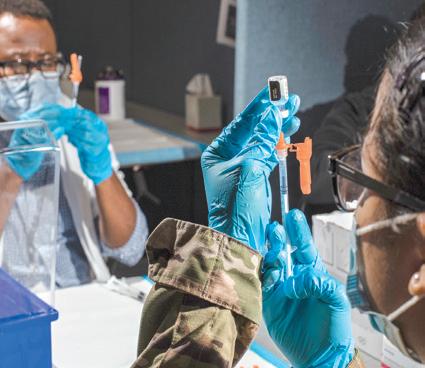
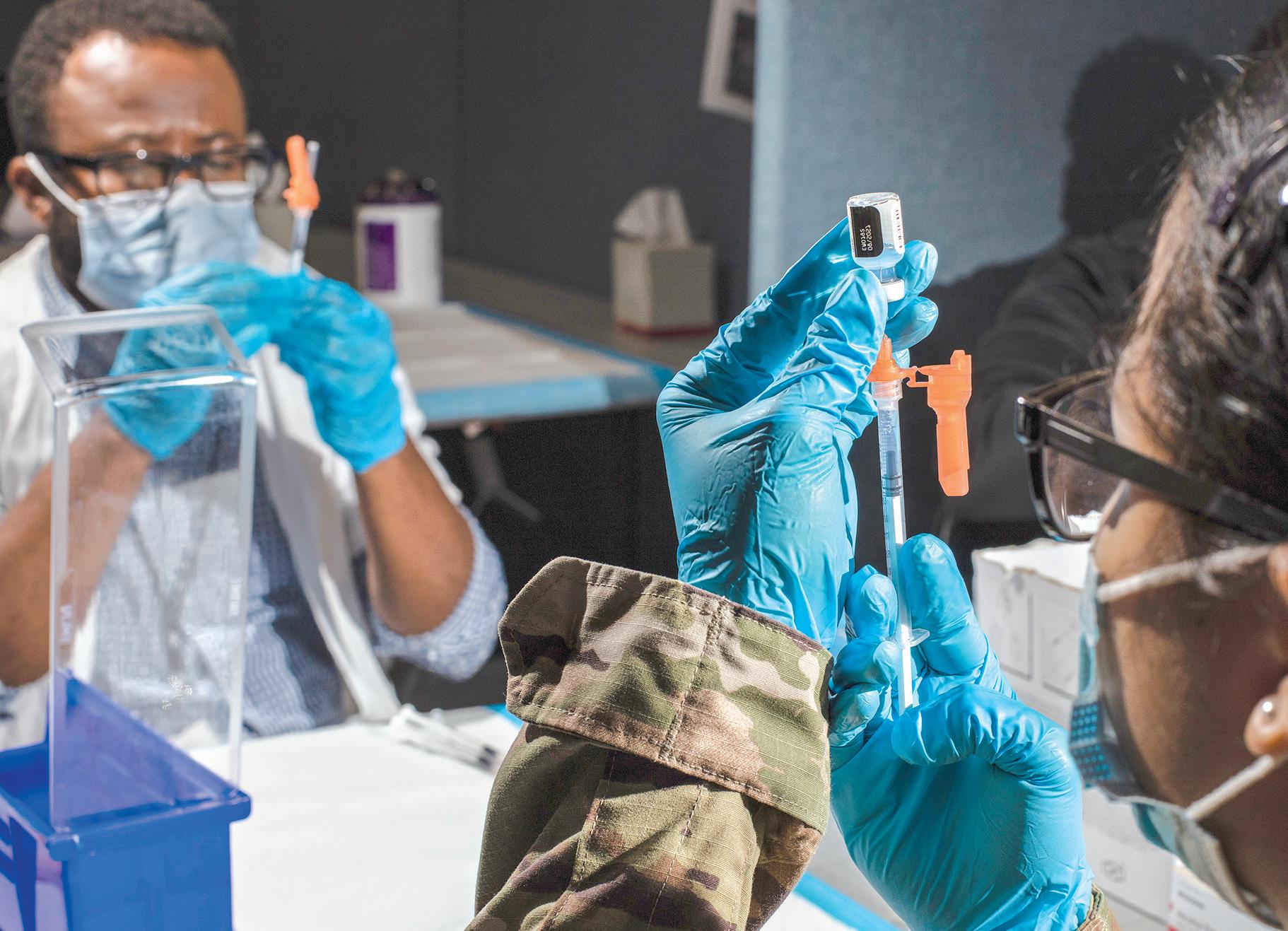
Although 54.7 percent of the total U.S. population is fully vaccinated for COVID-19 as of Sept. 20, the threat of the highly contagious Delta variant and waning antibodies after vaccination makes vaccine boosters a next step in curbing COVID-19 infections for some.
According to Prof. Avery August, microbiology and immunology, the purpose of a vaccine is to expose your immune system to what the virus would look like without exposing you to the virus itself, allowing your body to generate infection-fighting antibody proteins.
During this exposure, B cells — which produce responses from the immune
system specific to the new threat — are activated by the presence of the vaccine and then transform into plasma cells, which generate antibodies that recognize the virus.
B cells, which are a type of white blood cell, originate in stem cells in the bone marrow. Some B cells are weeded out in the bone marrow because they are harmful to one’s own cells. The surviving B cells go through a process called hypermutation, in which they undergo changes to select for B cells that can bind foreign antigens the best.
August explained that B cells can also become memory B cells, which help generate long-lasting antibodies, since they can lie in wait inside the body and quickly respond in the event of subsequent exposure to a specific pathogen.
According to August, the duration of the body’s antibody response, which can be anywhere from weeks to years, depends on how long the plasma cells survive.
Prof. Cynthia Leifer, microbiology and immunology, added that the antibody response is also determined by how long a pathogen stays in the body and vaccine potency. COVID-19 recovery can range from a few days to a few weeks.
Although the original COVID-19 vaccines were highly protective against infection, some are concerned whether this efficacy still holds true against the Delta variant. According to Leifer, it is likely that the antibodies produced from the original vaccine still recognize the Delta variant, though with slightly weaker binding, resulting in slightly lower efficacy.
However, Leifer emphasized that despite their lower affinity for the Delta variant, antibodies produced from vaccination are still critical for reducing the risk of severe illness from COVID-19.
“The binding is not as strong to the Delta variant, but it’s still significantly strong. So it’s going to really help protect you in the long term,” Leifer said.
Even though the booster shots will be needed soon, Leifer said that those who have already been vaccinated are still highly protected compared to those who have not been vaccinated. For example, young children are still at risk, as they have not been approved to receive the vaccine yet.
“The data shows that if you’re fully vaccinated, you’re still very highly protected from serious disease hospitalization and death, which are the most important things to us right now,” Leifer said.
With booster shot distribution becom-
ing a very likely possibility, medical ethics — determining the order of priority based on risks faced by certain groups — must once more be a consideration for who will be first in line to receive the boosters.
According to the Centers for Disease Control and Prevention, if a booster dose is authorized, health care workers, older adults and residents of long-term care facilities will likely be prioritized.
August said that from an immunological standpoint, COVID-19 booster shot distribution should prioritize those who had lower antibody responses in the first two rounds of the vaccine, which can be determined through antibody testing.
But Leifer said that vaccine availability would not be a hindrance to distribution efforts, due to the excess of vaccines produced from the initial vaccine rollout in the U.S. This will likely result in a smoother distribution of the booster shots.
“I think right now, we have enough people in the U.S. who are electing not to get the vaccine at all that we have somewhat of an excess. So it’s not as if people getting boosters would take vaccines away from other individuals,” Leifer said.
While it is unknown how much antibody immunity individuals still have from initial vaccination, immunologists’ main concern is how much additional immunity is necessary for the population to further curb the pandemic.
“The question is how much antibody immunity we still have, and how much of a reduction have we observed since we’ve been vaccinated that will necessitate significant concern or attempts to generate additional immunity,” August said.
Milena Bimpong can be reached at mbimpong@cornellsun.com.
By JOHN CAPWELL Sun Staff Writer
With COVID-19 cases coming down from a record high in Tompkins County and staffing shortages among healthcare workers worsening, Cayuga Medical Center has been strained to provide care for COVID and non-COVID patients, but have been able to adapt and provide normal levels of services.
Despite these concerns, representatives at CMC are hopeful, and cognizant of the success they have had in maintaining a level of care very similar to what they were able to provide before the pandemic.
“Even with the current wave we are having now, which has more positive cases than any other point in the pandemic, we are able to provide all the services we were providing before.” said Dr. Andreia deLima, vice president of medical affairs for CMC.
deLima credited this feat to the hospital’s high vaccination rate among employees and precau -
tions for those that enter the hospital. These measures include screening for COVID symptoms, designating certain wings of the hospital to COVID patients and requiring testing before arrival, among others.
However, COVID-19 cases remaining elevated in Tompkins County in recent weeks has been “a lot to juggle,” especially amid greater staffing shortages, deLima said. “Prior to Covid, there were already staffing shortages in multiple areas of healthcare, but … the pandemic pushed even more people out.”
According to deLima, CMC has been continually hiring for certain positions, such as nurses and surgeons, while predicting how many employees will be needed for certain shifts to keep patient care running smoothly.
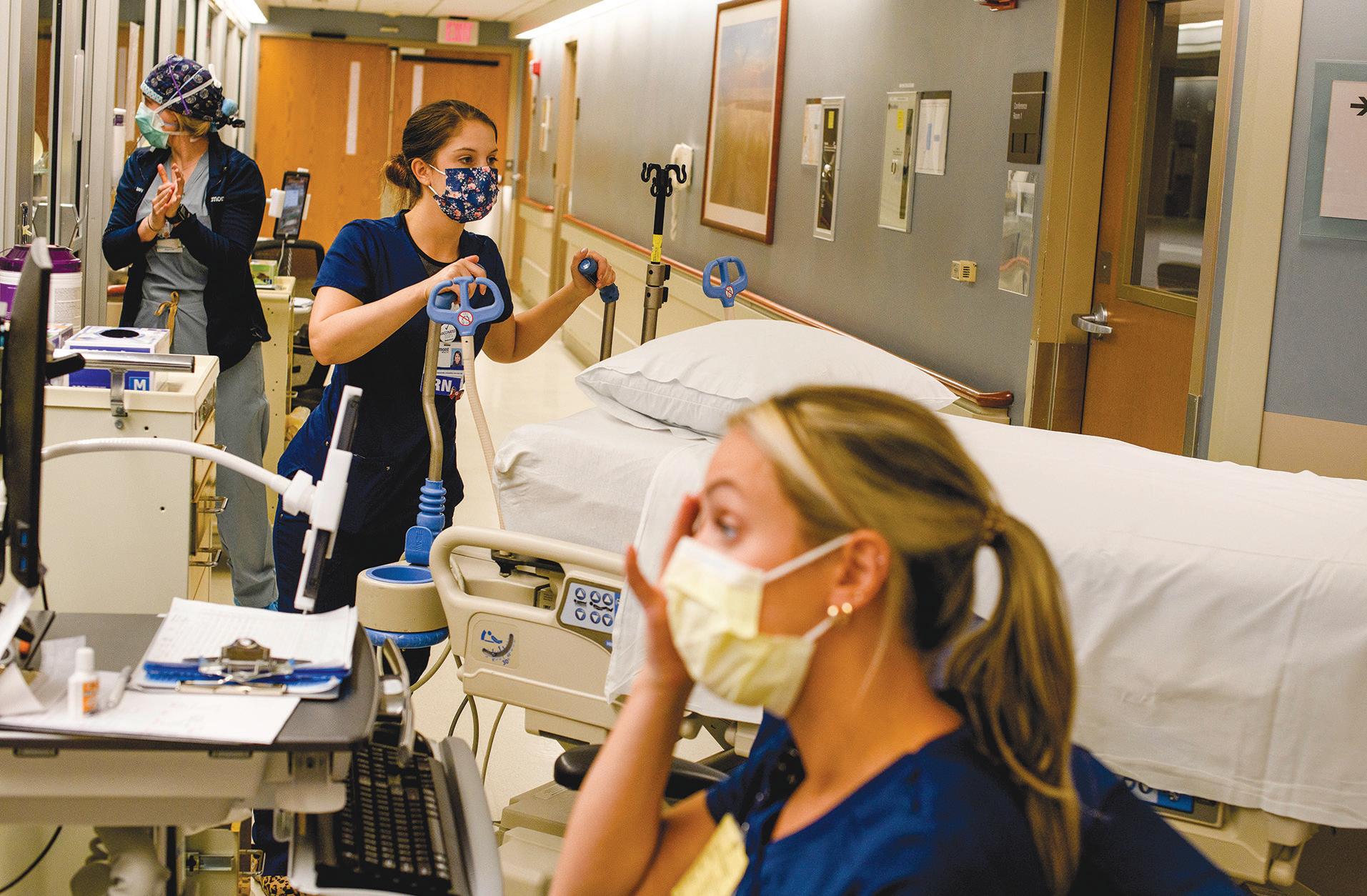
deLima explained that to stave off further shortages, CMC has had to instate programs to mitigate burnout — the overwork, high stress and long hours that lead to workers feeling
exhausted and unproductive, even leading some to quitting their jobs.
“[Burnout] is a true problem,” deLima said. “But we have a robust wellness program for all of our workers, we have initiatives that get deployed when COVID is really trying, when patients are really high.”
One such wellness program is a ‘treat trolley,’ in which physicians get their own form of trick-or-treating during their breaks. deLima explained that since it is often hard for physicians to get sufficient breaks to get food, the hospital sends around a trolley with snacks that can be quickly eaten.
“The staff really appreciate that,” deLima said.
deLima also said CMC promotes the use of online resources to check on the staff’s mental health.
Above all, deLima said the hospital’s sense of community has been crucial in forming a support network for all its staff members.
“When we had our first COVID case, we all came
together,” deLima said. “We knew that this was not a sprint, but a marathon, and we needed to pace ourselves. Here we are 18 months later still running that marathon, all of us supporting each other.”
Collaboration with hospitals and other local institutions, deLima added, has been essential for providing treatments CMC cannot.
“We collaborate with
region, and if it comes to a point where there is a service we cannot offer, we have another place [patients] can be transferred to, and vice versa.” deLima said. “We all want our patients to get the best care possible.”
In the face of recent COVID concerns, deLima emphasized that CMC’s ability to adapt and commitment to patient care has
ience in keeping their hospital at full functionality.
“The community needs to know that we are all working really hard to keep the hospital working at the same level of care that it has been doing for many, many years.” deLima said.
“[COVID] may be a burden, we are aware, but we are prepared.”
John Capwell can be reached
burnout