The Corne¬ Daily Sun

By SHRUTI JUNEJA Sun News Editor
After President Martha E. Pollack rejected non-profit The Sophie Fund’s call for an independent mental health review of the University in January, its founders penned a second letter to Pollack urging her to reconsider their request following the JED Foundation’s review of Cornell’s mental health policies.
In January, Pollack stated that internal reviews along with an assessment from the JED Foundation were occurring and that an independent task force would not be neces-
sary, The Sun previously reported.
However, Susan Hack and Scott MacLeod — the parents of Sophie Hack MacLeod ’14, who died by suicide in March 2016 while on leave from Cornell — were dissatisfied with the 55-page report of JED recommendations and four pages of Cornell responses to the recommendation.
“It
letter publicly last week.
is not the independent, transparent, and robust review that we sought ...”
Susan Hack and Scott MacLeod
Claiming that these results were “insufficient,” Hack and MacLeod wrote a second letter to Pollack in August. They posted the
“We have examined what Cornell has made public about JED’s ‘external assessment,’” MacLeod and Hack wrote, according to a copy of the letter shared with The Sun. “We have concluded that it is plainly insufficient; it is not the independent, transparent, and robust review that we sought and that we believe Cornell’s students deserve; and it does not adequately address many of the concerns we raised in our April
By YUICHIRO KAKUTANI Sun News Editor
A former intern for New York City Mayor Bill de Blasio, a self-described “walking meme” and 18 other new Cornellians are running in the upcoming Student Assembly fall election that will decide the next freshman and transfer student representatives.
Sixteen freshmen and four transfer students are competing for four freshman representative positions and one transfer student representative position,
respectively. Seventeen of the total 20 candidates responded before publication to The Sun’s request for an email interview — below is a summary and select highlights of their responses.
Of the candidates who answered The Sun’s survey, all except one came from various parts of the United States, with eight of them hailing from within New York State. They come from a variety of cultural backgrounds, including Ethiopian, Chinese and Puerto Rican backgrounds.
Several candidates promised to work
to improve campus safety, with some singling out a desire to improve Cornell’s response to sexual assault on campus.
“I believe response and awareness for sexual assault is grossly underperformed on campus, and though administration has taken good steps in the right direction, it simply isn’t enough,” George Defendini ’22, freshman representative candidate, wrote, calling for the implementation of a “student-led sexual assault support group.”
19, 2017 letter.”
In a statement to The Sun, Ryan Lombardi, vice president for student and campus life, said that Cornell Health is in the early stages of planning a comprehensive review of student mental health that will bring together “internal and external partners” and begin “as soon as early 2019.” The University did not clarify whether this was directly in response to The Sophie Fund’s letter.
“While for many years the university has engaged in regular assessment of student mental health needs and evaluation of services
By SAMANTHA STERN Sun Staff Writer
A member of the famed Knowles family is coming to campus this month, but sorry Beyhive, it’s not Beyoncé.
On Sept. 27, Mathew Knowles, renowned music industry entrepreneur, public speaker and former manager to his daughters Beyoncé and Solange Knowles, will visit Cornell to discuss his books in a panel discussion at the Africana Studies and Research Center.
A visiting professor at Texas Southern University, Knowles is the author of the best-selling book The DNA of Achievers: 10 Traits of Highly Successful Professionals as well as Racism From the Eyes of a Child He is also the founder, president and CEO of Music World Entertainment, “one of the world’s leading music and entertainment conglomerates” with global sales of records totaling over $300 million, according to his website.
“His impact as a professional in corporate America and on the music industry are well known,” Prof. Riché Richardson, African American literature, who will also participate in the panel, said in an email to The Sun. “His origins in the segregated South make such achievements all the more interesting for reflection.”

KNOWLES
The panel will also include Prof. Marla Frederick, a professor of African and American studies and religion at Harvard University. Prof. Gerard Aching, Africana and Romance studies, will moderate.
The panel grew out of Richardson’s popular class American Studies 3355: Beyoncé Nation, which 68
Tuesday, September 18, 2018
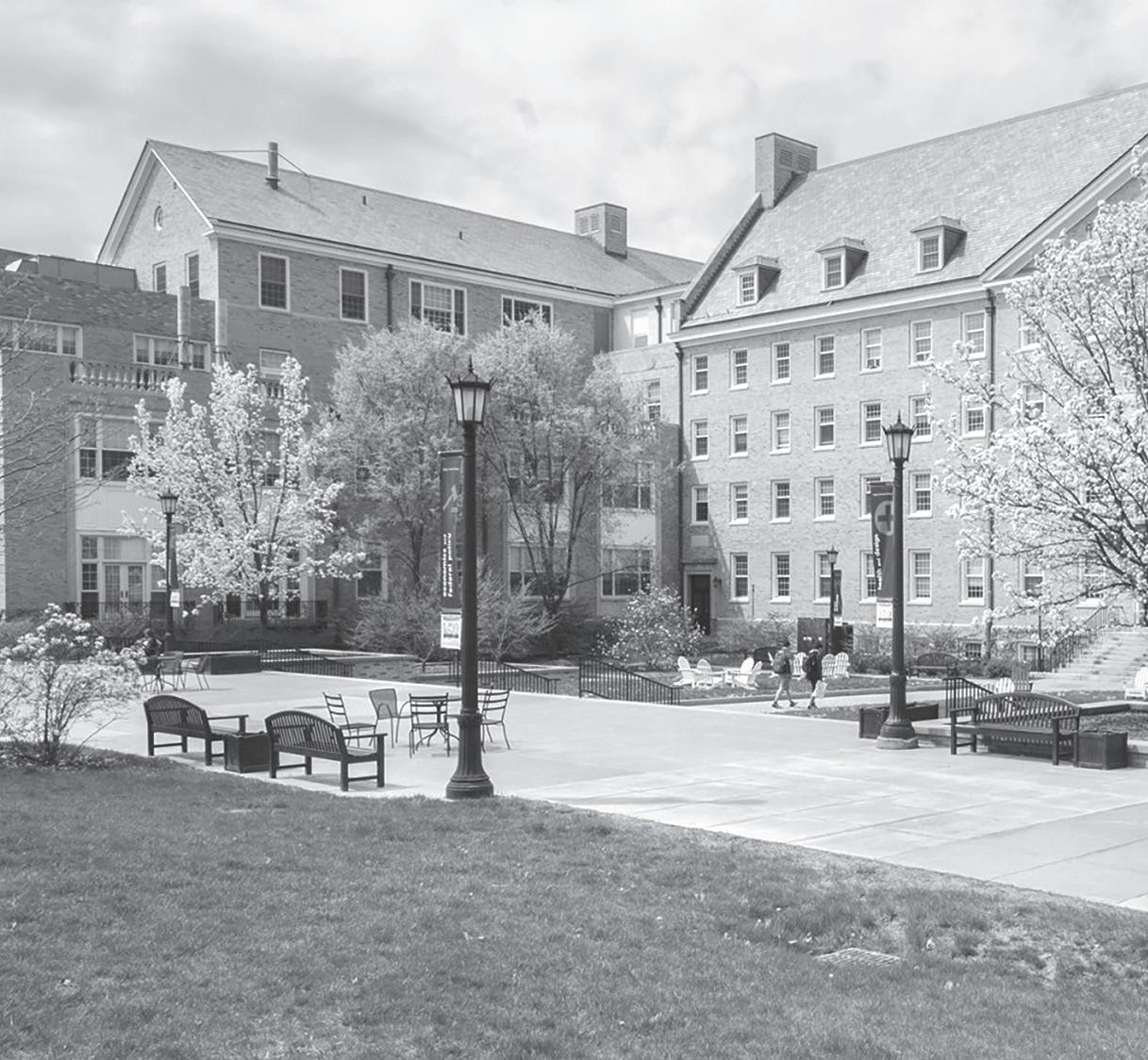
Disaster risk management | Attend a lecture on disaster risk management for low and middle income countries today at Martha Van Rensselaer Library.
Disaster Risk Management for Low and Middle Income Countries
11:45 a.m - 12:45 p.m., 153 Martha Van Rensselaer Hall
Celebrating Democracy in Action Noon - 1:30 p.m., Kennedy Hall, 3rd Floor
National Science Foundation Graduate Research Fellowship: Advice from the Cornell NSF Fellows Panel Noon - 1:30 p.m., G01 Biotechnology Building
Teaching and Learning Reading Group Noon - 1 p.m., 309 Clark Hall
Cornell Health: “Let’s Talk” Walk -In Consultations 2:30 p.m., 146 Sibley Hall
“The Future of Work” with Bentley de Beyer of Johnson and Johnson 3 - 4:30 p.m., 143 Sage Hall
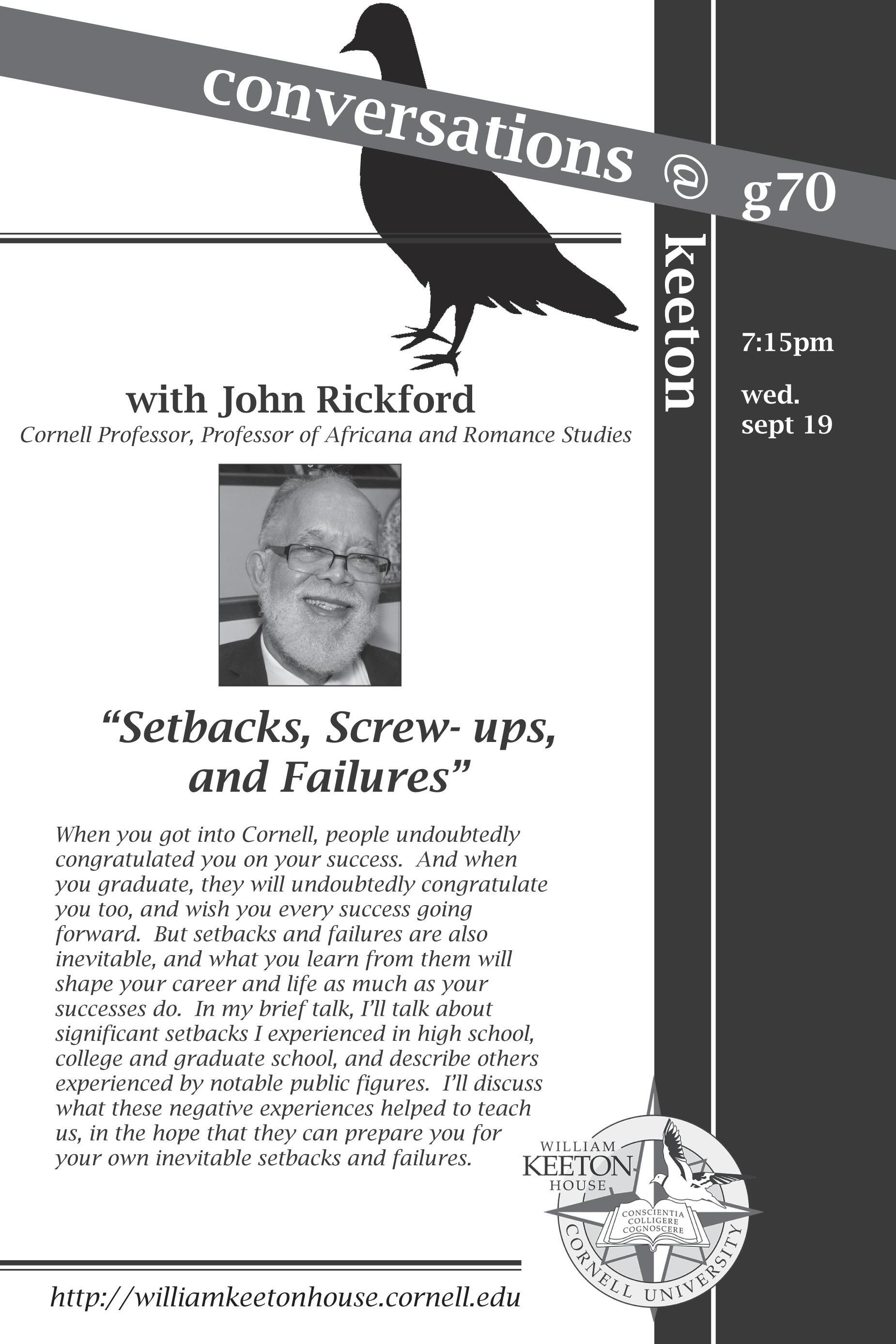
John Rickford: Class and Race in the Analysis of Language Variation and the Struggle for Social Justice 4:30 - 5:45 p.m., Klarman Hall, Auditorium
Using Excel with Research Data 4:30 - 6 p.m., Uris Library, Classroom
Jennifer Stager: Mosaic as a Way of Seeing 4:30 p.m., Goldwin Smith Hall, History of Art Gallery
Truman Scholarship Information Session 4:35 p.m., 103 Barnes Hall
Cornell in Washington Information Session 4:45 - 6 p.m., G76 Goldwin Smith Hal
Canvas Information Session 10 - 10:50 a.m., G10 Biotechnology Building
Wednesday Walk at Noon Noon. - 1 p.m., Big Red Barn

John Rickford: Surviving, even Thriving Noon, Africana Studies and Research Center, Hoyt Fuller Room
International Coffee Hour and S’Mores Bar 3:30 - 5:30 p.m., Big Red Barn
Blackout: The Necropolitics of Extraction 4:30 - 6:30 p.m., Milstein Hall, Auditorium
Finger Knit for a Cause 8 - 9 p.m., William T. Keeton House
By SAMUEL NOLAN Sun Staff Writer
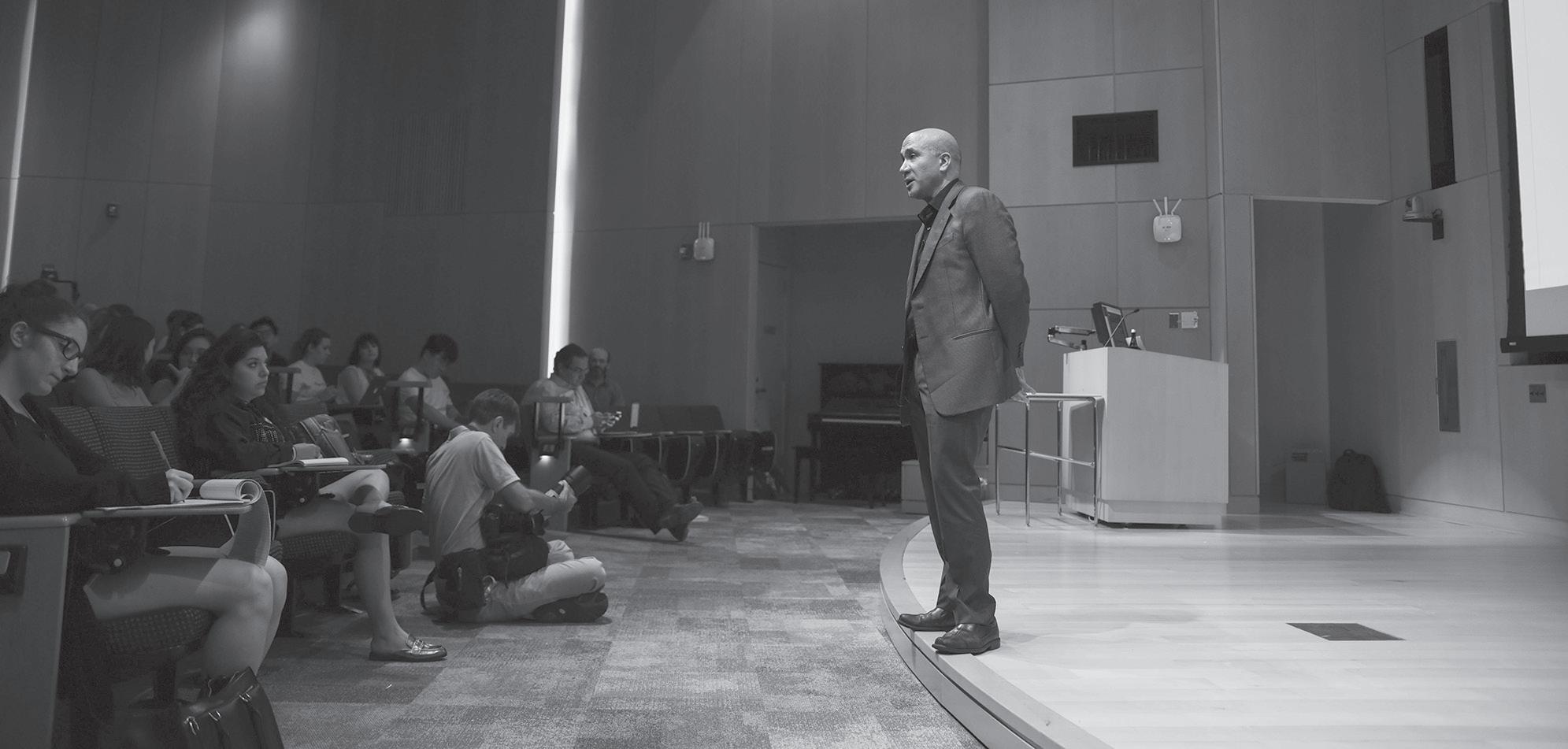
Australian sociologist, Harvard lecturer and award winning author Prof. Bruce Western spoke at Klarman Hall on Monday afternoon on the hardships and resistance routinely faced by formerly incarcerated Americans returning home.
Mass incarceration is the result of the “criminalization of social problems related to racial inequality and poverty,” Western said. More than just “shrinking the system” is required if the problem is to be addressed, Western cautioned — the outlook of the criminal justice system needs to be “fundamentally changed” to be less punitive and more restorative.
More than just “shrinking the system” is required if the problem is going to be addressed.
Prof.
In his new book Homeward, Western explored the typical first year of reintegration for formerly incarcerated persons in the Boston area by following such individuals for a year as they re-entered society. In connection with researcher Anthony Braga of Northeastern University and Rhiana Kohl of the Massachusetts Correctional Department, Western designed an observational study in which a research team interviewed incarcerated individuals both before their release and at intervals over a year. These interviews focused on aspects of life including “employment, health, housing, familial relationships and drug use,” Western said.
There is no shortage of research detailing the extent of American mass incarceration and the impact it has on the people and communities most affected, Western said, but he found that the analytical data often lacked a human element.
He worried that “surveys designed to cover the general population were not very good at teaching us about the life experiences of very poor people who often have very unstable housing, untreated mental illnesses and drug addictions.”
In his work, he wished to identify the human reasons behind recidivism, the tendency of a past offender to recommit a crime and return to prison. Recidivism rates are often highest during the first year, according to the National Institute for Justice.
The study included a broad cross-section of the Massachusetts carceral population — 122 individuals, both men and women, serving all types of sentences in all types of prison settings. Both violent offenders and non-violent
drug offenders were included.
Participants were predisposed to “poor health, both physical and mental as well as incredible material hardship,” Western said, and childhood trauma was so often mentioned in inmates’ descriptions of their path to incarceration that the researchers decided to “significantly redesign” their exit interview to address that trauma.
Of the 122 individuals studied, about half reported significant drug use in their household when they were growing up. Western’s observations also often included an early exposure to trauma or the witnessing of a violent event as indicators of incarceration.
a man from the Boston area who faced significant challenges upon his release from a correctional facility.
“He came home on a Friday and on that morning he bought clothes and got a haircut, he spent time with his sister that first day and stayed over that night,” Western said.
Peter worried that he was a burden on his sister’s already cramped household and began to look for other options.
“He could have stayed with his father but his father drank and his brother who also stayed there dealt drugs,” Western said.
“The feats we ask of formerly incarcerated persons ... require a degree of agency that we have simply destroyed.”
Prof. Bruce Western
Western found that relapse into the use of hard drugs was the number one indicator of a risk for recidivism. Other top predictors include whether or not the individual has supervision by a parole officer, or being young and having maintained the social connections that may have landed the individual in the criminal justice system in the first place.
Until the 1970s, Western said, American incarceration was fairly stagnant and on par with other Western countries. However, a gradual change in U.S. laws — and the way people in power chose to enforce them — changed in a way that made the incarceration rate increase “and continue to grow every year for the next 35 years,” Western said.
One of the stories included in Homeward is that of Peter,
Peter subsequently enrolled in the food stamps program, visited a welfare office and attended mental health counseling, Western said. Peter also spent time with family and had to arrange transportation, check into homeless shelters and attempt to find a job.
To help people like Peter, Western recommended that “given the small crime prevention effects of long prison sentences and the high financial, social and human costs of incarceration,” federal and state lawmakers should “revise” current criminal justice policy.
“The feats we ask of formerly incarcerated persons in order for them to successfully reenter our society often require a degree of agency that we have simply destroyed with incarceration,” Western said.
Samuel Nolan can be reached at snolan@cornellsun.com.
Grande speaks with Te Sun about how his education, childhood led to ‘great passion’ for his work
By WINNY SUN Sun Staff Writer
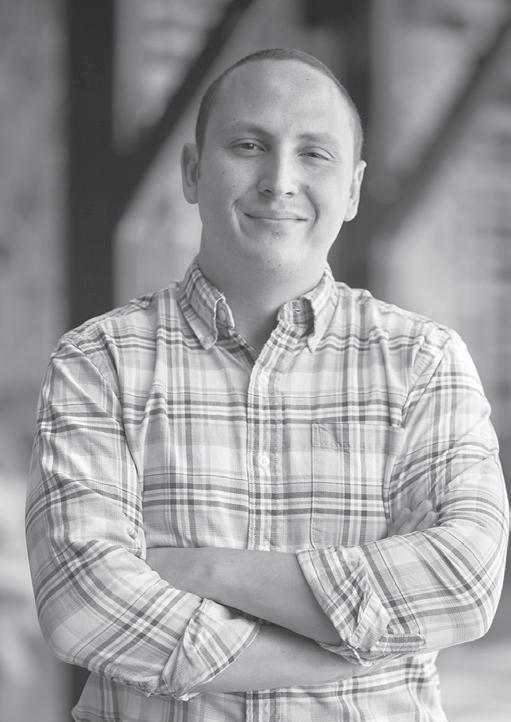
Ryan Grande M.M.H. ’10, Four Seasons Resort Costa Rica’s newest manager, said in a telephone interview with The Sun that his secrets to professional success are passion, focus and constant learning.
Grande became interested in the international hotel business at an early age, he said. He has always loved to travel, but as he got older, he also developed a fascination for other aspects of the industry.
“All of the things I am quite interested in — real estate, food and beverage, exploration, tourism, travel, geopolitics, business, problem-solving … you have all of that tied into one industry. That is the hospitality industry,” Grande said.
In 2010, Grande earned a master’s certificate in the essentials of hospitality management from Cornell, a program he said had been “tremendously monumental” for his career. The knowledge and skills he gained eight years ago are still applicable in his current position, he noted.
In addition to learning from Cornell professors, he said he benefited the most from engaging with other students.
“Everyone would throw in their own ideas, interpretations and perspectives,” he continued. “I think that’s the greatest learning experience … it’s the diversity of thoughts that’s super important.”
Grande started working at Four Seasons Hotels and Resorts over 10 years ago. He began at a resort in his hometown of Toronto and has since worked at various Four Seasons locations around the world.
Prior to becoming the resort manager of the Four Seasons Resort Costa Rica, Grande was the resort’s director of residences. Previously, he was the assistant director of rooms and front office manager at Four Seasons Hotel Vancouver.
“I was presenting my take on a particular problem relative to food and beverage cost, and I would have another classmate chime in my conversation, who is a general manager at a hotel in the Middle East, and another one who is the director of operations in Asia,” Grande described.
A leader in the luxury hotel industry, Four Seasons has provided him with valuable learning opportunities and “overwhelming support,” Grande said.
“If you want to be the best, you want to work for the best. You want to be a part of the best. You want to cater to individual companies that have the best standards … and benchmarks,” he said.
In Four Seasons’ culture, where “it’s okay to make mistakes, it’s okay to fail because that’s how you get creative and learn,” Grande said he has experienced great personal growth.
During his years at Four Seasons, he has made his way up the ranks. In his new role as resort manager, Grande said he is responsible for the “full day-to-day operations of the entire resort.”
“The guest experience from the time they booked online, and after they depart is all under your level of responsibility,” he said.
Although he has acknowledged the job to be a “little daunting,” Grande expressed that he is committed to creating the best possible guest experiences.
“I [also] want to create the best employee experience,” he said. “I want to develop the local stuff … so they can really take ownership and be part of the new wave of leadership with our brand.”
“If you want to be the best, you want to work for the best. You want to be a part of the best.”
Ryan Grande M.M.H. ’10
Grande described himself as someone “who constantly learns” and is “exceptionally focused on his goals.” He said he is not only devoted to fulfilling his duties, but he is also interested in the future of the hotel chain. He said the future of the business lies in its residential sector.
He then went on to stress that passion is “the most important point out of everything” he had said during the interview.
“I really love what I do. I have a great passion for connecting with people, problem-solving, service delivery. I can’t imagine doing anything else in my career,” he said.
He offered to connect with aspiring Cornell students who wish to work in hospitality, via email.
“You are about to embark on the best business. It’s a business that can take you anywhere in the world … No two days are alike,” he said.
Winny Sun can be reached at wsun@cornellsun.com.
TASK FORCE
Continued from page 1
and programs, the decision to pursue an additional comprehensive review of student mental health reflects the University’s commitment to promoting health and well-being as a foundation for academic and personal success,” Lombardi wrote, adding that this was part of Pollack’s new campus initiatives.
The Sophie Fund was started by MacLeod and Hack to raise awareness of mental health issues and battle the stigma associated with them in the greater Ithaca and Tompkins County areas.
The JED Foundation is an national non-profit organization which partners with high schools and colleges to help them improve their mental health programs, according to the foundation’s website. It conducted a two year external review of Cornell, and the University publicly released the recommendations in the spring.
The recommendations include having the University “develop proactive action steps” in a variety of categories, including identifying students at risk, increasing help-seeking behavior and restricting access to “potentially lethal means.”
However, MacLeod and Hack voiced concerns that the JED Foundation assessment took too long and was neither independent nor thorough.
“We do not believe that the JED review is an independent
external assessment. Institutions of higher education pay The JED Foundation a $22,000 fee to join what JED calls ‘a partnership’ with the JED Campus program,” MacLeod and Hack stated. “Whatever value Cornell received from the JED review, it is more accurately described as a consulting arrangement.”
In particular, MacLeod and Hack felt that the report did not address the long wait times at the Counseling and Psychological Services department, a complaint voiced by many students.
“A glaring omission in the two posted documents is any ref-
“We do not believe that the JED review is an independent external assessment.”
Susan Hack and Scott MacLeod
erence — either in findings or recommendations — regarding the capacity of the CAPS counseling and psychological staff to meet the rising demand of students for services,” MacLeod and Hack wrote. “This omission is particularly troubling — anybody who listens to Cornell students’ concerns will feel the deep frustration of many of them with CAPS services.”
However, the University did hire two more CAPS counselors in March to try to address the
concerns with wait times, The Sun previously reported.
But MacLeod and Hack are advocating for the creation of an independent and externally led task force that would “review and assess the mental health challenges for Cornell students, and the university’s policies, practices, and programs to address them; and to make recommendations to the Cornell President to ensure that the university is implementing current best practices.”
“As we requested in 2017, we ask that the task force’s findings be made public and be the subject of a university forum,” the founders wrote.
MacLeod and Hack also recommended that the independent task force be led by a “recognized public health expert with a strong background in mental health and without any current or previous ties to Cornell or to organizations and professional associations focused on collegiate mental health” and also that it work with the recently created student-led task force to get student input.
“We believe that the escalating mental health challenges at Cornell require a commensurate response,” MacLeod and Hack wrote. “The Cornell and Ithaca communities look to you for leadership, and we truly hope that a relentless approach to addressing student mental health will be part of your leadership legacy.”
Shruti Juneja can be reached at sjuneja@cornellsun.com.


S.A.
Continued from page 1
Meanwhile, Nicole Iori ’22, also in the running for freshman representative, said she would address sexual assault on campus by making Cornell “safer at night” by increasing lighting and expanding the Blue Light system.
Many candidates also seemed intent on improving Cornell’s mental health infrastructure, with the “walking meme” Laura Holland ’22, freshman representative candidate, suggesting that Cornell should create “mental resource centers in RPCC, Appel, the Tatkon Center” to offer more accessible mental health resources for students residing in North Campus.
“I’m running for Freshman Representative because of mental health issues on campus,” Mike Stefanko ’22, freshman representative candidate, said. “For a very long time, I have dealt with anxiety. To find out that freshman could face wait times starting at one month to get regular, scheduled mental health help left me surprised and unhappy with the status quo.”
Other candidates argued that they will focus on helping to integrate new students into Cornell community as they get settled in.
“Coming from [The University
of Virginia] and seeing how both the student community of UVA rallied together with the local population of Charlottesville following the deadly white supremacist rallies on our school grounds, I know the importance of community,” said Catherine Huang ’21, transfer student representative candidate.
“As any of my friends will say about me, I love bringing people together.”
Still others had some ideas for improving transparency in how the S.A. currently operates.
“I want to create a freshman class Group Me or other effective means of communication in order to make it so my peers can contact me without a huge time commitment on their part,” John Clancy ’22, freshman representative candidate, said emphasizing the need for a more “efficient” assembly. There are over 5,000 newly admitted students in the class of 2022, according to a University press release.
The candidates will participate in a public forum on Thursday in Willard Straight Hall. Voting starts next Monday and ends on Sept. 26. The S.A. Elections Committee hopes to announce their results at 10 a.m. on Sept. 27 at the earliest. Detailed candidate information can be accessed on the S.A. website.
Yuichiro Kakutani can be reached at ykakutani@cornellsun.com.
KNOWLES
Continued from page 1
students took last fall, The Sun reported.
One student in the 2017 class described Knowles’ daughter Beyoncé as “arguably one of the most famous black women in the world” during a final presentation, while another student researched the influence of Beyoncé’s entire family, including her father.
Richardson constructed this unique class after researching for her upcoming book Emancipation’s Daughter’s: Re-Imagining Black Femininity and the National Body Beyond Aunt Jemima. Thus, the idea of a panel with Knowles was tempting for Richardson.
“I’ve read about and studied Dr. Knowles in my research and so it’s useful to hear his perspectives firsthand and for him to also share his insights with our campus community,” Richardson told The Sun. “He’s from an earlier generation, but I like him … this dialogue is also very much an outgrowth of my recent course.”
Richardson said she is looking forward to sharing Knowles’ expertise with the public.
“I think that it will allow [attendees] to get more of a complex sense of Dr. Knowles’s histo-
ry and intellectual contributions, beyond what we think we know and often focus on related to his impact in the world of music and entertainment,” Richardson said.
“It will be a great privilege and honor to have Dr. Knowles visit our campus community.”
Following his visit to Ithaca, he will speak at a panel on mental health at Alabama A&M University, according to his website. Knowles is also set to travel to South Africa in October to co-host the African Leaders 4 Change Awards for philanthropy, according to the Africa Charity Awards website.
According to a University press release, the upcoming panel is co-sponsored by the Office of the Provost, several University departments, the American Studies Program, the College of Engineering, Cornell University Library’s Hip Hop Collection, the Africana Studies and Research Center and the Society for Humanities.
The panel will be held at 4:30 p.m. in the Africana Studies and Research Center with a subsequent reception. Attendance is free and open to the public.
Samantha Stern can be reached at sstern@cornellsun.com.
Independent Since 1880
136th Editorial Board
JACOB S. KARASIK RUBASHKIN ’19
Editor in Chief
JOHN McKIM MILLER ’20
Business Manager
KATIE SIMS ’20
Associate Editor
VARUN IYENGAR ’21
Web Editor
MEGAN ROCHE ’19
Projects Editor
EMMA WILLIAMS ’19
Design Editor
JEREMIAH KIM ’19
Blogs Editor
AMOL RAJESH ’20
Science Editor
BREANNE FLEER ’20
News Editor
GIRISHA ARORA ’20
Managing Editor
HEIDI MYUNG ’19
Advertising Manager
ALISHA GUPTA ’20
Assistant Managing Editor
DYLAN McDEVITT ’19
Sports Editor
MICHAEL LI ’20
Photography Editor
GRIFFIN SMITH-NICHOLS ’19
Blogs Editor
JACQUELINE QUACH ’19
Dining Editor
SHRUTI JUNEJA ’20
News Editor
Working on Today’s Sun
Ad Layout Krystal Yang ’21
Design Deskers Julian Robison ’20
Krystal Yang ’21
Carolyn Shi ’19
News Deskers BreAnne Fleer ’20
Sarah Skinner ’21
Night Desker Amina Kilpatrick ’21
Sports Desker Raphy Gendler ’21
Arts Desker Lev Akabas ’19
Science Desker Chenab Khakh ’20
Photography Desker Michael Li ’20
Production Deskers Katie Reis ’20
Krystal Yang ’21
Letters to the Editor
Prof. Caruth explains signing letter re: NYU prof found guilty of sexual harassment
To the Editor:
I have recently had meaningful discussions with several graduate students from Cornell, who have encouraged me to explain to others what I have said to them about the signing of the letter concerning Avital Ronell. I am grateful to these students for their willingness to speak and to listen and to allow me to do the same. I explained to them that, although I have offered to the Cornell students to speak to them either individually or, by anonymous request, as a group, I have previously been reluctant to issue a formal statement or be interviewed for a paper. This is because of the likelihood of distortion in these contexts and because of the tendency for explanations to appear to be excuses, or to appear as attempts to purify oneself by condemning others. Nonetheless, as the students have indicated to me, they found it helpful to hear some of the context for my signing (and that of others), so I am reiterating my comments here. This context includes the fact that the letter that appeared in public was not a letter of which many of us approve. Several of us, indeed, never read the final form of the letter that was ultimately submitted. The reasons for this are varied among the signers I know, and we are all aware of the problems surrounding such hurried action. As I told the students, many of us had fragments of information last spring (only fragments were possible because of the privacy rules surrounding such investigations) amounting to the following: that a colleague, who was in many cases also a friend of the signers, had been found guilty of sexual harassment as a result of some e-mails deemed inappropriate; that she was either fired or about to be fired; and that any response to this must be made immediately to be effective. Those of us (including me) who have worked hard to bring forward Title IX and other harassment cases on behalf of students or other faculty, or who have observed the results of investigations led by universities, were aware that there are times when a university may seem to be focused more on protecting its bottom line than on adjudicating properly and with care, thus leaving either the accuser or accused with an unjust result. We thus agreed to sign a letter whose aim would be to alert the university to our awareness of the procedure and to urge the university to take care in deciding upon a punishment that was just and in proportion to the offense. As many of us understood it, the letter would not be focused on either accuser or accused (on the intent of the accuser or on the fame or the accused) but rather on the process, one that should be followed regardless of who accuser and accused happened to be. Upon reading the letter that appeared, many of us felt that the letter was improper and that we certainly did not (and do not) wish to appear to condone any attempts to silence or defame accusers or to condone abuses of power by those who have it. As a person who works on trauma, I am particularly aware of the forms of denial that either purposely or inadvertently emerge in the public sphere and of the problem of creating environments where speaking out feels dangerous. As I have frequently discussed with students and in my work, it is always important to listen, even when listening is hard and most of all when it challenges our assumptions.
It is for this reason that I express gratitude, again, to those at Cornell and elsewhere who are engaging in the difficult process of listening and speaking. My students were relieved to hear that there are other signers who may share my feelings but, for reasons similar to my own, have not come forward because of their own concerns about not being heard, rather than because of a desire to double down on support for this letter. What this case reminds us is that rushing to judgment, or to action, in an emergency, of believing we can afford not to think under these circumstances—or not to listen in a crisis—usually leads to unfortunate consequences.
Prof. Cathy Caruth
Frank H. T. Rhodes Professor of Humane Letters
Asked to outline their morning routines, many would allude to breakfast, a hot shower, or some form of planning or light productivity. Early risers may describe a zen-like energy in anticipation of the day to come. Late bloomers — I’m speculating — would likely miss the question altogether in the midst of incessant alarm-snoozing and hastily dunking essentials into an overflowing carryall.
In most aspects, my morning routine is not much different. It follows a similar arc, customized with the staples of student life: waking up with the sharp regret of failing to fall asleep sooner, munching on a granola bar and running some quick calculations on how much more, if any, of my attendance grade could be sacrificed. This is all well and good; I have long since made my peace with the rushed morning, and I remain stubbornly faithful in the existence of the mythical, leisurely morning. Yet, not once had I prepared to slip into a bout of frightening mornings.
Recently, I have been forced to introduce another component to my A.M. flow: hunting for spiders. Spiders, with eight long, limber legs and immeasurable capacity to strike terror, are pets to some but monsters to others. In a show of respect to the former crowd, I will settle on labeling them unwelcome guests.
On the day of the first spotting, I was without a care. I was capering around the house, cleaning for pleasure, concerned only with the meals and social callings in my immediate future. One sprightly footstep after another lead me to my room, which is tidy always and disorganized never. There, on the window sill, he was: a wolf spider, as one of the numerous recipients of my panicked live-photo stream dubbed it.
You can rely on a potentially poisonous beast from hel— I mean, unwelcome guest — to nudge you to return your parents’ call. What ensued was an emotionally charged FaceTime with my mother on one end, urging me to quit whining and take action, and me on the other, good for little besides an impressive oscillation between screams and paralysis.
Eventually, I killed the spider, in no particularly merciful fashion. The relief at once again being the sole living occupant of my room was difficult to indulge fully, given the poor, lifeless creature whose only wrong was venturing too far out of the surrounding shrubs. Still, I was happy to move on.
On the day of the second spotting, I
was guardedly confident that the worst was behind me. For the sake of my own sanity, I had not yet dared to think that where there is one, there are many — but, keeping with the law of plenty, there were many. On the day of the third spotting — today — I am indifferent. I am not inclined to continue fatally whacking spiders, and, perhaps unwisely, I consider them annoyances rather than threats. I am resigned.
Of course, few of us are searching for luxury in our late teens or early twenties, but basic safety, convenience and security are rightful amenities in any property — even properties in the pits of Collegetown. Universities across the country are equipped to offer on-campus housing to a minority of their enrolled students, and those who reside off-campus are afforded no guidance, compensation or guarantee of decent living conditions. This trend compels students to adopt accommodating, cost-oriented mindsets out of necessity, naturally prioritizing accessibility to campus over comfort. In turn, this perpetuates the culture of negligence and insolence among landlords, who then have no obligation towards maintenance. For student renters, floorplans hardly leave an inch of space for negotiation. Sometimes, we get a half of what we pay for, and we accept it.
It is an oversimplification to claim that the root problem is a shortage of housing. Then, the solution intuitively maps to building. With student demand for near-campus housing constant and unwavering, builders are incentivized to secure more properties, build larger, build faster, and capitalize. Overcrowding, poor HVAC systems, and insects and pests form a small subset of the tragedies in nationwide student housing. Refueling building efforts only scrapes the surface of the underlying issue.
Beyond the art of dousing insect-repellant all over my window sill, I’ve learned some lessons from my proximity to wilderness: caution and adaptability, surely, but also a degree of empowerment and a sense of fairness. With this being said, there could be a clause in my lease, in the finest of prints, that explicitly states I’m agreeing to occasionally spar with spiders… in which case, the fault is entirely my own.
Energy and climate change issues need to be addressed in
To the Editor:
It’s critical to look at the energy/climate change issues of Cornell’s proposed North Campus Residential Expansion. Municipal reviewers need better understanding of three issues. First, eliminating methane emissions is imperative in fighting climate change. Cornell’s greenhouse gas survey found them to be almost three times as serious as all other emissions combined on campus. Nonetheless, they propose heating this project with natural gas, inherently causing serious upstream methane emissions.
Second, Cornell falsely claims that alternatives to their proposed heating technology will increase natural gas demand even more. They claim that using power from the electricity grid to run ground-source heat pumps would draw exclusively on natural gas power plants. In reality all power plants supplying the grid would contribute to that electricity. Interestingly, the winter heating season is exactly when the grid has excess hydropower.
Third, Cornell’s proposed rapid-fire schedule of municipal review will avoid the preparation of an environmental impact statement (EIS). The proposal’s considerable methane emissions alone are sufficient to make a positive declaration of environmental impact. The ensuing EIS would have to thoroughly address the critical points of contention. That’s the only way the municipalities will get the understanding needed to make valid permitting decisions.
Mitchell Lavine
Almost a month into the fall semester, many students like myself probably find themselves questioning how they had been accepted here or whether Cornell is the right place for them. To anyone doubting themselves or feeling alienated, I want to tell you that you are not alone.
Thousands of Cornellians who have also walked along the Arts Quad know what it’s like to feel lost on this large campus. Walking home from Uris Library at 3 a.m. or watching the sun set on Libe Slope, we have all been worn out at some point. It’s okay to feel hopeless. It’s okay to ask for help or even just lean on a friend’s shoulder. To anyone on this campus who has had reservations about being at Cornell — from first year to graduate student — you belong here. You deserve to be here. Don’t ever doubt who you are or why you came here.
Most importantly, I ask that you look out for each other. Talk to your friends about the dreadful amount of work to do. Ask what their day was like. While opening up to others may be difficult, you would be surprised by the number of people who are ready to embrace you with open arms. Personally, I have always felt comfortable keeping things to myself, not wanting to unload my baggage unto others. But over the last couple of weeks, I have realized that so many people here at Cornell are willing to share the burden and listen to your worries. Everyone has a place at this institution, and the people here are there to prove it.
resources. While these resources are a work in progress and have their own faults, Cornell Health’s Counseling and Psychological Services (CAPS) or peer counselors at Empathy, Assistance & Referral Service (EARS) could provide you with the support you may feel is lacking in this university. Mental health has often become a buzzword at Cornell — we talk about issues of mental health and the lack of help that Cornell provides for its students. Yet the concept is still largely stigmatized and is easily brushed off as just another way of “coddling” students who should learn to grow up on their own.

Thousands of Cornellians know what it’s like to feel lost on this large campus.
It’s okay to feel hopeless. It’s okay to ask for help or even just lean on a friend’s shoulder.
I encourage you to utilize Cornell’s mental health
However, mental health is more than just an issue for young adults. All people in any stage of their life should heed the need to take care of themselves and look out for those around them. Mental health lies beyond the medicalized perception of “having something wrong” with one’s mental state. It is a discussion on the pressures and anxieties we face as students at Cornell and an understanding that support is available around us. I also hope that you will not feel the need to succumb to peer pressure. For freshmen, you will soon realize that peer pressure in college is so different from peer pressure in high school that many neglect the fact that it exists in a university setting, often on a
Sarah Lieberman | Blueberries for Sal
Fgreater scale. On Ithaca’s campus, we students can easily get swayed by those who surround us 24/7. Notice what is going around you, but don’t forget who you are along the way. Think again before buying into what others say. Remember that you are your own distinctive Cornellian who brings your unique background to make this place what it is. Without you, there would be no Cornell. I urge you to explore campus as much as you can. Walk along the paths of Beebe Lake in the brisk fall weather and listen to the sound of crisp leaves rustling around your feet. Wander around and find something new each time. For the first time last year, I had discovered the following inscriptions on the stone benches overlooking Libe Slope outside of Uris Library. Andrew Dickson White and wife Helen Magill White’s beautiful words have provided me with a sense of belonging at a time of uncertainty and stress. I hope that the following will do the same for you.
To those who shall sit here rejoicing, To those who shall sit here mourning, Sympathy and greeting; So have we done in our time.
DongYeon (Margaret) Lee is a junior in the School of Industrial and Labor Relations. Here, There and Everywhere appears alternate Tuesdays this semester. She can be reached at margaretlee@cornellsun.com.
acebook has become a bit of a funeral home for me. I click on my home page and see a memorial post. I see reminders of those who I miss. Grief comes and goes, and sometimes it’s for people we never expected.
I won’t pretend to be the world’s biggest Mac Miller fan. The point of connection between him and me, in the universe, was probably pretty average when he was alive. I saw him at Governor’s Ball in New York City. I read articles online about his goodness and his sweetness.
You never could’ve warned me that I’d have spent last week crying over Mac Miller. It was surprising, like the sound of clattering silverware, but it was tumbling down my throat. I was checking Twitter with a rapid breath, a sickness, a nervousness. It felt so familiar.
Eight days before I left for my freshman year of college, I found out that my boyfriend of eight months had passed away — on Twitter.
On Twitter.
This person, who I talked to nearly every moment of every day, who knows the most intimate parts of myself, who I spent my senior year of high school connected to at the hip, passed away unexpectedly. And I heard about it on Twitter.
On Twitter.
A “Rest in Peace” Tweet.
I still remember his name, the boy who tweeted it, who was clued in by his father, a first responder, who broke the news before his family even knew. Who talked to him maybe twice, who tweeted, “Rest in Peace.”
I don’t forgive him. Even though he didn’t know how wrong it was — what he was doing. I got six calls in six minutes.
“Is this true?”
The moment I heard his mother’s voice over the phone, I beseeched her. And then I knew. But I had already heard. From a tweet.
When someone dies, we take to social media. A strange sense of direction, maybe, but it feels almost natural. I seek out sympathy for some of my most cutting emotions on Facebook; I talk about the news, I hear about babies being
You never could’ve warned me that I’d have spent last week crying over Mac Miller.
feeling sharing?
The sympathy feels temporary. Soon, Mac Miller will be off all of our timelines. This is natural, the progression of time, but for so many, this wound will be open and raw for the longer than the length of something trending on Twitter. Those close to him, those who knew him well, those who had more than two or three points of connection, will still hurt even when we stop remembering.
So, be more careful, when you write out an “RIP.” Think of how those words might touch, or torture, someone else.

born, I see relationships getting glued together. When people die, we see their face everywhere. This is how a memorial works. We are in the process of remembering. We do this remembering together. But what are the effects of this sort of
I cried so much for Ariana Grande, who used to be in a relationship with Mac Miller. Instagram had to disable commenting on her Instagram account because she was being bombarded, her own feelings of grief getting buried under strangers’ cruel frustrations. Grief doesn’t just include sadness, it includes anger, too. And sometimes, when people are looking to point a finger — to make sense of something senseless — an ex-girlfriend feels like an easy target. I know this. I’ve seen this, and I’ve felt this.
Maybe I’m less concerned with the temporariness of grief when it’s posted on social media.
Maybe I’m more concerned with the
misremembering. There is so much in a relationship that you do not see. Among all the people blaming Ariana Grande for Mac Miller’s death, I also saw videos of them, laughing, talking, listening to music — looking so fully in love. I am so sure that in their relationship, because I believe this about every long relationship, especially when addiction is involved, that there was a lot of pain. There was so much love, more than we could ever see from photos and videos, but there was pain, and sadness, and trying, and failing, too.
The world might misremember their love, based on the bad things that happened at the very tail-end. I hope, so deeply, that she doesn’t always remember it that way. So, be more careful, when you write out an “RIP.” Think of how those words might touch, or torture, someone else. Think of how it could trigger a torrential downpour of emotions. Think of all the points of connection in the universe. Try to be more careful. Try not to misremember.
Sarah Lieberman is a senior in the College of Arts and Sciences. Blueberries for Sal runs every other Tuesday this semester. She can be reached at slieberman@cornellsun.com.
By CHRISTIAN ONG Sun Staff Writer
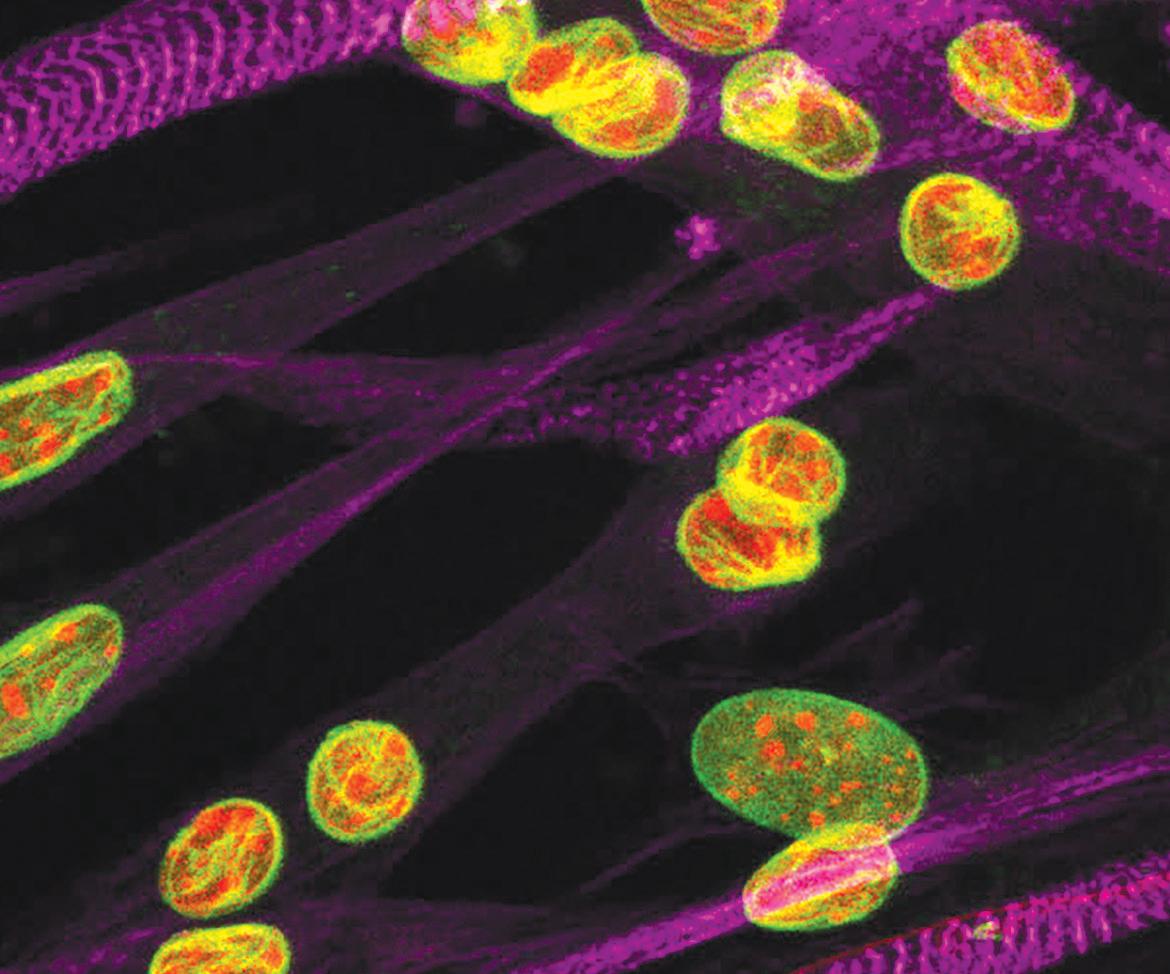
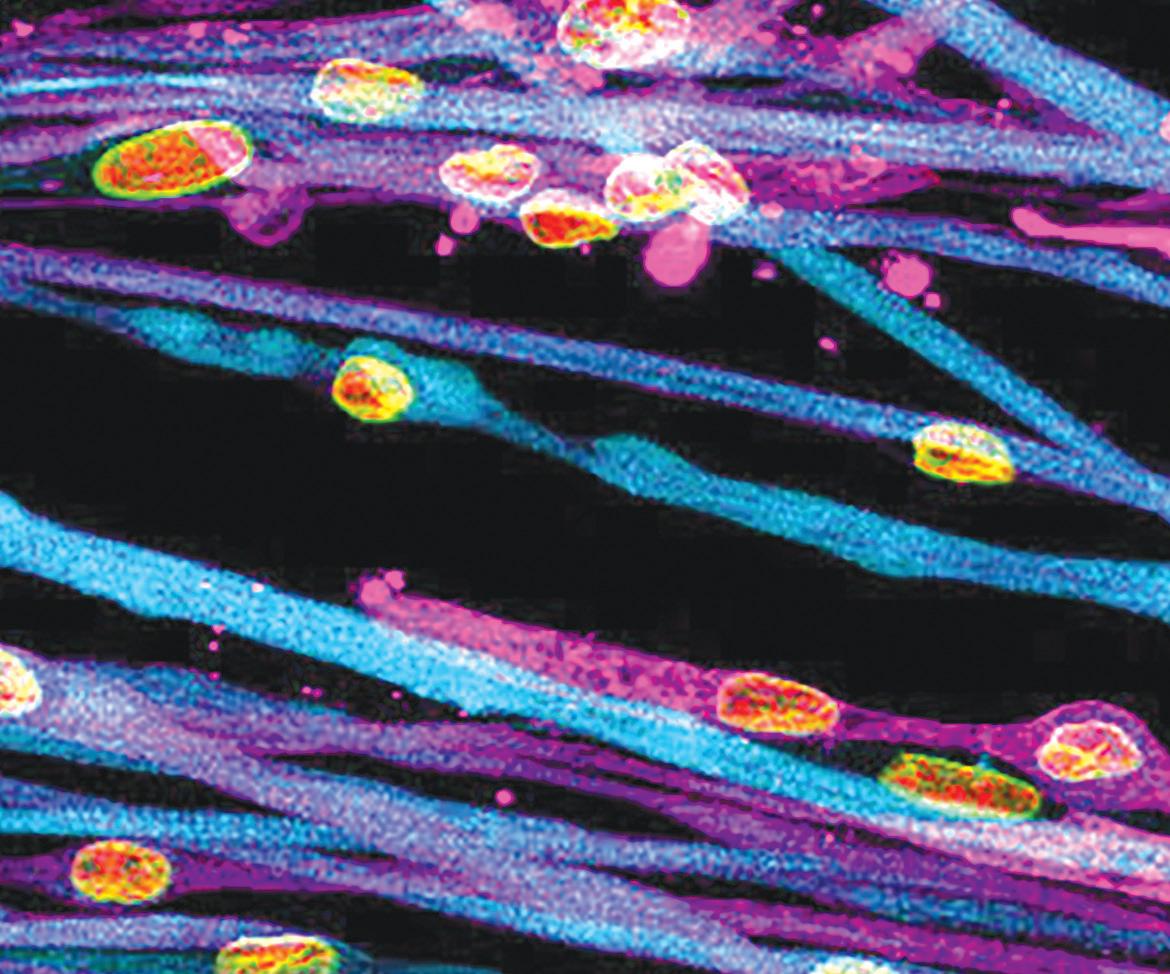
From middle school biology we were always taught that the nucleus is the “control center” of the cell, similar to how the brain is the control center of our own bodies. At first glance this makes a lot of sense, considering the nucleus contains DNA — the genetic code of life — and a good amount of the machinery that is required to transcribe this code into the proteins that make up our being. Despite this seemingly intuitive role of the nucleus, a recent study conducted by the Prof. Jan Lammerding, biomedical engineering, and post-doctoral fellow Tyler Kirby, suggests the nucleus may also act as a “mechano-sensor” in the cell. A mechano-sensor is a component of the cell that responds to physical stimuli in the environment of the cell, such as touch, charge, or temperature. Previously the role of mechano-sensor was credited entirely to cell membrane proteins.
The study conducted by Lammerding and Kirby focused on Emery-Dreifuss
“[The cell nucleus] might open the door for novel therapeutic approaches for treating EmeryDreifuss muscular dystrophy and other currently untreatable dieases.”
Jan Lammerding
muscular dystrophy — a disease that affects one in every 3,500 males and causes weakness in the shoulders, upper arms and lower legs. More specifically the pair studied the LMNA gene which encodes two proteins that make up the nucleus: nuclear lamins A and C. A mutation in the LMNA gene will cause dysfunction of the lamin A-C proteins.
“Lamin A-C proteins are a primary determinant of … structure, or the rigidity and mechanical properties of the nucleus. If you lack those proteins it makes the nucleus very soft, which in turn affects how it can respond to mechanical forces,” Kirby said.
Lammerding and Kirby investigated why, despite all of the cells in a body
possessing a mutated LMNA gene, only skeletal and cardiac muscle cells displayed extensive signs of nuclear damage, thus expressing the disease’s observable traits. Their current hypothesis is that muscle cells are only affected because of the constant mechanical stress that they are put under every time you move your body.
How were researchers able to deduce that the nucleus was doing the sensing? “The way that people are now approaching it is to specifically disrupt the way that the nucleus is connected to the rest of the cell,” Kirby said. There are two methods that researchers are currently using. The first involves “Link” complexes, which transmit stimuli from the cytoskeleton — the outer supportive framework of each cell — to the nucleus.
According to Kirby, other groups have “genetically manipulated” cells so they no longer have the Link complex. Afterwards they tested if this affected functions in the nucleus. Kirby said that there is emerging evidence that suggests altering Link complexes does in fact affect nucleus function.
The second method mentioned by Kirby was to remove the nucleus from the rest of the cell and observe physical changes in the nucleus when force was applied.
Dr. Lammerding is optimistic about continued research on the nucleus as a mech -
ano-sensor in cells. If further research supports the lab’s hypothesis, it could potentially change the way we conduct cell stimuli research.
As it pertains to the healthcare field, taking the nucleus into account when seeking to cure illnesses might “open the door
for novel therapeutic approaches for treating Emery-Dreifuss muscular dystrophy and other currently untreatable diseases,” Lammerding said.
Christian Ong can be reached at cong@cornellsun.com
ANDREA YANG Senior Staff Writer
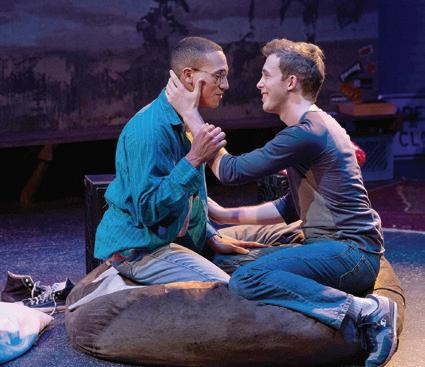
Based on Matthew Sweet’s 1991 alternative-rock album of the same name, Kitchen Theatre’s first production of the 2018-19 season, Girlfriend , has everything you’d expect from a classic summer rom-com — the meet cute, the mutual pining, the awkward yet exhilarating first date, the inevitable challenges and their resolution. What makes Girlfriend different from the start, however, is that instead of boy-meets-girl, it’s boy-meets-boy, in a small, conservative, midwestern town.
It’s the summer of 1993 in Alliance, Nebraska, and Will (Jonathan Melo) is still celebrating graduating high school and his new-found freedom when he receives a mixtape out of the blue from a classmate, Mike (Woody White). Unlike Will, a musical theater nerd constantly bullied at school for his sexuality, Mike is the golden boy of the football team with a (rather absent) girlfriend and a full ride to college, and it had seemed unlikely for their paths to ever cross. What they share, however, is a passion for music. And just as Will starts to listen to the the mixtape, Mike calls and asks him to a drive-in movie. From there, a delicate yet electric romance unfolds.
I went into Girlfriend with
apprehension, to say the least. I didn’t know what to expect from a story created around an existing album — a process that seemed backwards and incredibly difficult to navigate. The only musical I knew that was created from an existing album was Green Day’s American Idiot which, incidentally, also premiered at Berkeley Rep in the 2009-10 season, only a few months before Girlfriend . The processes through which the two musicals are created, however, are wildly different. While Billie Joe Armstrong himself was very much involved in the creation of American Idiot ’s story, Girlfriend was born out of playwright Todd Almond’s love for Sweet’s album, almost two decades after its first release.
In an interview, Almond reminisced on the impact Sweet’s album had on him back when it first came out, and described the process of creating a story from the songs as picking up “breadcrumbs” from the lyrics. Indeed, Almond did a tremendous job stringing together clues from Sweet’s songs, rearranging them in a way that tells a story vastly different from the one Sweet set out to tell back in 1991, right after his divorce. And though the songs were written about heterosexual relationships, the general sentiment and core ideas within the lyrics are not specific to any gender or age. They illustrate themes of romantic relationships
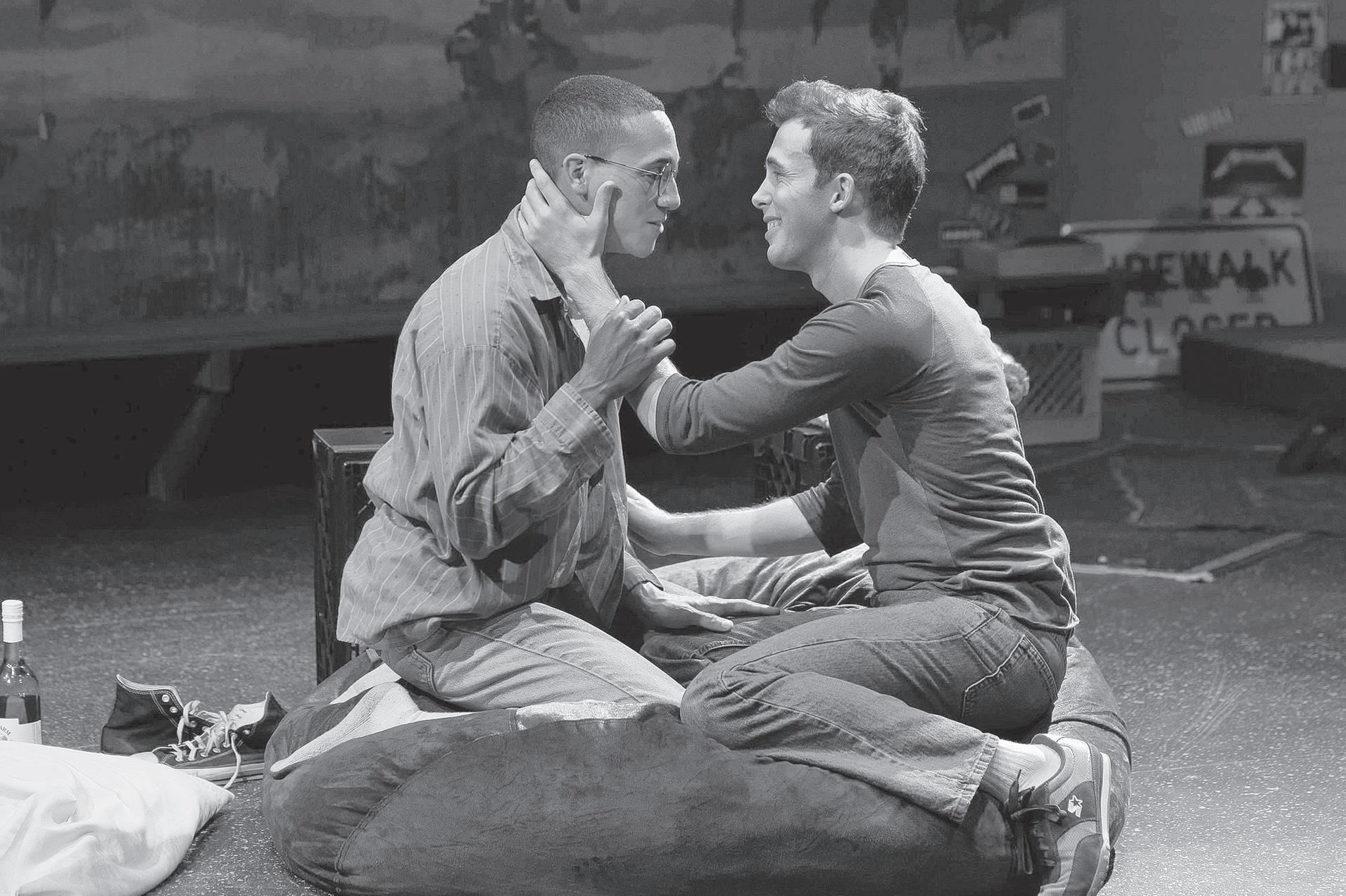
that are in fact quite universal — our desire for companionship, the need for understanding and support, apprehension for what the future holds — and for the most part fit surprisingly well into the narrative of a budding young love.
Yet my initial apprehension also proved to be in part correct. While there are quite a few songs — notably “Evangeline,” in which Mike and Will “improvise” about the movie they watch at the drive-in, and “We Are the Same,” through which they
acknowledge their feelings for one another — that feel tailored for the story (a rather astonishing achievement, if you ask me), there are also moments when the lyrics are glaringly out of place and remind me that the music and the story were not exactly made for each other. And since the lyrics offer little help in pushing the plot to develop, there is little room left for any sort of deep dive into important themes. The story sways between wanting to explore the difficulties and dangers of being

in a same-sex relationship in a conservative town in the ’90s and treating the gay romance like a straight one (i.e. focusing only on the challenges within the relationship itself). In the end, the plot finds itself stuck in the middle, and if you’re like me and live for the dramatic conflict, you might leave the theater feeling a little unsatisfied.
Do I think the playwright could’ve done better, given the circumstances? No. But do I wish the story was just a little more cohesive? Yeah.
All that being said, the production itself is a delight, no doubt. The simple yet intimate set design, comprising bean bags, blankets, band posters and string lights, offers a unique glimpse into the private space of teenagers. And despite wishing for a more complex plot, I spent the better part of the eighty minutes giggling at the adorably awkward way Mike and Will danced around each other, smiling at how well youth, innocence and romantic feelings were captured in every gesture and every facial expression. The lead actors have incredible chemistry, not just with each other, but with the music and the story, and every line they sing comes from the heart, which more than makes up for any inconsistency between the lyrics and the story. As the lights dim on Mike and Will, and the live band’s music fades out, the audience is left with warmth in their hearts and a fondness for what it’s like to be young.
Girlfriend is showing at Kitchen Theatre Company (417 West State Street) Wednesdays through Sundays until September 30, 2018.
Andrea Yang is a junior in the College of Arts and Sciences. She can be reached at ayang@cornellsun. com.

Fill in the empty cells, one number in each, so that each column, row, and region contains the numbers 1-9 exactly once. Each number in the solution therefore occurs only once in each of the three “directions,” hence the “single numbers” implied by the puzzle’s name. (Rules from wikipedia.org/wiki/ Sudoku)

by Jeffrey Sondike ’19


WALK TO CAMPUS!
Spacious 1 Bdrm. with off-street parking, on-site laundry available for immediate move in. Professionally managed with 24-hr Maintenance. 607-257-5444 www.BrooklaneCornell.com
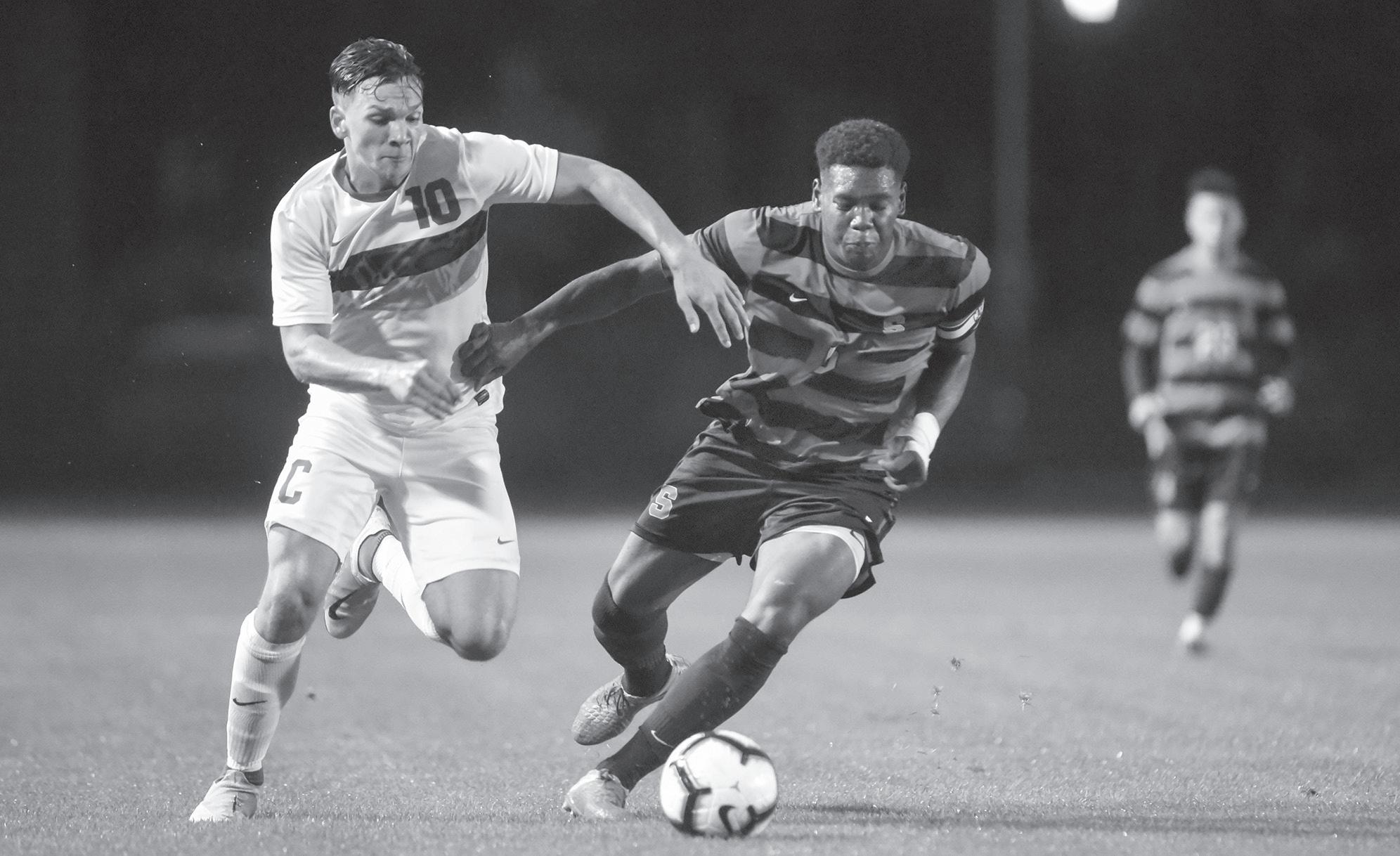
AVRAMISREALESTATE.COM 607-272-3389 Comeback | After a 2-0 loss to Syracuse (above) the Red traveled to California and lost to California-Northridge before earning a come-from-behind, 2-1 victory over Cal State Fullerton.
By JONATHAN HARRIS Sun Assistant Sports Editor
In its short stay out west this weekend, men’s soccer split a pair of games, bringing them to an overall 4-2 record.
The Red, following a tough 2-0 loss to Syracuse, dropped a 3-1 game in their first matchup in program history with the University of California Northridge. The Red followed up the loss to Northridge with a come-from-behind 2-1 win over Cal State Fullerton.
The Red also suffered its first road loss of the season in its bout against Northridge. In the loss, sophomore Harry Fuller notched his first goal of the season and the Red’s only goal of the game. Although the Red took more shots than the Matadors, 18 to 15, the dynamic nature of the Northridge squad frazzled the Red.
“There are always numerous challenges when you go on the road, and they are often greater when you travel 3,000 miles across the country to a different time zone, with a different climate,” head coach John Smith said. “Aside with challenges of that nature, we were also up against two top teams. CSUN will be the most athletic and also most experienced team we will face all year, and their No. 13 national ranking is completely justified.”

In its second game, against Cal State Fullerton, Cornell returned to old form in a classic comeback win this team is quickly becoming known for. Freshman Szabolcs Wiksell scored the Red’s first goal of the game and first goal of his college career. Only a short seven minutes and seven seconds after Wiksell scored, dynamic freshman Emeka Eneli netted his third goal of the season and put the Red up for good.
The Fullerton game marks the third time this season the Red has gone down 1-0 and still won the contest. The Red heads into a week of practice and a weekend of non-conference games determined and ready to improve.
“There were so many positives to take from the weekend,” Smith said. “First and foremost this proved to be an excellent bonding trip for the guys. … Secondly, and most importantly, we came out of this trip with even more belief. The second half turnaround against a well-rested CSUF team will have given this group so much confidence as we move into the next phase of the season.”
The Red will kick off next at home Friday night at 7 p.m. against Niagara University in just its second home game of the season.
Jonathan Harris can be reached at jharris@cornellsun.com.
By ZORA HAHN Sun Staff Writer
Despite a good defensive effort by the Red, Saint Joseph’s prevailed, 1-0, against Cornell in Philadelphia on Sunday, bringing Cornell’s current record to 1-5. Junior goalkeeper Chrissy Mayer made six saves, but Aleksa Peev’s 66th-minute goal sealed the game for St. Joseph’s.
After a season-opening win against St. Bonaventure, the women’s soccer team finds itself on a five-game losing streak.
“The team struggled with establishing possession and moving the ball out of our defensive third, especially in the second half, so that is something we will look to improve upon heading into Ivies,” Mayer said.
St. Joseph’s dominated control of the game, amassing 19 shots on goal to Cornell’s two. Furthermore, the Hawks had eight corner kick attempts, and the Red had zero.
Junior midfielder Juliana Comer had a chance early in the game, but Cornell had very few offensive opportunities.
“We knew from our scouting
reports that St. Joe’s would look to drive a lot of balls into the box to their tall forwards and midfielders,” Mayer said. “We worked in training the week before on reading those balls and dominating the box in the air, which proved important in the game.”
Despite being edged out by the St. Joseph’s offense, Mayer and Comer both said the Red can build on its impressive defensive effort.
the game’s trend of Cornell being mostly on the defensive, with little chance to make attacks of its own.
“We were lacking on the offensive side yesterday due to struggling a little bit when connecting passes
“The team struggled with establishing possession and moving the ball out of our defensive third.”
Junior Chrissy Mayer
from the backs to the mids and then to the forwards,” Comer said.
“We did a pretty good job overall defending,” Comer said. “We almost always tracked our marks and were able to intercept passes due to being in the right positions defensively.”
Despite Cornell’s competitive effort, St. Joseph’s was significantly in control of the ball throughout the match. The Hawks had three shots in the span of three minutes in the middle of the first half. Furthermore, in the three minutes before the goal they scored in the 66th minute, the Hawks made four attempts, an example of
Looking ahead to conference play, the Red thinks it can bounce back and compete in the Ivy League.
“We’re looking to rebound from this weekend with a win in our final game before conference play and carry momentum into our Ivy opener against Columbia,” Mayer said.
The Red hosts Albany at 7 p.m. tonight before traveling to Columbia for its first Ivy contest on Saturday.
Zora Hahn can be reached at zhahn@cornellsun.com.
Continued from page 12
score a goal. Then they scored a goal off of their penalty corner. We didn’t make the proper reads defensively on a corner that we watched them practice right before the game.”
The silver lining for the Red in this contest was that it was the first game of the season in which Cornell both outshot and had more penalty corners than its opponent.
“We had good fight and good purpose, but we didn’t get the result that we needed to get from that game,” Simpson said. “At a certain point, we are 1-5, we have to do some different things, and we have to have some different preparation and commitment from all of us, including myself, to getting our team to play in a way that I know we are capable of playing.”
But ultimately, after an 0-2
weekend, the team is left with more questions than answers, and Simpson remarked that there would be several personnel and schematic changes as a result.
Through six games, Cornell has been outshot 88-46 and has allowed opponents to score 17 times, while the Red have just five goals on the year. Jones and junior Maddy Conklin have two goals apiece, while Kirsten Pienaar has scored once this season.
The Red will look to improve upon its early season struggles as it opens Ivy League play this Saturday against Penn at Dodson Field. Penn will enter the matchup 3-3; the Quakers were able to earn a 1-0 season-opening win over No. 14 Wake Forest in double overtime. Last year, the Quakers defeated the Red in Philadelphia, 2-0.
Bennett Gross can be reached at bgross@cornellsun.com.


By BENNETT GROSS Sun Staff Writer
After picking up its first victory of the season last Sunday in its home opener against Rider, Cornell field hockey was unable to continue to turn the corner on its slow start to the season in a pair of weekend losses.
The Red (1-5) was defeated by both Maine and Vermont this past weekend at the Catamount Classic in Burlington, Vermont.
Throughout its season, the Red has struggled with allowing opponents easy penalty corner opportunities and has been outshot in every game this season.
This trend continued Friday against Maine, as the Black Bears outshot Cornell 24-3 and attempted 13 penalty corners, while the Red only had two. This differential was more pronounced in the first half, as Cornell had no shots or penalty corners, while Maine had 17 shots and 10 corners.
Maine used their first-half advantage to get out to an early 3-0 lead, and the Black Bears never looked back, eventually defeating the Red, 5-0. Maine came into the contest 5-0 on the season with wins over two top-25 teams and a plus-29 goal differential.
“We just had way too much trouble getting the ball out of our backfield to have a good outcome against a quality team.”
Head Coach Steve Simpson
“We had some good attacks against Maine, but ultimately, we just had way too much trouble getting the ball out of our backfield to have a good outcome against a quality team,” said head coach Steve Simpson.
After what the coaching staff deemed a successful practice Saturday, the team had the opportunity to earn

Setbacks | Cornell, pictured above in a 2017 game, lost a pair of games this weekend, getting dominated in shots and penalty corners in a lopsided loss to Maine on Friday and surrendering an early lead to Vermont on Saturday.
a weekend split against the host school, Vermont, on Sunday. Like the Red, the Catamounts had not gotten off to a strong start this season.
Following a scoreless first half, Cornell struck first on a goal by freshman Claire Jones, her second of the season. But the Red was unable to hold on to its lead for long, as Vermont evened the score just eight minutes later. The
Catamounts scored the game-winning goal soon thereafter, leaving the Red with its fifth loss of the year.
“Against Vermont, we really controlled much of the game,” Simpson said. “But during a crucial time, we let them counterattack from one of our penalty corners and

By SMITA NALLURI Sun Staff Writer
The Red made the long trek to Valparaiso, Indiana, last weekend to compete in the Crusader Classic, where it took on Midwest opponents Valparaiso, Wright State and Western Illinois.
Cornell (5-5) took to the court on Friday afternoon to take on Valparaiso (10-2). Though the Red was ultimately bested by the Crusaders in four sets (25-15, 25-20, 22-25, 25-20), it put up a valiant effort to come back from a 2-0 deficit to win the third set and put pressure on the hosts. The Crusaders responded to the pressure, however, and senior captain Carla Sganderlla’s 12 kills and sophomore Zoe Chamness’ double-double of 20 assists and 15 digs were not enough to prevent a Valparaiso victory.
respectively.
Determined not to leave the Midwest without a win, the Red stormed to victory against Western Illinois, sweeping the Leathernecks (1-12) in three sets. The decisive victory was the combined effort of a very deep Cornell team that saw five different players record at least six kills.
“This weekend we started to play as a team and for each other,” Phelps said. “We made sure we’d come together after every play and make eye contact. We made sure we were there for each other.”
“We started to play as a team and for each other...
We made sure we were there for each other.”
Junior Jenna Phelps
The Red returned to play Saturday morning as it squared off against Wright State (8-3). Cornell traded sets with the Raiders forcing the game to five sets (1125, 26-24, 23-25, 25-17, 10-15), but Wright State got out to a 4-0 lead early in the fifth set that it never relinquished.
Critical to the Red’s effort were 14 kills from junior Jenna Phelps and 11 each from sophomore Lauren Stubbs and junior Samanta Arenas. Juniors Lily Barber and Katie Randolph had 27 and 17 digs,
Sganderlla led the way once again with 12 kills, while the lethal duo of Phelps and junior Jada Stackhouse had 13 kills together.
Freshman Madison Baptiste recorded her first double-double of her career with 10 kills and 11 digs. Barber tallied 20 digs en route to earning AllTournament honors.
The Red will look to continue playing as a unit as it hits the road once again to open up Ivy League play. Cornell takes on Columbia (6-4) at 2 p.m. Saturday in New York.
“I think the added pressure of Ivies will help us really zone in and focus,” Phelps said.
Smita Nalluri can be reached at snalluri@cornellsun.com.