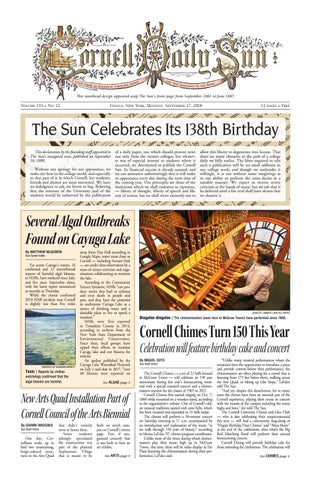
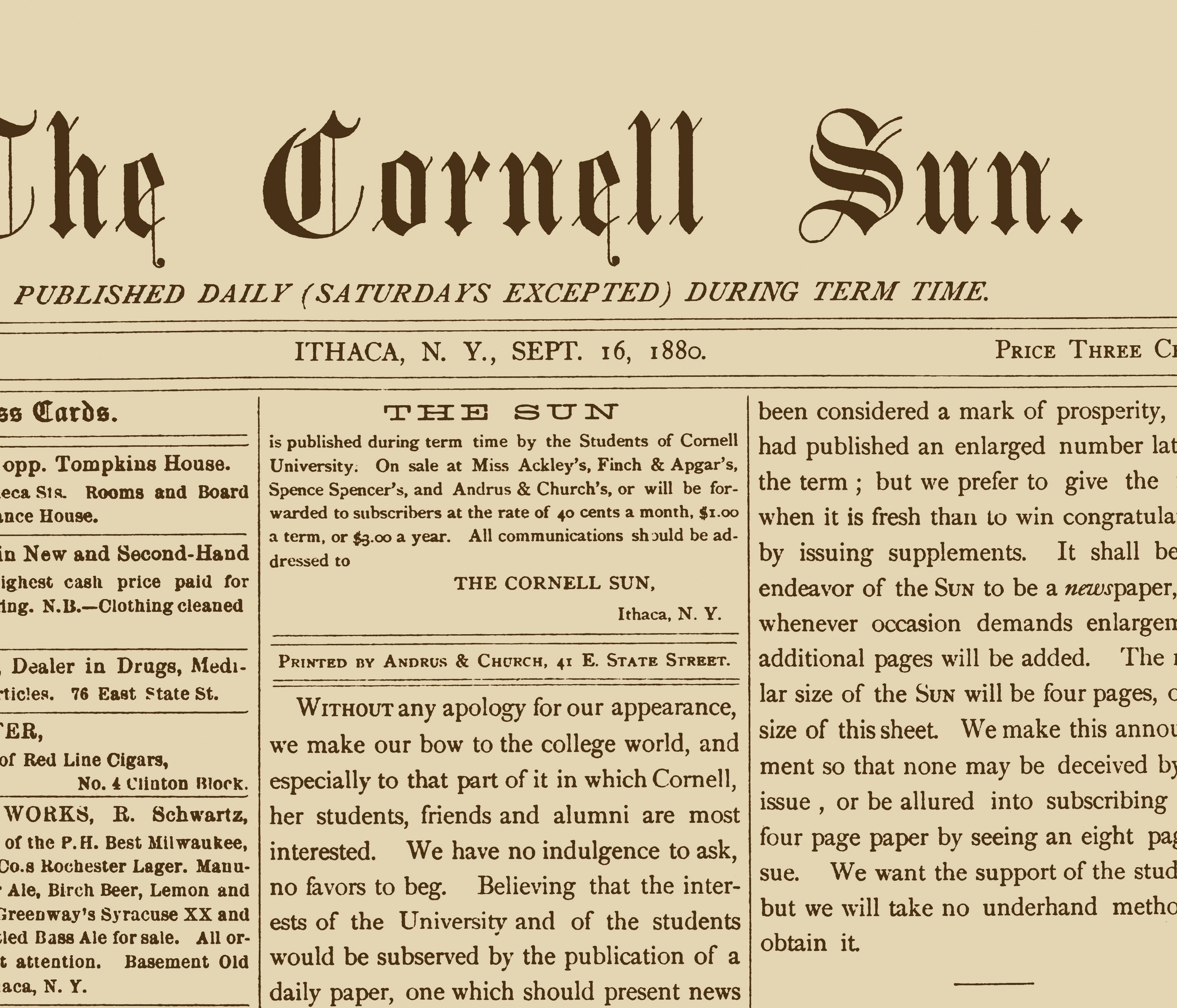
This declaration by the founding staff appeared in The Sun’s inaugural issue, published on September 16, 1880.
Without any apology for our appearance, we make our bow to the college world, and especially to that part of it in which Cornell, her students, friends and alumni are most interested. We have no indulgence to ask, no favors to beg. Believing that the interests of the University and of the students would be subserved by the publication
of a daily paper, one which should present news not only from the various colleges, but whatever was of especial interest to students where it occurred, we determined to publish the Cornell Sun. Its financial success is already assured; and we can announce unhesitatingly that it will make its appearance every day during the term time of the coming year. Our principles are those of the institution which we shall endeavor to represent, — liberty of thought, liberty of speech and liberty of action; but we shall strive earnestly not to
Several Algal Outbreaks Found on Cayuga Lake
By MATTHEW McGOWEN Sun Senior Editor
Far across Cayuga’s waters, 16 confirmed and 12 unconfirmed reports of harmful algal blooms, or HABs, have surfaced since July, and five since September alone, with the latest report announced as recently as Thursday. While the closest confirmed 2018 HAB incident near Cornell is slightly less than five miles
Toxic | Reports by civilian watchdogs confirmed that the algal blooms are harmful.
away from Day Hall according to Google Maps, water areas close to Cornell — including Stewart Park — are under close observation by a team of citizen scientists and organizations collaborating to monitor the lake.
According to the Community Science Initiative, HABs “can produce toxins that lead to sickness and even death in people and pets, and they have the potential to undermine Cayuga Lake as a source of drinking water and a desirable place to live or spend a vacation.”
HABs were first reported in Tompkins County in 2014, according to archives from the New York State Department of Environmental Conservation. Since then, local groups have upped their efforts to monitor Cayuga lake and test blooms for toxicity.
An update published by the Cayuga Lake Watershed Network on July 2 said that in 2017, “over 40 blooms were reported on
See ALGAE page 3
New Arts Quad Installation Part of Cornell Council of the Arts Biennial
By SHAWN HIKOSAKA Sun Staff Writer
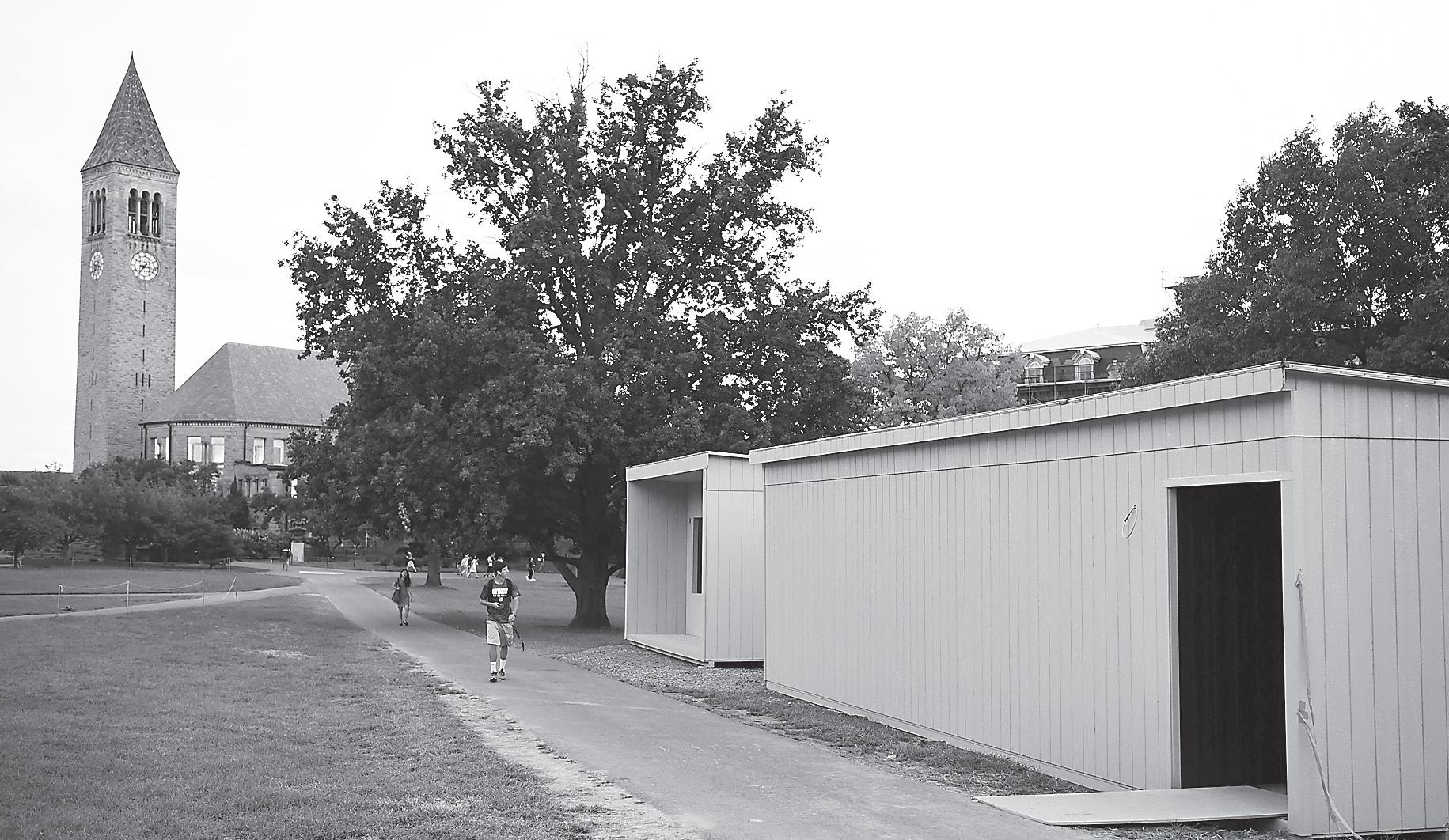
One day, Cornellians woke up to find two unassuming, beige-colored structures in the Arts Quad that didn’t entirely seem at home there. Some students jokingly speculated the construction was part of the planned Sophomore Village that is meant to be
built on north campus on Cornell’s meme page. Few, if any, guessed correctly that it was built to host an art exhibit.
allow this liberty to degenerate into license. That there are many obstacles in the path of a college daily we fully realize. The labor required to edit such a publication will be no small addition to our college work; and though we undertake it willingly, it is not without some misgivings as to our ability to perform the extra duties in a suitable manner. We expect to receive severe criticism at the hands of many, but we ask that it be deferred until a fair trial shall have shown that we deserve it.
Cornell Chimes Turn 150 This Year
By MIGUEL SOTO Sun Staff Writer
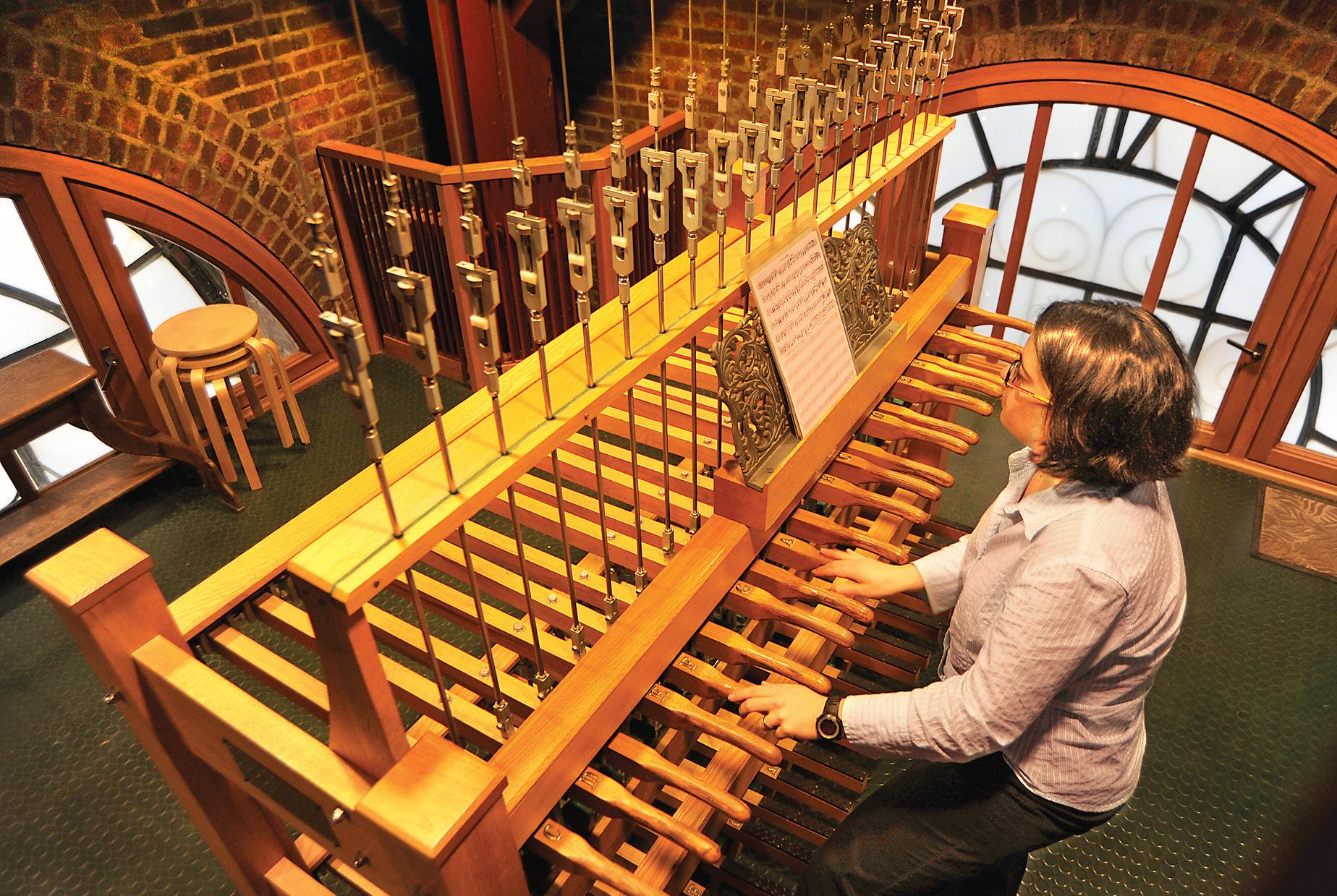
The Cornell Chimes — a set of 21 bells housed in McGraw Tower — will celebrate its 150 year anniversary during this year’s homecoming weekend with a special narrated concert and a chimesmasters reunion for the classes of 1965 to 2021.
Cornell Chimes first started ringing on Oct. 7, 1868 while mounted on a wooden stand, according to the organization’s website. One of Cornell’s oldest musical traditions started with nine bells, which has been recasted and expanded to 21 bells today.
The chimes will perform a 30-minute concert on Saturday morning at 11 a.m. accompanied by an introduction and explanation of the music “as we walk through 150 years of history,” according to Marisa LaFalce ’97, chimes program coordinator.
Unlike most of the times during which chimesmasters play their music high up in McGraw Tower, this time, there will be video display in Ho Plaza featuring the chimesmasters during their performance, LaFalce said.
“Unlike many musical performances where the musicians have the opportunity to introduce a piece and provide context before their performance, the chimesmasters are often playing for a crowd that is listening from 173 feet below them, walking across the Arts Quad, or hiking up Libe Slope,” LaFalce told The Sun.
“And yet, despite this detachment, for so many years the chimes have been an essential part of the Cornell experience, playing their music in concert with the moods of the campus including the many highs and lows,” she told The Sun.
The Cornell University Chorus and Glee Club — who is also celebrating their sesquicentennial this year — will lead a community sing-along of “Happy Birthday Dear Chimes” and “Alma Mater” at the end of the celebration, after which the Big Red Marching Band will perform their annual homecoming concert.
Cornell Dining will provide birthday cake for those attending the celebration. The celebration will
This masthead design appeared atop The Sun’s front page from September 1882 to June 1887
Bingalee dingalee | The chimesmasters (seen here in McGraw Tower) have performed since 1868.
JEANETTE ZAMBITO / SUN FILE PHOTO
COURTESY OF SHANNON BARRETT
Labor Market Conditions and Civic Participation of Working-Age Individuals
11:40 a.m. - 1:10 p.m., 115 Ives Hall
SAP Seminar Series: Girls Just Wanna Have Fun 12:15 - 1:30 p.m., G08 Uris Hall
From the Wild to the Landscape: Developing Native Shrubs for the Green Industry 12:20 p.m., 404 Plant Science Building
CIT Training: Managing Data in Excel
12:30 - 4:30 p.m., 120 Maple Ave, Training Room 150
Chemistry for Exploring the Brain: Flourescent Probes, Engineered Enzymes, and Bioorthogonal Reactions
4:00 - 5:00 p.m., 119 Baker Lab
Designing for Affect: Inclusion and Diversity in Physics 4:00 - 5:00 p.m, Rockefeller Hall, Schwartz Auditorium
Intro to QGIS for Humanities and Social Science 4:00 - 5:00 p.m, 701 Digital CoLab, Olin Library
A Dual Role for Dynamin in Clathrin-mediated Endocytosis
4:00 - 5:00 p.m., Boyce Thompson Institute, Auditorium
Confidence Intervals for Projections of Partially Identified Parameters 11:40 a.m. - 1:10 p.m., 498 Uris Hall
Disaster Risk Management for Low and Middle Income Countries
11:45 a.m. - 12:45 p.m., 153 Martha Van Resselaer Hall
Celebrating Democracy in Action Noon - 1:30 p.m., 3rd Floor Kennedy Hall
Bentley de Beyer: The Future of Work 3:00 - 4:30 p.m., 134 Sage Hall
Joan Massagué: Origin, Latency and Outbreak of Metastatic Stem Cells 4:00 - 5:00 p.m., Schurman Hall, Lecture Hall 4/5
Skilling Up for the Anthropocene 4:30 - 6:30 p.m., 165 McGraw Hall
Truman Scholarship Information Session 4:35 p.m., 103 Barnes Hall
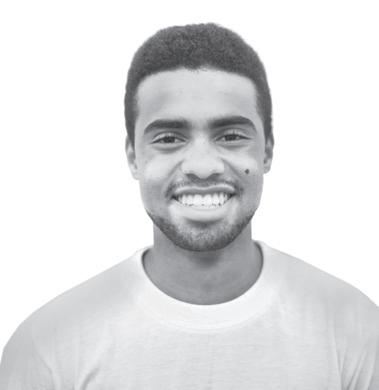
Jacob S. Rubashkin ’19
Cancer biology | Joan Massagué, executive director at the Memorial Sloan Kettering Cancer Center, will deliver a lecture on his research in control of stem cell growth and phenotype in tumor progression and metastasis.
COURTESY OF CORNELL UNIVERSITY
Student-Led Task Force to Submit Mental Health Petition
Petition proposes changes to University’s mental health policy
By SABIRA MEHJABIN Sun Staff Writer
A student-led task force launched in February to investigate Cornell’s mental health issues is now gearing up to release a petition proposing changes to the University’s mental health policy.
While the task force — independent from the University — hopes to publish the petition on Oct. 20, the second-to-last day of the student-organized Mental Health Awareness Week at Cornell, it is still struggling to “figure out the best structure” for the organization, according to Matt Jirsa ’19, co-chair of the task force. He explained that the continued organizational restructuring is partly a result of how difficult it is to mobilize students to join “a cause that takes a significant amount of time to consider.”
Nevertheless, Jirsa said that the task force has mapped out its objectives by outlining key areas they hope to see changes in after researching how other schools deal with mental health issues.
“We have researched into both the mental health systems at Cornell and programs that have worked on other campuses to see what can be implemented to improve mental health culture on campus,” Jirsa said.
Joanna Hua ’20, co-chair of the task force, said that the group has reached out to a number of individuals ranging from licensed psychiatrists to government officials running public health programs. According to Hua, these officials were contacted in order to ask about the medical implications behind providing mental health care.
“Mental health professionals undoubtedly are more knowledgeable in this area than us students are,” said Hua. “We can ... inform the administration about what we as the Cornell student body want to see improve, but [we] also need a medically sound approach to this improvement.”
According to Hua, she has experienced mental health issues for most of her life, and by coming to Cornell and further experiencing these issues, she is determined “to make a change on this campus that is student-led so that our needs are the epitome of our focus.”
However, the recent increase in volume of mental health-related posts on the Cornell meme page — Cornell: Any Person, Any Meme, according to Hua, is not indicative of an “uptick” in mental health issues — instead, she said that mental health has always been an issue on students’ minds, but as of late, students are more “open about their experiences.”
Harmful Algal Blooms in Cayuga Lake
test results from CSI still pending.
Cayuga Lake, but only a fraction of those reported blooms were sampled and analyzed for toxins. This year, we are working together to track, understand, and ultimately manage this emerging threat.”
The CSI collaborated with Cayuga Lake Watershed Network, Discover Cayuga Lake, NYSDEC and the State University of New York Environmental School of Forestry to organize a group of about 70 trained volunteers — the HAB Harriers — to monitor and test suspicious spots for toxicity.
Since July, the HAB Harriers have taken over 35 samples from many locations spread around Cayuga, and reported the results in a publicly available map and database. The samples are tested for three parameters, including the algae’s species, total amount of chlorophyll a and level of the toxic compound microcystin.
Suspicious blooms of this summer were first reported on July 5, prompting the brief closure of the beach at Wells College Dock and Camp Caspar Gregory, though no microcystin, a compound highly toxic to fish and wildlife, but with few reported human fatalities, was found in either sample, according to CSI.
On September 4, four blooms were confirmed as above the allowable concentration of toxic blue-green algae following DEC testing, and a string of 8 blooms was reported on September 13th and 14th at various locations around the lake, with
“The big thing to emphasize is that these cyanobacteria have generally become more present over the past 10 years, in our observations. But they are usually at low levels.” Bill Foster, program director for Discover Cayuga Lake, said in an email to The Sun. “During the past 5 years, actual blooms have increased dramatically in the Finger Lakes.”
One cause for the increase in blooms cited by CSI and Cayuga Lake Water Network is higher air and water temperatures in the Ithaca area, which provide favorable conditions for cyanobacteria to thrive, The Sun previously reported.
Prof. Robert Howarth, David R. Atkinson Professor of Ecology and Environmental Biology, recently attained funding for a two-year study to assess other possible causes of algal blooms, which Howarth hypothesizes are caused by high nitrogen inputs from farmland surrounding the lake.
In the project proposal, Howarth said “until 3 years ago, cyanobacteria blooms in the Finger Lakes were confined to the most eutrophic (i.e., overly productive) lakes such as Owasco, but during the summer of 2017 major blooms occurred for the first time in both Cayuga and Skaneateles.”
The report also notes that both lakes provide drinking water for over 100,000 people, including Syracuse, which receives “unfiltered municipal water from Skaneateles.”
Despite higher reported incidents, however, some locals who spend a lot of time out on the lake report little difference visually.
Captain Paul Flagg, who has been piloting boat tours on Cayuga Lake for five years, expressed familiarity with the blooms but no sightings this summer.
“It’s a blue-green basically, and it comes in fairly large amounts near the harbors and bays, and it’s toxic to dogs and cats,”
“During the past 5 years ... blooms have increased dramatically in the Finger Lakes.”
Bill Foster
Flagg said. “[This year] I have not seen much at all.”
Jim Smith recently moved to Ithaca and said that despite his frequent runs along the canal at the south end of Cayuga, “I haven’t seen any algae blooms or noticed anything out on the lake.”
The HAB Harriers will continue to monitor the lake, according to CSI spokesperson Claire Weston, who noted in a weekly HAB update that “from what we can tell, last year all of Cayuga Lake’s ‘confirmed with high toxins’ blooms were in September.”
Hilary Lambert, executive director of Cayuga Lake Watershed Network, said the deployment of the HAB Harriers this summer has “shortened the time that it takes for preliminary toxicity results to be reported back to locally concerned folks,” she wrote in an email to The Sun.
Matthew McGowen can be reached at mmcgowen@cornellsun.com.
“Mental health is an extremely salient issue and the advocacy and development surrounding it will and should continue to increase this semester,” Jirsa said.
“Cornell is a place where mental health should be the primary focus of the University as well as the students because of our uniquely competitive, pressuring environment.”
Sabira Mehjabin can be reached at smehjabin@cornellsun.com.
Journalist to Discuss Reporting On the Trump Administration
By
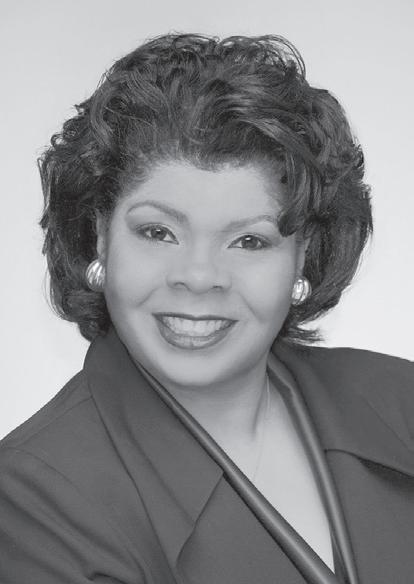
White House correspondent April Ryan will share her experience as a reporter “under fire” during the Donald Trump administration with the Cornell community on Thursday.
Ryan was elected “Journalist of the Year” by the National Association of Black Journalists in May 2017, according to the event page. She covered four presidential administrations as the White House bureau chief for American Urban Radio Networks and became a CNN political analyst in 2017.
“The Daniel W. Kops Freedom of the Press lecture was founded to ensure that the Ithaca community had a yearly occasion to reflect on journalism and its relationship to a healthy democracy,” Prof. Noliwe Rooks, American studies said. “April Ryan is the perfect person to speak to us in this moment.”
Ryan has “asked tough questions of Donald Trump and his press secretaries,” according to Prof. Lawrence
Glickman, American studies. Sean Spicer, Trump’s first White House Press Secretary, once singled Ryan out for criticism, Glickman said.
In a March White House press briefing, Spicer told Ryan to “stop shaking your head” after Ryan asked how Trump’s administration would “work to repair its image” and mentioned Trump’s vulgar comment about former Secretary of State Condoleezza Rice made in 2006.
“April, hold on, it seems like you’re hell-bent on trying to make sure that whatever image you want to tell about this White House stays,” Spicer, thenWhite House press secretary, said to Ryan, according to NBC News.
One of the few African-American White House reporters, “April Ryan became an early barometer of the growing rancor that defines the current relationship between the White House, a free press, and so-called ‘fake news,’” according to Rooks.
Now, Ryan is under security protection after being personally threatened for her reporting, which may suggest our current political climate needs to be remedied, according to Glickman.
“Her visit to our campus is extremely important given the relevance of the issue of freedom of the press, not just in the US but the world,” Glickman said.
The lecture will take place in Klarman Hall, Rhodes Rawlings Auditorium at 5 p.m., followed by a book signing.
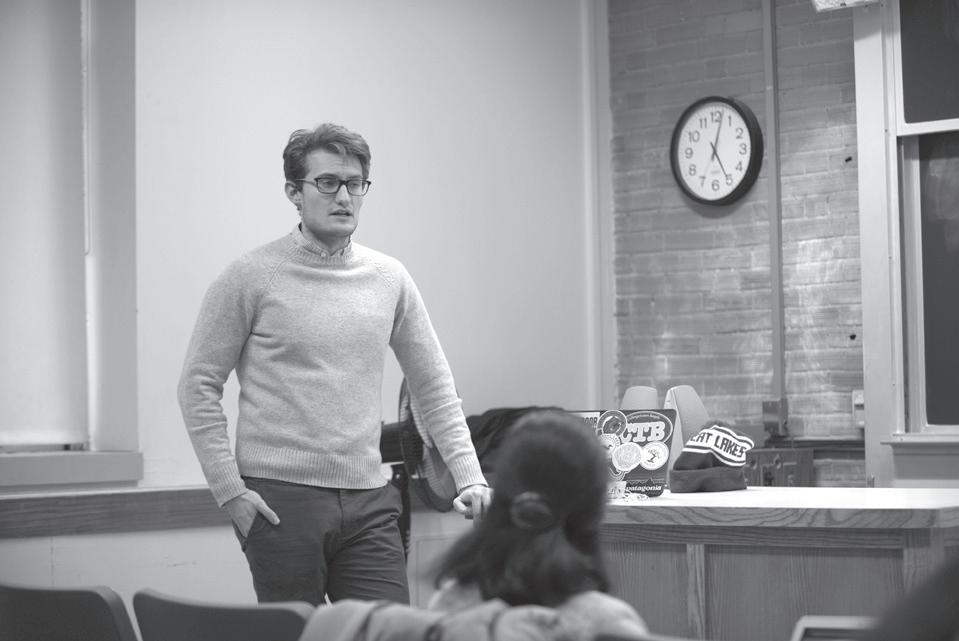
First step | Matt Jirsa ’19, co-chair of the task force, speaks at the information session of the task force February.
VICTORIA MOORE Sun Staff Writer
Victoria Moore can be reached at vmoore@cornellsun.com.
RYAN
ALGAE Continued from page 1
S.A. Committee Solicits Suggestions for Infrastructure Projects
By PENELOPE CAMPOS Sun Staff Writer
The Student Assembly Infrastructure Funding Committee, armed with more than $100,000 in funding, is soliciting student ideas to decide Cornell’s next infrastructure project.
The committee is seeking infrastructure ideas from undergraduates up to Sept. 28 — roughly a month earlier than in previous years — to fast-track this year’s projects, Ian Wallace ’20, chair of the SAIFC said.
“I really want people’s imaginations to really run free and test the limits of what we can do,” Wallace said.
The Infrastructure Fund will have at maximum $130,000 in funding available this year to support student proposals dedicated to improving campus facilities, according to Wallace. He expects the committee will receive $60,000 from roll over funding from last year and an additional $40,000 to $70,000 from the endowment that funds the committee using its return on investments.
In the past, the SAIFC has pushed for several improvements around campus to help accommodate student needs, funding the installation of water bottle stations, the addition of outlets in Green Dragon, and the repainting of bike lanes to improve student safety.
Last semester, the committee collaborated with The Straight Edge Initiative, a student organization dedicated to re-imagining underutilized spaces on campus, to redesign the Willard Straight terrace, The Sun previously reported. The new community space, dubbed the Straight Edge Rooftop, will open this Tuesday, September 18th.
Daniel Correa ’19, president of The Straight Edge, said that it is “paramount” for the University to embrace student input when designing the campus.
Record hurricane
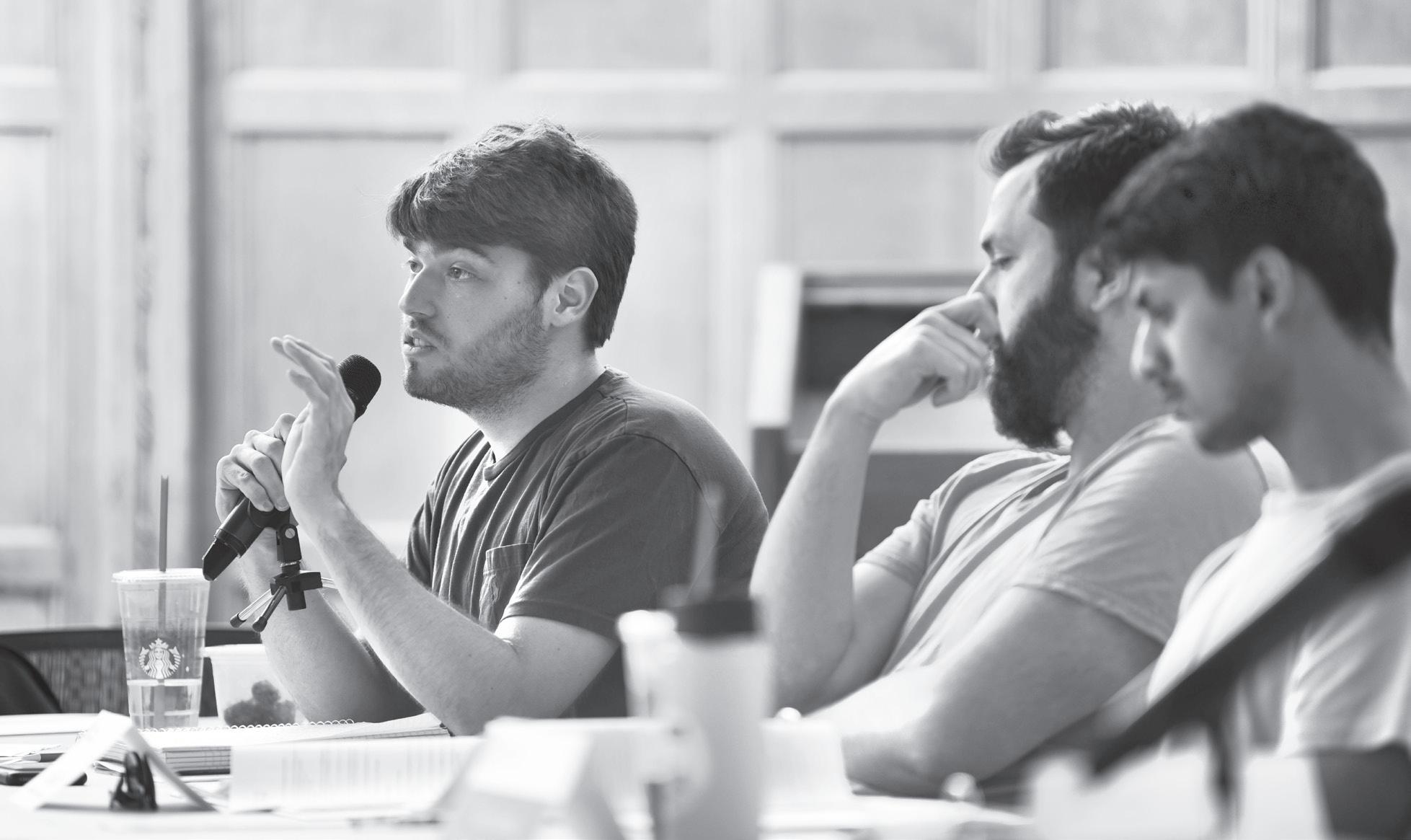
Student-led campus development | Ian Wallace ’20, chair of the S.A. Infrastructure Funding Committee, explains in August the importance of his committee to the Student Assembly.
“This nuanced idea of a campus designed by its students, should not be taken lightly in the eyes of American higher academia, and is something I believe more universities should seriously consider,” Correa said.
Moving forward, Wallace hopes that the Committee will implement an investigation into the state of infrastruc-
Cornell Chimes Prepares to
Continued from page 1
also feature “other fun freebies,” according to LaFalce.
“With so many
alumni in Ithaca, the campus can look forward to hearing a lot of beautiful chimes music,” La Falce said. “It will be a morning of music and a rare event
where the musical jewels of campus will all be together.”
Miguel Soto can be reached at msoto@cornellsun.com.
ture on campus and put together a report to better guide their mission. “It’ll be for students and by students.”
Penelope Campos can be reached at pcampos@cornellsun.com.
Arts Quad Structure to House Art
Continued from page 1
As part of the Cornell Council for the Arts Biennial, the two newly constructed box-shaped structures on the Arts Quad will house “Heave,” a two-part exhibit that will “probe the devastating effects of violence in our life and time” regarding issues of race and gender starting Sept. 20.
“Heave” is curated by Carrie Mae Weems, “one of the most influential artists in the country” according to Prof. Timothy Murray, English, director of Cornell Council for the Arts and curator of this year’s Biennial. Weems, a “socially motivated” artist with decades of experience, is responsible for the 1990 Kitchen Table Series recognized as “groundbreaking” by the N.Y.-based Guggenheim Museum.
“The Cornell CCA 2018 Biennial is organized around a central theme — duration: passage, persistence, survival,” Murray said. “All of the works that have been selected for the exhibition reflect various aspects of duration”.
“Carrie Mae Weems[’s] work has been inspirational for thinking about issues of race and gender … we’re extremely fortunate and honored to have Carrie Mae Weems developing a brand-new work for the Cornell campus,” Murray said.
“Heave” is one of a series of projects that have or will take place at different locations
on campus. A robotically built sculpture using discarded wood materials — dubbed “Log Knot” — currently sits in the middle of Ag Quad, The Sun previously reported.
The Engineering Quad is also getting artistic attention. A separate installation called “Crystalline Basement” — which consists of a rock chosen from the Engineering Quad’s Rock Park West embedded in a compressed soil structure with plants — will be built next weekend.
The installation, inspired by the idea of powering the campus with geothermal energy, will showcase the materials that would be drilled through if such project were to take place.
“They’re doing a project that is meant to generate conversation or reflection about deep heat geothermal energy,” Murray said.
Along with this exhibit, there will be a film screening that gives viewers an idea of how deep down the rock is found. “Artists have plotted out a trajectory that is just as long as it would take to drill for geothermal energy,” he said.
Murray hopes that the CCA Biennial can help promote artistic projects on-campus while providing the opportunity to “intermix local artwork with extremely important international installations.”
Shawn Hikosaka can be reached at shikosaka@cornellsun.com.
BORIS TSANG / SUN ASSISTANT PHOTOGRAPHY EDITOR
Hurricane Florence flooding the outskirts of Kinston, N.C. on Sunday as the state faces what could be possibly be one of the worst storms to hit the East Coast.
HILLARY SWIFT / THE NEW YORK TIMES
The Corne¬ Daily Sun
Independent Since 1880
136th Editorial Board
JACOB S. KARASIK RUBASHKIN ’19
Editor in Chief
JOHN McKIM MILLER ’20
Business Manager
KATIE SIMS ’20
Associate Editor
VARUN IYENGAR ’21
Web Editor
MEGAN ROCHE ’19
Projects Editor
EMMA WILLIAMS ’19
Design Editor
JEREMIAH KIM ’19
Blogs Editor
AMOL RAJESH ’20
Science Editor
BREANNE FLEER ’20
News Editor
YUICHIRO KAKUTANI ’19
News Editor
NICHOLAS BOGEL-BURROUGHS ’19
City Editor
LEV AKABAS ’19
Arts & Entertainment Editor
GIRISHA ARORA ’20
Managing Editor
HEIDI MYUNG ’19
Advertising Manager
ALISHA GUPTA ’20
Assistant Managing Editor
DYLAN McDEVITT ’19
Sports Editor
MICHAEL LI ’20
Photography Editor
GRIFFIN SMITH-NICHOLS ’19 Blogs Editor
JACQUELINE QUACH ’19 Dining Editor
SHRUTI JUNEJA ’20
ANU SUBRAMANIAM ’20
JUSTIN J. PARK ’19 Multimedia
PARIS GHAZI ’21 Assistant
We
AGabrielle Leung | Serendipitous Musings
Can
Still Go, Even If You Like Me
red carpet stretches across the room. Wooden sticks, maybe five feet long, are placed in groups of six on top of it. As we walk the expanse of the room, we contemplate the meaning of these rather enlarged sticks, watching as they alternate in fullness and parts. Most people would roll their eyes at this concept of art, others, like us, are in awe that we are a part of it.
Dia:Beacon is a museum of art that houses works from the 1960s to present. I hesitate to call it a museum (even though technically, it very much is), for the vastness of the space allows for a more bodily experience than what is normally achieved by conventional strolls through gallery rooms. Once a Nabisco box-printing factory, Dia:Beacon still holds onto the industrial old-school nostalgia of a place that has long since been abandoned. The expansiveness of the space calls for large-scale installations and sculptures, prompting the acknowledgement of one’s smallness.
respite from a relationship that’s been slowly drained of any and all intellectual chemistry.” But if intellectual stimulation was the case, why isn’t any museum or gallery space capable of bringing two boredom-driven beings who still crave the comfort of each other’s presence back together? Why was Dia:Beacon specifically targeted as the spot for lackluster relationships?
From the moment I saw the grouped sticks in a room that seemed to extend on endlessly, I knew the space was one that would heighten every moment: every noise or touch would be exaggerated to the fullest extent. And that precise interaction between space, artwork and viewer in this Nabisco box-printing factory situated on the banks of the Hudson River, full of people dressed in all black with clear Warby Parker glasses, brought confrontation to the forefront.
Ad Layout Emma Williams ’19
Design Deskers Jamie Lai ’20
Lauren Roseman ’21
News Deskers Yuichiro Kakutani ’19
Meredith Liu ’20
Night Desker Katherine Heaney ’20
Arts Desker Viri Garcia ’20
Production Deskers Megan Roche ’19 Jamie Lai ’20 Working on Today’s Sun
Sports Desker Johnathan Stimpson ’21
Photography Desker Edem Dzodzomenyo ’20
A Century of Birthday Wishes
I think that almost everyone Admires The Cornell Daily Sun. While other papers rise and fall, The Sun does not descend at all. Where is today the New York World? Its pages are forever furled. The New York Sun does not exist; It’s deader than The Federalist. And who, of all the men who scan script, Recalls the Boston Evening Transcript?
And yet The Cornell Daily Sun, Will never bow to anyone. It scorns the censure of the city, And every Faculty Committee; It does not heed the discontent Evidenced by the President: “Sic semper,” says The Sun, “tyrannis!” So Floreat Sol Cornellianis!
-Morris Bishop 1914
The Sun is forever, bitches!
-Christo Elliot ’15
Letters to the Editor
Alumnus: caring does count
To the Editor:
In the “Discourse and Discord” column published September 11, Mr. Wu wrote “Choosing who will build an apartment complex should be an economic decision, not a moral one.” This statement is fundamentally fallacious. ALL decisions have a moral component. Every single one. The decision to go get food at The Nines vs McDonalds has a moral component, as does the decision to go get food at a restaurant vs cooking food at home. The decision to hire union labor or non-union labor also has a moral component, whether you’re a homeowner, a small business owner or a major university.
The pretense that economic decisions should be, or even could be, made without any moral consequences or considerations involved is simply false. The idea that nothing matters as much as money is wrong, but this is the underlying assumption of Mr. Wu’s assertion. The idea that the ONLY factor worth considering is ‘increasing shareholder value’ is fundamentally sociopathic and essentially evil. Decisions made on that basis alone are likely to be unethical, at best.
Yes, there is often an economic case for ‘doing the right thing,’ especially in terms of the value of the ‘brand,’ or ‘public relations,’ or with respect to the ‘local economic environment’. But these are neither sufficient, nor necessary. The ‘right thing to do’ doesn’t depend on the economic considerations, but on the moral ones. There’s no right way to do the wrong thing. Caring counts.
James Keegan ’81
The intrigue I held for Dia:Beacon before, recommended by art lovers and skeptics alike, was only fueled by an article I found in The New Yorker, written by Steven Phillips-Horst. The title is “Dia:Beacon Rebrands as Ideal Date Spot for Couples Who’ve Been Dating for Two Years and Have Nothing Left to Say.”
Phillips-Horst wrote that the space is a “direct appeal to couples who, when dining out, suffer a palpable tension as the server approaches and there is clearly no conversation to interrupt.”
Phillips-Horst explains some situations in which unintentional interactions trigger new communication at Dia:Beacon. A 32-year-old woman makes eye contact with her boyfriend of three years in the surface of Robert Smithson’s Leaning Mirror before averting her gaze. A girl motions to alert her boyfriend who is wearing headphones to watch a Bruce Nauman video installation that she is leaving the room. She receives a half-smile in return.
This article, honestly, filled me with a desire to laugh at the modernity of love, but also a curiosity to explore this potential confrontation with palpable tension.
I should’ve known right from the start that I was doing it wrong. I went with someone who I definitely did not have nothing left to say to. We had lots to say. We say a lot. But maybe by going with someone who was the antithesis of who Phillips-Horst targeted, it could give me another perspective in which to view the space — and a mission to see if we could still thrive in this environment.
The organization’s communications director explained that looking at this artwork would provide people to comment on the way in which things were installed or question meaning, creating the “perfect
I think Phillips-Horst wanted to highlight a sort of bridging of intangible space in an environment where the concept of space is summoned. This stillness forces people to connect, making them cross a bridge they may or may not have been aware of in the first place, or bringing them to a different place altogether. What happens when you are faced with shards of glass piled up on the floor? When you enter Richard Serra’s Torqued Ellipse and realize you are forced to fit through the confines of two walls to make it to the center? When you navigate room after room of Irwin’s Homage to the Square3 and find yourself making sure you didn’t lose the other person? When you both are staring deep down into the abyss of three different holes and don’t know what you’re looking for anymore?
This progression in art is not merely a looking act anymore. It can be argued that any work of art seeks to engage the viewer. But when faced with a reflective piece of monumental scale, or are made to navigate an entire basement with neon lights guiding your way across the floor, it forces you, whether you want to or not, to engage with not just the works themselves, but whoever you are with. You do not hesitate to determine the historical context of the work, to see how it fits in the seemingly linear route of art history, like many other works in the MoMA or Met do. Your bodily experience is immediate and present.
We need more spaces like this to test ourselves and our relationships with others, to see how visual forms announce our own body and its gentle movement towards others.
Gabrielle Leung is a senior in the College of Arts and Sciences. She can be reached at gleung@ cornellsun.com. Serendipitous Musings appears alternate Thursdays this semester.
Re: “Nobody Remembers 9/11”
To the Editor:
I remember 9/11. I remember being picked up from my kindergarten class by my mother and ushered home as soon as possible to an apartment in disarray. My uncle died on 9/11, and I can promise you, I remember it.
I understand the viewpoint from which Ms. Pinero approached her article, but I found the argument tasteless and misstated. I am not one to defend America in its exploits overseas and I agree that we have a lot of work to do on our international policies. However, Ms. Pinero’s statement that “when we allow the system, and the individuals, partially responsible for their deaths to continue wielding power, we dishonor those whose lives were stolen from them” is incredibly crass. Standing at the World Trade Center memorial in New York City this year, I saw nothing but honor. I saw mourning families, noble firefighters and EMTs, and interested tourists all paying their respects.
When I see posts that use the phrase “never forget,” I am comforted by the knowledge that there are so many people around the United States who will always remember the tragedy that hit New York on September 11, 2001 and the lives that were lost on that day, including my uncle’s. On 9/11, I do not want to think about American foreign intervention or our governmental policies. I want to think about my family. It is wrong to blame individuals for stating that they will never forget 9/11 just because they don’t think — for one day — about everything that is wrong with our country. Let’s put politics aside for one day a year and solely commemorate the heroes and victims of that fateful day in our country’s history.
Rebecca Saber ’18
Jason Jeong | Jeongism
Te Limits of Loyalty
Afew weeks ago, it was reported in the San Jose Mercury News that my high school music director was arrested for soliciting sexually explicit pictures from a student. This teacher meant the world to me in high school. Just as accomplished athletes celebrate their early coaches as formative mentors, I looked up to him as father figure of sorts, as did dozens of other students throughout his 14 years as an educator. As one friend put it, his classes were “some real Dead Poets Society shit.” And as trite as it is to attach that reference to high school teachers that cared about their students, he was the type of teacher that made the laborious high school visit over winter break worth it because that kind of debt lasts a lifetime.
Initial reactions ranged from disbelief to denial, but after scouring through every Bay Area publication and Twitter post online, it was pretty hard to doubt or defend against any accusation. It questioned a relationship that spanned a decade and a gratitude that I thought would continue for the rest of my life. His influence on my life can’t be measured in years, and the countless hours he spent after school helping me with college audition tapes will never be forgotten. But it’s hard to reconcile my personal gratitude with the fact that this father of two sons — sons that I watched grow up — spent the five minute gap between third and fourth period sexting a 16 year old girl who probably trusted and revered him like I did at her age. It begs the question: at what point should we question the loyalty that we place on the people and institutions we hold dear to our lives?
promote a hierarchy in which the white, male and wealthy derive the most value. Every semester, there is more than one high profile incident of an initiation ritual gone wrong, inappropriate sexual behavior or racially charged violence. But the most pernicious and threatening incidents are the regular and ignored transgressions that we never hear about because they are settled within the confines of the house.
However, I find it personally difficult to completely denounce fraternities as a whole. In my years as a brother of an IFC fraternity, I have met my lab partners, my gym buddies, my future groomsmen and the best friends any guy can ask for. Although “brotherhood for life” is an inane platitude, it has offered me some of my most human and poignant moments at Cornell. In the media, we don’t hear about the times when your friends rushed you over to Cayuga Medical Center after you tore your ACL from taking intramural basketball a little too seriously. Or about the first time you opened up about mental health to your pledge class, because until then, it was a “you problem” that wasn’t worth bringing up even to your parents. Or the steadfastness of brotherhood when you experienced true loss for the first time at the age of 20.
Speaking out against the forces that pressure us to stay silent is difficult, messy and morally complex.
This question isn’t reserved to personal anecdotes or PTA gossip — we see very real and relevant examples in the news today. Michael Cohen, Trump’s former attorney, adviser and personal misplacer of evidence, recently testified against his client, after decades of secretly paying off porn stars and shredding compromising documents. This was the same man that boasted that “there’s no money in the world that could get me to disclose anything about [The Trumps].” Although a reported $10 million book deal wasn’t enough to get Cohen to spill the beans, it turns out that 30 years in prison was what it took to sway even the self-proclaimed “guy who would take a bullet for the President.”
And it’s hard to blame Cohen for his economically rational decision, especially when, from the look of Bob Woodward’s new book, many current staffers feel the same way.
This is why I feel comfortable with my decision to leave my fraternity.
It was also reported in August that more than 300 Catholic priests in Pennsylvania were identified for molesting over 1,000 children in the span of seven decades. The grand jury report documenting the decades of sexual abuse contains the haunting line: “Priests were raping little boys and girls, and the men of God who were responsible for them not only did nothing; they hid it all. For decades.” Yet, for many families, this news will do little to diminish fervor for the church. Parishioners will continue to line their usual pews every Sunday, acutely aware of the unforgivable crimes that occured in the same holy building they were baptized 40 years ago. Because to them, their faith to and in the Church transcends any earthly transgression.
But outside the political and spiritual realm, every student at Cornell is exposed to a very tangible example of the fallibility of loyalty that has material consequence to our daily lives: Greek life.
The criticisms of Greek life have been thoroughly discussed and documented, and by this point, it is indisputable that Greek life is a broken, antiquated system. It was a structure designed by wealthy, old white men to perpetuate wealth and whiteness, and its current form also continues to
Paul Russell | Russelling Feathers
To My 18-year-old Black Self
Hey man! Big congrats on getting here. I mean that. In a week you’ll forget about how hard you worked to get into a school like this and you’ll just get caught up trying to make it to the next goal, so please just pat yourself on the back while you still have time to reflect.
You’ll write some angry Facebook posts and you’ll cry and you’ll pick up horrible habits, but I promise you by the end you’ll be glad it all happened.
I’m sure you’re proud to surprise your high school guidance counselor who coulda’ sworn you were going to an HBCU. You’re gonna surprise a lot of people who ask where you go to school, so get ready to hear “oh wait that’s amazing” and “the Ivy League Cornell?” a few more times. For the next four years, this Ivy League Cornell will be your home and though it’ll be a wild ride, you’ll come out wiser than ever. You’ve caught us at a great time: I’m proud to announce that this year there haven’t yet been any major racial incidents! But don’t be alarmed. We’re still in America. They’ll come.
It is because of these moments that it becomes so difficult to speak out against the questionable and the outright unforgivable. It nurtures a culture of silence, in which sexual misbehavior, racial violence and blatant xenophobia is swept under the beer-stained rugs of the 100-year-old playhouse that fraternities call home. To say that Greek life is altogether evil is an oversimplification, but every — I repeat, every — fraternity on this campus stores its share of secrets that would make most outsiders raise an eyebrow. The legacy of fraternities will not be one of brotherhood and service, but of outdated values and morally dubious behavior. When you scan the hundreds of composite pictures that line the walls of any fraternity, chances are you are probably framing more than a few faces of sexual predators, perpetrators of homophobia and transphobia, and habitual users of racial slurs. The fraternity house is a century-old symbol and omnipresent reminder of core values that we were taught to shun in elementary school. Our allegiance to the house is what unites us, but its secrecy is what compels us stay quiet in the face of evil. This silence is then responsible for the normalization of a myriad of bad behaviors, pain and trauma.
The institutionalization of secrecy and the expectation of indiscriminate loyalty are why fraternities will never fully evolve from the racist, classist and sexist institutions they were established to be. In a utilitarian sense, to expect fraternities to self-report any malfeasance is unreasonable and unrealistic. Because to report the house is to report not only your friends, but also yourself as a complicit member. The limits of loyalty will always be contextual, the context being the relationship itself. But we have to constantly ask whether the utility we derive from these relationships outweigh the dangerous realities and larger implications of our allegiances. Loyalty, like all values, is inextricably tied to sentiment. Unlike many values, the sentiment behind loyalty requires some articulation. Speaking out against the forces that pressure us to stay silent is difficult, messy and morally complex. But it is something we just might have to do for the sake of a greater good. So this is why I feel comfortable with my decision to leave my fraternity. This and the fact that $2,300 a semester seems like an awfully steep price to pay for other kids’ liabilities. My loyalty lies not in the fraternity as an institution, but rather the wonderful individuals that comprise it. And nothing will ever change that.
Jason Jeong is a senior in the College of Arts and Sciences. Jeongism runs every other Tuesday this semester. He can be reached at jjeong@cornellsun.com.
I wish I could tell you it’ll be all dancing and singing and spreading love, like soul train or a good cookout. But it won’t be. You’ll write some angry Facebook posts and you’ll cry and you’ll pick up horrible habits, but I promise you by the end you’ll be glad it all happened because college is as good a time as ever to become a real adult.
As you’ll soon learn, the price of black adulthood is a hefty one. If you’re like me (which you absolutely are), you’ll get pulled over and questioned when you drive slow in Collegetown and if you eat chips near the sliding doors at Wegmans they’ll send someone to ask you if you paid for it.
Your peers won’t be any better: some will use the N word and think it’s funny, many will mix you up with your other black friends and a few will even commit hate crimes.
Through it all, you’ll be expected to know exactly how to deal with these offenders, but whatever you do won’t work because you weren’t put here to fix all of Cornell’s problems. You’ll try, though, or at least you’ll tell yourself you’re trying, and soon you’ll be jaded, and then frustrated, and then emboldened, and then frustrated, and then jaded again. You’ll make plenty of mistakes along the way, too, and you’ll be mad at yourself for saying too little in some instances and too much in others, or for protecting institutions you aren’t sure are worth protecting.
If I could impart to you any meager piece of advice, it’s this: never learn your place.
And soon you’ll be a senior sitting outside Bartels in a cheap suit, wondering if you really are “your ancestors’ wildest dreams.” By then, you’ll be scrambling to find a job because the allure of buzzwords like student leadership made you focus so much on these four years that you forgot to think about the life that comes after.
If I could impart to you any meager piece of advice, it’s this: never learn your place. Don’t let your background or your skin color or your hobbies or anything else dictate what you can achieve or what you can be involved with on campus. If you’re intimidated by anyone, work so hard that they eventually reciprocate the feeling.
Who cares if you feel like you aren’t good enough to be here? Fight for things you don’t deserve in the first place.
If you do all these things you might not win every battle, and you might not have the impact you expected, but it’ll certainly help. And you’ll need all the help you can get.
But no matter what you achieve here, remember that at the end of the day it’s not about how powerful you are or how cool you feel or how many of your friends think you’re a big deal. When you’re looking back at your college experience, you’re gonna care most about how it changed you. You’re gonna remember being 18 at a frat party and learning how to respond when your friends talk nonsense. You’re gonna remember being 19 and learning how not to be a leader. You’re gonna remember being 20 and realizing you don’t want to be the second black president. And these are all good lessons. You’ll need to learn them. I know you’re probably overwhelmed; you’ve just arrived at your dream school and now I’m telling you it’ll be the hardest thing you’ve ever done. Don’t be scared, though. When you finally get to be that senior in that cheap suit, you might not have the world figured out, but that won’t matter. Regardless of what you don’t have, you’ll be satisfied and you’ll be proud of yourself.
And that’s all you can ask for anyway.
Paul Russell is a senior in the School of Industrial and Labor Relations. Russelling Feathers runs every other Friday this semester. He can be reached at prussell@cornellsun.com.
ARTS & ENTERTAINMENT Why We Need to Watch Mr. Robot
The recent news that Mr. Robot ’s fourth season will be its last signals the end of a shows that redefines what it means to be revolutionary. The techno-thriller chronicles the story of cybersecurity engineer Elliot Anderson, a morphine addict who wants to save the world from corrupt corporate powers. The cybersecurity firm that he works for protects the data of conglomerates such as E Corp, a manufacturer of most of the world’s computers and phones and a provider of much of the world’s entertainment. E Corp, led by a power hungry board of directors, also covered up a toxic gas leak that led to some of their workers contracting leukemia — including Elliot’s father. Thus, despite the mission of his workplace, Elliot works to expose some of E Corp’s secure digital records with the hopes of diminishing their grasp over the global market.
The show’s concept is by far one of the most intriguing, timely and significant that I’ve ever encountered. Through its plot, Mr. Robot makes me question the impact, or lack thereof, that my my career choices will have beyond band-aiding smaller problems or coding for some company that breaches their customers’ privacy for profit. Being a computer science major has taught me valuable problem-solving skills, but if I don’t use my knowledge to challenge injustices both within and outside of the tech industry, what will I have truly solved? How to make more money for the real world E Corps, Amazon and Google?
Other TV shows steeped in the life of computer scientists often depict something far closer to the norm: creating projects in the pursuit of wealth ( Silicon Valley ), or working with the government to stop crimes ( Scorpion ). These shows do much to reinforce careerism and little to address the dangers of a society growing more dependent on technology as a means of communicating, dating and making monetary transactions. They passively work to enforce the stigma that the government, and the tech corporations that we use day to day, can actually be trusted. Anyone who says otherwise gets labeled as a “conspiracy theorist” or “paranoid” — words that a first-time viewer may use to describe Elliot — despite the mounting pile of incidents providing merit to those beliefs. Cambridge Analytica’s amassing of “private” information of Facebook users, enough for the company to claim that they have 4,000 data points on over 230 million American citizens, should be more than enough to raise concerns. Their usage of that data to aid the Trump campaign in targeting voters should be more than enough to not only validate Elliot’s mission, but push us to follow his lead.
In an era where peak social media usage reinforces users’ moral ignorance, a protagonist such as Elliot is a crucial revelation. When asked what’s bothering him about society, he says “we collectively thought Steve Jobs was a great man, even when we knew he made millions off the backs of children.” When reflecting on society’s reliance on social media as a vortex of fake intimacy and fraudulent
insight, he claims it’s “because we want to be sedated. Because it’s painful to not pretend. Because we’re cowards.” His truth speaks for itself. Within the first 15 minutes, Mr. Robot showcases a character whose ethics aren’t buried under a desire for likes, retweets or dollar bills. A character who has deleted all of his social media, shirks a healthy dating life, jeopardizes his job security, and battles a morphine addiction, all in his quest to, as he puts it, “save the world.” Elliot’s willingness to defy the status quo to fight against E Corp, despite the high personal cost, makes him an embodiment of the message of Colin Kaepernick’s latest Nike ad: “Believe in something. Even if means sacrificing everything.”
Still, I’m sure not every single computer science major will relate to or support Elliot’s despise of E Corp
and other big corporations. A main appeal of the career fair is the possibility of getting some six figure salary from one of these companies, as if that, alone, justifies years of hard work and indoctrination. Institutionalized private education will almost always gear its students to find as lucrative a career as possible, as tuition-payers will want an adequate return of investment. Though naive, this thought process is neither uncommon or damning. Silicon Valley has a prime example in protagonist Richard Hendrix, a somewhat well-meaning person whose enamor of wealth and startup success has blinded him to his work’s lack of a virtuous purpose. Not everyone has the means, insight or courage to ensure that their work aligns with their moral code. But for those of us who do, Mr. Robot ’s prioritization of doing what’s right over monetary profit makes the show a necessary and refreshing viewing.
As Mr. Robot enters its final season, the legacy of its protagonist as a revolutionary will only be further cemented. For throughout the data heists, terrorist attacks, faked suicides, drug-induced hallucinations and untimely character deaths, the show’s most compelling aspect is Elliot’s unwavering allegiance to humanity.
Jonvi Rollins is a sophomore in the College of Arts and Sciences. He can be reached at djr277@cornell.edu. Guest Room will run periodically this semester.
Jonvi Rollins Guest Room
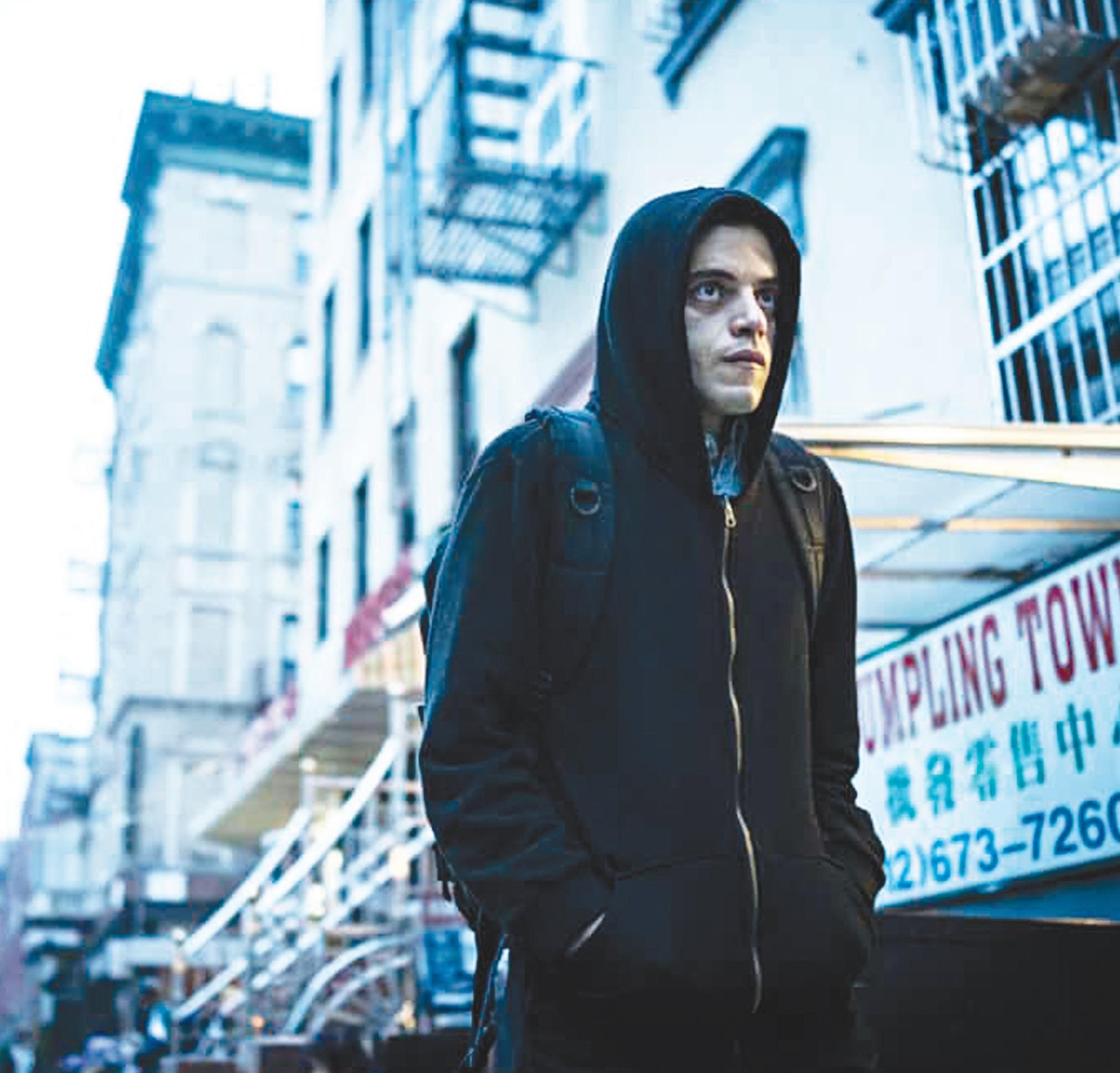
Rami Malek as the protagonist of Mr. Robot, Elliot Alderson.
Hold On to Your Dentures: Roomful of Teeth at Bailey Hall
BY JAMES ROBERTSON Sun Contributor
The small a cappella ensemble brought their big guns right away, with each member speaking in rhythm, creating a wall of chatter that in an instant, gave way to raucous polyphonic vocals. After a few iterations, rhythmic spoken word became interspersed with small vocal phrases. The piece was chugging along and it was clear that Roomful of Teeth had a very important message to share with the audience that evening.
Roomful of Teeth, the Grammy-winning vocal octet, visited Bailey Hall on Friday night to kick off the Cornell Concert Series 2018-2019 season. The group was founded in 2009 with a goal to explore the expressive potential of the human voice. Their debut album, Roomful of Teeth, won the 2013 Grammy for Best Chamber Music/Small Ensemble Performance and their sophomore album was nominated in 2015 for the same award. The group began by showcasing the Pulitzer Prize-winning “Partita for 8 Voices,” composed by member Caroline Shaw.
As the first movement of “Partita” progressed, it became evident to music enthusiasts, a cappella veterans and casual listeners alike that “Partita” presents a unique blend of vocal tradition not typically shown in Western music. Those who attended the “Public Conversation with Roomful of Teeth” preview event earlier that day received a rich background on the vocal aspirations of the group. They seek to construct a unique lexicon of vocal technique from a combination of Western and non-Western tradition, including, but not limited to, Broadway belting, yodeling, death metal vocals, Tuvan throat singing, Inuit throat singing and Korean P’ansori. The result is an educational vocal and cultural experience that sounds as if Bach had composed an a cappella concert and its
ARTS & ENTERTAINMENT
performers sailed in from all corners of the world, performing their parts in the style of their people.
As the work progressed, the Roomful of Teeth had the complete attention of the audience. Although the concert program encouraged the audience “to holler or clap anytime,” they remained stoic in their fascination with what was happening on stage. Bass Cameron Beauchamp praised the audience for their attentiveness and reverence that evening. He also explained earlier that when Roomful of Teeth workshops with vocal technicians all over the world, they allow themselves to feel naked in the presence of these masters and once again become the learners. That feeling transferred to the audience as they learned all they could from “Partita.” “Partita” closed with a stunning reprise of the themes of spoken word, which once again melted into song. As the piece closed, the audience gave a well-deserved round of raucous applause.
After a brief intermission, the ensemble returned and performed a collection of older songs from their repertoire, composed by some of their close friends. Each song presented interesting vocal mechanisms to be explored and allowed for each member to shine through solo cameos. This contrasted the extreme reverence and restraint that the group showed during “Partita.” They served the work as humble performers. Now, during their throwback set, they were more eager to relax and show off their vocal capabilities. The sheer power in the voices of the performers was astounding; the sopranos and altos especially often blew the roof off the audience’s eardrums in the best possible way. At times you could feel the bass’ notes resonate in your chest.
“No” was my personal favorite, as it featured an extremely slow build, looping simple parts over each other and interpolating different pronunciations of the word “no” throughout each phrase. Mezzo-soprano Virginia Warnken Kelsey produced an incredible five-minute operatic solo, tangling and untangling
the space that the group slowly constructed. The song ended by slowing fading to silence as a group, an unbelievably difficult skill, especially to be pulled off by an eight-person group. I was floored.
After the group’s final song, “AEIOU,” the audience was quick in showing their appreciation via a well-deserved standing ovation. The group returned for a small encore, in which they sang “Fall Into Me” by Alev Lenz, originally featured on the popular TV show Black Mirror
While Roomful of Teeth achieves their lofty ambitions, there is a definite learning curve to their music. For experienced musicians, it is a playground of musical stimuli but casual listeners are required to approach their work with a very open mind. Either way, Roomful of Teeth produced a special, memorable evening for all attendees as the first of many exciting performances sponsored by the Cornell Concert Series.
James Robertson is a sophomore in the College of Arts and Sciences. He can be reached at jar524@cornell.edu.
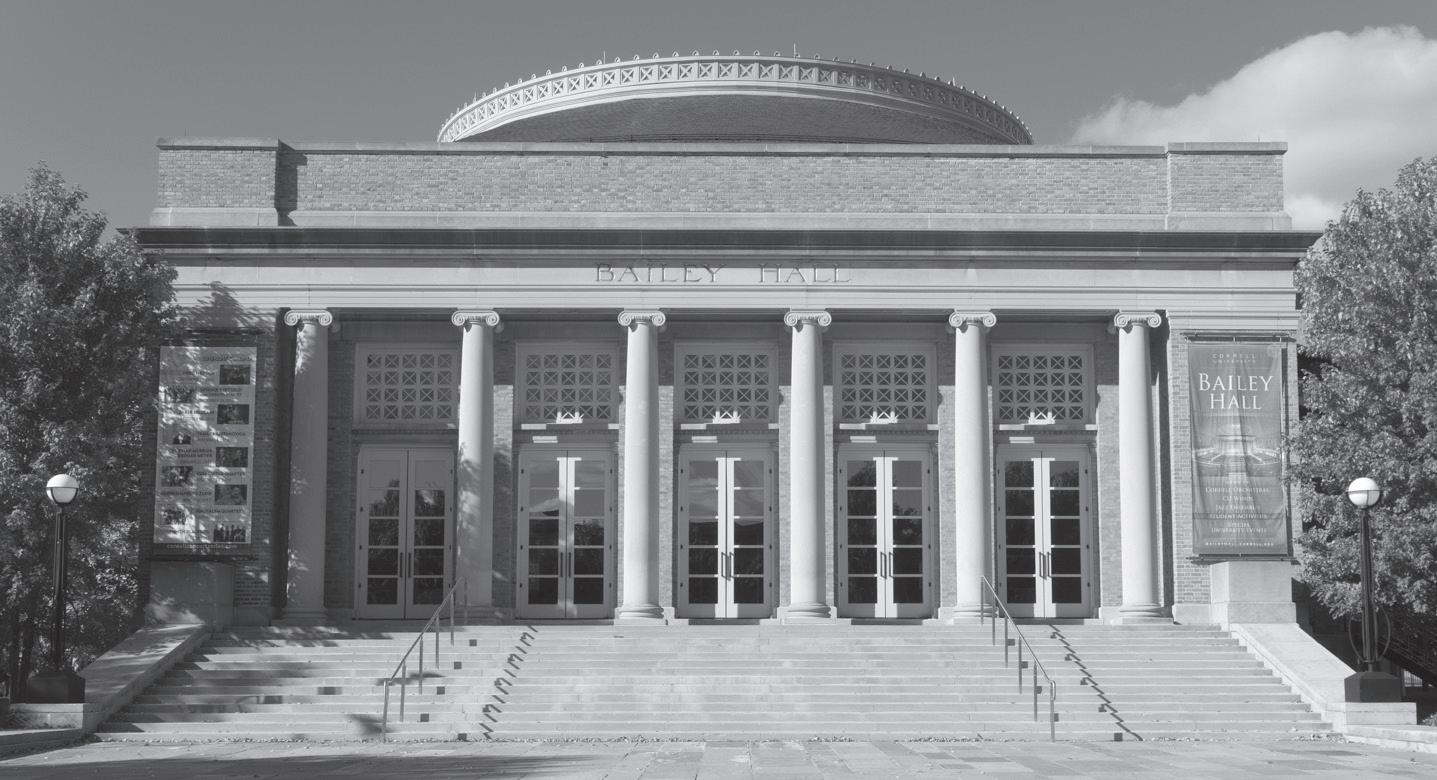
Roomful of Teeth performed in Bailey Hall, pictured above
Fill in the empty cells, one number in each, so that each column, row, and region contains the numbers 1-9 exactly once. Each number in the solution therefore occurs only once in each of the three “directions,” hence the “single numbers” implied by the puzzle’s name. (Rules from wikipedia.org/wiki/ Sudoku)
Caption Contest Winner
Art by Alicia Wang ’21 “You
—Marvin Sager
Sprint Triumphs in Season Opener, Downs Caldwell 28-11
By JOHNATHAN STIMPSON
Sun Assistant Sports Editor
Facing the loss of 11 valuable seniors, the introduction of two new assistant coaches, and an untested freshmen class — an off-season of major changes and uncertainty loomed over sprint football’s first game of the year this Saturday.
But Cornell put many lingering doubts to rest when the team opened its 2018 campaign with a towering 28-11 win on the road over Caldwell, the second-consecutive season in which the Red has put away the Cougars in its season-opener.
Last week, associate head coach Bob Gneo had predicted the matchup against Caldwell would be a difficult one.
“We have a tough schedule early,” he said. “Caldwell will be much, much better this year, they have a lot of new freshmen.”
But the Red quickly proved such humble expectations were largely unnecessary. After Caldwell made a 34-yard field goal attempt just five minutes into the game, Cornell responded by going on a tear — scoring 28 consecutive points.
Following the Cougar’s early field
goal, the Red went 71 yards in eight plays, finished off by senior quarterback and captain Connor Ostrander’s four yard toss into the endzone. Then, with 6:15 remaining in the first half, Cornell added a second touchdown in the form of a three yard run from junior running back Connor Young.
The Red went on to add two more touchdowns, blocking Caldwell from getting back on the board until only three and half minutes were left in the fourth quarter.
In a typical show of offensive prowess, Ostrander threw 38 yards to senior Brooks Panhans and 46 yards to junior tight end Reed Fratt, closing out the game with 191 yards in the air.
Complementing Ostrander’s efforts, Panhans notched five receptions throughout the contest, while sophomore wide receiver Joseph Welsh had four in his collegiate debut.
According to Gneo, the team had lost “almost its entire interior defensive line” over the off-season to graduation, leading to concerns that it would be the squad’s weak link. But a combination of remaining veterans and new freshmen ensured that those concerns would not
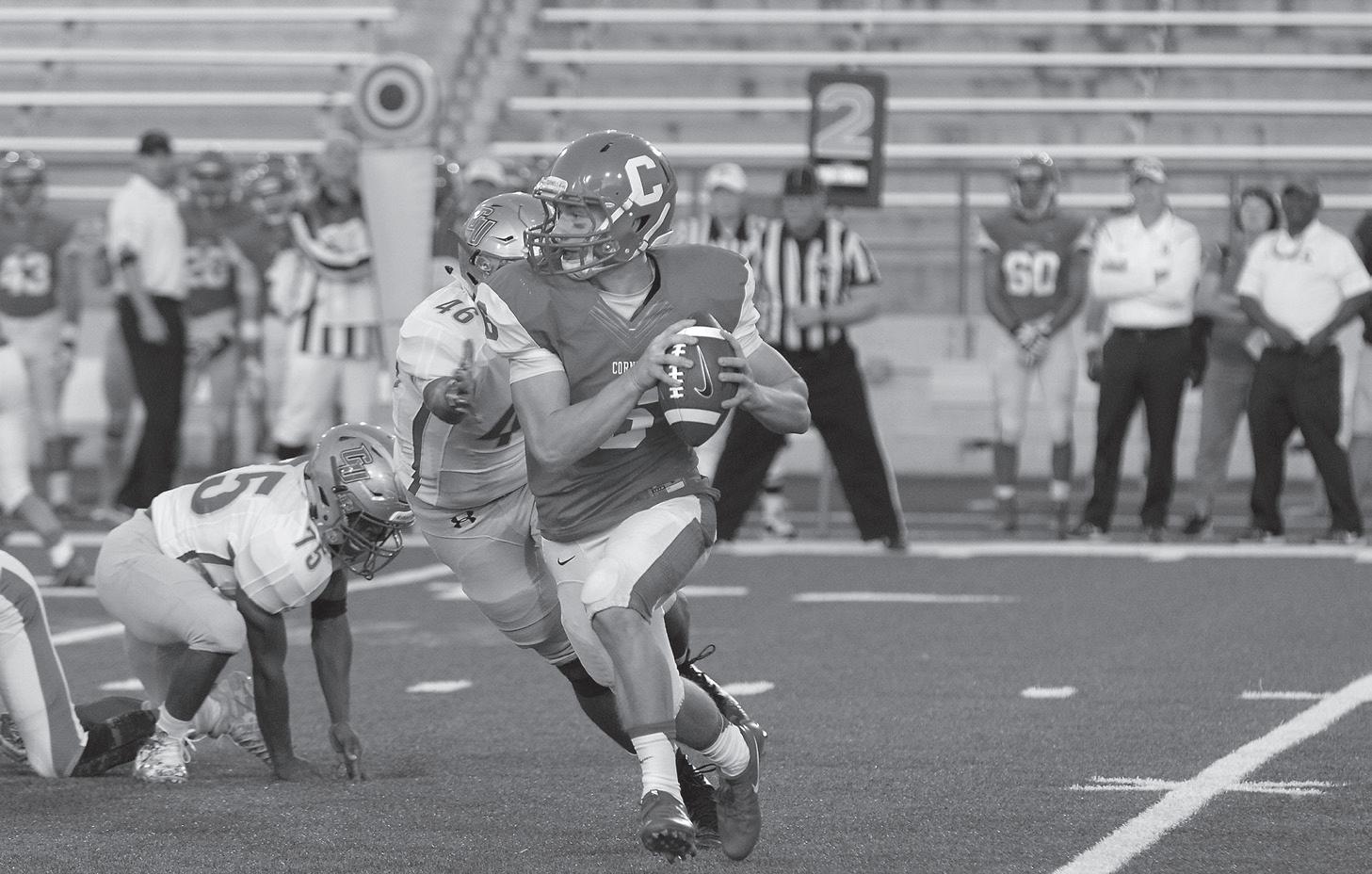
Season kickoff | Despite losing much of its defensive line to graduation over the off-season, Cornell quelled many concerns as it finished the day with three interceptions and six
be realized.
Led by senior linebacker Alfonso Nazzaro’s 10 tackles, the Red’s defense finished the day with six forced turnovers, three fumble recoveries, three interceptions and held the Cougars to a mere 18 rushing yards.
Johnathan Stimpson can be reached at jstimpson@cornellsun.com.
Sluggish Ofense Drags Down Football
including three catches of at least 39 yards, and a touchdown.
But the Cornell defense kept the game well within reach for the offense by stepping up in crunch time to keep the game competitive.
On the flipside, Cornell didn’t muster enough offense of its own.
“Just didn’t have enough key plays,” Archer said. “When you are going to keep the game competitive, there’s going to be
“That’s the mentality,” said junior cornerback David Jones. “We know they are going to make a couple plays on us, but we are confident in each other and we know what we can do and that we can stop them.”
key moments where you have to deliver, and we just weren’t able to do that today.”
Zachary Silver can be reached at zsilver@cornellsun.com.
The Red will hit the gridiron next Friday as it travels away to Philadelphia to square off against Penn, one of the league’s strongest teams.
forced turnovers.
The Sun is out of this world!
Delaware Burns Red
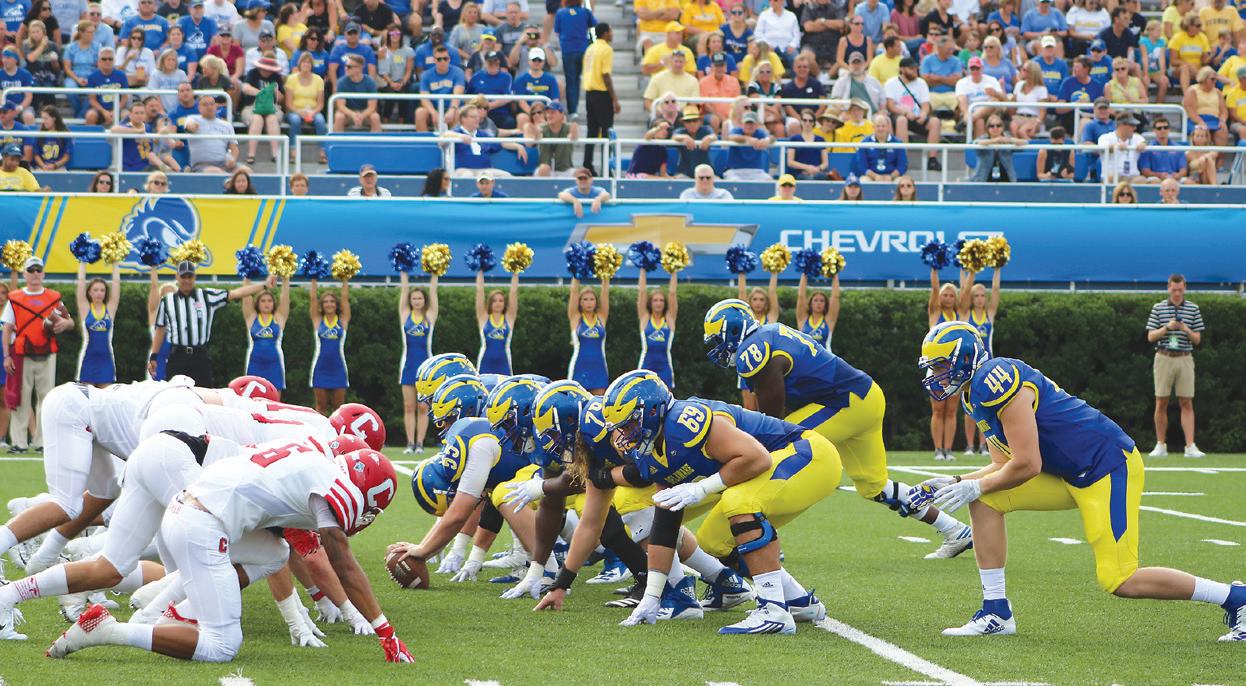
Football drops 2nd straight season opener to Blue Hens in lopsided 27-10 contest
NEWARK, Del. — Comparing teams of different years tends to be a taboo subject for Cornell football — or any college team in any sport, for that matter. Student-athletes graduate, and new talent pours in annually to make each team unique and evaluations of one year to the next less relevant.
But two straight years of week one contests against Delaware makes it hard to shy away from the visible differences between Cornell of 2017 and Cornell now. The Red lost its second consecutive season opener to the Blue Hens, 27-10, on Saturday but showed off what it hopes to be a refined product from last year’s 3-7 squad.
“I think we played a much more competitive game. Didn’t give the ball away [but] didn’t take it away,” head coach David Archer ’05 said of this year’s loss compared to last season’s, when a first-play fumble began a string of five turnovers in the first half of a 41-14 Blue Hens victory.
The better showing came when it wasn’t even clear who would lead the offense onto the field for the first play. After all the waiting and wondering, it was ultimately two-year starter senior Dalton Banks who got the start and majority of snaps under center.
For Banks and his troops, it was a flipflop of a start when compared to last year’s. The Red’s offense began the afternoon crisp, marching into Delaware territory while never losing a single yard in 13 plays. But after failing to finish it off in the end zone, junior Nickolas Null’s 28-yard field goal salvaged the drive and got Cornell on the board first.
Banks and the offense would never regain form in the first half. Seeing such, Archer elected to test out his tri-quarterback system, giving junior Mike Catanese and sophomore Richie Kenney some snaps — the first of Kenney’s varsity career.
But while the strategy changed, the product
Football to Stick With 3-Quarterback Lineup
By RAPHY GENDLER Sun Assistant Sports Editor
NEWARK, Del. — In a 27-10 loss to Delaware on Saturday, all three quarterbacks saw meaningful playing time as head coach David Archer ’05 had planned. But none of the three had much success against a tough Blue Hens defense.
“We’ve got to create a little more of a spark,” Archer said of his offense, which racked up just 157 total yards before a last-minute 75-yard touchdown drive when the game was lost.
A week one non-league game against a tough Delaware opponent doesn’t have Archer panicked about his gameplan on offense going forward. He said postgame he plans to continue using senior Dalton Banks, sophomore Richie Kenney and junior Mike Catanese under center.
through the air.
While Kenney and Catanese saw action, Banks occupied the “starter” role. He led the offense onto the field for its first drive and had 17 of the Red’s 33 passing attempts.
Whether it was Banks or one of his younger teammates under center, the Cornell offense couldn’t get anything done anytime other than its first and last drives of the game. Catanese’s touchdown pass to Davy Lizana on the Red’s final drive salvaged a touchdown for the Red but was far too late despite the defense keeping the game within reach. Catanese was 4-for-5 for 53 yards and a touchdown on the garbage-time series. He also picked up nine yards on two rushes on the scoring drive.
“[Delaware] became a little more aggressive in the box and we would try to get them over the top and we just couldn’t make the plays downfield,” Archer said.
stayed pat. After the field goal, Cornell put together just one more drive in the first half that netted more than six yards, good enough for just 85 total yards in the half.
“There were a lot of small things here and there that makes a difference,” Banks said of the sputtering drives. “It was hard to get a rhythm. We needed first downs and just weren’t getting them. … It’s hard to win a football game when you only put up three points for most of the game.”
Cornell’s offense had to trudge forward without regular contributions from sophomore wide receiver Eric Gallman and senior running back Chris Walker. Both coming off season-ending injuries in 2017, Gallman was targeted just thrice, making his first catch since week two of last season in Saturday’s fourth quarter, while Walker just twice for a single reception that lost a yard.
“He’s just going to keep getting stronger as the season goes on,” Archer said of Walker. “I wanted to make sure we got him going, but at the same time, we need him for the league games, too. … I think we just keep monitoring him and increasing his reps.”
It wasn’t until garbage time on the final drive that the Cornell offense finally rediscovered a rhythm. Catanese led the charge with 75 yards in 11 plays, capped off by his first career touchdown pass, a nine-yard tear drop to junior wide receiver Davy Lizana. Delaware, meanwhile, needed a moment. The home team failed to convert a first down on its first two drives, but once the Blue Hens clicked, they soared. A touchdown on the last play of the first quarter and five-yard rush from quarterback Pat Kehoe in the second quarter put Cornell in a 14-3 hole. Delaware needed just seven plays for over 70 yards on its first two touchdown drives.
The Blue Hens added another touchdown and pair of field goals in the the fourth quarter before Cornell’s depth took over to get some playing experience against a quality FCS opponent.
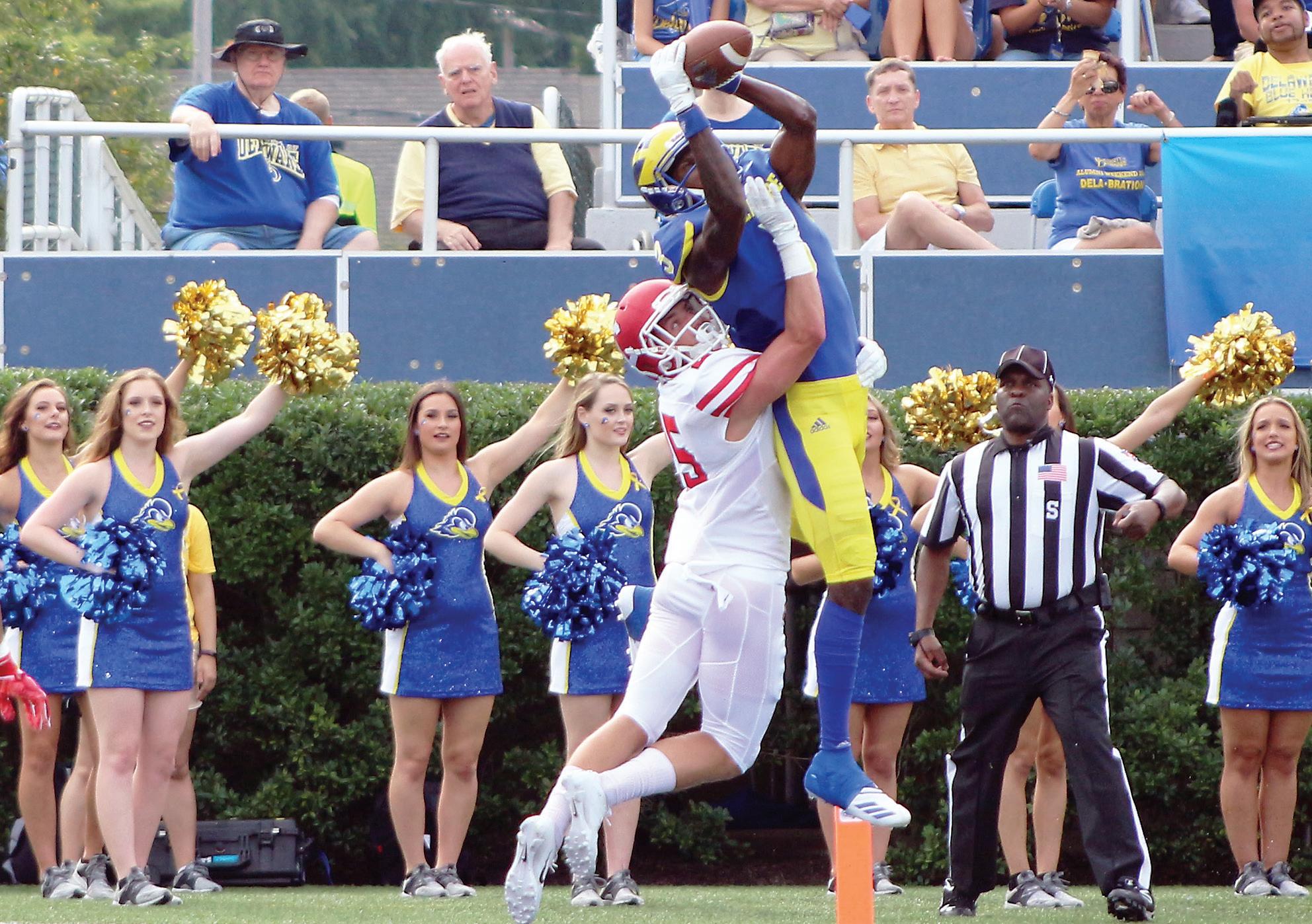
Big plays were a thorn for the Cornell defense, almost single-handedly due to Delaware wide receiver Joe Walker, who was the Blue Hens’ quarterback in last season’s matchup. Playing against a Cornell secondary without Nick Gesualdi ’18, Delaware’s Walker finished the day with 154 yards receiving,
“What we have to do is get to the film and correct the things that we can correct. ”
Head Coach David Archer ’05
“It would have to be something we would see on the film,” Archer said when asked if he plans to change the quarterback QB approach. “Just like gut reaction after the game, no [change].”
Despite going against a Delaware team playing its third game, Banks said earlier in the week that the Red’s schemes, unknown by its opponent, could help Cornell catch the Blue Hens’ defense off guard. On the first and last drive of the game, that belief reared its head. Every other drive, it didn’t.
Led by Banks, the Red looked to be in business on the game’s first series. A 64-yard drive, which included 19-yard rush for junior Harold Coles on a key 3rd-and-3, stalled in the red zone, but junior Nickolas Null’s chip shot field goal gave Cornell the game’s first points.
“We came out strong, drove the field, wanted a touchdown but came away with points which is always good on the opening drive,” said Banks, whose 10 completions were the most of the three Cornell passers. He was 10-of-17 for 54 yards
After the field goal drive, the Cornell defense forced a Blue Hens three-and-out. Taking over at his own 26, Banks, on 3rd-and-10, threw deep for senior running back Chris Walker, but the pass was a bit high and bounced off Walker’s hands for an incompletion. Instead of a long gain into Delaware territory, the missed connection led to the first of four first-half Cornell threeand-outs.
While the air attack lagged, so did the ground game. The Red’s committee of running backs struggled to move the ball against the tough Delaware front seven after the first-quarter scoring drive. Cornell had 91 total rushing yards, 51 of which came on the opening drive.
Set to face preseason Ivy favorite Yale in Ithaca for Homecoming next weekend, the Red will hope to see its three-QB and multiple-tailback strategies pay dividends. Archer said he is hopeful that Walker, who had just one reception and no runs Saturday, will continue to work his way back from last year’s season-ending injury and contribute more in upcoming Ivy League contests.
“What we have to do is get to the film and correct the things that we can correct,” Archer said. “[We’ll] take what we do and adapt it to our next opponent.”
Raphy Gendler can be reached at rgendler@cornellsun.com.
Three’s a crowd | Despite loss, head coach David Archer ’05 plans to continue employing the unorthodox “tri-quarterback system” used against Delaware.
ZACHARY SILVER / SUN SENIOR EDITOR
Gridiron blues | Delaware’s Joe Walker catches a touchdown over Cornell junior cornerback David Jones in the first quarter Saturday. Walker had 154 receiving yards against the Red.