The Corne¬ Daily Sun



By TAMARA KAMIS Sun News Editor
“[The
Samantha Heller ’22
At Thursday’s Student Assembly meeting, student representatives passed resolutions making statements in response to a recent Texas law which severely reduces abortion access, as well as urging Cornell to advocate to the United States federal government in support of the demands of Cayuga Nation Council of Chiefs and clanmothers.
On Sept. 1, Texas passed a law banning abortion after 6 weeks of pregnancy, which renders over 85 percent of abortions previously preformed in the state illegal. The new law shocked student advocates on campus, including leadership of the Planned Parenthood Generation Action at Cornell.
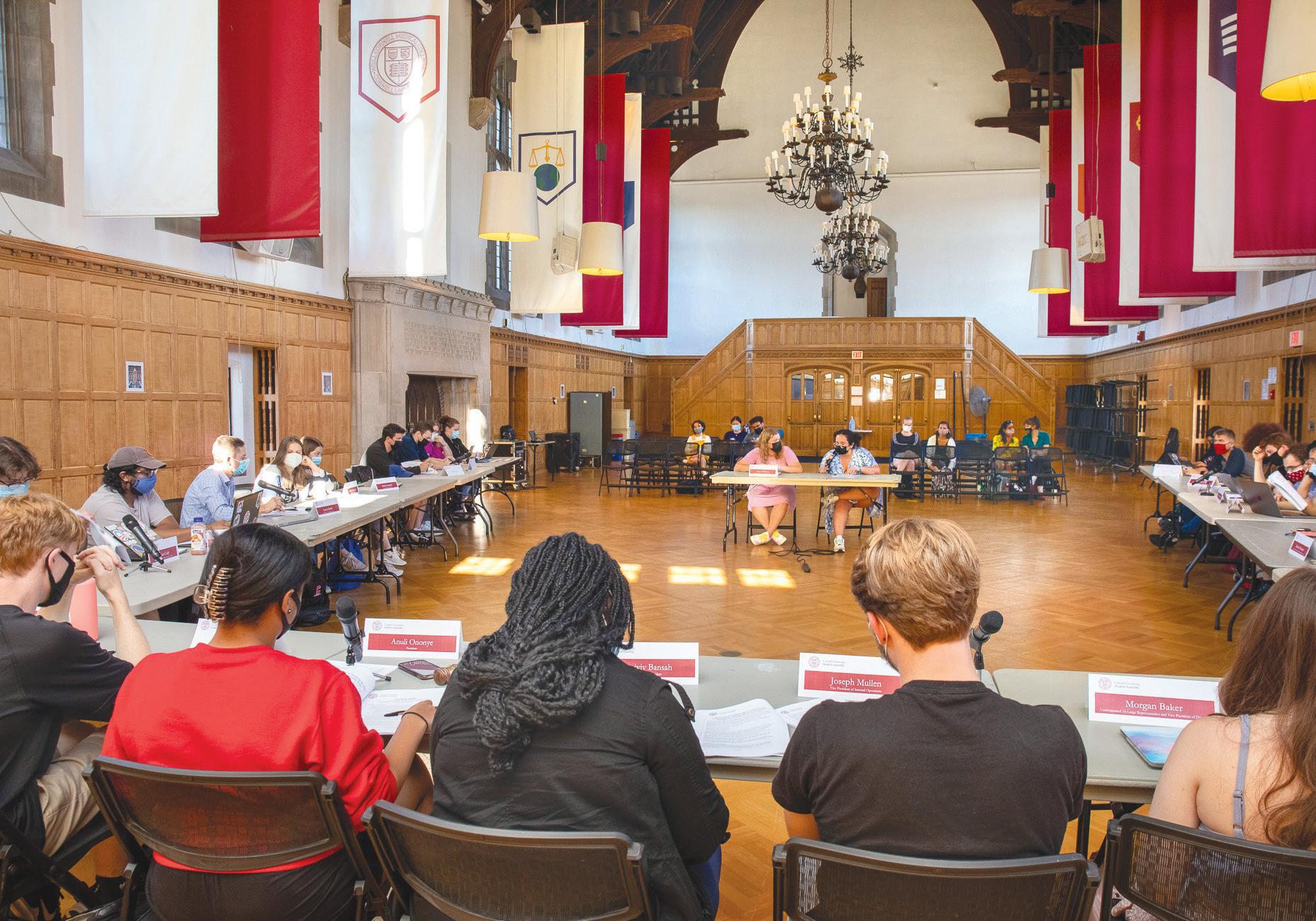
“[The new law] is an affront to our democracy and bodily autonomy,” Samantha Heller ‘23, PPGA co-president, said in an interview with the Sun. “It’s also just so cruel. It doesn’t have exceptions for people who have become pregnant through rape or incest, and that to us was kind of shocking.”
The Student Assembly passed a resolution in support of reproductive rights which stated that the legislation was “a threat to the bodily autonomy and personal health of Texans and a severe violation of democratic principles and judicial procedure.” The resolution now awaits submission to the president.
The assembly called for increased investment from Cornell to fund student education about pregnancy termination and birth control services available to them at Cornell, as well as for the University to stand in solidarity with Cornell
peers from Texas who may be impacted by this legislation.
Heller and other student advocates are especially concerned about the disproportionate impact of the policy on low-income communities of color, where people may be less likely to have the resources to travel out-of-state to seek an abortion. Heller appreciates the support of the Student Assembly in advocating for reproductive rights.
“I was really grateful. It also made me somewhat optimistic,” Heller said. “It’s good to know, especially among young people, that these kinds of bills that completely fly in the face of Roe vs. Wade, are not acceptable.”
The Student Assembly also passed a resolution titled Calling on Cornell University To Publicly Support the Ganedago’ (Cayuga Nation) Council of Chiefs and Clan Mothers Demands, sponsored by representatives including College of Agriculture & Life Sciences Representatives Adele Williams ’24 and Yanenowi Logan ‘24, as well as Arts and Sciences Representative Claudia Irene Leon ’23.
By ANGELA BUNAY Sun Assistant News Editor
In the second meeting of the semester, the Graduate and Professional Student Assembly elected a new president, executive vice president and counsel, which resulted in one leadership position vacancy.
Monday evening, with 20 voting members in-person and others joining over Zoom, Preston Hanley grad was elected to fill the role of GPSA president. Hanley was elected with 38 members voting in favor and 13 abstentions.
“I have a passion
for government and shared governance,” Hanley said during his speech following his nomination for president. “I can be a mega-
“I have a
phone to move on anything that you guys might want to see change.”
At the first meeting of the
semester, the previous presi
dent of the GPSA, James Rowe grad resigned from the leadership position. Hanley described Rowe’s resignation as a “mutual parting of ways” that occurred because Rowe did not want to serve as president this year.
Hanley said that with his new position, he hopes the GPSA can begin with a clean slate. His biggest concern is making sure graduate students are represented in conversations surrounding the response to COVID-19
“It’s definitely been some-
Tuesday, September 14, 2021
GET SET Workshop: The TA Role in Cultivating an Inclusive Classroom 11 a.m., Virtual Event
Behavioral Workshop: Hunt Allcott 11:15 a.m., Sage Hall, 141
CUeLINKS and Networking Overview: Connect with your Cornell Community Noon, Virtual Event
Getting Started with Hypothesis 2:00 p.m., Virtual Event
Tie Dye on 626 Lawn 3 p.m., 626 Thurston
Cornell in Washington Information Session 4:30 p.m., Klarman Hall, KG80
Turkish Conversation Hour
4:30 p.m., Stimson Hall, G25
Visual Culture Colloquium: Min Ma Naing 4:45 p.m., Goldwin Smith Hall, G22
Foundations of Community-Engaged Learning: 3-Week Intensive 6 p.m., Virtual Event
Nomadland
7:15 p.m., Willard Straight Theatre
Cut out this cool FR EE MOUST ACHE and stick it to your face. You will be the envy of all your friends. Read The Corne¬ Daily Sun every day for more prizes!
Tomorrow
Best! Letters from Asian Americans in the Arts Noon, Virtual Event
Leadership, Governance and Strategies for Advancing the Policies and Actions for Equitable Development 12:25 p.m., Emerson Hall, 135
Midday Music for Organ 9/15: C.U. Music 12:30 p.m., Sage Chapel
LEPP Theory Seminar: John Terning (UC Davis) 2 p.m., Physical Sciences Building, 401
Berry Production Workshop, Using Insect Exclusion Netting to Manage SWD 4 p.m., The Berry Patch in Stephentown or Abers Acres in Kennedy
American Sign Language Conversation Hour 4:45 p.m., Virtual Event
Cornell Women’s Soccer vs Binghamton University 7 p.m., Berman Field
Cornell Concert Series Presents Asmir ElSaffar 7 p.m., Virtual Event
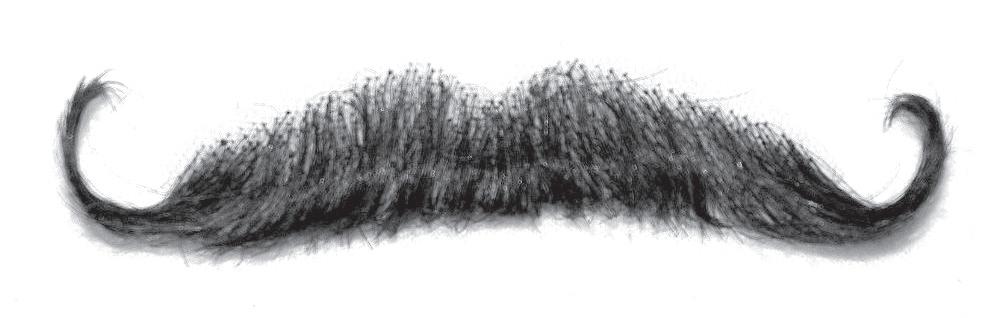

Women’s soccer | Coming off a 1-0 loss against Iona College on Sunday, Cornell Women’s Soccer will return hone to Berman Field to face off against Binghamton University, where they hope to secure their second win of the season. W W W . C O R N E L L S U N . C O M
Stansbury will speak at Te Perspectives in Global Development Seminar
By ANGELA BUNAY Sun Assistant News Editor
Rep. Melanie Stansbury (NM-01) M.S. ’07 will be the next guest speaker for The Perspectives in Global Development Seminar hosted by the College of Agriculture and Life Sciences’s Global Development department this Wednesday afternoon.
The series of seminars showcase global development through the point of view of experts from various parts of the world, with some presenters speaking on campus and others over Zoom. This is the third semester the series will be taking place, beginning in the fall of last year with a 10-part series.
Space and Technology.
“[Stansbury] is a champion of efforts to address hunger, food, and water insecurity, conservation and climate change, and economic development and recovery,” Stansbury’s biography for the event says.
“I was always interested in community development and policy, but through that class I got to see how accessible policy makers are.”
The congressperson has been an advocate for many progressive issues, including the Green New Deal, reducing economic inequality, Medicare for All, a federal assault weapons ban and the cancelation of student loan debt.
Melanie Stansbury M.S. ’07
This semester, the series has planned 11 seminars with guests ranging from Prof. Mario Herrero, global development, who will discuss sustainable global food systems, to Sudha Narayanan Ph.D. ’11, a senior research fellow in the International Food Policy Research Institute’s South Asia Regional Office, who will talk about farmer protests in India.
The series of seminars showcase global development through the point of view of experts from various parts of the world.
On Wednesday, Stansbury will discuss, over Zoom, strategies she uses as a congressperson in New Mexico to create policies and programs that aim to reduce social and economic disparities by meeting the needs of underserved communities. Her talk will center around how she tackles economic development, food and water security and climate change legislation in New Mexico.
Stansbury has previously served as a staffer in the U.S. Senate Committee on Energy and Natural Resources while she was also an aide to Sen. Maria Cantwell (D-Wash.). The New Mexico congressperson also served in the White House Office of Management and Budget under President Barack Obama.
Stansbury made headlines after she unseated seven-term Republican incumbent Jimmie C. Hall for the New Mexico state representative seat. Throughout her time in the House of Representatives, Stansbury has held committee assignments in the Committee of Natural Resources and the Committee on Science,
Stansbury began her run for the special election following President Joe Biden’s appointment of Debra Haaland as United States Secretary of the Interior, who is in charge of the management and conservation of most federal lands and natural resources.
The Albuquerque native won the special election in a landslide, defeating her opponents with 60.4 percent of the vote.
The former Development Sociology Ph.D. candidate has discussed in the past how her Cornell experience –– particularly her Cornell in Washington experience — has informed her political career .
“I was always interested in community development and policy, but through that [Cornell in Washington] class I got to see how accessible policy makers are and how academic knowledge and community work can be put to use in the public policy space,” Stansbury said in a University press release. “That was really transformative for me.”
The Perspectives in Global Development seminars will be held Wednesdays from 12:25 p.m. to 1:15 p.m. ET during the semester. Those who wish to view the event in-person may attend at 135 Emerson Hall.
Angela Bunay can be reached at abunay@cornellsun.com.
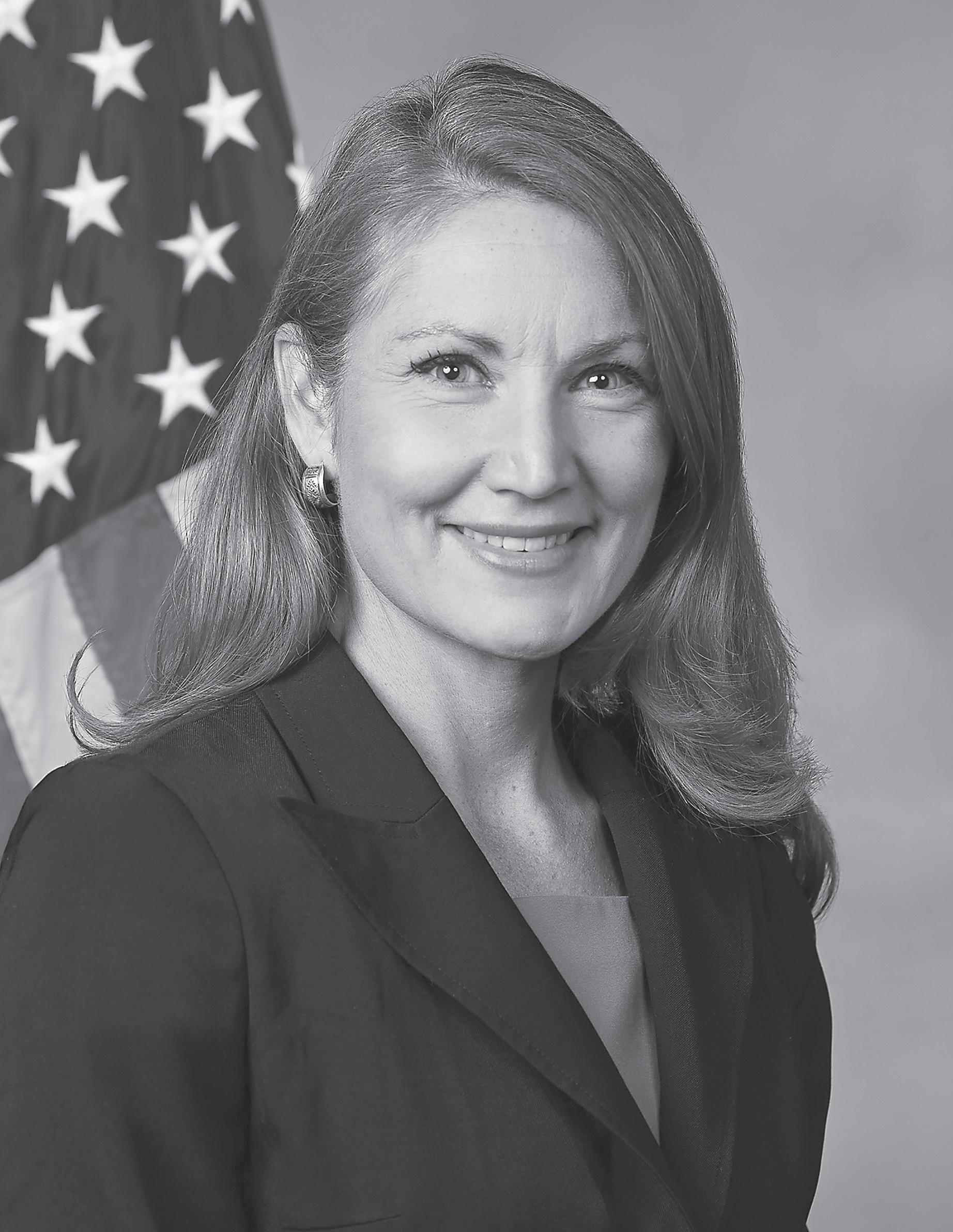
Seminar series | The Perspectives in Global Development Seminar is hosted by CALS’s Global Development department and will consist of an 11-part seminar series, the first of which will host Rep. Melanie Stansbury this Wednesday.
thing that the University is continuing to deal with and students are continuing to have to adjust to,” Hanley said. “I think that making sure students have ample representation at that table with those conversations is probably one of my most important issue areas.”
Damien Sharp grad was elected as executive vice president with 40 members voting in favor and six abstaining. Nikola Danev grad was elected for the counsel position with 41 votes in favor and one abstention.
Genesis Li grad, the new vice president of communications, says her priorities in her new role will be to foster inclusivity in communicating with all graduate and professional students and maintaining transparency in her communication.
“I am hopeful to be more transparent and better at communicating with the broader student community, graduate student community and faculty members about relevant issues,” Li said.
the same consideration they would have gotten at a regular meeting due to the online voting format.
“We had the opportunity to kind of start from scratch, and with a clean slate. It was important after a lot of people had been voted-in last week,” Hanley said. “It was important to get the approval of these new members, resolutions, especially since President Pollak hasn’t signed off on them yet so it was a good opportunity to go back and revisit those and see how this current assembly feels about those.”
Following the meeting, the roles of appropriations committee chair and chair of diversity and international students committee are both vacant.
“We had the opportunity to kind of start from scratch, and with a clean slate.”
Preston Hanley grad
The meeting also saw the rescinding of two previously-passed resolutions — one regarded the approval of a pre-internal budget expense for a GPSA website and the second established a vice president for strategy and a vice president for administration on the executive committee.
Hanley explained that the decision to put the two resolutions to a vote came about following concerns over the resolutions being rushed and because some members felt the resolutions did not get
Hanely said the role of appropriation committee chair is one of the most important vacancies because this is a fee-setting year, and he wants to make funding for students a priority for the GPSA.
“I’m making sure that we’re getting more funding, whether that be different scholarships help offset the cost of tuition, funding for different research programs and internships and just kind of let students have a better experience here, more hands-on practical experience,” said Hanley during his nomination speech.
The assembly will continue to look for someone to fill the vacancy and will hold an election for the diversity and international students committee at the next meeting on Sept. 27.
Angela Bunay can be reached at abunay@cornellsun.com.
By TAMARA KAMIS Sun News Editor
As many students blow off steam after years of COVID-19 related restrictions by partying on the weekends once again, they face the health risks of both alcohol and drug emergencies. However, there are resources available to students as they navigate how to manage these scenarios.
Often, these health risks are not accompanied by legal risks if students call for help because New York State Good Samaritan protocols protect both the caller and ill person from judicial and legal consequences if they call for assistance for themselves or others due to an alcohol- or drug-related emergency.
“Drinking alcohol can impair judgement and lead people to take more risks, including those related to COVID”
Laura Santacrose
According to Laura Santacrose, assistant director of the Skorton Center for Health Initiatives, if a student is experiencing an alcohol or other drug-related emergency or if they see someone experiencing an overdose of any kind, they should call 911.
Calling Cornell CUEMS is also an option in case of a medical emergency. According to Salaiha Mughal ’22, Community Education Officer for CUEMS, emergency medical technicians for CUEMS coordinate with other medical units if further care is needed after they respond to a call and assess the patient.
Signs that a student should call for help include if someone has passed out and can’t be kept awake or roused, if their skin looks abnormal and if their breathing is slow, according to Santacrose. Caution is especially important if someone has mixed drugs and alcohol or has hit their head. The 24/7 Cornell Health helpline, at 607-2555155, can help students assess if what they are seeing is in fact a medical emergency.
After an alcohol or drug-related emergency, students go through Brief Alcohol Screening & Intervention for College Students and get personalized feedback in two free BASICS sessions to help reflect on their alcohol and/or drug use and to think about how it is affecting their life, according to Penny Krainin, assistant director for counseling & psychological services clinical programs. While some students participate in BASICS voluntarily, others are required to participate if they have broken House roles or Cornell’s student code of conduct.
“BASICS is an important evidence-based strategy that’s been part of Cornell’s comprehensive approach to the prevention of AOD misuse for nearly two decades,” Kranin wrote to The Sun.
While alcohol and drug use cause health risks for some students, a third of Cornell undergraduates at Cornell do not drink, according to Santacrose.
“Many are underage. Some aren’t interested. Some take a medication like an antidepressant that doesn’t mix well with alcohol. Some have a family history of addiction or are in recovery themselves,” Santacrose wrote. “Some just don’t like it, or it’s against their religion. There are also lots of reasons a student may choose not to drink on any given night including being overtired, training for an athletic event or having a test the next day.”
Santacrose says because COVID-19 risks remain significant, there are even more reasons to limit drinking. If students are going to drink socially, Santacrose recommends that people “socialize smarter,” by keeping in-person gatherings outdoors and small, and asking attendees to wear masks and wash their hands because precautions can be harder to maintain under the influence.
“Drinking alcohol can impair judgement and lead people to take more risks, including those related to COVID,” Santacrose wrote. “Avoiding alcohol or reducing how much you drink can further reduce your risk of infection.”
Many students have used alcohol and other drugs less in the last year, as they avoided groups, stayed home more, wore masks and partied less which made the pandemic easier to manage locally, according to Santacrose.
“The corresponding decline in AOD-related transports to the hospital has also been helpful in preserving medical resources at the local hospital as it works to care for COVID patients,” Santacrose wrote.
According to Krainin, students who want to reassess their relationship with alcohol and drugs have access to resources including BASICS, Cornell CAPS counseling and peer support through groups including Cornell Minds Matter and Sober@Cornell.
While assessing its own organizational structure, it makes solidarity statements beyond campus
some Cayuga Nation members was in fact an effort to recoup years of missing rent. Leon and Williams were skeptical of these justifications.
tri-council instead of just one for the whole council and a new ex-officio seat for a student athlete representative.
Halftown was first designated the leader of the Cayuga Nation by the U.S. Bureau of Indian Affairs in 2003, according to WSKG. He remains the federally recognized representative of the Cayuga nation, despite controversies in recent years including land claim disputes.
The resolution cited an open letter released by the Cayuga Nation Council of Chiefs, clan mothers and other Cayuga citizens, which alleged that Clint Halftown ordered the demolition of homes, businesses and a traditional schoolhouse on February 22, 2020, and issued eviction notices amidst the COVID-19 pandemic.
A spokesperson for the federally recognized Cayuga Nation government led by Clint Halftown, Maria Stagliano, accused the Cayuga Nation Council of Chiefs and their allies of aligning themselves with people guilty of criminal activities.
Stagliano defended the demolition of buildings, which the resolution referenced due to alleged illegal activities previously conducted in these buildings. Stagliano claimed that the current efforts to evict
The spokesperson disagreed with what she characterized as the decision to seek outside influence on native governance.
“The ‘Council of Chiefs’ is undermining Native American nations’ abilities to self-govern without interference from non-native members,” the spokesperson wrote. “This abrogation of the Cayuga Nation’s sovereignty in the pursuit of power is wrong.”
According to Williams and Leon, the focus of their effort is to amplify the voices of Cayuga people rather than speak for them.
“We are not the authority on the internal struggles of their government at the moment,” Williams said in an interview with The Sun. “We are just trying to support the people who have gone through a lot.”
In addition to the above resolutions, the Student Assembly discussed its internal bylaws, standing rules and charter. Changes to the bylaws include the possibility of adding more ex-officio members, including the suggestion of three ex-officio members to represent each segment of the Greek
While the changes to the charter and bylaws were tabled until the next meeting in accordance with the bylaws, the standing rules were approved. To replace the former research and accountability committee, the Student Assembly passed a resolution creating an external Office of Ethics.
According to Vice President for Finance Morgan Baker ‘23, one of the co-sponsors of the resolution to dissolve the Research and Accountability Committee and create the Office of Ethics, she and other representatives thought that an independent body would be best suited to hold accountable S.A. and directly elect undergraduate representatives to the University Assembly.
Baker characterized the research and accountability committee as “plagued by historic dysfunction and systematic shortcomings,” and is hopeful that this new structure will help make the Student Assembly more accountable.
can be reached at tkamis@cornellsun.com.
The first thing I noticed when walking toward the front of Bailey Hall were the immense throngs of people standing outside the steps, loudly milling about and talking to each other as they tried to enter. They came for the first in-person event at Bailey Hall since the beginning of the pandemic: a standup comedy show by comedian and YouTuber Trevor Wallace, hosted by the Cornell University Program Board on Aug. 28.
Described on his website as “a 27 year old stand up comedian, writer & actor,” Wallace first came to fame on YouTube, posting short comedic videos, collaborating with friends and other YouTubers and later starting a podcast titled Stiff Socks.
More recently, he has collaborated with brands such as Chipotle and Snickers. His appearance at Cornell comes amidst more of his performances nationwide, including at other colleges and universities.
Before the beginning of his set, the atmosphere in Bailey was rife with anticipation. After a spirited introduction, Wallace took to the stage with a rapturous “wassup dawg?!” and began his routine with enthusiasm and aplomb.
During his set, Wallace explored various topics, including his confusion about the meaning of Level B’s name, humorous commentary about a drive-in strip club in Texas and his own college experiences at a self-described “state school,” where he majored in film and joined a fraternity. He imbued all of these topics with his laidback self-assuredness and caustic wit.

eventually having a near full-blown conversation together, to the delight of the audience.
One of the most engaging parts of the show was Wallace’s clever banter with the audience. Out of all the aspects of live shows that were lost during the pandemic, one of the most important is the performer’s ability to interact with an audience — to use a crowd’s reactions to enhance their material, transforming it from a simple routine to something more unique and immediate. “Don’t lie!” a random person up front shouted as Wallace spoke about his day spent in Ithaca; Wallace turned this interjection into a well-received exchange, throwing this person’s demand back at him and
Then, without missing a beat, he transitioned to his next bit by bringing the conversation audience-wide, asking: “You guys do drugs?” No matter the portion of the set, the audience remained a part of it.
Near the end of the show, Wallace switched gears to an informal Q&A, answering questions, such as who his favorite YouTubers were (his friends) and where a first-year student should go for a first date (Home Depot, and more seriously, a “day thing”). It was the culmination of that exhilarating back-and-forth from the rest of the night; everyone seemed to be enjoying themselves.
Eventually, the show ended and Wallace disappeared


backstage. The lights in Bailey Hall went back up; the audience almost immediately rose from their seats, crowding out of the entrance together in the same way in which they had entered.
Standing in the middle of that crowd, I could not help but feel that all of this was a return to something — not simply to an in-person event, but to a way of being together and experiencing something collectively as an audience.
For the first time in a long time, all of us were feeding off of each other’s reactions in this shared space rather than staying in solitude behind a screen. Coming together in this fashion, whether by going to class or attending a comedy event, may take some getting used to for everyone, but events like these show that it comes to us more readily than we may think.
And what a fitting first event to return to.
John Colie is a junior in the College of Arts and Sciences. He can be reached at jcolie@cornellsun.com
139th Editorial Board
KATHRYN STAMM ’22 Editor in Chief
ANUSHYA ALANDUR ’23
Business Manager
CATHERINE ST. HILAIRE ’22
Associate Editor
PRANAV KENGERI ’24
Advertising Manager
ODEYA ROSENBAND ’22
Opinion Editor
JYOTHSNA BOLLEDULA ’24
News Editor
TAMARA KAMIS ’22
News Editor
CAMERON HAMIDI ’22
App Editor
KRISTEN D’SOUZA ’24
Design Editor
HANNAH ROSENBERG ’23
Photography Editor
OMSALAMA AYOUB ’22
Science Editor
PUJA OAK ’24
Layout Editor
ANNIE WU ’22
MIHIKA BADJATE ’23
Assistant News Editor
SERENA HUANG ’24
Assistant
ANGELA BUNAY ’24
Assistant
JOHN COLIE ’23
Assistant
AMELIA CLUTE ’22
Assistant Dining Editor
WILLIAM BODENMAN ’23
Assistant Sports Editor
AARON SNYDER ’23
Assistant Sports Editor
MEGHANA SRIVASTAVA ’23
Compet Manager
MADELINE ROSENBERG ’23
Editor
KOH ’23
Editor
OZA ’22
Editor
HEO ’24
Editor VEE CIPPERMAN ’23
NOOREJEHAN UMAR ’23
PLOWE ’23
YOON ’23
VELANI ’22
PICHINI ’22
TYAGI ’22
MENDOZA ’24
ARANDA ’23
BASU ’23
RIGGS ’24
LEYNSE ’23
NAGEL ’24
’24
ABAYEVA ’24
’22
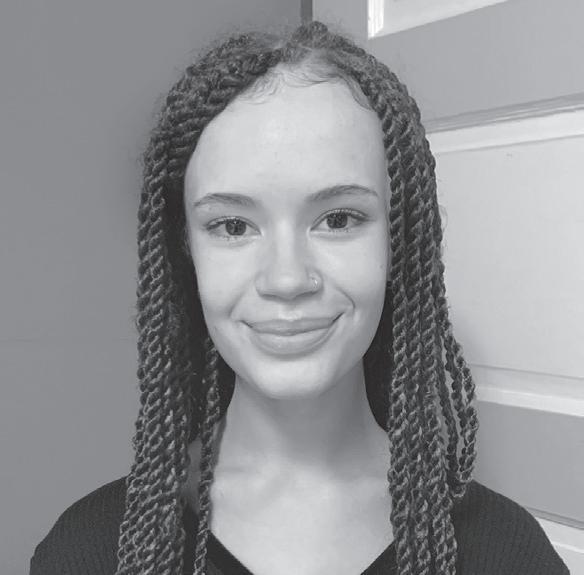
Alecia Wilk is a senior in the College of Arts and Sciences. She can be reached at awilk@cornellsun.com. Girl, Uninterrupted runs every other Tuesday this semester.
Iwas transported. Tagged as a second-semester sophomore and released, some Thursday, back into campus as a senior. In the weeks leading up to it, I fielded questions about the school year mostly with that I felt hopeful. I think I meant to say awake. Alive. At least more so than the past year and a half. Excited to be returning to a place that looked awake and alive as well. I was so concerned with escaping the drawl of the past three semesters I forgot the goal was to make a life afterward, outside of this. There’s only so much time until I am uncaged again, set off into an even less tame environment, and I don’t envision the hopefulness I created for this year lasting long enough to come crawling out with me.
transported.
’22
Riggs ’24
’23
science desker Srishti Tyagi ’22
Seniors are fast-approaching a confrontation twenty one years in the making, and while everyone else has been preparing, I’ve been forever masquerading through the motions.
I was inducted into the National Junior Honor Society in seventh grade. Our mentors were eighth-graders seasoned by nothing more than hours of community service that most either forged or substituted for familial favors. Following their footsteps, we were to stand in the middle school gymnasium and be introduced to the families of spectators in the bleachers, ending with our career aspirations. I was freshly thirteen and my future plans were far from concrete.
I knew I was inspired by Salvador Dali’s paintings, Rick Riordan’s books, my binges of YouTube videos, my misunderstandings of Socrates, my father. I coveted a future that was steeped in possibility, one that looked like a million different ways to find fulfillment and bring ease to whatever piece of the world that offered me. But, if I had a penny for all the inspirations I never let linger long enough to be defeated by career searches, I wouldn’t be writing this column. So, I curated an image. One I thought was palatable, professional and predictable, to match the skirt I let sway above the scabbed front of my legs. I went with a toss up between aerospace engineer and neurosurgeon, bullshit so steamy it caught the attention of every head seated in those bleachers. Those types of ceremonies still felt meaningful then. I was still under the impression they reflected something about me personally, my aspirations and potential to breathe life into them. I didn’t consider the tens of thousands of other gymnasiums doing the same thing, maybe even at the same time, and how many lives and lies lined up exactly with mine.
The fact that I sit now with the likes of future neurosurgeons and aerospace engineers is somehow unsavory. I know my future is supposedly bright as well, but without the opportunity to make up for lost time, it all feels beyond me and out of my control. I have simply been
Multiple times during junior year I found myself aimless and alone in the hours before sunrise reciting facts to myself. I was twenty. I am a college student at Cornell University. I lived in an apartment with two roommates and it is probably still my turn to do the dishes. I tried to compare it with what I thought these facts would look like before I was within them, or before I was close enough to have a realistic idea, and suddenly I was seeing a former me. One who was more idealistic. I imagine she’d look at me with something like combined confusion and pity, trying to come to terms with a scene that was nothing like she dreamed and exactly as much as she could expect. When I remember what I used to be, or what I think she was, I get a pit in my stomach. A pain to throw her up, wash her off and salvage her. My brain doesn’t run wild with academic anxieties the way it did in grade school. But it doesn’t run wild with excitements or possibilities either. It’s gone quiet with the complacency that comes from the fear of getting anything wrong while not completely believing in what’s right.
As tumultuous as the journey has become, pandemic considered, my destination was always simple: degree. The details don’t matter, the distance has always been too much, and will be until the finish line is at my feet. But even with fall not yet here, I feel a cold growing in them starting at my toes. A wondering is awakening in me, about why to cross and what waits for me. I figured over four years, a path might present itself. Uncover from a mess of ivy and weed and wood to let me know my quest is through with, the next installment is promising and ready to be stepped into. Now I worry the serialized certificate will only prove to me how incomplete this chapter has rendered me.
I have been made into a student. And for all the silly things I sacrificed in the process, I’ll soon lose this cast too. College has been a marathon for all of us and to finish it should be bliss. But the brutal beating of my heart to keep up with the crowd and sideline watchers to bear witness to my pain feels worth more to me than the directionlessness that awaits once there’s time to catch my breath again. Since my acceptance here, any suffering I’ve claimed to endure has been scholarly. Soon it will just be stress. A symptom of our economy, a shitty commute, standing through a slow supermarket checkout line without friends by my side.
I know nostalgia isn’t much more than the trick of convenient forgetfulness, but I miss when the world felt more like something to inherit than hide from. I’m cowering now, in anticipation that when the clock strikes May and the student in me meets its maker, that I and the real world will greet each other with nothing to offer one another.

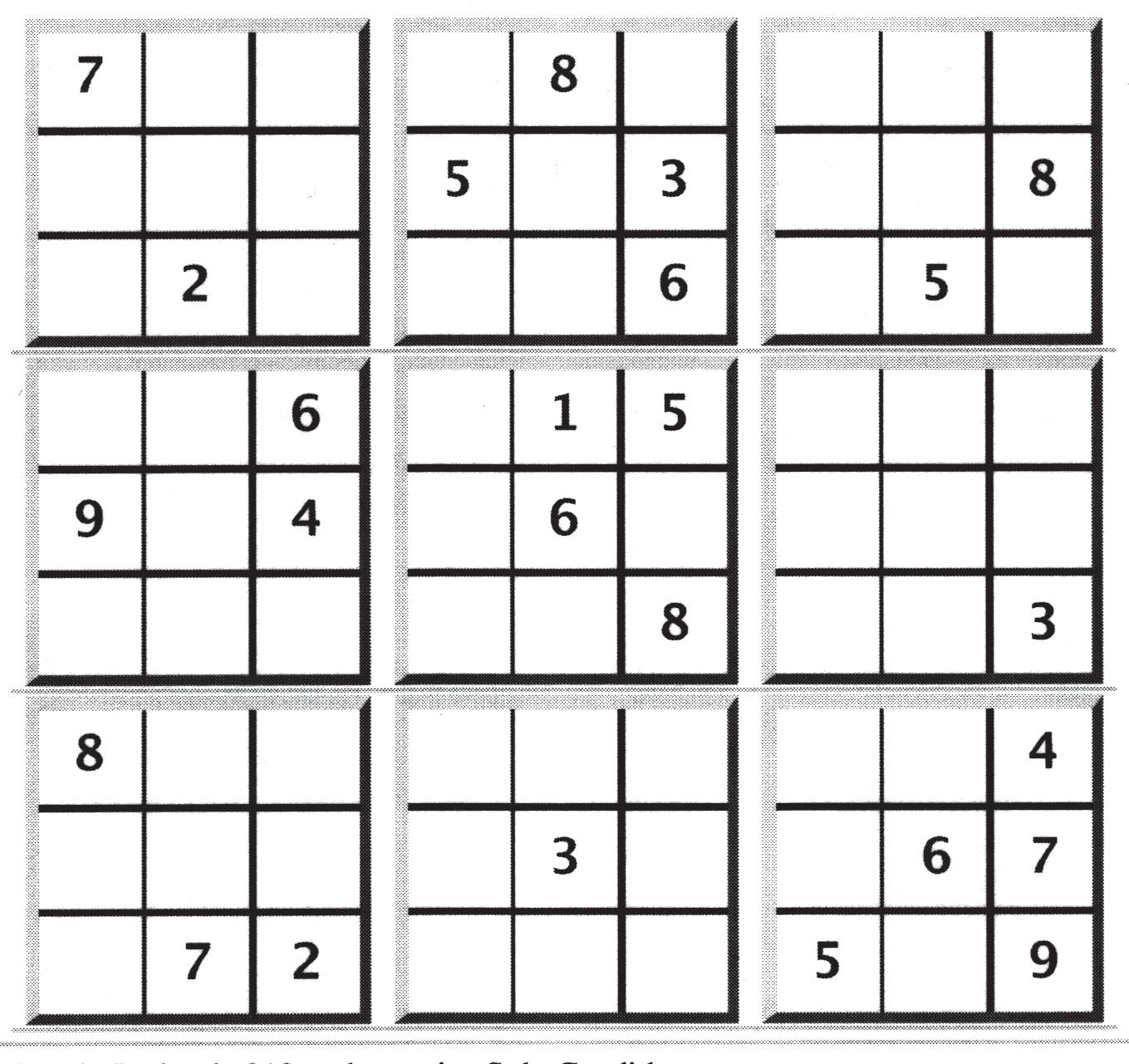
Fill in the empty cells, one number in each, so that each column, row, and region contains the numbers 1-9 exactly once. Each number in the solution therefore occurs only once in each of the three “directions,” hence the “single numbers” implied by the puzzle’s name. (Rules from wikipedia.org/wiki/ Sudoku)


By JESSICA DAI Sun Staff Writer
The North Atlantic right whale population — with fewer than 400 individuals — is at risk of further decline as rising sea levels force them northward toward fishing grounds where they run the risk of potentially deadly ship strikes and entanglement.
To monitor this phenomenon, Cornell researchers are studying the soundscapes of right whales as a method of tracking and assessing changes in their migration patterns.
With hopes to better conserve the environment by conveying results to the public and policy makers, the group recently discovered a major cause of the declining whale population — rising sea levels are forcing whales into harm’s way, near the fishing grounds of eastern Canada.
Over the course of a decade, the Gulf of Maine has warmed faster than 99 percent of the global ocean. The increased temperatures are influenced by a northward shift in the path of the Gulf Stream, a warm current from the Gulf of Mexico to the Atlantic Ocean — which is likely caused by anthropogenic climate change.
According to Prof. Erin Meyer-Gutbrod, Ph.D. ’16, ocean and environment, the University of South Carolina — the lead author of a recent study published in Oceanography investigating the phenomenon —, increasing temperatures in the Gulf of Maine are influencing this shift in the Gulf Stream, driving a drastic change in how and where humans interact with the ocean.
The new regime, Harrington said, is less favorable for zooplankton — small aquatic microorganisms — which right whales consume, forcing the whales to abandon their traditional summertime feeding grounds in the Gulf of Maine and follow their food north to the Gulf of Saint Lawrence in Canada around 2010.
Due to the unexpected migration, fishing policies and vessel speed restrictions that had protected the right whales in their previous habitat were not in place in their new one. This is connected to an “unusual mortality event” where 17 right whales died in 2017. Since then, the total has risen to 34 confirmed right whale deaths — almost 10 percent of the dwindling right whale population.
“Because the population is already so small, the right whale population is super genetically vulnerable which further compounds [the decline],” said Marissa Garcia grad, a first-year Ph.D. student working at the K. Lisa Yang Center for Conservation Bioacoustics. Because there are fewer whales, and less genetic diversity, the population may be more vulnerable to disease and other threats.
One pathway to safeguard right whales as they forage into habitats in search of food is to expand protective policies, like
limiting the use of certain fishing equipment dangerous for the whales, such as vertical lines.
On Aug. 31, the National Oceanic and Atmospheric Administration announced a new fishery regulation that will go into effect May 1, 2022, including modifications to fishing gear that would reduce entanglements, and increase the likelihood that a whale may free itself from a trap by breaking through weaker ropes.

is that it’s passively recording the environment the whole entire time.”
Still, researchers believe that entirely eliminating ropes in fishing is the key to mitigating whales’ entanglement. Ropeless fishing works by using acoustic communication to allow fishermen to retrieve their trap by playing a sound, signaling their gear to float to the surface, according to Aaron Rice, principal ecologist at the K. Lisa Yang Center for Conservation Bioacoustics.
Most importantly, according to Meyer-Gutbrod, researchers must be able to predict where right whales will travel next and prepare for the whales’ arrival by setting up protective regulations beforehand.
Old whaling records, zooplankton data and knowledge of the shape and depth of the seafloor allow researchers to predict what areas may attract right whales, Meyer-Gutbrod explained.
The best way to improve these predictions is through increased monitoring — a difficult feat to accomplish across the incredibly vast ocean, Meyer-Gutbrod said. Right whales can be spotted through boat and airplane surveillance, although these methods are contingent on good weather sightings being close to the shore.
Another tool, Garcia added, is through a method called passive acoustic monitoring.
“Basically we drop off underwater microphones or hydrophones in the water to listen for right whale calls and they just stay there, for a very long time,” Garcia said. “The idea
Passive acoustic monitoring also provides a more durable and convenient way to observe whales since it can survey during bad weather and far from shore, Meyer-Gutbrod explained.
According to Rice, the right whales are not the only ones that are affected by rising ocean temperatures.
The southern Sei whales, which are the third largest whales in the western north Atlantic, typically go north and then swim down to the New York Bight, an offshore area that extends from Cape May to Montauk Point on the eastern tip of Long Island. As ocean temperatures continue to rise, a northward shift of the southern Sei whale population can be expected as well.
As waters become warmer, tracking migration pattern changes like these will become increasingly vital. MeyerGutbrod called on students to support the effort by making small changes, like voting for progressive climate policies — such as New York’s newly signed legislation to aim for all new passenger cars and trucks to be zero-emissions by 2035. “Vote. Voting for politicians that want to support broadscale climate mitigation strategies and support science [that] can make a big impact,” Meyer-Gutbrod said.
Jessica Dai can be reached at jdai@cornellsun.com.
By KOBI RASSNICK Sun Staff Writer
While Cornell students enjoy the last nights of summer relaxing under the glow of the setting sun on Libe Slope, some find themselves ravaged by mosquito bites while others find themselves walking away unscathed.
Although mosquitoes do prefer to feast on some people more than others, this preference has more to do with the chemistry taking place on one’s skin rather than commonly misconceived reasons such as blood type.
So-called “mosquito season” begins when temperatures consistently surpass 50 degrees Fahrenheit, typically ranging from late spring to early fall in Ithaca.
The most mosquitoes die when low temperatures freeze standing water, the typical mosquito breeding ground. During the fall and winter, however, some female mosquitoes take cover in warm areas like animal burrows, attics or basements.
According to Prof. Laura
Harrington, entomology, these female mosquitoes are the ones that bite humans as they require certain amino acids — the building blocks of proteins — and nutrients like iron from blood to produce their eggs.
Harrington said that mosquitoes rely on sever al sensory signals to locate humans, including carbon dioxide emission, heat and vision.
“We do know that some odors are used for longer range attraction to people, like carbon dioxide,” Harrington said. “Then, once the mosquito is closer they can use heat, vision and other sensory
mechanisms to finally hone in on their victim.”
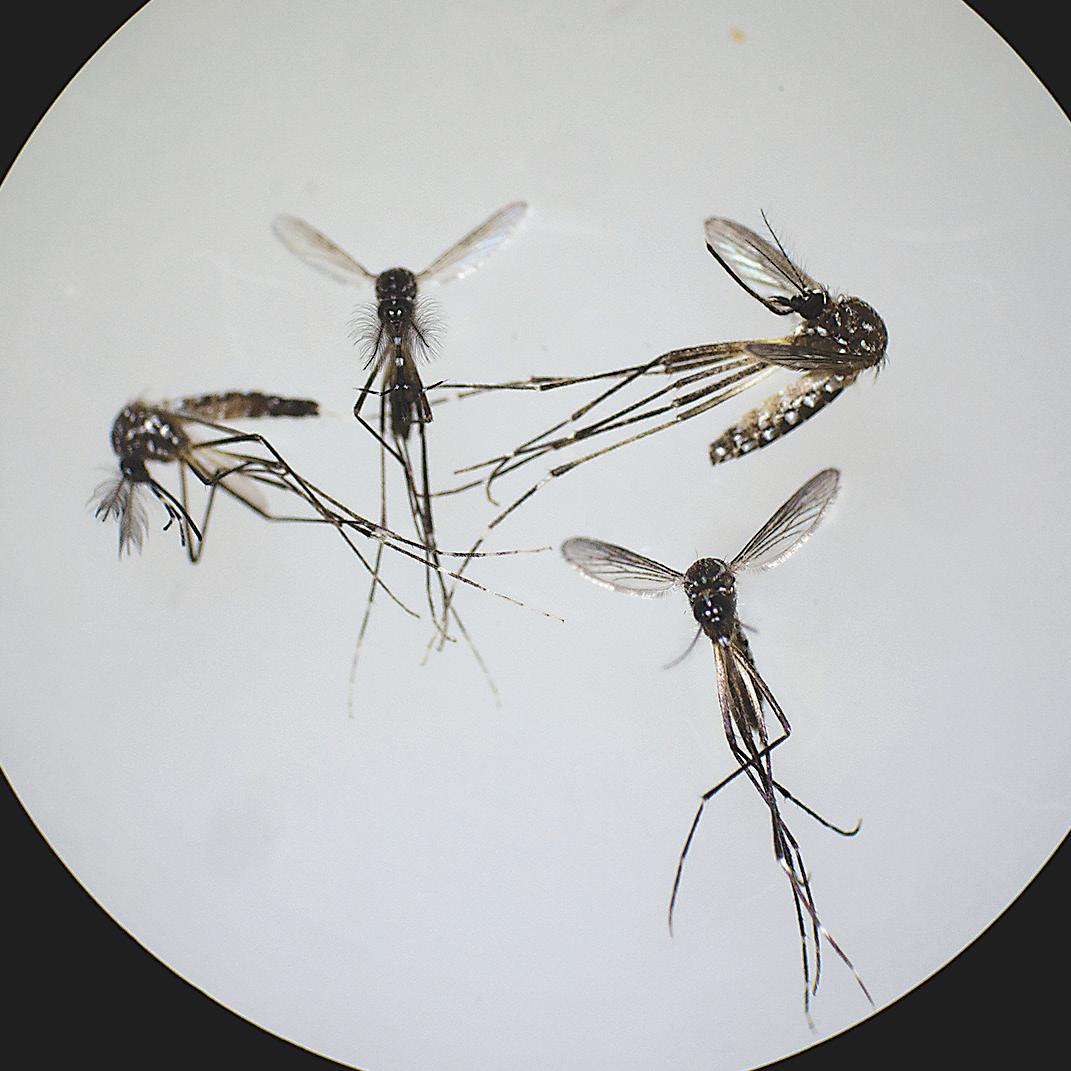
Those who are easier for mosquitoes to spot — particularly people who have just finished exercising — are prime targets for the insects. This, in part, is due to the production of lactic acid, a product that accumulates in muscle as a result of exercise and the scent of which is particularly attractive to mosquitoes. The additional increase in body temperature and carbon dioxide exhalation make convenient victims out of those who exercise.
Harrington said that a com-
bination of over 300 compounds on human skin can create a concoction that attracts mosquitoes.
Some research has even shown that the microorganisms living on people’s skin can impact their body odor, serving to attract mosquitoes to certain fragrant individuals.
“In recent years, skin bacteria have been identified that might play a role in producing odors that are attractive to mosquitoes and there is variation in this microbiota from one person to the next,” Harrington said.
Human body odor is produced when skin bacteria break down proteins in sweat. Some secretions are metabolized into fatty acids, and bacterial waste products from this process contribute to odor.
Although blood type is commonly expected to be a factor involved in mosquitos’ preferences — and some studies provide evidence mosquitoes prefer type O — Harrington holds that this claim is largely a myth.
Blood type is characterized by the presence of certain antigens, substances that trigger immune respons-
es to foreign substances in the body, and proteins on red blood cells.
Blood type seems to have no relationship with body odor, let alone other sensory mechanisms on which mosquitoes rely. The presence or absence of antigens and surface proteins makes no changes to the amino acid and nutrient content of human blood, so mosquitoes have no need to desire one blood type over another. Accordingly, Harrington insists that blood type is not at all a factor in mosquito-host attraction, and thus that the idea of mosquitoes preferring a certain blood type is simply a myth.
Harrington acknowledged that sources hold differing opinions on whether there is currently credible research that definitively proves whether mosquitoes prefer a certain blood type. For now, all we can do is wait for the inevitable, harsh Ithaca winter to rid our lives of the bothersome bugs for a few short months.
Kobi Rassnick can be reached at krassnick@cornellsun.com.