The Corne¬ Daily Sun

By AMANDA H. CRONIN Sun Staff Writer
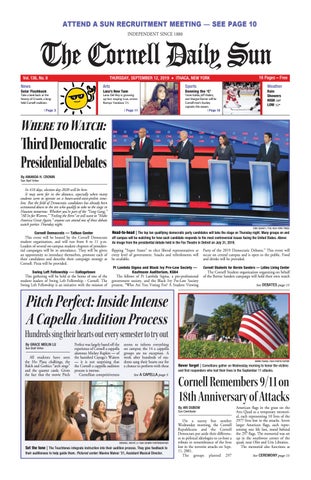
In 418 days, election day 2020 will be here. It may seem far in the distance, especially when many students seem to operate on a hours-until-next-prelim timeline. But the field of Democratic candidates has already been winnowed down to the ten who qualify to take to the stage in Houston tomorrow. Whether you’re part of the “Yang Gang,” “All In for Warren,” “Feeling the Bern” or still want to “Make America Great Again,” anyone can attend one of these debate watch parties Thursday night.
Cornell Democrats — Tatkon Center
This event will be hosted by the Cornell Democrats student organization, and will run from 8 to 11 p.m. Leaders of several on-campus student chapters of presidential campaigns will be in attendance. They will be given an opportunity to introduce themselves, promote each of their candidates and describe their campaign strategy at Cornell. Pizza will be provided.
Swing Left Fellowship -— Collegetown
This gathering will be held at the home of one of the student leaders of Swing Left Fellowship - Cornell. The Swing Left Fellowship is an initiative with the mission of

flipping “Super States” to elect liberal representatives at every level of government. Snacks and refreshments will be available.
Pi Lambda Sigma and Black Ivy Pre-Law Society — Kaufmann Auditorium, KG64
The fellows of Pi Lambda Sigma, a pre-professional government society, and the Black Ivy Pre-Law Society present, “Who Are You Voting For? A Student Viewing
By GRACE MEILIN LU Sun Staff Writer
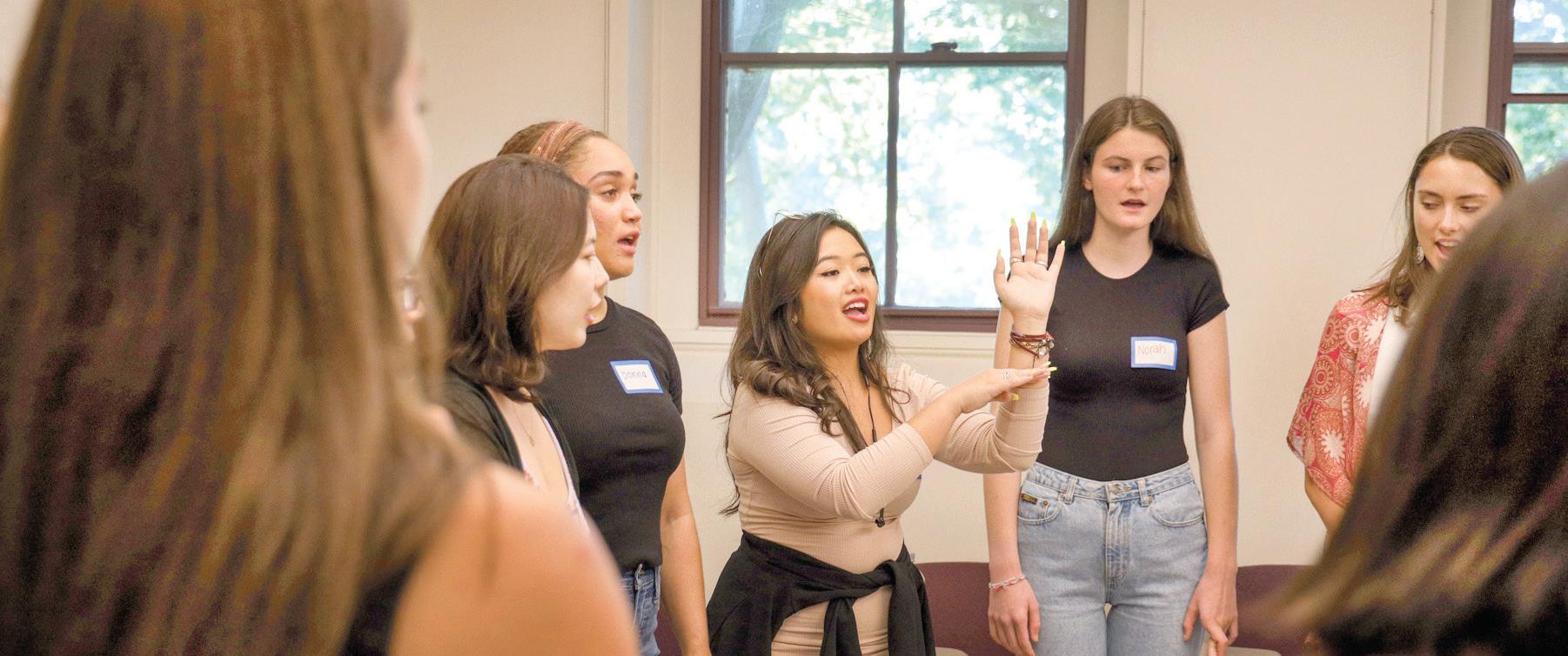
All students have seen the Ho Plaza chalkings, the Balch and Gothics “arch sings” and the quarter cards. Given the fact that the movie Pitch
Perfect was largely based off the experience of Cornell a cappella alumnus Mickey Rapkin — of the banished Cayuga’s Waiters — it is not surprising that the Cornell a cappella audition process is intense. Cornellian competitiveness
seems to inform everything on campus; the 14 a cappella groups are no exception. A week after hundreds of students sang their hearts out for a chance to perform with these
Cornell
for
By ARI DUBOW Sun Contributor
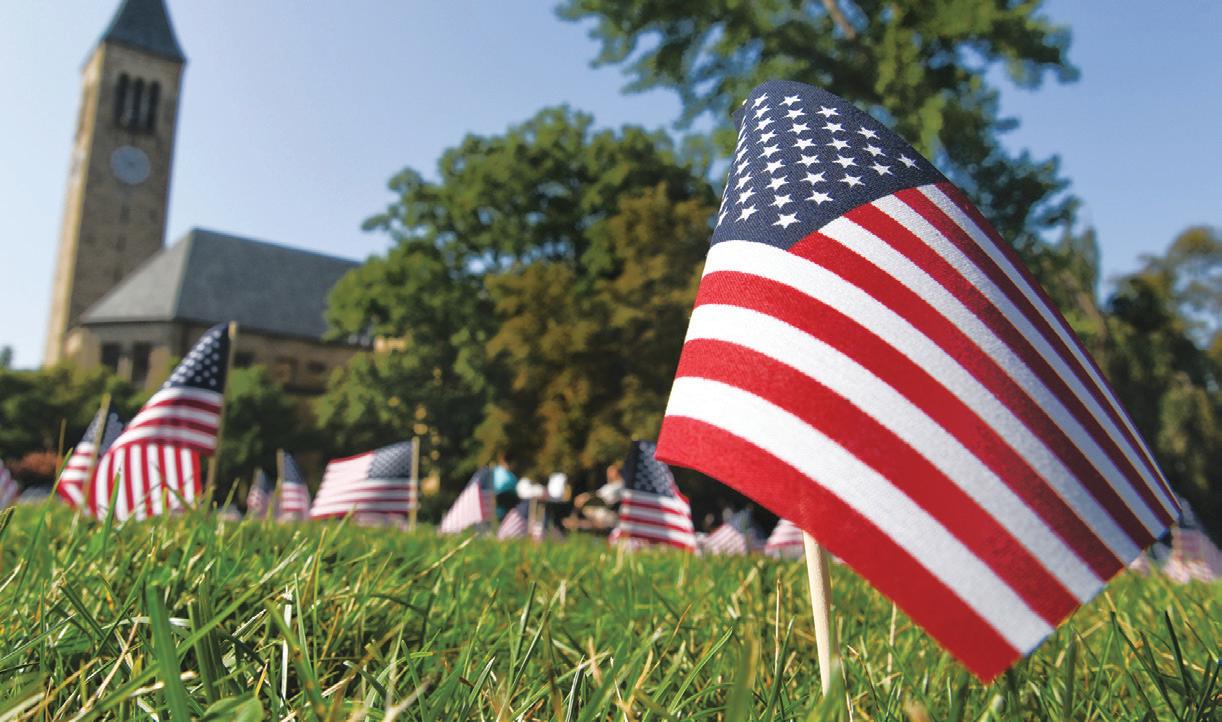
somber Wednesday morning, the Cornell Republicans and the Cornell Democrats put aside their differences in political ideologies to co-host a tribute in remembrance of the lives lost in the terrorist attacks on Sept. 11, 2001. The groups planted 297
American flags in the grass on the Arts Quad as a temporary memorial, each representing 10 lives of the 2977 lives lost in the attacks. Seven larger American flags, each representing one life lost, stood behind the 297 flags. The memorial was set up in the southwest corner of the quad, near Olin and Uris Libraries. The memorial also functions as
Thursday, September 12, 2019
Entrepreneur in Residence Office Hours - Rob Gregor ’00
8:30 a.m. - 4 p.m., Statler Hall, G80N
Entrepreneur in Residence Office Hours - Glen Coben ’86 9 a.m., Statler Hall G80P
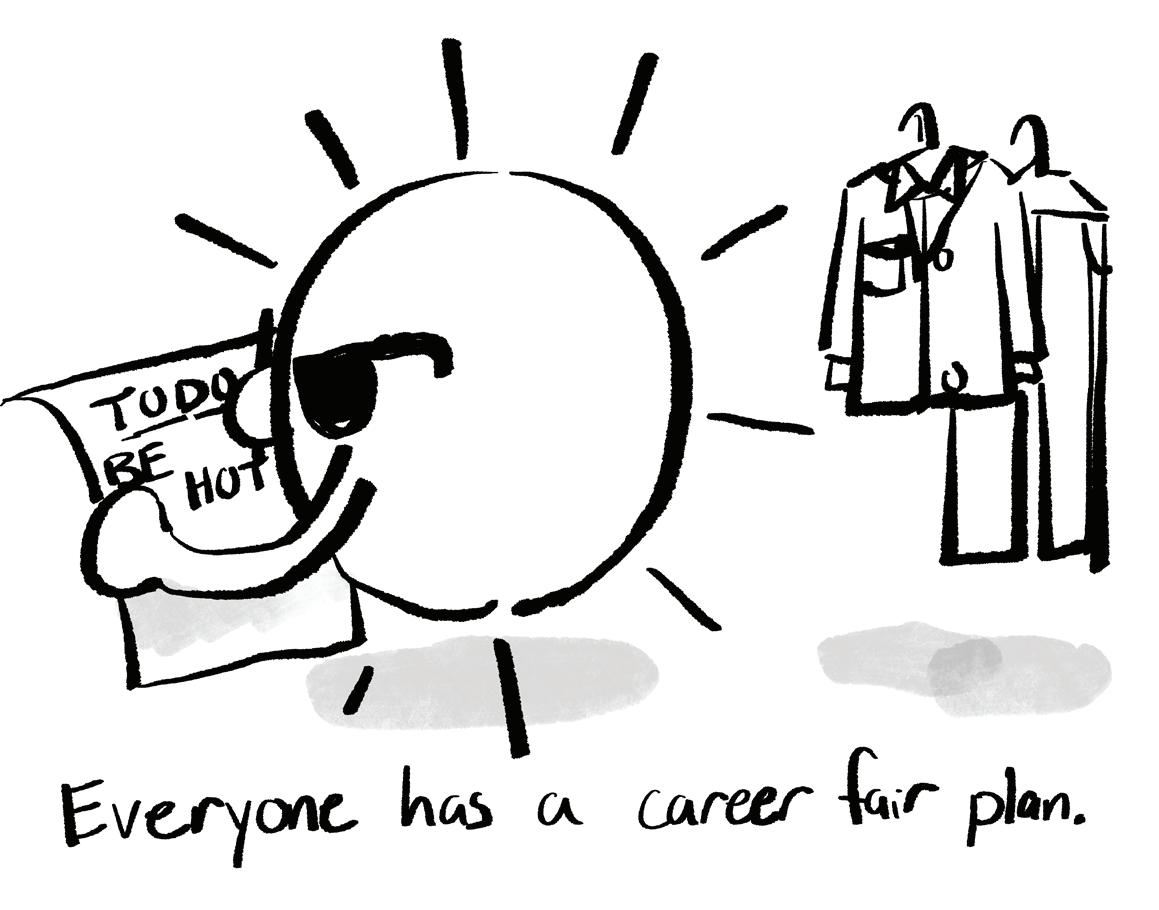
Career Fair Day 2
10 a.m. - 3 p.m., Barton Hall Gymnasium
Cornell Wellness Eat Safe Tabling Event 11:30 a.m. - 1:30 p.m., Trillium
Joint Public Economics & Applied Macroeconomics Workshop with Nathan Canen 11:40 a.m. - 1:10 p.m., Uris Hall 494
Hmong Fugitive History and Refugee Epistomology Noon - 1:30 p.m., Kahin Center
Berger International Speaker Series: Hon. Panotporn Chalodhorn
12:15 - 1:15 p.m., Myron Taylor Hall 285
Oxbridge - Study Abroad Info Session 4:30 - 5:30 p.m., Caldwell Hall 100
Saturday
Migration Celebration
10 a.m. - 3 p.m., Cornell Lab of Ornithology
Botanic Buzzline Grand Opening Noon - 2 p.m., Brian C. Nevin Welcome Center
Israeli Chamber Project: CU Music 8 p.m., Barnes Hall Auditorium
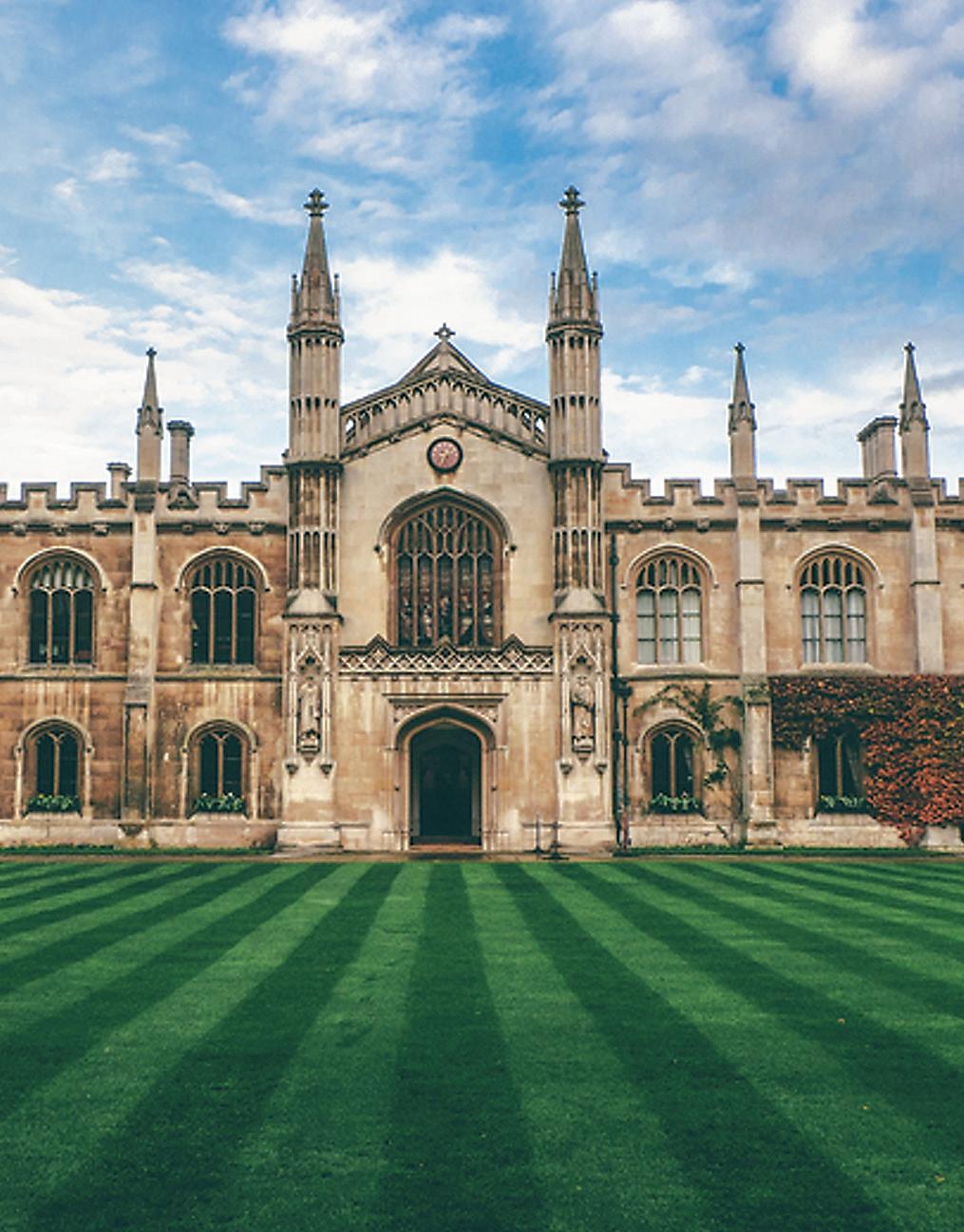
Away from home | Cornell will be hosting an information session on September 12 for sophomores and juniors considering studying abroad at either the University of Oxford or University of Cambridge next year.
Sunday Feminist Responsibility Project Art Exhibit
8 a.m. - 5 p.m. , Bibliowicz Family Gallery, Milstein Hall
Book Launch for the Liberty Hyde Bailey Gardener’s Companion 3:30 - 5 p.m., Brian C. Nevin Welcome Center, Ten-Eyck Room

By SHRUTI JUNEJA and BREANNE FLEER Sun Senior Editors
From formal academic meetings with peer advisors in the daytime to informal social treks to Collegetown at night, orientation week is a universal experience shared by freshmen across all seven colleges to get them started on their Cornell journey.
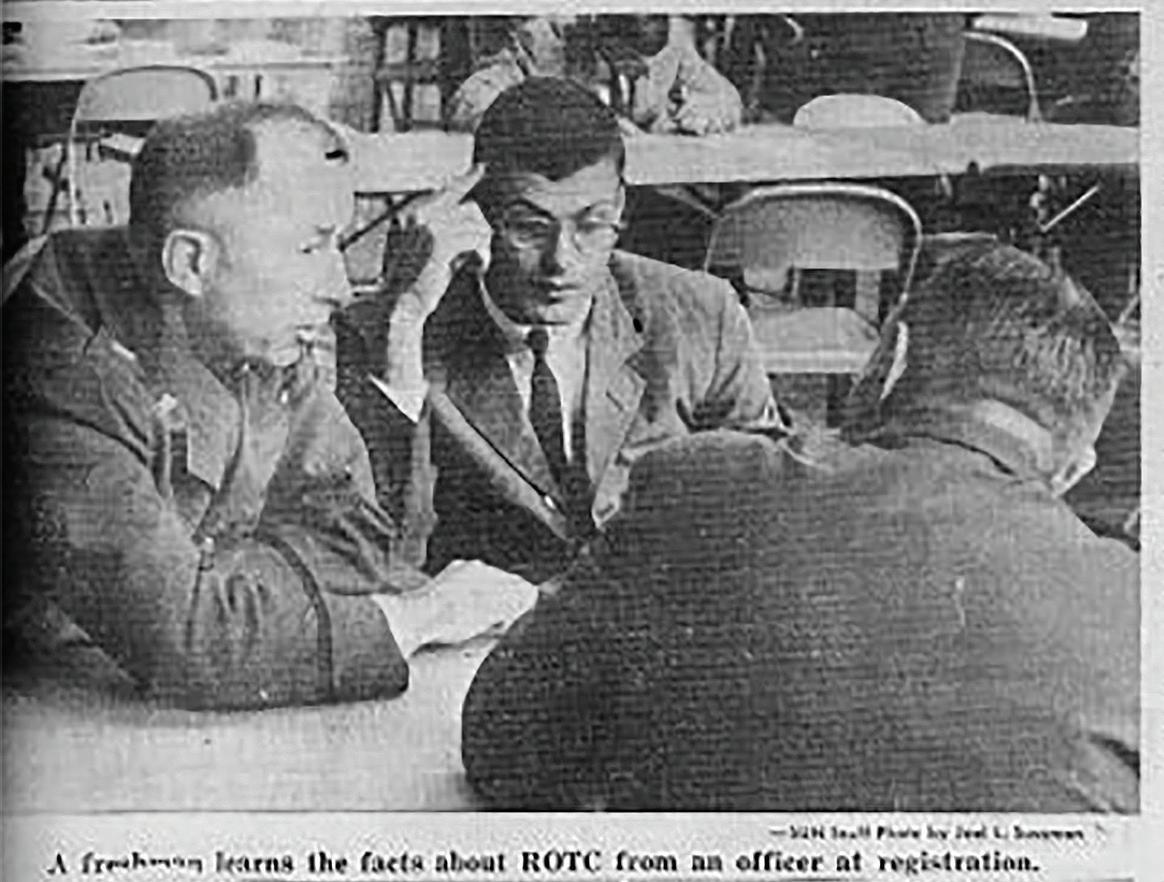
What makes orientation at Cornell particularly special? How have the components that make up orientation evolved over the decades? In this week’s Solar Flashback, The Sun takes a look back at old headlines, photos and stories to revisit some of the unique moments in orientation history. Solar Flashbacks is a special project connecting The Sun’s — and Cornell’s — past to the present to understand how this rich history has shaped the campus today. Flashbacks appear periodically throughout the semester. #ThrowbackThursday
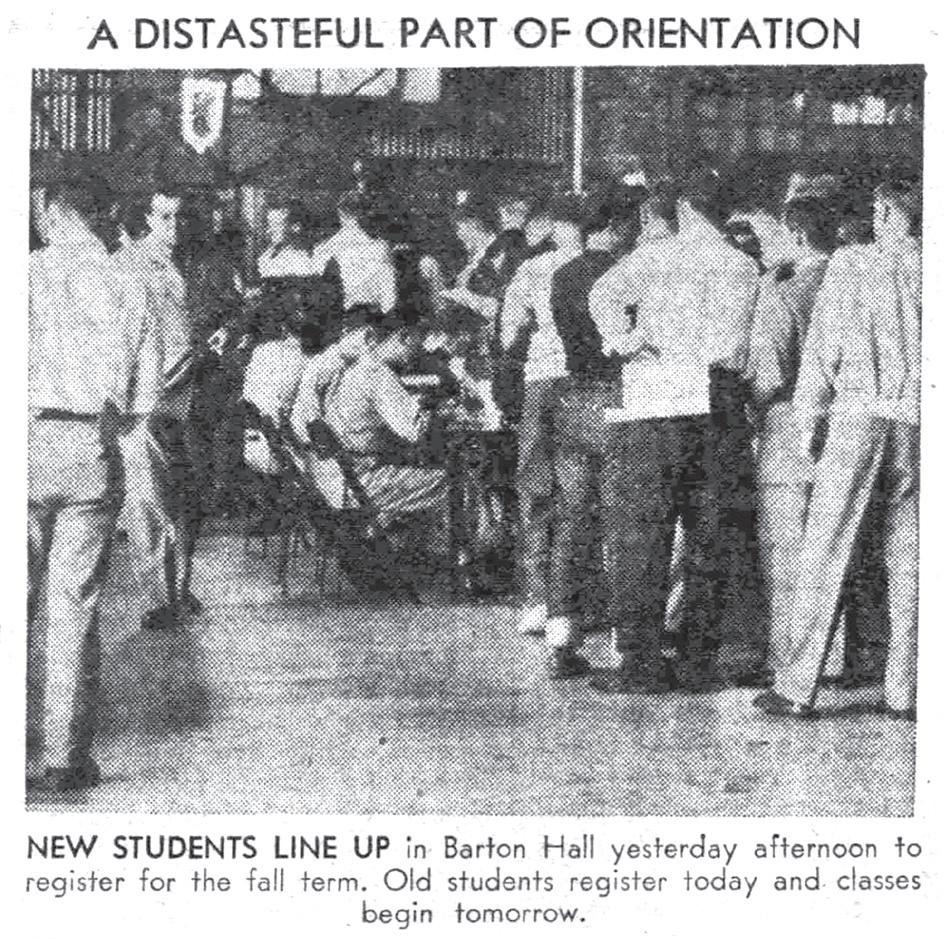
Orientation Activities: Then
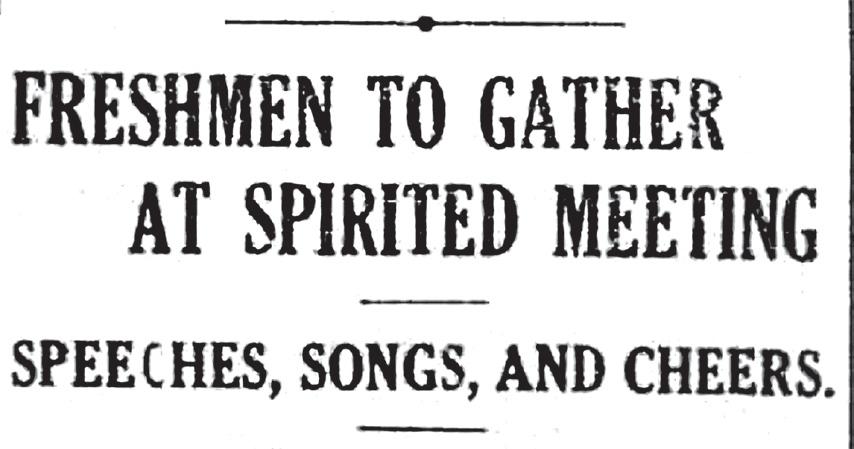
It was September 28, 1910, and a “rousing freshman mass meeting” was scheduled to welcome the incoming class. Under what was then called “Sibley Dome,” starry-eyed new students learned about the University, athletics and Cornell’s “yells and songs” as part of a traditional gathering for freshmen.
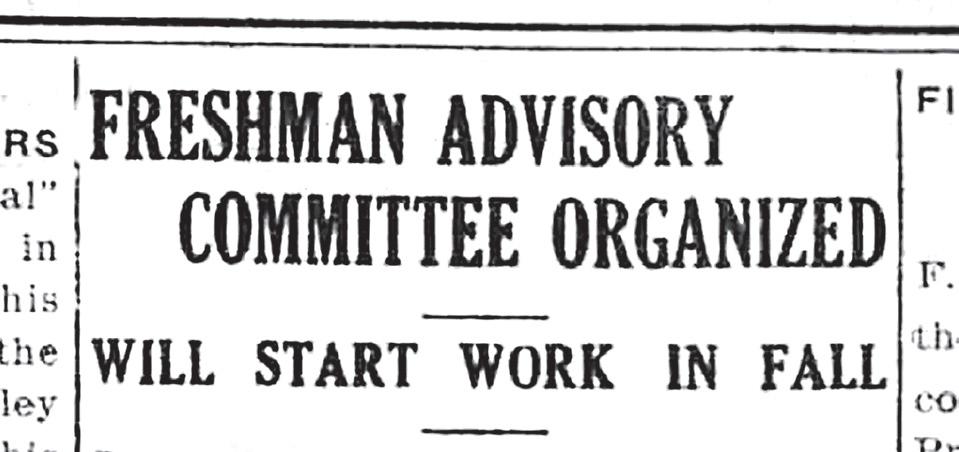
Although orientation was not yet an established program, early hints of a more formal, extensive freshman introduction appeared in the 1910s, with the creation of a Freshman Advisory Committee in 1912.
“The purpose of the [Freshman Advisory Committee] will be to provide ways and means for members of the junior and senior classes to meet individually all incoming freshmen in order to offer any active assistance in bringing them into touch with the traditions, life and activities of the University that may be possible, with particular reference to those questions which perplex or hinder new students,” The Sun reported in May 1912.
Programming for freshmen was not all bureaucracy, however. Get-togethers and exciting events brought together new students in a more social setting. The Sun reported in 1912 that students in the Class of 1916, asked to carry along “Frosh Bibles” filled with Cornell songs, were treated to “some stunts in sleight-of-hand, stories and musical numbers by upperclassmen.”
“Freshman
vote that required all freshmen to arrive on campus “three days ahead of the regular registration day,” The Sun reported in 1942.
Freshman Camp was later discontinued in 1957, “when a university committee concluded that there was too much content duplication with the Orientation Week programming and that the exclusivity of Freshman Camp created
a division between those who attended and those who did not,” according to Earle.
change.”
“[Orientation] seems to have earned its place among worthwhile Cornell institutions.”
Later in 1963, freshman evaluated their orientation experience, rating “faculty home visits the most valuable part of the program,” while “military orientation and the Women’s Student Government Association Convocation were considered by far the worst part of the program,” The Sun reported. In the year prior, a “lack of timing and organization, the discussion groups and group meetings and speeches” were “rated as the worst parts of the program.”
Janet R. Krasny and Mary D. Nichols, Sun Writers
“Orientation, once considered a necessary but rather frivolous activity, seems to have earned its place among worthwhile Cornell institutions,” The Sun wrote in 1963.
Since the 1960s, orientation has become further structured and ingrained as an integral part of the Cornell experience.
Orientation Activities: Now
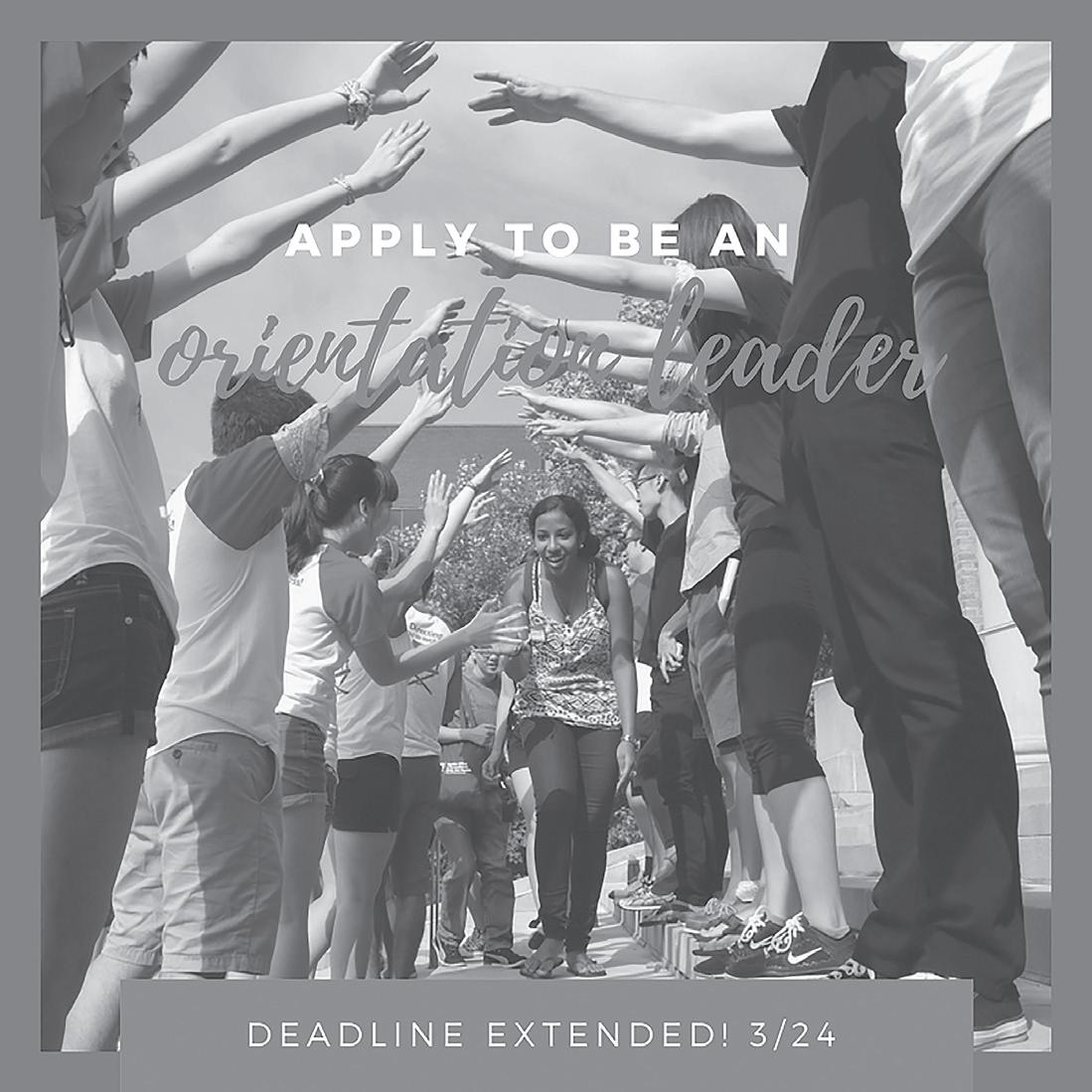
Today, the Orientation Steering Committee and the Orientation Leaders guide incoming students through several days of Freshman Orientation, in a process that has evolved over the decades to give new Cornellians advice and a taste of life in their Ithaca home.
Many recent changes to orientation have focused on educational and social programming for Starting in 2001, all freshmen were required
experience and an early introduction to aca- demic discussion with their peers and faculty,” accord- ing to Earle. Before arriving on campus, students were assigned a book read — including titles such as Guns, Germs and Steel, Frankenstein and Do Androids Dream of Electric Sheep? — and would then engage in discussion groups and lectures during orientation.
The initiative drew mixed reviews, and it was discontinued in 2015.
Corey Ryan Earle ’07
Orientation started to become slightly more structured in the 1920s, and Cornell United Religious Work organized a smaller optional orientation program called “Freshman Camp,” Corey Ryan Earle ’07, a visiting lecturer who teaches the Cornell: The First American University course, told The Sun.
“For most of its history, Freshman Camp was hosted on nearby Keuka Lake, where new students spent three days bonding together, participating in camp activities and hearing from Cornell administrators, faculty, and alumni, along with a large team of student counselors,” Earle said. “Although the program was very popular, it had limited capacity and turned away applicants each year.”

However, it wasn’t until the 1940s that a more formal “Freshman Week” was implemented as a result of a faculty
In later years, an outdoor getaway was still continued — but to train incoming orientation leaders instead. “Counselors became campers at Cory, a YMCA vacation spot on the shores of Lake Seneca just past Watkins Glen. Roughing it consisted of sleeping in wooden cabins,” The Sun reported in 1963.
In 1936, the nation’s first university office for international students was established at Cornell, according to the International Services Office of Global Learning. And back in 1962, international students had a much more intimate welcome to Ithaca through a host family program.
“Many of the 350 international students stayed with Host Families in Ithaca during their first few days at the University. This Host Family Program has been in existence for several years and has proved very successful in helping students get adjusted in America,” The Sun reported in 1962.
Despite sweeping changes over the decades, orientation wasn’t always a well-liked process. In 1963, a letter to the editor by an alumna expressed concern that “over the past few years, there has been an attempt to improve orientation at Cornell. However, there has been little fundamental
“I thought it was awful and the book was torture,” a
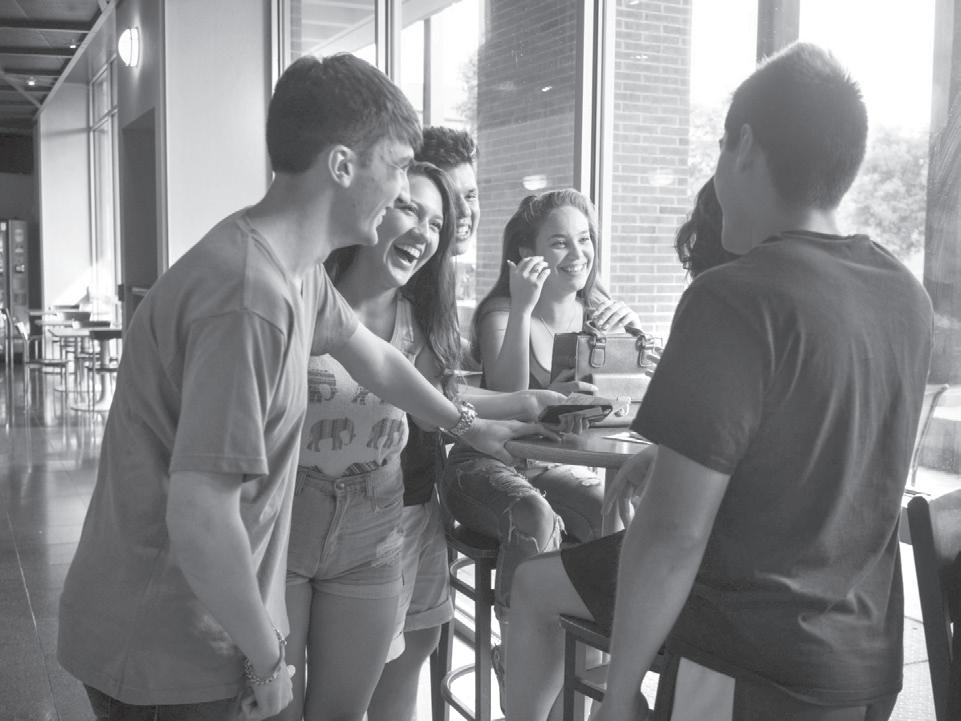
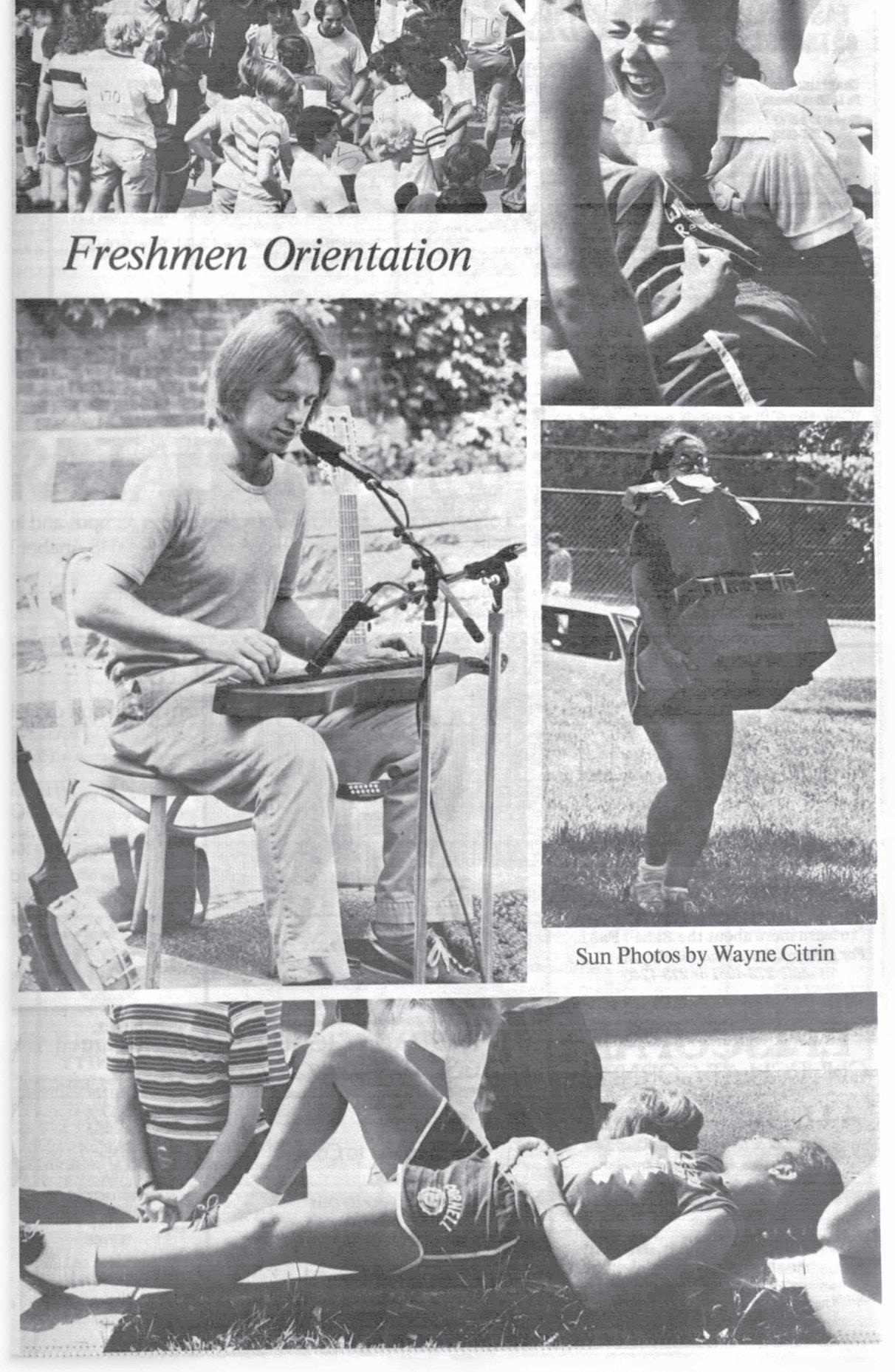
Freshmen orientation has undergone many iterations over the years, from humble beginnings at camp to the current O.L. system
freshman told The Sun in 2008 about the novel Lincoln at Gettysburg by Gary Wills. “The book was like a history textbook and was dry and hard to understand.”
In the last decade, orientation began to resemble what it has become today.
and “Tapestry of Possibilities,” a show that aimed to counter racial, sexual, religious and other forms of bias. Concerns included “arguments” and “a hostile exchange” during the Tapestry event’s discussion session and attempts by students to leave in the middle of these mandatory programs, The Sun reported.
“Move-in day is always my favorite. I love seeing the new students come in.”
Emily Krebs ’10
One familiar event on consent education, “Speak About It,” debuted in 2013 after Student Assembly members deliberated the creation of a mandatory program and the University ran a pilot program for January orientation.
Students who experienced orientation in 2016 critiqued both Speak About It
In 2017, after 11 years of the program, Tapestry was replaced by the Identity and Belonging Project. The new event “will feature stories based on submissions from undergraduates and will be performed by student volunteers,” according to an article in The Sun from 2017.
However, the Identity and Belonging Project was dropped last fall in favor of the Intergroup Dialogue Project’s “three-hour, student-facilitated session” for freshmen to “gain insight about themselves, others and learn active listening and communication skills across different identities.”
Orientation for Cornellians hailing from around the world has changed over the years as well. Today, international students have the option to participate in a separate pre-orientation program, called Prepare, to help them adjust
the any opportunities available
officers today.
to before all the freshmen arrive for formal orientation.
Move-in has seen its share of alterations, and this bustling period was extended this year from one day to two days, “which made campus less congested,” Earle said.
“Move-in day is always my favorite,” former chair of the Orientation Steering Committee Emily Krebs ’10 told The Sun in 2017. “I love seeing the new students come in.”
tury, some elements, such as the thrill of meeting new people and discovering a new campus, seem timeless.
“[O-Week] was exciting, and I feel like there was a lot of nervous excitement
“[O-Week] was exciting and I feel like there was a lot of nervous excitement building up to move-in day...”
With incoming students come the traditional opportunities for trouble, whether on campus or in Collegetown. In 2003, the Ithaca Police Department issued 36 charges over the Friday and Saturday Night of O-Week, for issues such as rowdy behavior, noise violations, underage possession of alcohol and having open containers of alcohol in public.
While the ways Cornell welcomes its freshmen have changed over at least a cen-
Jessie Liu ’20
building up to move-in day, but once I was there I got to meet my roommate and my suitemates, and I feel like it was a lot easier to settle in than I thought it would be,” Jessie Liu ’20 told The Sun in 2016.
BreAnne Fleer can be reached at bfeer@cornellsun.com.
Shruti Juneja can be reached at sjuneja@cornellsun.com.
A CAPELLA Continued from page 1
groups, The Sun took a closer look at what goes on behind those closed doors.
Auditions follow roughly the same schedule across all 14 groups. First, each group holds open auditions for a few days, in which anyone can walk in. Auditionees prepare a solo that showcases the strengths of their voice. Then, oftentimes the group will request that the singer perform scales to test their vocal range, before moving on to the next person.
After each group evaluates all the auditionees who try out during their group’s open auditions, they deliberate on who will receive a callback. Some groups have multiple rounds of callbacks, and each round is an opportunity for auditionees to get to know each group better in terms of their musical style and personality, as well as prove that their talents are compatible with that of the group’s. All of this takes place during the first full week of classes.
Some groups emphasized that having fun was the most important aspect of a cappella.
“During our audition process, we ask the auditionees to tell a funny story,” said Chase Thomas ’20 of Last Call, an all-male group. “We do comedy in our concerts because we really want to perform so that the audience has a good time. It’s important for our members to be comfortable being ridiculous.”
let,” Robertson said. “You’re bouncing around, meeting new people constantly, singing totally new music during every audition, sometimes for hours, like on the last day of callbacks.”
This strain is, in some ways, self-imposed by auditionees.The A Cappella Advisory Council recommends that auditionees try out for multiple groups to find one that works for them. This can be taxing, however, given Cornell’s wide diversity of groups from classic co-ed — all-female or all-male groups — to groups that advertise a certain identity.
Less Than Three specifically invites all who identify as women, genderqueer or nonbinary. Co-ed group Tarana sings Bollywood and English pop songs. Both Hebrew and English songs with a Judaic theme are the Chai Notes’ domain, though Jewish heritage isn’t a prerequisite to join.
With such a large variety to choose from, many students opt to try out for as many as they can to see which they like the best.
qualified auditionees may not make it as a result.
“Our audition process is pretty objective because for us, a lot comes down to musicality,” Eri Kato ’20, member of After Eight, told the Sun. After Eight, an official subset of the Cornell University Chorus, is an all-female group that only takes members that have already been accepted into the Chorus.
“We already know that they’re great singers: they can read music, they can blend, they can hold a key,” Kato said. “When it comes to deliberations, sometimes it defaults to the fact that we need a certain musical part over another.”
However, not all groups prioritize their need for musical parts. Lily Wang ’20 of Absolute A Cappella noted her group’s openness to musical ability, regardless of need in the group for parts.
tant music director of the all-female group The Touchtones, told the Sun in an interview. “This is to test their ability to be coached — can you take instruction? Can you implement changes well?”
If a singer is accepted, they are notified by the next Saturday night — which, for The Touchtones, involves a “fakeout.”
“The person in our group who liked the new member the best during auditions goes up to the door and says something along the lines of: ‘Hey, thanks for coming out, but unfortunately, we only take the best of the best…and that’s you!’” Malvar continued. “Then everyone else jumps out and sings to them and we give them a gift bag to make them feel really welcome.”
Ultimately, members encourage students to have fun with the process and to use it as an opportunity to learn.
“People shouldn’t be discouraged when they don’t get in the first time,” Wang said. “As a group, we’re always trying to improve as well. When you’re an auditionee, it might seem intimidating, but we all have problem areas too and are always working on sounding and doing better. In the end, we’re the same as you: we all want to improve as well.”
“Our audition process is pretty objective for us, a lot comes down to musicality. ”
James Robertson ’21, a member of the co-ed a cappella group The Chordials, admitted that the process can still be strenuous for many.
“For the auditionee, the process is definitely a bit of a gaunt-
Eri Kato ’20 www.cornellsun.com
“The process is definitely a bit of a gauntlet. You’re bouncing around, meeting new people constantly, singing totally new music...”
James Robertson ’21
“When you go into the audition process, you don’t know which group is the right one for you yet,” said Julia Chang ’20, President of The Class Notes. “Through the process, you get a vibe from each group you try out for and determine what the best fit for you is. A lot depends on your connections with the people in the groups and whether or not the style of the group fits your own music taste. In that sense, it’s a mutual selection process.”
Because a cappella requires a wide range of vocal classifications to arrange songs, the need for certain vocal ranges can drive the audition process, and otherwise
“We always keep in mind what our group is composed of, but we want people to have an equal chance to wow us, so if we think someone deserves a callback, we will call them back regardless of whether or not we need their voice part,” Wang said.
Other a cappella members voiced their opinions on why some students might be accepted over others.
“It breaks my heart when we get someone who auditions and they have an amazing, powerful voice during their solo, but when they get called back and sing with our group, they can’t blend their voice with the group,” Ellie O’Reilly ’20, member of Callbaxx, said. “Blending is extremely important in a cappella; you’re not going to be a soloist all the time.”
Musical ability isn’t the only factor that can count against a candidate.
“During our callbacks, we pick one of the songs that the auditionee has sung and work with them,” Maxine Malvar ’21, former president and current assis-

Independent Since 1880
137th Editorial Board
ANU SUBRAMANIAM ’20
Editor in Chief
JOYBEER DATTA GUPTA ’21
Business Manager
PARIS GHAZI ’21
Associate Editor
NATALIE FUNG ’20
Web Editor
SABRINA XIE ’21
Design Editor
NOAH HARRELSON ’21
Blogs Editor
SARAH SKINNER ’21
Managing Editor
KRYSTAL YANG ’21
Advertising Manager
MEREDITH LIU ’20
Assistant Managing Editor
RAPHY GENDLER ’21
Sports Editor
BORIS TSANG ’21
Photography Editor
Working on Today’s Sun
Ad Layout Dana Chan ’21
Production Deskers Krystal Yang ’21 Jamie Lai ’20
News Deskers Hunter Seitz ’20 Amanda Cronin ’21
Design Deskers Krystal Yang ’21 Simon Chen ’21
Photography Desker Ben Parker ’22
Sports Desker Raphy Gendler ’21
Arts Desker Daniel Moran ’21
The weary Friday sun sets on Libe Slope, and Cornell’s alter ego emerges as the night falls. Slews of students trade in their books for beer, marking the paradigm shift from the intellectual atmosphere of day to the Collegetown mosh pits of night. The pregame, party, hangover cycle starts anew as the academic weekday Jekyll morphs into the partying weekend Hyde.
Our campus is many things — from an intellectual community to a research powerhouse (or whatever else the admissions brochures say) — but come nightfall, we must accept our nocturnal reality as a party school. A turn-on for some, a red flag for others, the label exists. I recall my Cornell Days admitted students event, where sorority girls chirped that though Greek life has a campus presence, I won’t feel it if I choose not to take part.
Two weeks into the semester, I choose not to take part, yet I feel it when slews of guys in tank tops and girls in crop tops stumble through my floor, pregamed and ready to move on to frat parties — whatever, I manage to tune them out.
I feel it when I nearly step into that Saturday morning pile of vomit on my dorm’s stairs — elevator it is, once again.
I feel it when my residential advisor walks past rooms overflowing with music and inebriated freshmen into the study lounge at the end of the hallway, where he questions my choice to stay in and do homework on a weekend night — well, that one isn’t too easy to get over. Because although my RA has no wrong intent, perhaps his perception speaks to a larger reality on this campus: Here, the weekend norm is to party and get wasted. Anybody else is an outcast.
As freshmen flock to Collegetown on Friday nights, the deserted North campus remains home only to those who remain in their dorm rooms and others like me who find themselves stranded in the middle of the spectrum — wanting to be social, with no desire to get drunk at a party. As I study in my floor’s lounge on a Friday night, I feel as though I’m part of a dying species.
I have numerous friends who would much rather stay in and play cards, but feel obligated to go to parties to not appear lonely or, for that matter, different in any way from the mainstream. An unspoken social contract binds us to partying once we enroll, convincing us that abstaining would mean missing out on the college experience. As such, especially at a school like Cornell, one is forced to swim upstream to avoid the party scene; our
The Sun’s investigative report last semester on Cornell’s lucrative, undisclosed links with the shadowy Chinese tech giant Huawei should ring alarms everywhere. Beyond what The Sun’s editorial laid out, as a dissident Chinese, I am particularly bonechilled by this news. My college, one of the few places in this foreign land that I see as a place of refuge, might very well be a lion’s den.
It is not an exaggeration to say that the Chinese government’s influence reaches far above Cayuga’s waters. This influence comes in many forms. Recently, keen journalistic attention has been put on an intercollegiate student organization called the “Chinese Students and Scholars Association,” a Chinese embassy-connected student organization on campuses around America. CSSA has been accused of
the middle, especially those like me who hold dissident views. Faced with genuine fear that this country may no longer be welcoming of Chinese students on one side — and constant suppression of my dissident speech, living under constant fear that my public acts will hurt relatives back home on the other — I am trapped between Scylla and Charybdis.
school’s nighttime culture has absorbed the party-goers and the remainder of our student body alike.
This same partying that is so prevalent in the social mainstream can also be traced back to the root of the college’s recent history of hazing. Cornell parties can even tie back to the area’s relatively frequent underage alcohol sales. But, perhaps more relevant is the social stigma imposed on the student body by our party culture. Clearly, the partying ripple effect reaches far beyond the frats.
Nowadays, staying in on a weekend is perceived as unnatural — and the strange looks I receive in the study lounge on Friday nights are all the proof I need. “Friday nights are wild nights” and “Saturdays are for the boys” — but time to relax sober with genuine friends often fails to top the lineup.
On one of the first days after move-in, a friend of mine volunteered to take a picture of a group just as they were heading out to a party. At first glance, they seemed like best friends, but after the camera flashed, they turned to ask for each other’s names (presumably they forgot them shortly after tagging each other in the post). Building relationships has taken the back-burner; pretending to do so online is all that matters now. Our culture awards clout to those who can best draw-up the illusion of popularity, discriminating against those with fewer — yet often more genuine — friendships. On social media, it’s this middle-schoolish popularity contest that drives the post, drink, repeat cycle.
But aside from this larger party culture that extends beyond Cayuga’s slopes, the greater shame is that those on this campus who don’t want to take part rarely have a choice. Going out to party on the weekend has become the default, and the rest of us are swept into this norm regardless of choice; the culture chooses for us.
So for those of us who wouldn’t otherwise drink under flashing strobe lights, there is nothing to be ashamed of. There should be no feeling of obligation to flock to Collegetown with the herd if the only purpose is to not be seen as an outlier. I struggle to deal with this truth, as do many of my friends, as do many others. But breaking off from the mainstream party culture would fix our distorted social state where heavy partying engulfs many who don’t even want to take part.
Roei Dery is a freshman in the College of Arts and Sciences. He can be reached at rdery@cornellsun. com. The Dery Bar runs every other Thursday this semester.
The Chinese Students and Scholars Association has been accused of acting as a tool for the Chinese government to pressure Chinese students even on American land.
acting as a tool for the Chinese government to pressure Chinese students even on American land. Several CSSA members have complained about increasing insistence from the Chinese embassy that this non-profit organization — one that provides much-needed services to international Chinese students — act as a vehicle for ideological propaganda.
Thankfully, concerned individuals and organizations both on and off campus have now caught on to the gravity of this situation. The Cornell Political Union, of which I am a member, invited three different speakers last school year relating to this issue. Authorities from the FBI and members of Congress have also started taking action. The problem of negligence is over.
Americans must realize that the first victim of this encroachment from the Chinese government on American campuses is always the Chinese students themselves. It was members of the CSSA, a majority of whom participated in the organization to serve the Chinese student community, that first exposed these scandals because of their dismay toward the Chinese embassy’s desire to politicize their mission. When the University’s ILR school rightfully terminated an exchange program on Chinese labor studies with Renmin University, I revealed to a Sun journalist that the majority of the Cornell Chinese community are either indifferent on the issue or actually broadly supportive of the action. The reason is obvious. As Chinese people, many of us sympathize with the labor activists back home who are currently being subjected to arbitrary detention and torture for fighting for the future of China, our future. Indeed, both from a moral and practical standpoint, if Cornell’s administration and Americans want to effec-
If Cornell’s administration and Americans want to effectively combat the Chinese government’s influence, it is essential to acknowledge Chinese people as their first ally.
But regrettably, we have now landed ourselves in an entirely different problem: antagonizing the Chinese community to a level unseen in recent memory. A paranoiac aura of suspicion toward my community has been steadily building, affecting even Chinese Americans. Chinese cancer researchers are being widely purged from top institutions on suspicion of sharing classified information, despite the widespread practice of data sharing in most medical research. Ever since I landed in this country to pursue undergraduate studies, never did a piece of news strike more fear in me than a story from a year ago — revealing that Stephen Miller, a White House aid and immigration hawk, had suggested a complete ban on student visas for Chinese citizens. The Chinese government had always tried its best to convince its subjects that there is no distinction between the Party, the Motherland and the Chinese themselves, for foreign countries will see no difference. How ironic that America is doing the devil’s work.
From complete negligence to xenophobic paranoia, America goes from one extreme to the other, and it is Chinese people that are caught up in
tively combat the Chinese government’s creeping influence, it is essential to acknowledge Chinese people as their first ally. Alienating us will only push us further into the devil’s embrace out of fear for our safety. With Chinese students being an integral component of the Cornell community, the administration should always remember that when they are protecting Cornellians from harm by the Communist Party, a key vulnerable group that desperately needs protection is Chinese students. Cornell should target the institutions that help foster the Chinese government’s influence, while aiding Chinese students in establishing our independent organizations free from the Party’s shadows. One idea is to limit the CSSA’s ability to attract unlimited donations from the Chinese embassy so that other Chinese service organizations can compete with it on an equal playing field.
In my junior year, a close friend jokingly told me that a Greek brother of his thought a very-informed and old-looking Chinese guy in his African politics class must be some Chinese agent. That “potential agent” happened to be me. I laughed along then. It is getting hard to laugh now.
Weifeng Yang is a senior in the College of Arts and Sciences. He can be reached at weifengyang@ cornellsun.com. Poplar Sovereignty runs every other Wednesday this semester.
EHELENHU/SUNGRAPHICSEDITOR
here are coping mechanisms you invariably adopt during a dry spell. You rationalize it: Has it really been that long? Have there really been any eligible candidates? You download Tinder, delete Tinder, redownload Tinder, change your settings, swipe through and realize that your hometown Tinder is not what you had remembered it to be when you were swiping through the slim pickings of Ithaca Tinder. When an interaction with a member of the preferred sex doesn’t end in the wondrous, distant land of Hookup, you wonder, like Cher from Clueless when she was rejected by, as it turns out, a gay man, did my hair get flat? Did I stumble into
The one break in the dry spell was my second hookup with a guy I had met in early May, and it was unsatisfactory, to put it mildly. Sometimes, you end up Ubering home, listening to Billie Eilish on the radio, wondering how you ended up giving an unreciprocated blowjob, something you had previously managed to avoid in all of your slutty Cornell days. Worse, you gave said blowjob to a guy who doesn’t own glasses or mugs, a shower curtain or a charger, in exchange for a glass of $100 champagne, drunk out of a Solo cup, and a couple of hits from a bong. Despite that, you still end up high and dry.
The dryness resumed. I rebranded. It’s not a dry spell; it’s a
and likely impersonal.
The longer I lived without hooking up, the more I realized how toxic the microcosm of Cornell Hook Up Culture, exacerbated by my participation in Greek Life, make my life. Thinking and talking about hooking up as often as I did at Cornell made me always conscious of how I presented to boys, whether or not I was attractive or cool enough.
The dryness resumed. I rebranded. It’s not a dry spell; it’s a Boy-cott. This is Hot Girl Summer.
Sometimes, you end up Ubering home, listening to Billie Eilish, wondering how you ended up giving an unreciprocated blowjob, something you had previously managed to avoid.
synonymous with fuckable, implies its presence. Being confident and having a good-ass time is the means to an end- fuckability. It’s so easy to believe that who you are is fundamentally related to your appearance, especially because hook-ups are often based on snap judgments and rejection is frustratingly opaque
The dry spell reminded me that my face and my body aren’t for the judgment and consumption of others. I don’t care if I am ugly or if I gain weight. There’s no reason to care about these things when you stop treating your appearance as a performance for potential hookups. As more time separated me from Cornell, I realized that the itch to hook up every so often was an effect of hook-up culture, in which we always talk about the sex and the boys. Everyone is some kind of potential sex object, placed somewhere on the spectrum of fuckability. How much did I truly want to hook up with those boys, how much did I enjoy it? Uncomfortable questions to ask, especially since college boys notoriously hardly know what they’re doing. If you think that isn’t about you, it probably is. Hot Girl Summer shouldn’t be seeking beauty, hotness, fuckability, which are inevitably and irrevocably defined by someone else, someone with more power. Instead, let’s call a spade a spade. Let’s have an Ugly Girl Summer and have a good-ass time. Or, as my friend put it, Girl With Unique Features Summer. Girl Who Doesn’t Give a Shit About Whether Or Not She’s Hot Because She Has Better Things To Do (Have You Seen Her Google Calendar?) Summer. This summer — this hot, humid, yet dry summer — demonstrated to me that not only is hooking up not an integral part of my life, but that I am better off without its influence. As the dry spell inevitably ends and the regularly scheduled random hookups begin, I hope that I’ll remember that whether I am hot or fuckable in no way determines the sum of who I am.
veryone who knows me knows that I like to talk, and that I especially like to talk loudly about inappropriate things at inappropriate times and places. As one of my good friends once drunkenly slurred to me, I say “a whole lot of outta pocket shit.” Normally, this just gives me a reputation as someone that you probably shouldn’t introduce to your parents when they come visit, as well as the best person to tell any tea to if you want it spread as quickly and widely as possible. However, being known for being down to talk about anything, anytime, anywhere, has also lead to some more unforeseen consequences.
When my best friend texted me one otherwise uninteresting Sunday in April last year asking for advice, I assumed it would be along the lines of how to do the homework for one of our shared classes or that he and his girlfriend were fighting and he needed me to decode a text. What I wasn’t expecting was for him to ask me how to pick a third for a threesome. When I wanted to know why he was coming to me with this, he simply said that I seemed like the person to ask.
On reflection, he wasn’t wrong. Ever since I had my first threesome way back in the day my freshman spring, I’ve talked about it at any chance I could. It’s my go-to Step the Fuck Up choice (like Never Have I Ever, but better), and drunk me certainly loves it as a conversation starter. So really, it
makes sense that I was the person that my friend came to. Except then, people kept coming to me.
First it was someone that my initial advice-seeking friend recommended me to. Then someone else. And another person. Once my best friend from home hit me up saying that she and her boyfriend wanted to spice things up and did I have any recommendations on how to ask their potential third, I realized that I’d become something of an expert on doing the do with three people. Of course, I wasn’t just giving advice, but continuing to have the odd threesome every now and then. If I was to become the local expert, I had to stay up-to-date of course. The perks of being a so-called unicorn include getting the “you down?” text on a surprisingly regular basis, and I’m pretty much always down.
As my experience grew, so did my expertise. While all of my threesomes have been two girls, one guy, I’ve played pretty much every role possible, from being half of a couple trying something new to being the stranger there for one night and one night only. I’ve learned a lot since I first slipped between the sheets with two other people, and so now, without further ado, I present this unicorn’s best advice for having the threesome of your dreams. Pick your people wisely. Obviously, if you wouldn’t hook up with the person
normally, you probably shouldn’t have a threesome with them. Beyond that, however, everyone involved should be comfortable with everyone else. If you and your significant other want to have a threesome, have one with someone you’re both attracted to!
This leads into the second piece of advice that I have: Talk about it first. Talk about it so much that you’re almost sick of it. Make sure everyone knows each other and is comfortable with each other. Before I had my first threesome, it featured as a regular part of dirty talk between me and the guy I was seeing, which meant that by the time it actually happened we both had clear ideas of what specific things we wanted to do.
On the other hand, don’t get too firm in your expectations. Three people means more variables and more things that could poten tially get weird or go wrong. Roll with it! It’s supposed to be a fun experience and so the end goal should be everyone having fun, not living out some perfect pre-planned fantasy.
Don’t make anyone feel left out. No one wants to be alone on the sidelines watching other people get down, so be sure to spread the love. That’s the whole point!
A note for couples: A threesome is not going to solve your relationship problems. If you’re fighting before the threesome, chances are you’re still going to be fighting after the threesome. Try actually talking
about your problems instead.
While some of this advice may be more or less useful than other parts of it, my goal is just to illuminate people on how much fun getting freaky with three people can be. And if anyone is ever looking for your favorite local unicorn to try it out with, you know where to find me.

By ISHA
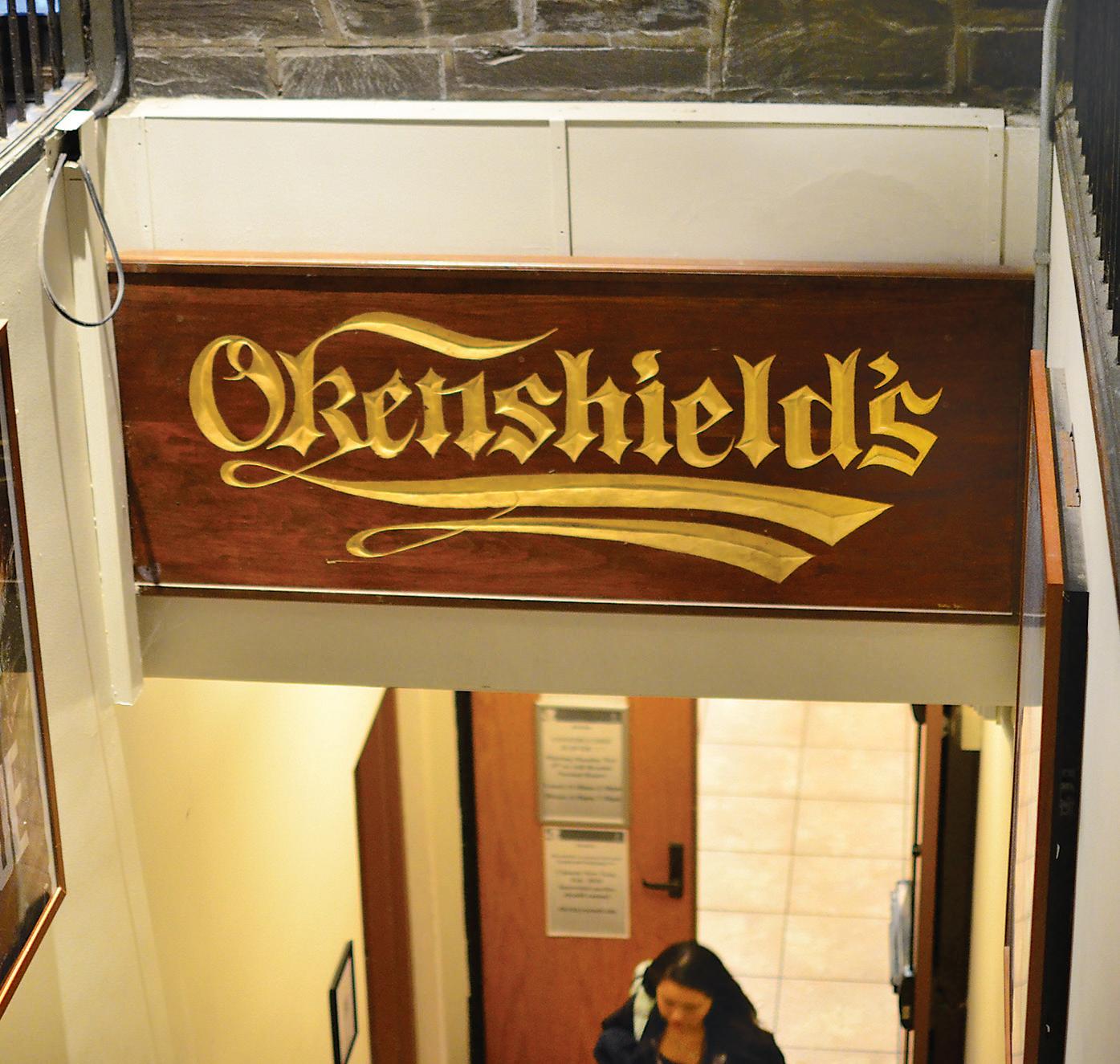
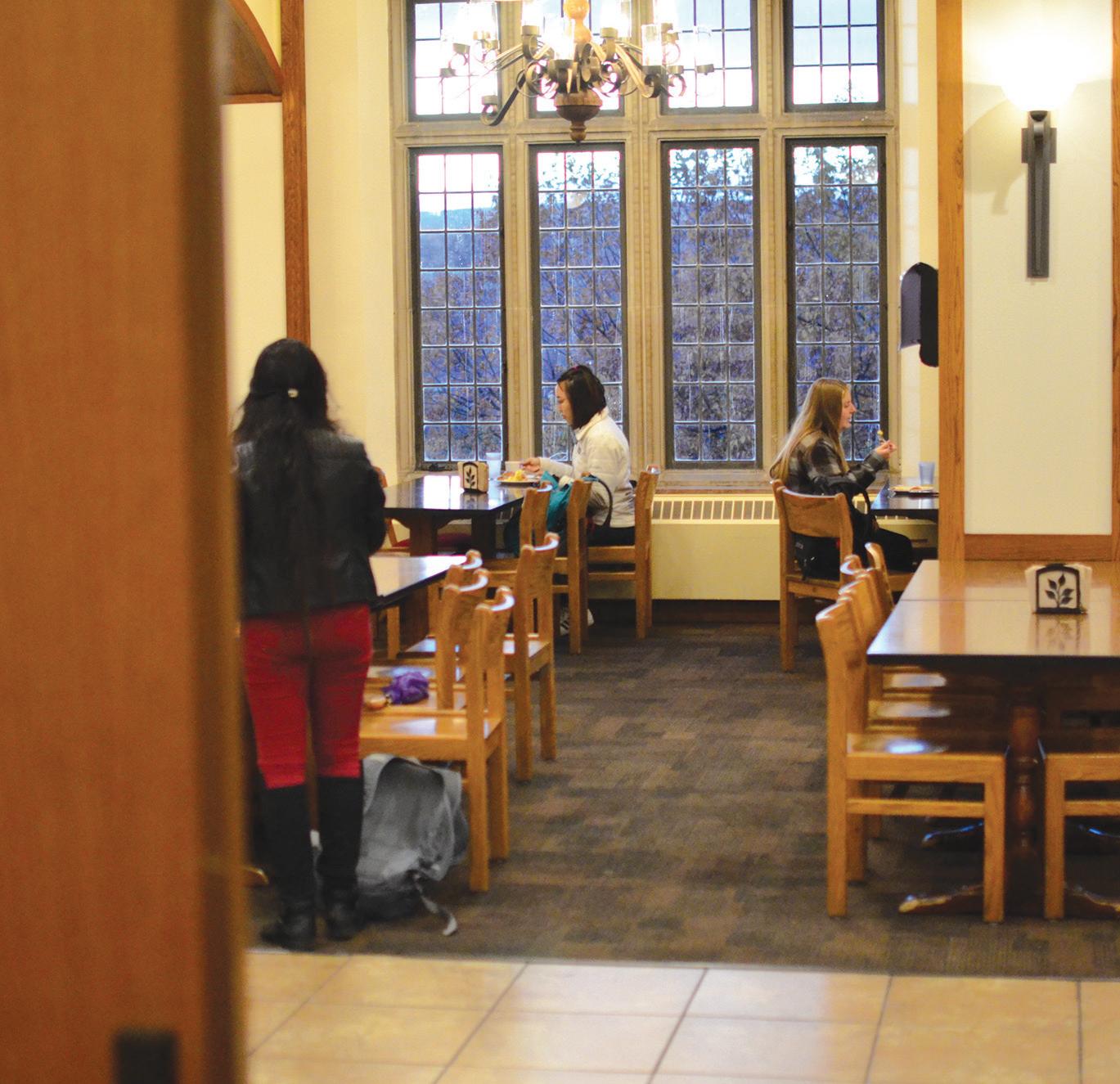
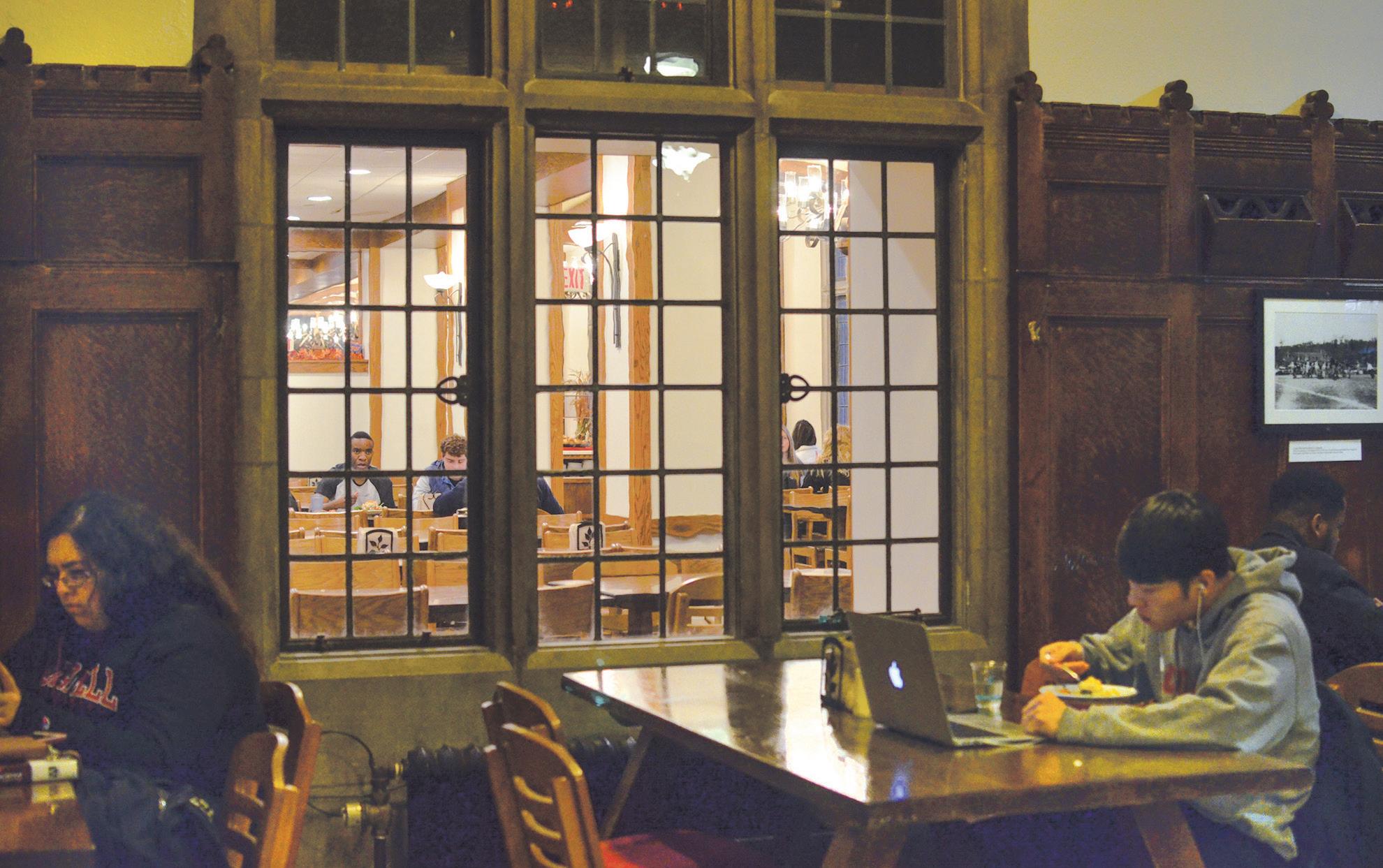
Warmed by the sun’s rays shining through the large windows of Okenshields dining hall, I gently bop my head to the music playing on the overhead speakers as I savor the juicy, earthy taste of sauteed bok choy. As Camilla Cabello tells Shawn Mendes that she loves it when he calls her señorita, the thought hits me: Okenshields is underrated.
Yes, Okenshields, the black sheep of the Cornell Dining system, left victim to multiple memes on Facebook and articles
on CU Nooz. Could it be that we are too hard on Okenshields because we’re spoiled by the gourmet fare, in terms of college dining hall food at least, from West and North? Or could it be that Okenshields is actually bad and we’re right to tell freshmen to avoid it?
Well, first off, Okenshields is convenient. It’s the only dining hall on central campus, and as someone who spends her Big Red Bucks faster than a freshman running to her first class after missing the TCAT (let’s be honest — the TCAT waits for no one, not even those who show up right as the doors close), I need to use my


meal swipes. Okenshields is the perfect — and the only — place to do so, especially when you only have 30 minutes in between classes. Sure, if you have more time you can journey down the slope to go eat at the “superior” West campus dining halls. But remember, walking down the slope means walking back up the slope (rest in peace my calves).
Not only is Okenshields conveniently positioned, but they also open for dinner at 4:30 p.m., which is a lot earlier than other dining halls. I can’t tell you how many times I haven’t had time to grab lunch during a weekday because
of meetings, back-to-back classes or just having to sit down and get some last-minute work done.
know what you’re going to say:
Having a dining hall open as early as 4:30 p.m. keeps my stomach from eating itself inside out on the days I have to skip lunch. Now, I
“Just because Okenshields is convenient doesn’t mean I’m going to stop flaming it with memes.” Well, the food at Okenshields is actually pretty decent and I would even go as far as to say it’s good compared to the food at other college’s dining halls. Cornell Dining is ranked number four on the Princeton Review’s Best Campus Food category, meaning it’s safe to assume that Okenshields can’t actually suck as much as people say it does.
Just because the food quality in
DINING page 9

general at Okenshields isn’t at par with that of North or West campus doesn’t mean it's bad. The hard truth is that we’re spoiled from eating at the other dining halls and this food snobbery keeps
station with its variety of Asian food everyday. It’s definitely not authentic, but for a dining hall, it's pretty decent. I still enjoy the tangy taste of their General Tso's chicken, the pop of juicy freshness from the different vegetable stir fries, the crispy sweetness of the red bean sesame balls and more.

us from seeing all that Okenshields has to offer. For example, what about Okenshields’s once-a-week pizza bar which boasts a variety of delicious pizzas? None of the other dining halls have such a wide selection of pies to offer. Let’s not forget about dim sum Fridays. Instead of waiting in a super long line that winds all the way around the RPCC dining hall for dim sum during Sunday brunch, why not stop by Okenshields on Friday, where you can get the same quality dim sum without having to walk all the way to North? Speaking of dim sum, don’t forget about the wok
Tell me which dining hall serves carrot cake — not just any carrot cake, but rich, moist, chewy, carrot cake — as often as Okenshields does. And we can’t mention Okenshields’ desserts without praising their layered chocolate cake with chocolate shavings.
Okenshields has such a variety of foods including Asian food, a taco bar, pizza bar, salad bar, soup bar, dim sum bar, hot dog bar and even a sauce bar for your chicken tenders! Most importantly, let’s talk about about dessert. Tell me which dining hall serves carrot cake — not just any carrot cake, but rich, moist, chewy, carrot cake — as often as Okenshields does. And we can’t mention Okenshields’ desserts without praising their layered chocolate cake with chocolate shavings. Now, I’m not talking about that ratchet single-layer chocolate cake that’s often half-stale and smothered
with super dense chocolate icing that you’d find at RPCC or Appel. No, I’m talking about the moist, almost melt-in-your-mouth, buttery, layered chocolate cake coated with fluffy light brown frosting topped with fragile yet crisp chocolate shavings that is an Okenshields specialty. I’m drool-
ing just thinking about it, and I know you are too. So, what’s the tea? The tea is that Okenshields is convenient, has decent food, offers a lot of options and you’d be lying if you say you’ve never wondered if Okenshields has a Spotify playlist because whoever’s DJing knows what’s up. So now that I’ve opened up your eyes a bit, before posting ask yourself: How would Happy Dave feel about your memes?
Isha Vaish is a sophomore in the College of Arts and Sciences. She can be reached at ikv2@cornell.edu.



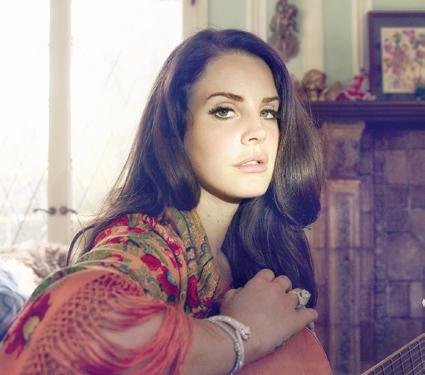
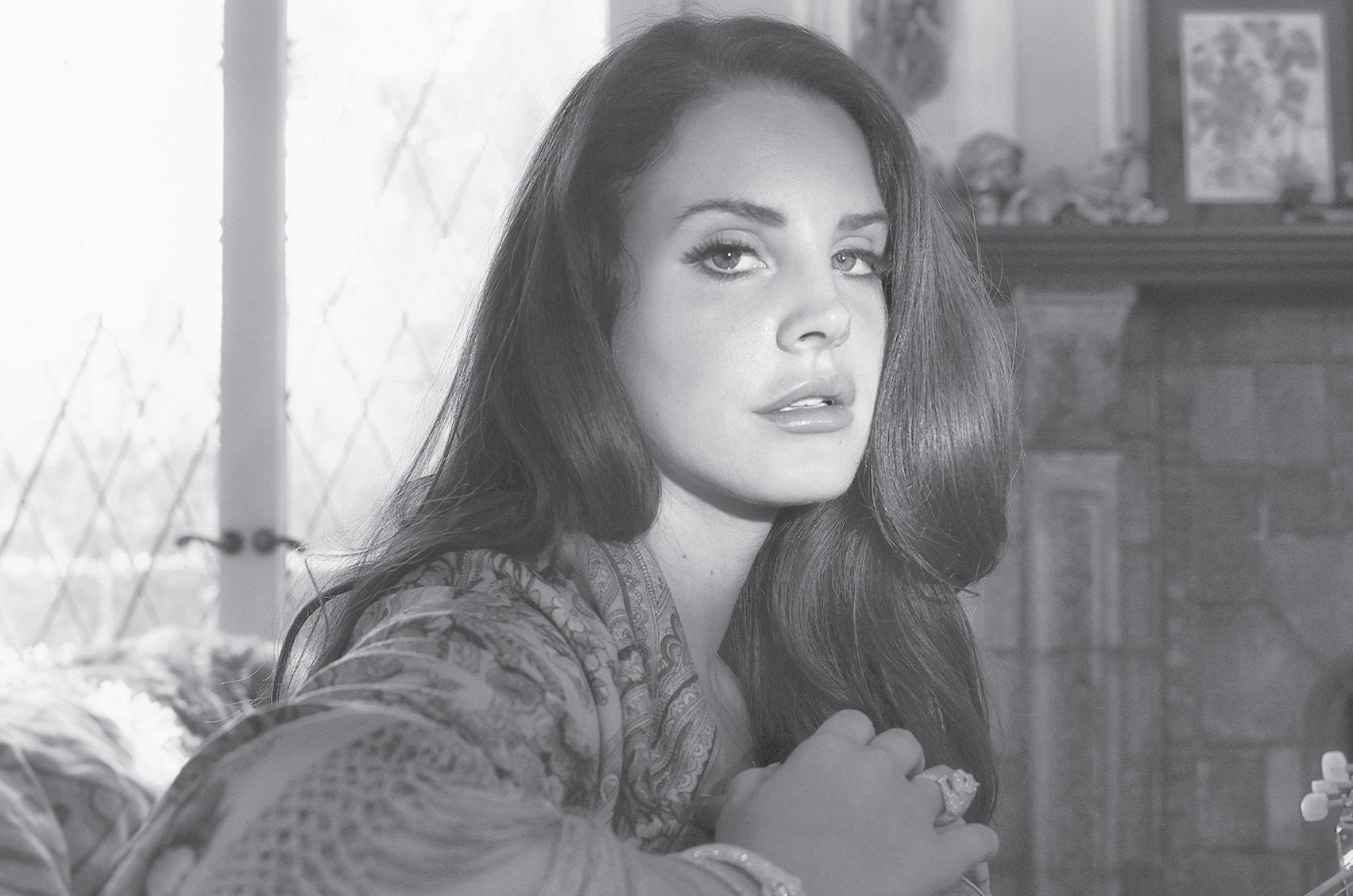
You couldn’t ask for a more perfect encapsulation of what comes to mind at the name “Lana Del Rey” than this picture on Twitter of a rose smoking a cigarette, accompanied by the caption “is this lana del rey.” For years — ever since she first appeared in the cultural consciousness with “Blue Jeans” and “Video Games” in 2011 — Del Rey’s image has been based on an aesthetic of romanticized Sad Girl postwar Americana: cherry pie and Pepsi-Cola, the American flag, Old Hollywood glamour, New York, Los Angeles, JFK, the aforementioned roses and cigarettes, the desert, fast cars and older men. And most importantly, acting as what Rolling Stone has called the “vamp of constant sorrow.”
Though Del Rey is by no means the first pop singer to sing forlornly about heartbreak, sadness and other similarly dark themes while employing the patina of a retro aesthetic — cf. Amy Winehouse, Adele — she is perhaps the first to do so so self-consciously. It’s a level of artifice bordering on narcissism that has both fascinated and repelled.
Audrey Wollen, an artist and feminist theorist who became the proponent of Sad Girl Theory around the time young women on social media were starting to craft and objectify images of their own sadness, has stated, “The Sad Girl has obvious investment in individual style and persona.”
For Wollen, this investment is positive: Through social media, the aestheticizing of female sadness becomes “active, autonomous and articulate. It’s a way of fighting back.”
Of course, nobody wants to look sad and ugly. That’s just too much, especially for Instagram, where even when there have been movements to capture what’s “real” or “imperfect,” inauthenticity is always inescapably lurking.
Ultimately, being sad, hot and young is not a sustainable image, simply due to the obvious fact that people get old. While Sad Girl Theory might sound nice on paper, its dependence on image, narrative of wallowing in the tragedy of one’s own life and tendency to cling to bad relationships without making any movement towards personal growth or agency starts to get a little tired.
This is why Lana Del Rey’s latest album,
Norman Fucking Rockwell, is so refreshing. Del Rey seems to be winking at us from the title, playing on our perception of her. Not only is she making fun of her own heavily romanticized aesthetic but she’s also raising the question of how to reimagine American identity in the Trump era. In “Venice Bitch,” Del Rey sings, “Nothing gold can stay,” echoing Robert Frost’s 1923 poem about the end of summer and the disillusionment that comes with it. In “The Greatest,” she gets more specific: “L.A. is in flames, it’s getting hot / Kanye West is blonde and gone.”
However, there’s another vein running parallel to that one. While America burns, Del Rey appears to have grown up. In “Norman Fucking Rockwell,” she no longer submits to a bad relationship but confronts the man responsible for it, singing, “You don’t know half the shit that you put me through.” In “hope is a dangerous thing for a woman like me to have — but i have it,” she calls herself a “24/7 Sylvia Plath,” as aware of her Sad Girl image as ever, imploring the listener, “Don’t ask if I’m happy, you know that I’m not.” However, she manages to admit, “But at best, I can say I’m not sad.”
Ramya’s Rambles
This also goes hand in hand with the highly self-referential nature of the new album. While in her previous album she might sing “My boyfriend’s back and he’s cooler than ever,” in “California,” she croons, “You don’t ever have to act cooler than you think you should.”
As a listener, you can’t help but wonder if Del Rey is sending that message not only to her boyfriend or her audience but also to herself.
Perhaps what’s changed is not so much Del Rey’s attitude towards America as her attitude towards her own idea of herself. By climbing out of the wreckage of the American Dream, she’s able to shatter many of the negative aspects of her image without losing the core of who she is. Instead of seeing love and life as processes of buying in and pledging blindly, she tosses off the rose-colored glasses and declares, “I see you for who you really are.”
Ramya Yandava is a junior in the College of Arts and Sciences. She can be reached at ry86@cornell.edu. Ramya’s Rambles runs alternate Thursdays this semester.
DANIEL MORAN ASSISTANT ARTS AND ENTERTAINMENT EDITOR
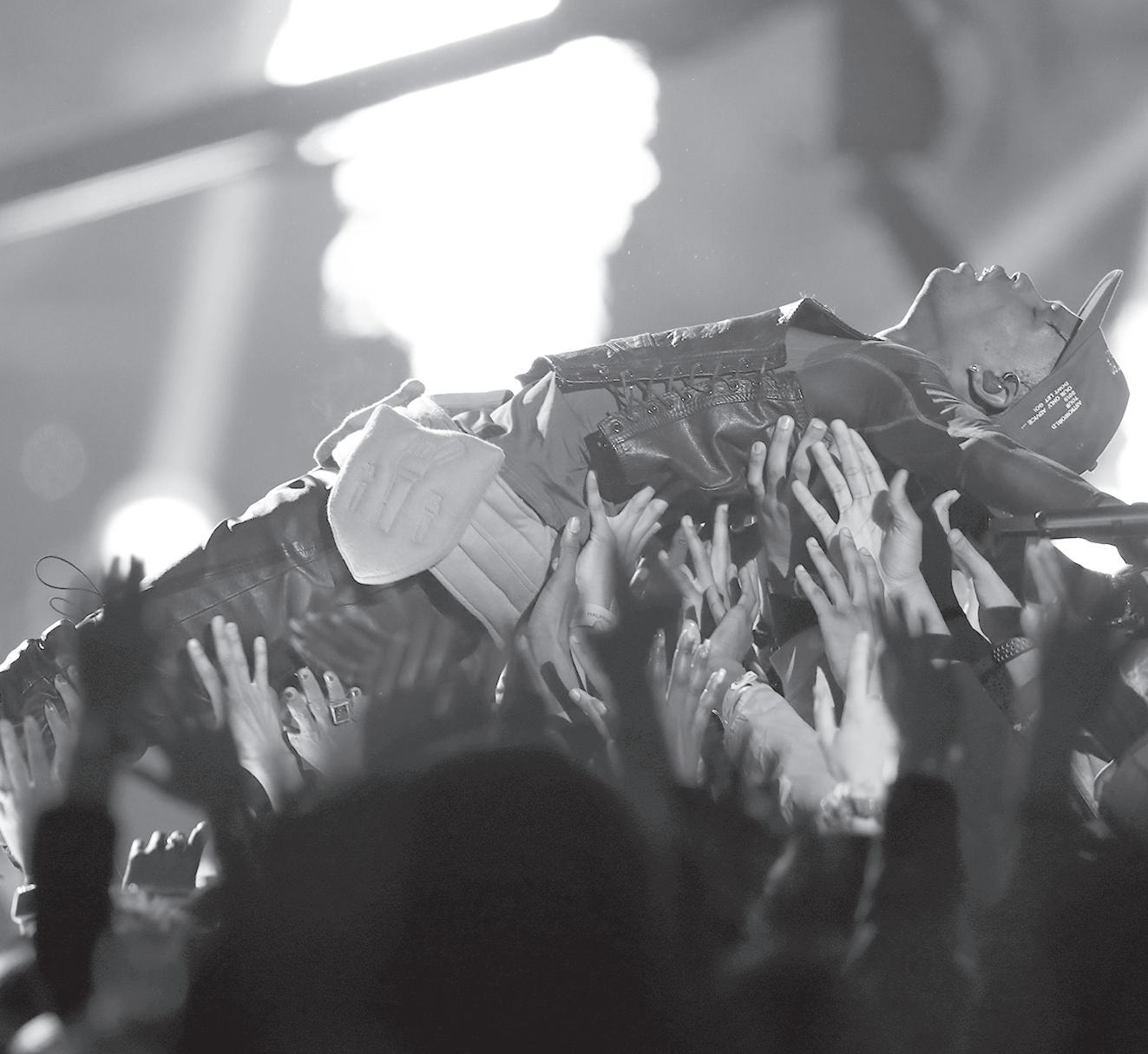
You’re not going to learn anything new at all about Travis Scott from watching Look Mom I Can Fly. You’ll see glimpses of his artistic process, his crew and people surrounding Cactus Jack records and of course, Kylie Jenner and their daughter, Stormi Webster. The documentary is still entertaining, even if there isn’t a ton of substance. In a way, that makes it the perfect match for his music — when you listen to Travis Scott you’re not exactly listening to the most emotional or lyrically complex music, but it’s still fun as hell to be a part of.
Ninety percent of this documentary is Travis Scott worshipping Travis Scott, which I guess is alright if you’ve done the things he’s done in the last year. But some of the scenes just really felt corny. Did we have to see him get presented the key to the City of Houston? Did we have to spend half an hour on his Grammy nominations and how he was robbed? Also, the scene of him stepping outside to smoke a blunt immediately after the delivery of his daughter was probably not a scene that I would have included but I suppose it fits the aesthetic he so carefully curates.
That’s not to say that there aren’t any genuine moments within Look Mom I Can Fly. The look into his personal life and family is touching, with the juxtaposition of his childhood and Stormi’s standing out in particular. There’s a scene depicting Stormi driving around their mansion in a toy Bentley, and it’s quickly followed by a home video of a very young Travis Scott driving around his street in a toy car. It’s a very smooth contrast of the life Travis Scott lived as a child and the life he’s providing for his daughter, and it’s executed beautifully. These splices of home videos from Travis Scott’s childhood really add to the authenticity of the documentary and do well to counterbalance some of the moments where he doesn’t seem quite as humble.
At first, I was quick to write off much of this documentary for being over the top. There are multiple times throughout this documentary where his fans say that Travis Scott’s music saved their life, and it’s easy to look at that and think they’re being dramatic considering how his music isn’t exactly the most emotionally complex. Looking a little deeper, Travis Scott has created his own community, his own aesthetic and way of life for his fans to be a part of. There aren’t many artists right now who can extract the same levels of energy and commitment from their fans to the same extent as Travis Scott. He’s masterfully crafted the perfect live experience and aesthetic, then made merch to convey this, which in turn has developed into its own staple within the streetwear community. As I type this review, there are three people near me wearing Astroworld merch, and that’s just in the lower part of the Cocktail Lounge. Look Mom I Can Fly goes beyond Scott’s music to indirectly capture some of these intangibles.
The looks into the creation of Astroworld were what I found to be the most interesting moments in the documentary . . .
To continue reading this review, please visit www.cornellsun.com.
Daniel Moran is a junior in the College of Human Ecology. He currently serves as the assistant arts and entertainment editor on Te Sun’s editorial board. He can be reached at arts@cornellsun.com.

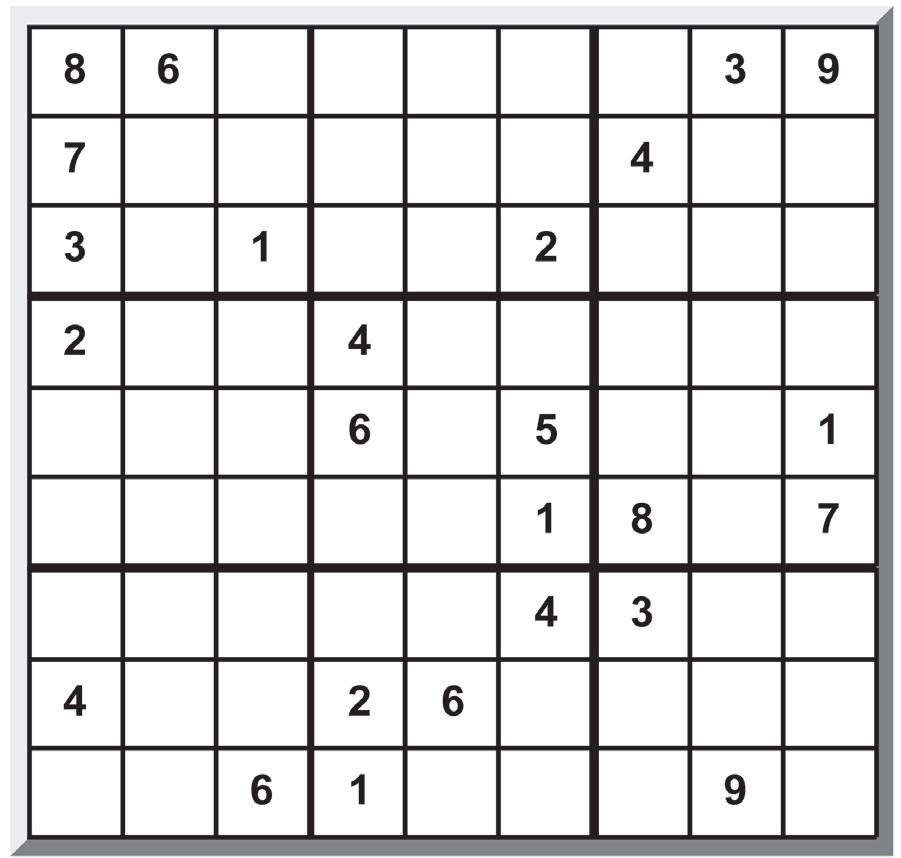
Fill in the empty cells, one number in each, so that each column, row, and region contains the numbers 1-9 exactly once. Each number in the solution therefore occurs only once in each of the three “directions,” hence the “single numbers” implied by the puzzle’s name. (Rules from wikipedia.org/wiki/ Sudoku)

Houses, Apts, Parking
1 to 9 Bedroom
Collegetown - College Ave, Linden Ave, Dryden Rd, Bryant Ave, Cook St. 607-330-2442 info@urbanithaca.com www.urbanithaca.com
We have availability for the 2020-2021 school year beginning June 1st at Hudson heights apartments. The studios include electric, heat, water, garbage and parking. There is coin-operated laundry facilities on site. Prices start at $750 / month for a 12 month lease. If you have any questions or would like to schedule a tour contact us by phone 607-280-7660 or email: renting@ithacaLS.com
COLLEGETOWN TERRACE APARTMENTS
Spring 2020 Semester Leases Available Heat, hot water and Wi Fi included Free State of Art Fitness Center Free Shuttle Bus Service to campus Washer & Dryer in Apartments collegetownterraceithaca.com office@ithacastudentapartments.com (607) 277-1234
Now Renting
2-10 Bedroom Houses/ Apartments for 20-21. All Locations. Call today or visit our website: Certified Properties of TC Inc certifiedpropertiesinc.com 607-273-1669
20-21
Upper College Ave.
5 & 6 BR Apts Furnished. Laundry. Call 607-273-8576
20-21
Dryden Rd. 2 & 3 BR Apts Furnished. Laundry. Call 607-273-8576
2020-2021
Studio 1, 3, 8 & 11 BR Apts. Great Locations in Collegetown. 607-227-2535
H OUSE FOR R ENT
20-21 College Ave.
5 BR House Furnished. Laundry. Parking. Call 607-273-8576
20-21 Upper Eddy St. 7 BR house Furnished. Laundry. Call 607-273-8576

By CAROLINE JOHNSON Sun Staff Writer
Next Tuesday marks the beginning of “Civil Discourse: The Peter and Marilyn Coors Conversation Series,” with the first event featuring guest speakers Neal Katyal and George T. Conway III. To kick off the series, these two lawyers will discuss executive power in politics in front of a campus audience.
George T. Conway III, law-
argued cases such as Morrison v. National Australia Bank before the Supreme Court, which redefined overseas financial fraud legislation.
Neal Katyal is a professor at Georgetown University and partner at Hogan Lovells, an international law firm. In 2018, he argued Trump vs. Hawaii, the case regarding the travel ban created by the president via executive order.
“I hope the speakers will shed light on the common concerns that progressives and conservatives share...”
Dean Eduardo Peñalver
yer, is the husband of senior counselor to President Trump Kellyanne Conway and a graduate of Yale Law school, and works in the litigation department of firm Wachtell, Lipton, Rosen and Katz. Conway has
He has argued more cases before the Supreme Court of the United States than Thurgood Marshall, breaking the record for most cases argued before the Supreme Court by a minority attorney in United States history, according to Georgetown Law’s website.
Kaytal served as Acting Solicitor General under the Obama administration from 2010 to 2011, where he was “responsible for representing the federal government of the United States in all
appellate matters before the U.S. Supreme Court and the Courts of Appeals throughout the nation,” according to Georgetown Law’s website.
Other career highlights include his 2009 victory in arguing to uphold the constitutionality of the Voting Rights Act of 1965. In addition to these victories, he has also been the recipient the Edmund Rudolph Award; the highest award that the Department of Justice can bestow.
“I hope the speakers will shed light on the common concerns that progressives and conservatives share about the importance of maintaining a balance of power between the various branches of government,” said Eduardo Peñalver, Dean of Cornell Law School.
“One of the great things about the gift that created this series is that it provides the resources to bring people up to Ithaca to engage with one another in ways that we would not otherwise typically see on campus,” said Peñalver.
CEREMONY Continued from page 1
a fundraiser for the Ithaca chapter of Veterans of Foreign Wars. Additional flags were placed in the ground for each donation to the fundraiser. The Veterans of Foreign Wars, as described by a banner at the tribute, assists “needy and/or disabled veterans and their families, and promotes patriotism and education through service to local communities.”
“It’s always extraordinarily meaningful for them. It's meaningful for us,” Schorr said.
Schorr said that the organization plans to host this tribute annually “as long as this organization is on campus.” The fact that Cornell is located in New York and it has a high population of students from New York City makes this annual tribute even more significant, Schorr said. The Cornell Republicans have hosted this exhibit
“Every year we get further removed from it ... there’s fewer people on campus who really felt it.”
Isaac Schorr ’20
Students sat at a foldup table with a donation box and Dunkin’ coffee and doughnuts, speaking to Cornellians passing by about the significance of the day.
“Every year, we get further removed from it,” Isaac Schorr ’20, president of Cornell Republicans, told The Sun of the attacks. “It’s harder to remember; there’s fewer people on campus who really felt it and experienced it on a visceral level.”
But the 9/11 attacks still hit home for many people on campus. Some students lost loved ones in the attacks.
every year and first invited the Cornell Democrats to co-host last year. “We invited them back hoping to make it an annual tradition,” Schorr said. “I think it’s important to set aside any partisanship,
“It’s important that we all come together today and we’re grateful to have a part in that.”
Isaac Schorr ’20
any animosity and come together.”
Jaia Clingham-Davis ’20, president of Cornell
The series is an opportunity for the Cornell community to engage in “intellectual discourse on difficult yet timely issues facing the nation,” according to the event website. Future events include “Is Illiberalism Corroding Our Democracy? With Ezra Klein and Andrew Sullivan” and “Have Tech Platforms Gotten Too Big and Need to Be Broken Up? With Megan McArdle and Tim Wu”.
“The series was made possible by a very generous gift from Pete and Marilyn Coors, both Cornell alumni who believe that college is a time for thinking about big issues and challenging our own assumptions,” said Peñalver.
This discussion will take place Tuesday, Sept. 17 from 5:30pm to 6:30 p.m. in Statler Auditorium. The event is open to all Cornell students and faculty.
Caroline Johnson can be reached at cj374@cornell.edu.
Democrats, said that today was about honoring the victims, the first responders and their loved ones.
“The attacks on 9/11 deeply affected all Americans, regardless of political party, and continue to impact our lives today,” said ClinghamDavis in a message to The Sun. “Despite our differences, our organizations believe it’s important to collaborate for this event.”
In 2016, Cornell dedicated a permanent memorial in Anabel Taylor Hall to the 21 alumni killed on 9/11. Nineteen of those died in the attacks on the World Trade Center, and two were aboard Flight 93, which crashed in a Pennsylvania field after passengers fought back against hijackers.
During that ceremony, Cornell also announced the September 11 Memorial Scholarship for undergraduate students.
This year’s temporary memorial will stay set up until the afternoon, dependent on weather.
“It’s important that we all come together today and we’re grateful to have a part in that,” Schorr said.
Sarah Skinner ’21 contributed reporting.
Ari Dubow can be reached at acd232@cornell.edu.
DEBATES Continued from page 1
party in Anna Comstock Hall, the Latino Living Center on North Campus.
Tompkins County ProgressivesDurland Alternatives Library
In its mission statement published online, the Tompkins County Progressives state that the organization is “inspired by the political movement started by Senator Bernie Sanders but are open to participation from all progressives regardless of their political-party affiliation.” While they may be cheering on Sanders, anyone is welcome at this on-campus event.
Fall Creek Watch
Party for Warren - 315 Willow Ave, Ithaca
This house party is hosted by an Ithaca resident and is open to specifically Elizabeth Warren supporters. During commercial breaks, volunteers will lead trainings on how to use “Reach,” a campaign app tool. “Feel free to bring a snack or drink (or a chair!) to share!” said the description on the website.
ABC.com
Can’t get to any of these events? The debates will be live streamed on ABC. com.
Amanda H. Cronin can be reached at acronin@cornellsun. com

with
By MAX RINGER Sun Staff Writer
Cornell sprint football is looking to its depth and experience to separate it from the competition during its upcoming season.
A year after bringing in 10 promising freshmen and revamping nearly the entire defensive line, the coaching staff is hopeful that the 2019 team, led by 19 seniors, will be more comfortable this year and ready to finally take down Ivy League rival Penn: a feat that has eluded them since 2012.
Although Cornell did graduate nine seniors, star running back Will Griffen, who associate head coach Bob Gneo called an “incredibly outstanding” player, is returning for his senior campaign. After torching the Collegiate Sprint Football League for over 500 rushing yards in his first three seasons, Griffen looks to finish out his impressive career with Cornell sprint football’s best season yet.
“We’ve grown a lot as a program and I’m super excited to build on that and make a run this year.”
Senior Will Griffen
“I think we’ve got a great team this year,” Griffen said. “We’ve grown a lot as a program and I’m super excited to build on that and make a run this year.”
Among the other returning seniors are former all-league first team selections Marcus Weeks and Jonathon Klobus, who will serve as team captains this year along with Griffen. Weeks and Griffen secured 21 and 23 solo tackles, respectively, last year and Klobus will return to being a brick wall in his role as offensive lineman. In addition, Cornell returns seven other all-league selections, which is the third most of any team in the CSFL.
The Red hopes another bright spot will be quarterback Aneesh Agrawal. The junior saw some action in his first two seasons but will play a much bigger role this year after Connor Ostrander’s ’19 graduation.
Ostrander was Cornell’s starting signal-caller during his junior and senior seasons, and also saw time under center as a sophomore. Ostrander piled up double-digit total touch-
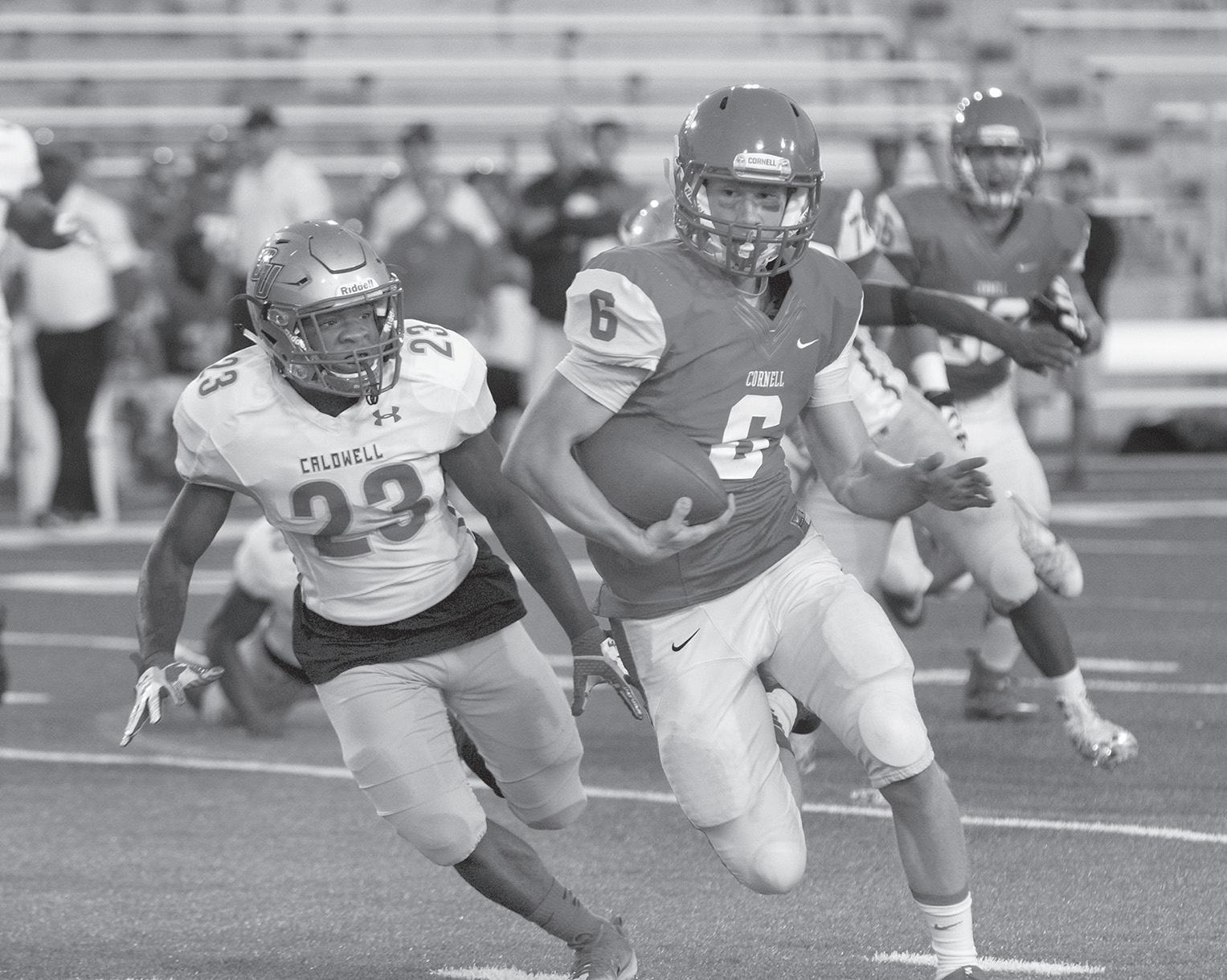
downs in each of the last two seasons, leaving big shoes for Agrawal to fill for Cornell’s offense, both on the ground and through the air.
Gneo said he’s looking for Agrawal to come into his own as he becomes the center of the offense for a team that has previously relied on the strength of its special teams to win games.
Cornell went 4-2 during a transitional 2018 season, which is a good indicator of potential success for 2019.
“If Agrawal plays to his potential and our returning guys continue to lead and perform, I think we’re going to have a

lot of fun this year,” Gneo said. Cornell’s six-game schedule features games against Ivy League foe Penn, perennial powerhouse Army West Point and four total home games.
The Red has its first test this Saturday at Alderson Broaddus. Cornell’s first home game will take place Sept. 20 against Penn at Schoellkopf Field.
Max Ringer can be reached at mringer@cornellsun.com.
CROSS COUNTRY
Continued from page 16
There, Knibb — the lone Cornell representative — was the 109th runner to cross the finish line out of the 255 athletes in the race.
“I’m not too happy with my race, so I’d love to come back and compete as a team,” Knibb said. “It was definitely a different experience being an individual … where the far majority of the runners have teams, and you’ve been running as a team this whole year. And so then, for you to have this change, and everyone else really doesn’t, it’s just a little bit different.”
This time around, though, the Red will compete at the Pre-National Invitational in Terre Haute, Indiana, to better prepare for the postseason.
way,” Henderson said. “If they keep that going for four years, and with the credentials they have from high school, I think we’ll be in a good place with them as well.”
Ultimately, Henderson has high aspirations for both of his teams as he seeks to improve Cornell’s postseason standings from last year.
“We want to take a big step forward in the conference level — I think we want to see both teams moving back into the top half, being competitive, sending people to nationals, picking up more people that are all-region, all-Ivy.”
“If we can continue to come together as an entire group and take steps forward, that’s going to be awesome,” Henderson added. “We’ve had some individual success the last few years, and now we just need to make it a collective success.”
“We’ve had some individual success the last few years, and now we just need to make it a collective success.”
With the cross country programs united under one leader, there’s hope that the Red can improve upon its results from last season while setting new standards in the future years to come. A new freshman class hopes to help in that endeavor.
Head Coach Mike Henderson
The first couple of meets will be opportunities for newcomers to acquire some race experience before the season truly kicks off next month.
Henderson said the incoming men’s class is “very large and talented” and should be a group that will “really shape and influence us for years to come.”
On the other hand, Henderson is not as familiar with the incoming class for the women’s team since he did not recruit them, but he has been impressed with what he has seen so far.
“They’ve been great teammates and really good in terms of bringing positive energy to practice everyday and contributing to the culture in a good
“The first meet is where a lot of our freshmen get back to running, and then next week, another group will run, and then we’ll get going full-speed in October,” Henderson said. “It gives ourselves some time to get to know the team and get to know everybody before we really get into the heart of our racing season.”
Cornell is set to start the season at the Yellow Jacket Invitational in Rochester, N.Y., on Saturday.
Luke Pichini can be reached at lcp84@cornell.edu.

By RAPHY GENDLER Sun Sports Editor
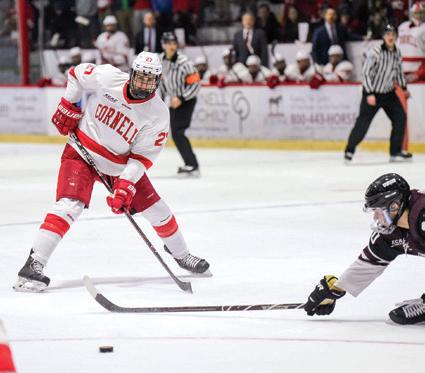
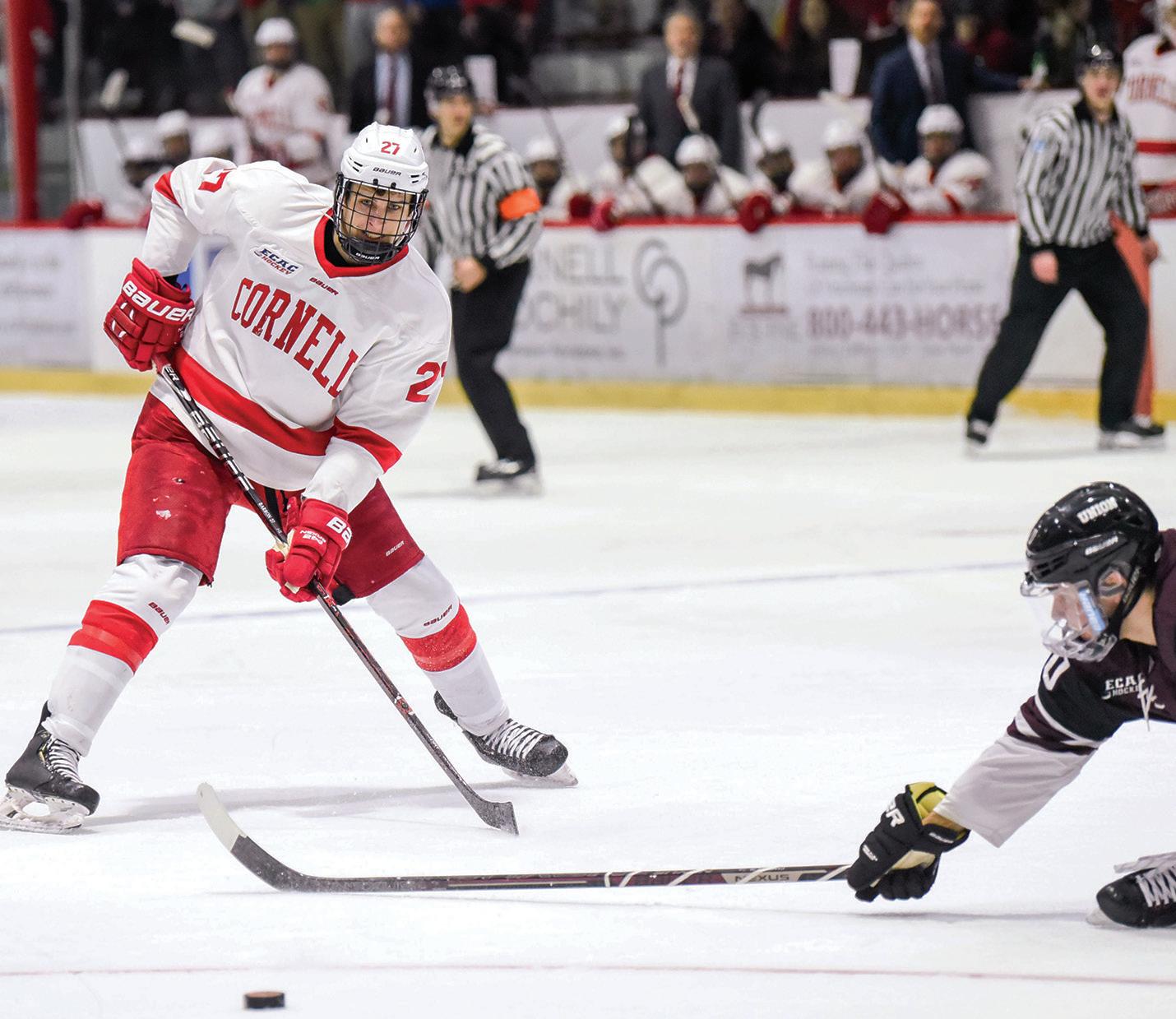
Two seniors and a junior will lead Cornell men’s hockey during the 2019-20 season, as the Red seeks its fourth straight NCAA Tournament appearance.
Senior defenseman Yanni Kaldis, senior forward Jeff Malott and junior forward Morgan Barron will wear the ‘C’ for Cornell, the team announced on Wednesday.
“Speaking with all the players, it became quite clear through the spring and summer who they feel should be leading us,” said head coach Mike Schafer ’86, according to Cornell Athletics.
Cornell had two captains each of the last two seasons, and a single captain in 2016-17. This season will be the first since 2012-13 in which the Red will have three captains.
Kaldis, who led the team with 24 assists last year, was also named to the All-ECAC second team. The Montreal, Quebec, native has a plus-22 rating over three seasons and consistently is among the team leaders in ice time. He logged especially heavy minutes as the team endured blue line injury issues last season.
Malott, who had his junior season derailed in part by injuries — including a season-ending knee injury in the ECAC championship game — has scored six goals in each of the last three seasons.
A New York Rangers prospect and a product of Halifax, Nova Scotia, Barron emerged as Cornell’s best offensive weapon in a breakout sophomore campaign. Barron — who played on a dangerous top line alongside classmate Brenden Locke and Cam Donaldson for most of the season — led Cornell in goals (15) and points (34) last season en route to All-ECAC first team honors.
Cornell hits the ice Oct. 20 for an exhibition game against Nipissing University.
Raphy Gendler can be reached at rgendler@cornellsun.com.
By LUKE PICHINI Sun Contributor
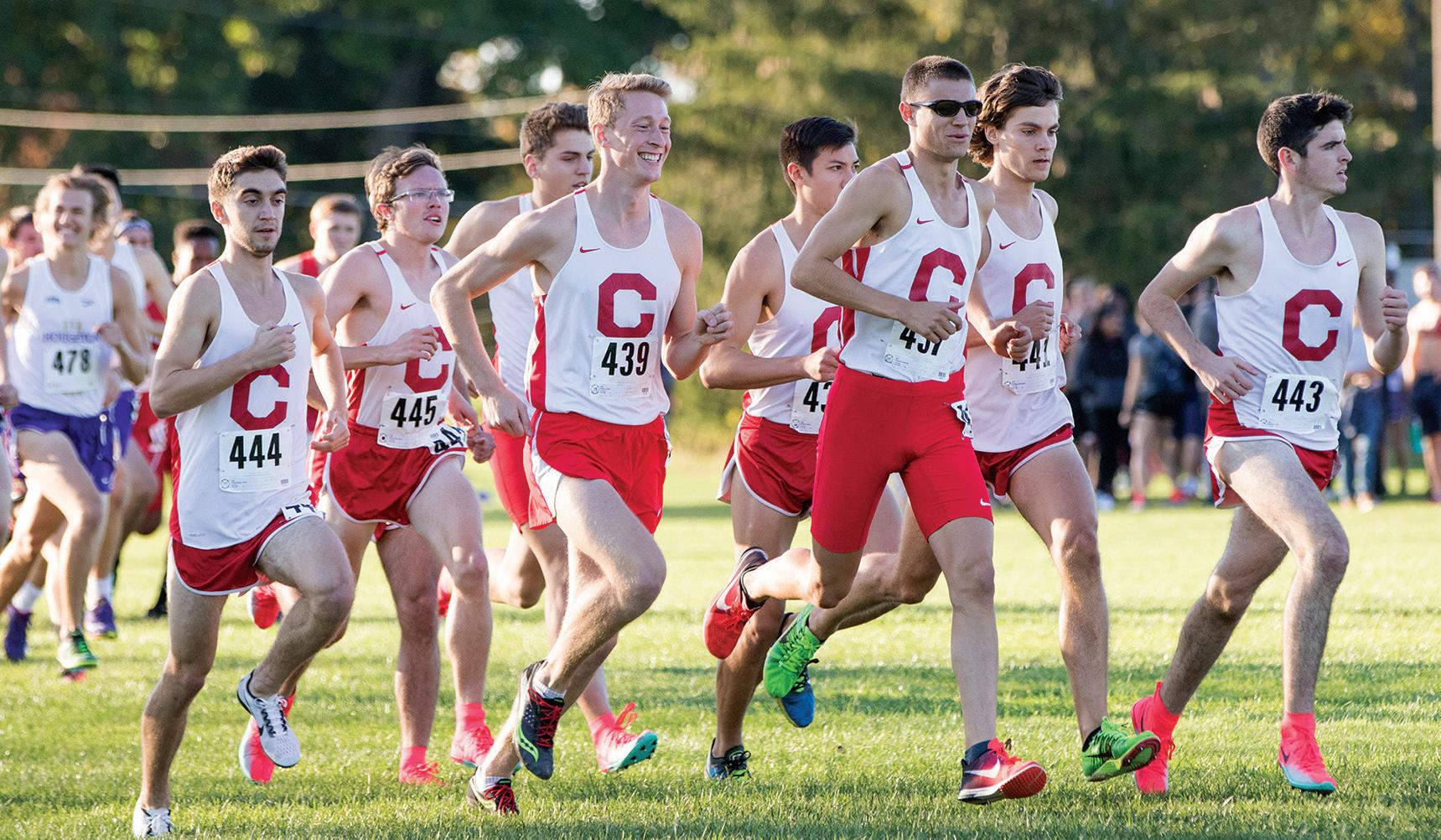
Cornell cross country is about to enter a new era. After a long period of separation between the men’s and women’s teams, the two programs are now united under the new head coach Mike Henderson for the 2019 season.
Henderson succeeds the recently retired Artie Smith on the women’s side. And on the men’s team, former cross country head coach Adrian Durant will shift his focus solely to men’s track and field.
When speaking about Smith, Henderson praised his predecessor.
“It’s a humbling honor [to succeed him],” Henderson said. “He’s done so many good things in his time, and his character, work ethic and commitment to the team have been unbelievable. Those are big shoes to fill for sure.”
Besides serving as the coach for both the men’s and women’s cross country teams, Henderson will also coach women’s track and field. Prior to accepting this increased responsibility, Henderson coached men’s track and field and men’s cross country as an assistant for the past two seasons. While this is certainly a major transition, it is one that Henderson said has gone smoothly so far.
“It’s been awesome,” Henderson said. “The programs were always pretty close — we always had the same schedule, shared the same practice times and locations. It wasn’t a drastic change, but it’s been awesome for me to get to know the
women’s team even more … and work with them in their training and figure out how we can continue the progress they were making under coach Smith.”
Senior runner Taylor Knibb said she has also been comfortable with the change.
“It’s been more than smooth. I feel like everyone’s happy,” Knibb said. “Everyone’s been super open — it’s a little bit different — but everyone’s open to the change and excited about it, and I think it’s a positive impact for everyone on the team.”
Knibb also said the two squads joining forces comes with benefits.
“I think that each team can learn a
men’s squads join forces
lot from the other team,” she said. “We each have our strengths, and we each have areas in which we can improve, and I think that we complement each other well. … I think the fact that we’re a little more united helps.”
In 2018, the men’s team started out the season strong, notching first- and second-place finishes at the UB Stampede Invite and the Lehigh Paul Short Run. The Lehigh finish was particularly impressive as it came in a field filled with 44 schools.
But the men’s team faltered as the competition ramped up. At the Ivy League Heptagonal Championships, the Red came in last as it notched only 203
points despite strong individual performances from senior Steve Neumaier and Tyler Fisher ’19.
At the final meet of the year — the NCAA Northeast Regionals — Cornell placed 16th out of the 34 schools in attendance. While it was an improvement from its finish in the Heptogonals, the Red failed to send any of its team members to the NCAA Championships.
Meanwhile, the women’s side fared slightly better. Cornell kicked off the season with the top-five finishes at its first three events, but it similarly stumbled at Ivy Heps, finishing in seventh, a regression from its fifth-place finish the season prior.
“Everyone’s super open to the change and excited about it, and I think it’s a positive impact for everyone on the team.”
Senior Taylor Knibb
On the back of a phenomenal performance by Knibb, the Red ran very well at the NCAA Regionals. Out of the 243 competitors, Knibb’s time of 21:49 on the six-kilometer course was good for fifth place. This finish not only helped the Red secure a fourth-place standing at the event, but it also propelled Knibb to the NCAA Championships.