


By MARYAM ZAFAR Sun City Editor
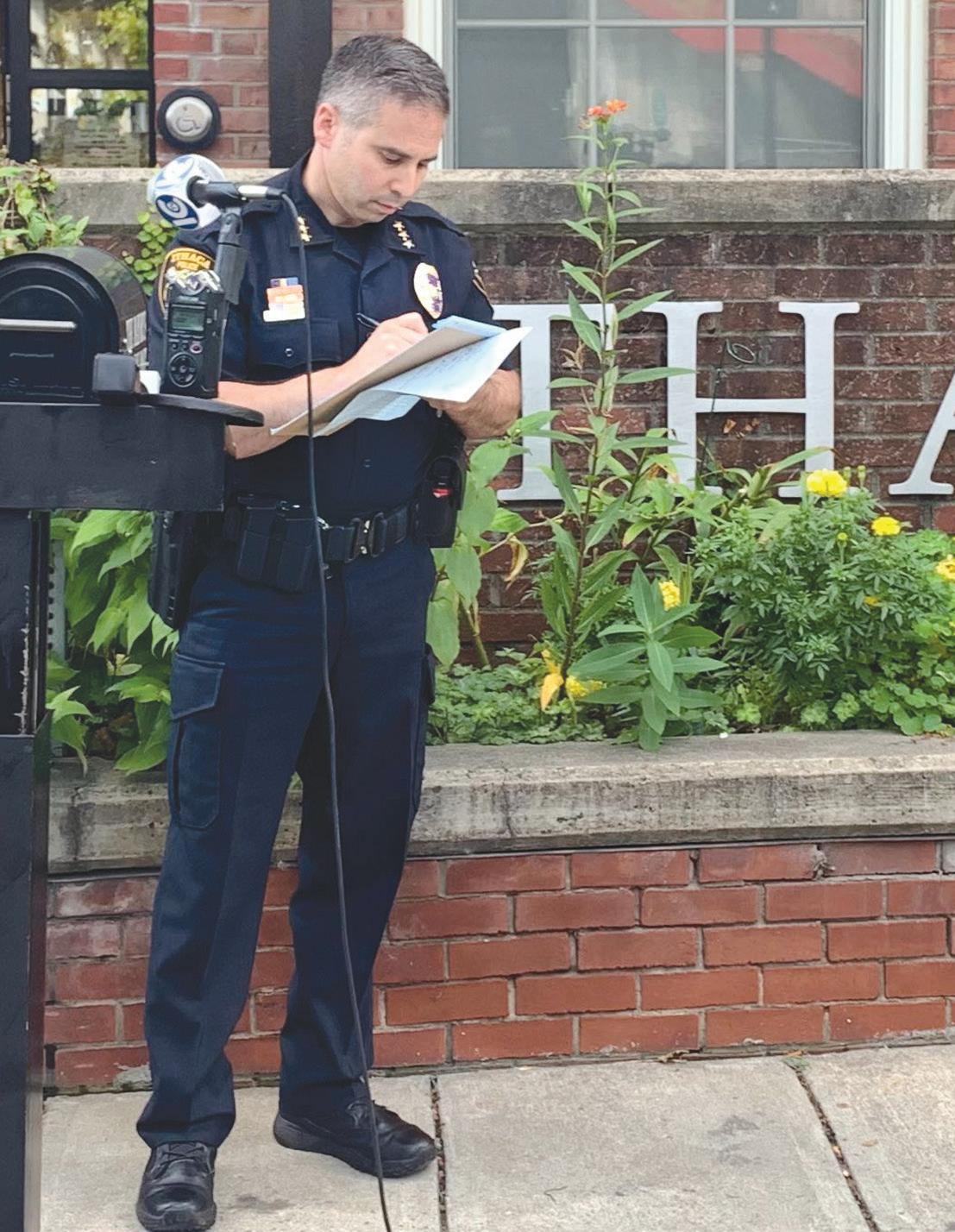
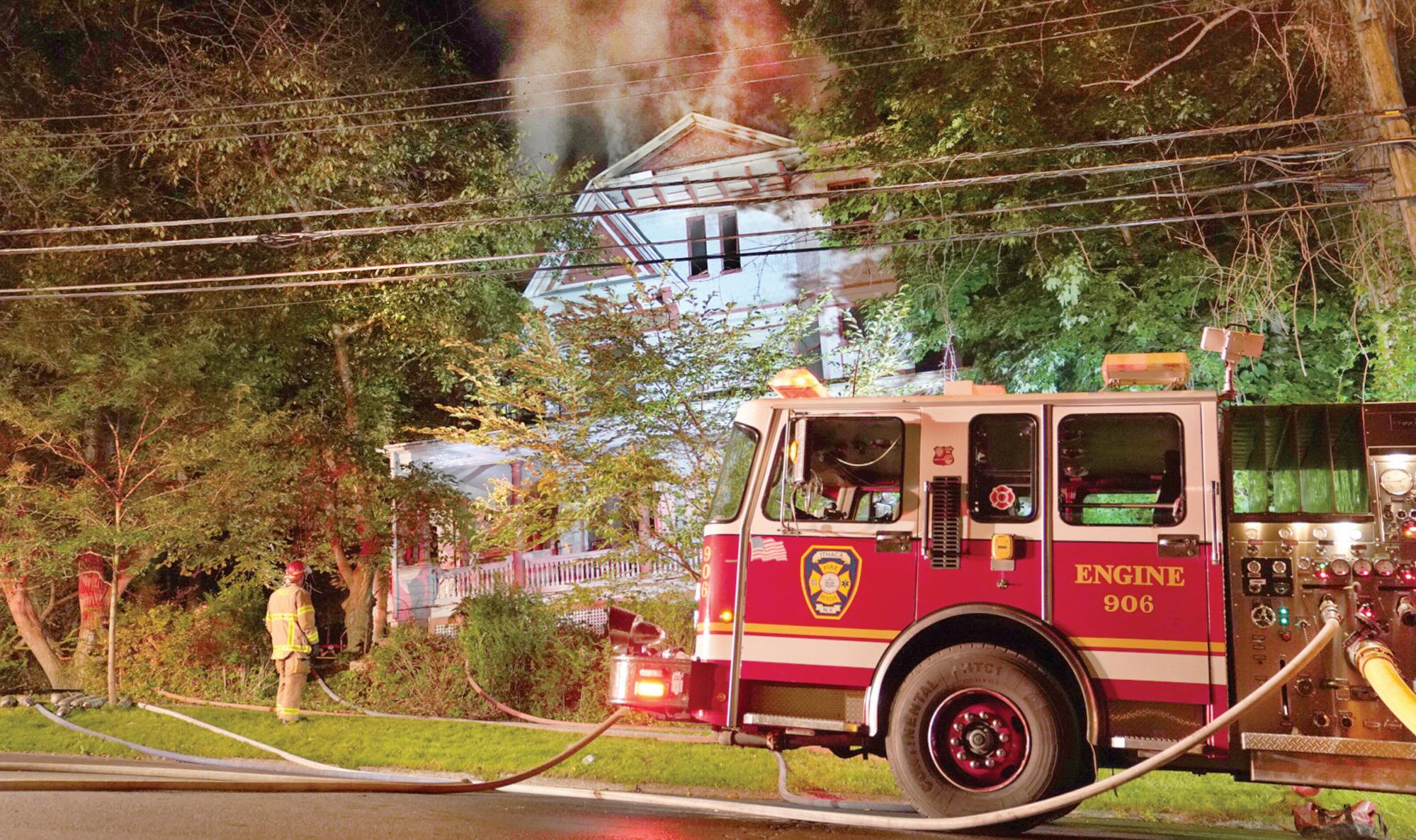
Chief Dennis Nayor will be the new permanent chief of the Ithaca Police Department, Mayor Svante Myrick ’09 announced on Monday.
Since replacing former chief Pete Tyler in June, Nayor has served as acting chief during a summer that saw two fatal stabbings and a downtown shooting. Those incidents, he said, have been part of an experience with the Ithaca Police Department that has been “exemplary.”
Nayor has always wanted to be a police officer: Raised in a police family, he knew he wanted to “be a voice for the weak and the oppressed” — a potential consequence
By SEAN O'CONNELL Sun Staff Writer
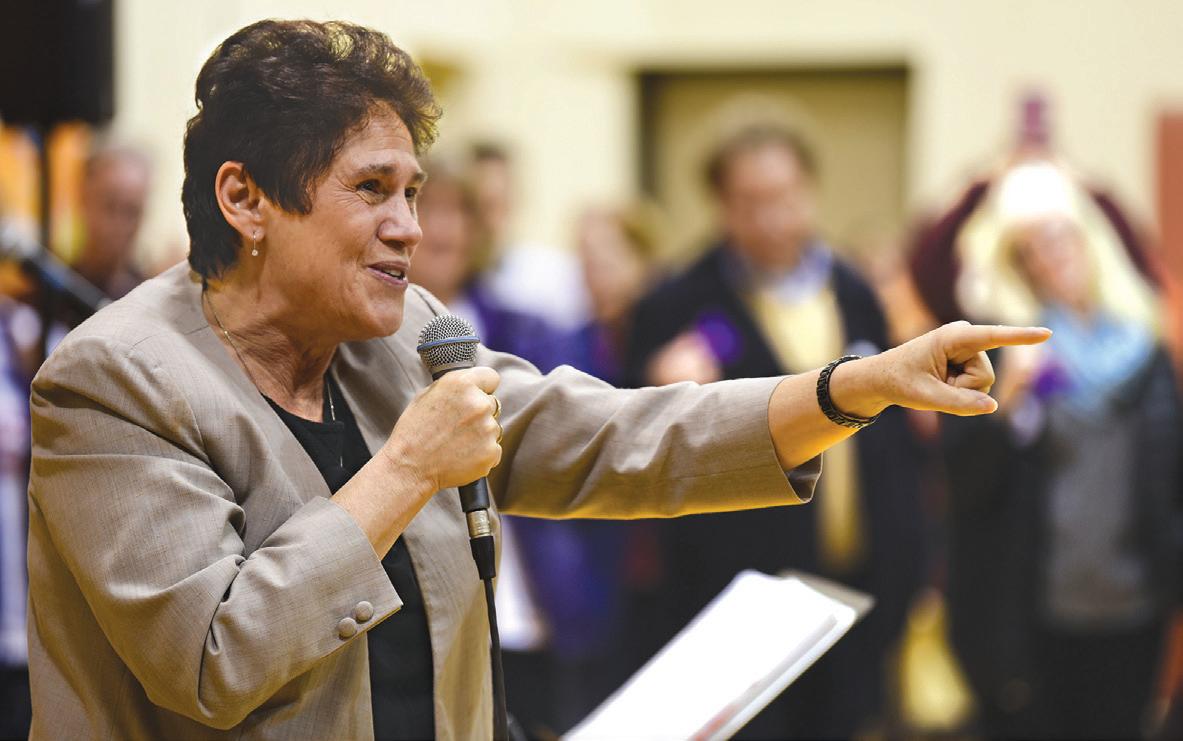
After a disappointing loss in the midterm election last year to fourtime incumbent Rep. Tom Reed (R-N.Y.) for New York’s 23rd Congressional District seat, Tracy Mitrano J.D. ’95 is back and ready to launch a second attempt to win the district.
“I’m running again because I love this region. I love the beauty of the land and of the passion, power, and resiliency of the people,” Mitrano said in a statement to The Sun.
Mitrano, a graduate of Cornell Law School, has been buoyed by widespread Democratic Party support. She has already achieved the endorsements of several county committees, as reported by the Ithaca Journal, making a primary challenger less likely. In her unsuccessful run last cycle, Mitrano spoke out in favor of developing infrastructure, energizing environmental protections, legalizing cannabis and decreasing interest rates on college loans, The Sun previously reported. Having formerly served as director of information technology policy for Cornell, Mitrano’s last campaign also paid unusually specific heed to
of watching the 1950s western The Lone Ranger, he said. Like the cowboys in the show, Nayor described his motivation to work in law enforcement as one rooted in a desire to “fix the problems.”
And when Nayor isn’t actively trying to fix problems, he is also just 12 credits away from a master’s degree in Law Enforcement and Public Safety Leadership from the University of San Diego. The online classroom learning is a way for Nayor to tap into the historical role of law enforcement — examining relevant Supreme Court decisions, for instance — while also anticipating and understanding the nuances of 21st century policing.
See CHIEF page 5
By SARAH SKINNER Sun Managing Editor
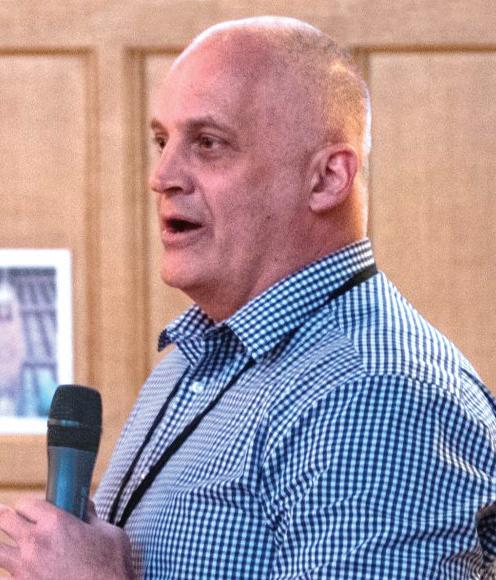
Gregory Eells, the former head of Cornell’s Counseling and Psychological Services Department, died on Monday morning in Philadelphia, according to an email to faculty and staff by Vice President of Student and Campus Life Ryan Lombardi.
Eells worked at Cornell for over 25 years, and oversaw a changing mental health department that grew into the modern iteration of Cornell Health during his 15 years as director of CAPS.
“It is with a very heavy heart
that I write to you with the news that our friend and former colleague Greg Eells passed away unexpectedly this morning,” Lombardi wrote in the statement, provided to The Sun by Cornell’s media relations department.
An email to the University of Pennsylvania student body expressed condolences for Eells’ death. The university’s student paper, The Daily Pennsylvanian, reported that Eells had died by suicide early on Monday.
Eells shifted between Ivy League institutions in the spring, departing Cornell for a similar post as the head of
UPenn’s mental health services. Before his move, Eells said that it had been an “honor and privilege” to work at Cornell in a
Development of Detection and Management Strategies For Sugarbeet Rhizoctonia Diseases
11 a.m. - Noon, A134 Barton Lab
Integrated Nonlinear Photonics For Quantum Frequency Conversion 12:15 - 1:15 p.m., 233 Phillips Hall
Improving Plant Breeding Efficiency With Quantitative Genetics 12:20 p.m., 135 Emerson Hall
Cornell Service Fair 3 - 5 p.m., Arts Quad
C.U. in Cambodia and Center for Khmer Studies (CKS) Info Session 4:30 - 5:30 p.m., 153 Uris Hall
Modern Life of a Medieval Manuscript, From Genocide to Justice 4:30 - 6 p.m., 110 White Hall
Sex Work, Movement Politics, And Affect Labor in the Sinophone World 4:30 - 6 p.m., G64 Goldwin Smith Hall
Cornell University’s Block Party 5 - 9 p.m., North Campus

Lunch and Learn: Innovate With Mass Spectrometry
10 a.m. -1:30 p.m.,G01 Biotechnology Building
More Than a Penny’s Worth: Left-Digit Bias and Firm Pricing 11:40 a.m. - 1:10 p.m., 498 Uris Hall
Midday Music for Organ: Annette Richards 12:30 - 1:15 p.m., Anabel Taylor Hall, Chapel


Building Darwinian Molecular Systems From the Atom Up 4 - 5 p.m., 700 Clark Hall
Pillsbury Hospitality Entrepreneurship Kick-Off Event 4:30 - 6:30 p.m., Statler Park Atrium, Statler Hall
Philip Ursprung: Earth Art: Between the Human and the Nonhuman 5:15 p.m., Abby and Howard Milstein Auditorium

By HUNTER SEITZ Sun Assistant News Editor
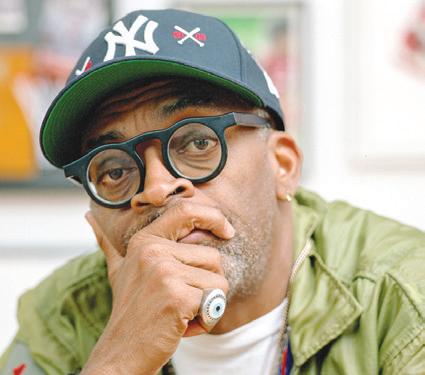
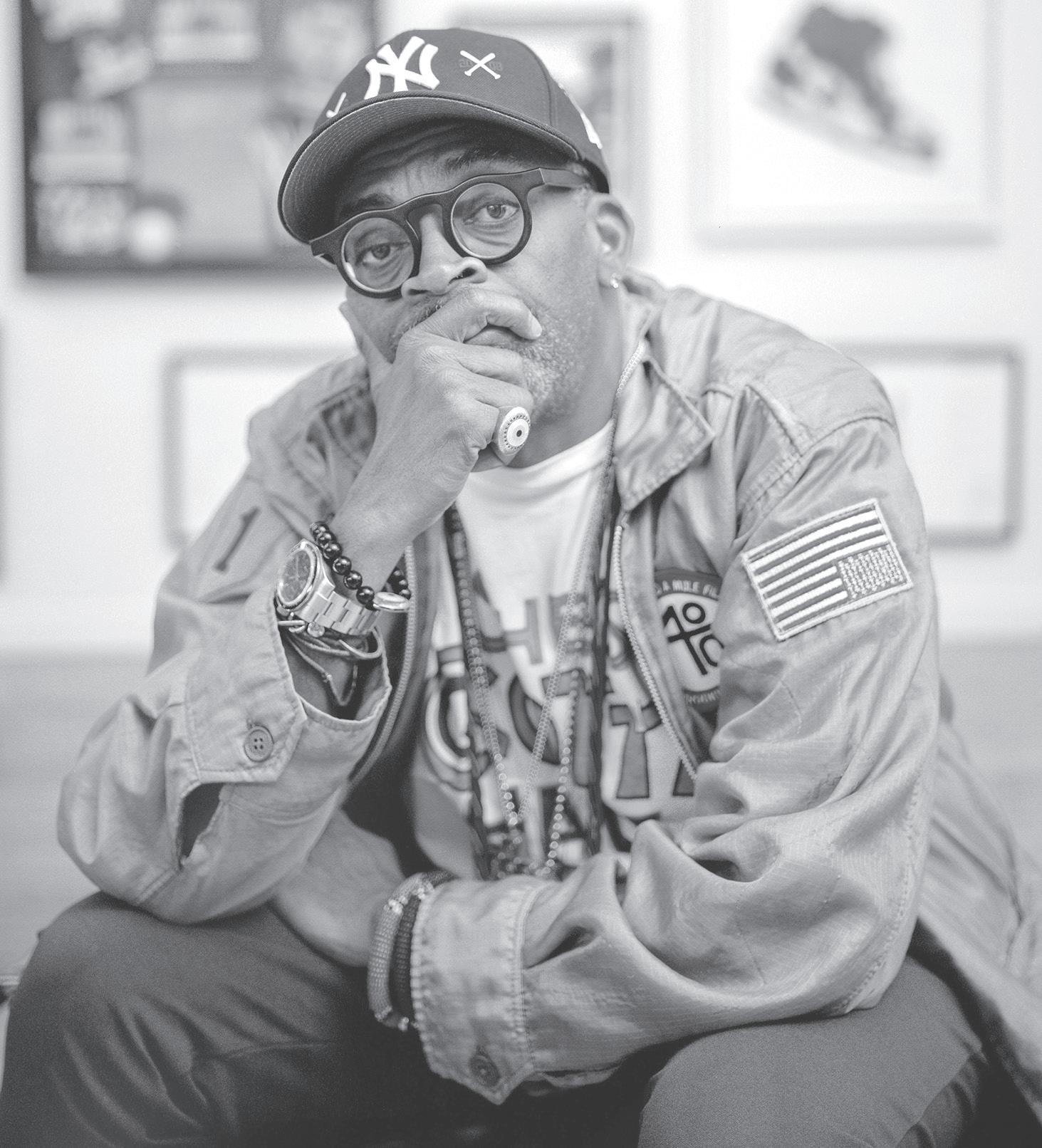
Award-winning director, actor, producer and author Spike Lee will be coming to Cornell for a question and answer event later this month at the invitation of the Cornell University Programming Board.
Lee, an often provocative director who has risen to prominence for his unique portraits of race, “revolutionized the role of black talent in cinema,” according to James Buzaid ’22, promotions chair of CUPB.
A graduate of Morehouse College, a historically black college, Lee’s career in cinema began early. Before enrolling in New York University’s prestigious Tisch School of the Arts, his produced his first student film to be showcased in Lincoln Center’s News Films Festival.
Though born in Atlanta, Lee is most closely associated with Brooklyn, New York, where he has spent most of his life and found artistic inspiration — a borough whose urban poverty and racial strife in the 1980s has served as the backdrop to some of Lee’s most influential work, such as Do The Right Thing.
The movie, which debuted in 1989 and propelled Lee to wide acclaim, went on to earn Academy Award nominations for Best Original Screenplay and Best Supporting Actor for its candid depiction of racial violence.
Considered by some to be among the greatest movies of all time, famed movie critic Roger Ebert heralded it as one of history’s few movies
“about race in America that empathized with all the participants” and “didn’t draw lines or take sides, but simply looked with sadness at one racial flashpoint that stood for many others.”
Last year, Lee’s released the critically acclaimed BlacKkKlansman, a movie that cen-
“An often provocative director, Lee’s unique portraits of race ‘revolutionized the role of black talent in cinema.’”
James Buzaid ’22
ters on the first black police officer’s role in infiltrating and exposing a local KKK chapter in a Colorado town. The film won him an Academy Award for Best Adapted Screenplay and was also nominated for the Best Picture and Best Director categories.
Other notable works from Lee include 4 Little Girls, a movie about the 4 young girls killed in the infamous 16th Street Baptist Church bombing in Birmingham, Alabama in 1963.
The event will take place on Friday, September 20th at 7 p.m. in Bailey. For students, tickets cost $15 for balcony seats and $18 for floor seating.
Tickets are currently available at CornellTickets.com.
Hunter Seitz can be reached at hseitz@cornellsun.com.
By EMMA DIGIOVANNI Sun Contributor
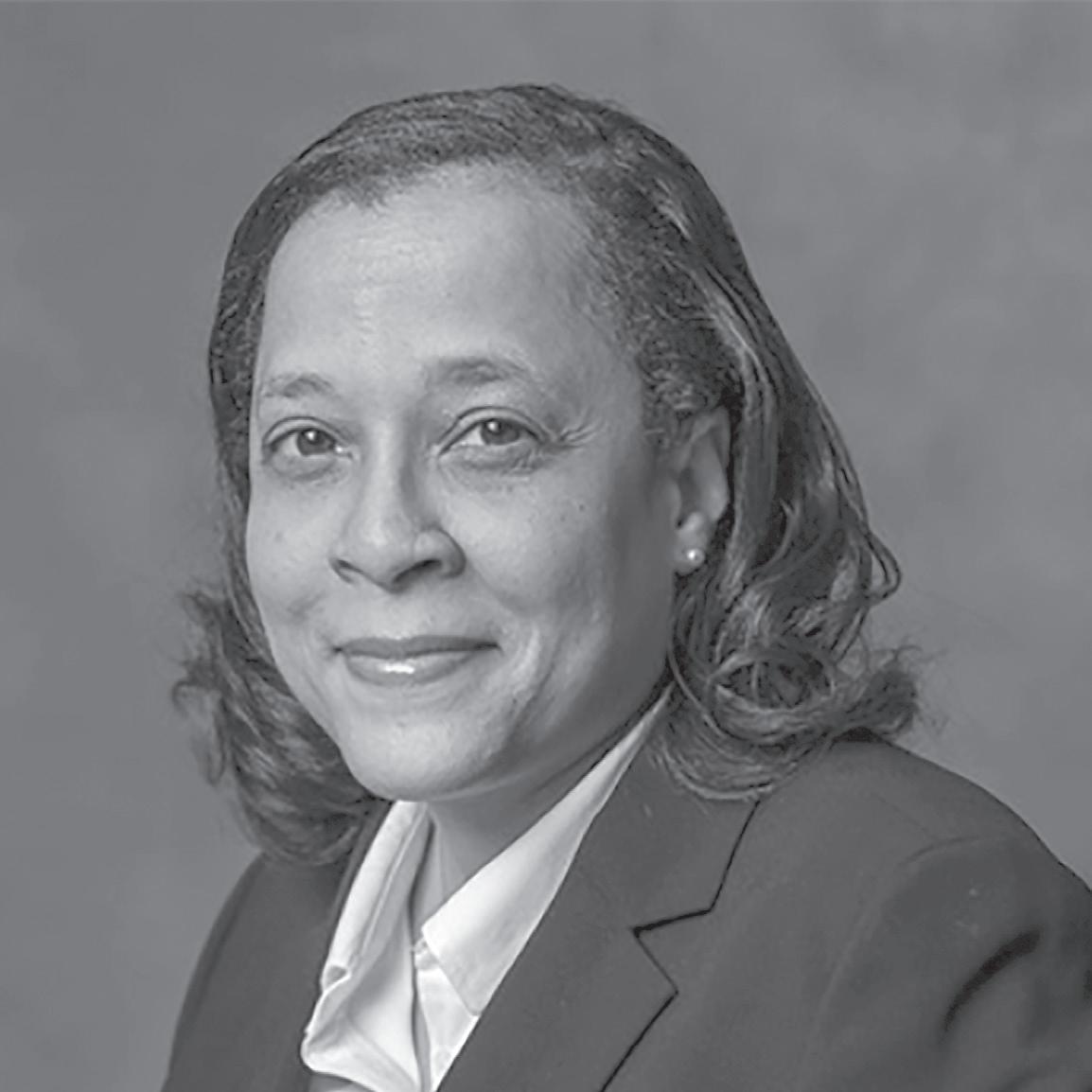
According to the 2019 Financial Literacy Survey, less than half of Americans say they have a budget and keep close track of how much they spend on such things as food, housing, and entertainment. For students interested in improving their financial literacy, Prof. Vicki Bogan, business, and a member of Cornell’s Financial Literacy Coordinating Committee, hopes to offer some useful insight.
“In college, I think this is one of the first times where you have a little bit of freedom in managing your own finances and budgeting … and so starting early kind of leads you to develop very good habits that I think are very important long-term,” said Bogan.
However, certain barriers exist that can make it difficult for people to consistently practice financial literacy. “Tracking and understanding how much you spend can be really difficult,” Bogan said, especially with the presence of technology.
responsibility early in life: their parents.
“If you put too much money on your credit card, who pays your credit card bill?” said Bogan.
“If it’s you, it’s different than if it’s your parents. And sometimes your spending behavior can be a little different if you know in the back of your mind that there’s a safety net.”
For students seeking resources to help them develop strong skills in financial literacy, Bogan recommends Cornell’s personal finance website, which offers information on budgeting, saving and financial aid.
Students can also attend on-campus workshops on financial literacy, which Bogan offers to students on an “ad hoc” basis.
your financial picture is then you can be smarter about budgeting.”
For students interested in building healthy saving habits, “Slow and steady is the best advice,” Bogan said. “You’re not going to be able to save up a million dollars in a year,” but it’s important to “make a habit of savings.”
“Think about paying yourself first … Whatever your income is, you put a specific percentage of that away in some type of savings vehicle. And you don’t have to do it all at once, but just make a habit of it, and keep doing it every paycheck.”
While learning effective ways to budget and track spending is essential for anyone interested in improving their financial literacy, for students looking towards graduation, Bogan also have specially tailored advice.
“How much money is coming in? How much is going out? Once you understand what your financial picture is then you can be smarter about budgeting.”
Vicki Bogan
“Students get into the habit of just swiping and [putting] everything on a debit card, or your credit card, or your Big Red Bucks, and you are not as conscious of how much money you’re actually spending,” Bogan said.
Additionally, when it comes to managing finances, some students have a backstop which can keep them from developing financial
Earlier this year, she organized a workshop titled “What Every College Graduate Should Know About Personal Finance” for a business fraternity on campus.
One essential aspect to developing financial literacy is learning how to budget and be conscious of spending. “The important thing for budgeting is … understanding what your cash flows are,” Bogan said. “How much money is coming in? How much money is going out? Once you understand what
“If you’re working for a company, make sure that you sign up for their retirement plan and make sure that you start your retirement plan as soon as possible,” Bogan said. “If you have a 401K, contributing to that is really helpful because generally if you put in a certain amount of money, most companies will match that. If you don’t put in any money, they’re not going to put in any money either. And so you don’t want to forgo that employee benefit.”
For students interested in investing, Bogan said it might be a good idea to get a financial planner who can “help you think
strategically about what your financial goals are” even when one’s financial goals change over time.
When considering a financial planner, Bogan notes that it is important to find ones that are fee-based, instead of commissions-based, as the latter would be more likely suggest financial products based on “how much they’re going to make.”
When choosing to invest, Bogan highlighted the importance of low-cost investing and diversification. She said that it can be easy for students to exercise “familiarity bias with a particular firm,” but having investment portfolios too concentrated in a particular company, stock or bond can be risky.
“It is much better to diversify your risk across a host of different assets,” Bogan said. “Mutual funds are a great way to invest in equity markets in a diversified way, with a low transaction cost and low entry fees.”
Besides diversification, Bogan emphasized the value in understanding what types of products you are investing in.
While “people [usually] have in their heads that bonds are very safe investments,” Bogan said, “there are certain types of bond sectors that can be very risky.” Therefore, “understanding the products in which you invest is really key.”
Emma DiGiovanni can be reached at ejd89@cornell.edu.
By SARAH SKINNER
Sun Managing Editor
When students filed back onto campus this August, they were met with several renovated spaces: The Cocktail Lounge is now fit for a party (or late-night study session) with new furniture and workspaces, and the glistening Rand Hall replaces brick with glass and soaring shelves.
Those may be some of the biggest changes to Cornell’s Ithaca campus this year, but they are far from the last. The University's budget plan allocates over $235 million to campus revamps and renewals in the next fiscal year — giving a glimpse into what changes students will see around campus in the coming months.
The engineering quad’s Hollister Hall, built in 1957, will receive $260,000 of the University’s coin to revamp the building and add additional space for students hunkering down over engineering proofs and problem sets.
al title-clinching squad throws down throughout the school year.
The Bill and Melinda Gates Hall — dictated in the report as the Computer and Information Science Building — will receive a modest million to increase “net space,” the budget plan says. Cornell’s award-winning computer science program, housed within the department, is ranked among the top five in the world and has grown in recent years.
And Baker Hall’s chemistry facilities require suitable facilities for its student researchers as well. This year, the department will be flush with $3.2 million to update its restroom facilities in both north and south buildings.
The ongoing battle to salvage McGraw Hall — Cornell's third-ever campus building, constructed in a Gothic Style in 1868 — will continue.
Also on Cornell’s docket: more mat space for its award-winning wrestling team. The University submitted plans to the Town of Ithaca (their Friedman Wrestling Center falls on town property) for a 1,500-square-foot expansion to the center, where Cornell’s nation-
And on campus, Cornell’s funneling $2 million into Comstock Hall to update the laboratories housed within. Since 1985, the structure has played home to a colony of entomology majors. Ten of Cornell’s recognized fraternities are housed in Universityowned buildings — and those require maintenance as well. In fiscal year 2020, Cornell has earmarked $580,000 to address renovations to Delta Upsilon’s house on West Campus.
And Martha Van Rensellar Hall will get over $19 million to finish Phase III of its renewals.

Groundbreaking work | Of the construction projects planned in the coming fiscal year, by far the largest is Cornell's ambitious North Campus Expansion, which could house up to 2,000.
And Cornell’s biggest expansion in years, the North Campus Expansion Project, kicks off this fiscal year with $57 million in groundbreaking work — laying the foundation for buildings that will allow the University to pull its scattered sophomore classes back onto campus and admit hundreds more new Cornellians each year.
The multi-year project, which promises to eventually house an additional 1,200 freshmen and 800 sophomores, is slated to be completed in 2022.
Occurring hand in hand with the massive expansion is a series of updates to North Campus’s existing residences, including Balch Hall. The female-only space will become a bit more open to all women, with a series of updates and Americans with Disabilities Act retrofits to
bring new life to the old halls.
The ongoing battle to salvage McGraw Hall — Cornell’s third-ever campus building, constructed in a Gothic style in 1868 — will continue, with an allocated $4,894,000 out of a total $85 million to be spent on recovery and renovation work this year. Despite the revolving door of scaffolding and minor projects, McGraw Hall continues to host classes and departments like Cornell’s Knight Writing Center.
Though these are some of the larger projects Cornell will undertake this year, the University also has around $17 million for “programmatic projects” that are each under $2 million.
Sarah Skinner can be reached at sskinner@cornellsun.com.


Continued from page 1
With today’s technology and news environment, “if anything goes awry, or questionable, or if there’s information out there or incomplete information ... all the good is often forgotten,” Nayor said.
Nayor’s no stranger to criticism of the police department. During his tenure as acting chief, the IPD has received accusations of racism and bias following the controversial and highly publicized arrests of Rose de Groat and Cadji Ferguson in April.
Before his acting position, Nayor served as the deputy chief of professional standards for the Ithaca Police Department. He previously led the Oneonta Police Department as chief before picking up a job at the New York State Association of Chiefs of Police, serving as director of research, development, and training.
“The problem was, I was doing training, or writing articles. I was doing podcasts,” he said. “But I was missing that functional com-
ponent. I wasn’t engaged with the community.”
Nayor then returned to an active role, assuming the role of deputy chief of professional standards for the IPD before quickly rising through the ranks.
In a Facebook post announcing Nayor’s nomination, Myrick lauded his appointee as “an exemplary officer with a proven history of progressive, inclusive policing. I’m convinced he is the best person to lead our department into the future.”
The role is one that Nayor called “a huge honor.” While he emphasized that he strives to produce change and efficiency regardless of his title, he did call the appointment an opportunity to improve the IPD, “bridge some gaps [and] be more efficient.”
Nayor’s appointment first must be approved by the Common Council, after which his term would begin on Oct. 2.
Maryam Zafar can be reached at mzafar@cornellsun.com.
MITRANO Continued from page 1
developing cybersecurity initiatives.
A tough primary fight last election cycle left Mitrano with only $8,000 for her campaign, but a narrow victory allowed her to raise “more than a million and half dollars in a short two and half months,” said Diane Lechner, the former chair of the Tioga county Democratic committee, in an interview with The Journal.
“She developed a dedicated group of 1,300 volunteers who have already hit the ground running, and she has broad appeal,” Lechner continued.
But despite Mitrano’s grassroots support, Reed will likely once again prove stiff competition for the Cornell alumna. Outside Ithaca’s environs, the 23rd district — which has a high population of working class white voters — has moved steadily to the right in recent years, voting for President Trump by an almost 18 point margin. Prominent election handicapper
Sabato’s Crystal Ball rates the upcoming
Pennsylvanian in February, before his tenure began.
statement to The Sun.
“It is with a mix of sadness and excitement that I leave to take the Executive Director of CAPS position at the University of Pennsylvania,” he wrote.
Eells was a “transformational leader on student mental health, both nationally and at Cornell,” Lombardi wrote in the statement.
“Working with college students, I really began to see how working with people in that stage in their lives can really make a difference,” Eells told The Daily
He started his new job in Philadelphia in April, where he worked until his death.
Eells grew up in Salem, Illinois, and earned his Ph.D. in counseling psychology from the University of Oklahoma. He gave several TED-style talks in the upstate New York area, and volunteered as an advisory board member at the JED Foundation.
The Association for University and College Counseling Center Directors awarded him with a Lifetime Achievement Award in 2012 for his work on university
healthcare systems. Eells is survived by his wife, Michelle, and his children.
Students may consult with counselors from Counseling & Psychological Services (CAPS) by calling 607-255-5155. Employees may call the Faculty Staff Assistance Program (FSAP) at 607-255-2673. An Ithacabased Crisisline is available at 607-272-1616. For additional resources, visit caringcommunity. cornell.edu.
Sarah Skinner can be reached at sskinner@cornellsun.com.
election as “Likely Republican.”
Beyond facing unfavorable partisan makeup, Mitrano also struggled to gain a financial edge against a longtime incumbent buoyed by a red district: In spite of impressive fundraising numbers, according to the Federal Election Committee, Mitrano was outraised and outspent by Reed by almost two million dollars in 2018.
Still, Mitrano, who gave Reed his closest race since 2012, remains undeterred. “Let me tell you — these people are ready for change. I can feel it in the air and I can hear it in their voices,” she said. Reed — who garnered Trump’s enthusiastic Twitter endorsement ahead of the 2018 midterms — has largely hued to Republican orthodoxy during his time in Congress, supporting most party priorities.
“President Trump is bringing the disruption to these policies and these areas that he promised he was going to,” Reed said, as reported by The New York Times, “I’ve expressed con-
cerns with his rhetoric and style. But what he is doing is what he set out to do.”
He notably supported the repeal of the Affordable Care Act, the passage of the tax overhaul bill and has spoken disapprovingly of gun control measures.
In her reelection bid, Mitrano is banking that she can leverage these positions, which have proved controversial with some constituents, to bring swing voters to her side.
“We are facing real problems here. Our downtowns are struggling, extreme weather is pushing our farmers to a breaking point, opioids are ravaging our communities, debt is threatening our students’ futures. People are sick and tired of waiting for big-money politicians to deliver on years of broken promises,” Mitrano told The Sun.
Mitrano will officially launch her 2020 campaign on Thursday, September 12 at 5 p.m. in Corning, New York.
Sean
Is this going to make me look like a tree-hugging hippy? Squatting over cardboard in the backyard of the Ecology House, sketching out an offshore drilling platform, some friends and I discussed the optics of our project. We were painting posters of fossil fuel extraction infrastructure, with plans to bring them out to a public thoroughfare for passersby to paint over our oil rigs with pictures and ideas they hope to see in a just and fossil-fuel-free future.
It’s still hard for some parts of me to take the project seriously. I’m worried it will be written off because it doesn’t seem actionable or measurable enough. I have been pretty well conditioned to work toward clear and measurable goals with laser focus on efficiency, so when the path to a goal meanders at all, I get a little worried that I won’t get there. Furthermore, I’ve started to associate certain types of actions as inherently inefficient, time-wasting or meaningless.
I don’t think this thought process is rare at all, especially not among the many self-aware, goal-oriented, determined students who find their way to Cornell. One of the activities that this judgment of mine comes down hardest on is art, because of the relentless stereotyping of artists as goalless, drifting and unable to be effective members of the working society. While some great artists get to be revered for their contributions to social movements, those who do art without commercial or popular success are characterized as lazy or unintelligent.
So, despite having already outlined our clear, actionable and measurable goals for the project, and decided the project was a fun, easy and engaging way to synergize many of our goals for the semester, we once again dissected the project,
making sure it really did align with our values.
The finished products of our paint session bear similarity to preschool finger paintings. The art we made probably doesn’t have much value as a finished project. Our art would not receive critical or popular acclaim. But was it worth our time and effort?
We asked people to think critically and set goals for the political action we want to take. Using art was an alternative to traditional brainstorming and collaborative goal-setting which still allowed us to ground and unify our plans for the future.
Doing art allowed us to have more friendly and meaningful conversations. By working while we talked, we were able to have more conversations with people who find certain conversations (with new people, with being asked to join something, etc.) stressful. Additionally, we slowed down the conversations, so it wasn’t such a rush to give the spiel while handing over a quarter card.
Resident Bad Media Critic
Tons of people stopped and talked, or worked, with us. It was fun and didn’t require too much stress for the organizers. It called on people to use a variety of skills and was inclusive of different skill levels, knowledge and opinions.
By fighting the urge to streamline and traditionalize our activity, we still met the goals which we set out for ourselves, but we got to do something unique and fun. And, thank goodness, we didn’t have to table.
Katie Sims is a senior in the College of Agriculture and Life Sciences. She can be reached ksims@cornellsun. com. Resident Bad Media Critic runs alternate Tuesdays this semester.

ERIN HOCKENBERRY SUN STAFF WRITER
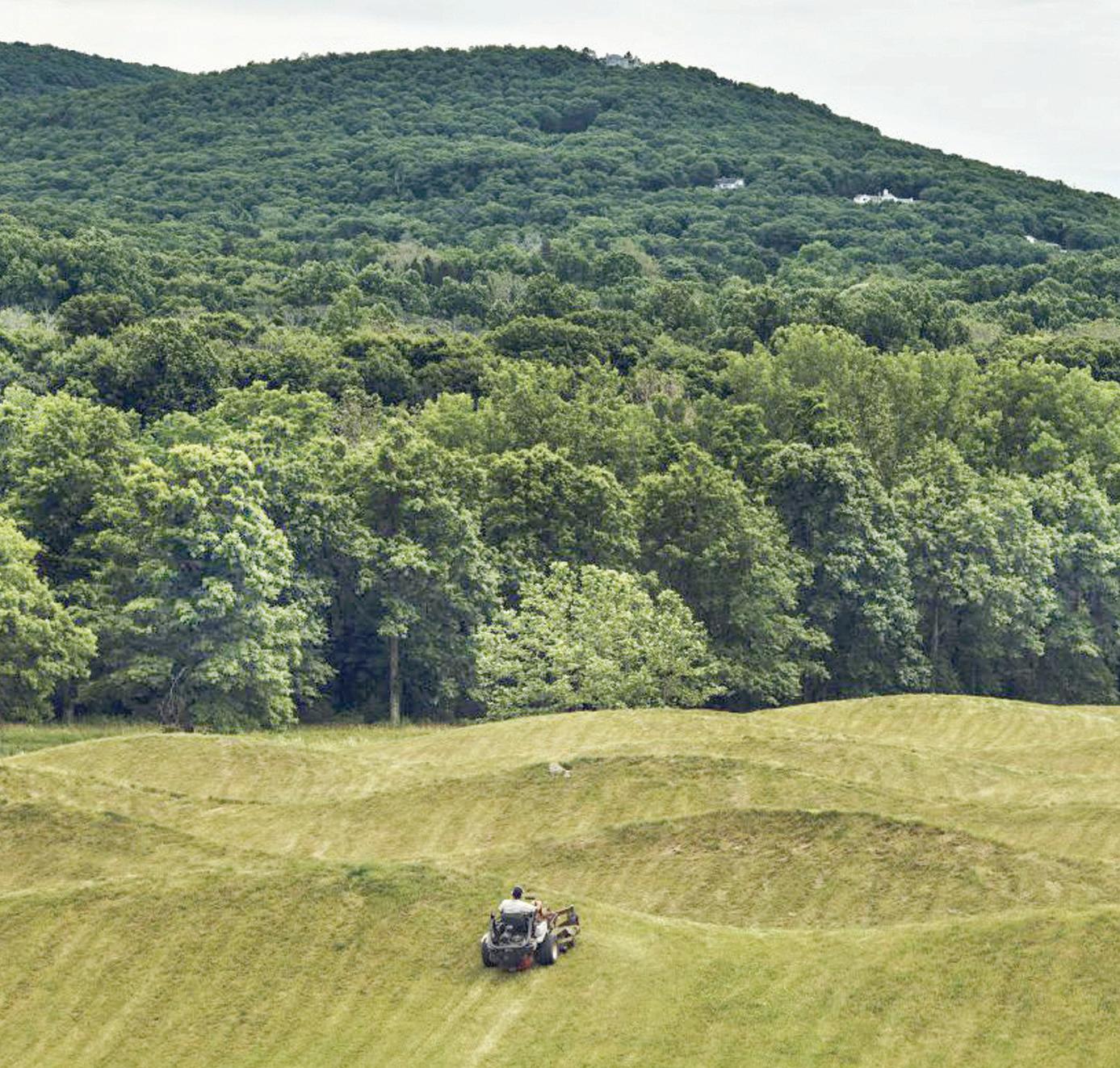
On the bottom level of the Herbert F. Johnson Museum of Art lives Vertigo Sea, a visual installation created by John Akomfrah which is stunning both in its beauty and in its horror.
Akomfrah is a Ghanian born, British artist whose vision goes hand in hand with political messages, as seen in this installation which pairs beautiful and intriguing filmmaking with an underlying message about the health of our world.
Vertigo Sea premiered in 2015 and much of its story was inspired by the perilous journey of an African migrant making his way to Europe. Much of Akomfrah’s footage comes from the Isle of Skye, the Faroe Islands and the Northern Region of Norway and along with footage from BBC nature documentaries focuses on man’s and nature’s relationship with themselves and each other, all within the confines of the Atlantic Ocean.
The installation is composed of three large screens, each of which shows a feed different than the other two. Sitting on a straight row of benches close to the screens viewers cannot possibly catch everything being shown, creating a mounting sense of over-stimulus. And it would appear that Akomfrah wants his viewers to be overwhelmed. Between and around shots of silent, snowy Arctic landscapes and peaceful waves he incorporates increasingly troubling visuals from old film of hunting expeditions shooting polar bears, to an actor portrayed scene of white sailors pushing African slaves off of ships to people in the modern day pulling themselves and each other from the ocean as a hurricane rages on. To put it simply, Vertigo Sea is not for the faint of heart.
In fact Akomfrah often draws comparison between the violence of humans and the violence of animals, with crossovers of interspecies violence until it all becomes a conglomeration of jousting power dynamics. Akomfrah juxtaposes the sequence described above of slaves thrown into the Atlantic with footage of killer whales hunting seals by knocking them off of ice caps. Other such contrasts combine ideas of “unjustified” veses “justified” violence, and calls for audiences to examine what they know about right and wrong.
However, Vertigo Sea contains more than just a clear-cut statement about the violent history of the Atlantic Ocean. Early on Akomfrah utilizes actors to create still life imagery with weird artistry comparable to paintings by Casper David Friedrich and Salvador Dali. Actors in colonial garb stand as the only living things in dreary looking outdoor settings, changing from a gray, stony shore to monochromatic woods of brown bramble and brush. Littered in these natural environments Akomfrah places an assortment of items including clocks whose hands are frozen between numbers and empty baby carriages. The actors say nothing and often do not even look directly into the camera, giving the effect of confusion about their relevance and importance, especially in the . . .
To continue reading this review, please visit www.cornellsun.com.
Erin Hockenberry is a sophomore in the College of Arts and Sciences. She can be reached at eeh67@cornell.edu.
New York, and was treated at the Orange Regional Medical Center, where she also worked as a nurse.
A national shortage of some brands of Intravenous Immunoglobulin, a life-improving and sometimes life-saving treatment of antibodies, is impacting patients in places from Boston to Virginia.
Immunoglobulins are another term for antibodies, a class of proteins that attach to and tag pathogens in the body.
“IVIG is a biologic drug made from the blood of healthy people and delivered into the blood of sick people. It is made up of specific components of the blood, called immunoglobulins,” said Prof. Cynthia Leifer, microbiology and immunology.
While patients struggle to get the treatment they need, the FDA is working with pharmaceutical companies to increase supply and clinicians and advocates are working to develop short term solutions to the crisis.
According to Leifer, for patients with autoimmune diseases, IVIG therapy helps eliminate self reacting antibodies, those that are not programmed correctly and attack the host body. Currently, one of the autoimmune diseases IVIG is used to treat is myasthenia gravis.
“The immune system generates immunoglobulins against muscle cells that prevent them from receiving signals from neurons. This results in paralysis,” Leifer said.
One patient with myasthenia gravis, Melissa Miedema, described her symptoms as feeling like “an overwhelming need to lay down. You just feel like your body is jello.”
Miedema is a resident of Middletown,
After her first myasthenic crisis in April, she was prescribed Gammagard, an IVIG product made by Takeda. She said she “felt better than [she] had in years”, but that improvement did not last. After she missed a dose due to the IVIG shortage, she has been hospitalized for multiple life-threatening myasthenic crises.
While treatment with other brands of IVIG and plasmapheresis (manual blood filtering) mitigated her symptoms, she was still unable to work.
Miedema lost her job as an ICU nurse, was denied short term disability and is now not receiving any IVIG or plasmapheresis unless her life is in danger.
In an email to The Sun, she wrote, “I checked the [insurance] marketplace and I have to pay $5,000 to $7,000 out of pocket plus copays. How is that possible? I have no income.”
According to Prof. Colleen Carey, policy analysis and management, people like Miedema are the reason why health economists have argued for the decoupling of employment and health insurance.
“Individuals who are too sick to work need coverage the most. Relying on employment to provide that coverage is really limiting,” Carey said.
Patient advocates, pharmaceutical companies and medical providers all suggest different reasons for the shortage and support a range of different solutions, including collecting more plasma to increase the supply of drugs.
According to patient advocates like Michelle Vogel, vice president of patient

advocacy and provider relations for CSI pharmacies, one short-term solution that some providers have taken is switching from IVIG brands in shortage to brands with a larger supply.
Dana Lynch, a representative from CSL Behring, which manufactures IVIG brands Privigen and Hizentra, confirmed this statement.
“CSL Behring has had no manufacturing issues or supply disruptions related to Hizentra or Privigen and expects to supply the market significantly to help meet growing demand; however, we cannot fill the entire gap created by shortages of other
manufacturers’ products,” Lynch said.
John Boyle, president of the Immune Deficiency Foundation, supports the shortterm solution of brand switching, but with reservations. According to Boyle, switching Ig products for non-medical reasons can cause untoward side effects.
Carey believes that more flexible pricing would help companies invest in expanding the supply of IVIG to meet demand even though it may complicate the affordability of the medications during a shortage.
What kind of world-class chemical engineering facility would let a group of undergraduates run their plant for a day?
The Discovery Space program at Imperial College in London does. This summer, in a fast-paced and immersive environment, undergraduate chemical engineers from Cornell applied classroom theory to real-life objectives over the course of five weeks.
Feifei Hu ’21 was one of the 21 chemical engineering students from Cornell who participated in the program. From her mentor, Dr. Colin Hale, she learned about the role that chemical engineers can play in finding climate change solutions.
One of these potential solutions is the Carbon Capture Pilot Plant, a scaled-down version of a real distillation column that uses the powerful properties of heat to separate nitrogen and carbon dioxide from the atmosphere. These plants are being used to fight the effect of greenhouse gases on climate change.
“We have to be conscious of environmental impact. Especially because we are chemical engineers, we can actually do something about it,” Hu said.
Students also learned to read piping and instrumentation diagrams, which display the instrumentation behind plant processes and their interconnectedness.
In the real-life application component of the program, groups of students ran the entire plant from the control room, transitioning from their paper diagrams to a 3-D, four-story plant. They were responsible for controlling the liquid and gas processes for carbon dioxide absorption and

taking data measurements of column performance.
According to Hu, for the plant to operate, the students had to understand the control loops, the monitor readings for pumps and heaters, and the procedures for start-up and shut-down.
Hu described how the out-of-classroom experiences changed her view of real engineering work; for example, reacting to something in the plant not working.
“Alarms would go off if something was wrong,” Hui explained. “You learned how everyone reacts in a panic situation.”
According to Hu, emergency response in a plant relies heavily on communication and consistency. When the alarms go off, members of the team often had to spread out across the plant to figure out what had gone wrong. In real-life situations, lack of communication could mean losing track of members of the team.
Their other major project was the rig building challenge. Cornell students collaborated with students from several other universities for this challenge, including students from Dalian University in China and Georgia Tech.
According to Hu, teams had to build a working closed loop rig that transported fluid from one bucket to another. They would then manipulate their rigs by calibrating pumps or changing the power source inputs to meet demands such as maintaining a constant flow rate or maintaining a certain level of fluid.
In addition to a project sketch and safety procedures for their rig, the teams were required to follow a budget based on the valves and pipes they had used and submit a finalized version at the end of the exercise.
“I’m really grateful for the chance I got to be a part of this program. I learned a lot every day that I was in the lab and had fun exploring London on the days that I wasn’t,” Hu said.
Since 1880
137th Editorial Board The Corne¬ Daily Sun
ANU SUBRAMANIAM ’20
Editor in Chief
JOYBEER DATTA GUPTA ’21
Business Manager
PARIS GHAZI ’21
Associate Editor
NATALIE FUNG ’20
Web Editor
SABRINA XIE ’21
Design Editor
SARAH SKINNER ’21
Managing Editor
KRYSTAL YANG ’21
Advertising Manager
MEREDITH LIU ’20
Assistant
RAPHY GENDLER ’21
Sports Editor
Working on Today’s Sun
Ad Layout Dana Chan ’21
Production Deskers Sabrina Xie ’21
Ben Mayer ’21
News Deskers Johnathan Stimpson ’21
Anyi Cheng ’21
Design Desker Lei Lei Wu ’21
Lei Anne Rabeje ’22
Photography Desker Boris Tsang ’21
Sports Desker Raphy Gendler ’21
Arts Desker Peter Buonanno ’21
Hello, Josh. You thought I would let you smoothly transition to campus, uscathed by the burden of a strange, washed-up older sister? Or that I wouldn’t use the first line of my first column of my senior year to grant you the public embarrassment of your name printed in The Sun for all of campus to see? You really thought. Welcome to Cornell, my dearest brother.
Now that we’re here, instead of talking about the exciting, tumultuous, life-changing journey you’ve just embarked on or the fact that you’ve chosen to uproot your entire life and leave behind the friends and family you’ve known for the past 18 years to move to a weird agricultural town in the middle of a forest on a campus that believes Bubly is an adequate substitute for Pepsi surrounded by the highest concentration of Westchester residents you have ever known, let’s talk about something far more important: me.
Watching you experience your first weeks at Cornell as I prepare to leave this place behind has been somewhat surreal. Each one of my lasts will be your firsts and I find myself replaying my freshman year, trying to remember what it was like each step of the way to try to prepare you for what’s to come. I want to tell you everything, but I have no idea what this place has in store for you and so much has changed since I lived on North.
When I entered Cornell, Vine was alive and well, vaping wasn’t a lifestyle and White Claws were not considered grounds for immunity. We used earpods instead of Airpods, called Collegetown Cab instead of Uber and went to Calios instead of the travesty that is D.P. Dough. It was a simpler time, and not just because our nation’s president wasn’t a former reality TV show host and self-proclaimed “chosen one” in love with Kim Jong Un.
Much like our president, I arrived in this new town sure I had it all figured out. I believed every spoon-fed lie Cornell tells us to sign away four years and a lifetime of student loans: I would find meaning and success in all my classes and clubs, easily find incredible friends who will change my life and find my ultimate purpose; I would graduate, fully transformed into an adult, diploma in hand, ready to change the world. And much like our president, I didn’t have a clue. I still don’t.
I didn’t know that nothing good ever happens at China Buffet, the communal suffering of a group project presentation after consecutive all-nighters, or the unique pleasure of waiting at a freezing bus stop at the top of North Campus 10 minutes before a prelim only to have it drive right past you. I didn’t know the excitement of getting involved in shared governance, the absolute bliss of waking up in an apartment with people I love or how deeply weird and wonderful this place is.
Josh, as it turns out, there are whole
swaths of college life they don’t tell you tell you about in the info-sessions — good and bad alike — and as you begin to forge your own path here, the best I can do to prepare you is to try to shatter some of the misconceptions.
As a newly-annointed Ivy League student, you’re told repeatedly how special you are for getting here, but not at all how mediocre you’ll feel once you arrive. For the first time in your life, surrounded by hungry high achievers, you’ll be forced to get comfortable with failure. It will feel deeply, personally crushing once you throw yourself into that first club application, relationship or defense of the funding status of a campus cinema only for you to fall short. But just as quickly, you’ll learn to pick yourself back up in order to discover how incredibly satisfying it feels to put your soul into something and succeed.
You’re told to get the most out of college and you’re going to feel an awful lot of pressure to join the rat race. We’ve been conditioned to chase the highest grades, most exclusive extracurriculars and most coveted internships. But no one tells you how empty those pursuits can leave you feeling and how much meaning you can find outside these realms. Wasting time on things you’re interested in, seeking novel experiences or just making something dumb with people you love can leave you more fufilled than the most flawless resume, even if you’re just heelying around Wegman’s at midnight, driving through the cornfields off campus, or making a website with your friend for — and I can’t emphasize this enough — no reason.
You’re told college is the best time of your life. You’re expected to love it. But no one tells you it’s okay to not be okay. Because this place will hit you. Hard. When you least expect it. And if you find yourself at 3 a.m. in the stacks filled with existential dread reading the most emo wall graffiti and missing all the splendors of suburban New Jersey life, don’t be afraid to ask for help, because we have all been there. Accept each extended hand offered to pull you back and know that you are not alone.
You’re told that you’ll find lifelong friends at college, but not how hard it can be to find them. This place can feel incredibly lonely even when you’re surrounded by people as you try to fill the empty seats of those you have known your entire life with unfamiliar faces. It might take a few weeks or even semesters, but once you find the people who bring out the parts of you that you love the most, they will become your Cornell experience.
To continue reading this column, please visit www.cornellsun.com.
Sarah Park is a senior in the School of Industrial and Labor Relations. She can be reached at sarahpark@ cornellsun.com. Spark Notes runs every other Monday this semester.
Cornellians are an artistically talented bunch, that is undeniable. In fact, it is difficult to find a Cornell student that isn’t well-versed in one of the arts. We have an assortment of incredible dancers, singers, pianists and actors. Many would attribute this concentration of artistic talent to our multifaceted intelligence: we were simply born bearing many gifts. Isn’t that why we’re here?
I used to believe this. Talent is “a natural ability to be good at something.” A singer has music in their blood. A dancer has rhythm in their bones. It is biological. It is innate.
Well, I don’t play an instrument. I don’t sing. I don’t dance. I don’t draw. The only instrument I ever played was the recorder in third grade. The only time I sing is in the shower. The only time I dance is at a frat party because the lights are off and everyone’s too drunk to care. You might say I was born with no talent.
I recognize that the arts have many mental, emotional and physical benefits. However, if you are a parent that was born into poverty, did not finish high school and had to migrate to a different country that does not speak your native tongue to survive, you will have other priorities for your child — namely, their own survival. And music lessons won’t feed your child.
Underfunded high schools in low-income communities recognize that having Advanced Placement and honors classes is more important in the college admissions process than the arts. My high school had two artistic programs: an art class and a
If you are a parent that was born into poverty, did not finish high school and had to migrate to a different country that does not speak your native tongue, you will have other priorities for your child. And music lessons won’t feed your child.
A couple of months ago, I would have agreed with you. I would have agreed that I was born incapable of profound artistic expression. Had you asked me what my talents were, I would’ve shamefully replied that I had none. I know how to study. I know how to ace a test. I wasn’t born with music in my blood or rhythm in my bones.
Except I realized there’s a trend among us the untalented: we weren’t born with
I realized there’s a trend among us the untalented: we weren’t born with many zeroes in our parents’ bank accounts. Most people get their artistic abilities from years of lesson-taking and practice.
many zeroes in our parents’ bank accounts. To be clear, I’m not denying the existence of natural artistic ability. Many artists come from low-income backgrounds and were discovered at a young age because of their skill. Most people get their artistic abilities from years of lesson-taking and practice, however. This is not something that everyone can afford.
For one, parents in low-income communities often don’t have the time nor the money to enroll their children in piano or ballet lessons. My parents, both of whom worked over 10 hours a day earning minimum wage, struggled enough to pay for the necessities. The last thing on their mind was enrolling me in expensive, non-academic extracurriculars that would yield no immediate practical outcome.
music class. But students knew better than to sign-up for those if they were trying to go to a “good” college. In fact, counselors only recommended these classes to students who struggled academically; everyone else was encouraged to pile on honors and AP classes to stand a chance in the competitive world of college admissions. After all, our high school’s average ACT score was a 16. So, the next time that you look down on someone for their lack of artistic talent, consider why that might be the case. It is time that we problematize the belief that some people are simply born talented and some are not. Talent is, more often than not, developed over time and not everyone has the resources to develop it. If we continue to perceive artistic talent in this manner, we will continue to discourage people from exploring the arts later in their life. They will believe that they were born without the necessary skills.
And to my low-income Cornellians: you were not born ungifted. There is nothing wrong with you. You were simply not given the capital to develop certain skills. Even then, you have consistently defied the odds. Like your parents, when you were told that
Like your parents, you’re learning to navigate systems not meant to accomodate you. You have exceeded the expectations of your community.
Now, you might say that practicing the arts can positively shape our lives. There are countless studies about the effects of musical training on brain development. I don’t deny that. I don’t deny that dance helps children with their strength, posture and flexibility.
you didn’t belong here, you proved them wrong. Like your parents, you’re learning to navigate systems not meant to accomodate you. You have exceeded the expectations of your community. You are their hope. You are the epitome of talent because you’ve mastered the art of survival.
Lucy Contreras is a junior in the College of Arts and Sciences. She can be reached at lc644@cornell.edu. Her column, Lucy Dreams, runs every other Tuesday this semester.
Though I often don’t like to admit it, I am a reality TV fanatic. To me, reality stars are just characters whose stories can be followed past the confines of the show. However, I tell myself that I’m not just mindlessly watching Lisa Vanderpump’s waitstaff to desensitize myself from the crushing weight of my own reality. I like to think that reality TV serves as a useful tool to observe human behavior and see social norms at play. It’s real(ish). It’s raw(ish).
In high school, the debut of the show “Are You The One” piqued my interest in the realm of heterosexual dating shows. My DVR consisted of hoarded episodes from the Bachelor franchise, “Ex on the Beach” and all five “Twilight” movies. Night after night, I watched intently as midwestern white people found (usually very temporary) love.
Eventually, it began to dawn on me that girls who looked like me never seemed to find their Prince Charming on these shows. Black girls were seldom offered the coveted final rose.
Every season of “The Bachelor,” I came to expect that almost all of the black women will be kicked off within the first few episodes, except for one or two contestants that are strung along for a few weeks to uphold a somewhat non-racist image. Every season of “Are You the One,” black girls often fail to connect with their “perfect match,” receiving little to no airtime or used as ploys to create drama for ratings.
conducted a further investigation about black women and marital status. He found that the likelihood of marriage decreased as skin shade darkened. By age 29, 55 percent of light-skinned black women were married, while only 23 percent of darker-skinned black women were married.
And there’s no shortage of profiles, videos and tweets where men of all colors are quick to deem black women — a group that makes up millions of unique individuals — as undateable, unattractive, ill-mannered or any other stereotypical label slapped on to black women since the dawn of time. Men are quick to dismiss black women,
Faced with rejection from men of our race, straight black women are often told to date non-black men. Cheryl Judice, a professor at Northwestern, published a book in which she urges black women to explore the idea of finding love with men outside their race, as the availability of marriageable black men decreases due to factors like high mortality and incarceration rates. However, exploring romance outside your identity group comes with its own set of challenges and rejections.
To illustrate my point, take the case of Taysia Adams, a 28-year-old phlebotomist from Southern California, who made it to the final three on Colton’s season of “The Bachelor.” As the season progresses, you can tell that Taysia is a great match for Colton. She was kind, intelligent, beautiful and seemed to really get along with Colton. But to absolutely nobody’s surprise, Colton rides over the fence and into the sunset with the stunning blonde-haired, blue-eyed Cassie, a 23-year-old speech pathologist with ironically poor communication skills, an allergy to commitment and seemingly no real direction in life.
Black women are not all one and the same. Our personalities go beyond outdated mammy and jezebel tropes, the archetypes long used to box us in. We deserve a chance to be treated as unique individuals.
When I came to college, it hit me that this was not unique to reality television. It’s an authentic reflection of the continuous exclusion of black women by society.
Facts don’t lie. In 2014, an OkCupid study found that black women were rated the “least desirable” amongst all other races. The National Survey of Family Growth found that less than two-thirds of black women are married by age 40, in comparison to nine in 10 white and Asian women and eight in 10 Hispanic women. Dr. Darrick Hamilton, a professor at Ohio State University,
chalking it up to preference. Though, in case you didn’t know, racial preferences are indeed racist. It’s okay to have a type, but to write someone off because of their color is pretty much the definition of racism.
Even within the scope of Cornell, a school whose students tend to feign open-mindedness for clout’s sake, black women, especially those who are darker-skinned, are consistently pushed aside for lighter and whiter counterparts, even by members of their own race. Cultural commentator, Ayishat Akanbi explained in one insightful tweet, “Only black girls see a man of their own race that they are romantically interested in and have to consider whether he even likes black girls.”
Canaan Delgado | No Church in the Wild
AI’ve watched my friends move from relationship to relationship, at times wondering “what’s wrong with me,” but as I began to see other black girls in the same situation, I came to realize there wasn’t anything wrong with me — there was something wrong with society’s inability to progress from stereotypes created during a bygone era.
Black women are not all one and the same. Our personalities go beyond outdated mammy and jezebel tropes, the archetypes long used to box us in. We deserve a chance to be treated as unique individuals, just as capable of engaging in the most universal human experiences — love.
Amelia Zohore is a junior in the College of Arts and Sciences. She can be reached at az288@cornell.edu. And What About It? runs every other Tuesday this semester.
fter a restless night, I finally decided to head to bed at 7 a.m. Generally, my insomniac tendencies show through after staying up multiple nights to complete the grueling problem sets that I should have started well before the day that they are due. However, this time around, I spent the night talking about life with one of my best friends at Cornell.
There have been numerous nights where
end-all path to happiness; our coveted path is shifting to the red carpet and away from the yellow brick road.
As we become isolated from society, our brain functions begin to deteriorate, our health withers and our willingness to actively impact the world diminishes.
I have sacrificed sleep to better my relationship with this friend; I am rather abnormally extroverted, and my inability to stop talking has allowed me to cultivate relationships wherever I go. For some of us, we make friends by going out to party. For others, though, friends come through initially unintentional associations, whether that be through mutual friends, class partners or an accidental right swipe.
What Researchers Have to Say About Relationships
Given the breadth of opportunities we have today, many individuals crave achievement: 80 percent of millennials desire to become rich, 50 percent long to attain stardom and approximately 10 percent see themselves becoming an expert in a professional field. Needless to say, people dream big. However, these two states of monetary wealth and fame are described as the be-all-
The Harvard Study of Adult Development has been tracking the lives of men for over 80 years to examine development through life events. Selected in 1938, the study considered two groups of 362 men: a group of Harvard sophomores and a group of economically disadvantaged boys from the slums of Boston, living in tenements without running water. Throughout the study, some participants climbed from the bottom of the social ladder to the top, while others backslid. Every one to two years, the men would be interviewed and sent a questionnaire asking about their lives.
After collecting and analyzing reams of data, scientists discovered the true root of happiness: genuine, quality relationships. Strong social connections correlate to a longer life, making us happier and empowering us to be our best. Isolation from our community, however, is a silent killer.
As we become isolated from society, our brain functions begin to deteriorate, our health withers and our willingness to actively impact the world diminishes. Those who exercise affability can construct an idyllic life. Those who find solace in combatting the onerous tasks that assist in the environmentally sustaining our planet possess monumental minds. Their secret to preservation? How are their cognitive performances so sharp? The reason lies in their relationships — the ability to swap personal time for people time is what gives them life; this lesson can be applied today, where we can, rather than petting an inanimate glass screen, give a more meaningful physical connection to loved ones. What does this
say about us, the present-day Cornellian?
Throughout the Cornell community and beyond, there are a plethora of incarnations of the friendships I have created over my time alive. On campus, especially for those freshmen that have been stuffed in the tightly knit North Campus community, it would only make sense that connections would be established after placing an energetic group of Generation Z kids in the same dining halls, dorm buildings and study areas. These relationships, unlike many, are vastly different from any that will be cultivated throughout one’s life — a group of individuals that will be attending our weddings, traveling the depths of the planet and continuously reconnecting for updates on life.
Regardless of where we may have hailed socioeconomically, demographically or politically, we all now share one common virtue — the desire of maturation and the acquisition of adult-like responsibilities.
Having already spent a whopping two years at Cornell, I can assure any student that maintaining tangible, wholesome relationships is arguably the most important task in leading a healthy college journey. There have been many points in my academic career where I have established, strengthened and lost friendships due to a variety of reasons, some of which have scarred me to this day. Fortunately, Cornell will still be my home for the next few years, enabling me to pursue friendships on campus. Every single quagmire and opportunity I have encountered during my time here has
been alongside a friend. The overcoming of handling the Kafkaesque financial aid application, ruthless differential equations homework, dark times where the second head of frustration had poked out of our skins, have all been accomplished next to my peers.
Although I still have a long time remaining here at Cornell, I feel bittersweetness for all the memories I have made alongside my peers, especially those spent lethargically slouched on the common room couch playing Smash Bros. until we no longer could feel our fingers. As my time dwindles, I become ever so reluctant to even want to move forward, as the relationships I have constructed here will never be able to be duplicated. For those that have kind friends, thank them for all of the shared memories — whether negative or positive — that have impacted your life.
American writer, humorist, entrepreneur, publisher and lecturer Mark Twain cannot have put the importance of relationships into better words: “There isn’t
Although I still have a long time remaining here at Cornell, I feel bittersweetness for all the memories I have made alongside my peers.
time, so brief is life, for the bickerings, heartburnings, callings to account. There is only time for loving and but an instant so to speak for that.”
Canaan Delgado is a junior in the College of Agriculture and Life Sciences. He can be reached at demassa-delgado@cornellsun.com. No Church in the Wild appears every other Tuesday this semester.
Fill in the empty cells, one number in each, so that each column, row, and region contains the numbers 1-9 exactly once. Each number in the solution therefore occurs only once in each of the three “directions,” hence the “single numbers” implied by the puzzle’s name. (Rules from wikipedia.org/wiki/ Sudoku)


Houses, Apts, Parking 1 to 9 Bedroom
Collegetown - College Ave, Linden Ave, Dryden Rd, Bryant Ave, Cook St. 607-330-2442 info@urbanithaca.com www.urbanithaca.com
We have availability for the 2020-2021 school year beginning June 1st at Hudson heights apartments. The studios include electric, heat, water, garbage and parking. There is coin-operated laundry facilities on site. Prices start at $750 / month for a 12 month lease. If you have any questions or would like to schedule a tour contact us by phone 607-280-7660 or email: renting@ithacaLS.com
COLLEGETOWN TERRACE APARTMENTS Spring 2020 Semester Leases Available Heat, hot water and Wi Fi included Free State of Art Fitness Center Free Shuttle Bus Service to campus Washer & Dryer in Apartments collegetownterraceithaca.com office@ithacastudentapartments.com (607) 277-1234
Now Renting
2-10 Bedroom Houses/ Apartments for 20-21. All Locations. Call today or visit our website: Certified Properties of TC Inc certifiedpropertiesinc.com 607-273-1669
20-21
Upper College Ave.
5 & 6 BR Apts Furnished. Laundry. Call 607-273-8576
20-21 Dryden Rd. 2 & 3 BR Apts Furnished. Laundry. Call 607-273-8576
2020-2021
Studio 1, 3, 8 & 11 BR Apts. Great Locations in Collegetown. 607-227-2535
27 H OUSE FOR R ENT
20-21 College Ave.
5 BR House Furnished. Laundry. Parking. Call 607-273-8576
20-21
Upper Eddy St. 7 BR house Furnished. Laundry. Call 607-273-8576

Continued from page 12
keeper to keep the first half scoreless.
The Red continued to mount attacking pressure in the second half. In the 52nd minute, junior midfielder Harry Fuller finally broke the deadlock, scoring a wonder goal off a Cornell corner kick as his curling strike went off the crossbar and in. The combination of Fuller and Scearce in midfield caused havoc for the Spartan defense on the day.
throughout the day, had a shot that hit the post.
The teams went into overtime tied 1-1, each side growing more confident in its attacks. Both sides traded chances in the first five minutes, with the game looking like it could end in either team’s favor.
With four minutes left in overtime, freshman defender Will Citron capitalized on a loose ball in the box and scored the game-winning goal.
Cornell looked to be in control but was continuously susceptible to the quality of its nationally ranked opponents. With 30 to play, intricate passing by Michigan State around the Cornell 18-yard box set up an equalizing goal. Cornell was unfazed and continued attacking pressure.
The Red nearly stole the game in the dying seconds of regulation as freshman midfielder Brandon Morales, who saw good minutes
Finally, with four minutes left in overtime, freshman defender Will Citron capitalized on a loose ball in the box and scored the game-winning goal to give Cornell a dramatic 2-1 win. On Monday, Citron was named the Ivy League Rookie of the Week for his clutch performance.
The Red is now 1-1 on the season and will play five more out-of-conference matches before Ivy League play commences in October.
Up next, Cornell will take on Fairleigh Dickinson University for its Berman Field home opener on Sunday at 5 p.m.
Mike Seitz can be reached at ms2858@cornell.edu.

By BENNETT GROSS Sun Staff Writer
Cornell golf took home its first victory since September 2016 over the weekend, coming in first in the 16-team Alex Lagowitz Memorial Invitational at Colgate with a score of 880.
The tournament was the team’s first of the fall season and also the Red’s first tournament victory outside of Ithaca since 2007.
Junior Charlie Dubiel led the scoring for Cornell, finishing the weekend at even par. He ended the tournament as the fourth-best scorer out of 96 participating golfers.
Dubiel was closely followed by senior Jack Casler, who shot two strokes over par in the 54 holes on Saturday and Sunday.
“I think we had a great strategy for the course this weekend and stuck to it,” Casler said. “This season we’re focused on playing smarter and staying mentally sharp. That focus was really important this weekend.”
Although the Red ended up winning the tournament, the final round on Sunday was less than ideal. Dubiel carded a four-over par Sunday, while Casler concluded the tournament with a three-over par round.
“This win was really exciting for us,” Casler said. “The field was pretty strong this year and we beat some solid teams.”
Bucknell came in second, three strokes behind the Red with a final tally of 883. Seton Hall and Yale rounded out the top four.
“This win was the first time that I have been part of a team victory and I loved every second of it,” said Casler. “Coming back home with the trophy was a great feeling. That being said, our round on Sunday was far from perfect and we still have some work to do if we want to stay at the top of leaderboards.”
The experienced duo was aided by their strong play on par-3 holes. Casler led the tournament in the cate-

gory, scoring even par on the par-3’s. Dubiel similarly dominated these holes, ending his weekend at one-over par in the category.
The rest of the Cornell lineup was filled by sophomore Gus Lascola and three players making first-time
starts. Lascola and freshman Ben Choe ended the weekend tied for 45th, while freshmen Josh Lundmark and Sam King finished 59th and 72nd, respectively.
“Even though our team is younger, everyone has a lot of competitive experience and that helped us get off to a great start on Saturday,” Casler said.
Though four of Cornell’s six golfers in the tournament were underclassmen, the importance of this first win in three years was not lost on them.
“It’s really exciting to win the first event of the season,” Lascola said.
“We are going to put a lot of emphasis on playing smart ... Boring golf is usually good golf.”
Charlie Dubiel
“We have had a lot of really good players over the last few years, but this year might have the most depth. As a result, even if one player has a bad round, you can count on the other four still scoring and I think that the team was lacking that reliability in years past. For me, personally, it’s a huge confidence boost.”
The Red will follow up this first tournament of the season Sept. 14 and 15 when it hosts the Cornell Invitational at Robert Trent Jones Golf Course. Last year, the Red placed 10th out of 15 teams at the tournament, which is the only home event of the school year for Cornell.
“We are going to approach this weekend like any other event,” Dubiel said. “Sure, we may know the golf course better than our competition, but I do not know how much of a difference that really makes. Just like last week, we are going to put a lot of emphasis on playing smart and playing to the right spot. Boring golf is usually good golf.”
Bennett Gross can be reached at bgross@cornellsun.com.
After a bumpy start to its season, soccer takes down MSU in overtime
By MIKE SEITZ Sun Contributing Writer
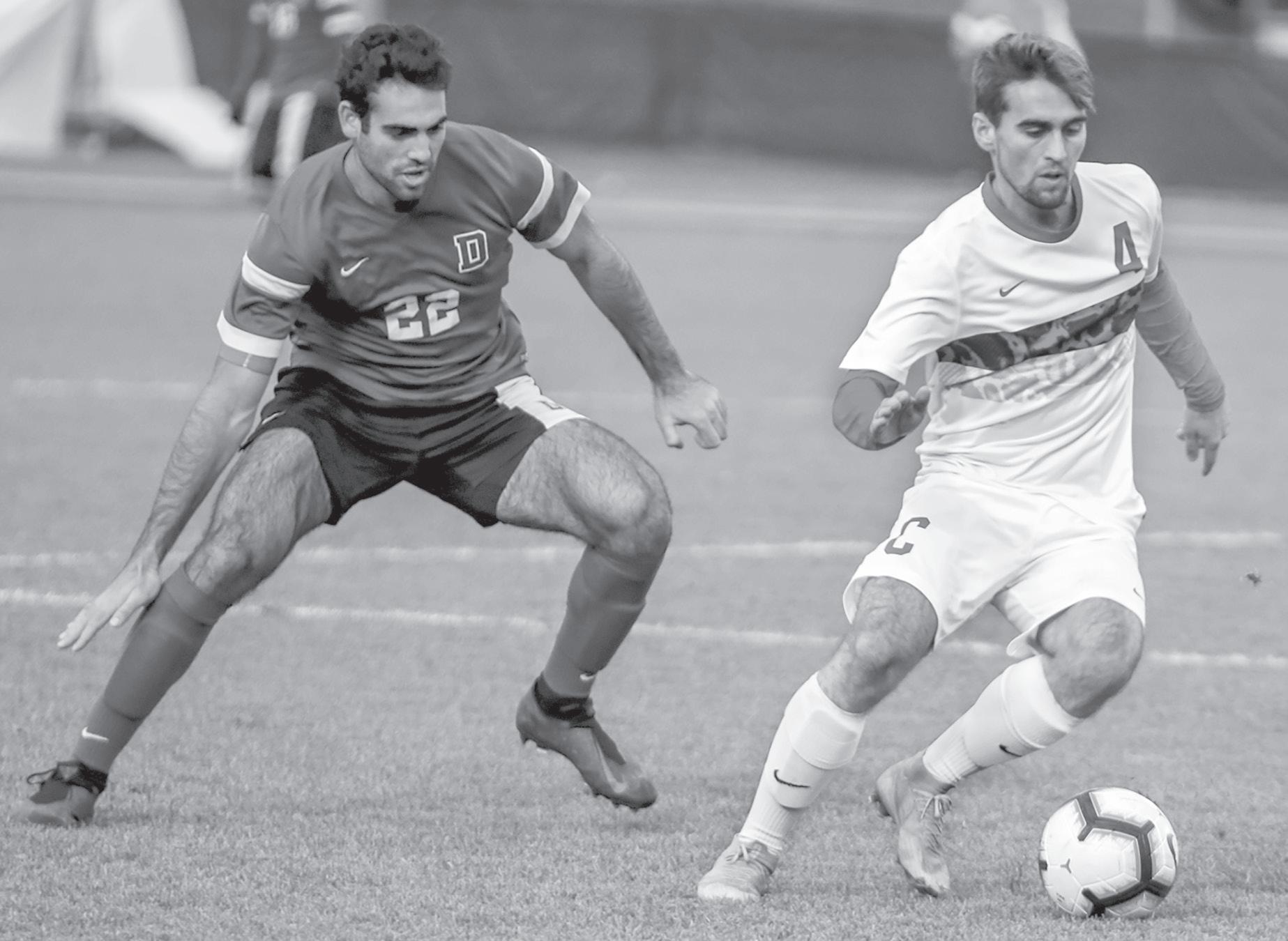
Cornell kicked off its season against perennial Big Ten powerhouses Michigan and Michigan State over the weekend, taking down the Spartans in the second game for an early-season upset.
In the Red’s Friday match in Ann Arbor, the team opened its year with a defeat at the hands of the Wolverines.
Cornell looked convincing early, playing at a fast pace and stringing together crisp passes. However, Michigan capitalized on a moment of individual brilliance in the 33rd minute when MAC Hermann watch list honoree Jack Hallahan delivered a backheel flick pass out wide that set up a goal to put the Wolverines up, 1-0.
Despite its early confidence and attacking pressure, the Red lost its offensive momentum in the second half. Junior forward Charles Touche, last season’s Ivy League leader in goals scored, struggled to make an impact and was frustrated by the Michigan defense.
The current got tougher in the 47th minute, as a Michigan free-kick delivered a ball into the box that was hit first time by Wolverine defender Jackson Ragen. His
shot just crossed the goal line despite seemingly being cleared off the line by Cornell defense. The Red immediately protested the goal but the ruling stood.
Frustrations continued for the Red, as in the 51st minute senior midfielder John Scearce slide tackled Hallahan from behind and received a yellow card. Cornell ended with 19 fouls committed on the day.
Cornell’s offense was canned by Michigan’s defense, which made strong tackles, won headers, and blocked shots.
The Red was still looking to score late, but one too many touches by sophomore forward Emeka Eneli led to a defensive clearance that directly set up a Michigan breakaway goal. The final score was 3-0, Michigan.
Fresh off that loss to Michigan, the Red looked to regain confidence against an injury-riddled Michigan State on Sunday.
The Red was dominant in the first half. The Cornell defensive shape looked strong and in-sync, with sophomore defender Tate Keir and freshman defender Connor Drought doing great work shutting down the speedy Spartan forwards. The game had no shortage of intensity as five Cornell players picked up yellow cards.
The Red also showed early prowess in
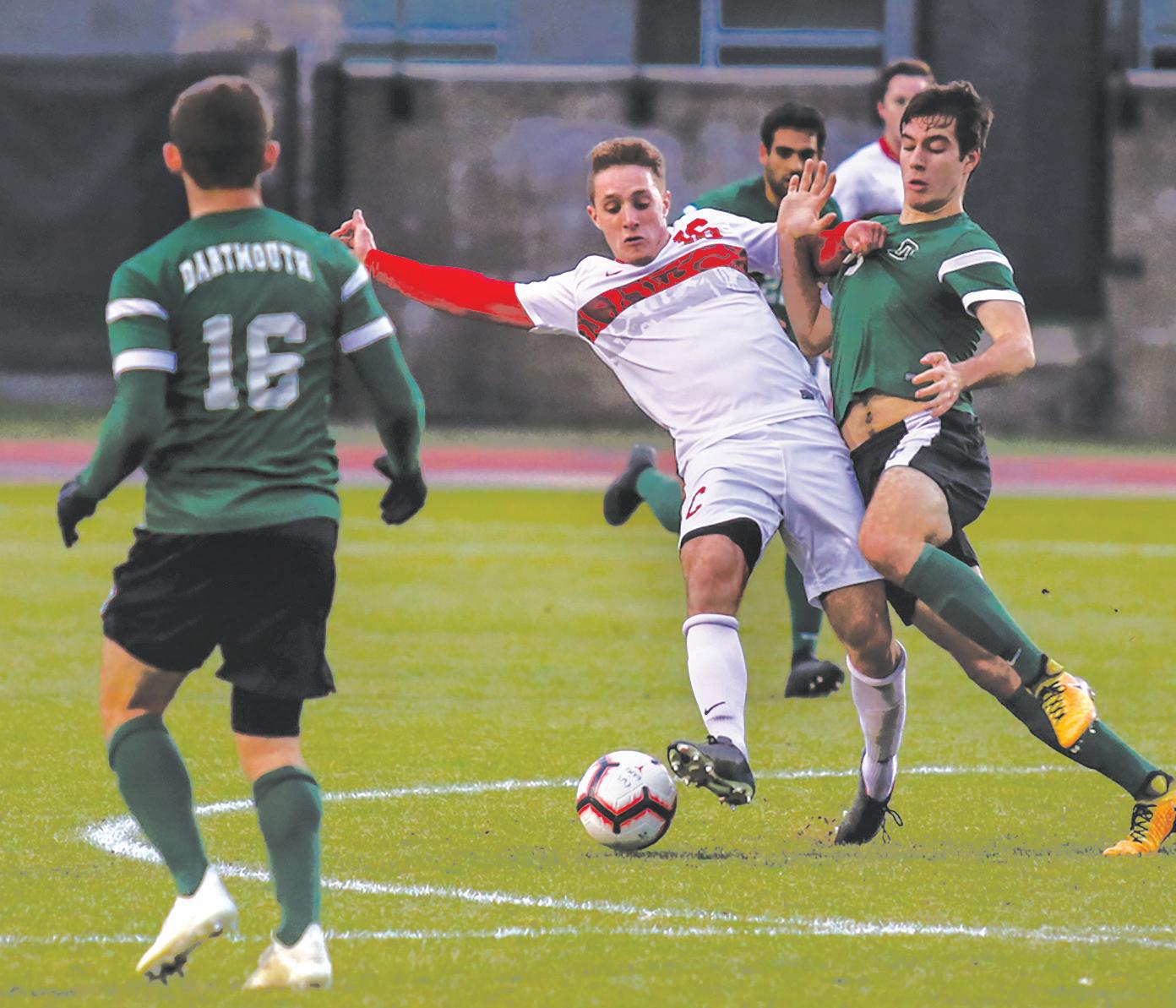
its attack. Senior forward George Pedlow caused problems for the MSU defense and nearly scored a chip goal 15 minutes into the game. The Cornell midfield took advantage of Michigan State’s depleted first