The Corne¬ Daily Sun

Will mark 39th iteration of an Ithaca tradition
By MIA GLASS Sun Staff Writer
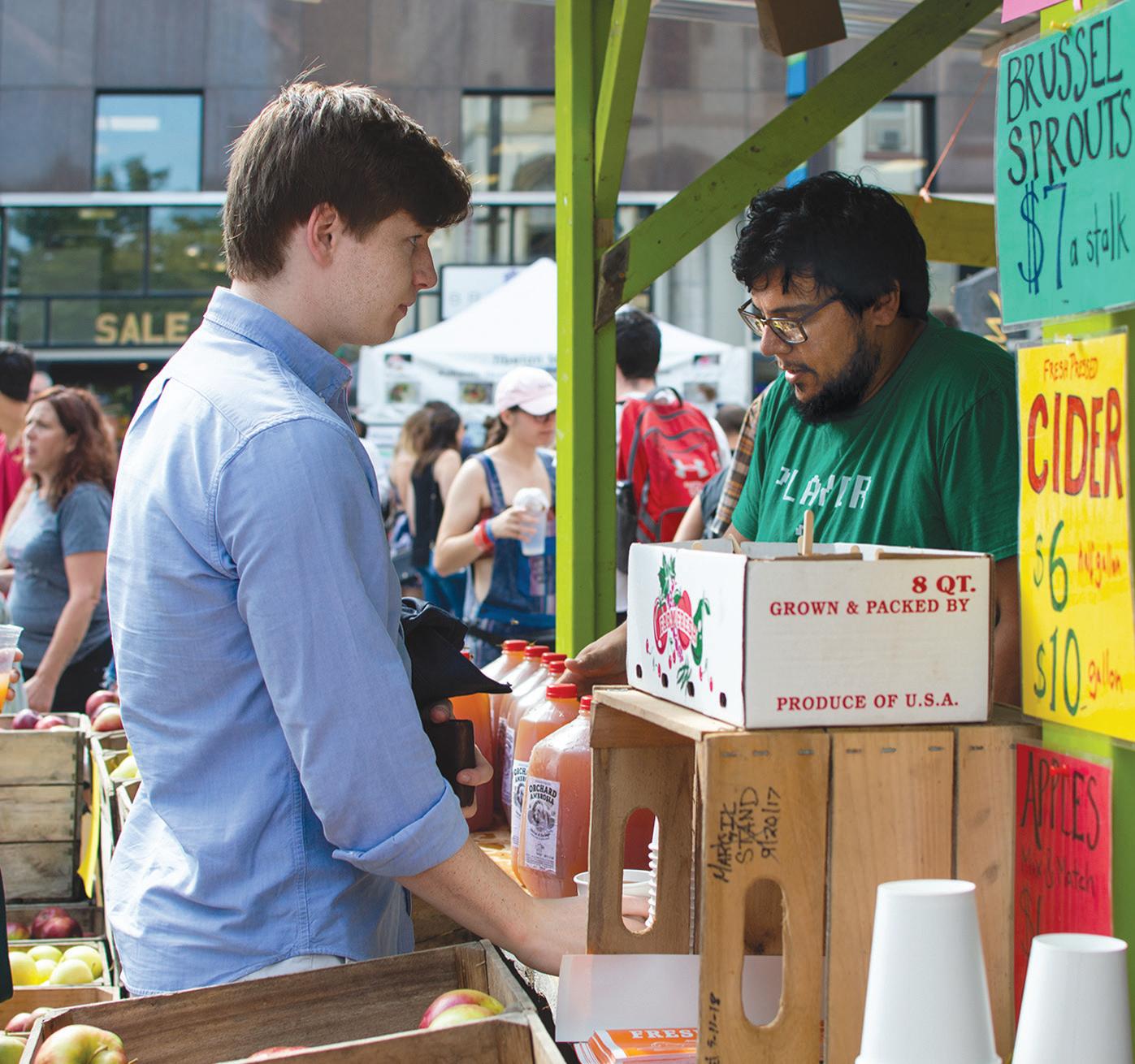
Just once a year in the depths of fall, Cornell students can be spotted carrying jugs of apple cider and bags of apples to their dorms instead of backpacks filled with books. The Apple Harvest Festival — popularly known as AppleFest — is one of Ithaca’s most popular annual traditions for students and town residents alike, and is returning to the city after a modified “Apple Festive” in 2020.
The festival is organized by the Downtown Ithaca Alliance, a nonprofit that aims to develop and promote Ithaca. This year, AppleFest will celebrate its 39th year on Oct. 1 to 3.
COVID brought changes to AppleFest last year, when the festival downsized to a
six-day socially distanced farmers market that included an Apple and Cider Trail. Although the usual AppleFest will take place this year, Scott Rougeau, DIA special events director, said that COVID precautions will remain to ensure that the event is safe for the community.
“There will be less vendors and more space between the vendors,” Rougeau said. “We’re going to be encouraging masks for everybody, obviously encouraging vaccinations beforehand, and hoping people social distance when they can.”
Many stands will be taking their own precautions as well. Bakers Acres, a local vendor that sells apples, apple butter and cider, will not allow customers to self-serve like they did in previous years. Patrons will
See APPLE page 3
By FAITH FISHER Sun Staff Writer
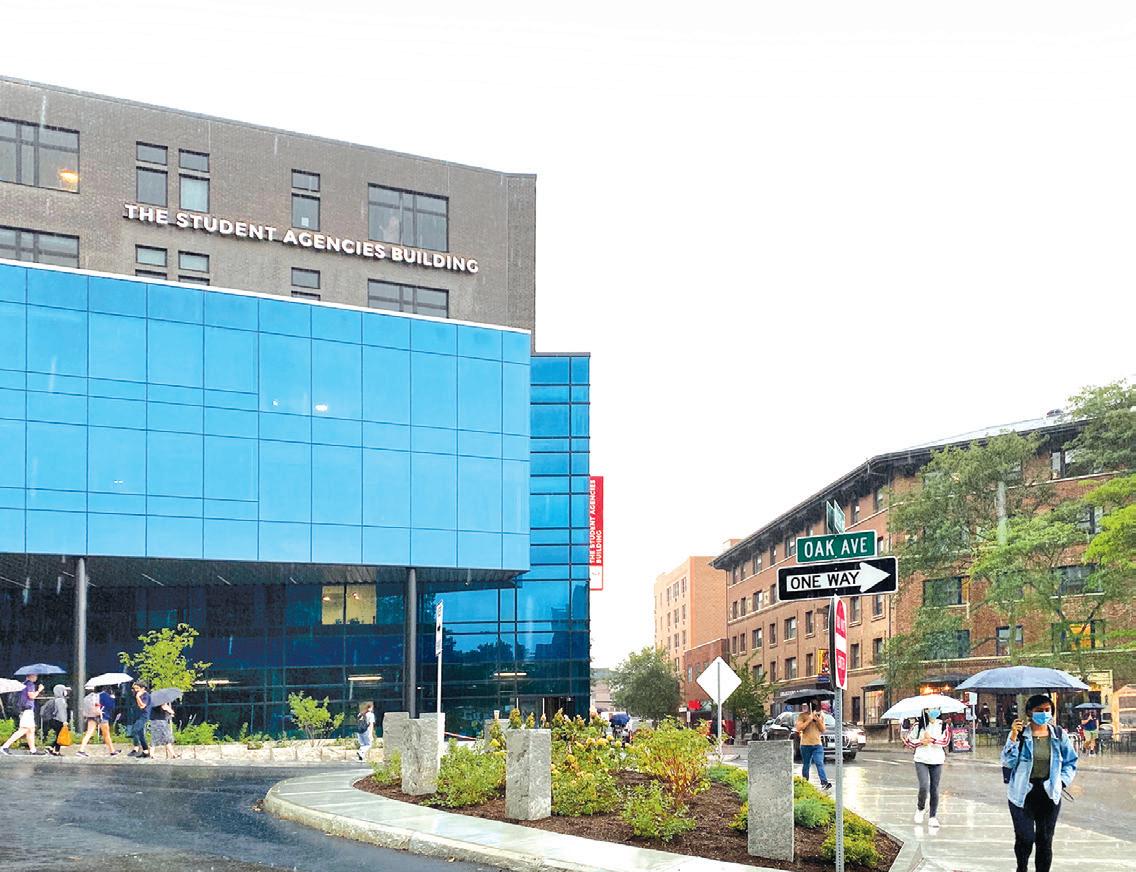
A six-story blue glasspaned Student Agencies building marks the new facade of Collegetown after more than a year of construction. Straddling the corner of College Avenue and Oak Avenue, the madeover building is home to more than 50 apartments and a future location of Ithaca Beer Co.
The student apartment complex, constructed and managed by Student Agencies, is 100 percent occupied for this academic year. Charlie Lee ’22, Student Agencies president, and Brooke
Shacoy ’22, general manager of Student Agencies Real Estate, say they have received overwhelmingly positive feedback on the project from their residents. According to Lee and Shacoy, students were involved in many of the decisions for the building, from the type of fitness equipment in the gym to the type of furniture in the units. Student Agencies is the oldest independent student-run company nationwide and is the second largest employer of students in the area — after Cornell itself.
that our input helps select pieces that students actually want in their rooms.”
“Student Agencies is one of the more
absurd developments.”
Ben Inbar ’21 MEng ’22
The building also prides itself on its emphasis on tenant relations — the building uses a property management software that allows tenants to file maintenance requests at any point during the day from their phone.
By ELI PALLRAND Sun Staff Writer
“I’m not a designer, but I kind of know what students are looking for,” Lee said. “I hope
“I think we’re a lot more receptive than some of the other buildings around campus,” Lee said. “There have been some issues with property managers not doing things for long periods of time, just ignoring tenants. I have a landlord, I live in Collegetown and know what it’s like, so we’re trying to give our tenants the best experience possible.”
The apartment complex also has a 2,000 square foot patio, where the wooden picnic tables of Collegetown Bagels used to sit. Ithaca Beer Co. will set up a second location in the ground level of this space.
Even though Student Agencies has received positive
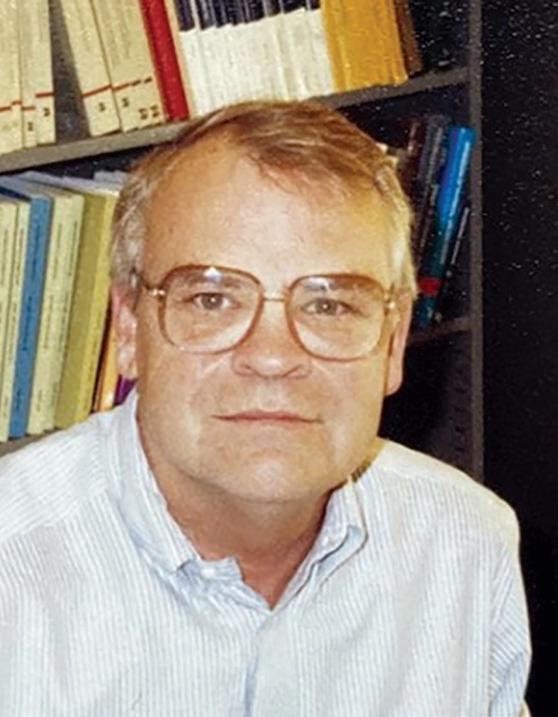
James H. Bramble, the Cornell professor of mathematics who pioneered new methods in finite element mathematics and partial differential equations, died on July 20 at his home in Austin, Texas. He was 90.
Born in Annapolis, Maryland, on Dec. 1, 1930, Bramble was the son of Charles C. Bramble, a mathematician and the first director of research at Dahlgren Naval Proving Ground. Eventually, James H. Bramble would follow in his fathers steps as an innovative mathematician himself.
as a kid being fun and mischievous, and so he allowed some of that with us,” the younger James said. “He didn’t try to quash that curiosity out of us, he fostered it. And I think that played a big role in producing a dynamic family that had a lot of different interests.”
“He would never really give too much advice, but he was there when we needed him,” James continued. “I was lucky enough to become very close friends with him later in life.”
James Bramble, the professor’s son, described his father as “thoughtful like a mathematician,” but still caring — a dedicated family man.
“He had a lot of experience
In 1953, Bramble received a bachelor’s degree from Brown University, followed by a Ph.D. from the University of Maryland in 1958. He then ventured outside academia to work for General Electric and the Naval Ordnance Laboratory.
Thursday, September 9, 2021
Rose Crawford: In Her Bittersweet Solace 8 a.m., Experimental Gallery, Tjaden Hall
Panel on China-U.S. Security Issues 11:25 a.m., Virtual Event
Energy Engineering Seminar: Jacob Mays 12:25 p.m., Olin Hall, 165
FGSS and LGBT Studies Welcome Reception 4:45 p.m., A. D. White House
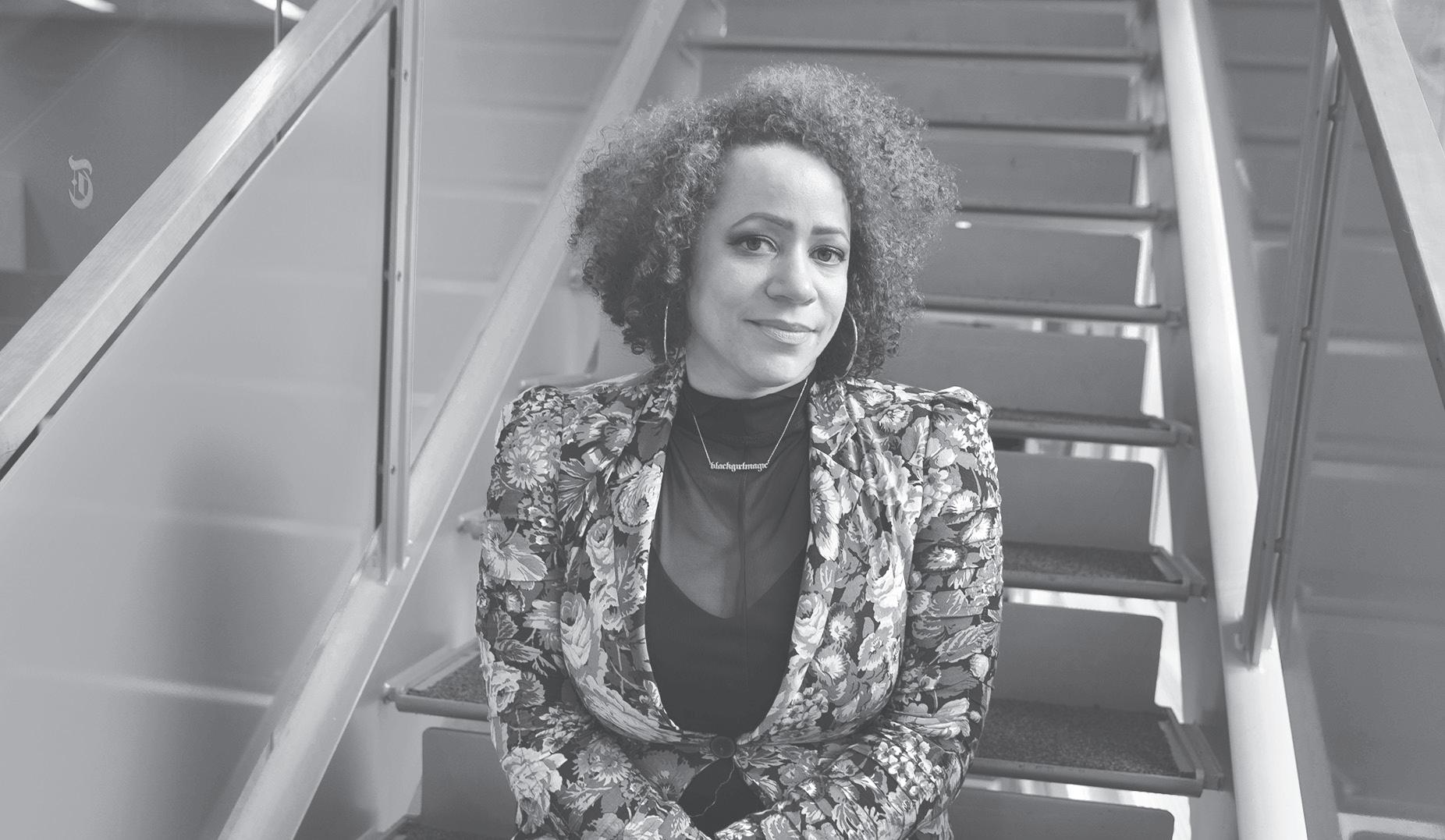
The 2021 Kops Freedom of the Press Lecture: Nikole Hannah-Jones 5 p.m., Rhodes-Rawlings Auditorium, Klarman Hall
Sundance Shorts 2021 7 p.m., Willard Straight Theater
Summit on Entrepreneurship and Equity 9 a.m., Virtual Event
Jay Pitter: Lecture and Workshop 9:30 a.m., Klarman Hall G70
CIAMS Lecture Series 11 a.m., Virtual Event
Yiddish Conversation Hour Noon, Virtual Event
Sorority and Fraternity Life Fair 2:00 p.m., Rawlings Green
Biomedical Engineering 7900 Seminar, Rebecca Pompano, Ph.D. 2:45 p.m., Weill Hall, 226
Philosophy Discussion Club 3 p.m., A.D. White House
CAM Colloquium 2021-22 Student-Selected Speaker: Lexing Ying, The Sobolex Regularization Effect of Stochastic Gradient Descent 3:30 p.m., Virtual Event
CIAMS Community Cocktail Hour 4:30 p.m., Virtual Event
Akwe:kon 30th Year Anniversary 5 p.m., Akwe:kon Front Lawn

OBITUARY
Continued from page 1
Over the course of his career, Bramble was a professor at three universities, beginning at the University of Maryland before coming to Cornell in 1968 and eventually leaving to join Texas A&M University.
“Jim was a builder. Every place he ever worked at ... he started and built a group of highly productive faculty working on numerical solutions to differential equations. Throughout his career he was an integral part of an international group working on [infinite element mathematics],” said Prof. Emeritus Stephen Hilbert, mathematics,
“Throughout his career he was an integral part of an international group working on [infinite element mathematics].”
Stephen Hilbert
Ithaca College, and co-author of the BrambleHilbert Lemma, Bramble’s major discovery. Bramble came to Cornell in 1968 recruited by Prof. Larry Payne, applied mathematics, to join an elite group on numerical analysis and finite element mathematics, including mathematics professors Lars Wahlbin and Al Schatz. Bramble became central to his field and his work is still widely cited.
“The [four] of them really put Cornell on the map in this field … that was one of the centers of this kind of work,” said Prof. Emeritus Richard Falk, mathematics, Rutgers University and one of Bramble’s former advisees. “Cornell was a key place.”
Much of Bramble’s work focused on numerical solutions of partial differential equations, a mathematical tool used to model the behavior of quantities across disciplines like economics and physics, and applied in practices like fracking and weather prediction.
According to Hilbert and Falk, differential equations are usually not solvable in terms of elementary functions that one could write down.
dissertation. The pair worked together for many hours each day on equations.
“The first thing about Bramble was that he was definitely a more collaborative type of person than a ‘I go off in the closet and I do great stuff and then I pop out of the closet and say here it is’ type,” Hilbert said. Bramble was an innovator in the finite element method — which takes a region in which one seeks a solution to a differential equation and subdivides it into smaller shapes to approximate the unknown solution by using simple functions on each piece. In 1970, he helped found the Finite Element Circus, a bi-annual conference where academics discussed new developments in the theory and applications of the finite element method. The conference continues to meet to this day.
“He was very tenacious,” Falk said. “If you want to do research in mathematics you need to be tenacious, because sometimes these things go on a long time and you’re stuck and some people would give up. But the ones who are successful don’t give up, they keep going. He was like that.”
His contributions to Cornell and the field of mathematics were more than theoretical. He edited the journal Mathematics of Computation for 25 years and worked as the journal’s chief editor for eight years. He also served on Cornell’s mathematics department as associate chair, director of undergraduate studies and graduate faculty representative, and spent six years as the director of Cornell’s Center for Applied Mathematics.
Bramble also advised 22 doctoral students over his career, including Hilbert.
“When I talked to other graduate students, I [realized that] was very fortunate,” Hilbert said. “A lot of graduate students … would get to see [their] adviser[s] once every two weeks for an hour, and he would say, ‘What do you have for me?’”
“This was much more — we brainstormed, we thought about stuff, we said ‘Let’s look at this, let’s look at that,’” he continued.
“He would never really give too much advice, but he was there when we needed him. I was lucky enough to become very close friends with him later in life.”
James Bramble
Mathematicians know a solution exists, but can’t find an exact formula to calculate the values of the solution. Because of this, they have to find solvable problems that approximate the problem they wish to solve. Bigger problem sets, often solved with computers, should yield a solution that better approximates the actual solution of the real-world problem.
Bramble’s work dealt with the accuracy of those computer algorithms and the relationship between giving more equations to an algorithm and the rate at which accuracy increases. The Bramble-Hilbert Lemma, a mathematical method that he co-authored with Hilbert, was a key step in allowing mathematicians to prove how fast the error between the problem solved by the computer algorithm and the problem in the real world goes to zero.
Hilbert said that the lemma came out of attempts by Bramble and himself to integrate the finite element method, a new method of generating approximations when working with differential equations, with work he had already done on finite differences.
The two mathematicians worked closely together — with Bramble as Hilbert’s doctoral adviser — and Hilbert followed Bramble to Ithaca, working part-time at Ithaca College while completing his
Hilbert said.
Hilbert recalled a par ticular memory, when he and Bramble were both unable to solve an equation they were working on.
“I remember we both left, we went home and when we came back the next day he said, ‘I’ve got the answer!’ and I said ‘I’ve got the answer!’”
He recalls that Bramble asked him to show his answer first — not something he would have expected from an adviser other than Bramble — so that he would “know that I had actually solved the problem on my own.”
Outside of the academy, Bramble loved to travel and made friends across the world. He went frequently to Sweden to see the country, visit other mathematicians and, in 1985, receive an honorary doctorate from Chalmers University in Sweden.
Bramble’s colleagues remember him as a fun-loving man, as well as a brilliant and dedicated academic who worked until he was 80, driving two hours from Austin to the Texas A&M campus each week to meet with advisees.
“When I got into math, I was a little nervous … [that] these guys are gonna be a bunch of nerds … but Bramble was always a fun guy to be with,” Hilbert said. “He liked to party, he had lots of friends all over the place.”
Prof. Bramble is survived by his four children, stepson, eight grandchildren and his first wife.
Eli Pallrand can be reached at epallrand@cornellsun.com.
APPLE
Continued from page 1
still be able to indulge in their usual apple products, but may not be able to dig through crates of apples or pour their own hot cider.
“We’re happy that [AppleFest] is back because it’s something that people loved, but I just don’t want to see COVID cases all of a sudden increasing,” said Cathy Kressler, co-owner of Bakers Acres.
Many other long-term staples of the festival, including Robbie’s Produce, A.J. Teeter Farm and LittleTree Orchards, as well as some new vendors, will head back down to the Commons for this year’s AppleFest. Rougeau recommends that visitors try some of the musthaves, such as apple cider donuts, fried chicken, candy and caramel apples, fresh produce and apple mac and cheese.
really nice.”
Wilson said she was disappointed that COVID prevented her from a normal AppleFest last year, as she works at the Hodge Lab at Cornell where she studies fungal diseases of various apples.
“I was sad because working at the lab I started to learn about a bunch of different apple varieties, so it would’ve been so cool,” Wilson said. “I’m really excited to go back this year.”
Emma Harte ’22 went to AppleFest consecutively her freshman and sophomore years. She plans to attend the festival again this year.
“I think it’s really unique to Ithaca and also a fun way to explore the area. I’m definitely excited to buy apples and get apple crisps again this year.”
“I think it’s really unique to Ithaca and also a fun way to explore the area,” Harte said. “I’m definitely excited to buy apples and get apple crisps again this year.”
Emma Harte ’22
Amanda Wilson ’23 remembers the mac and cheese from her first time attending Apple Fest as a first-year student. She is looking forward to returning this year as an upperclassman.
“Freshman year, it was really nice to see a lot of local businesses there because it was our first year there and we didn’t know very much about local shops in the area,” Wilson said. “Just being able to see the Commons and some of the stores there was
Though the pandemic has brought many uncertainties, the DIA team is confident that the Ithaca community can continue to support local businesses and share their love for apples this year.
“We’re going to do everything that we can to make the event as safe as possible,” Rougeau said. “We’re fortunate to live in a community that has taken the vaccination and the virus itself very seriously, so I have faith in our community that people will show up and they’ll do the right thing.”
Mia Glass can be reached mglass@cornellsun.com.
Luxury apartment complex at full occupancy, to house Ithaca Beer Co. on ground level
feedback from tenants and Collegetown dwellers alike, not all students share enthusiasm for the building.
Ben Inbar ’21 MEng ’22 views the building as an addition to the broader trend of student real estate development in Collegetown — consisting of constructing luxury apartments at the expense of affordable student housing.
According to Inbar, this trend started with Collegetown Terrace and the Lux.
“You had these inaccessible real estate developments that are really only for the wealthiest Cornell students that exist,” he said. “Student Agencies is one of the more absurd developments.”
During his four years of undergrad, Inbar lived in an apartment in Collegetown. To be close to campus, he paid a premium price for his unit despite it being “objectively disgusting.” At one point, he and his roommates found dead bats in their apartment.
“You have to ask, ‘Who is that apartment for in a group of college students?’”
Ben Inbar ’21 MEng ’22
“The new building is representative of the sort of greed and inequality that has been perpetrated throughout Collegetown for decades now,” Inbar said. “There are students who cannot afford to live near Cornell. And that’s a problem.”
The Student Agencies building houses a mix of studio, one bedroom, two bedroom and three bedroom apartments. For next fall, a standard studio apartment, carries a price tag of $1,950 per month. The most expensive unit in the building, a one-bedroom apartment, is priced at $2,550 per month.
“You have to ask ‘Who is that apartment for in a group of college students?” Inbar said. “The answer is it’s for the richest of the rich students. It’s just like this enclave of the wealthiest possible people that you possibly could fit in a building.”
According to Lee and Shacoy, Student Agencies did not have much flexibility in the type of accommodation they could build. Many factors such as the location of the building, the size of the units and rental competition necessitated the construction of a luxury apartment complex. According to Lee, the building also pays a significant amount in property taxes, and the high rent prices are necessary to cover these.
“The new building had to be a certain property type and contain a certain amount of units,” Lee said. “The only way we could finance this project and make it work through Tompkins County Bank, was if it had certain rents and met certain criteria, and the product of that is the building now.”
For next fall, a standard studio apartment carries a price tag of $1,950 per month. A one-bedroom apartment is priced at $2,550 per month.
In addition to paying back the mortgage and taking care of operating expenses, the profits from the building fund various Student Agencies enterprises, such as Big Red Shipping and Storage and Student Agencies Tutoring, operated by more than 200 undergraduate employees.
“This building is used to fund the Student Agency’s mission, which is something that not everyone really knows,” Shacoy said. “It’s not that our revenue is being pocketed, but it is being used to cover expenses and fund Student Agencies.”
The building has already received a flood of interest for leasing opportunities for next year. Even though there are some details still to be refined, Lee and Shacoy are excited for the building’s place in the present and future of Collegetown.
“We’re all so excited with how everything turned out and we just wanted to have the ability to sort of keep doing what we do and fund our mission,” Lee said.
“We’ve been successful with that. So we’re honestly just excited for the future and excited for Ithaca Beer Co. to come in and really kind of revamp the block.”
Faith Fisher can be reached at fsher@cornellsun.com.
By RAE SPECHT Sun Staff Writer
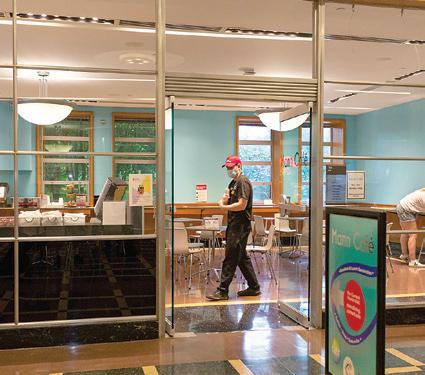
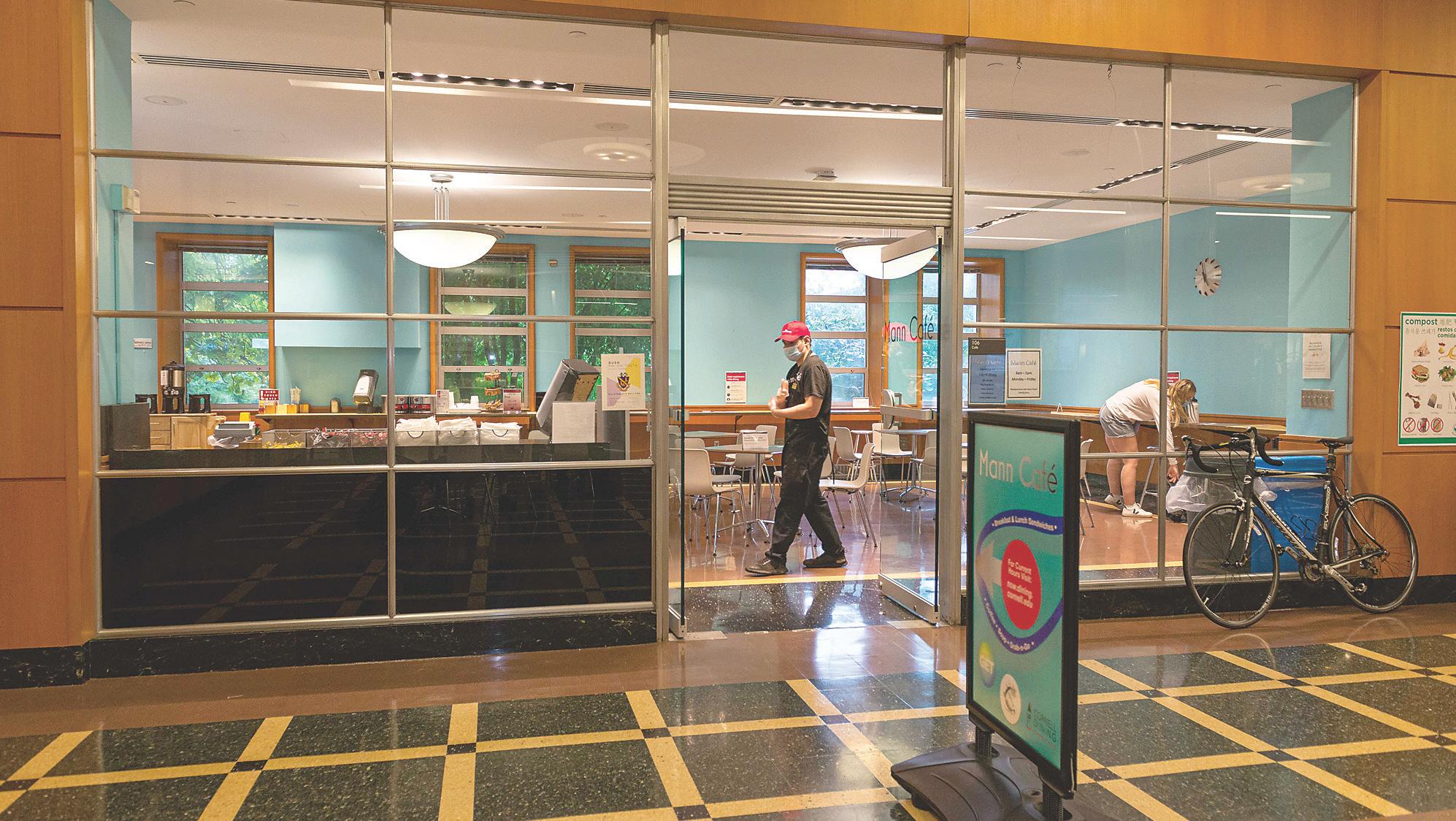
Those who are fortunate enough to have experienced Manndible Cafe in Mann Library will remember the comforting taste of hot curry on a cold Friday afternoon, the soft and springy textures of a freshly baked muffin and the buttery, crumbly goodness of a Manndible scone. As of this academic year, the independently-owned Manndible
Cornell students can use Big Red Bucks to purchase food, making it more accessible than its predecessor.
Cafe we knew and loved is gone. The cafe’s regulars — including students, faculty and
staff — received the news of its closing last spring with deep sadness and disappointment, patiently waiting to find out what would replace the beloved Cornell staple of 13 years.
The new Cornell-operated Mann Cafe opened this semester and is almost as insipid and unremarkable as Rusty’s in Uris Hall or Olin Library’s Libe Cafe. It offers a selection of pastries, refrigerated bowls and wraps, coffee and bagels, as well as hot foods including breakfast burritos and avocado toast — a respectable array of options that will do the job of sustaining you enough to get through a study session, but won’t give you the warm, fuzzy feeling of eating a home cooked meal.
Furthermore, the ambiance of Mann Cafe is rather sterile and uninspiring. The walls, once covered with fun paintings of quirky creatures, are mostly bare. Manndible Cafe prided itself on sustainability, demonstrated by its efforts to reduce waste by providing reusable silverware and encouraging customers to bring their own bowls and containers, and in its commitment to sourcing ingredients from local farmers. These aspects are unfortunately lost in the new Mann Cafe, and in other Cornell-operated, on-campus eateries, although, COVID-19 regulations have also contributed to changes in the ways eateries can operate.
Not all is bad with Mann
Cafe. As the establishment is no longer independently owned, Cornell students can use Big Red Bucks to purchase food, making it more accessible than its predecessor to students who have a meal plan. Additionally, the burritos, breakfast sandwiches and scrambles (even if they can’t
Nonetheless, Manndible Cafe left a void in the Ag Quad that Mann Cafe simply does not even begin to fll.
hold a candle to the Manndible Cafe menu) are distinct from the offerings at a number of other cafes on campus.
Nonetheless, Manndible Cafe left a void in the Ag Quad
that Mann Cafe simply does not even begin to fill. Especially at a university that values sustainability and local agriculture such as Cornell, Manndible Cafe’s presence on campus as a sustainable eatery that customers could feel good about supporting was particularly important and relevant. Regulars can only hope that the University recognizes
how cherished Manndible Cafe was to the Cornell community, and will try harder to foster a similarly inspiring, welcoming and warm environment in the new establishment.
Rae Specht is a current junior in the College of Arts and Sciences. She can be reached at rspecht@cornellsun. com.

Independent Since 1880
139th Editorial Board
KATHRYN STAMM ’22
Editor in Chief
ANUSHYA ALANDUR ’23
Business Manager
CATHERINE ST. HILAIRE ’22
Associate Editor
PRANAV KENGERI ’24
Advertising Manager
ODEYA ROSENBAND ’22
Opinion Editor
JYOTHSNA BOLLEDULA ’24
News Editor
TAMARA KAMIS ’22
News Editor
CAMERON HAMIDI ’22
App Editor
KRISTEN D’SOUZA ’24
Design Editor
HANNAH ROSENBERG ’23
Photography Editor
OMSALAMA AYOUB ’22
Science Editor
PUJA OAK ’24
Layout Editor
ANNIE WU ’22
Production Editor
MIHIKA BADJATE ’23
Assistant News Editor
SERENA HUANG ’24
Assistant Business Editor
ANGELA BUNAY ’24
Assistant News Editor
JOHN COLIE ’23
Assistant Arts & Culture Editor
AMELIA CLUTE ’22
Assistant Dining Editor
WILLIAM BODENMAN ’23
Assistant Sports Editor
AARON SNYDER ’23
Assistant Sports Editor
MEGHANA SRIVASTAVA ’23
Compet Manager
MADELINE ROSENBERG ’23
Editor NAOMI KOH ’23
Editor ANIL OZA ’22
Managing Editor YUBIN HEO ’24
VEE CIPPERMAN ’23
NOOREJEHAN UMAR ’23
E.D. PLOWE ’23
YOON ’23
Editor BENJAMIN VELANI ’22
PICHINI ’22
TYAGI ’22
Editor
MENDOZA ’24
Editor
ARANDA ’23
Editor SURITA BASU ’23
KAYLA RIGGS ’24
LEYNSE ’23
JULIA NAGEL ’24 Assistant
LIAM MONOHAN ’24
ABAYEVA ’24
ALPERS ’22
Working
opinion desker Odeya Rosenband ’22
managing desker Madeline Rosenberg ’23
news deskers Jyosthna Bolleddula ’24
Mihika Badjate ’23
production deskers Pico Ross ’22 Alexandra Kim ’24
layout desker Kristen D’Souza ’24
Puja Oak ’24
photo desker Hannah Rosenberg ’23
dining desker Amelia Clute ’22
sports desker William Bodenman ’23
Daniel Bernstein ‘23 is a junior in the College of Arts and Sciences. He can be reached dgb222@cornell.edu. Feel the Bern runs every other Monday this semester.
Iwas walking down the porch stairs of my Collegetown house on my way to breakfast one August morning when I noticed a book sitting upright on my rocking chair. It was a beige 101-page paperback in good condition entitled Ithaca: The Novel by Z. K. Goat. There was no note telling me who dropped it off, but it seemed intentional. I’d just spent the whole Summer here in Ithaca, and it was carefully dropped off on my rocking chair — not placed in the mailbox or anything. I knew all my friends were still asleep, but I asked in the group chat if anyone left it there and carried on to breakfast.
No one knew anything, but I figured it was probably a friend or someone I know. I’d recently lent a book to a neighbor, so maybe they were returning the favor. Still, the little mystery was exciting, so I rushed home, sat in the same rocking chair, and cracked it open.
It’s about the Odyssey’s Penelope and Odysseus: They’re vacationing for the Summer from the underworld, and instead of going home to Ithaca, Greece, they decide to visit Ithaca, New York. How quirky! They stay at Argos Inn in Room 214. On page 2, Penelope heads out to go work on her poems, which she does every day. “The fifteenth of August,” she thinks. “Our time here is almost done.”
I immediately stopped reading. I checked my phone. It was August 15.
Something was up with this book, something weird. I continued to read. Penelope walks out of Argos and over to her place of work. The Goddess Athena has given her invisibility powers, so she likes to sneak into some dumb college kid’s house to write. She heads on up to a buttercream house at the top of Seneca Street with round shingles that remind her of mermaid scales.
I stopped reading again. My house is a buttercream house at the top of Seneca Street with round mermaid scale shingles. At this point I’m almost freaking out. I looked around the house for hints of where the book came from. I asked my passing-by neighbors if they got a copy too — nothing. I checked the books’ back to learn more.
The author bio says, “Z. K. Goat has been writing and publishing for more than half a century. They have climbed to the temple of Athena on Skyros and to the palace of Odysseus and Penelope on Ithaki. Now they live by a long lake in central New York State.” The picture shows a person’s back, and they’re wearing a hat such that you can see neither hair nor skin, and behind their back they’re holding a statue of an owl. They’re wearing gloves on their hands. It’s as vague as can be.
The testimonials of the book are from famous Ithacan authors — all with one thing in common: They’re dead. Quick flip to the copyright page shows the book is released in 2021.
Now’s where it really gets creepy: Go ahead and google Z. K. Goat. You’ll find
nothing but a facebook page showing competitive show goats last updated in 2018. Then take a swipe at looking up Ithaca: the Novel. You’ll find that the book is available for presale on Barnes and Noble, Amazon and wherever you get your supernatural novellas. Yes, you read that right: Presale. The book doesn’t come out until September 20th. A real life mystery is afoot on Seneca Street! Fit with gods and ghosts and what feels like magic happening right in front of my eyes. I keep reading. In fact, I finished the book that day. All while sitting in my rocking chair.
Throughout the story, other buildings and storylines are referenced. Odysseus travels (on an Odyssey, if you will) from the end of West Seneca to the top of East, stopping at different storefronts or houses, like the Starbucks or a yard sale at a bright yellow house. Additionally, a third character, a Pulitzer-Prize-Winning Novelist travels through Ithaca and intertwines her path with that of our two protagonists. She stops at the Alley Cat Cafe and the Fontana’s Sidewalk Sale. Penelope stops for lunch at Souvlaki House (like me, she’s ecstatic about how it’s right across the street from our house).
I thought to myself, if I got the book delivered to my porch that morning, maybe these other places did too. So I stopped by Fontana’s and Souvlaki House, and I even talked to the people who live at other houses referenced on Seneca Street. Meanwhile, I was live tweeting the whole thing. But no one knew anything about the book. There’s no sign of Ithaca: The Novel anywhere.
By the end of the night, I finished the book and read the acknowledgements. Finally, I think, “I’ve hit a real clue”: Thanked in the acknowledgements is Argos Inn, for a “wide-window lit room”. I figured that our mystery author must have stayed at the Inn and written in this room. So I drove to Argos and talked to the Innkeeper.
I’m not even halfway through explaining my situation before he cuts me off.
“Actually, we got a copy of that book this morning,” he said. The person who worked the morning shift wasn’t there, but the Innkeeper told me he had heard that a woman with multicolored hair dropped off the book and that’s all he knew. I asked if they knew about anyone staying in the Inn who could be Z. K. Goat. They didn’t have much, but gave me a lead or two and rushed me out. They were closing.
It’s been over three weeks since that fateful day. The leads haven’t gotten me very far. I’ve reached out to people referenced in the acknowledgements, the person to whom the book is dedicated and even local writers. But I’ve hit walls. I’ve learned some things — for example, I’m pretty sure the author is an Ithaca College professor — but I’m still left with questions. How did the book show up? Why did I get it? Who really is Z. K. Goat?
To continue reading this column, please visit cornellsun.com

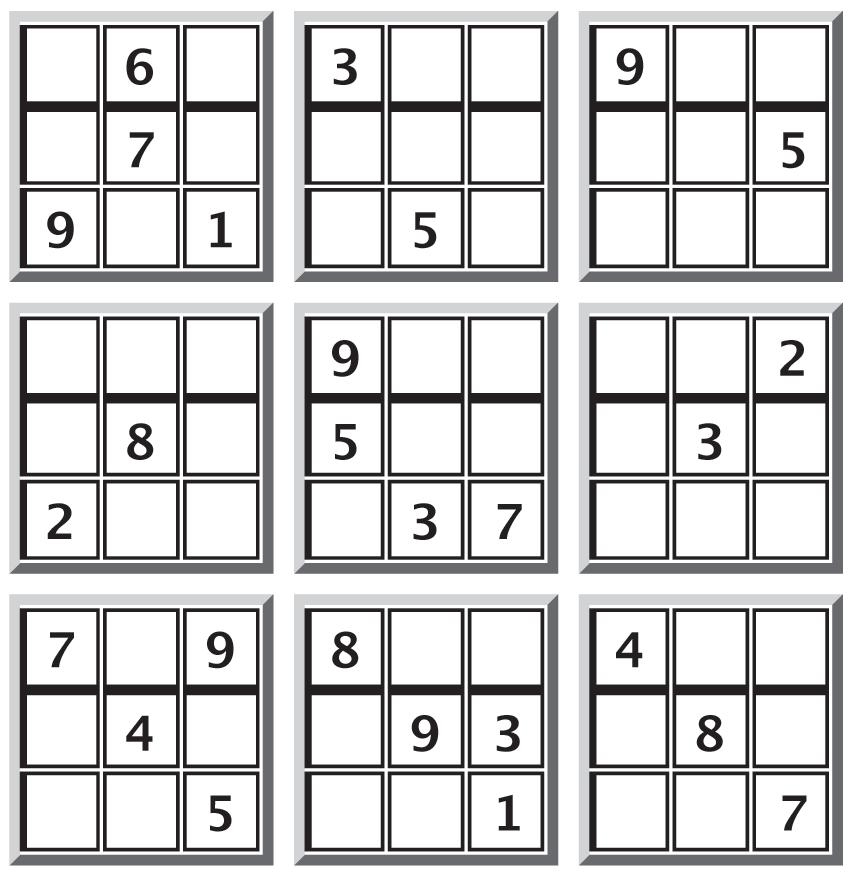
Fill in the empty cells, one number in each, so that each column, row, and region contains the numbers 1-9 exactly once. Each number in the solution therefore occurs only once in each of the three “directions,” hence the “single numbers” implied by the puzzle’s name. (Rules from wikipedia.org/wiki/ Sudoku)
classifieds@cornellsun.com

By LOGAN HANCHETT Sun Staff Writer
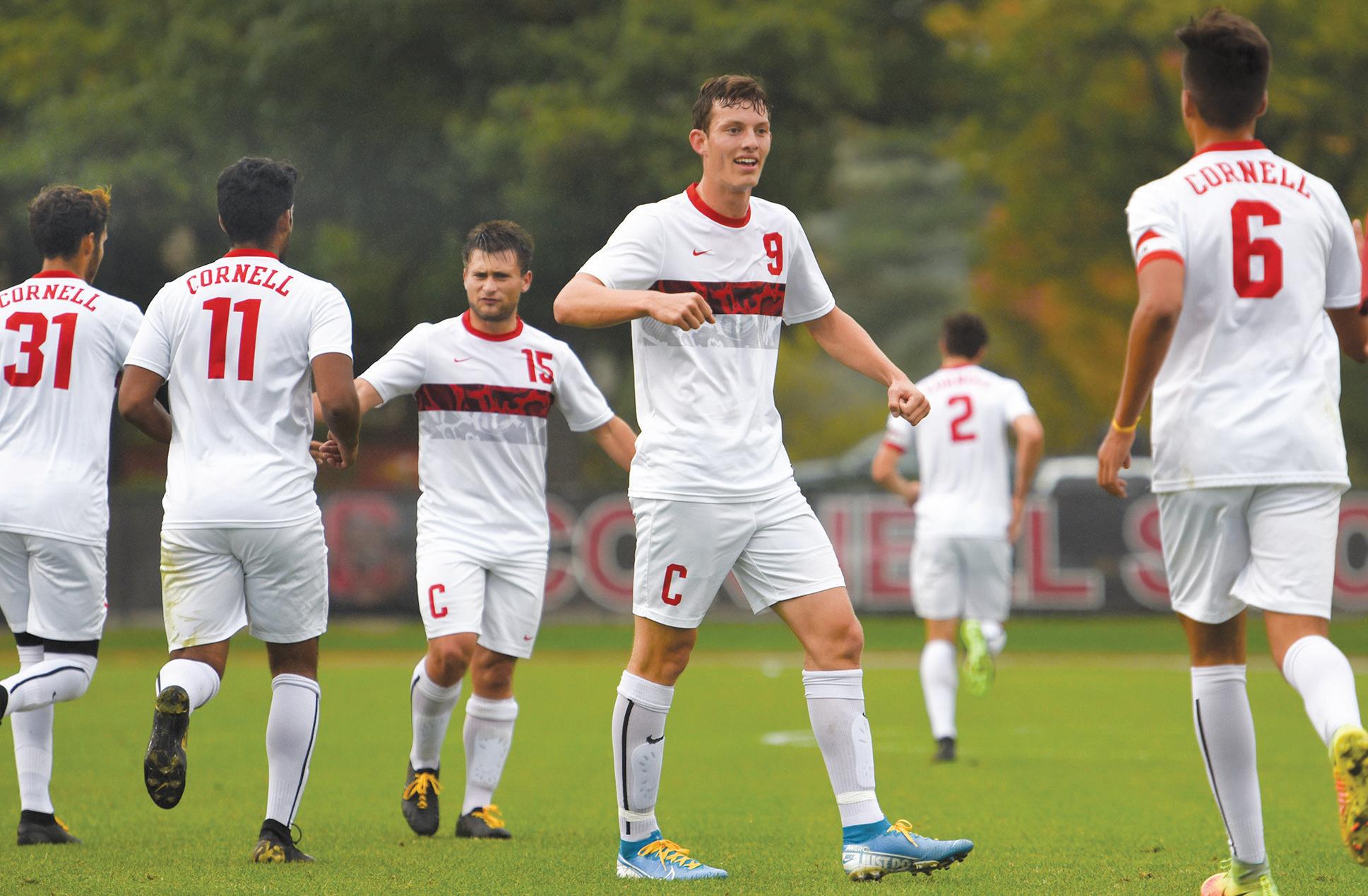
This past Labor Day weekend was no vacation for the Cornell men’s soccer team, as they kicked off their season with a trip to North Carolina.
On Saturday, the Red came up short against the NCAA United Soccer Coaches ranked No. 18 Wake Forest University, falling 2-1 in double overtime.
In the long-awaited opening contest, the Red faced a stiff test against perennial Atlantic Coast Conference power Wake Forest.
Sophomore forward Henry Hylbert, midfielder Lalo Serrano and defenders Mateo Rodriguez and Wilson Eisner made their first starts.
As anticipated, the starting 11 were a mixture of experienced returners and collegiate rookies. Four sophomores made their first NCAA start: forward Henry Hylbert, midfielder Lalo Serrano and defenders Mateo Rodriguez and Wilson Eisner.
Wake Forest started hot with a ninth-minute goal by sophomore midfielder Chase Oliver to put the Deacons up 1-0.
But for the rest of regular time, the Red’s defense held strong, refusing to let the game get out of reach. Junior goalkeeper Brady McSwain and the backline of Rodriguez, Eisner and senior Connor Drought kept Wake’s attack at bay. McSwain would finish with three saves.
In the 81st minute, senior forward Emeka Eneli broke through the Deacon defense and found the equalizing goal to bring the score 1-1, assisted by senior forward Charles Touche.
That would prove to be all for Cornell at full-strength. In the 82nd and 89th minutes, red cards were handed to Touche and Hylbert, respectively. The Red entered sudden-death overtime with nine players to Wake’s eleven.
The understaffed Red were unable to hold of the Deacons in overtime. Wake found the winning goal on the leg of senior forward Kyle Holcomb in the 100th minute, finalizing the tally at 2-1 Wake after two periods of overtime.
Fortunately for the Red, Wake Forest University and High Point University are only
separated by a 25-minute drive, giving the team more time to recover and prepare for its second game of the season.
In spring 2021, the Highlanders went undefeated in conference play en route to a 12-2 record and NCAA tournament appearance. They entered Tuesday’s matchup hoping homefield could right the ship after a 2-0 loss at Virginia.
It was the Red, however, who bounced back from their early loss with a resounding 4-1 victory over High Point University.
Team shoots collective 6-over-par on 54 holes to fnish 6th out of 15 competitors
By MITCH HOY Sun Staff Writer
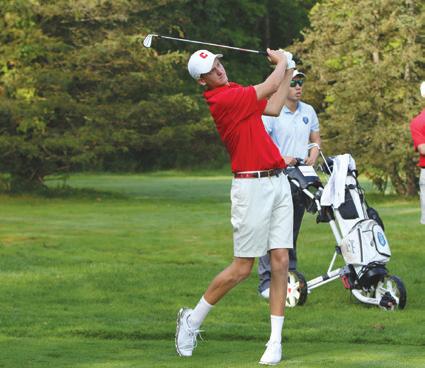
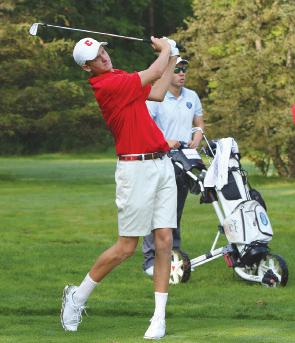
Cornell’s Golf team finished sixth out of 15 in the Alex Lagowitz Memorial Invitational on Sunday, with an aggregate score of 888 over 54 holes to finish six-overpar.
Ivy League rival Yale University took the team title, finishing with a score 862, while Dugan McCabe of host Colgate University took the individual title with a final score of 2014.
Cornell narrowly missed out on a top five finish, with St. Bonaventure edging out the Red by a single stroke.
Ben Choe ’23 led the Red’s efforts with an individual score of 216 to finish in a tie for fifth place.
He scored 73, 72 and 71 over all three rounds, respectively.
Cornell played consistently over the length of the invitational, though their finish was somewhat lackluster. The Red finished the first round in second place with a score of 294, then fell to sixth after posting a 300 in the second round, and again a 294 in the third.
Choe sank five birdies in the final round of play, finishing the day under par for the second time in his college career.
“I feel really solid,” Choe said on Monday. “I played really steady golf to give myself a chance to win coming down the stretch, but just needed a couple more birdie putts to drop to win.”
Another highlight of the tournament was junior Josh Lundmark’s eagle on hole five.
“It was actually my first hole of the day and it was one of the easier holes so I wanted to make something happen to get off to a good start,” Lundmark said. “I hit a five iron to about a foot and tapped in for eagle to start my round.”
Choe would later come around to birdie the same hole.
Next up for Cornell Golf is a two-week rest from competition before their own Cornell Invitational beginning on Sept. 19. Though the team will have a chance to rest and recover over the break, they plan on keeping a normal practice schedule to prepare for the upcoming competition.
“Our practice schedule for this week will be the same as if we had a tournament on the weekend,” Choe said. “Everyone on the team will be practicing everyday working on their game.”
Choe explained that the next few weeks will be an intense set of qualifying rounds that would give players a chance to compete for a spot on the travel team. He was hopeful that the team would take advantage of the opportunity.
“We’ll be able to rest up, practice hard and prepare ourselves for our invite for the next two weeks, which is a lot of time for us to get sharp,” Lundmark said.
Mitch Hoy can be reached at mah429@cornell.edu.