The Corne¬ Daily Sun

By ALEC GIUFURTA Sun Staff Writer
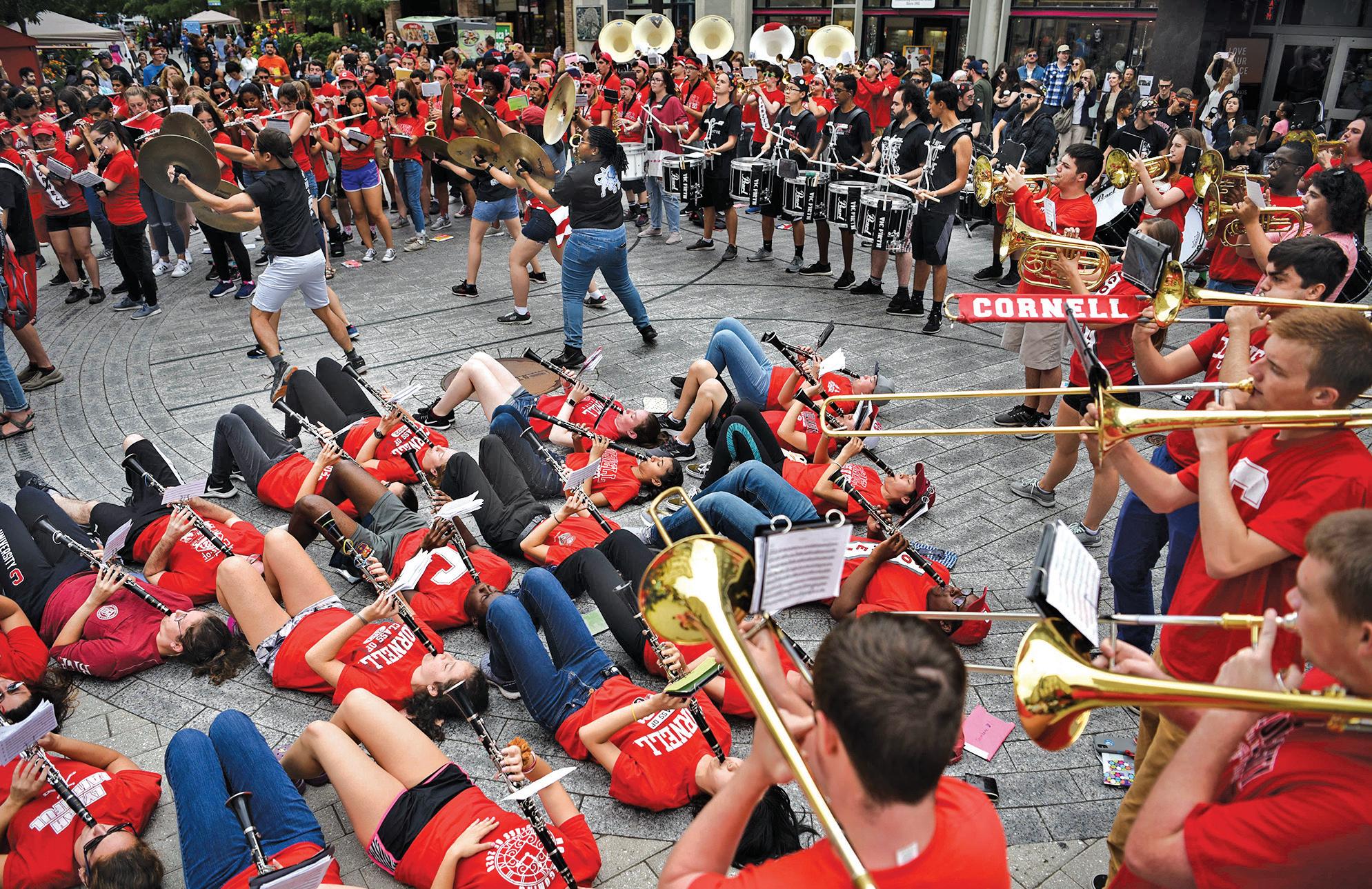
Cornellians descended into the Ithaca Commons Saturday for the fourth annual C.U. Downtown. Saturday’s festivities were a foray for students into exploring downtown Ithaca, featuring performances from Cornell organizations, free doughnuts and plenty of give-away silicone phone wallets.
C.U. Downtown, organized in partnership between Cornell’s Tatkon Center and the Downtown Ithaca Alliance, was started in 2016 with the aim of bridging Cornell’s campus and the city.
This weekend, local business owners were outside greeting students, with some offering discounts. Cornell offices and TCAT also set up tents with give-away items and information for new students.
‘Light
For many first-year students, Saturday was their first time venturing downtown.
“I just wanted to explore,”
Anthony Ma ’23 told The Sun. This was his first time in the Commons since moving into Cornell three weeks ago.
Kristiana Thelen, outreach coordinator for the Downtown Ithaca Alliance,
said that the goal of the event was to welcome students back to Ithaca. “We really want [the Commons] to feel like their living room,” she said.
“I really like this little walking street. It’s like Europe with its charm,” Jassa ChangWeinberg ’23 said, admiring
See DOWNTOWN page 5

By ANGELA LI Sun Staff Writer
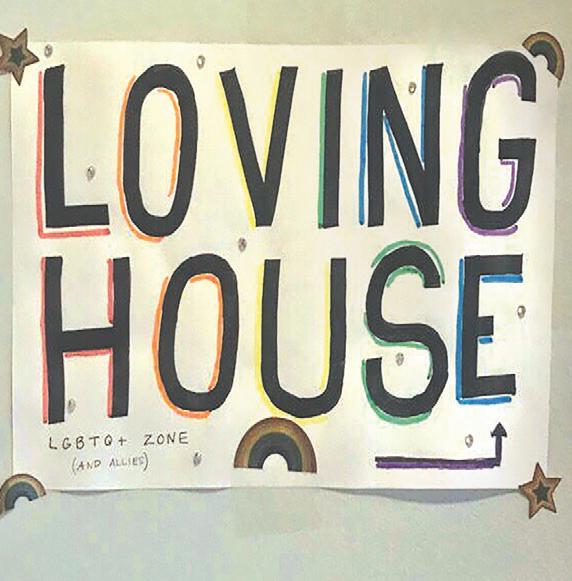
This fall, a quarter-century of LGBTQ+ activism on campus finally came to fruition with the opening of Loving House in Mews Hall.
More than 25 years after the initial proposal for a LGBTQ+ program house was vetoed by the University in 1993, Loving House opened its doors this semester as Cornell’s LGBTQ+ Living Learning Unit.
Located on the first floor east side of Mews Hall on North Campus, the program house accommodates 30 undergraduate residents of all class years and aims to “embrace honest and frank dialogues” about many aspects of LGBTQ+ identities as well as “cross-cultural understanding and the intersections of identity,” according to its Living @ Cornell website.
Though the semester has only recently begun, the residents of Loving House have already formed
strong bonds as a community.
“Part of what we did for our move-in process is we actually moved in a week early, so we could do different community events,” said resident Catherine Carter ’22.
Those events ranged from social gatherings with movies and ice
See LOVING page 5
‘You’re My First’: Students Share Hometown Pride, Misconceptions
By KATHRYN STAMM Sun Staff Writer
While students from Westchester have 679 peers from their county at Cornell, some students have fewer than 100 from their whole state.
From Kansas to North Dakota to Vermont,
By SAMANTHA STERN Sun Staff Writer
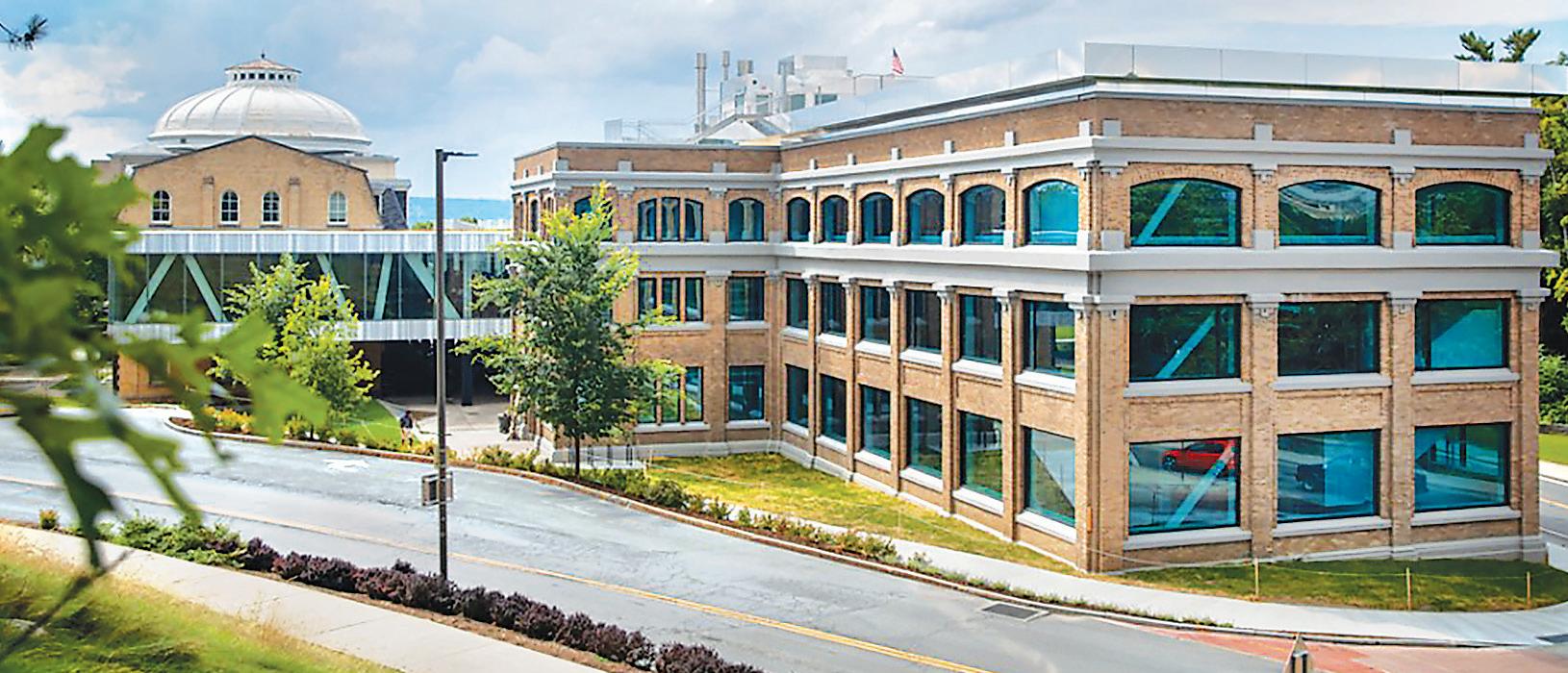
When students in the College of Architecture, Art, and Planning returned to campus this fall, they were greeted with a grand addition to their historic Rand Hall — the completion of the new
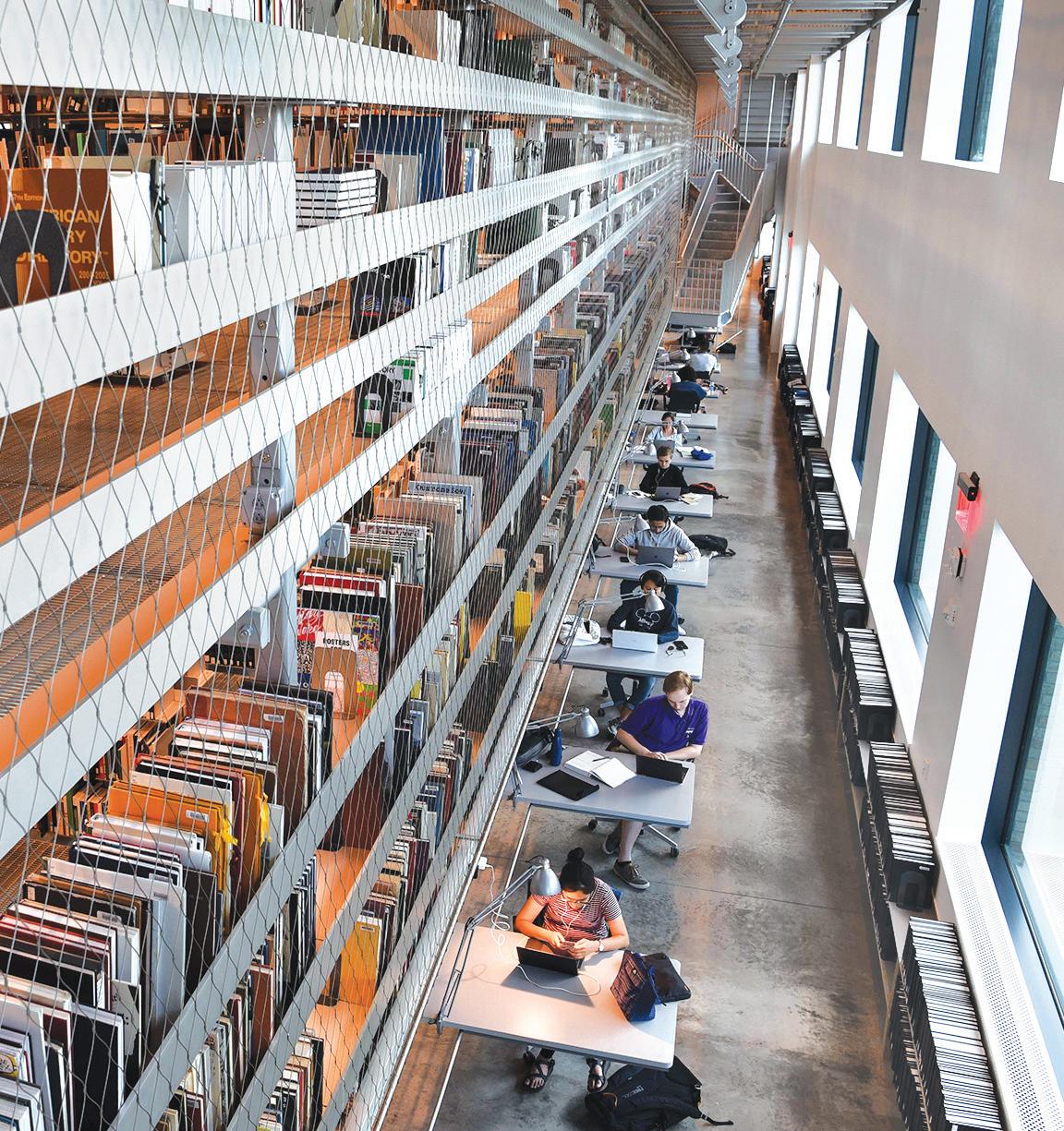
Mui Ho Fine Arts Library. The new space, located on the top floors of the hall, houses approximately 100,000 volumes of fine arts, design and urban planning materials as well as new spaces for research, computing, instruction and studying, according to an AAP press release.
The vast collection of books, held in three levels of stacks, is suspended in the center of the library to create a floating appearance.
Bonna Boettcher, the Director of the Olin, Uris, Music and Fine Arts Libraries, said this allows the library to be described in just one word: “light.”
current students shared their experiences in hailing from a state which encompasses fewer than 1 percent of the Cornell undergraduate population.
These students expressed similarities in facing lots of weird misconceptions, being excited to meet other
students from their states and finding new pride in their home states.
“They think cowboy and they picture this Wild West with gun fights and saloons,” Luke Meyer ’22 said about being
See STATES page 4
“Light in all senses: The book stacks float and are permeable to light and air; the study desks and counter appear to float; the windows are large and the light is bright,” said Boettcher in an email to the Sun.
Embed photo here
The space was designed by a Cornellian — Wolfgang Tschapeller, M.Arch ’87. According to the college’s website, the aim of the project was to “create a space in which bodies intermingle with books but are also surrounded by digital
Monday, September 9,
“Automation and Robotics in Specialty Crops”
11:30 a.m. - 1:00 p.m., 114 Bill and Melinda Gates Hall
Gendered Labor Migration Control: “Intermediaries Navigating Il/legal Trajectories Between Nepal and the United Arab Emirates” 12:15 p.m., G08 Uris Hall
Seminars in Infection & Immunity: Intracellular lifestyles of Salmonella
12:15 - 1:15 p.m., Lecture Hall 3, College of Veterinary Medicine
“Can Tropical Working Landscapes Work for Conservation?” by Amanda Rodewald, LASP Weekly Seminar Series 12:15 - 1:15 p.m., G01 Stimson Hall
Ecology & Evolutionary Biology Weekly Seminar Series featuring Dr. Maren Vitousek
12:20 - 1:20 p.m., A106 Corson/Mudd Hall
“Nature Prescription Programs” - Robert Zarr 12:20 p.m., 404 Plant Science Building
Science & Technology Studies Colloquium: Emma Kowal
3:30 - 5 p.m., 423 Morrill Hall
General Information Session for Internal Transfer 4:30 - 5:30 p.m., Tatkon Center
“State, Religion and Literary Production Under the Islamic Republic of Iran,” by Fatemeh Shams, CMS Seminar Series
4:30 - 6 p.m., Mann Library
LGBTQ+ Welcome Reception 5 - 6:30 p.m., Garden Patio, A.D. White House

Introduction to Atomic Layer Deposition
9 a.m. - Noon, 340 Duffield Hall
Development of Detection and Management Strategies for Sugarbeet Rhizoctonia Diseases
11 a.m. - Noon., A134 Barton Lab
The Demand for, and Avoidance of Information by Russell Golman
11:40 a.m. - 1:10 p.m., 141 Sage Hall
Improving Plant Breeding efficiency with Quantitative Genetics by Lucia Gutierrez 12:20 p.m., 135 Emerson Hall
Communicating Climate Risks: Challenges and Opportunities for Connecting Climate Data to Decision Makers
3:30 - 4:30 p.m., G24 Fernow Hall
Building Better Bones Using Multiscale Musculoskeletal Models
4 p.m., B11 Kimball Hall
Cornell University’s Block Party 5 - 9 p.m., North Campus
And The Bump Goes On: Management of Scratches and Hives
7 - 8 p.m., Level 1 Classroom 6, College of Veterinary Medicine

Infection info | Dr. Leigh Knodler of Washington State University will discuss the intracellullar lifestyles of salmonella today. Attend a Sun Recruitment Session on Wednes da y, September 11 or Thurs da y, September 12
By EMILY YANG Sun Staff Writer
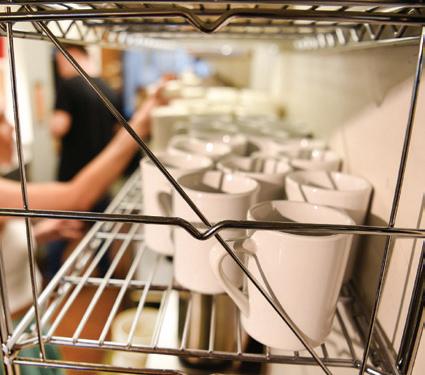
Paper or ceramic? This semester, Temple of Zeus made an eco-friendly statement by making reusable cups the default option for hot drinks. The café has always offered ceramic mugs, but the switch now provides paper cups by request only.
Why the switch? Both sustainability and financial reasons, according to Keith Mercovich, Temple of Zeus Manager. It’s cheaper in the long run for the café to wash and reuse cups instead of purchasing them anew each time.
“If you include the shipping, receiving, ordering, inventorying, stocking and removal of trash, most of those take a lot of person power on a daily basis,” Mercovich said. “Since our cafe is designed to break even financially, all these costs need to be covered to offer a throwaway cup for every drink.”
The café uses a three-tiered price system for drinks, with the base price using the café-owned mug. Customers net a 50-cent discount for bringing their own mug, which the café does not have to wash, or a 50 cent surcharge for a disposable paper cup.
“We’re giving that accurate pricing, so that what

you’re doing is what you’re paying for,” Mercovich said. Ceramic dishes and metal utensils are also available for soups and sandwiches, as well as a reusable plastic cup for iced drinks.
Mercovich said he is not concerned about the cups going missing — “They’re going to a good cause, and someone’s going to have a reusable cup,” he said.
Temple of Zeus is not affiliated with Cornell Dining, which has also made recent efforts towards sustainability including offering reusable carryout containers and reusable coffee mugs through the Mug Club program.
Customers are happy with the change, Mercovich added. “I think a lot of people enjoy using a for-here cup. It’s much better to drink out of.”
“I definitely support it.” Hilary Paul grad, said. “I’ve always asked for it anyway, so it’s not a big change for me.”
And Jack Schleger ‘21 was also in support of the change, referencing the waste that is created on other areas on campus.
“It’s great. I think that everywhere on campus should try and move towards this direction,” Schleger told The Sun. “Most of the Cornell-run eateries are still creating so much waste. It’s a huge problem on campus.”
“I think it’s very exciting that we have reusable mugs

By WINNY SUN Sun Staff Writer
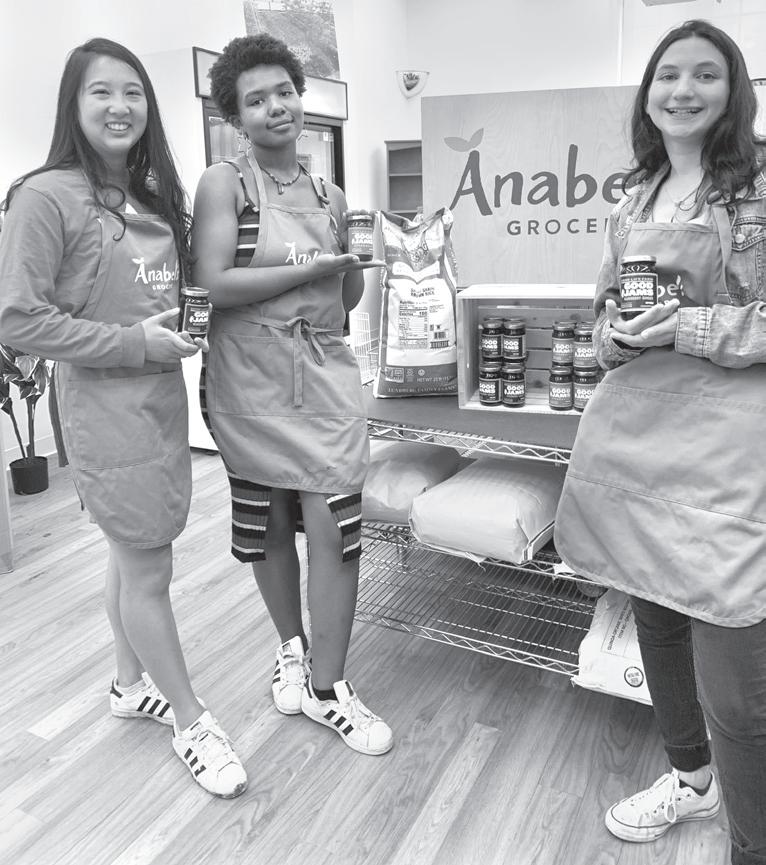
After shuttering for the last semester to improve its business model, Anabel’s Grocery is back in season, and will reopen on Sept. 18.
Tucked in the back of Anabel Taylor Hall, the grocery store is a student-led nonprofit that aims to “provide fresh, nutritious and affordable food for all Cornell students,” according to its website.
Pricing was the biggest hurdle for the store, prompting its temporary closure, Kelsie Raucher ’20 said. Unlike big chains like Walmart and Wegmans, which can buy large quantities of produce at a cheap price, a small grocery does not have as much purchasing power. Product prices significantly surge for Anabel’s when it acquires a smaller quantity, she explained.
To keep prices low, Anabel’s is getting bulk orders of essentials like rice and oats. But by enabling customers to purchase individualized quantities using their own containers rather than in prepackaged bags, the store will help reduce both food and packaging waste.
In an earth-friendly move, the grocery is now buying some of its seasonal produce from local farms that use alternative growing methods to reduce pesticides. It is even offering 20% discounts on bundled baskets of fruits and vegetables that have bruises in some areas but are still entirely safe
to consume.
“If more consumers are like-minded in that, we would reduce food waste at the retail level,” Raucher said.
The student managers also took the time off to improve on their team structure. After tossing out an internal hierarchy, members now are empowered to take on any role they want and get involved in areas they are interested in. Most of them are enrolled in the course AEM 3385: Social Entrepreneurship Practicum, which gives them a structured time to work on the business.
With improved operations, Anabel’s will roll out a series of new initiatives this semester: In addition to bringing back cooking classes, it also plans on launching community dinners. Though still a work in progress, the dinner is intended to use unsold produce from the store to make dishes that the rest of the community can then enjoy for free.
“Our goal is really to increase awareness on food issues, food education and to empower students to be able to cook for themselves,” Raucher said. “We just want to help our fellow students, who may not have the time, access or lack the knowledge to cook, to be able to eat well on Cornell’s campus.”
Anabel’s will host its first event at the Cornell Farmers’ Market on Sept. 12.

Mug shots | For sustainability and financial reasons, Temple of Zeus will default to ceramic mugs and will continue its 50-cent discount for customers who bring their own mugs.
now,” Olivia Chaudhury ’20, a Temple of Zeus employee, added. “It’s encouraging people to not waste so much. People are saving money, and we’re saving the planet.”
By SOPHIE ARZUMANOV Sun Staff Writer
“Medical education needs to stop burning out students — now,” wrote Dr. Augustine M.K. Choi.
Similar words are always uttered by pre-med and medical students, but this time around, it was the Dean of Weill Cornell Medicine.
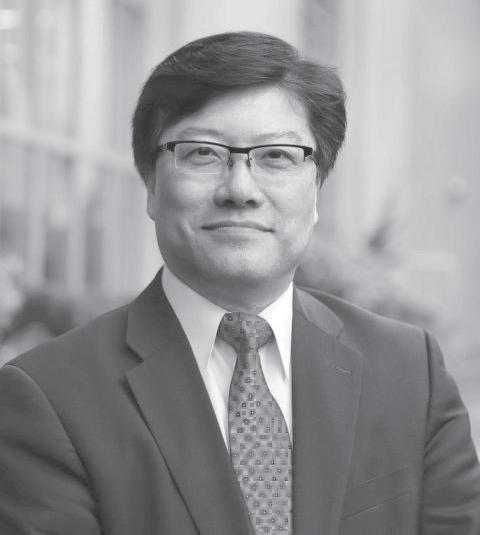
On Aug. 29, Choi, Dean of Weill Cornell since 2017, published an opinion article with STAT, a healthcare news source, about the subject. He wrote that medical education is churning out unhappy and exhausted students that turn into medical professionals with “increased risk of depression and burnout.”
The stress takes root well before medical school begins for most students, however. Many pre-med students express concern that they need to fit a cookie-cutter mold of the perfect applicant.
“We are all led to believe that we are fighting for the same spots at these given medical schools and that there is only one way
to get there: a certain number of volunteer hours at a clinic, research in a biomedical lab, etc.,” Darya Musatova ’20, a premed student, explained. Ernest Li ’22, who studies biology and economics, feels limited in terms of coursework. “I personally really hate that the current system disincentives premeds from taking hard but useful courses.”
However, Musatova holds a positive outlook. “One’s path to medical school, or any career in the health field, has to be personalized,” she advised. “Sure, there are some intro bio classes everyone has to take, but you need to find your own purpose.”
Choi outlines three steps that he believes the medical education system should take — first, integrate comprehensive wellness and mental health support into the learning environment; second, commit to documenting and reporting anonymized data about psychological distress among medical students; and third, evaluate shifting to a pass-
Continued from page 3
fail grading system.
Sophia Xian ’21 shadowed doctors at New YorkPresbyterian Hospital this summer, and shared some insight. “I’ve met students who have graduated, who are older than 25, who have changed majors so many times, who’ve had kids, and are all thriving and soon to be residents.”
Naya Sou, advising dean and pre-health advisor in the College of Arts & Sciences, sympathized with Choi’s article.
“Students think that getting into medical school is the end goal,” Sou said. “I remind them that medical school is just a new beginning.”
Choi’s article specifically addresses burnout, a term that has been deemed an “occupational phenomenon” by the World Health Organization.
Burnout has become such a serious concern that it is being addressed in various academic settings. Musatova noted that it was discussed in some policy classes: “You cannot expect positive outcomes from a coordinated healthcare system if the physicians, key players in the delivery of healthcare, cannot perform adequately,” she said.
Sou urges students to “master time-management skills and demonstrate work-life balance to avoid burnout,” and said that she will be sharing Choi’s article with students.
Sou shared resources for Cornell pre-med students: “medical application is stressful but there are folks on campus that can help. My advice is for all pre-health students to connect with the various pre-health advisors on campus.”
She said those advisors can be found online on Cornell’s Career Paths website.
Sophie Arzumanov can be reached at sarzumanov@cornellsun.com.
STATES
Continued from page 1
from Arizona. “I think it’s funny, because we are quite civilized and urban even!”
Assuring that he’s “sadly” not a cowboy, the sophomore from North Phoenix said that many misconceptions about his state continue to persist. 100 students hailed from Arizona in fall 2018, according to Cornell’s Institutional Research & Planning department.
“There’s a political leaning people believe I might have, based on being from a red state,” Meyer said. “People don’t have an idea of the racial makeup in Arizona, either. There’s actually a lot of diversity in Arizona, especially being a border state.”
However, people stating these ideological misconceptions can be a wedge into deeper conversations, according to Meyer, who says he’s then able to clear up the assumptions and offer his own views.
Reflecting on his freshman year, Meyer said that not having an extra thing in common with his coastal peers and not knowing anyone here was initially sad and stressful.
“But I think there are lots of positive parts,” Meyer said. “There’s a unique connectivity of people that come from Arizona. The similarities with other people from the same place [are] so condensed, so [the connection] is really amplified.”
“I’ve only met a couple other students from my state,” said Katarina Schwartsman ’20, who’s from Boise, Idaho. In fall 2018, there were eight Cornell students from the whole
state.
Schwartsman recounted a story of encountering a student wearing a hat that had a picture of Idaho on it from her freshman year. When they realized they were both from Idaho, he said he had heard “so much” about her — “the other kid from Idaho” — according to Schwartsman.
Generally, Schwartsman said people are confused when she says she’s from Idaho. They mess up and think of Iowa or ask if it’s in the midwest. She also said people tease and say they’re surprised people actually live there.
“If you’re not from a serious U.S. metro area and you’re not from a place people know a lot about, people tend to generalize,” Schwartsman said.
“I get a lot of potato comments and people are like, ‘Did you ride to school on a horse?’ she said. “But I spent most of my childhood in suburbia.”
“People expect me to be very familiar with corn. They expect me to be some agrarian farm-boy,” said Max Albicker ’20, who’s from Evansville, Indiana. “My friends don’t always realize I’m from the third biggest city in Indiana, and my city is bigger than their suburban towns. I’ve never touched any farming equipment, so it’s an easy stereotype, but it’s definitely not true.”
Albicker said he didn’t know anyone from his state, which had 57 representatives in fall 2018, before coming to Cornell. Since then, he’s met two others from Indiana and one from his high school, stating that it is uncommon for him to find
someone from Indiana.
Albicker has since been able to bring his new Cornell friends to Indiana — he’s proud of where he’s from and to “provide a piece of Americana and show off the midwestern vibes.”
“A lot of people see me as an exotic American, because they don't have much familiarity with the Midwest,” Albicker said.
“People have told me that Kansas is in the South,” said Maame Britwum ’20, who’s from Lawrence, Kansas.
Britwum explained that people are often mistaken, asking about what “kind of roads” are in Kansas and if she lives on a farm. She clarified that she lives in suburban Kansas — in a college town larger than Ithaca.
“Whenever I see a Kansas shirt, I rush up to people to ask if they're from Kansas,” Britwum said.
Sometimes they just like University of Kansas sports teams, but when they happen to be from Kansas, where 33 Cornellians hailed from in fall 2018, Britwum is excited, because “there are so few of us out here.”
Britwum attributes this to Midwestern hospitality, and said that it extends to the rest of the Midwest. Even with Nebraskans, her response is always, “Oh my gosh, it’s so good to see you!”
To read the rest of this article, visit www.cornellsun.com.
Kathrynn Stamm can be reached at kstamm@cornellsun.com.

LOVING
Continued from page 1
cream to presentations on using inclusive language and addressing implicit biases led by different speakers from the LGBT Resource Center and the Women’s Resource Center. There were also educational activities such as learning the difference between “checking in with people and calling them out,” said Carter.
Programming and staffing changes were also made in Mews to support Loving House, according to Residence Hall Director Taylor Bouraad, such as the addition of a Senior Resident Advisor and a “full set of events and programs” that are specifically “geared towards the mission and vision of Loving House,” including Dinners and Dialogues centering around LGBTQ+ issues and movie nights.
One common sentiment shared by many residents is that the program house provides a sense of freedom and safety that other living spaces may not.
Jameson Rivera ’22, who identifies as trans and gay, said that in his freshman dorm last year he had to “be really careful how [he] dressed and acted because [he] wanted to pass so badly as a cis man.” Now, in Loving House, he said he can openly talk about his experiences as a trans person, such as using chest binders and being on testosterone, “without feeling nervous about it.”
Ian Wallace ’20, a central figure in pushing for the creation of Loving House as the Student Assembly’s LGBTQ+ liaison at-large and now a resident of Loving House, says he “experienced uncomfortable conditions” as a first-year student and “debated whether or not to come out to [his] roommate for a good chunk of time.”
Jack Faasse ’23 said he chose Loving House as his first-year residence because he thought he would “adjust to college faster in an environment” where he did not need to constantly be on guard and “scope out how people would feel about [his] identity.”
“I’m nonbinary and I wanted to be around a group of people who would refer to me using the right pronouns and understand my life experiences,” said firstyear student Laura Nawrocki ’23.
“The ability to live with these people you are connecting with lets you interact more consistently and on a much deeper level,” said Cyrus West ’22.
Carter’s strong appreciation for the program house also comes from knowing that it is a “really special space that many people have worked very hard to achieve,” referring to the University’s original veto of the proposal in 1993 and the subsequent creation of the LGBT Resource Center as a compromise with Cornell’s LGBTQ+ community.
The impact of Loving House also reaches beyond the lives of residents on campus.
Carter spoke about meeting Community Fellow Prof. Masha Raskolnikov, English, at a catered Loving House community dinner on Aug. 22 in Mews, where Raskolnikov told the residents that she wanted to be involved with Loving House events because her two young children “definitely feel like they identify as some part of the LGBTQ+ community.”
“She said she wanted us to be like role models for them,” Carter said, “like ‘just be leaders and be proud of who you are in this space.’”
Rivera, who struggled in his freshman dorm, said his mother “really doesn’t support [his] transition at all and [he’s] actually scared of going back to live with her,” emphasizing his appreciation for Loving House as a “comfortable and welcoming” space.
Wallace said he views Loving House as “a space where people can come find love and acceptance” in the journey for “self-actualization among queer students.”
As for all program houses, out-of-house membership is available for the program house fee of $30 per year or $15 per semester. Out-of-house members get access to the Loving House space and events even if they reside elsewhere.
The Loving House will host its grand opening event on Saturday Sept. 14, from 2 to 4 p.m. in the Mews Courtyard.
Angela Li can be reached at ali@cornellsun.com.
DOWNTOWN
Continued from page 1
the stretch of storefronts, statues and plants along the Commons, which reopened in its renovated state in 2015.
Buma Gana ’22, who was working as a Tatkon Center staffer for the event, said that there were “a lot of people” in attendance at this year’s event, admiring the turnout. Free cider and doughnuts were promised to the first 1000 students.
Students were not the only ones on the Commons on Saturday — Prof. Alexander Vladimirsky, mathematics, told The Sun he came to explore “the music, the people, the happening,” while watching an ecstatic Big Red Marching Band perform in the walkway. And Janet Gillespie ’76, who worked at Cornell for 37 years, mostly in the law library, said she thought it would be fun to come down and see the next generation of Cornellians.
The events’ organizing partners even created a makeshift newspaper, complete with a scavenger hunt, a map of downtown highlighting select businesses, features on Ithaca areas to explore and a performance schedule for the afternoon.
Among the performers were Yamatai, a Japanese taiko-drummer group at Cornell. The group performed two pieces, Haru and Gaifuu — meaning “springtime” and “winds of victory,” respectively — according to member Oliver Leun ’21.
Drawing a steady crowd, Brandon Axlerod ’21, working under the name The Magic Brandini, created balloon animals and objects, including an inner tube-sized unicorn for Samantha Zhang ’23.
“This is really cool,” Zhang said. “This unicorn looks really magical.”
Aisling Llerena ’23, “didn’t want to wait until senior year to see Ithaca,” telling The Sun how the free doughnuts and opportunity for “checking out the local areas” enticed her to come downtown –– she found out about the event from a Tatkon Center email.
Some accidentally stumbled upon the event in the commons: Daniel Traas ’21, an exchange student from University College Dublin, was on his way to get his haircut with a friend when he encountered the marching band’s performance.
“[We] didn’t realize this was happening … It’s pretty cool,” he said.
Alec Giufurta can be reached at agiufurta@cornellsun.com.

New design said to provide both ‘resource and refuge’
LIBRARY
Continued from page 1
resources and opportunities for collaborative study.”
In addition to an aesthetically pleasing design and comprehensive collection of books, the library includes a service counter, where a student can go for help with any library needs.
“Libraries are at their best when they serve as both resource and refuge,” said Gerald R. Beasley, Carl A. Kroch University Librarian, in a 2019 post from the University’s library blog.
“Yes, the expertise of library staff at the Mui Ho Fine Arts Library is sure to be one of the main reasons students and faculty visit the space,” he continued. “Combined with its outstanding collections, this expertise guarantees that students and faculty alike will find themselves rewarded with answers every time they visit the library, even if those answers lead to further questions.”
Maddie Collins ’21, a student in the Department of City and Regional Planning, said she was enthusiastic about the new study space right in Rand Hall.
“Rand Hall was under renovation for the entirety of my first two years at Cornell, and I am happy to finally have access to the space,” Collins said. “Now, all AAP students have a designated spot with relevant resources, access to important technologies, and work space that suits our needs as creative academics.”
‘Conversations and Collaborations’
Additionally, both administrators and students hope it will create a collaborative environment open to students across all areas of study.
“It is enriching for everyone to have more interactions with individuals across the disciplines, and I think that the new library will help to facilitate that,” Collins said.
“We hope students from across Cornell’s departments and colleges will take the time to visit the Mui Ho Fine Arts Library,” agreed Boettcher. “It is an inspiring space, and one that should spark interesting ideas, conversations and collaborations.”
The Mui Ho Fine Arts Library officially opened to the public on August 5. Its namesake is Mui Ho ’62 (M.Arch ‘66), an architect and retired educator who donated $6 million to create the library in 2013, according to the University’s press release.
Samantha Stern can be reached at sstern@cornellsun.com.
Last weekend, I was wandering around in the comic book store downtown, when I noticed a copy of the House of M collection on the shelves, which I’d been meaning to buy for my thesis research. I was already on my way to the register when I stopped myself, pulling out my phone to check the price on Amazon. And the next thing I knew, I put the book back on the shelves.
It’s not the first time I’ve done that. And yeah, I’m not proud of it.
A few days ago, Amazon made the news when it accidentally shipped out a batch of pre-ordered copies of Margaret Atwood’s highly anticipated, top-secret sequel to The Handmaid’s Tale — The Testaments , an entire week ahead of its scheduled release date Sept. 10. The online retail giant claimed that the mistake was caused by a “technical error,” and soon apologized for the incident in a statement.
That doesn’t sound like too big of a deal at first, but there is a strict embargo that all booksellers had to sign with Penguin Random House in order to receive the inventory prior to the release date, which is common practice for big book releases. Lexi Beach, owner of Astoria Bookstore in Queens, revealed on Twitter that the contract she signed required her to keep the shipment of The Testaments in “a monitored and locked, secured area and not placed on the selling floor prior to the on-sale date.” Store staff were also not allowed to read or photograph the book in advance. For booksellers, breaking the embargo would not only mean a hefty fine, but possibly also being blacklisted by the publisher from receiving shipments early in the future.
When the lucky readers who received the copies early from Amazon took to social media to express their surprise and delight, independent booksellers across the country as well as some book review writers fumed. While some media outlets started breaking the embargo and pub-
lishing book reviews early, the booksellers could do nothing but keep waiting. The booksellers’ anger was very much justified — Some readers who haven’t gotten their books were confused as to why their local bookstores don’t yet have the book, and either jumped on Amazon to pre-order it, hoping that they would receive it early, or voiced regret for not choosing Amazon over other booksellers in the first place. To make matters worse, the book is over ten dollars cheaper on Amazon.
“It makes us look bad.” Rachel Cass, the manager of the Harvard Bookstore, explained in a Publishers Weekly article. “This is bigger than just this book … They won’t know or care about embargoes. They will just see that Amazon can supply them a book and we can’t. They might not come in next time.”
Many bookstore owners seem to believe that the “accident” was likely not so accidental after all, and called for people to support local booksellers and boy-
cott Amazon. I’m not here to implicate what Amazon did or did not do. Regardless of how the incident happened, it did reveal a drastic power differential between corporations and independent businesses, a divide that’s only been furthered by consumers’ reliance on the Internet. And it is true that while they are supposedly bound by the same rules, the big players can afford to break them since the consequences would hardly make a dent, while the little guys who abide by the rules are still struggling to survive. But something about the situation didn’t sit right with me, and I realized, when the Amazon order confirmation for House of M dropped into my inbox, that there is a better, perhaps more important reason for supporting independent bookstores, beyond the moral obligation of rooting for the underdogs.

ment, the thrill I felt when I first saw the book on the shelves. No matter how good the recommendation algorithm gets, how fast the package gets to your doorstep, it might just never make up for the absence of a human touch.
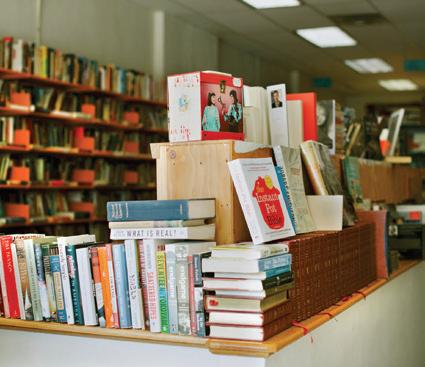
The last book I bought at an independent bookstore was Madeline Miller’s The Song of Achilles , back in April at Daunt Bookstore in London. I had wanted to pick it up on a whim after seeing posters for her new book Circe everywhere in the tube stations. When I asked for the book at the Daunt, the shop owner perked up and started gushing about Miller, who had just been there the night before to do a signing, while looking for the last remaining copy for me from the pile of leftover books from the event. I noticed later that there was a notecard inside, on which a staff member had written a long, heartfelt recommendation message. I then sat down in a nearby café and all but devoured the book with my coffee, feeling like I’d gotten way more than just a good novel.
There’s really nothing wrong with convenience and low price, especially when those two things come in a bundle. But as I stared at my order confirmation email, what I felt wasn’t just guilt for not buying it in the store, but also a lack of excite-
The war between indie booksellers and Amazon have escalated to something akin to David and Goliath, and perhaps rightfully so. Yet in the end, as readers and
consumers, the choice isn’t just a moral one, it’s also about the kind of experience you seek. Isn’t that what reading is like, anyway?
Andrea Yang is a senior in the College of Arts & Sciences. She can be reached at ayang@ cornellsun.com. Five Minutes ‘Til Places runs alternate Mondays this semester.
The Corne¬ Daily Sun Independent Since 1880
137th Editorial Board
ANU SUBRAMANIAM ’20 Editor in Chief
JOYBEER DATTA GUPTA ’21
Business Manager
PARIS GHAZI ’21
Associate Editor
NATALIE FUNG ’20
Web Editor
SABRINA XIE ’21
Design Editor
NOAH HARRELSON ’21
Blogs Editor
SHRIYA PERATI ’21
Science Editor
KATIE ZHANG ’21
Dining Editor
AMINA KILPATRICK ’21
News Editor
MARYAM ZAFAR ’21
City Editor
ETHAN WU ’21
Opinion
SHIVANI SANGHANI ’20
Assistant
NICOLE ZHU ’21
Assistant
MILES HENSHAW ’20
Assistant
JING JIANG ’21
Assistant
JEREMY MARKUS ’22
Assistant Arts & Entertainment Editor
DANA CHAN ’21
SARAH SKINNER ’21 Managing Editor
KRYSTAL YANG ’21
Advertising Editor
MEREDITH LIU ’20
Assistant Managing Editor
RAPHY GENDLER ’21
Sports Editor
BORIS TSANG ’21
Photography Editor
AMBER KRISCH ’21
Blogs Editor
KATIE ZHANG ’21
Dining Editor
SOPHIE REYNOLDS ’20
Science Editor
AMINA KILPATRICK ’21
News Editor
MARYAM ZAFAR ’21
ETHAN WU ’21
HUNTER SEITZ ’20
NICOLE ZHU ’21
JIANG ’21
MARKUS ’22
& Entertainment
LEI LEI WU ’21
Working on Today’s Sun
Ad Layout Jamie Lai ’20
Production Deskers Dana Chan ’21 Jenny Huang ’22
News Deskers Amina Kilpatrick ’21
Shivani Sanghani ’20
Night Desker Rochelle Li ’21
Design Desker Jamie Lai ’20 Xiangyi Zhao ’22
Photography Desker Jing Jiang ’21
Sports Desker Christina Bulkeley ’21
Arts Desker Peter Buonanno ’21 Jeremy Markus ’22
Editorial
IF YOU WANT TO MAKE A CLUB TREASURER FLINCH, you need only whisper the letters S-A-F-C. The Student Activities Funding Commission is the student-run organization that acts as a gatekeeper for over 500 Cornell clubs’ funding. And it is among the most bemoaned bureaucratic hoops on campus. Complaints range from nitpicky rule enforcement to perverse incentives. Some gripe that applying for SAFC funding involves far too many fine details — which, if done improperly, can give the SAFC a reason to pull funds. Others point out that clubs are often penalized for spending less than their allocated amounts, thanks to the SAFC’s multi-tier funding system.
As it stands, the SAFC effectively rations its $1.5 million in funding by looking for registration slip-ups. A Student Assembly member familiar with the process informed us that a “non-insignificant number” of clubs got no funding last cycle due to filing errors. Clubs that lose funding can re-apply for money in the next cycle, but they start at the lowest funding tier — and it can take years to climb back up.
But the S.A. has a plan — or at least it’s working on one. On Thursday, the S.A. formed a committee to “transform” the SAFC, with a final plan due by the end of the academic year.
The SAFC has a tricky job. It has to provide clubs with ample funding while ensuring student money — including yours — isn’t wasted. This is complicated by the fact the SAFC is financed by the Student Activity Fee, the charge all Cornellians automatically pay to fund campus orgs. And since increases in the SAF hit the whole campus, raising the fee must be done judiciously.
During Thursday’s meeting, S.A. President Joe Anderson ’20 said the new transformation committee was “going to try [its] best” to not increase the SAF. Yet the first stated priority of the committee is “getting more money in the system.” The only way to do so without raising the SAF is to cut funding from certain other orgs, such as Class Councils or the Women’s Resource Center. That will no doubt prompt backlash — as it did when Cornell Cinema was defunded in 2017 — and may prove unpalatable for S.A. members eyeing future elections.
So how to square this circle? Raising the SAF and making registration mistakes less punishing — perhaps by reducing funding rather than nixing it — would lighten the load on student orgs. Letting clubs with a one-time surplus stay in their current budget tier would also help. But if the SAF is to go up, it should be accompanied by a formalized effort to audit big-budget clubs, as former S.A. vice president of finance Dale Barbaria ’19 once advocated. Cornellians deserve to know their money is being put to good use.
The S.A. itself needs a better accountability mechanism, too. As we wrote in 2016, the S.A. has unchecked influence in setting its own organizational budget. An independent undergraduate committee tasked with reviewing the S.A.’s allocation decisions would ensure oversight of all players in the funding process.
A.J. Stella | Stellin’ It Like It Is
Summer vacation has been a sacred entity of time worshipped by students since Kindergarten. Homework, early mornings and cold lunches were replaced with swimming, video games and day-long play-dates. Summer was always a time to relax with zero responsibility. In college (and sometimes high school), this dreamy utopia drifts away, instead replaced with nepotistic internships and counting down the days until the weekend.
Of course, you still get to spend time with your high school friends, if you’re lucky enough to be home for the summer. If you’re one of the unlucky ones stuck alone in a foreign city, you can’t wait for the school year to start up again. The common theme is that you long for the simple times: dripping popsicles on your shirt and sweating collectively into the community pool. You miss your college friends and would happily trade one of your paychecks for a margarita Monday night at Loco.
was tainted for me, as I always dreaded receiving one from her. She texted me when she went to First Dam, and Second, and Third. She texted me when she went to the Corning Museum (I think she made that one up) and she texted me about how much nicer the farmer’s market is during the summer. I have heard so many stories about the beauty of Ithaca when the weather’s nice, I feel like I don’t need to go experience it for myself. But maybe that’s just what I tell myself to get through the workweek.
I’m not alone, many of my unfortunate
It only gets worse when we come back for school. You can turn your phone on silent, but you can’t escape a mouthy summer Cornellian. To make matters worse, they come back as a clan.
Then there’s the rare breed of summer vacationers, the ones that have made upgrades to their summer spectaculars, trading out old pools with the running waters of gorges and internships for casual classes. The Cornellians who stay.
The rest of us are left to hide in the
Misery loves company. So our hearts break when we open Instagram or Snapchat to see a handful of our friends picnicking at 2 p.m. on a Tuesday.
bathroom during work hours to check our phones and take a break. As we feel our whole souls have been sucked from our bodies by employers (especially you finance sell-outs), we take solace in seeing others endure the same pain as us. Misery loves company. So our hearts break when we open Instagram or Snapchat to see a handful of our friends picnicking at 2 p.m. on a Tuesday, with a beautiful charcuterie board laid out in front of them.
No one wants to see someone else having fun when they’re not. Everyone has a specific fear, whether it be spiders, heights or the dark, but the fear of missing out is utterly universal. It would be hard enough continuing on with our workweek just knowing this group of Cornellians was out there, but those sick bastards take every chance they get to rub it in.
friends complain about the constant bombardment on social media. It only gets worse when we come back for school. You can always turn your phone on silent, but you can’t escape a mouthy summer Cornellian. To make matters worse, they come back as a clan. People who have never met before are now best friends and always “have to see what Dylan’s up to.” Well, guess what Dylan, I have money to spend this year. Want to waste money on subpar bagels from CTB? I do. They made sure to tell me that the best part was how many new, amazing people they met without me. As the many-faced god worshippers from Game of Thrones would put it, a boy feels so alone. If I had to spend another three months studying, I wouldn’t be able to survive a year at Cornell. Good thing the summer studiers let us know they’re okay by reassuring us how relaxed the classes are.
I don’t want to hear about anyone’s splendidly pleasant summer. Maybe that makes me a bad person; maybe I’m incapable of empathy; maybe I’ve heard the same story one too many times. I think a little more empathy needs to come from our counterparts. You Cornellians that now
I don’t want to hear about anyone’s pleasant summer. Maybe that makes me a bad person; maybe I’m incapable of empathy; maybe I’ve heard the same story one too many times.
I have a good friend — well, now she’s more of an acquaintance — who spent her summer in Ithaca this year. The usual dopamine hit associated with a text notification
think you’re Ithaca-locals have lived it up, and made sure to let the rest of us know. Congratulations on beating us at summer, I’ll see you in a few weeks. I’ll be the guy getting over a cold, after having spent a summer in San Francisco.
A.J. Stella is a junior in the College of Arts and Sciences. He can be reached at astella@cornellsun.com. Stellin’ It Like It Is runs every other Friday this semester.
Seeing Sun memes and Facebook comment threads about the work I and other columnists have produced is my guilty pleasure. I love setting the sort method to “All Comments” and methodically plugging through all the replies: Good discourse, illogical arguments and trolls’ messages all the same. The comments typically come from all sides of the political spectrum, alumni, current students and even members of the public who find it a good use of their time to crawl the Facebook page of a college newspaper.
But what are our responsibilities as Cornellians and Sun readers to promote dialogue on this campus? And, how can Sunnies improve our work by responding to these comments — vitriolic or otherwise?
After just six days of classes, we’ve already been blessed with a plethora of meme-worthy Sun content. One commenter, bemoaning Niko Ngyuen’s ’22 “Let the Haters Hate” even wrote, “I see we’re starting our bullshit horrible opinion articles early this year huh.” Some have made it to the Facebook group “Cornell: Any Person, Any Meme.” Some have incited keyboard riots on the comment sections of The Sun’s Facebook page — see a platform pattern here? Regardless, it’s exciting to start a new semester with some “blistering hot takes,” as our editors like to put it.
Inasmuch as the negative reactions to our columns are columnists’ worst nightmare, criticism and satire about what we write are welcome and duly needed.
I’ve had memes made about me, columns that flopped and sharp retorts thrown at me both in person and online. After I published my first column on why President Trump shouldn’t be impeached because of the political fallout, Daniel D. Dauplaise ’07 wrote a letter to the editor comparing me to Fox News. While I didn’t appreciate that comparison — because I don’t have the correct skin tone or ideology to appear on-air there — that was a learning opportunity for me. Being a columnist meant I needed to develop a thicker skin and clarify my writing.
Jack Ross-Pilkington ’21 posted a meme back in May that put titles of my columns on different quadrants of the political compass. I fit in the dead center of the plane, with
“I’m Exhausted by Politics,” in the bottom half for libertarianism with “Identity Politics is an Absolute Necessity” and “Capitalism is Worth It.” It was a pretty funny meme — in fact, I still keep a screenshot of it in my camera roll — but his point also struck home. I didn’t have a consistent political stance and I needed to either be at peace with my political oscillation or change the way I wrote my columns and thought about the world.
Other columnists have also been the fodder of flaming comment wars. Michael Johns’ ’20 recent column “The Republic for Which It Stands” praises the American flag for being the “ultimate anti-fascist symbol in world history” while criticizing leftists radicals who
If you want to have a conversation about something and possibly change my opinion, shoot me an email. Don’t expect me to read your mind based on a gif.
conversation about something and possibly change my opinion, shoot me an email. Don’t expect me to read your mind based on a gif or a sentence-long diatribe. Unlike New York Times columnist Bret Stephens, I can stand being called a bedbug, but I wouldn’t understand the reasoning behind such name-calling.
The comments section for Nguyen’s column seem to have more substantiated opinions. In that way, comments sections might be helpful for the opinion section’s content. The top comment, with 74 reactions, is “love to see the same column written 384297 times in every newspaper on the planet.” It’s these sorts of comments, along with other warranted affirmations or negations of Nguyen’s point, that might make a columnist think.
refuse to stand for the Pledge of Allegiance or affirm the Stars and Stripes. The online fallout for this column wasn’t exactly pretty. To my (extreme) surprise, no one “angry reacted” the post. But the comments are golden. They include memes about brainwashed American patriots from a current student, a comment from an alumnus bemoaning his inability to escape The Sun’s op-eds, gifs of the American flag, the bald eagle and the hammer and sickle.
Beyond being a way to spend my (always decreasing) spare time, the comments section for political or deeply personal columns make me wonder if this sort of feedback is really helpful for columnists. As Michael puts it, “this kind of behavior will do nothing to dissuade me or other writers from engaging in the public square.”
My thoughts are similar: If you want to have an actual
What?
Early in my freshman year, I was eating dinner with a group of friends when we glided into a conversation on our lives before college. I mentioned growing up on the Navajo Nation and a few friends began to inquire further. Our conversation then began to spiral and I flinched when one friend voiced his belief that “Indians love to be called ‘Indian’
Was this column too similar to the content put out by the hordes of right-wing, libertarian or free speech advocates across the country? Did the contextual examples for Cornell’s campus worth publishing? Only Niko can answer these questions, but us Sunnies can use experiences like this to reflect on what we write. I wouldn’t say that these responses to my writing changed my worldview. But they have forced me to be more vigilant in my writing and research. I’m thankful for that. I don’t know what the response to the “hot takes” produced by my colleagues will be like in the future. But my hope is that our readers can fill our Facebook feed with a mix of memes, serious questions and arguments. I encourage you, dear reader, to think about how your comments might be received by a columnist who’s already a little insecure about their writing — because we all are. I ask you to consider your responsibility to making Ithaca a stronger space for discussion.
If you don’t hate me too much, track me down in the Physical Sciences Building, where I often hang out, or in the 9:05 a.m. section of Linear Algebra to chat with me in person. Or, find me online. With more constructive feedback, we Sunnies might just write a better paper.
Darren Chang is a junior in the College of Arts and Sciences. He can be reached at dchang@cornellsun.com. Swamp Snorkeling runs every other Monday this semester.
most distinguished young adults from all over the globe. And yet, the ignorance that courses through this campus in daily discourse is unwieldy. This is problematic because while provocative speech often comes from hatred, it always comes from ignorance.
Neglecting to denounce our peers and accept their prejudiced speech in colloquial conversation impedes our opportunity to expose and reconcile our past and present evils.
because that is what the white man called them.” I recognize that the term “Indian” is not collectively considered a pejorative term by the Indigenous community. And I am not Indigenous, so it is not my intent to claim that it is derogatory. As is their prerogative, it is my understanding that identity preferences change among Indigenous individuals. It was not that my friend asserted his belief that unequivocally the preferred term by the Indigenous community was “Indian.” That is not what shook me. Instead, my concern was that he — a white man — genuinely believed that white society played a positive role in determining another race’s preferred name distinction. This is precisely why ignorance is not bliss. Because soon after his careless assertion, he then blithely referred to the Native community as savages, and asked where I lived on the reservation: “a cave dwelling? A tepee?”
Our peers at Cornell are some of the
I think about racial bias and microaggressions a lot. It’s annoying — just as admitting to my continual meditation on race relations is obnoxious. Talking about race relations is obnoxious, and implicit bias is annoying. Microaggressions are frustrating. The term microaggressions itself sounds made up. It seems extra to give a name to something that is “micro” anyway — as if they are hostile attitudes that are so miniscule that you need a microscope to see it. Microscopic. Thesaurus.com insists that it is just another word for insignificant, an insignificant aggression, which means it does not matter — which means that mentioning it is a waste of time, and nobody likes their time wasted.
It makes sense why one might choose to take the easier route to conceal the injustices that continue to slither into every pocket of our campus culture. Yet, neglecting to denounce our peers and instead accept their prejudiced speech in colloquial conversation impedes our opportunity to expose and reconcile our past and present evils via honest conversation. The implications of the language we use is so powerful, that to shy away from addressing problematic language is to commit a disservice. As James Baldwin said, “Not everything that is faced can be changed, but nothing can be changed until it is faced.”
We are only able to grow if we stop closing our eyes to our shameful history. Hate
speech is an important element in explaining the current and primitive intolerance that is embedded in our nation’s structurally racist composition. Banning literature that contains hate speech or refraining to address offensive dialogue at dinner tables eliminates the history that is connected to that speech. It ensures that more of my white companions continue to believe the lies their ancestors told them — lies that they will then be compelled to tell their children.
We are only able to grow if we stop closing our eyes to our shameful history.
Some argue that what is most important is not what you say, but how you say it. I contend that it is both. When it comes to contentious subjects such as the position that hateful speech has within society, of course what is first taken into consideration is what was said. Ignoring how and the context in which it is said, however, underestimates the remarkable power of words. Because though both equally harmful, intolerance and ignorance are different mutations of discrimination, and thus require separate solutions. Shutting down the speech does not shut down the hate, however, it will definitely shut down opportunities for education.
I appreciate the reality of distinction. Of differences that mean everything, that mean nothing. Too often, I focus on the differences that mean nothing. I get told that is the easiest way to get burned. Despite his offensive and racist words, I have seen my friend since that dinner. I’ve eaten with him a couple times since that night and I embraced him with sincerity when I first saw him recently at the start of the semester. I find myself questioning if that is bad. A significant part of me feels
that I should only associate myself with people who fully align with my ideologies, and are down for the same “cause.” But maybe that is naive. I can not just disown peers who have said or at one point believed ignorant and offensive things. We are all guilty of ignorance. I cannot say that my friend was knowledgeable about the implication of his words. Actually, even with my attempts to explain the horror in his rationale, I doubt that he understood the implications of what he said at all. I do not find his disparaging words excusable, but I also do not believe the blame for continued ignorance rests
I can not just disown peers who have said or at one point believed ignorant and offensive things. We are all guilty of ignorance.
entirely on him or even other individuals who say and believe ignorant and discriminatory things. My friend, like the rest of society, experienced the same education as the rest of us.
Sidney Malia Waite is a sophomore in the School of Industrial and Labor Relations. She can be reached at smw327@cornell.edu. Waite, What? runs every other Friday this semester.
Fill in the empty cells, one number in each, so that each column, row, and region contains the numbers 1-9 exactly once. Each number in the solution therefore occurs only once in each of the three “directions,” hence the “single numbers” implied by the puzzle’s name. (Rules from wikipedia.org/wiki/ Sudoku)


“Ever since the final papers were due the professor hasn’t even looked at us.”
To submit your caption for this week’s contest, visit sunspots.cornellsun.com.


Houses, Apts, Parking
1 to 9 Bedroom
Collegetown - College Ave, Linden Ave, Dryden Rd, Bryant Ave, Cook St. 607-330-2442 info@urbanithaca.com www.urbanithaca.com
We have availability for the 2020-2021 school year beginning June 1st at Hudson heights apartments. The studios include electric, heat, water, garbage and parking. There is coin-operated laundry facilities on site. Prices start at $750 / month for a 12 month lease. If you have any questions or would like to schedule a tour contact us by phone 607-280-7660 or email: renting@ithacaLS.com
COLLEGETOWN TERRACE APARTMENTS
Spring 2020 Semester Leases Available Heat, hot water and Wi Fi included Free State of Art Fitness Center Free Shuttle Bus Service to campus Washer & Dryer in Apartments collegetownterraceithaca.com office@ithacastudentapartments.com (607) 277-1234
Now Renting
2-10 Bedroom Houses/ Apartments for 20-21. All Locations. Call today or visit our website: Certified Properties of TC Inc certifiedpropertiesinc.com 607-273-1669
20-21
Upper College Ave.
5 & 6 BR Apts Furnished. Laundry. Call 607-273-8576
20-21 Dryden Rd. 2 & 3 BR Apts Furnished. Laundry. Call 607-273-8576
20-21 College Ave.
5 BR House Furnished. Laundry. Parking. Call 607-273-8576
20-21 Upper Eddy St. 7 BR house Furnished. Laundry. Call 607-273-8576

By ZORA HAHN Sun Staff Writer
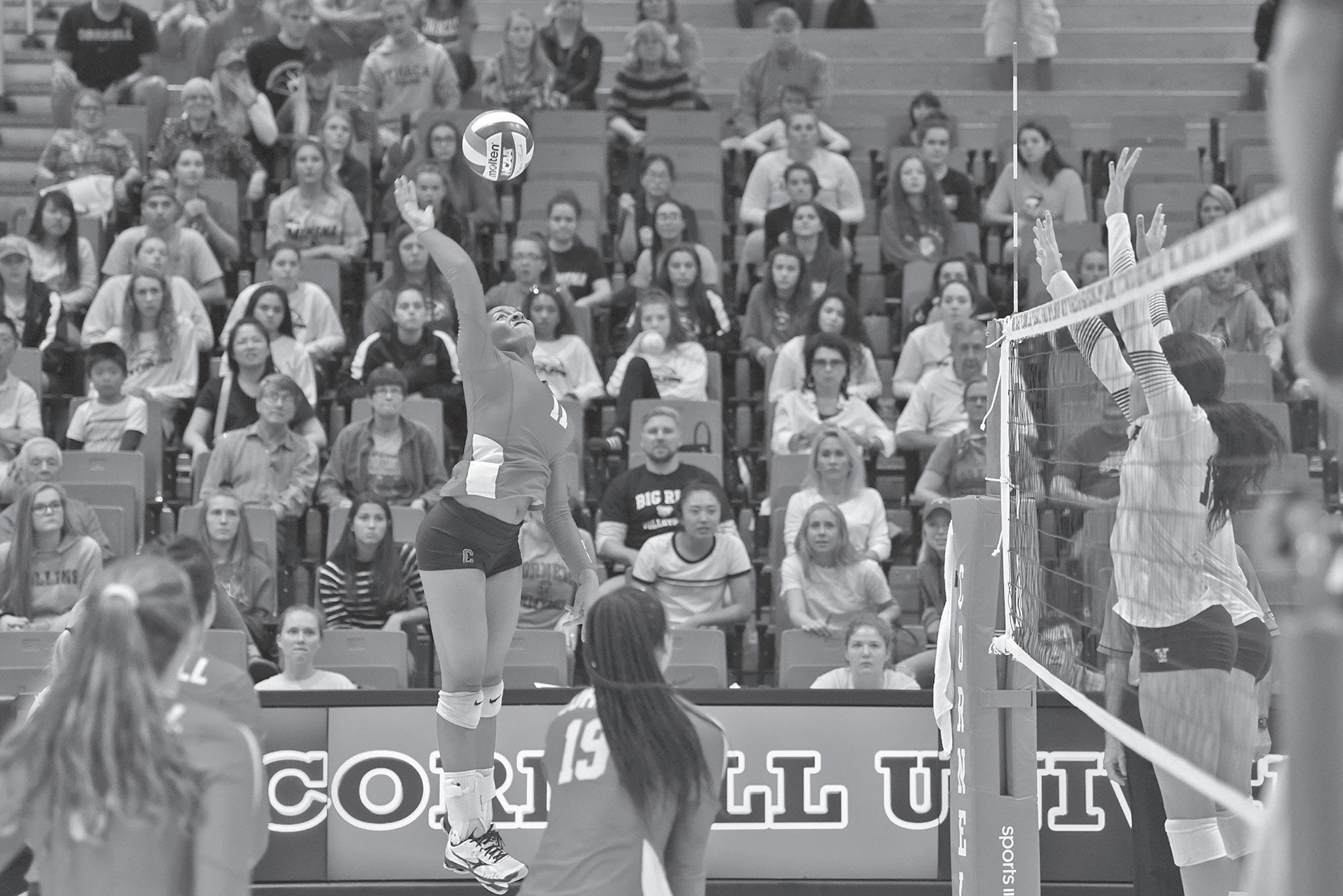
This weekend, Newman Arena was awash with activity as C.U. volleyball hosted the Cornell Invitational and got its season underway.
Four teams participated in the competition: Cornell, the University of Hartford, Niagara University and Youngstown State University. Cornell won against both Youngstown and Niagara, 3 sets to 0. The Red lost its last match to Hartford but battled hard for a final score of 2 sets to 3.
“We had a lot of fight … We had that sense of urgency,” said senior outside hitter Samanta Arenas. “We all kind of stepped up. We were all working hard to play our roles.”
The Red’s first game was on Friday against Youngstown State. Sophomore right side Jillienne Bennett led the scoring with 9 kills, followed by Arenas’ 8. The Red swept Youngstown with scores of 25-16, 25-19 and 25-21.
On Saturday morning, Cornell also triumphed over Niagara University. Junior outside hitter Lauren Stubbs and senior middle blocker Jada Stackhouse led the team in kills, racking up 10 and 8, respectively. The scores of each set were, in order, 25-15, 25-19 and 25-13.
The final game of the weekend was against the Hartford Hawks on Saturday evening, in which the Red lost, 2-3. The team fought hard, ending with set scores of 25-21, 23-25, 23-25, 25-19 and 17-19. Cornell barely lost the 3 sets that clinched its defeat.
“We’re hitting the ground running, we’re super competitive and ahead of the game.”
Samanta Arenas
Cornell is starting its season with a respectable 2-1 record, and taking every opportunity to gear up for the competitive Ivy League games coming at the end of September.
“We have been working a lot on specific skills that we know we’re going to need coming into Ivy play,” Arenas said. “We’re working a lot on defense and serve-receive … we’re going to face a lot of competitive serving teams in the Ivies … we’re working on not getting into a rut or digging ourselves into a hole.”
Given the team’s strong start, the Red’s pre-season work appears to be paying off. The team hopes that the cohesion among its players will lead Cornell to success as the season progresses.
“In our previous pre-seasons, we were getting into the rhythm of things,” Arenas said. “[This year], we’re hitting the ground running, we’re super competitive and ahead of the game … We have really strong freshmen.”
Next weekend, the team will travel to San Francisco to play in a tournament against St. Mary’s College, Utah State University and the University of San Francisco.
Zora Hahn can be reached at zhahn@cornellsun.com.
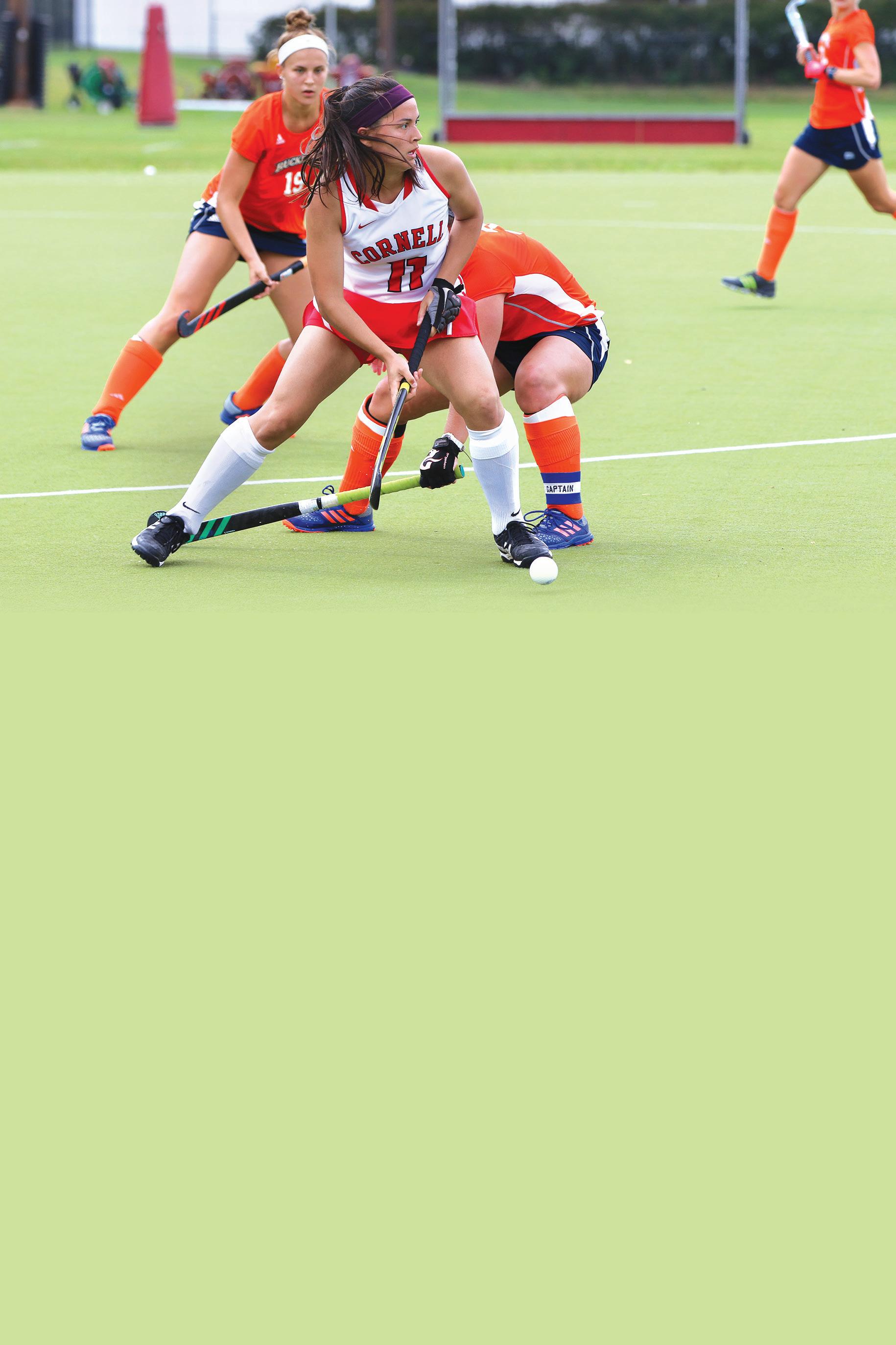
Shaking things up | The game Saturday was the team’s first under new head coach Andy Smith, who came to the team following last year’s 5-12 season.
FIELD HOCKEY
By FAITH FISHER Sun Staff Writer
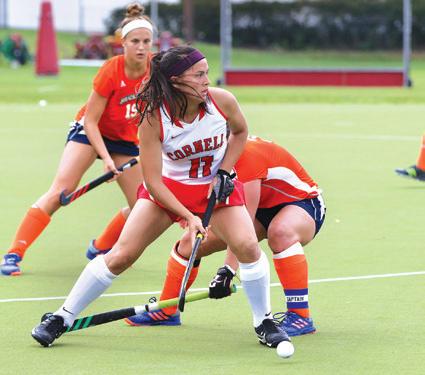
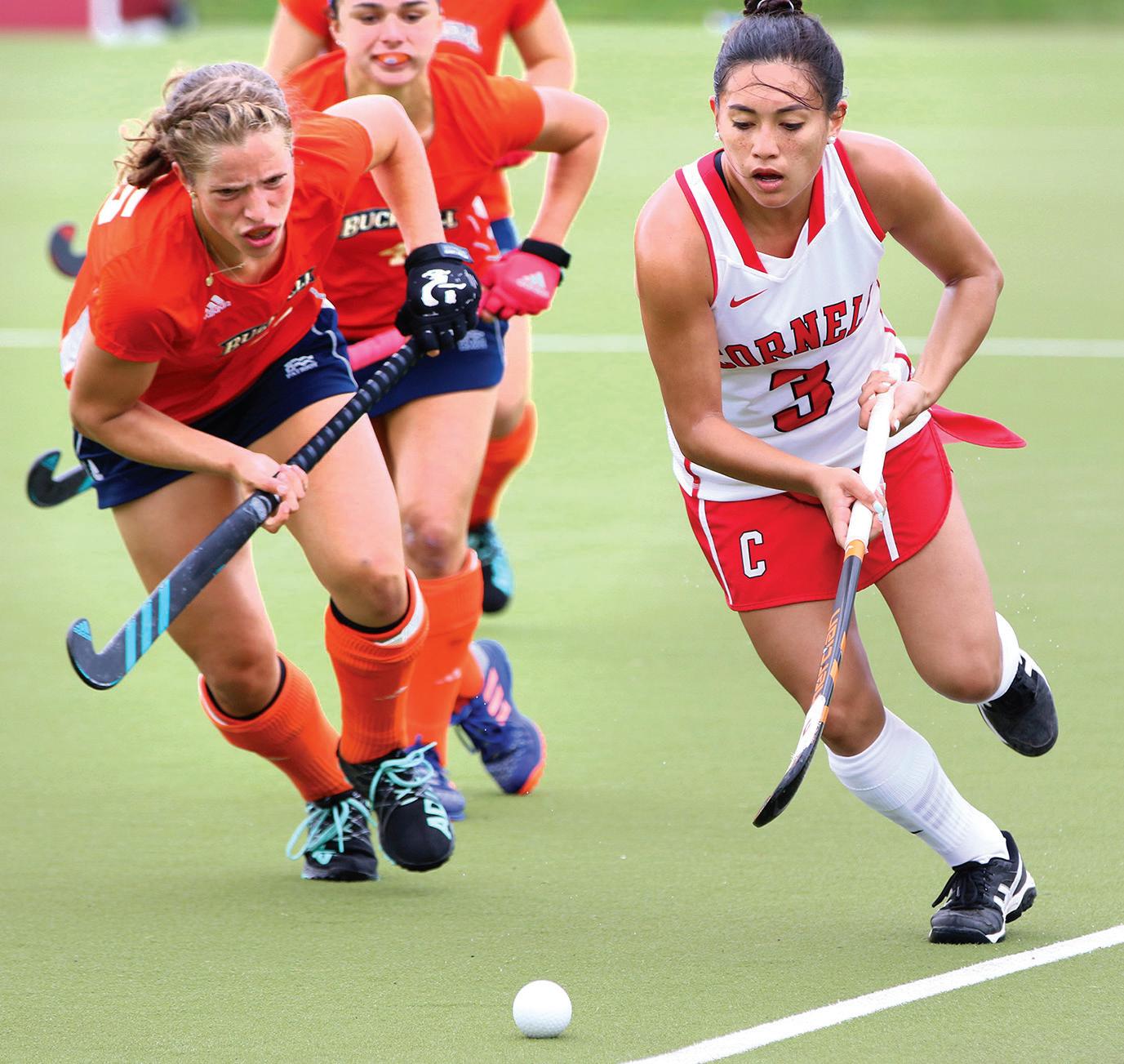
Channeling a desire to protect its home turf and armored with a brand new program philosophy under the command of a revamped coaching staff, Cornell earned a hard-fought victory against a top-20 competitor this weekend.
Cornell field hockey stepped onto Dodson Field for their season opener with a renewed passion and confidence on Saturday against Syracuse. After going
5-12 last season, the Red was looking to take advantage of the opportunity born of a new season.
The Red turned the tables on history, breaking a 12-year losing streak to the No. 18 seeded Orange with a final 2-1 tally.
The nationally-ranked competition did not faze the Red going into the match, however, and the team entered the game with a simple mindset: to outplay their competition.
“We just felt like if we could outwork them today, that would be enough to shut
them down,” head coach Andy Smith said. “Outworking them would be a good process for us, and if the process was good then the result would take care of itself.”
Sophomore forward Claire Jones tipped the game in favor of the Red in the fifth minute. With clean assists from junior midfielder Taylor Gladd and junior forward Grace Royer, she executed a graceful goal on a penalty corner.
The Red refused to settle for a mere 1-0 lead, however.
forward Charlotte de Vries rebounded a saved shot to notch her team’s first and only goal.
Up against a determined defensive force and a goalie touting a .8333 save percentage for the day, the Orange’s effort proved to be too little, too late.
“We are going to put our best foot forward ... Good things are going to happen.”
Freshman midfielder Bridget Mahoney, through a cluster of Red and Orange, managed to send the ball to freshman midfielder Caroline Ramsey. With both control and precision, Ramsey flicked the ball to the back of the net, securing a 2-0 advantage going into halftime. These two points ultimately proved adequate for the Red to secure victory.
Whether facing a scoring advantage or deficit, Smith’s mission for the team remains the same.
“We are going to put our best foot forward and play good, solid, attacking hockey,” he said. “If we outwork a team, good things are going to happen, and if we don’t outwork this team, we are going to be in some trouble.”
The Red entered the second half with this philosophy in mind. As seasoned competitors, however, the Orange tried to match their competitive, attacking energy — they would not hand over a victory to the Red so easily. Syracuse burst into the third period with a renewed offensive fire, placing four shots on goal, two of which came from penalty corners.
The Red could only stave off the hungry Orange for so long, and in the fourth minute of the fourth period, Syracuse
Andy Smith
The Red exited the field with a win under its belt.
“It was a great team performance today — it was a team win,” Smith said. “We won due to our work ethic, heart, resilience and our fast tempo of play. I have been coaching 17 years and I have never been as proud of a team as I was today.”
The Red knows that its win cannot be taken for granted, and that they must continue to fight on the field with the same energy in both practice and competition.
“We are at the very bottom of an upward hill. We have just begun to climb the mountain and today was a good first step — nothing more, nothing less,” Smith said. “We just have to continue to get better. we need to focus on being an even better team tomorrow than we were today.”
The Red will carry this philosophy into their next game against Lock Haven, which will take place at Dodson Field on Sunday at 3:30 p.m.
Faith Fisher can be reached at fsher@cornellsun.com.