One week after spring graduation, Collegetown Bagels and Rulloff's Restaurant will shut their doors. They may not reopen for at least a year.
Cornell’s Student Agencies, Incorporated — the corner block building’s owner — submitted development mockups for a six-story residential and retail building to the City of Ithaca’s planning board on Friday, who will review the documents on Sept. 24. Demolition would begin June 1, with a reopening slated for August 2021.
The plans include an outdoor gathering space similar to Collegetown Bagels’ busy outdoor plaza. The plans may not include Collegetown Bagels.
SAI CEO Kyle Karnes ’91 told The Sun that while Collegetown Bagels’ owners have expressed their desire to sign another lease for
See COLLEGETOWN page 5
Former Nintendo Chief to Teach Class at Cornell
By CAROLINE JOHNSON
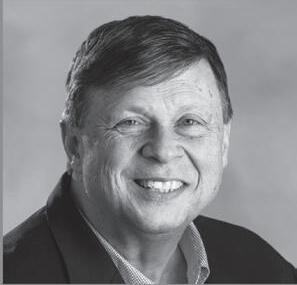
From the adventures of Link in the Legend of Zelda to the twists and turns of Mario Kart, Reginald “Reggie” Fils-Aimé ’83, former president and CEO of Nintendo America, has been a part of bringing dreams to life for Nintendo users across the world for years.
Now, he’s returning to Cornell, his alma mater, to serve as the first Leader in Residence of the Dyson School of Applied Economics and Management.
By JOHNATHAN STIMPSON Sun News Editor
Cadji Ferguson, who was controversially arrested last April for his alleged involvement in an Ithaca Commons fight, was acquitted of disorderly conduct by Tompkins County Judge Scott Millerthe, who cited lack of evidence in a bench trial.
A bench trial, commonly used in low-level offenses, is a procedure in which a judge will alone render a verdict in lieu of a jury.
Police claimed that on April 6, when the arrest took place, they witnessed Ferguson “run across the commons and strike another
“We will not back
We will not let these bright young people be isolated.”
Black Lives Matter - Ithaca
subject in the face, knocking him to the
ground,” from which the officers then “ran towards the fight and attempted to take Ferguson into custody,” according to a statement issued by Ithaca Police.
The bodycam footage of the police officers during the arrest was then released by Mayor Svante Myrick ’09 earlier this year, which shows police tasing Ferguson prior to arresting him. Rose de Groat, another individual implicated in the altercation who will
Leaders in Residence, a part of the Dyson Leadership program, aims to give students the opportunity to have “personal interactions with successful leaders who represent a variety of industries and sectors.” Students learn about leadership and participate in workshops steered to focus on “conscious capitalism” and “service,” according to the program’s website.
Through his innovation and leadership, Fils-Aimé helped ensure that Nintendo’s American division remained a competitor.
Since joining Nintendo America as executive vice president of sales and marketing in 2003, and then taking on the role of CEO in 2006, Fils-Aimé played a critical role in bringing the Nintendo 3DS, Wii U, Nintendo DS and the Nintendo Switch to market.
Through his innovation and leadership, FilsAimé helped ensure that Nintendo’s American division remained a competitor among other leading consoles, stacking up against Sony’s Playstation and Microsoft’s Xbox 360 while revo-
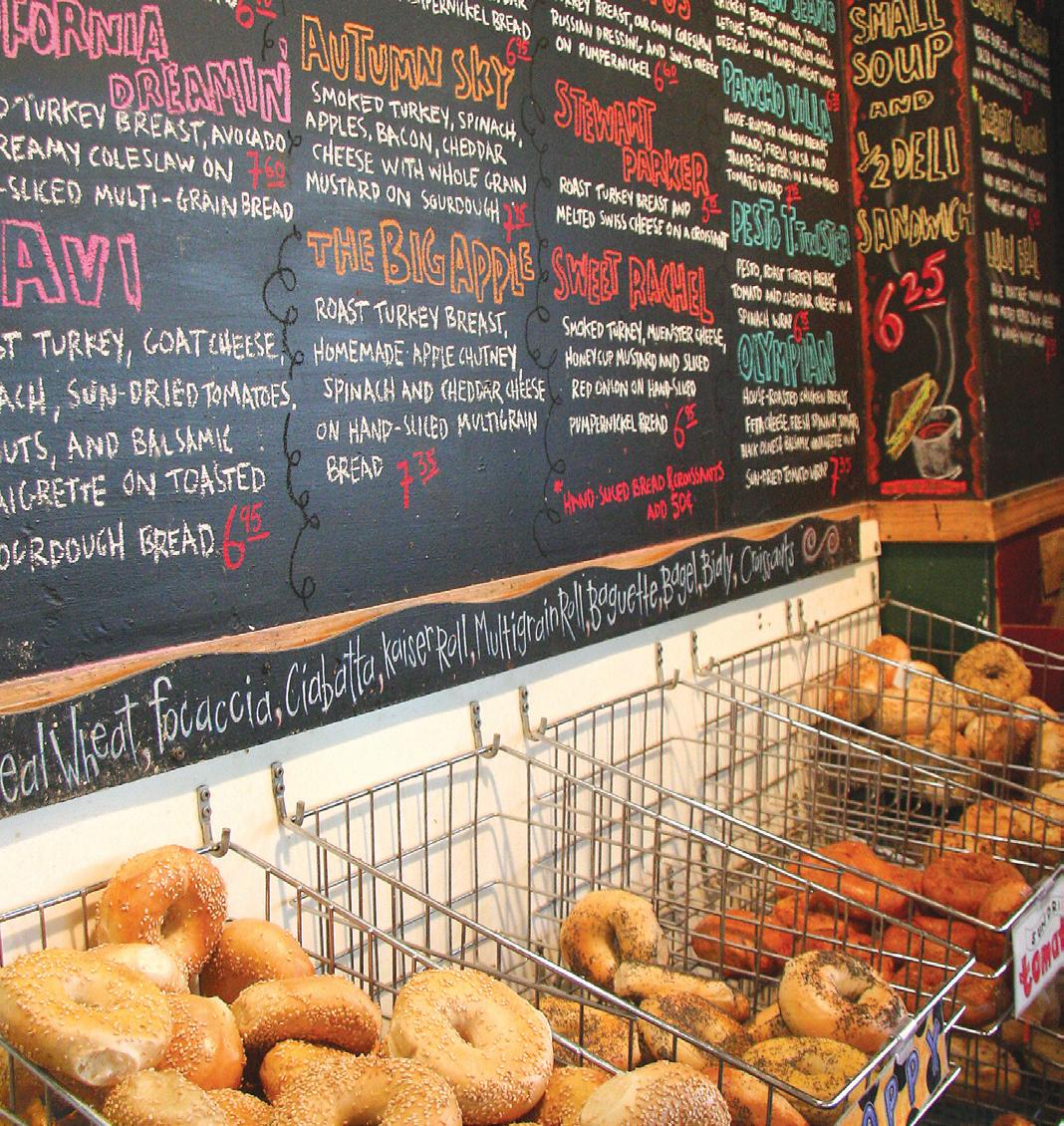
Prime real estate | To capitalize on swelling housing demand, Student Agencies, Collegetown Bagel’s landlord, has proposed plans (shown in rendering at top) to demolish the existing historic building and replace it with a new structure. Bottom: A CTB interior view.
Homecoming | Celebrated Nintendo of America president Reggie Fils-Aimé ’83 will return to his alma mater to teach.
Sun Staff Writer
A LISTING OF FREE CAMPUS EVENTS
COURTESY OF
Plant pathways | As a part of the Plant Pathology and Plant-Microbe Biology Section seminar series, Camila Filguerias will discuss plant defense mechanisms.
Land Surface Evapotranspiration: Actual and Potential Noon, 106 Upson Hall
Deep Learning for Plant Genomics and Crop Improvement 12:20 p.m., 135 Emerson Hall
Preparing Students to Address the Challenge of Global Food Security 3:30 - 5:15 p.m., Stocking Hall, Pepsico Auditorium
MAE Colloquium: The Shoelace Catastrophe 4 p.m., B11 Kimball Hall
Tomorrow
Drop-in Breakfast at the Engaged Cornell Hub 8:30 - 10 a.m., Kennedy Hall, 3rd Floor
Cornell International Fair
11:30 a.m. - 2 p.m., Uris Hall, 1st Floor Terrace
Interest Groups, Campaign Finance and Policy Influence 11:40 a.m. - 1:10 p.m., 494 Uris Hall
Today COURTESY OF
Rapid and Targeted Response: Plant Defense Pathways Mediating Multitrophic Interactions
11a.m. - Noon., A134 Barton Lab
Diagnosing Male Fertility
Noon - 1 p.m., Baker Institute, Thaw Lecture Hall
Biophysics Colloquium with Jayant Udgaonkar 4 - 5 p.m., 700 Clark Hall
Uniting Communities Resource Fair and BBQ 4 p.m., Arts Quad
Work Party at Dilmun Hill Student Farm 4 - 7 p.m., Dilmun Hill Student Farm
Resume review | Engineering Career Center peer advisors will review resumes for students who drop by the Workday Table in Duffield Hall Atrium.
Entrepreneurship Kick Off 4:30 - 7:30 p.m., eHub Collegetown
Sandra Barclay: Other Tropics 5:15 p.m., Abby and Howard Milstein Auditorium
On Thursday, Tompkins Consolidated Area Transit Board of Directors approved a plan to eliminate its two-tiered price system that charges more for rides outside the greater Ithaca area.
Beginning Aug. 25, all routes will be $1.50 per ride for adult passengers and $0.75 for those who qualify for half fare, including seniors, minors, and disability recipients.
Currently, TCAT charges $2.50 on inbound rides originating in Zone 2 — which includes rural and village areas such as the towns of Lansing, Dryden and Newfield. At the same time, it costs $1.50 for rides stemming from Zone 1 regions, such as the City of Ithaca and the villages of Lansing and Cayuga Heights.
This difference in fees means that riders making a trip from Zone 2 into the city and then back out must carry two different boarding passes. Following the implementation of the new fee structure, riders currently holding Zone 2 passes will be able to redeem them for full value and transfer them to Zone 1 passes according to the press release.
“Why should these people be paying more for their transit experience? This just did not make sense to us,” Vanderpool wrote in an email to The Sun prior to the board approval of the plan.
“There is an equity piece to eliminating Zone 2 fares — the lives of everyone in our community and the local economy as a whole are enriched when public transit is accessible and affordable,” he continued.
The two-zone system was originally implemented in 2012 to help balance TCAT’s budget and operating costs. The change to eliminate the extra charges for Zone 2 is expected to reduce fare revenue by $45,000 per year, but TCAT will only need 50 new round-trip riders to balance out the costs, according to Vanderpool.
“The lives of everyone in our community and the local economy as a whole are enriched when public transit is accessible and affordable.”
Scot Vanderpool
The $1.50 flat fare will also apply to outbound rides within Zone 2, which are currently free. A public hearing will be held on July 27 to discuss this change.
According to Scot Vanderpool, TCAT general manager, the decision was “geared towards rural riders,” a part of which are low-income populations who typically need transit the most and have been increasingly forced to live outside the city due to the high cost of housing.
“We would gain ridership in a fairly short period of time to make up for any loss of revenue. One additional factor is simplification of our fare system. It’s really a win-win,” Vanderpool said.
As part of the New York State Mass Transit Operating Assistance Program, TCAT is also reimbursed by the state 40.5 cents per each passenger trip and 69 cents per mile traveled, according to the press release.
“This is an important step to reach our transportation goals, to make it as easy as possible for people to come to work without needing cars or taking up parking spaces,” said Ducson Nguyen, chair of the TCAT Board of Directors.
CUPD Arrests Campus Library Tief
By JOHNATHON STIMPSON Sun News Editor
Despite an attempt to book it from the scene of the crime, an individual suspected of burglarizing several Cornell libraries was arrested on Friday following a tip from a watchful staff member, according to a Cornell Police press release.
The accused thief had previously eluded the CUPD, which has been investigating a slew of larcenies reported at central campus libraries for some time. Among the items reported stolen included several credit cards, laptop computers and other property.
But after sharing a description of the suspect, a vigilant Olin Library employee noticed the suspect closely matching the profile exit the building at approximately 1:30 p.m., prompting the worker to contact authorities. The suspect, identified as Massia White-Saunders, 21, was then detained by CUPD patrol officers and charged with 4 counts of Grand Larceny, a class E felony. Each count carries a maximum penalty of four years in prison.
White-Saunders failed to post bail and is currently being held in Tompkins County Jail awaiting trial. The Tuesday arrest, however, was hardly the man’s first brush with trouble: White-Saunders has been previously caught attempting to steal items from Lansing’s Target
outlet, and has previously faced a number of larceny charges, resulting in a ban from the Ithaca Mall, according to WHCU radio.
CUPD thanked the watchful staff member for their role in apprehending the alleged serial thief.
“We are thankful for the alert staff member who helped stop these crimes from impacting our community,” said Cornell Police Chief
Cornell
Center for Historical Keyboards Opens With Music Festival
At 726 University Ave, the University’s collection of keyed instruments dating back centuries now rests in a newly opened collaborative space: the Cornell Center for Historical Keyboards. From organs to clavichords, every piece is concert-ready. Now, through an anonymous donation, the collection has found a permanent home that also offers space for research and performances. In the coming years, the new center will offer classes, workshops and concerts. The Department of Music within the College of Arts and Sciences will host a celebration of the collection’s new home with a festival on Sept 6 and 7. The festival encompasses several different acts located across campus, featuring performances and talks from both students and faculty.
Finger Lakes School of Massage Loses Accreditation, to Close
The Finger Lakes School of Massage, a for-profit institution teaching massage therapy, has been ordered to close its Ithaca campus after losing accreditation. The institution’s re-accreditation was denied this year after it failed to submit documentation evidencing its compliance with several accreditation standards. Several students and faculty complained about the school’s management of their financial and academic records, including issues such as inconsistent documentation and lack of a financial aid officer. The campus has been ordered to arrange plans to refund tuitions or continued education for students enrolled last year.
Diving Boat Along Southern California Coast Burns, Killing 8
David Honan. “Partnership between the police and the community is essential to provide for a safe and secure campus.”
Johnathan Stimpson can be reached at jstimpson@cornellsun.com.
Early Monday morning, a boat carrying 39 vacationers off Santa Cruz Island inexplicably caught fire, resulting in at least eight dead and two dozen missing. The vessel had been based out of the Santa Barbara Harbor and was on a three-day dive trip on the island. According to the Coast Guard, the fire broke out at around 3:15 a.m. while passengers were asleep below deck. The cause of the fire remains unknown. The boat’s crew, who were awake at the time, jumped overboard. Nearby civilian boats responded in aid quickly after receiving mayday signals, though rescue efforts were hampered by heavy fog. The 75-foot vessel sank 20 yards off shore. Of the eight victims reported so far, two were male and two were female, and the remaining bodies have not yet been retrieved and identified.
— Compiled by Anyi Cheng ’21
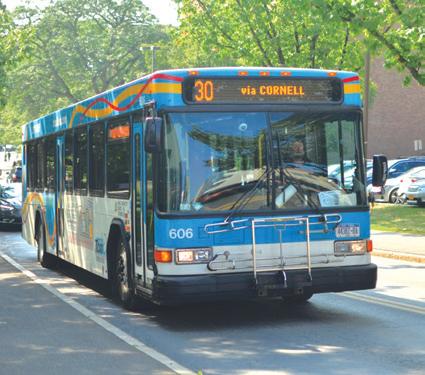
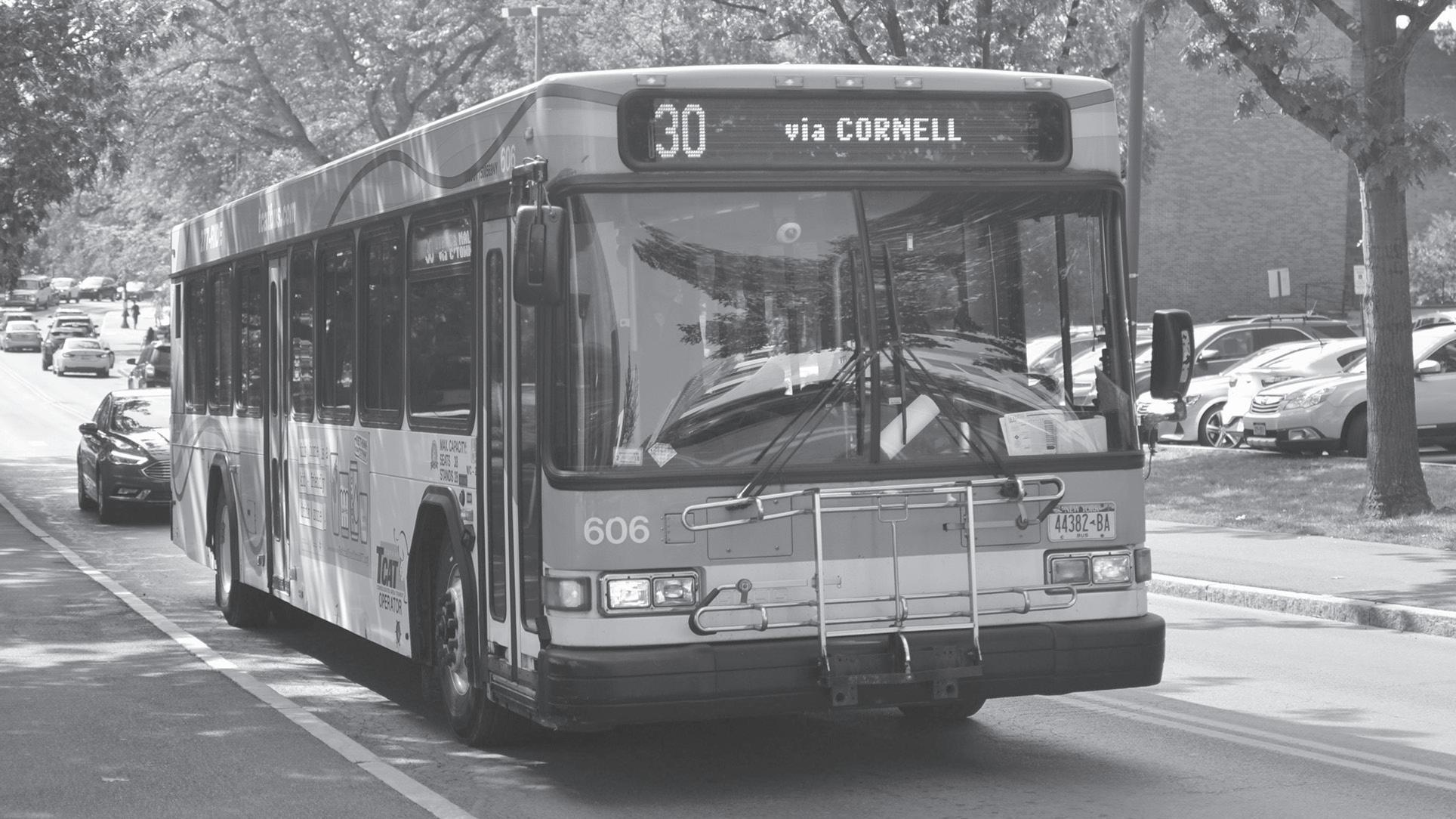
Zone out | The TCAT system serves the entire Ithaca community and offers transportation throughout both the city and Cornell’s campus.
EMMA HOARTY / SUN FILE PHOTO
Emily Yang can be reached at eyang@cornellsun.com.
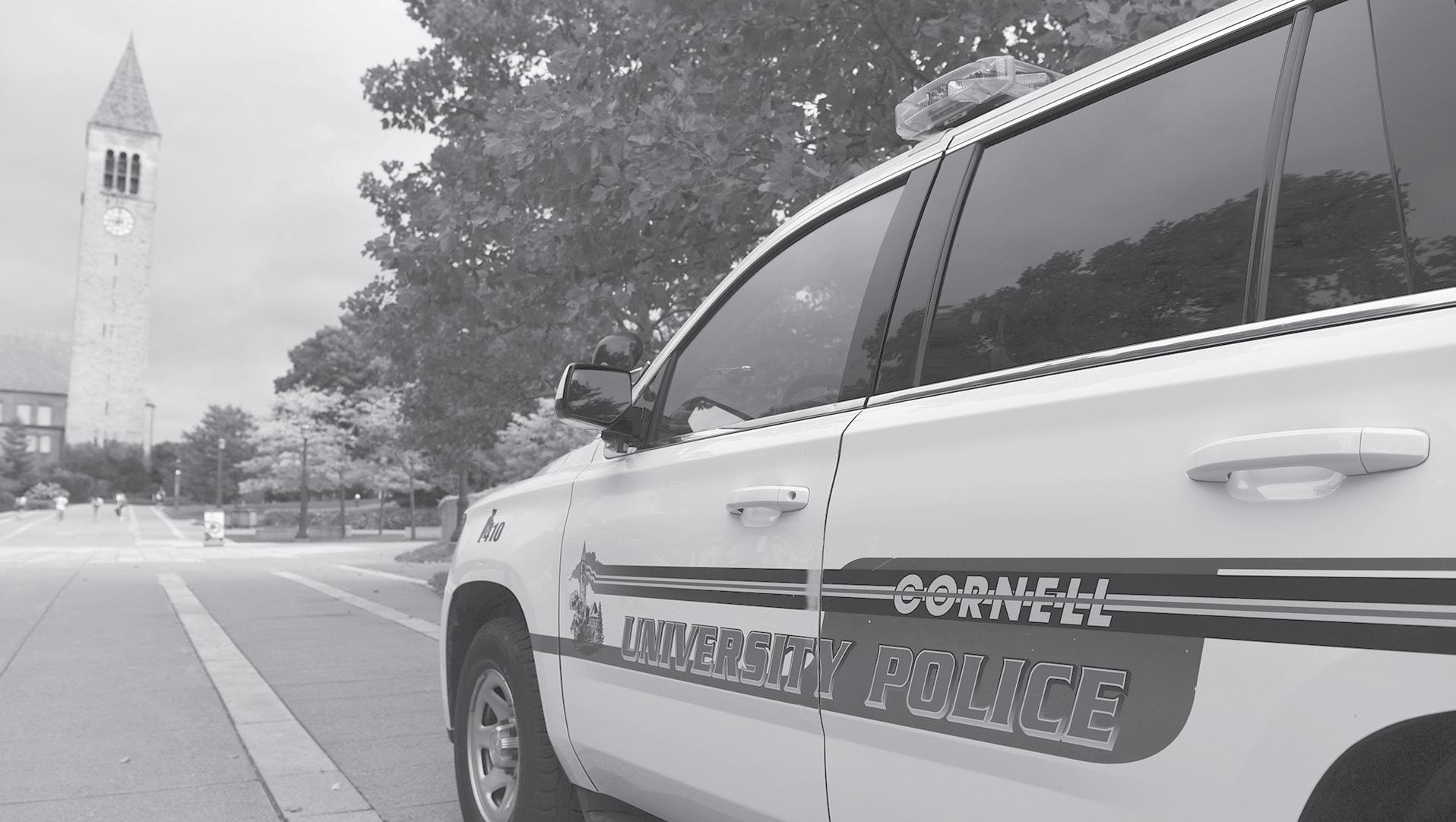
Library larceny | CUPD’s ongoing investigation into a series of central campus libraries cumulated in an arrest after the thief attempted to make off with personal items from Olin Library.
CAMERON POLLACK / SUN FILE PHOTO
Nintendo Exec. Returns to C.U. To Teach Class
Continued from page 1
lutionizing the world of gaming.
As the first person of Haitian descent to lead a Fortune 500 company, Fils-Aimé...has been a trailblazer.
As the first person of Haitian descent to lead a Fortune 500 company, Fils-Aimé — who hails from the Bronx, New York — has been a “trailblazer” in multiple aspects. In his retirement, besides joining the pioneer Dyson program, he will also become a member of the global executive officer committee for Nintendo Co., Ltd. Creativity and unconventional thinking are defining markers for his accomplishments and public persona, best exemplified through Fils-Aimé’s first-ever public speech in a 2004 press conference: “My name is Reggie. I’m about kickin’ ass, I’m about takin’ names, and we’re about makin’ games.”
Fils-Aimé will deliver a lecture in Kennedy Hall’s Call Auditorium from 7 to 8 p.m. on Saturday, October 21 to “share principles so that you can cultivate your own leadership capability.” The lecture is open to the public.
Caroline Johnson can be reached at cjohnson@cornellsun.com.
Cadji Ferguson, Charged With Disorderly Conduct, Ruled Not Guilty
separately face trial on November 4, allegedly “attacked an officer from behind repeatedly striking him in the head,” before then striking “a second officer in the face before being taken into custody,” Ithaca Police said.
But despite the existence of a video recording, both law enforcement and the defendant offered highly divergent versions of Ferguson’s role in the incidence during Friday’s trial. Ferguson’s lawyer argued that his actions constituted reasonable self-defense against Joseph Ming, the “male subject” referenced in police reports, according to The Ithaca Voice. Ming was neither arrested nor extensively questioned for his role in the events.
The responding officer, for his part, characterized Ferguson’s
“This
Ithaca - Black Lives Matter
punch as “haymaker,” in reference to its apparent power.
The case — which has become a local flashpoint in a larger national debate over racial profiling and law enforcement — has sparked anger among some in the Ithaca community, who have strenuously objected to the police’s version of events.
In a Facebook post published on August 29, an Ithaca chapter of Black Lives Matter instead said that Ferguson “was attacked
during the April police brutality incident on the Commons,” calling the disorderly conduct charges the product of “racist policing.”
Since charges were initially filed against Ferguson and de Groat, the activist group, along with Showing Up for Racial Justice and Ithaca’s Multicultural Resource Center, has been highly active in organizing community support on the pair’s behalf, packing a Tompkins County courtroom last week in a hearing that would determine
if de Groat would ultimately face trial for resisting arrest, The Sun previously reported.
Cornell Prof. Russell Rickford, history, attended that hearing,
“We celebrate with Cadji and continue to support and show up for Rose!!!”
Showing Up for Racial Justice
where he was seen holding a sign that read, “racist cops — henchmen of the capitalist order.”
“We will not back down! We
will not let these bright young people be isolated, criminalized, and railroaded by a racist system!” the group wrote, imploring protestors to bring signs in support of Ferguson at the Friday hearing. “This is another opportunity to build our base and bring more people into the struggle!”
The decision to acquit Ferguson left his well-wishers ecstatic, and optimistic that de Groat’s trial, which will take place in November after de Groat rejected a plea deal offered by the
prosecution, would be met with a similar outcome. Unlike Ferguson, de Groat faces a count of resisting arrest — a more serious felony.
“CADJI MALONE FOUND NOT GUILTY THIS MORNING!!!,” Showing Up for Racial Justice wrote on Facebook. “Amazing and important news, thanks to the power of grassroots organizing. We celebrate with Cadji and continue to support and show up for Rose!!!”
Johnathan Stimpson can be reached at jstimpson@cornellsun.com.
NINTENDO
Collegetown Bagels and Rullof’s May Close Next June
COLLEGETOWN
Continued from page 1
space in the new property, no agreement has been reached and SAI is also considering other tenant options.
“At this point, there’s no guarantees who’s going to be in that space going forward,” Karnes said, while noting the businesses’ nearly 50-year relationship. “We’re going to keep having those discussions with CTB — and with others, quite frankly.”
The new building would be six stories tall, two more than its current height, thanks to new zoning designations in the area. It would include a bottom floor of retail space, as well as five stories and 56 units of “higher-end” apartments that are priced accordingly, Karnes said.
tions with Student Agencies, he currently has no idea how pricing will be handled in the new building.
Karnes declined to comment to The Sun if or how much rent would change if CTB were to sign a new lease. The majority of SAI’s income and operating budget — which will fund the development — comes from rent from its 411415 College Avenue properties.
If the current timeline stands, both CTB and Rulloff’s will be closed for at least fourteen months, starting June 1, 2020.
During that time, Brous said that he may try to open new locations in one or two of Collegetown’s many empty storefronts, ideally opening the same day the current locations close.
“This corner has been really important to the Cornell commuity for 100 years.”
Kyle Karnes ’91
He estimated the cost of development at around $12 to $13 million.
Gregar Brous — part of the Brous family, whose local eatery staples include Ithaca Bakery and three CTB locations — told The Sun on Friday that the plans put the futures of the Collegetown branch and Rulloff’s bar in limbo.
Though the designs are still under review, Brous — who also owns Rulloff’s — is preparing his next move with the expectation of demolition. If given the option, he said, he’d like to reopen in the new space.
“Part of it will be a financial decision,” he said. “I don’t know what the rent structure will be.”
Brous claims that he already pays the highest rent per square foot in all of Ithaca. Though there have been a few conversa-
“We would like to maintain some presence here,” he said. Whether that would be a permanent move or a temporary one, he doesn’t yet know.
Student Agencies notified Brous of the development plans on June 1 of this year, a year out as required by their current lease. He saw the draft plans for the first time this week.
The proposal replaces the 17-unit building and its 1800sera stone facade — described as “crumbling” by surveyors in 2017 — with a sleek 56-unit complex.
While the plans state that the side of the new building facing College Avenue would keep street continuity in mind — including preserving some of the original stone design elements — the corner facing Cornell would be redone in tall glass to reflect the trees and sky lining Cascadilla Gorge.
It would feature Chacona Block’s decorative stone lions, which workers pried off and preserved during previous construction, but not some of its cross-line facade — which broke into pieces during the projkn lcess.
“This corner has been really important to the community and the Cornell community for 100 years,” Karnes said. “And so we take our responsibilities for the
corner very seriously.”
For almost 40 years of that time, the corner has been home to breakfast, late-night and reunion weekend favorite CTB.
“We’re very attached to it,” Brous said. “We started here.”
CTB opened in Collegetown in 1980, in the shop that now houses the Bear Necessities merchandise store. It was only a one-counter shop, Brous said, run
by himself and his wife. In the beginning, it sold two products: bagels and cream cheese.
“When we expanded and we offered melted cheese on a bagel, it was like earth-shattering,” he said. “And then when we added tuna fish, I thought people were going to freak out.”
Sarah Skinner can be reached at sskinner@cornellsun.com.
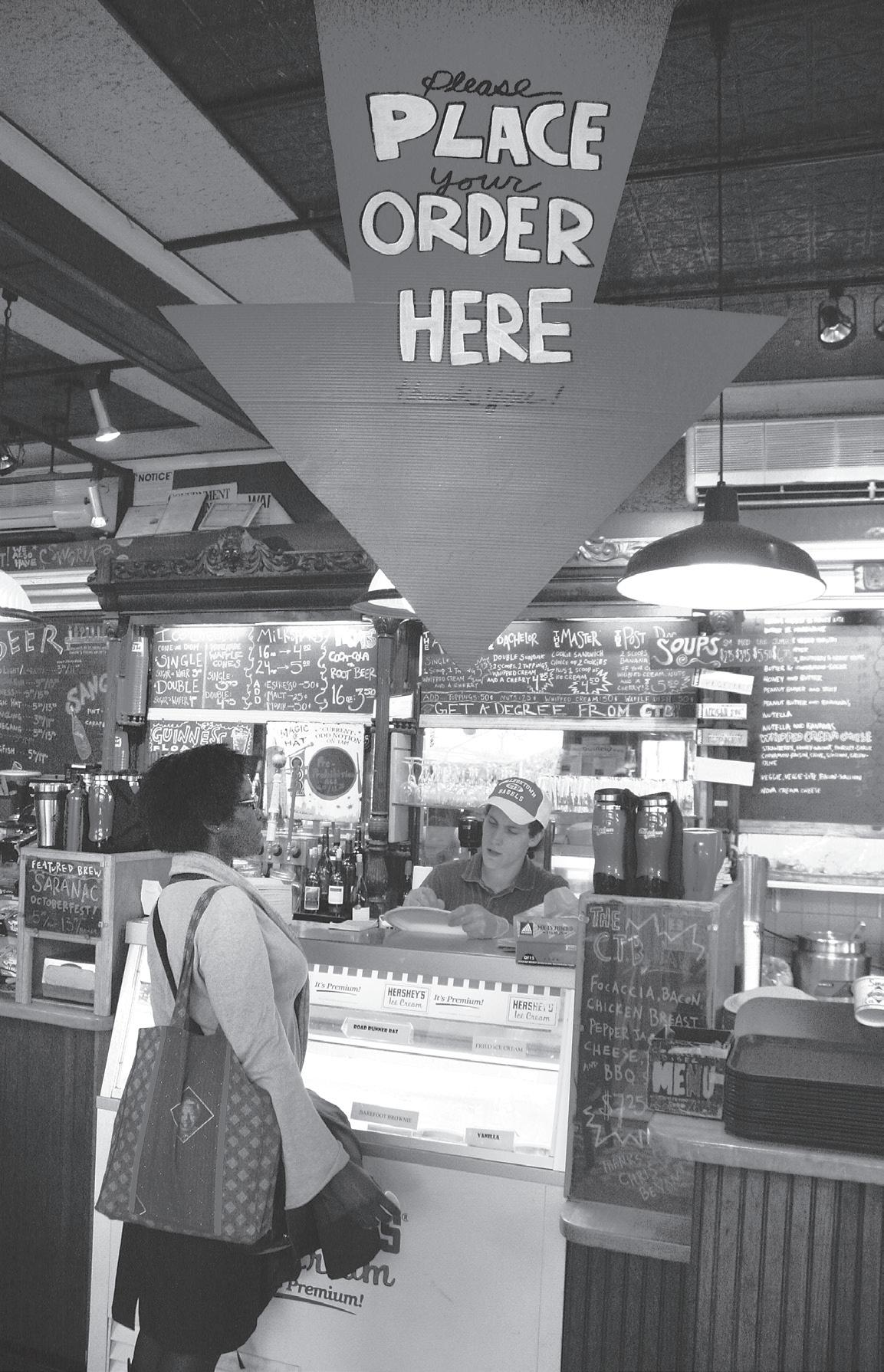
Toasted | Collegetown Bagels is a beloved gathering spot that’s busy all day, from breakfast bagels to late-night coffee.
SIMON TARANTO / SUN FILE PHOTO
ARTS & ENTERTAINMENT
Noise Music Is the Resistance We Need
We live in an age of noise. Even an absent-minded soul can expect to be bombarded by information that is manipulated to distract, entice and further influence us. Our platforms, our infrastructures, our economy, our society all endorse the commodification of attention. Our contemporary attention economy glorifies the tactics of intrusion in pursuit of profitability. The inundation of attention-grabbing strategies puts us under a constant sensory avalanche. Yet in most cases, there are no human values — but mere numeric values — in the attention blindly sought after by the profit-driven corporations. Gradually, we grow accustomed to the blinding distractions and learn to be numb to the suffocating noise. We learn to block the popup tabs on our browsers; we learn to skip the ads on YouTube after five seconds; we learn to adapt to the noise we created without a purpose.
Even when it comes to aesthetic experience, we learn to comply with the surrounding noise. The new norm is to listen to music in a semi-distracted state, something that will most likely come as a shock to previous generations. Contemporary noise is not only pervasive, but invasive. We are forced to cease dedicating our full attention to music to avoid the nuisance of sensory overload. A new model of the appreciation of the sound has thus been established to redefine the aesthetic experience in the age of noise. Under such circumstances, it is almost too predictable that lo-fi hip hop study beats would go viral. In terms of aesthetic experience, it certainly wouldn’t matter whether you listen to the whole two-hour track uninterrupted, or if you actually finish listening to the track at all. In the case of the ceaseless streaming of lo-fi hip hop beats, people minimize their attention to details and call it the future of listening.
This overarching refusal of the full dedication to the arts is manifested through the trendy prevalence of AirPods. The earbuds help people live in harmony with
the omnipresence of noise — while their insulation alleviates distraction for the attentive accentuation on sound, their semi-open structure also immersively blends the surrounding noise with one’s listening. Let’s admit it: We use AirPods because we want to listen to our earphones while doing something else. The invention of AirPods signifies a future of ubiquitous listening in which noise is smoothly integrated into rather than removed from our listening experience. Driven by the demand to mitigate the nuisance of noise, which has grown to be too vexing to be neglected, the rise of AirPods signifies a fundamental shift in aesthetics that turns to the current solution of tuning out. So, does that mean AirPods is the future of listening in the age of noise? No, but they are rather a sign of compromise. Such irony is in the fact that the product is a market success when its very essence is to help people cease paying full attention (a remark that I find to denote a regressive trajectory of post-humanism). Is this the future where we not only deviate but regress from the audiophile’s approach to sound?
Noise has been forcibly occupying our attention for free. Is this exploitation of free labor? Yes. Are we the victims of the noise pollution of the attention economy? Yes. For some, tuning out may work perfectly fine for now, but it won’t work for long. When it comes to digital pollution, sustainability is still very much an urgent objective. Therefore, it is not the minimization of attention that is the solution to the crisis of sensual overload. As the founding editor of Wired said in the inaugural issue of the magazine: “In the age of information overload, the ultimate [solution] is meaning and context.”
I believe the solution to the invasion of noise would be noise music — precisely because it endows noise with meaning and context. Leveraging noise as the medium, noise music transcribes the static into its own signal. But first, before we all pretend to be pseudo-intellectual hipsters, what
exactly is noise music? No, noise music is not pure noise. If you start clicking your pen without meticulously crafting the precise length, pitch and texture of the sound, I’m sorry, but you’re just making noise. And that’s worse than using AirPods.
So, what exactly differentiates the noise music you hear at a warehouse party in Bushwick, Brooklyn from the everyday noise of the metropolis? Or is noise music just a fancy term coined by hipster music critics who just don’t know how to properly appreciate music? It is with attentive intentions that the conscious production or reproduction of noise would be considered as an alternative form of music. Say, if noise is used as the medium of a statement, the very same noise could well be considered as an artistic expression. This corresponds to the pioneering theory in new media studies that “the medium is the message.” If you attempt to “perform” with the pen-clicking noise by reconfiguring the sample with synthesizers and sound effects, it is an artistic endeavor to curate noise with the objective to proclaim a manifestation with noise as both the medium and the message.
it is exactly the obliteration of current aesthetic values that would help reinvent a new way of listening in the turbulent age of noise. By its nature, noise music is characterized as chaotic, unfamiliar, offensive. This is accentuated through the use of abrasive frequencies, profuse volume and atonal sound. These immeasurable and eccentric qualities of noise music are exactly the solution to the automation of noise, as these could well be a potent force to emancipate the number-driven contemporary music streaming platforms from the capitalist trap of chasing of quantifiable metrics.
Stephen Yang
Rewiring Technoculture
Noise music is the last frontier. As it challenges the very essence of aesthetics in our digital culture, it can help initiate a wave of digital resistance against the noise pollution of the attention economy. In our contemporary technoculture, aesthetics reserve significant flexibility for the experimental collision of noise, contingency, variability — precisely because if it did not, it would disappoint, it would fail to deviate, to surprise, to excite, to make a statement. Criticism against noise music often focuses solely on its defiance of aestheticism, yet I would contend that
Spotify is the locus where we can observe the noise pollution of contemporary technoculture. Its algorithm-driven playlists weigh numbers like clicks, followers and streams so heavily that they malform music into loud, screeching noise. In the case of noise musicians, they often wholly reject these streaming services that will inevitably silence their music. Rather, they endorse platforms with true open access as a grassroots act of solidarity with all marginalized communities. It is high time that we stop streaming music on Spotify when we are barely listening and deal with the noise emitted by our very own decisions. Give platforms like Bandcamp a trial. They actually help foster the urgently-needed digital resistance. It is about time that we leverage new media technologies to make the world more equal and connected but not more distorted, polarized and noisy.
Stephen Yang is a sophomore in the College of Agriculture and Life Sciences. He can be reached at syang@cornellsun..com. Rewiring Technoculture runs alternate Mondays this semester.
SC I ENCE
A Healthy Start to the School Year How to Avoid Getting Sick When Back on Campus
Bacteria to school | This semester, stay healthy with exercise, sleep and self care.
By TAMARA KAMIS
Sun Staff Writer
“I moved in on the 23rd. This morning I woke up feeling awful; dry cough, runny nose, abdominal pain, and a light fever that went away by the afternoon,” new student Marcos Acosta ’23 told The Sun.
Acosta’s experience is sadly common. According to Cornell’s director of medical services Dr. Anne Jones ’04, DO, MPH, common illnesses at the beginning of the year include coughs, colds, infections and allergies.
“When you’re living and learning in close proximity to others, it’s common for your body get exposed to and to react differently to infections, allergens, and stressors,” Jones explained. “Things like alcohol use and limited sleep can also affect you differently when you are in a new environment.”
However, there are resources all over campus to help students get a healthy start to the year.
Sleep deprivation amongst Cornell students may contribute to students getting sick when moving in, because sleep strengthens the immune system. One of these students was Erin Hudson ’22, who became sick within her first few weeks of school last year. She was sleeping between 4 and 6 hours per night.
“I was busy and stressed. I was in the Navy ROTC Unit and the cross country team,” Hudson said.
Stress, a scourge on many college campuses, also keeps Cornell students up at night and weakens their immune system.
In a presentation on Monday, August 26, to students at Hans Bethe House on West Campus, Cornell public health fellow Amber Pasha described stress as an “invisible backpack” that students carry and recommended using self care strategies such as meditation and exercise to lighten the load. Many students, like Matthew Canabarro ’22, agree that exercis-
ing helps them stay healthy and use Cornell resources to do so.
“I’ve taken a few spin classes, some HIIT classes and used the different gyms,” Canabarro said.
Free fitness resources available to students include free late night gym access on Fridays and Saturdays, swimming, tennis, volleyball, and some free gym classes.
However, these preventative strategies are not fool-proof and despite concerted efforts to reduce stress and maximize sleep, individuals can still fall victim to illness.
Dean of Students Vijay Pendakur recommended that Cornellians listen to their bodies.
“If you get sick in the first few weeks of school, get plenty of fluids, sleep as much as you can, and if necessary, get professional help,” he said.
Cornell Health has a range of self care guides both in their pharmacy and online for conditions including sore throats, coughs, diarrhea and constipation, which help students to manage their symptoms without seeing a care provider. The pamphlets generally recommend sleep, fluids, avoiding alcohol and caffeine, and over the counter medications such as acetaminophen.
Many students use the Cornell Health pharmacy and other local stores to buy over-the-counter medications to manage their symptoms.
“I had very bad congestion for a month. I went to Cornell Health for some decongestant, it helped some. Mainly, I waited for it to get better,” said Temple Anyasi ’22.
If symptoms are particularly severe and people need medical attention when Cornell Health is closed, some students, including Amanda Hartman ’21, have used the Cornell Health hotline at 607255-5155.
“I was vomiting for hours and hours and hours. I called the 24hour nurse, and she told me to go to the hospital. [The hotline] was
very helpful,” Hartman said. Additional resources include the Cayuga Medical Center, Urgent Care in Ithaca and Wellnow Urgent Care. In a men-
tal health emergency, the Ithaca Crisisline, National Crisisline Suicide Prevention Chat Service, and other crisis lines can help. In any emergency, including health
emergencies, call 911 or the Cornell Police at 607-255-1111.
Tamara Kamis can be reached at tkamis@cornellsun.com
ALICIA WANG / SUN GRAPHICS EDITOR
ANU SUBRAMANIAM ’20
JOYBEER DATTA GUPTA ’21
Business Manager
PARIS GHAZI ’21 Associate Editor
NATALIE FUNG ’20
Web Editor
SABRINE XIE ’21 Design Editor
NOAH HARRELSON ’21
SHRIYA PERATI ’21
Editor
KATIE ZHANG ’21 Dining
AMINA KILPATRICK ’21
MARYAM ZAFAR ’21
ETHAN WU ’21
SHIVANI SANGHANI ’20
NICOLE ZHU ’21
MILES HENSHAW ’20
JING JIANG ’21 Assistant
JEREMY MARKUS ’22 Assistant
DANA CHAN ’21
RYAN RICHARDSON ’21
ALISHA GUPTA ’20
SHRUTI JUNEJA ’20
RAJESH ’20
SARAH SKINNER ’21
MEREDITH LIU ’20 Assistant Managing Editor
RAPHY GENDLER ’21
BORIS TSANG ’21
Editor AMBER KRISCH ’21
SOPHIE REYNOLDS ’20
Editor
AMANDA H. CRONIN ’21
JOHNATHAN STIMPSON ’21
Editor
PETER BUONANNO ’21
Arts & Entertainment Editor
ANYI CHENG ’21
Assistant News Editor
HUNTER SEITZ ’20
Assistant News Editor
CHRISTINA BULKELEY ’21
Sports Editor
PARKER ’22
MORAN ’21
WANG ’21
LEI WU ’21
WANG ’20
’21
GIRISHA ARORA ’20
FLEER ’20
SIMS ’20
Working on Today’s Sun
Ad Layout Dana Chan ’21 Production Deskers Sabrina Xie ’21 Mei Ou ’22 News Deskers Anyi Cheng ’21
Johnathan Stimpson ’21
Night Desker Rochelle Li ’21
Design Desker Lei Lei Wu ’21
Greta Reis ’21
Photography Desker Boris Tsang ’21
Sports Desker Christina Bulkeley ’21
Niko Nguyen | Unfltered Let The Haters Hate
In 1932, the University of Chicago faced a watershed moment in its university policy: what to do about a Communist.
When a UChicago student organization invited William Z. Foster, the Communist Party’s presidential candidate, to lecture on the prestigious campus, the school faced immense backlash. Between concerned citizens and angry politicians, the public condemned Foster’s visit, dismissing his views as “treasonous hate rhetoric.” Even then-governor of Illinois, Louis Lincoln Emmerson, expressed his disapproval of the university for permitting the lecture to continue.
In response to the criticism, UChicago President Robert M. Hutchins released a public statement that defined a precedent for the school: “Our students should have the freedom to discuss any problem that presents itself … the cure for ideas we oppose lies through open discussion rather than through inhibition.”
From their genesis, colleges and universities were designed to serve as hubs of knowledge, spaces to expand one’s perspective and mindset. Since then, colleges have evolved in a multitude of ways — there are now thousands of diverse, unique schools with their own distinct mission statements and practices. But, still, at their core, they’ve remained the same: centers for contemplation, discourse and debate. A key component of this objective is allowing students to construct their beliefs in the face of conflict and dispute.
However, in recent years, as college students have grown more cognizant of social inequity, the issue of censorship has warped into a bitter conflict on university campuses. In particular, a number of high-profile, controversial events on campuses — typically featuring conservative and alt-right speakers — has fueled this
fostering narrow-minded environments of education. As a result, college students remain shielded from the opinions and people that, for better or for worse, play a role in shaping and influencing the real world. If universities continue to follow these practices, they commit a disservice to their students. Even former President Barack Obama echoes this sentiment, expressing concerns that college students are “coddled and protected from different points of view.”
In fact, it is the duty of universities to practice the opposite of censorship — they should actively promote the principles set forth in the First Amendment.
College students remain shielded from the opinions and people that, for better or for worse, play a role in shaping the real world.
Colleges should aim to cultivate learning environments where all perspectives from across the political spectrum are expressed. Therefore, they should allow speakers hailing from every political background to share their viewpoints; at the same time, they must allocate space for protesters to voice their dissenting opinions.
Jonathan Butcher, a policy analyst for The Heritage Foundation, perfectly sums it up: “Ideas are powerful, and choosing to fear an idea instead of learning to understand it or overcome it with a better one is a poor life strategy. Things we disagree with won’t go away if we pretend they don’t exist.”
UChicago sets a strong example for other colleges to follow. Even when up against student protests and public disapproval, the university adhered to its commitment to discourse and growth. By allowing Foster to speak, UChicago established that free speech would always be valued on their campus.
debate. Tensions reached a peak when violence broke out among UC Berkeley protesters denouncing Milo Yiannopoulos, a Republican extremist speaker. Former Secretary of State Condoleezza Rice was pressured into dropping out from giving a commencement address at Rutgers University due to her involvement in the Iraq War.
Even Cornell faced an issue revolving around censorship this past year. Last semester, the Cornell Political Union rescinded an invitation to Jannique Stewart, a conservative pro-life speaker, from discussing abortion due to her antiLGBT rhetoric. The decision was met with criticism, denouncing CPU for uninviting Stewart and thus restricting an open exchange of views.
While protesters should be allowed to express dissent against inflammatory speakers, they should not be allowed to obstruct their voices. By allowing students to censor unpalatable opinions on campuses, universities are complicit in
Granted, Cornell has also made strides in policy that encourages free speech. Just last semester, the University opted to scrap its event security fee. This move — involving a heated controversy over the CUPD’s ultimatum against CPU’s Michael Johns, Sr. (whose son is a columnist for The Sun) talk — pushes the campus in a more open, inclusive direction. In doing so, Cornell has more closely aligned itself with its founding principle of “any person … any study.”
Despite Cornell’s controversy over CPU and Jannique Stewart, I hope to see our campus continue to move down this path of open discourse. Cornell has always prided itself as an institution with a liberal arts education, touting a comprehensive learning experience to build more well-rounded students. Debate and conflict are necessary elements to this formula; they push students into uncomfortable situations, stretch their understanding of issues and assess their ability to defend or improve their stances.
Niko Nguyen is a sophomore in the College of Agriculture and Life Sciences. He can be reached at nhn5@cornell.edu. Unfiltered runs every other Wednesday this semester.
Embracing Change
As I look toward the semester ahead and consider how I should spend my last semester at Cornell, I realize how much has changed over the past three years of my time here. Most notably, so many on- and off-campus premises continue to be newly established or demolished that I may not even recognize Cornell three years from now. Renovations in Rand Hall have finally been completed almost three years after a car crashed into the building during my freshman year. Long-time Collegetown restaurants such as Aladdin’s have gone out of business and new apartment complexes are constantly under construction.
Personally, I have stretched myself far and
I have become a more flexible person by learning to adapt to unforeseen circumstances, which will undoubtedly serve me in the future.
those unforeseen circumstances, which will undoubtedly serve me in the coming years.
I will also admit that it has not always been easy. While I endeavor to expand my current state of mind by venturing out into new places and accepting differing points of view, I am not always as ready to embrace change when it is closer to home. I hold on to the past when I reminisce about the fun times I had on North Campus in freshman year — from hanging out in friends’ dorm rooms to filling myself up with several plates on Sunday brunches at RPCC. I still use the iPhone SE I purchased during orientation week — my first week in the U.S. Even when the screen cracked into pieces last week, I repaired it instead of upgrading to more recent models.
wide to adjust to new situations as they arise. I had not expected to be graduating in fall 2019 back when I was writing my last column just a few months ago. If I was told back in fall 2016 that I would be spending my summers in Buffalo, New York City and the Bay Area I would not have believed it. Life really makes unexpected turns, but I would not have it any other way. I have become a more flexible person by learning to adapt to
Holding onto outdated items and ways of life from the past provide a sense of familiar comfort necessary to move on to a new stage of life. Yet without letting go of some parts from the past, I know very well that I cannot fully grow to become the best version of myself. I have realized that embracing inevitable change beyond mere adaptation is critical. I look through old photos reflecting on how I could have done better or how I wish I could go back to that point in time. I think about all the times I hadn’t been fully engaged as a student and community member at Cornell.
But I also know very well that I cannot make amends to what has already happened. While new situations that arise may not always be desirable, inevitable change should be thought of as a part of life — you cannot make history into what you wish it was. We
Jacob Brown | Mapping Utopia
Iall have strong egos and often mistake holding onto something as a sign of cherishing and caring about it,
Just like a parent needs to accept a child’s maturation instead of holding on to them for too long, each of us needs to let go of some element of the past in order to move on to the present.
when in fact that may not be best for yourself. Just like a parent needs to accept a child’s maturation instead of holding on to them for too long, each of us needs to let go of some element of the past in order to move on to the present.
There are currently many uncertainties in my life. After having spent an exciting summer full of fond memories of traveling and spending time with family and friends — both old and new — I have yet to figure out what lies ahead for this semester and beyond. I could easily revert to reminiscing about times of the past as a way of coping with the daunting ambiguities. Instead, I choose to welcome and support what the future holds for me as I prepare to close out this pivotal chapter of my life as a college student.
DongYeon (Margaret) Lee is a senior in the School of Industrial and Labor Relations. She can be reached at margaretlee@cornellsun.com. Here, There, Everywhere appears alternate Tuesdays this semester.
As the Amazon Burns, Brazil’s Political Nightmare Rages On
nternational outrage continues to grow over the massive destruction caused by forest fires currently burning across the vast Amazon rainforest. But much of the commentary in the West has failed to link the fires to Brazil’s new president, Jair Bolsonaro, and his collaborationist allies among the Brazilian business and political elite who are encouraging illegal miners, farmers and ranchers to slash and burn whatever land they deem fit for industry. Bolsonaro and his henchmen are dedicated to the unchecked destruction of the Amazon and its indigenous peoples for short-term profit, and the new Brazilian government is in power thanks to the efforts of a group of reactionary elites who wished to ensure that the 2018 election would be sufficiently rigged in their favor.
Western commentary has also largely ignored the human toll of the destruction of the Amazon, as Brazil’s indigenous peoples are engaged in a struggle for their very right to exist. On July 23, a leader of the Wajãpi people in the Northern Amazon was stabbed to death by illegal gold miners on protected ancestral lands, part of a trend of escalating land invasions and violence against indigenous populations. Deforestation of the Amazon, much of it taking place illegally on constitutionally protected indigenous territory, is accelerating at an alarming rate.
But this is just the beginning of Brazil’s ongoing nightmare. Since assuming office, Bolsonaro has stayed true to his promises to dismantle protections and slash funding for the Amazon and its inhabitants. Two days before the murder of the Wajãpi leader, he appointed a federal police officer with ties to agribusiness to run the governmental agency tasked with protecting the interests of indigenous peoples. Bolsonaro denies that the Wajãpi leader was killed and also denies the accelerating deforestation reported by government scientists. He
responded to the news of the murder by doubling down on his calls for illegal mining and logging to continue. The president hopes to do away with all legal protections for indigenous lands in the future; he once declared that “it is a shame that the Brazilian cavalry has not been so efficient as the Americans who exterminated the Indians.”
Bolsonaro represents a far greater threat to Brazilian democracy than Trump does to America.
Although it is important to interpret Bolsonaro’s ascent in the context of recent Brazilian history, it should also be examined as part of the ascent of rightwing, ultra-nationalist governments around the world. Many have fairly compared Bolsonaro to Donald Trump due to the latter’s outrageous comments and unchecked servitude to the interests of extractionist corporations. But Bolsonaro represents a far greater threat to Brazilian democracy than Trump does to American democracy, due to the country’s recent authoritarian past and fragile institutions.
None of this should surprise anyone familiar with Bolsonaro’s career. A former army officer during Brazil’s brutal military dictatorship (1964-1985), in his view the era of military rule made a mistake because it did not kill 30,000 more people. During former President Dilma Rousseff’s impeachment hearing, he dedicated his vote to the colonel who had Rousseff tortured during the 1970s. He has said he would rather hear that his son
died in a car accident than hear that his son was gay. He once described a female opponent as too ugly to rape. He has endorsed death squads and suggested that they can take refuge in his home state of Rio de Janeiro.
But the people of Brazil are not to blame for the new president’s terrifying rise. Recent groundbreaking reporting by Pulitzer Prize-winning journalist Glenn Greenwald and The Intercept reveals what many have long suspected: that federal prosecutors and members of the country’s right-wing elite engineered a soft coup to ensure that the favored candidate would be silenced.
Former President Luiz Inácio Lula da Silva, better known as Lula, was far in the lead in the polls until he was barred from speaking to the public after his imprisonment in April 2018. Illiterate until the age of 10 and raised in destitute poverty, Lula is the antithesis of the traditional Brazilian ruling class. His presidency (2003-2010) witnessed major improvements in quality of life for the country’s poorest people and the majority due to the dual effects of an international commodities boom and his administration’s transformative social welfare programs. He maintained sky-high approval throughout his presidency, and Barack Obama once referred to him as the most popular politician in the world. Lula’s popularity with the poor majority has earned him the disdain of much of Brazil’s white-creole elite.
On the surface, it appeared as though Lula was another of many hundreds of politicians and businessmen criminally implicated by Operation Car Wash, an unprecedented corruption probe that has brought down politicians and corporate executives around the world. Convicted for allegedly receiving an apartment in exchange for a contract with state oil company Petrobras, Lula was sentenced to 12 years in prison, barred from the presiden-
tial race and prohibited from making public statements during the election process. Prosecutor Sérgio Moro achieved widespread praise in the Brazilian media for his efforts, and Bolsonaro appointed him as his Minister of Justice. Moro fell from international prominence to disgrace this summer: a damning series of reports by The Intercept and some of Brazil’s leading magazines revealed that prosecutors, judges and their allies illegally collaborated with the explicit intention of crippling Lula’s Workers Party and preventing Lula from making a public statement following his arrest. Leaked documents also show that prosecutors and judges doubted that they had sufficient evidence to link the allegedly received apartment to a Petrobras
Bolsonaro’s
regime deserves condemnation from the United States and the world.
contract or to Lula himself.
Bolsonaro’s usurper regime deserves condemnation from the United States and the world. Past and present members of the Trump administration have done the opposite, enthusiastically embracing the Brazilian president who adores Donald Trump. But as popular outrage builds, internal rejection of the illegitimate government and an international solidarity campaign may be the only things standing between Brazil’s uncertain future and its nightmarish past.
Jacob Brown is a Ph.D. candidate at Cornell University. He can be reached at jtb257@cornell. edu. Mapping Utopia runs every other Tuesday this semester.
Fill in the empty cells, one number in each, so that each column, row, and region contains the numbers 1-9 exactly once. Each number in the solution therefore occurs only once in each of the three “directions,” hence the “single numbers” implied by the puzzle’s name. (Rules from wikipedia.org/wiki/ Sudoku)
Johnny Woodruff by Travis Dandro
26 A PA R TMENT FOR R ENT
Collegetown
Houses, Apts, Parking 1 to 9 Bedroom
Collegetown - College Ave, Linden Ave, Dryden Rd, Bryant Ave, Cook St. 607-330-2442 info@urbanithaca.com www.urbanithaca.com
We have availability for the 2020-2021 school year beginning June 1st at Hudson heights apartments.
New Era, Higher Hopes For Cornell Field Hockey
FIELD HOCKEY
Continued from page 12
The Red will confront fierce competition this season, taking on some of the nation’s best teams including Princeton, Harvard, Syracuse and Penn. The Red, however, is ready to meet its opponents’ high-caliber play and grow from the challenge.
“We have a tough schedule, but I have done that deliberately because we want to be the best — to be the best you have to play the best,” Smith said. “I am not concerned about who we are playing, but rather that we put our best foot forward and take every game as it comes.”
The team is confident that it
can earn a winning season. In order to win, both the players and coaching staff are focusing on developing a positive team culture and embracing the process involved in realizing victory.
“We are going to have some interesting games this year and surprise people along the way,” Smith said. “But we are also going to have our learning experiences, which are all part of it.”
The Red will open up its season against Syracuse at home at Dodson Field. The opening showdown will take place at noon on September 7.
Faith Fisher can be reached at fsher@cornellsun.com.
Volleyball Sets Sights On Competitive Play
VOLLEYBALL
Continued from page 12
“Everyone has brought in some good players so I think the level of the league is getting better,” Vande Berg said. “Princeton only graduated one person and they returned everyone else. Yale graduated a few great players but they always do a great job recruiting and bringing in good players.”
The Red both retained proven veterans and brought in four promising freshmen. Cornell will have four seniors in 2019 and sophomore Jillienne Bennett was named second-team All-Ivy last season as a freshman.
“[The freshmen are] really killing it in practice … and doing a great job pushing upperclassmen,”
Vande Berg said.
“Emma Worthington was a 2-Time Class B Nebraska Player of the Year, and she’s already working well with her teammates.
Joanna Chang has played on Top 5 club teams for her entire career,” Vande Berg commented on two of her new players. “I couldn’t be happier with how they’ve come in.”
The Red will take on Youngstown State University, Niagara University and the University of Hartford at the Cornell Invitational next weekend in Newman Arena. The first match, against Youngstown, starts Friday at 7 p.m.
Zora Hahn can be reached at zhahn@cornellsun.com.
New Head Coach Leads Cornell Into 2019 Season
By FAITH FISHER Sun Staff Writer
With the debut of a new coaching staff and seven talented freshmen, Cornell field hockey is hungry to put a losing 2018 season in the rearview and feast on victory.
The new head coach, Andy Smith, has laid out a clear mission for the program: “It is time for us to leave a mark — to write our own legacy.”
Last year, the team concluded the season with a 5-12 overall record, securing only one conference win. The team possesses a burning desire to deviate from last season’s imperfect overall performance and believes that the introduction of a new coach with a fresh philosophy can help them live up to their potential and fuel a season characterized by success.
“We had a rough season last year,” sophomore forward Claire Jones said. “We are ready to win this year, and I am looking forward to working with this team and the new
coaching staff to show everyone what we can do.”
The squad introduced seven new players, all of whom are ready to utilize their unique skills to enhance the team’s play.
With new and old talent further developed under the tutelage of Smith, the Red’s prospects for triumph should be bright. The decorated new coach comes to Cornell at an apt time, ready to transform the season outcome and team philosophy with his vast coaching experience.
From 2002 to 2012, Smith served as Dartmouth’s associate head coach, where he assisted Amy Fowler in leading the Big Green to five top-3 Ivy League finishes. The next year, he headed to the University of California to serve as the assistant head coach. Finally, Smith made his debut as head coach at the University of the Pacific, where, in his six-year tenure, donned a 61-57 career record and coached the team to four conference championship wins.
His expertise, however, is not limited to college field hockey. He further developed his decorated coaching
Intense Ofseason Spells New Promise for the Red
By ZORA HAHN Sun Staff Writer
Following last year’s second consecutive third-place finish, Cornell volleyball is looking to step up its play and further improve to the top of Ivy League. The team has not finished higher than third since 2006, when it came in first in the league.
“I’m really excited about this season and everybody came back in really good shape,” head coach Trudy Vande Berg said. “We’re just very focused on … what we want to accomplish while still knowing there’s a process to it. It’s just been fun to coach this team.”
The Red only has one week of preseason training, while most other programs have two weeks. This makes their summer training even more vital to an effective, abbreviated preseason.
The players came back to campus imme-
diately ready to get back into the swing of things this fall. The team’s drive is demonstrated in its intense preseason practices and in the work the players have put in over the summer.
“We give them a workout. They don’t have to do it, but they do it,” Vande Berg said. “It’s more than holding each other accountable because they want to have a great season.”
While the team worked hard physically over the offseason, they also strived to improve their mental physique.
“We worked with a sports psychologist through the offseason and we’re going to work with him throughout the season,” said Vande Berg.
Using a sports psychologist as a resource will help the athletes increase their confidence, focus and composure throughout the season and advance their overall level of play.
portfolio, spending a decade coaching with USA Field Hockey in a variety of roles, including the drag-flick coach. Throughout his long and illustrious career, his coaching philosophy has remained the same, and he looks forward to bringing his vision to the Cornell team.
“Coaching is coaching for me,” Smith said. “Over the past few years, I have developed that philosophy and I am going to be true to who I am. The expectations don’t change — I want to be the best team we can be. It is all about the enjoyable experience and creating a fun, positive learning environment for the team.”
The team has responded favorably to his new philosophy and coaching style.
“I love his style of coaching,” Jones said. “He puts us in game scenarios. The way he runs his practices is helping us get into the shape we need to be in to win.”
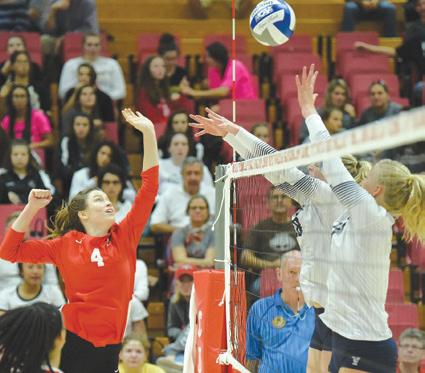
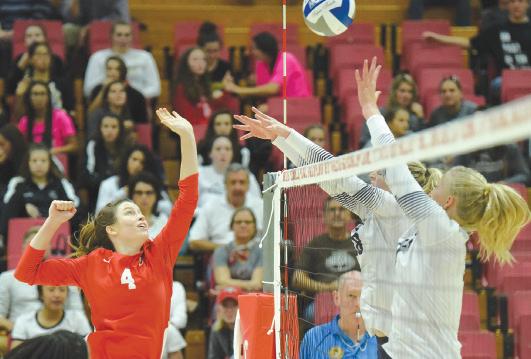
Third time’s the charm | The team has earned a third-place finish two years in a row — this season, the Red will hope to improve even further in league standings.
To kick off the season before Ivy play begins, the Red will compete in three nonleague tournaments. The first of these will be the Cornell Invitational on September 6 and 7. Ivy League play will start on September 28 at home against Columbia — the Red will play only in-league matches
from that point until the end of the season. They will face off against each Ivy competitor both home and away. Last year, Cornell’s record was 9-5, earning it third place after Yale (13-1) and Princeton (12-2).
Changes abound | The Red looks ahead to a new era under a revamped coaching staff that aims to create a changed team atmosphere. JASON