The Corne¬ Daily Sun



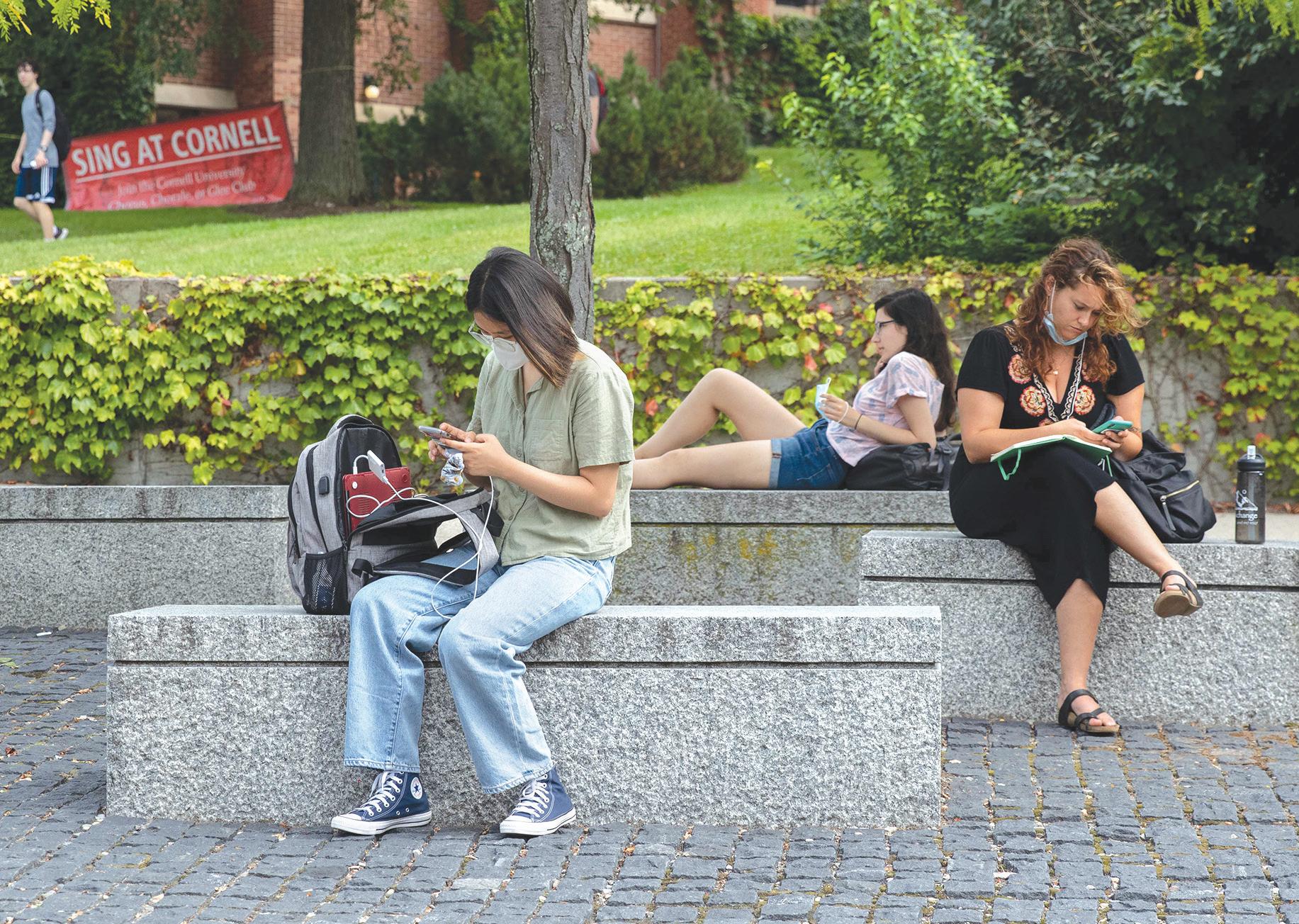
As the number of new positive COVID-19 cases has climbed to more than 200 following move-in and the first week of classes, Cornell is doubling down on keeping the fall semester in-person.
On Monday afternoon, Provost Michael Kotlikoff, Ryan Lombardi, vice president of student and campus life, and Mary Opperman, vice president and chief human resources officer, sent a joint statement to the Cornell community, reinforcing their confidence in current testing and health guidelines, despite the jump in positive COVID-19 cases over the weekend.
The email responded to concerns from students, faculty, staff and parents after Friday’s shift to the yellow alert — with some calling for a shift to remote instruction.
See COVID page 3
By ALLY FERTIG Sun Staff Writer
Many students trudged through Zoom classes and bi-weekly surveillance testing last year — but others skipped out on a year online or studied at home.
They took on new jobs. They traveled the country or stayed home, unable to return to campus. Now, after a year away, many students who studied remotely last year or took gap semesters are back on campus, adapting to the routines of in-person college classes once again — or for the first time.
In the fall 2020 semester, over 600 undergraduate students took the semester off and over 120 incoming first-year students elected
to take gap years. Many students on gap years found exciting and new ways to spend their time.
“Having a sense of togetherness within the Cornell community is going to be really nice.”
Ysabella Vistan ’23
Christian Finlay ’25 was originally admitted to the Class of 2024 in the College of Arts and Sciences, but decided to take a gap year to avoid beginning his college experience online. He spent time working at home, embarked on a two-month
cross country road trip with a fellow gap-year Cornellian and spent six months working in Breckenridge, Colorado, as a ski instructor.
While Finlay reflected fondly on his gap year, he also said he was excited for his return to school.
“I’m definitely excited to be on campus with a bunch of people my age, because I had a ton of fun this year, but I’ve been hanging out with 35-year-olds,” Finlay said.
Meghna Shroff ’22 also described feeling excited about being surrounded by classmates and friends, after wrapping up a gap year spent at home with her family in Bengaluru, India. She chose to stay home for reasons related to the pandemic.
By JYOTHSNA BOLLEDDULA Sun News Editor
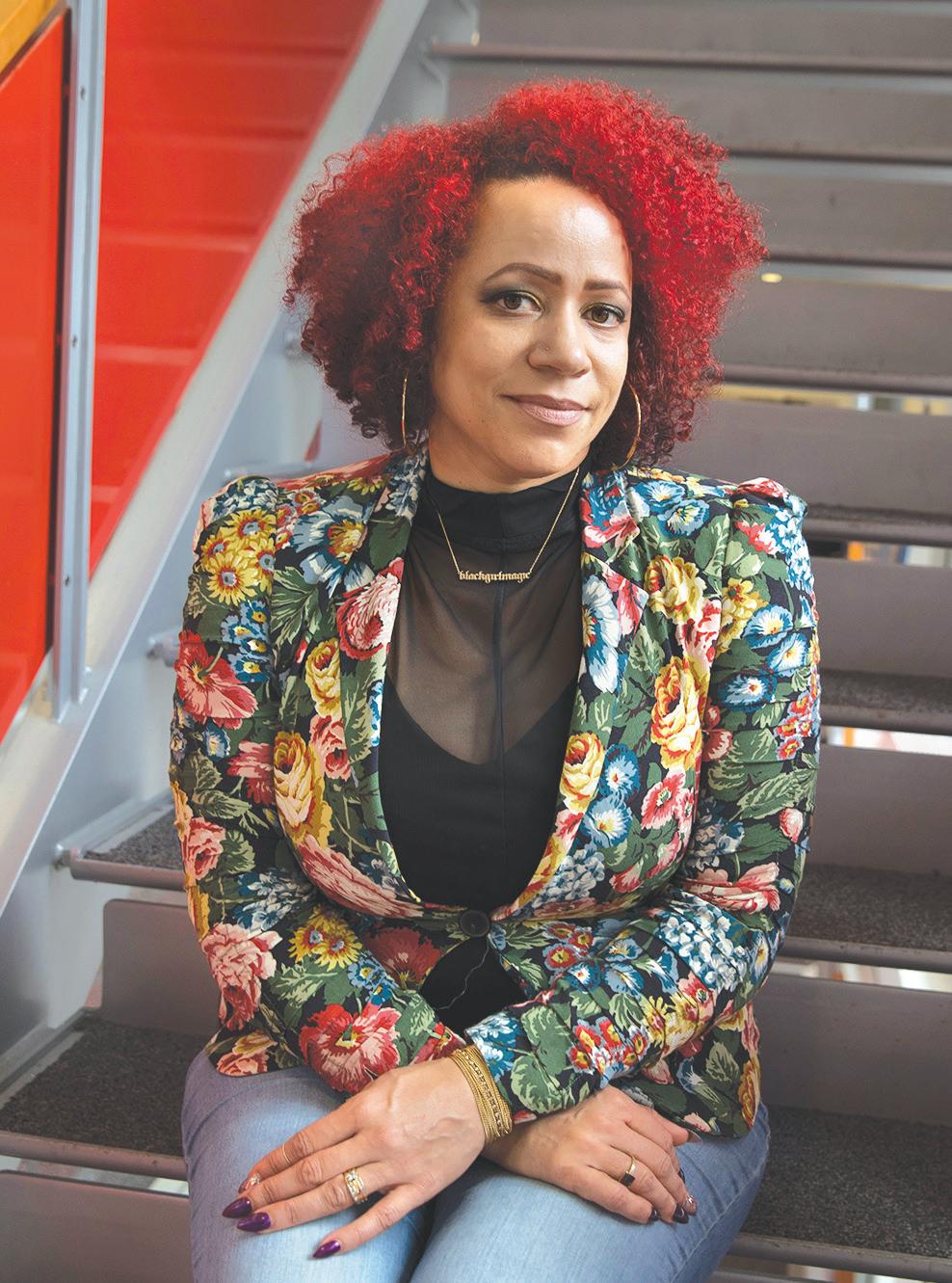
Cornell will welcome Pulitzer-Prize winning journalist Nikole Hannah-Jones on Sept. 9 for the American Studies program’s annual Daniel W. Kops Freedom of the Press lecture.
Hannah-Jones is an award-winning journalist with nearly 50 national honors to her name. Throughout her career, she has reported on issues surrounding racial injustice, school resegregation and fair housing.
She currently is a staff writer for The New York Times Magazine and the creator of the Pulitizer-Prize winning 1619 Project, a New York Times Magazine effort that published essays that “aim to reframe the country’s history by placing the consequences of slavery and the contributions of Black Americans at the very center of our national narrative.”
She is also the co-founder of Ida B. Wells Society for Investigative Reporting, an organization that trains and mentors reporters of color in investigative reporting, in hopes of increasing representation in the field.
Hannah-Jones made national headlines this past summer when she was denied tenure at University of North Carolina at Chapel Hill after conservative opposition to her hiring. The news caused public outcry, leading UNC to retract their original offer and offer her tenure, which she turned down. She currently serves as Knight Chair in Race and Journalism at Howard University.
The Daniel W. Kops Freedom of the Press lecture is an annual lecture held at Cornell, aimed at bringing prominent figures in
BEDR Workshop: Internal Showcase
11:15 a.m. - 12:45 p.m., 141 Sage Hall
15 Minutes to Success: Tailoring Your Resume Noon, Virtual Event
C.V. to Resume for Ph.D. and Postdoc Students Noon, Virtual Event
Kin Fai Mak: Semiconductor Moiré Materials 12:20 p.m., 700 Clark Hall
Here to Stay: COVID-19 Responses Transform Hospitality and Restaurant Operations 1 p.m. - Noon, Virtual Event
Songs My Brothers Taught Me, Ithaca Premiere 7:15 - 8:49 p.m., Willard Straight Theatre

Tomorrow
Career Fair Support Drop-Ins 10 a.m. - 4 p.m., Virtual Event
Virtual Cornell Career Fair: STEM 11 a.m. - 4 p.m., Virtual Event
Joint Econometrics and Industrial Organization Workshop: Giovanni Compiani 11:15 a.m. - 12:45 p.m., 498 Uris Hall
Cornell International Fair 11:30 a.m. - 2 p.m., Uris Hall, 1st Floor Terrace
Sustainability Goose Chase: Cornell Scavenger Hunt Noon, Cornell Campus
Biophysics Colloquium With Madhur Srivastava 4 p.m., Virtual Event
Language Resource Center Speaker Series: Elvia Andía Grágeda 4:30 - 5:30 p.m., Virtual Event
Lara Deeb: Sect, Difference and Interreligious Marriage In Lebanon 4:45 p.m., Virtual Event
No Maps on My Taps 7:15 - 8:13 p.m., Willard Straight Theatre
Department of Performing and Media Arts: Fall 2021 Project Participation Event 7:30 - 9 p.m., Schwartz Center, Kiplinger Theatre

After a year or semester away, some students are settling into in-person classes, fnding new routines
After a fall semester of remote learning, Emily Grigg ’21, opted to spend the spring 2021 semester working at D.P. Dough in Collegetown and studying for the GRE, rather than taking on another semester of remote classes.
“I’m really looking forward to that entire studio experience, hanging out in [Martha Van Renssellaer] and just going through the daily motions of attending classes,” Shroff said.
Cornell notified students, faculty and staff in early August that classes would be held in-person, with no option to attend remotely. Students now are adjusting to fully in-person classes and club meetings, with some students returning after a year away from academics.
Shroff said she stood by her decision to take a gap year, but also said she worried about graduating on time.
“When you’re in person it feels a little more genuine, you can see reactions ... and you can’t get that on Zoom.”
Ysabella Vistan ’23
Chris Chavez ’23 spent the fall semester studying remotely at home in Boston and ultimately decided to return to campus in spring 2021, living on North Campus in the
Seal and Serpent house. He emphasized the importance of in-person classes to his experience on campus, after feeling frustrated by attending fall classes online.
“There’s a certain amount of engagement that there has to be for in-person lectures that allows you to retain major points,” Chavez said. “When you’re taking these online lectures, and you can start and stop them at will, you become bogged down with a lot of extraneous details.”
For Chavez, in-person classes help create structure and are a more effective way to learn the material.
“I definitely am excited to actually get a lot more of my structure back, because that was definitely missing these past few semesters,” Chavez said.
“I was very fortunate to have this big house with all of my friends, and I feel like I got a better social experience from that compared to if I’d only had one roommate or zero roommates,” Grigg said.
Ysabella Vistan ’23 lived at home in the Philippines studying remotely for the 2020-2021 school year and looks forward to participating in clubs again — and attending class at a consistent time zone.
“To be in the same place as the professor, or the TA even, there’s a more genuine connection than a screen-to-screen thing,” Vistan said. “When you’re in person it feels a little more genuine, you can see reactions –– facial reactions, body language — and you can’t get that on Zoom.”
Vistan added that many of the clubs she is a member of stopped meeting altogether or met significantly less often online.
“It just brings the whole college experience together and ties it together. I think it’s like the bow on top and I’m so excited to have that back,” Vistan said.
Many of Griggs’ classes were held asynchronously, contributing to a lack of routine. As a member of the marching band, Grigg also said having structure outside of academics is important to her Cornell experience.
“It’s really helpful for me to know that I have practice on Tuesday, Thursday and Friday, and I have a game on Saturday,” she said. “I didn’t really have any of that. I kind of struggled in that way.”
After two semesters of remote learning from home, Vistan feels excited about returning to campus and rejoining the Cornell community in-person.
“Having a sense of togetherness within the Cornell community is going to be really nice,” Vistan said.
Ally Fertig can be reached at afertig@cornellsun.com.
symptoms.
“While our comprehensive surveillance testing has identified more positive cases among students than we had hoped, we emphasize that to date there have been no cases of serious illness,” the email read.
Cornell reported 56 new positive cases on Sunday — bringing the weekly total to 201 cases. The positivity rate by week has risen to 0.9 percent. Quarantine capacity is at 48 percent as of Monday evening.
There are currently 268 active cases in Tompkins County, with 38 new positive cases on Monday and three active hospitalizations.
The email attributed the majority of cases to “informal, off-campus gatherings of groups of undergraduate students,” noting that students who have tested positive are overwhelmingly asymptomatic or experiencing mild
The email reinforced that the University is following data indicating it is safe to proceed with an in-person semester, adding that the risk of classroom transmission is minimal and that there’s no evidence of transmission to University personnel as part of teaching or research programs.
“The science continues to indicate that our approach to an in-person semester is safe and that risk of infection is minimal when we collectively follow public health guidance,” the email read.
As cases rise, masks are required both indoors and outdoors when physically distancing is not possible. Additionally, the University’s ventilation system has been upgraded to increase air turnover and fresh air intake.
Administrators also emphasized the adaptive testing program that takes a student’s activities, living circumstances and classes into account to identify positive cases

Cornell reported 56 new positive cases on Sunday, bringing the weekly total to 201 cases. Quarantine capacity is at 48 percent as of Monday evening.
as quickly as possible.
“Our data continue to suggest that — with vaccination, masking and testing — it is safe to be in the classroom and in other structured environments and activities on campus” the email read.
Surita Basu be reached at sbasu@cornellsun.com.

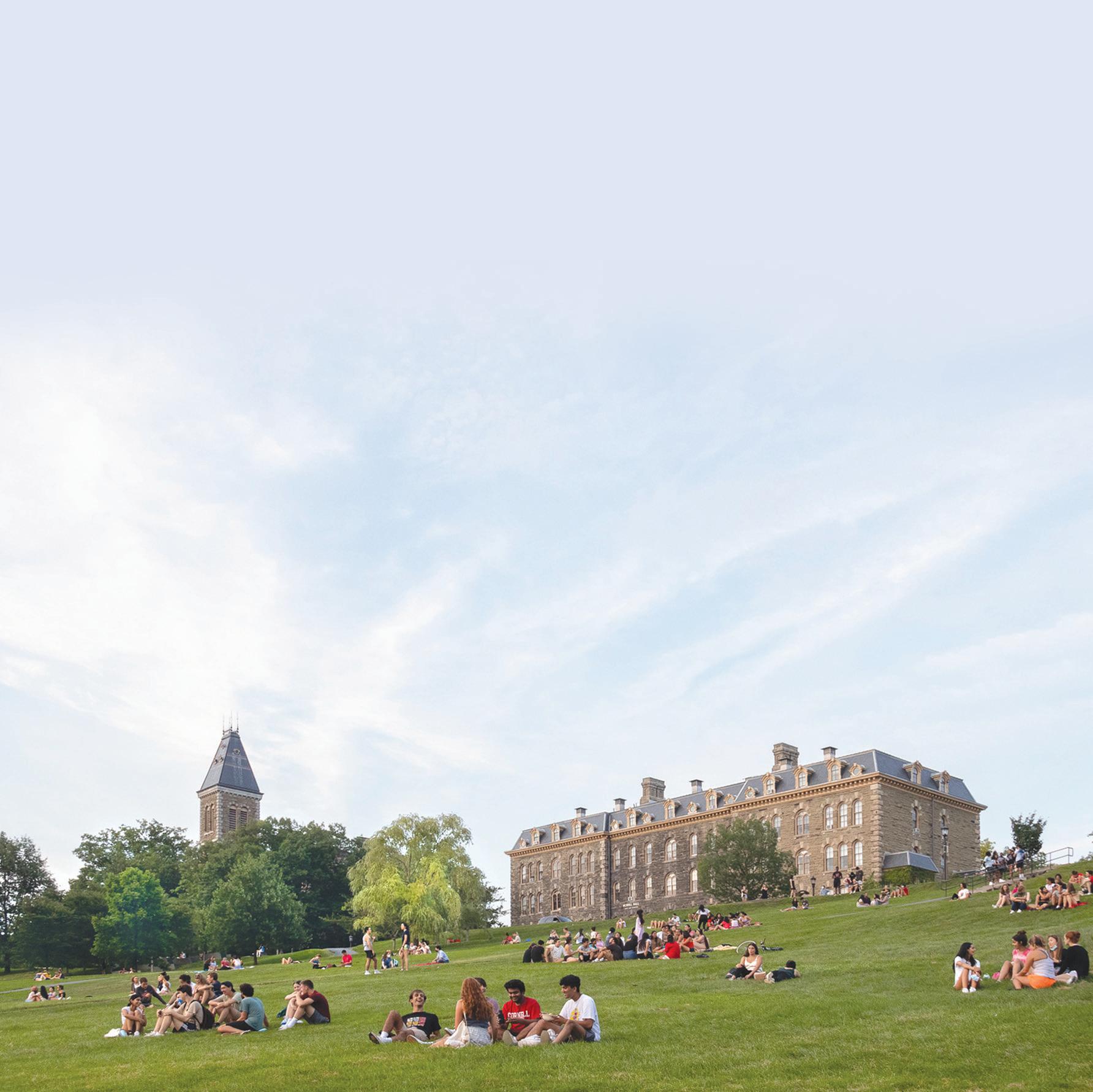
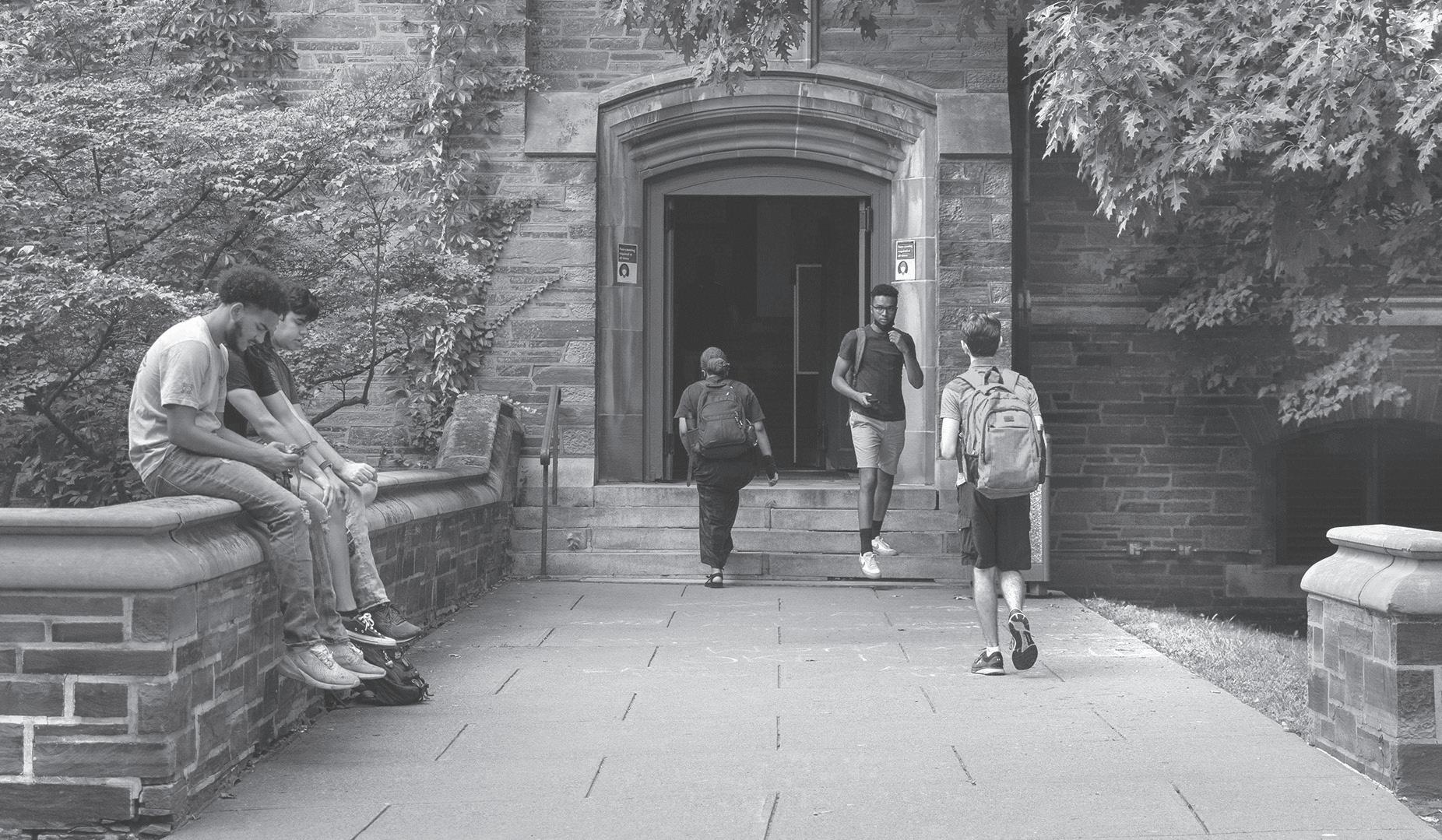
Students enjoy the new facilities on North Campus outside of Toni Morrison Hall, a project of the North Campus Residential Expansion.
in journalism to speak about the relationship between free press and a strong democracy. Previous speakers have included White House Correspondent April Ryan, war-time reporter Jeremy Scahill and Amjad Atallah, editor-in-chief of Al Jazeera America.
The event will take place in RhodesRawlings Auditorium in Klarman Hall at 5 p.m. In-person attendance will be limited to members of the Cornell community. The event will also be livestreamed. More information can be found here.
Jyothsna Bolleddula can be reached at jbolleddula@cornellsun.com.
By LUKE PICHINI Sun Sports Editor
Men’s lacrosse’s Jonathan Donville ’21 was selected by the Panther City Lacrosse Club with the No. 1 overall pick of the National Lacrosse League Entry Draft on Saturday night, marking the second year in a row a Cornell player was drafted first overall.
Teammate Jeff Teat ’21 holds the same distinction, as he was chosen with the top pick by the New York Riptide in last year’s NLL Draft. The only schools to previously have two consecutive No. 1 overall picks are North Carolina (1992-1993) and Syracuse (2009-2010).
"Both Jeff and Jon were talented players that worked as hard as any that I've coached, and in the process, made every person around them better," head coach Connor Buczek ’15 told Cornell Athletics. "It's a great honor for our program to have two of our best players and teammates go first overall in the NLL Draft in consecutive years. We hope that Cornell will continue to be a destination for top Canadian talent due to our style of play and proximity to home."
Panther City is an upstart club in the NLL that will begin its first year of play during the 2021-22 season, but Donville will not be there for the team’s inaugural season because he is using his final year of NCAA eligibility to play at the University of
“More than ever last year, I realized this opportunity to play lacrosse and to play at an elite institution is a privilege, not a right.”
Jonathan Donville ’21
Maryland. While Donville has departed from East Hill, he is still appreciative of his time at Cornell.
“I’m going to play as hard as I can. That’s something I really learned how to do at Cornell University,” Donville said. “More than ever last year, I realized this opportunity to play lacrosse and to play at an elite institution is a privilege, not a right. Having it taken away from you [due to COVID-19], you realize how special it is.”
Before matriculating at Cornell, Donville was born in Ontario, where he attended St. Michael’s College School. While at St. Michael’s, Donville was a two-time team MVP who led his team to a pair of OFSAA Provincial Championships.
After spending a year at Deerfield Academy in Deerfield, Massachusetts, Donville immediately burst onto the scene at Cornell. Slotted in the second offensive midfield, Donville was a topfive scorer in assists, goals and points, making him the highest-scoring freshman on the team.
Donville improved further the next season, racking up 34 points over 15 games and earning an Honorable Mention All-Ivy. His junior season was cut short due to the onset of the COVID19 pandemic, but in the five games he played, Donville was a force, totaling 2.6 goals and 4 points per game. Both of these averages ranked seventh in the Ivy League, and Donville was named a second team All-American by Inside Lacrosse and Maverik Media.
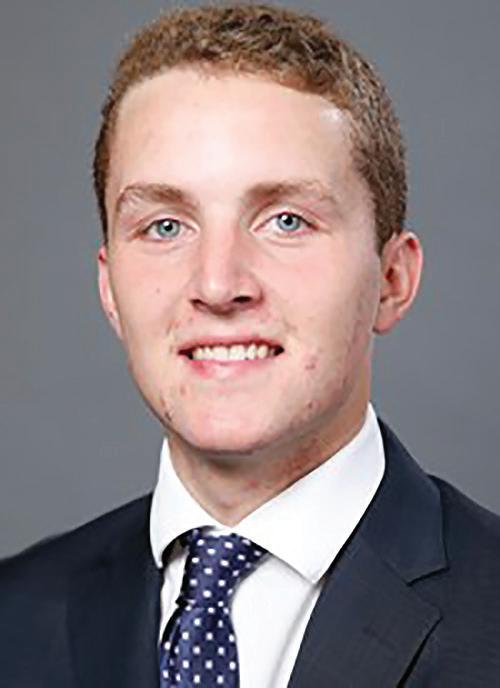
work and humility," Buczek said. "I'm so proud of him and know this is just the first of many accomplishments and accolades that he will receive in his professional career."
"Jon is an incredible talent that has earned everything that he has gotten in this game through hard
Luke Pichini can be reached at lpichini@cornellsun.com.
Content warning: the following article contains mentions of violent sexual assault and sexual abuse.
About a month ago, the state of California filed a lawsuit against Activision Blizzard for repeated cases of workplace harassment and sexual discrimination against women in the company. The lawsuit follows a two-year investigation which found that Activision Blizzard promoted a “frat boy” workplace environment, where male employees “joked with each other about r*pe,” executives made unwanted advances on female employees and company “cube crawl” events featured a drunken band of male workers, crawling from cubicle to cubicle on a mission to harass their female colleagues.
Going as far back as 2013 , the creative director of World of Warcraft, Alex Afrasiabi reportedly hosted a number of women at a hotel room nicknamed the “Cosby Suite” during BlizzCon. Activision quietly terminated Afrasiabi around June 2020 to avoid backlash for the poor image he brought the company, but he wasn’t the only one at fault. Other developers could
be seen holding up a picture of Bill Cosby in the hotel room, and were aware of Afrasiabi’s inappropriate behavior around female employees. To be blunt, these findings are shocking, and are unfortunately only a few of the details uncovered from a decade of misconduct at the billion-dollar frat house.
However, California’s lawsuit does not just concern Activision Blizzard, but implicates the greater video game industry as well.
The problem of sexual harrassment and discrimination in the industry has run rampant for years; Activision is just the flag bearer. Recently, there have been resignations among senior members at Ubisoft as a result of sexual assault allegations and the California fair employment agency has gone after Riot Games for the same issues. Hopefully, the traction of these lawsuits will be enough to cause a major turning point for harassment in the industry.
But many fear that all this press and legal action might still not be enough. After all, these problems have been known for some time, and internal fixes in the companies have not shown results in the past. While it’s no excuse for harassment and negligence, the truth of the matter is that women have a small voice in the gaming industry, as they only make up about 20% of the workforce. Their complaints have historically been dismissed and their words given little weight. It is clear that what these women face is a persistent culture of sexism that seems to have never gone away.
However, the real truth doesn’t concern workforce numbers, or a disregard for formal complaints — it’s much darker than that. The real truth lies with an underlying attitude of sexism in the industry that exploded around August 2014, and has continued to sway thought in not just the
industry, but the video game community as well. It evolved into a movement that was not random, but organized, resulting in a storm of malicious targeting against women in the community. Some might recognize it as #GamerGate.
In short, following a disparaging blog about video game developer Zoe Quinn and her perceived infidelity and unethical business practices, like-minded male members of the gaming community launched attacks consisting of hatespeech, death threats and doxxing against developer Quinn and numerous other female voices in the community. One Youtuber, Anita Sarkeesian, a gaming critic and feminist, had to cancel a speech at Utah State University following a graphic death threat. Another woman, developer Brianna Wu, was forced to leave home after her personal information was released and she was sent threats. And at the center of it all was developer Zoe Quinn. And while some had thought Gamergate would eventually die down and be forgotten a few years later, it continues to persist in the form of online harassment against women.
To read the rest of this article, please visit cornellsun.com.
Matthew Kassorla is a sophomore in the College of Arts and Sciences. He can be reached at mk928@cornell.edu.

Independent Since 1880
139th Editorial Board
KATHRYN STAMM ’22
Editor in Chief
ANUSHYA ALANDUR ’23
Business Manager
CATHERINE ST. HILAIRE ’22
Associate Editor
PRANAV KENGERI ’24
Advertising Manager
ODEYA ROSENBAND ’22
Opinion Editor
JYOTHSNA BOLLEDULA ’24
News Editor
TAMARA KAMIS ’22
News Editor
WENDY WANG ’24
Arts & Entertainment Editor
KRISTEN D’SOUZA ’24
Design Editor
HANNAH ROSENBERG ’23
Photography Editor
OMSALAMA AYOUB ’22
Science Editor
PUJA OAK ’24
Layout Editor
ANNIE WU ’22
Production Editor
MIHIKA BADJATE ’23
Assistant News Editor
ANGELA BUNAY ’24
Assistant News Editor
JOHN COLIE ’23
Assistant Arts & Entertainment Editor
AMELIA CLUTE ’22
Assistant Dining Editor
WILLIAM BODENMAN ’23
Assistant Sports Editor
AARON SNYDER ’23
Assistant Sports Editor
MEGHANA SRIVASTAVA ’23
Compet Manager Working on
MADELINE ROSENBERG ’23
Editor
NAOMI KOH ’23
Editor ANIL OZA ’22
Editor YUBIN HEO ’24
VEE CIPPERMAN ’23
NOOREJEHAN UMAR ’23
YOON ’23
BENJAMIN VELANI ’22
PICHINI ’22
SRISHTI TYAGI ’22
MARIA MENDOZA ’24
Editor
ARANDA ’23
Editor SURITA BASU ’23
News Editor
RIGGS ’24
LEYNSE ’23
JULIA NAGEL ’24 Assistant
Editor LIAM MONOHAN ’24
ABAYEVA ’24
ALPERS ’22

Javed Jokhai
Javed Jokhai ’24 is a sophomore in the College of Arts and Sciences. He can be reached at jaj77@ cornell.edu. J-Punk runs every other Tuesday this semester.
In June, President Joseph Biden released his National Strategy for Countering Domestic Terrorism. The statement, released by the United States National Security Council, was said to start “a project that should unite all Americans” in standing against the growing threat of domestic terrorism.
’22
St. Hilaire ’22
Rosenberg ’23
Jyosthna Bolleddula ’24
Basu ’23
Mihika Badjate ’23
production deskers Pico Ross ’22
Sofa Van Mierlo ’23
layout desker Kristen D’Souza ’24
photo desker Hannah Rosenberg ’23
arts deskers John Colie ’23
E.D. Plowe ’23
science desker Srishti Tyagi ’22
Ruben Bolling
The strategy is draped in liberal platitudes and rhetoric, addressing the genuine fear of violent hate crimes against American minorities such as Jewish, Muslim, Asian, Latino and Black Americans. Sadly, such crimes have become somewhat routine in our television news cycle. In order to address this problem, President Biden seeks to institute a nationwide and transnational system that would better share information of domestic terrorism, prevent terrorist recruitment and curb terrorist attempts before they ever become another tragic event, thus protecting all Americans and the American way of life. However, a government strategy in the hypothetical is only as effective, or ineffective, as its implementation. In order to understand how a strategy to counter domestic terrorism would play out, one must properly place the National Strategy for Counter Domestic Terrorism in history. By doing so, one discovers that behind Biden’s appeal to fear is a thinly veiled plan to further allow the government to view all American citizens as suspects, against a backdrop of the over-criminalization of the minorities Biden supposedly hopes to protect.
To get this point across, however, we must not only view the national strategy in a national context, but within Cornell’s personal history. Understanding how the strategy for counter terrorism is warped through a gaze at the past allows Cornellians to understand how Biden’s plan could shape our future. Thus, let us visit a tumultuous time that we now understand ultimately bettered Cornell. The year is 1969.
The Willard Straight Hall Takeover of April 9th, 1969 is a significant part of Cornell’s history. Following the discovery of a burning cross outside a cooperative for Black Women at Cornell, Black Cornellians occupied Willard Straight Hall in protest. The takeover demonstrated a stand against what they perceived as Cornell’s racism. In response to a violent attempt by white fraternity students to overpower the protesting students, some of the protesters armed themselves with rifles. The Students for a Democratic Society lended support by creating a human barrier around Willard Straight. After 36 hours, protesters settled upon negotiations with Cornell officials and exited the building.
The shift inspired by this radical event
was equally impressive, a push towards progressivism that embodies the principle of “Any person, any study”. The protest hastened the establishment of an autonomous Africana Studies and Research Center. Cornell President, James Perkins, established COSEP, a committee designed to promote the enrollment of African American students. Furthermore, the takeover was influential in the establishment of program houses like Ujamaa Residential College, Akwe:kon, and the Latino Living Center. This is all to say that the 1969 Willard Straight Takeover pushed Cornell out of a dark age and onto a path of diversity and inclusivity the institution is still trekking today.
Yet, according to Biden’s National Strategy for Countering Domestic Terrorism, the historic protest, that many of us look back on with a sense of pride and solidarity, becomes unrecognizable. If the event took place, it could have warranted state-sanctioned violence. Biden’s National Strategy for Countering Domestic Terrorism contains within it two points of interest that appear rather quickly and goes unexamined: the vague description of ‘militias’ that ‘assert a baseless right to take the law’, and the association of opposing “capitalism, corporate globalization, and governing institutions” with racism and xenophobia.
The undefined use of the term ‘militia’ conveys the imagery of white supremacists brandishing weapons in order to threaten the innocent. While this idea of the radical racist is contained within the definition, and for all intents and purposes this may be the main target of Biden’s National Strategy, the ambiguous nature of the designation makes it dangerous to anyone who threatens the government’s monopoly on violence, including those who arm themselves in self defence. This can be seen throughout the United States history, such as the COINTELPRO’s secret war on various Leftist groups, including the Black Panthers of the same decade and whose member, Kwame Ture, spoke at Cornell to commemorate the Takeover.
This is only furthered by the second point of interest, the association of opposing global capitalism and opposing xenophobia, as if the former idea is as much of a moral issue that must be stomped out as the latter ideas. This interconnection becomes incorrect when considering the idea of racial capitalism, the relationship between racism and capitalism. The ideas that became the concept of racial capitalism were posited early by thinkers amongst the Black Panthers, ideas which were reason enough for the Black Panthers to be violently condemned.
To continue reading this column, please visit cornellsun.com

Fill in the empty cells, one number in each, so that each column, row, and region contains the numbers 1-9 exactly once. Each number in the solution therefore occurs only once in each of the three “directions,” hence the “single numbers” implied by the puzzle’s name. (Rules from wikipedia.org/wiki/ Sudoku)





By SRISHTI TYAGI Sun Science Editor
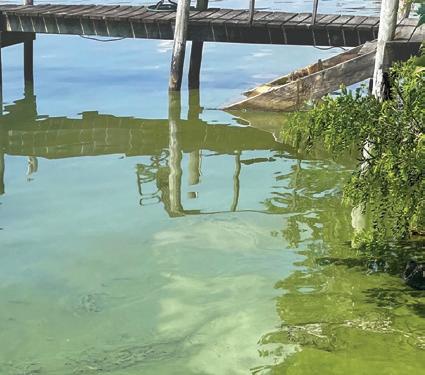
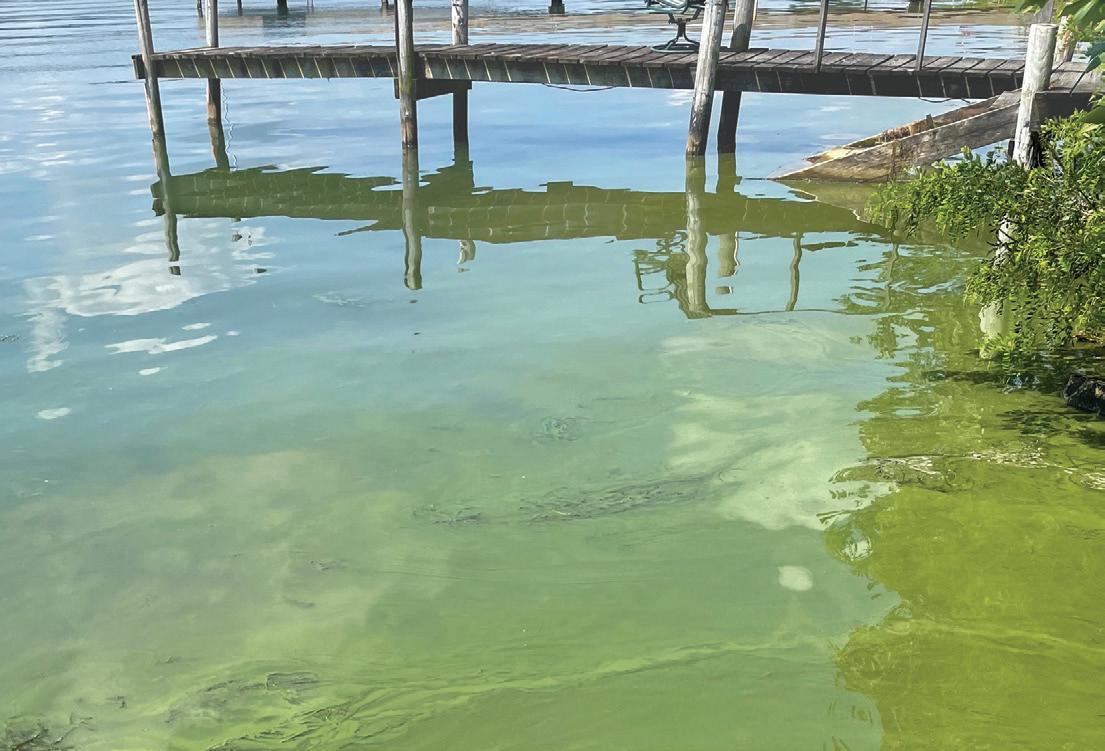
Recognized by splotches of green spilling over the surface of water, harmful algal blooms have once again cropped up on Cayuga Lake — indicating worsening trends over the nearly seven years of the seasonal phenomenon.
The Community Science Institute, a volunteer-led program that spearheads the testing and monitoring of harmful algal blooms in Cayuga Lake, reported this summer’s first suspicious harmful bloom on June 10, with the first confirmed bloom on June 30.
But the toxic green streaks have continued to appear throughout the summer, with the most recent report of a harmful algal bloom on Aug. 26.
The blooms pose dangers for swimmers by causing skin or throat irritation, nausea, vomiting or diarrhea. These risks can be heightened for pets, such as dogs swimming in affected water, because they are especially impacted by the fast-acting nerve toxins that can be present in the water.
Taughannock Falls State Park, a popular local swimming spot, has been closed for swimming as of Aug. 30 due to the appearance of a harmful algal bloom.
According to Nathaniel Launer, director of outreach at the Community Science Institute, the harmful algal blooms are not actually made of algae, but are instead blooms of cyanobacteria. Although this bacteria is naturally occurring in bodies of water around the world, cyanobacteria produce toxins that can be harmful — and even fatal — to other organisms.
Known to be one of the first organisms capable of producing oxygen on Earth, cyanobacteria are microscopic organisms that evolved billions of years ago and get their nutrients through photosynthesis.
“Certain conditions, like high amounts of nutrients in the water, warm waters and direct sunlight can help promote the growth of the cyanobacteria,” Launer said. “When the cyanobacteria undergo this rapid growth and form a bloom, these toxins can often be present in really high concentrations.”
Launer said the chemical compounds
produced by cyanobacteria, such as toxins affecting the brain, and liver toxins such as microcystins, pose a public health risk to people who wish to swim or jump in for other recreational activities.
According to Prof. Robert Howarth, ecology and evolutionary biology, people and their pets should avoid Cayuga Lake waters if dense harmful algal blooms are present.
Launer added that the blooms also threaten the natural balance of aquatic ecosystems by draining oxygen and nutrients from water, while also making water unusable by significantly reducing water quality.
“When the water quality is impaired this way, it incurs a big economic cost — both a cost to tourism, but also a cost to ... everyday life of having to deal with this issue,” Launer said. Although the harmful algal blooms have been common for the past few years, Howarth said they are still a relatively recent phenomenon — the first hint of the blooms in Cayuga Lake was only in 2014.
Science Institute’s tracking of harmful algal blooms could play a role in the apparent increase in harmful algal bloom reporting.
“It’s a tough question of whether harmful algal blooms are actually increasing, or whether we’re just getting better at identifying them and tracking them,” Launer said. “The answer is probably a little bit of both.”
There is no simple answer to the direct cause of the blooms. But as researchers have accumulated more data over time, trends have emerged that may point toward a specific hypothesis.
According to Howarth, the climate pat-
The toxic blooms also show a similar timeline across neighboring bodies of water in upstate New York, with Skaneateles Lake, one of the Finger Lakes close to Syracuse, experiencing its first documented bloom in 2017.
Since their initial appearance, the cyanobacteria blooms have hit every single Finger Lake, Howarth said, with the blooms getting more persistent.
“We see they’re a little bit worse in [the] short term, but I think the important thing to note is that they didn’t used to be with us, and now they are [a] recurrent and dangerous feature,” Howarth said.
However, according to Launer, it’s possible that improvements in the Community
tern of an extremely dry year, followed by an extremely wet year, could be a triggering event, as seen in the trend of 2016 and 2017.
Howarth described that this “whiplash effect,” along with the intensification of nitrogen fertilizer usage in agriculture over time, could have led to the increase of nitrogen inputs to the lake. Howarth explained that as nitrogen builds up in the soil during the dry period, it then flushes into the lake during the wet period, promoting the growth of cyanobacteria.
“That [effect] could have been happening to some extent all along,” Howarth said. “But the weather extremes are getting more pronounced. And when we look at the monitoring data ... it looks like these whiplash effects are much more common in the last 10 years
than they used to be.”
Studies have shown that increases in the amount of nitrogen in the lake can play a role in the growth of cyanobacteria, as well as an increase in the production of the nitrogen-rich microcystin toxin, according to Howarth. The increase in toxins could contribute to the slowing death rate of the harmful microorganisms.
Launer added that warming surface temperatures of the lake and an increase in the frequency of intense storms could also contribute to the apparent increase in cyanobacteria growth.
Although the harmful algal blooms naturally disappear by the fall, there are currently no methods to mitigate the summer blooms once they happen. But for Launer, community outreach and education are the best way to prevent some of the possible negative consequences of the blooms.
The Community Science Institute previously held public forums to discuss the water quality threat with community members, and distributed informational brochures across New York State parks to raise awareness, according to Launer.
“By learning how to identify [the] common appearances of harmful algal blooms, people can get really good at making decisions about when [it’s] not safe to swim, and just avoiding any exposure with these blooms,” Launer said.
For Howarth, further research on the causes of the harmful algal blooms is necessary to determine possible future prevention efforts. But in the face of insufficient funding and complex ecological dynamics, this research is no easy feat.
“Once you understand what the triggering mechanism is, it isn’t necessarily that you can just reverse it and go back to the way things used to be,” Howarth said. “[The blooms] could be changing the structure of the food webs in the lakes, for instance, in a way that puts you into [an almost] different environment ... and we don’t understand that. It’s frustrating the scientists. It’s a real problem.”
Srishti Tyagi can be reached at styagi@cornellsun.com.
By OMSALAMA AYOUB Sun Science Editor
Upstate Farms, a cooperative group of 340 family-owned farmers across New York, won gold for Best Fluid Milk at the annual dairy day at the New York State Fair, representing the cream of the crop as dairy producers.
Cornell’s Milk Quality Improvement Program judged the annual dairy competition since the competition’s founding in 1997 — and has long contributed to the food science practices behind dairy production in New
York through shelf life studies.
The dairy industry is the largest sector of New York’s agricultural economy.
“A plethora of biological information goes into our research, as microbiology and sensory [attributes] are closely tied,” said Nicole Martin ’06, M.S. ’11, Ph.D. ’18, associate director of the Milk Quality Improvement Program.
“Bacteria found in milk have different spoilage potentials. Sensory attributes [such as taste] tell us a lot about the mechanism of spoilage happening in the product.”

Martin emphasized that while milk is a food product with few observed foodborne-related illness outbreaks, the processing practices employed by dairy farmers across New York greatly impact the taste of milk.
One of the most significant tests overseen by the Milk Quality Improvement Program is polymerase chain reaction — the amplification of DNA — of milk samples to identify the content of spore-forming bacteria, which can contaminate the milk at the farm and later on contribute to milk spoilage.
These bacteria shut down their metabolic processes when experiencing environmental stresses, such as high temperatures, during pasteurization. According to Martin, spore-forming bacteria are the perfect trojan horse in milk production by escaping pasteurization.
“If we get coagulation, whether without acid development, we know that it can be spore-forming bacteria,” Martin said. “And that in turn gives us insight into how we [can] resolve that spoilage.”
Other tests performed on milk samples include plating and counting psychotropic bacteria — those able to grow at 7 degrees, the temperature at which milk is often stored.
The most notorious milk bacteria Martin noted is pseudomonas azotoformans, which has been studied extensively by Martin and Prof. Kathryn Boor, food science and global development, dean of the Graduate School and vice provost for graduate education.
According to the Milk Quality Improvement Program, molecular fingerprinting through genomic sequencing is a widely-used practice for farm-to-product source tracking and raw milk quality improvement.
“Aside from microbial load … there are also chemical mechanisms [of spoilage] that are not related to bacteria at all,” Martin said.
Martin explained that exposing milk to light may also trigger chemical reactions that cause the breakdown of essential nutrients — such as riboflavin — or may also result in rancid spoilage and
off odors and flavors.
Milk quality and flavor research at Cornell was pioneered in 1964 by Prof. W Frank Shipe, food science, when he observed through surveys that half of all milk produced in New York at the time warranted consumer complaints.
More recently in May 2021, the importance of milk production surveys was observed through the containment of a listeria monocytogenes outbreak in Breese Hollow Dairy, a farm located in Hoosick Falls.
Recognizing the importance of improving milk production practices, the New York State Dairy Promotion Order was founded in May 1972 to increase advertising and research surrounding dairy production.
The Dairy Promotion Order has allowed for the development and existence of the Department of Food Science in the College of Agriculture and Life Sciences, and in turn the founding of the annual fluid milk competition.
Omsalama Ayoub can be reached at oayoub@cornellsun.com.