The Corne¬ Daily Sun

By CAROLINE
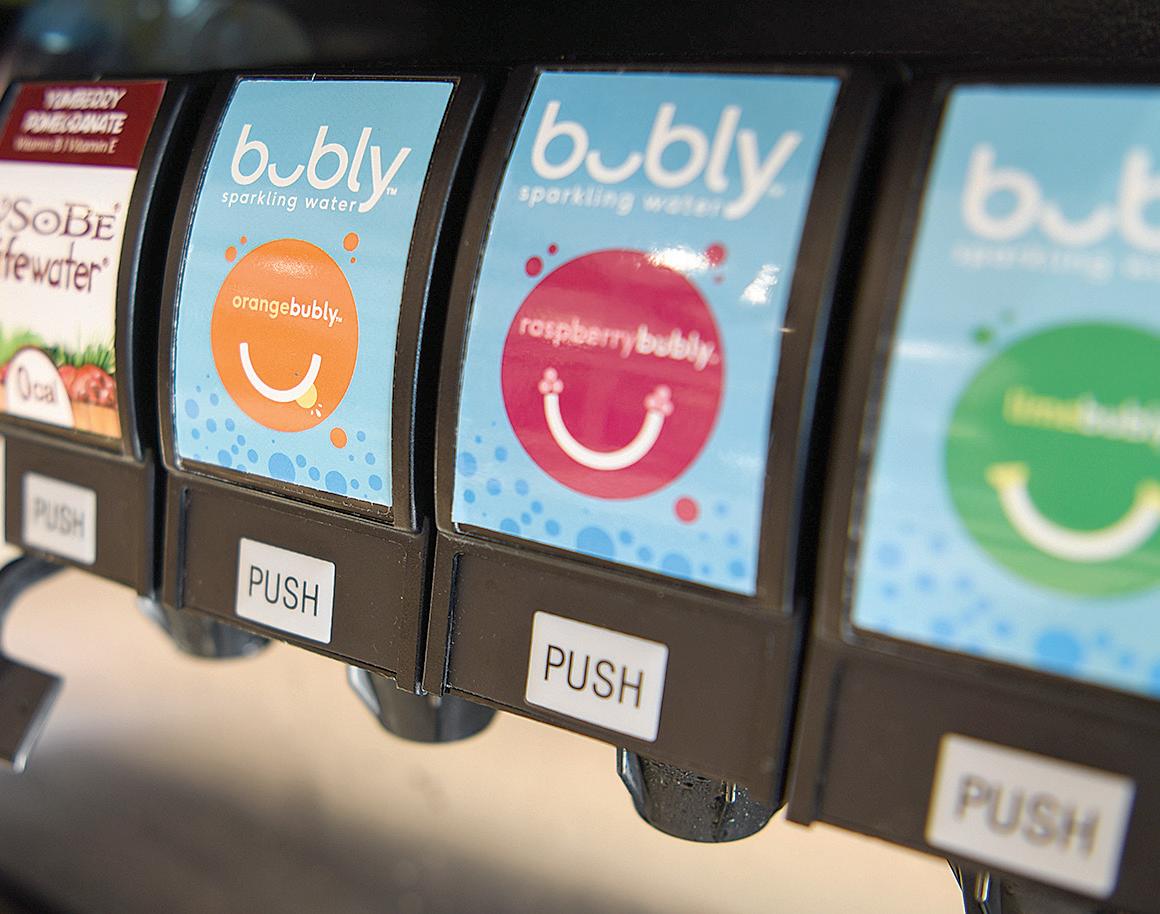
Fizz, but no flavor you ask? That’s because Pepsi products have been replaced with Bubbly sparkling water in all of Cornell’s dining halls, in an attempt to promote a healthier environment on Cornell’s campus.
The driving force for this change was the Menus of Change initiative, whose mission is “to realize a long-term, practical vision integrating optimal nutrition and public health ... and social responsibility concerns within the foodservice industry,” according to its website.
Starting this semester, all “sweetened Pepsi products” have been removed from the dining
See DRINKS page 4

By ANGELA LI Sun Staff Writer
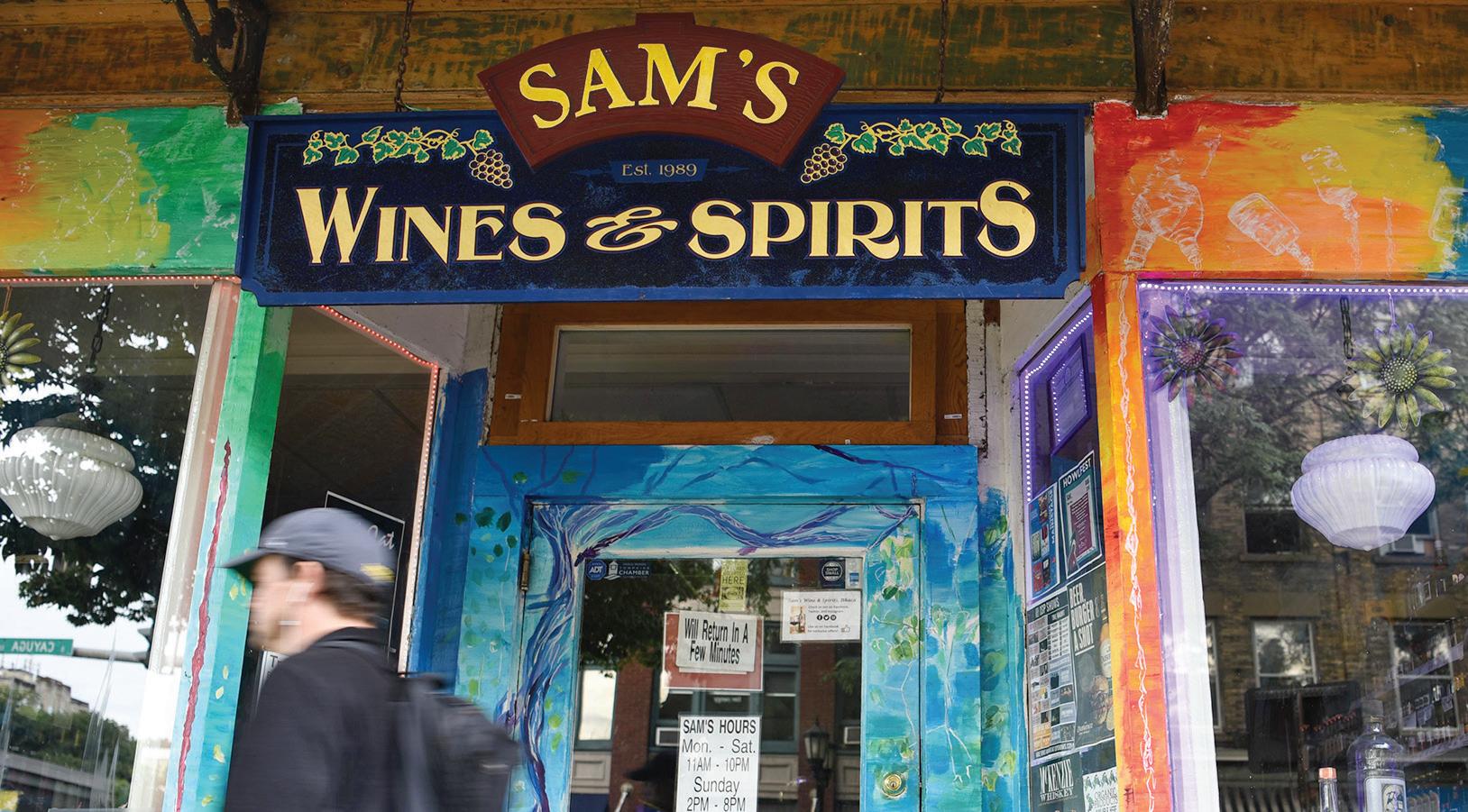
Three Ithaca businesses were caught selling alcohol to underage customers in an undercover sting operation conducted by the New York State Liquor Authority on Friday, July 27.
SLA enforcement personnel and an undercover decoy visited ten locations in Tompkins and
By ALEX HALE Sun Staff Writer
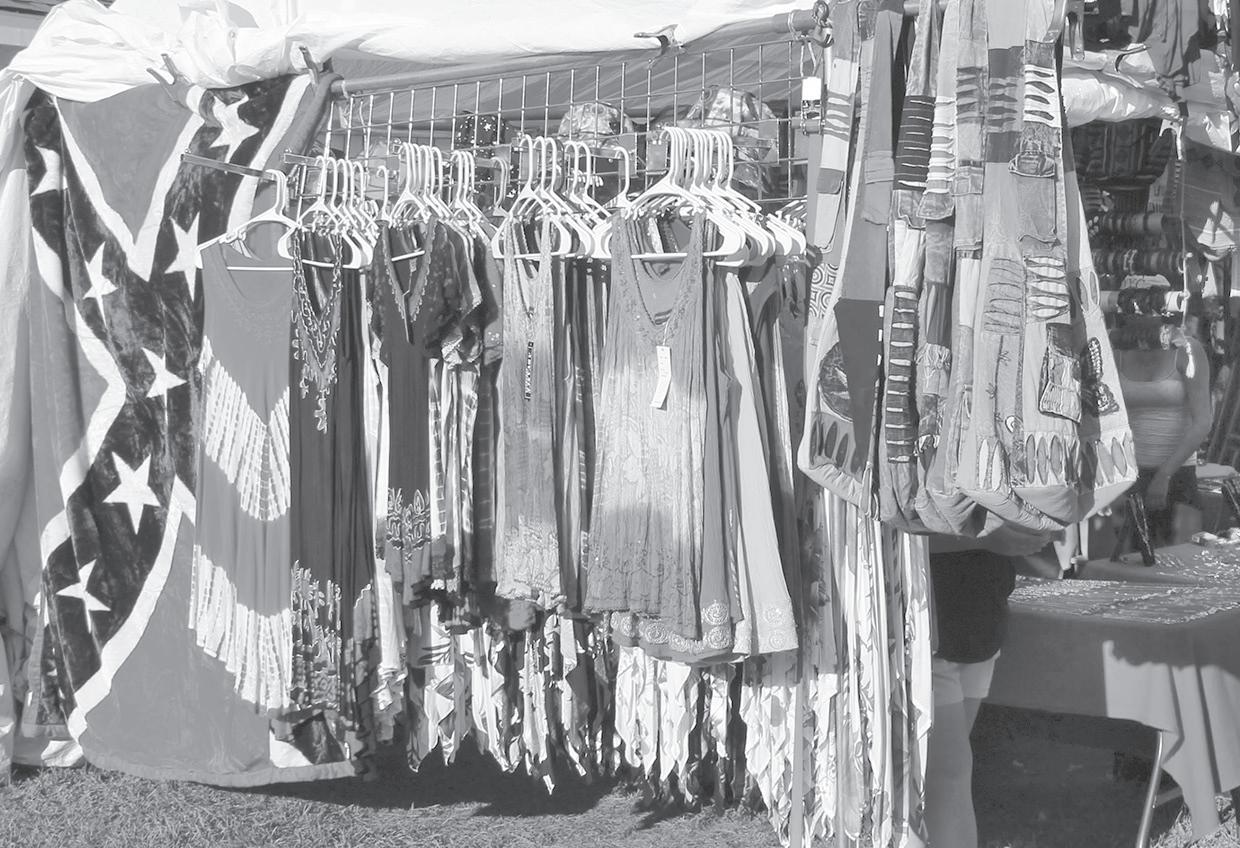
The Confederacy was dissolved over 150 years ago at the end of the Civil War, but its flag is still sold and displayed at state fairs across New York. Fair for All — a group trying to eliminate Confederate flags from these fairs — finds Cornell’s help in doing so “disappointing,” according to leading member Krisy Gashler.
Seen by many as a symbol of racism and the legacy of slavery, the flag of the Confederacy can be found at multiple county fairs across the state. Fair for All is trying to convince these fairs to change their policies and ban what they call hate symbols from their grounds.
The group has called on Cornell University and Cornell’s Cooperative Extension to also condemn these sales, as
Cooperative Extension sponsors a number of New York State county fairs. So far, Fair for All has encountered fewer successes than it desires from the Cornell, though President Martha Pollack has stated that the University does not control the extension’s work.
What Is Fair for All?
Founded in 2017, Fair for All was modeled after a group in Delaware County appalled by the display and sale of Confederate flags by vendors at their county’s fair the year prior. They created the group to pressure the fair to create a policy banning both the sale and the display of the flag. Now, organizers have expanded the effort towards all fairs in the state, including Trumansburg Fair, which represents Tompkins County.
See FLAGS page 4
Steuben Counties. According to an SLA press release, the decoy was able to purchase alcohol at seven locations, including Sam’s Wine and Spirits, Ithaca Ale House, and Ithaca Marriott Downtown on the Commons. The Commons Market was the only Ithaca location that refused to sell alcohol to the underage agent.
Crowley said these sting operations typically occur every week, each
targeting randomly selected locations in different counties. The undercover decoys posing as customers are usually underage volunteers recruited from local colleges or criminal justice programs.
Aside from routine checks, if the SLA gets a referral from the local police department or credible complaints of underage sales at a certain

Today
Cognitive Science @ Cornell Colloquium Series 12:20 p.m., 202 Uris Hall
Biomedical Engineering Seminar
Krishnendu Roy Ph.D.
2:30 - 3:30 p.m., 226 Weill Hall
New Student Mix and Mingle
3:30 - 4:30 p.m., Big Red Barn
C.U. Jazz
Saxophone Auditions
5:30 - 7 p.m., B20 Lincoln Hall
Bienvenidos BBQ
6 p.m., Anna Comstock Hall
Late Night Breakfast 10 p.m. - Midnight, Okenshields
Tomorrow
The Magic of Mushroom: A Display of Student Work 8 a.m. - 5 p.m., Mann Library, 2nd Floor
South Asian Mentorship Program Social Noon - 3 p.m., Mary Donlon Hall, 1st Floor Lounge Area
2019 Compost Manager Training Sessions
1 - 2 p.m., Robert Purcell Community Center Auditorium
ECO Fest
3 - 5:30 p.m., Robert Purcell Community Center, 1st Floor
Hearing Visibilities: C.U. Music
7 p.m., B20 Lincoln Hall
Festival24
7:30 p.m., Schwartz Center for Performing Arts, Black Box Theatre
Rose House
Community Development Activity: Karaoke
8:30 - 10 p.m., Flora Rose House Dining Room
By EMILY YANG Sun Staff Writer
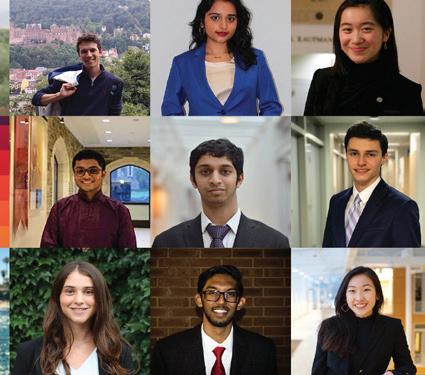
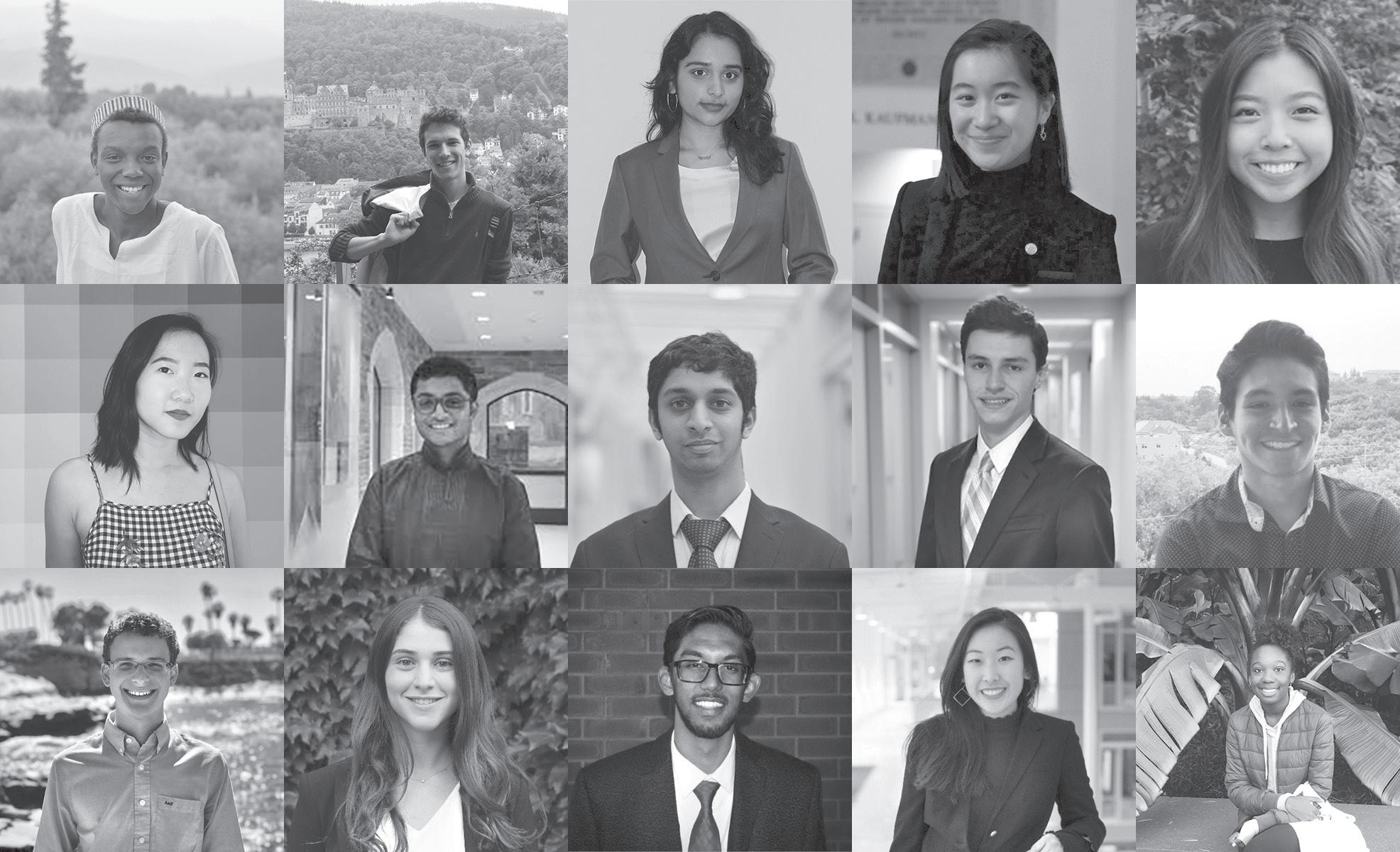
Cornellians have once again been chosen for the Millennium Fellowship, a partnership between the Millennium Campus Network and the United Nations Academic Impact initiative. The 15 students will each work on independent projects targeted towards the United Nations’ Sustainable Development Goals, including improving equality, education and health and reducing waste.
The students selected this year are Andrew Rosenblatt ’20, Ashley Whitley ’21, Carly Sappern ’21, Catherine Li ’21, Eri Kato ’20, Jabari Gambrel ’22, Kirkland Sugrim ’20, Kumar Nandanampati ’20, Lancelot Herpin ’21, Michael Pocress ’21, Pranjal Jain ’23, Victor Rosas ’22, Vineet Parikh ’20, Angela Xiaoyu Li ’21 and Yunyun Wang ’20.
Just six percent of campuses around the world were chosen for the fellowship, which includes 1,092 students selected from 69 colleges worldwide. The selected fellows will also complete a leadership training course and make connections with industry and activism leaders.
As a fellow, Kumar Nandanampati leads the South Asian Mentorship Program at Cornell. The club, which began last year, focuses on marginalized South Asian students, including those who are queer or from smaller populations such as Nepal or Sri Lanka.
“People are always like, ‘Oh, Indian people, you guys are fine, you guys don’t need anything,’ not realizing that that excludes a lot of people who do need support and mentorship,” Nandanampati said. By pairing freshmen with upperclassmen, SAMP aims to “mentor students who come from
these backgrounds and give them the resources they need to succeed.”
Nandanampati said he will appreciate being able to work with the other students in his cohort.
“Having conversations with leaders who are passionate about other things can give me different insights into thinking about the world and how it should operate, and how I can be a more effective leader,” he said.
By WINNY SUN Sun Staff Writer
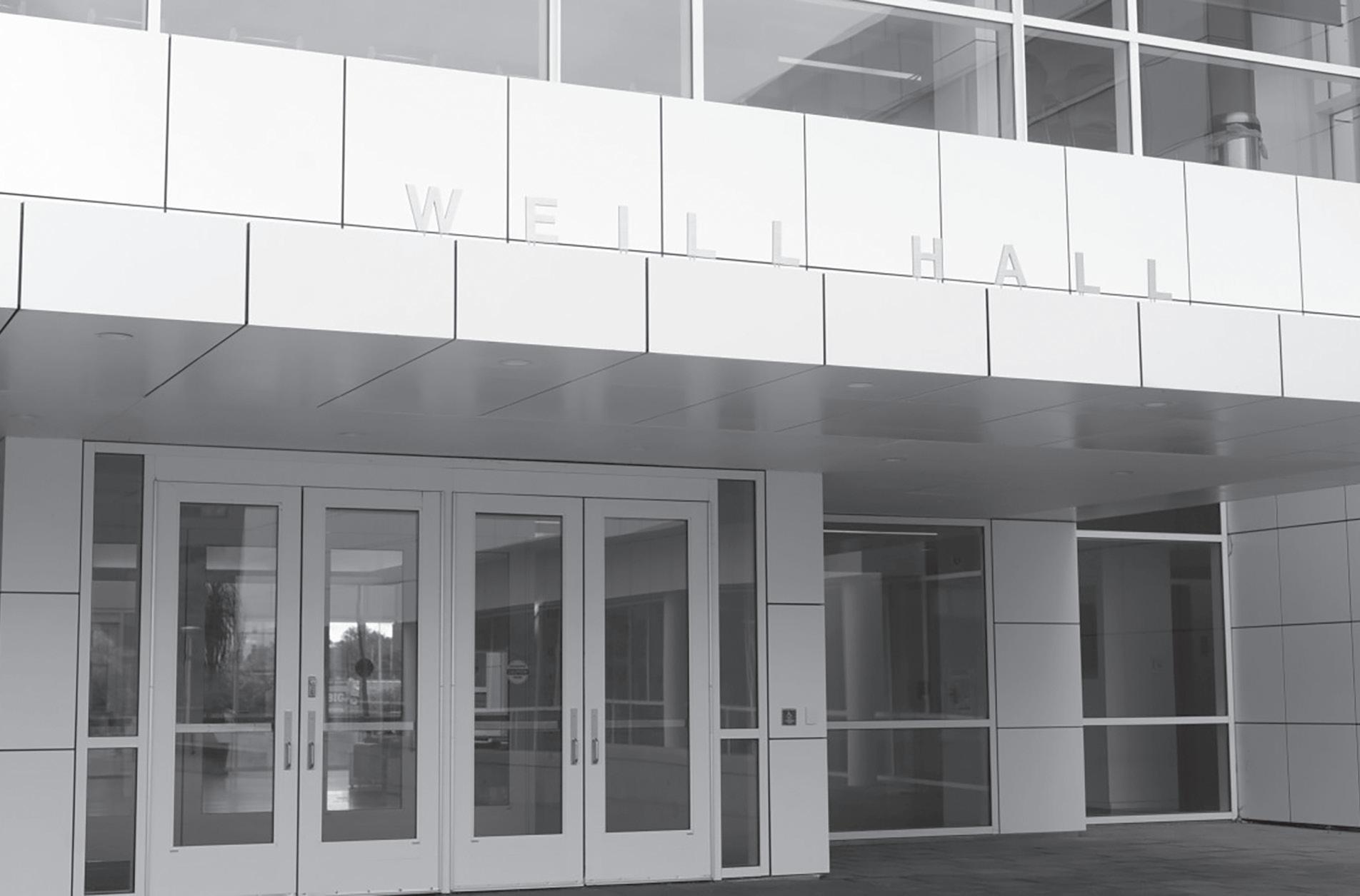
Starting this fall, Cornell’s Meinig School of Biomedical Engineering will no longer require GRE scores for admission to its graduate field of study, the department announced on July 8th.
“The GRE is a poor predictor of success at graduate school, whether it is measured by graduation rate, productivity or other achievements,” Director of Graduate Studies Prof. Jan Lammerding told The Sun in a phone interview.
Numerous studies have stated that the exam is biased against women and underrepresented minorities, finding that they tend to perform worse on GRE tests despite being equally competent in other areas. Additionally, the exam, which costs between $205 to $250 to take and $27 to have the scores submitted to each school, also puts a substantial financial burden on disadvantaged students, according to Lammerding.
“Most of the students I have talked to said they spend about $500 for GRE alone,” Lammerding said. “The high costs of the GRE may present a challenge for some students to apply to graduate school, or limit the number of schools that they apply to.”
In reaching this decision, the BME graduate field of study conducted extensive discussions both within and outside of the department. In addition to consulting BME faculty and students, Lammerding talked to other directors of graduate studies at Cornell whose departments have already abolished the GRE requirement, such as the department of biochemistry, molecular and cell biology.
To further test their decision, the department conducted a pilot study in the last academic year, when admission officers made admission decisions for the class matriculating in fall 2019 without knowing the applicants’ GRE scores.
After the decisions were released in June, the scores were revealed and the officers found that the students accepted had similar GRE and GPA as those admitted during the unblinded process in the previous two years, according to Lammerding.
Lammerding said the faculty was “very excited and happy with the students they have admitted,” and the strengths and qualities of students admitted were at the same high level as before.
Starting this fall, GRE scores will be left out of the consideration of all applications to the BME graduate program.
Focusing on sustainability and the environment, Michael Pocress will bring biodigesters to Ithaca for his project. The devices convert food waste into fertilizer, which can then be collected and sold. The biodigesters could be placed in restaurants or public areas where food waste could be dropped off.
“It is like compost but you get an added bonus
By KATHRYNN STAMM Sun Staff Writer
Facebook announced this summer they would invest $7.5 million in new research partnerships with academics from three universities: Cornell University, University of California at Berkeley and University of Maryland.
Prof. Serge Belongie, computer science, an associate dean at Cornell Tech, received $1.77 million in a three-year grant, to be a part of the project. His specific work will develop technologies for identifying content with malicious intent.
The announcement of the partnership comes as a response to the use of Facebook to cause harm and spread hate, namely following the terrorist attacks in Christchurch, New Zealand last March. The shooter live-streamed the massacre from his Facebook account.
“It’s a sort of taxonomy of intent,” Belongie explained. “Imagine you did a study of your 20 closest friends on social media, so you look at their [posts]. If you were to collect all this data, and look at the things they post, [you’d ask], ‘why did they post it?’” Belongie said that reasons for posting vary wildly, from casual observations or seeking information to garnering sympathy or bragging.
“Imagine you did a study of your 20 closest friends on social media ... If you were to collect all this data ... [you’d ask,] ‘why did they post it?’”
While Belongie’s broader work is about why all people share what they do, Facebook is more specifically concerned about when that intent is to deceive and/ or cause harm, he said.
Prof. Serge Belongie
In response, Facebook is now searching for new methods to improve detection of fake news and misinformation campaigns, as well as new ways to more quickly identify and remove harmful posts when the body of content becomes too overwhelming for humans to inspect and moderate, according to their press release.
Belongie’s work focuses on understanding the reasoning behind social media posts — why people share what they shared and what impact does it have.
Facebook already has an extensive network of human annotators, who work to label content with potential intents, according to Belongie. However, the bulk of content is too vast, so part of their work is to contribute to a dataset.
The goal is to eventually create an artificial intelligence system that can use the dataset to predict intent and alert about problematic posts. Belongie and his graduate students will be at the forefront of this innovation, working with Facebook to develop new technologies to protect the public from misinformation.
Kathrynn Stamm can be reached at kstamm@cornellsun.com.
DRINKS
Continued from page 1
halls, but Pepsi and other sodas will remain available “in the soda fountains and cans and bottles at our retail eateries and convenience stores,” Cornell Dining wrote in a Facebook announcement.
“We are proud to be a part of
able is bad for you, so I’m glad they removed it,” said Noelia Hernandez ’22.
Other students have shown varying levels of indifference, and even concerns over the change.
“It bothers me because there is less variety but it just forces me to drink healthier,” said Alexandra Glasgow ’22.
“We are proud to be a part of a movement that celebrate nutrition, sustainability and healthy living.”
Gail Finan
a movement that celebrates nutrition, sustainability and healthy living," said previous Cornell dining director, Gail Finan, when announcing Cornell Dining’s adoption of the principles of Menus of Change in 2016.
Some students expressed a positive view of the change toward healthier menu options.
“I personally think [Bubly] a step down from La Croix … that said, I think it’s a decent move, but it probably will anger a decent amount of people. I’m happy with the change.” Ryan Slama ’20 told The Sun. “I’ve been trying to cut sugar out of my diet … [overly sugary drinks] now taste disgusting to me.”
“Carbonated drinks are bad for you and having it be so avail-
“I had no issue with the Pepsi products … I’m curious why they are changing things. I’ve never heard of Bubly before, and frankly I don’t trust them,” Markella Tsalikis ’21 said in a phone interview with the Sun.
With the reduced accessibility to sugary beverages, students can now find sugar alternatives through other means such as fruits and other drinks that are not the “biggest source of added sugar and calories to the American diet,” according to Cornell Dining. Beverages such as freshly squeezed orange juice, Cornell Dairy milk, and other fruit-infused water will continue to be served in the dining halls.
Hunter Seitz ’20 contributed reporting to this article.
Caroline Johnson can be reached at cjohnson@cornellsun.com.
FLAGS
Continued from page 1
“When you ask the vast majority of people of color ‘What does the Confederate flag mean?’ they say, ‘It means I’m not safe here,’” said
ALCOHOL
Continued from page 1
business, they will send in “a whole detail” consisting of SLA investigators, Department of Motor Vehicles personnel and local police officers, Crowley told The Sun.
In those cases, based on what they find, the SLA’s three-member Board will issue an emergency summary suspension of the business’s license, banning all alcohol sales and consumption on the premises.
“Those are for really egregious cases, when there are whole scores of [underage customers] at a bar,” said William Crowley, SLA spokesperson.
Businesses charged with underage sales face civil penalties of up to $10,000 per violation, with fines
starting from $2,500 to $3,000 for a “first-time offense,” which means the business has had five years of clean history without being charged for underage sales
These sting operations typically occur every week, each targeting randomly selected locations in different counties.
by the SLA or the local police department. All three Ithaca locations recently implicated had clean recent histories.
According to the SLA delegation of power document provided by Crowley, the exact fine amount is determined by the age of the
underage customer: the younger the customer, the higher the fine. Repeat offenders also face possible suspension or revocation of their licenses. In addition, employees or licensees who sell to minors can be arrested and charged with a misdemeanor.
The SLA increases its underage drinking enforcement during certain periods in the year, such as the fall months for the beginning of the school year, and April as it is Alcohol Awareness Month, which also coincides with high school prom and graduation season.
During April 2019, the SLA conducted 851 compliance checks in 46 counties, resulting in charges of underage sales at 186 businesses.
Angela Li can be reached at ali@cornellsun.com.
TEST
Continued from page 3
Instead, the admission will focus more on research experience, letters of reference and the overall academic transcript, among other requirements. In particular, it will examine how much students have utilized opportunities available to them, Lammerding said.
“We recognize that if students live in a rural area and attend a small school or a major state school with limited research opportunities, they have different options than people who attend Cornell
or MIT,” he said. “It would be unfair to directly compare them.”
standardized test score.
of many across the state, including New York State Attorney General Letitia James and Richard Ball, the Commissioner of N.Y. State Agriculture and Markets.
“When you ask the vast majority of peple of color ‘What does [that] flag mean?’ they say, ‘It means I'm not safe here.’”
Krisy Gashler
Gashler, a Fair for All organizer.
Gashler is also a freelance writer for the College of Agriculture and Life Sciences.
Fair for All garnered the support
“New York State stands firm against bias and intolerance of all kinds and our fairs, which are a critical component of our agricultural economy and social fabric of our communities, and should represent the very best of New York,” Ball said.
FELLOWSHIP
Continued from page 3
which is methane,” Pocress said. “We could start with a small pilot, explore the market for methane, and go from there.”
As an Applied Economics and Management major, Pocress said he would like to help others and be able to learn from others, especially with a scientific point of view.
“Running ideas off others in the program and leveraging other people’s backgrounds will be super important in the course of my personal project as well as others,’” Pocress said.
To promote the goal of responsible consumption and production, Angela Li will host an es-
In March 2019, Cornell’s English department also dropped GRE requirement for Ph.D. candidates for similar reasons. It joined Harvard in becoming one of only a few top institutions in the country that do not ask for the
While some universities have dropped the GRE requirement for their science majors, Cornell’s Meinig
“We recognize that if students live in a rural area and attend a small school ... they have different options than people who attend Cornell or MIT.”
Prof. Jan Lammerding
School is one of the first engineering programs in the nation to do so.
Cornell’s biomedical engineering department has long been recognized for promoting gender and racial diversity. It received the
2013 Diversity Award from the Biomedical Engineering Society, the largest society representing BME researchers, according to a University press release.
“We see ourselves as advocates for promoting diversity and improving access to graduate education,” Lammerding said. “This is why we decided to eliminate [the GRE requirement] and focus on a more holistic admission review process.”
Winny Sun can be reached at wsun@cornellsun.com
15 Cornell Students Among 1,092 Chosen for U.N. Millennium Fellowship to Work On Independent Projects to Tackle Issues of Equality, Education, Health and More
say contest for high schoolers in Tompkins, Seneca and Tioga counties. She hopes to teach students “what it means to be a responsible global citizen, watch how they consume products and be aware of how these products are made.”
“I think it’s incredible to be a part of a network of such passionate and dedicated young people from across the world,” Li said of the program. “This is a great building block to build skills that are necessary for working in those fields.”
One of the campus directors this year, Victor Rosas plans to found the first Spanish Language debate circuit in the United States as part of the SGD goal for quality education.
“It’s comforting to know others are undertaking big projects too; I’m not just doing it alone, the fellowship gave me a support structure,” Rosas said in an email to the Sun.
Andrew Rosenblatt served as a fellow last year and is returning this year as the president of Cornell’s Kidney Disease Screening and Awareness Program. At screenings hosted on and off-campus, the club offers members of the commu-
“Having conversations with leaders ... [gives] me insights into thinking about the world and how it should operate”
Kumar Nandanampati ’20
nity a chance to learn about their kidney health and meet with a nephrologist. Trained students in the club measure blood pressure, BMI and blood sugar, collect medical history and conduct a urinalysis.
“We’re trying to make healthcare more accessible by going to the people that would most benefit, and making our services absolutely free,” Rosenblatt said.
Emily Yang can be reached at eyang@cornellsun.com
By ANGELA LI Sun Staff Writer
Tour groups — we’ve all seen them: clusters of high school students and parents roaming across campus, listening intently to a person at the front who’s walking backwards and smoothly rattling off stories and facts about every aspect of life at Cornell. But there is a lot more to being a tour guide than meets the eye. Here are a few things you might not have known:
1. If the University is open, tours are running.
“Unless Cornell itself is closed, we’re giving tours,” Natalie LeMoss ’19, who’s been a tour guide since 2016, said. “Even if it’s pouring rain, or windy, or snowy, we’re still out there.”
The silver lining is that when faced with bad weather, the tour guides can take their groups inside more buildings, instead of just walking around and looking from the outside, LeMoss said. Around 2,700 to 3,000 people take tours over the week during the summer.
2. The president may spontaneously drop in on a tour.
Just as they must give tours in all kinds of unpredictable Ithaca weather, tour guides may also be surprised by some very special guests. According to Olivia Simoni ’21, during one of the first tours she ever led, her group was joined by none other than University President Martha Pollack herself.
“She just walked out of Day Hall and saw a tour, and just hopped on,” Simoni recounted.
“At first I was like, ‘If I don’t get it right, they won’t know,’” she said, referring to the information about the University she must relay to the visitors, but having the President hanging on to every word certainly upped the stakes. An experience like that made every tour thereafter feel like a breeze.
3. They do a lot more than just give tours.
Though they are best known for leading walking groups around campus, Cornell tour guides also staff the Cornell call center, the front desk at the Martin Y. Tang Welcome Center and the parking booths on campus.
Having such a wide variety of responsibilities means that “you never know what’s going to happen, especially [when working at] the call center,” according to Caroline Taylor ’21.
One of the strangest calls Taylor had ever received came from someone who wanted to buy a dead owl he saw on campus. Other tour guides also had similar stories, including phone calls from a person who requested an acidity test for their juice and a group of friends trying to settle the argument of whether Cornell is really part of the Ivy League.
4. It’s an outline, not a script.
Unlike tour guides at other schools who may be required to memorize and recite a script verbatim, Cornell tour guides have a lot of latitude with how they present their own tours.
“We’re trained to know all the material, but aside from hitting a few bullet points of information, we’re really allowed to say whatever we want,” said Elise Kronbichler ’21.
“Expressing personality is very big on tours,” added Josh Mooney ’20. “We get a lot of leeway to talk about our Cornell experience and what makes Cornell special to us, not necessarily what the administration wants Cornell to be special for.”
Additionally, according to Erin Grohe ’19, the outline of information is revised by the professional staff with input from tour guides three or four times a semester to reflect shifts in the campus zeitgeist. For example, LeMoss said that compared to when she was first hired in 2016, tour guides now provide more details on Engaged Cornell, the Entrepreneurship Hub in Kennedy Hall and Student Disability Services.
5. Misinformation and embellishment will happen, but not with bad intentions.
One common criticism of college tours is that the tour guides’ narrations may sometimes be at odds with the realities of campus life. Quirky facts about the Squirrel-Watchers Club, the Squirrel-Watchers-Watching Club and Bill Nye’s ’77 frequent visits to campus (where he seemingly invites the current inhabitants of his old dorm room to dinner) are fun but not entirely accurate. This is because tour guides borrow bits and pieces from each other, including stories that have been passed down over the years, Taylor and Grohe said.
“To answer your question straightforwardly, there are things that we say that definitely were true but not anymore, but that’s why we adjust the wording we use,” added Simoni. “It’s definitely not coming from a place of ‘Let’s trick them.’”
Therefore, according to Samantha Lee ’21, it’s important to preface Cornell urban myths with the phrase “legend has it...”
6. Fielding questions from visitors can be an interesting challenge.
Both students and parents will throw curveball questions at tour guides, ranging from campus party culture to extracurricular activities.
“Yesterday I literally got asked about Cornell’s marijuana policy on campus,” Mooney said. “And I was like, ‘Well, marijuana’s illegal, so…’”
“I was giving a tour to high school students the other day, and they asked if you had to be Greek to join Greek life,” said Sandhya Ganesan ’20. “Like, yeah, ‘We just have a lot of Greek people here, they make up 30 percent of the student body.’
“We have a contract with Athens,” joked Nico Modesti ’22.
Modesti also has a sense of humor when it comes to assuring concerned parents about nightlife on campus.
“I like to refer to the college experience as a meal, and partying as part of a buffet,” he said. “If you choose to have it, you can have it, but there are a ton of other options, and it won’t impact your meal even if you choose not to have that one food.”
7. Above all, they strive to be genuine.
“We are expected to be positive and maintain a good outlook, but we’re not here to sugarcoat things for people,” said Grohe.
“You can tell when someone’s saying something they believe, and you can tell when they’re saying something scripted,” Catherine Cullen ’22 added.
For LeMoss, it is very important for tour guides to be people who are “community service-minded” and who “truly care about Cornell.”
Tour guides also sometimes go one step further and stay in contact with high school students, motivated by their passion for helping others love Cornell as much as they do.
“Giving out our emails is not something we have to do, but we do it because we just enjoy helping people out. That’s just the kind of people we are,” Kronbichler said.
Angela Li can be reached at ali@cornellsun.com.
county fairs.
So far, the movement has convinced several fairs to comply. In total, 10 of the 54 fairs have official policies against hate symbols — which cite the Confederate flag as an example — , according to Fair for All’s website.
In addition, Fair for All organizer Christopher Hanna ’19 created a Facebook group called Hate Spoils the Fun to operate as an online forum for advocates of the movement. The group has 93 members as of August 19.
The movement has gained success at two local fairs. The Cortland County Junior Fair banned the sale of Confederate flags earlier this summer, and the executive of the Ulster County Fair, which is held in New Paltz, N.Y., requested that the scheduled band Confederate Railroad be cancelled.
Gashler said that many fair boards who are approached by Fair for All but don’t change their policy have said that a ban would violate their First Amendment right to free speech. Gashler disagrees, saying that the fairs’ private boards can control what the fair does and does not permit.
“Free speech is not a valid argument here. These fairs are private boards: they have the right to ban whatever they don’t want to see. All of them ban pornography, which is also protected by the First Amendment,” said Gashler.
How Is Cornell Involved?
Fair for All has three goals for 2019. Goal number two is: “To hold Cornell University and Cornell Cooperative Extensions responsible for partnering with fairs that allow the sale of racist merchandise, despite Cornell’s stated commitment to diversity and inclusion.”
One major supporter of local county fairs across New York is Cornell’s Cooperative Extension program. Fair for All calls Cooperative Extension’s influence on their sponsored fairs “significant,” including helping fairs with organization and programming.
The local Cooperative Extension office provided over 90 events, ranging from animal shows to nutritional children’s activities for the Delaware County Fair. In Delaware and other counties, many of these events are hosted by the Cooperative Extension 4-H building.
Gashler said the animal exhibits — centered around the Cooperative Extension — are the “heart and soul” of
Fair for All’s website states that 11 of the 54 county fairs have ties with Cornell Cooperative Extension. Of the total 54, 13 have enacted a policy restricting Confederate flags, but not every fair enforces its policy, according to Fair for All.
One example is the Trumansburg Fair, which encompasses the Ithaca area. Fair for All’s website states that the Trumansburg Fair has both Cornell ties and a policy banning Confederate flags. However, Hanna claims that he found out during the spring that the fair allows Confederate flag sales.
Hanna sees an issue with Cornell’s ties to county fairs and the school’s claim to diversity and inclusion regarding its Cooperative Extension workforce.
“Prominently displayed hate symbols foster an unsafe environment not only for community members, but for the fair-workers of color who are left with no choice but to stand in the shadows of traumatizing images,” Hanna told The Sun in an email.
Has Cornell Cooperated?
The University has been “deeply uncooperative” according to Hanna and “disappointing” in their efforts, according to Gashler.
Students have also echoed the sentiment through both a Letter to the Editor in July 2018 and a Student Assembly resolution in April 2019. In meetings with the administration, students proposed that Cornell “ask the management boards of each CCE-affiliated fair to adopt non-confederate policies” or “direct CCE offices to withdraw sponsorship of functions that refuse to take anti-hate measures,” according to Hanna.
Fair for All’s contact with Cornell started in 2018, when it emailed Pollack on May 7, and asked Pollack and members of Cornell’s Diversity Council “to insist that the sale of this symbol of racial hatred be ended at county fairs that wish to host CCE and 4H programming.”
Pollack responded via email 18 days later, stating that each Cooperative Extension office makes decisions independent of Cornell. Therefore, Pollack said that Cornell “provides general oversight” of these offices, but “neither sponsors nor provides funds for the county fairs.”
Fair for All then went to Robert Harrison ’76, chair of Cornell’s Board of Trustees, via email on July 4, 2018. Harrison responded two days later, stating that he “detest[s] the symbol of the Confederate flag,” but that
he “fully supports [Pollack’s] sentiments on this matter.”
Pollack has sent other emails to the group, holding firm to her position. On January 22 of this year, she said that while she abhors the decision to sell the flags, she reiterated that Cornell does not control the program.
Within the email, Pollack directed Fair for All organizers to a letter she wrote to Commissioner Ball on the issue, which can be seen on the Cooperative Extension website. In this statement in August 2018, Pollack called the Confederate flag “detestable” and speaks of the University’s “regret that fair vendors choose to display [Confederate flags].”
Pollack also referenced the controversy in a Sun op-ed, describing the vendor’s choice to sell flags as one of the issues of discrimination facing Cornell. While addressing multiple issues of discrimination on Cornell’s campus, Pollack also addresses the “vendors at county fairs and outdoor markets [choosing] to sell items displaying the Confederate flag, which has a history deeply rooted in white supremacy.”
Fair for All does not see Pollack’s words about the symbol as enough, and demanded that the University take more action towards eliminating the flags from fairgrounds.
“Anything less than concrete steps to stamp out these practices amounts to institutional cowardice, if not tacit support for the malignant resurgence of white nationalist and neo-Confederate sympathies across the country,” concluded the letter to Pollack, which was co-written by Hanna.
What’s Next?
Fair for All next plans to target the Altamont and Trumansburg fairs.
The Altamont Fair has neither a Cooperative Extension tie nor a policy on banning symbols of hate. Debate over whether the flag should be banned has started for the fair, although the fair’s board has not changed policy. The Trumansburg Fair has both ties and a policy.
In terms of Fair for All’s goals to “challenge bigotry at state fairs” and hold Cornell “responsible for partnering with [these] fairs,” they have done their part in making themselves heard to the indicated organizations. Attaining the desired actions from these organizations is still a goal to be achieved.
Alex Hale can be reached at ahale@cornellsun.com.
You know those “react” videos on YouTube, where people film themselves watching new movie trailers and music videos, or even listening to whole albums in real-time? Well, I absolutely love them. While some of the YouTubers are unnecessarily dramatic, there’s something strangely satisfying about watching the look of genuine shock and excitement on people’s faces to, say, the Avengers gearing up in their quantum suits, or Ariana Grande imitating Jennifer Garner from 13 Going On 30
So when Taylor Swift’s seventh album Lover was released last week, I hopped on YouTube, pretty much the second after I finished listening to the whole thing, to see how people have reacted to it. It was no surprise that in all the videos I ended up watching, the YouTubers spent most of their time guessing at the real story and people behind the lyrics.
It’s no secret that Swift’s music career and her work have always been inextricably tangled with her personal life. It’s natural for artists to turn to their personal experiences for inspiration. Pretty much everybody does it. Yet when it came to Taylor Swift, everyone seems to be convinced that all of her songs draw materials from past events in her life, thus the public has since developed a rather extreme obsession with figuring out the details of those experiences that inspired her work. Even in the days as early as Fearless and Speak Now, we saw the beginning of the public forming a collective habit of digging into her lyrics to find traces of their real-life basis. Don’t believe me? The song “Fifteen” is famously based on her high school best friend Abigail; “Back to December” is largely about her breakup with Taylor Lautner; “Mean” supposedly addresses a critic who gave harsh

words on her Grammy performance; and “Enchanted” recounts her first meeting with the lead singer of Owl City. And I don’t even remember how I know these things.
It’s probably safe to say that for years, Swift no more than passively allowed the audience and the media using her lyrics as a gateway for prying. The joke of her using her exes just for writing breakup songs is not so much a testament to how many breakup songs she actually did write, but rather one to how much of a kick people get out of this voyeuristic attempt at putting together the puzzle of her romantic history. (If you ask me, bothering Maggie Gyllenhaal about the scarf from “All Too Well” is absolutely absurd.) Despite the public ridicule and scrutiny, however, Swift has never been ashamed of recording the emotional ups and downs of her relationships in her diaristic lyrics. While she doesn’t try too hard at covering up the identities of people involved in these stories, she also doesn’t necessarily reveal them.
Things took an interesting turn when 1989 came out, however. In “Blank Space,” Swift directly addresses the aforementioned joke about her relationships and breakup songs, while “Shake it Off” is nothing short of a great comeback to the outpouring of hate directed at her on the Internet. For the first time, Taylor Swift transformed her songs from personal diary entries into open letters to the public. Not only that, this is her experimenting with turning the tables on the media, as well as taking the reins on rewriting the narrative of her relationships and behind-the-scenes of her very public feuds. Then came reputation, which took things to a whole other level, in
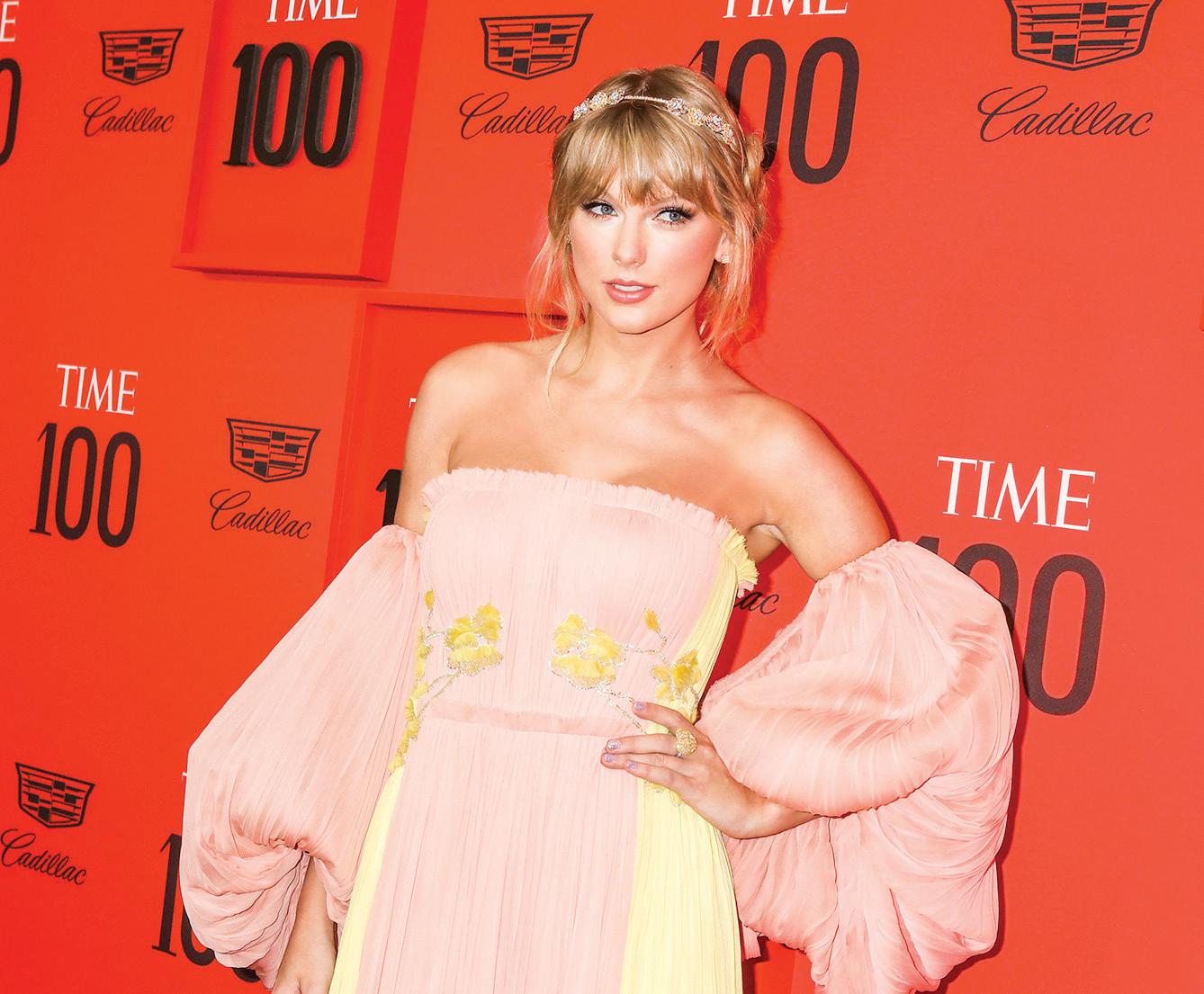
which some of the lyrics became so identifying of certain individuals they might as well name them, while others obfuscate and make it difficult to pinpoint actual timelines and people.
After years of suffering from public scrutiny takes on her personal life, Swift made a genius power move of using what the media so loves doing against them and for her own benefit, successfully altering drastically the way she’s talked about and perceived. She’s clearly come to accept that the public will be nosy no matter what, so she found a way that would only let people be nosy in the way she wants them to, and they don’t even realize it. She can clarify a rumor or a feud to magazines and newspapers and no one would believe a single word, but when it’s in her lyrics? That must be exactly what happened, right?
This is, in my opinion, a reflection of
our collective tendency toward gossip and public displays of drama. It’s also a textbook case study for manipulating public discourse and inventing a persona that’s true to the real person but also carefully selective in its presentation. With Lover, Swift released into the world a new image of herself, someone who’s completed a metamorphosis and is now not in the least bit scared of by media storms, who’s done hiding, who’s open about her politics and stands up for love and what she believes in. “I just think that you are what you love,” says Swift in the outro of the final song on the album, “Daylight.” Maybe that’s the side of herself she wants us to see, but the world needs that right now.
Andrea Yang is a senior in the College of Arts & Sciences. She can be reached at ayang@ cornellsun.com. Five Minutes ’Til Places runs alternate Mondays this semester.
When searching Google for the definition of ‘camp,’ the typical result is “a place where makeshift shelters will appear.” But there is a secondary, more informal definition: A secret personality originating from the early 20th century, plainly stated as a “deliberately exaggerated and theatrical behavior.” It’s easy enough to grasp.
This year’s Metropolitan Museum Costume Institute Exhibition dives deeper into this description, unraveling the unknown behind the unfrequented connotation of camp. Originating in the 17th century, camp started out as a verb. It has been whipped in and out of use by Frederick “Fanny” Park, Ernest “Stella” Boulton and Oscar
Wilde, each person progressing the word camp, from associating it with the LGBT community to granting it nounship. While these people may have been rejected in their own time, these late heroes and heroines are now all paid tribute to in the Met’s exhibit.
The exhibit Camp: Notes on Fashion is inspired by Susan Sontag’s extensive essay “Notes on Camp” from the Fall 1964 edition of the Partisan Review. As one of the first to vigorously research the concept, she “provides the framework for the exhibition, which examines how elements of irony, humor, parody, pastiche, artifice, theatricality and exaggeration are expressed in fashion,” according to the Metropolitan Museum Website.
Since the 1960s, this sense of camp was only bounced around between fashion icons to advance views on art and culture — all
the way to Anna Wintour. Camp was reborn into the 21st century as none other than the headline of the 2019 Met Gala. Countless designers and celebrities took their interpretation of camp to the red carpet, updating the definition with a modern context. Is there a way to define Janelle Monáe with four stacked hats threatening to topple off her head and a fabric eye covering her right breast? One word to describe Cardi B, literally drowning in a thick, blood-red blanket that requires the help of multiple bodyguards to be fanned out perfectly around her wherever she goes? Well, I, as well as countless others that night, learned that it’s camp.
Centuries, even just a few decades ago, using the word camp meant outcasting. Some people didn’t know this definition of the word existed. Celebrities would rather be caught dead than asso-
ciated with the word. Those who championed it were deemed notorious.
Yet, now there is a whole exhibit celebrating that very ambiguity and unconventionality. That might not seem like much, but it speaks volumes for the dramatic shift in political views over the past century. Camp: Notes from Fashion is able to dig through history and present it in a new light: the modern age. Who knows what other present taboo we’ll be honoring a century from now?
Take crossdressing for example. Park and Boulton were infamous for allegedly dressing as women to seduce men in the late 1800s. They were brought to trial in 1871 — but acquitted — for suspected homosexuality and “conspiring and inciting persons to commit an unnatural offence.” Aside from commonly exchang-
ing the word camp in their letters to each other, they also championed cross-dressing and breaking down barriers of which articles of clothing certain genders should wear. Without them, it’s questionable whether or not Michael Urie would have been able to rock a picturesque, light-pink gown, an armful of tattoos on one side and a pinstripe tuxedo on the other and flawless makeup on the 2019 Met Gala red carpet. Before entering the exhibit, the walls and the nearby gift shop are all bubblegum pink. Walking through, your surroundings slowly become more . . .
To continue reading this article, please visit www.cornellsun.com.
Jonna Chen is a freshman in the College of Engineering. She can be reached jc2627@cornell.edu.


• A.D. White House
• Admissions Offce
• Africana Studies & Research Center
• Alice Cook Dining
• Anabel Taylor Hall
• Appel Commons
• Baker Hall
• Bard Hall
• Barnes Hall
• Bartels Hall
• Bethe House
• Big Red Barn
• Carl Becker House
• Carpenter Hall Library
• Center for Intercultural Dialogue
• Clark Hall
• Computer Services & Financial Aid, East Hill Plz.
• Cornell Institute for Social & Economic Research
• Cornell Store
• Corson Hall
• Court Hall
• Dairy Bar
• Day Hall Main Lobby
• Dickson Hall
• Donlon Hall
• Duffeld Hall
• East Hill Offce Complex
• Environmental Health & Safety Building
• Flora Rose
• Gannett
• Goldie’s (Physical Sci. Bldg)
• Goldwin Smith
• Hasbrouck Center
• Horticulture Offce
• Humphreys Service Bldg.
• Ives Hall (ILR)
• Ivy Room (WSH)
• Johnson Museum
• Keeton House Dining
• Kosher Dining Hall
• Mac’s Café
• Martha’s (MVR)
• Mann Library
• Myron Taylor Hall
+ Hughes Dining
• Noyes Main Lobby
• Okenshields, Willard Straight Hall
• Olin Hall
• Olin Library B Level
• Plantations Gift Shop
• Rhodes Hall
• Risley Dining
• Robert Purcell Community Center (RPCC)
• Sage Hall Atrium
•Sibley Hall, Green Dragon Café
• Snee Hall
• Statler Lobby
• Statler Terrace Restaurant
• Tatkon Center
• Teagle Hall
• Transportation Dept., Maple Ave.
• Trillium
• Uris Hall
• Vet Center (Shurman Hall)
•Weill Hall, M1 Rm + Synapsis
• Willard Straight Hall
• Autumn Leaves Used Books (Ithaca Commons)
• Bear Necessities
• Center Ithaca
• Coal House Café
• Collegetown Bagels: CTown + Triphammer
• Commons Grocery (Ithaca Commons)
• CFCU (Triphammer Rd.
+ East Hill Plaza)
• Corner of College & Dryden
• Corner of State & Aurora
•Express Mart, Comm. Crnrs.
• Hillside Inn
• Hilton Garden Inn
• Holiday Inn
• Ithaca Coffee Co.
•Ithaca College, Phillips Hall
• Jason’s Grocery & Deli
• Kendal
• Kraftees
• Lifelong
• Oasis (Greenstar)
• P&C Fresh (East Hill Plaza)
• Salvation Army
• Shortstop Deli
• Tompkins County Public Library
• Tops (Triphammer Rd.)
• Universal Deli
• Warren Real Estate (Downtown + Community Corners)
or stop by The Sun’s offce at 139 W. State Street

ANU SUBRAMANIAM ’20
Editor in Chief
JOYBEER DATA GUPTA ’21
Business Manager
PARIS GHAZI ’21
Associate Editor
NATALIE FUNG ’20
Web Editor
SABRINE XIE ’21
Design Editor
NOAH HARRELSON ’21
Blogs Editor
SHRIYA PERATI ’21
Science Editor
KATIE ZHANG ’21
Dining Editor
AMINA KILPATRICK ’21
News Editor
MARYAM ZAFAR ’21
City Editor
ETHAN WU ’21
Opinion Editor
SHIVANI SANGHANI ’20
Assistant News Editor
NICOLE ZHU ’21
Assistant News Editor
MILES HENSHAW ’20
Assistant Sports Editor
JING JIANG ’21
Assistant Photography Editor
JEREMY MARKUS ’22
Assistant Arts & Entertainment Editor
DANA CHAN ’21
Production Editor
RYAN RICHARDSON ’21
Snapchat Editor
SARAH SKINNER ’21
Managing Editor
MEREDITH LIU ’20
Assistant Managing Editor
RAPHY GENDLER ’21
Sports Editor
BORIS TSANG ’21
Photography Editor
AMBER KRISCH ’21 Blogs Editor
SOPHIE REYNOLDS ’20 Science Editor
AMANDA H. CRONIN ’21 News Editor
JOHNATHAN STIMPSON ’21 News Editor
PETER BUONANNO ’21
Arts & Entertainment Editor
ANYI CHENG ’21
Assistant News Editor
HUNTER SEITZ ’20
Assistant News Editor
CHRISTINA BULKELEY ’21
Assistant
PARKER ’22
MORAN ’21
WANG ’21
WU ’21
WANG ’20
Working on Today’s Sun
Ad Layout Anu Subramaniam ’20
Production Deskers Dana Chan ’21 Mei Ou ’22
News Deskers Amina Kilpatrick ’21
Hunter Seitz ’20
Night Desker Amina Kilpatrick ’21
Design Desker Simon Chen ’21 Girisha Arora ’20
Photography Desker Boris Tsang ’21
Sports Desker Christina Bulkeley ’21
Editorial
WHILE SUMMER PURSUITS WERE OCCUPYING MANY A CORNELLIAN, a jarring story dropped back here on the Hill. In a July 3 letter to President Martha Pollack, the Department of Education suggested Cornell may have violated the Higher Education Act of 1965. The University’s alleged misdeed? A failure to duly disclose financial relationships with China and Qatar.
Last March, after The Sun uncovered lucrative research arrangements between Cornell and the Chinese telecom firm Huawei, the University assured us there was nothing to worry about. Ostensibly, it had “carefully reviewed the projects in question … to comply with all federal and state laws and regulations.” In the wake of a federal investigation, that claim now seems, at best, dubious.
And while the Department of Education getting involved is deeply unsettling, it’s just the latest black mark against the University on its foreign ties. On Qatar — as far back as former President Elizabeth Garrett’s time at the helm — the Cornell community had repeatedly urged the administration to investigate alleged labor abuses at the University’s campus in Doha, with a commitment to full disclosure. Such an investigation would’ve cleared the air well before the feds began poking around. Ditto on China, where a public accounting of Cornell’s connections to Chinese benefactors would’ve likely preempted any top-down scrutiny.
But this isn’t the first time Cornell has faced federal scrutiny for alleged wrongdoing. It isn’t even the first time in 2019.
In February, we learned the Department of Education had given the University a wrist-slapping for mismanaging federal financial aid funds, though this has not been previously reported. The Department downgraded Cornell’s participation status in federal aid programs, forcing the University to seek government approval for any new academic programs or “other substantial changes.”
Surprisingly, Cornell’s response to this federal aid issue has been promising. John Carberry, a top University spokesman, told us Cornell is overhauling its internal systems, as well as hiring some fresh faces, to help ensure it complies with the law. Carberry is “confident” the administrative hiccups that occurred “are being tackled appropriately.” We won’t know whether this approach will bear fruit until 2021 — when Cornell can re-apply for normal participation in federal aid programs — but it seems reasonable.
Clearly, Cornell is capable of proactively responding to federal scrutiny when it so chooses. The question now is whether the University, staring down a potentially damning federal probe, will decide to proactively disclose its foreign ties — or whether it will abdicate responsibility once more.
We hope it chooses the former, of course. And a great place to start, as we’ve suggested before, would be launching an independent investigation into Cornell’s Qatar campus and fully disclosing the University’s Huawei connections. It’s not too much to ask, much less from an administration whose credibility is at stake.
During a conversation this summer with a group of MIT students I met through my Cambridge internship, we stumbled into how both of our schools have issues with mental health services. It was then that I heard about their Student Support Services, abbreviated as all college programs are by its students to “S-cubed.”
From what I could gather from the MIT website and pestering the students I knew, the student service grants extensions on exams, homework or any school assignment that students need, as well as works with them to grant extended leaves. According to students I talked to, one of its most striking features is that they ask very few questions when granting minor extensions and operate under a system of trust — assuming the best of the academic integrity of its students.
The questions they do ask are centered on getting a general idea of why the students are calling the support center and ensuring their safety. They are encouraged to call for physical or mental health reasons, like waking up sick the day of an exam, the sudden appearance of a depressive episode, extreme anxiety or even going through a tough breakup with a significant other. In comparison to the strict guidelines set on my syllabi for missing classes — including one this semester that will, with “no exceptions,” drop you from the course after accumulating four absences — this sounds almost too good to be true.
As you might expect, the students admitted that the system is at times abused. But they quickly added that this fact doesn’t worry them much. One of my friends stated that she truly believes that its benefits far outweigh its potential for abuse. She would rather the few students who were willing to abuse it get a slight edge on her than for even a single student to suffer unnecessarily under the burden of their stress. This was a sentiment that several other students who I briefly interviewed seemed to share.
This same friend admitted that she is yet to take advantage of this program herself, but had still felt it had benefited her by serving as a sort of mental safety net. Although it isn’t a perfect system and not every student was content with it — as some felt it was too lax and others felt it could do more — it particularly struck me for its overall intention and purpose: to create an easy way for students to prioritize their health and happiness above their academics, allowing students to take control of their own well-being. Even more than that, it could help by improving the physical and mental health of students by making it easier to stay home and relax when sick.
cold that began mild, but quickly worsened to a two-month long bout of walking pneumonia. Instead of slowing down to let myself recover, I forced myself to work at the same pace as if I were healthy for fear of falling behind, at the cost of triggering a depressive episode.
By enforcing hard deadlines and strict standards that must be met to delay exams, Cornell sends the message that all academic pursuits eclipse students’ mental and physical health, a dangerous idea that most students at Cornell have internalized and use to force themselves to push through unnecessary suffering. The reasons that
Cornell sends the message that all academic pursuits eclipse students’ health, a dangerous idea that most students at Cornell have internalized.
the experience seems commonplace here and why I felt compelled to push myself to those limits is a reflection of Cornell’s values as a school and our campus community.
Cornell’s issues with mental health have to do with the sort of people it attracts — intense, highly driven people prone to depression and burnout — and the kind of culture that it perpetuates on campus that often serves to accelerate it. The administration of the school is aware of this, too. Vice President Ryan Lombardi’s statement sent out to the campus on May 22 said that a major theme of the upcoming mental health review would be looking into “the ways in which the campus environment and culture contribute to mental health challenges at Cornell.” Yet, the same statement lacks immediate plans to tackle this issue. An extension of these plans unveiled recently likewise focuses solely on expanding and improving Cornell Health’s services while neglecting to address any aspect of campus culture or any other faction of the school.
The best way for the administration to make direct change is by showing us its priorities. By demonstrating through its policies that it cares more deeply about our mental health and well-being than on upholding often harsh academic standards, Cornell can encourage its students to not only adopt the same mindset, but also to clear a much easier path to prioritize it for themselves. It would undoubtedly be a significant effort to implement at a school like Cornell, especially with its many colleges and the massive diversity in its student population’s academic pursuits. But the effort of examining MIT’s approach and making necessary modifications and improvements to best serve the population of Cornell would be well worth it. Thinking back on my bout of pneumonia, I really just needed a break — something just about every student I know needs. The least the school can do for its student body is to provide it. 137th Editorial Board The Corne¬ Daily Sun
We’ve all had the misfortune of taking a prelim around peak cold and flu season, when the coughing and sneezing of the other students in packed into the lecture hall with you is incessant, or worse, being one of those students yourself. The fall semester of my sophomore year, I got a
Michaela Bettez is a junior in the College of Engineering. She can be reached at mlb434@cornell. edu. Bet on It runs every other Friday this semester.
WANT TO WEIGH IN?
SUBMIT LETTERS TO THE EDITOR AND GUEST COLUMNS TO
I
IJoanna Hua | Cup of Jo
And I’d Do It Again
lived it. I did what everyone tells you not to do when you first go to college. By Sept. 12 of my freshman year, I got into a serious long-term relationship.
My freshman year was then filled with sleeping over (in a double), no longer putting on makeup because I was cuffed and spending hours studying with one person. While I still committed to a couple of extracurriculars and made some friends, I felt comfortable where I was. I felt lucky to have someone to go back to after a long day on this new and large campus, and after a string of short, horrible high school relationships, I felt at the time that I had matured to the point where I could sustain a serious
It wasn’t until the end of summer — sobbing on the balcony with a bottle to drown my sorrows and blasting music to soothe a broken heart — when I realized how heavy a toll that relationship took on me.
relationship. And so, I held onto my freshman relationship like my life depended on it. I couldn’t help but see this relationship as an irreplaceable part of my transition into adulthood.
It wasn’t until the end of my freshman summer — sobbing on the balcony with a bottle to drown my sorrows and blasting music to soothe a broken heart — when I realized just how heavy of a toll that relationship took on me. I realized that I had been looking through rose-colored
glasses and missed all the red flags for flags (cue the Bojack reference). I also realized that I ended that first year with not nearly enough extracurriculars to satisfy my desire for working and serving others. In dedicating my time to one love, I was not aware that I was leaving my other loves behind until the first disappeared.
I started sophomore year without a cohesive group of friends, having spent most of my time with one person while everyone else was busy expanding their networks on campus. I had been warned countless times to take time to figure myself out freshman year, to not jump into a relationship right away. For the two years after, I was haunted by feelings of shame and regret. I swore at myself constantly for getting sidetracked throughout freshman year. I spent the next two years rapidly loading on more extracurriculars, more classes and more time dedicated to making new friends, the rose tint slowly wearing off my glasses.
As I began my final year at Cornell, however, my regret and shame transitioned into understanding and acceptance. While my heart still pangs sometimes when I pass by the balcony I flooded with tears, I am now watching friends experience something similar much later on in their college journeys. I recognize now that I learned so much about my resilience, my needs and wants and my shortcomings very early and quickly into my college career. I grew far faster much earlier than I would have otherwise. That relationship, for all its ups and downs, has given me invaluable knowledge and understanding of myself.
I bumped into my ex by accident a couple of days ago as I was working in the Cornell Store. I slipped by him on my way to lunch, not realizing it was him until I said “excuse me” in my singsong customer service voice and he turned around. Seeing him reminded me where I was — and where I am now. All the personal growth that has
William Wang | Willpower
Thappened since because of the hardships during and after the relationship occurred at a much earlier time than I would have experienced otherwise. I am incredibly thankful for the good and the bad for pushing me to be better and stronger.
Even after retrospectively seeing how my freshman year relationship ended, if I were to relive it, I would make the same decision again. I would still go for the cute person I
Even after seeing how my freshman year relationship ended, were I to relive it, I would make the same decision again.
saw in class, the confident person I saw in the streets as I stumbled to the next frat party, the person living two doors down from a new friend. It could end in a beautiful marriage, as I know a good number of O-week couples who have created wonderful lives together. It could also end in a wrenching heartbreak, like my relationship did. But that’s okay too. What the conventional wisdom doesn’t tell you is that even a painful ending can teach lessons you can’t just learn in lecture. However it goes, you will become more resilient, compassionate and, most importantly, understand yourself more.
Joanna Hua is a senior in the College of Arts and Sciences. She can be reached at jh2278@cornell.edu. Cup of Jo runs every other Friday this semester.
he first day of my last year at Cornell began with me co-leading a tour of first-years around campus. To be totally honest, I thought it was a pretty dreadful idea for me to be the co-lead for the tour, mostly because I have a rather unpopular opinion of the comings and goings around campus.
Duffield Hall? Best place on campus in my eyes. My engineering friends think it’s a miserable wreck of a place that sucks the soul out of them, but I think it’s a quirky cross between the glassy exterior you find in extravagant skyscrapers, and the plush interior of stylish hotels. I think it’s fun; they think I’m short a few bolts. Perhaps that’s because while the engineering students I studied with there slogged through problem sets that may as well have been written in slurred Russian, I got to work on daunting business cases such as composing cold emails to companies.
How about the best place to get boba?
Definitely Panda Tea. Most people would scoff at that, and point to the powder mix they use as a turn-off. But I think the simplistic mixture is quite zen. And yes, while there’s an annoying subset of people that will point instead to that odd
“Is that really true?” he asked skeptically.
“Absolutely”, I said.
It’s really not. I’ve lost friends over that opinion.
But when someone asked the inevitable “What lessons did you learn at Cornell” query, I stumbled. I realized I didn’t have an answer for them, which was a shame, because someone once told me that wisdom came with age. Yet I don’t feel old enough to be a senior, nor wise enough to impart knowledge. So I just shrugged.
It didn’t help that the feeling of being slowly pushed out began to dawn on me. There’s something unsettling about the whole process of introducing first-year students to the campus. They’re new! They’re different! They probably own TikTok accounts. Cornell, as far as I’m concerned, is done with us seniors. We’ve pretty much paid our tuition to them, and the new crop of first-years has more to offer. We’re old news, page two of The Sun. It’s an acknowledgment of the end. Our end.
How about the best place to get boba? Definitely Panda Tea. Most people would scoff at that, but I think their simplistic powder mixture is quite zen.
new place that thinks cheese should go on boba (it shouldn’t, ever), I told my one of my tourmates that the general consensus on bubble tea was that Panda Tea was the place to go.
But there’s something about recognizing the end that has me retracing my steps from the beginning, whether for nostalgia or a cheap laugh. And for some people, it might be the classes they took, or the friends they met that served as their chronological rolodex. For me, it’s my Sun articles. All 40 plus of them.
Let’s get to the elephant in the room first. Some of them are bad. Really bad. Reading through them has been an exercise of decoupling myself from my past. I went through the trouble of reading them to my friend while eating dinner at a dining
hall in NYU this summer, and she ended up screaming with a mixture of pity and second-hand embarrassment. I think revisiting bad writing is like meeting your ex — in the sense that if you handle it well, everyone walks away slightly flustered but dignified; if you don’t, you’ll end up with your head on the dining table while your friend starts howl ing over an article you wrote.
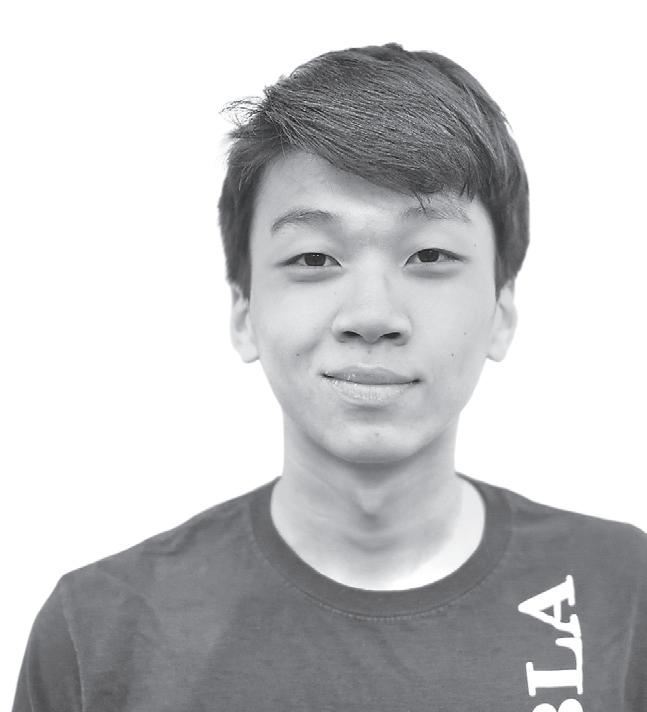
In my first year, I railed against invest ment banking cul ture in one, tackled careers fairs in another and, for some bizarre reason, wrote about Roombas, comparing them to chocolate squares. I was all over the map. I was a frazzled first-year who wanted to write about everything simply because I could.
to reflect on where things started to go wrong. I decided to write more personal topics. On my immersion into the LGBT community at Cornell, to dealing with the swings that stress brought to my mental health. Three years ago, those concepts would have been too uncomfortable, too
But writing has started to become a form of therapy for me, a way for me to reflect on where things started to go wrong.
But as The Sun has evolved over the years, the topics I touched on in my writing began to expand in ways I hadn’t initially expected. The Sun has always meant something different to each one of its writers, as we used our columns for different agendas and agencies. For me, it’s become an emotional outlet. Being a student at Cornell has largely been an uneven experience, and you’ll meet as many people who dislike me as like me. It’s okay; I’ve earned it. I’ve had pleasant days, listless days and days where I just didn’t have the will to acknowledge anyone.
But writing has started to become a form of therapy for me, a way for me
foreign, too honest for me to write about. I joined The Sun to write about campy movies and zany fashion houses. But in the end, I decided to write about me. Coming here, I thought I had my life figured out. I dressed in flannel and plaid and thought that was cool. I thought the only lessons I needed at Cornell were on how to snag a good job, find housing and maybe even how to cook ramen by myself.
Freshman me wouldn’t have given a second thought of these topics. But people change. I changed. In the end, I suppose, the only lessons worth learning are the ones we never thought we needed.
William Wang is a senior in the College of Agriculture and Life Sciences. He can be reached at wwang@cornellsun.com. Willpower runs every other Friday this semester.

Fill in the empty cells, one number in each, so that each column, row, and region contains the numbers 1-9 exactly once. Each number in the solution therefore occurs only once in each of the three “directions,” hence the “single numbers” implied by the puzzle’s name. (Rules from wikipedia.org/wiki/ Sudoku)


Collegetown Crossing
College Ave's Newest Location
307 College Ave. Now Leasing for 2020-2021
Completely New Modern Studios & 2 Bedroom Apartments.
Fully furnished, heat & hot water included. Reception area at 307 College Ave. www.urbanithaca.com
607-330-2442
info@urbanithaca.com
Houses, Apts, Parking 1 to 9 Bedroom
Collegetown - College Ave, Linden Ave, Dryden Rd, Bryant Ave, Cook St. 607-330-2442
info@urbanithaca.com www.urbanithaca.com
We have availability for the 2020-2021 school year beginning June 1st at Hudson heights apartments. The studios include
at $750 / month for a 12 month lease. If you have any questions or would like to schedule a tour contact us by phone 607-280-7660 or email: renting@ithacaLS.com
By CHRISTINA BULKELEY Sun Assistant Sports Editor
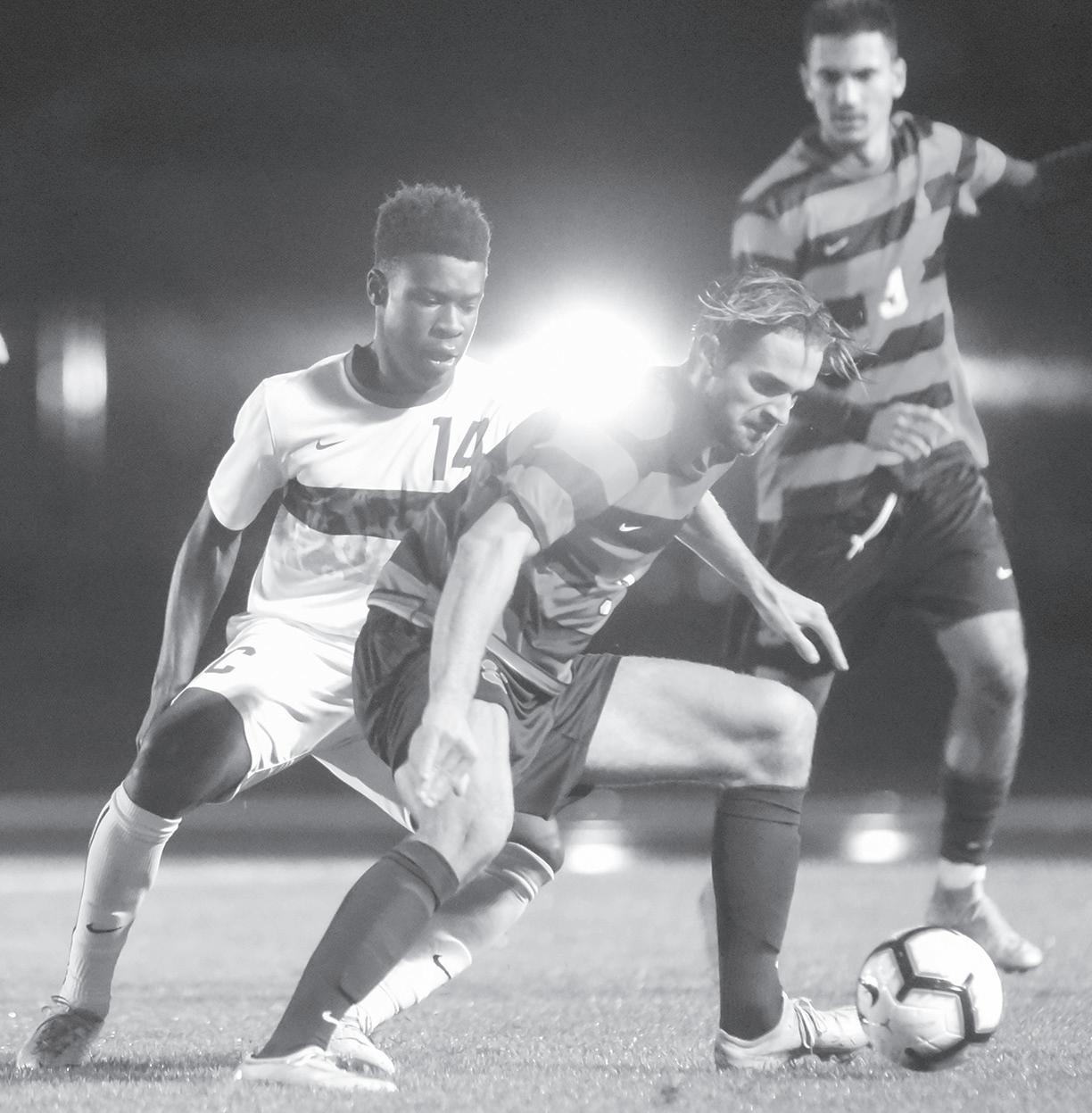
After its most successful season to date under head coach John Smith, men’s soccer looks to follow up its performance in 2019 with continued improvement.
The season will kick off on September 6 in Ann Arbor, with the team continuing on to play at Michigan State two days later.
Smith — who, in three years, has led the team from a 1-14-2 record to 11-6 — coached Cornell to a fourthplace Ivy finish last season. This year, preseason polls project the Red to finish at third in the conference. Princeton is the favorite, having received 11 first-place votes; Dartmouth and Cornell came in second and third with three votes and one vote, respectively.
w The Corne¬ Daily Sun
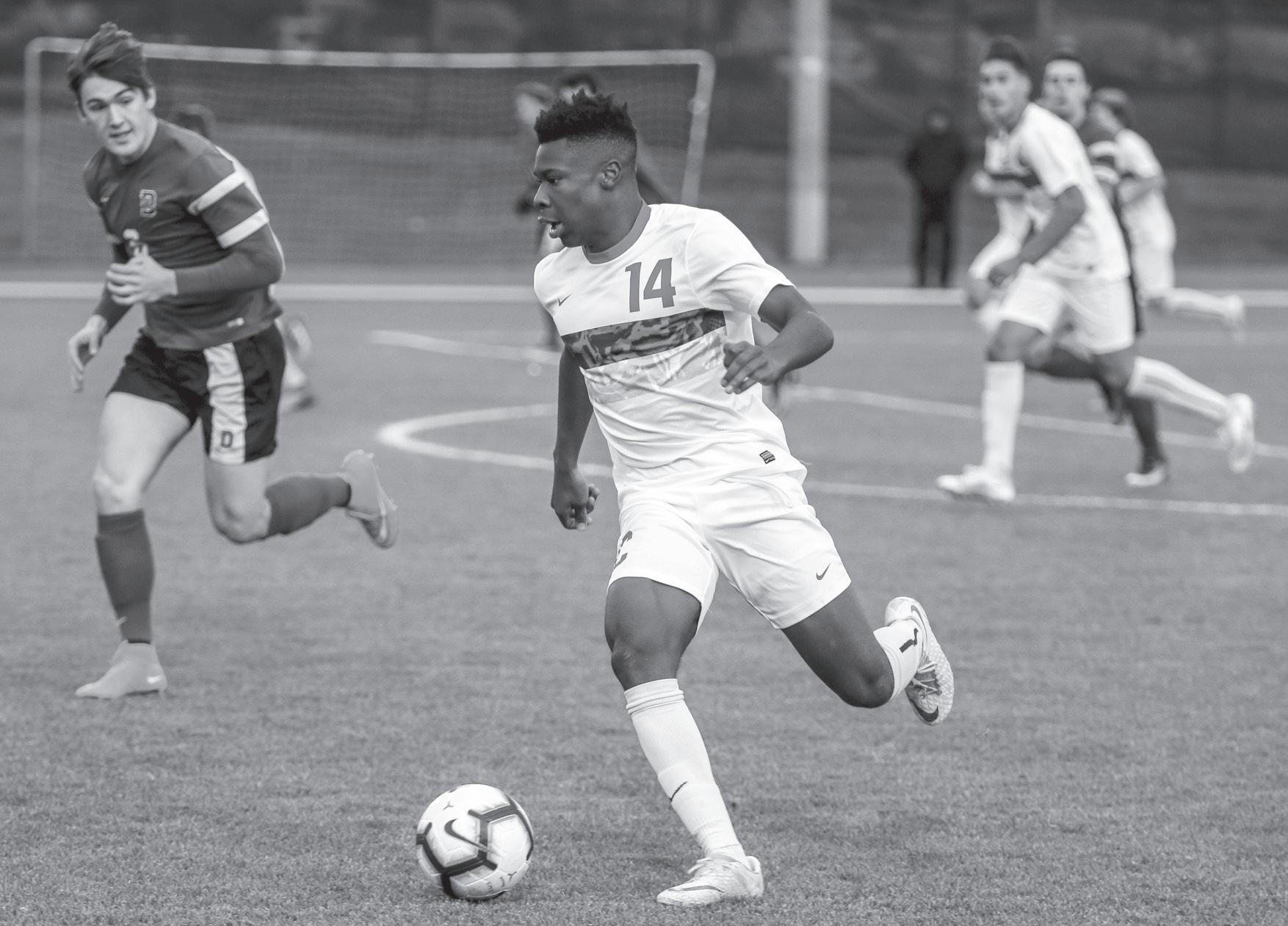
Eleven starters will return to the lineup, including reigning Ivy Rookie of the Year sophomore forward Emeka Eneli and All-Ivy selections junior forward Charles Touche, sophomore defender Tate Keir and senior midfielder John Scearce.
The Sun will not publish on Labor Day. Here are the consequent advertising deadlines.
Business Offce will close at 12 noon Friday, Aug. 30 and reopen 9 a.m. on Tuesday, Sept. 3.
DISPLAY & CLASSIFIED ADS for the Tuesday, Sept. 3 issue of The Sun are due Thursday, Aug. 29 by 3 p.m.
Touche was Cornell’s lone representative on the All-Ivy First Team, having led the league in both points and goals during the season and scoring a hat trick against Harvard — the first by a Cornell player since 2012. He was the first Cornell player named to the team in four years; Rookie of the Year honors had not gone to a Cornellian since 1997.
As Smith looks to build upon
his success and continue along his team’s trajectory of steady improvement, he has put an emphasis on recruiting top talent. New to the roster will be seven freshman additions to the team.
“An incredible amount of work has gone in over the last year or so to shape what we believe to be a class which will represent this program exceptionally,” Smith said of the Class of 2023.
Among these newcomers is midfielder Kurt Lehmkuhl, who attended high school with and played for the same club team as Eneli in Ohio.
The freshmen, however, have their work cut out for them, as they need to keep up with their more experienced teammates in
order to merit playing time.
“As good as the staff feels this group is, we couldn’t be happier in the realization that they will have a battle on their hands with a group of talented returners who have bought in from day one,” Smith said.
Each of Smith’s players must put forth their strongest effort with the knowledge that receiving playing time isn’t a given. On a team that has steadily climbed in the rankings since the head coach took over, maintaining a competitive edge is vital for the Red not to slip in the standings.
While the Red will play at University of Michigan and Michigan State next weekend, the team’s homecoming will be on September 14 against
Fairleigh Dickinson. Ivy play will commence at Penn on October 5.
Out-of-conference highlights will include the two games in Michigan and matches against the University of Akron and upstate rival Syracuse, all of which are considered top-30 teams going into the season. A schedule bolstered with such formidable opponents demonstrates the program’s commitment to showing it is not the same team that went 1-14-2 in 2016.
Cornell will take the field for the first time in 2019 against the Wolverines at 5 p.m. on September 5.
By RAPHY GENDLER Sun Sports Editor
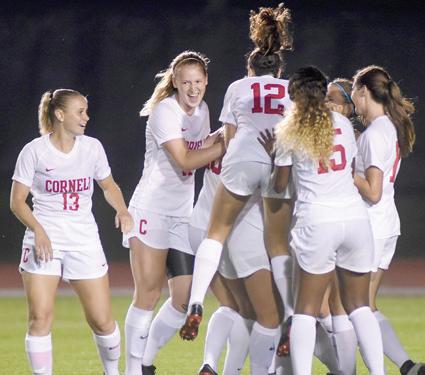
Cornell women’s soccer is ready to forget about 2018. About 10 months after its 1-13-1 season mercifully came to an end, the Red is taking a new approach into 2019.
Head coach Dwight Hornibrook’s squad finished dead last in the Ivy League a year ago with an 0-7 mark, which included a pair of overtime losses. In the months since the season finale — a 2-1, double-overtime loss to Dartmouth — Hornibrook has sought to find a new team identity heading into the 2019 season, which starts at 7 p.m. Friday night at Berman Field as the Red hosts Iona.
Cornell lost just three players to graduation, leaving the last-place team mostly intact. But Hornibrook and company hope this year’s squad won’t resemble 2018’s.
“More team speed ... We’re going with the concept of ‘attack first; ask questions later.’”
Dwight Hornibrook
Although captain and All-Ivy goalkeeper Meghan Kennedy ’19 has graduated, Cornell hopes 2019 also marks the exodus of a passive and reactive approach.
“We’ve addressed the things we really lacked — legitimately dangerous players on the attack and more team speed everywhere,” Hornibrook, entering his third season as head coach, told Cornell Athletics. “We’re going with the concept of ‘attack first; ask questions later.’”
Despite having graduated just three seniors last May, Cornell’s identity will be different in large part due to a shake-up in Hornibrook’s staff: All three assistant coaches are new. Rob Ferguson and Kelsey Ferguson have come onboard to assist Hornibrook, and Vanessa Romero has also joined as a volunteer assistant coach.
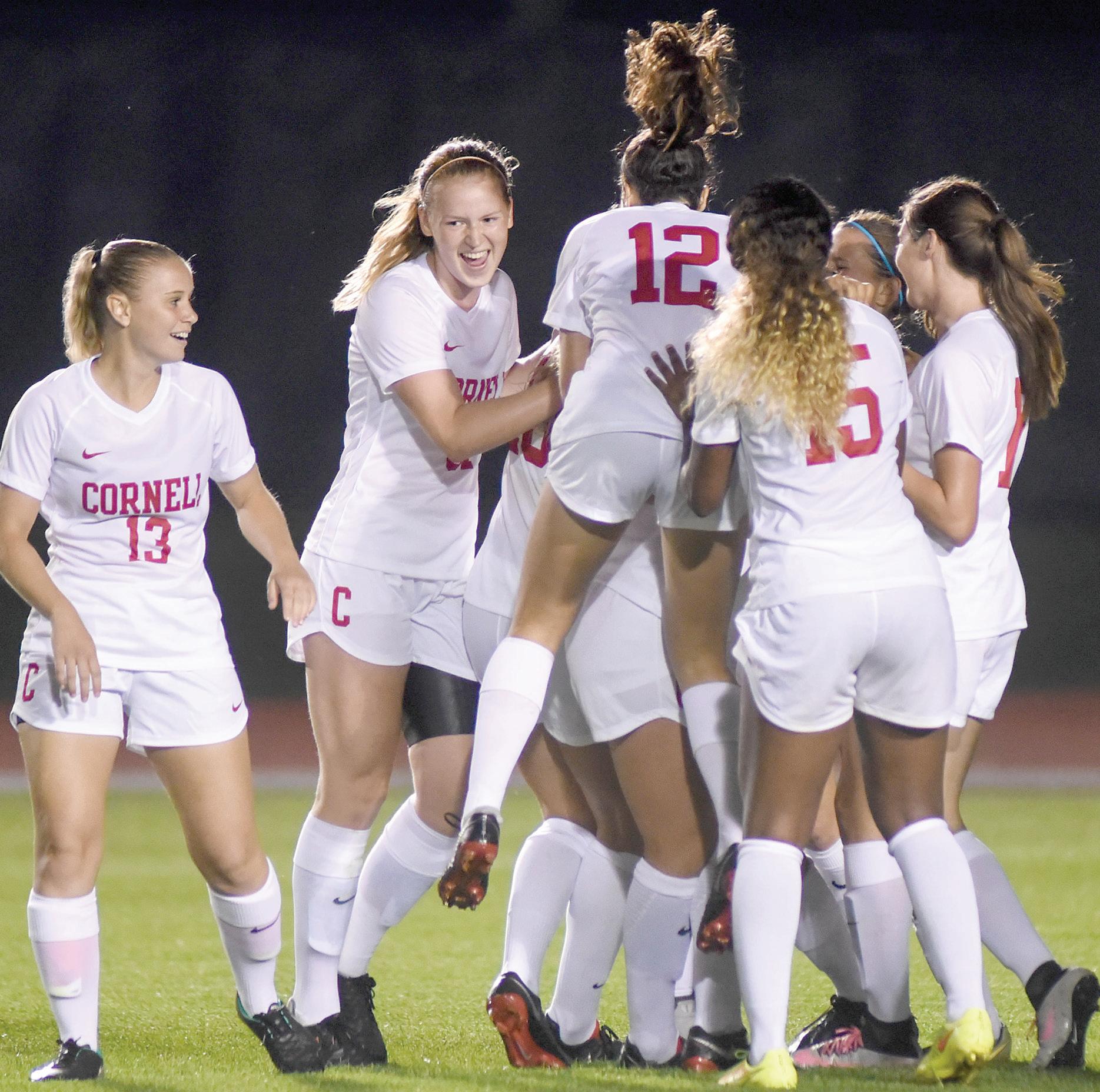
Underdog mentality | Though the team is projected to make another last-place Ivy finish, the Red is reinvigorated and ready for change.
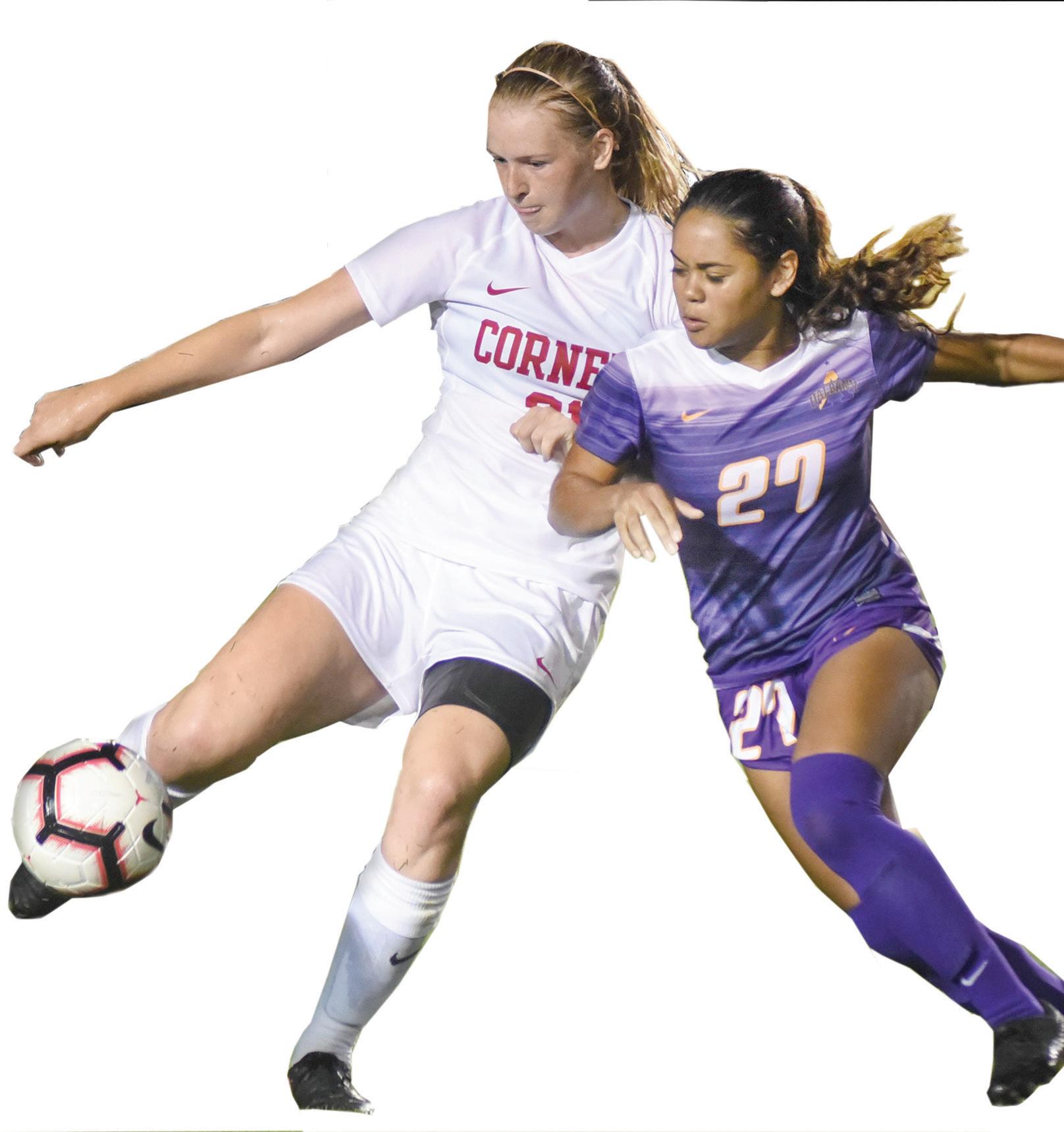
One of Cornell’s few bright spots during its dismal 2018 season was Kennedy, its senior goalie. Kennedy earned All-Ivy honorable mention twice and was named the team’s most valuable player in both 2017 and 2018, leading the Ivy League in saves.
“They’re all really hungry to make a difference. There’s a whole lot of new energy.”
Dwight Hornibrook
But Hornibrook said he’s confident in his three options in net. Senior Chrissy Mayer — one of three captains, along with junior defender Naomi Jaffe and senior midfielder Karli Berry (who will miss the season with an injury) — is the most experienced of the returners, with a 0.61 goals against average over seven appearances and four starts. Sophomore Mirando Iannone made one start last season. Freshman Nicole Shulman rounds out the trio of goalies.
“We have three very good goalkeepers,” Hornibrook said. “It’s both really good and a really difficult situation.”
Picked to finish last in the Ivy League preseason media poll (Princeton was picked to finish first, followed by Penn and Harvard), Cornell will play a handful of non-Ivy games before starting an intense stretch of Ancient Eight play in late September.
After Friday’s game against Iona, the Red hosts Siena in a Labor Day match. Bucknell, St. Bonaventure, Albany and St. John’s round out Cornell’s preIvy slate.
Cornell’s Ivy League season begins September 28 when the Red hosts Columbia, looking to avenge an overtime loss to the Lions last season. Cornell then takes on Penn and Harvard before taking on Colgate in its final nonleague game. The Red’s last four games will include three away from Ithaca: at Yale, home against Brown, at Princeton and at Dartmouth.
Cornell’s season opener is set for 7 p.m. Friday at Berman Field.
Raphy Gendler can be reached at rgendler@cornellsun.com.