The Corne¬ Daily Sun

By ALEC GIUFURTA Sun Staff Writer
WASHINGTON, D.C. — Every summer, students passionate about policy and social reform flock to the nation’s capital for summer internships. Yet, when students accept these internships, many often don’t anticipate the city’s steep rents and limited housing options, leading to subpar living situations.
Adding to the frustration of students struggling to find a place to live is that a Cornell owned-and-operated dormitory is not open to any student not enrolled in summer courses under the Cornell in Washington program — despite the fact that more than half of the spacious rooms in the Dupont Circle apartments are empty.
The Sun set out in search of the Cornellians tucked away in Airbnbs, alumni homes and George Washington University dorms, to get an insider’s look at the multitude of alternate living situations, and how these interns madeit work.
Mixed Experiences at G.W.
George Washington University, located in the Foggy Bottom neighborhood on the main metro line, has long been a popular spot for Cornellians interning in the summer because of its familiar campus environment and convenient location. The dorm buildings are within walking distance of many downtown offices and government buildings.
Cornell’s Arts and Sciences Career Services office directs


Lack of sleep, headache, stress and anxiety: ask almost any Cornellian and they will tell you that these are the most common ailments plaguing the student population.
By coincidence, these same illnesses are purportedly ones which can be treated with cannabidiol, or CBD, a substance extracted from the leaves of the cannabis sativa plant.
Until a few months ago, CBD medicines were only available in niche online stores and some alternative medicine shops. But with the passage
By SEAN O’CONNELL Sun Staff Writer
Every year, the Forbes 30 Under 30 list identifies the most promising young visionaries, and Cornellians almost always make an appearance. In years past, dozens of ambitious Cornell alumni have made the list, spanning

industries from healthcare entrepreneurship to skincare innovation to sustainable dining.
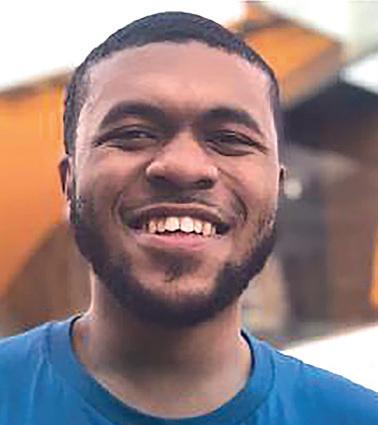
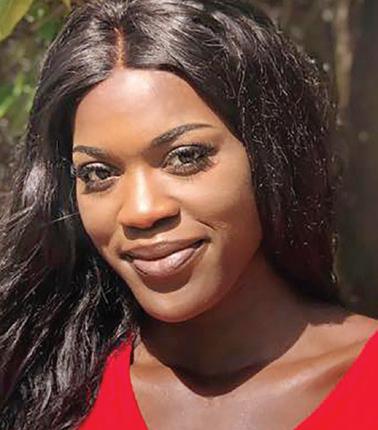
This year, Chiamaka Ijebuonwu ’20, Jehron Petty ’20, and Akanksha Jain ’20 were named Forbes Under 30 “scholars,” allowing
them free admission to the Forbes Under 30 Summit, a three day event for up-and-coming “leaders, founders, investors and creators,” according to the event website.
The summit, to be held in Detroit on October 27-30, will include a “private music festival,” lectures from celebrities, athletes, musicians and entrepreneurs such as famed tennis player Serena Williams and CEO of technology company Squarespace, as well as the opportunity to network with potential investors, industry-specific “field trips” and even a “legendary” pub crawl. Ijebeuonwu, Petty and Jain will join hundreds of other scholars as talented, promising college students from “underrepresented backgrounds” chosen to attend
Here
The Corne¬ Daily Sun Business Offce will close at 12 noon Friday, Aug. 30 and reopen at 9 a.m. on Tuesday, Sept. 3.
DISPLAY & CLASSIFIED ADS: for the Tuesday, Sept. 3 issue of The Sun are due Thursday, Aug. 29 by 3 p.m.
Unturned Leaves: Early Women in Botannical Illustration 8 a.m. - 5 p.m., Mann Lobby and Top Shelf Gallery
Ash Trees: A Story of Relationships, Loss and Hope 9 a.m. - 5 p.m., Brian C. Nevin Welcome Center
Meet Eco! Up Close with Our Boa Constrictor 11 a.m. - 12:30 p.m., Museum of the Earth
David Hammer, “Domestic and Global Energy Resources, Uses and Consequences” 12:15 - 1:15 p.m., 165 Olin Hall
PolliNation: Artists & Scientists Crossing Borders To Explore the Value of Pollinator Health 8 a.m. - 5 p.m., Mann Library Gallery
Esra Akcan: Open Architecture: A Book on Migration 8:30 a.m. - 4:30 p.m., Sibley Dome
Short Research Presentations by Assistant Professors Christina Lee Yu (ORIE), Jamol Pender (ORIE), and Dmitry Savransky (MAE) 3:30 p.m., Frank H. T. Rhodes Hall
Lan Huang “Cross-linking Mass Spectrometry for Defining Protein Interactions and Structures” 4 - 5 p.m., G10 Biotechnology Building
Bienvenidos BBQ 6 p.m., Anna Comstock Hall
Late Night Breakfast 10 p.m., Okenshields

By AMANDA H. CRONIN Sun News Editor
New signs appearing in local store windows every week, ads from startups popping up on Instagram feeds, presidential candidates voicing their support: the cannabis industry seems to be booming. In fact it’s surging so much that reporters have drawn equivalencies to the famous interest in California gold, dubbing it “The Green Rush.”
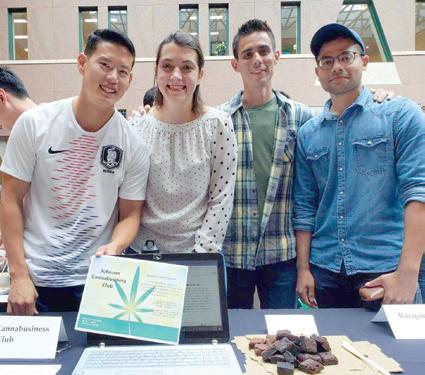
Cornell Johnson School of Business students were seeing green too. Last August, Moses Oh ’20, Diana Ciechorska ’20 and Mike Wagner ’20 formed the CannaBusiness Club.
None of the founders had a background in agriculture or cannabis; they came from the military and financial backgrounds. And yet, they were all drawn by the market potential and dearth of information about this new and rapidly growing industry.
“There’s a club for all these other industries — marketing, finance, etc. Why not for the cannabis industry? We thought there was a need for it and that it would be valuable to students and to us; we didn’t know enough about the industry ourselves,” said Ciechorska.
In contrast to other schools like UC Berkeley who have not
been supportive of similar cannabis industry clubs, Cornell Johnson was particularly open to the prospect of them founding the club
Ciechorska said.
“It’s so new; people are afraid of it for no good reason. There’s nothing inherently risky about the industry,” Ciechorska told The Sun. “There’s a tremendous benefit from it medicinally; it’s less dangerous than consuming alcohol.”
Upon completing his service in the U.S. Army, Oh discovered CBD as an effective treatment for his pain. However, after seeing cannabis products’ legal successes in Colorado, Oh’s interest grew beyond mere curiosity.
“For me, personally, our mission has always been the destigmatization,” said Wagner. “People see cannabis and think Bob Marley and reggae music. I think the cannabis consumer twenty years from now will be the typical alcohol consumer today.”
Last semester, Cornell’s group visited Hexo and Cronos Group, two of the largest companies in the Canadian cannabis industry. This year, the club will continue to educate their members on the industry through networking, exposing them to guest speakers and trips to farms and other industry sites.
Ciechorska said that the club’s work was validated when they realized how many Cornellian inves-
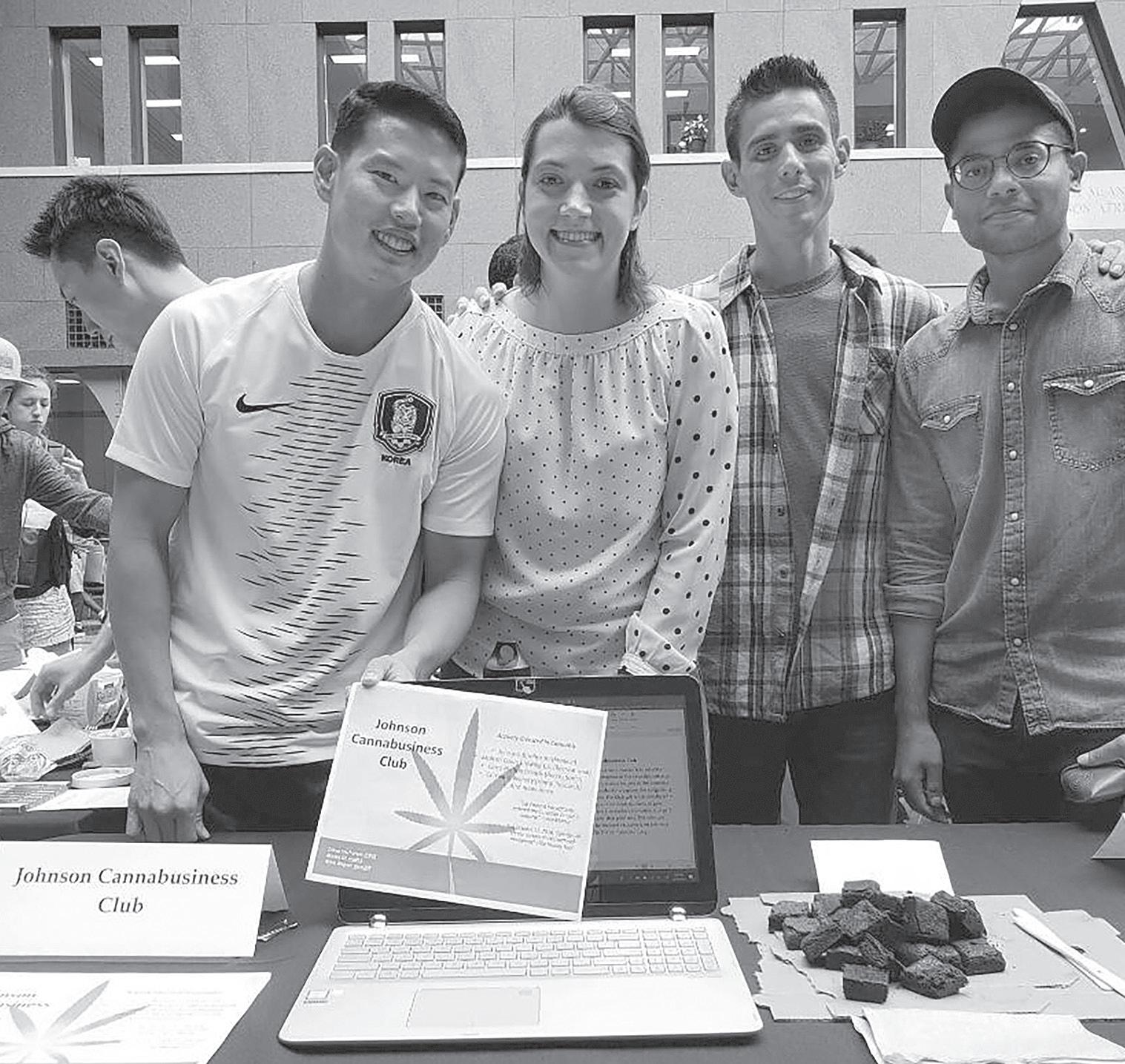
tors were already involved in cannabis-related businesses.
This summer, Ciechorska continued to explore the industry through her work at Northern Swan, a New York-based investment firm focused on emerging markets, and particularly, cannabis.
Wagner and Oh’s passion for the field led them to found a CBD-infused beverage company
called “Normal Sparkling Water,” which launches Thursday and will be available for purchase at Collegetown Bagels’ College Avenue location.
Even the College of Agriculture and Life Sciences is capitalizing on cannabis’s growing market popularity with a new class beginning this semester, “Plant Science 4190: Cannabis: Biology, Society and Industry,” as well as a forthcoming master’s program.
Although the government regulation of marijuana, hemp, and their respective substances— THC and CBD — is still in flux, the club members are hopeful that it’s just a “matter of time” before the dominoes fall, Ciechorska said.

By NICOLE ZHU Sun Assistant News Editor
Earlier this month, prominent reproductive healthcare non-profit Planned Parenthood shocked allies and opponents alike when it announced that it would withdraw from a federal family planning program that provided $60 million to the organization each year after the a new Trump administration rule change prohibited referrals to abortion providers.
The “gag rule,” as it was dubbed by reproductive healthcare advocates, would prevent Planned Parenthood from carrying out the “intent” of Title X of supporting preventative healthcare for low-income people, said Planned Parenthood’s New York legal representative in a written statement.
Now, the New York State government is stepping up to the helm.
According to Maureen Kelly, vice president for programming and communications at Planned Parenthood of the Southern Finger Lakes, the organization has “official assurances” from the New York State
Department of Health that additional funding will be provided to the healthcare provider at least until the end of 2019.
For Ithaca’s many college students, those who use Planned Parenthood services shouldn’t expect any changes to their service, Kelly told The Sun in a phone interview.
“We still have access to that funding, just not Title X [funding],” said Kelly.
This kind of alternate route, Kelly noted, is special to New York.
budget — where they can find money,” Kelly said. New York leaders from all three branches of government have already announced firm support for the non-profit, with Attorney General Tish James, Lieutenant Governor Kathy Hocul, Assembly Speaker Carl E. Heastie and other elected officials speaking at a Planned Parenthood rally in Albany earlier this year.
“The tenacity and tireless work of Planned Parenthood members and partners have won reproductive justice vic -
“All of us who support a woman’s right to choose must stand together and fight against the continued attacks on health care funding.”
State Comptroller Thomas P. DiNapoli
“In other states, other Planned Parenthood affiliates don’t have access to that funding and don’t have alternative resources,” said Kelly. When asked about the future of Planned Parenthood funding beyond the calendar year, Kelly wasn’t sure.
“We don’t know what the state will do in 2020 because it depends on the
tories here in New York State,” State Comptroller Thomas P. DiNapoli said at the March rally. “All of us who support a woman’s right to choose must stand together and fight against the continued attacks on health care funding and access, including Trump’s gag rule.”
Nicole Zhu can be reached at nzhu@cornellsun.com.
Mr. Gnu enjoys breakfast coffee while reading The Cornell Daily Sun.

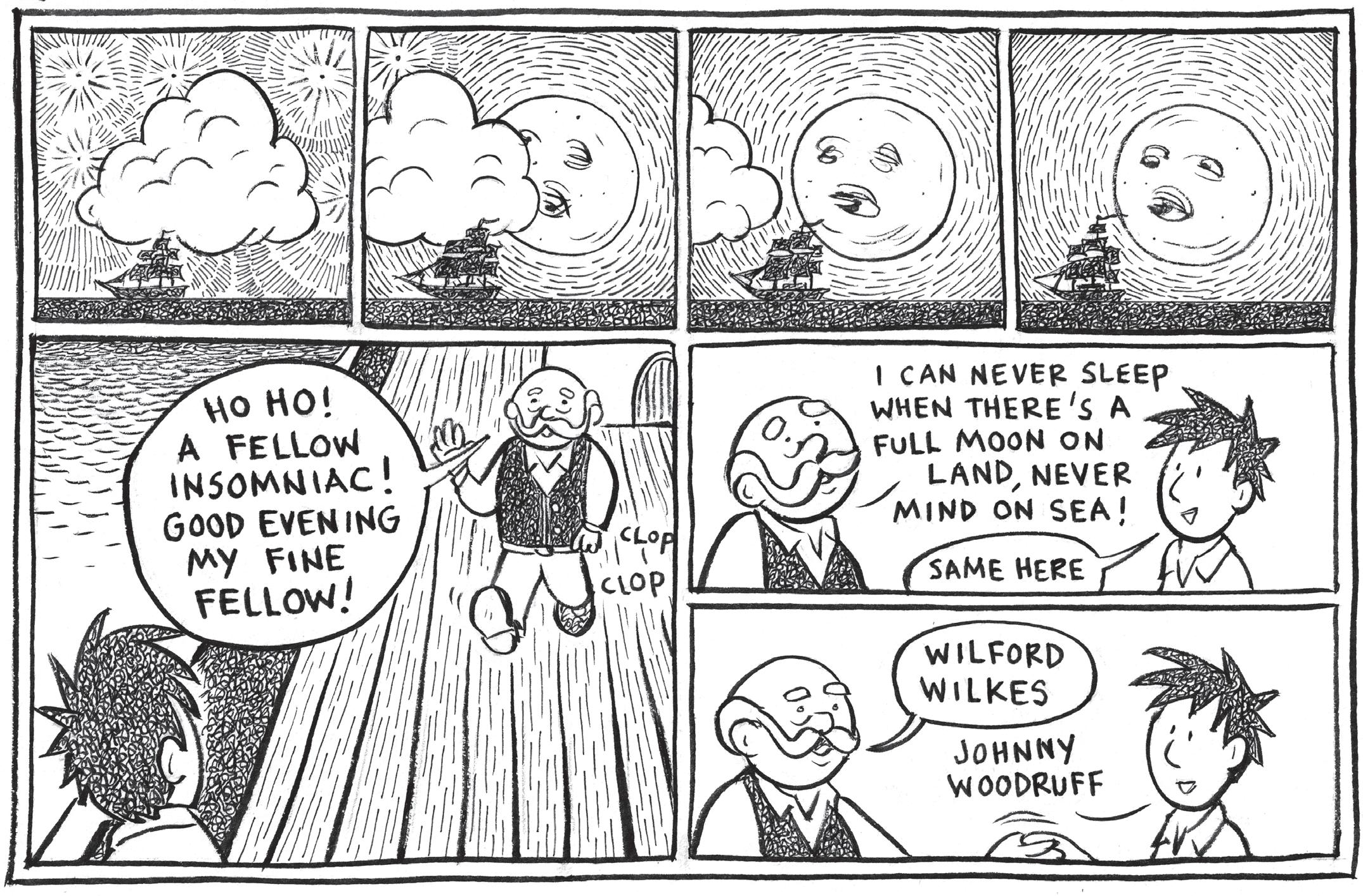
Travis Dandro, author of the Mr. Gnu comic strip that has been featured in The Sun for many years, has this fall initiated a new graphic-novel-syle adventure titled “Johnny Woodruff.” See the comics and puzzles on Page 10 for this serial’s second installment.
SUMMIT
Continued from page 1
the summit by Forbes.
A longtime serial entrepreneur, Petty first began as a teenager fixing devices for friends. Since then, he has launched a clothing line, developed a video series to give financial advice to young people of color, and a platform that challenges participants to “live a life above average.”
Ijebuonwu also had an early start to her career, as she first discovered began honing her entrepreneurial spirit in middle school.
“I was that kid that sold candy and snacks in between periods during 6th and 7th grade,” she told The Sun.
Ijebuonwu began working with the Ithaca Free Clinic the summer after her freshman year, and worked with professors in the Department of Design and Environmental Analysis to redesign parts of the clinic.
In the fall of 2018, she launched the Healthy Snacking Initiative, in conjunction with the Ithaca Free Clinic, a service and research project to encourage healthy snacks and expand nutritional education, which is still ongoing.
Ijebuonwu had advice for student entrepreneurs looking to start their own business.
“First, no dream is too big. If you really want to do something that will positively impact your community, work hard at it until it’s done,” Ijebuonwu continued. “Second, build your network. Networking is key to having your projects reach their fullest potential because of the advice and resources people within the network may have.”
Jain, also a senior whose LinkedIn profile displayed a passion for “improving healthcare for the general public,” announced on the platform that she would be attending the summit. Jain did not respond to requests by The Sun for an interview by print time.
Petty’s advice concerned itself the most important part of starting a business: simply founding it.
“It’s all about starting,” Petty said. “It sounds counter-intuitive, but people get bogged down by ‘perfection,’ they think they need to start with an end product.” He cited Facebook’s origins as a social network for Harvard as an example of the evolution of a business.
“I’m a big fan of starting as fast as possible, and failing as fast as possible,” Petty said.
Sean O’ Connell can be reached at soconnell@cornellsun.com.

HOUSING
Continued from page 1
many students to GW, according to Jen Maclaughlin, assistant dean and director of career development in the college of Arts and Sciences. She said that Cornell doesn’t “endorse any specific type of [housing],” so “it’s really up to the students” to figure out their living logistics.
For Hurya Ahmed ’22, safety was a priority in her housing search. Ahmed said she liked the idea of living on a university campus because it felt more secure than other independent city living options. GW “kind of chose itself” when a last-minute internship left her scrambling for housing. Ahmed, however, as one of several Cornell students residing in GW’s Fulbright Hall this summer, described the dorm as “just overall gross.”
“It has this weird smell,” she said, speculating that it may be from old carpeting or the age of the building. Fulbright Hall was built in 1947 as an apartment building. GW has also divided studio apartments into quad style rooms.
“It’s definitely too pricey for what you’re getting,” Ahmed said. A studio-turned-quad room from June 9 until August 3 in Fulbright Hall costs $301 per week, plus taxes. Meanwhile, a regular double room that houses two people at Georgetown University charges $322 per week, plus taxes.
David Leo, a GW student, also resided in Fulbright Hall over the summer. While moving in, Leo and his friends noticed asbestos warning signs around the building. Alyssa Martindale, also a student at GW and a Fulbright summer resident, told The Sun that asbestos warning signs have been posted in Fulbright Hall since last year.
GW facilities staff confirmed the presence of asbestos abatement signs, stating in an email to The Sun that the abatement occurred from May 28 to June 7, 2019. They said that the signs often remain up after the abatement.
Martindale also expressed frustration at the GW administration’s decision to house four people in one room. “I don’t spend a lot of time here because it’s … so cramped,” she said.
Fulbright’s quad-style dorms have previously drawn the rebuke of students during the academic year. In the Fall of 2018, first year students were concerned about adjusting to Fulbright’s small rooms, which are “typically meant to house three students but now house four freshmen each,” GW Hatchet, the college newspaper of GW, reported.
A summer resident of GW’s Madison Hall, Aadi Kulkarni ’22 and his roommates witnessed GW staff entering their suite without prior notice to set up cockroach traps and spray pesticides. Kulkarni told The Sun that they “had no heads up to put away belongings or valuables.” Living in Madison Hall costs between $280 to $301 per week, plus tax.
Not all experiences at GW have been negative, however. Mason Woods ’20, a resident of GW’s International House, found the dorms’ location “incredibly convenient.”
Nikhil Dhingra ’20 and Sheal Awsare ’20 found housing at GW’s Sigma Chi fraternity house. Last year, GW’s summer housing option did not cover all the dates Dhingra would be interning for, so he arranged to spend the remain-
der of his summer at the fraternity house. This year, he decided to return to live at the house exclusively, for which he is charged approximately $350 per week; slightly more than Fulbright Hall.
Although he is not a Sigma Chi member, Dhingra shared that there is not much he “missed out on.” He added that the house is “definitely not traditionally clean,” but that he enjoys “the opportunity to meet new college students interning in DC.”
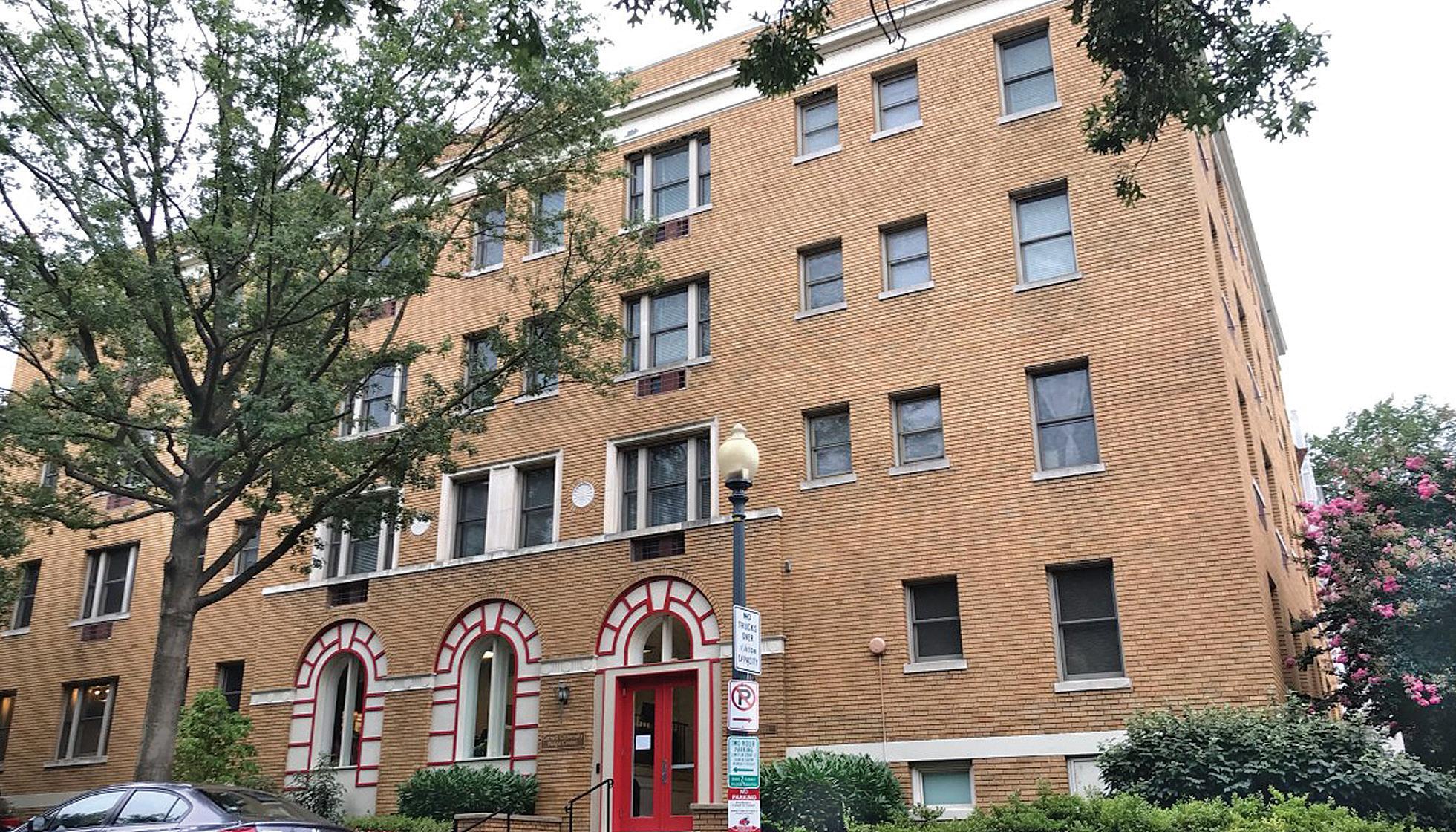
A Cornell-Owned Dorm Sits Below Half-Filled Cornell owns 27 apartments in the Wolpe Center, home of the Cornell in Washington program in downtown D.C. According to their website, CIW is a government-oriented immersion experience in D.C., allowing students to enroll in a four-credit Cornell courses while also working a daytime internship.
CIW’s apartments are fully furnished with a range of amenities, including private bathrooms and a kitchen.
While the maximum occupancy of the building is “about 52 people,” according to Brittany Paylor, CIW services coordinator, this summer, only 16 students lived
Cornell could provide an affordable option “to promote less affluent Cornell students pursuing careers in government and policy.”
Hurya Ahmed ’22
there.
Some students, including Ryan Thompson ’22, questioned why Cornell doesn’t open its doors to other Cornellians living in D.C. for the summer. Thompson interned at Resolution Economics and took the “Enduring Global and American Issues” course under the CIW program.
However, when Thompson first inquired about living in the Wolpe Center without taking the class, he was turned down. The full cost of CIW’s summer program, including housing, an activity fee and tuition is $8,673.
“Objectively, it does not look like this housing is being used efficiently,” Thompson said, as many students are left to “find housing in a market where there aren’t many options.”
Connor Lightfield ’21, also a CIW student, told The Sun that some rooms designed as triples only have two residents.
Carol Fields Hagen, director of administration for CIW, estimated that the building is “under half full.” She said that “students have to be registered students to live in Cornell housing.”
Hagen, who has worked at CIW for nearly 35 years, said she didn’t know the “components” behind this policy barring non-CIW students from living in the dorm. She does, however, “wish that we could figure out a way to open it up.”
When The Sun reached out to a university spokesperson
to find out what these components entail, Hagen replied to the email, reiterating that “to live in the Wolpe Center during the summer, students must be registered in Cornell Summer Session” –– Cornell’s summer classes program. Hagen later followed up with The Sun, explaining how at CIW, “we are bound by Cornell’s policies and housing contracts, which are written to protect students and mitigate risks.”
Ahmed argued that the dorms “should be for us,” adding how Cornell could provide an affordable option “to promote less affluent Cornell students pursuing careers in government and policy” to end a “cycle of underrepresentation of minorities working in government.”
Cornell Grants Seek to Remedy Inequalities
This cycle is something that Cornell’s Summer Experience Grant — a group of funding pools maintained by the Student Assembly, the arts college and ILR — seeks to break, according to Maclaughlin.
Maclaughlin said the grant seeks to “alleviate those disparities between students who may be able to fund a summer experience independently and students who may not have the money to be down in D.C.” For Arts and Sciences students, the grant has a funding pool of $300,000 and is used by 17 students in DC, and 99 students around the world in total, this year, according to Maclaughlin.
She added that even after only a few years of existing, the grant, founded in 2015, is already boosting the prospects of post-grad beneficiaries. After graduating, past receipients of the grant often are able to enter career fields more aligned to their interests because of the “experience under their belt,” Maclaughlin said.
Ori Huang ’20, one of the grant recipients, lived in an Airbnb in Bethesda, Maryland this summer. Huang paid around $1,300 a month and her internship is unpaid.
For Huang, getting to work required taking a bus ––which ran every 45 minutes –– to a metro station, before boarding the subway to work. Even though the grant was enough to cover her housing expenses, she still partially relied on financial assistance from her parents. Without the grant, Huang said “would’ve probably had to sit down and think more about” coming to D.C. for her internship.
Huang called CIW’s decision to bar non-CIW students from living in the Wolpe Center “illogical.” “Cornell is literally giving us money to go give the money to someone else,” she said.
Cat Tran ’20 said she thinks it could be helpful for Cornell to appoint a dedicated person to finding students housing in D.C. She said she felt “lucky” to be able to afford and find summer housing in D.C. –– a friend connected to a Cornell alumnus who provided their home at a discounted rate for the summer.
Now, D.C. summer internships have wrapped up, and students have just finished moving out of their various living arrangements. However, it won’t be long before the hunt for next summer’s internships –– and housing –– begins.
Alec Giurfurta can be reached at agiufurta@cornellsun.com.
of the 2018 Farm Bill and the subsequent passionate embrace of the cannabis industry by farmers, entrepreneurs and investors, one can find CBD everywhere from Wegmans to GreenStar to CTB, and now, at the Cornell Health Pharmacy.
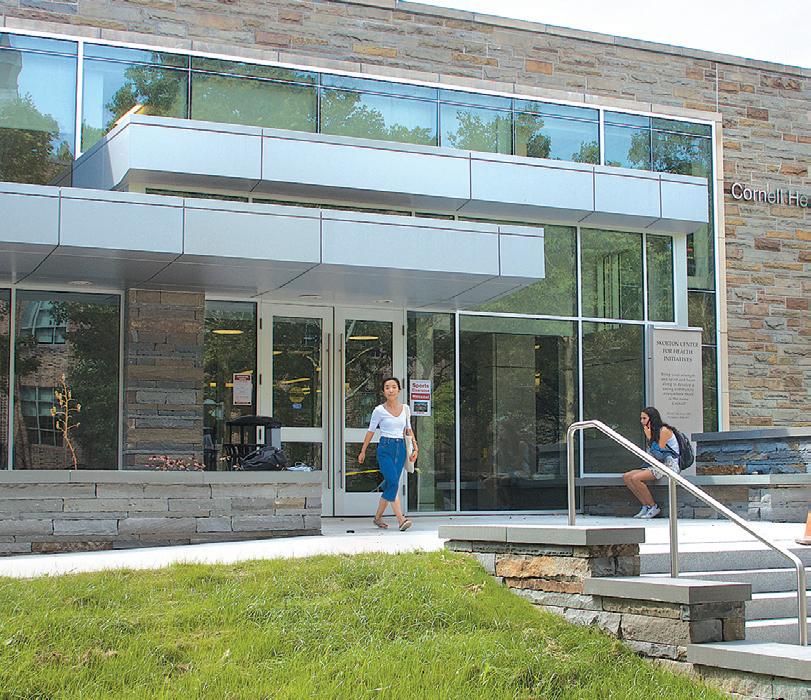
Cornell Health Pharmacy manager Tracey DeNardo told The Sun back in April that the pharmacology team was planning on doing a review over the summer to determine which CBD drug companies’ products, if any, they would sell at the campus pharmacy. That review has since concluded.
“This fall, the Cornell Health Pharmacy will be carrying locally sourced CBD tinctures, lotions, salves, and soft gels from Head and Heal in Cortland. We are responding to requests from students who want to try CBD to help treat conditions such as anxiety, pain, insomnia, and inflammation,” DeNardo told The Sun in a statement.
Head and Heal is a company based out of Main Street Farm in Cortland, about 30 minutes from Cornell’s Ithaca campus.
Before getting into the cannabis industry, Main Street Farm grew a wide variety of organic vegetables and fruits. Now, it grows more than 40 acres of cannabis sativa plants, processes oil on-site, and sells its products at farmers markets across New York state.
Cornell Health representatives, including DeNardo, visited the farm and facility in late July.
“I got really emotional while they were here; it felt like things had come full circle,” said Karli Miller-Hornick ’12, Head and Heal co-founder and graduate of the School of Hotel Administration. “When I was an undergrad, there were the most student suicides in a single period. It’s hard, you’re under a lot of pressure as a Cornell student. The whole time I was thinking, ‘How could I make this better?’”
Cornell Health’s pharmacy set out to meet criteria including thorough lab testing, a local farm source, a transparent production process and affordability. At Head and Heal, Miller-Hornick said that creating a high quality product free of fillers is their primary priority. Their other priority is to destigmatize the consumption of a cannabis-based product.
Head and Heal’s entire line of products — except for their pet treats — will be available for sale starting at the beginning of the fall school semester. Miller-Hornick told The Sun that while their 600 milligram tincture is their most popular product, commonly used by people who suffer from insomnia, headaches, and anxiety, their new soft gels have the same concentration of CBD oil and can be used to treat the same ailments.
Pharmacy manager Tracey Denardo reiterated Cornell Health’s commitment to assisting students in determining what medicinal products are right for them.
“Cornell Health’s medical clinicians are here to help students navigate treatment choices about any healthcare issue, and may discuss options for treatment that include CBD for patients who have an interest in this emerging product, any questions about it, or are wondering if it is a possibility for treatment for their symptoms considering their holistic and comprehensive healthcare needs,” she said.
Although New York has yet to legalize marijuana for wide medicinal use — it is currently only available to those who have
a prescription — the growing distribution of CBD products represents a turning point in the culture surrounding cannabis stigma.
Many New York State politicians have publicly stated their support for the cannabis industry. Cornell’s news comes on the heels of Senator Chuck Schumer’s dedication of $500,000 to open the first and only industrial seed bank for hemp, partially located at Cornell AgriTech in Geneva.
For students who suffer from school-induced stress, these CBD products can be a welcome addition to the variety of treatment options available to them on campus. As a former student, Miller-Hornick is optimistic about the success of CBD products among students.
“I’ve been on antidepressants and anti-anxiety medications. I would never claim that CBD products are a full replacement, but they don’t give you any of the same side effects of grogginess or lethargy,” she said. “It’s a good alternative to pharmaceuticals.”
Amanda H. Cronin can be reached at acronin@cornellsun.com.
JOYBEER DATTA GUPTA ’21
Business Manager
PARIS GHAZI ’21
Associate Editor
NATALIE FUNG ’20
Web Editor
SABRINA XIE ’21
Design Editor
NOAH HARRELSON ’21
Blogs Editor
SHRIYA PERATI ’21
Science Editor
AMANDA H. CRONIN ’21
JOHNATHAN STIMPSON ’21
PETER BUONANNO ’21
ANYI CHENG ’21
SHIVANI SANGHANI ’20
CHRISTINA BULKELEY ’21
Assistant Sports Editor
BEN PARKER ’22
Assistant Photography Editor
DANIEL MORAN ’21
Assistant Arts & Entertainment Editor
ALICIA WANG ’21
Graphics and Sketch Editor
DANA CHAN ’21
Production Editor
RYAN RICHARDSON ’21
Snapchat Editor
ALISHA GUPTA ’20
Senior Editor
SHRUTI JUNEJA ’20
Senior Editor
AMOL RAJESH ’20 Senior Editor
’21
SEITZ ’20
ZHU ’21
man seated at a nearby table during a Monday night chess tournament in my hometown spots my Big Red t-shirt and approaches me. With a finger aimed at my chest, he tells me through a crooked grin that he’s a Cornell alumnus. I tell him I’m thinking about a physics major, which is received by what appears to be a nod of approval as he quickly chimes that he was an engineer here. He proceeds to angle his shoulders parallel to mine, slip his phone out of his pocket, and swipes through his decades-old pictures as a Cornell student. I had barely told him my name, yet we were already peering into what appeared to be some of the best days of his life: him between two others holding drinks. Swipe. In a commencement robe. Swipe. Laughing alongside other friends. Swipe. He reminisces his first days of freshman orientation, how he met lifelong friends simply by taking nightly trips into the woods.
EMMA WANG ’20
LEANN McDOWALL ’21
Editor GIRISHA ARORA ’20
FLEER ’20
KATIE SIMS ’20
social media and those who aren’t: modern iterations of extroverts and introverts, respectively. This past spring, I joined these platforms with the hopes of being perceived as the former. I’m not. I just didn’t want to be left behind. For myself and many others, the prospect of a clean slate is therein lost.
Even Cornellian platforms such as CU on the Hill that have good intentions of connecting incoming freshman with each other can nonetheless contribute to the same overarching problem. Though connecting freshmen who share classes and interests can familiarize students to the classroom and thus reduce angst, I found in my first week at Cornell that this
How are we supposed to “find our people” before knowing which ones aren’t? As such, the period of self-exploration that is integral to orientation is at risk.
His excitement begins to rub off on me, though I can’t help but think about how my college experience — even before arriving on campus — will already be so different than his. At the start of his freshman year, he set foot on a campus filled with unfamiliar faces before him. But no longer are incoming freshmen virgins of college social life as they arrive on campus. In a pre-freshman frenzy, social media has catalyzed the precious transition-to-college phase, and, in the process, has skipped a few key steps.
From direct messages to group chats to
shortcut can deprive students of much of the growth that should ideally be spurred by freshman orientation. When we are paired based on class, we risk closing ourselves off solely to peers with relatively similar academic interests. How are we supposed to “find our people” before knowing which ones aren’t? As such, the period of self-exploration that is integral to orientation is at risk.
No longer are incoming freshmen virgins of college social life as they arrive on campus. In a pre-freshman frenzy, social media has catalyzed the precious transition-to-college phase.
class-wide accounts, apps like Instagram and Snapchat are networking gold mines to us incoming freshman. As soon as we matriculate, we have the ability to virtually connect with hundreds of fellow soonto-be-Cornellians and mold what we want to be seen as before we even really know who we are. And though this immense luxury can begin to acclimate incoming freshmen to college social life, it simultaneously deprives users of another important luxury: a clean slate. At face value, this summertime networking soothes the shrinking of the inflated high school senior ego back into its freshman form. But, soon after the excitement over virtually meeting fellow classmates and exchanging names — or rather, usernames — sets in, so does the inevitable fear of missing out on forging new friend circles. Consequently, the natural desire to already have friends when arriving on campus fuels the notion that we can and should “find our people” virtually. A fellow freshman’s parent noted that social media fosters a speed dating of sorts among peers in a scramble for potential friends.
I think back to my encounter with the Cornell alumnus. I imagine his first day. I picture him moving into a dorm where no one knows each other. And on his behalf, I cherish the uncertainty. I revel at the prospect of encountering unfamiliar faces and sharing experiences with them, preserving the luxury of taking my time before finding close friends.
Fortunately, despite social media, much uncertainty still remains for our incoming class. Obviously, our mingling will extend far beyond networking on social media. In fact, in small doses, social
Take your headphones off. Sit next to a face you don’t know in your first lecture, not next to someone who you recognize from that vacation selfie.
media can be effective in easing into the somewhat intimidating prospect of starting from scratch. Therefore, I simply urge my fellow freshman to embrace the notion of a clean slate, to ease the online scramble to “find our herd.” Focus on meeting new people. Take your headphones off. Sit next to a face you don’t know in your first lecture, not next to someone who you think you recognize from that vacation selfie. Don’t walk past the unknown. Look at the unknown in the face, and maybe even ask for a name. Embrace the uncertainty that comes with a first day, a first week, a first year.
Moreover, this reliance on social media to carry-out a virtual pre-freshman orientation of our own acts to further the social inequality gap between those active on
Dirty Blonde | Love in the Time of Tinder

HELENHU/SUNGRAPHICSEDITOR
My boyfriend is more attractive than I am. His narrow face and strong features — a nauseating mix of stereotypically tall, dark and handsome — illuminated among a blur of cafeteria faces. I wanted nothing more from my soon-ending high school career than to get with him.
Our routine exchanges of physics problem set answers during our senior year gradually transitioned into a different kind of transaction: offering and receiving stories of past wild nights and their subsequent hookups. In my attempt to truly impress him, I divulged an unforgettable Phi Sig pledge party during Cornell Days. He echoed with stories of multiple nights crashing with Temple University co-eds and drinking with Drexel nursing majors as a high schooler. I felt especially outperformed, as my greatest flex was a heavily embellished and ultimately uneventful night, where I was accompanied by my only friend Franzia as I socialized with the poorly-concealed and hopelessly nerdy pledge class.
However, while I offered up Andrew, Jake and Kaleb-from-summer-camp, he could only reciprocate with the nebulous details of his alcohol-muddled sex life. I asked him how many girls he’d been with. “Six? Seven?” He couldn’t even remember the number. I was destroyed.
I soon learned from his close friends that this was routine for him: Get completely gone and hook up with a stranger and go home
feel his breath hot in my ear. “Just tell me where,” he whis-
His hand traces up and down my thigh, just barely brushing the place I want his fingers. “Not until you say it.”
My mind floods with words: vagina, way too clinical; cunt,
We go back and forth like this for a while: me, kissing his neck, trying to tempt him to give me what I want without actually making me ask for it. Finally, it becomes clear we are both waiting for the other person to choose which word we are
We think of sex as a purely physical act, defined by the inter-
you are doing and for the parts of your bodies you’re doing it with.
This summer, while working at an archaeology site, I started spending my nights at first just talking and kissing a boy (let’s call him Bone Digger). I liked everything about Bone Digger: his body, his lips, our chemistry, the way his tent always felt so cozy and warm, so separate from the rest of the world and our long days of working. Still, each time we lay pressed together under his sleeping bag, there would come a moment when he would ask me where I wanted to be touched and I would freeze. I would try to flip the situation, ask him instead where he wanted me to touch him, or where he wanted to touch me, but still he wouldn’t budge, just continue to trace his fingers up and down my thighs, just barely grazing between, until I felt dizzy with longing for more.
We think of sex as a purely physical act, defined by the interaction of one body with another. But the words we use to describe what we are doing affect the meaning and experience.
the more the words we used for sex became codes for the type of sex we wanted at any given moment. Lying in our sleeping bags watching the sunset and anticipating saying goodbye to one another, he might have whispered, “I want to make love to you.” Then we might have had slow, rhythmic sex while staring into each other’s eyes and whispering that we never want morning to arrive. Or, he might have swung his Mazda onto the highway shoulder, leaned me against the hood and growled, “You’re so desperate to get fucked,” and then proceeded to rip down my overalls and give me exactly what
I was with Desert Not-So Solitaire for enough time that the words we used became our own secret language, and I didn’t feel awkward asking for where I wanted to be touched, or for what I wanted him to do to me.
But starting any kind of new relationship — from a one-time hook up to something exclusive — means choosing new words and creating a new language, both for what
Riley Read | Tongue Tied Out of My League
before even learning her name — simply because “it feels better drunk.” I felt sickened, heartbroken and desperate as I yearned to be one of the girls he fucked without thinking twice about. I craved to be a notch on a bedpost in disrepair.
“You going to Ross’?” he asked one day during our pset answer exchanges.
“I don’t really know anyone going.”
“You can hang with me if you want. I won’t know people there either.”
I can be oblivious to hints sometimes, but I’m not stupid. We ended up hooking up at the party, to no one’s surprise. Our first kiss is ingrained in my mind forever: Our mutual friend could barely stand yet goaded us through slurred words. “You two should make out. Now.” I laughed hesitatingly, while looking at him to gauge his reaction. He was gone, and despite him looking right at me, I couldn’t make anything out. I had been fantasizing about this for weeks now. Was this seriously how it was going to happen?
“Do it,” our friend bellowed.
“Stop it,” I said, and suddenly he pressed his thick lower lip against my open mouth, scratchy from his beard. His tongue wedged its way between my lips, and I moved my hands against his rough cheeks. We were both inebriated but I vowed in the moment that he wouldn’t forget this like his other hookups.
So I gave him something to remember —
Finally, I sat up and admitted, “I really don’t want to be the one to choose the word for … that,” I motioned between my legs. “There are so many options, and I don’t want to pick the wrong one.” He laughed a little. “I don’t want to be the one to choose either.” Then after a moment, “You can’t choose wrong.”
It should’ve felt awkward or weird, admitting our shared apprehension, but it actually made me feel closer to him.
I knew then that I wasn’t the only one who felt nervous or shy, even more so that I wasn’t the only aware of how words can influence the shape of intimacy.
I let my hand wander down his chest, feeling the heat of his skin, then leaned in to whisper: “I’ll choose for you, if you choose for me.”
He eased down my leggings, kissed my neck, and finally, finally, touched me where I wanted. “I love how your pussy is so wet for me,” he half-growled in my ear.
“I want your cock in me so bad,” I moaned.
This is how it begins: in halting, awkward questions, in the kind of words you blush at.
This is how it begins: in halting, awkward questions, in the kind of words you blush at while relaying stories back to your friends. You meet someone and they are a stranger. In fumbling glances, in too-long moments before kisses or inopportune laughter, you feel your heart moving. In the bedroom or a tent, you write a dictionary of desire. You leave, break up or move on, close the book and put it back on the shelf to flip through again some day.
on the couch, in the bathroom, in someone’s backseat, etc. In the following weeks, I gave him something to remember in a department store fitting room, on a playground and a week-long stay at his house while his parents were away — to name a few.
However, as our relationship evolves and complexifies, it evokes some dire questions like, “Is he with me because it’s an easier hookup than targeting a new girl every night out?” or, “How can I know he’s being faithful when all these girls I know are pursuing him?”
Once at a graduation practice, I overheard, “Rahul is with her? He can do better.” A confirmation of my greatest insecurity. I cried for an afternoon.
Of course, I know rationally that if I like him, of course other girls would like him too. And that hurts. It hurts whenever he goes out with friends I don’t know, whenever he acts aloof when we hang out with our friends, whenever he refuses to tell me who he’d been with in the past. The fabric of trust in our relationship is being tarnished by the very thing that had made him so attractive to me in the first place. None of his promises or reassurances to me can ever stop other girls from liking him, but ultimately it is unfair for me to expect them to.
And I know that when I begin college, he’s going to find someone better. These thoughts run viral in my brain sometimes — that the
best I’m ever going to do is a fluke or an accident, and that there’s someone who deserves it more than I do. And though I have no way to predict what my college experience will throw at me, I intend that my fear of inadequacy does not define my romantic endeavors, nor any aspect of my college experience as a whole. I intend to continue pursuing the things I perceive to be “out of my league” as I please.

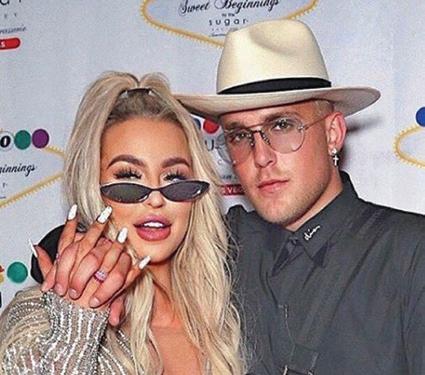
After a mere two months of dating, YouTubers Jake Paul and Tana Mongeau tied the knot in late July. At the Graffiti Mansion in Las Vegas, which was spray-painted with their Instagram handles and #JanaForever, a convicted pimp officiated the ceremony in front of family, friends, strangers, hundreds of cameras, an MTV crew from Tana’s series Tana Turns 21 and exactly 64,091 online viewers. The very viewers who, paying $50 each to watch the spectacle on a live stream, generated about $3.2 million for #Jana.
Over the course of the couple’s relationship, viewers had been questioning how real, exactly, it all was. Did they love each other? Were there any genuine feelings at all between Paul and Mongeau? Was the marriage even legally official (no), or were they faking it all for the “clout?” After all, even their officiant had begun by stating, “We are gathered here today to join these social media juggernauts in holy cloutrimony.”
For these stars, however, such questions of authenticity may seem a little antiquated. In comparison to the earlier generation of YouTubers who typically made light-hearted content with low production value and built their platforms off of their image of relatability, garnering “clout” as a by-product, what Paul and Mongeau are capitalizing on is the very virtue of their money and fame not being relatable.
peculiarly American narcissism. By taking the lyric “I” to its extremes and turning the focus on the intense emotional states and personal experiences of the speaker, poets such as Robert Lowell, Sylvia Plath, Anne Sexton and W. D. Snodgrass were able to strip the polite veneer off topics previously considered taboo, like sex and mental illness. Furthermore, these writers suggested that even the most shockingly personal of personal details was not unworthy material for something regarded as lofty as poetry.

And indeed, they’re not the only ones who’ve traded authenticity for stardom potential. “Reality House,” for example, created by vloggers Kian and JC, puts YouTubers together in a Big Brother-style competition to win a prize of $25,000. By uniting the directness of YouTube’s creator-to-audience model with the bawdy excess and sensationalism of reality TV, these creators seem to have hit on a new direction for YouTube.
The so-called “Confessional” school of poetry that emerged in the 1950s might have been an early precursor of this
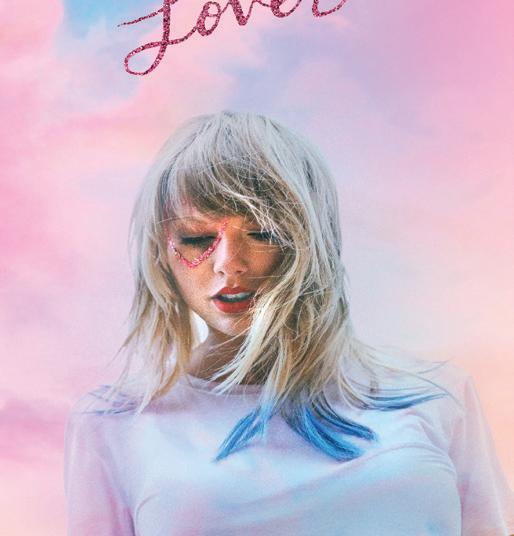
Welcome, one and all, to another entry in Taylor Swift’s musical journal. Lover,the superstar’s seventh studio album, is a grand departure from the dark, gritty style of 2017’s reputation. Instead, the 61-minute run time delivers bold, fun tracks covering everything from Swift’s lover, Joe Alwyn, to Swift’s lover, Joe Alwyn, but with more nuance. Folded in between these songs are serious contemplations about Swift’s struggles with past relationships, mental health and politics. Known for her heavy romantic themes and teenage angst a decade removed from her teen years, Swift deviates from her M.O. and crafts a more mature album that grants the listener a deeper look into her life.
Lover is Taylor Swift’s first album while signed to Republic Records, a subsidiary of Universal Music Group, after her first label was sold to a larger umbrella company. Under Republic Records, Swift has full ownership of her music and has recently expressed interest in re-recording her older albums so that she personally owns the masters. This release demon-
While several later poets turned against this style for what they perceived to be self-indulgence, the assertion that everyone has something compelling to say about themselves and, moreover, the right to an audience for it, has come to serve as the basis of today’s social media platforms. Companies have since taken advantage of this ethos, using these so-called influencers to promote their brands in the hopes that the trust built between creator and audience will make people more amenable to buying their products. In turn, influencers use brand deals to make more money than they would with simple advertising revenue. Though most of these social media content creators are wary of destroying the fragile trust they have built with their audience by being too blatant about desire for fame and money, the very draw of Paul and Mongeau is that they revel in it unapologetically. In one episode of Tana Turns 21, Mongeau, having slept in past 2:00 p.m., shows up over an hour late to a meet-and-greet with fans who had been standing waiting for her.
In an interview, upon being asked about Confessional




strates the beginning of a new era of Taylor Swift, one with more freedom than before.
The album kicks off with “I Forgot That You Existed,” which can really only be described as a “summer bop” reminiscent of DJ Khaled’s 2017 mega-hit “I’m The One,” at least musically. Swift sings about letting go of her past controversies over a light, bouncy instrumental and oddly namedrops Drake in the sixth line (“In my feelings more than Drake, so yeah”), which seems slightly out of place. This leads into the almost-reputation style
“Cruel Summer,” which discusses Taylor’s mental health during her spat with Kanye and criticism over her boyfriend in 2016. Whereas songs on her last album were largely confrontational and accusative (“Look what you made me do” or “They’re burning all the witches even if you aren’t one”), “Cruel Summer” is introspective and focuses on Swift’s stress, not others’ actions.
Swift does a good job maintaining momentum throughout the project, mixing in the slower

poetry and the performative aspect of reading these highly personal poems, Snodgrass stated, “There’s a difference between exposing yourself and displaying yourself. If you can’t do it without making a display out of it, I don’t think you ought to do it … if you let your ego get in the way of it, if you hunger for fame—the whole fame game is terribly destructive.”
For now, however, Mongeau doesn’t seem to share the sentiment. When confronted by her manager about how late she is for the event, she tells him she doesn’t want to have that conversation. Then, later, walking to the event, she intones into her iPhone, “I’m a reality star.”
Ramya Yandava is a junior in the College of Arts and Sciences. She can be reached at ryandava@cornellsun.com. Ramya’s Rambles runs alternate Thursdays this year.

songs with upbeat, bubbly ones. “Soon You’ll Get Better (feat. Dixie Chicks)” is the emotional peak of the album, a heart-wrenching, poignant performance about her mother’s battle with cancer. At an album release event, the singer shared that “it was also a family decision whether to even put it on the album,” due to its extremely personal subject matter. Two songs later, Taylor challenges online haters and homophobia in the showy “You Need To Calm Down,” backed by heavy synth and drums.
Lover features a couple of oddball tracks. The mid-2000’s-Disney-Channel-theme-song-esque “Paper Rings” is a playful melody about Swift’s commitment to Alwyn. If you don’t listen closely enough on “False God,” you might mistake it for an Ariana Grande song. The steel drums on “It’s Nice to Have a Friend” are a unique instrumental choice, and I can’t decide if they are distracting or not. These, however, are not detrimental to the overall feel of the album and, if nothing else, showcase Taylor’s extreme versatil-
ity and comfort in multiple music styles.
A prevalent theme across the album, and throughout Swift’s discography, is the use of color as a metaphor or emotion. The color blue shows up frequently on Lover, mainly representing sadness, but on “Paper Rings,” she uses it as a pun of sorts: “In the winter, in the icy outdoor pool / When you jumped in first, I went in too / I’m with you even if it makes me blue.” On “Daylight,” the closing track, Swift describes love as first “black and white” and “burning red” but now feels that it’s “golden.” Through these lyrics, the spurned lover realizes that she has found a good partner and is now in a happy relationship.
Each album in Taylor Swift’s career has a certain aesthetic. reputation,for example, was dark and the singer showcased this through grungy merch adorned with snakes and dull colors. Lover represents a complete 180 from this era. Swift’s recent performances have
are hyper-vibrant and glittery and the merch, designed by Stella McCartney, is smoothed, colorful and warm. I was worried that the album would be too lovey-dovey and sickly sweet, but Taylor balances everything nearly perfectly.
Lover marks yet another chapter in Taylor Swift’s career and it feels like she accomplished exactly what she wanted. Swift distances herself from the then-uncharacteristic darkness of reputation but maintains her signature style of personal lyrics and intricate songs with catchy beats. Go give Lover a deep listen, even (especially) if you’ve already played it through twenty times.
Jeremy Markus is a sophomore in the College of Agriculture and Life Sciences. He currently serves as an assistant arts editor on The Sun’s editorial board. He can be reached at jmarkus@cornellsun.com.

By KATIE ZHANG Sun Dining Editor
Spending the summer in Ithaca to enjoy the only two months of warm weather here is number 31 on the list of 161 Things Every Cornellian Should Do. I can proudly say that I’ve accomplished the feat this summer, and did it in a small two bedroom apartment with no AC to boot. The warm weather did little to ease the stuffy heat of the place, which directly faces the sun and held no relief from the most humid and hellish of days, but I like to think I learned a lot more in the tiny kitchen of that apartment because of the temperature. Simple lessons that I should’ve learned a long time ago stuck with me due to the heat, and here are just a few of them:
1. Sauces and seasonings are everything.
When my roommate and I first started getting everything together for our new kitchen, I was surprised to see how many sauces and spices we had accumulated in just a few trips to the store. And we used every single one too! Flavor is so much
more than just a little salt and pepper. It really is the seasoning that brings out the best in a dish, and when you’re a college kid working with the most basic ingredients, flavor is everything.
2. Baking powder is NOT the same thing as baking soda.
I will fully admit I’m a bit of a baking noob. The most advanced thing I regularly make at home is boxed cornbread, which my parents love, so attempting to make a peach cobbler from scratch here in my apartment in Ithaca turned out to be a big lesson in reading all parts of the instructions very carefully, and not trying to outsmart the recipe by substituting one thing for another without knowing what either of them do. This is a bit of an embarrassing lesson at this age, but better late than never, right?
3. If you cook in your apartment without A.C., it turns into a sauna.
With the stove on, oven preheating, and rice cooking on the counter nearby, an already steamy apartment turns into a full-on pool of sweat and tears with no relief
in sight. After awhile, I ended up taking all the fans we had in the apartment and plugging them in by the entrance of the kitchen, having them all blow warm air at full blast while I was cooking. Better than nothing, I guess, but I eventually resigned to the fact that I would always have to enjoy my homemade meals moist and sweaty from the heat.
4. Wegmans is heaven on Earth, especially in a place like Ithaca.
The lack of places to go in Ithaca can be disappointing (looking at you, Ithaca Mall), but Wegmans will never disappoint. My weekly trip to Wegmans became a highlight of the summer because the store has everything you’ll ever need. My roommate and I stocked up on so many Wegmans-brand items we might as well have asked for a sponsorship. For the quality, price and convenience of the place, there really is no other grocery store that I’d rather shop at. Plus, Wegmans has recently stopped offering plastic bags and charges five cents for paper bags now. We love an Earth-loving superstore.


5. A head of cabbage lasts a long time.
Easily transformable into dishes for four or more meals, this vegetable became a staple in the apartment. I never got tired of stirfry cabbage, which was so easy to make, and it only cost about $1.50 for a head. As the cabbage merchant from Avatar: The Last Airbender so eloquently puts it: my cabbages!
6. Eating out is a luxury, so treat yourself.
I had always felt the restaurants in Collegetown were mediocre at best, but after weeks of cooking for myself did I realize how much of a luxury eating out even in Collegetown is. I don’t have to wash the cups and plates afterwards, and restaurants serve dishes I could never make on my own. I’ve come to appreciate the different establishments around Collegetown that make trying a variety of food easy, and I’ll never take Mehak’s lunch buffet for granted ever again.
7. Mom’s recipes are harder to replicate than I thought, and I miss her home-cooking.
I appreciate you, mom. My tomato and eggs just doesn’t taste the same and I’m craving home-
cooked food now more than ever. How do you always get the rice right? How come your chicken is never over-salted? I still have much to learn from you.
As I was compiling this list, I realized that while these are all basic lessons from a college student learning to cook on her own for the first time, they also signal the growth I went through in the two short months I was here during the summer. I went from making soggy rice and salty stir-frys to whipping up homemade turkey burgers, home fries and General Tso’s chicken without having to even glance at a recipe. My mom was impressed, and so were my taste buds! Cooking went from a tedious but necessary chore to a fun pastime that opened up multiple avenues of creativity. I don’t think I’ll be cooking nearly as much during the school year because I’m living on West Campus, but I’m already planning to take over some of my friends’ kitchens in Collegetown and corralling them to come with me to check off another item on the 161 Things Every Cornellian Should Do. #61: Visiting Wegmans between 3:00 and 5:00 a.m.
Katie Zhang is a junior in the College of Agriculture and Life Sciences. She can be reached at kez22@cornell.edu.

Fill in the empty cells, one number in each, so that each column, row, and region contains the numbers 1-9 exactly once. Each number in the solution therefore occurs only once in each of the three “directions,” hence the “single numbers” implied by the puzzle’s name. (Rules from wikipedia.org/wiki/ Sudoku) Sundoku Puzzle #930

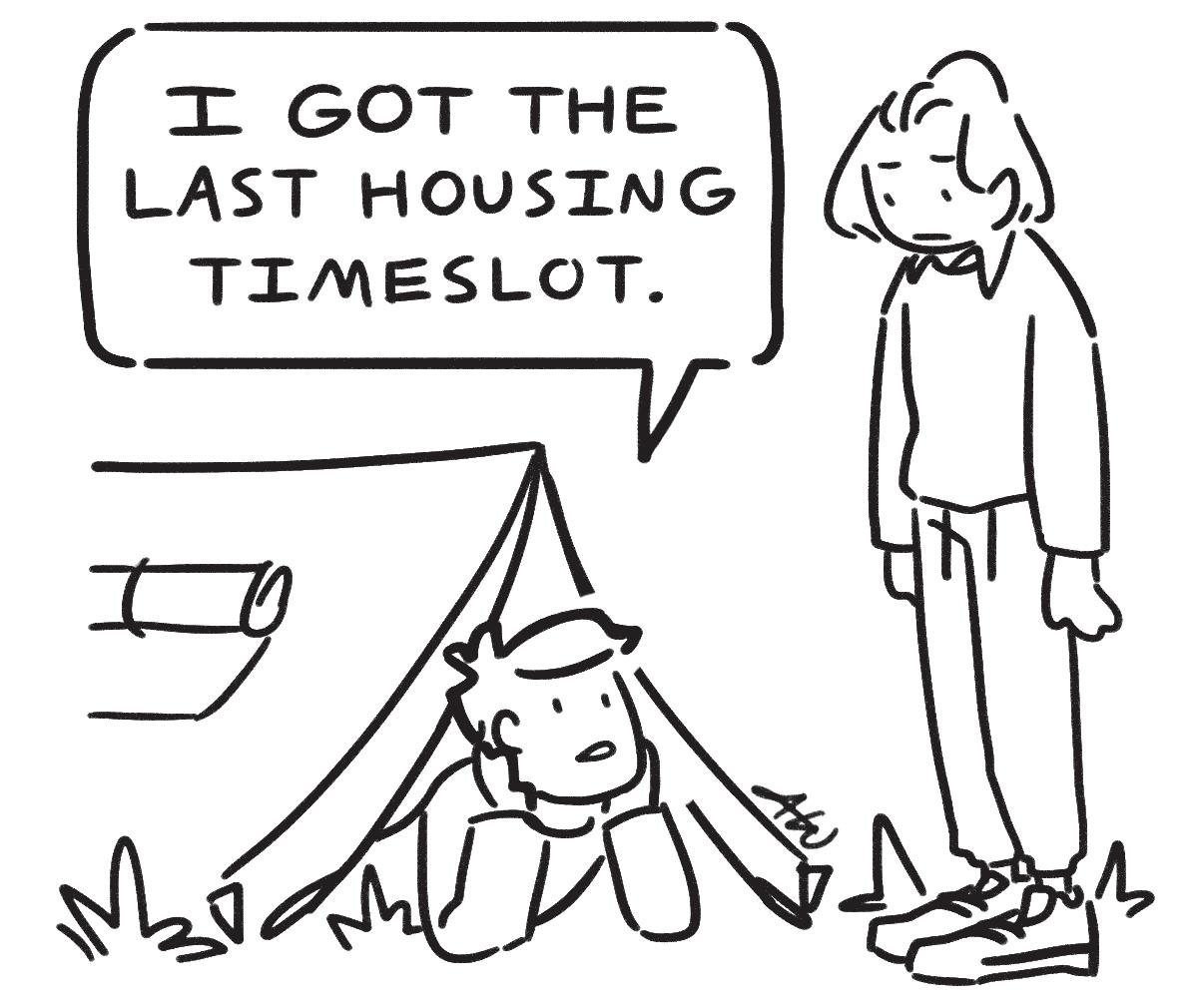
Johnny Woodruff by Travis Dandro









A planet is a terrible thing to waste. Consume less. Recycle more.
By RAPHY GENDLER Sun Sports Editor
Coming off a trip to the Frozen Four, Cornell women’s hockey will get its 2019-20 campaign underway in less than two months.
In addition to the standard slate of ECAC games, the Red will take on Robert Morris, Syracuse, Ohio State and Mercyhurst in nonconference play.
After spending three of its first four weekends at home, the Red plays five straight road games before its winter hiatus.
The 29-game schedule includes two rematches of last season’s ECAC championship game with league rival Clarkson, two meetings with a Big Ten team in Ohio and Senior Night in late February against Rensselaer.
Here’s a look at Cornell’s schedule:
*Home games in bold; road games in italics
Oct. 18: Red/White Game
Oct. 25-26: Robert Morris
Nov. 1-2: Quinnipiac, Princeton
Nov. 8-9: at St. Lawrence, at Clarkson
Nov. 15-16: Yale, Brown
Nov. 26: at Syracuse
Nov. 29-30: at Ohio State
Dec. 6-7: at Princeton, at Quinnipiac
Jan. 4-5: Mercyhurst
Jan. 10-11: at Union, at Rensselaer
Jan. 17-18: Dartmouth, Harvard
Jan. 24-25: Colgate, at Colgate
Jan. 31-Feb. 1: Clarkson, St. Lawrence
Feb. 7-8: at Harvard, at Dartmouth
Feb. 14-15: at Brown, at Yale
Feb. 21-22: Rensselaer, Union
Raphy Gendler can be reached at rgendler@cornellsun.com.

WOMEN’S HOCKEY
Counting down | The Red is less than two months from the start of its 2019-20 season, which will begin with a pair of home games against Robert Morris on October 25 and 26.

By RAPHY GENDLER Sun Sports Editor
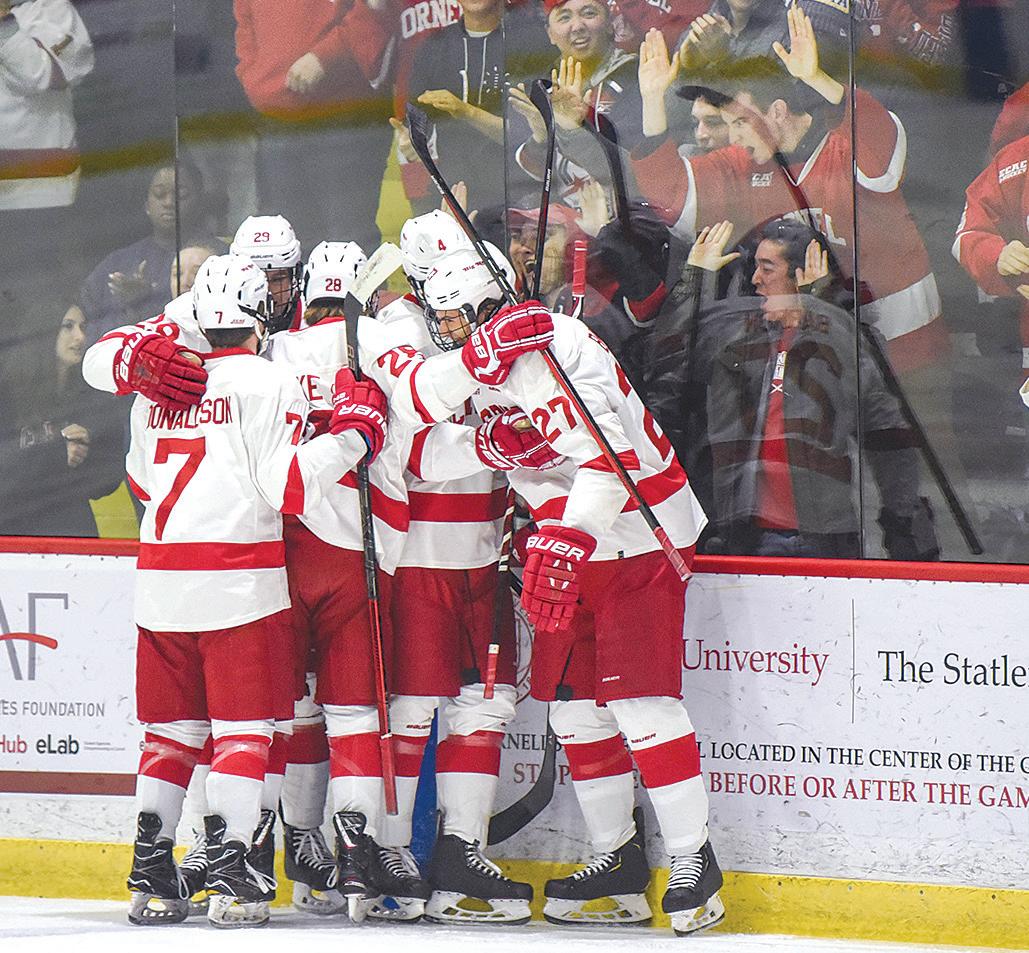
After coming within one game of the Frozen Four and graduating a number of key players, especially on the blue line, Cornell men’s hockey announced its nine-member freshman class — which includes two NHL Draft picks — over the summer.
The class is headlined by forwards Matt Stienburg and Jack Malone, who were picked in the third and sixth rounds, respectively, of June’s draft.
Last year’s roster had five seniors, including three everyday defensemen. The nine-member class of 2023 includes five forwards and four defensemen. Cornell’s 2019-20 roster features nine freshmen, seven sophomores, 10 juniors and three seniors.
With more than two months to figure out line combinations and defensive pairings, here’s a quick look at the Red’s newcomers, with biographical information and quotes from head coach Mike Schafer ’86 via Cornell Athletics’ website:
Ben Berard
Forward — 6 feet, 190 pounds — Duncan, British Columbia — Powell River Kings (BCHL)
Schafer: “Ben is a pure goal-scorer. He’s someone who can definitely get pucks in the back of the net.”
Sebastian Dirven Defenseman — 6-foot-3, 195 pounds — Bainsville, Ontario — Central Illinois Flying Aces (USHL)
Schafer: “Sebastian has great feet and great length for a defenseman. He’s a very solid defensive defenseman who’s also a puck-mover. His skating skills can set him apart for someone who also has really good size.”
Sam Malinski Defenseman — 5-foot-11, 183 pounds — Lakeville, Minn. — Bismarck Bobcats (NAHL)
Schafer: “Sam is a great puck-mover. He was the top-scoring defenseman on his team last year. He does a great job of finding seams and getting pucks down to the net on the power play.”
Jack Malone Forward — 6-foot-1, 195 pounds — Madison, N.J. — Youngstown Phantoms (USHL)
Schafer: “Jack was one of the top scoring forwards in the USHL last year. His game has really developed. He’s a strong on-top-of-the-puck forward who can create offense, plus he has really good size and can play physical.”
Travis Mitchell Defenseman — 6-foot-3, 205 pounds — South Lyon, Mich. — Omaha Lancers (USHL)
Schafer: “Travis is another strong twoway defenseman. He can defend, but he can also get up into the play. He can really shoot the puck and he created some offense for his team last year in the USHL.”
Peter Muzyka Defenseman — 6-foot-3, 198 pounds — Toronto, Ontario — Penticton Vees (BCHL)
Schafer: “Peter does a great job defending. He has great feet, which allows him to defend against anyone he plays against to go with his size.”
Matt Stienburg Forward — 6-foot-2, 188 pounds — Halifax, Nova Scotia — St. Andrew’s College
Schafer: “He’s a really strong two-way forward. He adds that element of not just offense, but he can also impact the game with his physical play.”
Ben Tupker Forward — 6-foot-3, 195 pounds — Collingwood, Ontario — Carleton Place Canadians (CCHL)
Zach Tupker Forward — 6-foot-1, 190 pounds — Collingwood, Ontario — Carleton Place Canadians (CCHL)
Schafer: “This is the fourth set of twins that I’ve had the opportunity to coach at Cornell. The Tupker brothers are tireless workers and great two-way players. They kill penalties and have played on the power play. They’re very, very tenacious as a set of forwards.”
Raphy Gendler can be reached at rgendler@cornellsun.com.

Freshmen include four forwards, one defenseman, one two-way player
By RAPHY GENDLER Sun Sports Editor
Head coach Doug Derraugh ’91 and Cornell women’s hockey will welcome six new players to the 2019 roster, a year removed from a season that culminated in a Frozen Four appearance.
The 2019 team features six seniors and eight juniors. Only four seniors graduated last spring, leaving the Frozen Four team mostly intact.
The Red’s Class of 2023 features two players from Minnesota, two from Ontario, one from Michigan and one from California. The six newbies include four forwards, a defenseman and a two-way player.
The freshmen, alphabetically, are forward Sydney Breza, forward Izzy Daniel, defenseman Kaitlyn Isaac, defenseman/forward Paige Kenyon, forward Elana Zingas and forward Ellie Zweber.
Cornell’s season begins with a home game against Robert Morris on Oct. 25.
Raphy Gendler can be reached at rgendler@cornellsun.com.