The Corne¬ Daily Sun


By GIRISHA ARORA and SARAH SKINNER Sun Senior Editor and Sun Managing Editor
Protestors and attorneys continued the case of two young black Ithaca residents facing criminal charges for an April altercation with police on Monday, as a six-minute procedural hearing became a local platform for the nation’s ongoing debate about police brutality.
On April 6, officers on the Ithaca Commons arrested Rose de Groat, 22, and Cadji Ferguson, 26, after an altercation with a middle-aged white man, in which police say Ferguson struck the man. During the Ithaca Police Department intervention, police say that de Groat hit two officers in the head who approached her from behind while they tried to detain Ferguson.
In body camera footage of the incident released by Mayor Svante Myrick ’09, Ferguson, who was tased by the officers, told the police while on the ground that the man had “tried to assault his friend.”
De Groat was initially charged with two counts of assault in the second degree. Her charges were reduced to one count of resisting arrest and two counts of obstructing governmental administration in the second degree, The Sun previously reported.
In his opening statement in court on Monday, District Attorney

By EMILY YANG Sun Staff Writer
It’s a new dawn for Cornell’s nocturnal population: The Cocktail Lounge has been reopened. After being shut down in January for renovations, the Uris Library basement is now ready for the students again. The freshly finished lounge will feature a self-serve Starbucks kiosk, a new entrance and more accessibility facilities.
Last upgraded in 2002, the 24-hour study space closed in order to “improve the interior furniture and finishes” and meet current Americans with Disabilities Act requirements, according to Jon Ladley, the facilities planning manager.
The south entrance facing Libe Slope was opened last week. The interior has been open since
June, but exterior landscaping work was delayed due to rain. Previously an emergency exit, the new entrance will have a card access reader along with an automatic door operator, an in-ground snowmelt system and a regraded accessible pathway to Ho Plaza.
Changes to the lounge include upgraded lighting, carpet, seating and group study room technology. The layout features expanded views of Libe Slope, and furniture was chosen after testing and receiving student feedback. Vending machines have also been added, along with more electrical outlets. The restrooms have also been remodeled to ADA standards along with the addition of an all-gender restroom.
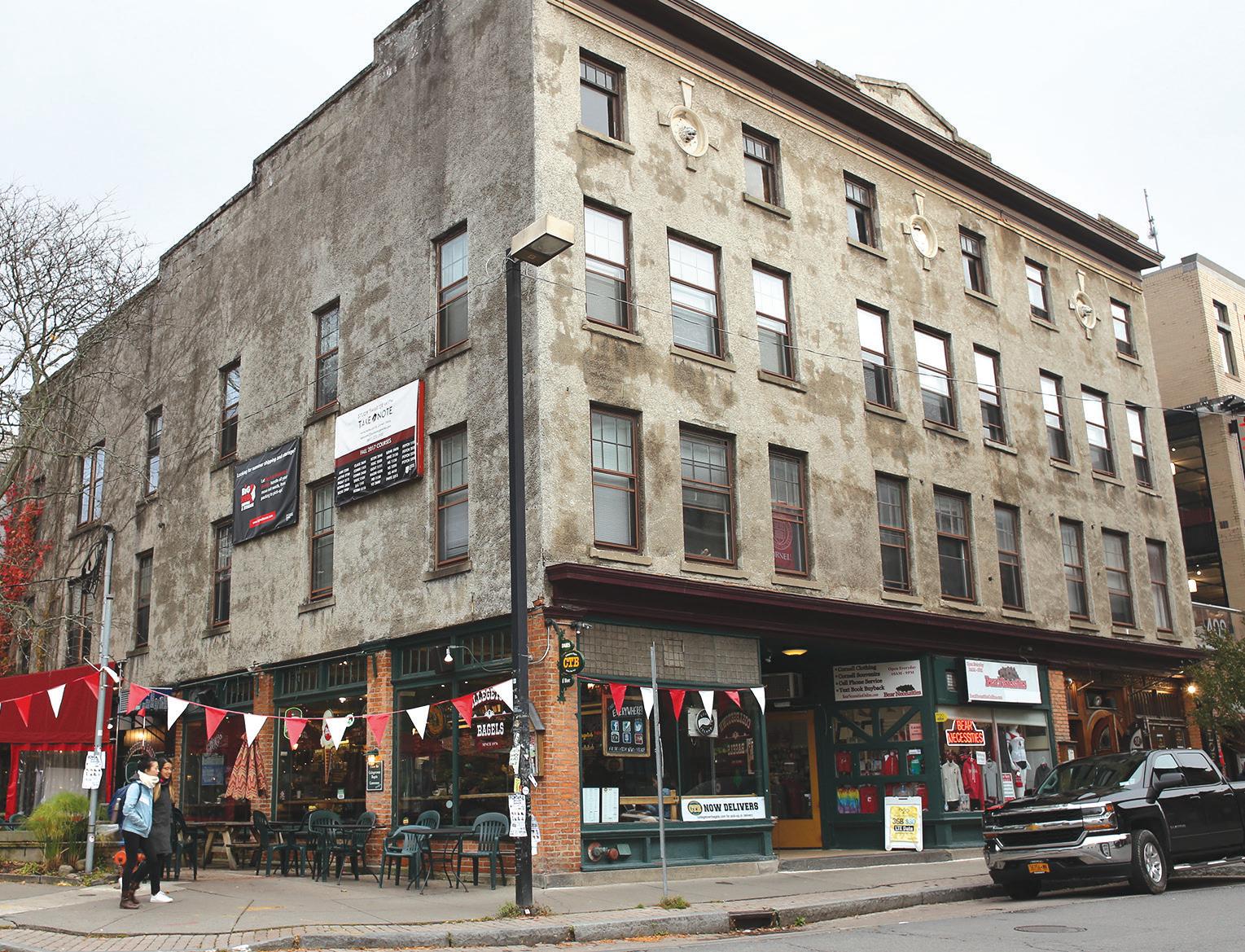
After wrapping up a two-day move-in, the Cornell University Police Department issued a Crime Alert for an attempted robbery on the fringe of Cornell’s south campus, just yards from Collegetown Bagels and across from the Schwartz Performing Arts Center.
At around 2:21 a.m. on Sunday, a suspect ran towards
the victim while displaying a “‘large machete’ type knife” and demanding property. The Ithaca Police Department responded to the incident around the 100 block of Oak Avenue, and reported that the victim was not physically injured.
The incident took place as many students and parents are on campus during Cornell’s move-in weekend and the beginning of
The Sun will not publish on Labor Day. Here are the consequent ADVERTISING DEADLINES.
The Corne¬ Daily Sun Business Offce will close at 12 noon Friday, Aug. 30 and reopen at 9 a.m. on Tuesday, Sept. 3.
DISPLAY & CLASSIFIED ADS: for the Tuesday, Sept. 3 issue of The Sun are due Thursday, Aug. 29 by 3 p.m.
p.m., Noyes Community Center
Volunteer Opportunities with Cornell Botanic Gardens
4 - 6 p.m., Cornell Botanic Gardens
Work Party at Dilmun Hill Student Farm
4 - 7 p.m., Dilmun Hill Student Farm
Veterinary Senior Seminars
4:30 - 5:45 p.m., Lecture Hall 2, First Floor Atrium, College of Veterinary Medicine
“Like a Sales Promotion Girl”: Cigarettes, Communities and Social Media Marketing in Indonesia 12 - 1:30 p.m., Kahin Center
Energy Engineering Seminar: David Hammer 12:15 p.m., 165 Olin Hall
“Infrared Spectroscopy for Soil Carbon Accounting And Soil Quality Assessment” 12:20 p.m., 135 Emerson Hall
Neurobiology and Behavior Seminar Speaker: Kevin Daly 12:30 - 1:30 p.m., A106 Corson Mudd Hall
Ecology & Evolutionary Biology Weekly Seminar Series: Collin Edwards 3 - 4 p.m., A106 Corson Mudd Hall
Ram Seshadri: Accelerated Screening of Magnetocalorics 4 p.m., B11 Kimball Hall
Careers Beyond Academia, BEST Humanities Round Table Discussion 4:30 - 5:30 p.m., A.D. White House
C.U. Jazz Rhythm Section Auditions 4:40 - 6:40 p.m., B21 Lincoln Hall
A Very Waffling Welcome to Cornell 5 p.m., Risley Dining Room, Risley Hall
Stage Crew Meeting 7:30 p.m., Flex Theatre, Schwartz Center for Performing Arts
By SEAN O’CONNELL Sun Staff Writer
Bad or good, everyone has their first-year housing story: meeting their future best friend, dealing with an insomniac roommate or, for those in a single, the quiet.
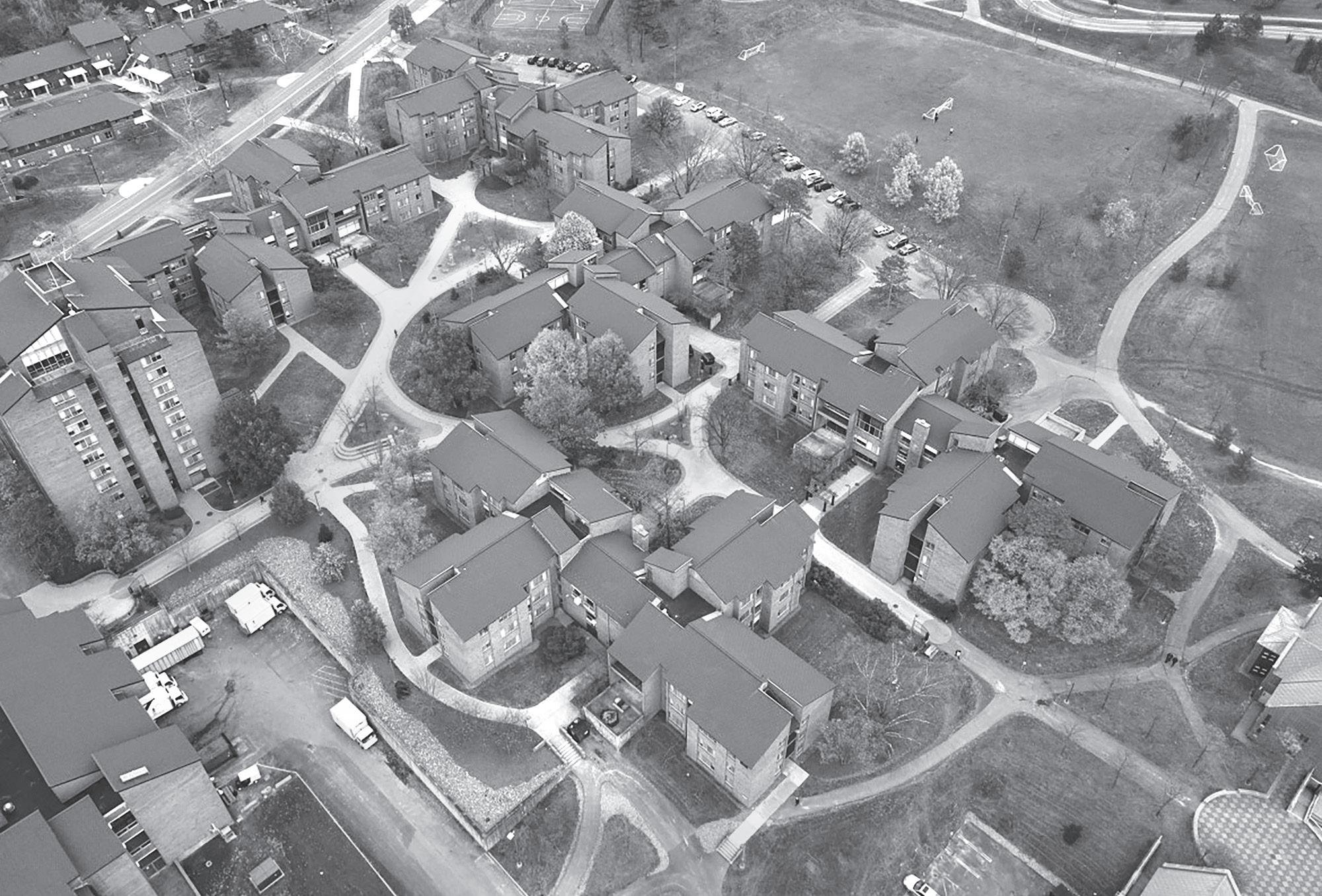
As the class of 2023 settles into their new homes, The Sun looked back at the history and ongoing process of North Campus housing.
The first dorm on what became today’s North Campus was Risley Residential College, built in 1913 and referred to as the first of the “women’s dorms.” Further developments in the area— Balch Hall in 1929, Clara Dickson Hall in 1946 and Donlon Hall in 1961 –– were constructed as all-female dorms.
The area encompassing these dorms was officially dubbed “North Campus” in 1970 during the construction of the co-ed Low Rise and High Rise complexes, as well as the North Campus Union, now known as the Robert Purcell Community Center.
RPCC’s dining hall will be replaced in the upcoming $250 million North Campus renovation — so, freshmen, get your Mongolian barbeque and RPCC brunch while you can.
Later expansions to North Campus included the establishment of a number of “program houses” to accompany Risley, which was made into an creative-arts focused dormitory in 1970.
Risley has a number of long-standing
By
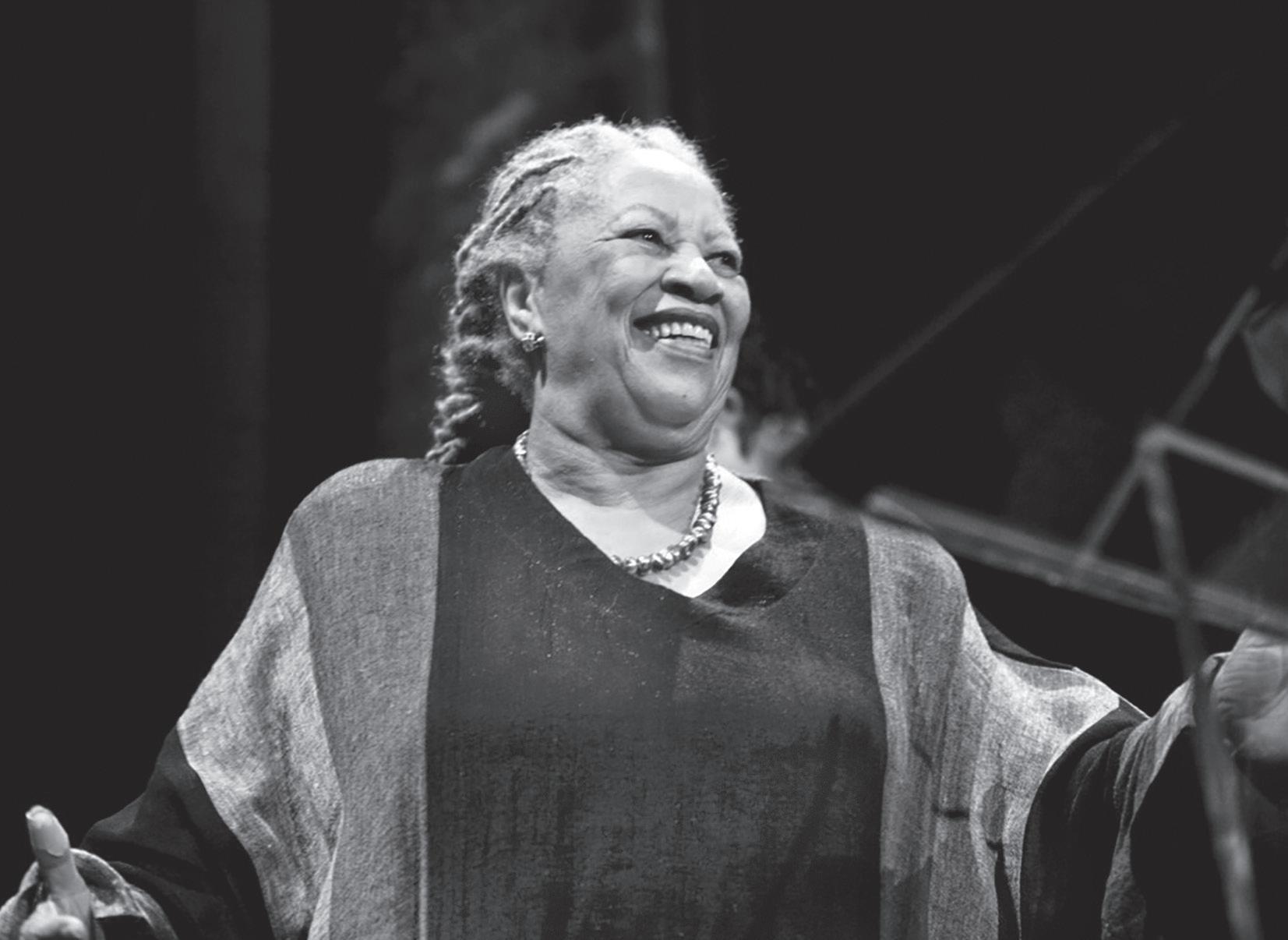
After the announcement of Toni Morrison’s death on Aug, 6, people across the country and at Cornell reflected on what the trailblazing author, who collected top accolades from across the literary world, embodied in her 88 years.
Here, The Sun collected responses to Morrison’s influence, including a statement by former President Barack Obama, memories from professors who worked with her and thoughts of current students who studied Morrison’s work in Goldwin Smith Hall — where she, too, studied over sixty years ago.
Morrison’s Travels to Ithaca Morrison would return to the hill to discuss the changing world and its impact on literature, stating during a lecture in Kennedy Hall in 2000 that “in this new, almost completely, digitalized and globalized world … where language is becoming increasingly bankrupt in the rush to one-sizefits-all, literature it seems to me is needed now more than it has ever been.”
Sitting in Statler Auditorium in 2013, Morrison, who joined Princeton University’s faculty in 1989, answered audience questions alongside fellow Princeton Prof. Claudia Brodsky, who told The Sun that the two had become close friends and “each other’s favorite analytical interlocutors instantly and permanently upon
meeting.”
Morrison then shared why she chose Cornell to pursue her master’s degree in American literature. The Sun then reported, “… she stated that there were three main reasons: the faculty — she ‘remember[s] at least three of them’ — the beauty of the seasons in Ithaca and Cornell’s ‘pink’ and ‘liberal’ reputation, largely spurred by its notoriously non-denominational Sage Chapel. She reflected fondly, paused for a moment and then asked, ‘The agricultural school … is that still here?’”
Brodsky, who said she was still processing the news of Morrison’s passing, said the two understood each other in a “lucid” way, “because for us the same things mattered — the power of language and everyday human goodness above all.”
Pulitzer Prize nominee and feminist author Sandra Gilbert ’57 said she was “so sad” about the literary giant’s death, whom she called a “treasured colleague” during their shared time at Princeton.
After Gilbert’s husband died from a medical accident, Morrison called her from New Jersey.
sation in the preface of her book Wrongful Death
Cornellians Remember Her Impact
“We’ve lost perhaps the greatest writer,” Prof. Nafissa Danielle Thompson-Spires, English, wrote to The Sun.
Thompson-Spires urged readers to examine Playing in the Dark: Whiteness in the Literary Imagination, which she called a “masterful critical work,” and praised Morrison’s ability to teach readers about “the power of words to incite meaningful change instead of hateful rhetoric.”
Morrison’s work spoke to many on campus through events and courses at Cornell. Keeton House hosted a dialogue in February 2018, where students discussed Morrison’s The Origin of Others, and interrogated the idea of the “other” in modern society.
Upon hearing the news of Morrison’s death, “[I] felt like, sucker punched in the gut,” said Ruchi Chitgopekar ’21, who was enrolled in a first-year writing seminar examining Morrison’s work, English 1158: American Voices: Writing, Memory, and Survival in the Novels of Toni Morrison.
and she made sure everyone else saw it too.”
Colin DeMeritt ’19 recalled his time as a student in the same class, calling it “by far one of the most memorable courses” he took at Cornell. This fall, English 4509: Toni Morrison’s Novels will continue to teach Morrison’s legacy.
Other professors lauded her works’ mastery, but also noted Morrison’s warm persona.
“She was also kind,” Prof. Noliwe Rooks, director of American Studies, noted in a media statement shared by the University, in which Rooks recalled meeting Morrison at Princeton around 20 years ago. “Her office was a few doors down from mine.”
“My husband, Bill, and 6-year-old son, Jelani, both came to hear her closing remarks. Jelani had a question about something she said and afterward my husband told him he should ask Prof. Morrison what she meant,” Rooks recalled.
“What I remember is that she took the time and care to answer him and explain. That is what he remembers as well. Toni Morrison looked him in the eye and explained,” Rooks continued. “That is the feeling I have had over the decades when reading her works. I felt that she looked us all in the heart and explained it all.” See NORTH page 15
“I think I must have said something like ‘Oh what shall I do,’ because she replied, gravely, ‘He’ll tell you, Sandra,’” Gilbert wrote in an email to The Sun.
“And I believed he did: he told me to write a book, which I began with Toni’s words,” Gilbert continued, who recalled that conver-
While minority writers are often labeled by their identity, “Toni Morrison surpassed all that,” Chitgopekar said. “Yes, she wrote a black novel. And it was also the Great American Novel of our time. She saw the value,

By
Cornellians returning to their Collegetown homes over the past week were surprised to find the central artery of the neighborhood covered in debris and dust, scattered with holes stretching underground: College Avenue is closed.
The College Avenue Sewer Replacement Project, which broke ground on Aug. 7, is expected to be completed by Oct. 31. During this time, sections of College Ave will be closed in three separate phases, moving up the block towards Collegetown Bagels, to accommodate water main and sewer system improvements.
Large holes currently criss-cross the pavement on the road, through which workers access water main and sewer systems.
“There’s a giant hole outside our house. It’s kind of annoying,” Bryon Sleight ’21 told The Sun Tuesday while walking to campus.
Beyond posing an eyesore to nearby residents, periodically, water will come up from sewer grates in the construction zone, giving rise to a foul smell on the southern end of the street.
Throughout the day, the road is often completely closed to traffic, while during the evenings, when work is halted, it can be passable through a narrow stretch of road lined with turned up gravel.
“It’s made parking, which is already very difficult, even more difficult,” Victoria Fibig ’20, who has a car and lives on College Avenue, told The Sun. The air around College Avenue is also often filled with dust, something Fibig felt warranted “a bit of concern.”
The construction — which comes as thousands of students are returning to campus — has frustrated many of those struggling to move back in.
“The timing is really bad, especially with move-in being right now,” Alyssa Picariello ’20 told The Sun while waiting for her Uber outside GreenStar on Tuesday. “It’s been really hard for the cars to get close enough to the buildings,” Picariello added.
TCAT service through College Avenue has also been disrupted. Routes 10, 32, 51 and 72 will no longer serve Collegetown, while Route 30 and 70 bus stops South of Dryden Road have been relocated to the end of College Avenue at Mitchell Street. The popular stop outside Collegetown Crossing has been shuttered entirely.

ROBBERY Continued from page 1
orientation week. The University police will be increasing their patrols in the area.
“The Cornell University Police will provide any assistance we can to the Ithaca Police Department to help with this investigation. We will be increasing our patrols in the area and ask members of our community to remain vigilant and aware of their surroundings, especially when out late at night,” Chief of Police David Honan said.
“The Cornell community can also download our safety app, Rave
Guardian to get alerts, communicate directly with CUPD by phone or text, and use the safety timer for a virtual blue light walking escort,” Honan said.
The suspect was last seen running on Oak Avenue on foot. Officers still have not located the suspect. Both the CUPD and IPD released information following the incident, and the IPD is conducting an investigation, urging anyone with information to contact their department.
Maryam Zafar can be reached at mzafar@cornellsun.com.
LOUNGE Continued from page 1
“We hope the space will be welcoming for all members of the Cornell community who want a comfortable space to study and collaborate in 24/7,” Ladley said in an email to The Sun. He also expects
“Honestly, it felt like stepping into a study space from a college brochure.”
Sarah Stefanik ’20
an increased visitation to the Cocktail Lounge during the upcoming fall semester.
While the seven-month project kept the Cocktail Lounge
shut down, other spaces in Uris Library, the engineering library in Carpenter Hall and the Mann Library lobby remained available for 24/7 access. Even so, students say they are excited for the Lounge’s return.
“I think it’s great they added a whole table across the window instead of the random short round tables and more couch areas to talk,” said Sarah Stefanik ’20. “I’ll definitely study there again.”
“Honestly, it felt like stepping into a study space from a college brochure,” said Erin Fleck ’22. “My only complaint with it is that I don't think I'll be able to find a seat, since I expect it to be much more crowded than before.”
Emily Yang can be reached at eyang@cornellsun.com.
Freshly fnished lounge features self-serve Starbucks kiosk, more accessibility features w The Corne¬ Daily Sun Business Offce will close at 12 noon Friday, Aug. 30 and reopen at 9 a.m. on Tuesday, Sept. 3.
The Sun will not publish on Labor Day. Here are the consequent ADVERTISING DEADLINES.
DISPLAY & CLASSIFIED ADS: for the Tuesday, Sept. 3 issue of The Sun are due Thursday, Aug. 29 by 3 p.m.

entire theory of this case that has been publicized to the public … is false.”
Matthew Van Houten said that, contrary to the current narrative, “no one was groped, no one was touched in any manner, the
He added that, despite this, there had been written correspondence with de Groat’s counsel with the aim of removing
any permanent record, and the court’s proceedings were taking place to ensure the terms for the deal were understood.
The plea deal being offered, highlighted in Van Houten’s opening statement, would drop

charges against de Groat leaving “no record, no permanent charges,” if she pled guilty to the non-criminal charges.
The deal was rejected by de Groat and her team, and in court attorney Ed Kopko, who is defending de Groat, called the offering an effort to “squeeze this young lady into pleading guilty for a charge she was not guilty for.”
The judge, John C. Rowley ’82, called the hearing a “waste of everyone’s time” since the date for trial had already been set for Nov. 4 and de Groat was not
“That’s a disappointing outcome ... we could all see with our own eyes that they overreacted.”
Mayor Svante Myrick ’09
interested in the deal. Rowley questioned why the matter was being discussed in court that day, and why there were so many members of the Ithaca community present.
“Decision making is not done by grandstanding,” Rowley said, concluding the court’s proceedings in under six minutes.
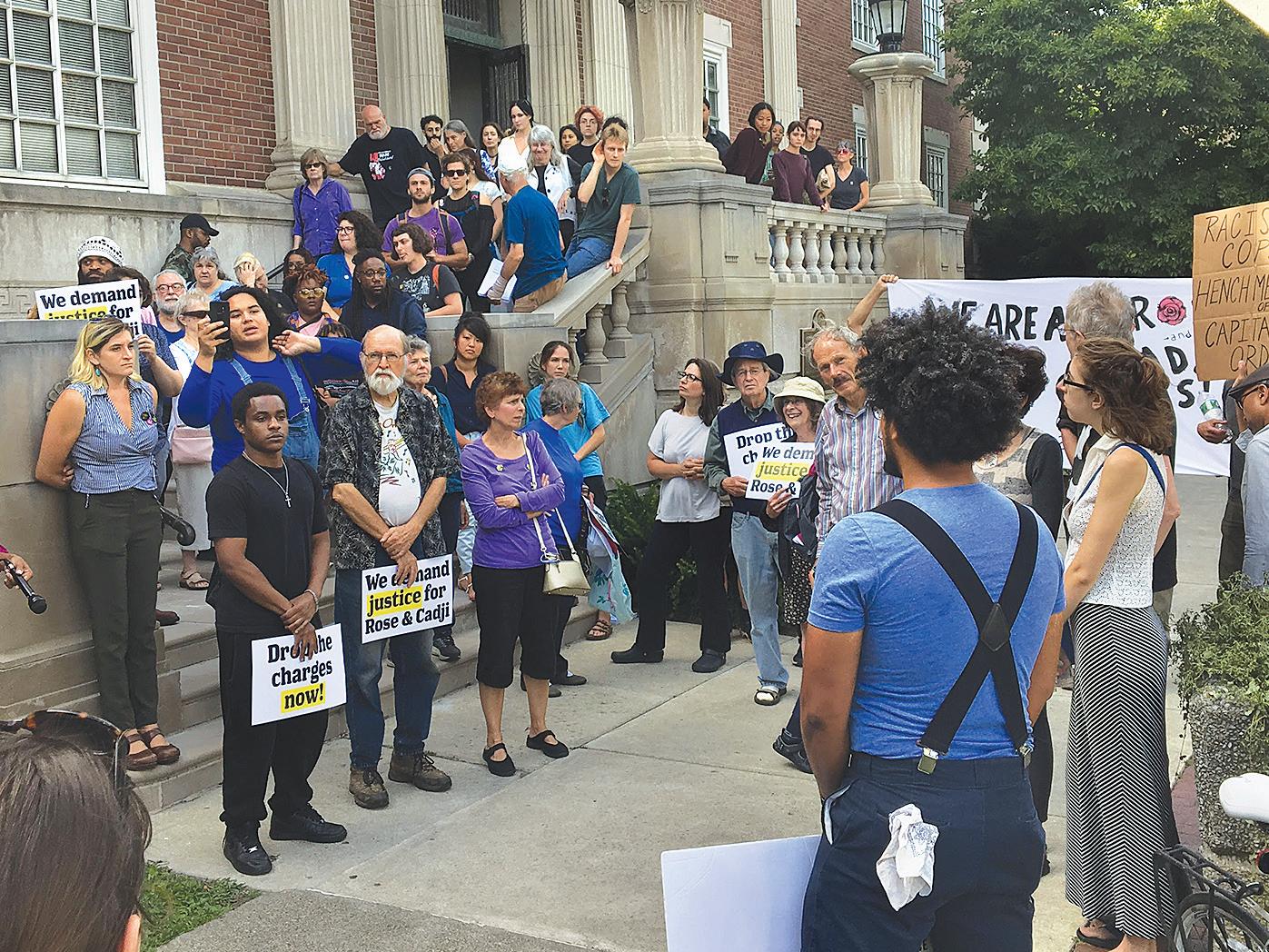
The approximately 100 attendees at the hearing collected outside the courthouse afterwards to protest for charges to be dropped, and for further reparations to be awarded to de Groat and Ferguson.
De Groat told The Sun after the hearing that she had not originally expected for her case to go to trial.
Ferguson said the same, and that he was surprised that the older white man accused of groping, who was never charged by police, has not yet been called into the proceedings.
In the body camera footage released after the incident, the officers asked the middle aged white man — who said he was in Ithaca for his son’s Cornell wrestling tryouts — whether he would like to pursue charges. On the phone, he consults someone, saying, “these black guys fucked with me. And then I slapped them around a little bit … they, they cold cocked me.”
“He hasn’t been subpoenaed, nothing. It’s kind of crazy to me,” Ferguson said. “And I feel like that would have made everything go a little bit faster.”
Ferguson said that he had hoped that Monday’s hearing might have changed something more for de Groat. He also didn’t expect Rowley’s judgement to be “that quick, or that rude.”
Ferguson is due back in Ithaca City Court at 9:30 a.m. this Friday.
Prof. Russell Rickford, history, held a sign that said “racist
cops - henchmen of the capitalist order,” and gave a speech urging the community to continue to escalate the issue and send a message to the police, members of council and the mayor —“the entire power structure.”
In an interview with The Sun after the crowd had dissipated, Rickford attributed the turnout to the community being able to recognize a clear case of police brutality, “with different treatment for the white guy from out of town on one hand, the instigator of the entire incident, and the two black people … victimized by this militarized police response.”
In an internal investigation conducted by the IPD, interim Chief Dennis Nayor said that the officers had acted in accordance to department policies and they would be facing no punishment.
“That’s a disappointing outcome, because I think we could all see with our own eyes that they overreacted,” Myrick said during this month’s Common Council meeting. “The City of Ithaca holds police officers to high standards, and we feel like the officers in this case didn’t rise to this standard, they didn’t meet the level we would expect.”
Barbara Regenspan, an emeritus professor at Colgate University, told The Sun before the hearing that the incident derived from “the militarization of the police force.”
“It’s a no-brainer,” Regenspan said. “The sickening thing about it is that everyone knows. It’s following the same patterns all over the country ... It’s not that
“It’s following the same patterns ... It’s not that different from the Eric Garner murder.”
Barbara Regenspan
different from the Eric Garner murder.”
Garner died from a police chokehold in Staten Island in 2014, and charges against the responsible NYPD officer were dropped in July 2019, but the officer in question was fired earlier this month.
Rickford also commented on how the city was not removed from national problems.
“Ithaca cultivates this image of a precious little enclave where nothing bad happens and the truth is … you can find all the pathologies that are present in larger society including racism,” he said.
Girisha Arora and Sarah Skinner can be reached at garora@cornellsun.com and sskinner@cornellsun.com.

Board
137th
ANU SUBRAMANIAM ’20 Editor in Chief
JOYBEER DATTA GUPTA ’21
Business Manager
PARIS GHAZI ’21
Associate Editor
NATALIE FUNG ’20
Web Editor
SABRINA XIE ’21
Design Editor
NOAH HARRELSON ’21
Blogs Editor
SHRIYA PERATI ’21
Science Editor
AMANDA H. CRONIN ’21 News Editor
JOHNATHAN STIMPSON ’21 News Editor
PETER BUONANNO ’21
Arts & Entertainment Editor
ANYI CHENG ’21
Assistant News Editor
SHIVANI SANGHANI ’20
Assistant News Editor
CHRISTINA BULKELEY ’21
Assistant Sports Editor
BEN PARKER ’22
Assistant Photography Editor
DANIEL MORAN ’21
Assistant Arts & Entertainment Editor
ALICIA WANG ’21
Graphics and Sketch Editor
DANA CHAN ’21
Production Editor
RYAN RICHARDSON ’21
Snapchat Editor
ALISHA GUPTA ’20 Senior Editor
SHRUTI JUNEJA ’20
Senior Editor
AMOL RAJESH ’20
Senior Editor
SARAH SKINNER ’21
Editor MEREDITH LIU ’20
RAPHY GENDLER ’21
Editor
BORIS TSANG ’21
Editor AMBER KRISCH ’21
KATIE ZHANG ’21
SOPHIE REYNOLDS ’20
AMINA KILPATRICK ’21
MARYAM ZAFAR ’21
ETHAN WU ’21
Editor HUNTER SEITZ ’20
NICOLE ZHU ’21
Editor
JIANG ’21 Assistant Photography Editor JEREMY MARKUS ’22
LEI WU ’21
WANG ’20
McDOWALL ’21
GIRISHA ARORA ’20
ANNE FLEER ’20
KATIE SIMS ’20
Ad Layout Krystal Yang ’21
Production Deskers Jamie Lai ’20 Sabrina Xie ’21
Design Desker Lei Lei Wu ’21 Xiangyi Zhao ’22 Photography Desker Ben Parker ’22 Sports Desker Raphy Gendler ’21 Arts Desker Pete Buonnano ’21 Working on Today’s Sun
News Deskers Shivani Sanghani ’20 Johnathan Stimpson ’21
Bittersweet. As we transition into another changing of the seasons on The Hill, we open our arms to an entire new class of bright minds with untapped potential. A whole new journey packed with transformative experiences and endless growth is beginning for thousands of new students and we at The Sun are ready to experience it alongside you.
We are thankful to our now graduated staff, editors and business associates who helped carry The Sun through their tenure and left it burning as bright as ever. But we are ready to keep burning bright.
And we think you, our readers, should consider being a part of it. Come and join The Sun.
Everyday under The Sun is different: a new administrative policy to cover, a new face to capture, a new set of hard questions that has to be asked.
We get to explore journalism at a revolutionary point in its history as news is just a swipe away and information happens in real-time.
You can see us tackling issues on and off campus as we explore local Ithaca, watch from the bleachers, follow national news and bring you information that was not previously on your radar.
And if being the person that gets to explore journalism or asks the hard questions or works to bring information to light is something you want to explore, our doors are open. The Sun could not continue shining unless new faces with fresh energy entered its office doors eager to question, argue, research and report. We think you can do that.
Our recruitment meetings this fall will be on Sept. 11 and Sept. 12 from 5-6 p.m. in Goldwin Smith Hall G76. We hope to see you there and we will be eagerly waiting to answer your questions and welcome the future of The Sun. For more information, feel free to check out our team. We welcome any students interested in journalism from writing to photography to design and beyond.
It’s never too late to help write history. The Sun has been doing it for the past 139 years, and I hope you join us for this next one.
— A.S.
Kent W. Bullis | Guest Room
As the fall semester begins, we at Cornell Health are excited to introduce a new approach to our delivery of mental health services. Our goal is to support undergraduate, graduate and professional students in thriving at Cornell and achieving their academic and life goals.
In order to provide increased access to mental health care for our students, we now offer free, 25-minute, in-person counseling appointments that often can be scheduled as soon as the same day. These appointments focus on meeting the student’s immediate needs, and making a plan for next steps, when needed.
Students no longer schedule a brief assessment phone appointment as the first step to receiving care and instead can speak with a counselor in person as the need arises. This approach builds on the success of our existing easy-access, goal-focused services, including our Let’s Talk drop-in consultation and Behavioral Health Consultation programs, and is similar to models being used with success at an increasing number of other peer institutions.
provider that meets their needs, they can call Cornell Health or come in to discuss options. After a first appointment with a provider, students can decide if they would like to see that provider again, or schedule an appointment with someone else. CAPS staff bios can be viewed on our website.
We have also expanded the support we offer to students through our primary care medical services. Students are encouraged to speak with their primary care provider about any mental health concerns they have so their PCP can connect them with appropriate care. Our PCPs work collaboratively with behavioral health consultants, who are mental health professionals working on our primary care teams to provide immediate consultation for a mental health
To provide increased access to mental health care, we now offer free, 25-minute, in-person counseling appointments that often can be scheduled as soon as the same day.
Students in need of follow-up care can work with their counselor to determine the frequency and duration of future visits. Both 25-minute and 50-minute follow-up appointments are available. Counselors may also encourage students to take advantage of other CAPS offerings, such as group counseling and skills-based workshops, or may refer students to other campus resources or off-campus providers when appropriate.
In addition to providing more immediate in-person mental health services, we have implemented several other changes designed to improve the experience of students seeking care.
Responding to student feedback, we now offer greater flexibility in selecting a counselor. When scheduling a 25-minute counseling appointment, students can select the first available appointment or look for an appointment with a provider of their choosing. If students do not find a time or
need that emerges in the medical setting. Additionally, both CAPS psychiatrists and primary care medical clinicians can now assess a student’s need for medication related to mental health concerns and provide access to prescriptions. Students can receive these services at Cornell Health whether or not they receive CAPS counseling.
My Cornell Health colleagues and I are very optimistic that these changes to our mental health services will enable us to provide better support for students when they need it. And we will continue to make changes to the system as we begin to get real-time data from our students seeking care. We thank the Cornell community for your support and invite you to provide feedback as we embark on these exciting changes.
Riché Richardson | Guest Room
Toni Morrison was truly a genius. Her sudden passing on Aug. 5, 2019 is so heartbreaking. The Nobel Laureate will go down in history as one of the world’s greatest writers who helped globalize the novel as a genre. She made a profound, critical impact on areas such as African American literature, American literature, black women’s literature and world literature, among others. Her career launched in 1970 with the publication of her first novel The Bluest Eye while she was still an editor at Random House. She also contributed to a range of other literary genres, including the short story. She was a consummate essayist whose writings made critical interventions into public dialogues on issues from the Anita Hill-Clarence Thomas hearings to the O.J. Simpson case. Her fiction is inherently philosophical and linked to history. I have learned so much from it, like many on this campus and in the larger community who teach and treasure it. In 1955 Morrison graduated from Cornell with a Master of Arts in English, linking her literary legacy inextricably to this institution and challenging us to be good and bold stewards of it.
five novels in Dr. Donna Akiba Sullivan Harper’s African American literature course at Spelman, and included it as my writing sample with my applications to graduate school.
In 1955 Morrison graduated from Cornell with a Master of Arts in English, linking her literary legacy inextricably to this institution and challenging us to be good and bold stewards of it.
I first met Toni Morrison in person as a junior in 1991 after her public reading of what became her novel Jazz, where she signed my copy of The Bluest Eye. I didn’t see her again for many years, until I was an assistant professor at the University of California, Davis, where my former colleague, the writer Pam Houston, brought her to the campus in the fall of 2004 after interviewing her for Oprah’s O magazine. I was invited to be a part of a panel with Professor Morrison and several students, and we each asked her a question about her latest novel, Love. Later that night during her public reading, my perspective out in the vast audience crowding the Mondavi Center — one filled with people who traveled from all over Northern California just to be in her presence — moved me all the more as a revelation about Morrison hit me: “That is why God allows greatness.”
years thereafter and focused on its continuing traumas.
I am thankful to have been able to tell her how much she means to me through the public tribute that I had the opportunity to do for her here at Cornell in 2009, and in my exhibition for her as an artist at the luncheon in my department, the Africana Studies and Research Center, held in her honor in 2013. I last saw her in July 2016 as the TMS celebrated her 85th birthday in New York City. The panels discussed various aspects of her outstanding editing career and featured numerous distinguished speakers, including Angela Davis, Quincy Troupe, Paula Giddings, Farah Jasmine Griffin, Edwidge Danticat and Tayari Jones, with a banquet emceed by actress, singer and director Phylicia Rashad. Her history as an editor is also one of her extraordinary lifetime achievements and has helped bring many remarkable writers to voice, and is a reminder to us all to embrace and share the stories we have.
I have literally grown up as a student, teacher and scholar engaging in consistent reflection on her work. I first read her writing during the summer weeks before I began classes at Spelman College, a historically black and women’s college in Atlanta, Georgia, as a student in 1989 because her novel Sula was one of the selections on our freshman reading list. I encountered her work again in my freshman composition courses and several other courses and analyzed Morrison’s writing in several papers. I wrote my paper on her first
I am thankful to have been able to help celebrate her at various events held by the Toni Morrison Society, whose Biennial Conferences she attended over the years. Its “Bench by the Road Project” was inspired by the epigraph of Beloved that set forth the novel as a memorial to those enslaved. This longstanding project is all the more timely at this point as many are commemorating 400 years from the beginning of slavery in the Americas this month. While she reflects on the early period of slavery in her 2008 novel A Mercy, Beloved, which is often classified as a neo-slave narrative, was set in the
TMy seminar course Toni Morrison’s Novels, which I inaugurated in 2005 in my African American literature course sequence at UC Davis after encountering her there, has been a mainstay in my teaching that I have since offered at the Breadloaf School of English in North Carolina, where I taught high school teachers, and Cornell. Here at Cornell, it has been a pleasure to study her with students, who are always excited about her work and eager to read her full body of novels. I look forward to teaching two different sections of this course this fall. I welcome everyone who would like to reflect on her writing to come journey with us through a comprehensive study of her brilliant body of novels, while exploring related historical, cultural and critical contexts. Continuing forward, we at Cornell are challenged and charged to find both small and big ways to honor her that will keep her light burning brightly in this community now and into distant futures.
Riché Richardson is an associate professor in the Africana Studies and Research Center at Cornell. Comments may be sent to opinion@cornellsun. com.
he massive scale of the Chinese atrocities in Xinjiang has become quite clear. Cornell should suspend all projects involving Chinese counterparts and undertake a transparent review to see if any ought to be terminated because they are aiding these atrocities.
Since 2017, the Chinese government has carried out a mass terror campaign in the northwestern province of Xinjiang, tar-
Yet Tencent’s chairman was enlisted as an advisor to Cornell’s China center — even invited to speak to Cornell Tech students. What programs are going on with Tencent and other “private” firms that collude with the police state, in destroying the dignity of millions of innocent people collectively punished because of their ethnicity?
Cornell should suspend all projects involving Chinese counterparts and undertake a transparent review to see if any ought to be terminated.
geting millions of ethnic-minority people and forcing them to give up their culture and religion. Those who refuse are sent to brainwashing camps, where they are tormented into denying their ethnic identity and everyday faith and told to stop speaking their own language.
As I have argued elsewhere, this campaign is effectively a program of genocide. It includes a massive effort to break up families, with children confiscated and cut off from both their families and their culture. This is a mass trauma that will linger for generations. Then there is the mass detention of indigenous cultural icons, which is why the campaign is also called a “cultural genocide.”
Chinese universities and Chinese tech companies are entangled in all this, profiting immensely from government contracts on surveillance, enforcement, concentration camp construction, propaganda campaigns and so on.
The tech giant Tencent, for example, is deeply involved in the building of China’s dystopian high-tech police state.
Some universities are already undertaking reviews to make sure they are not enabling this 21st-century tragedy. Others are already dealing with the fallout. MIT collaborated with the surveillance industry; at Yale, a genetics professor helped devise the racist profiling system China is now using against its own minorities. But huge problems remain.
It’s definitely not just Eric Prince’s Blackwater conglomerate that is collaborating. Pension funds in New York and elsewhere are also financing the oppression. The global clothing industry is being called out for sourcing materials from forced labor in China’s colony in Xinjiang. The next uproar will be about ketchup — much of the world’s ketchup uses forced-labor tomatoes, including those grown by the Bingtuan, the infamous Chinese military corporation charged with colonizing Xinjiang since the 1950s.
Some might say it is anti-Chinese or Sinophobic to point these things out. But that’s precisely what the regime would like you to think. Chinese people are not sheep to be herded around by the Communist Party. Some Chinese people have protested their government’s policies in Xinjiang, but mostly only in exile: Voicing one’s opinion inside China is a different matter. Han Chinese are also being sent to the camps, alongside the million or more Uyghurs, Kazakhs and others already there.
It can be dangerous outside China, too. When I spoke about the Xinjiang
catastrophe at a Cornell China center event recently, pushing for a review of our China links, a Chinese man I never met grabbed my hand on my way out, shook it and said quietly: “Thank you for what you said.” To speak up might be dangerous for him.
Indeed, the foremost challenge with Chinese scholars and students abroad, including on Cornell’s campus, is ensuring they are free to explore ideas and express opinions without fear of intrusive monitoring, punitive censorship, or threats and pressure from Chinese consulates, embassies or government-controlled “Chinese scholars and students associations.”
To do this, we first need to ditch blanket terms like “the Chinese” and distinguish between Chinese people and the regime under which they’re suffering. We also need to find ways to protect Chinese students from being pressured into “patriotic” acts, including on-campus violence to shut down criticism of the regime, as happened in Australia and New Zealand recently, and earlier in the U.S. Cornell should make clear to those consuls, that they are not allowed to interfere on our campus.
Back in 2008, my colleague at Cornell received death threats for daring to screen a film about Tibet. But we got a Cornell police officer posted in the back — and a pep talk on the freedom of speech from a University Vice President — and the event went without incident.
But today, Cornell and its new China center are observing a blanket silence on the unprecedented genocide in Xinjiang. The center has a Chinese advisory board with corporate types only — no cultural figures or anyone else that could offer critical perspectives. If we want the best Chinese advice on China, why didn’t we invite, say, Teng Biao, the brilliant exiled Chinese lawyer who recently lectured in our Law School?
Worse, the center runs a grant pro-
gram set up to self-censor. By requiring Chinese collaborators, it submits us to the Chinese government’s draconian censorship machine. No Chinese scholar in China would be allowed to collaborate with outsiders on taboo topics like the Xinjiang concentration camps, forced labor or anything close. They’d lose their job if they tried.
Cornell’s own WeChat account was promoted by administrators at a recent China center event. We should all follow and post to it, they said. WeChat is run by Tencent; it’s a police-monitored, heavily censored platform. Many people in China are in jail because they voiced opinions there — among them Zhang Haitao, who got 19 years for daring to criticize the government in Xinjiang. Other U.S. universities have already cautioned its students of the dangers of expressing themselves on WeChat, yet there’s no warning to Cornellians that if you use it, you better watch yourself.
Cornell and its new China center are observing a blanket silence on the unprecedented genocide in Xinjiang.
I wonder if Cornell is just assuming that Cornellians automatically will know to go along with the self-censorship — that we already know to be silent. But silence is complicity.
Magnus Fiskesjö is an associate professor in the department of anthropology. Comments may be sent to opinion@cornellsun.com.
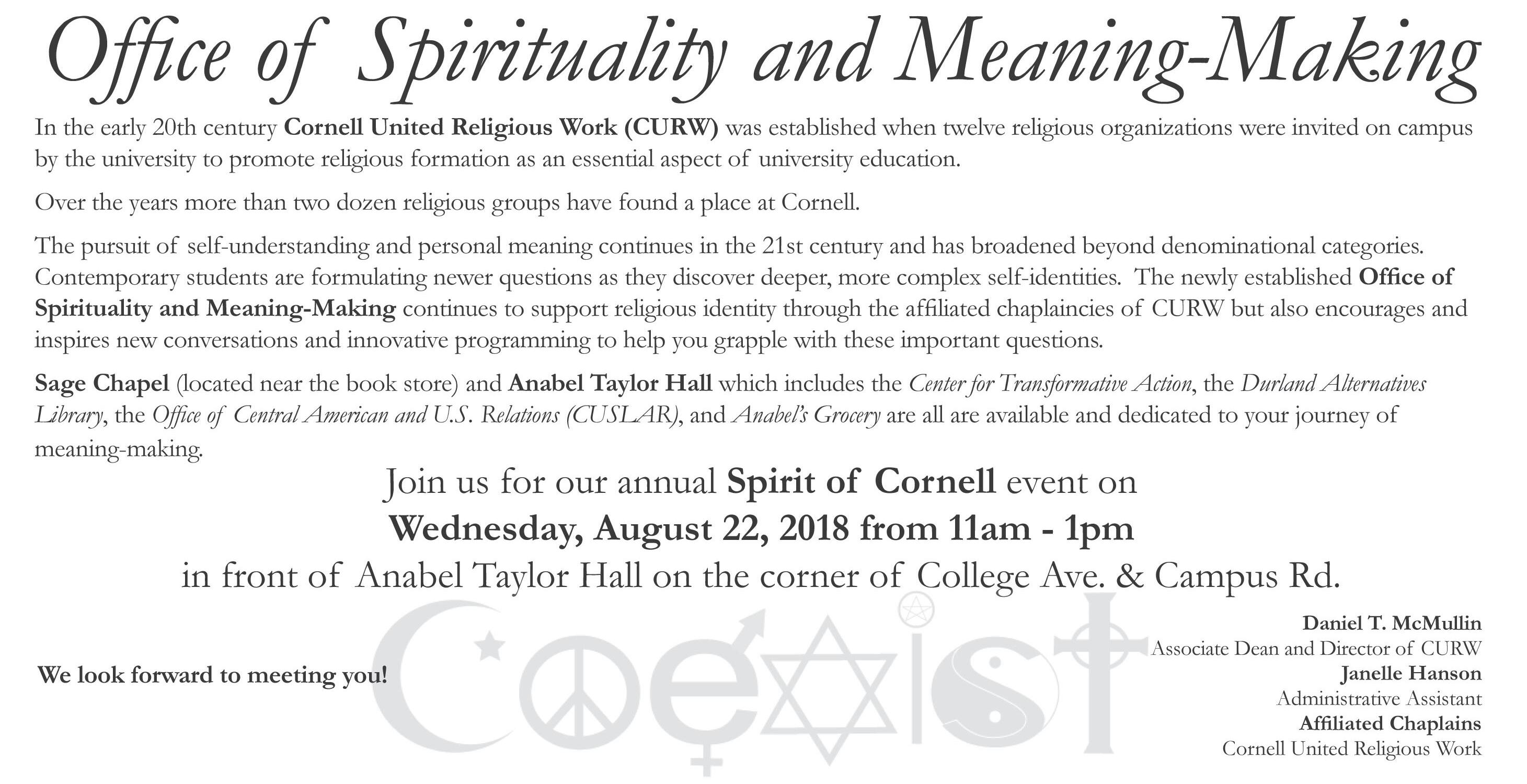
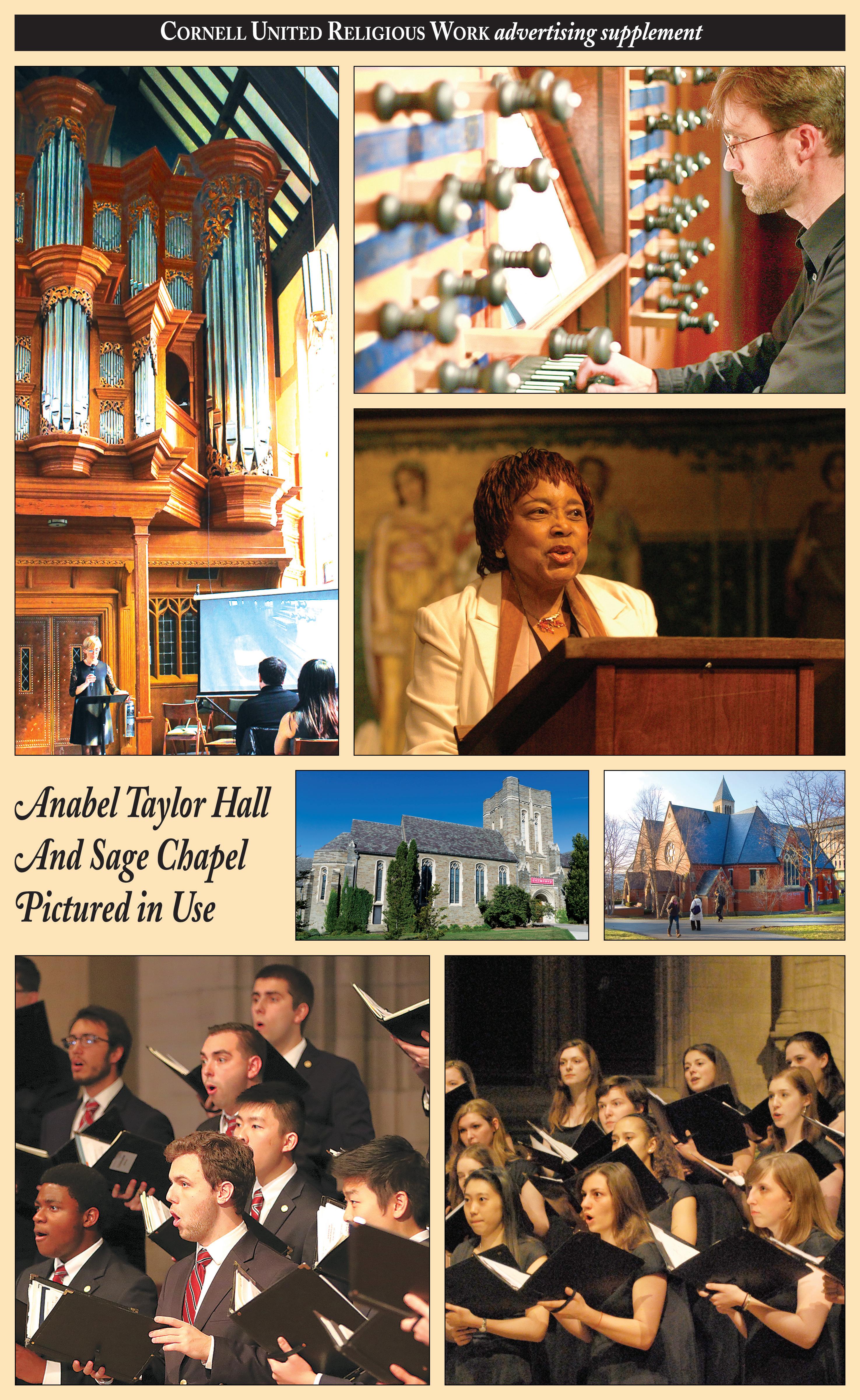
In the early 20th century, Cornell United Religious Work (CURW) was established when twelve religious organizations were invited on campus by the university to promote religious formation as an essential aspect of university education.
Over the years more than two dozen religious groups have found a place at Cornell.
The pursuit of self-understanding and personal meaning continues in the 21st century and has broadened beyond denominational categories. Contemporary students are formulating newer questions as they discover deeper, more complex self-identities. The newly established Office of Spirituality and Meaning-Making continues to support religious identity through the affiliated chaplaincies of CURW but also encourages and inspires new conversations and innovative programming to help you grapple with these important questions.
Sage Chapel (located near the book store) and Anabel Taylor Hall which includes the Center for Transformative Action, the Durland Alternatives Library, the Office of Central American and U.S. Relations (CUSLAR), and Anabel’s Grocery are all available and dedicated to your journey of meaning-making.
are all available and dedicated to your journey of
28, 2019

The Religious Society of Friends Ithaca Monthly Meeting
Meeting for Worship
Sundays 10:30 a.m. 120 Third Street, Ithaca (607) 229-9500
www.ithacamonthlymeeting.org

President: Yahya Abdul-Basser
Vice President: Ahmed Eltahir
Chabad is dedicated to bringing the warmth and richness of Jewish life and tradition to students of all backgrounds. We are your home away from home… the heart of Jewish campus life.
Come for our free home-cooked Shabbat dinner, or for a Torah class. Call for information about Judaism, or just to talk
For more information regarding Chabad’s programs and activities, please e mail: Rabbi Eli and Chana at: es79@cornell.edu or call: (607) 257-7379 Eli & Chana Silberstein www.chabadcornell.com

Mondays & Wednesdays 5-6pm Fall Semester September 4-December 18 Founders Roo m Anabel Taylor Hall
contact zen@cornell.edu for more details

Christina Simon: Autumn Rudlong: Prof. Mike Thompson: Deaconess Cheryl Cox: Rev. Robert Foote: cgs88@cornell.edu amr452@cornell.edu mot1@cornell.edu cac363@cornell.edu rmf93@cornell.edu



When I arrived on campus three years ago, I joined The Sun’s Arts and Entertainment staff with hot — well, charred — takes like “movies shouldn’t be moralizing” and “The Beatles suck,” fatally combined with an unshakeable urge to prove myself as a well-informed and brilliantly critical art buff.
I was neither of those things, nor am I now, and my takes are not much better than leftovers coming out of a dorm microwave (stale, lukewarm or bubbling over into an unsalvageable mess). Nonetheless, on my journey to being a somewhat more competent and self-effacing arts columnist, I feel like I at least picked up some of the critical pieces to being a well-rounded art fan at Cornell.
Live Music
The Haunt gets consistently good small-to-medium bands with entirely reasonable entrance fees of $10-20. You can usually buy your ticket at the door, but some of the more exciting acts do sell out beforehand. You can’t get back from the Haunt by TCAT (the 17 bus, which passes The Haunt, stops running about 9 p.m.), but the walk back to West Campus is under half-an-hour, and now that ridesharing is available in Ithaca, splitting the cost of a ride back is a common solution. The State Theater is expensive and geared toward an older generation of townies and regional folks, but occasionally gets an act worth buying a $60-or-so ticket for.
Ithaca Underground puts together shows at The Haunt and other locations around town (The Chanticleer, Sacred Root, and

When sexual assault allegations surfaced against Ameer Vann in the late spring of 2018, America’s favorite boyband faced a serious dilemma. Within a few weeks, BROCKHAMPTON announced that Vann had been kicked out of the group and that they would be forfeiting their slots on the summer festival circuit. In light of the #MeToo Movement, many, including myself, thought that this marked the end for the band and that their highly anticipated fourth studio album Puppy would never arrive. Well we were right about Puppy never coming to fruition.
By the end of the summer, BROCKHAMPTON began teasing The Best Days of Our Lives trilogy. In the fall, they released iridescence, a powerful treatise detailing depression and their struggles with superstardom. While iridescence is an outstanding album, it demonstrated that BROCKHAMPTON was still in
others), emphasizing DIY music and supporting local artists. They’re a not-for-profit and do great work at making engaging and inclusive spaces for underground music.
Last, but certainly not least: the house show. When I went to my first house show here, I was shocked; wasn’t this something that only happened in teen movies? Were all of the interviews of musicians I read about the early days of their music careers, talking about house shows and couch surfing and mini-van driving, truthful? Something about the mystique of the house show still hasn’t worn off for me, and they really do seem dreamy and stunning every time. Maybe someday my romantic goggles for them will wear off, but I sure hope they don’t. Fanclub Collective puts on these great shows, and they’ve already got two planned for next month.
students. The last time I went to the Ithaca Regal Theater, I spent more than that on a matinee screening of Mamma Mia 2 and a box of Sour Patch Watermelons. (Every now and then, it’s worth every penny.)
Cinemapolis is another favorite place of mine, with great films, a comfortable theater and $9 student tickets. Despite being one of the most convenient places to get from campus (right off the Commons), I feel like I’m peacefully in another world if I can forget about my looming assignments for long enough to enjoy the movie. Plus, they’ve got a fun snack bar with great popcorn and lots of options (for an almost reasonable price!)
Theatre
Movies
Movie tickets at the big chain theaters have gotten so expensive that I can barely ever justify stopping in to see a movie (much less buy a $7 small popcorn). But $7 tickets for undergrads, and a screening schedule full of gems, make Cornell Cinema a true marvel of art and entertainment on campus. And, if you like yourself a night at the movies, you can get an annual pass for free admission to regular screenings at the Cinema for $20 for






the process of redefining themselves.
Back in April, Kevin Abstract, the group’s front man, released a solo album entitled ARIZONA BABY. The album is deeply personal and discusses Abstract’s alienation from his family and his relationship with his boyfriend. But the most potent lyrics arrive on the song “Corpus Christi:”“I wonder if Ameer think about me, or what he think about me … I’m sorry Dom / I probably shouldn’t be puttin’ all our problems in the front lawn.” In this moment, you can feel a shift in Abstract and BROCKHAMPTON. This epiphany culminated Friday with the release of GINGER. Commonly, the color red has been used to symbolize passion in media. In cartoons, characters heads turn red when they fill with anger and a red heart is the universal symbol of love. The parallels between the album’s title and redness are easy to spot. And in
I’m embarrassed to admit that I’ve never been to a performance at the Schwartz (other than the required diversity and inclusion play during Orientation), but my good friend whose hard work I’ve neglected to appreciate instead of seeing the shows she worked on assures me “it’s not shitty like high school theater.”
The shows I’ve seen at Risley have been fun and low-key (and a lot closer than Schwartz to my north campus abode), but they’re highly variable. It’s worth keeping an ear out for the gems, but that can hardly be considered “without really trying.”
If you’re looking to be really well cultured, The Kitchen Theater Company downtown usually has something on, and they’re always trying out really interesting stories that grapple with current or historical issues. Don’t get too scared by the ticket prices on their website, if you show up before show time, they often have extra (rush, for those in on the lingo) tickets that they’ll sell at a discount to students.
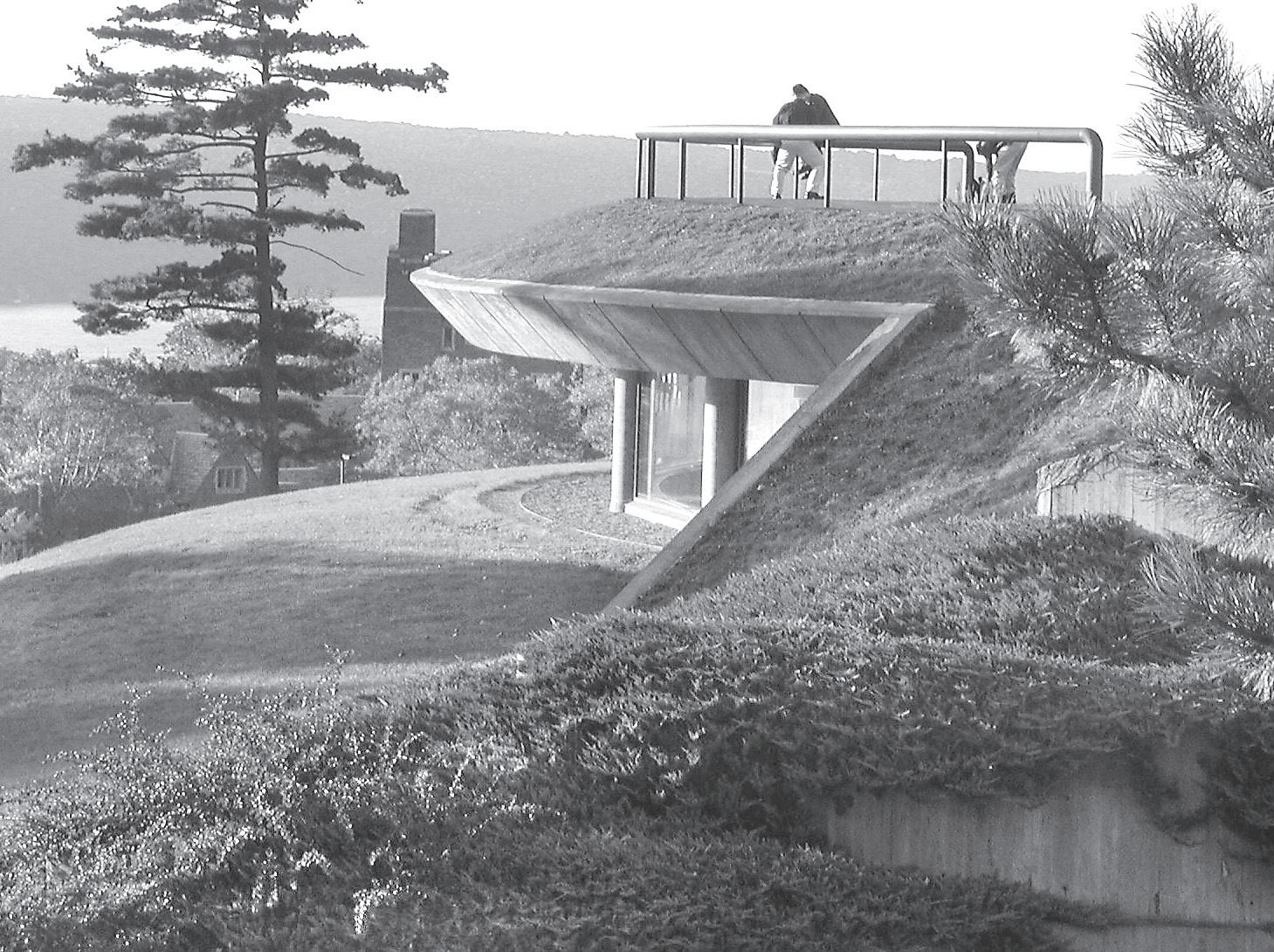
You could take a 5-hour bus ride to go to The Met or the MoMA, or whatever other cultural institutions you can access via the Ithaca bus station, or you can stop by the Johnson during the class day, on your way home, when your parents come to visit, on a Tinder date – you name it, it’s low-effort, high-reward collection right on the Arts Quad. The new exhibitions are worth checking out each semester, you just might find they have something you love on display, like I did last semester with the Geology in European and American painting. People more in-touch and up-to-date than I keep up with the AAP School’s exhibitions and other events, which display the art of students and faculty, as well as bring in guest speakers and artists. There’s a wealth of good work available if you’re willing to look for it.
Katie Sims is a senior in the College of Agriculture and Life Sciences. She can be reached at ksims@cornellsun.com. Resident Bad Media Critic runs alternate Tuesdays this semester.
the simplest terms, you may look at BROCKHAMPTON’s GINGER as an exploration on the color red.
The motif-like lyrics of “I’m sure I’ll find it / No one help me when my eyes go red” highlight the opening of GINGER. There is a sense on “NO HALO” that their red passion is not sensual like love, lust or anger, but that it is deeply rooted in their numbness to depression and anxiety. On the opening track, Matt Champion and Dom McLennon relay how they opt to smoke through their demons and search for a meaning in weed. Bearface and Joba discuss finding solace in alcohol and washing themselves clean.
This theme of unrequited love continues into the second track “SUGAR.” It acts as a confession, especially for Champion, that a life of drowning one’s sorrows is not sustainable.
Abstract makes his first significant appearance on “BOY BYE,”
which was released as a single prior to the album, and he acknowledges sobriety as an eye opening property: “Being sober made me realize how poorly I been behaving.” But as many others have pointed out, Abstract seems shy and is no longer the pivot point of the group. If anything, the potent opening of GINGER is carried on the shoulders of Champion. His flow and lyrics are unmatched by any other member on the group’s fifth album.
After the opening three songs, the rest of the album feels rather familiar. The themes emphasized on “NO HALO” are largely lost, and the band falls back on their routine of satirizing fame and being the metaphorical sad boys of the music world. Although
all of the songs on are enjoyable for one reason or another, Romil Hemnani and Jabari Manwa’s production is both eclectic and clean, the album feels like a lower energy Saturation I. It continues the despair and deepness of iridescence and ARIZONA BABY but acts as a return to what gave the group their start. Maybe this is a sign that they have finally found a way to be themselves again sans Ameer. Only another album will be able to tell us for sure.
In a review of GINGER, Pitchfork contributor Sheldon Pearce writes . . .
To continue reading this review, please visit www.cornellsun.com.
Peter Buonanno is a junior in the College of Arts and Sciences. He currently serves as the arts editor on The Sun’s editorial board. He can be reached at arts@cornellsun.com.

University-Affiliated Cheese
Awarded Top Honors
When it comes to the dairy world, Cornell may be the big cheese. With the Murray’s Stockinghall blend, the University clinched the best in show designation in August’s 36th American Cheese Society competition, a Cornell-run publication reported. The better cheddar, named for campus’s Stocking Hall, has hints of citrus and comes bound in both cloth and glory. It’s made from milk drawn from an emeritus animal science professor’s farm, and the cheesemaking process includes transportation to Long Island City and a year in repose at the Murray’s facility, the press release said. And Prof. David Galton’s Old Chatham Creamery is milking its technique for all it’s worth — the runner-up in the competition was also produced at the local facility.
‘Restless’
Intrepid biker travels 4,500 miles from Portland to Brooklyn over 3 months
By MARYAM ZAFAR Sun City Editor
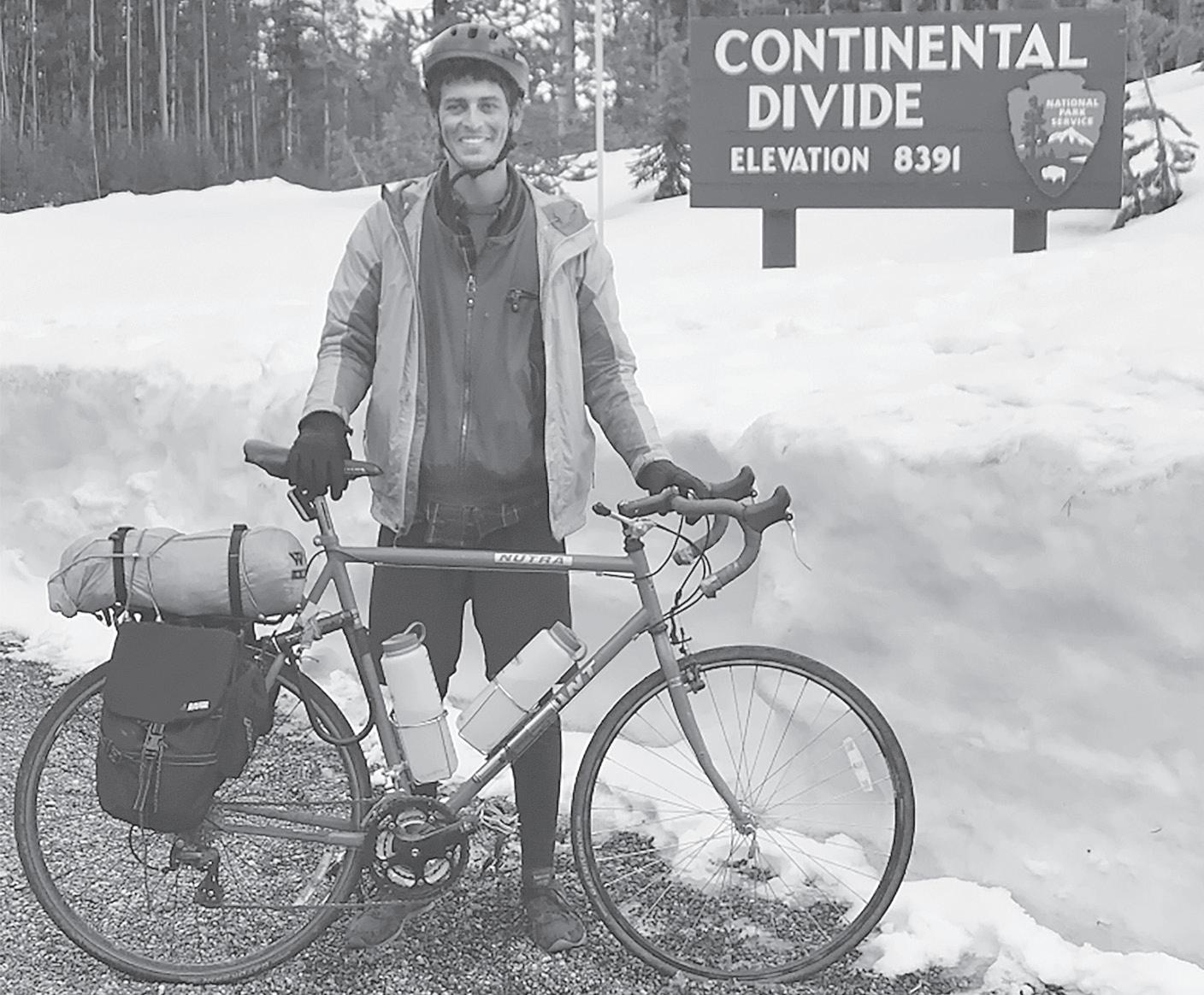
Tied to his bike was a pack stuffed with the basic essentials: an extra pair of socks, a green raincoat, a hat knitted by his friend’s mother and food — mostly non-perishable, high-calorie foods like nuts and seeds. Ari Dubow ’21 also packed a single book, the title of which varied as he swapped it out at different spots along his route to Brooklyn, New York.
The transfer student — after building the bike from used pieces he had found at secondhand stores — traveled for nearly two months, ultimately covering around 4,500 miles. Dubow wasn’t a pro biker when he decided to embark on the transcontinental journey, and didn’t schedule out much of it at all.
“My plans changed by the second day,” Dubow admitted. While he had plotted a couple of cities as must-stops, like Madison, Wisconsin and Montreal, the trip was spontaneous and included many literal forks in the road.
The U.S. Attorney’s Office charged a local man with two counts of trying to coerce children into sexual activities on Monday, The Ithaca Voice reported, after a sting operation identified an Ithaca IP address on an online app featuring a red-flagging message. An undercover officer communicated with 49-year-old Jeffery Blake for almost two months, as the man relayed sexually explicit messages to what he believed were a mother and her two young children. Blake was arrested in Binghamton on August 23, the Voice reported, when he traveled to the area under the belief that he would meet up with the children. He admitted to sending the messages in question and is in the custody of the U.S. Marshals.
A Year After Maria, Officials on High Alert As Powerful Tropical Storm Hurtles Towards Puerto Rico
Just under a year after the landfall of Hurricane Maria — a devastating Category 5 storm that, by some estimates, left nearly 3,000 dead — Puerto Rico finds itself once again bracing for potentially lethal impact: Tropical Storm Dorian, predicted to soon intensify to a Category 1 storm, is expected to possibly make landfall at the still-recovering island territory within days, according to weather forecasts. Currently moving at 13 miles per hour through the Windward Antilles, it may continue onto South Florida by the weekend, though experts caution that precise predictions are still difficult to make. Looking to avoid allegations of corruption and lackluster preparation that plagued last year’s response to Maria, Puerto Rico appears eager to avoid previous mistakes. In anticipation, the government has ordered a state of emergency and opened a number of large shelters, while its National Guard has readied rescue equipment.
“There’s one I remember,” he said. “Either I’d go to South Dakota or I would add, like four or five hundred miles and go south to, like, Colorado.” He went to Colorado.
While a slight itch to travel and a clear “shruggedness” about planning ahead were factors in his venture, Dubow, a philosophy major, couldn’t quite narrow down a single motivation for the trip.
“I guess I’m just curious,” Dubow said. “I mean, just a very sort of simple curiosity about what it would be like to do a trip that long. What would it be like to see the country at that pace?”
Dubow, a transfer student from Deep Springs College in Deep Springs, California, heard that he was accepted to Cornell just days before embarking. He enrolled in Cornell on his phone — from his bike — in a park in Fort Collins, Colorado.
“It was, like, a lot of resolve,” Dubow described. “Like, I’m finishing the Rockies. I’m in the plains. I’m enrolled in college.”
While the landscapes were beautiful and he came back with some oddly specific favorite regions — southwest Connecticut
Tour d’America | Ari Dubow ’21, a newly matriculated transfer student from California, made the decision to enroll at Cornell on his phone in Colorado, halfway through his transcontinental journey.
and northwest Colorado among them — Dubow said that the quick, quirky conversations along the way were his favorite parts.
West of the Mississippi River, Dubow said, conversations were more political. Many passersby saw that he was traveling from Portland to Brooklyn on a bike, and after learning that his politics leaned liberal, they engaged him in conversations about his political beliefs. After the first few, Dubow said, he learned to listen more than speak.
Regardless of politics, though, Dubow described being welcomed by strangers who used warmshowers.org, a website to help bikers find places to shower and sleep. One couple, Dave and Jill from Jackson, Wyoming, fed him a whole chicken. In another town, a man offered him a beer.
“Full disclosure,” Dubow told him, “I’m under 21.”
The man replied: “Full disclosure, I’m a cop.”
After traversing eleven states and two Canadian provinces, turning 21 years old and enrolling in college on the road, Dubow didn’t know if the trip had really been all that life-changing or transformative — or even the trip of self-reliance he had romanticized in high school.
It was hard at times, he said, being under continual stress to find a place to eat, shower or sleep.
“You can look at pictures of landscapes and think about how stunning it is,” he said. “But when you add on to that, the sound of you breathing heavily and your bike cranking and cars whizzing past and the feeling of being hungry and thirsty — it’s a little less.”
As Dubow prepares for classes, he said the time off was relaxing, but he looks forward to occupying himself soon.
“I get restless,” he said.
Maryam Zafar can be reached at mzafar@cornellsun.com.
NORTH
Continued from page 3
traditions that make the castle-like dorm unique. Many, like Pool — involving a midnight “swimming” session — still go on today. Risley is also home to Cornell’s resident pole dancing troupe.
Program houses are smaller dorms dedicated to the specific interests of Cornell’s diverse student body. There are nine different Program Houses. The newest among these niche residences is the Loving House, which is meant as inclusive housing for LGBTQ+ students.
First proposed through a 1992 Student Assembly resolution, the Loving House was finally approved in 2018 and will be opening in Mews Hall for the Fall 2019 semester.
Also among the program residences, the Ecology House, draws in close to 100 residents each year, all interested in “protecting the environment” and pursuing “environmentalism.”
It’s a bit of a hike from the other North Campus dorms,
which residents typically make on foot or by bike.
“It’s decently far,” Keshin Visahan ’21, a first-year resident of Eco House, said about his experiences in the green community. “[But] the rooms are big; many have their own bathrooms. It’s quiet around and beautiful.”
“AC is nice too,” he continued.
indicate that they wanted to live in the house during the housing process. For all students, there’s a form that allows ranking of their housing choices. This is accompanied by a “lifestyle preference survey” meant to match students with similar habits as roommates.
This survey includes questions gauging a student’s nighttime activity to whether the new students smokes or not.
“The rooms are big; many have their own bathrooms. It’s quiet around and beautiful.”
Keshin Visahan ’21
Apart from Eco House, only Mews Hall, the townhouses and Court-Kay-Bauer have air-conditioning, which makes box fans a hot commodity for new students.
Some North Campus dorms also had a lot of trouble at the beginning of last semester due to broken or faulty heating equipment. Cornell saw its first snowfall in late October of last year.
If a new student is living in a program house, they had to
Cornell toyed with the idea of banning tobacco across campus last year, but it is still permitted as of now.
The Housing Office tries to assign based on those rankings — but everything else after that is random. Prices are standardized for all rooms as well, depending on the number of occupants.
Aileen Martinez ’23, a firstyear student in to Donlon Hall, said that the process was easy and she was pleased with her assignment.
“[For me] the most important
factor was location (Donlon Hall is located in the middle of North Campus) and that it included both genders.”
For those not interested in a random roommate, the Housing Office “accommodates requests to be placed with a specific roommate or roommates,” which means new students can choose their roommate.
Facebook groups and social media group chats have sprung up in order to connect first-year students with potential roommates, rather than leave selection up to chance. The largest of these groups is the Cornell Class of 2023 Facebook group, which has over 3,300 members.
Nicholas Gregory Cicero ’21, who lived in Bauer Hall for his freshman year, was one of these students.
“I put in the 2021 group if anyone needed a roommate,” he said. His new roommate, he said, was the only one who liked the message.
Sean O’Connell can be reached at soconnell@cornellsun.com.

Fill in the empty cells, one number in each, so that each column, row, and region contains the numbers 1-9 exactly once. Each number in the solution therefore occurs only once in each of the three “directions,” hence the “single numbers” implied by the puzzle’s name. (Rules from wikipedia.org/wiki/ Sudoku)
by Jeffrey Sondike ’19

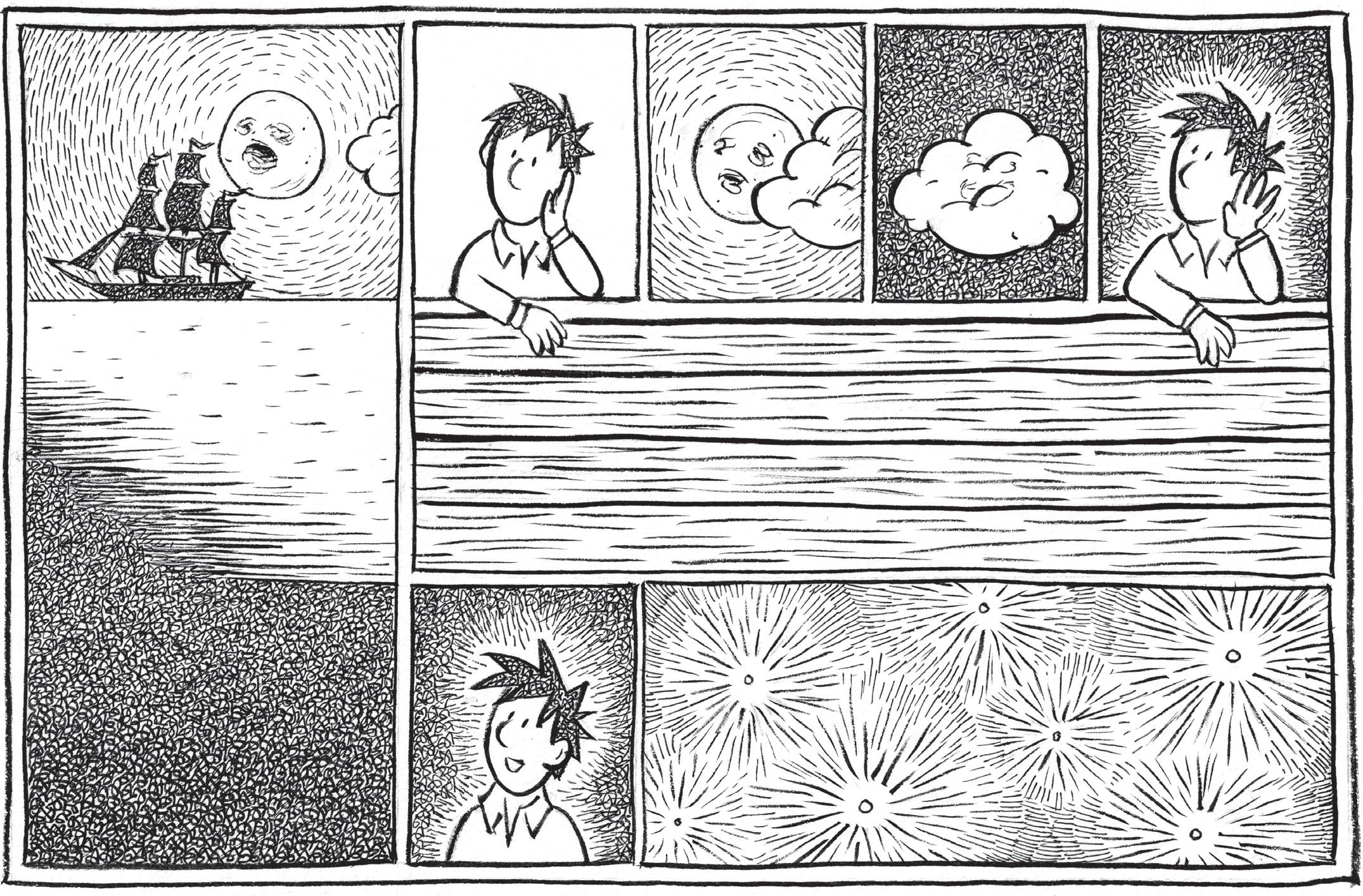
Johnny’s adventure begins in 1861 on the High Seas...

“Fat, drunk and stupid is no way to go through life, son.”


Top prospects | Freshman Matthew Stienburg, above, was selected by the Colorado Avalanche in June’s NHL Draft. Stienburg and classmate Jack Malone — a Vancouver Canucks pick — will both be true freshmen for Cornell this season.
By CHRISTINA BULKELEY Sun Assistant Sports Editor
This story was originally published online on June 22. A Cornell hockey player was taken in June’s NHL Draft at the highest spot in 12 years.
With the 63rd pick, incoming freshman forward Matthew Stienburg went to the Colorado Avalanche. 117 picks later, the Vancouver Canucks selected freshman forward Jack Malone in the sixth round.
Current Columbus Blue Jackets forward Riley Nash ’10 was drafted 21st overall in 2007, making him the last Cornellian to go in an earlier spot than
Stienburg.
Stienburg is coming to East Hill straight from prep school — more specifically, from St. Andrew’s College in Ontario, where rising junior forward Morgan Barron also played prior to Cornell.
Stienburg’s athletic development was recently hampered by two surgeries necessitated by osteomyelitis, an infection in his shoulder that developed from a case of the flu. This setback effectively caused him to be ranked at No. 133 among North American skaters by NHL Central Scouting going into the draft.
Playing in the NHL is no foreign concept in the Stienburg household — Matthew’s father, Trevor, played 71 games over four seasons with the Quebec Nordiques. Trevor Stienburg is now the head coach for St. Mary’s University men’s hockey in Nova Scotia.
Malone, Cornell’s other 2019 draftee, is coming to Ithaca after two years playing with the Youngstown Phantoms of the USHL. There, he competed in the USHL/NHL Top Prospects Game in January and won a gold medal at the World Junior A Challenge in December.
The forward spent his final year in junior hockey honing his skills and garnering the attention of coaches and scouts alike.
“He’s got an elite hockey IQ and he’s a tremendous athlete,” Phantoms head coach Brad Patterson said. “When you mix everything together, you see the benefits every time he’s on the ice.”
Such valuable skills certainly factored into Malone’s being ranked at No. 82 by NHL Central Scouting ahead of the draft.
Both Stienburg and Malone are entering Cornell as true freshmen, at 18 years old. With the Red, they will look to help fill the gap left by the two forwards that graduated with the class of 2019.
Christina Bulkeley can be reached at cbulkeley@cornellsun.com.
By RAPHY GENDLER
This story was originally published online on Aug. 14.
Coming off a third consecutive trip to the NCAA Tournament, Cornell men’s hockey — armed with a nine-member freshman class and a more experienced junior core — will drop the puck on its 2019-20 season the first weekend in November.
Here’s an early look at the team’s 29-game schedule, which includes a Red Hot Hockey clash with Boston University, non-league games against Michigan State and Northern Michigan and a January trip to Las Vegas for the Fortress Invitational: *Home games in bold; road games in italics
Oct. 18: Red/White Game
Oct. 20: Nipissing University (exhibition)
Oct. 26: U.S. NDTP Under-18 Team (exhibition)
Nov. 1-2: at Michigan State
After hosting the Spartans at Lynah Rink on last season’s opening weekend, the Red heads to East Lansing to kick off 2019-20 against the Big Ten opponent. Cornell will hope to get off to a faster start than it did in 2018, when it dropped two straight games to Michigan State to start the season.
Nov. 8-9: Brown, Yale
The Red starts Ivy League and ECAC play with the Bears and Bulldogs, two teams it beat at home early last season en route to an Ivy League championship. Cornell last met Brown in the ECAC semifinals at Lake Placid, where it beat down on the Bears to earn a spot in the conference championship game.
Nov. 15-16: at Clarkson, at St. Lawrence
Cornell will get the notoriously tough North Country road trip out of the way
early this season, heading to Potsdam and Canton for the second weekend of ECAC games. The Saints, led by new coach Brent Brekke — most recently an assistant at Clarkson and previously an assistant at Cornell under Mike Schafer ’86 — will be looking to improve upon its last-place finish last season. Against Casey Jones ’90 and Clarkson, the Red will hope to avenge a heartbreaking and controversial overtime loss in last season’s ECAC championship game.
Nov. 22-23: Quinnipiac, Princeton
The Red hosts new-ish rival Quinnipiac and Ivy League foe Princeton in its final home games of the fall semester. The Bobcats reestablished themselves as a national power last season, finishing in a tie with Cornell atop the ECAC regular season standings. The Tigers, meanwhile, will look to reverse their ninth-place finish after winning the conference tournament two years ago.
Nov. 30: Red Hot Hockey vs. B.U. at Madison Square Garden
Cornell takes on its oldest rival at the world’s most famous arena. Last season, Cornell turned in a “lifeless” performance in New York City against Harvard.
Dec. 6-7: at Harvard, at Dartmouth
Last season’s gritty win at Harvard proved to be a turning point in what, up to that point, had been a shaky season. Cornell faces the hated Crimson at “Lynah East” in early December again this season before hosting Harvard and Dartmouth in late January.
Jan. 3-4: Fortress Invitational in Las Vegas
In its first ever trip to the Las Vegas tournament, Cornell will take on Ohio State on Friday and will face either Army or Providence on Saturday. The Vegas Golden Knights, the NHL’s newest franchise, is hosting the event. Cornell, Ohio State and Providence all reached the NCAA Tournament last season; the Red’s season ended at the hands of the Friars,

who beat Cornell in the national quarterfinals to reach the Frozen Four.
Jan. 10-11: at Rensselaer, at Union
The Red gets second-half ECAC play started with a trip to the Capital Region, where it will take on Rensselaer and Union, the latter of whom Cornell beat in last season’s best-of-three league quarterfinals. The Dutchmen took game one before Cornell won games two and three to punch its ticket to Lake Placid.
Jan. 17-18: Northern Michigan
Cornell earned a pair of road wins against Northern Michigan last November and will welcome the Wildcats to Lynah for a weekend series for the first home games of 2020.
Jan. 24-25: Dartmouth, Harvard
Jan. 31-Feb. 1: at Quinnipiac, at Princeton
Feb. 7-8: Colgate , at Colgate
Cornell’s annual home-and-home with its crosstown rival will take place in early February. After winning on the road last season, freshman Raider goaltender Mitch Benson stole one from the Red in Ithaca, ending an eight-game Cornell unbeaten streak.
Feb. 14-15: Union, Rensselaer
Feb. 21-22: at Yale, at Brown
Feb. 28-29: St. Lawrence, Clarkson
Cornell’s regular season ends with home matchups against its North Country rivals and Schafer’s friends Brekke and Jones. The Red’s Senior Night game against Clarkson will be the teams’ second meeting since last year’s ECAC championship game.
Raphy Gendler can be reached at rgendler@cornellsun.com.


By RAPHY GENDLER Sun Sports Editor
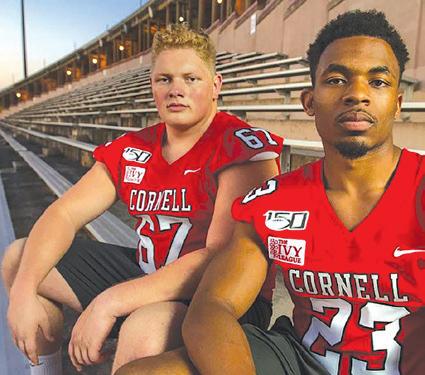
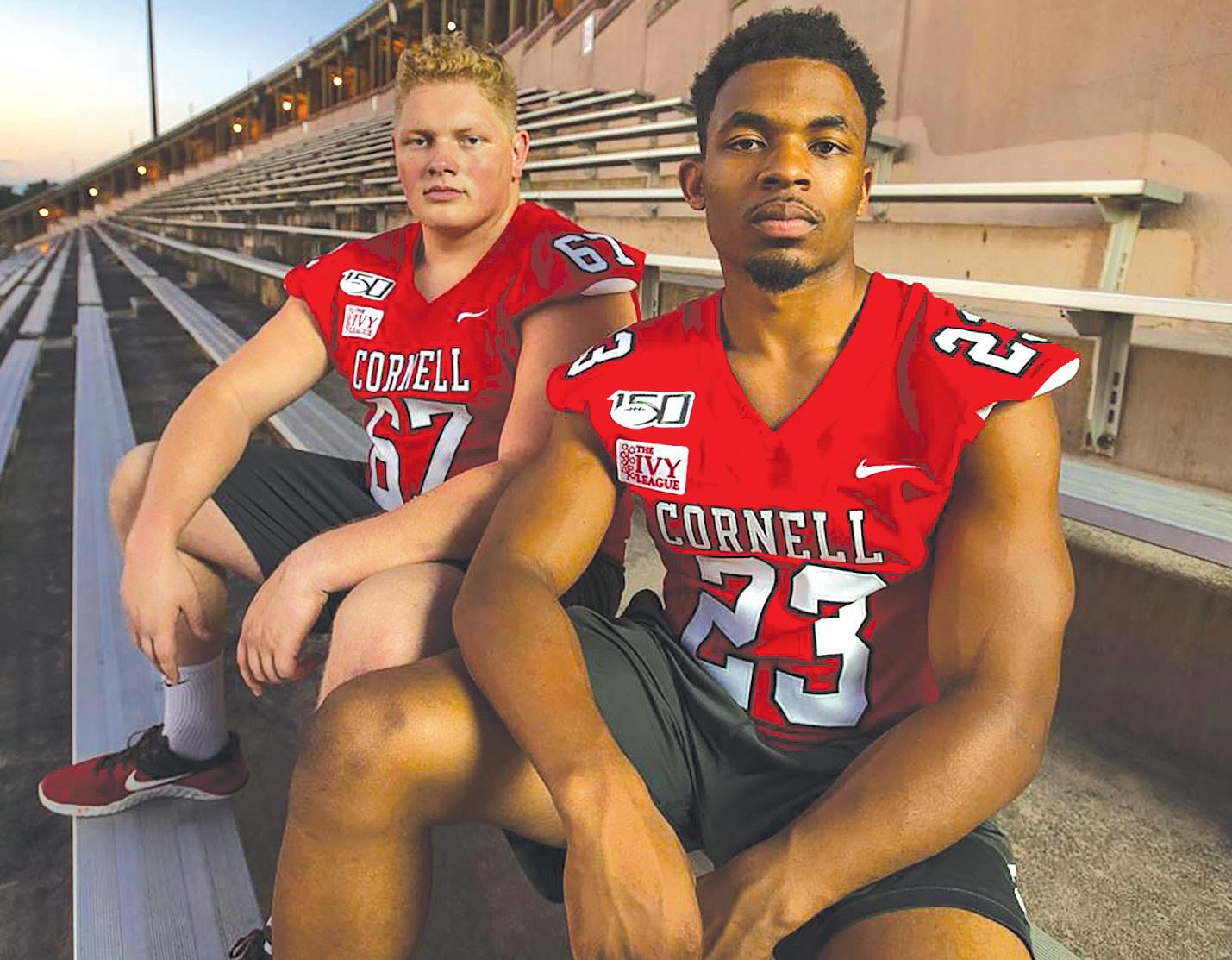
Offensive lineman George Holm and safety Jelani Taylor will serve as Cornell football’s captains during the 2019 season, the team announced on Monday, a few days into preseason practices.
Holm and Taylor, both seniors, will seek to lead the Red to a winning season after a 3-7 finish in 2018. This is the second straight year the Red will have two captains, after J. Edward Keating ’19 and Reis Seggebruch ’19 captained the team last season.
Holm became a key part of Cornell’s offensive line late last season, helping the team’s rushing attack generate 1,561 yards and 13 touchdowns. The 6-foot-4 Richmond, Va. native started the team’s final three games of last season at right tackle.
The cog of Cornell’s secondary, Taylor led the team last season with 72 tackles and nine passes defended. The Beecher, Michigan, product had two tackles for loss, a sack and a forced fumble last season, emerging as one of the Red’s top defensive playmakers after making 32 tackles as a sophomore in 2017.
For the second straight season, Cornell was picked to finish seventh in the preseason Ivy League media poll.
The Red starts its 2019 campaign Sept. 21 at Marist before beginning Ivy League play at Yale the following week. The Red’s Homecoming contest will take place October 5 against Georgetown at Schoellkopf Field.
Raphy Gendler can be reached at rgendler@cornellsun.com.

By CHRISTINA BULKELEY
Assistant Sports Editor
This story was originally published online on Aug. 6.
As summer winds down, college preseason camps get underway and teams post their rosters, sometimes featuring some surprising — but maybe familiar — names and faces.
Earlier this month, former Cornell wrestler Ben Honis ’19 reported to football camp with Syracuse University.
Honis’s final year of NCAA eligibility will be spent as a linebacker with his hometown Orange. Honis last played football at the competitive level in high school, when he attended Jamesville-DeWitt in Syracuse.
A 2019 All-American and First Team All-Ivy selection, Honis competed with the Red for four seasons in both the heavyweight and 197-pound classes.
While Honis is no longer eligible to participate in varsity athletics at Cornell due to Ivy League rules, he is able to join teams at institutions outside of the conference. In the Ivy League, redshirt years are not permitted. Standard NCAA rules allow Honis to play because he is switching sports — he has used four years of eligibility in wrestling but is granted a fifth year in football.
Honis will play as a redshirt senior while pursuing a graduate degree. Though this move to Syracuse is referred to as a transfer, Honis did graduate from Cornell and would not have been eligible to continue his athletic career with the Red. As an undergraduate, Honis studied applied
Honis last played competitive football at Jamesville-DeWitt
School
economics and management.
In his final outing as a Cornell wrestler, Honis was upset in his first match at the NCAA Tournament. Following the loss, he rebounded to win four straight matches and come back to secure his first AllAmerican title.
Honis ended his wrestling career with a top-10 national finish in the 197-pound weight class but weighed in at 215 pounds going into the football season. Syracuse added him to its roster as a walk-on on August 6.
The nationally ranked Orange starts its season August 31.