The Corne¬ Daily Sun


By MAYANKA DHINGRA
Following a name change to promote inclusivity, the Department of Literatures in English resolved to alter major requirements beginning fall 2022-23 to cover courses in a wider set of content areas.
Earlier this year, faculty announced the department’s new name as part of broader University efforts to promote anti-racist values and “decolonize” the discipline.
Currently, the major consists of three requirements, only one of which is content based — students must take twelve credits covering literature originally written in English before 1800. They must also take eight credits at the 4000 level or above and twelve credits for a concentration they decide.
Following the changes, students will need to meet a new
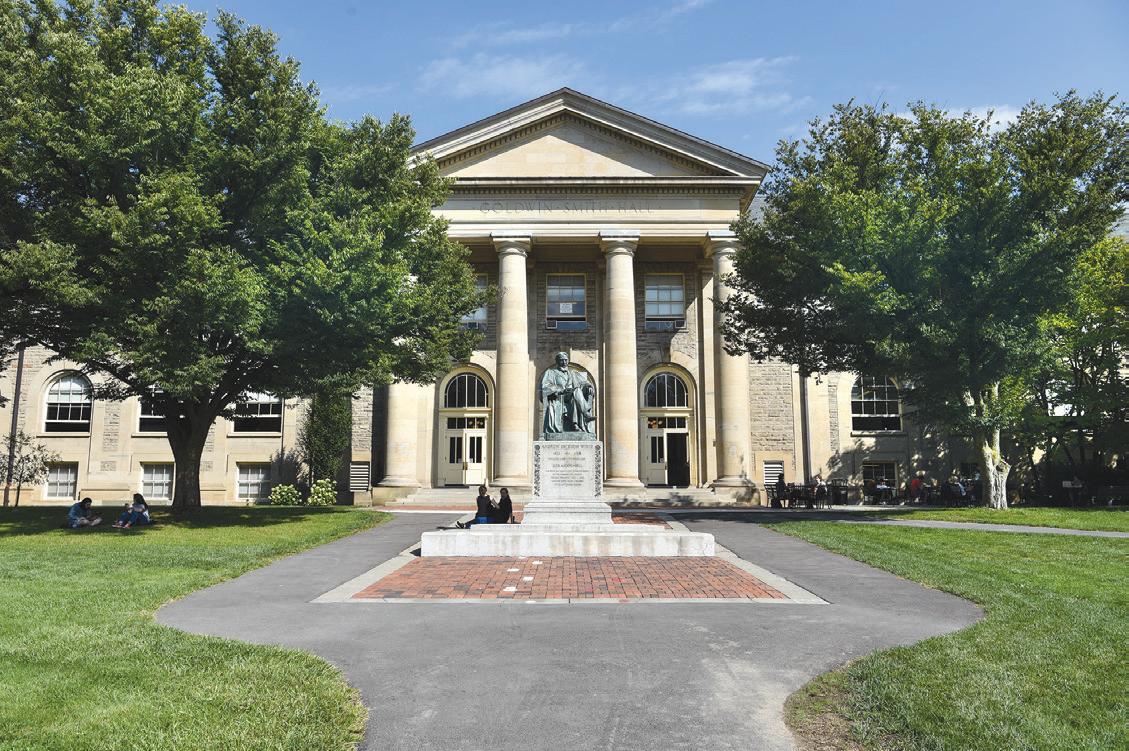
set of content requirements that represent a more global set of traditions. According to Prof. Caroline Levine, literatures in English, chair of the department, the faculty hopes students will find themselves engaging more often with texts dealing with experiences wider than the scope of European and
American writers. Levine stated that this change breaks with a longstanding tradition of minimalism that has been characteric of the department at Cornell. Historically, the English department has fewer requirements than their

By SURITA BASU Sun Assistant News Editor
With 1,521 votes, Anuli Ononye ’22 won the election for Student Assembly President. The results came a week after the rest of the S.A. seats were confirmed due to challenges from candidates.
Valentina Xu ’22 received 1,419 votes, and Zion Sherin ’23 was disqualified from the race.
“I am so thankful for the amazing opportunity to serve as Cornell’s next S.A. president.”
Anuli Ononye ’22
According to Patrick Mehler ’23, director of elections, all disqualification materials will remain confidential.
“The Elections Committee
held multiple hearings to address all challenges presented, and the Committee reviewed the facts and reached a conclusion” Mehler wrote in a statement to The Sun. “The candidate then asked for a [Judicial Codes Counselor] Review to ensure that the Committee did not err in its decision, to which the review took place and the Elections Committee’s decision to disqualify the challenge candidate was upheld by the JCC.”
Last fall’s S.A. elections saw
See ELECTIONS page 4
By JOHN YOON and MADELINE ROSENBERG Sun City Editor and Sun Managing Editor
found a community in his West Campus residence hall and in his fraternity, typical of his easy-going and friendly nature, according to his friends and
him that I haven’t been feeling too great because I went through a breakup, he pivoted the whole conversation back to me.”
“He could go up to strangers and talk to them as if they were lifelong friends,” said Bibi Singh, Zukowski’s girlfriend of more than four years. “He got along with
This characteristic of Zukowski was present through his relationships. Singh described him as someone who would never leave her side, the person who stayed on the phone with her all day and texted reminders that things will be alright.
“He could go up to strangers and talk to them as if they were lifelong friends. He got along with almost everybody.”
Bibi Singh
Sherrie Tan ’22, a close friend who attended Queens High School for the Sciences in New York City with Zukowski, helped him adjust to Cornell.
tional wellbeing of those around him, remembering one of their first dinners together at Becker House
“The conversation was supposed to be about him, because he was the one who transferred [to Cornell],” Tan said. “But when I told
This unwavering care for others also extended to the decisions Zukowski made about his future. According to his brother Matt Zukowski, he explored different career choices throughout his childhood.
While he initially wanted to be a veterinarian, Zukowski found sick animals made him too sad to continue on that career path. For most of high school, Zukowski thought about becoming a social worker,
See ZUKOWSKI page 5
Students in need of professional mental health support can call Counseling and Psychological Services (CAPS) at 607-255-5155 and employees can call the Faculty and Staff Assistance Program (FSAP) at 607-255-2673. Due to the COVID-19 pandemic, all CAPS and FSAP services are currently being delivered via telehealth. Whenever these services are closed, calls are answered by Cornell Health’s on-call mental health provider. The Ithacabased Crisisline is also available at 607-272-1616. A wide range of supportive resources is also available at caringcommunity.cornell.edu.

Looking forward to another hybrid summer, Cornellians get creative with upcoming free time
By SOFIA RUBINSON Sun Staff Writer
For Cornellians, summer vacation will not provide much of a break with students across the country taking classes, participating in virtual internships and working within their local communities.
This summer, like the last, is unique for the number of opportunities that are virtual. There are seven times more remote internship opportunities during the summer of 2021 than in March 2019, before the onset of the pandemic.
Kevin Diaz ’24 has an online fellowship through the Industrial and Labor Relations Buffalo Co-Lab Program working with companies in Buffalo to revitalize the economy and spur economic growth in the community. Diaz will be working with healthcare workers that want to unionize, studying their mental health and looking into collective bargaining and arbitration strategies.
While the fellowship was moved online, Diaz acknowledged some of the benefits.
”[Working remotely] gives me space and the opportunity to explore other areas and do other things this summer,” Diaz said. “For me, I will be trying to pursue a real estate license and do a summer class through Cornell in conjunction with the fellowship.”
Macy Berryman ’23 is also taking advantage of remote work. This summer, she will work virtually with the Animal Welfare Institute as a communications intern, exploring her passions for the environment and animal rights.
Berryman expressed that even though she will miss the opportunity to work in-person, she will be able to enjoy time in her hometown.
”It is nice because I will have time to go places and hang out with my family, so it’s a good balance,” Berryman said.
Myles Winkley ’22 will work from his apartment in Ithaca as a virtual research assistant at the Federal Reserve Bank of Chicago.
starting up after 2020 forced most internships online.
Melanie Marshall ’24 plans to live at a Zen Buddhist Temple in Ithaca with other scholars, teaching suburban farming classes in Ithaca.
Leah Tilson ’22 will have an in-person internship in Corning, NY with the human resources department of Corning Incorporated.
“I can’t imagine staying still. As Cornell students, we like to challenge ourselves.”
Marlee Pincus ’24
Winkley expressed that while he wishes the position was not moved online, he decided to still participate as the opportunity to conduct research at the federal level was too good to pass up. He is making the best of the situation by also taking summer classes through Cornell.
But for some students, in-person experiences are
“A lot of my friends weren’t lucky enough to be in-person, so I feel fortunate to have this opportunity,” Tilson said.
But not all Cornell students will be interning this summer. Some, like Lauren Sherman ’24, will be taking online courses at Cornell. She is planning on fulfilling some distribution requirements so that she can focus more heavily on courses that interest her during the school year.
The remote setting also comes with increased versatility, according to Sherman.
“Virtual classes are definitely more convenient; I
don’t have to worry about housing or any other logistics. I don’t know if I would have taken classes if they were in-person,” Sherman said.
Others are working summer jobs to make money and expand their resumes. Alyssa Schwertfeger ‘24 will be working retail at a clothing boutique in Stone Harbor, New Jersey. After a long year of Zoom classes, Schwertfeger expressed her need to be around people working in-person.
”This semester has been a very good semester, but it has also been very long, and Zoom fatigue has really been settling in. I think this summer will be a good academic break,” Schwertfeger said.
No matter what students plan on doing this summer, it can be assumed that they will be productive with their time off.
“I can’t imagine staying still,” Marlee Pincus ‘24 said, who is taking summer classes. “As Cornell students, we like to challenge ourselves.”
By ANTHONY CHEN Sun Staff Writer
In late March, Jeffrey Zhang ’20 launched SpeakUp Ventures, a program that provides mentorship, workshops and a $300 stipend for Asian entrepreneurs to develop their business ideas.
Aiming to empower aspiring student entrepreneurs, the program will be tailored to the needs of each student and their startup. Zhang plans on hosting 10 teams with about two to three students each to start.
community as a whole in mourning, devastated Zhang and motivated him to bring about change in his field.
“Honestly, I felt so powerless because I felt that my community was under attack,” Zhang said. “As an engineer, I’ve always been taught that there’s no problem that’s unsolvable.”
“I really want to empower [my community] to speak up for their opinions and to be heard.”
Jeffrey Zhang ’20
“I have decided to fund startups that harness the power of communities to address a particular need in the world or leverage technology to empower the Asian community,” Zhang said. According to Zhang, his decision to start SpeakUp Ventures came in response to the recent rise in anti-Asian violence. The Atlanta shooting, which left Asian students and the AAPI
In addition, Zhang believes there is inequality in the workforce, citing the fact that Asians are the least likely minority group to be promoted into management positions. He hopes that SpeakUp Ventures can help young entrepreneurs to overcome these inequities.
“These barriers that serve to exclude Asians and Asian Americans from executive positions cannot be explained by job performance or qualifications,” Zhang said.
Chendan Luo ’22, a project manager for SpeakUp Ventures this summer, found that the program mission aligns with her values of inclusivity and diversity.
“I’m an international student.
I’m female and I’m Asian,” Luo said. “I’m kind of like a minority in [various] aspects.”
Luo believes that SpeakUp Ventures can empower minorities from these kinds of intersectional backgrounds.
Tiffany Yu, a senior at the University of California, Berkeley, expressed her hope to be selected by SpeakUp Ventures and develop her company Modem. The startup provides free telehealth services for Asian Americans.
“Our mission is to improve mental health and wellness in the Asian American community by creating engaging content on these topics and [increase] access to Asian American care providers,” Yu said.
Warren Wang, a student at the University of Kansas, hopes that applying for SpeakUp’s program will guide him to the successful creation and launch of a delivery-only food court project. He aims to build an application that could handle the logistics and operations of running a restaurant for aspiring Asian immigrant cooks.
“What I look forward to most with SpeakUp Ventures is the community and network that will be formed,” Wang wrote to
The Sun. “I believe that finding a great community made up of mentors and peers that could relate to you and understand the problems you are facing is very important for long term success.”
Zhang is self-funding the first cohort of SpeakUp Ventures and plans on funding future cohorts by raising a venture fund and through a GoFundMe Campaign.
He hopes SpeakUp Ventures can serve to inspire future Asian leaders to speak out against inequality and spark change.
“I really want to empower [my community] to speak up for their opinions and to be heard,” Zhang said.
Anthony Chen can be reached at achen@cornellsun.com.
ELECTIONS
Continued from page 1
historically low turnout, with only 16.85 percent of eligible voters participating. This year, 3,394 of the 14,358 eligible voters, or 23.63 percent turned out to vote.
The increase in turnout marked a success for Mehler’s first stint as elections director, who introduced several new strategies for voter outreach.
“I’m very happy to have had the opportunity to run S.A.’s elections and extremely proud of the 33 percent increased voter turnout that we saw,” Mehler wrote.
Ononye had previously served on the S.A. as the Undergraduate Student Advocate. She ran a campaign on improving the S.A.’s transparency, increasing financial accessibility by establishing an SA committee for student financial support and expanding COVIDrelated accommodations like the S/U Option.
Xu has been on the S.A.
for three years and previously served as Vice President of Internal Operations. Her campaign emphasized issues of student mental health, improving accessibility to clubs and career resources and organizing more community events.
Before the Elections Committee confirmed the presidential results, Ononye expressed that campaigning was the most rewarding part of her Cornell experience.
“I am so thankful for the amazing opportunity to serve as Cornell’s next S.A. president,” Ononye wrote in a statement to The Sun. “Throughout this journey, I have had the amazing opportunity to meet with and engage with so many members of our campus community. I am looking forward to the opportunity to serve and amplify students’ voices on our campus in all the work that I do.”
Surita Basu can be reached at sbasu@cornellsun.com.
Independent Since 1880


ENGLISH Continued from page 1
peer institutions.
“While the freedom for students is nice,” Levine said, “It could also be a liability when it comes to the question of race. When students seek famous authors without realizing the rich literary tradition of places like Caribbean, for example, it compounds the status quo.”
Levine says the intention of the new requirements is not to limit students, but to offer them guidance in a wide variety of literary areas.
Following President Martha Pollack’s call to think about anti-racism in the wake of protests last summer,
“Are we learning for the sake of learning or are we learning for the sake of production and grades?”
Tomás Daniel Chávez Reuning ’21
Levine reported feeling great urgency to take action and convened a faculty committee.
Levine explained that while it is not common for departments to thoroughly overhaul a major, the committee was not working blindly. Levine herself has been through the process at two other institutions, including joining a similar project to update the English major at the University of Wisconsin Madison.
Prof. Mukoma Wa Ngugi, literatures in English, was also an instrumental influence in transforming the major. His father, Ngugi Wa Thiong’o, spearheaded a similar movement of decolonization at Nairobi University in the 1960s, where he challenged the English department’s practice of teaching British literature within an African
country.
In addition to being personal, the question of restructuring the major was also a matter of making the major relevant for modern scholars for Ngugi.
“There is the philosophical dimension of decolonization, and there is also the pragmatics of times we are living in and what they are demanding,” Ngugi said. “We want students who are truly aware of their fields, ones that we ourselves would hire now.”
While faculty poses a large shift to the major, Ngugi expressed that it is not radical, but rather catching up to the world as it is.
hold those identities themselves and are already aware of many of the issues discussed in those works.
“The people who need to take these classes aren’t in them, meanwhile we are all required to take the pre-1800s courses,” he said.
To Reuning, decolonizing means asking, “Are we learning for the sake of learning, or are we learning for the sake of production and grades?”
“There is also the pragmatics of times we are living in and what they are demanding.”
Prof. Kate McCoullugh, literatures in English, the department’s director of undergraduate studies, expressed her opinion that the change was long overdue. As someone whose work already deals with multi-racial and multi-ethnic subject matter, she stated that this would help the department produce more well-rounded students proficient in a variety of literary customs.
Prof. Mukoma Wa Ngugi
“The requirements for a major send a symbolic message to the students about what’s important to know or who’s important to read,” McCoullugh said. “It was my opinion that the message we were sending was out of date and was wrong.”
McCoullugh sees the requirement change as an important step forward, allowing Cornell to highlight lesser known authors and avoid privileging a single group.
Tomás Daniel Chávez Reuning ’21, an English major, echoed McCullough’s sentiment that the changes should have taken place years ago.
As a Latinx Studies minor, Reuning stated that the Black and Latinx focused courses he has taken are attended primarily by students with concentrations in those fields. In Reuning’s experience these students also tend to
Jenna Fields ’23 said the nature of class discussion often depends more on the professor than the purported subject matter. In her experience, students will often take courses that are “name brand” and deal with the works of already renowned writers.
Fields has taken classes on Virgina Woolf, Beowulf and pre-1850s literature. She has found that the professors have made a conscious effort within each of these traditional courses to read critiques of the author, discuss their controversies and unscore the ties to white supremacy evident in some of these texts.
As an English and Computer Science double major, Fields said she had a great appreciation for the flexibility of the major compared to the rigid track of computer science, though she, like Levine, feels that if the goal is to encourage a more diverse understanding of literature, the change is constructive.
In the process of reworking the major, Levine has already learned a lot from her colleagues, particularly as a white person who had a very traditional literary education. Levine was a comparative literature major at Princeton University, where she did not read a single writer of color.
“I’ve had a lot to unlearn and am still very much unlearning it,” she said.
Mayanka Dhingra can be reached at md753@cornell.edu.
ZUKOWSKI Continued from page 1
before switching to computer and information sciences by the time he applied to college, following the footsteps of his brother.
Zukowski and Singh were planning to use Zukowski’s computer science skills to create an app that would direct mental health resources to people that needed them.
“He knew he can have such an impact on the lives of other people. He is definitely the most caring and gentle person you’ll ever meet. He’s like a gentle giant,” Singh said, referencing how he, at 6 foot 2 inches, stood a foot taller than her.
“You will look at him and he might be a little bit terrified. But the second he smiles and the second you see like his blue eyes twinkle and you will literally fall in love,” Singh remembered.
Singh also called him a quick learner, someone who could pick things up easily — but who maintained humility through his successes.
“Even if Phillip was really good at something, he would help the people around him with just genuine empathy and kindness,” said Tess Kichuk, his brother’s girlfriend.
Kichuk further spoke about Zukowski’s ingenuity, calling back to when Zukowski, at the age of 12, told her that he was writing a book.
“What 12 year old do I know who’s actually writing a book?” Kichuk said. “That really shows what a creative and interesting person Phillip was to talk to — he just had a whole world in his brain, that if you chatted with him you got glimpses of.”
and was instantly there whenever I needed him,” he wrote to The Sun.
“He truly exemplified the spirit of brotherhood and connection, always taking the time to make sure everyone was included and having fun,” Bodenman continued. “He was everything you could want in a friend, and I am forever proud and honored to call him my brother.”
Bodenman spoke about how Zukowski made every effort to help other brothers feel cared for and looked after, from cooking for the brothers to making sure they got home safely from the fraternity house.
“Late at night, he’d spend hours in the kitchen making quesadillas for anyone and everyone that wanted one,” Bodenman wrote. “Phillip cared deeply about each and every one of us, evident in the unique compassion and selflessness that defined him.”
Luke Pichini ’22, a brother and Sun sports editor, called him a “beacon of light”; Dominic Olah ’23, another brother said Zukowski made him feel comfortable and open.
“When it came to Phillip, his warm and caring nature allowed me to instantly relax and feel so secure that I was able to easily open up to him,” said Olah, who pledged with Zukowski. “Being able to confide in him was so comforting and made me feel like he helped to lift the weight of the world off my shoulders, and I don’t think there are many people out there besides Phillip with a superpower like that.”
“He would make sure others were helped first.”
Matt Zukowski
Zukowski carried his passion for helping others and his wit to Cornell, even as he transitioned to campus during an online semester. According to Singh, Zukowski was struggling to adjust to a new University through online clubs and classes as a sophomore transfer student.
But as Zukowski joined the Phi Kappa Tau fraternity, he found fast friends and offered comfort to brothers who had arrived at a new campus in that same pandemic isolation.
William Bodenman ’23, a Phi Kappa Tau fraternity brother and a Sun assistant sports editor, said Zukowski cared deeply about his brothers and gave him comfort as a fellow transfer student: “he made me feel a lot less alone
Prof. Neema Kudva, city and regional planning, the House Professor Dean at Becker, wrote to The Sun that in the spring, Zukowski had continued connecting with his floormates and was excited about his time at Cornell. In a conversation with his graduate resident fellow, Kudva wrote, Zukowski talked about how happy he was to have gone home for spring break and to declare his major.
A lover of puns and with an infectious laugh, Zukowski knew how to bring joy to others — from Iowa to New York. His friends at Grinnell College specifically remember his sense of humor and friendliness.
“When I picture him in my mind, he is always smiling, always laughing,” Julia Tlapa, a friend from Grinnell, wrote on his memorial. “He was so funny, too — even if Phillip was making fun of you, you could tell by his eyes that he was laughing with you, and never at you.”
Eric Sauer, another Grinnell friend, described Phillip’s selflessness, remembering a trip with Zukowski to the
opera. Zukowski was skeptical of the experience, Sauer wrote, but he gave it a chance because it was one of Sauer’s favorite things.
Apart from his friends, Zukowski was close with his family, many of whom lived in Poland. But he was especially close with his brother even despite their nineyear age gap — bonding over the video game League of Legends, with Cloud9 being Phillip’s favorite team. (He was best at Diana.) Playing four or five nights a week for several hours at a time, the brothers got to bond over voice chat and the many “‘best brother’ mugs” Phillip bought Matt.
“He was everything you could want in a friend and I am forever proud and honored to call him my brother.”
William Bodenman ’23
Zukowski also adored his brother’s dog, Remus, wanting to decorate his dorm room with his favorite pictures of Remus. While the photos never made it on the wall, Matt created the collage to remember his brother..
According to Singh, Zukowski was not afraid to show his affection for his family and often put them first, even before himself.
“His mom is a teacher and sometimes she would have lesson plans. Phillip would just stop whatever he was doing, and just proofread them for his mom. He even did that for her master’s thesis,” Singh said. “He was that person that you can always come to.”
Zukowski also showed up for his loved ones in small gestures — making quesadillas and walking people home. His brother recalled that one of the last things Zukowski said to him was out of concern for strange side-effects his brother was experiencing from the COVID vaccine.
“He texted me and he was like, ‘Hey, please let me know how your test results come back. Let me know you are OK,” his brother said. “I never once heard him complain … He would make sure others were helped first.”
In lieu of flowers, family and loved ones ask for people to bring a stuffed animal, something Zukowski loved, to his funeral or donate to the Teddy Bear Brigade.
John Yoon can be reached at johnyoon@cornellsun.com. Madeline Rosenberg can be reached at mrosenberg@cornellsun.com.


By MARGARET CHAN Sun Staff Writer
If you’ve ever been inside an Asian supermarket, you’ll recognize that distinct smell that hits your nose right as you walk in the doors. It’s the combination of freshly butchered fish laying on ice at the seafood counter, and the lingering smell of cleaning supplies on the linoleum floor. While slightly pungent, that smell brings a certain sense of familiarity to my mind. It reminds me of the days I used to run through the snack aisle of 99 Ranch Market (the West coast version of H Mart) with my brother when we were young. That was the exact smell
that hit my nose after walking into Ren’s Mart last winter.
Ren’s Mart is an Asian grocery store that opened in Ithaca last November. Located at the far end of Buffalo Street past the commons, Ren’s is a family business operated by father Rockey Ren and daughter Aneara Ren.
The Ithaca location is the fourth store that owners Rockey Ren and partner Qing Li have opened in upstate New York, with other locations in Rochester, Syracuse and Buffalo (under the name Asia Food Market).
There were a number of reasons the group decided to expand to Ithaca, but store manager and nephew of the owner Jian Li highlighted a customer WeChat

group advocating for this location. Li explained that Asia Food Market customers who lived in Ithaca had to travel to Rochester or Syracuse to find the specific items they were looking for, so they requested that a market be opened in Ithaca.
Ren’s Mart offers a selection of fresh produce, meats and other Asian foods that are hard to find elsewhere. The store also boasts a seafood counter with both live fish swimming in tanks and freshly butchered fish on ice which you can purchase whole. In addition, the store owners are currently in the process of obtaining a cooked food licence to open a deli section where they would serve roast duck and other
ready-to-eat dishes. Li is especially proud of the fish counter and said, “You don’t really see fresh fish in other markets.” In other nearby grocery stores, it’s uncommon to find whole fish to purchase. Steamed whole fish with ginger, scallions and soy sauce is a popular Chinese dish peticularly during holidays, and in the week leading up to Lunar New Year I witnessed many people buying whole sea bass at Ren’s.
Ren’s Mart is a welcome addition to the Ithaca grocery scene because it provides accessibility to Asian ingredients that cannot be found at other grocery stores in the area. “Ren’s is great because it carries cuts that aren’t popular in American cuisine like pig trotters and pork blood,” said Ernest Li ’22.
Particularly for students of Asian descent, Ren’s allows them to cook the dishes they grew up eating but cannot make themselves in Ithaca. “Especially with COVID, when it’s harder to go back and visit, it’s nice to have somewhere where I can pretty much get all of the things I need to cook up stuff like my mom would make at home,” said Brad Phelps ’22.
Additionally, Ren’s gives Asian and Asian-American students, such as Robin Zheng ’22, the chance to introduce cultural foods to their friends. “Ren’s is cool since I can show people that didn’t grow up in Asian communities some of the things I grew up having,” Zheng said.
Emma Goldenthal ’22 was one of those people who was brought to Ren’s by a friend. “I haven’t been to many Asian supermarkets before, and I was really blown away by all of the different choices,” said
Goldenthal. “Had I not been with my friend, I might have felt a bit out of place, but as we walked the aisles together
For students of Asian descent, Ren’s allows them to cook dishes they grew up on.
in search of the perfect lo mein noodles, I felt like I was embarking on a wonderful culinary adventure.”
Hopefully, Ren’s Mart will be around for a long time to make Asian foods more accessible to all of Ithaca. Manager Jian Li added, “Thank you all for supporting us! We are still working on providing the best in all aspects for our customers.”
Margaret Chan is a junior in the College of Engineering. She can be reached at myc39@cornell.edu.

ANUSHYA ALANDUR ’23
PRANAV KENGERI ’24
ODEYA ROSENBAND ’22
OLIVIA CIPPERMAN ’23
WENDY WANG ’24 Arts
BENJAMIN VELANI ’22
OMSALAMA AYOUB ’22
MARIA MENDOZA BLANCO ’24
ALPERS ’22
NIKO NGUYEN ’22
Amanda H. Cronin ’21
Dubow ’21
Robyn Bardmesser ’21
Michaela Bettez ’21
Peter Buonanno ’21
Canaan Delgado ’21
Darren Chang ’21
Paris Ghazi ’21 Pallavi Kenkare ’21 Kristi Lim ’21 AJ Stella ’21
JOHNATHAN STIMPSON ’21
Managing Editor
MEGHNA MAHARISHI ’22
Assistant Managing Edito3
NIKO NGUYEN ’22
Design Editor
AMBER KRISCH ’21 Blogs Editor
BENJAMIN VELANI ’22 Dining Editor
CAROLINE JOHNSON ’22 News Editor
JASON HUANG ’21
Web Editor
CATALINA PEÑÉÑORY ’20
Assistant News Editor
LUKE PICHINI ’22
Assistant Sports Editor
BRIAN LU ’23
Assistant Arts and Entertainment Editor
LEI
ANNE RABEJE ’22
Layout Editor
ARI DUBOW ’21 City Editor
ANNABEL LI ’20
Assistant Money and Business Editor
RAPHY GENDLER ’21 Senior Editor
JEREMY MARKUS ’21
Senior Editor
NICOLE ZHU ’21
Senior Editor
Olivia Weinberg ’22 Tyler Wiesman ’22 Sydney Browne ’23
Chen ’23 Louis Chuang ’23 Sarika Kannan ’23 Roman Lahaye ’23 Sofa Loayza ’23
CATHERINE ST. HILAIRE ’22
Associate Editor
ANIL OZA ’22
Assistant Managing Editor
JYOTHSNA BOLLEDDULA ’24
NOOREJEHAN UMAR ’23
KRISTEN D’SOUZA ’24
LUKE PICHINI ’22
Editor
OAK ’24
Editor
AMAYA ARANDA ’23
MIHIKA BADJATE ’23
News Editor KAYLA RIGGS ’24
News
AMELIA CLUTE ’22
Dining Editor LIAM MONAHAN ’24
Sports Editor MEGHANA SRIVASTAVA ’23
CAROLINE JOHNSON ’22
PLOWE ’24
’24
’24
Letter From the Editor
IT’S BEEN A SEMESTER. It’s hard to say much more, reflecting on the overwhelming grief our community has faced during this unrelenting time. These past few months, Sun staff have been hard at work — trying to preserve our mission of fair and accurate independent student journalism, to keep up with classes and to survive.
’23
Opinion Board Christina Bulkeley ’21
Raphy Gendler ’21
Aminah Taariq-Sidibe ’21 Andrew Lorenzen ’22 Anuli Ononye ’22
Samilow ’22
Arts Board
Aditi Hukerikar ’23 Charlotte Mandy ’23
Ochoa ’23
Pontin ’23
Ramynke ’23
Sports
’22
’23
’23
’23
So, for the next two weeks, The Sun will begin a brief break in publication while we trudge through the home stretch of final exams, papers and projects at the edge of summer. Trading Slack notifications and reporting the news for plans home and packing our belongings for just a moment, we will allow ourselves to catch up on sleep and readings.
My personal hope — for both our staff and for you, our readers — is for pause. In a semester where breaks have been few and far between, I hope you take at least a moment to bask in the early summer sun, to congratulate yourself for making it through and to celebrate with yours. Through uncertainty and looming futures, try to enjoy the last days of this semester — historic, unprecedented and ours.
Despite this finals period break, there’s no need to fret. The Sun will continue a reduced publication schedule starting May 26. We will continue to look into the unknown together with a promise to provide you the news through it. And we look forward to learning and growing along the way.
Keep in touch, don’t be a stranger and have a great summer. We’ll see you soon.
Tsang ’21

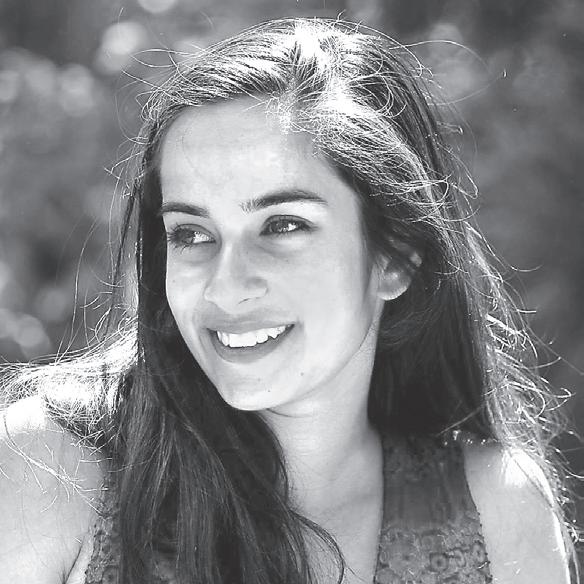
Pallavi Kenkare is a senior in the College of Arts and Sciences. She served as the opinion editor on the 138th editorial board and can be reached at pkenkare@cornellsun.com. Tis is the fnal installment of her column Jabberwocky
Everyone always says Cornell isn’t the place, it’s the people. Maybe this is naive, but it’s not like that for me. I know that I will take the people I’ve met here with me wherever I go (and if you think you know better, that bonds grow weak and memories fade, please don’t tell me.) My brilliant roommates, my dazzling best friends and my beloved coworkers will stay with me. So, for me, what I’m really saying goodbye to is the place.
Confession: I didn’t love Cornell the frst time I visited. I was an angsty 17-year-old, leaving mid-eighties weather in Georgia to land in chilly, low-ffties Ithaca. I refused to take the campus tour with my parents and somehow got lost on the slope, walking up and down and around until I exhausted myself.
I redeemed myself, though. By the end of O-week, I fell in love with it here — and when you know, you know. I walked an average of seven miles a day that
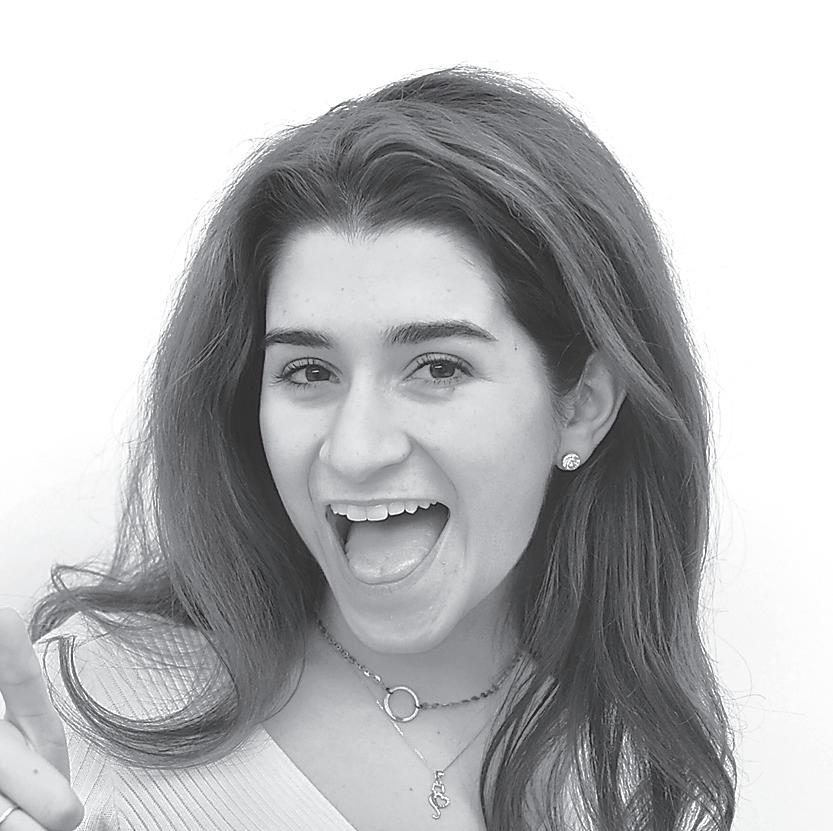
Amanda Cronin is a senior in the College of Agriculture and Life Sciences. She served as a news editor on the 136th editorial board and as a senior editor on the 137th editorial board.
Ifrst fell in love with Cornell at age ten. On a weekend visit, we did all the quintessential 161 list things: hockey game at Lynah, breakfast at CTB, walking the waterfalls, ice cream at the Dairy Bar. I was enchanted by the scenery and the campus culture, and my enchantment was enhanced by the many legends my mom (Class of ’87) shared with me. Cornell became my dictionary defnition for “college.” It’s image was infated like a parade balloon.
So come senior year of high school, despite touring dozens of other schools, I knew I already belonged to one place. I cried when I was accepted, ecstatic at the prospect of freedom to explore my multitude of interests.
Tis honeymoon came to a painful halt
August, exploring every bit of campus my legs would take me to. I visited Sunset Park, climbed up the highest tower of the Law School and hiked Buttermilk Falls. I came to adore my nook in Clara Dickson Hall, met the girls who are my roommates and best friends to this day and, when it came time to move out, wept to Harry Hudsons’s “Yellow Lights” through the last week (’til the boy across the hall threatened to throw my speaker out the window).
Maybe it’s silly to think that four years of swimming in First Dam and standing on the roof of Kennedy Hall and photosynthesizing on the slope — and yes, swotting in Baker 200 and crying in the cocktail lounge and working so hard to justify reveling in the good parts — is what it means to love Cornell properly, but maybe that’s the point. Maybe the point is for each of us to graduate thinking, this is the right way, the only way, to have spent the past four years.
I am thankful for the runs I’ve taken, across waterfalls, along the Arts Quad and towards a triumphantly ringing clocktower. I am thankful for the summers I gloried in and the winters I marveled at and the temperamental springs. I am thankful for the lessons learned, for the snow falls survived, even for that one year that did not once pull its punches. I am thankful for the people I’ve met, the professors who have taught me, the fairy tale buildings I’ve studied in, the knowledge I’ve gained and the millions of moments I’ve spent laughing on this treacherous hill.
I am thankful for Te Cornell Daily Sun, which is the reason I am able to write this article at all, and easily the most worthwhile thing I’ve done at Cornell — a responsibility that has humbled me, lifted me up and introduced me to men and women who are so much more at the ripe old age of 21 than I will ever be. When the beginning waves of a pandemic had just begun to break on Ithaca’s shores, my incredible editor in chief texted me a senior’s guest submission that I really should look at; as I edited it, and many times again throughout that year, I decided that working at Te Sun, gleaning insight into the joys and woes and
Maybe it’s silly to think that four years of swimming in First Dam ... is what it means to love Cornell properly, but maybe that’s the point. Maybe the point is for each of us to graduate thinking, this is the right way, the only way, to have spent the past four years.
ideas of Cornellians from all over campus, was the only way to love Cornell properly. Finally, I can say to all the people on Facebook who commented, “Who would publish this piece of garbage?” Hi! Yes, it’s me!
Tis is what I will graduate feeling, and what I wish for all of you.
So, to quote the immortal lines of Sarah Park ’20, whose grad column I was lucky enough to edit a year ago, “I hope you found a home here. I hope you found places in Ithaca that feel like magic. I hope you found people who make Cornell feel like a love story. I hope you found something or someone who made it hard to say goodbye to this desolate little icy town upon a hill in the middle of nowhere. I hope you fell in love with the person you became here.”
Because I did, and I hope you do too. As I sit typing in my slanty-walled little apartment in Collegetown, all I can think is, in the words of A.A. Milne, “How lucky I am to have something that makes saying goodbye so hard.”
once I actually began classes here. I failed my frst test. I hated and subsequently dropped a class. As the calendar pages fipped, I changed majors and friends. Experienced more existential crises and breakdowns than necessary (even for a dramatic 20-something). I felt both lost and completely at home. Yes, I crossed breathtaking gorges on my way to class. Yes, I was (mostly) healthy and happy. But the bubble was popped; the system was broken, college wasn’t quite the movie montage I had hoped it would be.
My personal revelation was echoed on a national scale; our country was also experiencing an identity crisis. After spending my pre-college years fghting for climate change policy reform and witnessing the victory of the Paris Climate Accord, a dumb despotic leader took the reins and dashed any (perhaps naïve) dreams of environmental salvation. Witnessing the actions of Trump’s administration revealed that democracy wasn’t some gleaming, infallible institution, but a ramshackle patchwork held together with crumbling bricks. If nothing else, my education here has revealed to me that the systems I once blindly trusted are really corroded and dysfunctional.
Making up to corruption and inequity is unsettling, but it’s also part of growth. I am privileged to have had my reverie shattered this way later in life. During our four years here, the class of 2021 has collectively witnessed a rollercoaster of unprecedented, challenging events locally and nationally. In response, we advocated for change. In some areas we took steps forward, in others, we took two (or three) steps back.
Despite these setbacks, being part of this inspiring Cornell community renewed my optimism that the corrosion can be
remediated and function can be restored. I still believe in the power of individual and collective agency. During my time on campus, I tried to chip away at these issues in my own way, through policy change advocacy, political campaign organizing and voter outreach. I had the opportunity to represent New York district 23 as a delegate on the local ballot. And when Ruth Bader Ginsburg ’54, one of Cornell’s biggest heroes, fell, I helped celebrate her legacy in a campus-wide ceremony. Honoring her life was one of the greatest honors of my life.
My optimism about college was also renewed. It was renewed by venturing beyond the confnes of campus and my own mind. I discovered the Black Diamond Trail through running half-marathons, Edwards Lake Clifs Preserve through biking, Cayuga Lake through kayaking (and wine drinking). I auditioned for Te Vagina Monologues on a whim and ended up onstage chanting “clitoris” 20 times to 1,000 people. I drove across upstate New York to talk with voters about their political malaise. Local farmers taught me about the wonders of hemp, inspired me to learn more and ultimately write a 70-page thesis.
As a freshman at Te Sun, I was entrusted to write news articles about campus events and given acronin@cornellsun.com.
As a sophomore, I was given a desk and welcomed to an ivy-covered building that would become my second home. And as a senior, I was given the opportunity to shape and contribute to our collective record of the historic events of the 2021 election.
Te venture I cherish most wasn’t a crazy adventure or an intense interview, but a humble meal. My frst semester, I accept-
ed a dinner invitation to my Intermediate Yoga professor’s house. It was the best RSVP I’ve ever made. His family helped me discover the true meaning of community. Over countless plates of squash, rice, vegetables and ambrosial desserts, I shared laughs and bumped elbows with fellow students and Ithacans young and old. Tis Friday macrobiotic, vegan meal ritual continues to this day and has been one of the most precious parts of my time here.
So what would I tell my younger, eager freshman year self? It’s hard. Harder than you expected. It’s not a straight or predictable path to the fnish line. Your seasonal afective disorder will not serve you. Balancing work and life is an impossible pursuit, and the weather is depressing for 75 percent of the year. But you are lucky to attend school in one of the most beautiful, vibrant, crunchy college towns in the country! You can fnd fulfllment if only you step out of your comfort zone, and say yes to dinner invites! Te Commons is only 15 minutes away if you sprint down Bufalo Street! Tis place has so much to ofer beyond academics! Oh, and no, you will not master latte art, but you will master mediocre barista-ing at your dream workplace — CTB!
For these four years, there’s no place I would’ve rather grown than Ithaca. After listening to many tales of Cornell glory days gone by, I often wonder how I will remember and measure my trials, triumphs and adventures. Will it be in bagels, in slope sunsets, in midnight edits, in cups of cofee? In print pages, miles of hills walked, in laughter, in tears?
To continue reading this column, please visit cornellsun.com.
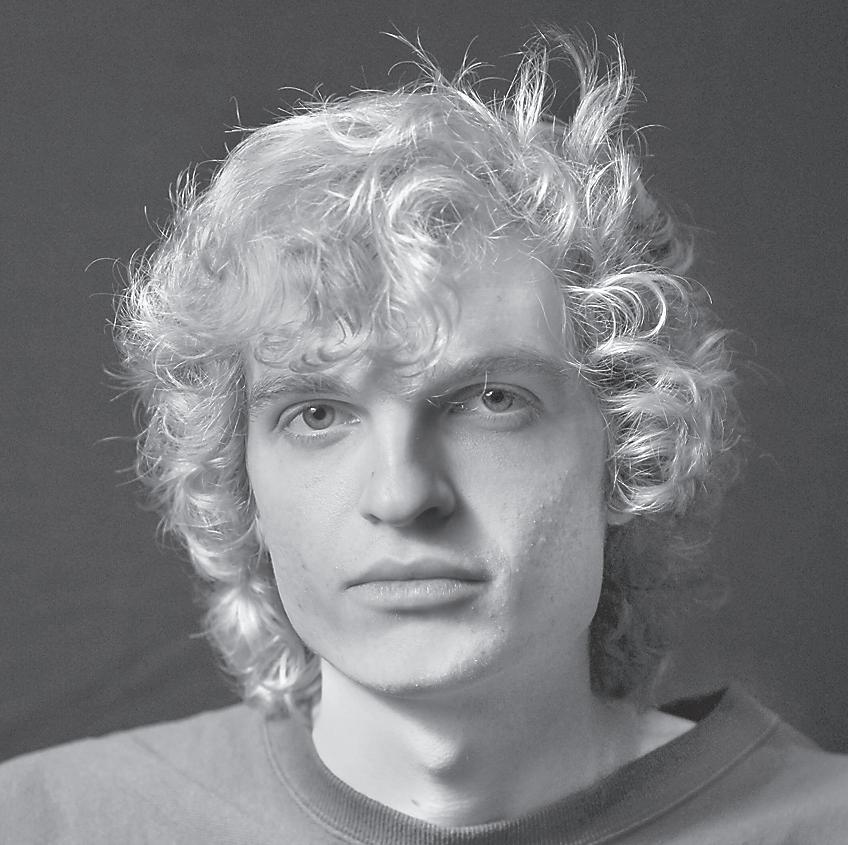
Daniel Moran Guest Room
In December 2019, I got a text from my cousin, Bill, out of the blue. We hadn’t talked in almost a year, but he read Te Sun’s albums of the decade list, and like everyone else who read it, had a bone to pick with our ranking. It was probably fair; after all, Clairo
The more we talked ... the more I realized how much of his taste was passed down to me. Growing up, I always sought an older brother figure, and I got that from Bill. I took his music taste, his hand-me-downs and later his love for writing.
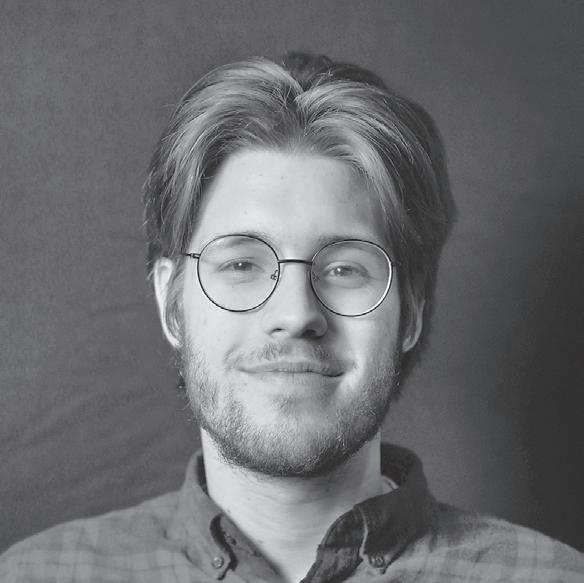
Sean O’Connell Guest Room
Overwhelmingly, other graduation column writers (bless them, all of them) will describe their goodbyes from Cornell as “bittersweet.” I respectfully disagree — I sufered. College transformed me from a bashful nervous wreck to a more self-assured nervous wreck; there’s few things you can really change in a person. A lot of this, you might be surprised to hear, revolved around talking. When you engage in a conversation, no matter how small the topic, you trade bits and pieces of your inner self as concessions for social activity; there is no interaction without at least some vulnerability exposed on both sides. I found this a profoundly painful undertaking, which is ironic because I have a giant mouth.
So how did someone as antisocial as I decide that college journalism was a fne way to spend the past three years? Writing gave me the opportunity to create a barrier
‘Good
was ranked above Kendrick Lamar, Barter 6 was above Channel Orange and Title Fight’s Hyperview made it instead of Floral Green Te more we talked about the list, though, the more I realized how much of his taste was passed down to me.
Growing up, I always sought an older brother fgure, and I got that from Bill. I took his music taste, his hand-me-downs and later his love of writing. I spent Tanksgiving with him, and after debating Mac Miller’s discography for hours, I wrote my frst article for Te Sun (which was rejected by Pete which convinced me to compet for assistant Arts and Entertainment editor so that I could force it through). Tat conversation in 2019 came out of nowhere, and reminded me why I started writing in the frst place.
He passed away later that night.
Tat conversation should’ve been the perfect closure, but it was so unexpected that I couldn’t handle it. His death hung over me for all of 2020. Suddenly Te Sun, which was the most consistent part of my life since my sophomore year, was inseparable from grief. Te joy I got from writing was gone, too. Despite that I kept with it and went through compet again because of the people around me — thank you Jeremy, Emma, Pete, Maryam and Amina. I don’t think any of you knew what was going on, but all of your positivity kept my head on straight.
My friend Raphy wrote in his senior column that “we are who we pretend to be.” For me, that meant pretending that there was nothing weighing on me, until I eventually believed it. Compet is a stressful enough process on its own, but I didn’t know any better besides faking as if there was nothing hanging over my head, but that did get me through it, back to loving editing and working with my dream team of writers. Fake it ‘til you make it, I guess.
Tis is the hardest thing I’ve ever written. I don’t want this fnal bit of closure. I don’t want to acknowledge that this fnal connection I have with my cousin is coming to an end. But Te Sun gave me this last memory, and so many other memories over the last three years, and for that I am eternally grateful. While I am endlessly thankful, this column is not endless, so here’s a few thank you’s we could ft:
Pete, Jeremy, Emma and Brian: I couldn’t have
This is the hardest thing I’ve ever written. I don’t want this final bit of closure. I don’t want to acknowledge that this final connection I have with my cousin is coming to an end. But The Sun gave me this last memory, and so many other memories over the last three years, and for that I am eternally grateful.
picked a better team to work with if I tried.
Connor and Melat: Tank you for always going out of your way to read everything I wrote, no matter the relevance of the topic to you. Tere were so many times I felt like my writing was nothing more than screaming lukewarm takes into the void, but you two always kept that feeling in check.
Liv: I remember leaving our frst date to write an article about Telfar and New York Fashion Week, which probably should’ve been a heads-up into the rest of our relationship. Tank you for dyeing my hair, and for everything else. I love you.
Pablo and Nick: Tank you for always pushing my creative limits and questioning what I’m capable of. Working in the same spaces as you two always inspires me and gives me endless hope for the future.
Mom, Dad and Erin: Tank you for all the support forever. I wouldn’t have gotten to Cornell without you, and I certainly wouldn’t be graduating without you.
between a painful and often disappointing reality, and my own psyche. Tere’s so much information — superfuous or otherwise — jockeying for attention in one’s head at every moment, muddying any sense of inner peace or mental clarity. Writing let me take a second, a minute, an hour to gather my thoughts and consider the message of what I was creating. When I wrote for news, every word I added to the document was carefully considered, rejected, re-added and then edited once more for good measure. I didn’t have to add anything about myself; it was guiltless and amazing. What I did have was leeway to focus on how words, together, would convey the emotions collected over days of interviews. Tere’s nothing as self-afrming as looking to your fellow news editor, calling their attention to a less-than-imaginative lede on one of the stories we would be working on, and agreeing that “we can do better.”
By focusing on others’ stories I learned to tell my own. Vulnerability, accidentally spilled over in casual conversation, became less of a concern because I gained the ability to self-regulate on my own terms. News writing, then, begat my interest in other forms of writing, including personal essays and fction, where I could pick and choose what parts of myself I added to the Google doc. I wrote a story about loneliness, another one about working long hours at the liquor store, and the best thing was that it never felt like a chore or like I was selling myself short. I still wrote for news, but now with an understanding of how each word, no matter how dispassionate, could evoke a choice emotion in Te Sun’s readers.
A large part of this was the afrmation provided by my place at Te Sun. I started as a staf writer, had my share of fuf pieces and Student Assembly gossip, slowly building up the confdence to keep writing
at least once a week. Te “big stories” — revelations that could shake up campus — correspondingly emerged as I developed that sense of recognizing dissatisfaction that journalists need and novelists want. It’s really about listening to what people say and don’t say. I heard a one-of comment about Cornell’s code of conduct revisions from an administrator a full year before they were suggested; a friend spreading a rumor about a student contracting COVID-19 at the onset of the pandemic; a union member’s pressed smile and refusal to talk at a Republicanled rally in the Commons. Each of those moments was accompanied with a little voice in my head saying, “this is a story.” And most of the time I was right, especially as a little more exploration inevitably revealed controversy lying underneath a thin veneer of normalcy. It’s a rule that when people are pissed, you have a story — stories don’t exist if no one cares about them, and this includes the writers themselves. I suppose that would be my advice to students looking to cut their teeth at Te Sun: always follow the emotions, but not just others’. Trust what you see and hear, but also how you feel. At the end of the day, your readers won’t remember exactly what they read, only how and what they felt while reading it.
Emotion must work as a guide because what else is there to follow? Words lie. People lie. Everything, at some point, will lie to you but your emotions won’t. It took me four long years to learn that, but I’m glad I did.
I spent the last few paragraphs talking about personal growth, so I’m folding and giving in to my desire to appreciate the people that have helped me get to where I am now (alive, mostly well, happy). Maybe I was too harsh in casting aside the bittersweet emotions voiced by so many of my peers. Without heartbreak, without anguish, without redemption, I could never grow as a writer or as a person. Emotion must work as a guide because what else is there to follow? Words lie. People lie. Everything, at some point, will lie to you but your emotions won’t. It took me four long years to learn that, but I’m glad I did. Just like Jay-Z and Kanye have done before me, I want to do a few shout outs to everyone that helped me get here. Tanks to the entirety of Brooklyn Mama, te quiero mucho, Dad, I love you, all my sisters, you know the deal. Besos y abrazos para toda la familia en Buenos Aires!
Another shout out to the tenants, the banned, Space Fam, Cat, Sham, Oli, Caleb, David, anyone else that has ofered a kind word in a bad time. Final thanks to all the professors that pushed me in the right direction — Zukovic, Green, Klein, for starters, but there’s more that I’m not mentioning. I wouldn’t be writing this column without all of you.




By LIAM MONAHAN Assistant Sports Editor
After over a year without athletic competition, the men’s heavyweight rowing team brought Cornell athletics back to Cayuga’s waters in a dominant performance against Marist and No. 17-ranked Hobart on May 8.
The varsity, second varsity and third varsity teams each took first in their respective regattas, sweeping the competition in front of the home crowd after not taking to the competition field since the fall of 2019. With the victory, the varsity team moved up to 15th in the latest Intercollegiate Rowing Coaches Association poll, which ranks college rowing programs across the country.
The stands, however, were not as packed as they were at the team’s last outing. Cornell’s social distancing guidelines prohibited large gatherings on the shore, meaning friends, family, and fans were more spread out than past years.

As opposed to lining the shores to pre-pandemic levels, organizers set up designated seating and live streams of the races to accommodate social distancing regulations.
Even with smaller crowds, the prospect of being back in action was enough to get the team excited to get on the water once more.
“As
“The enthusiasm and spirit wasn’t lost on any of us,” said Teevyah Yuva Raju ’22, one of the team’s coxswains. “The energy was phenomenal and as Cornell’s first sports competition since the pandemic began - we were eager to take the race on by storm.”
Despite holding practices since last year, many rowers held doubts about their chance to compete during the 2020-21 academic year due to the Ivy League’s decision to cancel multiple athletic seasons — which took a toll on the team’s morale.
“At the beginning of this year we were told to expect an incredibly low chance of racing, and as coxswains the responsibility falls on us to ensure that our teammates are motivated,” Yuva Raju said. “So we were grateful for every opportunity we got to be at the boathouse or in Teagle, even if it was in small groups of 10.”
While the team was the first at Cornell to receive the long-awaited news that they could return to competition, they were only given a week’s notice to become regatta-ready. The crunched schedule, however, did not deter the members of the heavyweight rowing team. After months of preparation, they were finally ready to put their work to use and give it their all in the boat.
“It was an electrifying feeling for our coaches and teammates to be back on the water doing what we love most,” Yuva Raju said. “This experience gave us the opportunity to demonstrate through passion, determination, and teamwork we can overcome any barrier that stands in our way.”
With the rowing team’s dominant outing being the first athletic competition to return, athletes see a glimmer of hope as they eye their seasons next year.
Still, easing back into old practices takes time. The most recent regatta showed that Cornell is still willing to get creative in the name of public safety and fan satisfaction.