The Corne¬ Daily Sun

By DYLAN McDEVITT and RAPHY GENDLER Sun Senior Writer and Sun Sports Editor
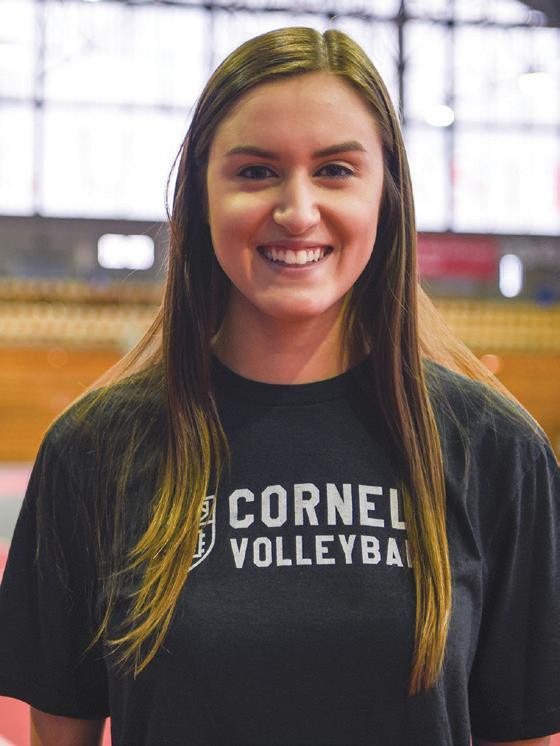
After Sarah Murray ’20 stole second base in a game against Akron in March 2017, she knew that something had gone wrong. Murray had collided with the opposing shortstop and immediately didn’t feel right.
“You’re OK, right?” her coach asked. Murray felt she had no choice but to say yes. She stayed in the game despite having suffered a concussion.
After the game, the first of a doubleheader, Murray found out that the team’s trainer at the time, Becky Guzzo, wanted to sideline her. However, according to Murray, head coach Julie Farlow ’97 told Guzzo — a graduate assistant athletic trainer — that she couldn’t pull Murray from the game.
the infielder told anyone that she had been forced to stay in the game, she’d be benched for the rest of the season. Murray said she felt “scared” and “helpless.”
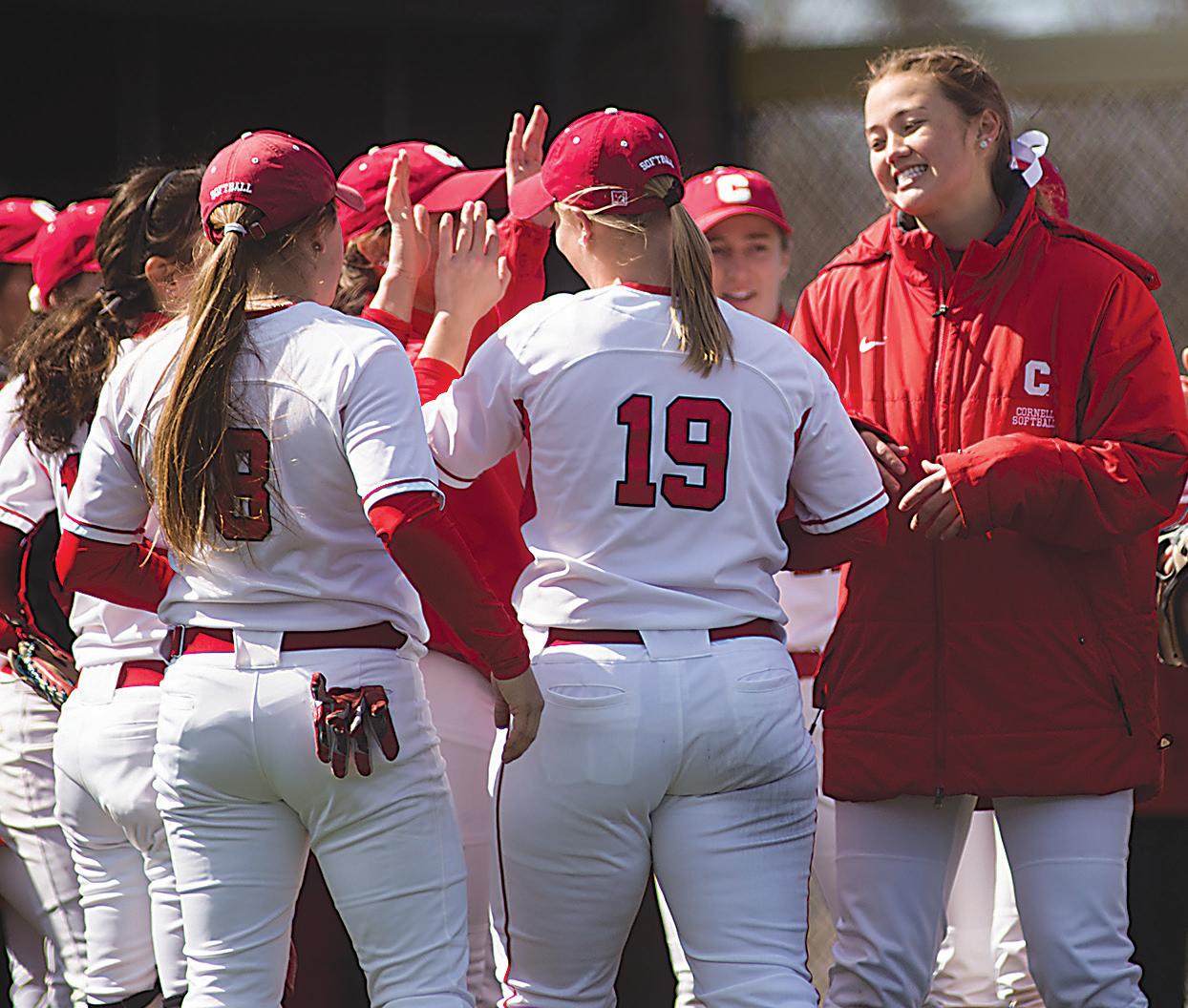
After the first tournament of her junior season, Murray quit the team. She is one of seven current and former Cornell softball players who said that Farlow has engaged in a pattern of mistreatment during her four years as head coach, including neglecting established concussion protocols, mishandling other injuries and mental health issues. Meanwhile, Cornell didn’t do anything, they said.
Jeremy Hartigan, a Cornell Athletics spokesperson, said that Farlow declined to comment.
Murray said Farlow, then in her second year as head coach, told Murray, then a freshman, that if
“I have a strong sense of what is going on with softball, and am aware that some softball players are not happy with their team experience and are critical of the coaches and the department,” Andy Noel, director of athletics, wrote in a statement to The Sun.
Balooning loans| As University-issued grant aid has stagnated in recent years, students have been forced to take on more — and bigger — student loans.
By JOSH GIRSKY Sun Senior Writer
Eddy Medina ’17 was crying in the financial aid office in the fall of his junior year. He couldn’t pay his tuition, his family didn’t have the credit to take out more loans and he was about to be withdrawn from the University. He was sitting with a financial aid counselor, and he had just asked her “what the hell do I do now?”
He asked if he should take time off from school to work and make more money, but that wouldn’t work, as it would increase his income, and that would have lowered his financial aid package. The counselor asked if he had any family who
could help him pay for college, but that option wasn’t immediately available to him either. The counselor started tearing up too. She told him she was sorry, and that there was nothing she could do. Medina said his family’s socioeconomic status is “as middle class as middle class gets.” After being withdrawn from the ILR School in the winter of his junior year for failure to pay his tuition, he was able to return in time for spring semester by securing a loan with the help of his grandmother, who cosigned despite the fact that she cannot speak English.
By SOPHIE ARZUMANOV Sun Staff Writer
For the Muslim community at Cornell this year, this year’s final weeks will be more complicated than usual. For only the second time since 1989, Ramadan — a month-long holy period that requires adherents to avoid eating and drinking from sunrise to sunset — will coincide with the exam period.
This year’s Ramadan will begin on the evening of Sunday, May 5, and will end the evening of Tuesday, June 4. In order to accommodate the Muslim community, some dining halls will have extended hours until 9 p.m. This schedule will be in effect until May 21 for Appel’s North Star Dining Room and May 17 for the Robert Purcell Marketplace Eatery and Cook House Dining Room.
These dining halls will also offer take-out con-
tainers and breakfast boxes for those who wish to eat after 9 p.m., or in the early morning hours before sunrise.
However, because Muslims break their fast at sunset, this can sometimes occur during a student’s evening final or affect their ability to concentrate when studying.
“Having to wake up at 3:30 a.m. everyday to eat before the sun rises is challenging especially because it makes it hard to study and concentrate later,” said Malikul Muhamad ’20. “It’s really challenging to find time to study for finals and work on projects while also finding time to worship.”
At the same time, while The New York State Education Law §224-A requires fac-
See RAMADAN page 5
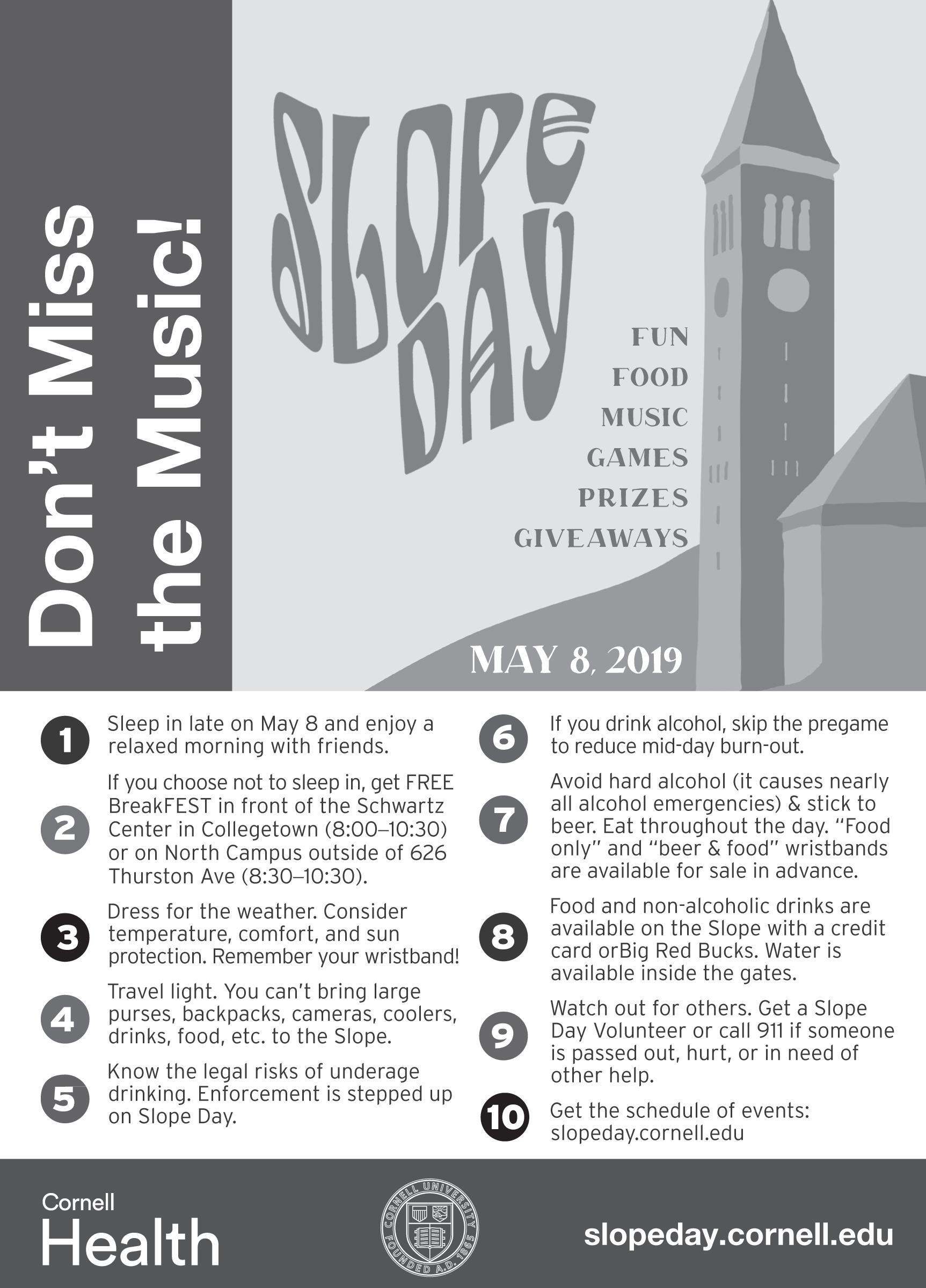
As per recent tradition, Slope Day will be held the day after classes end to celebrate the end of the academic year. Free
Free breakfast sandwiches and fruit will be served at Collegetown and North Campus from 8:30 - 10:30 a.m.
If you have not already obtained your Slope Day wristband, you must pick one up today with a Cornell or government-issued ID.
Cousin Stizz and Ezi will open the concert, followed by Steve Aoki. Weather
Expect cloudy skies and chilly temperatures.
Concert Begins: Noon
Book Launch: Transforming Food Systems For a Rising India
3:30 - 5 p.m., 401 Warren Hall
Investigating Knowledge Systems and Narratives: Anthropological Contributions Towards Transformative Change
4 - 5:30 p.m., 165 McGraw Hall
Mechanics of Architected Materials: From 3-D Printed Foams to DNA Origami 4 p.m., B11 Kimball Hall
ORIE Colloquium: New Breakthroughs in Scheduling Theory 4:15 p.m., 253 Rhodes Hall
Mandarin Chinese Conversation Hour 4:30 - 5:30 p.m., G27 Stimson Hall
Europe Day: Celebrating CIES Fellowship Recipients 4:30 p.m., A.D. White House
Visual Culture Colloquium: Asli Menevse
4:30 p.m., History of Art Gallery, Goldwin Smith Hall
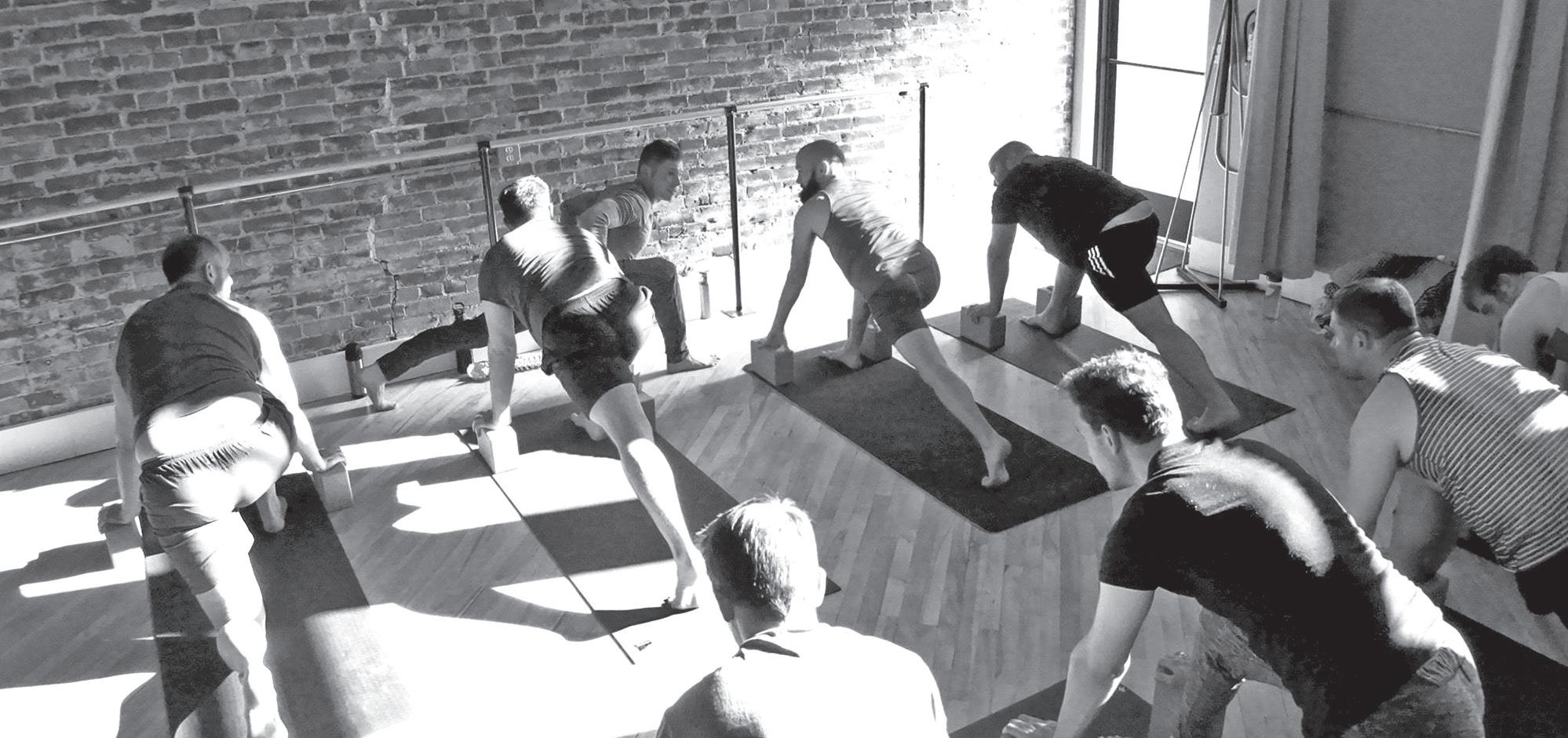
YoGay Yoga With Adam Ayers
6:30 - 8 p.m., Room 320, Schwartz Center for Performing Arts
Drop-in Breakfast at the Engaged Cornell Hub 8:30 - 10 a.m., Third Floor, Kennedy Hall
ORIE Colloquium: The Seven Reasons Most Machine Learning Funds Fail 11 a.m., 253 Rhodes Hall
Cornell Vet Sustainability Club: Spring Clothing Swap 11 a.m. - 7 p.m., Green Room, College of Veterinary Medicine
Communities’ Visions of Development In Montes de María, Colombia 4 - 5 p.m., 401 Warren Hall
Controlled Environment Agriculture’s Role in Urban Agriculture 4 - 5 p.m., 404 Plant Science Building
Science Controversies, Political Opportunities In Contemporary China 4:30 - 6 p.m., G08 Uris Hall

By ANNE SNABES Sun Senior Writer
Walter Salas ’19 showed up in a full suit with his name-tag for a prelim this spring. He had just come from his job at the Statler Hotel and did not have time to change.
Salas took the prelim, and then returned to the Statler to close the hotel’s restaurant for the evening. He said he ran out of time on the exam and received a lower score on it than he would have liked.
“I actually did know the information,” he said. “I just didn’t manage the time well because I had just come from work.” Salas, who serves as student director of food and beverage for the Statler Hotel, works 40 hours a week.
According to the Financial Aid office, 2,604 Cornell students are participating in work-study jobs in 2019. 2,528 students held work-study jobs in 2018 and 2,293 students in 2017.
According to Cornell’s Student Employment website, most financial aid packages require students to earn money through on-campus jobs, which Cornell and the Federal Work Study Program jointly pay for. The website states that students work about nine hours weekly on average.
However, some students work far more than nine hours for financial or other reasons, and some even balance multiple jobs.
Many students work long hours because they need to earn money. Salas applied to work at the Statler on his third day at Cornell in order to “support [himself] financially.” He decided to live off-campus because living on-campus was too expensive.
“I needed to meet rent,” he said. “I needed to pay bills. That’s why I started working. It was a well-paying job.”
He started out as a server at Taverna Banfi, became a supervisor during his junior year, and was promoted to a student director at the beginning of this semester. He said he is currently financially independent from his parents and even sometimes has to “help them out” if they cannot meet their rent.
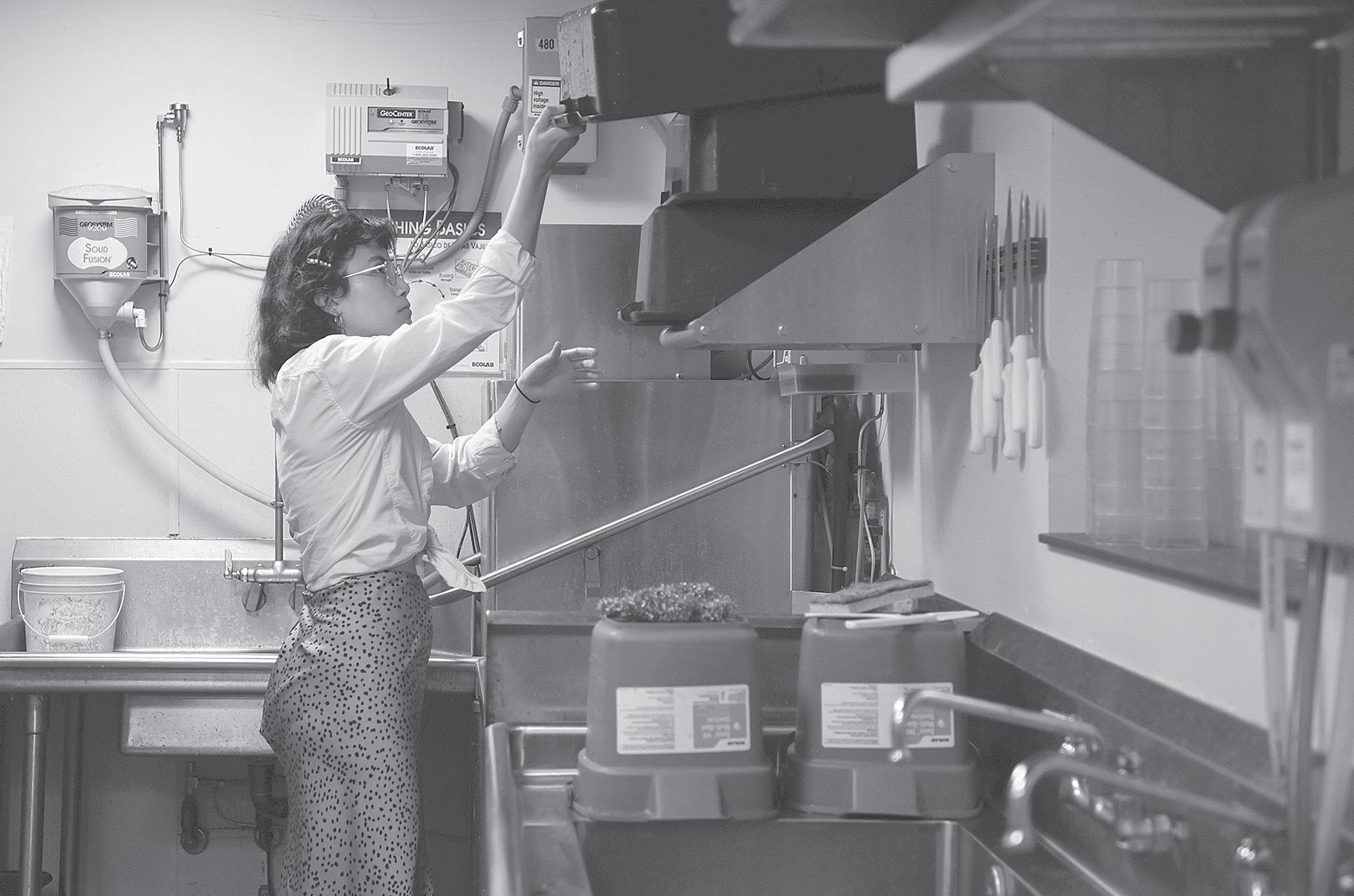
man year due to her grades dropping because of how much she was working.
“I had never made as much money as I was making, and I needed to pay off bills, so I worked 40 hours a week pretty much,” she said, “and then my school work just went downhill. So the next semester I took off a lot of work and I just did school and my GPA went up like crazy.”
“I needed to meet rent ... I need to pay bills. That’s why I started working. It was a well-paying job.”
Suero and Salas said that some professors are accommodating of the fact that they work. One of Salas’ professors even worked full-time in college himself. Given the shared experiences, he has given his students extensions and been “a little bit more lenient,” Salas said. However, not all professors are not so understanding.
Walter Salas ’19
Tatiana Suero ’19, a server at Taverna Banfi, also works out of necessity. She is the oldest of five siblings in her family. Suero pays for school, her rent, her food and other expenses. She said she also pays the phone bill for her mom, her sisters and herself.
“I don’t want to burden my parents more and have them pay for things that I need, if I can just do it myself,” she said. However, working for such long periods of time sometimes comes with negatives side effects. Sometimes, it affects their academic performance; other times, it deprives them of the free time to attend social and extracurricular events.
Suero said she was placed on academic probation her fresh-
Salas said that in one recent lab class, the professor said an assignment was due the next day. The professor had assigned it ahead of time, but it was not possible to complete the assignment without the lab experiments from that day. Salsa, who went back to work right after that class till midnight, did not have time to complete that assignment on time.
“[A lot of professors] just expect you to be here solely to study, and they don’t understand that you have bills to pay,” he said.
Last semester, Nicole Oliveira ’20, an employee at the Temple of Zeus and the school and families intern at the Johnson Museum of Art, worked three jobs and took 18 academic credits. One of her jobs, at the photo lab in Gates Hall,
had 9 p.m. to midnight shifts.
“I would say I definitely didn’t get that much sleep that semester, and spent a lot of nights in the like Physical Sciences Building writing papers until like 5 in the morning,” she said.
“But I mean, it got done.”
School work isn’t the only thing affected by the necessity to work. Many students lose out on social or extracurricular opportunities due to the demands of their jobs.
Clara Ricketts ’19 works at Uris and Olin Libraries and has a paid research position with a professor. At the same time, she is also a member of Pi Lambda Sigma — an organization for students interested in careers in politics or government — but hasn’t been able to attend a general body meeting this semester as it always took place during her shift at Uris.
Kayla Aulenbach ’19, a residential advisor at 112 Edgemoor and a service center assistant at Cascadilla, said she has missed out on social events due to work. She sometimes cannot eat dinner with friends because of work. However, Aulenbach noted that this hasn’t been “terrible.”
Aulenbach also mentioned that as an RA, working with transfer students has been fulfilling, as she herself is a transfer. She explained that RAs have “a lot” of potential to impact the residential experience at Cornell.
“Sometimes residents just need somebody to talk to or need somebody to look up to, and I really enjoyed being that person,” she said.
By GRACE LU Sun Staff Writer
Anabel’s Grocery — a student-run market founded to address food insecurity on Cornell’s campus — is set to reopen this fall after having spent the past semester trying to “reflect and reassess” the business’ operations.
Prompted by a survey that found that more than one in four students skip meals due to financial restrictions, the grocery
originally opened almost two years ago in the fall of 2017 with the goal of providing a healthy, affordable source of nutrition for Cornell students — most of whom live miles away from supermarkets such as Target or Wegmans.
“Food insecurity is being unable to access food on a regular basis in a socially acceptable way,” said Isabel Lu ’20, a student who works at Anabel’s. “That could either be affordability, access, transportation, or cultural expectations.”

“I grew up in a food-insecure household, so Anabel’s mission was really important to me,” said Emily Wang ’20, a student organizer at Anabel’s. “I am no longer food-insecure, but it’s an issue that affects so many people at Cornell. That’s why Anabel’s mission was what it was when it was first begun: quashing food insecurity.”
However, over its past semester hiatus, Anabel’s has taken the time to revamp their business model and pinpoint even more issues in addition to food insecurity — such as nutrition and environmental sustainability.
“We believe that Anabel’s, as a food hub for all students, can cultivate a community around sustainable production, mindful consumption, and education around the systems in place that create these inequities in our food supply,” Anabel’s said in a statement to The Sun.
This shift in mission was driven by its student organizers’ belief that it would bring about more of a community around food.
“The problem with advertising our food insecurity mission was that there was still a stigma around what it means to be food-insecure, and we wanted our business to be as far-reaching as possible,” Wang said.
To do this, Anabel’s has chosen to purchase affordable and locally grown produce for their new store. It has also used
its resources to subsidize costs, making its fruits and vegetables accessible to a larger community.
“We also want to have more speakers and cooking classes to foster a community feeling,” Lu stated. “All of this is about uniting people through a safe space for food.”
Another undertaking that will now be included in Anabel’s mission is AEM 3385: Social Entrepreneurship Practicum: Anabel’s Grocery, which aims to teach students the philosophy of food insecurity and to orient students towards working and taking on responsibility at Anabel’s Grocery.
“Anabel’s is completely student-run,” Wang said. “So it’s important that students are educated about how to run the business thoroughly. AEM 3385 teaches nonprofit management and collaboration to students so that, when the time comes, they can feel comfortable taking on a role at Anabel’s.”
Both Lu and Wang have taken the class and advocate for food justice through Anabel’s as well as other ventures.
“For me, personally, the knowledge of learning to run a non-profit and working with other people are extremely valuable experiences,” Lu said.
Grace Lu can be reached at glu@cornellsun.com.
However, I have no basis for believing that Coach Farlow has acted in a destructive or inappropriate manner or with any intention but to help her team improve.”
Mishandling of Injuries
Farlow — a member of the Cornell Athletics Hall of Fame — took over the program in 2015 after the retirement of Dick Blood, the second-winningest coach in Cornell Athletics history. In four seasons with Farlow at the helm, Cornell has an overall record of 47-121-1. Since Farlow became head coach, the players said, she has paid little regard to players’ wellbeing.
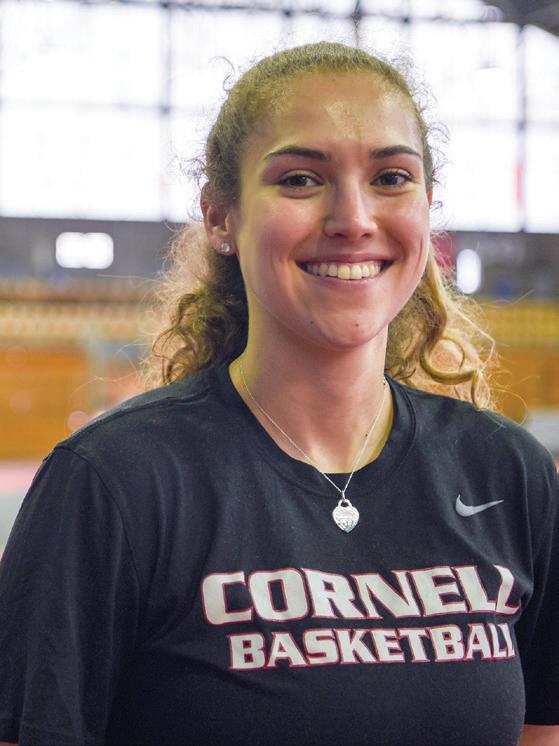
Olivia Lam ’19, a catcher and the only senior on the 2019 team, said she suffered a concussion in practice during her freshman season in 2016 after being hit in the facemask by a line drive. Sidelined for weeks, Lam was required to take the ImPACT test, an evaluation concussed athletes must pass before they can return to the field.
Lam said she cheated on the test by using her cell phone to take photos of screens that she was supposed to memorize. After passing the test, Lam called Farlow and told the coach that she cheated. Lam said the coach laughed.
“Athletics has not received reports of incidents of interference with concussion protocol by Coach Farlow,” Andy Noel, director of athletics, wrote in a statement to The Sun. “Further, coaches don’t have an opportunity to override decisions made by our Sports Medicine staff.”
Lam, who suffered a torn rotator cuff this season, said Farlow repeatedly tells athletes that there’s “no such thing as an overuse injury.” According to both Murray and Lam, Farlow
says injuries occur because players don’t use their muscles, are out of shape or aren’t throwing enough. According to Murray, an injury means “you did something wrong.”
Tori Togashi ’18 and another former player, who asked to remain anonymous because of medical confidentiality, told The Sun that Farlow had explicitly told them to participate in full workouts even when doctors and trainers had advised against it and when the activity caused them severe pain. Farlow had instructed Togashi to learn to “work through the pain,” she said.
Athletes have gotten in trouble when they’ve had a trainer help them stretch before games, according to Murray and Lam. Athletes’ usual practices do not include sufficient time for stretching, Lam said, then Farlow “wonders why people pull muscles.”
Hillary Dole ’21 quit the team in September because she “could not handle the emotional abuse that Julie Farlow put me through,” she said in an email to The Sun.
Near the beginning of the spring 2018 semester, Dole sustained a concussion, a broken nose and fractured teeth during an incident at a team weightlifting session. Dole said she received “significant pressure” to return to practice before she was ready and was encouraged to watch practices despite doctors’ concerns about the effects of light and loud noises.
“[Farlow] was overall unsympathetic and did not [care] about the physical trauma I had endured,” Dole wrote in the email. “She rarely asked how I was feeling, and did not ever check up on me herself. The only time she did was to ask if I had an idea about when I would be back to playing.”
Dole said that after about a

month, she was cleared to play but had to play “catch up” the rest of the season. Dole said she felt like Farlow was holding the injury against her.
“It is hard to put into words but Coach Farlow was constantly mistreating us and making us feel miserable at all times,” Dole said. “As a player, I have never felt so meaningless.”
“She made me feel small and worthless, and imposed on me a lack of motivation and significant anxiety,” Dole wrote in a later email. “[Every day] I showed up to practice I knew I was going to be miserable.”
Murray, who said she struggled with mental health issues during her time on the team, was on medication during the 2018 softball season. Although the medication was necessary, Murray said Farlow expressed disappointment that the medication made her a “different person” at practices.
According to Murray, Farlow called her a “liability” and said she was “not dependable” because of her mental health issues. Farlow suggested Murray get additional counseling so she could return to previous form — not because the coach cared about her student athlete, according to Murray.
Togashi said that she felt as though Farlow often targeted her “as an individual” and that the coach’s style created something that “was definitely not a healthy environment.” Another former player told The Sun that she required six months of therapy after she stopped playing.
Murray, who said she considered quitting “ever since I got here,” said Farlow cared exclusively about her players’ performance, but not their health or lives outside softball.
During one practice, Lam suffered a panic attack and left practice for the team locker room. According to Lam, Farlow asked players “what’s wrong with her?” and did not accept that Lam’s panic attacks “happen sometimes.”
“You’re not a person to her, you’re a player,” wrote a current athlete — who asked not to be named — in a text message. “And if you’re a player who’s not in the [starting] nine she really couldn’t care less.”
“If a player had a panic attack at practice or a workout, an athletics trainer would be present to assist,” Noel said. “If that student-athlete received care by another staff member, I would
expect the head coach would continue to hold practice for the other members of the team. I can also imagine a scenario where a coach speaks very bluntly to or about a student-athlete’s ability or efforts. All coaches have to have these tough conversations from time-to-time.”
Despite Complaints, Cornell Stays Silent
Some of the players said they voiced concerns with Farlow’s hostile team culture in the evaluations without any response from Cornell Athletics. Togashi said she indicated on a survey that she wanted a meeting with Noel, but never heard back from the officials.
“For years now we have reported her utter disregard for mental and physical health and the athletic department has turned a blind eye,” the current player wrote in a text message.
At the end of each season, all Cornell student athletes are asked to complete a Qualtrics survey regarding their experience with the team and the coaches. A summary report of every sport, which includes responses by all athletes who choose to respond, will be given to Noel.
“If I deem it necessary, I take appropriate action. Yearly evaluations are not intended to replace the necessary, ongoing dialogue between students and coaches that should be taking place through the year. Studentathletes are educated about various resources available to them to address any concerns about their Cornell experience,” Noel said.
Without any response to their complaints in the online evaluations, Lam and Togashi requested and were granted a meeting in 2016 with Sarah Wattenberg, then the associate director of Athletics for student services.
Wattenberg no longer works for Cornell and her position is now occupied by Carmen Rogers.
According to Lam and Togashi, Wattenberg said in the meeting that she shared their concerns and that she would pass them along to athletics officials, but that any decision making in response would be out of her control. The players said they never heard anything further from Cornell.
The team met with Shelley approximately three times during the fall 2018 semester, but Dole said talking to administration is “useless.” Players have filed “countless negative reviews” of Farlow, who has been at Cornell since her graduation in 1998,
and “nothing ever happens.”
Dole said she met with Anita Bremmer, a deputy director in the athletic department, “and [Bremmer] said that she did not realize things were so bad and would investigate further … but then nothing happened in return.”
Future of the Softball Team
When Lam came to Cornell, she was one of four players in her freshman class. Four years later, she’s the team’s lone senior.
In addition to Lam’s three classmates, at least eight non-senior players have not returned to the team in Farlow’s years as head coach. According to rosters on the Cornell Athletics website, two athletes didn’t return after the 2016 season, one didn’t return after 2017, and at least five — including Murray — didn’t return after 2018.
In an initial email to The Sun describing the “mistreatment” by Farlow, Murray and Lam said that 11 players have quit the team in the last five years, “all beginning with the start of the contract of our current coach.”
Eight of the 17 players on the 2019 roster are freshmen; many of them are in starting roles. Lam said it has been difficult for the team to compete with a mostly “new team” every season.
Although Lam has stuck with the team for the “love of the game,” she said she had come to the realization that she would “never recommend” that a softball player come to Cornell. It was this realization that drove her to speak out.
Murray said she told a previous traveling softball coach not to send players to Cornell. If Murray could go back in time, she said she wouldn’t have chosen Cornell.
Murray and Lam initially reached out to The Sun to detail their experiences, citing a recent report in the Daily Pennsylvanian which uncovered similar mistreatment and low retention rate in the Penn softball program. Lam said she’s come to realize that her experience is not unique, it’s “not normal” either.
Cornell’s 2019 season came to an end on Monday afternoon. The Red amassed a 10-36 record and finished in a tie for last place in the Ivy League.
“It’s not worth it,” Lam said.
Dylan McDevitt can be reached
Raphy Gendler can be reached at

years old at the time, and her parents co-signed for her, but they couldn’t take it out themselves because of the state of their credit.
reserves and the Cornell Lending Library, but she said it would be easier to do well in classes sometimes if she could afford to buy a textbook.
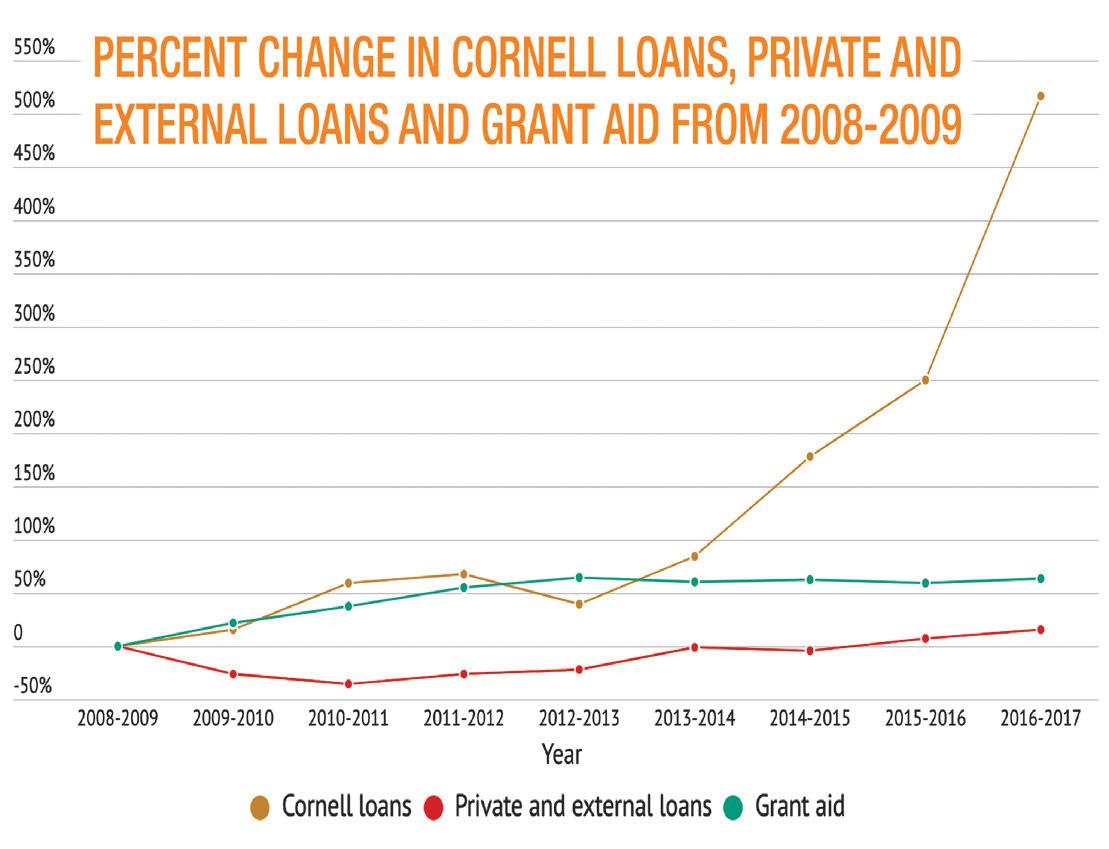
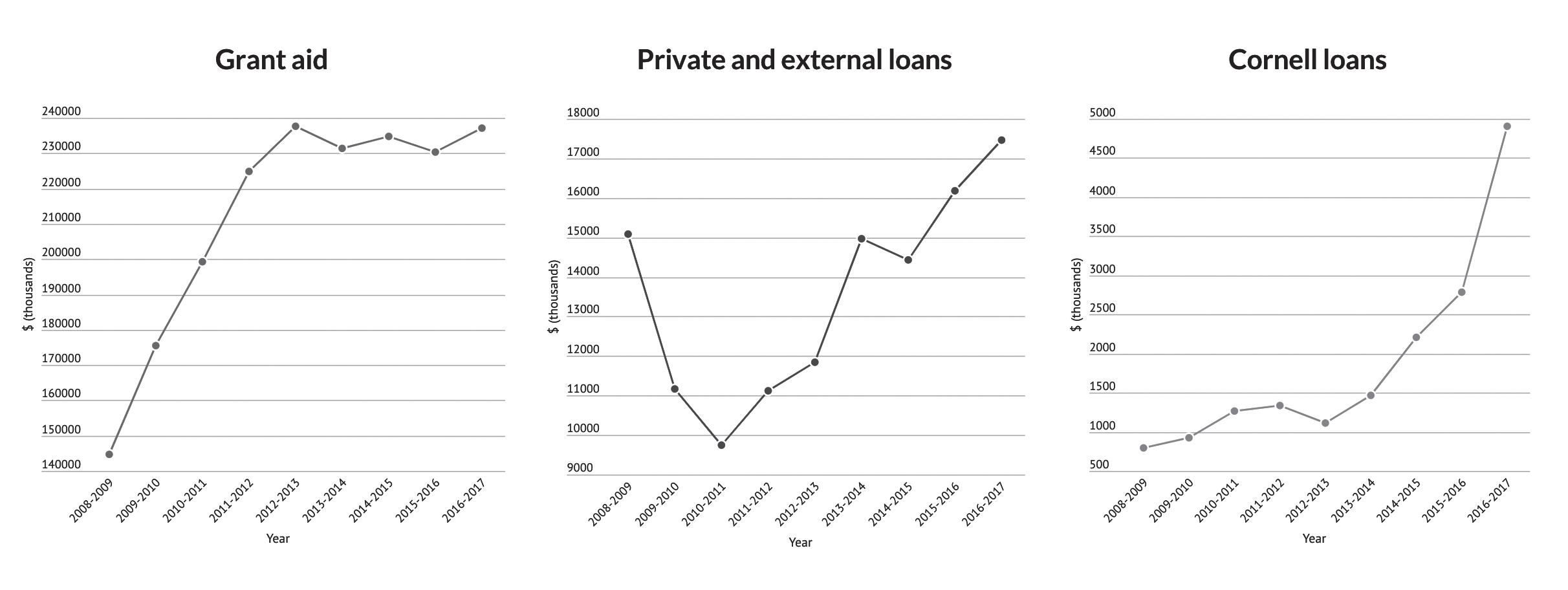
Data from the University show that financial aid policy has taken several turns in the past decade, and that Medina is part of a trend. In the past five years, loans have increased significantly, while grant aid has stayed roughly similar relative to the increase in loans.
In 2008, at the beginning of the Great Recession, Cornell announced a new financial aid initiative to reduce loans for students. Between fiscal years 2008 and 2009, Cornell loans dropped from $3.016 million to $796,000. Private loans didn’t escape the trend either: It dipped from over $15 million in 2009 among 923 borrowers to $9.74 million in 2011 among 555 borrowers, according to data from the University.
Since then, however, loans have increased significantly. In 2012, Cornell announced that it was scaling back financial assistance to students, forcing more students to take out loans. Now, Cornell loans and private loans have risen 516 percent and 78 percent, respectively, from their lows of the past decade.
Still, in real dollars, Cornell is more affordable for most students today than it was before the 2008 loan-reduction initiative, according to Diane Corbett, Cornell’s director of financial aid. She said in a statement to The Sun that Cornell awarded $257 million in grant aid in 2018-2019, and that number is expected to grow to around $285 million next year.
Corbett said that 47 percent of undergraduates receive some form of need-based grant aid from Cornell, and that loans are capped based on a student’s income bracket. But students who find themselves taking out private loans could find themselves in difficult situations, especially since the total number of private loans are near 10-year highs, but the number of private borrowers at Cornell are not, suggesting that those that are taking out private loans are taking out higher amounts.
Clara Ricketts ’20, for example, has four siblings, three of whom are older and went to private universities. Her parents have over $100,000 in debt from taking out loans to send her older siblings to school, and they do not have the funds to pay her family contribution nor the credit to take out more debt.
Her freshman year, Ricketts took out a loan in her own name of around $30,000 from Wells Fargo. She was 17
Her sophomore and junior year, her family still couldn’t pay the expected contribution, so she secured a loan from a family friend who was willing to loan her money at a low interest rate.
Still, Ricketts — currently a junior — said she intends to graduate at the end of the semester because she cannot afford to stay another year at Cornell. She will graduate a year early with around $90,000 in debt in her own name.
While debt from her older siblings caused issues for Ricketts, having three younger siblings has caused issues for Bri Johnson ’21. Paying for Cornell is difficult for Johnson’s family; she said her family contribution is twice what the FAFSA estimates it should be.
To attend Cornell, Johnson said she has had to take out loans, and will also graduate with large amounts of debt. She said that has been a stressful decision for her and her family. She worries about whether her degree will be worth it, but tries not to think about it since there is not much she can do about it.
She works three jobs on campus, and says that her financial constraints have influenced her “tremendously.”
“My dad always tells me you should go into tech or IT, CS type thing because you make a lot of money,” she said. “You’re getting this much debt, you can’t afford to do what you like.”
Johnson decided to major in biology over environmental science “because [there’s] not much money in either but more money in bio.” And even within the bio major, she chooses to focus on biotech so she could potentially make more money out of college, even though she would rather focus on ecological biology.
However Johnson still worries for her three younger siblings, and whether her parents are spending too much on her and not saving enough for them. She said her younger sister, currently a senior in high school, didn’t want to go to an expensive school after seeing what going to an Ivy League school has meant.
“It makes me really sad to think about the fact that my sister might be limiting her educational choices because of the choice I made,” Johnson said.
And families will go to lengths to avoid taking on more debt. Brianna Douglas ’19 cuts costs wherever she can. She hasn’t bought a textbook in years, making use of library
Cornell is not alone in increasing the amount of debt its students have at graduation. Outstanding student loans in the United States are over $1.5 trillion dollars, according to the Federal Reserve.
However, some of Cornell’s peer institutions that have larger endowments per student, are better able to help students avoid debt. Harvard and Yale, with nearly $40 billion and $30 billion endowments, advertise that all their students have the option to graduate debt-free. Even Brown, which has a smaller endowment than Cornell, claims to meet 100 percent of demonstrated need without giving out loans.
Several recent changes suggest improvements in financial aid. Provost Michael Kotlikoff said in February that the University is putting $2 million into initiatives to boost socioeconomic diversity by encouraging lower-income students to apply. Cornell also increased the income bracket eligibility for reduced loans starting this academic year.
In addition, Corbett, who started as director in December, said that “the office’s physical space and its business processes are under review with the goal of improving the student experience.”
Corbett pointed out in the statement that “there are significant complexities in determining the distribution of financial aid funds.”
“We realize that the cost of higher education and college affordability is a concern for many students and families,” she said. “We also realize the incredible value of a Cornell education and how transformative the Cornell experience can be for students. In conjunction with our campus partners and based on the vision of university leadership, our goal is to make this experience a reality for all students regardless of their economic circumstances.”
Medina is still concerned about affordability. He said he graduated with around $100,000 in debt — 60 percent of which was private, but he counts himself lucky that he can pay back $1,000 a month and still afford his other expenses.
He still has up to eight more years left of paying off his student loans, but he’s hoping to pay them off sooner as his career progresses, because even though he’s “in a comfortable enough” financial situation, “I’m still very much so, getting by.”
Josh Girksy can be reached at jgirsky@cornellsun.com.
RAMADAN
ulty to accommodate students missing an exam due to religious observation, not all students are aware or feel comfortable making this request, Muhamad said.
University policy required students to notify their professors before February 1 — over three months before Ramadan began.
“In my opinion, February 1 was extremely too early for students to notify professors about this,” Muhamad said, adding that many professors have not informed students of these accommoda-
tions, which could discourage a student from asking.
In addition to dining and testing, Muhamad highlighted a lack of “reflective-quiet” spaces to facilitate prayer on campus as an area for improvement.
of Industrial and Labor Relations, had previously voiced these concerns to the school’s faculty. Starting this fall, Ives Hall will provide space for students to pray.
“Having to wake up ... to eat before the sun rises is challenging especially because it makes it hard to study.”
“One of the things that I could change about the campus is to include more … space rooms on campus for Muslims to pray,” he said.
Malikul Muhamad ’20
Muhamad, a student in the School
“This is going to be the first time my fasting while finals are going on so it’ll be interesting, to say the least. I know myself and many others are excited for the Ramadan and the spiritual rejuvenation is provides for us,” said Yahya AbdulBasser ’20, president of the Muslim
Educational and Cultural Association and the Committee for the Advanced of Muslim Life.
“Ramadan is not just about fasting and abstaining from food and water, but it’s also a time to increase our worship by praying, reflecting, and reading the Quran more,” Muhamad said. “Balancing all of those things can be difficult but it is something I am confident that I and the rest of the community can do.”
Sophie Arzumanov can be reached at saa278@cornell.edu.
Independent Since 1880 137th Editorial Board
ANU SUBRAMANIAM ’20
DAHLIA WILSON ’19
Business Manager
PARIS GHAZI ’21
Associate Editor
ETHAN WU ’21
Opinion Editor
BORIS TSANG ’21
Photography Editor
PETER BUONANNO ’21
Arts and Entertainment Editor
AMINA KILPATRICK ’21
News Editor
JOHNATHAN STIMPSON ’21 News Editor
ANYI CHENG ’21
Assistant News Editor
NICOLE ZHU ’21
Assistant News Editor
CHRISTINA BULKELEY ’21
Assistant Sports Editor
DANIEL MORAN ’21
Assistant Arts and Entertainment Editor
ALICIA WANG ’21
Graphics and Sketch Editor
AMOL RAJESH ’20
KATIE SIMS ’20 Senior Editor
Nicholas BogelBurroughs* ’19
Josh Girsky* ’19
Drew Musto* ’19
Anna Delwice* ’19
Julia Curley ’19
Chance Maslof ’19
Aeyla Ehtasham ’19
Lauren Woods ’19
John Yoon* ’20
Stacey Blansky ’20
Penelope Campos ’20
Shauna Cheatham ’20
Angela Chon ’20
Celine Choo ’20
Mollie Cramer ’20
Faiza Ahmad ’19
Jacqueline
Groskaufmanis ’19
Gabrielle Leung ’19
Jade Pinero ’19
Varun Belur* ’19
Varun Biddanda* ’19
Andrea Yang* ’20
Nick Smith* ’20
Ruby Que* ’20
Juliette Rolnick* ’20
Dylan McDevitt* ’19
Charles Cotton* ’19
Jack Kantor* ’19
Eleanor Bent* ’20
Christian Ong ’20
Vas Mathur* ’19
Alice Song* ’19
Edem Dzodzomenyo* ’20
Emem-Esther Ikpot ’19
Gabriel Ares ’19
Lev Akabas ’19
Jacqueline Quach ’19
Spencer Sigalow ’19
Chelsea Leeds ’19
Vivian Fan ’20
Editor in Chief
NATALIE FUNG ’21
Web Editor
RAPHY GENDLER ’21
Sports Editor
NOAH HARRELSON ’21 Blogs Editor
SHRIYA PERATI ’21
Science Editor
KATIE ZHANG ’21
Dining Editor
AMANDA H. CRONIN ’21
News Editor
MARYAM ZAFAR ’21
City Editor
HUNTER SEITZ ’20
Assistant News Editor
MILES HENSHAW ’20
Assistant Sports Editor
JING JIANG ’21
Assistant Photography Editor
JEREMY MARKUS ’22
Assistant Arts and Entertainment Editor
LEI LEI WU ’21
Layout Editor
ALISHA GUPTA ’20 Senior Editor
News Board
Hnin Ei Wai Lwin ’20
Jacob Wexler ’20
Meghan Flanigen ’20
Katherine Heaney ’20
Caroline Johnson ’20
Kevin Lam ’20
Marin Langlieb ’20
Gloria Lee ’20
Jai Malhotra ’20 Zain Mehdi ’20
Sabira Mehjabin ’20
Ronni Mok ’20
Samuel Nolan ’20
Alexis Oh ’20 Miguel Soto ’20
Toba Stern ’20 Winny Sun ’20
Jason Jeong ’19
Sarah Lieberman ’19
Anna P. Kambhampaty ’19
Victoria Pietsch ’19
Zach Lee* ’20 Nick Swan ’19
Isabel Ling ’19
Ashley Davilla ’19
Isabelle Philippe ’19
Madeline Rutowski ’20
Zachary Silver* ’19
Joshua Zhu* ’20 Faith Fisher ’22
Alex Zarska ’20
Karen Zaklama ’21
Emma Hoarty ’19
Aubrey Akers ’19
Kurlya Yan ’20
Emily Yang ’20
Karen Li ’20
Aaran Leviton ’20
Jinwook Lee ’21
Alex Hale ’21
Sophie Arzumanov ’21 Jill Crosby ’21
Dan Draytsel ’21
Xing Gao ’21
Alexia Ge ’21
Alec Giufurta ’21
Gabriella Gonzalez ’21
Shawn Hikosaka ’21
Opinion Board
Dongyeon (Margaret) Lee ’20
Nile Jones ’20
Kelly Song ’20
Michael Johns ’20
Arts Board
Olivia Bono ’20
Michelle Golderg ’20
Nicole Yan ’20
Noah Tomas ’20
Ariadna Lubinus ’20
Rachel Mattessich ’20
Sports Board
Bennett Gross ’20
Aman Gupta ’20
Zora Hahn ’20
Emma DiGiovanni ’21
Catherine Cai ’21
SARAH SKINNER ’21
Editor
MEREDITH LIU ’20
Assistant Managing Editor
SABRINA XIE ’21 Design Editor
AMBER KRISCH ’21 Blogs Editor
SOPHIE REYNOLDS ’20
LEANN McDOWALL ’21 Newsletter Editor
EMMA WANG ’20 Multimedia Editor
SHIVANI SANGHANI ’20
Assistant News Editor
BEN PARKER ’22
Assistant Photography Editor
RYAN RICHARDSON ’21 Snapchat Editor
DANA CHAN ’21 Production Editor
BREANNE FLEER ’20 Senior Editor
GIRISHA ARORA ’20 Senior Editor
SHRUTI JUNEJA ’20 Senior Editor
Vale Lewis ’21
Angela Li ’21
Rochelle Li ’21
Helen Liang ’21
Victoria Moore ’21
Sean O’Connell ’21
Samantha Stern ’21
Chantal Raguin ’21
Xinyu Tang ’21
Louise Xie ’21
Lucy Xu ’21
Lucas Reyes ’21
Xinyu (Louise) Tang ’21
Jefrey Li ’21
Sabrina Xie ’21
Seth Kim ’22
Edem Dzodzomenyo ’20
William Wang ’20
Alexia Kim ’21
Aminah Taariq ’21
Darren Chang ’21
Victoria Horrocks ’20
Katie Sims ’20
Michael Chang ’21
Rebecca Reuning ’21
Grant Muller ’21
James Robertson ’21
Alex Hale ’21
Jonathan Harris ’21
Photography Board Science Board
Nandita Mohan ’20
Anant Sriram ’19 Jose Covarrubias ’19
Monika Bandi ’19
Stephanie McBath ’19 Yvette Ndlovu ’19
Elijah Fox ’21
Catherine Ryberg ’21
Augusta Gordon ’21
Ashley He ’20 Yisu Zheng ’21
Sarah Chekfa ’19
Jefrey Ho ’20
Olivia Faulhaber ’21
Dining Board
Molly Rothbaum ’21
Deniz Erkan ’21
Anna Paolucci ’21
Sabrina Xie ’21
Puneet Velidi ’22
Jolie Wei ’22
Olivia Weinberg ’22
Rachel Liu ’22
Grace Lu ’22
Emma Cordover ’22
Michael Overmeer ’22
Tomas Engquist ’22
Gayatri Somaiya ’22
Kathryn Stamm ’22
Emma Rosenbaum ’22
Magdalena Smith ’22
Catherine Chimel ’22
Cayla Hamann ’20 Suin Jung ’20 Lucy Xu ’21
Mindy Lou ’19 Brendan Elliott ’19
Jungwon Shin* ’19 Sarah Zhang* ’19
Business Board
Jason Huang ’21 Varun Iyengar ’21 Jerry Miao ’22 Daniel Ra grad
Austin Astorga ’19 Alexis Vinzons ’19 Teo Carrel ’20 Mike Fang ’21 App Board
Winny Sun 20 Dana Chan 21 Tomas Engquist 22
Brad Edmonson ’81
Sam Roberts ’68
Mark Underberg ’77
Laura Batten ’99
Michael Morisy ’07
Melanie Lefkowitz ’95
Anu Subramaniam ’20
Sarah Skinner ’21
Contractor
Giancarlo Valdetaro ’21
Canaan Delgado ’21
Laura DeMassa ’21
Christian Baran ’22
Aaron Stella ’21
Ramya Yandava ’21
Adam Kanwal ’21
Jonvi Rollins ’21
Jessica Lussier ’21
Maggie Gaus ’22
Smita Nalluri ’19
Gracie Todd ’19
Tamara Kamis ’22 Tucker Hwang ’22
Lexi Quarles ’21
We’ve written about making dining halls safer for those with allergies, discarding iClickers, discrimination at an alumni conference and lofty student election campaign promises. After eight columns, a slew of emails — both accordant and contentious — and letters to the editor, we now see writing in a whole new light. Those that Facebook has nominated as The Sun’s “Top Fans” keep us on our toes.
Now, as we write columns like this one, we actively try to imagine how our readers will respond, their questions and their objections. This allows us to better account for where our opinions rely on assumptions or faulty logic. All the more, it enables us to see our ideas in conversation with those around us rather than in seclusion.
Michelle Yang ’22
Daniel Ra grad
Yuhang (Chelsea) Wang ’21 Haonan Peng ’22 Harry Dang ’22
Sam Khatchadourian ’21 Ruth Park ’21
Alisha Kewalramani ’22
Felisha
Rae Specht ’22 Peter Kaplinsky ’22 Benjamin Velani ’22
As columnists, we read other columns religiously, follow campus politics and the latest with President Martha Pollack, and stay up to date with the manifold events that have unfolded on campus this year: the introduction of American Sign Language, the Boycott, Divestment and Sanctions movement, the 50th anniversary of the Willard Straight Takeover and various movements for climate justice, housing and mental health reform.
It was not until we became columnists that we realized why student organizing matters in addressing the intersection of campus interests and identities. Writing columns has allowed for conversations on inequity and injustices to be forced into the public sphere for debate. Our job is not done well if it elicits responses from only those in complete agreement or complete disagreement. Rather, we’ve strived to start a back-and-forth conversation emerge between the two, sometimes deeply divided, sides in any argument.
From writing our columns we’ve garnered a sense of who our audience is and an awareness of the diverse experiences and opinions that people hold on campus. Gradually, as with all writing processes, this sense of our audience has become more and more internalized to us.
Through sharing our ideas and hearing others’ responses to our writing, we have learned to stick to our convictions, but not so steadfastly as to preclude the ideas and perspectives of others. Sometimes, we find common ground with a contrasting point of view, or reconciliation with a seemingly opposing idea. Sometimes not, but that’s okay. Ultimately, through writing our columns and unleashing them to the callous social media commons, we have found our own voice and creativity — a confidence in ourselves as writers and active participants on campus. It was no smooth sailing at first. We had many long hours spent brainstorming ultimately fruitless ideas, writing, and re-writing and writing more. The first letter to the editor scathing our column wasn’t without its growing pains. We’ve learned not to rush our column, but to give it the time it needs to be written. We’ve learned to look to the students around us to look for novel column ideas. Most of all, we’ve learned to take criticism in stride and be open to opposing views.
To continue reading this column, please visit www.cornellsun. com.
Laura DeMassa and Canaan Delgado are sophomores at Cornell University. Tey can be reached at demassa-delgado@cornellsun.com. Double Take appears every other Tuesday.
It only took a few hours after my brother dropped me off at my freshman dorm for me to text him something along the lines of “I don’t think I’m going to like it here.” In some ways I was right. But in more ways, I was wrong. My time at Cornell has since followed a pretty common formula: I arrived and found that this school is not necessarily the easiest place to be immediately happy. Eventually I started to like it more, recently I grew to love it and now it’s almost time for me to leave.
I haven’t felt appropriately emotional about graduation yet.
I imagined before coming here that my favorite moments would conform to Cornell-y college tropes: throwing fish onto the ice at hockey games with some kind of regularity and watching daily sunsets over Libe Slope. In reality, I think I only ended up going to about two hockey games and learned that I like the view from Stewart Park a whole lot better.
I could have never imagined the things that actually made me happiest here.
I could have never imagined the things that actually made me happiest here — that some of my favorite Friday nights would be spent sleepily watching movies at Cinemapolis, or passing through fields on the way to T.A. at Auburn Correctional Facility. There’s no way of knowing in the earlier and lonelier months of freshman year which random lunch you grab will seat you next to the person who will become your best friend or which party you almost didn’t go to will be the place where you meet the person who challenges you more than anyone else.
In all honesty, I haven’t felt appropriately emotional about graduation yet. Classes are wrapping up. Course evaluations are going out one last time. The other day, my landlords sent me move-out information. And still I feel this false sense of
permanence, like a refusal to acknowledge the realities of leaving will somehow render them unreal. My walls are still covered in pictures chronicling all of the time that separates me and my “I don’t think I’m going to like it here” text — all evidence proving I was wrong. “Want to go to 7/11?” messages still roll in at 1 a.m. from friends who, this time next month, will be 1,000 miles away.
In the rare moments where the enormity of graduating does strike me, it does so with no rhyme, reason or warning.
The other day I passed by Bed, Bath & Beyond and was immediately transported back to move-in weekend freshman year. I thought about the profound nervousness I felt walking through the aisles of the Ithaca superstore, wondering if every young person I saw might be one of my hallmates in the next 24 hours. I thought about buying bed risers and a shower caddy with my mom, looking at bath mats and having it finally sink in that I would probably never live at home again.
I laughed out loud when I realized that the song “679” makes me more emotional than “Landslide” — not because of any lyrical genius but because the unmistakable tune reminds me of the clumsiness of freshman fall, the desperation to be social and accepted that was, in retrospect, equal parts endearing and cringe-worthy.
not joining Greek life was undoubtedly the thing that gave me the space to find my own.
So I’m wary of advice, but I’m confident in patterns — my favorite of which is a pattern of infrequent, irresponsible “yes” moments that led me away from obligations and towards some of my favorite memories from the last four years. “Yes” took me to Storm King Art Center on the most perfect fall day last year with my roommates, even though I had to write a column using a hotspot on the three-hour car ride home. “Yes” took me to Toronto more times than I can count, caravaning with anyone who wanted to join and collectively crashing on the floor, couch and cot of my childhood best friend. “Yes” brought me to the lake yesterday, when I probably should have been working on this column, procrastinating one last time in true fashion before signing off for good.
What makes me nervous about graduation isn’t the loss of consistency I’ve become accustomed to at Cornell, but rather the loss of its warm inconsistency.
One thing I’ve thought about a lot in the last few weeks is how much of the advice out there about how to do things “right” and optimize your time in college is often misleading.
I remember one alumnus telling me over coffee that his greatest regret from Cornell was not joining Greek life, and that I definitely should. He said he wished he had pledged because he never really “found his people.” But in retrospect,
What makes me nervous about graduation isn’t the loss of consistency I’ve become accustomed to at Cornell, but rather the loss of its warm inconsistency. For the last four years, I’ve lived in a different room every year, taken different classes every semester. Even the summers have acted as incubators for trial passions and cities. My time here has been characterized by constant opportunities to readjust when things weren’t right, or even just when they got boring. I’m hopeful that freedom doesn’t just go away when you graduate, but I’m also well aware that it’s going to look really different. I think, in time, I’m going to like it elsewhere. And I’m glad that in the end I found a way to like it here too.
Jacqueline Groskaufmanis is a senior in the College of Arts and Sciences. She can be reached at jgroskaufmanis@cornellsun.com. Te Dissent runs every other Monday this semester.
Sometime sophomore year of high school, 2013
“A-Punk” by Vampire Weekend plays on the radio while my friend Elizabeth and I are driving back from a high school tennis match.
The following month
I’ve refused to listen to anything but Contra for this whole period of time.
The rest of high school
My confusion with being a person of color in a predominantly white high school, love for the Polo Bear, lust and disappointment with life and fascination with Futura are all manifested, fostered and finally made sense of through Vampire Weekend’s lyrics and work.
Freshman year through the first half of sophomore year of college
I don’t listen to Vampire Weekend as religiously as I did during my formative years as an angsty adolescent who hated her suburban hometown, but they remained part of the background music of my life throughout the years.
The winter of sophomore year
I move to the Upper West Side of New York to complete a fashion internship. This is my first real time living in New York City. The Vampire Weekend love comes back stronger than ever.
September 3, 2017
“80 percent done but the last 20 percent is always the hardest,” Ezra Koenig tweets in response to freshly baked pie asking him the status of the new album. I’m starting to get a tad restless for new music.
The rest of junior year
I buy an Amazon Alexa because I decide to take a natural language processing course and could not be more excited about the subject matter. My roommate and best friend Sophie is ready to throw it out the window and to this day still has nightmares with my voice saying, “Alexa, play “Don’t Lie” by Vampire Weekend.”
May 27, 2018
The new album is 94 percent done, according to an Instagram comment.
May 30, 2018
94.5 percent done, according to an Instagram comment.
August 4, 2018
Ezra Koenig announces that the new album is done and in the process of remastering at Lollapalooza. I’m finishing an internship in New York, this time in media, and am excited to enter my final year of college with the prospect of having a new Vampire Weekend album as the soundtrack.
August through October, senior year
I don’t remember any life-rattling Vampire Weekend news during this period of time, but I’m eagerly soaking up all the University has to offer. My time is split between struggling through an upper-level economics class I didn’t take either of the prerequisites for, trying to impress my photography professor who I grew to idolize, other miscellaneous coursework, my senior thesis, and, of course, wasting as much time as possible with my dear friends Joe and Bennet.
November, senior year
Joe and Bennet rue the day that I discovered the “Can I Get Witcha” and “Oxford Comma” mashup sometime during this month.
Winter break, senior year
It’s finally begun to sink in that my time in college is ending — cue periodic existential crises.
January 2019
(still winter break, finally the new year)
I continue to regularly stress about the imminent doom of becoming an adult, but I finally enroll in classes for the last time. I’ve learned by this time to choose classes based on professors rather than just the subjects. It took me four years to finally figure out how to navigate Cornell, but hey, I finally did it.
January 17, 2019
I come back to Cornell to get started on my thesis again and prepare for the start of my final spring semester. Also on this day, a crucial Instagram post is shared, detailing a plan to periodically release songs from the new album and its initials: “FOTB.” Finally. I can’t wait for my final semester of university ever to be filled with the beautiful new music of this band I have loved for so long, I think.
January 22, 2019
I take up a position as a columnist for The Sun. Joe suggests I call my column “Vampire Weekly” and make a subtle Vampire Weekend reference in every piece. “I’m not obsessed, geez,” I tell him. I choose to name my column after “This American Life” melded with part of a Thoreau quote, “Go confidently in the direction of your dreams! Live the life you’ve imagined. As you simplify your life, the laws of the universe will be simpler.”
January 24, 2019
In the middle of a typical Ithaca blizzard, I walk to English class finally listening to “Harmony Hall” and “2021,” the first released songs of the album.
February to March, 2019
Nothing but job interviews, life stress, thesis work and friends. And of course, the Ithaca cold. Still awaiting the new album.
April 2019
Vampire Weekend announce a show in Buffalo at an old restored church. I go with Daniel and Bennet and feel elated for the chance to see them in such a small and intimate venue where they even take requests from the audience. At the concert, Ezra Koenig explained the last time they played in New York State was during a Bernie rally in Washington Square Park.
May 3, 2019
The album is finally released. It’s my last full week of classes.
May 6, 2019
I’m writing my final column (past deadline, sincerest apologies to my dear editor). I never think too hard about the title “Father of the Bride” until now. I think of the old Steve Martin movie. I think of the bittersweet feeling that it must be to be the father of the bride. I think of how I waited this whole year for an album to come out, eager to have it in the background of my senior year, and it finally came out, at the exact end of the year.
Now that it’s out, bittersweet is the only word I can find to describe it.
Anna P. Kambhampaty is a senior in the College of Agriculture and Life Sciences. She can be reached at akambhampaty@cornellsun.com. Tis Imagined Life runs every other Monday this semester.
By NATALIE MONTICELLO Sun Contributor
From EDM to punk rock, everybody likes music to some extent. This is not just determined by one’s interest — there is a neurological explanation for it. Emily Hurwitz ’21 explains how our brain processes music, why we prefer certain music genres and the emotional complexities of music perception.
“When you listen to music, your auditory system first breaks down soundwaves so your brain can process what is happening in the music,” said Hurwitz. Before the waves reach the brain, the ear helps filter and process the sound based on its fundamental frequency. Then, the cochlea encodes the pitch and the auditory pathways would send sound information to the auditory cortex in the brain, she said.
According to Hurwitz, in the primary auditory cortex, pitches are represented in a manner that is analogous to how pitches are represented on a piano. The secondary and tertiary regions of the auditory cortex work to process more complex aspects of tone.
“There are a lot of similarities between how we process music and speech, and there are a lot of different opinions about whether we are using the same or different pathways and mechanisms for each,” Hurwitz said.
Hurwitz said that listening to music activates many different parts of the brain that aren’t even specific to music. These are parts of the brain that are involved in other activities, such as listening to speech, motor planning and emotional processing.
For example, rhythmic processing involves a lot of overlapping structures, such as the basal ganglia, cerebellum, prefrontal cortex and motor areas.
“Processing of timbre, or the characteristic sound quality, is often associated with the right superior temporal lobe. The limbic system, which includes areas such as the amygdala and hippocampus, is involved in the processing of emotion in music,” Hurwitz said.
Hurwitz also explained why different people tend to

gravitate towards different genres of music and why different genres are more popular than others — emotional states, whether they’re alone and the familiarity of the music all play into it.
According to Hurwitz, people tend to prefer music that has medium levels of complexity and exposure, such as songs that people are familiar with but not overexposed to.
“Music listening also sometimes depends on the listener’s emotional state. It has been suggested that some people may like listening to sad music as a coping mechanism, as sad music relates to their emotions. People find solace in being able to express their emotions through music,” Hurwitz said.
Beyond science, Hurwitz said it is important to note that music really is a social experience.
“Music has been used in social coherence for centuries, as it is often involved in ceremonies such as Slope Day to bring people together,” Hurwitz said. “Sociologists hold that people come together to make music based on their interests and widely shared cognition allows this bonding to happen,” Hurwitz said.
According to Hurwitz, regardless of the artist, the act of standing in a crowd, listening to live music, with thousands of other people can contribute significantly to the psychological experience of music.
“There’s a euphoric sense of community at concerts,” Hurwitz said.
By CAROLINE CHANG Sun Contributor
Even though significant progress has already been made in recognizing women’s achievements in scientific fields, there are still plenty of unacknowledged achievements of female scientists that have yet to be uncovered — especially in the field of mycology, the study of fungi.
For the last few weeks, the “Unturned Leaves: Early Women in Botanical
Illustration” exhibit in Mann Library has been showcasing the work of women such as M.F. Lewis and Sarah Price, whose contributions to identifying different fungi through illustrations remain unrecognized.
During the 19th century, it was common for women to be pushed toward “more delicate pursuits” rather than the formal study of science, according to Eveline Ferretti, public programs and communication administrator at Mann Library. As a result, many women provided the illustra-

tions of plants that made the botanical texts of the 18th and 19th centuries the vivid, intricate, and scientifically accurate works that they are.
“The starting point for this exhibit is a recognition of the fact that women have contributed much to the advancement of scientific knowledge, yet their contributions have been poorly documented, often overlooked, and greatly under-celebrated,” Ferretti said.
Ferreti said she hopes that the exhibit can help tell a “better ‘herstory’ of science, particularly as it relates to the study of the natural world.”
Though the paintings are rich with intricacies, there is still a lot that remains unknown about M.F. Lewis and other female illustrators. But despite lack of recognition, there were some female illustrators that did get their work formally published.
For example, Sarah Price, one of M.F. Lewis’ contemporaries, did manage to formally publish her illustrations of 72 mushroom species as a slim two volume set through the help of subscribers. Many of these supporters on her subscriber list were also female.
“[Other women such as] Sarah Drake produced some fungus illustrations in her career, and certainly some of her more prolific contemporaries like Mrs. Edward Bury and Augusta Innes Withers are likely
to have. What makes Sarah Price and M.F. Lewis stand out is that they were the ones doing the field work as well, not producing drawings for hire,” Karl Rozyn, Mann exhibits curator said.
However, there are substantial challenges in uncovering the intricacies surrounding the history of scientific discovery in botany, Rozyn said.
“The most difficult aspect for me in curating ‘Unturned Leaves’ was the fact that so little was recorded of the women involved,” Rozyn said. “It’s possible to dig through [the] archives to find scraps, but the published record focuses very heavily on the people whose works were published widely or were fellows in various horticultural societies.”
Despite the challenges, Rozyn said there is still a glimmer of hope to uncover more accomplishments of female illustrators.
“Hopefully there will be many science ‘herstorians’ of the future who will take the time to find and explore the archival record to fill in the blanks for a new understanding of how science has progressed over time,” Rozyn said. “We hope they make good use of reference librarians who stand at the ready to help them dig this story out.”
On the first warm Saturday of April, the Cornell Syncopators gathered in St. Paul’s United Methodist Church to record a 21-track record cataloguing the early jazz played at college campuses across the country in the 1920s and 1930s. The 13-piece jazz band has grown in number and in prominence since it was first founded in 2016, taking on projects like recreating the Original Dixieland Jazz Band and performing at engagements across the country such as the San Diego Jazz Festival and the Philadelphia Tri-State Jazz Society. As a student music organization, the Syncopators use their music as a means for the preservation of history and the revitalization of an era.
Jazz as a genre evokes a wide range of images ranging from Wynton Marsalis on the trumpet to the futuristic costumes and synthesizers of the Sun Ra Arkestra. Many do not think of traditional jazz, however, with its wax cylinders and ragtime pomp.

The Syncopators hope to change that, working with Bryan Wright’s Rivermont Records to record a project entitled Collegiate Syncopations, which delves into the impact of college jazz bands from the beginning of the genre’s history during the 19-teens and the swing era. In this project, the Syncopators focus on storytelling, highlighting the legacy of Cornell’s own jazz history with the Cornell Collegians, who were the first American jazz band to make national headlines with the records they released with Victor.
Traditional jazz is an esoteric sub-genre, limited in part by a dearth of accessible digitized content and by a shortage of knowledgeable musicians. As a college band, the Cornell Syncopators have been welcomed by a tight-knit community of jazz aficionados who see bands such as the Syncopators as a future for traditional jazz.
For Bill Hoffman, an early supporter of the band and concert booker for the Philadelphia TriState Jazz Society, the Syncopators represent a new era:“It warms my heart to see young people doing this because then I know that this music is going to outlive me ... now I’m seeing young people in their 20s really doing well with this music. They’re not just playing it the way it was originally written, they’re interpreting it in their own way while honoring the spirit of music, the intent.”
Bryan Wright, who founded Rivermont Records in a dorm room when he was a college student, created Rivermont as an outlet for traditional jazz because he couldn’t find high quality recordings of the music he wanted to listen to: “I wanted to focus on that music because I thought it was underrepresented commercially, and it’s not necessarily a commercially viable music these days … but like the members of the Cornell Syncopators, I still do it because I love this music, I think it’s timeless and I think it still holds up today. Even if it is music of a different time.”
The Collegiate Syncopations project is a celebration of legacy, one that is particularly personal to Colin Hancock, the leader of the Syncopators, “We’re like the bands we are looking at, we’re students, we’re not all professional musicians, we are going to class and in our free time practicing music, playing music, playing around because we love it. That’s the exact same thing these kids were doing back in the day, you can’t really recreate that unless you’re here and unless you’re here now. So this is kind of a special project because a bunch of us are graduating and we wanted to do something that these guys were doing and honoring what these guys were doing in the best way that we could, which is living what they did before we graduated.”
As college students, we are not in the business of legacy-making. There is a sense of impermanence that underpins every decision and experience, a universal understanding of endings that for me, makes thinking in the long term difficult and the idea of creating lasting change in college even more implausible. As the seemingly inevitable end draws nearer, as I attend thesis presentations, last basement concerts and last farmer’s markets, I have seen not the making of legacies but rather the making of meaning from my time spent in Ithaca. Perhaps, for us, the meanings will become memories or maybe a century later the meanings we made will be celebrated for what they were as college students stand in the same place we once did, always on the cusp of endings.
Isabel Ling is a senior in the College of Arts and Sciences. She can be reached at igl3@cornell.edu. Tis is the fnal installment of her column Linguistics.

JEREMY MARKUS, NICK SMITH AND OLIVIA BONO SUN STAFF WRITERS
The finale of the Marvel Cinematic Universe’s “Infinity Saga” and the franchise’s 22nd film, Avengers: Endgame is, without a doubt, one of the biggest events in the history of the cinematic medium. Whether or not you’re a fan of these movies, there is simply no escaping the gravity of this pop culture singularity — entire lives have been lived in the time these characters have been on screen and our consensus is that Endgame , an event more than a decade in the making, generally lived up to the hype.
A little more than one week after its release, the film is already in the top five on the all-time worldwide box office gross list, in the company of only Avatar , Titanic , The Force Awakens and Infinity War , its immediate predecessor. As a short and totally unnecessary aside, Endgame’s reported budget was more than Apollo 13 made.
This degree of monetary success is unprecedented, and while we know that box office returns are not always indicative of a movie’s greatness, there are a litany of reasons why people from every part of the world are flocking to this movie.
We’ve all agreed there’s no real way to discuss this film without getting into its details so if you haven’t seen Avengers: Endgame , this is your one warning: spoilers, obviously. *Cue the intro reel.*
Why Should You See Avengers: Endgame?
Olivia Bono ’20: Avengers: Infinity War felt like a Thanos movie that a handful of Avengers happened to be in; Endgame feels like an Avengers movie. For better or worse, it focuses on the lives of the core Avengers from the first movie and takes a fun trip through previous movies on the way. It truly feels like an homage to the rest of the Avengers franchise, rather than a Thanos-centric misery-fest. To me, the most compelling part of the movie was seeing how the snap affected each Avenger: Some were broken, some grew into leadership roles and some actually bettered their lives and were happier postsnap. Also, Edwin Jarvis finally makes a film cameo, which automatically makes the movie a win in my book. (RIP Agent Carter, gone too soon).
Jeremy Markus ’22: Look, I don’t even like superhero movies but I was excited for Endgame . If you have at all paid attention to the ongoing saga so carefully crafted by Marvel Studios over the past decade-plus, this is a worthy venture just to witness the unprecedented culmination of 21 previous films. It’s an exciting movie, filled with action and bright colors and people dying. I thought it was in the upper echelon of superhero films. Also, like, don’t be a nerd. See Endgame To continue reading this article, please visit www.cornellsun. com.
Jeremy Markus is a freshman in the College of Agriculture and Life Sciences. He can be reached at arts@cornellsun.com. Nick Smith is a junior in the College of Arts and Sciences. He can be reached at nsmith@cornellsun.com. Olivia Bono is a sophomore in the College of Arts and Sciences. She can be reached at ojb26@cornell.edu.

Fill in the empty cells, one number in each, so that each column, row, and region contains the numbers 1-9 exactly once. Each number in the solution therefore occurs only once in each of the three “directions,” hence the “single numbers” implied by the puzzle’s name. (Rules from wikipedia.org/wiki/ Sudoku)



Keep Ithaca beautiful. Please recycle this paper.
COLLEGE AVENUE 1 BEDROOMS 607-272-3389 avramisrentals@aol.com
3 BEDROOM SOUTH HILL Large apt, washer/dryer furnished. $550 pp 607-272-3389
DECKS OVERLOOKING
NORTH CAMPUS Studio and 3 bedrooms Available 2019/2020 Novarr-Mackesey Property Management office@ithacastudentapartments.com ithacastudentapartments.com 607-277-1234
1 Bedroom Apartments
Bright nice and clean, Great location Linden Ave $895 to $950 plus electricity Call 607-237-2541 or 607-227-2535
2019-2020 Modern 3, & 4 Bdrm Apts. Furnished, non coin laundry, parking, internet. 607-273-8576.
call Tracy at TLC Property Mgmt Corp 607-379-2776
==One Month FREE Rent!== Furnished 3 Bedroom Collegetown Apartments PARKING, LAUNDRY, UTILITIES! (607)273-7368 www.WestShoreApts.com
CASCADILLA GORGE 2 Bedroom Available June 1. 5 Person Apartment Graduation Wknd. Furnished, Fireplace, Jacuzzi, Parking, Wireless Internet, Lighted Patio. 607-273-4797
Now Renting for 2019-2020 3-7 Bedroom Apartments All locations. Contact us today or visit our website: certifiedpropertiesinc.com Certified Properties of TC Inc 273-1669
2019-2020 Upper Eddy St. House for 5 to 7 People Furnished. Internet. Laundry. Semester or 10 month lease. 607-273-8576
Linden Ave. 5 Bedroom House Available June 2019. $900 per bedroom. Parking included. 607-327-2927
1 BEDROOM JUNE 1, 2019AUGUST 14, 2019 114 Summit Ave. Ithaca, NY “The Lux” 949-395-7034



Tatkon Center
Teagle Hall • Transportation Dept., Maple Ave. • Trillium
Uris Hall • Vet Center (Shurman Hall) Off Campus
• Autumn Leaves Used Books (Ithaca Commons) • Bear Necessities • Center Ithaca • Coal House Café • Collegetown Bagels: CTown + Triphammer
• Commons Grocery (Ithaca Commons)
• CFCU (Triphammer Rd. + East Hill Plaza)
• Corner of College & Dryden
• Corner of State & Aurora
•Express Mart, Comm. Crnrs. • Hillside Inn • Hilton Garden Inn • Holiday Inn • Ithaca Coffee Co.
•Ithaca College, Phillips Hall
• Jason’s Grocery & Deli
• Kendal • Kraftees
• Lifelong
• Oasis (Greenstar)
• P&C Fresh (East Hill Plaza)
• Salvation Army • Shortstop Deli
• Tompkins County Public Library
• Tops (Triphammer Rd.)
• Universal Deli
• Warren Real Estate (Downtown + Community Corners) or stop by The Sun’s offce


I’ve been helping make this print paper for four years, and it’s fnally the end. Thanks for picking it up, thanks for reading, and thanks for keeping the design department around. It’s been an honor.
— Megan
By KATHERINE FAIOLA Sun Staff Writer
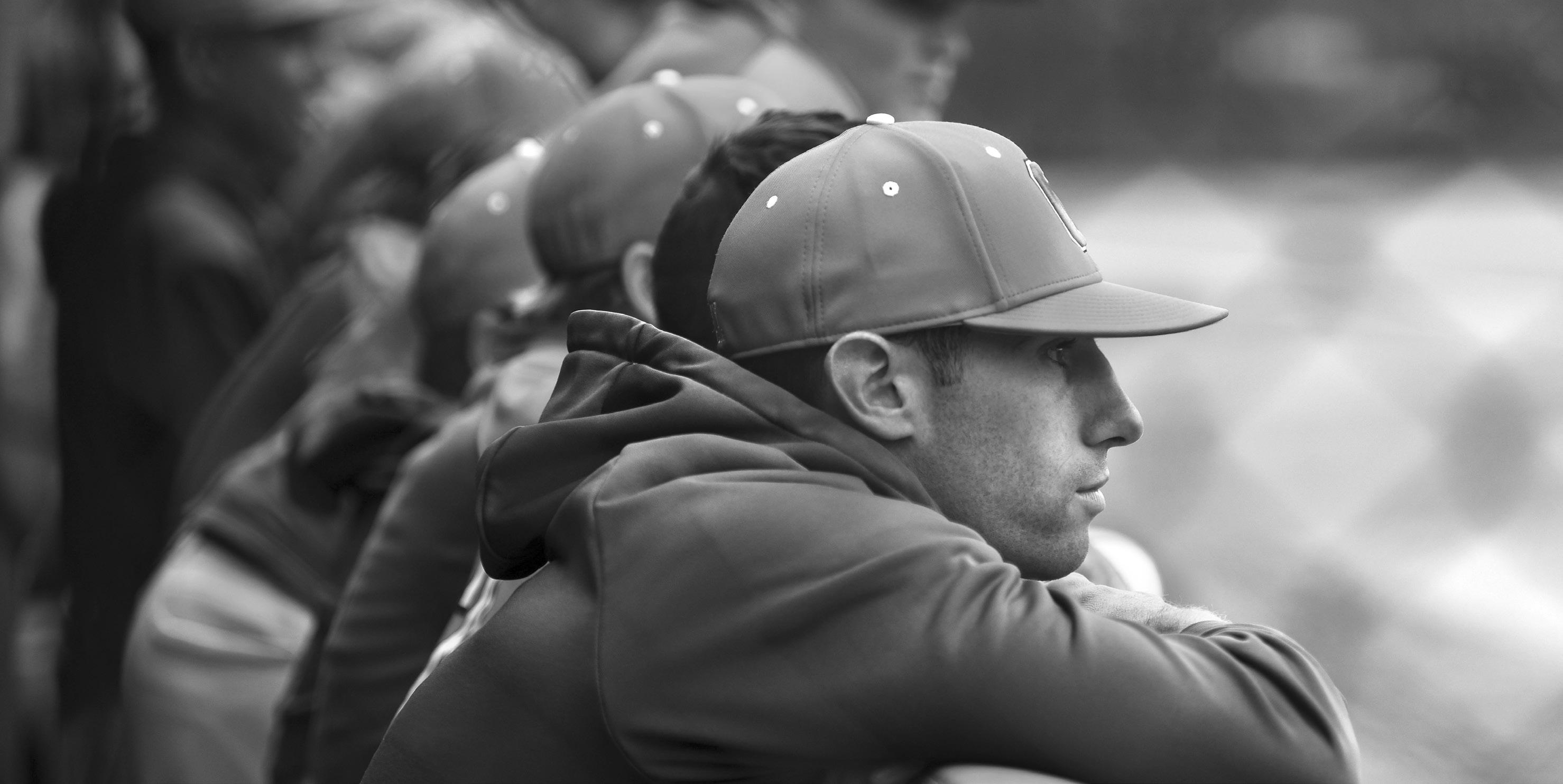
With an overall record of 14-23, Cornell baseball’s 2019 season was a statistically unimpressive one — but the game of baseball is more than just numbers, wins and losses.
From the start, the Red (8-13 Ivy League) faced unforgiving opponents both in and out of Ivy League play. Despite these challenges, the team fought up until the very last inning of each game — and within conference play, the Red only suffered one series sweep at the hands of Brown.
The beginning of the season was marked by inconsistent offense, only to be replaced with a streak of success in the final two conference series of the season.
The trend of clutch performances as the game got down to the wire was evident in the two most recent one-run victories for the Red.
Recall April 28, when senior catcher Will Simoneit faced a full count with two outs and the tying runs on base in the bottom of the ninth, down by two runs. He clocked a homer over the left field wall for a walk-off, series-clinching victory over Penn on his senior day.
Then on May 4 at Dartmouth, junior John Natoli got the call to pitch to one batter in the bottom of the
ninth with two outs and the tying run in scoring position. Three strikes later, the Red secured their fifth win in a row and second series victory of the season.
The quality of the victories and consistent effort from the entire team served as an important takeaway from the season.
“This year will go down for me as just a group that just did not quit,” said Head Coach Dan Pepicelli.
The Red’s five-game winning streak from April 27 to May 4 lifted the team’s spirits at the tail end of the season.
“Sometimes the big success stories are when you don’t quit and just keep grinding away at the season and get something for yourself at the end,” Pepicelli said.
Ultimately, Cornell succeeded this year in finding an offensive lineup with hot bats, steady defensive players and commanding pitchers.
In the Dartmouth series, the Red boasted a home run and several multiple-base hits, only one error the entire weekend, and stellar lights-out starts and relief pitching.
Seniors Adam Saks, Will Simoneit and Josh Ardnt connected for base hits throughout the series and junior Matt Collins launched a homer in game one.
Pepicelli’s defensive highlight of the weekend is
that the team “turned a lot of double plays, when that opportunity was there we really jumped on it.”
Both junior RHP Colby Wyatt and freshman RHP Jon Zacharias commanded the mound for at least six dominant innings into their respective starts on Saturday, May 4.
“Sometimes the big success stories are when you don’t quit ... and get something for yourself at the end.”
Dan Pepicelli
With the 2019 Ivy League play wrapped up, and one final away game versus St. Bonaventure University on Tuesday, May 7, Cornell looks towards the offseason to improve both individually and collectively.
“What we really need to do is just improve … to take the next step,” Pepicelli said. “And I think it’s just a matter of finding the right fit where we can be more dangerous and more consistent on offense.”
Katherine Faiola can be reached at kfaiola@cornellsun.com.
The Red placed third with an overall score of 96 points at the Ivy League Outdoor Track and Field Championships this weekend. The team was edged out by first place Penn with 160 points and second place Harvard with 126 points in Princeton.
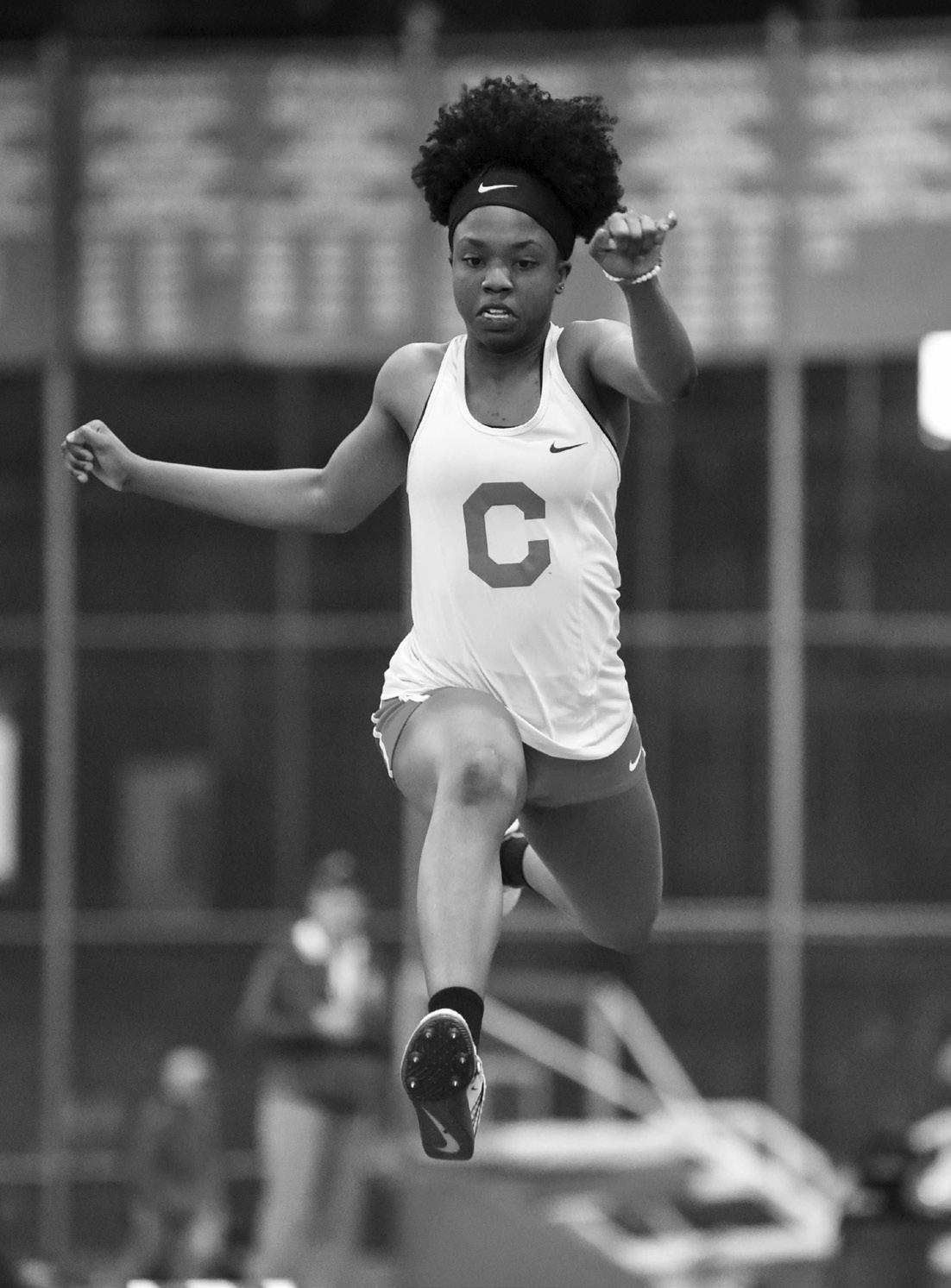
Cornell had two first-place finishes, coming from freshman Beatrice Juskeviciute in the heptathlon and senior Briar Brumley in the 3000meter steeplechase. Along with these finishes, the Red had eleven top-three finishes, which led to its ultimate third place finish.
Juskeviciute earned top-three finishes in all seven of the events and three first-place finishes to secure the win in the heptathlon with 148 points more than the second-place finisher.
Brumley won the steeplechase with a season-best time of 10:12.61 and the third-place finisher was sophomore teammate Gabrielle Orie, who also had a season-best time of 10:21.00.
“My teammate Gabrielle Orie [is] really good at leading races from the front and I’m a lot better if I can stay relaxed starting in second or third and then finishing off strong,” Brumley said.
Her strategy of starting off more slowly paid off and led her to the first-place finish. In this particular event, her primary competitors were individuals from Yale, Dartmouth and Princeton.
Yale’s Kayley DeLay finished in second place with a 10:13.52 time, just under a second behind Brumley.
After this successful meet, the team looks forward to one of its last postseason meets, the ECAC/IC4A Championships, which will occur next weekend, again in Princeton, New Jersey. Following the ECAC/IC4A Championships, the team will aim for the NCAA Regionals.
“[For the NCAA Regionals,] they take the top 48 people in the eastern 25 states. At least six of us will be going to that according to the current rankings,” Brumley said.
From NCAA Regionals, the top twelve competitors in each event move on to NCAA Nationals. Brumley has qualified for regionals for the past three years, and current standings indicate her qualification this year as well to complete the fouryear sweep.
“I’m not ready to be completely done with track,” Brumley said. “I haven’t completely ruled out the possibility of competitive running.”
More of the Cornell women’s team is set to qualify for Regionals this year than last season.
This weekend, the team goes on the road again to participate in the ECAC/IP4A Championships.
Zora Hahn can be reached at zhahn@cornellsun.com.