The Corne¬ Daily Sun


By MARYAM ZAFAR Sun City Editor
The City of Ithaca posted videos online from an incident in the Commons on April 6, when Ithaca Police Department officers arrested a black man and woman after they said the man punched another male. The footage was shared after Black Lives Matter Ithaca and other groups demanded its release from the mayor and IPD.
The videos include police officers’ body camera footage as well as footage recorded by stationary cameras in the Commons. The footage details the chaotic arrest of Cadji Ferguson, of Ithaca, and Rose Degroat, of Ithaca, as well as the detention and interview of others at the scene.
Multiple body camera videos start the same, as officers stood at one end of the Commons, near The Cornell Store. The videos are muted until officers suddenly began to run, stopping in the area outside of the Autumn Leaves Used Books store.
Here, officers yelled “get on the ground,” at least four times before firing a taser at Ferguson.
Footage shows Degroat pulled on the back of a policeman. An officer tells Degroat to also “get on the ground,” in body camera footage as Degroat continues to push and pull away.
Screaming and repeated commands of “get back” were heard in multiple videos as one officer pointed a taser at spectators, several of whom were taking videos ofthe incident. Individuals in the background of the video can be heard shouting and pleading that the officers don't hurt Degroat.
After Degroat and Ferguson were on the ground, the volume appeared to subside, and an individual can be heard trying to reassure Degroat, repeating “Rosie, Rosie, calm down.” An officer waved his arms in front of people who are still videotaping the incident.
See FOOTAGE page 5

By MEREDITH LIU Sun Asisstant Managing Editor
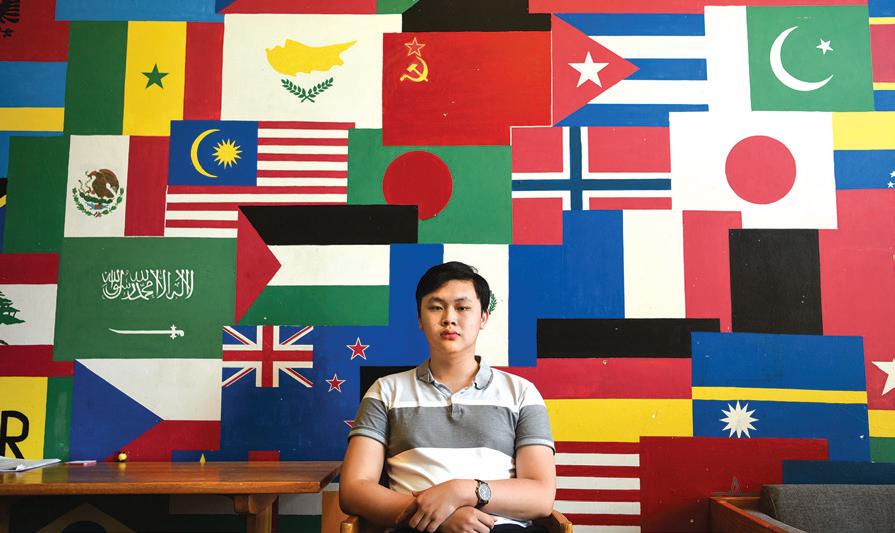
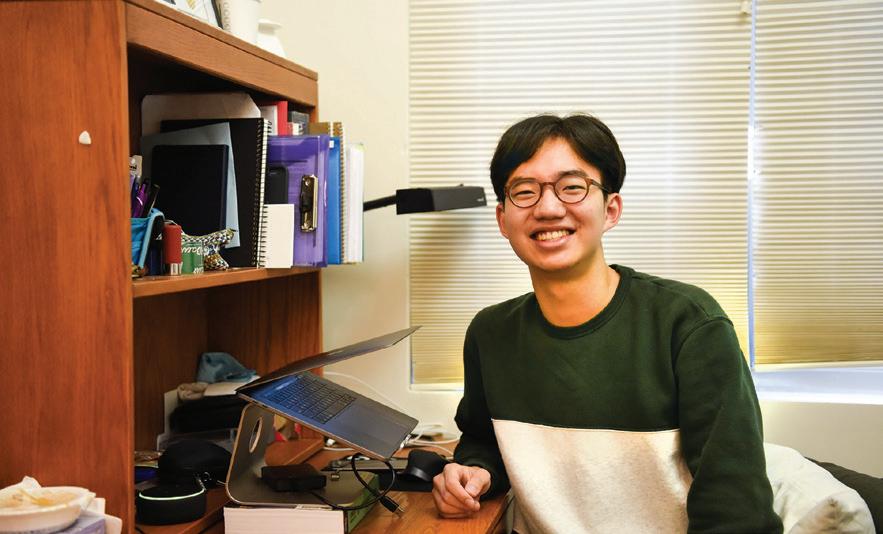
It’s 10 p.m. and Weifeng Yang ’20 has just landed at the Newark Liberty International Airport, about an hour outside of New York City. It’s been nearly 20 hours since he left his home in Tianjin, China, but it will take him another 15 to arrive at Baker Flagpole.
Seven of those 15 hours will be spent lying on a bench in the waiting area of the airport. There, he will wait till dawn to take the first shuttle into Manhattan, and then catch the first Shortline bus to Ithaca.
Yang, like many international students, has to travel long distances in pursuit of a Cornell degree. These trips,
which routinely take up to dozens of hours, are often accompanied by sleep deprivation, difficult accommodations and surprising episodes.
As finals season approaches and many Cornellians are geared up to go home, The Sun asked nine international students from around the world about their travel experiences. Their journeys may differ in length and destination, but everyone had something to say about the people they met, the problems they faced and the lessons they learned along the way.
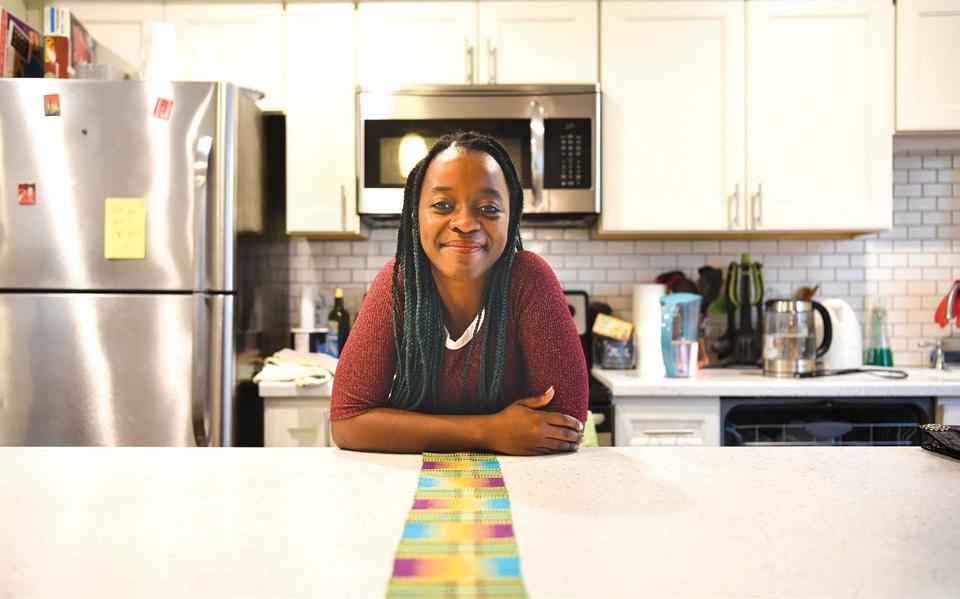
Economy Seat, Economic Concerns Valencia Lambert ’20 only goes home about once a year to save money.
Improper Investigator | Mayor Svante Myrick ’09 faces criticism for his decision to share the arrest footage.
Local police union calls decision to release arrest footage ‘intentionally misrepresenting’
By MARYAM ZAFAR Sun City Editor
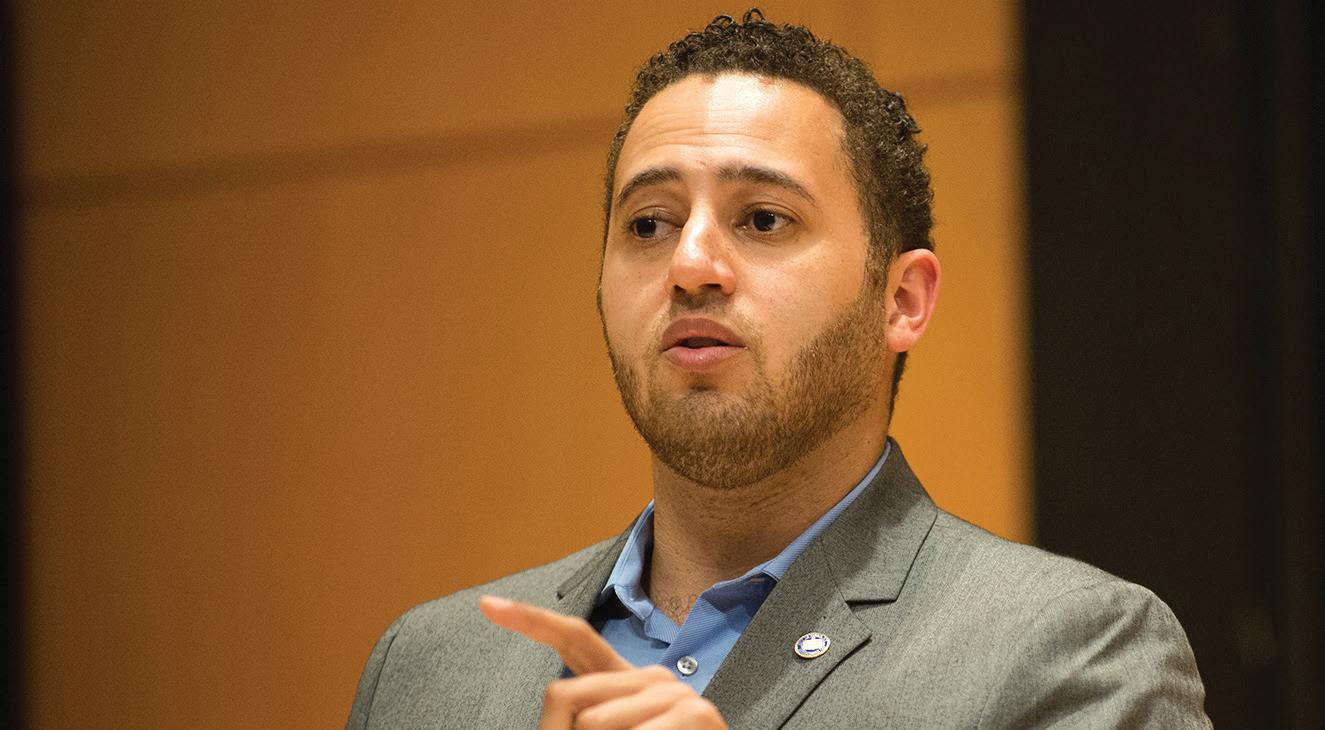
An Ithaca police union said Mayor Svante Myrick’s ’09 decision to share footage from an April arrest on the Commons was “intentionally misrepresenting an incident” and “improper” in a Facebook post on Saturday. The release of the videos came after community pressure for transparency and accusations of racial bias of the Ithaca Police Department following the arrest last month.
When Myrick shared the videos, he said that there is an ongoing investigation.
“Svante’s actions were not characteristic of traditional internal investigations and have compromised the integrity of that process moving forward,” the Ithaca Police Benevolent Association — Ithaca Police’s union — wrote, saying that

the “supposed investigation” could be tainted by his decision.
“I have no idea what the PBA was implying with ‘supposed,’” Myrick told The Sun.
“It is an internal investigation that I ordered last month. It is being conducted by a lieutenant and overseen by the Chiefs - per standard procedure.”
In 2014, Myrick ordered a police investigation after a non-uniformed sergeant pulled his gun on four teenagers. At the time, the Deputy Police Chief and the Community Police Board conducted two separate investigations into the incident.
The IPD and CPB did not respond to requests for comment by The Sun.
The dispute is the latest public episode in a series of

On Determining Unique Hues 12:20 - 1:10 p.m., T01 Human Ecology Building
CBB Seminar: Daniel Ratner, SLAC
2:30 p.m., 401 Physical Sciences Buildings
Theoretical Ecology: A Century of Progress, and Challenges for the Next Century In the Face of Global Change
2:55 - 4:10 p.m., 233 Plant Sciences Building
Dept. of Physics Colloquium: Hidden Momentum 4 - 5p.m., Schwartz Auditorium, Rockefeller Hall
How to Succeed in Your Internship 4:30 - 7:30 p.m., 123 Breazzano Center
PMA Student Film Screening 6:30 p.m., Schwartz Hall
Korean Showcase 9 - 10:30 p.m., HEC Auditorium, GSH Hall
Potential vs. Realized Savings Under Automatic Enrollment 11:40 a.m. - 1:10 p.m., Statler Hall
Transforming India’s Green Revolution by Research And Empowerment for Sustainable food Supplies 12:15 -1:15 p.m., 102 Mann
Europe Day: Celebrating CIES Fellowship Recipients 4:30 p.m., A.D. White House
Visual Culture Colloquium - Asli Menevse 4:30 p.m., History of Art Gallery, GSH


Fashion as A System: Burak Cakmak, Dean of Fashion at Parsons
4:45 - 5:45 p.m., G73 Martha Van Rensselaer Hall
YoGay Yoga with Adam Ayers 4:30 p.m., K164 Klarman Hall

By KATHRYN STAMM Sun Staff Writer
The Ithaca Police Department is currently investigating a case of vandalism to the iconic “Child of Ithaca” statue on the Ithaca Commons. On April 21, around 9:55 p.m., an unknown subject approached the statue and removed a bronze cup from the table before running off towards North Aurora Street.
The suspect appears to be a white man, about 20 years old, with an average build and dark colored hair, according to surveillance pictures published by IPD in a press release on May 3, twelve days after the crime took place.
The police said that it will take approximately $1,500 to replace the cup and repair the statue.
The bronze statue is of a woman sitting at a table holding a cup. Located on the Commons on East State Street outside Mansour Jewelers, the human-sized statue was built in 2004 by Prof. Roberto Bertoia, art, to honor Erin Schlather, an Ithacan who died at age 26 in a car crash that year.
Schlather was a Vassar College alumna, a Georgetown law student and a legislative analyst at the Pentagon. Before graduating from Ithaca High School in 1995 as class
president, she performed in over two dozen stage productions including at the Hangar Theatre and Ithaca Opera. She was one of the founders of the Orange Tree Theater Company and an active vocalist around Ithaca.
Bertoia told 14850 Magazine in 2016 that Erin’s father, Ithaca attorney Ray Schlather, said “that the resulting piece should be more than an individual memorial and become a celebration of all youth, their hopes, their aspirations.”
“The ‘Child of Ithaca’ sculpture is a celebration of all youth of Ithaca,” Ray told The Sun in response to the vandalism. “This senseless act can be corrected, and in any event will not detract from the positive contributions of our youth to the greater community.”
As of Sunday, someone has replaced the stolen cup, placing a disposable coffee cup from nearby Collegetown Bagels into Erin’s empty hands.
Ithaca Police ask anyone with information that would aid their investigation to contact them at (607) 330-0000 or policeinfo@cityofithaca. org.
Kathryn Stamm can be reached at kstamm@cornellsun.com.
By RONNI MOK Sun Staff Writer
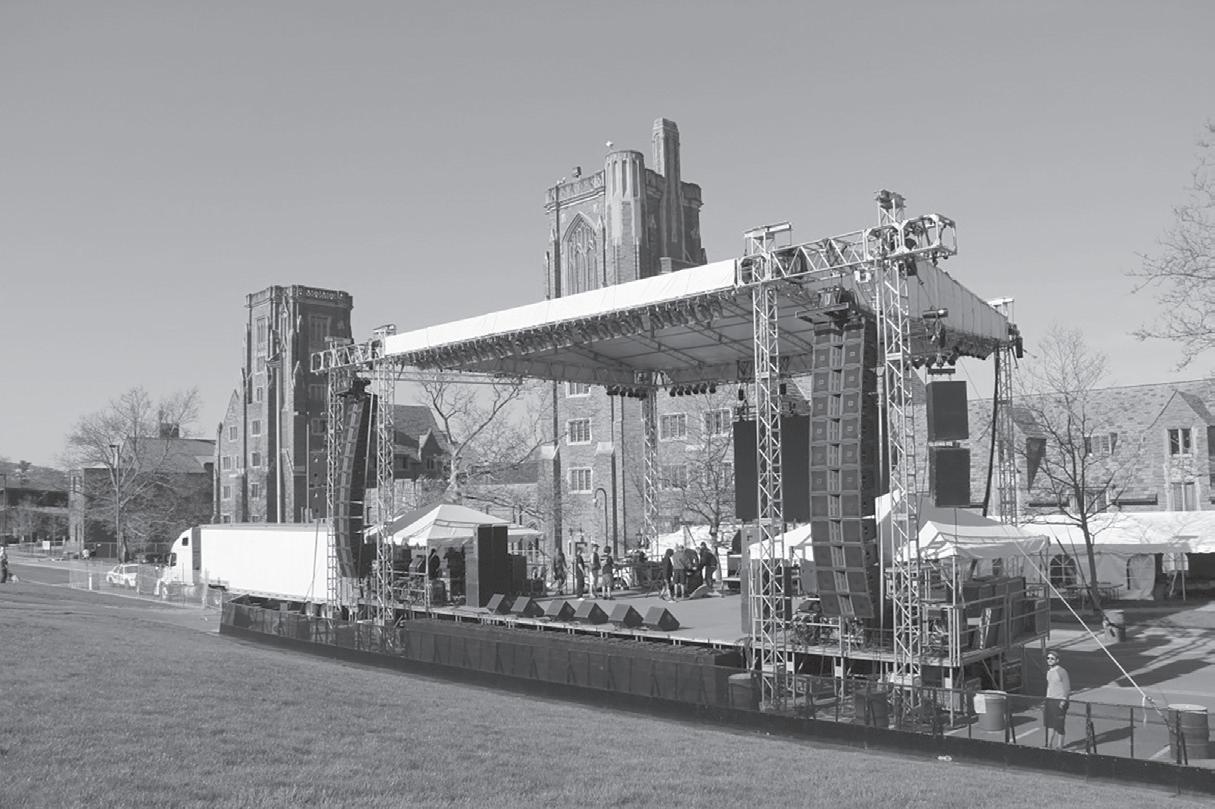
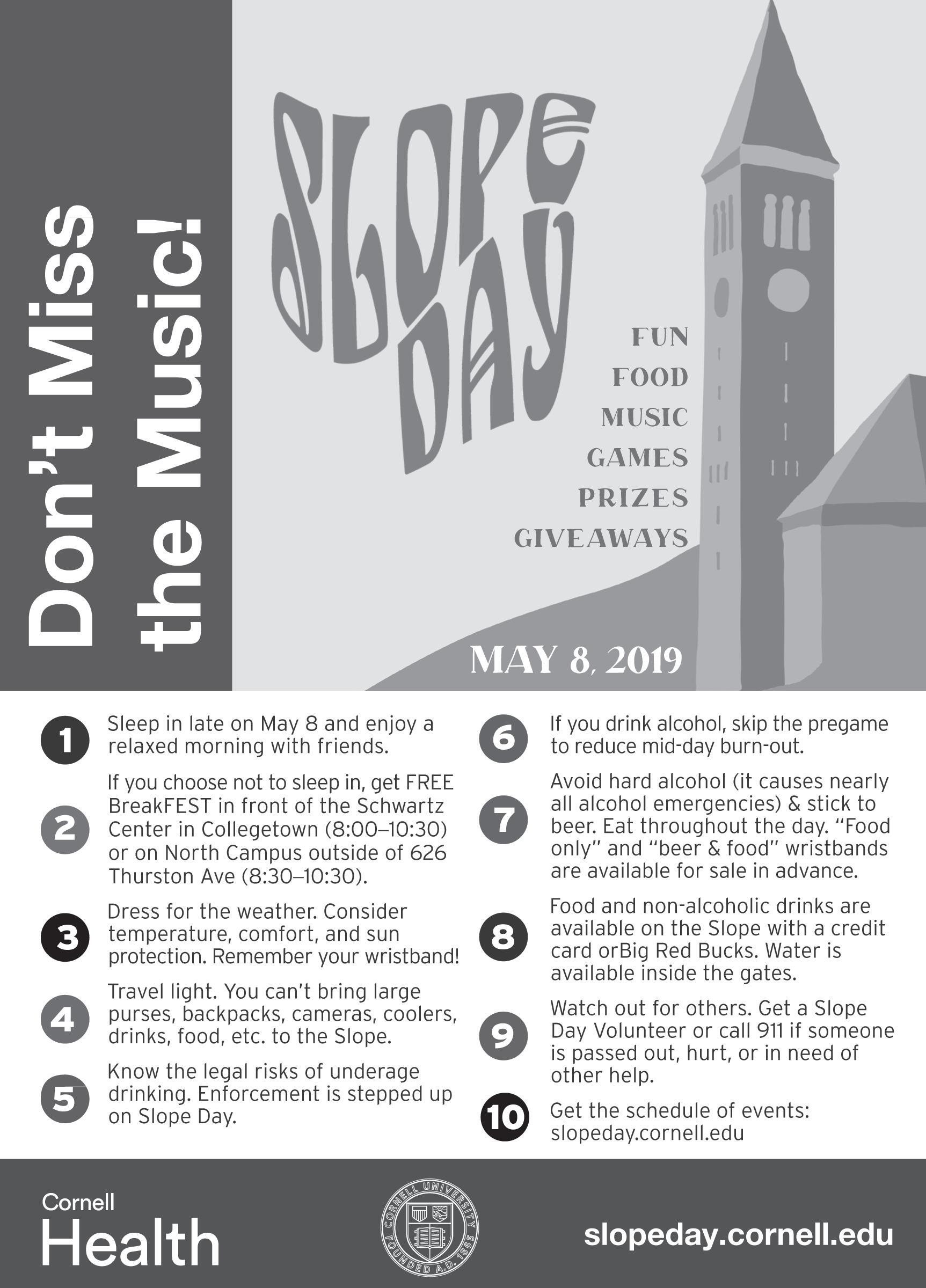
While Slope Day in its modern incarnation started in 2003, Cornell has had a springtime, year-end festival in one form or another for over a century. This year is no different, and this Wednesday, May 8, students will flock to the slope for headliner Steve Aoki.
“Given the very popular reputation of this year’s headliner, we are expecting larger crowds than in [years] past, so extra resources have been added to ensure we are prepared for any emergencies should they occur,” Dillon Sumanthiran ’19, director of operations and crew chief at Cornell University Emergency Medical Service, told The Sun in an email.
Different offices and departments across campus have been working to properly manage the large number of students on and off the slope and to ensure that correct safety precautions are taken.
The staff at the department of Environmental Health and Safety have been coordinating the safety and support services that ensure the day runs smoothly. Many other campus and community partners, including Cornell Health, Cornell Police and

By ANGELA LI Sun Staff Writer
The Sunrise has come to Ithaca. The local branch of Sunrise Movement, a nationally organized group of young climate activists, hosted a Green New Deal Town Hall at the Tompkins County Public Library on Thursday, giving activists and community members from Ithaca and beyond the chance to voice their concerns about U.S. environmental and economic policies.
non-binding resolutions in both houses of Congress by Rep. Alexandria OcasioCortez (D-N.Y.) and Sen. Ed Markey (D-M.A.), the Green New Deal is a series of largescale policy reforms designed to address both climate and sustainability issues as well as revitalize the economy through job creation, modeled upon the New Deal of the 1930s.
offer a job to every American who needs one,” said Mike Moritz, co-founder of Sunrise Ithaca.
After breaking down the broad components of the Green New Deal, the organizers expanded discussion to include the roundtable guests.
CUEMS have collaborated with EHS to develop operational, safety, medical and contingency plans.
“In conjunction with our campus partners, under the guidance of university’s Office of Emergency Management, CUPD has been working to make sure that our plan compliments the university plan, and that all anticipated aspects of the festival have been discussed and planned for,”
Sgt. Anthony Piedigrossi of Cornell Police said in an email to The Sun.
Each year, EHS facilitates a “coordination center” where representatives from those departments and agencies can share information, coordinate operations and make decisions.
According to Dan Maas ’87, an emergency manager with the Office of Emergency Management, this helps to ensure that “decisions are made in a collaborative manner and problems are quickly and efficiently resolved.”
EHS staff will be alongside Cornell Police on the slope, monitoring for safety issues.
To read the rest of this story, please visit www.cornellsun.com.
Ronni Mok can be reached at rmok@cornellsun.com.
Sunrise Ithaca, which was founded by five Ithaca College students, facilitated discussion during the town hall, which opened with a keynote speech from Prof. Sandra Steingraber, environmental studies and sciences at Ithaca College, the co-founder of New Yorkers Against Fracking.
Steingraber introduced the Green New Deal as the only plan that is aligned with “recommendations from scientists and experts for addressing climate change.”
Proposed as a pair of
“We’re already kicked to the side and deep in margins, and now I can’t even drink my own water?”
Joe Cruz
The Sunrise Ithaca organizers emphasized the importance of job guarantee provision with the Green New Deal, which promises some sort of employment for any job-seekers, especially for historically marginalized communities. “There’s so much climate work to be done that the federal government can
Joe Cruz, a senior at Ithaca College, introduced himself in the native language of the Comanche Nation. He spoke about the links he saw between gentrification and climate injustice, saying that his community, which was affected by gentrification in Texas, only had access to water so dirty “you could spark it on fire.”
“We’re already kicked to the side and deep in the margins, and now I can’t even drink my own water?” he said.
To read the rest of this story, please visit www.cornellsun. com.
Angela Li can be reached at angelali@cornellsun.com.

An economy-class round-trip between Dar es Salaam, Tanzania — Lambert’s hometown — and New York City costs around $1,300. The trip consists of two flights that take up 20 hours, in addition to a three-hour-minimum layover at Dubai and a five-hour bus trip between New York and Ithaca.
“The biggest misconception people have is that all international students are rich,” Lambert said.
“Although there are people who are able to figure out a way to finance full tuition, the financial status of international students don’t always translate directly between their home country and the U.S.”
For Lin Khant Oo ’21, of Yangon, Myanmar, being 6’2’’ and having to sit in the packed economy class for 20 hours isn’t ideal. However, while he is “pretty well off” and would consider economy-plus for the extra legroom once in a while, “business [class] is just not worth it.”
Also concerned about the travel expense, Yang chose his flight for its relatively low price despite its inconvenient arrival time. While the cold metal benches are not exactly perfect substitutes for a hotel mattress, he said it is a much more affordable choice.
“I would close my eyes for 10 minutes before realizing I can’t actually fall asleep,” he said, attributing it to his body still adjusting to the complete reversal of day and night. (Beijing is 12 hours ahead of New York.) By the time he gets back to Ithaca, he would have stayed awake for 34 hours straight.
“My only concern is that someone would steal my luggage when I’m drifting away,” Yang said. “As of loneliness, I don’t feel it at all.”
While booking tickets early allows international students to secure a lower price, it also puts significant restraint on their end-of-semester schedule. For them, last-minute changes and impromptu travel plans are often not an option.
“I can’t just be like, ‘I’m going to Spain next week before I go home,’ or ‘I’ll figure out where I’m going for the summer days before school ends,’” said Victor Besse ’21, a French citizen who lives in Mexico. “I always have everything planned out way ahead of time, but Americans don’t seem to have this sense of urgency.”
For those applying for summer internships in the U.S., it’s more like a gamble. If they have already booked the flight home but end up receiving an unexpected offer, they risk wasting a non-refundable ticket. If they wait to finalize summer plans before buying tickets — which is
http://data.arts.cornell.edu/elec/ Monday, May 6 and Tuesday, May 7
often by March or April — the prices could have already doubled.
“It’s the factor X,” Khant Oo said. “You never know.”
‘Extra Hours And Extra Hours’
“Arranging transportation is a big issue because anything could happen. Your bus could be delayed. If you don’t catch the airport shuttle at that specific time, you would miss your first flight. If your first flight is delayed, you would miss the connecting flight,” said Jaewon Sim ’21, who is from Seoul, South Korea. “You need everything to go precisely according to plan.”
Sim said he once missed the Cornell Campus-to-Campus bus by five minutes, which left him — only a freshman then — in “absolute panic.” After being told that he can still take the bus if he made it to the next stop on time, Sim had to hitchhike to get to Sage Hall as there was no Uber in Ithaca at the time.
“I genuinely thought I was gonna miss my flight. I had a lot of f-words in my head, not gonna lie,” he said. “Now I’m paranoid and always triple check the bus schedule.”
Although only a freshman, Ludovica Stilli ’22, of northern Italy, said she has already realized that “timing is everything” when working around the sparse bus schedules.
“I had a flight that came in at 2 p.m., and the next bus was at 4:30 p.m. Then it was either me running from JFK to Manhattan to get the 4:30 bus, or the next one is at 11 p.m,” she recalled. She managed to catch the 4:30 bus in the end, which she said was due to “sheer luck.”
To make sure they get to their destinations on time, many students have chosen to leave early and spend more time waiting at airports and bus stops. While this gives them more leeway for unexpected events, it also adds on to the exhaustion of a long journey.
“Flights for us from Europe aren’t that bad, but there’s always these extra hours and extra hours
that people don’t calculate into [the trip],” said Christine Relander ’20, who’s from Finland but lives in Switzerland with her family.
“Say you have a nine-hour flight and five-hour bus … it’s technically 14 hours, but you have to be at the airport at least two hours in advance. It takes an hour to get from Manhattan to JFK, and you have to save an extra hour just in case for traffic,” Relander continued.
These experiences, although echoed by many international students, don’t often get brought up in their conversations with their American friends. Sim said he would laugh when Californians complain about their flights being too long. “Americans just don’t get it,” he said.
“I don’t want to be complaining about it all the time, although there is a lot to complain about,” Yang said. “It just feels like I’m bragging.”
“I think if you’re from a country that doesn't have a lot of representation at Cornell, coming in as a freshman, you can feel quite alone,” Lambert said. “I talk about [traveling home] a lot, but I always want to talk to international students who know what’s going on, like, ‘oh yeah, that happened to me too.’”
Despite the length of their trips, international students say they don’t often seek out travel companions. Between all the time-killing video games, Netflix shows, in-flight movies and occasional attempts to do work, they often find themselves in unexpectedly funny or frustrating situations.
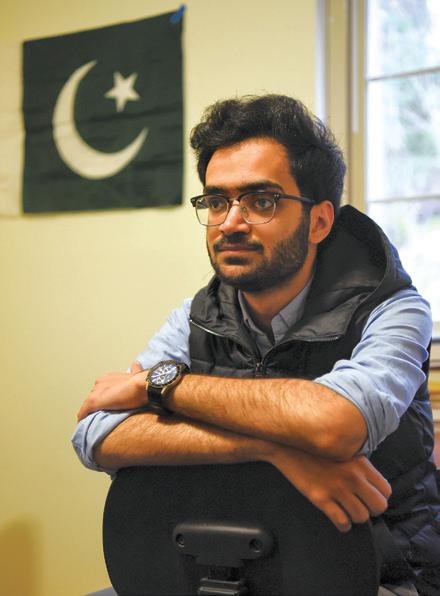
For Hassaan Sabir ’21, of Islamabad, Pakistan, one of the most enjoyable conversations he ever had on a trip happened to be with an Indian family, who he said are usually “not very close” to Pakistanis due to the strained relationship between the two countries.
“I told them I study politics ... so they had a lot of questions for
me, like ‘do women walk outside of their house?’ and whether my mom works,” Sabir said. “I was like, ‘yeah women walk outside and my mom works.’ And I tried to explain that [Pakistan] is not that bad. It really opened my eyes — [Pakistanis and Indians] hate each other, but they don’t know anything about each other.”
“I ended up talking about politics for about four hours with this random Indian guy,” he continued. “When we landed, he asked for my number and later texted me saying it was very nice talking to me. It was cute.”
For Pia Bocanegra ’19, of Manila, Philippines, her long flight is a time for reflection. “You’re forced to allocate such a long time just with yourself, so it’s a good time to look back and think ahead, like plans for the next semester,” she said.
Bocanegra also joked that her friends don’t want to travel with her anymore because she “brings bad luck”: One time, her layover in Tokyo lasted nearly 24 hours — no plane could leave the airport that day because of an unusually heavy winter storm. Another time, her flight from New York City to Ithaca was canceled due to airport workers going on strike, leaving her sleeping at the “gross” Port Authority.
“I didn’t know how long I didn’t shower that day, and I don’t want to know,” Bocanegra said of her brief stay at Tokyo. “Now I’m on ‘survival mode’ when I travel ... after all these horror stories, I know to bring extra clothes and toiletries in my carry-on bag, and I have gotten very knowledgeable about all the protocols.”
“I’ve learned that there’s no point in fighting or arguing when things happen. You’re on your own and you just deal with it.”
Meredith Liu can be reached at meredithliu@cornellsun.com.
wide-ranging online critiques following an April 6 altercation in the Commons early on a Saturday that resulted in the arrest of a young black man and woman.
Since then, the police department has been criticized for exhibiting a “pattern of abuse and disrespect of people of color.” Last week, local advocacy groups including Black Lives Matter Ithaca and the Multicultural Resource Center wrote online letters and organized a rally.
Three days later, Myrick shared a Facebook post linking 10 videos, including footage from the Commons and from individual officers’ body cameras. The footage included the arrests themselves and conversations with fellow officers, spectators and other involved individuals afterwards. The videos were lightly redacted for “privacy,” according to Myrick’s post.
The mayor said that he had reviewed the footage “immediately after the incident,” and then subsequently ordered an internal investigation.
Disclosure of body camera footage has faced contention in New York before.
In February, a state appeals court ruled that body camera footage is subject to public disclosure, ruling against the New York City police union’s assertion that body camera footage was a personnel record, which can be kept secret under state law.
The IPBA post — which represents the views of the “ENTIRE IPBA,” the group told The Sun in a message — accused the Mayor of acting for political gain, and for putting “public safety last.” The group also used the incident to advocate again for higher wages.
The labor union characterized the incident on the Commons as one in which officers were “attacked,” and said that the individuals in the videos “resisted the verbal direction and efforts” of officers on the scene.
The footage details the chaotic arrest of Cadji Ferguson, of Ithaca, and Rose Degroat, of Ithaca, as well as the detention and interview of others at the scene. The videos themselves were cited in the reduction of charges for Degroat.
District Attorney Matthew Van Houten previously said that he reduced charges for Degroat on Wednesday after watching the footage. Degroat was initially charged with two counts of attempted assault, which were reduced to one count of disorderly conduct and two counts of obstructing governmental administration.
“In this case, specifically because of the allegations that were made, I reviewed all the video evidence very carefully — every minute of it — and I determined that the appropriate charges were misdemeanor-level obstructing governmental administration and resisting arrest as opposed to the original charges that were felony-level attempted assault charges,” Van Houten told the Ithaca Voice on Wednesday.
In one video, taken after the arrests as an officer talked to a woman on the scene, he called body cameras the “greatest thing” that has happened for law enforcement.
Maryam Zafar can be reached at mzafar@cornellsun.com.
FOOTAGE
Continued from page 1
As Ferguson is walked to the police car, he said to the officer, “you guys don’t even know what happened … this is crazy.”
An officer replied: “Well, the great thing about it is now we can figure it out, right?”
“You guys tased me,” Ferguson said. When the officer asked him how it felt, he says, “it didn’t feel too great.”
As Ferguson is turned against a police door, an officer walks around and retrieves the identification information of the man they say Ferguson hit. The officers ask the man — who says he is in Ithaca for his son’s Cornell wrestling tryouts — whether he would like to pursue charges. On the phone, he consults someone, saying, “These black guys fucked with me. And then I slapped them around a little bit … they, they cold cocked me.”
In later footage, as Degroat is put in a police car, another woman is seen being “detained,” according to an officer, as her friend records the interaction on her phone. The woman’s arms are held behind her back as she asks her friend, “Emily, can you put my phone in my purse?”
Her friend Emily argues with the officers, asking why the woman is being detained, saying “she didn’t lay a hand on anyone.”
The officer walks the detained woman across the street, and then talks with other police department members, discussing who has been arrested.
When approached by bystanders, the officers says that he “will explain everything,” but that he doesn’t know yet.
Myrick posted a link to the videos Friday night, prefacing that they may show “tense and at times violent events,” and that there were redactions in some footage for the sake of privacy. The footage has been shared nearly a month after the incident, and three days after Black Lives Matter Ithaca shared a letter on Tuesday, demanding that Myrick and IPD release the footage from April 6.
Black Lives Matter Ithaca did not respond to a request for comment by publication time.
Ferguson has been charged with resisting arrest and disorderly conduct, according to the Ithaca City Court site. Degroat was initially charged with two counts of assault in the second degree. Her charges were reduced to one count of resisting arrest and two counts of obstructing governmental administration in the second degree.
Much of the footage shared was from individual body cameras of officers on the scene. After the arrests, as one officer talked to Emily, he called body cameras the “greatest thing” that has happened for law enforcement.
Nicholas Bogel-Burroughs ’19 contributed reporting to this article.
Maryam Zafar can be reached at mzafar@cornellsun.com.
So, this is my last column. In my first, I wrote about Spider-Man: Into the Spider-Verse’s being the best film released in 2018, and in my second, I took a look at the history of Marvel comics and the Marvel Cinematic Universe in anticipation of Avengers: Endgame. Following its release and the hole it created in my heart, in this last at-bat I’d like to take a look at what makes certain superhero movies stand out, then compare how several villains (which I guess is a bit of a spoiler on my conjecture) in recent films stack up.
This really shouldn’t be a surprise; we’ve known it since The Dark Knight. A comic book hero and his or her character and struggle is only as impactful as the evil they’re seeking to overcome. But this isn’t true for just superhero movies — any film’s depth is characterized by the severity of its conflict. For my money, though, Heath Ledger’s depiction of the Joker in Christopher Nolan and Christian Bale’s second Batman film was the first time we saw a comic book villain, characters often plagued by their camp and hyperbole, compare equitably to other profound conflicts in cinema.
Anyway, comic-inspired movies have been (or when they haven’t been, should have been) chasing Nolan, Ledger and Bale for a decade for good reason. Bale’s Batman appeared so resolute in his pursuit of order because of the Joker’s equally intense commitment to anarchy. I’ve heard many people liken this relationship to one in which the Joker serves as a sort of foil for the Caped Crusader, but I’m not sure that’s an apt comparison. The Dark Knight is not a film in which a singular protagonist sets out to defeat evil, it’s one with two main characters. Both Batman and the Joker’s approaches to the film’s driving moral conflict are presented with equal weight in a light that exposes both their pros and cons. The Joker does not just act in complement to Batman, he in part defines him. Their relationship, as two entirely different sides of the same coin, is confoundingly symbiotic.
This was unprecedented. Superhero films of old had presented their audience with a light and dark side (yes, Star Wars movies are superhero movies, but that’s a conversation for another time) but never before Nolan’s 2008 masterpiece was it conceivable the villain might end up winning. No matter how steep the odds or dark the night, our hero would prevail because of the same inalienable virtues they possessed at the beginning of the film. And while
Batman does win out in his eponymous film, he isn’t the same millionaire-philanthropist-vigilante he was at the start. He breaks his rule, killing Harvey Dent and taking the blame for his crimes for the good of the city, which was the Joker’s goal all along. Batman’s battle with the Joker irreparably altered the hero in a way we don’t often see in popular cinema.
So, then, let’s talk about Thanos. Warning: Spoilers for the latest two Avengers films. The “Mad Titan,” as he’s known only to the dorkiest corners of my YouTube subscription box, has become a household name because Kevin Feige and Co. did something unprecedented in Infinity War: They made the big bad the movie’s sole protagonist. And I don’t mean that in a cute thought-experiment way; Thanos is to Infinity War as Tony Stark and Steve Rogers are to Iron Man and Captain America. He is given a task to complete and does so despite adversity. Like a holy man, he quite literally sheds his armor and commits himself entirely to a cause he knows to be indisputably correct and is willing to sacrifice everything for, even those who he loves most (though this part is incredibly problematic) and himself. He beats the Avengers not through brute force and brutality as would any other run-of-the-mill villain but with skill and intellect.
Infinity War shocked people because its villain was victorious but the merit of this potentially risky narrative choice was not its surprise. The film was so universally well-regarded by critics and audiences alike because Thanos deserved to win. He underwent every segment of the classic hero’s journey and did so with infallible devotion to his mission. He earned the snap heard

round the world.

point, we were only rooting against him because his dispassionate, cold and seemingly well-reasoned plan was one that did not benefit characters we already knew to be good. But here, he’s gloating, and I really do wish he hadn’t. We see this meaner disposition expounded upon more in Endgame by a younger Thanos brought to the present day through some seriously yada-yada’d time travel, but that was only after the older present day Thanos, having completed his work, is killed off with very little fight. He barely resists.
Media Relations
And though his plan is one that’s obviously flawed in real-world application, his character’s backstory, speech and actions let us as an audience know that in his world, he’s correct. Thanos comes with two issues for me and my conjecture is that the first wasn’t “his” fault. There’s one line in Infinity War I keep coming back to: “Fun isn’t something one considers when balancing the universe. But this … this does put a smile on my face.”

This quote, in two halves, is everything compelling and a large part of what’s wrong with the character at once — it’s when he became a villain. I mean, we knew he was the “bad guy” before then, but this was the first time the audience was shown he was in any way evil. To this
It’s not hard to view the pre-time jump Thanos as a character, who, despite clear wrongdoing in his past (more on that in just a second), had tried to atone for his sins by bringing about balance on a universal scale. I feel strongly that this nagging line is one designed for trailers. The picture of a giant villain taunting a broken Iron Man was sure to put more butts in seats than would speech consistent with the character we observed for the first two acts of the movie.
Unfortunately, there’s another Titan-sized caveat in my praise of Thanos’ character. Mikey Neumann and Maggie Mae Fish have already said this better than I ever will, but the MCU’s decision to yield trauma and abuse as plot devices in Infinity War was inexcusably irresponsible. I get that for us to know a bad guy is bad he needs to do bad things, but to suggest that he loves Gamora and that Gamora might love him back after all of the pain he intentionally subjected her to is disgusting, especially because this is a movie marketed to children who may have entered theaters under the supervision of authority figures who are themselves abusive. This film informs those kids that abuse is akin to love.
Thankfully, I think there’s another one that did bad better, Blank Panther’s Killmonger (warning the second: spoilers), who I believe to be not just the best villain since the Joker, but perhaps one of the greatest points of conflict in cinema history. Not that Black Panther’s being number 10 on the all-time box office gross list makes it “small” by any means, but because Endgame and Infinity War currently sit at two and five (oh my God), I guess it’s possible you might know of Thanos but know nothing about this other guy. So, in short, Black Panther is a film in which T’Challa — the prince of Wakanda, a technologically
advanced, yet hidden-away nation in SubSaharan Africa — must come to grips with both the death of his father and the violent acts of a new political rival, Killmonger, who himself was orphaned because of the sins of T’Challa’s recently deceased father. What makes Killmonger, who will undoubtedly go down as the third piece of a historical run between director Ryan Coogler and Michael B. Jordan (Fruitvale Station, Creed and Black Panther), so special is that he wins the film’s moral argument. Although his violent means leave much to be improved upon, at the end of the film T’Challa drastically changes his approach to foreign policy because his cousin was right about the broad strokes. For the people of Wakanda to continue closing themselves off from a world in which they could remedy the suffering of millions and millions of people would have been wrong. I cannot remember another time in which a film’s protagonist saw themselves so substantively changed in response to and, more shockingly, in agreement with the villain.
Black Panther ends with Killmonger dying at T’Challa’s hand in what might be the most emotionally muddled kill in cinema history. We as an audience must cope with the dissonance between knowing that he absolutely had to die for the country to progress in a socially conscious way and our tragic sympathy for his character who, unlike Thanos, had motivations that weren’t just understandable given his backstory, but that tracked with modern-day notions of progress.
What makes the conflict of any film significant is its aftermath. What will being pushed to the brink and coming out on top mean tomorrow? If you don’t learn from the obstacles you overcome, you’ve won no victory at all.
Characters like the Joker, Thanos (despite his flaws) and Killmonger are ones that future generations of filmmakers should laboriously investigate because even operating in a genre saturated with heterogeneity, all three managed to cut through the muck and present their “arguments” with clarity and gravitas heretofore unseen across all of cinema.
That feels like as good a sentence as any to end my little column experiment on. I’ll see ya around.
Nick Smith is a junior in the College of Arts and Sciences. He can be reached at nsmith@ cornellsun.com. Media Relations runs alternating Tursdays this semester.
Independent Since 1880
137th Editorial Board
ANU SUBRAMANIAM ’20
Editor in Chief
DAHLIA WILSON ’19
Business Manager
PARIS GHAZI ’21
Associate Editor
NATALIE FUNG ’20
Web Editor
Working on Today’s Sun
SARAH SKINNER ’21
Managing Editor
MEREDITH LIU ’20
Assistant Managing Editor
RAPHY GENDLER ’21 Sports Editor
Ad Layout Medhavi Gandhi ’20
Production Deskers Dana Chan ’21
Jamie Lai ’20
News Deskers Anyi Cheng ’21
Yuichiro Kakutani ’19
Design Deskers Jamie Lai ’20
Laura DeMassa ’21
Xiangyi Zhao ’22
Night Desker Maryam Zafar ’21
Photography Desker Jing Jiang ’21
Sports Desker Miles Henshaw ’20
Alexia Kim | Who, What, Where, Why?
It has been exactly one year since I received my official Cornell guaranteed transfer acceptance. I still remember it like it happened yesterday. It was a perfectly sunny day, and my close friend and I sat on my bed in my cramped dorm room at Case Western Reserve University eating to-go sushi rolls while watching The Office on my carefully balanced laptop. What had always seemed so distant had suddenly become shockingly close. Before I knew it, I was no longer strolling down Euclid Avenue in Cleveland. Instead, I found myself walking through the Ag Quad in sweet ol’ Ithaca.
Having Cornell University on my mind nearly every day for a year made it seem more like a concept that couldn’t exist beyond the confines of my mind.
my way to class (and sometimes still do). I felt as though I was experiencing a sort of “Freshman Year 2.0.”
The transition as an external sophomore transfer was a high-speed, neck-cramping roller coaster with its corkscrew loopty loops and brief breathing periods of steadiness between each bump and mountain. I felt unprepared, timid and uncertain.
But beyond this initial fright, being a transfer student ultimately brought with it a unique experience that I’ll forever be grateful for. I was able to experience college through different eyes, and it provided me with the opportunity to appreciate the little things that I wouldn’t have been able to truly acknowledge and appreciate otherwise.
But beyond this initial fright, being a transfer student ultimately brought with it a unique experience that I’ll forever be grateful for.
After watching numerous YouTube videos and drowning in spectacular Google Images, Cornell was a whole other world to me, with its beautiful gorges flowing through the campus, the numerous libraries and dining halls, the luscious, rolling hills and the breathtaking buildings basking in the rays of the setting sun.
Now, living in what was once a mere fantasy, I’ve realized how idealistic my Cornell vision was, but at the same time, I’ve also come to realize the real beauty that hid underneath the glistening panoramic photos. Being a transfer added a greater sense of appreciation for the typical Cornell experiences that encompass our youthful years in college.
My first year at Cornell was certainly tumultuous with its frightening rigor and unexpected twists and turns. Located on the West coast, home and family always felt a little too far. Maintaining regular communication with old friends became challenging. My academic and professional plans floated around. The windchill dried my eyeballs, leaving me red and teary-eyed as I walked between classes. Not only was the student population massive, but also the physical size of the campus was truly overwhelming compared to the smaller university I had transferred from. It was large to the point where I had to whip out Google Maps to find
It’s possible I wouldn’t be writing to you as a black student on this campus without the occurrence of the Willard Straight Hall Takeover in 1969. This semester marked the 50th anniversary of the event, and despite a 12-page Sun special issue, many students know nothing about its history. The Takeover forced the University and institutions nationwide not only to accept black students as names on the registrar but to recognize us as part of its fabric.
As a black woman on this campus, there is no way I could have made it this far in my Cornell career without acknowledging the men and women who paved the way for the rest of us. Yet so many don’t even know what it is. They don’t have to.
But even beyond the little things about the campus, the education itself really brought everything into perspective. The academics have been brutal but equally rewarding, and I’ve realized what a privilege it has been to be taught by such brilliant and passionate professors. It’s also been an amazing privilege to be able to learn about anything I could dream of, like human relationships or “magical mushrooms.” The opportunities are dangerously endless, placing me in an unexpected situation of having to limit myself.I’ve become inexplicably grateful for the supportive circle of mentors, advisors, peers and friends who’ve taught me that I won’t be alone.
Most of all, I’ve realized how much of a privilege it is to attend a university like Cornell. An experience like this is hard to come by, and I tend to forget that in the midst of organic chemistry prelims and 12-page essays. By realizing the enormity of student privilege we have, only then can we make our positive and negative experiences all in all truly memorable.
I don’t mean to say that my experience at Case Western was one of dreariness and regret. As a matter of fact, it’s one of the most cherishable and mind-opening experiences I’ve had. Now, it provides me with a bigger, more well-rounded picture of what college is really all about.
Alexia Kim is a sophomore in the College of Human Ecology. She can be reached at alexiakim@cornellsun.com. Who, What, Where, Why? runs every other Friday this semester.
Flashback to my spring semester in 2018. I had just joined my sorority. It was one of my first mixers as a newly initiated member: the Delta Upsilon Wedding. A senior girl in my house and a senior guy in the fraternity were married in a mock ceremony — complete with rice, Andre and a kiss at the end. What I knew about this fraternity was not comforting. My freshman year, a brother drunkenly exposed himself to a black female friend of mine while she was walking home through their shared parking lot. Title IX dismissed the charges and no punitive action beside an alcohol training course was imposed on the offender. My sophomore year, a group of black women I knew had been told at the door “you can’t come in here.” Most importantly, I had learned from my peers that in 1969, D.U. brothers had allegedly burned a cross on the front lawn of the Wari House — the black women’s cooperative on North Campus — and that the lack of University response prompted the occupation of Willard Straight Hall. I also knew that after the black students had succeeded, the brothers attempted to retake the building by force. All of this, in addition to claims of drugging, physical assault and injury by brothers on several women — a couple of whom I knew personally — made me feel uncomfortable attending their mixers.
I sent a message in my member class group chat explaining my decision not to attend. It didn’t go over well: I was called a liar, told to stop “spreading falsehoods,” and that it was “inappropriate” for me to try to influence other people in the member class based on rumors. One individual, Lucy (name changed to ensure anonymity), who was dating a brother in the house, called me several times demanding I apologize and take back what I had said. “Whatever happened in 1969 is not related at all to the ‘amazing guys’ who are in the house now,” she said. Older girls advised me to “simmer down.”
This wasn’t shocking. If the legacy of racism has never affected you, how are you supposed to identify it? Of course they’d think I was exaggerating. Who, historically, has defined our narratives through history, sociology and anthropology books, let alone through the media? It’s not hard to understand, then, that white people construct a narrative of racism through an incomplete lens.
Sophomore year Edem thought that by speaking out, I was standing in solidarity with other women. I thought I was doing what I could, as a black person complicit in a racist system, to at least try to maintain the integrity of my community by taking a stand against the evil that had occurred 50 years ago. But the allegations were not addressed. It wasn’t brought up at chapter by any of the executive board members, and after my experience broaching the topic with my member class, I certainly wasn’t comfortable bringing it up myself.
During rush when I asked about the lack of diversity, a sister boasted their social activism on campus: “We had several members of the chapter attend the Willard Straight Occupation back in the fall.” Though I joked about her paltry attempt at “wokeness” with my friends, I signed my bid and was met with comments about how progressive and artsy my house was. But the “woke”
image we had worked so hard to cultivate as a group was worthless if members weren’t even willing to have a deeper conversation about the implications of the original event. This irony, to me, is not the most frustrating part of this tale. Nor is it the irony that the original Takeover was incited by the violence of a fraternity that we continue to mix with — a fraternity that has never rectified their actions, or needed to because they are not called out by the University. Nor is it the fact that my sisters are more angered by the suggestion that we stop mixing with a top fraternity than by racial injustice. It wasn’t even when an older sister explained to me that I was out of my depths — “They’re untouchable,” she said — “The fraternity with the highest number of alumni names on buildings.” What is most frustrating is that I volunteered myself into a system like that to begin with.
As women in the Panhellenic council, we are not able to host social events in our houses. Our only form of activism is abstinence. By going to a fraternity, sororities endorse them, sending a signal that women feel safe there. When I see this fraternity on our social schedule every week, I am disheartened, and to me, it’s another example that the evils of “the system” persist or desist only because of the actions of the people within it. Women claim they are allies for one another, but actions speak louder than words, and allyship is worthless if it isn’t practiced.
How can we move forward if white people do not challenge historical hierarchies of oppression that they continue to benefit from today? What Lucy said about past Cornellians having no ties to students on campus today is untrue, if not willfully ignorant. These organizations were founded for people to formalize their ties to others like them. Privilege is amassed by those in power, denied to those they deem inferior and transferred to their offspring, whether biological or social.
Rectifying the past is uncomfortable. It means coming to terms with the fact that your privilege is unearned. It may mean acknowledging that as long as those who paved the way for you — your grandparents, parents— lived in an unequal world, the legacy they established for you has come at a cost to society. It means listening now, and not 50 years later. It means taking ownership of your blindspots and biases. At a baseline, it means that a simple act like reevaluating your ties with a fraternity could be armor to one of your own who feels like the only one on the battlefield.
And we cannot rectify the past without addressing the present. We can’t just assume race relations would have improved on their own — lives have been lost in order for us to foster a world where someone with my identities can attend Cornell University. We celebrate the so-called freedom of people of color because we can all drink from the same water fountains now, but we can easily turn a blind eye to the present misdeeds of a fraternity whose racist and misogynistic histories are as long as their existence on campus.
It’s easy to look at the past and dismiss contemporary concerns about persisting racial or social injustice — to chalk it up to “how far we’ve come.” But we cannot assume that any problem will fix itself or that we will eventually evolve to an equal society. When someone says things are fine as they are, we must question that, because there have been people who felt so at every stage of American history. I look back to people my age in 1865, to 1969, to 2016 who were complacent and see those people as a warning to those of us who think the same today, because in the future our children will look at us and them and find no difference in our inaction.
Edem Dzodzomenyo is a junior in the College Agriculture and Life Sciences. She can be reached at edemjayne@cornellsun.com. Ed’s Declassified appears every other Friday this semester.

Jade Pinero
For a lucky few trust-fund babies and Horatio Alger protagonists, capitalism is great! For almost everyone else, capitalism ensures a crippled existence, devoid of agency, entirely contingent on one’s continued productive utility. Also, notably, free two-day shipping.
Many people don’t really know what capitalism is, because if they did, they’d be against it. The obfuscation of its grotesque nature is deliberate; its revelation would necessarily catalyze the system’s collapse.
Capitalism is not a mode of production, as we are often led to believe. It is not capitalism that drives innovation, expands consumer choice or balances supply and demand, but instead the market — exchange between sellers and buyers — that creates these benefits.
Capitalism is actually a mode of ownership. It’s a system in which businesses are privately owned, and raw materials, machinery and wage labor are considered inputs for the owner’s production. Wage laborers, unlike inanimate inputs, occupy a hierarchy, but the system sees all inputs the same — disposable and interchangeable. Markets can exist without capitalism; co-ops, for example, reflect a mode of ownership in which workers are not inputs, but owners in their own right.
Workers are told two lies to ensure they don’t realize capitalism is not, in fact, good.
The first — capitalism tricks you into thinking you own things. You don’t.
Unless you are one of the fortuitous members of the owning class, you are owned. Fail to pay your mortgage or rent? Foreclosure or eviction. Car payments lapse? Vehicle’s repossessed. Have a paying job? At any moment, you could be let go, and there’s an 80 percent chance you’re financially ruined. In the job market? You must sell yourself, begging employers for the opportunity to generate revenue for them.
Oh, and if you have employer-provided health care, it is only by your boss’ goodwill that you and your kin remain alive.
Defending capitalism once cognizant of this total ownership is insane — it’s as if Oliver Twist, subsequent to being slapped for requesting supplemental soup, proceeded to traipse about the workhouse defending the master’s right to soup-related abuse.

The second — capitalism tricks you into thinking you earn a fair wage. You don’t.
Let’s say you work at a sandwich shop making $10 an hour. You make 10 sandwiches every hour at $10 each. If we are being generous, we might estimate that each sandwich costs $2 in raw materials and $2 in fixed costs (building, advertising, etc). Each hour, you’re generating $60 in profit, but you’re only earning $10. Is the owner really worth five times as much as you?
You might be thinking that you’ll earn plenty of money, so this doesn’t affect you. It does.
Given the long workdays, entry-level analysts at big banks earn roughly $20 an hour. JPMorgan Chase rakes in $8.1 million in profits hourly. You sacrifice your health, your relationships — your youth! — on research and slide decks for billion-dollar deals, yet earn the paycheck of a Tallahassee Olive Garden manager. You, too, have been bamboozled!
The disparity between pay and value generated is obscene, as evidenced by seven seasons of Undercover Boss, the reality show where executives attempt — and fail miser-
ably at — jobs in their own companies. An entire series rests on the humorous certainty that exorbitantly paid executives, with the fates of thousands on their shoulders, can’t do basic tasks.
This realization precludes any admiration or defense of these suits; those who advocate on their behalf evoke the montage of sycophants deifying Regina George in 2004’s cult classic Mean Girls.
So, is capitalism good?
It’s sure been good to the big banks, which are bigger now than before the Great Recession. It’s been good to CEOs, who now earn every day what the average worker makes in a year. It’s been good to the 26 people who own as much as 3,800,000,000 other people.
And chances are, if you’re reading this piece, capitalism will be decent to you, too.
You’ll probably never have a jet, but you’ll be comfortable. You’ll have your “just-forfun” car, your Casa de Campo vacations and your kid’s prep school tuition. You will keep quiet to preserve them.
But capitalism’s been bad to a lot of people. Capitalism gave us slavery, because it’s cheaper not to pay people; imperialism, because it’s cheaper to own countries than trade with them; and patriarchy, because it’s cheaper to oppress women than compensate them for the social value of child-rearing and homemaking.
Capitalism is bad for the millions of families struggling to put food on the table. It’s bad for the folks who ration medication; it’ll be worse for those who die because of it. It’s bad for the workers no longer included in unemployment numbers because they gave up looking; it’ll be worse for their children, who’ll see only defeat where they should see hope.
Capitalism is bad for the folks who ration medication; it’ll be worse for those who die because of it.
No, capitalism is not good, especially not for the vulnerable.
But a society that sees people as parents, children, students, teachers, creators and innovators instead of labor inputs? That seeks to maximize shared bounty instead of shareholder value? That gives workers a stake in production, allowing them to become self-actualized instead of alienated?
That might be good.
For those who remain unconvinced of capitalism’s evils, I offer an honest parting thought.
Worshipping at the altar of your oppressor might gild your cage, but in the end, you won’t beam with pride remembering how you sided with predatory loan servicers when they started monetizing orphan children’s tears, because, and I quote, “That’s the free market, baby.” Someday, when you’ve been pacified by ample comforts, remember that your apathy allowed suffering to go unaddressed, and your disdain for rabble-rousing let the wicked cash in on misery unchallenged. Remember that you, too, are still unfree — and even if you have something to lose, nothing’s worth having while you’re in chains.
Today, fewer than half of young Americans support capitalism. It’s a sympathetic statistic, since young adults’ conception of the economy has been irrevocably shaped by the Great Recession, unequal wealth distribution and poor wage growth. Yet, while capitalism may not be perfect, it’s worth keeping and fixing because of the prosperity it has wrought.
Let’s get this straight: Capitalism is an economic system. It features primarily private ownership and a drive towards accumulation of new capital. It generates the conditions for scientific innovation, creates enormous wealth and underpins an indispensable global openness. Certainly, capitalism inherently struggles with distributional inequalities. But despite its flaws, we should find a better and more sustainable capitalism — instead of wishfully looking for alternative economic systems that cannot deliver the broad-based prosperity of capitalism.
But despite its flaws, we should find a better and more sustainable capitalism.
Capitalism drives economic growth and global trade, both of which have increased well-being across the world. The free market determines the most efficient allocation of resources towards developing unprecedented solutions, thus producing the newest technologies at cheaper prices. Case in point: The price for a TV has fallen by 98 percent since 1950, even as the quality of electronics has steadily improved. We now have life-saving pharmaceuticals such as AIDS medications and chemotherapy that wouldn’t have been produced without the guarantee of profit. To innovate, researchers need the assurance they will own the lion’s share of the reward of their risky investment, which is only possible under a capitalistic system.
The benefits of globalization — increasing global interconnectedness thanks to trade and capital exchange across borders, spurred by corporations that want to expand their market power — are not only substantial but also irreversible. A world without trade required that companies produce goods only for their localized economies, resulting in fewer, less innovative and more expensive products. But globalization built supply chains linking the world to take advantage of regional resource and manufacturing advantages. The benefits to consumers include cheaper products: For example, if Apple made iPhones entirely in the United States, the price would increase by $100. Quantitative analyses also reveal trade discourages conflict because interdependent economies communicate depend on each other for economic stability.
Unraveling the gains of capitalistic trade vis-à-vis localized economies — a characteristic of statist planning that heavily intervenes in trade patterns — would make us worse off. High tariffs like those proposed by the isolationist Trump administration would decrease trade flows by 70 percent, make consumer goods unaffordable and make way for a surefire recession. Worse yet, we have historical gauges for how trade wars and protectionism end: The 60 percent Smoot-Hawley tariff of 1930 engendered the preconditions for World War II.
Although the gains of capitalism may be distributed poorly, inequality doesn’t negate the benefits of capitalism. Rather, we should develop a more equitable distribution of capitalistic gains. As Columbia University economics professor Joseph Stiglitz writes, “If globalisation worked as it should, there would be enough benefits to go around. American
capitalism in recent years has been marked by unbridled greed — the 2008 financial crisis provides ample confirmation of that.”
Anti-capitalists will contend that capitalism has a nasty habit of creating the conditions for its own implosion — climate change being the primary example. But this doesn’t mean that capitalism isn’t the economic system that’s best suited to solve these issues. Given that we have a short timeframe, we should institute pro-market green tech measures like a carbon tax that would levy a fee on fossil fuels and force corporations to reckon with their environmental impacts.
High-income economies that transition from capital-intensive to knowledge-based production shift more resources to R&D for solving climate change, substitute dirty technologies with cleaner, carbon-neutral technologies and use less raw materials. The best data demonstrates that economic growth is already decoupling from environmental overuse, and it’s our job to ensure we switch to more sustainable growth.
The majority of the developed world has already accepted a certain level of consumption. No amount of persuasion will convince the Koch brothers or the world’s 2,153 billionaires to give up their wealth for the promise of a smaller economy that might, in the best of best cases, be more sustainable. Economic downscaling, or degrowth, can’t be the answer — it has neither the political support nor any guarantee for a peaceful transition. Anticapitalists often point to climate change as the greatest downfall of capitalism and a mark of its unsustainability. But, capitalism is the best (or at least the least worst) system to develop the requisite technical knowledge to address these existential threats.
Both theory and data confirm that capitalism can address poverty and provide for equitable development. China’s GDP per capita under communism was $300. Now, it’s $10,000 and still rising. The story of global growth has changed since the early 1990s: Today, developing nations are consistently outpacing developed countries, confirming economic theory that less developed economies can quickly achieve prosperity through market mechanisms.
Each time a revolution has occurred and capitalism is overthrown, it comes back to life after a period of authoritarian violence and decreased quality of life (see: China, the USSR and Venezuela). Each time central planning has been tried, special interests intervene at every step of the bureaucracy, creating more inefficiency and waste. Each time a socialist says “not our socialism,” I cry a little inside. Capitalism has lasted far longer than Engels and Marx thought it would — even in the midst of the 2008 financial crisis, capitalism proved resilient, demonstrating its corrective nature.
In light of these facts, we should shift to the most sustainable and equitable forms of capitalism. As young adults, we aren’t just organizers or consumers. We’re the next architects of the world’s economic systems. We should compensate the losers of globalization, combat the negative externalities of capitalism and promote (dare I say #YangGang2020) “human-centered” capitalism that accounts for corporate greed and the worst excesses of growth.
Fill in the empty cells, one number in each, so that each column, row, and region contains the numbers 1-9 exactly once. Each number in the solution therefore occurs only once in each of the three “directions,” hence the “single numbers” implied by the puzzle’s name. (Rules from wikipedia.org/wiki/ Sudoku)





NORTH CAMPUS Studio and 3 bedrooms Available 2019/2020 Novarr-Mackesey Property Management office@ithacastudentapartments.com ithacastudentapartments.com 607-277-1234
COLLEGE AVENUE 1 BEDROOMS 607-272-3389 avramisrentals@aol.com
3 BEDROOM SOUTH HILL Large apt, washer/dryer furnished. $550 pp 607-272-3389
DECKS OVERLOOKING
CASCADILLA GORGE 2 Bedroom Available June 1. 5 Person Apartment Graduation Wknd. Furnished, Fireplace, Jacuzzi, Parking, Wireless Internet, Lighted Patio. 607-273-4797
Now Renting for 2019-2020 3-7 Bedroom Apartments All locations. Contact us today or visit our website: certifiedpropertiesinc.com Certified Properties of TC Inc 273-1669

1 Bedroom Apartments
Bright nice and clean, Great location Linden Ave $895 to $950 plus electricity Call 607-237-2541 or 607-227-2535
2019-2020 Modern 3, & 4 Bdrm Apts. Furnished, non coin laundry, parking, internet. 607-273-8576.
COOK ST. Furnished House for 5-7 persons, 10mo. Lease for 2019-2020 Text or call Tracy at TLC Property Mgmt Corp 607-379-2776
==One Month FREE Rent!== Furnished 3 Bedroom Collegetown Apartments PARKING, LAUNDRY, UTILITIES! (607)273-7368 www.WestShoreApts.com
Downtown / Fall Creek Renovated 3 Bedroom Grad student apartment Walk to everything $1950 plus utilities 607-592-0475
27 H OUSE FOR R ENT
2019-2020 Upper Eddy St. House for 5 to 7 People Furnished. Internet. Laundry. Semester or 10 month lease. 607-273-8576
Linden Ave. 5 Bedroom House Available June 2019. $900 per bedroom. Parking included. 607-327-2927
1 BEDROOM JUNE 1, 2019AUGUST 14, 2019 114 Summit Ave. Ithaca, NY “The Lux” 949-395-7034
Mackesey Property Management collegetownterraceithaca.com office@ithacastudentapartments.com 607-277-1234

By RAPHY GENDLER
A year after knocking off Yale to capture an Ivy League championship, No. 9 Cornell men’s lacrosse fell to the No. 2 Bulldogs, 15-10, in the 2019 league semifinals.
And a year after advancing to the national quarterfinals, Cornell’s season will end prematurely — the Red was left out of the NCAA Tournament, whose 16-team field was announced on Sunday night.
Cornell, the No. 3 seed in the tournament, trailed 8-4 heading into halftime before a four-goal Yale run to start the third quarter put the game out of reach in New York City on Friday night.
Despite occupying a top-10 spot in the national rankings entering the Ivy League Tournament, Cornell did not earn an at-large bid to the NCAA Tournament. The Red ends its season with a 10-5 overall record and a 4-3 mark in conference play.
Cornell’s Ivy League foes Penn and Yale — which earned the top two seeds in the Ivy tournament and were in the top five of the most recent national rankings — will host NCAA Tournament games as the Nos. 4 and 5 seeds, respectively.



Cornell goals in the fourth quarter made things interesting, cutting Yale’s lead to 13-9 with 6:28 to play, before time ran out on the Red’s Ivy season.
Freshman goaltender Chayse Ierlan’s 17 saves and junior attack Jeff Teat’s five goals weren’t enough for the Red. Yale outplayed Cornell in nearly every statistical category: Yale won 21 of 28 faceoffs and had 32 shots on goal to the Red’s 22.
Four unanswered
Teat’s — and Cornell’s — first goal of the game gave the two-time All-Ivy first team attackman 100 goals for his career. Teat is the seventh player in Ivy League history — and third Cornellian — to reach the century mark in both goals and assists. He is the fourth Cornell player to reach 100 career goals as a junior.
Teat, a Tewaaraton Award finalist, scored Cornell’s
first three goals of the game to cut the Bulldogs’ lead to 5-3 early in the second quarter. A 7-1 Yale run — finally ended by a Teat goal — proved the difference-maker.
Ierlan’s 17 saves tied a career high. The freshman has made double-digit saves in every game this season in which he’s seen double-digit shots.
But Chayse Ierlan’s strong play in goal was outshined by his brother TD Ierlan’s dominance at the faceoff X for Yale. The Ivy League Player of the Year won 21 of his 27 faceoffs and scooped up 16 ground balls.
Yale went on to lose to top-seeded Penn, 12-11, in the Ivy championship game on Sunday.
Raphy
can be reached at rgendler@cornellsun.com.
By GRACIE TODD Sun Staff Writer
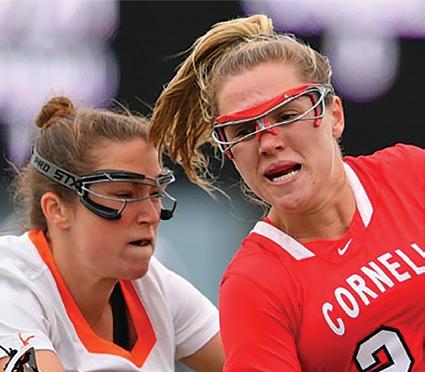
Cornell women’s lacrosse lost to Princeton in the first game of the Ivy League tournament, 11-6, marking the end of its season.
The Red was the No. 4 seed in the tournament while the nationally-ranked No. 10 Tigers were the Ivy League’s top seed.
The Tigers validated their seeding as the eventual winners of the tournament, overpowering Penn in the finals on Sunday 13-9. No. 3 seed Penn narrowly upset Dartmouth, 15-14, on Friday to earn its berth to the final game.
Despite its underdog status, Cornell put up a fight, nearly making a second-half comeback.
“We never counted ourselves out for a second,” junior captain Mary Kate Bonanni said.
Even after falling behind 6-0 just over fifteen minutes into gameplay, the Red maintained its determination to win the game.
“Princeton came out strong right away, and it became tougher and tougher for our team with each goal they scored,” Bonanni said. “However, we were able to stay composed and competitive and we never gave up on the feeling that we could win the game.”
The Red got on the scoreboard with an unassisted goal by sophomore Olivia Jensen, and followed with another
unassisted goal, this time by sophomore Grace Paletta, just over a minute later.
“We cleaned up a lot of our play as the first half was ending,” Bonanni said.
But Princeton responded with two more of its own goals, so the Red entered halftime facing a six-point deficit.
“We had overcome a much worse deficit the weekend before,” said Bonanni. “The coaches used that to motivate us and give us a lot of confidence heading into the second half.”
And indeed, just like last week’s game against Princeton, Cornell had a better second half than Princeton, outscoring the Tigers 4-3 in the final thirty minutes of play, beginning with
a three-goal run.
Junior captain Caroline Allen scored the first two of those goals, and senior Shannon Bertscha scored the third.
“Princeton came out strong right away, and it became tougher and tougher for our team with each goal they scored.”
Mary Kate Bonanni
Each goal was unassisted.
Princeton scored another before Allen found the back of the net for her third goal of the game, putting the Red within three points of the Tigers.
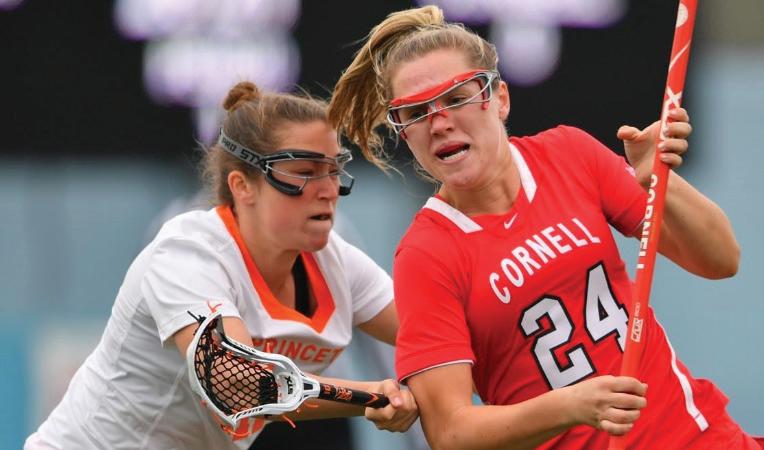
But Princeton scored two more, and ultimately the Red was not able to overcome the deficit. The final buzzer rang with an 11-6 loss for the Red, meaning it would also be the final buzzer of the season for Cornell.
Despite the loss, the Red outshot Princeton 22-20. The Tigers’ goalkeeper, Sam Fish, frustrated the Red all game long. The Ivy League Goaltender of the Year made a careerhigh-tying 16 saves to defend the Tigers’ net.
Junior goalkeeper Katie McGahan made nine saves for the Red — four in the first half, and five in the second.
The Red’s season record is 8-8, but only one loss was dealt by an unranked team. This was the Red’s eighth appearance in the Ivy League tournament since its inception in 2010.