The Corne¬ Daily Sun


By ANGELA BUNAY Sun Assistant News Editor
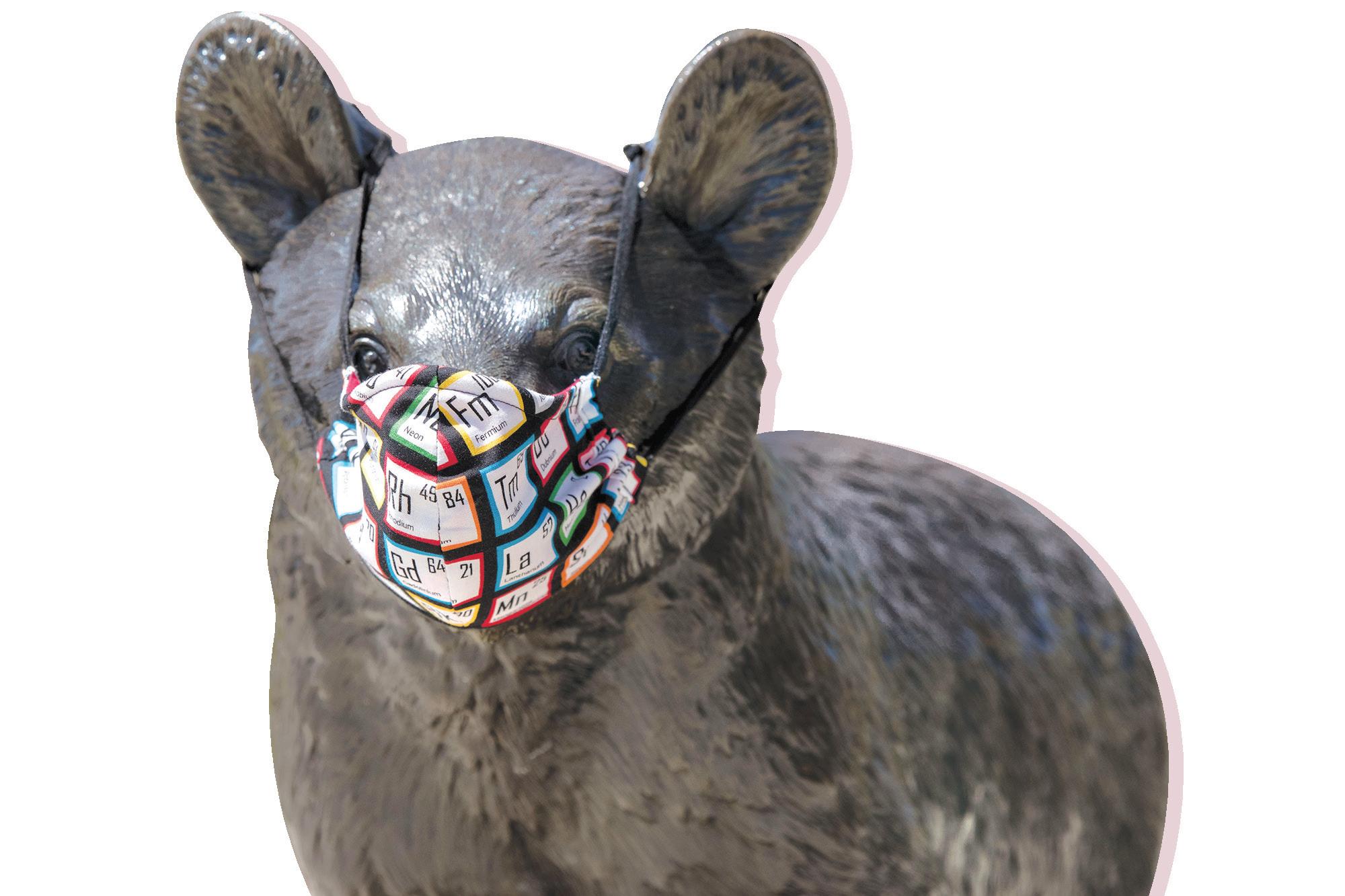
With half of Cornell’s on-campus students getting vaccinated, the University has relaxed certain distancing restrictions — allowing vaccinated students to gather in small groups without masks.
In a Monday evening announcement, Provost Michael Kotlikoff, Vice President for Student and Campus Life Ryan Lombardi and Vice President and Chief Human Resource Officer
Mary Opperman, lauded campus for reaching this milestone.
“While we are still a long way from achiev ing herd immunity on campus,” the email read, “We feel we can safely ease the following restrictions consistent with the latest guidance from the CDC.”
On April 27, the Centers for Disease Control and Prevention released updated recom
mendations regarding mask-wearing in response to more widespread vaccinations. These new recommendations, adopted by New York State, say that fully vaccinated individuals can dine at outdoor restaurants with people from multiple households and attend small outdoor gatherings with both vaccinated and unvaccinated people while maskless.
By MADELINE ROSENBERG Sun Managing Editor
Selam Woldai ’23 will serve as Cornell’s next undergraduate student trustee, according to election results released by the Office of the Assemblies on Monday afternoon. Running against five other candidates, Woldai won the ranked-choice race’s first-round with 891 votes. Her votes represented 26.3 percent of the total 3,394 ballots cast from April 27 to April 30, after the voting website crashed for more than 24 hours.
240 and 324 votes respectively in the first round. In the final, third round — after candidates with the lowest vote total in each round were successively eliminated — Woldai ulti-
“I will work to emphasize our similarities to connect various communities across campus.”
Selam
Woldai ’23
mately received 1,247 votes to Miramontes Serrano’s 1,033.
Alexa Chong ’23, Andrea Miramontes Serrano ’24, Andrew Talone ’24, Brisa Lee ’23 and Itai Mupanduki ’23 received 495, 560, 240,
This year’s election had lower turnout than 2019: This year, 23.63 percent of eligible voters cast ballots for the trustee, compared to 29.24 percent for the
See TRUSTEE page 2
Additionally, anyone can attend small outdoor gatherings with fully vaccinated family and friends and run, walk or bike outdoors with household members maskless.
The new University guidelines include allowing fully vaccinated individuals, who have submitted documentation of the vaccination to the University, to no longer be required to wear masks in outdoor gatherings of 10 or fewer people. Those who have yet to receive their vaccine must continue to wear masks outdoors, and all are required to wear masks indoors.
Cornell’s decision is in line with the updated CDC guidelines which require masks for all indoor activ-
Student organizations and groups of up to 30 people are also allowed to meet under the new guidelines. However, everyone is required to wear masks in these gatherings and registration and attendance tracking is required for contact tracing purposes because groups may include both vaccinated and unvaccinated individuals.
Cornell’s decision is in line with the updated CDC guidelines.
The CDC says that in groups of vaccinated and unvaccinated individuals, those who are fully vaccinated are safely able to go maskless, while Cornell mandates that in those groups all participants regardless of vaccine status must wear masks.
The number of participants in university-sponsored events is also increasing from 10 or fewer attendees to 100 people indoors and 200 people outdoors depending on the venue and activity.
These new guidelines do not pertain to Commencement ceremonies, which will have their own distinct set of guidelines, according to the email.
The University is also continuing its efforts to vaccinate the rest of the on-campus population by hosting a vaccine clinic for faculty, staff and students on Thursday, May 6 in Bartels Hall from 1 p.m. to 5 p.m. EDT.
By YASMIN BALLEW Sun Contributor
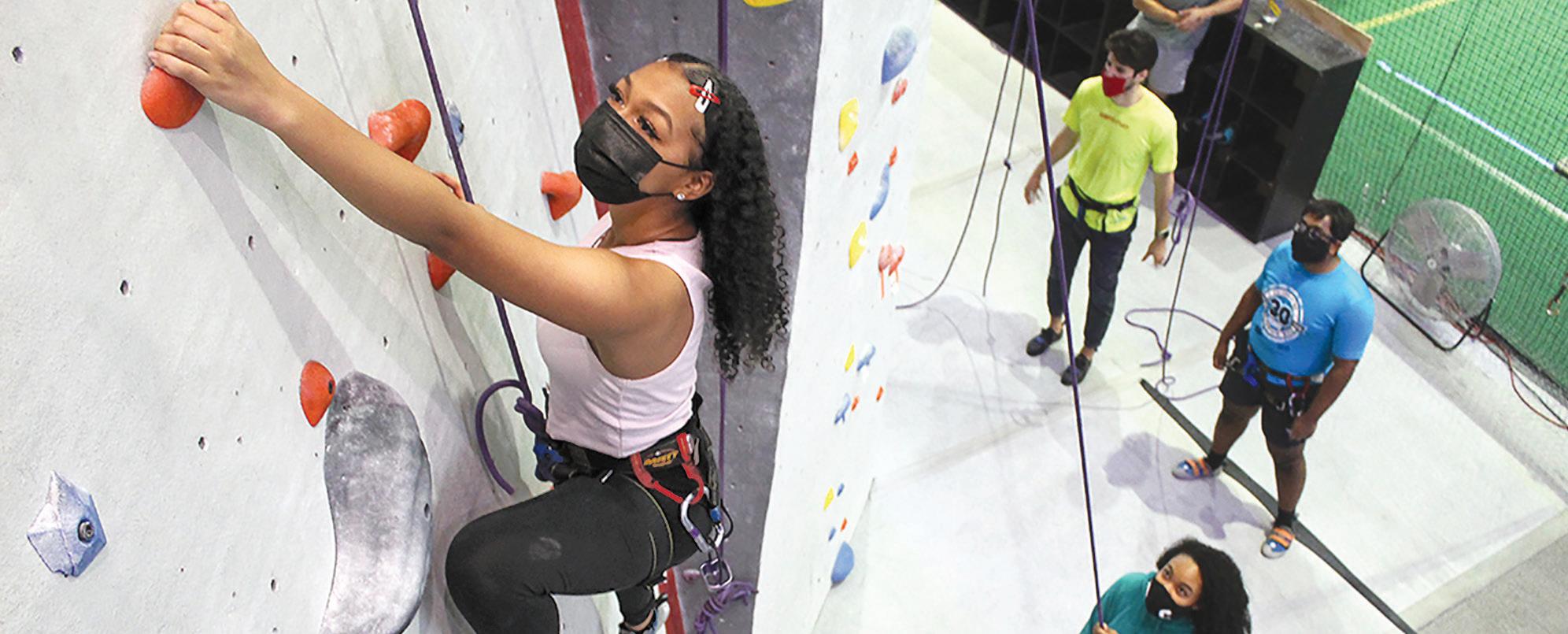
When Cornell Outdoor Education chose to offer a BIPOC rock climbing P.E. class in spring 2021, they did not anticipate an outpouring of criticism and claims of racial segregation.
The course description initially said that the class was open only to those students identifying as BIPOC, which sparked controversy on Cornell’s campus and beyond. A thread of posts to the Cornell reddit called for an end to “racially segregated P.E. classes at Cornell.”
Some argued that the implementation of BIPOC rock-climbing, by offering the class only to students of particular races, was a hindrance to
diversity and inclusion efforts, while others said that Cornell’s decision was racist and in violation of federal Title VI, with states that no educational program receiving federal financial assistance may exclude participation on the basis of race or national origin.
“The climbing world is affected by racism, sexism and sizeism.”
Michelle Croen ’21
With national scrutiny and claims that the course instituted a “white ban” in the media and in communications with University Visitor
Relations, the University made the decision to open enrollment to all students.
The PE 1641: BIPOC Rock Climbing course description now explains that the “class is designed to enable Black, Indigenous, Latinx, Asian or other people of color underrepresented in the sport of rock climbing to learn the sport and to feel included and supported. The class is open to all Cornell students interested in learning rock climbing with this special focus”.
This decision, too, was followed by a wave of media coverage. One article published by Campus Reform was headlined “Cornell Charges Students $1,800 for Racially-segregated Rock
Continued from page 1
Climbing Class, Frantically Scrubs Website When Confronted”.
“While some [activities] may include a focus on students with specific identities, they are not restricted to only those students,” said John Carberry, a University spokesperson. “Cornell offers many programs that support interests and perspectives of different parts of our community. We encourage any student who is interested to take advantage of the unique opportunities across campus to learn from and with the many diverse perspectives and voices across campus.”
Nearly a semester after its creation, students and instructors in the class reflected on how the focus on creating a community of students of color benefitted their experience.
Lwam Asfaw ’21 explained that when choosing a P.E. class it was the BIPOC label that ultimately encouraged her to enroll in the course. She explains that the BIPOC label works to make participation more comfortable, accessible and encouraging in an unfamiliar environment. Asfaw said that people should be focusing less on why segregation exists and more on why there’s a need to segregate.
Yvonne Chan ’21, another student in the course this semester, described the class environment as a safe space — encouraging, supportive and community-oriented. She explained that she sees no reason to attack the existence of the course when there are eight sections of P.E. 1640: Basic Rock Climbing in addition to the one BIPOC rock climbing section. She sees the course as a valuable effort
to encourage inclusion of minority groups, noting similar efforts by larger organizations like Brothers of Climbing, an organization which aims to increase diversity in the sport.
Thomas Gambra ’24 shared some of these sentiments. Gambra explained that being a minority at a predominantly white institution can create a feeling of isolation, and that having a space to connect with other underrepresented students can alleviate that.
“Hearing people complain about this class, saying it’s taking away from our white peers is laughable and frustrating,” Gambra said.
Few students expressed any objection to the University’s decision to open enrollment to all. Matthew Gavieta ’22, a BIPOC instructor leading the course this year, believes it is highly unlikely that someone who does not consider themselves BIPOC would enroll in the course given the course’s stated mission.
However, Gavieta highlighted that there is no difference in the structure or learning objectives for BIPOC rock climbing compared to other intro rock climbing courses. All courses aim to provide students with the necessary skill set for climbing, but the qualifying factor for BIPOC rock climbing is the community of students and the specific focus on the overarching mission of improving access for BIPOC in a white-centric sport.
“At the end of the day,” Gavieta said. “There is an issue of inaccessibility for minorities in this white-centric sport and BIPOC rock-climbing is a small step towards desegregating that community.”

Michelle Croen ’21, another course instructor agreed that lack of access necessitates efforts to expand the reach of the sport.
“From larger issues such as cost of entry and accessibility, to smaller microaggressions like the names of some outdoor climbing routes, it’s difficult to be a minority and feel welcomed in the outdoors. Just under the surface, the climbing world especially is affected by racism, sexism and sizeism,” Croen said.
Multiple students highlighted the value of the course fee waiver which is available to students receiving financial aid. This aspect was unique to the BIPOC rock-climbing class and allowed some students to take advantage of an otherwise inaccessible opportunity.
Students and instructors also expressed appreciation for Cornell Outdoor Education’s handling of the controversy.
Instructors described COE as understanding and proactive, providing instructors with guidance to effectively discuss the attacks with students enrolled in the course. Some of the statements and forums against the existence of the class were particularly threatening, but the staff at COE were able to assuage most concerns by supporting students and implementing added safety precautions.
“By creating a community of traditionally underrepresented people, we allow students to explore climbing and what it means to them on their own terms, in a comfortable, safe space,” Croen said.
Yasmin Ballew can be reached at ykb2@cornell.edu.
TRUSTEE
Continued from page 1
previous election. 2021’s votes account for just 52.9 percent of the total 6,417 votes cast in 2019. That year, a contested race over a disqualification resulted in two student-elected trustees — Jaewon Sim ’21 and J.T. Baker ’21.
Woldai will assume the position currently held by Sim and will begin her two-year term in the fall semester.
The industrial and labor relations major ran on a platform that emphasized creating social change through equity, listening and accessibility to foster a more inclusive environment at Cornell — drawing on two years of experience in the Student Assembly and in other campus organizations.
Woldai previously served as the vice president of diversity and inclusion on the S.A. and as the minority student at-large liaison.
In her campaign, Woldai also called to expand Cornell’s mental health resources and looked to create monthly office hours and town hall meetings to connect with students. She had received endorsements from various affinity groups at Cornell, including Native American and Indigenous Students at Cornell, Black Students United, the Pan-African Students Association, the First Generation Student Union, the Cornell Asian Pacific Student Union, La Asociación Latina and the South Asian Council.
“I will work to emphasize our similarities to connect various communities across campus to find our common causes,” Woldai wrote in a campaign bio, “and enact initiatives that can improve the student life and leave a lasting impact for all Cornell students to share.”
Madeline Rosenberg can be reached at mrosenberg@cornellsun.com.

uctible
By ZOE JENKINS Sun Contributor
From driving an hour away to Binghamton to taking the bus to Ithaca Mall, students have been using any means possible to get their COVID-19 vaccinations.
The University held its first COVID-19 vaccination clinic for students at Bartels Hall on April 23 but, for many, the clinic came too late. Many took it upon themselves to get vaccinated at off-campus sites before the clinic.
All New York residents 16 years and older became eligible to sign up for the vaccine on April 6, but almost two weeks passed before the University announced its first on-campus vaccine clinic. Some students expressed frustration with the lack of support from the University.
“I got vaccinated at the Cayuga Medical Center site at Ithaca Mall a couple of weeks ago, after reaching out to Cornell persistently through email for weeks and never hearing back,” Jordan Crayton ’24 said.
Alex Neoman ’24 also felt unsupported in the process, saying she went through the process of signing up and getting her vaccine by herself.
Before appointments opened up to all college students at the local vaccination site in the Ithaca Mall and on-campus, students reported trekking to vaccination sites as distant as Syracuse, Binghamton and Potsdam. Others searched nearby pharmacies that had the vaccine only to be frustrated by trying to to find transportation to those clinics.
“I had to have a friend drive me to a CVS in Cortland,” said Valentina Xu ’22.
Others were not as fortunate, opting for public transportation and special bus services to reach off-campus clinics.
“We received information from Cornell about getting

free rides through OurBus to go to Binghamton and Syracuse for vaccinations, but they said nothing about going to Ithaca,” said Simone Green ’24.
Some of those who knew that they could get the vaccine at the Ithaca Mall took the Tompkins Consolidated Area Transit.
“I’ve gotten the first dose of Pfizer at the Ithaca Mall,” said Ariel Marxena ’24. “I was able to use my student pass for the TCAT.
While some are dissatisfied with the administration’s slow rollout of its first clinic and lack of communication, other students felt that the University was helpful in its handling of the vaccinations by providing documents
to prove to state officials that they are essential workers before eligibility was rolled out to everyone over the age of 18.
Marxena said she was able to sign up for her vaccine at the Ithaca Mall through a recommendation from one of the University’s emails.
Cornell will hold its second clinic at Bartels Hall on May 6, administering the one-dose Johnson & Johnson vaccine. For those students who received their first dose of Moderna at the campus clinic on April 23, the University will offer second doses at a follow-up clinic on May 25.
Zoe Jenkins can be reached at zcj3@cornell.edu.
Local restaurants look forward to potential spike in business when families of
By JOHN YOON and BRENDAN KLEIN
City Editor and Sun Staff Writer
With Cornell announcing a limited, in-person commencement for the Class of 2021, Ithaca’s hotels and restaurants are optimistic about what this means for the local economy.
Typically, thousands of friends and family members come to see the graduating seniors walk across the stage at Schoellkopf field, then pack downtown bars and restaurants afterwards to celebrate
one, are pretty huge for us… [it] blows any other weekend out of the water,'' Mooney said.
According to Gary Ferguson, executive director of Downtown Ithaca Alliance, a non-profit that supports the Ithaca Business district, the local economy depends on revenue from Cornell students during graduations as well as throughout the year.
Normally, the graduation period affects a large region, with hotels as far South as Pennsylvania being sold out, explained
because students, who drive a significant portion of local spending, leave town to be with their families over winter break.
“Commencement weekends are the equivalent of the Christmas holiday shopping season for many of our businesses,” Ferguson said.
This period is so important that restaurants and hotels incorporate it into their annual business model. According to Mooney, Mooseword prepares for Ithaca’s graduation events by training and hiring more staff, to ensure that enough people will be on hand for the big event.
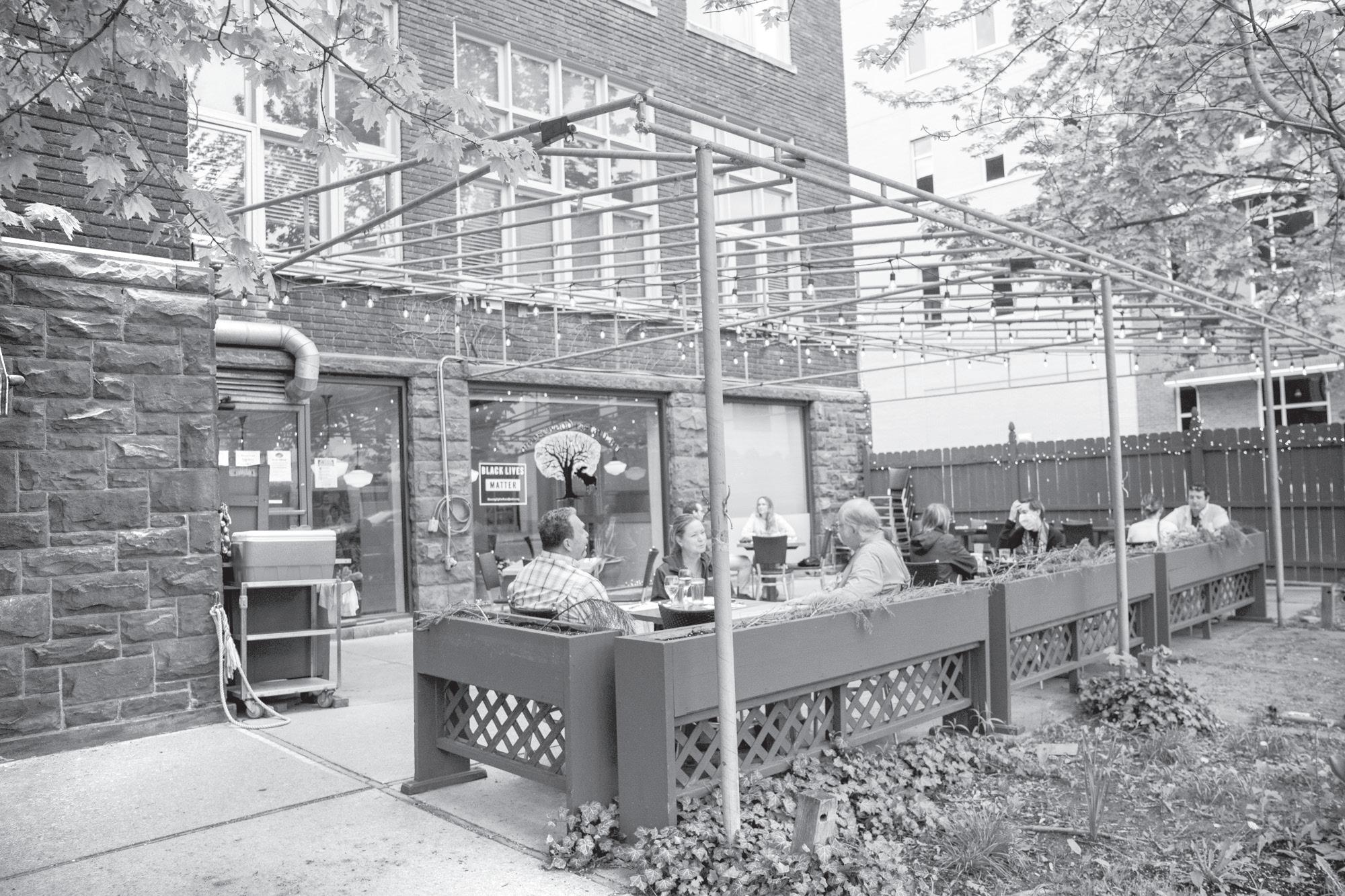
— fueling the city’s biggest tourism weekend. According to Thomas Knipe, Deputy Director for Economic Development of the City of Ithaca, the weekend of Cornell’s commencement has historically been the biggest for local tourism.
Tim Mooney, a manager at Moosewood, a local vegan favorite, agreed.
“Graduations, specifically the Cornell
Muhammed Abdelrahim, the general manager of the Homewood Suites. Just one month after the graduation ceremony, most hotels in Ithaca will be fully booked for graduation the following year.
In most cities, vendors see business rise dramatically from Thanksgiving to New Year’s Day, as families visit from out of town. In Ithaca the calendar is flipped
Moosewood and other popular restaurants find themselves fully reserved months in advance of the actual graduation. The graduation revenue is critical for recovering the costs of training, financing restaurant improvements and expenses each year.
Ithaca College, which typically holds its graduation a week or two before Cornell, also creates increased traffic to local business but still pales in comparison with Cornell.
“We do see a lot of demand from Ithaca college but not as much as Cornell,” Abdelrahim said.
Mooney said that business at his restaurant is much higher than an average weekend but Cornell’s graduation represents “a more significant chunk of revenue.”
Neither Mooney nor Abdelrahim were concerned that Cornell’s commencement
would lead to a spike in local COVID cases,stating that they believe that the local health department and the University are well equipped to handle visitors.
“With the track record Cornell has had so far with COVID, I’m trusting them,” Mooney said.
Even before the announcement by President Martha Pollack to allow guests to commencement, Abdelrahim noticed more student families coming to town this semester, compared to the spring and fall of 2020. He attributes this to the relaxed testing requirements for travelers coming into New York State, and
“Commencement weekends are the equivalent of the Christmas holiday shopping season for many of our businesses.”
Gary Ferguson
the University’s policy against off-campus travel. Specifically, he said that move-in and Easter weekend, normally busy weeks for the hotel, were closer to normal than last year.
Mooney agreed with Abdelrahiim, saying that he has also received numerous calls from parents hoping to make reservations for graduation weekend.
Although visitors are coming back, businesses are still required to respect limited capacity restrictions. Parents may find themselves disappointed when they come to see their child graduate, but cannot take them out to dinner.
“We ask that you enjoy our community in a spirit of flexibility,” Ferguson wrote to the Sun. “Bask in our beauty and hospitality. But remember we are nonetheless still emerging from this global pandemic and we are still operating at less than 100%.”
John Yoon can be reached at johnyoon@cornellsun.com.
Brendan Klein can be reached at bck49@cornell.edu.
Content Warning: Sexual Assault.
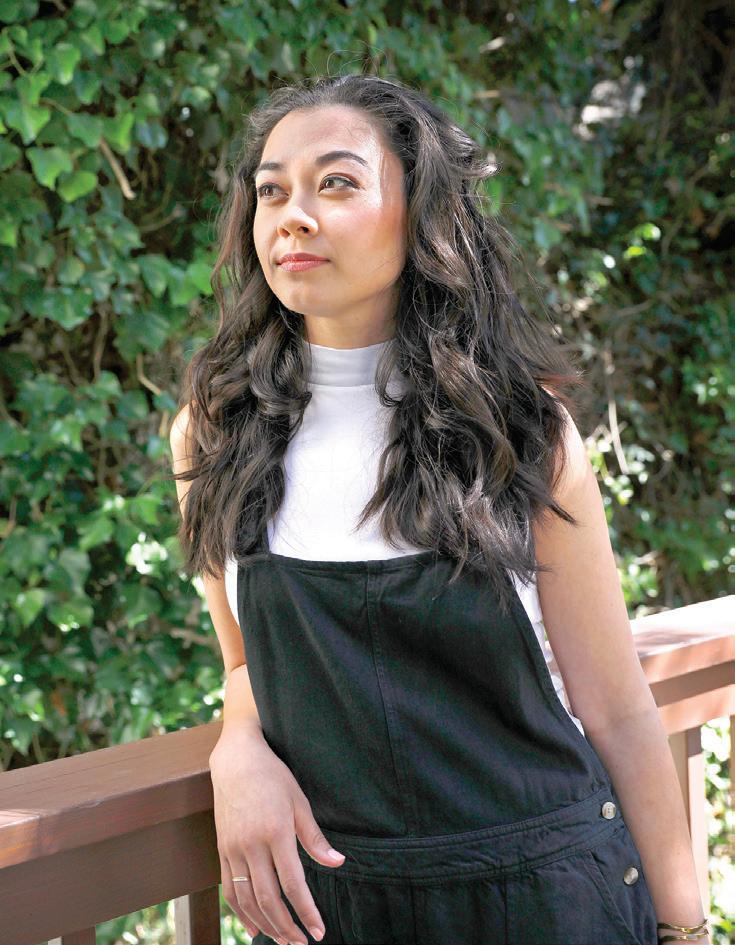
On Saturday, April 24, Cornell’s Sexual Violence Prevention Network hosted a conversation with writer and activist Chanel Miller. Miller’s 2019 memoir, Know My Name, is her personal narrative of the complicated and public sexual assault trial in 2016 that forced her into the spotlight under the pseudonym Emily Doe.
It is clear that Miller’s message is important to many members of the Cornell community. Naiara Bezerra-Gastesi ’21, one of the students who organized the event, said that Miller’s appearance had “lots of administrative support,” including the support of Vice President Ryan Lombardi. Bezerra-Gastesi, the president of SVPN, noted that Miller was “incredibly important for lots of survivors, because she is one of the first survivors to go public about her story,” especially in a college setting.
Bezerra-Gastesi noted that Miller’s identity as an Asian-American woman was also a reason SVPN wanted to bring her voice to Cornell. “A lot of people assumed she was a white woman because she was anonymous… we really wanted to make sure we were bringing narratives of color and people of color to the front of the stage.”
During the event, Miller first read an excerpt from the afterword of Know My Name, in which she recalls her first television interview after going public about her identity. Later, she elaborated on the elation of finally revealing her name and
how it served as inspiration for the title of her memoir. Miller said when the trial first gained attention and she first released her victim impact statement (which was read 11 million times in the first four days of its publication), she had to keep her identity anonymous for her safety. When such private, intimate details of her life were a spectacle, not revealing her name kept her away from the harassment of Internet trolls. In 2019, she finally decided to go from Emily Doe to Chanel Miller in an interview with 60 Minutes. Then, Miller said, publicizing her name was a relief.
Art as a source of empowerment was an ongoing theme in Miller’s conversation with Abirami Dandapani ’21 and Andrea Maghacot ’22. Miller described the writing process as a cathartic repossession of her story. She explained how, during the initial trial and its aftermath, she felt helpless — but in her memoir, she could be the one to “make the places come into being.” During her courtroom scenes in the book, for example, she was the one to direct the scenes and paint the background setting: “I decide when people come in, I decide when people
exit.” Miller said she knew what the general skeleton of her memoir would be, as there were court dates and release dates that were already public knowledge. Yet, Miller explained that her memoir allowed her to depict the timeline of the trial as she experienced it. In her story, she could choose to center the quieter memories that meant more to her.
Miller noted that writing was not only a personal release for her, but also was a way to advocate for victims and survivors of sexual assault. Throughout the conversation, Miller emphasized that she was not a “typical activist” chanting through a megaphone at a crowd of people. Instead, she is shy, the type to observe others and listen. Her words are her voice. Miller emphasized that she learned there are no set rules to be an activist. You do not have to shout into a megaphone. “You can be really loud and powerful on the page,” she said. That was the main lesson I took away from this event: those who can harness their voice, whether through writing, art or anything else, have immeasurable power. Miller is also a visual artist (her comics
can be found on her Instagram), and she explained that her drawings were a way to divert attention, both hers and others, from the oversaturation of graphic news and images on the internet. “Arts have the power in culture to redirect focus.” Art is a form of self-defense, and a claim of ownership over a narrative. It is a safe space to be yourself.
Miller explained that when the story of her assault became publicized, she was dumbfounded by the array of perspectives others had. She said that it was difficult to reconcile the public’s unsolicited opinions on her own experiences. That is why Know My Name was so important. Miller described the memoir as a “counterweight”: she knows those opinions will remain, but she is also at peace with the fact that her version of the story is out in public.
Chanel Miller reiterated many times throughout her interview that she loves her job of public speaking, writing and advocacy, but she stressed that, like everyone, she has her bad days. She urged thoughtful, empathetic self-care for those committed to activism. “It’s okay to have a bad day. You might have a bad year, and that’s okay,” Miller reassured, as long as “you remind yourself it will be temporary.” Bezerra-Gastesi notes that Miller’s quiet kindness carried the acknowledgement of shared experience: “She was just talking to survivors the whole time” they said, “That was really very beautiful.”
Ayesha Chari is a freshman in the College of Arts and Sciences. She can be reached at asc194@cornell.edu.
The brand new Mortal Kombat movie has officially been released, debuting simultaneously in theaters and on HBO Max. The initial reviews are in, and the very least that can be said is that the movie wasn’t terrible, which is an exceptional rarity among video game movies. While Mortal Kombat was never going to wow critics, it seems to have achieved its goal of providing an enjoyable, gruesome, action-packed homage to one of gaming’s most storied franchises. Achieving a Rotten Tomatoes audience score of 88 the day after release, the home-blockbuster seems to have succeeded in giving fans the big-budget, well-choreographed action film the series always seemed primed to spawn. After all, if at first you don’t succeed, try, try again. This is not the first, or even the second, Mortal Kombat film. Over two decades ago, two separate live action Mortal Kombat films were released. The second was a major critical and commercial flop (leading to a twenty-four year pause before they tried again), but the first was an unexpected success. 1995’s Mortal Kombat is still widely embraced by fans and has solidified itself as an essential nineties-cheese cult
classic. However, despite how fun the original Mortal Kombat was and still is, it lacked the defining aspect that, to many fans, defines Mortal Kombat: gore. Mortal Kombat is a household name because of its extreme displays of violence. The series is famous for its over-the-top, gratuitous celebrations of gore, going all the way back to the original arcade game. Mortal Kombat set itself apart from the dozens of other fighting games with its brutal fatalities — it’s hard to forget a game when it lets you explode your friend’s head with lightning or rip their spine from their body. Each punch was accentuated with a spurt of blood, and the effect of all this gore was amplified by Mortal Kombat’s use of digitized actors as the game’s sprites. Back when games were still constrained by technology to a more cartoony or pixelated art-style, Mortal Kombat was one of the first places in gaming where you could see realistic violence. This created an issue when Mortal Kombat headed to home consoles. Family-friendly Nintendo famously opted to remove the blood and gore from the Super Nintendo port. Meanwhile, its competitors, Sega, chose to leave the violence — available through a cheat code in all its gory glory — in the Genesis version of the game. You
can guess which version was more popular.
The gore was so extreme, Mortal Kombat was actually presented to the United States Congress during a hearing regarding violence in video games.
Mortal Kombat, along with an ‘interactive movie’ called Night Trap , convinced Congress that if the gaming industry wouldn’t regulate itself, the government would. This led to the now familiar Entertainment Software Ratings Board (ESRB) system, meaning that Mortal Kombat’s legacy is now stamped on the front of every game box in the form of a letter-coded age rating. Which, in retrospect, is a bit funny.
While intense at the time, Mortal Kombat’s ‘violence’ seems a bit laughable now; a few drops of pixelated blood and some silly burning skeletons, that’s about it. Night Trap also did not age well in the controversy sphere — the scenes of ‘violence’ are downright goofy by today’s standards, with the re-release only garnering a T rating. Nowadays, massive gaming franchises depict the horrors of war or perverse monstrosities in graphic, realistic detail. The modern Mortal Kombat games are perfect examples, with each new game escalating the level of mutilation you can inflict on your virtual foes. This ever acceler-
ating cycle of increasing brutality persists because Mortal Kombat remains largely defined by its ability to push the boundaries of video game violence. Which begs the question, why was the original Mortal Kombat movie rated PG-13?
In a time where an on screen, explicit death could possibly earn an R rating, the 1995 classic bent over backwards to curb its violence to avoid an age cap. While it’s not violence free — the movie still has audible neck snaps and people being impaled on spikes — the gore is tame even when compared to the 1992 original. The reason for this is obvious, of course: Mortal Kombat was extremely popular with kids and teenagers, and the

filmmakers knew that an R rating would be commercially devastating. Yet, like a Super Nintendo copy of Mortal Kombat, the toned down violence means an essential part of Mortal Kombat’s identity has been stripped from the movie.
To read the rest of this article, please visit cornellsun.com.
Caden DeWitz is a junior in the College of Engineering. He can be reached at cjd263@cornell.edu.
139th Editorial Board
KATHRYN STAMM ’22 Editor in Chief
ANUSHYA ALANDUR ’23
Business Manager
CATHERINE ST. HILAIRE ’22
Associate Editor
PRANAV KENGERI ’24
Advertising Manager
ODEYA ROSENBAND ’22
Opinion Editor
JYOTHSNA BOLLEDULA ’24
News Editor
TAMARA KAMIS ’22
News Editor
WENDY WANG ’24
Arts & Entertainment Editor
KRISTEN D’SOUZA ’24
Design Editor
HANNAH ROSENBERG ’23
Photography Editor
OMSALAMA AYOUB ’22
Science Editor
PUJA OAK ’24
Layout Editor
ANNIE WU ’22
Production Editor
KATHERINE WANG ’24
Assistant
MIHIKA BADJATE ’23
Assistant
ANGELA BUNAY ’24
Assistant
JOHN COLIE ’23
Assistant
AMELIA CLUTE ’22
Assistant Dining Editor
WILLIAM BODENMAN ’23
Assistant Sports Editor
AARON SNYDER ’23
Assistant Sports Editor
MEGHANA SRIVASTAVA ’23
Compet Manager
’23
MADELINE ROSENBERG ’23
Editor NAOMI KOH ’23
OZA ’22
Editor
HEO ’24
OLIVIA CIPPERMAN ’23
NOOREJEHAN UMAR ’23
YOON ’23
BENJAMIN VELANI ’22
PICHINI ’22
TYAGI ’22
MENDOZA ’24
ARANDA ’23
WANG ’24
’23
KAYLA RIGGS ’24
LEYNSE ’23
NAGEL ’24
MONOHAN ’24
ABAYEVA ’24
ALPERS ’22
Peter Buonanno is a senior in the College of Arts and Sciences. He can be reached at pbuonanno@cornellsun.com.Te Wyckof Club runs alternate Fridays this semester.
Cornell University’s student government is in crisis. And the University elections website failure can only make things worse.
Voting for Student Assembly, StudentElected Trustee and class council positions began on Tuesday. But as students presumably rushed to the virtual polls, Cornell’s servers were overrun, and voting halted for a little over 24 hours. And, as a result, students will be able to cast ballots until 5:00 p.m. on Friday evening.
For those who follow Cornell student government, and particularly the S.A., you are undoubtedly aware of the political and hate-filled warfare which has plagued the institution over the past few years. Most notably, you’ll likely remember the brutal S.A debate over a resolution calling for the disarmament of the Cornell University Police Department which resulted in conservative student groups launching targeted attacks against students of color. This debate even gained national media attention by conservative political figures such as former Wisconsin Governor Scott Walker (R-Wisc.).
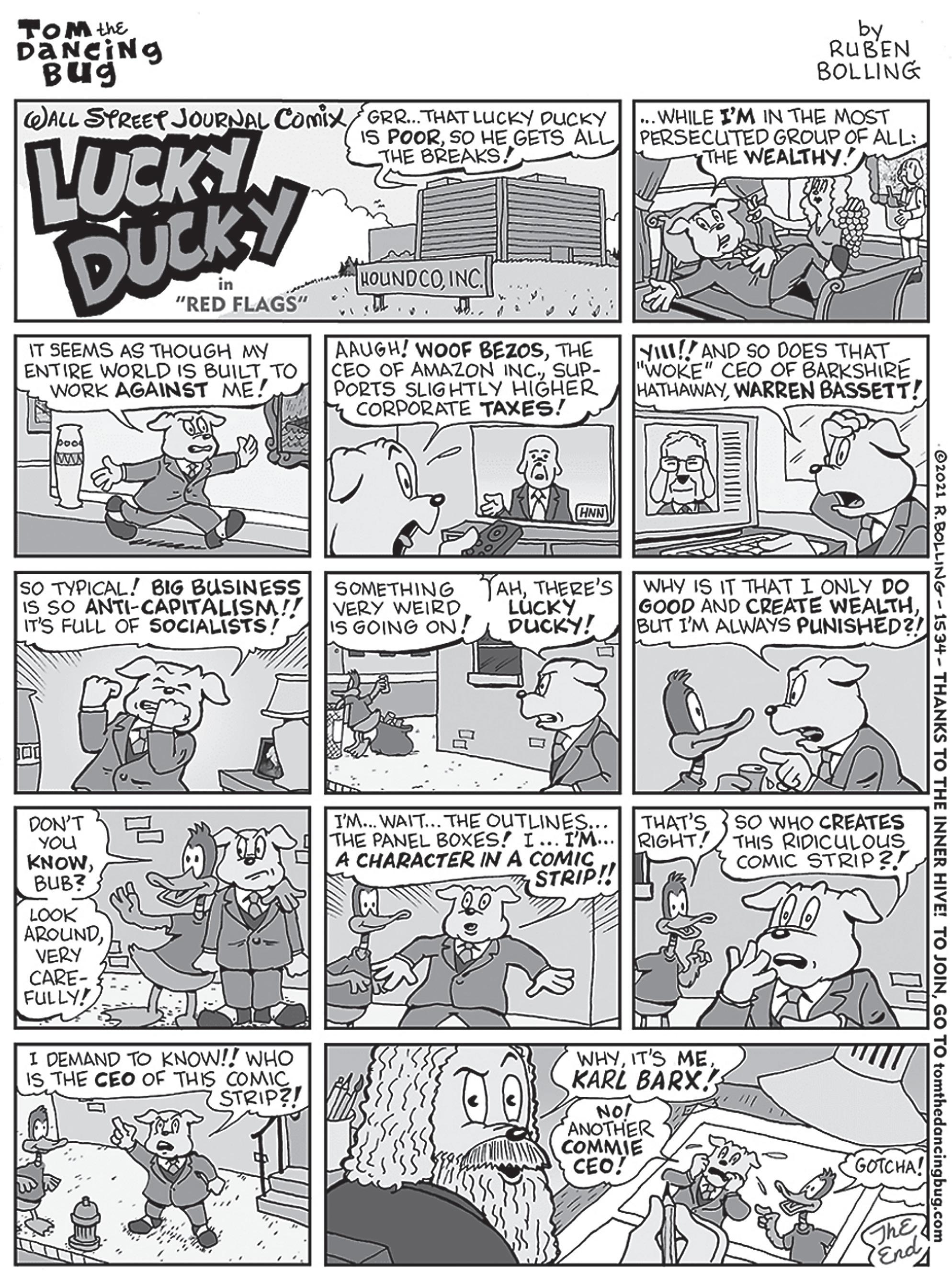
Ruben Bolling
As The Sun’s associate editor at the time, I found myself at the center of the local media coverage of the conflict. And, through the editorial mistakes our team made, I learned one thing for certain: The activists who have sat on the S.A. in years past, and Cornell as a whole, deserve to see the realization of their desire for a fully progressive-leaning body. It is, undoubtedly, the only way forward considering the concerning and violent behavior by their right-leaning and even centrist counter-parts.
But I’m concerned about the results of this election. While I don’t mean to belittle the campaigns of students who do not fall on the progressive ticket, it is fairly apparent to me that any result other than a progressive sweep ought to be understood in the context of immense, albeit accidental, voter suppression.
During my four years here at Cornell, a major issue has arised in every election. And, in nearly all of these cases, students of color got the short end of the stick.
In 2018, a candidate for S.A. president was disqualified after a supporter of his posted a meme which violated University campaign guidelines. This candidate’s appeal was denied, but that decision was later overturned after a Judicial Codes Counselor noted several instances of bias that influenced the decision.
In 2019, a Black student was disqualified in the Trustee race after a Cornell University official encouraged student-athletes to support him in an email. Had he not been disqualified, statistics show that he would have won the election. Despite opposition to this disqualification from most students on campus, President Martha E. Pollack and the chair of the Board of Trustees, the University allowed this disqualification to stand. Eventually,
though, the candidate was granted an at-large Trustee position.
Lastly, in 2020, ranked choice voting system difficulties plagued the S.A. race. Students were disenfranchised at large after the system disqualified over a thousand ballots which didn’t rank every candidate on the ballot. Although these elections were closed and then reopened to allow for time to inform students about the logistics of the voting system, the University lost a lot of student trust in the process. And, even in this election, the University is still relying on this rankedchoice system which doesn’t allow for students to cast votes of no confidence in certain candidates (for instance, you must rank all three S.A. presidential candidates on your ballot).
Frankly, it makes sense that students — particularly marginalized students who have had real, traumatizing voting experiences outside of Cornell — have lost faith in our University’s ability to manage and regulate our elections. And the statistics reflect this. Last fall only, 16.85 percent of eligible students voted in the S.A. election.
This week just may be the straw that broke the camel’s back. When the University fails to efficiently run an election countless student voters are disenfranchised. There are students who likely chose not to vote as a result of this technical glitch. There are students who will likely choose never to vote in a Cornell election again as a result of this week.
Frankly, it makes sense that students — particularly marginalized students ... have lost faith in our University’s ability to manage and regulate our elections.
We are a University that has produced dozens of senators and congress-people, countless governors and state officials, several heads of states, and one of the most important Supreme Court Justices in U.S. history. It baffles me that we consistently make mistakes like this. It demonstrates that we do not fully understand the importance of student elections as an educational tool to help students gain confidence in democracy. I hope I’m wrong, but I guess we will have to wait and see. Know that your voice does matter, even if it doesn’t seem that way. And help realize the Progressive dream on campus that many of your peers have been fighting for.

Michaela Bettez Bet on It
Michaela Bettez is a senior in the College of Engineering. She can be reached at mbettez@cornellsun.com. Tis is the fnal installment of her column Bet on It
Given the short amount of time we have as undergraduates, I was pretty late to the game in joining Te Sun. I applied the summer before my junior year, and became, at the time, the only opinion columnist on staf who was a student of the College of Engineering. I hadn’t felt like I’d written anything of substance in my two years here — I was getting pretty good at churning out mind-numbingly boring lab reports, but my professors weren’t exactly interested in much else I had to say.
If I have any advice for the undergraduates ... it’s that there’s a balance to strike between criticism and exercising the power you have to change things for yourself.
It was a stark transition from only one or two teaching assistants reading what I wrote to thousands of students and alumni, for whom I was nothing more than an unfamiliar name on a page voicing an opinion they disagreed with. I hadn’t written anything in years without a grade slapped on at the end and eventually relegating it to the depths of my computer’s memory storage. Luckily, my classes had prepared me well for being told I was wrong and that I didn’t know what I was talking about.
Even though my name and email were attached to the bottom of the column, I never thought that people would actually reach out to me. Who cared about my opinion that much? Regardless of the content, I was touched that anyone even cared enough about what I said to make the efort to pull up their email and write me a message. Tese people, no matter how critical, kind or downright cruel they were, cared. For better or worse, when we criticize something, we show how much we care. And criticism of something means that we believe it can change, for the better.
One of my favorite messages I’ve received was in response to an article I wrote last year called “Forget the Public Policy School, Give Us a Design School.” Another student emailed me about her difculty in creating her own design curriculum and her frustration with the scattered resources across Cornell’s colleges. She was a fne arts student with a deeper understanding of the issue than I: she talked about the refusal by both the College of Arts, Architecture, and Planning and the College of Human Ecology to share the resources of their fabrication shops. At the end, she even asked how she could further a movement towards making a Design School, and how she herself could become an opinion columnist.
I’m even grateful for the most negative and ridiculous comments, which usually lurk under the Facebook posts. For every cruel comment expressing that only men, usually white men, are truly deserving of getting into engineering school there were two or three more comments underneath debating and disagreeing.
I became an opinion columnist because I wanted to fnally express my years of dissatisfaction with so many aspects of my life here at Cornell. At the time, I realized how frustrated I was with the state of many parts of Cornell: its treatment of its female engineering students; its handling of fnal-semester grades; not-sohidden classism. In my two years as a columnist, I’ve
I became an opinion columnist because I wanted to finally express my years of dissatisfaction with so many aspects of my life here at Cornell. At the time, I realized how frustrated I was with the state of many parts of Cornell ...
kept an ongoing list of ideas I have for articles. It holds 32 ideas now, from how ridiculous it is that we still have to apply to enroll in some classes to how the College of Engineering needs to add a mandatory ethics class to its requirements. But when I look back on this list, I see 32 ways in which I care and believe that Cornell could do better.
And I know what it’s like to dislike something enough that you stop caring about it being better. For example, in my four years here I still have group partners who annoy me simply by being on campus -- I never bothered to criticize them because, as vindictive as it sounds, I don’t care about them enough to want them to be better. I want them to be gone from my life.
If I have any advice for the undergraduates I’m leaving behind here it’s that there’s a balance to strike between criticism and exercising the power you have to change things for yourself. As the years go by, it’s easy to get caught up in all the things you wish Cornell could improve or change. It’s easy to get lost in how much it frustrates you. But the truth is, that you probably don’t have a lot of say or infuence in what happens here before you leave. And that doesn’t mean you can’t vent or still push Cornell to change for the better. It means that you should also take matters into your own hands, and look for ways that you can take care of each other and yourself.
Raphy Gendler Graduation Column
Iwas going to write a Miley Cyrusinspired “Seven Things I Hate About You,” where I detailed all the hard things about life at Cornell and then talk about how through it all, “you make me love you.”
Then I decided to Google “Kurt Vonnegut quotes,” and this one is too good not to write about instead:
“We are what we pretend to be, so we must be careful about what we pretend to be.”
One of my favorite parts of college is existing in this bubble, where we get to delay being real people for a while to learn, meet people and have fun. In a lot of ways, it’s a pretend world. Students in business clubs pretend to be business
people, kids in English classes pretend to be literary scholars, members of student boards pretend to be high-ranking officials.
Working at The Sun for four years felt real: In a university environment where so much happens within this Cornell bubble, I felt like journalism was a part of real life that made an impact beyond campus. But really, this was a pretend school club too. I pretended to be a hockey writer, news-breaker and storyteller; really, I was a kid making friends and memories, doing some journalism work along the way.
What we pretend to be shapes so much of who we become (when I wrote my first article, I thought about pretending to be a grownup and being Raphael instead of Raphy, but decided I wasn’t old enough for that). One of the great things about Cornell is that you can do anything and be anybody — they should really have a slogan about how any person can study anything. But for all the talk about what I want to be when I grow up, I found more important the opportunity to think about who I want to be when I grow up.
I love Cornell, and my least favorite thing about Cornell (this is the seven things I hate rolled into one) is that sometimes people think they’re cool for not liking it here, or that they’re in a competition for who is most busy and miserable. I haven’t done a formal poll, but I think that more people love it here and think they’re super lucky to go here than will admit it. Consider this an attempt to encourage people not to wait
to discover and then keep pursuing what you love about this place.
At Sweet Melissa’s for their first day of the season recently, I saw a four- or five-year old kid, big smile, bright greenblue tie dye shirt and felt, with graduation a month away, a combination of old and nostalgic. Ice cream with some great friends was something I should’ve done more of but that I felt so lucky to have now, and that I’ll remember much lon -
Serving as sports editor was a lesson that at the core of everything is people and relationships. I’ll take with me the importance of telling real people’s stories and how these stories impact real life in ways that make a difference.
ger than I will trying and eventually giving up on figuring out how interest rates work in freshman year macroeconomics.
What feels like 100 years ago, I was the sports editor of this friendly neighborhood paper. Sports have the power to unite us and create a powerful sense of community that’s hard to find at our fast-paced and big university. At a place where school spirit isn’t high during a cold February, a buzzing Lynah Rink during a playoff game was an escape from winter and a reminder of what it can look like when people come together.
I loved this job because there’s always a story in sports, something beyond the score of the game that brings people together: Triumph, heartbreak, drama, unity, politics. Serving as sports editor was a lesson that at the core of everything is people and relationships. I’ll take with me the importance of telling real people’s stories and how these stories impact real life in ways that make a difference.
This is the self-indulgent part of the senior column that I said I didn’t want to write but here we are: Thank you to all the people at Cornell and The Sun who helped me grow up over the last four years. It’s been a wild time, and I feel like the luckiest kid ever to be able to say that if I could go back in time I really wouldn’t have done this any differently.
Thanks to everyone who read my work over the years, whether it was about hockey, the pandemic, or something in between. And thank you especially to my parents, who are probably the only ones to have made it to the end of this.

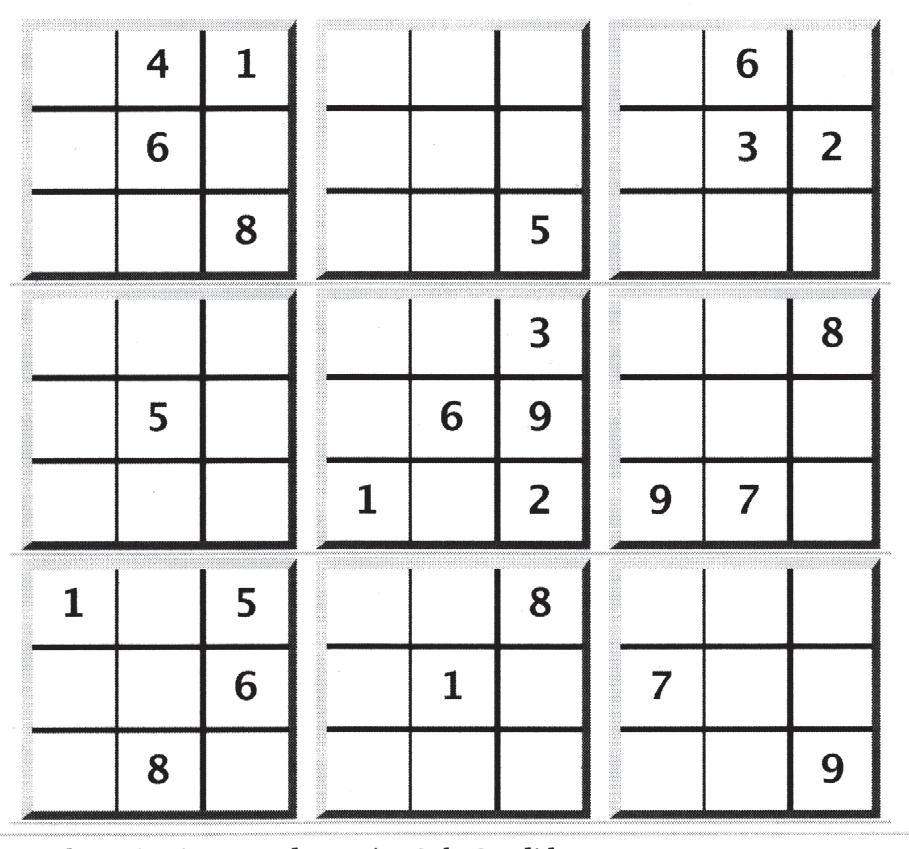
Fill in the empty cells, one number in each, so that each column, row, and region contains the numbers 1-9 exactly once. Each number in the solution therefore occurs only once in each of the three “directions,” hence the “single numbers” implied by the puzzle’s name. (Rules from wikipedia.org/wiki/ Sudoku)

By MILENA BIMPONG Sun Staff Writer
According to the U.S. Fish and Wildlife Service, the american bald eagle population has quadrupled in the last 12 years —eBird, a Cornell Lab of Ornithology app and database, played a significant role in chronicling this resurgence. Nonetheless, the bald eagle population remains under close monitoring by the U.S. Fish and Wildlife Service.
eBird — a database available to the public for tracking bird sightings and sharing bird-related information — provides policy makers documentation of bird distribution and habitat use to help explain the decrease in certain bird populations, explained Viviana Ruiz Gutierrez, a quantitative ecologist for the Cornell Lab of Ornithology.
The predictions informed by eBird aim to confirm the U.S. Fish and Wildlife Service’s population survey results, which provide information about bald eagle populations’ abundance, distribution, and trends. According to Ruiz Gutierrez, the eBird data allows for much more precise estimates.
Ruiz Gutierrez said that bald eagle population growth will likely continue. However, this growth is not uniform across the U.S. According to Ruiz Gutierrez, refining population size estimates is one of the next steps towards taking this into consideration.
Refining the areas for population estimates can help to narrow down factors that contribute to a declining population.
“Where they are declining, we can
start asking ourselves why they’re declining. We can also make sure that all of the factors that have contributed to the population increases are still continuing, so that they can help the population increase in most of the U.S.,” Ruiz Gutierrez said.
The rise of the bald eagle population is promising for the future of North American ecosystems, Ruiz Gutierrez said.
Ruiz Gutierrez said that bird populations can indicate healthy and functional ecosystems because they are at the top of their ecosystem’s food chain — a rise in bald eagle population leads to more energy flow which maintains the structure of their ecosystem’s food chain.

such as food production.”
“Birds are our sentinels of how the environment is doing — they are our canaries of the health of our ecosystems,” Ruiz Gutierrez said. “They provide many ecosystem services, like pest control and seed dispersal, that are important in our day to day lives but also for other areas
Historically, the bald eagle population has been low due to usage of pesticides such as dichlorodiphenyltrichloroethane, which weakens bird eggshells.
In the United States, bald eagle habitats which include estuaries, lakes, reservoirs, rivers and sea coasts in Alaska, the Great Lakes states, Florida, the Pacific Northwest, the Greater Yellowstone area and the Chesapeake Bay region have been
destruction and degradation.
Ruiz Gutierrez explained that protections and habitat restoration efforts have contributed to the bald eagles’ rising population. Eagle nesting areas are one specific example of this. These nesting areas are in trees that are close to bodies of water. Bald eagles are protected by the Bald and Golden Eagle Protection Act and Migratory Bird Treaty Act.
“There really has been a whole lot of contributing factors, but mainly very targeted efforts to know where bald eagles are, what they need to succeed there, and really investing in these efforts from state to state and at the federal level,” Ruiz Gutierrez said.
Along with their environmental importance, bald eagles hold powerful symbolic value. For example, eagles are one of the most common clan animals — the Chippewa, the Hopi and the Zuni are some tribes with Eagle Clans.
“Bald eagles are specifically important — they are America’s national symbol, but also considered as a sacred species to American Indian people,” Ruiz Gutierrez said.
U.S. Fish and Wildlife Service surveys and the Cornell Lab of Ornithology’s eBird data has been crucial in tracking their population trends.
“None of this would be possible without the contributions of over 180,000 birders who have submitted observations in the U.S.,” Ruiz Gutierrez said.
Milena Bimpong can be reached at mbimpong@cornellsun.com.
By KOBI RASSNICK Sun Staff Writer
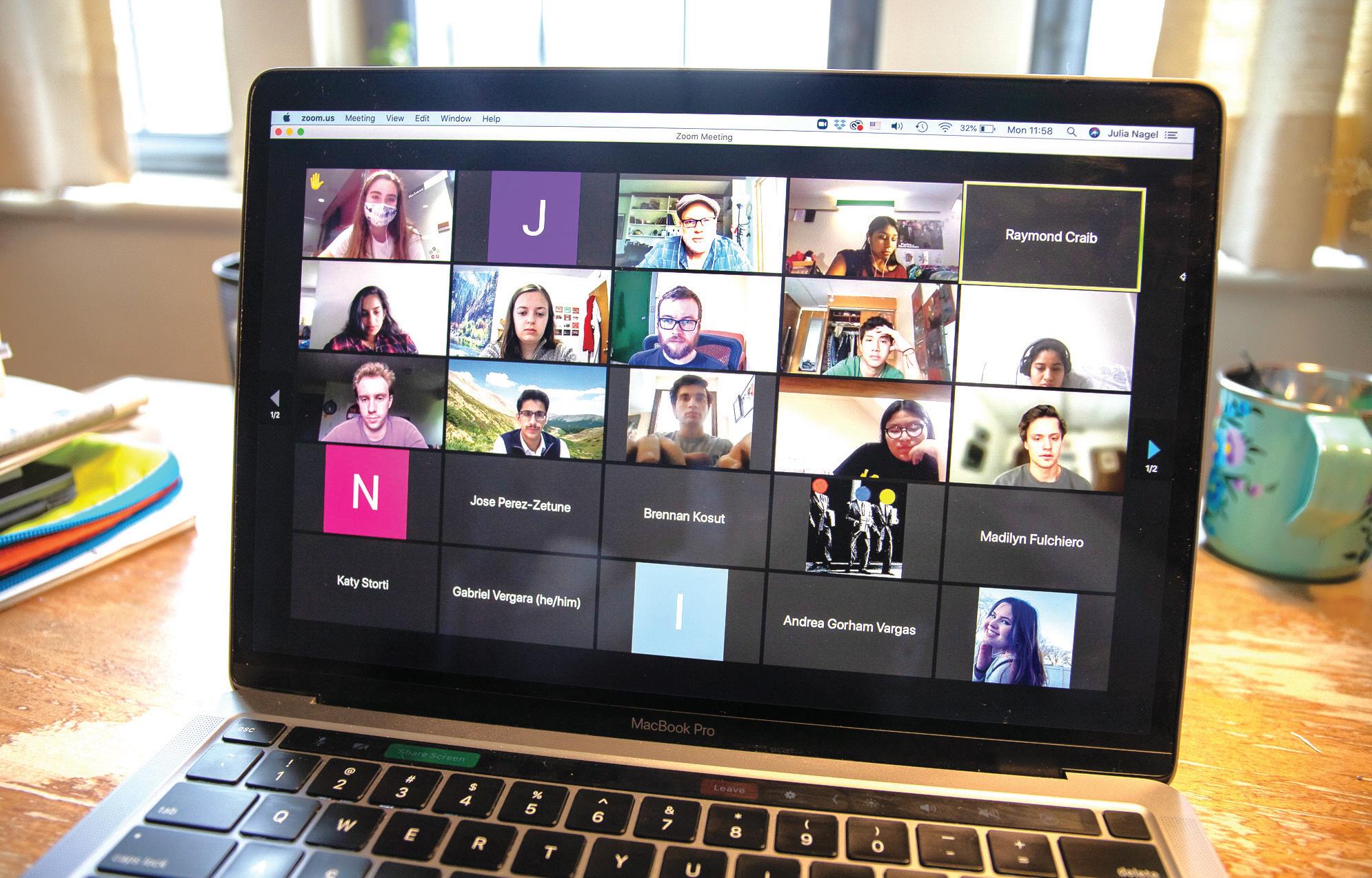
Over a year ago, Zoom introduced a new classmate in each Cornellian’s learning experience — themselves.
The new sense of self awareness that students have because they have a camera on throughout class has the potential to increase social anxiety, as students are being forced to be aware of their own image more than ever, which experts say takes a toll on their learning experience.
“Social anxiety is at an
all-time high,” said Prof. Vivian Zayas, psychology. “Today we have fewer in-person interactions, and as a result, we might no longer have a realistic vision of other people’s social experiences.”
According to Zayas, social anxiety generally stems from apprehension of being negatively evaluated by others — preexisting insecurities and doubts that students have perpetuate uneasiness in a feedback loop.
A study performed by Prof. Mark Sarvary on a
class at Cornell found that a primary driver for students choosing to turn their cameras off is being concerned about their self image.
Zayas explained that with fewer social interactions comes increasing worry about daily experiences. With communication mostly online, students are often exposed to an unrealistic version of their peers that is edited and might not be genuine.
Prof. David Field, psychology, said that images of people online, especially on
social media platforms, are always curated. Social media provides a biased view of what people are actually like, but it can be hard to recognize the distinction between photos and real life, as well as to stop from comparing one’s individual life to the online version.
Zoom, however, conveys much more information about a person’s real life than social media does.
“Zoom introduces us to new information we’re unused to,” Zayas said. “We rarely get so much information about what we’re doing when we interact, but now we’re seeing lots of our own nonverbal behaviors.”
Field explained that during normal conversations people don’t have a mirror up to their face, but over Zoom, there is a constant reminder of one’s own appearance. When students stare at themselves on Zoom, they may begin to take in and over-analyze their own nonverbal cues and fret that they are perceived as unusual by others as well.
“We have an image of what we do look like from mirrors and what we should look like from social media,” Field said. “We’re always interested in how we’re coming across when we’re
talking to somebody, and over Zoom, we see much more than we’re accustomed to.”
Zayas equates this flood of new information with voice confrontation, the phenomenon that explains why people dislike the sound of their own voices.
“There’s an obvious difference between how we think we sound and how we actually sound,” Zayas said. “Sometimes when we hear ourselves we also hear whether we sound anxious, angry, or confident. It’s the same with Zoom, how people might be drawn to looking themselves but may not like that image. We’re just getting too much new information.”
According to Field, Zoom has taken some measures to reduce the overstimulation, including mirroring videos by default so users are presented with a self image they are familiar with from mirrors.
Mirrored videos or not, Field believes that people are often too preoccupied with their own image on Zoom to notice the flaws in others. In reality, students are the only judges of their own appearances over Zoom, even though anxiety may cause them to
think otherwise. Constantly checking back in on their own image on Zoom is distracting and comes with costs, Field said. Many fall to “illusion of multitasking,” which states that people think they are capable of multitasking, but it is often difficult to actually focus on more than one task.
“The switching costs for students onw Zoom are immense,” Field said. “Normal conversations don’t require mul titasking. If your own picture is enough to regularly distract you, it is no wonder that classes seem more difficult and much more fatiguing.”
Both Zayas and Field agree that students should use the “Hide Self View” option during Zoom meetings when cameras are on. One less distraction can only benefit students’ learning and focus.
“If it’s a distraction, turn it off,” Zayas said. “Computer-mediated communication is not a replacement for actual interaction, but make your social experiences and learning as normal as possible.”
Kobi Rassnick can be reached at kmr225@cornell.edu.