
Policy Draft Released
Three-part process is proposed as replacement for oral hearings
By
If changes to Cornell’s policy on resolving allegations of sexual assault are approved, complainants and respondents may move from testifying at hearings to writing their testimonies, University officials said at a Student Assembly meeting Thursday
Supporters of changes to Policy 6 4 say that moving from an oral hearing to a written procedure would be better for victims because they may find hearings intimidating and be deterred from reporting misconduct Currently, under the Campus Code of Conduct, all students who raise complaints of sexual assault or harassment must testify in person before a hearing board
At a recent panel, Narda Terrones, a member of the Women’s Resource Center, said her interactions with victims of sexual assault showed her that some people choose not to report sexual attacks because of their fear of having to verbally recount the experience in front of a panel
“The most terrifying thing is getting in front of the panel and telling their story in front of the person they are accusing,” Terrones said at the Daily Sun Dialogues panel Monday
Others at the panel, however, said that Policy 6 4 may potentially raise
See POLICY page 4
Oh deer

Deer have been overpopulating areas like Cayuga Heights, leading residents to seek solutions See Page 3 for the stor y
After Cuts, Fire Dept. Confronts Challenges
h e ’ s m
a f e t y ro l e s , f e we r p e o p l e t o s e e w h a t ’ s h a p p e n i n g , ” I F D L i e u t e n a n t To m B a s
E SPN A nchor Talk s About Career, S port s

By ANNIE BUI
Linda Cohn, American sportscaster and anchor of ESPN’s SportsCenter, spoke Thursday about her struggles as a woman in the largely maledominated field of sports and journalism
Cohn, who was raised in Long Island by a Jewish family, talked about how her background and the time in which she grew up affected her decision to pursue sports journalism
“I grew up in the 1970s where there were no women doing sports, but a lot of women loving sports, ” Cohn said “I knew that my passion was sports It made me feel good, as if I were on an emotional rollercoaster ” Cohn said she began to defy the gender stereotype often associated with sports in high school when she made the boys’ hockey team
“I remember saying to the coach,
Over the next two years, Cornell’s New York State Agricultural Experiment Station in Geneva, N Y , will receive $4 7 million to help it renovate its greenhouse buildings, according to a University press release
Gov Andrew Cuomo (D-N Y ) funded the initiative to rebuild 21,000 square feet of greenhouses at the experiment station originally built during the 1950s to the 1970s and create “much needed” modern facilities Construction is expected to begin next month
The “state-of-the-art” facilities will include better lighting, upgraded climate control systems and higher ceilings, the press release said According to Thomas Burr, director of the NYSAES and assocate dean of the College of Agriculture and Life Sciences, these changes will aid “critical research” that is done at the NYSAES
“The critical research being done today in Geneva requires state-of-the-art greenhouse facilities that can only be achieved through modernization and expansion,” Burr said in the press release, adding that “innovations pioneered in the greenhouses will translate to tangible products that have positive economic impacts on New York ”
The NYSAES works to develop agricultural techonolgies such as food development and sustainablility techonolgies that aid in “feeding the world and strengthening New York economies,” according to the NYSEAS’ website
“From developing safe and nutritious foods to pioneering means to preserve the environment, NYSAES has been addressing the concerns and serving millions of New York consumers, agricultural producers, food businesses and farm families throughout the state, ” according to the website
Compiled by Caroline Flax
YICHEN DONG / SUN STAFF PHOTOGRAPHER
Breaking the glass ceiling | Linda Cohn, anchor of ESPN’s SportsCenter, speaks in Kennedy Hall Thursday about her
By SARAH CUTLER Sun Senior Writer
DARA LEVY Sun Staff Wr ter
Sun Staff Writer
Ne ws, “ Pre si dent D avid S kort on Expre sses S upport f or Im mig ration R ef orm, ” Monday
Sp eaking ab out the need for a t wo-pronged approach to immigration reform
Immigrants are clustered throughout many o ccupations in the U S [not only] in what have b een called the ‘less-skilled’ o ccupations but also in the ‘high-skilled high-tech’ fields Evidence suggests that on b oth sides of the skills sp ectrum, immigrant workers p erform valuable ser vices and are [b eneficial to] the American economy ”
President David Skor ton
Tomorrow
Pedal for Pets Bike-a-thon
9 a m , Centennial Room, Veterinary School
BreakFree Showcase V
3 - 5 p m , Bailey Hall
The Mickees LIVE at the Bear's Den
7 - 9 p m , The Bear’s Den, Willard Straight Hall
Cornell Fashion Collective 29th Annual Fashion Show
7:30 p m , Barton Hall
2013 Grad Ball
9 p m - 1 a m , Memorial Room, Willard Straight Hall


O pin ion, “G oodb ye , C orne ll , ” M onday
Sp eaking ab out how his Cornell exp erience has shap ed his p erception on life
“There are more than a few bad apples in the world Boston just had to deal with a pair of really rotten ones But do not let the bad in this world prevent you from connecting to the go o d What I’m recommending is not easy, and it may not even b e p ossible, but if my last week at Cornell has taught me anything , it ’ s that community matters the bigger the b etter ”
Noah Karr-Kaitin, ’13
Sp
s ay yes but are convinced that the other side opp oses it Often the public do esn t know what is happ ening on the other side You have to deal with the gut fears ; you need an acknowledgement from the other side that changes are b eing made ” David Makovsky, direc tor of the Washing ton Institute for Near East Polic y Projec t on the Middle East Peace Pro cess

C ay u ga Heig ht s Grapple s With Deer O ver popul ation Problem
By GABRIELLA LEE Sun Contributor
In an effort to combat a much debated, lingering problem of controlling its deer population, the Village of Cayuga Heights will need to continue sterilizing a high percentage of its deer, according to Kate Supron, mayor of the village
In December, the Village of Cayuga Heights sterilized approximately 95 percent of its female deer population, according to Supron
Although the village has continued its plan to steralize deer, many residents have opposed harming the deer Others, however, said the deer population needs to be controlled to avoid harmful environmental problems
Supron, however, said that “it was the most effective move we could make to stabilize the population at this point in time ”
“It doesn’t reduce the number of deer on the landscape It just drops your birth rate, and over time, as they die, your population goes down if you ’ re able to maintain a sterile population,” she said
While the natural density for deer is around 15 per square mile, Cayuga Heights has 125 deer per square mile, Supron said This roughly translates to a population of just under 250 deer for the 1 83 square miles Cayuga Heights occupies
With such a “serious concentration of deer,” the village proposed a two-pronged policy to tackle the problem and reduce the deer population, Supron said The original proposal was that the village would sterilize a core population of does and then remove the remaining unsterilized deer at several culling sites through managed hunting
However, Supron said, it soon became apparent that the plan would not work
“You have to have property owner permission to discharge a weapon within 500 feet of an occupied dwelling,” she said But after looking at the property permissions and considering the density of the village, it was clear that there would not be “ a sufficient number of sites to be able to do the amount of culling required ”
At that point, the Village Board opted to approach the New York State Department of Environment Conservation, requesting a modification to its license so it could sterilize a larger percentage of the deer population, Supron said
As a result, the village began sterilizing, tagging and identifying 95 percent of the female deer at last December
Supron added, however, that the village would need to maintain the high level of sterilization in order for the program to be successful
“It was the most effective move we could make to
stabilize the population at this point in time, but it doesn’t reduce the number of deer on the landscape It just drops your birth rate, and over time, as they die, your population goes down if you ’ re able to maintain a sterile population,” she said
Overpopulation of deer has been a problem in Cayuga Heights reaching back as far as 1999, according to Supron
Negative side effects of this problem have included “damage to the ecosystem ” including the destruction of the habitats of other native species, harm to the”regeneration of plants” that the deer have eaten, an “increased risk of automobile collisions,” a rise in the cases of Lyme disease in Tompkins County as a result of the spread of deer ticks and a negative impact on “people’s ability to use and enjoy their property, ” according to Supron
Coming up with a solution to solve the problem of deer overpopulation has not been easy, Supron said, and many people have debated the correct way to handle the situation
In 2011, a group of residents filed a lawsuit to prohibit the village from implementing its program because they thought the village had not gone through an adequate decision-making process
Ultimately, Supron said, the courts ruled in favor of the village, and the program moved forward
Prof Emeritus Pete Wetherbee, English, a resident of Cayuga Heights, said he also tackled the issue of deer population control when he unsuccessfully ran for the Board of Trustees of Cayuga Heights last year
“Our party wanted to avoid anything so drastic as killing deer and was mistrustful of the various proposals that the incumbent party put forward for dealing with the deer,” Wetherbee said 0
Wetherbee added that it was challenging to accommodate the wide spectrum of opinions that the people of Cayuga Heights had
On one end, there were “people who just want to go out there and blast away, ” Wetherbee said, while on the other end, there were “people who don’t want to harm any living thing ”
However, for the most part, Wetherbee said the current method of sterilization seemed to be effective and it would be difficult to find a more effective method
Moving forward, Supron said that the village is currently awaiting a report from Prof Paul Curtis, natural resources, that will evaluate the current deer population situation After looking at the report, she said the village will consider either maintaining the current sterilization program or looking at possible lethal deer control methods as possible options
Lee can be reached at gdl39@cornell edu
Sister act


Panel at Cornell Critici zes ‘P inkwa shing’ in Israel
By ANUSHKA MEHROTRA Sun Staff Wr ter
The Cornell chapter of Students for Justice in Palestine argued at a panel Thursday that Israel conceals reports of ongoing human rights violations in Palestine by “pinkwashing” others, or portraying itself as an advocate of LGBTQ rights
In a report released last Friday, the U S State Department said Israel’s greatest human rights challenges are “institutional and societal discrimination against Arab citizens, in particular access to equal education and employment opportunities ” Aisha Gawad, a lecturer in the English department and a panelist at the event, said she thinks Israel has used pinkwashing to deflect atten-
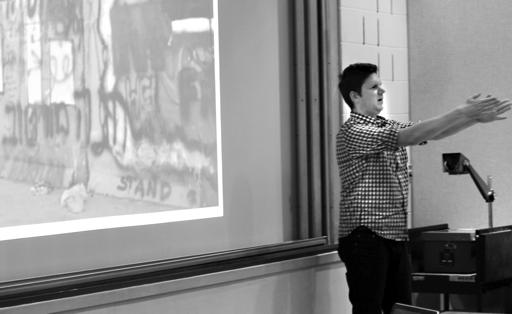
tion from human rights issues
“The idea of pinkwashing is to get away from the view of Israel as somewhere that is highly militarized The painting of Israel as an LGBTQ paradise is part of a campaign to increase its brand internationally and not about gay rights itself,” Gawad said
She added that she thinks Israel continuously ignores questions about its occupation of Palestine
“Even while the bombings were happening, we had the Israeli Defense Force promoting non-violent images of itself on social media We don’t talk about the people on the other side of the gun, the Palestinians,” Gawad said
Adam Abboud ’14, another panelist, echoed Gawad’s concerns about the portrayal of Israel as an LGBTQ-friendly nation
“Pinkwashing is done to overshadow the ongoing violation of human rights in Palestine by Israel Queer liberalization in Palestine itself cannot be attained without the end of occupation,” he said
Some audience members, how-
ever, spoke in defense of Israel, arguing that the countr y has proven to be an advocate of both the LGBTQ community and minorities
Benjamin Gordon ’14, president of the Jewish LGBTQ group, Ga’avah, said it is important not to overlook Israel’s progress in advancing the rights of minorities
“Compared to other Western nations, the minorities in Israel are very well-protected Israel passed pro-LGBTQ legislation before other Western countries,” he said
For instance, in 2005, a court decision made it legal for lesbians to adopt a child her partner gave birth to through artificial insemination, according to Advocate, a U S news magazine Israel also recognizes same-sex marriages performed outside of the country
In addition, the state department ’ s report said that Israel’s government “took steps to prosecute and punish officials who committed abuses in the country regardless of rank or seniority ” Some panelists, however, main-
tained that they think Israel has used pro-LGBTQ rhetoric to skew its public image
“Pinkwashing changes the narrative of Israel-Palestine conflict from Israel being the oppressor to Arabs being the oppressor of their own LGBTQ men and women, ” said Rebecca John ’14, another panelist at the event “It changes the public’s perception of Israel from an oppressor state to a harmless LGBTQ-friendly one ”
For instance, despite passing proLGBTQ legislation, Israel, Gawad said, has not given Arab Israelis the “ same benefits of the laws
Kevin McGinnis ’13, President of Students for Justice in Palestine, urged audience members at the panel to become informed about the issues of politics, media and pinkwashing
“ What can we do here at Cornell? We can work within our community to educate ourselves,” he said
DIANA MAK / SUN STAFF PHOTOGRAPHER
Students act in Anton Chekhov’s play, Three Sisters, in the Black Box Theater of the Schwartz Performing Arts Center Thursday
Gabriella


Continued from page 1
the issue of not adequately protecting the rights of the accused
Addressing this concern, Judicial Administrator Mary Beth Grant J D ’88 said that under Policy 6 4, in cases where a written agreement is not reached beforehand, complainants and respondents in sexual misconduct cases will go through a three-part process consisting of investigation, review and appeal
During the new investigation step, both sides will have the opportunity to provide oral arguments to an investigator
Later in the process, Grant said, any complaints will be referred to written arguments
nicate the policy to students The primary changes of Policy 6 4 are set to go into effect in Fall 2013
The idea now is to get feedback from the community in the form of “ a robust conversation,” Grant said
“We want to make sure the changes are done in as great as a way as we possibly can, ” she added
The discussion of Policy 6 4 on Thursday followed months of debate over how the University should handle accusations of sexual assault by students
“We want to make sure the changes are done in as great as a way as we possibly can ”
Grant added that, following an initial investigation, the J A defends whichever party is found to be correct
After Policy 6 4’s changes, the J A will remain a neutral investigator throughout the process, according to Grant
Melissa Lukasiewicz ’14, Arts and Sciences representative for the S A , said the new policy would allow for a more transparent process when dealing with “ sensitive but complicated” sexual misconduct cases
“[Policy 6 4] empowers both parties to share their experience in a safe environment, which mitigates barriers preventing victims from seeking judicial help while ensuring safeguards are in place to prevent false convictions,” Lukasiewicz said
A trained appointed faculty member will conduct the review step of each investigation, and the vice president of student and academic services will conduct any appeals Grant said that Policy 6 4 includes a checklist to help ensure that there is fairness throughout the entire investigation process
Grant said she is looking to hear suggestions to maintain fairness for all involved parties, feedback on language used in the policy, and strategies to commu-
In April, President David Skorton approved shifting the existing investigative procedure for cases of sexual violence by students under the campus Code of Conduct to Policy 6 4 The policy is currently applied to faculty, staff and student employee cases and the change to include students has been hotly debated by the U A , its Codes and Judicial Committee, faculty and student leaders since April 2011
“It’s not up for debate whether or not we can make the switch to Policy 6 4, but we want to make sure the changes are done in as great a way as we possibly can, ” Grant said
Grant added that the number of allegations of sexual assault filed with the J A has risen in recent years, with approximately 10 to 12 cases being filed annually in recent years
Only six cases have gone before hearing boards since 1999, due to the fact that the vast majority of these complaints are resolved by written agreements, she said
Dara Levy can be reached at dlevy@cornellsun com
It h a c a Fire D ept. Co p e s W it h Bu d g et Cut s
Continued from page 1
t h e i r p o s i t i o n s m a y h a ve t o b e f i l l e d w i t h ove r t i m e , ” h e s a i d “ It’s a l i t t l e c o m p l i c a t e d , g i ve n t h a t we d o n ’ t k n ow w i l l re t i re , a n d w h e n t h a t ’ s t h e c h a l -
“We run with two people on a fire truck — you can’t reduce us anymore.”
L t To m m y B a s h e r
t h a t f i re f i g h t e r s h a ve t h e i r p h y s i c a l e x a m i n a t i o n s , h e s a i d T h e d e p a r t m e n t a vo i d e d l a yi n g o f f f i re f i g h t e r s by re e va l u a ti n g i t s b u d g e t a n d re a l l o c a t i n g re s o u rc e s , b u t i t w a s l e f t w i t h “ n o e xc e s s ” i n i t s w o rk f o rc e , s a i d To m Pa r s o n s , c h i e f o f t h e I F D
“ If a n yo n e re t i re s o r g o e s o f f w o rk f o r a n e x t e n d e d p e r i o d ,
l e n g e t h i s b u d g e t c re a t e s ” T h o u g h n a t i o n a l s t a n d a rd s d i c t a t e t h a t d e p a r t m e n t s s e n d a t l e a s t 1 5 f i re f i g h t e r s t o t h e s i t e o f a r e s i d e n t i a l f i r e , t h e It h a c a d e p a r t m e n t h a s l o n g b e e n u n d e r s t a f f e d , s e n d i n g o u t a m i n i m u m o f 1 1 f i re f i g h t e r s s o m e t h i n g Pa r s o n s e m p h as i z e d i s n o t u n u s u a l f o r f i re d e p a r t m e n t s i n s m a l l t ow n s T h e d e p a r tm e n t r e c e i v e s a b o u t 5 , 0 0 0 c a l l s a ye a r c o mp a r e d t o a b o u t 3 , 0 0 0 w h e n Pa r s o n s b e g a n w o rk i n g t h e re i n 1 9 8 5 Be c a u s e o f t h i s i n c re a s e i n c a l l s , t h e d e p a r t m e n t s h o u l d b e i n c re a s i n g i t s m a n p owe r, Ba s h e r s a i d “ We r u n w i t h t w o p e o p l e o n a f i re t r u c k yo u c a n ’ t re d u c e u s a n y m o re , ” h e s a i d “ We a re

J A M a r y B e t h G r a n t J D ’ 8 8 since 1880 yeah, we’ve been around awhile... The Corne¬ Daily Sun
o n b a re b o n e s ” Ma n y o f t h e c a l l s t h e d e p a r tm e n t re c e i ve s a re n o t f o r s e r i o u s e m e r g e n c i e s a n d a re m a n a g e a b l e w i t h t h e s t a f f i n g t h e d e p a r t m e n t h a s , a c c o rd i n g t o Pa r s o n s Bu t , h e a d d e d , t h e re a re o t h e r e m e rg e n c i e s w h e re “ w e c o u l d u s e m o re s t a f f i n g , b u t we h a ve t o m a k e d o w i t h w h a t we h a ve , a n d o u r o p e r a t i o n s a re n o t a s e f f i c i e n t ” T h o u g h t h e d e p a r t m e n t ’ s s i tu a t i o n i s u n c e r t a i n f o r n e x t ye a r m u c h w i l l d e p e n d o n t h e n u m b e r o f p e o p l e w h o c h o o s e t o re t i re t h e d e p a r t m e n t h
Sarah Cutler can be reached at scutler@cornellsun com


Cohn : ‘ S eek Out Criticism And Advice’
COHN
Continued from page 1
‘I won ’ t let you down ’ I have used those four words constantly throughout my career, ” Cohn said Cohn was on the girls’ ice hockey and tennis teams at SUNY Oswego, where she graduated with a degree in communications According to Cohn, by her sophomore year in college, she knew where she wanted her life to head
“The year was 1978, and even back then, I had a vision I saw myself being a spor tscaster, ” Cohn said
Cohn began her work at a radio station in Long Island, where she covered events for the New York Islanders hockey team
A self-proclaimed Rangers fan, Cohn said that even though she volunteered to cover the team “she hated the most, ” it helped her propel her career forward
Attempting to get a job in television, Cohn received her big break through an unconventional method: baking chocolate chip cookies for a local Long Island television crew so they would film something for her in return
“I asked them if I could put together a sports tape, ” Cohn said “I wrote a script and did a five minute sportscast, then sent the tape out to where I wanted to be That turned out to be my magic wand ”
Shortly after, Cohn ended up in Seattle, where she became a weekend sports anchor and weekly sports reporter at CBS-affiliated KIRO-TV
“ESPN spotted me in Seattle and wanted to hire me But at that time, my life had slowed down I was married, had a child and had balance in my life It wasn ’ t all about the job,” Cohn said Eventually, Cohn ended up at ESPN but the job did not come without its troubles
“I remember when an ESPN fan came up to me at my first event, the ESPYs,” Cohn said “He said to me: ‘Wow, you are so lucky ’ And I just kind of nodded to him I wish I had said that luck is actually spelled W-O-R-K ” When asked how she dealt with the stereotype of being a woman in a typically male-dominated field, Cohn stated that it was important to remain confident and focus on the job at hand
“Whether good or bad, seek out the criticism and advice don’t wait for it to find you, ” Cohn said “Back then, I didn’t have a choice I was happy for the opportunity, and I just had to prove myself ” The lecture was sponsored by Cornell Hillel as part of its Major Speaker Series
According to Alexis Robins, engagement associate for Hillel, the Major Speaker Series is a new initiative to bring influential Jewish leaders to campus
This story is continued on cornellsun com


Independent Since 1880
131ST EDITORIAL BOARD
REBECCA HARRIS ’14
Editor in Chief
HANK BAO 14
Business Manager
LIZ CAMUTI 14 Associate Editor
ANDY LEVINE 14 Web Editor
RACHEL ELLICOTT 15
Blogs Editor
DAVID MARTEN ’14 Tech Editor
SHAILEE SHAH 14 Photography Editor
EMMA COURT ’15 City Editor
CAROLINE FLAX ’15
SAM BROMER 16
& Entertainment Editor
SARAH COHEN 15
Editor
BRYAN CHAN ’15
Associate Multimedia Editor
SCOTT CHIUSANO ’15
Assistant Sports Editor
MEGAN ZHOU 15
Assistant Design Editor
BRANDON ARAGON 14
Assistant Web Editor
ANNA TSENTER 14
Marketing Manager
ERIKA G WHITESTONE 15
Social Media Manager
CATALINA LEE ’15
Assistant Advertising Manager
HANNAH McGOUGH 15 Senior Editor
AKANE OTANI 14
REHBERG 16
A Course That Changed My Life
When I was a sophomore, I took a class that changed my life and continues to guide my value system and worldview You can ’ t take this course today not here at Cornell In fact, it was never offered here at Cornell It has been taught at Drexel University, Hobart and William Smith College and today a version of the course is taught at Union College I took it at Hobart and William Smith and went on to teach the class for two years The course has had many names, but the name I learned to appreciate was: “Making Connections,” or MC for short MC is an experiential learning course based around systems of oppression in society It was a course created by men and women who worked and studied at Cornell University, and it taught me how to live
CLOSE ’14
HENRY ’14
15
WORKING ON TODAY ’ S SUN
DESIGN DESKERS Rebecca Coombes ’14 PHOTO NIGHT EDITORS Kelly Yang ’15 Michelle Fraling 16
Lianne Bornfeld 15 Caroline Flax 15
DESKER Emily Berman 16
DESKERS Sam Bromer 16
EDITOR Jonathan Dawson ’15


Careercast com crushed our hopes and dreams this month when its editors hopped on the bandwagon started driving the damn thing, really and declared newspaper reporter the single worst job in the nation for 2013 Projecting a job rate growth of negative six percent and quoting experts prophesying the demise of the print newspaper within the next decade, Careercast com proved itself a true buzzkill Our berry patch reporters have fled The Sun en masse in response to the dismal forecast Here are a few of the new career paths they’ve decided to pursue:
1 Trash Collector: While job market experts are putting the starting salary for some journalists around $30,000 “if you ’ re lucky,” trash collectors can make anywhere from $45,000 to $75,000 a year WTF
2 Psychiatrist: Reporters are highly adept or at least adequately adept at dealing with bitching and moaning, from sources, editors and readers alike Our berry patch reporters have perfected the art of making generic form responses seem personally customized It’s all in the delivery Actually, let’s be honest: Reporters don’t listen, they just nod and say ‘I understand ’ Don’t expect any therapy; they will likely just prescribe the same medically-necessitated” booze and pills combination that kept them going in their work at The Sun
3 Hobo: There’s a running joke that as long a reporter doesn’t look like a homeless person, he or she is dressed appropriately for work in the newsroom Well our berry patch reporters are the B Team, so they’re not even held to that minimum standard They will easily adapt to the role of hobo, blending in seamlessly on the streets Many of them already say its better than a night at the Sun, anyway
4. Biomedical Engineer: Biomedical engineers make bank (well, compared to hobos) and have a whopping 62-percent projected job growth! Plus, wait, who the hell are we kidding? Biomedical engineering? ENGINEERING? They’re not qualified to do anything that requires beakers Or flammable materials Or simple math
The key tenet of the course is that there is no hierarchy of oppression Each form of oppression is equal to any other, as opposed to there being one that is the most important to solve Further, it taught me that as long as you have one form of oppression you will have all the others; there is no “solving” racism, for example, unless we solve all forms of oppression The course taught me how to dissect different types of societal oppression and recognize the historical implications and similarities one type has with the others Students learned their roles in breaking the cycle of oppression, as well as the stereotypes and misinformation associated with different groups of people
For an entire semester, myself and a group of 60 other students, faculty and staff members gathered for three hours to talk about understanding what the individual experiences We would tackle an “ism” a week: Racism, Ageism, Ableism, Sexism, Heterosexism, Anti-Semitism and Classism, making interconnections between them all Each ism has a relation to power and access to privileges With sexism, for example, the group in power is men and called the “included group ” Therefore, the excluded group is women
Each class began with a historical understanding of the roots of the oppression, typically a 45 minute lecture supported by readings and class discussion We then separated into affinity groups For example, women talked to one another about their experiences and vice versa with men We
were allowed to work through our experiences with oppression with others privately, without judgement and without being forced to defend our experiences No matter the ism we were discussing, I always felt like I learned something valuable about my experience in the world
Then something more remarkable would occur: We would come back together as a group and the excluded group would speak to the included group about their experiences This was something radically powerful about this class, and it allowed us to share personal stories that transformed opinions How often have I, as a man, been able to listen to all of the ways that women are impacted by sexism? How often have I been able to share the ways in which I have been personally impacted by racism in my life? How often have I had the opportunity to speak to a group of thoughtful, patient potential allies? Reflecting back on the class now, it seems remarkable that we did this every week
Here’s what I want you to know: This course changed lives It allowed many young men and women to be heard The course allowed a community to come together to address day-to-day experiences It transformed what was before, to some, an “ us versus them” community into a “ we ’ community
The course has continued to shape my life When I was in the Peace Corps I saw these struggles with oppression play out in ethnic tensions between Hungarians and Romanians The class guided my work with NGOs in Cambodia that combat sex trafficking I see the value of it today, whether we are discussing the role of a diversity curriculum at Cornell, forming coalition groups to combat sexual assaults on campus or even unpacking the messy and hyperbolic humor of Seth McFarlane at the Oscars Like I said, it is a course that you can ’ t take here at Cornell but that was created by administrators at the University, taught at three different universities and maybe, just maybe, it would give our community an opportunity they may never get anywhere else
Alexis E Santí is the Coordinator of Travel Safety for Cornell University He may be reached at asanti@cor-
the berry patch
Nikhita Parandekar | Hoof in Mouth
Mobilizing Controlled Subst ances
It ’ s the end of second year now, which means it’s around the time to start thinking about what we want to do with the rest of our lives I was going to write this last column of the semester about the process of making those “big life decisions,” but there are more important legislative issues to discuss The Veterinary Medicine Mobility Act of 2013 is currently before Congress This act is an amendment to the Controlled Substances Act, and would allow veterinarians to transport and dispense controlled substances at locations besides the address on their Drug Enforcement Administration registration
Here’s a little additional background on the issue: The Controlled Substances Act was enacted in 1970 Part of the law stipulates that controlled substances can only be stored and dispensed at the specific address that is on file with the DEA However, the ability to provide ambulatory care is an important facet of veterinary medicine General equine and farm animal veterinarians typically travel to farms for much of their work because their clients often don’t have the time or resources to travel to a large animal hospital These ambulatory veterinarians carry all of the materials and drugs that they need to use in their trucks and are based out of an office (which can be anything from a full i h i l to a small home
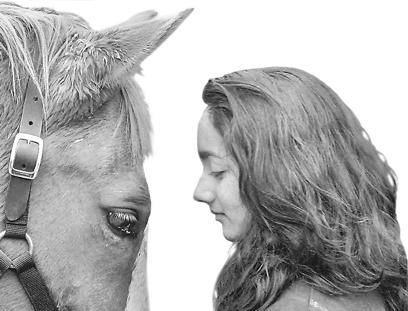
Additionally, small
Veterinarians need to be able to carry around drugs with them
animal veterinarians often offer house-call services to their patients, particularly for at-home euthanasia services, which ensure that a beloved pet ’ s last moments are as calm and peaceful as possible There are also mobile veterinary clinics that work in impoverished areas to spay and neuter cats and dogs On top of this, there are veterinarians who work to treat and relocate dangerous wildlife that could pose a serious risk to human health
So, as you ’ ve probably figured out by now, veterinarians need to be able to carry around drugs with them Several of these drugs, primarily ones used for pain control, sedation and euthanasia have been listed as controlled substances in the Controlled Substances Act Without them, veterinarians would not be able to provide critical care to their patients During the last 40 years, there have not been many run-ins between the DEA and the veterinary community However, in the last year, several ambulatory veterinarians (starting in California) received notices from the DEA that they were in violation of the Controlled Substances Act and could face penalties such as the revocation of their DEA registration, fines and even criminal charges if there is evidence of further associated illegal activities such as illegal distribution It’s a little unclear, but the exception seems to be that veterinarians are allowed to carry a predetermined amount of medications if they know exactly how much they will need for specific appointments However, this would not work for spay/neuter clinics where there are an unknown number of animals, or for emergencies, which are an important aspect of ambulatory veterinary medicine
Continued enforcement of the Controlled Substances Act would essentially drive ambulatory veterinarians out of their jobs I can ’ t stress enough how important it is that the Veterinary Medicine Mobility Act passes Veterinary contribution to the misuse of pain medication falls near the bottom of the scale of all of the drug problems in this country
The DEA’s resources are better suited for more deep-rooted problems, especially since veterinary use of controlled substances is vital to the health and well-being of the patients and the public If you ’ re interested in helping, you can google AVMA Veterinary Medicine Mobility Act which provides a way to send a form letter (personalized, if you wish) to your congressperson
Thanks for reading this year, see you in the fall with news on those “big life decisions” and hopefully some summer adventure stories As always, please e-mail me if there’s anything that you would like to see me write about!
Nikhita Parandekar graduated from Cornell in 2011 and is a secondyear veterinary student in the Cornell College of Veterinary Medicine She may be reached at nparandekar@cornellsun com Hoof in Mouth appears alternate Fridays this semester
Com men t of the day
“Did we really need to learn about her homemade sex toys?


Between that and the smoldering photograph of the 2013 Blakinger, one gets the impression that the author is less interested in someone’s journey to sobriety and more interested in his own ‘Girls behind Bars’ fantasies.”
Cayugawrites
Re: “Released From Prison After $50K Heroin Bust, Fmr Cornell Student Gets Clean, Writes Book” News, published April 26, 2013
Tyler Lurie-Spicer | Personal Politics
Sti ing D i ssent: Exploring The R ole of P rotest on Campu s
What role do “Use of University Property” permits play when people are organizing a protest? When people are asked to apply for their right to free speech, who becomes privileged and who does not? Currently the University Assembly is considering a change to the Campus Code of Conduct that could greatly impact our right to free speech
Excuse my bureaucratic language while I explain: According to current campus code, Cornell generally cannot require a permit for student protests on campus However, the University Assembly Codes and Judicial Committee is currently considering the “Resolution to Clarify Responsible Free Expression in the Campus Code of Conduct” in which one of two proposals will be decided on The first proposal would be consistent with the current campus code, eliminating any permit requirements for free expression outdoors, given that the safety and rights (including rights of free speech) of others and their property are respected
The second proposal, however, intensifies restrictions by forbidding any unpermitted demonstration at the same time and place as a University function or event with a permit In both of these proposals, counter protests would be forbidden on campus Yet how can anti-oppression activism occur if dissent is forbidden when there are oppressive events?
As a training camp for the future rich and powerful, our University is riddled with oppressive forces Some of the students who gradu-
ate from here will lead some of the most oppressive institutions in the world Some mathematicians will go off to design the new weapons that will kill families in Palestine Some engineers will work for big oil companies and propel us further into a climate crisis Some business students will work on Wall Street where they will finance these atrocities and countless others Today, oppressive mentalities that perpetuate this greed manifest themselves within student organizations and campus events here on campus Many students on this campus have privileges that are
(hyperlinked above if you are reading this online), it is not a violation for a group to be at the same outdoor location as one with a permit
Then again, it is not explicitly granted either Therefore, it is no surprise that some members of the UA are proposing changes to the Cornell Code that would legitimize the eviction of such dissenters
There are a number of Public Comments that have been released by U A members (also in the hyperlink above) that show a wide range of views While some members, such as Ari Epstein, view this as a simple
We must resist oppressive powers where they are born, where they are most subtle and yet, where they are strongest.
rooted in the oppression of others and they will try hard to protect those privileges These acts should not go unchallenged
Just one example of this was last semester, when Hillel and Cornell Israel Public Affairs Committee (CIPAC) came out to Ho Plaza to support the bombings on Gaza citizens Students for Justice in Palestine came out in response to elucidate the oppressive roots of their message Sure enough, just as police evict Palestinians from Israeli settlements in the West Bank and Gaza, I witnessed Cornell Police push SJP protesters off of Ho Plaza because they did not have a permit and CIPAC did Yet, as seen in the current campus code

matter, ensuring that scheduled events do not conflict, others members like Risa Liebor witz recognize that these changes would infringe upon our right to dissent on campus She also points out that while we may disagree with one another, free speech protects our right to disagree, even if that means our events do not always go as planned “Free speech means that sometimes outdoor demonstrations and counterdemonstrations may be loud and that it may be hard to hear everything ” Lieborwitz explains, “This is part of having [and] protecting heated debate ” Furthermore, without counterprotests and disruptions of oppressive events, the only permissible form of direct
action would be to rally with one ’ s friends and make speeches among allies While these events can excite a crowd, they are about as powerless as our Student Assembly in that they put no direct pressure on anyone The only leverage that a mass group of people can have in dealing with an oppressive force is to directly engage with that force It is the only way that we, as students, can de-construct the oppression as it comes to fruition on this campus I am not saying that disruptive events and counterprotests need to be violent or destructive, although it is not my place to infringe upon anyone ’ s autonomy to do so But they may be cacophonous, they may show disagreement, they may force us to question our beliefs and those we are surrounded by What is crucial is that we show up when we notice oppression We cannot afford to isolate resistance in the front-line communities who face oppression every day Rather, we must resist oppressive powers where they are born, where they are most subtle and yet where they are strongest We cannot let our classmates use their incredible skills, intellect and potential for the destruction of our planet and its people We must be the counterforce We will not be silenced
Tyler-Lurie Spicer is a sophomore in the School of Industrial and Labor Relations He may be reached at til4@cornell edu Personal Politics appears alternate Tuesdays this semester

ARTS & ENTE NT

Student Fashion Spotlight
BY ARIELLE CRUZ Sun Arts and Entertainment Editor
NOMAD SOLDIER is Alie Bauer ’13’s second collection with the Cornell Fashion Collective, but she has been doodling clothing since middle school (she could never find anything she wanted to wear) While her friends gravitated to Hollister and Abercrombie, Bauer looked to her imagination to create what she would actually want to wear (if it existed) As a result, her clothing choices in high school were a little out of the ordinary Back then, she used to be into ska punk, now, she is more inspired by goth chic designers like Rick Owens Her design aesthetic has certainly come a long way over the years, especially during her time at Cornell Bauer reflected on one of her old designs in the CFC show a year or so ago that included a full body orange jumpsuit “I don’t know what I was thinking,” she laughed
Her current collection makes reference to Owens, Damir Doma, Wayne Design and Blood of Heroes, a post-apocalyptic film where people play a brutal gladiator game to advance in society, though you probably wouldn’t recognize the references unless you knew about them in advance (thank goodness you read the Sun) All of the costuming in the film contains lots of layers, lots of toughness, but its also very earthy and sort of primitive looking ”
Her friends make fun of one piece she made, saying it looks “ sort of like a jedi robe ”
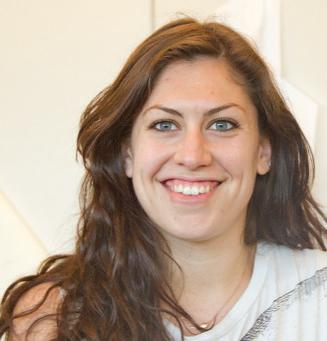
“I love that description,” remarked Bauer “Thats exactly what I was going for, you know, Star Trek Even my boots kind of look like what star troopers wear in star trek, sort of pseudo sci-fi I’m really into that kind of thing ”

It’s taken a long time and quite a few questionable choices for Bauer to discover her aesthetic But Bauer’s love for fashion is like her love for Star Trek: sure to be long-lasting and filled with futuristic earthy tones In the style of Blood of Heroes, her pieces contain some leather and quilting, but her biggest signature has to be the crescent shaped pads sometimes stitched onto shoulders for a claw-like look and sometimes sewn in underneath pieces to create a drape effect Accented with black-chain necklaces that she made herself, her collection reflects a vision for the future that she self-describes as goth-chic After years with CFC, she has learned the importance of trial and error In the past she would have drawn one design and began the production process, but with time, and some advice from a professor, she has embraced the necessity of the draft She imagined her professor chiding her:
“No, you have to draw like 300 of those ”
All in all, designing for CFC has been like nothing else she has done, and quite possible like nothing else at Cornell “I gotta say, I know everyone at Cornell works hard and I totally understand, but this is just a different kind of work, said Bauer
“It’s very very personal because in a sense all of it is you like everything, every single decision you make, every single color you choose, every single texture, everything you do and then you show it to like 2500 people on this huge runway
Just the sewing itself takes hours and hours and hours so you spend a lot of time staring at it and thinking about it and and by the time you ’ re almost done with it, it takes a lot to be like I’m still good with this, you know you think a lot about other things So I guess I’ve learned a lot about believing in what you decide and making the decisions and sticking by them and learning how to problem solve and make it work
You have to get over those little roadblocks to achieve your whole vision, and getting that whole package together is a hugely rewarding experience So, thats something I’ve learned It’s worth fighting for your vision ”
Arielle Cruz is a sophomore in the College of Agriculture and Life Sciences
She can be reached at arts-and-entertainment-editor@cornellsun com
It all comes weeks, six spotli Fashion Collect

Spring Fashion Show tomorrow night at Barton Hall The collective will showcase the talents of CFC fashion designers in a full-on, lights shining, music blaring, models strutting fashion show And no, their lives are not like Project Runway
Both times I left studio at T07 to talk to the women of CFC, I left in a markedly better mood than when I came The place is almost infectious that way Tomorrow, the ladies and gentleman of CFC will bring their spark, their flare and the world of T07 to you So, without further ado, The Cornell Daily Sun presents the last three designers in our Fashion Spotlight series
BY ARIELLE CRUZ Sun Arts and Entertainment Editor
Rachel Kuhns ’13 has a much lighter look than Bauer Her materials are airier, she uses a lot of chiffon, and soaked in cool white and turquoise tones
Her collection this year is inspired by Audrey Hepburn movies; she has probably seen Funny Face, Charade and Sabrina about 30 times each The credit role especially sticks in her mind or at least, the lines that read, “Mrs Hepburn’s clothing made by Mr Givenchy ” So, as a homage to the man who dressed the beautiful Hepburn, Kuhns’ collection will feature a blend of ’50s and ’60s silhouettes blended with Chinese designs and roping techniques
Kuhns’ mother is from Cape Cod, so she spent a lot of time surrounded by knotting and nautical themes growing up She wanted to incorporate them into her looks After researching the Givenchy silhouettes and some of the history of knotting, she learned that both are asian-inspired, so she settled upon her third inspiration: chinese patterns
Kuhns has been designing with the collective since she was a freshman After completing designs for class, she says, it’s nice to be able to make something of her own
“Ever since I was a little girl I’ve loved Barbies and dressing up When I was in middle school I started sewing lessons During high school, was really into art and sewing and I figured I’d just sort of go with it My
mom always said, you can do anything you want as long as you work hard So thats kind of what I did ”
And she does it well Standing in her corner for less than a minute, I wanted one of her shirts It was white, with a Chinese-inspired pattern cut out of it with a new laser cutter “So I have this piece, we have a new laser cutter downstairs, I’m doing this Chinese traditional
Rachel Kuhns

design that I made design my own on Illustrator and then I made it into a pattern for the laser cutter Its a tank top that has laser cut design out and it has organza underneath then it has an organza see through strip in the back, full, it’s a little above the knee, chiffon, box peated with organza It’s all white, simple and just beautiful ” I have to agree T

FASHION
Continued from page 9
r y i n t o ’ 5 0 s a n d ’ 6 0 s C a ro l i n e De l s o n ’ 1 3 s a y s w h e ne ve r s h e s e e s s o m e t h i n g m o d , i t re m i n d s h e r o f m e ” A l t h o u g h m o s t o f h e r w o rk w a s u n f i n i s h e d w h e n I s p o k e w i t h h e r, i f h e r m o n k e y - f i s t k n o t p u r s e s a n d w h i t e - d r a p e d s i l h o ue t t e s a re a n y i n d i c a t o r o f h ow
c l a s s i c t h e l i n e w i l l b e , i t i s s u re t o w ow a t t h e s h ow To m a t c h h e r ro p e p a t t e r n e d ve s t s a n d t o p, e a c h o f t h e w o m e n w i l l h a v e r o p e b ow s t i e d a r o u n d s o c k b u n s o r f l o w i n g l o c k s , d e p e n d i n g o n t h e l o o k
B e f o r e I l e f t , I
s h e l ove s t h e m h e r s e l f
Fo r m e n , “ e ve r yo n
Arielle Cruz is a sophomore in the College of Agriculture and Life Sciences She can be reached at artsand-entertainment-editor@cornellsun com
LBY MEREDITH JOYCE Sun Staff Writer
Caroline Delson ’13 is a female designer passionate about menswear While menswear isn’t the haute couture most little girls have in mind when they think of fashion, with enthusiasm and creativity, menswear has become the perfect medium for Delson’s personality After developing for four years with CFC, Delson now has the opportunity to present a full design collection that expresses her confident and mature sense of style
A native New Yorker, Caroline took her first fashion course when she was 14 She says her passion comes from the variety of ways a person can be involved in fashion “There are so many ways to stay with it forever ” Her excitement comes from seeing “how amazing it is to move from idea and 1-D and thoughts to this 3-D real thing ”
Her interest in menswear was sparked by a Cornell program run through the Portland-based wool company, Pendleton “I’ve had always been curious about menswear When I worked on that project I finally figured out that that was what I should be doing,” she said As opposed to women ’ s wear, which can be crowded, “with men ’ s, there is a lot of room for experimentation ” Caroline’s style of menswear is “feminine inspired ” “I think that the details are really important in menswear, and I think now I’ve found my voice and shape,” she said She admits that “You’re toeing the line putting men in long shirts because it reads as a dress sometimes I think that’s the kind of conversation that keeps coming up more and more in fashion, and I don t mind being a part of it ”
Surprisingly, “putting a womens wear fabric into a men ’ s garment doesn’t look wrong “I’ve been experimenting a lot this year Maybe just because it’s the last time so I really feel free, but [I] kind of [like] putting women ’ s fabrics onto men, seeing how it looks, being happy with it, hearing boys say that it’s not the worst thing

ever, she said Her third menswear collection for CFC is called Club of Sons Her inspiration comes from painters Her aim is “outfitting the artist” at work “I wanted to make pieces that you’d put them on everyday and paint in them ” She based her pieces in “characters” like Austrian painters Gustav Klimt and Egon Schiele Klimt had smocks made for him with beautifully detailed shoulder embroider y, while Caroline used Schiele’s paintings for inspiration to paint on some of her pieces In her opinion, the cornerstone of the collection are long shirts that are “boxy, wide, [and] smock-esque”
She was also inspired by movies like Metropolis, The Master and Jiro Dreams of Sushi, whose pallet informed the creams, whites, midnights and indigos in the pieces of her collection and albums “I think [the albums] in some weird way influenced the kind of process of this collection,” because she was listening to other artists’ full thoughts to create her own full collection
Looking at her pieces, it’s clear that this is a “personal, nostalgic collection She put her own favorite things in the pieces like crosswords and quilts “Giving all the pieces the personal touches makes me [feel] really connected to it, but I think it also influences what the customer is going to feel,” she said
In its completion, her line is made up of nine
looks and 27 pieces She has canvas bags made with an actual crossword she created All her models will be wearing glasses (“I like boys in glasses”) There are some snapbacks with hummingbirds across the brim She used a variety of materials like knit, neoprene (used in wetsuits) and vinyl for raincoats
Cornell has been a journey for Caroline “My first year you have one look Mine really wasn ’ t great ” But she has used these four years to grow Through her work on the E-Board, she’s been able to see CFC as more than just a place to showcase her designs It has also been a way to find a community within her department and with the diverse group of people who participate in CFC, in one form or another
Listening to Caroline, if I’m allowed to interject my opinion into this profile, what I find cool about her is that she has found a passion that she has turned into a career in which she isn’t limited in expressing her ideas Her senior collection shows how effectively she has used her four years to grow into a confident person with a full idea of themselves and what they are doing I believe this is something we can all take away from listening about her and seeing her work
Meredith Joyce is a junior in the School of Industrial and Labor Relations She can be reached at mjoyce@cornellsun com
A Real-Life Animal House
ook around at Cornell The most contentious campus political discussion is over one of the most infamous symbols of the American college experience: the fraternity house Some of these houses are tight with the Trustees and the University, some are under probation and face disbandment A rigorous hierarchy within the Greek system causes inter-fraternity rivalries; this hierarchy is largely dependent on the wealth of the house and its brothers There is a dean (or maybe associate dean of students) who is either looked at as a repressive buzzkill or a principled progressive The situation begs the obvious comparison to the most notorious college movie ever released, National Lampoon’s Animal House (1978), and its countless shameless imitations (Old School, Van Wilder etc ) Cornell isn’t quite studious enough to resemble Harvard in 1973’s The Paper Chase, not loose enough to be the invented South Harmon Institute of Technology in Accepted, definitely not politically active enough to be the Wesleyan-like Port Chester University in PCU and too conceited to be University of Ithaca in Road Trip; minus the difference in time periods, Animal House’s Faber College fits Cornell’s social atmosphere just about right The polarization of Cornell’s different communities is strong enough to look like the exaggerated forces that make up an underdog protagonist and diabolical antagonist in a traditional Hollywood production Although the comparison to these movies is fun and may make fraternities or the administration feel as though their struggle is noble enough to be a
Hollywood cliché, Animal House ends with the Delta Tau Chi members being kicked off campus and out of school and likely forced into the military To fight back against the authorities, they unleash havoc on the local town parade, championing recklessness and hedonism over the humorlessness and conventionality of the local squares
This makes for a great ending to an underdog movie The underdogs win in their own fashion and their spirits are not extinguished by the dean’s punishments The brothers bond The audience leaves ecstatic and likely inspired to fantasize about future college shenanigans, become nostalgic over past college experience or hike up a heavy tab at the nearest bar This, however, is not the ending anybody wants at Cornell

The players in this political drama (Administration, Fraternity etc ) are polarized but both have their share of folly namely repression In The Grapes of Wrath, John Steinbeck writes, “repression works only to strengthen and knit the repressed ” This notion could either rationalize Fraternity’s hazing period, which seeks to bond pledges via work and subjugation, or explain why the Greek community has gathered together under antagonism toward the University and
the IFC’s new regulations No matter how benevolent the intention, an authority suppressing activity with threats of punishment is repression Likewise, hazing is a serious form of social repression and can often teeter into sinister behavior
Unlike the ending of Animal House, a sound ending to this tension would emphasize the individual over the collective and would come from initiation instead of force To reach this sort of ending, the administration must end its measures to monitor activities at fraternities and individual fraternity members must step up against their more irrational traditions and work to prevent the incidents that have erupted into scandal including sexual abuse, lethal overconsumption and plain bullying Traditions are venerated through time, not reason Students will be academic or responsible at their own will; the University will never change that The university is miscalculating the power of regulation Prohibitions create transgressions I want students to have a community like that Greek Life offers I also think under-aged students should have a place to drink or experiment (or just get high) with the more benign drugs students inevitably pursue
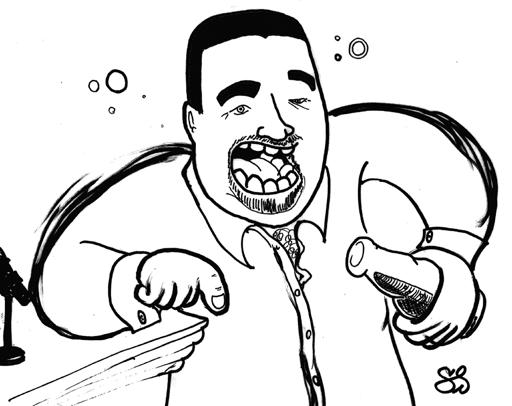
At the same time, I hope that students won ’ t feel the need to emulate the recklessness that is championed in these classic college films and that the social behavior can continue with a spirit of self reliance and self regulation
The conflict between administration and brotherhoods has followed the script of any screwball college narrative so far As the conflict reaches its third plot point, the University should let students create the ending They will be surprised at students’ ability to defy the classic representation of careless college students in movies and impressed by their capacity for self-governance
Henry Staley is a freshman in the College of Art, Architecture and Planning He can be reached at hstaley@cornellsun com Politicizing Art appears alternate Fridays this semester
SANTI SLADE / SUN STAFF ILLUSTRATOR
COURTESY OF CAROLINE DELSON










Niners Take Loss, Look
Ah ead to P r inceton
By HALEY VELASCO Sun Sports Editor
T h e b a s e b a l l t e a m i s l o o k i n g
t o g r a b s o m e w i n s a s i t p re p a re s t o h e a d i n t o t h e Iv y L e a g u e C h a m p i o n s h i p s T h e t e a m ’ s l a t -
s t g a m e , a 6 - 5 n o n l e a g u e l o s s t o Bi n g h a m t o n o n We d n e s d a y, p u t t h e t e a m o n a s o u r n o t e , b u t t h e Re d i s re a d y t o b o u n c e b a c k f o r a n u p c o m i n g f o u r - g a m e s e r i e s a g
t Pr i n c e t o n
n
“We battled in the last inning down by one with runners in scoring position and just got unlucky ”
From Designer to Columnist to Graduate
Continued from page 16
T h e Bi n g h a m t o n g a m e we n t p re t t y we l l I t h o u g h t We d i d n ’ t s w i n g t h e b a t s a s we l l a s we w a n t e d t o , b u t we k e p t b a t t l i n g , ” s o p h o m o re Ke v i n Ta t u m s a i d “ Ou r p i t c h e r s p i t c h e d we l l a n d k e p t u s c l o s e We b a t t l e d i n t h e
l a s t i n n i n g d ow n by o n e w i t h r u n n e r s i n s c o r i n g p o s i t i o n a n d j u s t g o t u n l u c k y ” Ju n i o r Ry a n Pl a n t i e r w a s 2f o r - 3 w i t h a t h re e - r u n h o m e r u n , b u t t h e t e a m c o u l d n o t c l o s e t o g r a b t h e w i n a w a y f r o m t h e Be a rc a t s “ Ry a n P l a n t i e r h a d a b i g g a m e w i t h a t h re e r u n b o m b a n d a n o t h e r h i t , ” Ta t u m s a i d C o r n e l l’s f i r s t h i t g a v e t h e t e a m a 4 - 0 l e a d i n t h e s e c o n d i n n i n g w h e n Pl a n t i e r ’ s b l a s t we n t ove r t h e f i e l d i n l e f t T h e h o m e
r u n f o r Pl a n t i e r w a s o n l y h i s s e co n d o f t h e s e a s o n Ta t u m a l s o
h a s t w o f o r t h e ye a r, w h i l e j u n i o r
C h r i s Cr u z l e a d s t h e t e a m w i t h t h re e Bi n g h a m t o n c a m e b a c k i n
t h e t h i rd w h e n Za c h Bl a n d e n h i t a t w o - r u n h o m e r So p h o m o re
J D W h e t s e l a n s we re d b a c k f o r t h e Re d i n t h e t o p o f t h e f i f t h i n n i n g w h e n h e s t o l e t h i rd h e
l e a d s t h e t e a m w i t h 1 7 s t o l e n
t i o n d u e t o a g r o u n d o u t Howe ve r, a l i n e d r i ve s n a g g e d by t h e Be a rc a t ’ s l e f t f i e l d e r e n d e d t h e R e d ’ s c h a n c e s o f c o m i n g b a c k t o t a k e t h e “ W ” T h e Re d w i l l p l a y Pr i n c e t o n i n t w o d o u b l e h e a d e r s t h i s we e ke n d T h e t w o g a m e s o n Fr i d a y w i l l b e a t Pr i n c e t o n w i t h a n o o n s t a r t t i m e a n d t h e s e c o n d t w o g a m e s w i l l b e a t n o o n o n Su n d a y a t h o m e a t H o y Fi e l d T h i s we e k e n d’s s e r i e s e n d s t h e re g u l a r s e a s o n a n d s e t s u p t h e Iv y L e a g u e To u r n a m e n t “ T h i s i s a h u g e s e r i e s We a re g o i n g t o g o i n t h e re a n d p l a y o u r g a m e , ” Ta t u m s a i d “ To h a ve a s h o t , we h a ve t o t a k e a t l e a s t t h re e , b u t t a k i n g f o u r w o u l d b e i d e a l T h e y a re i n t h e s a m e p o s it i o n a s u s , s o i t ’ s g o i n g t o b e a
b a t t l e ” T h e Ti g e r s a re 1 2 - 2 6 ove r a l l , b u t 9 - 7
b a s e s a n d t h e n s c o re d o n a f i e l d i n g e r r o r t o g i v e C o r n e l l a n o t h e r r u n T h e Be a rc a t s t o o k t h e i r f i r s t a n d o n l y l e a d o f t h e d a y i n t h e b o t t o m h a l f o f t h e f i f t h i n n i n g , h owe ve r, w i t h a l l f o u r r u n s d u e t o e r r o r s f r o m t h e C o r n e l l i n f i e l d T h e Re d t r i e d t o c o m e b a c k i n t h e n i n t h w i t h j u n i o r p i n c h - h i t t e r Be n Sw i n f o rd l e a di n g w i t h a s i n g l e a n d a d va n c i n g t o s e c o n d t h a n k s t o a s a c b u n t f ro m Pl a n t i e r A f t e r Cr u z g o t u p a n d w a s h i t by a p i t c h , t h e t w o p l a ye r s m ove d i n t o s c o r i n g p o s i -
Haley Velasco can be reached at hvelasco@cornellsun com

care a little bit However, anonymous dislike of my opinions was ne w territor y Despite that, after last semester I decided to carr y my column through my gra****ion (sorr y, w
g
involved with The Sun now that my time as Design Editor has ended It is, however, important to recognize that this is not a stepping stone for any journalism ambitions that I hold for my future After next month, I will hold a degree in engineering, and will no longer have an outlet for my snarky opinion as it relates to spor ts
Thus, my title will return to crazy spor ts fan, as it has been my whole life
At a younger age, it wasn ’ t a “cool” thing to like spor ts and to be a girl and, just to clarify, I was a super uncool middle schooler I often felt that I needed to know the most about the latest games or trades to even consider joining in on a conversation about that week’s latest spor ts events I became competitive about competitive spor ts
B e y o n d m y i n s a t i a b l e q u e s t f o r s p o r t s knowledge, I had always played spor ts I never took an interest in more ar tistic forms of expression, and tried nearly ever y spor t imaginable as I was growing up The only spor t I never played in an organized fashion was softball Sadly, this is the spor t of choice for my future employer’s summer league, so maybe I will learn to love it
Don’t think that because I played a lot of spor ts that I was talented in each and ever y one, because that is most definitely not the case I was bad at a good number of them, but I still loved them
I w o u l d l i k e t o t h i n k t h a t m y l i f e l o n g
involvement in spor ts has taught me a lot about d e t e r m i n a t i o n a n d p e r s e v e r a n c e , a n d t h a t
through the many, many, many times that I have failed, I have learned how to better succeed Both as a fan, and as an athlete, this conviction has been a theme of my relationship with spor ts I want to take this final column to say some
No
immeasurable ways I am so blessed to have had that influence in my life
Super special shout out to Ivan Zilka, who is 9 3
Nor thwestern football games for decades (and
tuition was $150) He
life champion, and one of my personal role models
Finally, my parents My father, for whom spor ts passion knows no bounds, has pushed me to create my own potential and live up to it in a way that has been an extraordinar y lesson that I will carr y with me always
My mother has always been my biggest fan
The amount of time that you have dedicated to watching me tr y my hand at numerous spor ts throughout the years is not overlooked, and I tr uly appreciate it more than I could say
I could not be more excited to say that I am returning home to Chicago after I leave Cornell to star t a ne w chapter in my (adult?) life This fall, I’ll be back in Section 230 at Ryan Field cheering on the Nor thwestern Wildcats if you want to come find me (or join me)
The title of this column is a phrase often said by one of these aforementioned Nor thwestern family members, and is used when a football game is over, and so, too, is “Sucks to Suck”
Annie Newcomb is a senior columnist She can be contacted at anewcomb@cornellsun com Sucks to Suck appeared alternate Fridays this semester
Coach P repares for Annual Spring Game
Continued from page 16
working up our weight numbers and our strength numbers over the summer, and then we’ll come back for the five week training camp before we play in the fall ”
With the fall season still looming before the Red, Archer said there are aspects of the game he understands the team will develop over time
“Ever ything is leading up to those ten games, those are the most important things we do,” Archer said “I think we have to continue to develop on our schematics, on our fundamentals ” Archer made most of his changes to the staff when he was first
appointed to the position With the departure of assistant coach Emani Fenton to the Kansas City Chiefs, however, Archer brought in Satyen Bhakta, a former defensive line coach at Division II Colorado school of Mines, to work with the team ’ s inside linebackers Bhakta, like many of the coaches Archer has brought in, has already worked closely with other members of the coaching staff
“Coach Bhakta brings chemistry and knowledge of the defense, because he’s previously worked for coach Backus,” Archer said “I wanted one voice, one unified voice on defense, with Coach Backus being the coordinator It’s all about chemistry ” The annual spring game on
Saturday will be the Red’s first public showing on the field under the tutelage of Archer It will also be an opportunity for the Red to share with the community There will be a spring tailgating event before the game called “The Big Red Goes Green” in celebration of Earth Day, as well as a book collection for family reading partnership
“Our kids and our community work really hard and pour a lot into our program, and Saturday is a day to celebrate it,” Archer said “And the way you celebrate it is by playing really hard, by playing fundamentally sound ”
Scott Chiusano can be reached at schiusano@cornellsun com
Red to Play Penn on Slope Day in Ivy Tournament
Continued from page 16
netted six and senior
To
now has 43 goals on t h e s e a s o n a n d 5 4 points, both of which are top on the team
Tr i p o
g s her to second on the team in points with 41
“However, I would say we did not bring a full 60 minutes to the game and did not play with quite the energy and support for our
teammates we normally play with,” Salisbur y s a i d “ So , l o o k i n g a h e a d t o Sa t u rd a y, backing each other up a n d g o i n g h a rd t h e whole game is going to be a major focus ” Saturday’s matchup against Boston will be only the second time t h e t w o t e a m s h a ve met in program histor y “Boston University has one really good girl on offense, [Danielle Etrasco], so shutting her down in the game is going to be really important,” Salisbur y s a i d “A n o t h e r b i g
focus is limiting the number of turnovers we have and getting the ball cleanly down the field in transition ”
C o r n e l l w i l l a l s o honor six seniors during the game who have c o m b i n e d f o r 1 4 3 goals and 46 assists It w i l l m a rk t h e l a s t home game for senior g o a l t e n d e r C o u r t n e y Ga l l a g h e r w h o h a s n i n e w i n s a n d ove r 100 saves in her career
“It’s our last game
o n S c h o e l l k o p f, s o we ’ re definitely going to bring a lot of positive energy and emotion into the game, ” Salisbur y said A f t e r t h e re g u l a r s e a s o n e n d s o n Saturday, Cornell will travel to Philadelphia on Slope Day to play against Penn in the Ivy L e a g u e To u r n a m e n t The Red will be the No 4 seed in the tournament and, with a w i n a g a i n s t t h e Qu a k e r s , w i l l p l a y either Dartmouth or Princeton May 5 for the league title
Scott Eckl can be reached at seckl@cornellsun com
games, one weekend | The Red will head to Princeton this weekend for a doubleheader before retur ning to Ithaca for another set of games
SUH / SUN CONTR
WOMEN’S LACROSSE
Archer ’05 Re ects On First Spring Season as Coach
By SCOTT CHIUSANO
Almost three weeks ago, David Archer ’05 stepped onto the green of Schoellkopf Field for the first time as head coach of the Cornell football program Twelve practices full of rigorous development and relentless repetitions later, Archer and the Red will take the field Saturday for the final time this spring, in a controlled scrimmage that will likely run 50-60 plays
According to Archer, the spring season was about giving players the opportunity to showcase what they had built on during the offseason
“I think that the biggest theme of the spring was opportunity ”
“ It w a s really exciti n g t o g e t o u t t h e re w i t h t h e m on the field, to get them to do drills, lining up schematically and being able to have them show off their talents,” Archer said “It was a fresh start, a fresh approach and a new slate for everybody ”
Due to this clean slate mentality, the players were able to practice their reps without the grueling pressure of being in season, Archer said
“Everyone was given the opportunity,” Archer said “I think that the biggest theme of the spring was opportunity are you going to take advantage of an opportunity when it comes your way?”
With a new and handpicked coaching staff surrounding

him on the field, Archer said his players were able to learn a lot Keeping with his background working for Teach For America, Archer emphasized the importance of educating his players throughout the spring season
“When you teach a concept, you want to use Bloom’s taxonomy to kind of gauge how that concept gets learned,” Archer said “We took a lot of our concepts on both sides of the ball and introduced them all, so I think a lot of learning took place ” Though a large portion of the coaching staff is new to the Cornell program, Archer said he did not have to make any drastic changes on offense, allowing his players to absorb things more easily
“Even offensively, we ’ re using the same concepts and
of
Tuesday’s
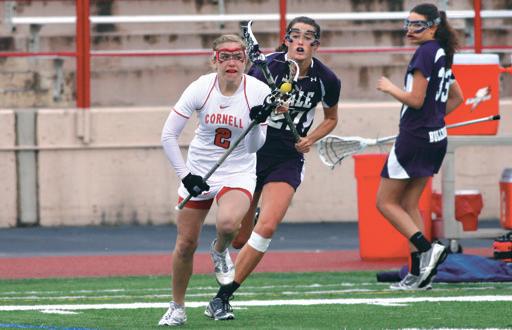
Laxers Near End of Regular Season
By SCOTT ECKL Sun Staff Writer
The Red finishes up the 2013 re g u l a
plays and play names, we ’ re just packaging them differently, and tweaking a little bit the ways we ’ re calling them,” Archer said “I was happy with for putting in a new defense and having a different approach to the offense the number of things we were able to introduce ”
The spring season can also expose some of the team ’ s flaws, allowing the coaches to pinpoint areas where it needs to improve Though Archer said that the list remains long, he was equally happy with the strides that were made throughout the three-week period
“I think it was a good start, a springboard to the summer, ” Archer said “It’s important that we make great gains
For the past two semesters, I have written a column, “ Su c k s t o Su c k , ” e ve r y other Friday I have covered a wide range of topics from college football to Bob Knight, and I have enjoyed sharing my perspective with my friends, f a m i l y, a s we l l a s c o m p l e t e strangers Writing this column was not something that I had planned as part of my senior year As I have previously mentioned, I have been involved with The Sun

every semester of my time here at Cornell, but in a completely different capacity: as a designer for the paper
While I was laying out the sports section last semester, I commented on the lack of college football analysis appearing on the back page of this section I felt that I had an opinion to offer (one that I often chose to offer anyway) and that I would really enjoy the opportunity to share my commentary with the readers of The Sun This experience has been
extremely new to me in every aspect I have never written c o n t e n t a va i l a b l e t o a n yo n e beyond a classroom of people, and now my thoughts were being read by thousands of strangers I received feedback (positive and otherwise) on my pieces, and worked to clearly articulate a point of view in each article
Annie
Newcomb
Sucks to Suck
I’m not going to lie; sometimes the criticism was hard to hear I’m not a seasoned journalist, nor do I strive to make it in this industry as a part of my future On a column that I wrote last semester about my f a m i l y ’ s u n d y i n g l ove o f Northwestern football, someone commented “No one cares ” which is a perfectly fine and valid sentiment for that reader to feel
Of course my family’s football obsession has little to no effect on your life I would simply choose to argue that if you read my column you chose to
NEWCOMB page 15
Top
the Toppe | Sophomore attack Lindsay Toppe, who scored six goals in
game against Binghamton, leads the team with 43 goals and 54 points on the season
Changing it up | Along with David Archer ’05, who replaced previous head coach Kent Austin, many members of the Red’s coaching staff for the 2013 season are new to Cornell’s program as well The spring was spent tweaking the existing offensive system and overhauling the defense
OLIVER KLIEWE / SUN SEN OR PHOTOGRAPHER
Sun Assistant Sports Editor