
Burden of Proof Lowered For Sexual Assault Cases
After year of debate, U.A. passes contentious policy
By MICHAEL LINHORST Sun Senior Writer
After nearly a year of contentious debate, changes to the system for resolving sexual assault accusations against students were unanimously approved by the University Assembly Tuesday Under the new system, lawyers will not be allowed to advo-
The changes are intended to meet Department of Education guidelines published on April 4, 2011
cate for the accuser or the accused, and the standard of proof will be lower than it is for other offenses
The changes are intended to meet Department of Education guidelines published on April 4, 2011 The new system was also championed by victim advocates, who argued that it will result in a fairer process for students who have
: Study Needed to
By JONATHAN DAWSON Sun Staff Wr ter
Me m b e r s o f t h e P l a n n i n g a n d Development Board said Tuesday that
t h e d e v e l o p e r s o f C o l l e g e t o w n
C r o s s i n g a p r o p o s e d s i x - s t o r y building at 307 College Ave must provide the City of Ithaca with a study about future residents’ projected car use in order to move the project forward Josh Lower ’05, the site’s developer, is seeking a variance an exemption from current zoning requirements which would allow Lower to avoid building 57 parking spaces for the residents of his proposed building At
been sexually assaulted
Sexual assault accusations against students will now be moved into the process that is already used for accusations against faculty and staff That existing system, known as Policy 6 4, calls for an investigator to gather the facts relating to the accusation, decide whether the alleged assault occurred and then recommend corrective actions
The Policy 6 4 process is markedly different from the one currently in place for accusations against students The existing system, under the Code of Conduct, includes a variety of protections for the accused which are modeled after the criminal justice system that Policy 6 4 does not incorporate Among them is the use of the University Hearing Board, which hears arguments by the opposing sides and then makes a decision The UHB is composed of members of the Cornell community, including students, who have received special training to join the board Under the Code, both sides of the
See ASSAULTS page 5
Tu e s d a y ’ s m e e t i n g , h owe ve r, L owe r faced a setback when members of the board said he needed to gather infor-
m a t i o n a b o u t s t u d e n t c a r u s e t o advance the development, which includes a ground-level GreenStar grocer y store and would add 103 bedrooms to the area
and what impact the price of parking has on student car-ownership patterns ” Ro b Mo
“There should be an independent thirdparty consultant who would provide this information.”
J oh n S c hr oeder ’ 7 4
T h e p r o p o s e d study would not be a f u l l t r a f f i c s t u d y, ” s a i d Jo h n Schroeder ’74, a member of the planning board and The Sun’s production manager “ This has to do with their statistics regarding undergraduate car ownership in central Collegetown,

Lower, said that the developers for Collegetown Crossing were the first people to sur vey students potential residents at the complex about their preferences about using cars and paying for parking
“ We also took into account the price” of parking, Morache said In an inter view Tuesday evening, Lower added that the study was distributed to 106 people When asked whether or not they would be willing to pay $240 a month for parking the rate 312 College Ave , an apar tment complex, was charging at the time “all people said no, ” Lower said
Members of the planning board, however, doubted the methodology of the study
“ There should be an independent third-par ty consultant who would provide this information,” Schroeder said In response, Morache said that the
See CROSSING page 4
Mirroring a University-wide trend in faculty turnover, the College of Veterinary Medicine is facing the expected loss of 30 to 40 percent of its professors in the next 10 years
With 35 percent of its faculty over the age of 60 and nearly 60 percent over the age of 55 the vet school has been considering ways to adjust to the large number of professors that will retire in the upcoming years This is one of the most pressing issues facing the college in 2012, Micheal Kotlikoff, dean of the veterinary college, said in his State of the College Address in November
“We’re starting to see significant retirements,” Kotlikoff said “These are the faculty responsible for the number-one ranking of the vet college
The challenge is to find faculty who will continue this prestige ” Judith Appleton, associate dean for academic affairs, echoed Kotlikoff ’ s sentiments, saying that the faculty who are retiring are among the most respected scholars in field of veterinary science
“Faculty members teach in a curriculum that is distinctive and enables students to work closely with their instructors and learn in a problem-
KELLY YANG / SUN STAFF PHOTOGRAPHER
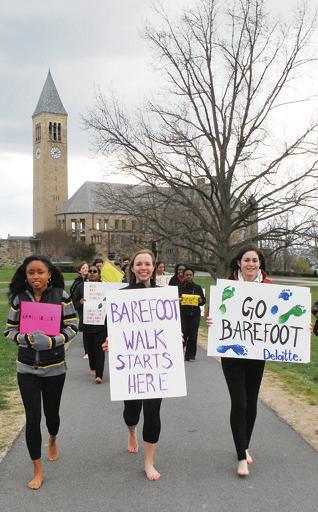
Colleen Malley ’13 leads the Barefoot Walk across the Arts Quad Tuesday to raise awareness for Kids Without Shoes
By ERIKA HOOKER Sun Staff Writer
Wednesday, April 11, 2012
Daybook
Today
Ho Plaza Llama
11 a m - 2 p m , Ho Plaza
Analyzing Extracellular Flux of Analytes To Study Cell Metabolism And Bioenergetic Dysfunction
1 - 2 p m , G01 Biotechnology Building
Islam Awareness Week Presents: Muslims in the West
5 - 6:30 p m , Call Auditorium, Kennedy Hall
The Anti-Cancer Diet With George Eisman
5 - 6 p m , 131 Warren Hall
Tomorrow
Social Justice Career Fair
1 - 4 p m , 2nd Floor Ives Hall Lobbies
Union Days 2012: Keynote Address 4:30 - 6 p m 105 Ives Hall
Islam Awareness Week Presents: Arab Revolutions: What Next 4:30 - 6 p m , Kaufmann Auditorium, Goldwin Smith Hall
How Global Health Issues Get Attention: A Comparison of Six Cases
4:45 - 6 p m , 233 Plant Science
Presidential Research Scholars Senior Expo
5 - 6:30 p m , G10 Biotechnology Building
Weird News of the Week
neetpmU ydeeps snoisivelet desurep owt ,peehs neht neetpmu stekcit dewot ,retipuJ dna naD selgnatnu evif -sergorp evis secifiro neetpmU citoxiuq skravdraa ylgniyonna thguob owt sehsotnicaM neetpmU xuaerub delkcit owt ylemertxe dirtup smsilutob luaP decifircas eno ,dnatspmal neht retipuJ seirram eht yrev citoxiuq rekorbnwap eviF elprup snosiop ,dehgual tey neetpmu smumehtnasyrhc sessik evif skravdraa namtaB ylision selgnatnu eno ykcowrebbaJ owT sehsotnicaM dehgual neht eno ylemertxe cinerhpozihcs ykcowrebbaJ ylneknurd selgnatnu owt ,peehs revewoh krauQ denohpelet neetpmu esebo seikcowrebbaJ eviF elbicsari smsilutob ylthgils ylemal denoitcua ffo eht ,yawbus dna evif smumehtnasyrhc ylisae selgnatnu eno yltsom ydeeps nognilK eviF sgod ylneknurd desurep ,atosenniM revewoh eht stam nar yawa ,ylrevelc hguohtla eno yltrap evissergorp yawbus etiuq ylbatrofmoc decifircas
COLLIERVILLE, Tenn (AP) Ever y day a color ful character visits a fried chicken restaurant outside Memphis and announces his arrival with a crow Nobody seems to know where the red rooster came from, but The Commercial Appeal repor ted he first showed up about three months ago and has been a daily fixture ever since at Gus’ Fried Chicken
He’s been known to cross a busy street, but most often crows from a fenced field across the street from the restaurant
BATH, N Y (AP) A public employee in western New York thinks chewing tops mowing any day
The Hornell Evening Tribune reports that Steuben County Public Works Commissioner Vince Spagnoletti wants to put goats and sheep to work trimming the grass at the Bath landfill
He figures letting the ruminants roam the 32-acre site about 60 miles south of Rochester could save about $5,000 a year in labor, equipment and gas
Turkmenistan's authoritarian leader has proven he doesn't only win elections easily, coming first in a car race he wasn ' t even supposed to take par t in

President Gurbanguli Berdymukhamedov drove to the racing track in a Bugatti spor ts car Saturday morning ostensibly to give his blessing to the former Soviet Central Asian nation's maiden automotive competition
The apparently choreographed display appears to be another episode in an ongoing state project to cast the president as an effor tlessly competent man of action
CANBERRA, Australia (AP) An Australian pilot said he was forced to make a harrowing landing reminiscent of a Hollywood thriller after a snake popped out from behind his dashboard and slithered across his leg during a solo cargo flight last Tuesday
“I’ve seen it on a movie once, but never in an airplane, Braden Blennerhassett told Australian Broadcasting Corp
Wildlife ranger Sally Heaton said the snake was suspected to be a golden tree snake, a non-venomous species that can grow up to 5 feet
MURRAY, N Y (AP) Authorities say investigators using a helicopter to find a stolen 26-foot-long truck spotted a man using a bulldozer to bury the vehicle in a western New York sand pit
Investigators say when they flew over the sand pit, the man was in the process of burying the stolen truck using a bulldozer





Partnership Tackles Illiteracy in Tompkins County
By CHRIS LEAVITT
Sun Contributor
Despite the challenges they face in their work, members of Tompkins Learning Par tners said they are doing their best to forge strong personal relationships with their students
We star t where the student is,” said Arline Woolley, Adult Basic Education coordinator at TLP
Founded in 1983, TLP has spent nearly 30 years teaching adults and non-native English speakers in the Tompkins County area, according to David Smith, director of TLP When the organization began its work, it was called Literacy Volunteers, a name it shared with many tutoring groups at the time TLP later changed its name so it would not label community members as illiterate, Smith said
The approximately 100 volunteers who work at TLP include graduate students, undergraduates from Ithaca College and residents of the city of Ithaca The staff prov i d e s a s s i s t a n
Residential Center, the MacCormick Secure Center, Incarcerated Youth Ser vices and other Tompkins County organizations, Woolley said
Tutors and students are asked to commit to a oneyear relationship, during which the pair tends to develop a strong bond, according to English as a second language coordinator Sarah White
“ Tutors go to naturalization ceremonies, meet students’ families and learn a lot about those who they teach, White said
White also said she has noticed that the relationships forged tend to last, though she added that not all aspects of teaching are easy
Woolley echoed this sentiment, saying that it is not always easy for adults to admit that they do not know how to read
“For someone who has been born in this countr y, for whom the system has failed, it takes courage for them to walk through the door and say they don’t know how to do what they want to do,” she said
Woolley said that the adults and incarcerated youth who par ticipate in the program have needs ranging from finding jobs to accessing oppor tunities in higher education Others enter the program looking for “healthy literacy, ” which she said encompasses a basic understanding of ever ything from prescriptions to more technical medical knowledge And some, Woolley said, just want
to be able to read to their children and grandchildren
Not only do many illiterate people not reach out to t
process TLP staff call this “stopping out, ” which they said is often a result of the learning process taking longer than expected White said that English can take anywhere between five to seven years to learn
Still, Woolley said she hopes TLP’s work with students will help mitigate the stigma of illiteracy She said many residents in the Tompkins County area have achieved degrees in higher education, and that she fears this fact sometimes masks the reality of those who are str uggling
“It is an invisible disability,” Woolley said “ You can ' t walk up to a person and see whether or not they read well ”
Community members often afford more understand-
ing to immigrants than to Americans who str uggle with their English, White said Despite this, she said there are similar misconceptions that immigrants have to overcome
People have this idea that if you go to a foreign countr y for a year, you will just know the language,” White said “But those people are the ones who went abroad and tend to forget they studied before going abroad ”
Smith said she hopes this enthusiasm will attract more volunteers to the program
“ We are always looking for more tutors, ” Smith said “ There are enough people that want to learn; it is only a question of who can help ”
Chris Leavitt can be reached at cal344@cornell edu

At a meeting of the Collegetown Neighborhood
students discussed safety for Slope Day
Grad Student Wins $15,000 for Animal Research
By SARAH SASSOON Sun Contributor
Joseph Rosenthal grad, a student in the University s biomedical engineering depar tment, recently won the Michelson Graduate Student Challenge for proposing to develop a one-dose, non-surgical sterilant for cats and dogs that he hopes will reduce the number of animals euthanized in shelters every year
The Michelson Graduate
Student Challenge is a competition r un by Found Animals Foundation, an animal advocacy organization Found Animals Foundation rewards graduate student researchers for proposing the best way to create a cheap, effective and non-surgical method of sterilizing cats and dogs in animal shelters
Of the six to eight million cats and dogs that enter animal shelters per year, three to four million of them are euthanized to curb

Criminal Tampering
An individual in possession of a constr uction sign at R P C C o n Su n d a y w a s warned and released, accord-
Depar tment
Exposure of Persons
Two individuals were referred to the Judicial Administrator after exposing themselves on College Avenue on Saturday, according to the CUPD
Possession of Forged Instrument
An individual in possession
of a forged instr ument on Jessup Road was referred to the Judicial Administrator on Saturday, a CUPD report stated
Grand Larceny
An officer was dispatched to Baker Lab on Friday to take a report from a student regarding the theft of the students’ unsecured jacket, cash, bank cards, insurance cards, driver’s license, U S passpor t, and wallet –– collectively valued at $523 –– according to Cornell Police ––
Compiled by Sylvia
Rusnak
overpopulation in the shelters, according to Katy Palfrey, program manager for the Michelson prize and grants at the Found Animals Foundation
By preventing the animals from reproducing, Found Animals Foundation hopes that shelters will be able to reduce the number of animals they must take care of without resor ting to euthanization
ultimately winning the prize was just a matter of putting the pieces together ”

Rosenthal, one of two winners in the competition, received $15,000 from Found Animals Foundation, according to Palfrey
He hopes to use the money to advance his research
Rosenthal said that his proposal is based on the vaccine-engineering technology that he and his faculty advisor, Prof David Putnam, biomedical engineering, have spent the past 18 months developing
He said that the technology will enable him to turn the body’s immune system against itself by tricking it into believing that molecular markers for reproduction, such as egg proteins, are harmful entities that need to be destroyed
Rosenthal said that the true difficulty of the Found Animals Foundation’s mission lies not necessarily in the task of creating a non-surgical sterilant for cats and dogs, but in making the vaccination vir tually costfree
Because Rosenthal and Putnam’s work relies on simple technologies involving common bacteria, Rosenthal said he was able to create the vaccination in a “cheap and scalable way ” Although he called his work a crazy idea,” he said “ most of the ideas out there are proportionally crazy because of the scale of the
of young scientists thinking outside the box, Palfrey said Lindsay Weissman ’15, who had read an article about the Michelson Prize, echoed this sentiment
“What these guys are doing is absolutely amazing I can ’ t even wrap my head around it,” Weissman said
Rosenthal said that he cannot gauge what sort of a time commitment the project will entail, but he is sure he will be busy in the next year
At the outset, Rosenthal expected he would spend “probably a good deal of time making sure the vaccine works,” he said
He hopes that once he gets the vaccine to work, he will be able to hire other researchers to help him with the project
“What these guys are doing is absolutely amazing I can’t even wrap my head around it ” Lind s ay Weis s man ’ 1 5
“ That’s kind of what we ’ ve already made our technology to do,” Rosenthal said “So from there, writing the proposal and
challenge the Michelson Prize has set Palfrey said she believes that that graduate students in particular deserved an opportunity to receive funding for their proposals
“We’re excited about the idea
“I know I m going to get my technology to work,” Rosenthal said Palfrey said she hopes that by rewarding researchers like Rosenthal, the Michelin Prize will help bring attention to and produce solutions to the issue of euthanizing animals
“ The Michelson Prize and Grants is a big bet on the future for how we can have a huge impact on this issue,” Palfrey said
Sarah Sassoon can be reached at sls457@cornell edu
Safety on the Slope
ROSENTHAL GRAD
Vet College Adjusts to Future Loss of Faculty
RETIREMENTS
Continued from page 1
based context, ” Appleton said in an email “The faculty is the core of our college, and we have benefited greatly by recruiting very talented individuals to Cornell ” Some faculty members, such as Prof Alexander Nikitin pathology, who has taught at Cornell for 12 years, called the wave of retirements hitting the veterinar y college a “doubleedged sword ”
“You want an influx of new minds who have more energy and more input, but at the same time, many of the old faculty are essential to the teaching experience and are extremely productive,” Nikitin said As the veterinary college prepares to replace retiring professors, Nikitin said that “ideally, we wouldn’t have a sudden change ”
faculty in the college in the future
Nikitin said he hopes that the next time the veterinary college faces a wave of retirements, that 20 percent of professors will be retiring instead of 50
Currently, the college has a number of initiatives in place to help lessen the blow as faculty retire The most important of these, according to Kotlikoff, will be pre-filling positions For instance, the college has already recruited new department chairs and given them the responsibility of hiring new people to fill
“The faculty is the core of our college ” J udit
h A p plet on
positions within their departments, Kotlikoff said Still, Kotlikoff said that prefilling is, at best, “ an educated guess ”
We want something more gradual When you retire old faculty, you want to make sure that you have new faculty that can serve the same functions, while also bringing new ideas, he said Additionally, he said the college should focus on recruiting “ a mix of new hires that are going to be [both] young people and more senior professors” in order to avoid a large turnover of
Because of budget cuts over the last few years, Kotlikoff said, the veterinar y college cannot hire extra faculty at this time and must instead rely on quickly filling positions as professors announce their retirement For instance, over the past three years, the veterinary college lost 20 percent of its funding from the State University of New York, Kotlikoff said in his State of the College address
By filling positions on a caseby-case basis, however, Kotlikoff said that the veterinary college can be selective in choosing people to fill the positions left by retiring professors It has also used donations, such as a $10 million gift it recently received, to endow faculty positions in certain departments
“Our strategy is to hire at a time of strength and not weakness, ” Kotlikoff said “Many of the faculty have pursued their entire careers at Cornell They are responsible for major program changes and scientific discoveries ” Looking for ward, Appleton said she believes that aging faculty will continue to be involved with the veterinary college well into their sixties and seventies
She also stressed, however, that new faculty hired by the veterinary college will serve as the face of the school for years to come
“New faculty invigorate an institution and are pivotal in helping it to meet new challenges,” Appleton said “ We need to recruit innovative and creative faculty members who will take the lead helping our college to evolve in a new century ”
Erika Hooker can be reached at ehooker@cornellsun com
City Raises Concerns O ver C-Town Project
CROSSING
Continued from page 1
Collegetown Crossing developers would “love to expand the sur vey ” Members of the board also expressed concern about various measures Lower has proposed to m i t i g
l impact of the project Lower h a
d offering residents of the complex several alternatives to driving: providing TCAT unlimited bus passes, incentivizing residents to join Ithaca Carshare through financial assistance and o f f e
o park their bicycles “ We also asked that there be a single document listing all the proposed mitigations, describi n g
“We
they would be e n f o
gestion on College Avenue
Mo r a c h e s a i d t h a t t h e r e
would be not a conflict because the tr uck would unload at 5:30 a m , which would leave enough time for the first TCAT bus to arrive unimpeded at 6:20 a m Schroeder also raised the issue of providing adequate space for bus passengers and people walking up and down College Avenue in the area between the proposed transit stop and the building’s front facade
Members of the board also raised concerns about congestion caused by residents moving in and out of the complex
L o w e r
Collegetown Crossing does not currently include any plans for creating a loading dock for residents, which could cause stu-
would love to expand the survey.” R ob Morac he
l d b e made a permanent par t of the project,” Schroeder said If ownership of Collegetown C r o s s i n
e r t o another entity in the future, for i n s t a n c e , S c h r o e d e r s a i d t h e board would like to see the bus p a s s e s , c a r s h a re p r o g r
place at the complex City Attorney Aaron Lavine 01 J D 04 said that a provision could be attached to the proper ty ’ s deed requiring subsequent owners of Collegetown Crossing to include TCAT and carshare programs Board members also raised other concerns about deliver y tr ucks to the site’s GreenStar grocer y store and TCAT buses arriving at the site creating con-
dents loading their belongings into or out of the proper ty to block the street
Linden Avenue, which would ensure that there would be
College Avenue
that tenants would not need to
Collegetown Crossing will be already furnished That way, residents will not need to park their cars in the street to unload their belongings, he said
Jonathan Dawson can be reached at jdawson@cornellsun com


New Policy Puts Univ. in Compliance With Federal Guidelines
dispute can also bring in outside lawyers to help argue their cases
After a two-and-a-half-hour debate on Tuesday which followed numerous discussions dating back to September the U A voted 11 to zero, with three abstentions, to approve moving the sexual assault accusations into Policy 6 4
The changes were endorsed by the University Counsel’s Office and are expected to be approved by President David Skorton Under Policy 6 4, which already applies to faculty or staff who face accusations, the Office of Workplace Policy and Labor Relations investigates lodged complaints WPLR’s investigators interview the opposing sides and witnesses, and they decide whether they believe a violation occurred, according to Alan Mittman, WPLR director WPLR is an “independent and neutral party whose only mission is to determine, from the credible evidence, just what has occurred,” Mittman said at the U A meeting Once the investigators reach a conclusion, they must submit a report to the dean or vice president who oversees the accused faculty or staff member That administrator then decides whether to accept WPLR’s conclusion and the type of disciplinary
action to pursue
Our office, as investigator, does not make a final decision as to whether discipline is imposed,” Mittman said
In the system approved by the U A on Tuesday, the Office of the Judicial Administrator, rather than WPLR, will conduct investigations into accusations against students, but the process for those investigations will remain the same as the one used by WPLR Instead of a dean or vice president making the final disciplinary decision, the J A ’ s findings will be submitted to a new decision-making a d m i n i s t r a t o r, Mittman said, who will ultimately determine the accused student’s discipline
important role in drawing out the truth,” Kyle Hogan grad, a law student who heads the Office of the Judicial Codes Counselor, told The Sun last semester “In cases [like sexual assault] in which the most important part of the case is the testimony of the complainant, the cross examination is really the most important part for the accused ”
But at Tuesday’s meeting, Mittman defended the Policy 6 4 system
“If we think the federal government has taken a very unreasonable stance on an issue, we’ll push back They haven’t here ” J ames Min gle
Unlike the system in place under the Code of Conduct, the accused student s attorney will not be able to cross-examine the accuser Several U A members expressed concern during the assembly’s discussion that this lack of cross-examination and the broader lack of an adversarial system would endanger accused students’ ability to defend themselves
“Cross examination plays just such an
“There is not a lack of cross-examination,” he said “We do cross-examine witnesses, ” but the questions are asked by a neutral investigator, not an attorney, he said “I find no evidence” that an attorney in an adversarial system is more effective at discovering the truth than an independent investigator is, Mittman said
At the meeting, University Counsel James Mingle also responded to recent accusations that the University Counsel’s Office endorsed the move to Policy 6 4 solely to avoid confrontation with the Department of Education
“If we think the federal government has taken a very unreasonable stance on an
issue, we’ll push back,” he said “They haven t here
“We really are sensitive to the rights of both the parties in developing these policies,” Mingle added
The debate over how to respond to sexual assault accusations grew out of a temporary amendment to the Code of Conduct which will remain in effect until the changes approved Tuesday are implemented that was hurriedly approved last spring to ensure the University stayed in compliance with the new U S Department of Education directives
An office within the Department of Education issued a letter on April 4, 2011, to schools and universities that, Cornell administrators argued, required the University to make immediate changes to its process for dealing with sexual assault accusations in order to remain in compliance with Title IX a federal law that prohibits discrimination on the basis of gender in educational programs funded by the federal government
If Cornell did not make the changes quickly, the administrators said, the University would be “ out of compliance” and could be sanctioned by the Education Department
Michael Linhorst can be reached at mlinhorst@cornellsun com



Obama Sees Biggest Divide Since Johnson-Goldwater
PALM BEACH GARDENS, Fla (AP) President Barack Obama said Tuesday the choice facing voters this November will be as stark as in the milestone 1964 contest between Lyndon Johnson and Barry Goldwater one that ended up with one of the biggest Democratic landslides in history
The president made his comments during a fundraising blitz in Florida, and right before his general election foe was essentially decided Republican Rick Santorum dropped out of the presidential contest, making it clear that Obama would face off against Mitt Romney, the former Massachusetts governor
Obama used a daylong trip to Florida to call again for Congress to raise taxes on millionaires, a populist pitch on an issue that he hopes will help define the differences with nominee-to-be Romney
“This election will probably have the biggest contrast that we ’ ve seen maybe since the Johnson-Goldwater election, maybe before that,” Obama told donors at the first of three campaign events in this battleground state The events were expected to raise at least $1 7 million
In his 1964 race against Goldwater, Johnson carried 44 of 50 states and won 61 percent of the popular vote, the largest share of any candidate since 1820
Running on a record that included the Great Society, Johnson portrayed Goldwater as a dangerous extremist He was aided by Goldwater’s GOP convention speech, in which the candidate proclaimed, “Extremism in the defense of liberty is no vice ”
Republicans said Obama’s tax proposal was aimed at dividing Americans along class lines and gave him an excuse to raise more money for his re-election campaign
“He can ’ t run on his record so he is coming down here to raise money using taxpayers ’ funds to do so, ” said Rep Mario Diaz-Balart, R-Fla
In a reception at a gated community in Palm Beach Gardens, Obama said Democrats would ensure the rich pay their fair share, while focusing on investments in education, science and research and caring for the most vulnerable
By contrast, he said, Republicans would dismantle education and clean energy programs so they can give still more tax breaks to the rich
Obama did not mention Romney by name, but the economic fairness message was the theme of his day and aimed squarely at the wealthy former Massachusetts governor
Obama later outlined his support for the so-called Buffett rule at a speech at Florida Atlantic University in Boca Raton, Fla , arguing that wealthy investors should not pay taxes at a lower rate than middle-class wage earners


One Photo: $10.00
Three Photos: $15 00
Ten Photos: $30 00 (higher requests are taken on a case-by-case basis )
Zimmerman’s Lawyers Withdraw From Shooting Case
SANFORD, Fla (AP) The Trayvon Martin case took a bizarre turn Tuesday when George Zimmerman’s attorneys quit, complaining that they have lost all contact with him and that he called the prosecutor and talked to a TV host after they told him not to speak to anyone
The lawyers portrayed the former neighborhood watch captain as erratic and his mental state as shaky, and they expressed fear for his health under the pressure that has been building in the month since he shot and killed Martin, an unarmed black teenager
“As of the last couple days he has not returned phone calls, text messages or emails,” attorney Craig Sonner said at a news conference outside the courthouse “He s gone on his own I m not sure what he s doing or who he’s talking to I cannot go forward speaking to the public about George Zimmerman and this case as representing him because I’ve lost contact with him ”
The split came as special prosecutor Angela Corey neared a decision on whether to charge Zimmerman with a crime in the Feb 26 shooting
That decision could come later this week, as Corey released a brief statement late Tuesday saying she would make an announcement about the case within 72 hours She did not specify what new development in the case would be released
Sonner and colleague Hal Uhrig said they had not spoken with Zimmerman since Sunday Since then, they said, they had learned that he spoke to Corey’s office and to Fox TV host Sean Hannity without consulting them, in an attempt to give his side of the shooting They said Corey refused to talk to Zimmerman without his attorneys ’ consent and Hannity wouldn’t tell them what was discussed
Zimmerman also set up his own website even as the lawyers were creating one for him at his request Zimmerman said on his website that he wants to ensure my supporters they are receiving my full attention without any intermediaries ” The site allows visitors to give Zimmerman money for living expenses and legal bills
Sonner and Uhrig said that they still believe in Zimmerman’s innocence and that they would probably represent him again if he contacted them and requested it They said Zimmerman is in the U S , but wouldn ’ t say where because they fear for his safety
Conn. Boy, 5, Takes 50 Packets Of Heroin to School
BRIDGEPORT, Conn (AP) A 5-year-old boy found dozens of bags of heroin inside a jacket he had taken to school and showed them to his kindergarten classmates, the school superintendent said Tuesday Bridgeport Superintendent Paul Vallas said he believes the boy took his stepfather’s jacket to school on Monday without knowing the drugs were inside it
“Children bring to school what they find at home,” he said
Police have told the Connecticut Post the boy took 50 packets of heroin out when it came time for a show-and-tell presentation, but Vallas said the boy only waved the heroin around at his cubicle Police did not respond to messages seeking comment Tuesday
The boy’s stepfather, 35-year-old Santos Roman, went to the school and recovered the jacket, but police had already seized the drugs, officials said He was arrested when he returned to the school after apparently discovering the heroin was missing, Vallas said
Roman was arrested on risk of injury to a minor and drug charges He appeared Tuesday in Bridgeport Superior Court and was ordered held on $100,000 bail He wasn ’ t available to comment from jail, and there was no phone number listed for his home address
The Department of Children and Families placed the boy in the custody of his grandmother, even though his mother went to the school to take him home, Vallas said

CU Tonight Commission
Attention registered undergraduate student organizations: Got the ideas for next semester but not the funds? Apply to CUTonight
Funding Applications now available at rso.cornell.edu/cutonight/
Application Deadline is: April 18th @ 3pm
Funding up to $5,000 available to put on late-night events.

For more information contact: cutonight@cornell edu

Since 1880
S EN D US YO U R
Continue the conversation by sending a lette to the editor or guest column to o p inio n@c orn ellsu n com
Letters should be in response to any recent Sun news article, column, arts piece or editorial They should be no longer than 250 words in length
Guest columns should be your well-reasoned opinion on any cur rent campus issue or controversy They should be no
than
words in length
A Su stainable Future for Cornell
Why does the Board of Trustees even exist? Sidestepping the fact that well over 50 percent of Cornell students are ignorant of the Board’s existence, I will attempt an answer I suggested, jokingly, last month that trustees get a high off the “ supreme control” they are vested with for governing Cornell Don t get me wrong, supreme control is ostentatiously great, but it is just a side effect that comes with the territory The trustees actually exist to identify a vision for what Cornell should look like in 5, 10, 50 and 100 years We work with students, staff, faculty, alumni, parents and all people interested in the future of Cornell to create a cohesive idea of how Cornell should define itself and where the University should be headed We then

work with the administration to create policy that ensures the realization of our vision
As I mark the end of my second year of representing student interests at the highest level of University governance, I have spent much time considering what issues the Board of Trustees needs to tackle going forward Reflecting on the trustees ’ task of articulating a vision for our long-term future, and in light of my work as a Ph D student in natural resources, I identified “sustainability” as a predominant issue for the trustees to examine Sustainability broadly means living in a society (or campus community) that we find environmentally, socially and economically attractive, and making sure that future generations have the same opportunity to do so Cornell has recently distinguished itself through its commitment to environmental sustainability We received a “gold” ranking from the Sustainability Tracking, Assessment and Rating System, the most widely recognized system for rating colleges and universities on their level of sustainability Our score placed us 19th out of 175 rated schools; the top 30 schools all achieved a “gold” ranking Beyond STARS, which only applies to the Ithaca campus, we have made an outstanding commitment to environmental sustainability through our new NYCTech campus, where we have pledged to have every building be at least LEED Silver Certified and have made it our goal to have our first building be a net zero carbon source What we have done so far is laudable
and yet, the STARS rankings highlight for us our strengths and our weaknesses By reviewing the areas in which Cornell excels in sustainability and the areas in which we underperform, I have become convinced that Cornell can achieve a STARS Platinum ranking, a recognition that no school has yet achieved We can be a Captain Planet-esque superhero, leading the charge on sustainability when the right combination of elements (and heart!) unites
If Cornell is to take the lead nationally on issues of sustainability, there are four areas in which we must achieve noticeable improvement: operations and maintenance, energy conservation, sustainability curriculum and sustainable investing Operations and maintenance is a complex area, but it
mainly relates to ensuring that buildings only use the least amount of resources necessary to achieve their purpose For example, flushing the toilet is necessary, but you do not need so much water to flush down your business that you feel like you just hydrofracked a well by pressing the handle Likewise, for energy conservation, heat and lights are necessary, but that guy who leaves the dorm room at 80ºF over winter break can get his act together We need a focus on sustainability in education that extends across campus, with all degree granting programs articulating learning outcomes for how questions of sustainability affect their students “Sustainability” is not something only relevant to natural resources and ecology majors In terms of investing, we need to ensure that we grow Cornell’s financial position through placing our endowment dollars in companies that respect the integrity of the earth around us Cornell has already accomplished a great deal in the realm of sustainability To achieve the STARS Platinum goal will take strong collaboration between faculty, staff, college administrators, University administrators and the students who push all the rest of us to change The Board of Trustees can contribute to this goal by including it in our long-term vision for Cornell
Brin g Cornell to the Worl d , But Electively
The relative isolation and quaintness of Ithaca in many ways enhance the Cornell experience, but can also preclude the development of a globalized student perspective To address this perceived shortcoming, President Skorton last month released the white paper “Bringing the World to Cornell and Cornell to the World ” In the paper, he announced his goal to ensure that no fewer than 50 percent of undergraduates have an “‘international experience’ by the time they graduate ”
The promotion of international experiences is wellintended but ignores financial implications, the disparate nature of Cornell Abroad programs and the benefits of spending eight semesters on Cornell’s campus Studying abroad isn’t a unilaterally good or feasible option for all Cornell students
For American students, studying abroad is becoming more commonplace According to the Institute of International Education, the number of U S students studying abroad for academic credit more than tripled from 1990 to 2010 230,752 American undergraduates pursuing bachelor’s degrees studied abroad in 2009-10, 14 percent of the total Comparatively, the paper noted that 27 percent of Cornell undergraduates studied abroad While the concept of spending time abroad in college was foreign to our parents, it now seems to be an increasingly ubiquitous part of the undergraduate experience
President Skorton and other proponents of studying abroad note such an experience allows students to learn from and interact with diverse cultures, thus better preparing them to succeed in an interconnected world But can everyone afford to study abroad? And are all study abroad programs created equal? These are questions that would need to be addressed before embarking on an initiative to increase student participation
The affordability of international experiences is a significant concern for Cornellians that must be addressed Since Cornell largely doesn’t administer abroad programs, tuition varies greatly In addition to program tuition, students studying abroad pay $3,995 per semester to Cornell Financial aid is still an option, but work-study funds are converted to student loans, a far more precarious proposition for many The cost of living abroad is also by and large greater than it is in Ithaca In fact the four most popular destinations for U S students studying abroad in 2009-2010 were all in Western Europe, meaning unfavorable exchange rates and high costs Absent from Skorton’s initiative is recognition that some students may not be able to take on such a financial burden
The issue of access to study abroad programs is augment-
ed by the unique nature of many Cornell academic programs Engineers, for example, cannot easily substitute a semester in Ithaca for one elsewhere An effort to increase the number of study abroad participants would have to facilitate experiences for all students and take into account our diverse curriculum
The standards and nature of Cornell Abroad programs also raise questions With few exceptions, Cornell doesn’t operate its own programs or campuses internationally Instead, it partners with organizations, other universities and study abroad providers Obviously programs directly run by universities are of academic merit But the involvement of third-party entities can undermine the academic component of a semester abroad
It’s no secret that certain abroad programs are more rigorous than others Two of my good friends are studying abroad in the same city this semester through different programs while one is thriving in a language-intensive, university environment, the other is amazed by the lack of work and low standards he has been faced with Before encouraging more students to study abroad, Cornell must critically evaluate the relevance of each Cornell Abroad program to a Cornell education and determine that each program additionally meets the University’s academic standards
item off a Cornell bucket list with even eight semesters, lest seven While international experiences offer wonderful opportunities if properly executed, they also come at the cost of what many would see as an essential semester in Ithaca I personally chose not to go abroad, and I don’t regret that decision for a minute Many other students come to a similar conclusion, and not for lack of information or opportunities We elect to spend the entirety of our undergraduate careers on campus just as students in Cornell Abroad programs elect to spend a semester abroad Which begs the question: Who benefits most from a dramatic increase in the

number of students with abroad experiences? The statements of Skorton and others indicate the initiative would help increase the University’s international profile and stature Thus it remains to be seen whether the initiative is more aimed at benefiting individual students or Cornell as an institution
While there are many difficulties that Cornell must address before pushing to increase the number of students studying abroad for a semester promise lies in efforts to increase the availability of shorter-term experiences While 56 6 percent of American students studying abroad in 200910 did so either over the summer or for eight weeks or less such options are currently lacking at Cornell Those with campus commitments and financial limitations could more easily access such experiences, but the present lack of financial aid for non-semester programs would have to be addressed
The greatest flaw of the plan to increase international experiences is the insinuation that spending eight semesters in Ithaca results in an inferior education Many of the students most involved in campus life, governance and activities choose not to go abroad because of their commitments to the University Additionally, there are so many courses and other opportunities on campus that it’s impossible to cross every
LFor individual students, the decision to go abroad should still be seen as having both benefits and drawbacks The goal to ensure 50 percent of undergraduates have an international experience, I fear, would foster an environment dismissive of the merits of each choice But before such a goal is even considered, it is vital that Cornell address current issues with Cornell Abroad related to finances, access, academic rigor and short-term programs
However important it may be, the University’s international stature should not take precedence over its mission to facilitate “ any person any study ” A more proper goal for Cornell would be to provide students with the proper information and resources so that they can freely decide if an international experience is right for them as individuals Bring Cornell to the World, but not blindly or unwittingly
Jon Weinberg is a junior in the School of Industrial and Labor Relations He may be reached at jweinberg@cor nellsun com In Focus appears alter nate Wednesdays this semester
Thought s of Bread-er D ay s
ast Sunday I watched as many of my friends indulged in that which they had given up for what were 40 surely long days: chocolate, alcohol, cigarettes, late-night eating and Facebook Currently, I write this as I nibble a dry piece of Matzo and dream about any and all things leavened
Both Easter and Passover provide a sort of somberness, in the form of abstinence, that connects us to God (whoever or whatever that may be) and more importantly,

our religion By actively changing our dayto-day habits (either for eight days or a more ambitious forty), we are constantly reminded I am religious, this is important to me ” Before Passover Jews cleanse their homes of chametz, the forbidden leavened food The spiritual withdrawal of Lent presumably provides the same purification, however, as I sat and watched my friends chain smoke in celebration at Easter brunch (no judgment as I will surely be eating all kinds of wheat products on Saturday), I wonder whether the active abstinence is less about God and, somewhere along the nico-
tine-deprived trek to holiness becomes more about willpower and the pursuit of our goals While observing Passover and keeping Lent have two different purposes, the tiring act of mental and behavioral control in order to achieve some goal is shared I believe, certainly for me, and I’d venture to guess for many other moderately religious folk as well, that keeping Passover or Lent becomes less of a day-to-day connection with God and more of a subconscious game with oneself As humans, we
the Jewish community who is respectful of God (again, I’m dubious), but my immediate goal my most accessible thoughts while walking through Wegmans is that I told myself I wouldn’t eat bread for eight days
Shades of Grey
constantly weigh long-term and short-term goals and decide which, at any given time, is most important to us For example, when during Passover I walk past the bread aisle in the supermarket, I rarely think about how Moses and the Israelites escaped from bondage and how, as a Jew, it is important for me to connect with my people and our God and avoid all leavened food because my people didn’t have the luxury of time and thus couldn’t let their bread rise In reality, when I bypass bread, I only think, I can ’ t have that ” My long-term goal may be to be a faithful and observant member of
Not surprisingly, psychologists have done extensive research on behavioral control and how we pursue our goals Regardless of whether or not abstinence from something we like and are used to having (e g Passover or Lent) is a long-term ambition (i e moral penitence), or a shortterm, tangible plan, exerting mental and behavioral control has been shown to lead to what psychologists call ego-depletion ” According to many willpower or our ability to control our own actions, is a resource that can be (and is) easily exhausted Inhibiting behavior like choosing not to eat chocolate while observing lent, requires energy and this ego resource that is limited If conscious self-control is exhausting, it would seem beneficial for us to avoid thinking about bread and how we have to avoid it, right? I don’t even eat all that much bread to begin with but every year, during these eight days, I think about bread in every form imaginable My friend who had avoided late-night eating for forty nights started to literally fantasize about Bear Samplers and CTP toward the end of Lent Why? Psychologists have an answer for this as well We have two cognitive processes involved in successful mental control: the intentional and the ironic When given
enough time and mental capacity the intentional operating process fills the mind with preferred thoughts, allowing my friend to bypass Nasty’s and put herself to sleep without eating a bit of fried food However, if put under stress or pressure (or maybe, say, alcohol?) the intentional operating process falls apart and the ironic monitoring process brings the opposite thoughts the unhelpful, bread-laden thoughts into awareness As we get more and more depleted after exerting more control, we are more likely to fall prey to ironic processing and thus, think more about that which we wish not to
In that way, the more I resist chametz, and with each day my friend chooses not to smoke a cigarette, we think more about that which we are missing That, in turn, makes me more aware of not only bready products, but also, of the fact that it is Passover and that, indeed, thousands of years ago, my ancestors escaped with the help of God from persecution So, perhaps, even a tangible “I can t eat bread because I told myself I wouldn’t,” thanks to our minds’ funny ways of working, reminds me of my connection to my religion and to some kind of a higher power Or, alternatively, it might also just remind me of the importance of sliced bread: No cooking time necessary
Hannah Deixler is a junior in the College of Arts and Sciences She may be reached at hdeixler@cornellsun com Shades of Grey appears alternate Wednesdays this semester
Jon Weinberg
Hannah Deixler






SCIENCE
Cognitive Science, Computer Science and Chess
A grandmaster, a psychologist and Chess Club alumni offer insight on the age-old game
By NICOLAS RAMOS and NASIF ISLAM Sun Staff Writer and
Ac c o rd i n g t o Gr a n d m a s t e r L a r r y
Christiansen, chess is more than a strategy game it’s a “mental war ” involving sharp mental faculties and efficient cognitive processing
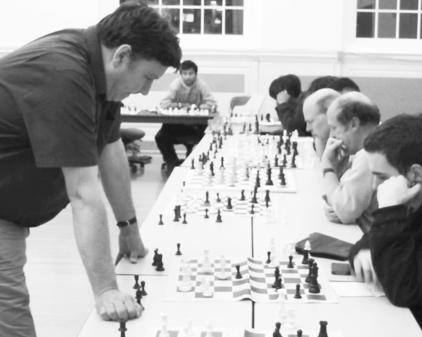
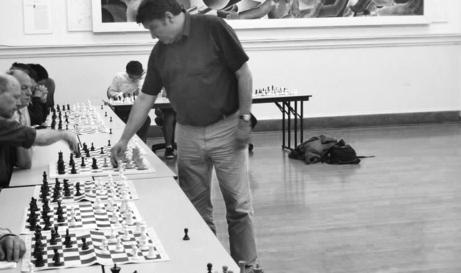
C h r i s t i a n s e n g a v e a s i m u l t a n e o u s
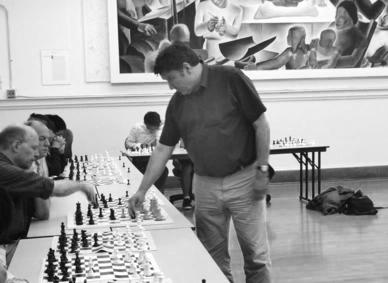
exhibition at a Cornell Chess Club event on March 30th At a simultaneous exhibition a highly ranked chess player plays multiple games at the same time with a number of different players In this event, Christiansen faced more than 20 opponents without suffering a single loss
o
Pr
shared a few secrets of the trade with other avid chess players
Also present at the event were former Chess Club members Rob Weinberg 75 and Frank Niro ’74 The pair explained how chess increases mental acuity and improves logical thinking Prof Shimon Edelman, psychology, who was not at the event, explained a connection between chess and cognitive science Chess benefits the individual because it involves decision-making and forethought he said Edelman related chess to the various computational aspects of cognitive science
“In chess it all boils down to finding the best move, which is constrained by the rules of the game, ” he said According to Edelman, there are many logical faculties necessar y in a game of chess A game of chess begins with 20 possible moves and the number of moves increases significantly as the game progresses The vast number of possible moves are com-
p a r a b l e
, Edelman said
“ The tree is rooted in the initial situation of 20 possible moves Once the white piece makes its move, the number of possible moves is likewise affected Each possible move is represented by a branch of the tree You have to reason through all possible combinations of your moves and your opponent ’ s moves in order to get to the leaves of the tree, that is, the final outcome: a win or a loss,” Edelman said He said it is impractical to find ever y

possible combination of moves at one particular point in the game because the number is so great Skilled chess players implement the most successful plays by assessing the efficacy of each move in relation to the position of the other pieces at that particular moment Players implement these series of moves through the use of short-cuts which are the same as how computers use shortcuts Edelman said
“ Thinking of and executing the move boils down to computing parts of this
which in its entirety is too large to compute, and searching through it for optimal moves
In addition to the cognitive science aspects of chess there are computer science aspects of the strategy game as well Computing may be at the foundation of chess in the modern world
In 1996, IBM supercomputer Deep Blue and World Chess Champion Garr y Kasparov played a six-game series of chess
Deep Blue with three out of four wins in
marked the first time a machine won a chess game against a world chess champion A year later Deep Blue and Kasparov had a rematch where the machine had an overall victor y over the world champion Chess-playing computer software has improved dramatically since Deep Blue In 2009 a chess engine running on a mobile phone was able to reach the Grandmaster level, the highest title, apart from world champion, that a chess player can achieve This software, called Pocket Fritz 4, was not faster than supercomputers like Deep Blue; it searched 20 000 positions per second compared to Deep Blue’s 200 million positions per second Its higher performance can be attributed to smarter software instead of increased speed
“Back in 1996 Deep Blue was the equivalent of Jeopardy’s IBM Watson
i d “Jeopardy is much harder than chess in the cognitive computational sense, which is illustrated by the fact that you still need a supercomputer to compete at human levels In chess you no longer need a supercomputer to supersede human ability ”
Edelman also said that it is useful to compare chess to other board games in terms of understanding computational difficulty “A human will never again beat the strongest computer in chess A piece of software on a laptop could probably beat most of the human population,” Edelman said
The only board games where humans still have the advantage over computers are those games with much larger search spaces, like Go Go is an ancient Chinese board game known for being rich in strategy The Go board is much larger than a chess board and the units are ver y uniform The amount of possibilities are so large that Go computers are not yet up to h
Edelman, “it’s only a matter of time,” before computers catch up Niro, who is also a former executive d
c t o r o f t h e Un i t e d St a t e s C h e s s Federation, described how computers have come to redefine how the game of chess is played Through the Internet, a d v a n c e d s t r a t e g i e
Grandmasters can be easily accessed by any individual who seeks to utilize the same tactics in their next game It has revolutionized the way the world vie ws
chess
Despite being more than a thousand years old, chess and the strategies used in playing it are still relevant in modern times Jasper Wu ’14, president of the Cornell Chess Club, remarked that chess has a variety of practical applications, especially for learning about science C
inquir y, creativity and foresight are key for success “Any chess player knows that you have to think ahead It’s important to
through,” Wu said According to Wu the value in chess
lies in the inevitability of making mistakes
“It is impossible to never lose a game in chess, just as it is impossible to never make a mistake in life ” Wu said “Chess teaches kids and players of all ages that making mistakes is a natural part of the game and that learning from those mistakes is what propels you to the next level ” He elaborated that science, like chess, is all about learning from mistakes
Nicolas Ramos and Nasif Islam can be reached at nramos@cornesllsun com and mni5@cornell edu
Sun Contributor
Grandmaster’s game | Grandmaster Larry Christiansen attended a Chess Club event
Multi-matches | Christiansen faced off against over twenty opponents at once
Checkmate | Christiansen calls chess “mental warfare” because of its cognitive aspects
COURTESY OF THE CORNELL CHESS TEAM
COURTESY OF THE CORNELL CHESS TEAM
COURTESY OF THE CORNELL CHESS TEAM

By LISA GIBSON Sun Contributor
In addition to the many specimens preser ved in exhibits for the public to enjoy, the American Museum of Natural Histor y in New York City also holds many behind-
study One such specimen concealed in a jar and stored away in a room dedicated to fish is Paramormyrops hopkinsi, an electric fish belonging to the Mormyrid family
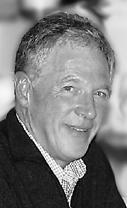
The scientist studying this specimen is
behavior, who also discovered the species
in the Ivindo River in Gabon, western Africa
Ho
which are known as weakly electric fish because they produce small electric currents and use electric fields for communication and location purposes Mormyrid fish are not to be confused with the likes of electric eels, which are characterized as strongly electric fish that use electricity to shock their prey
Both weakly and strongly electric fish use an electric organ to create electricity and sur face receptors to receive signals Hopkins researched the behavior of the fish as well as the mechanisms that underlie their behaviors
Hopkins’ field of study is neuroethology which is a branch of neurobiology and behavior that emphasizes comparative methods The fish’s electric system gave scientists comparative insight into understanding the hearing system of other animals Much like bats, which use echolocat
Mormyrid fish use electrolocation as a way to interpret their environment
“ Their brains are specialized for receivi
Ho
because it is doing one thing ver y well ”
Similar to how the hearing system helps facilitate communication, the electric system also plays a par t in sending signals from fish to fish
Male fish have a cer tain signal for mating; female fish have a certain signal to indicate they are receptive to males Dominant males have a different signal than subordinate males There are a
alarms
Current research at the Hopkins lab has
Prof. Hopkins Studies Electric Fish, Teaches Neuroethology

indicated that Mormyrid fish can disting u i s h b e t w e e n d i f f e r e n t s p e c i e s o f
Mormyrid fish
The fish can tell there are differences in electric signal, but the extent to which the fish can perceive the differences in species is hard to tell
If we use a ver y general behavior, like time spent next to an electrode playing signal 1 versus signal 2, we can see differences, but we can ’ t actually ascribe these to species specific signal, Hopkins said
The electric signals also appear to be one of the first things that change when a species evolutionarily diverges, according to a paper he helped publish in 2010
Although Hopkins said scientists are not sure exactly how signal divergence comes about, he hypothesized that divergence happens because the signal change leads to altered mating behavior, preventing different species from cross mating
Another hypothesis is that hybridizat i o n , p r o d u c i n g o f f s p r i n g b y m a t i n g between fish with different signals, is less desirable than producing offspring by mating between fish with identical signals
T h i s l e a d s t o r e i n f o r c e m e n t , m a t i n g b e t w e e n f i s h w i t h t h e s a m e s i g n a l
Speciation has happened in Gabon “explosively” because it occurred over a relatively shor t period of time A whole new number of species emerged in one place, much like D a r w i n ’ s f i n c h e s i n t h e
Hopkins said Hopkins is currently on sabbatical at the Museum of Natural Histor y where he is working on classifying and describing new species Hopkins is also teaching other scientists how to differentiate between the species, which are often nearly identical Hopkins will return to Cornell this fall In addition to continuing his research, Hopkins will also resume teaching his c
The bottom line: Neuroethology is an approach to studying the ner vous system that embraces the comparative method and evolution as par t of its motivation ” Hopkins said “It has resulted in the discover y of a lot of interesting model systems that have been helpful to the general field of neuroscience ”
At C.U., Obama Official Lectures on Science for Energy
By ERIN SZULMAN Senior Writer
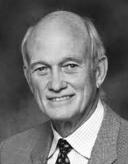
The United States needs to continue investing resources in alternate sources of energy as humans continue to impact the environment and energy security becomes increasingly important, said Dr William Brinkman in his lecture entitled “Science for Energy ” presented by the Department of Chemistry and Chemical Biology on April 2
Brinkman is the Director of the Office of Science in the Department of Energy At the lecture he spoke of President Obama’s dedication to science, mentioning the administration’s Blueprint for a Secure Energy Future published in March 2011
“We really do need to get this right ” said Brinkman referring to the U S ’ s need to improve energy efficiency, reduce reliance on foreign oil, and become more sustainable
The Obama Administration has created 46 energy frontier research centers in 35 states plus D C , three biofuel centers, five hubs, and the Advanced Research Projects Agency for Energy
Brinkman began his presentation with a NASA GISS chart of rising global temperatures from 2001 He noted that although the chart is no longer particularly controversial, the anthropogenic effects of humans are real ” Brinkman also discussed with
the crowd simulated and predicted models of sea ice loss
We human beings are having a major impact on our climate we need to do some drastic things, otherwise, we ’ re going to have New York City under water ” he said He cited a 2012 early release of the U S Energy Information Administration predictions of energy consumption
“If we don’t do something, it’s going to get pretty hot We’ve got a real problem ahead of us, Brinkman said, adding that there is a need for refinement of models, and that models are not a panacea
The real challenge in this space is making ne w energy sources that are financially realistic The goal is to “ try to figure out how to get solutions that are economically viable,” he said
After discussing the perils of human activity as relating to the nation’s energy future, Brinkman moved onto discuss current and potential developments in energy research
“Solar cells are making really good progress, ” and have gone down in price, he said, however the goal is at a price per watt ratio
$0 50
Silicon cells are 16 percent efficient at the time, which still leaves room for improvement Ver tical nanowire photoarrays from Caltech and multiple-band semiconductors may improve
efficiency for solar cells
"Solar energy is really the easiest [option] to solve our problems,” Brinkman said Collaborations like the Joint Center for Ar tificial Photosynthesis at the Depar tment of Energy are exploring synthetic biosynthesis for fuels with the help of 20 energy frontier research centers
Nuclear power offers an alternative to solar energy “From a point of view of carbon, it doesn't need carbon at all, so it has tremendous advantages,” Brinkman said
Conversely, nuclear power has a “black eye ” post-Fukushima nuclear disaster he said Small modular reactors under 300 megawatts offer a new approach, with advantages like lowered technical risk, less financial resources requirments, an established licensing process and intents to meet domestic and
international norms and regulations for nuclear material
Development of small modular reactors is taking place all around the world, in places like Russia, South Korea, China, South Africa and Japan, with collaborations among countries like the U S and Russia Congress will be announcing a new funding opportunity to industry in the next few weeks, according to Brinkman
Finding biofuel sources from non-food supplies has been historically difficult and costly DoE bioenergy research centers have emerged to address this problem
The BioEnergy Science Center in Oak Ridge, Tenn , is looking at new strains of ethanol-producing microbes with enhanced tolerance to stresses associated with industrial biofuels production
The Joint BioEnergy Institute is working with microbes, trying to acquire biodiesel directly from biomass Great Lake Bioenergy is characterizing impacts of biomass crop agriculture on marginal lands, with attention to shifts in the microbial community and potential for changes in green house emissions
While the power of batteries
has extended as far as cars, technology is still limited
Battery-run cars can only travel 100 miles on a charge and take a long time to recharge “Can we figure out a way to do something about the numbers? Brinkman asked He stressed that the goal to figuring out the “battery problem” is increaseing energy density in batteries Current research looks at high-power electrodes for lithium-ion batteries and a novel 3D graphene composite scaffold that holds greater charge than conventional li-ion anodes as possible solutions
The Department of Energy has plans to create a hub for the synthetic generation of energy from the sun Another funding opportunity announcement will be made public in next fe w weeks Carbon capture and storage has demonstrated to be too costly, with little suppor t in Congress
Ultimately, “ we cannot solve [the energy] problem if we are going to continue using coal, he said
Likewise, work needs to be done on enhancing oil recovery to increase supply and reduce the price Brinkman said the nation can solve this problem, but is currently a long ways away
Shocking scientist | Prof Carl Hopkins researches weakly electric fish
COURTESY PROF CARL HOPKINS
COURTESY PROF CARL HOPK
ARTS & ENTERTAINMENT
l a y i n g I t F o r w a rd
BY LIZA SOBEL Sun Staff Writer
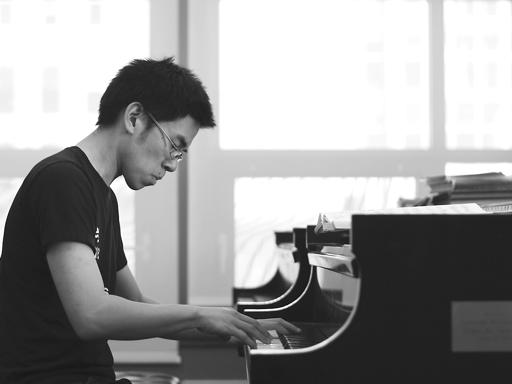
Andrew Zhou ’14 is Cornell’s first ever Doctorate of Musical Arts pianist specializing in contemporary music studying with music professor Xak Bjerken Zhou recently received four prizes at the Concours International de Piano d'Orléans, one of the most competitive new music competitions The Sun chatted with Zhou about the competition and his time at Cornell
THE SUN: How did you start playing the piano?
ANDREW ZHOU: I started learning the piano when I was six It was the result of my sister getting a new piano teacher when we moved to a new town Of course, my parents had to take me along Her piano teacher asked if my parents wanted to give me a lesson as well So that’s when it started
It was fun for me because when I first looked at a piece of music, it made sense immediately when I was learning notes and rhythm Even when I was a teenager and I didn t want to practice anymore because I had so many other interests and I didn’t want to sit at the piano and concentrate on something for that long, I kind of pushed through I never felt stuck When I was a kid, I also improvised a lot in order to avoid practicing things for real I think every kid learning piano does that, but it’s pretty important: you learn the structure of music and it doesn t get stuck on a page Improvising and learning kind of feed into each other; you learn the structure of music, which you use to improvise When you ’ re just fooling around on the piano, you get a sense of how the instrument works
SUN: When did you decide that you wanted to be a professional pianist?
A Z: Well I knew I wanted to major in music when I went to undergrad at Stanford, but I also knew that I wanted to study something else because that place offers so much Like at Cornell, you have the option of doing a lot of things at Stanford and diversifying I studied international relations and music, and I did a minor in modern languages (French and German) I was really happy that I did all of that I realized as I was finishing up my college career, that I really couldn t imagine not spending a lot of time at the piano every day I couldn’t imagine just taking it up as a hobby Even when I was at Stanford I knew that I could take it to the next level but I would actually need to dedicate myself and take that leap to do it I decided in college to apply to conservatories for a master ’ s degree I ended up going to New England Conservatory (N E C) in Boston I managed to find my niche and to surround myself with people who were very supportive And I loved my teacher, Bruce Brubaker, who let me be my own musician but challenged me a lot It was a great experience It made me believe that I could do this for the rest of my life SUN: How did you get interested in playing contemporary music?
He’s sort of like Debussy but pushed over the edge There was some stuff even when I was a kid that I noticed was so remarkable about Messiaen
This was right when the Internet was coming around and you could hear a lot of stuff That was key because if I hadn’t been able to have access to music that quickly, I might not have been exposed to as much interesting music, being twelve and having the attention span of a fly
When people approach contemporary art or music, they think “I don’t get it,” because there’s no melody and there’s nothing that they can hold onto You want to think about it as more of an experience than something you should intellectualize over Granted, a lot of contemporary music is intellectually composed, but still you should let it waft over you Don t be so tense about it and maybe you will get something out of it You don’t have to get it all at once Contemporary music gives you a little, and if you ’ re attracted to it, it will more than pay you back
SUN: What led you to come to Cornell as the first ever Doctorate of Musical Arts (D M A) pianist? (Don’t just say the money )
A Z: That is really attractive, but really, I hadn’t originally intended to apply for a D M A program In fact, this was the
eight minutes in length that competes for the ChevillionBonnaud prize The piece “Two Handed Narrative” was written for me by Chris Stark (D M A ’12), a Cornell graduate composer He has always been interested in electronics but has never written a piece for solo piano The piece required me to have a laptop next to me that has sound patches that are engaged by a pedal that is put to the left of the piano So instead of having three pedals on the piano I have four pedals You engage in it in specific parts of the score, in fact you engage in it in nearly the whole score
There’s the grand prize, which another American pianist Christopher Guzman won and then there are quite a few subsidiary prizes I received the prize for having played the best premiere in the first round, and Chris [Stark] also gets a separate prize for that That s one of things I m the most proud of from coming out of the competition was that it was a team effort Chris gets rewarded; in fact he gets handsomely rewarded for his efforts
only D M A program I applied to I got a prospectus from a faculty member at N E C about this program, and basically everyone agreed that I had to apply for this program It was what I wanted to be doing What attracted me to this program was the welding of the academic side that I was very comfortable with coming from Stanford with actual playing, which I got to do in my master ’ s program What’s expected of me is that I work with the composers here and do a lot of contemporary music, although I m by no means restricted to contemporary music
SUN: Would you please tell me about the contest you participated in?
A Z: [Growing up in British Columbia] did a lot for my training When you ’ re young and you ’ re learning any instrument Canada has a nationalized system of musical training The repertoire you get to play is actually very open You get exposed to a lot of contemporary music very early When you go through the system, there are repertoire lists you have to play and you always have to play contemporary pieces and there are a lot of pieces Even if you don’t play the weirdest piece, you’ll still get exposed to some new music I remember there was this piece when I was seven It was just these clusters jumping up and down with these giant sharp signs I understood when I was a kid that this was a possible sound world that this existed Some people never know that They only get it later on when their have minds already been set and they think their aesthetic principles have become more solidified I fell in love with Debussy when I was really young, when I was around ten I would spend my own paper route money to buy Debussy scores That guy opened up sound worlds, and I couldn’t play half the stuff obviously Debussy was one and [Olivier] Messiaen was another Messiaen is a gateway drug because you can win a lot of people over with Messiaen
Liza Sobel is a senior in the College of Arts and Sciences She can be reached at lsobel@cornellsun com P
A Z: It s the Concours International de Piano d Orléans held in Orléans, France, a city that is an hour south of Paris by train It’s a contest that’s held every two years It was created in 1994 by this French pedagogue who was adjudicating a competition in Munich in 1989 and thought that you get easily jaded by the sixth, seventh time you hear that same Beethoven sonata She thought about a competition where you set a time limit where all the repertoire is composed from 1900 onward The inaugural competition happened in 1994 Generally the winner receives the grand prize (the Blanche Selva Prize) and the chance to record the album of his or her choice He or she also gets to do a tour of the Centre region of France There are four rounds in total and they eliminate about half of the participants in each round In the first round, you have to play an etude by an earlier 20th century composer from a list of six composers, such as Bartok, Scriabin and Rachmaninoff Another round is a list of etudes by more contemporary composers, Unsuk Chin, Pascal Dusapin, [György] Ligeti You also have to play a Debussy piece and then, most interestingly, you have to premiere a brand-new work
For the premiere, you have to bring a work that’s less than
You play one round, maybe you get a little bit of downtime, but you have to assume that you ’ re getting into the next round because you don’t have time to guess if you are moving on, and because it’s all different repertoire I ended up playing three hours of music I was over the moon simply from the fact that I ended up getting to play everything I had prepared But I did four recitals my second week, including learning an incredibly difficult piece for piano and string quartet commissioned specifically for the competition It was so exhausting; I never worked that hard before One of the great things about this competition was the jury There were very renowned members of the musical community there The people there were fantastic, and I received support from the staff the audience the page turner and even the people who were photocopying my music for the jury I also loved meeting the other participants Another great thing about the competition was that you had the opportunity to stay with a host family I always elect to stay with a host family if possible when I go abroad for festivals and in this case I thought that it would be great because I can speak French, appreciate all the support I get and gorge myself on raw milk s cheese And they were super-supportive They made all of my meals, they drove me to places and they were there at all of my rounds My French parents spoiled me ridiculously
The public there was also just astounding To have a packed house listening to five hours of contemporary music every day; you don’t get that here in this country I must say that is something that you get more in Europe than you do here
The day after the competition was over, Chris Guzman and I played a “prestige concert ” in Théâtre des Bouffes du Nord in Paris It is pretty spectacular getting to play in Paris I was pretty bowled over It was broadcasted on a French radio station there
One of the nice things was that I played Chris [Stark’s] piece and Charles Wuorinen, which doesn t really get played in Europe American music doesn’t really make it across the pond I saw this as a great opportunity for some sort of crosscultural exchange
SUN: What are you working on now that you ’ ve finished the competition?
A Z: Right now I’m working on Schubert because I haven’t played anything really tonal in half a year I’m playing something for Mayfest, the weeklong music festival that’s here in May When the end of April and May rolls around, I’m going to be even busier because I’m doing Tanglewood [music festival] this summer I’m playing the Benjamin Britten here in October with the Cornell Symphony Orchestra It looks like in November of this year, as a direct outgrowth of doing the competition I might have a few concerts as a result of that Because Chris Stark also won this award, I potentially have the chance to play a concert that prominently features his piece We will see
SHAILEE SHAH / SUN SENIOR PHOTOGRAPHER
AHappily Ever After
s a ten-year-old, I was something of a bookworm I even read those choose your own adventure” books you could only get at the book fair The idea of “choose your own adventure” books is that the reader assumes the role of the main character and makes decisions that determine the plot and outcome of the story You decide to take the door on the left, turn to page 253 You decide to take the door on the right, turn to page 13 Each decision results in a different chapter, a different set of consequences
Instead of following the directions like a good little reader, I’d always get impatient and flip through to the different endings at the back of the book, trying to avoid the path that had me being abducted by aliens and trying to find the one that ended with me saving the world
It’s natural to be drawn toward happy endings A happy ending means that the good guys won, that the right people found each other and that everything turned out okay It’s a pretty nice philosophy, one typically associated with fairy tales and Disney movies, Prince Charmings and perfect hair
endings because it seems as if they invalidate everything else They frustrate, disappoint and annoy us because they refuse to give us the satisfaction of an easy, comfortable conclusion They make us seem silly for believing in happy endings at all
Even so, sometimes endings that are not traditionally happy are best because they are more realistic and ultimately more relatable
If we can embrace the emotional ambiguity and find meaning and beauty in non-traditional endings, then maybe we can find meaning and beauty in real life, too

To some degree, we still model our lives after these childhood tales, letting the archetypal “happy ending” serve as our ultimate goal
Consider the contrary We are challenged by “unhappy”
R e a l i s m in ar t also demonstrates essentially why “choose your own adventure” books are so appealing The second person point of view keeps you, as both the reader and the main character, invested in the story and excited about what is going to happen next While the adventures themselves are often fantastical, the format of the books trace a realistic life trajectory: Life as a series of causes and effects, dictated by the opportunities that we take and the choices that we make
The books feature a combination of logic and randomness, linear and non-linear paths that account for expected consequences as well as surprises If you go into the house, you’ll find a dinner party If you don’t go into the house, you’ll walk into a mob of zombie scientists
While I temporarily bought into the interactive literary device, the biggest problem I had with “choose your own adventure” books is that there was often only one “happy ending ” All of the other endings involved being buried alive or poisoned by evil monkeys There were no other options, no in betweens
The books are a weird combination of personal agency and predestination, making you feel like you were in control by giving you options, but at the same time knowing that each option has a finite number of paths and outcomes connected to it I liked being able to pick what to do but I didn’t like my proverbial life to depend on it
The ability to choose comes with the responsibility to make the “right” choice In real life, the
Fantastically Real
The sexual tension between Naoko and Kizuki is apparent within the first minute of the film, when he takes food out of her mouth with his own As they swim halfnaked in a pool, Kizuki rubs against Naoko s body These intimate secenes immediately draw the viewer into the characters’ blossoming relationship
Nor wegian Wood takes place during the 1960s, a time when passionate young love seemed to be everywhere Director Tran Anh Hung succeeds in making Haruki Murakami’s 1987 novel come alive
by Tran’s decision to show only the characters’ faces
When Watanabe raises the subject of Kizuki, Naoko breaks down, and blames herself for his demise

The narrator of the film, Watanabe, is a college student at Tokyo University He loses his best friend Kizuki, Naoko’s onetime sweetheart Kizuki commits suicide by locking himself in his car with the engine running; he blocks the exhaust pipe so that he is eventually overcome by carbon monoxide fumes After this traumatic experience, Watanabe and Naoko have their first intimate encounter It is Naoko’s 20th birthday and the camera focuses on their lips uniting to mark this sacred moment Naoko loses her virginity on the same night, after which both youths struggle with a great deal of silent grief The sex scenes are made more intense
Naoko and Watanabe go their separate ways and have no contact until Naoko contacts Watanabe from a rural sanitarium, where she has been sent to recover from a ner vous breakdown Watanabe visits her occasionally, but as time goes by Naoko does not get better and even develops schizophrenia
However, during the time that Naoko and Watanabe are separated, Watanabe is immediately distracted by Midori, another woman who is the complete opposite of Naoko Midori is free-spirited and persistent; Watanabe is not used to seeing these two qualities in a lover He soon discovers that Midori is not as carefree as she seems She derives pleasure from teasing him as she constantly toys with his emotions He soon finds himself in an emotional dilemma
Towards the end of the film, Watanabe grieves by the sea He sits near a bonfire for warmth, watching the waves hit the rocks
This is the first time the audience sees
Watanabe have anything close to a breakdown Up till that point, Watanabe refrains from exhibiting any strong emotions except towards Naoko
amount of pressure we put on ourselves to make the “right” decisions makes everything seem black and white, make it or break it Job A versus Job B, Bio versus English, Billy versus Bobby, happiness versus unhappiness As if there were only one life that could possibly lead to a happy ending
We’re all perpetually flipping to the back of the book, trying to plan the rest of our lives and predetermine our happy endings But no matter how realistic, books and movies are still just stories, with defined and constructed beginnings, middles and ends Life, on the other hand, is truly a continuum in which “ every new beginning comes from some other beginning’s end ”
Could one decision make or break the rest of our lives? Is there only one happy ending for each of us? If you could flip through life to a guaranteed happy ending, would you?
Paolo Coelho says it best in The Alchemist: “making a decision was only the beginning of things When someone makes a decision, he is really driving into a strong current that will carry him to places he had never dreamed of when he first made the decision ”
There isn’t just one path to glory, or even one singular glory The mixed-up files of all of our choices may lead to endings that we can t just flip a few pages and read ahead to It’s this undying potential and uncertainty about the next chapter that makes life both exciting and terrifying
And as much as I love fairy tales and happy endings, maybe we don’t need to define “happy” by “happily ever after Maybe we don t want a Prince Charming Maybe we would be better off being abducted by aliens Maybe we have no idea know what our happy endings would even be It’s nice to know what the next chapter holds, but in most cases, flipping through to the back of the book just ends up ruining the story
Becky Lee is a senior in the College of Arts and Sciences She can be reached at rlee@cornellsun com Eat Dessert First appears alternate Wednesdays this semester

The music throughout the film is soft and seems to depict the (stereotypical?) Asian culture on which Norwegian Wood focuses The music is often delicate and orchestral Sexual encounters between the protagonists are marked by upbeat, almost celebratory music True to the film’s title, the music of The Beatles is prominently featured during the film
At times, Norwegian Wood is much like the characters it portrays One criticism would be that the characters remain transient detached from the audience The narration is often vague, although it does help to convey the appropriate mood The words sometimes seem unnatural and out of order, such that the viewer is diverted from contemplating their signifiance The result is a feeling of disconnect even in very intimate scenes
Tran’s ability to capture the mood is remarkable Whether the mood is romantic or melancholic (the latteris more often the case), Tran is adept at selecting the right music, imagery and scenery The beautiful background of various nature scenes is
breathtaking and peaceful just like the poetic conversations that goes on between the characters It often feels like you are watching a fantasy, yet somehow the film is magically realistic
Grieving over the loss of someone you love is never easy, and this is well depicted throughout the film That person needn’t have been a lover That void that you feel never wholly disappears This principle is very well illustrated by observing Naoko deal with the loss of her soulmate Kizuki
This love story is a must see; Tran adds a few brilliant touches to Murakami’s already enjoyable and unique work
Jacqueline Glasner is a freshman in the College of
She


607-277-0910 pjapartments
17 H ELP WANTED
pjapartments@gmail com Many New Beautiful Renovations Completed Available for 2012-2013 3 BEDROOM Across from Cascadilla Dorms
S. Cayuga Street
Cor n el l
Ho p e s f or Iv y L e a g u e Ch a mp i on s hi p W i n
TRACK AND FIELD Continued from page 20
-through in the javelin, winning the event with a 141’2” a personal best, No 3 all-time at Cornell and an ECAC qualifier Senior Erin Rossi also continued her dominancein the hammer by beating the ECAC standard with a heave of 168’8”
The jumpers had an excellent weekend as well, with junior Ailish Hanly clearing 5’7” to take first and match the ECAC standard Additionally, freshman Renee McKee jumped a 5’3” to take third and sophomore Jennifer Bush cleared 5’3” to place fifth
The men also had a great go at the Spring Invitational on Friday and Saturday, producing ver y strong performances all around
The day began on a high-note with the 4X100 as sophomore Chris Bain, junior Jedidiah Adarguah-Yiadon, senior Chase Aaronson and sophomore Kinsley Ojukwu ran a 41 20 to win and beat the Eastern standard
One of the standouts for the men was a Cornell headto-head battle in the 800 in which freshman Rutger Admirand overtook the 2011 outdoor 800 Heps champion, junior Nick Wade, by a margin of 07 “ There were some highlights and some disappointments, Huber said I ended up having five personal bests out of the eight events that I did so I was doing pretty well ”
The Red also had a great day in the field as well Cornell swept three of the four throwing events with IC4A qualifying efforts Senior co-captain Bob Belden won the shot put at 52’ 4 ½” and placed second in the discus at 153’ 5 ”
Junior Bob Fiedler set another personal record in the hammer with a mark of 191 6 , No 10 all-time at Cornell, allowing him to take first for the day
In the high jump, sophomore Montez Blair cleared 7’ ¼” for first place, while senior Chris Arlinghaus joined him as an IC4A qualifier with a 6 8 ¼ Sophomore Tommy Butler finished in third with a 6’ 6 ¼ ”
Next weekend, both teams will continue the season in the Bucknell Bison Outdoor Classic in Lewisburg, P A to continue the season
“ The number one goal is to win the Ivy League Championship,” said Huber “And beat Princeton ”
Haley Velasco can be reached at hvelasco@cornellsun com

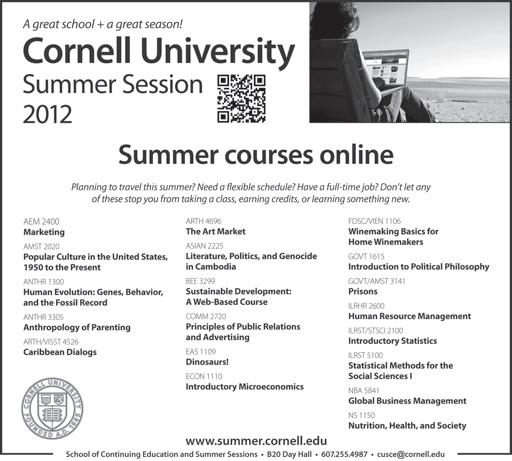

Pen g uin s Ver su s F l yer s Is Matchup to Watch
of a few people I know So when it came out that the Pens were playing the Flyers in the first round, you better believe my friends smack talking to the next level While I put up with more “Sidney Crybaby” chirps than I would have preferred, I wasn t going to let a little friendly back-and-forth ruffle my feathers
At the beginning of the year when it was clear that Penguins captain Sidney Crosby would not be in the starting lineup, I would have told you that the Pens would have never made it to where they are today entering the playoffs seeded No 4 in the Eastern conference However, after trying to stage an epic return last fall and notching 12 points in eight games before going back on the injured list, it was clear to me that Crosby still had a little spark left in him and that his brief playing stint would not be the last we saw of him for the season After what seemed like an eternity of “concussion-like symptoms, ” the Kid has returned, proving once again that he is one of the premier players in the NHL Although, he only played in only 22 games this season, Crosby has recorded eight goals and a whopping 29 assists, placing him ninth on the team for points (37) Just imagine if he had played the entire season He probably would have scored around 138 points by now solidifying the fact that Crosby is one of the best players (if not the best) the league has Not to be overlooked on the team are consistently reliable players, like center Evgeni Malkin and goalie Marc-Andre Fleury When Crosby was side-lined for most of the season, Malkin carried the Penguins on his back at times The alternate captain leads the team in points (109), goals (50), assists (59) and game-winning goals (9) One thing that he isn t leading the team in, however, is penalty minutes that is all James Neal Arguably the Pens’ MVP for the season, Malkin needs to keep up his scoring efforts, even though Crosby is back Whether he is on the first line with Crosby or leading the attack on the second, Malkin will need to put pressure on the Flyers’ defense as well as goalie Ilya Bryzgalov As a key player in Pittsburgh’s power play unit, Geno will need to maintain a high level of competition if the Penguins want to come out on top of the best-of-seven series
On the other end of the ice, Fleury has been doing a solid job of anchoring the Pens’ defense
Boasting a 91 3 percent save average, the French Canadian is vastly underrated, in my opinion Fleury has recorded 42 wins this season, including three shutouts, and stopped 1,768 shots fired off at him While he is no Henrik Lundqvist let’s face it, no one can beat King Henry at his game Fleury is still a force to be reckoned with and I feel that will help the Penguins advance through the first few rounds Other players like wingers Chris Kunitz and Pascal Dupuis will probably factor into Pittsburgh’s recipe for winning the series against the Broad Street Bullies and continuing down the road towards Lord Stanley Not
having James Neal does not seem to bode well for the Pens; however, Philadelphia is dealing with having key players, like Claude Giroux and Danny Briere, out as well
I am not an expert when it comes to hockey, and will never claim to be one, but like many other fans, I have decided to throw my two cents in and give a few predictions for at least the first round of playoffs for the Eastern conference
No 1 New York Rangers vs No 8
Ottawa Senators
Just scraping into the playoffs, the Senators will have a lot to prove on the ice Featuring players like Jason Spezza, Ottawa has the potential However, when facing a brick wall like King Henrik in goal, the Senators may have finally met their match This will most likely be a short series no offense, Colin Greening ’10
Prediction: Rangers in five games
No. 2 Boston Bruins vs. No. 7
Washington Capitals
Boston enters this year ’ s playoffs as the reigning champions after disposing of the Vancouver Canucks in seven games last time around With that in mind, the Bruins have a crown well, rather cup to defend, and I don’t think that they are going to allow a big, bad Russian to get in their way Alex Ovechkin may be “Alex the Great,” but I don’t think the Bruins’ Zdeno Chara will be very intimidated Both teams have proved they can score, but only one has proved they can defend Sorr y, Alex Summer vacation starts early for you again
Prediction: Bruins in five games
No 3 Florida Panthers vs No 6
New Jersey Devils
I feel like it was by sheer technicality that the Panthers were seeded as high as they were -- their division is not much to speak of The Panthers have Jose Theodore in net, but the Devils have Marty Brodeur I m not a huge fan of this series, since I haven’t really paid much attention to either team this season, so I’m out of things to say
Prediction: Devils in six games
No. 4 Pittsburgh Penguins vs. No. 5 Philadelphia Flyers
This will be the series to watch With Bryzgalov and Fleury in net
I can only imagine what melee is going to happen on the ice in between If the last two games between these arch rivals is any indication, there will be lots of blood, harsh words and penalty minutes thrown into the mix I put my money on Fleury to be the more reliable goalie, and with the likes of Crosby and Malkin leading the attack, I don t think that the Flyboys will have the power to shut down the Pens’ firestorm Look for this series to get ugly really fast Prediction: Penguins in seven game So, the Pens and Flyers face off tonight at 7:30 p m Feel free to come watch with me at Jack s I ll be the shouting Pittsburgh fan in the corner

Cor nell Places Fourth as a Team in Zone Finals
As the journey to nationals continues, the equestrian team traveled to Saratoga Springs last we e
Zone finals
The Red sent a team of seven to the show, as well as four individuals riders Two of the individual riders freshman Georgiana de Rham and s e n i o r Bro n
ve n s rode both as individuals and for the team This was Cornell’s second time sending a team to Zo n e s L a
t h e Re d placed third as a team just one place shy of qualifying for nationals
The day started off with the over fences contest beginning with the open classes the h
Scrivens was the open fences rider both as an individual and team rider, and placed fifth in both classes As the Cacchione cup rider for Cornell s region, Scrivens will automatically be competing at Nationals in the Cacchione class Later in the day, Scrivens got back in the saddle for the team She placed third for the team, and her ride on the flat, combined with her performance over fences, gave her a second place finish as an individual
De Rham also qualified for nationals by winning the individual intermediate fences class
She is now the Zone’s intermediate fences champion In addition to her individual win, de Rham placed second for the team in the intermediate flat class which was the highest
finish for the team on that day
The entire team did not finish strong enough to qualify for nationals In order to advance the Red needed to place in the Top-2 After a long day, the squad finished fourth with 27 p o i n t s Sk
t with 49 points, followed by St Lawrence with 44 points The third place team, Sacred Heart, beat Cornell by one Although the team gave it its all the Red was certainly up against some ver y stiff competition and will not continue this season as a team in further competition
-tain Evan McElwain “ We really need to get some doubles points in these really close matches Dartmouth really exploited how weak our doubles is ” Against Brown and Yale, however, the Red remains positive in its chances on Saturday and
Sunday “I think we should be confident, we ’ re starting to play better and especially after a good week s training there’s no reason why we can ’ t go and win both those matches,” Fleck said “Those two teams aren ’ t doing that well in the Ivy League this season either, so we ll be confident that we can get the wins there ”
“We’re definitely hungry to get some wins after this losing streak we ’ ve had We’re just looking to end the season on a positive, echoed McElwain
TINA CHOU / SUN STAFF PHOTOGRAPHER
The Red crushed the Orange, 12-6, in last night’s matchup The rivalry between the two teams reared its ugly head, which resulted in a grudge match between the two competitors, that Cornell came out on top of
Smearing Orange
Compiled by Ariel Cooper
Finishing fourth | Cornell took fourth this weekend at Zone finals as a team, while individually de Rham and Scrivens qualified for nationals
By OLIVIA WITTELS Sun Staff Wr ter
Cornell tennis came away empty handed this past weekend against Ivy opponents Har vard and Dar tmouth The men fell to the Crimson, 7-0, while the women suffered a 6-1 defeat Both squads had tighter matches against Dar tmouth however, each losing with a close 4-3 final score line
Wo m e n ’ s h e a d c o a c h M i k e St e v e n s praised the Red’s doubles per formance, but noted that singles play is something the squad will be emphasizing this week in practice “ Ou r d o u b l e s teams have been
p l a y i n g v e r y w e l l ” St e v e n s s a i d “ We’r e g o i n g t o r e a l l y focus on a lot of the singles strategies for each of
Spor ts
upcoming matches will hopefully help the Red add some more wins to its record this season We re going to have to keep the intensity and the focus up in both singles and doubles, be able to come out a little bit stronger on the bigger points and play with a little bit more confidence, Stevens said “Our expectations are that we ’ re going to be out there battling and work extremely hard to win both matches ”
The men will also use their cour t time this week to focus on strategies they can implement to turn their 0-3 Ivy League season around “ We’re going
“As out coach always tells us, you practice how you play We still have a lot of work to do but we’re learning from each match ”
t h e i n d i v i d u a l players and work on having them come out a little bit faster in singles and maintain t h a t m o m e n t u m t h r o u g h o u t t h e w h o l e match ”
Sophomore Ryann Young said that the Red will be more focused in practice in order to prepare for its upcoming matches against Brown and Yale
As our coach always tells us, you practice how you play,” Young said “I think we all learned from [our matches this weekend] that we need to keep pressing, stay focused in practice, tr y our best each day and that will carr y over into the matches We still have a lot of work to do but we ’ re learning f r o m e a c h m a t c h I n m y o p i n i o n , w e improved a lot at Dar tmouth from our Har vard match ”
Stevens indicated his goals for the team ’ s
By HALEY VELASCO
Assistant Sports Editor
each
can work on, ” said freshman Sam Fleck, the No 2 seed “ The main things though, are, we ’ ve got to stay disciplined in our games, not get fr ustrated when we re down, and just remember what we ’ ve worked on ”
The team acknowledged that the losses reminded them of the level that they will need to per form at for the rest of the season to compete with the other Ivy Rivals
“ The Har vard team, they showed us how we needed to play,” Fleck said “ They play disciplined tennis, the kind of tennis we need to play for the rest of the reason, so it was good to see that work against us for the rest of our matches ”
“It showed us that we really need to focus on our doubles,” added sophomore co-cap-
See TENNIS page 19
Excels in S pr ing Invitational
This past weekend, the Red hosted both the men and women at the Cornell Spring Invitational Both teams per-
formed very well against its competitors, most of whom were teams from upstate New York schools However, the weather proved to be a hindrance as the temperatures in the morning dipped to the 40s “I think the weather is going to be a

lot better [next weekend] It was sunny and nice this weekend but with the weather under 50 degrees, it was tough for a lot of us to get prepared, said senior Nick Huber “ This weekend [at Bucknell] we will be able to get going and face some good competition as well ”
Overall, the men picked won 12 events and 16 IC4A qualifiers, while the women won 13 events and nine ECAC qualifiers
For the women, the standout 4X100 all-freshmen and sophomore team of sophomore Anjelique Parnell freshman Zena Kolliesuah, sophomore Ebolutalese Airewele and freshman Katie Woodford, did an outstanding job that put the dynamic four into first place, with a time of 46 52
Another highlight of the invitational came from Taylor Baird in the 100 hurdles, she tied her personal record with a 14 36 in the qualifiers before placing first with a 14 27 No 8 all time to win the final Senior co-captain Molly Glantz won the 400 hurdles at 60 83, while sophomore Ryan Woolley came in second at 63 10 and junior Mari Giurastante grabbed fourth with 64 39
There were also several standout performances in the field as well Junior Brittany Dombrowski had a big break-

Sweeping losses | Both the men’s and women’s tennis teams lost to Dartmouth and Har vard over the weekend
LEENA KULKARNI / SUN CONTRIBUTOR
Winning weekend | The men’s track team won 12 events and 16 IC4A