The Corne¬ Daily Sun

By AMINA KILPATRICK Sun News Editor
On Monday morning, students made their way across Agriculture, Engineering and Arts quads that were flooded with signs sharing messages about incarceration and drug epidemics in the United States.
The signs were produced by Art Beyond Cornell as part of the first annual Criminal Justice Awareness Days on campus. In addition to signs on the quads, the week will feature educational events on mass incarceration.
Art Beyond Cornell is an organization that brings together Cornell students and incarcerated youth at MacCormick Secure Center to provide “a new means of self-expression, communication and growth through art,” according to their mission statement.
“White brothers and sisters have been medicalized for trauma and addiction. Black and brown people have been criminalized for it.”
Michael Eric Dyson
Each of the three major quads on campus shared on a different message relating to the criminal justice system.
The signs on the Arts Quad focused on the crack versus opioid epidemics, including messages about differing responses to the crack epidemic in the 1980s and the present opioid epidemic. The campaign also addressed the differing demographics of the two epidemics, noting 84 percent of cocaine offenders were black while 80 percent of opioid deaths were of white people.
One poster utilized a quote by Georgetown Prof. Michael Eric Dyson, sociology, to explain the effects of the differing responses to drug epidemics.
“White brothers and sisters have been medicalized for trauma and addiction. Black and brown people have been criminalized for it,” Dyson told USA Today.
The signs on the Engineering Quad addressed mass incarceration in the U.S. According to the NAACP, although the US makes up 5 percent of the world population, it contains 25 percent of the world’s imprisoned population, one of the signs read.
One of the signs contextualized the size of the prison population, stating that if it were a U.S. city, it would be one of the largest according to CNN.

On the Ag Quad, visitors were treated to signs about racialized incarceration that focused on the different sentencing patterns
See SIGNS page 4



By NICHOLAS BOGEL-BURROUGHS Sun Senior Writer
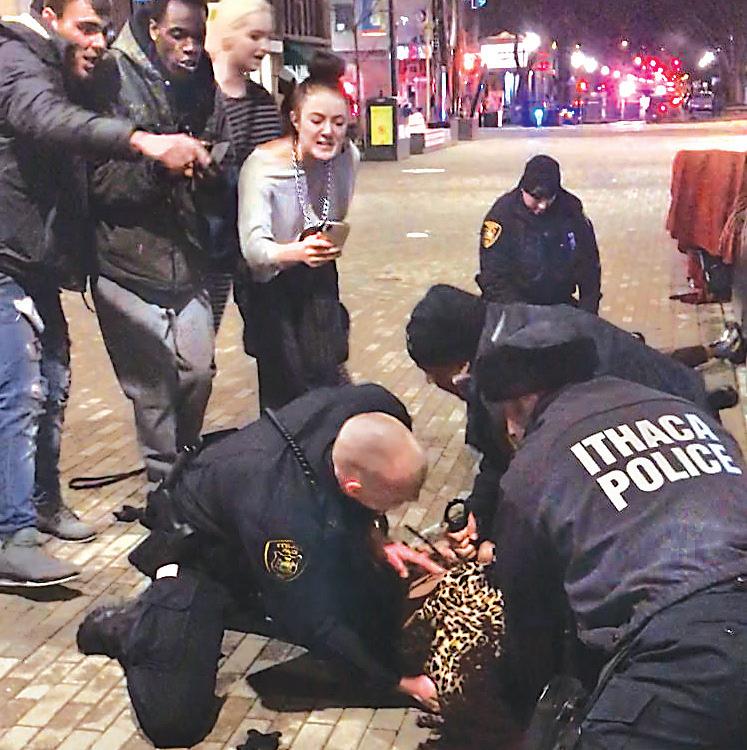
Ithaca Police arrested a woman on the Commons early Saturday morning, tackling her to the ground in front of a small crowd after they say she hit two officers in the head as they tried to detain another man.
As the Commons filled up with people walking home from bars shortly after last call at 1 a.m., officers on foot saw a man run across the Commons and knock another man to the ground by punching him in the face, Sgt. David Amaro said in a press release on Monday.
Police said one officer had headaches and was treated by Bangs Ambulance and the other had cuts on his face and declined treatment.
A Sun reporter witnessed two officers grab Degroat from behind and push her to the ground as she screamed for them to stop and appeared to try to evade their grip and remain standing. A video of the officers taking Degroat to the ground was also posted on Instagram.
Police said one officer had headaches and was treated by Bangs Ambulance and the other had cuts on his face but declined treatment.
Police said they tried to detain the perpetrator, whom they identified as Cadji Furgeson, 26, of Ithaca, at which point a woman began “repeatedly striking” an officer in the head, Amaro said.
Amaro said the woman, who police identified as 22-year-old Rose Degroat, of Ithaca, then hit a second officer in the face.
Once officers brought Degroat to her stomach on the ground near the Moonies Bar and Nightclub on the Commons, about eight people formed a crowd at the scene, some yelling at the officers to let Degroat go and others recording the incident on their phones.
The crowd stood about five feet away from three officers as one cuffed Degroat’s hands behind her back. One woman recording the incident on her phone yelled that the police were hurting Degroat and told them to “give her some air.”
By AMANDA CRONIN Sun News Editor
Educating the Cornell community about the wide pool of diary-free products was one of the primary purposes of Monday’s “Dairy Alternative Day” — an event organized by the Cornell Vegan Society and Cornell Students for Animal Rights.
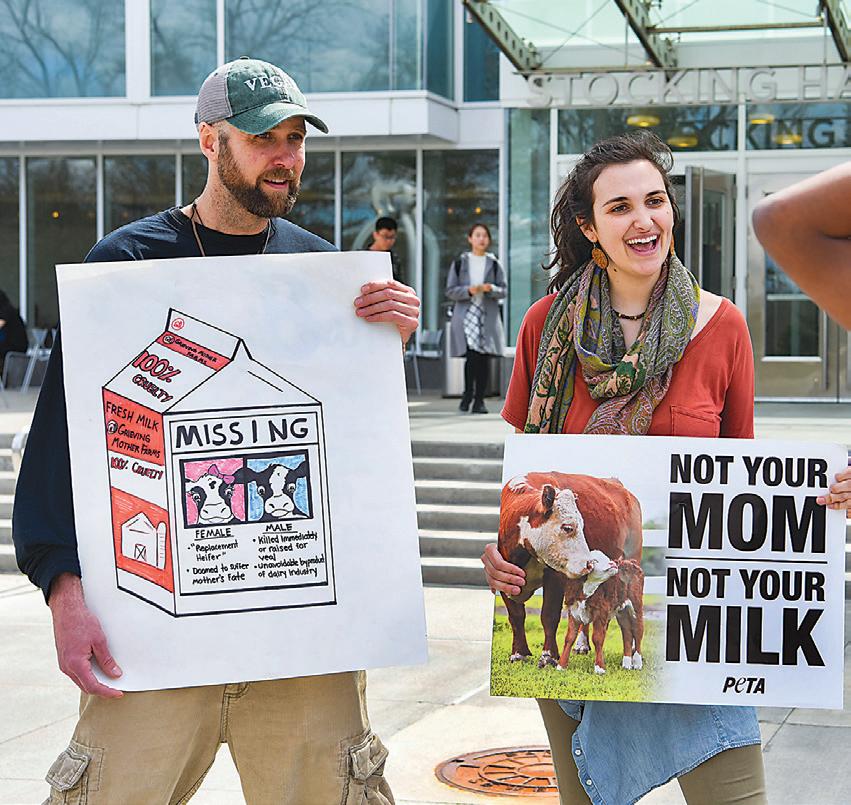
Inspired by the Cornell Dairy Science Club’s annual “Dairy Day,” the Vegan Society and Animal Rights clubs scooped free non-dairy ice cream and offered information on the environmental impacts of non-dairy vs. dairy milk. Across the street, a group of students, one in a
bull costume, protested dairy industry practices they see as harmful, brandishing signs in front of the Dairy Bar.
“We wanted to spread awareness about the health, environmental and ethical implications of dairy,” Cornell Vegan Society co-president Lucy Contreas ’21 said. One of their other goals, she said, was to have people pick up free products from the Vegan Society instead of purchasing dairy products from the Dairy Bar.
Chloe Cabrera ’19, the other president of the Cornell Vegan Society, said that her animal
BYOBottle for Free Lemonade 11:30 a.m. - 3:30 p.m., Mann Library Lobby
Child and the Family: Views of the U.N. Committee on the Rights of the Child 12:15 - 1:15 p.m., 186 Myron Taylor Hall
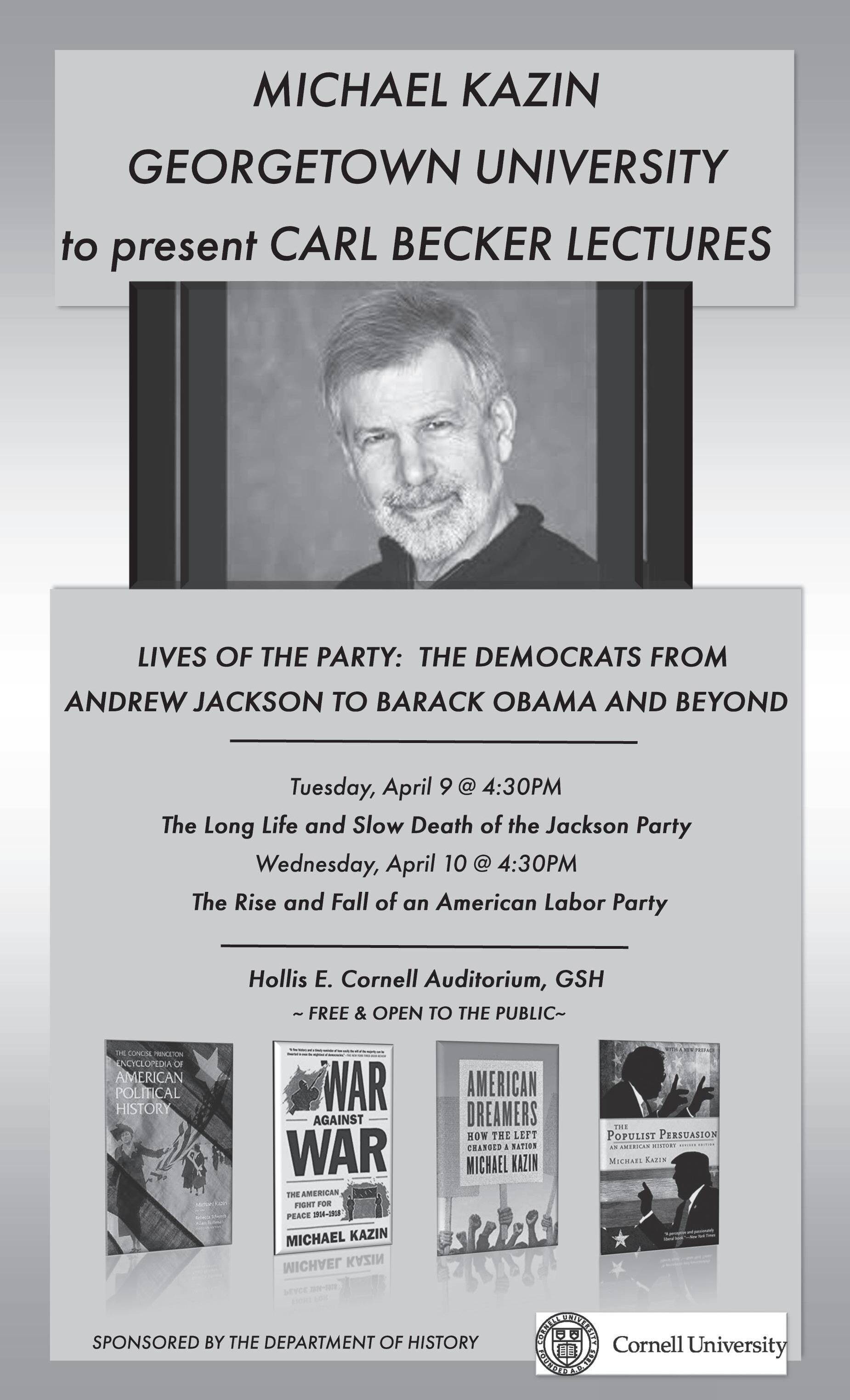
Lives of the Party: The Democrats from Andrew Jackson to Barack Obama and Beyond 4:30 - 6:30 p.m., 132 Goldwin Smith Hall
Wages Against Artwork: Decommodified Labor and the Claims of Socially Engaged Art 4:30 p.m., KG42, Klarman Hall
People and Nations are Built on Food: Nutritional Activism in Imperial Japan 5 p.m., A.D. White House
Procrastinate at the Straight 6 - 8 p.m., Willard Straight Hall Lobby
Wednesday’s Words with Marcia B. Douglas 6 p.m., Africana Studies and Research Center, Multipurpose Room

By JOHNATHAN STIMPSON Sun News Editor
The College of Arts and Sciences will expand its first-year advising program to include all newly-enrolled students, it announced on March 29. The program — in which new students meet weekly in small weeks with faculty members to ease the transition into college life — was implemented as a pilot initiative two years ago.
“Faculty and student feedback … showed that we have an opportunity to improve our pre-major advising,” Prof. Rachel Bean, senior associate dean for undergraduate education, told The Sun in an email. “The long-standing format of the faculty-advisee relationship, grounded in a single meeting during orientation, was no longer ideal.”
“Feedback ... showed that we have an opportunity to improve our
pre-major advising.”
Prof. Rachel Bean
Arts and Sciences faculty voted in March to expand the pilot program — which began two years ago with 650 students and 62 faculty representing 23 departments — to now include all first-year students, following strongly favorable feedback from participants in the initial trial run.
In fall 2019, the first semester of the extended initiative, approximately 85 faculty members will provide academic advising in seminars covering about 850 freshman students. The exception will be declared biology majors, as their advising is handled through the multi-college Office of Undergraduate Biology.
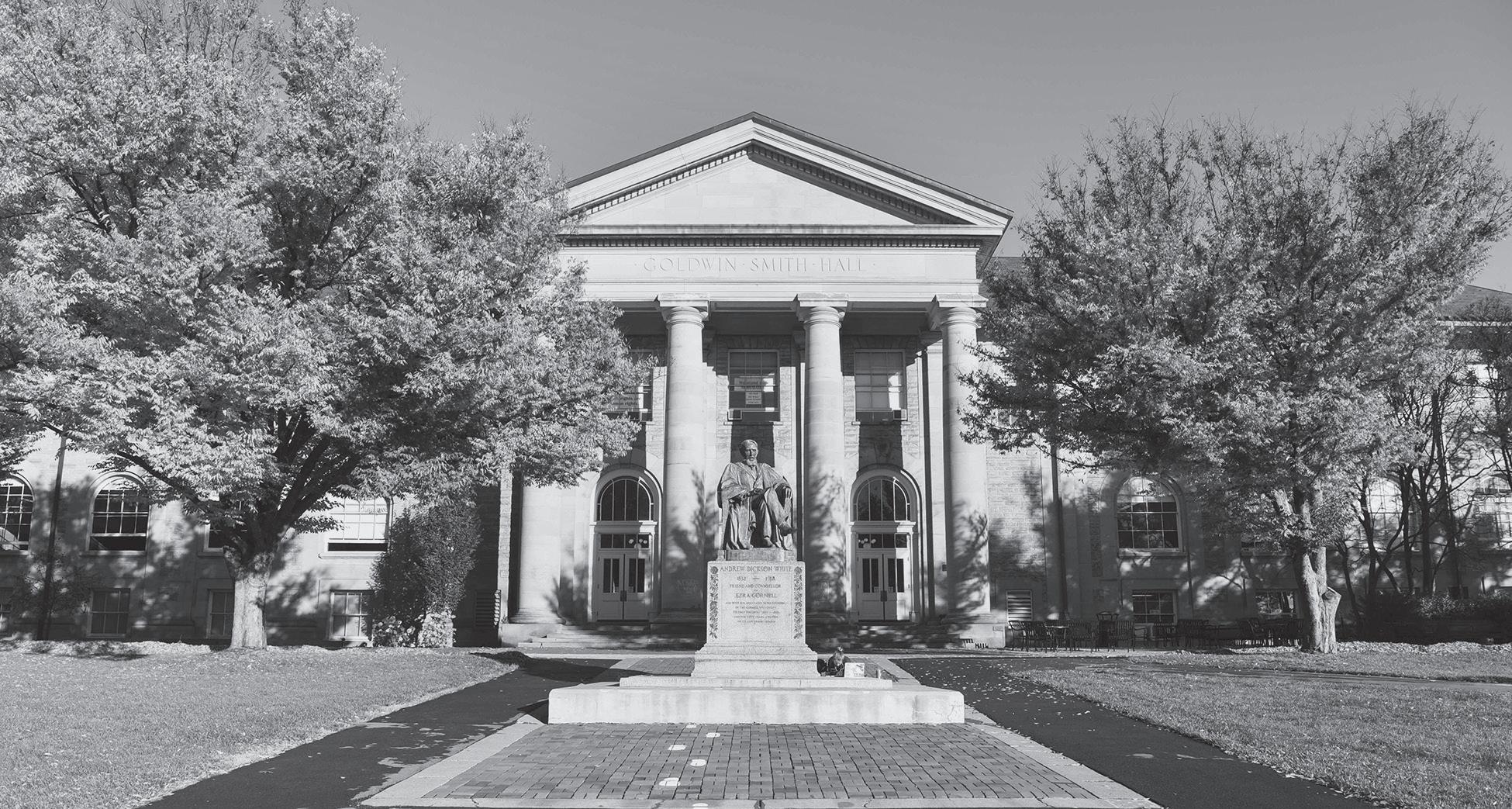
“Advising is so much more effective when you have an engaged connection with the students. I found the seminar format does exactly that,” Prof. Jed Sparks, ecology and evolutionary biology, who led a seminar in the pilot program, said in a university press release.
“Students in my seminar frequently commented that actually knowing a professor at Cornell made it much easier for them to ask questions and talk about the future,” Sparks continued.
Nour Mourra ’22, a prospective biology and society major, was paired with faculty advisor Prof. Jean-Marie Law in the Asian Studies department, and is one of many students whose faculty advisors are not within their prospective fields of study.
“Even though she is not really able to help me with academics, she is very helpful in other aspects,” Mourra told The Sun. “She always makes sure that I always remember to sleep enough, eat enough, exercise — you know, telling me to ‘do your best to make sure that your health is a priority.’”
While all details concerning the rollout’s implementation have not yet been finalized, the current plan is for the
By DENA BEHAR Sun Staff Writer
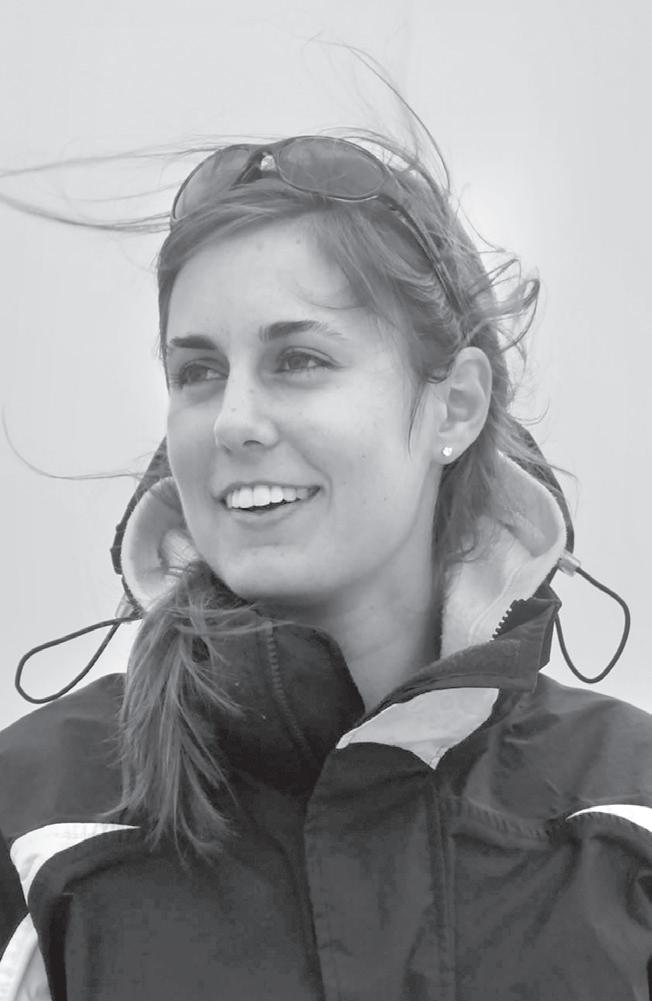
Though she ultimately was not selected, Allison Tracy grad was named a finalist for the prestigious Schmidt Science Fellowship, a program that partners with the Rhodes Trust — which also administers and awards the famed Rhodes Scholarship — on Friday.
The fellowship, which awards recipients a $100,000 research stipend, is part of a broader $100 million effort to promote scientific leadership and interdisciplinary research over the next decade and beyond, according to the program
website. The fellowship places students into top labs around the world.
Tracy made it through multiple rounds of the selection process, but was not one of the 20 fellows selected in the announcement made on Monday.
Tracy is a sixth-year Ph.D. student in the ecology and evolutionary biology department studying disease in corals, and is expected to defend her thesis in June. Tracy graduated from Princeton University in 2010 with a B.S. in ecology and evolutionary biology, where she wrote her honors thesis on research she did on cattle disease while studying in Kenya.
At Cornell, Tracy works in the Harvell Lab, headed by Prof. Drew Harvell, ecology and evolutionary biology.
Originally from the town of Dover, Mass., Tracy said she grew up on the ocean and couldn’t pass up any opportunity to return to studying marine ecosystems. She was also drawn to corals because of their sedentary state.
“I looked at graduate programs studying a lot of different animals, like monarch butterflies and frogs, but what I liked about corals was that when you went out to study them you could always find them because they didn’t move,” Tracy said.
Tracy’s journey with the Schmidt Science Fellows program began in June 2018 when she applied through Cornell. In August, she learned she would be Cornell’s nominee, and she had an interview via Skype in February of 2019. This past Sunday, she had her final interview, and final results were released on Monday.
In the future, Tracy said she wants to be a professor of wildlife disease management, while also maintaining the applied aspect of her work by conducting research.
at dbehar@cornellsun.com.
seminar to consist of eight weekly 50-minute sessions in the first semester of the student’s first year about topics such as research opportunities, tips for studying and the general academic landscape at Cornell, according to Bean.
Unlike many students of Cornell’s professional schools, Arts and Sciences students enter the University without a defined major or academic path — making the facilitation of closer faculty advising a particular priority of the seminar program, Bean said.
One of the main goals of the seminar is for students to “create a strong connection with their pre-major faculty advisor” and “understand how they can effectively navigate the college and university to get the support they need,” Bean wrote. “The aim is to help students, whatever their background, successfully transition into our liberal arts program life.”
Alec Giufurta ’21 contributed to reporting for this article.
Johnathan Stimpson can be reached at jstimpson@cornellsun.com.
By KATHRYN STAMM Sun Staff Writer
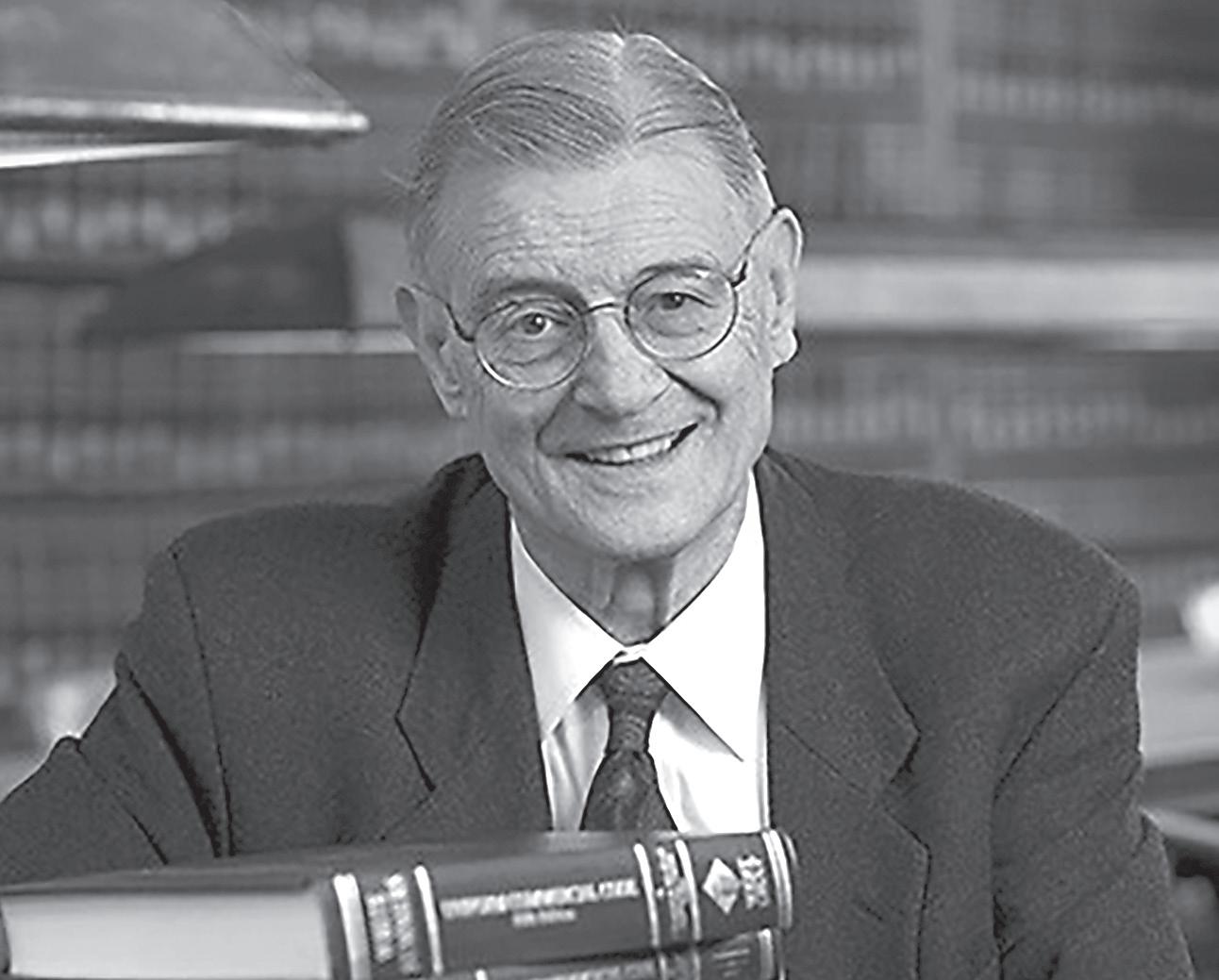
Prof. Robert Summers, the William G. McRoberts Research Professor Emeritus in Administration of the Law, died on March 1 in Canaan, Conn. He was 85.
The prolific author of 55 books and over 100 articles was perhaps best known as the co-author of the Uniform Commercial Code. Summers taught at Cornell for 42 years before his retirement in 2010.
Summers — an internationally renowned scholar and citizen of the law school outside of the classroom — also advised the Drafting Commissions for the Russian and Egyptian Civil Codes, co-drafted a new code of contract law for Rwanda and spoke at countless lectures globally, according to his curriculum vitae.
Summers was born on Sep. 19, 1933, in Baker County, Oregon, according to his faculty biography. Despite limited early schooling, he had a rich education on his family’s 80-acre farm, learning the value of hard work — while also milking cows.
“I’m the only American law professor with genuine cow milking muscles,” Summers said in a 2010 interview with the Cornell Chronicle, a University-run publication.
Summers was valedictorian of his high school
class of 24 students before attending the University of Oregon. After college, he was a Fulbright Scholar at Southampton University, before he went on to earn an LL.B. degree from Harvard University in 1959. There, he developed passions for both the philosophy of law and contract law.
Summers would go on to co-write the Uniform Commercial Code with Prof. James White, law, University of Michigan, which has been adopted by all 50 state legislatures. Its four volumes make up the most widely cited treatise on the rules that govern the sale of goods and other commercial transactions across the country.
“[It] is the bible for lawyers and students interested in the area,” Prof. Robert Hillman, law, who worked on the code’s sixth edition
with Summers, told The Sun in an email.
Hillman was first Summer’s student and research assistant before becoming his colleague and close friend. Hillman said their close relationship was representative of how Summers interacted with his students over his 50 years of teaching.
“He has written almost too many books and articles to count … each making substantial contributions to legal analysis,” Hillman said. “No one worked harder than Bob, who had unlimited energy and zeal for each project he entertained.”
As a professor, Summers often invited students and colleagues to dinner parties at his home with his wife of 63 years, Dorothy. He was known to entertain with
Continued from page 1
At one point, a man in the crowd yelled at the police twice to “go ahead” and shoot him, after which one officer took out a stun gun and pointed it at members of the crowd, shouting for them to “get back” and aiming the stun gun’s red laser dot at the chest of the man and at least one other person, according to a video of the arrest recorded by The Sun.
In the department’s press release, Amaro wrote that “The incident caused numerous bystanders, most of whom were uninvolved in the original incident, to attempt various forms of interference in the officers’ attempts to make the lawful arrests.”
Police charged Degroat with two counts of felony attempted assault in the second degree and a misdemeanor count of resisting arrest. She was brought before Ithaca City Court on Saturday and released on her own recognizance, Amaro said. She is due back in city court on April 17.
After police took Degroat to a police car on Cayuga Street, they also handcuffed a bystander, 21-year-old Riley Johnson of Ithaca, whom they charged with a disorderly conduct violation. Police also charged Furgeson, whose surname they also spelled as Ferguson, with disorderly conduct.
Degroat said in a Facebook message to The Sun that she had not yet spoken with a lawyer and did not have any comment on the incident. Furgeson did not respond to a message seeking comment.
The Ithaca Police Benevolent Association said in a Facebook post: “Thankfully all our members are going to be okay after breaking up a fight on the commons putting themselves in harms way to prevent others from being injured.”
Nicholas Bogel-Burroughs can be reached at nbogel-burroughs@cornellsun.com.
SIGNS Continued from page 1
between African American males and White males.
One sign explained how African Americans consist of 13 percent of the population, but 38 percent of the federal prison population. Another sign highlighted the fact that the imprisonment rate for African Americans is “6 times greater for similar rates of drug usage” than for white people according to the NAACP.
Mass incarceration is an important topic and it was important to highlight the effects to the Cornell community, Tireniolu Onabajo ’19, president of Art Beyond Cornell, said.
The project was an attempt to counteract incarcerated individuals being stripped of their identity once they are incarcerated.
“People in enrolled in the system, they become faceless. They become confined,” Onabajo said.
The three highlighted themes were mass incarceration, racialized incarceration and the opiate epidemic — were chosen because of their relevance and importance to American society. Additionally, Onabajo thought it was important to address race due to her identity as a black woman.
Onabajo highlighted the special position Cornell is in both geographically and demographically.
ALTERNATIVE
Continued from page 1
science education at Cornell sparked her interest in animal rights.
“It actually wasn’t until I became an animal science major [at Cornell] that I became extremely interested in animal rights because I learned first-hand, from an industry perspective, how callous and how
cruel we are to animals,” Cabrera said. Cabrera described the “two ways” that one can love animals. First, one can love them and care for them, but still maintain a “speciesist lens” and treat them as an inferior species to humans. Or, secondly, one can love animals and “go out of your way to avoid harming them,” she said.
“How could we love

“I believe the people on this campus are walking leaders. The people can do amazing things and be movers and shakers,” Onabajo said.
“For long term purposes, it is really important to sensitize this population in particular to these issues,” she continued.
Additionally, since Cornell is located in close proximity to incarceration facilities such as Auburn Correctional Facility and Cayuga Correctional Facility, it is easier for the university to be a resource to incarcerated individuals.
“One of the aims of this was to highlight those voices that would otherwise go unheard,” Onabajo said. “Especially since Cornell is in close proximity to so many of the facilities. Cornell is in a strategic position to be a resource.”
Cornell currently provides support for incarcerated adults and youth through the Cornell Prison Education Program and the Cornell Mentors for Incarcerated Youth.
Throughout the rest of the week, Art Beyond Cornell will hosting other events to highlight mass incarceration in addition to the quad signs. The group will screen the movie Slam at 5 p.m. in Warren Hall on Wednesday, and Prof. Joseph Margulies will deliver a lecture on mass incarceration at 5 p.m. in Warren Hall on
Amina Kilpatrick can be reached at akilpatrick@cornellsun.com.
our dogs one way, and then turn around and take a pig — an equally, if not smarter species — and treat it worse than we would ever treat any human being, or dog?” Cabrera asked in an interview.
The event also featured British vegan activist and lecturer Earthling Ed, famous for his YouTube channel on which he has friendly conversations with non-vegan passerby. On Monday, he was chewing the cud with members of the Dairy Science club about the ethics of animal agriculture.
President of the
Dairy Science Club and a blogs writer for The Sun, Stephanie McBath ’19, responded to some of the common claims made at the event in an interview.
“Cows are mammals and, biologically, need to be milked,” McBath told The Sun. “They spend a maximum of 30 minutes in the milking parlor per day, depending on how many times they are milked.” Additionally, improvements in technology over the past several decades “have only improved the health and well being of dairy cattle,” she con-
tinued.
During the event, members from both the dairy community and non-dairy community remained respectful of the other’s views, and McBath emphasized that freedom of speech is an important value to uphold on campus. The tables set up at the event were laden with non-dairy cheeses, non-dairy creme-filled cookies and a multitude of plant-based milks. To read the rest of the article, please visit www.cornellsun.com.
Amanda H. Cronin can be reached at acronin@cornellsun.
lively conversation about his own passions and the passions of his guests.
“Bob and Dorothy always made everyone feel at home,” Hillman said.
In class, Summers was one of the few left to use the traditional Socratic method, said Prof. Faust F. Rossi, the Samuel S. Leibowitz Professor of Trial Techniques, in an interview when Summers retired. Through the cooperative and argumentative dialogue of the method, Summers asked students to draw out ideas and presuppositions. He was dedicated to giving students authority over their knowledge, instilling principles and concepts through the rigorous questioning.
“Professor Summer’s committed use of the Socratic method in teaching law earned him a reputation as an old-school terror of sorts,” M. Todd Sullivan J.D. ’94, who was Summer’s research assistant for three years, told The Sun in an email.
“Generations of Cornell alumni know that Bob loved the Socratic Method and was a demanding, sometimes, at first, frightening teacher,” Hillman said. “By the end of the semester, students realized that Bob’s style was in their great interest as they mastered the subjects of contracts and commercial law.”
Summers’ students came to know him as a caring teacher and mentor, who challenged them and cared about their successes — in and out of their legal studies.
“He was a rare bird — a committed scholar and researcher while also being a dedicated teacher,” Sullivan said. “I watched him laboriously prepare long-hand notes and outlines on yellow legal pads in preparation for a one-hour class he had taught perhaps fifty times before. He saw that preparation as a solemn duty, to the students and to the law.”
Summers’ dedication to his students was also present in his public service. In 1969, he co-founded the Council on Legal Education Opportunity program, which is dedicated to increasing representation of minority and low-income students in law schools.
“He was a true professor in every positive meaning of that term,” Sullivan said. “And he was a great one because he cared deeply and intensely not only about what he was teaching but also about who he was teaching. He changed and improved not only the law, but also those he taught.”
Summers is survived by his wife, five children and 14 grandchildren.
DAHLIA WILSON ’19
Business Manager
PARIS GHAZI ’21
Associate Editor
NATALIE FUNG ’20
Web Editor
SABRINA XIE ’21
Design Editor
NOAH HARRELSON ’21
Blogs Editor
SHRIYA PERATI ’21
Science Editor
AMANDA H. CRONIN ’21
News Editor
ROCHELLE LI ’21
News Editor
JOHNATHAN STIMPSON ’21
News Editor
PETER BUONANNO ’21
Arts & Entertainment Editor
ANYI CHENG ’21
Assistant News Editor
SHIVANI SANGHANI ’20
Assistant News Editor
CHRISTINA BULKELEY ’21
Assistant Sports Editor
BEN PARKER ’22
Assistant Photography Editor
DANIEL MORAN ’21
Assistant Arts & Entertainment Editor
ALICIA WANG ’21
Graphics and Sketch Editor
DANA CHAN ’21 Production Editor
RYAN RICHARDSON ’21
Snapchat Editor
ALISHA GUPTA ’20
Senior Editor
SHRUTI JUNEJA ’20
Senior Editor
AMOL RAJESH ’20 Senior Editor
SARAH SKINNER ’21
MEREDITH LIU ’20
GENDLER ’21
TSANG ’21
KRISCH ’21
ZHANG ’21
SOPHIE REYNOLDS ’20
AMINA KILPATRICK ’21
MARYAM ZAFAR ’21
WU ’21
Editor HUNTER SEITZ ’20
ZHU ’21
HENSHAW ’20
JIANG ’21
MARKUS ’22
LEI WU ’21
WANG ’20
’21
ARORA ’20
FLEER ’20
SIMS ’20
ormally, Christianity and liberalism don’t blend well in this country, if at all. But in one of the oddest interviews in my recent memory, a Cornell alumnus and a green mayor from South Bend, Ind. engaged in a whole new debacle on the issue.
On one side was the casually smug Bill Maher ’78 hosting an episode of the Bill Maher Show on HBO, and on the other was the newest rising star of the Democratic party Pete Buttigieg (pronounced Boot-Edge-Edge), dressed in a toned down outfit that vibed more as suburban dad getting off from work than presidential hopeful.
Buttigieg’s resume has landed him on voters’ radar — Harvard educated, Rhodes Scholar, Afghanistan veteran, speaker of seven languages and mayor of a rebounding Midwestern city — but it’s his down to earth demeanor, wide smile and most importantly, a laser-like ability to lay out his thoughts that has had him surging in recent polls. And in the face of one of Bill Maher, one of the more aggressive liberal commentators out there, he leveraged himself, and frankly, outflanked him in a silky smooth fashion.
point became that the right owns the evangelical vote. They were right: four out five votes from white evangelicals went to Trump. During the early days of the administration, a nauseating parade of white evangelicals came rushing in to crow about Trump, how he was their savior, how he upheld the tenants of Christianity, despite his affairs, his putdowns of immigrants and the general unsavory nature in which he conducted himself. His actions didn’t seem to bother these Christians one bit, and it became bitter irony at one point. One pastor, Robert Jeffress, a friend of Trump no less, laid out his touched thoughts: “Let me say this as charitably as I can,” he fumed, “These Never Trump Evangelicals are morons.”
Sanghani ’20
Design Deskers Simon Chen ’21 Greta Reis ’21
Photography Desker Boris Tsang ’21
Sports Desker Christina Bulkeley ’21 Working on Today’s Sun
Then they started to dance around topics. On how to sway back Midwestern voters, Buttigieg pushed for compassion instead of condescension. On how to win an election against Trump, he reasoned it was best to “run a campaign that’s not all about Trump.” On Ronald Sullivan, the esteemed law professor at Harvard who’s being protest ed by students for resenting Harvey Weinstein, he was sympathetic to the students, despite Maher’s sneering pushbacks on safe spaces and trigger warnings.
Conservatives don’t own religion any more than progressives.
But the best part of the 10-minute segment, the one that might cause other party hardliners to squirm, is when Buttigieg dived into religion and why the left should reclaim it. It’s not a topic you’d expect a young, Democratic mayor from the Midwest to jump on with nuance, but yet he does.
When Maher expressed confusion at how an intellectual like Buttigieg could mix faith with critical thinking, the presidential hopeful said, “I believe in reason, I believe in enlightenment values and I also believe that reason has limits.”
“The important thing is to recognize God doesn’t belong to a political party,” Buttigieg said. “I mean some of these themes: God, freedom, patriotism, right, these are not things that one party should be able to claim but that’s how it’s worked out.” Bringing religion into politics, he added, has meant using “the lens of the religious right.”
“When I go to church what I hear a lot about is protecting the downtrodden, and standing up for the immigrant and being skeptical of authority and making sure you look after the poor and the prisoner — to me, that’s the sort of thing that the religious left often, without much attention, has been arguing for my whole lifetime.”
You get the sense, listening to the exchange, that Buttigieg has left Maher spinning furiously in circles. And it’s because he made a bulletproof point of our tendency to conflate the right with religion. Conservatives don’t own religion any more than progressives. But somehow, somewhere, it became twisted in that sense, and the left simply sneered.
After the Trump election, the talking
Well, the “morons” are pissed. As the country watched the Trump Administration put a stranglehold on mainstream Christianity, a liberal religious movement began to form, one that supports immigrants, LGBT rights and universal healthcare. Charity isn’t a choice; it’s a moral obligation. They echo what Buttigieg calmly laid out in his interview: These themes found in the Bible — protection of the marginalized, outreach to the poor — are pillars of the policies of the Democratic party. But instead, they’ve been warped and hijacked by a fundamentalist sect of Christianity. The newfound liberal religious movement hasn’t begun far beyond skeleton crews. Years of backlog and apathy toward religion from the left has led to a liberal religious movement without the sway of its conservative counterpart. The left only modestly pushed for religion in its agenda, while the religious right composed ambitious campaigns with evangelical messages for its candidates. It’s why, in the face of an administration that has callously embraced religion as a selling point, it’s important a new face of the Democratic party has pushed back.
In his tour around the country, Buttigieg has taken the fight to the administration for their morally baseless interpretation of Christianity. He has criticized Trump for his hypocrisy, gluttony and shameless swaps at others as president. And to his former colleague Mike Pence, whom he worked with during Pence’s time as Governor of Indiana, Buttigieg mic dropped an uncomfortable question during a town hall session last month: “How would he allow himself to become the cheerleader for the porn star presidency? Is it that he stopped believing in scripture when he started believing Donald Trump?”
But I’m not really sure if Pence ever stopped believing in scripture. Instead, I think, he found the things he finds politically expedient in the Bible and tossed out what he deems inconvenient. It’s how we ended up with an administration like this: impulsive, ill-tempered and blasphemous. And for those who scour the Bible for words to support Trump, you’ll see what you want to see, I suppose. It’s a Rorschach test for the religiously keen, and a watershed moment for the American Christian community.
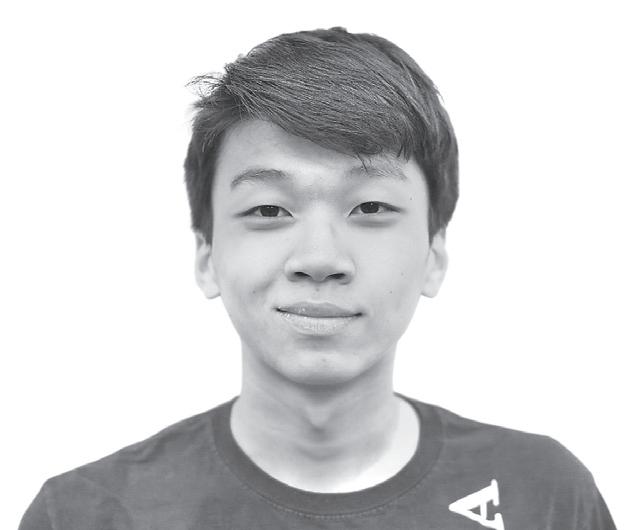
William Wang is a junior in the College of Agriculture and Life Sciences. He can be reached at wwang@
In 1997, physics professors at the University of Illinois at Urbana-Champaign developed our dear iClickers — the “i” denoting Illinois. It was an instructional triumph, engaging large lecture halls and providing immediate feedback on student comprehension.
However, today — 22 years since the iClicker’s conception — the collegiate classroom looks vastly different due to the almost ubiquitous ownership of mobile devices. For reasons financial and pedagogical, Cornell should phase out iClickers in favor of integrated web-based polling apps, namely Poll Everywhere, that come at no cost to students if funded by the University.
Students spend up to $50 per new iClicker device at the Cornell Store and a considerable price of around $35 for used ones. The cost of iClickers unnecessarily and disproportionately burdens low-income students, forcing students to choose between a portion of their grade and the price of an iClicker.
The Cornell Lending Library, a student-led organization that provides free, semester-long loans of textbooks, has responded to this need and has stocked 94 iClickers this semester alone.
This mass stock of iClickers only further exemplifies the significant burden that the price of iClickers imposes across the student body.
iClickers should fall on the burden of the University.
We urge Cornell to transition to the use of Poll Everywhere, a web-based polling app that is integrated with the grade book. The app can be financed in a classroom package for up to 400 students for $350 or financed in a university-wide package for a custom price. Even if Cornell chose not to finance the app themselves, Poll Everywhere would still be drastically less expensive than iClickers: $13.99 for an annual subscription per individual student.
The cost of iClickers unnecessarily and disproportionately burdens low-income students, forcing students to choose between a portion of their grade and the price of an iClicker.
Given the distributional burden of iClickers, Cornell lecture halls should seek a poll-taking system that exists on our already-owned devices: our phones and our laptops. The Bring Your Own Device system has made ownership of laptops practically ubiquitous among students, and when inaccessible for students, funding programs like the Office of Academic Diversity Initiatives and the Lending Library can provide laptops for those in need.
Rarely do we as students personally pay for our grading mechanisms. Just as we do not fund Blackboard, Qualtrics Survey software or even blue books for exam-taking,
If the unnecessary expense of iClickers isn’t enough, web-based polling apps such as Poll Everywhere harness a much vaster array of capabilities than the iClicker. While the iClicker only allows for simple multiple choice answer responses, Poll Everywhere has manifold functions: open-ended questions, rank choice, image interaction, question submission and peer voting. The greater survey functions of Poll Everywhere allow for better data collection, feedback for instructors, reflection by students, identification of concepts and peerto-peer instruction. These functions open the door to greater creative and critical thinking, promoting student engagement to a further degree. Moreover, Poll Everywhere provides each student with a comprehensive response history bank with the correct answer choices whereas the iClicker offers none. This feature allows students to return to their responses at any point and to utilize in-class quizzes or participation as another tool for review before exams.
These benefits are echoed by Prof. Mark Sarvary Ph.D. ’06, director of the investigative biology teaching laboratories and instructor of the popular course BIOG 1500: Investigative Biology Laboratory, and communication consultant Kathleen Gifford in their article in The Journal of Undergraduate Neuroscience Education: “Rapid tech-
Victoria Pietsch | Fancy Pants
Inological developments, especially the increase of computing power, opened up new opportunities, moving these systems from a clicker device onto cellphones and laptops.”
Courses in large lecture halls with several hundred students can pose several challenges in student engagement and effective instruction. Thus, the adoption of Poll Everywhere can serve as a mitigating remedy. Poll Everywhere turns lectures into dialogues, singular comments into group discussions; Poll Everywhere allows for formative check-ins, immediate student-professor communication and the ability to engage the whole classroom simultaneously rather than calling on one student at a time.
“[Poll Everywhere] did exactly what iClickers did, but it was free and on our phones or computers. We didn’t have to worry about forgetting the iClicker, or replacing the batteries or the thing breaking. It was extremely convenient and I could never find any downsides with the service or the implementation,” said former investigative biology student James Abert ’20.
Sarvary, who teaches courses with about 400 students, compared his usage of iClickers from 2009 to 2011 and Poll Everywhere from 2012 to 2016 and concluded that “the benefits of web-based response systems outweigh the challenges, and this form of digital pedagogy can help create a rich dialogue with the audience in large classrooms.”
There is one notable cost: distracted mobile phone or laptop use. While some professors have adopted a no-laptop policy in their courses, those who do not should transition to the use of Poll Everywhere. Especially in courses that both already permit laptop usage and rely upon iClickers for participation, these professors should favor of Poll Everywhere. Poll questions can be designed to require active engagement through strategies like factoring the correctness of answers for a grade.
Considering the financial burden of iClickers and the superior instructional capabilities of web-based polling apps, the transition from iClicker to iPhone — or any other personal device — should not be one we need to go to the polls for.
Laura DeMassa and Canaan Delgado are sophomores at Cornell University. They can be reached at demassa-delgado@cornellsun. com. Double Take appears every other Tuesday.
n January 2016, I bought a pair of black Adrienne Vittadini heels so I could make a good impression. I was a sophomore at Cornell and had transferred in the previous semester. I had friends, but I wanted a home. I was going to rush a sorority.
A week later, I joined a long line of girls waiting to enter sorority houses for rush. I glanced at my phone to avoid making small talk and caught a photo from the Boston Women’s March. I regretted not staying behind. Instead of marching for equality, I was standing still for conformity.
House music — the pre-entrance playlist — greeted us and ushered my anxiety. There was a small piece of paper with my name on it in my pocket. I felt for it — it was still there. I noticed a girl resting on the railing and wondered if she’d be scolded for her informality, for not standing in line like the rest of us. It was the 1950s and sitting on a railing was un-ladylike.
It could have been worse. My older sister told me to bring hand warmers and wear Uggs — a pair of our matching Costco knockoffs, actually — for standing in line and running between houses before squishing my toes back into my new stilettos. Earlier that week, the temperature was in the 70s, but it still sucked. That morning, it was in the 20s. It could have been worse.
As I stood in line, I mentally prepared for the events to come: In five minutes, the door would open and the girls in the house would scream-sing their song. I would place my slip of paper in the bas-
ket and smile and surrender my jacket, borrowed from my mom, to the greeter. A rumor told me she would check its label to determine my economic status. I pulled the cuff of my coat sleeve down over my wrist, to remind myself it was Tommy Hilfiger, probably from Macy’s: good enough — more than enough.
After handing off my coat, I would make small talk for a pre-planned period of time. In the words of Daily Pennsylvanian columnist Isabella Simonetti, it would be “a job interview where I have no idea how I’m being assessed.” This banter would determine if our personalities were compatible for a forever friendship, and I would trust that the girls were all the same. I would make a judgment, based on a stereotype, about the girl I spoke with: too cool, not cool enough. I would not be marching with my mother in Boston.
I looked at the backs of the other girls’ coats. They reminded me of the university style standard: at 20 years old, my love for color now felt like a middle schooler’s awkward phase. Puffy, down, thigh-length coats toe-tapped and phone-checked in place. Matte black finishes and boxy cuts were incomplete without an Arctic red patch on every upper left arm. The coyote fur atop every head reminded me I was significantly less warm than they were. I was still warm enough. I worried about my label.
I thought about how we stood in line, instead of marching; about their matching down coats, and my thin, colorful one. I thought about my friends who wore the same coat. I thought about
joining them. I thought more than I should have.
My phone buzzed. It was a selfie from my mom holding a poster at the rally. I attempted digital positivity, but I was frustrated by the backs of coats that stood in front of me. Judging people’s appearances, feeling pressured to conform and requiring inclusion for self-worth: It was everything my mom had taught me not to worry about. The door swung open, and the scream-singing began. The line filled with smiles. I questioned why they matched — why, without thinking, I now matched, too. I handed over my jacket.
The gorges we walk over aren’t the only trenches to which we’re exposed.
Beyond the admissions process, our challenge as Cornell students now is to find acceptance.
Now, two years later, I look back at my spot in line. While I’m no longer in a sorority, I stand in full support of the women scream-singing behind the door. I’m grateful for their sameness, and for their negligence in inspecting my coat. I recognize the ways sororities empower one another as organizations, and the ways their friendship empowered me, although I’m not blind to so many girls whose spirits were damaged by their process.
Sororities aren’t alone in their exclusion. They participate in a college experience that columnist Dustin Liu ’19 calls
“fundamentally an audition.” This experience isn’t entirely out of place, — the college admission process was cut-throat in its own right — and so the process of vying for limited spots continues within the gorge-studded moat that surrounds Cornell. From business fraternities to a cappella groups, we’re finding homes through exclusivity — or, equally as often, we’re not. Through every competitive process at Cornell, we find ourselves in search of acceptance. A formal recognition of musical talent, professional potential or social status makes a world of difference for an individual on a large campus. Pockets form like quicksand in the social landscape, drawing in smaller collectives of like-minded people. The gorges we walk over aren’t the only trenches to which we’re exposed. Beyond the admissions process, our challenge as Cornell students now is to find acceptance through community over exclusivity, individuality over isolation.
Next year, I’ll march with my mother. Today, I don’t think about my jacket’s label.
Victoria Pietsch is a senior in the College of Human Ecology. She can be reached at vpietsch@cornellsun.com. Fancy Pants runs every other Monday this semester.
When Pulitzer Prize-winning poet Sharon Olds first began to submit her work to literary magazines in the 70s, she received a response stating, “This is a literary magazine. If you wish to write about this sort of subject, may we suggest the Ladies’ Home Journal. The true subjects of poetry are . . . male subjects, not your children.” This was not by any means a unique stance at the time; indeed, these sorts of statements highlight precisely why representation of women’s stories and voices in art is so important.

One of my favorite woman’s voices in cinema is Agnès Varda, who passed away recently at the age of 90. In The Beaches of Agnès (2008), the late French autobiographical essay in which she reminisces about her life experiences, Varda revisits places that were meaningful to her and celebrates her 80th birthday. She recalls her participation in the feminist movement: “I tried to be a joyful feminist but I was very angry.”
Nevertheless, much of Varda’s work does come across as joyful — the kind of joy known by someone who lived life fully and unabashedly, finding poetry in the small things. Though dubbed the “grandmother of the French New Wave,” Varda’s work is much more accessible than that of contemporaries such as Jean-Luc Godard, or even her husband, Jacques Demy. Theory, along with the technical and intellectual demands of cinema, was always secondary to its emotional resonances — “films always originate in emotions.”
Varda was also unique in that she had very little background in film when she first started making movies. At university, she studied art history and photography and began her career as a still photographer, taking pictures in Paris as an official photographer for the Théâtre National Populaire. “My influences were painting, books, and life,” she once stated in an interview. Her first film, La Pointe Courte (1954), made at age 26 and set in her small coastal hometown of Séte, contained many elements that would mark her filmography as a whole: Empathy and curiosity about the daily lives of ordinary people, her own personal experience and a willingness to let the film wander where it would, rather than to confine it to a clear narrative structure.
In Cléo from 5 to 7 (1962), we follow a Parisian pop singer, Cléo, as she meets friends, takes a walk in the park and generally distracts herself before seeing a doctor to get the results of her biopsy. Despite the hustle and bustle of the city life around her, Cléo can only see indications of her own anguished mental state and the terror of her impending death. Here, Varda establishes herself as a master of New Wave techniques, weaving together the richness of her settings and all the little things that make up daily life with human emotion, connection and rich inner experience, demonstrating women’s experiences as human experience.
At the Cannes Film Festival in 2018, Varda joined several other women to protest gender inequality. But how many of

the women watching, or even the women who were up there with her, knew just how much she’d expanded the portrayal of women beyond the narrow Hollywood conception of them as young and beautiful?
Le Bonheur (1965), Varda’s third feature film, is a shocking and ironic take on the style of male directors at the time, depicting a world in which women are disposable and easily interchangeable. Understandably, this caused a lot of controversy and anger from those who derided the film as anti-feminist and wanted Varda to criticize the patriarchy more overtly. However, I’d say that this is arguably the best aspect of her work — she makes you, the viewer, do the work, transforming cinema from a passive experience of simply receiving images and sounds to one of active engagement and critical thinking. In her own words, “Women have to make jokes about themselves, laugh about themselves,
because they have nothing to lose.”
This “nothing to lose” attitude informs every aspect of her work and shows the richness, unabashedness and the complexity of feeling with which she lived her life. Perhaps she sums this up best in a 2001 interview in which she stated, “Sometimes, even with a film I really love, I cannot tell the story precisely. Sometimes I cannot even tell what happened chronologically. But I’ll have flashes of some things. Sometimes it looks almost like a still. What I know, what I remember is the emotion I felt. I know I loved a film because I remember feeling good in the film or feeling odd when I came out, either in tears or touched or mad.”
Ramya Yandava is a sophomore in the College of Arts and Sciences. She can be reached at ry86@cornell.edu. Ramya’s Rambles runs alternate Tuesdays this semester.
Ten years ago, the most determined, ambitious and well-organized Parks and Recreation deputy director first graced our television screens. Leslie Knope kicked off Parks and Recreation’s seven-year run by interviewing a little girl about her experience at a local playground. From there, the comedy series blossomed into one of — if not the— greatest shows in history like marijuana in a community garden. I’ll go ape-shit crazy on anyone who disagrees.
If you are unfamiliar with the premise, Parks and Recreation follows the antics of Leslie Knope (played by Amy Poehler) and her colleagues as they navigate the turbulent waters of local government. The documentary-esque style is reminiscent of The Office, but the show is built around jokes and funny events more than its predecessor, which relied on the humor of cringey situations.
The all-star cast, led by Nick Offerman, Aubrey Plaza and Chris Pratt, complement each others’ comedic styles perfectly and the
chemistry between characters makes them feel like a real (work) family. The writing never feels forced and relationships develop naturally and authentically over the show’s run. Praise should also be heaped upon creators Mike Schur and Greg Daniels. Schur has the sitcom golden touch, having previously worked on The Office (and played the character of Mose) and is the creator of and currently executive producer for The Good Place and Brooklyn 99. All three are fantastic shows but pale in comparison to the eminence of Parks and Recreation.
I originally intended to write a piece commemorating the tenth anniversary of my favorite show, offering astute observations and critical analysis reminiscent of our erudite Cornell faculty. Instead, I decided to list 10 of my favorite episodes in some highly subjective order (except for the number one spot, which is indisputably the best). Preparing to write this article required hours of re-watching — a sacrifice worth making in order to provide adequate justification for my choices. If you disagree with my list, let me know. We can debate further over a plate full of waffles while listening to Mouse Rat.
10. Season 1 Episode 1 “Pilot”
While the first couple of seasons were a bit clunky and the show didn’t find its footing until year three, no top 10 list would be complete without the episode that started it all. Leslie is a bit one-dimensional, Tom (Aziz Ansari) is a bit too much of a player and everyone talks to the cameras a bit too frequently, but The Pit is introduced and we meet most of the show’s main characters. It isn’t one of my absolute favorites, per se, but I would hate not to include arguably one of the most important episodes in the entire series.
Quote: “It’s more than a promise. It’s a pinky promise.”
9. Season 7 Episode 4 “Leslie and Ron”
This one isn’t super funny, but it is one of the most meaningful episodes in the series. It seems like my ranking of the top episodes in a comedy show is off to a great start. Season seven opens after a three-year time leap and the audience is immediately introduced to a rivalry that has evolved between
former workplace proximity associates, Leslie and Ron (Offerman). In this episode, they are locked in the old Parks and Recreation office overnight and are forced to resolve their differences before morning. The episode resolves happily, with the duo dressed in yoga clothes and imitating fart sounds with a saxophone. Honestly, this episode wouldn’t have been necessary if the writers didn’t make Leslie and Ron enemies in the first place, but since they did, I’m glad they made up and were friends by the end of the series. Maybe there will be a miniseries covering the three years in between the sixth and seventh seasons? A boy can dream.
Quote: Leslie’s entire made-up lyrics to “We Didn’t Start the Fire.”
8. Season 6 Episode 3
“Doppelgängers”
It’s often difficult for a popular show to introduce a whole new cast of characters this late into its run, but Parks and Rec executed it perfectly. By merging the townships of Pawnee and — ugh — Eagleton, the writers brought recurring characters Craig Middlebrook (Billy Eichner) and Ron Dunn (Sam Elliot) into
the fold. The episode also featured a couple of one-offs, most notably April’s counterpart, Tynnyfer, who is a real piece of work. Craig’s eccentricity and Ron’s earthiness served to insert additional comedic layers to the already hilarious cast and freshened up a show that was nearing its conclusion. This episode also underscores Leslie’s relationship with her friends, as she has a near-breakdown when Ann (Rashida Jones) reveals she is moving to Michigan and tries to get her colleagues to sign “legally-binding friendship contracts.”
Quote: “She’s the worst person I know. I want to travel the world with her.”
7. Season 5 Episode 4 “Sex Education”
If nothing else, this episode makes the list . . .
To continue reading this article, please visit www.cornellsun.com.
Jeremy Markus is a freshman in the College of Agriculture and Life Sciences. He currently serves as an assistant arts and entertainment editor on The Sun’s editorial board. He can be reached at arts@cornellsun.com.
By SHRIYA PERATI Sun Science Editor
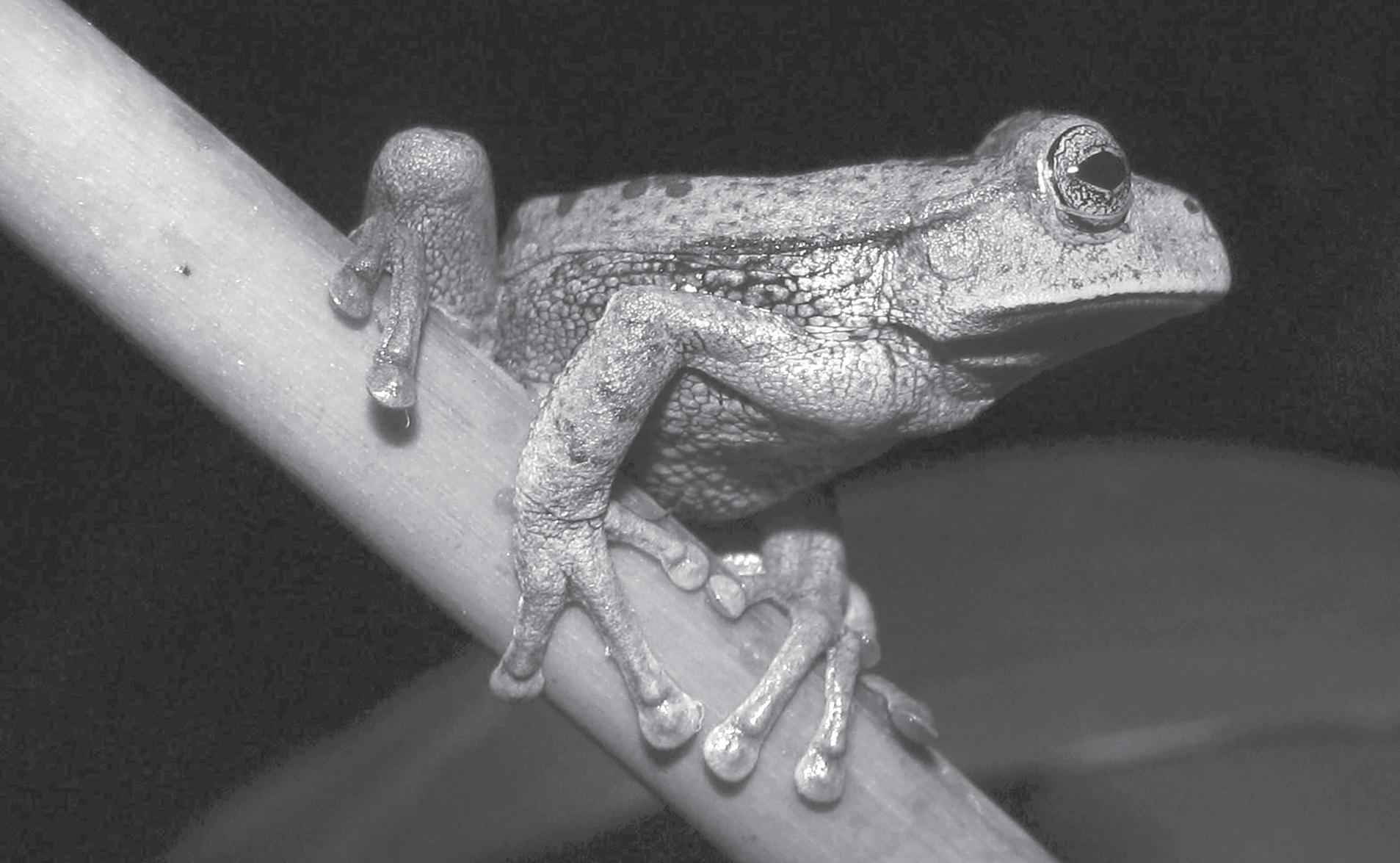
A recent paper published in Science Magazine revealed the shocking results of a global disease transmission assessment: A fungal disease affecting amphibians has been identified as the most devastating recorded example of biodiversity loss attributable to a single disease. The analysis was made possible by an extensive collaboration involving experts from 36 institutions — including two Cornellians.
Over the past half century, the amphibian chytridiomycosis panzootic, an infectious disease that affects amphibians worldwide, has resulted in 90 presumed extinctions as well as the decline of at least 501 amphibian species.
This fungus was identified in amphibian populations about 20 years ago as the cause of death and species extinction at a global scale. The last similar analysis that assessed global amphibian decline was published in 2007 but focused mainly on the regions that suffered the most decline.
One of the two Cornellians affiliated with the study, Prof. Kelly Zamudio, ecology and evolutionary biology, has worked in Panama, Brazil and the United States studying the effect of frog-killing chytrid fungus Batrachochytrium dendrobatidis using population genetics.
Zamudio said the idea for the global epidemiological analysis started from a conversation going around the amphibians researcher community: “How bad is this? How much have we really lost?”
After comprehensive review of the scientific literature from the past 20 years, scientists studying amphibian decline worldwide classified species by abundance, severity and location.
The most drastic amphibian declines due to chytridiomycosis were cited in Australia, Mesoamerica and South America. These results support the hypothesis that B. dendrobatidis spread from Asia into the New World and suggest that development and trade have facilitated the spread of deathly diseases like chytridiomycosis.
“This study provides synthesis, which I think both makes a strong case for the magnitude of chytrid-related biodiversity loss and provides an example of the extent to which globalization may influence contemporary disease transmission,” said Cait McDonald grad, the other Cornell affiliate.
McDonald was involved in assessing North American species affected by the chytrid fungus and contributed data to the global analysis that quantified the extent and severity of declines, status of species recoveries and species distributions and habitat.
The results of the global epidemiological analysis revealed that chytridiomycosis, caused by two fungal species, B. dendrobatidis and B. salamandrivorans, has played a significant role in Earth’s sixth mass extinction, which is currently ongoing. Estimates have already revealed an exceptionally rapid loss of biodiversity over the last few centuries.
“There are 8,001 frog species known to science, 501 declining plus 90 extinct is 6.5 percent of that diversity. The human population is 7.7 billion people. If you were to take 6.5 percent of the human population that would be 455 million people, more than the population of the US. That’s the impact,” Zamudio said.
B. salamandrivorans, despite being largely restricted to salamanders, is not yet present in North America, according to McDonald. However, this doesn’t mean it will never pose
a problem.
“Researchers are quite concerned that if it does invade, we could face a pandemic in salamanders similar to what we’ve already seen in frogs with B. dendrobatidis,” McDonald said.
McDonald is researching salamander functional genomic responses to the disease, as well as the role that genetic diversity and pathogen-mediated selection may play in host susceptibility. She hopes to understand how scientists can use this information to guide B. salamandrivorans disease prevention and management strategies.
Despite the decimating effect of chytridiomycosis, research has cited that 20 percent of the 292 surviving species have shown initial signs of recovery after the decline. However, this doesn’t mean that the whole species is bouncing back.
“However, even for the species that are
showing any sign of recovery, the recovery generally is at the population level,” Zamudio said. “We are really interested in the populations that are showing signs of recovery because that might tell us something about how species recover.”
Zamudio hopes that in the future the scientific community will gain a better understanding of host-disease dynamics.
“We have never seen an obligate pathogen of vertebrates that is this generalist,” Zamudio said. Obligate pathogens must cause disease in order to be transmitted and infect a host in order to survive. “Usually pathogens tend to have a narrower focus, attacking one particular species,” Zamudio said.
Shriya Perati can be reached at sperati@cornellsun.com.
Cafe Jennie and Libe Cafe.
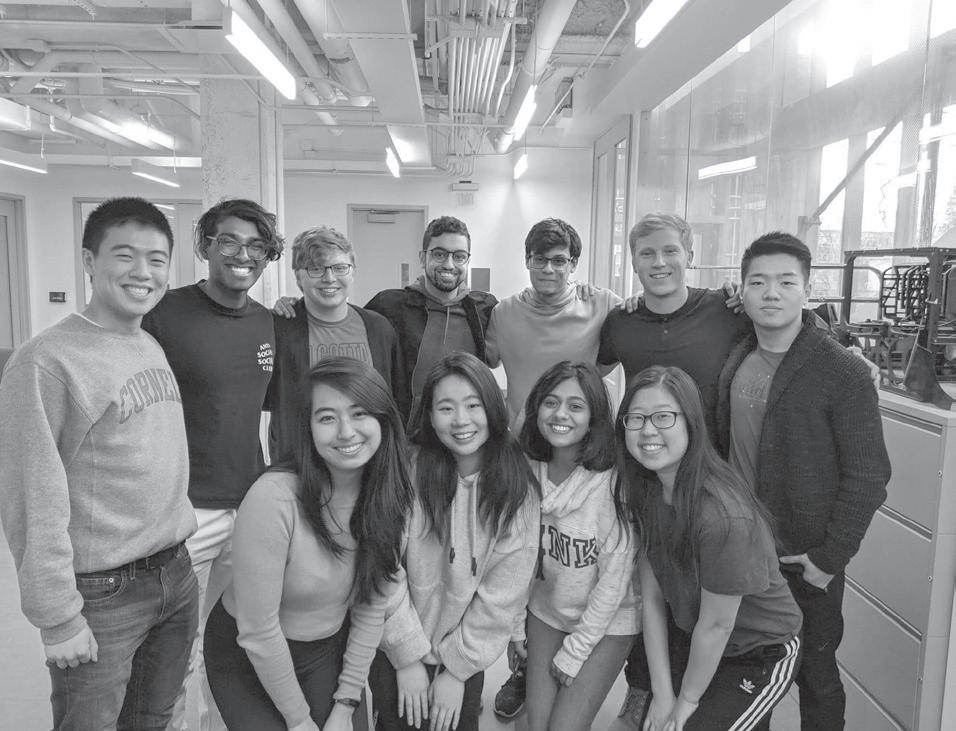
After more than a semester of development, a team of 10 undergraduates and one graduate student within the Cornell Design and Tech Initiative released an app that allows the user to preview the crowd density of Cornell campus facilities without having to physically visit.
Using current and historical ID swipe data provided by Cornell IT, Flux’s algorithm makes estimations of how many people are in a certain facility at a given time and presents crowd density information in a way that users can understand. At the time of writing, Flux provides data from all ten of the All You Care To Eat dining rooms as well as
An older version of the app was released last December under the name Density, which was intended to gain feedback from the general student population outside of DTI. However, because of legal issues, they were forced to temporarily halt distribution and revise their brand.
“Over the break, we actually received a cease-and-desist from a company called Density.io,” said Andrew Xiao ’20, technical product manager of Flux. Xiao explained that the company, which is based in San Francisco, does the same thing as Flux but uses hardware.
“They hang these sensors above doorways that count people going in and out of rooms anonymously, and so in exchange for changing our name to Flux, they would be able to provide us with some free hardware for three years,” Xiao said.
According to product manager Neha Rao ’20, “[this setback] gave us a chance to rethink what our vision was, what we thought was important and also gave us an extra semester’s time to really fix any bugs, [and] make all the improvements we wanted.” In her words, the current iteration of Flux is “a lot better” than the version from December.
Xiao first envisioned Flux in the fall of 2017 during the interview process for DTI. “They asked me for one of [my] app ideas, and I came up with that,” Xiao said. He cited the crowdsourced traffic app, Waze, as inspiration.
Soon after, Xiao and a few other DTI members began work on a Flux precursor. Xiao explained that “during the finals season of the fall 2017 semester, we had DTI members sit in eHub, take shifts, and just walk around every fifteen minutes, and count the people in there and then
log it and report it to a website, and then we advertised the website, [and] had people check on it.”
It was around this time that other members of DTI, including Rao, joined the project. “Basically, the whole idea of the project team is to build apps, mobile and web, for the Cornell community ... so we all were either assigned to Flux, or we chose it,” Rao said.
Currently, the app is a minimum viable product, which, as designer Kathy Wang grad explained, is a very early version that is released for the public to “test” — giving developers feedback to iterate from in the future.
However, the team has many ambitious plans for further development. “The completed form of Flux would incorporate all the dining facilities, all the fitness facilities [and]… a lot of the study spots,” Xiao said. The team hopes to include even large, open spaces such as Olin Library and Duffield Hall, where students do not have to swipe an I.D.
Ultimately, the team hopes to bring Flux to other college campuses. However, there are some significant challenges.
“[Flux is] so exclusive to the Cornell campus that it’d be hard to move elsewhere,” said Xiao. He said the issue was in “counting swipes and potentially looking into WiFi connections for how many people are in the library,” as schools may have different systems.
For now, the team does not intend to rush development. “We’d like to expand, and we’d also eventually like to expand to different campuses, but we know that we should probably get our stuff right on this campus before we expand,” designer Kaitlyn Son ’19 said.
Wang can be reached at adw74@cornell.edu.
Pick up your free copy of The Corne¬ Daily Sun at the following locations:
• A.D. White House
• Admissions Offce
• Africana Library Center
• Alice Cook Dining
• Anabel Taylor Hall
• Appel Commons
• Baker Hall
• Bard Hall
• Barnes Hall
• Bartels Hall
• Bethe House
• Big Red Barn
• Carl Becker House
• Carpenter Hall Library
• Center for Intercultural Dialogue
• Clark Hall
• Computer Services & Financial Aid, East Hill Plz.
• Cornell Institute for Social & Economic Research
• Cornell Store
• Corson Hall
• Court Hall
• Dairy Bar
• Day Hall Main Lobby
• Dickson Hall
• Donlon Hall
• Duffeld Hall
• East Hill Offce Complex
• Environmental Health & Safety Building
• Flora Rose
• Gannett
• Goldie’s (Physical Sci. Bldg)
• Goldwin Smith
• Hasbrouck Center
• Horticulture Offce
• Humphreys Service Bldg.
• Ives Hall (ILR)
• Ivy Room (WSH)
• Johnson Museum
• Keeton House Dining
• Kosher Dining Hall
• Mac’s Café
• Martha’s (MVR)
• Mann Library
• Myron Taylor Hall
+ Hughes Dining
• Noyes Main Lobby
• Okenshields, Willard Straight Hall
• Olin Hall
• Olin Library B Level
• Plantations Gift Shop
• Rhodes Hall
• Risley Dining
• Robert Purcell Community Center (RPCC)
• Sage Hall Atrium
•Sibley Hall, Green Dragon Café
• Snee Hall
• Statler Lobby
• Statler Terrace Restaurant
• Tatkon Center
• Teagle Hall
• Transportation Dept., Maple Ave.
• Trillium
• Uris Hall
• Vet Center (Shurman Hall)
•Weill Hall, M1 Rm + Off Campus
• Autumn Leaves Used Books (Ithaca Commons)
• Bear Necessities
• Center Ithaca
• Coal House Café
• Collegetown Bagels: CTown + Triphammer
• Commons Grocery (Ithaca Commons)
• CFCU (Triphammer Rd.
+ East Hill Plaza)
• Corner of College & Dryden
• Corner of State & Aurora
•Express Mart, Comm. Crnrs.
• Hillside Inn
• Hilton Garden Inn
• Holiday Inn
• Ithaca Coffee Co.
•Ithaca College, Phillips Hall
• Jason’s Grocery & Deli
• Kendal
• Kraftees
• Lifelong
• Oasis (Greenstar)
• P&C Fresh (East Hill Plaza)
• Salvation Army
• Shortstop Deli
• Stella’s
• Tompkins Cty. Public Library
or stop by The Sun’s offce at 139 W. State Street


Fill in the empty cells, one number in each, so that each column, row, and region contains the numbers 1-9 exactly once. Each number in the solution therefore occurs only once in each of the three “directions,” hence the “single numbers” implied by the puzzle’s name. (Rules from wikipedia.org/wiki/ Sudoku)
Jeffrey Sondike ’19




By FAITH FISHER Sun Staff Writer
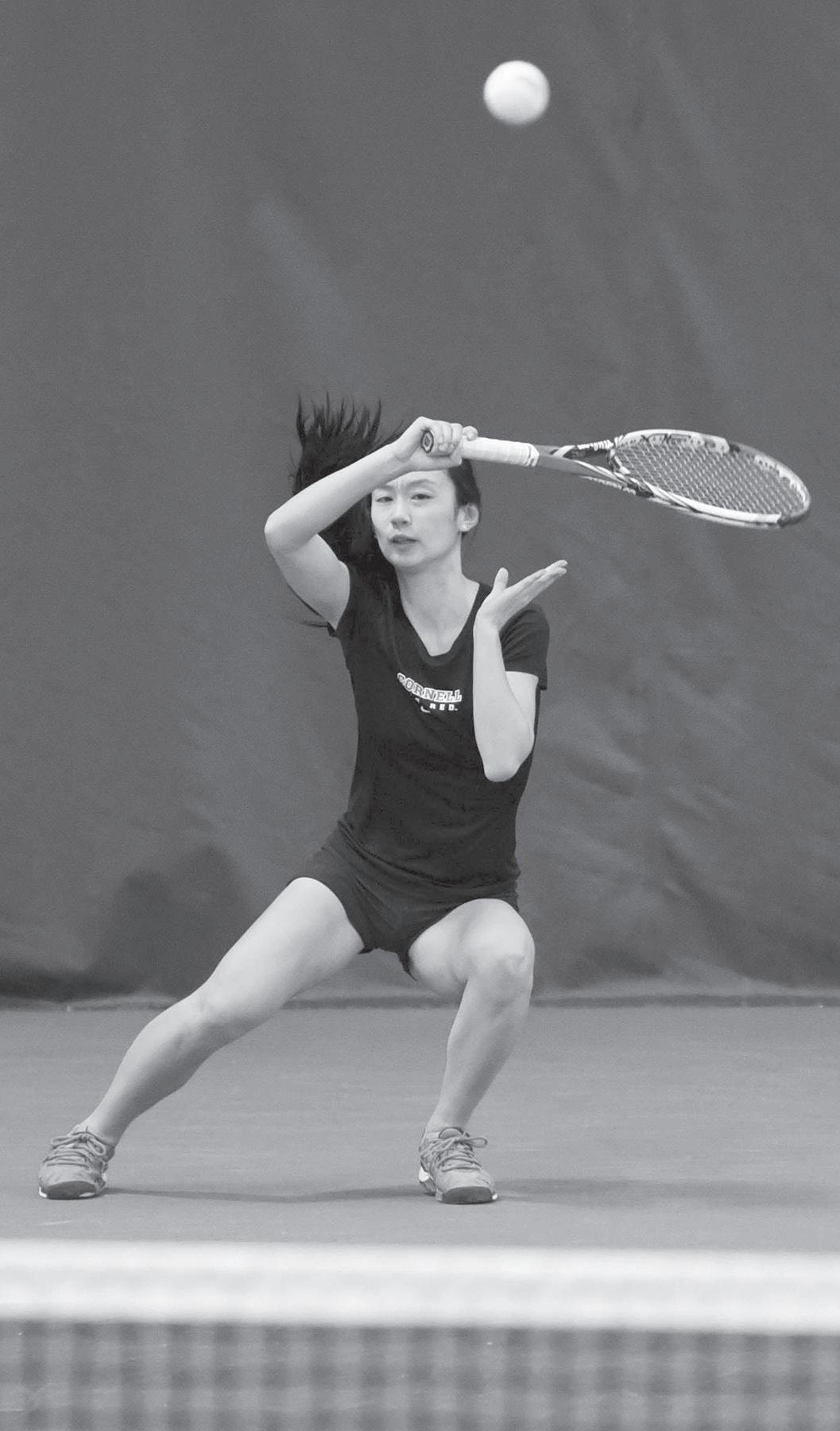
The start of Ivy League play proved turbulent for Cornell women’s tennis. After falling to Columbia in the league opener, a trip to Brown and Yale extended the team’s losing streak to three.
The Red (6-12, 0-3 Ivy League) suffered a 4-1 loss to the Bears (9-9, 1-1 Ivy League) on Saturday afternoon. On Sunday, the Bulldogs (10-8, 1-1 Ivy League) bested Cornell in a shutout 4-0 match.
Collegetown 1 & 3 Bedroom Apts. Available for Next School Year 2018-2019. 607-327-2927
NORTH CAMPUS Studio and 3 bedrooms Available 2019/2020 Novarr-Mackesey Property Management office@ithacastudentapartments.com ithacastudentapartments.com 607-277-1234
Boldly Refined
or 312collegeave.com
COOK ST. Furnished House for 5-7 persons, 10mo. Lease for 2019-2020 Text or call Tracy at TLC Property Mgmt Corp 607-379-2776
clean, furnished unit can host up to 12 people. 303-309 Dryden Road Heat, Hot water included. Fiber Optic fast internet connection Laundry, parking available 607-279-1888 www.porealty88.com
Collegetown Terrace Apartments INSPIRED LIVING TAILORED TO YOUR SUCCESS 24-Hour Fitness Center Shuttle Bus Service to Campus Study Rooms w/ Expansive Views Apartments Available NOW, Spring 2019 & 2019/2020 Novarr- Mackesey Property Management collegetownterraceithaca.com office@ithacastudentapartments.com 607-277-1234
The Top of Collegetown Dryden Rd-Linden Ave 3 BR Apt & House 2019-2020 607-351-1115 ksteel202@yahoo.com
3 BEDROOM SOUTH HILL Large apt, washer/dryer furnished. $550 pp 607-272-3389
1-Bedroom Apt
Downtown
Available June 1 (or earlier) Ideal for Grads or Staff. Lovely one bedroom second floor apartment. Downtown on Cascadilla St. near N. Albany St. Carpeted bedroom and living room (with rustic real wood paneled walls), full bath, kitchen. Bus line in front of house that goes to Commons, then on to Tower Rd. on Cornell Campus. Private porch. $890 plus utilities, available June 1. (anytime after 4/15) NO undergrads, no dogs, no smokers, references. For info and appointments email gm27@cornell.edu or text 607-280-4024
==SPRING BREAK SPECIAL== Furnished 3 Bedroom Collegetown Apartments PARKING, LAUNDRY, UTILITIES! (607)273-7368 www.WestShoreApts.com
27 H OUSE FOR R ENT
Linden Ave. 5 Bedroom House Available June 2019. $900 per bedroom. Parking included. 607-327-2927
2019-2020 College Ave. 5 Bedroom House Furnished. Laundry. Internet. Parking. 607-273-8576
2019-2020 Upper Eddy St. 7 Bedroom House Furnished. Internet. Laundry. 607-273-8576
Senior Mariko Iinuma and freshman Katherine Nguyen opened play against Brown with a tiebreaker win in their doubles match. However, Brown’s Alessandra Bianco and Juliana Simon countered the Red’s advantage with a 7-5 win against Cornell’s freshman classmates Maria Adiaconitei and Sarah Campbell. The pair of Valerie Ho and Khary Pryce fell 7-5 to their opponents, tilting the match in favor of the Bears.
“Winning the doubles point is a huge advantage because it’s easier to keep the momentum and take it to your opponent in the very first game,” freshman Valerie Ho said.
Ho clinched her tenth singles victory of the season against Sophia Reddy in a 6-2, 6-3 match. However, other singles players failed to produce Cornell victories. Iinuma and Nguyen lost in straight sets to their opponents, Devon Jack and Taylor Cosme at the number one and two singles spots, respectively.
Adiaconitei, at the number four spot, sent her match into a third set, but Brown’s Courtney Kowalsky eked out the win.
The team suffered a similar fate in New Haven the following day.
Going into the match, recent history favored the Red — the team triumphed over the Bulldogs twice, earning a 4-3 and 5-2 victory in the 2017-2018 season. These past results, however, failed to provide the Red adequate momentum to take down the competition.
The contest opened with a
round of doubles which set the precedent for the rest of the match. The Bulldogs swept the Red’s doubles pairs with a score of 6-3 at the first doubles positions and a score of 6-4 at the third doubles position. Adiaconitiei and Campbell finished their match tied at 4 games all.
The singles round proved equally difficult for the Red.
Iinuma, Nguyen and Campbell, playing at the first, second and fifth spots respectively, could only manage to scrimp three games off of their opponents and lost in straight sets. The remaining matches were left unfinished as the three wins clinched the victory for the Bulldogs.
Comprised of five freshmen
and one senior, the young team takes each match, whether it be a win or a loss, as an opportunity to grow.
“Something we can improve on is cutting down on unforced errors and dealing with the pressure on certain points,” Ho said. “As a young team, we haven’t been in these situations as often as other teams, and I think we can only grow from these tough losses.”
The Red return to action next weekend against another Ivy League foe in the University of Pennsylvania. The match will be played on Saturday at 2 p.m. at the Reis Tennis Center.
Faith Fisher can be reached at fsher@cornellsun.com.

By DYLAN McDEVITT Sun Senior Writer
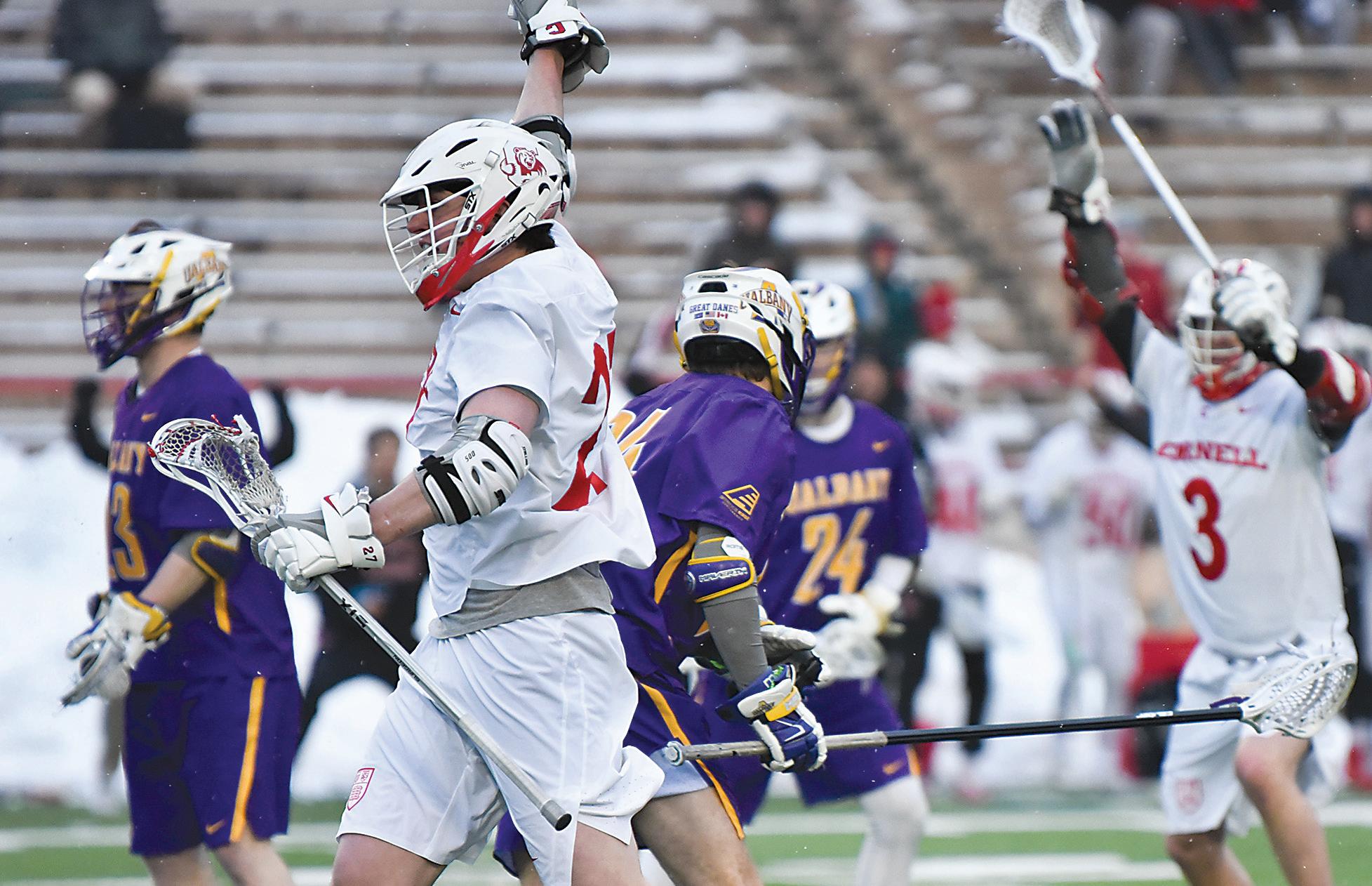
After dropping its first two conference games of the season, Cornell men’s lacrosse reasserted its dominance by earning a pair of Ivy victories to even its league record and keep itself in the conversation for a bid to the Ivy League tournament in New York City next month.
On the heels of losses to No. 5 Yale, 16-11, and No. 6 Penn, 16-15, to start its conference season, the reigning league champion Red (7-3, 2-2 Ivy League) demolished Dartmouth and Harvard by a combined score of 34-16 in consecutive weeks.
At home against the Green, three players registered hat tricks — junior attack Jeff Teat, senior attack Clarke Petterson and senior midfielder Jake McCulloch — while Teat led all scorers by adding three assists. Freshman goaltender Chayse Ierlan earned an impressive save percentage of just over 70 percent while making 12 stops in the victory.
At Harvard, Teat shined again with an eight-point game — his second such showing of the year — as Cornell steamrolled over the Crimson 19-11. The Tewaaraton award watchlister ranks sixth in the nation in points per game at 5.4, tied with Princeton’s Michael Sowers.
So far this season, Cornell has faced four teams cur-
rently in the top-11 — all within five games of each other.
With two crucial conference victories against unranked squads in its rearview, Cornell will now face yet another test: consecutive visits to No. 9 Syracuse and No. 10 Notre Dame. The two games will be second and third in a span of four straight before closing its season at home.
Now with an even record in the conference and a real path towards an Ivy playoff berth, Cornell’s task is to pick up two wins that could go a long way in solidifying its resume for a bid to the NCAA tournament. With the season nearing its final stretch, these last two conference games will prove vital in May should a repeat title at the Ivy tournament fall out of the Red’s reach.
The Orange represents one of Cornell’s oldest and fiercest rivalries. The teams have met 106 times since 1920, and the Red has to travel just about 50 miles north to take on its central New York foes. Last season, Cornell knocked off Syracuse twice, once at Schoellkopf
The Red significantly outpaces both squads in scoring offense at 15.9 goals per game, second in the nation. Faith Fisher can
in the regular season and once at the Carrier Dome in the NCAA playoffs.
Cornell last faced Notre Dame in the 2010 national semifinal, in which the Fighting Irish were victorious, 12-7. Cornell last defeated the Irish in 2007.
The Red significantly outpaces both squads in scoring offense at 15.9 goals per game, second only in the nation to Penn State’s 17.3. But Cornell’s biggest weakness — the faceoff — will be tested yet again as both Syracuse (13th) and Notre Dame (29th) rank in the top 30, while Cornell’s paltry .386 winning rate on draws ranks a dismal 65th out of 73 Division I teams.
The tough stretch begins Tuesday at the Carrier Dome when Cornell and Syracuse face off at 6 p.m.
Dylan McDevitt can be reached at dmcdevitt@cornellsun.com.
By FAITH FISHER Sun Staff Writer
Men’s tennis soared past Ivy League competitors Brown and Yale this weekend, extending its spotless home match record to 7-0 and its Ivy League record to 2-0.
Against the Bears on Saturday, the Red went undefeated in singles play and dropped just one doubles match to secure a landslide 7-0 win.
The doubles round opened with a 6-4 win from sophomore Eero Vasa and
junior Joseph McAllister at the number 3 spot. The Bears (8-8, 1-1 Ivy League) neutralized the lead, however, when Ching Lam and Jacob Walker defeated Cornell’s sophomore Alafia Ayeni and junior Lev Kazakov at the second position.
The Red managed to close the doubles round with the advantage, as the nationally-ranked duo of junior Daniel Soyfer and senior David Volfson just barely bested Brown’s Roger Chou and Charles Tan in a 7-6 (6) match.
“We knew Brown had one of the best doubles teams in the Ivy League,

and we knew that the doubles point was going to be important just for momentum purposes and for the overall outcome of the match,” head coach Silviu Tanasoiu said.
Despite failing to execute upon previous match points, Tanasoiu was particularly impressed with the mental toughness of the Soyfer-Volfson pairing.
“I was very proud of how David and Daniel handled themselves,” Tanasoiu said. “They were perseverant, and they didn’t get sidetracked by their emotions or disappointment of not closing out the set earlier. They stayed disciplined in the tiebreaker and when it mattered most, I think they executed very well.”
Cornell (11-8, 2-0 Ivy League) channeled this momentum into their singles play and quickly went up 4-0 against the Bears. Cornell’s Evan Bynoe at the sixth spot, David Volfson at the third and Daniel Soyfer at the fourth swept their competition in straight sets. To top off the win, Ayeni, at the first singles position, edged out Brown’s Peter Litsky in a 7-6, 6-3 match.
The team carried the previous day’s success into their next match against Yale, clinching a 4-0 win without surrendering a single set. Cornell historically has been dominant against Yale — out of their last 12 meetings, this weekend marked the Red’s tenth win.
All three doubles teams won their
matches with comfortable margins to tilt the match in favor of the Red.
The Red left the singles round undefeated as well. Quick wins from Kazakov at the number 2 spot, Soyfer at the number 4 spot and Vasa at the number 5 spot sealed the match for the Red. The Red competitors sailed through their matches in straight sets.
“I think we worked very hard in preparation for the Ivies, and I was happy to see a lot of our work executed by the guys over the weekend,” Tanasoiu said.
Despite their success, the team realizes that there are always improvements to be made.
“We still have a lot of work to do,” Tanasoiu said. “We just changed our doubles lineup — this weekend was the first time we played with the new lineup, so I feel like we have some shaping to do with those teams and chemistry building.”
The Red will travel to Philadelphia next weekend, looking to secure another Ivy League win against the University of Pennsylvania. The match will take place on Saturday at 1 p.m. The team will return home to the Reis Tennis Center on Sunday to take on Princeton at 1 p.m.