
Tree charged with attempted robbery
By SEAN O’CONNELL Sun News Editor
Three suspects were arrested on Monday in relation to a stabbing on the intersection of West Avenue and South Avenue on Sunday evening, according to the Ithaca Police Department.
Three of the four suspects, Tahajjuddin Abdur-Rashid, Thomas Payton-Harp and an unnamed 16 year old, were charged with attempted robbery in the first degree and gang assault in the second degree.
The four suspects approached the student on the
intersection at approximately 7:42 p.m. One of the suspects demanded that the student give up his phone and wallet. The victim fled and was chased by one of the suspects, who then stabbed him in the
See STABBING page 3
Message to Our Readers
Due to the global COVID-19 pandemic, this unfortunately will be our last issue printed of the spring semester. We will resume our regular printing schedule when classes resume in August.
In the meantime, readers can continue to stay informed of Ithaca and Cornell news at cornellsun.com, where The Sun will continue its commitment online.
We hope all stay well during this difficult time, and encourage readers with questions or concerns to reach out at editor@cornellsun.com.
F ROM VACCINE D E V ELOPMENT TO M ASK D ONATIONS , C .U. D EPARTMENTS H ELP WAGE C ORONAV IR U S F
By ALEK MEHTA Sun Staff Writer
With the spread of COVID-19 affecting communities across the na tion –– and recently even Cornell’s campus itself –– a wide range of ac ademic departments are doing what they can to help during the pandemic. Labs in the College of Veter inary Medicine — run by Profs. Brian VanderVen and David Rus sell, microbiology and immunology — have donated over 600 respirator
masks to Cayuga Medical Center amid a national shortage of protective medical gear.
masks earlier in the year, fearing that a future supply-chain problem could result in a lack of necessary protection for us.”
Rebate Promise On Room, Board Fees Is Unresolved
By
With in-person classes canceled, the on-campus student population dwindling and dorm rooms vacat ed, Cornell families have been left wondering how the administration

See FEES page 3
House N.Y.-23
As COVID-19 has
IG H T
The lab is still exploring ways of helping Cayuga Medical beyond its initial donation, according to VanderVen. For instance, longer-term, faculty across Cornell’s immunology department are looking at “new ways to diagnose and treat coronavirus,” he said.
Other University labs have been asked to donate supplies in the fight against COVID-19, including one run by Prof. Maureen Hanson, molecular biology, whose lab donated 3,000 pairs of nitrile gloves to be distributed as necessary by the Tompkins County Health Department.
After hearing about the nationwide mask shortage, Prof. C.C. Chu, fiber science and apparel design, emailed colleagues with an idea.
“I thought, ‘we have a design component to the department, maybe they
DEPARTMENTS page 3
You can’t touch this! | The Touchdown statue by Teagle Hall sports an N95 respirator on March 17. A shortage of masks and other supplies to fight the pandemic has spurred Cornell labs to donate to the cause.
Candidates Adapt to Coronavirus Pandemic
people retreating indoors and vacating public spaces, political operations have been forced to rethink their blueprints.
The Sun checked in with the two candidates for New York’s 23rd Congressional district — Tom Reed (R-N.Y.) and Tracy
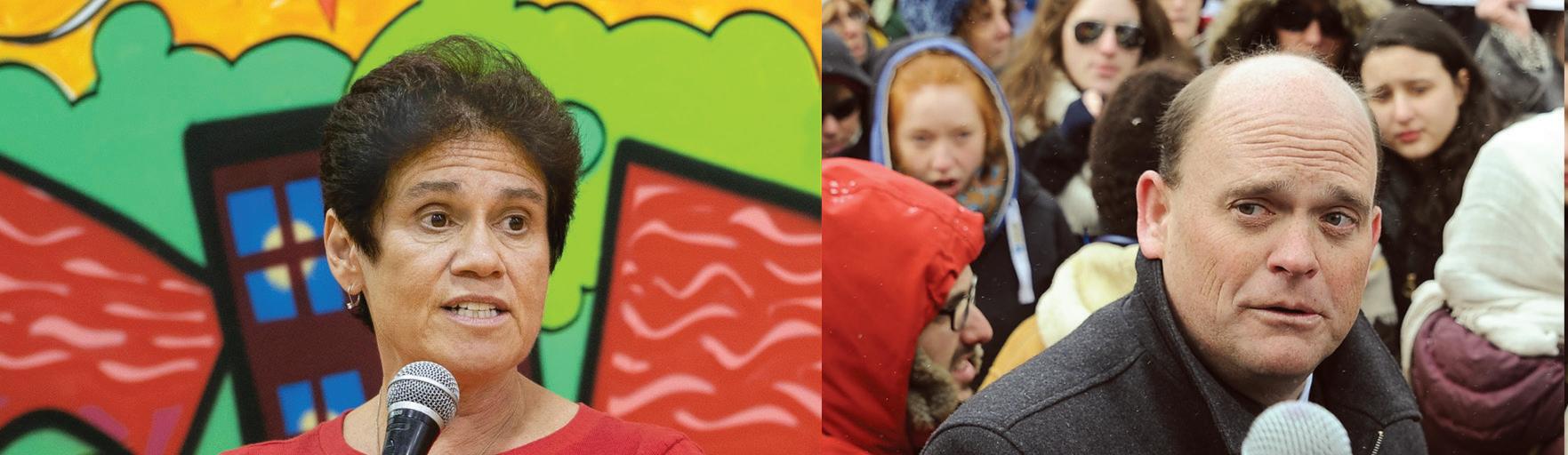
Mitrano J.D. ’95 — to see how they are continuing their strides both on Capitol Hill and the virtual campaign trail.
Rematch | Rep. Tom Reed and Tracy Mitrano J.D. ’95 are conducting a rematch campaign for the 23rd N.Y. House seat.
The Incumbent: Rep. Tom Reed
Amid an international pandemic, the news of two United States House Representatives contracting COVID-19 brought the crisis a little closer to ‘home’ — Capitol Hill — for Reed. Now back in the 23rd district, Reed explained how legislating during the course of the COVID-19
pandemic has struck, in a time otherwise marked by polarization, a radically different tone — a bipartisan one.
Reed, a rank-and-file House Republican, is the co-chair of the House Problem Solvers Caucus, a bipartisan working group of around 50 representatives looking for
See HOUSE page 3
BORIS TSANG / SUN PHOTOGRAPHY EDITOR
By AMANDA H. CRONIN and ALEC GIUFURTA Sun Senior Editors
BORIS TSANG / SUN PHOTO EDITOR & CAMERON POLLACK SUN FILE PHOTO
TAL DOTAN and OLIVIA WEINBERG Sun Staff Writer & Sun Assistant News Editor
Fill in the empty cells, one number in each, so that each column, row, and region contains the numbers 1-9 exactly once. Each number in the solution therefore occurs only once in each of the three “directions,” hence the “sigle numbers” implied by the puzzle’s name. (Rules from wikipedia.org/wiki/ Sudoku)

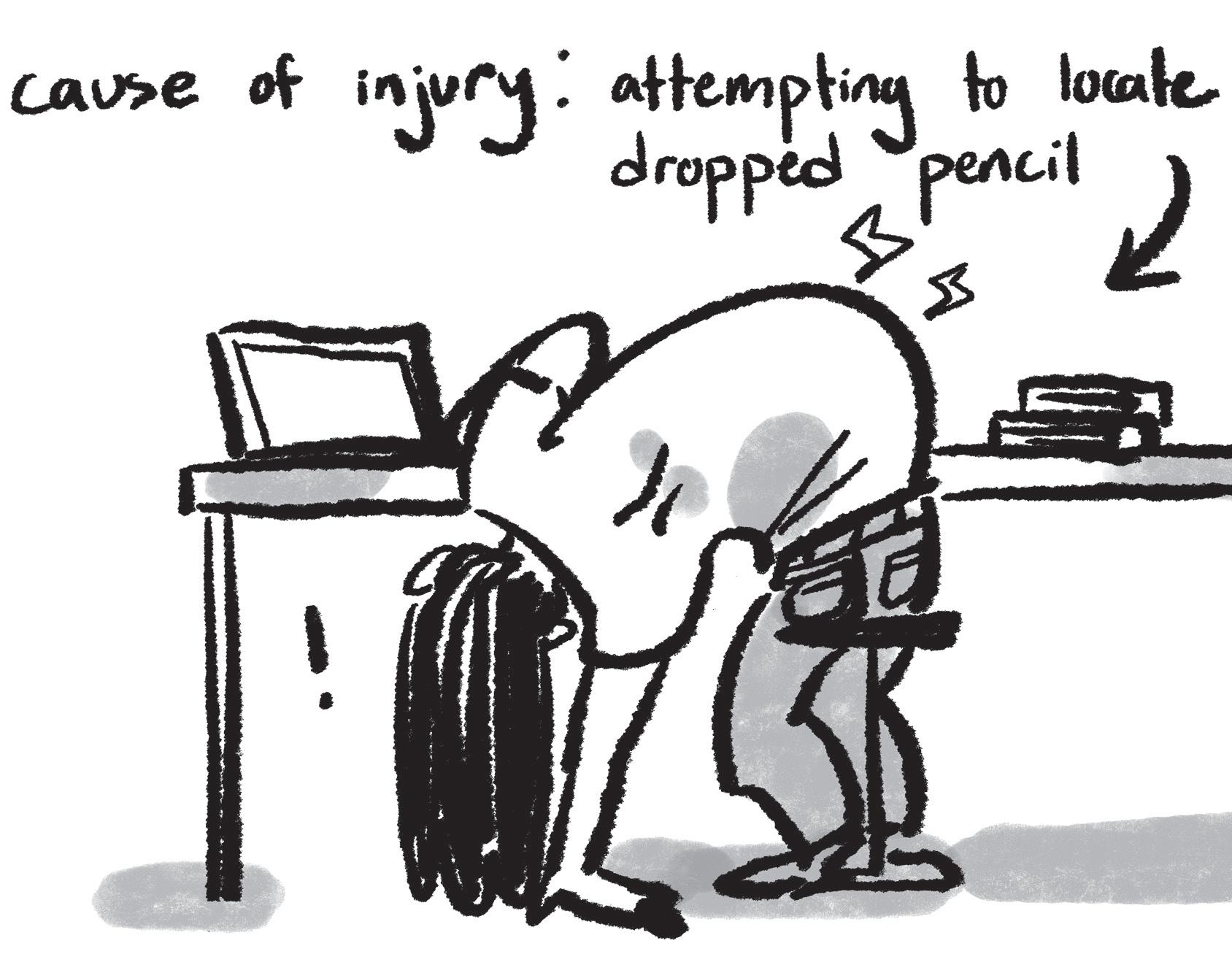



Niko! by Priya Malla ’21
Pizza Rolls by Alicia Wang ’21
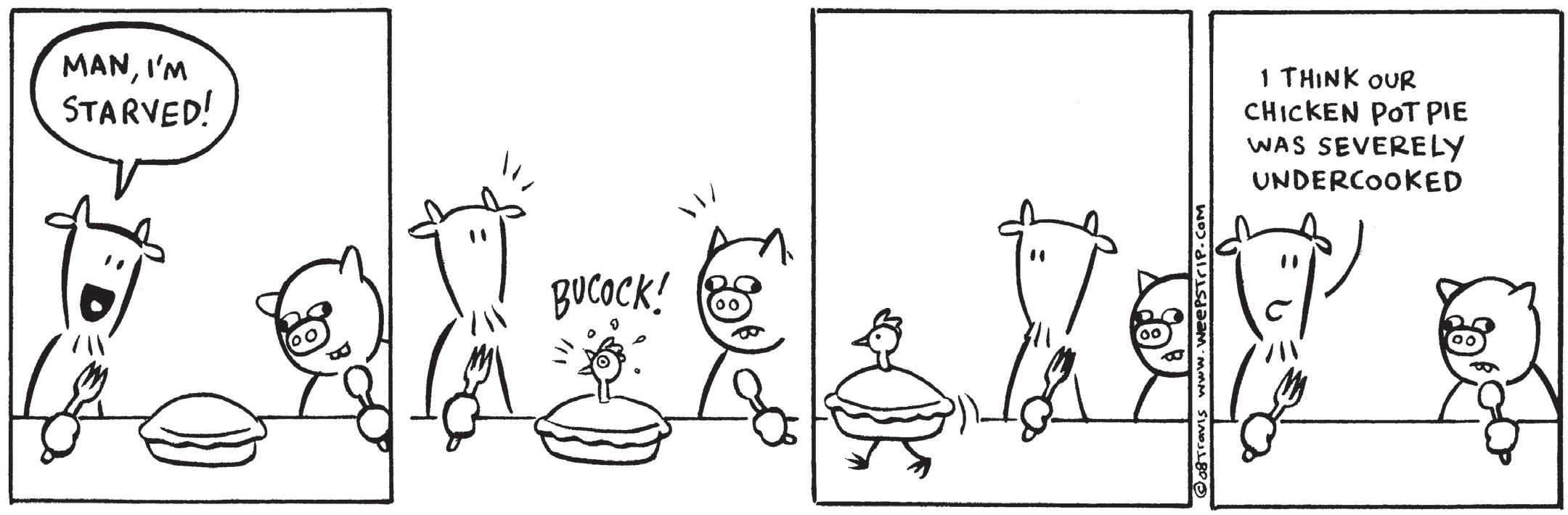
Mr. Gnu by Travis Dandro
Mr. Gnu by Travis Dandro
Candidates Discuss Pandemic Politics
26 A PA R TMENT
Flexible Housing Solutions!
Short Stay Accommodations Available
*Brand New* Studio Apartments 238Linden.com
Leasing@inteprop.com 607-379-6023
>>SPECIAL PRICING<< Collegetown Apartments Furnished 1-3 Bedrooms PARKING, LAUNDRY, UTILITIES! (607) 273-7368 www.WestShoreApts.com
agreement on key policy issues.
On March 19, the caucus released a package of policy recommendations to the Senate focused on providing economic relief and fulfilling pressing healthcare system needs, like ventilators and expanding the number of hospital beds. In the caucus, Reed was “able to get 75 percent consensus working over the last five days,” he told The Sun in a Friday interview.
For the now nearly $2 trillion relief package — which, as of Wednesday night, had been tentatively agreed to by the Senate and White House ––Reed implored policymakers to “go bold” and “take off the blinders.”
Reed’s Two-Time Challenger and Cornell Law Alumna: Tracy Mitrano J.D. ’95
In Penn Yan, New York, Teddy, a golden retriever, greets visitors at the door to the Mitrano campaign’s field office — that is, her grape-
vine-surrounded home.
While the Democratic candidate for Congress continues her daily routines of walking the dog, reading The New York Times and watching PBS NewsHour, campaign operations have been anything but routine.
Heeding the state mandate to remain inside and practice social distancing, the Mitrano team decided to move its second bid for the House almost entirely to the web. Mitrano –– a cybersecurity expert and former Cornell I.T. director –– said she experienced few glitches in transitioning her campaign’s operations online.
In the coming weeks, town halls will be livestreamed and expanded to cover more pressing themes. For example, while the topic of infrastructure was on deck in Mitrano’s town hall series, these discussions will now be open to “anything, especially the pandemic experience,” the candidate said.
To read this full article, please visit cornellsun.com.
Amanda H. Cronin can be reached at acronin@cornellsun.com. Alec Giufurta can be reached at agiufurta@cornellsun.com.
C.U. Room, Board Rebate Promise Unresolved
FEES
Continued from page 1
vice president for student and campus life, announced that the University planned to offer “rebates on housing and dining” just hours after President Martha E. Pollack’s March 13 decision to cancel classes until April 6. Students remaining on campus with permission from the University past March 29 will not
Houses,
www.urbanithaca.com
Catherine & Eddy St. 1 & 2 bedroom Furnished, heat included Laundry in building Parking available for fee 607-277-1234 office@ithacastudentapartments.com
Collegetown Crossing College Ave's Newest Location 307 College Ave. Now Leasing for 2020-2021 Completely New Modern Studios, 2 & 4 Bedroom Apartments.
Fully furnished, heat & hot water included. Reception area at 307 College Ave. www.urbanithaca.com 607-330-2442 info@urbanithaca.com
*Brand New* Full Term & Semester Leases Studio, 1 & 2 Bedrooms College Townhouse 121-125 College Ave. CollegeTownhouseIthaca.com Leasing@inteprop.com 607-379-6023
APTS/HOUSES COLLEGETOWN BEST LOCATION/BEST PRICING 607-272-3389 avramisrentals@aol.com
be eligible for rebates, according to the email.
But as of Tuesday evening, over ten days after Lombardi’s initial pledge to offer prorated housing and dining fees, there have been no further announcements addressing when students could expect rebates or what percentage of their bill would be returned.
Upon reaching out to the University for further comment, The Sun was referred to Cornell’s coronavirus website.
David Glickman ’23, who lived in a single in
High Rise 5 before returning home, appreciated Cornell’s decision to offer rebates — but expressed frustration over how slowly information has trickled down to the student body.
To continue reading this article, please visit cornellsun.com.
Tal Dotan can be reached at tdotan@cornellsun.com. Olivia Weinberg can be reached at oweinberg@cornellsun.com.
Cornell Departments Help Wage Community Fight Against Virus Stabbing Arrests
STABBING
Continued from page 1
back, according to a Cornell crime alert.
The student, identified as 23 year-old Shawn Ong grad by The Ithaca Journal, was treated by witnesses and Ithaca police officers before he was transported to Guthrie Robert Packer Hospital in Sayre, Pennsylvania with serious, but not life-threatening injuries.
The IPD said that “there is not any indication or evidence that these crimes are bias related.”
Sean O’Connell can be reached at soconnell@cornellsun.com.
DEPARTMENTS
Continued from page 1
to make surgical masks?’” he said.
Beyond developing more efficient mask design, Chu hopes to see a prior research interest of his revived in the fight against the pandemic. In the late 2000s, his lab developed a family of “pseudo-protein” biomaterials that a company eventually licensed to develop synthetic vaccines.
“The synthetic vaccine technology based on my lab’s pseudo-protein biomaterials is still there,” Chu said. “If someone would have enough resources, this synthetic vaccine technology can be reactivated again to

help the fast development of the COVID-19 vaccine.”
Some Cornell labs are also doing their part by continuing ongoing research.
Prof. Matthew DeLisa, chemical and biomolecular engineering, said his lab is working on National Institutes of Health-funded research that could assist in efforts to better model and understand the spread of COVID-19.
“Insight gained here … could guide vaccine design and development,” DeLisa said.
DeLisa’s colleague, Prof. Susan Daniel, chemical and biomolecular engineering, runs a lab whose research is so relevant
right now that she applied for an exemption that will enable her to continue work despite the campus shutdown.
“The focus of this project is to understand how coronavirus enters its host cell and specifically how the spikes that decorate the virus facilitate that entry,” Daniel explained.
Stemming from that work, her lab is now screening drugs that could inhibit the virus’ infection, developing antibodies and small molecules that could more effectively block its entry into human cells.
Alek Mehta can be reached at amehta@cornellsun.com.
Your source for good food

Mom Won’t Make Me Food Anymore
By PETER KAPLINSKY
Staff Writer
Iwon’t spend much time remarking on how unprecedented today’s circumstances are or emphasizing how important it is to self-isolate. These ideas have received their share of attention already. My parents, with their arduous Soviet mentalities, taught that in times of desperation and confusion, focus on those aspects of your life which are under your control. Instead of staring at the number of confirmed cases on worldometer.com, clean your room. Instead of worrying about the
thousands of elders at risk, call your grandmother. In Judaism, there is a similar teaching: To beat evil, focus on creating more good, not on minimizing evil. Through food, we can all create good for those around us. Not only did my parents impart Soviet morals to me, but also a love for potatoes. Ubiquitous, cheap and filling, the vegetable gives me a large chunk of my daily calorie intake without effort. It takes longer to get bored of potatoes than you think. I could go over Bubba Gump’s shrimp monologue for potatoes, but it’ll suffice to say they’re handy. I like to throw in some other vegetables


after cooking them — peppers, mushrooms and spinach work well. Not having class gives me ample free time to try all 9000 potato dishes.
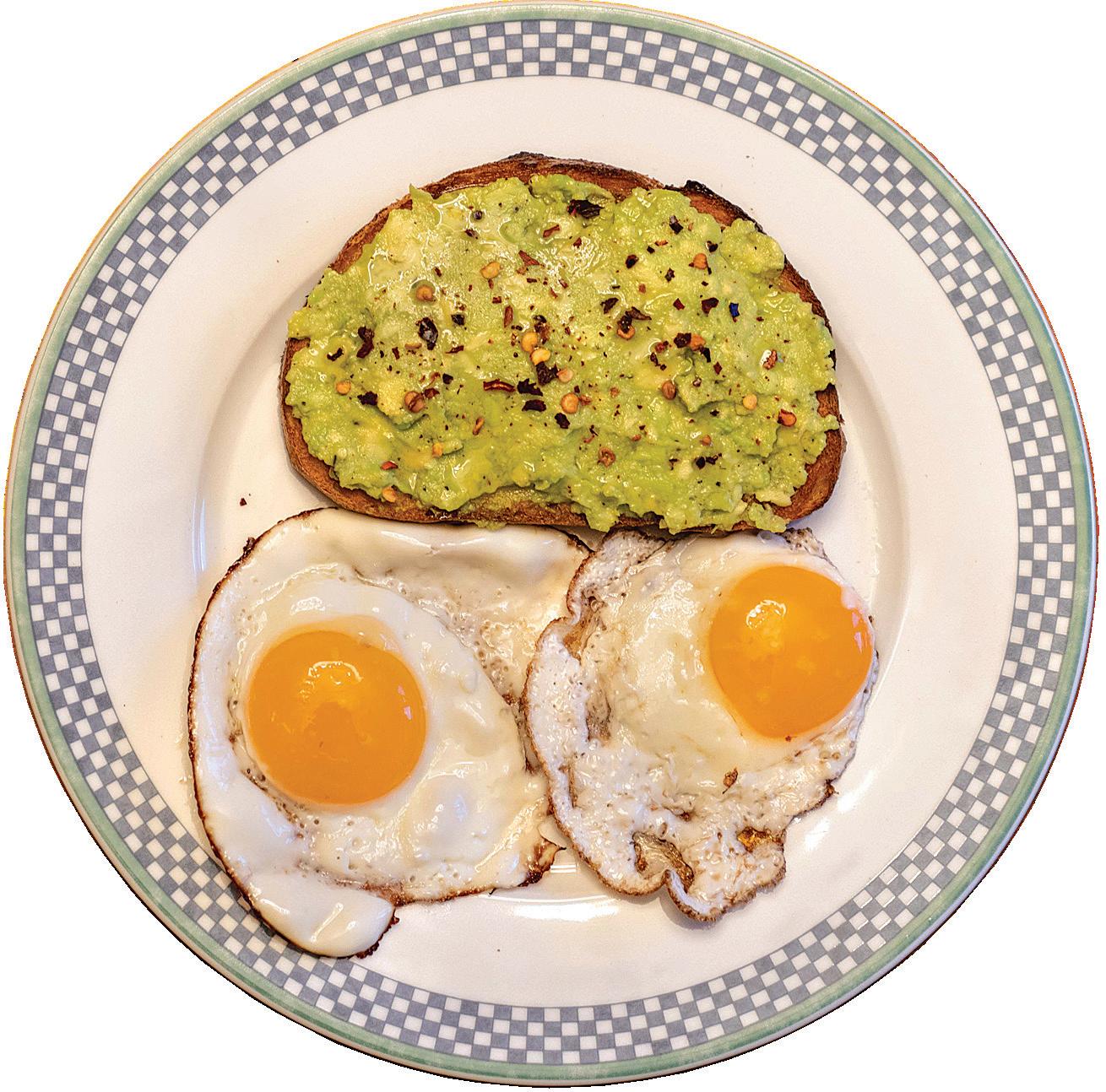
Although I have free time to experiment with new dishes and create decadent delights, I limit the time I spend in grocery stores. Unfortunately, New Yorkers thought Armageddon was coming and raided the Shoprite shelves; so, I can’t count on the ingredients I want being in stock. With restaurants closed, I’ve been longing for avocado toast, and making it at home is a perfect quarantine activity. I take two whole avocados, slice them in half, and peel and crush them with a spoon. While frying two eggs sunny-side-up and toasting some bread, I add in some diced bell peppers, salt and lemon juice into the avocado spread. With each portion of rich and creamy avocado you place on the bread, your marvel will become Instagram-worthy. Making this dish at home, you can get the same important nutrients while saving the 10 dollars you normal-
ly spend on the weekends. For a well balanced meal, I turn to Terrace for inspiration. Instead of satiatiating my nostalgia for Terrace’s burrito bowls with Chipotle, I opt for a homemade
any meat works perfectly. The bowl took only 25 minutes to make — perfect if you’re having a lazy day.
version of the dish. All you need is rice (any kind), beans (canned will do), vegetables (up to you) and, if beans don’t cut it, more protein. Lately, I’ve been using tofu, but
While we spend the next few weeks at home, I suggest we look to the past for what to expect from times like these. We never have ceased to put our faith in each other, and we never will. The teacher who has to overhaul their curriculum online will have an easier day with a good meal; the parent who must work and change a baby’s diaper at the same time will be happier with home-cooked food; the nurses who spend their days on the front lines of the pandemic have earned food prepared with care and love. With communities, economies and lives afflicted by COVID19, we all have enough to worry about — let food be a source of solace, not stress.
Peter Kaplinsky is a sophomore in the College of Arts and Sciences. He can be reached at pk445@cornell.edu

Sun
BEN PARKER / SUN ASSISTANT PHOTOGRAPHY EDITOR
Do What You Can In the Present
Let’s be honest. As students, we all hope for some calamity that could make it so that we don’t have an essay due in two days or an 8:40 a.m. statistics lab the morning after a long night. But now that the coronavirus has made this a reality, we have been shocked by how fast our situation can change. It has made us reevaluate what we really wish for. And for the more vulnerable members of the Cornell community, COVID-19 has forced them to face dire uncertainty.
When I received the coronavirus email from the University around 5 p.m. on March 10th, I was sitting in Olin Library looking out the window preparing for my upcoming environmental law exam. I read through the email and immediately #canceled my studying. After a minute or two, my phone started buzzing with messages from my friends equally as alarmed. I packed up my belongings and dashed home to join them. We were unable to get any work done that night. Our minds could only think about one thing, yet we had barely grasped how this decision would impact us moving forward. It has been two weeks since that day, and for my family and me, uncertainty still remains. However, we’re not the type to give up easily.
Wherever Cornellians may find themselves during this crisis, it is important to remember that every obstacle can be an opportunity. This quarantine can give us the time to dedicate ourselves to something we’ve always wanted to. It can allow our body to recover from the struggles we endure every day in Ithaca. Perhaps most importantly, quarantine is an opportunity to do absolutely nothing.
You are under no obligation to master software code, teach yourself a new language or start a business with this
new time. Do whatever is in your means and interests, but try to protect your peace of mind as well. Having all this time may cause some to overindulge in things like digital and social media usage, sleep (like myself) and snacks (also like myself). We should instead use this time to build and reinforce healthy habits that can invigorate our mental and physical health. I’ve found that maintaining some kind of routine or plan for the day can help. For students finding themselves in difficult or toxic situations right now, it is even more important to protect your mental and physical health as much as you can. Staying aware of resources made available by the University can be helpful for students as well.
If you do not have Internet access at home, Spectrum is providing free internet access for a limited time amid COVID-19. Cornell has also launched its own official website to keep us up to date with University resources and updates, as well as information regarding teaching, learning and residential life. For low-income undergraduate students, the Student Access Fund may be able to provide financial assistance (contact them at accessfund@cornell. edu). Right now you can call Cornell Health to speak to a professional counselor, or to connect with a peer counselor through EARS. Additionally, 24/7 support is available through these local and national hotlines and text lines. Another resource is The Learning Strategies Center, which is working to ease students through the transition to online learning. The LSC website teaches students how to learn remotely and be flexible. If you are having a hard time finding out who to contact for support, you can visit the Professional Academic Advising Community web page for a bunch of advising resources.
“It’s like the whole world has changed permanently in the span of two months.”
Of all the comments in all the hurried conversations I’ve had in the frenzied week since I returned home to Miami amidst the current pandemic, that one still rings in my ears. “The whole world has changed permanently.” She was right. As a pandemic begins to ravage our country, I don’t need to persuade you of the gravity of this situation. I don’t need to recite the scary statistics. I know you already know that comment is true — we are headed into a time of chaos, and things will not be the same afterward.
But there’s one thing that I worry you don’t know yet: You are going to be the one to save us.
Don’t look behind you as though I’m talking to someone else. I mean you. I’m serious. In that same conversation with a woman who I’ve known since before
JOYBEER DATTA GUPTA ’21
PETER BUONANNO ’21
MEGHNA MAHARISHI ’22
We were unable to get any work done that night. Our minds could only think about one thing, yet we had barely grasped how this decision would impact us moving forward.
Keep an eye out for any communication from the University staff, faculty and student run-organizations.
There are a lot of helpful resources to be found. But the most rewarding place to look can be your friends. Whether it’s laughs, memes, FaceTimes or a place to stay, there are many ways in which we can help each other during this time. It was amazing to see things like the student-generated spreadsheet of resources.
We must continue to take care of ourselves and the people around us by practicing social distancing and remaining respectful of our fellow human beings, regardless of where they come from. Until classes start, I’ll be at home doing what I can in the present.
Aminah Taariq is a junior in the College of Agriculture and Life Sciences. She can be reached ataariq@cornellsun.com. I Spy runs every other uesday this semester.
Andrew V. Lorenzen | When We’re Sixty Four
Te Generation to Save Us
I knew anything, she asked, “Who is going to save us?”
The answer is each and every member of our generation, each 18-22ish reader of this college paper. Every person has their own agent of faith during this crisis — their God, their government, their doctor. But my faith — what keeps me going through each twenty-second hand wash and each conversation separated by six feet — is in
MARYAM ZAFAR ’21
... there’s one thing that I worry you don’t know yet: You are going to be the one to save us. Don’t look
behind you as though I’m talking to someone else. I mean you. I’m serious.
Gen Z.
JOHNATHAN STIMPSON ’21
KRYSTAL YANG ’21
JASON HUANG ’21
my generation. My prayer, despite my Catholic mother’s admonishments, is not a Hail Mary. It’s this column to the one force I believe can deliver us from this terror:
We are the generation that can save us.
We are the generation with the greatest resistance to this virus — the healthiest, the most able-bodied. We are the generation that will care for those elder generations who are the most vulnerable. We will keep our distance from one another but stay close in our resolve to nurse the sick, to assume greater responsibility to protect those at risk, to do that which needs to be done.
We are the generation that knows how to stay close from afar. We are the generation that will find unbelievably crafty ways to stay connected virtually to one another though we cannot see each other in person. We are the generation that will lead the way as our family’s businesses, jobs, entire lives move online — using our knowledge, our ingenuity to make this new digital social paradigm one which retains our basic humanity.
We are the generation that will keep hope burning amidst the fiercest, most frigid headwinds of time. We are the generation most burdened of all generations; from a coronavirus to a climate crisis to
an economic calamity to mass shooting after mass shooting. Yet, through it all, we have not given up. We have fought back. We have not lost our faith in a better future, one earned by the hope and work of our peers. We grew up in dark times, and as they grow darker, we are the generation that will carry the torch forward for all because we know how to do so.
To each generation there is entrusted a series of challenges. Ours surpass all others. We will rise to meet every single one of them — including this one. We will be guided by our humanity in inhuman times. We will find new ways to show our love for one another amidst the constraints placed upon us. We will lead with compassion, with courage, with a solemn understanding of the profound responsibility enumerated unto us by time. This crisis will demand countless small, individual sacrifices. It will require leadership within each and every one of us: the kind that goes unnoticed and unthanked — to stay home despite the temptation to go out or to leave that third can of beans on the shelf at the supermarket for the person behind you. To get through this, we must work together irrespective of age, gender, ethnicity, color, creed, class or any other differences we may hold. We are all in this together, but our generation has a special role to play because of how much good we can do if together we rise to this challenge.
As we face crisis, let us as a generation link arm in arm from a distance and lead the way through this darkness.
“Who is going to save us?” It will be you. It will be me. It will be all of us together.
Andrew Lorenzen is a sophomore in the College of
FINAL USCHO POLLS:
MEN’S, WOMEN’S ICERS RANKED NUMBER ONE
By LUKE PICHINI Sun Assistant Sports Editor
After Cornell men’s and women’s hockey simultaneously achieved the No. 1 ranking on Feb. 24 for the first time in school history, they ended the season with the same distinction.
In the final USCHO.com poll, the men and women occupied the top spot in their respective rankings. The polls were re leased after both of the team’s seasons were cut short in the middle of the postseason in order to slow the spread of COVID-19.
For the women, this marks the first time in program history that they have slotted in at No. 1 in the season-ending poll. While the Red’s final game of the season ended up being a loss to Princeton in the ECAC Championship, it still accumu lated a myriad of accolades.
Cornell went undefeated in ECAC play (19-0-3), resulting in an Ivy League title and an ECAC regular-season title. The Red boasted the nation’s best winning percentage (.932) and also earned the No. 1 overall seed in the NCAA Tournament. As Cornell was gearing up for its first-round matchup against Mercyhurst, the NCAA canceled the tournament, denying the Red a shot at its first national title.
Meanwhile, the men achieved similar success. Cornell notched the No. 1 ranking on Jan. 13, but shaky play that cul minated in a blowout 5-0 loss to Quinnipiac saw the Red unseeded from the top spot on Jan. 31.
The Red responded with a vengeance though, dominating its opponents throughout February to enter the postseason on a nine-game winning streak. After earning both the Ivy League and ECAC regular-season titles, Cornell looked poised to claim its first Whitelaw Cup since 2010, as well as make a run in the NCAA Tournament.
Unfortunately, those dreams were dashed as the ECAC Tournament and NCAA Tournament fell into an ever-increas ing line of cancellations. Several teams withdrew from the conference tournament, and the ECAC eventually pulled the plug. The NCAA followed suit, and Cornell’s season ended before it even took the ice for the postseason.
“One of the things we instill within our program is to not waste time and energy on things you can’t control – and the sudden end to the year is one of those things,” men’s head coach Mike Schafer ’86 told Cornell Athletics. “It’s disappointing to not have a crack at the postseason, but we’re still very thankful for the season that we did have and appreciate being voted No. 1.”
Luke Pichini can be reached at lpichini@cornellsun.com.


Future Looks Bright for Men’s Lacrosse After
By MIKE SEITZ Sun Staff Writer
Season
ried the team in the first three contests, defense made all the difference in the one-goal win against the Buckeyes.
In what ended up being its season finale, Cornell battled against a powerhouse Penn State program ranked No. 2 at the time. The game was close throughout, but clutch goals with seconds left on the game clock helped the Red edge out and achieve the No. 2 ranking.
Rising Stars
One of the rising stars for Cornell was freshman attackman Michael Long. Hailing from New Jersey’s Delbarton School, Long had plenty of hype behind his name due to his high school achievements, which included being named an All-American and N.J. Player of the Year.
Long scored 11 goals and notched eight assists during his rookie season, making him one of Cornell’s top-five point leaders. The rest of college lacrosse took notice, as Long was named Ivy League Rookie of the Week twice. A flexible weapon in attack, the neophyte showed that he could handle, pass and score against some of the country’s best programs.
Another freshman proved to be key for the Red, as Angelo Petrakis was a spark plug at faceoff. Petrakis won 46 out of 75 faceoff draws across five games and looked to be the final piece that could take the team to championship-level play. The freshman faceoff specialist also added three goals, the last and most notable of which being the clutch game-winner against Penn State.
Offensive Juggernauts
Cornell’s offense was nearly unstoppable this season. Over the course of five games, the Red scored a whopping 92 goals, a scoring rate that was the second-best in the nation. While the young core made significant contributions, the upperclassmen helped solidify wins with consistent firepower.
To continue reading this article, please visit cornellsun.com.
MEN’S LACROSSE
ICE HOCKEY