The Corne¬ Daily Sun

By GABRIELLA LEE Sun News Editor
The University Library will not see an increase in appropriations to its collections budget in the coming fiscal year, which will result in a five percent decrease in its purchasing power, according to University Librarian Anne Kenney
University allocations to the collections budget which made up approximately $15 65 million of the $18 5 million collections budget this fiscal year will not increase or decrease, according to Kizer Walker, director of collections
“increase in the cost of books and other materials ”
“Although the University recognizes the importance of keeping our collections strong and is trying to protect the collections budget, every year we have a flat collections budget it results in a five percent loss of purchasing power given the economic realities of the publishing scene, ” Kenney said Walker also said that because the library often signed contracts with commercial publishers, it is bound by contract to meet the increased costs set by the publishers
“Our rankings are going to continue to slide unless we get increases that correspond to inflation ”
Prof Charles Brittain
Though Walker said he was glad the appropriation would remain the same as colleges and divisions around campus prepare for reduced allocations during the next fiscal year, a flat budget would amount to a five percent cut due to “annual increases to subscription costs ” and the overall
“ E s s e n t i a l l y, p u b l i s h e r increases range from somewhere around three or four percent to seven percent, ” Kenney said “[There is a] built-in inflationary index in multi-year contracts with publishers for journal literature, and we are contractually obligated to meet them ”
By ANNIE BUI Sun Managing Editor
The University raised nearly $7 million during the course of
Wednesday, with approximately 9,680 gifts given as of early Thursday With a total of around $1 8 million raised, the Depar tment o
among competing colleges and divisions The College of Ar ts
and Sciences raised about $1 17 m
place, and the School of Hotel A d m i n i
$
1 3 million, placing third The colleges raised approximately 26 1 percent, 16 8 percent and 16 2 percent of total funds raised, respectively Sp e c
funds were also made available t o
course of the day An $8,000 bonus went to the School of Industrial and Labor Relations
Yo
i Challenge, which was unlocked when a goal of 1,000 gifts from young alumni was surpassed Additionally, the College of E
$ 8
0 0 0 for the Big Red, White and B
C h
unlocked when donors from all 5
Pu
Washington, D C , made their contributions
Annie Bui can be reached at managing-editor@cornellsun com
By REBECCA BLAIR and PHOEBE KELLER Sun Assistant News Editors
ro m m e m b e r s o f
C o r n e l l’s c e n t r a l a d m i n i s t r a t i o n , g ove r n m e n t re l a t i o n s d e p
By
The University denounced Wednesday a viral video that claimed an assistant dean at Cornell provided advice on how to support and fund terrorist groups and invite them to campus In the video, which was released Tuesday, an interviewer from James O’Keefe’s Project Veritas poses as a Moroccan student facing racial discrimination at his current university Donning a hidden camera and microphone, the interviewer asks Joseph Scaffido, assistant dean of students for student activities,
w h e t h e r Cornell would be willing to suppor t a “humanitarian group in the Middle East, northern Iraq and Syria ” “I think it would be important, for especially these people in the Islamic State Iraq and Syria, the families the freedom fighters in particular, and their families to maybe just educate, but to maybe send them care pack-

ages whether it be food, water, electronics,” the interviewer says In response, the video shows Scaffido saying, “There are a lot
of our student o r g a n i z a t i o n s that do things like that all over the world ” The video next shows the i n t e r v i e w e r asking, “If you did like suppor ted like Hamas or s o m e t h i n g like that, is that a problem?”
Scaffido answers in the video that “the University is not going to look at different groups and
say you ’ re not allowed to support that group because we don’t believe in them or something like that ”
“I think the University wants the entire community to understand what’s going on in all parts of the world,” Scaffido adds Additionally, the video shows the interviewer asking if it would be possible to bring a “freedom fighter” to campus and provide “ a training camp for students ” “You would be allowed to do something like that,” Scaffido responds “It’s just like bringing in a coach to do a training on a sports team or something ”
Thursday, March 26, 2015


Soup and Hope Noon - 1 p m , Sage Chapel
C U Music: Musicology Colloquium 4:30 - 6 p m , 124 Lincoln Hall Student Assembly Meeting
4:45 - 6 p m , Memorial Room, Willard Straight Hall
Project Star: Celebrating Women 7- 9 p m , Slope Studio, Willard Straight Hall
C.U. Music: Tonia Ko, Michael Compitello And Sandbox Percussion
8 - 10 p m , Sibley Hall Dome
The Changing Demography of Grandparenthood With Rachel Margolis Noon - 1:15 p m , G87 Martha van Rensselaer Hall
Ecological Opportunity and the Evolution Of Flea-Borne Plague
12:15 - 1:15 p m , Auditorium, Boyce Thompson Institute
Perspectives From Space
12:15 p m , 253 Frank H T Rhodes Hall
Synergistic Biophysical and Biochemical Cues Rejuvenate The Aged Muscle Stem Cell Population Seminar
4 - 5 p m , G10 Biotechnology Building


By RICHARD L NEUBAUER ’72
B a r t o n H a l l w h e r e t h e r e c r u i t e r s h a d s e t u p i n f o rm a t i o n s t a n d s S D S , w h i c h vo t e d l a s t n i g h t n o t “ t o s u b m e r g e [ t h e TC PA ] m ove m e n t , ” d i d n o t o f f i c i a l l y p a r t i c ip a t e i n t h e p ro t e s t C a m p u s p o l i c e m e n s t a t i o n e d by t h e a r m y a n d m a r i n e b o o t h s l o o k e d o n a s t h e d e m o n s t r a t o r s q u ie t l y s u r ro u n d e d t h e m a r i n e re c r u i t e r s T h e p ro t e s t e r s s t o o d q u i e t l y f o r s e ve r a l m i n u t e s , a n d s e ve r a l o f
n c e d p ro t e s t s b e f o re , b u t “ t h i s i s t h e f i r s t t i m e I ’ ve b e e n c o n f ro n t e d by s
d “
t a y i n Vi
n
t o p t h e C o m m u n i s t Pa r t y t h e n t h e s p re a d o f c o mm u n i s m w i l l b e l e s s o f a t h re a t ” Jo n e s c o m p l a i n e d t h a t t h e A m e r i c a n p u b l i c d o e s n o t g e t a n i m p a r t i a l v i e w o f Vi e t n a m , a n d h e s a i d “ t h e h o r ro r a n d a l l t h e b a d p a r t s o f t h e w a r m a k e t h e p a p e r, a n d a l l t h e g o o d p a r t s d o n o t ” Eg e , a g r a d u a t e
t h e m a p p ro a c h e d t h e re c r u i t e r s , C a p t K a r l J Eg e a n d C a p t Wi l l i a m Jo n e s Re v Gi l b e r t s e t t h e t o n e o f t h e e n s u i n g d i s c u ss i o n s a y i n g , “ T h e c o n f ro n t a t i o n we s e e k i s a m o r a l o n e ” Jo n e s n o t e d t h a t h e h a s e x p e r i


By ARIEL SEIDNER Sun Staff Writer
As the University’s Charter Day on April 27 approaches, Student and Academic Ser vices and the Class Councils are planning a month of events leading up to the celebration of the sesquicentennial
The planned events that lead up to Charter Day include Red and White Wednesday on April 8, brunch at Robert Purcell Community Center on April 12 and a lacrosse doubleheader on April 11, where the men ’ s and women ’ s varsity lacrosse teams will compete against Dartmouth and Brown, respectively
Jonathan Schmidt-Swartz ’15, a co-organizer of the events, said they are aimed to “highlight elements of campus life and get students excited for Charter Day Weekend ”
“ The sesquicentennial is a time to reflect on all that the University has accomplished in 150 years and all that there is to accomplish in the future,” said Schmidt-Swartz, who is also a senior news writer for The Sun
John Lowr y ’16, president of the Class of 2016, said he wanted to help students feel more connected to the school
“ We came up with 150 things to do at Cornell, adding to the original 161 things [list] and expanding upon it,” Lowr y said “ The extra 150 aim to broaden the experiences of members of the Cornell community ”
Lowr y said he believes tr ying to get as many Cornellians involved as possible in the sesquicentennial celebration is important
“ We all have a shared experience here at Cornell, so we are tr ying to target ever yone and get ever yone involved,” Lowr y said “No matter what class you are in, you can go back to the past and find an experience ver y similar to yours For example, you ’ ve had brunch at RPCC as a freshman, so we want to bring you back to brunch ”
One key aspect of a Cornell education is applying classroom learning to a “practical end,” Lowr y added
“Among our events is a ‘Student Innovators in Action’ forum to showcase all of the organizations and people in our classes who have done something extraordinar y, whether it be in fashion, engineering, business [or] health,” Lowr y said “ The idea is to look at what happens outside of the classroom and how you can take what you learn and apply it to the real world That is what this entire school is about ”
Don Muir ’15, president of the Class of 2015, said the sesquicentennial is an important time to appreciate all that the University has achieved, in addition to fortifying relationships between the student body, administration and alumni
“It’s a great time for all undergraduate students to come together and embrace Cornell’s tradition of academic excellence and realize ever ything that Cornell has to offer,” Muir said “ With all [of ] the alumni, trustees and faculty members involved in this initiative, we current and future students will understand what the Cornell community [is] and really develop pride in the school ”
The sesquicentennial kick-off celebration will begin at 5 p m in Willard Straight Hall on April 20, where organizations including the Glee Club and Big Red Marching Band will help kick-start the week and engage the Cornell community, according to Muir
According to Muir, the Class Councils hope to get as many Cornellians involved in the events as possible
“[ We want to] do ever ything in our power to ensure that these program initiatives are highly publicized in order to drive school spirit and participation,” Muir said
The Class Councils have also been collaborating to spread awareness of the events leading up to Charter Day Weekend, using social media with the hashtag #my150cornell and other on-campus promotion

By SAMANTHA ACRICHE Sun Staff Writer
Sayed Kashua a Palestinian-Israeli writer who writes in Hebrew about his two cultures spoke about the everyday challenges he faced living in Israel and continues to face as an Arab citizen of Israel in McGraw Hall Wednesday
Kashua said he began writing in Hebrew when he was sent to a Jewish school for talented children in Israel He recalled his first week at the school, when he was trying to “fit in” and feel “human” as the hardest week of his life He said he attempted to fit in with his fellow classmates by changing his clothing and appearance
“[It was] not that I wanted to pass as Israeli [I just wanted to be] a human being; not a threat Someone not to be pointed at, ” Kashua said Recalling his first bus ride, when he was questioned by an Israeli soldier, Kashua said he “learned the meaning of being a threat as a minority in the state of Israel ”
On bus rides home, Kashua said he began reading books about the ArabIsraeli conflict, which deepened his understanding and led to his desire for change
“I really thought that change [could] happen,” Kashua said “The first step is acknowledging Palestinian suffering How can we establish a place that we can share equal and share power?”
Years later, after “ running away from Jerusalem in the summer ” with his wife and three children, Kashua said he settled in Champaign, Illinois Although Kashua said living in Champaign was “frustrating at the beginning,” he grew to appreciate it
He added that upon his family’s arrival to the city, he told his children not to identify their race immediately
“[I told them that] if someone asks where you are from, you say Jerusalem because you don’t need to give away your identity,” he said “[Depending on] their reaction, you will [then] decide whether to say if you ’ re Palestinian or Israeli ”
Kashua said he and his wife sent their children to a bilingual school, in an attempt to teach his kids that they live in a democracy and can “love and dream” in this state
“My thought was that one day, we can share this land as equals,” he said
However, Kashua said he realized this past summer that achieving an equal state was “impossible,” adding that part of this realization had to do with the fact that it was difficult to get Jewish children to register in the bilingual school

Kashua said becoming a refugee after the ArabIsraeli war in 1948 was especially difficult and that
“it is the worst thing that can happen to people ” He said he believes that in some sense, he is a refugee because he and his fellow PalestinianIsraelis are disconnected from the rest of the Arab world and separated from their families
“We are proof that you can be refugees without ever leaving your home,” he said Kashua said this feeling was what made him run away from Israel He said that when a journalist asked if he was “thankful” for Israel, he replied that he did not believe he had a reason to be thankful “When I see that there will be no shift in Israel’s policies toward Arabs, it’s going to be a dark future,” he said
By EMILY FRIEDMAN Sun Staff Writer
Hu m a n Re s o u r c e E xe c u t i v e n a m e d Ma r y Op p e r m a n , v i c e p re s id e n t f o r h u m a n re s o u rc e s a n d s a f e t y s e r v i c e s , o n e o f t h e t o p 1 5 m o s t i n f l u e n t i a l w o m e n l e a d i n g h u m a n re s o u rc e s t h i s we e k So m e o f O p p e r m a n ’ s k e y a c h i e ve m e n t s i n c l u d e ove r s e ei n g t a r g e t e d s a l a r y i m p r ov em e n t p ro g r a m s , a n e w h u m a n re s o u rc e s i n f o r m a t i o n s y s t e m a n d a c c o m p a n y i n g p ro c e s s e s re d e s i g n s , t h e n e g o t i a t i o n o f b a r g a i n i n g u n i t c o nt r a c t s a n d t h e d e ve l o p m e n t o f p ro g r a m s t o i n c re a s e d i ve r s i t y i n e m p l oy m e n t Op p e r m a n h a s a l s o “ w o rk e d t o a t t r a c t a n d re t a i n t o p t a l e n t w h i l e a d d re s s i n g w o rk l o a d i n c re a s e s a n d i n s t it u t i o n a l k n ow l e d g e g a p s c re a te d by t h e re t i re m e n t o f k e y f a c u l t y a n d s t a f f, ” a c c o rd i n g t o a Un i ve r s i t y p re s s re l e a s e W h e n a s k e d w h a t re c e i v i n g t h e a w a r d m e a n t t o h e r, Op p e r m a n s a i d s h e w a s “ g r a t if i e d b y t h e a c k n o w l e d g em e n t , ” w h i c h s h e s a y s h a s a l o t t o d o w i t h h e r c o l l e a g u e s i n h u m a n re s o u rc e s “ I a m h u m b l e d t o b e i n c l u d e d o n a l i s t t h a t i n c l u d e s s o m a n y a c c o m p l i s h e d H R l e a d e r s , ” s h e s a i d Op p e r m a n a d d e d t h a t s h e b e l i e ve s t h e m o s t re w a rd i n g p a r t o f h e r j o b i s w o rk i n g t h ro u g h c h a l l e n g e s w i t h h e r t e a m a n d w i t h p e o p l e a c ro s s c a m p u s “ I c a re s o m u c h a b o u t t h e s t a f f a n d f a c u l t y w h o w o rk h e re t h e y a re d e d ic a t e d a n d c o m m i t t e d t o o u r s t u d e n t s a n d t h e Un i ve r s i t y ’ s m i s s i o n , ” s h e s a i d O p p e r m a n s a i d i n t h e f u t u re , s h e h o p e s t o a d d re s s i s s u e s t h a t a r i s e w h e n i n c re a s i n g w o rk l o a d s a n d o t h e r c h a n g e s p re s e n t c h a l l e n g e s t o t h e c o m m u n i t y “ We w i l l c o n t i n u e t o w o rk w i t h o u r s t a f f a n d f a c u l t y t o re s p o n d t o t h e i r n e e d s a s we re c r u i t a n d re t a i n t h e d i ve r s e t o p t a l e n t s o i n s t r u m e n t a l t o [ t h e Un i ve r s i t y ’ s ] s u c c e s s , ” Op p e r m a n s a i d Ad d re s s i n g w h a t t h e h o n o r m e a n t f o r t h e f u t u r e o f f e m a l e l e a d e r s h i p a t C o r n e l l , Op p e r m a n s t re s s e d t h a t m a n y o f C o r n e l l’s o u t s t a n d i n g l e a d

are welcome at the University, v i o l e n c e i s n o t t o
In
We d n
o n ,
President David Skorton said the idea that Cornell would welcome terrorist groups such as the Islamic State and Hamas on campus is “ludicrous and absolutely offensive ”
Skorton described the video w h i c h h
online by various media outl
Project Veritas, which he said “ h a s b e e n repeatedly vili-
“Cornell has an unwavering commitment to the free and responsible exchange of ideas.” P r e s i d e n t D a v i d S k o r t o n
f i e d f o r d i s h o n e s t , d e c e i t f u l activity ”
“It is shameful that any individual would pose as a student facing racial discrimination at another university, ask leading q u e s t i o n s o n h i d d e n c a m e r a about Cornell’s tolerance for differing viewpoints and backgrounds, and then conveniently s p l i c e t o g e t h e r t h e re s u l t i n g footage to smear our assistant
d e a n a n d o u r Un i v e r s i t y, ”
Skorton said
Skor ton added that while many forms of free expression
Cornell’s campus “Cornell has an unwavering commitment to the free and responsible exchange of ideas,” he said “However, we remain v i g i l a n t i n m a i n t a i n i n g a n appropriate balance of freedom of expression within accepted boundaries Of course, incitement to violence is not protecte d a n d would never be tolerated on our campus ” R e p To m Re e d ( R - N Y ) , w h o re p re
e Ithaca area, s
i n a Facebook post Wednesday that he was “disturbed” to see a video that appeared to show a C o r n e l l a d m i n i s t r a t o r “d i scussing a club that would support ISIS and Hamas on campus ” “ This is yet another example showing the culture of extreme liberalism and political correctness that is out of control on m
said
Zoe Ferguson can be reached at zferguson@cornellsun com
Kenney added, however, that t h e Un i v e
Walker added, however, that the librar y has been taking action to find more cost-effective ways to access and distribute information so as not to be “ at the mercy ” of the larger, commercial publishers producing electronic journals and databases
Despite this, Walker said a “ quarter of [the] total budget” is still spent on three publishers that produce “high-quality journals
t
y important ”
Walker said maintaining these resources
a n d a s t r o n g l i b r a r y collection, despite the
o f research and teaching
a n d i s c r u c i a l t o recruiting and retaining high quality faculty members
d many challenges due to the financial crisis in 2008 and 2009 and has still not recovered much of its purchasing power
It
We’re
Because of the global recession, Kenney said that from 2009
materials, books and content, ” he said Walker also said that because the librar y had undergone budget cuts, a flat budget has the potential to affect more than just purchasing power
“After years of cuts and flat budgets, the librar y has already made significant cuts in all fields of study,” Walker said “ We will do all we can to continue providi n g a
y resources that Cornell students and faculty need, but another flat budget year will mean cuts to core material ” While Walker admitted that the flat budget for the coming year is a cause to worr y, he said he remains optimistic for the f u
“We’re relying on the new provost and the new president to understand how important and amazing a resource our library is ” P r o f C h a r l e s B r i t t a i n
“It’s hard to get people to come here if they feel they aren ’ t able to do the kind of research that they were doing somewhere else or that they could do at some other place that’s tr ying to recruit them,” Walker said
According to Kenney, the issue of inflated costs from scholarly p u b l i s h e r s i s n o t u n i q u e t o Cornell, but is a concern that universities across the nation face

to 2010, Cornell’s librar y ranking in collections expenditures as r a n k e d b y t h e A s s o c i a t i o n o f Research Libraries dropped from 12th place to 19th place in North America
The University Librar y was able to restore its ranking and is currently ranked 10th in collections expenditure through the spending of reser ve funds and reworking of its operations and workforce However, Kenney said “this approach is not sustainable ” K e n n e y a d d e d t h a t l i b r a r y staff has decreased over 11 percent since 2009 and the average p ro f e s s i o n a l s a l a r i e s o f l i b r a r y staff has also decreased from 25th to 39th in ranking between 2004 and 2014
Prof Charles Brittain, classics and philosophy, said the librar y is a “vital” part of the University and that “serious investments” would be needed to sustain a world-class status
“Our rankings are going to continue to slide, unless we get increases that correspond to inflation of the costs of electronic
faculty support of the collections budget Ke
budget will see some “modest growth” and that she expects the incoming administration would also help to strengthen the librar y collection
“
Elizabeth Garrett] understands their value,” Kenney said “I’m hopeful that she and whoever becomes the next provost will reaffirm that the librar y is just at t
University ” Brittain also said he believes new administrators would help m
librar y “ We’re relying on the ne w provost and the new president to understand how important and amazing a resource our librar y is,” Brittain said “ That’s why people are not angr y yet There’s a good chance the incoming administrat i o n w i l l u n d e r s t a n d [ T h e librar y] is maybe the most important intellectual resource that we have on the Ithaca campus ”
Gabriella Lee can be reached at glee@cornellsun com

TRUSTEES
Continued from page 1
“ We h a v e a s s o c i a t i o n s i n e v e r y c o u n t y, ” h e s a i d “ T h e y h a v e a g r e a t d e a l o f i n d e p e n d e n c e t o d e c i d e h o w t h e r e s o u r c e s w i t h i n t h a t c o u n t y s h o u l d b e u t i l i z e d ” T h e c o o p e r a t i v e e x t e n s i o n h a s b e e n w o r k i n g t o p r e e m p t t h e i n f l u x o f f a c u l t y r e t i r e m e n t e x p e c t e d t o t a k e p l a c e i n t h e c o m i n g y e a r s b y f o r m i n g c o nn e c t i o n s w i t h y o u n g e r p r o f e s s o r s , a c c o r d i n g t o Wa t k i n s H e a d d e d t h a t o u t r e a c h p r o g r a m s s u c h a s t h e e x t e n s i o n ’ s i n t e r n s h i p p r o g r a m a n d t h e 4 - H Yo u t h D e v e l o p m e n t Pr o g r a m h a v e b e e n v e r y s u cc e s s f u l i n t h e l a s t s e v e r a l y e a r s O n e o f t h e e x t e n s i o n ’ s p r i o r i t i e s f o r t h e c o m i n g y e a r, Wa t k i n s s a i d , i s m a x i m i z i n g t h e p o t e n t i a l o f s t a f f “ We n e e d t o i n v e s t i n p r o f e s s i o n a l d e v e l o pm e n t t o m a k e p e o p l e m o r e a n d m o r e c o m p e ti t i v e , ” h e s a i d I n d i s c u s s i n g t h e U n i v e r s i t y ’ s e f f o r t s t o i n f l u e n c e s t a t e - l e v e l l e gi s l a t i o n , C h a r l e s K r u z a n s k y, d i r e c t o r o f s t a t e g o v e r n m e n t r e l a -
C h r i s W a t k i n s
t i o n s , s a i d t h e Ne w Yo r k l e g i s l a t i v e l a n d s c a p e h a s b e e n s h a k e n b y t h e e l e c t i o n o f a n e w Sp e a k e r o f t h e A s s e m b l y a n d b y G o v A n d r e w C u o m o ’ s ( DN Y ) “ a m b i t i o u s ” b u d g e t p r o p o s a l ” It ’ s s o r t o f q u i e t i n A l b a n y, b u t b e h i n d c l o s e d
d o o r s t h e r e ’ s a l o t o f f i g h t i n g g o i n g o n , ” h e s a i d “ [ C u o m o ] p u t s o m e p o l i c y c h a n g e s i n t h e b u d g e t t h a t r e a l l y d o n ’ t b e l o n g i n t h e b u d g e t ” Z o e Ne l s o n ’ 0 4 , a s s o c i a t e d i r e c t o r o f s t a t e g o ve r n m e n t r e l a t i o n s , a d d e d t h a t t h e c u r r e n t b u d g e t p r o p o s a l c o n t a i n s a p r o v i s i o n o n t h e a d j u d i c a t i o n o f s e x u a l a s s a u l t c a s e s o n c o l l e g e c a m p u s e s
D i a n n e M i l l e r, d i r e c t o r o f f e d e r a l g o v e r n m e n t r e l a t i o n s , s a i d t h e Un i v e r s i t y h a s b e e n l o b b y i n g
C o n g r e s s i n s u p p o r t o f s e v e r a l p e n d i n g p i e c e s o f l e g i s l a t i o n “ Tw o w e e k s a g o w e s e n t a l e t t e r t o t h e Ne w
Yo r k d e l e g a t i o n l a y o u t o u t C o r n e l l ’ s p r i o r i t i e s i n t h e a p p r o p r i a t i o n s p r o c e s s , ” M i l l e r s a i d T h e U n i v e r s i t y i s c u r r e n t l y w o r k i n g w i t h
S e n a t o r K i r s t e n G i l l i b r a n d ( D - N Y ) t o i m p r o v e l e g i s l a t i o n g o v e r n i n g t h e w a y c a m p u s s e x u a l a s s a u l t c a s e s a r e h a n d l e d , a c c o r d i n g t o M i l l e r S h e
a l s o s a i d t h e Un i v e r s i t y i s l o b b y i n g f o r i m p r o v e d
f i n a n c i a l a i d r e g u l a t i o n s a n d f o r t r a n s p o r t a t i o n r e a u t h o r i z a t i o n l e g i s l a t i o n “ We h a v e t h e o p p o r t u n i t y t o g e t s o m e f e d e r a l f u n d i n g f o r t h e [ To m p k i n s C o n s o l i d a t e d A r e a Tr a n s i t ] t o r e p l a c e i t s a g i n g f l e e t o f b u s e s , ” s h e s a i d
L a t e r i n t h e d a y, t h e f i n a n c e a n d b u i l d i n g s c o mm i t t e e a
“We need to invest in professional development to make people more and more competitive.”

t h e n e
s t e e s s t
o
t h e Un i v e r s i t y t o c o n s t r u c t f e w e r n e w b u i l d i n g s a n d i n s t e a d e v a l u a t e w h i c h b u i l d i n g s s h o u l d b e r e s t o r e d , r e p u r p o s e d o r d e m o l i s h e d “ T h i s i s w h e r e t h e c o n v e r s a t i o n c o m e s i n a t a Un i v e r s i t y l e v e l , ” G a r y D a v i s ’ 7 6 s a i d “ We m a y n e e d t o t a k e s o m e b u i l d i n g s d o w n a n d b u i l d t o r e p l a c e a n e x i s t i n g b u i l d i n g T h i s i s n o t j u s t a b o u t t h r o w i n g m o n e y i n t o a m o n e y p i t , a n d I w o u l d n ’ t
r e c o m m e n d t h a t ” T h e c o m m i t t e e a l s o d i s p l a y e d a Po w e r p o i n t , w h i c h o u t l i n e d i t s 2 0 1 6 b u d g e t o f $ 2 2 6 3 m i l l i o n T h i s w
B u i l d i n g s a n d F i n a n c e s
The Sun’s News Department can be reached at news@cornellsun com
SEYNE-LES-ALPES, France
(AP) The first half of Germanwings Flight 9525 was chilling in its normalcy It took off from Barcelona en route to Duesseldorf, climbing up over the Mediterranean and turning over France The last communication was a routine request to continue on its route
Minutes later, at 10:30 a m Tuesday, the Airbus A320 inexplicably began to descend Within 10 minutes it had plunged from its cruising altitude of 38,000 feet to just over 6,000 feet and slammed into a remote mountainside
To find out why, investigators have been analyzing the mangled black box that contains an audio recording from the cockpit Remi Jouty, the head of France’s accident investigation bureau BEA, said Wednesday that it has yielded sounds and voices, but so far not the “slightest explanation” of why the plane crashed, killing all 150 on board
A newspaper report, however,
suggests the audio contains intriguing information at the least:
One of the pilots is heard leaving the cockpit, then banging on the door with increasing urgency in an unsuccessful attempt to get back in “The guy outside is knocking lightly on the door and there is no answer, ” The New York Times quotes an unidentified investigator as saying “And then he hits the door stronger and no answer There is never an answer ” Eventually, the ne wspaper quotes the investigator as saying: “You can hear he is trying to smash the door down ” The investigator, whom the newspaper said could not be identified because the investigation is continuing, said officials don’t know why the pilot left He also does not speculate on why the other pilot didn’t open the door or make contact with ground control before the crash
Since the Sept 11 terrorist attacks, airlines in the U S don’t
leave one pilot alone in the cockpit The standard operating procedure is that if one of the pilots leaves for example to use the bathroom a flight attendant takes their spot in the cockpit It was not immediately clear if European airlines have adopted the same practice
The names of the pilots have not been released
French officials gave no details from the recording on Wednesday, insisting the cause of the crash remained a mystery They said the descent was gradual enough to suggest the plane was under the control of its navigators
“At this point, there is no explanation,” Jouty said “One doesn’t imagine that the pilot consciously sends his plane into a mountain ”
Jouty said “sounds and voices” were registered on the digital audio file recovered from the first black box But he did not divulge the contents, insisting days or weeks will be needed to decipher them
Independent Since 1880
133RD EDITORIAL BOARD
TYLER ALICEA ’16
Editor in Chief
EMMA LICHTENSTEIN ’16
Business Manager
SLOANE GRINSPOON ’17
Associate Editor
AMBER CHEN 16
NATALIE TSAY 18
JAYNE ZUREK 16
MICHAELA BREW 18
SOFIA HU ’17
JAEL GOLDFINE ’17
NOAH RANKIN 16
REBECCA BLAIR 17
PAULINA GLASS 18
ADAM BRONFIN 18
SHANE LEWIS ’18
ADDY PAI ’16
ANNIE BUI ’16
Managing Editor
HALEY

ToThe Cornell Review's, John Pedro: Microaggressions are for real
RACHAEL CUSICK 17
KELLER 18
LEE 17
SAMANTHA BRIGGS ’16
’17
WORKING ON TODAY’S SUN
DESIGN DESKERS Elizabeth Sowers 15 Jayant Mukhopadhaya 15
PHOTO NIGHT EDITOR Michaela Brew ’18
NEWS DESKERS Phoebe Keller 18 Paulina Glass ’18
SPORTS DESKER Adam Bronfin 18
ARTS DESKER Jael Goldfine 17
DINING DESKER Rachael Cusick 17
ONLINE DESKER Ella Nonni 16
s t u d e n t c o n s i d e r i n g
t r a n s f e r r i n g t o t h e Un i ve r s i t y f o r Ja m e s O ’ Ke e f e ’ s Pro j e c t Ve r i t a s He s p e c i f i c a l l y a s k e d t h e d e a n a b o u t s t u d e n t l i f e o n c a m p u s a n d w h e t h e r a s t u d e n t o r g a n i z a t i o n
c o u l d b e c re a t e d t o s u p p o r t “ a h u m a n i t a r i a n g ro u p i n t h e Mi d d l e E a s t , n o r t h e r n
Ir a q a n d Sy r i a , ” l a t e r re f e re n c i n g t h e Is l a m i c St a t e T h e i m p l i c a t i o n t h a t C o r n e l l
“ we l c o m e s ” t h e Is l a m i c St a t e o n c a m p u s , a s p o s i t e d by a Ne w Yo rk Po s t h e a d l i n e
p u b l i s h e d We d n e s d a y, i s i n a n e
Pre s i d e n t Da v i d Sk o r t o n r i g h t f u l l y d e s c r i b e d t h e “ j o u r n a l i s m ” u s e d t o p ro d u c e s u c h a v i d e o a s “ s h o d d y ” a n d t h e i d e a s b e h i n d t h e p i e c e a s “ l u d i c ro u s a n d a b s o l u t e l y o f f e n s i ve ” T h e v i d e o c l i p a n d t h e f o l l ow i n g n e w s c ove r a g e f ro m T h e
Ne w Yo rk Po s t a n d o t h e r re g i o n a l p u b l i c a t i o n s s h owc a s e t h i s p u r p o r t e d c o n s p i r a c y
i n w h i c h C o r n e l l w o u l d h a r b o r t e r ro r i s t s o n c a m p u s i n a m a n n e r t h a t re m a i n s a b s u rd R a t h e r t h a n d i re c t l y a s k i n g w h e t h e r t h e Un i ve r s i t y, a n d m o re s p e c i f i c a l l y De a n S c a f f i d o , w o u l d s u p p o r t t h e Is l a m i c St a t e o r Ha m a s h a v i n g a n i n f l u e n c e o n t h e Hi l l , Pro j e c t Ve r i t a s e m p l oye d ‘ g o t c h a j o u r n a l i s m ’ t a c t i c s a n d m i s re p re s e n t e d w h a t w a s l i k e l y a n a t t e m p t by S c a f f i d o t o b e we l c o m i n g a n d p o l i ti c a l l y c o r re c t t o a p e r s o n h e t h o u g h t t o b e a p ro s p e c t i ve C o r n e l l i a n So m e w i l l a r g u e t h a t S c a f f i d o s h o u l d h a ve b e e n m o re i n f o r m e d a n d a w a re o f w h a t t h e i n t e r v i e we r w a s s a y i n g w h e n a n s we r i n g q u e s t i o n s a b o u t C o r n e l l’s c a mp u s In h i s s t a t e m e n t , Pre s i d e n t Sk o r t o n s a i d h e i s c o n v i n c e d t h a t S c a f f i d o w a s “ n o t a w a re o f w h a t h e w a s b e i n g a s k e d ” W h e t h e r S c a f f i d o s h o u l d h a ve b e e n m o re d i re c t w i t h t h e i n t e r v i e we r r a t h e r t h a n e r r i n g t o t h e s i d e o f p o l i t i c a l c o r re c t n e s s , we b e l i e ve , i s i r re l e va n t g i ve n t h e q u e s t i o n a b l e j o u r n a l i s t i c p r a c t i c e s u s e d t o f a b r ic a t e t h i s r u s e T h e v i d e o ’ s n a r r a t i o n a n d e d i t i n g , a s we l l a s t h e i n t e r v i e we r ’ s l e a d i n g q u e s t i o n s , s h ow a d i s re g a rd f o r e t h i c a l j o u r n a l i s m a t t h e e x p e n s e o f S c a f f i d o T h e p u b l i c a t i o n o f s u c h a v i d e o s e r ve s o n l y o n e p u r p o s e : t o u n n e c e s s a r i l y v i l i f y a n i n d i v i d u a l f o r t h e p u r p o s e o f c re a t i n g a n i n f l a m
A March 23 news story, “Lawsuit Against Cornell Employee Withdrawn,” stated that John Wender is currently facing a rape, sexual assault and battery lawsuit In fact, he is being sued for damages under those allegations made by
The other day, my two best friends and I attended a folk music event, in order to fulfill a program requirement for the Rose Scholars Program Upon entering the event, it became clear to me that my friends and I were anomalies as evident as the kink of our hair, the texture of our accents and the colors of our skin In efforts to reduce the intensity of the awkward spotlight, I behaved contrary to any stereotype that might have been floating around the room: I was complacent
However, despite my initial apprehension, I ended up truly enjoying the event The folks and especially the music welcomed us in with open arms Up until that point, I had never dabbled in folk music, and I was truly hooked My friend, an African-American sophomore and music aficionado, was equally as enchanted by the atmosphere as I was Proceeding the event, we talked amongst ourselves, enamored by this entirely new world of folk music, but as we walked out of the venue, an older white man walked up to us three Excitedly, he said, “You guys aren ’ t regulars around here are you?” Regulars? Shocked, my friend responded, “No, but we should be ” What did he mean by regulars? Are we not the typical population within Anabel Taylor, a diversely non secular campus building? Or were we Regulars in the sense that, despite a diverse age audience, we were one of the few people of color at the event? “You’d be interested in this event!” He pulled the pamphlet from my hand, quietly searched, and signaled us toward the Black musician
Of course
Microaggressions are funny in the sense that the perpetrator is largely unaware of their biases; they are a reflection of the implicit biases inherent within us all Individually, each member of a society isn’t necessarily to blame What makes microaggressions significantly pervasive is that by nature, they have much more to do with the foundational platform used to foster these biases during our early developmental stages allowing for its enablement in the future than with the individual themselves Microaggressions do not only exclusively target racial and ethnic minorities the definition was extended to encompass unintentional derogatory actions against any member of a marginalized group, including the intersectionalities between marginalized groups (such as transgender and black, women of color, etc ) Microaggressions are indisputably real because they are the residue left over from centuries of an economic and cultural institutions developed to actively discriminate against marginalized people for profit There are freaking facts, peer reviewed research and statistically significant findings to back up this claim What I find more amusing than witty jargon is empty rhetoric
For example, take the article “‘Microaggressions’ A Macro Strategy of the Campus Left,” which was published in the Cornell Review Interestingly enough, the article is a body of a microaggression The anatomy is completely intact Specifically, there are three classes of racial transgressions that can also be attributed to other microaggressions against a marginalized group: microinsults, microassaults and microinvalidations John Pedro’s rhetoric is an example of a microinvalidation, or “communication that subtly exclude[s], negate[s] or nullif[ies] the thoughts, feelings or experiential reality of a person of color ”
I find the issue of invalidation, evident in Pedro’s argument, far more pervasive than polarized ideologies I refuse to revel within the polarized binary of Left and Right without contemplating the intrinsic faults of a dichotomy One can ’ t possibly fathom a world in which issues are, first and foremost, complex, and that they lie within a spectrum At its premise, using the words “Left” and
“Right” invalidates the platform for discussion, and inhibits constructive discourse The goal begins to deviate from critically addressing the argument, in hopes of developing a constructive solution, to instead attacking, categorizing and ultimately, invalidating the individuals that fall within these fabricated categories; this classification system is as arbitrary as any other hierarchy Ad hominem
This isn’t about defeating the stereotypical “Left or Right” or the “Lefts” devising an evil, macro plot to ruin lives Critical issues demand critical analysis, not silly conspiracies
Check your ego at the door
Within my own research, I specifically study the buffering effects on an increasingly internalized positive racial/ethnic identity against two specific kinds of microaggressions: stereotype threat and social identity threat which is detrimental to intellectual development and performance inhibitors
While these instances might appear to be “cellular” in comparison to explicit bodies of racism, according to this logic they have the potential to become cancerous throughout a marginalized individual’s ontogeny Over time, these instances accumulate within the human psyche, becoming chronically internalized Worst of all, this deteriorating phenomenon is especially prevalent in spaces that need not to be complicating the future aspirations of individuals, against it’s own morals, such as educational institutions like Cornell Social Psychologist, Claude Steele was the first to coin the term stereotype threat: “Being at risk of confirming, as self-characteristic, a negative stereotype about one ' s group ” Ultimately, within his research, he concludes that stereotype threat has a significant impact on the standardized test performances of African-Americans and women
This implies that if stereotype threat can adversely impact the standardized test performance of marginalized students, then by association, it affects a number of other factors related to education in general, including college readiness, classroom behaviors, etc Stereotype threat attacks the identity of the individual, upon realizing that even when attempting to contradict a particular stereotype, they still do so unsuccessfully Ultimately, students of color from lowincome neighbors are at the greatest disadvantage Education, the golden ticket out of poverty, becomes gilded What’s most insidious is that these microaggression are subconsciously internalized Not only is the perpetrator unaware of their position the receiver is too Within the prefrontal cortex, the area of the brain that processes working memory, in the context of an educational space, because working memory acts to inhibit irrelevant information while absorbing relevant information, students who are vulnerable to stereotype threat end up underperforming, in contrast to their white counterparts Subconsciously, they allocate their time to combatting the stereotype, as opposed to allocating their attention to the particular task at hand
Personally, I’m aware of my racial/ethnic identity in a positive light and thus I am at a slight advantage compared to my other peers
The incident at the folk music event left only a scratch, but to someone else, it might have left a scar Specifically, my younger high schools classmates who will begin to transition from a racially/ethnically homogenous environment, (KIPP NYC College Prep being 98 percent African-American and Latino) to a newly racially/ethnically salient environment, where they will be in the minority the most vulnerable population to stereotype threat The question is not about getting to college, for these students, but rather getting through college
Microaggressions matter
Paola Muñoz is a sophomore in the College of Human Ecology She can be reached at pmunoz@cornellsun com Midas Crumbs appears alternate Thursdays this semester
When Israelis voted last week, it was unclear whether Prime Minister Benjamin Netanyahu or Zionist Union leader Isaac Herzog would win Preelection polls showed the center-left Zionist Union with a small lead over Netanyahu’s center-right Likud But exit polls showed a dead heat and the final count gave Likud a small, but substantial, lead And on Wednesday, the results of the election led President Reuven Rivlin to appoint Netanyahu to form the next coalition government of Israel
One of the biggest complaints about the political system of the United States is that it is dominated by two large parties And accordingly, the Democratic and Republican Parties are forced to cater to a wide array of groups while simultaneously trying to appeal to the very small number of swing voters The two parties have mostly incompatible visions for America and thus politics have often been dominated by the loud extremes, and moderated by the important center, even though most voters fall within the mainstream of their parties
Unlike the United States, Israel is not dominated by two main parties Although the last campaign seemed to be a two party show, they gained less than half of the vote combined
Since Netanyahu took more votes, he gets to form the next government, but this won ’ t necessarily be an easy task While Likud won the most seats, 30 out of 120, only 23 4 percent of Israelis voted for Likud He has to find a way to join with smaller parties to make a majority coalition
Ten parties will have seats

in the next Knesset, ranging from the centrist to the extreme, the secular to the ultra-religious Netanyahu will need to find a way to get these disparate groups to sit together, to work together and to govern together His prospective coalition includes the centrist Kulanu, which supports instituting civil same-sex marriage, and the ultra-Orthodox United Torah Judaism (UTJ), which thinks any toleration of homosexuality will lead to Israel’s destruction

It also must include Likud which has often pursued a right-wing economic agenda built on tax cuts and deregulation and the ultraOrthodox Shas, which ran a campaign ad bashing the middle class for not being sufficiently sympathetic to the poor
Unlike Americans, when Israelis go to the polls, they pick the party which they most want to represent them Any party that can get 3 25 percent of the vote nationally will get seats in the Knesset proportional to the amount of the vote they received This is worlds apart from the majority-wins, district-based representation that we have in the United States
voters picking a party somewhere near the center It’s no wonder that the two largest parties represent the center-right and center-left, and the fourth and fifth biggest parties represent the political center The left-wing and rightwing parties are much smaller and the extremists are almost altogether excluded For example, the far-right Yachad got too few votes to meet the 3 25 percent threshold This system leads to more cohesive ideological agreement within the parties and thus Israelis of nearly all political views are represented by some party in the Knesset
mented into this many groups may be part of why Netanyahu felt comfortable seemingly abandoning the two-state solution and warning about Arabs “voting in droves:” Because he didn’t have to appeal to a large segment of the population, he was able to focus on appealing to his base
[ The Israeli political system] is worlds apart from the majority-wins, district-based representation that we have here in the United States Eric
The Israeli system leads to more parties which span the political spectrum, with most
However, this also leads to the dark side of proportional representation the development of interest group parties The primary purpose of the ultra-Orthodox parties, UTJ and Shas, is to preserve the religious status quo in the country by maintaining the many exemptions which ultra-Orthodox Jews enjoy Additionally, there is the Joint List, an alliance of a group of mostly Arab parties, which seeks to represent the interests of Arab Israelis But, because of the relatively small population willing to vote for the Joint List, the alliance includes a wide array of members, from Jewish communists to Arab intellectuals to Muslim fundamentalists The Joint List has refused to be a part of any government coalition, effectively refusing to govern The way that Israel’s political system is frag-
Warning: Article may contain principled defenses of free speech as well as ideas and language that may be considered offensive to some readers Read at your own risk
One symptom of the hypersensitivity slowly rotting away at liberal education in America is the recent push for “trigger warnings ” If some students get their way, objectionable material in classroom lectures, discussions and presentations would include warning messages Giving in to such demands, schools like Oberlin College have instructed faculty to scrub their syllabuses of offensive material that does not “contribute directly to the course learning goals ” Like proponents of the closely-linked “speech code” movement, “trigger warning” advocates equate controversial speech with violence in order to make it seem more regulable This is a natural extension of a worldview that instructs students to prefer intellectual safety and security over a rigorous educational experience In this paradigm, the quest for truth is deemed less important than making sure the “ wrong ” views are not heard
When listening to the advocates of trigger warnings attempting to make their case, the careful listener is immediately struck by their boundless capacity for self-pity They incessantly demand that society recognize their pain and acknowledge their status as a “victim ” Underlying this mindset is a paranoid fear that certain “privileged” societal groups are out to get them Consequently, they cry “oppression” while censoring the speech of others and some universities are letting them get away with it The same organizations that once wanted to keep administrators out of the business of regulating speech are now begging, even demanding, that they intervene To give just one example, hundreds of students and faculty at Miami University last year demanded the university cancel a scheduled speech by syndicated columnist George Will
The irony of this movement is that it bases its claims on the need to protect certain minorities from discrimination They most aggressively target speech (and speakers) deemed racist or sexist, supposedly to protect groups they consider particularly vulnerable Yet, there is a certain bigotry inherent in their line of reasoning “Trigger warning” proponents unjustly portray minorities as uniquely fragile and incapable of dealing with controversial and hotly contested issues They are
rarely asked why their own degraded perception of minorities is not tantamount to the racism they so eagerly denounce
It should hardly be surprising that such policies end up encouraging students to frequently claim offense The taking of offense is an entirely subjective and utterly manipulable standard, such that a student cannot be made to prove that he really is offended by something he sees or hears By enabling students to change the behavior of others by demanding to feel safe, students are encouraged to avoid the tough issues raised in class and retreat to the comforts of identity politics and victimization theory Students must prove themselves
A safe campus is a sterile one wher would lose what makes our universities great: innovative thinkin creativity, and a willingness to boldl reach for the next frontier

capable of an education that prepares them for reality
Professors have particular cause for concern with the rising popularity of this movement The burden will naturally fall on them to ensure that students are not “triggered” from the contents of their lectures and assigned readings This is an impossible task Faculty members cannot possibly know the varied personal experiences of each student that could cause them to find material particularly objectionable Should they refrain from giving a hypothetical involving a house fire for fear that a student might have experienced one? How about teaching law regarding violent assault or rape? It will become increasingly difficult for professors to teach and for students to learn in a context that puts student sensibilities above a free academic environment
It is not entirely true that “trigger warning” proponents want the university to closely regulate all speech Their speech is exempted The right not to be censored is only conferred on those with the “ correct ” ideas It is precisely the politiciza-
While our system may not lead to the breadth of representation that Americans may want, it also requires candidates to appeal to a majority of Americans American candidates, particularly those who run for President, would never succeed warning that a certain segment of the American population was voting, and the major parties have to be responsive to minority populations Since the Joint List categorically refused to join any coalition, Labor was able to ignore them and Likud was able to attack them And no one will focus on helping Israeli Arabs, like the Joint List wants
The main lesson to take away from the Israeli election is that despite the differences between the American and Israeli systems, they actually produce similar results The next Knesset will look remarkably similar to the previous one, just like most American districts and states vote the same way every election The only thing that’s changed in Israel is that Netanyahu has a harder job this time around He’ll have a more disparate coalition, a worse relationship with the White House and a poorer standing in the world Israel didn’t vote for change, so nothing will

tion and selective application of hypersensitivity that threatens to make our universities closed to those with unpopular ideas
Imagine the Bible with warnings like “ may include homophobia” and novels like Huckleberry Finn with the declaration “ may include racism ” And why not make our campus an even safer space by removing such books entirely? After all, who knows if an impressionable young freshman might one day wander into the library, only to be traumatized by these books while innocently browsing the catalog? Do his sensibilities not deserve to be protected?
As “safe spaces ” replace debate spaces and arguments and assumptions are insulated from challenge, faculty and students become increasingly unable to teach and learn the realities of the world Free speech is important precisely because it enables us to progress as a society by debating ideas that are deeply held to be true on both sides By doing so, our society becomes more enlightened as yesterday’s unpopular minority view can become today’s accepted majority view Enabling students, or anyone else for that matter, to have a right not to feel offended would permit only inoffensive, stale and politically correct one-sided analysis of ideas that underlie our societies and shape our world
A safe campus is a sterile one where we would lose what makes our universities great: innovative thinking, creativity and a willingness to boldly reach for the next frontier Once a free university environment disappears, it is difficult to get it back
Free speech must be tolerated by the hypersensitive, because it is suited to people who are excited by the risky work of challenging or defending the deeply held ideas of others while being challenged themselves We can and should respect the sensitivities of others But the price of oversensitivity is far too steep to pay The rights of the majority to an open and free discussion of events, both contemporary and historical, must outweigh the rights of a minority bent on censorship




By ZACHARY SIEGEL Sun Staff Writer
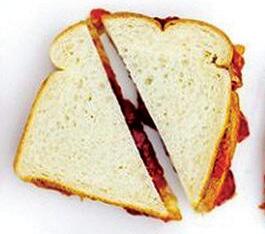
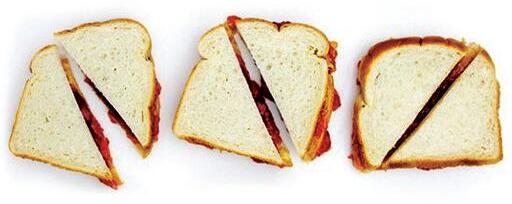
I was late to the game, a ripe ten years old, when I had my first PB&J sandwich Though I loved each independently, the pairing of peanut butter with jelly always grossed me out But, seeing as it was the only lunch provided on
t h e b u s h o m e f r o m s u m m e r camp, I had no choice but to
re l u c t a n t l y d i g i n Ye a r s a n d countless peanut butter and jellies later, it’s now hard for me to walk past Stocking Hall without stopping in for a couple scoops of the Dair y Bar’s PB&J ice cream Peanut butter and jelly mingle together to make one of the most classically American combi-
n a t i o n s , a c o m b i n a t i o n t h a t
m e a n s s o m e t h i n g t o a l m o s t ever yone Most people have their

preferences: Skippy or Jiff; grape jelly or strawberr y jam; crust on or crust off Yet despite this sandwich’s variety of forms, it is wildly popular: The average person will eat 1,500 PB&J’s before leaving high school, according to the National Peanut Board
PB&J Factoids
Na t i o n a l l y, 3 6 p e r c e n t o f
Americans prefer strawberr y jelly, while 31 percent choose grape White beats out whole wheat for bread inclinations, while smooth outweighs chunky peanut butter
However, much to my dismay while studying abroad, peanut butter is unpopular internationally I suppose I can understand the lack of peanut butter appeal if it was not a steadfast component of your childhood diet luckily
f o r m e a n d 9 4 p e r c e n t o f Americans, it was
PB&J Preparation
I like to leave the bread usually whole wheat untoast-


ed I smear a generous amount of Skippy Super Chunk peanut butter on one slice Then, I scoop jelly on top of that peanut butter; peach jelly, a bit of an underdog, is my favorite Any jam on hand (except grape, anything but grape) will work I affix the other slice of bread and eat i t c r u s t o n , u n s l i c e d
PB&J perfection
PB&J Variations
While I think it’s a bit impossible to get sick of this sandwich, I’m sure a sentiment that many people share is that variations are welcome, and often times are needed Naturally, I would suggest making the sandwich components bread, butter, jam from scratch in order to increase the overall sandwich quality But bread is tough to make, and it’s nearly impossible to get it as chewy and fluffy as a storebought loaf Plus, I’ve never had a homemade peanut butter that I liked I’m guessing it has something to do with the lack of deliciously perilous processing Stovetop jelly, on the other hand, is fantastic but requires a lot of equipment to ensure preservation So, variations must come from additions and manipulations
1. Add fresh fruit to brighten the sandwich Banana is traditional, or match the fruit to whatever jelly you ’ re using
2 Switch up the nut butter (almond, cashew, sunflower) for a refreshing change or for those of us with peanut allergies
3 Add Ritz crackers for extra crunch
4. Peanut butter, bacon and fig jam enthralls the hardcore
carnivores among us
5 Tr y shredded coconut, Sriracha and citrus marmalade for an adventurous Southeast Asian twist
9. Certain cheeses complement both the jelly and the nutty butter my favorites are brie and gruyere

6. Nutella is always a good addition
7. To truly maximize the PB&J’s innovative potential, cook it! Fr ying it in a generous amount of butter browns the outside while keeping the middle soft and runny
8. Tr y peanut butter and jelly waffles or French toast: Place the sandwich in a buttered waffle iron or dip it in a traditional batter (egg, milk and vanilla) and fr y it
When it’s all said and done, none of these variations will surpass the simple pleasure of the classic PB&J But they represent a re-imagination of the flavors and textures soft bread, salty-sweet peanut butter and fruity jelly
The PB&J sandwich is a filling breakfast, a classic lunch, a quick dinner and a satisfying drunk snack
National Peanut Butter and Jelly Day is in the middle of Spring Break, but I hope you will celebrate accordingly wherever you may be




Jack Jones


i
, I Do n’t Go Ou t s i d e In s t e a d o f m a t u r i n g i n t o a m o re f o r t h c o m i n g a n d c o m f o r t a b l e yo u n g
c e l e b r i t y, t h e g row n - u p t e e n p ro d i g y h a s w i t h d r a w n f u r t h e r i n t o h i s s h e l l , s o a k i n g i n h i s m i s e r y l i k e a r i c h
m a n s i t t i n g a l l a l o n e i n a h u g e h o u s e , w i t h t h e d o o r l o c k e d a n d t h e w i n d ow s b a r re d I Do n’t Li k e Sh i t i s f u l l o f u n e a s e ; E a r l i s a n x i o u s a b o u t t h e f a m e a n d
a t t e n t i o n t h a t h e s o d e s p i s e s , f o c u s i n g m yo p i c a l l y o n h i s g r a n d m o t h e r ’ s d e a t h w h i l e h e s i m u l t a n e o u s l y p u s h e s h i s m o t h e r a w a y a n d l a c e r a t e s a n e x - g i r l f r i e n d f o r h e r d i s i n t e re s t On 2 0 1 3 ’ s Do r i s , t h e re l e n t l e s s p e s s i m i s m a n d o b s e s s i v e s e l f - c r i t i c i s m o f E a r l ’ s r h y m e s s e e m e d t o p e r f e c t l y c a p t u re a s t a g e i n h i s l i f e “ I ’ m i n d e c i s i ve , I ’ m s c a t t e r b r a i n e d a n d I ’ m f r i g h t -
e n e d , i t ’ s e v i d e n t , ” E a r l r a p p e d o n Do r i s ’ s t a n d o u t “ C h u m ” ( s t i l l h i s b e s t s o n g ) A s i t t u r n s o u t , h owe ve r,
E a r l’s g l u m p a r a n o i a m i g h t n o t b e s i m p l y t h e p ro d u c t o f a c o m p l i c a t e d a d o l e s c e n c e i n t h e s p o t l i g h t It
m i g h t r a t h e r b e t h e i n e s c a p a b l e m i n d s e t o f a s e r i o u s l y
d e p re s s e d a n d a n t i s o c i a l p e r s o n
E a r l’s g e n u i n e d i s t a s t e f o r c e l e b r i t y i s re m i -
n i s c e n t o f Ku r t C o b a i n , a n o t h e r a r t i s t w h o s t r u g g l e d t o b a l a n c e h i s a
u m e n t a
t j a z z
, a s i g n a t u re t r a i t o f Od d Fu t u re p rod u c t i o n s , b u t m a n y c o m e t o a n a b r u p t , e a r l y h a l t : T h e a l b u m b a re l y b re a k s h a l f a n h o u r w i t h 1 0 s o n g s It f e e l s e ve n m o re a n t i - c o m m e rc i a l t h a n Ye e z u s , t h e l a s t m a j o r r a p a l b u m t o k n ow i n g l y t r y t o a l i e n a t e i t s
l i s t e n e r s , a n d I Do n’t Li k e Sh i t ’ s b o i l e d - d ow n , a g g re ss i ve l y s h o r t s o n g s f e e l l i k e j a b s a t t h e a u d i e n c e
E a r l l a r g e l y e s c h e w s t h e k i n d o f t o n g u e - t w i s t i n g c a s c a d e s o f a l l i t e r a t i o n a n d w o rd p l a y t h a t h e m a d e h i s n a m e w i t h o n s o n g s l i k e “ E a r l” a n d “ C o u c h ” Hi s s t y l e h e re i s m o re l a i d - b a c k , b u t c e r t a i n l y n o t i n a re l a xe d w a y Hi s c a g i n e s s s e e m s t o h a ve b l e d i n t o h i s r a p p i n g i t s e l f, a s i f h e d o e s n ’ t w a n t t o s h ow u s h ow






A glance at the past few years of my life reveals several different eras of experience and feeling, all united by one common denominator: Elliott Smith I first discovered his music the summer before my senior year of high school and its melancholic pulsing resonated immediately with the tumultuous feelings enveloping me during that time Since then, I have continued to share his music with those closest to me, hoping that it would have the ability to move them in the same, tender ways that it has moved me
In Seth Avett and Jessica Lea Mayfield, I have found my compatriots The indie-rock artists have spent the past three
years cherry-picking songs from Smith’s discography, creating a 12-song cover album, Seth Avett and Jessica Lea Mayfield Sing Elliot Smith, which was released earlier this month Their reverence for Smith is evident in the carefully arranged renditions of his songs They add depth to each track through the addition of orchestral instruments
Smith’s songs were originally written for a solo acoustic guitar and vocals, but Avett and Mayfield layer additional elements over this base Both artists’ voices are showcased throughout the album; They harmonize with artful and overlapping melodies, alternatingly singing solo and in conjunction with one another
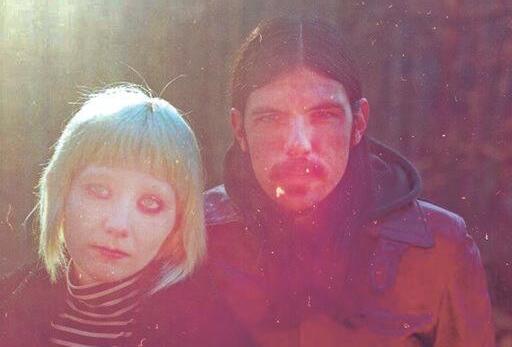
Their selection of songs astutely represents Smith’s discography It pulls from a variety of different albums and time periods including many of his signature melancholic tunes as well as more upbeat tracks The album opens with ”Between the Bars,” a song that characterizes Smith’s longlasting struggle with alcohol dependence After a quick listen, it’s easy to mistake this track for a love song, although perhaps, in essence, it is one However, it characterizes Smith’s relationship with alcohol rather than a relationship with a traditional lover This is my favorite track of the album Avett and Mayfield keep it simple; The track is not overloaded with orchestral noise and the pair’s voices overlap sensitively
The tracks on this album are split pretty much fifty-fifty with regards to their honesty to Smith’s
m u c h h e c a n d o , f o r f e a r o f r a i s i n g t h e e x p e c t a t i o n s f o r h i m s e l f e ve n h i g h e r So i n s t e a d h e f i l e s h i s l i n e s d ow n i n t o h a rd , s h o r t b u r s t s On t h e s e c o n d h a l f o f “ Gr i e f, ” h e s l ow s d ow n t h e t e m p o t o a s t o n e d c r a w l , w h i c h s h i f t s s u d d e n l y a t t h e e n d i n t o a n u p b e a t b i t o f a c i d j a z z , a s i f h
c o u l d n ’ t s
t o s t a re t
d i n t h e f a c e a n y l o n g e r We d o n ’ t g e t m u c h o f w h a t m a d e h i m o n e o f t h e m o s t e xc i t i n g t e c h n i c a l l y g i f t e d r a pp e r s s i n c e Em i n e m ; Bu t w h a t we g e t i n s t e a d i s a f a sc i n a t i n g , i f u n s e t t l i n g , g l i m p s e i n t o a n e va s i ve a n d a g g re s s i ve m i n d s e t , w o r r i e d a b o u t c o m p ro m i s i n g h i s a r t i s t r y a n d f i n d i n g s o l a c e o n l y i n g r a b b i n g a g l a s s a n d p o u r i n g “ s o m e c o l d w h i t e w i n e i n i t ” T h e a l b u m i s o b j e c t i ve l y a s u c c e s s Eve n i f i t d o e sn ’ t r i s e t o t h e h e i g h t s o f Do r i s , i t ’ s a b o l d l y i s o l a t i n g m ove by a r a p p e r w h o s e m o s t a p p e a l i n g q u a l i t y b e s i d e s h i s d a z z l i n g s k i l l m i g h t b e h i s re l a t a b i l i t y.
No n e t h e l e s s
Jack Jones is a freshman in the College of Arts and Sciences He can be reached at jjones@cornellsun com
originals Even though I am a fan of classic portrayals of Elliott Smith’s songs, I still appreciate the necessity for Avett and Mayfield to add a spin of their own styles to his music “A Fond Farewell” is, perhaps, the track that departs the most from Smith’s original vision Their cover utilizes the original’s lyrics, but their melody strays significantly from home base At first, I was a bit critical of the alterations made to this track, but after a few more listens, came to appreciate how Avett and Mayfield were able to infuse Smith’s work with a twang of their own style
While Avett and Mayfield are talented singers, their songs ultimately lack gravity Smith’s songs are infused heavily with grief, and this is an aspect that I believe they fail to accurately capture What makes Elliott Smith so dear to me is the emotion and honesty that he infuses within his songs In many ways, Smith is his songs Their overarching tone embody the anguish that he experienced during his career, and the tragedy of his painful suicide in 2003 Simply take a moment to watch Smith’s performance of “Miss Misery” during the Oscars in 1998
He appears, at center stage, a stark figure in a white suit His eyes scan the crowd in nervous bursts; He seems out of place in the lavish environment of the Academy Awards When Avett and Mayfield perform, they occupy a completely different persona In a video of the two performing “A Fond Farewell” on stage, they display an airy and pleasant quality, imbuing Smith’s song with a cheery overtone that is not generally a part of his repertoire Avett and Mayfield create beautiful covers, but they fail to embrace the pain necessary to truly reflect Smith’s artistry
The saddest thing about music it that it exists within ones own globe I’ve come to accept the fact that few may ever glean the same internal twitches and satisfaction from Smith’s “Between the Bars” or “Say Yes” in the same way that I do However, I’m hopeful that Avett and Mayfield’s album, despite it’s flaws, will encourage more individuals to take a peek into Elliott Smith’s raw, melancholic genius and develop feelings of their own for it
Melis Schildkraut is a sophomore in the College of Arts and Sciences She can be reached at mas759@cornell edu






“You understand they’ve got a plan for us / I bet you didn’t know I was dangerous / Whistleblowing is an act of aggression / So he better run, cause I’m gonna teach him a lesson ” Only a few lyrics into Big Data’s new album 2 0, and already a loaded cautionary tale is revealed
With the release of their first studio album on March 20, Big Data is a new electropop act on the rise Best known for their hit single, “Dangerous,” released on their EP 1 0 in October, 2013, Big Data is a self-described “paranoid electronic music project,” created by and for the Internet, due to “ a general distrust for technology and The Cloud ” All of this is explained by Alan Wilkis, a music producer and composer from Brooklyn who, up until now, was remotely known for his remixes of songs by The Who, The Temper Trap and many other groups As the sole creator of Big Data, Wilkis aspires to analyze and relay the impact of technology on human society: Specifically the way that the Internet has altered modern day society and human experiences
Although Wilkis is a huge user of the Internet, his goal of Big Data is to have people question how much personal data they are willing to give up His claim? That people cannot live without technology He wishes to reveal the simple irony of the situation: People are not able to function without technology, yet are reluctant to share the personal information about themselves that is oh-so necessary to use it
The album itself includes the work of Wilkus and several collaborators, such as Joywave, Rivers Cuomo and Dragonette The mood of the album sits as catchy yet cynical, specifically speaking to the world’s worries about and addictions to the Internet age Though some of the songs
“Eare head-bopping tunes, filled with uplifting dance beats, the majority of the album strikes as the type of music listened to when you want to think about the world and ponder whether or not our technology addiction has bound us to total doom
According to Billboard, Big Data’s hit song “Dangerous” has peaked at the No 1 spot on the Alternative Songs list and has spent 41 weeks on the charts and counting And for anyone still trying to decide whether or not to give Big Data a chance, I encourage them to watch the music video for “Dangerous” and see whether they can sit through it without squirming or gasping at what plays out on screen Unquestionably the most recognizable of their songs, “Dangerous’” music video shows a marketing campaign being created for fictional company, Big Data Shoes, encouraging wearers to commit violent acts Consumed with plenty of head-butting and blood-splattering, the video is undoubtedly an unsettling depiction of virtual control Big Data is trying to prove the power of the Internet and how it can track people, hinting at the fact that people are unaware of how “dangerous” the Internet can truly be If this type of message fits your bill, than listen on: Every other song on this album promises equivalently surprising lyrics and themes
“The Business of Emotion (feat White Sea)” is the catchy song that you’ll find stuck in your head long after it’s over Speaking to the inevitable emotional impact of the Internet, “Doesn’t matter to me cause you ’ re all the same / Should of never ever forgot / you signed up / now there’s no escape, ” this is one of the tamer songs off the album in
terms of lyrics and melodic appeal “Clean,” on the other hand, taunts the listener with sarcastic opinions of all these virtual influences: “I’m so clean / I’ve washed it all away ”
Likewise, the most straightforward song off the album, “Snowed In (ft Weezer),” candidly discusses the motivation to persecute NSA leaker Edward Snowden
Endless references and emotional connections are presented in 2 0, yet it seems Big Data fails to choose one emotional opinion regarding the power of technology
Although the entire album speaks to several overarching themes, few songs speak to the same emotions In fact, many songs evoke multiple emotions It’s an album full of twists and turns, playing with society’s emotional investment in the Internet age
And although Big Data seems to be shaming the constant use of technology, a contradiction lies in the fact that Big Data uses technology to make and promote music through social media According to Wilkis, his song writing is a two-part process: “I try to basically combine guitar with bass with the electronic thing and that’s the human element inside the technological element and that’s what I love ” By combining all of these elements, Wilkis has created what appears to be a flawless formula: Catchy beats, inspiring lyrics and mesmerizing music videos all of which are relatable to the internet-savvy listener If you ’ re a fan of deeply political, Brooklyn-born electronic music, Big Data’s latest album is undeniably worth a listen
Rachel Mack is a junior in the College of Agriculture and Life Sciences She can be reached at rmack@cornellsun edu
ver ything except countr y ” I remember this being a very fashionable response to “What kind of music do you like?” back in junior high in California Country wasn ’ t a cool thing to like: Too safe, too corny, too all-American for an age when kids are excited by anything that claims to challenge authority, like the aggressive punk and rap to which my friends and I gravitated
“Everything except country, ” besides being a non-answer, really only addresses the genre of music that is currently played on “ country ” radio These songs are far in sound, style, and substance from the music that formed in the American South as an amalgam of blues and folk There is really nothing on country radio today that is simply country Much of it is straight-ahead rock with flourishes of country instrumentation, or “ country-pop, ” a style that Taylor Swift’s musical evolution has proved succeeds better the farther it moves towards pop
Of course, current Nashville country ’ s main offense isn’t its dependence on other genres; it is its complacent, jingoistic and
proudly ignorant themes The Rhett Akinspenned “Kiss My Countr y Ass,” made famous by the otherwise mild-mannered and inoffensive Blake Shelton, is a sampler of everything that is wrong with Nashville country: A hostile, belligerent attitude to anyone different than the “backwoods re d n e c k” n a r r a t o r ( s e e title) It’s a celebration of the “rebel flag flying” from the back of the narrator ’ s truck, which turns a blind eye to the offensive implications of the flag and the l u d i c ro u s b a l a n c i n g a c t between celebrating oneself as an outlaw and claiming to love the nation, as well as rabid support of the American military The narrator confusingly tells us we can kiss his country ass both if we ’ re not “down with [his] outlaw crowd” and if we “don’t love the American flag ” It saddens me that the term “ country ” has essentially suffered a hostile takeover by this numbingly repetitive and vapid brand of
rock Country can be beautifully wistful without sinking into saccharine clichés and defiantly individualistic, without devolving into bigotry and us-versus-them rhetoric So much eloquent, moving and catchy


music is made by artists working in the country style Steve Earle makes a rootsy and rocking blend of country, folk and rock, and has written more great songs about America than anyone other than Bob Dylan and (maybe) Bruce Springsteen Lucinda Williams’s uniquely broken voice lends more emotional weight to her spare, poignant lyrics than any over-emoting belter ’ s The Drive-By Truckers may be the closest thing to the William Faulkner of music, writing songs that explore the complexity and contradictions of the South through intense and detailed character studies Uncle Tupelo and its more famous offshoot Wilco transformed the themes and sounds of early, rootsy country into vital and thrillingly rocking music And these are all artists working outside the world of Nashville; Within, there are some that subvert and challenge the machine they work in, like Kacey Musgraves, Ashley Monroe and Eric Church, who mutters on his most recent album, “The devil walks among us, folks / And Nashville is his bride ” I’d like to take the remaining space to name three country songs that I think best represent the genre ’ s potential: Songs that both fulfill and transcend their stereotypes
Steve Earle, “Guitar Town” Earle spent the rest of his career after this debut stretching the lyrical and stylistic boundaries of the genre This isn’t Earle’s best song, but it is his most purely country It fulfills pretty much every sonic and thematic cliché of country and manages to still be a clever and affecting song “Guitar Town” proves that country can be unabashedly country, and still be great
Lucinda Williams, “Those Three Days” Heartbreak is a common theme in country music, to the point of stereotype This song may be the most painful breakup song I have ever heard: Williams’ ex-lover is described entirely in terms of an invading force on the body, an insect and an illness that has “built a nest inside [her] soul ” The album version is good, but the live version from Live @ the Fillmore is one of the most moving and unsettling performances I have ever heard When Williams sings “scorpions crawl across my screen / make their home beneath my skin,” you can feel them gnawing at your own
Kacey Musgraves, “Merry Go Round”
The best thing about this beautiful, smart and melancholy song is that it works within the frame of Nashville country, exploding its parameters from the inside This is a song about real people in real small towns, rather than an ode to an idealized America of “small-town” values “Follow Your Arrow,” from the same album, more explicitly attacks close-minded traditionalism, but “Merry Go Round” subtly upends country radio’s sepiatoned view of small-town America by depicting a cycle of people suffering from a hypocritical and failing culture
Jack Jones is a freshman in the College of Arts and Sciences He can be reached at jjones@cornellsun com Despite All The Amputations appears alternate Thursdays this semester








With temperatures still near freezing, most Cornellians are still waiting for the spring to kick in on campus
There are signs of hope The sun is shining brightly these days The snow has melted and greener y can be seen around campus Spring break is the gateway to happier days
With the warming weather comes another thing to look forward; something that has deep roots in my childhood Ever y year since I was about seven years old, the coming of spring has meant that it is time for baseball
Spring training started in mid-March This year the official season will start on April 5th in a matchup between the St Louis Cardinals and the Chicago Cubs And with that, my love of baseball will be sparked again
However, it is clear that many people do not share that love It happens all too often that when I mention my interest in baseball, people tend to point out that the sport is inherently boring, slow-moving or simply is not something that someone should watch in their free time To be fair, I can see where that argument comes from Additionally, the argument that baseball is dying as a sport has also developed in recent years I am writing this to argue that baseball is still ver y much alive
For those that love baseball, it comes from a deep understanding of the game My love from baseball comes from childhood memories of packing my cleats and glove ever y weekend morning in the spring and heading to the baseball fields at Prospect Park in Brooklyn It also comes from my first memor y of seeing a major league ballpark in person, and walking out of the tunnel at my first ballgame at Yankee Stadium to see the green grass and the crowd that looked way different than what it did on TV On top of that, it comes from the first time I was able to step out onto the field at Shea Stadium with my little league team and see the crowds coming in before a matinee game
Moments like those helped to engrain baseball in my heart
However, baseball also has many interesting components to the action that a non-baseball fan would not notice When I tried to explain baseball to my Russian relatives, it was ver y tough to get anyone on the same page There were too many things to explain: innings, positions, balls, strikes, outs, batting orders, umpires, managers, etc That is when I realized that there are many intricacies that make the game a fascinating thing
For example, pitch type and location for various pitchers is something that I like to follow As someone who pitched in my

Nik’s Knacks
playing days, I enjoy watching a good pitching duel by some of the best talents in the MLB Additionally, details like ballpark factors, which can describe the physical or environmental effect of a ballpark compared to others around the MLB, add another interesting element to the game
Baseball is also largely run by statistics There are ver y detailed statisticians working diligently for all teams to analyze the minor details that could result in the greater probability of a victor y That includes analyzing the effectiveness of a certain batter opposing a certain pitcher, using historical performance as a measure Furthermore, Sabermetrics have developed out of baseball This analysis strategy utilizes often overlooked in-game statistics to put together a winning formula The practice has been called the “search for objective knowledge in baseball,” and it has received both praise and animosity
Compared to the popularity of high-flying, highlight-reel sports like basketball and football, baseball stands a strong test of acceptance However, it takes a lot to truly understand ever ything that goes into the game Baseball is not dying in the slightest Attendance is still high and the MLB Commissioner’s Office is making efforts to speed up the game by limiting breaks between pitches and innings However, if you were to ask me, I would not want the game to change at all
I have grown up with baseball as a sign of life when the season rolls around ever y spring Many memories give baseball a special place in my heart The memories of getting my first big hit or winning the division championship in my last year of play are not the only things that make me love the game The simple joys of spending a weekend afternoon under that sun and in the electrifying atmosphere of a Major League ballpark always make me eager to see baseball back If it is in your heart, baseball will not go anywhere Baseball is America’s pastime, and it is not going to fail The sport can be one of the most pleasurable to both watch and play, but that is contingent on whether or not you are willing to take the time to appreciate it
ndubnov@cornellsun com
Continued from page 16
s d i n n e r, C h a r l i n e
s t a r t e d t o f o l l o w m e o n Tw i t t e r a n d I w a s l i k e , o h m y g o d , [ s h e w a s ] g a y f o r s u r e O f c o u r s e ,
I f o l l o w e d b a c k We b o t h k n e w t h a t w e w e r e
c y b e r s t a l k i n g e a c h o t h e r We s h o o k h a n d s a n d
I t e x t e d m y m o m , I t h i n k I a m i n l o v e w i t h
C h a r l i n e L a b o n t e It w a s a v e r y s p e c i a l t i m e
g e t t i n g t o l i v e S o c h i t o g e t h e r I a m v e r y l u c k y ”
“So much of our language on the field is instituionally homophobic. That most definitely needs to change right now.”
A n a s t a s i a B u c s i s
A t h l e t e A l l y, a l o n g w i t h t h e C o r n e l l Un i v e r s i t y Pr o g r a m B o a r d a n d H a v e n , i n v i t e d
B u c s i s a n d L a b o n t e t o d i s c u s s e v e r y t h i n g f r o m t h e i r s t a r t i n a t h l e t i c s t o t h e i r p e r s o n a l r e l at i o n s h i p w i t h o n e a n o t h e r A t h l e t e A l l y p u t s o n p r o g r a m s l i k e t h e O l y m p i c p a n e l t o w o r k t o
c h a n g e t h e c l i m a t e o f a t h l e t i c s o n t h e Hi l l “ I s t a r t e d A t h l e t e A l l y i n t h e s p r i n g o f 2 0 1 3
b e c a u s e I f e l t t h a t w e n e e d e d t o m a k e t h e
C o r n e l l a t h l e t i c c o m m u n i t y a m o r e i n c l u s i v e , c o m f o r t a b l e , a c c e p t i n g s p a c e f o r L G B T i n d iv i d u a l s , ” s a i d s e n i o r A t t i c u s D e P r o s p o , f o u n d e r a n d c o - p r e s i d e n t o f C o r n e l l ’ s c h a p t e r o f A t h l e t e A l l y “ We w a n t e d t o c r e a t e a n i n c l us i v e c l i m a t e m o v i n g f o r w a r d a n d c h a n g e t h e c u l t u r e ” S i n c e i t s c r e a t i o n i n 2 0 1 3 , A t h l e t e A l l y a t C o r n e l l h a s b r o u g h t L G B T a l l y B r a n d o n A y a n b a d e j o f r o m t h e B a l t i m o r e R a v e n s t o s p e a k , c r e a t e d a Yo u C a n P l a y v i d e o s e r i e s p r om o t i n g L G B T a l l i e s a n d h a s d o n
Haley Velasco can be reach at hvelasco@cornellsun com
LAKELAND, Fla (AP)
Tigers star Miguel Cabrera played the field for the first time this spring, doing fine at first base as Detroit beat the Miami Marlins 8-4 Wednesday
Cabrera had been limited to designated hitter duty while recovering from ankle surgery
Cabrera made a diving stop on a hard grounder by former teammate Don Kelly and threw from the ground for the out at first Cabrera also fielded a basesloaded grounder and thre w home for a forceout
“I’m just glad to back on the field playing first base,” Cabrera said “I can play defense and I want to be back at first I’m seeing the ball, getting my timing down It’s a good sign ”
Cabrera scared manager Brad Ausmus when he made that dive Cabrera said it was just instinct and was laughing when he raised himself up
Ausmus didn’t think it was so funny at first
“I liked it a lot, especially when he got up, ” Ausmus said “I was a little more concerned when he went down Of course I was concerned He is an important part of this team
” The former Triple Crown winner went 0 for 2 Cabrera played alongside Victor Martinez, who went 1 for 3
Cabrera hit third and was followed by Martinez, and Jose Iglesias played his third straight
game at shortstop Martinez is coming off knee surger y and Iglesias has been recovering from stress fractures in both shins
Alfredo Simon allowed four runs in 4 2-3 innings, leaving him with a 7 02 ERA in five spring starts for Detroit
David Phelps, competing for a spot in the Marlins’ rotation, pitched five shutout innings, giving up two hits Acquired from the Yankees to Miami during the offseason, he’s been sharp in five starts
Bryan Holaday hit a grand slam for Detroit
Donovan Solano had three hits, including a home run, for Miami
Starting Time
Marlins: Phelps isn’t taking a starting job for granted once camp breaks in less than two weeks
“I’m satisfied that I am doing all I can, ” said Phelps, who started 17 games for the Yankees last season “I am being more aggressive It’s a new thing here I am going from a team with a lot of guys fighting for a starting spot to a more laid-back atmosphere My job is to pitch and let (management) make the decisions ”
Marlins manager Mike Redmond said he still hasn’t settled on his fifth star ter, but Phelps is in the mix
Tigers: Ausmus said he wasn ’ t putting too much stock in Simon’s struggles this spring
“He just keeps getting up in the zone, ” Ausmus said “I’m not worried about it Spring training is all about preparation than performance ”
Marlins: Henderson Alvarez will start on Thursday against the St Louis Cardinals He is 0-1 with a 5 40 earned run average this spring
Tigers: Opening day starter David Price will go on Thursday in Lakeland against the Baltimore Orioles
Bullpen Issues
Tigers relievers Joe Nathan, Joba Chamberlain and Br uce Rondon each pitched a shutout inning Nathan will make his first back-to-back outing on Thursday against the Orioles and said he hasn’t felt better all spring
“I felt so good today,” Nathan said “It felt good coming out of my hand and I knew I could beat guys with my fastball The difference was night and day compared to the last time out ” Nathan said he had been spending a lot of time watching film of himself and used it to make adjustments in his delivery
“I think he is pitching great, ” Redmond said “He is relentless on the corners We brought in guys who can start and relieve and he can do both ”

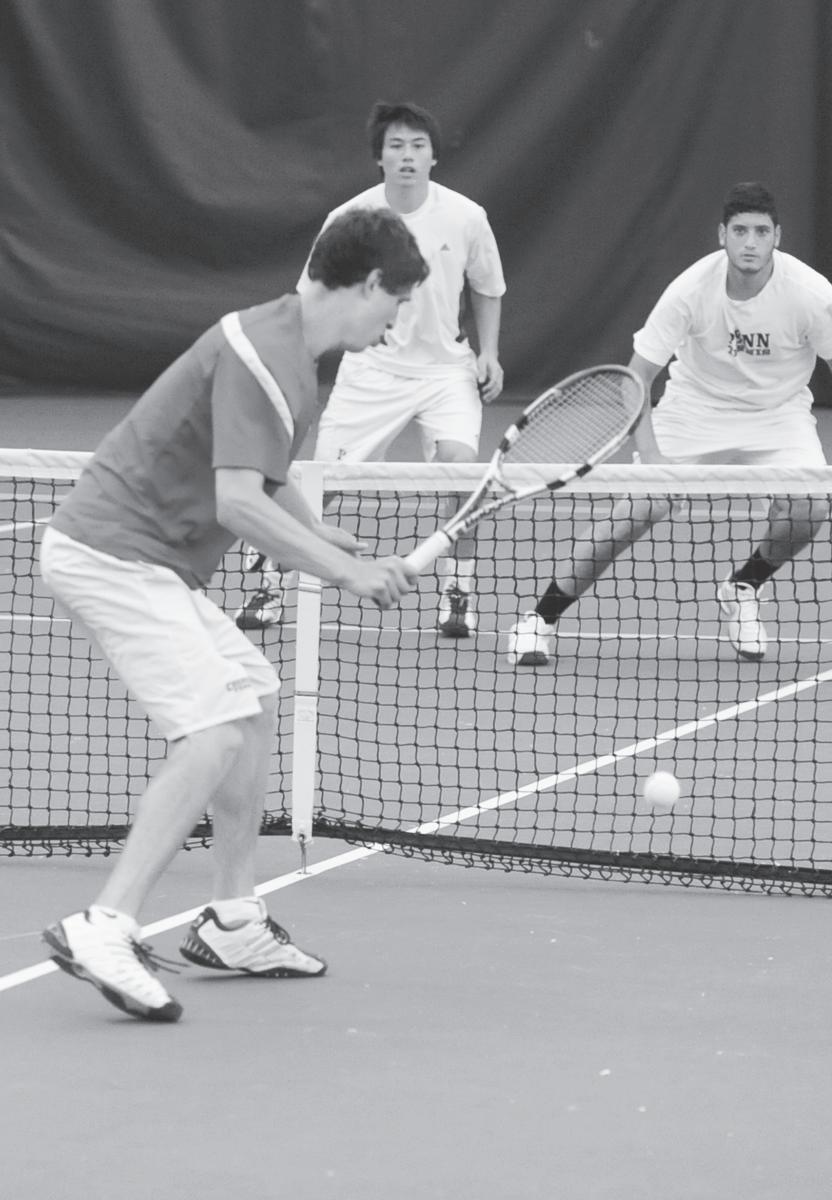
Swinging away | The Penn Quakers have breezed through a tough schedule and currently sit at second
The Dartmouth women ’ s tennis team has started the season on a great note, dropping only one of their first 14 matches This sole loss came to a Long Beach State squad that has looked equally impressive to start the season
The Green has already competed against three other Ivy League schools, defeating Brown twice and Princeton and Columbia once each The team rose to as high No 23 in the national rankings, but fell out of the Top 25 after their loss to Long Beach State
Dartmouth looks to be the class of the Ivy League this year, after already defeating last year ’ s champion Princeton, as well two competitive Brown and Columbia squads They are currently on a road trip that has included four matches in

California and will conclude in Texas with a match against Houston Conference play then starts up again with seven consecutive Ivy League matches

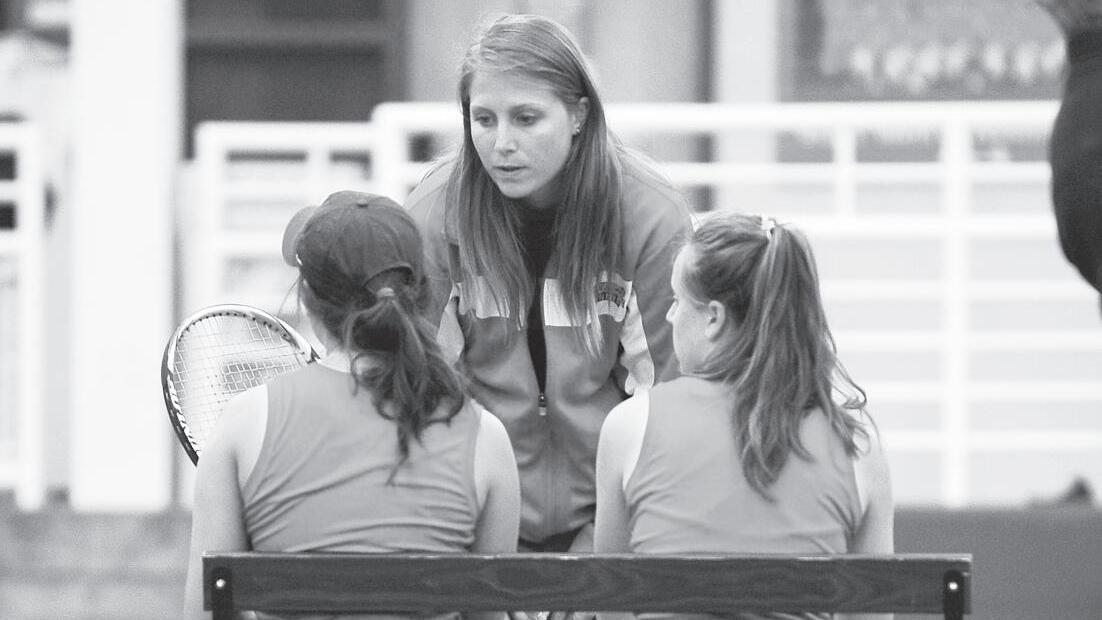






By ANNA FASMAN Sun Sports Editor
This past weekend, sophomore Gabe Dean became Cornell’s most recent NCAA champion in wrestling since Kyle Dake ‘13 won during his senior season with the Red Dean is the 17th Cornell champion in the program ’ s history Sophomore Brian Realbuto took second place in his fight at 157 pounds and the team finished in fifth place
ove r a l l Ju n i o r Na h s h o n Ga r re t t a n d s e n i o r C h r i s
Villalonga took fifth and sixth place respectively
Dean’s win came after a strong 43-2 sophomore season with the squad After coming in third in last year ’ s NCAA’s, his performance at the tournament this weekend was characteristically solid in all of his matches Dean saw success in all five fights and won by decision, 6-2, in the finals taking down Nathaniel Brow ing th Tw
a f t e r big w D e w a name
o f t
weeks after earning Ivy Wrestler of the Year Garrett earned the same title last year, while the acclaimed Dake won the honor for the two years prior in ished his season on a 28-match
While Realbuto came in a s he said he is not totally satisfied
“I was happy to achieve again this year, but losing in th was difficult,” he said about fa freshman Isaiah Martinez of “However, coming so close to my goal this year will definitely drive me to get there next year ” While his loss was d i s a p p o i n t i n g , Re a l b u t o k l d th t he did ll as he that the h reflect-
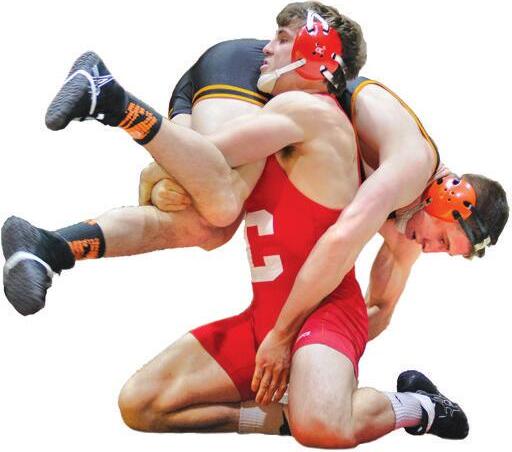
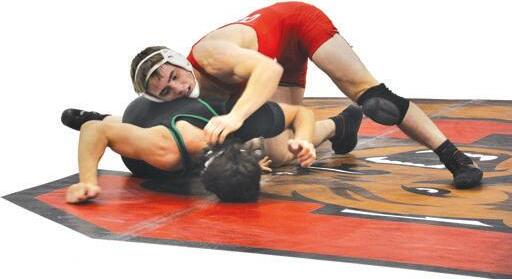
ving up the takedown at the end of the eriod, it really struck me how poorly I stling,” he said “I wasn ' t able to get the flow of the match moving in my favor, and towards the end I felt a bit helpless ”
For the Red, the national tournament is always a true culmination of a season and a year ’ s worth of work
While the squad had been training hard ason, Realbuto explains that the weeks the tournament are all about mental
ng up to the NCAA tournament, the mportant work put in is mental,” he “Getting yourself in the right place ntally is the most challenging aspect really need to be at peak performance
Garrett and Villalonga, head coach Robert Koll has much to be proud of Koll, one of the best coaches in Cornell athletics history, has had at least four All-Americans on his squad for 10 of his last 11 seasons He constantly sets tough but achievable goals for his players and pushes them to wrestle their hardest each and every match However, with much success comes an expectation of excellence and Realbuto’s feelings about the team ’ s overall finish reflects this expectation “I really do not think that we maxed out our potential,” he said “This finish was not our best showing and it has l e f t u s f e
Realistically, we have enough talent on this team to win a national title and I truly believe we will get there next year at Madison Square Garden ”
o b e Pr e s i d e n t Ob a m a we n t a s f a r a s s a y i n g , “ No b o d y i s m o r e o f f e n d e d t h a n m e ” a t a W h i t e Ho u s e p r e s s c o n f e r e n c e i n Au g u s t 2 0 1 3
“ So c h i w a s t h e t i m e o f o u r l i v e s , ”
C a n a d i a n s p e e d s k a t e r A n a s t a s i a Bu c s i s s a i d “ We w e r e a t t h e O l y m p i c s t o g e t h e r C h a r l i n e w a s o n f i re a n d I w a s h a p p y w i t h m y s k a t i n g It w a s w o n d e r f u l b u t i t d e f in i t e l y d i d f e e l l i k e t h e re w a s a n e l e p h a n t i n t h e r o o m T h e r e we re a l o t o f q u e s t i o n s o n p e o p l e ’ s m i n d s ” A c c o r d i n g t o t h e In t e r n a t i o n a l Bu s i n e s s Ti m e s , 2 , 8 0 0 a t h l e t e s p a r t i c i p a t e d i n t h e 2 0 1 4 g a m e s , r e p r es e n t i n g 8 8 c o u n t r i e s Tw o o f t h o s e a t h l e t e s , C h a r l i n e L a b o n t e , a f o u r - t i m e o l y m p i c g o l d m e d a l i s t f o r t h e w o m e n ’ s C a n a d i a n h o c k e y t e a m , a n d B u c s i s , a t w o - t i m e o l y m p i c s p e e d s k a t e r f o r C a n a d a , t r a v e l e d t o Ru s s i a a s a c o u p l e Du r i n g a p a n e l p u t o n by C o r n e l l’s c h a pt e r o f At h l e t e A l l y, t h e t w o a t h l e t e s d i s c u s s e d t h e i r r i s e t o t h e O l y m p i c s , h o w t h e y g o t s t a r t e d i n t h e i r re s p e c t i ve s p o r t s a n d w h a t i t w a s l i k e t o c o m e o u t a s L G B T w h i l e p l a y i n g c o m p e ti t i v e s p o r t s L a b o n t e s p o k e a b o u t h ow h e r i c e h o c k e y c a re e r p rov i d e d h e r w i t h LG BT ro l e m o d e l s t h a t m a d e h e r c o m i n g o u t p ro c e s s a l i t t l e e a s i e r “ My f r i e n d s p l a y h o c k e y, s o t h a t