The Corne¬ Daily Sun

doned ghost town of buildings and quads.
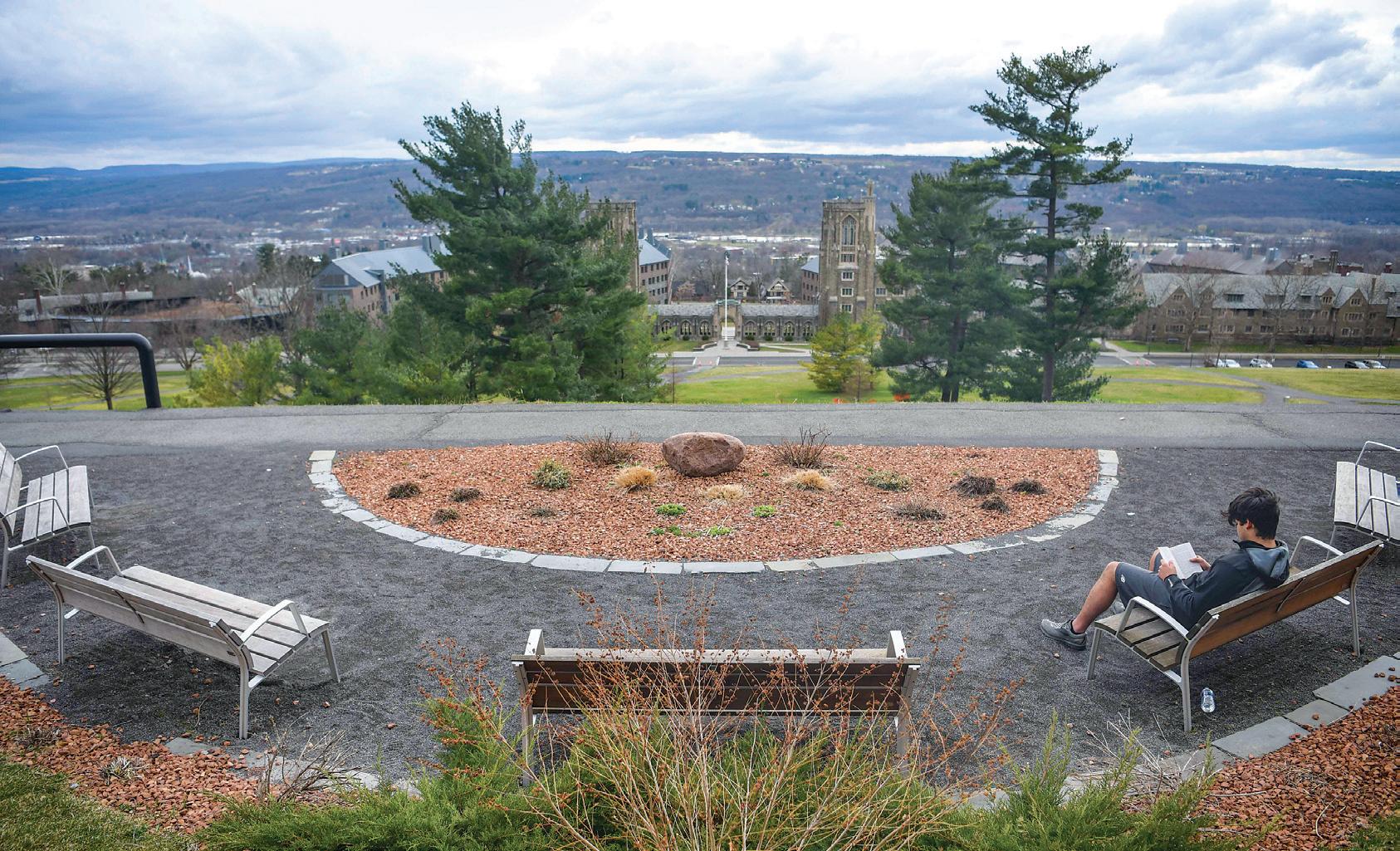
It has been a year of Zoom, of nose swabs, of swift policy changes. It has been a year since the lives of Cornell students turned upside down, as the coronavirus pandemic pushed students off a bustling campus that remains a world away.
Cornell announced its transition to virtual instruction on March 10, 2020, sowing panic across campus, as administrators told Cornellians to leave at the start of spring break and to stay home for the remainder of the semester. On March 13, Cornell suspended classes for three weeks and urged students to leave as soon as possible. In a span of days, the busting prelim season campus transformed into an aban-
Since students fled Ithaca and Cornell rolled through a rocky fall reopening, mask wearing, online classes and regular surveillance testing have become the new campus normal. In the shadow of the virus, students supported one another from a distance. They studied for exams, celebrated milestones and tried to stay safe, whether in Ithaca or multiple time zones away.
As the vaccine rollout begins, here’s a look into the lives of students who lived through a pandemic-driven year as Cornell looks ahead to a future once again filled with Lynah Rink games, Slope Day and in-person graduations. The following interviews
By ANDREAS PSAHOS Sun Staff Writer
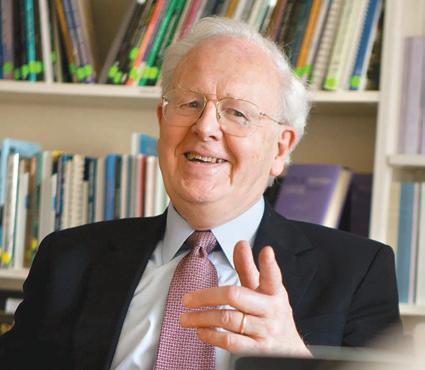
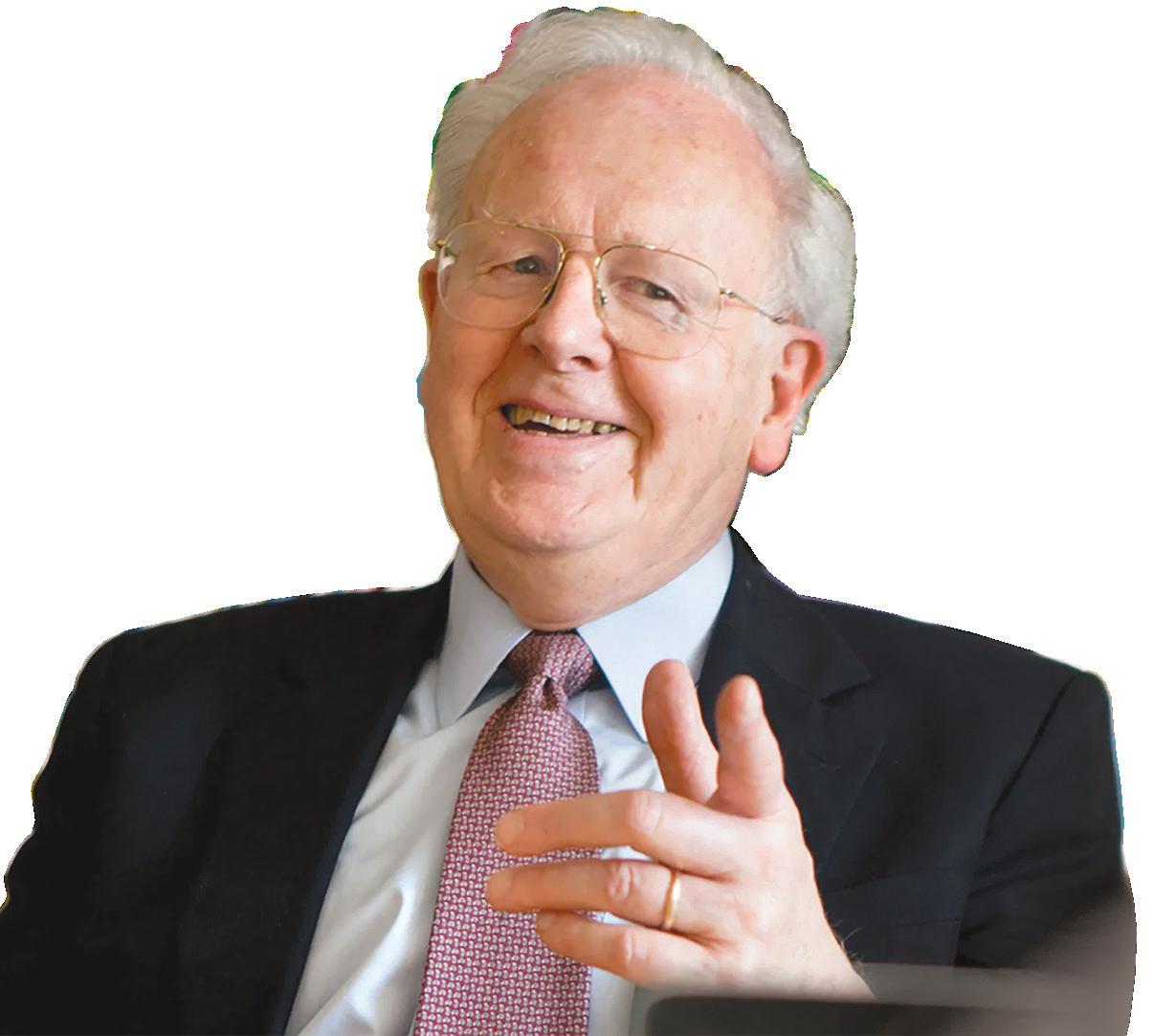
On Tuesday, Prof. Walter LaFeber, the Andrew H. and James S. Tisch Distinguished University Professor of History Emeritus — one of the most influential U.S. foreign policy thinkers in the past half century and a beloved professor known for his show-stopping lectures and unconditional support for his students — died in Ithaca. He was 87.
American History emeritus from 1968 until 2002.
“Between 1959 and Walt LaFeber’s retirement almost 50 years later, he was, without question, the most iconic, the most admired, the most respected, the most identifiable professor who made a difference in the lives of thousands and thousands of students,” said Prof. Glenn Altschuler Ph.D. ’76, American studies, who was a Cornell graduate teaching assistant in 1971 before becoming a lifelong col
ical political labels, he is considered a “moderate revisionist” who characterized the 19th century American empire as driven by economic imperialism rather than morality or security.
He also had a strong presence outside the University as a prolific writer and communicator, writing and co-authoring 20 books and dozens of articles, speaking at countless universities and appearing in documentaries such as PBS's American Century, the BBC's End of the Cold War? and Walter Cronkite’s American Presidencies
“He was a great storyteller,” said former student Prof. Andrew Rotter ’75, history, Colgate University.
LaFeber’s lectures in Baker Laboratory granted him a level of notoriety among Cornell students for nearly 50 years. While most professors of LaFeber’s seniority usually moved on from teaching undergraduates, he continued to give lectures during the week for his courses in addition to a lecture on Saturday mornings that consistently drew massive crowds of Cornell students, faculty and outside visitors.
“What I can say to you is what I say to all current undergraduates: I'm sorry you couldn't have taken
By ONALEE DUANE Sun Staff Writer
Former President Bill Clinton will join Prof. Steve Israel, government, speaking to the Cornell community on Thursday on the state of American democracy following a year of deepening U.S. divisions.
Hosted by the Institute of Politics and Global Affairs and eCornell, the conversation will focus on the polit
ical challenges the U.S. faces and how students can preserve democracy for future generations. The event will launch the new Milstein State of Democracy Addresses series, and the conversation will include questions from undergraduate students and an introduction by Bob Harrison ’76, chair of the Cornell Board of Trustees and CEO of the Clinton Global Initiative.
The conversation will focus on the political challenges the U.S. currently faces and what students can do to preserve democracy.
Both Clinton and Israel have spent time in political office and worked in other fields after their terms. After Clinton’s time at the White House came to an end as the 42nd president, he created the Clinton Foundation, which aims to create economic opportunity, improve public health and inspire civic engagement and service. Israel is a former Democratic congressman from New York and represented the state’s second and third districts for 16 years. After his time on Capitol Hill, Israel left to pursue a career as a writer. He now leads the nonpartisan Cornell University Institute of Politics and Global Affairs in New York City. Israel is a frequent political commentator on MSNBC, and he regularly contributes to The New York Times, The Wall Street
See CLINTON
Tuesday, March 16, 2021
Today
Words Matter: Labeling Disputes
10:30 - 11:30 a.m., Virtual Event
‘The Old Boys’ Club’: Schmoozing and the Gender Gap 11:15 a.m. - 12:45 p.m., Virtual Event
‘We Were Always Buddhist’: Dalit Historiography and the Temporality of Caste
4 - 5 p.m., Virtual Event
Online Assortment Optimization for Two-Sided Matching Platforms 4:15 p.m, Virtual Event
How Does China’s Domestic Governance Shape its Foreign Policy?
7 - 8 p.m., Virtual Event
Plant Identification for the Rare Plant Watch List
7 - 8:30 p.m., Virtual Event
You Have More Influence Than You Think 8 p.m., Virtual Event
Independent Since 1880
Continued from page 1 Distinguished
LaFEBER
a class with him,” Altschuler said. “I’m sorry, you couldn’t have been his advisee. I’m sorry you couldn’t have listened to a public lecture by him.”
Decades later, former students and colleagues all recount identical details of being in LaFeber’s classroom: He would walk in sharply dressed, write a table of contents for his lecture on the board, then begin speaking without notes. What resulted was an enchanting performance, with an over hour long lesson replete with narrative detail and absent of any fillers.
“I think I’m a pretty good lecturer, but Walter LaFeber’s lectures were mesmerizing,” Altschuler said. “They were no frills lectures. He wrote an outline on the board. He delivered the lectures without notes. They were perfectly formed. They were filled with narrative details, analysis. And yet, you sat in that seat. And you realized, not only that you were in the presence of a master, but that every word counted, and you were learning every moment.”
Former students also noted LaFeber’s ability to make historical figures — from Benjamin Franklin to Walter Lippmann — and seemingly mundane text come to life on the lectern.
“Each lecture was a bedtime story,” said Holly Isdale ’86. “It was very wry humor, it was encompassing, and he would deliver it without notes in incredible detail. And then at the end of the hour, he would get up and walk off.”
“I think he was committed to the ideal that your support for your students was unconditional and life-long,” said Prof. Edward Baptist, history. “Or it lasted as long as a student needed it to last.”
Throughout his tenure and even into retirement, LaFeber kept in contact with hundreds of his past students over email and phone, showing genuine interest in their lives no matter how far their path had strayed from American foreign policy. Very often, LaFeber would invite his past students to have lunch at his home across the suspension bridge.
Jeffrey Cowan ’86, who wrote his senior thesis under LaFeber’s guidance, noted LaFeber’s interest in keeping up with him as his career jumped from being a moonlighting magician to a lawyer.
“At homecoming or something, I met LaFeber and we had lunch somewhere. And I showed him a bunch of tricks that I had learned,” Cowan said.
“He had great interest in what I was doing as a magician, which obviously has nothing to do with history … But then afterward, when I ended up, he wrote me recommendations for law school.”
Isdale, whose career jumped from law to finance, summarized LaFeber’s selfless care for his students.
“He took a genuine interest in my career path and the way it shaped. I think he was always fascinated by the different pathways that his students took,” Isdale said. “Some of us became lawyers, some of us became financiers, some of us became diplomats, some of us became teachers, and some of us just, you know, had lives. And there was no judgment.”
Desker Srishti Tyagi ’22
Arts Deskers Wendy Wang ’24 John Colie ’23
Photography Desker Julia Nagel ’24
Design Desker Niko Nguyen ’22 Kristin D’Souza ’24 Puja Oak ’24
LaFeber’s commitment to his undergraduates was well noted by the University throughout his tenure. He was the first recipient of the John M. Clark Teaching Award, and was also awarded the Stephen H. Weiss Presidential Fellowship in 1994 for his excellence in undergraduate teaching.
His former students can all give anecdotes of his commitment to those who have passed through his class, even long after graduation.
To those he interacted with, LaFeber’s Midwestern upbringing, from growing up in Indiana and completing his doctorate in Wisconsin, led to his deep care for his students and others.
To continue reading this article, please visit www.cornellsun.com.
Andreas Psahos can be reached at apsahos@cornellsun.com.
By ANGELA BUNAY Sun Assistant News Editor
Haven, Cornell’s LGBTQ+ student union, co-hosted an event on police abolition with the Cornell Abolitionist Revolutionary Society as part of the organization’s Queer Month event series — fostering discussion on the relationship between queerness and justice systems.
The Ithaca Pantheras moderated the event that explored queerness and its relation to policing, including the Ithaca and Cornell police departments and how Greek life is related to the exclusionary practice also seen in justice systems.
According to Serene Kabir, a Cornell law student, queer people often feel policed by certain societal norms.
“When I think of policing, it’s really trying to control people and have them fit within a certain standard of behavior and identity,” Kabir said. “I think queerness is really just inherently pushing those boundaries.”
The moderator, who requested to be unnamed to avoid the targeting of their organization the Ithaca Pantheras, discussed how society creates obstacles for queer people that contribute to structural mass incarceration. They said that many queer people expereince being unhoused after they come out, sending them to act in ways that may be perceived as illegal to make ends meet. LGBTQ+ people are overrepresented throughout the U.S. criminal justice system.
“Those lines of work [are] ostracized by just society and then deemed illegal. And then, boom, thrown into the prison system,” the moderator said.
They also noted the connection between colonialism, homophobia and transphobia, saying that the prison industrial complex was created through slavery and that there is a defined class stucture of those who are expendable and those who are elite.
“To successfully subjugate the colonized people, the European colonizers force the colonized to let go of their cultures, their practices and beliefs in order to usher in a more binary version of society,” said the moderator.
Nadia Vitek ’22, a member of CARS, said they believe that capitalism thrives on oppression and exploitation through categorization. They mentioned the story of Chanel Hines, a
LGBTQ+ student union talks police abolition through queer framework FLASHBACK
Black trans woman who was shot in Rochester in November 2020 by her parole officer, as an example of how the queer community is marginalized in the justice system.
Breanne Kisselstein grad posed a question to the group about how the Cornell University Police Department relates to the conversation of the power structure that exists in policing.
“We aren’t free until we’re all free,” the moderator said. “Even if it is [CUPD’s] own jurisdiction, it’s operating within the city of Ithaca. Being able to abolish the police in Ithaca, as a whole, if we could do that, abolishing the police on campus really won’t be that big of a next step.”
The conversation turned to the Antonio Tsialas case, with a few people in attendance saying this is an instance in which the CUPD showed its ineffectiveness.
When Tsialas was found dead in November 2019 after a “dirty rush” event, the CUPD conducted over 100 interviews, including members of the fraternity involved, Phi Kappa Psi. After a year of investigating, the CUPD ruled the death an accident, so no charges were pressed.
“First and foremost, I just want to say that incident shouldn’t have even happened,” said Joshua Garcia grad. “People ask me ‘What would you do about this?’ I’m just straight up “abolish Greek life,” because like that’s what led to this incident even happening.”
The discussion turned to how Greek life and policing play a similar role in societal hierarchies of power.
Jenn Reed ’23 shared their experience with rushing. Greek life made Reed feel excluded based on their gender and sexuality after they came out as non-binary and lesbian. Due to the social dynamics of Greek life, Reed said they felt forced to perform within more traditionally feminine and heterosexual boundaries.
The moderator closed the discussion by sharing information on how to get involved with abolition work through the Ithaca Pantheras or through CARS.
“Your voice is just as important as the person next to you, especially in abolitionist spaces, no matter what they know,” the moderator said.
Angela Bunay can be reached at abunay@cornellsun.com.
CLINTON
Continued from page 1
Journal, The Washington Post and more. Israel has also written two critically-acclaimed satires of Washington.
Following the conversation, the University will hold a panel discussion with Cornell experts. The panel will consist of government professors Rachel Beatty Riedl, director of the Mario Einaudi Center for International Studies, Suzanne Mettler and Douglas Kriner.
The panel will also inform students how they can get involved with the Campaign for the Future of Democracy, a new project founded by the Institute of Politics and Global Affairs that will offer a counter-message in support of democratic norms in response to the “steady diet of authoritarian messages on radio, television, cable news and social media,” that the American public has heard, according to the project’s website.
Campaign of the Future of Democracy operates in response to the growing fragility of American democracy over the last six presidencies, more recently evidenced by the Jan. 6 insurrection at the U.S. Capitol incited by former President Donald Trump.
The project will aim to conduct voter market research and campaigns, build a bridge between political practitioners and academic researchers by creating a network of resources for K-12 students.
The virtual event is sponsored by the Howard and Abby Milstein Foundation and is also being supported by the Larry and Judy Tanenbaum Distinguished Speakers Fellowship of Sigma Phi.
Onalee Duane can be reached at oduane@cornellsun.com.
Continued from page 1
— conducted on March 12 and 13 this year — have been condensed and lightly edited for clarity.
Jack Liufu ’21: ‘I didn’t think it was going to last this long’
I honestly can’t believe it’s been a year. It’s shocking. I had a meeting last year on this day, the Friday, at the Statler, and I remember the weather was stunning that day. Today, it’s shockingly similar, how nice the weather is today. And I feel like everyone’s kind of in that space. I didn’t think it was going to last this long.
Jack Tracey ’20: ‘I remember the rush on hand sanitizer started’
Last March, I was a senior studying government living off campus, but still going to classes in person. I was working two jobs on campus at that time, one at the LGBT studies department and another at the Schwartz Center for the Performing Arts. I was a building monitor. I just remember, February was coming through, and we’re like, “Oh, this COVID thing is real.” I remember the rush on hand sanitizer started. I took an extra bottle from one of the closets in the LGBT studies department, because we were like, “What is going on?”
Rachel George ’21: ‘Everyone was buzzing’ I remember this distinctly. I was eating a scone. It’s a very specific scone, a spinach and feta scone at Gimme! Coffee in the Gates building Gimme! Coffee bar, and I was drinking an oat latte. I checked my email, and it was with a friend that was a graduating senior at the time. They were obviously very distraught, and I was just very surprised to hear about classes getting canceled. Everyone was buzzing. You could go up to anyone that you saw that you knew and
just start talking about the email with them because people were really confused as to what it meant and what the future would look like.
One thing I do remember is how many people were on the slope that Friday we found out … I’m sure a lot of graduating seniors were reminiscing about their past four years. I feel like when I go up to Ithaca in a few weeks to collect some things, I’ll probably be on the slope, too. It is one of those places where you sit on the slope with your friends and look back on the years that you spent there.
Matthew Pruden grad: ‘I remember having to scramble with the professor on how to deal with everything moving forward’
It was quite the shock. I was TAing at the time, and we got a flood of emails that first stated that we should start thinking about transitioning to online a few weeks after we had our spring break. The next day, we got an email saying that the switch is going to happen earlier, right after spring break. The day after that, we mainly got told everything was being shut down — in three days, we went from thinking we had to switch to online to everything being shut down.
I remember having to scramble with the professor on how to deal with everything moving forward, especially in such a short amount of time that we are given.
For me personally, too, it was a time of confusion. I’m an international student from Canada, and when it came down to going home, and with the border shutting down, I didn’t know what was happening. Did I have to go back to Canada? Was I allowed to stay in the United States?
Everything with that was exacerbated in the summer, when there were talks under the administration at the time to revoke visa statuses for those who weren’t taking classes in person. It was definitely a very confusing and worrisome time.
Over the summer, students struggled to adapt to a virtual world
Emerson Sirk grad: ‘I can connect more with the students, and I try to think about how they are feeling’
We [Introduction to Oceanography professors and TAs] started planning over the summer how to effectively communicate course material and allow for flexibility with students. There was a lot of stuff that needed to be considered while teaching students in that capacity in class. In that environment with over 1,000 people, it was not an easy task for my advisor to try to figure out how to communicate effectively to that number of students.
In my lab sections, I had about 30 students that were pretty much just taught by me every week for the weekly labs. I had students all over the world; I had students in China that were in lab at 3 a.m. I had to figure out the ways to make it easier for them. It’s the role that we played. We wanted to make it as normal as possible for the students, and it was a challenge. It’s still a challenge with the class and team this semester to get all the material we want to get across while also offering flexibility to students. I think that it worked out really well for the situation, but it continues to be something that needs to be considered when we’re talking about how to effectively communicate with students. I feel like I’m that middle ground in between a professor and themselves. I can connect more with the students, and I try to think about how they are feeling, what they might be going through, a full spectrum of ways of thinking about the class. It just requires that flexibility to maneuver throughout these types of courses.
Oscar Martinez ’23: ‘I found that the most valuable part of Cornell was the people’ What happened in the summer was that I was reflecting on my time as an undergraduate and thinking about my goals, what I wanted to do and where I wanted to eventually wind up. I had just transferred to Cornell and that was really, really huge for me because I wasn’t prepared for college in high school and I knew nothing about college until I got to college. It was just one of the most uphill battles of my life.
I quickly realized the value in just being at Cornell and being in an Ivy, and it’s not necessarily just in the classes — I found that the most valuable part of Cornell was the people, the extracurriculars, actually being physically present in class and talking to professors. You’re truly in an environment with a ton of intellectual people and so many crazy thoughts amongst everyone. I really found a lot of beauty and so much value in that. I was just thinking about how I was to make the most out of my time as an undergrad because I am the type of person who doesn’t like to regret things. I hate regret. I hate thinking, ‘Man, I should have done that, at that moment in time where I’ll never have that chance to make that decision again.’
When I saw that the fall was going to be online, I decided to take a gap semester — which turned into a gap year — to pursue an alternative form of education in a manner that would allow me to do more reflection on where I’m going in my path and also gain some experience.
As the pandemic dragged through a new school year at Cornell, students learned new lessons about themselves
Liufu: ‘I need to do things that are good for me’
Maybe it’s a senior thing, maybe it is a pandemic thing, but I’ve really started internalizing the idea that I need to do things that are good for me. I feel like I used to take some classes that I just didn’t enjoy because I thought it was what I wanted to do, or I was participating in things that I was like, ‘Do I really want to do that?’
To continue reading this article, please visit www.cornellsun.com.
Katherine Esterl can be reached at kesterl@cornellsun.com.
Olivia Cipperman can be reached at ocipperman@cornellsun.com.
Kayla Riggs can be reached at kriggs@cornellsun.com.
CHRISTINA OCHOA SUN CONTRIBUTOR
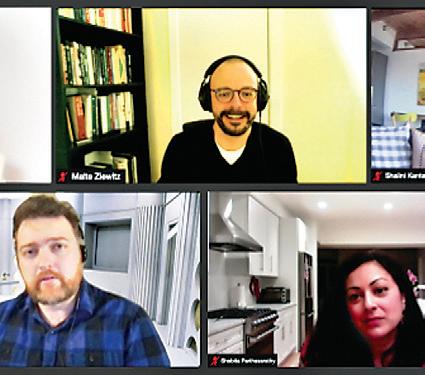
On Thursday, March 11, Cornell’s Digital Due Process Clinic held a screening and panel discussion of the documentary Coded Bias, moderated by Prof. Malte Ziewitz, science and technology studies. The discussion focused on facial recognition technology’s inherent racial biases and the questions of privacy that come up when it is integrated into public life.
Shalini Kantayya, director of Coded Bias didn’t have much experience with computer science before researching for the movie, saying she was surprised by the fact that “various systems we are trusting so implicitly . . . are not vetted for racial and gender bias.” The movie starts with an explanation from Joy Buolamwini, a Black Ph.D. student at MIT, who realized during one of her experiments that facial recognition technology was unable to register her face because of her race.
Sidney Brown, associate professor at the University of Texas at Austin and another participant on the panel, elaborated on the racism inherent in facial recognition, explaining how whiteness has been the template for facial recognition since the beginning of research into the field. Because of this fact, it is no surprise that it has led to instances where innocent people of color are misidentified as criminal perpetrators by these technologies.
Kantayya found it “really important to connect to the communities that are most vulnerable to [technology’s] impacts.” The movie focuses on an apartment complex in Brownsville, Brooklyn, where the landlord wanted to install facial recognition technology to the front door of their building. This
Those who know me in real life can attest to a few things: First, that my astrological chart is 110 percent accurate, and second, that my music taste has become notably less listenable. In the days of yore, I was a wannabe music connoisseur, mashing together 90s alt rock with The Coup and the occasional Minnie Riperton song to create vibey playlists so that my three Spotify followers would know that I am, in fact, very cool. And so that cute people at Green Dragon would see a glimpse of my playlist and nod approvingly — but that is besides the point. Fast forward to one week into the pandemic, when I came across 100 gecs, and at last found an outlet for the chaotic energy that had been bubbling up inside like an overflowing pot of soup (is there a better metaphor here? Probably, but I do feel like soup a lot of the time). At the time, I assumed that my love for hyperpop, which very quickly expanded into an obsession with osquinn and Dorian Electra, was simply because I was cooped up inside. But as time passed, I found that my hyperpop
apartment complex housed mainly women of color, and tenants felt that the addition of the new technology was being done to appeal to future tenants who would be brought in by increasing gentrification in the area.
The lower-income tenants were unable to resist the new technologies brought in by their landlord, or move to another apartment. The fact that they were having relatively new and experimental technology forced on them illustrates the point that Kantayya makes, the most vulnerable populations are the most affected by new technologies. While reflecting on this, Prof. Ziewitz applauded the movie’s humanitarian emphasis: “Many of us are trained in these fields as scientists and engineers, so we are really concerned about getting the algorithm right, making sense of the data, and getting it statistically right… It is important to be a critical mind and keep in the back of your mind that everything you’re going to do will at some point affect a real human being.”
Coded Bias seeks to demystify the inner workings of technology and algorithms, allowing people to think critically about the role technology plays in their lives. If we are technologically literate and aware of these ethical dilemmas, we will be able to fight these injustices; as Kantayya continued to explain, “The way we level the playing field is through technological literacy.”
Other members of the discussion contributed many fascinating insights as well. Prof. Shobita Parthasarathy, public policy at the University of Michigan,emphasized the role that the government plays as an early adopter and regulator of these technologies, possessing the power to regulate their usage and implementation.
Coded Bias makes this unsettling fact clear by examining the Metropolitan Police’s use of facial recognition in the streets of London;
the reason the movie decided to focus on the United Kingdom stemmed from the existence of transparency laws allowing human rights groups to look at the police’s use of data, showing how dangerously inaccurate the technology could be in misidentifying innocent people as criminal suspects.
mic justice. As members of this society, we all have a responsibility to be informed citizens and advocate on behalf of those who are most likely to suffer the negative consequences of our rapidly expanding technological capacity. In an interview with The Sun following the event, Prof. Ziewitz highlighted the numer-

In contrast, the United States does not have these laws, and many departments use this technology without oversight. As this investigation unfolds, Kantayya comes to the unsettling conclusion that “democracies are picking up the tools of authoritarian states with no guardrails.”
Meanwhile, Luke Stark, assistant professor at the University of Western Ontario and an ex-Microsoft researcher, spoke about the challenging role of ethics in these technological fields; in many cases, although coders want to make a positive impact, there is no framework or leadership push to achieve this. He ultimately called for an integration of ethics into the computer science curriculum and the encouragement of unionization to ensure ethical coding, stating that “unionization is critical for justice in a society that involves tech.” Together, the panelists and movie illustrate the importance of actively pursuing algorith-
ous resources Cornell possesses to help people get involved with digital advocacy. “We have the Digital Due Process clinic who hosted this event, but that’s just one small aspect. There’s a ton of classes and research opportunities [across numerous departments] you can take that touch upon this area... So reaching out to the people who are doing this research can be very promising because a lot of these folks are looking for people to work with [from all academic backgrounds].”
Coded Bias will premiere nationwide on March 22nd, at 10 p.m.. on Independent Lens. Students are encouraged to visit the film’s website to learn more about facial recognition,algorithmic bias and how to get involved with digital advocacy.
Ochoa is a sophomore in the College of Agriculture and Life Sciences. She can be reached at co234@cornell.edu.
phase was more than a phase. There was something about the chipmunked vocals, brash synth melodies, and unabashed love for early 2000s internet culture that kept me coming back for more.
Bizarrely, I noticed a similar phenomenon once. At the behest of my older brother, I started listening to Ramshackle Glory, a band headed by Pat the Bunny. Hearing a folk punk singer screaming in desperation over a medley of lilting acoustic instruments struck a similar chord within me, despite seeming completely separate from hyperpop. There’s something about both folk punk and hyperpop’s open disregard for supposed musical “rules” in favor of destructive, frenzied self-expression that feels not only fitting, but also necessary in the current moment.
While hyperpop blends everything from nu-metal to bubblegum pop into catchy, maximalist songs celebrating deep-fried internet culture, folk punk responds to the world with an entirely opposite approach, combining counter-culture genres into
a mash-up that is rooted in anarchic discontent.
Consider, for example, the lyrics to “bad idea” by osquinn, which centers around her reacting to a hateful tweet and ends with the
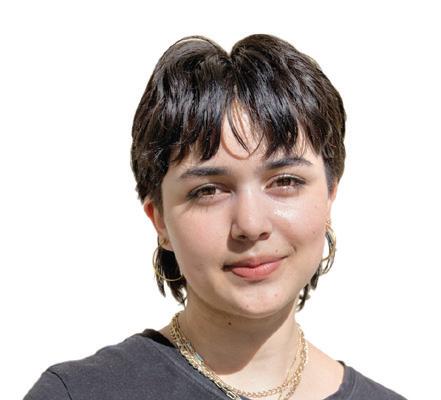
artist musing “Never happy, everybody’s staring at me... Throw dirt on me like I was some fuckin’ zombie/While
I’m screamin’, no one hears my cries of fear.”
Then there’s the end of Ramshackle Glory’s “We Are All Compost in Training,” which begins with “I want freedom/Not a boss that comes in a
erfuckers like me.”
Of course, the outlooks of both artists are very different. Whereas osquinn’s engagement with social media results in an internal panopticism that leaves her in a constant state of zombie-like screaming, Pat the Bunny’s disengagement with popular culture favors a bitterly somber, anarchic alternative. Despite these differences, both artists respond to their situations with similarly self-destructive and candidly twisted lyricism that details their struggles with drug addiction and alcoholism in the face of an increasingly meaningless world.
hyperpop and folk punk artists also engage with radical queerness through their lyrics and aestheticism. Earlier this year (or technically last year, time is an illusion), I wrote an article about how hyperpop’s aesethetics are rooted in trans and gender-nonconforming artists pushing the boundaries of gender expression in favor of alternate ways of being.
forty ounce bottle of/Anything or taped scotch paper” and ends with “the world needs more spinach/Not more moth-
In “More About Alcoholism” and “fake emotions”, osquinn and Pat the Bunny provide articulations of self-loathing and internalized rage. Their raw, emotional lyrics allow the listener to experience what it means to bond with a friend over a mutual desire for destruction. Yes, it’s dark and potentially caustic, but in the moment it feels like the only candid way to express your emotions.
Beyond their shared confrontations with the darker recesses of their beings, both
Similarly, as articulated in this blog post by Paige Oamek, folk punk communities “articulate anarchist and DIY (Do-It-Yourself) ideals as an alternative to capitalist art, music and ways of living...subcultural groups, like folk punk, are deviant against the traditional heteronormative masculine punk scene but also traditional LGBTQ scenes that establish that queer is meant to be seen and shown in a specific way.”
To continue reading this article, please visit www.cornellsun.com.
Mira Kudva Driskell is a sophomore in the College of Agriculture and Life Sciences. She can be reached at mdriskell@cornellsun.com.
Portrait of a Gen Z on Fire runs every other Monday this semester.
The Corne¬ Daily Sun
Independent Since 1880 139th Editorial Board
KATHRYN STAMM ’22
Evansville, Ind. Editor in Chief
ANUSHYA ALANDUR ’23
Frisco, Texas Business Manager
CATHERINE ST. HILAIRE ’22
Patchogue, N.Y. Associate Editor
PRANAV KENGERI ’24
New Hyde Park, N.Y. Advertising Manager
ODEYA ROSENBAND ’22 East Setauket, N.Y. Opinion Editor
JYOTHSNA BOLLEDDULA ’24
Lexington, Mass. News Editor
TAMARA KAMIS ’22
Lexington, Mass. News Editor
WENDY WANG ’24
Manhattan, N.Y. Arts & Entertainment Editor
KRISTEN D’SOUZA ’24
Rochester, Mich. Design Editor
HANNAH ROSENBERG ’23
Chappaqua, N.Y. Photography Editor
OMSALAMA AYOUB ’22
Albany, N.Y. Science Editor
PUJA OAK ’24
San Ramon, Calif. Layout Editor
ANNIE WU ’22
Queens. N.Y. Production Editor
MIHIKA BADJATE ’23
Los Altos, Calif. Assistant News Editor
ANGELA BUNAY ’24
Staten Island, N.Y. Assistant News Editor
JOHN COLIE ’23
West Patterson, N.J.
Assistant Arts & Entertainment Editor
AMELIA CLUTE ’22
Alamo, Calif.
Assistant Dining Editor
WILLIAM BODENMAN ’23
Bloomsburg, Pa.
Assistant Sports Editor
AARON SNYDER ’23
Manhattan, N.Y.
Assistant Sports Editor
MEGHANA SRIVASTAVA ’23
Plainsboro. N.J.
Compet Manager
From the Editor
MADELINE ROSENBERG ’23
Chappaqua, N.Y.
Managing Editor
NAOMI KOH ’23
Mamaroneck, N.Y. Web Editor
ANIL OZA ’22
Queens, N.Y.
Assistant Managing Editor
YUBIN HEO ’24
Seoul, South Korea
Assistant Web Editor
OLIVIA CIPPERMAN ’23
Malvern, Pa. News Editor
NOOREJEHAN UMAR ’23
Lahore, Pakistan News Editor
JOHN YOON ’23
Cresskill, N.J. City Editor
BENJAMIN VELANI ’22
Minneapolis, Minn. Dining Editor
LUKE PICHINI ’22
Dresher, Pa. Sports Editor
SRISHTI TYAGI ’22
Hicksville, N.Y. Science Editor
MARIA MENDOZA ’24
Bethesda, Md. Graphics Editor
AMAYA ARANDA ’23
Alhambra, Calif.
Multimedia Editor
SURITA BASU ’23
Lexington, Mass. Assistant News Editor
KAYLA RIGGS ’24
San Jose, Calif.
Assistant News Editor
EMMA LEYNSE ’23
Leonia, N.J.
Assistant Arts & Entertainment Editor
JULIA NAGEL ’24
Bethesda, Md.
Assistant Photography Editor
LIAM MONAHAN ’24
Honolulu, Hawaii Assistant Sports Editor
SASHA ABAYEVA ’24
Mount Kisco, N.Y. Newsletter Editor
NOAH ALPERS ’22
Norman, Okla. Social Media Manager
ON SATURDAY, THE SUN SAT DOWN to elect another editorial board, its 139th, this time from small boxes on our screens. This stellar cast joins the thousands who came before, eager to embrace this monumental task of making a paper.
These editors and managers are some of the most compassionate and curious people I’ve met, and I am honored to work for them as we stare into a future we cannot see. I cannot witness the earnest work of these journalists, past and present, and not believe in hope.
When my predecessor sat down to write her first message to readers as editor in chief, she said the 138th board was “equipped and eager to embrace the unpredictable upcoming year.” Little did she know we’d weather a pandemic and a staff scattered across the globe. The Sun persisted in this fraction of our history, trudged through grief and uncertainty and came face to face with existential questions about our future — as both a publication and a community. Now, we look out onto the horizon again with an unwavering promise to stick to our core.
We are here to work for you, as we have been since 1880. Still, we ask big questions and imagine new possibilities. Still, we uncover messy and complicated truths and tell the stories that emerge. In the 141st year of The Sun, we will navigate new challenges and new depths. Through them, we promise to push toward a fuller story, beyond a singular or simple one.
We thank you for your support as we learn and grow. Your eyes and ears urge us to be better and hold us accountable. So, as we stretch our capacity for wonder in this next year, I hope you’ll join us for the ride.
Catherine St. Hilaire
Those of us who thought that an hour and 15 minute lecture was bad learned a new meaning of Zoom fatigue — on Saturday, The Cornell Daily Sun elected its 139th editorial board after ten hours and 18 minutes. But The Sun’s longest Zoom call to date brought to life a new board full of imaginative and eager Sunnies who will continue to deliver the paper you all love with a little added fun and flare.
The brains of The Sun is our editor in chief, Kathryn Stamm ’22. Kathryn is hopping from her post as a news editor and a brief stint on photo (her sourdough is even on our Instagram) to lead the paper to the skies. Not only does she bring the sunshine with her personality, which we can thank the far-off land of Indiana for, but with her IDP training we have yet to encounter someone who can LARA quite like she can.
Meandering down the masthead we meet our managing editor, Madeline Rosenberg ’23. We all are quite comfortable bowing down to this new objective departments queen, who as an assistant news editor schooled us all on Sunstyle, mastered the student reactions beat and won the coveted “Most Valuable Desker” award. We asked Madeline, “If you could rename yourself what would you pick?” Interestingly enough she chose “Hannah,” but I’m still trying to figure out why. Ruling by her side is assistant managing editor Anil Oza ’22, a wild card who always Slack reacts with Bill Nye ’77 and Dr. Anthony Fauci M.D. ’61 gifs (can you tell he’s a former science editor?). He’s the type of guy who will sit in the dirt with light-wash jeans to make space for someone else. Objective is lucky to be led by someone so willing to take one for the team.
Associate editor Catherine St. Hilaire ’22 has added this role to the many jobs she works around campus. When you can’t track her down in the dorm where she’s an RA, check Goldie’s Cafe where she makes the sandwiches or on-campus — and if you’re lucky enough, the Sun office downtown. She hopes to make the phrase “Heard it” part of the Sun’s regular vocabulary. The subjective side has been left in her care alongside opinion editor Odeya Rosenband ’22 who similarly hails from Long Island, New York, and is one of the coolest kids at Cornell. She is excited to be at the helm of subjective and has helped us through these past few weeks with her infamous Kahoots. We’re starting to wonder if she has a secret advertising deal with them.
Actually running our ad deals is advertising manager Pranav Kengeri ’24 who alongside business manager Anushya Alandur ’23 will make us all the money.
With an editorial board that is noticeably lacking computer expertise (despite our operating almost entirely virtually now), web editor Naomi Koh ’23 is here to help with her extensive knowledge of WordPress, her shockingly fast response time and her wealth of ideas. Thankfully, she will be joined by Yubin Heo ’22 to respond to our WordPress questions and help us add all the widgets and special pages that our hearts desire.
News editor Tamara Kamis ’22 has made her official switch to news after gracefully straddling news and science for the past two years. Continuing with her check-ins, she’ll make sure we all eat, sleep and take care of ourselves this year. Vee Cipperman ’23 adds the news editor title to her CV alongside “podcast star,” and promises to keep us all on deadline with her master delegation skills. Nooroo Umar ’23 has reported across the globe from Ithaca, New York to Lahore, Pakistan, but she’s settling down this year to contribute to our little team. Jyothsna Bolleddula ’24 is a true gem with
a contagious laugh and an unending dedication to her sources. There’s more where that comes from with the newest assistant news editors, Mihika ‘California sunshine’ Badjate ’23, Surita ‘off to breakout rooms’ Basu ’23, Angela ‘I’ll write that’ Bunay ’24 and Kayla ‘here’s a source’ Riggs ’24, rounding off the team.
And we just can’t get enough of our newest city editor John Yoon ’23, the punniest of them all.
Science is in the trusting care of Saloma Ayoub ’22, who lightens the mood with her thoughtful and endearing questions, and Srishti Tyagi ’22 who never hesitates to come over and say “hi” in the office. This dynamic duo will have no shortage of content as we deal with COVID and vaccines.
Sports editor Luke Pichini ’22 and assistant sports editors Aaron Snyder ’23, Liam Monahan ’24 and William Bodenman ’23 continue to wait eagerly for Ivy League sports to resume. In the meantime they bring smiles to the breakout rooms they enter and to their fellow objective deskers.
As we struggle to find fitting photos for our stories, we can all breathe easy now that we have photo editor and Sun Instagram influencer Hannah Rosenberg ’23 stepping up to the plate. When asked, “If you could rename yourself what would you pick?” she interestingly enough chose “Madeline,” and I’ve only just now made the connection. Hannah will be joined by Julia ‘Nagel bagel’ Nagel ’24 whose portraits tell a story of the campus she’s known primarily through screens. This year they are tackling photo credits, who knew a back-slash could cause such drama?
Design editor Kristen D’Souza ’24, plans to keep The Sun looking beautiful with layout editor Puja Oak ’24. With their talent and unmatchable understanding of InDesign, we can no longer get by with rash designs and wonky print headlines. As we are in the office, working quickly to get ourselves home and the paper out, we will think fondly of production editor Annie Wu ’22 who must stay long after objective and subjective have finished their pages. Graphics editor and our very own Picasso Maria Mendoza ’24 will also aid the effort as this powerful team makes sure that everything is looking much cleaner than it seems to be.
Opinion lost a columnist to the arts section’s benefit as Wendy Wang ’24 steps in to lead. She is joined by podcast star Emma Leynse ’23, who is the quickest learner, and Sunspots veteran John Colie ’23, whose oddly specific fun facts and section updates make our days.
After long desking nights, when the temptation to turn to the Commons for dinner,we fear that die-hard midwesterner Benjamin Velani ’22 and master cake decorator Mel Clute ’22 might make resisting that call that much more difficult as they lead the dining department to new sweet heights.
Continuing our most creative work beyond print is our multimedia content, led by the fearless Amaya Aranda ’23, who’s bringing her news reporting experience to the job. Moving from his stint in multimedia to tackle our social media is Noah Alpers ’22, who will fill our newest editorship. Get ready for the likes, the follows and the retweets to start pouring in.
Stepping into recruitment is Meghana Srivastava ’23, our compet manager. She’ll be the first friendly face our newest Sunnies meet, and she’ll give even more people the chance to experience the hectic newsroom she worked in as an assistant news editor. And just so you don’t forget about us, Sasha Abayeva ’24 has entered the valiant role of newsletter editor. As you are all asleep in your beds, Sasha will be rising with the sun to make sure that we are at the top of your inbox.
Jonna Chen is a sophomore in the College of Engineering. She can be reached at jc2674@cornell.edu. jonna.write() runs every other Monday this semester.
After a quick morning Zoom class in my dorm room or a hefty dinner and bubble tea from Collegetown, I can typically be found climbing my way back to the engineering quadrangle and opening the partially transparent doors to the humble abode that has become my second home. I defnitely am not alone — the simultaneous relief and motivation that sitting in Dufeld gives me is a drug that hooks every engineer immediately after their frst semester at Cornell. I will take this to my grave and to every life I am reborn into afterwards: If there was housing connected to Dufeld, I would not hesitate to live there.
T e Du f eld-Upson-Phillips conglomerate is clearly the shining star of the engineering quad. While the other surrounding buildings may be a classic brick and mortar structure, my second home glimmers in the sunlight in all of its silver glory. As the sun streams into the atrium, the students sitting there are refueled by probably their only source of vitamin D. T e atrium’s f oor-to-ceiling windows are not only stunning to look at but also completely functional for the wellbeing of all the struggling students inside.
Within its walls, the various seating arrangements can also cater to almost any type of study session. If you need to work with a group and explain your thoughts via white boards, you can fnd an alcove nearer to the Campus Road entrance.
If you want to study in solitude and stare at a wall, there are plenty of individual tables near Mattin’s that have enabled me to focus for hours on end.
Even if you just want a collaborative space to sit with friends, but you have no need to shelter yourself of from others, the open atrium is the perfect place to get some work done and show a meme to your friend every once in a while.
If you have any Zoom meetings or classes interrupting your full day of prelim-cramming, those can be accommodated for as well. Te lobby ambience makes talking out loud to your computer comfortable. Any type of work that you’re looking to get done, you can get it done there.
You can stay there for as long as you want too. Clean bathrooms and water fountains are within reach, and Mattin’s Cafe can satisfy all of your food cravings. Whether you’re in the mood for a light Italian vegetarian soup or a helping of Sweet Chili boneless chicken wings, food from this cafe can last you the entire day. You never have to abandon your precious seat when it’s mealtime again. Ordering the breakfast sausage, egg and cheese on an English muffn on GET before I start to walk to Dufeld in the morning never fails to lift my mood and kick of my day right, even in a majority-online semester.
Knowing the space before and after the COVID19 pandemic hit, Duffield has still maintained a sense of normalcy that can’t be found in other libraries and study spaces on campus. While the tables have become more spaced out in certain areas and the number of chairs has been limited, we’re still able to use it as a coffee chat spot and wander around the building to search for a seat like we would in a normal semester. An afternoon in this place doesn’t require a reservation made the day before or the fear of getting kicked out in the middle of your online prelim.
Te lack of reservations is mostly benefcial for me, who isn’t always prompt on arriving at a place at a certain time and prefers to see the mood before jumping into doing work. Tis leads to my only qualm with this building in all of the time I have been at Cornell:
the leg workout you get while scouring each and every seat to fnd a table to settle at for the rest of the day. On the weekends, trying to fnd a seat is like trying to fnd the needle in a haystack. Finding one near an outlet and with adequate table space is absolutely
Ordering the breakfast sausage, egg and cheese on an English muffin on GET before I start to walk to Duffield in the morning never fails to lift my mood and kick off my day right, even in a majority-online semester.
golden. Tat being said, I personally have never had a scenario where I completely could not fnd a spot to sit. You may be stuck walking around for a few minutes and doubling back when you see somXeone starting to pack up, but Dufeld has always got your back.
If you weren’t sold before, you should take it upon yourself to explore the area and sit in the sunny Dufeld Atrium on a nice day. It’s the consistency and reliability that the space provides that keeps me coming back for more. When productivity hits anytime in the 24 hours of the day and I need a place to work, I know that the engineering quad will always be able to provide for me.
On another note, maybe I shouldn’t keep preaching this study space. Te more people that I bring into Dufeld, the harder it’ll be for me to fnd a seat during busy hours — so feel free to scope out the scene anytime after 6 p.m., but not before.
Darren Chang is a senior in the College of Arts & Sciences. He can be reached at dchang@cornellsun.com. Swamp Snorkeling runs every other Tursday this semester.
Idon’t think we’ll get an in-person graduation. I’m calling it now, maybe even willing to make a couple of bets on it. With only 81 days until Commencement Day, we’ve received no information. Nada. Zilch. Zip. Which shouldn’t be the case. No one was surprised when the University called commencement events for the Class of 2020 — the frst time. I’m not all that sure anybody was overly shocked when the rescheduled commencement for “COVID semester seniors” was indefnitely suspended, either. As an incoming senior at that time, I remember wondering if I, too, would get my commencement cancelled. It’s looking a lot more likely, but it’s even harder to be kept in the dark.
Like many other families who don’t live in the tri-state area, ours had already sketched out how we might attend graduation by the time the COVID19 pandemic began. My parents were considering a move to Shanghai, China, and we had made an elaborate plan that involved several international flights and three forms of public transportation. Instead of booking hotels, flights and making plans for my last Cornell weekend, I’ve instead listened to the sound of silence.
First, when the Class of 2020 had their commencement cancelled, the Class of 2021 was told to wait. Tis made sense in mid-2020: Nobody could predict the course of the virus over a year later. Ten, in November, President Martha E. Pollack said that we would hear by early 2021. In a February 2021 email, assistant vice president of health and wellbeing, student and campus life Sharon McMullen, wrote that details on the expected format of commencement would come in March 2021. Te latest word, on the ofcial commencement website, is that the Ofce of Commencement Events “hopes” to make a decision in March while noting “it is currently unlikely that we will be able to welcome guests to any in-person celebrations.”
Tis is a failure of transparency and communication from the administration to faculty, students and parents. We have been given no indication of the planning process. We do not know what factors are being considered. Tere has been little to no student input or involvement in this process (although with the process as shrouded as it is, perhaps it is only that student involvement is secret). If this school is going to put one last shard into our already shriveled hearts, at least mitigate the pain by telling us ahead of time.
Te commencement planning process is oddly the polar opposite of the reopening process. Te report from
Professor Peter Frazier and his co-authors were released for everyone to read. President Pollack and Provost Michael Kotlikoff wrote a column in the Wall Street Journal detailing their thought process and justification for opening up campus. For graduation? We have nothing. The process may not be of the same magnitude, but it’s still meaningful to a quarter of the undergraduate population. Commencement has not received a quarter of the consideration given to reopening.
I have no problemswith an online graduation and I appreciate what I perceive to be the school’s attempt to make something in-person happen. There are models other universities have deemed as safe: Vanderbilt University will host an in-person graduation where each graduate will be able to bring two guests and Princeton University moved up their commencement ceremony to ensure everyone on campus can participate. Sure, Cornell is a lot larger than those schools, but we’ve also put in place rigorous safety and testing protocols to make in-person happen.
I’m not a public health expert by any means. But that is the point — Cornell has public health experts, and certainly has public health and epidemiology experts on the committee of people who decide what happens with commencement. Why not tell us what’s going on?
Commencement weekend is rumored to be one of the greatest for a Cornellian. It is meant to be a celebration of four years of difficulty, struggling on prelim after prelim and snow in the middle of April. For the Class of 2021, we will be celebrating somehow doing one and a half years of school in the middle of a pandemic. We will each have something to personally celebrate.
In light of this, we deserve to know what form our commencement will take.

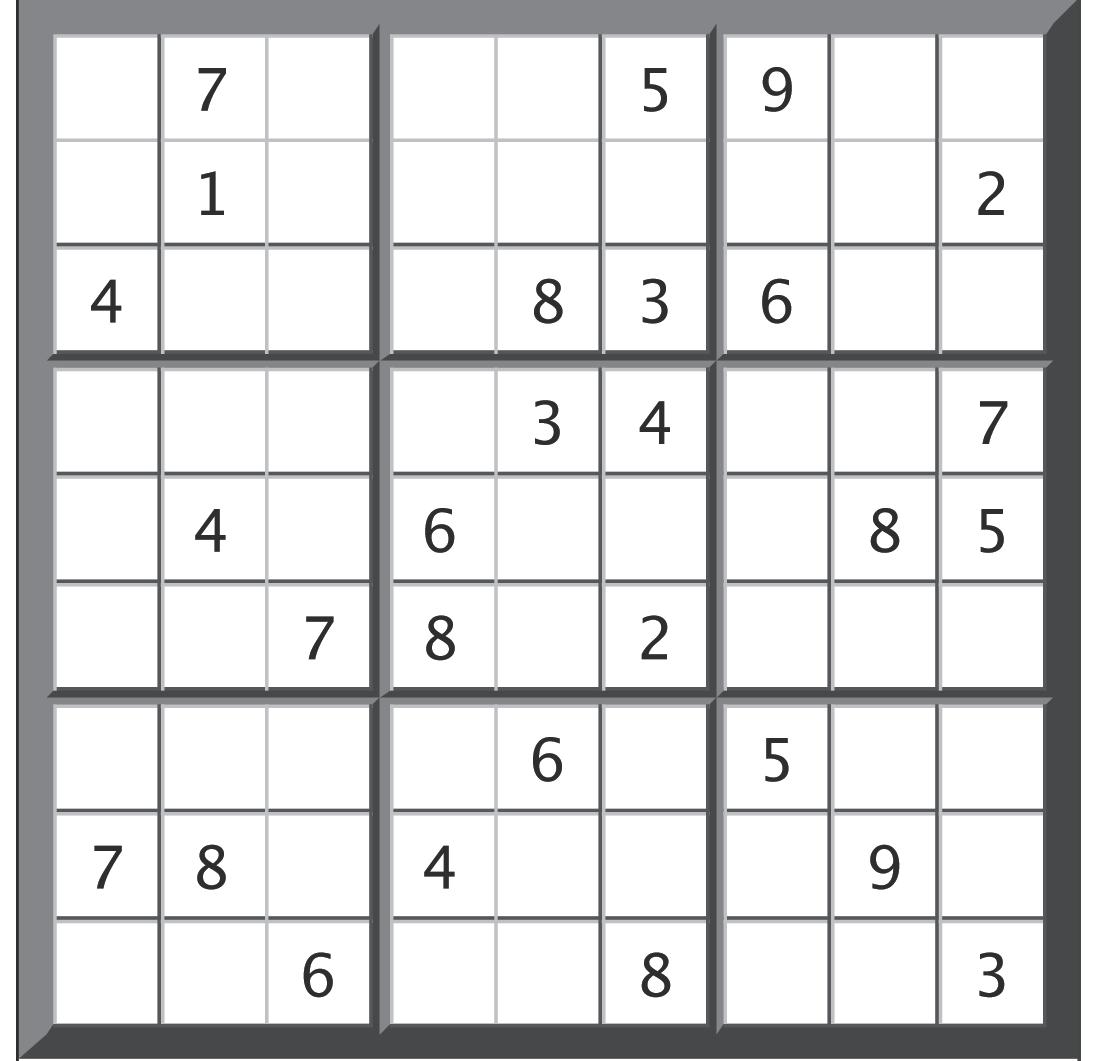
Fill in the empty cells, one number in each, so that each column, row, and region contains the numbers 1-9 exactly once. Each number in the solution therefore occurs only once in each of the three “directions,” hence the “single numbers” implied by the puzzle’s name. (Rules from wikipedia.org/wiki/ Sudoku)


By CALVIN LEE Sun Contributor
Daylight saving time, a centuries-old practice to save daylight and reduce energy costs back when candles were still burned at night, has turned into an inconvenience for Cornellians — and many Americans — twice a year.
At 2 a.m. on Sunday, Cornell students saw their phone clocks spring forward an hour. Aside from causing general confusion about the time, daylight savings can have a profound impact on individual health because of the loss of sleep.
“Even when you have just a one hour interruption of your regular sleep cycle, we can find effects that last up to four days,” said Prof. Nicolas Ziebarth, policy analysis and management. “In the spring, you lose an hour of sleep. If you do not adjust your behavior, you will be tired.”
In his research paper, “Sleep, Health and Human Capital: Evidence from Daylight Saving Time,” Ziebarth examined the negative effects of sleep deprivation on human health, as well as the significant health benefits to increasing sleep. In the study’s findings, the additional hour of sleep gained at the end of daylight savings in November was associated with a significant reduction in hospital admissions, heart attacks and injuries for four days afterward in Germany.
“The findings from our study reinforce the need to devise policies to reduce sleep deprivation in the population,” the paper reads.
Although one hour may seem like a small amount of time, losing that hour to
daylight savings can exacerbate the health and productivity of many already chronically sleep deprived Cornell students. According to Cornell Health, nearly 25 percent of students surveyed indicate that sleep deprivation impaired their academic performance.
Michael Liang ’24, who sleeps only five to six hours a night, is one of those students.
“When I don’t get at least five hours of sleep, I get really tired and start losing focus,” Liang said. “I have to make sure to catch up on sleep during the weekend. Daylight saving time might make this worse for me.”
But according to Ziebarth, getting seven to nine hours of sleep each night should be a priority for students.
“I feel that students underestimate how important sleep is and to get a regular seven to nine hours a night,” Ziebarth said. “It’s not enough to sleep less than seven hours on a regular basis, let alone six.”
By not allowing brain cells to recuperate at night, sleep deprivation results in slower thinking and impaired memory — both of which are critical for college students’ health and academic performance.
Ziebarth also cautioned against the regular use of caffeine or energy drinks to compensate for a lack of sleep. Using artificial means to replace energy lost to sleep deprivation can lead to side effects and addiction that students can avoid by following the human body’s natural clock.
To counter the one-hour shift, Ziebarth suggested going to bed earlier and trying to fall asleep. Experts recommend that a few days before daylight saving time, people should go to bed half an hour or 10 minutes earlier every day to adjust.

But daylight saving time still has its benefits, offering increased sunlight during waking hours.
By shifting clocks to better align with sunrise and sunset, people — especially in northern regions of the globe — can enjoy brighter days. Others defend daylight savings in the name of economic benefits, such as increased worker productivity and boosted sales for restaurants and stores as people leave their homes more often with longer daylight.
Adjusting the time to extend sunlight can even help with medical conditions, such as Seasonal Affective Disorder, in which consistent lack of sunlight contributes to symptoms of depression.
Although there are benefits to daylight savings, many are still frustrated by the inconvenience it causes — 63 percent of
American adults support eliminating daylight savings according to the American Academy of Sleep Medicine. Some states, like Hawaii and most of Arizona, have rejected daylight savings altogether.
“If we don’t want to change our clocks twice a year, we need to agree on whether it should be summertime all year long or wintertime all year long,” Ziebarth said. Clocks stay one hour ahead in summer and fall back an hour in November.
Daylight saving time will end Nov. 7, forcing those who practice daylight savings to “fall back” in about eight months or risk missing important meetings and dates.
“This affects basically everybody, and you can see in the data that it does matter, even if it is just one hour,” Ziebarth said.
Calvin Lee can be reached at cdl73@cornell.edu.
By KOBI RASSNICK Sun Contributor
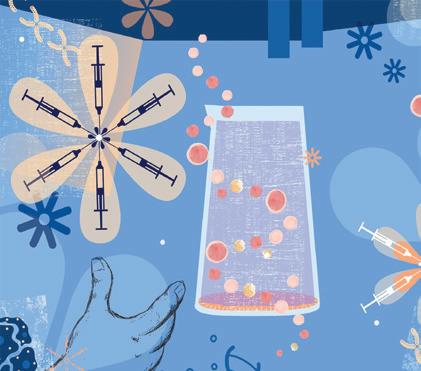
With only one required dose, the newly authorized Johnson & Johnson COVID-19 vaccine has the potential to dramatically accelerate nationwide vaccine distribution, joining the likes of the Pfizer-BioNTech and Moderna two-dose vaccines.
Clinical trials of the Johnson & Johnson vaccine yielded 72 percent efficacy against moderate to severe illness from COVID-19, compared to Pfizer’s and Moderna’s roughly 95 percent efficacy rates.
This difference in efficacy — though concerning for some Americans at face-value — doesn’t reflect the whole truth, according to Prof. John Moore, microbiology and immunology at Weill Cornell.
Moore explained that it’s hard to
directly compare efficacy among the three vaccines since the clinical trials for each used different populations at different times throughout the pandemic. But the main takeaway, Moore emphasized, is that all three of the vaccines are similarly effective at preventing hospitalizations and deaths.
How Johnson & Johnson Gets Away With One Dose
Unlike the mRNA vaccines that train the body to produce antibodies against the coronavirus, the Johnson & Johnson viral vector vaccine introduces the body to DNA inside a genetically-modified, weakened common cold virus called an adenovirus.
The main step in eliminating pathogens from the body, antibodies are vital proteins that identify and counteract foreign substances.
After infecting a cell, the
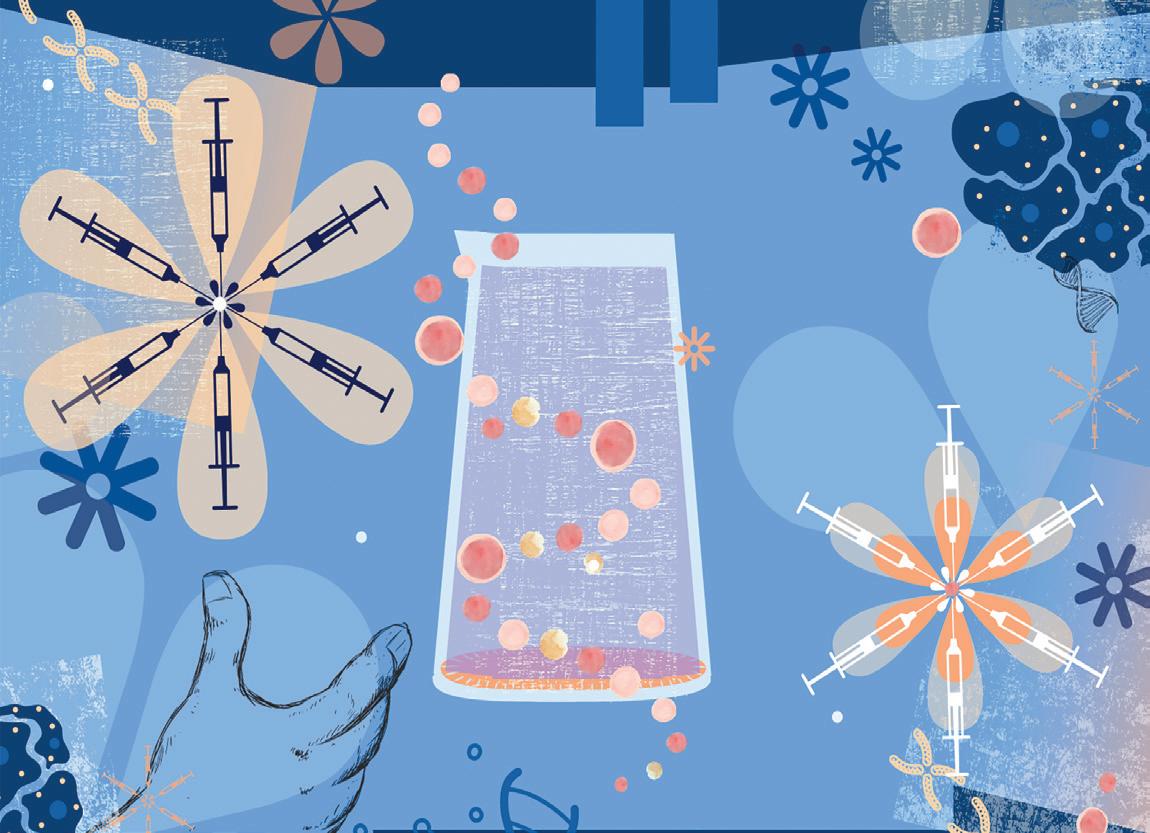
weakened adenovirus allows cells to produce pieces of the coronavirus antigen — the spike protein — using the cell’s machinery to make and display the protein on the cell’s surface. This modified virus cannot replicate inside cells, cause illness or harm cells.
An important mechanism in immune defense, antigens provoke an immune response in the body, triggering the production of antibodies.
According to Moore, the Pfizer and Moderna COVID-19 vaccines require two doses because the double dose produces a stronger antibody response than a single one. For coronavirus variants, strong protection is particularly important against the more contagious strains of COVID-19.
“The concern about one dose is how long its protection will last,” Moore said. “We don’t yet know because we can only really tell in the long run.”
Concern Over the Johnson & Johnson Vaccine’s Efficacy
Moore explained that all approved vaccines, including Johnson & Johnson, prevent serious illness and death. However, there is only preliminary data suggesting that the vaccines also protect against asymptomatic infection.
Although individuals with asymptomatic COVID-19 don’t feel ill, Moore explained that they still can transmit infection to others. If the goal is herd immunity, people must be both protected from infection and unable to pass it on.
But since asymptomatic infection
is difficult to track, Moore said that most vaccine trials primarily measure whether a vaccine prevents symptomatic infection, as well as severe disease and death. On the latter measures, the Pfizer, Moderna and Johnson & Johnson vaccines are relatively comparable.
In its clinical trials, though, the Johnson & Johnson vaccine was reported to be 72 percent effective at preventing symptomatic COVID19 infection, while Moderna and Pfizer were roughly 95 percent effective.
Vaccine efficacy is determined by monitoring infections in clinical trials, comparing patients who received placebo and vaccine doses.
If a trial reported 100 infections and 72 of those were participants who received a placebo, the vaccine would be deemed 72 percent effective.
“That’s quite a lot of people who are going to get symptomatic infection,” Moore said. “Mild, sure, but potentially transmissible to others.”
Moore argued that one benefit of the Johnson & Johnson vaccine is that since it only requires one dose, it requires less discipline from recipients. This could be significant for children — if the vaccine is eventually approved for them — and young adults, who may be less reliable in following up with a second appointment and could have difficulty securing access to transportation.
Moore added that a vaccine with slightly lower efficacy is generally of less concern to younger people than older people. The younger population is at lower risk of severe illness from COVID-19, so widespread use of the Johnson & Johnson vaccine among
young people could potentially accelerate the world’s journey toward herd immunity.
While the Pfizer and Moderna vaccines require ultracold freezers for storage and transport due to the fragility of mRNA, the Johnson & Johnson vaccine’s simple handling is a major advantage.
According to Moore, the Johnson & Johnson vaccine can be stored at a typical refrigeration temperature of 4 degrees Celsius, making it easier to distribute to harder-to-reach areas.
For people in rural areas and underserved communities, traveling a far distance to a vaccine site once is much easier than traveling twice, Moore said.
“The downside is that some people are saying ‘It’s not as potent, don’t give me this, I want the good stuff,’ which is a human reaction,” Moore said. “You can understand why people choose to say that, even if they’re not being terribly accurate on the science.”
Moore emphasized it is important for all people to receive a vaccine when they become eligible. Society’s best chance at getting fully back to normal, Moore said, is getting a substantial percentage of the population vaccinated.
“The key message,” Moore said, “is if you’re offered a vaccine, take a vaccine. Each of them is better than nothing, and a lot better than contracting COVID-19.”
Kobi Rassnick can be reached at kmr225@cornell.edu.