

By ARI DUBOW Sun City Editor
Side by side, members of the Ithaca Common Council and demonstrators with rolled-up signs filled the chambers of City Hall.
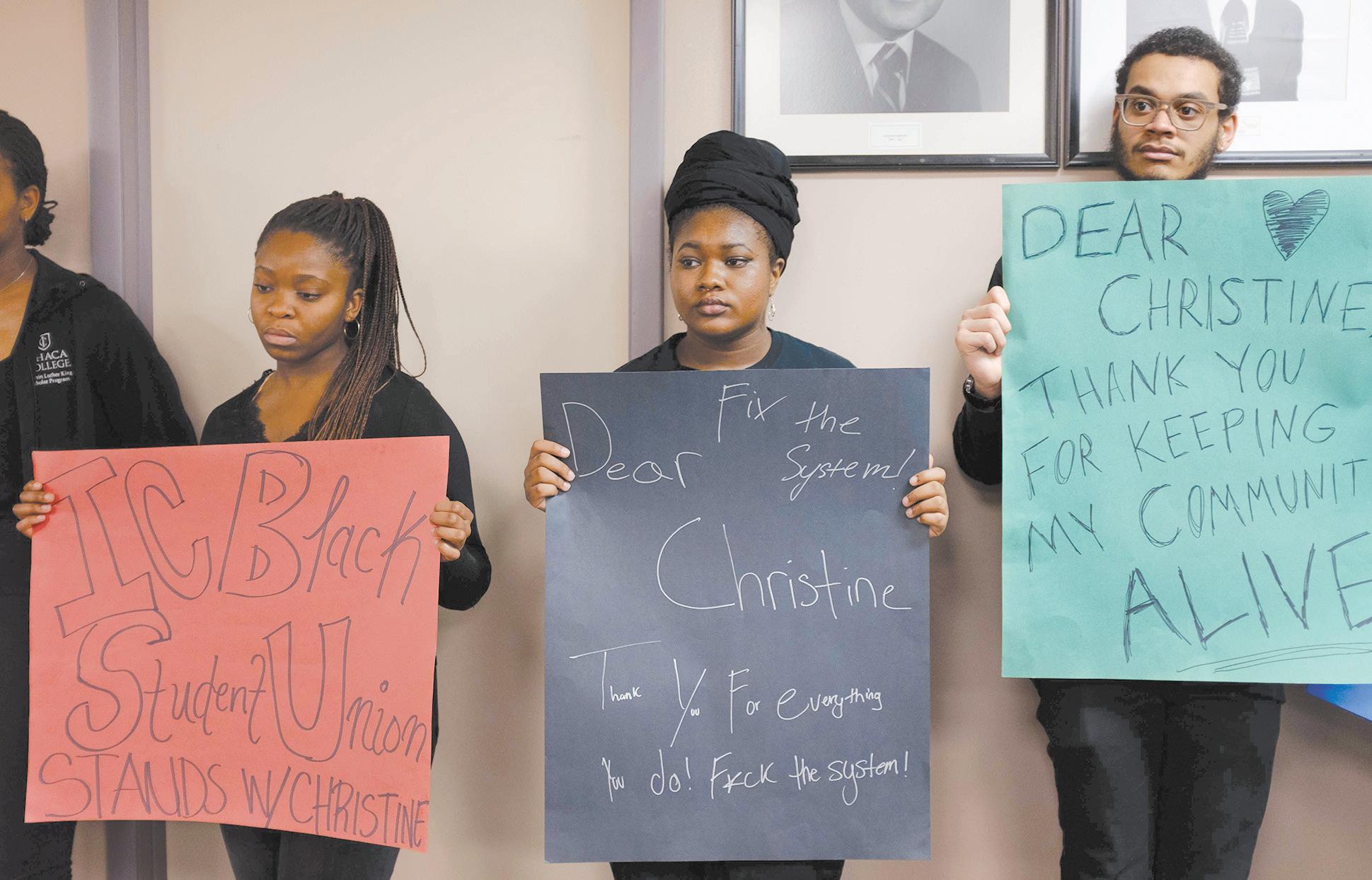
At around 5:45 p.m. on Wednesday evening, the demonstrators took their places, standing in a U-formation around the public seating area. They put memory chips in cameras and unfurled signs, reading, “#voicesforchristine,” “Love for Christine,” “Where’s the public apology?” and “Thank you Christine for your sincerity.”
“How does the public feel that you’re disrespecting one of your own?”
Department investigator and member of the Tompkins County law enforcement community for 25 years, who was terminated as senior investigator by the IPD in response to her department’s failure to investigate crimes, including a disproportionate amount of sex crimes.
Jack Nelson
But demonstrators, who were predominately people of color, said Barksdale had played an invaluable role as both a mentor and a member of law enforcement, calling the disciplinary action against her unjustified.
“A lot of you are going to be in the hot seat

Libe Slope provides inspiration for this year’s landscape architecture conference
By AINAV RABINOWITZ Sun Contributor
Many Cornellians associate Libe Slope with the treacherous walk up the hill from west campus. But for landscape architecture students, it has become an emblem of the beauty within Ithaca’s landscape.
The slope is also the inspiration behind the 50th annual LABash — an annual, student-run landscape architecture conference, which Cornell is hosting for the first time in April.
and social events.
This year’s conference is the first-ever to be held in New York state and dons the theme “Rise Above Run” — reflecting the slope formula and calling to challenge students and professionals to use design to “rise above” prominent issues such as climate change.
The demonstrators stood in support of Christine Barksdale, a former Ithaca Police
See COUNCIL page 5
LABash brings together landscape architecture students and professionals from across the country for a weekend-long conference that offers a variety of educational workshops, keynote speakers, career-building opportunities

At the beginning of the fall semester, Kiki Shinsato ’22 and Molly Davis ’20, the LABash co-executive directors, helped select five keynote speakers, each representing different ideologies and companies within landscape architecture.
The planning committee encouraged the keynote speakers to weave the “Rise Above Run”
See LANDSCAPE page 4
By ELISE CORDING Sun Contributor
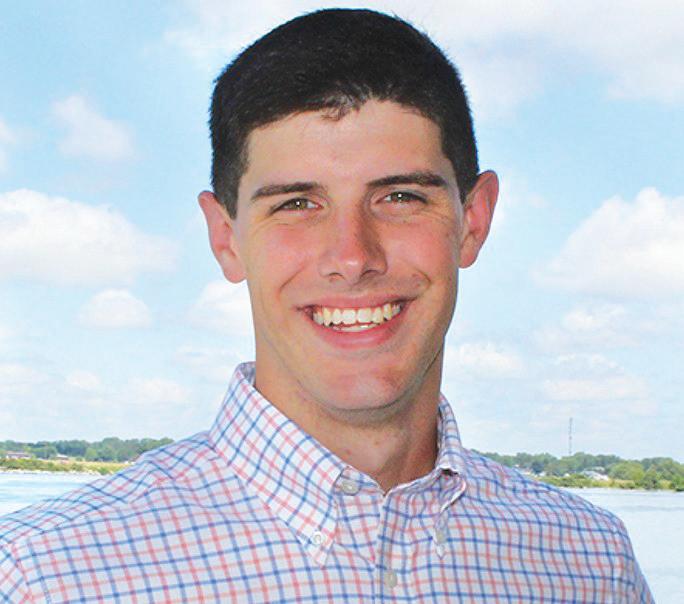
After running for Town Supervisor of Waddington, New York, and winning the position in the middle of his senior year, Alex Hammond ’18 is now hoping to represent his county in the New York State Assembly.
Elected at 21 years old, Hammond is tied with one other person as the youngest Town Supervisor in New York’s history. If elected into the New York State Assembly for the 116th district, Hammond could become one of New York’s youngest assembly members in the state’s history.
While he runs his campaign in part on the appeal of his youth, Hammond also wants to establish himself as a “straight-shooter” who will act on his promises once elected.
“That’s my big thing — when I ran for Town Supervisor, I told people what I wanted to do, and I did it,” Hammond said. “It wasn’t empty promises, and I didn’t turn my back on the people who elected me as soon as I got into office.”
Coming from a family that has called Waddington home for six generations, Hammond describes himself as community-driven. But it wasn’t until college that he realized how much he wanted to give back to his community.
An industrial and labor relations
“It wasn't empty promises, and I didn’t turn my back on the people who elected me as soon as I got into office.”
Alex Hammond ’18
major, Hammond said his ILR classes taught him how to best advocate for people in need.
“That’s what the ILR major is
all about,” he said. “Being the voice for the people in a negotiation with a company — at least that’s what I wanted to get out of it … And that’s the same reason why I want to run for this Assembly district, because I really don’t think we have the greatest advocate that we can have in Albany.”
Hammond said he launched an assembly campaign because he wanted to better represent his small town and other regional towns like it that are struggling with unemployment and lack of infrastructure.
One of Hammond’s main goals as an assembly member would be to increase state funding for blue-collar training programs and infrastructure projects.
“The state is handing out more reg-
Why Consider an Electric Vehicle? Noon - 1 p.m., Forest Home Drive Garage
Space, Power, and Histories of Highland Southeast Asia Noon - 1:30 p.m., Kahin Center
Prof. Smita Narula: India’s Food Sovereignty Struggle 12:15 - 1:15 p.m., 182 Myron Taylor Hall
Midday Music in Lincoln 12:30 - 1:15 p.m., B20 Lincoln Hall
Technique Classes with Guest Artist Sharaf DarZaid 2:55 - 4:10 p.m., 320 Schwartz Performance Center
Chats in the Stacks: Tom Seeley on the Lives of Bees 4 - 5p.m., 160 Mann Library
Deep Fictitious Play for Stochastic Differential Games 4:15 p.m., 253 Rhodes Hall
American Sign Language Conversation Hour 4:30 - 5:30 p.m., G24A Stimson Hall
Panel: The Life and Legacy of Robert Moog 4:30 - 6:30 p.m., KG70 Klarman Hall
Weekly Tango Practice
8 - 10:30 p.m., Baker Portico, Physical Sciences Building
Maryam Zafar ’21
www.cornellsun.com E-MAIL sunmailbox@cornellsun.com Business Manager Joybeer Datta Gupta ’21
Tomorrow
Latina/o Studies Fridays With Faculty Seminar Noon, 149 Rockefeller Hall
The Educational and Poverty Impacts of Access to Contraception in the U.S. Noon - 1:15 p.m., 102 Mann Library
Banned: Immigration Enforcement in the Time of Trump 12:15 - 1:15 p.m., 182 Myron Taylor Hall
Urban Real Estate Megaprojects and the Politics of Land in Asian Cities 12:20 p.m., Abby and Howard Milstein Auditorium, Milstein Hall
Money, Myths, and Maneaters: Big Cat Conservation in Tanzania’s Ruaha Landscape and Beyond 12:30 p.m., S1-222 Schurman Hall
Presentation: Constructing Relevance, Louis Vuitton to NASA 4:30 - 6 p.m., 124 Schwartz Performance Center
Keynote Interview: Gary Numan 4:30 - 5:45 p.m., KG70 Klarman Hall
Cornell Games Club Weekly Meeting 7 p.m., 160 Goldwin Smith Hall
Rose House: Film Friday — Marriage Story 8:30 - 10 p.m., Flora Rose House


By SHRUTI JUNEJA and BREANNE FLEER Sun Senior Writers
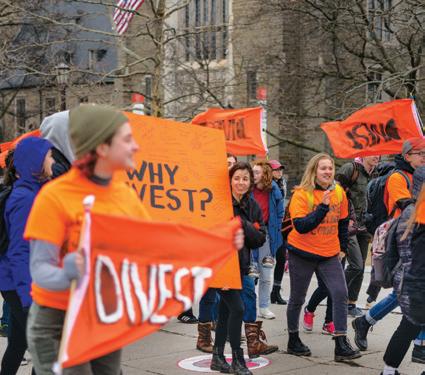
Chants of “We will not rest ‘till you divest” have come back into the limelight after recent protests have demanded that the University end its investments in fossil fuels. But this isn’t the first time that divestment has been a heated topic on campus — this campaign is part of a history of major divestment movements that dates back to at least the 1970s, beginning with a determined movement against investment in businesses involved with apartheid in South Africa.
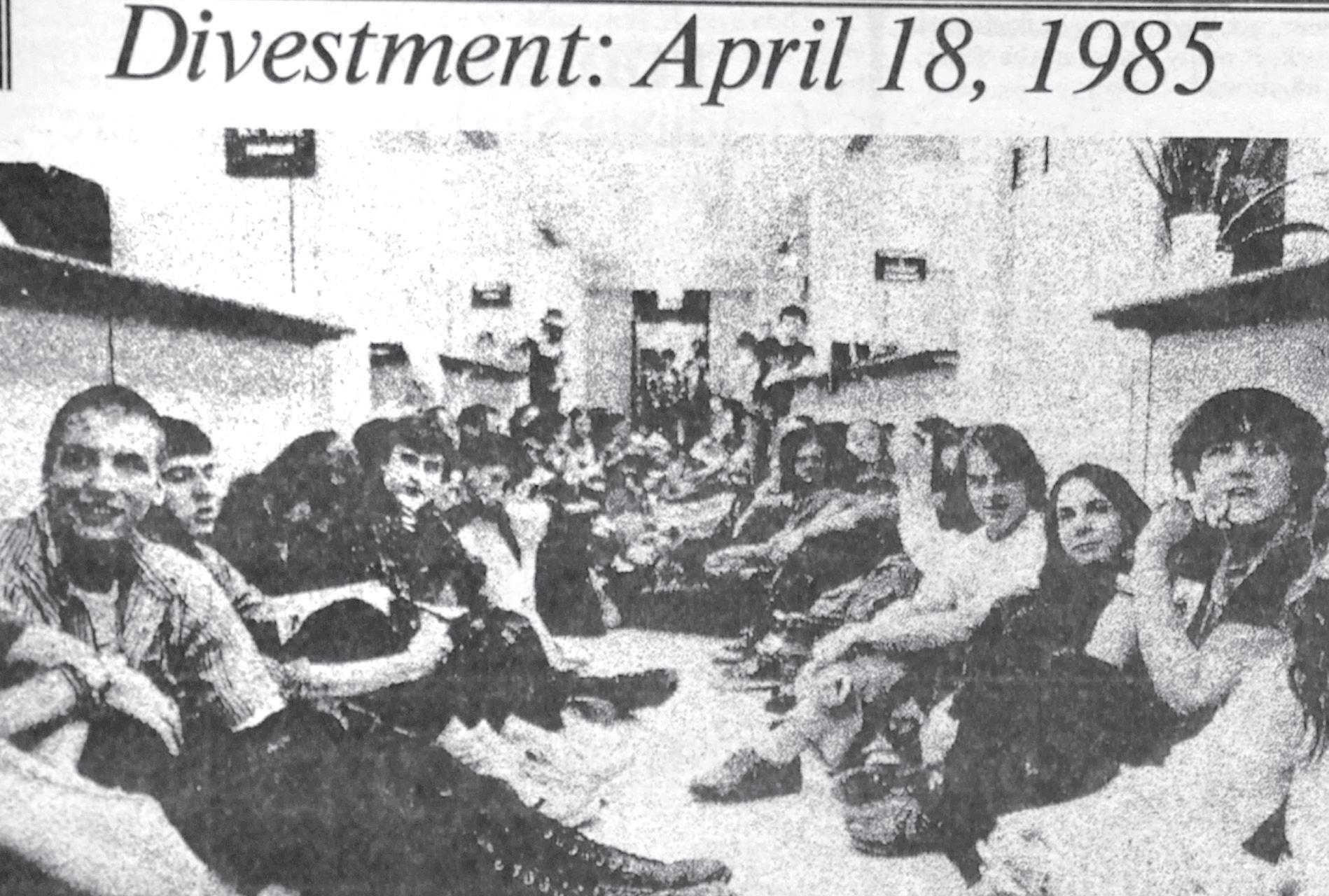
In perhaps the most prominent divestment campaign in Cornell’s history, more than 1,000 people were arrested in a three-week span in 1985 for participating in demonstrations and sit-ins against University investments in companies doing business in Apartheid-era South Africa.
At that time, with $892 million in total stock holdings, Cornell had $148 million invested in companies doing business in South Africa. The Board of Trustees’ policy at the time, first adopted in 1979, called for “investment only in companies following the Sullivan principles or a comparable code for humane treatment of blacks.”
The Sullivan principles were codes of conduct written in 1977 to promote corporate social responsibility and pressure American companies to divest from South Africa.
Protests went into full swing in April 1985, with 200 people occupying the main entrance of Day Hall, carrying signs and shouting slogans. On that first day, “Public Safety arrested 144 protesters that

recalls voting upon any resolution in the 30 years he has been here it is ‘essentially the voice of the whole faculty” favoring divestment.’”
However, the Board of Trustees and the administration pushed back on advocacy efforts, as they “view[ed] these protests as a form of confrontation that threatens campus order not a legitimate avenue through which to discuss the issue of the University’s ties to South Africa.”
In a letter to the editor signed by 170 people, members and supporters of the Cornell Coalition for Divestment stated that they “deplore the University administration’s vindictive response to our peaceful protests at Day Hall … The administration is trying to escalate the conflict. We refuse to be provoked into violence. We remain committed to nonviolent protest, and we will continue our protest until Cornell divests from corporations that do business in South Africa.”
In February 1986, “the Board of Trustees rejected pleas for full divestment and instead reaffirmed and strengthened its current investment policy for companies operating in South Africa” in what was described as “a tense, high security meeting Friday.”
cleansing and military subjugation of the Palestinian people,” SJP wrote.
Pollack’s response voiced her decision to “reject” SJP’s demands for divestment, citing the purpose of Cornell’s endowment and her personal “strong opposition to BDS.”
“Cornell is not primarily an agent to direct social or political action, but rather a neutral forum for analysis, debate and the search for truth,” Pollack wrote.
Pollack also expressed concern that BDS “frequently conflates the policies of the Israeli government with the very right of Israel to exist as a nation” and argued that an “academic boycott” is “at odds with Cornell’s core commitment to academic freedom and the open exchange of ideas.”
A few weeks after SJP’s initial statement, on March 7, SJP and Cornellians for Israel held “teach-ins” presenting different perspectives on the BDS movement, according to a Sun article. Cornell Hillel also distributed flyers arguing against BDS.
Student leaders from the organizations present expressed satisfaction with the presentations, emphasizing the respectfulness and civility of the discourse, The Sun reported.
However, as the issue was debated at additional S.A. meetings, including an S.A. public forum, controversy arose. One incident at a meeting involved comments that some S.A. members described as “Islamophobic,” and students at another meeting voiced concerns that the divestment resolution would contribute to anti-Semitism, according to Sun reporting.
In April, the S.A. narrowly rejected the resolution, with 13 no votes, 14 yes votes, one abstention and two no votes allocated as part of a “community vote” of undergraduate students at the meeting. Nearly 600 students voted in the community vote, The Sun reported.
Although some students voiced dissatisfaction with the conduct of the community vote, according to The Sun, the outcome stood.
Over the past half of a decade, students and organizations have engaged in several smaller divestment campaigns, arguing for an end to funding for what they see as detrimental institutions or projects.
According to a May 2006 Sun article, “Top universities across the country have begun to divest themselves of assets with connections to Sudan as statements of opposition against that country’s genocide,” with Cornellians protesting that “The University has at least $800,000 tied up in companies that support Sudanese oil production, namely the Russian oil giant Tatneft.”
In August 2006, former President David Skorton announced that the University would “bar investments of its endowment assets in oil companies currently operating in Sudan as a response to the genocide in Darfur.”
“It is impossible for us to stand by idly and tolerate the complicity of the Sudanese government in this human tragedy,” Skorton wrote. “Given that more than half of the Sudanese government’s
Solar Flashbacks is a special project connecting The Sun’s — and Cornell’s — past to the present to understand how this rich history has shaped the campus today. Flashbacks appear periodically throughout the semester. #ThrowbackThursday See DIVEST page 13
afternoon, mostly students and staff, after they refused to leave Day Hall by 5 p.m.”
The situation intensified, when “four days later, students built a shantytown of cardboard and wooden structures and stray tents behind Day Hall to duplicate the living conditions of many black South Africans. About 15 protesters lived in these structures during the last weeks of the semester and into the summer months until Cornell razed Shantytown on June 25,” according to a reflection in The Sun one year later in April 1986.
The “shantytown” was later taken down following a court battle over whether or not it “was an expression of free speech or a defacement of University property. The debate, carried out in the courts and through demonstrations, ended June 23 when the University, backed by a court order, tore down the cardboard, metal, and wood structures.”
In September 1985, the Faculty Senate upheld support for divestment in a 60 percent vote — which Prof. Walter J. Slatoff, English, “said that because it was the largest number of faculty members he
Israel-Palestine Situation: The BDS Movement
Last spring, the campus saw a revival of the debate over the Boycott, Divestment and Sanctions movement, which aims to put economic pressure on Israel for its actions toward Palestinians, The Sun reported. The issue brought much discussion in the Student Assembly and beyond.
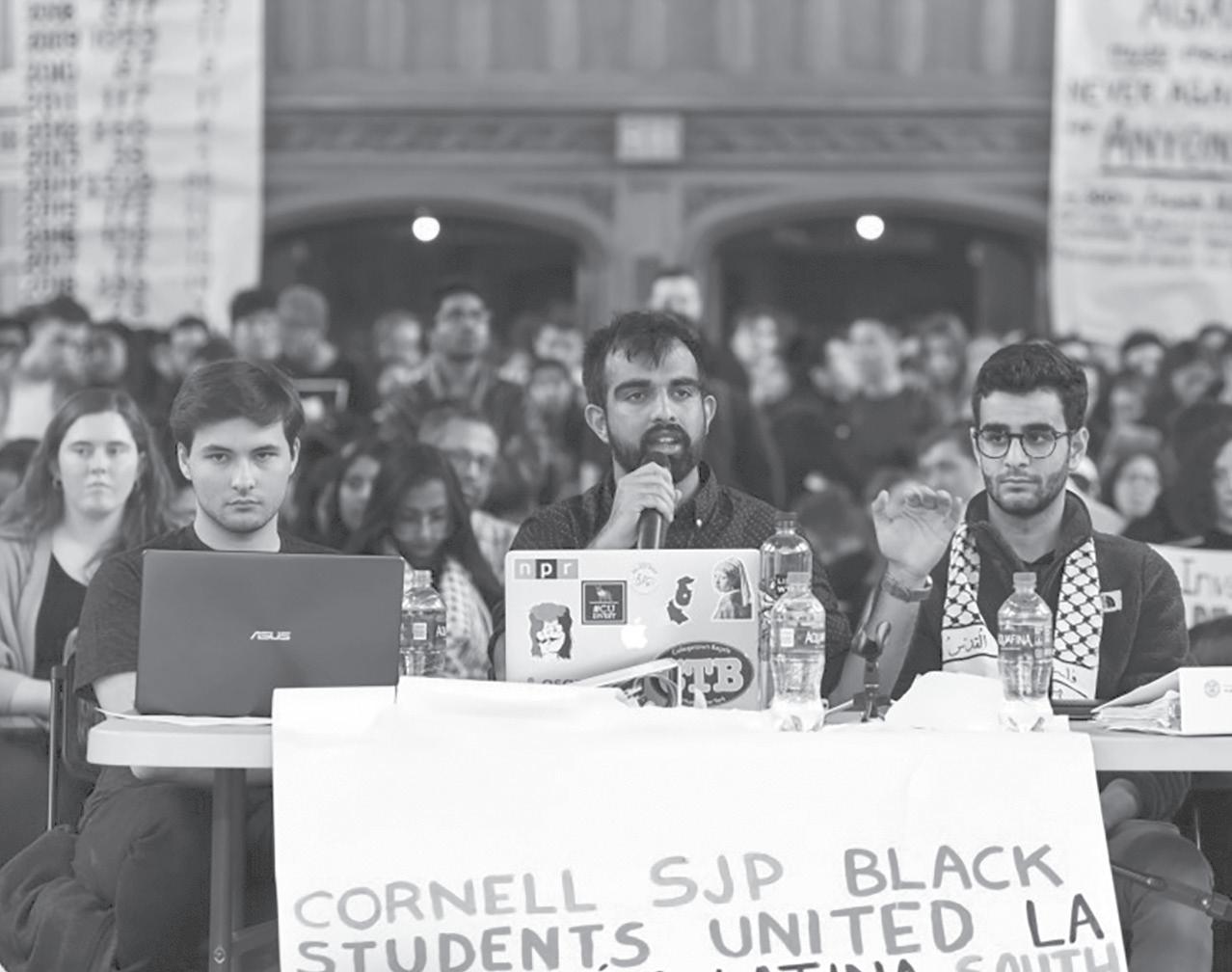
A new divestment campaign emerged after Cornell Students for Justice in Palestine posted a statement on its Facebook page on Feb. 20, 2019, recalling the indefinite S.A. tabling of a divestment resolution in 2014 and promising to introduce a new resolution. SJP also said it delivered a letter to President Martha E. Pollack.
The letter called attention to what SJP called “morally reprehensible human rights violations in Palestine” and listed more than 20 student organizations supporting the divestment effort.
“As stakeholders of this university, our responsibility is to ensure that our actions align with our values, and our values do not include supporting the ethnic
By ANTHONY CHEN
Contributor
Ask The Sun is an explainer series where The Sun answers questions about the Cornell and Ithaca communities.
Q: Why does Cornell have a hotel school?
A: Howard Meek, an American educator of hotel management, founded a hospitality program at Cornell in 1922, at the request of the American Hotel Association and hotel magnates during that time period.
One of the school’s founding benefactors, American hotel businessman Ellsworth Statler, was skeptical of teaching hospitality to students in a classroom setting. He believed on-the-job training would better serve students wanting to pursue a career in the hospitality industry.
However, in 1927, after attending the second-ever Hotel Ezra Cornell — a student-led industry conference that is now in its 95th year — Statler changed his mind. Statler’s support for student experiential learning remains through the school’s practice credit requirement — which aims to put “classroom theory into practice” according to the School of Hotel Administration website.
In the 20 years after Statler visited Cornell, the “hotel department” program, as the school was then known, pioneered a program in hospitality education.
As the program needed to grow and change, the Statler Foundation funded the construction for Statler Hall and Statler Inn in 1948, which was a 50-room “management laboratory.” The University established a full-fledged School of Hotel Administration two years later, and in 1986, the current Statler Hotel was built over the original location of the Statler Inn.
Undergraduates in the hotel school pursue a Bachelor of Science in Hospitality Administration and
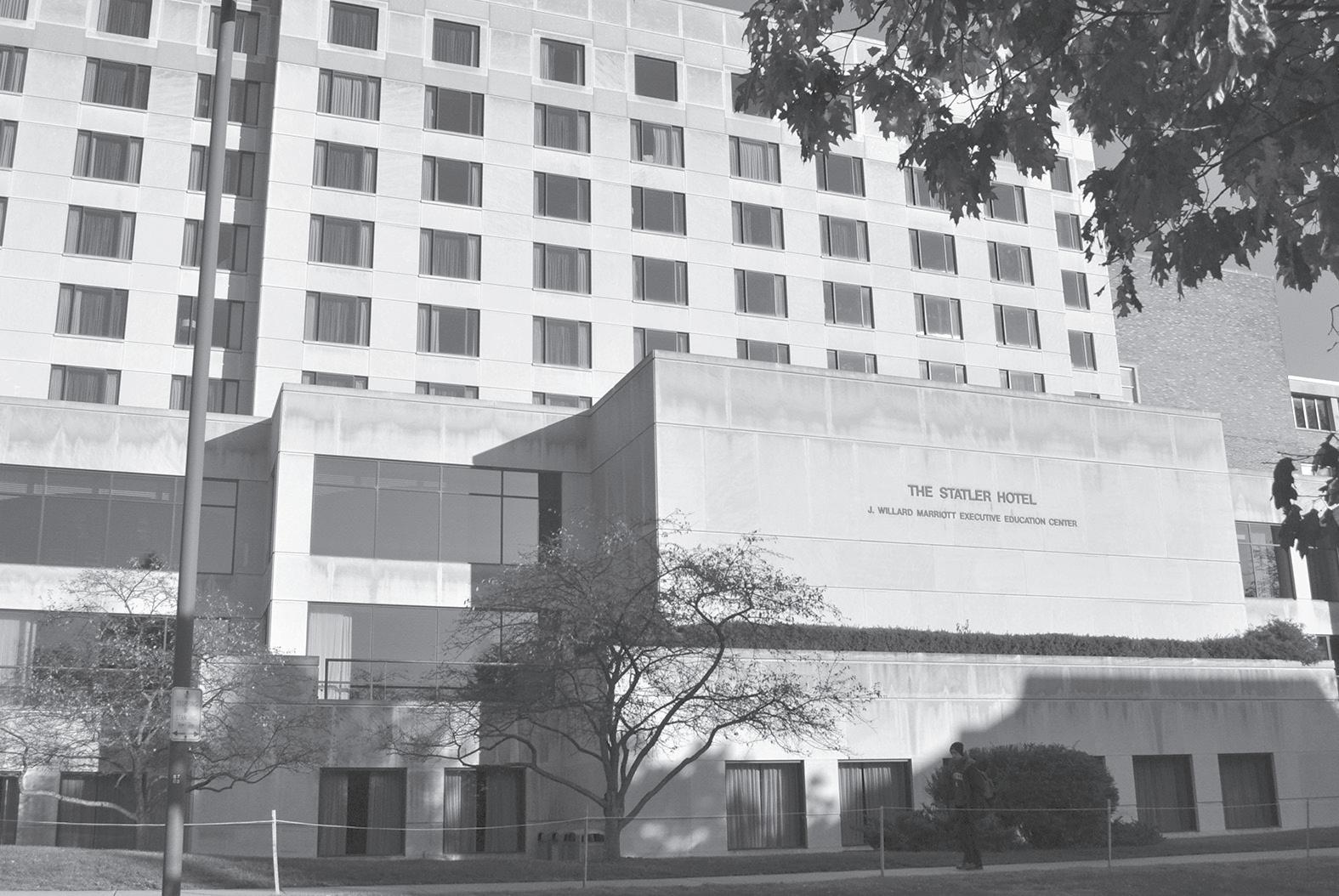
Management with a structured core curriculum, along with 800 hours in the hospitality and service industry through the practice credit requirement.
“For my hotel operations and food operations class, we work a six to eight hour shift at [the] Statler,” said Michelle Yang ’23, a student in the hotel school. Yang, who was a waitress at Taverna Banfi, a restaurant in the Statler Hotel, said the class gave her the opportunity to learn about the hospitality industry through a “hands-on perspective.”
By SEAN O’CONNELL Sun News Editor
Girl Scouts cookie sales have launched for the season, as tables covered in the familiar packaging of Thin Mints, Samoas and everything in between make their home throughout campus.
Beginning on Feb. 24, the cookies were delivered to Ithaca from Little Brownie Bakers in Louisville, Kentucky. Girl Scout cookie booths, each staffed by two girl scouts and a parent, have now sprung up in high-trafficked points around the city.
One such booth was locat-
ed in the crowded Duffield Hall atrium, where students feverishly studied for exams.
“Location does matter,” said Sue Shipman, a parent managing the sales of two girl scouts. She said they sold about 15 boxes in an hour at the North Triphammer Ithaca Bakery, but sold 50 boxes of cookies in 30 minutes at Duffield Hall.
But Duffield is not the only place on campus targeted by the Girl Scouts. The list of booth locations includes Ho Plaza, Robert Purcell Community Center and the Schwartz Center for the Performing Arts in Collegetown.

“It feels like there’s always Girl Scout cookies around this time of year,” said Janice Scott ’20, who bought a box of Samoas.
Jaime Alvarez, senior director of marketing and communications for Girl Scout NYPENN Pathways — the regional council that oversees troop leaders in the Finger Lakes area — was optimistic about cookie sales in the upcoming year.
“The goal for the program this year is [to sell] two million boxes of cookies,” Alvarez told The Sun in an email.
The more than 10,000 members of NYPENN Pathways sold 1.75 million boxes of cookies in 2019, down from 1.85 million boxes the previous year, according to Alvarez.
The revenue from the cookie sales, measured in millions, stays within the Girl Scouts’ communities, going toward activities, camp improvements and travel.
“[The girls are] trying to sell all the cookies we ordered, so they can go to see a Broadway show,” Shipman said. “We’re down to either Aladdin or the Lion King.”
Alvarez extolled the virtues of the yearly tradition of the Girl Scout cookie sales, which she saw as empowering for young women.
“The girls are gaining essential life and leadership skills like goal setting, decision making, money management, people skills and business ethics,” wrote Alvarez. “[The Girl Scout cookie program] is so much more than just selling cookies.”
Sean O’Connell can be reached at soconnell@cornellsun.com.
Along with the Dyson School of Applied Economics and Management and the Johnson Graduate School of Management, the hotel school is currently one of three accredited business schools under the Johnson College of Business.
LANDSCAPE
Continued from page 1
ethos into their experiences, Davis said. Beyond environmental and social justice issues, one speaker will discuss how to “rise above” burnout in a studio workplace.
According to Shinsato and Davis, the conference hopes to bring awareness to the wide scope of landscape architecture study, which offers a range of professional opportunities and concentrations.
The conference will offer a more science-centered focus, because the College of Agriculture and Life Sciences houses Cornell’s landscape architecture major — a feature that distinguishes it from landscape architecture programs at other universities.
the conference will address.
“I think that our department does a good job of incorporating sustainability education into our course sequence,” Davis said. “For example, this studio that I'm in right now is about climate adaptive design strategies.”
Davis called the conference a “huge deal” for the landscape architecture department and its students, because it will give Cornell’s program — small compared to the departments
“There's so many opportunities, and so much more to learn, even if you think you know what it's all about.”
Molly Davis ’20
at other universities — a name in the field.
Davis believed that students majoring in City and Regional Planning or Architecture in the College of Art, Architecture and Planning will also find the conference useful.
“There's so many opportunities, and so much more to learn, even if you think you know what it’s all about” Davis said.
Within the field of landscape architecture and the coursework within the major, Shinsato and Davis recognized the urgency of pushing discussions on climate change, which
“We struggled to gain exposure and to make other people aware of our program,” Davis said. “I think this is a really big step in us kind of promoting our department to the larger ones that kind of takeover.”
Last year’s LABash conference took place at the University of Georgia, which was themed “Find Your Roots.” Cornell’s upcoming landscape architecture conference will take place from April 2 to 4.
COUNCIL
Continued from page 1
tonight,” said Richard Onyejuruwa, an IPD commissioner.
Trust was the question that took center stage with demonstrators giving statements to Common Council members during privilege of the floor.
“It’s very important that when you’re approaching a life saving business, you ask questions. Due diligence ultimately builds trust,” Onyejuruwa said.
Southside Community Center president Prof. Nia Nunn, education, Ithaca College, said her students trusted Barksdale for her work in combatting sex crimes and felt the loss of her termination from the IPD.
“Now who are they supposed to trust?” Nunn said.
Nunn told Common Council that “this retaliation from IPD leadership in an attempt to punish Barksdale not for her performance but rather for daring to live daring to be bold, daring to be unapologetically black.”
Barksdale’s case, the city handled publicity differently — and that is where the problem lies.
On Jan. 9, the city released a statement explaining the disciplinary action against Barksdale — who remained unnamed in the release — explaining that the department had discovered cases left univestigated or inadequeately investigated over the last decade, including sex offenses.
“Impacts of these investigatory failures were by definition deeply traumatic for victims who came to the IPD seeking help and justice, and found none,” the report stated.
The report also said that the IPD was seeking the termination of the investigator involved.
“We’ve got our own treating our own disrespectfully, and now we’re supposed to trust police?”
Jack Nelson
“We’ve got our own treating our own disrespectfully, and now we’re supposed to trust police?” said IPD officer Jack Nelson. “How does the public feel that you’re disrespecting one of your own?”
The IPD has always dealt with internal matters quietly, avoiding explanation to the public, said Ed Kopko, Barksdale’s attorney. But, according to Kopko, in
IPD Police Chief Dennis Nayor was unwilling to comment in depth because he is “prohibited from discussing personnel matters.”
In an email to The Sun, Nayor said that “NO rush to judgment is ever made by me or my administration,” and that “complete and thorough fact-finding coupled with extremely credible and reliable supportive evidence are ALWAYS the basis for any administrative action.”
“There is no chance in hell she’ll be terminated,” Kopko said. He added that Nayor should be “stripped of any sort authority to discipline police officers,” which he believed should be granted to the mayor and common council, “who

In light of victoies in 10 states, including Massachussetts and Texas, former Vice President Joseph Biden finds his campaign revitalized on Super Tuesday. He currently leads Sen. Bernie Sanders (I-Vt.) in the race for the nomination.
have calm heads [and] no vested interests.”
After the final speaker from the group, Mayor Svante Myrick ’09 spoke for several minutes.
“I’ve always looked up to Christine — she took me under my wing,” he said. But Myrick lamented the legal constraints on his response.
“She shouldn’t be a scapegoat, I agree,” Myrick said of more widespread causes of the under-investigated crimes, adding that the mistakes in Barksdale’s case are distributed between IPD and city government.
Other members of the Common Council spoke sympathetically to the demonstrators, acknowledging the failures of the government in handling this case and complimenting the actions of the demonstrators.
Cynthia Brock (D-1st ward) acknowledged the importance of having a woman of color in public office. George McGonigal (D-1st ward) assured the demonstrators that there are people in the Common Council defending Barksdale.
“What I didn’t hear was anger, or disrespect, or unwillingness to have a conversation,” said Deborah Mohlenhoff (D-5th ward), alderperson for the third ward. Stephen Smith (D-4th ward) said that he appreciated the demonstrators “keeping our feet to the fire,” adding that the case is complicated, and that all sides of the story deserve to be heard.
Ari Dubow can be reached at adubow@cornellsun.com.
ASSEMBLY
Continued from page 1
ulations and mandates, [and] with the other hand they’re taking away funding that provides us the ability to then do what they’re telling us to do,” Hammond said. “I feel like we’re being forgotten right now.”
While not every Cornell graduate will share Hammond’s goal to serve their hometown through community politics, Hammond said he hopes to challenge students to reflect on how they can impact their hometowns.
“Don’t shortchange your hometown, whether it’s New York City or whether it’s a small town like Waddington”
Alex Hammond ’18
“Don’t shortchange your hometown, whether it’s New York City or whether it’s a small town like Waddington with 2,000 people in it,” Hammond said. “[J] ust reaching out to people in that community like kids or old teachers, you can give back by giving them your knowledge of the ‘real world,’ since you’ve left and you have more experience outside.”
Elise Cording can be reached at ejc252@cornell.edu.

Independent Since 1880
138th Editorial Board
MARYAM ZAFAR ’21
Editor in Chief
JOYBEER DATTA GUPTA ’21
Business Manager
PETER BUONANNO ’21
Associate Editor
MEGHNA MAHARISHI ’22
Assistant Managing Editor
CHRISTINA BULKELEY ’21
Sports Editor
BORIS TSANG ’21
Photography Editor
CAROLINE JOHNSON ’22 News
ALEX HALE ’21
ARI DUBOW ’21
EMMA ROSENBAUM ’22
BENJAMIN VELANI ’22
Editor JOHN MONKOVIC ’22 Multimedia Editor
MIKE FANG ’21
App
OLIVIA WEINBERG ’22
Assistant
MADELINE ROSENBERG ’23
Assistant
LUKE PICHINI ’22 Assistant
HANNAH ROSENBERG ’23
Assistant Photography Editor
BRIAN LU ’23
ANNABEL LI ’21
’23
Working on Today’s Sun
Ad Layout Mei Ou ’22
Production Deskers Sabrina Xie ’21
Mei Ou ’22
JOHNATHAN STIMPSON ’21 Managing Editor
KRYSTAL YANG ’21
Advertising Manager
JASON HUANG ’21 Web Editor
NIKO NGUYEN ’22 Design Editor
PALLAVI KENKARE ’21
SEAN O’CONNELL ’21
STAMM ’22
OZA ’22
PLOWE ’23
LEE ’21
’21
’22
MEGHANA SRIVASTAVA ’23
DAWSON ’21
PARKER ’22
’21
’22
’21
Work-hard, play-hard, blah blah blah, Cornellians know to have fun, blah blah blah. People party here — we get it, whether we like it or not. But, as a 17-year-old applicant a year ago, at a time when I thought I’d be partying instead of writing articles about partying on Friday nights, Cornell’s intellectual-partying bimorph was an intriguing appeal, as it is for each class’s prospective students. Admissions ambassadors are well aware that “work-hard, play-hard” is a very powerful pitch to all senioritis-ridden applicants seeking a prestigious degree.
So, if we look past the apparent tensions between administration and Greek Life — the source of nearly all organized partying — maybe the two are on the same team after all. Even though Cornell, and most colleges for that matter, seemingly aim to suppress partying, that very culture is a positive PR-boost in the eyes of prospective applicants. In this regard, by suppressing party culture, colleges shoot themselves in the foot. Especially at a school hoping to increase its class size, Cornell knows the risks of playing bad-cop. Given this reality, I am proud of President Pollack’s suspension of Greek Life last semester in response to the death of a fellow freshman. To me, taking the high road is a promising indication of prioritizing student safety over a party image. But if only I could end the column on this note.
recommended national policies regarding substance abuse and student conduct compared to larger, public schools. And though no statistically significant difference was found in policy implementation between non-party and party schools (as ranked by the Princeton Review), schools that were on the list for 1-2 years or 3-4 years still implemented a lower average number of recommended policies than those who weren’t ranked at all.
If anything, we can see that larger, public schools are becoming more lenient with partying when compared to smaller, private colleges. This tendency corrob-
If schools self-segregate based on whether they attract interest through academic rigor or having fun, perhaps the two categories will become mutually exclusive.
orates the lack of disciplinary action in response to excessive partying as reported by West Virginia Professor Karen Weiss, whose school currently ranks fourth in the party rankings.
News Deskers Sean O’ Connell ’21
Madeline Rosenberg ’23
Design Deskers Girisha Aurora ’20
Photography Desker Ben Parker ’22
Arts Desker Emma Plowe ’23
Sports Desker Luke Pichini ’22
Dining Deskers Benjamin Velani ’22
In reality, though Cornell can still rely on its Ivy League prestige as a selling point to its applicant pool, other universities may not be afforded a similar luxury. In such cases, perhaps the administration isn’t as willing to impose severe sanctions on a key reason why their school earns its name in the first place.
Enter the Princeton Review’s “Party School” Rankings. The yearly report factoring in drug and alcohol consumption, student study habits and Greek Life is anything but a list of shame for the 20 schools on it. Instead, the rankings are welcomed by mainstream pop culture outlets like Barstool that thrive on marketing wild party culture to youth. In turn, colleges on the list receive free publicity among

a demographic at the age range of their applicant pool.
Naturally, university administrations on the list may not necessarily oppose this underground PR-boost when their academics don’t raise similar levels of interest. Though no generalization is perfect (heck, Cornell ranked 13th on Newsweek’s party rankings in 2011), the point stands that a renowned academics program offers a school immunity from depending on party status as a selling point for applicants.
The effect: administrations of party schools are turning a blind eye to excessive partying on their campus — and the truth is beginning to show in numbers. A 2008 study found that smaller, private institutions tend to include more of the
Though any university administration will claim to adamantly oppose any offense of campus conduct for the sake of partying, any inkling of complacency at the expense of student safety is already a very slippery slope. Whether or not we are willing to admit it, pop culture’s glorification of the wild and dangerous has made party status a relevant metric among teens in the college search. Time will tell whether schools known for their nightlife are willing to prostitute their code of conduct for the sake of an anything-goes reputation. And if trend becomes reality, and schools self-segregate based on whether they attract interest through academic rigor or having fun, perhaps the two categories will become mutually exclusive. If certain schools continue to invest in an intellectual community and crack-down on nightlife while others boast a permissive environment through laissez-faire policies, then work-hard and play-hard will constitute two different categories altogether.
But perhaps the solution to this college pandemic lies within the most significant finding of the 2008 study: none of the 71 schools in it implemented all 15 nationally recommended underage drinking policies, and even the schools that included the most only had about half of them. Uniform implementation and enforcement of student conduct on a national level is necessary to prevent a discipline gap between schools. And though I believe President Pollack is keeping us on the right side of the rift, for the longterm feasibility of work-hard play-hard, colleges must reevaluate and standardize the policies by which they crack-down on excessive and dangerous partying.
HELENHU/SUNFILEGRAPHIC

We all have something that makes us feel like choking the chicken. A wide-shouldered Russian woman slicing a perfectly ripened avocado, JCPenney mannequins or the stretchiness of Mrs. Incredible could all give us the urge to flick our swollen bean. For many of us, it’s feet. From Quentin Tarantino’s obsession with Uma Therman’s feet in Kill Bill to Ricky Martin admitting he finds feet really beautiful, being titillated by toes happens to be one of the most common fetishes. Yet in spite of its prevalence, it’s the butt of countless jokes. I myself have mocked the guy who asked for a video of my tootsies squishing a key lime pie when I was simply trying to sell a pair of Crocs on eBay. Unsolicited requests for pictures is off putting, as it is with every fetish, but when your friends open up to you about their love of feet, why laugh at them? Thinking feet are sexy is too often taboo when attractions to other parts of the body are expected or even encouraged.
Breasts are merely sacks of fat flopping around on someone’s chest. They have a pepperoni dot in the middle. They’re sweaty. They have bumps, lumps and acne. Yet, especially in America, we celebrate these milky bounce castles in pilgrimages to the Church of Hooters.
We find it strange if straight men don’t have a passion for chesticles. We undergo surgeries to make them more scrumptious.
oday I want to talk about a situation that I recently found myself in, and that I know other women have found themselves in too. I was hooking up with a guy and asked him to use a condom. He complained at first but then acquiesced briefly, before stopping and saying that he really didn’t want to wear one and it wasn’t going to be good for him and he wasn’t going to be able to finish with one on and so on and so forth. Willing to just go along with things, and honestly mostly just wanting to fuck properly already, I said fine.
The next morning, after all was said and done, I got to go on an especially magical journey. There’s something particularly fun and sexy about buying Plan B at CVS. You get to enjoy the wonders of either a middle-aged woman shaking her head at you, or the younger man too uncomfortable to look you in the eyes as he rings you up, depending on which register you land at. It’s truly a remarkable experience, and it’s one I have on an all too frequent basis. The reason why? Every form of hormonal birth control that I’ve tried has made me some combination of suicidal, anxious or just generally depressed, and every other
I know firsthand that this position is not unique to me. Just last week, I got to counsel a friend about whether or not she should take Plan B. Just like me, she isn’t on birth control for personal reasons and the man she hooked up with the night before hadn’t wrapped it before he tapped it. I am positive that there are many more women out there, both at Cornell and beyond, who have found themselves in this exact same situation. There exists a whole underground community of women who have had to rely on Plan B because they can’t be on birth control for various reasons — medical, personal, religious, insurance-related, whatever — and because so many men refuse to wear condoms.
I can already picture what the comments section of this article is going to look like: people telling me that I need to be more responsible and take ownership of my body, that I should just not have sex with men without a condom, that maybe I just haven’t found the right type of birth control for me yet or that I should just suck it up and deal. To all of that I say: why should I put myself through so much when
We make anime waifu pillows to simulate how they feel when we’re lonely. We worship the melons so much, we sensor female-presenting ones over the airwaves and throw a fit when we see them feeding babies in public. This isn’t the case for every culture. In Mali, anthropologist Katherine Dettwyler told local women about Americans finding breasts sexually arousing, and they were horrified. They laughed and called American men babies.
It is feasible that under different conditions, our society would treat footsies like boobies. We would start restaurants where the waitstaff served mediocre wings with pedicures and skimpy footwear. The question, “Are you an ass or a tit man?” would become, “Are you a hand or a foot fellow?” Appendage appreciators everywhere would crawl out of the shadows to party in this new utopia where no one cracked jokes about a generally harmless fixation.
We as a society have to face that besides the taboo and a few interesting smells, foot fetishism generates no STD, unwanted pregnancy or violation of Christian purity. Sucking toes isn’t any less outrageous than sucking the body parts we shoot piss out of. Perhaps a skilled footjob will require a little cleanup of the juices of passion that flow from such a pleasurable encounter, but, given consenting parties, it’s otherwise guiltless. Footjobs are also a comprehensive ab workout for the one giving, creating a six
men have to do nothing? The last pill that I tried sapped my energy so that I spent all of my time in bed, gave me near constant low-level anxiety and caused me to be always bloated and gain five pounds. Not only that, but it completely took away my sex drive, the very reason why I wanted to take it in the first place. Why should I have to suffer through all of that, just so a man can fuck me raw? It’s certainly not doing anything to improve the pleasure of my experience.
I would argue that this entire situation is representative of a larger, cultural issue: the different ways in which girls and boys are socialized growing up. Men have been socialized by movies, by TV shows, by porn, to think that sex is all about them. Think about it: when was the last time you saw believable female pleasure in popular media? This doesn’t even just apply to sex. Ask any sociology professor here and they’ll likely
Why should I have to suffer so a man can fuck me raw? It’s certainly not doing anything to improve the pleasure of my experience.
tell you that boys are socialized to be more aggressive and to take more, along with other supposedly masculine traits. In contrast, girls are socialized to be meeker and politer, to always say yes, to not ask for things and above all to be likeable. I’m not going to tell a guy to wear a condom or else, because then he might not like me anymore. And while being more assertive about my needs is certainly something that I personally could work on, I believe that the problem does not lie with me, or my friend or any other woman, but with the social norms that we are raised with.
All of this is to say: Men, take one for the team. We go through so much so that you can hit it raw, or at all. The least you could do is help keep us safe and wear a condom. I haven’t even gotten into the issue of STIs and the fact that condoms are the only method of prevention for that. Women, I have some parting words for you too. Your pleasure is worth just the same as a man’s, and you don’t deserve to feel like shit all the time as a result of the birth control you take so that some guy can get some love without a glove. Don’t be afraid to stand up for yourself and insist. Above all, respect each other’s boundaries.
Scarlet Letters is a student at Cornell University. Between the Sheets runs monthly this semester. Sex on Thursday appears every other Thursday.
pack as they fiendishly palpitate the folds of a cock saying, “Look ma, no hands!”
A partner disclosing their affinity for feet should be exciting and sensual; it’s a whole new erogenous zone to explore, even if you’re not the fetishizer. It can be sexy in and of itself to be intimate with a partner at the level of thrilling foot play. If you’re queasy from someone’s fixation, there could be an unrelated issue, perhaps a general discomfort with specific intimacy with that person. They might not be the right partner for you if you don’t feel comfortable with them begging you to step on their face.
After all, who wouldn’t want a free paw massage with every hookup? People pay to have those tiny fish nibble the dead skin off their feet at salons, so a boyfriend begging to do it himself will save you a pay check. Like the fish, he also seems to enjoy it. You can also bask in the sensation of dominance, imagining the man at your feet as your fishy worshipper.
Even if science provides theo ries about why foot fixation is so prevalent, we will never fully understand it. Sex is mysterious. That’s part of why it’s sexy. If you have a foot fetish and your peers mock you, send them this
article and tell them Anya Neeze wants to free the foot. Let us stand by our comrades. Raise a clenched foot in solidarity for our brothers and sisters of sucking toes.
Anya Neeze is a student at Cornell University. Boink! runs monthly this semester. Sex on Thursday appears every other Thursday.










Trillium vs. Nasties
Trillium’s impressive short order lunch options, like ramen and quesadillas, is contesting Nasties late-night bites for any kind of munchies.
Terrace vs. Becker
With a crowd-favorite burrito bar, customizable salads and ramen, how does Terrace stack up against Becker, a West Campus dining hall with themed dinners every night?
Risley vs. RPCC
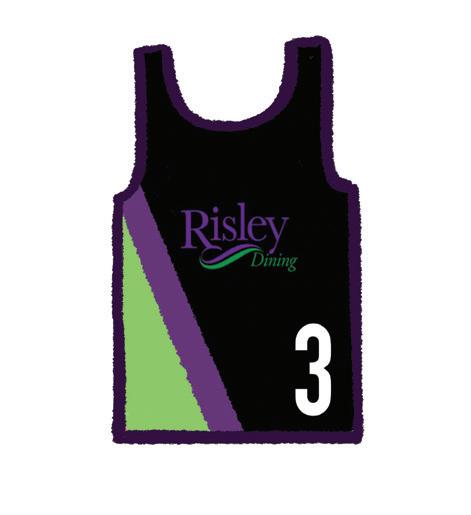
Gluten free, lactose intolerant, vegetarian? Risley’s delicious and healthy options tussles with the North Campus “serve to order” staple and dim sum extraordinaire RPCC.
Flora Rose vs. Bethe Rose’s stellar Sunday brunch and wide variety of tasty options goes head to head wwwith Bethe’s occasional live jazz music dinners and convenient breakfast, lunch and dinner hours.
Keeton vs. Mac’s
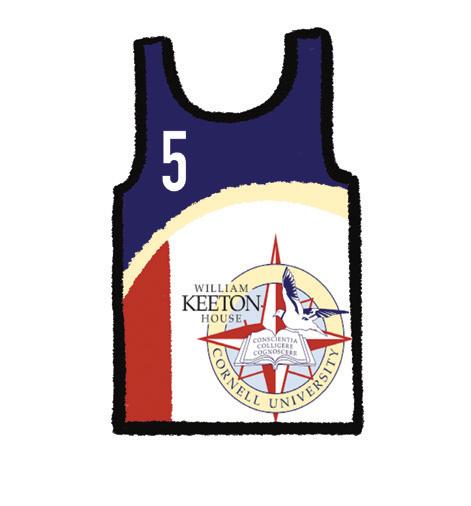
A West Campus favorite that serves classic Southern fare and plenty of pizzas versus a Statler staple known for its flatbreads, chopped salads and more.
Cook vs. Appel
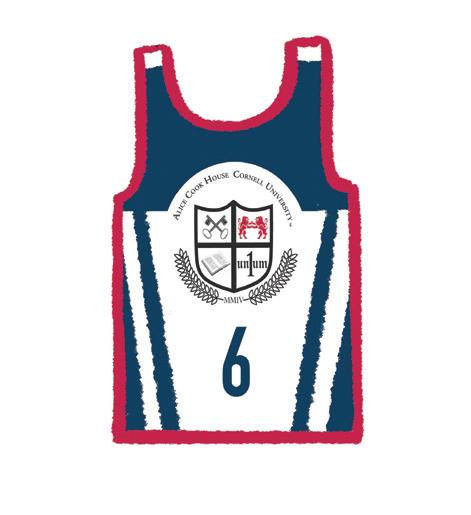
The seasoned veteran West Campus eatery goes against a North Campus stronghold known for its large variety of food and dedicated stations to Asian, Kosher and Halal cuisines.
Goldies vs. Café
Two essential cafés face off — Goldie’s in PSB serves tasty sandwiches to hungry science students on the daily, while Café Jennie serves gourmet dessert and sandwich options at The Cornell Store.
Okenshields vs. Franny’s Okenshields, a highly popular eatery that has polarized campus opinion, takes on Frannys, a food truck nestled in a quiet corner outside Sibley Hall, which whips up PanAsian specialties.
The time has come. The Dining Department will be officiating our very first March Madness tournament. Witness as Cornell University’s finest eateries battle head-to-head in hopes of becoming the most popular eatery on campus. Throughout the month, we will be polling all the writers and editors of Sunspots, Dining, Arts and Entertainment and Opinion departments.
While many of these locations are long-time favorites, such as Trillium and Flora Rose House, underdogs like Nasties and the hotly contested Okenshields will need to snatch a lead early on if they hope to stay in the race. Will they find the support to do so? The highly coveted title of Best Cornell Eatery will go to the spot with good grub, best atmosphere and most preferred by your very own Sun Staff.
Look for results every Thursday, and may the best dining hall win!


By MELANIE METZ Sun Staff Writer
I never leave home without my phone, wallet, keys, water bottle and coffee mug. Those last two items have become essentials on campus. Before I left for college, I was gifted a fourteen-ounce stainless steel carafe by my mom, who supported my coffee consumption. As soon as I set foot on campus a year and a half ago, I began drinking coffee almost daily. According to an article in The New York Times, coffee in moderation is associated with lowered risk of mortality and was included in the 2015 dietary guidelines as part of a healthy diet. I’m grateful that Cornell provides ample access to coffee; with its numerous cafés across campus, anyone who needs their caffeine fix can obtain it easily.However, with Cornellians’ constant ingestion

of caffeine comes immense waste of cardboard cups and plastic lids. One does not reuse a single-use cup (as indicated in the name). By switching to reusable mugs and tumblers, we can create tremendous change on campus.
Drinking one cup of coffee per day from a single-use cup creates 23 pounds of waste per year.
Although many single-use cups have the recycling symbol, only about 1 in 400 cups actually are recycled. The cups suited for hot beverages are often infused with a plastic lining, which cannot be separated from the cardboard in a normal recycling plant.
Only ten major cities around the world accept Starbucks plastic cups for recycling, according to Starbucks’s 2018 Global Social Impact Report. As the largest coffeehouse chain in the world, Starbucks uses more than eight thousand plastic-lined cups per

minute, which is over four billion cups a year. Cornell is a Starbucks campus, with seven out of ten cafes — including Libe, Atrium and Bus Stop Bagels — serving Starbucks brews and handing out their cups. Each disposable cup is responsible for 0.24 lbs. of carbon greenhouse gas emissions, which is equivalent to the emissions produced by driving just over a quarter mile in an average car. These statistics on the waste produced from the simple act of buying a cup of coffee should be frightening to us all. A reusable mug is an easy solution. In 2018, only 1.3 percent of beverages at Starbucks were served in personal cups, even though the company offers ten cents off per drink when you bring your own container. Many coffee shops, including most cafes on Cornell’s campus, offer some sort of discount for bringing your own mug. Besides being sustainable, a reusable carafe keeps your drink hotter (or colder), is less likely to spill or leak awnd has no plastic taste or BPA (or any other chemicals). There are many different types of mugs available, ranging from glass to stainless steel to silicone to bamboo. Some popular brands include Hydroflask, Yeti, KeepCup and Stojo. My mug, by Bubba, can hold hot and cold beverages, and has a tight seal so even when it falls out of my backpack, it never leaks. The high-quality reusable carafes often cost around $25

to $35, which may seem expensive to purchase. However, that is the price of around fifteen 16-ounce cups of brewed coffee from Starbucks. Within a few months, you will have paid off the mug in discounts, feel better about not wasting paper or plastic cups and helped to mitigate greenhouse gas emissions. By using a carafe, you will save money, decrease your carbon footprint and enjoy your beverage at a constant temperature for longer. At this point, my mug is an extension of myself. I have plastered it with stickers of my favorite coffee shops, and it is covered in scratches from falling out of my backpack. I drink coffee or tea almost every day, sometimes multiple times, so my mug saves an inordinate amount of paper and plastic waste. Cornell should offer more incentives for students to bring
their own mugs. Temple of Zeus has $1 drip coffee only if customers bring their own mug. More changes of this sort could motivate many more people to bring their own carafe, inducing a culture change around coffee and sustainability at Cornell. Some people find that bringing a reusable mug everywhere is a nuisance. However, the tiny adjustment, which soon fades as bringing the mug becomes habitual, is a major benefit to the environment. Join the many Cornellians who are already using reusable mugs and making change. The Cornell Store sells many varieties, so make a plan to carry yours with you tomorrow! Save the earth and your wallet by using a reusable mug.
Melanie Metz is a sophomore in the College of Human Ecology. She can be reached at mnm55@cornell.edu.
By SANJANA KAICKER Sun Staff Writer
For over a decade, D.P. Dough has been Ithaca’s prime spot for classic calzones and a haven for hungry partiers, closing at 4 a.m. nightly. The nationwide chain offers a myriad of options, from the classic “Cheeze Zone” (ricotta, mozzarella and parmesan) to the more adventurous “Maui Wowi Zone” (pineapple, ham and moz-
“From friendly service to generous portions, Casablanca’s superior quality makes the trip down to the Commons worthwhile.”
zarella). The shop is conveniently located a few doors down from the Schwartz Performing Arts Center, which makes it a pit stop for freshman who are tired from a night out on the town. (Similarly, if you’re like me, D.P. Dough’s late-night delivery enables you to satisfy your cravings from the comfort of the Cocktail
Lounge and your endless study notes.)
However, while D.P. Dough may be relatively well-known and in a prime location, few people know of a restaurant with far superior calzones: Casablanca Pizzeria, which is located in the Ithaca Commons. Calzones from D.P. Dough and Casablanca are priced similarly at roughly $8. Since the calzones cost almost the same amount of dough (pun intended) and Casablanca is oh-so far from campus (convenient if you’re living it up at Mooney’s, though), what makes it worth a trek to the Commons?
Firstly, while the prices may be the same, Casablanca’s calzone is bigger. Furthermore, it is freshly baked; the chef, Paco, even offered to customize mine with whatever vegetables I wanted. I went with mushrooms and spinach. The calzone was beautifully crusty, a healthy blush of golden brown, with a shimmer of oil on the top. When I broke it open, the cheese oozed out in glorious strings. I could tell from the first bite the calzone was made from scratch. Even for a girl with a big appetite, half of this calzone was enough to quell my gnawing hunger.
In contrast, the Cheeze Zone I received from D.P. Dough was less than impressive. Garnished with dry herbs when I received my delivery, unlike my Casablanca calzone, this one had a bonedry crust and floury exterior. There was
no golden-brown sheen and nothing to offset the lack of moisture. The cheese filling was generous but mediocre, not nearly salty enough to contrast the dry crust. Overall, though getting to D.P. Dough is a much shorter journey, I was left rather unsatisfied by the calzone I obtained.
So, whether you happen to already be in the Commons or you’re deciding what comfort food you want to deliver, doughn’t think twice about giving Casablanca a try instead. Besides, they make a killer
stromboli too — just as deliciously crispy and fresh as its counterpart. From friendly service to generous portions, Casablanca’s superior quality makes the trip down to the Commons worth. And who knows: you might enjoy their calzones so much that you’ll want to come back a-grain!

Ever since I was 14 and read EverydayFeminism. com for the first time, I have had a perfect understanding of social politics. In the few moments that it took me to take in the nuanced articulations of every single type of oppression and bias that was documented on social justice sites across the net, I lost every single inclination toward prejudice that I once had. I am now thoroughly cognizant of everything, am an anti-oppression savant, and have been promoted from a social justice warrior to a social justice admiral. Because of my complete and infallible knowledge, it’s incredibly frustrating for me to see any piece of media which doesn’t fully end all of the systems of oppression in which we muddle.
Yes, all of that is a lie — including and especially my complete and infallible knowledge — but here’s the question: because we cannot be perfect in our representation, politics, ethics, etc: what’s good enough?
I think, and I would hope you do too, that art is worth pursuing as a means to achieving a fulfilling life in the present and a more just plot arc for the world at large.
Writing about the world we live in is a chance to reflect on it in great detail. I look to TV — and film and music, but mostly TV — for ruminations on the world. Then, when people work to create the world that we want to live in, we are drawing from our influences in daily experiences, political reflection, but also importantly, the experiences we have through art. Television, in particular, is one of the ways I learn the most, about lives other than my own and about my own opinions, beliefs and desires.

to have some explicit biases, and that showrunners and writers feel like they have an obligation to do more to represent their characters’ identities with accuracy and fairness.
But it’s disheartening to see that dialogue around these changes often revolves around the limitations and discomfort that it puts on showrunners. Although those are both real effects, most people don’t hear the message that it is exciting that television is testing and modeling new ways of communication that we may or may not end up adopting.
I’ve been watching The L Word with my friend all semester, and almost every episode, I’m frustrated with how the showrunners represent something or another. The uninformed politics — about gender, class, race, and more — are bad, and I know they’re bad, and sometimes I like watching them be bad.
Mostly, I like watching the show for the fundamental disconnect with reality that it has, but a considerable piece of my experience with the show is incredulously complaining about it afterward. Sometimes, I wonder if it’s wrong for me to be watching the show because of those flaws — maybe my time would be better spent watching something else, maybe I shouldn’t give it my implicit approval, maybe it’s teaching me things I don’t want to learn.

SARAH BASTOS SUN STAFF
The 15th annual Afrik! Fashion Show showcased the fashion and culture of the African diaspora at Duffield Hall on February 29.
I know there’s some danger in this, because TV shows aren’t necessarily accurate, but I think you can learn a lot about how well a depiction holds up to reality by reading blogs and tweets about it, listening to friends and YouTube videos and podcasts and researching the backgrounds of the writers and actors. The things I feel, learn and notice while watching a show teach me about my own interests and biases; whether I am furious, ambivalent or in agreement with characters often illuminates my morals and politics.
Because television is a widely consumed and crucial educational tool, I don’t take it lightly when it falls short. It’s kind of exciting that it’s becoming untenable for television shows on major networks
One of the hopeful things for The L Word is that the series reboot, Generation Q, has vastly improved upon the last one. Nothing’s perfect, and I don’t think Generation Q is revolutionary in any sense, but I do think they took care to produce a show about right now, the world that we’re living in, and provide a little bit of advice (tales of warning is probably more accurate) about how to navigate it.
I’m still grasping for an ethic on how to approach media that is bad, but maybe not too bad or that may be redeemable.
A lot of convincing lines in the sand have been drawn which shun media that may not deserve respect, because they push us away from a world that we want to live in. But we can’t be so quick to do that, because there is fertile middle ground.
Katie Sims is a senior in the College of Agriculture and Life Sciences. She can be reached at ksims@cornellsun.com. Resident Bad Media Critic runs alternate Tursdays this semester.

The Pan African Students Association hosted this event with the collaboration of other organizations like International Student Union, ALANA Intercultural Board, Gender Justice Advocacy Coalition, CU Tonight and the Student Activities Funding Committee. This event coincided with the end of Black History Month and was a unifying event for all students who identify as members of the African diaspora. The United States has the second largest population of individuals of African ancestry outside of the continent.
Seven professional designers loaned their latest designs to grace the runway, showing how African culture has found its place in high fashion — a place that has historically excluded people of color. The variety of designers reflected the different experiences of the African diaspora.
Obioma Fashion, one of the designers featured, describes themselves on their website as “a company that mixes traditional African prints with the boldness of modern Western fashion,” and sources their materials exclusively from Nigeria.
Another designer featured, Izu&Vash, is a brand that is inspired by Nigerian culture and focuses on ethically-conscious clothing. According to the brand website’s, “[they] chose to use different prints, textures and colors to not only tell a story, but to keep us connected to our roots as we grow and take in new experiences.”
Caroline Johnson ’22 described the value of this annual fashion show in the Cornell community. “Afrik is a beautiful experience. It brings members across all communities to celebrate the hard work and skill of the designers, who each represent a different culture. Seeing your friends transform into high-end models on a runway is so amazing and I really can’t wait until next year.”
The show was an interactive experience and many members of the audience were invited up on stage to showcase their blend of street style with traditional fashion. Many members of the Cornell community also contributed to the entertainment aspect of the show. Various Cornellians showcased their musical talents in rap, piano, drums and even the viola. Two dance troupes, the African Dance Repertoire and Sabor Latino, performed during the intermission of the show providing another space for cultures that have been systematically whitewashed by Western media.
The variety of genres featured in this portion of the show, combined with the different designers included, further reflects the diversity of the black community here on campus, a community that cannot and should not be categorized as one single entity. Placing the fashion show at the end of Black History Month serves as a display of solidarity and a way for people to preserve their individual cultures after a long history of oppression through art.
To continue reading this article, please visit www.cornellsun.com.
Sarah Bastos is a sophomore in the College of Arts and Sciences. She can be reached at sbastos@cornellsun.com.
Fill in the empty cells, one number in each, so that each column, row, and region contains the numbers 1-9 exactly once. Each number in the solution therefore occurs only once in each of the three “directions,” hence the “single numbers” implied by the puzzle’s name. (Rules from wikipedia.org/wiki/ Sudoku)





26 A PA R TMENT FOR R ENT
120 Oak Avenue
Just steps to Cornell Campus 10 bedroom house & 1 and 2 bedroom apartment 607-277-1234 office@ithacastudentapartments.com Ithacastudentapartments.com
>>SPECIAL PRICING<< Collegetown Apartments Furnished 1-3 Bedrooms PARKING, LAUNDRY, UTILITIES! (607) 273-7368 www.WestShoreApts.com
109 Sage Place
3 Bedroom Apartments
Access to Shuttle to Campus Access to Free Fitness Center Novarr-Mackesey Property Management office@ithacastudentapartments.com 607-277-1234
Houses, Apts, Parking 1 to 9 Bedroom
Collegetown - College Ave, Linden Ave, Dryden Rd, Bryant Ave, Cook St. 607-330-2442 info@urbanithaca.com www.urbanithaca.com
Catherine & Eddy St. 1 & 2 bedroom Furnished, heat included Laundry in building Parking available for fee 607-277-1234 office@ithacastudentapartments.com
2020-2021
Studio 1, 3, 8 & 11 BR Apts. Great Locations in Collegetown. 607-227-2535
2020-2021
317 Upper Eddy St. 3 BR & Large Studio Apartment Ten month lease. Heat, water & gas provided. 607-227-0924
26 A PA R TMENT FOR R ENT
Collegetown Crossing College Ave's Newest Location 307 College Ave. Now Leasing for 2020-2021 Completely New Modern Studios, 2 & 4 Bedroom Apartments. Fully furnished, heat & hot water included. Reception area at 307 College Ave. www.urbanithaca.com 607-330-2442 info@urbanithaca.com
Now Renting 2-10 Bedroom Houses/ Apartments for 20-21. All Locations. Call today or visit our website: Certified Properties of TC Inc certifiedpropertiesinc.com 607-273-1669
*Brand New* Full Term & Semester Leases Studio, 1 & 2 Bedrooms College Townhouse 121-125 College Ave. CollegeTownhouseIthaca.com Leasing@inteprop.com 607-379-6023
APTS/HOUSES COLLEGETOWN BEST LOCATION/BEST PRICING 607-272-3389 avramisrentals@aol.com
20-21
College Ave. 5 BR House Furnished. Laundry. Parking. Call 607-273-8576
29 S UMMER S UBLET
Looking for a sub-lease for the summer?
Location: 109 College Avenue, Apt 7
Time: May 25th - July 31st, 2020 Rent: $1,015/month Description: Studio apartment, quiet atmosphere, close to a bus stop, within walking distance of Collegetown, If interested, please contact: am2264@cornell.edu



mitted to Pollack.
revenues are derived from oil, the Cornell community is sending an unequivocal message to the oil companies about the impact of their own actions in this crisis.”
“We have no plans in the foreseeable future to divest from direct holdings or commingled funds in the fossil fuels industry.”
President David Skorton
In late 2015, members of Black Students United urged the University to divest from the institutions of mass incarceration, bringing a letter to President Elizabeth Garrett’s office detailing their demands.
The four demands included divestment from Corrections Corporation of America, GEO Group Inc. and G4S USA Secure Solution; a halt to the Herbert F. Johnson Museum of Art’s use of the G4S security system; the issuing of a University statement on Cornell’s ties to private prisons; and the promise of a meeting between organizers and the University’s Investment Committee, according to The Sun.
“Private prisons turn black lives into commodities,” Delmar Fears ’19, a freshman representative at the time, told The Sun. “I don’t want to attend a university that says they support and welcome black students, while reaping the profits from a corrupt system that disproportionately disenfranchises the black community. They can’t say and do both; something has to change.”
In addition to the prison system, the investment of University money in Seth Klarman’s ’79 hedge fund The Baupost Group has been the target of student efforts for divestment.
In February 2018, the S.A. unanimously passed a resolution demanding divestment from the group, which allegedly controls a hedge fund owning almost $1 billion of Puerto Rico’s debt, The Sun reported.
President Martha E. Pollack rejected the resolution that March, arguing in a letter to the S.A. that “divesting from any Baupost holdings would not change how Puerto Rico’s debt is restructured nor would it help the people of Puerto Rico.”
The resolution’s authors formally replied that students are “concerned” about both “the economic conditions in Puerto Rico” and “Cornell’s financial future.”
More recently, in September, the S.A. passed a resolution urging the University to call on fellow members of the Association of Universities for Research in Astronomy to divest from an observatory construction project on Hawaiian indigenous lands, The Sun reported. The resolution was sub-
The observatory construction was planned for Mauna Kea, a mountain the resolution described as “a landscape of cultural and spiritual importance to the Native Hawaiian peoples.” The project drew protests that started in 2014 and continued over years.
“This resolution just simply asks that Cornell University respects the rights of indigenous people,” said Colin Benedict ’21, S.A. vice president of diversity and inclusion and minority liaison at-large, who sponsored the resolution and spoke at the meeting when it was discussed.
The weather also resulted in the cancellation of a skating party due to warm weather making the thick ice “soft.”
Facing the feet of snow that fall on the frozen city of Ithaca is no small feat for Cornell students, faculty and staff, and this powdery precipitation has played an integral role in the history of the University.
Current Fossil Fuel Protests: The Tip of the Iceberg
The issue of divestment has recently been back in the headlines, with Climate Justice Cornell blocking “campus roads for the second time in less than seven days, demanding that Cornell divest from the fossil fuel industry and disrupting the commutes of students finishing classes and walking home” a few weeks ago.
In 2013, President Skorton wrote in a Sun column that “we have no plans in the foreseeable future to divest from direct holdings or commingled funds in the fossil fuels industry.”
“This resolution just simply asks that Cornell University respects the rights of indigenous people.”
Colin Benedict ’21
“I believe that it is appropriate for the University to endorse socially-responsible investing that falls within our established parameters concerning risk and return,” Skorton wrote. “This could, in very specific and unusual circumstances, include selective divestment.”
In 2016, the Board of Trustees revised its policies such “that the board will consider divesting its endowment assets from a company only when the company’s actions or inactions are ‘morally reprehensible,’ constituting apartheid, genocide, human trafficking, slavery or systemic cruelty to children, including violation of child labor laws.”
Shruti and BreAnne can be reached at sjuneja@cornellsun.com and bfeer@cornellsun.com.
We’ve been reporting the news to curious minds for more than 1 39 years.

By ALYSON WONG Sun Staff Writer
Following a lackluster performance at Penn State last weekend, Cornell women’s lacrosse looked to bounce back on Saturday in its first Ivy League contest of the season. In an exciting second-half comeback, Cornell was able to narrowly edge out Harvard, 9-8.
In the first half, junior Ellie Walsh scored the first two goals of the game, with junior Olivia Jensen scoring another goal as well, sparking a quick 3-0 lead by the Red.
However, these three goals were the only goals Cornell scored in the first half. After 7:12 of scoreless play, the Crimson began to cut away at the Red’s lead and rattled off six unanswered goals. Entering half time, Harvard (1-3, 0-1 Ivy League) held a 6-3 advantage.
Despite the offensive lull in the latter part of the first half, the Red came into the second frame aggressive and sharp. Freshman Katie Castiello broke the 27-minute dry spell, putting the offense back on track. She scored a goal four minutes into the second half, and then added another 1:44 later to bring the Red to within one.
Junior Grace Paletta later scored on a free position shot at 19:31 to knot the game at six apiece, and the Red kept pushing for more. Sophomore Genevieve DeWinter netted her third goal of the season to give Cornell a 7-6 lead — its first advantage since the first half.
“I think overall the team went in with a great attitude,” DeWinter said about the team’s mindset entering the game. “Everyone was super prepared after a good week of practice so we went in with our heads up and ready to go.”
The narrow lead, however, did not last long, as a back-and-forth commenced between the two teams, with Harvard scoring a goal quickly after to re-tie the game. Two minutes later, DeWinter scored again, helping the Red regain the lead. Freshman Sophie Alois then found the back of the net, giving Cornell a 9-7 edge.
Harvard scored again, cutting the deficit to one with 6:36 left in the game. With a small lead, the defense tightened up to help secure the win. Harvard only tallied a single shot over the last six minutes of play, and that shot was blocked.
“We definitely wanted to come out and play as a team,” DeWinter said. “It wasn’t about the individual efforts, it was more about how we could come together and truly
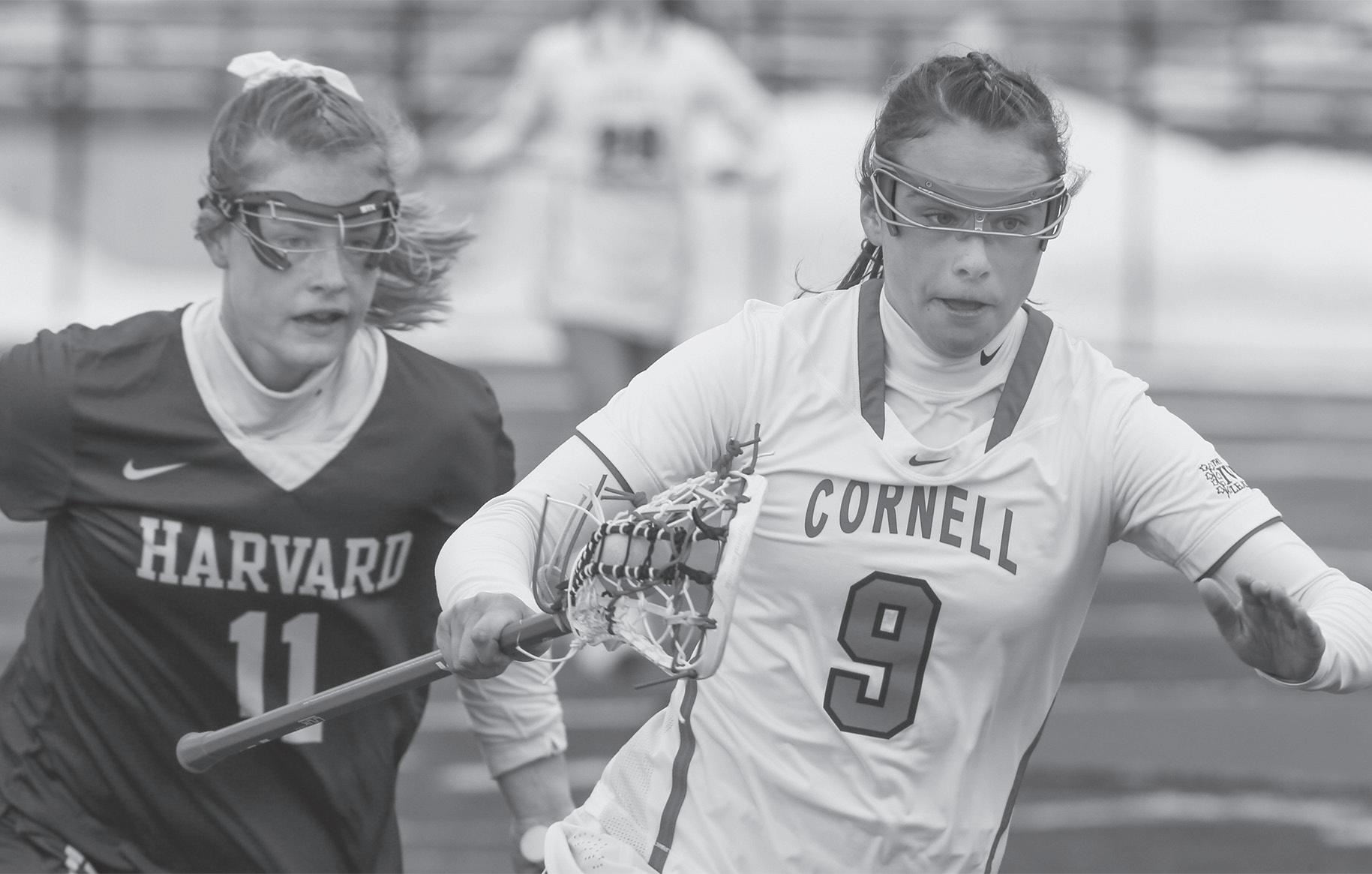
action | Cornell used a second-half rally to claim a one-goal victory over Harvard. But on Tuesday, the Red fell victim to a second-half surge by the Raiders, who scored seven unanswered goals to beat Cornell, 11-8.
dominate as a team because that was what’s going to lift us and get us to win.”
Coming off its strong comeback victory on Saturday, the team traveled to Hamilton, N.Y. to face off against Colgate on Tuesday. This game, however, saw the Red suffer a similar fate to Harvard as it fell victim to a second-half surge by the Raiders, which resulted in an 11-8 loss.
The two teams were neck-and-neck for much of the first half, exchanging goals and keeping the game close. A goal by Castiello, one by sophomore Shannon Brazier, and three by senior Caroline Allen comprised the team’s offense in the first half. Going into halftime, the score was tight at 5-4 in favor of the Red.
But the second half started off promising, as Cornell (3-2, 1-0 Ivy League) scored three consecutive goals thanks


to the sticks of Castiello, junior Reilly Fletcher and freshman Sophie Ward. The three-goal spurt gave the Red a comfortable 8-4 lead.
For the rest of the game, however, Cornell’s offense was completely shut down by Colgate (3-2) netminder Samantha Croston, who recorded 17 saves, eight of which came after the Red’s three consecutive goals. Croston’s defensive lockdown allowed the Raiders’ offense to get back on track, scoring seven unanswered goals to lock up the 11-8 win.
Cornell, now 3-2, will look to bounce back, as it returns to Schoellkopf Field to compete against Ivy foe Columbia at 1 p.m. on Saturday.
Alyson Wong can be reached at awong@cornellsun.com.
Continued from page 16
firing on all cylinders, the team is determined to find itself back in the same place.
“Our preparation has been really consistent all season,” O’Neill said. “With last year in mind, we are ready to make it to the Frozen Four and not just the semifinals. It’s important to keep our avenging attitude in mind for this year.”
Last season, Cornell bowed out of the Frozen Four after a 2-0 loss to Minnesota. If the Red wants to secure the necessary seeding to make a postseason run, it will have to continue its roll in the ECAC playoffs. On Saturday, Cornell is set to host Harvard, a team that the Red has already defeated twice, 7-0, and 4-1.
“Harvard is a team that’s very explosive,” Derraugh said. “It’s certainly a big challenge in front of us. In the games that we played against them, getting off to a strong start was very important for us and also not allowing them to get on the power play often because they have a lot of dynamic offensive players.”
For the Red to suffer only one loss all year, it has clearly done something right. Both players and coaches have pointed to the team’s attention to detail as the main factor fueling its success.
“Having gotten so close and seeing how important those details are at the end of the year when you’re playing those top teams, I
think that carried over into this year,” Derraugh said. “Right from the beginning, they understood the level of execution we need to have to have any success in the second half of the season and the playoffs.” Frechette echoed a similar sentiment.
“We’ve really tried to practice the way we want to play,” Frechette said. “So, getting the puck in the corner after a drill, chasing your rebound down or whatever it is — doing those little things [are important] because those little things could be what turns the game in either direction. We practice that way and hope it translates onto the ice.”
While the Red has been determined to build off its success from last season, the team’s staggering dominance has still been surprising — even to its own head coach.
“Did I expect the season to go the way it’s gone?” Derraugh asked. “I would have to say I’ve been pleasantly surprised at how well we’ve done. It is a cliche, but we look at each game one at a time. When you’re taking it one game at a time, you’re expecting to win every game that you play throughout the year.”
Cornell will square off against Harvard with a trip to the ECAC Championship game on the line. Puck drop for the ECAC semifinal is set for 1 p.m. on Saturday.
Luke Pichini and Justin Suzzan can be reached at lpichini@cornellsun.com and jsuzzan@cornellsun.com.
By LUKE PICHINI
After seeing its postseason run end in the Frozen Four last year, No. 1 Cornell women’s hockey is aiming to get back on the national stage.
Through the regular season and the ECAC quarterfinals, Cornell has dominated its competition, securing a 27-1-3 record and both the Ivy League and ECAC regular-season championships along the way.
“They’re a close-knit group,” said head coach Doug Derraugh ’91. “They believe in one another and believe in themselves. I think it’s a team that’s committed to team-defense first … having that consistency has been important.”
That consistency stems from the stellar play of junior goaltender Lindsay Browning, who has proven to be an anchor in net all season. She has allowed only 0.88 goals per game, a mark that leads the nation.
racking up a 21-game unbeaten streak.
On Feb. 10, the Red was rewarded with the No. 1 ranking. Weeks later, the men also clinched the No. 1 spot — marking the first time in program history that both teams held the top spot at the same time.
“Cornell is a hockey school, and in Ithaca, everything is hockey,” said junior forward Finley Frechette.” It’s pretty amazing having people recognize us when we’re out to dinner or getting coffee before the game and saying ‘good luck.’

“Last year, she came in some very big games for us and played well in those critical games — I think that’s helped her going into this season,” Derraugh said. “She’s just a very steady, consistent person … she’s done a great job and given us a lot of confidence back there.”
After suffering its sole loss of the season to Ohio State way back on Nov. 29, Cornell has gone undefeated since then,
It’s not really something female hockey players are necessarily used to. Just being apart of it gives me the chills — it’s amazing and everything I could have hoped for.”
The women kicked off the playoffs last weekend against St. Lawrence in the ECAC quarterfinals. The first game saw an offensive explosion from the Red, coming out on top with a 7-2 victory. In the next game, the team was able to get by its rivals after a tight 3-2 game. Senior captain and forward Kristin O’Neill led the way with three goals over the weekend.
“Not only are they leaders off the ice and on the ice, but you see the work ethic that they have,” Derraugh said of his senior captains. “You have to raise your game to that level. When your best players are your best leaders, that’s a really good problem to have. Our whole senior class, quite honestly, has great character.”
While Cornell’s defensive numbers pop off the page thanks to Browning, the team

Can’t lose | Cornell has not suffered a loss in its last 21 games — an unbeaten streak that dates all the way back to end of November.
lacks a top offensive threat that accounts for most of its production. Rather, the Red has relied on its depth on offense to outscore its opponents as it boasts eight different players with at least 20 points.
“It
seems like every night it’s been different for us, someone’s stepped up to the plate and delivered.”
“We don’t necessarily have the topfive or top-10 scorers in the country,” Derraugh said. “We knew that this was going to have to be a team effort for us offensively. That’s been a big part of our consistency — when one line isn’t quite
going offensively, another line steps up. It seems like every night it’s been different for us, someone’s stepped up to the plate and delivered. That will need to continue if we’re going to have success in the playoffs.” Getting back to the Frozen Four is a point of emphasis for the Red. Prior to its appearance in 2019, Cornell had last appeared in the Frozen Four in 2012. But with the Red
Doug Derraugh ’91 Reversing course |

By AARON SNYDER Sun Contributor
Despite coming off a 10-36 season and a last-place finish in the Ivy League, Cornell softball feels optimistic about the new season.
Head coach Julie Farlow ’97 believes that the eight sophomores on the roster will be critical to the team’s success.
“[The sophomores] bring a lot of experience, both offensively and defensively,” Farlow said. “The league knows them because they’ve played so much, so they have to adjust a little bit. But certainly, the amount of innings and at-bats they had last year is benefitting them going into this year.”
The team will
also benefit from the addition of five freshmen, who Farlow expects to contribute right away. Mia Burd and Gabrielle Maday, who together make up half of the team’s pitching rotation, will be expected to eat innings throughout the year.
Farlow expects Maicie Levitt to serve as a reliable defensive shortstop while contributing offensively. Celia Macari will see innings behind the plate, while Julie Hilcken will fit in as a utility infielder.
“They bring a lot of energy — they’ll help us both offensively and defensively, and … they’re contributing right away,” Farlow said of the group. “They’re a very relaxed, calm group when they’re playing, so that’s nice to see. I think they’re confident, they’re composed and they look like they enjoy playing … They don’t look overwhelmed.”
Farlow also hopes that the sophomore class’ experience will allow them to serve as mentors to the team’s five freshmen.
“[The sophomores’] expe-
rience is allowing them to help that freshman class with a lot of advice,” said Farlow. “I think last year [the sophomores] were very focused on getting themselves settled and trying to figure things out. Now they have it figured out and they can share that knowledge with other players.”
Cornell’s confidence was on full display at its season-opening tournament in Florida over February break. In stark contrast to its slow start last season — when it lost seven straight games to start the year — the team picked up two wins in its first five games, including the season-opener.
“It felt really good to win the first game,” Farlow said. “I think last year we went down to Florida with our heads spinning a bit and this year we felt much more confident, much more settled.”
Despite having this confidence, the Red was ranked last in the Ivy League preseason poll.
“The poll is what it is … We try to just focus on our-
selves,” Farlow said. “I always like to have high expectations, and our kids are working really hard, so I think achieving those expectations is a realistic thing. If we stay true to ourselves and pitch the ball well and be aggressive on offense and play solid defense, I think we can compete with every team in the league and have a successful year.”
Cornell has March 21 — the day Ivy League play begins — circled on its calendar. Until then, the team will use its upcoming non-conference tournaments as opportunities to improve.
“These are all perfect opportunities … to get ourselves sharp for the Ivy season,” Farlow said.
The first of those opportunities will come on Friday at 5:30 p.m. as the Red squares off against Buffalo for the first of four games at the George Mason Invitational in Fairfax, Va.