The Corne¬ Daily Sun




Pop-up thrift shop in Willard Straight Hall promotes sustainable, afordable fashion for warmer weather
By CHANTAL RAGUIN and AMANDA H. CRONIN
Vintage jeans, handmade jewelry and soaps were just a small sampling of the wares on sale yesterday at Spring Cleaning, Cornell Thrift’s pop-up store in Willard Straight Hall.
With over 1,500 RSVP’s on Facebook and 40 participating vendors, student shoppers flocked to Spring Cleaning to peruse second-hand garments and try on potential purchases in blue tent fitting rooms.
The event was a collaboration between three student-led sustainable fashion initiatives: Thrift Reuse Upcycle, KAN Supply and Cornell Thrift, who aimed to make the transition to spring sustainable through thrifting.
By JOHNATHAN STIMPSON and ROCHELLE LI Sun News Editors
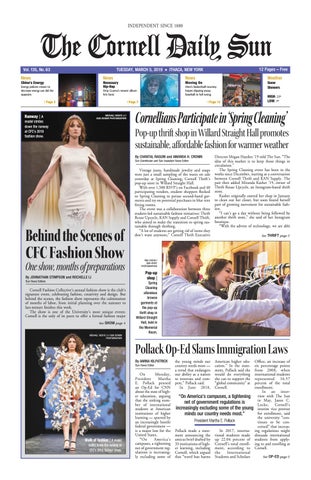
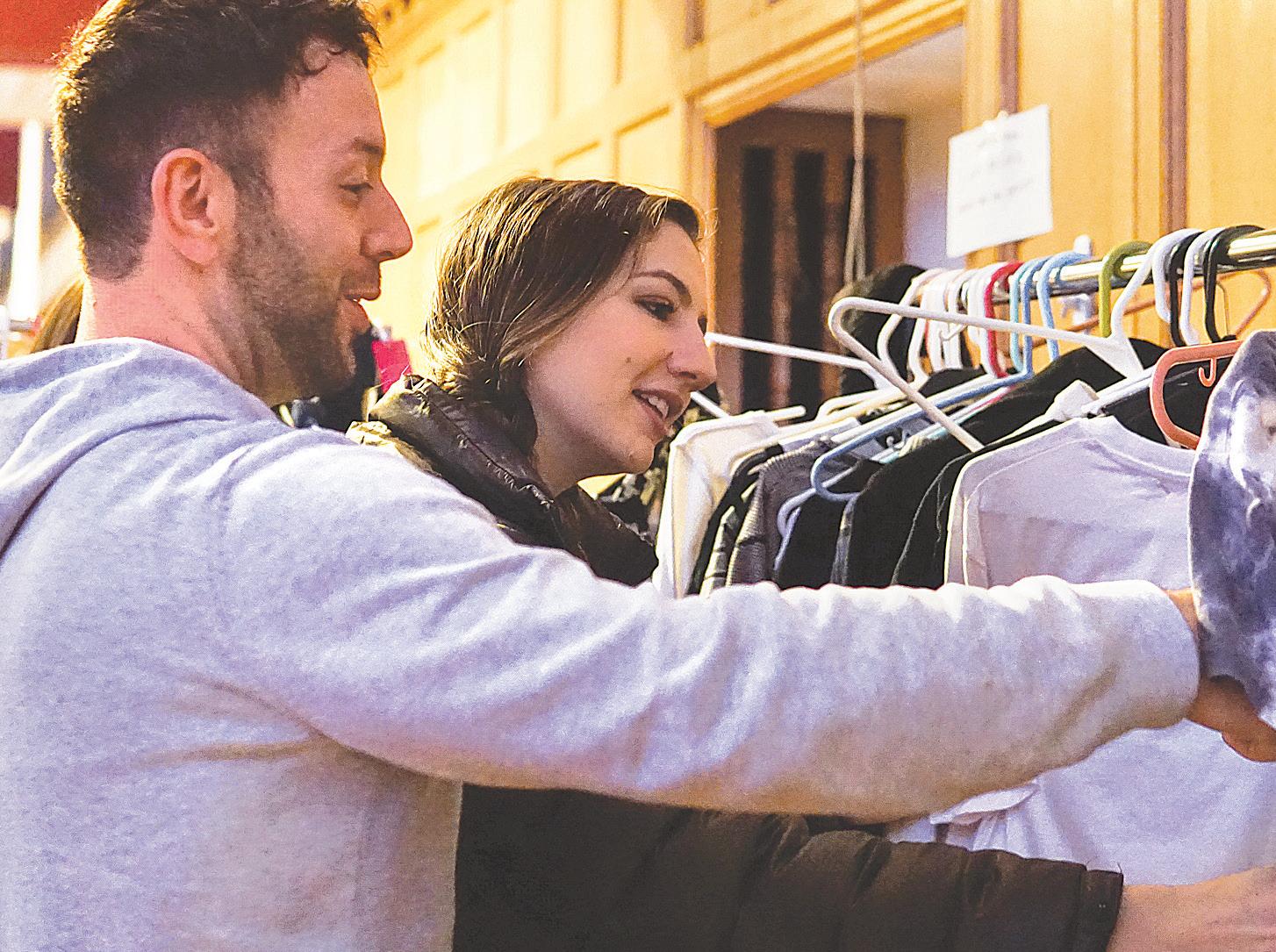
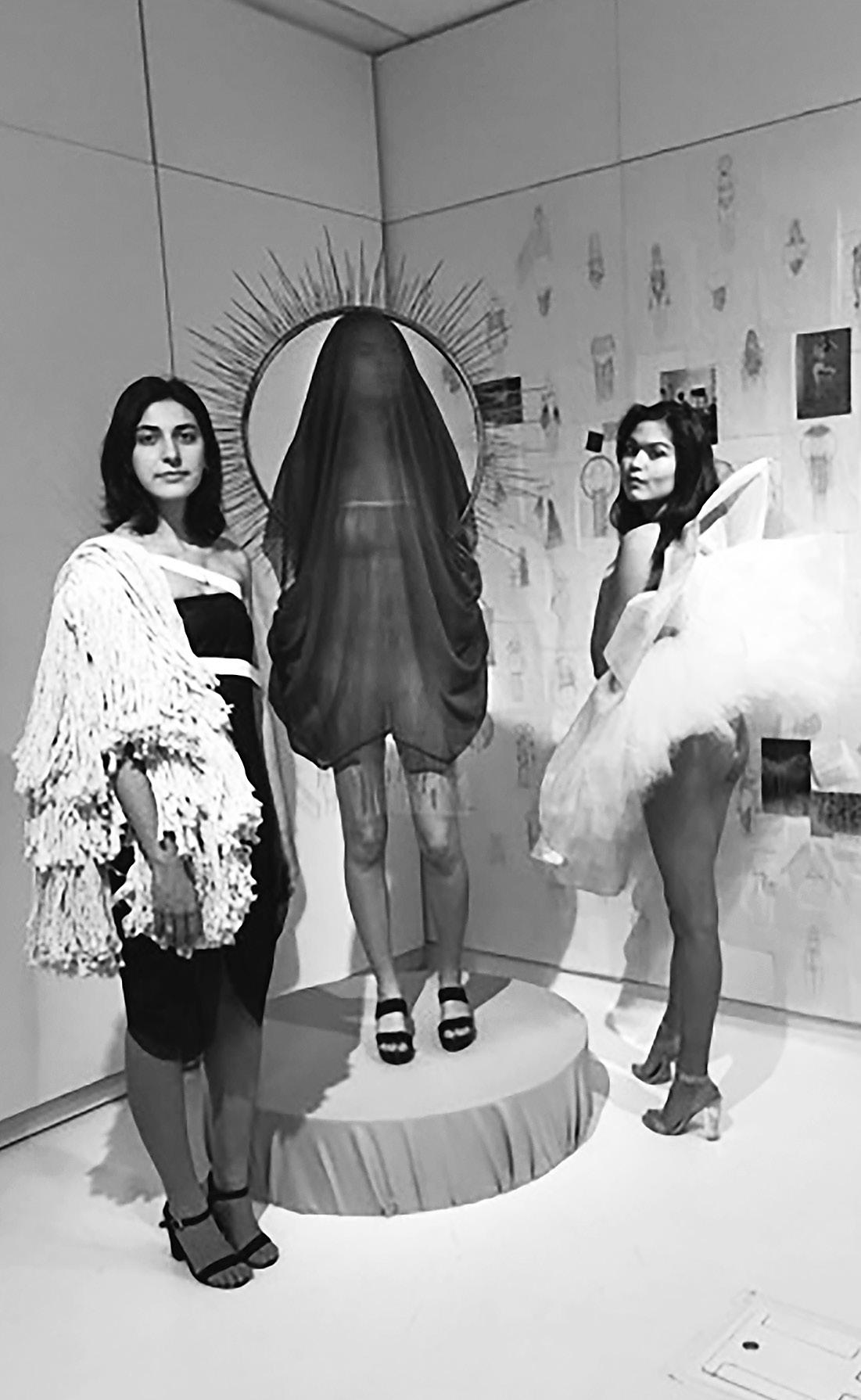
Cornell Fashion Collective’s annual fashion show is the club’s signature event, celebrating fashion, creativity and design. But behind the scenes, the fashion show represents the culmination of months of labor, from initial planning over the summer to last-minute finishes this week.
The show is one of the University’s most unique events: Cornell is the only of its peers to offer a formal fashion major
“A lot of students are getting rid of items they don’t want anymore,” Cornell Thrift Executive
Director Megan Hayden ’19 told The Sun. “The idea of this market is to keep those things in circulation.”
The Spring Cleaning event has been in the works since December, starting as a conversation between Cornell Thrift and KAN Supply. The pair then added Miranda Kasher ’19, owner of Thrift Reuse Upcycle, an Instagram-based thrift store.
Kasher originally started her shop in January to clean out her closet, but soon found herself part of growing movement for sustainable fashion.
“I can’t go a day without being followed by another thrift store,” she said of her Instagram boutique.
“With the advent of technology, we are able
See THRIFT page 5
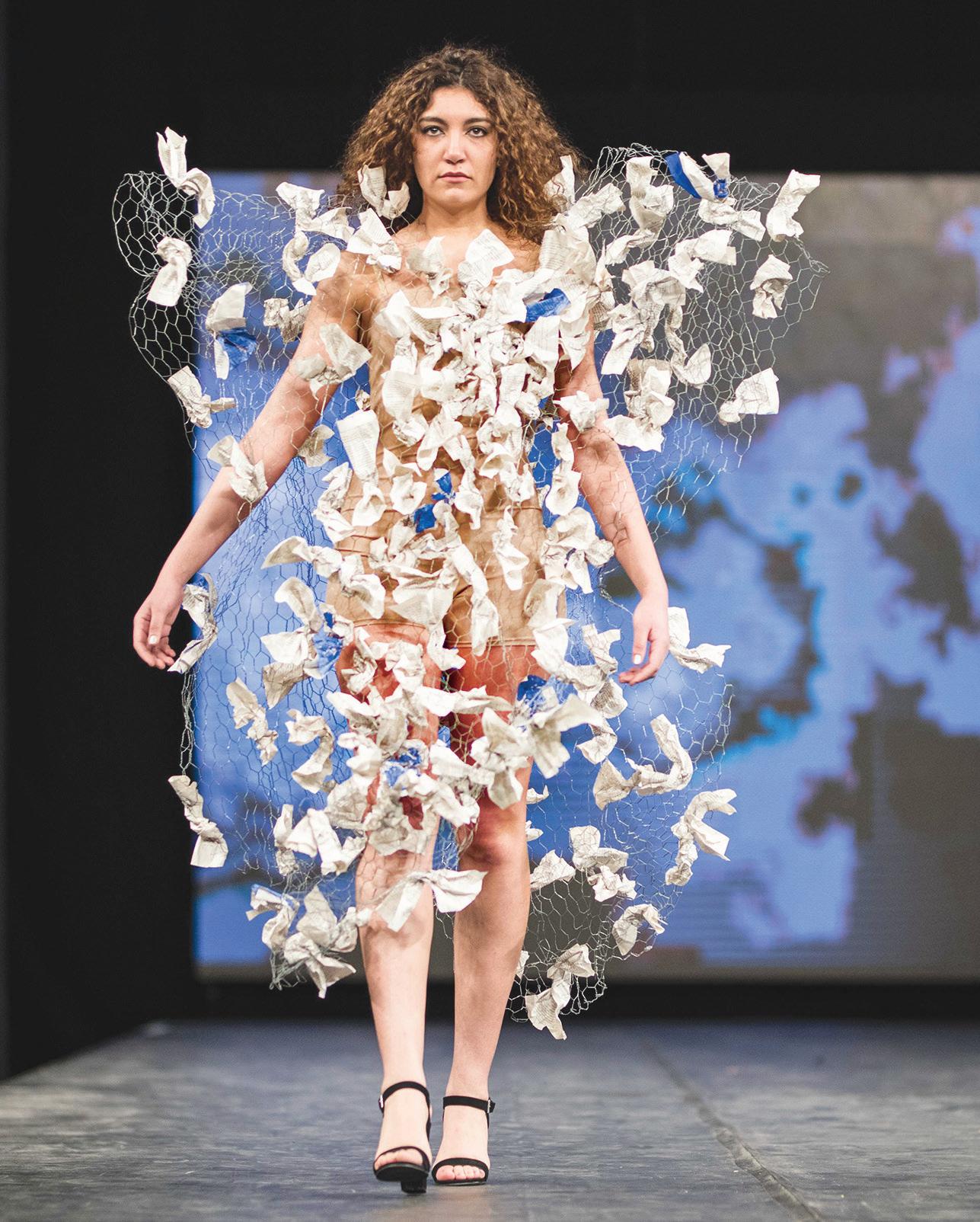
Pop-up shop | Spring Cleaning attendees browse garments at the pop-up thrift shop in Willard Straight Hall, held in the Memorial Room.
By AMINA KILPATRICK Sun News Editor
On Monday, President Martha E. Pollack penned an Op-Ed for CNN about the state of higher education, arguing that the sinking number of international students at American institutions of higher learning — spurred by an increasingly hostile federal government — is a major loss for the United States.
“On America's campuses, a tightening net of government regulations is increasingly excluding some of
the young minds our country needs most — a trend that endangers our ability as a nation to innovate and compete,” Pollack said. In June 2018,
American higher education.” In the statement, Pollack said she would do everything she can to support the “global community” at Cornell.
“On America’s campuses, a tightening net of government regulations is increasingly excluding some of the young minds our country needs most.”
President Martha E. Pollack
Pollack made a statement announcing the amicus brief drafted by 33 institutions of higher learning, including Cornell, which argued that “travel ban harms
In 2017, international students made up 22.04 percent of Cornell’s total enrollment, according to the International Students and Scholars
Office, an increase of six percentage points from 2008, when international students represented 16.57 percent of the total enrollment.
In an interview with The Sun in May, Jason C. Locke, Cornell’s interim vice provost for enrollment, said the university “continues to be concerned” that increasing regulations might dissuade international students from applying to and enrolling at Cornell.
Today
Tuesday, March 5, 2019
Behavioral Economics Workshop: Ori Heffetz
11:40 a.m. - 1:10 p.m., 141 Sage Hall
Sugar Beet: Advanced Breeding for a Highly Profitable Niche Crop
12:20 p.m., 135 Emerson Hall
ORIE Colloquium: Access to Fresh Vegetables and Fruits — Empirically Driven Choice Models Informing Policy
4:15 p.m., 253 Frank H. T. Rhodes Hall
LASP Public Issues Forum— From Hope to Hate: The Rise of Conservative Subjectivity in Brazil
4:30 - 6:00 p.m., Seminar Room 201, A. D. White Room
Performing Black Death Drop: Transness, Femmeness and Public Protest 4:30 - 6 p.m., 122 Rockefeller Hall
WIPP’s First Ever Policy Salon With Professor Natalia Santamaría
5:30 p.m., International Lounge, Willard Straight Hall
Senior Series Kick-off Event
9:15 p.m., Common Room, Carl Becker House
Let’s Meditate 8:30 p.m., Becker TV Room, Carl Becker House

Tomorrow
Entrepreneur in Residence Office Hours: Abe Ng ’95 9 a.m. - 3 p.m., G806 Statler Hall
Workshop: Art + Feminism Wikipedia Editing Noon - 1 p.m., 106G Olin Library
Trodding Diaspora: Rastafari, Tanzania and PanAfricanism in the Age of Decolonization 12:15 p.m., 404 Morrill Hall
sunmailbox@cornellsun.com
Introduction to LaTeX 3 - 4 p.m., Uris Library
Ace your Prelims! 4:30 - 5:30 p.m., Tatkon Center
Donatella Di Cesare, “Heidegger and the Jews: The Black Notebooks” 4:30 p.m., Guerlac Room, A.D. White Room
Pan-Asian Fusian Night 5 - 8:30 p.m., Robert Purcell Marketplace Eatery
By EMILY YANG Sun Staff Writer
Despite national, state and local efforts to curb energy consumption, some Chinese energy policies might not work at all — some of them might even have the opposite effect, a new study found.
The study, done by Shuyang Si grad and Prof. C. Y. Cynthia Lin Lawell, applied economics and management, was the first to examine China’s entire set of different energy policies as a whole. Most prior papers on China’s energy policies focused on a single policy’s effect on reducing energy consumption or promoting energy conservation behaviors, according to Si.
“We feel like that’s not complete. It’s not enough. We planned to look at the broader picture, taking all the possible policies we can find into account, and estimate the overall effect of all the policies together,” Si told The Sun.
China produces the most pollutant gases associated with climate change in the world. The country has adopted goals at the national as well as at local and provincial levels that aimed at limiting emissions. In developing countries, the rapid increase in energy consumption has led to problems such as power shortages and environmental pollution.
Si spent a year collecting data from 2,656 energy-related laws and policies from 2002 to 2013. He then organized the data by policy type and analyzed their effects.
His analysis found that while some laws or policies were successful in decreasing energy consumption, some others actually had the opposite effect. For example, non-monetary awards for the technology sector to reduce fossil fuel consumption achieved its intended outcome, but providing monetary incentives — such as offering loans to firms or households

— for reducing fossil fuel consumption actually resulted in an increase in consumption.
“Everyone who studies China fears that these numbers are not trustworthy.”
Shuyang
Si grad
Similarly, Si finds that increased education and information on efficient energy use also led to a significant rise in energy consumption. This may be due to a “rebound effect,” Si explained, which happens when people change their behavior in a way that counteracts the gains from improving energy efficiency.
“I’m using energy efficient appliances, so I feel like I can use them more often,” Si explained. “Your lifestyle will actually be using more energy.”
The data used in the study was obtained from the
By AARAN LEVITON Sun Staff Writer
Often cladded in winter coats, many Cornell students may see modeling as a distant idea. However, from runway shows by the Cornell Fashion Collective to advertising campaigns for the Cornell Store, many undergrad-
uate students have taken on this side job and learned important lessons from it.
Emma Antoine ’21, Tomas Greenberg ’21 and Christian Medina ’21 have all worked with Cornell Store photographer and stylist Erica Holt ’21 on photo shoots for the store, who said she never concerned about pho-
tographing people with no prior experience.
“I’m always trying to encourage people who don’t think they would make good subjects to try it out,” Holt said. “I’m used to working with people from behind the camera, but I generally look for people who are comfortable being in front of the lens on their own because confidence translates through photos.”
Both Antoine and Medina — who was a child model for a brief time — were asked by friends to model for the shoot, and Greenberg was drawn to modeling “completely randomly.” When a friend already booked to model couldn’t make it, he asked Greenberg to fill in for him.
“I didn’t have anything to do, so I said yes,” Greenberg told The Sun.
Modeling at the Cornell Store pays through Cornell Store gift cards, according to Antoine.
Antoine, Greenberg and Medina all mentioned the importance of confidence when modeling. “Having confidence is a huge part of doing anything but especially in modeling,” Medina said. “Anyone can model if they wanted to and I encourage others to try and do so.”
Modeling was “all about letting go of any fears of embarrassment, taking risks with the poses you make, and just having fun with it,” said Greenberg.
The Cornell Fashion Collective, Cornell’s fashion and fashion management club, also frequently employs models like Ariane Bowers ’21 and Mikaela Matera-Vatnick ’21.
Joyce Bao ’19, vice president of designers and models, said
China Energy Statistical Yearbooks and official government policy document — a potential source of concern, said Si.
“Everyone who studies China fears that these numbers are not trustworthy, but this is the best that we can do,” Si told The Sun.
Nevertheless, even when using data published and approved by the Chinese government, researchers still reached similar results as Si did — that some energy-related policies in China may be ineffective or even have counterproductive consequences.
In the future, Si hopes that his study will help develop the most effective energy policies or policy combinations.
Emily Yang can be reached at eyang@cornellsun.com.
By WINNY SUN Sun Staff Writer
Drastic measures must be taken to prevent the global temperatures from rising even more than the projected 1.5 degrees Celsius, an October United Nations report said. This Friday, a symposium at Cornell will bring together climate experts to explore those measures. The forum will feature five climate experts whose specialties range from biology to policy. Several come from academic institutions, such as Yale University and American University, while others come from the nonprofit sector and a scientific professional society.
The symposium, titled “Carbon Dioxide Removal and the IPCC Special Report on 1.5C,” is about “building a conversation around some of the ideas in the U.N. Special Report,” according to Christian Elliott, program and communications associate for the Department of Development Sociology. During the symposium, the participants will explore various ways to keep global temperatures from rising even more, such as through transformations in land use and new technologies, according to its event page.
Natalie Mahowald, lead author of the U.N. report and Irving Porter Church Professor of Environmental Engineering, will begin the forum. Using her findings from the report, Mahowald plans to discuss “the difficulty of achieving low climate targets,” according to an email she sent to The Sun.
Following her presentation, each speaker will have 20 minutes to share their thoughts and findings before finishing with an hour-long question and answer session, according to Elliot.
Elliot believes the event is a “great learning opportunity” for people interested in both physical and social sciences, where they can learn about cutting edge ideas that have a big impact on the future of our planet.
“The technical solutions to removing carbon dioxide are the subject of much debate.”
Christian Elliott
“The technical solutions to removing carbon dioxide are the subject of much debate, but this workshop will also consider the possible costs and benefits to different segments of society,” Lori Lenard, director of the Polson Institute for Global Development told The Sun in an email.
The program was organized by the Polson Institute for Global Development, in partnership with the Atkinson Center for a Sustainable Future, the Cornell Institute for Climate Smart Solutions, and the Cornell University Department of Government, and will take place on March 8 from 2 to 5:30 p.m. in Warren B25.
Winny Sun can be reached at wsun@cornellsun.com.







and “the only Ivy that does a show like this,” said CFC vice president of public relations Eliana Rozinov ’20.
Hosting Cornell’s premier display of fashion talent is an arduous process that takes over seven months from booking the room to finishing the last show, according to CFC President Narhee Kim ’20. Behind the scenes, CFC designers at the fashion show start preparations far in advance.
CFC divides its designers into four levels based on number of years of experience designing for CFC. The organization’s 25 level one and two designers create one to two looks based on a specific theme. The 11 level three and four designers are expected to present an entire cohesive collection, according to Bao, who is charged with overseeing the design process.
That lengthy process begins in the fall semester, which is mostly dedicated to brainstorming and creative planning. Level one and two designers, in consultation with faculty advisor Prof. Jooyoung Shin, fiber science and apparel design, workshop a wide array of sketches and ideas before settling on a more definitive theme, Bao said.
Bao, a level four designer, has opted for a “more exaggerated experimental” theme that aims to be “a celebration of ‘craziness’ in contemporary female psyche.” To turn those often physically complicated ideas into a wearable reality, the designers kick into overdrive after winter break and “get really hectic” during the second semester, Kim said.
Level four designers, who are tasked with displaying at least eight to 11 looks, often must work far into the night in the weeks and months leading up to the show to finish producing their garments, according to Bao.
“We’ve been here [in the studio] every day since the semester started,” Bao said, noting that their work the last two weeks before the show regularly “goes into the a.m.’s.”
Previous shows have featured collections that cover a diverse range of styles and messages. Last year, one designer showcased “five costumes, with each look representing a stage of the human body,” that required 3D printing, custom embroidery and over 300 hours of labor to produce.
The models who will don CFC’s work on the runway have gone through a similarly rigorous process of preparation. As every designer is looking for different and unique types of individuals — “you never know who needs a certain person for their specific collection,” Bao pointed out — a wide net is first cast in mid-October, when a model call advertises to people “all around campus.”
While selected models don’t have many commitments early on, they have

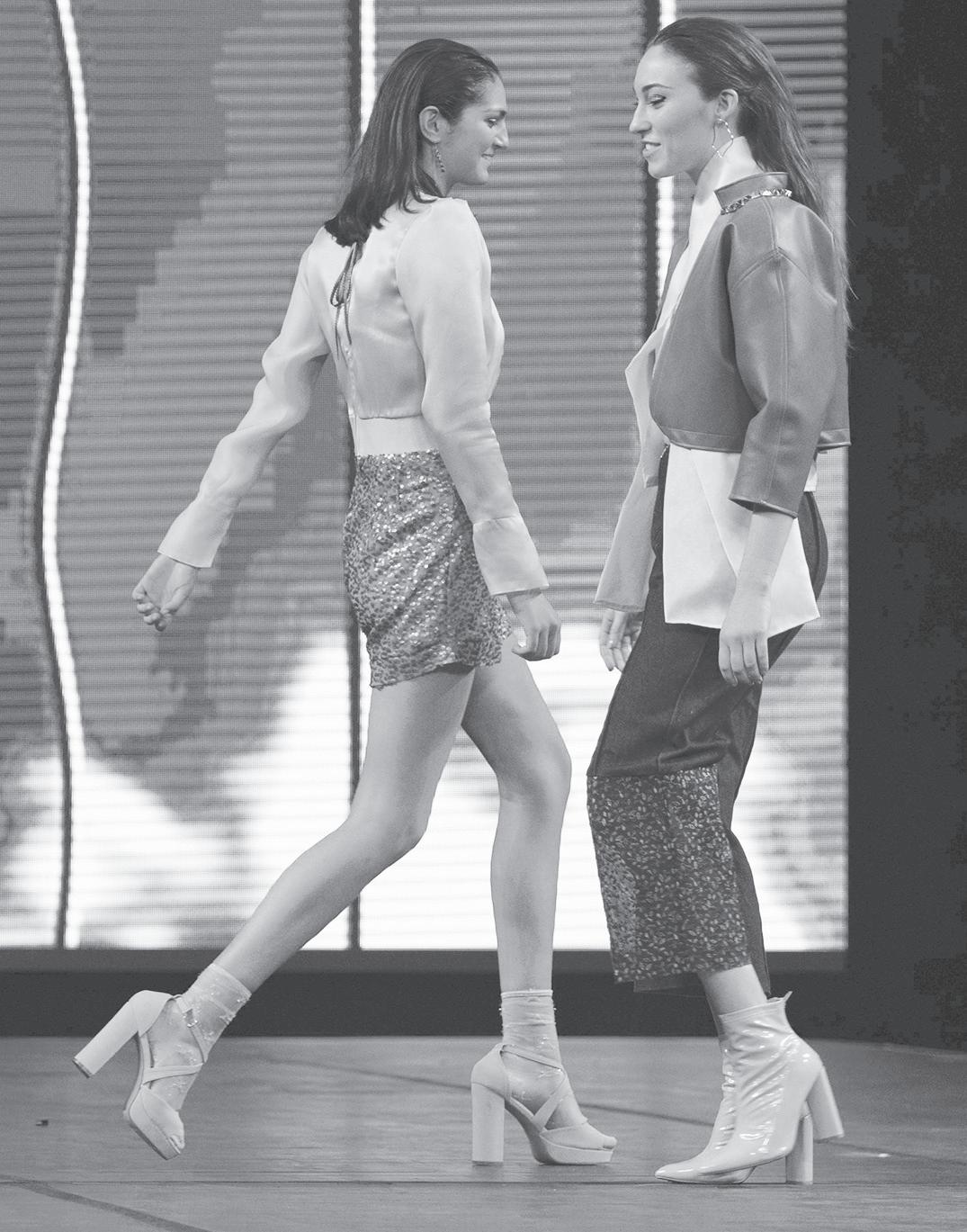
much more to do in the spring semester: They must go to the studio three times for preliminary fitting, then at least another two times to be fitted to the final fabric, attend a model bootcamp as well as a number of rehearsals to make sure “they are comfortable walking in heels,” and attend a number of rehearsals.
“It takes… one and a half months to get the fit right with the models,” Bao explained.
The end result of the elaborate, couture endeavor is one of Cornell’s best-attended events: While the show regularly commands the attendance of thousands, last year it sold out, with over 3,100 spectators filling Barton Hall.
Besides the fashion show itself, CFC is hosting a week filled with fashion related events. CFC has collaborated with local eateries for fashion themed fare. Mandibles is selling a “Coco Chanel Drink”, Chatty Cathy is selling a “Breakfast at Tiffany’s Bowl” and “Dior Body Good Smoothie”. CFC also invited guest speakers such as Joanne Kim, who works at Estee Lauder and Luna Lee, human rights activist.
“It’s basically our own little fashion week here in Ithaca,” Rozinov told The Sun.
Johnathan Stimpson can be reached at jstimpson@cornellsun.com.
As of fall 2017, new enrollments of international students across institutions of higher education in the U.S. declined by 6.6 percent, the highest amount in the last decade, according to statistics from the Institute for International Education, which Pollack cited.
This decrease in international students is occurring as other countries are experiencing an increase in enrollment of international students. For example, Pollack references India and China as examples of nations enrolling growing numbers of international students.
The shrinking international student population is caused by growing restrictions on immigration instituted within the past few years, according to Pollack. These include increased difficulties in obtaining visas and tightened provisions within the “unlawful presence” policy.
“The Trump administration has either suggested, or placed on its regulatory agenda, a host of new proposals making existing visa procedures even more onerous,” Pollack wrote. “[The restrictions] include reducing the
length of visas, requiring students to reapply annually or limiting every student's stay in the United States.”
According to Pollack, these new regulations presents a real danger to the future of these universities as they lose the talent and research potential of would-be students.
She mentioned Cornell alumnus Pablo Borquez Schwarzbeck MBA ’15, from Mexico, who created a company that helps farmers.
“When we discourage or turn away international students, we lose much more than the students themselves,” Pollack said.
“We lose their inventions and innovation, their collaborative input and their contributions to our communities,” Pollack continued. “Ultimately, we will lose not just our status as a global leader, but the very identity that earned it.”
She concluded by saying that although the country “cannot stand open to every person,” it should still remain wide open.
“But we must find a way to keep them open to ‘any person’ — open not just a begrudging crack but wide in welcome,” Pollack said.
Amina Kilpatrick can be reached at akilpatrick@cornellsun.com.

THRIFT
Continued from page 1
to pull elements of fashion from other generations, whereas people weren’t able to do that before. Every generation usually has a style, but we don’t really,” Kasher said.
The sellers at the event ranged from Cornell students to experienced resale vendors, jewelry-makers and knitwear artisans.
“I decided to sell at this event because I love sharing the things I’m interested in with other people,” Keri Heuer ’19 told The Sun. “I’m moving to Cambridge in the summer to work at the Harvard Center for Astrophysics, so I’m trying to save up for rent money.”
Cornell Thrift focuses mainly on waste reduction by maintaining “free-togive, free-to-take” closets for students to exchange clothes with each other. They also host “free piles” or pop-up give-aways
of second-hand garments to provide costless access to clothing.
KAN, founded by Kenneth Yeung ’21, seeks to bring “re-upped, vintage NYC style to the streets of Ithaca at an affordable price.” For the Spring Cleaning, Yeung selected clothing from donations from Cornell students as well as from local vintage and thrift stores. All itemswere priced at $1 to $3.
like a night in New York City. There’s reds and a cheetah-print pea coat.”
“You have different racks for different styles. Some are color-schemed, some are nautical.”
Miranda Kasher ‘19
Kasher hosted a separate sale room with over 15 racks of clothing, with all items priced under $30.
“What I’m offering is a very large range. You have different racks for different styles,” Kasher said. “Some are color-schemed, some are nautical, another is
Kasher also said that Thrift Reuse Upcycle has influenced her future aspirations. “The hope is that I go into some sustainable career.” she said. “Thrift Reuse has inspired me to do that. I have sort of come to a revelation that this is what I want to do.” All surplus clothing and proceeds from the event will be donated to the Fashion Revolution and the Ithaca ReUse Center.
Chantal Raguin can be reached at cer94@cornell.edu. Amanda H. Cronin can be reached at acronin@cornellsun.com
that she chooses her models based on how well they fit into her overall design goals.
“All of my models were either selected from CFC’s model call that was held in the fall semester or friends that I reached out to,” Bao said. “As a senior designer, I picked my models based on how well they look cohesively, as well as how they fit my personal design aesthetics.”
Matera-Vatnick previ-
ously modeled with CFC designer Jackie Fogarty for last year’s fashion show and has been working with Bao for this year’s show.
what they asked me to do. I developed a very good relationship with both the designers,” MateraVatnick said. She also
“The designers, both last year and this year, always made sure that I was comfortable doing what they asked me to do.”
Mikaela Matera-Vatnick ’21
“The designers, both last year and this year, always made sure that I was comfortable doing
acknowledged, “on a deeper note, I think that modeling in the CFC takes confidence.”
Bowers, who has also previously modeled for CFC, said, “I think it’s powerful to have representation from all types of people regardless of race or background, it adds a humanity to all of the art on stage. I also think from the model’s perspective, it gives a lot of people more confidence in themselves and that’s a really beautiful moment to witness.”
Aaran Leviton can be reached at al739@cornell.edu.

Ilove going to events at the Johnson Museum, especially at night. It’s an excuse to check out new exhibitions, free food and have some good wholesome fun. Last Friday’s “The Museum Rocks . . . Late Night!” was no exception. Hosted by the Museum Club and Student Educators: Art & the Museum, the event explored the relationship between art and geology through a variety of events and activities such as live rock music (pun intended) and a “bad geology movie” screening by the Earth and Atmospheric Science Student Association.
two huge mountains that loom above. All of this is done using an earthy palette. In the words of Jane Austen’s beloved heroine Elizabeth Bennet: “What are men to rocks and mountains?”
In contemplating nature ... the human subject must be both overwhelmed by nature while also retaining the distance to reflect on it.
One of my favorite parts of the event was getting to see the special exhibition Past Time: Geology in European and American Art. Drawings, sketchbooks, paintings and watercolors made by American and European artists from the late 18th to 19th centuries reflect new scientific explorations into geology and discoveries about the Earth and its history. Many of these works display a sense of awe at the grandeur of nature and man’s relative smallness, both physically and on a chronological scale. For example, Frederic Church’s Königssee, Bavaria, 1886, depicts a small boat on a river flowing between


In his latest album, Atlanta rapper Gunna provides a familiar throwback to his 2017 Drip or Drown E.P. Released last Friday, Drip or Drown 2 is a sixteen-song project with features from Lil Baby, Young Thug and Playboi Carti. Gunna continues to deliver more of his patented, subtle orations over laid-back instrumentals with an emphasis on traditional Atlanta trap themes.
Drip or Drown 2 is a staple Gunna album, focusing on soft vocal melodies paired with lowkey trap beats. The album has numerous interesting qualities that make it a solid addition to the current wave of hip-hop and feels very authentic to both Gunna and Atlanta rap, with all three features coming from prominent Atlanta stars. The album’s style falls squarely in the new-wave, mumble rap category, with simple messages and little emphasis on lyricism while still maintaining the Atlanta trap motif.
Young Thug and Gunna’s call-and-response singing style
However, one gets the sense that man is at once removed from nature and above it. In his Critique of Judgement, Immanuel Kant puts forward the idea of the dynamical sublime as “nature considered in an aesthetic judgement as might that has no dominion over us.” In contemplating nature as the aesthetic object of our judgement, the human subject must be both overwhelmed by nature while also retaining the distance to reflect on it. With this view, the human subject is made necessarily superior, then.
Ramya’s Rambles
Like the titular wanderer in Casper David Friedrich’s Wanderer above the Sea of Fog — a
work that has since come to be emblematic of the Romantic movement — these paintings also express man’s desire to conquer and overpower nature, that nature’s might indeed “has no dominion over us.” Thus, exploration contains an implicit understanding of man’s eventual mastery over nature. I also think it’s interesting to note that most of these works are by men and typically employ men when human subjects are depicted.
Around the same time as these paintings were created, science and technology were being used as tools to exploit natural resources for human gain. The Industrial Revolution, with its heavy reliance on coal and fossil fuels, was starting to take its toll on the environment, resulting in air and water pollution, as well as soil contamination and habitat destruction.
In light of recent knowledge of our impact on the environment, we can no longer keep up this illusion of distance, of ourselves as subject.
In Homer’s Odyssey, Penelope asks a disguised Odysseus about his origins, stating, “for you are not from anciently spoken oak or rock,” which becomes reconstrued later by Plato in the Apology as an opposition between human beings and “oak or rock.” I would argue that in light of recent knowledge of our impact on the environment, we can no longer keep up this illusion of distance, of ourselves as subject and nature as object. Moving forward, there seems to be a need to reevaluate our own relationship with nature and the environments





stands out on “3 Headed Snake,” with the two artists blending well with local producer Wheezy and showcasing their compelling and dynamic relationship. Gunna also attempts a more extensive vocal presence throughout the album, with a melodic style resembling the melancholy trap anthems of his mentor, Young Thug, and peer, NBA Youngboy. One strength of the album is the ease of listening and consistency that a playthrough delivers, making it perfect for playing in the background of any relaxed situation. Gunna’s adherence to his melodic roots means fans of his early work will almost certainly appreciate the album, while those unimpressed with the simplicity of mumble rap may want to look elsewhere.
As you may expect from a Gunna project, Drip or Drown 2 does have its fair share of creative and interesting beats, with “Who You Foolin” sampling a unique guzheng instrumental from Chinese singer Tong Li. For
returning Gunna fans, the album is also chockfull of dynam ic, hard-hitting bass rhythms that the M.C. is well known for rapping over.
we live in, especially as represented through art. Kirsten Kurtz, an artist and soil scientist at Cornell, demonstrated the evolving nature of this relationship during the event through a soil painting activity that blurred this divide between art and nature. Rather than simply depicting geological forms, soil painting transforms the geology into the art itself. In order to make her soil paints, Kurtz mixes soil with water and gesso, creating colors ranging from white to grey to black to various shades of brown. This is by no means a limited palette — Kurtz’ own work is vibrant and joyful and all the more admirable considering how much trouble I myself had in trying to make anything coherent out of the rich textures of the soil paints. On the way back from the Johnson, my friends and I stopped next to some dirt by the edge of a sidewalk, and though we didn’t exactly pick up some paintbrushes and go at it, it was a surprising reminder of the ways in which art pulls us out of our usual patterns of thinking and re-configures our worldview, even if just for a brief moment.
Ramya Yandava is a sophomore in the College of Arts and Sciences. She can be reached at ry86@cornell.edu. Ramya’s Rambles runs alternate Tuesdays this semester.
Drip or Drown 2’s biggest weaknesses stem from the repetitiveness of the songs within the album. The album fails to differentiate itself notably from the original Drip or Drown and much of Gunna’s previous work. Aside from his increased use of vocal melodies and novelty beats, the album blends in considerably to the contemporary trap and mumble rap scenes that Gunna could — and arguably should — be advancing given his talent. Even his use of singing could be seen as an imitation of his influences like Young Thug and therefore not necessarily a significant contribution to the genre.
Additionally, I was disappointed with both the Lil Baby and Playboi Carti features. The now iconic duo of Lil Baby and Gunna did not produce one of the classics we have come to expect from such a collaboration, with Lil Baby unimpressively appearing in “Derek Fisher.” Similarly, Playboi Carti’s appearance is lackluster and falls short of what a unique and genre-pushing artist like Playboi Carti can add to a project. Due to the minimal number of features on the
album, these appearances could have been utilized better in
tainly be a welcome addition to hip-hop playlists over the next few months, especially for those appreciative of the subtle flows and trap beats constantly present. Gunna seems to play it safe with this release, providing similar music to that which has gained him considerable commercial and artistic success. Although this approach can lead to a lack of innovation and excitement, Gunna provides a powerful narrative on life in Atlanta and the music it continues to inspire. Drip or Drown 2 is a consistent, solid release that captures the current trap and mumble rap scene, but perhaps it does so too well.
John Wooten is a freshman in the College of Arts and Sciences. He can be reached at jbw@cornellsun.com.
HackathoN
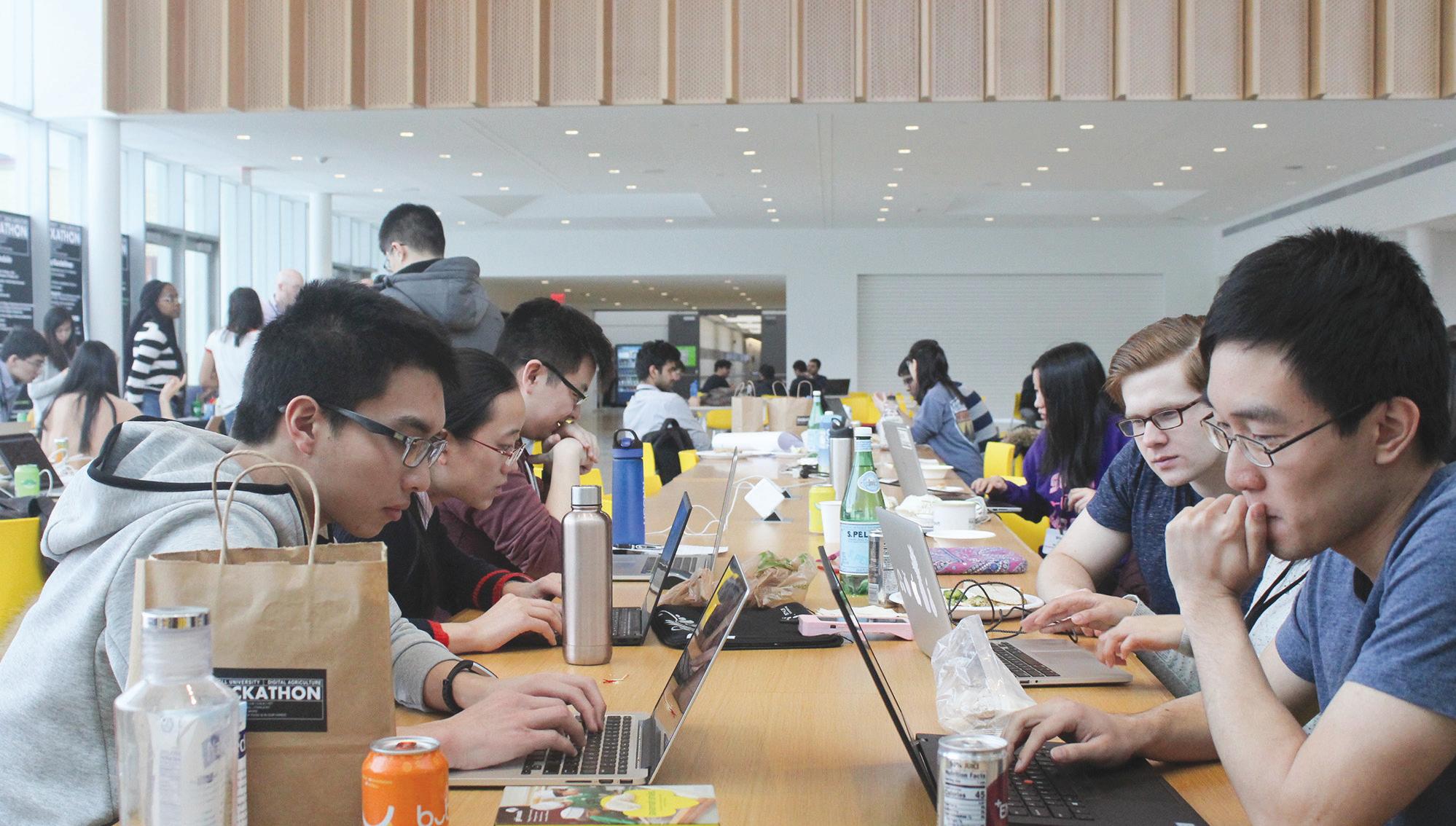
“How do you feed 10 billion people by 2050 without destroying the world?” asked Prof. Hakim Weatherspoon, computer science.
At Cornell’s Digital Agriculture Hackathon this past weekend, over 200 Cornell students sought to answer that question. This past weekend, teams were challenged to improve the environmental impact of agriculture, develop high-yield food production strategies, support small farmers and make food systems more efficient.
After multiple days of coding, design, research, and businwess planning, 26 teams presented their demos, out of which 10 were selected as finalists and five teams won prizes. Each team’s proposed solutions was judged on data collection and analysis, novelty, social impact and market-readiness.
The grand prize winner, InsectInsights, had the highest combined score and received a prize of $2,000. Its team members developed a product that allows fish farmers to grow their own fly larvae to feed their fish rather than buying fish meal. Users are provided with “love cages” — where adult flies mate — and boxes for the larvae to grow in.
InsectInsights also prototyped a mobile application to connect fish farmers with local food producers because in InsectInsights’s system, one food producer’s organic waste is another producers’ fly food — doing so not only feeds the insects but also helps reduce food waste, according to InsectInsights team member Sheren Winarto MPS ’19.
Team Guardians won $1,500 for excellence in data capture and analysis. The team developed a predictive algorithm for
cows calving time that can alert farmers via an app to monitor the birthing process and provide medical assistance if necessary. This allows farmers to monitor the birth when a selected cow begins labor.
“This model is based on research conclusions that three hours before birth, a cow’s activity will peak and rumination will reach a low point,” said team member Tian Ren M.Eng ’19.
Team Mastitech won $1,500 for most market ready solution with their invention of a sensor that detects cow jaw movement and an algorithm to calculate cow feed intake.
According to J. Hunter Reed DVM ’20, this information will help with the nutrition and healthcare management of cows in the short term. In the long term, Mastitech’s data can be combined with lactation data to find and breed feed-efficient cows that produce more milk while requiring a smaller amount of food. This would reduce the environmental impact of dairy farming.
Mastitech also focuses on making small dairy farms more financially viable. “Having worked on my grandfather’s and now my uncle’s dairy, it kind of gives you a little bit of insight as to the struggles that individual farms, small farms especially, feel disproportionately compared to larger farms,” Reed said.
Mastitech is among the many teams at the Hackathon interested in continuing the expansion of their projects in the future.
“Some of our teammates have expressed that maybe this does have the potential to be sold and advertised to interested parties, and we are interested in actively pursuing that,” Reed told the Sun.
Another $1,500 and the award for greatest societal impact went to Team Farmval. They developed a method of digital evaluation of farmers land, using data
from soil sensors and drone imagery. The value of the land is used to create a credit score, improving farmers’ access to loans. The information would then be stored on the block chain.
“We use this because a lot of these farmers are worried about security and privacy, and that’s the best use case of blockchain,” said Team Farmval member Shiang-Wan Chin M.Eng. ’20.
During the hackathon, Team Farmval took initial steps towards growing their product by contacting potential partners, such as “cold-emailing” another company working on similar projects. According to Chin, the company, Traive, expressed an interest in working with Farmval.
Team Afuom won $1,500 for most novel idea. They developed an app that provides crowdsourced information for farmers in developing countries. Members of Afuom drew from their own experiences
in African countries, including Senegal, to identify the problem of lack of information access in rural areas.
Ranveer Chandra, a principal researcher at Microsoft and keynote speaker of the event, emphasized the importance of digital agriculture in an interview with The Sun.
“Overall, we are invested in taking it to every farmer and playing our role in getting these digital agriculture techniques off the ground. A key part of it is working with non-profits, to make sure everyone gets the benefits of these technologies,” Chandra said. “The mission here is to get the future farmers and leaders in the farming industry trained in digital agriculture.”
Tamara Kamis can be reached at tkamis@cornellsun.com. Vivian Jiang can be reached at vmj5@cornell.edu.
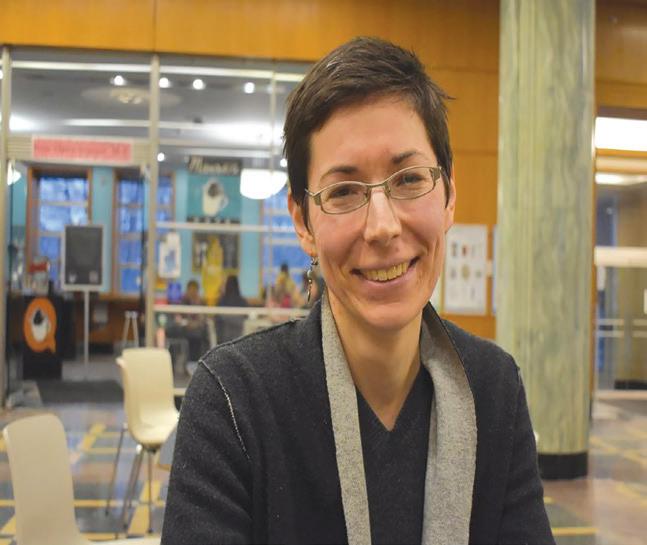
Despite recent societal efforts to ban straws and grocery bags, plastic continues to be one of the leading source of global pollution. To combat this long running problem, Prof. Bethany Jorgensen, ecology, decided that instead of traditional scientific practice, a combination of social media, art and technology is the solution.
Jorgensen and her team in the Civic Ecology Lab seeks to combat plastic-related pollution and increase environmental awareness in her Civic Ecology Lab. The primary purpose of the lab, according to her, is to increase community engagement with environmental issues.
Jorgensen’s work focuses on studying how microplastics — tiny plastic particles that are either the product of plastic breakdown or ingredients in many personal care products and chemicals — impact the communities whose livelihoods revolve around fishing or beach and land health.
After working with a variety of global organizations in 2010, Jorgensen helped launch a social media campaign called Zero Plastic to improve information dissemination regarding marine litter. The campaign reached a broad audience on Facebook specifically, reaching thousands of users and allowing for microplastics research sites to be set up across the world.
But besides studying plastic breakdown, Jorgensen also pays heavy attention to the social and political context of environmental issues.
“I’m interested in the political ecology of plastics on both local and global scales,” Jorgensen said. By having research sites on several continents, Jorgensen can engage with communities across a variety of cultures.
According to Jorgensen, to successfully mobilize communities against plastic pollution, the Civic Ecology Lab has to better understand the social and environmental dynamics within a population, for which her team has developed a series of questions, such as “What is it that affected communities are doing to respond, and what are the barriers to action?”
To answer these questions, the Civic Ecology Lab uses methods that are different from traditional scientific practice. By consistently pushing the boundaries of multi-disciplinary scholarship, Jorgensen is performing, what some consider, unorthodox scientific research.
Yet Jorgensen is passionate about the intersection of science, community and culture and believes her methods can pave the way for improvement of the scientific method.
In hopes to develop visualization techniques through different media, Jorgensen collaborated with a variety of artists around the world to embed visual art into her research as a way to improve community engagement.
Using paintings, digital and interactive images and other graphics as a way to increase awareness about how microplastics travel and where they go, Jorgenson’s efforts not only promote interdisciplinary scholarship, but also shed light on how environmental scientific research can contribute to people’s well-being and citizenship.
“I am interested in political ecology and exploring that through visual methods,” Jorgensen said. “It is useful for visualizing how plastics flow through communities and how it impacts visual communities.”
Ultimately, Jorgensen, along with her colleagues at the Civic Ecology Lab, hope to redefine public perception of how microplastics impact marine environments and coastal communities.
“Media tends to be so focused on consumers that it typically erases the narrative of industry, and we are seeing plastic production continuing to increase while we, globally, do not have the capacity to manage plastics at the same pace,” Jorgensen said.
While all this talk of pollution may seem grim, Jorgensen and her colleagues at the Civic Ecology Lab are optimistic about how their work at the intersection of plastic pollution and human behavior will improve civilian resistance to increasing global pollution.
“It has been really interesting contributing to scholarship of microplastics in marine litter,” Jorgensen said. “There are exponential increases in plastic production on a global scale. There is still a lot we do not understand.”
1880
137th Editorial Board
ANU SUBRAMANIAM ’20
DAHLIA WILSON ’19
Business Manager
PARIS GHAZI ’21
Associate Editor
NATALIE FUNG ’20
Web Editor
Working on Today’s Sun
Ad Layout Julian Robinson ’20
Production Deskers Jamie Lai ’21
Ben Mayer ’21
News Deskers Rochelle Li ’21
Nicole Zhu ’21
Arts Desker Peter Buonanno ’21
SARAH SKINNER ’21
Managing Editor
MEREDITH LIU ’20
Assistant Managing Editor
RAPHY GENDLER ’21 Sports
Sports Desker Christina Bulkeley ’21
Science Desker Shriya Perati ’21
Design Desker Greta Reis ’21
Krystal Yang ’21
Photography Desker Boris Tsang ’21
Letter to the Editor
To the Editor:
Earlier this month, Cornell Students for Justice in Palestine announced a Boycott, Divestment and Sanctions campaign against Israel. The campaign aims to divest Cornell’s endowment from companies they allege are responsible for human rights violations against Palestinians. A wave of these campaigns has spread to campuses across the country, and they sow nothing but discord and fear in their wake. We, the undersigned members of the Cornell community, stand squarely against this campaign because it is antithetical to the values Cornellians hold dear.
BDS Prevents Thoughtful Dialogue on Campus
The goal of the BDS movement is to utilize economic pressure against Israel as a mechanism to solve the Israeli-Palestinian conflict. Supporters see Israel as the sole aggressor and obstacle toward a solution. Those who have dedicated time to studying the conflict understand that it is a complex and sensitive regional conflict in which there are many actors and perspectives. By assigning all blame to one party, BDS ignores the efforts Israel has made toward a peaceful solution including numerous offers to Palestinians to have their own state. These offers have been rejected by Arab leaders. This one-sided view shuts down any thoughtful dialogue on the role all sides must play to end this conflict.
BDS Creates Division on our Campus
During a 2014 BDS campaign, BDS activists at Cornell targeted their pro-Israel classmates for their identities and beliefs. BDS activists yelled, “fuck you Zionist scums” and “I will fucking slap you” at fellow students. This is not the type of conversation that is productive on our campus. And in 2017, Cornell SJP disrupted a campus celebration of Israel’s Independence Day with a “die-in,” accusing students of celebrating genocide. While they laid dead, pro-Israel students sang songs of peace around them. In this year’s campaign, we once again fear that thoughtful and respectful dialogue on this issue will be stifled by hateful rhetoric.
We are concerned that language being used in this campaign may devolve into the targeting of Jews and the Jewish community on this campus, as it has on others. Cornell SJP has likened Zionist ideology to white supremacy and Nazism. That is a dangerous fallacy, designed to isolate the Jewish community and link us to the same hateful movement that targets Jews in attacks like the Pittsburgh synagogue shooting. This kind of rhetoric creates an environment in which Jewish students feel unsafe and unwelcome on campus.
BDS Cannot Achieve a Peaceful Resolution to the Israeli-Palestinian Conflict
BDS is often described as a non-violent means to bring about peace in the Middle East. Yet, in their letter to President Pollack, Cornell SJP makes no mention of peace. This is because BDS promotes conflict by isolating one side and brewing anger and disruption among the parties. True peace can only be achieved when Israelis and Palestinians establish enough mutual respect to directly negotiate with one another. BDS hinders the possibility for peace by impeding the confidence-building process and encouraging both sides to harden their positions.
BDS is Part of the Larger Goal to Strip Jewish People of the Right to Selfdetermination
Back in November, a member of Cornell SJP verified the claim made in guest column arguing that “Cornell SJP effectively endorses the destruction of Israel as a Jewish State.” The demands of the current BDS campaign are designed to meet that directive.
We find this goal severely troubling. Though we may disagree with some Israeli governmental policy, the Jewish people’s right to have a state of their own in their historic homeland is not up for debate. Jews unquestionably have deep religious, historical and cultural connections to the land of Israel. As per the U.S. Department of State, attempts to “deny the Jewish people their right to self-determination” qualify as anti-Semitism. As Cornellians, we cannot and will not tolerate anti-Semitism in any form.
BDS limits thoughtful dialogue on complex issues, hinders prospects for peace, and sows division and tension on our campus. For these reasons, Cornell’s BDS resolution must be voted down. We call upon Cornell SJP to join us in positive dialogue on campus and endorse a two-state solution, so Israelis and Palestinians can live side-by-side in secure and peaceful coexistence.
Jay Sirot ’19
Jacob Spiegel ’21
Adam Shapiro ’20
Shir Kidron ’19
Emily Flyer ’20
Salvatore LoBiondo III ’20
Sam Wolf ’20
The idea that someone might transfer out of Cornell isn’t too unfathomable. People joke about transferring out and hating Cornell, especially when prelim season rolls around, when the weather gets cold and when recruitment, selection and cutting for exclusive organizations begins.
But the idea that someone who transferred into Cornell might transfer back out? It’s something that those of us in the transfer student community joke about, but nobody actually thinks we’ll follow through. We’ve already made the choice to come here — to leave everything from our first year behind. Some of us had to apply to transfer, and some of us with the transfer option spent our entire first year knowing we’d probably leave. We’ve already left our schools and our friends behind, leaving them for Cornell. How would that look, transferring back to our friends at our old schools? How would we approach telling our friends and family, having already switched schools in favor of Cornell, that now we’re transferring back to where we started?
And yet, what I’ve found as the Student Assembly’s transfer representative is that transferring back out is not an uncommon phenomenon. From talking with a multitude of transfer students, I’ve heard a recurring story: transfer students do transfer back out of Cornell.
The statistics supports the anecdotal data I’ve been hearing. While the freshman graduation rate within 150 percent of the time (six years) is steady around 93-94 percent, the transfer rate of graduation is lower and more varied. And this means that fewer transfers are graduating within six years or graduating at all. The data speak to the fact that transfers are not staying at Cornell, most likely transferring out to another school or transferring back to their old schools.
Administration and students, especially returning students, are largely ignorant of this trend. When I bring up this issue in meetings with administration, it’s always the first they’re hearing of this trend or noticing it. However, from being so involved with the transfer community, I’ve had multiple transfer friends tell me that they seriously thought about transferring back to their old schools during our first semester at Cornell just this past fall. Many of them kept me in the loop as they considered this process and weighed the pros and cons of transferring back. I’ve spoken to returning transfer students who have been here for two or three years since they initially transferred, and they relayed anecdotes from their few years involved with the transfer community. They’ve seen transfers come and go and seen first year transfers come in and decide to transfer back out.
Within the first few weeks, he told me he wanted to transfer back to his old school, and kept me updated on how the application process to his old school was going. In his brief time at Cornell, he got into an improv group, got a research position in the chemistry department, and pursued a double major in chemistry and English.
But this semester, he’s no longer here. Within a semester, he knew he wanted to transfer back and he ultimately decided leaving was the best decision. He said that the friends he’d made and the experiences he’d had at Cornell made the decision so much harder, but he knew it was the right choice. Transfer students who choose to leave Cornell don’t leave because they can’t make it here. These transfer students I’m speaking of do remarkably well and become incredibly involved; they’re in clubs, organizations, research and excel in their classes. It is not an individual failing on their part. The fact that the overall rate is so low and that transferring out is such a common, although under-discussed issue, is indicative of a systemic failure on Cornell’s part to adequately meet transfer student needs during their first months at Cornell, which is inarguably the most crucial time in determining the future success of all students at Cornell.
At the same time, I’m attempting to remain conscious of not overgeneralizing the transfer experience; all of our experiences are vastly different and we have an incredible diversity of students, backgrounds, and experiences and students. Some transfers students would never even dream of leaving Cornell now that they’re here, especially those who have transferred from smaller community colleges. But some transfers are no longer with us at Cornell.
In truth, I think Cornell does a remarkably exceptional job working with transfer students, as they’re aware of how large the transfer student population is. We make up about a fifth of every graduating class. However, every process can be improved and we should never be complacent about any student being dissatisfied with their Cornell experience.
No student should ever feel like they are not supported at any school. No student should feel as if transferring out is their only option.
This is due to no failures on transfer students’ part. I am incredibly resistant to the prevailing notion that some people “just can’t make it” at Cornell — that they’re not prepared enough, not smart enough, not savvy and headstrong enough and not utility minded enough to “stick it out” at Cornell. Some of the best, hard working, smart, coolest people I’ve known and met at Cornell — the students who have honestly killed it at Cornell — include those who have spoken to me most seriously about transferring back or actually have.
I met one of my first friends at Cornell on the second day of O-week just last semester.
I have my suspicions about what the big reasons that cause students to transfer out. One of my suspicions is that the retention rate is strongly related to the transfer housing situation, as much of the anecdotal data I have heard stems from transfer students not receiving housing for their first year, spurring them to apply to transfer back within the first few months of being at Cornell. My friend who transferred back to his old school did not receive housing last semester, forcing him to find his own off-campus housing, and he ended up having to live in an abandoned frat house half a mile from West Campus, populated only by grad students. I have begun discussions around this concern and met with the vice provost of Enrollment, ResLife and the vice president of Student and Campus Life to discuss my concerns and suspicions. We need to look into bettering the state of transfer students here at Cornell. No student should ever feel like they are not supported at any school enough to the degree where they feel the need to transfer out. No student should feel as if transferring out is their only option. As transfer students, many of us leave behind so much and give up our first years to be here. We deserve better.
Cat Huang is a sophomore in the College of Industrial and Labor Relations. She can be reached at cgh66@cornell.edu.
I’m in a half-bad mood before I’ve even woken up. It’s a Thursday — my busiest day of the week. It kicks off with a 9:05 a.m. class after three to four hours of sleep. My alarm clock is frustrated by my nonresponse, and I shut it off to check the weather report. Another 20-degree day with a chance of snow. I drag myself out of bed to brush my teeth, gaining momentum from the fear of missing an attendance point.
Deciding what to wear is the notorious thief of my morning time. I want to wear black jeans, but they’re ripped, which won’t work for the walk to class in the snow. I want to wear my favorite hoodie, but I’ve already worn it
As a fashion management major, I feel pressured to represent my personal style and knowledge of the industry.
(twice) this week. I try on a sweater that looks better on its hanger than on me. My Kim K-inspired cargo pants look awkward because I fail to meet their height requirement. Discouraged, I opt for a sweatshirt and leggings.
As a fashion management major, I feel pressured to represent my personal style and knowledge of the industry. This is challenging because my in-season garments are only relevant for a short time. After one wash, the affordable clothing hangs clumsily on my body. I’m chastised when I admit to my classmates that my jacket came from Forever 21.
Forever 21, the poster child of fast fashion, joins the Zara and H&M goliaths in their destruction of ethical clothing production. At the forefront is factory working conditions. In Los Angeles, a Forever 21 employee creating a garment that costs between $12.99 and $25 in stores will receive pennies for it. In India, an H&M worker may be beaten by her supervisor if she struggles to meet production targets. In Bangladesh, Cambodia, India, Indonesia and Sri Lanka, a GAP factory employee may be raped in her employee housing. Workers may be forced to work through lunches and without bathroom breaks. In Bangladesh, a 15-year-old worker receives $1.07 for producing 480 pairs of pants. In
Turkey, Zara factory workers stitch cries for help into tags: “I made this garment you are going to wear, but I didn’t get paid for it.” The outrageous abuse, documented in thousands of factory reports, reads like a laundry list. We are complacent in our understanding. I bought the jacket, anyways.
Rapid clothing production is also destroying the environment. Greenpeace, an independent environmental campaigning organization, Detox campaign laments that “today’s trends are tomorrow’s trash,” and it calls for the industry’s redesign of textile dyeing practices, which are second to agriculture in their water pollution. Beyond production, the pressure to keep up with fashion seasons produces immense waste. Garment malfunctions are discarded; unsold products are scrapped; you toss out the t-shirt you’ve laundered twice because it already has holes in it. The clothes you donate to thrift stores are often thrown away because shops can’t keep up with the influx of clothing — much of it comes from Forever 21.
We support this production because we want to stay fashionable at an affordable price. Trends originated in the 14th century, where conspicuous consumption demonstrated wealth. As nobility changed their styles, keeping up meant you had the good taste to recognize and emulate it. Fads like my Kim K-inspired cargo pants follow a similar framework, but they mostly fuel the industry’s wealth and keep celebrity designers in the spotlight. Prof. Tasha Lewis, Fiber Science and Apparel Design, told NPR, “It used to be four seasons in a year; now it may be up to 11 or 15 or more.”
As Lewis knows, Cornell is not exempt from the pressure of changing fashions. Out of 15 Cornell students surveyed, 100 percent claimed they do not diligently follow crazes. Most, however, acknowledged they may be influenced indirectly — by the clothes of their friends or ads they see online. While the average student shops for clothing every other month, all are frustrated by the cost.
“I want good quality but struggle with the high cost that comes with that. I always look for ways to save … before I purchase,” said Caroline Brown ’19, a fashion management major.
Staying current can force social or emotional strain, too. While comfort and weather are the major drivers of student style at Cornell, the desire to dress for affiliation or uniqueness is factored in, as well.
Hotelie DeeDee Brown ’19 believes “this season it’s about warmth, and which shoes I don’t mind getting salt on,” but she also admitted to wearing “‘riskier’ things” if she feels “more confident.”
Juliet McCann ’19 prefers to look “put together,” and also acknowledges that the people she will interact with in her day affect her outfit decisions.
Staying stylish places financial strain on students while also requiring consideration for social situations. As a student with loans, it can be difficult to keep up, particularly on a campus that prides itself on research and efforts for sustainability, including a plan for achieving carbon neutrality by 2035. Livia Calligor ’21, a fashion management major from New York City, said that while she is frustrated by the cost of clothing, wearing “fast fashion makes [her] feel worse.”
Students across campus are taking action against fast fashion anxiety — and you can participate. Start by investing in longer lasting clothing, which requires less severe production times. Acknowledging garment lifecycles requires a bit of trend ignorance, but it’s still possible to stay current; fashion repeats itself, so thrifted items are both economical and often on-trend. They’re also sustainable. As the AirBnB and Uber sharing economy continues in its popularity, clothing must follow suit. Options like ThredUp and Rent the Runway deliver clothes to your door while recycling clean, high-quality clothing. On campus, The Wardrobe lends professional attire to students, while Cornell Thrift offers resale options and workshops for mending and embellishing your closet and recently hosted a Spring Cleaning event in Willard Straight Hall. Clothes will never be free, but your conscience can be.
Come Thursday, I’ll roll out of bed and put on the same blue jeans I wear every other day. By now, they’re so wornin that they’ll be about as comfortable as my leggings, anyways. I’ll toss on one of the sweaters I’ve had since freshman year. When I put on my Forever 21 jacket, my discomfort is pacified when I remember I’ve worn it nearly every winter since December 2013. I’ve grown tired of it, but wearing it through to its end is the most ethical choice I can make. It’s a small price to pay to stay in fashion.
Victoria Pietsch is a senior in the College of Human Ecology. She can be reached at vpietsch@cornellsun.com. Fancy Pants runs every other Monday this semester.
Our greatest guides at Cornell should be the professors who stand before us each day. For us, one of these individuals is Prof. Bruce Monger, Earth and atmospheric sciences, whose wellknown course EAS 1540: Introductory Oceanography draws over a thousand students each Fall. He has consistently anchored political activism in his pedagogy, even inspiring a former student to take a year off to work as a climate activist for The Sunrise Movement. We asked him about the path he forged and the advice he offers for students today.
From logging trees in the Pacific Northwest to lecturing Oceanography in Bailey Hall, Monger built his career out of a keen sense of adventure.
While growing up in a small, blue-collar town off the Olympic Peninsula in Washington state, Monger experimented with chemistry sets while his friends took woodshop and industrial classes.
Be Your Own Pioneer
At 19 years old, Monger set out on his motorcycle and headed eastward. En route to Colorado, Monger found himself checking into a motel one night in Salt Lake City when he could not find any suitable campgrounds in the area. This night served as the impetus to Monger’s own trailblazing: it was the “gradual realization that [he was] growing up.” He realized that he did not have to settle down and commit to logging. Monger reflected to himself what he would rather pursue next.
In Monger’s eyes, he had two options:
“One, buy a larger motorcycle and travel the U.S.A. or two, get a college degree, become an oceanographer and travel the world.”
And while at first he was not insistent about the ocean, the prospect of traveling the world in research vessels was thrilling.
Treat Life like a Gift Catalog
As a first-generation college student at the University of Washington, Monger went into college with apprehension that he would not be able to fit in. Yet, he stuck to his gut and persisted to seek out novelties: For him, the course catalog was more akin to a gift catalog.
“It was like the Christmas catalog, but for what you could become,” Monger said.
Monger placed academic curiosity above all in his undergraduate experience and explored subjects such as aerospace engineering and landscape architecture.
Seek Mentorship
From getting his masters degree at the University of Washington to his Ph.D. at the University of Hawaii, Monger never lost touch with his advisor, a professor at the University of Washington: Chuck Green. It was Green who talked to Monger after his time in Hawaii and invited him to Cornell for his post-doc. After Monger worked at a NASA center for a few years for sunlight sensing, Green called him again, inviting him to teach and conduct research at Cornell.
Not too soon after, he found himself teaching the famed oceanography course, a
course which at first attracted around 150 students. Last semester, the course enrollment reached a new peak: 1,100 students. Monger would not be where he is today — making an impact on students and calling for imperative climate activism — without the ways by which he redefined his life through an unfettered fearlessness to take up the unknown and appreciate the value of mentorship.
I, Canaan, am one of the thousands of students who have taken Prof.
The voices of our generation will have the most power in confronting the political, social and environmental crises of our time.
Monger’s course. The decision to switch majors from Biology to Environmental Engineering and Computer Science came purely from taking Prof. Monger’s inspirational Oceanography course; to become more aware of worldwide quagmires, to utilize my classroom experiences to enhance the standard of living for others and to mitigate the rapid declination of our environment are just a few of the takeaways after being sagaciously instructed my first semester. After taking Prof. Monger’s course, I spent the summer in the Amazon Rainforest in Juína, Brazil to join in environmental conservation efforts.
Like Monger’s advice, I found myself on a new frontier in an experience that redefined the role I saw myself having in our world. Later, I became a teaching assistant for the oceanography course and can only hope to further develop and encourage others to use their voice and knowledge for the betterment of our society, political structure and environment.
We may not all be oceanographers one day, but let’s chart our own uncrossed waters. Let’s risk finding ourselves adrift because only then will we realize there is no set compass to steer our futures.
A further piece of advice from Bruce: The voices of our generation will have the most power in confronting the political, social and environmental crises of our time.
With polar vortexes, whirlwinds of prelims and swells of career fairs, we are often too engrossed in our immediate surroundings and our imminent deadlines. We pursue our goals by following a step-bystep manual of someone else’s success, hail those who have their summer 2020 internships locked in and long for the security of defined path ahead of us.
So, in a competitive environment like Cornell, we must recognize those who have beaten against the current — the groundbreakers that did not shy away from beginnings and starting over at square one.
Laura DeMassa and Canaan Delgado are sophomores at Cornell University. They can be reached at demassa-delgado@cornellsun.com. Double Take appears every other Tuesday.

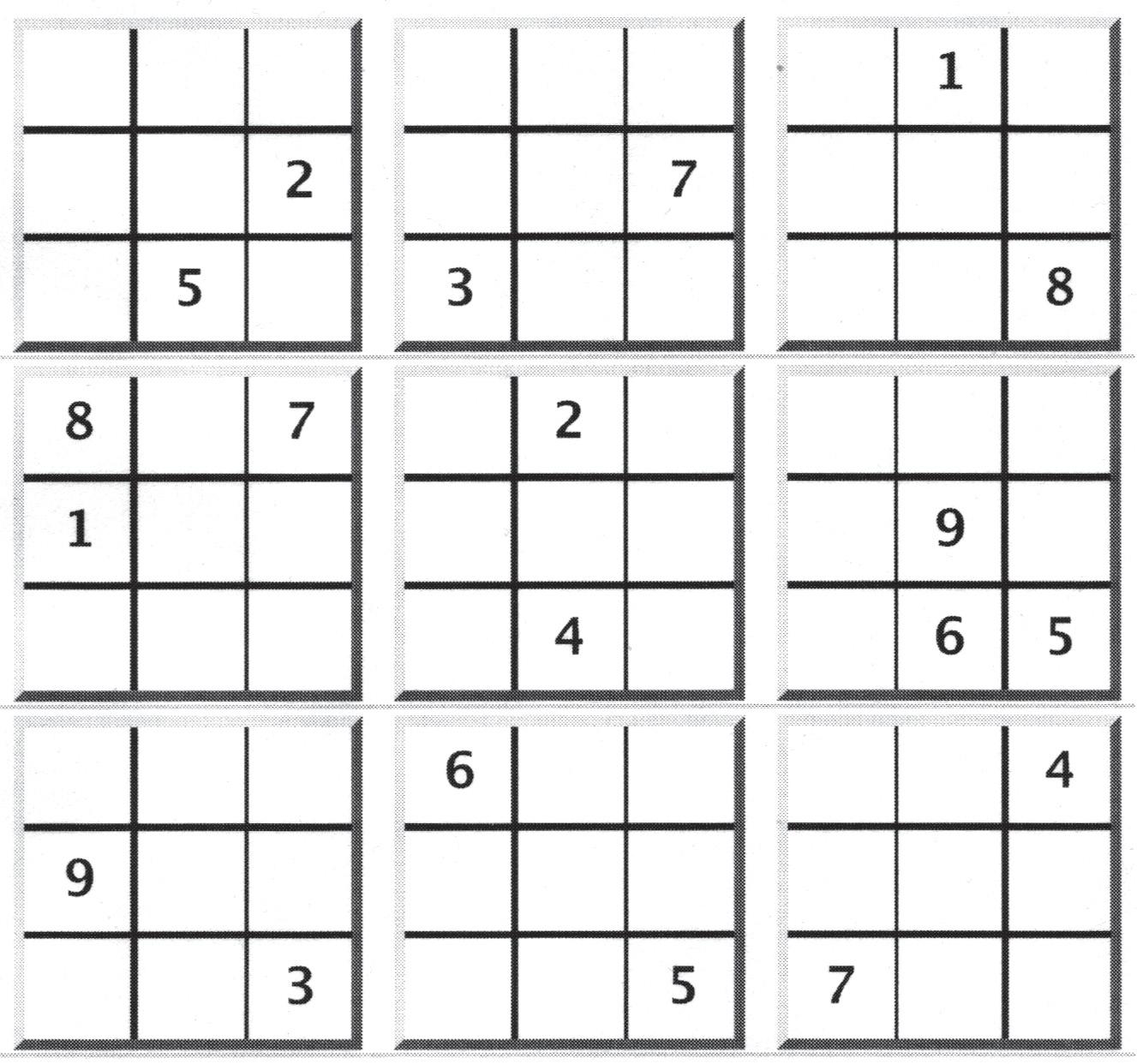
Fill in the empty cells, one number in each, so that each column, row, and region contains the numbers 1-9 exactly once. Each number in the solution therefore occurs only once in each of the three “directions,” hence the “single numbers” implied by the puzzle’s name. (Rules from wikipedia.org/wiki/ Sudoku)





2 & 3 BEDROOMS
109 SAGE PLACE
Available NOW & 2019/2020 Shuttle Bus Access to Campus Access to Free Fitness Center Novarr- Mackesey Property Management office@ithacastudentapartments.com ithacastudentapartments.com 607-277-1234
Ithaca Renting Company
Apartments, Houses, Parking Central Collegetown Superb Panoramic Views Modern Elevator Buildings
Collegetown Plaza: Fitness Room, fantastic Cayuga Lake Views Studio, 1, 2, 3, 4, 5, 6 BRs Parking
Collegetown Center: Concierge Service, quiet building, Fitness Room Studio, 1, 2 BRs Parking
Collegetown Court: Super convenient, exceptional value Fitness room Studio, 1, 3, 4, 5 BRs
Other Collegetown Locations: Apartments and Houses Dryden Road, Eddy Street, Buffalo Street
2, 3, 4, 6, 8, 10, 14 BRs Parking Rent Smart. Live Well. 607-272-3000 Visit our office at: 119 Dryden Road www.ithacarenting.com
Houses, Apts, Parking 1 to 9 Bedroom
Collegetown - College Ave, Linden Ave, Dryden Rd, Bryant Ave, Cook St. 607-330-2442 info@urbanithaca.com www.urbanithaca.com
We have availability for the 2019-2020 school year beginning June 1st at Hudson heights apartments. The studio apartments come with: heat, water, and electricity included. There are garbages houses and coin-operated laundry facilities on site. Prices start at $740/month for a 12 month lease. If you have any questions or would like to schedule a tour contact us by phone 607-208-7660 or email: renting@ithacaLS.com
COOK ST. Furnished House for 5-7 persons, 10mo. Lease for 2019-2020 Text or call Tracy at TLC Property Mgmt Corp 607-379-2776
Collegetown Terrace Apartments INSPIRED LIVING TAILORED TO YOUR SUCCESS 24-Hour Fitness Center Shuttle Bus Service to Campus Study Rooms w/ Expansive Views
Apartments Available NOW, Spring 2019 & 2019/2020 Novarr- Mackesey Property Management collegetownterraceithaca.com office@ithacastudentapartments.com 607-277-1234
WESTBOURNE APARTMENTS
Studios and 3-5 bedroom apartments available!
1. Walk to classes and Center Campus amenities in minutes
2. Units with dishwashers, fireplaces, and two bathrooms available.
3. On-Site Laundry 4. Free high-speed Roadrunner Internet and Cable 5. On-site parking
6. Furnished with TVs
7. Very competitive pricing Call us (607)257-0313 for details or to schedule a tour!

9 Bedroom House For Up to 10 People 521 E. State St. Walk to Cornell. Must see. $5950/month. Furnished. Free parking. Available 6/1/2019. 607-379-9168
Linden Ave. 5 Bedroom House Available June 2019. $900 per bedroom. Parking included. 607-327-2927



By DYLAN McDEVITT Sun Senior Writer
Cornell men’s lacrosse is off to a hot start for the first time in a long time. Now 3-0 for the first time since 2014, the Red played its way to a slim victory against a visiting team that it has not beaten in its last four tries, defeating Albany, 17-16.
“I’m happy being 3-0,” said Head Coach Peter Milliman. “But we’ve got to get a lot better … certainly it’s not a time to rest on doing stuff we haven’t done in a while.”
After a back-and-forth first half in which the margin stayed mostly within one goal, Cornell used a strong third quarter to pull away before fending off a late-game surge from the unranked Great Danes (1-2) to come away with a victory.
“We have an experienced group, and I think that goes a long way,” said sophomore attack John Piatelli. “We have so many talented guys, we just want to play unselfish and give everyone a chance to beat their guy because everyone can.”
Junior midfielder Connor



Fletcher registered the game-winning goal with under 14 seconds left to play in the fourth quarter just one minute after Albany had tied the score.
“We were running a play to get [junior attack Jeff Teat] open wide,” Milliman said. “They sent two guys off to cover him and it opened up a space to get Connor over to the goal.”
Sophomore midfielder Jonathan Donville had a career high in points, while Teat came away with five points on the day.
Junior Caelahn Bullen made seven saves.
“We’re just trying to find ways to get Jeff open, because he’s very dangerous when he has the ball,” Piatelli said. “It’s more openings for guys like me and Clarke and even the midfielders who are getting more opportunities … When there’s so much attention on Jeff, there’s a lot of open space for us.”
Despite the win, there were glaring areas of deficiency for Cornell. Junior FOGO Paul Rasimowicz’s absence was palpable for the second straight game as the Red continued to struggle at the faceoff circle, with Albany winning 25 of 37 faceoffs. Cornell also committed six penalties, paving the way for the Great Danes to register three extra-man goals on the day.
Freshman FOGO Timmy Graham, an Australia native, took the lion’s share of draws for Cornell, winning just eight of 25. The newcomer has spent some time working on adjusting to the American system while helping to fill the void left by Rasimowicz’s absence.
“[Graham] has started to find some success,” Milliman said. “I think it’s taken him a little while to adjust … He’s never really played with these rules before.”
The Red continues to suffer from faceoff struggles, an ailment that plagued it for the better part of last season. Until any sort of stability returns to that aspect of the team’s game, it will have to make do with the personnel it has and continue to win games without relying on an advantage in possessions.
“It’s not nothing new to us, we’re just going to have to accept that it’s part of our thing,” Milliman said. “We’re going to have to scrap for every single faceoff.”
The Red faced lots of adversity en route to its three wins, but as the old adage goes, a win is a win. And with a slew of ranked opponents still ahead on the schedule, gritty wins might prove valuable when the going gets tough.
“I think a character-building win is important,” Milliman said. “I’m hoping they’re not all character-building wins. I’d like to see some games where we play well from beginning to end and finish strong.”
Cornell returns to action next weekend with neutral-site games against No. 4 Penn State and No. 1 Towson in Charlotte, North Carolina.

By MAX RINGER Sun Contributor
This weekend, Cornell men’s basketball extended its losing streak to its fourth and fifth games — in those last five, the team has faced an average deficit of 16 points. The Red now sits at sixth place in the Ivy League.
Friday night, Cornell played at Yale and saw why the Bulldogs are the top team in the Ivy League. After beating Cornell in Ithaca by only six points the week before, Yale came out with renewed vigor, building a nearly 30-point
By KATHERINE FAIOLA Sun Contributor
Following its opening matches at Baylor, Cornell baseball continued to play formidable opponents this weekend in Richmond, Virginia to bring the season into full swing. In its second series of the season, the Red was again routed on the road at Virginia Commonwealth University.
VCU (8-3) swept the Red, whose record is now 0-6. However, Head Coach Dan Pepicelli is not deterred by the defeat.
“It’s probably not going to be about compiling a great record at the beginning of the year for us with this type of scheduling,” Pepicelli said. “But there’s a great opportunity for us to improve before the season starts.”
Playing three games in two days is standard fare for Cornell baseball, as the weekly structure of conference games follows two games on Saturday and one on Sunday. The double-header this past Saturday against VCU continued to prepare the young team for the rest of the season.
Despite being downed by No. 25
lead by the end of the first half and ultimately tagging Cornell with its worst loss of the season, 88-65.
Bulldog guard Miye Oni torched the Red for 30 points and seven rebounds, going 7-of-10 from threepoint range. As a team, Yale shot 54.5 percent from beyond the arc while Cornell only managed to achieve 32 percent.
“They shot the lights out. Not much you can do when a guy’s hitting contested threes like that,” said Head Coach Brian Earl.
Cornell looked fatigued as they struggled to get back
on defense — half of Yale’s points in the first half came off transition buckets.
Junior forward Josh Warren led the offensive effort for Cornell with 15 points and senior guard Matt Morgan barely kept his double-digit scoring record alive by dishing in 11 points on only eight shots. Lack of both ball movement and aggression continued to be points of weakness for Cornell as the Red had just 16 assists and only four trips to the free throw line the whole game.
Following the loss against Yale, Saturday’s trip to Brown went no better for the Red. Cornell lost 75-51, shooting an abysmal 19 percent from three-point range to go along with six assists as a team the entire game.
“Not much you can do when a guy’s hitting contested threes like that.”
Brian Earl
Cornell’s success has been heavily dependent on threepoint shooting this year. They are 5-0 when they make 11 or more threes in a game — going 5 for 26, as they did at Brown, makes winning difficult.
Matt Morgan had 14 points, nine rebounds and three assists, leading the team in all three categories. The rest of the offense never got into a rhythm and turned in sloppy minutes for the majority of the contest.
Brown has now taken sole control of fourth place in the Ivy League and Cornell sits two games back of making the Ivy Tournament with just two games left to play.
The Red will need to snap its current five-game skid against Harvard (9-3 Ivy League) on Friday if it wants any shot at salvaging its underdog season and making the tournament.
Max Ringer can be reached at mr969@cornell.edu.
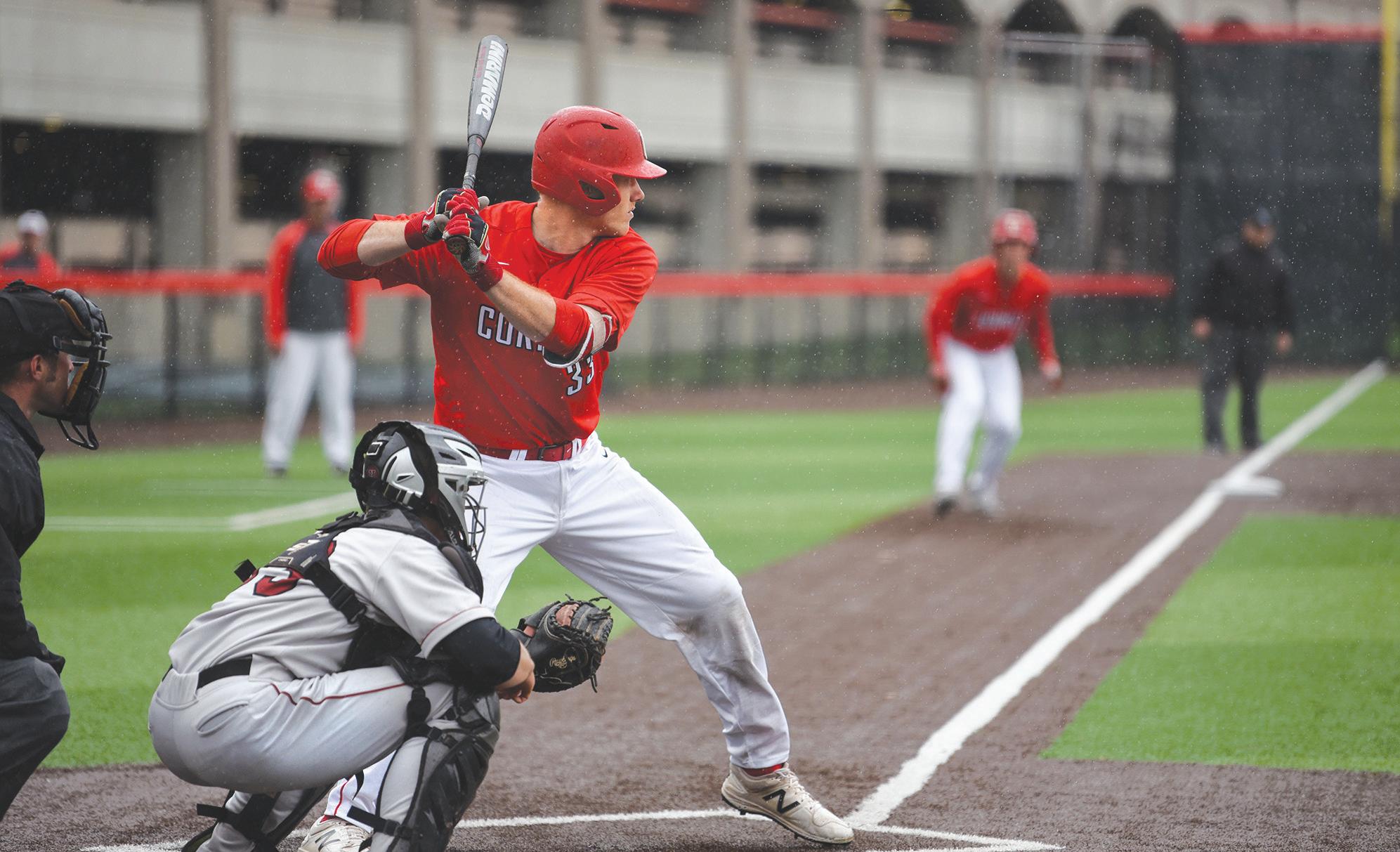
Baylor and a strong VCU team, the Red maintains a positive attitude.
“I saw guys that were poised and kept their heads in the process of getting better,” said Pepicelli.
Given the youth of the team — 11 players are freshmen — Pepicelli believes that these difficult tilts will benefit the Red in the long run. The freshmen need time to gain exposure and to adjust to collegiate baseball before the start of conference games.
“[Playing these teams] makes us tougher and better when it’s confer-
ence time,” he said. “Confidence is the biggest thing … [Difficult games are] a way to help them grow up quickly.”
With each additional at-bat, the young team strives to become more comfortable at the plate. Defensively, the team is working to improve its pitching and Pepicelli expects a learning curve with the young pitchers.
Even older players, notably junior right-handed pitcher John Natoli, are improving. Natoli is coming off an injury from last season and is seeing more opportunities in relief than
before, but Pepicelli said that he might move into a starting role later in the season.
“It’s just a matter of keeping that continuity now and letting everyone get comfortable in their spots,” Pepicelli said.
Up next for the Red is another away series, this time in Annapolis, Maryland against the United States Naval Academy on March 9 and 10.
Katherine Faiola can be reached at kef66@cornell.edu.