The Corne¬ Daily Sun



By MEGHNA
As COVID-19 continues to spread worldwide, faculty, students and staff traveling back to campus from countries most affected by the disease will be quarantined for 14 days, according to an email sent to the Cornell community on Monday.
The Office of the Dean also emailed Cornell faculty members, warning them that they must now prepare for a possible COVID-19 case on campus.
In response to U.S. government warnings against travel to Italy and Iran, as well as new screening protocols from China, South Korea, Italy and Iran, the University is suspending the College of Architecture, Art and Planning’s Cornell in Rome program and is in contact with students who are still in Italy and South Korea.
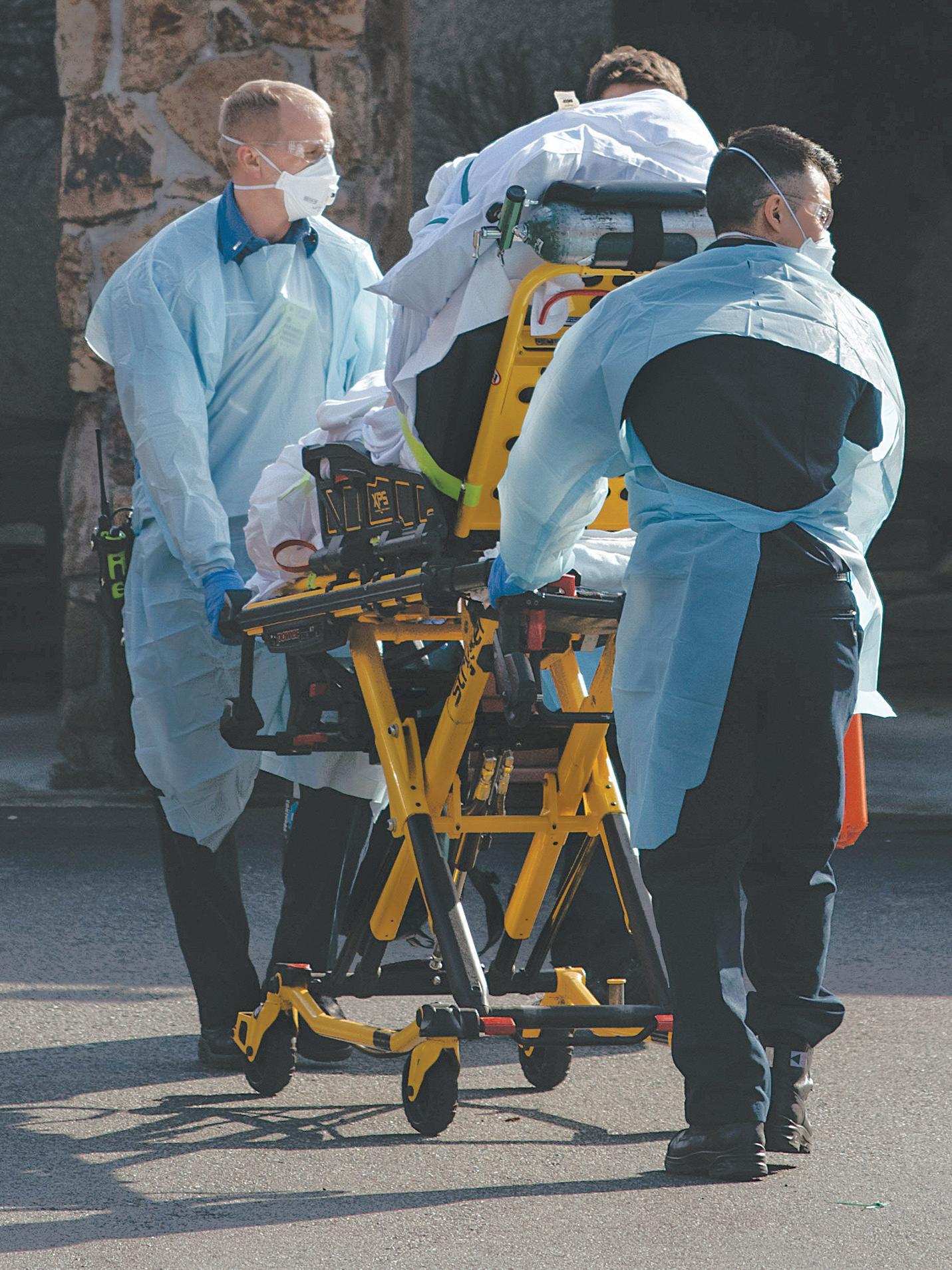
webpage, Cornell Health is preparing quarantine kits that include thermometers, face masks as well as temperature and symptom logs. Students quarantined in Ithaca will get daily calls from a Tompkins County Health Department nurse.
The email to Cornell faculty mentioned the prospect of contingency plans, and linked to a University Faculty webpage that gives information to instructors teaching amid the novel coronavirus outbreak.
“We have to be prepared for community-wide spread.”
Prof. Gary Whittaker
“As the current global COVID-19 health crisis continues to develop, it is important for instructors to be prepared for an array of possible disruptions that affect teaching,” the webpage read. It is unclear when this webpage was created.
The University is encouraging students, faculty and staff to quarantine at home, but is working with some students to quarantine off-campus in Ithaca. Quarantined employees will receive paid leave.
According to Cornell’s coronavirus
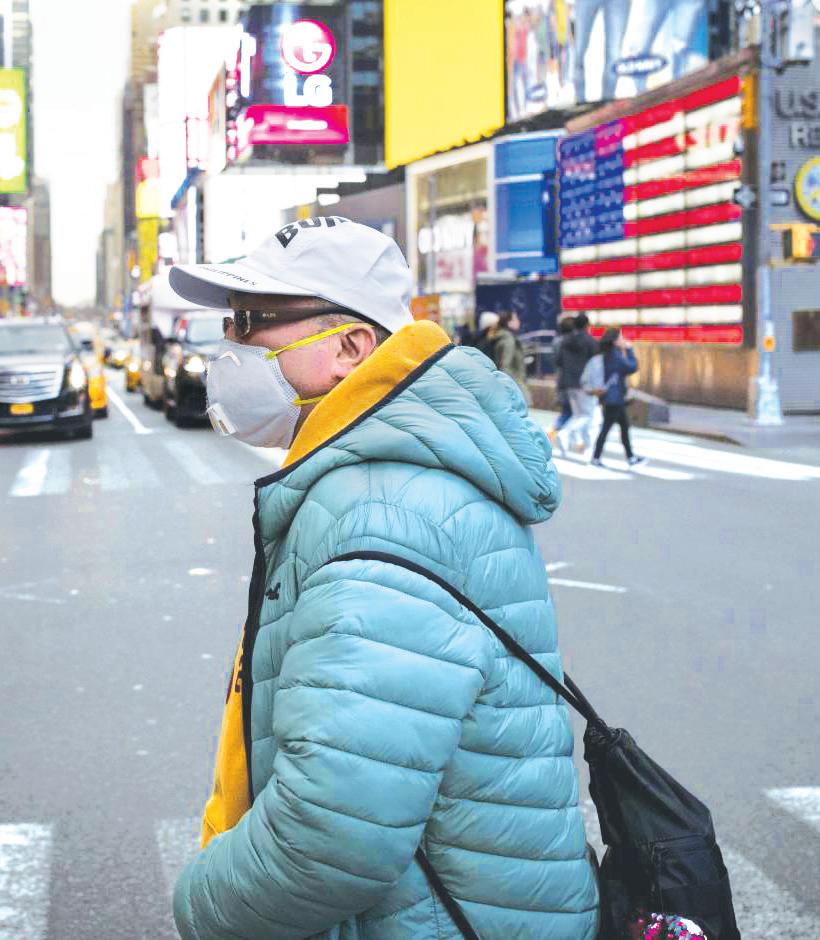
Masks-in-demand
Prof. Gary Whittaker, virology, researches coronaviruses and expressed concerns over cases in New York City and Rhode Island seem unlinked to travel to China, where the outbreak originated. In the absence of established treatments for the illness, Whittaker said social distancing measures like limiting large gatherings of people may be effective.
“There’s a case in New York City, it’s
See QUARANTINE page 5
Eight Ithacans are freed, and JPMorgan Chase caves in with climate change promises
By LIAM GALEY Sun Staff Writer
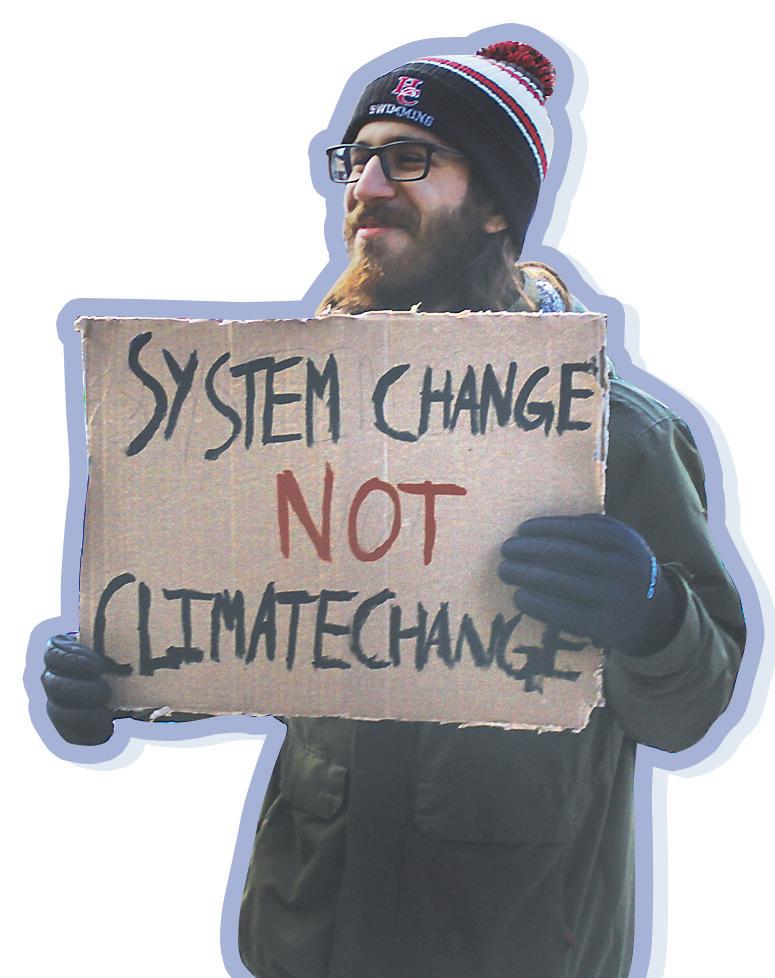
The Ithaca City Court dropped charges of third degree criminal trespassing made against eight members of global environmental activist group Extinction Rebellion, also known as XR, on Feb. 27.
On Feb. 12 and Feb. 13 at the Commons, XR Ithaca protested JPMorgan Chase’s financing of an oil pipeline passing through indigenous
Wet’suwet’en territory in Western Canada.
Traffic was blocked on Cayuga and Green streets, and members of XR Ithaca occupied Chase Bank on Thursday, which culminated in the arrests of 12 individuals. Four of the arrested were minors and were promptly released to their parents. The Ithaca protest was part of a larger, nationwide movement to pressure JPMorgan Chase, one of the
See OCCUPY page 4
Today
Fire Safety Event
11 a.m. - 2 p.m., 101B Memorial Room, Willard Straight Hall
Rural Humanities: Summer Practicum Info Session
Noon - 1 p.m., A.D. White House Library
Office of Internal Transfer and Concurrent Degrees
3 - 5 p.m., Tatkon Center, Balch Hall
Department of Natural Resources Spring Seminar Series 2020 3:30 - 4:30 p.m.,G24 Fernow Hall
Walter Hang — Public Health Spring Seminar Series
3:30 - 4:30 p.m., Lecture Hall 2, College of Veterinary Medicine
Clarity or Chaos? The Democratic Primaries at Super Tuesday
4:30 - 5:30 p.m., 401 Warren Hall
10th Annual Cornell Topical Sermon Contest
4:30 - 6:15 p.m., Founders Room, Annabel Taylor Hall
Tuesday, March 3, 2020
Tomorrow
Wikipedia: Art + Feminism Editing Noon - 1 p.m., Classroom 106G, Olin Library
“Best Places to Work” Luncheon Featuring Glassdoor and Others
12:15 - 1:15 p.m., 401 Warren Hall
“Quantificaiton of Gene contributions to Fitness During Plant Colonization” 12:20 p.m., 404 Plant Science Building
Revisiting the West Africa Water Initiative 10 years later 12:20 - 1:10 p.m., 135 Emerson Hall
Fake News, Alternative Facts and Misinformation: Learning to Critically Evaluate Media Sources
3:30 - 4:30 p.m., Uris Classroom, Uris Library
Careers in Psychology and Social Work Panel
4:30 - 5:30 p.m.,100 Savage Hall
Communication Tools for Career Success With Eliza VanCort
4:30 - 7:30 p.m.,133 Rockefeller Halll

Te contract also includes an iPad-inmate program that assigns a tablet to each prisoner, a N.Y. statewide decision
By MEGHANA SRIVASTAVA Sun Assistant News Editor
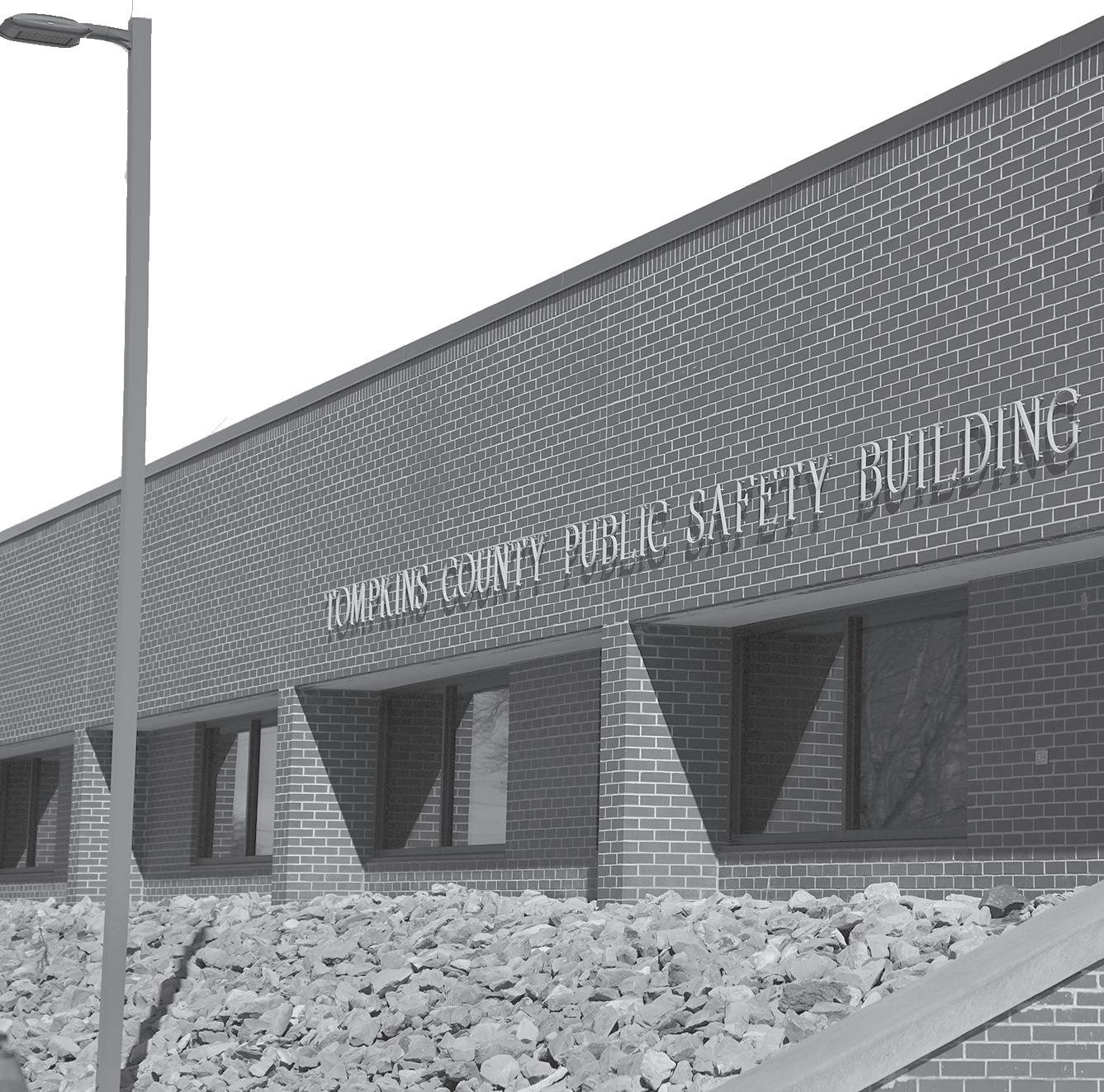
Once one of the most expensive jails in New York for inmates to place calls from, the Tompkins County Jail has cut the cost of inmate phone calls by more than half the price as of Feb. 28.
According to the Prison Policy Initiative, Tompkins County Jail inmates pay $9.95 to make a 15-minute phone call as of November 2018. However, a renegotiation of the contract between the jail and Global Tel Link Corporation — the company that provides the jail’s phone services — has reduced the cost of calls from 32 cents per minute to 15 cents.
The Global Tel Link Corporation provides phone services to around 2,300 U.S. facilities, serving about 1.8 million inmates, according to its website. They have implemented similar changes in other towns as well, including Rochester and San Francisco.
The renegotiation was announced nearly 18 months after New York City became the first major city to make inmate phone calls free in August 2018. According to the New York Post, this change resulted in a 30 percent increase in
“Most often, when somebody is in the jail, it’s the loved ones outside of the jail that foot the bill.”
Derek Osbourne
the number of phone calls made by inmates.
Tompkins County sheriff Derek Osbourne hopes that the change will make inmates’ time in prison more fair.
“Most often, when somebody is in the jail, it’s the loved ones outside of the jail that foot the bill for the phone calls because the inmate, quite honestly, doesn’t have money too often,”
Osbourne said. “And I learned that a contract had been in place for several years, and the cost was astronomical.”
When an inmate makes a phone call, there must be a “receiving party” who accepts the charge of the phone call before the call can go through, according to the Tompkins County Corrections Division website.
Osbourne explained that the renegotiation
“And I learned that a contract had been in place for several years, and the cost was astronomical.”
Derek Osbourne
process required a lot of back and forth with GTL, because he wanted to ensure that the changes did not require an increased budget for the sheriff’s office budget. This goal was eventually met: according to Osbourne, the new contract poses no additional costs and will not affect taxpayers.
As another component of this contract, which is still in preliminary stages of implementation, Global Tel Link will be providing the Tompkins County prison with iPads free of charge. These iPads will be used for “video visitations” and Khan Academy, according to Osbourne.
Although this feature is in the contract with GTL, there is no date of implementation set yet — GTL has to set up servers and manage other technical details before the project can be rolled out.
This announcement comes around a year after New York state announced on February 2018 that all of its state prisons will provide tablets for each of their 51,000 prisoners.
Meghana Srivastava can be reached at mstrivastava@cornellsun.com.
By LOUIS CHUANG Sun Staff Writer
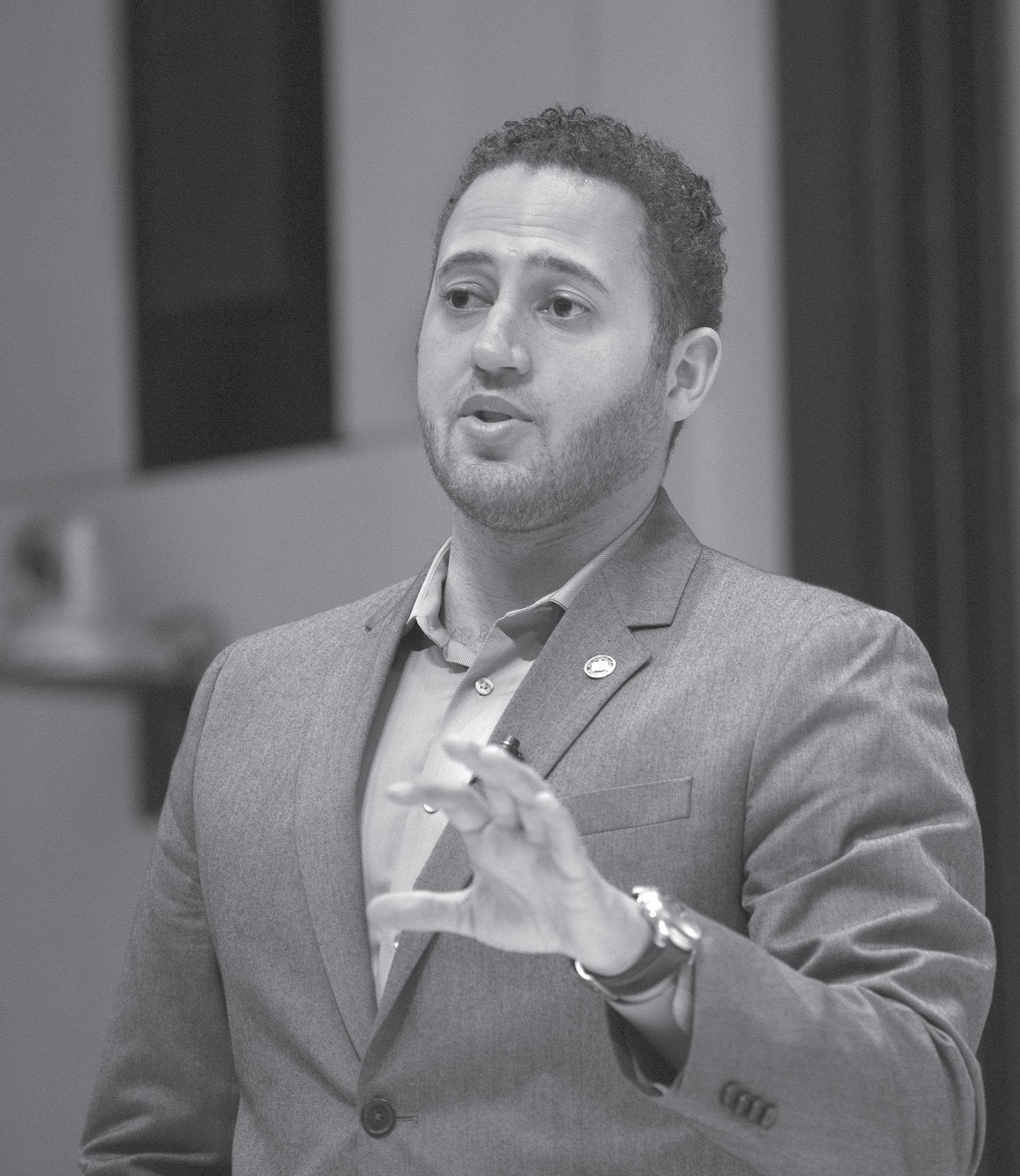
Mayor Svante Myrick ’09 gave a talk on Monday as part of Cornell’s Climate Change Seminar series, where he discussed climate change, socioeconomic inequality and the Ithaca Green New Deal.
At the event, Myrick advocated for active participation on the part of the Ithaca residents and Cornell to resolve these global issues. Adopted on June 5, 2019, Ithaca’s Green New Deal strives to attain carbon-neutrality by 2030 and to reduce social and economic inequalities within the Ithaca community.
“[Cornell is] the largest employers,” the mayor said in an interview with The Sun. “They have the most money and they create the most emissions.
Solving this problem can’t happen without Cornell as a firm committed partner.”
for new construction in Ithaca.
One aspect of Ithaca’s Green New Deal, the Energy Code draft, aims “to provide a rapid but orderly transition to buildings that do not use fossil fuels for major building energy needs such as space heating and hot water heating, by 2030.”
The code consists of a point system, requiring buildings to make certain accommodations to earn points: Using heat pumps to heat water would get a building one point while using renewable energy biomass, can earn 5 points. A newly constructed building must gain a total of 6 points.
“There are a lot of people who know the cost of everything but the value of nothing.”
One way the University can commit to a greener future is for it to pay taxes, Myrick said. If Cornell pays taxes, Myrick thought the city would see lower income inequality, lower taxes and a better quality of life. By not paying taxes, Cornell raises the taxes of everyone else in Ithaca, the mayor continued.
Svante Myrick ’09
Myrick was excited about Cornell’s Earth Source Heating initiatives which involve building a tunnel to tap the heat in the Earth’s crust to warm Cornell campus instead of using fossil fuels. Cornell’s Earth Source Heating program has been a part of the the University’s Climate Action Plan since 2009.
While Myrick believes that many may have concerns about the costs of these ambitious initiatives, the mayor dismissed such concerns.
In addressing the impact of climate change on people with lower socioeconomic status, Myrick asked, “The Jeff Bezoses of the world will put stilts under their houses, but what will the rest of us do?”
While Myrick suggested a range of ambitious policies like universal family leave, universal basic income and renewable energy to address socio-economic inequality, one of his more immediate goals is a green building code
“There are a lot of people who know the cost of everything but the value of nothing. The opportunity cost of doing nothing is never tallied,” said Myrick.
Myrick believes that the Ithaca Green New Deal could serve as an example for other local governments, state governments and the federal government, adding “they say cities are the laboratory of democracy for a reason.”
Tamara Kamis ’22 contributed reporting to this article.
Louis Chuang can be reached at lc742@cornell.edu.
OCCUPY
its contributions to the industry. Students at the University of California at San Diego staged a similar occupation at a Chase Bank in February, and New York City and Washington state have also seen similar protests.
would reduce its role in developing oil and gas infrastructure in the Arctic and commit $200 billion to “advancing the United Nations Sustainable Development goals.” The
“Students at the University of California at San Diego staged a similar occupation at the Chase Bank in February.”
Other prominent financial corporations, such as BlackRock Inc. and Goldman Sachs, also conceded to similar pressure from non-violent protests, promising to exit “high-risk sustainability-related” investments and commiting to climate change-fighting projects by 2030, respectively.
In light of the nationwide protests, JPMorgan Chase announced last Monday that it
multinational bank also said it would join the Climate Leadership Council, an international policy institute promoting “carbon dividends as a climate solution.”

Liam Galey can be reached at lgaley@cornellsun.com.

www.cornellsun.com

By ASHA PATT Sun Contributor
Plastic bags at New York stores will soon be a thing of the past. Now, paper bags will come at a cost to unprepared shoppers in Ithaca.
Last Sunday marked the start of New York’s statewide ban on the distribution of plastic bags, an initiative aimed at reducing the environmental damage at the expense of consumer convenience. On top of the plastic bag ban, Tompkins County disincentivized using alternatives like paper bags.
Tompkins County has now implemented the 5 cent fee for paper bags, which will disincentivize for the use of non-reusable bags. Recipients of Supplemental Nutrition Assistance Program or Women Infants and Children will be exempt from such fees, but everyone else must either remember their reusable bags or pay the price.
difficult to adjust to at first.
“It was a hard shift, just to shift mindsets, you know?” she said.
Carl Petro, a manager at the Collegetown 7/11, predicted that the ban will cause customers to switch to paper bags will be problematic due to the high levels of precipitation.
“People are shopping and it’s raining … the bags are getting wet,” Petro said. ”Everything ends up on the ground. That’s the only thing we perceive as being a problem.”
Hightower said he has yet to see anyone “particularly negative or upset” about receiving the news.
“I support [the ban] 100 percent, especially for the environment.”
Businesses have until the end of March to adjust to the new policies, but once fully implemented, all businesses that collect New York state sales taxes are prevented from distributing single-use plastic bags, with a few minor exceptions — including bags used to carry prescription drugs from pharmacies and produce bags for bulk items.
Haley Dossinger
New York’s plastic bag ban mimics California’s Proposition 67, a law that banned plastic bags from most retail stores and mandated a charge of an extra 10 cents to customers for paper bags. While New York state did not mandate businesses to charge for paper bags, local governments are allowed to impose a 5 cent fee on all paper bags.
Twenty percent of the revenue generated from the surcharge will go towards Tompkins County, while the remaining 80 percent will go into New York’s Environmental Protection Fund.
Tose who have recently returned from a country most afected by COVID-19 will be isolated for 14 days
QUARANTINE
Continued from page 1
“These are cases with no obvious link to travel to China. We have to be prepared for community-wide spread. That could happen.”
The faculty webpage details multiple distance learning initiatives for faculty members, including using online learning options on Canvas, Zoom for video conferences and Kaltura for video instruction, in video-quizzes and video submissions. In the event there is a COVID19 case on campus, CTI is preparing guidelines for establishing online office hours, discussion forums and other initiatives that will be accessible to students and faculty.
Cornell is not the only university suspending study abroad programs.
New York University, Syracuse University, Fairfield University and Elon University have paused abroad programs in Italy. Syracuse students were asked to return to the U.S., and NYU ultimately “urged students to leave Florence for this time period,” said NYU spokesperson John Beckman in a statement. NYU students studying in Florence will now finish classes online.
So far, the outbreak has most heavily impacted mainland China, South Korea, Italy, Iran and Japan.
The Centers for Disease Control designated level 3 travel warnings — recommending to avoid any nonessential travel — to all of these countries except for Japan.
Japan currently has a level 2 travel warning, which recommends taking “enhanced precautions” — the country has 961 confirmed coronavirus cases as of Monday afternoon.
Due to a national shortage of masks, Cornell Health will not provide more than one mask per visit per person with symptoms unless they meet with a medical provider for an appointment. Those who want to buy in bulk could consider buying online, but many vendors have already sold out.
“While Cornell Health
Cuomo (D-N.Y.) to say at a press conference on Monday that the disease was likely to further spread in the city.
Despite saying that risk for COVID-19 in Ithaca remains low, the Tompkins County Health Department also issued a notice on Thursday acknowledging the potential for coronavirus to become a pandemic. The notice reiterated that the risk for infection in Tompkins County remains low, and University has repeatedly maintained that the risk of an outbreak on
“We may be lucky that the outbreak coincides with spring, but it may come back in the fall.”
Prof. Gary Whittaker
has a sufficient supply of masks to meet patient care/ infection control needs, its pharmacy no longer has the inventory required to support the sale of masks in bulk to the general public,” Cornell Health’s website read.
As the novel coronavirus outbreak continues to spread worldwide, the number of cases in the U.S. has recently increased. There are currently 96 confirmed cases of COVID-19 in the U.S. as of Monday afternoon. The virus has afflicted nearly 89,000 people in at least 67 countries.
While there are currently no confirmed cases in upstate New York, New York City saw its first case of coronavirus on Sunday, prompting Gov. Andrew
campus is unlikely.
While experts have said that rising temperatures during the spring and summer could mitigate the disease’s spread, Whittaker said that it was possible for this epidemic to be drawn out.
“We may be lucky that the outbreak coincides with spring, but it may come back in the fall,” Whittaker said. “We have to be ready for the possibility that this could be drawn out. It’s unpredictable, it’s hard to know for sure.”
Meghna Maharishi, Ari Dubow and Tamara Kamis can be reached at mmaharishi@cornellsun. com, adubow@cornellsun. com and tkamis@cornellsun.com.
Let us keep you informed. The Corne¬ Daily Sun
“It’s been one day,” said Craig Hightower, manager of the Ithaca Target, about the new fee. “I think people have more questions than anything...as soon as I explain what is going on they understand.”
While the ban’s aim is to decrease litter and protect wildlife, it may have negative consequences for some consumers.
Haley Dossinger, who was outside the Cornell store carrying a reusable bag with her two children, admitted the ban was
Customers are generally pleased with the state’s and county’s efforts to limit plastic bag usage, even if it means having to train themselves to switch to reusable bags.
“I support [the ban] 100 percent, especially for the environment,” Dossinger said. “I think it took like, a week or two weeks of forgetting and then remembering, and now we’ve got the system down.”
Asha Patt can be reached at arp244@cornell.edu.

By OLIVIA MILLER Sun Contributor
Over 150 students from Cornell, the U.S. and the world came together at the Cornell Vet School for 36 hours from Friday to Sunday afternoon to modernize one of the world’s oldest industries — agriculture.
“Agriculture is arguably the least digitized industry of all major industries,” said event chair Prof. Steven Wolf, natural resources. “So there’s tremendous opportunities to bring the
power of data, sensors, data analytics, and machine learning and artificial intelligence to bear.”
This year marked Cornell’s second Digital Agriculture Hackathon, which was established to “hack” innovative solutions to modern shortages in the agriculture industry.
“We’ve created an event that is very inclusive, and we’ve created challenges for the students that represent the whole breath of agriculture and food systems,” Wolf said.
The purpose of the hackathon was to engage both undergraduate and graduate students from a variety of disciplines on the subject of digital agriculture, Wolf said. Digital agriculture involves an intersection between agriculture and technology.
By invoking technologies like AI, and innovations in computer science the organizers hope to address the shortages in agriculture predicted to manifest in the next decade.
“Digital agriculture is a very broad term… it provides a reference to an opportunity to bring digital sensibilities and a data rich approach to a whole raft of problems in agriculture and food,” Wolf said.
Students organized themselves into 25 teams and pitched solutions related to one of five suggested challenge categories: production and the environment, controlled environment agriculture, sustainable agriculture, small farms and food systems.
Judges assessed teams by their performance in four categories: novelty, social impact, market-readiness and data analytics.
The $2,000 grand prize went to Team AgPal, a group that focused its project on help-
ing small, rural farmers increase their revenue. The team developed a digital interface that utilizes a scoring engine, which uses data on crop production and market prices to predict how farmers can optimize their profits.
One of the motivations behind Team AgPal’s project was its concern for high rates of farmer suicides.
In recent years the stress associated with farming has culminated in a rising issue of suicide among farmers. In fact, the suicide rates among farmers in the U.S. is more than double that of veterans.
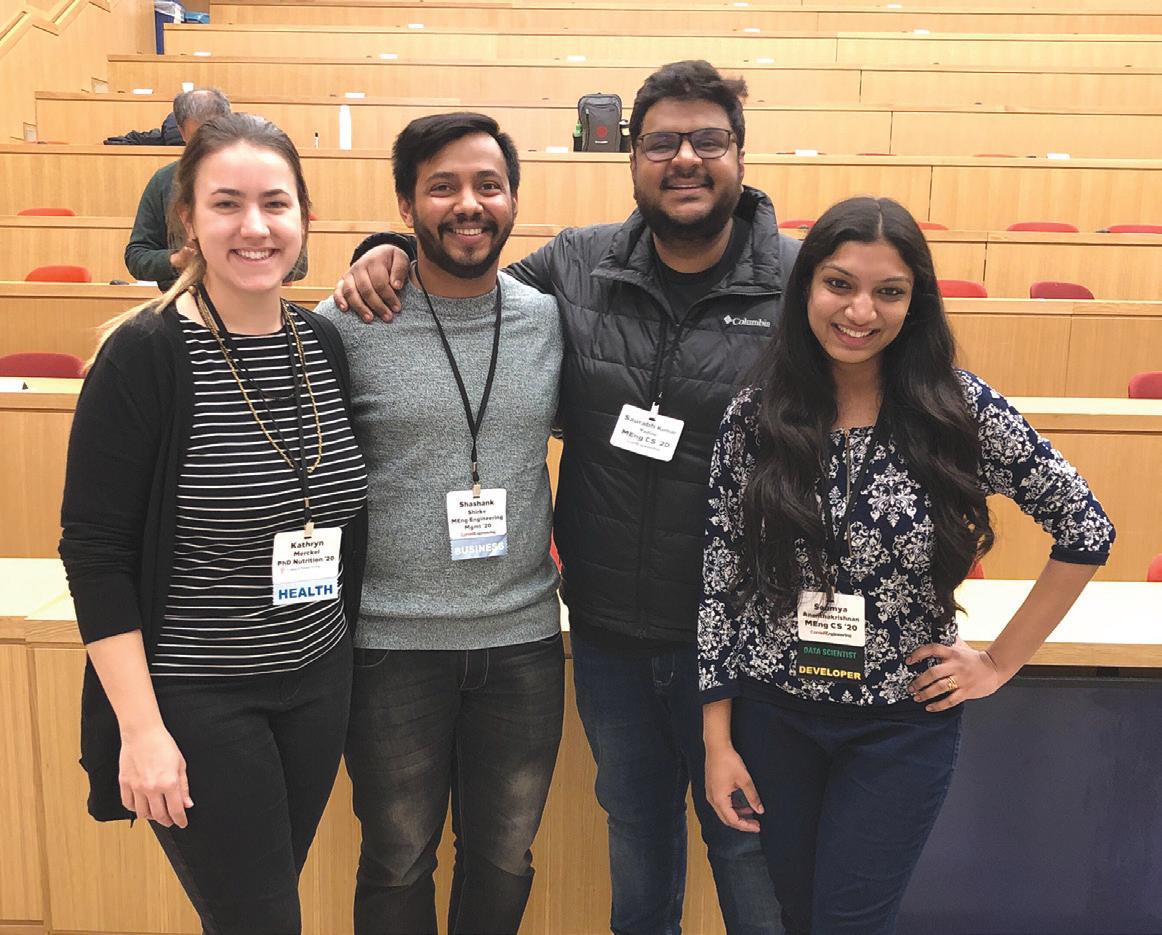
“The primary reason for farmer suicide is excess supply,” said team member Soumya Ananthakrishna M.Eng. ’20. “[Farmers] are producing a lot of food and simply cannot find the right market at the right time. They’re just not able to find markets of demand. And we here are trying to solve that.”
Four other teams took home $1500 each for their performance in one of the four categories used for judging.
Team Bagasse won for most novel solution with their prototype prebiotic beverage made from a waste product of tequila called bagasse, which is a fibrous byproduct of extracting sugar
from sugar cane that is often used as a biofuel.
The award for best data analysis went to Team MicroSoil, a group that created a prototype of an in-field rapid soil testing kit that farmers can use to test for pathogens and micronutrient deficiencies.
Team ConsumABLE won an award for most market-ready pitch. Team ConsumABLE developed an app that people with food related health conditions can use to decrease their risk of being exposed to a food ingredient that could cause an adverse reaction.
Eigh sponsors, including Microsoft and Cargill, supported the event and over 60 mentors from the sponsoring companies and attending universities offered guidance to the participating teams.
According to Wolf agriculture is the single largest source of land use, meaning that it has huge implications for the environment, culture, aesthetics and regional identity - making hackathons like this important for the future of agriculture.
“As biological organisms, we need to eat or we perish,” Wolf said.
Olivia Miller can be reached at ojn7@cornell.edu.
By ADITYA RAMACHANDRABABU Sun Staff Writer
Raised in a crowded, barely middle-class Somalian home, Cornell physician-scientist Prof. Said Ibrahim never thought being a doctor was in the cards for him.
“Medical school was reserved for wealthy elites,” he previously said, noting that his family was sustained only by his father’s income of about $50 a month.
Despite facing borderline poverty, Ibrahim never relented to the seemingly insurmountable odds. Managing to leave Somalia, he went on to earn a medical degree from Case Western Reserve University — followed by a residency at Brigham and Women’s Hospital, a masters of public health from Harvard and an MBA from the Massachusetts Institute of Technology’s Sloan School of Management.
Despite being armed with an arsenal of impressive post-nominals, it was another goal that stood as his greatest challenge yet: “to … understand racial variations in the uti-
lization of healthcare and healthcare outcomes,” said Ibrahim, who was recently named head of Weill Cornell’s Division of Healthcare Delivery Science and Innovation, a group that aims to improve the patient experience.
Funded by the National Institutes of Health and other federal agencies for almost two decades, Ibrahim has long been a pioneer of health disparities research, a field that seeks to measure and address how patient outcomes differ across demographics. Having previously investigated racial gaps in musculoskeletal care, Ibrahim is currently working to trace disparity in results among osteoarthritis patients.
According to Ibrahim, when medication or changes to lifestyle fail to yield improvements, those suffering from osteoarthritis — a condition caused when the protective cartilage that cushions the ends of your bones wears down over time — often opt for knee and hip replacement, one of the most common elective surgical treatments.
But, his team found,
“African Americans are 40 percent less likely to undergo” the procedure.
A scientist by trade, Ibrahim started asking questions: “Why is it that African Americans are under-utilizing this treatment? Why do they have concerns about undergoing treat ment?”
of factors may contribute to the dis parity,
African American osteoarthritis patients were presented with an educational video program in a randomized trial, they were much more likely to opt in to the But simply researching healthcare ty wasn’t enough for Ibrahim. Two years ago, he was
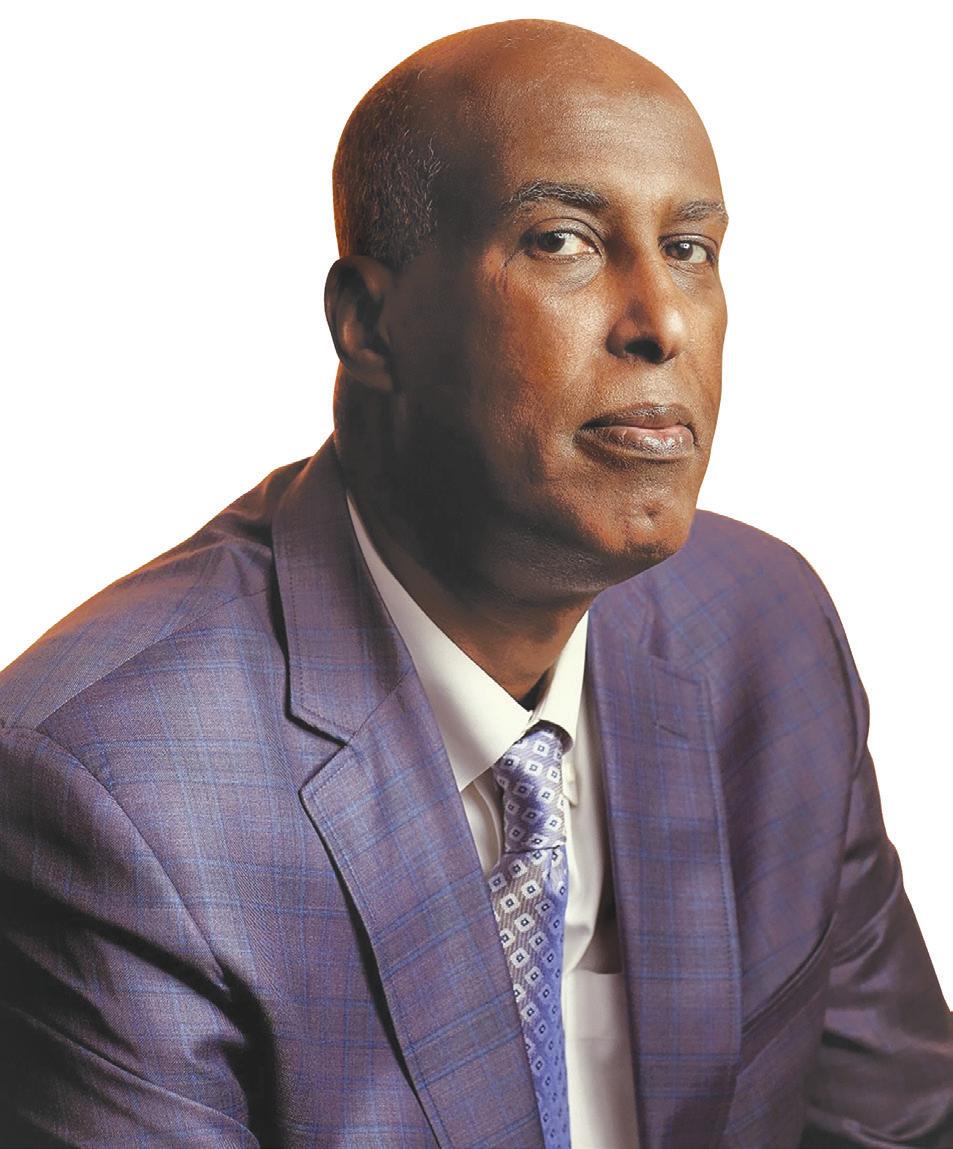
Against all odds |One way to reduce inequalities in healthcare is to create a diverse workforce, Ibrahim said.
Ibrahim’s study found that “there is a different perception about the usefulness of the risks and benefits of the treatment [among African Americans].”
In keeping with this conclusion, when some
appointed as Weill’s Senior Associate Dean for Diversity, where he believes he can apply his findings to developing more broad healthcare policy initiatives.
As a new leader of the
program, Ibrahim took the baton from the earliest champions of inclusion and diversity at Weill — whose efforts since the 1980s notably helped an underprivileged 20-yearold from East Africa get admitted into medical school.
“I’m a strong believer in the idea that one of the ways we can reduce inequalities in healthcare is to create a diverse workforce in healthcare,” Ibrahim said.
As a champion of Weill’s diversity initiatives, “addressing … important disparities in healthcare access using the tools of education” is the most meaningful part of his job, a role in which he hopes to improve racial and gender inclusion in Cornell’s graduate and medical school.
And, while challenges lay ahead, according to Ibrahim, his profession is more accessible than ever.
According to a 2019 Weill admission report, 18 percent of all Weill medical students were from groups underrepresented in medicine, boasting a 2 percent increase since 2018. Nearly a quarter of students in the Class of
2023 are also from underrepresented groups, while the majority of the class are women.
“There is a lot of demand for underrepresented groups in medicine, not only in terms of race and ethnicity, but socioeconomic status,” he explained. “More and more schools are becoming debt free, and I think the forces are all aligned for a large nuwmber of underrepresented students to consider this highly rewarding career.”
But despite the positive headwinds the push for diversity has at its back — Ibrahim said the battle for greater inclusivity is far from finished.
“I often find myself to be the only African American in conferences of 200, 300 people,” Ibhrahim said, who nevertheless expressed optimism. “I’m always inspired by the possibility that I have to do this in order to be a role model for others who feel that they don’t belong here.”
Aditya Ramachandrababu can be reached at aramachandrababu@ conellsun.com.
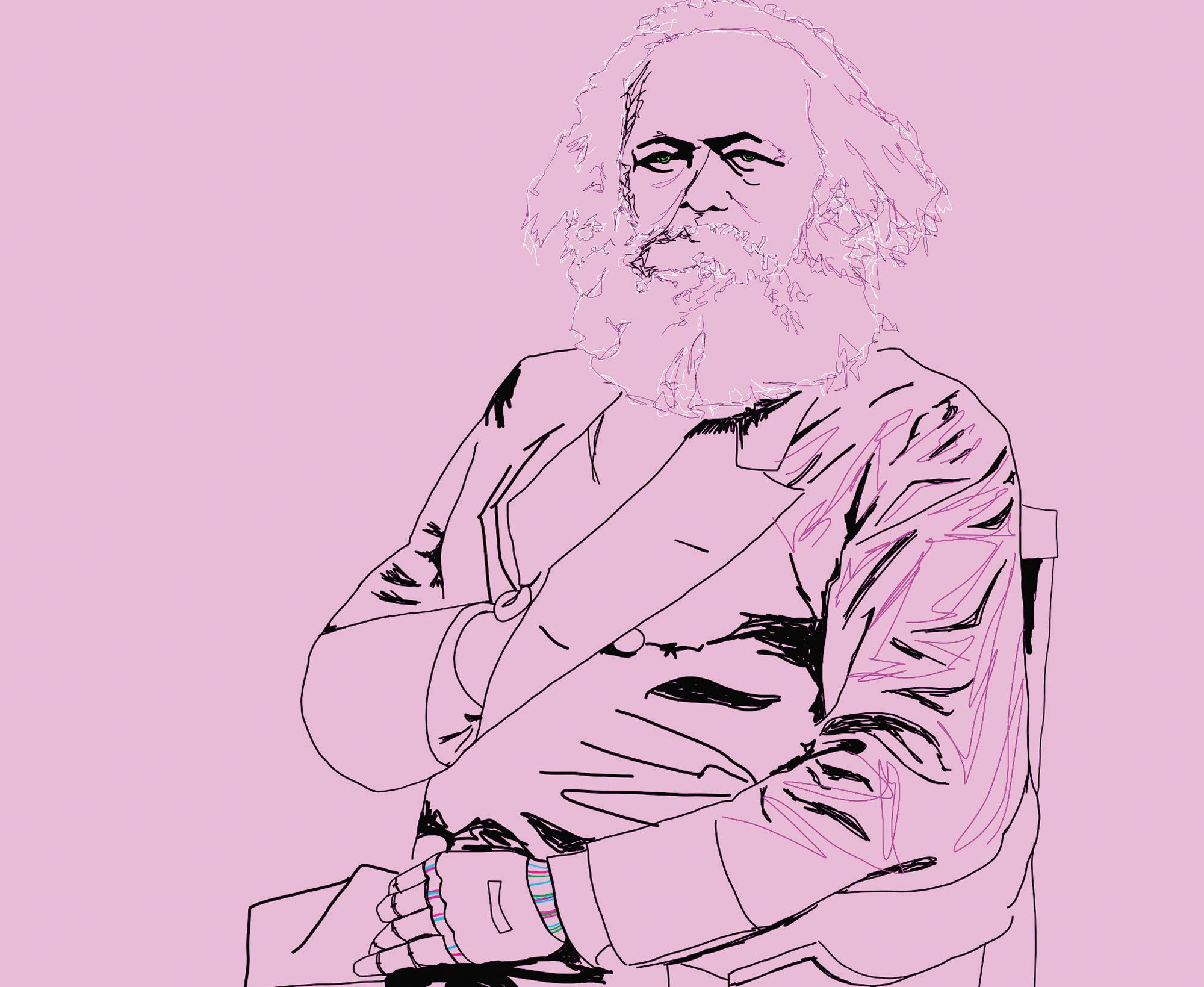
Let’s talk about Marxism. As someone who was born and raised abroad, when I first moved to the States, I was bewildered by Americans’ general disdain of the mere mention of Marxism. Is it the enduring legacy of the Red Scare? Many seem to equate the term with communism and immediately neglect it, yet such total disregard for the ideology is often a blindspot in the American understanding of material culture. Marxist philosophy as a way of thinking informs humanity’s development; in the past century, the Frankfurt school and Critical Theory facilitated the radical changes in our socio-technical system with Silicon Valley as the epicenter. Through the critique on power imbalance, particularly in regards to gender, race and class, it is Marxist philosophy that brought us to where we are today. With the recent neoliberal shift in our capitalist society, Marxism has become more relevant than ever. This article merely focuses on a fringe philosophy of Marxism — Accelerationism. Over the past five decades, with the advent of new technologies, much of the world has gotten increasingly faster. Working patterns, political cycles, production flows, financial circulations, information transmissions – all of these have accelerated in an iterative fashion. The 2008 financial crisis stands as the most recent testimony that capitalism is bound to suffer from periodic crisis as an unsustainable mode of production.
this is the best way forward for humanity, or because there is no alternative.”

Accelerationism surfaced as an intellectual movement rooted in a Marxist notion that the intensification of an unhinged force like capitalism will inevitably result in that force’s self-destruction. Accelerationism argues that the hyper acceleration of the capitalistic process is necessary to generate radical social changes. As articulated by Andy Beckett in The Guardian, accelerationists argue that technology and capitalism should be radically sped up and intensified – “either because
MIRA KUDVA DRISKELL SUN CONTRIBUTOR
Before the advent of CGI, horror films relied on more than jump scares and excessive gore. Obviously, carnage still played a role within the genre, but a lack of realistic effects forced directors to rely on creativity as opposed to solely digital creations. Think of the suspense of an unknown killer in Psycho (1960), the sheer terror of everyday activities in Rosemary’s Baby (1968) or the bizarre pagan imagery and slow burn of The Wicker Man (1973).
It almost seems unfair to place these films in the same category as, say, the Saw franchise, or any other film that falls into the derogatory “torture porn” category. Don’t get me wrong — those films definitely have a place in the horror genre, and if
So, why am I talking about Marxist philosophy in my arts column? At the University of Warwick in the 1990s, a young philosophy professor named Nick Land argued that the triumph of capitalism and the rise of technoculture were inextricably intertwined. Drawing on the work of French continental theorists like Deleuze and Guattari, Land argued that with the material advancement in technologies, our selves are being dissolved by the increasing speed and pace of modern life — the individual is becoming less relevant than the techno-capitalist system it finds itself in. Land was one of the founding members of the Cybernetic Culture Research Unit at the University of Warwick that brought accelerationism to modern revival. In 1996, the CCRU listed its interests as “cinema, complexity, currencies, dance music, e-cash, encryption, feminism, fiction, images, inorganic life, jungle, markets, matrices, microbiotics, multimedia, networks, numbers, perception, replication, sex, simulation, sound, telecommunications, textiles, texts, trade, video, virtuality, war.” In retrospect, CCRU seems to have predicted envision all the problems we are seeing today in our technoculture. Such emegence of a school of thought coincided with the rise of Silicon Valley and the Californian ideology. For the entrepreneur class, technological progress was perceived as the catalyst of social transformation, and such notion of techno-utopianism was most notably promulgated by Wired magazine. To this date, the neoliberal ideologies of Silicon Valley remain shocking and provocative in capitalist America.
Accelerationism further speaks to the greater pursuit of the transcendence from materiality. Yet as our digital world is still grounded in the physical and analog in the form of global infrastructures, it is thus still
fundamentally unequal and imbalanced, as reasoned by Marx’s materialist conception of history. We can’t yet escape the material constraints in late capitalism. Fast forward to the dot-com bubble in the late 1990s, and we can see the recurring theme of periodic crisis. This is when the post-apocalyptic connotation of digital dystopia rose to prominence in the culture’s consciousness.
Such cultural trend is exemplified in the popular art form of electronic dance music that embodied the new possibilities of social changes in the digital era. Electronic dance music, particularly techno, can be conceived of as a manifestation of dance floor socialism, where people dance to the same beat across social boundaries with ecstasy permeating a sense of togetherness and unity. As the youth continued to throw discreet parties in abandoned warehouses, it stands as a grassroots movement of civilians reclaiming the occupied space. The acquisition of space remains central to the mechanism of capitalism as a form of the commodification of materials, thus making it analogous to the practice of colonialism.
In a digital dystopia, with most space
under the ubiquitous surveillance by the state and corporate power, individuals are rendered powerless and alienated from the means of production. Electronic dance music remains a prominent element of underground subcultures in cities that provoke the post-apocalyptic connotation of cyberpunk. Digital dystopian narratives are no longer a fictional niche genre, but an overarching reflection of our reality. By no means am I attempting to propose that Marxism is the solution to our capitalist society engineered and devastated by power imbalance, yet I contend this is a crucial time to rethink how the imagined extremes are closer to reality than ever in a cultural sense. As I can only take up one page of the Arts section at a time, I will save the contemporary development of accelerationism from the chopping block of metrics-driven digital journalism. Stay tuned for how Accelerationism is related to alt right and Asian fetish.
Stephen Yang is a sophomore in the College of Agriculture and Life Sciences. He can be reached at syang@cornellsun.com. Rewiring Technoculture runs alternate Tuesdays this semester.
you’re looking to speed up your heart rate and jump back into your seat, then look no further. But personally, I’ve always felt that those films have the same shallow appeal as a game of Call of Duty. Sure, there’s the initial thrill of seeing violence on screen, but then what? There’s no substance — nothing to dig your teeth into and keep you up at night. The same can be said for overusing CGI jump scares. At first, the bit serves its purpose, but relying on technology for fabricated terror can only take a film so far. Take, for example, It Chapter Two (2019). While there’s something to be said for the sheer absurdity of a giant Paul Bunyan trying to take out Finn Wolfhard, relying on CGI for every single horror sequence is, at the end of the day, just lazy. Because of the repetitiveness of the film’s CGI gore, audiences
only attain a dulled sense of inattentiveness, which is decidedly not the goal of any horror film.
Luckily, it seems that our standards have started to rise. With movies like Get Out (2017), Midsommar (2019), Us (2019) and — arguably — Parasite (2019), we’re seeing a rebirth of the horror genre. The same tropes that make all horror movies great are still present; there are chilling cinematic scores, subtle sound effects to keep you on the edge of your seat and artful cinematography designed to draw your eyes to the perfect place. But what makes these new horror movies so refreshing is that they develop a style of horror that goes beyond the superficially scary. Each film is crafted with another layer of meaning beyond gore or violence, bringing themes of grief, consciousness, identity
and class to the forefront of audiences’ minds.
After seeing Us , I remember staying up for hours biting my nails. Not because of any particularly titillating or terrifying fight scene, but because I couldn’t stop trying to analyze every scene. I remember being particularly fascinated by the concept of a dual identity in relation to “The Tethered” — especially considering mental health and our current political climate. What terrified me about Us wasn’t that I thought that a jumpsuit wearing version of myself was going to attack me with a pair of scissors. Instead, I left the theater with the unsettling feeling that there was a monster lurking inside of every one of us. As somebody who struggles with mental health, I often experience an internal struggle, balancing intrusive thoughts as I try to
navigate the real world. Us portrays an unfortunate reality — the monsters that we’re afraid of, that we’ve tried to keep out of our world with walls and mental blockades, wear our faces. If you’re like me, then I’m sure you’ve grown a bit bored of the stereotypical horror genre. After all, you can only sit through so many repetitive slasher flicks without wondering if you could’ve been doing something more productive with your time. It seems that filmmakers have finally caught on. At this moment, audiences want more than surface level gore — instead of overusing explicitly “scary” effects, good horror films should attack the subconscious.
Mira Kudva Driskell is a freshman in the College of Agriculture and Life Sciences. She can be reached at mdk97@cornell.edu
Independent Since 1880
138th Editorial Board
MARYAM ZAFAR ’21
Editor in Chief
JOYBEER DATTA GUPTA ’21
Business Manager
PETER BUONANNO ’21
Associate Editor
MEGHNA MAHARISHI ’22
Assistant Managing Editor
CHRISTINA BULKELEY ’21
Sports Editor
BORIS TSANG ’21
Photography Editor
CAROLINE JOHNSON ’22
News Editor
ALEX HALE ’21
ARI DUBOW ’21 City Editor
EMMA ROSENBAUM ’22 Science Editor
BENJAMIN VELANI ’22 Dining Editor
JOHN MONKOVIC ’22 Multimedia Editor
MIKE FANG ’21
OLIVIA WEINBERG ’22
Assistant News Editor
MADELINE ROSENBERG ’23
Assistant News Editor
LUKE PICHINI ’22
Assistant Sports Editor
HANNAH ROSENBERG ’23
Assistant Photography Editor
BRIAN LU ’23
Assistant Arts & Entertainment Editor
ANNABEL LI ’21
Assistant Money & Business Editor
LEI ANNE RABEJE ’22
Layout Editor
JOHN COLIE ’23
Blogs Editor
JOHNATHAN STIMPSON ’21 Managing Editor
KRYSTAL YANG ’21
Advertising Manager
JASON HUANG ’21
Web Editor
NIKO NGUYEN ’21
Design Editor
PALLAVI KENKARE ’21
O’CONNELL ’21
STAMM ’22
OZA ’22
PLOWE ’23
LEE ’21
CHENG ’21
’22
’23
DAWSON ’21
’22
MORAN ’21
’22
’21
’22
’21
Working on Today’s Sun
Ad Layout Dana Chan ’21
Production Deskers Ben Mayer ’21
News Deskers Catalina Peñeñory ’22
Alex Hale ’21
Design Deskers Niko Nguyen ’22
Krystal Yang ’21
Photography Desker Boris Tsang ’21
Arts Desker Emma Plowe ’23
Brian Lu ’23
Sports Desker Emily Dawson ’21
Science Deskers Anil Oza ’22
Emma Rosenbaum ’22
Ireland plays host to the only musical instrument that holds the place of a national emblem. For anyone vaguely familiar with Irish advertisements, culture or banners, the harp may be a familiar sight. However, the emblem’s origins may not be. The Guinness brewery opened up well before Ireland received their independence from England and actually copyrighted this long-established Irish symbol for their brand. On every pint of Guinness, glass or can, the harp is front and center. The government of Ireland had to flip the harp for all national paperwork and buildings because of the famous brewery’s copyright on the original image. I learned this in my orientation from a local tour guide, excited to share this bit of history in which a brewery changed a nation’s image.
Welcome to Ireland.
People told me a lot of things about Ireland before I came here. Now halfway through my time abroad, I’ve experienced vastly different things than Mom warned me about.
Alcohol is one of many things people associate with the Irish (maybe they drink to deal with the weather, like we do in Ithaca). One of the most devastating periods of Irish history was the potato famine of the 1840s. Today we still regard potatoes as the staple of Irish cuisine (still better than Okenshields). There’s a whole wall dedicated to different potatoes at Irish grocery stores, and, considering their small size, that’s about an eighth of the store. Our Irish orientation leaders informed us that, as still relatively new independents from the colonial British Empire, the Irish maintain some bad blood with their bigger island counterparts, and — as a derivation of that — they have a lack of conventional respect for authority.
sona, they introduced themselves to me and took an interest when I said I was from the States. Not because they wanted to be YouTubers, but for a different appreciation of American media. The next question was, “are you in a fraternity?” They had the Hollywood-fantasy about American Greek Life, and I didn’t have the heart to tell them that I’m just not as cool as Miles Teller playing Miles Teller in Project X. Cornell banned garden gnomes years ago.
However, the most accurate generalization I heard was about the weather. We have it bad in Ithaca. Cornell’s winters are the worst times I have spent outside. It’s not made easier by the administration’s lack of care for its students’ wellbeing, but these are small prices to pay to maintain an aura
People told me a lot of things about Ireland before I came here. Now halfway through my time abroad, I’ve experienced vastly different things than Mom warned me about.
of prestige. As Lord Farquad puts it: “Some of you may die, but that’s a sacrifice I’m willing to make.”
One thing we can always depend on is the predictability of Ithaca weather. Meteorology majors have it easy: “Today, your hair will freeze on the walk to class with a 95% chance of being sprayed by snow slush from oncoming traffic.” In Ireland, you can experience the four seasons in four hours.
The Irish never liked their British King, and they still find ways to stick it to the man when they can. There are, also, lots of “pick up after your dog” signs all around Dublin. Yet there’s still a lot of dog shit around the city. No one will tell them when to scoop their collie’s poop.
Probably the most popular place to meet the negligent dog owners of Ireland are in pub men’s bathrooms. For those unfamiliar: Typically, in the States you have some sort of privacy at the urinals in a men’s bathroom . Even if there aren’t dividers between them, the vast majority of the time you get a personal, ceramic bowl to empty your kidneys into. The Irish counterpart to the urinal, however, is a metal wall with a couple drains on the floor. You stand shoulder to shoulder with fellow bathroom dwellers, packed in like a can
When I travelled to a more rural area of Ireland a couple of weeks ago, I was picked up by two 65-year-old cousins I have in Killarney — a brief stop before heading further south to Dingle. My two family members reminded me of the drinking stereotype about the Irish. I was getting over a sickness, but right when we got through the front door they began pouring pints for the three of us. I had planned on letting my immune system heal, but I wasn’t about to let these two show me up. Alcohol kills germs anyways, right? Slainte (sh-lawn-tuh) is how they say cheers in Ireland, and now the word is seared into my memory. They were up at 8 a.m. for a hike. I stood no chance.
One thing we can always depend on is the predictability of Ithaca weather. In Ireland, you can experience the four seasons in four hours.
of sardines. In Ireland, urinals are meant for socialization. I met a local Irishman who talked to me and a friend of mine about his dream of moving to America and becoming a famous YouTuber. I told him to look me up if he ever did. Have you ever seen David Dobrik’s awful videos of gifting cars to his friends, or Dude Perfect’s kooky trick shots? I could think of worse career paths (rhymes with Wall Street … oops, I gave it away).
Outside the loo, in a discussion section, I met two fellow Trinity College students. In accordance with the friendly Irish per-
Upon getting to Dingle, I wanted to do a famous hike to the Eask Tower. There was a storm with torrential downpours and 40 mph winds. I made it down the block to grab breakfast at a pub and tried confirming directions I had to the trailhead. My waiter told me if I did the hike, they’d be looking for my body the next morning because it’s uphill on the coast. He recommended I go to the town aquarium instead. I ordered a tea and sat for the next half hour weighing my options. The rain and wind died down some and I had a much larger aquarium by my house at home. Screw it, the aquarium probably didn’t have otters anyways. Goes without saying, but my body is very much still alive (probably because I chickened out one sixth of the way up), but I count it as a win. And now I’m here to tell you about the parts of Ireland your mom won’t mention. Go forth and figure a place out on your own, rain or shine. Mostly rain, though.
John Sullivan Baker | Ed’s Declassifed
It’s that time of year again! Cornell Student Assembly elections are upon us, so I’ve compiled a helpful guide to the types of candidates you’ll see swarming Cornell’s common spaces for the next two weeks.
The Freshman
This person’s unbridled enthusiasm for student governance is weirdly endearing, but you feel a sense of schadenfreude knowing they’ll soon come face to face with the harsh truth that the S.A. doesn’t actually have that much power within the Cornell system. You’ll get a lot more excited about their impending reality check once their incessant Libe Cafe schmoozing starts driving you nuts.
The Frat Boy
Outraged that his frat’s parties got cancelled (officially, at least) last semester, this candidate is determined to snag a spot on the S.A. to correct what he’s convinced is a grave injustice. He’ll get a bunch of his fraternity brothers to turn out for him, and he’ll snag a supermajority of the “top tier” Greek vote, but he’ll do terribly with the anti-freshman-abuse demographic.
The Activist
This person constantly tries to out-woke the other members of the S.A., but you generally agree with their principles, and their heart seems to be in the right place. With that being said, you might hesitate to cast your ballot for them if you learned about the hazing committed by the campus organizations they’re part of.
The Opportunist
Reporters at The Sun love to quote this person’s lukewarm takes on boring, internal S.A. subjects. But if you spend enough time around them, you’ll realize their positions on contentious subjects constantly shift depending on who’s within earshot. This person
desperately wants to be in a secret society and collects prominent friends who trash them behind their back. They have a stellar LinkedIn though … they definitely deserve credit for that.
The One Who Actually Cares
This person probably plays an active role in an a major campus community, and they’ve decided to run to address a serious student need. This person is nearly universally respected, they’re pretty down to earth, they have good relationships with professors and administrators and they really seem to care about getting to know the constituents they represent. You’re scared of what the S.A. will do to them.
The Complainer
Libe conversations. One of these dramas is usually sufficient to keep the S.A. and S.A.-adjacent world occupied for a week or two before attention shifts to another manufactured, inane or petty controversy. Often, the alleged rule-breaker wins out, but sometimes they’re banished forever by the almighty Elections Committee.
I’ve compiled a guide to the types of candidates you’ll see swarming Cornellfor the next two weeks.
This person is fun to talk to because you can usually get them to spill tea on their fellow S.A. candidates. They seem to hate the S.A. even more than the average Cornell student, which makes you wonder why exactly they want to be a member of the body. Unable to tolerate not getting exactly what they want, this person especially hates The Sun, since (gasp!) sometimes the S.A. doesn’t look all that great when The Sun reports members’ statements and actions.
The One Who Breaks The Campaign Rules
It happens every year. Some candidate uses a Cornell logo when they’re not supposed to, a sidewalk gets chalked when it shouldn’t be or an overly-enthusiastic supporter sends out an email before checking the rule book. Boom, disqualified. And so begins an aggressively nerdy high drama — with life or death stakes — chock full of appeals, hearings, Sun stories and hushed, heated
IThe Republican
This candidate is an underclassman, and they’re rarely seen in anything but a collared shirt. They’re one of the most aggressive networkers you’ve ever met, and they don’t flaunt their conservatism — they know it won’t sell. They’ll talk a big game about reforming the S.A., but, oddly, it’s not something they’ll ever get around to. “The Republican” is the natural rival of “The Activist,” but these two have a lot more in common than they care to realize.
The CU Nooz Clown
This guy thinks he’s hilarious. He’s not, but he’s a great middle finger to the Cornell bureaucracy. When it’s time to actually vote, you’ll choose him because he’s the only name on the ballot you’ll recognize.
John Sullivan Baker is a senior in the School of Industrial and Labor Relations. He can be reached at jsullivanbaker@cornellsun.com. Regards to Davy runs every other Tuesday this semester.
have always been more excited for my mom’s first day of school than I have been for my own. I would eagerly wait for her to come home, and then I would go straight into her bag in search of a stack of index cards. On them were her students’ names, hometowns, a fun fact and if they identified as an optimist or pessimist. My mom is a college Professor of Political Science (not in Ithaca), and when I was younger, I would shuffle through the hundreds of cards trying to soak up little hints of what college kids were like and how I could become one.
At the start of this semester, one of my professors did the same thing — he handed out index cards asking us to write our names, hometowns and a fun fact. This was the first
As the daughter of a pro fessor, I have a behindthe-scenes perspective on the college system.
especially demanding because even when you’re not at work, you’re always working.
The next project, the next letter, the next chapter, the next call with your editor is always waiting. I give my mom a lot of credit for having a family and navigating that job — and I’m not just saying that because she’s probably going to read this.
So without further ado, here is a list of everything I have learned from having a parent as a professor:
The Multiple Choice Fallacy
time this had happened to me at Cornell, and I smiled so widely. I imagined his kid excited for him to come home, and read through the cards like I was.
As the daughter of a professor, I have a behind-the-scenes perspective on certain aspects of the college system. Through the 19 years of going to my mom’s work-dinners, lectures and conferences, I have felt so lucky that my mom has taken me along with her for the ride. But I can’t say that I always felt that way.
I have learned that being a professor is
Professors don’t pay attention to the design of the multiple choice. By that, I we are answering quesbased on the fact that the test couldn’t possibly have four B’s in a row, our professors didn’t really think about the order
of the answers when they were crafting the exam. If you’re filling in the bubble for the 5th B in a row and freaking out, don’t.
Sleep Schedule
Our Professors get as much sleep as we do — which isn’t much. Making it to our 8:40’s on time is a battle for the both of us. Plus, they have to park.
Hobbies and Interests
One of my favorite things about my mom is that she loves to watch The Bachelor. It goes to show that even our professors enjoy the same stupid things we do.
Professor Friendships
They all know each other. In fact, they’re probably all friends. When chemistry professors and anthropology professors and deans and soccer coaches all find themselves together at my dinner table, it feels like I’m living in a sitcom. So, make sure to refrain from any negative comments about other professors on campus, even if you think the people around you share the same opinion. There’s also a lot of drama — and it’s juicy.
The Email Debacle
If there is a gutsy email you want to send — like asking for a grade change or possible extra credit — just send it. They might even admire you for your chutzpah. But avoid sending it at 2:00 a.m.. It’s not impressive that you know how to stay up late.
Three Golden Rules
Never ask when grades are going to come out. Your professors didn’t forget, and your grades will come out when they come out. Like I said, professors never really get a break. When we get to enjoy winter breaks after submitting our last assignments, they have to spend the next few weeks at their desks. And, don’t forget, professors pretty much hate grading. Maybe this rule is obvious. But nonetheless, it helps me to think about when it’s 4:30 a.m. and I’m still suffering through the paper due to them in the morning.
In class, when the spotlight turns to you and you didn’t do the reading, your professors would rather you just be honest about it. Trying to lie your way through it will be a lot more detrimental to your professors’ perception of you than just admitting the truth. Always say “Hi” if you see your professors outside of class. Even if they don’t remember you or your name, they will pretend they do, and that will work to your benefit. But, whatever you do, make sure you do not ask them a question about your assignments during that brief run-in. That’s what office hours are for.
How much your professors like you and how close you sit to the front is, in fact, a positive correlation. Avoid staking out in the cheap seats. Plus, the TA’s actually do tell the professors what students are really doing on their laptops. Also, they hate when students eat in class — even if they tell you it’s okay.
Wikipedia
Wikipedia isn’t the devil; just remember to vet it carefully and include a citation.
Dr. Student
Professors had to be students for a long time. A really long time.
To read the full column, please visit www. cornellsun.com.
Odeya Rosenband is a sophomore in the College of Arts and Sciences. She can be reached at orosenband@cornellsun.com. Passionfruit runs every other Tuesday this semester.
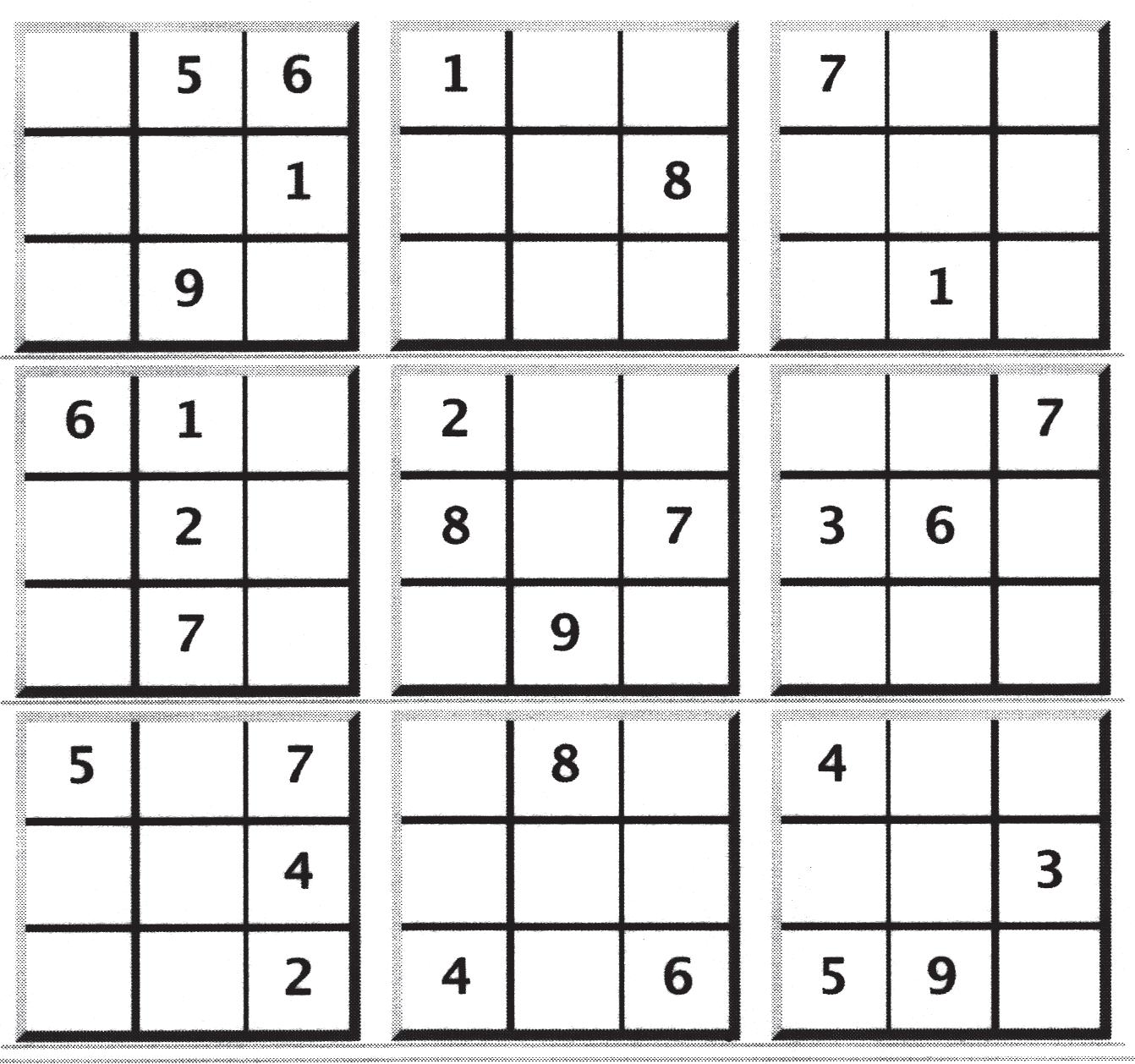
Fill in the empty cells, one number in each, so that each column, row, and region contains the numbers 1-9 exactly once. Each number in the solution therefore occurs only once in each of the three “directions,” hence the “single numbers” implied by the puzzle’s name. (Rules from wikipedia.org/wiki/ Sudoku)





& 1 and 2
607-277-1234 office@ithacastudentapartments.com Ithacastudentapartments.com
>>SPECIAL PRICING<< Collegetown Apartments Furnished 1-3 Bedrooms PARKING, LAUNDRY, UTILITIES! (607) 273-7368 www.WestShoreApts.com
2 & 3 Bedroom Apartments
Access to Shuttle to Campus Access to Free Fitness Center
Novarr-Mackesey Property Management office@ithacastudentapartments.com 607-277-1234
Houses, Apts, Parking 1 to 9 Bedroom Collegetown - College Ave, Linden Ave, Dryden Rd, Bryant Ave, Cook St. 607-330-2442 info@urbanithaca.com www.urbanithaca.com
26 A PA R TMENT FOR R ENT Catherine & Eddy St. 1 & 2 bedroom Furnished, heat included Laundry in building Parking available for fee 607-277-1234 office@ithacastudentapartments.com
Men’s team fends of Ohio State, staying strong to the last second
LACROSSE
which the Red would be outscored by the home team.
2020-2021
Studio 1, 3, 8 & 11 BR Apts. Great Locations in Collegetown. 607-227-2535
Collegetown Crossing College Ave's Newest Location 307 College Ave. Now Leasing for 2020-2021 Completely New Modern Studios, 2 & 4 Bedroom Apartments. Fully furnished, heat & hot water included. Reception area at 307 College Ave. www.urbanithaca.com 607-330-2442 info@urbanithaca.com
Now Renting 2-10 Bedroom Houses/ Apartments for 20-21. All Locations. Call today or visit our website: Certified Properties of TC Inc certifiedpropertiesinc.com 607-273-1669 109 Sage Place
*Brand New* Full Term & Semester Leases Studio, 1 & 2 Bedrooms College Townhouse 121-125 College Ave. CollegeTownhouseIthaca.com Leasing@inteprop.com
20-21 College Ave. 5 BR House Furnished. Laundry. Parking. Call 607-273-8576 120
APTS/HOUSES COLLEGETOWN BEST LOCATION/BEST PRICING 607-272-3389 avramisrentals@aol.com
Continued from page 12
The hard defensive work paid off, allowing Cornell’s offense to attempt to pull away in the second quarter. Midway through the quarter, senior attackman Jeff Teat took advantage of a five-on-five power play to complete his first-half hat trick.
Cornell’s most talented offensive weapon finished the game with four goals and two assists, becoming Cornell’s third alltime leader in points with 262 career points.
Junior attackman John Piatelli got the hot hand, too, leading the offensive effort by scoring four goals in the first half. He would finish the game with five goals and three assists. On Monday, the junior was named the Ivy League Player of the Week.
Despite the six-goal deficit, Ohio State managed to resurrect its offense to score three unanswered goals as the clock wound down.
uckeye comeback, the Red defense needed to step up. Midway through the fourth, Ohio State’s LeClaire fired a rocket of a shot at the Cornell net. Reacting quickly, Cornell’s Adler jumped in front of the shot to block the goal with his body. The ricochet then went back to another Ohio State player, whose shot was blocked once again — this time by senior midfielder Sam Duggan.
“Our offense is unselfish and has lots of different weapons in terms of versatility.”
John Piatelli
“I took advantage of the opportunities my teammates gave me,” Piatelli said. “Our offense is unselfish and has a lot of different weapons in terms of versatility.”
Entering the second half with a 9-7 lead, Cornell’s offense once again attempted to put distance between itself and the Buckeyes.
In the third quarter, the Red went on a fivegoal run with Teat quarterbacking the attack and looking to get his teammates open looks. With eight minutes left in the third, Teat found the upper right corner of the Buckeye goal.
Early in the final quarter, junior midfielder Jonathan Donville extended the Red’s lead to 16-10. Donville would later provide the team’s 17th, game-winning goal for his third tally of the day.
But then Cornell’s dominance began to unwind — the fourth quarter would be the only one in

“That’s just the mentality of our defense and the way we play,” said Adler. “It wasn’t anything new, we just call that a Sunday.”
In the dying moments of the game, Cornell was once again forced to make a big-time play. This time, sophomore goaltender Chayse Ierlan came up with the late-game heroics. As the seconds ticked down, Ohio State made one last push to tie the game up. A Buckeye attackman charged at the net for a last-second shot, but Ierlan made a clutch save to seal the 17-16 win.
“We knew that as long as we stayed focused and continued to execute the details, we could finish out the game,” Ierlan said.
Cornell will now face off against its toughest opponent so far this year, this time with No. 2 Penn State in the Crown Lacrosse Classic in Charlotte, N.C. on Sunday.
“We can beat any team we want, as long as we play our game,” Piatelli said.
Mike Seitz can be reached at mseitz@cornellsun.com.
In strong season fnish, men’ s squash ends 2-1 in fnal hardfought championship
SQUASH
Continued from page 12
season, Cornell turned the tides and toppled its opponents with a 6-3 win moving toward the Hoehn Cup title. By the end of the weekend, Dartmouth had fallen to No. 12, nationally.
The Red’s progress toward the Cup slowed down as its third opponent, Columbia, proved to be up for a long fight. Four of the second day’s nine total matches went to five games, in which three of those spanned over an hour in run time. Sophomore Nicolas Göth Errington was able to overcome a two-game starting deficit against his opponent, winning the last three games of his match, which was a 71-minutes long marathon.
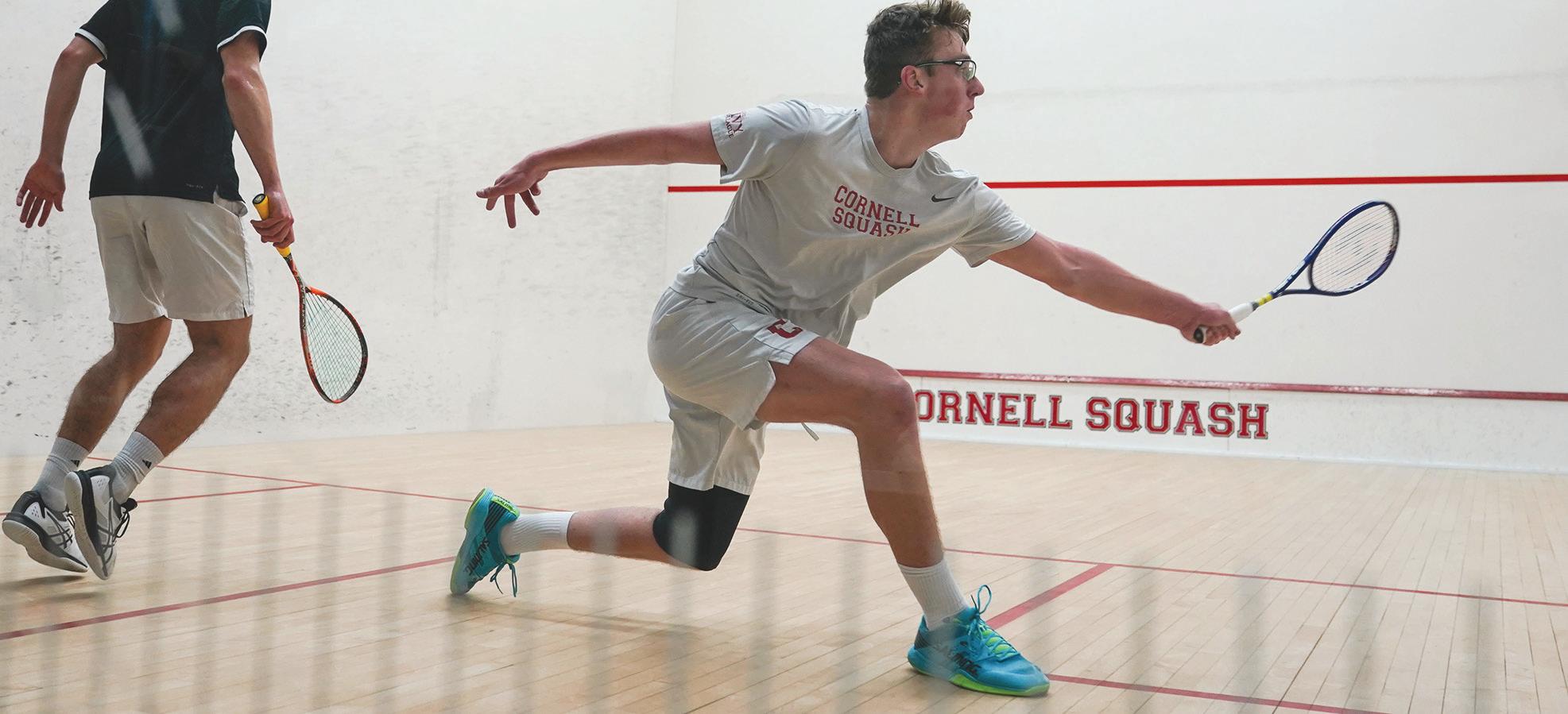
Chotrani and Errington were able to boast an undefeated 3-0 weekend, winning each match that they competed in, including multiple four or five game matches throughout the three days.
Unfortunately, the taxing final match of the weekend against No. 10 Columbia resulted in a 4-3 loss for the Red. Cornell’s final two matches against the Lions had unreported scores. Columbia was able to secure three wins over the weekend, allowing it to claim
the Hoehn Cup over Cornell, which went 2-1. The Lions had never taken this championship title before.
On Feb. 20, Chotrani was unanimously named to the AllIvy League squash team, and was additionally awarded the title of “Ivy League Rookie of the Year.” During his first season with the Red, he competed at the number one position in the lineup, with an 8-7 record overall. Historically, the Red has seen only one other Ivy League Rookie of the Year winner and Chotrani is the first All-Ivy selection since 2015.
Looking ahead for Cornell squash, select members of the women’s and men’s teams will be competing at the College Squash Association’s Individual Championships from March 6 to 8 at the University of Pennsylvania’s Penn Squash Center.
Palmer anticipates that four or five members of the women’s team and three or four members of the men’s team will be traveling to the individual championships, with support from a number of underclassmen on the team hoping to gain extra experience.
Elizabeth Foy can be reached at elf72@cornell.edu.
By Mike Seitz Sun Staff Writer
After downing Albany, Towson and High Point all by seven-plus points in its first three games of 2020, men’s lacrosse was up for its biggest test of the season Sunday against then-No. 18 Ohio State — Cornell’s first ranked opponent of the season.
The win was enough to bring Cornell up five spots on the Inside Lacrosse rankings — from No. 10 to No. 5. Meanwhile, Ohio State slipped to No. 19.
Both teams traded multiple goals early on in a run-and-gun rampant tempo. In the opening quarter alone, there were four ties and three lead changes.
The Red struck first — less than two minutes into the game, freshman standout attackman Mikey Long spun his defender and landed in the crease for an acrobatic goal.
attackman was a tough assignment for the Red, finishing the game with six goals and two assists, and kept the teams tied up after the first quarter.
“We knew he was the shooter and we had to be stronger as a unit on defense,” said sophomore defenseman Gavin Adler.
Ohio State was able to stay in the game early on largely due to its domination of the faceoff X, where it won nine out of the first 10 draws and later set its school record for faceoff wins.
Cornell’s faceoff unit had its worst performance of the season so far, finishing the day with just seven wins on 37 draws.
“We knew he was the shooter and we had to be stronger
as a unit on defense.”
Gavin Adler
Faceoffs — a contributing factor to last year’s NCAA Tournament miss — have been an issue that Cornell seemed to have corrected in its opening games this campaign. But the tilt against the Buckeyes brought that weak point of Cornell’s game back to the forefront.
Touted as one of the most complete freshmen in all of college lacrosse, Long showed his ability to score, carry and pass throughout the contest, finishing with two goals. The young attackman was named Ivy League Rookie of the Week on Monday for the second week in a row.
On the other side of the field, Ohio State featured its fair share of talent, too. In attack, Buckeyes senior Tre LeClaire kept the Cornell defense busy all game long, using his 6-foot-2-inch, 211 lbs frame to free himself into open shots. The Buckeye
The defensive unit, finding itself playing more possessions than usual, rallied to force multiple turnovers, getting the ball upfield and empowering its offense.
In a game where Cornell was unafraid to get aggressive with its opponent, one of Cornell’s main aggressors was freshman midfielder Danny Boccofola, who contributed to a whopping total of 25 caused-turnovers on the day.

A strong performance moves men’ s team to No. 10 nationally
By ELIZABETH FOY Sun Staff Writer
Traveling over 300 miles to Cambridge, Mass. this past weekend, men’s squash competed in the College Squash Association national championships, a three day challenge and the last team competition for the Red this season. Finishing the regular season with a 5-6 record and ranked No. 12 nationally, Cornell attempted to improve its team standings with a chance to win the Hoehn Cup at the end of the weekend.
While the Red ultimately did not come home with the championship title, it did win two of its three games, putting the team in second-place for the competition. This success moved Cornell in the national rankings up two places, from No. 12 to No. 10. The first day of the championships ended favorably for the Red, as it was able to narrowly clinch a victory over No. 13 Franklin & Marshall College. Head coach David Palmer preemptively strategized with the team to ensure that in a close game, the players would be able to tally
a win.
“I’m trying to get the guys to relax a bit, and when we get close to winning or get to match point to really focus on making sure they win it at the first attempt,” he said.
With an overall score of 5-4 in the team’s first match of the weekend, Palmer’s strategy proved successful. Out of the five team points won by the Red, three were easy victories. The other two, however, came in the form of a four-set run by senior Jared Scherl and a five-set run by freshman Veer Chotrani. Chotrani, hav-
ing lost the first two sets of his match, was able to emerge victorious from his setback.
“I was very happy and proud of the boys and how we stuck with it,” Palmer said. “The boys really stayed calm and focused, and in the end we got it done.”
Following the momentum of the first day’s win, the Red prepared to take on No. 9 Dartmouth on day two. After losing to Dartmouth 3-6 in the regular