The Corne¬ Daily Sun

By CALVIN LEE Sun Contributor
Joining health care personnel, the elderly and essential workers, student workers have become eligible to receive the COVID vaccine, but many of them have faced hurdles before even receiving their first shot.
Student workers from Cornell Health to campus dining are considered to be front line workers, yet their eligibility for the COVID vaccine has only revealed the many roadblocks standing in the way of receiving it.
One of the biggest obstacles to the vaccine is the lack of accessible vaccination clinics in close proximity to the University.
Rebecca Braimon ’21, a student manager at Rose Dining Hall on West campus, has to make the more than one-hour long drive to Bingamton to receive her first dose. Though she has a car, she acknowledged that is not the case for many of her co-workers.
“Availability is one of the biggest roadblocks my students are experiencing,” Braimon said. “Many people have papers and prelims so frequently that they can’t spare the time to go all the
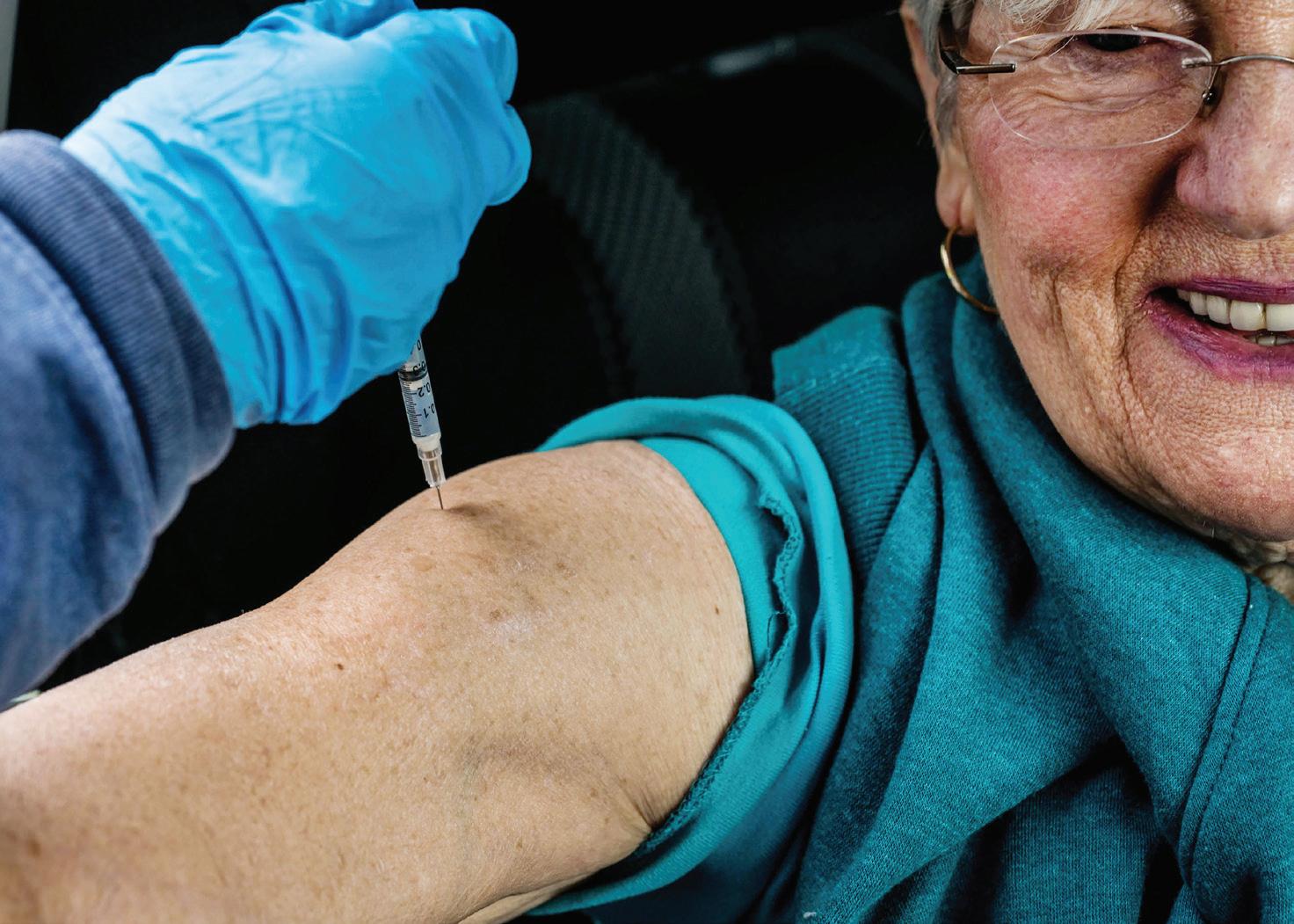
Vaccines | Marilyn Coppola receives the Pfizer vaccine at a drive-thru clinic
way to Binghamton or Syracuse, which are some of the closest vaccination sites.”
People without a car may be forced to ride a bus for hours, or spend upwards of $150 for an Uber round trip round trip to one of the major cities near Ithaca
with vaccination clinics. In addition to the financial expenses of travel for vaccinations, students may also expose themselves to the virus outside the University’s bubble.
For immunocompromised students,
like Adam Czosnyka ’24, a member of Helping Hands for the Wegmans supermarket chain, public transportation is not a viable option.
“There should be vaccine availability closer to campus, if not on campus,” Czosnyka said. “I blame Cornell for not having easy access to vaccination clinics for student workers that can also help all of Ithaca.”
Before students can even attempt to make their way to a vaccination clinic, they face digital barriers — Czosnyka is frequently checking the New York State vaccine sign-up website because appointments are filled almost as soon as they are made available.
He said getting an appointment was akin to “a Supreme drop,” referencing the competitive process of buying new designer items the second they are released.
“Having this privilege keeps me from getting frustrated,” Chike Murray ’24 said. “A lot of other people want the vaccine but aren’t eligible. I’m grateful about it, and I’m just going to be patient.”
Calvin Lee can be reached at cdl73@cornell.edu.
By AMAYA ARANDA Sun Staff Writer
While the Society for Humanities can no longer congregate in the A.D. White House, its members have found a way to create a sense of community beyond campus through a podcast.
Coined the “Humanities Pod” — to emphasize what co-director Prof. Annette Richards, music, calls a “pod-like” community feel — the new podcast features work by professors, fellows and researchers in residence.
The series consists of 30-minute episodes in which humanities scholars share their work surrounding this year’s Society for Humanities theme: “fabrication.” The theme traces labor, manufacturing and mass production to explore how materiality has impacted human culture and the world we live in.
The first episode of the series, released in December, discussed recent research by Prof. Jon Parementer, history, on the Indigenous dispossession of land-grant institutions including Cornell.
“Bringing visibility to the humanities at Cornell is important because the humanities are crucial to what Cornell is and does,” Richards said. “That’s not always obvious, especially
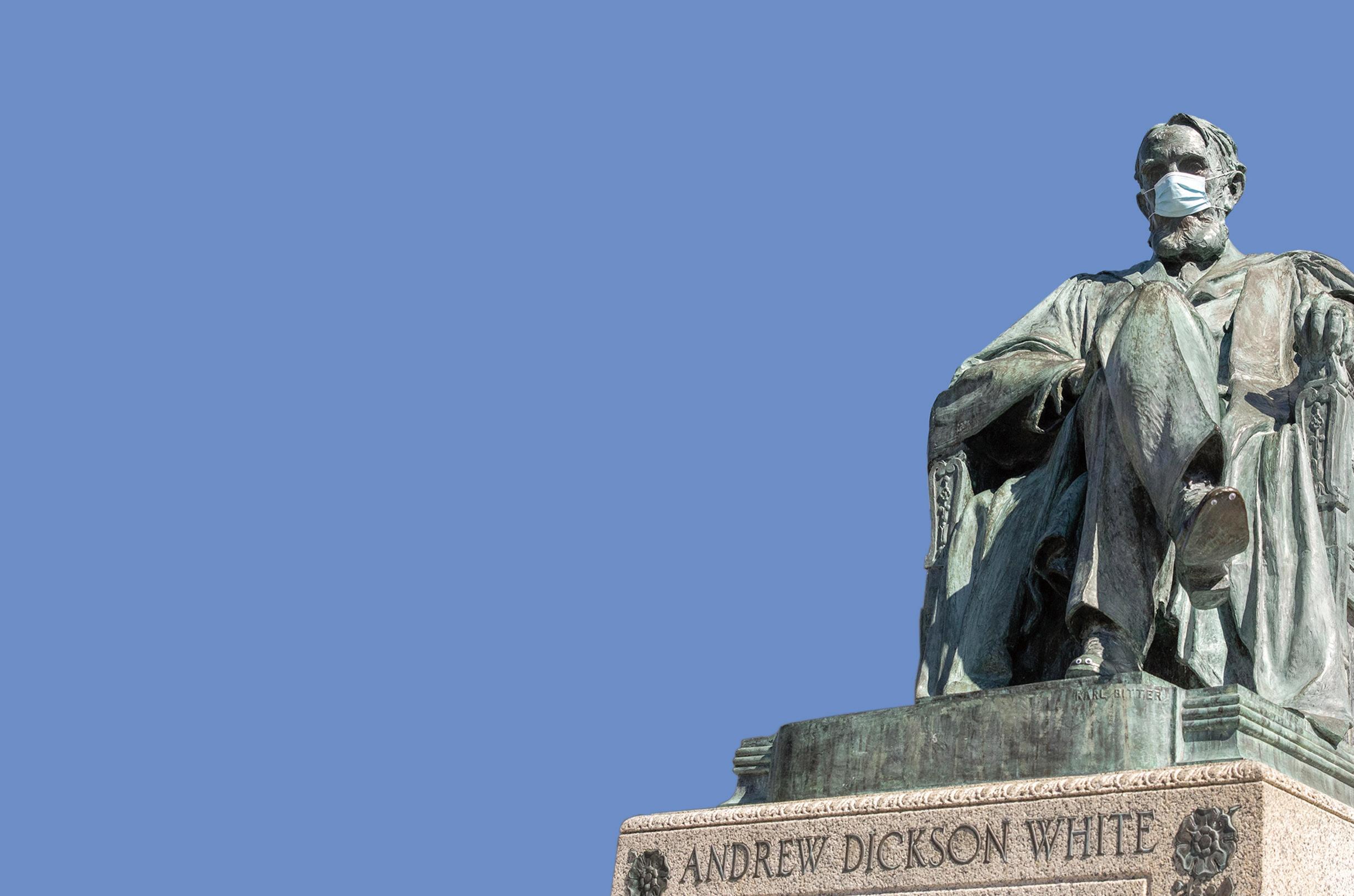
at a time when the humanities are in many ways less visible than scientific research and sometimes seem to be undervalued.”
The A.D. White House, which houses the Society for Humanities, typically saw several events a week.
German studies Prof. Paul Fleming, co-director of the series, explained that while the society had been considering the idea of a podcast for a while, the pandemic brought the idea to fruition.
“At the A.D. White House, we usually have an event a day, some-
“Now we’re producing content designed to go beyond the walls of A.D. White.”
Prof. Paul Fleming
times two, sponsored by the Society or simply taking place there. Now there’s nothing … now we’re producing content designed to go beyond the walls of the [A.D. White] House,” Fleming said.
However, the creators emphasized that the podcast is not just a pandemic project, but an initiative of great importance to the Cornell humanities community.
Max Mendoza ’22, an engineer in the Humanities Scholars program, appreciated seeing the impact of technological advances applied to the humanities. He hopes the Humanities Pod will be able to open his fellow Cornell students to new ideas and give validity to humanities research.
A.D. White House building coordinator and Society for the Humanities events coordinator Tyler Lurie-Spicer ’15 — the audio producer of the program — pointed out that since the A.D. White House is still not open to the public, the podcast offers a new way to foster community among fellows and integrate scholarship in the humanities.
Nevertheless, Fleming stressed that the “pod” is not meant solely for the Cornell academic community, nor is it meant to feel like another lecture.
With three episodes down, the directors hope the podcast reaches a diverse audience, whether that be undergraduate students, Cornell alumni
or those intrigued by the humanities.
Amaya Aranda can be reached at aaranda@cornellsun.com.
Tuesday, March 2, 2021
Biomedical and Biological Sciences Signature Seminars 8:45 - 10 a.m., Virtual Event
NYS Farmers Market Managers Conference 9:00 a.m., Virtual Event
A Conversation With Rahul Gandhi 9:30 a.m., Virtual Event
Repair and Reparations: IES Migration Series Spring 2021 10:30 a.m. - 12:10 p.m., Virtual Event
BEDR Workshop: Oliver Curry 11:15 a.m. - 12:45 p.m., Virtual Event
From Beet Fungus to 4-H: Journey Through the Life of a Cornell Cooperative Extension County Educator 11:15 a.m. - 12:45 p.m, Virtual Event
Fashioning the Black Female Body: Negrophilia/ Negrophobia and the Racial Economy of Desire 1:30 - 2:30 p.m., Virtual Event
ORIE Colloquium: Angela Zhou / Lijun Ding 4:15 p.m., Virtual Event
In Focus Speaker Series: A Life Making Your Software Secure and Your Data Private 4:30 p.m., Virtual Event
Industrial Organization Workshop: Kei Kawai 11:15 a.m. to 12:45 p.m., Virtual Event
Biophysics Colloquium Noon, Virtual Event
Fake News, Alternative Facts and Disinformation: Learning to Critically Evaluate Media Sources Noon - 1 p.m., Virtual Event
Virtual Toni Morrison Book Club Noon - 1 p.m., Virtual Event
Berger International Speaker Series With Andrés Harfuch 12:15 p.m. - 1:15 p.m., Virtual Event
Acceleration of the African agriculture transformation: Key role of private sector actors 12:15 p.m.- 1:15 p.m., Virtual Event
From the Margins to the Mainstream: Black and Indigenous Futures in Archaeology 4 - 6 p.m., Virtual Event
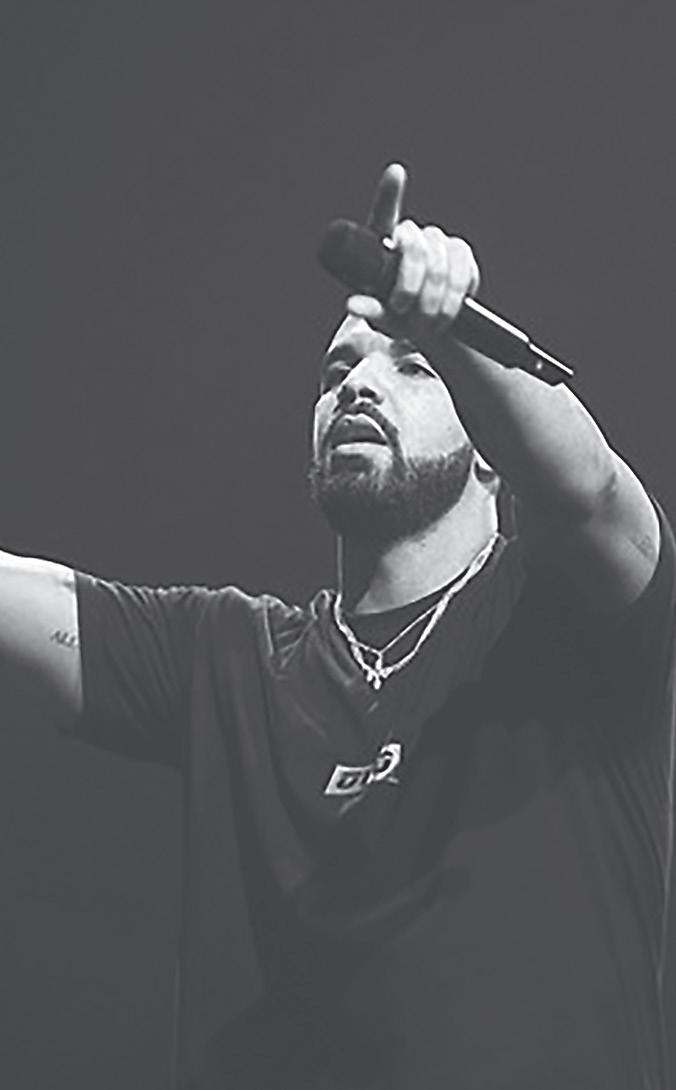
Nice Jewish Rapper: Drake’s Detachable Judaism and Racialized Masculine Mobility 4:30 - 6 p.m., Virtual Event
Info Session: Fulbright U.S. Student Program 4:30 - 6 p.m., Virtual Event Tomorrow
By KATHERINE ESTERL Sun Staff Writer
What’s the best schedule for a second semester senior? For Ellen Park ’21 it’s four alcohol classes.
At least that’s what Park decided when she enrolled in “Introduction to Wines,” “Introduction to Wines and Vines,” “Cider Production: Apples and Fermented Juice” and “The Science and Technology of Beer.”
“This is my last semester at Cornell, so I have been taking a lot of very lax classes,” Park said.
When taught in-person, “Introduction to Wines” would bring about 700 students together
in the Statler Hall Auditorium for college-condoned and New York State-sanctioned day drinking.
The New York State law that allows underage alcohol consumption for educational purposes doesn’t extend to students’ off-campus residences, where COVID-19 has pushed tasting classes onto Zoom.
Instead, professors are getting creative with at-home, non-alcoholic sensory experiences and optional beverage lists for those of age.
Kathy Arnink, who teaches “Introduction to Wines and Vines” and “Cider Production,” puts together packages for Ithaca-
based students to pick up at Stocking Hall. These packages include tasting solutions to represent different levels of sugar, acidity and bitterness, as well as scents to sniff, like essential oils.
This week, students taking the lab component will pick up supplies for an at-home yeast fermentation.
Prof. Cheryl Stanley ’00, who teaches “Introduction to Wines,” personally sent each student scratch-and-sniff stickers and recommended using other common items, like lemons and tea, to practice tasting.
“[The stickers] remind me of elementary school or when I was still a kid,” said Josephine Zeng ’21.
Despite the virtual setting, she took Wines after hearing it was, “one of the best ways to get drunk on campus and have that be OK.”
Both Park and Zeng tried to mimic the fun of a traditional wines class by getting together with other classmates to purchase and taste the recommended wines
— socially distanced, Park noted. For one week, they split $100 worth of wine among six people.
“[Wines] gives me a reason for me and my friends to get together and enjoy ourselves, which is something I can’t really do in my other classes,” Zeng said.
Arnink, who has taught for about 15 years, really misses “interaction with students,” especially in classes with a prominent practical component. She hopes, once the weather warms and she receives the COVID vaccine, to hold outdoor, in person tastings for students enrolled in the hybrid version of the course.
Currently, enrollment numbers are lower to accommodate potential in-person learning.
““Cider Production” currently has about 75 students enrolled compared to about 120 in typical semesters. Wines and Vines, similarly, has only 160 compared to 240 in past years.
Doug Miller, lecturer for “Introduction to Fermented
Grains, Hard Ciders and Sake,” managed to keep his class in person by scrapping the in-class tasting component and capping enrollment at 19 students. Now, students are given non-alcoholic tasting kits for use outside of class.
While drinking alcohol in class may be a big draw for students, professors still hope to teach effectively without it. For Miller, that means conveying how products are made and how to be an informed consumer. For Arnink, it also means giving students the knowledge to have sophisticated conversations about wine with the adults in their life.
However, despite these adaptations, Zeng said she is still looking forward to returning to an in-person format.
“I feel like it was so important to take the class just because it’s such a Cornell class to take,” Zeng said.

shows women economists are questioned 12 percent more on their work than men
By MIA GLASS Sun Staff Writer
Many female economists are used to walking into a room and feeling overwhelmingly outnumbered by their male colleagues. As terms like “mansplain” become part of common vernacular, women in economics are becoming more and more conscious of gender disparities in their field.
A working paper from the National Bureau of Economic Research found that women receive 12 percent more questioning on their work at seminars and they were more often met with hostile attitudes when compared to their male counterparts.
Anne Burton, a sixth-year graduate student studying economics at Cornell University, played a vital role in collecting the data. She was recruited by a panel of researchers at the University of California, Berkeley, who were looking for graduate students to record and analyze interactions between men and women at academic seminars.
While Burton said most of the seminars she attended at Cornell were cordial and respectful, she recalled one instance where a male professor was particularly disruptive toward a female presenter.
“It just wasn’t helping the audience understand the paper better, and it wasn’t helping the presenter get her point across,” Burton said.
At Cornell, of the 46 faculty members listed on the economics department’s website, a mere nine are women.
Economics major Alexis Ren ’21 said the only female economics instructor she had was for “Statistics and Probability,” a requirement for the economics major; the instructor was a postgraduate student.
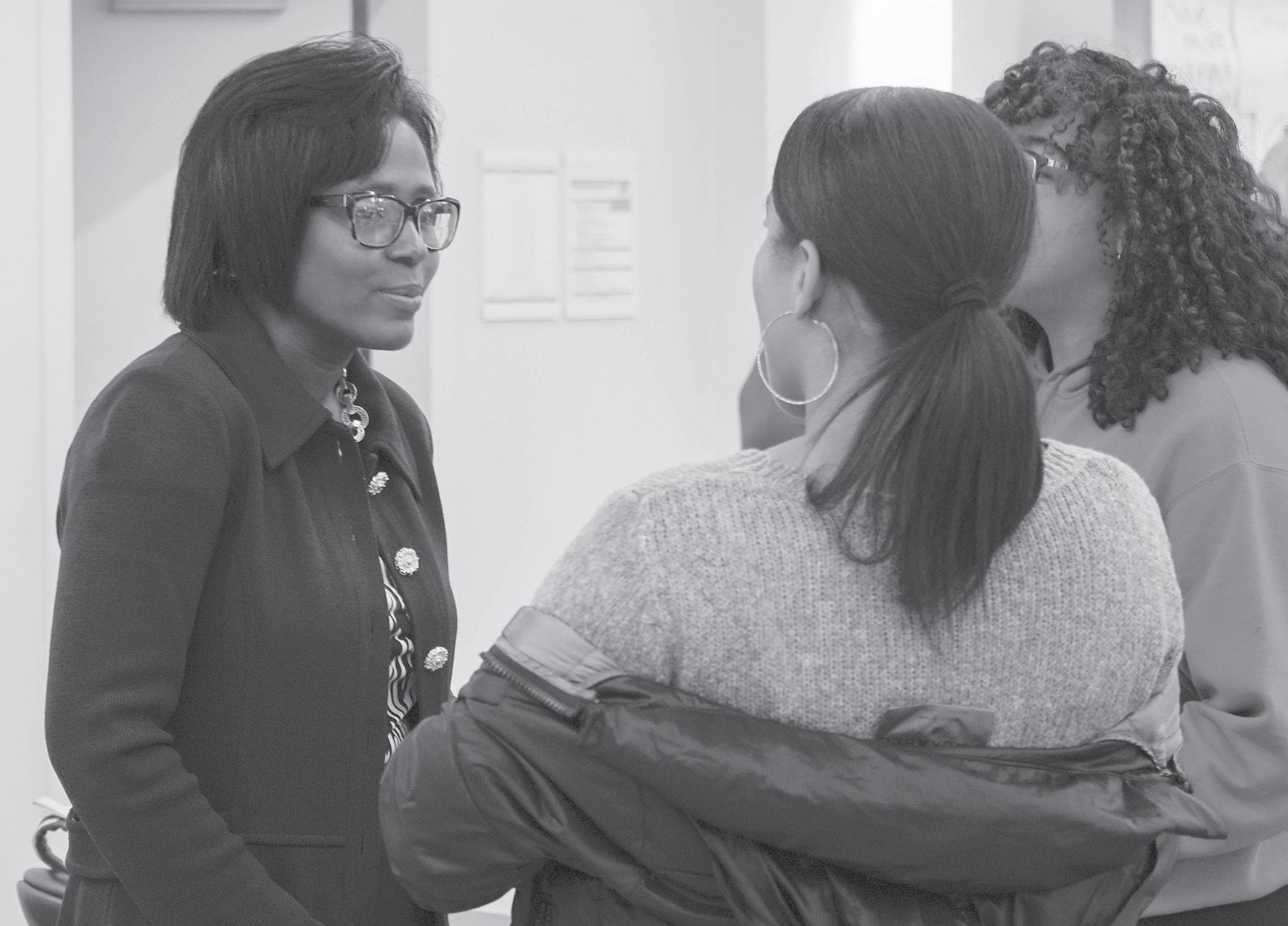
Prof. Michèle Belot, economics, said she was treated well in the one seminar she gave at Cornell. However, she said she still notices differential treatment toward women who are giving presentations due to the fact that women tend to be less aggressive.
“Men are too confident. I think women are more true to the state of research and more willing to admit to caveats.”
Prof. Michèle Belot
“My take is that I think men are too confident. I think women are more true to the state of research and more willing to admit the caveats,” Belot said. “But that means it may seem that there is more to pick on, or that it is inviting more criticism because of that.”
When asking questions at seminars, Belot said women are less assertive and often have their questions dismissed.
“I have had many experiences where I ask a question and the person presenting sort of answers but not really, and then one of my male colleagues takes over the question and the question gets the attention that it maybe deserved,” Belot said.
The problem worsens when the intersectionality between gender and race comes into play. The New York
Times article explained that the study on seminars could not even be extended to Black and Hispanic individuals — as there are not enough of them in the field of economics.
Burton also said that there is a lack of racial diversity within Cornell’s economics department.
“We do have quite a lot of international students which is great and they definitely add some much needed diversity to our program, but when you’re talking about people who have historically been discriminated against in the U.S. and face additional barriers to higher education, those groups are not really represented at Cornell,” Burton said.
Reflecting on her professional recruitment past, Ren also recalls themes of racial and gender disparities.
“I’ve definitely been in banking interviews where I’m the only female or even the only person of color,” Ren said. “I would go to a Superday, which is a final round interview for banking, and I would be the only non-white male there.”
pursue the field.
“A lot of freshmen in particular may not realize what economists do, they may think it’s just about the stock market and interest rates,” Burton said.
While women may be dissuaded from an economics degree because of the realities of discrimination and unequal treatment in the field, Belot advised against focusing on what she saw as a minority of bad instances.
“I’ve definitely been in banking interviews where I’m the only female or even the only person of color.”
Alexis Ren ’21
To address these intersectional issues, Burton and a group of graduate students founded Diversity in Cornell Economics in 2019. The group’s mission is to expose more undergraduate students to the type of work that economists do to encourage a diverse set of candidates to
“I am concerned, to be honest, of the type of media coverage that these studies are getting because while it’s important to spread these issues, it is showing the dark side of the profession,” Belot said. “I would like to remind people that it’s not all bad. Ninety percent of the people are nice and you get to do interesting work and for me it’s been wonderful to be in this profession.”
Despite hurdles for women in the field, Burton still encourages them to pursue economics.
“We’re not going to fix the underrepresentation of women without getting more women interested in economics,” Burton said.
Mia Glass can be reached at mglass@cornellsun.com.
Graduate students are tasked with reopening four sectors of the most populated city in the U.S.
By FAITH FISHER Sun Staff Writer
Graduate students at Cornell Tech are the newest engineers undertaking one of the most ambitious public works projects in recent history — reopening New York City.
This past fall, graduate students at Cornell Tech had the opportunity to craft technology- based projects to aid in New York City’s reopening efforts in four major sectors: shops and restaurants, office spaces, cultural institutions and schools.
The course, offered as part of Cornell Tech’s new two-year dual master’s degree program in urban tech, allowed the students to propose a series of projects, each focusing on a different branch of New York City’s’s public sector in the city itself.
One project, called “Restarting the Workspace” utilized robots and automation for contactless interactions in the post-pandemic workplace. In addition, the project proposed an updated design of new office spaces to simultaneously accommodate
physical distancing and multi-person collaboration, and the utilization of artificial intelligence to detect COVID-19 transmission within office spaces.
The “Reopening Cafes” project used sensors and location data to guide potential customers to seating that conformed to social distancing requirements.
Students working on the “Reopening Cultural Institutions” project sought to create a virtual experience for patrons of the arts, during a time when many museums and galleries remained closed to the public.
“I was really thrilled with the class and honored to teach it. We’ll see what it’s like next year.”
The graduate students who curated these projects are the inaugural cohort of the program. According to Michael Samuelian, the founding director of the Urban Hub, the objective of the class was to gather a group of students who would use their diverse skillset to solvededicate themselves to solving these urban challenges.
Michael Samuelian
Other students tackled the task of reopening schools — proposing an interactive platform with a digitized bulletin board that can help students organize their academic responsibilities and connect with each other.
Although the Urban Tech Program remains in its nascent stage, its students and leadership are already working on expanding the Hub’s reach. Anthony Townsend, the Hub’s first urbanist-in-residence, has been working on a series of webinars called “What’s Next for Urban Tech” to foster interest in and promote dialogue about the utility of urban tech engineering.
Despite the New York City focus of the program, Samuelian hopes that the benefits of urban tech will have an impact beyond
the confines of the city.
“I think that it’s important to keep a foot in New York City, but challenges are not only limited to New York,” Samuelian said. “Some of the most interesting solutions are happening in other parts of the country, and certainly other parts of the world, and one of my goals is to also bring these best practices to campus.”
The Urban Systems class, a requirement for completion of the masters program, will be offered each year. This year’s focus was “Defending Density,” but Samuelian expects that future classes will tackle the broad topic of “urban systems” through a different lens in order to respond to the dynamic, ever-changing needs of society.
“I was really thrilled with the class and really honored to teach it and we’ll see what it’s like next year,” Samuelian said. “I want to be wide open and have people to come to us with their challenges.”
Faith Fisher can be reached at fsher@cornellsun.com.
Picture the scene — it’s 7 a.m. on a Friday morning, and you’re frantically trying to put together your news assignment for Spanish class when you come across an article about the community level impact of Nayib Bukele’s social media strategy in Paisnal, El Salvador. You pause for a moment, blink at your screen, and think “Damn, populists really love Twitter.”
I’ve had this same realization at other points in time. Like almost everybody else, I spent Jan. 6 glued to my screen, watching as rioters stormed the Capitol, spurred on by months of propaganda. Similarly, the last four years have been a lot of “Oh my god did you see what he tweeted?” followed by some remark about the world falling apart, which has made me uncomfortably aware of Twitter’s power in propagating political discourse.
Generally speaking, populism has been on the rise. Though populist politics are by no means a novel concept, populist movements and leaders have grown immensely since social networks took off in the late 90s. The exact reason why populist politicians are popping up left and right is unclear, but potential causes include the failure of neoliberalism and cultural backlash theory. In this way, we can understand populism as a reaction to the modern era, articulating the alienation and widespread disenfranchisement of people across the political spectrum. Or, in layman’s terms, we can understand populist politics as a reaction to the fact that the world makes no goddamn sense.
their own peril.” I’ve noticed this in my own interactions, which always surprised me as my particular understanding of populism doesn’t confine populist practice to any side of the political spectrum; rather, it’s based on a specific logic of

articulation.
Here, I’m going to provide a very, very, very basic explanation of Ernesto Laclau’s definition of populism, as presented in Populism: What’s in a Name? Political theory bros of the
world, please don’t come for me — I will ignore you. Laclau’s work, more than anything, treats populism as a method of analysis. In situations where a large number of demands go unsatisfied by political institutions, people’s collective frustration leads to a rise of solidarity, creating reaggregated demands based on a“logic of equivalence.” This logic takes different demands and creates a chain between them — thus, any claim presented is part of a larger set of social claims which, because of their connection to other demands, can no longer be satisfied in a non-antagonistic, administrative way. Basically, demands become fighting demands.
As these connections are created, we see the emergence of a popular subject, informed by a distinction between “people” and “power.” This distinction is necessarily homogenizing, since it seeks to simplify and define “the people.” Using this definition, populism isn’t regulated to the political left or right. Insead, it’s an ontological category, and any movement or ideology is potentially populistic.
Yet, there’s still a lot of controversy around what “populism” actually entails. As Thomas Frank writes in The People, No, “Today, seemingly every well-educated person in America and Europe knows that populism is the name we give to mass movements that are bigoted and irrational that threaten democracy’s norms.” By extension, as Aaron Lake Smith points out in his Jacobin review of Frank’s work, “Populism is a smear. Those that embrace it do so at
Because populism depends on a logic of equivalence, social media platforms like Twitter are prime facilitators for populist politics. By allowing tech-savvy politicians to circumvent traditional media and communicate directly with their constituents, social media enables populist discourse. When you consider the average comment structure, you can see literal chains of equivalence: Person A posts their political opinion, and person B through Z are then able to respond directly in a literal chain, commiserating and elaborating on their arguments.
To continue reading this column, please visit cornellsun.com.
Mira Kudva Driskell is a sophomore in the College of Agriculture and Life Sciences. She can be reached at mdriskell@cornellsun.com. Portrait of a Gen Z on Fire runs alternate Mondays this semester.
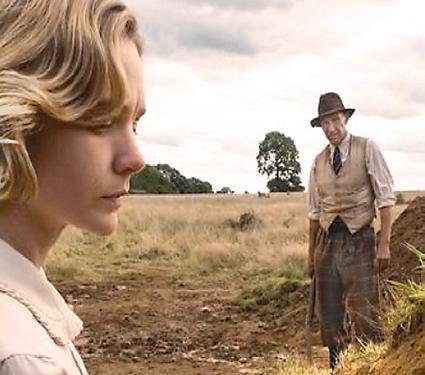
Cambridge archaeologist Charles Phillips (Ken Stott). Ultimately the ship and its treasures survive the war and are allocated to a museum.
On the eve of war, against a misty backdrop of the English countryside, Netflix’s The Dig uncovers the mostly true story of a remarkable archaeological discovery and the ripples it sends through the lives of those peering into the past. Based on a book by John Preston, The Dig seems at first glance to be a tidy little film that delights in dusting off history and using it to make sense of our present-day anxieties and curiosities. On a deeper level, however, it dares to question: who owns the past? And how can we hope to understand it when our own lives are so very short indeed?
Suffolk of 1939 is a place of tweed jackets, dirt roads, crowded pubs, vivid green fields and the tensions of a society whose foundations have been shaken by the rumbles of World War II — a climate in which it is unclear how much value should be placed on old artifacts while the future is so uncertain. Despite these troubled times, wealthy landowner Edith Pretty (Carey Mulligan) is determined to discover what lies beneath several mysterious mounds on her property, a large swathe of land called Sutton Hoo. She hires Basil Brown (Ralph Fiennes), a man with no formal training in archaeology but a genuine expertise from a lifetime of excavations. What they find — a massive Anglo-Saxon ship marking a burial site and a wealth of varied artifacts — rewrites historians’ understanding of a culture that had been presumed “primitive.” While widowed Pretty wrestles with her declining health and the future of her son, Brown struggles with being snubbed by eager scholars like
In part, the film feels like a love letter to Basil Brown and others like him: the unorthodox faces of history which were largely forgotten. A mere tap of Brown’s foot can tell him the nature of the soil beneath. Disparaged by the more traditional academic experts, he advocates for himself and for a role in the story of discovery, even when he knows his name may be left out of that story’s telling.
There is also something distinctly moving about Mulligan’s performance as Edith Pretty. She is intelligent and experienced in archaeology and history, but was unable to make anything of it professionally. She grapples with ownership of the artifacts, which she feels she has a responsibility to protect from the indiscriminate destruction of the coming years, but as her sickness worsens, her hold on the future grows weak. Pretty’s imaginative young son Robert (Archie Barnes), facing the looming loss of his mother, hero-worships Brown as he works away at learning the secret language of the past. This is slow and unglamorous work, but in the eyes of Robert and the awed locals, the dig takes on monumental proportions.
speaking. Periods of quiet are also interspersed throughout — the film is gentle, almost muted, and yet somehow bursting at the seams with the mundane loveliness of human life. We leap from wide open skies and wheeling birds to the claustrophobia of being buried alive, just as the characters soar from the high of unearthing wonders to the crushing dread of war, sickness and self-doubt.
As an archaeologist-in-training, while I expected The Dig to dramatize and blur factuality, I settled in to watch the film with the expectation that I would find intellectual and aesthetic encouragement in the challenges and successes of archaeological discovery. I was
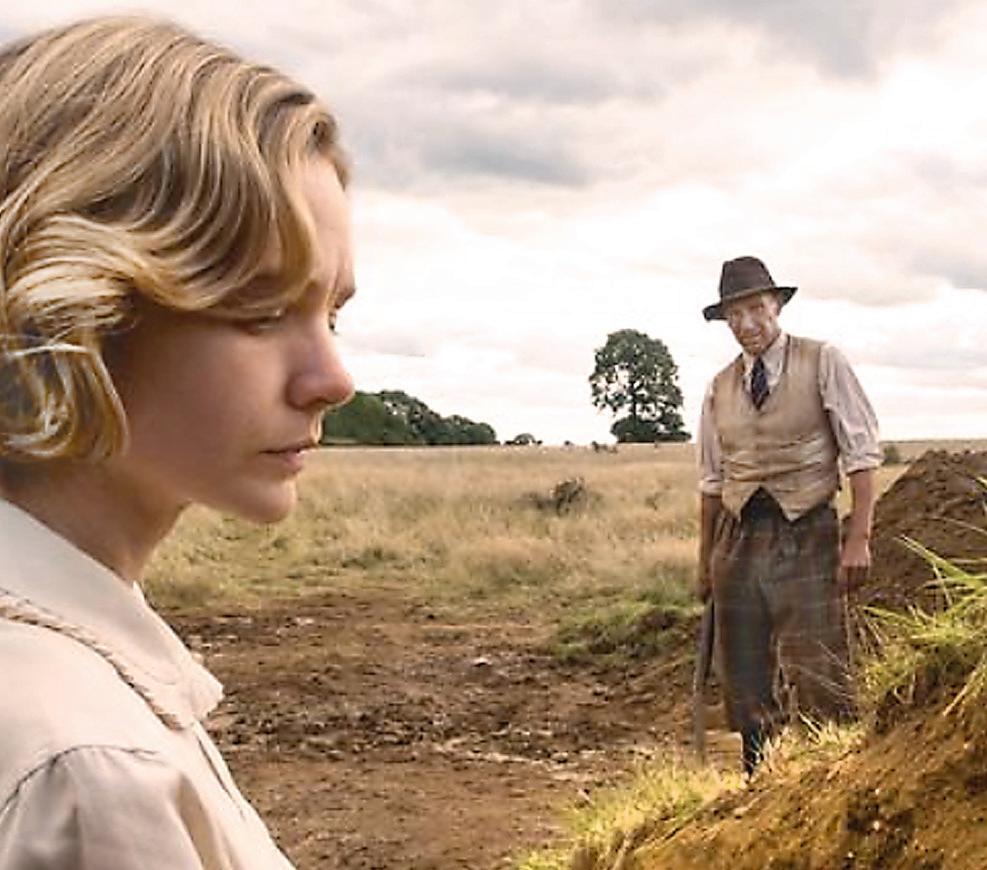
Delving deeply into both the voice of the past, present trials and thoughts of posterity, the film unravels time. Fragments of dialogue leak forward and backward into adjacent scenes, even when no one appears to be
introduced to it by the archaeology side of Twitter, which was initially full of delighted surprise that the field was getting well-received screentime beyond Indiana Jones. As the days went on, however, discussion began to grow
more nuanced as archaeologists and historians alike pondered and criticized whether the film did justice to its leading ladies, or indeed if it was as historically accurate as it purported to be. Peggy Piggott (Lily James), a young archaeologist who becomes swept up in an affair with an excavation photographer named Rory (a character who replaced two real-life, female photographers), was made younger and far less experienced than she was in actuality. The dynamic between Basil Brown and Charles Phillips is also made more confrontational than it probably ever was. Deep currents of sexism and classism troubled — and still trouble — the field of archaeology. However, making Piggott a bit dewy-eyed and retroactively turning Phillips into the villain may have been a counterproductive way to address these issues. (I would also argue that the burial artifacts were exciting enough without concocting a bit of extra romance, but I may be biased.)
Despite these flaws, the film manages to convey both the wonder of discovery and the terror of mortality; it questions the ownership of the past and stewardship of knowledge; it challenges the elitist equation of academia with intelligence. It studies the lives and emotional needs of unapologetically brilliant women in a society that left them feeling isolated. As a historical account, The Dig takes poetic license and dramatizes relationships, but as a story, it satisfies some part of the soul which searches for anything grounding, soothing and certain. The past is an unreliable mirror for the present, and yet we cannot help but reflect.
Charlotte Mandy is a junior in the College of Arts and Sciences. She can be reached at crm299@cornell.edu.
MARYAM ZAFAR ’21 Editor in Chief
JOYBEER DATTA GUPTA ’21
Business Manager
PETER BUONANNO ’21
Associate Editor
MEGHNA MAHARISHI ’22
Assistant Managing Editor
CHRISTINA BULKELEY ’21
Sports Editor
BORIS TSANG ’21
Photography Editor
CAROLINE JOHNSON ’22
News Editor
ALEX HALE ’21
News Editor
ARI DUBOW ’21
City Editor
EMMA ROSENBAUM ’22
Science Editor
BENJAMIN VELANI ’22
Dining Editor
JOHN MONKOVIC ’22
Multimedia Editor
MIKE FANG ’21
App Editor
OLIVIA WEINBERG ’22
Assistant News Editor
MADELINE ROSENBERG ’23
Assistant News Editor
LUKE PICHINI ’22
Assistant Sports Editor
HANNAH ROSENBERG ’23
Assistant Photography Editor
BRIAN LU ’23
Assistant Arts & Entertainment Editor
ANNABEL LI ’22 Assistant
JOHNATHAN STIMPSON ’21
KRYSTAL YANG ’21
HUANG ’21
NGUYEN ’22
PALLAVI KENKARE ’21
O’CONNELL ’21
Editor KATHRYN STAMM ’22
’22
PLOWE ’23
’21
’21
’22
MEGHANA SRIVASTAVA ’23
DAWSON ’21
PARKER ’22
MORAN ’21
& Entertainment Editor DOMINIC LAW ’22
Dining Editor ALICIA WANG ’21 Graphics & Sketch Editor
To the Editor:
As a Floridian who spent last semester at home due to Florida’s placement on a COVID-19 travel advisory, I feel compelled to respond to Matthew Samilow’s column, “Where do the Florida Morons Go for Their Apology?”
Part of Samilow’s defense of Gov. Ron DeSantis (R-Fla.) asserts that he’s a victim of unfair (liberal) media. Media criticism and scrutiny of DeSantis is dismissed as “hysterical”, while Samilow ignores why DeSantis’s handling of the pandemic is so unpopular in Florida.
During the pandemic, DeSantis has argued against science itself by listening to the anti-mask advice of the infamous conspiracy theorist Dr. Scott Atlas more than epidemiologists. He modeled poor leadership by appearing at public events like the Super Bowl without a mask. DeSantis’s crusade against science extended to basic arithmetic, when he argued in July that Florida’s positive case count had stabilized –– it hadn’t. He then doubled down by hiring a sports blogger as a data analyst and firing an analyst who refused to manipulate numbers.
DeSantis is indeed prioritizing wealthy, white communities for vaccine distribution, while Florida’s communities of color suffer the most.
While Samilow lauds DeSantis’s petty squabbles with journalists as vote-winning behavior for the 2024 GOP primary, the governor’s evasive pandemic briefings mislead the public, as the Sun-Sentinel confirmed. Samilow gives it away: DeSantis is more interested in running for president in 2024 than handling COVID-19. But the Governor’s incompetency in handling the vaccine rollout should temper his ambitions, and Samilow’s praise. DeSantis is indeed prioritizing wealthy, white communities for vaccine distribution, while Florida’s communities of color suffer the most. Does Samilow believe rich Florida communities deserve special access to the vaccine?
Samilow’s assertion that we Floridians “are lucky to have [DeSantis] as governor” is more laughable than a Florida Man headline. But this one would be easy to write: “Florida Governor Tried to Fist-Fight Truth and Science: Gets Beaten in 2022.”
Joseph Mullen ’24
Re: ‘School Spirit Must Be Sacrifced for Public Safety’
To the Editor:
The title of the article, “School Spirit Must Be Sacrificed for Public Safety’’ makes one major assumption about athletics at Cornell. Athletics do not equate to school spirit, in fact they represent much more than what spectators, fans and otherwise non-participatory parties see on the outside.
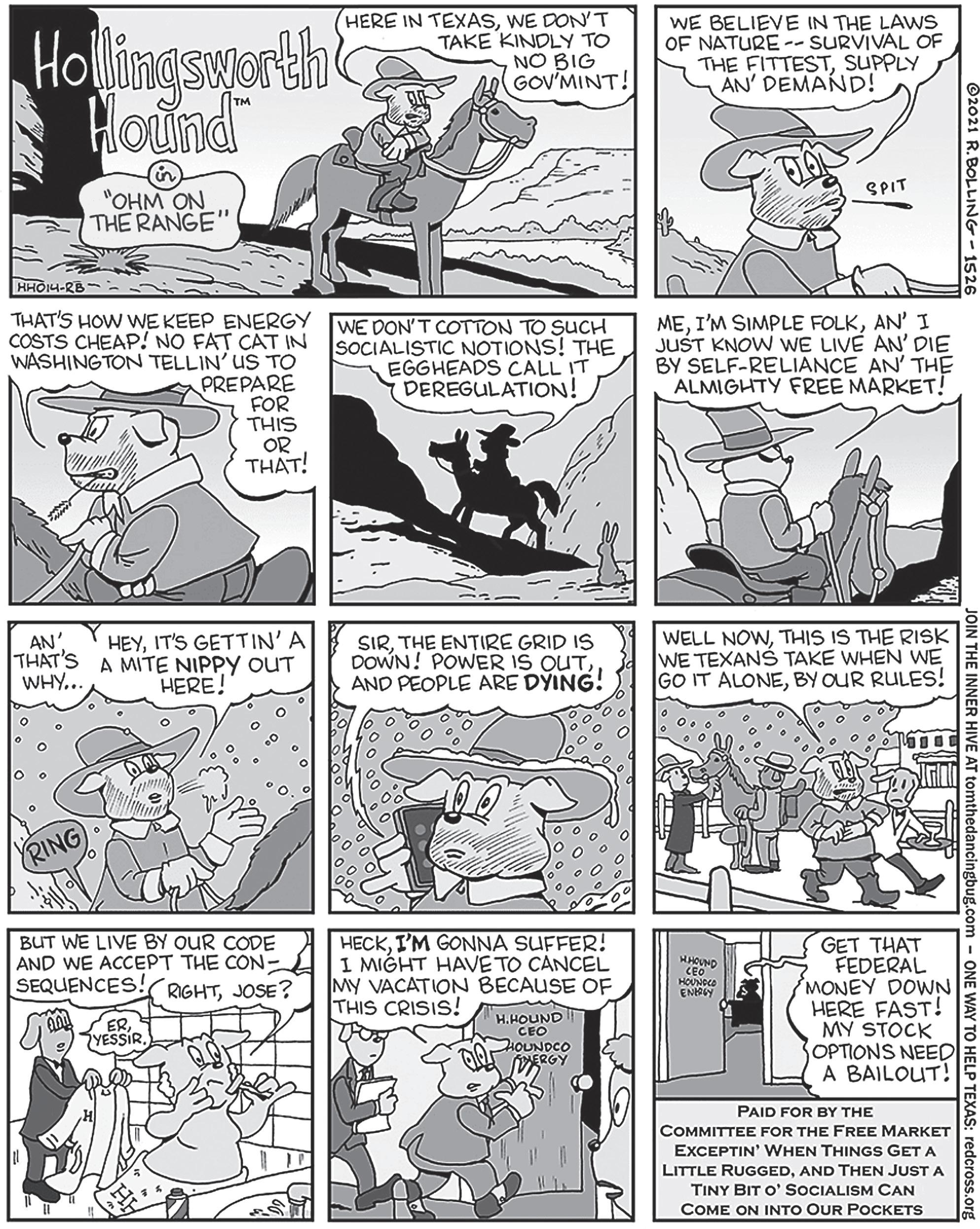
Ruben Bolling
Speaking on behalf of fellow athletes, most of us have worked hard our entire lives for an opportunity to put our abilities to the test at the highest levels of performance. Our personal journeys in athletics should not be reduced to something that is enjoyed primarily as entertainment.
With the cancellation of spring competition, the Ivy League has played with the heartstrings of athletes across the country. We do not need to hear from people, mainly non-athletes and professors, constantly chiming in on the conversation about what athletes should think about having our seasons canceled. We hear every day how we cannot access facilities, talk to coaches, train consistently and finish our careers on a high note. I encourage people to take the route of empathy and compassion in times like these, where everyone is having opportunities seized from them in favor of the greater good.
I write this not to try to reverse any decisions, for those have been long made up. But I would like non-athletes to consider this: What if you did something your whole life, something that centered you, grounded you and then had it taken away from you? Where would that leave you? For most of us athletes, it left us in a state of confusion and oftentimes despair — feelings that are not just unique to us either. I urge for a better understanding of the athletes’ perspective, for right now we have an understanding that is very limited at Cornell, and in the Ivy League in general.
Sam Oravec ’21, senior captain, track and field
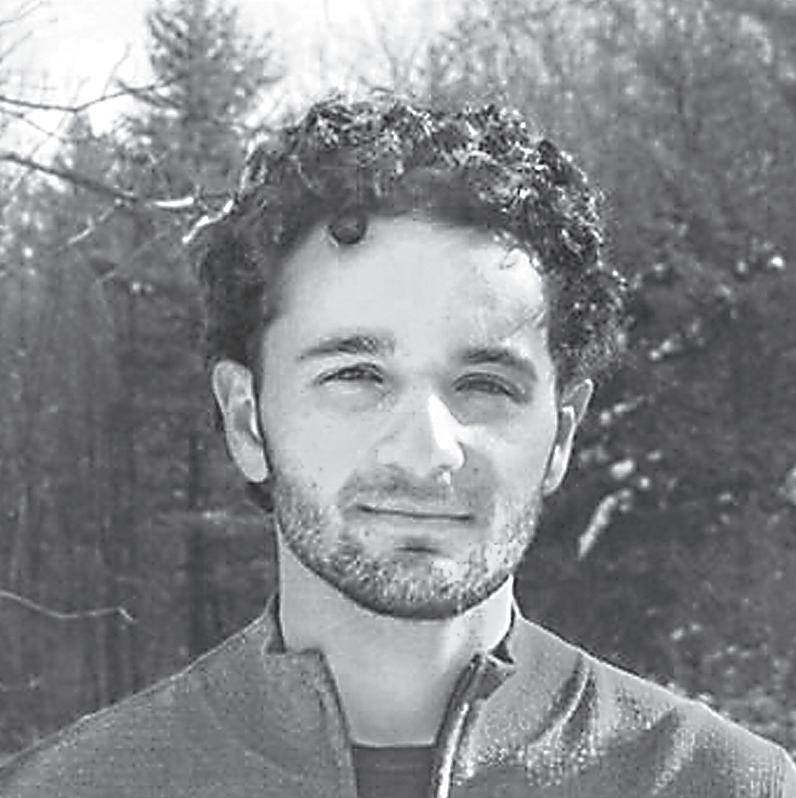
Andrew Lorenzen is a junior in the College of Arts and Sciences. He can be reached at alorenzen@cornellsun.com. When We’re Sixty Four runs every other Tuesday this semester.
There was a time when I loved to debate about politics. Whether it was making idealistic points like a low-budget Aaron Sorkin wannabe while dressed to the nines as a high school debater, casually arguing with friends while eating Louie’s well past midnight or participating in the web of countless cordial and sometimes less than cordial debates which make up Cornell’s political discourse — I loved it all. But these days, I’m not sure that I still do. And I don’t think I’m alone in that feeling.
I am still fervently dedicated to politics. Tat hasn’t changed whatsoever. I follow the news like I need it to breathe. I eagerly look forward to every government class I take and every fascinating political speaker who virtually visits the University. I still like talking about politics with my close friends. But when it comes to the debates, the arguments, the fery and occasionally vitriolic partisan clashes, I fnd myself simply exhausted.
Tose types of debates are occasionally necessary. Tat’s why I’ve started them at times, sometimes
controversially so, through my columns. Tat’s why I tend to fnd the responses to those columns far more important and thought-provoking than whatever I wrote in the frst place. I really enjoy a good, thorough critique of my ideas regardless of whether I happen to fnd myself persuaded by it or not. I believe, probably naively, in a politics in which you present your beliefs, hear those who disagree with you and then sit back and allow the public to be your judge without being concerned about getting the last word or continuously rebutting each argument, subargument and counterargument.
Yet these days I fnd myself reluctant to argue much at all. I’m not entirely certain if that’s a sign of maturation, disillusionment or good old-fashioned exhaustion. Tis is not a critique of political debate at Cornell. It’s a confession from someone who’s been involved in quite a few debates here. I fnd myself asking: Why have I grown so disinterested in arguing?
Te easy answer would be to suggest that this growing reluctance to argue is a liberal’s response to Trump being out of ofce — complacency. But this fatigue long predated President Joe Biden’s electoral victory and inauguration. Te critic’s answer would be to say that I’ve clearly realized that my political beliefs are stale and performative, that I’ve conceded the debate to those I disagree with because I can’t possibly keep up with them. My abiding stubbornness disagrees with that. As does the fact that I’ve found there’s nothing better than a good debate with great debaters itching for a fght. You learn the most when those you’re arguing are brilliant and almost completely wrong.
Or maybe, after the unrelenting turmoil of the past year, the devolution of our country into two warring camps, the collective weight we bear on our shoulders of the perpetually angry, perpetually dissatisfying Twittersphere day after day, I am just a little burnt out from arguing. And that exhaustion also emerges from privilege — it’s easy to throw up your hands and take a break when you’re a white male attending an Ivy League university. It’s easy to be a political hobbyist when your life is not at stake. When you’re under assault by a political system which is systematically
biased against you, you don’t have the same luxury. And that’s wrong.
Regardless of the answer, I’m inclined to believe that I’m not alone in this experience. If someone is as naturally drawn to a fery debate, to a polemical column as I am is exhausted by it — the average Cornellian probably is too. Tat’s not to imply that we should stop having intense debates, that we should suppress speaking out against injustice in our community and hold those around us to high standards. I’m not criticizing these debates at all. Sometimes, we truly need them. And those who start them can be doing something genuinely brave.
I’m just also saying that the exhaustion grows more palpable these days. You can feel it in the air. It washes over your phone screen in every political group chat. It colors your interactions. It paints you in a kind of perpetual low-grade frustration. And it leaves us all to wonder: How are we supposed to act in this state of political fatigue? What are we supposed to do to remain engaged when high-minded, heated debate loses its luster?
I believe we have to embrace the fatigue, embrace the exhaustion, embrace the frustration. As debate comes to feel like intellectual batting practice, we don’t have to swing at every pitch. We can engage with politics in other ways inside and outside of the Cornell community. We can advocate for legislation we believe in on the state and local level. We can work on behalf of the candidates and causes which cut through the exhaustion, the endless, circular debate straight to our ideals. We can dive into political learning and come to better understand that which drives us. Tere is no singular correct answer to this, but regardless of how we choose to react to our political exhaustion, we have to remember that it doesn’t have to breed disengagement. It can actually galvanize engagement on a deeper, more productive level.
So if you feel as I do, if you fnd yourself increasingly losing interest in following the argumentative back and forth, don’t consider yourself as growing disengaged or disinterested. Consider yourself energized in new ways by the political exhaustion.

Roei Dery is a sophomore in the College of Arts and Sciences. He can be reached at rdery@cornellsun.com. Te Dery Bar runs every other Monday this semester.
Two Google tabs remained open as I decided classes for pre-enroll last semester: the class roster and ratemyprofessors.com. At times, a class’s number of credits or time slot can take the backseat to a detailed professor review.
For those unfamiliar with the site, the typical instructor profile almost always features several near-perfect reviews towards the top. Naturally, you’ll ask yourself how these professors are receiving overall ratings of 3.5/5. The answer lies a few scrolls below, buried in the pop-up ads. These are the hunting grounds of those disenchanted students convinced the exams were unfair. Since each student can enter the grade they received in the class, I’ll leave it as an exercise for the reader to guess the average grade received by each category of reviewers.
Ratemyprofessors.com has in fact become a favorite source for the students who use it, calling into question the standards by which we evaluate our professors. Especially on this site, the evident correlation between poor grades and poor reviews is enough of a red fag to realize the true motivation behind our critiques.
Daniel Bernstein’s ’23 recent column on participation grades further underlines that our professors’ grading plays a role in how we perceive them, and even how today’s pandemic plays a role. Stress is already alarmingly high amid pandemic where many students are grasping at straws to focus on school. Our craving for “A”s now transcends the approach to school instilled in us at a young age.
We are far past the days where we can comfortably attribute classroom competitiveness to exam curves and weed-outs. Irrespective of what a published median grade may tell us about our relative footing in the class, an “A” today gives us some hope that the sacrifices we’re all making are being answered. Anything below is a slap to the face. It’s naturally become easier than ever to interpret strict grading as a lack of instructor empathy.
Even so, the ways we perceive our professors’ grading afects more than just our written feedback or personal dispositions. It dictates how we study for their exams, whether we drop their classes or if we enroll in them altogether. It’s no wonder then why professors who impose stricter grading systems are condemned to stigmas and rumors spread by discontented students –– all of which are ultimately formalized in unfattering course
We are far past the days where we can comfortably attribute classroom competitiveness to exam curves and weed-outs... It’s naturally become easier than ever to interpret strict grading as a lack of instructor empathy.
evaluations.
Whether grade infation should exist at Cornell is beside the point. Te greater malady festers in the habit of confounding grading severity with professor competence. As the University’s greatest source of instructor feedback, we too often reward professors who grant higher grades with more positive reviews. Yet in rewarding, we enable: What the University sees
After all, what’s career preparation next to an exam on Tuesday?
as “better” instructors could very well just have more generous grading scales. To think that a promotion or tenure could be accelerated by distributing higher class averages is troubling.
On the student’s side, deliberate efforts to satiate our craving for the coveted “A” can mislead us into believing we understand material that we actually don’t. In the day-to-day, when an oversharing professor reveals an exam’s emphasis or rubric, we can’t help but cater our studying to those few topics. Just as our professors’ true teaching ability is marred in the face of a poor grade, we seldom study untested material while in pursuit of scoring higher marks –– even if the knowledge would be important for our careers. After all, what’s career preparation next to an exam on Tuesday?
Perhaps this issue begs further questions regarding the ways we assign and perceive grades here at Cornell. But, in order to address that with a level head, we must frst divorce the notion that an easier grader constitutes a more compassionate professor, and that a more stringent one is heartless. Grading should not devolve into a personal game of appreciation in a time of crisis. Even if our well-established impulses force us to blend scores with achievement, for the integrity of our own education, let’s strive to not view our instructors solely in terms of their grading.

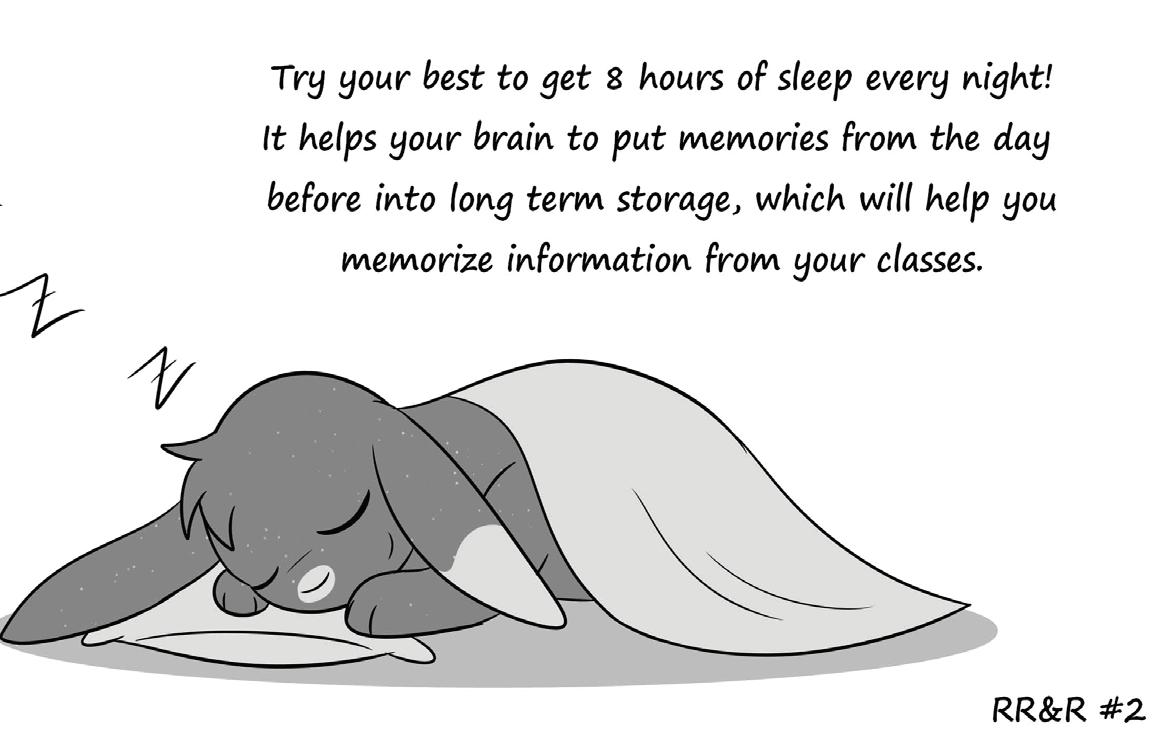
Fill in the empty cells, one number in each, so that each column, row, and region contains the numbers 1-9 exactly once. Each number in the solution therefore occurs only once in each of the three “directions,” hence the “single numbers” implied by the puzzle’s name. (Rules from wikipedia.org/wiki/ Sudoku)


By SYDNEY ORASKOVICH
Sun Senior Staff Writer
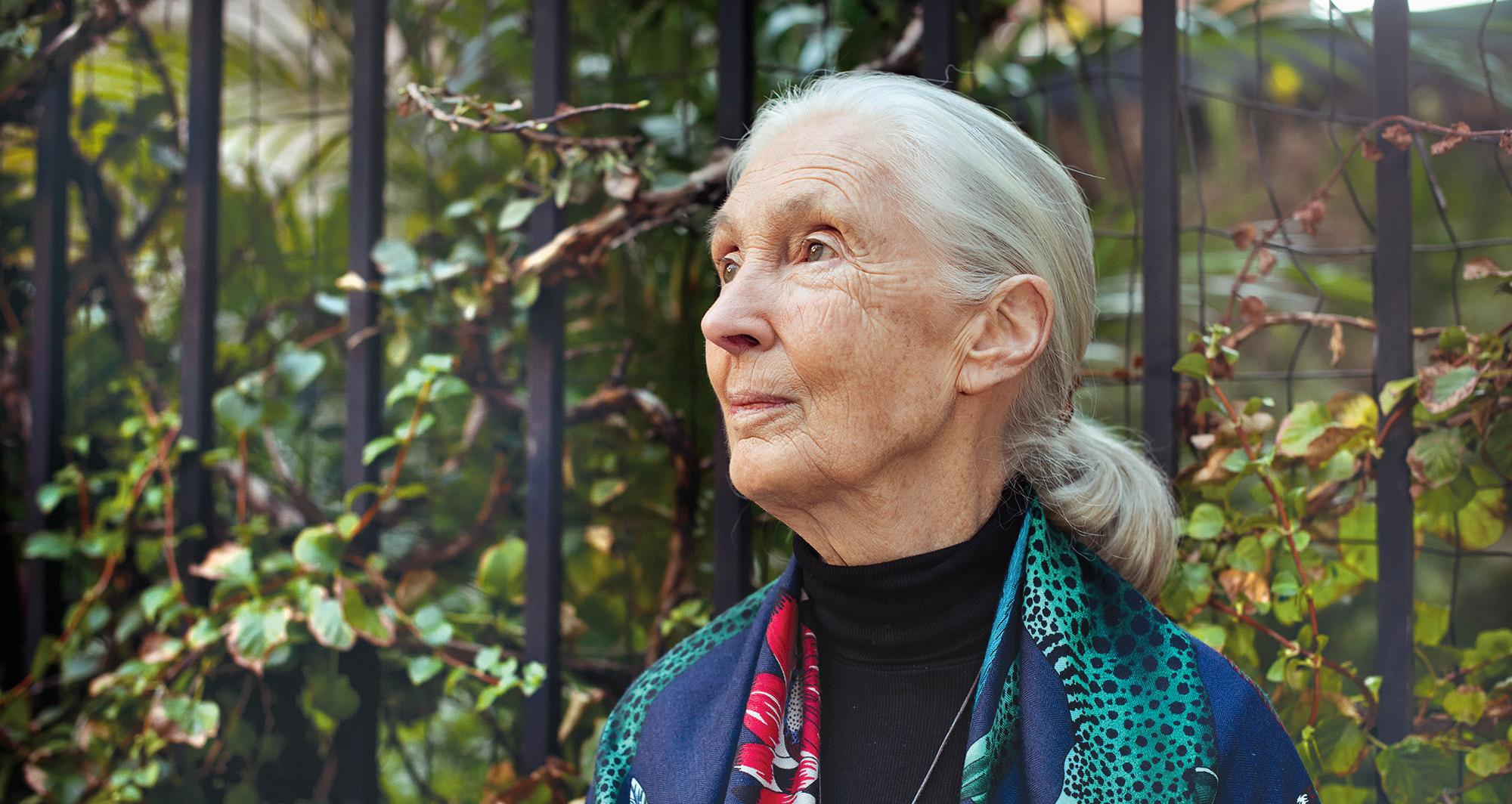
In a Feb. 23 webinar, a host of prominent environmentalists discussed how human activity led to the current pandemic and drew connections between pandemic and environmental issues.
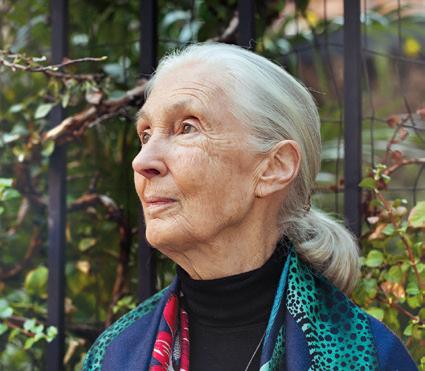
“Everything on this planet is interrelated, and we ignore that to our peril,” said naturalist Jane Goodall, the event’s keynote speaker.
Goodall is best known for her 60-year study on the social behavior of wild chimpanzees, leading to the revolutionary discovery that chimpanzees make and use tools. In the years since, Goodall has continued to advocate for an array of topics ranging from environmental conservation to human rights.
Co-hosted by the World Wildlife Fund, the College of Veterinary Medicine and the Cornell Atkinson Center for Sustainability, the webinar focused on how to prevent future pandemics by more closely examining the complex relationship between humans and the natural world.
The group emphasized that in order to fully understand this relationship, the pandemic must be contextualized outside the limited scope of human activity.
Instead of centering on human cause and effect, Prof. Steve Osofsky, veterinary medicine, explained that people should regard human health as a dynamic interplay between humans, the environment, animals and agriculture — a “One Health” approach.
The panelists explored how human expansion has spearheaded the destruction
of natural environments, forcing animals into closer contact with humans. Combined with animal trafficking, the closer contact has increased humans’ likelihood of exposure to zoonotic pathogens, or germs that spread between animals and humans.
In addition to de-emphasizing human causes of the pandemic, the speakers condemned blaming the pandemic on Wuhan, the city in China where COVID-19 originated. Though Asia is home to many wildlife markets, worldwide factory farms have the unhygienic conditions and animal crowding that heavily increase humans’ risk of exposure to zoonotic pathogens.
This mix of conditions made a pandemic inevitable, Goodall said, even one with origins outside of China.
“No wonder bacteria and viruses can spillover from an animal to a person — we made it easy for them,” Goodall said.
Goodall believed that the prevention of future pandemics begins with shifting the damaging relationship humans have with animals and the environment.
“We have absolutely disrespected the natural world and we have disrespected animals,” Goodall said. “We are part of that world — we are not separate from it.”
In order to improve humanity’s relationship with the environment and counteract the transmission of zoonotic disease, the speakers emphasized the importance of prioritizing sustainable decision-making — even at the individual level.
However, the speakers said conditions of poverty around the world pose a challenge to sustainability efforts, demonstrating the crucial need to mitigate poverty before ethi-
cal environmental decision-making can take place.
According to Goodall, one reason behind this challenge is that those struggling with poverty must prioritize the basic requirements for human survival over environmental issues.
“If you’re living in extreme poverty, what else can you do?” Goodall said. “You’re going to cut the last tree to try and make money from charcoal ... you’re going to fish the last fish to feed your family.”
The best thing individuals can do is educate each other about the environment and other animals, according to Goodall.
Individuals can control their buying habits on a daily basis to decrease carbon footprint. Goodall encouraged attendees to consider whether they really need certain products, where they came from, whether its production harmed the environment and why they are so cheap.
Thomas Friedman, moderator and New York Times columnist, concluded the seminar by stressing that people must respect humanity’s connection with the environment to build the foundation for a more sustainable world.
“If we are humble, if we respect [Mother Nature], if we are coordinated, and if we build our responses on chemistry, biology and physics — not politics, ideology, and election calendars — we can be in harmony with her,” Friedman said.
David Dayan ’24 contributed reporting.
be reached at soraskovich@cornellsun.com
By OMSALAMA AYOUB and SRISHTI TYAGI Sun Senior Staff Writers
To mitigate the disproportionate impact of COVID-19 on vulnerable communities, the Biden administration created a COVID-19 Health Equity Task Force — and recruited G. Robert “Bobby” Watts ’81, a health administrator and epidemiologist.
“I have seen that we cannot have high-quality health services or a public health response without equity,” Watts said in a press release for the National Health Care for the Homeless Council. “Quality care for some is not ‘public’ health.”
The biology and society alumnus has spent decades unraveling the health disparities that afflict the homeless. At the start of his career, Watts spent 21 years putting forth initiatives to safeguard homeless people under Medicaid in New York City at Care for the Homeless, and later transitioned to the National Health Care for the Homelessness Council.
In his newly appointed position, Watts is charged with issuing recommendations for equitable distribution of COVID-19 resources and relief funding, as well as creating effective outreach strategies to marginalized communities and investigating the drivers behind COVID-19 health disparities.
The task force comes at a critical point when people
experiencing homelessness are especially vulnerable to COVID-19 — the brutal winter cold, coupled with overcrowded shelters, limited access to warm public spaces and an increase in the number of people in need of homeless services has created conditions that increase risk of infection.
As part of the task force Watts will build on his current work as the CEO of the National Health Care for the Homeless Council, which oversees 300 federally qualified health centers — community-based health care providers in underserved areas funded by the Health Resources and Services Administration.
As NHCHC CEO, Watts monitors the development of state and local policies dedicated to the health needs of individuals experiencing homelessness.
According to Watts, the objective of the NHCHC is to serve as a hub for information regarding best practices to address homelessness and better care for that population.
“We really believe that if we are to solve the health needs of people experiencing homelessness, and if we are going to solve homelessness, we have to listen to those that are most affected by it,” Watts said in an interview for podcast The Healthcare Policy in October 2019.
To implement healthcare solutions for those experiencing homelessness, NHCHC works to provide short-term housing
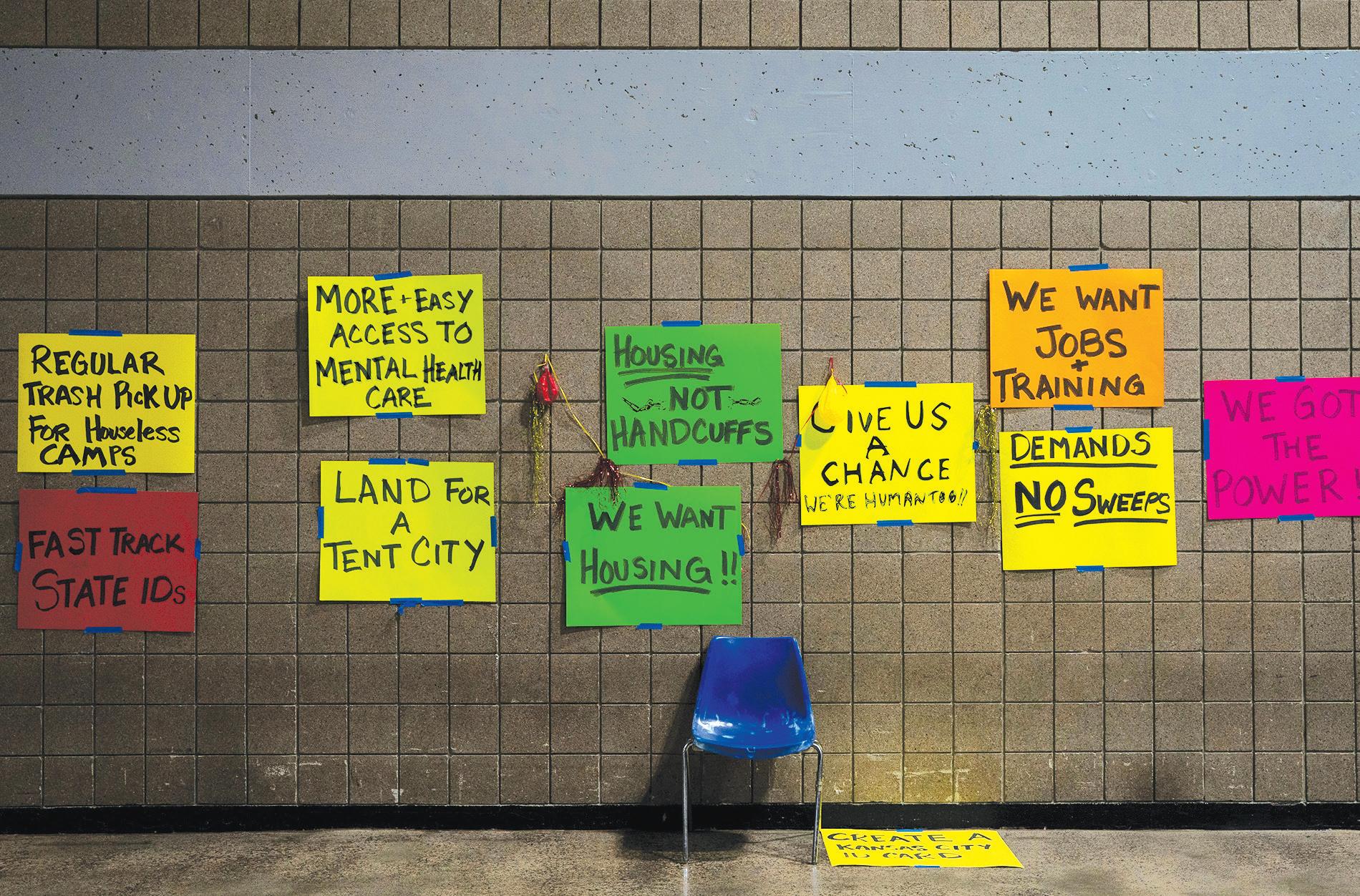
to individuals experiencing homelessness who are discharged from hospitals through the efforts of the National Institute for Medical Respite Care, an extension of the NHCHC.
According to the NHCHC, medical respite care allows those experiencing homelessness to recover from physical injury or illness in a safe environment and access medical and supportive services. Watts said people experiencing homelessness often return to the streets once they no longer have a clinical reason to be in the hospital, which
can exacerbate their health conditions.
“Medical respite is stepping in to break that cycle and give them a safe place to recover. And then hopefully, that can lead to housing,” Watts said in the podcast.
Prior to his work with the NHCHC, Watts also advised the U.S. Public Health Service’s Bureau of Primary Health Care Data Workgroup, where he gained experience in molding recommendations to serve the homeless.
Watts developed his
passion for the fight against homelessness as a member of the New York City Rescue Mission in Manhattan in 1994, the oldest shelter in the United States.
“By ensuring that vulnerable populations are served well, we make our nation’s health better for everyone,” Watts said.
Omsalama Ayoub can be reached at oayoub@cornellsun.com.
Srishti Tyagi can be reached at styagi@cornellsun.com.