The Corne¬ Daily Sun

‘It’s a billion dollar company, do they really need a tax break?’

‘It’s a billion dollar company, do they really need a tax break?’

By JOHNATHAN STIMPSON Sun Staff Writer
Much to the surprise of Cornell Tech, Amazon announced Thursday morning that it planned to pull out from New York City, citing “a number of state and local politicians [who] who made it clear that they oppose our presence and will not work with us” in a statement Thursday.
Cornell Tech’s Roosevelt Island campus is located less than 2,000 feet from the planned headquarters, which the University believed to be a factor in the company’s decision
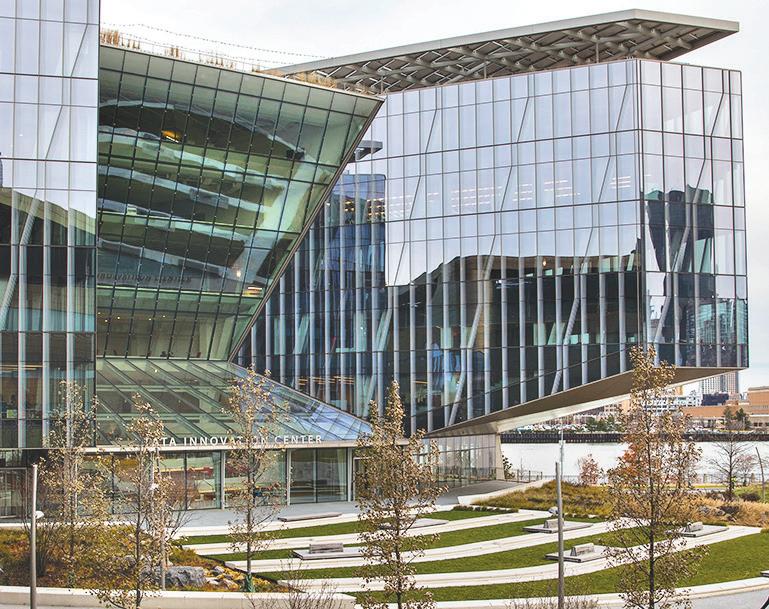
to build in Long Island City, a rapidly gentrifying Queens neighborhood.
“Although I have no insights into the Amazon board, it seems like it’s very likely that Cornell Tech is one of the reasons that [New York City] is such an attractive site,”
President Martha E. Pollack told The Sun the day after the company’s Nov. 13 announcement that it had planned to construct in New York City.
Founding dean and vice provost of Cornell Tech, Daniel P. Huttenlocher sits on Amazon’s board of directors, though Huttenlocher recused himself from Amazon’s headquarters
By MARYAM ZAFAR Sun Staff Writer
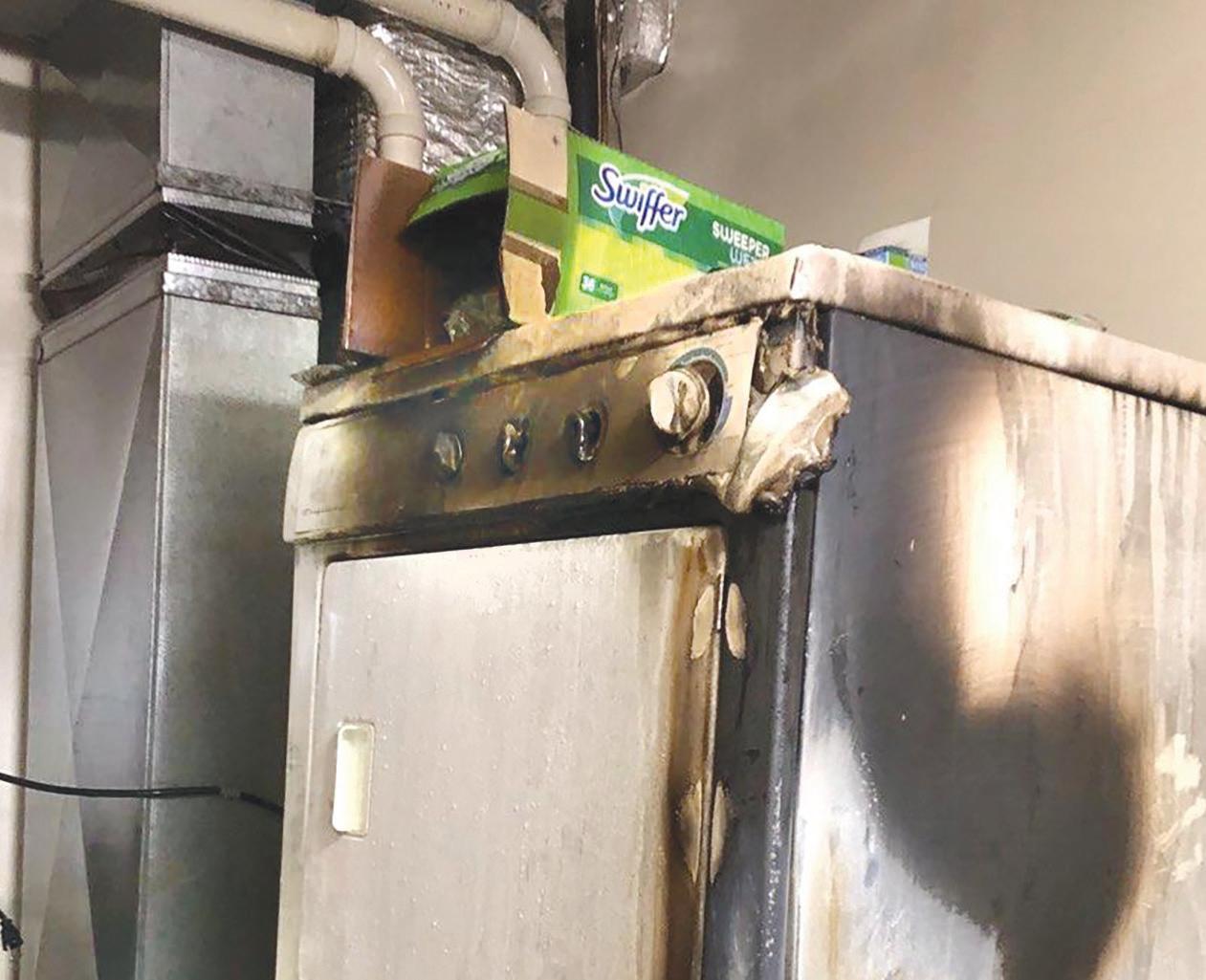
A blaze filled a Summerhill apartment laundry room Saturday afternoon after flames were sparked by a buildup of lint, according to an Ithaca Fire Department press release.
The fire torched a
stacked washer-dryer unit, charring parts of the top and side of the machine. Smoke tripped the building’s alarm system, notifying the apartment residents of the fire. The first-floor apartment emitted smoke, but the Ithaca Fire Department credit -
ed the sprinkler system for containing the flames within the laundry room. After all occupants were confirmed to be out of the building, firefighters worked for around 10 minutes to extinguish the fire and ventilate the
search, according to Pollack.
After Amazon’s initial announcement, Cornell Tech students expressed hope that proximity to the world’s largest company by market capitalization — combined with Huttenlocher’s lofty board appointment — could lead to a groundswell of further academic and industry opportunities for the newly minted campus.
“Amazon bringing 25,000 jobs to New York City will help establish [the city] as a mecca for tech development in
By LOUISE XIE Sun Staff Writer
In the hopes of fostering interdisciplinary cooperation and innovation, the new Cornell Center for Immunology will bring together faculty and researchers to continue the University’s immunological research.
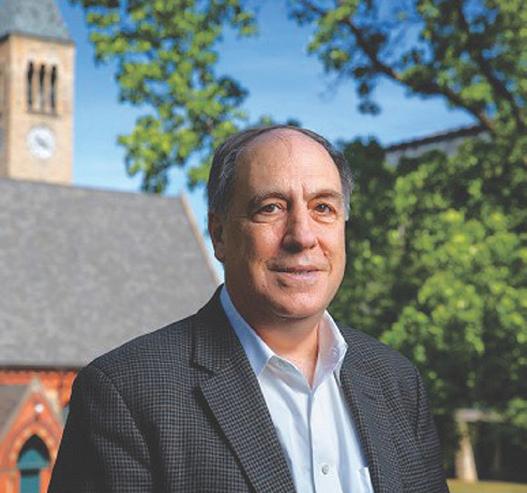
According to the University, the center will be directed by Dr. Gary Koretzky ’78, Cornell’s vice provost for academic integration and a rheumatologist, immunologist and professor at Weill Cornell Medicine. Koretzky also holds positions in the Department of Microbiology and Immunology at the College of Veterinary Medicine in Ithaca.
A “natural choice as the new center’s director,” Koretzky is internationally recognized for his research in dissecting pathways that play a critical role in immune cell development and function, Provost Michael
Kotlikoff said in a press release.
Remarking on his vision and unique objective of this center, Koretzky noted that Cornell hopes to distinguish itself by establishing a center apart from a traditional medical school facility.
A spectrum of research and studies will ultimately bring the greatest scientific advancements, and “even though this is the cliche of ‘the sum being greater than the individual parts,’ it’s really true,” Koretzky told the
“Even though this is the cliche of ‘the sum being greater than the individual parts,’ it’s really true.”
Gary Koretzky ’78
University. According to the University, the center was proposed by the Infection Biology Task Force.
As a virtual center, The Cornell Center for Immunology will integrate many broad-scale research efforts across different departments and colleges on Cornell’s campus, bolstering ties to ongoing immunological research at Weill Cornell Medicine in New York City, the University stated. Recent scientific advances in immunology that address various diseases such as cancer have garnered growing interest in this form of research and medicine, and the immunology center will
Science Studies Reading Group: Enongo LumumbaKasongo 12:15 p.m., 423 Morrill Hall
Horticulture Seminar: Lailang Cheng
12:20 - 1:10 p.m., 404 Plant Science Building
Department of Physics Colloquium
2:55 - 4:10 p.m., 233 Plant Sciences Building
Supporting Energy Democracy With Local Carbon Offsets
2:55 - 4:20 p.m., 233 Plant Science Building
Igbo Conversation Hour
3 - 4 p.m., G25 Stimson Hall
Cornell Dairy Center of Excellence Seminar Series
4 - 5 p.m., 146 Stocking Hall
Visualizing and Exploring Data with Tableau
4 - 5 p.m., 146 Stocking Hall
Chemistry Seminar
4 - 5 p.m., 119 Baker Lab
Cornell Contemporary China Initiative – Eli Friedman
4:30 - 6:30 p.m., G76 Goldwin Smith Hall
FREE! LSC Stats Tutoring
4:30 - 6:30 p.m., 417 CCC Building (Ag Quad)
Monday, February 18, 2019
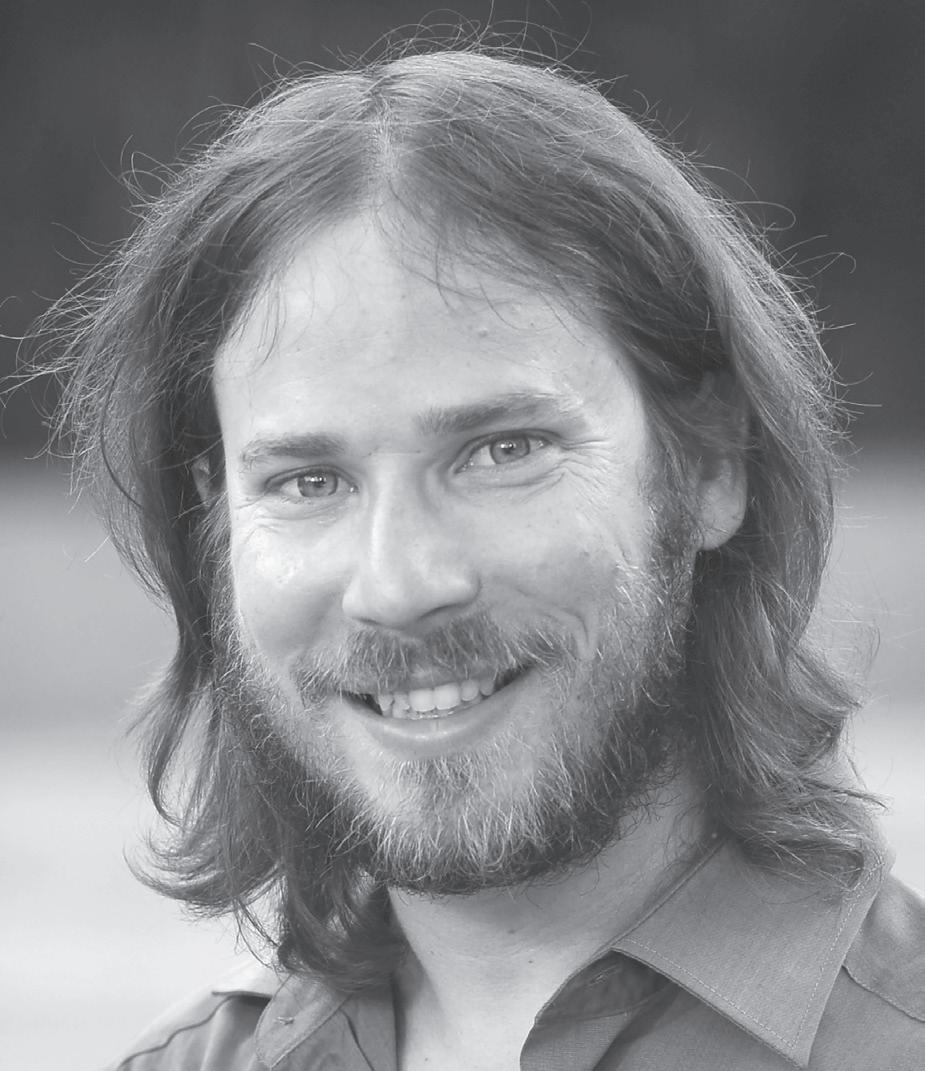
Revenue maximization | Yannai
of Hebrew University will speak on Tuesday in Rhodes Hall about computerized economic activity and markets.
GET SET Workshop: Designing Learning Outcomes
4:45 - 6 p.m., 137 Warren Hall
Free Yoga 5 - 6:15 p.m., 413 Art Gallery, Willard Straight Hall
Zach Blas: Beati Illi, Qui Est Imago-Free 5:15 p.m., Milstein Auditorium
Cornell Fluids Seminar: Monika Nitsche, Ph.D. Noon, 106 Upson Hall
Guidance on Building and Growing an IP Practice -–Whether in House or at a Law Firm 12:15. - 1:15 p.m., 390 Myron Taylor Hall
Physics Seminar: Debanjan Chowdhury 12:20 - 1:15 p.m., 700 Clark Hall
Groundcherry and Goldenberry Improvement: Ripening the Potential of Underutilized Fruit Crops 12:20 p.m., 135 Emerson Hall
AIIS 2100: Indigenous Ingenuities as Living Networks, Speaker Series with Vince Schiffert 2:55 - 4:10 p.m., 100 Caldwell Hall
ORIE Colloquium: Yannai Gonczarowski 3 p.m., 571 Rhodes Hall
Center for Reproductive Genomics Special SeminarVera Gorbunova, Ph.D. 4 - 5 p.m., T1003 Vet Research Tower
Wikipedia Editing 4:30 - 5:30 p.m., 106G Olin Library
Milstein Program Info Session 5 - 6 p.m., 3331 Tatkon Center


By OLIVIA WEINBERG Sun Staff Writer
Reggaeton pulsed through Agava last Friday night, packed with students dancing and — if they were of age — enjoying a variety of drinks. A line of students trailed 30 feet out the door, all hoping that they might be able to squeeze into the at-capacity event.
This was not a classic Wednesday Salsa Dance Night but a joint effort by the Puerto Rican Students Association and PorColombia. The event, titled “I Like It,” was designed to raise money and bring students together from all corners of campus, according to PorColombia’s co-presidents, Franco Uribe-Rheinbolt ’20 and Karen Giraldo Franco ’19, as well as PRSA’s co-presidents, Julia Pagán Andréu ’19 and Natalia Gulick de Torres ’21.
While the event was organized by two Latinx groups, the organizers wanted to make sure that the event catered to all students. “We chose a collection of music that we thought everyone would like. Seeing that everybody was dancing — it was fun to see that everyone was generally having a good time,” Giraldo Franco said.
Ward Simcox ’19 attended Friday’s festivities and told The Sun that his favorite part about the event was “the energy — everyone’s having a good time.”
Both groups have thrown fundraising parties before, but decided to collaborate in order to reach more students across campus in a “sign of solidarity,” UribeRheinbolt told The Sun.
“We’re trying to connect the Colombian and Latin communities but also bring other people together,” he said. “[PRSA is] amazing, they’re really helpful. We were able to bring some of what we have and our experience and their new ideas.”
By EMMA ROSENBAUM Sun Staff Writer
In an effort to improve schools in rural communities in New York and Ohio, the U.S. Department of Education awarded $10 million to Harvard University to launch the National Center for Rural Education Research Networks. The NCRERN will be advised by Cornell Prof. John Sipple, development sociology.
Cornell will continue its research on New York’s districts to aid in this effort and will administer programs in schools to assess college readiness, absenteeism and student participation.
Despite the fact that more than 46 million Americans live in nonmetropolitan areas, rural students and schools receive little attention in either policy or academia, Sipple said. Sipple runs the Cornell-housed New York State Center for Rural Schools.
While poverty is often associated with urban areas, rural America actually faces impoverishment at higher rates than metropolitan districts. Currently, approximately 64 percent of rural counties have high rates of child poverty, as compared to 47 percent of urban counties, according to a study published by Center for Public Education.
The money from the grant will instead be allotted to 60 rural school districts in Ohio and New York and will implement programs to increase educational access to students within the broader community. The programs will serve the 650,000 students attending rural schools within the two states.
These interventions will hopefully encourage students to explore potential colleges and career paths, consider the benefits of attending college and even identify important courses to take, according to Sipple.
Sipple said that the research will reveal “exactly how to provide incentives and motivation in instructional change” in rural areas. He hopes that this research
will “create a school environment that will motivate students to attend and take the harder courses, and for schools to offer those courses.”
The center currently increases community access to such data by “democratizing” it, according to Sipple.
“We try to take data and put it in the hands of local educators, board members, superintendents, teachers, so they can make more important decisions,” Sipple told the Sun.
Cornell partnered with Harvard last year to access these rural schools for the study, Sipple said, and Harvard will run the center for the next five years until the study’s completion. “One thing the center provides is a way to capitalize and tie together so much of the work my colleagues and I have done over the last 20 years,” Sipple said.
Eighteen different analysts will also analyze the data from all 60 districts in an effort to research the evolution of the impact, or the weekly progress made to the study.
“Over five years we will have an extraordinary amount of data that will create a constant feedback loop to the educators in these communities,” Sipple said.
Sipple will incorporate the findings into his teaching, such as data analysis and something he calls “the social and political context of schooling.”
“My classes will certainly be hearing many stories about these interventions and taking a careful look at the data,” he said.
Although Cornell plays a large role in this research, Ithaca will not participate as the district does not qualify as rural according to federal rules.
However, Sipple hopes “that [local schools] will benefit from what we learn because they do have rural students from rural communities attending their schools.”
PorColombia’s vice president for internal affairs Danny Alvarado-Gomez ’22 added that another one of the event’s goals was to “create Latino unity, which would be a good thing to foster on Cornell’s campus.”
Erika Gonzalez ’22, who was also in attendance, agreed. “[The party is] bringing together people of color and making us feel like we’re in one community, so I love it,” she said.
The groups will split the funds evenly between two charities of their choice. PRSA will give their money to Team Spark, a group of students in Puerto Rico who are raising money for the Leukemia & Lymphoma Society following the diagnosis of their friend, Diana Carolina Gonzalez Baerga, with Stage IV Hodgkin’s Lymphoma. Diana was a classmate of Pagán Andréu in high school, so this organization “hit close to home,” she said.
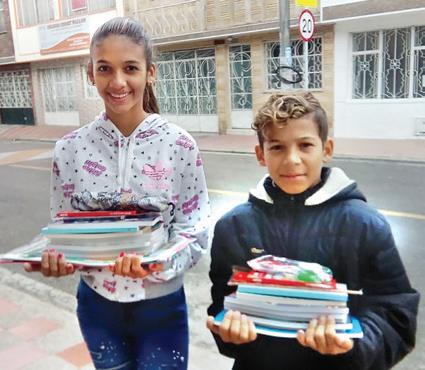
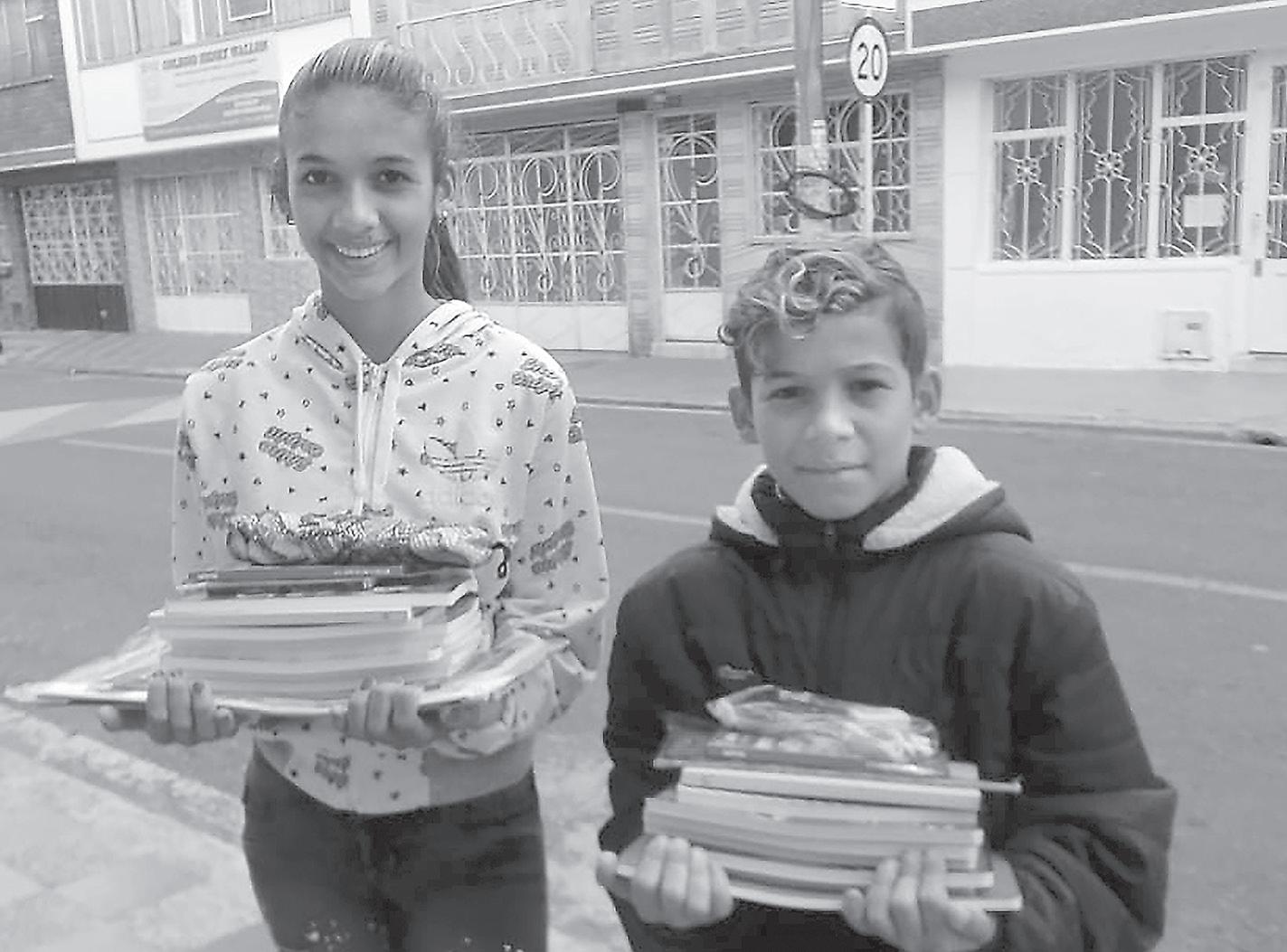
PorColombia will decide on their charity at the end of the semester. Last semester, they donated to a woman who works with Colombian and Venezuelan students in Bogota — supplying books, school supplies and groceries to more than 150 families.
The Wednesday Salsa Dance Nights at Agava inspired the groups to pick the restaurant as their venue. “They said that they have a commitment to helping out the community,” Uribe-Rheinbolt said in reference to the staff at Agava. “They were very helpful and generous to us.”
“My favorite part about the whole event was seeing the turnout — not necessarily how many people came, but that people seemed to be having fun,” Giraldo Franco said.
By MICHAEL OVERMEER Sun Staff Writer
Cornell students and faculty are working to develop the unused plots of land on West Campus, making headway on West Campus’ efforts to expand living and learning amongst Cornell’s residences.
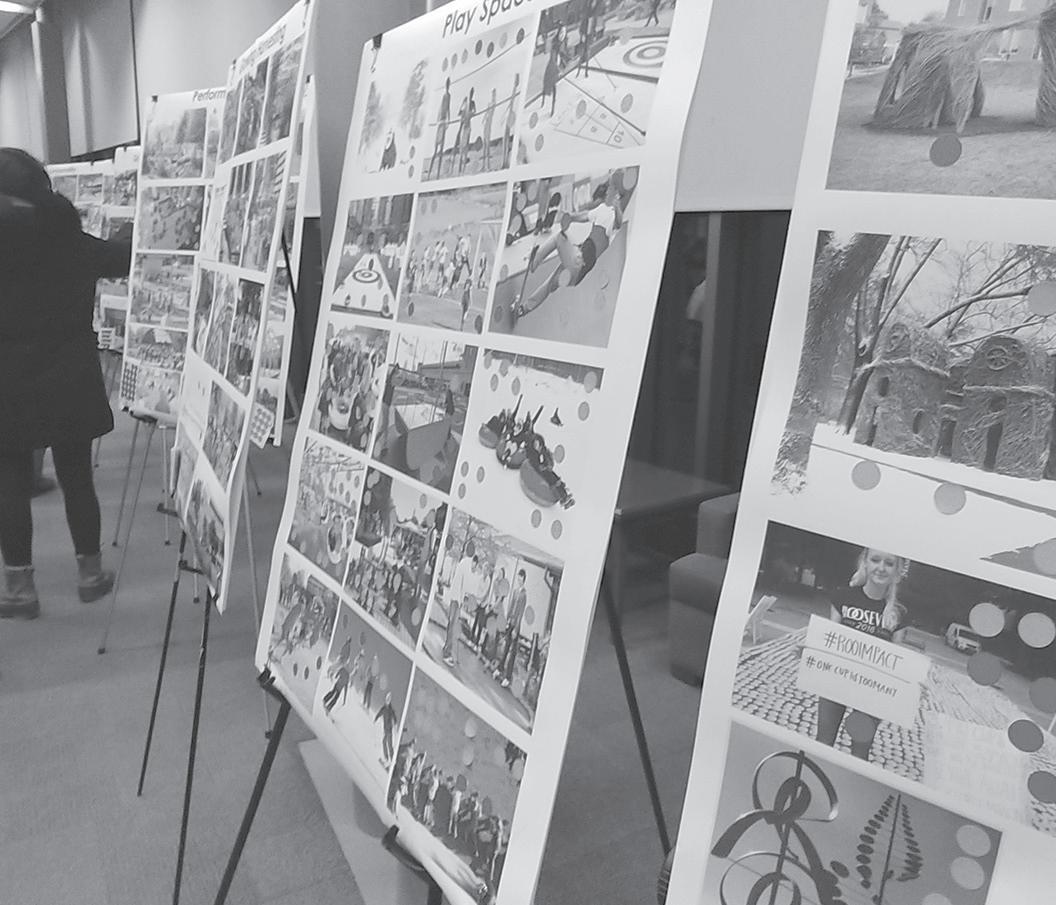
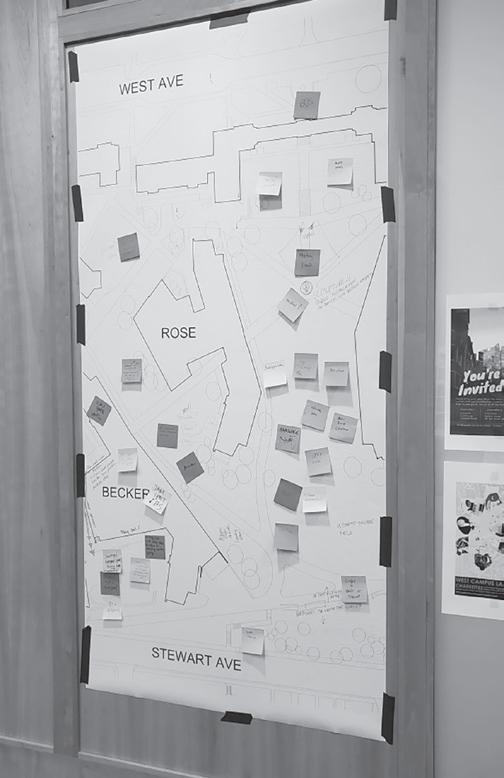
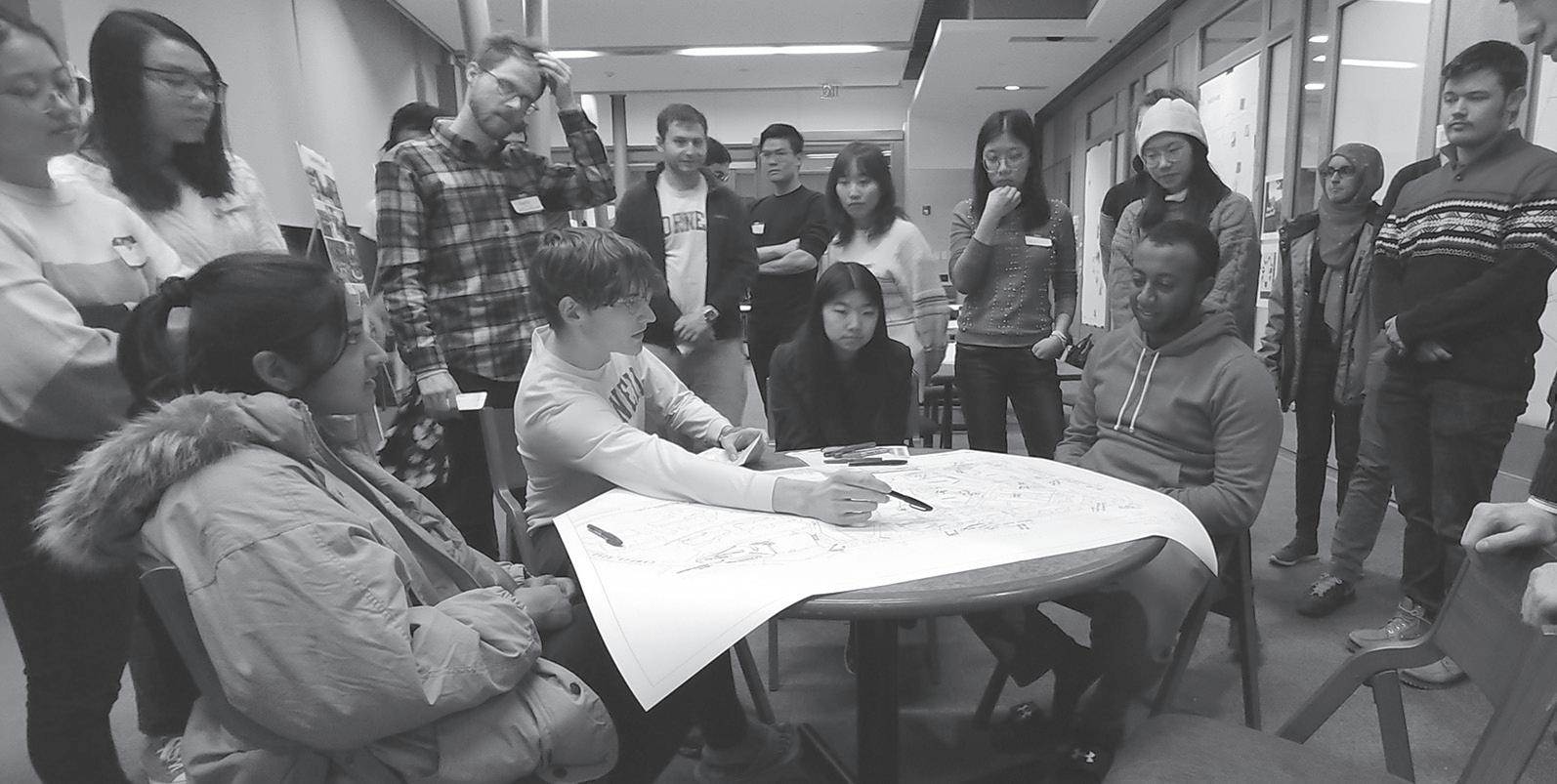
Roughly 150 Cook and Becker House residents gathered in the Cook common room last Wednesday to discuss West 6.0, an initiative that has taken form this semester to develop the spaces between the five West Campus houses.
While there is no concrete timeline for the project, there have been three sessions to explore ways to make use of the underutilized patches of green.
“It’s an experiment in faculty-led, liv-
ing, learning residential communities to take that learning mission and to expand it beyond just thinking about it as the ability to get a job, the ability to get a degree, but to really think about learning as life long that is imbedded in us,” Prof. Neema Kudva, city and regional planning, told The Sun.
The initiative derives its name from the five houses on West Campus, with the “6.0” stemming from the spaces between the houses on West.
According to Kudva, who also serves as the Becker House Dean, the goal of the initiative is to expand West Campus as a living space to incorporate the outdoors.
The project was launched after the five House Professor Deans See WEST 6.0 page 5


TECH
Continued from page 1
the future, and the more people are attracted to the area, the more entrepreneurial it will be,” Sarah Le Cam ’16 M.Eng ’18 told The Sun in November.
After the project was pulled Thursday, Le Cam reflected that while the tech scene would have been bolstered by Amazon’s presence, there were also trade-offs that called the project into question.
“There’s definitely a balance of yes, it would have been great for the tech scene, but it also could have been bad for the general cost of living and quality of life,” Le Cam said. “There’s … an understanding of the Democratic views of ‘it was a big tax break, it’s a billion dollar company, do they really need a tax break?’”
Amazon is currently a partner company in Cornell Tech’s Product Studio — a course in which students are paired with a company and required to respond to the challenges the company posed with new products or strategies — Le Cam said, and that Amazon’s affiliation with the program will continue for the time being.
Michele Hoos, a Cornell Tech spokesperson, said that Cornell Tech declined to comment on what implications Amazon’s withdrawal might have for the school.
Much of the public outrage centered on New York’s decision to lure Amazon, which reported over $10 billion in profits last year, with a generous set of tax breaks — galvanizing debate as to whether a company of its size
should ever receive public concessions.
In private negotiations leading up to the initial headquarters announcement, city and state officials secured an incentive package — the fourth largest ever — that would offer the company up to $3 billion in tax abatements, grants and subsidies, according to the Wall Street Journal.
In exchange, Amazon promised to bring in at least 25,000 new jobs averaging $150,00 in salary over the next 25 years.
That deal — called “vulture, monopolistic capitalism at its worst” by City Council Speaker Corey Johnson (D-N.Y.) in a January hearing — almost immediately sparked the ire of some local protestors and politicians, who worried the arrival of Amazon would exacerbate the city’s deepening affordability crisis.
celebrated the tech giant’s retreat. “Anything is possible: today was the day a group of dedicated, everyday New Yorkers and their neighbors defeated Amazon’s corporate greed, its worker exploitation, and the power of the richest man in the world,” the freshman Congresswoman tweeted last Thursday.
Tompkins County’s representative, Tom Reed (R-NY), also opposed the build, telling Fox News that “what we should be doing is improving the business climate for all of New York and stand with our existing businesses and our existing residents first and foremost.” A number of Cornell undergraduates struck a similar tune in the wake of Amazon’s sudden departure.
“Offering massive corporate welfare from scarce public resources to one of the wealthiest corporations in the world at a time of great need in our state is just wrong.”
Sen. Michael Gianaris
“Offering massive corporate welfare from scarce public resources to one of the wealthiest corporations in the world at a time of great need in our state is just wrong,” New York State Sen. Michael Gianaris (D-N.Y.) said in a statement.
Rep. Alexandria Ocasio-Cortez (D-N.Y.), whose district borders the planned site and has been one of Amazon’s most vocal critics,
IMMUNOLOGY
Continued from page 1
“take advantage of the Ithaca campus’s unique strengths, such as fundamental science research, single-cell and comparative species analyses, biomedical engineering and advanced imaging,” the University stated. The center also aims to work in conjunction with faculty and researchers at Weill Cornell Medicine and those from the Colleges of Arts and Sciences, Agriculture and Life Sciences, Human Ecology, Engineering and Veterinary Medicine.
This will use Cornell’s “great strengths in the biology of immune cells, genetic/genomic determinants of immune mechanisms, vaccine development and comparative immunology. These strengths exist in multiple departments and colleges, but have not been brought together on campus and have not leveraged the strengths of our colleagues at Weill Cornell Medicine,” Kotlikoff told the University.
Louise Xie can be reached at lxie@cornellsun.com.
WEST 6.0
Continued from page 3
met last semester to explore the idea of developing “a sense of place within the greater community,”
To jumpstart the initiative, two courses were introduced to open up a dialogue and to begin collecting ideas.
The first, LA 2020: Sophomore
“Our hope is that this space becomes one of experimentation.”
Prof. Neema Kudva
Landscaping Architecture Studio, taught by Prof. Mitch Glass, landscape architecture and city and regional planning, focuses on West Campus’ unique position as an integral, yet separate location within the broader Cornell Campus.
The second, CRP 3899: 103 Leave Your Mark on West! allows students
from different disciplines to “bring to life” the spaces between each house.
A one credit course, this class will be taught by August Faller grad.
“We use our community and our physical campus as a space for learning,” Kudva told The Sun.
Over the next month, sessions on design will be held, the first was held last Wednesday — activities ranging from identifying spaces on West for relaxing, being together or being inspired.
The second will be on Feb. 20, and the third on March 1.
Each meeting will be led by Glass and his students, who will curate West to be a place of play, commemoration, wellness, art and performance through projects that may include a meditation maze, a “dead” space (where phones will have no signal) and art.
“Our hope is that this space becomes one of experimentation.” Kudva said. “We want it to be an organic process.”
Michael Overmeer can be reached at movermeer@cornellsun.com.
“I felt joy for the marginalized communities of New York City threatened by Amazon, amazement at the power of grassroots organizing and confident in the raw strength of New Yorkers,” Daniel Bromberg ’20, a Brooklyn native, told The Sun.
Katayrna Restrepo ’21 similarly celebrated the company’s withdrawal as “a major win for local grassroots organizing,” saying “the next fight concerning Amazon would be to fight the prospect of the headquarters moving to another area as Bezos has no intention of
leaving this project.”
“Why are we picking one business over another? Why don’t we let all the boats rise from an economy in New York that is based on lower taxes, freer regulations,” Reed said in an interview with Fox News. “Rather than what we see right now, which is the old school politics of picking winners and losers.
But despite the high-profile backlash, a broad majority of New York City residents approved of the Seattle-based company’s expansion, with support strongest among Hispanic and black respondents, according to a recent Siena College poll.
And backers of the now-dead deal argued that revenue generated from the addition of 25,000 skilled workers would have significantly outweighed the cost of government subsidies. A state report asserted that Amazon would generate $27.5 billion in state and city revenue over 25 years — over nine times greater than the $3 billion promised in tax breaks.
“Bringing Amazon to New York diversified our economy away from real estate and Wall Street, further cementing our status as an emerging center for tech,” Gov. Andrew Cuomo (D-N.Y.), a staunch Amazon supporter, said in a statement. “However, a small group politicians put their own narrow political interests above their community — which poll after poll showed overwhelmingly supported bringing Amazon to Long Island City.”
Johnathan Stimpson can be reached at jstimpson@cornellsun.com
Flames were sparked by a buildup of lint
FIRE
Continued from page 1
smoke. The crews then worked to shut off the sprinkler, remove the water and investigate the cause of the fire.
Officials attributed the source of the fire to lint that had accumulated in a machine’s lint trap, and cautioned residents to diligently clean their lint traps and surrounding areas to avoid similar outcomes.
The Summerhill townhouses — located about a mile off-campus — are “newly remodeled,” according to their website. The fire department lauded the working sprinkler and alarm systems for containing the situation. Ithaca codes requires dwellings to have working fire alarms near bedrooms and operational sprinkler systems.
Maryam Zafar can be reached at mzafar@cornellsun.com.

BY ASHLEY DAVILA & DANIEL MORAN Sun Staff Writers
Best: The Row
Mary-Kate and Ashley Olsen’s label begins its 13th year with its Fall 2019 readyto-wear show, which featured inspired looks. The pieces included tailored lines and stunning outerwear with covetable, structured camel coats. In addition to the elegant tailored coats, the Olsen’s designed minimalist dresses that struck the hard balance of being tailored in the waist while featuring more flared edges.
One important aspect of this show is that it comes on the heels of a much discussed vacuum of female-led design houses. After designer Phoebe Philo left Céline and Hedi Slimane took over, it became Celine sans accent, and Silmane began producing extremely similar looks to one’s he created while at Saint Laurent. Imagine moody grunge try hards then add some black and white ads and throw in some sequin minis for good measure — albeit with great tailoring. A female-led, minimalist house designing well-constructed, wearable items that women want to wear. This RTW lineup allowed The Row to continue to ensure its place as a top designer and fill the gap that Philo left with her departure.
Worst: Coach 1941
Attempting to be relevant in the fashion industry is never a recipe for a memorable collection. Coach 1941 seemed to chase every trend (animal prints, fringe, logos) and failed to strike a unique cohesive image. The show this year bought into the logomania trend with a coach “C” embossed on a cheetah-esque print coat; but it did not come off as elegant nor stand out as some of the other logo heavy brands such as Gucci or Balenciaga.
Some of the geometric shapes featured on the coats were unique and seemed to show some promise for the brand. Coach 1941 Fall 2019 was an attempt to pivot to a more edgy look for the brand, but some of the attempts came off as inauthentic; maybe in the next few seasons Coach 1941 will be able
to create a brand that sets trends rather than chases them.
Surprise Favorite: Maryam Nassir Zadeh
One of the best of NYFW shows was from was Iranian born and Lower East Side fixture Maryam Nassir Zadeh’s ready to wear Fall 2019 collection. Zadeh’s designs were colorful and featured tie-dye and ruffles, creating a playful yet sophisticated vibe; though some of the looks were more fanciful, they were paired thoughtfully and featured well-constructed clothes. Zadeh’s show was very inclusive and highlighted models of all races and sizes. Besides mixing patterns and colors in suits and dresses, the accessories were sublime, including a zebra belt bag to elevate any fall outfit. One of Zadeh’s calling cards is her ability to consistently designs some of the best shoes from wearable, stunning block heels to the F2019 RTW zebra boots. This was one of the best shows of the week and underscored why this designer has long been worn, loved and talked about by both fashion editors and the downtown fashion crowd.
Wildcard: Telfar
Queens native Telfar Clemens debuted his 2019 Fall/Winter line by scrapping the runway altogether, instead choosing to stage a rock concert that featured artists such as Dev Hynes and Ian Isiah and stayed core to this idea, right down to having his models crowdsurf rather than walk a runway.
It’s evident that the fashion industry doesn’t always know how to react to Telfar, who is a black, queer, self-taught designer, and this show is no different. Serving up Budweiser and White Castle sliders at one of fashion’s most prestigious events also further pulled Telfar away from industry norms.
The clothes themselves were as unique as their designer, including Telfar’s signature thigh cuts on denim and jackets with detachable sleeves, creating Telfar’s take on an all American “country men” aesthetic.
Biggest Streetwear Moment: Kith x Versace
To say the collaboration between Kith and Versace dominated the discussion around

streetwear at New York Fashion Week would be an understatement. Kith designer Ronnie Fieg coordinated the rollout, choosing to have the collection partner with some of his favorite New York establishments such as Dean and Deluca and Sadelle’s to give the collecction its own New York lens.
The clothes themselves were decent but underwhelming. Kith x Versace is an example of two brands coming together to create something unique and interesting but still failing to maximize its potential. For a readyto-wear collection, it’s difficult to see where any of these clothes could be worn without looking like you were locked in Quavo’s closet in 2012 and forced to fight your way out. None of the pieces hold up well on their own apart from some of the most basic items, such as the denim jacket. This collection marks the first time in Versace’s history that its Medusa logo was changed, which would make all of these items instant grails if they were better.
The womenswear collection was significantly better, as Versace’s signature loud prints carry over significantly better. The white crewneck with Versace’s signatre piping around the sleeve cuffs is the standout piece, showing once again that the simplest items are the best, although the print silk robe is fantastic as well.
The pricing of this collection was one of its biggest misses. The collection is priced at Versace levels, ranging from $325 for a hat to $3,995 for a camel hair topcoat. Considering how the collection feels like Versace entering Kith’s world, this pricing model should be closer to Kith’s more reasonable prices.
Ashley Davila is a senior in the School of Industrial and Labor Relations. She can be reached at amd395@cornell.edu. Daniel Moran is a sophomore in the College of Human Ecology. He can be reached at dmoran@cornellsun.com.
BY VARUN BIDDANDA Sun Staff Writer
From the practical demands of local climates to the expressive capacities that they wield, it is no secret that, at some level, textiles realize an integral part of daily life. Past their material presence, it is also interesting to note how the metaphorical extensions of cloth serve as a mapping of our lived experiences — the fabric of our society, weaving in and out of a city, etc. The material and conceptual importance of textiles are, of course, intimately interconnected, but perhaps these intersections are most readily apparent in the journeys that these textiles underwent and the routes that they etched across space and time.
Traded Treasure: Indian Textiles for Global Markets is an
exhibition detailing the importance of Indian textiles in global trade and its history. Held at the Johnson Museum of Art in the Bartels Gallery (Floor 1L), the examples of the exhibition draw from the collection of Banoo and Jeevak Chopra. In particular, textiles played an important role in trade between India and Southeast Asia, where fabrics from the Coromandel Coast — in the southwest of India — would be exchanged for spices. Some of the most stunning textiles from this exchange were given as gifts to royalty. In addition, many of these types of objects could also have been given as royal gifts to temples, where they would have been used as ornamental items such as altar cloths. A beautiful fragment of a pha nung skirt exhibits thepanom — a type of deity or angel in Thai mythology
— surrounding fierce kirtimukha monsters. While religious iconography in South and Southeast Asia is most strongly associated with the surviving carvings on temples, textiles demonstrated a mobile network of spiritual and visual imaginations. In this way the exchange of textiles revealed and reified an intimate understanding of underlying political and social structures — a fact made more impressive by the geographical separation between sites of production and markets. However, this trade was by no means limited to Southeast Asia. On the other side of India, in what is now Goa, the Portuguese had a small but influential presence. The style of dress for elites in Portugal derived largely from the customs of the Spanish court. However, the tropical climate of Goa was unsuitable to the heavy velvets
brought over by the Portuguese. In order to maintain the hierarchies of the old country, the Portuguese royalty of Goa commissioned renowned weavers of to create textiles using local fabrics. These light textiles would then be embroidered with designs keeping with Portuguese aristocratic traditions. On a fragment of a royal cape of local cotton fabric is a stunning example of tasar silk embroidery detailing a scene of hunters on horseback as well as those on elephants. Thus, even the aesthetic demands of the Portuguese royals were not impermeable to the influences of local traditions.
Perhaps the most moving aspect of the exhibition lies in understanding how much truly went into the production of these fabrics. Entire villages and generations of families had dedicated
themselves to this laborious enterprise, specializing in weaving techniques of stunning detail requiring hours upon hours of handiwork. Thus, to understand the trade of these fabrics does not just implicate a linear trajectory of production and consumption; rather, it is the hours and days of the lives of the artists who produced them combined with the collective imaginations and desires of the various markets of sale — and the miraculous interweaving of all of these narratives across geographic and historical space.
Traded Treasure: Indian textiles for Global Markets is open until June 9th.
Varun Biddanda is a senior in the College of Arts and Sciences. He can be reached at vdb22@cornell.edu.
On a free admission day at the Guggenheim, museum-goers were caught unaware when showers of mock prescription pamphlets were scattered across the white spiral atrium from the upper floors of the museum. The pamphlets were part of a larger initiative by artist Nan Goldin’s activist group on drug policy, PAIN (Prescription Addiction Intervention Now). The intervention was followed by a die-in on the atrium floor as well as a march down Fifth Avenue’s Museum Mile to the Metropolitan Museum, where a public protest had been organized.
The protest, held on Feb. 9, was organized in retaliation of the Sackler Family, the owners of opioid-manufacturers Purdue Pharma. The Sackler Family has long had a legacy in the art world and is linked to art institutions such as the Guggenheim and the Met through donations and naming rights.
The leaflets that were scattered depicted an incriminating email exchange between Robert Kaiko, the developer of OxyContin, and Richard Sackler. In these emails, Sackler acknowledges the addictive nature of OxyContin and the dangers of abuse as an opportunity for higher drug sales. The opioid crisis, an epidemic that according to the Center for Disease Control took 45,000 lives in 2017, has provided a new lens through which to view the underlying power structures of the pharmaceutical industry, and by association, the art world and its institutions.

Cultural Capital of America for excluding black artists and the Harlem community and propagating racism and anti-Semitism through the exhibit. Adjacent to this protest, the Art Workers Coalition staged protests from 1969 to 1971 to demand free admission to all on weekends, increased visibility for women and Latino artists and benefits for artists and art workers as cultural laborers.
It is clear that change is slow, as many of these problems with regards to representation, labor and discrimination are still being addressed today. In a Trumpian society, art museums have had to pick a side, to politicize or face becoming culturally irrelevant or worse, accidentally aligning with an administration and ideology that has repeatedly undermined the cultural value of art. Whether this trend is performative or not, it is undeniable that protest and its relationship with museums has created a mutually beneficial space for dialogue and progress in the reimagination of the museum. In this case, progress is tangible, with the Museum of Modern Art’s upcoming renovations to reformat gallery space to focus attention on works by marginalized and overlooked artists and the joint rejection of Saudi funding for programming by the Brooklyn Museum and the Met in the wake of Jamal Khashoggi’s execution.
BY ANNA P. KAMBHAMPATY Sun Opinion Columnist
I had the pleasure of sauntering through a certain woodsy part of campus with architecture student Greg Keller ’19, who you may know from his ceaseless Instagram posts of eclectic scenes from his everyday life or just his overall friendly presence on campus.
“It’s still here! Intact!” Greg exclaimed at me, as we ducked under the cadaverous hands of tree branches freshly free from the melting snow. I was happy Greg had told me to switch into boots before we sludged through the mud that the dead February grass secretly concealed. We were just a few feet off from the trail at this point, and I could see vague semblances of something living upon the otherwise completely dead scene. I’m serious, dead leaves, dead grass, dead trees reaching for us. Think any Tim Burton movie. Literally, everything was suggestive of death, except for what I could now make out as a line of clearly meticulously arranged concrete blocks.
Upon the dead, a very living work of art stood.
In an interview with Hyperallergic, Nan Goldin, who founded PAIN while recovering from an OxyContin addiction, explained the protest as a reaction to the dark and evil motivations of the Sackler Family and the inaction of museums against it, “We came to the museums a year ago. We came to the Met and did an action. We asked that they take down [the Sackler family’s] name. We asked they refuse to future funding — There has been no response.”
Good art is political. As long as it remains political, museums will be sites of contention.
This demonstration is part of an increasing trend of protest at museums that ranges from demands for divestment from corporations and board members, to the unionization of museum workers, to demands for increased diversity in the artists represented by museums. Museums for their part, have also embraced the culture of protest, staging exhibitions on resistance such as the Whitney’s Incomplete History of Protest and the Brooklyn Museum’s Soul of a Nation: Art in the Age of Black Power. This has underscored the fraught and often contradictory roles- that of public forum, cultural bellwether and art institution, that the museum hold. One result of this was a meta protest of an exhibition on protest at the Design Museum in London in 2018, where artists featured in the exhibition removed their works in retaliation to the museum’s decision to rent out space to Leonardo, one of the largest aerospace and defense companies.
Protest, however, is not new to museums. In 1969, the Black Emergency Cultural Coalition protested the Met’s exhibition Harlem on My Mind:
Good art is political. As long as it remains political, museums will be sites of contention. Art activism movements similar to Nan Goldin’s PAIN such as Decolonize This Place, Occupy Museums and the Guerrilla Girls, who are credited for much of the organized resistance against museums, exist in order to force these institutions to reevaluate their ethical philosophies and relationship to art. I argue that these movements don’t necessarily want to abolish the museum as an institution, but rather have identified them as sites for potential, as a public good that should be held to higher standards.
In an interview with Artnet, Anne Pasternak, the director of the Brooklyn Museum, cites the need for museums to “lean in to controversy.”
In this framework, protest acts as a tool for participation, one that allows for the negotiation of controversy with hopes on both sides for a better museum and a better community.
Museums provide us with the space to center ourselves, to feel like we are a part of something, to learn something new about ourselves or someone else. Although the museums I reference in this column are iconic for making fine art accessible to the public, they are also large cultural institutions that wield immense power. It is because of this power dynamic, that self-aware museums ought to embrace protest. The beauty of art and thus art museums lies not in a shared value system but in the ability for various value systems to coexist.
Isabel Ling is a senior in the College of Art, Architecture and Planning. She can be reached at igl3@cornell.edu. Linguistics runs alternate Mondays this semester.
“River” is a sculpture that Greg worked on throughout the summer of 2018. Ankle height, the work is composed of concrete blocks, arranged to directly model the section of the Rio Grande that’s at the US-Mexico border at Brownsville, Texas and Heroica Matamoros, Tamaulipas. Precise and detail-oriented, Greg included 30-inch breaks or “doors” in the sculpture, to represent places where a bridge was built over the real life river. Originally installed in an indoor gallery setting, the sculpture is meant to raise questions about the natural boundaries rivers create between cultures and redefine what may be considered a wall. While it was in the gallery, “River” became an architectural feature people were forced to engage with while meandering through the art, creating moments of questioning orientation and navigation. In short, “River” successfully forces a visitor to examine more closely the deeper meaning behind phrases like “west of the Mississippi.”
“This was my first time really being in fear of a piece of mine being completely misinterpreted,” Greg told me in an interview. “I worried people would think ‘oh, he built the wall,’ that it’s about a border issue in a fearful way. That’s not at all what this is meant to be about, and even if that is how it’s received, the qualities of the sculpture reject that. Its height — you can just step over it! We have the border drawn on a map, and it follows a river, but rivers are crossed and maps are lies!”
After its time on display in the gallery where visitors had to interact with it by stepping over, on, or around it to view the other works of art on display, Greg decided to move “River” to an outdoor location on campus so that it could reassume its role in nature. Upon the artist’s request, I cannot reveal the exact location of the sculpture. His one hint about its current site he allowed me to share is that “it’s not on flat ground. It would flow if it was actually a river.” If you find it, hang around for a moment, maybe show a friend. Walk around, through and over it. Ask yourself what boundaries it creates. Let yourself ponder its relevance to the current political sphere. Think about the very tangible, physical boundaries in your life that divide your immaterial, cultural or abstract world.
‘River’ can be located by solving this riddle: Field, forest, there as sunrise sunset beyond newcomer’s lair a midrange vignette.
Anna P. Kambhampaty is a senior in the College of Agriculture and Life Sciences. Her opinion column Tis Imagined Life runs every other Monday this semester. She can be reached at akambhampaty@cornellsun.com.

JACOB S. KARASIK RUBASHKIN ’19
JOHN McKIM MILLER ’20
Business Manager
KATIE SIMS ’20
Associate Editor
VARUN IYENGAR ’21
Web Editor
MEGAN ROCHE ’19
Projects Editor
EMMA WILLIAMS ’19
Design Editor
JEREMIAH KIM ’19
Blogs Editor
AMOL RAJESH ’20 Science Editor
BREANNE FLEER ’20 News Editor
YUICHIRO KAKUTANI ’19 News Editor
NICHOLAS BOGEL-BURROUGHS ’19
LEV AKABAS ’19
SARAH SKINNER ’21
ANNE SNABES ’19
GIRISHA ARORA ’20
Managing Editor
HEIDI MYUNG ’19
Advertising Manager
ALISHA GUPTA ’20
Assistant Managing Editor
DYLAN McDEVITT ’19 Sports Editor
MICHAEL LI ’20 Photography Editor
GRIFFIN SMITH-NICHOLS ’19 Blogs Editor
JACQUELINE QUACH ’19 Dining Editor
SHRUTI JUNEJA ’20 News Editor
ANU SUBRAMANIAM ’20 News Editor
JUSTIN J. PARK ’19 Multimedia Editor
PARIS GHAZI ’21 Assistant News Editor
MEREDITH LIU ’20 Assistant News Editor
JONATHAN HARRIS ’21 Assistant Sports Editor
Ad Layout Emma Williams ’19
Design Desker Megan Roche ’19
Laura DeMassa ’21
Night Desker Amina Kilpatrick ’21
Production Deskers Dana Chan ’21 Jenny Huang ’22
Editors in Training Editor in Chief Meredith Liu ’20
Editor Sarah Skinner ’21 Anu Subramaniam ’20
Associate
Paris Ghazi ’21 Sports
Raphy Gendler ’21 Photo
Alice Song ’19 News
Olivia Weinberg ’22 Shivani Sanghani ’20
Peter Buonanno ’21 Daniel Moran ’21
Editorial
NINETY DAYS. THAT’S ALL ANYONE EXPECTED TO GET OUT OF SPIRIT AND OPPORTUNITY, the twin rovers that first touched down on Mars in January of 2004. And yet, we are only just now saying goodbye to Opportunity, who lived for 90 days and then 5,262 more. The longevity of the Mars Exploration Rover project is a testament to the ingenuity, hard work and vision of the scientists, engineers, researchers and more who devoted themselves to expanding humanity’s knowledge of the world. The rovers are also a crowning achievement for Cornell: The project’s principal investigator is Prof. Steven Squyres ’78 Ph.D. ’81, the James A. Weeks Professor of physical sciences.
Opportunity’s success is a shining example of the best Cornell can be. Its story serves as a reminder to all of us that even the craziest of ideas — for instance, strapping $400 million worth of scientific instruments to a rocket, blasting it tens of millions of miles into space, and landing perfectly on an alien world — can succeed, and succeed beyond our wildest imaginations.
We further note that Prof. Squyres, in the vein of his predecessors, Carl Sagan and Richard Feynman among them, has remained as committed to educating subsequent generations as ever, despite the demands of his research, and projects like the MER. The man who brought Mars to Earth need not be teaching an introductory astronomy course, and yet he still does. And truly, what is more Cornellian than continuing to educate and fascinate students of any and all disciplines, even while still doing groundbreaking work? The success of the Mars rover project should be a model for us all, but so should the actions of its P.I.
So Professor Squyres, cheers to a job well done. You and your team have given us another reason to be proud as Cornellians, and have made us hopeful for the next discoveries and innovations that await us.
Iheard a professor once say you only really understand the world when you have a child and see them live through it. You live your life twice, once through experience and then through seeing your children understand it. I find that art is another way to try and understand the world — an impossible feat, but why not attempt, while we’re here?
Stephen Shore, one of the world’s most influential and innovative photographers, is best known for his images of mundane scenes and for pioneering the use of color in art photography. I urge you to look up American Surfaces and Uncommon Places for visual clarity before you proceed. Now, Shore teaches at Bard and continues his photography through various digital forms (his Instagram is one of my favorites).
What first drew me to Shore was a photo of an individual-sized milk carton against a strikingly red background. The milk carton is open. Clearly someone had drank out of it already. But it doesn’t look like trash. It looks like a found object of sorts, like someone left it there for Shore to find. The high angle at which the photo is shot makes it all the more visually intriguing. The carton is slightly off-center in the photograph, but its stark contrast against the background makes it look drastically so at first. It’s confusing but in a good way. Further, I hadn’t seen or thought about individual milk cartons since elementary school. Did they stop selling them? Or, have they just faded from my memory past the fourth or fifth grade? What really made me go from I like this photograph to God, I freaking love this photograph was the subject matter. An open milk carton. We are often forced to view poorly composed images of drinks and food on Instagram. How many pictures of Moscow mules, avocado toasts, and Balthazar brunches must we endure? They’re all to show that someone spent too much money on basic sustenance, is capable of abusing the accessibility that iPhone cameras afford and felt the need to post it to social media because they needed everyone else to know that they have friends and the same exact taste as everyone else. Shore’s photo is of a drink that doesn’t speak to a greater societal confusion. It’s a photo of a drink that is a work of art, an artifact documenting a moment and a snippet of our cultural past. Shore brought me back to viewing photography as art.
a nerd again — something I somehow lost between high school and the end of college. Remember when you were 16 and The Bell Jar defined you? When a Two Door Cinema Club album literally got you through high school? When Holden Caulfield was a character you swear was based off the voice inside your head? Why do we let this go? Why not keep obsessing, if it gives all this (life) some meaning? When I discovered Shore’s body of work sometime during my sophomore year of college, I let myself become obsessed with something again. I felt myself see the world as a place for endless exploration and experimentation.
I find that art is another way to try and understand the world.
Shore started conversations between me and my friends about nostalgia and the meaning of time periods. We wondered, if we were to redo American Surfaces today by keeping a “visual diary” during our road-trips, would we be intrigued by our images or just bored? Was it the fact that we saw objects that made us crave a simpler, more colorful time that drew us to Shore’s images? Would future generations find our photographs interesting the same way we look at American Surfaces today or is it something unique to the aesthetics of the ’60s and ’70s we find appealing?
Find an artist to become obsessed with. Emulate them. Living life with an obsession like this eases the painful mundanity of everyday life into something much sweeter.
In an interview with the MoMA, Shore explains how he tried to photograph the way people see. You know how writing often is different from the way people talk, how a conversational tone in writing is quite rare? A visually conversational tone in photography is even more rare, especially at the time Shore first applied this type of philosophy for capturing. When I see his photographs, I feel like I’m looking at what and how he saw. What everyday people in the 60s and 70s must have been seeing as they went through life. His work created in me a heightened sense of cognizance as I navigated this world. When I’m zoning out in class or walking the street, I can’t help but ask myself what am I looking at? What feels centered in my plain of view? Why? What colors are appearing brighter? Shore’s photographs helped me become
Beyond innovating and furthering an entire field, art reminds us that we are human. It brings us together to question what we know and what we don’t know. It forces us to think about why we act and feel a certain way. It reminds us that we are all going through the same world, just with different perspectives. I don’t love birthdays or Christmas or most big holidays. Life’s over-hyped moments stress me out. I worry about not being able to have a day that lives up to expectations. But, I’m not someone who hates life. I’m someone who loves life. My friends have seen me freak out about the design of soy sauce bottles and the way the sun shines on the brick of Bradfield Hall. As I go through life, I find that the days that are most beautiful are the ones that didn’t have some assumed greater meaning attached. Everyday life is colorful, surprising, funny, and beautiful all at once. Stunning photographs of drinking fountains, mugs of coffee, and cantaloupe encapsulated this belief and seeing them framed as art reaffirmed this way of living for me. I found excitement in the imagery of the ennui. Shore helped me become fearless in the pursuit of making things. Something, again, I was comfortable with in my younger years but stopped as I grew older. Age, I cannot help but notice, is the antithesis to most things innovative or creative. What I would do to have my 12-year-old brain again. Maybe this is dangerous to write, as I near graduation, or maybe that’s what’s spurring these feelings in the first place. In any case, I leave you with this: find an artist to become obsessed with. Emulate them. Learn about their process and who they are. Living life with an obsession like this eases the painful mundanity of everyday life into something much sweeter.
Iraised my speckled, squished banana out of my backpack with a mission to find the nearest compost bin. My first stop: Trillium dining hall. As soon as I entered, I saw the row of large bins and posters and spotted the small, almost unnoticeable compost sign posted to the side of where the rest of the bins were. But there was no bin.
As a Trillium employee exited from the kitchen, I asked if she knew where the compost bin was. Her response took me by surprise, but I knew this would happen at some point.
She told me that they had terminated the use of compost bins due to the immense amount of improper composting.
And like most of us in a hurry to get to class after lunch, if you’re absolutely uncertain, toss it into landfill. It won’t contaminate and it’ll be happily placed in its proper place.
Plastics, dirty boxes, and wrappers were tossed into the compost mix, defeating the entire purpose. With disappointment and gloom, I continued my search.
My final stop was Cafe Jennie in the Cornell Store. The three compartments were neatly distinguished and clearly labeled as “compost”, “bottles”, and “napkins”. There was a compost, but landfill disposal was nowhere to be seen. With my banana mission finally fulfilled, a new task was at hand.
After asking the cashier, I found the regular trashcan hiding ambiguously in a corner, set far apart from the other disposals. My dining experiences at Cafe Jennie always ended with a nagging dilemma that had me looking back and forth from the compost to the recycling with my dirty salad box in hand. When the landfill waste is placed in an odd, separate location, the compost and recycling become extra landfill waste as unfinished leftovers are dumped into both.
Cornell is known for sustainability efforts. These efforts, however, don’t seem to actually achieve support
this image. I was never an environmental guru myself, and I’m definitely not one currently. I always had difficulty deciding whether or not something was recyclable or not. I barely knew what compost was. Even now, I can’t provide professional advice on Recycling 101. Despite my lack of expertise in sustainability, I want to share what I’ve learned over the years in hopes of making our campus a teensy bit greener. We have to be smarter with the way we dispose and recycle. One of the biggest mistakes that I’ve made in the past was recycling dirty plastics. Plastics with remnants of food or oily residue can’t be recycled. When they’re thrown into a whole bag of clean plastics, the whole bag is considered contaminated and is thrown into the general landfill like just another bag of junk. The reason behind this tragic reality? “The cleaner a plastic bottle is, the easier it is to reincarnate it as something new,” according to The Atlantic, and the dirtier the plastic is, the harder it is to transform. All trash undergoes a multi-step, complex process from the bin to the different processing centers, and throughout this process, every little piece of plastic is sorted and their fates ultimately depend on our actions.
While recycling cycles plastics and metals back into our hands, compost significantly reduces food waste and returns the unwanted scraps back to the Earth as nourishing, nutrient-rich soil. But here’s the main takeaway: throw away only food scraps in the compost, and this includes “fruit scraps, vegetable scraps, non-greasy food scraps (rice, pasta, bread, etc.), coffee grounds & filters, tea bags, nutshells, cut or dried flowers”, but NOT “meat, chicken, fish, greasy food scraps, fat or oil,
Land dairy products,” according to an online guide on composting. And like most of us in a hurry to get to class after lunch, if you’re absolutely uncertain, toss it into landfill. It won’t contaminate and it’ll be happily placed in its proper place.
The fate of the crinkly, empty water bottle and the fate of our own future lies in our hands and starts with little things. We have to each make an individual effort to learn and apply knowledge of recycling the right way. However, this responsibility doesn’t solely lie in our hands but also relies on the infrastructure that guides the way we treat our environment. The school itself also plays a major role in this universal issue.
If the disposal bins are unorganized or poorly labeled, the efforts would be worthless in the end. The real solution involves the collective efforts of all the players. It also involves more than the mere existence of large, plastic trash bins with bolded words slapped onto the lid. Clearer labels with detailed descriptions and instructions on how to really recycle can guide students onto the path of becoming environmentally friendly and aware. In the end, compensating for the lack of knowledge might just be a solid part of the solution. Students need to learn and schools need to teach the ways of properly disposing; we need to meet halfway.
The withdrawal of compost bins in Trillium is a sign of a decreasing initiative to correct our flawed disposal system, which can be corrected through educating the public on the method and impacts of food waste. We can’t go backwards. We can’t keep avoiding the problem while it stares right back at us as we thoughtlessly chuck the half-eaten sandwich into the compost bin. We have to revise, renovate and ultimately create a solution by knowing the process beyond the bin, how to recycle smart and the impact you can make just by tossing your trash in the right place.
Alexia Kim is a sophomore in the College of Human Ecology. Who, What, Where, Why? runs every other Friday this semester. She can be reached at alexiakim@cornellsun.com.
ast Sunday, Rep. Ilhan Omar (D-Minn.) tweeted, “It’s all about the Benjamins baby” in her flippant criticism of the American Israel Public Affairs Committee’s control over U.S. foreign policy on Israel. She has since been in hot water for her anti-Israel stance and anti-Semitic tweets, which buy into the long-standing trope of Jewish corruption and Jewish money in politics. Speaker Nancy Pelosi and the entire Democratic House leadership condemned her comments and President Trump called for Omar’s resignation.
Omar apologized on the same day, again via Twitter. But the hullabaloo over her stance on Israel is just beginning. Ever since Omar and Rep. Rashida Tlaib (D-Mich.) were sworn in as the first two MuslimAmerican women to serve in Congress, journalists and elected officials have been finding ways to portray their comments as anti-Semitic. Yet, both women have staunchly retained their views. Both support the Boycott, Divestment and Sanctions movement, which aims to pressure Israel on the Jewish state’s treatment of Palestinians through economic and diplomatic means.
It’s not surprising that the two MuslimAmerican congresswomen are being treated this way. The same thing happened when President Obama was elected in 2008 and the birther conspiracy gained momentum in an attempt to disprove Obama’s U.S. citizenship and drag his character through the mud. The same thing also happened when white schools were desegregated for the first time and the National Guard had to be called in to ensure the safety of black students. The same thing happened when President Trump signed Executive Order 13769 that banned individuals (primarily refugees) from several Muslim-majority countries from entering the country to keep
out people who “have this hatred of the United States.”
Whenever Americans — whatever is construed as properly American in 2019 — feel that their concept of traditional political and religious institutions are being challenged, they adopt reactionary and often racist rhetoric to express their fears. Christianity, masculinity and support for the Jewish state of Israel are part and parcel of the American ideal. So when two Muslim-American women challenge these traditions, they are constructed as a threat to an unsutured homogenous America that lives in perpetuous peace.
But we are far from the reality of a perfect America. We have to fairly evaluate all sides of the story. In this case, Omar’s anti-Semitism was abhorrent, and I hope that she doesn’t repeat her mistake as she continues to lobby for anti-Israeli foreign policy in Congress. Her words and actions will undoubtedly be under a microscopic lens. If she expresses anti-Semitic rhetoric again, Democratic leaders and voters are unlikely to be so lenient. Anti-Semitism clearly has no place in our public discourse, whether on Twitter or on Cornell’s campus, where three swastikas were found on North Campus last semester.
But the less-than-welcome reception for Omar on the congressional floor and on House Foreign Affairs committee are worrying as well. The response marks the intersection of an unwillingness to reconsider two modern problems in American politics: corruption and Israel. Omar’s original intent was to problematize the influence of a pro-Israel interest group in congressional decision-making. AIPAC isn’t often discussed, because criticism of the group typically brings up charges of anti-Semitism.
We shouldn’t think of anti-Israeli policies as necessarily anti-Semitic and we
shouldn’t think of anti-Palestine policies as necessarily Islamophobic. The fundamentals of religious freedom and freedom of speech undergird our democracy and our campus politics, and we have to respect the rights of both sides regardless of your personal politics. At Cornell, the arguments and protests have grown heated and at times crossed the line between respectful disagreement and dishonest attack. For example, Students for Justice in Palestine members lied to Cornell Police and Hillel members to stage a die-in at an Israeli Independence Day event in May 2017, according to Cornell Hillel Executive Director Rabbi Ari Weiss. In this instance, protestors shouldn’t have appropriated Hillel’s event to spread their own message.
against money in foreign policy or even Israel policy. The Democrats introduced the anti-corruption “For the People Act” in January 2019, but the expanded provisions against lobbying are vague and the bill isn’t likely to be passed this year. Until vigilance against AIPAC and accepting no PAC money are feasible and popular, Democrats and Republicans alike will be held in the hands of lobbyists. As is the case for politicians on the
Anti-Semitism clearly has no place in our public discourse, whether on Twitter or on Cornell’s campus.
Notwithstanding the rhetoric Omar used, our senators and representatives must be more cognizant of AIPAC’s outsize influence on foreign policy towards Israel. As Mehdi Hassan of The Intercept reported, AIPAC bragged that it could obtain the signatures of 70 senators in 24 hours on a napkin and controlled the appointment of pro-Israel cabinet members for President Bill Clinton’s administration.
No group should have this much sway (bipartisan, no less) over our elected officials. Although Hassan believes Omar “destroyed” the taboo against criticizing AIPAC, I’m hesitant to believe that Omar’s stances should be thought of as a victory

national stage, pro-Israel supporters must step out of their comfort zone. They must be willing to criticize how money can be used to influence political decisions on Israel and they must be willing to reflect on Israel’s human rights violations instead of furthering a “perfect Israel” narrative. Similarly, pro-Palestine supporters can’t slip into anti-Semitic rhetoric that continues a long history of Jewish exclusion in the United States. They can’t pursue protest methods that infringe on other groups’ rights to assemble and hold events peacefully. Both sides have much to learn from Omar’s tweet and the firestorm that followed.
Darren Chang is a sophomore in the College of Arts and Sciences. Swamp Snorkeling runs every other Monday this semester. He can be reached at dchang@ cornellsun.com.
Fill in the empty cells, one number in each, so that each column, row, and region contains the numbers 1-9 exactly once. Each number in the solution therefore occurs only once in each of the three “directions,” hence the “single numbers” implied by the puzzle’s name. (Rules from wikipedia.org/wiki/ Sudoku)




2 & 3 BEDROOMS
109 SAGE PLACE
Available NOW, Spring 2019 & 2019/2020
Shuttle Bus Access to Campus Access to Free Fitness Center Novarr- Mackesey Property Management office@ithacastudentapartments.com ithacastudentapartments.com 607-277-1234
Ithaca Renting Company
Apartments, Houses, Parking Central Collegetown Superb Panoramic Views Modern Elevator Buildings
Collegetown Plaza: Fitness Room, fantastic Cayuga Lake Views Studio, 1, 2, 3, 4, 5, 6 BRs Parking
Collegetown Center: Concierge Service, quiet building, Fitness Room Studio, 1, 2 BRs Parking
Collegetown Court: Super convenient, exceptional value Fitness room Studio, 1, 3, 4, 5 BRs
Other Collegetown Locations: Apartments and Houses
Dryden Road, Eddy Street, Buffalo Street
2, 3, 4, 6, 8, 10, 14 BRs Parking
Rent Smart. Live Well.
607-272-3000 Visit our office at: 119 Dryden Road www.ithacarenting.com
Studios and 3-5 bedroom apartments available!
1. Walk to classes and Center Campus amenities in minutes
2. Units with dishwashers, fireplaces, and two bathrooms available.
3. On-Site Laundry
4. Free high-speed Roadrunner Internet and Cable
5. On-site parking
6. Furnished with TVs
7. Very competitive pricing Call us (607)257-0313 for details or to schedule a tour!
Houses, Apts, Parking 1 to 9 Bedroom
Collegetown - College Ave, Linden Ave, Dryden Rd, Bryant Ave, Cook St. 607-330-2442 info@urbanithaca.com www.urbanithaca.com
Nicest Apts. in Collegetown
Located on Eddy St. 4 Bedrooms
Fully furnished. Spacious living areas with large bedrooms & closets. Hardwood flors, spectacular views, eat-in kitchens with additional sun rooms. Laundry & parking. 607-339-1137 bgm900@gmail.com
COLLEGE AVE.
1 Bedroom available In a 2 BR apartment For Male, Undergrad student. Available NOW & Spring 2019
4 Bedroom Apartment
Available NOW & Spring 2019
Novarr-Mackesey Property Management office@ithacastudentapartments.com ithacastudentapartments.com 607-277-1234
201 WYCKOFF AVE 6 Bedroom House
Novarr-Mackesey Property Management office@ithacastudentapartments.com ithacastudentapartments.com 607-277-1234
26 A PA R TMENT FOR R ENT
Collegetown Terrace Apartments INSPIRED LIVING TAILORED TO YOUR SUCCESS 24-Hour Fitness Center Shuttle Bus Service to Campus Study Rooms w/ Expansive Views Apartments Available NOW, Spring 2019 & 2019/2020 Novarr- Mackesey Property Management collegetownterraceithaca.com office@ithacastudentapartments.com 607-277-1234
We have availability for the 2019-2020 school year beginning June 1st at Hudson heights apartments. The studio apartments come with: heat, water, and electricity included. There are garbages houses and coin-operated laundry facilities on site. Prices start at $740/month for a 12 month lease. If you have any questions or would like to schedule a tour contact us by phone 607-208-7660 or email: renting@ithacaLS.com
1 BR Apartment in Private Home in Cayuga Heights. Furnished, internet, water, included. Private entrance, off-road parking Ideal for grad student or postdoc 607-255-6139
COOK ST. Furnished House for 5-7 persons, 10mo. Lease for 2019-2020 Text or call Tracy at TLC Property Mgmt Corp 607-379-2776
Beautiful, Large 5 Bedroom Apartment 113 Stewart Ave.
Available for 2019-2020 Sprawls over 2 floors, 2 full bathrooms, large open living room and kitchen. Lovely private back yard for summer get togethers. On bus route. Furnished with private parking and laundry room. 10 month lease. $790.00 per person. 3 and 2 Bedrooms Also Available. Contact Lisa 607-227-4167 snyder.lisa24@gmail.com

By JONATHAN HARRIS Sun Assistant Sports Editor
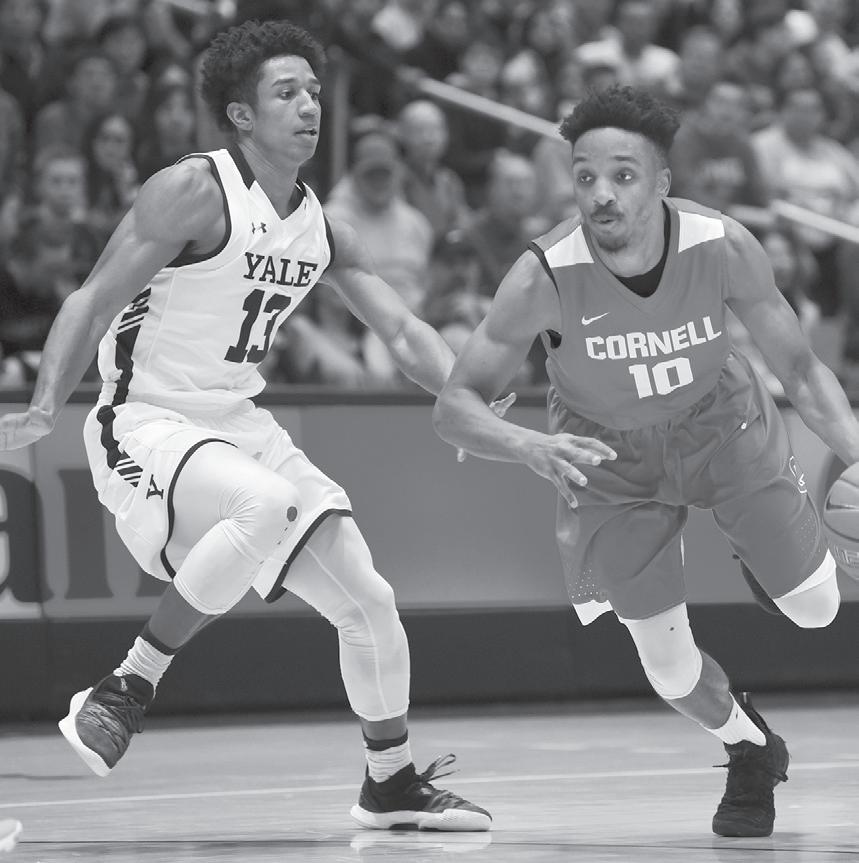
Yale proved too resilient for Cornell men’s basketball, which fell to the first-place Bulldogs, 98-92, at home on Saturday night.
Senior guard Matt Morgan and Yale’s junior guard Miye Oni battled all night in front of a rowdy Newman Arena crowd. Morgan, who led all scorers, set a Cornell men’s basketball Newman Arena record with 35 points while Oni notched 20 points and seven rebounds.
Cornell sophomore forward Jimmy Boeheim was the game’s second-leading scorer with a career-high 24 points on 9-of-13 shooting. The loss drops Cornell’s Ivy League record to 5-3.
“I think we did a good job coming out of halftime and figuring some things out,” said head coach Brian Earl, whose team opened the second half on a 19-6 run. “They just have a lot of good guys. I thought our guys played hard but [Yale’s] a really good team, talented in a lot of different ways so they’re a tough team to beat.”
As a group, the problems which tend to plague the Red were nonexistent on Saturday. The Red only committed nine turnovers and shot well from the field with a 52.6 percent overall mark, 45.5 percent from three and 88 percent from the charity stripe.
The Red struggled to contain the Bulldogs’ height, length, speed and depth on the offensive end, which ultimately led to the home team’s demise. As the Red had no trouble putting the ball in the basket in the second half, it had trouble preventing Yale from doing the same.
“We just have to regroup, they’re good players but we left a lot on the table,” Morgan said. “To lose by only six to a team like that is encouraging, but we would much rather come out with a win.”
The Red walked back onto the floor to start the second half with a renewed sense of energy and vigor, and the 19-6 run seemed to put the hosts in the driver’s seat (Cornell opened the game on an 8-0 run, forcing an early Yale timeout). The stretch was marked by tough defense, fluid offense and smart decision making.
Senior forward Steven Julian started the half with four blocks and the offensive end seemed to open up as the Red diced Yale for open shot after open shot. After the Red opened up a six-point lead with 14 minutes to play in the second half, Yale systematically broke
the Red’s spirit with layup after layup and offensive rebounds galore.
“You can see they put the work in and they showed up tonight,” Morgan said. “We had some moments where we could have made a stop but they made some tough buckets or got an offensive rebound or they just knocked down an open shot.”
The Red struggled mightily with Yale’s height and length. The Bulldogs dominated the painted area with four blocks in the first half to the Red’s zero. It wasn’t until the second half, when Julian blocked four shots within the first two minutes and 21 seconds that the Red narrowed that gap. The Bulldogs also thoroughly dominated the Red on the glass, outrebounding Cornell on the offensive end, 15-6 and 38-27 in total.
“I think we needed to get more stops. They scored a lot of points,” Earl said. “It was an up and down game and they hurt us in transition. We have to take it game by game and practice by practice and see what’s going to work out. Tonight we just didn’t have enough.”
The Red will continue its Ivy campaign next weekend with a trip to Princeton on Friday and Penn on Saturday. Both games will tip off at 7 p.m.
By BENNETT GROSS Sun Staff Writer
Another competitive, exciting Ivy League contest has Cornell men’s basketball in second place in the conference heading into Saturday night’s matchup with first-place Yale.
Despite getting out to a slow start, which saw the Red trailing by as much as 13 late in the first half, Cornell climbed back into the game and defeated Ivy League rival Brown, 70-66, in overtime on Friday night.
“I was really proud of how resilient our team was tonight,” said sophomore forward Jimmy Boeheim, whose 21 points led the team. “We got off to a slow start shooting, but we never rolled over and just kept fighting back.”
Back at home after road wins over Dartmouth and Harvard last weekend, the victory marks the Red’s third straight league win and continues a trend of close games that come down to the wire: each of Cornell’s seven Ivy contests have been decided by single-digit margins.
Cornell, whose Ivy record improves to 5-2, used a 7-0 run to end the first half to cut the Bears’ halftime lead to four. The teams traded blows throughout the second half, which saw the Red take its first lead of the game with 8:44 remaining.
With two seconds left and the game tied at 60, Brown’s star sophomore guard Desmond
Cambridge attempted a midrange jumper for a chance to give the visitors the win. But his try rimmed out, sending the game to overtime.
The Red was able to channel the energy from the raucous home crowd to score the first seven points in the extra session, including a deep 3-pointer by senior guard Matt Morgan.
But Brown didn’t go away quietly. The Bears scored six unanswered points to cut the Cornell advantage to 67-66 with 19 seconds remaining before Cornell broke Brown’s full court press and sophomore Terrance McBride scored an uncontested layup to put the Red up three.
Brown subsequently turned the ball over and was forced to foul Morgan. But the senior guard, usually reliable from the charity stripe, missed both free throws, leaving the door open for the visitors.
However, Brown again mishandled the ball near midcourt, giving possession back to the Red and allowing Cornell to ice the game. It was somewhat of a tale of two halves for the Red, which struggled mightily in the first 20 minutes.
Boeheim carried the load offensively in the first session, as he led the Red with 13 first half points. Cornell’s all-time leading scorer, Morgan, had a quiet first half, in which he had just three points, all of which came from the
charity stripe.
The Red was significantly limited by Brown’s tight defense early on, as the home team shot just 1-for-11 from 3-point range and 8-for-24 from the field before halftime.
However, the Red played a strong defensive first half. Cornell caused 12 first half turnovers and the squad drew 13 fouls.
“The most important aspect of the game is being strong defensively,” Morgan said. “Even though my shot wasn’t falling early, I didn’t want it to have a negative impact on my defense. As long as I’m locked in defensively, being the captain of the team, I think that affects how everybody else plays.”
But in the second half and overtime, the Red was able to continue to build on its road sweep of Dartmouth and Harvard last weekend and continue its Ivy League winning ways.
By the end of the night, Cornell was able to have three players finish in double figures. Boeheim led all scorers with 21 points, junior forward Josh Warren had 18 and Morgan chipped in with 15. Brown had similarly balanced scoring, as four players ended with double figures. Senior guard Obi Okolie led the team with 15 points, while the team’s leading scorer, Cambridge, was limited to just 10.
Bennett Gross can be reached at bgross@cornellsun.com.
WOMEN’S HOCKEY
By FAITH FISHER Sun Staff Writer
This weekend’s celebration of the seniors on Cornell women’s hockey was only made sweeter with a pair of convincing wins against Ivy League foes Brown and Yale.

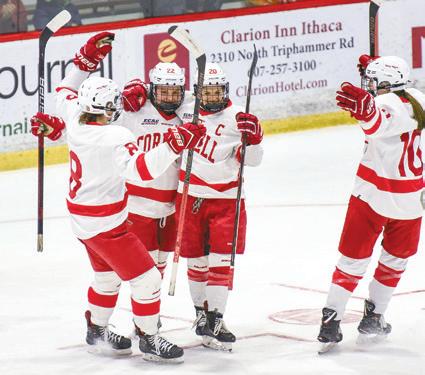
Back on their home ice on Friday, the Red (18-3-6, 15-3-2 ECAC) clinched a 4-1 victory against the Bears, (5-19-2, 2-15-2) who had been the first team to beat the Red earlier in the season. The following day, the team sealed a 4-0 shutout against the Bulldogs (7-18-2, 6-12-2). This weekend marked the Red’s final regular season home games.
But Cornell’s soon-to-be graduates will have another chance to play big-time games on their home ice. With only two games
and junior defender Micah Zandee-Hart, Frechette found open space on the right side of the offensive zone. Zandee-Hart skillfully placed the passed the puck back to Frechette, who buried the puck into the goal.

“We knew that we had a tough game at Brown earlier this season and we wanted to make sure we would get off to a good start, especially at Lynah Rink,” said head coach Doug Derraugh ’91. “I’m sure they had confidence going into the game after beating us earlier this season, so we just wanted to play our game right from the beginning and get the first goal.”
Although shots from the Red were plentiful, scoring was paused until the middle of the second period when Brown gained a quick offensive advantage. Freshman forward Shay Maloney skated past Red defenders straight to the goal, and fired a shot into the back of the net to even the score.

remaining in the regular season (Cornell visits Rensselaer and Union next weekend), Cornell has clinched home-ice advantage in the first round of the ECAC playoffs, a bestof-three series that will take place the weekend of March 1. After this weekend, the Red maintains an impressive 11-1-0 home record.
In the contest against the Bears, freshman forward Gillis Frechette notched her first career goal to open the scoring. After she passed the puck behind the boards to connect with sophomore forward Maddie Mills
Just two minutes later, however, the Red took advantage of a power play and regained the lead. Mills, on the left side of the offensive zone, received a pass from Zandee-Hart from the top of the zone. Mills blasted a shot top shelf past goaltender Calla Isaac. This time, the onegoal lead didn’t vanish.
Junior defender Jaime Bourbonnais channeled the offensive momentum, securing another goal less than two minutes later. The Red went up 3-1 when Bourbonnais gained control of a rebounded shot by junior forward Amy Curlew and redirected it past the Bears’ goaltender.
A goal off of a third period power play capped off the scoring for the night. Mills located the puck following a denied one timer taken by Zandee-Hart. Mills swiftly placed the puck into the net after the chaos

following the previous shot.
The Red’s offensive domination was evident in the shot on goal discrepancies — Cornell had 49 shots compared the Bears’ measly 10. Furthermore, the Red went 2-for-5 on the power play. Cornell’s penalty kill unit had an impressive performance, holding the Bears scoreless in four power play opportunities.
The Red carried Friday’s domination into its senior day game against Yale, a particularly emotional game.
puck, O’Neill strategically placed herself between Yale defenders. Burke passed the puck to O’Neil’s stick, who had just enough space to fire a shot into the back of the net.

“Our seniors have been great ambassadors of our program and have done great things both on and off of the ice,” Derraugh said. “We are certainly going to miss them and they all bring something different to our team. They really complement each other.”
Halfway into the first period, junior forward Grace Graham put the Red on the scoreboard. From the back boards, senior forward Diana Buckley sent a pass to Graham and Curlew, who were planted in front of the net. Curlew controlled the puck before handing it off to Graham to secure the first tally of the game.
Junior forward Kristin O’Neill added an insurance goal in the second period, with help from Burke. As Burke controlled the
With less than nine minutes left in the third period, O’Neill took advantage of another scoring opportunity. When Mills entered the offensive zone with control of the puck, she lured the Yale defender toward her, which created space for O’Neill to receive the quick pass. With a fake to the left, the co-captain and leading scorer backhanded a shot past the Bulldog goaltender. Although this was the last regular season home game for the Red, there will be more action on Lynah as Cornell has the home-ice advantage for the ECAC tournament quarterfinals.
“Lynah’s atmosphere is hard to beat,” Curlew said. “Having the support of the fans really makes a difference, especially when the games get close.”
The Red travel to Rensselaer and Union next weekend. The games will take place at 6 p.m. Friday and 3 p.m. Saturday.
No. 8 Cornell men’s hockey is still alone in first place in the ECAC with just four games to play, but it didn’t do itself any favors this weekend, losing to Yale, 5-2, a night after blowing a three-goal lead and settling for a tie with Brown.
Head coach Mike Schafer’s ’86 decision to pull sophomore goaltender Matt Galajda appeared to sparkplug the visitors: Cornell (15-7-3, 11-4-3 ECAC) scored two quick goals to climb back into the game after trailing 3-0. But Galajda’s classmate Austin McGrath didn’t last long between the pipes: A wraparound goal for the home team

made it 4-2 and led Schafer to yank McGrath and reinsert Galajda.
“You can’t play that poorly defensively and expect to win hockey games,” Schafer said. “It was a collective team effort tonight from our forwards to our defense to our goaltending.”
While Cornell’s successful formula for much of the season has been scoring the game’s first goal, the Bulldogs (13-9-3, 11-6-1) got on the scoreboard first in New Haven on Saturday, taking a 1-0 lead with just 18 seconds left in the opening period.
It was the first time since Jan. 5 at Quinnipiac that Cornell surrendered the game’s first goal. The 2-2 tie with the Bobcats also marks the last time the Red was outscored in the first period.
Cornell’s deficit grew to three goals in a circus of a second period and pulled within one before eventually entering the second intermission trailing by a pair.
Goals in quick succession led to trouble for the Red once again
on Saturday after three goals in 53 seconds doomed the team on Friday. Phil Kemp’s second-period goal made it 2-0 and Yale scored 31 seconds later to go up 3-0. But like in Friday’s 3-3 tie, a three-goal lead didn’t mean the game would feature no more action.
Following Yale’s third goal, Schafer pulled Galajda in favor of McGrath. Then, senior defenseman Alec McCrea scored less than a minute after the change and sophomore forward Tristan Mullin scored on the power play about seven minutes later to give the Red life. But Bulldog forward Ted Hart’s wraparound goal made it 4-2 for the home team soon thereafter and led the Red to make its second change of the night between the pipes.
“It wasn’t a good night for us, but [we] made it a 3-2 score and came back and we gave up another soft goal from a little bit of a breakdown defensively and it’s a 4-2 hockey game,” Schafer said.
The 4-2 deficit proved too much for the Red to overcome,
and, in the third period, Bulldog forward Curtis Hall’s second goal of the night gave Yale its fifth tally. Saturday marks just the second time all season the Red has surrendered five goals — the first was its season opener against Michigan State.
Galajda’s removal was his first since the weekend against the Spartans, when he was pulled from each of his team’s first two contests. McGrath was last pulled from the Red’s Jan. 26 loss to Colgate — also his most recent appearance.
“We didn’t get the job done in front of our goaltender, and when [pucks] did get through, we didn’t get the big saves when we needed it,” Schafer said.
After a one-point weekend, Cornell is still alone in first place in the ECAC, just one point ahead of second-place Quinnipiac and two points ahead of third-place Yale. The Red hosts Rensselaer and Union next weekend.