The Corne¬ Daily Sun

Te experimental film avoids many of the endof-the-world clichés, Stephanie Tan ’22 writes.


Te experimental film avoids many of the endof-the-world clichés, Stephanie Tan ’22 writes.
Students forced to take extra precautions as coronavirus spreads across continents
By MEGHNA MAHARISHI Sun Staff Writer
Amid growing fears that the international novel coronavirus outbreak could become a pandemic, the University has suspended study abroad programs in Italy and South Korea, two countries that have been among the hardest hit outside of China.
students.
The University of Bocconi in Milan, Italy — where many Cornellians typically study abroad — announced in an email on Monday that it would suspend all teaching activities, conferences and other events from Feb. 24 to Feb. 29.
“It’s not so much of a question if this will happen anymore, but rather [...] when this will happen.”
Nancy Messonier
After the Centers for Disease Control gave South Korea a level 3 travel warning — which advises travelers to avoid any nonessential travel — the Council on International Educational Exchange canceled the College of Arts and Sciences trip to South Korea for the spring 2020 semester, according to an email sent to
Hours before Bocconi sent the email, Cornell emailed students in Italy, urging them to take extra precautions in wake of the outbreak. In another email sent to students abroad in Milan, Cornell wrote that it was following the decisions of other universities in the Italian province of Lombardi to suspend all academic activities from Feb. 24 to March 1.
“As this decision was made only recently, there are still details that remain to be clarified,” the email read. “Please be assured that we will work closely with our partners in the city to coordinate academic support for students and minimize

disruption.”
Cornell has been in contact with Bocconi over the situation, according to an email from Tamara Ingram, assistant director of international programs in the School of Industrial and Labor Relations. Ingram added in the email that there would be “distance learning activities.”
Italy has seen an alarming spike in coronavirus cases since last Thursday. Before Feb. 20, there were less than five
By MADELINE ROSENBERG Sun Staff Writer
Life-long Ithacan Tom Clausen
’73 was meandering between shelves lined with apples and local maple syrup during an Orchards Store visit in January when an employee broke the news: The store was closing at the end of the month.
Clausen was shocked.
“To me, it just didn’t compute,” he
said. “I always saw it as a place that was very popular, that brought a diverse range of alumni, students, their families and community members all to one spot to enjoy something that was fairly unique.”
Clausen is one of thousands of Ithaca and Cornell community mem-
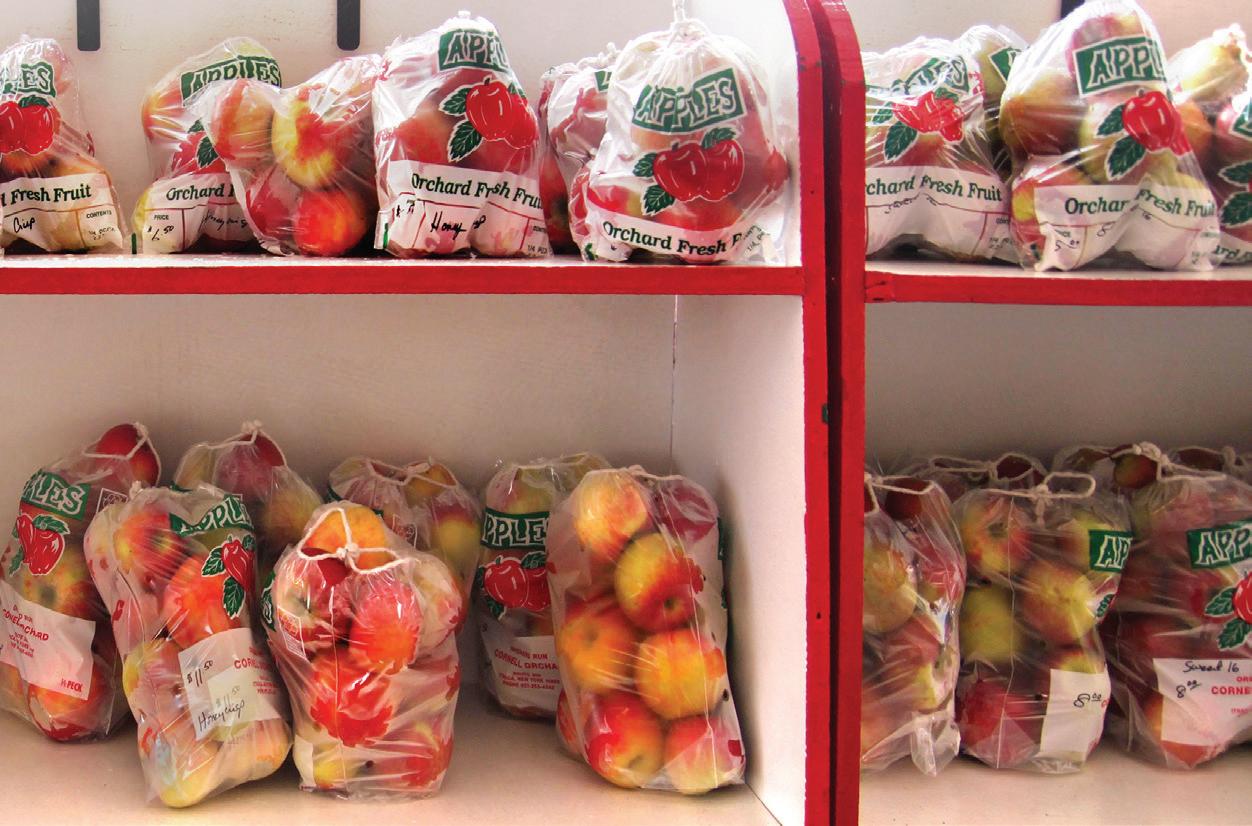
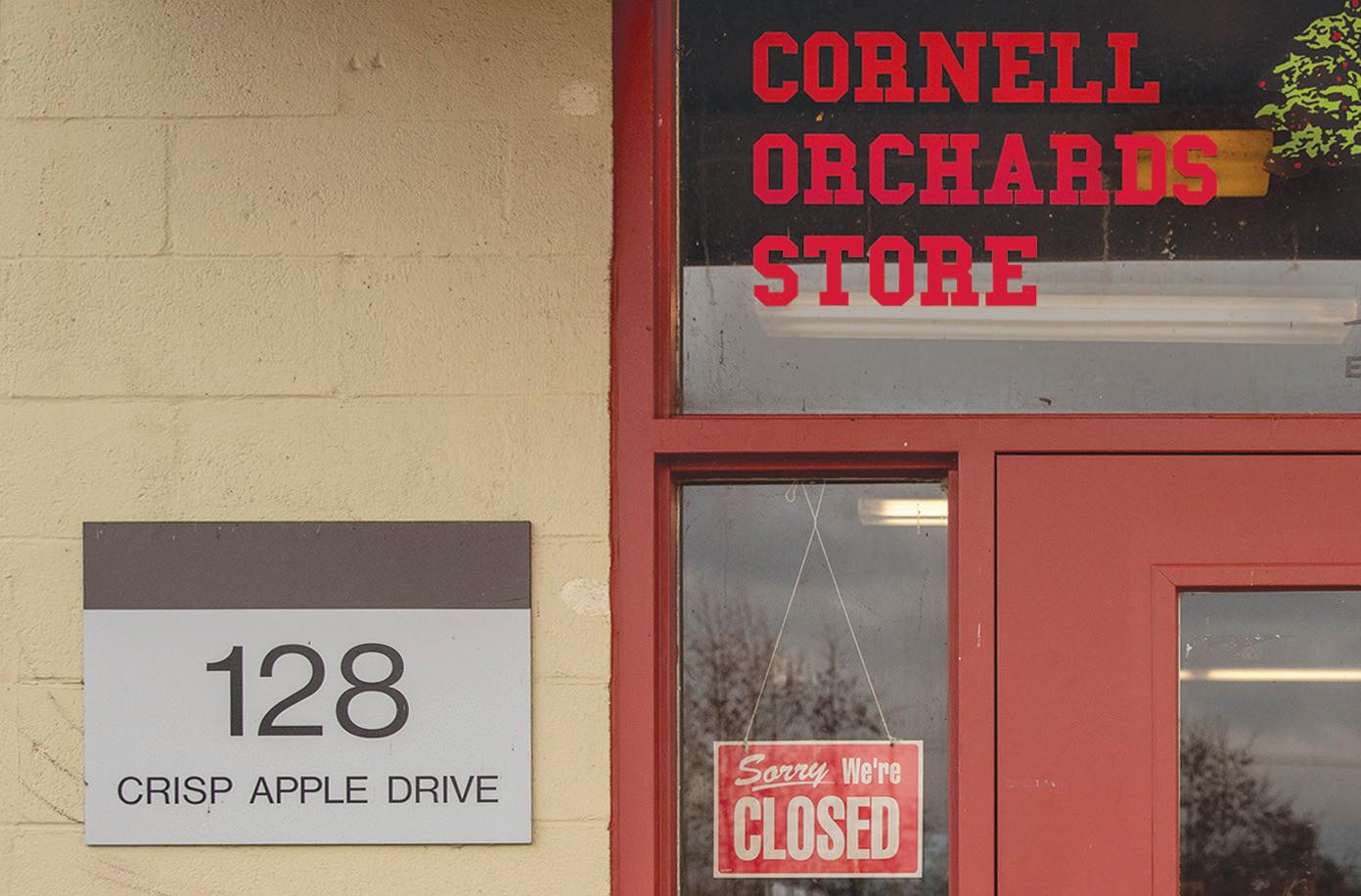
bers who mourned the loss of the beloved Cornell Orchards Store when it closed on Jan. 31 after reportedly “struggling financially” for years, the closing announcement said. Shock and lament over the shutter-
See ORCHARD STORE page 5
confirmed coronavirus cases in the country. Now, there are 453 confirmed cases as of Wednesday night and 12 reported deaths
This sudden rise in coronavirus cases prompted Italian health officials to lock down at least 10 towns, shutter schools in major cities and cancel sporting and cultural events on Sunday. So far, most
By ARI DUBOW AND EMMA FAUSET Sun Staff Writer and Sun Contributor
Ithaca Police Department recently published a twoyear report of crimes in Ithaca, showing a decrease in reported offenses in nearly every category from 2018 to 2019 — mirroring broader statewide trends.
“There are a lot of causation factors, and I don’t know all of them.”
Dennis Nayor
of drastic reduction in Ithaca were liquor law violations, which decreased by nearly 86 percent, from 21 to 3
See CRIME page 5
One of the most drastic decreases in reported crime in Ithaca was robbery, which decreased by 70 percent from 30 incidents to nine incidents in 2019 — a trend echoed by New York state, which saw a 10.2 decrease in the incidents of robbery, according to a 2019 report released by the N.Y. State Division of Criminal Justice Services. New York also reported that the aggregate of crimes has decreased by 3.6 percent across the state. Other categories
Ashley Bradford, Ph.D. Student, Indiana University
Noon - 1 p.m., T01 Human Ecology Building
Caregiver Support and Education Network Meetings Noon - 1 p.m., 221 Weill Hall
Investigating Definiteness and Quantification in Shan, a Tai language of Myanmar Noon -1:30 p.m., Kahin Center
Soup and Hope With James Timothy Baker ’21 Noon - 1 p.m., Sage Chapel
Forged by War: The Great War of Global Economic Governance 12:15 - 1:30 p.m., G08 Uris Hall
Energy Seminar Speaker, Sarah Zemanick and Bert Bland 12:20 p.m., 155 Olin Hall
Single-Cell RNA-Seq Analysis Workshop 12:30 - 3:30 p.m., 655 Rhodes Hall
Wikipedia: Art and Feminism Editing 4:30 p.m., 106G Olin Library
Information Session: International Relations Minor 4:45 p.m., 104 White Hall



The 10th annual Harold I. Saperstein ’31 Cornell Student Topical Sermon Contest PROVIDING A “BULLY PULPIT”
to speak on today’s most important and critical issues
Open to all Cornell students 1st Prize $1800. This year’s contest theme:
Express your thoughts.
To present on Tuesdays—February 18, March 3, 10 or 17
Anabel Taylor Hall, Founders Room, 4:30-6:30pm
Awards Gala: Sunday March 22, 2020, honoring the memory of ERNEST L. STERN ’56 and CURTIS REIS ’56 presidents and officers, Class of 1956 named “Super Class” by Cornell president Frank H.T. Rhodes
Sign up at www.sermoncontest.com <http://www.sermoncontest.com>
Latina/o Studies Fridays With Faculty Seminar Noon, 429 Rockefeller Hall
Mindful Winter Nature Walk Noon - 1 p.m., Brian C. Nevin Welcome Center
Europe at a (New) Crossroad 12:15 - 1:30 p.m., A.D. White House
Department of Psychology Colloquium Series 12:20 p.m., 202 Uris Hall
English Department Roundtable 2:30 - 3:30 p.m., 258 Goldwin Smith Hall
Stand Up for Human Ecology 2:30 - 4:30 p.m., Day Hall
Anthropology Colloquium: Chip Colwell 3 - 4:30 p.m., 165 McGraw Hall
Digital Ag Hackathon 3 - 5 p.m., Schurman Hall
Let’s Talk Immigration — A Conversation With the National Immigration Forum’s Executive Director Ali Noorani 4:30 - 6 p.m., 186 Myron Taylor Hall
By TAL DOTAN Sun Contributor
For those who continue to procrastinate on their New Year’s resolutions to work out more, Cornell has another barrier to using its fitness centers: price.
Student wellness comes at a cost at Cornell, the University charges students an annual fee of $159 or a semester fee of $100 to access the fitness centers, such as access to any exercise equipment, cardio machines or weights.
The membership includes access to all five fitness centers and group fitness classes. Non-members are also provided with some free wellness services such as nutrition or fitness consultations, counseling to quit smoking and other programs dedicated to student wellness.
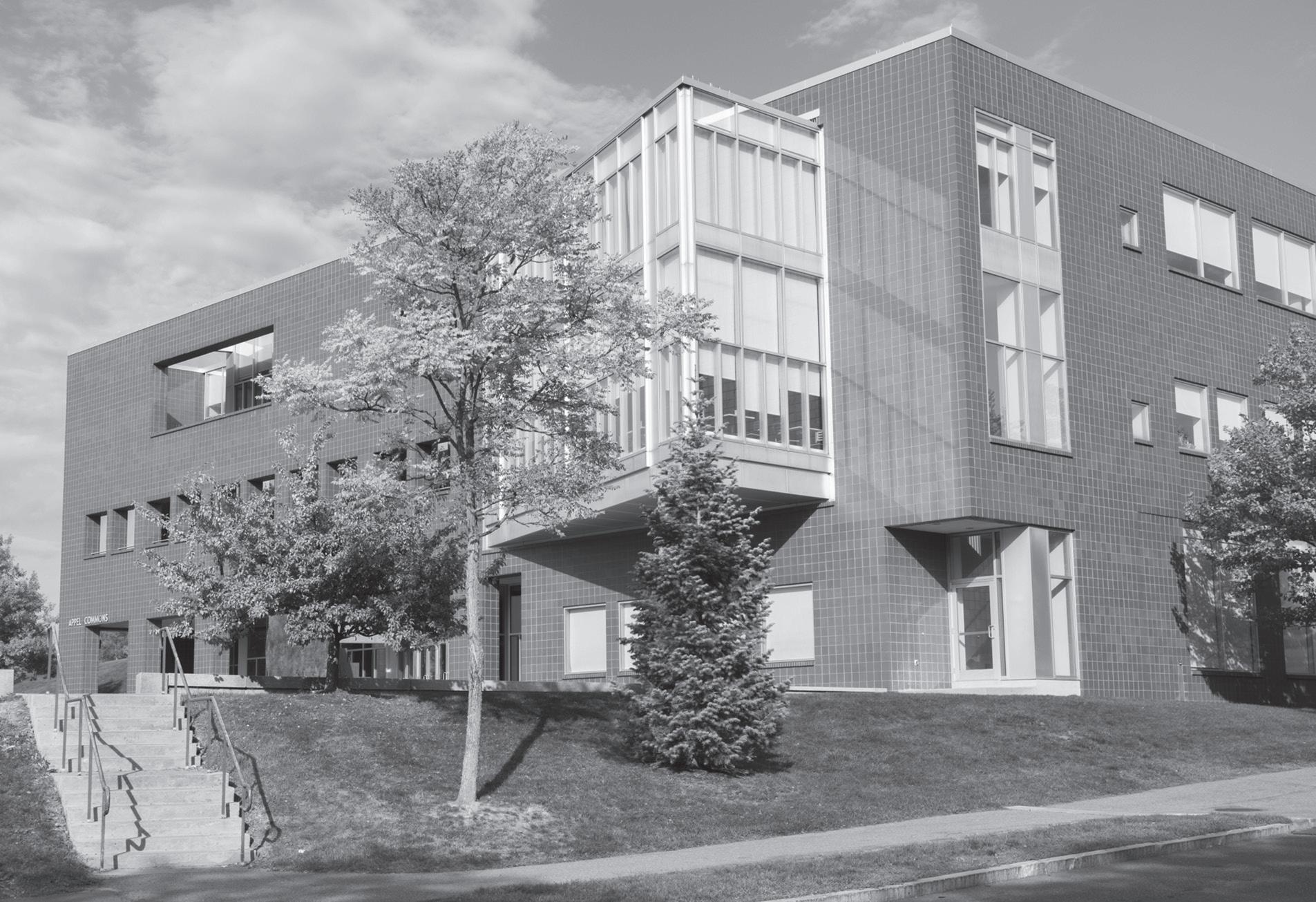
There are four gyms spread throughout campus: Helen Newman and Appel are located on North Campus, Teagle is on Central and Noyes sits in West Campus.
“A lot of my friends at other schools aren’t charged for the gym.”
Craig Schulman ’22
In the Ivy League, Cornell is not unique in charging its students for an annual or semester-based gym membership. Columbia University and The University of Pennsylvania also charge their undergrads for access. Columbia prices their membership at $247 for the spring semester pass, while Penn’s fee is $334 for the year.
However, other universities like Harvard, Yale, Princeton, Brown, Dartmouth and MIT offer undergraduates free access to their fitness centers.
For many students, Cornell’s gym fee deters them from utilizing any of the University’s facilities. Craig Schulman ’22 said he neglects going to the gym because of the hefty fee.
“[It’s] why I don’t have a membership. A lot of my friends at other schools aren’t charged for the gym and $159 is a lot of money.”
Lance Rombro ’23 also voiced his annoyance.
“It seems unreasonable that we attend such a prestigious and well-endowed institution, yet the University makes working-out and student wellness a luxury,” Rombro said.
However, Cornell does offer some costless options through its “Fitness for Free” programs. One of these options is that students can access Appel, Helen Newman or Noyes without charge on Friday and Saturday evenings, but a swipe-in is

Ithaca’s City Planning and Development board fielded proposals from seven different major development projects in its February meeting on Feb. 25, a striking display of the area’s accelerating rate of real estate development.
411 College Avenue
The board discussed in depth the replacement for Collegetown Bagels at 411 College Avenue, a building owned by Student Agencies Inc. that will soon house retail units on the ground floor and student housing above.
The building will have an entirely glass facade, which concerns some members of the public. Todd Bittner, director of natural areas for Cornell Botanical Gardens, expressed concern that artificial light might spill out through the building’s large glass facade, interfering with the natural feeling of the Cascadilla Falls area at night.
But the board was ultimately
satisfied with the efforts made so far to reduce lighting through glass type and treatment. Vice chair of the board McKenzie Jones, said that the glass complimented the design’s “nice interplay between the [nature and architecture].”
Carpenter Circle
The Carpenter Circle Project proposal involves the construction of four new buildings near the waterfront that includes a four-story affordable housing residential building, two residential buildings with ground-level retail spaces, a medical office building and a community garden. The project is planned to be completed in three years, according to Jess Sudol vice president and partner in charge of civil engineering at Passero Associates, the engineering consultants on the project.
Sudol enumerated positive impacts of the project on the city, including smoother transportation and more pedestrian-friendly street crossings and paths, according to their traffic impact studies.
Mitch Glass, a member of the board, expressed concern about the appearance of this development within the context of the largely undeveloped waterfront
“There needs to be a level of sophistication [for the Lake Street building project].”
Mitch Glass
area, which was rezoned late last year to encourage redevelopment.
“It’s going to be a big building surrounded by a parking lot for a little while,” Glass said.
Sudol said that streetscaping projects that are part of the proposal would begin as soon as possible to improve the appearance.
City Harbor
The board also discussed community impact of the nearby City Harbor project, a mixed-use residential and recreational development which recently broke
See BUILDING page 4
required at any other time during the week.
Swimming pools are also accessible for free at Teagle and Helen Newman during open swim hours, and students can play basketball, table-tennis and badminton at Noyes and Helen Newman, or take a free PE class.
Tal Dotan can be reached at td264@cornell.edu.
By SARAH SKINNER Sun Managing Editor
Cornell Police published a Facebook alert on Wednesday morning regarding a suspect who police said painted multiple instances of graffiti near Cornell’s Law School and in Collegetown over February break this past weekend.
The graffiti, splashed in several places around Myron Taylor Hall and the 500 block of College Avenue, was first spotted by officers during patrol at around 12:20 a.m. on Saturday, the post said. CUPD’s daily crime log indicated that a “staff member” called in a report of graffiti painted on a dumpster in the Myron Taylor Hall loading dock that same night. CUPD released two still images of the male suspect, one taken from security
camera footage that police say captured him in the act of graffitiing a building on College Avenue. The same man was pictured again next to racks of soda bottles in an establishment on the 400 block of College Avenue, the block home to 7/11.
CUPD did not provide a written description of the suspect, but requested that anyone who recognized the man, who was wearing a black hat, coat and glasses when pictured, to contact the department via phone at 607-255-1111 or email at cup-inv@cornell.edu.
Cornell Police did not respond to requests for comment on the content of the graffiti by the time of publication.
By SYDNEY BROWNE Sun Contributor
Cornell’s campus is littered with buildings new and old, as the designing and construction of the various buildings across campus span across decades and sometimes centuries. However, aside from their intricate plans, the process of naming the buildings can also be complex.
“Campus buildings and spaces are often named in recognition of the alumni, parents, and friends whose generosity makes high-quality facilities possible for our students and faculty,” said VP of Alumni Affairs & Development Fred Van Sickle in an email to The Sun. This is the case for most buildings on campus, as they are based primarily on monetary contributions. Buildings such as Rockefeller Hall, Baker Laboratory and Gates Hall are named after business tycoons John Rockefeller,

George Baker and Bill Gates after significant donations.
A large percentage of buildings on campus were also named to honor Cornell’s founders, Ezra Cornell and Andrew Dickson-White, as well as their family and close friends.
In addition to Llenroc — the former Interfraternity Council chapter that dons Cornell’s last name backwards — and A.D. White Hall, Clara Dickson Hall is named after White’s mother whereas the Sage and Olin families were close friends of the Cornells and even buried both founders and their wives in Sage Chapel.
However, money is not the only means of getting one’s name on a building. Buildings are also named in honor of several philanthropists and highly regarded professors.
Most West Campus houses are named after past faculty members who had a major impact on the University. Rose House is named after Flora Rose, the co-founder of the College of Human Ecology and Bethe House was named to honor Nobel-prize winning physicist Hans Bethe.
Even the Ag Quad is almost entirely filled with buildings that honor early administrators and faculty like Roberts Hall and Mann Library, named after the first dean of the College of Agriculture Isaac Roberts Hall and the first Cornell provost Albert R. Mann 1904.
The the iconic clock tower that sits on Central Campus was also not necessarily purchased but was rather given as a gift of goodwill. In 1868, Jennie McGraw donated the chimes that now play in McGraw Tower in honor of her father, philanthropist John McGraw. In her honor, the first song played at every morning Cornell Chimes concert is “Cornell Changes,” also known as the “Jennie McGraw Rag”.
Ultimately, the decision for building naming is made by various deans, university leaders and the Executive Committee of the Board of Trustees. With new buildings being made in the North Campus Residential Expansion project, the Board will have more naming decisions to make.
Sydney Browne can be reached at sab492@cornell.edu.
ground. The project will include 156 residential units, parks, spillover parking for the Ithaca Farmers Market and a renovated marina for boat parking.
David Kruse of SRF Associates Transportation Engineering and Design answered the board’s questions regarding the traffic impact of the new development. He explained the group’s plan for mitigating traffic issues, including adding turn lanes to Dey Street, updating intersection lights, and lengthening left turn lanes.
261 Lake St
Architects and developers backed by DMG Investments proposed preliminary
sketches for a six-story student housing project at 261 Lake Street. At six stories and 60 feet tall, the proposed building is two stories and 20 feet taller than the 40 foot maximum in this residential zone, and so exceptions would be required before approval, according to Jones.
Glass said he was “unimpressed” with the design.
“There needs to be a level of sophistication,” Glass said. “I think it needs a lot of work.”
Blalock pointed out the pragmatic advantage of this project, mitigating car use and keeping student housing removed from non-student residential housing.
The developers were asked to return to the board, addressing these complaints.
215 Green Street Representatives from PSP Design and CHA, an international engineering consulting firm, presented revisions to the 215 Green Street proposal, which consists of retail and residential parking and 11 levels of residential development, 10 percent of which will be affordable housing.
The board was supportive of the project. “It’s the right place for densification, the right place for a tall building, next to other tall buildings,” Blalock said.
Ari Dubow and Asha Patt can be reached at adubow@cornellsun.com and arp244@cornell.edu.



CORONAVIRUS
Continued from page 1
of the cases have been centered in Milan.
Currently, the CDC has designated a level 2 travel warning for Italy, which urges travelers to take “enhanced precautions.” On the other hand, China, where the outbreak first originated, continues to have a level 3 warning — the CDC’s highest warning.
Other universities have also been forced to suspend academic activities in Italy in wake of the outbreak.
So far, New York University, Syracuse University, Fairfield University and Elon University have suspended their abroad programs in Italy. NYU closed its Florence program until March 29, while the others have closed indefinitely. Syracuse students in Florence have been asked to return to the U.S.
The coronavirus outbreak has stoked international fears that the disease could eventually turn into a pandemic. Coronavirus has spread across Europe, with new cases cropping up in Croatia, Germany, Greece and Spain. In the Middle East, there are 139 confirmed cases in Iran, which resulted in Iraq closing its border with Iran on Sunday. The disease has spread to Iraq, Afghanistan, Bahrain, Kuwait, Oman, Lebanon and the United Arab Emirates — with many of these cases originating from Iran.
While most cases are in China, there have been cases of coronavirus reported in at least 39 countries, with most cases involving people who traveled from China. The disease has affected global markets and has exacerbated political tensions worldwide.
Dr. Nancy Messonier, director of the National Center for Immunization and Respiratory Diseases, said in a news briefing that coronavirus will almost certainly spread to the U.S, adding that cities and towns should take “social distancing measures,” such as holding smaller classes or closing schools completely.
“It’s not so much of a question of if this will happen anymore, but rather more of a question of exactly when

this will happen,” Messonier said.
Back in Ithaca, anxieties surrounding coronavirus have continued to permeate campus. The University said in an email on Jan. 23 that it would work with local and state authorities to monitor the outbreak, although it also said the risk of a coronavirus outbreak in Ithaca remains low.
The China and Asia Pacific studies program canceled its Beijing trip — a graduation requirement for CAPS majors — because of the outbreak, sending students scrambling to figure out courses and housing arrangements for the spring semester.
Provost Michael Kotlikoff also wrote in an email to the Cornell community that students would be barred from
Continued from page 1
incidents, and possession of controlled substances, which decreased by 54 percent, from 89 to 41 incidents.
Arrests in Ithaca decreased in every category, with the most significant change being in violation arrests — arrests for actions that are neither a felony nor a misdemeanor — which saw a reduction of 44.6 percent, from 769 to 426 incidents.
“There are a lot of causation factors, and I don’t know all of them,” Ithaca Police Chief Dennis Nayor said about the across the board decrease in crime reports. The small data set, according to Nayor, precludes any conclusions about larger trends.
The report noted that eight positions at the IPD are currently vacant, which might suggest less active policing this year compared to other years.
The number of mental health calls received by the IPD increased by 11.1 percent, from 287 to 319 calls. Nayor said he found this change unsurprising.
“I don’t know if it’s something societally or if people are struggling more,” Nayor said. “I don’t know if anyone knows why it’s a problem nationally.”
The report also includes data on allocation of training hours for police based on category, including “Fair and Impartial Policing” and “Mental Health Aid for Public Safety.”
Nayor said that the public is not always aware of the work done by the IPD — the report, which included photographs of officers posing with children and officers at public events that aimed to bring to light the day-to-day life of IPD officers.
“I think it’s always important for the community to know where their tax money is going,” Nayor said. “It’s important to inspire confidence in the police.” Nayor added that the community should be aware of current trends in local crime rates.
Ari Dubow and Emma Fauset can be reached at adubow@cornellsun.com and emf228@cornell.edu.

traveling to China for Cornell-related purposes. Faculty members could still travel to China, if they received clearance from Cornell’s International Travel and Response Team.
In February, two Cornell students mirrored symptoms similar to coronavirus, which led the CDC to administer tests. Ultimately, the students tested negative for the disease.
Meghna Maharishi can be reached at mmaharishi@cornellsun.com. ORCHARD STORE
Continued from page 1
ing of the 68-year-old Ithaca institution boiled over onto social media and generated a petition that amassed more than 3,200 signatures as of Wednesday night.
But as the vacant storefront sits along Route 366 with a red “closed” sign hanging in the window, some long-time Orchards Store shoppers remain baffled by the closing and have sought answers.
The Orchards Store operated under annual deficits in the “tens of thousands of dollars” — even after a three-year parternship with Cornell Retail Services increased annual top line sales, according to a statement from Fred Piccirilli, the senior director of CRS, the organization that managed the retailer’s operations from 2017 until its closing.
Though recent promotional efforts and events such as the annual fall Apple Bake-off increased traffic and sales during the partnership, they failed to offset the store’s continued operating deficits and made closing the only viable option, according to Piccirilli.
The Orchards Store moved to year-round operations in 2017 in to increase customer traffic and eliminate previous deficits. While the College of Agriculture and Life Sciences and CRS considered returning to seasonal operations, Piccirilli told The Sun that a part-time model would not provide enough revenue to close the financial gap.
“Supporting a full-fledged retail venture commits significant CALS resources that could be more effectively leveraged toward mission-critical research,” Piccirilli said.
But Orchards Store regular Clausen said, if anything, he thought the store was prepared to expand — not close, adding he observed that the retailer continued to expand its product line and rearrange its shelves to accommodate a wider variety of local goods, from cheeses to books.
“I always thought the store was doing well,” he said. “It wasn’t like it was a ghost town there. There were lots of times when they had events when it was very crowded, especially during fall football games and alumni gatherings.”
In wake of the closing, community mem-
bers have continued to press the administration to preserve the retailer — often to no response.
“It’s quite alarming that I emailed the [CALS] dean, assistant dean and president of the University and I didn’t get any response, especially with 3,200 signatures,” said Simon Ingall, a Cornell University Library employee who started the petition to preserve the Orchards Store.
Clausen signed the petition and wrote a letter to CALS Dean Kathryn Boor ’80, urging that the Orchard Store remain open to no reply. Matt Hintsa ’10, a CALS alumnus and a former Sun photography editor, called the Orchards Store a defining part of his college experience, lamenting the closing of a “great public entry point” to Cornell’s agricultural research and land-grant mission to connect with, educate and improve the lives of the public.
In addition to selling cider and SnapDragons, the retailer also had community outreach programs and allowed customers to taste experimental apple varieties at the store.
Hintsa said he felt the store’s closing would make it harder for Cornell to build support around these causes that have long been integral to the University.
“I completely understand the financial reality behind the decision to close the store,” Hintsa said. “The University has to maintain its finances, but I think there’s a longer-term cost that’s harder to quantify that comes from closing the store.”
CRS and CALS said in a statement to The Sun that they are exploring options to offer some of the local products that the Orchards Store previously stocked at other retail locations, including Cafe Jennie and the main campus Cornell Store.
But for Clausen, shuttering the Orchards Store means losing the spirit that the retailer created.
“To me, the kind of gathering place and destination that it was for alumni and families just doesn’t strike me as likely to ever be as nice as it had been and to be the same kind of an experience,” Clausen said.
Madeline Rosenberg can be reached at mrosenberg@cornellsun.com.
JOYBEER DATTA GUPTA ’21
Business Manager
KRYSTAL YANG ’21
Advertising Manager
RAPHY GENDLER ’21 Sports Editor
NOAH HARRELSON ’21
SOPHIE REYNOLDS ’20
AMINA KILPATRICK ’21
PETER BUONANNO ’21
Arts & Entertainment Editor
SHIVANI SANGHANI ’20 Assistant News Editor
CHRISTINA BULKELEY ’21
Assistant Sports Editor
JING JIANG ’21
Assistant Photography Editor
ALICIA WANG ’21
Graphics and Sketch Editor
EMMA WANG ’20
GIRISHA ARORA ’20
SHRUTI JUNEJA ’20
Dena Behar ’20
Stacey Blansky ’20*
Penelope Campos ’20
Mollie Cramer ’20
Katherine Heaney ’20*
Marin Langlieb ’20
Emily Yang ’20*
Sophie Arzumanov ’21 Jill Crosby ’21
Colton Poore ’20
Edem Dzodzomenyo ’20
John Sullivan Baker ’20
Michael Johns ’20 Sarah Park ’20
Olivia Bono ’20
Carolyn Hale ’20
Zach Lee ’20 * Rachel Mattessich ’20
Ruby Que ’20 *
Bennett Gross ’20
Ari Dubow ’21
Vivian Fan ’21
Alec Giufurta ’21
SARAH SKINNER ’21
Managing Editor
MEREDITH LIU ’20
Assistant Managing Editor
SABRINA XIE ’21
Design Editor
AMBER KRISCH ’21
Blogs Editor
KATIE ZHANG ’21
Dining Editor
JOHNATHAN STIMPSON ’21 News Editor
ETHAN WU ’21
Opinion Editor
HUNTER SEITZ ’20
Assistant News Editor
LUKE PICHINI ’22
Assistant Sports Editor
JEREMY MARKUS ’22
Assistant Arts and Entertainment Editor
LEI LEI WU ’21
Layout Editor
RYAN RICHARDSON ’21
Snapchat Editor
BREANNE FLEER ’20
Senior Editor
AMOL RAJESH ’20
Senior Editor
News Board
Angela Li ’21
Jefrey Li ’21
Gracie Lu ’21
Sean O’Connell ’21
Gabrielle Gonzalez ’21
Alex Hale ’21
Shawn Hikosaka ’21
Caroline Johnson ’21
Justine Kim ’21 Vale Lewis ’21
Weifang Yang ’20 Nile Jones ’20 Joanna Hua ’20 Julian Kroll ’20 AJ Stella ’21
Katie Sims ’20 * Nick Smith ’20 * Nick Boozang ’21 Cory Koehler ’21 * Jeremiah Lacon ’21
Anna Grace Lee ’21 Bill Miksic ’21
Samantha Stern ’21
Xinyu Tang ’21
Winny Sun ’21
Catherine Chmiel ’22
Tamara Kamis ’22
Opinion Board
Elijah Fox ’21
Lucero Contreras ’21
Michaela Bettez ’21
Canann Delgado ’21 Amina Taariq ’21
James Robertson ’21 * Ramya Yandava ’21 * Andrea Yang ’21 * Sarah Bastos ’22 * Richard Beezley ’22
Tyler Brown ’22
Jean Cambareri ’22
Sports Board
Zora Hahn ’20 Michael Sarkis ’20 Emily Dawson ’21 Ken Choi ’22 Faith Fisher ’22
Caroline Chang ’20
Chenab Khakh ’20
Gayatri Sitaraman ’20
Catherine Cai ’21
Deana Gonzales ’21
Natalie Monticello ’21
Sydney Oraskovich ’21
Michael Wenye Li ’20 * Ashley He ’20 Nandita Mohan ’20 Yisu Zheng ’21
Nicole Rovine ’20
Murali Saravanan ’20
Elijah Fox ’21
Gussie Gordon ’21
Ruth Park ’21
PARIS GHAZI ’21 Associate Editor
NATALIE FUNG ’20 Web Editor
BORIS TSANG ’21
Photography Editor
SHRIYA PERATI ’21 Science Editor
AMANDA H. CRONIN ’21 News Editor
MARYAM ZAFAR ’21 City Editor
ANYI CHENG ’21
Assistant News Editor
NICOLE ZHU ’21
Assistant News Editor
BEN PARKER ’22
Assistant Photography Editor
DANIEL MORAN ’21 Assistant Arts and Entertainment Editor
DANA CHAN ’21 Production Editor
LEANN MCDOWALL ’21 Newsletter Editor
ALISHA GUPTA ’20
KATIE SIMS ’20
Hannah Kim ’22
Meghna Maharishi ’22
Callie McQuilkin ’22
Catalina Peñeñory ’22
Gayatri Somaiya ’22
Kathryn Stamm ’22
Stephanie Tom ’22
Olivia Weinberg ’22 Cait Wyman ’22
Andrew Lorenzen ’22
Christian Baran ’22
Nicholas Nguyen ’22
Odeya Rosenband ’22 Emma Smith ’22
Greta Gooding ’22
Erin Hockenberry ’22
Ariadna Lubinus ’22
Nkemdirim Obodo ’22
Odeya Rosenband ’22
Stephanie Tan ’22
John Wooton ’22
Seitz ’22
Suzzan ’22
Adam Wang ’22
Aditya Ramachandrababu ’22
Aliva Das ’22
Photography Board Science Board
Emma Rosenbaum ’22
Milena Bimpong ’22
Srishti Tyagi ’22
Anil Oza ’22
Lin Ai ’23
Louis Chuang ’23
Aliyah Kilpatrick ’23
Virginia Lo ’23
Megan Pontin ’23
Madeline Rosenberg ’23
Ayana Smith ’23
Meghana Srivastava ’23 John Yoon ’23
Sidney Malia Waite ’22 Alecia Wilk ’22 Roei Dery ’23 Katherine Yao ’23
Stephen Yang ’22
Kayla Bouazouni ’23
John Colie ’23
Brian Lu ’23
Emma Plowe ’23
’23
Tamara Kamis ’22
Tucker Hwang ’22
Michelle Zhiqing Yang ’22 Harry Dang ’22 Hannah Rosenberg ’23 Haunan Peng ’22 Michael Suguitan grad
Blogs Board
Alisha Kewalramani ’22
Elise Cording ’20
Catherine Ryberg ’21
Peter Kaplinsky ’22
Dominic Law ’22
Rae Specht ’22
Dining Board
Meridien Mach ’22
Melanie Metz ’22
Jeremy Scheck ’22
Sofa Siciliani ’22
Katriana Galloway ’23
Isha Vaish ’22
Benjamin Velani ’22
Jack Waxman ’22
Grace Yang ’22
Ella Schwartz ’23
Sarah Austin ’23
Sanjana Kaicker ’23
Julia Lescht ’23
Jordan Roth ’23
Teo Carrel 20 Mike Fang 21 * Cameron Hamidi 21 Christine Yang 21
App Board Avinash
Snapchat Board
Current Cornell Sun & Sun Alumni
Association Employees & Contractors
Sun Business Office Amy Wilson, Ofce Manager Sun Production S. K. List
Sun Delivery Robert Armstrong ’75
Sun Alumni Asso John Schroeder ’74, Alumni Advisor; Linda Holzbaur, Contractor
From the Editor
IN WHAT COULD BE DUBBED ONE of the most overused quotations in literature, Charles Dickens managed to express the sentiment of an editorship with The Sun: “It was the best of times, it was the worst of times.” Together we soared the highs of breaking news, spinning national into local and removing Oxford commas. But we also braced long nights, snow storms, public criticisms from those who we would consider our mentors and peers, missed homework assignments and pressure from our self-imposed deadlines.
Through the seasons of light and darkness, I gained an impenetrable respect for my fellow members of 137, and renewed my faith in our generation. We watched some departments transform through social media, graphics and multimedia. We covered everything from the college admissions scandal, to local government campaigns, to our convocation speaker changing, to our Lynah teams. Through the sourcing, writing and sleepless nights we saw 137 shine through their dedication, perseverance, tact and strength. I am grateful for the time I have had with each and every one of you and I hope you know how far you have come this past year. In the simplest of words, that are not nearly enough, thank you.
With each piece of work we produced, we continued a legacy, one which we now leave in the very capable hands of the 138th Editorial Board. My epoch of belief only continued after watching this group take the reigns these past six weeks. They have truly made The Sun their own with a renewed energy and project lineup. I have no doubt that they are ready for the challenges ahead of them. The Sun has been a part of Ithaca and Cornell since its conception in 1880, and I know with this strong group of editors at the helm, they will continue to show why local journalism is an important part of our community and brace the changing media landscape ahead of them.
It is now what Dickens would call the spring of hope my dear 138s, and I have complete faith that you will be able to weather the storms ahead and keep The Sun shining — you have everything before you. I just hope you all get the chance to dance in the rain along the way.

Iwas officially elected to the Board of Trustees on May 25th, 2019. I have had the honor and privilege of serving as a Board Appointed Trustee for approximately nine months now. As I quickly approach the halfway point of my two-year term on the board, I want to reflect and give an update on the profound experience I have had so far.
Cornell is not only known for its unique, beautiful location and its academic distinction. The University is one of few in the country to allow students to serve as full voting members on its board; the Board of Trustees is “vested with supreme control over the University, including all of its colleges and other units.” Our board is made up of 64 members and constructed with some of the most influential affiliates of the University, including major CEO’s, members of congress and industry leaders. In addition to their impressive careers and accomplishments, what makes these distinguished board members so special is their unwavering dedication and service to the progression of Cornell.
The main issue I wish to address is bridging the gap between the students, the administration and the Trustees.
Throughout this nine month journey, I have been able to identify key areas that I believe warrant my undivided attention as a Trustee. The main issue I wish to address
is bridging the gap between the students, the administration and the Trustees. I believe that, in order to create a more succinct and unified university, we must systematically strengthen relationships between these three facets. This will be achieved through improving communication, transparency and engagement between our top decision makers and those most affected by the decisions that are put in place. I want to implement a system that will allow students to have fluid and direct communication with administration on the issues that impact them the most. I have begun to enact this mission by meeting with various organizations and students across campus to hear their needs.
also enable students to have increased access to administrators and provide them with the opportunity to have their
I urge all students to reach out to me if there is anything you would like to discuss or if you need to inform me about a matter that should be addressed by the Board.
As a Trustee, I have made it my responsibility to be an active advocate for the student body. I have taken student concerns and voiced them to the board and administration with the intention of creating initiatives that will improve the experience of every person on this campus. In order to create more transparency — I have created, and will continue to create — space for more student involvement in the University’s decision making process.
I believe that engagement is the most important aspect of achieving a more unified campus. I have prompted the leaders of our university to challenge themselves to interact with students in order to grasp a better understanding of who they are and their authentic experience as students here at Cornell. I plan on creating spaces where administration and Trustees can build organic relationships with students. In turn, this will naturally lead them to be fully intune with campus and make certain that the student experience is at the center of all decisions made. This will
voices heard.
While running to become the Student-Trustee, my campaign slogan was “every person deserves to be recognized, every story deserves to be heard.” I have made it my main goal to live by that slogan and make sure that it is upheld to the furthest extent. I am aware that each student has an entirely different Cornell experience, and I want all students to know that it is my duty to guarantee that their experience is taken into account at the University’s highest level of governance. I pride myself on being easily accessible; and I urge all students to reach out to me if there is anything you would like to discuss or if you need to inform me about a matter that should be addressed by the board.
J.T. Baker is an undergraduate member of the Board of Trustees and a junior in the School of Hotel Administration. Comments may be sent to jtb243@ cornell.edu. Trustee Viewpoint runs every other week this semester.
Ten years ago this October, the Student Assembly unanimously approved a resolution formally requesting changes to a University policy that prohibits individuals from carrying pepper spray, a nonlethal chemical commonly used for self-defense, on campus. It was a moment of contention between the S.A. and the administration that many Cornellians today would find familiar — despite support throughout the student body, the University ultimately declined to implement its sensible and actionable suggestions for reform. As students formally begin their campaigns for the S.A. this week, they should consider revisiting this popular and important proposition.
The fall 2010 pepper spray resolution initially was introduced as a response to Cornell Police’s 2009 crime statistics, which listed “four reported forcible sexual incidents,” according to The Sun. That statistic is, unfortunately, but a fraction of the number of attacks reported by the most recent annual report. The Cornell Police’s 2018 crime statistics list 16 on-campus reports of rape, 24 reports of fondling and 23 reports of stalking in that year alone. In the footnotes, Cornell Police also note 48 reports of forcible sexual incidents in which “no location was provided or could otherwise be identified,” and an additional 36 reports of unspecified sexual assault in 2018. Although these statistics, by law, include some claims that Cornell Police have concluded are unfounded, the problem of on-campus sexual assault clearly has worsened. Campus security is a persistent challenge, and the University should be pursuing all available options to make Cornell safer. Indications are that many helpful reforms are being examined except, perhaps, the most obvious and sensible one: permitting students some
reasonable form of self-defense against such assaults.
The time has come to address this. Ray Mensah ’11, then executive vice president of the student assembly and sponsor of the 2010 pepper spray resolution, rightly noted at the time that in light of these crimes, students should have the option of carrying pepper spray on campus to “add an extra layer of protection against” sexual and other crimes. Then Cornell Police chief Kathy Zoner — though she and the University opposed the resolution — acknowledged the obvious: “if properly used and deployed,” pepper spray can be “very effective” against potential assailants.
Despite this admission, Zoner ultimately argued that pepper spray can provide students “a false sense of security.” But both Cornell Police and Cornell students seem to understand that this security is not false at all. One Cornell student who regularly carries pepper spray, speaking on
It would be right to give Cornell students the option to carry pepper spray on campus.
stay outside of my house past 10 p.m., I decided to have my mom ship my pepper spray.”
What is interesting about this Cornellian’s story is that she is not in violation of any laws and had no reason to be aware of the Cornell ban until she was in possession of her device. Pepper spray has been legal to carry under New York state law since 1996; the statutes allow individuals to carry a pocket-sized “self-defense spray device” on their person. In fact, during the 2010 pepper spray debate, S.A. members noted that Ithaca Police actually had on multiple occasions recommended that Ithacans invest in methods of nonlethal defense – including pepper spray – in response to a series of crimes committed across the city.

condition of anonymity given its violation of Cornell regulations, told me that she deems it essential to the security of female students. “After a friend of mine was approached by an aggressive individual on an empty street, followed by the two attempted robberies involving Cornell students who were walking home from the library late at night, I was done taking chances,” she said. “When it was too late to take a bus, walking home was the only option and it felt like a trap … after a few weeks being terrified to
Nevertheless, the University objected. The Sun’s reporting on the pepper spray resolution includes outlandish rebuttals from Cornell Police and the University, which each noted that pepper spray “may not be effective if it is expired,” if it is “particularly windy” or if students are untrained in its use. But arguments about its ineffectiveness are not enough pretext for denying Cornellians a generally useful method of non-lethal self-defense. The sponsors of the resolution even were willing to require students to complete a University-run licensing course before carrying pepper spray on campus and “incorporating pepper spray training” into existing martial arts and self-defense seminars already run by Cornell Police. These reasonable proposals, however, were baselessly and unfortunately rejected.
It would be right to give Cornell students the option to carry pepper spray
on campus, especially since it is already legal — in the past, it was even encouraged — in Collegetown and beyond. But even if today’s S.A. or University administration is unwilling to accept that proposal, they should at least adjust enforcement procedures for pepper spray usage on campus. The final version of the 2010 resolution ultimately made a very narrow and reasonable request: “to change a current policy that bans [pepper spray] on campus and has led to [Cornell Police] confiscating the devices,” according to Mensah. Rather than threatening pepper spray owners with J.A. referrals, which endanger their academic and professional futures, the University should at least permit its use in cases of legitimate self-defense, if not join our peers at Brown, Dartmouth, Harvard and other universities in explicitly permitting the devices.
Students have a reasonable right to defend themselves on campus, and the University should ensure that its policies align with this right. It does not currently. As S.A. candidates roam the campus this week seeking support, they should consider including a simple promise to revisit and pass the 2010 pepper spray resolution. Cornell would be safer if Cornellians were better empowered to directly defend themselves from criminal acts, on campus and beyond. The University states repeatedly that it is serious about preventing assault. They deserve credit for constructive rhetoric on the issue. But rhetoric alone will not defend students. The logical first step should be an obvious one: align University policy with New York state law and permit students to defend themselves, at least with non-lethal means such as pepper spray.
Michael Johns, Jr. is a senior in the College of Arts and Sciences. He can be reached at mjohns@cornellsun.com. Athwart History runs every other Wednesday this semester.



















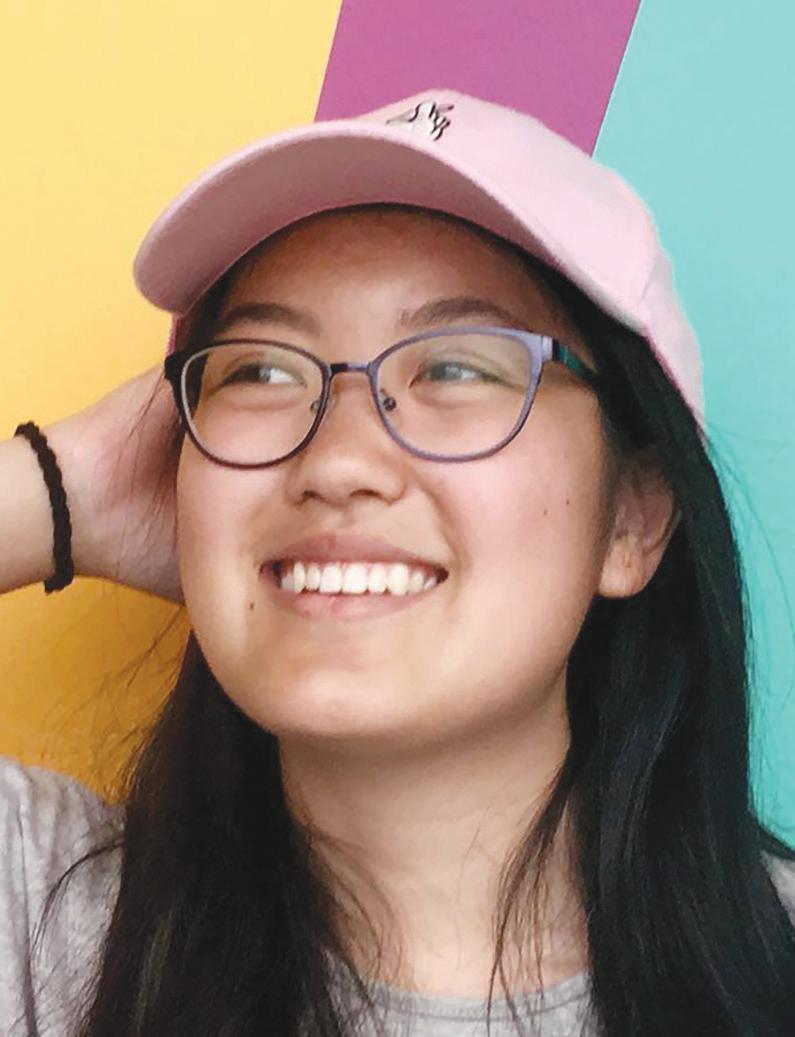



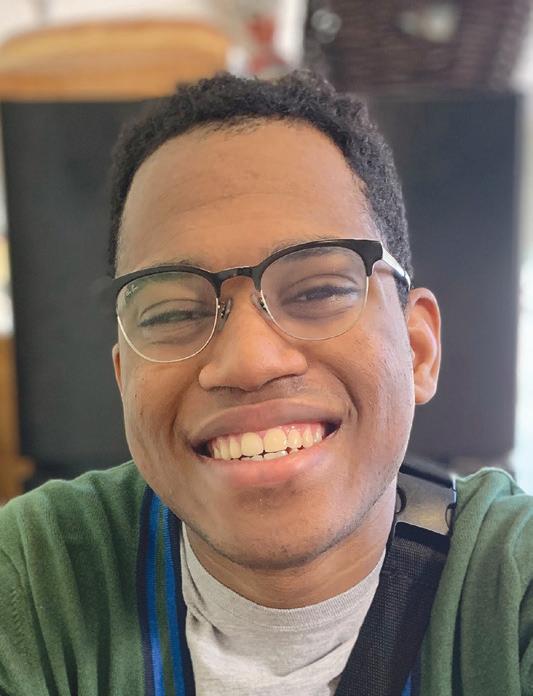
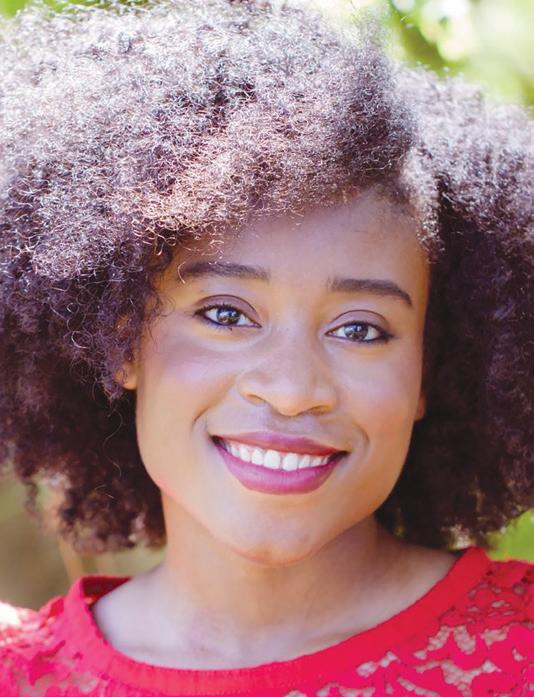

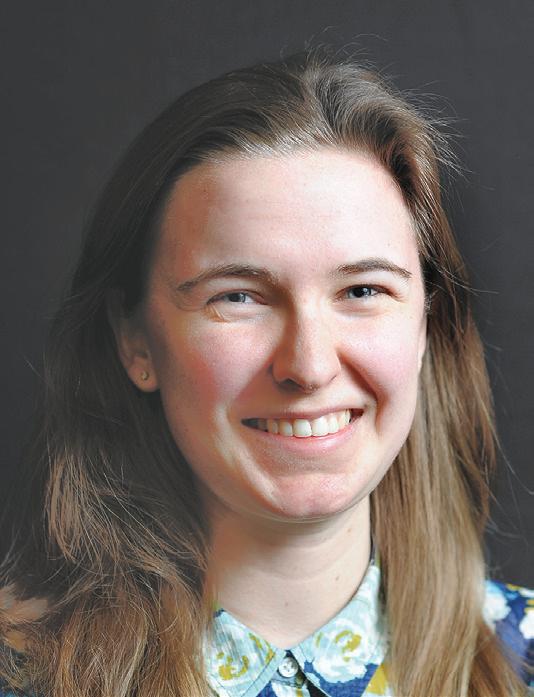


The opening of Mango Mango, a specialty Asian dessert restaurant, has brought much excitement to the Ithacan food scene.
Mango Mochi
The mochi craze is still very much among us. As a dish that symbolizes fortune in many countries, Mochi has been one of the most popular Asian dessert items. Traditionally, Mochi is served hot in two ways. The first is a filled mochi, usually with sesame paste or sweetened red beans. The second is pieces of mochi which is dipped into cane sugar or Japanese molasses. With Mango Mango’s unique take on dish that had so much historical significance, I was
interested in the dessert item once I took a look at the menu. I was glad to find large chunks of ripened mango, airy whipped cream all folded within a thin, doughy ricecake. Whist the mango provides a refreshing note, the dessert is decadent, rich and filling. In particular, Mango Mango has perfected the formula to the rice cake exterior. The Mochi is not only of appropriate consistency, it even achieves a slight bouncy texture, exemplifying the technique of MangoMango’s dessert chefs.
As a dish that cannot be created at home, definitely try Mango Mochi and be amazed by its taste.
Rating: 5/5
— Dominic Law ’22


Strawberry Mango Juice Sago & Lychee Jelly with Mango Ice Cream
This dish was as visually appealing as it was delicious. The contrast between the bright red strawberry juice and the lively orange mango pleased eyes just as much as the sweetness of the strawberries coupled with the tanginess of the mangos pleased my taste buds. The cool strawberry and mango juices gently coated the inside of my mouth further elevating the refreshingness of the dish. The butter-like smoothness of the Mango Ice cream contrasted with the chewiness of the jelly and sago created the perfect balance in texture. The flavor of the mango ice cream seemed to bleed into the juice giving a sort of homogenous, yet fresh and lively taste to the dish. This was a treat to have in the winter and I can only imagine how good it would feel to have amidst the heat of the summer.
Rating: 5/5
— Isha Vaish ’22
Mango Pancake
As my teeth pulled away at the stretchy thin outer crepe layer, tearing a hole into the pancake, my taste buds were infiltrated with sweet undertones of the fluffy white creme filling followed by the tartness of mango. The creme was just the right amount of sweet allowing for the mango’s flavor to shine through and not be overshadowed.
The texture of the dish was almost heavenly as the creme was soft and light, melting on my tongue. This is what it must feel like when biting into a cloud. My only complaint about the dish was that the mango to cream ratio was a little too skewed in favor of the creme and it would have been nicer if the mango played a more central role in the dish.
Rating: 4.5/5
— Isha Vaish ’22
Snow White Juice with Mango and Black Rice
The name “Snow White Juice” threw me off initially from this section of dishes on the menu — what will a dessert with that kind name even taste like? Turns out, any dessert named after Snow White here
is delicious. The juice (which, actually, I still don’t know what it’s made of) is smooth with a nice creamy base that complements everything else around it. In this case, with the mango and black rice, the juice served to “neutralize” the tangy and refreshing mango and the chewiness of the black rice. For those that haven’t had black rice before this dessert combination might sound strange, but black rice is a common ingredient in Asian desserts. It’s not overly sweet (which is why all the grandparents like it) but still has a nice flavor that blends well with fruit. I’d love to try the other Snow White Juice desserts they have in the future!
Rating: 4.5/5
— Katie Zhang ’21
Mango Mille Cake
A classic! I knew I had to order this as soon as I saw it on the menu — not only is it exactly the kind of aesthetic dish that gets posted to Instagram and Snapchat stories as soon as it arrives on the table (camera’s gotta eat first!), it was colorful and fun and what I think Mango Mango can be described as on a platter. Fun, fresh and exciting, especially in our humble little Ithaca Collegetown! I’ve never had a crepe cake before so I didn’t know what to expect, but the actual cake itself wasn’t what made the dish. On its own the crepe cake was pretty basic, but combined with the mango sauce drizzled on top and the chunks of mango on the side, it was a great dessert to end with. The bursts of fruity flavor and tangy sauce complemented the smooth cake well, which was firm enough to hold its shape but still soft and easy to dig into. Visually appealing and a great go-to dish, I would definitely recommend this to those who haven’t had this at Mango Mango yet!
Rating: 5/5 — Katie Zhang ’21
Snow White Juice with Durian and Black Rice
This is perhaps one of the most controversial desserts on the menu. If you ask me where durian comes from I would say the devil’s garden. One bite of the durian ice cream and I felt like I took a shot of petroleum. The acrid taste of the durian shot

right up to my nose, burning my nostril hairs, after completely KO-ing my taste buds. I could barely discern the taste of the rest of the dish. I couldn’t even enjoy the snow white juice as it was flooded by the strong garlicky taste of durian. To be honest durian would do a better job of warding off vampires than garlic. Here are some interesting quotes from a durian lover and two no-longer durian virgins who also tried the dish:
“The ice cream was good and flavorful. The dessert overall was pretty nice. It would have been nicer to use fresh fruit, but it was still good.” — Natalie K. ’22
“Creamy with a slight overtone of gasoline but the dish resolves itself in the end.” — Anna M. ’22
“Dude I’ve been burping durian ever since I left the dessert place.” — Amanda P. ’21
So I guess if you like durian this may be the dish for you, but after also burping up durian which made it feel like i was gagging on gasoline for almost a whole hour.
Rating: 0/5
— Isha Vaish ’22
Taro Ball with Herbal Jelly
While the idea of this dish sounded good on the page and in our heads, this dessert was not a winner. I wanted to try something that wasn’t a typical dessert dish, and the idea of taro balls and jelly together seemed interesting. However, the result didn’t pan out as well as I’d hoped. I’m not exactly sure what I was expecting, but it wasn’t what my friend and I got — a conglomeration of various types of curiously shaped jellies and balls, none of which went together whatsoever. There were taro balls, red beans, a mystery brown jelly/ball concoction and two types of jelly at the bottom, all combined in a bowl with a white liquid — maybe coconut milk? Looking back at the description I just wrote, this dish doesn’t sound appetizing at all. To be fair, the red beans were delicious on their own; each element worked if tasted apart. But together, the whole thing didn’t make any sense; the denseness of the taro balls made it hard to eat with the jelly (and isn’t that the whole point?) and the overall flavors and textures did not mix well. It’s an interesting idea and attempt, but sadly, poorly excuted.
Rating: 2/5
— Katie Zhang ’21
Isha Vaish is a sophomore in the College of Arts and Sciences. She can be reached at ikv2@cornell.edu.
Katie Zhang is a junior in the College of Agriculture and Life Sciences. She can be reached at kzhang@cornellsun. Dominic Law is a sophomore in the College of Architecture, Arts and Planning. He can be reached at dlaw@ cornellsun.com
With the impending release of Nintendo’s Animal Crossing: New Horizons, fans across the internet have been scouring every frame of promotional videos, trying to determine exactly what features are new and which elements have been brought in from previous games. Former Mayor Tortimer is nowhere to be found, for example, but the player character does now have the power to landscape their island with a magic shovel and pole vault over rivers, so it might be worth it. However, there’s one mechanic I’ll be keeping an eye out for when the game arrives on the Switch in March — the fishing mechanic.
Fishing minigames are the bane of my existence. When I was a kid, I thought the idea of a fishing video game was really cool — half the appeal of visiting the Apple Store at the mall was to play Flick Fishing on their vibrant 3.5 inch iPods. I had no reason to think fishing could be anything other than fun and relaxing. I’d spent a lot of hours fishing at a local park with my dad, and even more hours playing the Ice Fishing minigame in Club Penguin However, I would soon learn that the real world (of video games) was not so pleasant.
When I first began playing Stardew Valley, the acclaimed farming simulator, I had a bumpy start. I wanted a relaxing experience, not plagued by the monsters that would come from choosing a Wilderness Farm that was not as basic as the runof-the-mill Standard Farm. I ended up picking the Riverland Farm as my base environment, a farm with criss-crossing rivers and lots of fishing opportunities. As soon as the game gave me a fishing pole, I raced back to my farm to try and fish in my own backyard. Whatever hope I had for my cool, waterlogged plot of land evaporated. While the water looks cool in the game’s signature pixel style, I am completely useless at the game’s fishing mechanics. It seems peaceful at first: The player builds up strength and casts their line out into the enigmatic blue water, patiently waiting for a bite. That part I’m great at. It’s when a fish finally tugs on the line, prompting a terrifying meter to pop up, that things fall apart. The idea is to keep a small green rectangle in line with a bouncing, struggling fish icon through frantic clicks or button-presses. I just can’t seem to do it, no matter how many times I’ve tried, and suddenly a whole portion of the game is blocked off to me. I can clear level after level of slime monsters in the mines, I can patiently collect precious gemstones for the local museum, but I can’t seem to collect a single fish for my collection in the community center, turning my peaceful rural escape into a stressful

aquatic nightmare.
Animal Crossing is also meant to be a relaxing game, with a realistic 24-hour system that prevents the player from advancing too far in one day. The player can do whatever they want in the town they live in, whether catching bugs or playing the stock market. They can also fish — and in a town surrounded by water, it’s hard not to. Animal Crossing: New Leaf’s fishing mechanic involves tracking down the shadow of a fish in the town river and strategically placing a line at its eyeline. If the player is lucky, the fish will nibble — once, twice, maybe five times — until it finally bites and the player must quickly reel them in. This can be stressful too, especially with my more twitchy tendencies to hit buttons before I mean to. In a way, this mechanic teaches patience. You have to stress out to truly relax, and get the perfect catch. However, this lesson requires the player to occasionally fail, which is especially frustrating in a game that encourages the player to catch rare fish for their town’s museum. When the mobile adaptation Animal Crossing: Pocket Camp came out in 2017, I was thrilled to discover the fishing mechanics were watered down. When the player drops their line in front of a fish — a much easier task than in New Leaf — the fish bites almost immediately, and the player is given plenty of time to react. Gone are the days of yelling in frustration at too-quick or tooslow reflexes, and the player can catch as many fish as they want without a hiccup.
New Horizons seems to incorporate Pocket Camp’s camping elements and build upon the features introduced in New Leaf, but I wonder after which game it’ll truly take. I love being able to catch as many fish as I want on mobile, but gone are the lessons in patience from the flagship series. Sometimes, Animal Crossing’s weirder, trickier mechanics are what make it special, like how you have to navigate a personality quiz to be assigned a new hairstyle. In the mobile game, you can pick whichever hairstyle you want, no strings attached, but in the console games, you learn by trial and error (or looking up a guide). While I still hate fishing minigames with a passion, part of me hopes New Horizons doesn’t fully embrace the lazy convenience of its mobile counterpart. I still believe that every game could benefit from a simpler, easier fishing mechanic (as I’m sure anyone who played the 1998 game Sonic Adventure would tell you), but maybe there’s a happy medium between frustration and relaxation.
Olivia Bono is a senior in the College of Arts and Sciences. She can be reached at obono@cornellsun.com. On the Level runs alternating Tuesdays this semester.


STEPHANIE TAN SUN STAFF WRITER
The opening scene of Melancholia is one of the most captivating, psychedelic montages I’ve ever seen. It is carefully constructed with Easter eggs of all sorts that appear one by one as the film progresses. Among the most eye-catching are a beautiful dark horse, a mother clutching her son sinking into the mud of a golf course and a child whittling a stick into a spear. Behind this chaos is a beautifully somber orchestral melody, one that returns time and time again during the darkest parts of the movie. This combination serves as a perfectly serene, albeit unsettling, introduction as the key elements of this complex story.
Director von Trier’s 2011 genre-bending, experimental film takes the viewer on a voyage into the deepest, darkest corners of both Justine (Kirsten Dunst) and her sister Claire’s (Charlotte Gainsbourg) minds. By separating his film into two distinct parts named for each sister, von Trier’s dissection of each character’s motivations and insecurities are able to truly shine. Leering on in the distance, however, is the impending doom of Melancholia, a newly discovered planet threatening to crash into, and in effect destroy, Earth.
Dunst’s performance is unparalleled the entire movie, and her raw movements, expressions and silence say more than any words could. Perhaps her beautiful gown and makeup may have swayed me to sympathize with her cherub-like characterization, but her dehumanization in the second hour was immaculate.
Claire remained, unfortunately, somewhat borish and undeveloped even when the spotlight shone on her. In moments where it seemed appropriate for her to react and adapt to her surrounding characters or environment, more often than not I found her performance lacking in passion. Whether or not this was intentional I don’t know; however, I can honestly say I found Claire using every other character as a crutch throughout the film.
Speaking in broader terms, the progression of the storyline had a beautiful arc to it. What started off as a plea for the destigmatization of mental illness turned into a much more philosophical, perfectly fantastical mixture of beauty and terror. The setting creates a unique and unconventional warzone. The beautifully trimmed estate showcases a sort of symmetry between the two planets and the two sisters.
At the same time, though, each moonlit nighttime stroll taken is as eerie and suspenseful as the constant half-smile plastered on Justine’s face. It is a testament to society’s stigmatization of mental illness, one that made me wince every time someone angrily suggested Justine simply “be happy” or “smile more.”
By the last few minutes of the film, it is Justine’s young nephew, Leo (Cameron Spurr), who smiles as the two sisters and him enjoy their final moments on Earth. It was a tasteful apocalyptic feature that did not follow many of the conventional end-ofthe-world clichés.
Stephanie Tan is a sophomore in the College of Arts and Sciences. She can be reached at st626@cornell.edu.


Fill in the empty cells, one number in each, so that each column, row, and region contains the numbers 1-9 exactly once. Each number in the solution therefore occurs only once in each of the three “directions,” hence the “sigle numbers” implied by the puzzle’s name. (Rules from wikipedia.org/wiki/ Sudoku)






*****************************
1-3 Bedroom Apartments
Quiet Fall Creek Location
5 Minutes to Busline 607-351-1267 joe@joegrealty.com
*****************************
120 Oak Avenue
Just steps to Cornell Campus
10 bedroom house & 1 and 2 bedroom apartment
607-277-1234
office@ithacastudentapartments.com Ithacastudentapartments.com
>>SPECIAL PRICING<< Collegetown Apartments
Furnished 1-3 Bedrooms PARKING, LAUNDRY, UTILITIES! (607) 273-7368 www.WestShoreApts.com
109 Sage Place
2 & 3 Bedroom Apartments
Access to Shuttle to Campus
Access to Free Fitness Center
Novarr-Mackesey Property Management office@ithacastudentapartments.com 607-277-1234
Boldly Refined Living
312 College Avenue
Sophisticated studio, 1, 2, 3-bedroom apartments. Superior fitness facility, theater, and coworking space. Free high-speed internet. Exclusive resident parking. Package delivery/return. Overnight concierge. 607-273-9777 or 312collegeave.com
Flexible Housing Solutions!
Short Stay Accommodations Available
*Brand New* Studio Apartments 238Linden.com Leasing@inteprop.com
2020-2021
317 Upper Eddy St.
3 BR & Large Studio Apartment Ten month lease. Heat, water & gas provided. 607-227-0924
Catherine & Eddy St. 1 & 2 bedroom Furnished, heat included Laundry in building Parking available for fee 607-277-1234 office@ithacastudentapartments.com
26 A PA R TMENT FOR R
Collegetown Crossing
College Ave's Newest Location
307 College Ave. Now Leasing for 2020-2021
Completely New Modern Studios, 2 & 4 Bedroom Apartments. Fully furnished, heat & hot water included. Reception area at 307 College Ave. www.urbanithaca.com 607-330-2442 info@urbanithaca.com
Houses, Apts, Parking 1 to 9 Bedroom
Collegetown - College Ave, Linden Ave, Dryden Rd, Bryant Ave, Cook St. 607-330-2442 info@urbanithaca.com www.urbanithaca.com
Now Renting 2-10 Bedroom Houses/ Apartments for 20-21. All Locations. Call today or visit our website: Certified Properties of TC Inc certifiedpropertiesinc.com 607-273-1669
2020-2021
Studio 1, 3, 8 & 11 BR Apts. Great Locations in Collegetown. 607-227-2535
*Brand New* Full Term & Semester Leases Studio, 1 & 2 Bedrooms College Townhouse 121-125 College Ave. CollegeTownhouseIthaca.com Leasing@inteprop.com
APTS/HOUSES COLLEGETOWN BEST LOCATION/BEST PRICING 607-272-3389 607-592-1352 cbeach24@aol.com
MUST SEE Collegetown 1 & 3 Bedroom Apts. Available for Next School Year 2020-2021. 607-327-2927
27 H OUSE FOR R ENT
20-21
College Ave.
5 BR House
Furnished. Laundry. Parking. Call 607-273-8576

SOFTBALL
Continued from page 15
The Red dropped the day’s first game to Georgetown, 3-2, as a seventh-inning rally fell short.
Sophomore outfielder Hanna Crist woke the offense up with her second home run of the weekend, a two-run shot with one out in the seventh. While the Red managed to load the bases, sophomore infielder Allison Kerce ended the potential comeback with a flyout to left field.
Despite falling just short of a win, the Red carried the momentum from its strong finish against Georgetown into the afternoon game, when it notched a 10-6 victory over Merrimack.
Sophomore infielder Emily McKinney led the way offensively, going 3-for-3 with four RBIs and a three-run homer.
“To see that with someone ... who’s not afriad to take on that challenge is really exciting.”
Bridgette Rooney
In the circle, freshman pitcher Mia Burd picked up her second win of the weekend after she cruised through five innings, but ran into trouble when she was pulled after giving up six runs — four of which were unearned — in the sixth.
“[Burd] turns it on when she gets on the mound,”
Rooney said. “To see that with someone young on the team who’s not afraid to take on that challenge is really exciting … She’s got good stuff coming.” Despite its initial success, the Red dropped both ends of its doubleheader on Sunday.
Dawn Bodrug had other ideas, as she tossed a perfect game, striking out 15 Cornell batters.
In the first game, Cornell lost, 5-3, to Manhattan (3-3) after stringing together a late rally to tie the game in the top of the seventh. Yet snapping hopes for a come-from-behind win, the Red allowed a walk-off home run in the bottom half of the frame, ceding the game.
Heading into the final tilt of the weekend, the Red squared off against Stony Brook (5-0) for a chance to leave Florida with a winning record. But Stony Brook’s Dawn Bodrug had other ideas, as she tossed a perfect game, striking out 15 Cornell batters.
The 7-0 loss to Stony Brook wrapped up a 2-3 weekend for Cornell. The Red returns to action on Mar. 6, when it heads to Fairfax, Va. to compete in the George Mason Invitational.
Aaron Snyder can be reached at als532@cornell.edu.



By AARON SNYDER Sun Contributor
A month before its first game in Ithaca, Cornell softball got an early taste of warm weather last weekend, when it traveled to Madeira Beach, Florida to play five contests in three days for The Spring Games.
By ELIZABETH FOY Sun Contributor
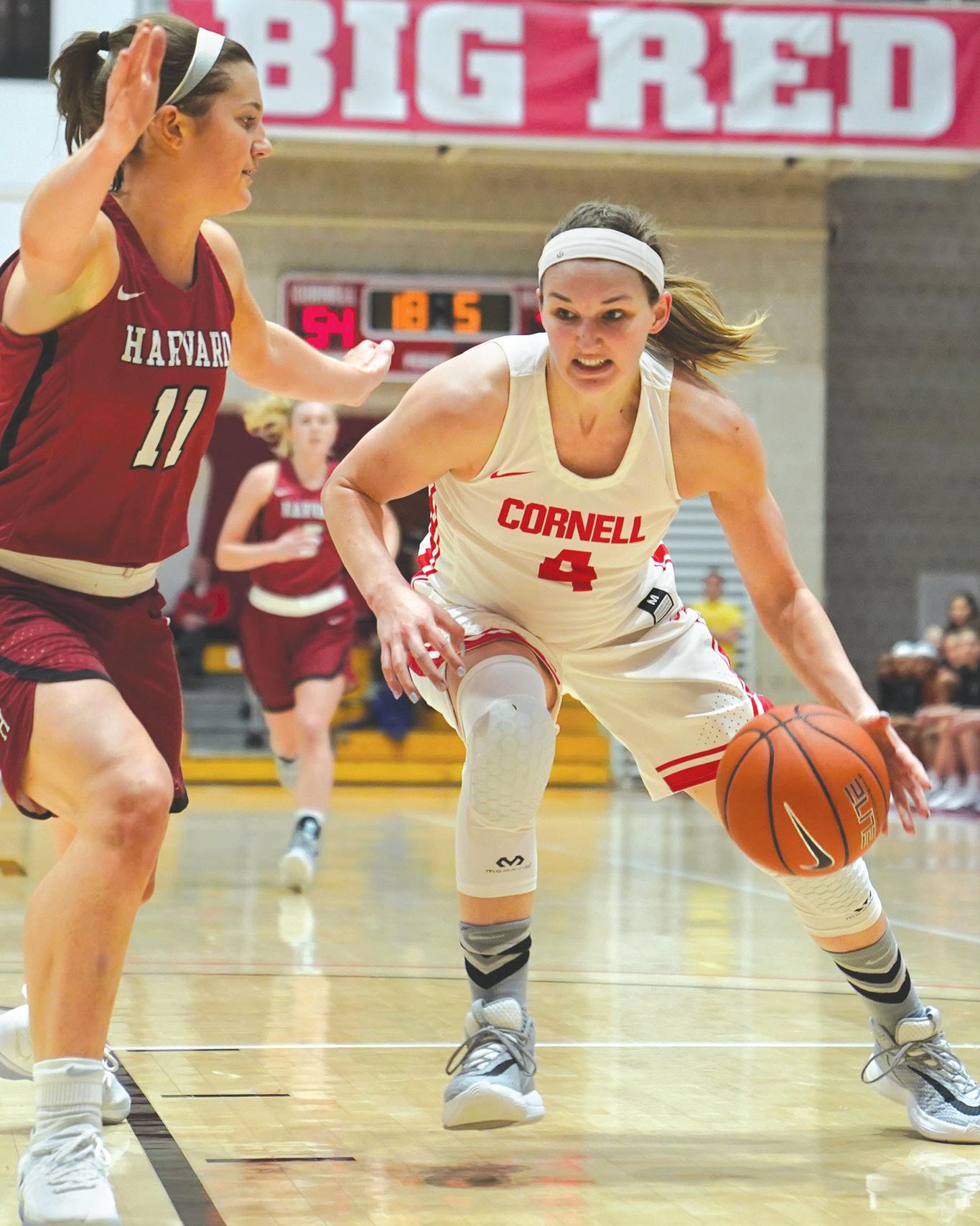
After jumping out to a 2-1 start in Ivy play, Cornell women’s basketball entered the weekend having fallen in its last four contests. Despite a valiant effort, the Red’s losing streak hit six games as it lost to Yale, 65-51, and Brown, 77-73. While Cornell entered the first game’s half trailing by five, Yale extended its lead, draining 3-pointers to keep the game out of reach. The Bulldogs converted 50 percent of their shots from beyond the arc.
Senior infilder Bridgette Rooney opened her final campaign on East Hill with a bang, going 5-for-5 with a home run. After finishing the weekend 10-for-15 with seven runs and three RBIs, Rooney earned Ivy League Player of the Week honors.
“The mindset I took this weekend was to go see as many pitches as I can and to play loose,” Rooney said. “I think that mentality and trying to have as much fun as I could in the box helped me.”
“The mindset I took this weekend was to go see as many pitches as I can and to play loose.”
Bridgette Rooney
While Cornell earned a victory in its season opener, it dropped three of its next four tilts in a mixed tournament that included the Red being blanked in a perfect game.
In the series’ first game, the Red (2-3) stormed out of the gate, homering three times en route to a 12-5 win over Albany (3-2) in its lone game on Friday.
Freshman infielder Maicie Levitt also added to the Red’s offensive show of force, going deep in her first collegiate at-bat.
“It felt great because I’ve dreamed of doing that since I was little,” Levitt said. “I remember smiling the whole time, and going into that at-bat, I just wanted to have fun.”
Following its strong performance on Friday, Cornell returned to the diamond for a Saturday doubleheader against Georgetown (3-12) and Merrimack (0-6).
See SOFTBALL page 14
By MONICA KIM Sun Staff Writer
After kicking off the season with two wins at home, Cornell women’s lacrosse hit the road to face off against its toughest opponent yet — No. 25 Penn State. Playing in hostile territory against a dangerous foe, the Red suffered its first loss of the season, 19-9.
While Cornell (2-1) already entered Sunday’s contest with a three-game losing streak to Penn State (4-0), the Nittany Lions’ suffocating defense and overpowering offense dashed any hope of a victory. In the decisive first half, Penn State quickly jumped out to a 5-0 lead in less than
10 minutes. Despite the Red responding with two goals by sophomore midfielder Shannon Brazier and freshman midfielder Katie Castiello, the Nittany Lions scored four straight goals to make it 9-2 in their favor.
Before halftime, the Red was able to score two more goals thanks to senior attacker Caroline Allen and Brazier, but that was immediately countered by three more goals from Penn State.
Cornell’s offense could not match Penn State sophomore goalie Taylor Suplee’s outstanding performance in the net, as she recorded a career-high of 20 saves.
The Red did not fare much better in the second half as the Nittany Lions stormed out of the break
and quickly tallied three more goals. While Cornell put up five goals in the backend of the contest, it could not erase the deficit.
Despite the dismal outcome of the game, freshman midfielder Annie Thomas provided a lone highlight to the day. Thomas broke the school record for most draw controls in a game, recording 11. The previous record of 10 was set by Sarah Hefner in 2013 and tied by Joey Coffy in 2018.
The Red hopes to bounce back in an Ivy League tilt against Harvard on Saturday at 1 p.m. in Cambridge, Mass.
Monica Kim can be reached at mkim@cornellsun.com.
made the ensuing layup, giving Brown a twopoint cushion with just four seconds left.
On the next play, senior forward Laura Bagwell-Katalinich appeared to draw contact that would normally warrant a foul, but the referees’ whistles remained silent as Brown took over and scored a final basket to punctuate the victory.
Once again, the Red’s perimeter defense proved to be its Achilles
The Red’s perimeter defense proved to be its Achilles heel, allowing the Bears to connect on 45 percent of their 3-pointers.
On the bright side, sophomore guard Samantha Will played one of her best games of the season — notching a career-high 16 points in the loss.
The Red suffered an even closer loss to Brown on Saturday. After erasing an eightpoint halftime deficit, Cornell entered the final minutes clinging onto a 73-72 lead, before the Bears took over down the stretch.
After a free throw by Brown, the game was knotted at 73 points apiece with 53 seconds left. Justine Gaziano recorded a steal in the waning seconds and
heel, allowing the Bears to connect on 45 percent of their 3-pointers. Brown was especially hot in the first half, when it hit 12 shots from deep.
Bagwell-Katalinich and freshman guard Shannon Mulroy tied the team scoring-high for the game, with each netting 15 points.
Senior guard Samantha Widmann was close behind, scoring 14 points.
In more positive news, BagwellKatalinich was named to the College Sports
Information Directors of America’s Academic All-District Women’s basketball team last week, the second time in her college career. Her selection onto the team makes her only the second in program history to be named to CoSIDA’s Academic All-District team more than once in their time on the team, and one of only four players to have received the honor at least once. The selection was awarded to BagwellKatalinich for her superior performance both on the court and in the classroom, where she boasts a 3.93 cumulative GPA. Having started every game this season while emerging as the team’s leading scorer, the senior captain has been able to score double-digits in over 80 percent of her career games. Cornell will hope to reverse its fortunes next weekend as it squares off against two more Ivy League competitors. On Friday, the Red will face Dartmouth in Hanover, N.H., followed by a Saturday game hosted by Harvard in Cambridge, Mass.
Elizabeth Foy can be reached at elf72@cornell.edu.
By MIKE SEITZ Sun Staff Writer
Coming off a 19-10 win in its season opener, No. 10 Cornell lacrosse continued its winning ways, earning comfortable victories over Towson, 17-10, and High Point, 21-11 last weekend.
Earning personal honors, several players had standout performances across the two matchups. Junior attacker John Piatelli tallied his 100th career point, while senior attacker Jeff Teat earned his 250th, becoming only the fourth player in pro gram history to achieve that milestone.
Meanwhile, freshman attacker Michael Long also made his presence known, scor ing four goals in each contest, earning him Ivy League Rookie of the Week honors.
In the Red’s (3-0) first game of the weekend against Towson (0-3), the team looked to replicate much of the offen sive prowess fea tured in its first game of the sea son.
Breaking records
attacker Jeff Teat surpassed the 250-point mark, becoming only the fourth Cornell player to achieve the feat.
Largely a pass-first option in the Red’s opening win last week, senior midfielder Connor Fletcher led the offensive charge early with two goals and one assist in the first quarter. Another contributor from last week, senior faceoff specialist Paul Rasimovicz looked dominant from the start, going 5-for-5 on faceoffs and even adding a goal of his own.
But the momentum began to shift in the Tigers’ favor as the team won possessions, deadlocking the game at 6-6 in the second quarter. The Red was largely unable to adjust to Towson’s resurgence, misplacing passes and turning the ball over several times.

But Cornell managed to flip the switch, breaking out of the tie thanks to freshman Angelo Petrakis, who subbed in for faceoffs. Petrakis proved to be the spark plug that the team needed, quickly clamping down on faceoff contests to go 9-for-13 in the second and third quarters. “It definitely helped out on the field when you truly believe that you are prepared for the moment,” Petrakis said.
The extra possessions gave Cornell’s offense the momentum to go on a blistering 8-1 run, which extended into the third frame. During this near 15-minute stretch, two players scored three goals each.
The first hat trick was scored by Long, who after failing to tally a point in the season opener, exploded, scoring three uninterrupted goals in as many minutes to move Cornell into the lead. Long finished the game with four goals and an assist.
“All we were doing was running our offense, and I happened to be the one getting the looks,” Long said. “The great thing about our offense is that it could be anyone on any given day.”
In the third quarter, Piatelli got in on the fun, recording a hat trick in a mere two minutes, with his third goal coming off well-executed team play.
The move started via a Petrakis faceoff, when a loose ground ball was scooped up by freshman midfielder Danny Boccofola. Boccofola’s extra effort started a sequence of intricate passing that culminated with Long giving up an open shot to find Piatelli for an even easier look.
“The wing middies have been doing a great job of fighting for all of the ground balls,” Petrakis said. “They play a tremendous role in the success on the faceoffs.”
At this time, the Cornell offense had scored eight of the
game’s previous nine goals for a 14-7 lead. Fletcher, who ended the first quarter with two goals, also secured a hat trick at the end of the quarter.
Cornell added another win to its repertoire in its next game at High Point (1-4).
After giving up an early goal on Sunday to the North Carolina squad, the Red scored four straight to build a lead that it never relinquished. At the end of the first, Cornell led, 8-4, and went on to outscore its opponent, 10-3, in the next two quarters. Faceoff options Rasimovicz (12-for-20) and Petrakis (9-for-12) won draw after draw to set the offense up for success.
“Our face-off unit is inspired and motivated to win these extra possessions for our offense and ultimately be
“The great thing about our offense is that it could be anyone on any given day.”
Michael Long
the spark in the team,” Petrakis said.
Familiar goal scorers from the Towson game carried over their sharpshooting into the weekend’s second contest.
Long again exploded on the scene, scoring a goal in each quarter. For his second goal, Long spectacularly came from behind the goal to dodge his defender and fire a rocket into the net. The freshman also finished with three assists.
Less than 20 seconds into the second quarter, Piatelli completed another hat trick. With the goal, the senior reached his 100th career point and would later score three more for a career-high six goals in one game.
Teat also achieved a historic feat. By recording three goals and four assists against High Point, Teat surpassed the 250-point mark in his career. The senior is now only two points away from moving into third in the record books.
The Red’s defense smothered the High Point attack. Sophomore defenseman Gavin Adler had the assignment of covering High Point’s biggest threat, Asher Nolting. Adler’s lock-down defense proved to be key, as he limited Nolting to just a single goal. Overall, Cornell forced 19 turnovers, stymying the Panthers throughout the afternoon.
Next up, Cornell will continue its road trip against Ohio State on Sunday at 12 p.m.
By FAITH FISHER Sun Staff Writer
Fresh off a triumphant victory in the ECAC Championship match, Cornell men’s tennis continued its success, clinching its fourth consecutive win by toppling Tulsa in a 4-2 match this weekend.
The team entered the match donning
“It is a confirmation of what we knew we were capable of ... it gives us motivation to train harder”
Silviu Tanasoiu
its first ECAC title since the 2012-2013 season. During its tournament run, the Red defeated several Ivy foes, including Brown, Dartmouth and Harvard.
“I thought it was a great overall tour-
nament,” said head coach Silviu Tanasoiu.
“We had incredible support from an incredible crowd. The guys … battled as hard as I have ever seen them battle, and by doing that, I think they put themselves in the position to win.”
Following the victory, the team earned the No. 16 spot in the Intercollegiate Tennis Association rankings and moved to No. 25 in the Tennis Channel/USTA rankings — marking the team’s second-highest ranking in program history.
The Red (7-1) looked to extend this winning drive into its 9 a.m. match against No. 16 Tulsa. Even though Cornell ultimately secured the 4-2 win, the comeback victory was hard-fought.
“Tulsa is a very good team and they came in incredibly hungry — they gave us their absolute best, but I think that our guys competed so well,” Tanasoiu said. “They fought so hard — I don’t think we played our best tennis in this particular match, but I think we competed extremely well.”
Despite a 6-0 sweep from seniors Daniel
Soyfer and Lev Kasakov against their competitors at No. 2 doubles, the Hurricanes came out on top in the other two matches, ultimately snatching the doubles point from the Red.
Soyfer, undefeated this season, neutralized the score in the No. 6 singles match with a 6-3, 6-3 victory. The Hurricanes, however, responded with a victory of their own in the No. 4 singles bout.
“I don’t think we played our best tennis in this particular match, but I think we competed extremely well.”
advantage for the Red. Soon after, junior Pietro Rimondini battled out another 3-set comeback victory at No. 5 singles, a grueling 1-6, 6-0, 7-6 match that sealed the victory for Cornell.
Silviu Tanasoiu
The Red did not allow Tulsa to flaunt its 2-1 lead for long, with junior Alafia Ayeni tying up the match when he toppled his opponent in a three-set victory at No. 2 singles.
Energized by the win, the Red fought to take the lead, with Kasakov leading the effort at No. 3 singles. Sporting a 4-6, 6-1, 6-0 comeback win, the junior secured a slim
“Our success so far creates a sense of awareness among the guys on the team that we are a good team, that we can compete with the best teams in the country,” Tanasoiu said. “It is a confirmation of what we knew we were capable of, and it fuels us and gives us motivation to train harder.”
The Red will have the weekend off before it leaves behind its home-court advantage to embark on its first regular-season road trip through Iowa, where it will take on Drake, Louisville and Iowa from Mar. 6 to Mar. 8.
Faith Fisher can be reached at fsher@cornellsun.com.