Nearly two weeks ago, Cornell detected a case of the more contagious and possibly more deadly strain U.K. variant of COVID-19 — but the discovery was lumped into an emergency email about a cluster.
In an email to The Sun on Feb. 17, Gary Koretzky ’78, vice provost for academic integration, wrote that the B.1.1.7 variant had been detected in “a few students” on Feb. 5. The exact number of campus cases tied to the B.1.1.7 variant remains unclear.
There was no previous statement explicitly stating that students had tested positive for this new variant, except for a Feb. 5 email, primarily discussing a COVID cluster, that read, “We’re faced with increased virus prevalence locally and in the nation, and, most recently, the emergence of one of the virus variants in our community.”
According to a statement made on that day by Provost Michael Kotlikoff, the individual was not affiliated with the University.
A later University statement, sent on Jan. 28, urged students to follow public health guidelines in response to these new variants, but the University had not yet identified any cases in students.
Cornell identified the U.K. variant in a “few students” through the arrival testing process, since then COVID-19 testing lab at the College of Veterinary Medicine — which analyzes all of Cornell’s tests — has been conducting full genomic sequencing on the positive samples when there is reason to believe the variant may be present, such as a case tied to international travel.
The B.1.1.7 variant had been detected in “a few students” on Feb. 5. The exact number of these cases remains unclear.
At the time, it was unclear if the Feb. 5 email was referring to the emergence of the U.K. variant in Tompkins County or the immediate Cornell community. In the email to The Sun on Feb. 17, Koretzky confirmed that this indicated a case of the variant in a Cornell student, faculty or other member.
“Decisions regarding COVID communications are made with a full consideration of guidance from TCHD and applicable state and federal guidelines and regulations,” Koretzky wrote.
The U.K. variant was first detected in Tompkins County on Jan. 15, in a test that was sequenced by Cornell’s COVID-19 testing lab.
Koretzky wrote that less than 2 percent of campus cases that the University is aware of are B.1.1.7. Since the email on Feb. 5, campus has seen 232 total COVID19 cases — which is just shy of two thirds of the number of cases campus saw through the entire fall semester.
“Given that our students were arriving from so many different locations, positive samples underwent additional testing for variants that have been described around the world,” Koretzky wrote. “Due to our aggressive surveillance testing protocol, we have been able to contain the spread of the variant among our student population.”
Currently, the U.S. is dealing with multiple variants that have originated internationally, including variants from Brazil and South Africa.
See VARIANT page 3
C.U. Nixes Promised Graduation Ceremony
By ALEX HALE Sun News Editor
In March, Cornell promised its outgoing seniors that they would have a commencement in Ithaca. Nearly a year later, the University officially rescinded that promise.
Associate Vice President for Alumni Affairs Michelle J. Vaeth ’98 emailed alumni Wednesday morning, saying that reunion ceremonies this summer will be held completely online. Among these ceremonies is the Class of 2020’s commencement ceremony — scheduled for June 5 and 6, a few days after the Class of 2021’s planned commencement.
their families will be invited.” Wednesday’s email walks back that statement.
“Last spring, we had every reason to hope that in-person celebrations would be possible this summer, but we know now that these plans must also change,” Vaeth wrote.
“[W]e know now that these plans must also change.”
Michelle J. Vaeth ’98
Graduations in 2020 became a tricky topic for universities, as most schools canceled in-person ceremonies replaced by virtual ones. Cornell did send graduates a message from Pollack, but held off on holding a ceremony of any kind. Winter 2020 graduates celebrated through virtual ceremonies.
“After consulting with alumni volunteers and campus partners, and carefully considering the continuing public health risk and uncertainty due to COVID-19, we have made the difficult decision to host this year’s Reunion celebrations virtually instead of on campus as we had hoped,” the email read.
Last spring, the University decided not to give up entirely on hosting an in-person graduation. When President Martha Pollack postponed the Class of 2020’s commencement last March, she promised that an in-person ceremony would occur for those current seniors.
“We are not yet able to announce a date or location, as that will very much be determined by the progression of the current public health crisis,” Pollack wrote on March 20, 2020. “But I can say with certainty that your celebration will occur. It will take place in Ithaca. All of our graduates and
The University has not announced full details of the Class of 2020 ceremony, but they plan to “create a special recognition of our 2020 graduates.”
This will be the University’s will be hosting its second consecutive virtual reunion, after moving all of its 2020 reunion events online last June. All events have moved to June 11 and 12. Most notably, this includes the reunions for the classes of 2015 and 2016, whose festivities were going to be from June 3 to 6, and the commencement ceremony for the class of 2020, set for June 5 and 6.
According to the Cornell Office of Commencement Events website, commencement in the spring for the Class of 2021 is “currently unlikely.” But the University plans on making a decision regarding the graduation for current seniors in March.
Alex Hale can be reached at ahale@cornellsun.com.
PETE MAROVICH / THE NEW YORK TIMES
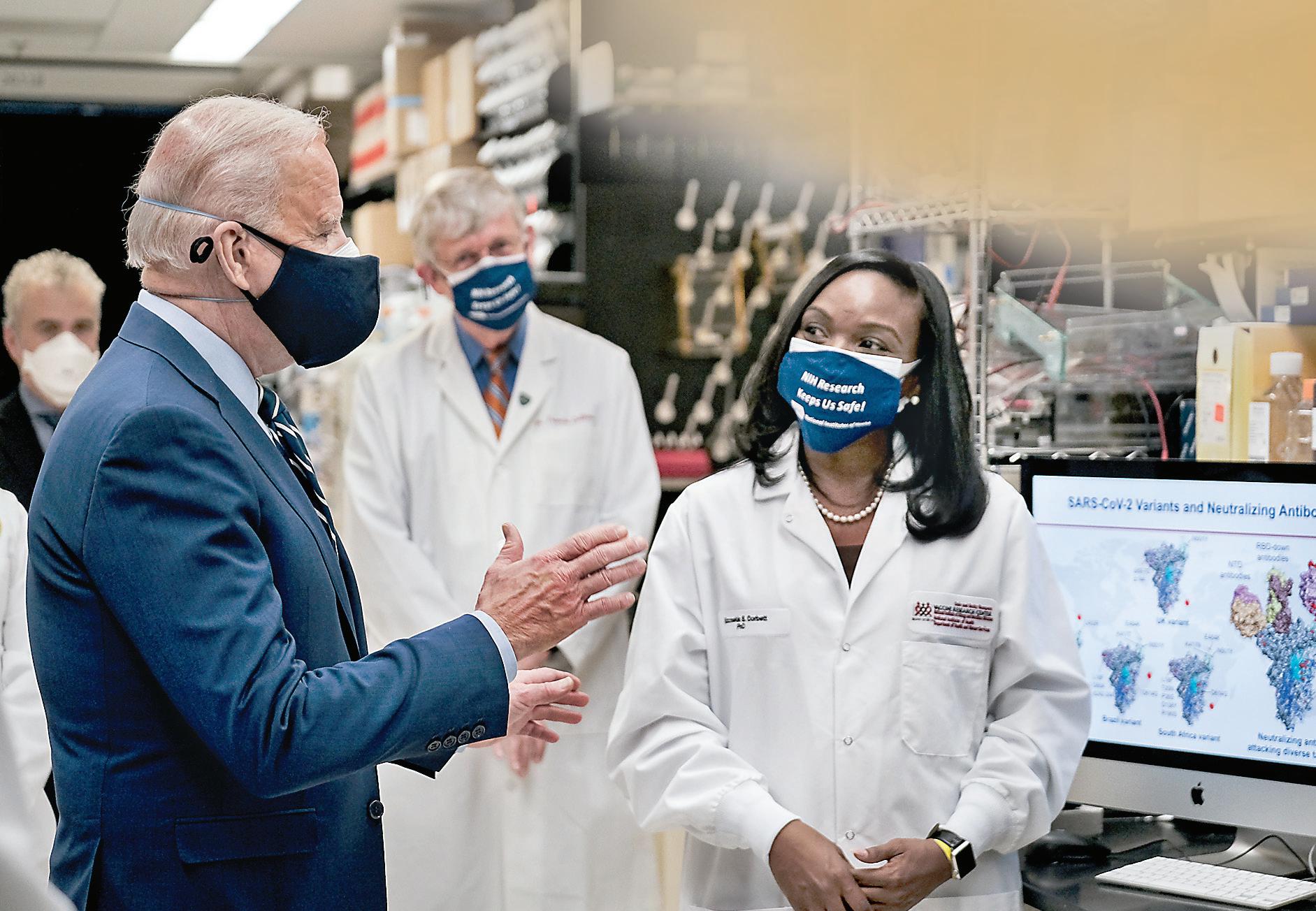
COVID developments | Under President Joe Biden, the effort to vaccinate quickly has amped up, but it’s a race against new variant strains. Here, Biden visits the National Institutes of Health on Feb. 11.
More contagious strain announcement slipped in cluster email
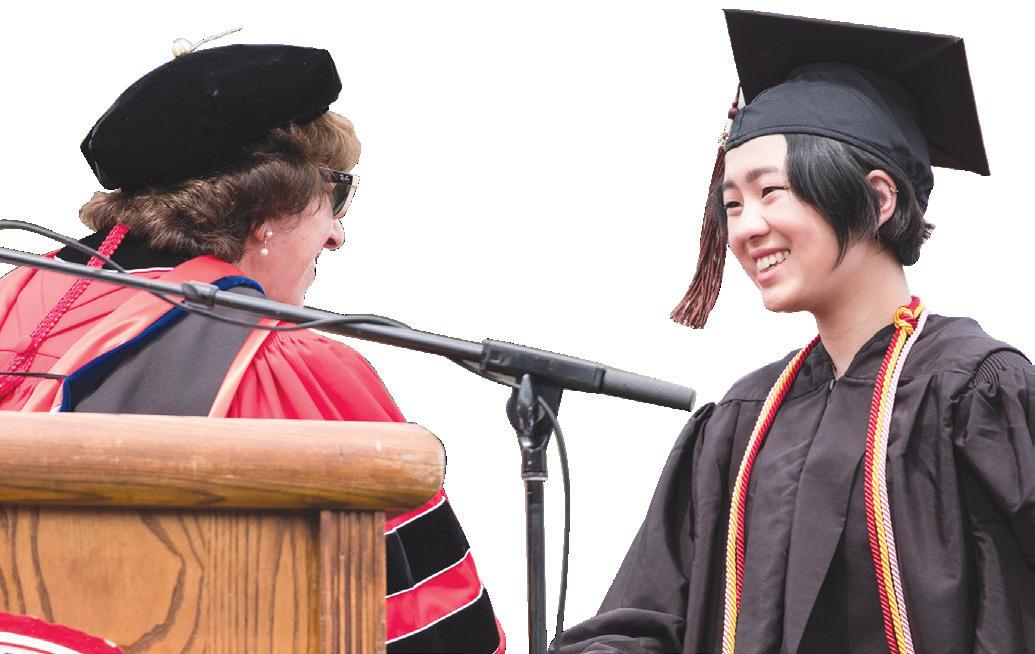
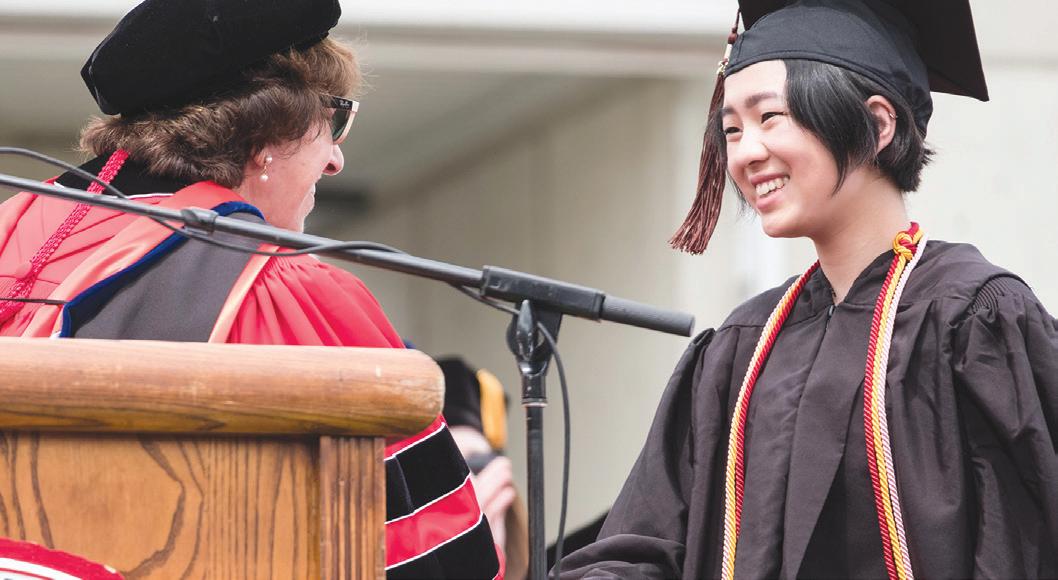
New grads | President Pollack congratulates a 2017 graduate.
Toni Morrison at 90: A Panel of International Scholars Explores the Impacts of Morrison’s Work 5 p.m. - 6:30 p.m., Virtual Event
Tomorrow
Cornell Population Center Seminar, Naomi Sugie Noon - 1 p.m., Virtual Event
Latina/o Studies Fridays With Faculty Seminar Series Noon - 1 p.m., Virtual Event
Seminars in Infection & Immunity: Dr. Sara Cherry 12:15 p.m. - 1:15 p.m., Virtual Event
Chasing Dreams from Africa to China — “Guangzhou Dream Factory” 3 - 4 p.m., Virtual Event
He Said, She Listened: Mansplaining, Gaslighting and Epistemic Entitlement 4:15 p.m., Virtual Event
ONEcomposer: Watch Party: Price’s Piano Concerto in One Movement 5 p.m., Virtual Event
New Program House to Serve as Mainstay for Student Veterans
Facing
unique challenges, vets welcome community space
By ANGELA BUNAY Sun Staff Writer
Cornell is home to around 70 undergraduate student veterans and another 400 faculty and staff — and as of next fall, these veterans will have a dedicated space on campus.
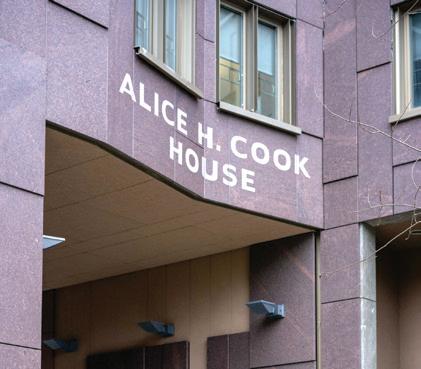
On Feb. 16, the University announced a new program house for student veterans set to open in fall 2021. The residence, which will initially house 12 students and intends to grow, will be located at 625 University Ave near West Campus, once part of the Alice Cook House and previously home to the Alpha Tau Omega Fraternity.
In 2017, Provost Michael Kotlikoff committed to increasing student veteran enrollment to 100 undergraduates over the following three years. Currently, Cornell enrolls 70 veterans or current service members, up from 24 when Kotllikoff made the announcement.
“I am pleased that our efforts have had successful results these past few years, and a dedicated program house for this valued and broad campus population will further support and enrich the Cornell experience for our student veterans and others with military connections,” Provost Kotlikoff said in a University statement.
Mark Minton ’23, vice president of the Cornell Undergraduate Veteran Association, said that the program house was a goal for the CUVA since its founding in 2015. The house will provide a platform for hosting guest speakers, special luncheons and overall be a resource center for student veterans.
“I think it will provide an extremely enriching experience and be a great source of comradery and community,” said Michael Sanchez ’23, affairs coordinator for CUVA, who plans on living in the house next fall.
While some student veterans such as Jennifer Cunningham ’22 will not be living in the program house this fall, they are looking forward to seeing the community that the house will help develop.
“I am hopeful for the future,” Cunningham said, “as this house will provide a much needed gathering place for veterans, ROTC students, staff and faculty to come together in collaboration.”
Reese Kemen ’24, a first-year
cadet in the Army Reserve Officer Training Corps program with hopes to serve in active duty following graduation, saw the program house as a big step in making the University more accessible to the veteran community.
“The fact that Cornell has announced a program house solely for veterans demonstrates its commitment to supporting all members of the greater community, and hopefully, it can serve as a beacon of hope for other veterans who are pursuing higher education,” Kemen said.
Student veterans face unique challenges with 47 percent having children, only 15 percent being the traditional college age and 62 percent being first-generation students.
Kemen and other ROTC members on campus also noted the importance of having student veterans in the undergraduate community as they provide a wealth of skills and knowledge that contribute to a diverse campus community.
“Cornell has made an effort to be more inclusive to people of all backgrounds, and it is nice to see that there is an effort to improve the experience of the military-connected community,” said Emily Segal ’24, a first-year cadet in the Army ROTC.
For the veterans, this step places Cornell closer in line with its long and storied history intertwined with service members.
“The nations’ wars have been fought by Cornellians, and service members from across the country seek out that endeavoring spirit at Cornell,” said Minton. “We honor their legacy by growing our own future here on the Hill.”
On-Campus COVID Variants Slip Trough Communication Cracks
According to Koretzky, “[o]f the variants described in the literature that may have clinical significance, the only one we have identified is the UK variant.”
A handful of universities have reported cases of the B.1.1.7 variants this semester, including the University of California, Berkeley, University of Texas, Austin, and Tulane University.
All six of the schools that have detected the B.1.1.7 variant in their campus community have issued public statements on the matter. Tulane, Berkeley, University of Miami, UT Austin and University of Washington all issued statements to their campuses. The cases at the University of Michigan were initially reported by the local health department.
While these six institutions are the only ones to report cases of B.1.1.7, typical tests for COVID-19 do not differentiate between the various variants of the virus. So, the only universities that detect these variants are those that are actively searching for them.
Most diagnostic tests, like those used for
Cornell’s surveillance tests, only test for the presence or absence of the virus, but full genomic sequencing allows experts to know the full genetic makeup of a virus sample and identify variants.
Similar to the schools that have identified a virus variant, Cornell has not significantly altered its COVID-19 precautions, but has doubled down on its existing pandemic measures, including quarantine and isolation protocols, surveillance testing and physical distancing.
“SARS-CoV-2 variants represent a significant health risk, which we take very seriously. We have sequencing protocols in place to detect the emergence of variants and limit their spread,” Koretzky wrote. “This semester’s enhancements to Cornell’s policies and protocols are aimed to further support students, staff and faculty, and to make our testing, isolation and quarantine protocols even more effective in limiting the virus’s spread.”
With the introduction of the U.K. variant to the campus, Cornell enters the race with the rest of the country — hoping the speed of vaccination can outpace the spread of these more virulent strains.
Professors Embrace In-Person Classes After Year of Zoom University
By ASHA PATT Sun Staff Writer
Despite increased on-campus COVID cases and nagging concerns of a slow and unpredictable vaccine rollout, many professors have been itching to get back into the classroom.
Taking students’ support and gratitude for in-person learning last semester as motivation to return to campus, many have felt more empowered to teach in physical classrooms, citing fall success and clear benefits.
“I just realized last semester how much the students were really missing the in-person contact,” explained Prof. E. Lauren Chambliss, communications.
“From the very first class [this time around], every single student joined in the conversation.”
Prof. John Blume, law, who is teaching two hybrid courses this semester — one for undergraduate students and the other for law students — also felt inspired by student support for in-person learning.
year, vaccine distribution has not gone according to plan for some professors — many faced hiccups like far-off appointment slots and technological problems while booking. Margolin, who recently received an appointment in Syracuse next month for his first shot, found rollout to be chaotic.
“While these issues are coming from the state and federal level, it’s still not efficient or equitable,” he explained. “If you’re really savvy about online interfaces, then this is great for you, but it’s really not the equitable way.” Others nationwide have cited access issues about needing an email address, for example, to get a vaccination appointment.
While the obstacles to online
“They’re testing people all the time, I don’t know how much more you can do than that.”
Prof. Drew Margolin
“[Students] want to thank you for letting them go back to the classroom and have an in-person experience, so I think that’s been good and rewarding,” Blume said.
After spending most of 2020 behind their computer screens, many professors said they felt more comfortable and safer returning to teach in person.
“I was really heartened by my colleagues who were brave enough to give [in-person instruction] a try in the fall,” explained Chambliss. “When I talked to them, they just [said] they never felt unsafe and the students all seemed to appreciate being there.”
Between Cornell’s robust testing program and the total absence of classroom transmission cases in the fall, the benefit seemed to outweigh the risk.
“I would have taught in person last semester, actually. I did not have a concern,” said Prof. Drew Margolin, communications. “It’s about Cornell having a good plan, which I think they had. They’re testing people all the time, I don’t know how much more you can do than that.”
Professors who agreed last semester to teach in-person this semester did so prior to New York State adding in-person college professors to phase 1b of vaccine distribution on Jan. 11. Now, though, they’re starting to be vaccinated.
Chambliss, who already received her first dose of the vaccine, said she was grateful to state health officials, who made the decision to expand the eligibility requirements: “It was an enormous bonus to teaching in person that I didn’t really expect.”
Still, like much of the last
teaching last semester have made professors eager to get back to in-person classes, teaching in-person and hybrid courses has introduced a different set of concerns.
“Under my mask I’m making facial expressions, but I don’t know what [students] see,” explained Margolin. “I haven’t quite figured out how to emote and get the students to loosen up. It feels very stiff. I’m trying to figure out a way to make it more familiar without seeing each other.”
Other concerns include students who rely on lip-reading to understand material and the general challenges to working in small groups while distanced.
Blume, who is teaching a hybrid class of 120 students, only some of whom are in person, has found new ways to actively involve everyone in class discussions, even if they aren’t in the classroom, using virtual tools.
“I don’t want to feel as if they’re getting a lesser experience than the students that are in person,” he explained. “I’ve used more polling and questionnaires. … I think I’ll continue to do that even if things return to whatever they return to next semester.”
Chambliss said she plans to incorporate more Canvas discussions into her classes: “If we do some of it online first, and then we digest it even further in the classroom, we get to go one step deeper.”
Despite these challenges of only visible tops of faces and technical difficulties to be heard over Zoom, many professors are excited to just see their students in person again.
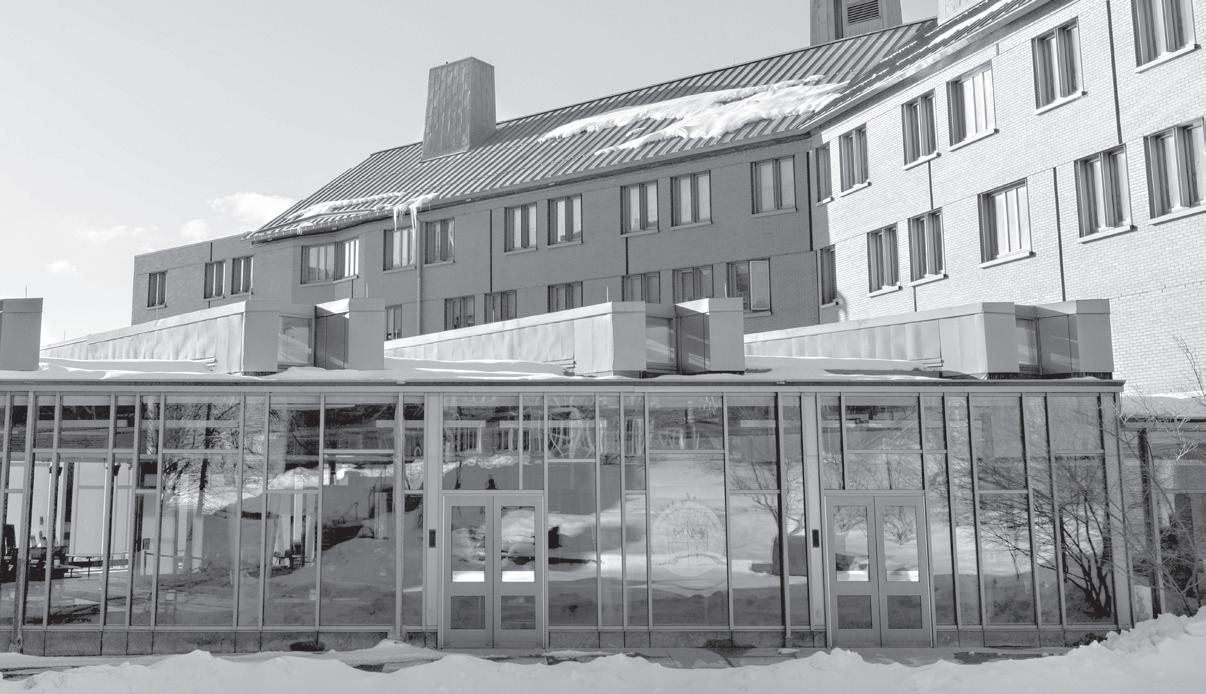
New housing | A new program house for veterans will open on West Campus
LEV KATRECZKO / SUN STAFF PHOTOGRAPHER
Your source for good food
I Drank a Gallon of Water Every Day for a Week
By ISHA VAISH Sun Staff Writer
One
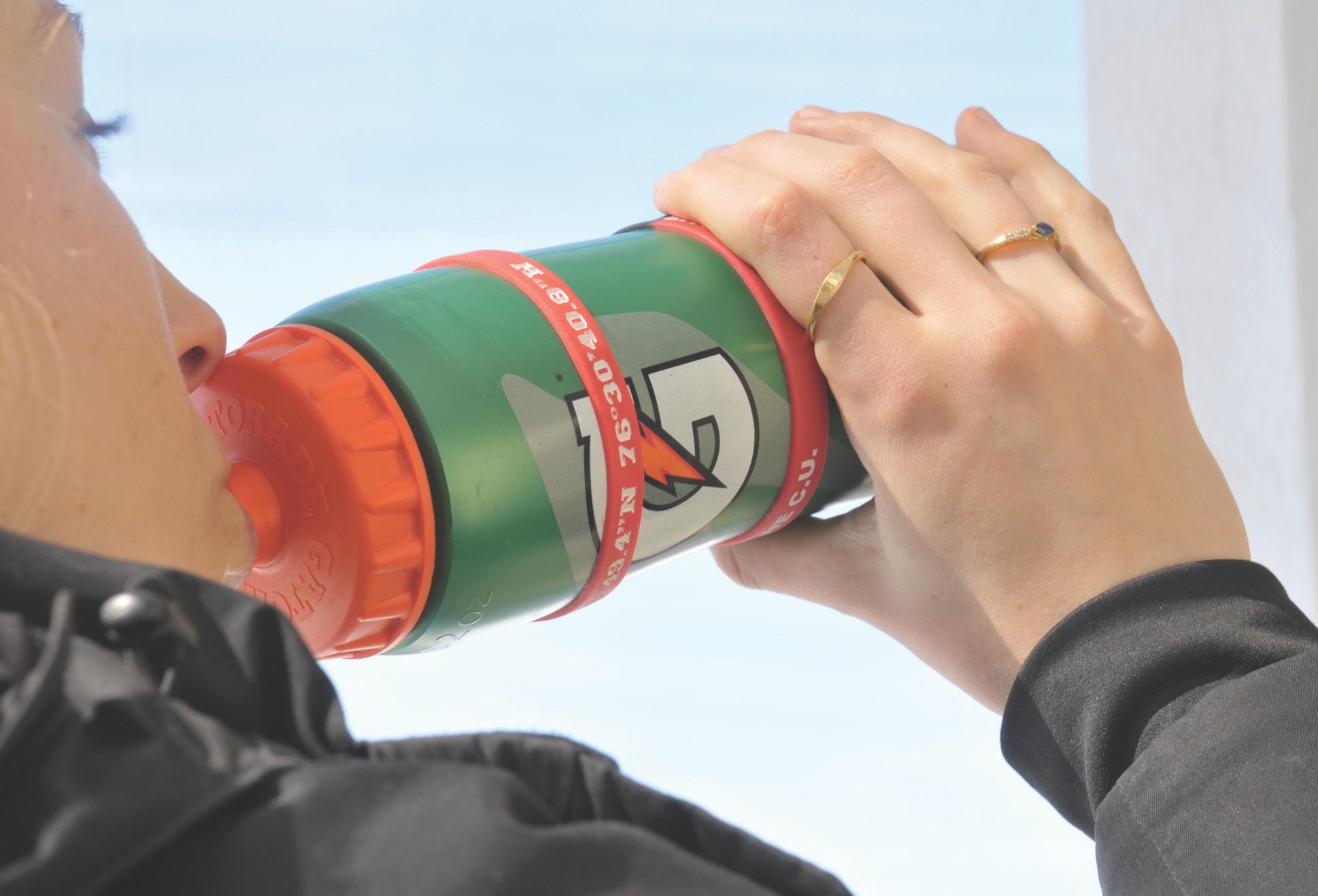
fine morning, at the elite hour of 3 a.m., I’m lying in bed browsing through YouTube –– mainly skin care videos that I know I’ll never follow but watch anyway –– when a certain video catches my eye: “I drank a GALLON of water EVERY DAY for a WEEK | weight loss + before & after results.” The thumbnail boldly claims that the creator lost 6 whole pounds just from drinking a gallon of water every day. My first thought was, “Girl, if I knew it was that easy I would have hopped on the water train ages ago.”
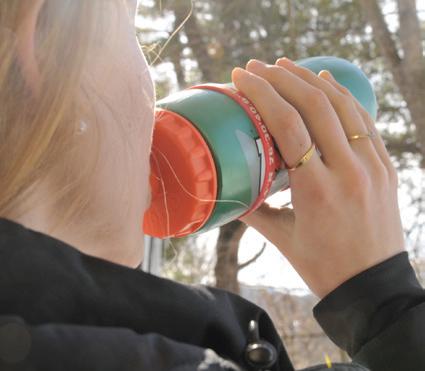
On campus I always carry my handy dandy Camelbak water bottle and drink around one to two liters a day. However, being at home is a whole other story. Especially during breaks, my middle name is lazy — I drink one glass of water per meal, which is only around two glasses for me since I wake up at noon or, “More like 2 p.m.,” according to my mom. So, I thought, why not try what the YouTuber did and see what happens?
Day one: I started by recording how my face looked, how dry my skin felt and what my weight was. When I wake up in the mornings, my skin usually feels super tight, my nose is often flaky and my lips are almost always chapped. This week, my acne was worse than it normally is as I had just tried out a new “organic” moisturizer which caused me to break out on my cheeks and
forehead.
There are about 3.7 liters in a gallon, which rounds out to around four Camelbaks worth of water. To me, that sounds like a lot of water, and if you’re anything like me (a lowkey hypochondriac), the first thought that might pop into your head is: What about overhydration? Not to worry, a healthy kidney can flush around 0.8 to 1 liter of water per hour, so you’ll be alright as long as you pace yourself. Getting through the first
two bottles was pretty easy, but halfway through the third, I found myself so bloated that my stomach felt like a water balloon. My appetite was almost non-existent, even though the only thing I had eaten the whole day was half a bagel. After the fourth bottle, my stomach looked like the Japanese souffle pancakes that jiggle when you tap them. The real issue, however, was how many times I had to use the bathroom — throughout the day, I went around six times and I woke up twice to go in the night. Rest in peace, my dear bladder.
When I woke up the following morning, the first thing I noticed was that my face didn’t feel as dry as it usually does. I wasn’t peeling anywhere and even my lips weren’t chapped. Looking in the mirror, I also noticed that my cheeks looked just a smidge brighter. My water weight had dissipated overnight, but other than that I didn’t notice any changes in my weight. My body was slightly more used to drinking the four bottles of water, and with the correct pacing, I was able to make it through the fourth without any problems or excessive bathroom trips. Honestly, once it hit day three, drinking a gallon was pretty easy. In fact, I actually found myself feeling thirsty some nights. I would say the greatest improvement over the course of the following four days was the reduction in dry-
ness of my skin, especially my facial skin. Not only was I no longer flaking, my skin had an almost youth-like glow to it. The red discoloration around my acne also seemed to have lessened, and my acne scars were starting to slightly blend in more. As for my weight, I still felt no difference. I sometimes felt bloated throughout the day, but it was much better than the first two days after I started pacing my intake better.
I set out on this whole pro-
I watched even experienced noticeable improvements in their acne; however, that was not the case for me. Even though the discoloration lessened a bit, the changes in my acne weren’t truly noticeable unless you were looking for them.
Like with most things, seeing improvements from drinking water takes time. Drinking water as a daily habit generally has many benefits, including improvement of brain function and mood. On the converse, fluid loss generally can impair mood and concentration and increase anxiety and fatigue.
After the fourth bottle, my stomach looked like the Japanese souffe pancakes that jiggle when you tap them.
cess for weight loss, the main advertisement (clickbait or not) of these YouTube challenges. By day seven, however, I actually gained three pounds. It may have been due to the leftover cheesecake from my birthday though, so I’m not entirely discrediting the fact that drinking lots of water helps you lose weight. But I will definitely continue to drink a gallon of water a day mainly because of the improvement I noticed with my dry skin. For the first time, my face felt hydrated in the mornings. A few YouTubers
Furthermore, water has also been shown to increase energy by boosting metabolism –– in fact, drinking 500 mL of water increases metabolism by 30 percent and drinking two liters of water a day can increase energy expenditure by 400KJ. Upon doing some more investigation, another study suggested that drinking water is indeed also associated with weight loss, stating that water can “promote weight loss by lowering total energy intake and/or altering metabolism.”
Really what the actual health experts — and I — are trying to say here is: drink more water.
Isha Vaish is a junior in the College of Arts and Sciences. She can be reached at ivaish@cornellsun.com.
AMELIA CLUTE / SUN STAFF WRITER
Professors: Go to Your Colleagues’ Zoom Classes
Paris Ghazi La Vie en Prose
Paris Ghazi is a senior in the College of Arts and Sciences. She can be reached at pghazi@cornellsun.com. La Vie en Prose runs every other Monday this semester.
The guinea pigs of Zoom University, the students, get poked and prodded with teaching tactics class after class every day. All professors want is for us to unmute and, for the love of god, just learn. Students experience the entire spectrum of creative distance-learning teaching methods. Professors test just one experiment: their own.
Many undergraduates are now seasoned Zoomers who understand what it takes to make a classroom work because we have experienced what doesn’t. Professors, however, only know what engages a digital classroom in the context of their own courses. But, it has never been easier for professors to be guinea pigs themselves and see things from a student’s perspective. All it takes is a Zoom link and willing professors who can jump into a colleague’s classroom to witness for themselves what kind of strategy — or lack thereof — leads to a five-minute breakout room of excruciating silence and what makes students wish it lasted 10 minutes longer.
The pandemic produced an educational conundrum that we may all be familiar with by now: Students report a heavier academic workload than ever, while
many faculty say they have lowered classroom expectations. Why the dissonance? Maybe faculty have adjusted assignments, but they underestimate the amount of time students spend on asynchronous work. Maybe students overestimate how much we study because we are unhappy with online learning (and this isn’t even approaching the current logistical and personal roadblocks to completing the work). Maybe students used to get by in discussion by participating based on peer comments without actually doing a reading. Enter discussion boards and preclass modules that leave a digital stamp if we submit them past the deadline. Neglecting the reading is no longer a possibility. As Prof. Jody Greene, literature, of University of California, Santa Cruz puts it, “It’s not that there is ‘more work.’ It’s that the expectations are becoming transparent and there is more ‘accountability’ — by accident.”
that’s fine. I have had days when I wished for anything but a breakout room and days I felt giddy at the end of class because I got to meet someone new, and, for a second, was a real student again. “I guess at first I hated break out rooms, but now I kind of look forward to them because I get to meet other people in the class and talk about the class and our passions, so it just makes being there more tolerable because most people are amazing,” said Samantha Feliz ’22.
How to successfully set a tone conducive to participation is not something students can teach professors. It is, however, something that they can teach each other by taking a virtual seat in another professor’s classroom.
Like students, professors are not immune to Zoom fatigue. Many teach several classes a day on top of faculty meetings. But maybe if professors experience a school day from a student’s point of view — feel what it’s like to have someone press a button to toss us into a different group over and over, hear how other professors introduce a class to the day’s topics and announce expectations — we could resolve the workload paradox. An engineering professor can hop into a history teacher’s lecture and glean how to keep students’ attention by breaking up a presentation with participation. The history professor could learn from the engineering class about innovations for non-verbal participation that aren’t a Zoom chat box.
I have had professors convince me with their impassioned monologues that by turning my camera on I am doing a service to my peers’ learning and my own. I have also had others convince me that if I wish to go one hour and 15 minutes without being perceived,
That our cameras, microphones and Zoom tools can be sources of both anxiety and excitement are proof that how we feel about them comes down to the tone a professor establishes at the start of class. How to successfully set a tone conducive to participation is not something students can teach professors. It is, however, something that they can teach each other by taking a virtual seat in another professor’s classroom.
Zoom is hard, for professors and students, so we participate in the experiment willingly. We understand as a collective body of academics that our reality is not ideal for anyone. Still, we are endlessly adaptable creatures. We can live with any tragedy, continue as students who do homework and take exams and sometimes live oddly good days when so much is wrong. This should come as no surprise. We came to learn, and we will continue to make do with whatever tools we have at our disposal.
When so many spaces serve as reminders of the pandemic, the classroom remains perhaps the most normal part of life. Some days, dispensing the motions of Zoom and just talking to classmates from our respective bedrooms about the fruit fly life cycle or what the reading made us consider about language and love is the most precious bit of normalcy we still have. It is on all of us, the students and professors, to protect the classroom at all costs. When everything is so complicated, Zoom doesn’t have to be.
Dear Cornell, Save the Snow Days
Anuli Ononye Womansplaining
Anuli Ononye is a junior in the College of Arts and Sciences. She can be reached at aononye@cornellsun.com. Womansplaining runs every other Tursday this semester.
Inever experienced a snow day until I came to Cornell, which puts me at a whopping two days. For many Northeastern students, those two days are less than they typically expected in one year of elementary school. On top of that, I have (to my utter embarrassment) spent both of those snow days studying.
My lack of understanding and participation in “snow day festivities” probably makes me both the best and worst person to write an op-ed urging administrators to keep snow days regardless of Cornell’s COVID-adapted online teaching modalities.
My f rst snow day was the Monday after Tanksgiving, my sophomore year. Having arrived back on that Sunday, I used it as a catch up day on all the work that I had “accidentally chosen” not to do while at home in Southern California. My second snow day was on a Friday that following
February. Conveniently, that was my no-class study day, which also happened to be the day before an important out-of-state trip. As a result, I have spent both “fun” days in RPCC catching up on readings and essays.
Before you start calling me a Grinch, I do actually love the snow. Te winter weather is one of my favorite parts about being on campus. I love ice skating at Lynah Rink with my friends, impromptu snowball fghts, sledding and building snowmen. On the frst real snow of my freshman year, I convinced 10+ New Yorkers (yes, I really did!) to make snow angels, build snowmen and have a very competitive snowball fght with me to celebrate my frst real winter.
While talking to my good friend Ezi Osuoha ’22 about the upcoming snow storm, she commented on how disappointed she was that this year’s freshmen won’t be able to experience a true Cornell snow day due to the new “just move it online” precedent set last semester. Add that to the list of just about everything that we’ve moved online this year, ranging from class to Slope Day.
chance to fnally go sledding, hot chocolate and movie days and, above all, a chance to really rest. Ezi mentioned how she’d always take the tradeof of shortening her summer break for a few days of fun in the winter.
The cancellation of snow days is just another reminder that virtual school requires us to be ready and often ignores students’ mental health and their needs for rest.
I was so fascinated talking to her and other friends about their passion for snow days. To me, just about any day could be a snow day if you jumped in a big pile of snow on your way to class or took a rest and relaxation day in your dorm. However, other students at Cornell speak so passionately about snow days. Tey remember their parents skipping days at work for family time, the
Going virtual has changed just about everything for Cornell students. While it has made some things more convenient, it has simultaneously demanded more from us. Club meetings that were previously an hour long, can take up to three hours just because we’re just at home. Bosses and authority fgures can ask us to “jump on a call” in 10 minutes, inadvertently demanding that our schedules are always free. Although snow days are logistical on paper, as they are designed to protect students and staf from dangerous weather conditions, they have become much more. On Cornell’s campus, they are an excuse for down time for overworked students. Te cancellation of snow days is just another reminder that virtual school requires us to be ready and often ignores students’ mental health and their needs for rest.
To Cornell students, snow days are their chance to sleep in an extra hour, order food with their friends, go sledding, make snow angels or catch up on work. Regardless of what they choose to do or not to do, students deserve just a little bit of fun in a year that has deprived them of fun in so many ways. Tis is a Cornell tradition that we need to cling a little tighter to.
Fill in the empty cells, one number in each, so that each column, row, and region contains the numbers 1-9 exactly once. Each number in the solution therefore occurs only once in each of the three “directions,” hence the “single numbers” implied by the puzzle’s name. (Rules from wikipedia.org/wiki/ Sudoku)
Niko! by Priya Malla ’21
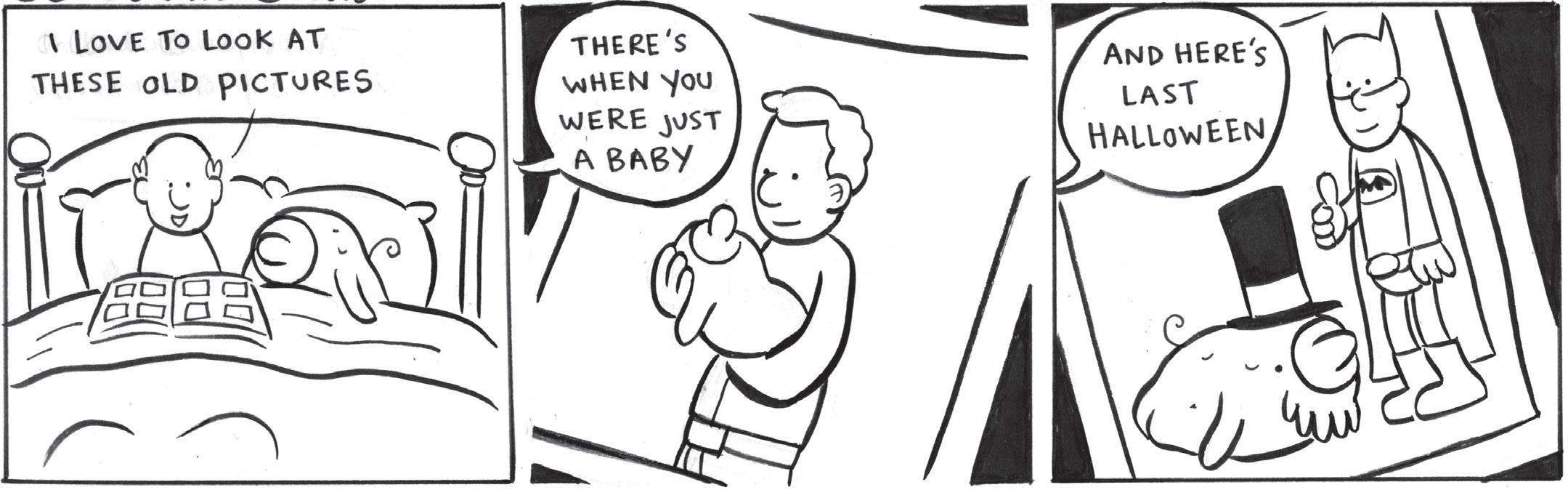
Mr. Gnu by Travis Dandro
Gloop and Gary by Travis Dandro
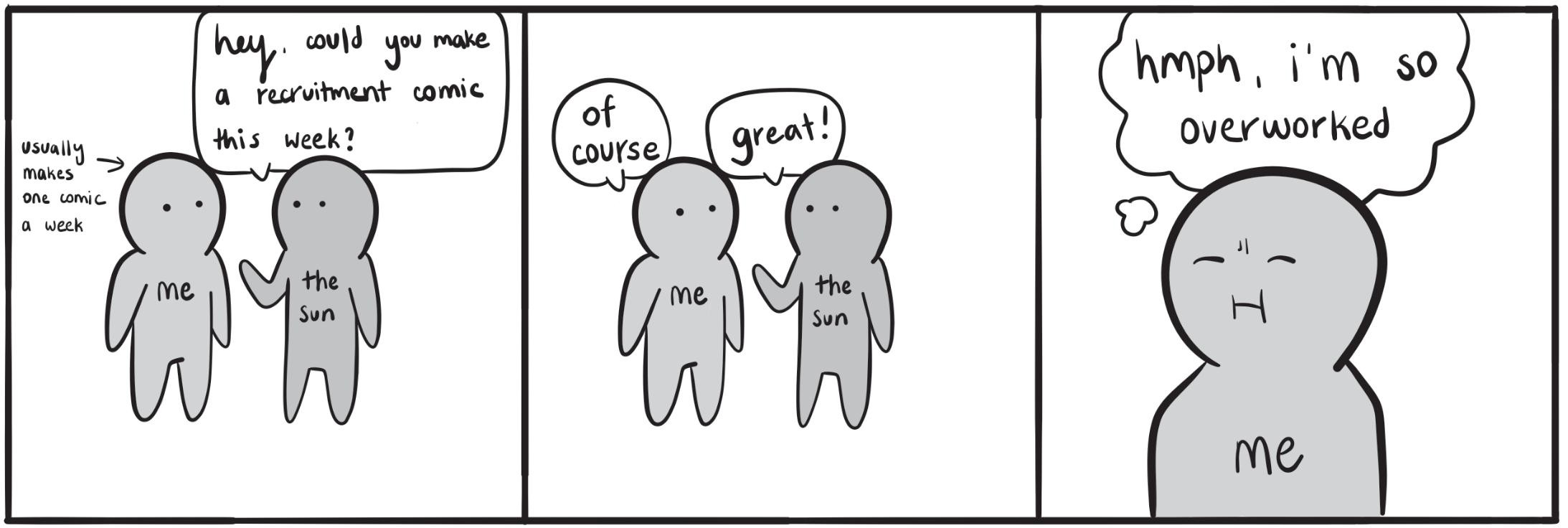
Faster Than Light by Alicia Wang ’21
School Spirit Must Be Sacrifced for Public Safety
With COVID-19 cases still rising, athletics pose a risk to the broader community
Liam Monahan Writer’s Corner
Liam Monahan is a staf writer for the sports department and a freshman in the College of Agriculture and Life Sciences. He can be reached at ljm294@cornell.edu.
Time is ticking on the Ivy League’s decision to potentially move forward with a rescheduled spring athletics season — athletes and fans alike are calling for at least a few weeks of Ivy League action. Taking into account the risks that come with athletic events, I believe that it would ultimately be in the best interest of the Cornell community to cancel the season.
In a year full of sacrifices, disappointment for the sake of public safety has become the norm. The traditional college experience has fallen victim to the pandemic’s wrath, and sporting events should be no different.
Coming into the year as a first year, I was excited to participate in tailgating events, attend homecoming games and experience Big Red athletics firsthand. Throughout high school I covered varsity football games, and the thought of taking pictures on the sidelines of Schoellkopf Field is what drew me to The Sun.
After receiving the news that all fall sports were canceled, I was frustrated that my long-anticipated outlet for school spirit was stripped from me and replaced with virtual game nights.
I came into the second semester praying for the chance to finally see the Ivy League in action, but a change of heart has come over me recently. Seeing the experience of other colleges resuming athletic events has convinced me that Cornell should maintain its pause on sports a little longer.
The transmission of COVID-19 through sporting events is an unnecessary risk. Whether it be on the field or in the stands, sports promote students breaching social distancing guidelines for the sake of competition and camaraderie. Contact sports will always have the potential to spread diseases amongst athletes and coaching staff because of the close proximity. Even televised rivalries or championships would likely draw in crowds of students to form watch parties, potentially initiating a super spreader event.
athletic faculty across 78 of the 130 NCAA schools. Cornell itself traced back its first major COVID outbreak to the athletic community in early September when 36 of 39 positive cases were determined to be student-athletes.
Several schools have already seen spikes in COVID cases across the student population after large sporting events. Ohio State University, for example, competed in the College Football Playoffs National Championship and immediately afterward saw new daily positive cases spike from 12 to 52 in only seven days.
Cornell does not have the leeway to allow for such an outbreak to occur because of Gov. Andrew Cuomo’s (D-N.Y.) college closure threshold of 100 on-campus cases, which is why spring sports must unfortunately be canceled until the pandemic is under control. Most experts believe that above 70 percent of the population must be vaccinated or immune to the spread of COVID-19 before the trend line of infections significantly decreases, so only time will tell how long the Ivy League must wait before safely returning to normal operations.
The traditional college experience has fallen victim to the pandemic’s wrath, and sporting events should be no different.
Modeling from Washington State University confirmed that even with socially distanced sporting events, student bodies would at least see a 25 percent rise in COVID-19 cases.
The spread of COVID-19 through college sports has already been closely documented, with the most recent reports confirming at least 6,000 cases in student-athletes and
Not all hope is lost for athletes hoping to live out their final seasons, though. With the recent news of Ivy League graduate students being eligible to participate in next year’s events, graduating student athletes can still look forward to the senior season they couldn’t have this year. The fans on campus meanwhile can continue to enjoy socially distanced campus life.
To continue to stay healthy, we must accept the reality that social events such as sports have to be given up for the benefit of the community, or else we run the risk of losing our access to life on campus altogether.
Book it | Like all fall and winter sports in the Ivy League, men’s cross country was forced to cancel its season due to the ongoing pandemic.