The Corne¬ Daily Sun


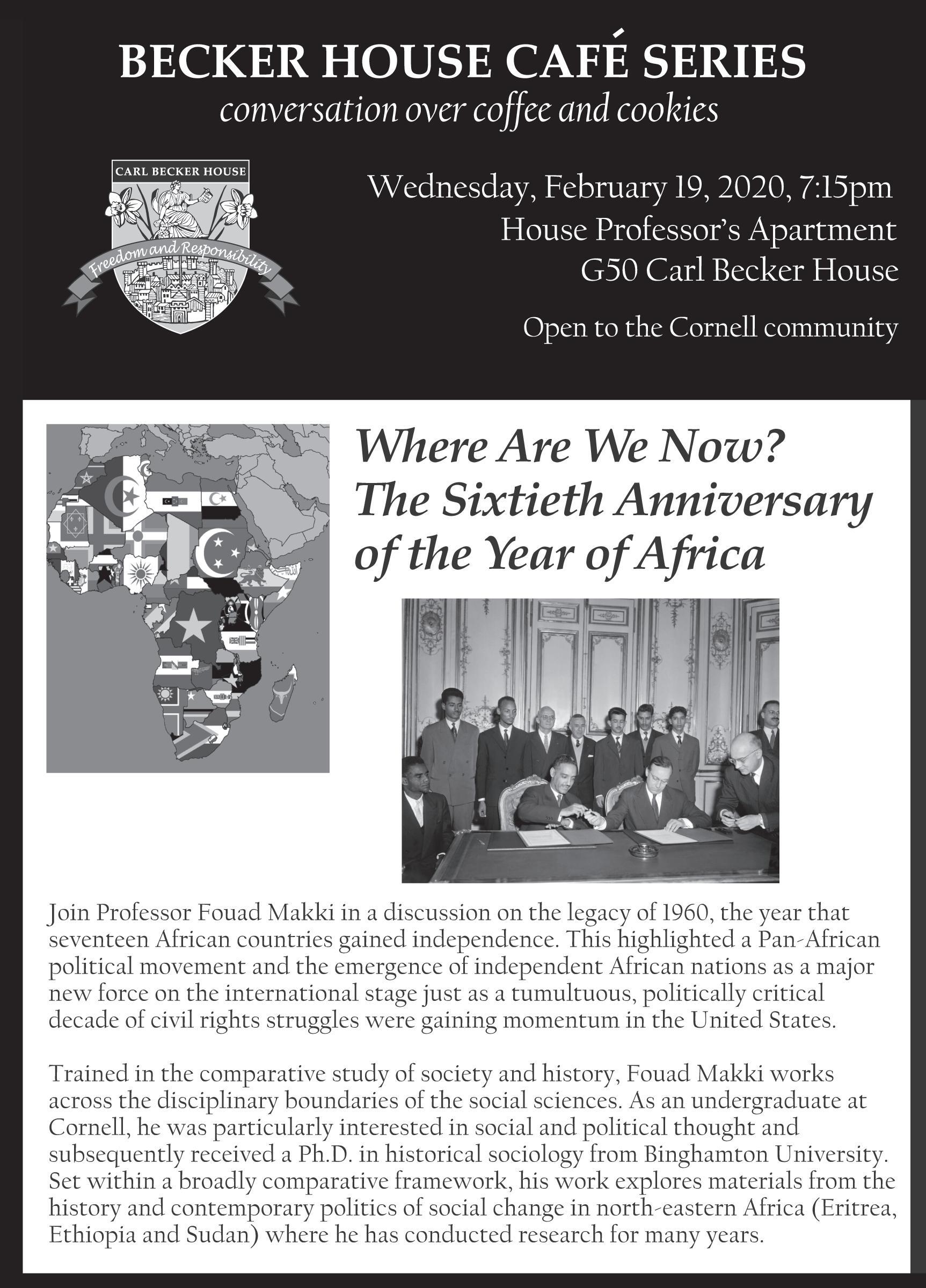
He can’t “Renegade”, but with 1.1 million followers and counting, one Cornell freshman is starting
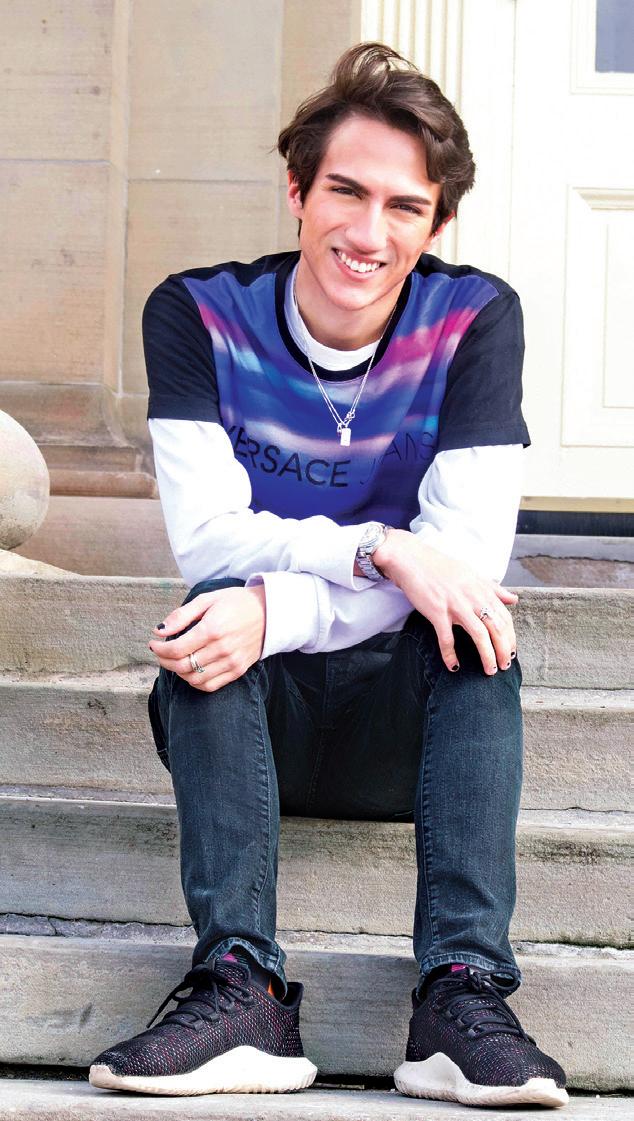
to feel the fame –– TikTok fame that is. John Dombrowski ’23 has amassed a cult following on the popular app and it shows no signs of slowing down.
With TikTok’s presence growing rapidly worldwide, Dombrowski is riding the platform’s popularity wave into campus –– if not wider –– stardom.
From his first video posted in September 2019, Dombrowski hit it off, garnering a total 1.2 million views. A scroll through his page currently reveals over 300 videos, with many having equally impressive view counts. His videos –– most shot in his Court-Kay-Bauer Hall dorm room –– are takes on life, features on marine biology or looks into life as a Cornell student.
That first video, a jab at his North Atlanta suburb’s public high school, transformed into a following.
“Definitely [talking about] college was how I grew my channel,” Dombrowski said. The topics of his TikToks have included the college the first-year applied to and how he chose his major — marine biology — at Cornell.
See TIKTOK page 5

Eggs-celent | Six Egg-Vengers take on the duty to repurpose eggs set for compost in order to fight the new emerging evil –– food insecurity.
1,000 eggs redirected from compost bins to food banks weekly
By MEGHANA SRIVASTAVA Sun Staff Writer
Six students calling themselves the “EggVengers” rescue 1,000 eggs weekly from being thrown away, donating eggs destined for compost bins to local food banks instead.
In November of last year, Kasey Schalich grad pitched the idea for the club to a group of animal sciences students during a compost program, which she had been running for two years.
After hearing her pitch, four undergraduate students, Colin Detrick ’23, Regina Martinez ’22, Brianna Green ’23 and Sunny Levitis ’22, stepped up as leaders for the nascent campus organization.
Schalich first learned about these discarded eggs by speaking with a manager at the Cornell poultry farm, which led her to
notice that only about 20 dozen eggs are actually sold by the animal sciences department, even though the farm has over 1,000 chickens.
“It seemed like a good opportunity to take … a good food that's going towards waste and using it to solve a problem that we talk about –– food insecurity,” Shalich said.
After Schalich identified the issue and formulated a proposed solution, her and Prof. Thomas Overton, animal sciences, had to get clearance by the department to avoid food safety concerns, a barrier that had previously prevented eggs from being donated in the past.
Overton said that the department's role was mainly to get it cleared by risk management. The animal sciences department
See EGGS page 4
By LUCAS REYES and ANIKA POTLURI Sun Staff Writer and Sun Contributor
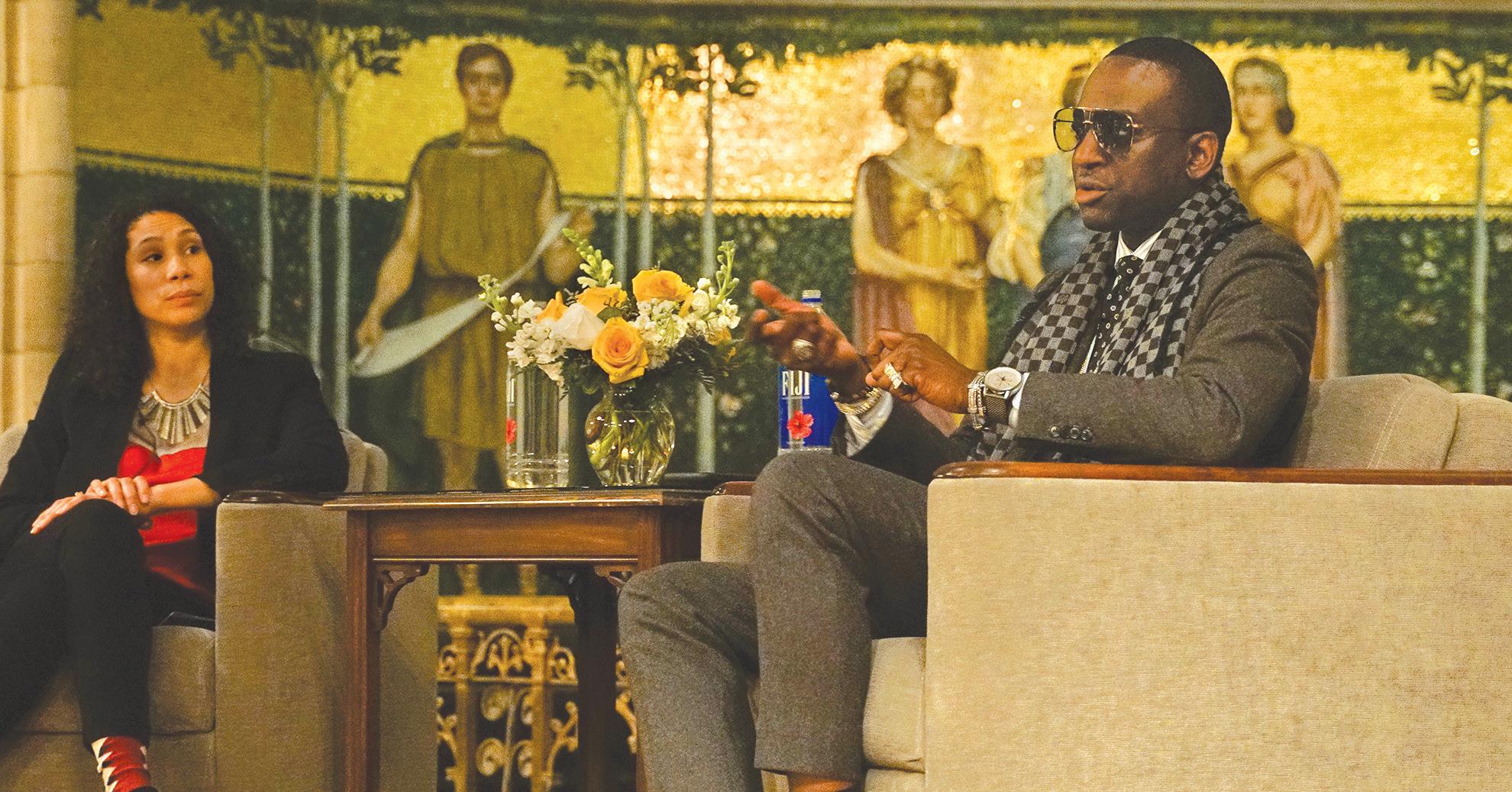
To a packed audience in Sage Chapel, Yusef Salaam — a member of the falsely imprisoned “Exonerated Five” — spoke about his experiences with incarceration, faith and criminal justice reform.
“I want[ed] people to know that when you find yourself in so-called dark places, there's always a light somewhere in the darkness,” Salaam said, who was wrongfully convicted over two decades ago.
In 1989, five young black and Latino men, aged 14 to 16 years old, were jailed for the assault and rape of 28-year-old Trisha Meili. The group, then known as “The Central Park Five,” included then-15-yearold Salaam.
The prolonged police interrogation after their arrest yielded false confessions that comprised much of the prosecution’s case in the ensuing trials, which led to all five teenagers being found guilty.
Following his conviction, Salaam spent over six years in prison for a crime that he did not commit. He, along with Kevin Richardson, Antron McCray, Raymond Santana and Korey Wise, were exon-
erated in 2002, when DNA evidence instead linked the crime to Matias Reyes, who confessed that he acted alone in the act.
Salaam spoke to the audience about the difficulties of
his six-year incarceration, first at a youth facility, and then, beginning at the age of 21, in upstate New York’s Clinton Correctional Facility, where he said he “got a college degree in one of the most damned places in the world.”
Becoming a public figure after his release from prison presented challenges for Salaam. The nominal shift from “Central Park Five” to “Exonerated Five” was more than a simple legality. It involved years of struggle against the role of media in amplifying the case’s faulty conclusion.
“When we were guilty, over 400 media reports came up within the first few weeks,” Salaam said. “When we were found to be innocent, it was
See SALAAM page 5
Tuesday, February 18, 2020
Laboratory of Atomic and Solid State Physics, Special Seminar, Natalia Drichko 10 a.m., 401 Physical Sciences Building
Behavioral Economic and Decision Research Center Workshop: Nina Strohminger 11:40 a.m. - 1:10 p.m., 141 Sage Hall
Wikipedia Editing Workshop Noon - 1 p.m., 103 Mann Library
Feminist, Gender and Sexuality Studies Graduate Professional Development Series Noon - 1:30 p.m., 190 Rockefeller Hall
Berger International Speaker Series: Douglas Stephens 12:15 - 1:15 p.m., 277 Myron Taylor Hall
Exploring the Novel Coronavirus: A Panel Discussion With Master of Public Health Faculty
3:30 - 4:30 p.m., Lecture Hall 2, College of Veterinary Medicine
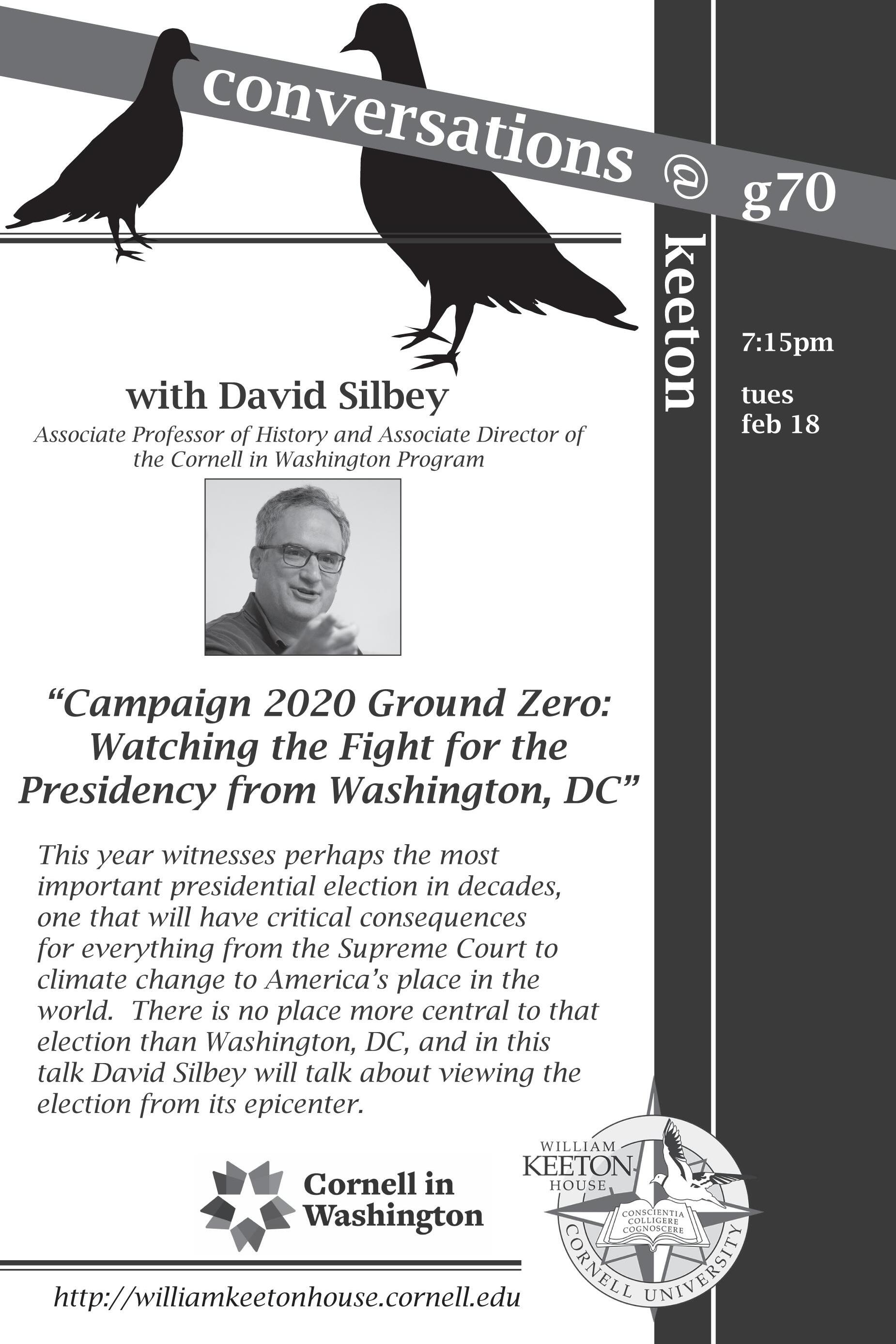
Kathi Weeks: Abolition of the Family: The Most Infamous Feminist Proposal 4:30 p.m., A. D. White House
Chats in the Stacks: Jonathan Monroe On Framing Roberto Bolaño: Poetry, Fiction, Literary History, Politics 4:30 - 5:30 p.m., 107 Olin Library
COURTESY OF CORNELL UNIVERSITY
Scandalous feminists | Today, Prof. Kathi Weeks, gender, sexuality and feminist studies, Duke University, will speak about the 1970s idea of feminist family abolition and discuss its contemporary relevance.
The 10th annual Harold I. Saperstein ’31 Cornell Student Topical Sermon Contest PROVIDING A “BULLY PULPIT” to speak on today’s most important and critical issues
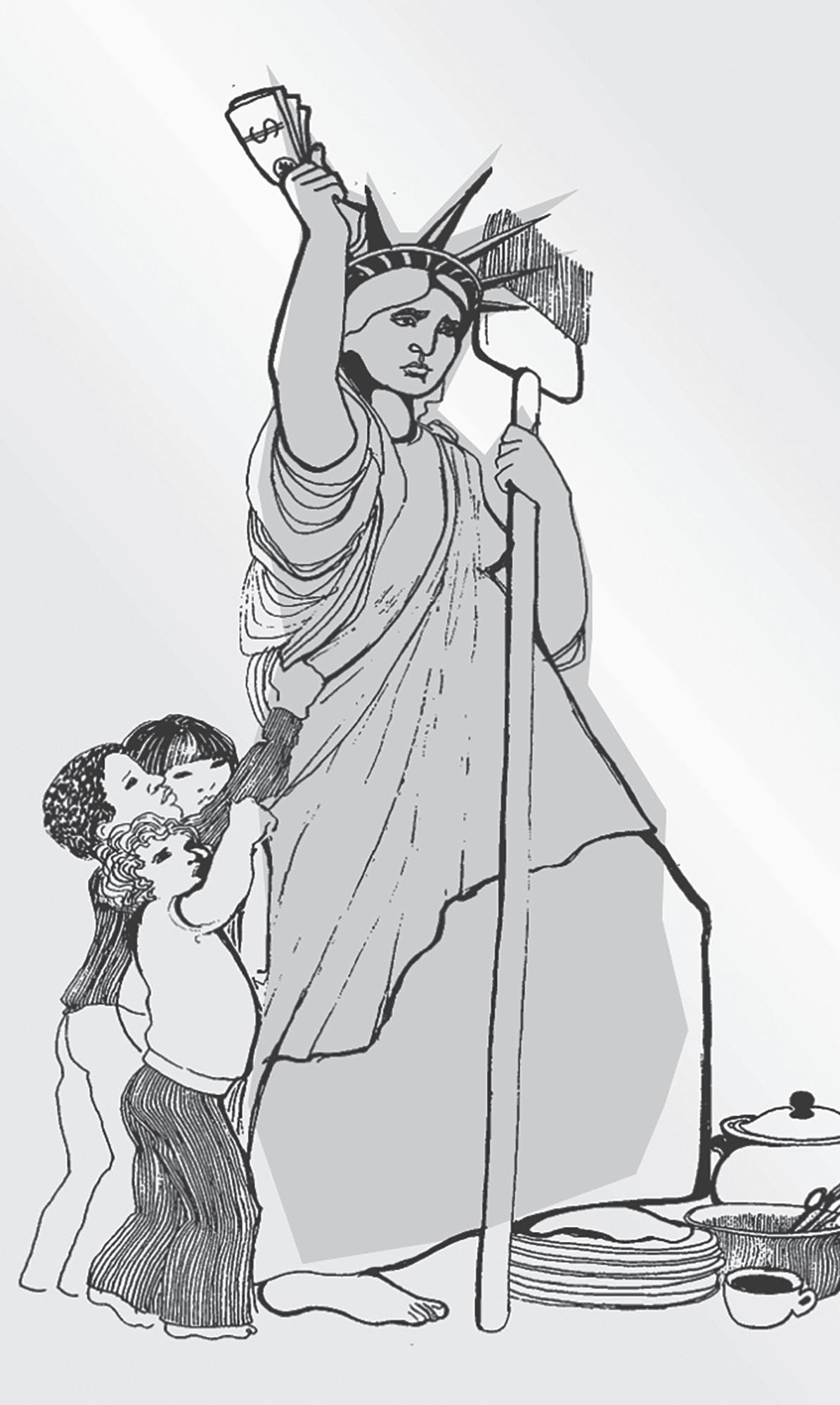
Open to all Cornell students 1st Prize $1800. This year’s contest theme: Migration!!! YES, NO, PERHAPS.
Express your thoughts. To present on Tuesdays—February 18, March 3, 10 or 17
Anabel Taylor Hall, Founders Room, 4:30-6:30pm
Awards Gala: Sunday March 22, 2020, honoring the memory of ERNEST L. STERN ’56 and CURTIS REIS ’56 presidents and officers, Class of 1956 named “Super Class” by Cornell president Frank H.T. Rhodes Tomorrow
Sign up at www.sermoncontest.com <http://www.sermoncontest.com>
How to Design Culturally Inclusive Nutrition And Health Programming for Adolescents In Urban Communities Noon - 1 p.m., 423 ILR Conference Center
Why Light Matters: Photobiology and Plant Disease Management 12:20 p.m., 404 Plant Science Building
Soft Avatars for Predicting Garment Fit 12:20 - 1:10 p.m., T01 Human Ecology Building
Using I.P. to Stimulate Economic Development In Developing Countries 12:20 - 1:10 p.m., 135 Emerson Hall
Midday Music for Organ: C.U. Music 12:30 - 1:15 p.m., Anabel Taylor Hall
How Are Social Relationships Shaped by Time?
1 - 2 p.m., 202 Uris Hall
Workshop: Introduction to LaTeX 3 - 4 p.m., Uris Library Classroom
Able-Empire: Masculinity and Utility In Nineteenth-Century Spain 4:30 p.m., 142 Goldwin Smith Hall
Winter Open House: Humanities Scholars Program 4:30 - 6 p.m., A. D. White House
www.cornellsun.com
E-MAIL sunmailbox@cornellsun.com Business Manager Joybeer Datta Gupta ’21
Months long arbitration process comes to end, causing rift between employees during process
By CATALINA PEÑÉÑORY Sun Staff Writer
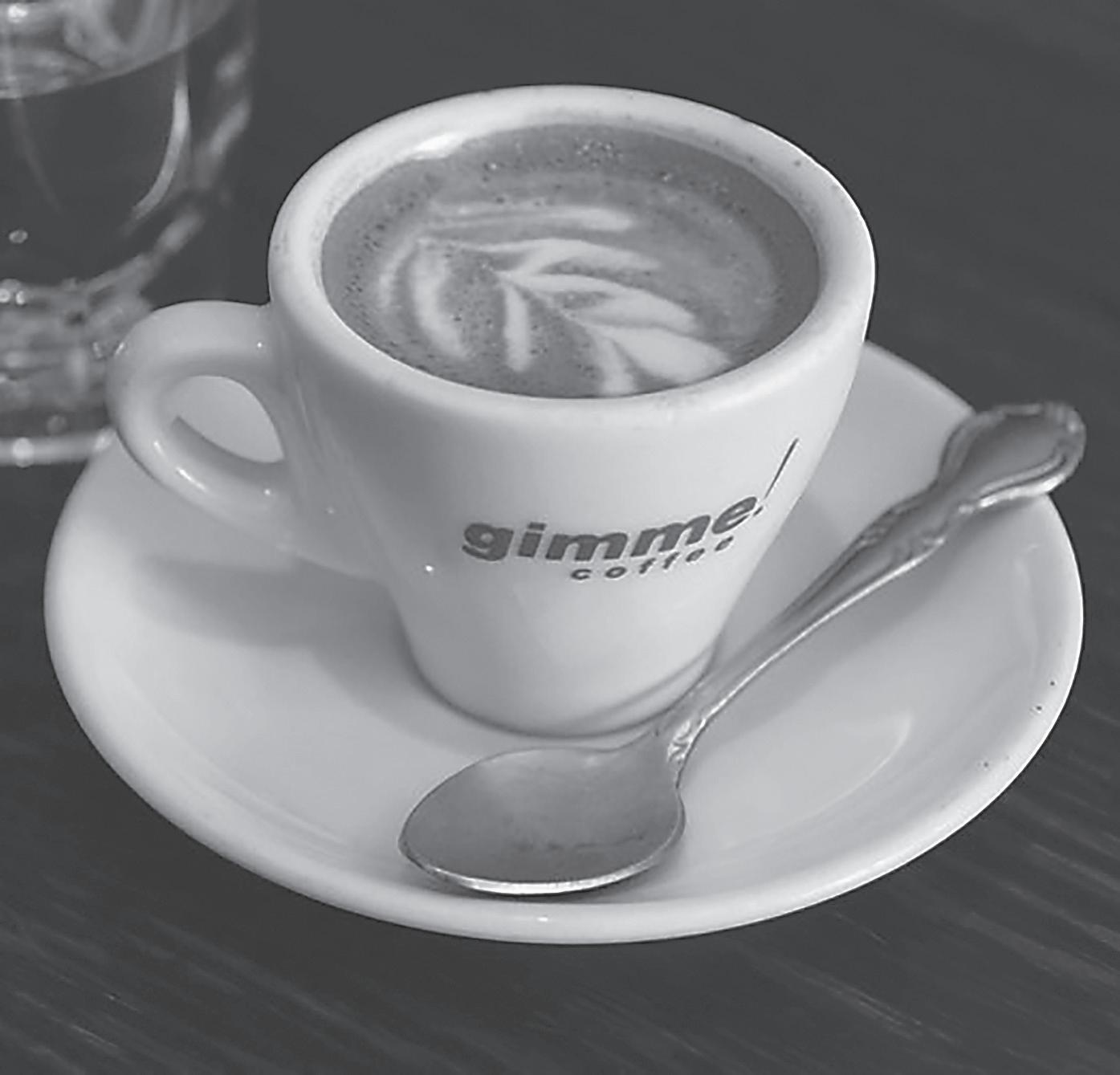
After posting on Instagram last April about her frustrations with “white women’s tears,” Rebecca Lespier, lead barista at Gimme! Coffee, was demoted, according to an update sent earlier in February by the Gimme! Baristas’ Union, which has been lodged in a months-long arbitration process on behalf of the barista.
After a Sept. 29 picket helped pressure a formal arbitration process, management agreed to reinstate Lespier with back pay earlier this month, according to a Gimme! Coffee union press release.
In response, former Gimme! CEO Kevin Cuddeback and Gimme!’s management team demoted Lespier without any investigation or interview process, according to the press release.
In an interview with The Sun, Lespier said that her post was not a targeted attack.
“It was me venting about frustrations that I’ve had my entire life with cis-white women, and how they use their fragility to diminish my voice and voices like mine,” Lespier said.
“Throughout this arbitration, we’ve had to deal with a lot of white women’s tears.”
Rebecca Lespier
Although a settlement has already been negotiated, the arbitrator’s verdict is set to come out on Feb. 19.
A coworker perceived Lespier’s April 25, 2019 Instagram post as a personal attack, the union said.
However, Susie Shelton, a barista at Gimme!’s Trumansburg location, said that the decision to demote Lespier was justified, saying that this sentiment was shared among some other workers at her location.
“If Rebecca is reinstated, a lot of energy will have gone into someone who’s been doing a bad job and
By
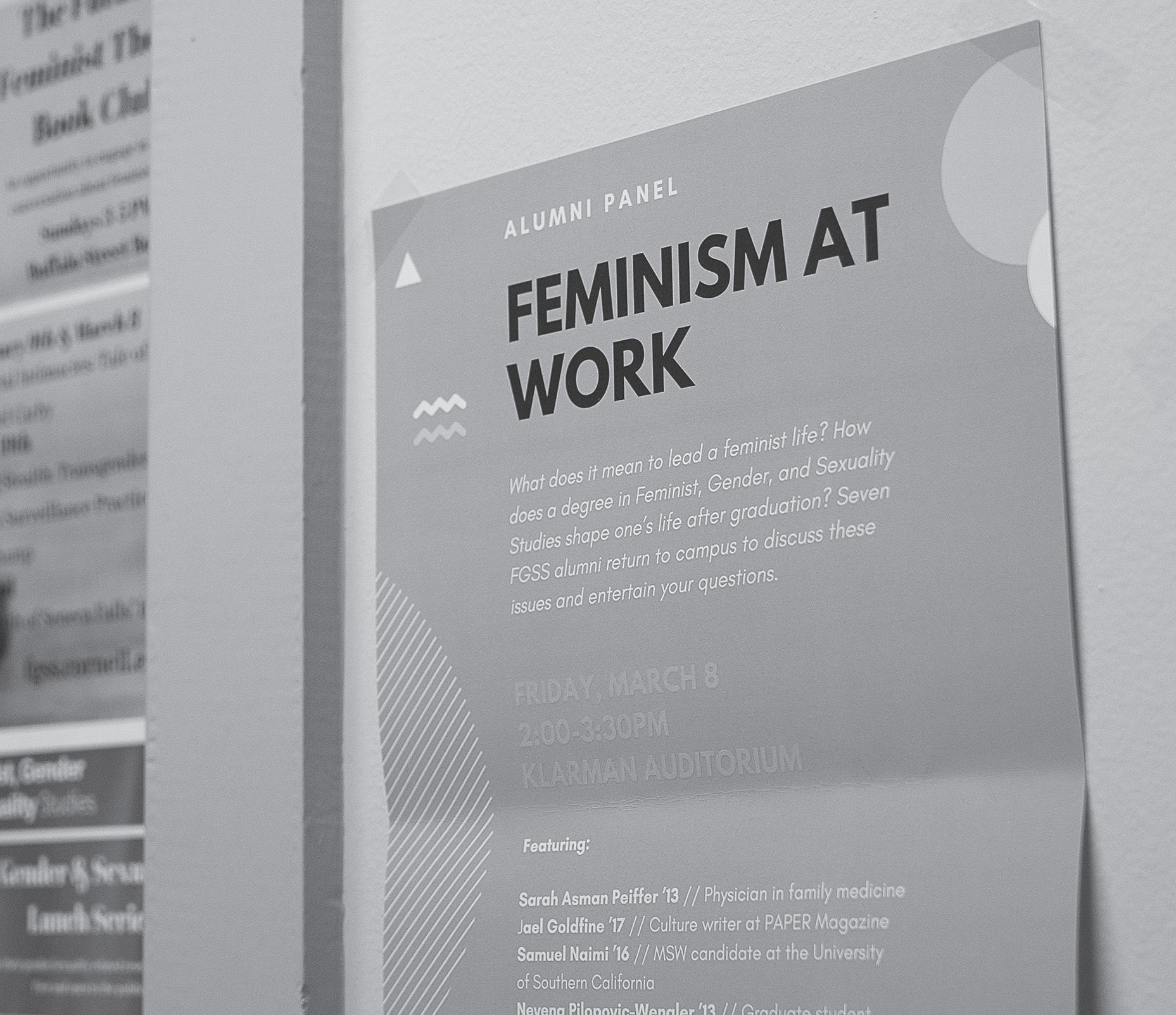
Since making history in 1970 as the first women’s studies program founded in the Ivy League and the second program of its kind in the country, the Feminist, Gender and Sexuality Studies deparment celebrated its 50th anniversary this year.
Durba Ghosh, director of the FGSS Program, said that the program shares the same commitment today as it did 50 years ago, but now on a global scale.
“The scholars who founded the program and the folks who are affiliated with it now are committed to thinking critically about structures and practices that generate class, gendered and racial inequalities,” Ghosh said.
The first Women Studies course, “The Evolution of the Female Personality: History and Prospects,” was offered in 1970. A year later, a group of faculty worked on a proposal to create a formal Women’s Studies Program in the College of
Arts and Sciences.
In 1982, the undergraduate concentration in Women’s Studies was approved, and a decade later, it was approved as a formal undergraduate major in 1992 in the College of Arts and Sciences.
But while its founding made Ivy League history, the program has undergone major development to keep apace changing societal trends. In 2002, the Women’s Studies Program changed its name to Feminist, Gender, and Sexuality Studies in order to better reflect its expanding LGBT course offerings, in addition to its existing classes exploring women and feminism.
“We are painfully aware that LGBT’s upcoming 30th anniversary coincides with efforts to repeal landmark legal victories, both at home and abroad, and with continued threats of physical violence against sexual minorities, especially trans women of color,” said Prof. Sara Warner, performing and media arts,
FGSS page 4
By STACEY BLANSKY Sun Staff Writer
Following months of faculty and student backlash, the Faculty Senate rejected transforming the College of Human Ecology into a public policy college on Feb. 12.
Although the report deemed the new school to represent “a promising avenue for public policy at Cornell,” there are “key limitations and major unresolved issues” preventing its current creation.
public opinion and inform the administration’s ultimate decision.
During the session, many Cornell undergraduates defended the status quo of the human ecology college, expressing opposition to further changes.
Hayley Timmons ’20, a policy analysis and manage-
human ecology college with the School of Industrial and Labor Relations, which would have created a new center for social science research.
Hayley Timmons ’20, a policy analysis and management major, previously told The Sun that she feared she would not have the same learning experiences in a College of Public Policy.
In October 2019, the Social Sciences Implementation Committee — a committee formed in July 2019 to research implementing a policy structure and super-departments — held a listening session to gauge
ment major, previously told The Sun that she feared she would not have the same learning experiences in a College of Public Policy, because she feared that it would limit course options.
This proposal followed an unsuccessful proposal in 2018 to combine the
While that idea was nixed, in September 2019, the Social Sciences Implementation Committee proposed two models for establishing a public policy school: a cross-college School of Public Policy and a proposed “College of Public Policy,” which would fully rebrand the human ecology college.
In the cross-college model, also known as the ‘shared school model,’ the School of Public Policy would exist as part of the

GIMME!
Continued from page 3
not into looking into people that she was being mean to — people that had to quit their jobs and move on,” Shelton said.
Lespier was present throughout the arbitration, and said that she found irony in the arbitration process because “throughout this arbitration, we’ve had to deal with a
the conversations with customers and 31 statements of support for Lespier’s experience, Mason believes that the conflict urged managers to take suggestions seriously.
Going forward, Cuddeback told The Sun he is “confident that the management team and baristas have both learned from the arbitration experience and that all parties will work more diligently to promote a just and productive work environment going forward.”
“[It was] pretty upsetting to know that [Cuddeback]... doesn’t really respect me as a person.”
Rebecca Lespier
lot of white women’s tears,” the same topic she vented about in the Instagram post that caused her demotion.
According to Lespier, it was “pretty upsetting to know that [Cuddeback is] signing my paychecks and is in charge, and to hear that he doesn’t really respect me as a person.”
Cuddeback, however, explained that he was planning his exit throughout 2019, and that his departure was unrelated to the union’s negotiations.
Cuddeback kept his position as CEO longer than he had originally planned because the arbitration process took longer than expected, he said.
The Gimme! community has taken to Facebook to share the success of the union-management team negotiation.
While the guidelines of the settlement have already been negotiated between the union and management, the official arbitration verdict is set to be made official in the next few days, according to a statement from the Gimme! Baristas’ Union. Allowing the arbitration decision to be made public was part of the union’s terms of settlement, according to the statement.
Genevieve Rand, one of Lespier’s co-counsels and local labor organizer, hopes this will form a legal
“[I am] confident that the management team and baristas have both learned from the arbitration experience ...”
Kevin Cuddeback
FGSS
Continued from page 3
Director of the LGBT Studies Program.
The major has continued to evolve as “our scholarship more explicitly embraces global perspectives,” Ghosh said, who explained that “about half of our colleagues work on subjects outside the U.S. and Europe.”
Today, FGSS students typically look at gender and sexuality as social constructs, exploring how these terms are defined differently in diverse global and historical contexts. There is also a focus on analyzing the relationship between feminism, gender and sexuality with cultural, social and political institutions.
ing law, medicine, social work, media and community activism.
One of these students is Alane Trafford ’14, an MBA Candidate at the New York University’s Stern School of Business. She told The Sun that FGSS encouraged her to “think outside the box” when pursuing her graduate degree.
“We are the only program in the Ivy League that uses ‘feminist’ in our name.”
Prof. Durba Ghosh
“We are the only program in the Ivy League that uses ‘feminist’ in our name, which is very important for claiming the space of feminist studies as a scholarly pursuit,” Ghosh said.
According to program faculty and staff, recent FGSS graduates have gone on to pursue a wide breadth of careers, includ-
After Cuddeback’s January departure, interim CEO Colleen Anunu agreed to begin the negotiation process, the result of which eventually reinstated Lespier and promised her $3,200 in back pay, according to the union’s statement.
Although the arbitration’s verdict is not yet official, Samantha Mason, a barista at Gimme!, emphasized the importance of building solidarity among customers and workers. In response to the Sept. 29 picket,
precedent for cases to come. She said that the team’s novel unusual approach — replacing a trained lawyer with a pair of employees to serve as counsel — will prove that it does not take a legal background to “fight for yourself and those close to you.”
But, Rand added, “it does help to be right.”
Catalina Peñéñory can be reached at cpenenory@cornellsun.com.
Traffod said that FGSS also “helped [her] immeasurably” in her current work in reproductive health and rights, and she “wouldn’t trade [her] FGSS degree for anything.”
But while Ghosh said that while significant progress has been made over the program’s 50-year history, there is still work to be done.
The faculty and staff are committed to “expanding the visibility and reach of our program by staging conversations about equity, inclusion, and justice on campus and across our communities,” she said.
Katherine Heaney can be reached at kheaney@cornellsun.com.
EGGS
Continued from page 1
funds the program, providing the club with the equipment needed to process the eggs before they can be donated.
So far, the students have reached out to local food banks and have begun donating the eggs. Area recipients so far include the Salvation Army, King Ferry Food Pantry and Loaves and Fishes.
However, even with 1,000 eggs to give away each week, “we have too many people who want a share. We can’t meet
everyone’s requests every week, so we try and rotate,” Schalich explained.
The high interest for these donations stems from a high rate of food insecurity in the area. According to Overton, “30 percent or more of people in this region are food insecure.”
The club is currently working to expand its membership through poster and quarter card advertising, as well as getting the word out in animal sciences classes.
“It seemed like a good opportunity ... to solve ... food insecurity.”
Kasey Schalich grad
Meghana Srivastava can be reached at msrivastava@cornellsun.com.
Additionally, the team is working on implementing a “breakfast burritos” program, where it will use the eggs in the breakfast burritos that they will make and sell on Central Campus as a “healthy and low cost breakfast item,” Detrick said.
HUMEC
Continued from page 3
human ecology college and the College of Arts and Sciences.
Such a plan is modeled on examples of pre-existing successful cross-college units that already exist at Cornell — such as the environmental and sustainability sciences major, which is housed in the arts college and the College of Agriculture and Life Sciences.
The second model called for a “simple rebranding of [the College of Human Ecology] into [the College of Public Policy] with no substantive increase in focus on policy,” the final report read.
Four months after the committee pro-
posed these two models, it released its final report on Jan. 16, where it formally called for the University to rebrand the human ecology college into the College of Public Policy.
The recommendation quickly received pushback from Cornell faculty. Prof. Yasser Gowayed, fiber science and apparel design, stated, “By limiting [the] scope [of the report], they forced themselves to an inevitable answer” to rebrand the college.
Prof. Emeritus Anne Lemley, former chair of the textiles and apparel department, said that changing the name would negatively impact alumni donations.
chair of the textiles and apparel department, said that changing the name of human ecology would negatively impact alumni donations and that she, herself, would not donate to a College of Public Policy, The Sun previously reported.
“The committee is unanimous in believing that university leadership must carefully and comprehensively account for such impacts in deciding a course of action,” the committee said in its report.
recommended a rebranding the College of Human Ecology into a College of Public Policy, feedback from the University community “indicates that this path would encounter significant resistance and would also have to overcome serious obstacles to simultaneously refocus the college on public policy,” the report stated.
On March 11, the Faculty Senate will vote on the resolution to form “super-departments” within the fields of economics, psychology and sociology to “enhance the corresponding disciplines and the social sciences more generally at Cornell.”
Prof. Emeritus Anne Lemley, former
Although a majority of the committee
Stacey Blansky can be reached at sblansky@cornellsun.com.
a whisper that she [Salaam’s mother] wondered if the rats of New York City had heard.”
The talk spotlighted the issues of the prison-industrial complex and systemic racism, which Salaam compared the treatment to slavery.
When asked what advice he would give to an audience member interested in advancing criminal justice reform, Salaam referenced the words of Santana, a fellow member of the “Exonerated Five.”
“We can’t just say that we’re going to fight this system on the outside looking in, some of us have to go into the system and fight from the inside as we look out,” Salaam said.
“We can’t just say that we’re going to fight this system on the outside looking in ... ”
Yussef Salaam
“Why is it that you’re telling us that slavery was abolished, yet you’re saying slavery is alive and well if you get punished for a crime,” Salaam explained. He elaborated, “[the] system is not alive and well … it’s alive and sick.”
Speaking to the power of unity, Salaam noted that “children of former slave owners and children of former slaves are beginning to realize the power in unity to break the system that is not broken.”
Anika Potluri can be reached at abp76@cornell.edu. Lucas Reyes can be reached at lreyes@cornellsun.com .

Dombrowski was able to grow a following of 500,000 TikTok followers from around late September to December 2019. In an effort to diversify his content, he looked to his roots.
“I can’t dance, I’m not hot, I can’t do the thirst traps or whatever,” he said.
What he did know about, and enjoy, was marine biology, a passion he has had since age three.
Growing up in Roswell, Georgia, Dombrowski always did his own thing, which allowed him to independently develop his unique passion for marine biology.
In high school, Dombrowski shared how he “did everything” from clubs to sports. But it wasn’t always easy: “People sucked … I was the only gay kid in my high school for the large majority of it,” he said.
The TikTok star shared how being one of the only gay students provided him a foundation for personal growth and self-awareness.
With a newfound direction at Cornell, Dombrowski’s channel soared. His most viewed video to date explores “Horrible ways to die in the ocean,” which currently has 7.8 million views.
His videos now range from
“Terrifying ocean facts” to “Overpriced makeup that sucksssss.” In late January and February, several of these videos garnered over one or two million views; the first-year’s marine biology fact videos often hit over six million views.
On the follower climb, Dombrowski explained how it periodically leaps: “Your amount of followers will like jump if you have a viral video.” As of Tuesday, he boasts 1.1 million followers –– and, along with it, campus recognizability.
Around campus, Dombrowski is often recognized, he said. As he was speaking to The Sun in Temple of Zeus, two groups of people recognized him as “TikTok famous.”
While Dombrowski enjoys his newfound TikTok fame, it has come at a cost. The social media star said that parties are a no-go due to his recognizability and the volume of photos and videos that come with them: “I don’t want like that kind of stuff coming out.”
“People are really mean to me about it,” he said. “It’s kinda ruined my dating life.”
His newfound campus presence has also resulted in changes to his
Although he’s riding high now, Dombrowski says he has no idea how long the fame will last. Until then he’s going to continue to diversify his content.
friend dynamics. He found his real friends before the fame hit, and now some students have tried to ride along his fame. Some students ask to be in Dombrowski’s videos, which he describes as, “trying to use me.”
Despite the downfalls, he would do it all again. Dombrowski uses the impact of his platform to enact positive change in support of the ocean. In one video, he advocates for 4ocean, a company that removes trash from the ocean by selling recycled bracelets.
Although he’s riding high now, Dombrowski says he has no idea how long the fame will last. Until then, he’s going to continue to diversify his content –– as long as that means no dancing.
Alec Giufurta an be reached at agiufurta @cornellsun.com. Alek Mehta can be reached at asm327@cornell.edu.
ADVERTISING DEADLINES: Thursday, February 20 at 3p.m. for the Wednesday, Februar y 26 issue. and the Thursday, Februar y 27 issue.
CLASSIFIEDS DEADLINE: Thursday, Februar y 20 at 2:30 p.m. for the Wednesday, Februar y 26 issue.
The Sun’ s Business Office will close at 5 p.m. on Thursday, Februar y 20. We will reopen Wednesday, Februar y 26 at 9 a.m.
JOYBEER DATTA GUPTA ’21
Business Manager
PARIS GHAZI ’21
Associate Editor
MEREDITH LIU ’20
Assistant Managing Editor
RAPHY GENDLER ’21
Sports Editor
BORIS TSANG ’21 Photography Editor
AMBER KRISCH ’21 Blogs Editor
SOPHIE REYNOLDS ’20
AMANDA H. CRONIN ’21
JOHNATHAN STIMPSON ’21
PETER BUONANNO ’21
ANYI CHENG ’21
HUNTER SEITZ ’20
SARAH SKINNER ’21
KRYSTAL YANG ’21
FUNG ’20
XIE ’21
HARRELSON ’21
PERATI ’21
’21
LUKE PICHINI ’22
JIANG ’21
MORAN ’21
In the last week, Cornell has made two public statements to congratulate themselves on their sustainability efforts and deny the need for fossil fuel divestment — without addressing the student protests which incited these statements.
The University can and must divest from fossil fuels, and campus sustainability efforts are not an acceptable substitution.
The University’s recently-released Fossil Fuel Divestment FAQ states that the Board “will consider a proposal for divestment from the Cornell community when either the President forwards a resolution from one of the shared governance assemblies, or all five of the assemblies support such a resolution.” However, the Board of Trustees can take up the issue of divestment on their own (as outlined in the process for divestment they developed when deciding to continue investing in fossil fuels in 2015), and they will if they have a conscience about climate change or consideration for the campus community.
shareholder votes will not convince them to stop expanding their drilling projects. The reasonable thing to do in this situation is drop the class, just like the right thing for Cornell to do is drop the investments. Furthermore, Cornell has self-reported that it has not engaged in shareholder advocacy or proxy voting for sustainability in the last several years. Why keep a soapbox around if you’re not going to stand on it?
If you look further at this report from the premier higher education sustainability assessment (AASHE STARS),
Campus sustainability is a step in the right direction, but it doesn’t absolve the University of its complicity in climate change.
A report prepared by the Campus Infrastructure Committee of the University Assembly, which the University’s FAQ links to, already highlights many powerful arguments for divestment, and it is a shame the FAQ didn’t discuss them further. However, the FAQ did provide two flimsy arguments against fossil fuel divestment.
Their first argument: They think the University might lose money in the divestment process. Fossil fuel stocks are already doing poorly — they were the S&P’s worst sector from 2009 to 2019 — and the trend is expected to continue. It seems like it would be in the University’s duty to screen out risk from failing fossil fuel stocks. If the University divested responsibly over a few years, the indirect costs of divestment — paying people to move the money around, deciding on the right reinvestments, etc. — could be reduced. Five years is a common timeline for divestment, and we would be excited to further discuss the timeline and logistics as the University prepares to divest. The University has the capacity to make
you can see that the University performs the worst by far in the Investment and Finance category. Every year when answering hundreds of questions about travel, food, course offerings and more, Cornell decides to not answer questions about their financial management. This opaqueness is, at best, an acknowledgement that they’re not doing anything positive. At worst, it’s covering up shameful investment practices.
Campus sustainability is a step in the right direction, but it doesn’t absolve the University of its complicity in climate change through investments. In the FAQ and the mass-email about sustainability at Cornell sent on Feb. 12, the University ddin’t acknowledge the issues with their sustainability plans. For one, the University is over 30 percent behind on its trajectory to reach greenhouse gas neutrality by 2030 — the 2013 Climate Action Plan sets the 2018 trajectory at around 150,000 metric tons of carbon dioxide (or equivalents for other greenhouse gases), while the real 2018 net emissions was 205,193 metric tons CO2e. To make up the difference, the University is hedging its bets on Earth Source Heat, a technology that, if successful, would warm the campus with very few emissions. We sincerely hope it lives up to the hype and provides a safe, effective and just way to heat campus, but we don’t yet know that it will. The technology, safety testing and implementation plans are still under development.
If the University divested responsibly over a few years, the indirect costs of divestment could be reduced.
changes to their investment strategy: In fact, they recently moved the investment office to New York City for access to more financial talent. Presumably, some of that new talent could help them find fossil-free investments that may improve their returns.
Their second argument: The University, as a shareholder, could advocate for changes to the business practices of fossil fuel companies. This argument is unjustifiable and disingenuous. Think of it like this: You’re in a literature class, and you don’t like reading books. You ask your professor to stop assigning books to read. Your professor responds that the point of the class is to read literature, so they’re not going to stop assigning books. Similarly, because the point of fossil fuel companies is to extract fossil fuels from the ground,
So, yes, let’s get to climate neutrality as quickly as possible. Let’s test, build and implement solutions to the mess we’re in, with justice at the forefront. But isn’t it deeply hypocritical to do so while profiting off of the industry that makes our future less habitable every single day?
Hannah Brodsky ’22
Angeliki Cintron ’22
Gabriel Ewig ’23
Cassidy Graham ’22
Nima Homami grad
Kinen Kao ’22
Thea Kozakis grad
Avery MacLean ’23
C.A. Smith grad
Leila Simpfendoerfer ’23
Katie Sims ’20
Nick Sutera ’22
Nadia Vitek ’22
Tyler Brown ’22
Evan Azari ’22
It’s Black History Month, which means my parents are sending frequent reminders of black achievements in the family group chat; I’ve got the Broadway revival of Ragtime blasting around the clock, and the 86 percent of Americans who aren’t black are caught between confusion and apathy. But for all of us, it’s an opportunity to envision an America where black history is a far more integral part of our society’s identity than the shortest month of the year. Here are 10 things I’ve considered lately that could help get us there.
1. (Re)consider the narrative about civil rights icons like MLK
Martin Luther King Jr’s death is recalled by most Americans as this quasi-messianic event in which King volunteered himself to die for America’s transgressions in order to end racism, sin, death and eternal separation from God (characterized by the cartoonishly racist hell of pre-1970’s America). Nowadays, King is lauded as a non-controversial, universally loved father figure gone too soon. But King had some unorthodox hot takes in his time, and when he began protesting against corporate capitalism and the role of class warfare in the oppression of both blacks and poor non-blacks, his governmental security was lifted, eventually leading to his assassination. The FBI bugged King’s home office, embarked on a campaign to smear and discredit him to the American public and even sent him a letter inciting him to kill himself under threat of releasing sex tapes of his extramartial affairs. Today, the FBI still classifies Black Civil Rights Activists as “extremists.” It didn’t end with King’s death. Whether it’s reading The New Jim Crow or learning about the Black Panthers, I encourage you to explore the relationships between black Americans, law enforcement and the demonization of black Americans to the white American public as a means of restricting black autonomy.
2. Consider that the expiration date on American racism is fluid
The way in which white supremacy has helped shape modern American society makes it seem like the
structural barriers African Americans face are their own fault, even given their own astounding triumphs amidst adversity, but that’s not the truth. The expiration date of American racism is defined only by the extent to which white people decide they wish to deconstruct it. The extent black Americans can dig themselves out of a hole they did not dig for themselves is limited –– and so reparations can only start with self-education on behalf of those whose ancestors dug the hole for them to maintain. In the words of King himself: “Whites, it must frankly be said, are not putting in a similar mass effort to reeducate themselves out of their racial ignorance. It is an aspect of their sense of superiority that the white people of America believe they have so little to learn.”
3. Consider that black people are not minorities
While in the demographical context of the United States and Europe, non-white people tend to make up a minority of the population, the common reference to all non-white people by white people as “minorities” really bothers me. In fact, 60 percent of the world is Asian, and 16 percent of the world’s population is of African descent, while only 11.5 percent of the world’s population is white or of European descent. We non-white people are not subject to inequities, discrimination or adverse outcomes simply due to being outnumbered. The reason AP European history is offered in high schools — while AP African or Asian history doesn’t even exist — isn’t because people of African and Asian heritage are “minorities” — we’re not. These aren’t issues of demographic skewness; they’re issues of white supremacy. I prefer to, instead, use the term “historically marginalized” to describe the same concept in context. I encourage you to reconsider using the word “minority” as the default word to describe non-white people; rather, use it according to its appropriate sociological context.
4. Consider learning the labels
While we’re on the topic of sociological labels, stop referring to all black people as African American. The plurality of black achievements in the United States have been made by African Americans, which we celebrate this
Odeya Rosenband | Passionfruit
IBlack History Month, but some of us are native Africans. Some of us areMCaribbean American. Black people come in all different forms. If you don’t know the difference between these sociological descriptors, the library is free (I’d start with James Baldwin or Beverly Tatum).
5. Consider supporting black-owned businesses
From the TikTok famous “Renegade” dance to “.com,” the first home security system and the pacemaker, most black contributions to society are often intentionally suppressed to perpetuate the myth of white racial superiority and maintain white dominance. This is why it’s important to support black-owned businesses, because on top of the structural barriers many black Americans must overcome, they are also often barred from participating in free enterprise and must resort to the informal economy for income.
6. Consider that black women may be the most magical creatures on Earth
Few demographic groups in America are more consistently undervalued, hypersexualized, exploited, degraded, ignored, insulted and underpaid than black women. Few archetypes in the American media narrative have been so irrevocably canonized as undesirable and ill-behaved. Few other demographic groups died on the front lines of both two most powerful American social movements –– womens’ suffrage and black civil rights –– only to be harshly excluded from the gains achieved by these efforts. Few other groups are forced to exist within a narrow prototype in order to succeed, constantly shaping our identities by eschewing any and all negative traits and imagery associated with our stereotype. No one else is subject to the unique dynamic of misogynoir at the intersection of race and gender discrimination ...
To continue reading this column, please visit www. cornellsun.com.
Edem Dzodzomenyo is a senior in the College Agriculture and Life Sciences. She can be reached at edemjayne@cornellsun.com. Ed’s Declassified runs every other Friday this semester.
’ve spent enough hours at the Career Development Center to know how to design the perfect resume: font size between 10 and 12, margins no less than 0.5 inches, action verbs at the start of every bullet and my name bolded in the header so it’s unmistakable. The formatting is the easy part. The reason I keep going back to that sculpture sanctuary on the first floor of Goldwin Smith Hall is in search of discomforting answers to the same question: “So, what do I actually put on my resume?”
I know one thing for sure — Cornell University in fancy, bolded letters, of course. Those two words — although they read more like “extremely hard working [to a potential fault], possesses [enough] talent, [maybe] did something right [at one point],” — are supposed to tell the hiring manager more about me than the two words that come before it: my name. I’m not going to pretend like Cornell’s brand isn’t one of the many reasons I’m at this University; I can benefit from the Ivy League title just through association, and so can my future children. And when I continue to paste in attributes like my SAT score, I’m benefiting from the sum of my own efforts, plus the efforts of my personal tutor. I
take credit for something that isn’t completely mine, yet I am unwilling to abandon a ticket to my success.
Going to a great school does not make me a great person, but it would be nice to think that it did. A leadership title might make me a good leader, and a columnist position might make me a decent writer. But as application season is in full swing, and I’m cultivating the sacred list of my activities, experiences and skills, I wonder where I lost sight of the human in me.
Cornell University. Those words are supposed to tell the hiring manager more than the two words before it: my name.
When my mom made me apply to the National Honor Society in high school, I had to get a certain number of community service hours. So, I found myself at my grandmother’s nursing home playing harmless blackjack for a few weeks. When I got the signatures I needed, I never looked back. Sure, I didn’t do it for the right reasons, but I still put my eventual acceptance on my resume.
Maybe I can take some solace in knowing that I made a few old people happy for a few hours. Maybe I was the best dealer they ever had. Maybe listing NHS on my resume was the straw that tipped my scale to get me into Cornell. Maybe it’s worth asking myself why such clubs are even deemed valuable in the first place.
The truth is that there is no selfless altruism
— doing good things for others is good for ourselves because it makes us feel good and we get to brag about it, beyond just the measure of our resumes. And — unless you prop yourself up as some sort of savior — that’s okay. But if every “good thing” we do finds its way onto our resume, then we are forced to question why we do good things at all. I can argue that my blackjack games were a low-stakes business, but I am left wondering where I draw my line. If I didn’t do something for the right reasons, can I still put it on my resume? Having enough awareness to ask yourself where you draw your line is a great place to start, after you type in your name and “Cornell University.” The unspoken rule is to do things for our resumes so our resumes can do things for us. If your unique set of opportunities that culminate on an 8x11 piece of paper can open doors for you, then you would be a fool not to walk through. But you have to hold those same doors open for the next person.
a capella group or your weekly commitment to volunteer at the library won’t be under NBC’s section of “desired characteristics,” either. Going to a great school won’t make you a great person. But doing great things — things you take pride in — will.
I used to have this distinct nightmare of the hiring manager blowing their nose in my resume. But if their tissue is an honest representation of who I am, I know it will be for the best. If you’re just doing something for your
The truth is that there is no selfless altruism — doing good things is good because we get to brag about it, beyond just the measure of our resume’s.
The perfect resume shouldn’t be a checklist of professional fraternities and research labs, mixed with some Habitat For Humanity. Between my school work, my dining job and any social life I can fit, I don’t always have the privilege to pursue the activities that are perceived to be ideal “resume builders.” Working as a barista may not help me in my application for NBC, but it definitely helps me as a human. Your daily commitment to your
resume, chances are that you’re not doing that thing very well. Nobody is going to hover over your shoulder as you build it, but it’s worth evaluating your motivations for your own sake because you can’t go back. A perfect resume will demonstrate where you grew, not just where you’re at. We all have to make them, and when you do, try to find what makes you human and put those qualities in fancy, bold letters.
Odeya Rosenband is a sophomore in the College of Arts and Sciences. She can be reached at orosenband@cornellsun.com. Passionfruit runs every other Tuesday this semester.
By FATIMA YOUSUF Sun Contributor
At the crack of dawn on Saturday, middle and high school students from across the Northeast piled into the Physical Sciences Building carrying Rube Goldberg machines — machines intended to perform a simple task in an intricate way — as well as airplanes, bottle rockets and vehicles powered by mouse traps.
Over the weekend, Cornell’s Science Olympiad club, which first hosted the event in 2015, opened its doors to young students for its annual invitational tournament for Science Olympiad, an organization dedicated to instilling teamwork and curiosity in STEM for the next generation of scientists.
Throughout the competition, Cornell Science Olympiad members sprawled
across Central Campus, ready to judge students’ performances in the events.
Anticipation electrified the air, as the students prepared to test the machines they had been working on for months, designed to showcase their knowledge in subjects ranging from forensics and toxicology to food science and astrophysics.
The event’s categories included written tests, lab activities and building contraptions, where students worked in groups of two or three to accomplish science-related tasks while competing against students from other middle schools.
At the building events, students brought in pre-built devices to be tested against students from other teams. In one such event, called “Mousetrap Vehicle,” competitors constructed a small vehicle pow-
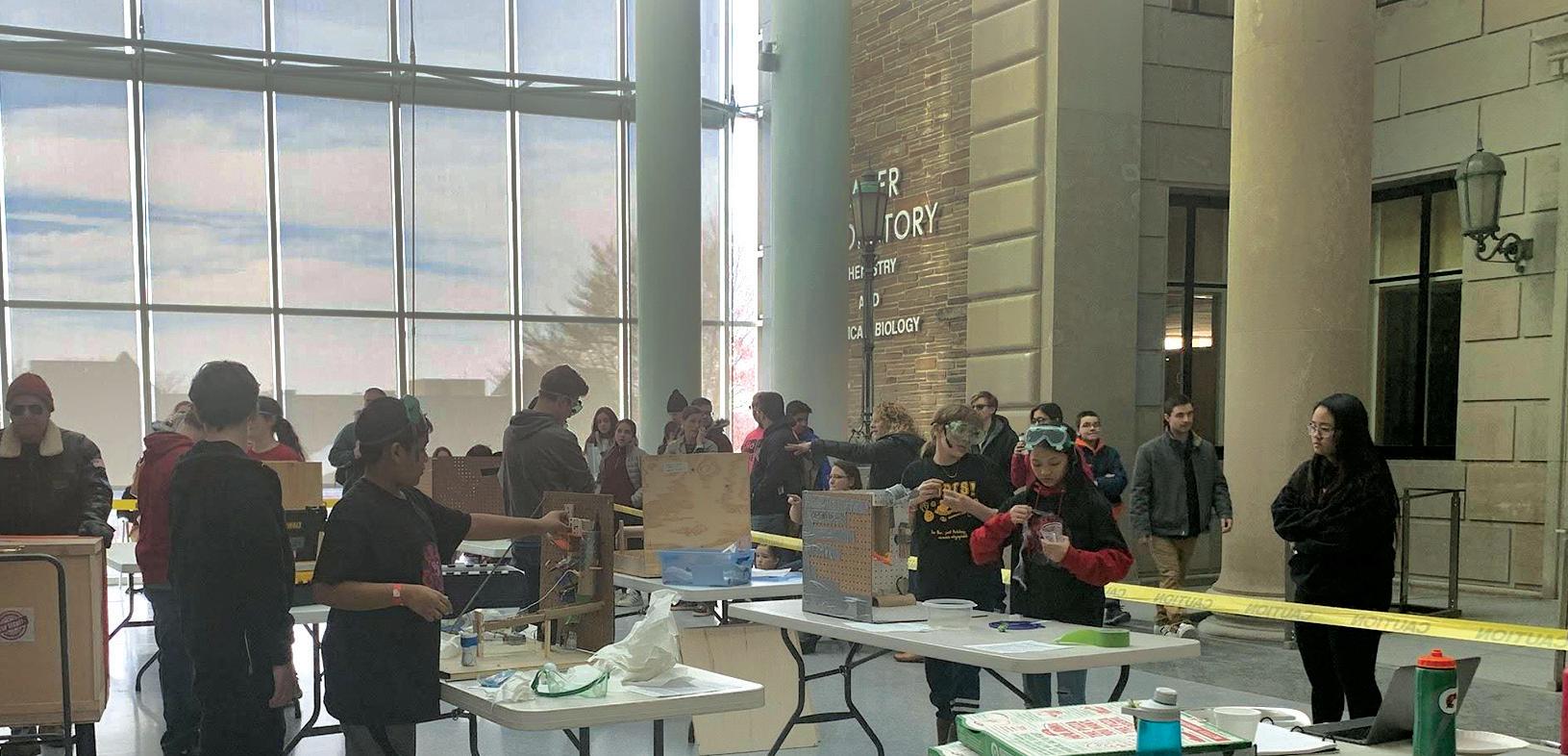
ered by mouse traps to reach a target distance as quickly as possible.
For middle schoolers like Thomas, a seventh grader at Howard L. Goff Middle School, the excitement of learning and competition outweighed the intense time commitment and dedication required to prepare for the tournament.
“I didn’t know many of these things before,” Thomas said. “There was a lot of stuff to figure out. It was a little stressful at the beginning, but the team has been very welcoming. We practice a lot and it’s a really fun environment.”
The competition also included events with written tests on various subjects, including food science, fossils, and heredity.
Activity or lab events, like “Experimental Design,” required competitors to perform tasks using provided materials during a limited time, usually without prior knowledge of the specific task.
This year, the experimental design event tested the students’ knowledge of foundational physics, and their ability to apply this knowledge using scientific inquiry skills such as forming and testing hypotheses, gathering observations and analyzing data.
Many competitors of this year’s tournament cited their experiences in Science Olympiad as integral to developing their desire to pursue a scientific field.
“I didn’t really know what I
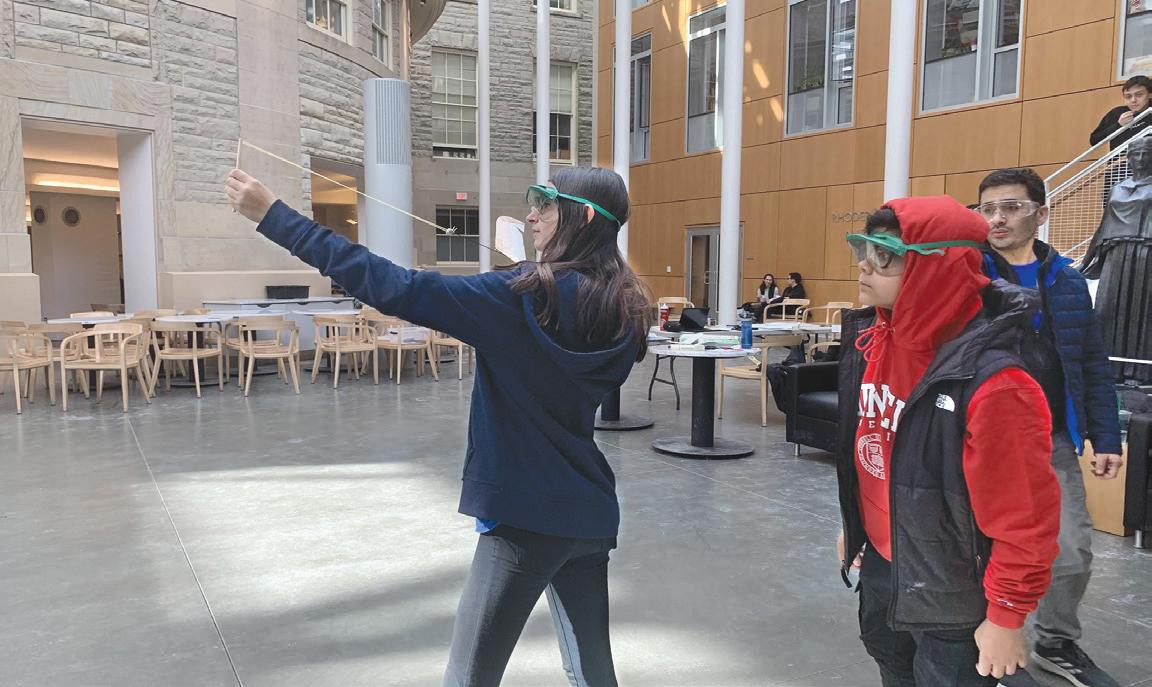
wanted to do a while ago, but now I’m sure that I want to go into a STEM field because I really enjoy doing these Science Olympiad events,” said Akkhil Morkanda, co-captain of the Howard L. Goff Science Olympiad team. “I personally enjoy engineering events like Boomilever and Elastic Gliders. It requires a lot of problem solving and thinking.”
Noel Picinich ’20, co-president of Science Olympiad at Cornell and a former competitor in high school Science Olympiad tournaments, enjoys running the annual tournaments. She sees it as an opportunity to give back to the organization that fostered her own passion for science, and impact the next generation of scientists.
“It’s such a great opportunity to give back to something that was such a big part of our lives when we were younger,” Picinich said. “I think it shaped
a lot of my career goals and my perspective on STEM, and now we get to provide that same experience to other young science competitors.”
The final standings were announced at the award ceremony in Kennedy Hall. Paul J. Gelinas Junior High School received first place, with Harlan Rowe Middle School in second place and Howard L. Goff Middle School in third.
Although certain schools came out on top, students still expressed enjoyment competing in the annual olympiad.
“Biology is really fun to me,” said Jasmine, a Brooklyn Amity School middle school student.
“You can’t help but feel interested, and feel blessed, even. It really excites me, thinking about how unique everything on our planet is. Everything has a life. It’s really beautiful.”
Fatima Yousuf can be reached at fy56@cornell.edu.
For over 100 years, industrial activities inflicting harm to various bird species were regulated by the Migratory Bird Treaty Act of 1918.
In recent months, President Donald Trump’s administration has taken steps to overrule this legislation so that companies would no longer be held liable for unintentionally harming birds — which could potentially have harmful implications for the environment.
“Looking at birds is one way to better understand how our activities are affecting the environment and other species,” said Prof. Amanda Rodewald, natural resources, and senior director of conservation science at the Cornell Lab of Ornithology, in an interview with The Sun.
According to
Rodewald, the use of birds as indicators is one reason the international 1918 Migratory Bird Treaty Act was a pivotal step in improving environmental conservation.
Initially implemented between the U.S. and Canada at its inception, the treaty applies to the U.S., the United Kingdom, Mexico, Japan and Russia.
“It is an international treaty because these migratory birds crossed borders, so we can’t just have one country responsible for their conservation,” Rodewald said.
The act also included a concept of “incidental take,” which means that companies are held liable for activities that do not directly target birds but unintentionally harm them. If companies were found liable, they would be fined by the federal government, and these funds were used to invest in habitats that support birds.
“This provided an

important and powerful incentive for a lot of industries to take proactive steps to reduce harm to birds,” she said.
According to Rodewald, the vast majority of bird mortality is unintentional. For example, a company may accidentally cause an oil spill — such as the 2010 Gulf of Mexico incident which decreased the seabird population by hundreds
of thousands — or create oil pits, where birds land only to become entrapped.
The act prompted companies to adapt more environmentally friendly practices, as in 2015, when communication towers changed their lighting making them less likely to attract and kill birds.
“A big part of the concern right now, by removing inciden -
tal take, is that industries and other businesses have absolutely no incentive to take those proactive steps,” Rodewald said.
In 2019, the Trump administration decided to reinterpret the act — the Department of Interior issued a formal opinion declaring that only companies that purposefully kill birds will be held liable. According to the Washington Post, oil companies would stand to gain from the reduced regulations.
Responding to the regulatory change, Rep. Alan Lowenthal (D-Calif.) sponsored the Migratory Bill Protection Act, which calls to reinstate incidental take for commercial activities.
Rodewald even testified to Congress in June in support of this bill.
This decision doesn’t just affect birds and bird lovers — the reinterpretation could have lasting consequences for
humans too.
“It’s not just impacting birds, a lot of times these are actions that are broadly impacting the environment,” Rodewald said. “It’s a decision that private interests will benefit from by removing regulations, but the public is bearing the cost.”
In regards to how this new policy will directly impact the environment, Rodewald used the example of a company polluting a pond as a byproduct of an industrial activity.
“Certain commercial companies would have previously avoided that due to [the Migratory Bird Treaty Act] but now they are free to do that,” she said. “This impacts more species than just birds.”
Emma Rosenbaum can be reached at erosenbaum@ cornellsun.com.
Sydney Oraskovich can be reached at svo6@cornell.edu.
Ihave always had a love-hate relationship with entertainment. I’m too pretentious to openly embrace its blatantly encoded vulgarity that goes against the artful aesthetic of indeterminacy. I’m also so drowsy that I couldn’t help but succumb to consuming entertainment for its presumed effect of immediate, sheer pleasure. What if such an effect goes obsolete? Rather than romanticizing entertainment for its low barrier, perhaps it would be more accurate to describe its current state in the digital economy as ubiquitously tolerable. We are always somewhat entertained by the inundation of content across platforms, yet we are always left with much to be desired.
What do we do when we seek entertainment these days? Entertainment is intrinsically social. As a microcosm of society, entertainment provides reference points that prompt our discourse on culture. Entertainment is cultural discourse disguised in the form of everyday mundane leisure. Before delving into the contemporary context, it is crucial to first historicize entertainment with the advent of information technology.
Information-based entertainment started with sending secret Morse codes through telegraph and chit-chatting over the phone. For these forms of entertainment that were still grounded in interpersonal communication, the acceleration of the transmission of message first brought the annihilation of time and space. Cultural references began to be made outside of one’s community, and a mass culture was slowly forming when things were commonly known across social groups. And then came radio and television, through which content began to be broadcasted to a mass audience all at once. The transition to mass dissemination of entertainment amplified our cultural discourse with an increasingly broader reach. This is the pinnacle of the commonly understood notion of entertainment. In this golden era of entertainment, people consumed a lot of entertainment, and talked about entertainment a lot. The quality of the content was superb, and the public conversation was so potent that it gave rise to major cultural shifts. Mass culture rose to prominence, and discourse on culture was naturally embedded in everyday conversations.
in our leisure and entirely extraneous to our work, yet it is growingly intertwined with and embedded in all social interactions mediated through the digital platforms. We can no longer just sit down and expect to be entertained without performing labor for the tech giants that grant us affordances. We also can no longer just focus on interacting with people we care about without being spammed by the inundation of pop-up ambushes.
So, what does entertainment entail in the digital economy? Is scrolling through your news feed entertainment? What about commenting on your friend’s post? Is engaging in discourse on Twitter by posting memes entertainment? What about engaging in discussion in the fan community of your favorite TV show? Is watching a video on Youtube entertainment? What about a clip on TikTok? I believe that all these are entertainment in a broader sense, but they all come with a rather hefty price ––free. This is the least affordable entertainment has ever been, and the labor relations between audience and content providers is increasingly being normalized by the free market.
As a microcosm of society, entertainment provides reference points that prompt our discourse on culture.
Our attention economy is essentially grounded in the commodification of time. In order to stay on the platforms — the means for social participation in the digital age — one can no longer delineate where the fun stops and the exploitation begins. We are told to accept this new relationship with entertainment in order to keep it free.
To “compensate” tech companies for the free access they grant us, we have to screen through content to help them train their algorithms that are engineered to maximize our screen time. We are helping the platforms to waste our attention on lackluster content, and the more we consume such content, the more disappointed we are, the stronger our craving for entertainment will be and the longer we will stay on the platforms.

And then came the Internet, the decentralized network that was envisioned to realize the countercultural ideals of a non-hierarchical community. The Internet was designed to be free and open to all. (Yet in sharp contrast to such vision, its materiality and affordance make the digital divide the status quo.) On paper, the Internet appears to be the medium for mass culture to flourish with the acceleration of social interactions among everyday people and of constant exposure to cultural artifact. Further, with the platformization of cultural production, the dichotomy between the exposure to entertainment and the discussion on entertainment has been obliterated. Yet as the Internet makes our life increasingly social, it also obscures the changing patterns of work and leisure.
Entertainment is often believed to be grounded
While the commodification of culture has always been central to the critique of entertainment, this emerging commodification of our interaction with cultural artifacts is a vicious cycle that would lead to collective stupidity. In the pre-Internet era, human decisions that would decide social changes were shaped by critiques, and entertainment was the means leveraged for public discussion. Now, these decisions are made by algorithms with the maximization of profit as the ultimate pursuit. Last semester, I talked about how Netflix is losing its originality and how noise music is the resistance we need.
This trend toward a digital monoculture is accelerating as no changes have been made. So don’t just sit back for five seconds and wait for the option to skip the ad to pop up. Let’s reclaim our leisure and entertainment. Let’s break up Big Tech. But how? I don’t know. We don’t know yet. But I want to start the conversation.
Stephen Yang is a sophomore in the College of Agriculture and Life Sciences. He can be reached at syang@cornellsun.com. Rewiring Technoculture runs alternate Mondays this semester.

The thing about historical rewrites in music is that as a fan, there’s almost no way to accept it. Changing the meaning of a song years after its release never sits well — it’s had so long to live with you, for you to develop your own relationship with it, that makes you want to reject the new version just on principle. I didn’t want to like this project. Their album The Greatest Generation is an album I would wear like a kevlar vest when I would worry about having an anxious day in high school. I’ve already established all these memories to their music — why would I want them to change it? But the thing about a rewrite is that it allows the original story to change and adapt to where you’ve come since you last heard the project.
“We Look Like Lightning” is my personal favorite from the project. The bridge of this song is some of their greatest work, but it completely flew over my head until I heard the Burst and Decay version of the track. It’s deeply self-referential, and the way this version strips everything down and isolates the vocals puts it in the spotlight. Each lyric is a reference to an older song, which feels like a gift to their most dedicated fans.
The original version of “Passing Through a Screen Door” is distraught and hectic, describing how a quarter life crisis snuck up on lead singer Dan Campbell and how he feels left behind by not starting a family in his late 20s. The Burst and Decay version, though, is broken, like he just finished crying and realized that there is no concrete solution to the feeling of being left behind. In between the two versions, he’s gotten married and had a son, which makes the brokenness of him singing “I don’t want my children/ growing up to be/anything like me” all the more haunting. The resignation that he sings with as he reflects also highlights the song’s initials — PTSD.
Looking at Burst and Decay II from the outside, it still feels very bizarre that a pop punk band would bring in orchestral accompaniment and make it work. But this is The Wonder Years, and if anything, this project also showcases how uniquely talented each individual member is. Every album version of their songs hit you like a wall of sound, but the stripped down versions show you how intricate every piece is and how well each member of the sextet builds off each other. Drummer Mike Kennedy stands out in particular — he’s punk’s heir to Keith Moon, but he’s just as talented at dynamic contrast and playing space as he is at creating impossible drum licks.
If I could rank Burst and Decay II better than perfect, I would. While it’s near-perfect musically, what really sets it apart is the fact that it made me rethink the majority of their discography. I wrote off the first Burst and Decay as a one-off acoustic EP between albums, but listening to II, I realized that it’s so much more than that. These aren’t acoustic covers at all, they’re entirely different versions of the same songs, giving you different perspectives and changing the original meawing to the point where I wonder if there’s more that I’m missing.
Daniel Moran is a junior in the College of Human Ecology. He currently serves as the assistant arts editor on Te Sun’s board. He can be reached at dmoran@cornellsun.com.

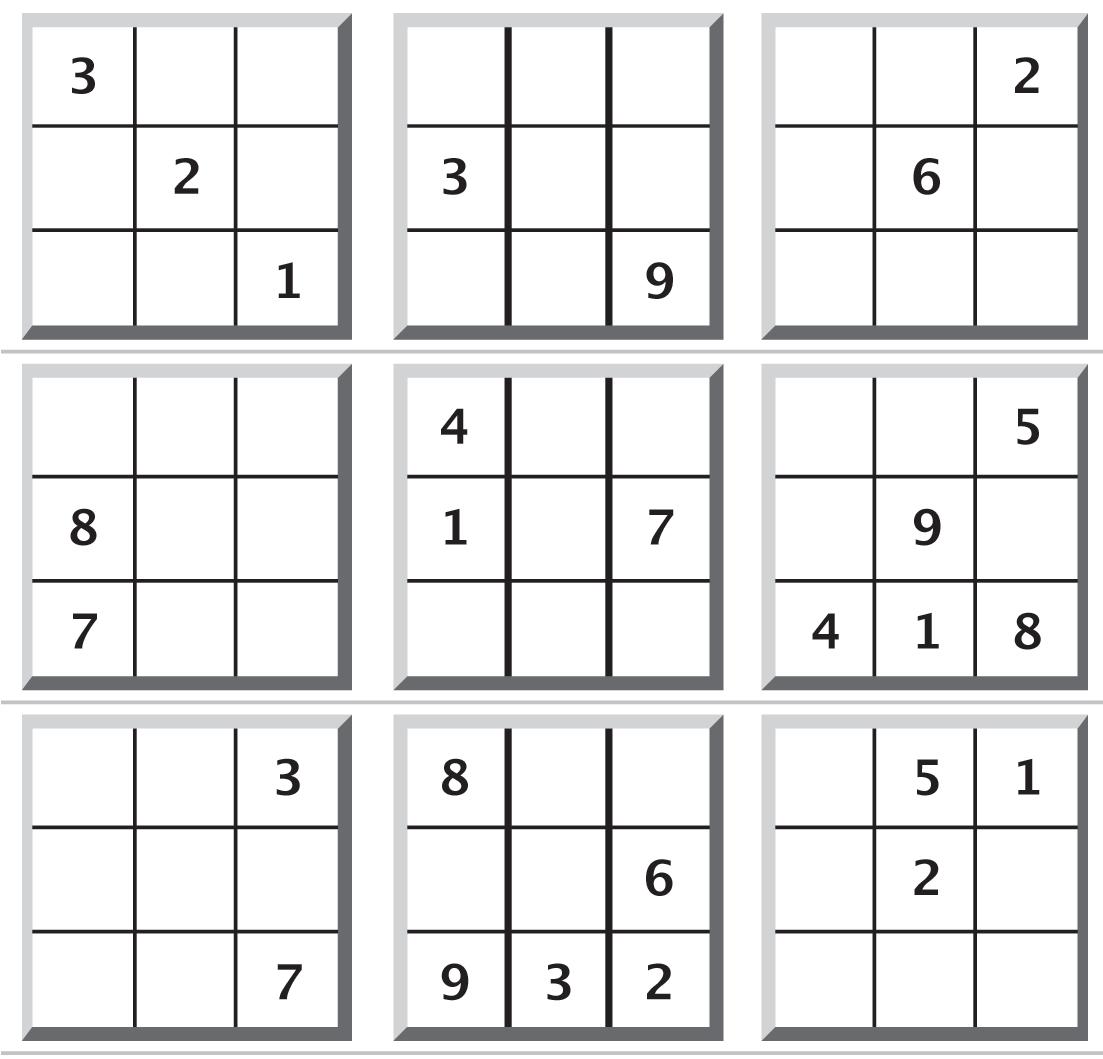
Fill in the empty cells, one number in each, so that each column, row, and region contains the numbers 1-9 exactly once. Each number in the solution therefore occurs only once in each of the three “directions,” hence the “single numbers” implied by the puzzle’s name. (Rules from wikipedia.org/wiki/ Sudoku)
26 A PA R TMENT FOR R ENT
*****************************
1-3 Bedroom Apartments
Quiet Fall Creek Location
5 Minutes to Busline 607-351-1267 joe@joegrealty.com *****************************
120 Oak Avenue
Just steps to Cornell Campus
10 bedroom house & 1 and 2 bedroom apartment
607-277-1234
office@ithacastudentapartments.com Ithacastudentapartments.com
>>SPECIAL PRICING<< Collegetown Apartments Furnished 1-3 Bedrooms PARKING, LAUNDRY, UTILITIES! (607) 273-7368 www.WestShoreApts.com
109 Sage Place
2 & 3 Bedroom Apartments
Access to Shuttle to Campus Access to Free Fitness Center
Novarr-Mackesey Property Management office@ithacastudentapartments.com 607-277-1234
Boldly Refined Living
312 College Avenue
Sophisticated studio, 1, 2, 3-bedroom apartments. Superior fitness facility, theater, and coworking space. Free high-speed internet. Exclusive resident parking. Package delivery/return. Overnight concierge. 607-273-9777 or 312collegeave.com
Catherine & Eddy St. 1 & 2 bedroom
Furnished, heat included Laundry in building Parking available for fee 607-277-1234
office@ithacastudentapartments.com
Collegetown Crossing
College Ave's Newest Location
307 College Ave. Now Leasing for 2020-2021 Completely New Modern Studios, 2 & 4 Bedroom Apartments. Fully furnished, heat & hot water included. Reception area at 307 College Ave. www.urbanithaca.com 607-330-2442 info@urbanithaca.com
Houses, Apts, Parking 1 to 9 Bedroom
Collegetown - College Ave, Linden Ave, Dryden Rd, Bryant Ave, Cook St. 607-330-2442 info@urbanithaca.com www.urbanithaca.com
Now Renting 2-10 Bedroom Houses/ Apartments for 20-21. All Locations. Call today or visit our website: Certified Properties of TC Inc certifiedpropertiesinc.com 607-273-1669
2020-2021
Studio 1, 3, 8 & 11 BR Apts. Great Locations in Collegetown. 607-227-2535
26 A PA R TMENT FOR R ENT
Flexible Housing Solutions! Short Stay Accommodations Available *Brand New* Studio Apartments 238Linden.com Leasing@inteprop.com
*Brand New* Full Term & Semester Leases Studio, 1 & 2 Bedrooms College Townhouse 121-125 College Ave. CollegeTownhouseIthaca.com Leasing@inteprop.com
APTS/HOUSES COLLEGETOWN BEST LOCATION/BEST PRICING 607-272-3389 607-592-1352 cbeach24@aol.com CLEAN & QUIET! 2 bedroom, attached garage, full basement, ON

20-21
College Ave. 5 BR House Furnished. Laundry. Parking. Call 607-273-8576

Baker Hall
Bard Hall • Barnes Hall
Bartels Hall
Bethe House • Big Red Barn
Carl Becker House
Carpenter Hall Library
Center for Intercultural Dialogue
Clark Hall
Computer Services & Financial Aid, East Hill Plz.
Cornell Institute for Social & Economic Research
Cornell Store
Corson Hall
• Court Hall
• Dairy Bar
• Day Hall Main Lobby
• Dickson Hall
• Donlon Hall
• Duffeld Hall
• East Hill Offce Complex
• Environmental Health & Safety Building • Flora Rose • Gannett • Goldie’s (Physical Sci. Bldg)
• Goldwin Smith
• Autumn Leaves Used Books (Ithaca Commons)
• Bear Necessities
• Center Ithaca
• Coal House Café
• Collegetown Bagels: CTown + Triphammer
• Commons Grocery (Ithaca Commons)
• CFCU (Triphammer Rd.
+ East Hill Plaza)
• Corner of College & Dryden
• Corner of State & Aurora
•Express Mart, Comm. Crnrs.
• Hillside Inn
• Hilton Garden Inn
• Holiday Inn
• Hasbrouck Center
• Horticulture Offce
• Humphreys Service Bldg.
• Ives Hall (ILR)
• Ivy Room (WSH)
• Johnson Museum
• Keeton House Dining
• Kosher Dining Hall
• Mac’s Café
• Martha’s (MVR)
• Mann Library
• Myron Taylor Hall
+ Hughes Dining
• Noyes Main Lobby
• Okenshields, Willard Straight Hall
• Olin Hall
• Olin Library B Level
• Plantations Gift Shop
• Rhodes Hall
• Risley Dining
• Robert Purcell Community Center (RPCC)
• Sage Hall Atrium
•Sibley Hall,Green Dragon Café
• Snee Hall
• Statler Lobby
• Statler Terrace Restaurant
• Tatkon Center
• Teagle Hall
• Transportation Dept., Maple Ave.
• Trillium
• Uris Hall
• Vet Center (Shurman Hall)
•Weill Hall, M1 Rm + Synapsis
• Willard Straight Hall Lobby + Dining
• Ithaca Coffee Co. •Ithaca College, Phillips Hall
• Jason’s Grocery & Deli
• Kendal
• Kraftees
• Lifelong
• Oasis (Greenstar)
• P&C Fresh (East Hill Plaza)
• Salvation Army
• Shortstop Deli
• Tompkins Cty. Public Library
• Tops (Triphammer Rd.)
• Universal Deli
• Warren Real Estate (Downtown + Community Corners) or stop by The Sun’s offce at 139 W. State Street

By ZORA HAHN Sun Staff Writer
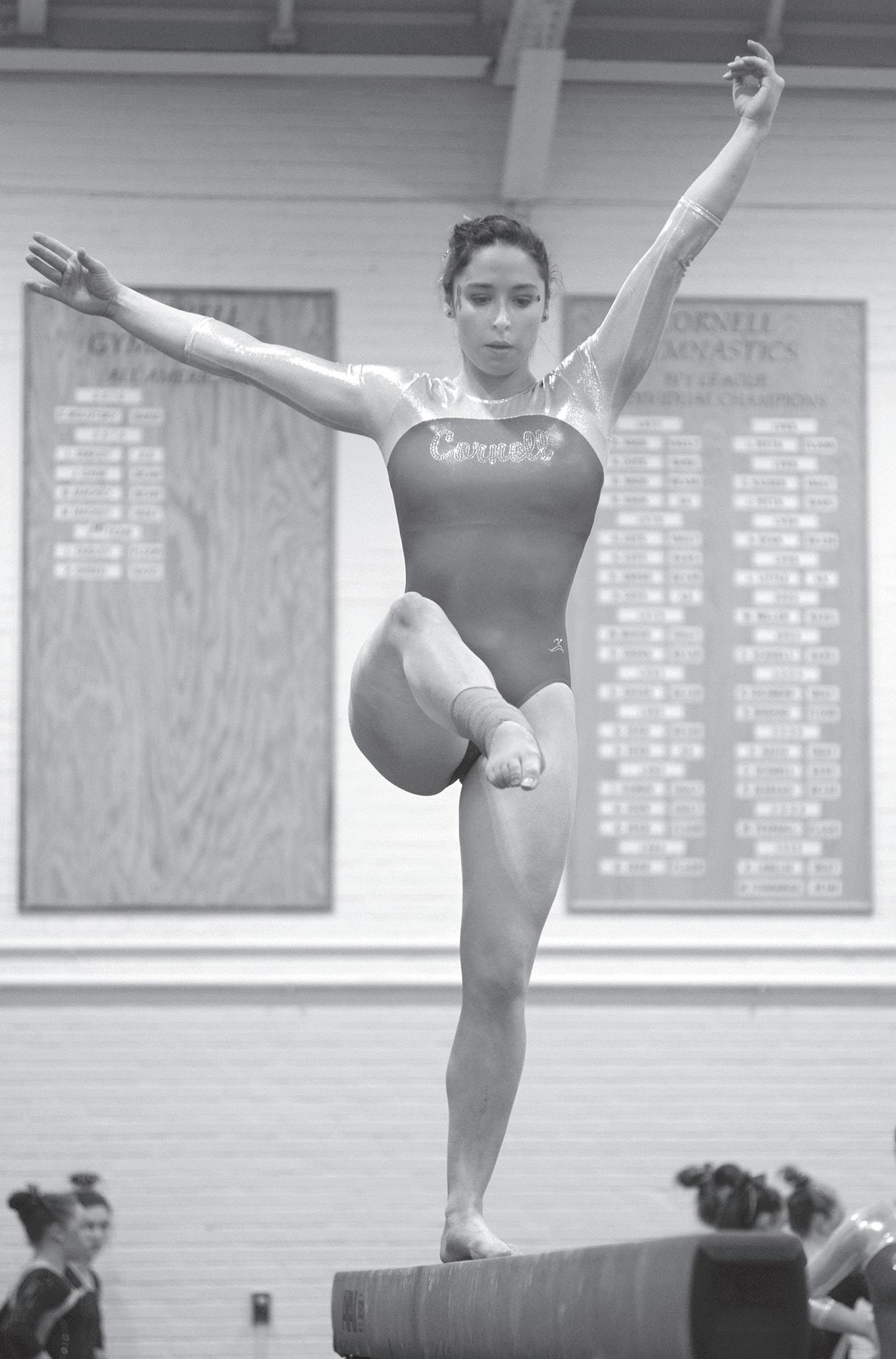
In an event dubbed “Tumble and Rumble,” Cornell gymnastics hosted a dual meet alongside Red wrestling, notching a second place finish in the Sunday contest.
Competing in Bartels Hall’s Newman Arena, the wrestling team competed against the University of North Carolina, while the gymnastics team faced Ithaca College, SUNY Cortland and the College at Brockport.
Gymnastics scored a 189.775 overall, narrowly falling behind Brockport, which scored 189.800. SUNY Cortland and Ithaca College earned 189.025 and 188.625, respectively, closely trailing the Red.
place finish.
Moving onto beam, junior Izzy Herczeg and freshman Victoria DeMeo earned sixth and seventh place, respectively.
Associate head coach Melanie Hall highlighted Herczeg’s “great floor routine” as key to Cornell’s success, praising the competitor for “now coming back into her stride.”
The Red finally finished on the floor, with junior Madison Smith and senior Samantha Henry tying for first place with scores of 9.875. In the process, Smith matched her personal record to earn an individual title for the event, while sophomore Sara Maughan scored a 9.825 to take the second place title overall.
As the team turns towards conference competition, Hall stressed the need to “[focus on] the little stuff.”
The team began on vault, where senior Samantha Henry notched fourth place and freshman Amy Krueger earned fifth.
From there, gymnastics hit its stride, earning three individual event titles in the following three events. While Cortland took the lead in bars and Ithaca placed first in vault, Cornell earned first place event titles on the beam and the floor.
The Red’s second rotation was on bars, where junior Amy Shen scored a 9.8, earning her a first place title. Junior Olivia Tometich also matched her personal record with 9.675, leading to a third
As the team turns towards conference competition, Hall stressed the need to “[focus on] the little stuff,” adding that improving bonuses and each gymnast’s specific skill set could boost the Red’s scores.
Next weekend, the Red will host Brown University, the University of Pennsylvania and Yale University for the Ivy Classic Championship on Feb. 23.
Zora Hahn can be reached at zhahn@cornellsun.com.
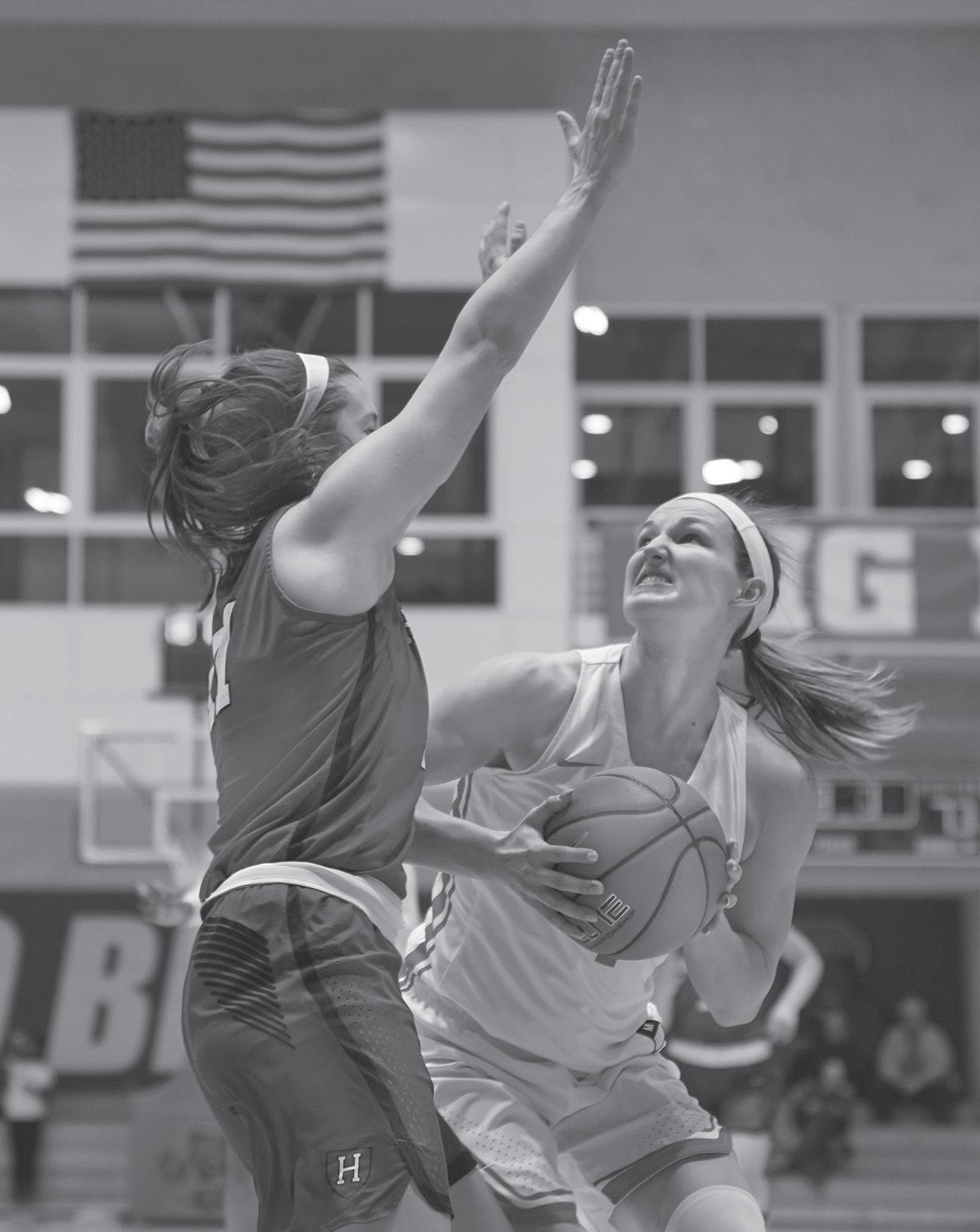
#DontBearItAlone game increases loss streak to 5 games
By EMILY DAWSON Sun Staff Writer
In two tough Ivy contests, the Red faced Harvard on Friday night, taking a heavy loss, followed by Dartmouth on Saturday — with a heartbreaking gap of only two points from the win.
For the Harvard game, star senior captains, guard and forward Samantha Widmann and forward Laura Bagwell-Katalinich, reached double-digit scores for Cornell. However, the team lacked cohesion and didn’t have enough members contributing to the scoreboard to tip the scale in the Red’s favor.
Cornell saw a much closer battle against Dartmouth the following night.
Bagwell-Katalinich started the game on a high note, scoring the first two points for the Red.
Bagwell-Katalinich stepped up as a team leader, calling out encouragement to teammates throughout the game and doing her part to boost morale during the disappointing contest — an attitude that aligned with the theme of the annual #DontBearItAlone game. The purpose of the night was raising awareness of mental health on campus, with a focus on erasing the stigma associated with asking for help.
who had 12, helped Bagwell-Katalinich reach the Red’s final score of 65.
But the upperclassmen powerhouse players couldn’t keep the Red from trailing behind the Green by the end of the first quarter with a score of 17-8. Dartmouth pulled further in front during the second quarter, beginning a three-pointer streak.
Bagwell-Katalinich continued to keep up the good morale, and freshman guard Shannon Mulroy and junior forward Halley Miklos seemed to mirror her positive energy when, toward the end of the first half, Cornell showed signs of a comeback. Down only two points with a score of 27 to Dartmouth’s 29, a last-ditch effort at a buzzer-beating shot by senior forward Stephanie Umeh did not prove successful.
“One missed cue on defense, and it affects the game.”
Dayna Smith
Pre-game, the team wore special warm-ups to honor the cause. Head coach Dayna Smith holds this cause as a priority with her team, attempting to breed a healthy environment for her players to be able to talk about any internal struggles they might be facing.
“[I] let them know that there is an open-door policy within our program and having the necessary resources,” Smith said.
The players worked as a squad to rely on one another to try and pull off a win. Widmann, who recorded 13 points and junior guard Kate Sramac,
At the beginning of the second half, the Red had brought the game to a tie. Dartmouth continued to hit its three-pointers, but Bagwell-Katalinich’s prolific night kept the Red from falling behind.
But Cornell slowed down the stretch and some miscues allowed Dartmouth to regain the lead for good.
“We needed the win … obviously missing nine free shots hurts,” Smith said. “One missed cue on defense, and it affects the game … We just have to get back to doing a lot of basic work.”
Ultimately, Cornell missed a buzzer-beating 3-pointer and Dartmouth prevailed, 67-65.
The Red will hit the road over February break, to take on two more Ivy matchups against Yale and Brown. Cornell defeated the Bears earlier this season, then fell to the Bulldogs the following night in Ithaca. These contests should prove to be exciting; the Red will be hungry for a win as its losing streak currently sits at five games.
Cornell faltered, unable to keep up its strength to defeat North Carolina
WRESTLING
Continued from page 16
tions for these guys and they just didn’t seem as sharp as usual.”
The Tar Heels claimed four consecutive wins, starting off the dual. Richard took on No. 3 Austin O’Connor and dropped a 10-3 loss. Santoro also fell to his No. 11 opponent A.C. Headlee in a close 9-7 decision.
Schoenherr, who dominated his Bearcat opponent on Feb. 15, faltered against his Tar Heel competition. Berreyesa also couldn’t recapture Saturday’s energy, losing 6-0.
Loew entered Sunday reinvigorated and scored the first win of the day for the Red with a major decision against Joey Mazzara at 184 lbs. After the first period, the freshman trailed 2-1, but clinched four near-fall points, two takedowns and three minutes of riding time in the final periods to drive home the match.
However, this positive momentum did not last long. Darmstadt struggled against his Tar Heel opponent in a 6-2 loss.
Coming up on the final few bouts of the day, sophomore Brendan Furman knocked off his heavyweight opponent — the match stalemated at 1-1 in the third period, but he picked up the takedown to finish with a favorable 3-1 score.
LaJoie led his 125 lbs match 1-0 into the final period, while Tar Heel Joey Melendez took the late advantage, pinning the
Red sophomore and sending North Carolina to victory.
Although the fate of the match was already sealed, the Red continued to fight and picked up wins at 133 and 141 lbs. Tucker vanquished his opponent 4-1 to maintain his flawless individual record. Baughman upset his No. 12 competitor Zach Sherman — after escaping with 1:20 left — the senior sent the match into sudden victory, where he converted on a takedown to steal the win.
“They just didn’t seem as sharp as usual.”
This last ditch effort was not enough for the Red to topple the Tar Heels, who clinched a 21-13 win. Cornell only has one regular season dual meet left before the EIWA and NCAA championships.
“We have to stay healthy — That’s what’s most important with the upcoming competition … I am glad that the dual meet season is coming to an end and we can rest these guys up for the postseason,” Koll said.
The Red will wrestle its last regular season dual on Saturday, when it will face off against Lock Haven University at 6 p.m.
Faith Fisher can be reached at fsher@cornellsun.com.
LACROSSE
Continued from page 16
into the game nicely and emerged as the Red’s go-to option, winning the team extra key possessions that kickstarted offensive production. His efforts won Cornell 21 of the game’s 32 faceoffs.
“The faceoff unit was able to feed off the momentum and our overall team’s energy to keep winning draws,” Rasimovicz said.
Senior attackman Jeff Teat served as another offensive contributor. Prior to the game, Teat was named to the Tewaaraton Award watch list for the third straight season after achieving 34 goals and 37 assists last season. This award is presented annually to the top college lacrosse player in the nation.
Although he only registered
a single goal against Albany, Teat racked up four assists and displayed advanced field awareness to set up teammates for scoring.
“We get the ball to [Jeff] and he’s able to survey the field and do his magic,” Lombardi said.
The win marks the first of five road contests to kick off Cornell’s season — the Red will not return to its home turf until next month. In the coming week, the Red will travel to face Towson on Friday and High Point on Sunday — games in which it will look to continue its offensive dominance.
“Once our offense gets on a roll, they are one of the toughest in the country to defend,” Rasimovicz said.
Mike Seitz can be reached at mseitz@cornellsun.com.
Currently ranked No. 12, Cornell ofense starts the decade of strong, dominates Albany
By MIKE SEITZ Sun Staff Writer
To follow up a 2019 season in which it narrowly missed the NCAA Tournament, Cornell men’s lacrosse kicked off its 2020 campaign with a fierce offensive assault on upstate New York rival University at Albany, taking a 19-10 victory.
Four attackmen for the Red each scored at least three goals — junior Jonathan Donville led the pack with five goals and senior Cooper Telesco had four, accompanied by a pair of hat tricks from junior John Piatelli and sophomore John Lombardi.
“Once our offense gets on a roll, they are one of the toughest in the country to defend.”
Paul Rasimovicz
While the game was largely dominated by Cornell’s offense, major defensive plays were key to success early on. Only a few minutes into the first quarter, the Red found itself playing down two men due to penalties — the lim-
ited defensive unit was forced to hold its own.
Sophomore goaltender Chayse Ierlan, along with the four Cornell defensemen, shut down the Great Danes, keeping the game scoreless. Ierlan would eventually finish the day with 10 saves. In the first three quarters of the game, Cornell allowed only four goals.
“We knew it was game time and everyone was calm and collected,” Ierlan said. “We came out, played aggressive, and put them on their heels from the get-go.”
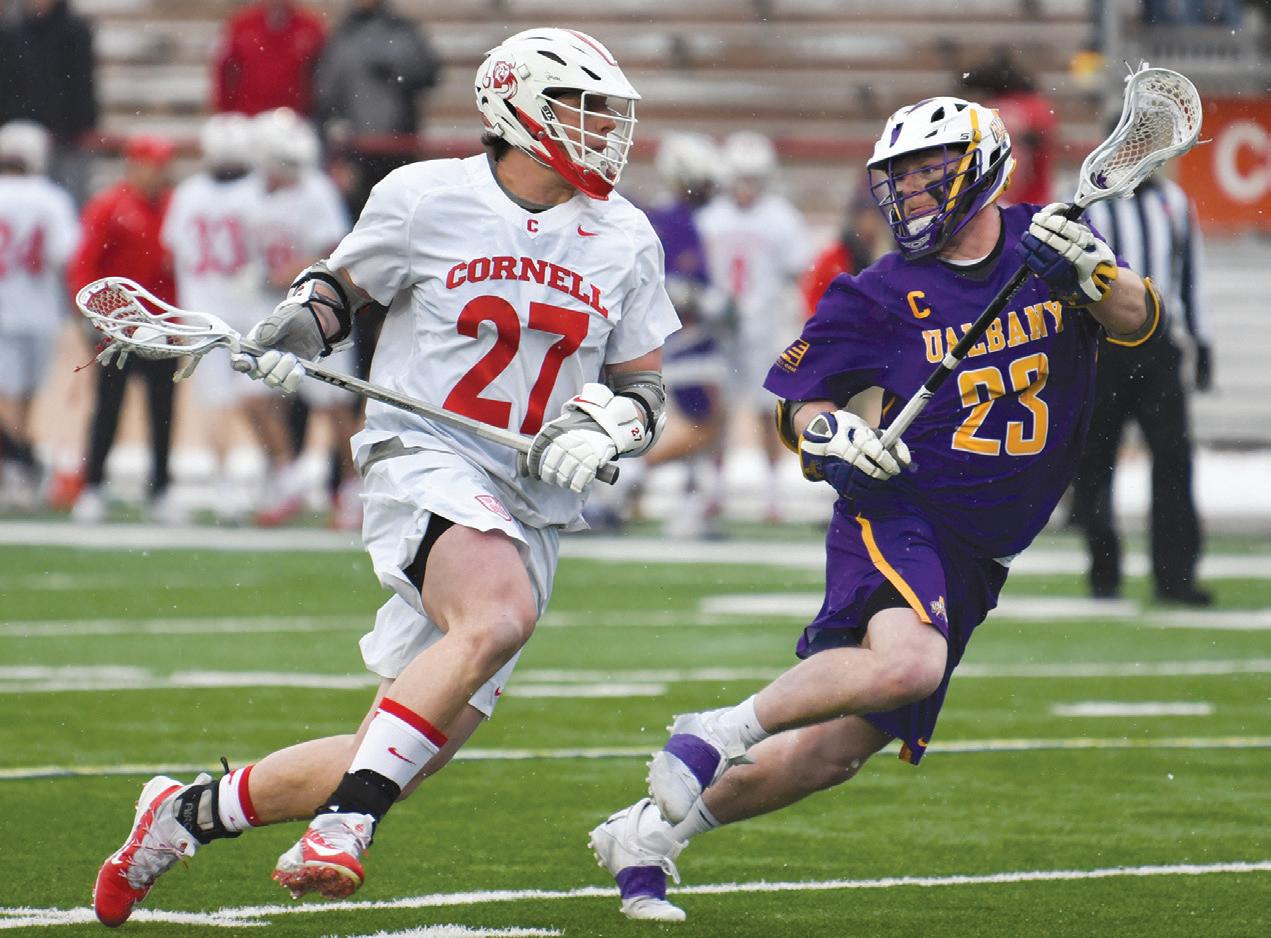
Starting with success | Cornell’s amped up offense, combined with its stellar defensive effort, handily defeated the University at Albany on Saturday.
After edging out a 3-1 lead in a back-and-forth first quarter, Cornell's offense exploded in the next two periods to outscore its opponent by a margin of thirteen to three"
“When we’re moving quick and moving the ball around, good things tend to happen,” Lombardi said.
Assisting the quartet of multi-goal magicians, Cornell’s
offense was also powered by players who did not stuff their personal goal tallies that day.
One non-scoring catalyst was senior faceoff specialist Paul Rasimovicz. In the second half, Rasimovicz settled
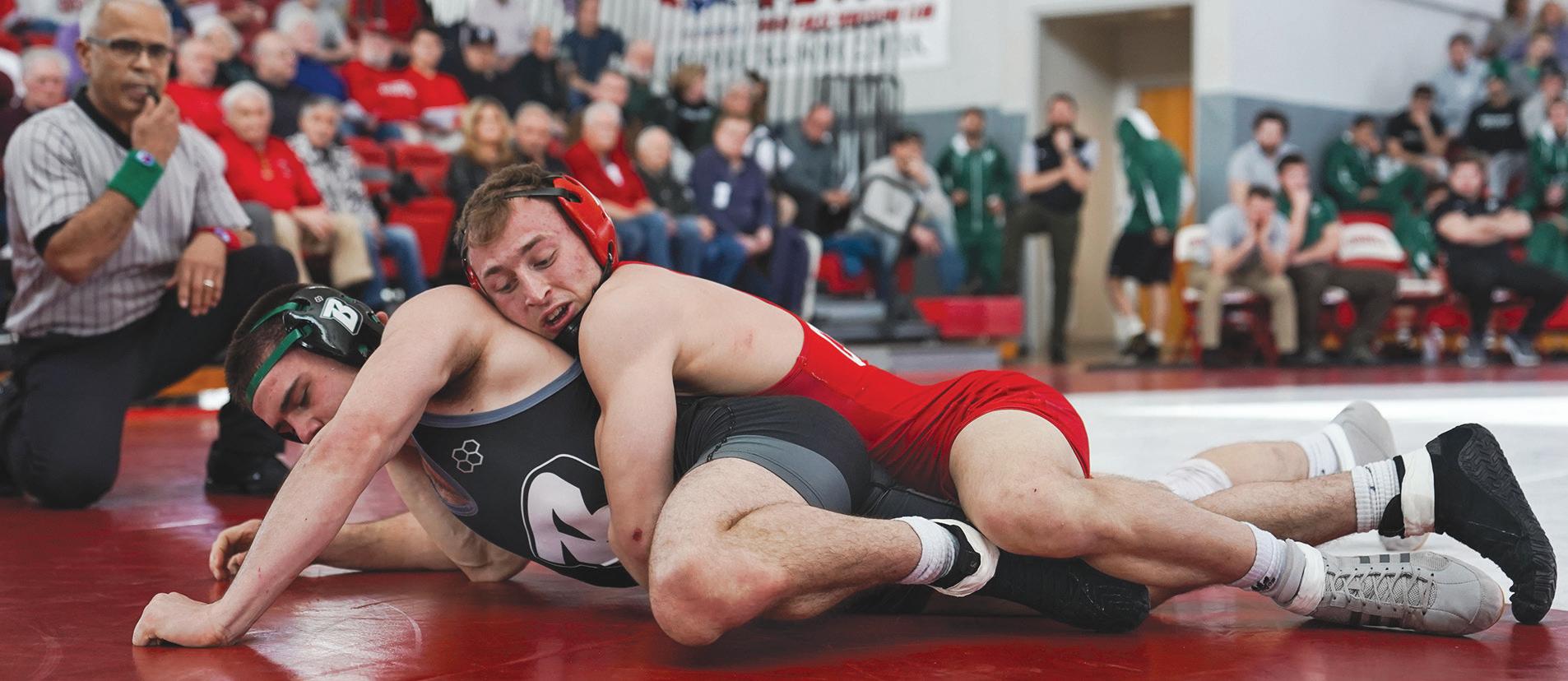
By FAITH FISHER Sun Staff Writer
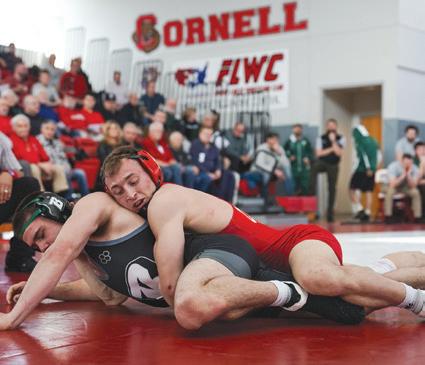
The Red is in the homestretch of the regular season, wrapping up its final duals at home this weekend. On senior day Feb. 15, the team came away with a victory against Binghamton, but fell in its following match to the North Carolina Tar Heels the next day.
Saturday’s senior day dual honored the Red’s 12 seniors for their contributions and dedication to the program: Noah Baughman, Milik Dawkins, Jacob Lehr, Ian McNitt, Jimmy Overhiser, Rami Pellumbi, Max Pickett, Mike Russo, Matt Russo, Chris Schoenherr, Chas Tucker and Brandon Womack.
“It makes me proud to have had all of these guys with us for this long — it is a brutal sport and you don’t always get
the rewards if you’re not starting,” said head coach Rob Koll. “Without the guys who don’t start, though, there would be no one to train with — that’s why our team has been so consistently successful. It’s because of those guys who are the unsung heroes.”
In addition to celebrating the seniors, the Red (10-7, 4-1) celebrated a 32-8 win against the Bearcats (3-11, 2-9), a fellow EIWA opponent. The victory against Binghamton marks the Red’s 38th consecutive win over New York competition.
The dual opened in favor of the Red with a 4-3 decision by Baugman in the 141 lbs bout. With just five seconds left, the senior capitalized on a takedown.
Junior Hunter Richard hit the mat to take on Matt Swanson in the 149 lbs match. Five takedowns later, Richard
clinched the 15-4 major decision. Junior Adam Santoro took a win by forfeit to push the Red to a 13-0 lead.
Senior Chris Schoenherr made his season debut and delivered an energetic performance, clinching a major decision at 165 lbs. Sophomore Andrew Berreyesa rolled through his 174 lbs competition, widening the scoring gap to 20-0.
The Red took its first loss in the 184 lbs bout. Freshman Jonathan Loew took on No. 5 Lou DePrez, who defeated the Red wrestler by major decision, 15-4. Sophomore Ben Darmstadt neutralized the loss in the 197 lbs match, pinning his competition in 1:48.
The Bearcat’s last victory of the day came at the heavyweight round — Cornell senior Seth Janney suffered a major defeat of 11-2.
Closing out senior day in the Red’s
favor, sophomore Dom LaJoie eked out a 4-3 winning margin at 125 lbs and Tucker improved his individual season record to 26-0, taking down his ranked opponent — Binghamton’s Zack Trampe.
The next day Cornell hosted the North Carolina Tar Heels as a part of its annual Tumble and Rumble dual, where the Red wrestled alongside the Cornell gymnastics team in the Newman Area. Despite a packed house and a high energy crowd, the Red wrestlers failed to come out on top against No. 8 North Carolina (13-2, 3-1).
“This weekend I think we looked tired,” Koll said. “I’m not sure if it was because of how we trained, or sometimes this just happens … I have high expecta-