The Corne¬ Daily Sun


By KATHRYN STAMM and OLIVIA WEINBERG Sun Staff Writers
Valentine’s Day has descended upon the Hill, bringing with it chocolate, flowers and a hot pink clock tower. Despite the bitter cold and a barrage of snow, Cornellians’ hearts seem to be warm: 45 percent of student respondents reported that they are in love.
To find out whether students truly “work hard, play hard,” The Sun conducted a survey asking students all about their relationship statuses, dating in the digital age and their sexual habits.
The survey was shared over Facebook posts, Tweets, emails, text messages and GroupMe chats over the course of two weeks in February. While the survey was anonymous, it collected some demographic information, including gender identity and academic year.
The majority of the 515 survey respondents self-identified as female — 74.76 percent — with 22.72 percent of respondents being male. The remainder identified as non-binary, genderqueer or something else.
The sophomore class represented the most respondents with 33.2 percent. Juniors followed at
26.8 percent, seniors at 26.6 percent, first-years at 9.3 percent and graduate students at 4.1 percent.
The second installation of the survey offered the following insights into the more intimate side of student life.
Relationships: It’s Complicated
Fourty-eight percent of respondents said they’ve made it official, with 59 percent of those students reporting having been in a relationship for a year or longer. Five students — one first-year, one sophomore, one junior and two graduate students — are married and one sophomore is engaged.
The breakdown of relationship status by gender is more balanced this year, with just 47 percent of women reporting being in relationships and 49 percent of men (last year, 45 percent of women and 38 percent of men said they were cuffed).
Juniors are the undergraduate class dating the most — the survey found 57 percent of respondents are in a relationship. 62 percent of graduate students, 49 percent of seniors and 40 percent of sophomores are also in committed relationships.
First-years are in the fewest relationships, but at 31 percent, they seem to be pretty productive.


The Cornell Faculty Senate introduced a resolution on Wednesday to support divestment from fossil fuels and will take a final vote at its next meeting on March 11.
This vote is taking place alongside similar divestment votes from every governing assembly on campus, including the Employee Assembly, Graduate and Professional Student Assembly, University Assembly and Student Assembly.
Prof. Robert Howarth, ecology and environmental biology, introduced the resolution to the Faculty Senate, citing the pressing threat of climate change.
“This is morally reprehensible, it’s not like other divestment issues.”
Prof. Robert Howarth
“Unlike other divestment causes, fossil fuels run the very high risk of doing serious damage to our planet and thus establishes clear differences from other issues of divestment,” Howarth said at the meeting.
The resolution calls for no future investment in fossil fuels, in addition to diverting current assets “in an orderly manner and as rapidly as possible.”
If this resolution passes in each governing body, then the Board of Trustees will have to confront fossil fuel divestment again at its March 20 meeting. The Board of Trustees last touched on the issue
DIVEST page 5
Monday, February 17, 2020

Berger International Speaker Series: Dr. Elvira Domínguez-Redondo 12:15 - 1:15 p.m., 277 Myron Taylor Hall
Understanding Lake Responses to Environmental Change: From Local Sites to Global Patterns 12:20 - 1:30 p.m., A106 Corson/Mudd Hall
The Pritchard Lecture Series in Human Nutrition With Guest Speaker David Eide, 4 - 5 p.m., 100 Savage Hall
The Pork Fix: African Swine Fever And the Opportunity of Crisis in China’s Pork Industry 4:30 p.m., Kaufman Auditorium, Goldwin Smith Hall
Russian Conversation Hour 4:30 - 5:30 p.m., G25 Stimson Hall
GET SET Workshop:
Facilitating Effective Classroom Discussions 4:45 - 6 p.m., 143 Plant Science Building
An Evening of Indian Classical Music: C.U. Music

Display Advertising Deadlines:
Thursday, February 20 at 3 p.m. for the Wednesday, February 26 issue and the Thursday, February 27 issue.
Classified Deadline:
Thursday, February 20 at 2:30 p.m. for the Wednesday, February 26 issue
The Sun’s Business Office will close at 5 p.m. on Thursday, February 20, and reopen Wednesday, February 26 at 9 a.m.
Tomorrow
7 p.m., Carriage House Cafe Labratory of Atomic and Solid State Physics, Special Seminar, Natalia Drichko 10 a.m., 401 Physical Sciences Building
Behavioral Economic and Decision Research Center Workshop: Nina Strohminger 11:40 a.m. - 1:10 p.m., 141 Sage Hall
February Stem Cell Work in Progress Noon - 1 p.m., Lecture Hall III, Vet Research Tower
Wikipedia Editing Workshop Noon - 1 p.m., 103 Mann Library
Feminist, Gender & Sexuality Studies Graduate Professional Development Series Noon - 1:30 p.m., 190 Rockefeller Hall
Berger International Speaker Series: Douglas Stephens 12:15 - 1:15 p.m., 277 Myron Taylor Hall
Stop, Drop, Create: Drop-in Hours 3 - 4 p.m., mannUfactory Makerspace, Mann Library
Applied Physics Grad Society Coffee Hour 3 - 4:30 p.m., 243 Clark Hall
Exploring the Novel Coronavirus: A Panel Discussion With Master of Public Health Faculty 3:30 - 4:30 p.m., Lecture Hall 2 College, Veterinary

By MADELINE ROSENBERG Sun Staff Writer
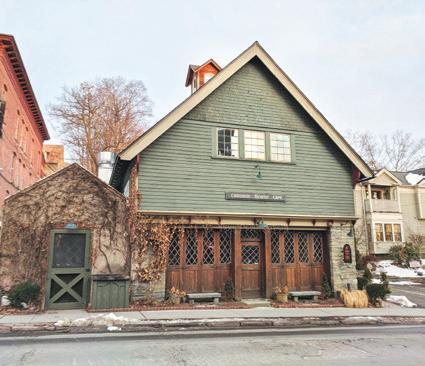
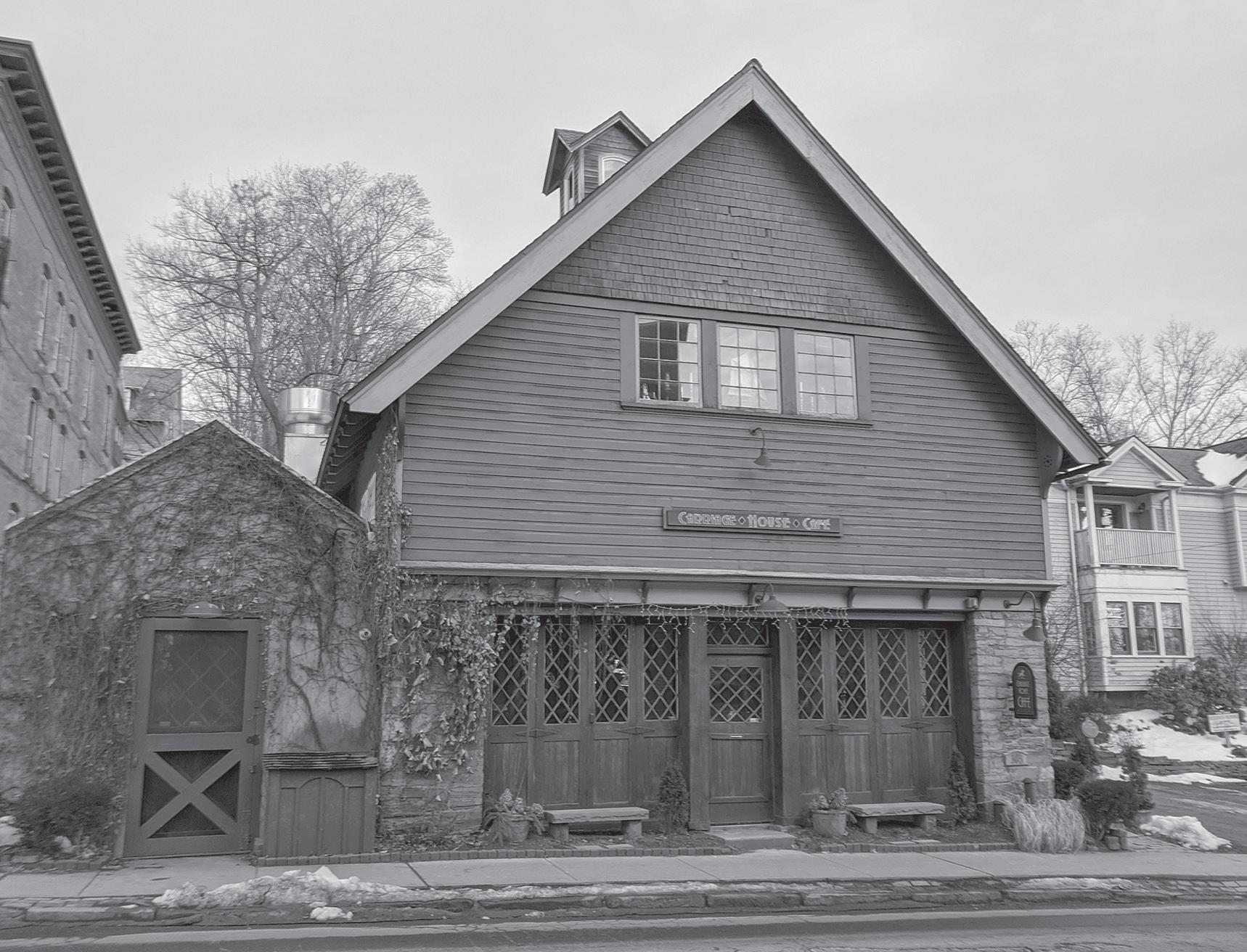
Carriage House Cafe — the Stewart Avenue brunch staple known for dishing French toast and espresso drinks out of a historic building — will soon usher in new ownership.
The current owners, the Chandler and Woodall family, announced Wednesday on Facebook that they put the cafe and bar up for sale after 20 years of brunch and musical performances. Whether the building will stay a restaurant after the sale remains unknown, but Aaron Chandler, a co-owner, said he hopes it will continue to serve the community.
About a year ago, the cafe owners notified their staff about the eventual sale, after they felt they needed to hand off the building and its operations because of their busy family lives, Aaron said.
“Mark Chandler had a vision to bring the international and local community together in a space that would become a second home to many,” the post read. “Over the last two decades it has been our pleasure to host you for dinner, brunch, cocktails, concerts, weddings, graduation parties and so much more.”
Even though the eatery will close, he said the owners are considering other ways to maintain the brand, such as selling Carriage House products or a cookbook.
While the families search for a proprietor who will exchange the $895,000 asking price for the historic building and its equipment, Carriage House will continue serving brunch Tuesday through Sundays at the cafe and mixing
drinks from Thursday through Saturdays at its bar and lounge known as The Loft.
Originally constructed in the 1850s to shelter horses, carriages and hay, the classic fieldstone building later stood as an abandoned storage facility after it outlived its former use and lay ravaged from a 1912 fire.
But Mark Chandler reopened the space in 2004 after transforming it into a lively cafe. With the approval of the Ithaca Historical Society, he restored the horse and buggy building using mostly original material, preserving its wood doors and diamond-shaped windows, according to the cafe’s website.
Beyond scones and poached eggs, the upstairs loft and event space has featured evening performances ranging from contemporary jazz music to classical violin sonatas. In April 2019, Grammy-nominated violinist Prof. Ariana Kim, music, serenaded a Carriage House audience with a blend of Bach, Brahms, Gershwin and American folk music.
Community members expressed their appreciation on Facebook for the restaurant’s home fries and burgers, the cafe cooking up what The Sun and The Ithaca Times have both
By LOUIS CHUANG Sun Staff Writer
Ask The Sun is an explainer series where The Sun answers questions about the Cornell and Ithaca communities.
Q: When did Cornell start making ice cream?
A: In 1880, Cornell began producing ice cream, yogurt and dairy out of a dairy plant in what is now Bailey Hall.
Shortly after its founding, Cornell Dairy moved around campus, according to a brochure found in the University archives. Dairy operations moved to Goldwin Smith Hall in 1893, then to East Roberts Hall — the site which now hosts the Kennedy Roberts complex — for a brief period in 1923 and finally to Stocking Hall in 1923 its home for nearly a century.
In the early 20th century, 3,500 gallons of milk — which local farmers would purchase — would be ready for packaging each day.
At the Cornell Dairy Bar in 1928, customers had two flavor options: white, with no added flavor, or a chocolate mix. The ice cream would be soft serve, and was run through a fruit feeder, a machine that adds nuts, chocolate chips or fruit pieces to the mixture. Having added the toppings, the ice cream is then frozen at -30 degrees
Fahrenheit and transferred to a storage freezer at -10 degrees.
From Monday to Friday, Cornell Dairy’s refrigerated truck left between 4 and 5 a.m., and would deliver products to Cornell Dining, campus vending machines, the Statler Hotel, fraternities and sororities in the 1920s, according to the brochure.
One of the Dairy Store’s main uses was to provide students taking poultry dairy courses in the College of Agriculture and Life Sciences a way to distribute their creations.
Food science students facilitated milk production, and students from poultry sciences were at the helm of eggs production.
Prof. James Rice, poultry, sought to recruit students to the poultry program, according to the book Education and Agriculture: A History of the New York State College of Agriculture at Cornell University.
Nearly 140 years later, the Department of Food Science is now in charge of Cornell Dairy, as it is responsible for creating its ice cream, milk and yogurt. The milk for Cornell’s current dairy products are produced by the University’s herd of 800 dairy cows. Cornell Dairy now boasts 19 ice cream flavors along with seasonal flavors.

voted the “best brunch in Ithaca.” Other users thanked the owners for creating a cherished community gathering spot, home to what one Ithaca native called “musical memories.”
“It has been a very emotional arrival, starting this place,” Aaron said. “It has become something we never could’ve imagined it would. We had to make the choice to do what’s best. It has been a hard choice, but a very good one. We feel comfortable with it.”
Meghna Maharishi ’22 contributed reporting to this article.
can be reached at mrosenberg@cornellsun.com.
Continued from page 1
co-creator and producer Michael Schur.
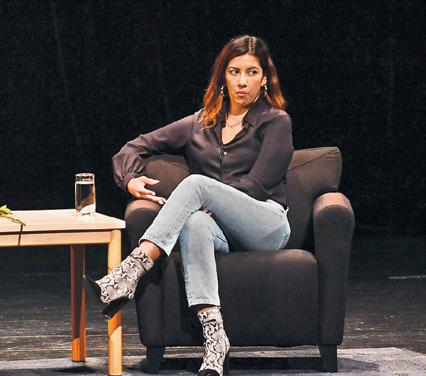
“I was shitting my pants,” Beatriz said of the dream opportunity, which became Brooklyn Nine-Nine
She originally auditioned for Amy Santiago, the love interest of Jake Peralta, played by Andy Samberg. But Goor and Schur ultimately cast her as another detec -
original host Fox canceled the series following the fifth season. The first audience question came from Gaby Dickson ’20, who asked the actress for recommendations about similar shows.
“Stephanie Beatriz and I have a similar background: I’m also bi, and I’m also Latina,” Dickinson said. “I can count on one hand the amount of bisexual Latina people there are on TV. It matters to me that I see myself reflected in the pop culture I consume. It matters to me that we see more humanity.”
“We’re all going to see movies where the lead is a white person ... If I’m able to put myself in that person’s shoes ... why can’t that be flipped?”
Stephanie Beatriz
tive who became Rosa Diaz, choosing Melissa Fumero for Amy instead. She joked that this was because she didn’t have “chemistry beyond friends” with Samberg.
Representation has been at the forefront of Beatriz’s career, because its absence was initially a barrier for her. After feeling discouraged as a child from pursuing an acting career because she didn’t see people who looked like her on screen, being cast alongside a fellow Latina in Fumero wasn’t something Beatriz expected out of the industry.
Even still, there was dissonance, because she was always able to see herself in other’s stories.
“We’re all going to see movies where the lead is a white person,” Beatriz said. “If I’m able to put myself in that person’s shoes, and I don’t look like that person … why can’t that be flipped?”
In Brooklyn Nine-Nine , Beatriz has also found new interests beyond acting: She directed the show’s episode “He Said, She Said” in season 6.
Beatriz also discussed her experiences dabbling in animated series — including voice acting in episodes of Bojack Horseman and Bob’s Burgers — which is something she’d like to continue.
Even though her middle school choir teacher wasn’t sure about her singing abilities, Beatriz will also soon appear as Carla in the movie adaptation of musical In the Heights . Audience members were eager for Beatriz to spill details about the awaited film, especially the choreography and political themes.
“It matters to me that I see myself reflected in the pop culture I consume. It matters to me that we see more humanity.”
Gaby Dickinson ’20
Rosa Diaz eventually came to represent Beatriz in more ways than race, after writers wrote a story arc about her sexuality. Beatriz, who is bisexual, said a lot of the aspects of the arc were even inspired by her own story.
“I was so fucking thrilled,” Beatriz said of the writers’ decision to make her character bisexual. “I’d always been secretly playing Rosa as queer.”
Representation in Brooklyn Nine-Nine has also been a draw for the audience, whose support revived the show after its
“I’m really excited for you to see a new side of me,” Beatriz said.
Looking forward, Beatriz hopes to instill a kind of trust in her audience — that people will go see movies and shows solely because she’s in it because they know she’ll “tell the story in the most honest way possible.”
“You’re already that for a lot of us,” responded one audience member.
Kathryn Stamm can be reached at kstamm@cornellsun.com.

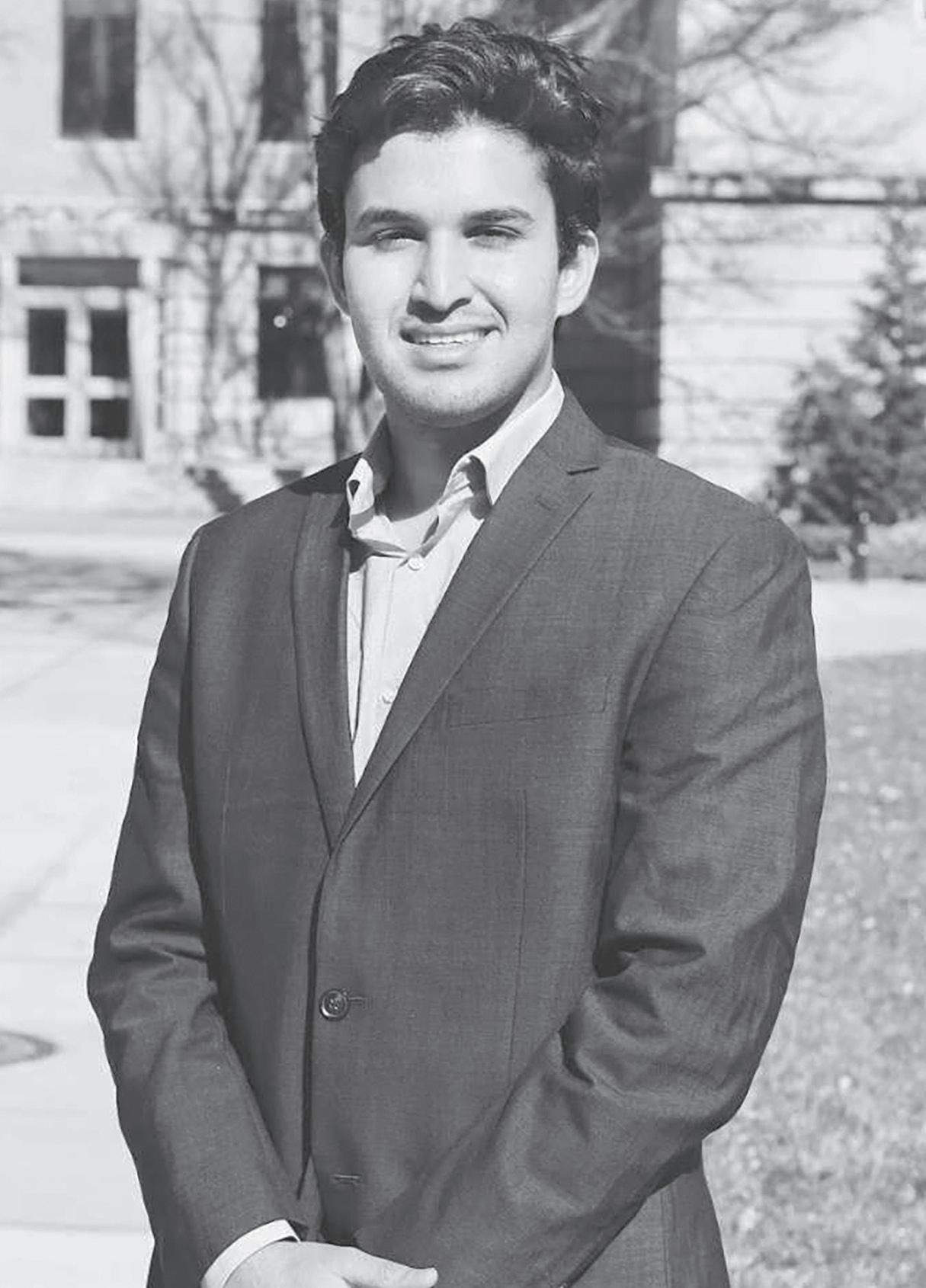
By ERNEST LI Sun Staff Writer
House of Diamonds is not your average family business.
A far cry from the homely mom and pop pizza shop or the humble bodega, House of Diamonds is a global diamond wholesaler with stores in the U.S., Thailand, Hong Kong, India and mainland China.
The diamond company supplies brick and mortar jewelry stores, online jewelry retailers and jewelry designers with loose diamonds and designer diamond jewelry. The company was founded in New York 40 years ago by Sanjeev Jain, the father of Cornell alum Arihant Jain ’18 MPS ’19. Arihant comes from a lineage of jewelry merchants spanning eight generations.
Arihant is currently the chief marketing officer of the company. After graduating from Cornell, Arihant completed his Master of Professional Studies in applied economics and management before returning to his family’s business.
Despite Arihant’s final decision to take on a leading role at House of Diamonds, Arihant’s family never pressured him into taking over the business. When he first arrived at the University as an undergraduate, Arihant considered several different career paths within finance.
“My parents made it very clear to me from the start that they wanted me to do what was the best for myself,” Arihant said. “Coming into Cornell, I was considering a career in investment banking or venture capital.”
However, he later decided to return back to the family business because it allowed him to pursue his ambitions.
“In the family business, I have the chance to express my creative potential and leadership abilities,” Arihant said. “I am really happy with the position I’ve been put in at House of Diamonds because it allows me to achieve the maximum personal and career growth.”
Only six months into his new position as House of Diamonds’ chief marketing officer, Arihant has already implemented a substantial change to how the company prices its gemstones to fulfill ambitious growth plans.
According to Arihant, the major game changer is an artificial intelligence and machine learning-based algorithm that uses
characteristics such as shape, quality and size to competitively price each gemstone.
After the success of his pricing algorithm, Arihant plans to capitalize on new technology and propose an audacious shift to his family’s business model to foster more growth. By entering the lucrative direct-to-consumer market, Arihant hopes to reap the benefits of a completely untapped revenue stream.
Direct-to-consumer companies remove the middleman — in Arihant’s case, the middleman is major retailers like Walmart and Macy’s — and sell online products directly to consumers to command higher profit margins while still keeping prices low. Famous examples of this business trend include Allbirds, Warby Parker, Casper and Glossier.
Arihant sees this market as a source of rapid growth for the company as well as an opportunity to give customers massive discounts on diamond jewelry, “ranging from 50 percent to 300 percent cheaper than what resellers and big brands will charge them.”
The newly minted chief marketing officer also addressed one of the foremost controversies of the industry: conflict diamonds. Commonly referred to as “blood diamonds,” conflict diamonds are specifically mined to fund warfare in already battle-ridden areas such as central and western Africa.
To combat this issue, each of Arihant’s company’s diamonds is sourced according to the Kimberly Process Certification, which is a trade regime covering 82 countries that allows diamond trade only between its own members and promotes more transparent shipment practices. This process ensures that all of the firm’s diamonds are conflict-free and ethically sourced.
Arihant also shared what he believed was a common stereotype — that heirs to family businesses have the privilege of resting on their family’s laurels and living an easy life.
“It’s actually the exact opposite,” Arihant said. “I have a desire to grow [the business] much more than my dad has, just like my dad had the desire to grow the business much more than my grandpa had. [This desire] can be attributed only to the love we all have for the business.”
Though he’s just in his early twenties and fresh out of
March 12, becoming the last governing body to vote on fossil fuel divestment.
of fossil fuel divestment in 2015, when it decided not to divest from fossil fuel companies, saying that the University’s ties to these companies were not “morally reprehensible.”
A year after the 2015 vote, the board released a set of guidelines on grappling with divestment in the future.
According to these guidelines, circumstances that would prompt the trustees to revisit divestment include: if a company partakes in ethically questionable actions, if divestment would have a meaningful impact in correcting the harm caused by the company in question or if a company contributes to harm in a way that is inconsistent with the goals of the University.
In 2015, the trustees felt fossil fuel companies did not meet the established guidelines — but according to Howarth, circumstances have changed in the past five years.
“The average person is more willing to accept climate change is a real and present danger than was true five years ago,” Howarth told The Sun before the meeting.
On Feb. 10, the GPSA unanimously voted for fossil fuel divestment — this resolution is slated to be brought up at other assembly meetings for the spring 2020 semester.
The U.A. and E.A. are expected to take up the resolution on Feb. 18 and Feb. 19, respectively. The S.A. will vote on the resolution on
Fossil fuel divestment activism has surged this past week in Ithaca. On Wednesday and Thursday, activists took the streets downtown to protest Canada’s proposed Coastal GasLink pipeline, resulting in 12 arrests on Thursday.
Also on Thursday, dozens of Climate Justice Cornell protesters staged a mock wedding between the University and the fossil fuel industry for Global Divestment Day, blocking Tower Road and the East Avenue intersection during the protest.
In December 2019, CJC delivered a letter to Day Hall, demanding that the University sever its ties with the fossil fuel industry by Feb. 13, or the protesters will disrupt “business as usual” on campus until the Board of Trustees divests, The Sun previously reported. If any of the five assemblies fail to pass the resolution, the topic can still be brought to the Board of Trustees if President Martha E. Pollack decides to raise the issue.
The five years since the previous trustee vote have been the five warmest years on record. In the past year alone, climate change has exacerbated extreme weather events, like the fires in Australia and California, the ice sheets warming faster than ever and the slowing circulation of the Atlantic ocean, Howarth said at the meeting.
Fossil fuel divestment has been a topic of conversation at other U.S. universities — Georgetown
graduate school, Arihant can assertively suggest and implement bold changes to his family’s business. He credits his time at Cornell as the source of his confidence.
“After going to Cornell, it makes me feel like I can honestly do anything in the world,” Arihant said.
LOVE
University announced on Feb. 6 it would divest from the fossil fuel industry and Harvard University’s faculty voted overwhelmingly in favor of fossil fuel divestment on Feb. 5.
“We’re no longer asking [the Trustees] to jump out and be first, but we are asking that they be the first of the Ivy League,” Howarth said. “Cornell prides ourselves on being a university that cares about sustainability and we like to think of ourselves as the greenest of the Ivy League.”
“If, for example, Harvard divests before we do that sullies our reputation, we care about that and we hope the trustees care about that,” Howarth continued.
While the resolution is early in its journey, Howarth is optimistic that the changing climate — both worldwide and at Cornell — will yield action.
“This is morally reprehensible, it’s not like other divestment issues, because the future of our society and planet is at stake,” Howarth said. “It is very important to the reputation of Cornell that we show some leadership here and not … divest 10 years too late. I am cautiously optimistic they are going to hear that.”
After the presentation of the resolution, Howarth fielded questions from other representatives. Senate members have a month to form a stance before the vote at the next meeting.
Anil Oza can be reached at aoza@cornellsun.com.
Continued from page 1
Even though they’ve been on campus for just over a semester, 53 percent of them met at Cornell.
“When you come to Cornell, you might want to pair up because people are pairing up,” Prof. Vivian Zayas, psychology, told The Sun. “The benefits of pairing up might outweigh the issues of compatibility,” she continued.
For students looking for love, the survey suggests joining clubs or going to parties to meet potential matches — with 22 percent and 17 percent of respondents meeting there, respectively — offering a wide array of places to scope out future partners.
It’s important to note, for all the results, that the title “Relationships and Love Survey” likely had an effect on the demographic of respondents — skewing toward students in relationships rather than not.
Swiping in Right Direction
Ten percent of respondents in relationships also reported swiping on their significant others on dating apps, though half of respondents “never” use them.
It’s a man’s world on apps like Tinder and Bumble, with guys reporting more usage than ladies. But Zayas was surprised to learn that students reported meeting their partner in person more frequently than through dating apps.
“Through a dating app, you’re more in the mindset of looking for someone and sometimes when you’re in that mindset, you can view other people more as objects, like you’re going shopping,” she said.
Some, including Zayas, speculate that dating apps have caused an increase in hookup culture because of the sheer volume of prospective dates they allow users to access.
Let’s Talk About Sex
“I think the number of people having sex seems low,” Zayas said, despite the increase in numbers. This year, 81 percent of respondents — versus last year’s 71 percent — reported bumping uglies at least a few times a year.
Women reported having slightly more sex than men; with 82 percent reporting that they have sex at least “a couple times a year” versus men’s 80 percent. Out of five students, only one would fess up to having casual sex with different partners regularly, but 24 percent of students reported feeling social pressure to have an active social life.
Zayas also noted the unique challenges that college-aged students face, namely phenomenons like climate change that provoke feelings of uncertainty that “can make us turn to other people and strengthen the desire to want relationships.”
Kathryn Stamm can be reached at kstamm@cornellsun.com. Olivia Weinberg can be reached at oweinberg.com.
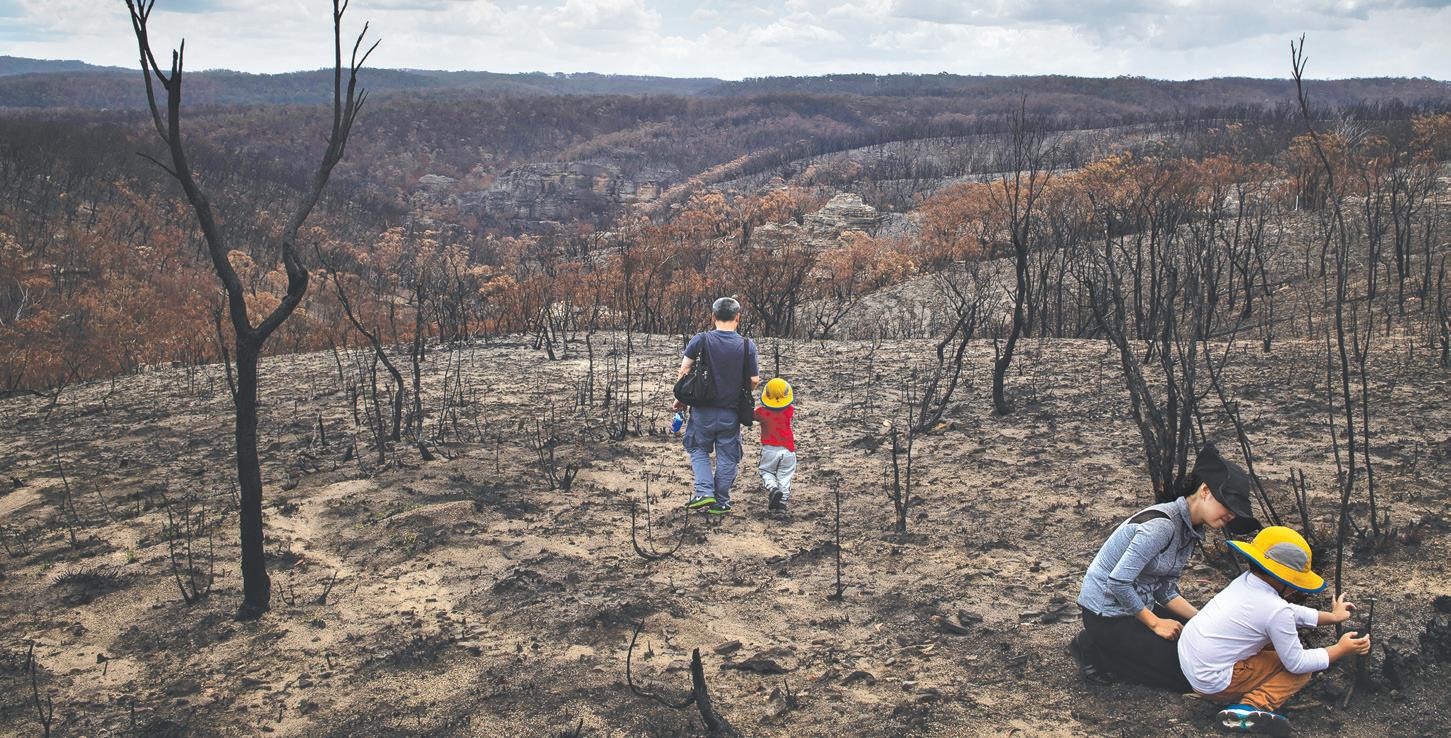
We are living in an age of anxiety. Both our literal and political climates seem to be collapsing around us, increasingly portentous, inevitable and awful. The people who could do something don’t care, and the people who do care often don’t have the power to do much about it. The worst thing, though, is that such problems — especially climate change — take place on scales so large or collective that individual action looks insignificant in the face of them.
Perhaps no greater medium captures the tensions between scales — individual and collective, human and geological, local and global — than narrative, which necessitates the intricate minutiae of human happenings at the same time as it makes a bid for the universal.
In Jenny Offill’s new novel, Weather, the narrator Lizzie Benson navigates her roles as college librarian, wife, mother and sister of a brother recovering from addiction. In addition, she wrestles with the new role of answering fan letters for her former professor’s podcast (Hell and High Water) that deals with the issues of climate change. Between going to P.T.A. meetings and helping her brother learn how to take care of his infant daughter, Lizzie manages to make astute, piercing observations about the state of affairs we currently inhabit. After a visit to a dermatol-
ogist who tells her every mark on her body is “exceedingly unlikely to be cancerous,” Lizzie tells the reader, “I wanted every day to be like this, to begin in shame and fear and end in glorious reassurance.” Lizzie’s declaration reminds the reader that every day is not like this. The “shame and fear” of problems larger than ourselves probably — and typically — won’t “end in glorious reassurance.” However, it also suggests that the mundane gives us something to hold onto in dark times, a semblance of meaning and control when things appear to be spiraling ever out of our control.
This sense is amplified by the sparse, fragmented style of Offill’s prose. Her method of fusing together everyday observations, personal anecdotes and clever distillations results in an effective capturing of the uniquely human experience of feeling like we’re on the inside looking out at a confusing and chaotic universe. In the novel, Lizzie and her husband make preparations for their “doomstead,” a property they’ll bunker down in when the inevitable doomsday arrives. Although Lizzie expresses a desire to “channel all of this dread into action,” her preferred solution — retreat — highlights the seeming impossibility of collective solutions, the indifference inherent in external, large-scale disasters. “There’s no hope

After Tennis (husband-andwife duo Patrick Riley and Alaina Moore) released Cape Dory in 2011, their ability to paint stories and to provide tasteful sounds has largely contributed to their growing success and popularity. Nine years and four acclaimed studio albums later, Tennis released Swimmer . Self-produced and mixed by four-time Grammy nominee Claudius Mittendorfer, Swimmer should be viewed as a model album for aspiring musicians. It perfectly utilizes melodic and lighthearted sounds to accompany poetic lyrics carried by the sweet voice of Alaina Moore. Since Tennis’ last studio album, Yours Conditionally , in 2017, Riley and Moore have experienced multiple moments of adversity that have shaped and strengthened the love between the two. Moore was



sick in the hospital with the flu, Riley’s father died of cancer and his mother was hospitalized after experiencing a stroke. Thus, Swimmer is a narration of Riley and Moore’s journey through a period of pain and loss, a testament to the durability of their love. Through skillful lyricism, Tennis once again paints vivid stories that promptly whisk you away into a basin of emotions that emphasize feelings of natural love, sexual attraction, grief and perseverance. On “I’ll Haunt You,” the premier song on Swimmer, Tennis masterfully expresses reflections of love and time through singing, “As the sun slips over my shoulder / I can tell I’ve been getting older / Drawn to you like the horizon / I’m the first one to break the silence.” On “How to Forgive,” Tennis delicately represents the challenge to forgive and to con-
anymore, only witness,” says Sylvia, Lizzie’s former professor who runs the podcast.
In Weather, Offill indicates that the personal, the individual, emotional minutiae, can serve as coping mechanisms for dealing with the terror of climate change. In transferring the geological scale onto a human scale, we’re able to (somewhat) conceptualize it and grapple with it. However, inasmuch as the scale of climate change is much larger than the scale of our human problems, our human problems carry a deeper emotional force, an inherent empathy that the problems of our planet can’t compete with. Although individual human actions have contributed to climate change, it’s difficult to come to terms with the fact that “composting toilets and water conservation and electric cars and how to live lightly on the earth while thinking ahead for seven generations” might not save us. Nevertheless, to do otherwise — to forsake “hope” and become a mere passive “witness” — would be a gross
immorality.
Since the beginning of this millennium, the term “Anthropocene” has come to signify our current geological age, an era in which human activity has had significant impact on Earth’s climate, ecosystems and geology. The increasing prominence of ecocriticism demonstrates that the literature and culture of the Anthropocene can be just as important in making sense of it as scientific study. Moreover, books like Offill’s indicate that the novel, too, can act as a kind of laboratory — one for understanding our own emotional responses to impersonal, external forces and testing out different modes of being in the world. In doing so, the novel allows us to make sense of the now, even as the future marches closer and closer towards us.
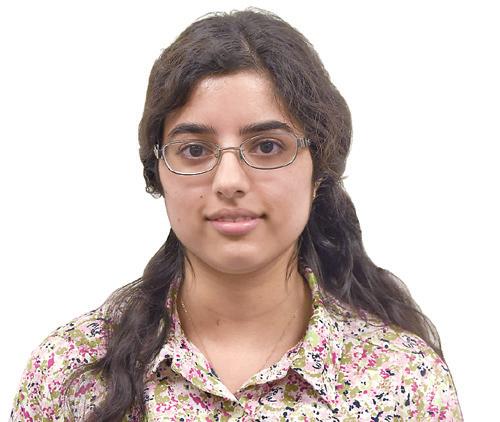
Ramya Yandava is a junior in the College of Arts and Sciences. She can be reached at ryandava@cornellsun.com. Ramya’s Rambles runs alternate Thursdays this semester.

RACHAEL STERNLICHT/ SUN GRAPHIC DESIGNER
front or navigate emo tions by singing, “How could I disguise the way that I’m feeling / I’ve got my reasons, I’ve got one million / My mind has been divided / And I’ve been questioning myself / Can’t keep on hesitating.” Feelings of difficulty, love and fortitude are often difficult to express through words, yet Tennis seems to have no challenge communicating their sentiments eloquently. More than skillful lyricism, Mittendorfer artfully incorporates swank piano and drum lines that accentuate Moore’s voice, allowing each song to sound complete and precisely layered. As a result, Swimmer ’s
stylish indie-pop production creates the perfect environment for one to be meditative and feel playful. Even in moments when lyrics speak of tragedy, the melodic and lighthearted sound of Swimmer provides a sense of serenity and insurance that the current moment of tragedy is only temporary.
Released on Valentine’s Day, Swimmer is an effective reminder that in moments of tragedy, love has the power to heal wounds and make us stronger. Swimmer reminds us that in moments of pain and
loss, seeking those who we love for support is natural and healthy. Regardless of what obstacles Tennis faced, they showed that love could endure through all and could even become stronger. Personally, I recently became a fan of Tennis because of the messages they send across their projects and their style (both in fashion and production). I found Swimmer to suitably meet my expectations, and I highly recommend this album to anyone looking to hear poetic lyrics and mellifluous composition.
Jeremiah LaCon is a junior in the College of Arts and Sciences. He can be reached at jlacon@cornellsun.com.
The Peach Pit concert featuring Dayglow was an ideally chill way to spend a Saturday night. The concert, which took place at Cornell’s Bailey Hall, brought together a motley amalgamation of indie music lovers, fashion-forward undergrads and people who went because, “idk my friend is going so might as well.” Despite the varying degrees of musical appreciation, the attendees were unified by the positive vibes radiating off both bands’ members whose music lit up the night with catchy melodies, iconic hair flips and crowd surfs.
The concert opened with Dayglow, a young band whose first studio album, Fuzzybrain , was released in 2019. The group, headed by lead singer Sloan Struble, took the stage and played an enjoyable selection off their newest release as well as some classic covers like Vampire Weekend’s “A-Punk” and Tears for Fears’ “Everybody Wants to Rule the World.” Struble’s theme of friendship carried through the group’s set; watching him play with his three tour-mates on stage while having what looked to be the time of his life, conveyed a similar air of lightheartedness onto the audience. At one point, Struble told the audience to take a minute before the next song to go meet a stranger standing in your vicinity, a tactic reminiscent of Harry Styles’ similar actions during his 2020 tour. This encouragement to be social genuinely cut through the awkwardness of the not-knowing-whatto-do-with-your-hands sentiment running throughout the crowd as well as the physical compaction that came from the mass of students rushing to the front of Bailey Hall, contorting around the auditorium seats that would certainly impale you if you were to jump too enthusiastically to the music.
Dayglow’s music was vibrant and refreshing, upbeat at times and sincere at others. Songs like “Fair Game” and “Can I Call You Tonight?” had the house jumping, arms a-flailing to the indie, bubble gum pop melodies. Others like “Fuzzybrain,” which addressed Struble’s
bouts with mental health, and “Dear Friend,” a ballad in dedication to the melancholy felt when missing a friend, subdued the now swaying audience in a necessary and thoughtful way. Dayglow seamlessly navigated these highs and lows with great skill. The group on stage delivered a wholesome and sincerely enjoyable performance that prepared the audience for Peach Pit.
Given the intimacy of the venue and the last-minute feeling of it all, Peach Pit felt like a close friend’s really good college band you got to go see. The band set up their own equipment and sang without the accompaniment of a backdrop emblazoned with the band’s insignia, a practice which is pretty standard for a band on tour. All this made the four band members more likeable in their accessibility and their seemingly down-to-earth nature. The band played new music off their 2017 album, Being So Normal , and older selections off of their iconic 2016 EP, Sweet FA , amongst others. Peach Pit is the type of band whose music is always, and without fail, good. With each new release, I have never once found myself disappointed. This hard-hitting consistency came through at the concert Saturday night. Each song that was played may not have been their most known or most popular, but it got everyone in the audience off their feet and dancing around. Songs like “Alrighty Aphrodite,” “Seventeen” and “Drop the Guillotine” imbued the house with a high energy joy, while “Tommy’s Party” and “Peach Pit” mellowed out the venue. The band’s lead singer, Neil Smith, was
charismatic and classy as he manned the stage, flipping his curly locks around his head with great passion and performing his group’s music with absolute skill. The lead guitarist, Christopher Vanderkooy, played with similar acuity while managing to fearlessly jump into the crowd and surf it, all without missing a beat. The band, on its encore, played Chuck Berry’s “Johnny B.

Goode,” a song which showcased each member’s musical talent while also demonstrating the band’s range; Peach Pit can not only play chill indie rock, but also hard and fast rock and roll.
Peach Pit, a band with so much character and originality, was inspiring at their concert in Bailey Hall Saturday night. The band, in accompaniment with Dayglow, put on a delightful show with amazing music that broke up the grey monotony that is February in Ithaca.
Madeline Rutowski is a senior in the School of Industrial and Labor Relations. She can be reached at mrutowski@cornellsun.com.
It’s Emily Goldfinch, the peppy, bright girl — I mean Rosa Diaz, the badass detective that we love and admire from the popular hit show Brooklyn Nine-Nine Despite appearing intimidating and scary in her black leather coat on TV, Stephanie Beatriz brought choruses of laughter to Bailey Hall as she recounted moving stories of her life while sharing ingots of wisdom that she gained over the years working in the 99th precinct.
Even as an incredibly successful person, she too was once plagued with doubts about her ability as an actress. While discussing her role on Brooklyn Nine-Nine , she described how she felt
like she wasn’t entirely present in the first few seasons, feeling undeserving of her spot and almost like an imposter. As high achieving Ivy League students, I felt that this was something many of us could resonate with. Weighed by the heavy burden of expectations from ourselves as well as our friends and family, many Cornellians often feel as if they don’t belong, as if they had only gotten admitted by luck or even by mistake. She advised audience members to have faith in themselves, revealing that she was “really thankful that I sort of allowed myself to grow into ... really a presence at the end of season four.”
I particularly liked the moments when Beatriz described her childhood. When prompted about her process of figuring out her goals, she painted a vivid picture of a young girl hungry for stories. “I’d

always like to go the library by myself and just spend hours and hours at the public library pulling things off shelves that I shouldn’t have been reading,” she said jokingly. “There was also this very strange thing that would happen to me when I was able to disappear into a story; it didn’t matter how much money my family had, it didn’t matter what color my skin was, it didn’t matter what people said about me, whether or not I was pretty. Suddenly, in a story, you really could just be and see and do everything, and the world became only as limited as that story,” she shared.
When asked by an audience member about the best tips for aspiring performers and artists, she once again stressed the importance of reading and writing. “Lately I’ve been trying to write a script based on a book of short stories,” she told us, “and I’d make myself get up at five a.m. and it fucking sucks, but I want this thing to happen so I have to put in the work.” Whether it’s for a course, a project team, a club or even a personal project, it’s all about hard work: “I’ve talked to so many people in the industry that are talented and nothing happens for them. And then I talk to people that are kinda talented but work really fucking hard, and they get shit made.”
She also talked about how she discovered her love of acting. “There was some kind of power in storytelling that I just became magnetized to,” she said with a smile. Despite this, she initially felt deterred from going into television,
as she felt that “only beautiful people are on television, and really only white people are on television.” She told us that Brooklyn Nine-Nine , though fantastic, is a very rare case with such a diverse cast. “It’s a very rare example in that the Latinas on the show aren’t hypersexualized people.” In order to help promote the growth of deserving and good films directed and lead by people of color, Beatriz encouraged us to simply watch and react to them, particularly this year’s rendition of In the Heights , which she will star in.
Beatriz, who identifies as bisexual, highlighted the ways in which her act of coming out affected her life and career; for Brooklyn Nine-Nine , she was able to inspire others to have the same courage she had, with Rosa announcing her bisexuality as well in the fifth season. Although she doesn’t have any particular advice for members of the LGBTQ+ community, she told the audience that they didn’t have to conform to what the media had shown them, as it is a personal process, but rather come out in any way they want. In a touching moment, she revealed the difficulties and complexities of her own journey with her parents with tears in her eyes. As part of the Brooklyn Nine-Nine fan base, we simply want to let you know that regardless of whatever hardships you may face, we’ll always support and admire your courage.
Brian Lu is a freshman in the College of Arts and Sciences. He can be reached at blu@cornellsun.
137th Editorial Board
ANU SUBRAMANIAM ’20
JOYBEER DATTA GUPTA ’21
Business Manager
PARIS GHAZI ’21
Associate Editor
MEREDITH LIU ’20
Assistant Managing Editor
RAPHY GENDLER ’21 Sports Editor
BORIS TSANG ’21 Photography Editor
AMBER KRISCH ’21 Blogs Editor
SOPHIE REYNOLDS ’20
Editor
AMANDA H. CRONIN ’21
JOHNATHAN STIMPSON ’21
PETER BUONANNO ’21 Arts
ANYI CHENG ’21 Assistant
HUNTER SEITZ ’20 Assistant News Editor
CHRISTINA BULKELEY ’21
SARAH SKINNER ’21
Managing Editor
KRYSTAL YANG ’21
Advertising
NATALIE FUNG ’20
SABRINA XIE ’21
NOAH HARRELSON ’21
SHRIYA PERATI ’21
KATIE ZHANG ’21
AMINA KILPATRICK ’21
MARYAM ZAFAR ’21
ETHAN WU ’21
SHIVANI SANGHANI ’20
NICOLE ZHU ’21
LUKE PICHINI ’22
JIANG ’21
’21
WU ’21
To the Editor:
The Faculty Senate has been debating Fossil Fuel Divestment, with a resolution posted online on Jan. 8. I admire freedom of speech and civil disobedience, as they are critical to democracy, but I believe a constructive dialogue would serve Climate Justice Cornell better. Their concerns have been heard by the administration.
I also question the motives behind today’s protest. According to Climate Justice Cornell’s own Instagram story, “divestment is about attacking the underlying causes of climate change: capitalism and colonialism.” As a scientist, I believe climate action must be narrowly focused on keeping carbon

out of the atmosphere. Harnessing the power of industry will allow this goal to come to fruition much quicker. I respect the social justice goals of Climate Justice Cornell, but I do not believe these goals should shape the debate on climate action. Only science should have that power.
I wrote in an op-ed last December that “by tying climate action to a broader range of progressive social justice issues, organizers are continuing down the dangerous road of making climate action a partisan issue.” Climate change is one of the most important issues of our generation, and a solution requires unity across the political spectrum.
To the Editor
As an alum, I don’t understand the logic of replacing a college as unique as Human Ecology with a College of Public Policy when there are already so many other well established public policy programs at other universities for prospective students to consider.
The only reason I chose Cornell for my doctoral studies was because of the international nutrition program in the Division of Nutritional Sciences. It offered both depth in science of nutrition and breadth in the mechanisms for transforming that knowledge into effective change. My minors in program evaluation and epidemiology were an important base for working on several policy papers with professors. I also enriched my education through the unofficial “bridge” to CALS with courses in biostatistics and agricultural economics.
In theory, good policy is based on evidence from epidemiological and economic studies. Numbers alone are not enough; good policy should also be grounded in con-
text. In nutrition, this requires understanding nutrients at the molecular biological level and behaviors at the individual, family, community and, ultimately, global level.
I have seen countless examples of failed policies in both my international and domestic work. The common denominator in all these failures was when the policy makers didn’t fully engage the primary stakeholders who either benefitted from, or implemented, the policies. It seems that the Cornell administration is going down the path of neglecting its stakeholders. If there is one giant take-home lesson from the education I received at Cornell and my subsequent work, it is that you should never ignore your stakeholders if you want something to succeed.
The proposal by the Board of the Human Ecology Alumni Association for a School of Public Policy bridging the Colleges of Arts and Sciences and Human Ecology is a reasonable compromise.
Susan E. Burger,
M.H.S., Ph.D. ’93, I.B.C.L.C.
Nile Jones | Rivers of Consciousness
Last summer, I attempted to enroll in two classes that were offered only during the summer session. As soon as I enrolled, my bursar bill was adjusted to accommodate the summer tuition, a staggering $10,220 for my seven credits worth of coursework, or $1460 per credit.
Immediately, I went to the Office of Financial Aid, but I was met only with an application form for “financial aid” in the form of loans; Cornell doesn’t offer non-loan based aid for summer and winter courses.
It gets worse, though. The form comes with multiple strings attached, such as a minimum requirement of six
The LSC scholarship is flawed and corrupted by strings as well. The scholarship ... is highly competitive. Upperclassmen who need to fulfill requirements for graduation in four years are heavily prioritized.
summer credits to even be eligible to apply for loans as well as the need to have all bursar balances cleared before applying for aid.
I met with my advising dean afterwards; he mentioned that I was eligible for the LSC scholarship that covers the full summer tuition, but that it was too late for me to apply. Needless to say, I dropped the classes and changed my summer plans — since $10,000 for summer courses was ridiculous, even if I didn’t have to pay for it all right now.
While the LSC scholarship does provide full coverage of tuition, it is flawed and corrupted by strings as well. The scholarship, from what my dean told me and from my own experience, is highly competitive and not easy to obtain. Upperclassmen who need to fulfill requirements for graduation in four years are heavily prioritized. Moreover, the scholarship is not granted for academic acceleration or to
non-recipients of Cornell grant aid during the school year. Since the incident during the summer, I have contemplated taking an online course this past winter to ease my course schedule during the spring — else I would be over hours this semester. Therefore, I applied for the LSC scholarship by the deadline, requiring me to visit my faculty advisors for each of my majors and complete my applications to graduate; it is certainly a stressful process. Ultimately, despite all this, I was denied. Thus, like my decision last summer, I chose to forego gathering $5840 for one four-credit course, an impossibility for me.
Beside the LSC scholarship, the only alternative to receive non-loan aid is through the Pell Grant, i.e. federal aid, but this is contingent on receiving the grant during the school year, again impossible for many students.
This is absurd. Cornell’s grandiose tuition for summer/ winter courses is, at best, an inconvenience for some students. At worst, financial aid recipients like me won’t be able to swing it. Furthermore, the need to have six credits minimum to be eligible for loans during the summer means students must be willing to pay at least $8760 in loans, or come out of pocket up front for any amount less.
Such a lack of aid options is simply unacceptable. The very existence of the LSC scholarship means students must face an “all or nothing” situation, a huge risk since the recipients and non-recipients of the scholarship are notified of their acceptance or rejection in late fall or spring.
What’s silly about this is that it is unreflective of Cornell’s proud statement to meet all financial aid for
What’s silly about this is that it is unreflective of Cornell’s proud statement to meet all financial aid for students.
students during the school year. Cornell utilizes several scholarships provided by generous alumni in order to meet demonstrated financial need for students. Why can’t the University use some of these scholarships during the
Colton Poore | Help Me, I’m Poore
Lsummer and winter sessions?
What’s most surprising about Cornell’s lack of summer and winter aid options, though, is that other prestigious universities have and encourage students to apply for non-loan based aid. Yale University, for example, offers its eligible students up to half tuition on up to two course credits. While not a huge source of funding, this can be a decision maker for students from low-income backgrounds taking only three or four credits.
Even schools with less endowment provide better
Cornell, with its exorbitant tuition cost, is difficult enough to attend for many students. Why must we be challenged for wanting to take classes on campus during the summer?
options. Brown University, for instance, offers students a Brown “Summer Grant.” The amount of this grant depends on how much in scholarships is received during the school year and how many summer courses the student is taking.
Cornell, with its exorbitant tuition cost during the school year, is difficult enough to attend for many students. Why must we be further challenged for wanting to take classes on campus during the summer or online classes during the winter? Mitigating the financial barrier with more aid options during the summer and winter sessions would increase the diversity of academic courses available to students and continue to maintain Cornell’s reputation as one of the world’s most prestigious universities.
Nile Jones is a senior in the College of Arts and Sciences. He can be reached at njones@cornell.edu. Rivers of Consciousness runs every other Monday this semester.
ast Friday I stood in the Kennedy eHub with 15 or so members of my club. We looked around at what was supposed to be a networking event — in addition to our club members, there were five or six new faces. Twenty people, most of them already acquaintances. We nervously ate from the food that would’ve fed the 50 people we thought we’d have.
Over my time at Cornell, I’ve had the distinct misfortune of putting hours of work into planning events for all of my
Disappointing, but easy to understand.
If someone doesn’t have a personal stake in the event or they didn’t help to plan it, it’s incredibly easy to find an excuse not to attend. I can quickly convince myself that I’m too busy to go to something that I’m interested in, though not required to be at.
And at Cornell, unfortunately, we’re really good saying that we’re too busy. And so we reflect on our own events, blaming the cold or the timing for their failure while choosing to ignore the fact
I’ve had the misfortune of putting hours of work into planning events, only to have them flop.
clubs, only to have them flop. I’ve sat through leadership summits that barely filled a table, launch events with no audience to launch anything to and film screenings that turned out to be me and a few friends. It’s not fun.
And while I don’t expect every event that I or my friends throw to be a smashing success, I’ve noticed that virtually all of them succumb to a lack of attendance from outside students. Commonly, I hear reports of clubs that host events where the only attendees are its own members.

that Cornellians simply aren’t very good at trying new things or supporting others if they’re not forced to.
We continue to plan our events and make ourselves too busy to attend any others. And somehow we manage to be surprised when all the people who said they were interested in our event turn out to be too busy themselves. Everyone is intent on creating spaces for people to come together, but we don’t have the necessary students with which to fill them. Is it really
fair for us to expect others to support our events, when we’re unwilling or “too busy” to support their’s?
It can be both scary and exhausting to go to an event without really knowing someone, because it’s hard to try something new. Several times, I’ve tried to attend all of the events in a week that interested me. It quickly becomes tiring to balance classes with clubs with work with going to events that are out of my comfort zone. It’s intimidating to show up to something alone, and even with a friend, there’s always a long list of other things that we’d be more comfortable doing. But college was marketed as a time for us to leave our comfort zones. This is our time to branch out, to learn from others’ perspectives. And when we cancel on an event that we’re interested in going to, either because we’re nervous, or we’re tired, or we’ve convinced ourselves that we’re too busy, we’re robbing ourselves of the opportunity to grow and learn from others.
event at the Johnson Museum, a friend and I learned about an interesting class that she’s now taking this semester. I’ve been to poetry readings in the cemetery for Halloween and to dance recitals showcasing Chinese culture. At every event I’ve attended, I’ve learned something new or at least have had a good conversation. Often, I end up talking to someone about how our clubs can collaborate in the future.
We all work hard at Cornell on our
We all work hard at Cornell on our clubs and interests. The next time that you mark “Going” to an event, consider actually going.
If Cornell truly wants to become the engaged, caring community it calls itself, then we have to start by supporting and showing up for each other’s work. Who knows what you’ll discover when you actually go to an event that you marked as “Going” on Facebook?
At a last-minute decision to go to an
clubs and our interests. Now I think it’s time we actually started to show up to some of them that aren’t our own. It’s disheartening to present on a topic that you’re passionate about to a mostly empty auditorium. And if we all know the feeling, we should be working to stop it. The next time that you mark “Going” to an event, consider actually going.
Colton Poore is a senior in the College of Arts and Sciences. He can be reached at cpoore@cornellsun.com. Help Me, I’m Poore runs every other Monday this semester.
Fill in the empty cells, one number in each, so that each column, row, and region contains the numbers 1-9 exactly once. Each number in the solution therefore occurs only once in each of the three “directions,” hence the “single numbers” implied by the puzzle’s name. (Rules from wikipedia.org/wiki/ Sudoku)


“This is why we don’t get snow days.”
To submit your caption for this week’s contest, visit sunspots.cornellsun.com.



26
*****************************
1-3 Bedroom Apartments
Quiet Fall Creek Location
5 Minutes to Busline 607-351-1267
joe@joegrealty.com *****************************
120 Oak Avenue
Just steps to Cornell Campus
10 bedroom house & 1 and 2 bedroom apartment
607-277-1234 office@ithacastudentapartments.com Ithacastudentapartments.com
>>MAKE ITHACA HOME<< Collegetown Apartments Furnished 1-3 Bedrooms PARKING, LAUNDRY, UTILITIES! (607) 273-7368 www.WestShoreApts.com
109 Sage Place
2 & 3 Bedroom Apartments
Access to Shuttle to Campus
Access to Free Fitness Center
Novarr-Mackesey Property Management office@ithacastudentapartments.com 607-277-1234
Flexible Housing Solutions!
Short Stay Accommodations Available *Brand New* Studio Apartments 238Linden.com Leasing@inteprop.com
*Brand New*
Full Term & Semester Leases
Studio, 1 & 2 Bedrooms College Townhouse 121-125 College Ave. CollegeTownhouseIthaca.com Leasing@inteprop.com
26 A PA R TMENT FOR R ENT
Catherine & Eddy St. 1 & 2 bedroom
Furnished, heat included Laundry in building Parking available for fee 607-277-1234 office@ithacastudentapartments.com
Collegetown Crossing College Ave's Newest Location
307 College Ave. Now Leasing for 2020-2021 Completely New Modern Studios, 2 & 4 Bedroom Apartments. Fully furnished, heat & hot water included. Reception area at 307 College Ave. www.urbanithaca.com 607-330-2442 info@urbanithaca.com
Houses, Apts, Parking 1 to 9 Bedroom
Collegetown - College Ave, Linden Ave, Dryden Rd, Bryant Ave, Cook St. 607-330-2442 info@urbanithaca.com www.urbanithaca.com
Now Renting 2-10 Bedroom Houses/ Apartments for 20-21. All Locations. Call today or visit our website: Certified Properties of TC Inc certifiedpropertiesinc.com 607-273-1669
2020-2021
Studio 1, 3, 8 & 11 BR Apts. Great Locations in Collegetown. 607-227-2535
26 A PA R TMENT FOR R ENT
Boldly Refined Living 312 College Avenue Sophisticated studio, 1, 2, 3-bedroom apartments. Superior fitness facility, theater, and coworking space. Free high-speed internet. Exclusive resident parking. Package delivery/return. Overnight concierge. 607-273-9777 or 312collegeave.com
APTS/HOUSES COLLEGETOWN BEST LOCATION/BEST PRICING 607-272-3389 607-592-1352 cbeach24@aol.com
CLEAN & QUIET! 2 bedroom, attached garage, full basement, ON BUS ROUTE, large yard. Avail. 3/1. Concept1747@gmail.com
20-21
College Ave.
5 BR House Furnished. Laundry. Parking. Call 607-273-8576


On the same Paige | Paige Lewis caught the Red up with Yale when she tied the contest at one apiece before Cornell went on to claim victory.
HOCKEY
Continued from page 12
double its lead later in the period. With assists from Lewis and junior defenseman Kendra Nealey, senior defenseman Micah Zandee-Hart took a slap shot from the left side of the ice into a crowd of Cornell and Brown skaters. Brown goaltender Calla Isaac never saw the puck as it whizzed by her and into the top left corner to put the Red ahead 2-0.
Looking to extend their lead, the No. 1 team in America came out firing in the second. With 10 minutes gone in the period, senior forward Kristin O’Neill scored her first goal of the night.
Freshman forward Izzy Daniel started the play by controlling the puck in her own zone. She passed it ahead to junior forward Maddie Mills, who sent it right to the stick of O’Neill.
O’Neill onetouched her pass into the net for the team’s third goal.
in for the score.
Playing in the rare position of needing to come from behind, the Red maintained composure and responded with a goal of its own three minutes later. Assisted by Zandee-Hart and junior defenseman Devon Facchinato, Lewis took the puck from right outside the goal crease to even the game.
Cornell took a 2-1 lead into the final frame after a power-play goal late in the second period. Working the puck around with the extra skater advantage, Zandee-Hart and Bourbonnais eventually found Mills lined up for a shot. She sank the puck into the top corner for what proved to be the winning goal.
In the final goal of the evening, Zandee-Hart notched her fourth point of the game when she found Gillis Frechette.
Shortly after her first, O’Neill recorded her second goal — once again, off a feed from Daniel.
In the end, Cornell’s offense proved too much for Brown.
The Red was backed up by junior Lindsay Browning, who recorded her 10th shutout of the year in a game where she needed to turn away only 11 shots. The final tally was 4-0.
The Red followed up its win with another victory against Yale (15-12, 12-8 ECAC). By beating the Bulldogs 5-1, Cornell secured the best record in the conference and captured more hardware in its already remarkable season.
But the Bulldogs would not just give the title to Cornell. After a scoreless first period, Yale’s Kristen Nergaard broke the deadlock. Initially saving a Yale shot, Nergaard collected the rebound and was able to put it
The Red pulled away from Yale in the third, putting up three unanswered goals. Already with two assists, Zandee-Hart scored after a feed from junior forward Finley Frechette, when sophomore forward Gillis Frechette found her sister, who then sent it forward to ZandeeHart. She tapped in the pass for the goal.
Mills got on the goal sheet for her second time of the night. Daniel dropped the puck for O’Neill, who skated into Yale’s defensive end. Streaking towards the net, O’Neill passed it right to Mills who redirected the puck into the net.
In the final goal of the evening, Zandee-Hart notched her fourth point of the game when she found Gillis Frechette, who took the puck into the slot and fired a wrist shot.
The 5-1 victory finished Ivy League play for the Red. With a perfect record in-league, Cornell is the undisputed champion of the Ivy and ECAC. Returning home to take on RPI and Union on Feb. 21 and 22, the Red will look to end their season on a continued high note.
Justin Suzzan can be reached at jsuzzan@cornellsun.com.
By ELIZABETH FOY Sun Contributor
It was Senior Day at the courts, and Cornell squash celebrated its graduating class of six — three women and three men — in a match against Harvard that ended without a single Cornell win.
This graduating class is the first to be coached by head coach David Palmer for its entire time at Cornell. Palmer took on his current role in 2016.
“I’ve known them the longest of anyone on the team,” Palmer said. “I’m happy for them — all six of them have been great team members, very successful.”
Cornell ranks at No. 11 and No. 12 for women and men, respectively, whereas the Harvard men and women are ranked No. 1 in the nation. The Harvard women have not lost a match in five years and have never lost to Cornell, while the men have lost to the Red only twice in 51 total meetings.
“I knew it was going to be hard, but I tried to stay really positive and give er a good run.”
Sivasangari Subramaniam
Fans filled the court’s limited seating. Cheers, chants and signs littered the audience as fans huddled together to watch the Red. At one point, an eager group of fans banded together to start a chant only to be immediately shushed by a Harvard onlooker citing proper squash etiquette.
Saturday’s biggest match was between sophomore Sivasangari Subramaniam and Harvard’s Gina Kennedy. Leading up to the match, the two went undefeated for the entirety of their respective seasons. They had not faced each
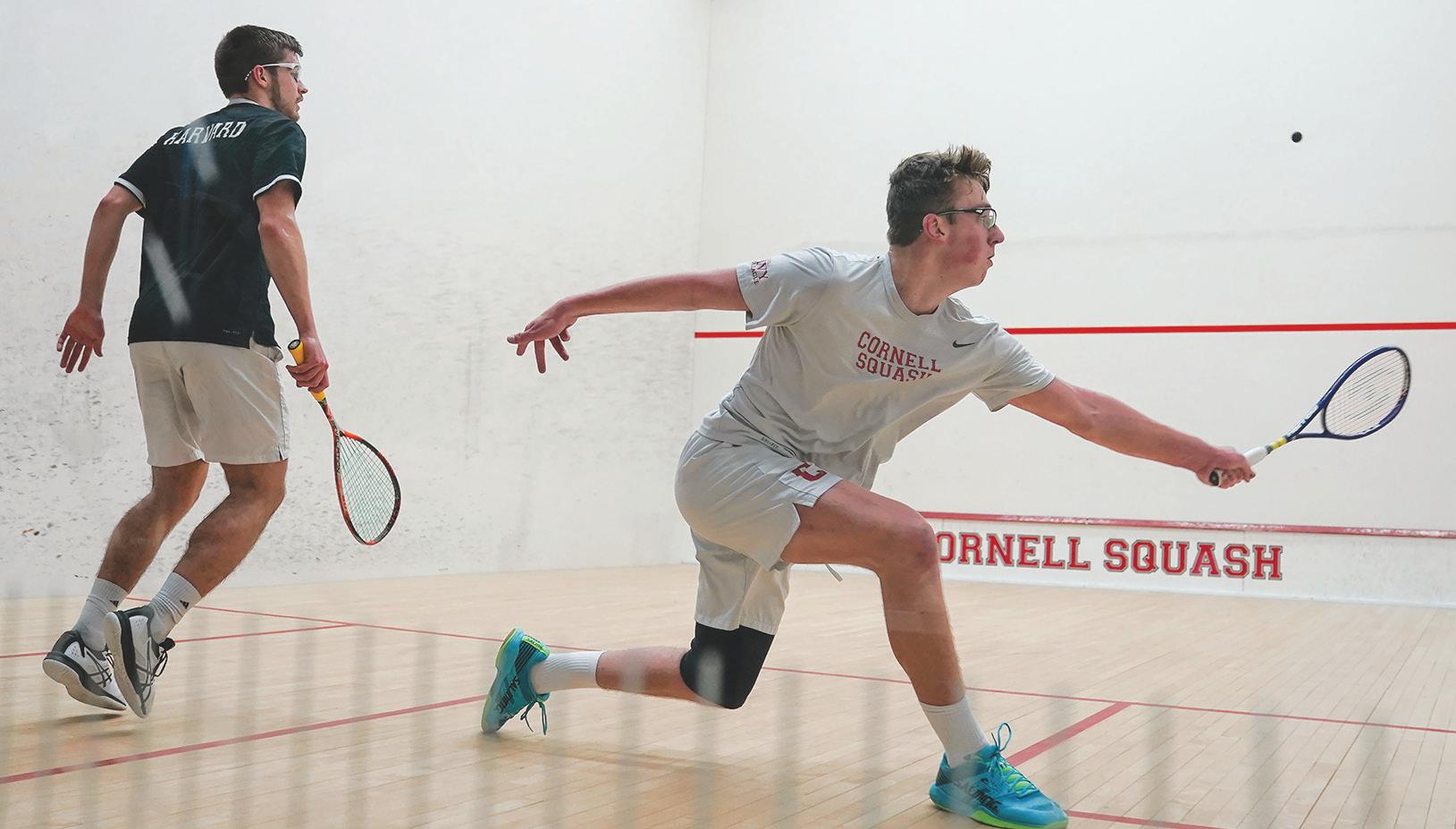
other in a match since last season’s individual championships which Kennedy won, making for an intense rematch in Ithaca.
Kennedy prevailed again, breaking Subramaniam’s 12-game winning streak. Nearly each individual match was neck-and-neck, with Subramaniam winning the second of three against Kennedy. But Kennedy maintained an early lead in the deciding match, emerging victorious for the afternoon.
“I knew it was going to be hard, but I tried to stay really positive and give her a good run,” Subramaniam said.
Subramaniam’s win made her one of only three Cornell players across both teams to win a single set against Harvard, with the other two won by senior Madison Miles and junior Mimi deLisser.
Cornell’s men’s team, however, found even less success on
the court, losing all 27 matches against Harvard.
But with championships on the horizon, hope is not lost for the season and Palmer remains optimistic.
“We tried to get something out of the hard matches and playing a stronger opponent, so our focus today was trying to stay on court as long as the girls could,” he said. “We’ve been training hard all weekend … We won the [Kurtz] cup last year.”
The women’s team will move on to the College Squash Association’s team national championships at Yale from Feb. 21 to 23. The men’s championship, hosted by Harvard, will take place from Feb. 28 to March 1, followed by individual championships in early March.
Elizabeth Foy can be reached at elf72@cornell.edu.
By BENNETT GROSS Sun Staff Writer
Following its 73-62 upset win over previously unbeaten Princeton last Saturday, Cornell has dropped three Ivy League contests in a row, leaving itself in an unlikely position to finish in the top four teams in the conference — which would mean missing the league tournament.
This past weekend, the Red traveled to Harvard and Dartmouth — and did not
ilar display of dominance, beating Cornell by another 22-point margin at 75-53.
“Our guys really need to understand that we cannot have any mental lapses at any point during the game,” said head coach Brian Earl.
“I don’t know if there is anything specifically that you can point to with this team, but it just seems like we lose our resilience during portions of the game, which is obviously unacceptable.”
the way for Cornell against Harvard, scoring 17 points and grabbing six rebounds, but his weekend was cut short against Dartmouth, as he only logged six minutes before injuring his ankle. Boeheim’s status is currently questionable.
Due to Boeheim’s injury, junior guards Terrance McBride and Bryan Knapp picked up the slack offensively, leading Cornell with 17 and 10 points, respectively. But their effort was not enough to tilt the scale in Cornell’s favor after Dartmouth’s quick start.

Although neither game was particularly close, one silver lining for Cornell was the emergence of walk-on senior guard Noah Gear. Gear — who just joined the team this season and had played only sparingly throughout the year — got the opportunity to play this weekend, fully taking advantage of his chance to make an impression on the coaching staff.
Gear came off the bench against the Crimson and scored 13 points on 5-6 shooting in just eight minutes played. In Hanover, Gear followed up his strong showing with two points
Next weekend, the Red will tip off against another pair of Ancient Eight foes.
“We just want to put forward an effort that people can be proud of this weekend against Yale and Brown,” Earl said. “These guys need to step up in different situations and understand that it is 40 minutes from whoever is on the court of no mental lapses and working your
Earlier this season, Cornell was swept by the Bulldogs and Bears on the road. Additionally, the Bulldogs have won 14 consecutive games against the Red and seven straight matchups
Cornell will look to rebound this weekend when it hosts Yale at 7 p.m. on Friday and Brown at 6 p.m. on Saturday.
WOMEN’S HOCKEY
By JUSTIN SUZZAN Sun Staff Writer
After being named the best team in the nation earlier in the week, No. 1 women’s hockey headed out on its last road trip of the season to battle Brown and Yale — and clinch an ECAC regular-season championship en route to downing the Ivy foes.
It has been a year to forget for Brown (3-20-3, 2-15-2 ECAC). Cornell (23-1-3, 17-0-3 ECAC) showed the struggling Bears no mercy, relentlessly attacking the entire game. From the opening puck drop, the Red barraged Brown’s defense with shots coming from every angle.
Seven minutes into the opening period, senior forward Grace Graham broke the deadlock for her 12th score of the year.
Junior defenseman Willow Slobodzian waited near the blue line to receive a pass from senior forward Paige Lewis. Slobodzian rifled a shot towards the net just as Graham skated in front. The shot deflected off her skate and passed the Brown goalie for the goal.
Cornell would continue on to
See HOCKEY page 11