The Corne¬ Daily Sun





By MEGHANA SRIVASTAVA Sun Staff Writer
With plane tickets booked and schedules set, seven students prepared for a semester abroad in Beijing, China. In a twist of fate, they all ended up back at Cornell due to the international novel coronavirus outbreak.
A week into this semester, Prof. Allen Carlson, government, China and Asia Pacific studies program director, hosted a video conference to inform students who were set to leave for Beijing that the trip had been canceled. Immediately, students scrambled to make plans to stay on campus for the rest of the spring semester.
“Just on a personal level, I saw that I wouldn’t be comfortable with my son going — and by extension the students, many of who have taken classes with me

basically their entire time at Cornell,” Carlson said about his decision to cancel the trip. “I started to feel not comfortable about putting them in a position where they have to choose between going or not.”
Soon after CAPS canceled its Beijing trip, the University followed suit, canceling all study abroad programs in China on Jan. 29. CAPS’ and the University’s decision to cancel the program came after the Centers for Disease Control issued a level 3 travel warning, urging travelers not to visit China for nonessen-
tial travel.
The novel strain of coronavirus, which originated in Wuhan, China, has sickened over 43,000 people and killed over 1,000, as of Monday night. In Beijing, there have been 337 confirmed cases of coronavirus and two deaths so far.
A semester abroad in Beijing is required to complete the CAPS major. In Beijing, students take classes at Peking University while also holding part-time internships.
See STUDY ABROAD page 4
Te dreaded living option in the North Campus Low Rises pushes space limits for a room of three
By ALEX HALE Sun Staff Writer
As move-in day rolls in, rows of cars push their way to prime parking spots. All around, eager freshmen begin the endless trips to-and-from their rooms, weighed down by bags, belongings and the looming adjustments of living alone.
At Cornell, though, some students get a little less space to deal with all of this.
Living in a Low Rise or a similar style building can be uncomfortable. Residents of “forced triples” — where three beds are fit into a room originally meant for two — are left looking for answers and extra space.
While the forced triples elicit mixed reactions, residents agree
that the spaces are too tight.
Alexa Wong ’23, a forced triplet, doesn’t mind her living situation in Low Rise 6, but she acknowledged that she resides in close quarters.
“Though I really love [JAM], I don’t feel like I have a super comfortable place within JAM to live.”
Lauren Thomas ’23
Lauren Thomas ’23, on the other hand, finds the room to be a little too claustrophobic.
“Though I really love [Just About Music], I don’t feel like I have a super comfortable place
within JAM to live,” said Thomas, who currently resides in a forced triple in the musical dorm.
The typical set-up of a forced triple is two sets of bunk beds — one with a top and bottom bunk and the other contains a bed on top with a desk space below.
For Thomas, it is confusing that other doubles in her dorm appear to be about the same size — if not bigger — than her triple room.
“The double at the end of my suite is bigger than my room,” she said. “I heard that if [the room is] a corner room it means that they’re bigger so that’s probably it … I feel if they at least switch them [so that] the triples are in the doubles, that would
Tuesday, February 11,
Fundamentals of Investing With Beth Prudence ’89, Vice President at Morgan Stanley
12:15 p.m. - 1:30 p.m., B73 Warren Hall
Stop, Drop, Create: Drop-In Hours
3 - 4 p.m., MannUfactory Makerspace, Mann Library
Climate Change Blame Game, Navigating the Divide: Insights From the Mekong 3:30 - 4:30 p.m., G24 Fernow Hall
Biomedical Sciences Seminar Series With David Rickman 4 p.m., T1003 College of Veterinary Medicine
Roundtable Discussion of Novel Coronavirus: Public Health, Politics and Historical Context Of the Current Crisis
4 - 5:30 p.m., 700 Clark Hall
Inside Journalism: A Conversation With the National Editor For The New York Times 4:30 - 5:30 p.m., G76 Goldwin Smith Hall
10th Annual Cornell Topical Sermon Contest 4:30 - 6:15 p.m., Founders Room, Anabel Taylor Hall
For Sama Ithaca Premiere 6:45 - 8:25 p.m., Willard Straight Theater

The Law of Conflict: International Law In a Combat Environment 12:15 - 1:15 p.m., 276 Myron Taylor Hall
Handmade: Transgender, Fiber, and Feeling 12:20 - 1:10 p.m., T01 Human Ecology Building
Using Federal Work Study For Summer Positions 12:30 - 1:30 p.m., 209 Kennedy Hall
Engaged Cornell Coffee Drop-In 1:30 - 3 p.m., 300 Kennedy Hall
The Women’s Network Launch 5 - 6 p.m., 233 Plant Science Building Tomorrow
Lourdes Casanova on the Era of Chinese Multinationals: Competing for Global Dominance 4 - 5 p.m., Management Library, Sage Hall
Ace That Prelim! Workshop 4:30 - 5:30 p.m., 3330 Tatkon Center

By MADELINE ROSENBERG Sun Staff Writer
Cornell’s first-ever cohort of Yiddish language learners have entered another semester of mastering alphabets and reading poetry written in the ancient Jewish tongue.
The Jewish Studies Program piloted a Yiddish class this fall with a two-credit elementary-level course, and continued student interest allowed the program to expand this spring by introducing Jewish Studies 1777: Elementary Yiddish II.
tory, the birth of Zionism, political movements in Jewish life, immigration, assimilation — are all illuminated by an understanding of Yiddish.”
“Many of the issues that Jewish studies addresses — history, assimilation, [etc.] — are illuminated by an understanding of Yiddish.”
Studying Yiddish does not yet fulfill the Arts and Sciences language requirement, but Forman told The Sun he treats it like a regular language class — working toward fluency is the goal. The enrolled students are progressing through a Yiddish language textbook and are immersing themselves in the Jewish history and culture that is intertwined with the European tongue.
Prof. David Forman
Although Cornell teaches a Yiddish linguistics course, this is the first school year that the University offered Yiddish language instruction — following in the footsteps of universities like Columbia and Harvard who already have an undergraduate Yiddish language curriculum.
“It makes sense to have Yiddish as part of a Jewish studies program,” said course instructor Prof. David Forman, Near Eastern studies. “Many of the issues that Jewish studies addresses — his-
Class conversations span from Yiddish literature to food and they have welcomed a visit from Cornell’s Klezmer Ensemble, which performs traditional Eastern European Jewish folk music. Forman said he hopes students can use Yiddish in their work and lives, whether that means participating in Yiddish theater, conducting scholarly research on the history of Jews in Eastern Europe or exploring identity.
Max Greenberg ’22, who enrolled in both

By ARI DUBOW Sun Staff Writer
An operator at the city’s water treatment plant failed to notify plant directors of a chlorine dioxide reading that exceeded the maximum level allowed by the Environmental Protection Agency on Feb. 5, according to a notice provided on Monday by the City of Ithaca Water Treatment Plant.
The maximum allowable reading is 0.80 milligrams per liter, but the reading received by an operator last Wednesday afternoon was nearly double, at 1.58 milligrams per liter, the statement read. On the same day, the chlorine dioxide levels had been tested two other times, and each time yielded normal results.
Operators check the chlorine dioxide levels at the entry point to the water system at set inter-
ment read. “Our numbers have been within limits on a regular basis leaving the water plant and into the distribution system. We do not think that has changed.”
Readings taken both the day before and the day after were less than 0.25 milligrams per liter— far below the maximum allowed quantity.
Since the city cannot prove the inaccuracy in the reading, it is required to publicize the Environmental Protection Agency’s “Standard Health Effects Language,” which states that infants and pregnant women are at risk when consuming water with excessive levels of chlorine and that people may even experience anemia. But the city notice further stated that such information might not be relevant to this specific situation. Baker said that if there was excessive chlorine dioxide in the

vals each day, said Charles Baker, chief operator of the city’s Water Treatment Plant.
Typically, confirmed readings of excessive chlorine dioxide require the operator to notify the directors of the plant.
The directors read the reported levels routinely — usually daily or every other day, according to Baker. However, the report for the high reading on Feb. 5 did not come out until Feb. 7.
“We do not feel that there is any reason for concern,” the state-
system at that reading, the levels had likely returned to normal within a few hours.
According to Baker, meter readings of chlorine dioxide have been high in the past, but upon verification these readings appeared to be faulty, revealing normal levels of the chemical. Incorrect readings could be the result of poorly cleaned reading materials or incorrect sampling, the statement read.
adubow@cornellsun.com.

FORCED TRIPLE Continued from page 1
make much more sense.”
Thomas and Wong agreed that within the forced triple’s setup, the best strategic selection is the bunk with desk beneath. Both saw the space underneath the bed as the space that offers to most room for one person.
“That is my own space that [my roommates] don’t really go into,” Thomas said. “I really value that … [but] they don’t have that — and that kind of sucks.”
have also grabbed the attention of local publications.
“We do our best to accommodate everyone’s housing needs to the extent that we can,” wrote Karen Brown, senior director of Campus Life Marketing and Communications, in an email to The Sun. “Not all triples are the same size, of course, but any room housing three students is large enough and equipped for three students.”
“I was lucky with my roommates. They’ve made [the forced triple] a lot more bearable.”
Aron Zhou ’23
Aron Zhou ’23, who possesses the coveted bunk with a desk beneath, believes that either that spot or the bottom bunk is the most advantageous, since there is easier access to the bed.
Regardless of position, space most often becomes an issue in terms of storage.
“We run out of space to put things if we get new stuff,” Wong said.
Zhou also mentioned how, as an ROTC cadet, he has to fit additional gear in the room along with the others’ belongings.
Cornell isn’t alone in this undesirable trend. Colleges across the country house students in forced triples. While it is acknowledged that an advantage of forced triples is reduced price of living, other advantages are hard to come by.
Although too close for comfort, Zhou said that one silver lining has been those who share the small space with him.
“Definitely, I was lucky with my roommates,” Zhou said. “They’ve made [the forced triple] a lot more bearable.”
“Not all triples are the same size, of course, but any room housing three students is large enough and equipped for three students.”
The forced triples don’t leave for much literal breathing room, either. Thomas described one instance in which her roommate fell sick. Since the small room was ripe for cross contamination, Thomas got sick shortly after, and ended up in the emergency room.
Although not officially titled a “forced triple” on the Cornell Housing website, it does mention that triples in Low Rise 5, 6 and 7 contain a “space-saving wardrobe/bureau combination,” which differs from “a closet and a bureau” in single and double rooms. Low Rise “forced triples”
Karen Brown
In terms of her plans for next year, Thomas said she wants to live in JAM again, but only if she is placed in a single. Wong hopes to live on West Campus, which doesn’t offer rooms for three and Zhou is not quite sure yet, although he desires to move out of a forced triple.
Though none of the three freshmen are completely sure of where they’ll live next year, all of them will surely be looking to find a better space-per-person ratio.
Alex Hale can be reached at ahale@cornellsun.com.
By SEAN O’CONNELL Sun Staff Writer
An attempted armed robbery occurred in the East Seneca street parking lot ramp on Sunday at approximately 7:30 p.m., according to an Ithaca Police Department press release. The IPD investigated the incident and no one was injured, police said in the press release.
According to the press release, the suspect was a black male of approximately 20 to 30 years of age, wearing all-dark clothing.
The victim said his assailant “approached him in the parking ramp, displayed
a knife and said, ‘give me what you got,’” the police said. The victim was able to yell for help, prompting the suspect to leave without causing any harm.
The victim declined to further cooperate with law enforcement, police said.
The IPD asked for anyone with information related to this incident, or whoever has been a victim of a similar incident in Ithaca, to contact the department at 607-272-9973 or by the IPD online tip form at www.cityofithaca.org.
Sean O’Connell can be reached at soconnell@cornellsun.com.
Students reevaluate plans amidst international coronavirus outbreak
STUDY ABROAD Continued from page 1
After the cancellation, Ava Pacheco ’21 instantly turned to her advising dean to enroll in classes for the semester and then looked to sort out her housing situation.
“My dean was a big help,” Pacheco said. “She emailed all my professors of classes that I was going to enroll in to be like, ‘This is the situation that I was in and just please be accommodating.’ And then I found my housing through a couple of people, but one of the people was recommended by CAPS.”
For Pacheco, the program’s cancellation this semester meant that she would not be able to complete the CAPS major. Instead, Pacheco will pursue the department’s minor and not study abroad in Beijing next semester because she has to stay on campus to complete her second major in Spanish.
not plan to go on the trip in the fall because he wants to spend his senior year on campus.
“It wasn’t handled in any way that will make me say, ‘Oh, I’m never doing this again,’ Davis said. “Everything was on time for the most part and communicated well, so it’s not a matter of the program or anything that the program did.”
In regards to how CAPS students will fulfill their major requirements, Carlson said that students are encouraged to travel to Beijing next semester in the Fall instead.
“You plan out your whole college career and then a pivotal part of it is canceled.”
Ana Pacheco ’21
“Things are still so unsettled,” Carlson said. “It’s hard to know where everyone is going to be in another few weeks or months, regarding the spread of the coronavirus. Our first priority was simply facilitating the return to campus, and now we can think more concretely about next steps.”
“You plan out your whole college career and then a pivotal part of it is canceled,” Pacheco said. “It’s kind of sad. And also, it would just be a really fun experience. But I do understand that the students’ health comes first.”
Alex Davis ’21, a CAPS minor, planned to take the trip for self-enrichment since it is only required for the major. However, he does
CAPS is also cosponsoring a roundtable on the outbreak on Tuesday with the Cornell China Center and the Migrations Global Grand Challenge Initiative. The panel will focus on the health concerns and public policies surrounding the outbreak.
Meghana Srivastava can be reached at msrivastava@ cornellsun.com.
YIDDISH
Continued from page 3
semesters of Yiddish, said that speaking the same language as his great-grandparents has been especially exciting for him.
“Being able to learn that language and speak those same words has a profound impact on being able to reconnect with cultural heritage,” Greenberg said, “especially because there are few avenues for that kind of reconnection.”
Once the majority language of about 10 million Jewish people, Yiddish now has about 500,000 speakers, many of whom hail from orthodox communities.
Nation, the indigenous community on whose land Cornell’s Ithaca campus stands. The University also introduced an American Sign Language curriculum in the fall semester.
“There are a lot of points of bridging and empathy between the range of Native American and the range of Jewish experiences,” Boyarin said. “Universities should be places where heritage is preserved and transmitted.”
“Universities should be places where heritage is preserved and transmitted.”
Prof. Jonathan Boyarin
But Jewish Studies Program director Prof. Jonathan Boyarin, anthropology, the Mann Professor of Modern Jewish Studies, said the interest in speaking and learning Yiddish among the secular Jewish population has grown — a trend that may explain why the pilot course generated enough student interest to continue into a more permanent program.
Yiddish was not the only language launched at Cornell this year. Since fall 2019, students have been able to learn the traditional language of the Cayuga
As these young initiatives continue, Forman said he hopes what started with one Yiddish course will ultimately develop into a full-fledged language program with advanced-level and literature classes. But for now, he said he remains grateful that Cornell offers students a chance to connect with a language and culture that, to him, feels like home.
“Having Yiddish spoken aloud in our classrooms is thrilling,” Forman said. “It is such a privilege to share what I’ve learned with my students, and if they get part of the way there and then have to pick it back up after they leave Cornell, great. They’ve got more than we had last year.”
Madeline Rosenberg can be reached at mrosenberg@cornellsun.com

By MILENA BIMPONG
Although widely known for serving as Cornell’s ninth president from 1977 to 1995, the late Frank H.T. Rhodes was also a reputable paleontologist.
Prof. Warren Allmon, earth and atmospheric sciences — who used to frequently host Rhodes as a guest lecturer in his paleobiology course — discussed Rhodes’ legacy in the scientific community with The Sun.
Rhodes, who died on Feb. 3, was an invertebrate paleontologist, studying the fossils of species without backbones. He specialized in conodonts, extinct microfossils that have a toothlike structure. According to Allmon, conodonts are important for identifying the ages of rocks during the Paleozoic Era, which was 251 to 542 million years ago.
Yet what made the former president’s research so unique was the fact that he researched conodonts at a time when their origins were unknown.
Allmon said that Rhodes was able to conduct extensive conodont research despite not knowing what kind of organism it was.
“Nobody knew what kind of animal they were until very, very recently in 1983,” Allmon said. “By this time, [Rhodes] was no longer an active researcher.”
When Rhodes visited the paleobiology course as a guest lecturer, Allmon’s students were able to learn about how paleontology research has evolved over
the past several decades.
“They got to see what a classical conodontologist would do in the 1950s and 60s,” Allmon said.
While he was University president, Rhodes’ research focus shifted to Charles Darwin’s work. Allmon said that Rhodes took many summers off as president to do research on Darwin.
During research excursions, the ninth president published widely cited papers in which he argued for the importance of punctuated equilibrium — a theory that states speciation occurs rapidly in between longer periods of stability.
Along with publishing research papers, Rhodes also wrote books on evolution, including The Evolution of LifeandOrigins:TheSearchforOur PrehistoricPast , both of which address the evolution of living things and their environments.
Although a successful paleontologist, one of Rhodes’ goals as president was to dedicate more time and resources into all disciplines at Cornell — not just geology.
“Frank was such an honorable man that he went to lengths to not favor his old discipline,” Allmon said.
Rhodes’ tenure saw the expansion of several academic programs — such as the creation of several ethnic studies courses and abroad programs like Cornell Abroad and Cornell in Washington.
Beyond Cornell, Rhodes served as a chair of the National Science Board, was a longtime supporter of Ithaca’s

Paleontological Research Institution and narrated the films shown in the city’s Museum of the Earth’s A Journey Through Time exhibit.
For Allmon, Rhodes’ legacy as not only a paleontologist, but also as
“an excellent communicator and an advocate for science,” will always be remembered.
Milena Bimpong can be reached at mbimpong@cornellsun.com.

By LOUIS CHUANG Sun Staff Writer
While machines seem to have boundless capabilities, there has been one factor limiting machines since their inception: heat.
Cornell engineers, Prof. Rob Shepherd, mechanical and aerospace engineering, and Prof. Emmanuel Giannelis, material science and engineering, sought to battle heat through sweating — the same method employed by students walking up the slope on a hot summer day.
Shepherd and Gianelis employed 3D-printing techniques to stimulate sweating in robots, which they are currently testing on a robotic hand. High powered robots currently require maintenance after extended use because of the heat they build up during use.
One of the collaborators from Shepherd’s Organic Robotics Lab, Anand Mishra, told The Sun the initial research project was “bio-in-
spired” — the basic functions of living things influenced the researchers, prompting them to design this multifunctional robotic hand.
For example, the hand can release sweat without the need of a human operator.
“Sweating takes advantage of evaporated water loss to rapidly dissipate heat and can cool below the ambient environmental temperature,” said Dr. Thomas J. Wallin in a University press release. “So as is often the case, biology provided an excellent guide for us as engineers.”
Actuators, or “robotic hands,” are responsible for moving parts, retaining water and responding to varying temperatures since they are made of hydrogel materials — gels that can absorb water.
The non-robotic basis for this technology lies in the base layer, which is made of a polymer that reacts to temperatures above 30 degrees Celsius — or 86 degrees Fahrenheit — by shrinking, which then squeezes water up
into a top layer of another polymer, according to the press release.
Once the water reaches the top layer, it exits through the pores, which are temperature sensitive and automatically enlarged to release the “sweat.”
The pores in this responsive hand will then close when the temperature drops below 30 degrees Celsius.
When the technology is more polished, the lab hopes to increase the capabilities of robots with multiple, complex uses.
“Our current research results lead us in the direction of a multifunctional robot with embodied sensing, actuation, and intelligence.” Mishra said. “Future soft robots will be highly multifunctional with embodied sensing and intelligence, which could help to respond to diverse and sustainable needs.”
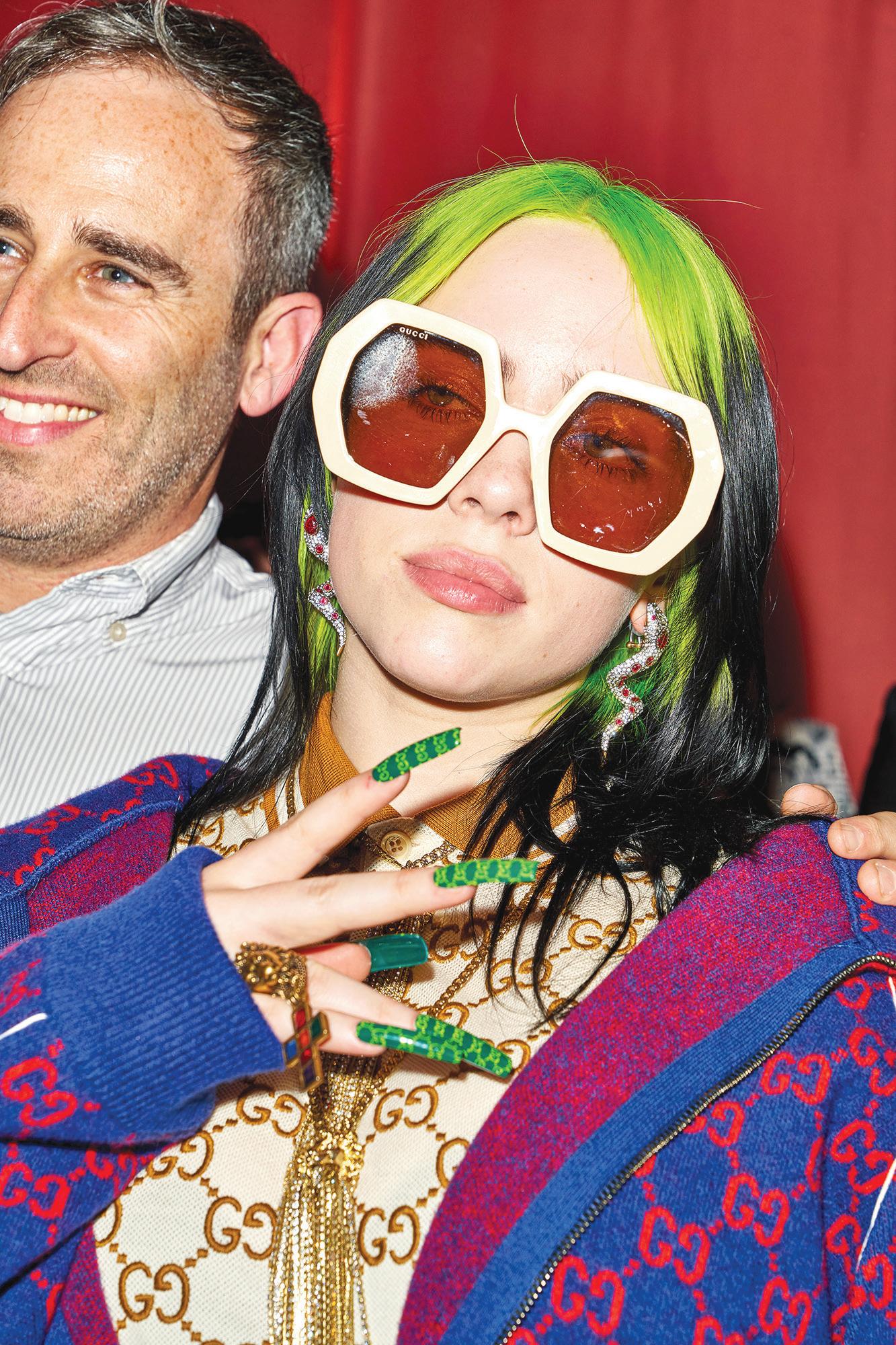
This isn’t the first time I’ve written about my love for 2019’s Marvel Ultimate Alliance 3: The Black Order, a game better than its lengthy, non descriptive title would suggest. I was mostly excited to be able to play as relatively new characters such as Ms. Marvel, Miles Morales and Spider-Gwen, but I was also thrilled to see some of my other favorite characters on the roster as well. What I wasn’t expecting, though, was for the game to reward my taste in characters — players receive a team bonus for creating a team with multiple women, among other things. The magic of video games allows and even encourages players to create the kinds of diverse teams that are rarely seen on the big screen.
It’s great that I get to create a team with so many women in the video game because the franchise’s more popular movie counterparts leave something to be desired. When Avengers: Endgame came out last year, I wrote about my expectations for the big team-up event and my frustration at the film’s big “girl power” scene. Big-screen superhero teams tend to fall into the “one token woman in a boys’ club” category, so in a movie with every MCU superhero team, it seemed like a chance to break from the formula and show women from different franchises teaming up in some meaningful way, maybe one that would echo the A-Force comics. No such luck.
Even the character marketed as the champion of women — Captain Marvel, the first female superhero with a solo film in the MCU — barely interacted with the other characters, let alone the other women, except in a bizarre battle scene where none of the characters made eye contact. In a short clip towards the end of the movie, Peter Parker gives the all-powerful Infinity Gauntlet to Captain Marvel, who has to fly it across a battlefield full of enemies. “Don’t worry,” Scarlet Witch says to Peter without looking at him or Captain Marvel. “She’s got help,” finishes General Okoye. Every female character then lands beside them and charges simultaneously at the CGI horde. It’s hard to believe any of the characters knew the other was there, let alone that any of the actors were in the same room during filming. They don’t even help each other in battle, leaving the whole gesture feel empty and pointless.
Enter Birds of Prey and the Fantabulous Emancipation of One Harley Quinn (2020). Birds of Prey is less of a female Avengers and more of DC’s answer to Deadpool: The story isn’t about the titular superhero team but rather about Harley Quinn’s struggle to escape every person who wants her dead (so really, everyone). It’s a bit like if Deadpool 2 was called X-Force and the Fantabulous
Emancipation of One Wade Wilson. (Okay, actually, that would have been great.) Regardless, even Deadpool 2 featured its team-up more than Birds of Prey. DC’s “girl gang” team-up is more of a reluctant alliance formed out of a mutual desire to protect constipated pickpocket Cassandra Cain, and the Birds of Prey — Huntress, Black Canary and Renee Montoya — don’t even all meet until the third act. Even these mere twenty minutes of team-up prove to be better than the thirty-second scrap tossed to us by Endgame. The characters interact, helping each other fight with their varied skill sets in a way that makes sense, like Huntress giving the roller-skating Harley Quinn a lift on her motorcycle, one of my favorite sequences in the movie. None of it feels forced — yes, there’ve been a lot of mixed reactions from the internet about the part of the Booby Trap fight scene where Harley lends Black Canary a hair tie, but I think that scene is just another example of the characters’ personalities shining through. Yes, it’s probably also to sell Hot Topic’s overpriced Harley Quinn scrunchies, and it is taking a remarkable amount of self-control on my part not to order them right now as I type this, but that doesn’t mean it wasn’t a great narrative choice.
I loved seeing Margot Robbie’s Harley Quinn, objectively the best character from Suicide Squad (2016), come into her own in a way that didn’t feel sleazy and had none of Justice League (2017)’s weird upskirt Wonder Woman shots. Even if I felt that the film spent too much time trying to convince us that Ewan McGregor was evil (I get it! He collects human faces! I’m desensitized to that kind of stuff now, DC, you overdid it with Gotham (2014) and Batwoman (2019)), I enjoyed every second that we got to spend with the five main women. I still can’t help wishing we’d get a proper Birds of Prey spin-off from this movie, as teased towards the end of the film, and the film’s opening weekend numbers have me nervous. Birds of Prey proved that the big studios can make a super(anti-)hero team-up for women that feels fresh and relatable, not hollow or male gaze-y, and I really hope DC and Marvel can see beyond the dollar signs and realize that.
Now if only someone would give the Hollywood decision-makers a four percent experience bonus for featuring more diverse teams of women.
Olivia Bono is a senior in the College of Arts and Sciences. She can be reached at obono@cornellsun.com. On the Level runs alternating Tuesdays this semester.


JEREMIAH LACON SUN STAFF WRITER
Motherless Brooklyn by Jonathan Lethem is not your typical murder mystery. Instead, the book is focused on the narration of an uncertified detective named Lionel Essrog as he earnestly navigates the secrets surrounding the death of his father figure, Frank Minnie. Meanwhile, Essrog also aims to reconcile with the symptoms of his neurological disorder.
Throughout the book, it is easy to relate to Essrog even as he consciously attempts to overcome an inappropriate surging tic. During Essrog’s interaction with other characters, Lethem masterfully describes Essrog’s perspective. For instance, he normalizes Essrog’s necessity to stroke a new acquaintance’s shoulder exactly six times (no more, no fewer). It even felt natural for Essrog to read each and every book possible from start to finish in a library.
Motherless Brooklyn shatters notions of normality — Lethem skillfully provokes his readers to reconsider their definitions of normal. More than your average murder mystery, the engaging book deconstructs society’s notions of standardization by illuminating and empowering a misunderstood population. Lethem shows that individuals with tourettes are not definitively “disordered” and thus not definitively “unable.” In fact, Lethem presents Essrog as the only individual capable of solving the murder of Frank Minnie.
However, compared to other representations of murder mysteries, like that of The Witch Elm by Tana French or One of Us Is Lying by Karen McManus, the plot of Motherless Brooklyn did not quite emphasize the mystery of the murder. Instead, Lethem chooses to break the plot into mini-episodes. Essrog’s memories of past events with Frank Minnie and other characters fill in the gaps between each episode. As I was reading, I felt that these “fillers” were negligible and rather illogical considering the development of the main plotline — they detracted from the thrilling pace of the story. To offer some perspective, the entirety of the book is around 300 pages. In the first third of the book, the murder occurs... subsequently, “fillers” were provided until around page 180, resulting in essentially 80 to 100 pages of dominantly insignificant details. Although I felt the “fillers” distract from the essential plot of Motherless Brooklyn, they were helpful in developing readers’ understanding of Essrog’s experience of the world. Consequently, relating to Essrog gradually becomes easier. This technique is of particular significance, as Motherless Brooklyn has been adapted to become a major studio film directed by Edward Norton (released November 2019). It would be fascinating to see how the “fillers” translate to the big screen. Would those scenes draw empathy from its audience or leave them feeling disinterested?
Despite the fillers that pivot from the mystery, Motherless Brooklyn is a satisfactory read with a worthy ending that forces readers to challenge the way they view individuals with neurological disorders. Lethem compels his readers to consider difficult questions. Who decides what is — and how to be — “normal”?
Jeremiah LaCon is a junior in the College of Arts and Sciences. He can be reached at jcl345@cornell.edu.
Daily Sun Independent Since 1880
137th Editorial Board
ANU SUBRAMANIAM ’20
Editor in Chief
JOYBEER DATTA GUPTA ’21
Business Manager
PARIS GHAZI ’21
Associate Editor
MEREDITH LIU ’20
Assistant Managing Editor
RAPHY GENDLER ’21
Sports Editor
BORIS TSANG ’21
Photography Editor
AMBER KRISCH ’21
Blogs Editor
SOPHIE REYNOLDS ’20
Science Editor
AMANDA H. CRONIN ’21
News Editor
JOHNATHAN STIMPSON ’21
PETER BUONANNO ’21
ANYI CHENG ’21
HUNTER SEITZ ’20
CHRISTINA BULKELEY ’21
Assistant Sports Editor
BEN PARKER ’22
Assistant Photography Editor
JEREMY MARKUS ’22
Assistant Arts & Entertainment Editor
ALICIA WANG ’21 Graphics and Sketch Editor
SARAH SKINNER ’21
Managing Editor
KRYSTAL YANG ’21
Advertising Manager
NATALIE FUNG ’20
Web Editor
SABRINA XIE ’21
NOAH HARRELSON ’21
SHRIYA PERATI ’21
KATIE ZHANG ’21 Dining Editor
AMINA KILPATRICK ’21 News Editor
MARYAM ZAFAR ’21
ETHAN WU ’21
SHIVANI SANGHANI ’20
News
NICOLE ZHU ’21
News
LUKE PICHINI ’22
Sports Editor JING JIANG ’21
Photography Editor DANIEL MORAN ’21
WU ’21
To the Editor:
Recently, The Cornell Daily Sun ran an opinion column by Andrew Lorenzen focused on the issue of mandatory ECG screenings. Mr. Lorenzen has an incredible story to tell, and we appreciate him sharing it to bring awareness to a complex issue. This is a sensitive topic, and we want to dispel any misunderstandings. The American Heart Association is committed to everyone living longer, healthier lives. That’s why we advocate for CPR training in schools and communities, and we work to make sure the public and healthcare providers understand the signs and symptoms that could be a trigger to provide an ECG. The role of the American Heart Association isn’t to mandate tests for any condition — the decision is for the patient and physician to make. We provide guidelines and recommendations, not directives for care or screening.
Screening tests with high sensitivity and low specificity, such as an ECG, can lead to a high number of false positives and
unnecessary testing. It’s imperative to ask the right questions and listen to answers to focus testing. By conducting a rigorous screening of a person’s personal and family history, combined with a thorough medical exam, the likelihood of identifying a person with a potential cardiovascular condition is higher, hence making a test like an ECG more useful. As we work with innovation and technology in healthcare, we expect improvements that will impact screenings and outcomes for everyone.
In our minds, one life lost is one life too many. We know the best way to save lives is by working together across communities and healthcare systems, and through education. You can find more info about cardiac arrest and the work of the AHA at www. cpr.heart.org and https://www.heart.org/en/ health-topics/cardiac-arrest.
Editors in Training Editor in
Amina Kilpatrick ’21
Editor Meghna Maharishi ’22
Stamm ’22
Peter Buonanno ’21
Emily Dawson ’21
Hale ’21
Peñéñory ’22
Brian Lu ’23
Ben Parker ’22
Deana Gonzales ’21
Oza ’22

This article highlights important aspects of the Cornell Black community, with the goal of sharing and celebrating their significance. These aspects include spaces and organizations on campus that work to support Black and/ or other minority students. Each contribution to the community is defined by a person who works closely with that space or organization.
This Black History Month, I wanted to remind you how proactive, impactful and empowering Cornell’s Black Community is — and always has been. This isn’t an article to highlight the very real struggles of being an underrepresented minority (in a place where Black students make around seven percent of the Undergraduate population). Instead, I want to give a glimpse of the beautiful community we have made here on campus. Moreover, I want you to hear from the students who go above and beyond their responsibility as an academic to serve their community in different roles.
The Cornell Black community wouldn’t be Cornell Black community without its academic and professional support system. At the core of the support system is the Office of Academic Diversity Initiatives, better known as OADI. Located on the Ag Quad, the OADI office has become a space where minority students gather to partake in social, academic or professional activities. Wayne Hilson Jr. — the new Executive Director of OADI — shared, “as I reflect on the continued, often tumultuous journey of the Black community within higher education and society as a whole the challenges have never been about intellect, drive and ability but access and agency. As a means of facilitating substantive progress along both fronts, the Office of Academic Diversity Initiatives (OADI) serves as a centralized hub that provides academic and professional-development support and resources for undergraduate students who are traditionally underrepresented and/or underserved in higher education.”
The Cornell Black community wouldn’t be the Cornell Black community without its comradery. One prime example of amity and communion can be found within the Alpha Chapter of Alpha Phi Alpha Fraternity, Incorporated. The Alpha
Phi Alpha Fraternity is the first historically Black intercollegiate fraternity in the United States, and it was founded in 1906 at Cornell University. Laurence Minter ’21, the current President of the chapter shared that “Brothers of [the] chapter continue to provide advocacy through some of the most expansive and historically significant spaces on campus including the Board of Trustees, Student Assembly, Class Councils, BSU and Trifecta organizations. As an organization some of our most notable programs include our annual pageant, college tours, conversations on the black family structure and a guest speaker series featuring notable administrators, government officials and other relevant community stakeholders.”
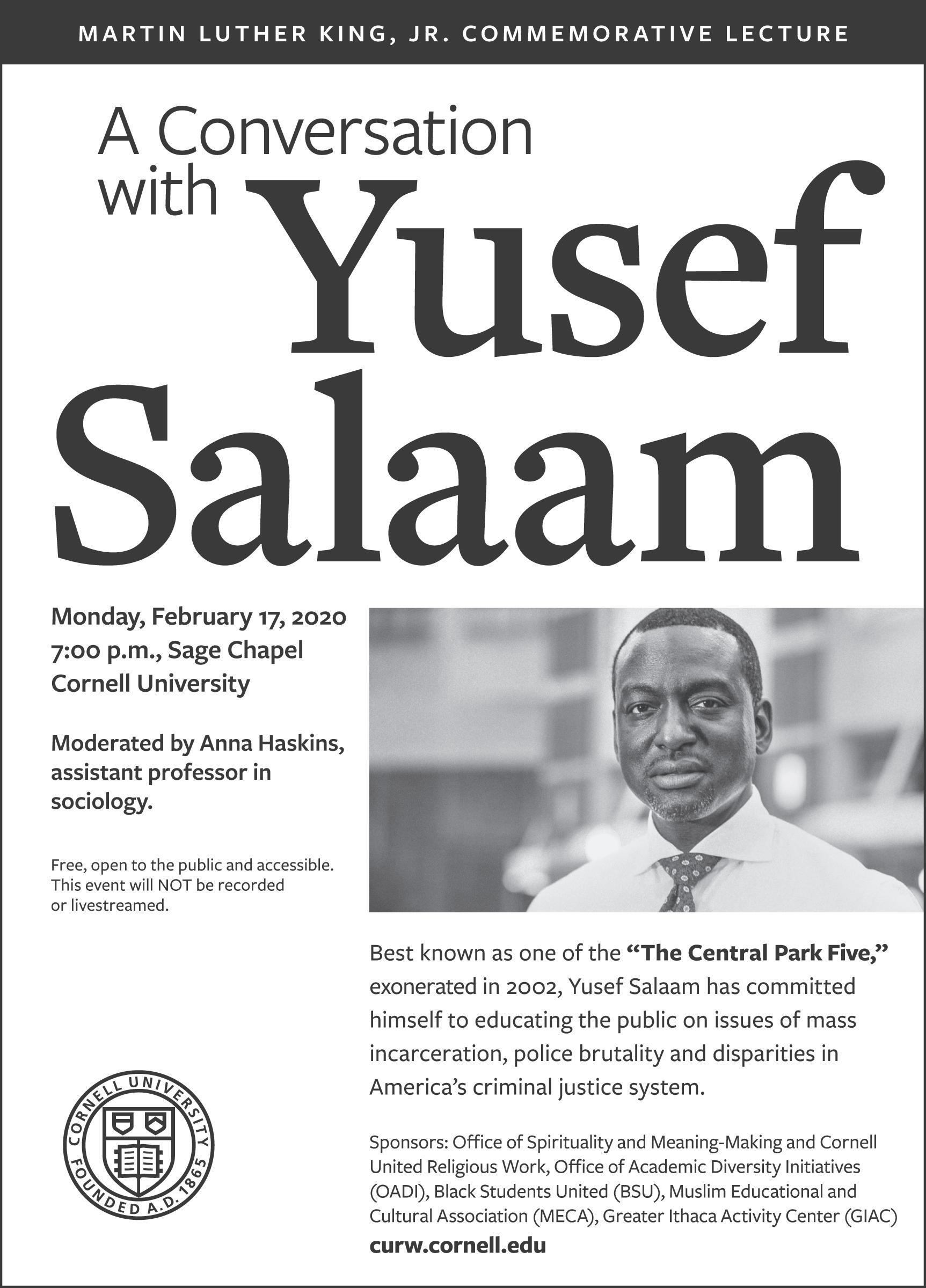
The Cornell Black community wouldn’t be the Cornell Black community without our other inclusive organizations — and there are several I’d like to highlight. Black Students United is an umbrella organization for all Cornell University organizations that predominantly represent students of the African diaspora. Basirat Owe ’21, a co-Chair of BSU, shared that “[this] year, I’m incredibly proud of BSU’s spirit of change. Our events are increasingly intersectional and, unapologetically, take on contentious issues in the community. We have reimagined how to actively engage with community partners to pay our education forward beyond the hill. Finally, we have undertaken major projects to bring a range of Black voices to campus in person and film — including Dr. Yusef Salaam of the Exonerated Five as the 2020 Dr. Martin Luther King Commemorative Speaker in partnership with the University.”
The Nigerian Student Association is an organization that focuses on fostering cultural unity and understanding among the Nigerian and pan-African community at Cornell ...
To continue reading this column, please visit www.cornellsun.com.
Lorenzen
Last week, fellow Opinion columnist Michael Johns Jr. wrote a column entitled “This Semester, Commit to Discourse.” In it, he eloquently makes the case that in answering “that core question — how do I grow? — we must commit ourselves to spaces of political and philosophical encounter.” While I do entirely agree with my esteemed colleague and fellow Cornell Political Union member’s opinion on this topic, I must argue that it leaves a profoundly important stone unturned in discussing how we may, as a community, heighten political and philosophical discourse on Cornell’s campus.
The truth is that committing to discourse is not nearly enough.
I have found that, on this campus, there are three main manifestations of civil discourse. The first is the absence of discourse — that which Johns makes such a compelling argument against. Those involved in this discourse are the Cornellians who refuse to engage in discussion with those who hold political beliefs contrary to their own or, when they do so, find themselves unable
We must commit to halt false discourse by speaking truthfully from motivations of genuine political and philosophical passions, rather than appearing falsely civil.
to engage in a discussion which holds mutual respect and fundamental civility. Those committed to this absence of discourse invariably wall themselves away from all political discussions or wall themselves within social groups of those who share their same ideology. I strongly concur with Johns’ call for members of this group to instead choose to enter the public sphere and commit themselves to free discussion and debate.
The second manifestation of civil discourse on this
campus frightens me far more. The truth is that committing to discourse is, ostensibly, easy. It far too often proves superficial. It is remarkably easy to speak with those who do not hold your political beliefs: to debate and discuss the topics of the day with them in a civil, respectful manner. Indeed, one can spar endlessly in intellectual buzzwords while leaving their emotions and actual ardent political ideals checked in the coatroom. You can talk in hyper rationalized circles of logic which lead nowhere except to a feigned smile and muttered “well, agree to disagree” before you retreat back to your group text to vent about that “crazy liberal” or “crazy conservative.” This second manifestation of discourse exists as pretense: It enables us to speak with eloquence and magnanimity in public while removing the personal, the emotional and the basic humanity from all debates. It is a falsehood, and a dangerous one.
The truth is discourse is messy. And it should be.
Real discourse which truly challenges your preconceptions is not that which is performed in public like an act of theater to showcase your civility and earn plaudits in your favorite intellectual circles. The third manifestation of discourse is the one which we must aspire to. The discussions we need are the ones that grow heated because of how passionate we are about the topic; they are ones that make us vociferously defend our points and attack those of others. They are the discussions where we do not moderate every word we say out of fear of losing the debate or speaking imperfectly. They are the discussions where we speak quickly, passionately and truthfully. They are the discussions where we make mistakes in our logic and on occasion, say too much or speak out of turn. They are the discussions that make you pace around the room in nervous energy. They are the discussions which get your heart racing and bring your blood to a rolling boil. They are the discussions which demand apologies afterwards because you grew too bitter and made that comment you knew was a step too far. In this third manifestation of discourse, we speak genuine truth- sometimes bluntly and uncomfortably. Those engaged in this form of discourse do not couch their rhetoric in false civility premised around abstract concepts like “common
ground,” but instead showcase respect for the other side through telling them truthfully when one believes the other side is absolutely out of their mind. Then, they have a full, spirited debate. They apologize afterwards when necessary (all too frequently for those who share the same faults as yours truly) and get a drink with the person they have just debated.
In concurring with Johns’ article, I must draw a
In the pursuit of a higher form of discussion which prioritizes truth and open dialogue above all, I think this messy discourse is worth it. I urge my fellow Cornellians to do the same.
distinction and request something further from the Cornell community because I do not believe committing to discourse is enough. We must also commit to halt false discourse by speaking truthfully and fully from motivations of genuine political and philosophical passions, rather than the perceived social benefit of appearing falsely civil and withdrawing from the most important debates.
That is what I will be aspiring to do this semester. I will inevitably fail much of the time in doing so. I will also, without a doubt in my mind, frequently say the wrong thing at the wrong time, push the debate too far or feel the need to apologize after a debate to a dear friend. But in the pursuit of a higher form of discussion which prioritizes truth and open dialogue above all, I think this messy discourse is worth it. I urge my fellow Cornellians to do the same. This semester, commit not just to discourse but to ending the illusion of discourse on this campus.
Andrew Lorenzen is a sophomore in the College of Arts and Sciences. He can be reached at alorenzen@cornellsun.com. When We’re Sixty Four runs every other Tuesday this semester.
IGoogled the Presidential Medal of Freedom. According to Wikipedia, the list of Presidential Medal of Freedom recipients fall under 17 categories — and a total of 23 subcategories. These categories broadly range from politics, military and computing to arts, media and religion. Philanthropy is also one of the categories listed on the Wikipedia page.
I then went to the official website of the White House to ascertain the reasons for why one receives such a prestigious and honorable award. According to the site, it is awarded “to individuals who have made exceptional contributions to the security or national interests of America,
civilian honor” and, perhaps more importantly, “a tribute to the idea that all of us, no matter where we come from, have the opportunity to change this country for the better.”
Up until last week, I had never heard of the name Rush Limbaugh. Furthermore, I did not know about the racist, sexist, ableist — and all around bigoted — comments that his “phenomenally successful radio broadcast” sends to the world until he was bestowed with the prestigious award during the State of Union address last Tuesday night. Last week, the POTUS awarded Limbaugh with the Presidential Medal of Freedom for his “decades of tireless devotion to our country,” the people he “inspires” and to recognize “all that [he has] done for our nation.”
When I think of “tireless devotion” to this country, I do not think of people who promote injustice with their hateful and discriminatory views. I think of the people who have fought against injustice. At this point, I am not surprised that someone so prejudiced would be given “our nation’s highest civilian honor.”
to world peace or to cultural or other significant public or private endeavors.”
The medal has also been regarded to be more than just “our nation’s highest
When I think of “tireless devotion” to this country, I do not think of people who promote injustice within this country with their hateful and discriminatory views. I think of the people who have fought — and the people who are fighting — against injustice. Regardless, at this point, I am not at all surprised that someone so outwardly prejudiced would be given “our nation’s highest civilian honor.” Whoever is surprised has most certainly not been paying attention.
Though seemingly paradoxical,
Limbaugh receiving this award from the President of the United States made me somewhat optimistic. It reminded me of renowned researcher and educator, Dr. Joy DeGruy’s sentiment that we as a nation are on the “precipice of change” because of the preponderance of evidence of injustice in this country. Degruy uses the example of cigarettes. She delineates the culture shift of the once highly normalized and widely accepted addictive substance. It was not until a preponderance of evidence regarding the health risks smoking posed on the human body were brought to light.
“symbolized an era of change.” However, in 2017 a Black Cornell student was attacked by another Cornell Student after being called a racial slur and then in 2018 two Cornell students were transported to the hospital after being physically assaulted and “verbally harassed with ‘racial
I no longer want to be asking “what are we letting our country get away with?” because I do not want this continual injustice to be for nothing. United we stand, divided we fall.
Similarly, I believe the 2016 election, emboldenment and validation of white supremacists and Rush Limbaugh’s honorable recognition — and the profusion of discrimination and intolerance throughout — adds to the preponderance of evidence that I believe will soon shift the nature of this nation. A shift that would mean that racist and sexist radio show philanthropists — no matter how much money they give away — are not celebrated and honored. One day, hopefully, they will instead be held accountable for their egregiously prejudicial views. On this campus alone, a shift would mean progress no longer moves in retrograde. For instance, it would mean that the 1969 Willard Straight Hall Takeover would not be in vain. As of today, can we really say that it was not? The takeover supposedly
epithets.’”
I no longer want to be asking “what are we letting our country get away with?” because I do not want this continual injustice to be for nothing. Our country should not be this piercingly divided along racial issues and issues of equality. I believe we need a storm before we finally reach the calm. And either we are in the midst of it, or harsher winds are coming. I am just hoping I am not being too naive when I trust that despite the unabashed intolerance, this country is going to realize that united we stand, and divided we are sure to fall.
Sidney Malia Waite is a sophomore in the School of Industrial and Labor Relations. She can be reached at swaite@cornell.edu. Waite, What? runs every other Friday this semester.

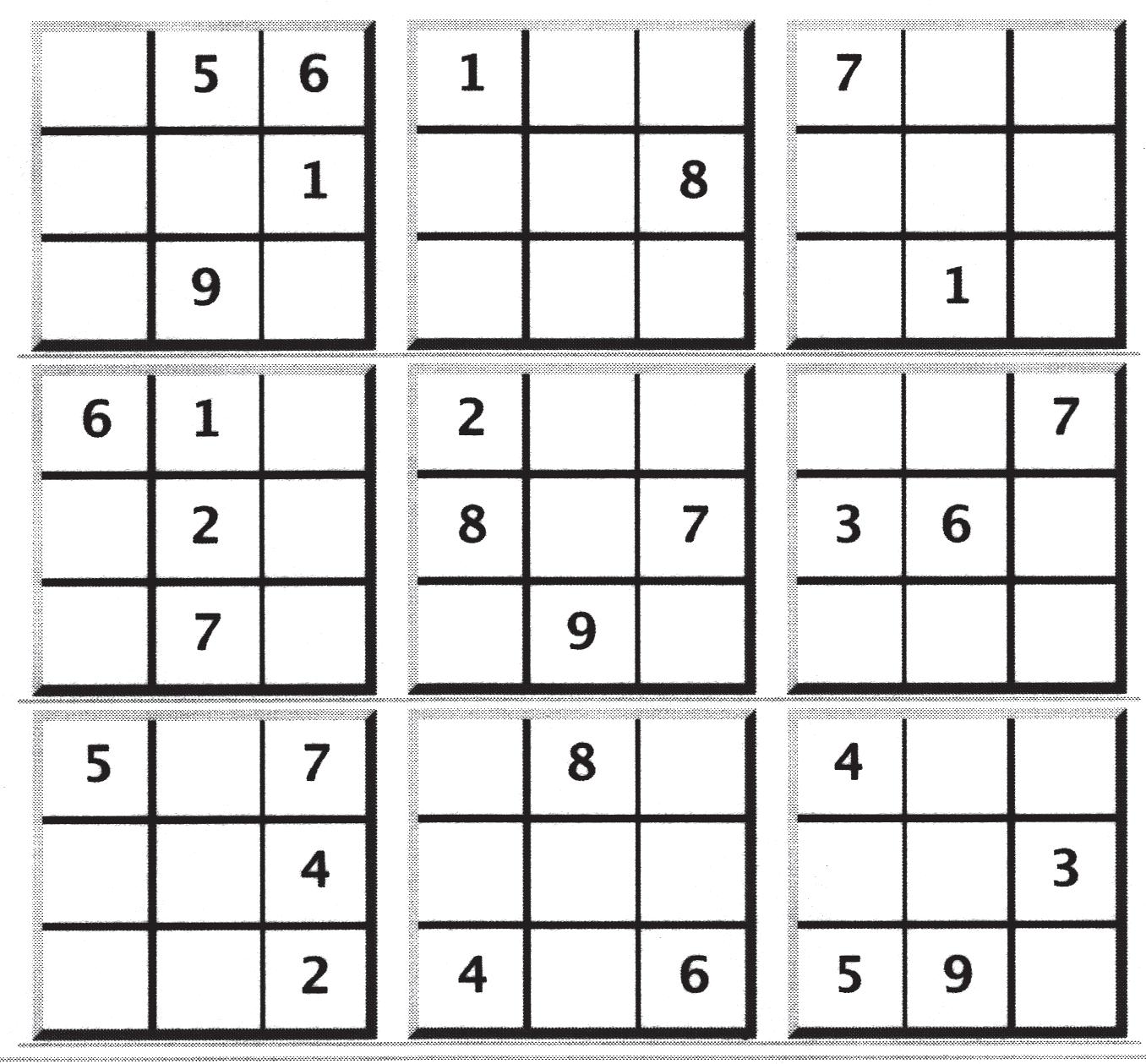


On Campus by Elizabeth Klosky ’21 Fill in the empty cells, one number in each, so that each column, row, and region contains the numbers 1-9 exactly once. Each number in the solution therefore occurs only once in each of the three “directions,” hence the “single numbers” implied by the puzzle’s name. (Rules from wikipedia.org/wiki/ Sudoku)
26 A PA R TMENT FOR R ENT
2020-2021
Studio 1, 3, 8 & 11 BR Apts. Great Locations in Collegetown. 607-227-2535
*****************************
1-3 Bedroom Apartments
Quiet Fall Creek Location
5 Minutes to Busline 607-351-1267 joe@joegrealty.com *****************************
120 Oak Avenue
Just steps to Cornell Campus
10 bedroom house & 1 and 2 bedroom apartment
607-277-1234
office@ithacastudentapartments.com Ithacastudentapartments.com
>>MAKE ITHACA HOME<< Collegetown Apartments Furnished 1-3 Bedrooms PARKING, LAUNDRY, UTILITIES! (607) 273-7368 www.WestShortApts.com
109 Sage Place
2 & 3 Bedroom Apartments
Access to Shuttle to Campus Access to Free Fitness Center
Novarr-Mackesey Property Management office@ithacastudentapartments.com 607-277-1234
Flexible Housing Solutions!
Short Stay Accommodations Available
*Brand New* Studio Apartments 238Linden.com Leasing@inteprop.com
26 A PA R TMENT FOR R ENT
*Brand New* Full Term & Semester Leases Studio, 1 & 2 Bedrooms College Townhouse 121-125 College Ave. CollegeTownhouseIthaca.com Leasing@inteprop.com
Catherine & Eddy St. 1 & 2 bedroom
Furnished, heat included Laundry in building Parking available for fee 607-277-1234
office@ithacastudentapartments.com
Collegetown Crossing
College Ave's Newest Location
307 College Ave. Now Leasing for 2020-2021
Completely New Modern Studios, 2 & 4 Bedroom Apartments. Fully furnished, heat & hot water included. Reception area at 307 College Ave. www.urbanithaca.com 607-330-2442 info@urbanithaca.com
Houses, Apts, Parking 1 to 9 Bedroom Collegetown - College Ave, Linden Ave, Dryden Rd, Bryant Ave, Cook St. 607-330-2442 info@urbanithaca.com www.urbanithaca.com
Now Renting 2-10 Bedroom Houses/ Apartments for 20-21. All Locations. Call today or visit our website: Certified Properties of TC Inc certifiedpropertiesinc.com 607-273-1669
26 A PA R TMENT FOR R ENT
Boldly Refined Living
312 College Avenue
Sophisticated studio, 1, 2, 3-bedroom apartments. Superior fitness facility, theater, and coworking space. Free high-speed internet. Exclusive resident parking. Package delivery/return. Overnight concierge. 607-273-9777 or 312collegeave.com
20-21
College Ave.
5 BR House Furnished. Laundry. Parking. Call 607-273-8576

HOCKEY
To start off, Farrier stood tall in goal, turning away a number of Cornell shots. Eight minutes into the game, the Red drew first blood. Freshman forward Matt Stienburg provided the first tally on a second-chance opportunity.
A minute later, the Red doubled its lead thanks to the stick of Dirven, who corralled an excellent pass from junior captain Morgan Barron into the net for the first score of his career.
“It’s definitely that something feels pretty good — waiting a little bit of time for it,” Dirven said, on his first goal. “But I just knew that if I kept playing the right way, it would come.”
After freshman defenseman Travis Mitchell was sent to the penalty box for slashing, Colgate received its first power-play opportunity. While the Raiders didn’t formally convert on the man advantage, they halved Cornell’s lead as Bobby McMann hit twine from the right circle seconds after the power play expired.
don’t have as much of a killer instinct.
“Our motto this year is ‘finish it,’” Regush continued. “Just because we’re up doesn’t mean we’re done. It can be tough, but it’s something that shouldn’t be tough.”
In the third, Colgate started off the frame on the power play due to a kneeing infraction by Regush in the final seconds of the previous period. The Red killed the penalty, and frustrations began to mount for the Raiders.
A scrum ensued in front of the Colgate net with Barron and Paul McAvoy having to be broken up after the whistle. Three total penalties were assessed — two on the Raiders and one on the Red, which gave Cornell its fourth power play.
On the power play, junior forward Kyle Betts — who returned from injury on Saturday night — was tripped, forcing an early exit to the locker room.
“I was a little disappointed with how the game was called,” Schafer said.
“We didn’t give them a whole lot in the second period.”
The Red did not allow Colgate to pick up any more momentum. Right off the faceoff, sophomore forward Michael Regush restored Cornell’s two-goal edge with an immediate response.
Mike Schafer ’86
“Well it started when [junior forward] Brenden Locke made a great play to force a turnover,” Regush said. “[Junior forward] Tristan [Mullin] had good vision — he just gave it to me, and I closed my eyes and shot it as hard as I could. It went over his shoulder, and it was a good play by those two.”
It didn’t end there, though. Sniffing blood, Cornell found the back of the net again on its very next possession as sophomore forward Max Andreev beat Farrier on the wraparound.
All four of the Red’s goals were even-strength. Cornell was awarded three power-play chances in the first period, but it whiffed on each one.
Following a first period that featured five total goals, the second frame was comparatively uneventful. Only one penalty was assessed, and Colgate missed on that power play.
“We didn’t give them a whole lot in the second period,” Schafer said. “They had a couple scoring chances … but that’s all they had. We were in there, but we were not finishing our scoring chances.”
Meanwhile, the Red launched 10 shots on goal, but none of them connected with Farrier solidifying himself in net. Down by three scores, Colgate improved on its three-shot total from the first period, but junior goaltender Matt Galajda came up with several saves during the period.
“I don’t want to say your mindset changes,” Regush said, on his team taking a lead. “I don’t think it does, but it does seem to be an occurence in hockey. You
Continued from page 12 Luke Pichini
“We barely touched anybody in the third period, and we’re going to get a penalty. A guy goes after Kyle Betts’ knees at center ice — it was disappointing.”
The Red failed to convert on that opportunity, but after another call against Colgate, Cornell finally scored on the man advantage. Junior defenseman Alex Green delivered the dagger with 22 seconds left on the power play, putting the puck past Farrier.
While Green’s score essentially decided the game, Colgate continued to pester the Red as it struck twice on the power play in the waning minutes. Penalties by Mitchell and senior forward Jeff Malott set up the opportunities for the Raiders. While the Red had already locked up the victory and the sweep, the two scores tainted the final outcome.
“I thought we’re a pretty friggin’ disciplined hockey team,” Schafer said. “I go back and I don’t see it — I don’t see the calls.”
Unlike last night, the Red failed to keep up its energy for the entire game. Cornell’s play in the last half of the contest showed that despite the team’s immense talent, it still has work to do with only six games left in the regular season.
“We’re not sitting here at 17-2-4 by mistake,” Schafer said. “These guys take a lot of pride in it, too … We’ll address the penalty kill and why we’re giving up transitions and not getting it deep and keeping it on them. Last night, we played a simple road game for the second and third period — tonight, we didn’t.”
Even after picking up the sweep, Cornell will regroup as it prepares to hit the road to face Union and Rensselaer next weekend.
By LUKE PICHINI Sun Assistant Sports Editor


ed all season about playing the full 60. Last night, I thought we did a good job of that … but [today] we got cute with the puck in the second period and tried to do way too much.”
Despite taking steps forward in recent weeks, the Red (17-2-4, 12-2-2 ECAC) faltered on the penalty kill as it gave up two power-play scores in the final seven minutes. Colgate’s (9-13-6, 7-6-3) first score — in the first period — also came mere seconds after the penalty expired.
“Our penalty killing sucked — there’s no other adjective to describe it,” Schafer said. “We got everything resolved a couple weeks ago, and now we’re right back to making the same stupid blunders previously. We gotta get back to work and get the job done because it’s just something that pisses me off as a coach that we can’t be consistent in our penalty killing.”
While the team experienced regression on the penalty kill, the win moved the Red into a tie with Clarkson for first place in the ECAC standings.
“We’ll get back to it,” Schafer continued. “Good win, good sweep — it puts us where we need to be, but it’s also got some disappointing
aspects to it.”
The contest, initially scheduled for Friday night, was pushed back to a 4 p.m. start on Sunday due to heavy snowfall. The game, dubbed the Courage Classic, was dedicated to the children of Camp Good Days, which is a camp for children, adults and families who have been afflicted with cancer or other challenges.
“It was a great experience for the people around here to understand Camp Good Days and all the good work that they do in the community and all over the place,” Schafer said. “It’s a tremendous organization that does a lot of good for kids.”
Much like Saturday night, Cornell dominated in the first frame. For the first time all season, the Red scored four goals in the opening period, bullying Colgate netminder Andrew Farrier throughout the afternoon.
“I think we definitely fully executed our gameplan,” said freshman defenseman Sebastian Dirven. “I have to say just with our gameplan, we’re playing quick, playing simple, getting pucks in deep and just not giving them a lot of time to make plays.”
By FAITH FISHER Sun Staff Writer
History will not repeat itself this year for the Cornell wrestling squad — the Red’s 92 straight streak of Ivy League dual victories came to an abrupt and devastating halt this weekend against the Princeton Tigers.
For the first time in 17 years, Cornell wrestling will not take home the Ivy League championship trophy.
“It’s a disappointment, not a tragedy,” said head coach Rob Koll. “We always expect to win the championship — it’s been 17 years since we haven’t.
“But you have to be realistic,” Koll continued. “This is not the same team that we have had for the past 17 years. We had the ability to win that match with the team we have in place, and we let it slip through our fingers.”
The historic loss came on the back of a victory against Ivy League foe University of Pennsylvania the day before. With a final score of 30-6, the team had moved one step closer to another Ivy League title.
The Red (9-6, 4-1 Ivy League) opened the duel on Feb. 8 against the Quakers (5-6, 4-3) with a close loss at 141 lbs. However, the team quickly recovered — clinching seven consecutive individual victories to amass a 27-3 lead.
bested his Quaker opponent with a 7-6 win.
Channeling the momentum of the match, freshman Jonathan Loew used a takedown to stick his opponent 5:47 into the dual. Sophomore Ben Darmstadt returned to the mat after a Jan. 11 injury against Columbia put a short damper on his season. But, it was as if he had never left the arena, pinning his opponent in a mere 24 seconds.
Sophomore Brendan Furman was the victor of the heavyweight bout, and senior Chas Tucker sealed the results of the dual with his 10-3 triumph, which consisted of five takedowns.
After vanquishing the Quakers, the Red headed to Princeton, N.J., gunning for the Ivy League championship title. However, the Tigers humbled the Red and slashed its 17-year winning streak.
“We got out there and wrestled our hardest, pushed as hard as we could,” said senior Chas Tucker. “The outcome was not what we wanted, but we did the best we could.”
“Hats off to them — they were able to take this one.”
Rob Koll
Junior Hunter Richard, who recently earned the No. 25 rank in the 149 bout, put the Red on the board. Junior Adam Santoro and sophomore Jake Brindley followed suit with 7-1 and 5-1 wins, respectively. Sophomore Andrew Berryesa also
The dual commenced in favor of the Red with a 9-0 major decision in the heavyweight bout. The Tigers tied up the score with a major decision of its own in the 125 weight class. With wins from Tucker and senior Noah Baughman, the Red took back the lead from Princeton. Tucker kept his flawless individual record intact — improving to 15-0 in dual competition.
For this highly-anticipated match, the Tigers commissioned its three-time AllAmerican Olympic redshirt Matt Kolodzik

to wrestle in the collegiate match. Richard met Kolodzik with a valiant effort, but it was not enough to conquer his stand-out opponent.
Although Cornell did not lose the lead at that point, it was slowly slipping away. The Tigers picked up — and sustained — its winning momentum, while the Red dropped four consecutive bouts at 157, 165, 174 and 184 lbs.
“They did a really good job getting those toss-up matches, and then overturning some of the matches that were maybe initially tipped in our favor,” Tucker said. “They capitalized where we could have, and they pulled out those close matches. That made the difference for the whole dual and what ultimately won them the dual.”
Heading into the last match of the day, the dual’s decision was practically sealed in
the Tigers’ favor.
Despite the bleak score, the Red refused to give up, with Darmstadt closing out the day with an exceptional win against No.3 Pat Brucki, almost clinching the major victory. Unfortunately, the 11-4 win in the final round proved insufficient to recapture the lost Ivy League title.
“Hats off to them — they were able to take this one,” Koll said. “They aren’t going to be able to get used to it, though, because we will be back next year, and we will get that trophy back where it belongs. The trophy is coming back to Ithaca next year.”
The Red will face Binghamton on Saturday at 1 p.m. and North Carolina on Sunday at 1 p.m.
Faith Fisher can be reached at fsher@cornellsun.com.