

The Corne¬ Daily Sun

Dean Wooten
Set to Depart Dyson School
By MEGHANA SRIVASTAVA Sun Staff Writer
“I couldn’t be more excited to join this community and to further the institution’s distinctive and vital mission.”
Lynn Perry Wooten
After leading the Dyson School for Applied Economics, Management and Business for less than two years, Dean Lynn Perry Wooten will depart Cornell to become the ninth president of Simmons University in Boston. Simmons announced its decision to appoint Wooten to the presidency on Feb. 6, after its Board of Trustees unanimously elected her. Simmons offers an intimate women’s undergraduate program with 1,837 students and a coeducational graduate program of 2,179 full-time students, according to its website. In February 2017, Wooten was named the dean of the Dyson School, succeeding interim dean Prof. Emeritus Edward McLaughlin, marketing and management communication.
Under Wooten’s leadership, Dyson
See DEAN page 4



All clear | No cases of the novel strain of coronavirus have been confirmed in New York State, but two students were recently tested by the CDC after meeting the criteria for the illness. Now, both students have tested negative, according to the University.
Students Test Negative for Coronavirus
Cornell campus deemed safe from international epidemic
By MEGHNA MAHARISHI Sun Staff Writer
A student who displayed symptoms warranting testing for the novel coronavirus strain earlier this week tested negative for the disease, Ryan Lombardi, vice president for student and campus life, wrote in a statement on Friday.
While this student tested negative, there was a second Cornellian that met the criteria for testing. The other student was in isolation and receiving medical care, as they waited for test results from the Centers for Disease Control. The University later confirmed in a press release on Sunday that this second student also tested negative.
afflicted over 31,400 people worldwide.
Currently, there are no confirmed cases of coronavirus in New York. In the U.S., there are 12 confirmed cases of coronavirus, as of Friday morning. These cases are in Washington, California, Arizona, Wisconsin, Illinois and Massachusetts.
“It is critical that we each strive to lead with compassion and empathy.”
Ryan Lombardi
The disease — which originated in Wuhan, China — has
On Monday, Lombardi emailed the Cornell community about the first potential case of coronavirus on campus. While this student did not reside on campus, it is unclear where the second student resides.
Coronavirus symptoms remarkably mirror that of the flu — some coronavirus symptoms include fever, coughing and a shortness of breath.
C.U. Sows Confusion With Late Snow-Day Call

Students slide back to bed after trekking to campus
By KATHYRN STAMM Sun Staff Writer
Trudging up to class through swirling wind and snow, most students weren’t checking their phones on their way up Libe Slope on Friday. But Justin Sirota ’22 happened to be videoing his walk when Cornell announced its second snow day of the academic year.
“No one who was walking up the slope knew it was canceled,” Sirota told
The Sun. “So I just started yelling.”
While the rest of Ithaca had shuttered for the winter storm conditions by 7 a.m., the University had remained mum for hours, leaving questions unanswered about whether people should weather the walk to campus, The Sun previously reported.
This resulted in students like Sirota already well on their way to campus — or
Slope sledding | Students prepare to slide down Libe Slope on a mattress yesterday after Cornell closed the campus for the day.
BORIS TSANG / SUN PHOTOGRAPHY EDITOR
Daybook
Monday, February 10, 2020
A LISTING OF FREE CAMPUS EVENTS Tomorrow Today
CBE Seminar: Otitis Media and Bacterial Biofilms
9 - 10 a.m., 255 Olin Hall
Tools for Maximizing Your Career Success with Carla Harris, Managing Director at Morgan Stanley Noon - 1:15 p.m., Statler Hotel Carrier Ballroom
Evolution of a Multi-Billion Dollar Business
With Former President and COO of Nintendo Prof. Reggie Fils-Aimé ’83, Applied Economics and Management Noon - 1:30 p.m., 401 Warren Hall
The Challenges of Meat and Media in Brazil: Decoding Manifestations of Climate Skepticism 2:55 - 4:10 p.m., 233 Plant Sciences
ORIE Colloquium: Improving Farmers’ Welfare on Online Agri-Platforms 3 p.m., 281 Upson Hall
Early Nutrition, Developmental Epigenetics And Human Disease
4 - 5 p.m., 100 Savage Hall
Chesterton House: Lessons in Love: Reawakening Liberal Education 5 - 6:30 p.m., A.D. White House
Cooking Demo: Loaded Brownies à La Mode 5 - 7 p.m., Stocking Hall

Extension Program for Onion in New York: Featuring Managing Stemphylium Leaf Blight 11 a.m. - Noon, A134 Barton Lab
Fundamentals of Investing With Beth Prudence ’89, Morgan Stanley 12:15 - 1:30 p.m., B73 Warren Hall
Stop, Drop, Create: Drop-in Hours 3 - 4 p.m., mannUfactory Makerspace, Mann Library
Chemistry Seminar: In Situ Super-Resolution Imaging of Endogenous Biomolecules in Cells and Intact Tissues 4 p.m., 119 Baker Lab
2019 Novel Coronavirus: Public Health, Politics, And Historical Context of the Current Crisis 4 - 5:30 p.m, 700 Clark Hall
ORIE Colloquium: Driver Surge Pricing 4:15 p.m., 253 Rhodes Hall
Inside Journalism: A Conversation With Marc Lacey ’87, National Editor for The New York Times 4:30 - 5:30 p.m., G76 Goldwin Smith Hall
Free Screening: For Sama 6:45 - 8:25 p.m, Willard Straight Theater
MICHAEL SUGUITAN / SUN STAFF PHOTOGRAPHER
Behind the Gameboy | Prof. Reggie Fils-Aimé ’83, applied economics and management, will deliver a talk on the evolution of Nintendo.
Valentine’s Day Survey Helps Cornellians Find Love
By JOHN YOON Sun Staff Writer
Just in time for Valentine’s Day, Cornell Business Analytics will once again play cupid with its relaunch of Perfect Match, an online survey designed to help students find an on-campus date.
Participants fill out a short questionnaire about their personal information, preferences and personality to receive a “perfect match” on Feb. 12.
First launched in February of last year, four students developed its iteration, taking barely over a week to actually develop the concept. But the quickly produced survey still proved to be a big hit, garnering around 4,097 responses.
This year, with double the members, Cornell Business Analytics began planning in fall semester, starting development in November.
With this extra time, the developers were better able to flesh out the design and created an improved website — that so far has attracted even more people than last year. As of Sunday evening, 4,183 students have taken the survey, which does not close until Feb. 11, according to its homepage.
“The landing page is more minimalist and clean,” Shivali Halabe ’22, design lead for Perfect Match, told The Sun. “We [also] created a statistics page from the data that we collected last year and used it to create interactive

day.
graphs where people can look at trends we found most interesting.”
The team also worked to improve the overall experience of the survey. By customizing the survey page, Cornell Business Analytics added a new feature that allows respondents to edit their answers after submitting the survey.
However, the most significant change made was the “Crush Match” option. With this option, students can list

Ithaca Hosts 22nd Chili Cook-Of
By OLIVIA WEINBERG Sun Staff Writer
Hungry customers plodded through slush and below-freezing temperatures on Saturday to Ithaca’s 22nd Annual Chili Cook-Off — featuring over 40 chilis prepared by small businesses and Ithacan amateurs alike.
More than 30 restaurants participated in the cook-off, joined by Cornell denizens such as campus eatery McCormick’s and the Chi Phi fraternity.
Chi Phi, the only Greek organization to compete in the competition, got started when one member signed the house up four years ago. Despite not having won yet, the house has continued this tradition, using an old family recipe.
“One day we’ll win, but until then we’re going to keep cooking,” Michael McHale ’20, a Chi Phi member, told The Sun.
Cook-off veteran Joe Durkee, a chef at the
“I think having an Asian-infused chili is kind of interesting to people. Being able to put that out is really awesome.”
Panisara Chutintaranond
Cayuga Medical Center, likes to change up his chili recipe each year in addition to taking on side projects like pretzel spoons or edible bowls. This year, his team made spicy chili chocolates.
Vendors participating in this year’s event also adhered to new, stricter safety regulations.
In an effort to avoid cross contamination, the Downtown Ithaca Alliance requested vendors to distribute their goods in disposable cups rather than utilize the reusable mugs customers sometimes carry with them. Durkee noted that the regulations weren’t made with any particular diseases or illnesses in mind.
“[We are] just trying to be as safe as we can be,” Durkee said.
Some restaurants’ creations drew in hordes of customers, with lines queueing down the Commons.
“One day we’ll win, but until then we’re going to keep cooking.”
Michael
McHale ’20
Mia — an Asian fusion tapas restaurant in the Commons — was one of those restaurants. While chili is not part of Mia’s in-house menu, the restaurant has been successful in past years, as it won third place at last year’s competition. Mia hoped to clinch first place this year with a fusion chili — which was spiced with an Indian curry blend and garnished with Thai herbs and ghee.
“I think having an Asian-infused chili is kind of interesting to people,” Panisara Chutintaranond, a Mia employee, told The Sun. “Being able to put that out is really awesome.”
On Saturday, attendees voted for the best chilis; winners will be announced on Monday.
Olivia Weinberg can be reached at oweinberg@cornellsun.com.
up to three people they have a crush on. If a student’s crush reciprocates, then the survey will pair the two together.
With 35 percent of students entering at least one crush, this feature has been widely used, according to Jamal Hashim ’22, Perfect Match development lead. Hashim described the feature as “the coolest thing we added.”
Despite these improvements, Hashim wished the group could have included a feature to prevent awkward matches — such as exes — which Hashim described as “forbidden pairs.”
“Forbidden pairs is [a feature] we wish we had done … we just didn’t think about it at the time,” Hashim said. “It would have been extremely easy to do, too.”
Halabe also felt the supplementary pages could have been more interactive — she particularly wished they made the contact information more accessible on the website. The design lead hopes to make these web pages more user friendly and interesting in the future.
For students worried about ghosting, Hashim said this doesn’t really happen — 70 percent of matches met up after taking the survey last year.
Cornell Business Analytics will host an event to allow matches to meet at Kennedy Hall’s eHub at 6 p.m. on Valentine’s Day.
John Yoon can be reached at johnyoon@cornellsun.com.
New S.A. Black Caucus Revs Up Advocacy Work
Heading into its first full semester, the newly formed Cornell Student Assembly Black Caucus has not only grown, but is now focused on addressing issues of representation and advocacy for black students on campus.
So far, the caucus submitted and passed two S.A. resolutions. Both resolutions — spearheaded by Gavin Martin ’20, College of Arts and Sciences representative and chair and speaker of the caucus — were meant to promote advocacy of minority issues on campus.
The first resolution passed within the caucus recognized the Africana Studies and Research Center for the advocacy it has done on campus. The resolution has yet to be taken up for a vote by the broader S.A.
“We are greatly appreciative of the work of all past and current faculty of the ASRC,” the resolution read. “Without you, we would not have our classes, we would not have our knowledge, we would not know our history.”
Another resolution presented at a S.A. meeting on Feb. 6 sought to change the “e” in the S.A.’s Women’s Issues Representative At-Large title to an “x” to foster more inclusion within the assembly. While the resolution unanimously passed in the Black Caucus, the S.A. decided to revisit the initiative at its next meeting on Feb. 13.
“We wanted to address and highlight the intersectionality of what it means to be a woman and [highlight] inclusivity for those who are genderqueer, binary or nonconforming,” Martin told The Sun.
Originally, 11 S.A. members and S.A-affiliated members organized to form the Black Caucus in December, with a mission to “continue the work of the Black students who organized the Willard Straight Hall Takeover of 1969, which resulted in the creation of the Cornell Student Assembly,” according to a December press release.
The caucus works toward the retention of black members on the S.A., treatment of black people on campus,representation of
See CAUCUS page 5
Hot chili day | Vendors prepare and present various types of chili at the annual Chili Cook-Off on Saturday at the Ithaca Commons. Winners of the cook-off will be announced on Monday.
ASHLEY HE / SUN STAFF PHOTOGRAPHER
Playing cupid | Over 4,000 students have taken the Perfect Match survey, hoping to find a ‘perfect match’ for Valentine’s
By SYDNEY BROWNE Sun Contributor
S.C. Johnson Dean Discusses New Initiatives
Dean Kevin Hallock spoke with Te Sun about new wellness approaches, post-merger
By ANNABEL LI Sun Staff Writer
In the past decade, several changes in the Samuel Curtis Johnson College of Business have sparked heated discussion among Cornellians, including the 2016 merger, Dyson’s low acceptance rates and declining MBA applications.
In an interview with The Sun, Dean Kevin Hallock addressed these concerns and spoke about new wellness initiatives he has implemented since he took on the role in December 2018.
In an effort to address the high-pressure social and academic environment present within business school settings, Hallock has created a series of initiatives dubbed “S.C. Johnson College Cares.” The first event, Run with Kevin, will take place this Thursday on Feb. 13 in Barton Hall.
“I’d like our college to be known for caring about wellness and student experience,” he said, “and I’d like that to translate into staff and faculty as well.”
The focus on wellness is especially relevant in the cultural context of business schools, where a rigorous recruiting schedule and selective pre-professional clubs hold significant influence. These clubs, such as business fraternities, have become a common way for students to pad their resumes and score a prestigious summer internship — but they’ve faced criticism for their exclusivity.
The Sun previously reported in 2017 that Phi Gamma Nu, one of Cornell’s four business-focused fraternities, accepted a scant 12.5 percent -— equaling that of the University’s acceptance rate — of applicants.
School of Applied Economics and Management and the School of Hotel Administration — whose contentious 2016 merger sparked protest among alumni and students at the time.
The hotel school’s unique cultural identity centered around hospitality education made the potential erosion of its individuality a point of concern for many in the community.
Elana Feinsmith ’89 described her immediate reaction to the merger as one of complete shock: “You’re diluting the top hotel education program in the world by bundling it in with the other business programs?”
Feinsmith is one of many Hotelies who have expressed apprehensions about the potential “cultural dilution” produced by the merger. She recalled a time when hotel students learned how to run small hotels and “needed to know how to do ‘hands on’ things like fix a toilet.”
admissions trends
Cornell Institutional Research & Planning, applications to the hotel school fell 10.2 percent in 2017 — the application cycle following the merger announcement. That year, the hotel school’s acceptance rate went up from 20.7 to 21.8 percent.
By contrast, in the year following the merger, Dyson received 4,366 applications and accepted only 2.9 percent of them — an admission rate lower than Harvard’s or Princeton’s.
“The things that were difficult like bringing culture together, those are what attracted me to the role. If it were easy, it wouldn't be interesting.”
Kevin Hallock
“I think it would be nice, as a Hotelie, to keep the hospitality component," Feinsmith said.
“When the college was formed in 2016, people were worried that things might change, Hallock said. “And things have changed — and some of that is good.”
“I’d like our college to be known for caring about wellness and student experience, and I’d like that to translate into staff and faculty as well.”
Kevin Hallock
“I worry about competitive [professional] organizations that don’t admit all students … there is a culture around it and it’s concerning,” Hallock said, echoing concerns among students that increased competition has come at a cost.
“I think it definitely adds a lot of stress and competition to the Dyson community,” said Rikki Chiba ’22, who believes that excessive exclusivity has negative impacts on student mental health.
Since becoming business dean last December, Hallock has aimed to foster greater ties between the Johnson Graduate School of Management, the Dyson
Dyson Dean
Slated
He further pointed out that the merger has allowed the once-separate three schools to centralize career services, recruit faculty members more easily and generate higher visibility.
Hallock explained that the visibility resulting from the merger may also be the reason for the Dyson school’s strikingly low six percent acceptance rate — markedly lower than the College of Arts and Sciences’ 10 percent.
“Frankly, after the formation of the college, the number of applications to Dyson doubled in a single year,” Hallock said. “There’s been so much publicity around this, [because] some people didn’t know that Dyson and Hotel are accredited undergraduate business programs.”
However, this suggested visibility effect did not appear to apply to the hotel school. According to the
Meanwhile, the MBA program housed in the S.C. Johnson Graduate School of Management is facing a declining number of applications. Hallock said that applications to Johnson’s 2-year residential MBA program “went down about 4 percent last year.”
However, when the annual time frame is expanded to cover a decade, applications to Cornell’s two-year MBA program have actually declined by a much greater amount — 44 percent, according to Poets & Quants.
A decline in applications is a common problem for MBA programs across the country, possibly exacerbated by trade tensions and student immigration policy changes under the Trump administration.
“International students on the margin may be less likely to come to the United States,” Hallock said.
Besides the changing geopolitical climate, Hallock discussed the larger economic backdrop behind the decrease in applications.
“Because the economy is so good, people are less likely to go back to school,” he said. “Now, when a recession hits—and we’ll have a recession eventually— that’s really good for Master’s Programs because the opportunity cost of your time is much lower. Maybe people who lost jobs or see lower earnings growth may go back to school.”
Despite the challenges that lie ahead for the S.C. Johnson College of Business, Hallock remains optimistic.
“The things that were difficult like bringing culture together, those are what attracted me to the role,” Hallock said. “If it were easy, it wouldn’t be interesting.”
Annabel Li can be reached at ali@cornellsun.com.
to Become President of Simmons University
Dean Lynn Perry Wooten will leave Dyson to become Simmons University's frst black president
Continued from page 1
held its inaugural Diversity Week, which took place from Sept. 24 to 28, 2018. The event featured the “My Story, Our Story” photo campaign where students and University faculty were photographed with words or phrases that referred to a meaningful experi ence they had.
On to bigger things as dean of the Dyson school for less then two years, Wooten will now move to Boston to serve as president of Simmons University.
“I couldn’t be more excited to join this community and to further the institution’s distinctive and vital mission,” Wooten said in a statement released by Simmons. Wooten declined The Sun’s request for comment.
According to the statement, Wooten will be Simmons’ first AfricanAmerican president and was
Before Cornell, Wooten served as a clinical professor of strategy, management and organizations at the University of Michigan’s Ross School of Business.

“I couldn’t be more excited to join this community and to further the institution’s distinctive and vital mission.”
Lynne Perry Wooten
At Michigan, Wooten also worked as an associate dean of undergraduate programs, according to a 2017 University press release.
The announcement of Wooten’s departure was made just three days after the University announced the departure of Dean Lance Collins, the Joseph Silbert Dean of the College of Engineering. He was tapped to serve as vice president of Virginia Tech’s Innovation Campus, an offshoot of the school that aims to boost its footprint in STEM-related disciplines.
Art, Architecture and Planning, the
School of Industrial and Labor Relations, Cornell Tech, the College of Arts and Sciences and the S.C. Johnson School of Business have changed deans in the past two years. Seven deans — including Wooten and Collins — have either left Cornell or have taken on bigger positions at the University.
Last year, Cornell Tech Dean Dan Huttenlocher left for a position at his alma mater Massachusetts Institute of Technology, while former School of Industrial and Labor Relations Dean Kevin Hallock took helm of the S.C. Johnson College of Business.
The College of Agriculture and Life Sciences announced it would search for a new dean in September, after current dean Kathryn Boor ’80 said she would step down when her term ends in 2020. A new CALS dean is set to assume the role on July 1.
The University did not respond to a request for comment by time of publication and has not released a statement on the Dyson dean’s departure.
Meghana Srivastava can be reached at msrivastava@cornellsun.com.
Profs Awarded for Research on Race, Immigration
By CAROLINE JOHNSON Sun Staff Writer
On a campus championing “any person, any study,” two professors’ commitment to promoting this won them each a $15,000 for their research.
Prof. Anthony Burrow, human development, and Prof. Maria Cristina Garcia, American studies, became the first recipients of the inaugural Faculty Award for Excellence in Research, Teaching and Service Through Diversity on Jan. 30.
The award, which came to fruition through recommendations of the Provost’s Task Force to Enhance Faculty Diversity, celebrates the professors’ commitment to “excellence through diversity” said President Martha E. Pollack in a University press release. Garcia and Burrow were chosen out of 33 tenured and tenure-track faculty.
Garcia — a proponent of securing protections for undocumented students in 2016 and contributor to op-eds in major publications like The Washington Post — specializes in researching immigration and refugees, according to the press release.
“Many of my students are first generation immigrants or the children of immigrants and they want to make sense of their experience and place it in some broader historical context,” Garcia wrote in an email to The Sun. “My courses offer them — all students, really — the opportunity to study American history from the perspective of immigrants.”
Through public advocacy, Garcia attempts to disassemble and confront what she believes are misconceptions about immigration.
Garcia currently teaches HIST 2551: U.S. Immigration
Narratives, a course that examines the cultural history of immigration in the U.S.
“Immigrants are — and always have been — essential to nation building but they’re often left out of U.S. history textbooks,” Garcia wrote. “My courses try to address the gaps in our knowledge.”
Burrow, director of the Program for Research on Youth Development and Engagement –– a program that uses science to determine methods for “optimal youth development” ––told The Sun that his primary research focus is to understand what gives people a meaningful sense of direction in life.
“The two threads of my work are to think about purpose in life and how aspects of one’s racial identity both confer a kind of protection to everyday challenges and stress and helps them capitalize on everyday opportunities,” Burrow told The Sun.
His focus on the way in which racial identity and purpose impact a person’s life — especially a young person’s — has not only played an integral role in his research, but in his own life as well.
“They are constantly shaping the experiences I have with people,” Burrow said. “And I believe the same is true for students.”
While teaching HD 3510: Racial and Ethnic Identity Development, Burrow realized his class increased significantly in size because of a growing interest in learning about the societal and personal constructions of racial identities.
“It’s clear that there’s a desire to name these experiences and speak to things that really matter to people,” Burrow said. “To speak to these things through a classroom and to address these things in research, the reactions that happen are just further confirmation that they are speaking to real, significant
S.A.’s First Black Caucus Continues Advocacy Work, Drafts Resolutions
black people and community building. The Black Caucus is not an official S.A. body and does not plan to become institutionalized within the S.A.’s charter.
“I hope the caucus becomes a place where black ... students feel ... that their voices will be heard.”
Anuli Ononye ’22
“Our existence as a collective does not require the validation of others and more specifically our non-black peers. The institutionalization we seek is exogenous from whatever formalized process the Student Assembly can possibly provide,” the founding statement read.
Martin said that many students and alumni have reached out to him about joining the black caucus as guest members.
There are four types of membership in the caucus: full-membership for active S.A. members, provisional membership for those interested in joining the S.A., retroactive membership for past S.A. members and guest membership. Community members who “advocate for Black Rights and issues on campus” are eligible for a guest membership.
Last Sunday, the caucus also welcomed two new members.
The two new members are Kirubeal Wondimu ’22 and Anuli Ononye ’22. Wondimu serves as the S.A.’s First Generation Student Representative At-Large, and Ononye is the Director of Academic Affairs for the Office of the Student Advocate, an S.A. organization that offers counsel to students on a range of administrative issues.
“I hope the caucus becomes a place where black and minority students on campus feel that their voices will be heard and acknowledged,” Ononye said.
Sydney Browne can be reached at sab492@cornell.edu.
C.U. Students Test Negative for Coronavirus
CORONAVIRUS
Continued from page 1
“With many community members feeling under the weather, it is critical that we each strive to lead with compassion and empathy, and to avoid making assumptions based on someone’s perceived symptoms or identity,” Lombardi wrote.
The Presidential Advisors on Diversity and Equity also sent an email on Friday to the Cornell community, saying that it was dismayed that Asian and Asian American students have experienced discrimination because of the outbreak.
“It is disappointing that many of our Asian and Asian American community members have experienced bias attitudes or actions as a result of the public health issue,” the email read. “These behaviors cannot go unnoted. In challenging times, it is especially important to recognize our collective commit-
ment to diversity and inclusion and to put Cornell’s core values into practice.”
While Chinese international students have told The Sun about their worries with coronavirus, the disease has fueled an anti-Chinese sentiment worldwide.
While there are no confirmed coronavirus cases in New York, the disease has left Cornellians anxious and has forced the University to take extra precautions.
Provost Michael Kotlikoff told the Cornell community on Jan. 29 that the University would bar students from traveling to China for Cornell-related purposes. Faculty and staff would still be allowed to travel to China, but only if they received clearance from Cornell’s International Advisory Response Team.
ITART had also placed China on its elevated-risks destination list after the CDC issued a level 3 travel warning, urging travelers not to visit China for nonessential
aspects of people’s lived experience.”
Also a recipient of the 2019 Engaged Scholar Award, Burrow decided to use his award money to create the Contribution Project where 50 students and student groups had the opportunity to receive $400 to devote to a cause or project to give back to a community.
For the past four years, the Engaged Scholar Award has recognized innovative teaching approaches to “community-engaged scholarship that inspires students, colleagues and community partners alike.”
“It was weird to me to get an award and receive recognition of engaged scholarship without also recognizing those with whom I was engaged,” Burrow said.
Students from all academic backgrounds participated in the program, giving Burrow a new outlook on the importance of student perspectives.
“It brightened my experience on campus to know that I was surrounded by so many young people with wonderful ideas by reorienting my relationships with them,” Burrow said.
Burrow further contemplated the ways his research applies to students at Cornell and how it can improve the educational experience on campus.
“We asked everyone when they came in here, ‘What do you want to do?’” Burrow said. “We can actually listen to that voice and elevate it into our work a little bit more I think we would end up with more precise, sort of efficient educational experience for people.”
Caroline Johnson can be reached at cjohnson@cornellsun.com.
Midday Snow Cancellation Creates Discord on Friday
Continued from page 1
even already in classrooms — by the time Cornell canceled Ithaca campus classes at 10 a.m. on Friday morning. The University ultimately closed the campus entirely at noon.
“Walking up the slope is hard enough, but when you can barely see and are freezing cold … it was extremely tiring,” Sirota said, guessing that he would have been late to his 10:10 a.m. class in Kennedy Hall.
Jessie Yee ’20 had already made it to her 10:15 a.m. class when Cornell announced its closure.
“I was walking from just behind Schwartz [Center for the Performing Arts] to the Plant Science building, which normally takes me about 15 minutes,” Yee told The Sun. “But it took me 30 minutes today.”
travel.
The international outbreak also prompted the cancellation of study abroad programs to China. Shortly before Kotlikoff sent out the email, the China and Asia Pacific studies program canceled its Beijing study abroad program — a graduation requirement — for the spring semester. The cancellation sent students scrambling to figure out housing and class arrangements for the semester, as they were set to leave Feb. 13 for the trip. In the Feb. 7 statement, Lombardi reiterated that the University would work closely with state and local agencies to monitor the disease. The head of campus life further said that the University would not send more updates on the disease at this time.
Meghna Maharishi can be reached at mmaharishi@cornellsun.com.
Yee turned around to walk back home upon the announcement, frustrated that she had been “such a sucker” and made it to class — despite temperatures dipping below 20 degrees and wind speeds of 16 mph.
People already on campus before the announcement were left conflicted about what to do.
“I made it to campus, so I will be holding lecture (in 13 minutes),” Prof. Hadas Ritz Ph.D. ’08, mechanical and aerospace engineering, wrote to her class at 9:57 a.m.
Olivia Roberts ’21, who is in Ritz’s MAE 3260: System Dynamics, had already decided to miss class after Tompkins County Area Transit had suspended services. She said she had no way to make it to class safely.
“I checked for the University’s operating status all morning before I left the house, and when I got to campus,” Ritz told The Sun. “I had just emailed my class that I had made it to campus and that I would be holding class. And then the second student into the room said, ‘They just canceled classes.’”
For the students already at Gates
Hall, Ritz held class, promising to post class notes for those stranded at home. Ritz said that despite her mandatory attendance policy, students will not be penalized for missing Friday’s class.
“I don’t envy the person whose job it is to decide whether or not to cancel classes,” Ritz said about the delayed decision. “Obviously, canceling classes 15 minutes before is not great. It’s annoying, but what can you do?”
Before the cancellation, TCAT buses were spinning their wheels in the unplowed roads, including one bus which blocked Stewart Ave. after getting stuck near the State/ MLK @ Stewart bus stop. Students from Schuyler Hall — the farthest off-campus dorm, tucked below Collegetown — were left stranded and facing long walks to try to get to class.
At the time of the announcement, six inches of snow have already fallen, according to Jack Sillin ’22, co-president of Cornell’s American Meteorological Society. Sillin also called into question what took the University so long to make the announcement, despite the forecast “verifying almost perfectly.”
The University did not respond to a request for comment by publication time.
“Indeed, the heavy snow fell during the time expected and accumulated about as much as expected,” Sillin told The Sun. “While forecasts issued earlier in the week were more cautious about the possibility for heavy snow, by Thursday evening it became clear that the burst of heavy snow experienced Friday morning would happen.”
Friday’s announcement delay mirrors the academic year’s first snow day — right after Thanksgiving break — which was also announced at least a day later than other nearby schools, as students struggled to make it back to Ithaca.
SNOW
Kathryn Stamm can be reached at kstamm@cornellsun.com.
The Corne¬ Daily Sun
137th
JOYBEER DATTA GUPTA ’21
Business Manager
PARIS GHAZI ’21
Associate
MEREDITH LIU ’20
Assistant
Editors in Training
Editor in Chief Maryam Zafar ’21
SARAH SKINNER ’21
KRYSTAL YANG ’21
NATALIE FUNG ’20
Managing Editor Johnathan Stimpson ’21
Kathryn Stamm ’22
Associate Editor Peter Buonanno ’21
Sports Editor Christina Bulkeley ’21
Photo Editor Hannah Rosenberg ’23
News Editor Meghna Maharishi ’22
Caroline Johnson ’22
Arts Editor Richard Beezley ’22
Money & Business editor Maia Lee ’21
Annabel Li ’22
Editorial
Cancel Class Sooner
WE UNDERSTAND, THE WEATHER IN GENERAL is unpredictable. Ithaca weather is extremely unpredictable. We live in a climate where heavy snowfall is expected in January and February. This happens every year.
On Friday morning, many students woke up to a blanket of snow covering the Ithaca region, making visibility across the street difficult. Droves of students began their morning trek from campus — hailing from North Campus, Westm, The Commons and Collegetown — starting their classes for the day.
Cornell did the right thing. On Friday, classes were cancelled and the University closed for the day due to inclement weather. However, by waiting until classes had begun for the day — the first class starts around 8 a.m. each day — the lives and safety of the members of the Cornell community were put at risk. This is unacceptable.
The first warning came on Thursday night when just about every other institution in Ithaca announced that they would be closed due to snow the next day. An even bigger warning sign that Friday’s storm was not your average flurry came when the TCAT stopped operating at 9 a.m. on Friday. Why were classes not cancelled until 9:55 a.m.?
The recent late snow day announcement highlights the downfalls of hesitation. Cornell needs to grapple with the unintended consequences of failing to make a decision in time. Since the administration waited so late in the day to shut the University, those who had already made it to campus effectively became stranded.
When the cancellation occured, the conditions had escalated so much that the University advised people to remain on campus until the roads were cleared. Had the University closed Thursday night, there would never have been this problem.
Further, this late cancellation highlights the innate problem with mandatory attendance for students. While we hope no professors would penalize their students for their absence on Friday, grade penalties will always be of a real concern for Cornellians. Some classes require 100 percent attendance –– such as seminars –– others allow for an enumerated number of absences each semester. Although the classroom environment is an important part of education, it is not worth risking your health and safety for. And, yet, that is exactly the predicament which Cornell continuously places their students in.
Due to strict attendance policies, there is very little room for illness, job and internship interviews, travel and emergencies. If you add a dangerous, snowy day to this list, chances are you have very little choice but to go — especially this early in the semester. Yes, professors can be understanding. Yes, some may have more relaxed policies than others. However, students should not have to explain their life away in order to receive accommodations. This creates predicaments where people will travel in unsafe conditions to get to class. The attendance policies in courses should be more forgiving.
In addition to strict attendance policies and late cancellations forcing students to go to brave the snow, staff was also faced a dangerous situation on Friday. While faculty have the discretion to cancel classes if necessary, staff do not have the same luxury to cancel work. They, too, have to juggle health and sick leave policies. Late cancellations hurt them the most, doing often thankless jobs while providing the necessary services that make the University go around. While Cornell offers a compensation increase for those that work during snow emergencies, they need to be given notice ahead of time. This is especially true since some staff members come to campus from areas such as Dryden and Cortland.
Lastly, none of this is new. Cornell has a history of inconsistent snow day policies and waiting until the eleventh hour to close. In 2018, students pushed back against the University on a day when they refused to close. Over the past few years there have been improvements, but look at where we are today.
Alumni continually flock to Facebook to joke at all the different times they had to walk up East Buffalo street in a snowstorm. Some even say the University has gotten soft over the years, closing more frequently than they had done in the past. Although that may be the case, it isn’t simply enough to cancel classes or close the campus. This must be done in advance so people can adequately prepare.
The safety of the students, faculty and staff at Cornell must be at the forefront of all Univeristy decision making. Waiting to make a choice does not help students. While we appreciate the greater frequency of campus closures, these closures need to be made in a manner that is most beneficial to all.
Instead of nixing the College of
Human Ecology, Cornell should adopt a shared School of Public Policy
To the Editor:
Dear President Martha Pollack and Provost Michael Kotlikoff,
As the Board of the Human Ecology Alumni Association, representing over 18,000 College of Human Ecology Alumni, we write to share our perspectives on the recommendations by the Social Sciences Implementation Committee and its narrow majority that endorsed re- envisioning the College of Human Ecology into a College of Public Policy. The Board is comprised of 40 members spanning five decades of graduating classes and all majors and areas of study.
To start, we understand and agree with the University’s need to enhance the visibility of its public policy initiatives. Outstanding policy work is being performed by many departments across multiple colleges. Organization of that effort under a unified center should bring greater prominence to the University and its standing amongst its peers. However, we disagree with the SSIC’s recommendation which risks destruction of the College of Human Ecology’s diverse, multi-faceted departmental work.
particularly to the exclusion of non-policy units, we believe that the special quality of our educational experience will be lost and our connection to the University compromised. Such a change risks cleaving significant alumni support from the college, of both time and talent, as alumni of non-policy programs lose our college identity amidst this re-envisioning.
The alternative option presented — a shared School of Public Policy sitting between the College of Arts and Sciences and the College of Human Ecology — would allow Human Ecology to continue
We understand and agree with the University’s need to enhance the visibility of its public policy initiatives. Organization of that effort under a unified center should bring prominence to the University.
While the SSIC’s recommendation does not outline what will happen to non-policy majors under a re-envisioning of the College of Human Ecology into CPP, such a fundamental change will inevitably result in negative consequences that could be minimized in a shared school of public policy. If non-policy units, representing 80% of undergraduate studies, are split up and re- organized into different colleges, we risk losing the current multidisciplinary nature of these programs. Should they remain in CPP, perhaps more devastating is the risk of an exodus of talented faculty and a transition to a more homogenous student composition over the long term. The majority of existing and incoming students and faculty will not define their identity in a policy college. Either way, our board members viewed the re-envisioning option as a disregard for the outstanding diversity and uniqueness of the College of Human Ecology.
while creating a stronger university focus on policy. It is even noted in the SSIC Interim Report in November 2019, “Because a School of Public Policy at Cornell would be starting something new — bringing together relevant units and individual faculty into a new School — rather than transforming an existing entity into a College of Public Policy, we see the steps leading to a successful School of Public Policy
Perhaps more devastating is the risk of an exodus of talented faculty and transition to a more homogenous student composition over the long term.
as relatively straightforward (whereas the College Option would likely involve significant ongoing negotiations).” Bridging two meaningful educational units could be a more feasible option than eliminating one to establish another.
The Board strongly endorses the creation of a shared School of Public Policy — a choice we believe will build on everyone’s work, not one that will unwind the fabric that contributes to the University’s Standing.
In addition to the impact on those currently calling the College home, our alumni have strong roots tied to the interdisciplinary programs that are its foundation. For many of us, it is the diverse and eclectic experiences from our studies in the College of Human Ecology that have formed our personal identities and led us into fields of science, medicine, law, finance, design and innovation, government and industry where we have worked to improve the social responsibility and connectedness of our communities – the true hallmark of our Human Ecology education. By redefining the College’s primary focus on policy,
The Board strongly endorses the creation of a shared School of Public Policy — a choice that we believe will build on everyone’s great work, not one that will unwind the enriched fabric that contributes positively to the University’s standing. In today’s world, the challenges we face are too complex to be understood from a single perspective. New solutions require a consideration of scientific, design, psychological, sociological, policy and economic approaches. This is the guiding principle of the College of Human Ecology that makes it so unique. It is this multifaceted approach that Cornell must continue to embrace by adopting a shared School of Public Policy while maintaining and supporting the College of Human Ecology. We hope that you will consider our perspective as you make your final decision.
Rachel Casanova ’95, Co-President of the Board of the Human Ecology Alumni Association
David Peck ’91, MPA ’92, Co-President of the Board of the Human Ecology Alumni Association
Sarah Park | Spark Notes
Consider the Libertarian Presidential Candidates
Are you sick of pondering paper ripping, partisan impeachment proceedings and whether or not Pete Buttigieg actually won Iowa? Are you tired of establishment candidates running the politics of our two party system or longing for dissolution of the entire government? Perhaps you’re looking for a pro-immigration candidate who does not koozie up to wine cave owners or a pro-tax cut candidate who does not profess his love for authoritarian leaders. If any of the above describes you, it might be time to take a dip in the Libertarian pool of presidential candidates.
Despite garnering a record 4.5 million votes in the last presidential election, our nation’s third-largest and fastest-growing political party has been criminally underreported this cycle. Well, no longer. I am here to grant the party of minimum government and maximum freedom its day in The Sun.
While the rest of the nation was busy getting, first ironically, then sincerely addicted to TikTok, the Libertarian Party quietly assembled the most eccentric collection of candidates to vie for our nation’s highest seat of power in preparation for their national convention in May. They are notably different from the major
The Libertarian Party assembled the most eccentric collection of candidates.
party candidates; they don’t share Biden’s baggage, Bernie’s background or Trump’s beautiful bald spot. But I assure you, what the Libertarian candidates may lack in supporters, funding and elected experience, they make up for in fun hats, criminal records and unbridled love for marijuana.
I invite you to explore this lineup of freedom fighters. Sure, they may never win, but neither will 29 of the contestants each season on The Bachelor, and
that hasn’t stopped us from following them religiously through their doomed attempts to find love on network television. Much like The Bachelor, these candidates share a brazen, unwavering hope to increase their following, win the hearts of America and spend the rest of their lives promoting SugarBearHair Vitamins on Instagram.
Behold my top picks for the nomination:
Adam Kokesh is running for “Not-President of the United States” and leading the pack in financial contributions at over $200,000. His goal is simple: to peacefully and orderly dissolve the federal government. This anti-war Iraq veteran and activist announced his candidacy back in 2013 from prison during a Fox interview after being arrested for an Open Carry incident. We love us some civil disobedience. Much like the great Nelson Mandela, Martin Luther King and Lil Wayne, Adam Kokesh began writing his pièce de résistance, FREEDOM!, in jail. This treatise is a meditation on how governments trample upon liberty and serves as the crux of his platform to burn it all down.
Dan “Taxation Is Theft” Behrman was so devoted to his cause that he legally changed his name to spread his core belief. I dare you to find a more dedicated candidate. I don’t see Donald “Build a Wall” Trump or Bernie “The Top 1% Owns 42% of the Nation’s Wealth” Sanders showing the same level of commitment. His bright yellow “Taxation is Theft” top hat is arguably more iconic than Trump’s MAGA hat.
If you were praying for female redemption after the last election, but could not possibly get over Klobuchar’s salad-eating habits or Warren’s Native American claims, fear not; Jo Jorgensen may be the candidate for you. This Clemson University psychology professor was the former Libertarian Party Vice-Presidential nominee and believes that generations of Republican and Democrat politicians have failed the American people. She supports immigration, environmental reform and decriminalizing non-violent victimless crimes. And given that she is a well-spoken, well-educated and well-qualified woman, she is, naturally, well-suited to be passed over for one of her male counterparts.
Arvin Vohra announced his bid for president the
Niko Nguyen | Unfltered
Tsame day he was ousted as the vice-chair of the Libertarian Party for being too radical. How, you may ask, could you be too radical for a government party that does not believe in government? Well this anarcho-capitalist has joked about school shootings, called veterans hired killers, and expressed that welfare recipients should not be allowed to vote. Outside of the party, he teaches SAT prep to students, which is concerning considering he does not believe in a government age of consent.
Former Republican senator, Independent governor, and Democratic presidential nominee Lincoln Chafee is certainly the most politically experienced candidate in the pool. He may change parties like Martha Pollack changes snow day status, but he boasts a thirty-year public service career with zero scandals and promises to protect our freedoms and always tell the truth.
Vermin Supreme is a perennial candidate and my personal favorite. Back when Biden voted for the Iraq War, Supreme advocated for free ponies for all Americans. And this key tenant of his platform has remained constant throughout his five bids for president. This self-described “Tyrant You Can Trust” promises mandatory tooth brushing, “funcentration” camps on the border and zombie apocalypse awareness. Supreme championed the New Hampshire Libertarian primary in his famous boot hat. But his magic may best be distilled by one of his lines in the South Carolina debates: “I smoke dope. I smoke grass. If you don’t like it, you can kiss my ass.”
For many of these candidates, their campaigns play out like performance art, but each of these players seem acutely aware of their own absurdity. Because to do the nearly-impossible task of creating change as a third party candidate in a two party system requires unwavering resolve and radical unselfconsciousness. Whether it be through a boot hat, name change or promise to tear down the system, what is self evident is that the Libertarian candidates will stop at no length to be heard.
Sarah Park is a senior in the School of Industrial and Labor Relations. She can be reached at sarahpark@cornellsun.com. Spark Notes runs every other Monday this semester.
Te Terrifyingly Tantalizing TikTok
his is getting out of hand. I can’t let this consume my life. I’m stronger than this; I can beat this. It needs to end. Now.
I collapsed onto my bed — my body caving into itself, a heap of feeble limbs and utter desperation. After wallowing in self-pitying contemplation for way too long, I peeled my body off of my bed and willed myself to sit up. So this is actually happening, I thought to myself. I’m actually gonna do it.
I glared down at my phone, letting one last flicker of doubt flash through my mind. Maybe it isn’t all that bad? But deep down, I knew what was right. So, before I could let myself hesitate again, my finger firmly pressed down on the TikTok app, my eyes reluctantly watching the app tremble in fear as I delivered its demise. “Delete TikTok?” my screen asked, urging me to grant it another chance. By then, I had already cemented my decision. Again, I tapped down on my phone — this time with certainty. Delete. The sigh of relief came immediately: It was all finally over. TikTok’s reign in my life was over.
My group chats were constantly inundated by waves of TikToks my friends found funny. Scrolling through Instagram stories and Twitter — two social media platforms competing against TikTok — I found myself consuming the short-form videos outside of the app itself. Offline, when I was with my friends, we would reference TikToks, discuss TikToks, joke about TikToks, remake TikToks. It squirmed and squeezed its way into every corner of my social life.
In the blink of an eye, TikTok somehow dominated the social media industry, firmly planting itself into the culture of today’s youth.
According to Business Insider, “TikTok has hit 1.5 billion total downloads across the App Store and Google Play. It hit 1 billion downloads in February of [2019], and has raked in 614 million downloads [as of November 2019]... TikTok is the only app in the top five [most downloaded platforms] that isn’t owned by Facebook.”
notized by the dances and trends that have filled the app’s “For You” feeds. And while most of my college-aged friends understand TikTok references and crazes, there seems to be a distance, a generational gap, between us and the app. Sure, we’ll download it — but only as a joke. Yeah, sometimes we’ll make our own TikToks — but only to parody the eye-rolling cringiness of younger age groups.
ing, singing, acting, editing and more. It has broadened the definition of what social media is: TikTok isn’t merely a social app to share posts and mindlessly scroll through. For almost every user, it’s become an activity, a hobby, a project, a transactional video dialogue between user and camera.
So, what is it that made the decision to delete TikTok so difficult? TikTok’s addictive nature and emphasis on performing online explain the stranglehold on today’s youth. It has rewritten the rules for social
The majority of my past winter break was spent on TikTok, up until the moment when the app took its dying breath on my phone. But even when I wasn’t scrolling through the endless stream of cringe-worthy “Renegade” dances and entertaining life hacks I know I’ll never use, I started to notice TikTok everywhere I looked.
“Delete TikTok?” my screen asked, urging me to grant it another chance.
The first time I caught wind of the app, I immediately pushed it to the back of my mind, dismissing it as another failed social media platform, like Wishbone or Houseparty. After all, the last “new” social media app that skyrocketed into the league of Instagram, Twitter and Facebook was Snapchat, which was initially released in 2011. Since then, no other has been able to infiltrate the ranks of these giants … until TikTok, that is.
Overnight, TikTok’s popularity soared. Does anyone actually remember how it surged into ubiquity? It suddenly became a staple for the youth. Oddly, for us college kids, I think we’re at that capping threshold for TikTok’s user base. Almost every middle schooler and high schooler I know is hyp-
But, nevertheless, she persists. Despite this divide, TikTok still manages to rope us into its addictive videos. Because not only is its content addicting, the app itself is designed to keep us glued to our screens. With most other social media plat forms, the majority of content is derived from accounts that you follow. And although you can fol low and “friend” a lot of accounts on Instagram, Facebook, Twitter and Snapchat, there’s eventually a point where all the “interesting” content runs dry. With TikTok, that isn’t the case.
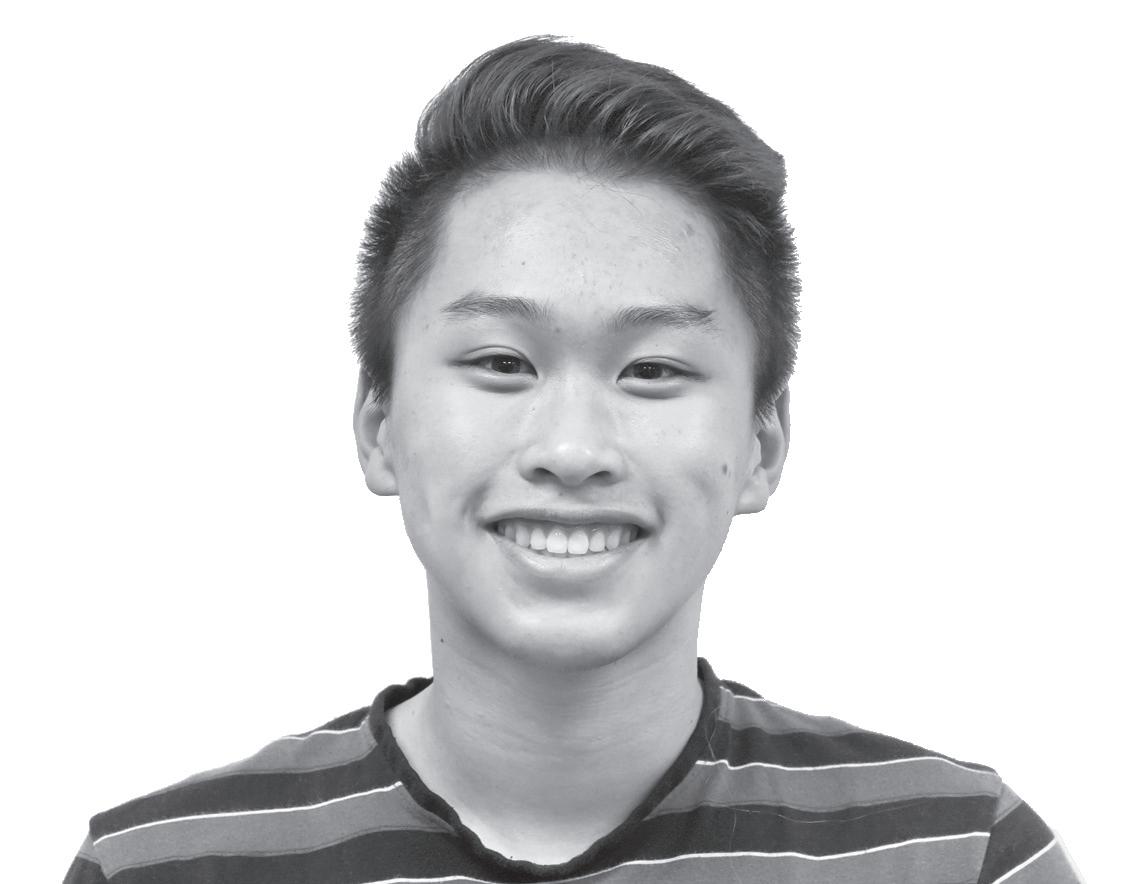
Does anyone actually remember how TikTok surged into ubiquity? It suddenly became a staple for youth.
Its “For You” feature supplies a steady, never-ending pool of TikToks specifically catered for you — from creators hailing from every cranny of TikTok. Not to mention, the app doesn’t display the current time, making it easy to get swept up in the endless feed of videos.
Even more, the viral nature of TikTok has produced an entirely new generation of youths viewing social media as a performative pursuit. Though social media inherently possesses and endorses posturing for others online, this app has taken it even further by promoting actual performance art — danc-
media platforms, changing the way we interact with and consume social media. But with these changes come a slew of potential pitfalls. The app has produced a legion of wannabe entertainers and influencers, giving the average high school student the illusion of a personal platform capable of launching them to TikTok fame.
So next time you swipe through your phone fiending for your daily TikTok fix, measure the weight of your app consumption. Does it have you sucked into its addictive grasp?
Niko Nguyen is a sophomore in the College of Agriculture and Life Sciences. He can be reached at nnguyen@cornellsun.com. Unfiltered runs every other Monday this semester.




Day Is



all you need is love
love • all you need is love
love • love • all you need is love
love • love • love • all you need is love • love • love • love • all you need is love • love • love
love • all you need is love • love
love • love • all you need is love
love
love • love • all you need is love
love • love • love • all you need is love • love • love • love • all you need is love
is
need is
• all you need is love • love
love
love • love • all you need is love • love • love • love • all you need is love
love • love • all you need is love
love
love
love
all you need is love
a DON’T FORGET! Valentine’s Day Is Friday February 14
love


ARTS & ENTERTAINMENT
Hear the People Sing
Ican’t exactly remember the first time I heard the soundtrack of Les Misérables. I know it was back in high school. It might’ve been during a car ride with one of my best friends, who liked to “carpool karaoke” to musical soundtracks. It might’ve been before the opening night of my first musical production. After all, every theatre kid knows that there’s no better time to sing “One Day More” than when you’re six hours into the last tech rehearsal, exhausted but excited for the big day.
For the longest time, the significance of this musical for me was limited solely to the memories I associated with it — good times with my friends and my love for the theatre. And I thought that the spirit of the show (and novel) was not lost on me: the fight for freedom, the right to be heard, to love and to live. In retrospect, though, I never fully understood it, not until now.
A few months ago, the pièce de résistance of the show, “Do You Hear the People Sing?” suddenly disappeared from every Chinese music streaming platform, allegedly because some protesters in Hong Kong were singing it during rallys. The unofficial banning of the song made some small waves on social media, but blew over in a matter of days.

I’d all but forgotten that this song had been banned until this past Thursday, when the song resurfaced on social media, under unprecedented circumstances.
On Thursday, Dr. Li Wenliang, one of the eight doctors from Wuhan who warned the public of the coronavirus outbreak and were later silenced by the police, died from the virus. His death sparked an outpouring of grief and national outrage, not simply because he was a whistleblower mistreated by the police, but
because there were conflicting reports from state media about the time and circumstances of his death, which created speculations about what might have been an attempt at manipulating public discourse.
Chinese people have become conditioned to speak almost exclusively in euphemisms when discussing politics, especially on public platforms. Being straightforward would only lead to getting one’s post deleted, one’s account deactivated, or worse, being “invited” to “have tea” with law enforcement. So in order to get their point across and have it last at least long enough to circulate, people have learned to use literature, movie quotes, illustration and music as proxies of speech.
This time, one of the first ones to go around was a clip of “Do You Hear the People Sing?”
This song used to circulate whenever there’s a public crisis, but this time the parallel was too significant and too eerie to be taken lightly: it was a “song of angry men” sung at the funeral procession of General Larmaque, who died in the cholera epidemic. If the song had been touchy before, this time it might just be outright inflammatory.
The original post avoided making any allusions, and most of the reposts were either caption-less or mechanically repeating five words that would look both innocuous and cryptic to anyone unfamiliar with the situation: “I can’t. I don’t understand.” As it turns out, when the police brought him in for “spreading rumors” back in January, Dr. Li had to sign an agreement. He was asked: “Can you cease this illegal behavior? Do you understand the repercussions if you fail to do so?” Under which he wrote: “I can. I understand.”
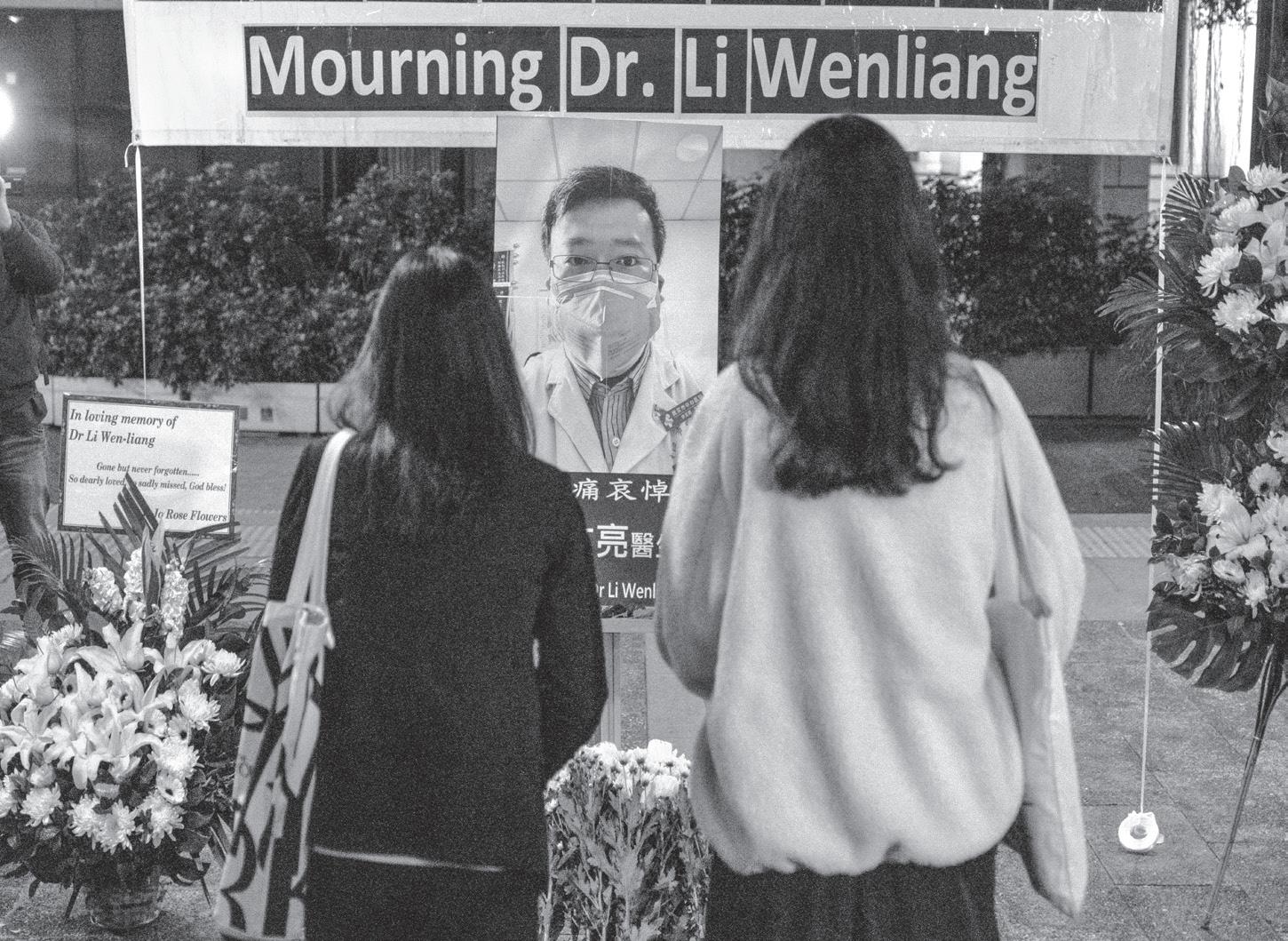
The video got 55 thousand reposts before being taken down just hours later, in the middle of the night Beijing Time.
For the rest of that day, all sorts of “proxies of speech” started popping up on Weibo, and many didn’t make it to the next day. Some were the usual: excerpts from Lu Xun’s essays, quotes from 1984, Dumbledore’s speech about Cedric Digory from Harry Potter. Some were more special: an illustration of Dr. Li wearing a mask covered in barbed wire; another of him eating fried chicken while watching the new season of his favorite TV series, a congratulatory pennant that says “whistleblower” hanging on the wall. The one that shook me to the core was a video of someone in Wuhan playing the trumpet from his balcony into the pitch-black night, while many whistles blew from a distance. It sounded like a requiem. It echoed like a battle cry.
And just like that, the people held for Dr. Li what some called “a state funeral,” and it was bizarrely creative, oddly inspiring, yet indescrib-
ably devastating. I wish we didn’t need to encode every political opinion with some piece of literature or film; I wish we didn’t need to decode cryptic language and symbolic art in order to reach a tacit understanding with thousands across the web. I wish I weren’t scared as I’m now writing this column, unable to shake the feeling of trepidation at every word, self-censoring the moment anything starts to sound dangerous. But Rome wasn’t built in a day, so until then, I’m proud of those who refuse to remain silent, and I’m thankful for the existence of art that enables self-expression, and lets us be heard.
The columnist would like to dedicate this article to Dr. Li Wenliang (李文亮), who passed away on February 6, 2020. 一路走好。
Andrea Yang is a senior in the College of Arts & Sciences. She can be reached at ayang@cornellsun.com. Five Minutes ‘Til Places runs alternate Mondays this semester.
Esports’ Most Ambitious Leap Yet
Just one week after the conclusion of North America’s much anticipated Super Bowl, esports is taking its biggest leap forward yet in an attempt to earn recognition as a true sport. This past weekend, the Overwatch League began its third season of competition with the historic introduction of a homestand format, the first in the history of competitive gaming. Teams will now have to travel around the globe to participate in home and away games, competing in 19 major international cities including New York, Toronto, Shanghai and Paris.
For those unfamiliar with Overwatch and the Overwatch League, Overwatch is a video game that pits two teams of six against one another in a competitive, objective-based setting. Each team consists of three roles, known as the 2-2-2 lock, with two tank heroes who block and absorb damage, two damage heroes who attempt to kill enemies and two supports who provide healing and keep their team alive. The objectives vary with each uniquely-designed map set in futuristic versions of the real world, and the diverse cast of 31 different heroes allows for lots of variation and chaotic fun.
In the Overwatch League, which began back in 2018, 20 teams with rosters from all around the world battle it out across four separate stages, with an Atlantic division (including London, Washington, D.C. and Toronto) and a Pacific division (including San Francisco, Seoul and Vancouver) competing. During the regular season, teams compete within their division, before the
The nature of esports and its professionalism has always been subject to critique in comparison to what is called “traditional sports.” Growing up, I was always taught to view video games and sports in a contrastive manner; I was told to “stop playing video games and go outside,” or to “join a school team and spend less time on the computer.” The beginning of the new season, however, blurs the line between competitive gaming and competitive sports.
top teams from each division face off in the stage playoffs. After the four stages, teams will then enter the season play-ins, playoffs and ultimately vie for the title of Grand Champion.
At the moment, there are still many questions currently facing this ambitious leap; the coronavirus, which has locked down most of China and has thrown many neighboring countries into turmoil, poses a big question as to how teams will be able to participate in the matches in Shanghai, Chengdu and other Chinese cities. Whether or not esports are actually suited to a homestand format is a serious question as well: are gamers truly able to undergo similar travelling schedules to traditional athletes while maintaining their rigorous training routines? Are there enough fans willing to buy tickets to watch their favorite teams? Will this work at all?
Despite these potential challenges, this opening weekend has still been incredibly exciting for fans who watched or attended the first eight matches in New York City and Dallas. Blizzard and the Overwatch developer team have

been working very hard recently, pushing out new in-game balances and updates as well as a brand new “hero pool” system, which will ban certain heroes in certain formats to improve the variability of games for both pro and novice players. It has been a long four months of changes and improvement since the end of the last season, but this giant leap to homestands looks to be a promising start to another year of gaming. And who knows, if all goes well, it may not take too long before we see other big
name video games following in the Overwatch League’s footsteps. Make sure to tune in to the second week of matches next Saturday and Sunday on YouTube Gaming for masterful gameplay and commentary. Whether or not you play Overwatch, you’re guaranteed an exciting, tense and fastpaced competitive experience.
Brian Lu is a freshman in the College of Arts and Sciences. He can be reached at brl62@cornell.edu.
Andrea Yang
Five Minutes ‘Til Places
LAM YIK FEI / THE NEW YORK TIMES
BRIAN LU SUN CONTRIBUTOR
JEENAH MOON / THE NEW YORK TIMES
Cry It Out: Maternity and What It Means to Be a Feminist
When I walked into The Kitchen Theatre on State Street to take in Molly Smith Metzler’s play, Cry It Out , directed by M. Bevin O’Gara, I never thought I would be leaving with puffy eyes, smudged mascara and a runny nose. I must preface this by saying that I am, in general, not one to fall prey to public displays of emotion.That being said, the theatre’s opening night production of this unique look at motherhood evoked within me a deeply moving sentiment.
Cry It Out focuses on the stories of two new moms, Jessie and Lena, played by Mikaela Izquierdo and Melissa Miller respectively, who are forced together by their close proximity as neighbors, and a mutual need to escape the percolating stir-craziness that comes with caring for newborns. The mothers share intimate details about their home life, all with a cup of coffee in one hand and a baby monitor in the other. The dialogue is free flowing and so wonderfully executed by the play’s leading ladies that I felt like a voyeur, witnessing the highs and lows of these women’s lives transpire before my eyes. The audience learns about Lena’s trouble at home, with a closeted-alcoholic mother-in-law who will eventually become her son’s primary caretaker when Lena returns to work as a hospital administrator. Also exposed is Jessie’s traumatic birth story, which has created a rift between her and her husband, who would never support Jessie’s choice to stay at home full time with her daughter instead of returning to her high-profile job as a New York City attorney.
The play takes an interesting turn when Jessie and Lena’s early morning coffee chats are infiltrated by a Wall Street suit named Mitchell, portrayed by Brian Sgambati. Mitchell — who is nothing more than a concerned husband — attempts to bribe the two mothers into allowing his wife, Adrienne, played by Erica Steinhagen, to join them during their talks. Mitchell explains to the two women that he has repeatedly caught his wife spying on the duo’s backyard
tion that is archetypally feminine, it is revealed that she loves her baby but has found a way to compartmentalize that love in such a way that enables her to have a professional life outside of the nursery in the form of her highly successful jewelry brand. She emphasizes that some women cannot, and have no desire to, fit the traditional image of motherhood like Jessie or Lena, but that it’s “perfect” mothers like them who make career moms like Adrienne look bad.
The play’s performances were absolutely stunning. Each actor shined in their own way, with each one’s acting chops showcased at different points. Izquierdo took my breath away on numerous occasions, delivering a heartfelt and evocative performance. Her cadence when delivering the final line of the play is what sent me into total emotional upheaval; I could feel this character’s pain, her anguish that is unapologetically and wholly female. Miller similarly did a stunning job at maintaining a comedic sheen over subject matter that is truly quite dark. Her capacity for conveying the emotional attachment to her son and her character’s deep-seated anxieties and unconsolable sadnesses when she is forced to go back to work is unparalleled. Sgambati’s hilarious yet cutting portrayal of Mitchell made me fall in love with his character: I simultaneously wanted to hug him for his devotion to his daughter, and slap him for his obtuseness when it came to his wife’s professional wishes. Finally, Steinhagan’s performance as Adrienne climaxes when she delivers her character’s feminist manifesto to the professionally-inclined mother. Her performance was honest and biting in all the right ways.

Her cadence when delivering the final line of the play is what sent me into total emotional upheaval; I could feel the character’s pain, her anguish that is unapologetically and wholly female.
rendezvous, and tells them that he is worried she is lonely.
Later that day, Adrienne arrives, armed with her iPad and an overwhelming air of sanctimony and bad attitude. Adrienne exudes “I don’t want to be here” vibes, from the moment the audience lays eyes on her. She is unwilling to engage in conversation despite Jessie and Lena’s best efforts. The contrast between the two founding members of mommy club and this new, business-oriented mother, is stark. The audience is set up to hate Adrienne. She is cold and unfeeling; even a desperate Mitchell admitted to Jessie that he had not seen his wife interact with the baby in weeks.
In Adrienne’s final scene, delivered by Steinhagen with convincing frustra-
Cry It Out was truly one of the best plays I have ever had the opportunity to see. The Kitchen Theatre has never failed to impress me, but this production in particular left me in awe. The simplicity with which they go about executing the set and costume design lends itself perfectly to a believable and ultimately heartbreaking story of motherhood, and, more deeply, womanhood. For so long, I felt the only feminism that existed was one that looked like Adrienne’s: unwavering, aggressive and ambitious. However, my mother, a feminist in her own right, always explained to me that wanting children and occupying the traditional role of mother can be feminist if it is an active choice. Cry It Out helped me finally understand this. Jessie’s choice to stay at home was a feminist one, because it was made independently. This choice was tactfully contrasted with her being forced into what any traditional feminist would see as the right choice: going back to work. However, because Jessie had no say in making this decision, it is yet another demonstration of how women’s voices are so often silenced. It is this seamlessly integrated social commentary, along with exemplary acting and writing, which makes Cry It Out a must-see for everyone, from the enthusiastic theatre buff to the disinterested cynic.
Cry It Out is playing until Feb. 22 at The Kitchen Theatre.
Madeline Rutowski is a senior in the School of Industrial and Labor Relations. She can be reached at mjr444@cornell.edu.

MADELINE RUTOWSKI SUN STAFF WRITER
COURTESY OF THE KITCHEN THEATRE

Fill in the empty cells, one number in each, so that each column, row, and region contains the numbers 1-9 exactly once. Each number in the solution therefore occurs only once in each of the three “directions,” hence the “single numbers” implied by the puzzle’s name. (Rules from wikipedia.org/wiki/ Sudoku)

Dandro
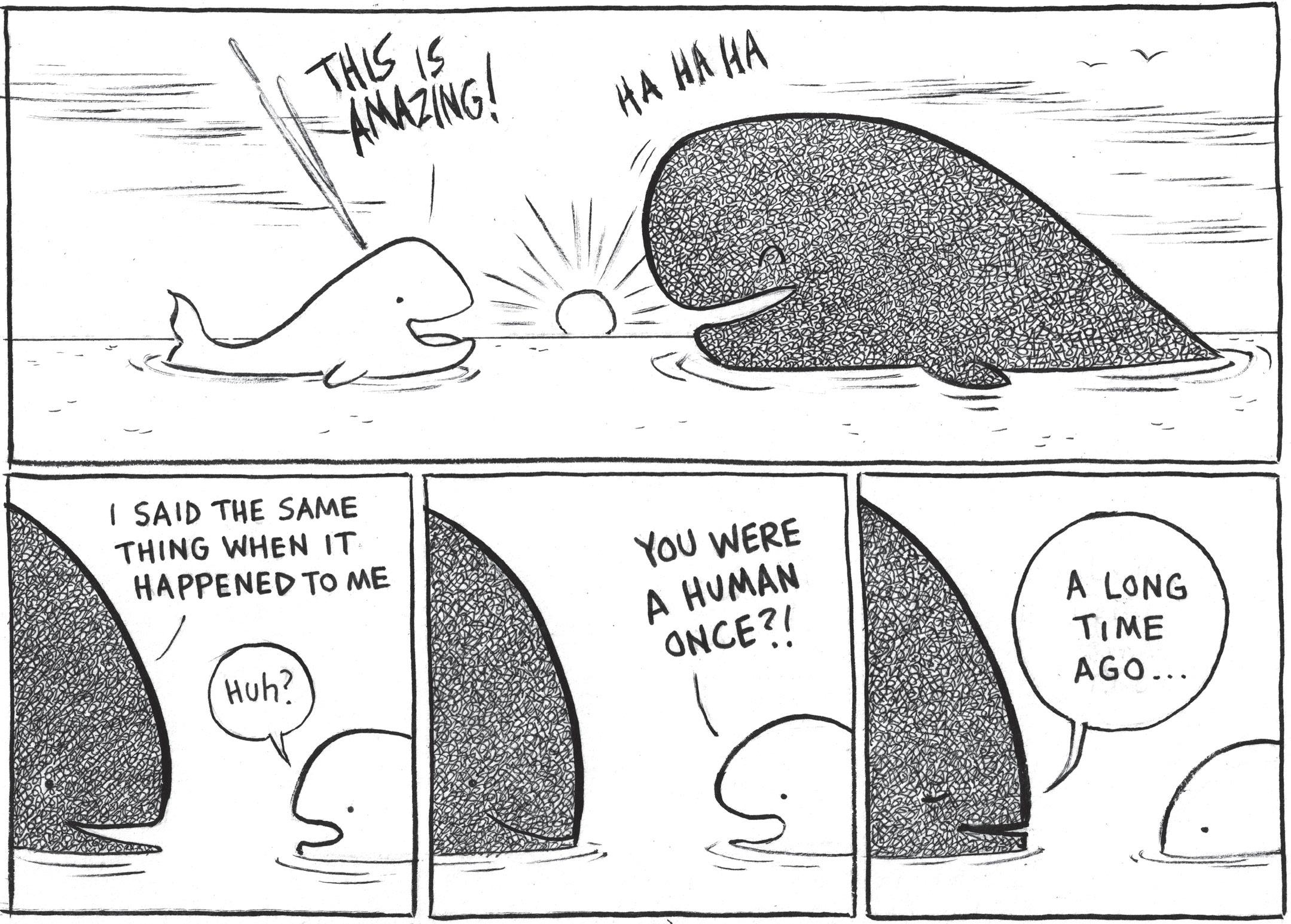

Art by Alicia Wang ’21
Johnny Woodruff by Travis

26 A PA R TMENT FOR R ENT
2020-2021
Studio 1, 3, 8 & 11 BR Apts. Great Locations in Collegetown. 607-227-2535
26 A PA R TMENT FOR R ENT *****************************
1-3 Bedroom Apartments
Quiet Fall Creek Location 5 Minutes to Busline 607-351-1267 joe@joegrealty.com *****************************
120 Oak Avenue
Just steps to Cornell Campus 10 bedroom house & 1 and 2 bedroom apartment 607-277-1234 office@ithacastudentapartments.com Ithacastudentapartments.com
>>MAKE ITHACA HOME<< Collegetown Apartments Furnished 1-3 Bedrooms PARKING, LAUNDRY, UTILITIES! (607) 273-7368 www.WestShortApts.com
109 Sage Place
2 & 3 Bedroom Apartments
Access to Shuttle to Campus Access to Free Fitness Center
Novarr-Mackesey Property Management office@ithacastudentapartments.com 607-277-1234
1, 2 & 5 Person Apts.
Overlooking Cascadilla Gorge Architecturally designed. Decks, patio, fireplaces, Jacuzzis. Furnished, parking, internet. 607-592-7564
*Brand New*
Full Term & Semester Leases Studio, 1 & 2 Bedrooms College Townhouse 121-125 College Ave. CollegeTownhouseIthaca.com Leasing@inteprop.com
Flexible Housing Solutions! Short Stay Accommodations Available *Brand New* Studio Apartments 238Linden.com Leasing@inteprop.com
Catherine & Eddy St. 1 & 2 bedroom
Furnished, heat included Laundry in building Parking available for fee 607-277-1234 office@ithacastudentapartments.com
Collegetown Crossing
College Ave's Newest Location 307 College Ave. Now Leasing for 2020-2021 Completely New Modern Studios, 2 & 4 Bedroom Apartments. Fully furnished, heat & hot water included. Reception area at 307 College Ave. www.urbanithaca.com 607-330-2442 info@urbanithaca.com
Houses, Apts, Parking 1 to 9 Bedroom Collegetown - College Ave, Linden Ave, Dryden Rd, Bryant Ave, Cook St. 607-330-2442 info@urbanithaca.com www.urbanithaca.com
Now Renting 2-10 Bedroom Houses/ Apartments for 20-21. All Locations. Call today or visit our website: Certified Properties of TC Inc certifiedpropertiesinc.com 607-273-1669
Boldly Refined Living 312 College Avenue Sophisticated studio, 1, 2, 3-bedroom apartments. Superior fitness facility, theater, and coworking space. Free high-speed internet. Exclusive resident parking. Package delivery/return. Overnight concierge. 607-273-9777 or 312collegeave.com
27 H OUSE FOR R ENT
20-21
College Ave. 5 BR House Furnished. Laundry. Parking. Call 607-273-8576


WOMEN'S BASKETBALL
Red Toppled by 20-Plus Points in Rough Weekend Series
By KEN CHOI Sun Staff Writer
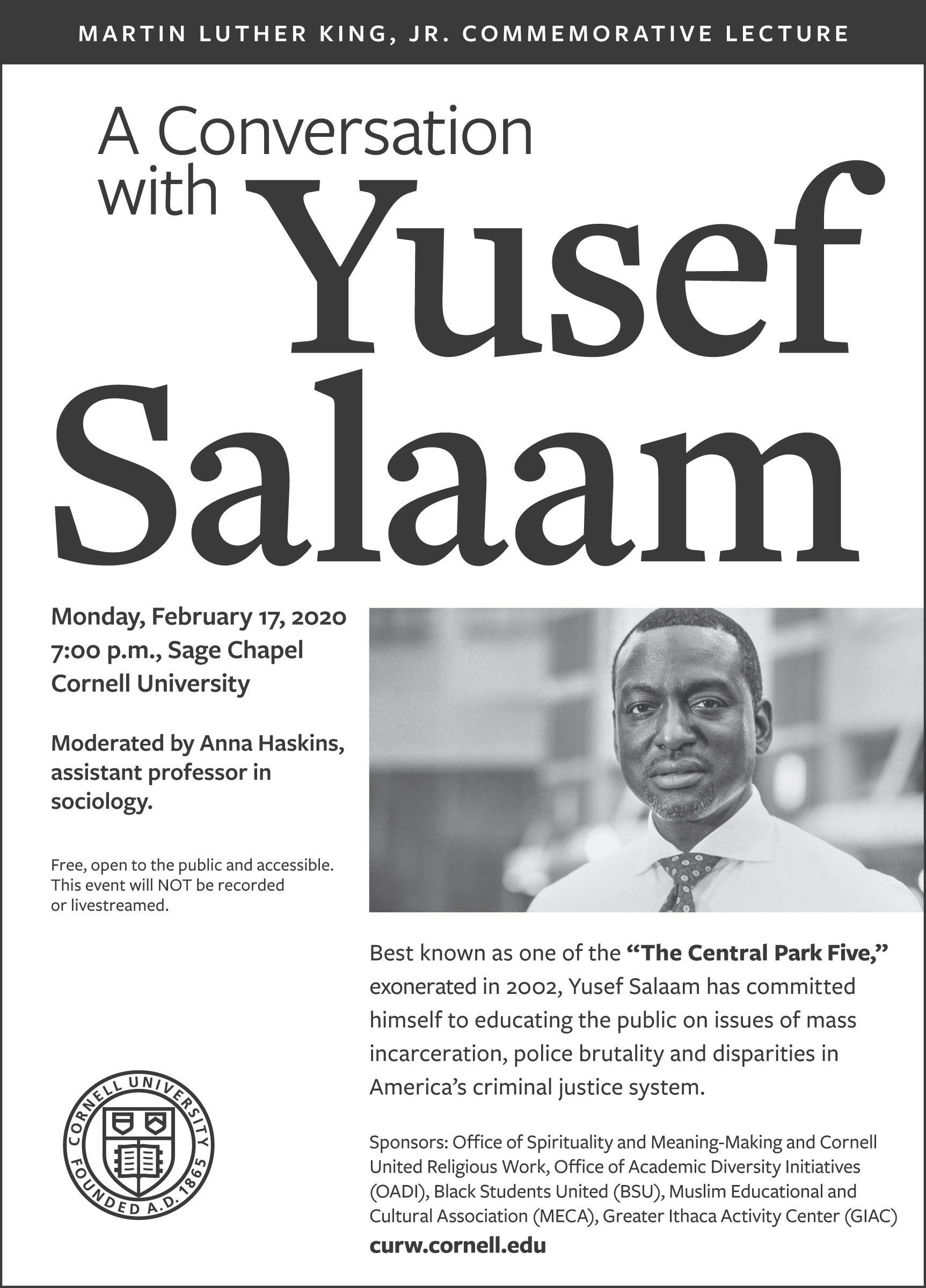
The first weekend of February will be a weekend to forget for women’s basketball, which lost by more than 20 points in two separate Ivy matchups.
The Red struggled to get going offensively right from the start, as Princeton kicked the game off with a 7-0 run. Freshman guard Shannon Mulroy was the first to put up points for the Red with 7:30 left in the first quarter.
Still, the Red did not find a way to get to Princeton’s basket, and the first quarter ended 20-8 in the Tigers’ favor. Despite multiple timeouts and time to regroup after the first quarter, the Red
With the 63-41 loss, the Red is now 2-4 in the Ivy League, ranking sixth in the Ancient Eight. Cornell is 9-9 overall this season.
could not find its way out of the pit it fell in, as the team failed to convert any field goals during the second quarter.
Cornell’s only three points of the quarter came from free throws, and Princeton extended its lead to 31-11.
Sophomore guard Samantha Will and senior forward Stephanie Umeh continued to fight throughout the game. Will finished with a career-high seven points, and Umeh caught three rebounds and converted all four of her free throws. Even after regrouping during the half, the Red couldn’t find a way to crack
Princeton’s solid defense, and the road game ended 60-29.
Reflecting the Red’s dismal performance in its first game of the doubleheader, no players scored in double digits, while Cornell converted only seven field goals and two three-pointers. Overall, it shot a mere 15.6 percent from the field and 15.4 percent of three-pointers.
The Red also had 26 turnovers, with Princeton converting those turnovers into a total of 36 points.
Cornell attempted to rediscover its groove against the Quakers but was overpowered by the Penn offense, and dropped 63-41. The same problem of failing to capitalize in the first quarter and not being able to convert field goals served as the main cause for the second consecutive loss.
The Red found itself in a 0-8 deficit after the Quakers scored eight straight. During the first quarter, the Quakers shot 10-of-16 — 62.5 percent — from the floor and 4-7 in three-pointers.
Phoebe Sterba led Penn’s run, sinking three three-pointers in the opening minutes. Though senior forward and captain Laura Bagwell-Katalinich, sophomore forward Theresa Grace Mbanefo and senior guard/forward and captain Samantha Widmann scored to put the Red back within seven points, the Quakers ended the first quarter with a 9-2 run, leading 24-10.
The Red got its rhythm back and played more competitively in the second and third quarters, scoring only one point fewer than the Quakers.
However, it was not enough to overcome the 14-point deficit in the first quarter. The gap increased when
Cornell was outscored 13-6 in the fourth. Bagwell-Katalinich and junior forward Halley Miklos finished with 10 points and seven rebounds each, but it wasn’t enough to take the game home.
With this 63-41 loss, the Red is now 2-4 in the Ivy League, ranking sixth in
the Ancient Eight.
The Red will look for its third Ivy win of the season against Harvard on Friday, Feb. 14 at 6 p.m. at home.
Ken Choi can be reached at kchoi@cornellsun.com.
Bad things come in threes | The weekend's losses extended Cornell's losing streak to three and pulled its Ivy record down to .333.
BORIS TSANG / SUN PHOTOGRAPHY EDITOR
Icers Shut Out Colgate in 2nd and 3rd Periods
Colgate can’t get past Cornell blue line; Red dominates Raiders in frst game of weekend series
COLGATE
Continued from page 16
marked the forward’s return to action following an injury sustained during Jan. 17’s tie with Northern Michigan.
“A big goal by Kyle Betts, great to have him back in our lineup,” said head coach Mike Schafer ’86. “The energy for those first two goals [was] created by that line and their hard work and hustle.”
Next it would be junior forward and captain Morgan Barron, with not one, but two, power-play tallies for his 10th and 11th goals of the season.
The first was a one-timer from high in the slot 16:40 into the first period. The second was another snipe from behind the dot — the Colgate goaltender couldn’t match Barron’s speed and both shots went by him in a blink.
Barron’s second goal closed out the scoring for the night at 4-1.
“In the second period, to go up 4-1 is the key goal,” Schafer said.
A staunch Cornell blue line made it an uneventful night for junior goaltender Matt Galajda, who only saw nine shots. The Cornell offense finished with 25.
The power-play tally Galajda gave up in the first period was his fourth failed penalty kill in two games — Princeton scored three last Saturday.
“We made a mistake on the penalty kill ... we can’t make mistakes anymore, because it ends up in the back of our net,” Schafer said.
Even so, five-on-five play proved suffocating for the Raiders, whose scoring chances were few and far between. Minimal mistakes were made by the Red following that Colgate goal in the first period.
“It’s much more of a team effort, of a committed effort, to get above people and take care of our defensive end,” Schafer said. “Having been doing that, we’re starting to create some offense because we’re getting turnovers and we can come back at teams with speed.”
Sophomore defenseman Joe Leahy almost made it 5-1 in the third period for his second goal of the season, only for the point to be taken away by a late offsides call after the officials conducted a quick review.
With 2:05 left in regulation, the Colgate skaters’ frustrations came to the surface. The Raiders’ Griffin Lunn was given a major game misconduct penalty for hitting freshman
forward Matt Stienburg in the head. Following that play, a scrum broke out between the teams. When all was said and done following the lengthy skirmish, Mullin and Colgate’s McMann were also handed penalties.
The sequence resulted in six separate penalties, with each of those three players being assessed two apiece. On top of Lunn’s major and Mullin and McMann’s minors, each skater was also hit with a 10-minute game misconduct penalty.
Cornell went on a five-minute power play with 2:05 left in the game, but failed to capitalize on the man advantage in the dwindling minutes of the contest. The score was still 4-1 when the final buzzer sounded.
“I’m sure that their guys will be fired up and ready to play [Sunday],” Schafer said. “We kind of got lackadaisical a bit in the third … but we’ll be ready to play [next game].”
Following the postponement of Friday’s game due to snow, the second incarnation of the weekend series took place on Sunday at 4 p.m. Cornell again downed Colgate, this time 5-1 on home ice.
Cornell returns to action Friday against Union.

C.U. Solves Princeton
In 2nd Ivy League Win
MEN’S BASKETBALL
Continued from page 16
Aririguzoh and guard Ethan Wright chipped in with 10 points apiece. But the Tigers seemed out of rhythm the entire game, and their effort could not match the Red’s intensity on Saturday afternoon.
Princeton made the game interesting late with an 8-0 run to cut the Cornell lead to just six points with 2:36 remaining. However, Cornell made its free throws down the stretch to hold off the late push from the visitors.
“It was good to get a win, and I was proud of our team’s ability
to finish out the game as they should,” Earl said. “It shows how much progress our team has made since the beginning of the season; Princeton is a really good team, so this finish and result was big for us.”
The game marked the first loss for Princeton in its last six contests. The Tigers had not dropped a matchup since a December 19 meeting with Hofstra.
Cornell could not come away with a sweep on the weekend, losing to Penn on Sunday afternoon. The Quakers downed the Red 79-73 in a contest that came down to the wire.
Bennett Gross can be reached at bgross@cornellsun.com.

Two Red Skaters Reach 100 Points
Continued from page 16
her backhand, she delivered a no-look pass to Bourbonnais for the score that tied the game.
The rebound was sent into the air and hit in by Zandee-Hart for the shorthanded goal.
Five minutes later, senior forward Kristin O’Neill won a faceoff and found fellow senior forward Amy Curlew. Curlew sent a leading pass to Mills, where she again took the puck behind the net. Mills wrapped all the way around until she was in front of the Harvard crease and fired a wrist shot into the top corner for her 100th point as a Cornellian.
In the third period, it looked as if the Red was in some trouble when the Crimson went on a 4-on-3 power play. But Cornell’s penalty kill led a deadly attack that culminated in a Zandee-Hart goal. Bourbonnais sent the puck forward to senior forward Paige Lewis. The senior skated in on her forehand and fired a quick shot. The rebound was sent into the air and hit in by Zandee-Hart for the shorthanded goal.
For Cornell’s final act of the night, goal number four came with twelve minutes remaining in the game via O’Neill. Receiving a pass from Lewis in the slot, she cut inside and shot over the glove of the Harvard goalie for her first goal and second point of the night.
The team did not have much time to celebrate their victory, traveling to Hanover right after to take on Dartmouth (5-17-3, 2-13-3 ECAC) on Feb. 8. Despite its recent struggles, the Green held its own in front of its home crowd for the first period, taking a 0-0 tie into
the first intermission.
But, mirroring the night before, the Red overcame the slow start and went on to secure a win.
Shortly into the second period, Bourbonnais caught the Green in the middle of a line change and passed to senior forward Grace Graham from behind the red line. Graham took the puck and scored, putting Cornell ahead.
The Red wouldn’t score again until late in the third period. Graham picked up her second point of the night assisting O’Neill. Skating into her opponent’s zone, she shot from a tight angle and was able to sneak it past Dartmouth’s Kayla Wormsbecher for the score.
In an attempt to get back in the game, the Green pulled its goalie in favor of an extra skater. But Gillis Frechette ended up scoring the empty net goal to put the game out of reach.
This eighth consecutive league victory clinched the Ivy League title for Cornell. At a perfect 8-0, the Red sits alone atop the standings for the third time in the last four seasons.
Looking ahead to the postseason, Cornell’s sights will be set on more hardware.
At a perfect 8-0, the Red sits alone atop the standings for the third time in the last four seasons.
With only four games remaining on its schedule, Cornell hopes to finish the season with continued dominance. The Red will wrap up Ivy League play with away games at Brown on Feb. 14 and Yale on Feb. 15.
Justin Suzzan can be reached at jsuzzan@cornellsun.com.
Home-and-home
The Red took down the Raiders on Colgate’s ice before returning to East Hill for another dominating performance the next day.
BORIS TSANG / SUN PHOTOGRAPHY EDITOR
Christina Bulkeley can be reached at cbulkeley@cornellsun.com.
C.U. Posts Underdog Win vs.Tigers
By BENNETT GROSS Sun Staff Writer
Men’s basketball pulled off arguably the biggest upset in the Ivy League this season, taking down Ivy unbeaten Princeton 73-62 at Newman Arena on Saturday afternoon. The unlikely victory came after a winless weekend at Brown and Yale.
After the game was postponed from Friday night due to inclement weather in Ithaca, the Red showed no signs of rust despite the change in schedule.
The home team got out to a quick 11-2 lead, and the Red never looked back, pulling off a wire-to-wire victory against one of the best teams in the league.

This streak continued against Princeton, as Cornell shot 49 percent from the field, and went 39 percent from three.
While the Red’s shooting has begun to come around, the team has played superior defense throughout the year.
Cornell forced 16 turnovers and held the Tigers to just 43 percent shooting from the field and 30 percent from beyond the arc.

Cornell was led by forwards senior Josh Warren and junior Jimmy Boeheim. Boeheim led all scorers with 24 points, while Warren added 18 points and 10 rebounds. Additionally, junior guard Terrance McBride contributed 14 points and five assists.
“I’ve obviously been working on my shooting all season long, and earlier in the year they weren’t really falling,” Warren said. “But it was important for our team tonight for me to shoot some outside shots, in order to spread out the floor.”
Cornell led by as many as 18 points during the game, with the Red aided by an 11-0 run which spanned both halves.
As of late, Cornell has been shooting the ball better from the field than it had at the beginning of the season.

Junior guard Bryan Knapp — tasked with defending the other team’s best player each game — did his part to contribute to the Red’s success, only allowing Princeton point guard Jaelin Llewellyn to make five of his 15 shots.
“Knapp is one of the best defenders you will find, and he really takes it upon himself to guard a man,” said head coach Brian Earl. “And he did a pretty good job of that tonight.”
Despite his relatively poor shooting night, Llewellyn led the Tigers with 13 points. Center Richmond
Red Clinches Ivy Title With Pair of Victories
By JUSTIN SUZZAN Sun Staff Writer
Women’s hockey dominated with a combined 7-1 score over the weekend, moving to a perfect 8-0 in Ivy play with victories over Harvard and Dartmouth. Senior defenseman Jaime Bourbonnais and junior forward Maddie Mills each recorded their 100th point during the first contest of the weekend.
On Friday No. 2 Cornell (21-1-3, 14-0-3 ECAC) made the trip to Cambridge to take on No. 10 Harvard (12-10-1, 11-5-1 ECAC). Last month, the Red overpowered the Crimson at home for the 7-0 win. After letting up a goal and taking a 1-0 deficit into the first break, Cornell fired back with four unanswered goals to secure the 4-1 win.
In the second period of Friday’s game, sophomore forward Gillis Frechette took the puck into Harvard’s zone and was able to draw a hooking penalty. The Red jumped on the powerplay. Senior defenseman Micah ZandeeHart found Mills, who skated behind the Crimson net. On

The first tilt of men’s hockey’s homeand-home weekend series went Cornell’s way — with four goals from three Red players beating out Colgate’s sole tally. Cornell jumped out early with a goal from senior forward and captain Jeff Malott. 2:09 into the first period, Malott, assisted by junior forwards Kyle Betts and Tristan Mullin, sent one in from the slot.
The initial lead didn’t last long though, with the Raiders’ Bobby McMann taking advantage of a power-play opportunity to knot up the score 5:50 into the game.
But after that Colgate goal, Cornell
“We’re starting to create some offense because we’re getting turnovers and we can come back at teams with speed.”
Mike Schafer ’86
would go on to score three unanswered goals — Betts earned his second point of the night on a shot 13:10 into that first frame. Saturday night’s game
Slam dunk | Josh Warren recorded 18 points and 10 rebounds in Cornell’s second victory of the season.
WOMEN’S HOCKEY
By CHRISTINA BULKELEY Sun Assistant Sports Editor