The Corne¬ Daily Sun

By MARIN LANGLIEB Sun Staff Writer
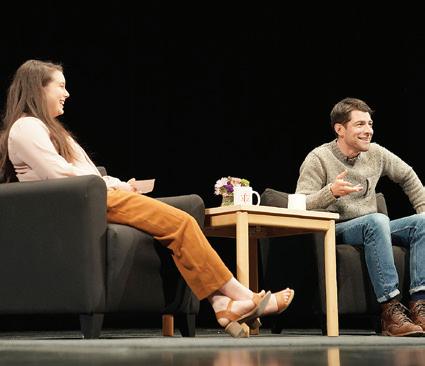
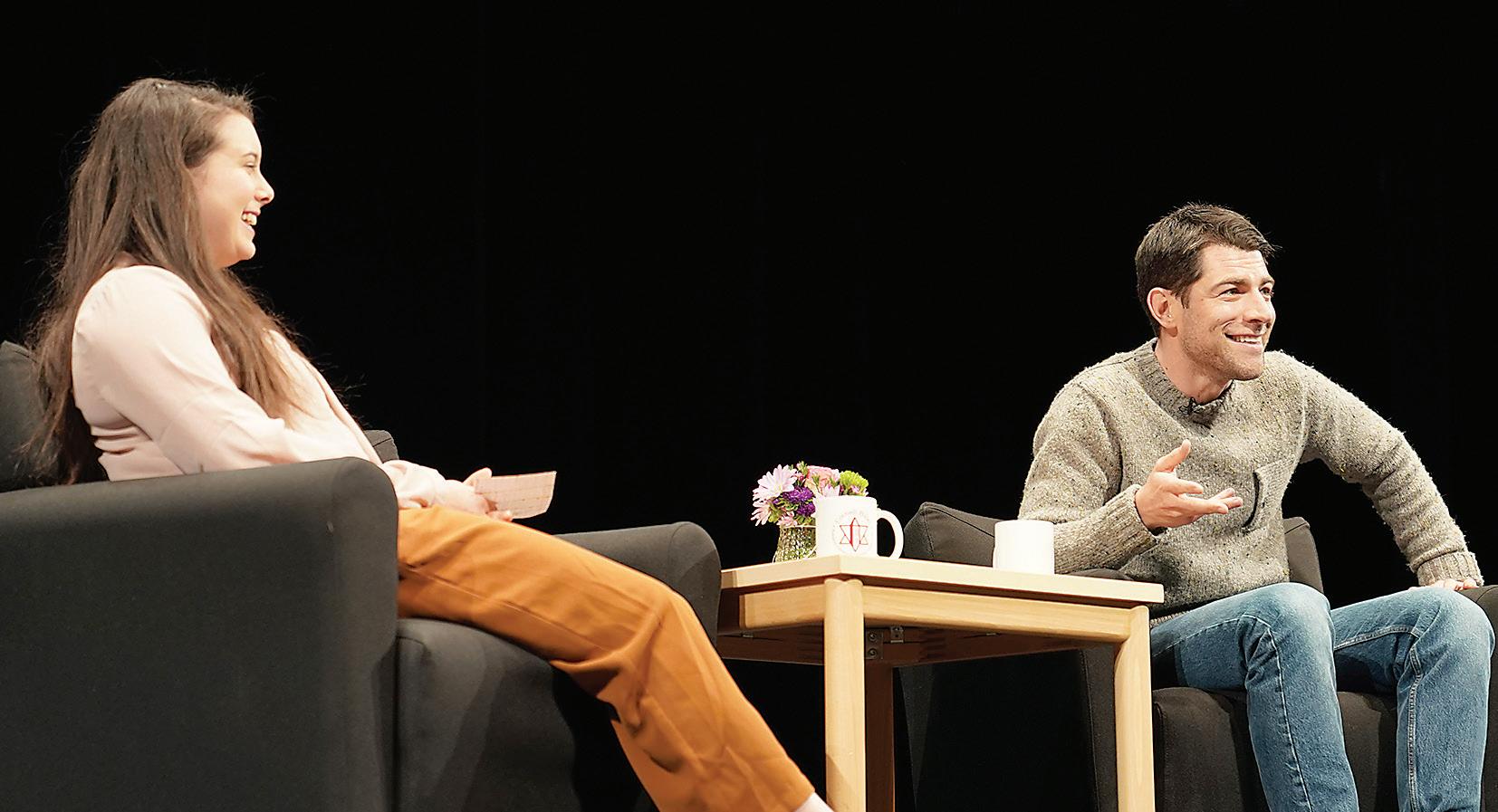
New Girl star Max Greenfield re-enacted a few of his favorite Schmidt catchphrases (“Judaism, son!”), and dealt the facts on how to actually play True American (“throw out some American history, have a beer or two, shotgun one and call it a day”) when he took the stage Saturday night in Bailey Hall. His talk was co-sponsored by the Cornell University

Program Board, Cornell Hillel Major Speaker series and Himan Brown Charitable Trust, which has brought notable Jewish speakers such as Aly Raisman and Josh Peck to campus in the past.
“You just keep moving forward, and everytime you fail
Julia Katz ’19, chair of the Major Speaker series for Hillel, told The Sun that the group had been trying for years to bring Greenfield to speak at Cornell.
“We’ve talked about bringing [Greenfield] to campus since my freshman year when I was on the committee, so it’s finally happening,” Katz said about the Emmy and Golden Globe nominee. “We’re excited to hear about his different projects and his experiences as a Jewish actor and generally just how he goes about life.”
Greenfield did just that, opening to a packed audience by talking about how nice and expensive Cornell looks and by reflecting on his own college experiences. He admitted that he only “sort of went to college,” and he decided to drop out after achieving a 0.67 GPA his freshman year.
“There was an acceptance that college went very wrong for me, and I look at all of you and I’m like, you are all better than me,” Greenfield said. “You guys should be really proud of yourself.”
Only after dropping out did Greenfield start seriously
By MARYAM ZAFAR Sun Staff Writer
The Faculty Senate posed questions to the Cornell community regarding the University’s inclement weather policy following a week of severe weather punctuated by a student-led petition to cancel classes, burst pipes across campus and temperatures dropping below zero.
“Gathering this data does not mean that the decision to stay open last week was flawed.”
Charles Van Loan
A university solicitation encouraged individuals to submit inpwut on how to address a wide range of weather situations and concerns. Questions asked about what “reasonable protective clothing” entails, the risks associated specifically with morning classes and evening prelims, travel time to class and policies for individuals whose health issues would be intensified by the cold weather.
“Gathering this data does not mean that the decision to stay open last week was flawed,” Dean of Faculty Charles Van Loan told The Sun. “It means
By ALEX HALE Sun Staff Writer
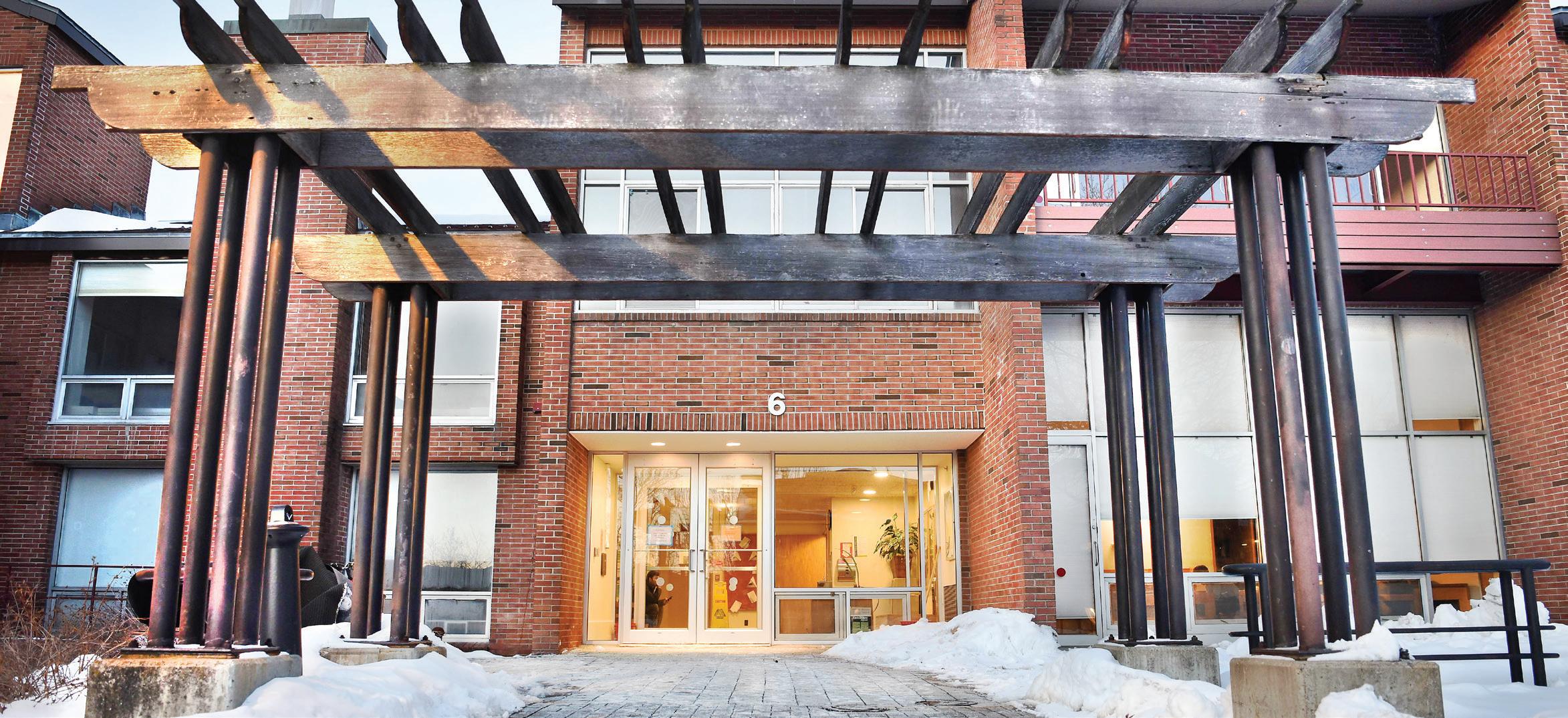
On Thursday, a pipe burst in the freshman dormitory Low Rise 6. Flooding caused facility damages, including the loss of Internet services. University administration confirmed that the pipe has been repaired and everything is back to normal.
Karen Brown, senior director of campus life marketing and communications, said that all services were restored to the freshman dorm.
Brown wrote in an email to The Sun on Friday that all services, including heat and inter-
net, are set up and working again.
The pipe burst on Thursday afternoon, and Cornell’s Environmental Health and Safety team were the first responders to the accident, with the plumbing team not far behind.
Brown said that the decision to shut down the heat was
made in order to “stop the leak from becoming much, much worse.”
The custodial team then dried the carpeting to prevent mold or mildew, which “can become a hazard if not addressed.”
Water seeped into the tech control room, and so internet was shut down in order to stop
further damage. IT@Cornell rebooted Internet services on Friday morning.
Residents were concerned about the condition of the elevator, as some of the water entered it. After inspection, no damage was found in the elevator.
Friday.
“Extreme cold can result in pipes freezing, and this winter’s unusual pattern of sharply alternating warm and cold stretches makes the effect on pipes worse,” Brown said.
Brown attributed the pipe burst to recent extreme weather.
Celebrate Lunar New Year
8 a.m. - 11 p.m., Tatkon Center
Stratification Trees for Adaptive Randomization In Randomized Controlled Trials
11:40 a.m. - 1:10 p.m., 115 Ives Hall
M. K. Gandhi’s Apologies, by J. Daniel Elam 12:15 - 1:30 p.m., G08 Uris Hall
Leveraging Ecophysiology and Trait-Based Ecology To Predict Forest Responses to Climate 12:20 - 1:20 p.m., A106 Corson/Mudd Hall
The Party Side of Horticulture 12:20 p.m., 404 Plant Sciences Building
What’s New in the United Nation’s Special Report On 1.5 Celsius Warming 2:55 - 4:10 p.m., 233 Plant Sciences Building
Dairy Farm Workers
4 - 5 p.m., 146 Stocking Hall
Iluminating Epigenetic Mechanisms In Cancer with Designer Chromatin
4 - 5 p.m., 119 Baker Lab
Mapping New Physics
With the Cosmic Microwave Background
4 - 5 p.m., Schwartz Auditorium, Rockefeller Hall

Discussion on Voting Rights in America 5 - 6 p.m., Tatkon Center
Free Yoga
5 - 6:15 p.m., 413 Art Gallery, Willard Straight Hall
Chef Ron Duprat 5:30 - 6:30 p.m., 196 Statler Hall



Canvas@Cornell: Getting Started in Canvas 8:30 - 10 a.m., G-27 Stimson Hall
Spring Study Abroad Fair 10 a.m. - 2 p.m., Memorial Room, Willard Straight Hall
Junior Recruitment Workshop: Vira Semenova 11:40 a.m. - 1:10 p.m., 141 Sage Hall
Magnetic and Piezoelectric Tunable Devices For Versatile Electronic Systems Noon - 1 p.m., 233 Phillips Hall
How to Plan and Conduct Interviews In Real-World Settings Noon - 1:30 p.m., 423 ILR Conference Center
Topology in Correlated Condensed Matter Systems 12:20 - 1:15 p.m., 700 Clark Hall
Pre-Med Study Abroad Info Session 3 - 4 p.m., G08 Uris Hall
Challenges and Methods for the Integrated Design Of the Architecture, Plant, and Control Of Dynamic Engineering Systems 4 p.m., B11 Kimball Hall
Resume Critiques by Women in Computing at Cornell 4:30 - 6 p.m., Tatkon Center







By RONNI MOK
In a wooded stretch behind Ithaca’s Walmart known as “the Jungle,” dozens of homeless individuals live out of tents and sleeping bags, battling extreme weather and poor environmental conditions.
Ithaca’s ongoing homelessness crisis is taken to deadly levels every winter. Last week’s polar vortex brought chilling temperatures as low as negative seven degrees to Ithaca, according to Cornell climate data — exposure to such conditions can cause frostbite within the half hour, according to the National Weather Service.
Winnie Ho ’19 collaborated with the Ithaca Homeless Crisis team to fundraise online from Jan. 31 to Feb. 7 in order to purchase resources to be delivered to the Ithaca homeless community.
“The wind chill temperatures outside are absolutely abysmal, and even a short walk outside personally for me was incredibly painful,” Ho told The Sun in an email. “I knew that we all viscerally understood how horrible it was to go outside, and wanted to launch that frustration and anger into something viable and productive.”
The Ithaca Homeless Crisis team is made up of local residents raising awareness and funds for Ithaca’s homeless community.
Ho first heard about Ithaca Homeless Crisis from Christopher Biehn, Ithaca College, who was a founding member of the team. She reached out to the team’s Facebook page monitor Deb Lockwood Wilke and collaborated to start an online fundraiser campaign.
“We agreed to call at 1 p.m. to discuss what could happen. We talked about immediate action and talked about how to deliver support as quickly as possible,” Ho said. “At around 2:30 p.m., we got our first donation. From that moment, the donations poured in — my phone notifications were going off every few minutes!”
By SAMANTHA STERN Sun Staff Writer
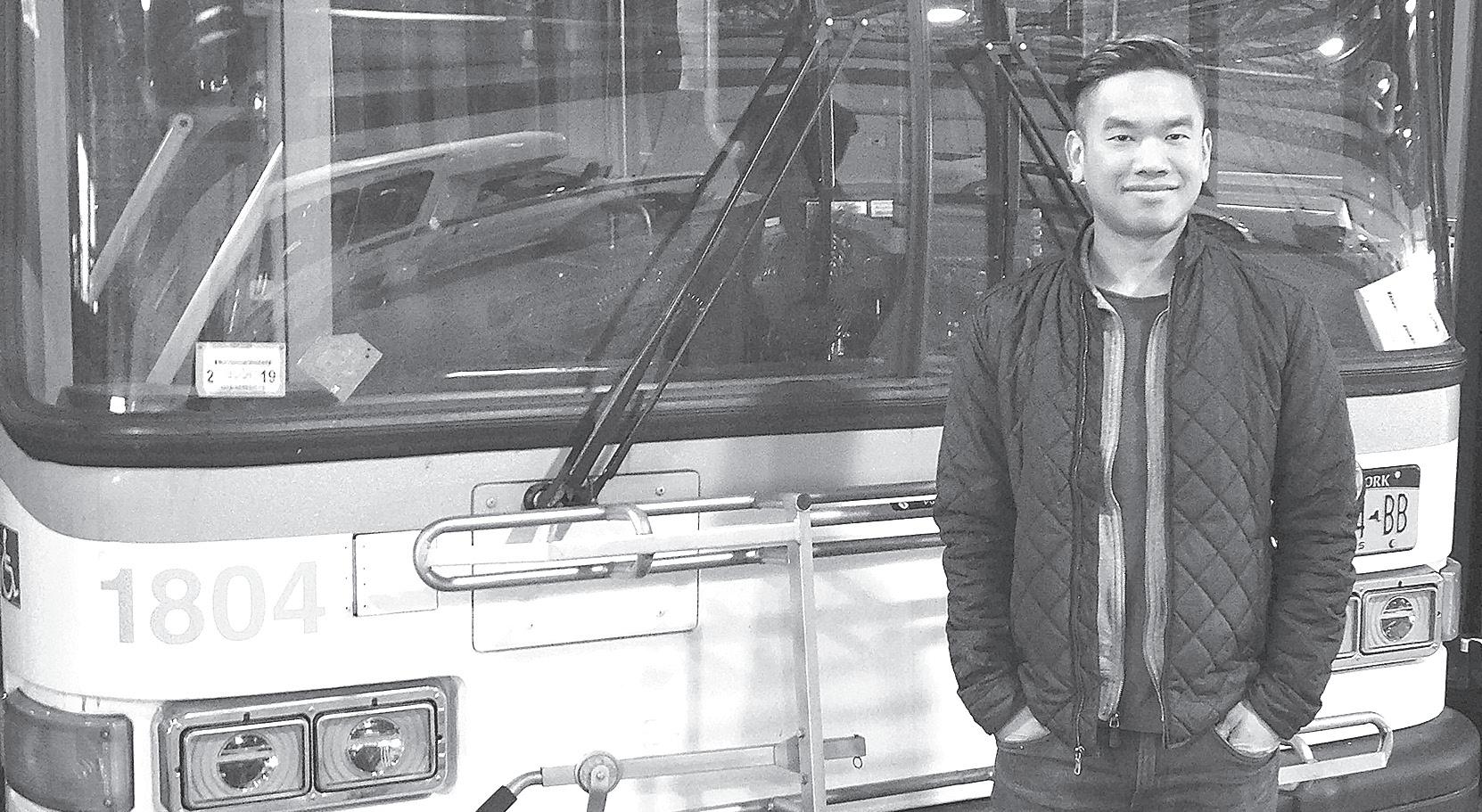
Ducson Nguyen assumed the role of new chair of the Tompkins Consolidated Area Transit Board of Directors on Jan. 24.
“I joined the rotation [for chair] because I love TCAT,” Nguyen told The Sun. “It is essential to the mission of the City, which is reducing single vehicle usage, cutting down the amount of traffic, improving sustainability [and] allowing for development without having to build extra parking lots.”
The City of Ithaca, Tompkins County and Cornell University serve as the three local underwriters for TCAT. Each underwriter can nominate three people to serve on the nine-person board. A new chair is then elected each year on a rotating basis based on the recommendations of the underwriters.
According to the press release from TCAT, Nguyen promised “significant, but exciting challenges ahead.”
Nguyen said the biggest challenge is establishing a new site to house TCAT, a decision complicated by location and cost.
“TCAT has already outgrown its facility,” Nguyen said, citing complaints about frequent full buses from Cornell students and increasing development throughout the entire county, most notably downtown Ithaca. “Service needs will only increase from here on out and we are already at capacity.
“We need a new facility, but choosing a new facility is hard
because of location and cost,” he said.
Since the TCAT is government-funded — fares only support a small portion of its operating costs — it relies on community support to run.
Other challenges include developing a new farebox system that would allow riders to pay with their phones or online, ordering new electric buses which are quieter and more environmentally-friendly and creating a potential new downtown route.
While these changes require a substantial amount of work, Nguyen hopes these initiatives will “bring TCAT into the 21st century.”
While all three underwriters pay an equal amount to the company, Cornell has a unique agreement with TCAT, where first-year Cornell students, employees and retirees are allowed to ride for free.
When asked about his main goal as chair, Nguyen talked about implementing TCAT’s recently released strategic plan, which outlines goals for the company, including improving customer service quality.
“Part of the strategic plan is also to re-evaluate how the board should be set up and how we can best support the company,” Nguyen said.
Nguyen aims to improve the board as a support structure for the general manager and staff, exploring the idea of
By NICHOLAS
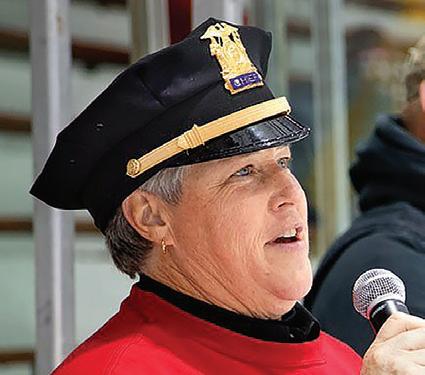
Kathy Zoner, who has led the Cornell Police Department since 2009 as the University’s first female top cop, said Thursday that she will leave Cornell for a consulting post on March 4 after more than a quarter century in various roles with the department.
Zoner will become the director of organizational assessments for Margolis Healy, a consulting firm
that works with college campuses and K-12 schools to improve security, crisis response and other safety procedures.
Cornell has not picked a replacement for Zoner and officials declined to say on Thursday how wide of a search Cornell will conduct for her successor, who will be involved and what qualities they are looking for.
Zoner, an Ohio State University alumni who ranked at the top of her class in the 10-week FBI National
Academy program, joined the Cornell Police Department as a dispatcher in 1991. She said in an interview Thursday morning that the stint gave her more respect for what happens before police arrive at a scene.
She later served the department as a patrol officer, sergeant, special projects manager, lieutenant, captain and assistant director. Then, in 2007, she became deputy chief, her last role before being appointed chief in 2009. It was during meet-

ings with student groups to plan events and lectures — sometimes controversial ones — that Zoner “felt like I really got to know the heartbeat of the campus,” she said.
Zoner, known by friends and officers as KZ, did not shy away from joining community rallies or texting directly with student activists, several of whom had her cell phone number. Under her tenure, the department added body cameras and sought to connect with the Cornell community in unique ways.
“[I] felt like I really got to know the heartbeat of campus.”
Kathy Zoner
In a February 2017 interview in her office, she stressed that both sides of police interactions are vital to effective policing.
“Accountability goes both ways,” Zoner said at the time. “It’s both on the officer and the public.”
And while she has overseen several high-profile investigations, Zoner is probably best known among students for her Blue Light email. Zoner began sending the mostly-weekly newsletter about campus safety in 2012 following a series of frightening sexual assaults, but it later morphed into a vehicle for humorous reminders about safety. In each email, Zoner included links to memes and other funny material.
“I am very pleased that [the Blue Light newsletter] is a Cornell Police icon and will not be going
away,” Zoner said. The most challenging times of Zoner’s tenure at Cornell were when she saw the impact of deaths, serious injuries and other tragedies on victims’ families. Maybe the highest-profile incident under Zoner’s tenure was the killing of Ithaca College student Anthony Nazaire and non-fatal stabbing of his friend next to Carpenter Hall and Ho Plaza in August of 2016. Ithaca Police led the investigation with Cornell’s support, resulting in the arrest and conviction of an Ithaca man for murder.
Following tragedies, “it’s very hard to take a step back from the emotions” in order to work the case, but also “still have people see that we really do care,” Zoner said. On the other hand, Zoner said the most satisfying part of the job was seeing newer officers realize that they can keep the community safe while ensuring all parties are as happy as possible.
“We want to make sure that even in the worst of times, people are treated in the best way possible,” Zoner said. “That is something that really takes that trust building with the community and you can’t do that if you’re not out there.”
He gives back to his community by acting in short screenplays that students create
Continued from page 1
getting into acting and move to Los Angeles, where he took a few acting classes — although he kept getting rejected from auditions.
Nonetheless, it was his failures that actually “kept [him] afloat.”
“You just keep moving forward, and everytime you fail — which should be often — you just get comfortable in that place. Now I just accept to fail, and then when it goes well you go, ‘holy shit,’” he joked.
For a period of time, though, Greenfield considered giving up on acting. But when he stumbled upon the script for New Girl, he felt that he could “do a good job at this.”
”There were no stakes. I was done acting, but I gave the best audition that I had ever given in my life,” he said.
Greenfield also recounted how during his New Girl audition, the show’s creator Elizabeth Meriwether knew he was the perfect fit to play main character Winston Schmidt.
become important to the show — not just because his bar mitzvah was funny, but because “more people could relate to [the character].”
“It gives people an opportunity to identity with, whether you are Jewish and you’re like, ‘Yes!”, or if you’re not and you’re like, ‘I know that dude. ’” he said. “It makes it more real.”
Overall, Greenfield said he is very humbled by his successes as an actor and tries to give back to his community as much as he can.
In an interview with The Sun before the show, Greenfield talked about his involvement with Young Storytellers, a nonprofit organization based in Los Angeles that hopes to “engage creativity through the art of storytelling,” according to its website. He acted in the short screenplays that students at the organization created.
“I look at all of you and I’m like, you are all better than me. You guys should be really proud of yourself.”
Max Greenfield
“The audition scene was the one from the pilot where randomly during that scene I take my shirt off. Except I had a sinus infection, so everything was a mess,” he said. “And Liz Meriwether, went, ‘Oh my god he’s so pale, and he’s got more moles than I’ve ever seen before. This is the guy!’”
As the show got more developed, there came a time where the writers decided to talk about Schmidt’s bar mitzvah. Greenfield discussed how his character’s Jewish identity was a subject that he knew would
“I always try to find ways to participate [in Young Storytellers] and give back, even though I feel like there’s not a lot I have to offer,” Greenfield said. “In a situation like that it’s just ‘say yes.’”
Up next for Greenfield, his new show “The Neighborhood” was recently renewed for a second season on Jan. 25.
Greenfield described how excited he was when he found out about the show’s return.
“I was talking to one of the executives at CBS [about The Neighborhood’s second season], and I tell her, I think I’m past gratitude at this point.” he said. “I feel guilt.”
“And she goes, ‘Ugh, how Jewish of you!’”
Marin Langlieb can be reached at mlanglieb@cornellsun.com.
Nguyen plans to improve board as support structure for staf, and expand bus feets to increase ridership
revamping committee structures and changing meeting layouts.
“I am most excited to work with our board. The board has three new members, so a third of the board is new,” Nguyen said. “The people we have brought on are super committed and talented.”
“I think our relationship is great,” Nguyen said. “They are a great partner. That agreement is really important for TCAT’s funding. Cornell in the past has provided short-term assistance when certain grants haven’t come in on time.”
“Those of you who are stuck on packed buses can hopefully see some relief in the coming years.”
Nguyen, recommended by the City of Ithaca, previously served on the board for three years. He succeeded Frank Proto, who served as chair in 2018.
Ducson Nguyen
Nguyen noted that TCAT’s upcoming challenges and changes will benefit Cornell specifically. He said he hopes the expansion of fleets would accommodate increased ridership, addressing the student complaints about overcrowded buses.
“Those of you who are stuck on packed
buses can hopefully see some relief in the coming years,” he said.
When asked what the Cornell and greater community should know about the future of TCAT, Nguyen pointed towards the expansion of their service.
“The Cornell urban routes are the most packed, and so we are going to expand our fleet to accommodate increased ridership,” he said.
Nguyen wants the community to know that TCAT is always looking for feedback on how they can do better. Passengers can input feedback on the TCAT website.
Samantha Stern can be reached at sstern@cornellsun.com.
“We’re at a constant battle with the media’s portrayal of police,” she added, “And we definitely want to be aligned with the original intent of service-orientation, making sure people are being treated well.”
Joanne DeStefano, executive vice president and chief financial officer at Cornell, told the Cornell Chronicle, which is run by the University, that Zoner would be dearly missed.
“Ever since she began working at Cornell in 1991 as a dispatcher — and all through her subsequent roles of increasing responsibility — KZ has been dedicated to the safety of the Cornell community,” DeStefano said, according to the University.
DeStefano, to whom the police chief reports, did not respond to questions Thursday about the search for Zoner’s successor. Cornell spokesperson John Carberry said the University did not have any information about what the search process will include.
Zoner said she has “no concerns” about the future of the department and is confident in Cornell’s ability to find a competent chief. Zoner will continue living in the Ithaca area while working for the consulting firm.
Steven Healy, the CEO of Margolis Healy, told The Sun that Zoner will lead a part of the firm that works with campus police and other college safety organizations.
Healy, who was the director of public safety at Princeton University from 2003 to 2009, said Zoner will lead reviews of campus police departments’ safety practices, represent the firm at conferences and work with colleges on Clery Act compliance and a wide range of other responsibilities.
“We’re really super excited to have her,” Healy said. “I don’t even know how we got so lucky to convince her to join us.”
Zoner’s decision to leave Cornell comes two days after another Ithaca chief announced he was leaving his post. Chief Pete Tyler of the Ithaca Police Department said Tuesday that he would be retiring on May 31 after a 28-year career in policing and would begin working parttime training first responders and teaching other skills.


CHILL Continued from page 1
simply that we want to learn from the experience. And with climate change that is super important.”
Last week, university administration decided to uphold regular school routine while outdoor temperatures — not accounting for wind chill — dropped as low as minus 5 degrees.
“When everyone signed the petition to get classes canceled and [President Pollack] did nothing, I feel like the voices of students were blatantly ignored,” Moriah Adeghe ’21 said in response to the faculty’s solicitation.
“After we hear from faculty students and staff we will have the raw material to figure out how to approach this kind of weather event,” Van Loan said.
Wind chill temperatures at or below minus 18 degrees can cause frostbite in a half hour, according to weather.gov. Temperatures on Thursday reached as low as minus five degrees and wind gusts as high as 22 miles
“If we get enough support, hopefully we won’t have to result to change.org petitions to try and ensure our safety.”
Moriah Adeghe ’21
per hour.
A trek to class, such as from Cascadilla Hall to the Dairy Bar, can take around 24 minutes, according to Google Maps.
On Thursday, TCAT offered free bus rides to all in response to the extreme weather.
Cornellians reacted to the wind chill warning by signing a petition for classes to be
closed. The petition exploded in popularity, gathering thousands of signatures the night of its release.
Petition signers also referenced the policies of other local institutions — on Thursday, Ithaca Central School District was closed due to inclement weather, while Ithaca College
“After we hear from faculty, students and staff we will have the raw material to figure out how to approach this kind of weather event.”
Charles Van Loan
delayed opening until 10:50 a.m.
“More than 10,000 students came together by signing a petition in just a few hours and collectively, we made a statement. Administration not responding to us was almost a statement against our collective action as students,” Adeghe said.
“I hope that in the future we as students can have our voices heard,” Adeghe said following the University’s decision to review inclement weather policies. “If we get enough support hopefully we won’t have to result to change.org petitions to try and ensure our safety.”
Cornell’s current inclement weather policy specifies that the president can authorize an early closing, delayed opening or full closing depending on what the weather warrants.
According to the site, the policy was last fully reviewed in November 2017. The faculty senate will next meet on Feb. 13.
Maryam Zafar can be reached at mzafar@cornellsun.com.
HOMELESS
Continued from page 3
The fundraiser was met with outpouring support, raising $2,300 in two days, according to Ho.
All of the funds will go to Wilke’s team. Prior to receiving the donations, Wilke’s team has already set up tents and structures in the Jungle to support housing for approximately 15-20 individuals.
Despite windchill warnings, these residents have little option but to continue living outdoors.
Tompkins County St. John’s Community Services has also been sheltering a record number of individuals — over 150 per night. A portion of the money raised will support the provision of heating propane tanks in these facilities. Not only are these tanks expensive, but also inefficient in cold weather, increasing costs further.
“Hopefully the fundraiser will raise awareness of the issue of people living outside, not only in the temperatures we are currently experiencing, but year round in the Ithaca area. The problems and challenges change as the seasons change, however, right now if folks outside do not have a source of heat, they will not survive,” Wilke told The Sun. “The needs are great.”
Ho and Wilke decided to avoid the commission fees GoFundMe charges — in light of the issue’s
urgency, they chose Venmo as their fundraising platform.
According to Ho, a major barrier to timely action was Cornell’s event registration policy. Policy changes implemented last semester require students to submit registration forms four weeks in advance.
“The sudden, and rather unannounced, shift has hampered the ability of students on campus to engage in direct action like this,” Ho said. “When our own neighbors in Ithaca face freezing temperatures and frostbite that students themselves did not want to be exposed to, we do not have time to wait for permission.”
Even without the publicity of an on-campus event, the immediate-action fundraiser has garnered the attention of hundreds of benefactors. To date, Ho and Wilke have raised close to $2,500, most of which came from individual 5-dollar donations. The fundraiser will progress throughout the week until Feb. 7.
“This fundraiser — and many collective efforts just like this one — is possible and only successful because of the kindness and support of so many people,” Ho said. “There are way too many people and organizations who have supported this to count, but the credit belongs to our entire community, and not to any of us.”
Ronni Mok can be reached at rmok@cornellsun.com.

MADELINE RUTOWSKI Sun Staff Writer
It’s a tired story trope with which we are all painfully familiar — two people from different sides of the tracks become unlikely friends despite the odds being stacked against them. In Jen Silverman’s The Roommate,two middle aged women, one from the Bronx and the other from Illinois, embark on a drug-filled rebirth all while sharing a home in Iowa. The Roommate is hysterical and refreshing, a story filled with petty-crime, Blondie-blaring girl power and quick-witted dialogue. It takes a familiar character dynamic and transforms it into a new-age galavant.
The show debuted Thursday at Ithaca’s Kitchen Theatre Company on West State Street. The play’s cast is composed solely of two actors, Susannah Berryman and Maureen Keiller, who portray Sharon and Robyn, respectively. Sharon is a divorcee in her mid-50s, right on the brink of a mid-life crisis. Robyn, on the other hand, is a rougharound-the-edges type who trades her role as vegan-enigma for that of an emotional guidance counselor who grudgingly escorts Sharon through the world of crime and misdemeanors.
The performances by these two women were nothing short of superb. The dialogue was quick, intelligent and delivered so tactfully by Berryman and Keiller that at times I felt like a voyeur, staring into the lives of two very real people. Berryman incorporated a level of physical comedy into her performance, which proved absolutely delightful. The moments after she smoked a joint for the first time had the crowd in stitches; Berryman chasséd around the tiny stage, grasping the refrigerator with great passion and giggling at just the right moments. Keiller, in contrast, made the artistic choice of performing with restraint, letting the audience see the character’s true self only a handful of times throughout the performance. The motivation for this was made clear by the end of the play. Keiller sauntered around unrestrained while Robyn’s baggage from past lives followed her.
Given the play’s levity, the audience is made to think they will be smiling for the entirety of the play’s 100 min-
ute run-time. This is untrue. The characters in this play are complex, a truth that is paramount to one’s viewing experience and understanding of the work as a whole. There will be no happily ever afters. The play reaches a poignant climax when Sharon, who has become infatuated with Robyn’s law-breaking past, goes so far as to admit her love for the latter in a romantic and stilted scene that results in the pair sharing a kiss. Whether or not this love for Robyn is real or simply a misguided response to Robyn’s role as Sharon’s liberator from the cult of domesticity is a decision that is left to the audience.
Sharon was a vanilla woman living in a plain part of America until she met Robyn, the combat-boot-wearing badass who told her that divorce does not have to end in the death of one’s social life and that age is merely a number. Robyn opened up a door that Sharon never even knew existed. The latter was enthralled by the adrenaline rush she got from doing things she knew was wrong, such as committing wire fraud against the annoying women in her “reading group” and starting a cute, little drug-ring targeting those same suburban bookworms.

excitement. Berryman convincingly portrayed the internal conflict felt by Sharon, a deadly cocktail of intense love and impassioned abhorrence for the woman who saved her from herself.
The kiss is the agent of termination in Sharon and Robyn’s friendship. The next morning, Robyn disappears, a practice the audience construes to be common for this woman who can’t seem to settle on a single identity let alone a single home. Sharon descends into a depressive rage, destroying her kitchen and discovering the dime bags of cocaine Robyn had hidden in antique vases. The gitty housewife the audience had grown to love was bereft of a friend, her baptizer into the world of freedom and
The Roommate’s plot is fantastic. The acting was convincing and the production was seamless. Finally we have a story about two nontraditional women who have their own drama. We see the vast dimensions possessed by both of these characters who could not be more different. The play is a true triumph for women.
Madeline Rutowski is a junior in the School of Industrial and Labor Relations. She can be reached mjr444@cornell.edu.
I’ve only been to a few big public events in my life. The first was a Wiggles concert when I was three, which I don’t really remember. The second was a jazz festival in my hometown. The third was a Miami Dolphins game, which was terribly disappointing because they lost to Blake Bortles. Or maybe that made it great. Regardless, I have never heard people cheer as loudly or as enthusiastically as the audience in Bailey Hall did when Max Greenfield stepped out on the stage.
As a young, Jewish boy, I admire how Greenfield — a self-described older Jewish man — has built an incredible career portraying Jewish characters in various TV shows and movies. New Girl,a comedy in which he plays a marketing agent named Schmidt, is on my short list of favorite series, and I am totally envious of anyone who has worked with Kristen Bell, as he did on Veronica Mars. But the fervor with which he was greeted Saturday night was a whole new level of fanaticism. Greenfield deserved it, too. I had the opportunity to briefly interview him before his talk and he seemed as genuine up close as he does during public events. He greeted us by joking that he had requested no questions regarding New Girl when another press member opened with a query about Schmidt. Before the session, a few of the interviewers tried to predict which Jewish holiday was Greenfield’s favorite. When asked, he
responded with an enthusiastic “Hannukah!” Greenfield later quipped how Jews should be jealous of Christians because we only get eight gifts but there’s a trove of presents underneath Christmas trees, further validating the greed with which I approach the holiday as well.
The interview session lasted just ten min-
challah bread he has ever eaten.
You’re welcome, dear reader. I’m asking the hard-hitting questions that no one else will.
Unfortunately, Greenfield couldn’t single out a greatest loaf, but instead responded with his favorite way to eat challah: cooked
utes and passed before I had an opportunity to ask any of my fifteen deeply-probing questions. As we were being herded out of the green room, Greenfield paused and asked me if I had anything to add, which was a very kind gesture that I’m not sure many other celebrities would offer. Thus, I capitalized on my opportunity and inquired about the best
as French toast. I was floored: I have challah French toast every weekend at home and thought my family was unique. Does every Jew make challah French toast?
During his talk, Greenfield frequently touched on the topic of failure and discussed how he experienced an incredible amount of it while he was attempting to make it big in
Hollywood. With so much success, he feels as though he is past the point of gratitude and now just feels “guilty.” Greenfield reflected on how he was overlooked for much of his early career. When asked by the moderator for any advice for young students entering the acting industry, he launched into a scene from the 1994 film Pulp Fiction
As he tells it, Bruce Willis’ character Butch has to go back to his house to retrieve his father’s watch even though he was being hunted by the police. When he arrives, John Travolta’s character Vincent, whom Butch presumes is a cop, is using his bathroom but has left his gun on the counter. Vincent exits the bathroom and Butch kills him. Greenfield’s takeaway from all this is Butch’s line: “just keep underestimating these motherfuckers.”
The only issue is that Butch doesn’t say that line exactly, instead opting for a slightly more PG, “[they] keep underestimating you.” Greenfield’s message, however, is still obvious and probably more poignant than Willis’ mumbled dialogue.
Max Greenfield dropped out of college, couldn’t land a role for years and almost quit his acting career. Now the Emmy-nominated actor enters auditoriums packed with adoring fans, screaming his name and giggling out of sheer excitement. Who’s underestimating him now?
Jeremy Markus is a freshman in the College of Agriculture and Life Sciences. He can be reached at jmarkus@cornellsun.com.


Independent Since 1880
135th Editorial Board
JACOB S. KARASIK RUBASHKIN ’19
Editor in Chief
JOHN McKIM MILLER ’20
Business Manager
KATIE SIMS ’20
Associate Editor
VARUN IYENGAR ’21
Web Editor
MEGAN ROCHE ’19
Projects Editor
EMMA WILLIAMS ’19
Design Editor
JEREMIAH KIM ’19
Blogs Editor
AMOL RAJESH ’20
Science Editor
BREANNE FLEER ’20
News Editor
YUICHIRO KAKUTANI ’19
News Editor
GIRISHA ARORA ’20
Managing Editor
HEIDI MYUNG ’19
Advertising Manager
ALISHA GUPTA ’20
Assistant Managing Editor
DYLAN McDEVITT ’19
Sports Editor
MICHAEL LI ’20
Photography Editor
GRIFFIN SMITH-NICHOLS ’19
Blogs Editor
JACQUELINE QUACH ’19 Dining Editor
SHRUTI JUNEJA ’20 News Editor
ANU SUBRAMANIAM ’20
News Editor
Working on Today’s Sun
Ad Layout Medhavi Gandhi ’20
Design Deskers Emma Williams ’19
Production Deskers Jamie Lai ’20 Jenny Huang ’22
Night Desker Hunter Seitz ’20
Editors in Training
Editor in Chief Meredith Liu ’20
Managing Editor Maryam Zafar ’21
Anu Subramaniam ’20
Associate Editor Paris Ghazi ’21
Sports Editor Raphy Gendler ’21
Photo Editor Jing Jiang ’21
News Editor Anyi Cheng ’21
Winny Sun ’20
Arts Editor Daniel Moran ’21
Editorial
IN RESPONSE TO THE BURST PIPES IN ROCKEFELLER HALL IN THE FIRST WEEK OF THE SEMESTER — a result of deferred maintenance — The Sun published an editorial on Jan. 31 in which we left our readers with the message, “Tomorrow will be another cold day in Ithaca. Who knows which pipes will burst?”
That very day, at 1 p.m., we received our answer: the pipes of Low Rise 6.
All this is not to say “we told you so” — though we did tell you so — but rather to reemphasize that too often, calls to fix Cornell’s most basic facilities remain lost in the laundry list of measures the University plans to take to improve student life.
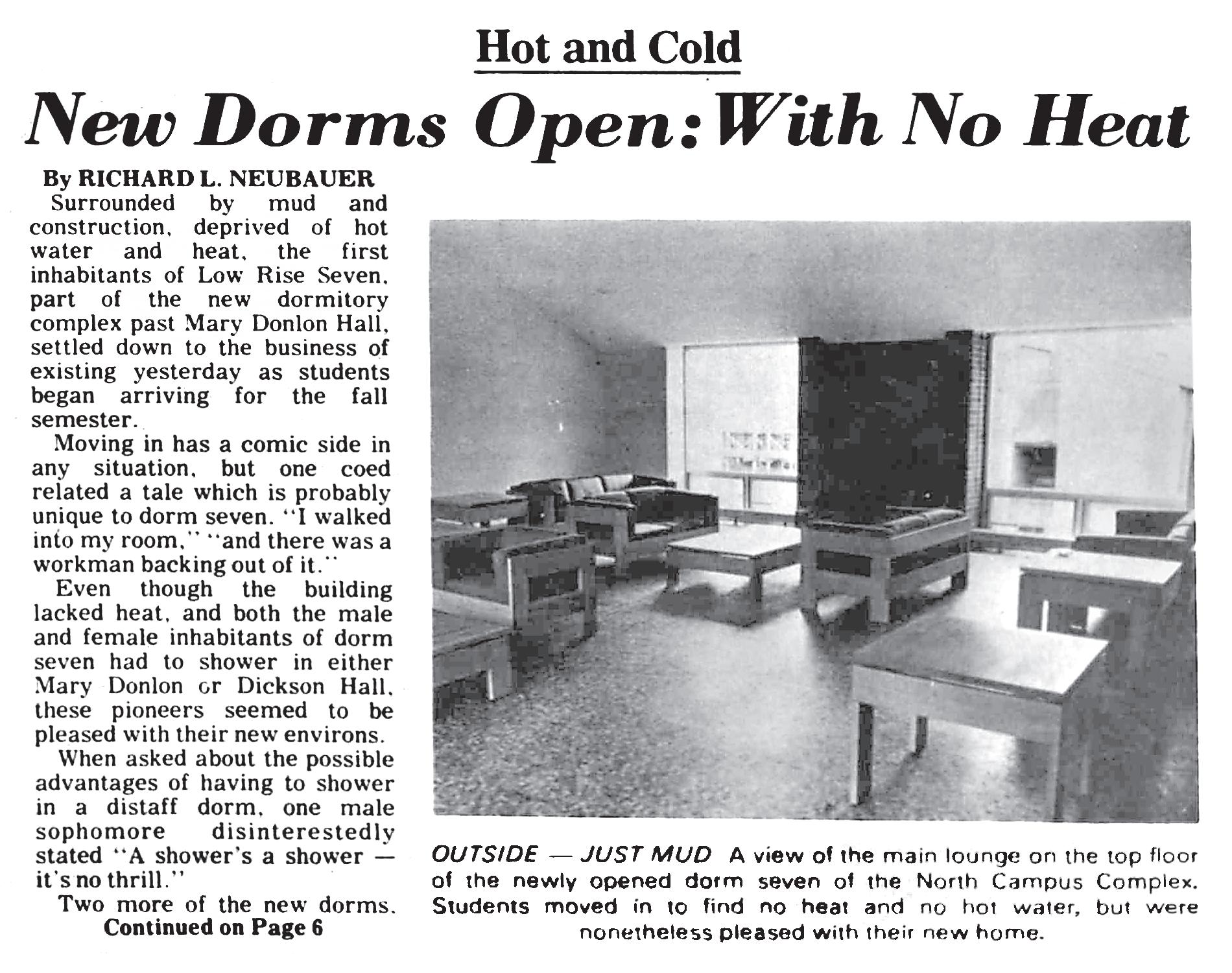
This is especially the case when it comes to the Low Rises. In September 1969, The Sun reported that Low Rise 7, built in the same year as Low Rises 6 and 8, opened “surrounded by mud and construction, deprived of hot water and heat” (see article reproduced below). Again in March 1971, North Campus Low Rise residents faced “the problem of cold rooms.” And nearly half a century later, The Sun reported on long-awaited renovations on McGraw Hall — an original Arts Quad building that is aging as ungracefully as is the University’s neglect of its facilities.
Before The Sun is compelled to add a “How to Survive Crises of the ‘Burst Pipe’ Persuasion” to its Freshman Issue, we hope that Cornell takes action to fix its homes and classrooms. It’s no secret that Cornell is located on an icy hill, and substantial winter maintenance will continue to be a fact of life so long as there is an Ithaca campus. Repairing buildings, especially those with a history of being broken, should be a task free from bureaucratic restraints, and a priority for future capital improvement.
Iclimbed into the passenger seat of my Lyft ride and was immediately welcomed by the hefty gust of the heater blasting in my face. As we were en route, I briefly commented on the bone-chilling weather. A simple, small comment gradually developed into a lighthearted conversation about the warmth and food in California and the subtle beauties of Ithaca from a local’s perspective. My driver’s face lit up as she talked about her childhood growing up in Ithaca, reflecting on the coldest winter days where she would always go sledding with her friends and family. She recommended the circular sled because it would spin in all directions, transforming a simple slide into an exhilarating twirl. As we approached the destination, we ended our chain of interaction on the appreciation for Doc Marten boots.
The young woman next to me was no longer just my Lyft driver, but a proud and passionate Ithaca local with a relatable and adventurous childhood.
A simple yet warm conversation melted the untelling, lifeless job title that disguised the main character of the stories and the stories themselves. Taking the time to reflect on my recent interactions with strangers and peers, I’ve realized even more now than ever just how precious communication is.
would talk about the glories of Berkeley and its mountainous terrain. My boss and I talked about our artsy families and shared our favorite media (we both enjoy graphic design and watercolor). The repairman described his year spent in Korea in 2006 while adding the final magic touches to bringing my laptop back to life. A close friend would also spend hours over dinner with me, and we would tell each other one wild story after another without even noticing the time fly by as the once-bustling restaurant grew quiet. Listening to some of these stories took me on a nostalgia trip, while others took me to a whole new domain. But all in all, these conversations created a powerful emotional connection that made life even more interesting.
A simple yet warm conversation melted the untelling, lifeless job title that disguised the main character of the stories and the stories themselves.
I’ve always been something of an introverted hermit, afraid to extend beyond my quiet, reserved shell. If I stayed silent, I knew I would be safe and comfortable. I wouldn’t blurt out or stutter. There would be no mistakes if nothing was said in the first place. Everything would be perfectly easy, and I would be just fine. The person before me, the custodian, the barista or the librarian would be “just another person,” indistinguishable from the rest.
After years of reserved silence, from patiently waiting for all the groceries to be scanned to calmly listening to the radio music in the car, I began to wonder. What’s other people’s daily life like? Favorite pastime activities? Hometowns? Questions like these floated around in my mind, and I came to the realization that the unique answers to these icebreaker-like questions opened up ample opportunities to explore hidden mysteries I could never experience for myself. There are so many layers and levels to every person, but if I kept to myself, I would’ve been stuck living in a one-dimensional world.
In college, individuals come from all over the world — from different backgrounds and in pursuit of different aspirations, or sometimes from the same backgrounds with similar passions. That’s what I love the most about college, especially at Cornell. Surrounded by thousands of passionate and proactive peers, each with a life of unique hardships and sentimental memories, college is a place where learning occurs not just on the academic level, but at the most personal and intimate level.
It all started with simple interactions, where meaningful relationships formed, and the strangers were no longer strange. The individuals who were otherwise identified by their role in society became characters with charisma, personality and passions. The person developed into a name, a face, a voice, a laugh and a signature. The beauty of such an interaction, however little or large, is the transformation into a human being.
We may struggle differently, but nonetheless, we struggle. We may have different humor, but nonetheless, we laugh. We may survive and live differently, but nonetheless, we survive and live.
In the larger scheme of things, it’s become even more imperative that we at least appreciate the depth of one another’s identities and foster this sense of basic human empathy. Social labels, physical characteristics, race/ethnicity and disabilities seem to be some openly recognized categories that ultimately identify us and group us off into smaller, segregated chunks. We’ve come to accept these thick lines and clear distinctions; we’ve become fixated purely on our differences without taking the first step in blurring such boundaries.
So I started saying hi. I began saying “Hello! How was your day?” to the people in my life, and these shy greetings transformed into mini-conversations to passionate discussions on relatable subjects. And just like that, the world became tremendous and limitless. The unique experiences, opinions and perspectives I learned from others shaped the way I see people, the way I view the world and the way I live.
And just at Cornell, I’ve met countless incredible individuals, each with their own stories to tell. One of my professors came from the same hometown as me, and we
We may have different cultural values, religious beliefs or political perspectives, but we all cherish and crave the same deep emotional fulfillment. We may struggle differently, but nonetheless, we struggle. We may have different humor, but nonetheless, we laugh. We may survive and live differently, but nonetheless, we survive and live. We have differences and society has labels, but we’re all still a part of the same humanity.
The strangers in life, the shadows of society and the walking bodies became close companions, fellow enthusiasts and influential role models, and it all started with a little hello.
Kambhampaty
You need to make a lot of bad work before you can make any good work. I believe this to be true for people in any creative field.
The designer of the Kikkoman soy sauce bottle, Kenji Ekuan, created more than 100 prototypes before settling on the one that we see today. The widened base weights it perfectly, making it difficult to accidentally tip over. Two spouts located on opposing sides of the cap allow air to continuously fill the lost space as the contents are poured out, ensuring that you don’t get that annoying stutter that occurs when you pour a glass of wine a little too eagerly. The spouts are angled inward just right, so that no excess sauce would drip onto your table. The glass fits naturally in your hand, and its shape is distinct and recognizable. From each iteration he created, he saw something new that the bottle was missing. As a result of 99 bad designs, Ekuan created something that has transcended a mere condiment bottle. In 2012, The New York Times Magazine wrote “With its imperial red cap and industrial materials (glass and plastic), it helped timeless Japanese design values — elegance, simplicity and supreme functionality — infiltrate kitchens around the world.” It was added to the permanent collection of the New York’s Museum of Modern Art. And, today, what image pops into your mind when you hear “soy sauce”?
What stops people from continuing to create, apart from the selfloathe that comes with making bad work? Why does bad work make us hate ourselves in the first place? We either channel self-judgment
or fear the judgment of others.
of shooting? The failed startup you wasted your first two years of undergrad on that your parents still ask about? These “bad works” are part of the path to making good works. They’re unavoidable. Think about how you’re able to tell these works are bad in the first place. It’s because you have what NPR’s Ira Glass calls taste. You see what makes a William Eggleston photograph beautiful. You see how Steve Jobs didn’t just revolutionize computers, he changed human interaction entirely. You see why Charles Bukowski’s words have saved lives. You can recognize what’s good. And because what you’re making doesn’t hold the same intangible magic you see in the works of your idols, it frustrates you.
The people who never end up making any good work give up somewhere around here, after a single failed startup or a few perfunctory attempts at narrative fiction. But, you… you have still have your taste.
a wobbly soy sauce bottle, that’s all he would’ve been. But, if you keep pushing forward, maybe your work will be good. Maybe you will then see yourself as the good work you’ve created. You’ve already made bad work that you can’t retract; don’t let that be all you’re remembered for.
The second main reason people seem to stop is because of the response from others. People talk behind your back and scoff at your work. They’re jealous that they cannot shake their own fear of starting creative work like you’ve been able to. Their only way to deal with this envy is by reducing your work to garbage in their minds. Or, THEY HAVE NO KNOWLEDGE OF THE PROCESS AND LACK THE VERY TASTE THAT YOU HAVE. These are the people that just don’t get it. They look at an Eggleston photograph and say “it’s just an airplane drink.” They don’t see his mastery of colour or eye for the beauty in the mundane that you are able to recognize. These are the people whose opinions do not matter at all. They have no taste.
I don’t mean to preach “don’t give up, young creative, your break will come!” Nor do I mean to tell you your work isn’t as bad as you think it is. Your work probably is bad, and this is meant to tell you that making bad work isn’t a waste of time. The short story you poured your heart and soul into that came out cheesy? The roll of cringeworthy photographs you developed after hours
What stops people from continuing to create, apart from the self-loathe that comes with making bad work? Why does bad work make us hate ourselves in the first place? We either channel self-judgment or fear the judgment of others. Bad work frustrates us not just because it doesn’t lead to success, but because, we creatives, for whatever masochistic reason, look to our work as manifestations of who we are. My work is bad, therefore, I suck too! If Ekuan had stopped at
If Ekuan had stopped at a wobbly soy sauce bottle, that’s all he would’ve been. But, if you keep pushing forward, maybe your work will be good. Maybe you will then see yourself as the good work.
So, don’t hate yourself. Don’t let others have the satisfaction by giving up at first sight of their meaningless scoffs. It’s not an easy path, but you’ve already started on it. You also probably didn’t choose it. There was some urge within you, from the darkest depths of your heart, pushing you to create (seriously, who would voluntarily choose this life?). Make the bad work that leads to good work. There’s not really any turning back now. What kind of soy sauce spilling world would we live in if Ekuan had just given up after the first few tries? I’d rather not dwell on this thought too long- it’s the stuff of my darkest nightmares.
Anna P. Kambhampaty is a senior in the College of Agriculture and Life Sciences. The Imagined Life runs every other Monday this semester. She can be reached at akambhampaty@cornellsun.com.
Unlike Iran policy, central bank reform or wildlife conservation, health care is a quotidian issue. The cost of premiums and copays are a consistent burden for the 28 percent of working-age adults who are underinsured. The price of prescriptions and hospital visits can’t be ignored without serious effects on economic stability. The future of health care is a hot topic, and it would behoove candidates (presidential, congressional and otherwise) and voters to pay attention.
The debate over the state of our health care system has consumed classrooms (shoutout to PAM 2350: the U.S. Healthcare System), dining rooms, the pages of health care and medical journals and the Congressional floor. Yet, the plenitude of lively conversations haven’t generated a conclusive evaluation or solution. The latest studies indicate that the U.S. health care system has serious failings, even though American citizens pay a comparatively enormous amount for medical treatment.
Somewhere between 27 and 30 million Americans are still uninsured. Dr. David Ansell, professor of internal medicine and senior vice president at Rush University Medical Center, uses the term “death gaps” to describe how the lack of affordable private insurance and the difficulty of purchasing health insurance through the Affordable Care Act marketplace abandons lower-income folks. The result is a class-segregated health care system that leads to drastically lower health outcomes and higher death rates (45,000 deaths per year, according to a Harvard study) for the uninsured.
Beyond uninsurance, the our health care system also suffers from administrative inefficiency and underperforming primary care, according to the Commonwealth Fund, which ranked the United States dead last in its list of health care systems in developed countries. Add those metrics to Swedish economist Anders Åslund’s list of issues that include the tort industry, physician incomes and the pharmaceutical industry’s monopoly. There are a laundry list of problems.
So why does this matter, and how should we vote on health care in 2020?
First, we’ll need insurance soon. Most of us are probably still on our parent’s insurance plans. Maybe some of us shell out thousands for Cornell’s Student Health Plan. But by the time we turn 26, we’ll need to have something figured out. Sure, we might get that dream job at that investment bank which offers practically perfect insurance or we might still be in medical school, but we should prepare for a worst-case scenario. At least that’s what I’ll be doing, because a long medical history could royally screw my quest for insurance.
Second, the ballooning costs of health care could change our tax structure and economic health in the near future. $38.2 trillion of $45.8 trillion in government obligations is unfunded Medicare and Medicaid payments. By 2037, the Congressional Budget Office projects the debt to GDP ratio to increase to over 300 percent. As our debt burden crowd out investments, consumer spending and forces entitlement spending to become insolvent, we’ll be in a serious economic mess. My goal when picking presidential and
congressional candidates in 2020 is to gain a sense of how their health care proposals or stances will affect me. In the 2018 midterm election, we saw a preview of how the health care conversation will play out for the 2020 midterm elections. Although fewer than 20 percent of advertisements mentioned health care in the 2016 election, over half of Democratic advertisements and nearly one-third of Republican advertisements highlighted health care in 2018. Forty-five percent of Democratic voters want a Democratic president and Congress to address health care as their top priority. No candidate can ignore the siren song to focus on health care.
already lost the health care debate for 2020. The nexus question will be whether we should pursue piecemeal reform through the state innovation approach or a sweeping change vis-á-vis single-payer or another variant of universal health insurance. Democratic Senators and presidential candidates Kamala Harris (D-Calif.),
By the time we turn 26, we’ll need to have something figured out.
Democrats harped on their moral high ground as the defenders of stronger protections for pre-existing conditions and warriors for a re-invigorated ACA. They tore up Republicans and President Trump for rolling back crucial sections of Obamacare, such as the individual mandate, and pushing piecemeal insurance plans, like the short-term limited-duration health plans.
On the other hand, Republicans often played defense, ignoring health care or shifting policy positions to advocate for protecting individual protections. This only worked partially, reducing the number of seats Republicans lost in the midterms, but may be untenable for a new election in which health care is even more important.
That’s not to say the Republicans have

Elizabeth Warren (D-Mass.), Kirsten Gillibrand (D-N.Y.) and Cory Booker (D-N.J.) have already come out in favor of Medicare-for-all, a solution popularized by Sen. Bernie Sanders (I-Vt.). The details of different plans will slowly emerge as we wade closer to the primary dates.
Each individual’s health care needs are different and parsing out each proposal’s efficacy is a task for individual voters. Regardless, we should pay more attention to the techne of the health care debate. In 2020, we should vote for the future of health care. We should seek economically sensible and affordable solutions that work for students and young adults alike.
Darren Chang is a sophomore in the College of Arts and Sciences. Swamp Snorkeling runs every other Monday this semester. He can be reached at dchang@ cornellsun.com.
Fill in the empty cells, one number in each, so that each column, row, and region contains the numbers 1-9 exactly once. Each number in the solution therefore occurs only once in each of the three “directions,” hence the “single numbers” implied by the puzzle’s name. (Rules from wikipedia.org/wiki/ Sudoku)

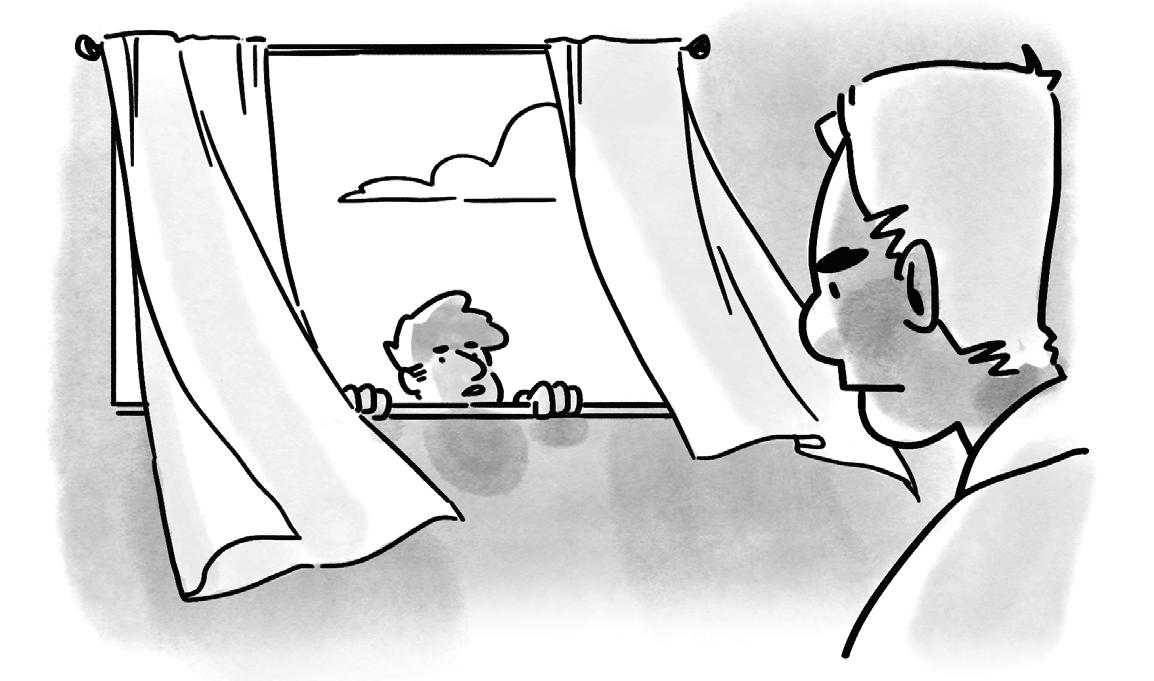
“Excuse me, do you have a minute to talk about our Lord and Savior, Martha Pollack?” —Michelle Robbins ’21
To submit your caption for this week’s contest, visit sunspots.cornellsun.com.



W. HOCKEY
2 & 3 BEDROOMS
109 SAGE PLACE
Available NOW, Spring 2019 & 2019/2020 Shuttle Bus Access to Campus Access to Free Fitness Center Novarr- Mackesey Property Management office@ithacastudentapartments.com ithacastudentapartments.com
607-277-1234
Collegetown
Collegetown
Collegetown
2, 3, 4, 6, 8, 10, 14 BRs
Smart. Live Well. 607-272-3000 Visit our office at: 119 Dryden Road www.ithacarenting.com
Studios and 3-5 bedroom apartments available!
1. Walk to classes and Center Campus amenities in
2. Units with dishwashers, fireplaces, and two bathrooms available.
312 College Ave
Collegetown’s Best Address Now leasing for 2018-19. Superior Studio, 1, 2, 3 Bedroom Apartments. Fitness facility, theater, and
Collegetown Terrace Apartments INSPIRED LIVING TAILORED TO YOUR SUCCESS 24-Hour Fitness Center Shuttle Bus Service to Campus Study Rooms w/ Expansive Views
Apartments Available NOW, Spring 2019 & 2019/2020 Novarr- Mackesey Property Management collegetownterraceithaca.com office@ithacastudentapartments.com 607-277-1234
We have availability for the 2019-2020 school year beginning June 1st at Hudson heights apartments. The studio apartments come with: heat, water, and electricity included. There are garbages houses and coin-operated laundry facilities on site. Prices start at $740/month for a 12 month lease. If you have any questions or would like to schedule a tour contact us by phone 607-208-7660 or email: renting@ithacaLS.com
Houses, Apts, Parking 1 to 9 Bedroom
Collegetown - College Ave, Linden Ave, Dryden Rd, Bryant Ave, Cook St. 607-330-2442 info@urbanithaca.com www.urbanithaca.com
Nicest Apts. in Collegetown
Located on Eddy St.
4 Bedrooms
Fully furnished. Spacious living areas with large bedrooms & closets. Hardwood flors, spectacular views, eat-in kitchens with additional sun rooms. Laundry & parking. 607-339-1137 bgm900@gmail.com
Continued from page 12
to the goal, which Union goaltender Amelia Murray deflected. Bourbonnais located the rebound and tucked the puck into the back of the net.
Just 30 seconds later, the Red forced Union to once again turn over the puck in the neutral zone. Senior forward Pippy Gerace set up the play, sending a pass in the Red’s offensive zone to junior forward Paige Lewis. Unobstructed by Dutchwomen defense, Lewis fired a shot into the goal, extending the lead to 2-0.
“We really focused on playing our game and being aggressive,” Derraugh said. “That created some turnovers for us and it was good to see us capitalize on those chances.”
After senior forward Lenka Serdar’s goal in the first, the winning momentum carried itself into the next periods. In the first seven seconds of a power play, junior forward and co-captain Kirstin O’Neill added to the Red’s dominant lead.
finish the second period. After the Red lost control in front of the goal, Burke repossessed the puck and sent it back to Graham, who send the pass into the net.
In a third-period power play, Selander denied consecutive shots by junior forward Graham and senior forward Diana Buckley, but Serdar’s shot needled its way past the Engineer goaltender, who began the game with a .946 save percentage, the highest in the nation.
The final tally came right at the final buzzer on another power play. O’Neill secured a hat trick when she buried a rebound into the net, giving the Red a 5-0 advantage.
“We really focused on playing our game and being aggressive. It was good to see us capitalize on [scoring] chances.”
Head Coach Doug Derraugh ’91
Defensive prowess complemented the Red’s offensive domination, reflected by a 53-11 shots on goal margin. Senior goaltender Boissonnault saved all 11 shots of the night, recording her 14th career shutout.
After Gerace extended the lead to 5-0, sophomore forward Maddie Mills secured the 6-0 lead on a power play near the end of the contest and Lewis took advantage of a Union turnover to make it 7-0.
Both sophomore Lindsay Browning and freshman Kaity McKenzie guarded Cornell’s net, giving senior Marlène Boissannault a night off and collecting an easy total of 11 saves over the course of the game.
The following day, RPI also fell victim to the Red’s dominating play. The win marks the team’s seventh shutout this season.
Not even two minutes into the first period, O’Neill put Cornell on the scoreboard. She found the rebound of a shot by Mills, and tucked it into the goal.
O’Neill recorded the 50th career goal in the second half of the middle period, firing a deflected puck past Selander.
Grace Graham extended Cornell’s lead to 3-0 to
“Not giving up any goals reflects a strong defensive effort from everyone and strong goaltending,” Derraugh said. “On the flipside of it, there were some great offensive outputs as well — it is a good combination to have.”
The Red has been dominant on its home rink — after the games against Union and RPI, Cornell’s home record stands at 9-1-0.
“We are very fortunate to have great support both in Ithaca and [at] Cornell University,” Derraugh said. “It plays a huge role. Our fans are tremendous and the band provides a lot of energy — it is a real big advantage when we are playing at home.”
The Red faces a slew of ECAC competition with just six regular season games left. The team will hope to maintain its winning streak in the North Country next weekend against perennial ECAC heavyweights No. 5 Clarkson and St. Lawrence.
Faith Fisher can be reached at fsher@cornellsun.com.

On fire | Winners of nine games in a row, the Red continued its dominant streak, scoring 12 total goals in wins over Union and RPI.
By FAITH FISHER Sun Staff Writer
A Kristin O’Neill hat trick, two shutouts and a 12-0 goal differential highlighted an easy and dominant weekend sweep for Cornell women’s hockey, one of the hottest teams in college hockey.
A weekend sweep characterized by two shutout victories further extended the Red’s impressive nine-game winning streak. In two stellar performances, Cornell (16-2-5, 13-21 ECAC) handily prevailed over Union College (3-22-2, 1-13-1 ECAC) and Rensselaer Polytechnic Institute (11-12-5, 8-7-1 ECAC) with 7-0 and 5-0 scores respectively.
In just the first period of the Union game, the Red gave itself

a 3-0 lead, taking advantage of turnovers by the Dutchwomen. Following a tense comeback win over Syracuse earlier in the week, the Red was looking to be aggressive from the outset.
“From our Syracuse game, we learned from that that we needed to be ready at the start of games,” said head coach Doug Derraugh ’91. “Giving up a two-goal lead put us in a hole and we managed to work our way out of it, but we didn’t want to have that happen again. We made sure to be ready right at the start.”
Junior defender Jaime Bourbonnais tallied the first goal of the night. After gaining the offensive zone, sophomore forward Joie Phelps sent a shot
By BENNETT GROSS Sun Staff Writer
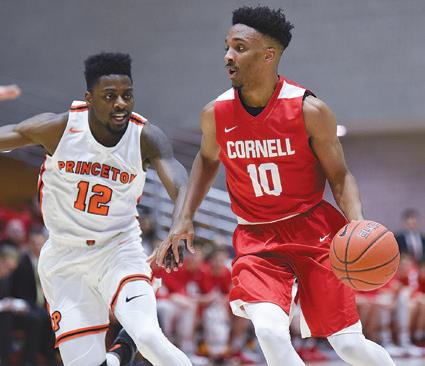
Coming off of a heartbreaking loss at Columbia last weekend, the Red got back into the win column, defeating reigning Ivy League champion Penn, 80-71 — Cornell’s first victory over the Quakers in the teams’ last 12 meetings.
The Red fell behind early, struggling to find an offensive rhythm due to Penn’s strong defensive effort. The squad relied on junior forward Josh Warren in the first half, as the Pennsylvania native scored 15 of his 19 total points before halftime.
“We have a lot of players that are able to put up good numbers, so whenever one person or a couple of people aren’t getting their shots to fall, someone is always able to step up,” Warren said. “So, today, that was just me in the first half.”
The first half consisted of sloppy play on both sides including 12 turnovers by former Cornell coach Steve Donahue’s Quakers and just six made free throws on 14 attempts from the two teams combined. Additionally, the Quakers were able to collect seven more rebounds than the Red.
Penn’s ability to shut down Cornell’s all-time leading scorer, senior Matt Morgan, took a toll on the Red’s offensive capabilities. With Morgan unable to establish his presence, the Red went on an eight-minute stretch during the first half without making a field goal.
As the Quakers dominated defensively and on the boards, the road team took a 37-30 advantage into the halftime break behind double-figure scoring from Bryce Washington and Devon Goodman.
But despite a slow first frame from Morgan, the senior guard elevated his level of play in the second half to lead the Red to its second Ivy League victory of the season.
Morgan, who only attempted four shots in the first half, scored 19 of his 25 points in the second, controlling the offense and pace of the game down the stretch. With the scoring outburst, Morgan extended his consecutive games scoring in double figures streak to 70, passing Kareem Abdul-Jabbar on the all-time NCAA list.
“In the first half, they had us a little bit stagnant on offense because they had a really good defensive
scheme against us,” Morgan said. “But as the game progressed, we started to figure things out. In the second half, it came down to me making plays, but I couldn’t have made those plays without my teammates. Also, it started on the defensive end for us. As long as we play good defense, we will be fine.”
Cornell began the second half on a 13-1 run, but Penn was able to climb back into the backand-forth game, which saw the Quakers leading 71-70 with 2:28 left. But the Red scored 10 unanswered points to clinch the victory.
“We got into halftime and we discussed what was going to beat Penn, and that it wasn’t going to be our normal stuff,” said head coach Brian Earl.
“After we got a few uncontested baskets, our guys took over and figured out what it took to beat this team.”
Penn was led by junior forward AJ Brodeur, who scored 17 points and collected 16 rebounds, and freshman forward Michael Wang, who scored all 16 of his points in the second half.
Bennett Gross can be reached at bgross@cornellsun.com.

By ZACHARY SILVER and RAPHY GENDLER Sun Senior Editor and Sun Assistant Sports Editor
Cornell men’s hockey can add another name to the list of goalies who will give them nightmares of what could have- been.
For the second time in the past three games — after Colgate’s Mitch Benson did so with 39 saves at Lynah Rink last Saturday — an opposing goalie robbed the Red of a potential victory. In Saturday’s 1-1 tie at Rensselaer, it was Owen Savory who prevented the Red from earning two points.
Savory, a freshman who entered Saturday with just two collegiate wins to his name, one-upped Benson and made 40 stops — none bigger than in a mad dash in overtime — to frustrate a Cornell team once again playing an opponent ranked far lower in the standings.
“Frustration would be the biggest thing tonight, to only come up with one goal with that many scoring chances,” said head coach Mike Schafer ’86, whose team outshot the Engineers, 41-15.
After 40-plus minutes of scoreless hockey, Cornell broke through midway through the third period. The Red took advantage
of a long power-play opportunity that came from a hard boarding of junior forward Jeff Malott. A two-minute retaliation roughing penalty on Cornell gave the Red three minutes on the man advantage.
gets into the back of the net,” Schafer said.
After shutting out Union on Friday, Galajda earned his second consecutive start over classmate Austin McGrath, the first time the former has started two games in a row since Nov. 17 and 24.
team, and the New York Rangers prospect has been a key piece of Cornell’s power-play success during the second half of the season.

On the power play, sophomore forward Morgan Barron, recently named the ECAC’s Player of the Month for January, fired a shot that was buried by senior forward and captain Mitch Vanderlaan to give the Red a 1-0 lead.
While it seemed like Vanderlaan’s goal might be enough, RPI tied the game at one just a few minutes later. A blocked shot in front of Cornell sophomore goaltender Matt Galajda eventually found its way through Galajda’s five-hole on the follow-up chance by Meirs Moore.
“We got the one-goal lead and then we didn’t come back in our own zone, didn’t get the job done defensively on the goal that goes in and sneaks through [Galajda] and

Although Cornell had plenty of scoring chances the rest of the way, Savory’s stellar play kept the game tied and prevented Cornell from picking up two points in the conference standings. “I thought we wasted the first period. I thought they outworked us in the first period. They blocked shots, made big saves,” Schafer said. “Even at the end there we had some empty nets that we missed.”
But Cornell had its defensive showcases, too. Late in the third period, senior defenseman Matt Nuttle recovered on defense and stymied a golden 2-on-1 RPI chance with a diving poke check.
As for Barron, his 24 points lead the
Though he ended the night with just a secondary assist, Barron was Savory’s biggest nemesis during the game. The Cornell sophomore had an extraordinary 10 shots on Savory compared to RPI’s 15 in total and was consistently finding his teammates for chances in on the RPI backstop.
But only one of those looks broke through, and Cornell had to settle for a second consecutive weekend missing out on four points. With the tie and Yale’s win over Brown, Cornell must wait another week to hope to clinch its second consecutive Ivy title, and the Red is now tied with the Bulldogs for first place atop the ECAC standings.
Cornell returns to Lynah Rink next weekend to take on third-place Clarkson and last-place St. Lawrence.
at rgendler@cornellsun.com.