The Corne¬ Daily Sun



By GWEN SCHWAY and RACHEL KODYSH Sun Contributors
The Beijing 2022 Winter Olympics rapidly approach, with the opening ceremony scheduled for Feb. 4. Like the rest of the world, Cornell students are looking forward to watching, especially with seven Cornellians competing or coaching.
Cornell junior Karen Chen ’23 is representing the United States in figure skating after winning a silver medal in the 2022 U.S. Figure Skating Championships. The other five are alumni from the Women’s Hockey Team and an assistant coach for the Canadian women’s ice hockey team.
Alumi Rebecca Johnston ’12, Jillian Saulnier ’15, Brianne Jenner ’15, Doug Derraugh ’91 and Micah Zandee Hart ’20 will represent Team Canada; Lenka Serdar ’20 will represent the Czech Republic. Derraugh was a hockey player during his time at Cornell and has been the head coach for the women’s ice hockey team since 2005. These Big Red alumni have traveled to Beijing, China along with coach Doug Derraugh ’91 of Cornell Women’s Hockey.
Johnston, Jenner and Saulnier previously competed at the PyeongChang 2018 Winter Olympics. They secured a silver medal for Team Canada, losing only to Team USA.
10 teams have qualified for Beijing 2022, a decrease from the 12 teams who participated during 2018 PyeongChang. The women’s preliminary round will begin Feb. 3 at 11:10 p.m.
Current students expressed interest and excitement in this year's Winter Olympics and
are especially looking forward to tuning into their fellow Cornellians events.
Nicole Losi ’24 enjoys watching figure skating and looks forward to seeing Chen compete. An Italian-American, she roots for the Italian and American contestants and has watched figure skating from a young age.
“It’s just so beautiful,” said Losi.“ I definitely want to watch her succeed and not only represent our country but our school.”
Brian Vicente ’24 expressed admiration for the dedication of Olympic athletes.
“It’s something people devote their entire lives training for,” said Vicente.
Cornell football wide receiver Colton Kotecki ’22 views the Winter Olympics as a chance for sports with little airtime to get a spotlight.
“The Olympics are a good platform to showcase what they have been training so long to do,” Kotecki said.
Though Kotecki wishes the Olympic Committee would include football in the Olympics, he acknowledges that the sport will not likely be added in the near future due to its low popularity in other countries.
Though students feel various degrees of attachment to the Olympics, Losi concluded that it is important in bringing together the people watching and participating.
“It’s a bonding moment for the athletes,” she said. “All of the hard work and dedication that they put in actually amounts to something.”
Gwen Schway can be reached at pgs74@cornell.edu and Rachel Kodysh can be reached at rjk243@cornell.edu.


By SURITA BASU Sun News Editor
Benjamin Daus ’25, a first-year in the College of Arts and Sciences, died from a hiking accident sustained over winter break, Vice President for Student and Campus Life Ryan Lombardi wrote in a Wednesday afternoon email.
Daus was interested in biology and was a member of the Big Red Marching Band. He was a Cornell Tradition fellow and also participated in a Pre-Orientation Service Trip last summer, prior to beginning his studies at Cornell.
Originally from Flemington, New Jersey, he was known as a gifted pianist and an avid traveler, according to Lombardi. Cornell will be holding a community support meeting on Thursday, Feb. 3 at 5 p.m on Zoom.
Students in need of professional mental health support can call Counseling and Psychological Services (CAPS) at 607-255-5155 and employees can call the Faculty and Staff Assistance Program (FSAP) at 607-255-2673. Due to the COVID-19 pandemic, all CAPS and FSAP services are currently being delivered via telehealth. Whenever these services are closed, calls are answered by Cornell Health’s on-call mental health provider. The Ithaca-based Crisisline is also available at 607-272-1616. A wide range of supportive resources is also available at mentalhealth.cornell.edu.
at sbasu@cornellsun.com.
By AIMEE EICHER Sun Staff Writer
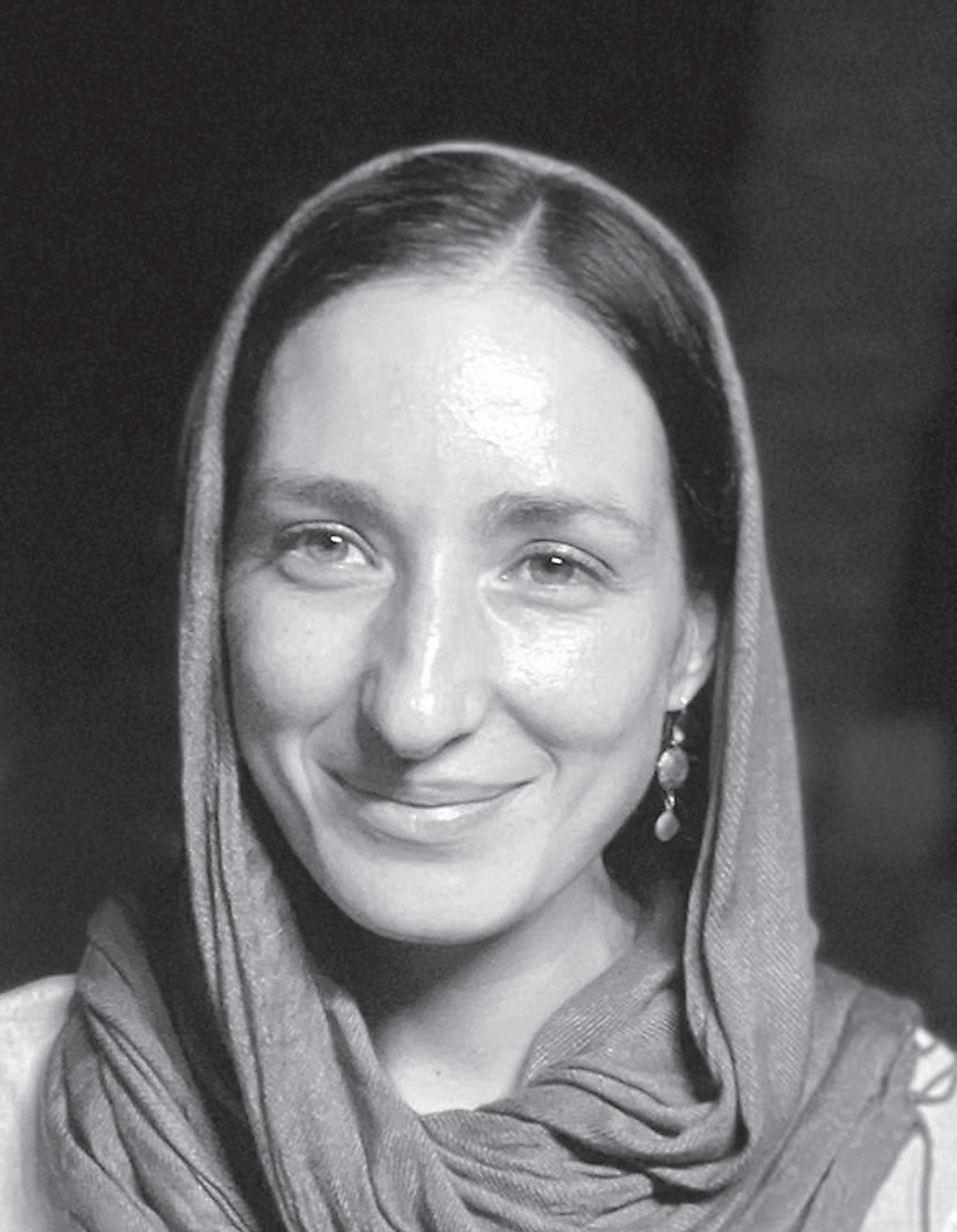
As Cornell Health’s first Community Liaison for Indigenous Students, Wahieñhawi “Hawi” Hall has been working to instill hope, healing and health in the Cornell community, particularly among the Indigenous student population. Also a clinical social worker, Hall started these
positions at Cornell Health Counseling and Psychological Services (CAPS) in October 2021.
As a Community Liaison — a new CAPS position — Hall works with four other staff members to better connect with students across campus. These include Kimberly VanNorman, Community Liaison for

Vaidehi Reddy and Zandt Lavish: Nodes
8 a.m. - 4:30 p.m., Virtual Event
The Economic Weapon: The Interwar Rise of Sanctions 11:25 a.m. - 12:40 p.m., Virtual Event
Explore Careers Outside of Academia Noon, Virtual Event
Ecology and Evolution of Infectious Diseases Journal Club
1:30 - 2:20 p.m., Comstock Hall
Adaptive Collaborative Management in Forest Landscapes: Villagers, Bureaucrats and Civil Society 4 p.m., Virtual Event
Financing Your Legal Education 4:35 - 5:35 p.m., Virtual Event
Gatty Lecture: Pro Environmental Behavior Consumption of Indonesian Consumers 8 p.m.,Virtual Event
Webinar: The Decade of Emerging Markets 9 - 10 a.m., Virtual Event
Digital Storytelling Community of Practice Noon - 1 p.m., Virtual Event
Virtual Info Session: Cornell Prelaw Program in Paris Noon - 1 p.m., Virtual Event
“Thich Nhat Hanh and the Invention of Zen In Vietnamese Buddhism” 2 - 3 p.m.,Virtual Event
U.S.
Cornell ReSounds: play | pen symposium 2 - 6 p.m., Virtual Event
Anthropology Colloquium: Kali Rubaii 3 - 4 p.m., Virtual Event
Animal Health Hackathon 5 p.m., Virtual Event

By MAYA RADER Sun Staff Writer
The return of Cornellians to Ithaca as the Omicron variant continues to loom has induced health anxieties from some Ithaca residents, though many have expressed their comfort with Cornell’s COVID-19 procedures.
After Tompkins County’s Jan. 11 COVID-19 spike, some local residents shared concerns over Cornellians’ return to the area. Several expressed hopes that students would adhere to mask-wearing and social-distancing guidelines, despite past reluctance.
Resident Amanda Cissner stated that she was anxious about students returning in fall 2020 during the early months of the pandemic; however, she is no longer concerned.
“I just feel like we’re all destined to get it, so I haven’t even paid attention to students coming back this time.”
Amanda Cissner
“Earlier in COVID, I was very apprehensive and very stressed out when students returned, just because it’s a huge influx of people into a community that had kept rates pretty low,” Cissner explained.
Cissner no longer views the arrival of students as the most significant threat to Ithaca, given the emergence and prevalence of the Omicron variant in Tompkins County.
“I just feel like we’re all destined to get it, so I haven’t even paid attention to students coming back this time,” Cissner said. “It’s not going to be the students who are causing the spread of Omicron in Ithaca. It’s already spread.”
Rebekkah Maclean, a shift supervisor at Collegetown Starbucks, appreciated that Cornell staggered the influx of students by holding virtual classes for the first two weeks.
“It is really nerve-wracking having everyone back with this new strain of COVID,” Maclean said.
Maclean expressed concern that students often remove their masks while inside the cafe, even after Maclean or her coworkers remind them of the mandate.
“When I announce ‘Hey guys, in between sips, could you keep your masks on?’ I see a lot of people rolling their eyes at me [or] just completely ignoring me,” Maclean said.
Maclean explained why masking rules are important for ensuring a healthy work space.
“This is our work environment; we want to feel safe being here, and our customers should also feel safe being here,” Maclean said.
Maclean added that students can help residents like her by coming in with their masks on and wearing high-quality masks, such as the N95.
Despite the prevalence of COVID-19, Dunia Mena, an employee at Collegetown 7/11, said she values student presence because it supports local businesses.
“The business here is always the students, so when they’re on break, we see a big
difference in our earnings,” Mena said.
Mena stated that students can help limit contagion by wearing masks and practicing social distancing, but she believes widespread vaccination will be the ultimate solution.
Dr. Catherine Cortright, a veterinarian who works in a private practice in Ithaca and is involved with Cornell’s College of Veterinary Medicine, expressed her hesitance visiting public spaces. She stated that she limits her errands to less busy times.
“I have total pandemic exhaustion,” Cortright said. “So I'm anxious about it and simultaneously completely bored and tired of it.”
“This is our work environment; we want to feel safe being here, and our customers should also feel safe being here.”
Rebekkah Maclean
Cortright stated that she appreciates the efforts Cornell has made to protect against Omicron.
“I honestly think that Cornell has done an amazing job since the beginning of the pandemic with testing and trying to communicate with the community,” Cortright said.
Last year, when classes were virtual, Cortright volunteered in a teaching team for a class at the veterinary college. With the class changing to in-person this semester, Cortright will not teach in order to limit her contact with students and potential COVID transmission.
As these residents noted, students’ return to campus is not a return to normalcy. Cornell’s precautions, including vaccination and mask-wearing, remain vital in order to protect both the campus and the greater Ithaca area.
Maya Rader can be reached at mrader@cornellsun.com.
LIAISON
Continued from page 1
Liaison for LGBTQ+ students; Jacque Tara Washington, Community Liaison for Black Students; Qiana Watson, Community Liaison for First Generation/Low Income Students; and Anastasia Zyuban, Community Liaison for International Students.
“Being hired as the first Community Liaison for Indigenous Students is an honor.”
Wahieñawi “Hawi” Hall
“Our goal is to meet with stakeholders in the communities we serve, help bring information about mental health to these communities and, in turn, share information back with CAPS about the needs of the communities,” Hall wrote in an email to The Sun. This semester, Hall is developing several outreach programs for Indigenous students on campus. Throughout the spring semester, she will co-facilitate a therapy group for Indigenous students and a Talking Circle — a traditional Indigenous communication practice — with a community partner from the American Indian and Indigenous Studies Program.
Hall describes herself as “a child of Mohawk and Cherokee heritage.” Born on the Onondaga Nation, she grew up immersed in the values and beliefs of her Onkwehoñhwe culture, which she regards as an import-
ant part of the work she does.
“Having grown up within Onkwehoñwe, ‘the Original People,’ communities, I feel passionate about working with Indigenous people,” Hall wrote. “Continuing on with our traditions, culture and heritage is not simply done with one or two actions or behaviors — it is a way of viewing and interacting with the world on a regular basis.”
Before coming to Cornell, Hall earned her B.A. from Guilford College and her Masters in Social Work from Syracuse University. She has dedicated her career to working with Indigenous communities and recently moved from Akwesasne, N.Y. — a Mohawk Nation territory — to Ithaca with her family.
Hall stressed the importance of Indigenous representation in mental health services.
“The challenges and adversity that often comes with being an Indigenous person within the U.S. borders can lead to unique difficulties navigating the college experience,” she wrote.
Colby Yazzie ’24, co-chair of the Cornell chapter of the American Indian Science and Engineering Society, expressed his similar experiences facing these challenges. Having grown up on the Navajo Nation, Yazzie cited differences in the social structures of his reservation and Cornell’s campus as a stressor.
“Opening up to non-Indigenous people is sometimes very hard for those of us who come from a place where Indigenous people are the majority,” Yazzie wrote in an email to The Sun. “Having Ms. Hall available makes me feel that, when I need an ear to listen to, she would be
understanding and helpful.”
Yanenowi Logan ’24, co-chair of Native American and Indigenous Students at Cornell and member of the Seneca and Mohawk tribes, echoed Yazzie’s frustration.
“You can't relate personal experiences of being Indigenous with someone who's not Indigenous,” Logan said. “No matter how hard you try, there's not going to be that connection.”
“Having Ms. Hall available makes me feel that, when I need an ear to listen to, she would be understanding and helpful.”
Colby Yazzie ’24
Logan added that Hall’s support has been especially meaningful after fall semester’s bomb and shooting threats, which added to the stresses that Indigenous students and students of color on campus face.
“It’s the best thing we could have asked for this semester,” Logan said.
Hall’s new role emphasizes cultural understanding in health services, a value she has carried with her throughout her career and looks forward to instilling at Cornell.
“Cornell Health is showing Indigenous students that we recognize that the needs of this specific population are unique and important,” Hall wrote. “Being hired as the first Community Liaison for Indigenous Students is an honor.”
Aimée Eicher can be reached at aeicher@cornellsun.com.

By THOMAS LAW Sun Staff Writer
Ihave eaten food almost every day of my life, and I am committed to continue doing so.
However, after arriving in the United States, I have started to eat
In the winter, [Tong Sui] warms your soul, and in the summer, they quench your thirst.
fewer meals, with each meal containing less food when compared with my time in Hong Kong. To investigate why I am losing my appetite, I started taking photos of each meal I had.
The quality of food here in the Cornell dining halls and Collegetown varies, but generally speaking, I have found it acceptable. I typically have a hearty main dish, complemented with soup and drinks. I am a firm believer that the phone eats first, so I have a rather impressive collection of food photos. After looking through hundreds of pictures I’ve taken over the course of my college foodie career, I realized something was missing: Tong Sui! Tong Sui (糖水) literally translates to sugar water, and it is an all-encompassing term for any sweet stew or custard that is usually served for dessert after each Cantonese meal. Some popular Tong Suis are red bean stew, tofu pudding and steamed milk custard. In the winter, they warm your soul, and in the summer, they quench your thirst.
For those unfamiliar with Tong Sui, I would like to share how this dish has improved my life here in Ithaca and encourage you to incorporate this special dish into yours. Here are three versions of Tong Sui that I’ve recently enjoyed.
Sweet Ginger Tea: Slice up

some ginger root, boil it with some oolong tea for 15 minutes and add in a little bit of Chinese rock sugar. Then voila: You have successfully cooked up a true masterpiece. The spicy yet sweet scents amalgamate into a burst of soothing warmth in your throat, clearing away any symptoms of indigestion after a feast. At the end of a meal, as everyone relaxes around the table and
takes in the comforting scents of Tong Sui, good conversations can last for hours.
I recommend steeping a batch of ginger tea and bringing it to class in a thermos as a caffeine-free alternative to coffee as a way to “spice up” your morning routine.
Ithaca Mango Mango Dessert: Mango Juice with Mango and Black Rice ($7.00 without tax): During
fall break, my friends and I stayed on campus to relax after a long start to the semester. While exploring a seldom-quiet Collegetown, we stumbled across Mango Mango. Tempted by the lively décor, we ventured in. We had a great time enjoying custards and chatting with each other. It reminded me of the fond memories I had of my home back in Hong Kong, where my friends and I would head to dessert shops downtown to celebrate. If you are looking for a unique coffee chat or a date night experience, try Mango Mango, and enjoy your sweet time!
Healing Black Sesame stew: The night before Thanksgiving break, I came down with a bad cold. Shivering, I awoke hungry from a nap late at night, only to realize that Bear Necessities had already closed for break. I remembered that I had bought myself a dozen packs of black sesame soup powder months ago from Green Castle Asian Market in Collegetown. I boiled some water with an electric kettle and made myself a warm bowl of black sesame stew. The porridge-like texture soothed my sore throat and immediately warmed my empty stomach. The mellow sweetness from black sesame seeds delicately danced on my tongue and quickly improved my cold symptoms.
There are various ways to try Tong Sui in Ithaca, but I wish Cornell Dining would incorporate it regularly into our daily meal options. Not only is it a nutritious and delicious treat, it is a food that heals and bonds people together.

KATHRYN STAMM ’22 Editor in Chief
ANUSHYA ALANDUR ’23
Business Manager
CATHERINE ST. HILAIRE ’22
Associate Editor
PRANAV KENGERI ’24
Advertising Manager
ODEYA ROSENBAND ’22
Opinion Editor
JYOTHSNA BOLLEDULA ’24
News Editor
TAMARA KAMIS ’22
News Editor
CAMERON HAMIDI ’22
App Editor
KRISTEN D’SOUZA ’24
Design Editor
HANNAH ROSENBERG ’23 Photography
OMSALAMA AYOUB ’22
PUJA OAK ’24
ANNIE WU ’22
MIHIKA BADJATE ’23
SERENA HUANG ’24
MADELINE ROSENBERG ’23
Editor NAOMI KOH ’23
OZA ’22
HEO ’24
VEE CIPPERMAN ’23
UMAR ’23
PLOWE ’23
YOON ’23
VELANI ’22
PICHINI ’22
TYAGI ’22
MARIA MENDOZA ’24
ARANDA ’23
BASU ’23
RIGGS ’24
LEYNSE ’23
NAGEL ’24
Lorelei Meidenbauer ’22 (she/her) is a senior in the College of Agriculture and Life Sciences. She can be reached at lem257@cornell.edu. Hot-takes and Handshakes runs every other Tuesday this semester.
For all of us in the Class of 2022, this period marks the beginning of our “lasts.” Our last first day of classes. Our last time we’ll move back into Collegetown apartments. Our last semester ever. Even as I’m typing this out, it doesn’t feel real, especially thanks to Zoom University.
Like so many other seniors, I keep dreading the inevitable questions about post-grad plans. A part of me feels like it’s somehow wrong to plan for a time after Cornell — the part of me that doesn’t quite know how to picture life any other way. After all, like many of us, I’ve spent 16 of my 21 years in the educational system; being a student is a huge part of my life.
That said, the other part of me can’t wait to leave and take on the elusive “real world” that I get glimpses of each summer. This time, though, there’s no expiration date; there’s no looming red circle on the calendar for back-toschool. The real world feels limitless. The other part of me can’t wait to stop the world burning or go out in flames trying.
Please
Even with the pandemic looming over half of my college experience, I’m so incredibly grateful for all of the struggles I’ve faced. It’s cliché, but Cornell really did teach me how strong I am, and I’m proud of that. It’s a trait that will serve all of me well no matter what else life throws my way.
Yet, I’m sad that COVID has stolen such a solid chunk of our college experience. After two years, any semblance of normalcy feels virtually impossible (pun intended). The class of 2022 straddles two college eras; we’re old enough to remember what a year of college pre-pandemic felt like, but now we’re seniors. We’re the last of the student body that remembers, and even our memories are fuzzy.
We had three normal semesters, and quite honestly, that now feels like a luxury. In a way, it makes all of it worse because we know what we lost. To be honest, as much as I’ve tried to stay positive, my college experience was irrevocably changed, and I’m not sure it was for the better.
There’s no other way to put it: Zoom University sucks. I have no doubt that the pandemic has posed unique challenges for everyone, but being in college during this time is quite the rollercoaster. The politics, the arguing, the stress; it comes at all levels, from friends and family to administrators and politicians. And it’s not going away anytime soon, as Cornell’s surge in cases at the end of last semester reminded us.
I fully empathize with the desire to return to normal: to stop testing, stop wearing masks and go back out into the world unafraid. I understand it, because
I feel that urge too, especially as a second semester senior. But the thing is, as much as this is terrible at times, it’s not just about us. It’s about the communities we interact with. It’s about our families and friends, too.
It’s about my severely immunocompromised dad that spent all of last week in the hospital with the virus, despite being fully vaccinated and boosted. Throughout the pandemic, my entire family has taken every precaution possible to prevent this, including sacrificing holidays together. Even if I was 100 percent sure I didn’t have the virus, my dad still would wear
The Class of 2022 straddles two college eras; we’re old enough to remember what a year of college pre-pandemic felt like, but now we’re seniors.
a mask in the house around me both for his own safety and his peace of mind. It was heartbreaking.
Our efforts to keep my dad COVIDfree paid off until January 2022. That said, we have no idea how he got the virus; our family had been home together for well over a month at that point. In a way, it’s relieving to know that my family now has a natural immunity built up, but I can’t help but fear what will happen if restrictions are loosened, if more variants arise. What will that mean for me and my family? As much as I want to go back to normal, I’m afraid of what the consequences might be.
And I know I’m not alone. As frustrating as all of these continual measures are right now, I will gladly keep doing all of it because it helps all the families out there like mine.
To anyone else in the Class of 2022, I’m sorry that this is what we’ve had to deal with. I can only speak to my own experience; if yours is anything like mine, I’m sure you’re dealing with a lot of conflicting, confusing feelings about graduating during the pandemic right now too. Hang in there. I’m rooting for all of us.



By MEHER BHATIA Sun Staff Writer
Since it began in 2014, the water crisis in Flint, Michigan has remained omnipresent in national media. Cornell has likewise focused recent attention on the issue: a team of social scientists led by Prof. Jerel Ezell, Africana studies, has conducted a study observing how increased lead exposure has impacted the children of Flint.
The study, recently published in the Journal of Racial and Ethnic Health Disparities, was officially conducted in 2019 — five years after the water crisis began.
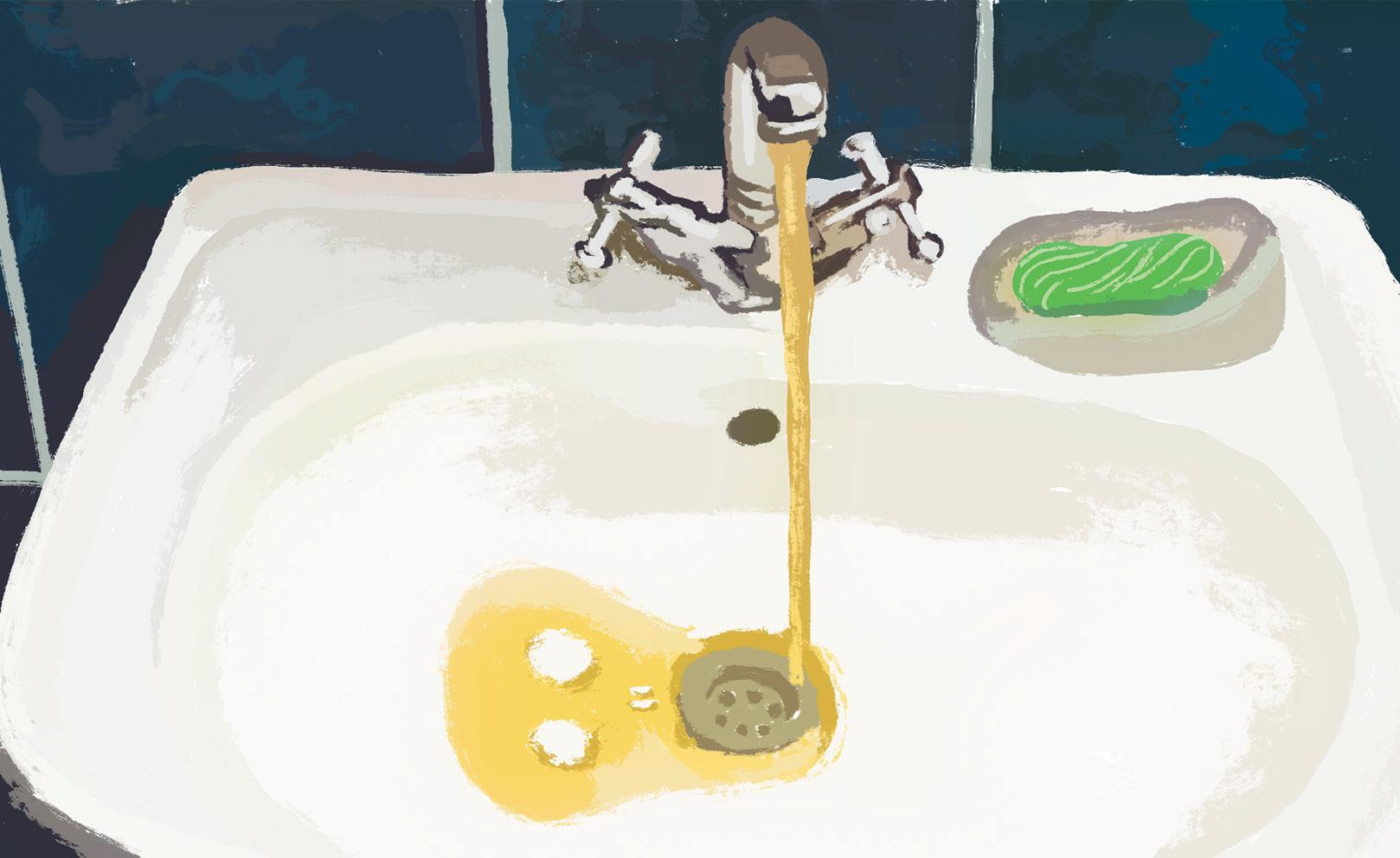
In April 2014, Michigan officials looking to cut back on expenses switched Flint’s water supply from Lake Huron to Flint River. Poor execution of the switch exposed an entire population to an incredibly polluted water supply.
Water that looked, smelled and tasted strange was actually contaminated with lead, trihalomethanes — a known carcinogenic — and the bacteria Legionella, which has been
linked to more than 100 deaths in the city.
According to Ezell, adverse exposure to such contaminants — especially lead — has been particularly concerning for children, who are incredibly vulnerable to the physical and cognitive risks it poses.
“We specifically care about lead because it’s associated with a lot of things that are going to prevent children from having full lives or certain opportunities,” Ezell said. “In areas like Flint or other lower income cities it becomes particularly problematic, because these are already cities that are under-resourced and underserved.”
Ezell and his team found that of the 244 children evaluated in Flint, 76.6 percent screened for detectable levels of lead in their bodies after the water supply switch, with approximately a quarter of those children having more extreme cases of clinician-diagnosed elevated blood lead levels.
After testing for a number of health issues, the study also found that 38.9 percent of the children suffered from skin rashes, and 10.7 percent experienced hair loss.
But the extent of elevated blood lead levels goes beyond physical impacts. Lead poisoning in children can increase the likelihood of permanent neurological damage, developmental delays and behavioral issues such as attention deficit hyperactivity disorder.
Of the children screened, 43.9 percent experienced hyperactivity, 39.3 percent had emotional agitation and 29.1 percent had comprehension issues or learning delays.
Black children, specifically, were almost twice as likely to experience emotional agitation compared to other races.
While the observational study did not use a randomized sample, co-author Sanvi Bharwaj ’24 explained that it was a very accurate representation of the socio-economic and racial demographics in the Flint area.
“Health disparities, as much as people like to claim don’t exist, absolutely do,” Bharwaj said. “As far as medical technology has come, there’s still a long way to go for us to actually have equity in this health system because it’s clear, just on racial lines, that we are nowhere near the point that we should be.”
However, according to Ezell, the increased rates of elevated blood lead levels cannot conclusively be linked to the water crisis.
“[W]hat has made the crisis very convenient for government officials is that they can say, ‘It’s not the water where they’re getting the lead, it’s the soil, it’s the paint,’” he said.
While this may be possible, Ezell noted that the rates of adverse effects observed were extreme, and evidence points to the fact that elevated blood lead levels are far above what would be expected without the water crisis.
In 2014, the Center for Disease Control and Prevention found that 4.2 percent of children in the United States tested for elevated blood lead levels. With 25 percent of the sampled children screening for clin-
ically-diagnosed elevated blood lead levels, Flint has seen almost six times the national average.
The study calls attention to the need for more clinical monitoring of Flint children for elevated blood lead levels, particularly among Black and low-income children.
According to Ezell, children in Flint may have not been screened for a variety of reasons, including a lack of time, access and transportation. But there is perhaps a more apparent reason: community-wide distrust in the government.
“We’re talking trust issues, and we continue to see this with COVID-19, where a lot of people are saying ‘The government has done X, Y and Z, I don’t trust your healthcare providers and I don’t trust your vaccine,’” Ezell said.
90 percent of the children in Flint are still only drinking bottled water — three years after the Environmental Protection Agency declared the water in Flint was safe to drink in 2019.
“Government and healthcare institutions in Flint have not been able to engage with the community in such a way where people are going to feel comfortable drinking that water again,” Ezell said. “And that hesitation, in light of the history, is entirely understandable.”
Bharwaj emphasized that community stakeholders should be the first consulted on decisions that could drastically impact their cities.
“People involved in the community are going to know what the community needs, as opposed to some lawmaker who has never been to the community, giving solutions that only seem good on paper, but definitely not in practice,” Bharwaj said.
“That’s going to be the first step to ensuring nothing like this ever happens again.”
Meher Bhatia can be reached at mbhatia@ cornellsun.com.
By EMMA ARBOLEDA Sun Contributor
Chobani has committed to supporting agricultural development at Cornell, dedicating $500,000 to the College of Agriculture and Life Sciences and allowing students to benefit from the Chobani Scholarship Program over the next five years.
Since 2018, the program has created opportunities for a number of students in CALS pursuing a career in dairy. This January, Chobani announced that it will broaden its entire program by one million dollars and will expand its eligibility criteria to include a wider variety of agricultural interests.
In the past, this scholarship has provided CALS students interested in dairy with life changing opportunities. Libby Swatling ’24, a scholarship recipient, is an animal science major with a focus in dairy management. Before finding the Chobani program, she reported experiencing difficulty finding a scholarship that would support her aspirations to work in dairy agriculture. Unlike some students pursuing work in the
dairy industry, Swatling does not come from a farming background.
“I don’t qualify for a lot of scholarships, and the agriculture focused ones usually require the applicant to be from a farm or be involved in their local [Future Farmers of America] Chapter,” said Swatling. “Not being from a farm and going to an urbanized school with no FFA Program means that I miss out on some scholarships.”
The Chobani scholarship, as one of the few scholarships available to students like Swatling, helps her to pursue her dreams.
“[Chobani] continually reminds me that in the future I want to be able to encourage and support those ‘non-farm’ kids to get involved and follow their passion in the industry,” said Swatling.
As a part of the scholarship expansion, Chobani has promised to support students from underrepresented backgrounds and promote diversity in the agricultural industry as it continues to expand. It pledged 20,000 dollars for diversity, equity and inclusion training at Cornell.
By expanding the scholarship program, Chobani expressed

its aim to create an equitable future for a significantly larger number of students going into agriculture.
According to Lucas Walley ’24, an interdisciplinary studies major planning to become a manager at a large dairy farm, this scholarship is more than
just a monetary reward.
“[It] will have a huge impact on any young aspiring leaders in the dairy industry,” Walley said.
The scholarship also offers its recipients the chance to work with Chobani in the future.
“Knowing that an industry
leader like Chobani is investing and supporting the next generation of leaders will help many other students make an impact on the future of agriculture,” Walley said.
Emma Arboleda can be reached at ea325@cornell.edu.