The Corne¬ Daily Sun


By JIWOOK JUNG and KEVIN CHENG Sun Staff Writer and Sun Contributor
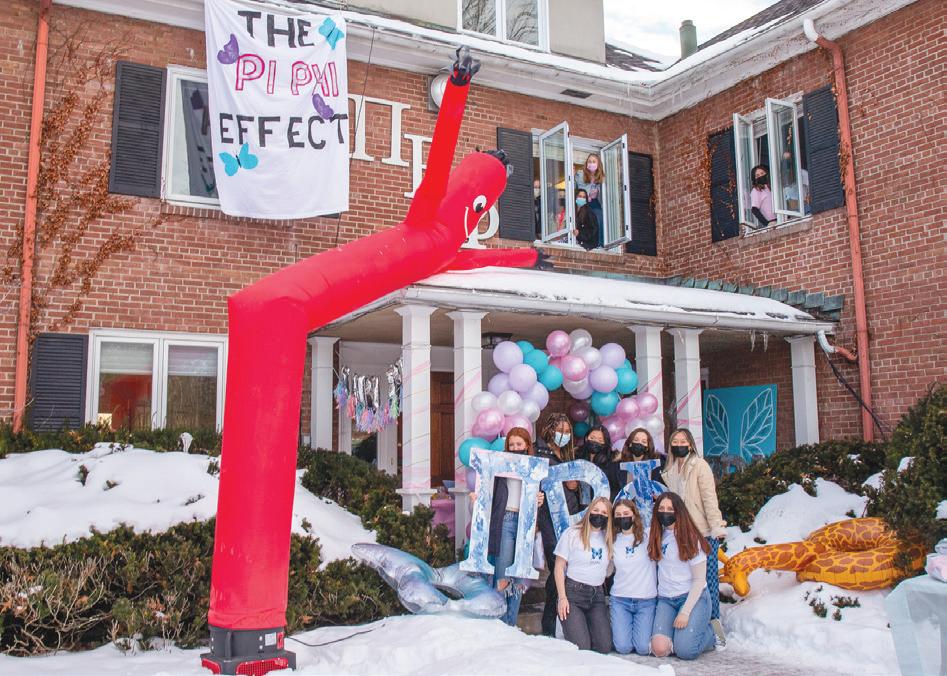
With fears of the Omicron variant still looming large, the University’s shift to online instruction coincides with an enduring tradition of the early weeks of spring: recruitment season for sorority and fraternity hopefuls.
According to the Office of Sorority and Fraternity Life, almost a third of Cornell’s student body belongs to a Greek organization on campus. During the pre-pandemic era, students hoping to join a sorority or fraternity journeyed from house to house in the frigid Ithaca winter to attend recruitment events.
But with the pandemic once again forcing all in-person events to halt, potential new members (PNMs) hoping to join now face a semester of virtual recruitment. With the University’s recent mandate to move all in-person activities and events online, sorority and fraternity recruitment events have been forced to follow suit.
When the University announced the restriction on in-person events, Kara Miller McCarty, Robert G. Engel Director of Sorority & Fraternity Life, coordinated with Cornell sororities and fraternities to help them switch to virtual recruitment. McCarthy told the Sun that although sudden, there is an established sense of familiarity and flexibility to this process, thanks to last year’s virtual recruitment.
a freshman student who hoped to join a sorority this semester, ultimately decided not to continue when faced with the prospect of recruiting over Zoom.
“I changed my mind like a week before,” said Salatti. “I felt like it’s harder to make a connection and figure out which one you want to join. How am I going to be able to fairly judge if they’re the people I want to hang out with for the rest of college if I’m only seeing them virtually?”
Similarly, the current members of sororities and fraternities voiced their frustrations with another year of virtual formal recruitments. Takashi Yuasa ’22, Social Chair at Pi Delta Psi fraternity noted that it is much more challenging to understand a full picture of PNMs online.
“It’s definitely difficult to try to socialize for everyone, because it’s obviously just looking at screens. As a Social Chair, I found it difficult to get the body language and perception of PNMs,” said Yuasa. “It’s very difficult to navigate and make a very interactive and fun event virtually.”
“I found it difficult to get the body language and perception of PNMs.” Takashi Yuasa ’22
“It is certainly unique to experience a recruitment process online, however since the pandemic has been ongoing since March 2020, there is more familiarity with online or remote interaction,” wrote McCarthy in an email to The Sun. “One benefit to virtual recruitment is that students can participate regardless of when they come back to campus.”
For some Cornellians, however, the switch to virtual recruitment proved to be a disappointment. Julia Salatti ’25,
Despite these concerns, many students noted benefits in recruiting from home.
Mikayla Kibel ’22 recruited for and joined Alpha Chi Omega in the spring of 2020, before the initial COVID shutdown. Now participating as a recruiter, Kibel told the Sun that virtual recruitment adds ease and convenience to the otherwise strenuous process.
“I think it might be a little easier for them to go through recruitment, because this year they don’t have to walk in the snow and the cold through all the houses,” said Kibel. “You can kind of just sit in the comfort of your own home in sweatpants and get to meet people that way.”
Yuasa also highlighted the convenience prospective members now have at their fingertips. He told the Sun that instead of having to choose one event to attend for the entire night, virtual recruitment allows PNMs to jump back and
forth between different Zoom calls.
“The clothing doesn’t matter as much,” observed Annie Stewart ’25, who took part in virtual sorority recruitment events this spring. “There’s not as many indicators of wealth.”
Fraternities and sororities have made significant efforts to adapt the recruitment process to the new normal. Kibel’s sorority, Alpha Chi Omega, found new opportunities to showcase their chapter’s personality.
“We had one of the members of our chapter kind of take everyone on a tour virtually through the house,” Kibel said. “When we were in person, you were just on the ground floor, so I thought the video aspect was really personal and nice.”
McCarthy told the Sun that the Office of Sorority and Fraternity Life is hopeful for future in-person activities and events to promote further interactions between the new and existing members.
“We are also hopeful that once COVID conditions on campus allow for more in-person activity,” said McCarthy, “there will be the opportunity for personal and in person interactions and events between new members and members.”
Many Cornellians expressed optimism about the switch, despite the challenges it presented.
“Bonding looks different,” said Kibel. “But it’s still just as rewarding.”
Jiwook Jung can be reached at jjung@cornellsun.com. Kevin Cheng can be reached at kyc36@cornell.edu.
By PAREESAY AFZAL Sun Staff Writer
Nadia Vitek was making drinks at their Starbucks shift during the Fall 2021 semester when their supervisor informed them of a potential active shooter. After evacuating the store and sheltering in place due to a credible bomb threat, their manager, who had been working remotely, made them reopen on the same day.
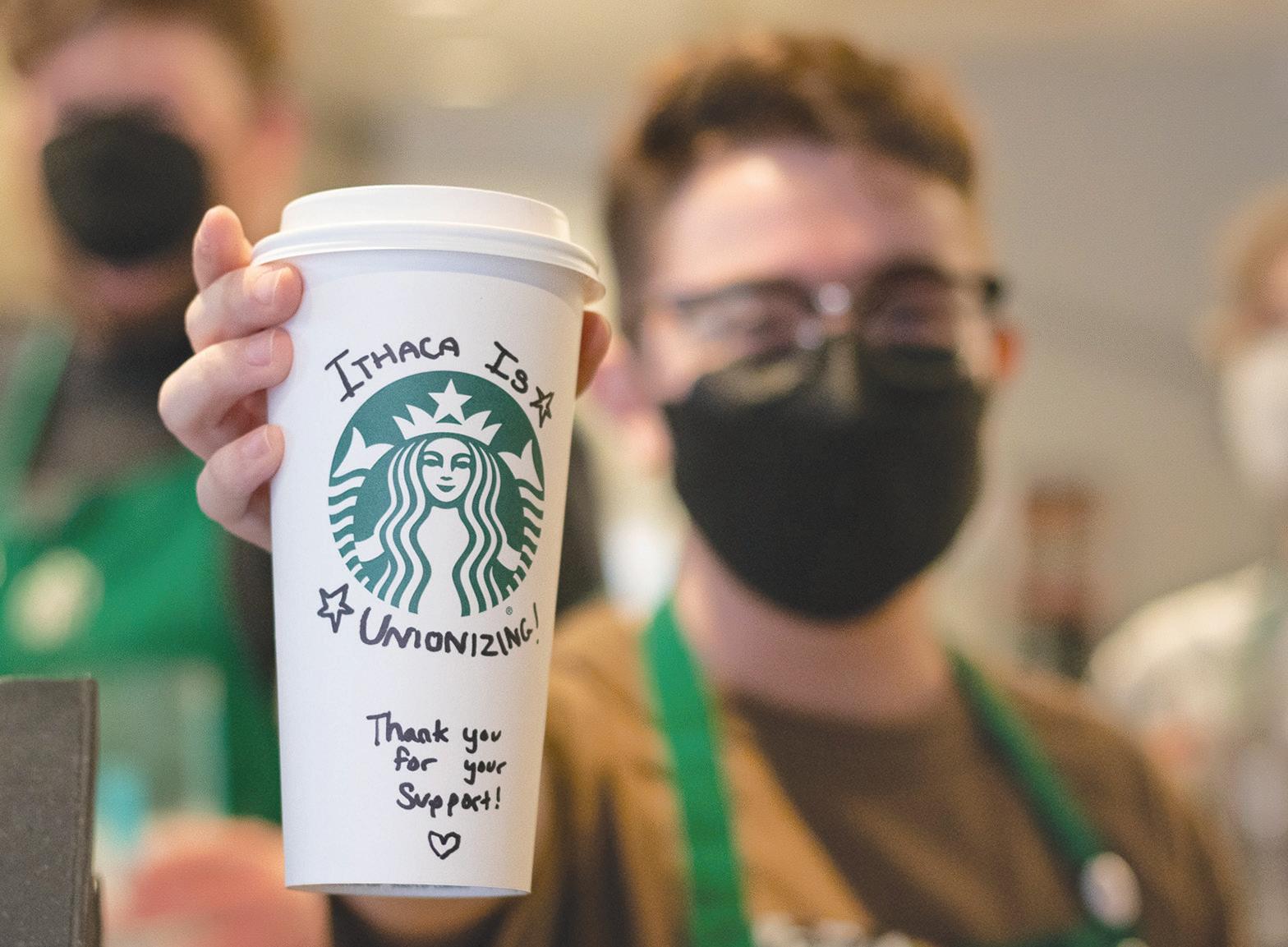
Scout Coker ’22, a Cornellian who works at Starbucks, told The Sun that the November incident compounded the need for unionization efforts, which had already begun a few weeks prior.
“It was jarring to me that that decision wasn’t made by anyone who was actually there,” Vitek said. “I was horrified that we were made to work after that.”
According to Coker, when he raised the issue to his coworkers at a meeting, every employee agreed that the situation had made them feel unsafe.
“It made a lot of people realize that we shared a collective discontent,” Coker said.
On Jan. 25, through its official Twitter page, Starbucks Workers United publicly announced its new campaign in Ithaca. This campaign represents all three Starbucks locations in Ithaca: College Avenue, the Commons and the newly opened Meadow St. drive-through location.
According to the organizers, the Buffalo Starbucks’ December victory in union elections inspired the move for Ithaca’s.
One of the imminent demands of the campaign is improvement in COVID-19 related policies.
“We had a huge outbreak based on student exposure at my store,” said Evan Sunshine ’24. “It baffles me that there’s not enough protocol for that. Something needs to change.”
the register have made it impossible to enforce mask regulations. Vitek was not told to stop, but to be more personable about it.
“I had multiple bosses explicitly tell me that I couldn’t tell someone to put their mask on.”
The organizers cited several occasions when customer satisfaction was given precedence over worker safety, in the face of COVID-19 protocols.
Coker said, “I had multiple bosses explicitly tell me that I couldn’t tell someone to put their mask on, regardless of how nicely I said it.”
Masking was a New York State law following the Omicron outbreak. Hope Liepe, an organizing committee member, stated that corporate manager instructions, instructing workers to discreetly ask customers to wear a mask at
Scout Cocker ’22
“In the end, I stopped enforcing masks. Two days after, I tested positive. Three others did too. We closed the store for 10 days [because of staff shortage],” Vitek said. Liepe recounted an incident where she came into accidental contact with one of the COVIDpositive partners - the corporate name for Starbucks workers. Her managers presented her the choice to come into work or self-isolate, meaning she would lose nearly a
Preparing for Finance Careers: Two Events for First-Years and Sophomores 4:30 p.m., Virtual Event
Orientation to Group Certficiate In Community-Engaged Leadership 5 p.m., Virtual Event
Zoom Class: Planning Your Vegetable Garden 6 p.m., Virtual Event
Women’s Ice Hockey Vs. St. Lawrence University 7 p.m., Lynah Rink
LSAT Logic Games Workshop Presented by TestMasters 6 p.m., Virtual Event
Tomorrow
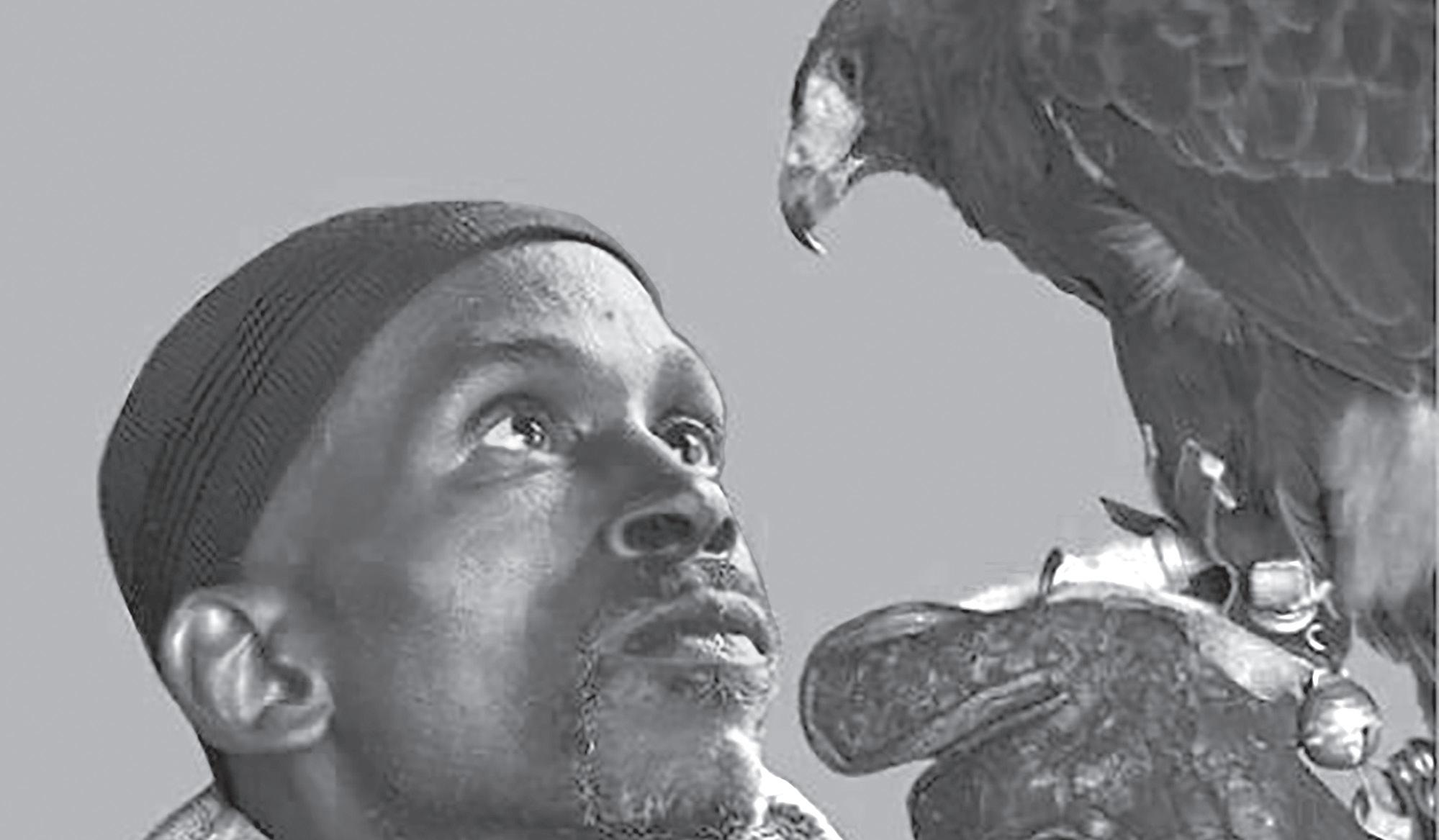
Bird Brother: A Falconer’s Journey And the Healing Power of Wildlife, With Rodney Stotts Noon, Virtual Event
Building Back Better: Rebuilding Educational Opportunity After the COVID-19 Pandemic 12:25 p.m., Virtual Event
Preparing for a Virtual Career Fair 3:30 p.m., Virtual Event
CCSS Workshop: Introduction to Python 3:30 p.m., Virtual Event
“Not Quite White, Not Quite Black, Not Quite Red”: 20th Century Race Science and Identity Making At the Margins 4:30 p.m., Virtual Event
Job Search for Seniors 4:35 p.m., Virtual Event
CIS Partner Finding Social 7 p.m., Virtual Event
Trustee Talk: Meet the 2022 Alumni Candidates and Learn How They Can Change Cornell’s Future 7 p.m., Virtual Event


W W W . C O R N E L L S U N . C O M
Continued from page 1
week of pay. According to the organizers, Starbucks offered only five days of isolation pay despite the 14-day recompensation that Tompkins County guidelines required, discouraging workers from completing their isolation and recovery period.
“It’s just crazy to me that customers don’t know that there are baristas with COVID-19 making
“We love Starbucks, we work for Starbucks, but we are also for our say in Starbucks.”
Hope Liepe
their drinks,” Vitek stated.
Acknowledging the difficulty of responding to a global pandemic, Coker added, “The thing that concerns me is that their policies have been so contradictory; it seems that every time that they update their policy, it takes more and more power away from the baristas.”
Other demands include fair wages and security for worker’s hours.
According to Coker, Starbucks promotes cutting hours regardless of the amount of traffic by providing managers a set number of hours a week that they can allot to the store. He believes that increasing that number would provide more legroom for the security of worker hours.
“And Starbucks can afford it –the CEO makes millions,” Coker said. “I shouldn’t have to wrestle my way to making more hours a week.”
Marwa Bakri ’24 echoed her fellows’ sentiments regarding the mistreatment of workers by customers as well as management.
“It’s no secret that the majority of Cornell’s population has an affluent background,” she said.
“There is a difference in the way that I’m being spoken to as a service worker versus when my status as a Cornell student is known.”
Bakri also noted a lack of support from the Starbucks corporate regarding recent shifts in managers. Without consistent managers, other members of staff are forced to make schedules, which Bakri says has been frustrating.
According to the organizers, corporate employees have been visiting the locations.
“Starbucks is notorious for union-busting,” Coker said.
Vitek noted that the company’s “delay tactic” has been a pending hearing where Starbucks will try to argue regional voting.
“That makes it hard to vote because it calls in stores that haven’t been unionizing,” they said. “This is already a settled case because voting is store by storebut we have to wait out the one month hearing.”
Sunshine noted that community engagement efforts are also part of the campaign.
“We are giving out yard signs at the Autumn Leaves bookstore; there is a donation page on the Starbucks Workers United website where you can buy merchandise [which goes towards] funds in the event of a strike.”
People can sign a petition asking for fair principles in unionizing efforts. Other customers have been coming into stores and directly stating their opinions to management. Furthermore, Vitek encouraged people with mobile orders to change their name to ‘union yes’ to make any corporate workers present feel watched.
Liepe expressed that problems are not a prerequisite for unions, which exist to foster a democratic workplace and a voice in the running.
“We aren’t anti-Starbucks,” she said. “We love Starbucks, we work for Starbucks, but we are also for our say in Starbucks.”
Pareesay Afzal can be reached at pafzal@cornellsun.com.
By ISABELLA WARREN Sun Staff Writer
The Ithaca Tenants Union held a “court packing” rally the morning of Jan. 27 at Ithaca City Court in protest of 14 households up for eviction.
The event came after a New York State eviction and foreclosure moratorium recently expired, putting a larger number of New York residents at risk of eviction. Previously, tenants could fill out a hardship declaration that could postpone eviction proceedings until after Jan. 15.
ITU is an organization that formed at the start of the pandemic to protect the legal rights of Ithacan tenants. Because there is no right to counsel — the right of a criminal defendant to have a lawyer assist in defense, even if they cannot afford an attorney — for tenants, the ITU often connects them with the Tenants Advocacy Practicum at the Cornell Law School for free legal advice and assistance with landlord negotiations.
The ITU became involved in eviction proceedings around Ithaca, such as the 14 houses tried in court last Thursday, because of the community struggle with the COVID-19 pandemic. The ITU started after the pandemic caused job loss and financial struggles, leading to increased evictions in Tompkins County.
Last week, ITU used the protest technique of court packing — crowding the scene of an eviction court case — to provide community oversight over courts and show solidarity with at-risk tenants.
“We encourage any tenants who want to support other tenants from losing their homes for no good reason to speak at [ITU] meetings,” said
Sarah Curless, an Ithaca Tenants Union representative. “Anyone who is a tenant in Tompkins County is already a member.”
While court packing usually involves a rally in court buildings, Ithaca City Court COVID19 restrictions prevent large groups inside the court house. As a result, over 30 supporters of ITU gathered outside the courthouse in frigid temperatures, with a low of eight degrees on Thursday morning.
Curless noted that the cold temperatures served as a reminder of the dangers of evicting a tenant in the midst of an Ithaca winter.
“It was really, really cold on Thursday. That was an important thing that people pointed out in their speeches,” said Curless. “We're only out here for two hours, but if you're homeless, you're outside all the time.”
Two out of the 14 households were evicted on the day of the IFC court-packing rally.
“In terms of numbers, we were happy with that result,” Curless said. “The most ideal would be no one gets evicted.”
Despite ITU’s small victory, Curless reminds Ithacans of the health and safety dangers that evicted residents can face, particularly now.
“Especially with COVID-19, a lot of the places that people who are unhoused could go aren't as available anymore,” Curless said. “It’s hard to find a warm, safe place to be if you don't have a house.”
On the Ithaca Tenants Union website, a guide is available for any Ithaca tenants at risk of eviction, including a Tenants Legal Hotline.
Isabella Warren can be reached at iwarren@cornellsun.com.
AUDREY AHN SUN STAFF
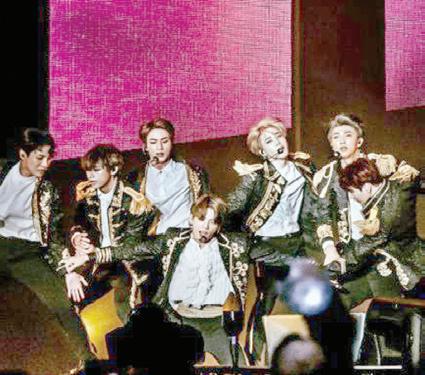
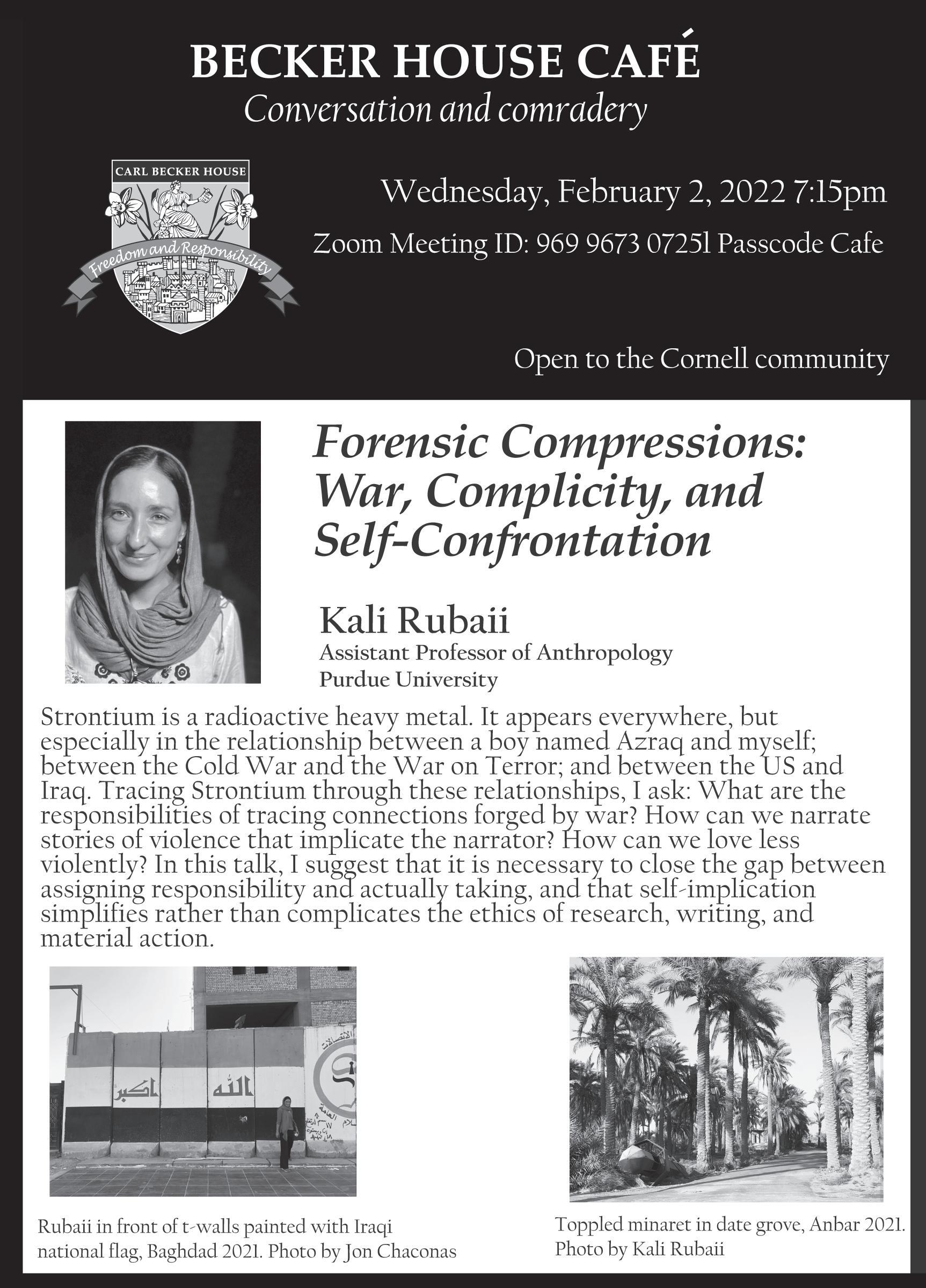
K-Pop experienced a stellar breakthrough in the U.S. during the 2010s, with such well-renowned groups as BTS and BLACKPINK entering the mainstream American pop scene. South Korean idols have amassed fans all over the world despite persistent language barriers; American fans know them well for their fun and catchy beats, sharp choreography and visually appealing aesthetic. Yet, much like Hollywood, behind K-Pop’s addicting beats and signature flashy choreography lies a much darker side that is rarely discussed: eating disorders.
While living in South Korea, I couldn’t help but notice the celebration of thin bodies everywhere. Pictures of female K-Pop idols showing off their pale legs and slim figures in advertisements for phones and soju were almost impossible to escape from. In fact, when looking at K-Pop idols in general, you can easily find this theme: extremely skinny, pale and almost inhumanely perfect features. This demographic, however, is extremely artificial — to be a
K-Pop idol, aspiring artists must audition and sign a contract with an entertainment agency. These agencies train individuals on how to sing, dance and entertain. While all of this seems like a pretty great deal, there’s a more sinister reality behind the dazzling prospect of becoming a celebrity.
South Korean entertainment agencies have long been notorious for managing the appearances of their idols. Trainees are frequently given “controlled food portions” and banned from eating any sort of junk food. These idols’ rigorous (and extremely unhealthy) diets are well known amongst weight loss enthusiasts. One of the most popular (and infamous) portion control regimens is called the Paper Cup Diet, which involves only eating food you can fit into nine tiny paper cups. The “IU diet challenge,” coined after the famous South Korean singer IU, is another daily meal plan that consists only of one apple, two sweet potatoes and a protein drink. Unsurprisingly, the singer herself revealed her struggles with eating disorders such as bulimia.
This strict standard of beauty that demands thinness is not simply a trend amongst the K-Pop community — it is an absolute requirement. If female idols
did not shape their bodies to be thin and fit the mold of societal beauty standards, they would simply be deemed unfit to be a celebrity.
Notably, in Sixteen, an audition show that had trainees compete for a spot in JYP’s new girl group Twice, Jihyo – one of the contestants – was fat-shamed publicly by a photographer. Her response? Silence. To be fair, silence was the only appropriate response a trainee could have; they were all actively trying to work in an industry that monetized not only their songs, but their bodies. If they wanted to succeed in the industry, they had no choice but to adhere to the demands of the company and their followers.
Although the world of K-Pop is still foreign to many of us, its entry into the U.S. opens up discussion of eating disorders within our own music industry.
Fetishizing celebrity bodies isn’t new in the U.S. American consumers, especially the media, have a knack for commenting on celebrities’ bodies and acting as if their words don’t have any impact on the subject. Just look how the media exploded over Adele’s weight loss this past year.
The singer stated, “The worst part of the whole thing was that the most brutal con-
versations were being had by other women about my body.”
In realizing the toxicity within the K-Pop industry and Hollywood, we become one step closer to deconstructing the extremely detrimental effects of fatphobia. While the issue of body image is not exclusive to any particular region in the world, I find it imperative to focus on South Korea and its extremely harsh standard of beauty and thinness.
While body positivity and self love movements have been gaining momentum recently within the U.S, that attitude is not as common in South Korea. Not only are these nearly impossible beauty standards directly harming K-Pop idols and their health, but they also hurt the impressionable young audience that looks up to these celebrities. Although we must celebrate the fun and exciting world of K-Pop and the artistry it embodies, it is important for us to view the industry critically and spread awareness about the dangerous effects of fat-shaming it promotes.
Audrey Ahn is a sophomore in the School of Industrial and Labor Relations. She can be reached at sa752@cornell.edu.
As Valentine’s Day approaches and stores are washed in ravishing reds and pretty pinks to show the affection present around us, we may subconsciously wonder — how does society develop its definition for lovers?
Hopeless romantics are people who cannot help but fall in love with every little thing in life. From the people they pass to the things they stumble upon, everything holds the potential for deep affection. Their innate emotion towards someone or something is to love, because that is how they cope with our random and unexplainable world. Love makes things make sense, even if the complications born from love do not.
As a hopeless romantic, I know that love is like a magic potion that has the ability to positively transform the world. But where does it come from? And how is it possible to use something as nonsensical as love to process something as equally confusing as life?
A study done by National Center for Biotechnology Information found that the majority of loneliness experienced by young adults is fueled by our cultural emphasis on romance and relationships. From an evolutionary standpoint, love is adaptive. In the earlier generations, love was only second to the goal of marriage. As years progressed, the importance and value of love grew more prominent.
Changes in the American dating process primarily spurred this advancement. In “Choosing Mates – The American Way,” Harvard sociologist Martin King Whyte writes, “In little more than a generation, dating replaced calling as the dominant custom [...] Dating involved pairing off of couples in activities not supervised by parents, with pleasure rather than marriage as the primary goal.”
cultural context. Individualistic cultures place a strong emphasis on independence and personal goals (for example, Chinese cultures place a strong emphasis on personal career goals over fostering intimate relationships). In contrast, collectivist cultures focus on interdependence and working towards collective goals (for example, those in American cultures spend more time understanding their partners and finding common ground). Notions of love and relationships stem from specific societal norms.
In American pop culture, arts put the topic of love center-stage in their projects. Adele’s newest album 30 , released Nov. 19, 2021, explores how she perceives love after her divorce. In an interview with Elle, Adele said that
people emotionally screaming her lyrics within days of release.
Similar to other cultural phenomena, I believe the concept of love is shaped and molded by the artistic culture that we experience every second. Whether this makes a positive or negative effect varies based on the individual. Love can be magnified and romanticized through heartfelt rom-coms and passionate love songs. However, love can also be suppressed and villainized through heart-wrenching movies and emotionally-infused breakup songs.
Amongst young people, the deluge of passionate content in pop culture and social media has the potential to foment loneliness for those who lack romantic connections in their lives. Yet, love is so subjective and influential that it is near impossible to generalize. Instead of a simple term, love is a collection of memories and experiences. Love could mean something completely different to you and the person beside you.

30 allowed her to voice her opinions on love and how she has grown from her past experiences with love.
She said, “It was more me divorcing myself. [...] self-reflection and then sort of self-redemption.”
Whyte further establishes that dating conventions became molded by youth culture instead of adult standards.
The development of love was also dependent on
Another recent pop culture project that shaped the philosophy and idea of love is Taylor Swift’s 10-minute extended version of “All Too Well,” a song originally released on the album Red . From accusing her exes of dishonesty in love to showcasing the heartbreaking reality of breakups, Taylor Swift’s masterwork got over half a billion
Hopeless romantics develop our burning passion for love through a combination of their own experiences and the influences of pop culture in diverse mediums of expression. We have frequently been hurt before. We have questioned why certain stories never continued. Every time our expectations are forced to rearrange, our desire for love grows. We fear that the love we wish for will never match the love we receive. Yet, we are not afraid of feeling, or of failing.
Are hopeless romantics weak?
Well, weak people will give up. Do hopeless romantics give up on someone who brings them happiness, warmness, security and hope? No. Hopeless romantics will pour every ounce of their energy towards that source until they have run out of love to give for the day. Then, they repeat showing their love and energy the next day. And the next. They are not afraid of being hurt because feelings are natural. Feelings make us who we are. As John Green stated, “That’s the thing about pain. It demands to be felt.”
So, no — hopeless romantics are in fact the strongest people you will ever meet. I am proud to count myself among them.
Haley Qin is a freshman in the College of Agriculture and Life Sciences. She can be reached at hq35@cornell.edu.
139th Editorial Board
KATHRYN STAMM ’22 Editor in Chief
ANUSHYA ALANDUR ’23
Business Manager
CATHERINE ST. HILAIRE ’22
Associate Editor
PRANAV KENGERI ’24
Advertising Manager
ODEYA ROSENBAND ’22
Opinion Editor
JYOTHSNA BOLLEDULA ’24
TAMARA KAMIS ’22 News
CAMERON HAMIDI ’22 App Editor
KRISTEN D’SOUZA ’24 Design Editor
HANNAH ROSENBERG ’23
Photography Editor
OMSALAMA AYOUB ’22 Science Editor
PUJA OAK ’24
Layout Editor
ANNIE WU ’22 Production Editor
MIHIKA BADJATE ’23
Assistant News Editor
SERENA HUANG ’24
Assistant Business Editor
ANGELA BUNAY ’24
Assistant News Editor
JOHN COLIE ’23
Assistant Arts & Culture Editor
AMELIA CLUTE ’22
Assistant Dining Editor
MADELINE ROSENBERG ’23 Managing Editor
NAOMI KOH ’23
Web Editor ANIL OZA ’22
Assistant Managing Editor YUBIN HEO ’24 Assistant Web Editor
VEE CIPPERMAN ’23 News Editor
NOOREJEHAN UMAR ’23
E.D. PLOWE ’23
YOON ’23
BENJAMIN VELANI ’22
Editor
PICHINI ’22
SRISHTI TYAGI ’22
MARIA MENDOZA ’24
ARANDA ’23
BASU ’23
RIGGS ’24
LEYNSE ’23
NAGEL ’24
Ad Layout Mei Ou ’22
Design Deskers Kristen Dsouza ’24 Puja Oak ’24 Production Desker Pico Ross ‘22 Working on Today’s Sun
Editors in Training
Editor in Chief Vee Cipperman ’23
Managing Editor Surita Basu ’23
Associate Editor Emma Leynse ’23 Opinion Editor Daniel Bernstein ’23
Arts Editors Isabella DiLizia ’25 Kacey Lee ’25
News Editors Roman LaHaye ’23 Pareesay Afzal ’24 Jiwook Jung ’25
Sports Editor Aaron Snyder ’23 Grayson Ruhl ’24
Photography Editor Julia Nagel ’24
Production Editor Katrien de Waard ’24

Noah Do is a sophomore in the College of Human Ecology. He can be reached at ndo@cornellsun.com. Noah’s Arc runs every other Monday this semester.
Few things in this world aggravate my poor type D soul quite like small talk. Uninteresting chats about the mundanities of day-to-day life, low-hanging fruit conversation starters, uninspired Buzzfeed quiz-esque inquiries about which shade of lilac I most identify with – my face contorts with discomfort just thinking about it.
Still, small talk is a social necessity. Our brains insist that the awkward demographic babble is a prerequisite for meatier discussions, no matter how unremarkable or just plain boring those details may be. You mean you’re in Dyson and want to go into consulting? No way! You’re studying C.S. and just completed a coding interview for Amazon? Wow, never heard that one before. You’re a pre-med who’s dreading the prospect of another eight years of education? Inconceivable! Maybe I’m just a short-fused hermit, but it’s these kinds of conversations that have me wishing I could flee to my dorm for my nightly descent into a vegetative media overload.
Sustaining small talk is a skill, one that I evidently do not have. And that’s a shame, because what I do have, or at least what I’d like to think I have, is a genuine interest in other peoples’ lives. The problem is that one’s name, year, major, hometown and favorite ice cream flavor usually aren’t at the center of that interest. I love hearing peoples’ stories, learning about the hardships and important lessons of their lives. Discovering why someone is the way that they are forges a closeness that small talk can hardly scratch. I don’t care so much about where you’re from, but rather, what you’re from.
My dad is an immigrant like my grandfather. His home life was far more tumultuous than my mom’s, characterized by the jaded dysfunction of many immigrant households. He grew up playing mediator, forced to reconcile how his father could both love and mistreat his family in the same alcohol-stained breath. Through my dad’s role in his family and his discovery of faith, he has become an incredibly affable and wise person.
His ability to connect with people and bring them into his world is a gift born of hardship. I see in him the beauty of loving others while seeking to understand them, even with their flaws. The wisdom he has drawn from the harshness of his childhood is a blessing to him and to me.
Small talk is, by function, a disservice to our understanding of the human condition.
My parents have both strongly influenced my life. My mom’s unique blend of immigrant work ethic and devoted affection reminds me everyday that sacrifice is the truest form of love. In my dad I see the capacity to draw humanity from anyone, no matter how troubled or coarse they may be. Their stories are my stories, and they cannot be overlooked when trying to understand who I am and how I think. But you wouldn’t know it from my name, year, major, hometown or favorite ice cream flavor (Noah, 2024, HBHS, Virginia Beach, cookies and cream).
My character today is greatly informed by the decisions and adversities of my family before me; subjects that I could never touch via small talk.
My mother’s father was an artist. His talent for painting was a once-in-a-lifetime phenomenon. During my mother’s childhood, he traveled to art shows all over the East Coast, selling oil paintings of lighthouses, autumn leaves and waterfalls, all with the post-war industriousness and broken English of a poor Korean immigrant.
My mother’s father came to the States in 1977, bringing with him a wife, two toddler-aged daughters and an incredible ability to paint. More important than his ability, though, was his love for his career. His choice to do work that he enjoyed made him a kind and loving father amidst a sea of bitter, hardened immigrants — much to the envy of my mom’s friends. Today, my mom is an incredibly loving and giving person who has received both the material and emotional blessings of her father and multiplied them tenfold.
Knowing someone as the product of their life experiences makes the small talk worth dredging through. In the process of building understanding, we make meaningful and consequential bonds. My close friends aren’t the people I share favorite TV shows or a Hogwarts house with, but those I view as fully-fledged individuals, the results of their unique life circumstances. My perceptions of them are fraught with nuance which makes me appreciate their willingness to share life with me. They’ve opened up their stories to me, and I’ve been blessed to be able to see the world through their eyes. Our lives are the intersections of countless unlikely events. The chances of you becoming exactly you are so incredibly low that your story deserves to be shared with others, and others’ with you. Your tendencies and fears and dreams are precious because they are impossible to replicate.
Small talk is, by function, a disservice to our understanding of the human condition. It relies on our commonalities to make discussion, when it’s really our differences that are the most fruitful wells of opportunity. Questions of family, culture, traumas, anxieties: these are the entrances into one’s humanity. Every first encounter with a new person is the first and last of its kind, because you will never meet anyone exactly like them ever again. Surely you can do better than small talk.

Vanessa Olguín is a senior in the College of Arts and Sciences. She can be reached at vjo6@cornell.edu. Long Story Short runs every other Friday this semester.
My high school English literature teacher still lives in my mind. Somewhere in between telling us what cocktail drink we most represent and breaking down Camus, he wiggled himself into my brain, and I haven’t been able to think the same since. He was the person who broke the news to everyone sitting in his senior English class that after graduating high school, we wouldn’t talk to the majority of our friends.
“Most of your friends right now are friendships of proximity,” he said. “You won’t be friends with most of them after high school.”
I hadn’t understood it at the time; I didn’t know the different ways life would get in the way of friendship.
And I didn’t know that we were all just starting on our journey of learning and uncovering our own selves.
I assumed he was wrong, but I also assumed that I knew more than I did. I thought it would be easy to keep in touch; I believed that all of my high school friendships would survive the passage of time, the distance of thousands of miles and the changes in our identities. I knew that my friendships were all genuine, deep and potentially lifelong. But I didn’t know that although they would last for a long time, they might not last forever. Because what does?
In college, I’ve thought about those “friendships of proximity.” Tose are the ones that can form in your classes or on your dorm foor. Te people you meet may be cool and nice, but they aren’t necessarily “your people” at frst. Friendships of proximity, I think, are essential to fguring out who you are as a friend and who you’d ultimately like to be friends with — especially within the variety of extraordinary people you’re bound to meet in college. Some turn into the closest friends, and others excitedly greet you as you pass in the hallway or on the quad.
When I came to Cornell, the frst friends I made eventually became some of my closest college friends. Tey introduced me to a world of variety and possibility that I didn’t know existed. With them, I found another level of vibing with someone so hard that you just can’t stop laughing when you’re around them. Tey were the reason why leaving for home at the end of freshman year felt so difcult. Tese people — these strangers who I didn’t know a year before — had seen me in my highest of highs and in my lowest of lows, all while navigating their own transformations. Tey had morphed into my people.
Which is why it’s so difcult for me now to refect back on my English teacher’s blunt realism. But I’m
anxious, constantly thinking, and I hate uncertainty — to the point where I look up Wikipedia synopses of movies as I watch them.
To think about this as a second semester senior — when all of the friendships I have now are the ones that have survived the trials and tribulations of college, a worldwide pandemic and social isolation — is de-stabilizing. Because my friends are my closest comforts, so I hope they aren’t friends of proximity.
I mostly think about this now because I’m starting to reach a conclusion, which I’m honestly still convincing myself to believe. As much as I want to know the ending to the amazing, life changing friendships I’ve made in college, I don’t want them to end in indiference. I’m trying to learn to be okay with friendships ending after years of impacting my life. Tere’s no Wikipedia synopsis on this.
So amidst my insecurity, I’m happy that I met my people and that they stuck by me this far. I’m grateful that they made me laugh so hard I fell on the slope, boiled me some country peach passion tea, taught me how to ski, challenged my preconceived notions and even knitted a balaclava for me. I’m touched that they saw me and my vulnerability, hunkered down and said, “Yup, I’ll stay.” I’m eternally grateful that they were there for me every step of the transformative way, before I could even figure out how to be there for myself.
My sentimental self would dedicate a whole playlist to them, but it couldn’t possibly capture all my thoughts and feelings. If only there was a repeat button so that we could do it all over again.
Regardless of how we eventually end up, I hope they know how excited I am for all the time we have left. In my time here, they’ve been the best thing that ever happened to me.
Daniela Wise-Rojas ’25 is a freshman in the College of Arts and Sciences. She can be reached at dnw26@cornell. edu. Anything But MunDANIties runs every other Monday this semester.
It’s easy to feel overwhelmed when you’re in a new space like an elite school. You see Hotelies wearing “professional” outfts every Friday and overhear students discussing buying expensive suits and outfts for their dream internship interview. Te amount of hierarchical systems like admissions ofces leads to a weird feeling of inferiority, as if you can’t have a real conversation with anyone. Sometimes you have to hold yourself back from doing simple things because it’s “unprofessional.”
But who defines this standard of professionalism? My latest epiphany: professionalism is a social construct upheld by whiteness in predominantly white spaces and elite institutions like Cornell in today’s world. “Westernness” teaches its own superiority to other cultures, and it’s difficult not to internalize it.
It seems radical to compare standards of professionalism to white supremacy and its roots, but hear me out – here’s what sparked this epiphany.
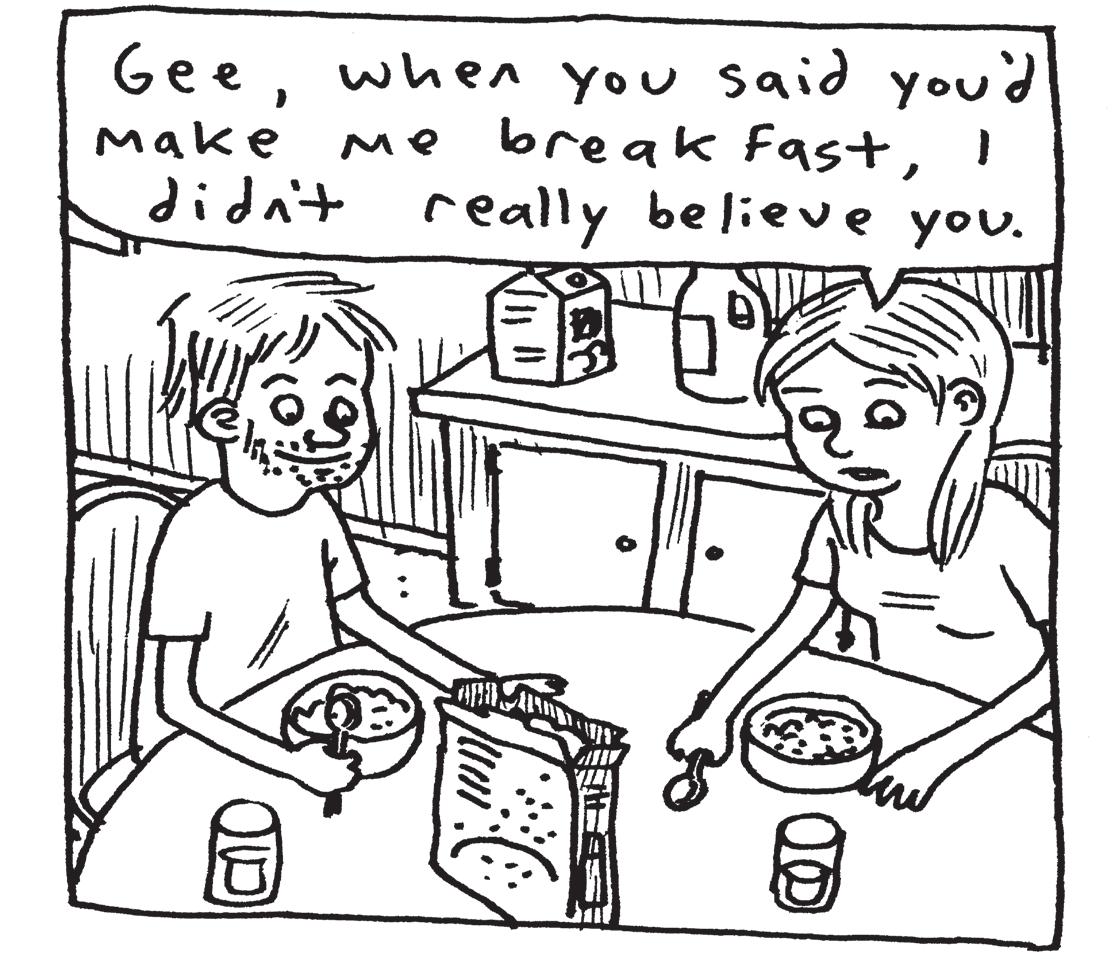
Sitting at the desk in my dorm, I
stared at the bowl of cereal I made to get going for the day while on a Zoom call. I was in an interview to become a resident advisor for next semester, and there was an awkward moment of silence when my interviewer took notes in between my responses. My stomach grumbled; reading the (virtual) room, I asked my interviewer if it was okay to eat my cereal in between responses. Laughing, he told me “of course.”
When it was my turn to ask questions, I asked, “What’s the funniest thing you’ve seen during an R.A. interview?” I was moderately stunned when he replied, “You eating cereal, honestly.” I acknowledged how I knew it wasn’t the most “professional” thing. Ten he elaborated on how professionalism has racist roots, to begin with, and we shouldn’t put much stake in it anyway.
My brain took note of this, and I haven’t been able to stop thinking about it since. It’s something that most people don’t think twice about. Everyone tries to be “professional” when they need to. But what exactly does being “professional” mean? It means adhering to standards that don’t exist in other spheres outside of primarily white ones.
Eating during classes and interviews seems “unprofessional” according to Western standards. In a similar way, Western standards deem eating with one’s hands (or non-fork things) “unprofessional” or “unclean,” though that’s normal in some Asian cultures. What makes it “unprofessional” is not the act itself, but its non-white context.
T is train of thought all began because I was hungry and felt like my interview wasn’t going horribly. If anything, I thought it would help my interviewer see that I was a real person. To believe that cereal indicates how real I am is insane, but it makes sense in our
professional context.
T e Stanford Social Innovation Review published a piece called “Te Bias of ‘Professionalism’ Standards” by Aysa Gray. Among other subjects, Gray described how whiteness plays out in workplaces and other “professional” spaces.
She writes, “Te story unfolds many ways: in white and Western standards of dress and hairstyle (straightened hair, suits but not saris, and burqa and beard bans in some countries); in speech, accent, word choice, and communication (never show emotion, must sound “American,” and must speak white standard English); in scrutiny (Black employees are monitored more closely and face more penalties as a result); and in attitudes toward timeliness and work style.”
Gray’s article also notes, “People with nonwhite sounding names find it more difficult to get responses to their job applications,” according to the National Bureau of Economic Research.
Sometimes people in a work environment hear a language other than English and don’t think it’s “appropriate.” Gray discussed a president of a human resources consulting frm who thought it was “hostile” when a language aside from English was used in the workplace.
“Often behind such descriptions is xenophobia,” Gray writes, “which creates a work environment biased toward white professionalism. Research fnds that people with a non-native accent — one that does not sound white or American — face a glass ceiling, negatively impacting their promotion trajectory.”
Essentially, everything we know about being “professional” involves being more white. Speak perfect English. Have straight hair (forget about colored hair and tattoos, that’s just horrendous, even if your tattoo is connected to your
Native American heritage). Be a specifc body shape and size (when the metrics of BMI were already connected to white bodies without consideration for groups like Latina women, who sometimes have naturally curvy bodies). Don’t take breaks. Grind and grind. Eating on the job could get you fred, even though eating is a natural part of being a human.
I’m pretty sure most people of color had some form of culture shock coming to Cornell. I know I did. It’s almost as if the whiteness is scary. I went to a predominantly Asian public school in the Bay Area. I’m a queer, biracial, neurodivergent Latina; I was so used to being around other nonwhite cultures, even if they weren’t my own. I never had to navigate feeling socially and culturally excluded based on who I am alone. I coped by finding my communities (as I’ve written about in a previous column) within Cornell at large. I think that I and the communities I’m a part of agree that some things, such as Latinx people side-kissing on the cheek to greet people, that are “normal” to us wouldn’t be “professional.”
My advice is to forget about Western expectations of professionalism. It can be challenging. People will look at you oddly. But then, others will start to follow your lead. I now eat in classes whenever I want (given that it’s COVID safe, of course). I dress however I want. I embrace my culture(s) whenever I want. It shouldn’t have taken me 18 years to get there, but it did. If you are white, allow other people to follow your lead by breaking the boundaries yourself and creating safe spaces for people of color. Learn to hold institutions accountable. Just because Cornell accepted you doesn’t mean you have to stay silent anytime you feel out of place here. You don’t owe anyone anything except respect.

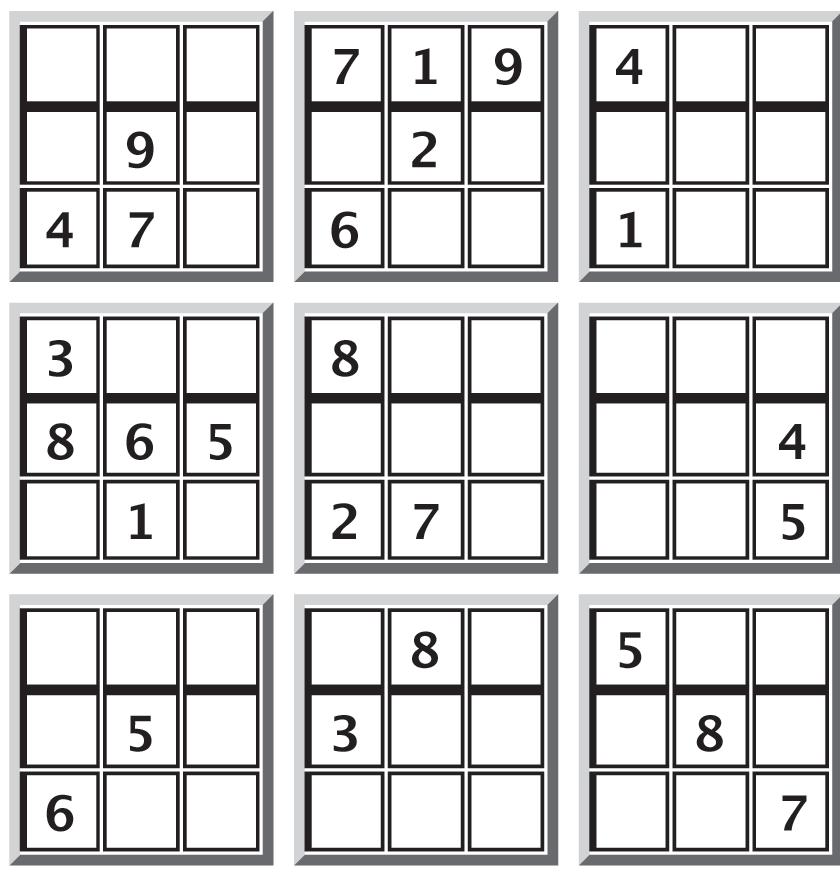
Fill in the empty cells, one number in each, so that each column, row, and region contains the numbers 1-9 exactly once. Each number in the solution therefore occurs only once in each of the three “directions,” hence the “single numbers” implied by the puzzle’s name. (Rules from wikipedia.org/wiki/ Sudoku)

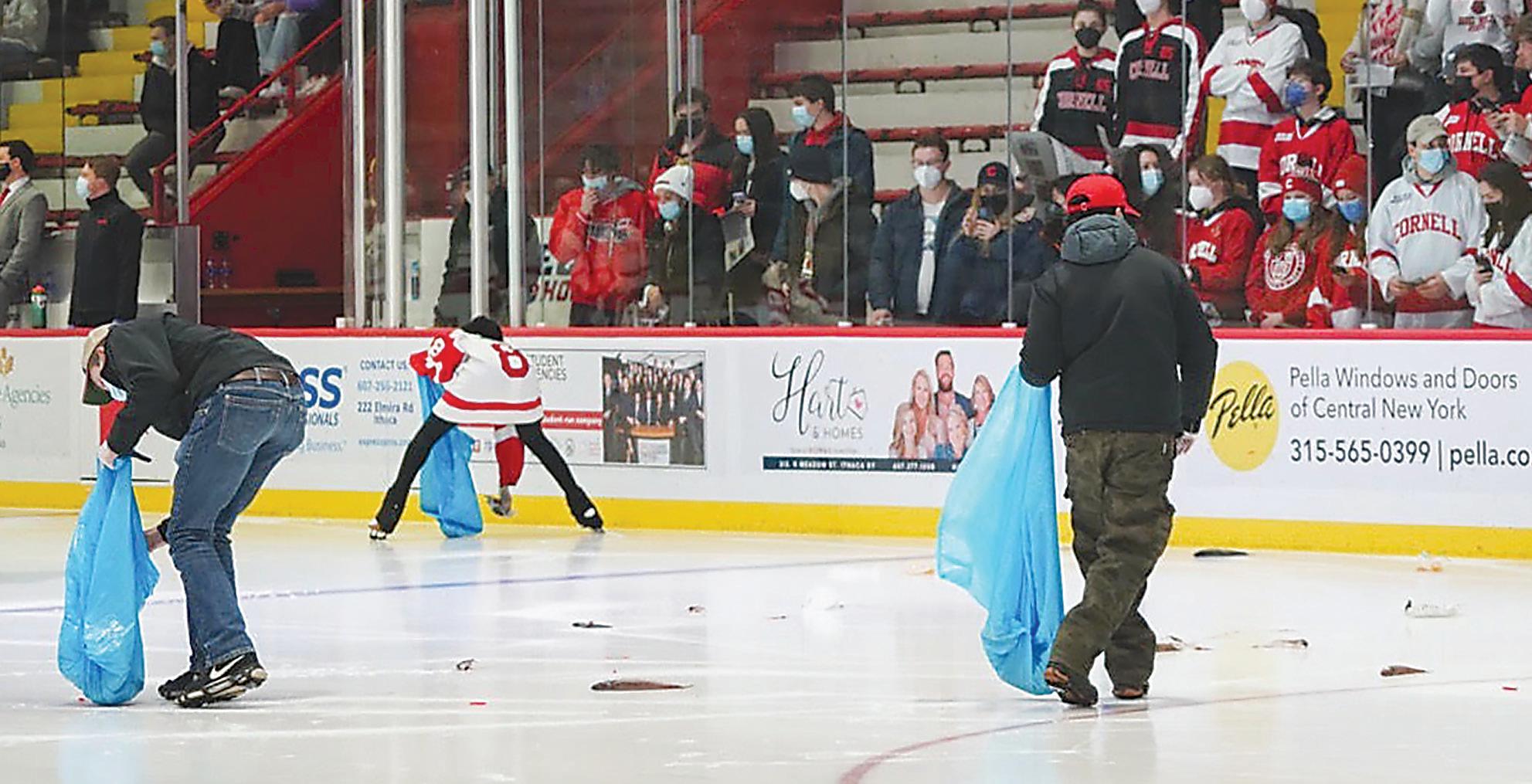


On Saturday night, for the first time in two years, Lynah Rink smelled like fish. It could only mean one thing – Harvard was back in town.
The Lynah Faithful were a bit slow to welcome the visitors from Cambridge, but by the time Harvard’s Mitchell Gibson led his team out to the blue line, the first fish was in the air.
While the tradition continued, the ice was littered with fewer fish than in previous years. Lynah Rink was capped at 50 percent capacity on Saturday night.
“You can certainly tell that there’s less people in there,” said Associate Head Coach Ben Syer. “It’s going to be really nice once we can get everybody back in the building.”
The matchup, which is always the subject of anticipation and excitement on the parts of players and the Faithful, was an especially important one for Cornell after it settled for a disappointing tie on Friday night against Dartmouth.
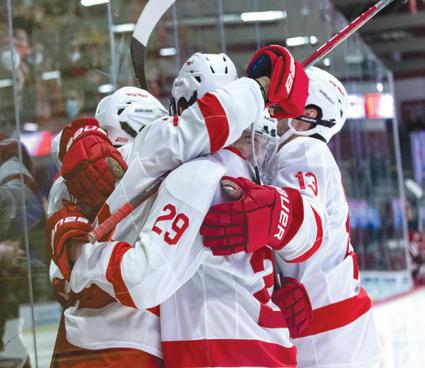
For the second night in a row, Cornell (13-4-3, 8-2-3 ECAC) was left without a decisive outcome, as it battled the Crimson (10-7-5, 8-5-2 ECAC) to a 2-2 tie. Mirroring Friday night’s outcome, Cornell came up short in the shootout and walked away with one point in the ECAC standings.
The game was the second consecutive tie between Harvard and Cornell at Lynah. The rivals skated to a 1-1 tie in January 2020, the last time Harvard visited Lynah.
Just over a minute after the fish remnants had been scraped off the ice, Cornell went on its first power play of the night. While Cornell struggled on its first few power play tries on Friday night, it was effective early on against Harvard.
net, but Matthew Coronato poked the puck in.
Cornell’s cold streak continued past the midway point of the period. The Red only notched one shot in the first half of the period, eventually falling behind 23-9 in the shots department.
The Red started to put things together after the media timeout.
“We reminded the guys of how important it is to have some [offensive] zone time and to be physical,” Syer said. “I thought they finished the period pretty strong.”
With 9:20 left, Gibson made a quick glove save on junior defenseman Travis Mitchell’s shot from the high slot. 20 seconds later, Conell scored to tie the game.
With 8:59 to go in the second, senior tri-captain Kyle Betts snuck a pass through the crease to junior forward Matt Stienburg, who connected to even the score at 2-2.
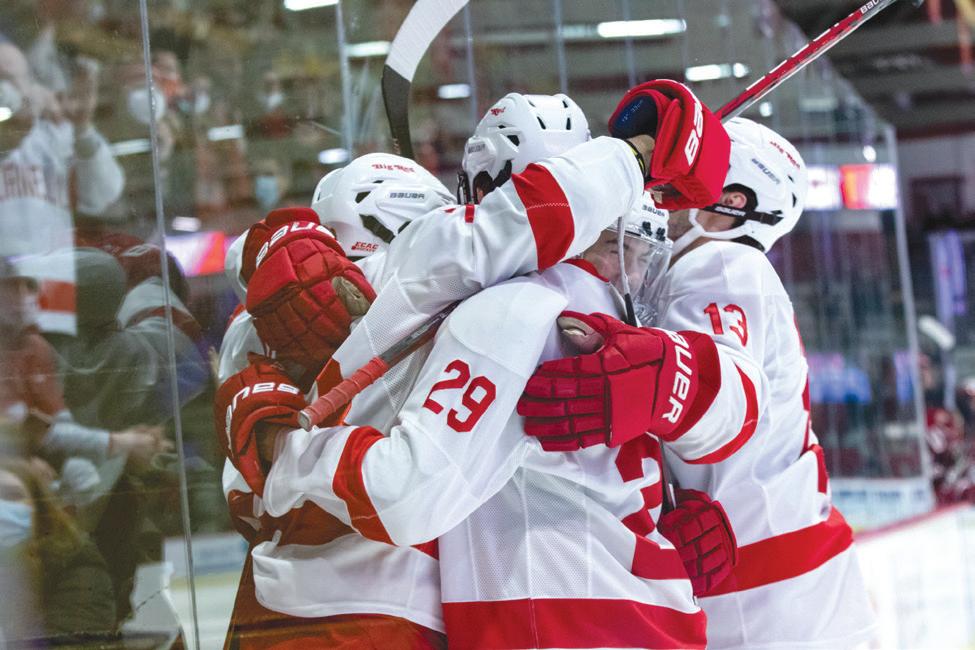
20 seconds into the power play, senior tri-captain Brenden Locke gave Cornell a 1-0 lead when he scooped up a rebound in the faceoff circle and fired the puck to the back of the net.
The early lead provided a notable advantage for Cornell after it conceded the first goal in its games against Princeton and Dartmouth. Cornell entered the contest with a 9-2-1 record when scoring the first goal of the game.
The Red continued its strong start, jumping out to a 6-2 lead in shots through the first six minutes, but played sloppily and afforded Harvard plenty of chances for the rest of the period.
Harvard finished the period with a 15-8 lead in shots but was unable to score. Freshman goaltender Ian Shane allowed juicy rebounds in the crease and slot, but Harvard was unable to convert on its chances.
“They’re an extremely skilled team, so you can’t give them a lot of opportunities,” Syer said. “You’ve got to continue to stay on top of them and frustrate them and not give them time and space to get shots.”
The Crimson’s fortunes changed early in the second period. Marshall Rifai put Harvard on the board with 18:39 left in the second, firing a shot from above the faceoff circle past Shane’s blocker to even the score at 1-1.
Harvard kept pressing, hitting the crossbar with a shot less than a minute later and eventually taking a 2-1 lead at the 15:37 mark. The Crimson caught Shane out of position after making a save. Locke got in the way of Harvard’s first look at the open side of the
The Red generated momentum after Stienburg’s goal. With under five minutes left, a series of shots put Gibson on his side, but Cornell could not find any open lanes to shoot at the unprotected net.
The two teams went to the second intermission in a 2-2 deadlock.
With both teams eager for a third period lead, Cornell and Harvard played a neck and neck start to the final frame.
The Red had two long possessions in its offensive zone early in the period, and Harvard got some chances in the middle of the period, but both goaltenders made five saves in the first 12 minutes of the period to keep the score tied.
Shane’s play kept the Red in the contest. While the freshman goaltender did allow Harvard a few chances off of rebounds, he also made some nice saves and did a good job of seeing the puck through traffic. He finished with 34 saves on 36 shots.
“I think [Shane] had another really good night,” Syer said. “He competed and gave us an opportunity to come away with a tie.”
Neither team could break the deadlock down the stretch of the third and, for the third game in a row, Cornell went into three-on-three overtime.
While Cornell entered the night with a 4-0-2 record in overtimes, Harvard’s talented forwards make the Crimson a dangerous team to face in the three-on-three format.
The two teams traded chances in overtime, but neither found the back of the net, giving Cornell its second tie in as many nights.
Cornell fared better in Saturday night’s shootout, going six rounds with the Crimson before coming up short. While the game ended in a tie, Harvard left Lynah with two league points while Cornell was stuck with one.
Cornell will look for a more decisive outcome in its Tuesday game with Brown.
The two results this weekend, while not losses, were still disappointing and marked the end of an up-and-down January for Cornell.
The Red was swept by Arizona State to open 2022, but bounced back the next weekend and swept then No. 5 North Dakota. After an easy win at Yale, Cornell came back to Lynah and fell to Princeton before bouncing back with an overtime win over then No. 1 Quinnipiac. The two ties this weekend round out a 4-3-2 month.
“It’s definitely a tough situation. I think ultimately we just have to stay positive and keep on grinding,” Locke said. “I don’t think there’s any huge, gigantic change we have to make. It’s just everyone buying in and making sure we’re attentive to the small details.”