The Corne¬ Daily Sun



By ROCHELLE LI Sun Staff Writer
A savvy idea and a Cornell education helped 15 alumni make it onto the Forbes' annual 30 Under 30 list this year. Crafting concepts ranging from sports drinks to insect-sized robots, young Cornell alumni are “putting a new twist on the old tools of the trade," according to Forbes.
The annually released list compiles the 30 top “trailblazers” in 20 different industries for a total of 600 people. The Cornellians featured include entrepreneurs creating new ways to manage healthcare,
scientists developing “artificial photosynthesis” and startup founders that have raised millions of dollars.
Other similar universities also have their fair share of alumni on the list: Columbia has 11 alumni, Yale has 19 and Stanford tops the list with 54 alumni.
Kristen McClellan ’12 started her company, SnappyScreen, a sunscreen application system, while she was at Cornell. During her freshman year, McClellan competed in an elevator pitch competition. Over the next three years at Cornell, she built three prototypes and conducted her first trial period. After she grad-
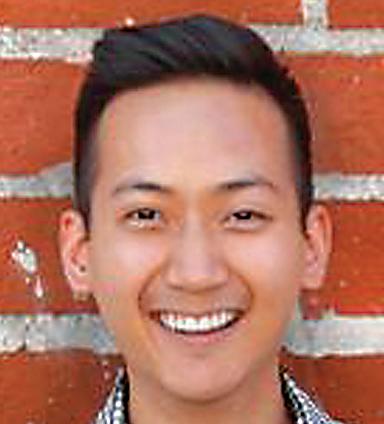
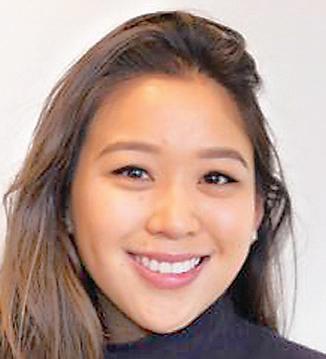
uated, McClellan continued growing SnappyScreen into a company that now expects to make almost $3 million in sales this year.
Another startup founder, David Roger ’13, former dining writer for The Sun, is the CEO of Felix Gray, which sells specialized eyewear that filters out blue light. Roger’s eyewear is designed for people who

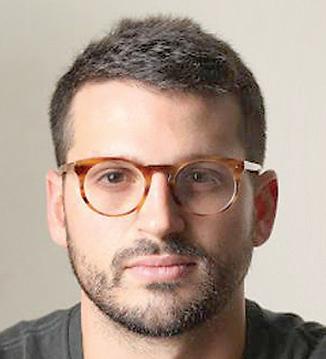
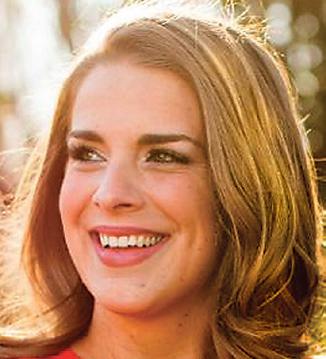
spend a lot of time looking at their screens and helps to minimize eye strain. Felix Gray has more than 100,000 customers and is expected to earn $14 million this year.
Along with McClellan and Roger, 10 of the 15 alumni will be interviewed in
Owner calls new location the ‘center of the universe for Ithaca’
By MEGHAN FLANIGEN
Sun Staff Writer
Ithaca’s Collegetown Bagels will be moving their downtown location this summer and will be making additions to its menu offerings. Currently located at 203 N. Aurora St., the popular bagel place will move to the new City Centre building at 301 E. State St. Gregar Brous, owner of Collegetown Bagels, said that the eatery has “been looking for space in the downtown area that would be a bit larger in
See BAGELS page 5

By JOHNATHAN STIMPSON Sun Assistant Sports Editor
For well over a hundred years, McGraw Tower’s 21 bells have set the mood for an entire campus and town, performing everything from the iconic “Alma Mater” on fall evenings to elaborate renditions of the Grateful Dead.
But 161 steps above Ho Plaza, it is easy to take the source of the thrice daily, boisterous melody for granted.
According to Sonya Chyu ’19, a current member of Cornell Chimes, some students believe that the quintessential clock tower concerts are automated.
“A lot of people don’t realize that the chimes are played by actual, fellow students,” she said. “Some people think the chimes are just played by a computer.”
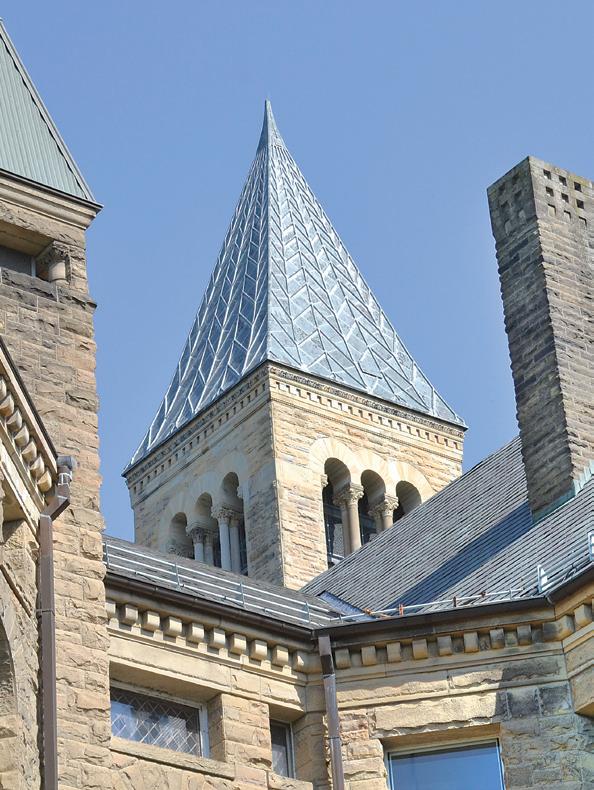
Not only are the chimes not automated, but earning the right to serenade a campus of almost 15,000 people is not easy. Students who are tasked with playing the chimes, called “chimesmasters,” are chosen in an annual competition that runs from February to April.
While the competition is open to all students with at least two years remaining on campus, the tryout process is designed to select the very best of Cornell’s musicians, according to Chyu.
Over the course of 10 weeks, a pool of about 40 candidates is gradually winnowed down to an elite
See CHIMES page 3

Monday, January 28, 2019
Deep Tech Takeover
8 a.m., Atrium, Duffield Hall
Arthur Ovaska: Selections From an Archive
8 a.m. - 5 p.m., Bibliowicz Family Gallery, Milstein Hall
Kota Ezawa: Paint Unpaint
8 a.m. - 5 p.m., John Hartell Gallery, Sibley Dome
All Labor Has Dignity: Martin Luther King Jr. and the Labor Movement
9 a.m. - Midnight, 227 Ives Hall
Don’t Forget Us: The Plight of the Hemlock and Ash Trees – Stone, Plate and Photo Lithographs
10 a.m. - 2 p.m., Brian C. Nevin Welcome Center
Junior Recruitment Workshop: Florian Gunsilius 11:40 a.m. - 1:10 p.m., 115 Ives Hall
Sam Price: Frame of Reference Noon, Experimental Gallery, Tjaden Hall
“Gardenlust: A Botanical Tour of the World’s Best New Gardens” - Chris Woods 12:10 - 1:10 p.m., 498 Uris Hall
“Agroforestry Issues in the Ecuadorian Amazon Region,” by Luisa Trujillo 12:15 - 1:10 p.m., 153 Uris Hall
The Application of Next Generation Sequencing Technologies in the Animal-Based Agriculture and Food Production Systems 4 - 5 p.m., 146 Stocking Hall
A Tale of Two Triplets: Finding and Exploiting Mixed States for Singlet Fission and Beyond 4 - 5 p.m., 119 Baker Lab
Object-Oriented Design: Bridging From Use Cases to Class Design 4:15 p.m., 253 Frank H. T. Rhodes Hall
Chia, Amaranth and Quinoa: From Ancient Seeds to “Superfoods” 10 a.m. - 2 p.m., Brian C. Nevin Welcome Center
“Edgar S. McFadden – A Life of Contribution to Wheat Improvement” 12:20 p.m., 135 Emerson Hall
Exploring Geo-Text Data: Place Names, Place Relations and Place Sentiments 1 - 2 p.m., Mann Library
Philippe Rahm: Preston Thomas Masterclass 2:30 p.m., Abby and Howard Milstein Auditorium
Chemogenetics to Determine How NPY/AgRP Neurons Regulate Thyroid Hormone Levels 4 - 5 p.m., College of Veterinary Medicine

By MARYAM ZAFAR Sun Staff Writer
Like many Cornellians, President Martha Pollack will be undertaking an extracurricular activity — starting next week, President Pollack will serve on the board of IBM, the technology company announced last week.
Compensated directors who served the full year earned at least $300,000 in earned fees or cash in 2017, according to the IBM Proxy Report. The role involved nine overall board meetings and 16 committee meetings in 2017.
The IBM board appeared excited to invite the president onboard.
“Martha Pollack is a renowned AI researcher and technologist and an expert in AI. We are excited about adding her skills and expertise to the IBM board,” said Ginni Rometty, IBM chairman, president and chief executive officer, in the company announcement.
The IBM press release touted Pollack’s pre-Cornell technological experiences, citing her work for SRI International, Inc. and the University of Pittsburgh’s Intelligent Systems Program.
“Her perspective on education and the use of technology to improve lives will be great assets to IBM and to our shareholders,” Rometty said.
Pollack joins one other individual on the board who hails from an institution of higher education, Shirley Ann Jackson, president of Rensselaer Polytechnic Institute.
The president characterized her involvement as valuable for both the University and IBM.
“It is important both for universities to have an awareness of the corporate world, where many of our students go on to work, and for those in the corporate
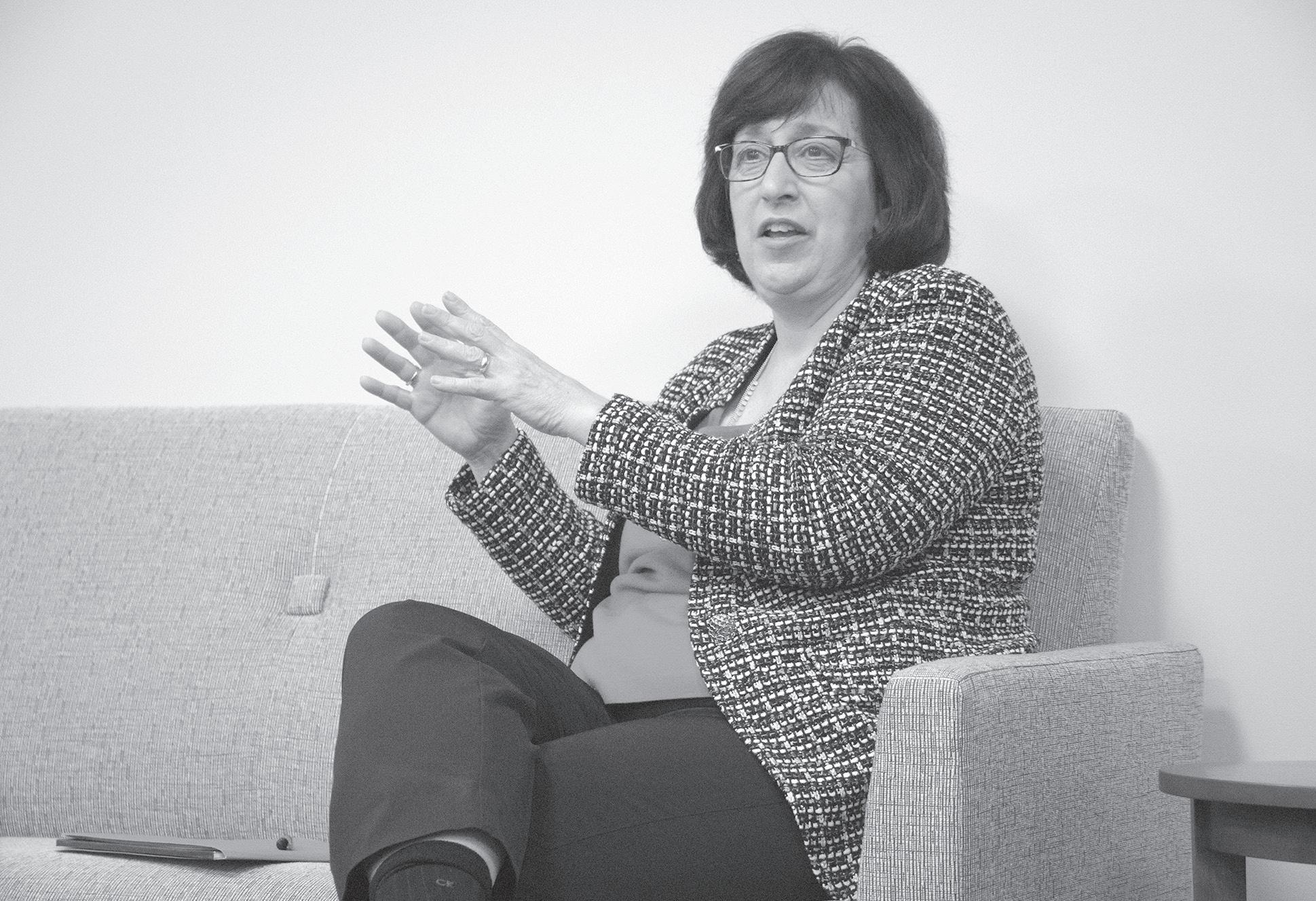
DZODZOMENYO / SUN ASSISTANT PHOTOGRAPHY EDITOR
Extracurricular activity | In a move that is common among top university officials, Pollack will join the board of the New York-based tech giant.
world to have a better sense of what happens in universities,” Pollack said in a university press release.
Other similar institutions also have presidents wearing multiple hats. Yale University president sits on the advisory board of the Connecticut Folk Festival, according to his resume; Lee Bollinger, president of Columbia University, previously served on the Federal Reserve

Bank of New York during his presidency.
According to the press release, Pollack noted the technology company’s founding in New York’s Southern Tier and its “commitment to diversity.”
CHIMES Continued from page 1
group of only a handful. Although there are no limits or quotas, Cornell Chimes only appoints an average of two new chimesmasters a year.
The tryout process is divided into two stages. For the first four weeks, candidates play a practice instrument that allows them to learn the instrument without the whole campus listening. About six or seven compets — or candidates — advance to the next stage, where they play two concerts a week for six weeks. The latter stages can require up to 15 hours a week from participants.
At the end of the 10-week tryout process, compets are finally selected on the basis of their performance in several concerts judged by current chimesmasters. The position is a
lifelong appointment and alumni of the program forever hold the right to perform when back on campus.
“Once a chimemaster, always a chimemaster,” Chyu said.
As a result, Cornell Chimes is a tight-knit group of only seven current members, bound together by a shared love for participating in one of Cornell’s oldest, most recognizable traditions.
“So many freshmen come to ca mpus for orientation and one of the first things they are presented with is the unique sound of the clocktower,” Chyu explained. “For most of us, it’s incredibly rewarding to be a part of something that is so special to the Cornell experience.”
Johnathan Stimpson can be reached at jstimpson@cornellsun.com.
By AARAN LEVITON Sun Staff Writer
Social media use — or perhaps more appropriately, overuse — has been increasingly blamed by many for spurring anxiety, addictive behavior and, most simply, wasting a lot of time.
According to recent Cornell research, those fears may not be misplaced: A 2017 Department of Labor report estimated that up to 16 billion dollars are lost each week — or nearly a trillion a year — due to employees spending time online instead of working.
The psychological and eco-
nomic costs of frequent social media consumption inspired
Cornell Tech Fabian Okeke grad to find a more effective way to curb usage than easily-avoided blocking apps.
“You have cases where a few minutes becomes an hour, because these programs have been designed to keep pulling people back in,” Okeke said, according to a University press release. “So we started thinking about ways we could design different kinds of interventions that could help people focus back on work.”
The intervention Okeke and his colleagues settled on centered around evaluating how
negative reinforcement might affect the likelihood of undesirable behaviors; rooted in both nudge theory and negative reinforcement, they developed an app that would vibrate every five seconds when the user was using Facebook and inform users how much time they spent on the app.
Their three week study found that users decreased Facebook use by 20 percent, with 28 of the 31 participants who completed the exit survey saying that the app also increased their self-awareness over their Facebook use.
However, not everyone found that the vibrations were
irritating. Only 12 out of 21 participants found the vibrations “very irritating.” The study concluded that users’ aversion to the vibration was not strong enough to cause them to completely stop using Facebook.
Even with the overall decrease in Facebook use, the study found that the vibrations had no impact on the number of times users opened the app. After the preventative measure was removed, people returned to their regular use of social media, pointing to the intervention’s efficacy.
Okeke hopes to translate his academic findings to practical
application and plans to make the study’s app publicly available. Given that the study included only 50 total participants, the researchers also aim to replicate the study’s design on a larger scale in the future.
“Determining how best to personalize or optimize the intervention so that it most effectively helps people to reduce their consumption of digital content is an exciting area for future work,” the study said.
Aaran Leviton can be reached at aleviton@cornellsun.com.



Nearly 50 executive directors from Cornell Cooperative Extension county associations from across the state met with senators and Assembly members from their respective districts on Jan. 22 at the Capitol Building in Albany. The CCE representatives called upon the lawmakers to increase state funds currently appropriated to them, requesting lawmakers to double their current stream of contributions. According to CCE Director Chris Watkins, a rise in funds would help Cornell educators and community members respond to emerging issues, such as “the opioid crisis and invasive species.”
Man Involved in Dryden Armed Home Invasion
Sentenced
Henry J. Moreno, 29, one of the men involved in a home invasion in Dryden in April 2011 was sentenced to two years in prison this week by Judge Joseph Cassidy of New York’s 6th Judicial District. Moreno and Kevin P. Chambliss, 32 were indicted on several felony charges, including four counts of first-degree burglary, second-degree strangulation, first-degree kidnapping and second-degree criminal possession of a loaded firearm in June. Chambliss was also charged with first-degree criminal sexual assault.
As the government reopens after a 35-day shutdown, the 116th Congress will reconvene this week, testing out new legislative opportunities in a divided government. The House will focus on legislation prioritized by Democrats, including a bill to increase wages for federal workers. Senate Republicans, meanwhile will attempt to pass a bipartisan bill that includes a disputed provision targeting the movement to “boycott, divest from and sanction” Israel.
Former Starbucks CEO Running for President as Independent
Howard Schultz, who transformed Starbucks from the local Seattle shop to a global chain with nearly 30,000 stores, is running for U.S. president. Schultz, a long time Democrat, is running as an independent because he believes that running as a Democrat would require him to support policies that he views as too left. Democratic critics argue that Schultz would by split the Democratic vote.
—
order to expand our brand and take it to the next step.”
When Brous discovered that CTB’s current building was about to undergo development, he decided to look for a new location. He found one in City Centre, a gigantic apartment complex that Brous called “the center of the universe for Ithaca.”
City Centre, expected to open later this year, fills an entire city block and combines ground-floor retail, upper floor apartments and underground parking.
Brous believes that the new location will connect people from all over the city, including Cornell and Ithaca College. He also hopes that the new location will provide a refreshing dining experience by expanding the menu and renovating the store.
Along with the move, CTB plans to incorporate many new features for the store. The
business plans to update its inside and outside seating areas. It will also slightly alter the menu by updating sandwich options and adding beer and wine to the drink menu.
The owner also described how the new location will be more accessible. For Cornell students, the new downtown location will have a bus stop across the street and parking for cars and bikes. The new CTB hopes to also include more grab-and-go items. It also plans on expanding hours, staying open later in the day.
Brous hopes all of these changes will increase CTB’s footprint.
“Increasing our hours, seating options, and product line will hopefully enable us to not only maintain but also expand our customer base, possibly to people staying in hotels near the City Centre building,” he said.
Even though there will be many new changes and additions, Brous wants to maintain CTB’s traditional base, such as including CTB’s signature blackboard menu system.

“We want people to see that the store is a new concept, while sticking with our base as well. We want to advance our base but want our customers to walk in and not feel like it is just a brand new building,” Brous affirmed.
In order to stay in touch with customer preferences, the business will be conducting surveys within the next few months in order to get ideas from customers about what kinds of products and service styles they would like to see. This will give the business an opportunity to address consumer needs and trends.
Brous feels the new location will be key in its role in the greater Ithaca community.
“It will be a place that will draw local Ithacans and college students coming down from both hills together,” Brous said, calling it “a location that will bridge the communities together.”
Meghan Flanigen can be reached at mfanigen@cornellsun.com.
ALUMNI
Continued from page 1
Alumni Programs. Amanda Hatcher, senior associate director at CEN, thought of this event as a way to recognize the Cornellians featured in the Forbes list and showcase their achievements to other alumni.
“We’re looking to do more than tweet about it or post it on Facebook. I wanted to congratulate them and highlight them,” Hatcher told The Sun. Hatcher and Amanda Massa, associate director of Young Alumni Programs, decided to host a virtual rather than physical event because they wanted to respond
quickly to the new 30 Under 30 list. With the wide range of alumni locations and availability, an online event meant that more alumni would be able to join. “It was definitely a good surprise that [the alumni] wanted to take part in it,” Massa said. The event will be hosted by two other Cornell alumni, Iyore Olaye ’16 and Lou Diamond ’92, who will ask questions submitted by the audience. Questions can be submitted both prior to the interviews and as the interview is occuring.
Rochelle Li can be reached at rli@cornellsun.com.
My long and grueling trips back to Ithaca from China usually involve spending a night in New York City, and being the theatre nerd I am, that always means a potential opportunity to see shows. Unsurprisingly, right after I booked the hotel for my trip back from winter break, I gave in to the temptation of reading The New York Times’ theatre reviews. And before I knew it, I had the ticketing pages of about 10 shows open on my browser.
I ended up buying none of them, mostly because they were just so damn expensive. Bryan Cranston’s Network, arguably the hottest new play on Broadway this season, had only “premium” seats left, which cost over four hundred dollars. Yes, you read that right; my jaw was also on the floor. The other plays had ticket prices closer to what I’m used to, but still noticeably more expensive than I remembered them.
Coming from the show’s creator, the sentiment is more than understandable. Miranda’s not wrong about live theatre: part of the magic of the experience is being in the room where it happens and feeling the electrifying atmosphere, and in that respect, no recording could replace the real thing. It can, however, come really close, and in some cases be better than in person.

Now, it’s not that I haven’t paid an arm and a leg for shows I desperately wanted to see. I did book a trip from San Francisco to New York just because I got tickets for Hamilton in 2015, and back when The Book of Mormon was the Hamilton of 2012, took a trip down to LA to see it on tour, paying some ridiculous amount for what turned out to be a nosebleed seat. But I’m incredibly lucky and privileged to have the means to do so very occasionally, and to have parents who see the arts as beneficial to my education and understand my love for theatre. Even then, the theatre feels increasingly inaccessible. This brings me to what I consider the next best thing — filmed theatre.
Hamilton undoubtedly epitomizes the issue of access to the theatre. And ever since the news broke that a film of the performance with the original cast was available, the show’s creator Lin-Manuel Miranda has been repeatedly asked in interviews about when it would be released to the public. While there has been no official announcement, word on the street is that it won’t happen for another year or two. When asked why, Miranda replied, “I want as many people to see it live in its original format — which it was intended — in the theatre, before we release it.”

Unless you have the best seat in the house, there are often things onstage that you can’t see. And for those sitting in the nosebleeds, it can be difficult to see the nuances in the acting or production design. That’s something filmed theatre does better — making sure everyone has the best and the same view of the show. The experience is independent of how much more or less you pay compared to your fellow audience members. NTLive, a project at the National Theatre in the UK that broadcasts productions in cinemas, has proved to be a remarkably successful attempt at capturing live theatre and imitating the experience as closely as possible through film. I saw Benedict Cumberbatch’s Hamlet in cinemas twice for a fraction of the price of The Book of Mormon, and to be completely honest, I would take that over squinting in the nosebleeds any day.
There’s something else Miranda is implying here — he thinks that releasing the show on film would stop people from coming to the theatre, diminishing the commercial success of the production. I used to agree with him before I noticed what happened in the theatre scene in China. Alongside Les Misérables and The Phantom of the Opera, some of the most popular musicals there are French and German. Mozart l’Opera Rock, a show that closed in Paris back in 2011, recently went on tour throughout the country. It’s perplexing and bizarre, until I realized the one thing in common these shows had was that they were released on film. As a result, I don’t believe that releasing the filmed version would take much away from a good production, or, at the very least, it shouldn’t. If anything, it helps spread the show’s popularity and preserves its longevity, potentially drawing more people into the theatre or paving the way for future tours and revivals.
Show business is, by definition, a business. No one’s running a charity and artists have to eat. Yet access and profitability don’t have to be mutually exclusive. I anxiously await the day productions welcome everyone into the amazing world of theatre without burdening them with the price tag.
Andrea Yang is a junior in the College of Arts and Sciences. She can be reached at ayang@cornellsun.com. Five Minutes ‘Til Places runs alternate Mondays this semester.
By: Katie Sims Sun Associate Editor
Walk The Moon, the indie pop quartet behind “Shut Up and Dance” and “Anna Sun” are bringing their live show to the State Theatre of Ithaca on Monday evening.
The Ohio quartet who headlined Slope Day in 2016 are known for their catchy, candid lyrics and cheerful songs that have solidified themselves as decent, inoffensive music for barbeques, middle school dances and commercials. Despite a lack of critical acclaim, their music is just about as charismatic and crowd-pleasing as it could be. There are really only two reasons to complain about Walk the Moon music: pretension or party-pooping.
Since their 2014 platinum hit “Shut Up and Dance,” they’ve spent the last half-decade touring, taking a year-long hiatus, creating the 2017 album What If Nothing and most recently releasing the single “Timebomb.” While What If Nothing explored electronic influences, “Timebomb” is true-to-legacy Walk the Moon with just a hint of the voice distortion and futuristic synths they added to their repertoire in the making of What If Nothing Walk the Moon toured with impressive stamina around the release of Talking is Hard, the 2014 album that features “Work This Body” and “Different Colors” in addition to “Shut Up and Dance.” In an interview with Rolling Stone, frontman Nicholas Petricca said they were playing almost 300 shows a year. Despite that grueling touring schedule, they fashioned boisterous shows night after night.
Bear Hands, a Brooklyn indie and experimental rock group, are set to open. Their energetic, cadent and punny songs are easy to listen to and are loud enough to kick off a lively concert. Bear Hands have been playing, recording and touring together since their 2006 formation at Wellesley College.
Doors open at 7 p.m. and Bear Hands take the stage at 8. Tickets are available at the State Theatre Box Office or online via Ticketfly, for $36 and about $7.50 in online service fees.
Katie Sims is a junior in the College of Agriculture and Life Sciences. She currently serves as the associate editor on Te Sun’s editorial board. She can be reached at ksims@cornellsun.com.
Mike Schur has done it again. We all said he was too old, too slow, had no skill players, had no defense . . . wait, no, that’s the New England Patriots. Well, just like the unending football dynasty, Schur has added yet another trophy to his collection — season three of his brilliant television series, The Good Place Kristen Bell and Ted Danson star in the NBC psychological-comedy, playing an “Arizona trash-bag” and an architect respectively. At first glance, the only thing these two actors have in common is an irrationally sharp jawline, but their talents have meshed beautifully through the series’ three-year run so far. Together, along with William Jackson Harper, Jameela Jamil and Manny Jacinto, they explore ethics and the afterlife while trying to outsmart demons en route to sneaking into the Good Place.
Season three begins with the human quartet — Bell, Harper, Jamil and Jacinto, but if you are reading this review, you should really know that already — on Earth, bumbling through a medical study about near-death experiences. Then Schur floors it and races through a series of plots that cover everything from a timeline that physically looks like “Jeremy Bearimy” written in cursive to corner pieces of cake in afterlife accounting offices.
As entertaining as the show is, I find myself nearly dissatisfied with the sheer breakneck speed with which the season progresses. Schur and the cast limit themselves to a mere 13 episodes per season because, as the creator puts it, “doing [more] for a long time gets kind of exhausting.” He figures he can squeeze every drop of entertainment into half of a normal television season, but in my opinion, he sacrifices the opportunity to fully develop storylines and characters.
It feels like forever ago that Jacinto’s character nearly stole a bunch of body spray cans
and energy drinks with his dad and best friend in Jacksonville, but that was episode six of this season. Compare that pace with Schur’s past masterpieces like my all-time favorite anything Parks and Recreation, which stretched out a plot about a stupid neighborhood pit for six years. Leslie Knope and Ben Wyatt meet in season two and don’t get married until season five. Bell’s Eleanor Shellstrop and Harper’s Chidi Anagonye fall in love literally hundreds of times over the course of the first three seasons of The Good Place. Maybe Schur is trying to pander to our (admittedly) short attention spans, but I’d rather see fewer plotlines given proper screentime and development.
Amidst all of this insanity, we were blessed with a five-second shot of 71-year-old Ted Danson flossing, as in the dance. Give me 13 episodes of that and I’d be over-the-moon elated. But no, Schur rushes past that as fast as Chris Johnson in his heyday.
Don’t get me wrong, I loved this season, just like I’ve loved almost everything Schur
has graced us mortals with (crucify me, but I don’t love The Office). The Good Place is practically too well-written and kinda-sorta-maybe teaches its audience something new each week about philosophy and ethical theories. One of my favorite tropes is Jacinto’s unbelievably stupid character saying something, erm, unbelievably stupid. D’Arcy Carden, who plays a superintelligent being named Janet, delivered a stunning performance, portraying each of the other characters in the ninth episode. Another Thursday highlight is writer Megan Amram’s zany food puns scattered throughout the show. Memorable examples from this season include “We Crumb From a Land Down Under,” a muffin cart in Australia . . .
The rest of this story can be viewed on www. cornellsun.com.
Jeremy Markus is a freshman in the College of Agriculture and Life Sciences. He can be reached at jmarkus@cornellsun.com.
136th Editorial Board
JACOB
S. KARASIK RUBASHKIN
’19 Editor in Chief
JOHN McKIM MILLER ’20
Business Manager
KATIE SIMS ’20
Associate Editor
VARUN IYENGAR ’21
Web Editor
MEGAN ROCHE ’19
Projects Editor
EMMA WILLIAMS ’19
Design Editor
JEREMIAH KIM ’19
Blogs Editor
AMOL RAJESH ’20
Science Editor
BREANNE FLEER ’20
News Editor
YUICHIRO KAKUTANI ’19
News Editor
NICHOLAS BOGEL-BURROUGHS ’19
City Editor
LEV AKABAS ’19
Arts & Entertainment Editor
SARAH SKINNER ’21
Assistant News Editor
ANNE SNABES ’19
Assistant News Editor
JOHNATHAN STIMPSON ’21
Assistant Sports Editor
GIRISHA ARORA ’20
Managing Editor
HEIDI MYUNG ’19
Advertising Manager
ALISHA GUPTA ’20
Assistant Managing Editor
DYLAN McDEVITT ’19
Sports Editor
MICHAEL LI ’20
Photography Editor
GRIFFIN SMITH-NICHOLS ’19
Blogs Editor
JACQUELINE QUACH ’19
Dining Editor
SHRUTI JUNEJA ’20
News Editor
ANU SUBRAMANIAM ’20
News Editor
JUSTIN J. PARK ’19
Multimedia Editor
PARIS GHAZI ’21
Assistant News Editor
MEREDITH LIU ’20
Assistant News Editor
JACK KANTOR ’19
Assistant Sports Editor
RAPHY GENDLER ’21
Assistant Sports Editor
Working on Today’s Sun
Ad Layout Medhavi Gandhi ’20
Design Desker Jamie Lai ’21
Night Desker Shivani Sanghani ’21
Production Deskers Dana Chan ’21 Mei Ou ’22
Editors in Training
Editor in Chief Meredith Liu ’20
Managing Editor Maryam Zafar ’21 Anu Subramaniam ’20
Associate Editor Ethan Wu ’21
Sports Editor Raphy Gendler ’21
Photo Editor Jing Jiang ’21
News Editor Rochelle Li ’21 Johnathan Stimpson ’21
Arts Editor Peter Buonanno ’21 Jeremy Markus ’22 Ariadna Lubinus ’20
Editorial
IF YOU GO TO CORNELL, YOU EITHER HAVE A HEALTH INSURANCE PLAN or you are a clever rulebreaker. If your parents didn’t shell out for eligible private insurance, then you’re likely on the University’s Student Health Plan, which is comprehensive and student-tailored. Students with lower incomes can enroll in a related plan, called SHP+, free of charge. So for most, enrolling in a health plan is but a matter of setting and forgetting.
But not for everyone. Students who do not qualify for New York’s Medicaid program — i.e., those with incomes or parents’ incomes over 138 percent of the federal poverty line — also do not qualify for SHP+. They must instead pay the standard annual fee of $2,832 to enroll in SHP. The fee applies to a Cornell family of three subsisting off as little as $28,677 per year, or about $2,400 a month, for all expenses — hardly distinct from living in poverty.
This is the SHP affordability gap — too well-off for SHP+, but not enough to comfortably afford SHP. And for Cornellians caught in this muddy middle, the University offers little recourse.
Financial aid is meant to mitigate the cost of college. But Cornell only budgets $185 per semester, roughly 13 percent of the annual SHP fee, for all “health-related costs” in its estimated cost of attendance. This estimation, in turn, lowers how much financial aid students receive. The University, in its unwavering generosity, simply tells students who would struggle to pay the SHP fee to get a loan.
But why does Cornell budget a mere $185 if the roughly 12,000 students on SHP are expected to fork over $2,832? The $185 per semester figure covers the fee paid by those who retain private insurance plans and waive SHP enrollment. In other words, the University’s financial aid estimate assumes students will either waive SHP or find it otherwise affordable.
That assumption is not without basis. The median Cornell family has an income upward of $150,000. Cornell students hail equally from the top percent income bracket as from the bottom 40 percent. Just one in nine students come from the bottom 40 percent, let alone the bottom quintile or decile. As such, the hurdles over which low-income students must leap are poorly understood — true in the Student Health Benefits Advisory Committee (which advises on SHP) as in the Student Assembly.
All students should be able to afford Cornell’s premier health insurance plan — without taking on still more burdensome student loan debt. A fair benchmark of affordability might be the one Cornell itself offers: no more than $185 per semester. To achieve this, the University should provide need-based grants for students without eligible private plans to get on SHP. These grants would reduce the $2,832 annual SHP fee to just $370 a year, a meaningful step for students and families caught in the SHP affordability gap.
Giancarlo
As the spring semester kicks into gear — and essays, problem sets and prelims become the first and foremost concerns for many students — freshmen will have another task that demands their attention: finding housing for next year. As Christian Baran noted in The Sun last semester, such a task quickly becomes formidable due to
The housing market is warped and inhospitable to residents throughout the entirety of Ithaca.
a dearth of not only information, but of good options, as evidenced by The Sun’s reporting on a student sleeping in Uris Library last semester due to his housing situation.
These housing issues don’t just stop at the borders of Cornell’s campus, though. The housing market is warped and inhospitable to residents throughout the entirety of Ithaca. With under half of the University’s undergraduate students housed on campus, half of the city’s apartment market is occupied by students. The median rent in the city nearly doubled between 2000 and 2016, going from 32 percent of median income to 39 percent, well above the 30 percent threshold of gross income spent on rent that the government uses to designate a household as financially burdened. There are currently only three neighborhoods in Ithaca in which it isn’t difficult for low-income residents to reside: Southside, Washington Park and West Hill.
The University hasn’t entirely ignored these problems. The Office of Off-Campus Living is dedicated and works hard to try to ensure students aren’t neglected by their landlords. The plan to expand housing on North Campus might reduce some strain on the city’s housing market, despite the plan requiring the admission of more students. And yet, the entire Cornell community, from administrators to professors to students, could do more to address Ithaca’s broader affordable housing crisis.
(yes, one) person, a more forceful version of this office could not only help more students find better housing, but could also help students negotiate prices and advocate more forcefully when landlords aren’t ensuring their properties are up to code. A fortification of this office could then be accompanied by trying to influence the Ithaca Common Council to give more power to the Building Division to enforce building codes, thereby keeping students safer. Finally, given that the Housing Master Plan Survey shed light on graduate students’ desires for bus stops and sidewalks to campus in their housing, the University could increase its contribution to the city and county so that publicly funded infrastructure such as the TCAT service and sidewalk coverage could be improved and expanded.
Beyond the more centrally planned efforts that only the University’s administration have the resources to execute, professors and students could contribute in more creative ways. As home to one of the best architecture programs in the nation, as well as top tier programs in urban planning and policy analysis and management, professors could make addressing the city’s lack of affordable housing part of their curriculum. As much as I appreciate the long-practiced tradition of Dragon Day, imagine the potential of a challenge or class requirement to design some form of affordable housing unit and plan the community it would belong in. In addition to putting effort into such long-term ideas, students can help combat Ithaca’s housing problems by using their purchasing power to hold landlords accountable. If rents in collegetown continue to be too high, housing options further down East Hill and all the way in Fall Creek should be considered, given the availability of TCAT to provide transportation.
While more difficult to ignore
Students can combat Ithaca’s housing problems by using their purchasing power to hold landlords accountable.
University administration has the greatest ability to remedy this problem, even if that is because they have been both so derelict in ensuring a certain baseline student experience and so carefree about the consequences of the University’s presence on locals’ quality of life. Given that the results of the University’s own Housing Master Plan Survey indicated that there were more undergraduate students who wanted on-campus housing than were currently living on campus, and the outsized effect that Cornell students have on the housing market, plans to increase on-campus housing should be expanded, without requiring that more students enroll in the University.
For the population of students living off campus, the University could strengthen the Office of Off-Campus Living. Currently staffed by only one
the concerns of paying customers (I mean, students), it is possible for the University to ignore the concerns of local Ithacans. With an increasing presence near Amazon’s soon-to-be second-headquarters in New York City, administrators can choose to continue to shift their attention away from the main campus, which is more above Ithaca than of Ithaca. However, it would be a disgrace to Ezra Cornell and A. D. White’s dream of a university enmeshed and involved in, instead of disconnected and isolated from, its surrounding community as well as a disservice to the city that Cornell has called home for more than 150 years, for the University to treat the current housing situation as anything less than it is: a crisis worthy of the University’s full creative potential and might.
Giancarlo Valdetaro is a sophomore in the College of Arts and Sciences. Setting the Temperature runs every other Tuesday this semester. He can be reached at gvaldetaro@cornellsun.com.
Sarah Lieberman | Blueberries for Sal
The Cornell academic calendar, with its first day of classes (and therefore, my first scheduled column) desperately far from the start of the New Year, tested my ability to write about New Year’s resolutions. I’m doing it anyway because I love fresh starts. In 2018, I resolved to Not Get Broken Up With, Not Even Once. I got dumped, on January 21st, by a boy who taught me how to roll cigarettes that I, less officially, have resolved to never smoke. So, the gig was up, and the resolution was broken, but I was surprisingly okay with it. My life was not irreconcilably shattered, neither by the failed resolution nor the failed (very short) relationship.
The “No Breakups” resolution was born out of what exactly would be expected: lots of breakups. Most of them were silly, lots of them were unnecessary and I cried over every one of them.
A disclaimer:
Maybe I define breakups in a much broader way than most people, and this might lead to the assumption that I’ve dated a lot more people than reality would prove.
I lost my sense that a breakup is a failure.
sort stormed into my life in 2015, and they haven’t left yet. These aren’t exactly mainstream college woes. I don’t chat about death or getting dumped over the heavy marble tables at Temple of Zeus, even if these have been, in some ways, defining experiences of my college career. It’s easier to talk about Hideaway, or homework, or happy stories. So, I spent a lot of time keeping my heartbreaks a secret. Every time I was going through a breakup, only my closest circle of friends would know about it.
My life was not irreconcilably shattered.

Dating is non-negotiably difficult, maybe especially at our age, maybe especially in this time, maybe especially at this place. I have been wanting to write about relationships for a long time, but it feels exceedingly vulnerable, much more so than speaking about politics or sex. This might be a Gen Z thing. I see people posting on their “finstas,” surrounded by hundreds of followers, speaking much more candidly about hookups or Trump than about colossal heartbreak. I don’t necessarily think this is a bad thing; in fact, I’m kind of proud of the shifting definition of “controversial.”
However, throughout my personal college experience, I was overwhelmed by heartbreak. Grief and loss of every
My parents didn’t know. My co-workers didn’t know. Usually, the internet didn’t know either. I ski-poled my way through what felt like a lifetime’s worth of rejection, both academic and romantic. It was uphill both ways. But, in a way, it feels like I emerged on the other side as a fuller, better person, and I’m ready to keep going. Not because rejections, or heartbreak, or loss is over with. I haven’t reached the “drama quota” because it doesn’t exist. In my first column of this academic year, I wrote about how bad things are always going to happen. Now, in the first column of this calendar year, I still know this to be true, maybe now more than ever. In a way, being heartbroken made me into a better person.
When I broke that New Year’s resolution, almost exactly a year ago, I lost my sense of fear moving forward. I lost my sense that a breakup is a failure. I lost my sense that heartbreak could ever be avoided. Every year, shifting relationship statuses, and rejection, and sad stories are par for the course. And every year, I am one year more experienced in handling them. I am one year stronger and one year wiser. I have loved more, I have been broken up
Gabrielle
We had four hours on the road before we had to officially call ourselves final semester seniors. The road was a safe haven — if you didn’t look at the hills of snow everywhere, spin dly trees and the depressingly gray sky. Still, we were safe.
“Would your freshman year self have thought you would be where you are now?”
with more and I have become a lot better at both of those things. Breakups aren’t something to avoid at all cost; they don’t have to carry resentment or bleed into the next year. Heartbreaks are always just that: heartbreaking, but viewing them as a springboard into the next stage of your life is certainly easier than viewing them as a spiraling pit to fall into.
It’s funny, since I stopped fearing breakups so much, I actually haven’t gotten broken up with. This might just be a silly coincidence, but I think it has more to do with confidence and courage. Since the broken New Year’s resolution, I have “broken up” with a few people and things in my life that weren’t good for me anymore. In the past, I was too afraid of change to let anything go, but now I’m not. Now I know the survivability of breakups, even if I know the sadness of loss. I believe in being friends with my exes, and I also believe in never talking to some of them again, ever (seriously, ever). I can’t promise that my inexplicable bravery, my willingness to get hurt again or my ambivalence toward breakups will change anyone’s life, but it certainly changed mine.
Now I know the survivability of breakups, even if I know the sadness of loss.
This year, I made many new resolutions, but one of them is to just keep going. I am going to keep doing what I’ve been doing, welcoming rejection even when it makes me cry, and being proud of myself for all that I’ve been through — all that I’ve emerged from as hopeful as before, even when I’ve been hurt.
really learned these past few years at Cornell, this “academic knowledge” feels peripheral.

I let that question linger in the car for a while my friend and I both thought about it. I could feel that we were both rewinding ourselves back to the first day we stepped into our respective dorms. Me, sweaty and wearing my sister’s striped T-shirt. Her, frequenting RPCC for the first time with her family. I thought about the people I had met that year, and those who are with me now. I laughed and cringed as memories flipped through my head. I could tell she was going through the same thing.
Sure, I finally realized what I was going to major in and took a few classes to validate that. I knew more about Marcel Duchamp’s Fountain and read Don DeLillo’s White Noise, but if I think back on what I have
Here’s to reflecting on what really matters:
1. True self-respect takes time.
The best advice I’ve been told is to love first and the rest will follow.
There should be no games when it comes to relationships. Disloyalty and dishonesty are compressed in this small bubble, and college life seems to normalize this type of no commitment waiting game. I know how to cut out toxic relationships and the level of respect that I should be given by everyone.
And I still don’t know what I want to do with my future. But everything I have done has made me understand who I want to be, and how much I’m capable of. And I never would have known if I thought I had some direct path to follow.
3. Focus on the bigger picture. I think back on some of the things that I worried about or blew out of proportion in the past and wish I hadn’t wasted so much energy on them. When you set your priorities and ground yourself in what you want, it will be easier to see what, and who, you should spend your time on.
4. There are really high highs and really low lows in life. There is no time that you will “peak,” but also nothing is ever the end of the world. Your life is a constant flux of happy and sad moments that are both beneficial in making you feel alive and deeply human.
point when I read this and think of what little I knew, how much more I had to experience. But sitting in the car with my friend and housemate, reminiscing on what we’ve experienced these past few years, I realized how much had changed from when I first stepped into Donlon Hall, and I think it’s important to acknowledge these gradual shifts in personal growth. “Gaby, look at us now,” she said. Kurt Vonnegut ’44 wrote, “I urge you to please notice when you are happy, and exclaim or murmur or think at some point, ‘If this isn’t nice, I don’t know what is.’” That is a standard that I want to hold myself up to for this final semester. We allow ourselves to wallow and grieve and hurt so easily. We should allow ourselves
Honoring someone with a statue or a holiday isn’t an objective, academic means of approaching history. Here’s to reflecting on what really matters.
2. It’s okay to not know. I’m still aware of how much I don’t know. But as a freshman, I was unsure of what I wanted to study, what I would do with my future, who I wanted to hang out with, what I wanted my college experience to be like. So, I threw myself into classes that have nothing to do with my current major. I rushed a sorority and then deactivated. I joined a co-op and now live with four of my best friends in Collegetown.
5. We are so young right now. Things can, and will, change.
6. Study abroad if you can. Make yourself feel really, really uncomfortable. You’ll discover things about yourself that surprise you.
7. Keep your people close. Friendships and relationships make life lighter.
8. The best advice I’ve been told is to love first and the rest will follow.
It’s easy to say this as a nostalgic, end-of-an-era sort of reflection and to categorize these emotions and experiences. While I’m more aware of what I’ve learned, there are times I don’t take my own advice. There will be a
to feel happiness and excitement and pleasure just as easily, and in its raw form. We have succeeded in our own way. Most of us might not be where we thought we would be, but I’m sure most of us our freshman year selves would applaud us for what we have gone through to be where we are now.
Gabrielle Leung is a senior in the College of Arts and Sciences. She can be reached at gleung@cornellsun. com. Serendipitous Musings appears alternate Thursdays this semester.

Fill in the empty cells, one number in each, so that each column, row, and region contains the numbers 1-9 exactly once. Each number in the solution therefore occurs only once in each of the three “directions,” hence the “single numbers” implied by the puzzle’s name. (Rules from wikipedia.org/wiki/ Sudoku)


“Oh, that’s how I get back to Cornell in a blizzard!” —Sharon Mass, Florham Park, NJ
To submit your caption for this week’s contest, visit sunspots.cornellsun.com.



26 A PA R TMENT FOR R ENT
2 & 3 BEDROOMS
109 SAGE PLACE
Available NOW, Spring 2019 & 2019/2020 Shuttle Bus Access to Campus Access to Free Fitness Center Novarr- Mackesey Property Management office@ithacastudentapartments.com ithacastudentapartments.com 607-277-1234
Collegetown
Visit our office at: 119 Dryden Road www.ithacarenting.com
WESTBOURNE APARTMENTS
312 College Ave
Collegetown’s Best Address Now leasing for 2018-19. Superior Studio, 1, 2, 3 Bedroom Apartments. Fitness facility, theater, and meeting space. Free high-speed internet. Exclusive resident parking. Overnight concierge. Package delivery. 312collegeave.com 607-273-9777
Collegetown Terrace Apartments INSPIRED LIVING TAILORED TO YOUR SUCCESS 24-Hour Fitness Center Shuttle Bus Service to Campus Study Rooms w/ Expansive Views
Apartments Available NOW, Spring 2019 & 2019/2020 Novarr- Mackesey Property Management collegetownterraceithaca.com office@ithacastudentapartments.com 607-277-1234
>>AFFORDABLE, QUALITY LIVING<< Special Deals for you! Furnished 1-6 Bedrooms Collegetown Apartments PARKING, LAUNDRY, UTILITIES! (607) 273-7368 www.IthacaApartmentRental.com

Houses, Apts, Parking 1 to 9 Bedroom
Collegetown - College Ave, Linden Ave, Dryden Rd, Bryant Ave, Cook St. 607-330-2442 info@urbanithaca.com www.urbanithaca.com
Nicest Apts. in Collegetown Located on Eddy St. 4 Bedrooms
Fully furnished. Spacious living areas with large bedrooms & closets. Hardwood flors, spectacular views, eat-in kitchens with additional sun rooms. Laundry & parking. 607-339-1137 bgm900@gmail.com
COLLEGE AVE.
1 Bedroom available In a 2 BR apartment For Male, Undergrad student. Available NOW & Spring 2019
4 Bedroom Apartment Available NOW & Spring 2019 Novarr-Mackesey Property Management office@ithacastudentapartments.com ithacastudentapartments.com 607-277-1234
201 WYCKOFF AVE
6 Bedroom House Novarr-Mackesey Property Management office@ithacastudentapartments.com ithacastudentapartments.com 607-277-1234
We have availability for the 2019-2020 school year beginning June 1st at Hudson heights apartments. The studio apartments come with: heat, water, and electricity included. There are garbages houses and coin-operated laundry facilities on site. Prices start at $740/month for a 12 month lease. If you have any questions or would like to schedule a tour contact us by phone 607-208-7660 or email: renting@ithacaLS.com
27 H OUSE FOR R ENT
COLLEGETOWN 6 BEDROOMS Newly Remodeled PRICES SLASHED TO RENT 607-272-3389 avramisrentals@aol.com
Please Recycle this Paper in one of the recycling bins located on the Cornell Campus.
By ZACHARY SILVER Sun Senior Editor
HAMILTON, N.Y. — For as topsy-turvy a season it has been for Cornell men’s hockey, one tune has remained constant: a strong opening 20 minutes, followed by a lackluster final 40 by comparison.
In the opening period this season, Cornell has outscored its opponents 20-5 for a plus15 margin. But in the 40 minutes that have followed, that margin is zero at 34-34.
The consistently unbalanced play


looked like it might end Cornell’s seven-game unbeaten streak Friday night before freshman forward Mike Regush broke an 11-game scoreless drought in the third period to salvage No. 12/11 Cornell a 3-2 win over Colgate.
“Obviously we want to get off to a quick start,” head coach Mike Schafer ’86 said of the uneven play throughout games. “We had some opportunities, but [Colgate] just kept battling, and we made some major mistakes in our defensive zone and they capitalized on them.”
The win secured a Friday sweep of the Raiders after the Cornell women’s team came out victorious, 4-2, in Hamilton earlier in the afternoon. And while it also moves Cornell to sole possession of first place in the ECAC as No. 6 Quinnipiac sits idle this weekend, Schafer was displeased with the play he saw — “inconsistent, lack of focus,
lack of details,” as he called it — from his once-again injury-riddled lineup.
“Pretty disappointed in what’s going on right now with our group of guys,” said Schafer, who saw forwards Jeff Malott and Tristan Mullin return but lost Noah Bauld with an injury. “We need a lot better effort than that tomorrow night and we need to come ready to play a lot harder and a lot more detailed.”
While Colgate only solved Cornell sophomore goalie Matt Galajda twice, both goals came from the Raiders’ top line in a span of 21 minutes between the second and third periods — first from Bobby McMann and second from Josh McKechney, pieces of what Schafer called “one of the best lines offensively” he’s seen.
“We didn’t respect them,” Schafer said. “We got below them; we gave up 3-on-2s; we gave up opportunities; we didn’t take care of it coming out of the corners and turned pucks over against them trying to make plays, and they killed us.”
But it was a beautiful tic-tac-toe sequence in a game full of turnovers that rescued Cornell’s hot streak.
Malott — back from a five-game absence due to injury — started a crisp passing sequence, feeding sophomore forward Brenden Locke, who found Regush alone in front of the net. The rookie didn’t miss, burying his first goal since Nov. 10 and his fourth of the season.
“Feel like it’s trying to do the right things and sticking with it,” Regush said of rediscovering the scoresheet after hitting the post on an open net in the second period.
Before that, just 1:11 into the contest was all senior forward and captain Mitch Vanderlaan needed to open Friday’s scoring. On a drive into the offensive zone, Vanderlaan tucked a weak shot just inside

the pad of Colgate’s Mitch Benson, and a trickling puck lit the lamp for Cornell.
Mullin — who played after wearing what looked to be a walking boot on his left foot before the game — joined the scoring fun almost exactly 12 minutes later. On a drive toward the net, Mullin received a pass from classmate Kyle Betts under duress and sent his third goal of the season past Benson’s blocker.
Galajda, still in the midst of a goalie battle with classmate Austin McGrath, made 18 saves in the contest. Eight came in the third period alone while his team sent just two shots Benson’s way.
“With a guy like Galajda in net, he’s going to give you a chance to win every game even if you don’t play your best down the stretch,” Regush said. “We don’t want to leave it to chance, but even when we don’t play our best we have a chance.”
Game-winner | Freshman forward Michael Regush, above, scored a third-period power-play goal to lift the Red past Colgate on Friday.
Although Schafer said before the weekend that he would split the series in net against Colgate, with McGrath and Galajda perhaps each getting a start, he was non-committal about who would get the start in Saturday’s rematch. Additionally, Bauld — who was injured in last Saturday’s win over Dartmouth — and all the remaining injured Cornellians will not be available for Saturday, Schafer said.
Regardless, the head coach’s concerns lie more with the skaters currently playing in front of the blue crease.
“Going into the game we judge ourselves on how we play,” Schafer said. “It’s not about wins and losses.”
Zachary Silver can be reached at zsilver@cornellsun.com.
things went for us last year and it’s nice to come in here and get a win over another top-10 team — a team that’s at the top of the ECAC and one of the best in the NCAA,” said head coach Doug Derraugh ’91.
Junior forward Amy Curlew picked a perfect time for her first goal of the season, putting Cornell ahead for good, 3-2, with 8:13 to play after Boissannault’s play kept the Red in the game during the second period and the start of the third.
“I waited long enough,” Curlew said with a sigh of relief. “I felt it there coming on the end of a long shift, so it was worth it to stay on.”
Junior Kristin O’Neill opened the scoring on the power play 10:17 into the first period, taking her own rebound off the post and rifling a shot past Colgate netminder Julia Vandyk. The goal was the co-captain’s 12th of the season, putting her back into a tie with Maddie Mills for the team lead. The Red went 2-for-4 on the power play, getting each of its first two tallies up a skater.
“It was nice [to get] one from each of our power play units tonight, we’ve gotten a few goals from both units lately,” Derraugh said. “We can’t expect one power play to always be on top and sometimes you need that second unit to provide some scoring.”
As the opening 20 minutes — controlled mostly by the visitors — neared their expiration, Cornell faced a bit of déjà vu as
Colgate’s Jessie Eldridge knotted the score at one apiece with 2.2 seconds left in the first period. Did the goal bring Cornell an unpleasant flashback to last season’s heartbreaking finish?
“A little bit,” O’Neill said with a laugh. “Didn’t want to think too much about last year, but it was.”
Colgate tipped the ice in their favor in a back-and-forth second period that stayed scoreless until late thanks to a number of highlight-reel stops by Boissannault. With 2:11 to play in the period, senior forward Lenka Serdar potted her sixth goal of the season, a power play rebound she sent past Vandyk.
Perhaps Boissannault’s best of her 19 saves came less than five minute into the second period, a sprawling stop to stymie a Grade-A Raider 2-on-1 opportunity. The save came right after a big stop kept Colgate off the board on the hosts’ second power play of the contest. 11:24 into the middle period, Colgate had nine second-period shots to Cornell’s one.
“This time of year you have to have it,” Derraugh said of his hot goaltending. “If you don’t have the goaltending going down the stretch into the playoffs it’s going to be a shortened season for you. It’s key for any hockey
team this time to have confidence in your goaltender — not only making the big saves, but it gives your whole team a lift and gives you time to rally and get late goals like we did today.”
The Red’s one-goal lead wouldn’t be enough — the Raiders knotted the game at 2-2 just 3:04 in the third.
And while the ECAC rivals yet again seemed headed to a game that wouldn’t be decided until the final moments, Curlew took a feed from her linemate Mills and buried the eventual game-winner.
“[Curlew’s] been knocking on the door, she had a tough start to the season this year with an injury and now she’s starting to find her groove,” Derraugh said. “She was really big for us in years past and we know what she can do for us when she’s healthy.”
The Curlew-O’Neill-Mills line now has a combined 25 goals on the season — by far the most of Cornell’s forward trios.
“I think our biggest focus tonight was just energy,” O’Neill said. “We tried to just bring energy every shift and whatever-it-takes mentality. We managed to show that energy for a full 60 minutes and that’s what paid off.”
Right as a penalty expired, junior forward Grace Graham got a breakaway chance and scored her fifth goal of the year to give the Red some breathing room with 4:14 left.
job done tonight.”
In addition to his disappointment with Starrett, Malott and Vanderlaan, Schafer wasn’t pleased with McGrath’s effort on the second Raider goal and yanked the netminder in favor of sophomore Matt Galajda.
“I didn’t think [McGrath] battled hard enough to fight around the screen that was there. I just didn’t think he battled through traffic enough to get there, so I had to make a change,” Schafer said.
With momentum turned his team’s way, Benson stood on his head. On a Cornell 5-on-3 power play near the end of the second, Benson made a sprawling glove save to rob senior captain Mitch Vanderlaan of the game-tying goal. The Red outshot the visitors, 17-5, in the second period. But Benson was there for Colgate on each attempt, many from prime real estate.
Early in the second, after Cornell killed a Matt Cairns penalty — one of two he committed in the first two periods — Cairns nearly evened up the score but failed to convert on two Grade-A opportunities.
One of Benson’s best saves came on a one-timer from senior defenseman Alec McCrea with less than two minutes remaining in regulation.
“You gotta bury your chances,” Schafer said. “We missed like three empty nets in the first period, we hit a couple posts and then when we had opportunities [Benson] made just freakin’ unbelievable saves.”
For most of the third, Cornell continued to control play, and Benson
continued to preserve his team’s lead. But finally, with just over six minutes to play, Cornell’s top line cashed in. Barron found classmate Cam Donaldson, who snuck the puck past Benson for his 11th goal of the season. Barron and Donaldson have scored a combined 21 goals this season.
“Barron made a very nice play beating those two D wide and he passed it over to me and me kind of just shot it on net and somehow it went five-hole,” Donaldson said. “Just a fluke goal going against that good goaltender.”
With the score knotted at 2-2 late in the overtime period, it was the Colgate top line again beating the Cornell captain’s line.
“We got worse this week,” Schafer said. “That’s evident in our defensive zone play. Just look at the game-winning goal, we don’t collapse down in order to protect when a guy gets beat, we got guys fading out, we don’t communicate.”
After earning a win on the road despite a lackluster second and third period, Cornell dominated the final 40 minutes in the final game of the Route 13 Rivalry.
“Our effort was better tonight,” Schafer said. “I thought we played better tonight than we played last night, but we didn’t get the result that we wanted.”
With the overtime loss, Cornell is now tied for first place in the ECAC. The Red visits Union and Rensselaer next weekend.
By SMITA NALLURI Sun Staff Writer
No. 6 Cornell downed No. 8 Colgate, 4-2, at Lynah Rink on Saturday after defeating the Raiders by the same score on the road on Friday.
The Red (13-2-5, 11-2-1 ECAC) picked up four points this weekend as it swept the Raiders (14-8-4, 8-4-2 ECAC) in the teams’ home-and-home series.


Sophomore forward Maddie Mills put the Red on the board just eight minutes into the first period with her 13th goal of the season.
But it was senior forward Lenka Serdar who led the way for Cornell, lighting the lamp shorthanded 14 minutes into the first period on a feed from junior defender Micah ZandeeHart. Sendar then scored again in the second period; the goals were Serdar’s seventh and eighth of the season.
Serdar’s second goal came at a critical time for the Red. Although Cornell had dominated Colgate in the first period — holding the Raiders to just two shots on goal all period and killing all of the Raiders’ power plays — Colgate’s Jessie Eldridge scored twice in the second period to tie the game.
But Cornell responded to the Raiders’ extra push, scoring twice in 58 seconds later in the middle period to regain the lead for good.
After the Red scored two power play goals in Friday’s win, Serdar capitalized on a power play opportunity to put the Red back in the lead with 5:58 left late in the second on Saturday.
“Our special teams play was huge in deter-
mining the outcomes of both games,” Serdar said. “We capitalized by scoring on the power play in both games and our penalty killing was solid. It will be important to contin ue to focus on special teams play if we want to have success going forward.”
Less than a minute after Serdar’s second goal, she passed the puck to sophomore defender Kendra Nealey who fired a shot that found the back of the net after deflecting off of junior forward Paige Lewis. Lewis’s fifth tally of the season put the game out of reach for the reigning national runner-up Raiders — a scoreless third peri od sealed the Cornell victory.
Senior netminder Marlène Boissonnault was again critical to the victory, tally ing 19 saves on the day after keeping Cornell in Friday’s game long enough for the Red to score two late goals and emerge victorious.
“We were able to capitalize on our chances in tran sition,” Serdar said. “Both games were fast-paced and playing aggressively seemed to work well for us.”

The Red has a quick turnaround — it will be back in action on Tuesday at 7 p.m. when it heads to Syracuse to take on the Orange (6-172, 6-5-1 CHA). Cornell dismantled Syracuse, 4-1, in their last meeting on October 23.
“Looking forward to Syracuse, we will be focusing on refining the habits and details in the defensive zone that will lead to good offense,” Serdar said.
By RAPHY GENDLER Sun Assistant Sports Editor
HAMILTON, N.Y. — They tried to forget, but No. 6 Cornell women’s hockey remembered the last time it faced Colgate last March, when their conference rival’s last-second goal ended the Red’s season in the ECAC semifinals.
On Friday afternoon, Cornell got vengeance against the No. 8 Raiders, 4-2, thanks to late third-period scoring and stellar goaltending from senior Marlène Boissannault.
“We weren’t happy with the way
By RAPHY GENDLER Sun Assistant Sports Editor
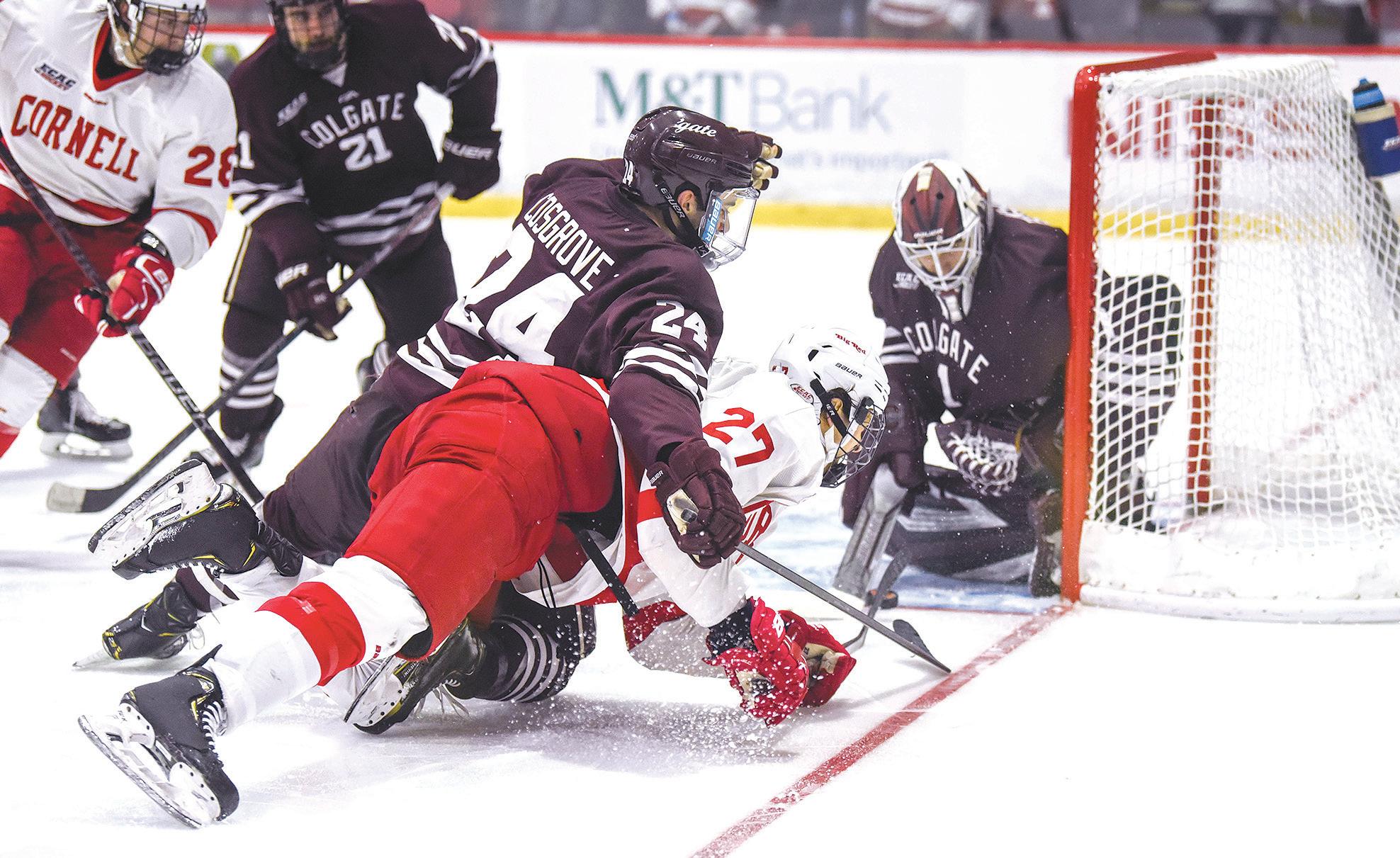
Riding an eight-game unbeaten streak into Lynah Rink, Cornell men’s hockey was rolling thanks to a humming top line and two strong goaltenders. But on Saturday, it was the Red’s opponent’s top forwards and netminder that made the difference in the back end of a homeand-home.
Colgate downed No. 12/11 Cornell in overtime, 3-2, on Saturday to snap the Red’s unbeaten streak that dated back to early December. Raider goaltender Mitch Benson was stellar, making 41 saves, many of them on Grade-A Cornell opportunities.
“Besides their top line, [Benson] was the best player on the ice for both teams tonight,” said Cornell head coach Mike Schafer ’86.
The final minutes of the third period and the game-winning goal in overtime showcased Benson and Colgate’s top line — some highlight-reel saves by Benson sent the game to the extra period and a hard-
fought goal by Colgate’s top forward trio sealed the deal with just over a minute left in the sudden-death OT.
Colgate’s top line of John Snodgrass, Josh McKechney and Bobby McMann scored or assisted on all three of the Raiders’ goals, as well as both in Friday night’s game one, which went in favor of the Red. All three came against Cornell’s top defensive trio of forwards.
“Their top line killed our top [checking] line.
period. It took sophomore forward Morgan Barron only two minutes of Saturday’s contest to take advantage of a turnover and rip a shot past Benson.
But just 20 seconds of game time late in the first and early in the second was enough to swing the contest in favor of the visitors and chase sophomore goaltender Austin McGrath from the game.
Beau Starrett, Jeff Malott and Mitch Vanderlaan, minus-three against them tonight,” Schafer said. “They scored all five [goals] for them this weekend and our guys never caught on the whole weekend, they just didn’t get it.”
“[Their top line] just beat us one-on-one,” said the captain, Vanderlaan. “They made plays and we didn’t. We didn’t do what we needed to stop them.”
Like it has for much of the season — and like it did in Friday’s 3-2 road win over the Raiders — Cornell got off to a hot start in the first
With 4.5 seconds left in the first, Cornell committed a turnover of its own, allowing John Snodgrass to tie the game heading into the first intermission. Fifteen seconds into the second, another turnover-caused goal, this time scored by Paul Meyer, made it 2-1 Raiders.
“We had the last change and we put [out] Beau Starrett, Jeff Malott and Mitch Vanderlaan — three upperclassmen,” Schafer said. “We turn it over, didn’t pick guys up and didn’t do the job coming back in our own zone on the goal too. Those guys, they just didn’t get the