
Boosters at Ithaca Mall Tis Weekend; Free TCAT Transport
Pfzer and Moderna vaccination clinics will be held on Jan. 29
By ISABELLA
The Tompkins County Health Department will hold Moderna and Pfizer COVID-19 vaccine booster clinics on Jan. 29 at the Shops at Ithaca Mall vaccination site.
The Moderna clinic is available to those aged 18 and older and will be open from 10 a.m. to 1 p.m. on Saturday.
The Pfizer booster clinic, accessible to individuals aged 12 and older, will be held from 2 p.m. to 4 p.m. Registration for the vaccines can be found on the New York State Department of Health website for both the Moderna and Pfizer clinics.
The emergence and spread of the Omicron variant has increased the importance of boosters and prevention efforts.
The Center for Disease Control recommends Moderna boosters for those who have completed the initial two-dose vaccine series at least five months prior to the booster or received a single-dose vaccine at least two months ago. Only those who are 18 years or older will be allowed to receive the Moderna booster.
The CDC offers the same guidelines for the Pfizer booster, but recipients may be as young as 12 years old. Any minors interested in receiving the Pfizer booster must have a parent or guardian present to give consent.

Everyone interested in getting the booster should bring their CDC issued COVID-19 vaccination cards to their booster shot appointments.
The emergence and spread of the Omicron variant has increased the importance of boosters and prevention efforts needed to protect individuals against COVID-19, according to the CDC website.
As of Jan. 26, according to the Tompkins County Health Department, there were 388 active cases in the Tompkins County area. This represents a significant drop from the 1,102 active cases


Cornell Accused in Lawsuit of
Reducing Financial Aid Packages
By KAYLA RIGGS Sun Assistant News Editor
A Jan. 9 lawsuit has accused Cornell University, along with 15 other private, elite universities in the U.S., of student financial aid collusion, alleging that the colleges have reduced financial aid packages through a price-fixing cartel.
The class action suit, submitted to a Chicago federal court earlier this month, was filed by five former college students. It alleges that the schools in question have violated Section 1 of the Sherman Antitrust Act of 1890, which prohibits the restraint of trade or commerce.
Other nationwide universities involved in the lawsuit include Brown University, California Institute of Technology, Columbia University, Dartmouth College, Duke University, Emory University, Georgetown University, Massachusetts Institute of Technology, Northwestern University, University of Chicago, University of Notre Dame, University of Pennsylvania, Rice University, Vanderbilt University and Yale University.
These universities all claim to have need-blind financial aid policies, regulations that ensure applicants’ admissions decisions are not impacted by
The plaintiffs state that a majority of the schools have not been needblind for some time.
their financial aid needs. They are affiliated with 568 Presidents Group, an organization that helps maintain a needbased financial aid system. The suit states that the 568 Presidents Group uses “Consensus Methodology,” which it defines as a formula in which an applicant’s ability to pay determines the net price of the institution for that applicant.
The plaintiffs state that a majority of the schools have not been need-blind for some time,
See NEWS page 4

JULIA NAGEL / SUN ASSISTANT PHOTGRAPHY EDITOR
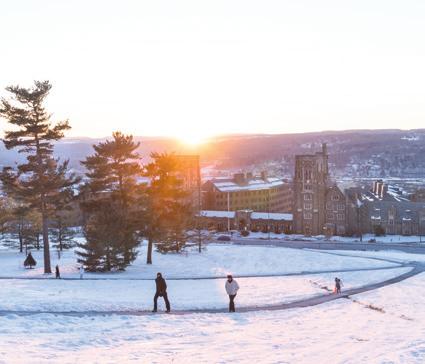
Lingering red berries on ornamental trees lend color to another otherwise dreary January day.
3
Boosters | Various COVID-19 vaccine varieties are seen in Phoenix on Thursday, Dec. 16, 2021.
ADRIANA ZEHBRAUSKAS / THE NEW YORK TIMES
WARREN Sun Staff Writer
LEILANI
Winter berries
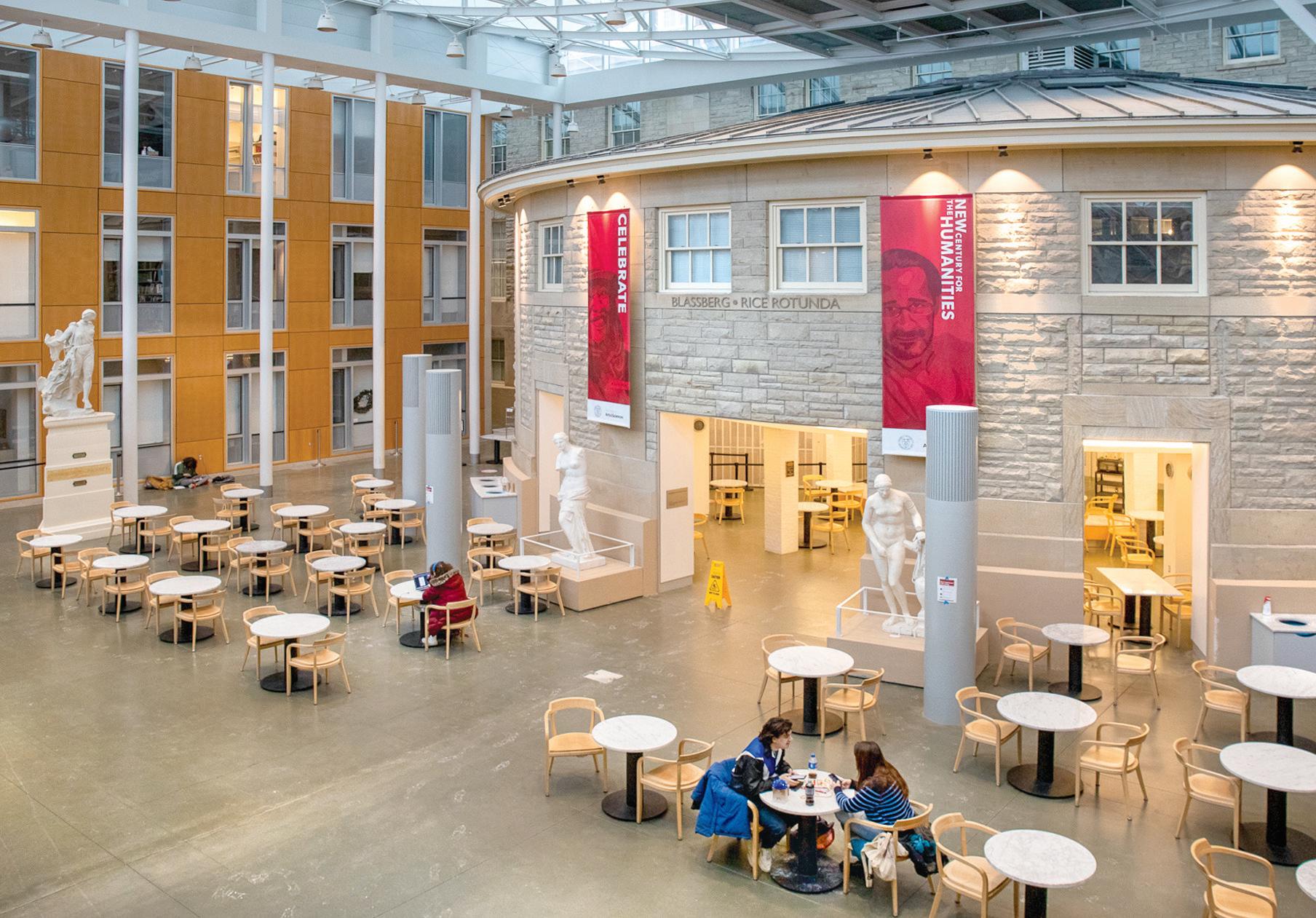
Virtually empty


Daybook
Thursday, January 27, 2022
Today Tomorrow
Genesee Valley Produce Action Winter Meeting: Managing Soil Health, Pastures and Small Grains 9:45 a.m. - 1:15 p.m., Genesee Valley Produce Auction
Soup and Hope featuring Dr. Jacque Tara Washington Noon - 1 p.m., Virtual Event
Gatty Lecture: Stories from an Ancient Land: The War of the Burma-China Borderlands 12:15 p.m., Kahin Center
A Brief Introduction to the Energy Seminar and Challenges and Trends for Energy Systems in a Warming World
12:25 - 1:15 p.m., Virtual Event
Institute for African Development Seminar Series: Growth, Inclusive Development And Sustainability in Africa: General Introduction 2:30 - 4:35 p.m., Uris Hall
Cornell Department of Astronomy and Space Sciences Spring 2022 Colloquium Series 4 - 5 p.m., Virtual Event
Operations Research and Information Engineering Special Seminar: Ziv Scully (Carnegie Mellon) 4:15 p.m., Virtual Event
Environmental Protection Agency Lead Renovation, Repair and Painting Hands-On and Exam 9 - 11 a.m., CCE Albany 24 Martin Rd. Voorheesville, N.Y. 12186
Seminars in Infection and Immuunity (Course Veterinary Medicine Microbiology 7120: Seminars in Infection And Immunity) 12:15 - 1:15 p.m., Virtual Event
Cornell Men’s Squash Vs. Princeton University 2 p.m., Belkin Squash Courts
Cornell Women’s Squash Vs. Princeton University 2 p.m., Belkin Squash Courts
Biomedical Engineering 7900: Biomedical Engineering Graduate Colloquium Seminar Series, David Mooney, Ph.D. 2:45 - 3:45 p.m., Virtual Event
Food Fridays 3:30 - 4:30 p.m., 171 Polk St. Watertown, N.Y. 13601
Cornell Men’s Ice Hockey Vs. Dartmouth College 7 - 8 p.m., Virtual Event
Quad Squad x Pole Posse Poling and Rolling 8 - 11 p.m., The Upstairs Ithaca, Downstairs

Letter Against Booster Mandate Draws Strong Support
Open letter opposing Cornell’s booster mandate has garnered over 1,000 signatories since Jan. 8
By CAMDEN WEHRLE
Sun Staff Writer
On Jan. 8, a WordPress site called Cornellians Against Booster Mandate published an open letter protesting the University’s COVID-19 booster requirement and calling on University President Martha Pollack and the Board of Trustees to change the mandate to a recommendation. At the beginning of the spring semester, the letter gained more than 1,000 signatures from alumni, current students, parents, faculty and staff.
Currently, all students, faculty and staff must get the booster by Jan. 31, or 30 days after they become eligible. Individuals are eligible to receive the booster shot five months after a second dose of the Pfizer and Moderna vaccines and two months after receiving the Johnson & Johnson vaccine, according to the CDC.
According to the Cornell Health website, those who have tested positive for COVID-19 before receiving a booster shot are required to receive it at least two weeks after the diagnosis and after becoming asymptomatic.
“Why force such risks on our students when the rate of severe COVID-19 illness in the 16 to 40 age group is exceedingly low?”
Cornellians Against Booster Mandate
One supporter of the open letter, Dylan Young ’22, expressed concerns that the mandate does not follow current scientific knowledge of the virus.
Young received the Johnson & Johnson vaccine, but he tested positive for COVID-19 at the end of the fall semester. Young said that due to his natural immunity, he believed the booster is unnecessary.
“Based on research I’m aware of, my natural immunity should extend beyond [this semester],”
Young said.
Young said he felt compelled to get the vaccine due to the University’s mandate, but stated that it may be unethical to prevent Cornellians from choosing whether to get the booster due to what he characterized as known and unknown risks with little benefit to the community.
The open letter claims that the mandate disregards the natural immunity gained by students who tested positive for COVID-19 during an explosion of Omicron cases late in the fall 2021 semester. It also highlights rare reports of serious side effects, such as myocarditis and pericarditis, in young people who received booster shots.
The letter asserts that the decision to get the booster should be left up to the individual, and argues that the booster mandate does more harm than good.
First-Years Start T eir Spring Semester Virtually
Face their frst online classes at Cornell
By SOFIA RUBINSON
For many Cornellians, online learning is nothing new, with the University having moved all courses online in March 2020 and only returning to a fully in-person format for the fall 2021 semester. However, over the first two weeks of the spring 2022 semester, most members of the Class of 2025 will be experiencing their first virtual college courses.
Concerns about a surge in the spread of the COVID-19 Omicron variant led some universities to switch to remote learning and others to delay openings. On Jan. 6, Cornell followed suit and announced that it would shift to fully virtual instruction for the first two weeks of the spring 2022 semester.
This change came after the University moved finals online at the end of the fall 2021 semester and declared a code red alert as COVID-19 cases surged among the student population.
Zoom classes, however, are not completely unfamiliar to members of the Class of 2025. Chad Rubin ’25 was virtual during the entirety of his senior year in high school. He returned to Ithaca to see his friends, and he stated that he is excited to return to in-person learning after this two-week period.
“It’s harder to connect with people because you’re meeting them virtually, and Cornell really hits the ground running with these classes,” Rubin said.
Although all students were given an extended move-in period, some first year students decided to take their Zoom classes on campus in their dorm rooms.
“Why force such risks on our students when the rate of severe COVID-19 illness in the 16 to 40 year age group is exceedingly low?” the letter asks. “Data now shows that the vaccine itself can pose more risk to young people than the virus itself, and repeated injections only increase those risks without any discernible reduction in the spread of the virus.”
While the CDC has recorded some serious side effects due to COVID-19 vaccinations and boosters, public data from the CDC indicates they are extremely rare. From Sept. 22 to Nov. 5, 2021, 12 reports of myocarditis and myopericarditis came out of more than 26 million booster doses administered. An additional 38 cases were under review. The CDC also concluded that there were no unexpected patterns in reports of deaths following booster shot administration.
The CDC recommends that any person age 12 and older receive a booster shot, as it helps broaden protection against COVID-19 and is “safe and effective.”
Additionally, the letter claimed that the stress of having to receive new injections would worsen campus mental health.
“For many students, the coercive nature of a third injection, after being told that they needed only two injections to attend Cornell, is contributing to psychological distress and emotional disorientation about [their] future… potential,” the letter stated.
Young added that the way valid booster shot exemptions are judged by the University has caused him added stress and made him feel as though he lacked agency in his health decisions. Cornell only offers booster exemptions for those with proven medical or religious reasons, or both.
“It’s definitely been super stressful, applying for a health-based exemption and getting denied.” Young said. “It’s tough to get a good response [with an explanation] from the University.”
In an email to The Sun, the University stated that it “does not have anything to share at this time” regarding the letter. In a Jan. 11 message to the Cornell community, President Pollack emphasized that spring semester plans, including the booster requirement, are to “enable us to learn to live with the virus” and reduce the risk of serious illnesses.
Eli Pallrand ’24 contributed reporting.
Camden Wehrle can be reached at cwehrle@cornellsun.com.
Tompkins boosters
Carlin Reyen ’25 returned to Ithaca this past weekend and said that she is more focused at school than at home. She also returned to connect with college friends and create a crucial separation between home and school.
“I wanted to come back so I could work hard and study and leave being at
“I really miss being in-person and hopefully we will be able to go back soon.”
Carlin Reyen ’25
home for breaks,” Reyen said.
First years, both on campus and at home, expressed mixed feelings about the effectiveness of online classes. Many, including David Lilienfeld ’25, find it easier to learn with in-person instruction than Zoom options.
“The act of getting out of bed, getting food, going to classes and then being done with the day is a much better routine,” Lilienfeld said.
Despite the circumstances, Reyen enjoyed her first day of online classes.
“I was really excited because I finally found classes that I’m really interested in. But even so, it’s so hard for me to stay on a Zoom for over an hour and really stay focused,” Reyen said. “So I really miss being in-person and hopefully we will be able to go back soon.”
Sofa Rubinson can be reached at srubinson@cornellsun.com.

Tompkins
County Health Dept to Hold COVID-19 Booster Clinics
Clinics will be held at Shops at Ithaca Mall
CLINICS
Continued from page 1
recorded on Dec. 15, 2021 –– the day after the University declared a red alert level and moved final exams online.
As of Jan. 26, individuals in Tompkins County have taken 1,767,740 total tests.
The University partners with the Tompkins County Health Department and the Cayuga Health System to determine COVID-19 safety guidelines by monitoring several indicators, including the spread of the virus in the greater Ithaca area.
Free TCAT bus transportation to vac-
Everyone interested in getting the booster should bring their CDC issued COVID-19 vaccination cards.
cination sites is available in Tompkins County when travelers present proof of a scheduled booster vaccine appointment. Students can ride the 30 and the 90 buses from campus to the vaccination site at the Shops at Ithaca Mall.
Isabella Warren can be reached at iwarren@cornellsun.com.
Cornell is partnering with Tompkins County Health Department and the Cayuga Helath System to set COVID-19 regulations, including booster shot requirements. Students can take the 30 or 90 bus to get a booster this weekend.
Sun Staff Writer
Cornell Among 16 Universities Facing Lawsuit
One of 16 private, elite universities accused of illegally reducing student fnancial aid packages
APPLICANTS
Continued from page 1
instead overcharging an estimated 170,000 students over the course of two decades. This forms, in their words, a “568 Cartel.”
“At least nine Defendants for many years have favored wealthy applicants in the admissions process,” the suit said.
Cornell, according to the suit, was not a part of the nine schools accused of favoring wealthy applicants.
The University is instead grouped into the remaining seven schools, which were allegedly involved with 568 Presidents Group for part of the last twenty years and may have breached their need-blind promise, “conspiring” with the other universities to reduce financial aid and increase the net price of attendance.
This lawsuit joins recent controversy sparked by the Varsity Blues Admissions trial, a 2019 trial that accused dozens of parents, coaches and exam administrators of falsifying college admissions information, further questioning the legitimacy of college admissions processes.
“In critical respects, elite, private universities like Defendants are gatekeepers to the American Dream,” the suit says. “Defendants’ misconduct is therefore particularly egregious because it has narrowed a critical pathway to upward mobility that admission to their institutions represents.”
Students who currently attend or began attending any of these institutions after 2003 and received a grant from any of the universities listed in the suit but paid some of the tuition, room or board costs are asked to contact the legal team involved in the lawsuit.
Kayla Riggs can be reached at kriggs@cornellsun.com.

Don’t let the wind blow your paper away
By PETER KAPLINSKY
EYour source for good food

From Kimchi to Beer: T e Wonders of Bacteria
ven the most fervent germaphobes among us will agree that not all bacteria are worthy of a glob of Purell. Still, just the word “bacteria” is enough to bring a grimace to someone’s face.
And why not? Popular culture has made countless movies about worlds where tiny microbes exterminate humans, and the list of infamous bacteria is formidable — tuberculosis, salmonella and Clostridium, to name a few. But behind the fear and disease, there’s a duality. Bacteria sicken yet protect our bodies. They can topple civilizations but can nourish our food. We actively try to avoid them, yet microbes perme-
Fermented foods have remained a staple throughouthistoryfor good reason.
ate every inch of the world.
Bacteria get a bad rap, but despite common misconception, they’re not the villains we’ve made them out to be.
Every day, we walk around
with 1.5 trillion bacteria on our skin and 100 trillion in our gut. For reference, there are about 30 trillion cells in our body. By that logic, it’s almost as if we’re more bacteria than human.
If we think of ourselves as bacterial colonies, we have to ask how to sustain the members of the colony. Importantly, the flora that we have in our gut are directly related to the food we eat. In turn, the flora regulate our immune systems, mental health and digestive health.
Quite literally, these bacteria help us fight other bacteria. A key to understanding how we can use these microbes and enrich our own microbiomes lies in fermented foods: foods that have been made with live bacteria. Not to be confused with spoiled foods, fermented foods are preserved by bacteria that have used the food’s nutrients to sustain themselves. Although, sometimes it’s hard to tell the two apart just by smell.
While they may not be staples in the American diet, we can find fermented foods across cultures and throughout history. Even before our favorite fermented beverage, alcohol, was first created around 7000 B.C. in China, people would ferment camel, sheep and goat milk as a means of preserving dairy in the Middle East. Egyptians and Europeans teamed up with bacteria to produce yogurt, cheese and beer. While Europe exported sauerkraut and pickles, Asia produced fish paste, tempeh, soy sauce, kimchi and miso.
The heat of North Africa provided an ideal environment for fermenting camel milk to yogurt,

sustaining desert travelers. Today, we can find kombucha, a drink from ancient China, on the shelves of most grocery stores. Fermented foods have remained a staple throughout history for good reason.
The bacteria we ingest through food become part of our microbiomes, delivering several health benefits. A recent Stanford study revealed that a diet rich in fermented foods has immune benefits, reducing inflammation associated with disease and stress. What’s even more interesting is that fiber, the dietary component we’ve all been taught is incredibly important for healthy digestions, is not as effective in balancing

and promoting our microbiome health compared to fermented foods. The old adage rings true in the case of bacteria: You are what you eat, and eating more microbes helps those inside of you flourish.
For those wanting to dip their toes into the world of fermented foods, the Ithaca Wegmans has a corner packed with these fermented goodies, and kombucha can easily be found around campus.
And for those who are more adventurous, it’s pretty easy to ferment your own vegetables. Cucumbers, carrots, onions, asparagus, tomatoes and even watermelon are great for pickling.
Our natural aversion to bacteria is understandable and, in many cases, rightful, but our bodies require these microbes. Our relationship to bacteria is as old as our species, and we are finally beginning to understand that connection.
In the coming years, we’ll have more knowledge on how to tailor our diets to enrich our microbiomes and a deeper understanding of the role fermented foods have in supporting health.
So next time you eat a pickle or sip a beer, don’t forget the little organisms that made it for you.
Peter Kaplinsky can be reached at pk445@cornell.edu.

Sun Contributor
AMELIA CLUTE / SUN DINING EDITOR
AMELIA CLUTE / SUN DINING EDITOR
KATHRYN STAMM ’22 Editor in Chief
ANUSHYA ALANDUR ’23
Business Manager
CATHERINE ST. HILAIRE ’22
Associate Editor
PRANAV KENGERI ’24
Advertising Manager
ODEYA ROSENBAND ’22
Opinion Editor
JYOTHSNA BOLLEDULA ’24
News Editor
TAMARA KAMIS ’22
News Editor
CAMERON HAMIDI ’22
KRISTEN D’SOUZA ’24 Design Editor
HANNAH ROSENBERG ’23
OMSALAMA AYOUB ’22
PUJA OAK ’24
ANNIE WU ’22
MIHIKA BADJATE ’23
SERENA HUANG ’24
BUNAY ’24
’23
AMELIA CLUTE ’22
WILLIAM BODENMAN ’23
Assistant Sports Editor
AARON SNYDER ’23
Assistant Sports Editor
MEGHANA SRIVASTAVA ’23
Compet Manager
MADELINE ROSENBERG ’23
Editor NAOMI KOH ’23
OZA ’22
Editor
HEO ’24
VEE CIPPERMAN ’23
UMAR ’23
PLOWE ’23
YOON ’23
VELANI ’22
PICHINI ’22
SRISHTI TYAGI ’22
MENDOZA ’24
ARANDA ’23
BASU ’23
KAYLA RIGGS ’24
LEYNSE ’23
NAGEL ’24
MONOHAN ’24
ABAYEVA ’24
’22
Editors in Training
editor in chief Vee Cipperman ’23
managing desker Angela Bunay ’23
opinion deskers Daniel Bernstein ’23
Katherine Yao ’23
news deskers Kayla Riggs ’24
Isabella Warren ’24
Jiwook Jung ’25
science deskers Meher Bhatia ’24
Anirudh Sharma ’23
dining desker Grace Kim ’24
production desker Katrien de Waard ’24
photo deskers Julia Nagel ’24
Claire Li ’24
layout deskers Kristen D’Souza ’24
Have an issue with our news coverage?
Want to give your take on a campus issue?
The Sun thrives on your feedback. Continue the conversation by sending a letter to the editor to opinion@cornellsun.com.
Letters should be no longer than 250 words in length.
Please include graduating year if applicable.

Gianno Pannafino Guest Room
Gianno Pannafno is a Ph.D. candidate in biochemistry. Guest Room runs periodically this semester. Comments may be sent to opinion@cornellsun.com.
T e Ethical Implications Of C.U.’s COVID-19 Booster
Agrowing number of Cornell students, including myself, have grown concerned about the ethical implications of Cornell’s COVID-19 booster shot mandate. I have personally discussed this issue with numerous members of the Cornell community, and social media has been ablaze with students voicing their frustrations over this policy decision. While members of the Cornell community may differ in opinions and policy preferences regarding who should be covered under this mandate, one group has been left thoroughly disillusioned — the recently recovered.
In December 2021, over 1,300 students, including myself, tested positive for COVID19. My first positive test came back on Dec. 25 (as an at-home antigen test) followed by a second positive PCR test on Dec. 27. My bout with COVID-19 was fortunately mild, but for the first time in my life, I was unable to celebrate Christmas with my family. I am sure I was not the only student who had to sacrifice a normal Christmas surrounded by family and friends due to a recent COVID-19 diagnosis.
I now struggle to grapple with how I will navigate the administration’s COVID19 booster mandate. I appreciate that the University has linked preliminary studies which indicate that COVID-19 boosters offer some, albeit debatably marginal, protection for those who received their two-dose regimen of either the Pfizer or Moderna mRNA vaccines over six months ago. However, I am convinced one ever-increasing population was not given due consideration — those with two doses of an mRNA vaccine who recently recovered from the Omicron variant of COVID-19. For simplicity, I will refer to this category as “Omicron-hybrid-immunity.”
I received the last shot of my two-dose regimen of the Pfizer COVID-19 vaccine on Apr. 10, 2021, but as I mentioned, I have also recently recovered from COVID-19. My curiosity led me to seek out confirmation of infection from the Omicron variant. The Tompkins County Health Department told me that, based on the timing of my infection, I can be all but assured that I was infected with Omicron. Given that many other students fall under the Omicronhybrid-immunity category, we are left wondering why such a mandate to receive a COVID-19 booster would apply to us.
From the frequently asked questions section of Cornell’s COVID-19 dashboard, the University explicitly cites concern over the Omicron variant and CDC guidelines as rationale for the booster mandate.
“The Centers for Disease Control and Prevention encourages all Americans to receive an mRNA booster immunization once eligible, and have summarized the benefits and risks of booster inoculation,” the dashboard website states. “While no medical intervention is completely risk-free, adverse side effects such as myocarditis and pericarditis are quite rare, and the CDC states that the ‘benefits of COVID-19 vaccination outweigh the known and potential risks.’”
From this, two things are abundantly clear. First, the purpose of the booster mandate is
to offer the Cornell community enhanced protection against the Omicron variant. Second, the administration acknowledges that such a medical intervention carries the small but statistically significant risk of heart complications such as myocarditis and pericarditis, which appear to be more common in men under 40 years old. In addition, for this specific demographic, either a second or third dose of the Pfizer or Moderna vaccines carries a higher risk for these heart complications than a COVID-19 infection.
I, a 27-year-old male, and many others fall within this under-40 demographic. Nevertheless, the tacit rationale for all of Cornell’s vaccine requirements is that the risk-benefit ratio for each student (barring medical conditions like allergies to vaccine ingredients) comes out in favor of vaccination. These risk-benefit assessments ought to be guided by robust safety and efficacy
For students with Omicronhybrid-immunity, there exists no such safety or efficacy data concerning the benefit conferred by a COVID-19 booster.
data from U.S. governmental agencies or the broader international scientific community. My ultimate concern is as much medical as it is ethical. For students with Omicron-hybridimmunity, there exists no such safety or efficacy data concerning the benefit conferred by a COVID-19 booster. Some early preprints have begun to indicate that antibodies produced by those with Omicron-hybrid-immunity offer up to 14-fold higher neutralization of Omicron viral particles and up to 4.4-fold higher neutralization of Delta viral particles two weeks after the onset of symptoms. This would indicate that those with Omicronhybrid-immunity are highly protected against both the Omicron and the still circulating Delta variants of COVID-19. If further studies confirm this to be the case, as some have begun to do, the rationale for requiring a booster for those with Omicron-hybrid-immunity to protect them from Omicron does not hold up to scrutiny. In a recent interview, Dr. Anthony Fauci M.D. ’66 even suggested that those with Omicron-hybrid-immunity should wait up to 90 days before getting a booster shot.
Cornell’s booster mandate forces over 1,000 students to receive a medical intervention that seems to carry little net benefit to them, the Cornell community or the broader Tompkins County region. To my knowledge, there exists no precedent for such a mandate, and the ethical implications for establishing this precedent has instilled a deep sense of malaise among those, like me, with Omicron-hybrid-immunity.
Thus, I implore the Cornell administration to consider amending the COVID-19 booster mandate.

Fill in the empty cells, one number in each, so that each column, row, and region contains the numbers 1-9 exactly once. Each number in the solution therefore occurs only once in each of the three “directions,” hence the “single numbers” implied by the puzzle’s name. (Rules from wikipedia.org/wiki/ Sudoku)



SC I ENCE
Energy Leaders Discuss Pathway to Renewables

Oil’s future | This Exxon complex in Baytown, Texas, in an effort to reduce greenhouse gas emissions, is beginning to modify its practices by electrifying its operation with energy from renewable sources.
By REGINA GALVAN RUMAYOR Sun Contributor
Throughout November and December 2021, the SC Johnson College of Business Center and the Cornell Energy Club hosted the 2021 Cornell Energy Connection –– a gathering of world energy industry leaders, which discussed the impending transition of power sources away from fossil fuels and toward renewables.
The three-part series featured panelists who discussed energy transition, decarbonization and electrification to mitigate climate change. The speakers approached energy transformations through the lenses of technology, social and economic impact and political intervention.
The first event of the series,“How Natural Gas Could Fit a Clean Energy Future,” took place on Nov. 12. Business executives in the energy sector Areli Covarrubias, Lance Crist ’87 and Ricardo
Hernandez explored the implications of an increasing global demand for electricity. They discussed the serious challenges it creates as a direct threat to energy security, defined as accessibility to affordable, secure and continuous energy sources.
Covarrubias, the commercial director for natural gas at Sempra Infrastructure, said that communities should not rely solely on the finite resource of natural gas. However, Covarrubias said that natural gas is a cleaner energy source than oil or coal, and it can aid in the global transition towards a renewable future, especially in developing countries.
To decrease poverty and increase the global standard of living while displacing the use of fossil fuels, Covarrubias said that natural gas should replace oil and gas in developing nations before they can transition to renewables.
“In developing countries, there is high expectation for energy demand and growth through coal,” said Crist, the global head of
equity for infrastructure at the International Finance Corporation.
However, the world’s growing energy demand may exacerbate the rate of climate change. Crist stated that employing carbon capturing and eliminating methane are necessary steps toward ensuring that natural gas is an efficient source of energy.
The United States, along with several other nations, is crafting policies to embark on a renewable energy path, not only through natural gas, but also hydrogen. Hydrogen produces more energy and less carbon emissions than natural gas. However, like natural gas, it is not a fuel. Further, it requires a separate fuel source for generation.
In “Green Hydrogen as a Low-Carbon Step Toward Net-Zero,” hosted on Nov. 19, the conversation centered around the recently passed U.S. Infrastructure Investment and Jobs Act that will fund $1 billion for clean electrolysis systems’ development and commercialization.
According to Katrina Fritz, the executive director at Stationary Fuel Cell Collaborative, the act will focus on several areas in which fuels like hydrogen are already utilized on a small scale. For example, in ferry transportation, initiatives are encouraging longer trips and greater hydrogen implementation for larger ships.
John Stevens, the senior managing consultant at Energy and Environmental Economics Inc., said that hydrogen is meant to eliminate carbon emissions from certain sectors, including transportation, in which fuel is functionally necessary. Solar and wind power aren’t necessarily viable energy sources for such sectors.
Another initiative centers on efforts to make electricity the main source of power in everyday life activities — such as driving in electric vehicles and living in smart
homes — eliminating the need for fossil fuel sources altogether.
But, as demand for electricity rises, the real challenge shifts towards the capacity of a power grid to withstand the further electrification in urban and rural areas, an instrumental part of replacing fossil fuel technologies with electric equivalents.
In the final event of the series, called “The Future of the Grid and Path to Decarbonization,” hosted on Dec. 3, 2021, energy storage and supply executives Alicia Barton, Kate McGinnis and Jeff Weiss said that legislation is key to developing a power grid that will support a solely electrified society. However, the exact implementation remains very complex as fossil fuels cannot be displaced so quickly.
“If we decide that we need to continue relying on fossil fuels we [also need to] consider environmental justice in the communities affected,” said Alicia Barton, chief executive officer of FirstLight Power.
Barton explained that the transition to renewable energy will not be a straightforward one, and economies will likely continue to rely on fossil fuels and non-renewable sources. However, Barton said the inclusion of communities affected by fossil fuel use should remain a top priority.
According to Barton, a focus on economic and governmental policy is necessary as several regulatory actions – for example, the lack of public funding for renewable energy sources – should evolve to include more climate conscious regulations.
“[This all comes] as a great challenge,” said Kate McGinnis, managing director of global strategy and partnership at Fluence. “But [surely] as an opportunity.”
Regina Galvan Rumayor can be reached at rg632@cornell.edu.
How Natural History Museums Aid in Extinction Prevention
By TENZIN DHASEL Sun Contributor
On Oct. 5, 2021, Prof. Corrie Moreau, ecology and evolutionary biology, published a correspondence explaining why funding natural history museums are a better method of extinction prevention than de-extinction projects.
De-extinction refers to the process of producing an organism that was previously extinct. Recent de-extinction efforts include start-up Biogenics company Colossal’s project to resurrect the wooly mammoth using $15 million in private funds.
Moreau said that funding natural history museums over de-extinction efforts would be more effective in preventing future extinctions because it’s a safer and more rewarding method in the long run.
Scientists rarely know the range of a given species, where it lives and for how long it has lived. However, natural history museums hold a wealth of information about extinct and current species. Moreau said that this information can be used to trace species at risk and find ways to prolong or altogether prevent their future extinction.
Moreau’s correspondence on
de-extinction emerged following a project that sequenced the DNA of the Xerces blue, an extinct butterfly. At the time, some of Moreau’s colleagues had come together with the idea to resurrect this extinct species. Moreau, however, disagreed. Because such a project would take immense funding and time to accomplish, Moreau said that it was not the best use of their resources.
“In my opinion, we should be putting our resources to helping protect what’s already teetering on the cusp — those [species] that are alive now on the planet before we try to put resources into bringing something back,” Moreau said.
In response to the $15 million endeavor by Colossal to bring back the wooly mammoth, Moreau said she supports any endeavor that incites scientific excitement, especially preservation efforts. However, she recognizes the limitations of monetary resources and expressed that those should go first to historical efforts.
Natural history museums contain thousands of years worth of information, essentially serving as a scientific gold mine, according to Moreau. They contain species that have gone extinct thousands of years ago

Harnessing history | Specimens like this mammoth skeleton in the American Museum of Natural History may offer insights into species’ evolutionary histories and aid in extinction prevention efforts.
as well as those that have gone extinct more recently.
“These museums are a window into the past of where species were and what their genetic diversity was like,” said Moreau.
“Even species that are around today, we can ask questions [about] because we have these long series of collections that we
can learn from.”
According to Moreau, Cornell has some of the best collections in the world, including the Insect Collection, the Museum of Vertebrates and the Lab of Ornithology. The goal of these collections is to create a space on campus where classes can actually come to observe and work with
the current specimens.
“Ultimately, hopefully, one day...we’d love to create a space on campus where people can see the real [collections], not a picture in a book and not a replica,” said Moreau.
Tenzin Dhasel can be reached at td299@cornell.edu.
COURTESY OF WIKIMEDIA COMMONS
TAMIR KALIFA / THE NEW YORK TIMES