



Svante Myrick ‘09 resigns as Mayor of Ithaca, to be executive director of People for the American Way
By KAYLA RIGGS Sun Assistant News Editor
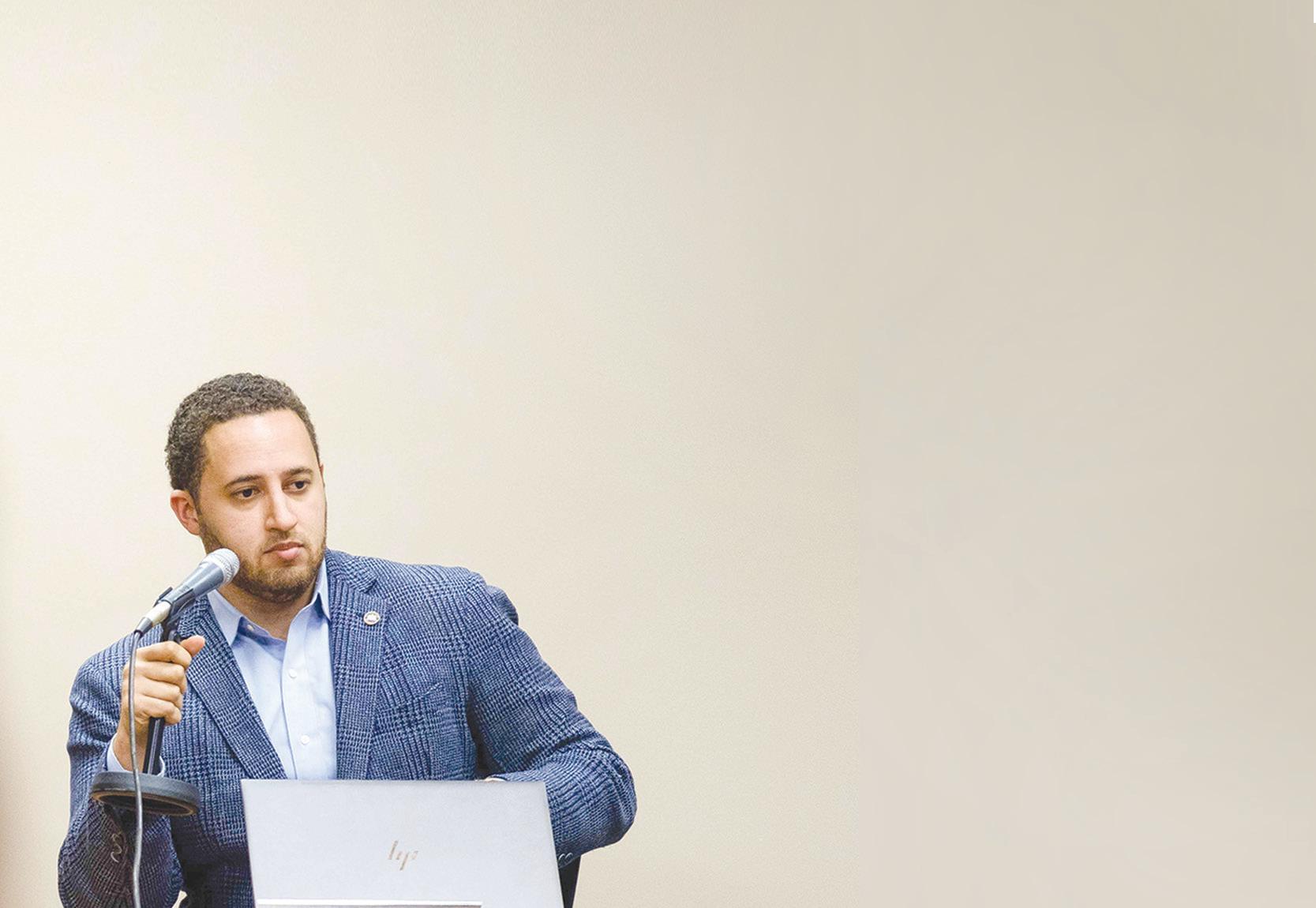
In a Jan. 5 Common Council meeting, Svante Myrick ’09 publicly announced his resignation as the 44th Mayor of Ithaca after accepting an offer from People for the American Way, where he will serve as executive director.
At 24 years old, Myrick became the youngest person in City history to be sworn into mayoral office and Ithaca’s first mayor of color.
Throughout his 10-year, three-term career, Myrick’s agenda primarily focused on expanding affordable housing options, working toward resolving Ithaca’s substantial $3 million budget deficit and improving city-wide infrastructure.
Under his leadership, the City has seen a $37 million plan to rebuild Ithaca water treatment, the development of housing units like Magnolia House and West End Heights, reno -
By CHRISTIAN GERAMITA Sun Contributor
Following Cornell’s Jan. 6 announcement detailing University plans to hold the first two weeks of instruction virtually and require students to participate in bi-weekly testing, students expressed mixed reactions, navigating competing desires for safety and having a fun, fruitful spring semester.
“Everyone will get sick eventually; [...] Cornell is already pretty underequipped in mental health resources...”
Sophie Hall ’25
Sophie Hall ’25 was largely pleased by the University’s decision, but she indicated doubt about the long-term effects of
remote learning on containing the spread of COVID-19 and managing student mental health.
“Everyone will get sick eventually, and the mental health effects of prolonged isolation and online schooling have been shown to be pretty severe,” Hall said. “Cornell is already pretty underequipped in mental health resources from what I’ve heard.”
Hall’s sentiments seem to reflect recent reports of Cornell students experiencing less socialization and more academic anxiety than students of previous years. With the ongoing pandemic, it is likely that these issues persist and that undergraduates are suffering as a result.
Other freshmen, like Chris Wang ’25, remain indifferent to the change after experiencing virtual learning during the latter half of high school.
“Considering all the virtual learning experiences in high
vations made to famed city attractions like the Ithaca Farmers Market and more.
“I have spent my entire adult life serving the City of Ithaca - and I've given all of my effort to the largest challenges we face,” Myrick wrote in a Facebook post earlier this month.
However, citing growing concerns for the “state of our democracy,” Myrick will step down from the mayorship and work at People for the American Way alongside organization president Ben Jealous.
People for the American Way was founded as a progressive advocacy organization in 1981 to fight “right-wing extremism and build a democratic society,” according to the group’s website. The non-profit, based in Washington, D.C., currently runs a variety of campaigns ranging from the defense of voting rights to protection of immigrant communities.
Myrick’s affiliation with the organization dates back to 2017, when he was appointed as Director of Youth Leadership Programs after a nine-year membership with the Young Elected Officials Network. Myrick will be joining People For the American Way in a full time role at the beginning of next month.
“I believe my service can make a difference in the national conversation on voting and elections,” Myrick said. “I want to protect that American dream for people of all backgrounds.”
In Myrick’s place, Acting Mayor Laura Lewis will assume office on Feb. 7. Lewis, an alderperson for Ithaca's fifth ward, was elected to the Common Council in 2017 and has predominantly lobbied for affordable housing, volunteering on the board of directors of Ithaca Neighborhood Housing Services prior to her term.
In more recent years, Lewis has worked on the Ithaca Eviction/Displacement Defense Project and successfully proposed legislation in November to the Common Council providing legal representation to tenants in eviction court
Upon her swearing in, Lewis will need to pick up where Myrick left off, including working on Ithaca’s Green New Deal and the Reimagining Public Safety Plan.
“I have the utmost confidence that she will do an outstanding job,” Myrick wrote. “I believe in many ways her empathetic, earnest and tactful leadership is exactly [what] our community needs right now.”
Riggs can be reached at kriggs@cornellsun.com.
By ROMAN LAHAYE Sun Staff Writer
In the wake of a tumultuous end to last semester, in which a campus-wide COVID outbreak made national news, Cornellians have begun flocking back to campus. In preparation for the spring, the University has instituted a
number of policies to address the ongoing pandemic and now widespread Omicron variant.
Last semester’s spike, lasting primarily from the final days of November through the middle of December, infected over 1,000 Cornellians and left many unsure about the status of the spring semester.
Consequently, the University has suspended all in-person instruction until Feb. 7, relegating the first two weeks of the semester to virtual instruction as students arrive in Ithaca during an extended move-in period. Students who test positive prior
Business
SEND

Tuesday, January 25, 2022
Today Tomorrow
Getting Started With Hypothesis 10 - 11a.m., Virtual Event
BEDR Workshop: Internal Showcase 11:25 a.m. - 12:55 p.m., 141 Sage Hall
Stories From the People of the Longhouse Noon - 1 p.m., Virtual Event
Moral Psychology Virtual Brown Bag Talk 4 - 5 p.m., Virtual Event
ORIE Special Seminar: Jason Altschuler (MIT) 4:15 p.m., Virtual Event
Record Keeping For Farm & Food Businesses 4:30 - 6 p.m., Virtual Event
Get Started! First Year Career Fair 4:30 - 5:30 p.m., Virtual Event
“We Invent Witchwords”:W.E.B. Du Bois And the Black Scare/Red Scare In U.S. Capitalist Racist Society 5 p.m., Virtual Event
Cornell Women’s Ice Hockey Vs. Clarkson University 6 p.m., Lynah Rink
Engaging Communities, Empowering Students: Fostering Cross-Cultural Connections Through Dress, 1936-1958
8 a.m. - 8 p.m., Human Ecology Building
IMéRA Institute For Advanced Studies: Hirschman Forum 2022 10:25 a.m., Virtual Event
Ecological Calendars: Finding Hope in the Face Of Climate Change 11 a.m. - 4 p.m., Brian C. Nevin Welcome Center
GAPs, FSMA and Food Safety in Mushroom Production: Webinar #1 3 - 4:30 p.m., Virtual Event
Composting Indoors 5:30 - 6:30 p.m., Virtual Event
Class on Producing, Processing and Packaging Eggs for Sale 7 - 8 p.m., Virtual Event
Syria: The Enduring Crisis 7 - 8 p.m., Virtual Event
PMA Projects and Participation Kick-Off
7:30 p.m., Virtual Event

Continued from page 1
to departure for Ithaca are advised to isolate in place rather than travel; those who receive a positive test result upon arriving on campus are required to self-isolate.
Students who have tested positive over the break are required to submit a “self-reported positive form” to their Daily Check. They will be exempt from surveillance testing for 90 days.
Those who have not tested positive for COVID must submit a negative result from a take-home antigen, PCR, or other home test taken 24-hours prior to their departure and schedule an arrival test within 24 hours of arrival on campus. Anyone not in compliance with these policies will lose campus WiFi, Canvas access and enrollment capabilities until they submit proof of testing.
Cornell continues to require all eligible students to get a booster shot or third vaccination dose. Unvaccinated students who have been granted exemption from vaccination requirements must take tests twice weekly the entire semester.
Following new CDC guidance, cloth masks are no longer approved by the University. Instead, Cornell requires students to wear “high-quality masks” like
KN95, surgical, KF95, N95, or FFP2 masks when inside.
Dining halls –– including the newly opened Morrison Dining Hall –– are limited to grab-n-go until Feb. 7. For those in isolation, pre-made meals are available for pickup at RPCC and the Cinema entrance of Willard Straight Hall from 8 a.m. to 7 p.m. daily.
Students may also use the Get Order app to mobile order food in a contactless manner.
Students should pay attention to updated library schedules, as many have changed hours for the two week remote period, with Uris Library closed entirely until Feb. 7, when in-person instruction begins.
Gyms and athletic centers are to continue operations and are limited to faculty, staff, emeritus and students who pass their daily checks and have current memberships. Capacity limits of 35 people have also been implemented in campus fitness centers, and day passes for gyms and athletic centers are not currently offered.
Pools are limited to 12 people, and masks are required when not in water. All other athletic events are slated to continue with health protocols in place as scheduled.
Roman LaHaye can be reached at rlahaye@cornellsun.com.

Zoom fatigue | Students share mixed opinions about beginning the spring semester with virtual learning.
Continued from page 1
school, I don’t feel stressed about remote learning,” Wang said. “Since most of my classes are reading [or] discussion-based, virtual learning won’t make too much of a difference for me.”
Still, Wang acknowledges that virtual learning will affect some students more than others. While his coursework integrates well into a remote environment, others may need in-person learning for classes with laboratory components or to better understand course material in lectures.
Following President Martha Pollack’s original announcement, the University released further details on Jan. 11 detailing the University’s rationale for holding classes virtually until early February. Pollack cited the potential for COVID-related academic disruption as students
return to campus as a primary reason for Cornell’s decision.
This logic, however, remains widely unpopular among upperclassmen in particular. Avery Bower ’23 expressed serious doubts about the decision to go virtual.
“I don’t think the virtual classes will help in stopping the spread,” Bower said. “It prolongs the amount of time people take to arrive on campus, since many people are waiting until the two weeks are up, unleashing another wave of cases.”
In addition to remote instruction, as Bower pointed out, the move-in timeline was extended to allow for a smoother transition into the semester given that many students are experiencing difficulties returning to campus.
Despite worries that the University’s measures will leave students worse off, many have accepted the decision. Though not particularly excited about
having to be on Zoom, Efua Tsetsewa ’24 is looking forward to engaging with classmates upon the return of in-person instruction.
Like Tsetsewa, many second-year students are looking towards a brighter year. After experiencing virtual learning during the majority of their first year, many sophomores want a learning environment more characteristic of a typical college experience. Hopefully, as Tsetsewa stated, they will be able to achieve their goals despite the persistence of a pandemic that began almost two years ago.
“I can only hope that there won’t be much difference from our in-person classes,” said Lexi Terracciano ’25, “and that professors [and] administration [supports] the students virtually as they would in person.”
Christian Geramita can be reached at cg543@cornell.edu.
By ROMAN LaHAYE Sun Staff Writer
On the Ithaca Commons this past weekend, dozens gathered in the frigid early hours of the Jewish holy day of Shabat to stand against antisemitism.
The somber gathering comes in the wake of a hostage crisis at the Congregation Beth Israel in Colleyville, Texas, in which an armed gunman took four people hostage during an 11-hour standoff with law-enforcement.
The Ithaca support event drew support from around Ithaca and across religious groups, with organizers from both conservative and reform congregations, as well as representatives of the Muslim and Christian clergies.
The hostage-taker, British national Malik Faisal Akram, had been sheltered in the synagogue by Rabbi Charlie Cytron-Walker of the Beth Israel Congregation. Akram then brandished a gun during services, demanding the release of Aafia Siddiqui. Siddiqui, convicted of the assault and attempted murder of multiple FBI and U.S. Army personnel, is currently held at the Federal Medical Center, Carswell in Fort Worth, Texas.
That the crisis took place in a place of worship on Shabat was especially distressing for many.
“What makes it so difficult is that people go to their spiritual home for comfort and community and a sense of peace,” said Rabbi Shifrah Tobacman of the Tikkun v’Or Reform Temple. “For many people, it’s a break from things that can be very difficult in their lives, and so it feels particularly violating in a certain way.”
Rabbi Rachel Safman of Temple Beth-El described the psychological effect antisemitism has on the
Jewish community, and spoke about the ways even nonviolent expressions of antisemtic tropes can cause Jewish people to question their integration in their communities.
“It often comes in surprising channels,” Safman said.
Rabbi Ari Weiss, executive director of Cornell Hillel. expressed concern at the antisemitic stereotypes that grounded Akram’s motivations.
“I was struck by the fact that this person did not seem to hate Jewish people, but he seemed to buy into a classical antisemitic motif… that the Jews control the world,” said Weiss.
In 2018, Cornell was home to the largest Jewish population of the Ivy League, and continues to have numerous active Jewish organizations.
Weiss shared his witnessing of multiple incidences of antisemitism
since arriving in 2016.
“When I came to CornelI didn’t think that I would spend so much time responding to antisemitism,” Weiss said. “We’ve seen swastikas and flyers around campus. We’ve heard slurs leveled against Jewish people. And while I don’t believe at all that they are representative of Cornell, I think that they are there.”
Weiss hoped to continue education against antisemitism at Cornell
and dispel stereotypes around Jewish people.
“One of the roles of Hillel is to do this education, call out hate and antisemitism when it happens, and to educate the campus on what antisemitism is and how antisemitism manifests in the 21st century,” Weiss said.
Roman LaHaye can be reached at rlahaye@cornellsun.com.
As students flock to Cornell for a wintery start to the semester, $1500 Canada Goose jackets seem to cover every corner of campus. What seems to be fuel ing the popularity of these pieces?
Before we dive into the less obvious reasons why Canada Goose products have gained popularity despite the company’s controversies, here’s a quick history lesson behind the infamous “Canadian holding company of winter clothing manufacturers.”
Sam Tick founded the company in 1957 under the name “Metro Sportswear Ltd.” It began as a working-class brand catering to laborers in Canada.
celebrities, among other strategies such as features in Sports Illustrated and magazines campaigns.
Whether Canada Goose products are popular as a status symbol or because of their high

In the early 1980s, David Reiss purchased the company from Tick and began making a custom parka designed to help scientists withstand one of the coldest places on Earth: Antarctica. These scientists nicknamed the jacket “Big Red.”
By 1985, Reiss started trademarking the parkas as “Snow Goose.” However, once the company began selling winter coats in Europe in the early 1990s, it found that this name was already trademarked. They developed the famous modern name of “Canada Goose.”
Canada Goose underwent its largest transformation in 2001 when Reiss’ son, Dani Reiss, became president and CEO of the company. Immediately, Dani Reiss made two major decisions for the company: to produce solely under the name Canada Goose and to only make products in Canada.
In an interview with Business Insider , Susan Fournier, Allen Questrom Professor and Dean at Boston University, commented on the craze behind Canada Goose’s reputation and cultural effect.
“We’re trying to find the authentic in a saturated world that’s kinda contaminated by materialism,” she said. “You get those credentials through craftsmanship. You also get it through a history of the brand, where it’s born of experiences that were actually real that then became products.”
A luxury market expert, Pamela Danziger, told Business Insider that “it’s unusual to see such a brand transform into a luxury brand, but Canada Goose has been very successful at making that transition.”
Canada Goose tied prestige and fame to its name through mass media marketing strategies with notable projects and
quality, their company excels in sales mainly because of clever marketing. Now, let’s step away from the business side and more towards a psychological analysis of the Canada Goose products.
Canada Goose jackets fall between the functionality of a Patagonia jacket and the prestige and appearance of a Prada jacket. Because they allow wearers versatility, they entice new buyers.
These jackets are not binding in terms of when and where one could wear them. The possibilities are endless. Additionally, the status symbol effect of these jackets definitely makes an impact. Although many of us try to avoid this mindset, let’s face it: it’s pretty tempting. We tend to quickly view someone who wears something from Canada Goose (with jackets ranging from $500 to $1500) as someone who is wealthy. Many people desire that association. Another reason that could contribute to the popularity of Canada Goose products is the feeling of inclusivity and belonging.
“On average, 75 percent of the people I see on campus are wearing Canada Goose jackets,” said Julia Salatti ’25.
“I see about 50 plus students sporting Canada Goose jackets on a daily basis,” agreed Josh Bernardino ’25.
Morgan Meddings, a Syracuse University student, commented on the large number of students she sees wearing Canada Goose jackets, saying that the vast majority of the female population and half of the male population wear Canada Goose. This repeated exposure to the brand subconsciously signals to our brains that the overall student body favors Canada Goose products.
Maslow’s Hierarchy of Needs includes that a sense of belonging is vital for our psychological development. Subconsciously, we want to maximize our feeling of belonging on a diverse and huge campus like Cornell – even if that sense of belonging lies in a jacket.
When I asked Cornell students why they believe Canada Goose Jackets are so popular on campus their responses were similar. Kathryn Spiegel ’25 said that they were “warm, prestigious and expensive.” Another student, Jasmine Chang ’25 cited Canada Goose jackets as a status symbol.
I believe it is safe to say we can applaud Canada Goose’s marketing team for creating an aura of prestige and high quality. However, like most status symbols, its psychological effects on culture could lead to an unhealthy obsession with materialism.
Haley Qin is a freshman in the College of Agriculture and Life Sciences. She can be reached at hq35@cornell.edu.

139th Editorial Board
KATHRYN STAMM ’22
Evansville, Ind. Editor in Chief
ANUSHYA ALANDUR ’23
Frisco, Texas
Business Manager
CATHERINE ST. HILAIRE ’22
Patchogue, N.Y.
Associate Editor
NAOMI KOH ’23
Mamaroneck, N.Y. Web Editor
ODEYA ROSENBAND ’22
East Setauket, N.Y. Opinion Editor
JYOTHSNA BOLLEDDULA ’24
Lexington, Mass. News Editor
TAMARA KAMIS ’22
Lexington, Mass. News Editor
E.D. PLOWE ’24
Nyack, N.Y.
Arts & Entertainment Editor
KRISTEN D’SOUZA ’24
Rochester, Mich. Design Editor
HANNAH ROSENBERG ’23
Chappaqua, N.Y. Photography Editor
SRISHTI TYAGI ’22
Hicksville, N.Y. Science Editor
ANNIE WU ’22
Queens. N.Y. Production Editor
AMAYA ARANDA ’23
Alhambra, Calif. Multimedia Editor
MIHIKA BADJATE ’23
Los Altos, Calif.
Assistant News Editor
ANGELA BUNAY ’24
Staten Island, N.Y.
Assistant News Editor
JOHN COLIE ’23
West Patterson, N.J.
Assistant Arts & Entertainment Editor
AMELIA CLUTE ’22
Alamo, Calif.
Assistant Dining Editor
WILLIAM BODENMAN ’23
Bloomsburg, Pa.
Assistant Sports Editor
AARON SNYDER ’23
Manhattan, N.Y.
Assistant Sports Editor
MEGHANA SRIVASTAVA ’23
Plainsboro, N.J. Compet Manager
CONNOR GREENE ’22
Manhattan, N.Y. Senior Editor
NIKO NGUYEN ’22
Fremont, Calif. Senior Editor
MADELINE ROSENBERG ’23
Chappaqua, N.Y.
Managing Editor
PRANAV KENGERI ’24
New Hyde Park, N.Y.
Advertising Manager
ANIL OZA ’22
Queens, N.Y.
Assistant Managing Editor
YUBIN HEO ’24
Seoul, South Korea Assistant Web Editor
VEE CIPPERMAN ’23
Malvern, Pa. News Editor
NOOREJEHAN UMAR ’23
Lahore, Pakistan News Editor
JOHN YOON ’23
Cresskill, N.J. City Editor
BENJAMIN VELANI ’22
Minneapolis, Minn. Dining Editor
LUKE PICHINI ’22
Dresher, Pa. Sports Editor
PUJA OAK ’24
San Ramon, Calif. Layout Editor
MARIA MENDOZA BLANCO ’24
Bethesda, Md. Graphics Editor
SERENA HUANG ’24
East Brunswick, N.J.
Assistant Business Manager
SURITA BASU ’23
Lexington, Mass.
Assistant News Editor
KAYLA RIGGS ’24
San Jose, Calif.
Assistant News Editor
EMMA LEYNSE ’23
Leonia, N.J.
Assistant Arts & Entertainment Editor
JULIA NAGEL ’24
Bethesda, Md.
Assistant Photography Editor
LIAM MONAHAN ’24
Honolulu, Hawaii
Assistant Sports Editor
SASHA ABAYEVA ’24
Mount Kisco, N.Y. Newsletter Editor
NOAH ALPERS ’22
Norman, Okla. Social Media Manager
CAROLINE JOHNSON ’22
Huntington, N.Y. Senior Editor
BENJAMIN PARKER ’22
Manhattan, N.Y. Senior Editor
EMMA ROSENBAUM ’22
Toronto, Canada Senior Editor
Editors in Training
IF YOU EVER WANT TO REALIZE some of your greatest capacities, work for a student newspaper. Here, you’ll solve crises and uncover opportunities and see how much you can accomplish, even on the least amount of sleep.
It’s a nonstop job that demands so much energy, and the 139th Editorial Board has been doing it for a full year — a year that has seen prolonged grieving and immense uncertainty. While that largely remains, it’s time now for these stellar editors to step into retirement and let the next batch shine.
These potential editors will spend the start of the spring semester not just reading syllabi and shoveling snow, but also putting together a paper every day. On Tuesdays and Thursdays, you should pick up our print paper and look below the masthead for the names of the trainees who made that issue of The Sun.
This training, which we lovingly call compet, is a fast-paced, stressful period that requires innovation, flexibility and hard work for jobs that are certainly complex. As our compets find their footing, I foresee mistakes and slip-ups. These are part of the process — of learning and of running a paper.
I have the utmost faith in these journalists, who I’ve watched move from eager prospective staff members to strongholds in their respective departments to now potential editors. I am so excited for them and the future of The Sun.
Thank you for your ongoing patience and support through our growing pains as we once again fulfill our mission as a student newspaper to train new journalists.
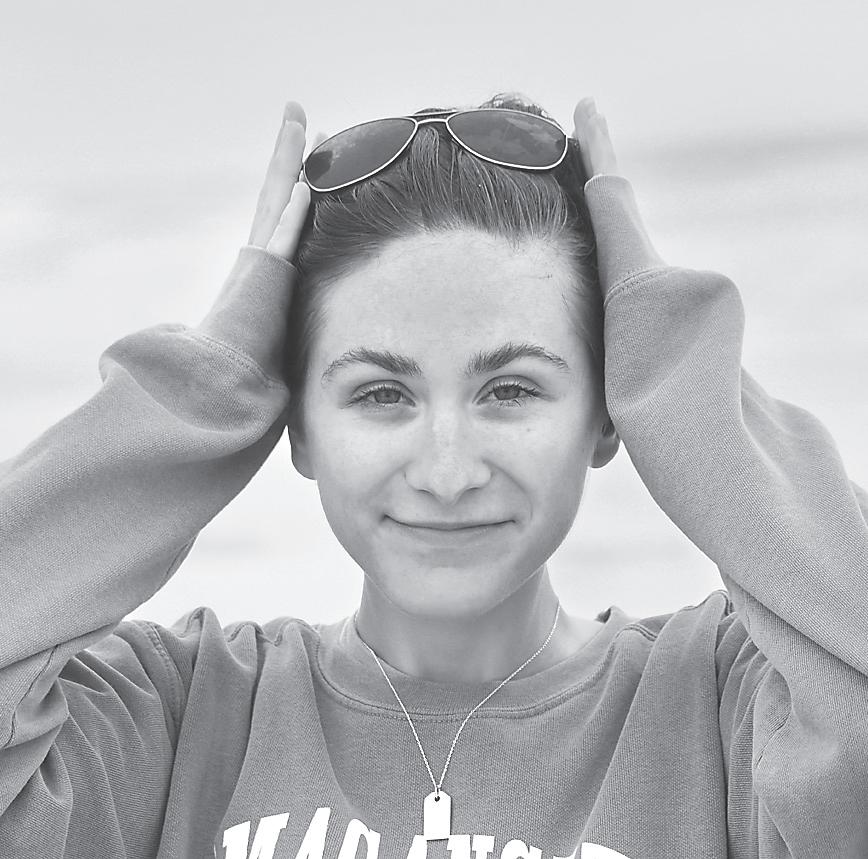
Emma Smith is a senior in the College of Agriculture and Life Sciences. She can be reached at esmith@cornellsun.com. Emmpathy runs every other Wednesday this semester.
“ISick’m sorry professor, I’m sick and can’t make it to the exam” is pretty much the college equivalent of “my dog ate my homework.” Today my professor cracked a joke about the number of students who were mysteriously and suddenly “sick” the day of the final. I laughed through my stuffy nose.
Sickness is one of the many afflictions that may strike a student, and it doesn’t get a lot of sympathy. My first year, I caught the flu and developed a fever so bad it landed me in an ambulance on the way to Cayuga Med. All I remember was being grateful it happened on a Saturday, and that I was back in class the following Monday. This lack of sympathy stems from the fact that almost every student is in some stage of sickness right now, be it the “I think I’m starting to get sick” phase or the “I think I might finally be better now” phase. Mental health is a whole other can of worms.
to this culture.
First, of course, is the acknowledgement that there is no room in the syllabus to be sick. If I missed a lecture every time I felt sick, I’d lose participation points, fall behind in lecture ... all the usual suspects. Cornell is hard to handle at your peak physical health, let alone when you feel under the weather. The overarching competitive nature makes it so that if one person could tough through that cold, you can too.
And if I can speak for the editors of the 139th, I know we all send love, dozens of cups of coffee and a good night’s sleep to the new compets as they face the next six weeks — ones that can surely change their lives. editor
news deskers Kayla Riggs ’24 Aimée Eicher ’24
Pareesay Afzal ’24
sports deskers Aaron Snyder ’23
Gabriella Pacitto ’24
arts desker Isabella DiLizia ’25
ad layout Alexandra Kim ’24
production desker Katrien de Waard ’24
photo desker Julia Nagel ’24
layout deskers Kristen D’Souza ’24
Puja Oak ’24
As a senior, I remember Cornell before COVID, and I have to say that this dismissal of symptoms and culture of pushing through to attend lectures was just as common then. The only added layer is that a flu or a cold doesn’t even seem to “count” as being sick anymore since “it’s not COVID, I got the test back.” To the professor joking about students being mysteriously ill, I’ve had a sore throat and nosebleeds for a week that I’ve been ignoring because I’ve had two negative COVID tests. I spent the other night lying in bed awake because my sinus pressure simply would not allow me to breathe enough to sleep. There are a mess of factors contributing
The overarching theme of my late-night congested musing was that I, like many, have no boundaries when it comes to school. My weekends are just as filled with school as my weekdays. My Thanksgiving break was spent working on several projects. If it’s midnight and I get a school-related email, I reply to it. If a group wants to meet to discuss a project at 10 p.m., I agree to it. It only seems fair that being sick also isn’t enough of a reason to say no to Cornell. There are no sick days. For a second it seemed COVID would legitimize sickness, or at least force us to take it more seriously, but as I mentioned before, it almost feels like any illness other than COVID has taken even more of a backseat. I am — for lack of a better term — sick of it.
Unfortunately, it was around this time that the NyQuil kicked in and cut my pondering short. I don’t have any perfect answers, and we’re about to enter the most boundary-less time of them all in a Cornell semester. All I can wish upon you is good luck, good health and good wishes that maybe we can all start respecting the health of others and ourselves more.

Matthew Samilow is a senior in the School of Industrial and Labor Relations. He can be reached at mas748@cornell.edu.
Twenty-one months into the pandemic, and with 99 percent of undergraduates fully vaccinated, Cornell fnally hit “Alert Level Red.” On the one hand, this is very surprising –– after all, we have so many more tools to combat the virus than we had last year. On the other hand, this was the inevitable result of Cornell’s decision to maintain its massive COVID surveillance apparatus and emergency posture even after all students, faculty and staf were vaccinated.
For some time now, public health experts have advised moving away from cases as the metric for evaluating an outbreak. With widespread adoption of vaccines, the reality is that contracting COVID is far less dangerous than it used to be. Furthermore, given
Letter to the Editor
that the vaccines are less efective, particularly with variants like Omicron, at preventing transmission than we hoped, COVID will remain a feature of our lives for the foreseeable future. We have to learn to cope with COVID as an endemic illness and focus on how we can prevent as many bad outcomes as possible without shutting down society and disrupting people’s lives.
We have to learn to cope with COVID as an endemic illness and focus on how we can prevent as many bad outcomes as possible without shutting down society and disrupting people’s lives.
Cornell’s strategy, in contrast, is entirely case-centric, and therein lies the fundamental faw. As the administration has acknowledged, it has “not seen severe illness in any of our infected students.” And yet, here we are in December 2021 shutting down campus (except for the Cornell Store, of course). Te administration has completely lost perspective of what the overall goal is here, and its assessment of the costs and benefts of its restrictions is woefully misguided.
To illustrate the foolishness of looking at cases, consider hospitalizations in Tompkins County: with nearly 1,500 active cases, there are eight hospitalizations. During last year’s winter surge, Tompkins County typically had somewhere between 200 and 300 cases and hospitalization fgures in the 20s. So, roughly fve times fewer cases and double the hospitalizations. Tis is the power of vaccines and instead of being thankful for this, we have decided to act as if we are still in the same exact position as March 2020.
Te road forward is clear: treat COVID like the endemic illness it has become. End the mask mandate, provide testing (including rapid antigen tests) for those who think they are infected but end the constant tracking of every single case. It is simply unsustainable. Unfortunately, what worries me is that Cornell seems stubbornly committed to the zero-COVID road. If Cornell thinks that the existence of mild cases among the student body justify masking and restrictions indefinitely, how will students ever have a normal semester again? What is the logical endpoint here? When does the administration acknowledge that COVID isn’t going away and ruining college for its students isn’t going to change that? We mandated masks and vaccines and have the worst outbreak yet. Not only are Cornell’s policies cruel to its students, they don’t even work.
Cornell students have sacrifced so much of their college experience (only the seniors have even had a Slope Day), and it’s infuriating to see the administration take graduation away from the December graduates. Te Class of 2022 can only hope the administration sees the light before its senior spring and graduation are pointlessly ruined, too.
To the Editor:
December 2021 ofcially marks two years since the initial known outbreak of SARS-CoV-2. Since then we have grown together through the pitfalls of novel viruses and their corresponding epidemiological impacts. But with the rise and fall of new variants, symptoms, illnesses and deaths, one thing is clear: we still have much to learn.
Just as Cornell was reaching the tail end of the semester, a surge of cases erupted on campus, making national headlines, and led to a shutdown of all in-person activities. Many students responded diligently and in compliance to the mandate. While compliance to the COVID-19 mandates was outlined in the University’s behavioral compact, some students, including Matthew Samilow, expressed their fervent disapproval towards Cornell’s policies. To point out, Matthew Samilow’s argument is fallacious in regard to public health. Samilow ofers multiple logical fallacies in his article and masks the one thing that does not need masking: the truth.
Samilow explains the campus’ shift to “Alert Level Red” as a direct result of Cornell’s surveillance testing measures, which quantify the number of active SARS-CoV-2 cases on campus. However, Samilow failed to explain the reason for the uptick in cases leading to the campus shutdown in December. In a statement released early December, the University warned that students had traveled during Tanksgiving break and arrived back to campus carrying the Omicron variant.
Combined with the waning immunity of the frst two doses of the vaccine and the extreme infectiousness of the new variant, the virus began spreading like wildfre. Yet Samilow states, “We mandated masks and vaccines and have the worst outbreak yet,” implying that mask and vaccine mandates are not efective measures. He ignores the real reason for the viral surge, as well as the scientifc facts which prove that masks and vaccines continue to be efective. Te viral surge occurred due to student
noncompliance with the mask mandate, whether that be at social gatherings or at other spaces on or of campus. A Sun article released soon before the surge criticized the decreased presence of mask wearing amongst the student body.
In Samilow’s piece, there appears to be confusion as to why Cornell, like other universities such as Yale and Princeton, continues to test, identify and quantify SARS-CoV-2 cases and use this information as a determining factor for campus life considering 99 percent of the Cornell student body is vaccinated. Te sole reason we heavily rely on a case centric approach for
We must remain patient until scientists and health officials determine when it’s completely safe to treat COVID as the new “flu.”
evaluating an outbreak is to use those statistics for modeling the probability of serious illness and death. Tis approach is not only an indicator of an outbreak on campus, but a preventative measure of future chaos.
Sure, we only had eight hospitalizations within an infected population of 1500. But consider this: infections grow at an exponential trend given that the new variant is three times as contagious. If Cornell were to turn a blind eye and prematurely conclude that the new variant has a lower probability of severe illness among vaccinated indi-
viduals, there could be more potential hospitalizations and deaths in the general Cornell population and greater Ithaca community than we have seen before; especially in unvaccinated and/ or immunocompromised communities.
So how do we, as students, justify one death within our community if it can be prevented by these safety measures? It appears that Samilow believes he can be the arbiter of the moral cutofs between freedom and death among us. Case numbers are important; behind every number lies a person — in addition to the people around them.
Samilow states that the Cornell administration is “ruining college” for its students through “cruel” and “woefully misguided” policies. However, with all of the principles and mandates in place, not one Cornell student or faculty member has died from COVID19. Considering that Cornell chose to bring its students back to campus in fall 2020 and spring 2021 when most of the community was unvaccinated, this is objectively a tremendous achievement. Tere have been multiple deaths related to COVID-19 across other campuses — deaths that have elicited protests among students and faculty within those campuses. If Cornell has yet to experience any deaths from COVID19, how exactly has the administration failed? What metric is Samilow using for success: the number of social events attended or the number of students surviving the pandemic?
Samilow so confdently suggests that the Cornell community ought to treat COVID-19 like the annual fu. It’s possible we are moving towards that reality. Tough, how do we know there won’t be another variant? How do we know when it’s safe to treat COVID as an endemic illness entirely? Te frank truth is that we’re not there yet. SARSCoV-2 has become the brother illness that we all despise, rapidly mutating and evolving. Nonetheless, the past two years have been monumental in understanding the sociological and scientifc implications of the novel virus.
Te innovation of a booster vaccine
has granted us some protection and a new sense of normalcy. Yet, Samilow’s argument is contradictory as he portrays the vaccine to work/not work at his convenience. Initially, he mentions that we have to learn to cope with the virus now that “contracting COVID is far less dangerous.” However, it is only less dangerous because of the vaccines. Yet he proceeds to describe the vaccine as “less efective,” alluding that contracting the virus is inevitable, and thus a campus-shutdown is futile. Albeit, when it boils down to freedom on campus, a cease to the mask mandate and a sense of “normalcy,” he references the “power of vaccines.” Which is it?
Like the rest of us, Samilow continues to express the ‘side efects’ of the pandemic; the lingering questions about how to manage the virus, the exhaustion of living in a pandemic. Te actions Cornell takes in regard to public health are not entirely about us and our college experiences, however. Tey’re about our collegiate and greater Ithaca community. It’s about people who don’t have access to vaccines. It’s about those who are immunocompromised. It’s about loved ones who are currently in the hospital. It’s about preventing hospitals from becoming overwhelmed. It’s about our healthcare workers. It’s about acknowledging the risk that the virus still poses and adhering to scientifc facts.
We must remain patient until scientists and health ofcials determine when it’s completely safe to treat COVID as the new “fu” and return to our preCOVID era; in times when we could smile with more than just the squint in our eyes. Remaining patient means that we may continue to miss out on the “normal college experience’’ while protecting our communities, families and friends. Unfortunately, Samilow, that means the fate of our Slope Day remains unclear. Tus unmasking the most important lesson of all: we must remain patient with uncertainty.
Fill in the empty cells, one number in each, so that each column, row, and region contains the numbers 1-9 exactly once. Each number in the solution therefore occurs only once in each of the three “directions,” hence the “single numbers” implied by the puzzle’s name. (Rules from wikipedia.org/wiki/ Sudoku)





By LUKE PICHINI Sun Sports Editor
After suffering a disappointing 5-4 defeat at the hands of Princeton on Friday night, No. 8 Cornell men’s hockey drew its toughest opponent to date as it hosted No. 1 Quinnipiac at Lynah Rink.
Quinnipiac entered the contest with a 17-game unbeaten streak, including nine straight wins, and the team also dismantled Princeton earlier in the week, 9-0. The team’s defense had been outstanding, only allowing one goal per game, the best mark in the nation.
Despite the tough matchup, Cornell pulled off an impressive upset, using two power-play goals from junior forward Ben Berard — including the game-winner in overtime — to defeat the topranked Bobcats, 2-1.
AARON SNYDER / SUN ASSISTANT SPORTS EDITOR
it found its way to the back of the net.”
Perets was the anchor of the Bobcats’ stout defensive unit, posting a .952 save percentage and eight shutouts heading into Saturday. Quinnipiac’s surrounding defense also entered the game conceding just 17 shots per game.
Meanwhile, the Red’s offense was shorthanded with
on their third power play seven minutes into the period. The man advantage sprouted from a scuffle behind the net. Ultimately, freshman forward Justin Ertel and junior defenseman Sebastien Dirven were flagged for tripping and boarding, respectively. Bongiovanni was called for a hit after the whistle, setting up 4-on-3 hockey.
Overtime joy | Cornell celebrates after junior forward Ben Berard (29)’s game-winning goal.

“That felt good,” Berard said on beating the No. 1 team in Quinnipiac, “especially after last night, that was a tough blow. Quinnipiac is a top team in our league every year, so that felt good to get one against them.”
Both teams went into overtime after ending regulation in a 1-1 standstill. During the second period, Berard broke the scoreless draw with a snipe just seconds into a power-play opportunity.
After putting up relentless pressure and out-shooting the Red by a significant margin, Quinnipiac scored early in the third period off the stick of TJ Friedmann.
Entering overtime, it appeared that Quinnipiac would continue its onslaught of shots, but freshman goaltender Ian Shane came up with two saves to hold the Bobcats at bay. With one minute remaining in overtime, junior defenseman Travis Mitchell fired a shot on the break, and senior forward Kyle Betts nearly punched in the rebound.
While the Red could not convert the attempt, Quinnipiac forward Wyatt Bongiovanni was whistled for slashing. Cornell went on a 4-on-3 man advantage in the final minute — its last opportunity to secure a win in the record book and avoid an official tie in a shootout.
“You don’t have many 4-on-3s, but that’s Benny’s gift,” said Associate Head Coach Ben Syer. “He’s got a great shot, and you got to give him a lot of credit.”
“[Berard]’s got a great shot, and you got to give him a lot of credit.”
Associate Head Coach Ben Syer
The Red turned to its leading goal-scorer in clutch situations. Berard seized the opportunity once more, beating Quinnipiac’s standout freshman goaltender, Yaniv Perets, from the right circle to secure the 2-1 overtime victory along with two points in the league standings.
“I told [junior forward] Ben Tupker to start yelling at me when there were about 15 seconds left so we knew to get a shot off. It was kind of funny; I heard him yell and scream ‘attack’ from the bench,” Berard said with a laugh. “There wasn’t much of a lane, but I was kind of at the point where the clock was running out, so I had to take a shot. Luckily,
the team’s two leading point-scorers, junior forward Matt Stienburg and senior forward Max Andreev, out due to injury. Despite the tough circumstances, Cornell kept pace with Quinnipiac through the first period.
Early in the contest, the game amounted to a defensive battle. Through the first six minutes, the Bobcats mustered only one shot on goal compared to the Red’s total of zero.
Past the midpoint of the first period, Cornell’s offense began to click. In a three-minute span, the Red launched five shots on goal, though Perets denied each opportunity.
Quinnipiac then went on the attack in the final five minutes of the period, upping its shot tally to six. Despite Shane standing tall in net, the Red did not emerge from the period completely unscathed.

With only three seconds remaining in the period, senior defenseman and captain Cody Haiskanen was whistled for high-sticking, giving the Bobcats a man advantage to start the middle frame.
To kick off the second period, Cornell continued its defensive stand, killing the penalty. The Red’s penalty-kill unit did not have much time to breathe, however, as junior defenseman Sam Malinski took a trip to the penalty box for cross-checking.
While Quinnipiac had a prime opportunity in the waning seconds of the power play with the puck and multiple attackers in the crease, the Red came up with another kill, keeping the Bobcats scoreless.
Cornell’s impressive defensive effort was rewarded with a power-play chance — the team’s first of the evening — with Quinnipiac forward Ethan Leyh going to the box for holding. Just five seconds into power-play opportunity, Berard took advantage of a zone look and buried a deep shot past Perets to give the Red a valuable 1-0 edge.
That power-play conversion came against a Quinnipiac team that led the nation with its penalty kill, wiping away 93 percent of opportunities, but Berard’s timely snipe put the Red on the board.
That lead was soon in jeopardy after the Bobcats went
Once again, Shane and the Cornell penalty kill came through, holding the Bobcats scoreless amidst a flurry of shots and pressure. By the end of the barrage, Quinnipiac had doubled the Red’s shots on goal, 18-9.
“It’s pretty tiring. It’s a lot of movement,” Shane said. “My guys are letting me see pucks and giving me shot lanes like they’ve done pretty much every game. If I’m able to see pucks, we’ll have success in our zone. And if I can shut things down because I can see them, that’ll give [my teammates] fresh legs and give us a better opportunity to get out of our zone.”
The second period concluded with no change on the scoreboard as the Red preserved its 1-0 lead. Shane withstood another seven shots on goal by the Bobcats, and the shot disparity grew to 25-11. Despite Quinnipiac applying relentless pressure throughout the frame, Cornell matched that intensity on the defensive end to avoid several close calls.
“Quinnipiac is a team that pumps a lot of pucks to the net, and we know that,” Syer said. “Our guys did a great job of picking up six underneath and also blocking a lot of shots.”

Unfortunately for the Red, the Bobcats’ persistent pressure resulted in their first breakthrough. After a delayed penalty was called on senior forward Liam Motley, Quinnipiac icer TJ Friedmann beat Shane, knotting the contest at one goal apiece.
“He was all alone out in front of me,” Shane said. “I thought I played the angle decently well, and he got a really good tip on it and was able to send it the complete opposite way that I was pushing. Credit to him, it was a really good tip.”
The Red rebounded and slowed the Bobcats for two minutes — the team’s fourth penalty kill of the night. From there, both teams were in search of the go-ahead goal to break the tie. Quinnipiac committed a costly error by trotting one too many players out on the ice with only four minutes left of regulation. Unlike its first power play, the Red could not find the back of the net on its second go, keeping the game tied 1-1. Neither team mustered a shot in the final two minutes, sending the game into overtime. The Red boasted a 3-0-1 record in overtime, having picked up three victories against Alaska and Brown and a shootout loss to Clarkson. Taking advantage of the 4-on-3 power play, Berard gave his team a fourth overtime victory and narrowed the gap between Cornell and Quinnipiac in the ECAC standings.
The Red will look to build off this impressive upset as it hosts Dartmouth and Harvard next weekend at Lynah Rink.