The Corne¬ Daily Sun


By HUNTER SEITZ Sun Staff Writer
Students returning from winter break noticed a North Campus icon missing from its usual spot — the Louie’s Lunch food truck.
While some students took to the “Any Person, Any Meme” Facebook page to worry about the truck’s whereabouts, the reason behind the disappearance turned out to be rather benign. Previous owner Ron Beck was transferring ownership over to a former employee, Evin Munson.
“The truck closed in the fall, when winter break started. Everything has been running and operating as it previously was, it just changed ownership,” Munson told The Sun.
Munson bought out the company shares in the fall and became the new owner of Louie’s Lunch food truck, but declined to share the transaction cost with The Sun. Beck had been operating the food truck since 1997 and wanted to retire, according to Munson.
The new owner started out as a cook in the truck before a promotion to truck manager.
“[Beck has] been doing it for 23 years, I think. He just wanted to retire from it, and I’ve been working for him for eight years and I’m just taking over the ownership,” Munson noted.
The Sun was unable to reach Beck for comment.
While Munson had hoped to open the truck earlier this week, the truck remained closed through Wednesday.
“The only reason we are opening a few days later than typical is because the City of Ithaca has put into place more strict regulations in regards to food
See FOOD



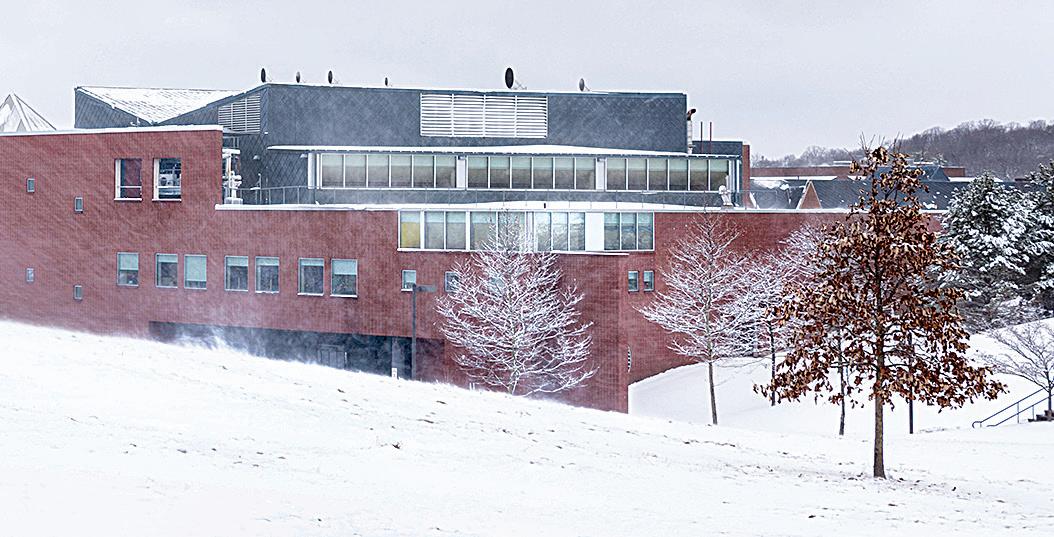
Heaters on high | Many residents reported that their heaters were repaired after dorms across North Campus reported widespread malfunctioning on Monday night.
Cold weather and confusion led to the outage that left freshmen without warmth
By ANNE SNABES Sun Assistant News Editor
After an icy start to the semester, maintenance staff restored warmth to the rooms of several North Campus residents who were lacking heat on Monday night.
Multiple students had broken radiators Monday night, The Sun reported.
Robert King, director of residential and new student programs, said this was not caused by an outage but rather was a
“product” of the heating system.
“Each of these issues were individual to student rooms for a variety of reasons. In some cases, heating valves were stuck, there was some operator confusion over how to adjust radiator temperature, and persistent extremely low temperatures were a factor on the demand for heat,” said Karen Brown, senior director of campus life marketing and communications, in an email to The Sun.
Since it is a forced air system, there
By LEANN McDOWALL Sun Staff Writer
This semester the Codes and Judicial Committee of the University Assembly will undertake a structural revision of the Campus Code of Conduct, the document that outlines the principles and policies that govern Cornell’s judicial system.
“Among the Committee's various goals is making the Code of Conduct easier to read and understand, updating its provisions concerning harassment and stalking, and codifying various Alternative Dispute Resolution procedures,” said Matthew Battaglia law, chair of the University Assembly.
year,” said Joseph Anderson ’20, who serves as the vice president of the Student Assembly as well as the executive vice chair of the University Assembly.
“[The code] is a living document that we look at every year.”
Joseph Anderson ’20
While recent revisions have included a couple of minor amendments, including changes that updated the process to appoint judicial administrators and holding events on University property, this semester’s review will be very substantial, Anderson said. The code was last edited in August 2018 to extend the term of the current Judicial Administrator.
The committee is looking into “a reorganization of the campus code of conduct: how it looks, how it reads to students” with the goal of making the document less
is not instant heat output, according to King. He noted that students likely turned off their radiators before break and it is taking time for them to fully warm up again, in addition to the negative effects of the cold weather.
According to King, the defects are known issues.
“Our heating system is the same that has been in place for years,” he said. “We
Speaker says no

The code is a “living document that we look at every
Thursday, January 24,

Interesting insects | Artist Carla DeMello illustrates the beauty of bugs that often go under appreciated: beetles. Her eye-catching renditions of the insects in sculpted paper are currently on display in the Top Shelf Gallery in Mann Library.
Kota Ezawa: Paint Unpaint
8 a.m. - 5 p.m., John Hartwell Gallery, Sibley Dome
Cayuga Basin Bioblitz: A 24-Hour Race to Find What’s Living in Our Backyard
8 a.m. - 5 p.m., Mann Library
Its Mysterious Life: An Appreciation of Beetles
8 a.m. - 5 p.m., First Floor Mann Library
Mixed Media: The Interplay of Sound and Text
9 a.m. - 5 p.m., Hirshland Exhibition Gallery, Level 2B, Kroch Library
PPMB Seminar - Sara Villani
10 - 10:50 a.m., A134 Barton (Geneva), zoom to 336 Plant Science (Ithaca), HVL and LI
North American Computational Linguistics Olympiad 10 a.m. - 1 p.m., Conference Center, Ives Hall
Don’t Forget Us: The Plight of the Hemlock and Ash Padraig Dixon, Research Fellow, University Bristol Noon - 1 p.m., T01 Human Ecology Building
Energy Engineering Seminar: David Hammer 12:20 - 1:10 p.m., 165 Olin Hall
Neurobiology and Behavior Speaker; Christine Lattin, University of Louisiana
12:30 - 1:30 p.m., A106 Morison Room, Corson Mudd Hall
Communicating Research to the Public: The Art and Science of Op-Eds
4 - 5 p.m., Rhodes-Rawlings Auditorium, Klarman Hall
Linguistics Colloquium Speaker: Shane Steinert-Threlkeld 4:30 - 6 p.m., 106 Morrill Hall
APO Finger Knitting
8 - 9 p.m., Conference Room, William T. Keeton House

Revisiting Nanobiotechnology at Cornell 9 a.m. - 1 p.m., G10 Biotechnology Building
Ancient Eastern Spirituality for Contemporary Busy People
6 - 8 p.m., One World Cafe, Anabel Taylor Hall
Cornell Games Club Weekly Meeting 7 p.m., 156 -164 Goldwin Smith Hall
C.U. Music, Fugitive Resonance Festival: An Evening of Debussy 8 p.m., Barnes Hall Auditorium
WCHS Ice Skating at Lynah Rink 9:30 - 11 p.m., Sign-up at William T. Keeton House
Late Night Breakfast
10 - 11:59 p.m., Okenshields, Willard Straight Hall



While some social media blocking tools prevent users from accessing certain sites after a period of time, Fabian Okeke grad had a different idea. Okeke and his colleagues designed an app that vibrates the phone every five seconds after exceeding a designated time limit, rather than completely preventing users from accessing social media platforms. The app was developed using theories from behavioral economics and psychology. During experimentation, users reduced Facebook use by 20 percent, but went back to regular use after the app was removed.
Cayuga Medical Center
Violated Federal Labor Law, Court Rules
The federal Court of Appeals upheld a ruling by the National Labor Relations Board against the Cayuga Medical Center for interference with union organizing. The CMC fired two union-organizing nurses, Anne Marshall and Loran Lamb, for what the CMC claimed was not following protocol. Other nurses contested this account, and testified that the fired nurses’ actions were common practice. The NLRB previously ruled that the Cayuga Medical Center must reinstate those two nurses. The nurses had previously attempted unionizing in early
Over a month since the government first shut down, officials continue to clash over deals to reopen the government. President Trump offered temporary protections to “Dreamers” in exchange for $5.7 billion for a border wall; Democrats refused. House speaker Nancy Pelosi (D-Calif.) threatened to cancel the president’s State of the Union. Around 800,000 federal workers are without pay, with many filing for unemployment benefits. Transportation Security Administration workers are also without pay, many of them skipping work, impacting security at airports.
The 2020 elections are nearly two years away and nine Democrats are already officially running for president. Senator Kamala Harris (D-Calif.) announced her candidacy Monday morning. Harris, the second black woman ever elected to the Senate, joins what looks to be a highly diverse and crowded democratic primary. Other candidates include New York’s Senator Kirsten Gillibrand along with recognizable names like Sen. Elizabeth Warren (D-MA). More people are expected to announce candidacy in the coming months. The candidates have been campaigning on platforms surrounding healthcare, economic inequality and women’s rights.
-CompiledbyRochelleLi’21

By
Earlier this week, the Ithaca community celebrated Martin Luther King, Jr., Day with week-long celebrations, community meals, workshops and guest speakers.
Ithaca College honored King with a commemorative week of events run by the Center for Innovation, Inclusion, Diversity, Equity and Social Change. Ithaca College has been celebrating MLK day as a “day on” not “day off” since
2008, according to their website.
The idea of the “day on” is a time of reflection and a call to action through programs and activities, rather than simply taking a vacation.
Their week of events features a keynote address, workshops, speakers and panels. Friday will mark the end of their celebrations with a day of service for the Ithaca College community, Omega Hollies, assistant director of IDEAS, said.
One of the best things about the celebration is the length
By EMILY YANG Sun Staff Writer
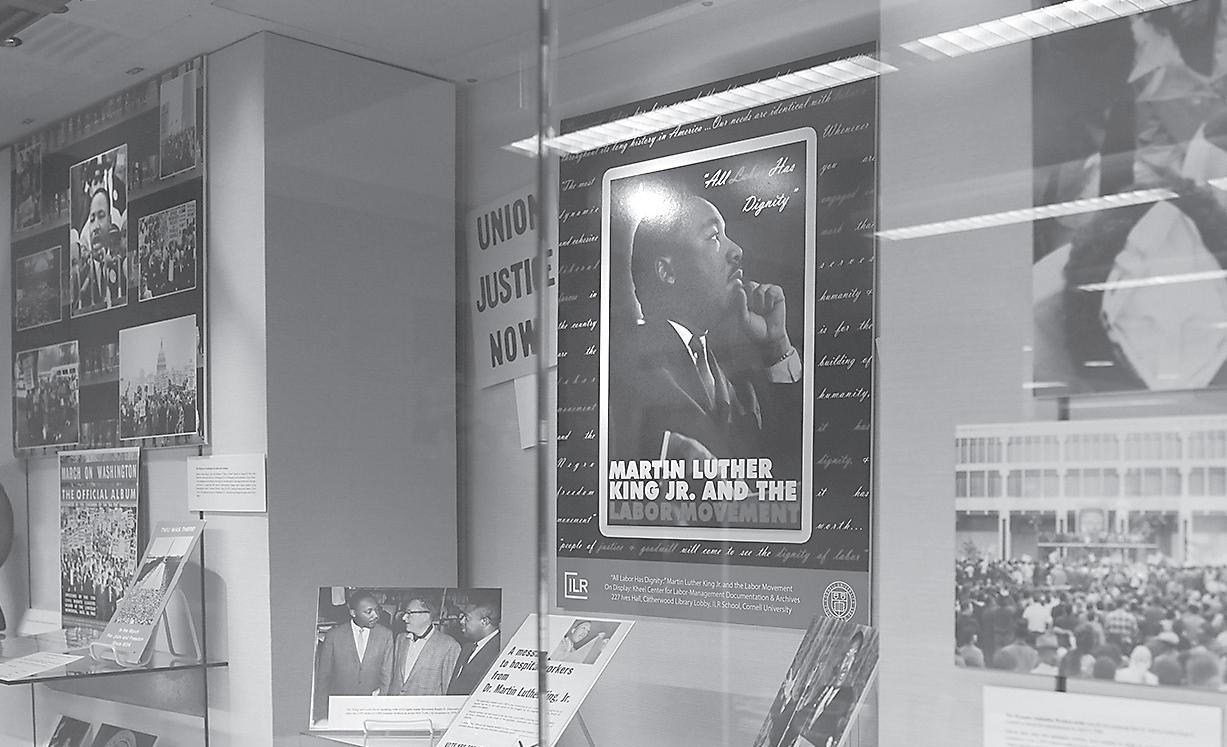
Martin Luther King, Jr. is widely celebrated for his leadership during the Civil Rights Movement, but a new exhibit in Catherwood Library seeks to shed light on his lesser-known role in the history of labor rights.
The “All Labor Has Dignity: Martin Luther King Jr. and the Labor Movement” display case features three sections that highlight King work with labor rights, his favorite union, Local 1199 The National Healthcare Workers’ Union and the legacy carried on by his wife Coretta Scott King.
“Many do not realize his advocacy for workers and his fight for economic justice, especially towards the later years of his life,” said senior assistant archivist Steven Calco, curator of the exhibit.
“King provided support for the union by speaking at rallies
and being the face of the movement to unionize the health care workers of New York City,” Calco told the Sun. “Even the March on Washington was a March on Washington for Jobs and Freedom.”
According to Calco, the Kheel Center for Labor-Management Documentation is “one of the best places at Cornell to document this kind of history.”
“The Kheel Center is a unique archive, aside from being one of the largest archives that documents both labor and management, we are the archive of MLK’s favorite union local 1199,” Calco said.
For months, Calco worked with a team to search through the Kheel Center’s databases, collecting materials and information and creating reproductions of historical documents.
With union ephemera — but--
according to Hollies, who also praised the college’s stress on remembering “the heart” of King’s philosophies in their celebrations.
“Often times institutions have a tendency take MLK’s vision and grandiose ideas [and] get caught up in the idea of what King was and what King could of been,” Hollies told The Sun. “I like that IC has been cognizant of the ways in which institutions can do that and has been pretty honest about making sure we try not to do that.”
In the local community, the Greater Ithaca Activities Center has been celebrating King for over 30 years according to Deputy Director Travis Brooks. He expressed the importance of hosting an annual event and the importance of King to communities of color.
“If we don’t do it, it is not something that is going to happen in this community,” Brooks told The Sun. “For us to keep that memory alive … to celebrate … to bring people togeth
By ANU SUBRAMANIAM Sun Staff Writer
With an Emmy and a Golden Globe nomination under his belt, actor and New Yorker Max Greenfield will be coming to the University on Feb. 2 to speak about his career and Jewish identity.
Greenfield is best known for his role as “Schmidt,” who played opposite actress Zooey Deschanel in the television series New Girl.
According to IMDb, Greenfield’s other notable works include supporting roles in Veronica Mars and Greek He has also held recurring roles on Gilmore Girls, Boston Public and The O.C.
In 2010, Greenfield created, produced and starred in The Gentlemen’s League, a comedy series about a fantasy football league he ran in real life, according to IMDb.
Greenfield is also known for his work with the Young Storytellers Foundation, according to their website. The website says they use “oneon-one mentorship” to help “low-income students learn
how to write original stories and see them brought to life.”
In the past, Cornell Hillel, an organization that according to its website “serves the Jewish student community with yearround social, religious and educational programming,” has hosted other notable speakers such as Aly Raisman, Josh Peck and Gloria Feldt.
A part of the Cornell Hillel Major Speaker Series, the talk is funded by donations from the Himan Brown Charitable Trust and the Cornell University Program Board.
According to Inside Philanthropy’s website, the Himan Brown Charitable Trust primarily funds grantmaking related to education, health, Jewish causes and cultural organizations.
The event, followed by a question-and-answer session, will take place in Baivley Hall at 7:30 p.m. Individuals can pick up free tickets to the event from Jan. 23 - 25 and Jan. 28Feb. 1 in Willard Straight Hall.
Anu Subramaniam can be reached at asubramaniam@cornellsun.com.

FOOD TRUCK
Continued from page 1
trucks and we had to adhere to the standard they set,” he said. “We had to do that in order to open and it just finished yesterday.”
The famed food truck is set to reopen at 11 a.m. Thursday, on schedule, and continue to serve students as normal.
According to the new ownership, everything will be business as usual.
“Nothing about the truck is planned to change, it will be the same as ever,” said Troy Smith ’20, a current employee.
“It’s basically going to run exactly the same,” Munson confirmed. “If it’s not broke don’t fix it.”
However, the truck will be operating cash-only for the first few days of the semester. The issue is a temporary one, according to Munson, due to a processing issue with the credit card company that handles their transactions.
“The first couple days will be cash-only … the credit card company we go through is finalizing applications to get it set up. We will be back with that within a day or two.”
According to Munson, hungry students will be able to return to the red truck to order from its secret menu today.
EXHIBIT
Continued from page 3
tons, a hat and cards — alongside photographs of King’s work with leaders of the labor movement, the exhibit further notable colleagues of King Jr. Photographs, pamphlets, artifacts and union ephemera showcase King’s work with leaders of the labor movement, including Theodore W. Kheel ’37, a distinguished labor arbitrator. The exhibit also contains audio from King Jr.’s speech to promote the Poor People’s Campaign — a march on Washington to fight for economic justice for the poor, images and video footage of marches in support of work-
ers’ rights and artifacts from the labor movement’s support for Dr. King.
“The exhibit is an important bridge for those who are not familiar with the labor movement and the importance of unions,” he said. “This exhibit will showcase Dr. King and Coretta Scott King’s work with unions directly and uncover this lost tidbit of history to the public.”
All Labor Has Dignity: Martin Luther King Jr. and the Labor Movement will be on display through July 22nd.
Emily Yang can be reached at eyang@cornellsun.com.
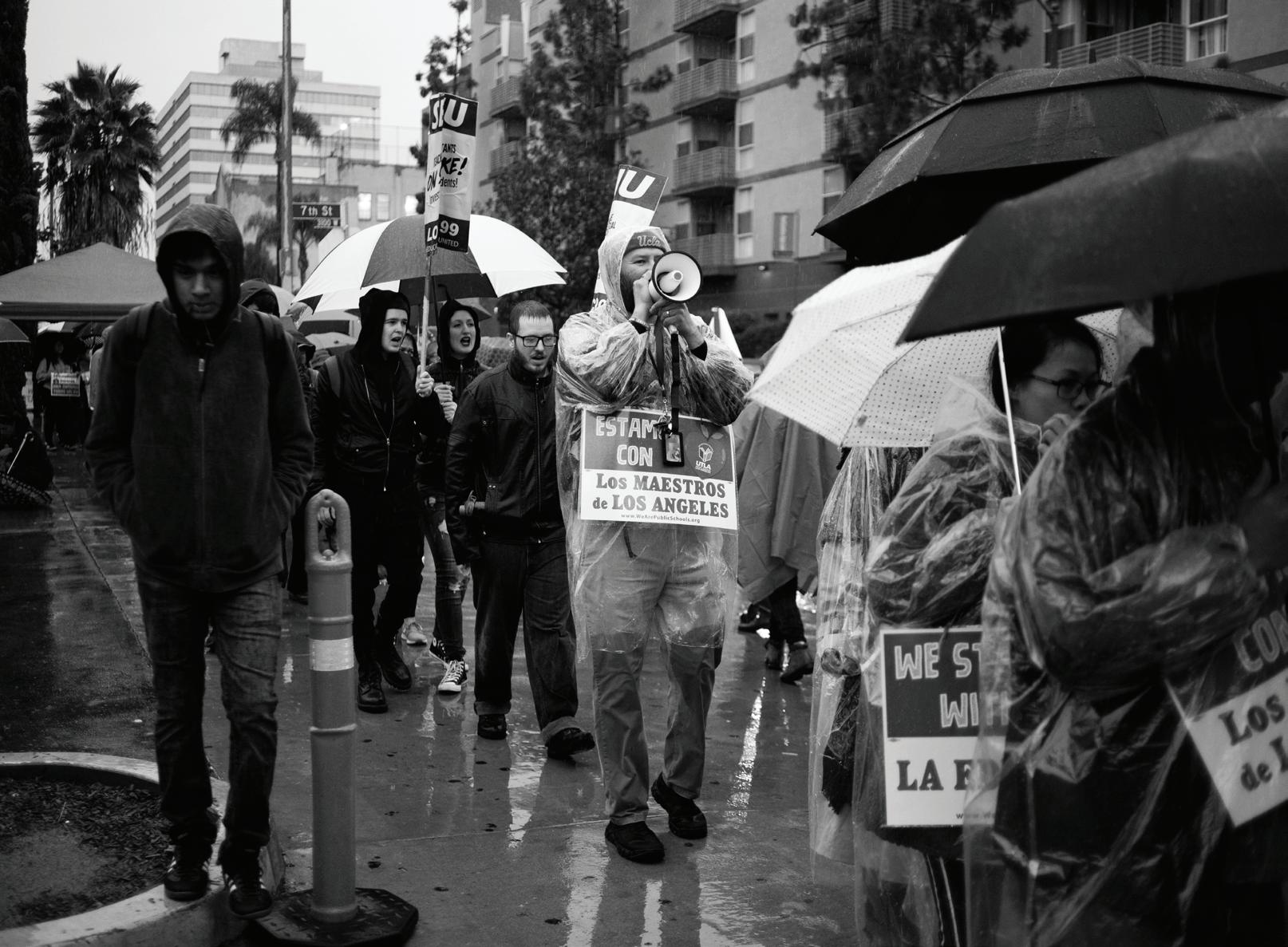
The Teacher’s Union in Los Angeles ended a week-long strike after reaching a tentative deal Thursday afternoon.
all want our students to feel comfortable especially when they return from breaks. I hate that the extreme external temperatures impacted the comfort of our students.”
Brown said that Cornell experiences “heat issues” every winter.
“They tend to be more profound when outdoor temperatures and very low wind chill remain for a longer period of days,” she said.
She noted that if repairs were unable to be finished,
space heaters were placed in the residents’ rooms. “No students were left without heat throughout the course of the week,” Brown said.
Sara Mills ’22, a resident of Low Rise 7, said that the knob was broken on the radiator in her suite, so it was stuck on a low setting.
After the previous article about heating problems was published on Tuesday, Low Rise 6 and 7 Residential Hall Director Mark Schneider emailed her and her roommate, asking about the heating system, Mills said. Maintenance employees then came to her
suite on Tuesday morning to fix all of the heating systems.
“Originally there was an email sent out about the Low Rise heating from the director himself, and he said that you could file for maintenance requests, but it was better to just stay warm,” Mills said. "No one was really checking the heating systems.”
After Monday night, she said that Schneider and the maintenance staff “went out of their way to make sure that the heating systems were working,” citing The Sun’s article for the prompt response.
Salaiha Mughal ’22, another student who did not have heat on Monday night, also had the heating in her room restored. She submitted a maintenance request on Monday, and her heating system was fixed on Tuesday.
Mughal said that the radiator in her room did not work last semester either.
“I just thought that all the rooms were like that, so I’m assuming my heat was also broken last semester, but I just didn’t really realize that it was broken, so I never got it fixed,” she said.
According to Mughal, the temperatures were cold enough to impact her night, saying that on Monday it was difficult to fall asleep.
“It was okay because I had a lot of blankets on — like I had two — so it was okay, and I was wearing like thick clothing, so it was fine, but it was kind of hard,” she said.
Amina Hasan ’22, a resident of Balch Hall, also lacked heating in her room. She said the cold did not affect her because it was not “unbearable,” but when she walked out into the warm hallway, she realized there was a problem.
Hasan filed a maintenance request on Monday night, and her heating system was fixed on Tuesday afternoon.
“Now I’m a lot more comfortable,” she said. “I’m sitting at my desk. I’m doing work.”
Codes and Judicial Committee encourages student feedback for Campus Code revision
CODES
Continued from page 1
“legalistic” and more student-friendly, according to Anderson.
In addition to restructuring the code, drafted changes will include suggestions from the last year’s CJC’s working group, the Presidential Task Force, President [Martha] Pollack and “various other pieces of feedback received from the community,” Battaglia said.
The committee wants to use this semester’s revision as an opportunity to reintroduce the code to the student body so that students understand campus processes.
“I think it’s a good
thing that students don’t interact with the Campus Code of Conduct because that means they’re not getting into trouble, but at the same time … it’s a negative thing because we want students to be educated about … how it works,” Anderson said.
“The foundation of the code is to ensure that students can pursue educational interests and also be a student without feeling infringed upon by someone else,” Anderson said, saying that if a student finds themselves in a situation that requires use of the Code of Conduct, they hcan be educated.
Anderson described effort of the committee as “collaborative,” and encouraged students to
get involved.
“One of the really great things about amending the Campus Code of Conduct is that we have to hold forums and really publicize that we’re amending it,” Anderson said. At these forums, students can make their voices heard, and Anderson urged students to talk to their representatives on the Assembly.
“Come to the SA open mic and say, ‘Hey, how is the Campus Code of Conduct doing?’ and there’s enough people at the SA who can answer that question,” Anderson said.
LeAnn McDowall can be reached at lmcdowall@cornellsun.com.
Ithaca communities celebrate the legacy of MLK through luncheon, fellowship events and exhibits
Continued from page 3
er … to share a meal …. to put guest speakers in front of the community to talk about what he meant and how they used that in what they do now, is mandatory.”
This year, the center hosted their annual breakfast on Saturday for the Ithaca community which featured food, performances, drumming, and speakers. Ithaca Mayor Svante Myrick ’09 gave the keynote address about the event’s theme, King’s famous quote, “We need leaders not in love with money but in love with justice. Not in love with publicity but in love with humanity.” The annual luncheon that GIAC hosts on MLK day was cancelled this year due to the snowstorm.
According to Brooks, it is import -
ant to have events that allow people to come together in fellowship and reflect.
“It’s also just as important for them to recharge their battery to get ready for the struggle of the new year, the new day and to remember that there are hundreds of people that are there with them and they have thousands, millions that have come before them,” he said.
King’s labor activism is currently being honored in an exhibit at the School of Industrial and Labor Relations in the the Catherwood Library lobby. The exhibit will be on display until July 22.
Amina Kilpatrick can be reached at akilpatrick@cornellsun.com.

JACOB S. KARASIK RUBASHKIN ’19
in
JOHN McKIM MILLER ’20
Business Manager
KATIE SIMS ’20
Associate Editor
VARUN IYENGAR ’21
Web Editor
MEGAN ROCHE ’19
Projects Editor
EMMA WILLIAMS ’19
Design Editor
JEREMIAH KIM ’19
Blogs Editor
AMOL RAJESH ’20 Science Editor
Editorial
GIRISHA ARORA ’20
Managing Editor
HEIDI MYUNG ’19
Advertising Manager
ALISHA GUPTA ’20
Assistant Managing Editor
DYLAN McDEVITT ’19
Sports Editor
MICHAEL LI ’20 Photography Editor
GRIFFIN SMITH-NICHOLS ’19 Blogs Editor
JACQUELINE QUACH ’19 Dining Editor
Working on Today’s Sun
Ad Layout Dana Chan ’21
Design Deskers Simon Chen ’21
Night Desker Olivia Weinberg ’22
Dining Desker Jacqueline Quach ’19
Production Deskers Sarah Skinner ’21 Megan Roche ’19
Editors in Training
’21
Ghazi ’21
Raphy Gendler ’21
Photo Editor Boris Tsang ’21 Dining Editor Katie Zhang ’21 Lucy Spahr ’22
News Editor Maryam Zafar ’21 Hunter Seitz ’20
Arts Editor Peter Buonanno ’21
Assistant Photo Editor Yisu Zheng ’21
Assistant Sports Editor Miles Henshaw ’20 Christina Bulkeley ’21
Assistant Arts Editor Madeline Rutowski ’20 Daniel Moran ’21

I’ve been waking up these past few days with the same strange, rare feeling — I am at Cornell and feeling motivated.
I call it the “beginning-of-the-semester high.” Anyone who is a human and studies at Cornell knows what it is: that feeling at the beginning of every semester when everything still feels possible, productive and hopeful. I’ve seen my friends (and myself) suddenly have the urge to make an omelet for breakfast and spend more than 20 seconds picking out the day’s outfit, then take the longer, more nature-filled route to the first lecture. Time and time again, I hear friends setting goals around this time of the semester, saying things like “I’ll go to class more often” or “I’ll coordinate chores with my housemates” or “I’ll try to cook more this semester.”
I’ve been waking up with the same rare feeling — I am at Cornell and motivated.

and stress, until I forget what motivation felt like entirely. And the motivation only reappears in small, guilty moments, like when I have flashbacks to “that time” I used to clean my room regularly, or had a chance to read a book before bed. Even if it means maintaining just one goal after the first week, like cooking three lunches a week or visiting the gym at least 10 times, I hope everyone this semester can try harder to hold onto the motivation they’re feeling right now, and eventually turn “that time I used to” into a present reality.
“Remember when” becomes a mantra too soon, too quickly. Editor
CORNELL HAS LONG PLANNED TO MOVE ON FROM BLACKBOARD LEARN, the course management system it has used for the past 20 years. After an extensive evaluation and trial period, Cornell officially transitioned to Canvas Network this semester.
Cornellians are in fact reminded of this transition every time they log into Blackboard, which is still being employed by many courses across campus, and will continue to be similarly and confoundingly employed until Spring 2020.
The result of Blackboard’s transitus interruptus is a semester in which students juggle two separate course management systems, one of which is quite unfamiliar to them. In a scene that played out in classrooms throughout this week, students struggled to adapt to the new system, and more importantly, instructors were hindered by the introduction of an alien element to their course.
We doubt Cornell has been blindsided by these issues. A Spring 2018 report on the trial runs of several course management programs noted that “repeatedly ... students commented on their dislike of using two different systems,” and quoted one student who described alternating between Blackboard and a new system as “incredibly annoying and disruptive.” In July of 2018, Prof. Drew Margolin, communication, who participated in the Canvas trial, expressed similar frustration to The Sun. If Cornell knew this was a likely scenario, why did it proceed in the way it did?
To be clear, we’re not questioning the move to Canvas in and of itself. If Cornell felt it was time to move on, if the appropriate offices did their due diligence — and we have no reason to suspect otherwise — then Canvas it should be. But we do question the wisdom of proceeding for a year with a jury-rigged two-website system that seems to generate more confusion than it does answers or efficiency. And is Cornell paying for both services over the course of this yearlong process? That certainly wouldn’t make sense.
Once Cornell made the final decision to switch to Canvas, they should have switched to Canvas. The protracted breakup with Blackboard is doing nobody any favors.
It’s strange how there’s a period of time when we suddenly feel like our lives are put together. Maybe it’s the freshness of a new beginning, or the promise of a rare week with no tests, but something in the air is different. Whatever it is, I like it.
While I can’t explain this collective urge to brew slow-drip in the morning or actually go to the gym (and dare I say, enjoy it in the process), I do know one thing for sure: This magic moment is always short-lived. Four weeks later, “I’ll go to class more often” turns into dragging ourselves out the door in sweatpants and a comb in our hair, heading to a lecture after already missing two. That omelet from the first week? A sandwich at Goldie’s will do.
As I’m riding the high this week along with everyone else, I find myself constantly wondering, when it will end? When will I lose that urge to eat healthy and finish all my work before 10 p.m., and shift to scrambling to finish a ninepage paper at 2 a.m.? I’ve observed every semester that there’s a specific point when we all cross that line.
One day you wake up and you don’t feel like preparing a homemade lunch over Trillium’s chicken tenders anymore, or you go to class and you’re 10 chapters behind on the reading. “Remember when” becomes a mantra too soon, too quickly. The end result, I’ve noticed, is a campus that becomes rapidly less motivated to achieve small goals they’re passionate about, and instead focuses intently on stress and toppling workloads.
People will inevitably contradict these goals with talks about time — as we get busier, we lose time to fulfill those goals. While it’s true our schedules become more packed, I’ve personally observed less time usually isn’t the actual downfall: It’s the stress of the workload that drives us to procrastinate, which causes more stress, which leads to less work being done. The result is a snowball effect of unproductivity, driven almost entirely by a toxic mentality focused on getting things done, instead of enjoying them.
There’s no time more crucial than right now, while everyone is still relishing in the hopefulness of the first
week of school, to give everyone a goal: Let’s remember what this feels like.
So there’s no time more crucial than right now, while everyone is still relishing in the hopefulness of the first week of school, to give everyone a goal: Let’s remember what this feels like, and keep it going. My first mistake every semester is letting the motivation slip away. It becomes buried under the growing work
I’ve realized most of my goals and the goals of my peers have nothing to do with time at all. Sure, some larger goals are more time-consuming, but most are small goals that don’t usually require much of our time at all. For example, one of my friends wants to drink more water, and another would like to be more involved in school clubs. Personally, I’d like to wake up earlier in the morning. I find these small goals usually take no more than an hour or two in our day, or maybe even 10 minutes. And there’s almost always a few minutes to spare no matter how busy you are, like filling up a water bottle in the morning on the way out, or waking up twenty minutes earlier. In many cases, it’s the daunting prospect of adopting a lifestyle change rather than sacrificing time that actually scares people. Saying time is the limiting factor is usually more of an excuse than an answer. I can’t speak for everyone, but I hope everyone can find one of those small goals to stick to this semester, and be uplifting to one another in fulfilling them. Remember this feeling of the beginning of the semester, and don’t let the inevitable tests and workload make you forget your small motivations, many of which don’t take up much time at all. The high of this first week might fade, but we can all do our best not to let it slip away entirely.
Kelly Song is a junior in the College of Arts and Sciences. The Songbird Sings runs every other Thursday this semester. She can be reached at ksong@cornellsun.com

We are nearing the end of January, which means a few things. One, we recently returned to school and after a long and dry winter break, many of us are back to swiping right and left on our phones. Two, we are approaching Valentine’s Day, which personally doesn’t mean much, but renders me a little lonely nonetheless. And three, we are in the midst of cuffing season, and even the most free-spirited of Sex on Thursday writers are looking for a longterm cuddle buddy.
Unfortunately, the new semester plus cold weather plus a sprinkle of desperation can lead to some bad decisions. And there are few decisions more disastrous than the friend hook-up. Now, there are different types of friend hook-ups. There’s the “we started off hooking up but now we are just friends and hooking up” type. Of all the possible setups, this is one of the least problematic in terms of friendships but most problematic in terms of feelings. There’s the “within the friend group friends with benefits” type, which in my experience is pure chaos with respect to friendships and feelings. And then we have the “we aren’t attracted to each other but we are very drunk and for some reason this seems like a good idea” scenario. Yikes. This was unfortunately my situation.
On one chilly February night, I was invited to a friend’s apartment for a
fully told me about her night. She smiled as she talked, light and joking. I didn’t want to tell her that blacking out and finding a nude Mr. Penis in her bed is not “just another night out,” but I also didn’t want to scare her. I cautiously asked if she was comfortable about what happened and she answered, “He was drunk too, so I guess it was nobody’s fault.” There was a long, remorseful pause, where we both considered the implications of what happened.
Is this the new normal?
By definition, a person cannot consent to sexual interaction when under the influence of drugs or alcohol. Should I say it louder for the people in the back? However, in this day and age, I’d bet you’d struggle to find a college kid who hasn’t had drunk sex. It’s part of the deeply problematic hook-up and drinking culture that pervades our college campuses.
I too am part of the problem. I met my current bae through a drunken hookup. Luckily for me, I felt “sober enough” to give consent. I never felt uncomfortable or pressured during the experience. Sometimes my man and I attempt to piece together our first night, but we were too toasted to sort the murky details. It was a horny man and woman who found each other, what’s there to do?
It was a boozy hook-up that ripened into a tender, romantic relationship. But what if it hadn’t? What if I never heard from the guy again? Would I feel taken advantage of? It’s impossible to say.
Trying to meet potential lovers and have the confidence to get frisky when you are stone-cold sober is like swimming upstream. Alcohol is called liquid courage for a reason.
pregame. I didn’t really know the people there too well, so I brought along a friend for moral support. Once we arrived, I downed an embarrassing amount of Svedka (ah, freshman year) and stumbled my way across Collegetown. We ended up at an overcrowded, sweaty and loud frat annex, but I was too buzzed to care. And having come out of one or two failed romantic endeavors, I was looking forward to meeting someone new.
But after finding the boys to be either not interesting enough or not interested in me, I felt defeated. More specifically, I felt the unique kind of defeat that only a drunk 18-year-old girl could feel, and it did not look good. I glanced around and spotted the friend I invited to tag along, who gave off a similar vibe.
I cannot stress this enough: alcohol plus loneliness plus a little desperation makes a terrible mix.
What happened after that is a bit of a blur. The passing of time and my immediate urge to repress this memory helped to do that. I remember waking up the next morning, alone, but with a sense of dread and embarrassment. I remember frantically calling a friend from home to tell her what happened and keeping this is a secret from even my closest friend at school. I remember having dinner with our friend group that night, which includes said friend from the night before. We nodded at each
But it’s also liquid vulnerability. The second I have 1.5 glasses of Sangria and a hot-enough guy makes eye contact with me, I’m infatuated and loose. Drunk people should not be having sex, but it seems practically impossible not to, especially at first. When two people are blacked out and have sex, who’s to blame? Is either party culpable? I don’t know the answer. Is there one?
To make matters worse, there is a popular notion that college-aged boys have to be cautious or they’ll be “accused of rape.” Guys that I value and respect have said to me, “It really sucks, any girl can just say you raped them.” From the top down, we are hearing this. Our commander in chief himself said that it is a “difficult” and “scary” time for young men in the U.S.
Maybe if drunken hookups weren’t so normalized and date rape wasn’t so common, men wouldn’t be scared. Maybe if a member of the highest court wasn’t an accused predator, I wouldn’t have to watch out for half-naked men on acid.
These occurrences and the current political climate have encouraged me to reflect on myself and the ways that I personally interact with and perpetuate this problematic sex-and-substance culture. If this has happened to you, just remember, you’re not alone. Plus, the majority of people are eager to end this shit.
And to perpetrators: instead of being afraid, just grow up and don’t have sex with drunk people. 2019: the year of sober sex. It’s about time.
other, talked over dinner and honestly, it felt as if he didn’t even remember. Which was a relief.
But then, my friends asked us about our weekend and we made eye contact. Crap. He remembered. We explained how it was an uneventful night, but bragged about how much we drank, again, in the special way only freshmen
friend, it’s something to laugh about later. I’m thankful to say that he is still one of my closest friends to date, and I’m even more thankful that history has not repeated itself. A lot of friend hook-ups can be damaging, to say the least. I’m happy they all don’t have to be.


By JACQUELINE QUACH Sun Dining Editor
As Dining Editor, I can recall countless moments when I felt guilty for making myself instant ramen for dinner, but as a college student living off-campus without a meal plan, I have a limited amount of time and resources that I can dedicate
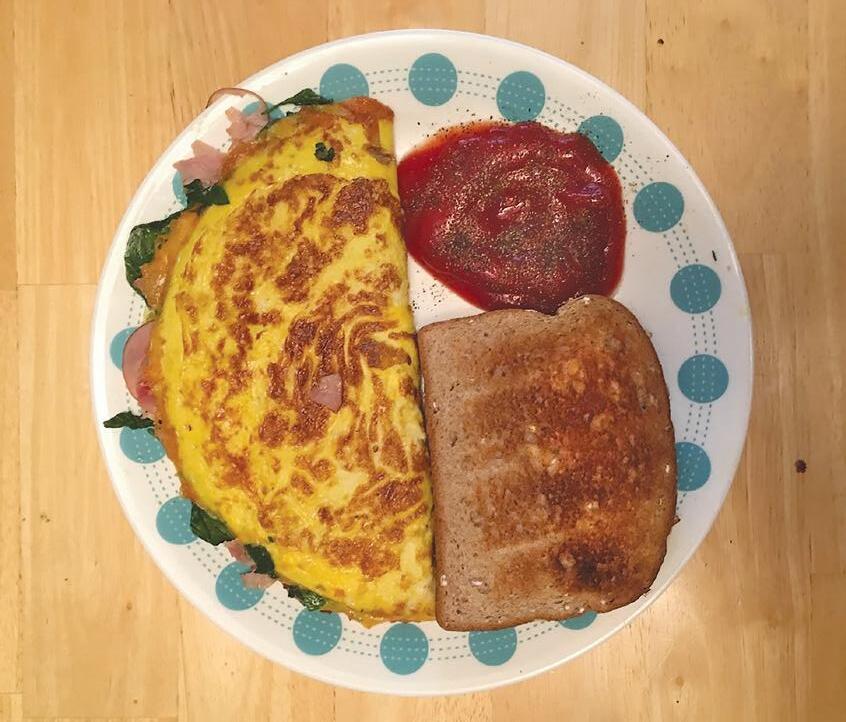
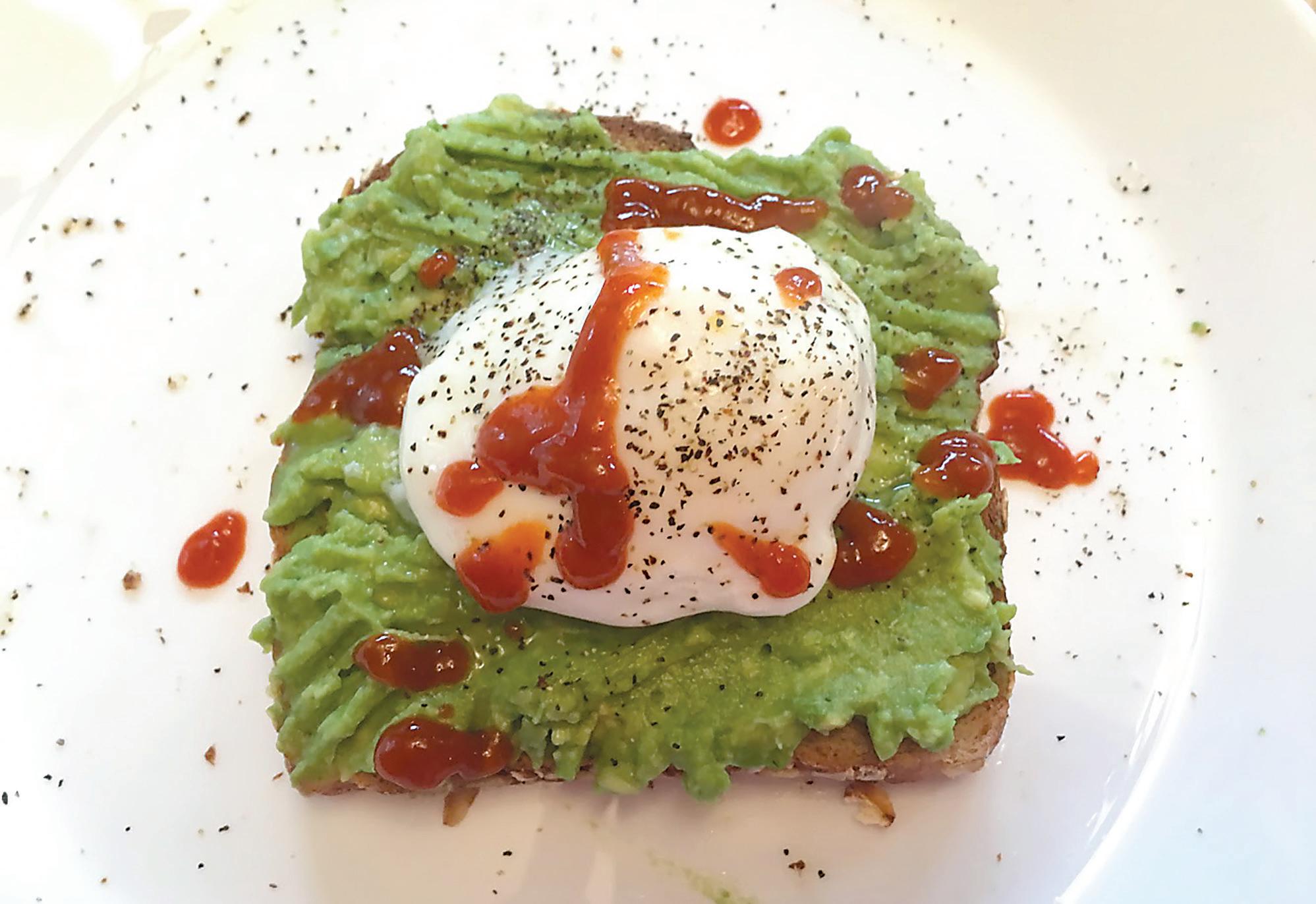
to preparing an Instagram-worthy meal that lives up to my editorial position. There is, however, one member of the protein food group that I can confidently declare to have spent all of last fall mastering — the egg.
Ah, the egg. With its iconic form that has inspired egg-shaped timers, chairs and toilet stalls, not only has this protein-packed vessel prompted many a debate over whether it or the chicken came first, but it has also cracked the world record for most likes on Instagram, with 50 million likes and counting. And with a variety of ways to prepare it, the egg was the perfect ingredient with which I should commence my culinary journey.
Although most people start


with frying or scrambling eggs, omelettes were actually my first foray into egg preparation. It wasn’t as if I had rationalized the omelette as the ideal way to start learning how to cook eggs; rather, I had always enjoyed omelettes, particularly a delicious one that my best friend had made for me when we had finished putting away our storage and packing our suitcases to return home for the summer.
That memory of having a meal lovingly cooked by someone I wouldn’t see for another three months stuck with me and sparked my desire to create one of my own omelettes come Fall 2018.
To put it bluntly, my first omelette was burnt, misshapen and leaky. As I gazed at my Frankenstein of a creation, all I could do was laugh and call over my housemates to bear witness to what I had accomplished after half an hour in the kitchen.
In many ways, this first attempt reflected many of my weaknesses. Not only was my omelette burnt because I had failed to keep track of time when I allowed for its egg component to cook while I cut other ingredients, but it was also misshapen and leaky because I had overloaded it with ham, vegetables and cheese.
Yet despite its appearance, I thought my first ever omelette tasted okay and became increasingly motivated to improve upon it in subsequent attempts.
Nonetheless, I reminded myself that I needed to work on my time management, multitasking and portion control skills before I could invite my housemates to take a bite.
As an English major who writes for the college newspaper, I am aware that the essays and articles I have produced over the years have improved, so I can remember the mistakes I used to make in my writing, the professors who gave me the most valuable feedback and the literature that has inspired me. Though easier due to its visual and gustatory components, tracking my culinary progress has been similar to charting that of my writing.
It’s one thing for you to appreciate your own creation, and it’s another for someone else to compliment you on it. Having a professor leave you pos-
itive comments on and find your paper worthy of a high grade can validate your confidence in your writing, just as seeing someone else enjoy your umpteenth omelette can make all those past attempts all the more rewarding.
When my sister and her boyfriend visited me in Ithaca over Fall Break, it had been a little over a month since I had begun making omelettes, and I finally felt confident enough to ask them if they would like me to make them some breakfast while I waited for them to finish getting ready for our hike. Sure enough, they took me up on my offer, and when the two of them tried the omelette I had made, not only were they impressed, but they also said it was delicious and finished all of it. In fact, my sister’s boyfriend encouraged

them. I hadn’t beaten the eggs for long enough; I hadn’t given the butter enough time to melt; and I hadn’t taken the mixture off the
me to continue learning how to cook, and showed me the way he had learned to make scrambled eggs when he worked in a hotel kitchen. It is moments like these that are important to remember whenever you’re confronting a new challenge. They remind you of how you have developed and how much more you can do.
When I made my first batch of scrambled eggs, they were — unsurprisingly — overcooked and rubbery in texture, which was demonstrative of my lack of patience when I was making
stove and stirred it enough times. Although I was disappointed, my past experience with cooking omelettes had shown me that a first failed attempt only signaled that I had more to look forward to accomplishing rather than more to lament over.
When I finally cooked scrambled eggs the right way, they were the best scrambled eggs I ever had — soft, silky and tasty without any salt or pepper, I could not stop eating and talking about them! They were the best thing on and since sliced bread.
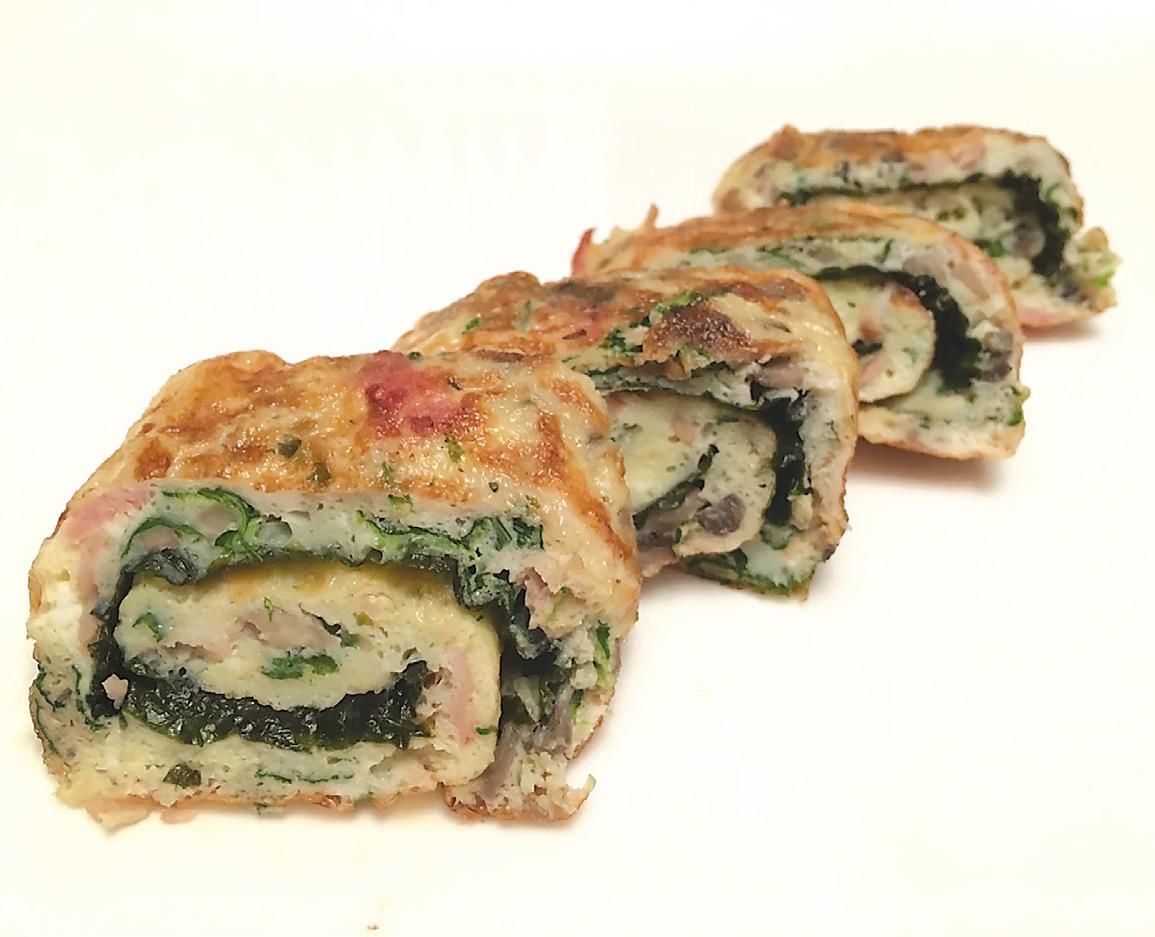
So evident was my joy that my housemate Emma, a much more talented cook and baker than I, tried her hand at making her own scrambled eggs, which she also confessed were the best she had ever eaten. Thus, I witnessed how cooking for yourself can also inspire others to do the same. I gradually moved onto poached eggs and rolled omelettes, and the process of mastering each of these forms was similar to that of learning how to make regular omelettes and scrambled eggs. Each of these experiences reinforced the values that I had previously learned — patience, time management and multitasking — reassuring me that I could approach my next goal with confidence.
Just as Ariana lists Big Sean, Ricky Alvarez, Mac Miller and Pete Davidson as her formative exes, I see omelettes (“one taught me love”), scrambled eggs (“one taught me patience”), poached eggs and rolled omelettes as milestones in my progress as a cook. I haven’t figured out what my next challenge is yet, but whatever it is, eggs have emboldened me with the knowledge that I will eventually successfully prepare a dish — and learn some important life lessons along the way.
jq64@cornell.edu.
Mimi Leder’s On the Basis of Sex features Felicity Jones playing Ruth Bader Ginsburg ’54. The film focuses on the Supreme Court Justice’s early life during, and not long after, her law school years. It culminates in a dramatic rendering of Ginsburg’s breakthrough litigation in the case Charles E. Moritz v. Commissioner of Internal Revenue.
I enjoyed some things about the film. The scenes depicting Ginsburg in class — both as a student at Harvard and as a professor at Rutgers — honestly capture the cold indifference with which the Socratic method is employed at law school . . . or so I hear from the classroom horror stories my mother tells me about her time at law school. In a subtle nod to its great predecessor The Paper Chase, the law school drama to end all law school dramas, On the Basis of Sex touches on Hawkins v. McGee, otherwise known as the “Hairy Hand” case. However, the latter film employs much less pomposity and embarrassment rendered upon the student. Felicity Jones accurately illustrates the cynical resignation that Ginsburg the professor must have exhibited after no corporate law firm would hire her on the basis of her sex, and her religion and her maternal status, a calm that perhaps arises when one is brilliant yet ignored. One of my favorite deliveries in the film is the following by Jones at the commencement of a class at Rutgers law school: “I’m Professor Ginsburg. This is sex discrimination and the law. Some of my colleagues will tell you that sex discrimination doesn’t exist, that I may as well be teaching the legal rights of gnomes and fairies. Let’s see if they’re right.”
Despite the pre-law eagerness with which I viewed On the Basis of Sex, I argue that the film and other social-justice-oriented historical works — namely, those set during the twentieth century –reinforce a limited understanding of social progress, an inadequate perception of change that is embraced by current, mainstream discourses. The problematic moment of the film that informs my argument occurs towards the end, during the litigation of Moritz v. Commissioner. The case concerns a man, Charles Moritz, who was not granted a

tax deduction for hiring someone to take care of his ailing mother, as such exemptions were granted only to women; the question at hand was whether the law violates the Equal Protection Clause of the Fourteenth Amendment. After a few biopic clichés during which Ginsburg, then a novice litigator, falters under questioning by the panel of judges (that a tenured law professor would find herself at a loss of words, even in the courtroom, is difficult to believe), she sways the argument back to her side by claiming, boldly, that “radical social change” has occurred. Thus, she posits, it is the law that ought to catch up to society’s altered values and, in the case at hand, recognize that women are no longer merely caretakers and homemakers, but also professionals at the workplace and in legal spheres (and, of course, to also recognize that men might be primary caretakers as well).

I find the use of the phrase “radical social change” troubling. The change to which Ginsburg refers to concerns the aforementioned exodus of women from the home to professional settings. I am not doubting that this was radical, and I do not mean to deny the adversity faced by women like Ginsburg. However, On the Basis of Sex is a piece of art crafted in 2018, and as such, we must receive it as critical thinkers of 2018, not those of 1970. As far as I’m concerned, the United States has yet to endure a truly radical, social change, because the brokers of power remain the same. Neoliberal capitalism and the institutions that uphold it are as powerful as ever before and human worth continues to be judged by viability in the economic marketplace. The invitation of a few women to the spaces of neoliberalism does not create radical change, it merely reinforces the power structures that exploit people and
perpetuate social hierarchy in the first place. When radical, social change does occur in the United States, it will not be grounded in the narrow purview of an antiquated, second-wave (and too-white) feminism; it will necessarily be rooted in alternative philosophies, those left beside mainstream culture and who idealize neither the false profundity of mainstream professionalism nor the governmental agencies — such as the Supreme Court of the United States — that affirm its existence. Films like On the Basis of Sex tell stories of social justice past, but it’s important to remember that this is all that they can do. Taking them for being more profound, for actually embodying justice, often risks promoting — to quote Sylvia Wynter — a “cheap and easy radicalism” that does little to challenge the restrictive logics of mainstream thought.
Nick Swan is a senior in Te College of Arts and Sciences. He can be reached at nswan@cornellsun.com. Swan’s Song runs alternate Tursdays this semester.
Clothing brand Supreme’s second full length video picks up where its predecessor cherry left off, capturing its star-studded roster at the height of the brand’s powers. Director Bill Strobeck turns his vision up a notch. He captures some of the most unique personalities in skateboarding while also taking viewers on an emotional rollercoaster before ultimately leading to Tyshawn Jones’s Skater of the Year sequence to cap off one of 2018’s best videos.
BLESSED begins with a declaration of intent, beginning right where Strobeck left off with Supreme, opening with Na-kel Smith nollie hardflipping the same three block he infamously slammed in 2016’s short video, Pussy Gangster. The skating gets no less astronomical as the video progresses, from Ben Kadow taking some of the heaviest slams imaginable to Vincent Touzery and Kevin Rodrigues creating some of the most inventive combinations possible. There are many moments where the skating is so impressive that the pro skaters are surprised — just about every segment has at least one moment where Aidan Mackey or
Na-kel Smith are in complete shock from what they just saw. The entire video leads up to Tyshawn Jones’s scene: he looms like a shark throughout, not appearing until the 41st minute for a few brief tricks before a second appearance at the end of the video. Tyshawn earned the cover of Thrasher Magazine prior to the release of BLESSED, the first New Yorker to earn the publication’s Skater of the Year award, creating hype for the video. It’s impossible to understate how important Jones is to the core of New York skateboarding. Tyshawn Jones is a kid from the Bronx, skating for New York’s biggest skate company. Every one of his tricks is absolutely stunning and it’s impossible to guess where the next one will take you.
In terms of cinematography, BLESSED comes across as more subdued, though no less effective than cherry. The film is still the same Supreme, incredibly political and punk rock, but in color and with smoother visual effects. One image flashes between Tyshawn Jones and graffiti that says, “Fuck Trump.”
The score is excellent as well, precisely matching what’s happening in the video. Rick Ross anthems play as Tyshawn Jones powers through his set and Mötley Crüe
accents Aidan Mackey’s reckless style.
It seems out of place to say that a skateboarding video can make you cry, but BLESSED is unique. The video is dedicated to the late Dylan Rieder, who tragically passed away from complications with leukemia. His influence throughout the film is everywhere, perhaps best seen through Sean Pablo. Seventeen minutes into cherry, Rieder drops a heavy slappy to front smith grind in his signature all-white outfit. On the same ledge and in the same outfit four years later, Pablo drops a backside 180 to backside tailslide. The small gesture acts as a quiet tribute to Rieder. Pablo ends his scene holding up a “Dylan Forever” memorial shirt.
Every part of BLESSED exists for a reason, be it to connect disparate parts of the film, reference older videos or showcase Supreme’s distinctive blend of skateboarding and style. Ben Kadow’s part ends with him riding a light-up board through Miami, which seems mundane among an entire movie of mind-melting action. After the credits, there’s a clip of a house party in which Kadow drops from a ladder with the same board, encapsulating the Kadow’s brand: determination triumphing over creative stupidity.
The most memorable moments are those
unrelated to skating. This isn’t a knock to any of the skating in the video — rather, it’s something that differentiates Supreme from the rest of the industry. This is both aesthetically pleasing and demonstrative of the team’s chemistry. Close-ups of various skater pairs are a hallmark of Supreme videos and capture each skater’s personality.
The final clip shows Na-kel Smith and Sage Elsesser freestyling a song. It’s one of the most genuine moments in the video. It is obvious that these guys were childhood friends before going pro. No other brand captures such authenticity, and “blessed” is the perfect word to describe it.
The skating in BLESSED ends with Tyshawn and Na-kel battling security to get Jones one last trick. The video is brought full circle when Jones lands a switch tre flip, solidifying his status as Skater of the Year on the same obstacle that the video began. As he rolls away, the video cuts to Na-kel Smith watching with a gaping mouth, clearly excited to see his teammate and close friend one-up his own trick. This moment is truly blessed.
Daniel Moran is a sophomore in the College of Human Ecology. He can be reached at dmoran@cornellsun.com.


Pick up your free copy of The Corne¬ Daily Sun at the following locations:
• A.D. White House
• Admissions Offce
• Africana Center Studies & Research Center
• Alice Cook Dining
• Anabel Taylor Hall
• Appel Commons
• Baker Hall
• Bard Hall
• Barnes Hall
• Bartels Hall
• Bethe House
• Big Red Barn
• Carl Becker House
• Carpenter Hall Library
• Center for Intercultural Dialogue
• Clark Hall
• Computer Services & Financial Aid, East Hill Plz.
• Cornell Institute for Social & Economic Research
• Cornell Store
• Corson Hall
• Court Hall
• Dairy Bar
• Day Hall Main Lobby
• Dickson Hall
• Donlon Hall
• Duffeld Hall
• East Hill Offce Complex
• Environmental Health & Safety Building
• Flora Rose
• Gannett
• Goldie’s (Physical Sci. Bldg)
• Goldwin Smith
• Hasbrouck Center
• Horticulture Offce
• Humphreys Service Bldg.
• Ives Hall (ILR)
• Ivy Room (WSH)
• Johnson Museum
• Keeton House Dining
• Kosher Dining Hall
• Mac’s Café
• Martha’s (MVR)
• Mann Library
• Myron Taylor Hall
+ Hughes Dining
• Noyes Main Lobby
• Okenshields, Willard Straight Hall
• Olin Hall
• Olin Library B Level
• Plantations Gift Shop
• Rhodes Hall
• Risley Dining
• Robert Purcell Community Center (RPCC)
• Sage Hall Atrium
•Sibley Hall, Green Dragon Café
• Snee Hall
• Statler Lobby
• Statler Terrace Restaurant
• Tatkon Center
• Teagle Hall
• Transportation Dept., Maple Ave.
• Trillium
• Uris Hall
• Vet Center (Shurman Hall) Off Campus
• Autumn Leaves Used Books (Ithaca Commons)
• Bear Necessities
• Center Ithaca
• Coal House Café
• Collegetown Bagels: CTown + Triphammer
• Commons Grocery (Ithaca Commons)
• CFCU (Triphammer Rd.
+ East Hill Plaza)
• Corner of College & Dryden
• Corner of State & Aurora
•Express Mart, Comm. Crnrs.
• Hillside Inn
• Hilton Garden Inn
• Holiday Inn
• Ithaca Coffee Co.
•Ithaca College, Phillips Hall
• Jason’s Grocery & Deli
• Kendal
• Kraftees
• Lifelong
• Oasis (Greenstar)
• P&C Fresh (East Hill Plaza)
• Salvation Army
• Shortstop Deli
• Tompkins Cty. Public Library
• Tops (Triphammer Rd.)
• Universal Deli
• Warren Real Estate (Downtown + Community Corners)
or stop by The Sun’s offce



Fill in the empty cells, one number in each, so that each column, row, and region contains the numbers 1-9 exactly once. Each number in the solution therefore occurs only once in each of the three “directions,” hence the “single numbers” implied by the puzzle’s name. (Rules from wikipedia.org/wiki/ Sudoku)



26 A PA R TMENT FOR R ENT
2 & 3 BEDROOMS
109 SAGE PLACE
Available NOW, Spring 2019 & 2019/2020
Shuttle Bus Access to Campus Access to Free Fitness Center Novarr- Mackesey Property Management office@ithacastudentapartments.com ithacastudentapartments.com
607-277-1234
312 College Ave
Collegetown’s Best Address Now leasing for 2018-19. Superior Studio, 1, 2, 3 Bedroom Apartments. Fitness facility, theater, and meeting space. Free high-speed internet. Exclusive resident parking. Overnight concierge. Package delivery. 312collegeave.com 607-273-9777
Collegetown Terrace Apartments INSPIRED LIVING TAILORED TO YOUR SUCCESS 24-Hour Fitness Center Shuttle Bus Service to Campus Study Rooms w/ Expansive Views
Apartments Available NOW, Spring 2019 & 2019/2020 Novarr- Mackesey Property Management collegetownterraceithaca.com office@ithacastudentapartments.com 607-277-1234
>>AFFORDABLE, QUALITY LIVING<< Special Deals for you! Furnished 1-6 Bedrooms Collegetown Apartments PARKING, LAUNDRY, UTILITIES! (607) 273-7368 www.IthacaApartmentRental.com

Houses, Apts, Parking 1 to 9 Bedroom
Collegetown - College Ave, Linden Ave, Dryden Rd, Bryant Ave, Cook St. 607-330-2442 info@urbanithaca.com www.urbanithaca.com
Nicest Apts. in Collegetown Located on Eddy St. 4 Bedrooms
Fully furnished. Spacious living areas with large bedrooms & closets. Hardwood flors, spectacular views, eat-in kitchens with additional sun rooms. Laundry & parking. 607-339-1137 bgm900@gmail.com
27 H OUSE FOR R ENT
COLLEGETOWN 6 BEDROOMS Newly Remodeled PRICES SLASHED TO RENT 607-272-3389 avramisrentals@aol.com
201 WYCKOFF AVE 6 Bedroom House Novarr-Mackesey Property Management office@ithacastudentapartments.com ithacastudentapartments.com 607-277-1234 2019-2020 317 Upper Eddy St. 1, 2 & 3 BR Apartments Ten month lease. Furnished. Hardwood floors. 607-227-0924
COLLEGE AVE.
1 Bedroom available In a 2 BR apartment For Male, Undergrad student. Available NOW & Spring 2019
4 Bedroom Apartment Available NOW & Spring 2019 Novarr-Mackesey Property Management office@ithacastudentapartments.com ithacastudentapartments.com 607-277-1234


When Cornell men’s hockey head coach Mike Schafer ’86 looks down at his line sheet before a game, scanning the score of troops awaiting to take the ice amid this season’s plethora of adversity, seldom does he see an arrangement of names that is identical from one night to the next.
At this point in the season, submitting a line sheet to referees and media coordinators has essentially become a pure formality rather than a blueprint for battle.
“It’s amazing. We’ve got to have set a record for the amount of line combinations we’ve used this year,” Schafer said. “It’s got to be ridiculous.”
But through it all — a lackluster first half of the season, a deluge of injuries and uncertainty at several positions heading into each weekend — Schafer and offensive assistant coach Sean Flanagan appear to have found a fresh breath of consistency and an important source of scoring within its top line.
The all-sophomore line of Morgan Barron, Brenden Locke and Cam Donaldson has wreaked havoc for Cornell over a majority of its current seven-game unbeaten streak with each scoring or assisting on 15 of the 23 goals during that stretch — and many of those scored by one and assisted by another.
“I think they are two really easy guys to play with,” said Barron, whose current five-game streak with at least two points in each contest is the most for a Cornellian this century. “For us, I think it’s big communicating with each other on the bench, making sure we are on the same page going into every game and understanding that we need to be a really solid line each and every game.”

Success has been built by the distinct skillset brought to the table by each skater: Donaldson’s lightning-quick speed, Locke’s passing and awareness and Barron’s strength and physicality — not to be outdone by the latter’s scorching, pinpoint shot.
“Cam can fly around the ice, and he’s so skilled, but at the same time when he gets down in the corners and stuff he is really strong on the puck,” Barron said. “And Brenden is the same, really skilled. I think he sees the ice really well.”
But there’s one thing that unites the trio.
“It’s a good combination, but I think their underlying skill set for all of them is their hockey sense and their ability to read plays and see plays develop,” Schafer said. “All three of them can score, and all three
of them can play … the hockey sense for all three of them is outstanding, and I think that’s what makes them special.”
Part of the reason this line has taken so long to conceptualize is its own fair share of injuries. Locke missed five games from Nov. 10 to Jan. 4 with an injury, and since his return and taking on the role as the top-line center, he has four goals in six games.
“He stepped in almost seamlessly, which isn’t always easy to do,” Barron said of Locke. “I’ve been impressed with that. He came in, and it seemed like his skating was there like it was before … he’s really sharp around the net, and I think last year he probably could have had a few more goals than he did have and you’ve seen it come out this year.”
Now, however, health is no longer a factor, and the
line has stuck together for the past six games. In a fraction of the games they played last year, both Barron and Donaldson have already ecplised their point totals from last season, and Locke has already doubled his goals.
“Even in practice they are a super hard line to play against,” said sophomore defenseman Cody Haiskanen of his classmates on the top line. “They just know where each other are.”
Cornell’s culture under Schafer has been built on depth and the ability to roll four lines. While the Red would not mind one line distinguishing itself like its current, yet-to-be-nicknamed top line has — the most potent since the “JAM” line of now-senior captain Mitch Vanderlaan, Anthony Angello ’19 and Jeff Kubiak ’17 — its pride comes in having four lines capable of playing equal minutes.

Injuries have hampered that ability so far this season, but the top line — all of whom are also fixtures on the power play — has not only lived up with the increased minutes, they’ve thrived.
“They’ve been able to be hot because of the amount of ice time they’ve been getting,” Schafer said. “Those guys are hitting the ice a little bit more, and they are definitely more consistent, so throughout the course of the game they are getting different types of scoring chances. They continue to push it. They get transition, they get offensive zone chances, they are getting tip chances and they are capitalizing on those goals.”
Even when all were healthy at the beginning of the year, the trio of sophomores were not put on a line together. But the relationship has roots in last year, when Barron and Donaldson played together much of the season centered by Trevor Yates ’18 — “I thought we had really good chemistry last year,” Donaldson said recently — and it continues to evolve today.
“I pretty much see them right from 9 a.m. when I wake up and go to class, and now I have almost all the same classes with them,” said Barron, who lives with Donaldson and is in the Charles H. Dyson School of Applied Economics and Management with his whole line and classmate Matt Cairns. “We spend pretty significant amounts of time together.”
By JACK KANTOR Sun Senior Writer
What’s the best fish to throw on the ice at the Harvard game? It’s Spanish mackerel, of course.
Assuming you’re familiar with the tradition but have never participated, there are some decisions the Lynah Faithful made before last Saturday’s game against the Crimson.
The first of those decisions was where to purchase the fish.
After some research and asking around, one is, unsurprisingly, directed to every Cornell student’s favorite vendor — Wegmans. But the best part is not that Wegmans sells fish; that would just make it another average supermarket.
What sets Wegmans apart is that the store prides itself on being the premier fish vendor for the Harvard game. The store is so proud that it even mentioned it in response to a fan on Twitter. And this isn’t an Ithaca Wegmans page, we’re talking @Wegmans — the national Twitter account.

This gives the fans a great excuse to get some food shopping done while also supporting their favorite hockey team. But upon entering Wegmans, another decision had to be made, perhaps the most important of them all — which type of fish to purchase.
But the fans didn’t actually make this decision on
their own, and the following is generally how the transaction went down.
A group of college-aged students would walk up the fish counter, and the fishmonger, without skipping a beat, would say, “You’re going to want to get the Spanish mackerel, it’s definitely the best throwing fish.”
“You’re going to want to get the Spanish mackerel, it’s definitely the best throwing fish.”
Anonymous
Fishmonger
Talk about quality customer service.Wegmans knows exactly what their customers are looking for, and the best options, without the customer even uttering a word.
Students would inquire about other fish, but the fishmonger would insist on the Spanish mackerel, as it is the most dry to the touch, whereas other fish are far more slippery.
The fishmonger would also describe to fans the versatility of the mackerel, how it can be thrown either like a football from its body or like a frisbee from the tail.
But most importantly, this fish is no slouch. The Spanish mackerel at Wegmans tend to weigh around a pound — some well heavier. Needless to say, it’s the perfect hurling fish and ideal for the Harvard game.
But even once fans have acquired their fish, one more decision had to be made — how to get the fish into Lynah Rink. Fans technically are prohibited from bringing fish to the game (at least that’s what Cornell says), so they can’t just be in plain sight.
Nevertheless, fans have fun with the restrictions, cooking up fun ways to sneak fish into the rink. Some fans stick the fish up their sleeves, some tape it to their bodies and clothing and others will stuff their fishy
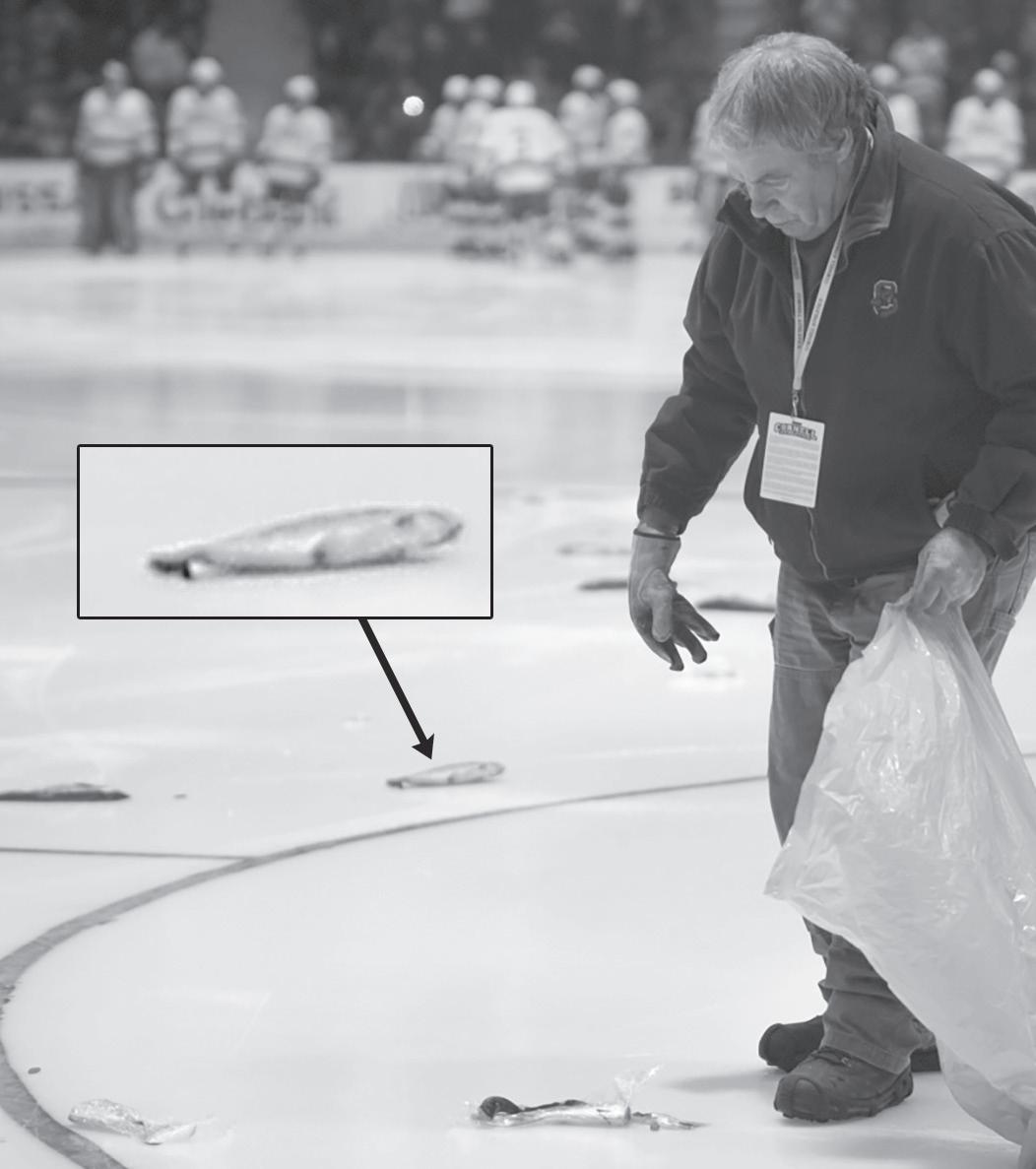
Something’s fishy | Because it’s dry to the touch, Spanish mackerel may be easier to throw — and clean up. Above, generic Harvard game fish (one enlarged) are cleaned up.
friends down their trousers.
All of these methods are pretty much foolproof, since fans are asked only to unzip their jackets upon entering the rink. So to anyone planning on doing this next year: Just don’t stick the fish inside the front your jacket and you’ll be fine. In other words, getting fish into Lynah is even easier than getting an A at Harvard.
As the clock nears 7 p.m., the Lynah Faithful arrive at their seats, and it’s just like Christmas morning with everyone unwrapping their goodies — except the surprise is the foul stench of mackerel and other sea creatures. And as the smell builds, the fans begin to question their actions as they eagerly wait for their rivals to take the ice.
But the moment the Harvard team takes the ice, the building erupts and the barrage begins. And holy mackerel, when it rains fish at Lynah Rink, it pours.
Jack Kantor can be reached at jkantor@cornellsun.com.

By CHRISTINA BULKELEY Sun Staff Writer
Any other weekend during the regular season, men’s hockey would be either entirely home or away. But every year, one weekend becomes the exception to this rule.
This Friday night, the Red will venture to Hamilton and play Colgate as the away team, then board their bus after the game and come back to East Hill for a match against the same foes on Saturday.
This rapid turnaround might mean an hour or so less sleep for Cornell players, as they return to Ithaca rather than to a nearby hotel, but beyond that the team isn’t too concerned.
“When you’re playing the same opponent, the adjustments that you make are pretty easy for our players to understand, so that doesn’t take as much time to prep on Saturday,” said head coach Mike Schafer ’86.
In addition to the team getting more time on the ice against the same ECAC rival, Cornell will also have the opportunity to spend more time prior to the matches to prep specifically for playing Colgate.
“We’ll get more of an in-depth scouting report on them throughout the week — when we play two teams, we usually look at the Friday team longer, and then the Saturday team. We worry about [the second game] postgame Friday and early Saturday,” said sophomore forward Morgan Barron, who has multiple points in five straight games and whose top line with classmates Brenden Locke and Cam Donaldson has produced 12 goals over the last six games.
Given Cornell’s recent success against Arizona State, the last weekend in which the Red played the same team two days in a row, the Red seems to benefit from this extra
attention to a single team. Studying up on one team for the duration of the week allows Cornell to strategize more and capitalize on their opponent’s weaknesses.
“It helps that when we come back, there are adjustments the next day that are pretty obvious from the game,” Schafer said.
But beyond these basic, day-to-day adjustments, one change should be obvious to any Cornell hockey fan. Both sophomores Matt Galajda and Austin McGrath will likely get a chance to start in goal this weekend, Schafer said on Tuesday. After Galajda’s bumpy start to the season and subsequent injury, McGrath came out of the woodwork and revealed himself to be a promising goalie. But now Galajda is back and performing well, leaving Schafer in a bind when it comes to who he’s going to rely on going forward.

While it’s no secret that having two talented goalies isn’t the worst problem a team can have, Schafer will have to make a decision sooner or later.
ing that the Raiders defeated Princeton and Quinnipiac while playing as the away team early in January. The Red knows not to underestimate the Raiders’ ability.
“They both do a great job of stopping the puck,” said sophomore defenseman Cody Haiskanen.
Haiskanen puts it simply and accurately. Galajda was awarded ECAC Goaltender of the Week on Jan. 21 and McGrath earned the same accolade two weeks prior.
“What we do with them now has more to do with my gut as a head coach than logistics,” Schafer said.
Another issue for the team is persisting injuries. Freshman forward Max Andreev ais out long-term after suffering an upperbody injury Saturday against Dartmouth. Other injured players’ statuses are up in the air.
Riding a seven-game unbeaten streak dating back to the start of December, the Red is looking more and more like a team that can make a real postseason run.
Though Colgate’s record (6-14-2) might not be impressive on paper, it is worth not-
“We can’t rest on our laurels,” Haiskanen said.
Friday’s game at Colgate starts at 7:30 p.m. and Saturday’s game in Ithaca is set for 7 p.m. Each game will be the second game in a double header where Cornell women’s hockey will be playing at the same locations as the men. Cornell women’s hockey will play both days at 3.
By FAITH FISHER Sun Staff Writer
With only one second left on the clock, Cornell women’s hockey watched its season end last March on a back-breaking Colgate goal. Cornell had started the third period down three and battled back to even, only to see the comeback fall short and the season end in the ECAC semi-final.
ECAC). Cornell is looking to put last year’s results in the rearview in order to move past a tough top-10 team.
will be important for us to be aware on defense and shut them down early.”
The Red (11-2-5, 9-2-1 ECAC), fresh off shutout victories against Dartmouth and Harvard, is seeking vengeance for last year’s elimination in a two-game series against the Colgate Raiders (14-6-4, 8-2-2

“Last year was last year and this year is this year. We are both different teams and haven’t seen each other all year long,” head coach Doug Derraugh ’91 said. “They are one of the best teams in the country and we know that so we know we are going to have to be at our best to give ourselves an opportunity.”
The Raiders are skilled at both ends of the ice, but their offense is especially dangerous. Defensive prowess for Cornell will prove essential against an offensively driven team like Colgate.
“They have a lot of players that are real strong with the puck and can score goals,” Derraugh said. “They transition very quickly, so you have to be prepared to match their speed. Colgate is probably one of the most dangerous teams in the NCAA, especially offensively speaking.”
Junior defenseman Micah Zandee-Hart echoed the importance of quality defensive play.
“Colgate is a really skilled offensive team,” she said. “They capitalize in the offensive zone, so it
Colgate, occupying the No. 8 spot in the NCAA standings, just barely trails No. 6 Cornell. With the playoffs looming as the season has meets its halfway point, the results of each game are especially formative.
“This is always an exciting time. You start to see the standings change and you know that each game is going to make a difference as far as the playoffs go,” Derraugh said. “At this time of the season, you start to realize that every win or loss is going to make a difference at the end.”
As the season has progressed, the team has evolved both on and off the ice.
“The team has become a lot closer outside of hockey,” senior forward Diana Buckley said. “On the ice, we have really come to buy into the systems that structure the style of hockey we play.”
In its first games back from winter break, the Red has been looking to hone its defensive game while remaining sharp offensively.
“To beat Colgate we need to
bear down on our defensive systems and play with offensive tenacity to continue scoring,” Buckley said. “Staying disciplined and sticking together as a team will be key for success against a strong team like Colgate.”
Throughout the remainder of the season, the Red will look for consistency through discipline and an emphasis on special teams and defensive-zone coverage.
“Game in and game out there is little room for error, so keeping things tight defensively will allow us to be in more games and focus on capitalizing on offense,” ZandeeHart said.
The Red will first hit the ice against the Raiders in Hamilton on Friday at 3 p.m. before returning to Ithaca on Saturday to face Colgate in Lynah Rink at 3 p.m. Each game will be the first in a double header with Cornell men’s hockey playing after the women on the same ice.
On Friday, the men will play at 7:30 p.m., and on Saturday they will play at 7 p.m.