
Wintry Welcome
Snowstorm brings fun and frustration
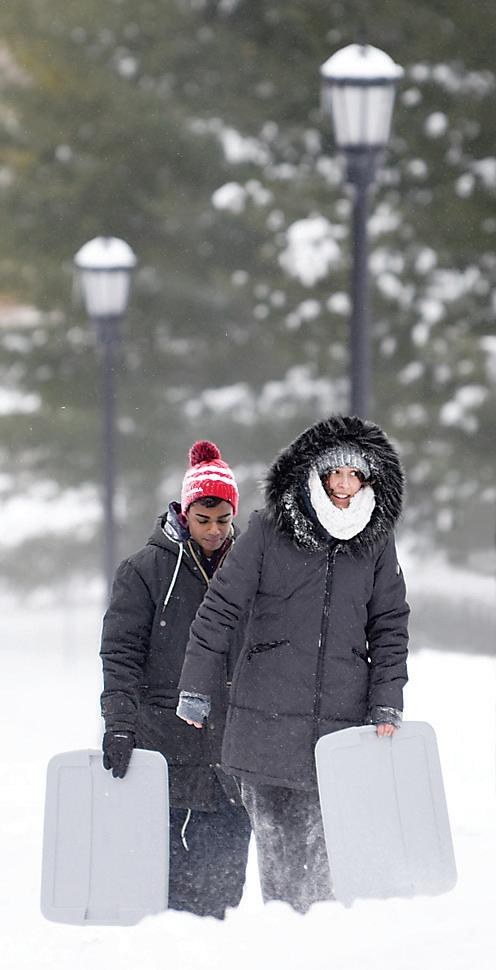
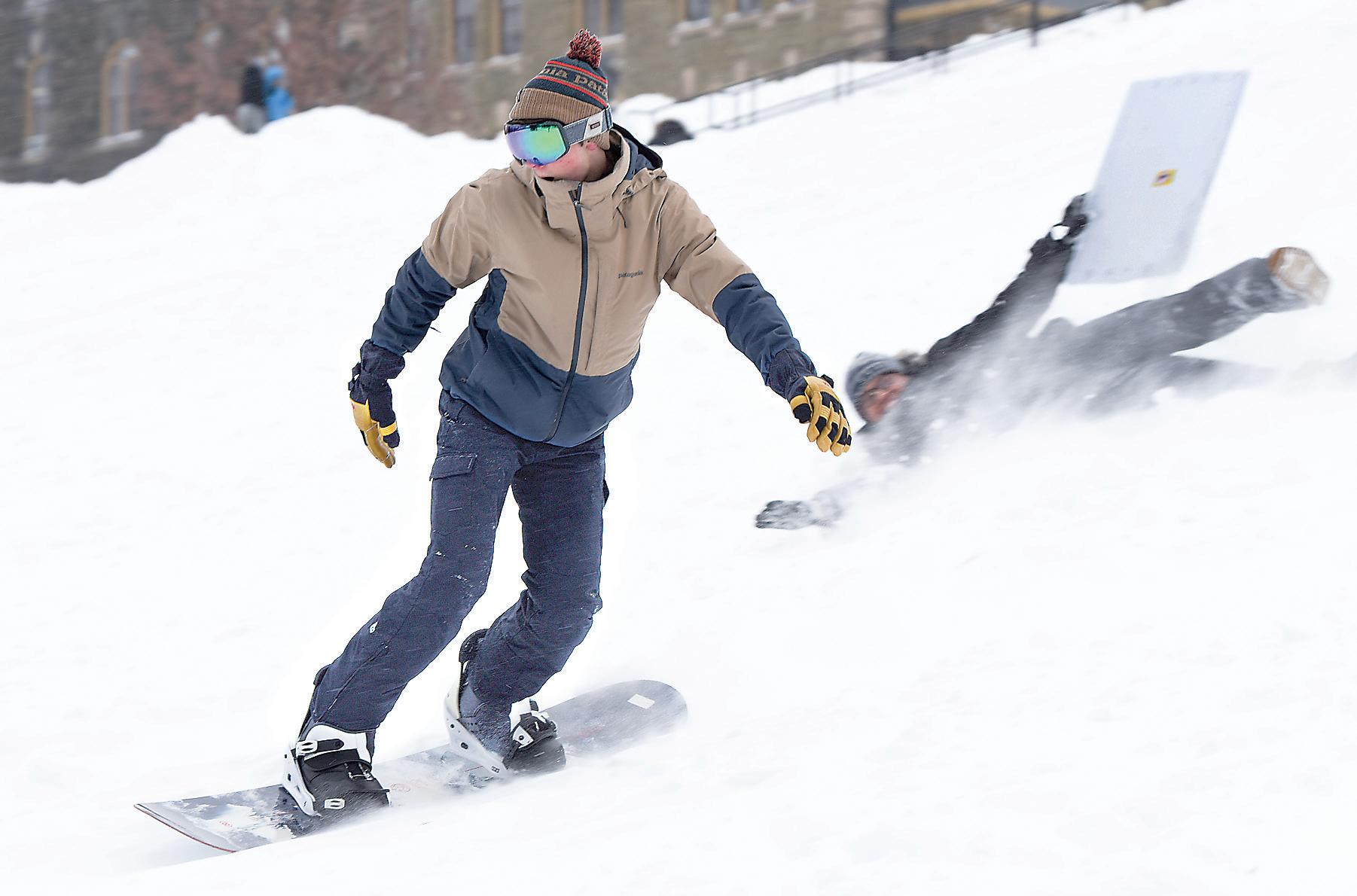
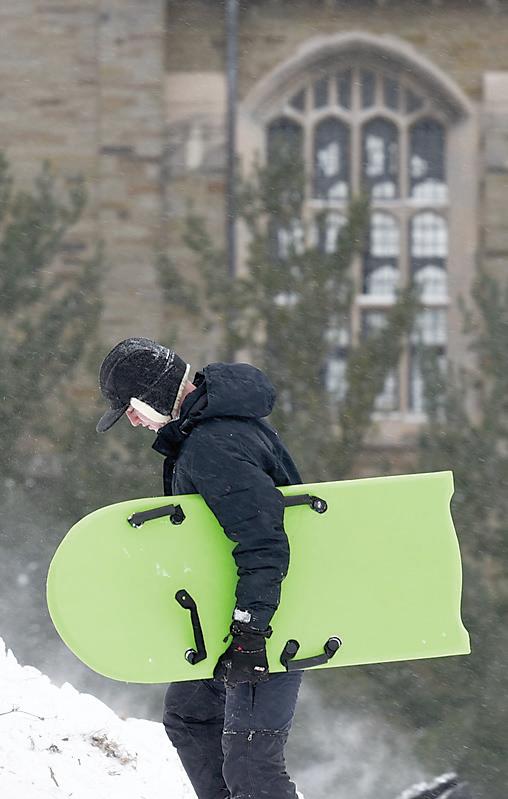
Going downhill fast | Despite closures and cancellations, some Cornellians made the best of the wintry weather as they flew down Libe Slope on boards, box lids and everything in between.
By YUICHIRO KAKUTANI Sun News Editor
While some students traversed campus in snow boots, sleds and skis, other Cornellians scrambled to secure last-minute lodging or alternative travel arrangements.
“It’s kind of a shit show,” Ben Inbar ’21 told The Sun. Inbar originally intended to take a Coach
See SNOW page 5

Continued Government Shutdown
Freezes Cornellians’ Jobs and Research
By MARYAM ZAFAR Sun Staff Writer
While some Cornellians struggle with snow closures in their return to
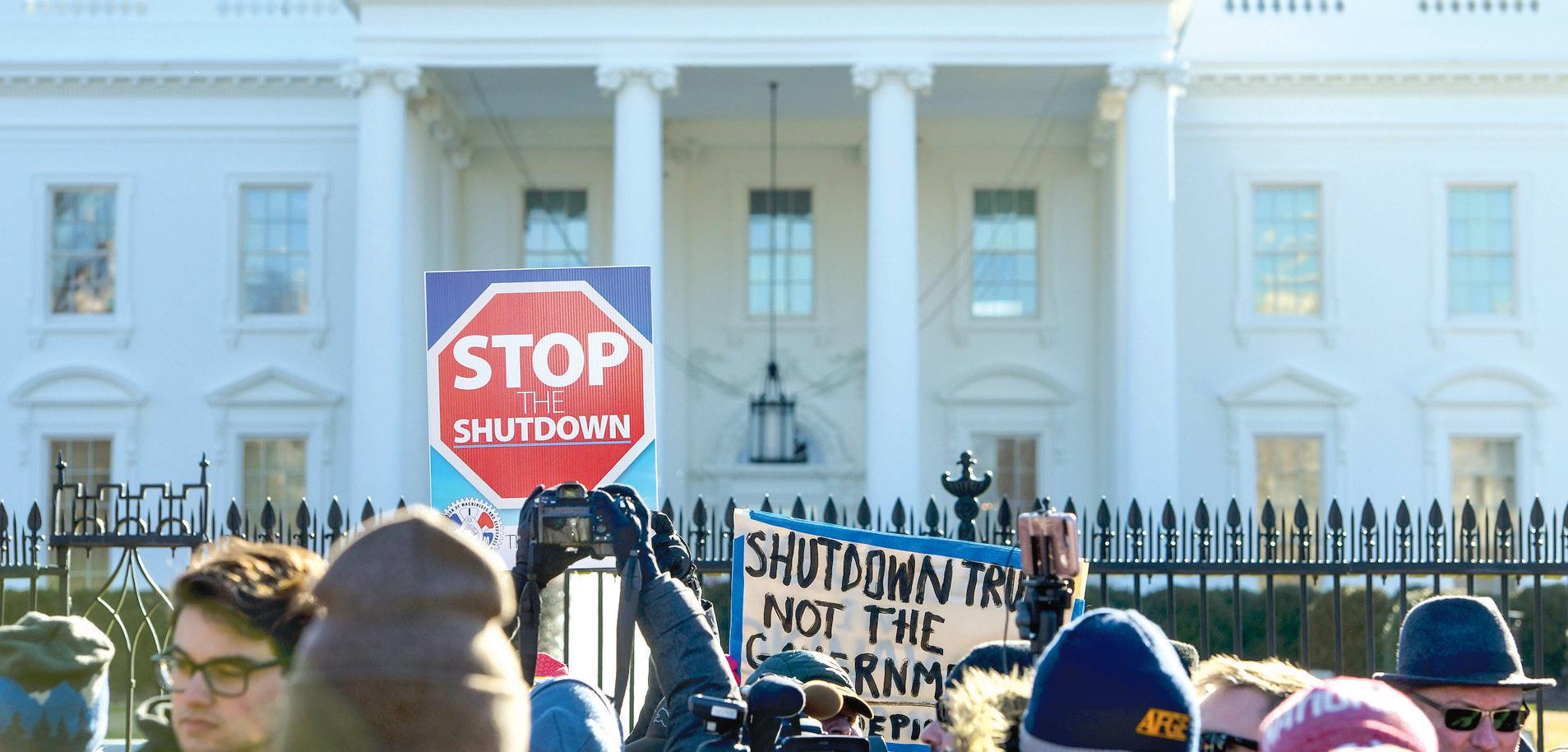
the Ithaca campus, other students and employees are dealing with a more lasting issue — the U.S. government shutdown, as essential government
services freeze and federal research funding dries up.
As the longest-ever U.S. shutdown enters its 30th day, with no definite end in sight, students
who planned to work with federal agencies have had to adapt their academic plans.
Pamela Wildstein ’20 traveled to Washington, D.C. this January over winter break alongside other students in her NTRES 4300: Environmental Policy Processes course. The students went to interview members of federal organizations as part of a policy brief assignment for the course.
Wildstein began the research process before the shutdown started, communicating with one
CLASS OF ’23 ADMITTED EARLY DECISION STUDENTS
By MEREDITH LIU Sun Assisstant News Editor
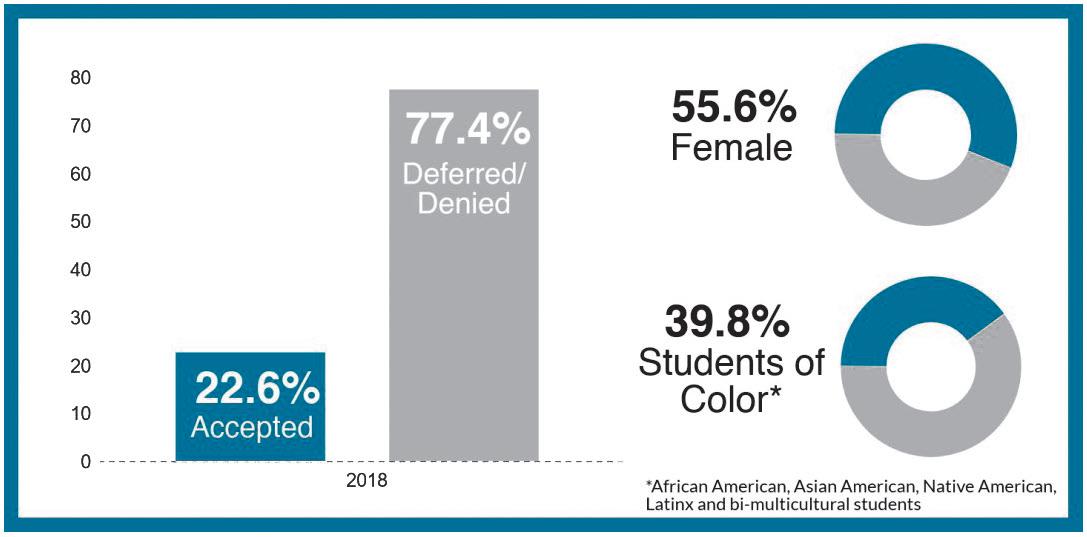
Cornell admitted 1,395 out of 6,159, or 22.6 percent of the early decision applicants for the Class of 2023, down from the admission rates of 24.4 percent for the Class of 2022 and 25.8 percent for the Class of 2021, according to statistics provided by the University in December.
EDITOR
LEIGH VOGEL / THE NEW YORK TIMES
Deep Tech Takeover
8 a.m., Atrium Duffield Hall
Hardware Heroes: Making Physical Products that Matter
8 a.m., 314 E. State Street
Cayuga Basin Bioblitz: A 24-Hour Race to Find What’s Living in Our Backyard
8 a.m. - 5 p.m., 1st Floor Mann Library
Kota Ezawa: Paint Unpaint
8 a.m. - 5 p.m., John Hartell Gallery, Sibley Dome
Don’t Forget Us: The Plight of the Hemlock and Ash Trees
10 a.m. - 2 p.m., Brian C. Nevin Welcome Center
Leveraging Mechanistic Inisght to Enable CatalystControlled Chemo-, Regio- and Stereoselective C-C Bond Formation
4 - 5 p.m., 119 Baker Lab
All Labor Has Dignity: Martin Luther King Jr.
And the Labor movement
9 a.m. - Noon, 227 Ives Hall
Monday, January 21, 2019

Chia, Amaranth, and Quinoa: From Ancient Seeds to “Superfoods”
10 a.m. - 2 p.m.,
Brian C. Nevin Welcome Center
South African Viticulture – Past, Present and Future: Erna Blacquaert
12:20 - 1:10 p.m., 404 Plant Science Building
iClicker: Classroom Polling for Blackboard Courses 2:30 - 4 p.m., B08 Computing and Communications Center
Anatomy of the Long Noncoding RNA 4 p.m., T1003 College of Veterinary Medicine
Modeling Failure in Ductile Metals under Dynamic Loading 4 p.m., B1 Kimball Hall
Crew Meeting (PMA 1610/2610)
7:30 p.m., Flex Theatre, Schwartz Center for Performing Arts
COURTESY OF CORNELL UNIVERSITY
Cayuga creatures | Mann Library will display a multimedia exhibit cataloging different species found around Cayuga Lake. The project is a joint venture between the University and the Paleontological Research Institution.
CAPS Director to Leave Cornell After 15-Year Tenure
By SHRUTI JUNEJA Sun News Editor
Gregory Eells, who has worked as the director of Cornell Health’s Counseling and Psychological Services for 15 years, has accepted a position at the University of Pennsylvania and will be leaving Ithaca in March.
Eells said that it has been an “honor and privilege” to work at Cornell in a statement to The Sun.
“I have dedicated over 15 years of my professional career to providing mental health care to thousands of Cornell students through my work in CAPS,” Eells said. “It is with a mix of sadness and excitement that I leave to take the Executive Director of CAPS position at the University of Pennsylvania.”
Eells has a Ph.D. in counseling psychology from Oklahoma State University and has been the director of CAPS at Cornell since 2004.
Award and a Lifetime Achievement Award from the AUCCCD.
“[Eells] is one of the best teachers in the country around issues related to college student mental health services. He’s highly sought after for presentations and consultations,” Cornell Health director for community relations Sharon Dittman told The Sun in 2012 when Eells received the award.
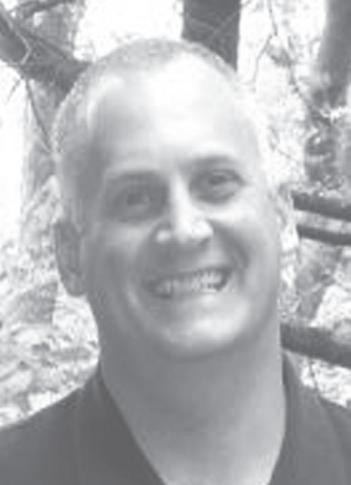
“Greg Eells has provided invaluable leadership at Cornell in the support of mental health and wellness, diversity, and campus climate,” said Kent Bullis, executive director of Cornell Health. “He has been an important contributor to many campus-wide initiatives and committees, all in support of the safety and well-being of our community. He will be greatly missed.”
Eells is the former chair of the Mental Health Section of the American College Health Association, the former president of the Association for University and College Counseling Center Directors and received a Presidential
Eells will be making the shift from Ithaca to Philadelphia at a time when mental health policies at the University of Pennsylvania have also come under scrutiny in recent years.
Following the deaths of seven students in 2017, Penn’s mental health policies and procedures were found by students to be not as “vigorous, transparent, or comprehensive as it needed to be,” The Daily Pennsylvanian reported. In a recent report from the Ruderman Family Foundation, the University of Pennsylvania received a D+ for its policies related to mental health leaves of absence, which was the highest grade among the Ivy League universities. Cornell received a D-.
In a presentation to the Student Assembly in January 2018, Eells discussed some of the challenges faced by CAPS, including long wait times for appointments due to increased demand along with difficulties in recruiting and retaining a diverse staff.
“Cornell is not a suicide school,” he said. “There is no such thing as a suicide school.”
“Although the rate of suicide among Cornell students is similar to other schools in the U.S., no level of suicide
C.U. Replies to Mental Health Report
Cornell recieved D- for mental health leave of absence policy
By SHRUTI JUNEJA
Sun News Editor
In response to a white paper from the Ruderman Family Foundation that gave Cornell a D- for its mental health leave of absence policies, the University said that the report contained inaccuracies that mischaracterize how Cornell provides support to students considering health leaves.
The Ruderman Family Foundation is a Jewish organization based in Boston advocating for “the inclusion of people with disabilities throughout our society.” The report released in December evaluated the policies at all eight Ivy League schools related to taking and coming back from mental health leaves of absence, with no school earning
D’s and Yale and Dartmouth both received F’s. The University of Pennsylvania had the highest grade with a D+.
Cornell isn’t the only school pushing back against the Ruderman paper’s findings.
Ben Chang, a spokesperson for Princeton, told The Daily Princetonian that the Ruderman report “misstates our policies, mischaracterizes how they are applied, and ignores the holistic approach the University takes to assist our students in these situations.” In particular, he disputed the report’s statements regarding Princeton’s policies about providing a liaison or person of contact for students on leave and about setting a maximum duration or number for leaves.
“We certainly don’t accept the author’s assessment,” Yale press secretary Thomas Conroy told West Hartford News.
“There are inaccuracies that mischaracterize our current approach to supporting students during heath leaves of absence.”
Ryan Lombardi
higher than a D+.
However, Ryan Lombardi, vice president of student and campus life, told The Sun in a statement that the authors of the paper did not reach out to anyone from the University while conducting their research, and “as a result, there are inaccuracies that mischaracterize our current approach to supporting students during health leaves of absence.”
Miriam Heyman, a senior program officer at the Ruderman Family Foundation who was the main author of the report, told The Sun that she did not work with any officials from any of the schools evaluated, relying instead on the official policies “as they are written and as they are publicly available,” saying that she made this decision even though “the ways in which the policies are implemented are obviously important, that was beyond the scope of the paper.”
The University has not yet responded to The Sun’s follow-up inquiry about what the specific inaccuracies in the report are.
In the white paper, each school was scored on 15 indicators, and Cornell earned 28 points out of a maximum of 45, receiving a grade of D-. Harvard also got a D-, while Princeton, Brown and Columbia earned
“Yale fully and effectively supports its students regardless of a disability, and discriminates against none. Its policies on withdrawal and reinstatement reflect careful study and deliberation, and community feedback.”
Heyman said that she hasn’t directly heard back from any administrators of the Ivy Leagues after releasing the report, but that she would love to partner with the institutions to help them implement some of the proposed recommendations and hopes that her work encourages these schools to take leadership in re-examining their policies.
Lombardi emphasized that “Cornell cares deeply about the health and wellbeing of its students and has invested significant resources towards this end.” In this vein, he told The Sun that Cornell regularly evaluates all its mental health policies, including those related to leaves of absences, and he anticipates that a review of these policies will be in the scope of the University’s upcoming “comprehensive mental health review.”
In September 2018, the University announced it was in the planning stages of this “new comprehensive review” of its mental health policies that would involve internal and external partners. Lombardi previously told The Sun that this review would begin as early as 2019, and no additional details have been released so far.
is acceptable. Each suicide is a tragedy, and we continually focus on how to prevent them,” Eells wrote in a guest column in The Sun co-authored by Timothy C. Marchell ’82, Ph.D., director of the Skorton Center for Health Initiatives.
“The challenges we face require strong partnerships between students, staff, faculty, alumni, parents, and members of the local community — all are needed as we cultivate a campus culture that supports the well-being of every person,” Eells and Marchell continued.
Cornell Health will provide an update on its plans for a national search for a new CAPS director at the
“No level of suicide is acceptable. Each suicide is a tragedy, and we continually focus on how to prevent them.”
Gregory Eells
next Coalition on Mental Health meeting in February, according to an email sent by Marchell to members of the Coalition on Mental Health and shared with The Sun.
“I want to assure you that while this leadership change is significant for CAPS and for Cornell Health, our campus-wide commitment to mental health and well-being will remain as strong as ever,” Marchell wrote in the email.
Shruti Juneja can be reached at sjuneja@cornellsun.com.

Cocktail Lounge Closed for Spring Due to Renovations
By AMINA KILPATRICK Sun Staff Writer
Students gearing up for all-nighters must seek alternative venues — it is closing time at the Cocktail Lounge.
The study location in Uris Library is closed until mid- to late-May to undergo renovations, which will change the seating, lighting, bathrooms, technological capabilities and accessibility of the 24-hour study space.
The Cocktail Lounge first opened in 1982 as an annex to the Uris Library. The decor of the 37-year-old space has been worn down since its last upgrades years ago, said Director of Olin and Uris Libraries Bonna Boettcher, making the renovations timely.
The renovations will include new carpets, an all-gender restroom, modernized furniture in the reservable study rooms, a vending area with refreshments and upgraded bathrooms to meet Americans with Disabilities Act regulations.
Other renovations of the library include refurbished seating areas and updated light fixtures to maximize the views of Libe Slope. Movable seating will allow for “greater flexibility” of the space, said facilities planning manager Jon Ladley.
“New interior lighting will accentuate the curved nature of the space, and seating areas that allow for better views through the central windows will be added,” Ladley
said. “We also added power outlets wherever possible, which were insufficient in the old space.”
The added seating will also accommodate different study styles, according to Ladley.
“The seating capacity won’t change dramatically, but the type of seating will,” Ladley told The Sun in an email. “The new furniture was selected, with student input, to accommodate a variety of study styles on the upper and lower levels.”
A vending area will be incorporated into the renovations due to student feedback about the lack of availability of hot beverages and snacks, Ladley said. The area will be self-service and located near the elevator in a “newly constructed alcove,” Ladley said.
Additionally, the Cocktail Lounge entrance facing Willard Straight Hall will be open for the first time since 1982 once the renovation is complete. A Cornell I.D. will be necessary to use that entrance and it will also be ADA compliant, according to Boettcher.
“As far as we know, the south-facing (Willard Straight) entrance was never opened for public use, but only available as an emergency exit,” Boettcher told The Sun in an email. “Inaccessibility has been a motivator in not using the entrance, and part of this project involves regrading,
See LOUNGE page 5
A new look | Cocktail Lounge will adopt a sleek new apperance after renovations.
COURTESY OF CORNELL UNIVERSITY
EELLS
Gov’t Shutdown Hamstrings Cornell Research
Cornell labs funded by the U.S. Department of Agriculture close as federal funding evaporates
Continued from page 1
-municating with one federal employee for the project, emailing and speaking to him on the phone before he was furloughed.
The government was closed throughout the duration of the 10-day class trip and Wildstein said, “I haven’t been able to contact him at all since.”
“New York State could stop reimbursing us ... for expenditures related to SNAP education programing.”
Ken Schlather
Wildstein, who was writing her brief on federal efforts to update and modernize the electric grid, was only able to interview individuals from the Department of Energy on the trip, as she was unable to contact anyone in at least four other government departments.
After the shutdown ends, Wildstein plans to seek out the individuals she was unable to reach: “I have a list,” she said.
Multiple students participating in the semester-long Cornell in Washington program cannot begin their internships as a result of processing delays, including Sun columnist Sarah Park ’20. Park was scheduled to begin her internship with the Council of Economic Advisors on Tuesday, the first day of classes for students in the program.
Park, however, was informed earlier this month that she would not be able to begin working until about a week to 10 days after the government reopened. Park said she needed to be cleared through security background and drug tests, but the offices that coordinate those checkpoints are furloughed.
The Cornell in Washington program requires attendees to have an internship during the semester, according to its website. Park said that she would be
meeting with advisors this week to discuss options for the upcoming semester.
Despite some cases like Park, the majority of Cornellians interning in D.C. will not be affected. “Most won’t be affected at all, as the vast majority of student internships this coming semester are at places not touched by the shutdown,” Prof. David Silbey, associate director of Cornell in Washington, wrote in an email to The Sun.
Furthermore, Cornell law students who participate in “externships” with government organizations seem to have largely avoided any complications by acting proactively before the shutdown.
“I am particularly glad that these students arranged their placements well ahead of time, because I am hearing from colleagues at other schools that the necessary security clearances are not being done now,” Prof. Andrea Mooney, law, wrote in an email to The Sun.
Mooney, who coordinates the externship program, added that “the remaining students in the externship program are in state offices and NGOs and so are safe from the shutdown (at least for now).”
Eduardo Peñalver, dean of the law school, said that he believes that the shutdown will not dissuade students from a career in government. “I would wager that it will take more than a government shutdown — even a long one — to deter them from pursuing their chosen career path,” Penalver said according to the New York Law Journal.
As the shutdown affects students’ academic plans, it also began to impact scientists, whose ability to do research was hamstrung as government funding vanished. The shutdown has closed all U.S. Department of Agriculture labs on campus and at the Geneva campus, according to Ken Schlather, executive director of Cornell Cooperative Extension Tompkins.
The USDA Agricultural Research Service on Cornell’s Geneva campus was seeing “very direct effects,” said Erin Flynn, manager of the office of marketing and communications for Cornell AgriTech.
Schlather also suggested that if the shutdown extends for more than one quarter, “New York State could stop reimbursing us — and other CCE associations across
the state — for expenditures related to SNAP education programming, because the state likely is not being reimbursed by the feds.”
Researchers were told to download resources and materials from the USDA and National Science Foundation websites in a Dec. 21 university-wide announcement in anticipation of a shutdown. A follow-up announcement on Jan. 2 told researchers to continue working and meeting deadlines.
“Individuals working for the government through Interagency Personnel Agreements should follow the instructions issued to them from their government supervisor,” the second announcement read. “As Cornell employees, these individuals will be paid for their time even if instructed not to report to work.”
However, if the shutdown persists, the announcement continued, individuals may be contacted to alter their contract.
The government shutdown has also impacted
“I am hearing from colleagues at other schools that the necessary security clearances are not being done now.”
Prof. Andrea Mooney
Cornell’s international student population, as government resources and operations are delayed or rendered inaccessible.
One such resource is the “E-Verify” system, which is used by employers who hire international students. The system — which allows employers to check if their employees are eligible to work by referencing immigration documents — is currently not available.
Furthermore, while the Department of State is still functioning through the shutdown, “visa applicants may possibly see delays,” Cornell’s International Services website read.
Maryam Zafar can be reached at mzafar@cornellsun.com.
39.8 Percent of Early Decision Accepted Students Are People of Color
University admits fewer students in early decision round as it plans to decrease freshman class size
ADMISSIONS
Continued from page 1
Among the accepted students, 55.6 percent are women and 39.8 percent are students of color, which include African American, Asian American, Native American, Latinx and bi-multicultural students.
Legacy students — who the University said should apply early decision to show their commitment — constitute 22.1 percent of the admitted students pool, the same as last year, while the number of athletes rose two percentage points to this year’s 13.5 percent.
Despite the University’s concern that the current political climate will discourage international students from coming to the U.S., Cornell saw a total of 1,512 international early decision applicants this year, 1.5 percent more than the Class of
2022 and 21.3 percent more than the Class of 2021. With 171 applicants accepted, international students make up 12.3 percent of this year’s early decision admits pool.
Admission decisions for another 24.3 percent of the early decision applicants are postponed, which means these 1,493 students will find out whether
Cornell University postponed admissions decision for 24.3 percent of the 6,159 early decision applicants.
they get into Cornell on March 28, the same day as regular decision applicants.
The University said in a statement to The Sun that the decrease in the number of early decision admits is “planned in
conjunction with” a decrease in Cornell’s target number of Fall freshman enrollment from 3,278 for the Class of 2022 to 3,175 for the Class of 2023, even though Jason C. Locke, interim vice provost for enrollment, said in an earlier interview that Cornell has been working to expand its class size.
Gillian Smith, a spokesperson for Cornell, declined to comment but said the University will provide explanations to this after the release of regular decision results.
Cornell currently has the highest early decision admission rates among the Ivy League.
Harvard, Brown and the University of Pennsylvania all reached record-low acceptance rates at 13.4 percent, 18 percent and 18.5 percent, respectively. Princeton offered admissions to 13.9 percent of its applicants.
Meredith Liu can be reached at mliu@cornellsun.com.

Snowstorm Cancellations Strand Returning Cornellians Mental Health Policies Criticized
SNOW
Continued from page 1
USA Shortline bus from New York City to Ithaca on Sunday morning. After the operators canceled all buses departing after noon on Saturday, he had to delay his arrival on-campus until Monday or even Tuesday morning.
Ryan Lombardi, vice president of student and campus life, urged students to prioritize safety in their travels in an email announcement, stressing that “faculty are aware that flexibility may be necessary on Tuesday,” the day spring semester classes begin. However, Inbar worried that this flexibility may be lacking in one of his courses.
“It’s gonna be a madhouse at Port Authority [bus terminal on] Monday ... I’m going to have to get there way early or risk not getting a seat on a bus,” Inbar lamented. “I have a class Tuesday that takes attendance and has a reading due so I really don’t want to miss that first class either.”
Other Cornell students have been more lucky, however. After the bus cancellations left some Singaporean Cornellians stranded in New York City, their compatriots at New York University and Columbia University came to their rescue, offering housing in their dorms and apartments.
“We didn’t want our friends traveling with the weather conditions, so we got another way for them to be safe,” said Helen Tan ’21, events coordinator of Cornell’s Singapore Student Association.” “[The Singapore Student Associations at] Columbia and NYU were really great and supportive, which all of us appreciate.”
Four of the five marooned Singaporeans contacted by SSA were able to find housing elsewhere in the city. The fifth student postponed her plane ride to New York until Monday.
Nicholas Hansen ’20 also proactively postponed his Syracuse-bound flight to Monday, taking advantage of the flight change fee waiver offered by most airlines. When he woke up the day after the switch, his original flight was canceled, and all alternative flights were booked through Monday.
“I should be able to [get to class] if things are cleared up by Monday,” Hansen said.
However, others have given up on arriving on campus before classes begin. Amy You ’22 found that the bottleneck in her travels from L.A. to Ithaca was not the airplanes, but Cornell’s Bus Services, which canceled the Syracuse to Cornell bus route this weekend. Governor Andrew Cuomo banned all buses from most highways from Saturday at 3 p.m. to the end of the storm.
“Hilariously, my biggest problem wasn’t air travel, but ground travel by bus,” You said. “Now I’m arriving Tuesday at around noon and taking the bus. Hopefully I’ll be on campus by 1 or 2 p.m., but unfortunately I’ll end up missing the first day of class.”
Despite the unusual weather disruption, Inbar said that travel troubles for return trips to Ithaca is nothing new. “Honestly I’ve never had a simple trip back to Cornell.”
Yuichiro Kakutani can be reached at ykakutani@cornellsun.com.
REPORT Continued from page 3
This announcement came after months of tension about Cornell’s ability to provide adequate support for student mental health. Earlier in the year, President Pollack denied a request in January 2018 to create an independent mental health task force proposed by The Sophie Fund, a local non-profit founded by the parents of Sophie Hack MacLeod ’14, who died by suicide in March 2016 while on a mental health leave of absence from Cornell.
In March 2018, Cornell Health’s Counseling and Psychological Services hired additional therapists, decreasing wait times for appointments. In September
2018, just before the announcement of the new comprehensive review, The Sophie Fund criticized the results of the JED Foundation’s external review of Cornell’s policies and asked Pollack to reconsider forming an independent task force. In December 2018, the student led mental health task force submitted its recommendations to University leadership, which include proposals related to better supporting students taking leaves of absence. Additionally, Cornell Health is on the search for a new director of Counseling and Psychological Services, as current director Greg Eells will be leaving this March for the University of Pennsylvania.
Shruti Juneja can be reached at sjuneja@cornellsun.com.
Cocktail Lounge Closed Spring Semester for Major Renovations
LOUNGE
Continued from page 3
relandscaping, and relighting the entrance so it meets ADA standards.”
Improvements also included a small asbestos abatement project which was completed in December, according to Boettcher.
In February 2018, the library administration teased the renovations by placing different furniture and seating styles for students to test out. Students then had opportunities to share their feedback for different seating styles through comment sheets and one-on-one interviews, Boettcher said.
“Student input was important to the
project,” Boettcher said. “We value our users’ opinions and concerns and regularly seek input, especially in projects involving user spaces.”
The rest of Uris Library will remain open throughout the renovations of the lounge, and library administrators encouraged patrons to explore other options while the lounge is closed.
Current 24-hour study spaces, according to the library website, include Carpenter Hall on the Engineering Quad and the Edna McConnell Clark Library in the Physical Sciences Library.
Amina Kilpatrick can be reached at akilpatrick@cornellsun.com.
The Corne¬ Daily Sun
Independent Since 1880
JACOB S. KARASIK RUBASHKIN
’19
Editor in Chief
JOHN McKIM MILLER ’20
Business Manager
KATIE SIMS ’20
Associate Editor
VARUN IYENGAR ’21
Web Editor
MEGAN ROCHE ’19
Projects Editor
EMMA WILLIAMS ’19
Design Editor
JEREMIAH KIM ’19
Blogs Editor
AMOL RAJESH ’20
Science Editor
BREANNE FLEER ’20
News Editor
YUICHIRO KAKUTANI ’19
News Editor
NICHOLAS BOGEL-BURROUGHS ’19
City Editor
LEV AKABAS ’19
Arts & Entertainment Editor
SARAH SKINNER ’21
Assistant News Editor
ANNE SNABES ’19
Assistant News Editor
JOHNATHAN STIMPSON ’21
Assistant Sports Editor
EDEM DZODZOMENYO ’20
Assistant Photography Editor
PETER BUONANNO ’21
Assistant Arts & Entertainment Editor
CHENAB KHAKH ’20
Assistant Science Editor
JULIAN ROBISON ’20
Layout Editor
HELEN HU ’21
Graphics Editor
GIRISHA ARORA ’20
Managing Editor
HEIDI MYUNG ’19
Advertising Manager
ALISHA GUPTA ’20
Assistant Managing Editor
DYLAN McDEVITT ’19
Sports Editor
MICHAEL LI ’20
Photography Editor
GRIFFIN SMITH-NICHOLS ’19
Blogs Editor
JACQUELINE QUACH ’19
Dining Editor
SHRUTI JUNEJA ’20 News Editor
ANU SUBRAMANIAM ’20
News Editor
JUSTIN J. PARK ’19 Multimedia Editor
PARIS GHAZI ’21 Assistant News Editor
MEREDITH LIU ’20 Assistant News Editor
JACK KANTOR ’19 Assistant Sports Editor
RAPHY GENDLER ’21 Assistant Sports Editor
BORIS TSANG ’21
Assistant Photography Editor
VIRI GARCIA ’20
CATHERINE HORNG ’21
’21
WANG ’21
Editors in Training
Anu Subramaniam ’20
Let
Editor in Chief
Managing Editor Sarah Skinner ’21
Maryam Zafar ’21
Photography Editor Boris Tsang ’21
Arts Editor Peter Buonanno ’21
CORNELLIANS HAVE A THING FOR PRETENTIOUS NAMES. We call our midterms “prelims,” our hills “slopes,” and our everything bagels “Long Island.” When it comes to stupid names, we at The Cornell Daily Sun are no better — and I’m not just talking about those times when design editor Emma Williams would sarcastically call me “Supreme Leader” in her emails. No, the pretentious name to which we are most attached is “compet.”
What is compet? The exact etymology is, like too much at Cornell, shrouded in mystery, but if you look closely, you’ll notice it bears a striking resemblance to the word “compete” with the second “e” lopped off. Coincidentally, compet is the time during which staffers at The Sun compete against each other for editorships.
Starting today, the 136th Editorial Board of The Cornell Daily Sun will be taking a step back, handing the reins to our dedicated cadre of editors-in-training, who will officially take office after our March elections. Every day, the names of the compets working on that issue of The Sun will appear below the masthead. And dedicated though they may be, these neophytes are going to need all the help they can get, so please let them know what you like in the paper and what you think could be improved.
The next six weeks will see their fair share of typos, style errors, and mistakes. But those are the growing pains necessary; this trial by fire will give the incoming editors the skills they need to ensure The Sun remains as innovative, effective and forward-looking in its 139th year as it was in its first.
So with that, us 136s will put down our pens and pick up our pom-poms, as we transition to our new roles as cheerleaders and mentors. It’s gonna be great. Semper sui iuris, — J.S.K.R.
Martha E. Pollack | President’s Viewpoint
Dr. King’s Dream Today
Each year, as the nation honors the birthday of Dr. Martin Luther King, Jr., I re-read his “I Have a Dream” speech, and every time I am struck by the emphasis he places on hope. Dr. King understood that meaningful change would be possible only through intentional, persistent, and sometimes difficult action. Yet he also understood the essential nature of hope: that just as hope drives us to take difficult action, action itself can spur hope for change.
More than half a century later,
nity up to date on these initiatives, and we continue to do that through diversity.cornell.edu/institutional-initiatives.
Indeed, as we stay alert to these challenges — as we become increasingly “woke” — it can seem difficut to maintain hope in Dr. King’s dream.
Dr. King’s dream of a fully just, inclusive and equitable nation remains elusive. We see this on our own campus, where, shortly before the Thanksgiving break, Nazi swastikas — odious symbols of anti-Semitism and racial hatred — were drawn on whiteboards in residence halls and stamped into the snow. We see it in our state, where vendors at county fairs and outdoor markets choose to sell items displaying the Confederate flag, which has a history deeply rooted in white supremacy. We see it across our nation, in the vastly disproportionate rates of incarceration of people of color. We see it in the horrific crimes that are committed against people because of their religion or the color of their skin, and we see it in the multitude of subtle structural issues that perpetuate economic inequality. Indeed, as we stay alert to these challenges — as we become increasingly “woke” — it can seem difficult to maintain hope in Dr. King’s dream.
But Dr. King was right to link hope with positive action. As I look around this campus, I am heartened by the commitment and the actions taken by so many members of our community to engage in work that furthers Dr. King’s vision and that of Ezra Cornell, who more than 150 years ago aspired to build a university in which “all persons of any creed or all creeds must find free and easy access, and a hearty and equal welcome.”
Progress has been made on many fronts, and, in fact, at least half of the recommendations outlined this fall, many enabling campus community members to engage in meaningful dialogue, have been implemented: from the successful offering of an Intergroup Dialogue Project experience to all incoming students, which has led to a significant increase in interest in the full IDP program (EDUC 2610); to creating new housing for LGBTQ students, which is already filled for the 2019-20 academic year; to strengthening Colleague Network Groups through formalized partnerships with members of the university leadership; to the release of a new online course, “Teaching & Learning in the Diverse Classroom.” I have completed that course myself, and was impressed both by the moving firsthand stories of our students and faculty and by the specific recommendations, grounded in research, for enhancing the classroom experience. I urge our faculty to take this course during the coming semester, as it provides excellent tools for becoming better teachers.
In addition, the Presidential Advisors on Diversity and Equity are in the process of creating a framework for a more dynamic and active program to connect initiatives across our colleges and schools.
What is most encouraging to me about all this activity is that it has involved so many members of our community — faculty, staff, and students — and is driven by hope for meaningful change. There is much more work to be done. Realizing
Realizing Dr. King’s dream is not, unfortunately, something that is likely to be accomplished in months or even years.

At the start of the fall semester, I announced a broad set of initiatives that we were undertaking to enhance our campus climate. Many were based on the recommendations of the Presidential Task Force on Campus Climate and the Provost’s Task Force to Enhance Faculty Diversity. I promised that we would keep the commu-
Dr. King’s dream is not, unfortunately, something that is likely to be accomplished in months or even years. But change can and does happen, through persistent action that is both nourished by and productive of hope. At Cornell, we will not abandon our hope and aspiration for the world that both Martin Luther King and Ezra Cornell envisioned. Instead, we will continue to work for it, joyously and together, as a community.
Martha E. Pollack is the president of Cornell University. Comments may be sent to opinion@ cornellsun.com. Special appearance of President’s Viewpoint.
Darren Chang
|
Swamp Snorkeling
What’s in a Trade War?
Most trade decisions have hidden or understated effects, especially in the short-term. The litany of free trade agreements signed beginning in the 1970s meant very little to voters until recently, when the failure of free trade deals to re-distribute the wealth from international trade flows came to a tipping point. The dual economic threats of offshoring manufacturing jobs to countries with cheaper labor and lack of trade adjustment policies that compensate the losers of free trade resulted in voters’ willingness to support economic nationalism and protectionism.
All of this, combined with high executive power over import restrictions and international trade, more generally have allowed President Trump to do what he does best: upset the international order while vaguely ulfilling promises to his base.
and national protest, President Bush realized the tariffs were, on balance, a terrible idea that went against every Republican principle of free-market international trade. In 2001, the tariffs weren’t in place for long enough for an economic impact.
Tariffs are likely to have a large and relatively fast impact on international trade and the economy.
In 2019, if tariffs aren’t resolved by negotiations between Chinese and U.S. officials by March 2, further escalation appears likely. President Trump and the U.S. Trade Representative Robert Lighthizer have pledged to increase tariffs to 25 percent. Unlike the trade agreements and import restrictions outlined previously, tariffs are likely to have a large and relatively fast impact on international trade and the economy.
The path forward is certainly not more closed borders to global trade flows.
investor certainty. If the trade war continues, businesses no longer have the confidence to expand their inventories because they don’t believe other businesses or foreign importers will buy their products in the coming months. Investors could decide that they no longer have confidence in the stock market, which would lead to a similar recession as the one that happened in 1929 and 2008. Finally, the possibility of state-based Chinese retaliation could even further destroy the economy because the Chinese economy can use tools the United States does not have to bolster their currency and exports.
Tariffs can essentially be viewed as an import tax. A 10 percent tariff on a $10 good raises the price to $11, with the $1 levied going to the U.S. government. In this way, tariffs are always going to put inflationary pressure on the economy, by raising the price level generally. Often, this wouldn’t be a problem, because the Federal Reserve is able to raise interest rates sufficiently to slow (if not reverse) such inflationary pressure. But in this case, Federal Reserve action is likely to be too slow to act on fast tariff increase, especially when the trade restrictions are expansive and uncertain. As a college student, I’m extremely worried about inflationary pressure not only because of the widespread economic impact but also because goods like food and technology all become more expensive. Which is bad for my wallet, and probably yours too.
The last time tariffs were utilized as a national security tool, President George W. Bush was in office, and I was only two years old. After widespread industry
Last year, when the tariffs were first imposed on steel and aluminum imports worldwide in July as well as high-level technology from China in September, the economic impact wasn’t as widespread. Largely, this was because of tax cuts that stimulated spending and investment and the generally high growth of the economy in 2017 and 2018. But, it looks like 2019 may likely be the year tariffs have an impact that cannot be ignored.
The new path forward must solve both questions of executive authority over trade law and free trade economics while accounting for American constituents.
Besides the inflationary impact tariffs have on prices, there are a laundry list of other economic indicators that would be destroyed by tariffs. For example, any sign that the president could increase tariffs in the short-term isn’t good for business confidence or
IOf course, this isn’t to say that protectionism is bad in every instance and free trade is good in every instance. As I noted above, the secrecy of executive free trade agreements has led to an unhappy electorate who are anxious they cannot find “good-paying jobs.” The process of making trade policy in the United States should be reformed, and an interesting proposal by Profs. Ganesh Sitaraman and Timothy Meyer, Vanderbilt School of Law, delineate the best solution as one that properly returns the trade power to Congress while leaving room for executive negotiations. The new path forward must solve both questions of executive authority over trade law and free-trade economics while accounting for American constituents. Regardless, the path forward is certainly not more closed borders to global trade flows.
Darren Chang is a sophomore in the College of Arts and Sciences. Swamp Snorkeling runs every other Monday this semester. He can be reached at dchang@cornellsun.com.
Anna P. Kambhampaty | Te Imagined Life
Te Case for Transdisciplinary Studies
n his book Zero to One: Notes on Startups, or How to Build the Future, Peter Thiel discusses the ideology of competition, “Elite students climb confidently until they reach a level of competition sufficiently intense to beat their dreams out of them.” I wonder why we are doing this, but more importantly, how can we change this?
A department for Transdisciplinary Studies may be the answer.
Transdisciplinary research is defined as “research efforts conducted by investigators from different disciplines working jointly to create new conceptual, theoretical, methodological, and translational innovations that integrate and move
The issues we face today are multi-faceted and complex, rarely fitting into one category. Climate change, civil rights oppression and hunger cannot be solved by just science, math or humanities experts. They aren’t issues that can be taken care of with just policy changes, feats of engineering or beautiful design. We need to bridge together disciplines in varying ways, forming new approaches, because, well, what we’re currently doing isn’t working.
We already have groups of pre-selected individuals who are qualified to solve the world’s issues. Let’s put them to proper use!
beyond discipline-specific approaches to address a common problem.” The key here is the idea of moving beyond disciplines. Transdisciplinary research breaks down the boundaries between traditional disciplines and creates new ways of looking at issues. This is different from interdisciplinary research, which simply combines two or more varying disciplines and perspectives.
Parsons School of Design has a program in Transdisciplinary Design (also known as Service Oriented Design) for students “interested in imagining alternative futures through design-led research tools and methods for addressing pressing social, economic, political and environmental issues and challenges of local and global dimensions.” Students in the program have made a service to help families dealing with terminal illness, an artful conception aimed at creating empathetic and emotional connections with nature, a vocabulary of newly designed words that highlight everyday air pollution indicators and related health effects, and much more.
The Ivy League is an interesting structure to serve as home to a department like this because it’s a place where thousands of the world’s most talented, hardworking and intelligent people come to study. We already have groups of pre-selected individuals who are qualified to solve the world’s issues. Let’s put them
to proper use!
Thirty-one percent of graduating Harvard seniors go into finance and consulting. There is a Goldman Sachs Room in Columbia University’s career services office. Do I even need to get into the number of consulting and finance clubs and career fairs Cornell is host to?
A department for Transdisciplinary Studies on campus not only has the power to engage students in meaningful research and teach crucial skills, its mere presence counters the cultural hegemony on campus that pushes students into meaningless day jobs. You come to college because you’re passionate about something. You want to change the world. You care. Somewhere between moving into your freshman dorm and walking across Schoellkopf Field during graduation, the idea of wanting to change the world is pushed aside as a childlike notion and all that matters is finding a nine-to-five job. Why? Because it feels like it’s what everyone else is doing, like it’s the next step in leading a good, meaningful life.
in such a program. The work that these students do and the fact that they are doing it in the first place directly counters the dark hole and spiral of consulting recruitment. Its presence and the work of the students who take part in it will let
We need to bridge together disciplines in varying ways, forming new approaches, because, well, what we’re currently doing isn’t working.
others know that it’s not naive to want to change the world; that consulting isn’t the only path.
Picasso once said, “It took me four years to paint like Raphael, but a lifetime to paint like a child.” At one point, we are all naive enough to want to save the world. This childlike notion of wanting to save the world should not be pushed aside, it should be preserved and fostered. Transdisciplinary Studies encourages this, and I bet there would be more than a few students interested
It’s time to end the era of narrowly defining design, education and problem-solving. Education can be more than just a means to get a well-paying job. A department for Transdisciplinary Studies not only has the potential to solve problems that are beyond single disciplines, but can also challenge the current pre-professional zeitgeist at Cornell that urges conventional careers that do not harness the skills and brainpower we so carefully identified students for having and allowed them entry for.
Anna P. Kambhampaty is a senior in the College of Agriculture and Life Sciences. The Imagined Life runs every other Monday this semester. She can be reached at akambhampaty@cornellsun.com.
ARTS & ENTERTAINMENT
Aquaman Is Soaked With Flaws
There was a certain chase sequence around the narrative midpoint of Aquaman in which our two heroes were fleeing a fleet of enemy ships when I realized what it was my brain was trying to tell me for the previous half hour: Aquaman was like Thor: Ragnarok,but wet … and worse. And while I’m not sure they drew the same comparison, I’ve teamed up with fellow Arts writers Zachary Lee ’20 and Jeremy Markus ’22 to discuss the DC Extended Universe’s most recent installment in our usual Q&A fashion. — Nick Smith ’20
1. Why should you watch this movie?
Nick: If you, like me, are still planning to stick with the DCEU after giving it another (Batman v Superman) , another (Suicide Squad), and another (Justice League) “last chance,” you’ve gotta see Aquaman to keep up. Rest assured though, brave moviegoer, it’s as “good” as if not better than just about all of its predecessors.
Zach: Aquaman is concerned above all else with just being fun; yes, it has an uplifting (and surprisingly timely) message about caring for the environment and, on a personal note, it is great to see an Asian director steer the ship of a big-budget superhero film, but it just tries to give audiences a good time at the movies. You have to fish hard for reasons to not enjoy yourself at this film.
Jeremy: Uh, well, it looked pretty. Also, there’s a giant crab that’s pretty dope.
2. Why should you not avoid this movie?
Nick: The dialogue and story aren’t exactly great. And even though wellshot action and a pleasant splash of color somewhat make up for those faults, Aquaman’s just missing the two aspects that make its rival franchises’ films so palatable. It’s another turn off your brain movie; enter at your own risk.
Zach: While Jason Momoa and Amber Heard have their moments, it’s painfully obvious when the two are operating on different frequencies, which leads to awkward exchanges and jokes that do not stick. When you don’t know whether to laugh or roll your eyes, that’s not a good sign.
Jeremy: Aquaman is about 50 percent
CGI, 35 percent expositional dialogue, 10 percent clichés, and 5 percent watchable. When my mom can predict lines before they are delivered, there’s sufficient reason to discredit the writers. If I had to guess, most of the $200 million budget went to the vibrant visuals and getting Jason Mamoa’s rockin’ bod. The rest of the film seemed like it was produced with scraps.
3. Best performance?
Nick: I have some issues with most of the leads, so I’m going with Yahya Abdul-Mateen II as Black Manta. His character is somewhat underserved and was surely only introduced here for a vengeful return in an inevitable sequel, but the up-and-coming actor does a lot with a little in a Killmonger-esque introduction before he dons his comically oversized helmet.
Zach: Patrick Wilson’s Ocean Master is definitely the standout. In a way, his simplistic motivations are an asset. While director James Wan tries to imbue nuance in the other leads, Wilson embodies the “jealous sibling” trope and presents it in all its dynamic facets. He delivers the most cliché lines with such class and suave, and while his singular aspirations are nothing ground-breaking, they make him refreshingly comprehensible.
Jeremy: I’ll agree with Nick on this one. I wasn’t awed by much in this movie, but I did find Abdul-Mateen’s performance worthy of recognition. Although Aquaman strayed from his character in the third act, I felt Black Manta somewhat grounded the otherwise vaporous film.
4. Most surprising/unexpected part?
Nick: The effects were actually really good! They were certainly on the level of Marvel’s most recent offerings and definitely a cut above those of Black Panther — if we’re honest with ourselves, that third act had some pretty subpar CGI (I’m looking at you rhinos). It didn’t seem like the film was hiding its effects either! Action sequences were well-lit, visually-stunning, and downright vibrant as compared to last year’s Justice League.
Zach: Atlantis is one of the best developed worlds I’ve seen in superhero film, second maybe to Black Panther’s


Aquaman had to serve as a retcon of its titular hero’s origin, be a quasi-sequel to Justice League,introduce multiple villains, and make a superhero who has traditionally been considered a joke palatable to mainstream audiences. I would have forgiven the movie if it cast world-building to the side, but miraculously that part of the film stays afloat.
Jeremy: If nothing, I’m happy that this film didn’t have the same dark, dull color gradient of the other films in the DCEU. Other than that, everything was very, extremely, remarkably predictable.
5. How does Aquaman rank within the DC Extended Universe?
Nick: Second, which isn’t saying much — Wonder Woman is the only film in the universe I’ve sought out for repeat viewing. Aquaman won’t be joining it. (Fingers crossed for Shazam. )
Zach: This might, ahem, stir up some controversy, but personally I think this is the best DCEU film. Aquaman revels in its own insanity without trying to justify its existence or mythology. It is straightforward and tonally consistent, and it makes up for a hackneyed origin story with visuals that honor its comic book source material.
Jeremy: Oh man, I’d rank every movie in the DCEU (sans Wonder Woman ) dead last. If Aquaman was truly taking itself seriously, it did an awful job. The action sequences did little to salvage this sunken wreckage of a film.
6. What is Aquaman’s significance to the DCEU?
Nick: This is the sort of movie that should’ve come out before either of the DCEU’s two mashup films. We love ragging on superhero films for cramming backstory down our throats, but I didn’t mind it as much here. This is the type of origin story that a relatively unfamiliar character deserves. Aquaman is not a Batman or Superman level character, so while Zach Snyder’s decision to show us the Waynes’ deaths again in Batman v Superman felt laborious, Wan’s choice to put first things first in the new film felt natural. Even despite my qualms with the movie’s storyline and dialogue, Aquaman got me hoping its successors will follow it down this more fleshed-out path.
Zach: Aquaman is the DCEU’s
Guardians of the Galaxy;everyone doubted Marvel when they made a racoon and a tree two leads of the film but now Rocket’s and Groot’s names are just as common as Spider-Man. Guardians got a sequel and paved the way for on-screen adaptations of Marvel’s lesser-known properties, such as Ant-Man and Doctor Strange.Aquaman’s success will hopefully give Warner Bros. the courage to invest in properties that they might have rejected at first due to their obscure nature. (I hear they are developing a Plastic Man movie already…)
Jeremy: The DCEU does not feel as cohesive as the MCU. I fail to see how Aquaman develops the universe beyond yet another origin story and revenue stream.
7. Aquaman is the DCEU’s sixth installment; for Marvel, that was 2012’s Avengers. How does the later-blooming universe stack up?
Nick: Not well, but I’m still holding onto a sliver of hope. DC’s current upcoming slate would suggest we’re going to get several more of these smaller, focsued, single character driven pieces before the next Justice League team up (which will likely be a rumored “Flashpoint” universe reset of sorts) and those are just what the franchise needs. Here’s to hoping they hold off on a do-over for just a bit longer.
Zach: Props should be given to DC for finally just swimming in their own lane rather than trying to copy Marvel. They’re not doing it with the same success, but they are finally embracing the craziness (and thus the loveability) of their characters. They have proven that their universe can juggle a variety of different tones and color palettes, which is more than I can say for the MCU (whose movies look more similar every year).
Jeremy: It doesn’t. Marvel’s movies are a full head, shoulders, knees and toes above DC’s.
Nick Smith is a junior in the College of Arts and Sciences. He can be reached at nsmith@ cornellsun.com. Zach Lee is a junior in the College of Arts and Sciences. He can be reached at zlee@cornellsun.com. Jeremy Markus is a freshman in the College of Arts and Sciences. He can be reached at jem476@ cornell.edu.
Wakanda.
COURTESY OF WARNER BROS.
COURTESY OF WARNER BROS.
In Instagram We Trust
Fyre Festival, a music festival marketed to the social-media savvy as a utopic Coachella on a private island, has become synonymous with the pitfalls of influencer culture and the internet as a whole. The festival itself was a fraud, creating a social media frenzy as privileged millennials, who had paid thousands of dollars for an elite music festival, found themselves stranded in the Bahamas at what looked to be a disaster site populated by “FEMA tents” with no musical acts. The general public was fascinated as doomsday tweets and Instagram posts provided real-time updates to what was perceived as a millennial meltdown.This month, two documentaries, Hulu’s Fyre Fraud and Netflix’s Fyre: The Greatest Party That Never Happened, have been released, detailing the inner workings of the ultimate social media fraud.
The documentaries provide an inside look at the elaborate scheme constructed by William McFarland, a 26-year-old entrepreneur with a questionable history, and his business partner, well-known-enough rapper Ja Rule. Largely similar, the documentaries feature a lot of talkingheads and endless vlogger footage (because the next best thing to live-vlogging an elite festival is live-vlogging a disaster) all in attempts to piece together how such a large-scale scam could happen. Both documentaries delve into the multi-layered marketing campaign that took advantage of Internet culture to manipulate and defraud a generation unfamiliar to Enron, Bernie Madoff and Mary Kay pyramid schemes. Hulu’s Fyre Fraud, which features an exclusive interview with McFarland, paints the picture of a conman attempting to sell entrance to the new hierarchies of elitism — access to celebrities and exclusive events, using custom language and cues catered to his own generation.
Today, marketing professionals continue to puzzle over what “makes the millennial tick.” McFarland, on the other hand, went straight to the source, hiring Jerry Media, a media consultancy born from a blue-checked meme account on Instagram, to create a social media maelstrom that would result in 95 percent of event tickets being sold in 48 hours. The campaign employed an extensive network of Instagram influencers, artists and models, utilizing their existing brand to legitimize the event. Aspects of the campaign included a Kendall Jenner Instagram endorsement, a post that allegedly cost $250,000, and flying out models Bella Hadid and Chanel Iman to the Bahamas for promotional videos of the women partying in paradise. The exorbitant amounts of money spent on promotion, apparently McFarland’s expertise, creates a vicious cycle of debt and fundraising, often at the cost of event-goers, that results in the disastrous festival and the eventual jailing of McFarland for wire fraud.
inconsequential — privileged, mostly white millennials getting temporarily screwed over by their own shallow aspirations. However, Netflix’s Fyre depicts the fallout as much more serious for the local population of “Fyre Island”, the island Great Exuma, where local Bahamian laborers remain unpaid a year later. Fyre tells the story of resort owner and caterer named Mary Rolle, who lost $50,000 of her own money attempting to house and feed stranded festival goers. These consequences show that within these temporal, virtual platforms, the networks that are built can have problematic impacts when translated into the physical world where definitions of responsibility and trust differ.
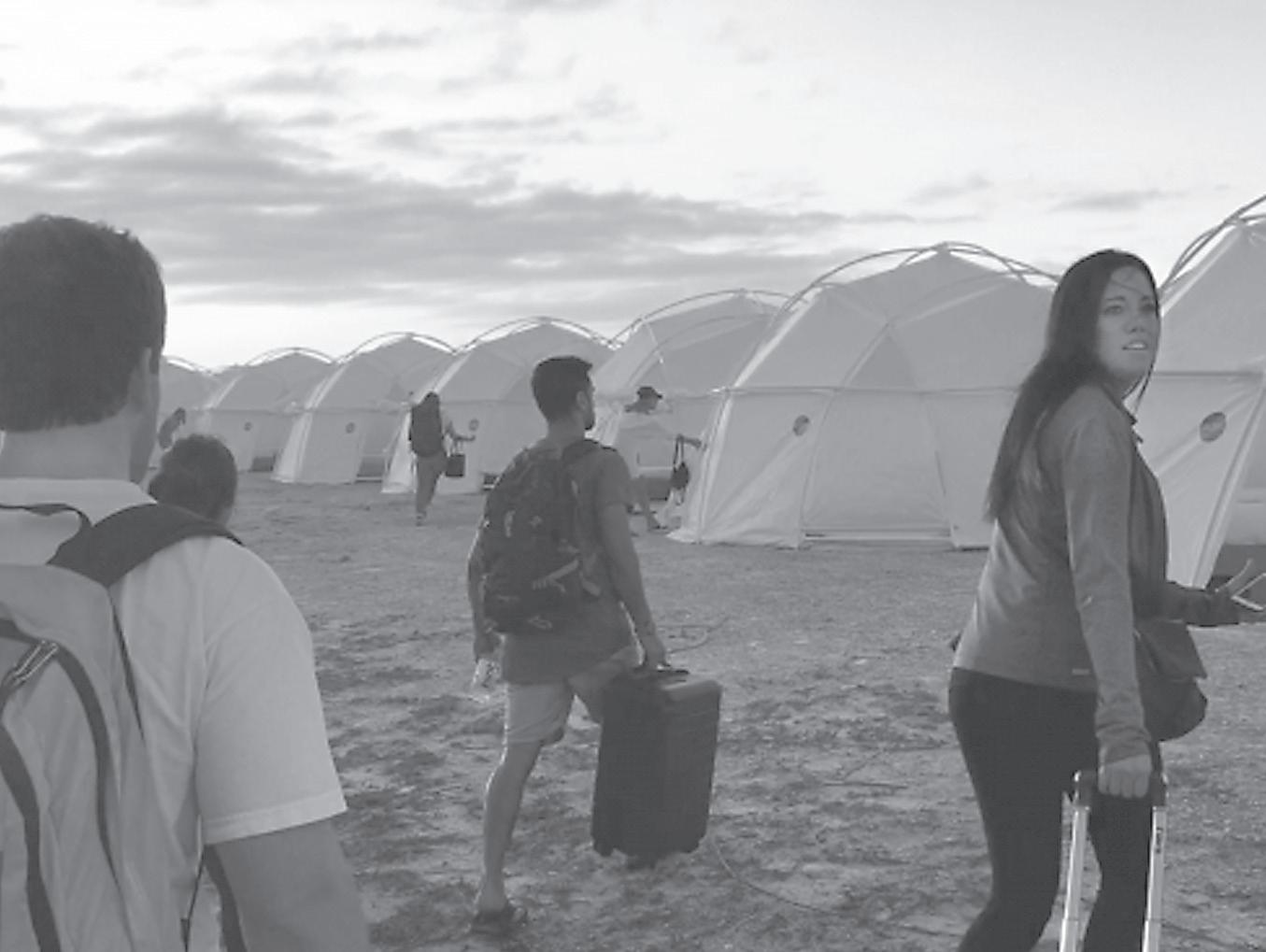

Shrouded in the narrative of millennial consumer culture is an underlying commentary on responsibility and the use of social media as a distancing mechanism. Due to the temporality of social media, the effects seem largely
In 2004, a pre-Instagram era, IBM researchers emphasized the importance of building a web of trust into future internet platforms, recommending the implementation of a feature that would allow users to express trust or distrust for one another thus creating “a web of relationships and trusts to help a user assess the likely quality of information before acting on it”. This was in the context of e-commerce, how to decide whether your e-bay seller was a phony or not. Today, on Instagram, this web of trust is propagated not by dislikes or negative reviews, but rather follower count and the amount of likes, statistics that are directly correlated with social capital. This creates an environment rife with opportunity for the Instagram influencer. In Fyre Fraud , New Yorker writer Jia Tolentino, defines the role of a social media influencer as one who has amassed a following for “performing an attractive life.” Through the establishment of a brand and the mass familiarization of one’s “personal” life, these influencers gain a platform through which they can direct their followers’ consumption habits. This disrupts the aforementioned web of trust, however, because it undermines the strong and weak ties that the network is made up of and how information is passed through them. Strong ties have typically been exemplified as friends with high emotional reciprocity and more interaction and weak ties as acquaintances with low emotional reciprocity and less interaction. These definitions become blurrier when it comes to
influencers who gain popularity through their ability to interact en masse and emotionally appeal to their followers, creating a simulation of a strong tie. While followers will take the recommendations of influencers, attributing the same credibility almost as a real-life friend, it is a one way street as these influencers take zero accountability for the content they produce and the information they spread. McFarland and his marketing team at Jerry Media were able to weaponize this simulated strong tie for their benefit, convincing hundreds of people that because so many familiar internet personas were associated with a social event it was inevitable that they find a way to participate in the event as well.
In Fyre Fraud, McFarland notes the possibility the internet presented to him, highlighting the sense of lawlessness to the technology. Both Fyre Fraud and Fyre present the unsettling ease with which McFarland was able to construct the fake festival, revealing the shaky foundation of internet ethics that allowed for it. It can be argued that the attendees of Fyre Festival were easy targets for this sort of scam, people who spent a lot of time, money and effort on social media platforms and who placed credibility with names like Kendall Jenner and Bella Hadid. However, as shown by the documentaries, the effects of scams like this are not localized to those who directly participated, but can have long-lasting ripple effects across our society. As the ability to discern between real and fake becomes increasingly necessary, it is important to consider how social media platforms, influencers and us, the people who watched gleefully from social media sidelines as Fyre Fest attendees struggled, can better hold each other accountable.
Isabel Ling is a senior in the College of Art, Architecture and Planning. She can be reached at igl3@cornell.edu. Linguistics runs alternate Mondays this semester.
Cornell Dancer’s Alliance Wins at Red Bull Tournament
After countless pirouettes, sweat and nonstop video editing, the group emerged victorious as the 2018 winners of Red Bull’s Bracket Reel competition.
Created in the efforts to foster creativity across a collegiate dance community, the competition has garnered notable attention and many audition entries from schools across the country. Only 16 dance crews of the hundreds which auditioned were selected to compete in the five-week long dance-off. Cornell University’s Cornell Dancer’s Alliance and North Carolina State’s Fusion both progressed to the final round, with the former claiming the title.
Cornell Dancer’s Alliance and fellow competitors were tasked with submitting a choreographed video that showcased not only dance skill but various artistic and cinematic elements in hopes of advancing to the next round. This year’s judges included Galen Hooks, Kash Gainesaz and Valerie Ramirez,
all notable for their substantial careers in the world of dance. Winning the competition was no small feat, as the prize included an all-expense paid trip to Los Angeles as well as the opportunity to work with the three judges on a large scale production music video with a Red Bull artist.
Sitting down with Kyle Avory Muna ’21 and Afsaneh Faki ’20 of Cornell Dancer’s Alliance, the team captains discussed their joy regarding the outcome of the competition and what’s next for CDA. It was the team’s first time competing in the Red Bull Bracket Reel competition, but that didn’t stop them from pushing their creative boundaries and challenging themselves as a collective unit.
“We’ve never been challenged to produce choreography that came with thinking about how it’s going to look on camera or what kind of formatting to use. Performing in a different medium was very exciting for us,” Muna said.
CDA is an umbrella organization for all dance opportunities and groups on Cornell’s campus with the specific goal of providing resources for those interested in dance as well as uniting dancers socially, creatively
and artistically across all domains. The group features members from BreakFree Hip Hop, The Assorted Aces, LOKO and other on-campus dance groups. Many dancers within the organization are trained in contemporary and urban dance, which led to the incorporation of these two main dance styles within the choreography of their videos. Each week the team worked hard to ensure that the premise of both the choreography and overall videos were story driven, often to songs that were different than what they were used to.
“We really made it a point as choreographers and directors to make sure that from the first part of the choreography to the last, it all made sense, and there was a bigger purpose to it. That was the biggest challenge in using music that we usually don’t dance to,” Muna said.
The captains regard the competition as a whole as being surreal, as none of them had previously competed nationally on such a large scale. The experience of watching it live was rewarding and evoked a number of emotions from the weeks prior, a reflection of the hard work, time
commitment and overwhelming feelings of achievement that occurred throughout the process of the competition.
In regards to what’s next for the victorious team Faki said, “we have a lot of new videos that we want to do with our videographer Taehwan Kwak. Right now, we’re really interested in the ‘concept video’ scene, and beyond that we want to find different mediums to challenge ourselves as choreographers and dancers, perhaps through other competitions. Before we started the Red Bull Bracket Reel competition we had our own personal project in the works, and it’ll be great to return to that. We also want to leverage CDA more and take advantage of what a great organization and resource it is to express yourself outside the confinements of a team.”
Be sure to keep an eye on Cornell Dancer’s Alliance as they continue on their road to success and victory.
Isabelle Philippe is a senior in the College of Agriculture and Life Sciences. She can be reached at ip93@cornell.edu.
ISABELLE PHILIPPE Sun Staff Writer
Linguistics
Isabel Ling


Fill in the empty cells, one number in each, so that each column, row, and region contains the numbers 1-9 exactly once. Each number in the solution therefore occurs only once in each of the three “directions,” hence the “single numbers” implied by the puzzle’s name. (Rules from wikipedia.org/wiki/ Sudoku)
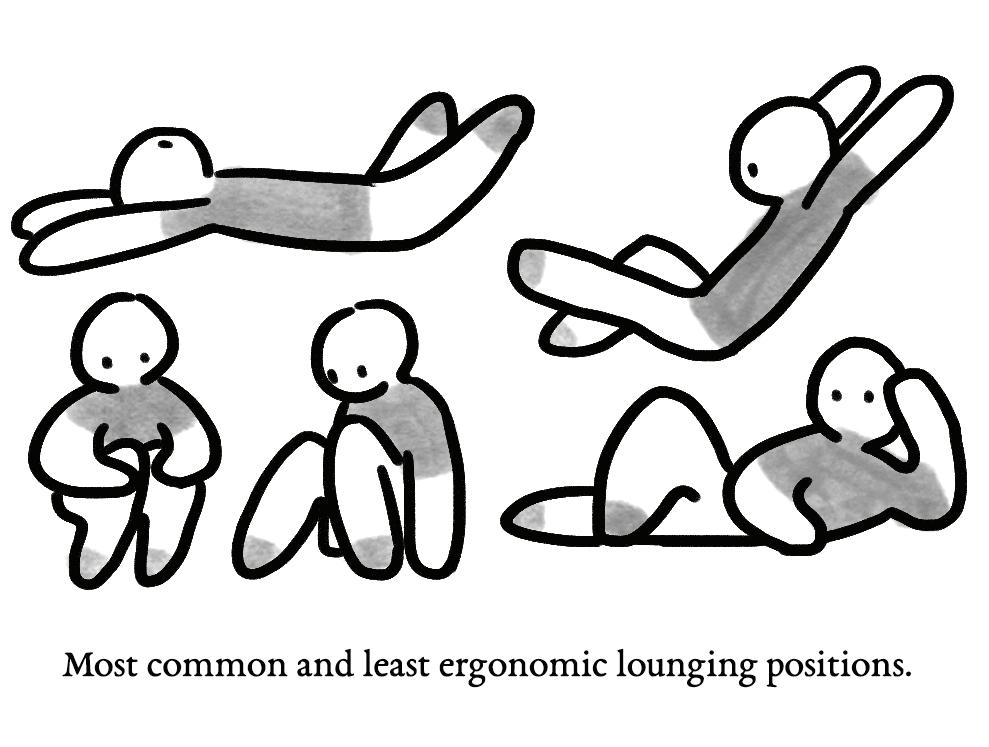


Art by Alicia Wang ’21

Locke’s Line Stays Hot in Win Over Rival
HARVARD
26 A PA R TMENT FOR R ENT
2 & 3 BEDROOMS
109 SAGE PLACE
Available NOW, Spring 2019 & 2019/2020 Shuttle Bus Access to Campus Access to Free Fitness Center Novarr- Mackesey Property Management office@ithacastudentapartments.com ithacastudentapartments.com 607-277-1234
26 A PA R TMENT FOR R ENT
312 College Ave
Collegetown’s Best Address Now leasing for 2018-19. Superior Studio, 1, 2, 3 Bedroom Apartments. Fitness facility, theater, and meeting space. Free high-speed internet. Exclusive resident parking. Overnight concierge. Package delivery. 312collegeave.com 607-273-9777
Collegetown Terrace Apartments INSPIRED LIVING TAILORED TO YOUR SUCCESS 24-Hour Fitness Center
Shuttle Bus Service to Campus Study Rooms w/ Expansive Views
Apartments Available NOW, Spring 2019 & 2019/2020 Novarr- Mackesey Property Management collegetownterraceithaca.com office@ithacastudentapartments.com 607-277-1234
Collegetown
>>AFFORDABLE, QUALITY LIVING<< Special Deals for you! Furnished 1-6 Bedrooms Collegetown Apartments PARKING, LAUNDRY, UTILITIES! (607) 273-7368 www.IthacaApartmentRental.com
at: 119 Dryden Road www.ithacarenting.com
Houses, Apts, Parking 1 to 9 Bedroom
Collegetown - College Ave, Linden Ave, Dryden Rd, Bryant Ave, Cook St. 607-330-2442 info@urbanithaca.com www.urbanithaca.com
Nicest Apts. in Collegetown Located on Eddy St. 4 Bedrooms Fully furnished. Spacious living areas with large bedrooms & closets. Hardwood flors, spectacular views, eat-in kitchens with additional sun rooms. Laundry & parking. 607-339-1137 bgm900@gmail.com
COLLEGE AVE.
1
4 Bedroom Apartment Available
Continued from page 16
Friday against Harvard, history seemed to be replicating itself as the goalie looked more like his old self from a Hobey Baker finalist and All-American 201718 season. There was confidence tracking pucks, eagerness showing off in front of the home crowd and little to do for a Crimson team scraping for anything they could get.
“Nothing compares to the atmosphere. It’s just amazing,” Galajda said of playing Harvard at home.“We played such a hard game tonight, and to get rewarded like that, it’s definitely something pretty special.”
After the last fish from the student sections was collected, Cornell and Harvard battled in a scoreless first period, with the Crimson riding emotions built from the Red’s dramatic wins last year and in Cambridge this past December. The tide changed quickly in the second period, however.
Sophomore center Brenden Locke, a sparkplug who has brought stability to the Cornell lineup since his return out of the break, got the Friday night party started 2:07 into the second period. Cutting to the net, Locke slid a pass from classmate Morgan Barron past Harvard netminder Michael Lackey for the Cornell forward’s third goal in five games since returning from a lengthy injury.
We have availability for the 2019-2020 school year beginning June 1st at Hudson heights apartments. The studio apartments come with: heat, water, and electricity included. There are garbages houses and coin-operated laundry facilities on site. Prices start at $740/month for a 12 month lease. If you have any questions or would like to schedule a tour contact us by phone 607-208-7660 or email: renting@ithacaLS.com
WYCKOFF AVE 6 Bedroom House Novarr-Mackesey Property Management office@ithacastudentapartments.com ithacastudentapartments.com 607-277-1234
27 H OUSE FOR R ENT
COLLEGETOWN 6 BEDROOMS Newly Remodeled PRICES SLASHED TO RENT 607-272-3389 avramisrentals@aol.com

“I just yelled at the top of my lungs. Just such a great feeling,” Locke said. He added of his injury: “It was a challenge, mentally, just trying to stay positive at all times and seeing how I could work on my game with the injury… Make sure when you come back you are ready to go and dialed in at all times.”
In the waning minutes of the same frame, Cornell public address announcer Arthur Mintz ’71 couldn’t finish reading off the awarded penalty against Harvard before a decibel outburst from Lynah drowned him out. Just six seconds of Cornell’s first power play of the night were all Barron needed to send the Lynah crowd back into a frenzy. Barron’s eighth goal of the season pushed him to first on the team in power play tallies with four.
What’s more, the all-sophomore line of Locke, Barron and Cam Donaldson is responsible for the last 10 of Cornell’s 15 goals.
Cornell could not convert on an abbreviated power play to open the third period but was awarded a bittersweet chance on the man-advantage moments later. Highly-productive freshman center Max Andreev absorbed a brutal hit from Harvard’s Adam Baughman. Andreev immediately left the ice holding his right shoulder and collarbone area and did not return to the game.
Early prognosis on Andreev
is that it will be a lengthy injury, Schafer said, and with it comes the loss of yet another center. Schafer said freshman Michael Regush will slot back in the middle Saturday against Dartmouth after doing so earlier in the season, and without the availability of junior forward Jeff Malott, freshman Zach Bramwell will most likely re-enter the lineup at wing. Sophomore defenseman Alex Green will also not be available to return on Saturday, Schafer said.
“We know that with Max out now guys are going to have to step up and guys are going to get chances,” Locke said. “I am confident in our team that guys are going to rise to that occasion and fill that spot… It sucks to lose him.”
After Baughman was sent off the ice with a game misconduct, Cornell couldn’t convert on the five-minute man-advantage, “but at the same time that five-minute major takes a lot out of their opportunities to get anything going either. After that I thought our guys did a great job playing really solid hockey,” Schafer said.
Despite over three minutes of Harvard pulling its goalie, the Red bore down for all that was left in the 2,000th game in program history to extend its unbeaten streak to six.
Zachary Silver can be reached at zsilver@cornellsun.com.

Okenshields, Willard Straight Hall
• Olin Hall
• Olin Library B Level
• Plantations Gift Shop
• Rhodes Hall
• Risley Dining
• Robert Purcell Community Center (RPCC)
• Sage Hall Atrium
•Sibley Hall, Green Dragon Café
• Snee Hall
• Statler Lobby
• Statler Terrace Restaurant
• Tatkon Center
• Teagle Hall
• Transportation Dept., Maple Ave.
• Trillium
• Uris Hall
• Vet Center (Shurman Hall)
•Weill Hall, M1 Rm + Synapsis Off Campus
• Autumn Leaves Used Books (Ithaca Commons)
• Bear Necessities
• Center Ithaca
• Coal House Café
• Collegetown Bagels: CTown + Triphammer
• Commons Grocery (Ithaca Commons)
• CFCU (Triphammer Rd.
+ East Hill Plaza)
• Corner of College & Dryden
• Corner of State & Aurora
•Express Mart, Comm. Crnrs.
• Hillside Inn
• Hilton Garden Inn
• Holiday Inn
• Ithaca Coffee Co.
•Ithaca College, Phillips Hall
• Jason’s Grocery & Deli
• Kendal
• Kraftees
• Lifelong
• Oasis (Greenstar)
• P&C Fresh (East Hill Plaza)
• Salvation Army
• Shortstop Deli
• Stella’s
• Tompkins Cty. Public Library
• Tops (Triphammer Rd.)
• Universal Deli
• Warren Real Estate (Downtown
+ Community Corners) or stop by The Sun’s office
Icers Build Winning Streak
Mills’s hat trick powers Red to 6-0 road win over Crimson
By SMITA NALLURI Sun Staff Writer
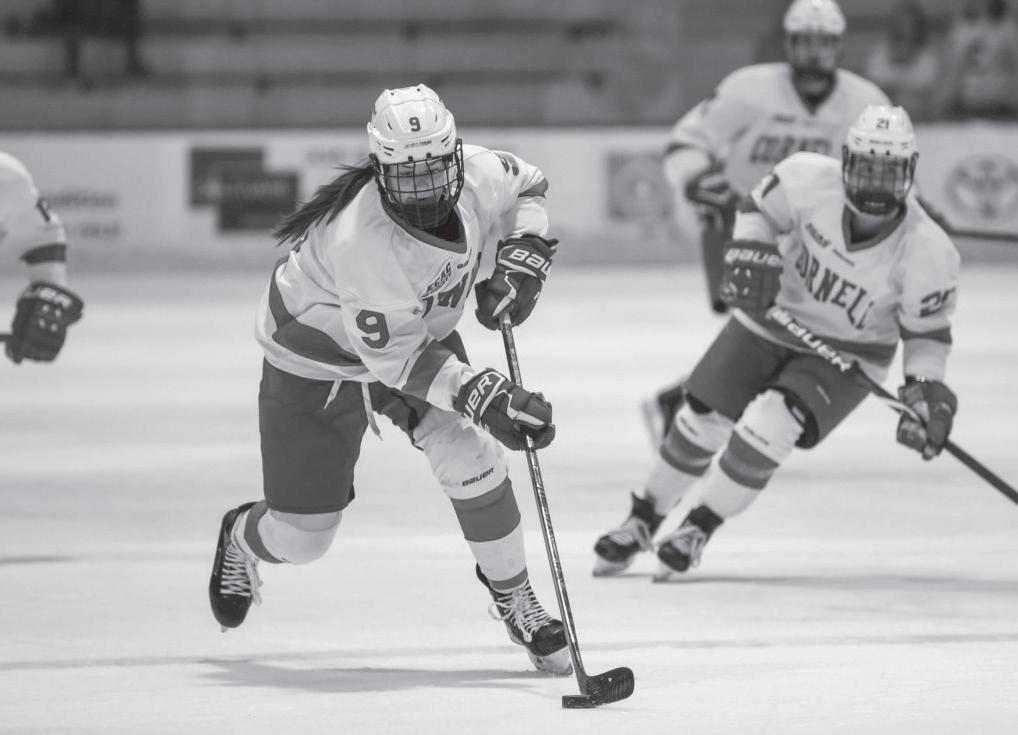
Cornell women’s hockey rolled past conference foes Dartmouth and Harvard this past weekend, tallying its fourth and fifth shutouts of the season.
After returning from winter break with a tie and a loss, the Red looked to be back in top form as it squared off against Dartmouth Friday afternoon.
“This year we had a bit of a slow start back from break in our first two games,” said senior forward Diana Buckley.
“We are all very excited for what is left in store for our season.”
Marlène Boissonnault
“However, since the [5-0] Princeton loss we have really woken up and are ready to compete and finish the rest of the season in the win column.”
Cornell harnessed its competitive drive to blank Dartmouth 3-0 and give sophomore goaltender Lindsay Browning her first career shutout. Browning made 22 saves.
Other highlights from the tilt included a goal and assist from senior forward Lenka Serdar, two assists from freshman forward Gillis Frechette and a goal each from junior forward Paige Lewis and junior defender Jaime Bourbonnais.
Undeterred by inclement weather, on Saturday
Cornell traveled to Cambridge to take on Harvard. The Red was relentless, dismantling the Crimson to win 6-0.
Sophomore forward Maddie Mills notched her first career hat trick and senior forward Pippy Gerace, Serdar and junior forward Grace Graham all lit the lamp as well.
After making 23 saves, senior goaltender Marlène Boissonnault picked up her 13th career shutout, which is third all-time at Cornell.
“Hats off to Lindsay and Marlène who are both playing great and are a huge part of our success,” Serdar said. “I also think our team commitment to defense is starting to show. We know we need to be tough and block shots if we want to continue to have success going forward.”
In addition to remaining a defensive stalwart, the Red is looking to continue its offensive momentum.
“We put a lot of shots on net this weekend and consequently scored more goals than a normal,” Buckley said. “Continuing this offensive spurt will be key moving forward in the season.”
Cornell will be back in action to take on Colgate in a two-game series this weekend.
“We are all very excited for what is left in store for our season,” Boissonnault said. “We are seeing more and more of our potential as the season goes on, which is a great thing to see in January.”
Smita Nalluri can be reached at snalluri@cornellsun.com.
Cornell Beats Dartmouth in Key League Game
DARTMOUTH
Continued from page 16
Power play scoring culprits came in the form of sophomore forward Cam Donaldson — his team-leading 10th goal — and senior forward and captain Mitch Vanderlaan. On the first, Donaldson cut to the net and received a pass before sliding the puck by Dartmouth goalie Adrian Clark for his fourth power-play goal tally of the season. On the second, after a rare closing-the-hand-on-the-puck penalty on the Green, a laser shot from Vanderlaan bounced off Clark’s shoulder and in.
But the scoring did not begin until junior forward Connor Murphy, finding his rhythm in the lineup after seeing an increased role due to injuries, salvaged what he called an overall lackluster opening period with a goal 6:27 into the game. The junior collected a rebound off a point shot from senior defenseman Brendan Smith and calmly slotted the puck home.
“He brings a lot of energy. He’s always brought that. His feet never stop moving, even the penalty he drew in there the third, his feet never stopped moving from the time he was going down the boards, he just would never be denied,” Schafer said. “He knows where to stand in the offensive zone, he goes right to the net. That’s how he scored his goal against Arizona State and again tonight. He works hard and it’s good to see him get rewarded.” Murphy appeared in just one game last season and now has two goals in the Red’s last four games after a scoring drought that lasted over two years.
“We’ve had a great team here the last few years and you always want to do what you can to help the team out and it’s great when you get an opportunity and make the most of it,” Murphy said.
“Connor’s probably one of my best friends on the team,” Donaldson added. “He works it day in day out. He’s always putting the extra hours in practice. It’s great to see it pay off for him, he’s such a great kid.”
Before senior forward Beau Starrett sealed the deal with a late empty-net goal, sophomore forward Brenden Locke netted Cornell’s dagger fourth goal of the game and his fourth of the season — all of which have come in his last six games since returning from injury.
But this one came only after an impressive display of hands and skill from senior defenseman and alternate captain Matt Nuttle.
“He stole the puck right from me,” Donaldson laughed of Nuttle. “I guess he had the right plans.”
Zachary Silver can be reached at zsilver@cornellsun.com.
Morgan Makes History as Cornell Wins 1st Ivy Matchup
By BENNETT GROSS Sun Staff Writer
Senior guard Matt Morgan etched his name into Cornell men’s basketball history as two in-state conference rivals put on a back-and-forth thriller on Saturday afternoon.
In its Ivy League opener, Cornell got out to an early 14-0 lead against Columbia. Despite the Lions’ slow start, they were able to climb back into the contest, though the Red hung on for a 60-59 victory to move to 1-0 in league play.
In addition to being an important game for the Ivy League standings, the contest was historic for Morgan, who became Cornell’s all-time career scoring leader during the game when he hit a three-pointer with 14:27 left in the first half.
The Red took a 39-25 advantage into
halftime after a strong first half from Morgan, who poured in 19 points in the first 20 minutes.
Cornell continued to build upon its hot start, ballooning its lead all the way up to 18 points with 13 minutes left in the game. But the Lions roared back late in the second half, going on a 13-0 run to take a one-point lead with 2:30 to go in the game. However, sophomore forward Jimmy Boeheim was able to hit a three-pointer with two minutes left to give the Red the lead. A last-second Columbia shot missed, allowing the Red to hang on.
only other Cornell player in the game in double figures, with 14 points. Warren also collected 10 rebounds, notching the first double-double of his career.
The contest was historic for Morgan, who became Cornell’s all-time career scoring leader during the game when he hit a three-pointer.
Columbia was led by sophomore guard Gabe Stefanini, who scored 18 points. He was aided by senior guard Quinton Adlesh’s 10 points off the bench.
However, the star of the show was Morgan, who broke Ryan Wittman’s ’10 previous scoring record of 2,028 points. Following the win over Columbia, the senior guard sits at 2,044 career points with 13 games remaining in the regular season.
his 68th consecutive game in double figures. Also, Morgan accumulated four assists against the Lions, making him one of 15 players in school history with over 250 career assists.
With this victory, Cornell has now won four of its last five games and has amassed a four-game home winning streak.
The Red was able to pick up the crucial conference victory despite the absence of fourth-leading scorer and important role player sophomore Jake Kuhn, who missed the contest due to injury.
The Red will make the return trip to Columbia this Saturday at 7 p.m., where Cornell will look to win its fourth game in a row. Last season, the New York State Ivy League foes split the season series, with the home team winning each contest.
Morgan scored a game-high 21 points, while junior forward Josh Warren was the
Additionally, Morgan moves into fourth on the Ivy League career scoring list with
Bennett Gross can be reached at bgross@cornellsun.com.
Ivy beatdown | Cornell outscored Dartmouth and Harvard by a total of 9-0 over the weekend.
BORIS TSANG / SUN ASSISTANT PHOTOGRAPHY EDITOR
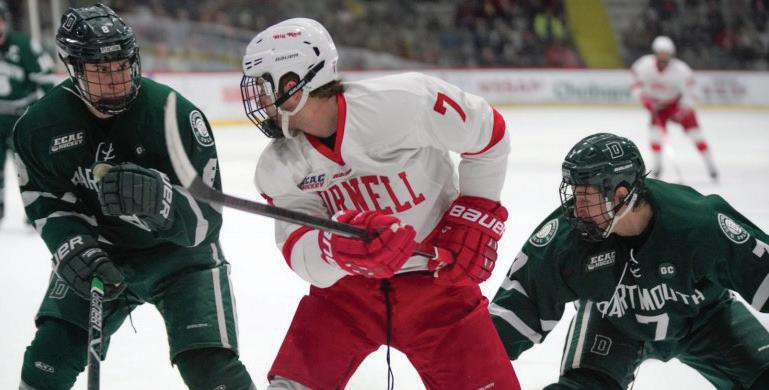
Cornell Now Tied for 1st in ECAC After Weekend Sweep
Back from injury and in the midst of a position battle, Matt Galajda earns frst shutout of season
sophomore defenseman Matt Cairns as his fourth-line center.
Playing short a skater, with a defenseman filling in as a forward and on a quick turnaround, it would have been easy for Cornell men’s hockey to make excuses should it have fallen flat against Dartmouth — a team that has given the Red plenty of fits on home ice.
But Cornell didn’t let extenuating circumstances dictate its play in Saturday’s matinee against the Green, avenging an earlier loss to its Hanover foes, 5-1, to extend its unbeaten streak to seven games.
With the win, the Red has tracked down Quinnipiac for a tie atop the ECAC standings with games in hand on each of its counterparts — the Bobcats and Yale.
“It’s huge for us. You look at the lines for us, we had defenseman playing forward and guys in all different positions,” said head coach Mike Schafer ’86, who employed
Cornell played with a lineup of 18 instead of 19 skaters while four of its nightly starters sat — and most will continue to sit — on the shelf with injuries. In Friday’s 2-0 blanking of Harvard, the Red lost freshman forward Max Andreev with what seemingly will be a long-term shoulder injury and sophomore forward Tristan Mullin took a point shot to the leg in Friday’s win. He returned later in the game but sat out Saturday with an injury.
“I don’t think we are playing any different than we were in the first [half]. We got — we did — have some guys healthy,” Schafer said of trudging along with a seven-game unbeaten streak despite the injuries. “Guys stepped up to the plate tonight and did a good job playing in positions they’ve never been in before. Matt Cairns, I don’t know if he’s played forward for a whole game, but he did a good job coming in tonight and filling in for guys.”
Shorthanded again due to injury, Red extends unbeaten streak to seven games
By ZACHARY SILVER Sun Senior Editor
Comfort for Matt Galajda comes when the prospect of comfortability is at an alltime low, such as when there is the pressure of downing archrival Harvard in front the eyes of 4,267 at a sold-out Lynah Rink, which he and Cornell men’s hockey did, 2-0, on Saturday night.
And it comes when the sophomore goalie’s starting job is most on the line, such as it is now, with close friend and backup Austin McGrath breathing down his neck and battling vigorously to earn the starting spot.
“Something that we want as a coaching staff is competition at that position,” head coach Mike Schafer ’86 said after Galajda’s 25-save shutout — his first blanking of the season. “And every time Matt has had competition he has risen to the challenge and plays better and better. Austin has played really, really well, and it is good to have two guys back there who will push each other.”
And McGrath has seemingly earned himself another chance to start against Dartmouth on Saturday.
“It’s still game-by-game,” Schafer said of
his starting goalie decisions. “We’ll see how it progresses and see which one rises to really kind of claim it and run with it. Austin needs a chance to come back tomorrow night and play … He needs an opportunity to come back tomorrow, and then we approach the following week differently.”
While Schafer appears to have uncharacteristically already named his starting goalie for Saturday’s pushed-up game against Dartmouth — a game in which a win would give the Red a stranglehold in the race for its second consecutive Ivy League title — Friday for Galajda felt like it could be a fresh start after a down first half by the standard he’s set for himself.
“I definitely think it’s a turning point for me,” Galajda said after his second game back from a month-plus injury. “Personally, I feel a lot more confident and I think my six or eight weeks off helped my mental side a bit.”
Last season, Galajda thrived when he and Hayden Stewart ’18 were in the midst of yet another intense goalie battle and seemed to lock up the job after a 1-0 shutout his first game back as the starter.
Behind sophomore goalie Austin McGrath’s 22 saves in the midst of a battle for the starting job, Cornell received scoring from a variety of sources and five different scorers altogether in Saturday’s weather-induced afternoon contest.
Albeit against Dartmouth’s last-ranked penalty killing unit in the country, Cornell was 2-for-3 on the man-advantage Saturday to make it 3-for-6 on the weekend after Friday’s shutout of Harvard.
Since returning to action from the holidays on Jan. 4, Cornell’s power play ranks No. 4 in the country with a 37.5 percent conversion rate. At the beginning of the season’s unofficial second half, Cornell’s man-advantage was 20th in the country at 19.6 percent.
“I’ve said this: I thought we were just OK, but our power play carried the day for us,” Schafer said.
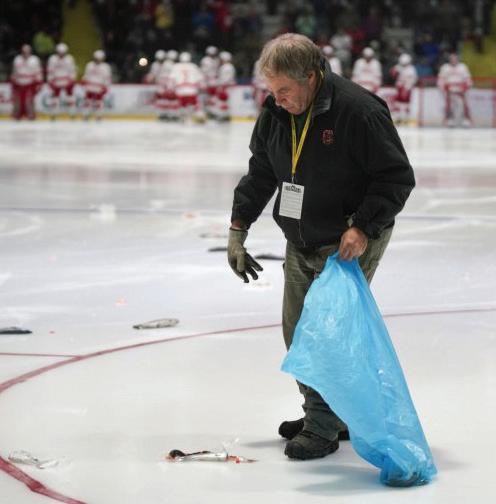
Red hot | Sophomore forward Cam Donaldson extended his team-lead in goals with his 10th of the season on Saturday.
JOSE COVARRUBIAS / SUN STAFF PHOTOGRAPHER
Flying fish | After the traditional throwing of fish, Cornell’s defense blanked archrival Harvard to earn two key ECAC points.
JOSE COVARRUBIAS / SUN STAFF PHOTOGRAPHER
By ZACHARY SILVER Sun Senior Editor
See DARTMOUTH page
HOCKEY