
A LEGACY OF INNOVATION. A FUTURE OF POSSIBILITY.
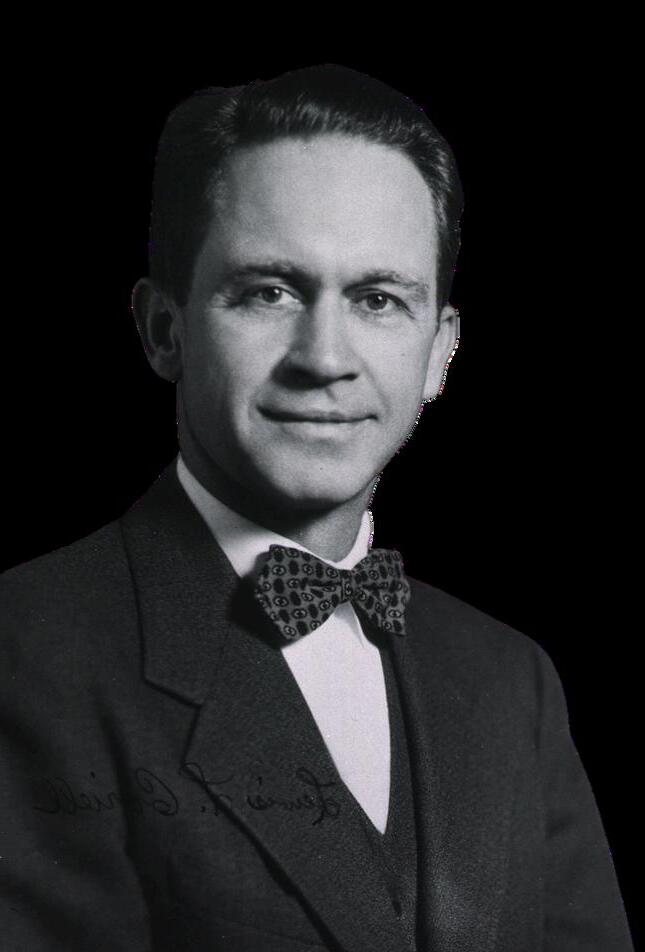
The Coriell Institute is an independent non-profit biomedical research center founded by famed virologist and scientific pioneer Dr. Lewis L. Coriell in 1953 with the mission to accelerate scientific discovery by generating world-class biomaterials, providing state-of-the-art laboratory services and conducting groundbreaking research.
Dr. Coriell set the stage for modern biomedical research with his many contributions to science, including developing cell culturing techniques that allow researchers to sustain living human cells outside of the body. This technology allowed researchers to grow the polio virus to develop the vaccine, with Dr. Coriell leading the field trials of the Salk vaccine.
And in the 1970’s, Dr. Coriell partnered with the National Institutes of Health (NIH)
to establish the world’s most varied biobank to to accelarate scientific discovery and conduct groundbreaking research.
Coriell is a leader in researching the genetic causes of cancer, rare diseases and aging-related diseases, with specific focus on the role that epigenetics – how genes are activated and deactivatedplays in human health
As a result of its innovative research, Coriell ranks number one in southern New Jersey and number five in the State of New Jersey in NIH research awards, with Coriell researchers publishing dozens of papers annually in leading scientific and medical journals.

The Institute has also taken the lead in establishing the foremost cancer research consortia in the region. In 2023, Coriell partnered with Cooper University Health Care and Cooper Medical School of Rowan University, to establish the Camden Cancer Research Center (CCRC), a stateof-the-art cancer research institute that leverages each institution’s expertise in research, patient care and medical education to accelerate the development of the next generation of cancer treatments and provide world-class care to the residents of South Jersey.
Coriell is known worldwide for its biobanking expertise. Biospecimens in Coriell’s numerous biobanks are the linchpin to developing tests and discovering therapies to identify, prevent and treat disease. For more than 60 years, researchers in more than 90 countries have utilized Coriell biomaterials to advance human health.
In 2003, Francis Collins, MD, PhD, former NIH Director, and Senior Investigator at the National Human Genome Research Institute (NHGRI), and his colleagues published a groundbreaking paper using samples stored in the NIA Aging Cell Repository at Coriell, sponsored by the National Institute on Aging (NIA). Their research uncovered the genetic cause of progeria, a point mutation of the Lamin A gene, which helps maintain the normal structure and function of a cell’s nucleus.
One of the major breakthroughs in Lesh-Nyhan syndrome research came in 1989 when researchers at the Baylor College of Medicine and Howard Hughes Medical Institute led by Richard A Gibbs, Ph.D. made a discovery based on samples from the NIGMS Human Genetic Cell Repository at the Coriell Institute for Medical Research. For the first time, they demonstrated that the mutations responsible for Lesch-Nyhan Syndrome often occur as de novo events, new mutations not inherited from either parent.
The Institute provided the DNA from which the first reference sequences were derived. The Human Reference Genetic Material Repository at Coriell makes available DNA from a single individual, J. Craig Venter, whose genome has been sequenced and assembled. Coriell’s National Human Genome Research Institute (NHGRI) Sample Repository for Human Genetic Research offers DNA samples, cell lines and iPSCs from the populations that contributed to the International HapMap Consortium, the 1000 Genomes Project Consortium, and the Human Pagenome Reference Consortium.
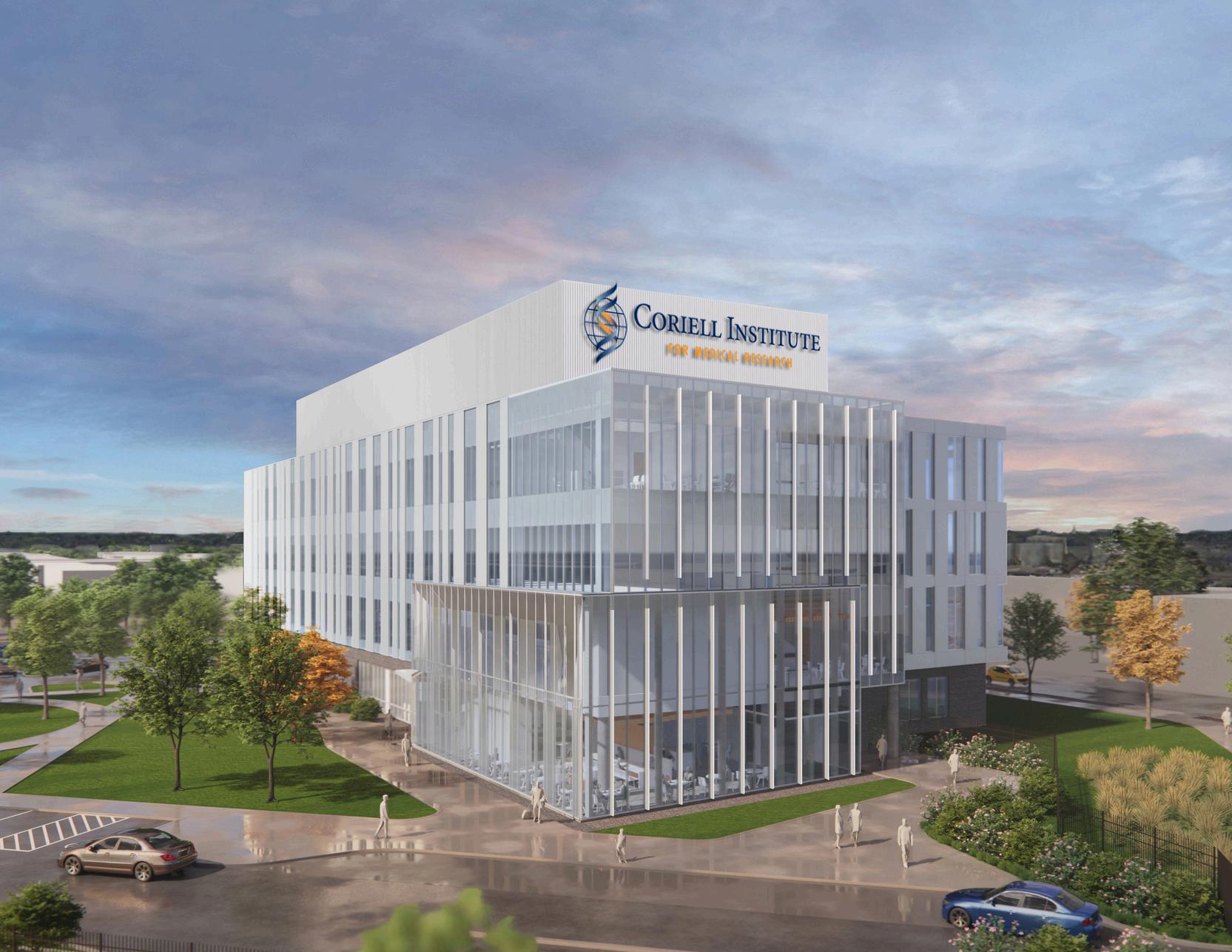
Capitalizing on a strong foundation built over the past seven decades, Coriell has a bold vision for its future and the future of life sciences research in southern New Jersey.
Coriell plans to construct a new life sciences campus in Camden that will serve as the Institute’s new headquarters, research facility and biobank; home to its sister organization, the Camden Cancer Research Center, the region’s premier cancer research institute; as well as house a statedesignated Strategic Innovation Center to provide infrastructure and laboratory services for emerging biotech companies
This project, anticipated to open in 2028, is expected to serve as the epicenter for a life sciences innovation ecosystem in the region and catalyst to grow the life sciences industry in southern New Jersey