Two Decades of Investment and Institutional Dialogue
Two Decades of Investment and Institutional Dialogue
Two Decades of Investment and Institutional Dialogue
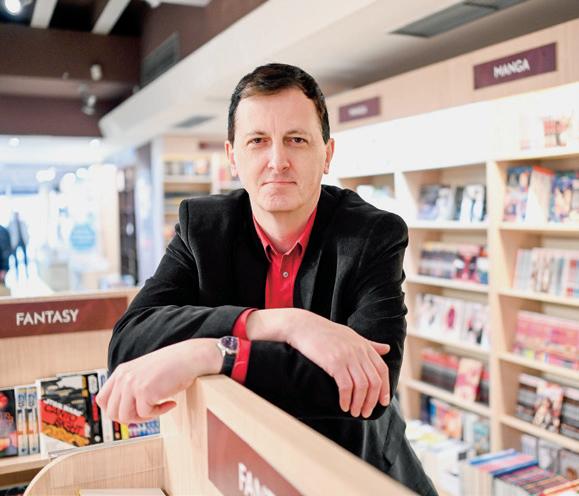
BY SLOBODAN G. MARKOVICH
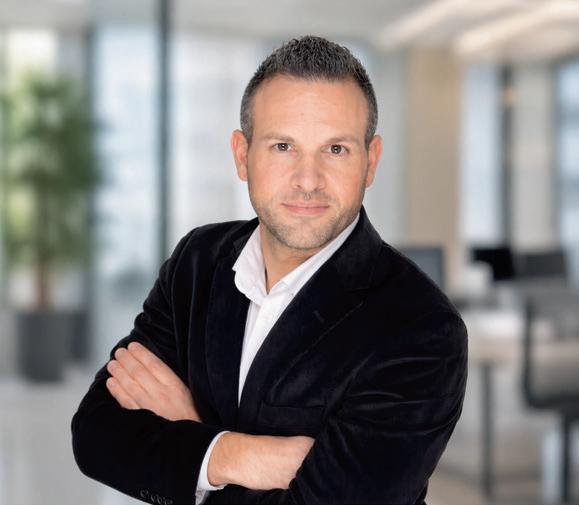
OMAR LICANDRO
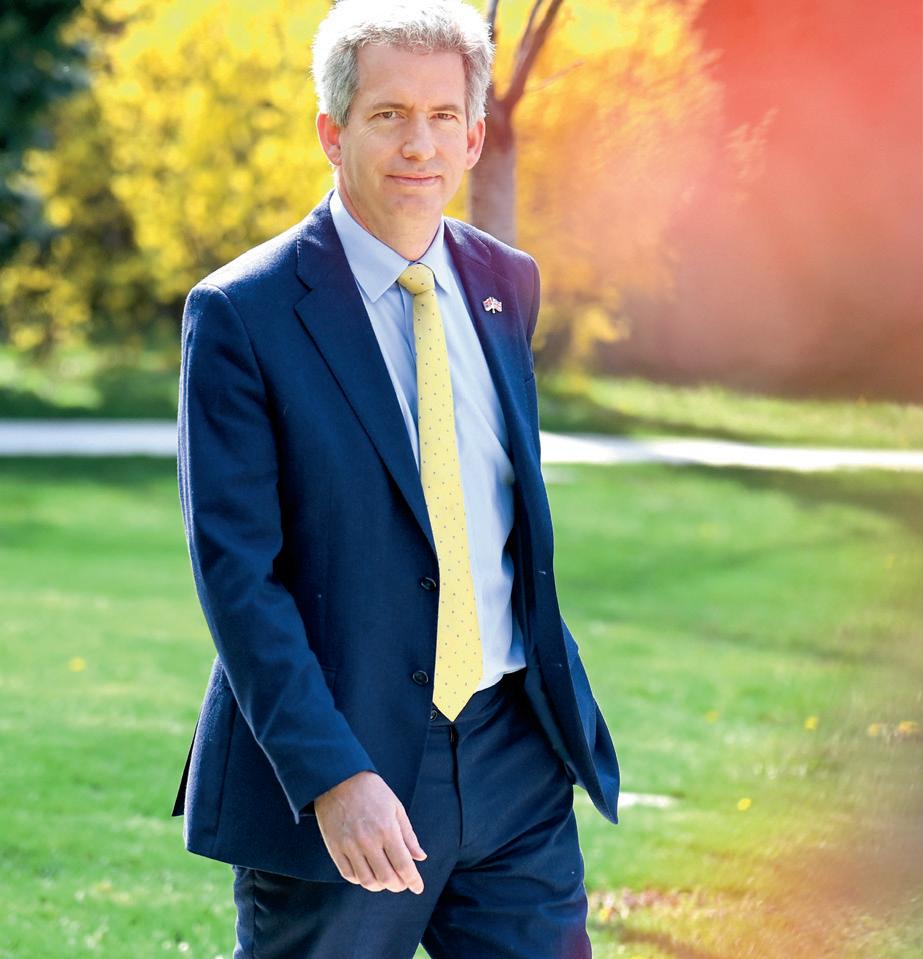
H.E. MR. EDWARD FERGUSON UK Ambassador to Serbia 16
Professor of Economics at the University of Leicester, IEA Treasurer 22
SIMON STOCKLEY
Associate Professor of Entrepreneurship, Cambridge Judge Business School
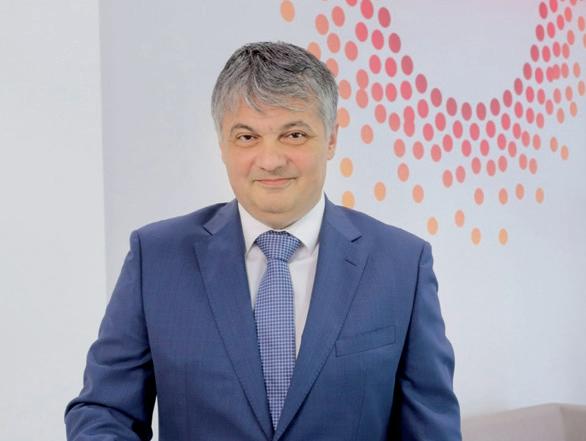
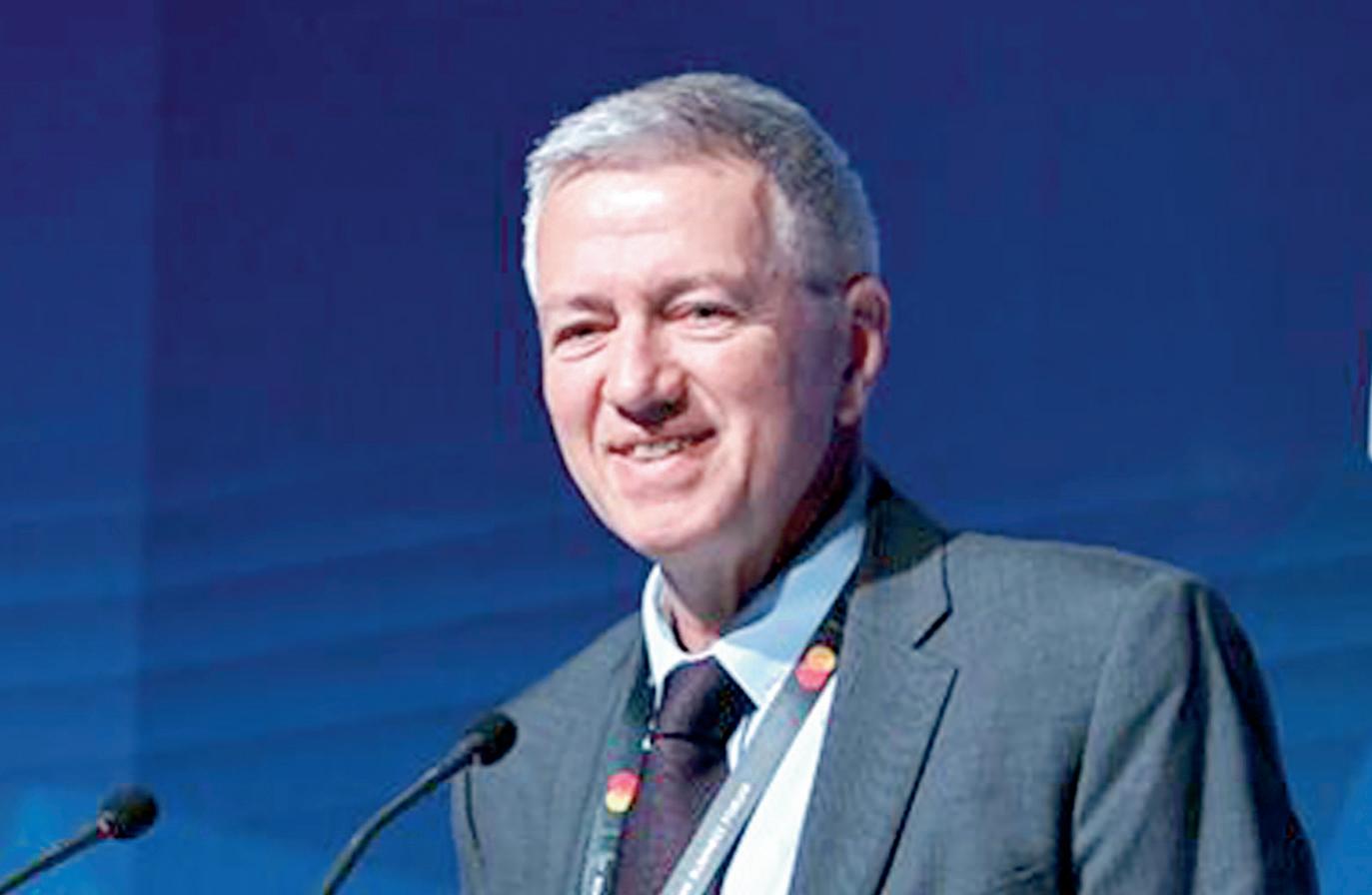
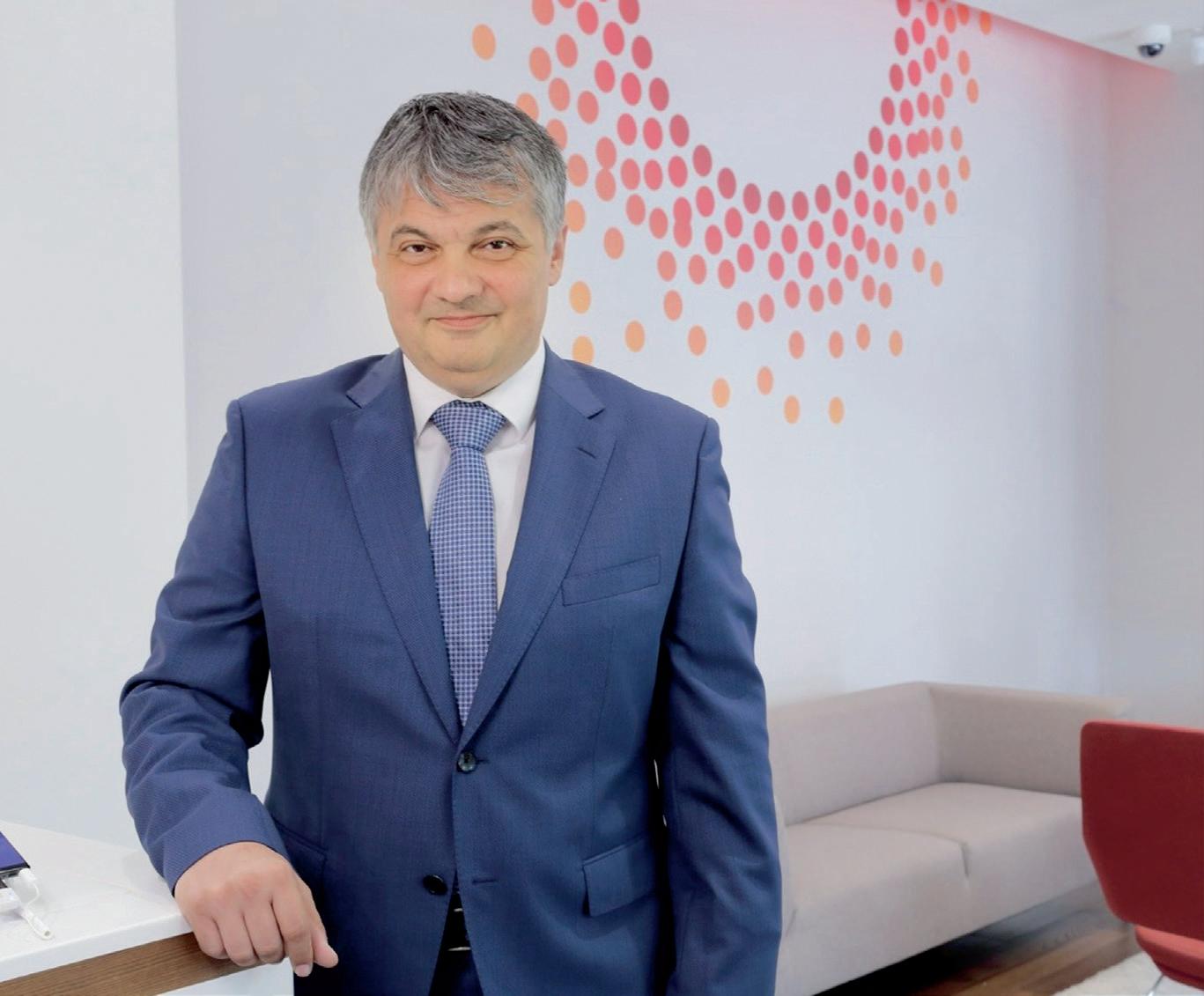
VLADIMIR LUČIĆ CEO of Telekom Srbija Group
UK – Serbia 2026
24 Modern Infrastructure as a Driver of Development
NADA BEGENIŠIĆ
MScEE & MBA, Founder and General Manager, Igmako Smart Solutions
25 Stability and Trust in the Service of Investment
ĐORĐE ŠIRCA
Chief Advisor to the Executive Board, Alta banka
26 Visibility in the Age of AI Search
ANA PANTIĆ
COO, Co-Founders of Omnius
MATIJA GOLUBOVIĆ
CEO, Co-Founders of Omnius
28 Human Intelligence Meets Artificial Intelligence
By LJUBICA BARBULJ CEO, Enetel Solutions
30 The Scientist Who Taught Machines to Discover
DEMIS HASSABIS CEO of Google DeepMind
33 Reframing Global Order
UK–SERBIA ACADEMIC DIALOGUE
34 The Language of Quiet Surfaces
40 Freedom is at the Core of Everything
ALEKSANDAR NOVAKOVIĆ writer, playwright and musician
COMMENT
Traditional Links Serve Future Relations
Traditional Links Serve Future Relations
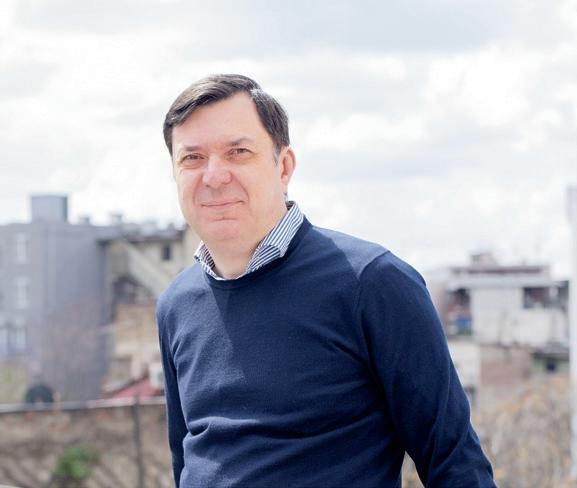
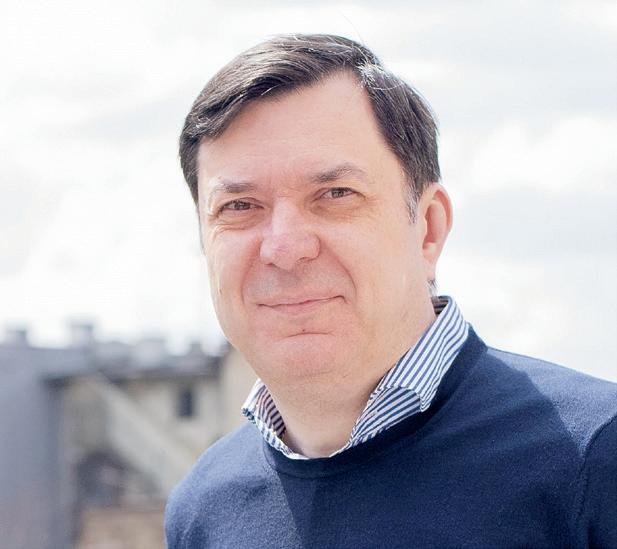
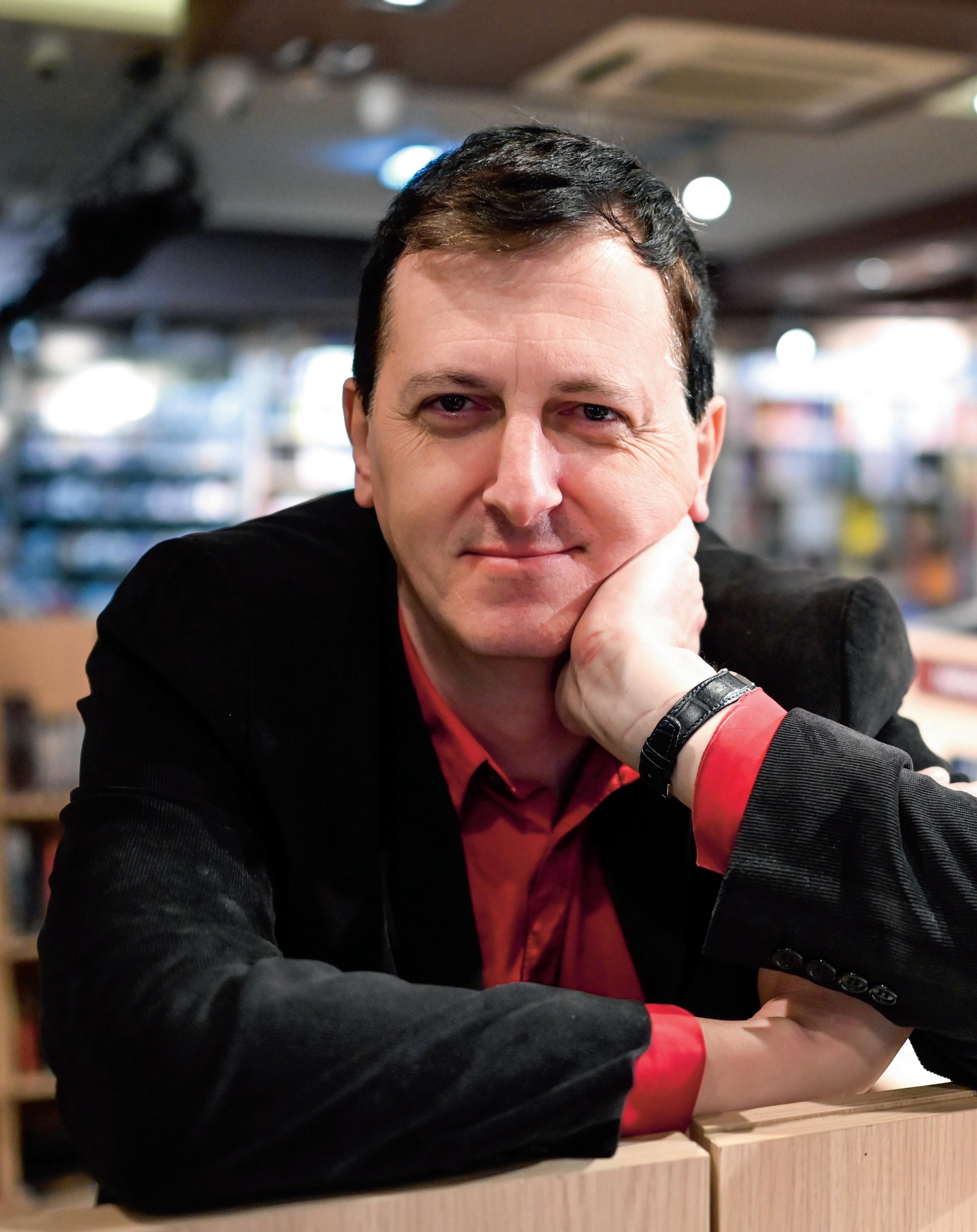
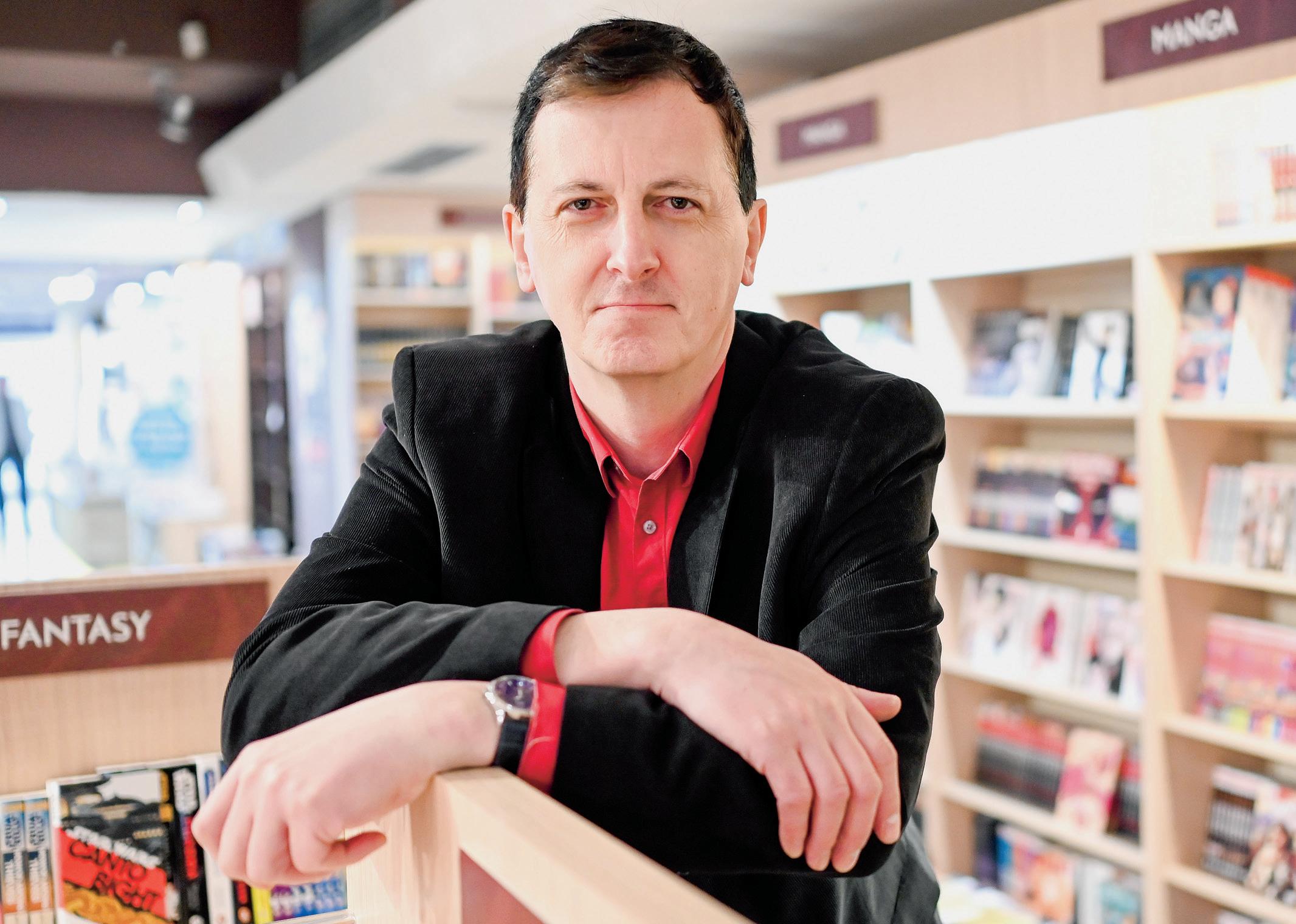
Professor Slobodan G. Markovich, MBE, Faculty of Political Science
The longstanding story of British influence on Serbian society has been built through education, cultural exchanges and historical ties
British soft power’s most relevant assets are its education system and pop culture. The Times Higher Education (THE) World University Rankings 2026 list four British universities among the world’s top 30 alongside three from Switzerland, two from Hong Kong and 21 U.S. universities. This is a clear indication that British universities – together with Swiss ones – are the most competitive in Europe. Serbian society has been fortunate enough to benefit in this field through projects that have created close ties with educational institutions in the UK.
When father of Serbian modernity Dositej Obradović arrived in London in December 1784, he was so impressed that he wrote in his autobiography: “It is impossible to see or even imagine anything more beautiful in the world.”
For him, London was “the most beautiful and most famous city in the world.” The first book written in modern Serbian, Dositej’s autobiography, is a eulogy of London and Britain.
Those lines were read by generations of Serbs, but it was only during World
War I that Obradović’s message gained the meaning initially intended by the author. And that was made possible thanks to the wartime alliance between the UK and Serbia. As 1915 came to an end, the Government of the then Kingdom of Serbia and its army found themselves in exile in Greece. The exodus included several thousand young people and it was decided that they should continue their schooling in France and Britain. Some 352 boys were funded through the Serbian Relief Fund to study at the best schools and universities in Britain, including George Harriot School in Edinburgh and the Universities of Cambridge and Oxford. The UK additionally accepted 97 Serbian orphans, both boys and girls, and 70 teenagers who
The strongest link between Serbia and Britain hasn’t been political, but intellectual – built through generations who’ve been educated, influenced and shaped by British institutions and culture
found refuge in Britain through other schemes. Once established, these educational ties dating from 1916-1921 have never ceased connecting the two societies. Their intensity has oscillated, but they’ve always been there.
These educational links have gained new impetus since the 1990s, thanks to the Chevening Scholarships programme that’s funded by the British government, but also with the support of many private funds. The result is that several hundred
citizens of Serbia have obtained university degrees from the most prestigious British universities over the previous three decades. The number of Serbian students at Cambridge, particularly at Trinity College, grew suddenly in 2013 and led to the making of a documentary entitled When Cambridge Speaks Serbian. There is currently almost no state faculty in Serbia that doesn’t have staff members who studied in Britain, while British alumni account for 10-20% of teaching staff at some Serbian faculties. British culture has also had a huge impact on Serbian culture. When the University of Belgrade’s Department of English Language and Literature was established in 1929, nobody could have envisaged that English would become the most popular foreign language in Serbia within 30 years. The general Americanisation of culture that happened in Socialist Yugoslavia included the total domination of English as a language. This facilitated cultural transfers of pop music and pop culture from Britain. One consequence of this was the phenomenon that was Timothy John Byford: a Brit who introduced many aspects of British humour to Serbia and Yugoslavia. The high popularity of many British TV shows was another aspect of this transfer.
Today’s deep connections between Serbian society and British education and culture represent a general result of these cultural and educational ties. These links have endured ups and downs in mutual political relations and continue to be the greatest asset for future relations between Serbia and Britain.
Photo Marija Janković, Vreme
High-Level Networking & Business Opportunities
We organise curated networking receptions that connect companies and professionals across the UK–Serbia business community, creating an environment for meaningful exchange and the development of strong business relationships.
Through initiatives such as the UK–Western Balkans Technology Trade Mission, we bring together leading UK companies, regional innovators and institutions, with a focus on AI, Industry 5.0, green technologies, healthcare, DeepTech and cybersecurity.
Our programmes are designed to translate innovation into concrete business opportunities through targeted B2B meetings and direct engagement.
The Real Fault Lines of the Global Economy
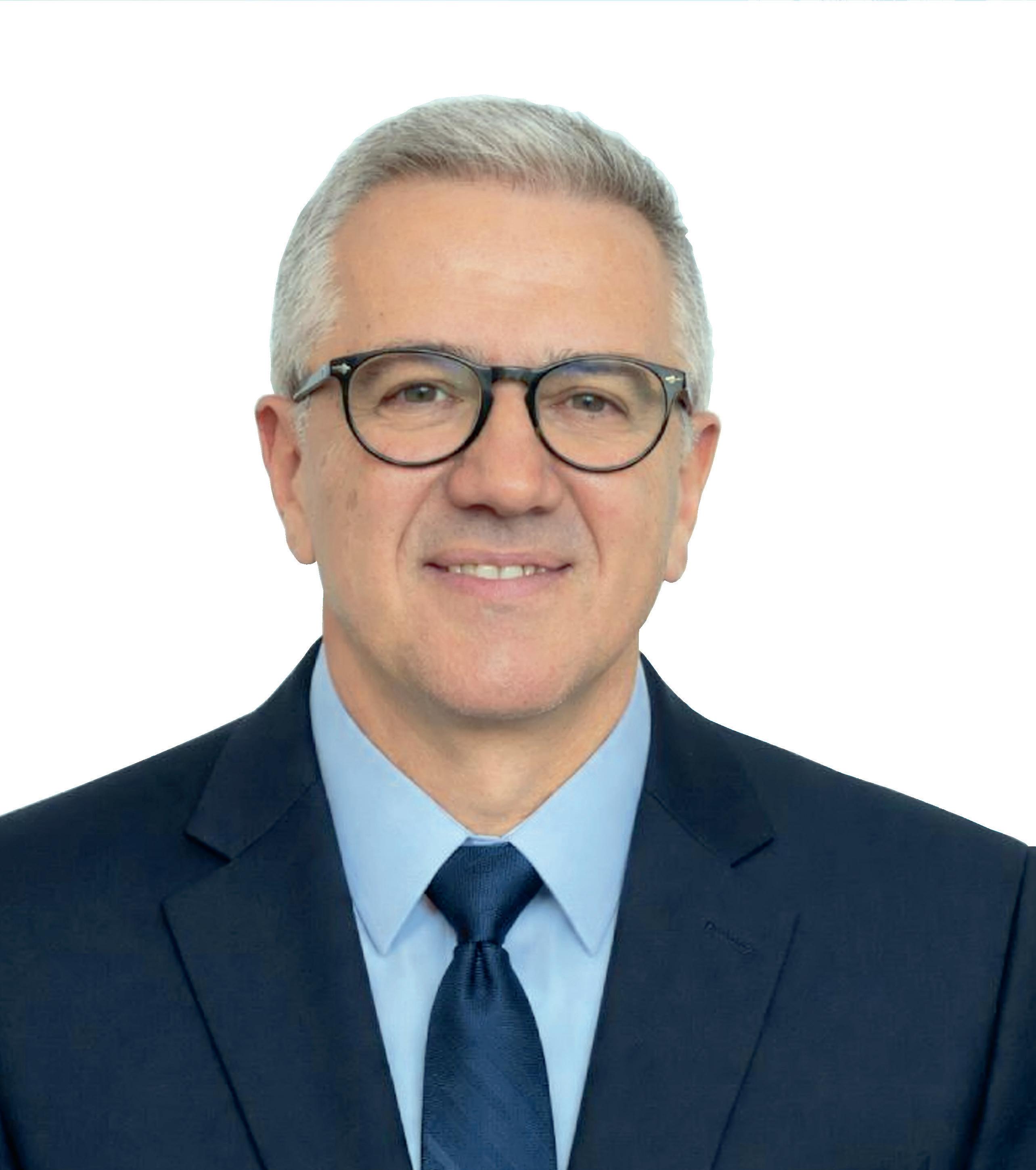
Different histories of investment, different vintages of capital and skills explain why the same crisis hits Morocco, Europe and China so differently. The shocks are shared. The readiness to absorb them is not
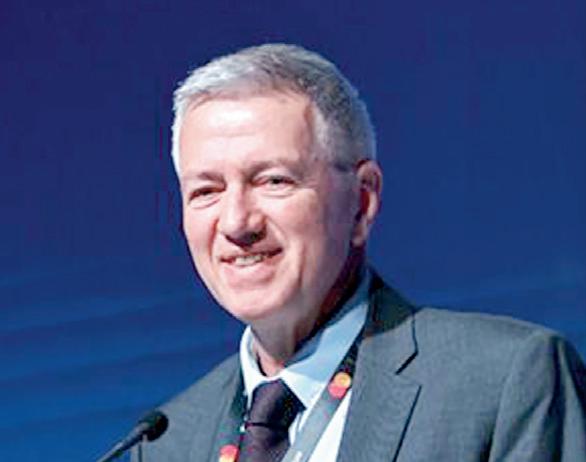
Omar Licandro Professor of Economics at the University of Leicester and Treasurer of the International Economic Association
While headlines are dominated by the unfolding global trade crisis, further inflamed by tensions with Iran, economist Omar Licandro, a speaker at the 21st IEA World Congress, offers a different lens on the forces shaping today’s global economy. He argues that the fractures we are witnessing today are not new, but rather the accumulated result of investment patterns established decades ago, skills tied to obsolete technologies, and institutions designed for a slower world. The current shocks did not create these gaps; they have merely made them impossible to ignore.
To understand why identical shocks produce such different outcomes across economies, Professor Licandro turns to two deceptively simple ideas: vintage capital and vintage human capital. The machines firms operate, the software they use, and the skills their workforce possesses all reflect past investment decisions rather than present ones. New technologies do not automatically replace old ones; they require conditions that many firms simply lack. When it comes to people, the mismatch is even more pronounced: a working life spans around forty years, while most technologies become obsolete within ten to twenty. The gap between the pace of technological change and the pace at which human beings can renew their skills may well be the defining tension of our economic moment. We spoke with Professor Licandro ahead of the Congress.
Your work suggests that current economic outcomes often reflect earlier investment patterns and the uneven renewal of capital across economies, rather than recent shocks alone. How useful is that perspective for understanding today’s global divergence?
— Very useful. Divergence is not just about who innovates first, but about who can afford to replace old capital with new. Replacement requires investment not only in machinery, but also in software, skills and organisational capital. When investment is con-
strained by weak financial systems, insecure property rights or low human capital, even the best technologies remain unused.
Take sub-Saharan African agriculture: modern seeds, irrigation and digital tools exist, yet most farmers remain trapped in low productivity. Not because they reject progress, but because they lack the conditions needed to invest in frontier technologies. Shocks such as COVID or the energy crisis did not create these gaps; they simply revealed them. Without removing investment barriers, divergence will persist regardless of how fast innovation advances elsewhere.
From your perspective, is Europe’s productivity problem only about insufficient innovation, or also about the speed and scale at which firms replace older capital with newer technologies?
— The consensus is that Europe innovates too little. I agree, but that is
The hardest truth is this: our education and training systems were designed for a slower era. That era is gone
only half the story. Productivity gains come from investment that embodies new technologies, not from innovation alone. Europe has too many firms operating with obsolete capital — both physical and intangible — because replacement is too slow.
Adjustment costs are high, financing gaps relative to the US remain significant, and incentives for adoption are weak. Consider AI: Europe produces world-class research — DeepMind, Max Planck and Oxford rank among the global leaders. Yet US and Chinese firms replace older vintages much faster by investing heavily in AI infrastructure: clusters of GPUs, networking, power and cooling. The US attracts 75% of global AI venture capital, the EU just 6%, while China
adopts at roughly twice Europe’s rate. Europe’s problem is therefore twofold: insufficient innovation and insufficient renewal through investment.
Some of your work highlights the importance of age structure and the intergenerational composition of human capital. To what extent do demographic dynamics interact with innovation and investment in shaping Europe’s current economic challenges?
— Demographics are not only about pensions; they shape innovation itself. My work on vintage human capital shows that innovation renders older skills obsolete, because those skills are tied to past technologies. Take industrial robotics: firms need workers who can programme and maintain automated systems, but displaced blue-collar workers trained on mechanical technologies often lack these skills. This is the core friction: a human working life lasts around forty years, while most technologies become obsolete within ten to twenty, and the pace is accelerating. Technologies turn over two to four times faster than the workforce can renew its skills through generational change. Europe is ageing rapidly, reducing the share of younger workers with frontier-aligned skills. This discourages firms from investing in new technologies, and low investment in turn reinforces stagnation. The solution is not only more training, but also human-friendly innovation — technologies designed to complement the skills of the existing workforce.
Your work shows that replacing older technologies is central to growth, but that adjustment can be uneven and historically constrained. Do market signals alone still ensure efficient technological renewal when skill adaptation lags behind technological change? — Market signals alone are not sufficient. Prices may clearly indicate that new technologies are more productive, but firms cannot adopt them if workers lack the necessary skills.
Markets do not fully price the social cost of skill obsolescence.
Adopting new vintages requires simultaneous investment in physical capital, intangible assets and human capital. When skill adaptation is slow and costly, adjustment becomes uneven across sectors and regions and is constrained by past investment decisions. Economies can fall into low-equilibrium traps, where outdated technologies persist despite the availability of far more productive alternatives.
This is not a standard market failure, but a coordination problem between investment and skill formation. The solution is not to wait for prices to correct it. Complementary institutions are needed: effective training systems, active labour-market policies, technology diffusion programmes and incentives for human-friendly innovation. Only then can market signals translate into real technological renewal.
When governments respond to rapid technological change, where do you currently see the greatest institutional lag: education and training systems, labour-market regulation, social protection or industrial policy?
— The most significant lag is in education and training systems. Labour-mar-
ket regulation and industrial policy can adjust, albeit imperfectly. But curricula evolve slowly, teacher training often lags behind, and lifelong learning systems remain underdeveloped, particularly in Europe.
The theory of vintage human capital explains why this matters. Skills must keep pace with technological turnover. Yet technologies change every ten to twenty years, while a working life lasts around forty. If skills cannot be updated quickly enough, obsolescence becomes a structural constraint on innovation and growth. Industrial policy can support innovation, but without continuous skill renewal, adoption will fail. The uncomfortable truth is that our education systems were designed for a much slower era — one that no longer exists.
If technological change accelerates and skill obsolescence becomes more frequent, what kind of social protection or labour-market institutions are needed to preserve both efficiency and social cohesion?
— If technological change accelerates, we cannot rely on existing social contracts. Preserving both efficiency and social cohesion requires separating income security from any single job
or employer. Traditional unemployment insurance is too narrow.
We need wage insurance for those moving into lower-paid roles, portable individual learning accounts, and universal retraining support. When technology evolves faster than generations — ten to twenty years versus a forty-year working life — waiting for retirement is not a viable adjustment mechanism.
Active labour-market policies must focus on mid-career reskilling, not only on new entrants. At the same time, promoting human-friendly innovation is crucial — technologies that complement existing skills rather than replace them. This reduces both the frequency and severity of obsolescence. Social cohesion depends on whether workers perceive change as an opportunity rather than a threat.
At a time of growing global polarisation, how should economists assess its costs, particularly when it may weaken both growth prospects and the well-being of ordinary citizens?
— Polarisation is not only political; it is economically costly. It leads to lost gains from trade, slower technology diffusion and inefficient capital allocation. Fragmented global value chains, higher investment barriers and reduced knowledge spillovers all undermine growth.
Consider the relationship between the US and China. Decoupling restricts cross-border spillovers in AI, semiconductors and green technologies. Each side loses access to the other’s research, patents and talent, slowing innovation and ultimately affecting living standards through weaker productivity growth and lower real wages. Beyond efficiency, polarisation erodes trust in institutions, making necessary reforms — including social protection and retraining — more difficult to implement. Its most damaging effect is dynamic: today’s polarisation can lock in technological divergence for years, with long-term consequences for global growth.
We Expect the Venice Commission’s Opinion to be Respected
Over many years, we have worked with the Serbian government and institutions, with parliamentarians, civil society and the media, to support the reforms that we believe will not only underpin Serbia’s future security, stability and prosperity, but will also help accelerate your progress towards membership of the European Union. It would be fair to say that there has not been nearly as much progress as we would like. Election reform is crucially important, especially with both parliamentary and presidential elections on the horizon – Edward Ferguson
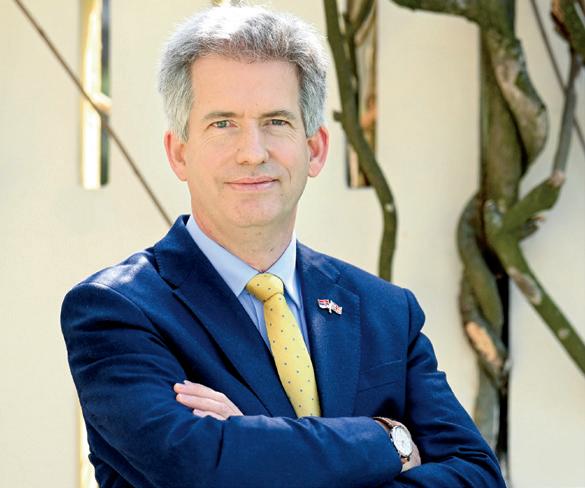
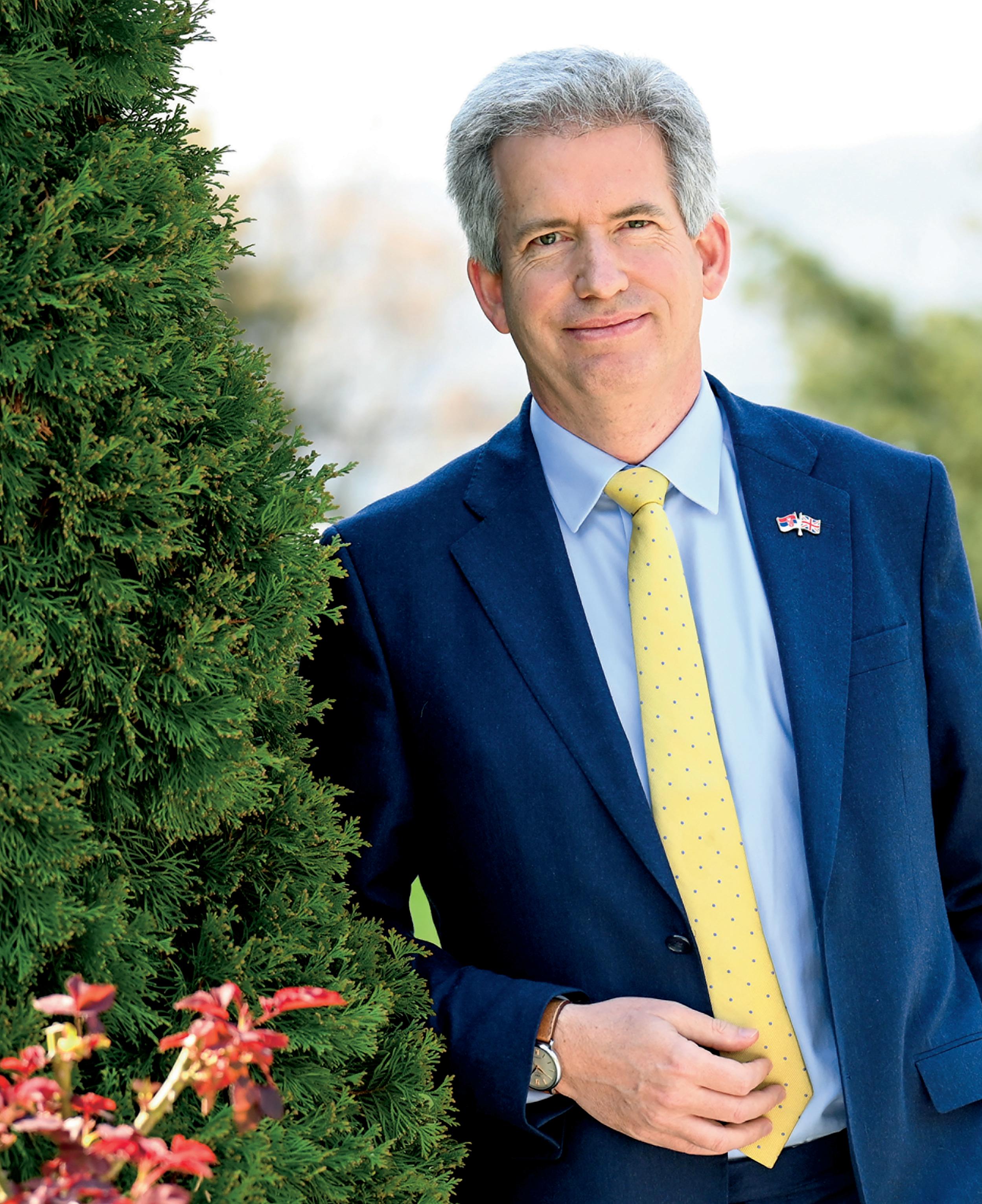
H.E. Mr. Edward Ferguson
UK Ambassador to Serbia
By Ljubica Gojgić
Over the past several years, relations between the United Kingdom and Serbia have advanced across a wide range of areas—from British investments in infrastructure and cooperation in security, science and culture, to the recently signed agreement with AstraZeneca that will improve access to innovative treatments for the most serious diseases. In an interview with CorD Magazine, Ambassador Edward
Ferguson notes that the budget at his disposal in Serbia provides scope for further cooperation. Drawing on his previous experience as Ambassador to Bosnia and Herzegovina, he also highlights the importance of regional projects, such as the potential modernisation of the railway connecting Ruma, Doboj and Tuzla.
Your Excellency, you are entering the fourth year of your mandate in
Serbia with the observation that there is “significant potential” for the further development of bilateral relations. In which direction do you see this development progressing? — I’m happy to say that we are making progress in many different directions. Our bilateral trade is growing at about 9% annually, and is now worth over £1.2 billion. Our most recent achievement was a contract with AstraZeneca to supply 10 innovative medicines
to cancer patients in Serbia, which will hopefully save many lives. Our law enforcement agencies are working together to make citizens in both our countries safer by tackling organized crime and illegal migration. And, of course, we have extraordinarily rich cultural connections – in music, film, fashion, football and lots more.
I’m particularly excited about the work we’re doing together on science, innovation and technology. This makes sense as lots of British and Serbian tech companies are doing excellent business together. We have had two fantastic programmes running this year which brought together young tech leaders and entrepreneurs: our Embassy’s Science and Innovation Fellowship, and also the Ignition Programme, which was run in partnership with the British-Serbian Chamber of Commerce and Hughes Hall at Cambridge University. By visiting the UK, and sharing experience with British experts, those who took part have come up with lots of brilliant ideas for how to design and shape Serbia’s future innovation ecosystem.
Another area I’m really proud of is our work with women and girls. We work with partners across Serbia to stop violence against women and girls, and to empower them through education and economic opportunity. This is a priority for the UK around the world because no country can succeed if it is only using half its human potential. We’ve given micro-grants to women entrepreneurs and run cyber security clubs for girls in 10 schools across Serbia. This matters because the world needs more cyber experts and, at the moment, only 24% of the global cyber workforce are women.
You have often stated that you arrived in Serbia with £5 billion available to support major infrastructure projects in road and rail transport. The UK is already participating with €700 million in the construction of the Morava Corridor motorway. In which other areas do you see opportunities for similarly substantial investment?
— One of the advantages of our £5 billion UK Export Finance offer for Serbia
is that it’s very flexible. We only require that a minimum of 20% of a project’s value is made up from UK exports. Our competitors have much higher content requirements. This means that it’s possible to find UK content for almost any major project. We hope to finance some transformational energy and infrastructure projects here in Serbia, and last year we signed an MOU with the Serbian government that listed ten potential projects of common interest. I’m especially keen to support cross-border projects that help to connect people and economies across the region. President Vučić opened our UK-Western Balkans trade conference in
Belgrade last year and suggested that the UK could finance the modernisation of the train line that connect Doboj, Tuzla and Ruma. As a former ambassador to Bosnia and Herzegovina, I would love to support projects that encourage Belgrade, Sarajevo and Banja Luka to work constructively together.
Could you tell us more about the agreement that was recently signed with AstraZeneca during the visit of Karen Pierce, the UK’s Special Envoy to the Western Balkans?
— Yes, of course! I was absolutely thrilled to witness the signature of important contract, which will literally save lives, giving hope to thousands of Serbian can-
cer patients. 10 innovative cancer medicines from AstraZeneca will be added to the reimbursement list for the National Health Insurance Fund. These medicines can be used in the treatment of breast, lung, bladder, liver, bile duct and ovarian cancers.
This agreement exemplifies the modern, positive partnership we are building between the UK and Serbia. It builds upon the long story of health partnership that dates back to the First World War, when hundreds of brave Scottish women volunteered to work as doctors, nurses and orderlies in hospitals across Serbia, while facing the twin perils of the Austro-Hungarian invasion and of a deadly typhus epidemic. On 12 May, International Nurses Day, we plan to celebrate this partnership by hosting hundreds of Serbian medical professionals at the British Residence.
You have identified renewable energy as a promising field for cooperation between the UK and Serbia. At one point, it appeared that the ambitions of British companies were also directed towards potential mining projects in Jadar, particularly in relation to lithium. Given that a majority of Serbian citizens do not support this project, has investor interest shifted to other areas, or do you believe that the Jadar mine may still be developed?
— I hope so. I know that’s not a popular thing to say with everyone, but I do think it’s a really important project for Serbia, and for Europe. There has been a lot of public concern about the environmental risks, I think partly because Jadar was one of the first lithium projects in Europe, and people weren’t confident of the technology. Now, of course, there are lithium mines all over the place. The UK government is backing a lithium mine in Cornwall, a very beautiful and environmentally sensitive region in the UK. We aim to produce at least 50,000 tonnes of lithium by 2035.
Any mining project carries environmental risks that need to be very carefully managed. I don’t think Jadar is so different, but there has been a lot of dis-
TRADE
Our bilateral trade is growing at about 9% annually, and is now worth over £1.2 billion
SECURITY
The UK is a global leader on cyber security and we have been helping Serbia to define and refine its cyber legislation
REFORMS
Election reform is crucially important, especially with both parliamentary and presidential elections on the horizon
information that has really worried people. I think what’s needed is a really sober and objective public debate on the facts, and I hope that can happen quite quickly. Serbia’s advantage was that it was at the leading edge of the lithium value chain; now, you risk falling behind.
You have stated that you are working with the Government of Serbia on the establishment of a future cyber security agency. What does bilateral cooperation in this increasingly important field involve?
— This shows how we’re building a really modern partnership that benefits both countries. The UK is a global leader on cyber security and we have been helping Serbia to define and refine its cyber legislation, and also to establish the new cyber security agency that will initially be embedded within the Office for IT and eGovernment. I’m delighted that we are able to make such an important contribution to Serbia’s national security, because cyber security is one of the most serious threats faced by our governments, business and citizens. As well as the cyber security clubs for girls that we have established in schools around Serbia, we have also paid for cyber security experts from Serbia to study at Cranfield University in the UK. This is a long-term investment by us in the safety and security of Serbia’s digital ecosystem.
In your public appearances, you have consistently advocated for democratic values and supported media freedom. Is there any basis for concerns about a potential decline in these areas in Serbia, as suggested by the recent report of the Council of Europe’s election observation mission following the local elections?
— Democracy, rule of law, human rights and media freedom are values that have shaped the UK over centuries, and they
are the values that we support and encourage around the world. Over many years, we have worked with the Serbian government and institutions, with parliamentarians, civil society and the media, to support the reforms that we believe will not only underpin Serbia’s future security, stability and prosperity, but will also help accelerate your progress towards membership of the European Union. It would be fair to say that there has not been nearly as much progress as we would like.
Election reform is crucially important, especially with both parliamentary and presidential elections on the horizon. The UK has supported the ODIHR election monitoring missions both financially and with people. ODIHR has made a lot of very important recommendations, of which too few have been enacted. I really welcome the establishment of the Commission on the Unified Voter Register. This required some brave decisions from the government, opposition parties and civil society. What matters now is that its members are given swift access to the data they need to ensure that the voter register is as accurate as possible. But there is clearly much more to be done, including to address the worrying increase in voter intimidation that was reported by the Council of Europe’s election observation mission.
How would you like the Serbian authorities to interpret your message that recent changes to judicial legislation represent a step backwards?
— We welcome the fact that the government has now sought an opinion from the Venice Commission on recent amendments to judicial legislation and expect this to be published soon. The EU’s Enlargement Commissioner, Marta Kos, has raised concerns that these amendments represent an attempt to curb the independence of the judiciary. We share
those concerns. We hope that the Serbian government will respect the Venice Commission’s opinion and act quickly on its recommendations.
You have remarked that discussions of Serbia–UK bilateral relations tend to focus heavily on the past, whereas greater emphasis should be placed on the future. You have no doubt often been asked whether that future might include visa liberalisation for Serbian citizens — how would you respond? — I know that many people would like to see the abolition of our visa regime for Serbia. At the moment, we require visas from all the countries in the Western Balkans that are yet to join the EU – but this is something we keep under regular review. I’m happy to say that thousands of Serbs still visit us every year, for business or tourism, or to see family members living in the UK. And we are making things easier for them with the introduction of e-visas, which means that visitors will be able to keep their passports and will receive their visas online.
Recently, UK Prime Minister Sir Keir Starmer stated that the future of the United Kingdom may depend on the outcome of the conflict involving Iran. Given your experience working in Washington and your familiarity with American foreign policy, what is your assessment — how long might this conflict last, and what factors will determine whether peace is achieved or the conflict continues?
— I’m not going to offer any predictions, but we warmly welcome the ceasefire between the US, Israel, Iran and Lebanon. Continued escalation would risk increasing damage to the global economy and threaten our shared stability and prosperity. We support all efforts to bring Iran and the US together and solve longstanding issues.
A Cambridge Perspective on Serbian Innovation
Simon Stockley Associate Professor of Entrepreneurship, Cambridge Judge Business School
Serbia has built a strong foundation in science and engineering, but its next strategic step is to transform knowledge into scalable, globally competitive innovation
Serbia’s innovation ecosystem has made notable progress in recent years, driven by investments in infrastructure, STEM education and targeted policy initiatives. Yet, as global competition intensifies and technological change accelerates, the focus is shifting from capacity-building to outcomes. The central question is no longer whether Serbia can generate knowledge, but how effectively it can translate that knowledge into market-ready products and sustainable growth. Drawing on Cambridge’s experience as one of Europe’s leading innovation hubs, this interview highlights the structural priorities, policy choices and strategic shifts needed to bridge the gap between scientific excellence and commercial success.
You recently moderated the presentation of Serbia’s Innovation Action Plan in Belgrade, developed through the Innovation Policy Ignition Programme at Hughes Hall, University of Cambridge. How would you assess the country’s current approach to building a coherent and effective innovation policy framework — and where do you see the most immediate opportunities for impact?
— In terms of innovation policy, Serbia has made remarkable progress in a relatively short space of time. Investing in the infrastructure required to support innovation, world class STEM education and an innovation grant fund were appropriate measures and have been well executed. Given the probable impact of AI on IT outsourcing, the importance of indigenous Serbian innovation cannot be overstated. Serbian firms have the scientific and technical talent to build world class products; the challenge will be in making the transition from service delivery to product management in global markets.
Drawing on Cambridge’s experience as one of Europe’s leading innovation ecosystems, which el-
ements are most critical for countries like Serbia seeking to bridge the gap between scientific excellence and commercial success — particularly when it comes to translating research into scalable ventures? — That is an excellent question because many factors must be coordinated simultaneously. In effect it’s a complex multivariate opportunity. It is necessary that the intellectual property developed by Universities and Research Institutes find useful commercial applications, this is how inventions become innovations. Well-funded and highly skilled technology transfer offices (TTOs) are an important mechanism in achieving this. Cambridge is fortunate to have a world-class TTO (Cambridge Enterprise) without which far less would have been achieved in our ecosystem.
Second, you need a pool of entrepreneurial talent. It is important to
The key challenge for Serbia is not talent, but the ability to turn scientific excellence into globally competitive products
recognize that most academics do not want to become entrepreneurs, although there are exceptions as exemplified by Cambridge’s ‘millionaire Dons’. Therefore, identify and develop your existing talent pool and, if necessary, attract more from outside Serbia. To support innovation, a range of specialist professional services are required, together with sources of risk capital. These are emerging in Serbia and should respond to market signals. Finally, a supportive regulatory framework will be required, and this cannot be the responsibility of Government alone. Successful innovation depends on all stakeholders being committed to shaping a shared future.
Many emerging innovation ecosystems struggle to scale ideas into globally competitive businesses.
In Serbia’s case, where do you see the key structural bottlenecks — particularly in early-stage financing, talent development and market access — and how can they be addressed?
— A useful starting point would be to read Michael Porter’s ‘The Competitive Advantage of Nations’. This transformed my thinking back in 1991 and is still relevant today. My second recommendation is ‘World Class’ by Rosabeth Moss-Kanter, a remarkable work that says much about how Serbia can attract and retain talent. In terms of developing entrepreneurial talent, entrepreneurship training and education are a key objective in Serbia’s IPIP action plan. In the longer term, Serbia would be an ideal location for a world-class business school which should focus on the skills required to create the opportunities of the future.
Early-stage financing tends to follow market signals, especially given a permissive regulatory environment. Make it easy to invest and protect the interests of investors. Tax incentives can help to de-risk early-stage investments, about half of which result in loss of capital. The UK SEIS scheme is a good example.
Market access is a huge topic, but my suggestion would be to focus on cultural relevance and globally emerging issues. Whilst it is impossible to predict the future, I would be looking at technological sovereignty, energy security, smart infrastructure, and defense adjacent technologies. Creative applications for AI are also a significant opportunity. Whatever the sector, however, choose global markets which can be served by Serbia’s unique combination of resources and capabilities. Your unique history and culture provide some clues.
The Innovation Policy Ignition Programme brings together government, academia, and industry. In your experience, what distinguishes effective cross-sector collaboration from purely formal part -
nerships, and how can countries ensure these relationships deliver measurable outcomes?
— For some well understood reasons, genuine cross-sector collaboration is difficult, especially in the absence of an immediate threat or crisis. The normalcy bias endures and change is of-
ten rejected in favour of our familiar routines. Too often, attempts at collaboration are performative and nothing of substance is achieved.
Genuine cross-sector collaboration requires sustained commitment from all parties which, in turn, requires that incentives be aligned. The parties must
Implementing Serbia’s IPIP action plan
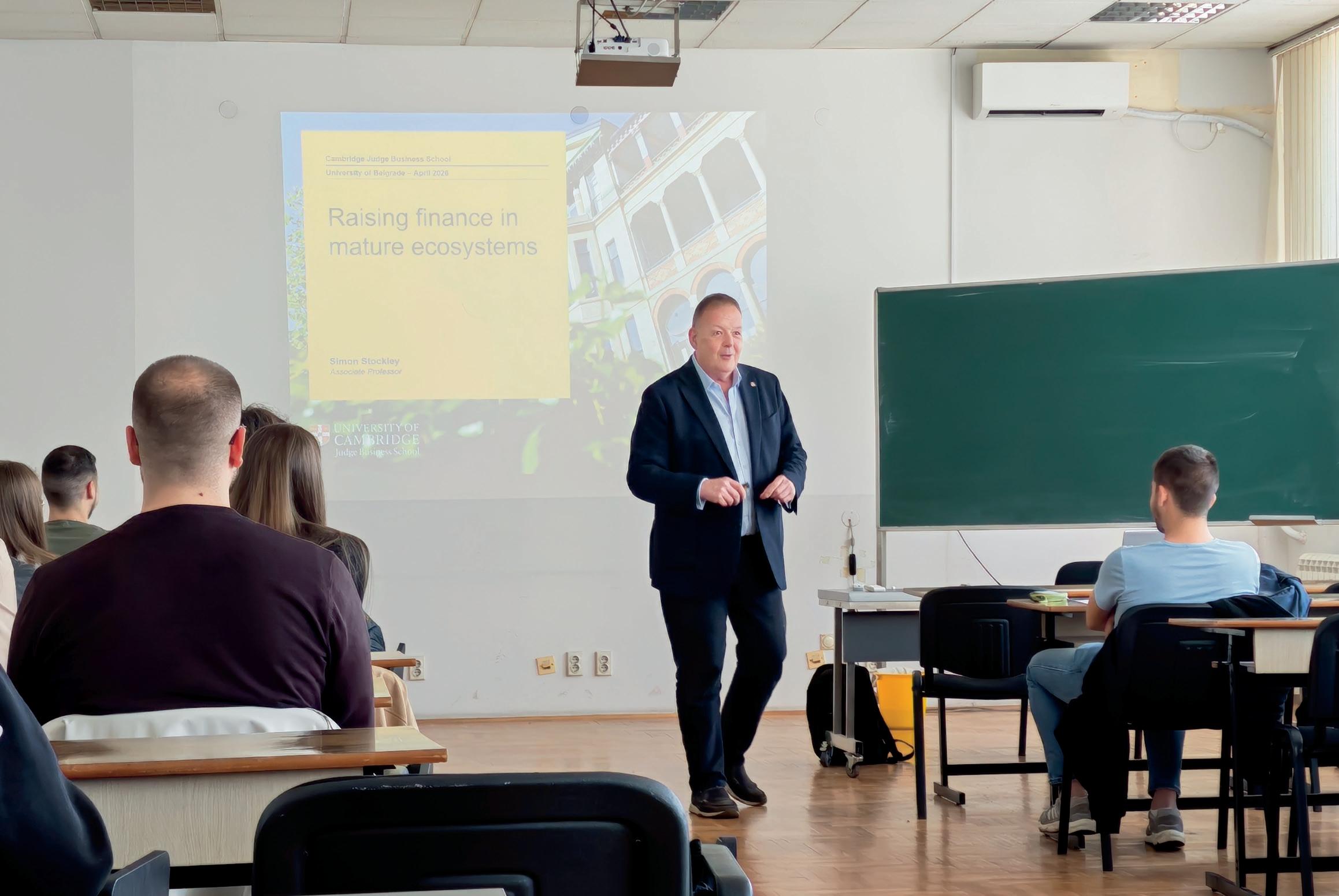
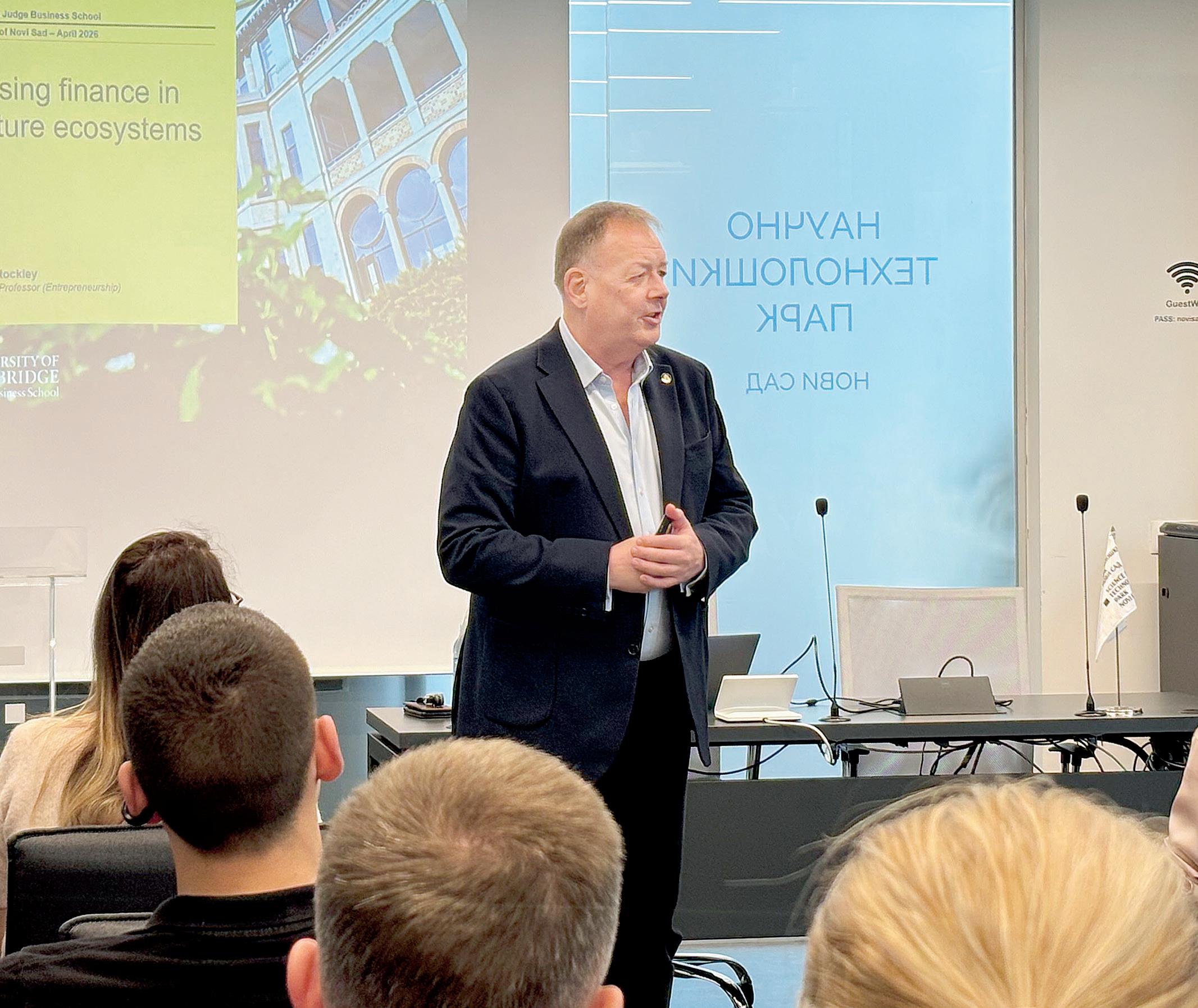
The recent visit of Professor Simon Stockley to the Faculty of Mechanical Engineering, University of Belgrade, and to Science and Technology Park Novi Sad was to support entrepreneurship education and training in Higher Education, a key objective in Serbia’s IPIP action plan.
The lectures at the Faculty of Mechanical Engineering, University of Belgrade were organised by:
• Zarko Miskovic, PhD, Associate Professor
• Vesna K. Spasojević-Brkić, PhD, Full Professor
• Nebojša Gnjatović, PhD, Assistant Professor
The lecture at Science and Technology Park Novi Sad was organised by Vladimir Todorović, PhD, Head of Innovation & Project Development.
also be mutually accountable for agreed and measurable outcomes. The Innovation Policy Ignition Programme embraces these principles, and we are enormously proud of how the Serbia team have performed. This, however, is only the beginning and we will continue to collaborate with our Serbian partners as they implement their plans.
Serbia has demonstrated strong potential in STEM and digital talent. From an international perspective, what strategic steps should it take to position itself more competitively within the European and global innovation landscape — and how can it retain and scale its top talent?
— Serbia is already punching well above its weight but risks being pigeon-holed as a high-quality, low-cost location for IT outsourcing and manufacturing. When implemented, this was a viable strategy, but relentless technological progress and geopolitical turbulence are undermining existing industrial policies across Europe. In response to these challenges, the Serbian IPIP team have devised an action plan to enhance the competitiveness of the Serbian innovation ecosystem. The plan has four objectives:
1. To embed world-class entrepreneurship training and education within Serbian Universities.
2. To improve technology transfer processes to ensure that Serbian science becomes Serbian innovation.
3. To help Serbian firms transition from IT outsourcing services to indigenous product innovation.
4. To build stronger links between industry and Serbia’s science and technology base. These objectives are based on a comprehensive analysis of the current ecosystem and are entirely congruent with Government policy.
I am genuinely optimistic about Serbia’s innovation pathway and can assure you that you are better placed than most to harness emerging opportunities for growth and prosperity.
Approaching Two Decades of Connection
In 2025 and 2026, the British-Serbian Chamber of Commerce has further strengthened its role as a bridge between business, innovation and institutional stakeholders in Serbia and the United Kingdom, demonstrating that modern economic cooperation extends far beyond trade alone
As it prepares to mark its twentieth anniversary next year, the British-Serbian Chamber of Commerce enters this milestone with increased visibility and a reinforced institutional profile. While a comprehensive overview of its achievements over nearly two decades would require a broader retrospective, the activities undertaken in 2025 and the early months of 2026 already point to a clear trajectory: today, the BSCC is not merely a platform for business networking, but an active contributor to the alignment of trade, investment, innovation and public policy between Serbia and the United Kingdom.
Over this period, the Chamber’s work can be observed across three closely interconnected tracks: strengthening innovation and technology links, building international partnerships, and opening space for strategic dialogue on the issues shaping the modern economy.
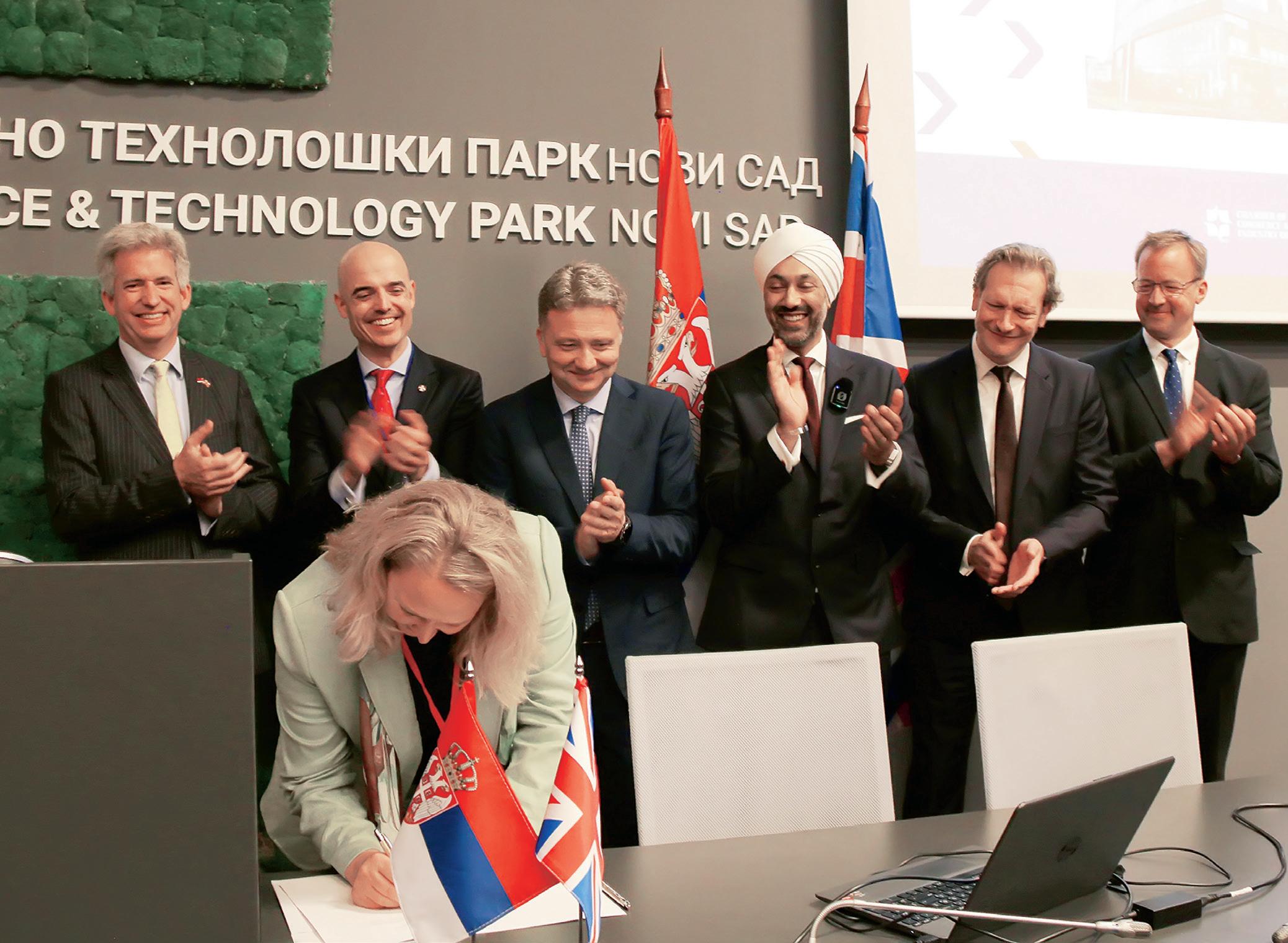
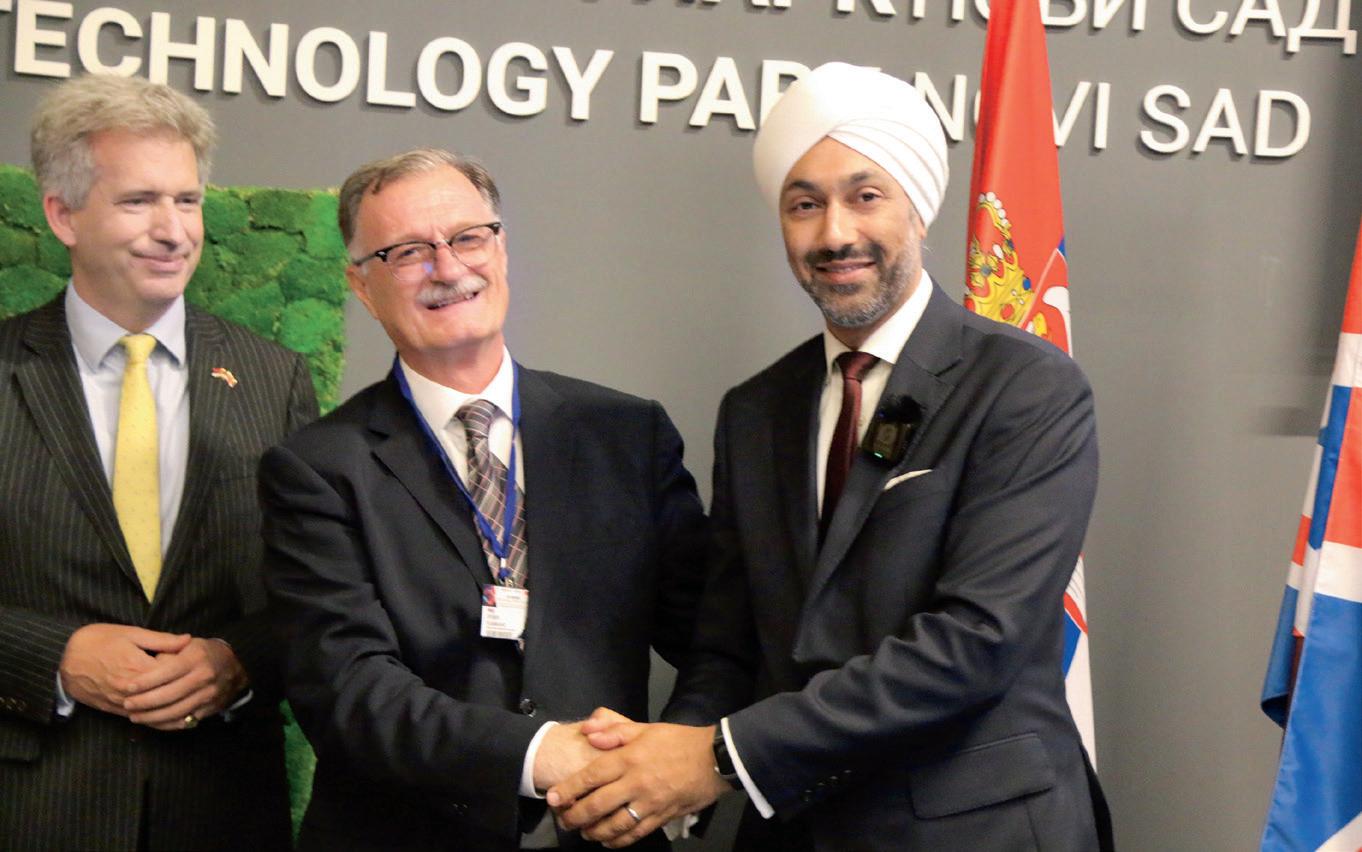
One of the most significant developments has been the BSCC’s involvement in the Innovation Policy Ignition Programme (IPIP), led by Hughes Hall at the University of Cambridge. The inaugural agreement for the programme’s implementation in Serbia was signed on 29 May 2025 in Novi Sad, during the UK–Serbia Technology Trade Mission, with the BSCC assuming the role of lead institutional partner in the country. The signing, attended by senior representatives including H.E. Edward Ferguson,
British Ambassador to Serbia, and Lord Kulveer Ranger, Chair of the BSCC, underlined the strategic importance of the initiative.
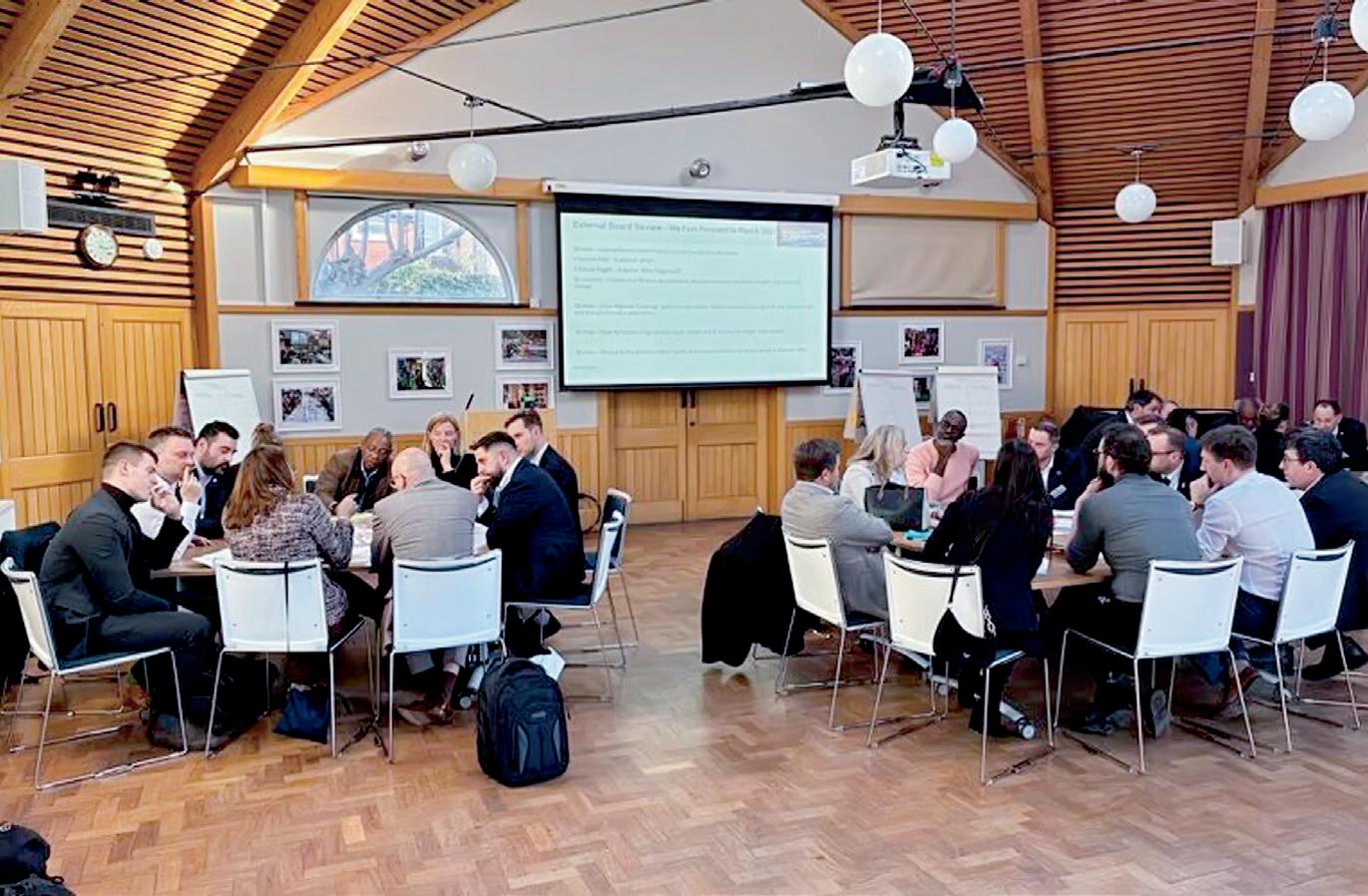
The programme brings together policymakers, academics, investors and business leaders with the aim of developing practical, implementation-ready innovation policies. Unlike traditional approaches that often remain at the level of strategy, IPIP is firmly focused on execution — on what can be delivered, within what timeframe, and with which institutional capacities.
The results of this approach became visible in early 2026. Following six months of intensive work across multiple programme modules, the Ser-
bian team presented its draft Innovation Action Plan on 23 February 2026 at the Science and Technology Park Belgrade. The session was moderated by Simon Stockley, Associate Professor at Cambridge Judge Business School, while the broader programme was led by Dr Wojtek Wojaczek, bringing together international mentors and local stakeholders.
This process is significant not only for the content of the plan itself, but also for its methodology. The emphasis on actionable measures, cross-sector coordination and the link between innovation and market application reflects a more operational approach to ecosystem development.
At the same time, the BSCC has continued to expand its role in fostering technological cooperation and international connectivity. The UK–Serbia Technology Trade Mission held in May 2025 brought together more than 300 participants from business, innovation and public administration, underlining the importance of the ICT sector as a cornerstone of bilateral relations.
This direction is further reinforced by cooperation with Cambridge Wireless, formalised during 2025, with the aim of connecting Serbian innovators with one of Europe’s most advanced technology ecosystems. Such initiatives provide access not only to markets, but also to expertise, networks and investment opportunities essential for the growth of competitive technology ventures.
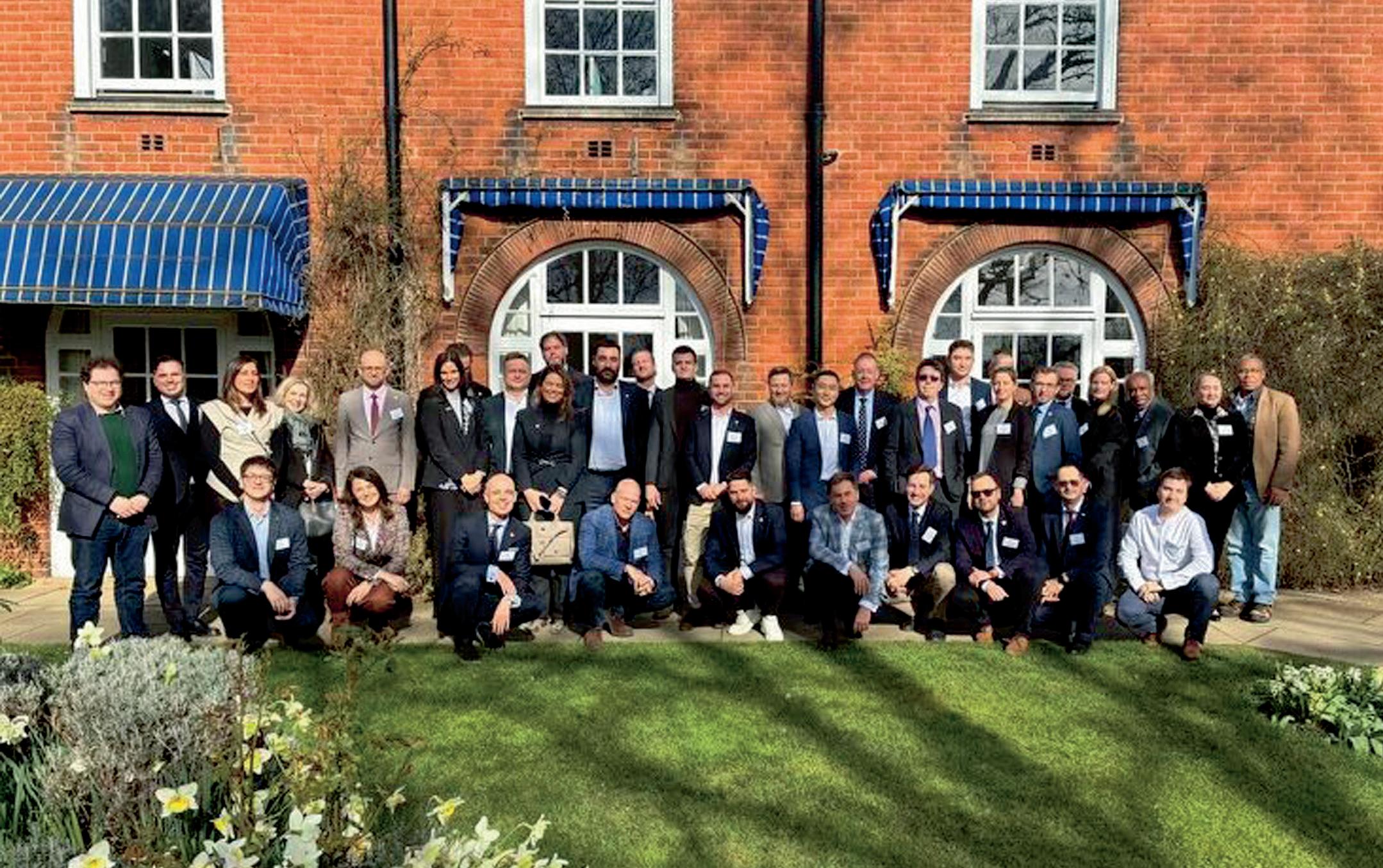
The BSCC has also remained active within regional cooperation frameworks. At the UK–Western Balkans Building Futures Summit on 20 November 2025 in Belgrade, programme participants presented key priorities and development pathways to representatives of diplomacy, industry and institutional stakeholders, further strengthening Serbia’s position within a broader international dialogue.
A third important dimension of the Chamber’s work relates to the development of institutional partnerships and its growing presence in major strategic initiatives. In early February 2026, a memorandum of understanding was signed with EXPO 2027 Belgrade, aimed at increasing awareness of the event within the UK business community and encouraging stronger investment and trade links between the two countries.
At the same time, the BSCC joined the Partnership for Equality in 2025, reaffirming its commitment to the principles of inclusion, fairness and responsible business — values that are increasingly shaping contemporary economic practice.
It is equally important to note that the Chamber has continued to deliver on its core function: supporting its members and creating tangible business opportunities. Through a range of seminars, workshops, conferences and networking events, the BSCC has provided a platform for knowledge exchange, partnership-building and the development of new initiatives. Among the notable events was the Third Belgrade Hydrogen Conference, held on 17–18 March 2026, which brought together participants from 24 countries and focused on key aspects of the energy transition, including project bankability, industrial
decarbonisation and the development of the green hydrogen market.
Taken together, these activities point to a clear conclusion: the BSCC has entered a new phase of development. Its role now extends beyond that of a traditional business association, encompassing the facilitation of cross-sector collaboration, the initiation of development-oriented initiatives, and support for complex projects with an international dimension.
In this context, the forthcoming twentieth anniversary represents more than a milestone. It offers an opportunity to reflect on how the nature of economic cooperation between Serbia and the United Kingdom has evolved. What once centred primarily on trade and business contacts has expanded to include innovation ecosystems, technology, education and sustainable development.
Viewed through the lens of its most recent activities, it is clear that the BSCC approaches this anniversary with a more defined and ambitious role: not only as a connector of business communities, but as an active participant in shaping the future direction of their cooperation.
Scaling a Digital Platform for Southeast Europe
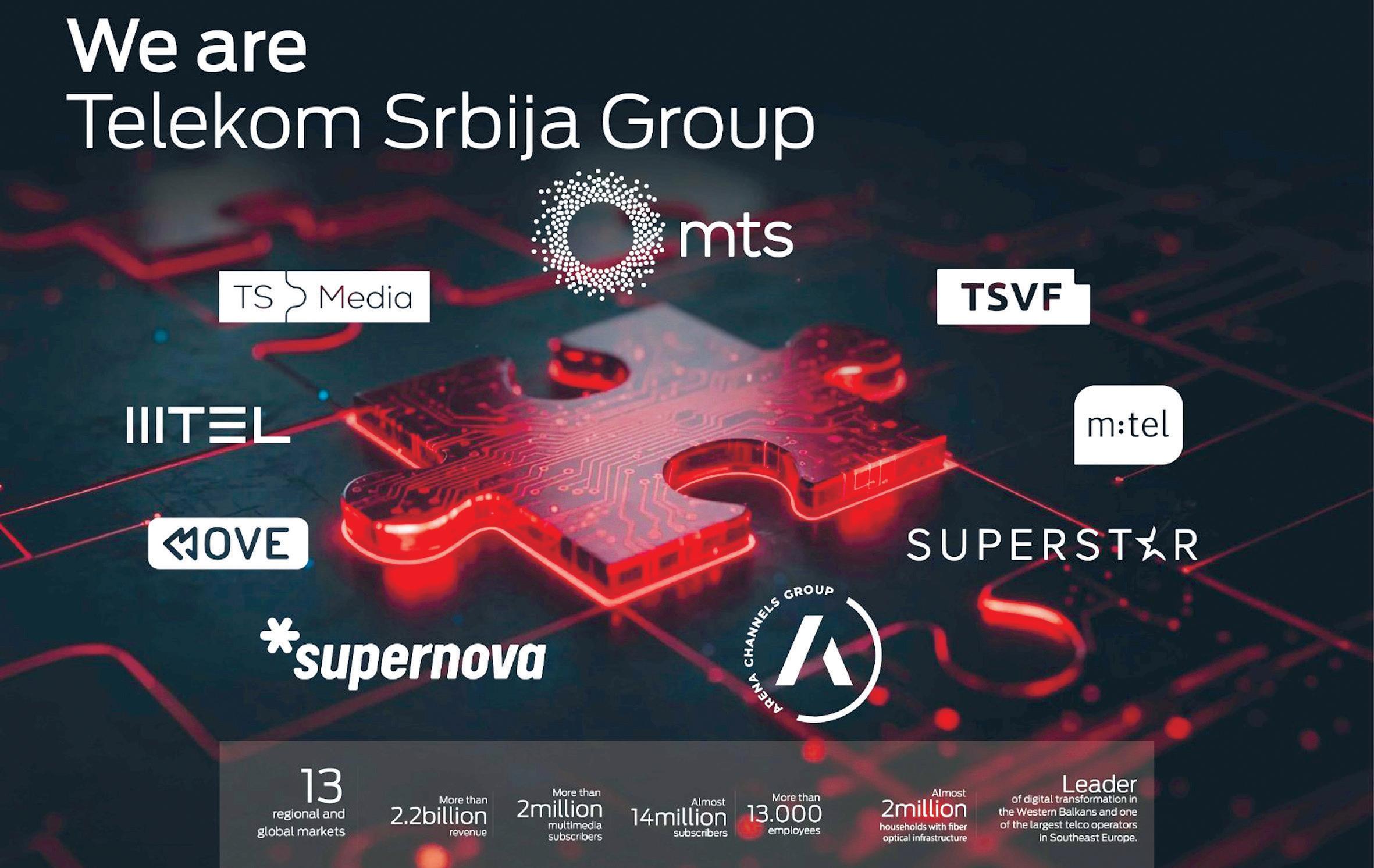
Telekom Srbija is evolving into a fully integrated telecom and media platform, combining infrastructure, content and innovation to drive growth across regional and EU markets
As Telekom Srbija accelerates its transformation beyond traditional connectivity, CEO Vladimir Lučić outlines how the company is building a scalable digital ecosystem. From 5G leadership and strategic acquisitions to AI investment and deepening ties with the UK market, the Group is positioning itself as a key regional partner for technology, content and capital.
What are your key strategic priorities as you look ahead?
— We are focused on three areas.
First, continuing to invest in 5G. Independent measurements have already confirmed leading performance in Serbia, and the next step is to extend that even further.
Second, strengthening our platforms and content offering, as consumption continues to move towards streaming and multi-device access.
And third, investing in innovation through Telekom Srbija Ventures, particularly in areas such as AI and advanced software. Together, these priorities define how we are building for the next phase of growth.
How is AI shaping your business and where do you see opportunities for collaboration, particularly with UK partners?
— AI is changing both the nature of demand and the way services are delivered.
It is driving the need for more capacity, more processing power and more efficient infrastructure, while at the same time enabling entirely new applications across industries. That makes 5G a critical enabler, not just for connectivity, but for the wider digital economy.
The UK has one of the most advanced technology ecosystems globally, and there is clear potential to combine that expertise with our infrastructure and regional scale. In that sense, Telekom Srbija is positioning itself as a gateway for UK companies looking to scale across Southeast Europe. We are already working in that direction through the British-Serbian Chamber of Commerce, partnerships with companies such as Vodafone, and initiatives such as the planned UK–Serbia Tech Hub.
How important is nationwide connectivity in supporting economic development across Serbia?
— It is fundamental.
Digital transformation cannot be limited to major cities. If it is to have a real
economic impact, it needs to reach the whole country. That is why we continue to invest in expanding network capacity, including recent base stations in areas such as Bor.
This allows industries, public services and local businesses to access the same digital tools as larger urban centres. It also creates a more meaningful platform for partners looking to deploy solutions across a wider and more representative market.
Telekom Srbija has strengthened its position through recent acquisitions. What does this mean for investors and international partners?
— The acquisitions we completed in 2025 were an important step in strengthening our position across the region.
They expanded our capabilities and reinforced our strategy of combining telecoms and media into a single operating model. Just as importantly, they signalled the level of ambition behind that strategy.
Alongside our €900 million eurobond listed in Dublin and our relationships with international financial institutions, they underline that Telekom Srbija is operating on a scale and with a level of discipline that international investors recognise. This places us alongside established European telecom operators in terms of how we access capital and structure growth.
You have invested heavily in premium content, including the Premier League. How does this strengthen your links with the UK market?
— The relationship between telecom and content is becoming increasingly important.
The Premier League is one of the UK’s most valuable global media properties, and having those rights within our portfolio strengthens our connection to that ecosystem. At the same time, we have built a broader content offering through Arena Sport, our own produc-
tion, and partnerships with international brands such as Bloomberg, Euronews and Newsmax.
Together, this allows us to scale content across Southeast Europe while opening up direct commercial and creative partnerships with British broadcasters, rights holders and producers.
What role does TS Ventures play in connecting Serbian innovation with the UK ecosystem?
— TS Ventures is designed to bridge technology and real-world application.
We are investing in companies across AI, enterprise software and deep technol-
Through TS Ventures, the company is connecting regional innovation with global capital and expertise, accelerating the commercialisation of new technologies
ogy, and we are increasingly connected to the UK ecosystem. This includes participation in Cambridge-based programmes and a successful investment and exit involving a UK-based start-up company.
What is emerging is a practical two-way exchange. Serbian innovation gains access to capital and expertise, while UK partners gain access to new ideas and a broader market in which to scale them.
Telekom Srbija is expanding internationally. How does this shape your future cooperation with UK partners?
— Our expansion is structured and long-term.
We have built a strong position across Southeast Europe and EU markets such as Germany, and we are now extending that further through MTEL into additional markets, including the United States.
As that footprint grows, so does the opportunity to work with international partners. For UK institutions, technology companies and investors, there is a clear opportunity to engage with a business that combines regional reach with international ambition and a platform already operating at scale.
Modern Infrastructure as a Driver of Development
The Importance of C-ITS Solutions in Transforming Mobility
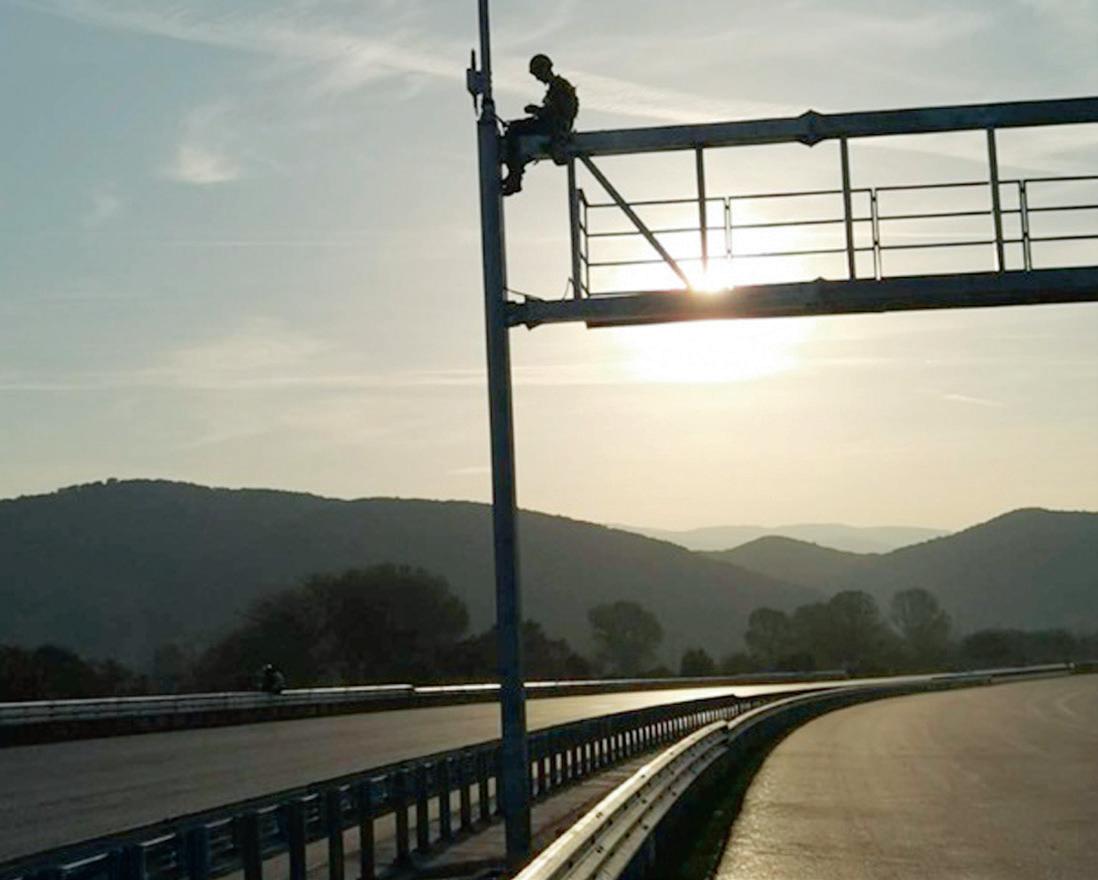
The transport sector stands at a historic turning point. Rising traffic demand and mounting pressure on physical infrastructure, coupled with the imperatives of the Green Agenda and sustainability, are rendering traditional, reactive traffic management increasingly inadequate. The transition towards smart, connected systems is no longer optional. It requires treating the road network as a dynamic digital resource, while fully complying with the standards set by Directive (EU) 2023/2661.
DIGITAL
INFRASTRUCTURE AS THE FOUNDATION OF SYSTEMIC CHANGE
Road digitalisation represents a fundamental prerequisite for the efficiency of modern society. Cooperative Intelligent Transport Systems (C-ITS) play a central role in this transformation, enabling roads and users to become part of a unified, real-time information exchange ecosystem. In this context, infrastructure evolves from a passive asset into an active participant that effectively “communicates” with its users.
However, technology deployment is not an end in itself. Its true value emerg-
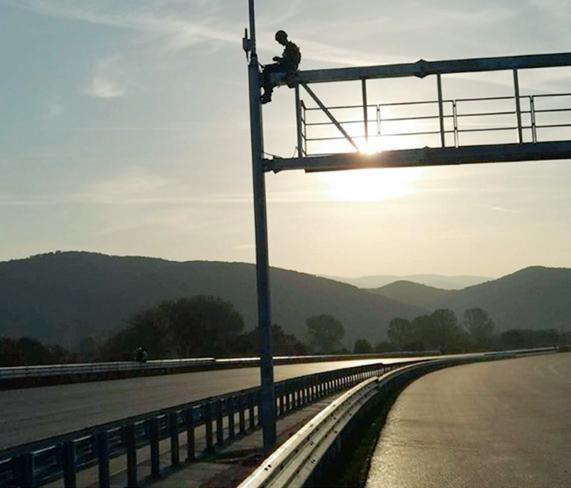
es only through full interoperability, absolute data reliability and its intelligent application in strategic decision-making. The Morava Corridor illustrates that such a shift is achievable. It is not merely an infrastructure project, but a clear example of building the digital foundations for future autonomous and shared mobility systems.
BRIDGING THE TECHNOLOGICAL GAP
A major challenge in the global development of C-ITS lies in the fact that their full potential depends on the technological sophistication of vehicles. This makes it essential to develop transitional solutions that deliver the benefits of digital infrastructure today.
In this context, the ViaAware application has been developed to provide drivers with timely and verified information on road conditions, sourced directly from traffic operators. By introducing the concept of a “digital companion”, it connects physical infrastructure with end users via devices they already use. Such solutions should be approached pragmatically: they are not a long-term substitute for standardised in-vehicle C-ITS systems, but they represent a critical step in preparing users for the broader adoption of intelligent mobility solutions.
At the same time, the exponential growth of available data is opening new opportunities for advanced analytics and artificial intelligence. These technologies
enable a shift from reactive to predictive traffic management, where risks are anticipated and traffic flows optimised in real time, reducing congestion and improving safety outcomes.
Practical experience confirms that software is not the primary challenge. The key obstacle lies in establishing a reliable, integrated and open data ecosystem. Only through close cooperation among all stakeholders can data become the driving force behind innovations that deliver tangible, real-world impact.
THE REGION AS AN EXPORTER OF KNOWLEDGE AND INNOVATION: A VISION FOR THE FUTURE
The role of Igmako Smart Solutions in this transformation is grounded in deep expertise in wireless technologies – the backbone of modern digitalisation. As Europe intensifies its focus on efficiency and decarbonisation, the company positions itself as an integrator, bridging the gap between robust infrastructure standards and agile application solutions.
The vision is for the region to evolve into a space where C-ITS solutions are shaped through practical implementation, rather than regulation alone. Leadership, in this context, is not defined as an objective in itself, but as the ability to recognise opportunities, integrate advanced technologies and develop functional systems that set new benchmarks for 21st-century global mobility.
Stability and Trust in the Service of Investment
In a time of global uncertainty, regulatory certainty, efficient payment systems and reliable banking partners are becoming key to strengthening financial ties between Serbia and the United Kingdom
As economic relations between Serbia and the United Kingdom deepen, the financial sector is playing an increasingly central role. From regulatory alignment and payment systems to institutional partnerships and investor confidence, banks today extend far beyond traditional financial services. In such an environment, reliability, stability and the ability to meet the demands of international business are becoming decisive.
In the context of strengthening economic ties between Serbia and the UK, where do you see the key opportunities for enhancing cooperation in the financial sector?
The key opportunities lie in connecting companies seeking reliable partners for trade, investment, payments and longterm expansion between Serbia and the United Kingdom. In times of global uncertainty, investors increasingly prioritise stability, security and predictability. The UK offers a strong regulatory framework and financial tradition, while Serbia provides a stable and well-regulated banking system. SEPA integration further supports cross-border operations, and Alta banka is among the first in Serbia to receive approval for SEPA payments.
How important is cooperation with chambers of commerce and bilateral business councils?
— It is highly important, as international business is built not only through individual contacts, but through trust and institutional support. I would highlight the British Chamber of Commerce, with which we maintain strong cooperation and direct communication in connecting companies between Serbia and the UK. The Chamber of Commerce and Industry of Serbia also plays an important role in linking domestic businesses with international partners and supporting investors.
To what extent is the domestic banking system aligned with British and international standards?
— Serbia’s banking system is largely aligned with European and international standards. The National Bank of Serbia pursues a clear regulatory policy, with high requirements in risk management, AML procedures and compliance standards. A positive MONEYVAL report confirms the system’s credibility. At Alta banka, risk management is based on the three lines of defence model, ensuring control, accountability and security at all levels.
What do UK investors consider most when entering the Serbian market?
— Key factors include regulatory certainty, banking system stability, efficient payment services, the quality of
corporate banking and reliable correspondent relationships. Investors closely assess a bank’s reputation, client portfolio and the level of AML and compliance safeguards. The ability to combine regulatory certainty with operational efficiency is a decisive factor in building trust.
How does Alta banka develop its services for companies operating between Serbia and the UK?
— Alta banka develops its services by combining regulatory certainty, operational efficiency and the flexibility required by modern businesses. The focus is on digital services, corporate client support, a strong correspondent network and high AML and compliance standards. Today, we rank among the ten largest banks in Serbia, with a strong presence in the corporate and real estate segments. Through the Alta Group, together with Alta Leasing and Alta Bank AD Bitola, we provide clients with a broader financial framework and regional support.
Serbia and the United Kingdom have more reasons than ever to deepen financial cooperation. In such an environment, institutions capable of ensuring stability, security and continuity play a crucial role. A bank thus becomes more than a financial partner – it becomes a pillar of trust.
ĐORĐE ŠIRCA
Chief Advisor to the Executive Board, Alta banka
ANA PANTIĆ
COO, Co-Founder of Omnius
Visibility in the Age of AI Search
How generative search is reshaping digital growth and positioning Serbia as a strategic partner for UK companies
rtificial intelligence is fundamentally transforming the way users access information. Digital visibility is no longer defined by search rankings, but by presence within the answers generated by AI. In this context, Omnius de-
Avelops growth models for SaaS and fintech clients, combining SEO, analytics and AI-driven strategies, with a strong focus on international markets, including the United Kingdom.
Omnius positions itself as a growth partner for SaaS and fintech companies through SEO and increasingly through AI-driven search. How is the way companies build visibility and reach users changing in practice?
— With the rise of AI search, the rules are changing significantly. Traditional SEO focused on rankings through keywords and backlinks, while today users expect direct, synthesised answers from platforms such as ChatGPT, Perplexity, Claude and Google Gemini.
For SaaS and fintech companies, this means visibility is no longer built solely on traditional search engines, but within AI-generated responses themselves. At Omnius, we have been developing this approach through Generative Engine Optimisation (GEO) for over a year, recognising its importance well before it became mainstream. The scale of this shift is evident in the fact that Google has recently introduced a GEO Partner Manager role, effectively acknowledging GEO as a key part of its ecosystem.
In practice, GEO requires a deep understanding of how AI models gather and structure information. Companies must adapt content to ensure it is easily interpreted and cited by AI systems. This includes technical optimisation, data structuring and the creation of highly authoritative content. To support this, we developed Atomic AGI, our internal platform that tracks brand visibility within AI search and analyses how large language models represent our clients, as traditional and AI search increasingly function as one integrated system.
You work with international clients, including the UK market. How would you compare the approach to digital and growth strategies in the UK and the Western Balkans?
— The UK is one of the most mature and competitive markets globally, particularly in SaaS and fintech. Companies expect highly sophisticated strategies based on precise analytics, deep
MATIJA GOLUBOVIĆ
CEO, Co-Founder of Omnius
Bridging UK market expertise with Serbian technical innovation is emerging as a key advantage in building scalable, AI-driven growth strategies
integration and measurable ROI. There is little appetite for short-term tactics, with the focus firmly on sustainable growth models.
In contrast, the Western Balkans is developing rapidly and demonstrates strong agility. Companies in the region are often more open to experimentation and faster adoption of new technologies, including AI tools, allowing them to accelerate their path to global competitiveness. What connects these markets is the need for high technical standards and continuous innovation. Our role is to bring best practices from the UK, while
offering British clients the technical expertise and innovative mindset of teams based in Serbia.
Your model focuses on deep client integration and long-term growth rather than short-term results. How critical is this approach today?
— It is essential. At Omnius, we limit the number of clients we work with in order to ensure deep integration and a longterm strategic focus.
In an environment where algorithms evolve constantly and AI tools lower the barrier to producing average con -
tent, short-term tactics carry more risk than value. Sustainable growth requires a structured approach – from technical SEO and data architecture to programmatic SEO and high-quality, expert content. Our results, such as growing an AI SaaS client from zero to 2.7 million organic visits in 13 months, are not the result of shortcuts, but of strategy, consistency and deep industry understanding.
How do you see Serbia’s role as an emerging hub for digital marketing, SEO and AI-driven strategies, particularly in relation to UK companies?
— Serbia has already established itself as a strong technology and engineering hub, but the next step is evolving into a centre of excellence for digital marketing and AI-driven strategies.
In cooperation with the UK, Serbia offers a unique combination of technical expertise, innovative thinking and strong work ethic. British companies increasingly recognise Serbia not as a low-cost outsourcing destination, but as a strategic partner for innovation and growth. Our work on Atomic AGI is one example of how solutions developed in Serbia can address complex global challenges.
With the rapid development of AI tools and changing user behaviour, which skills will be critical for the next generation of growth professionals? — The next generation will need a hybrid skill set combining technology, analytics and an understanding of human behaviour.
Data literacy will become fundamental, alongside the ability to interpret complex datasets from both traditional and AI search environments. Technical SEO will evolve into an understanding of how large language models process information. In addition, the ability to orchestrate AI agents and automate workflows will be key to scaling operations. At the same time, human expertise, strategic thinking and relationship-building will become even more valuable. Those who successfully combine advanced technology with a deep understanding of user needs will lead future growth.
Human Intelligence Meets Artificial Intelligence
How businesses can remain competitive in the age of agentic AI
By LJUBICA BARBULJ CEO, Enetel Solutions
For years, digital transformation was seen mainly as a technology agenda. Companies invested in ERP modernisation, cloud migration, automation and data platforms to become faster, more efficient and more resilient. That foundation is still important. But today, the conversation is moving into a new phase.
Artificial intelligence is no longer just another digital tool added to existing systems. It is becoming a more active business capability that can analyse information, generate recommendations, support decisions, automate routine tasks and increasingly coordinate actions across workflows. This is why AI is no longer only an IT topic. It is becoming a broader business and leadership topic.
The question for companies today is no longer whether AI matters. It clearly does. The more important question is how to use it in a way that improves performance without losing human judgment, accountability and strategic direction.
Too often, AI is presented as if businesses must choose between people and technology. In reality, the real opportunity lies in learning how to combine human intelligence and artificial intelligence in a way that creates real business value.
The companies that will benefit most from AI will not simply be those that automate the fastest. They will be those that understand where AI can genuinely improve the business, where people remain essential and how to build the right balance between the two.
That balance matters because AI and people bring different strengths. AI can process large volumes of information quickly, recognise patterns, support routine decisions and reduce manual work. Human intelligence brings context, experience, responsibility, trust and the ability to make judgment calls when situations are complex or unclear.
This becomes even more relevant in the age of agentic AI.
Unlike earlier digital tools, agentic AI is beginning to take on a more active role. It can manage sequences of tasks, connect steps across workflows, suggest next actions and operate with a greater degree of autonomy within clearly defined rules. That opens major opportunities for productivity, speed and better use of people’s time. But it also raises important questions around governance, transparency, ownership and control.
These are not only technical questions. They are management questions.
At Enetel Solutions, we see this clearly through our work on digital transformation projects in enterprise environments and complex industries. Across different sectors, one principle has remained constant: technology creates value only when it is aligned with the way the business actually works.
No transformation succeeds simply because a company introduces a new platform or tool. Real change happens when technology is connected to business priorities, embedded into processes, supported by reliable data and accepted by the people expected to use it. The same applies to AI.
This is particularly important in large systems, where speed alone is never enough. Businesses also need trust, continuity, accountability and a clear operating model. In our experience, the most successful transformation projects are not those that introduce the most technology, but those that connect technology most effectively with business goals and everyday execution.
Many organisations are now experimenting with AI, and understandably so. Its potential is significant. But there is a big difference between testing AI and integrating it successfully into an organisation.
A few pilots may create visibility. Real business value comes from implementation. It comes from
ABOUT THE AUTHOR
Ljubica Barbulj is the CEO of Enetel Solutions, a company focused on digital transformation, enterprise systems, cloud environments and advanced software solutions. Through projects across multiple industries, she works at the intersection of technology, business strategy and organisational transformation.
clear priorities, trusted data, good governance, defined ownership and the readiness to redesign parts of the operating model when needed.
This is why implementation will be the real differentiator in the years ahead.
Access to AI tools will become increasingly common. That alone will not create competitive advantage. The real difference will come from how well companies apply AI in practice — where they use it, how they integrate it and whether they understand both its strengths and its limits.
The most successful organisations will not be those that use AI everywhere. They will be those that use it where it truly makes sense: to improve workflows, support better decisions, automate repetitive tasks and allow people to focus on higher-value work.
At Enetel, we believe innovation should always be judged by its business relevance. It is not enough for a solution to be advanced. It must also be applicable. It should help organisations operate better, make better decisions and respond more effectively to complexity and change.
That is also how we see the relationship between human intelligence and artificial intelligence. AI can bring speed, scale, automation and analytical power. Human intelligence brings judgment, accountability, ethics and the ability to see the wider business context. Companies need both. And the businesses that stay competitive will be the ones that know how to combine both in a practical and disciplined way.
Because in the end, artificial intelligence on its own is not the real differentiator. Technology rarely is. The real differentiator is the ability to translate technology into real business capability, into better decisions, stronger processes and lasting value.
That is why human intelligence remains essential.
The future will belong to companies that do not see AI as a replacement for people, but as a powerful capability guided by human judgment, business understanding and responsible leadership.
Not artificial intelligence instead of human intelligence.
But artificial intelligence working together with human intelligence.
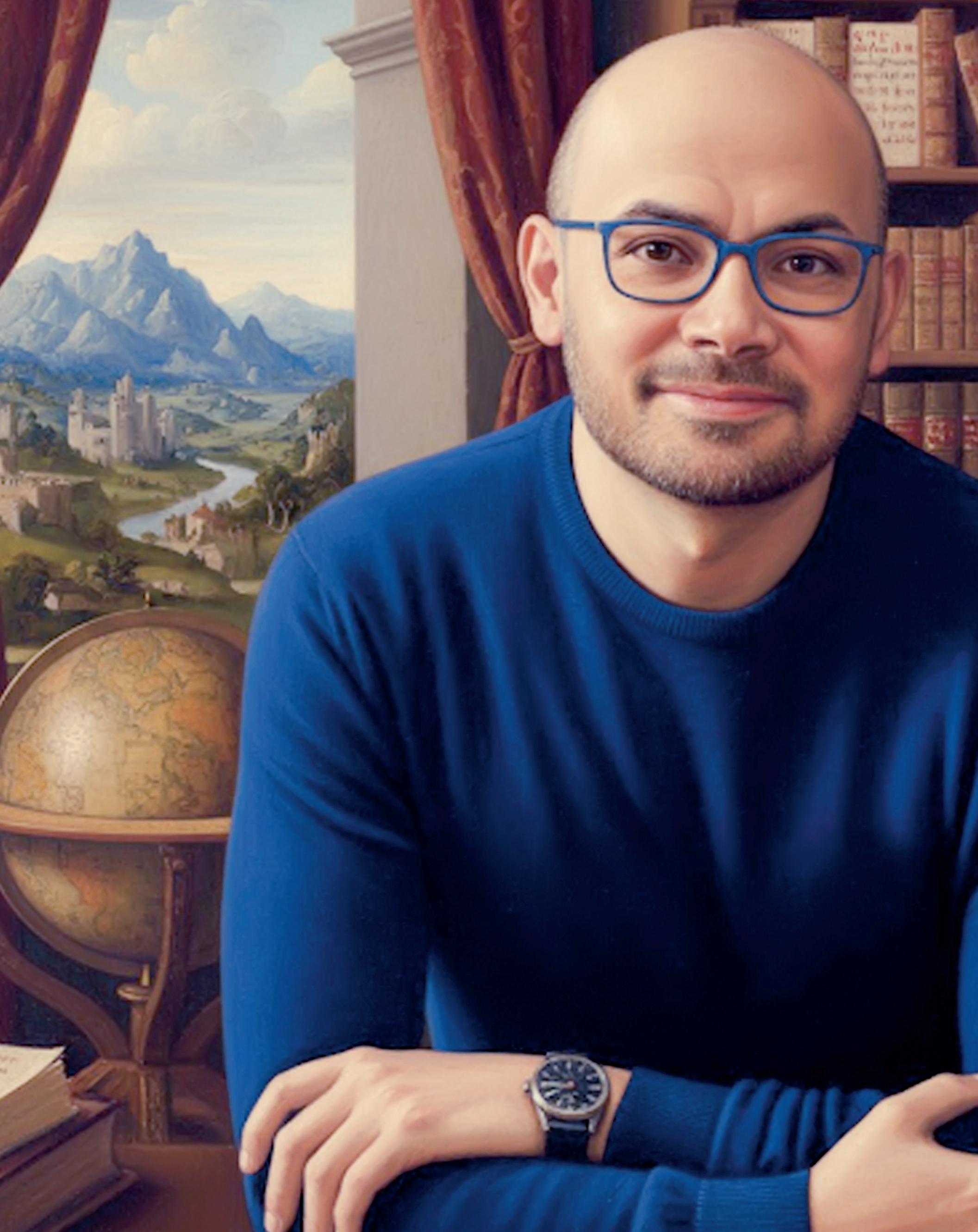
The Scientist Who Taught Machines to Discover
Demis Hassabis
CEO of Google
DeepMind
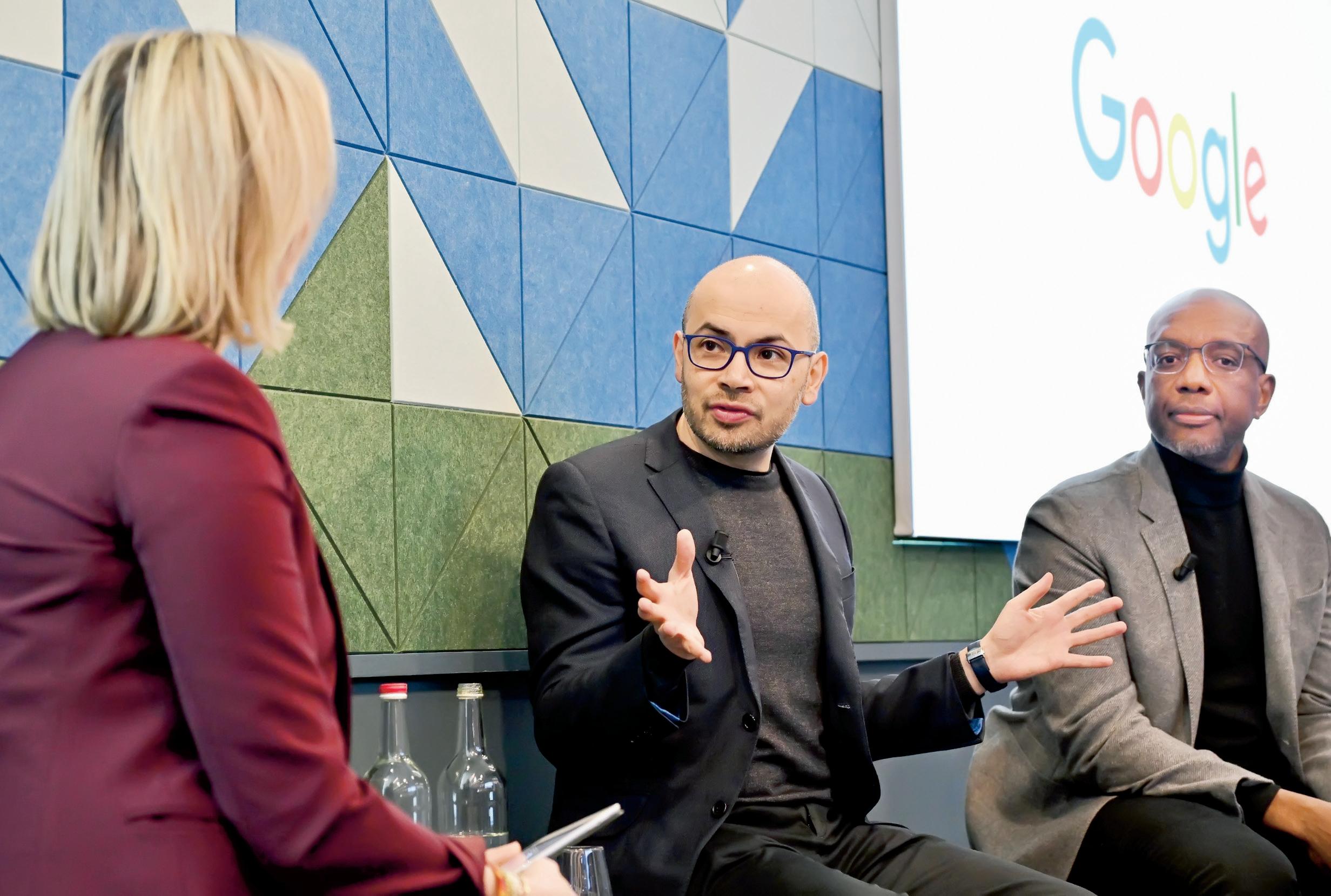
There are entrepreneurs who build companies—and then there are those who quietly redraw the boundaries of what humanity can know. Demis Hassabis belongs firmly to the latter category. While much of the world debates chatbots and consumer AI tools, Hassabis has been focused on something far more ambitious: turning artificial intelligence into a system capable of scientific discovery.
As the co-founder and CEO of DeepMind, now part of Google DeepMind, Hassabis has positioned himself at the intersection of neuroscience, computing, and philosophy. His vision has never been about building better apps. It has been about understanding intelligence itself— and then recreating it.
As the co-founder and CEO of DeepMind, now part of Google DeepMind, Hassabis has positioned himself at the intersection of neuroscience, computing, and philosophy
From Games to Groundbreaking Science
Hassabis’s journey is anything but conventional. A former chess prodigy and video game designer, he moved into neuroscience before turning to artificial intelligence. That unusual blend of disciplines shaped the way DeepMind approached AI from the start—not as a tool for narrow tasks, but as a system capable of learning, adapting, and eventually reasoning.
The early breakthroughs made headlines. Systems like AlphaGo defeated world champions in complex games once considered uniquely human domains. But those victories, impressive as they were, were only a prelude. The real shift came when DeepMind turned its attention to science.
Solving What Biology Couldn’t
In 2020, DeepMind introduced AlphaFold, an AI system that solved one of biology’s grand challenges: predicting the three-dimensional structure of proteins. For decades, this problem had slowed progress in medicine, drug discovery, and our understanding of life itself.
With AlphaFold, thousands of protein structures—once the subject of years of laboratory work—became accessible in a fraction of the time. Researchers around the world suddenly had a new foundation to build on.
This was not just a technological milestone. It was a moment that signalled a shift: AI was no longer simply assisting science—it was actively advancing it.
Building Intelligence, Not Just Products
What sets Hassabis apart from his peers is his long-term horizon. While many tech leaders focus on monetisation, platforms, or user growth, his stated goal is the development of artificial general intelligence—systems that can perform a wide range of intellectual tasks at a human level or beyond.
It is an ambition that carries both promise and risk. The potential upside is enormous: breakthroughs in climate modelling, medicine, energy systems, and materials science. The risks are equally significant, raising questions about control, ethics, and governance.
Hassabis has consistently argued for a cautious but determined approach.
Progress, in his view, should be paired with responsibility. The challenge is not just building powerful systems— but ensuring they are aligned with human values.
The Quiet Power Player
Unlike many figures in the tech world, Hassabis rarely seeks the spotlight.
DeepMind’s work underpins a growing share of global AI research
There are no headline-grabbing statements, no theatrical product launches. Yet his influence is difficult to overstate.
DeepMind’s work underpins a growing share of global AI research. Its integration into Google has given it scale, resources, and reach—placing Hass-
abis in a position of quiet but significant power over the direction of one of the most transformative technologies of our time.
What It Means for Business
For business leaders, the implications are clear. The next wave of competitive advantage will not come from simply adopting AI tools. It will come from understanding how AI reshapes entire industries—especially those rooted in research, data, and complex systems.
Pharmaceutical companies, energy firms, logistics networks, and advanced manufacturing sectors are already being reshaped by the kind of capabilities DeepMind is developing. The shift is structural, not incremental.
Those who see AI only as automation risk missing the bigger picture. In
Hassabis’s world, AI becomes a partner in discovery—one that accelerates innovation at a scale previously unimaginable.
A Different Kind of Founder
In an era dominated by high-visibility entrepreneurs, Demis Hassabis represents a different model of leadership. Less noise, more substance. Less focus on disruption for its own sake, more on expanding the boundaries of knowledge.
It is a quieter approach—but one that may ultimately prove far more consequential. Because while others are building the next generation of products, Hassabis is working on something more fundamental: The systems that will shape how those products—and the world itself—are created.
Reframing Global Order
British
Academic Dialogue in Belgrade Explores the Rise of Civilisational States and Its Global Implications
Belgrade recently hosted a high-level academic gathering that brought together leading voices from British and international institutions to examine one of the most debated concepts in contemporary international relations — the rise of the civilisational state.
Organised by the Centre for British Studies at the Faculty of Political Science, in partnership with the Anglo-Serbian Society and LSE IDEAS, the conference reaffirmed the depth and continuity of academic cooperation between Serbia and the United Kingdom. Opening the event, Faculty of Political Science Dean Professor Maja Kovačević underlined the institution’s longstanding commitment to democratisation, the rule of law and academic freedoms, while also highlighting its growing engagement with British universities and English-language programmes.
The British academic presence was particularly prominent. Professor Christopher Alden, Director of LSE IDEAS, emphasised the importance of continued collaboration and paid tribute to the late Professor Christopher Coker, whose
work had been instrumental in strengthening ties between the two academic communities.
Discussions throughout the conference focused on the evolving meaning of the civilisational state, a concept increasingly used by major, mostly authoritarian, powers as a form of political and cultural self-definition. While some participants explored its theoretical foundations, others addressed its practical implications for global governance and the liberal international order.
British and international scholars gathered in Belgrade to explore the growing influence of civilisational narratives, highlighting both their global implications and the enduring value of academic cooperation and open dialogue
Case studies presented by scholars from the University of Oxford and LSE IDEAS examined how countries such as Russia, China, India and Turkey interpret and apply this concept, revealing both its diversity and its political significance.
The latter panels turned to the responses of liberal actors and institutions, questioning how such narratives interact with established ideas of democracy, sovereignty and international cooperation.
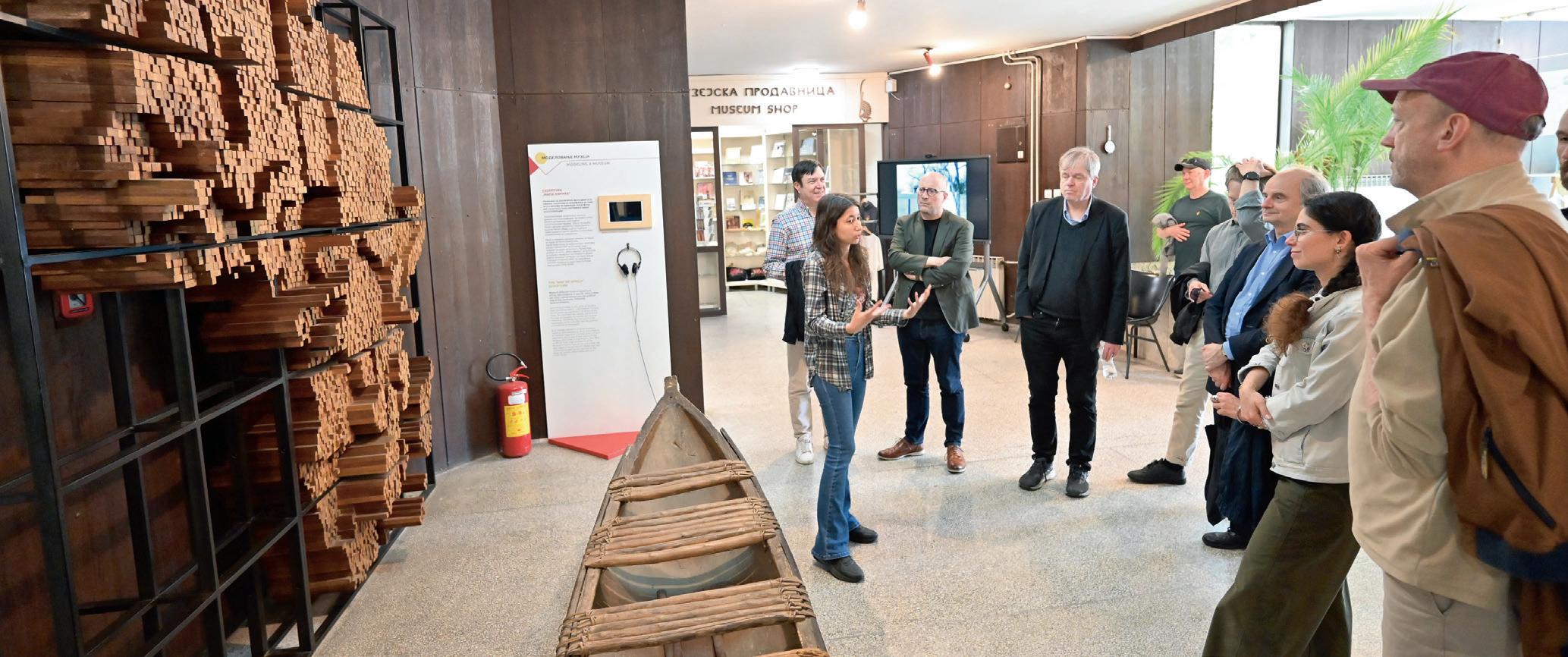
Beyond the formal sessions, the conference programme included a cultural dimension that further strengthened dialogue among participants. A study visit to the Museum of African Art in Belgrade, followed by a tour of the city’s historical landmarks, offered an opportunity for informal exchange in a setting that reflected Serbia’s openness to global cultural influences.
Plans for a future edited volume, announced at the close of the conference, suggest that this dialogue will continue — not only through academic collaboration, but also through a shared effort to better understand the shifting dynamics of today’s international order.
The Language of Quiet Surfaces
In the work of Hettie Inniss, a new generation of London artists is reshaping abstraction through memory, material and the subtle politics of perception
In a cultural moment that often rewards spectacle, immediacy and visual excess, a quieter current is steadily gaining ground across London’s contemporary art scene. It is a shift that resists noise in favour of nuance, privileging tactility over image and experience over instant recognition. At its centre stands a new generation of artists whose work does not announce itself loudly, but rather unfolds gradually—inviting the viewer into a slower, more attentive form of looking. Among them, Hettie Inniss emerges as a compelling voice.
Educated at the Royal College of Art, an institution long recognised as a crucible for emerging talent, Inniss belongs to a cohort of artists redefining what abstraction can mean in the present moment. Her work departs
from the grand gestures and formal certainties historically associated with the genre. Instead, it gravitates towards something more elusive: a language of surfaces that carry traces of memory, sensation and lived experience.
At first glance, her paintings may appear restrained, even minimal. Yet this restraint is deceptive. Layers of pigment, subtle tonal shifts and carefully constructed textures create a visual field that resists immediate interpretation. Rather than presenting a fixed image, Inniss constructs an atmosphere—one that hovers between presence and absence, between what is seen and what is felt.
This approach aligns with a broader tendency in contemporary British art, where abstraction is increasingly understood not as a retreat from reality, but as a means of engaging with it
Quiet Abstraction
A contemporary approach to abstract art that prioritises subtlety, materiality and sensory experience over bold gesture or overt narrative
more intimately. In Inniss’s work, material becomes a conduit for memory. Surfaces seem to absorb and retain fragments of experience, suggesting that what we perceive is never entirely separate from what we remember.
There is also a distinctly sensory dimension to her practice. While firmly rooted in the visual, her paintings often evoke other modes of perception— touch, temperature, even scent. This synaesthetic quality places her work
within a growing discourse that challenges the primacy of sight in art, proposing instead a more embodied encounter between artwork and viewer.
London, as both a marketplace and a cultural ecosystem, has proven particularly receptive to such explorations. In recent years, curators and collectors alike have shown an increasing interest in artists who offer depth rather than immediacy, and whose work rewards sustained attention. Inniss’s rising profile can be understood within this context: she is not an outlier, but part of a subtle yet significant recalibration of artistic values.
What distinguishes her practice, however, is the clarity with which it articulates this shift. There is a confidence in her restraint, a deliberate refusal to overstate. In a landscape saturated with images, her work insists
Royal College of Art
One of the world’s leading postgraduate art and design institutions, based in London and known for shaping generations of influential contemporary artists
on the importance of what cannot be easily captured or reproduced. It asks the viewer not simply to look, but to dwell—to remain with the work long enough for its nuances to surface.
This insistence on duration is perhaps her most radical gesture. In an age defined by speed, to demand time is to challenge the very conditions under which art is consumed. It is also to restore a certain dignity to the act of viewing, positioning it as a form of engagement rather than passive reception.
As London continues to negotiate its place within a shifting global cultural landscape, artists like Hettie Inniss offer a glimpse of where contemporary practice might be heading. Not towards louder statements or more recognisable imagery, but towards a deeper, more introspective mode of expression—one that acknowledges the complexity of perception and the persistence of memory.
In this sense, her work does more than reflect a trend. It signals a transformation in how art is made, experienced and understood. And in doing so, it quietly but decisively redefines the language of contemporary abstraction.
of is
Core Everything Freedom at the
An artist must represent the eyes, ears and heart of his language, and all those who speak it; but also of the whole world, in a broader sense. Insisting on being apolitical and displaced is today nothing more than pandering to those who abuse power and trample all over dignity, health, patience, minds and time
Aleksandar Novaković writer, playwright and musician
There are authors whose professional journey can’t be confined to one area; authors who develop at intersections of various disciplines and interests. One such author is Aleksandar Novaković. A historian by education, and a doctor of dramaturgy and a playwright by profession, he is also a writer, musician and researcher according to his author’s habitus. His works encompass plays and novels – including the standout works The Leader and Celtic Tale, as well as more recent titles such as A Walk Through Central Park and Do You Know Whom I Just Met? – but also poetry, essays and theatre & film studies, alongside his radio and musical oeuvre, as well as editorial and pedagogical engagements.
Behind this diverse body of work lies a consistent interest in identity, history and the ways the individual and society are presented in art, but also a clear stance as an author that’s gradually taken shape through various forms – from his early curiosity and experimentation to a thoughtful, engaged perspective. The recipient of multiple important awards, his most outstanding accolades include the Golden Helmet Award for aphorisms, the Radio Belgrade Award for radio drama and the VBZ Award for his novel The Leader.
Occupying a special place in his creative work is the British and Celtic cultural space – stemming from his scholarship to study in Edinburgh, via his interest in the Irish and Welsh languages, to literary and dramatic themes that extend beyond the local framework and enter the broader European context. Speaking in this interview for CorD, he discusses his own journey, the coming together of science and art, and the cultural influences that shaped him, but also the issues that return time and again through his work – ever-more openly and directly.
Your professional journey combines history, playwrighting, literature and music. How did that develop-
ment progress and when did you recognise that art and storytelling are your natural expression?
— My adventure with art started early on – I was already writing poems and short stories in primary school, but I focused on writing seriously during my high school days. That was when I wrote my first plays and started learning to play the guitar, and it was then that all my interests began to crystallise and intertwine. Of course, there were lots of mistakes in the beginning, but I hope there were fewer later. I always loved to read, listened to music passionately, sought out new
In Edinburgh with colleagues
History mustn’t be allowed to be a nationalistic Bible, as it is often perceived, but rather a humanistic science
bands and lesser-known films - you could say that was a natural part of my childhood. Searching, experimenting, stepping into the unknown, learning.
You studied history, followed by dramaturgy. In which way does historical thinking shape your approach to writing and theatre?
— History writes plays that would never cross the minds of writers. In that sense, by exposing human traits in their extremes and revealing incredibly bizarre twists, history represents an inexhaustible source of inspiration. It can be greatly beneficial to acquire a broader picture of the world, general culture, awareness of society and politics – provided you’re open and don’t consider history like some hobgoblin from your school days. History mustn’t be allowed to be a nationalistic Bible, as it is often perceived, but
rather a humanistic science. If history, as a science, has taught me anything, it’s that entire peoples have been suppressed in the name of religion, nation and ideas of justice, and behind it all, as a rule, has been the desire of minor but grasping souls interested only in money and power. If you want to know where politics is headed, first follow flows of money.
Your work often shifts between scientific research and artistic expression. How do you balance those two worlds?
— Despite it looking like hard work, it actually isn’t difficult. You just need to separate one from the other, to not fantasise while writing a historical study and avoid being too particular about historical details when writing something like a drama. In my work, particularly my novels, characters who are based on historical figures mostly appear; so, they aren’t THOSE actual historical figures, they are merely based on them, and behind that story is a lot of research of facts and the selection of those that are apt for a novel and wouldn’t be so appropriate for an article in some historical journal.
You received Edinburgh’s John McGrath Scholarship. How did that experience influence your professional and personal development?
— I can say that it encouraged me greatly: I had never previously been to Great Britain and the whole milieu: the architecture, nature, mentality and weather conditions, but also the galleries, art festival and the unique atmosphere of pubs, - it ultimately all encouraged my creativity. My time in Edinburgh was inspiring: I wrote the novel Celtic Tale not long after returning to Belgrade. And, of course, lots and lots of music related to Scotland, both rock and folk, also remained as a kind of “soundtrack” to my residence there. Edinburgh –with the river, bay and great hill of Arthur’s Seat at its heart – the “Athens of the North”, holds a special place in my memories.
Disengaged art doesn’t exist –there exist only dishonest artists who place gain and glory ahead of the truth
An interest in the British and Celtic cultural sphere is recognisable in your work. What attracted you to that world and how is it reflected in your creativity?
— I got better acquainted with the world of Celtic culture through England, which may seem controversial to some, but it really isn’t. Specifically, as a student of history, I not only learnt about England, but also about the histories of the Celtic countries: Ireland, Scotland and Wales. In reading English writers, I also came across Oscar Wilde, Samuel Beckett, George Bernard Shaw, Alasdair Gray, Dylan Thomas, John Banville et al. I felt a connection to humour, inventiveness, the fighting spirit, lyricism, lucidity and a touch of the irrational in their works.
I could say that I felt – not only in literature, but also in rock music – like I was an Anam Cara (Irish Gaelic term for soul friend) to many of those artists. Why? I still don’t precisely know.
You’ve also shown an interest in the Irish and Welsh languages. How did that interest emerge and what in particular attracted you to that linguistic and cultural area?
— Part of the answer builds on from my previous answer. Apart from that, I thought that if I was so interested in the British Isles, it would be appropriate if I knew, alongside English, at least some of the languages that are spoken there. I just happened to get a textbook of the Irish language (Gaeilge) as a birthday present and started learning it slowly, gaining some basic vocabulary of a few thousand words. It was fun for me to learn a language that didn’t sound like any of the languages I’d previously studied. I learned Welsh (Cymraeg) through social networks. I’m self-taught and have a similar vocabulary to my mastery of Irish. I was also inspired to learn Welsh by the word “hiraeth” – meaning a deep longing and nostalgia for something that might never have existed. Of course, I’m a long way from being a Celtic language expert, but it is nice to be familiar with, at least in part, the beautiful and mysterious languages of poets and druids.
Your plays often deal with society, identity and power relations. How important is it to you for art to include a critical dimension?
— That is today inseparable from the author. It’s impossible to create and remain blind to the horrors and injustices that are rife in this world. The easiest thing is to look away, cross the street, pretend that something didn’t happen, push it to the periphery and “wait for better times”. An artist must represent the eyes, ears and heart of his language, and all those who speak it; but also of the whole world, in a broader sense. Insisting on being apolitical and displaced is today nothing more
than pandering to those who abuse power and trample all over dignity, health, patience, minds and time. Disengaged art doesn’t exist – there exist only dishonest artists who place gain and glory ahead of the truth.
In parallel with writing plays and books, you are also musically active. How do these two expressions complement one another?
— I always wanted to find myself in alternative music, in some way. To experiment with forms and genres, transforming expression. I naturally spent a lot of time listening to plenty of David Bowie’s music, but my list of inventive musicians has gradually expanded, so I would single out bands like Sleaford Mods, Super Furry Animals, the Twilight Sad and the Fall as inspiring, but not artists that I “copy and paste”. When I first started writing, I authored songs for a little high school rock band and then started composing the first songs, and that resulted in my work with several bands and my solo material. I would add that I’m a member of a band that combines electronic and rock styles. That’s a natural artistic development and a logical step for me. There’s plenty of literature in my music and vice versa. The art of poetry, to draw a parallel, was already accompanied by the sounds of the harp during the time of the Celtic bards.
You’ve worked with Radio Belgrade on numerous radio formats. As a medium, what does radio enable you to do that theatre or literature perhaps don’t?
— Theatre, like film, is an expensive plaything, while radio allows you to
land on distant worlds and travel to outer space or medieval times with just the help of voices and sound effects. Many stories that I would otherwise never have told thus found their place on the radio waves and reached an audience that I hadn’t know
With
To write someone off because of the language or number of speakers, thereby reducing the cultural heritage of the entire world to a few dominant cultural spheres, is something I consider disastrous and an example of “simplification” for the sake of some alleged increased visibility
about until the day before: bus drivers, night watchmen, porters, security guards... It’s interesting that radio dramas continue to exist despite everything, and that they remain unsurpassed in terms of imagination, uniqueness and affordability.
You’ve also authored expert books that deal with the representation of characters in drama and film. What motivated you to research the way different nations and identities are presented in art?
— On the one hand, I found motivation in my irritation with lazy writing that relies on stereotypes and presents entire nations as “characters
Nessie on Loch Ness
from jokes”, but I was also inspired by contrasts in my own country: here there is either a sense of superiority regarding other nations or a kind of inferiority linked to individual members of small nations in relation to “major cultures”. Neither have any basis in reality. That’s why, for example, I dealt with the head and tail of the same coin: Slavic characters in the plays of English-speaking authors and foreigners in Serbian theatre.
Local and international contexts often clash in your work. How do you view the position of the contemporary Serbian author in the global cultural sphere?
— Our language is in decline, and with that the position of not only Serbian art, but also art across the former Yugoslav territories, isn’t impressive in the least, which I consider a big problem. To write someone off because of the language or number of speakers, thereby reducing the cultural heritage of the entire world to a few dominant cultural spheres, is something I consider disastrous and an example of “simplification” for the sake of some alleged increased visibility. In
There is ultimately only one basic issue: freedom. From freedom stem both love and creation, and thus the struggle to achieve freedom, which is more important today than ever before, is at the centre of my work
Scan the QR code to read New Illium, a selected play by Aleksandar Novaković that explores the complexities of ambition, power and human relationships in the contemporary world.
consumer terms, what kind of shop has two kinds of apples, three kinds of bread and three bottles of the same milk? Yes, I agree, the few goods you have are of good quality, but what about the rest of the shelves?
You’ve been engaged in the editorial department of online literary magazine Eckermann for many years. How do you see the role of such platforms in developing contemporary literary and the dramatic scene?
— Eckermann is a regional magazine that connects the wider cultural space of the former Yugoslavia and does so openly, without hidden agendas. The more examples like
this that emerge, the more developed and flourishing the art and culture of these lands will become. We shouldn’t forget that we can succeed in this despite being small. We are unique and have a large number of gifted authors from Croatia, Slovenia, Bosnia and Herzegovina, Macedonia, Montenegro and Serbia, and if we consider ourselves small, we need only look at the example of the small Celtic nations whose artists are highly praised around the world.
Looking back at your previous work from today’s perspective, do you see a central theme or some question that constantly arises?
— There is ultimately only one basic issue: freedom. From freedom stem both love and creation, and thus the struggle to achieve freedom, which is more important today than ever before, is at the centre of my work. I wrote long ago that freedom is the “biggest prison”. I think that says it all.
If you were to view your life as the text of a drama, what would represent its main conflict?
— Man’s conflict with himself - how to survive without simultaneously sacrificing my own freedom? It seems to me that I’m enjoying a luxurious life in the sense that I do, say and write what I like and don’t think about whether or not anyone likes that.
What are you working on currently and what is it that today moves you the most artistically and intellectually?
— I’m currently finalising an instrumental album (it might include one track with lyrics) and I’m “polishing off” a novel with autobiographical elements that represents a kind of intersection of everything I’ve seen, heard and experienced to date. There are a few other projects that I’ve yet to start working on, but I wouldn’t like to say much about them for now – not because I’m afraid of “cursing” them, but rather because I don’t even know myself which direction they’ll take. The struggle and adventure continues...