Partners in Europe’s Future
Miodrag
Petar
Nataša
Đorđe
Partnership Beyond Tradition
Every national day is an opportunity to celebrate history. Yet the strongest partnerships are never built on history alone. They endure because they continue to evolve, finding new relevance in a
Relations between France and Serbia offer precisely such an example. Rooted in a friendship forged more than a century ago, they have gradually developed into a broad strategic partnership that today extends well beyond diplomacy. Political dialogue remains strong, economic cooperation continues to deepen, while cultural exchange, education, innovation and scientific collaboration have become equally important pillars of the relationship.
This broader understanding of partnership has become one of the defining characteristics of France’s engagement with Serbia.
For France, these dimensions have long been inseparable. Economic competitiveness is linked to education. Innovation relies on research. Sustainable growth depends on responsible industrial policy. Culture, meanwhile, remains an essential form of diplomacy, creating understanding where political dialogue alone is often insufficient.
These themes resonate throughout this special feature.
They are reflected in discussions on European competitiveness and sustainable investment, in the growing cooperation between French and Serbian businesses, in joint efforts to accelerate the energy transition and digital transformation, and in preparations for EXPO 2027, which promises to open new opportunities for cooperation between the two countries.
They are equally visible in the work of the French Institute in Serbia, whose activities increasingly bring together culture, science, education and public debate. Whether through academic exchanges, innovation forums, literary events or film festivals, these initiatives continue to demonstrate that the strongest international partnerships are ultimately built through people.
This combination of strategic cooperation and cultural openness explains why Franco-Serbian relations continue to develop with confidence. Major infrastructure projects, investments in sustainable technologies, expanding business cooperation and growing educational exchanges are not isolated
France’s enduring influence lies not only in its history, but in its continued ability to connect culture, innovation and economic progress
achievements. Together, they form part of a broader vision of partnership that looks beyond immediate interests towards long-term development.
As France celebrates Bastille Day, this enduring partnership serves as a reminder that the strongest international relationships are those capable of continually renewing themselves. They honour a shared history while remaining firmly focused on the future.
Competitiveness Through Partnership
Energy transition, innovation and European competitiveness are opening a new chapter in French-Serbian economic cooperation, where long-term partnerships and knowledge transfer are proving more valuable than short-term business cycles
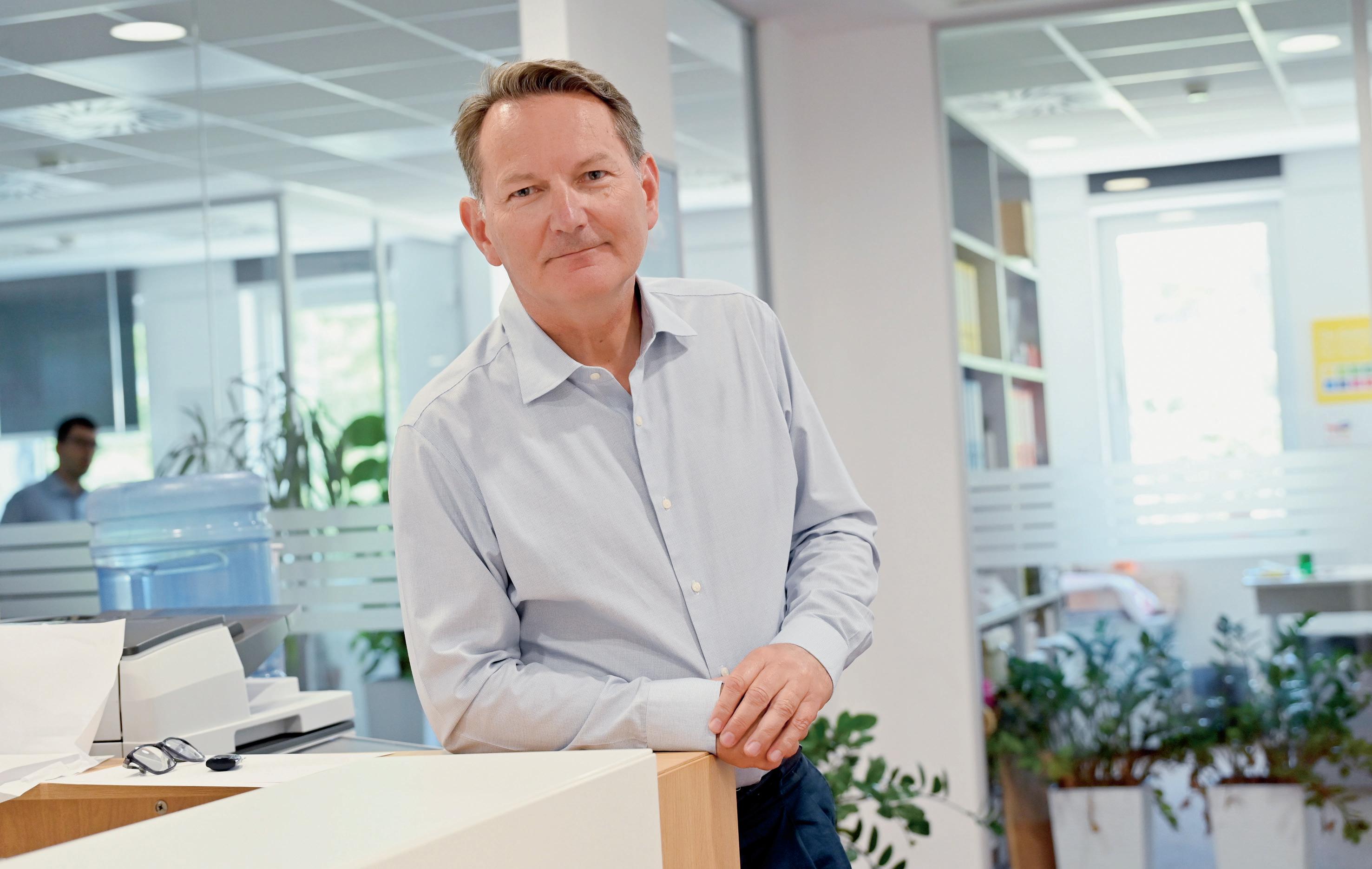
The global economy is undergoing profound changes that are reshaping the way companies invest, manufacture and plan for the future. The energy transition, technological innovation and the reconfiguration of supply chains represent both a challenge and an opportunity for countries seek-
European values should not be seen as a constraint, but as a competitive advantage that contributes to the long-term sustainability of economic development
ing to strengthen their competitiveness. Alexis Brierre discusses the future of French investment in Serbia, as well as the role that innovation, sustainability and EXPO 2027 can play in further deepening economic ties between the two countries.
Having recently assumed the presidency of CCIFS, what will your key priorities be in strengthening the Chamber’s role and supporting the French business community in Serbia over the coming years?
— My priority in the coming years will be to further strengthen the French-Serbian business community and reinforce the role of the French-Serbi-
an Chamber of Commerce and Industry as a platform for connecting companies and creating new business opportunities.
We will place particular emphasis on increasing the visibility of our members and the French economic presence in Serbia by promoting their achievements and their contribution to the country’s economic development. We will also continue to position ourselves as a key point of contact for French companies looking to establish or expand their operations in Serbia.
At the same time, the Chamber will continue to serve as a reliable interlocutor and facilitator of dialogue between the business community and institutions, with the aim of improving the business environment and creating even better conditions for our members to operate.
The energy transition has become one of the defining challenges for European economies. How do you assess Serbia’s potential in this area, and what role can French companies play in supporting its green transition?
— The energy transition represents one of Serbia’s key development opportunities, both in terms of modernising its energy system and strengthening the competitiveness of its economy. Serbia has significant potential, particularly in renewable energy and energy efficiency.
French companies operating in Serbia can play an important role in this process, as they bring advanced expertise and proven business models from their global operations. In doing so, they not only invest, but also transfer knowledge and standards to their local subsidiaries, contributing to the long-term sustainability of projects.
French companies can therefore serve as examples of best practice and as partners in accelerating Serbia’s green transition through projects focused on renewable energy, energy efficiency and sustainable technologies.
Sustainability is increasingly shaping investment decisions and corporate strategies. Which sectors in Serbia do you believe offer the greatest opportunities for sustainable growth and long-term French investment?
— Energy and environmental protection are certainly among the most promising sectors.
French companies already have a strong presence in these areas. Veolia, for example, is developing projects in waste management and waste-to-energy production, directly contributing to the circular economy and sustainable resource management. Schneider Electric is also a key player in digitalisation and energy efficiency, both of which are essential for modernising Ser-
bia’s energy system and industrial base. In addition, EDF is engaged in discussions with relevant institutions regarding the potential development of nuclear energy as part of the country’s longterm energy strategy.
I also see significant opportunities in infrastructure and smart cities, where digital solutions, modern construction methods and the optimisation of public services can contribute to long-term sustainability and a better quality of life.
UNITY
A more coordinated European approach is essential for strengthening competitiveness
OPPORTUNITY
EXPO 2027 will create new opportunities for investment, innovation and stronger FrenchSerbian economic cooperation
INNOVATION
French expertise and Serbian talent can create sustainable, long-term value
All of these sectors demonstrate that Serbia has the potential to become an important destination for sustainable investment, while French companies can play a key role in transferring knowledge, innovation and best practice.
Europe is currently facing growing competitive pressure from both the United States and Asia. In your view, what steps are needed to strengthen European competitiveness while preserving the values of sustainability and social responsibility?
— A key prerequisite for strengthening European competitiveness is greater unity within the European Union, not only in terms of economic policy and regulatory frameworks, but also investment priorities.
A fragmented approach weakens Europe’s overall position, whereas coordinated action enables faster decision-making, greater investment in innovation and a stronger presence in global markets.
In addition, further investment is needed in innovation, digitalisation and the green transition, but in a way that does not undermine Europe’s industrial base. It is equally important to foster a competitive and predictable business environment that enables companies to grow and invest while maintaining high standards of environmental protection and social responsibility.
In this context, European values should not be seen as a constraint, but as a competitive advantage that contributes to the long-term sustainability of economic development.
Innovation is often cited as a key driver of future economic growth. How can French and Serbian companies deepen their cooperation in areas such as digital technologies, artificial intelligence, advanced manufacturing and research?
— This can be achieved through joint research and development projects, partnerships between companies and universities, and stronger links between startup ecosystems. Particularly important are fields such as digital technologies, artificial intelligence and advanced manufacturing,
where French companies bring considerable expertise, while Serbia offers a highly skilled engineering workforce and a growing IT sector.
It is equally important to encourage knowl-
Long-term partnerships, knowledge transfer and strategic investments will be the key drivers of future Franco-Serbian economic cooperation
edge exchange and integrate Serbian teams into the global innovation networks of French companies, thereby creating long-term, sustainable partnerships built on shared development.
With EXPO 2027 approaching, what opportunities do you see for expanding Franco-Serbian economic cooperation, and which sectors are likely to benefit most from the increased international attention the event will bring?
— EXPO 2027 in Belgrade represents an exceptional opportunity to further strengthen Franco-Serbian economic cooperation and increase the visibility of French companies in Serbia and the wider region.
CCIFS and COFREX have signed a cooperation agreement for EXPO 2027, and I expect the greatest benefits to be seen in infrastructure and construction, as well as in digital technologies and innovation. These are areas in which French companies already possess considerable expertise and can make a significant contribution to the implementation of complex projects related to EXPO 2027.
The event will also serve as an important platform for new investments, partnerships and longterm cooperation between companies from both countries, further strengthening economic ties and knowledge exchange.
At a time of profound changes in the global economy, from supply chain reconfiguration to new geopolitical realities, how do you see the future of French investment in Serbia and the wider Western Balkans region?
— Against the backdrop of profound changes in the global economy, from the reconfiguration of supply chains to new geopolitical realities, I believe French investment in Serbia and the wider Western Balkans region rests on a solid foundation for long-term growth.
French companies already have substantial operations in Serbia and continue to invest in the country, as demonstrated by Tiger Tyres (Michelin) and Hutchinson (TotalEnergies).
Serbia and France already enjoy excellent relations at both governmental and business levels, which is clearly reflected in the implementation of major infrastructure projects involving French companies, such as Belgrade Airport, the Vinča waste management project and the Belgrade Metro. These projects stand as strong evidence of mutual trust and a strategic partnership.
I believe it is essential to nurture existing relationships and successful models of cooperation while continuously seeking new partnerships and expanding joint projects. The continuity and further development of such cooperation represent the best response to global challenges and an important opportunity to strengthen French investment across the region.
French Expertise for the Future of Food
By combining French expertise with local knowledge, Lesaffre helps producers across Serbia and the region respond to growing demands for sustainability, clean-label products, digitalisation and higher-value food production
With a 170-year legacy, Lesaffre has evolved from a yeast producer into a strategic partner supporting the transformation of the food industry.
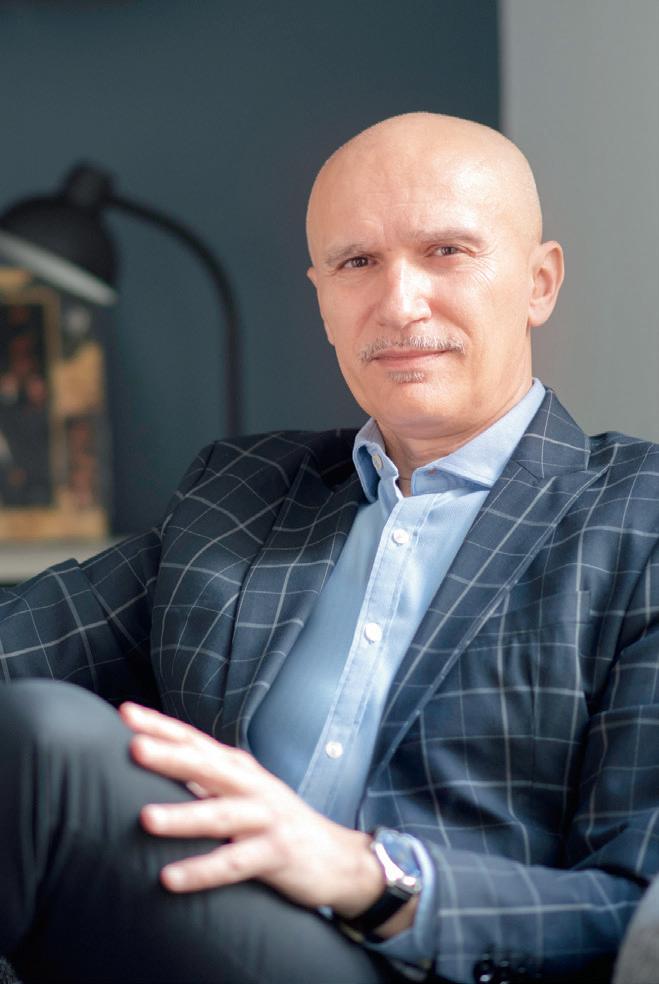
Miodrag Jelić, General Manager of Lesaffre for Serbia, Romania, Bulgaria and Moldova, discusses the importance of French industrial heritage, changing consumer habits and the region’s potential to become a hub for sustainable and innovative food production.
How do you assess the importance of French industrial heritage for the development of the food industry in the region?
— When we speak about French expertise in fermentation, we are talking about a philosophy that combines scientific rigour with innovation. In Serbia, Romania, Bulgaria and Moldova, Lesaffre is much more than a supplier of yeast and baking ingredients – we are a partner that understands local challenges and offers practical solutions.
For example, we have implemented liquid yeast systems with major bakery chains in Serbia, significantly reducing waste and CO₂ emissions. This is particularly important for producers aiming to export to the EU, where environmental standards are becoming increasingly demanding.
Climate change and stricter regulations are also affecting raw material quality. That is why we have developed natural baking solutions, including enzymes and plant extracts, that help ensure sta-
ble fermentation and reduce dependence on synthetic additives.
Sustainability is at the heart of everything we do. Our facilities use yeast produced from by-products such as molasses, recycle water and energy, and develop solutions that minimise waste. This is no longer just good practice – it is the future of the food industry.
Consumers are increasingly looking for clean-label products, natural ingredients and additional nutritional value. Which trends do you consider the most important?
— Consumers have become much more sophisticated. They no longer want food that is simply tasty; they want to know what is in it, where it comes from and how it contributes to their wellbeing.
The most important trend is undoubtedly the demand for clean-label products. Consumers expect shorter, more transparent ingredient lists, which is why we continue to develop natural solutions that can replace synthetic additives without compromising quality.
Sustainability and transparency are equally important. Consumers want reassurance that their food has a lower environmental impact and that its origin can be traced. Digital tools, QR-code traceability systems and solutions such as the Lesaffre Baking App help improve efficiency, reduce waste and strengthen communication throughout the value chain.
How do you assess the business environment in the region and the prospects for future cooperation?
— I am very optimistic about the region’s prospects. Serbia has proven to be a reliable partner for French companies and remains an attractive investment destination thanks to its strong agricultural base, competitive operating costs and excellent connections with EU and Southeast European markets.
The greatest opportunity lies in moving beyond the export of raw materials and increasing the production of higher-value food products. This is an area where Lesaffre can provide significant support.
Digitalisation will be one of our main priorities in the coming years.
Southeast Europe has enormous potential to become a leader in healthy, sustainable and innovative food production, and Lesaffre intends to be a key partner in that transformation.
People as the Driving Force of Transformation
As industry undergoes profound transformation, Michelin Serbia continues to invest in people, knowledge and long-term sustainability as the foundations of future growth.
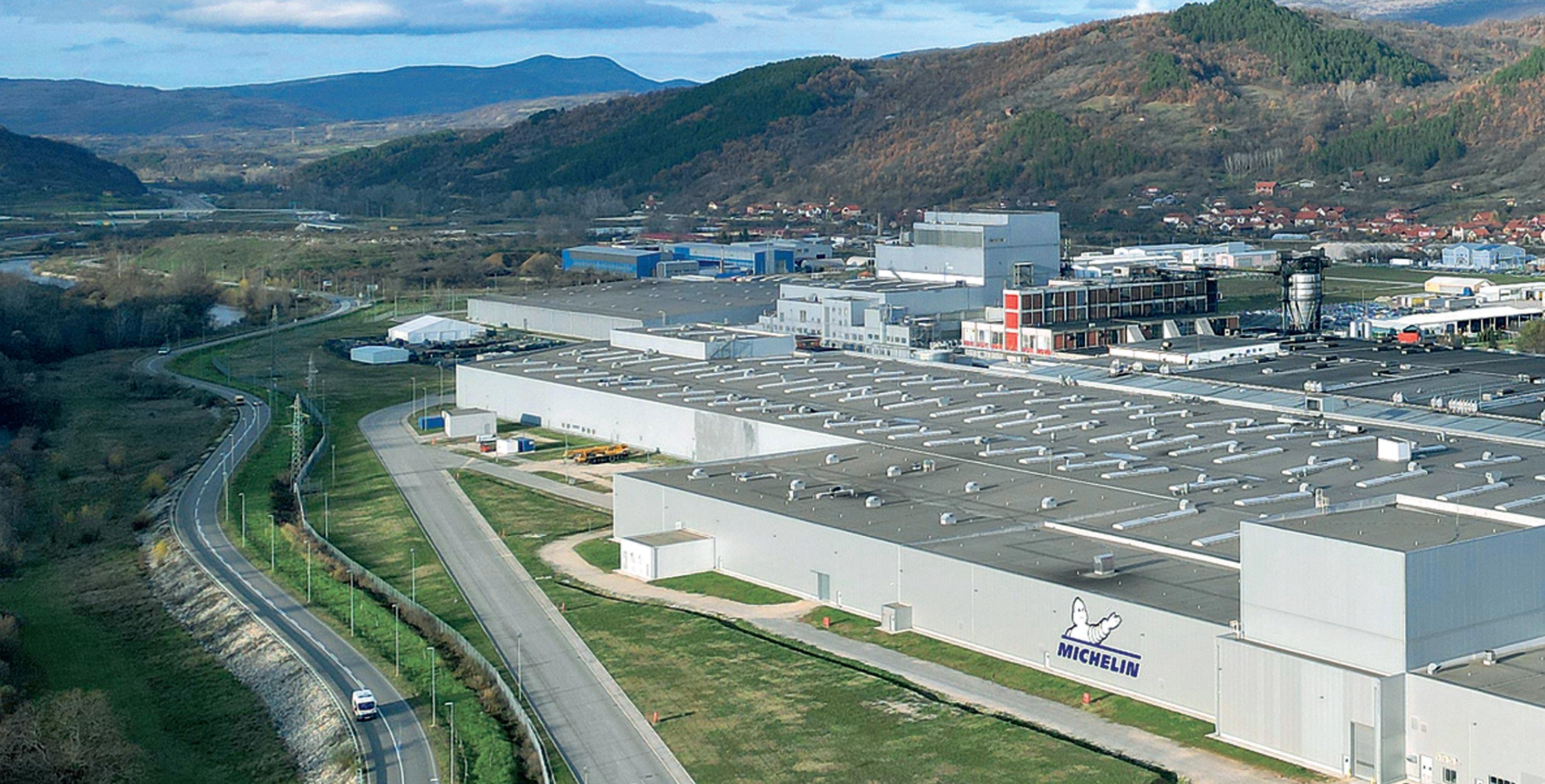
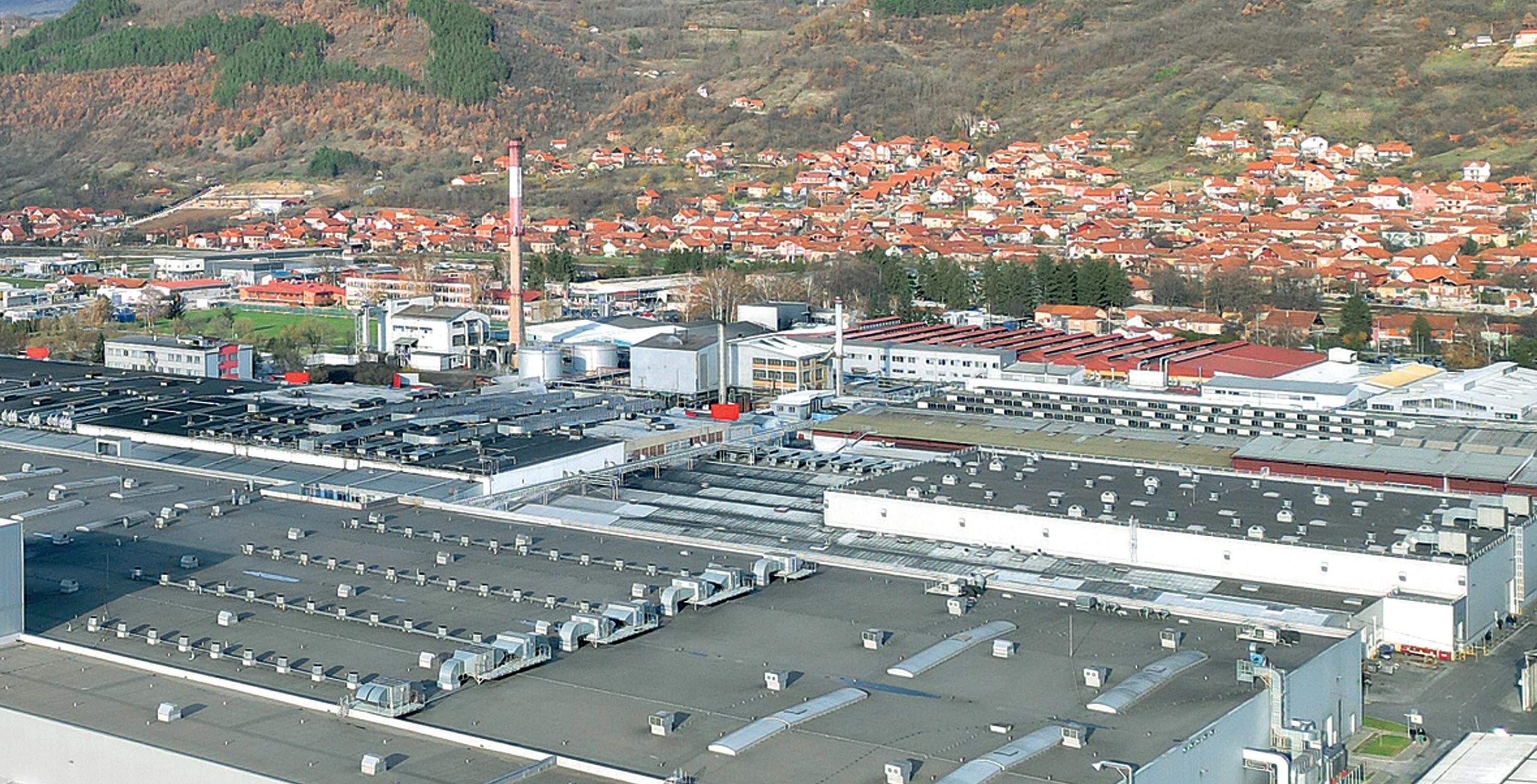
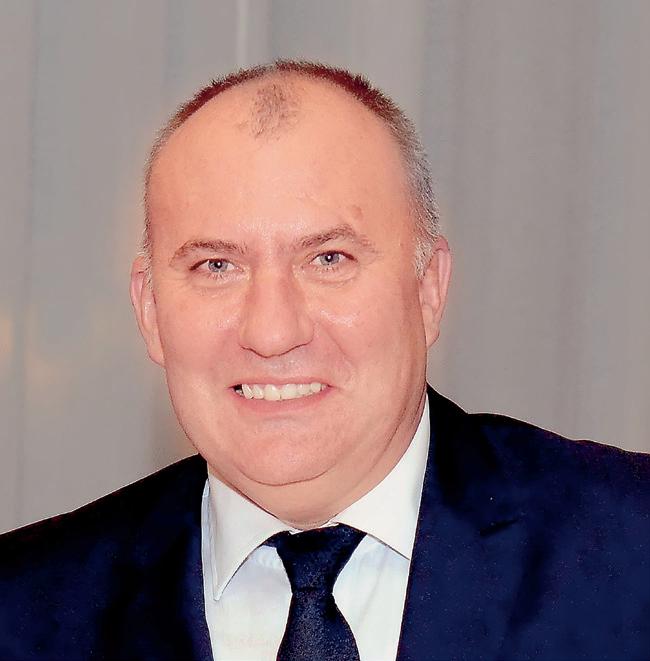
The purpose of the Michelin Group is to provide people with a better way to move forward. We will continue to create and deliver innovations that are accessible to many, generating value for people, profit and the planet, says Petar Nikolić, General Director of Michelin Serbia. In this interview, he explains why employees remain the key driving force behind organisational resilience at a time when change has become the only constant.
The industrial world is rapidly changing. How do you view corporate transformation today?
— Today, transformation is no longer seen as a project with a clear beginning

and end. It has become a way organisations operate – a way of thinking, learning and making decisions in a constantly changing environment.
I’m primarily referring to a period of heightened uncertainty, from geopolitical developments and the growing role of artificial intelligence to shifts in financial markets.
Technology and digitalisation are important, but they are not the essence.
They bring speed and efficiency, but they cannot replace contextual understanding, experience and the ability to make the right decisions at the right time.
That is why people continue to make the difference in the long term – not only in what they do, but in how they think and make decisions. Today, competitiveness depends on flexibility, productivity and innovation.
In that context, where do you see the role of employees?
— At the centre of it.
In industry, we sometimes tend to focus on tools, machines and automation. But without people who know how to use them – and when not to – those tools do not create value.
Employees are given opportunities to learn, grow and develop every day. Through our innovations, we contribute significantly to human progress and a more sustainable world. We produce tyres that, once fitted to a vehicle, enable mobility and progress.
Michelin Serbia employs 4,000 people. Salary is just one element of a comprehensive benefits package, which includes voluntary health insurance, group life insurance, discounted tyre purchases, a dedicated budget for employee prevention and rehabilitation, as well as the opportunity to purchase Michelin Group shares under favourable conditions.
We also provide additional benefits, including financial support for the birth of a child, four weeks of leave for the second parent, a day off for a child’s first day of school, three days of leave for voluntary blood donors, access to the Employee Assistance Programme (EAP), and milestone awards recognising 10, 20 and 30 years of service, as well as retirement.
Today, the role of employees is clearer than ever: they drive both the stability and development of the organisation. Without competent and engaged people, there are no reliable processes, no
It is not the tools that make the difference in industry, but the people who know how – and when – to use them
quality and no continuity. That is why people development is not a separate topic for us – it is an integral part of our business model.
How are digitalisation and artificial intelligence changing the way we work?
— They are fundamentally changing the way we work, but not its foundations.
AI can analyse, suggest and optimise. However, it cannot replace human judgement. That is precisely why the human role is becoming more complex.
It is important that employees are not merely users of technology, but that they understand its logic, value and limitations. That is, and will continue to be, the foundation of competence.
There is a lot of discussion about talent today. How do you approach this issue?
— Our approach is long-term and practical.
Talent challenges cannot be addressed through recruitment alone. Talent is built over time, through experience and within an environment that sets clear standards.
We believe in internal development. Careers are not handed out; they are built through work, learning and a willingness to take the next step.
For us, continuous learning is the foundation of growth – not a phase, but a way of working.
Our company places exceptional importance on continuous learning. Last
year alone, each employee completed an average of 33.5 hours of training (27.2 hours for BC and 54.2 hours for WC categories).
How important is the employee voice in the transformation process?
— Very important, but in a meaningful way – not merely as a formality.
You cannot understand an organisation without understanding the people within it. That is why we use tools such as the Moving Forward Together engagement survey to gain clear insights. As many as 94% of employees participated, which clearly demonstrates their commitment and engagement.
However, the key is not collecting information, but what you do with it. Do you translate feedback into concrete action plans, and do those actions create visible impact?
Trust is built through consistency and through decisions that demonstrate that employees’ voices are genuinely heard.
This also requires an environment where people feel comfortable speaking openly, raising concerns and suggesting improvements. Without this, meaningful dialogue and high-quality solutions cannot exist.
For us, social dialogue is part of everyday work, not a formal process, because organisational stability is built through understanding and a shared approach to challenges.
How important is it to share corporate values beyond the factory?
— It is a natural extension of what we do internally.
A company cannot be sustainable in the long term if it is disconnected from the community in which it operates. That is why we strive to extend our internal values beyond the organisation itself.
We do this through initiatives focused on education, safety and environmental protection. For example, our Health & Safety Family Day in Pirot brings together more than 6,000 employees and their families, because for us, safety is not limited to the workplace – it is a culture we live every day.
At the same time, through the Growing Together initiative, we support local communities in education, healthcare, road safety and environmental protection.
We are also proud of our employees’ volunteer work. Through Family Afforestation Day, our employees have planted more than 8,000 trees. This project received special recognition from the French-Serbian Chamber of Commerce, earning the 2025 award for Best Environmental Protection Project. In addition, at the Manufacturing Days Europe event, our company received the 2026 MOEU Award in the Planet category for this initiative.
An organisation is defined not only by its processes and results, but also by the relationships it builds with people and the wider community.
How do you ensure stability in times of constant change?
— Stability does not come from avoiding change; it comes from knowing how to navigate through it.
It requires discipline, clear principles and an organisation that knows how to learn. Change itself is not the problem; the problem arises when there is no structure to manage it.
That is why we insist on clarity and on people who know how to apply that clarity in practice. We believe stability is built not only through processes, but also through the quality of relationships and trust within the organisation.
What are the key principles guiding your transformation?
— Our principles are clear and straightforward:
• Strength – knowledge, experience and trust
• Speed – the ability to understand and respond in a timely manner
• Success – sustainable results that build credibility
The challenge is not defining these principles, but applying them consistently every day.
How do you see the period ahead?
— The period ahead will be more demanding and, therefore, even more important.
Expectations are rising across the board – in terms of competitiveness, sustainability and the way companies contribute to society. For Michelin, the direction remains clear: long-term thinking, consistent performance and responsible growth.
In Serbia, we have strong foundations – an established industrial base, experienced teams and a culture built on reliability and continuous learning. These are real advantages at a time when adaptability is becoming increasingly critical.
At the same time, the role of our people is evolving. It is no longer only about efficiency; it is about understanding change, adapting quickly and continuously improving. That is why we continue to invest in skills and development as a core priority.
Looking ahead, the companies that will stand out will be those that successfully combine technology with strong human capabilities and clear principles.
Finally, what key message would you highlight?
— The Michelin Group’s strategy is based on balancing three interconnected components: People, Profit and Planet.
Profit enables the company to grow and prosper, which in turn improves living and working conditions and supports people’s development. And we, as people, are the ones who can protect our planet.
This is part of Michelin’s broader All Sustainable approach, under which every decision is assessed through its human, economic and environmental impact.
That is why our approach connects people development, performance and environmental responsibility. In this model, people are not simply part of the system – they actively shape it. That is the foundation of long-term competitiveness.
That is why we remain committed to developing people, strengthening teams and driving sustainable growth.
Strength. Speed. Success.
Not just a message – a standard
A New Era of ERP Systems
How artificial intelligence is redefining modern business: ERP systems have moved well beyond passive data recording to become intelligent systems that analyse data, recommend solutions and increasingly participate in decision-making and process execution.
Artificial intelligence is rapidly changing the way companies operate and use their data. This transformation is also reshaping the role of ERP systems, which are evolving from traditional business management tools into intelligent platforms capable of analysing information, predicting scenarios and supporting decision-making in real time. Nataša Radić, SAP Head at Atos IT Solutions and Services, explains how AI is shaping the next generation of ERP solutions, the role of tools such as SAP Joule and why timely modernisation is essential for longterm business competitiveness.
Why is artificial intelligence such a key topic today and how is it changing the role of ERP systems in business?
— In a world shaped by digital technologies, artificial intelligence is no longer a novelty, but a standard feature of modern business. Organisations are no longer looking only for ways to optimise processes, but also for ways to turn their data into a key competitive advantage.
This shift is also transforming ERP systems. For decades, they served as systems of record – places where information about past events was stored. Today, in the age of artificial intelligence, ERP is becoming a system of execution. Software no longer waits for users to make decisions; instead, it actively analyses data, proposes actions and, increasingly, executes processes independently.
What do AI-enabled ERP systems offer compared to traditional systems?
— In practice, this means that companies operating in the latest SAP environment can consolidate data and make decisions based on a single, integrated view of their business, almost in real time. At the same time, innovation is delivered
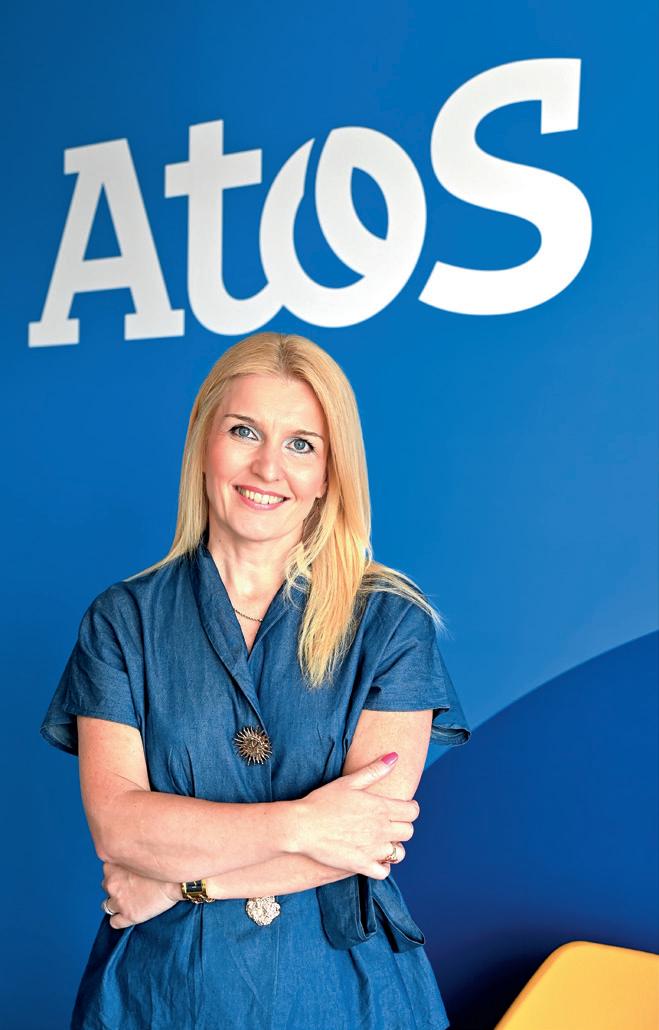
ERP systems no longer wait for users – they analyse data, recommend solutions and increasingly execute processes independently
through regular quarterly system upgrades that introduce new AI capabilities, such as SAP Joule. These functionalities can be activated quickly and easily, without complex projects, additional resources or significant budgets.
Where is the impact of artificial intelligence most visible in modern ERP systems today?
— The impact of artificial intelligence is particularly evident in finance, one of
the first areas moving towards autonomous operations. AI not only automates routine tasks but, more importantly, delivers advanced analytics and real-time recommendations.
In accounting, AI can autonomously post entries and close accounting periods; in planning, it generates scenarios and decision proposals; while in risk management, it analyses entire data sets and quickly identifies anomalies. In treasury operations, it accurately forecasts liquidity and recommends next steps.
You mentioned SAP Joule. What role does it play in everyday work?
— SAP Joule is SAP’s integrated AI copilot, enabling employees and SAP S/4HANA users to initiate processes, generate advanced insights and access reports through simple conversational prompts, without interrupting their daily work. This means employees no longer need to master complex processes or interfaces, or wait for a new report to be developed. Instead, they can simply describe a business request in plain language, and the system will interpret and execute it.
This approach boosts productivity and accelerates decision-making by removing barriers between users and technology.
What would you say to companies considering the role of artificial intelligence in ERP modernisation?
— The most important thing to understand is that artificial intelligence is not an add-on to existing systems, but a natural continuation of ERP modernisation. Companies that recognise this shift early will not only reduce costs, but also create a foundation for long-term agility and growth.
French Cinema Under the Serbian Sky
The eighth French Film Festival once again brought contemporary French cinema to audiences across Serbia, reaffirming the enduring cultural ties between the two countries and the growing appeal of French film beyond traditional cinema venues

Held across six Serbian cities and twelve open-air locations, this year’s festival presented a carefully curated selection of nine recent French productions, ranging from historical dramas and psychological thrillers to intimate family stories and award-winning comedies.
Screenings took place in Belgrade, Novi Sad, Niš, Zrenjanin, Gornji Milanovac and Užice, transforming public spaces into vibrant cultural meeting points. The programme reflected the diversity of contemporary French filmmaking. Among the highlights was Xavier Giannoli’s historical drama Les Rayons et les Ombres, starring Jean Dujardin, which explores Europe on the eve of and during the Second World War through themes of friendship, politics and collaboration. Audiences also welcomed Le Roi Soleil, a Cannes Midnight Screenings selection that exam-
Now firmly established on Serbia’s cultural calendar, the French Film Festival continues to strengthen cultural ties between France and Serbia through the universal language of cinema
ines greed and morality through the story of a winning lottery ticket, alongside Guillaume Nicloux’s psychological thriller Mi Amor, set against the contrasting beauty and darkness of the Canary Islands.
The festival also showcased films exploring identity, family and personal transformation, including Leïla Bouzid’s À voix basse and David Roux’s La femme de. Literary heritage and the performing arts were celebrated in Pascal Bonitzer’s Hugo, while the award-winning comedy De La Comédie Française offered an entertaining look behind the
scenes of France’s most prestigious theatre. Completing the programme was Le rêve américain, an inspiring sports drama based on the true story of two friends who rise from modest beginnings to become NBA agents.
Now in its eighth edition, the French Film Festival has become an important fixture on Serbia’s cultural calendar, offering audiences an opportunity to experience the richness, diversity and creative vitality of contemporary French cinema while further strengthening the longstanding cultural dialogue between France and Serbia.

More Than a Manufacturing Centre
One of the longest-standing French investments in Serbia, Tarkett supplies international markets from its Bačka Palanka manufacturing centre while managing operations across Southeast Europe and the Caucasus, supported by continuous investment in sustainability, innovation and people
For more than two decades, Tarkett has been strengthening its presence in Serbia, with its Bačka Palanka manufacturing centre becoming one of the company’s key production sites in Europe. Today, the Serbian operation manages business across Southeast Europe and the Caucasus, while continuing to invest in sustainable manufacturing, innovation and the development of its people.
Tarkett is one of the longest-standing French investments in Serbia and an important part of the company’s global manufacturing network. What role does Serbia play in Tarkett’s business today?
— Serbia is far more than a manufacturing location for Tarkett. It is one of the cornerstones of our European operations, with a long industrial heritage. Our Bačka Palanka manufacturing centre has been supplying customers across Europe and beyond for decades, while also serving as the management centre for our operations in Southeast Europe and the Caucasus.
Our people are our greatest asset. Their expertise, commitment and ability to embrace change have enabled Serbia to become recognised not only as an important manufacturing centre, but also as a place where new solutions are developed and key business decisions are made.
Serbia has been strengthening its position as a regional industrial centre. What will be needed for the country to realise its full potential?
— I believe Serbia has all the prerequisites to further strengthen its position as a regional industrial centre.
The next phase of development will depend on continued investment in energy infrastructure, renewable energy, digitalisation and education. The industry of the future will be defined not only by technology, but also by sustainability, efficiency and innovation. Serbia has the potential to become one of the regional leaders in that transformation.
The energy transition, new regulatory requirements and changes in supply chains are reshaping European industry. How is Tarkett responding to these developments?
— Our industry is undergoing one of its most significant transformations in decades. We see these changes not as obstacles, but as opportunities to become stronger and more competitive.
We are investing in energy efficiency, the decarbonisation of production and more resilient supply chains through regionalisation and stronger local partnerships. At the same time, increasingly demanding sustainability standards are encouraging us to accelerate innovation and develop products with a reduced environmental impact.
Sustainability and the circular economy have become central priorities for modern manufacturing. How are these principles embedded in Tarkett’s operations in Serbia?
At Tarkett, sustainability is not a separate initiative; it is embedded in the way we do business. As a signatory to the Paris Agreement, we are committed to reducing carbon emissions, using resources responsibly and developing products that can be recycled and reused.
In Bačka Palanka, we continue to invest in energy efficiency and renewable energy while returning materials to the production cycle through our flooring collection and recycling programmes.
French companies have long contributed to Serbia’s economic development through investment, technology transfer and skills development. Where do you see the greatest potential for further strengthening economic cooperation between Serbia and France?
— France and Serbia have a long tradition of successful economic cooperation, and I believe its greatest potential still lies ahead. The most promising opportunities are in green energy, sustainable manufacturing, digitalisation, innovation, artificial intelligence and education—areas that will shape the future of the European economy.
French companies bring technological expertise and high business standards, while Serbia offers a skilled workforce, a strong industrial base and a strategic location. Together, these strengths provide an excellent foundation for new investment, innovation and long-term partnerships.
Connecting People, Ideas, and Europe
France and Serbia share a long tradition of cultural and intellectual exchange. In this interview, Amos Reichman explains how language, education, innovation and public debate are becoming increasingly important tools for strengthening bilateral ties and reinforcing Serbia’s place within the wider European community
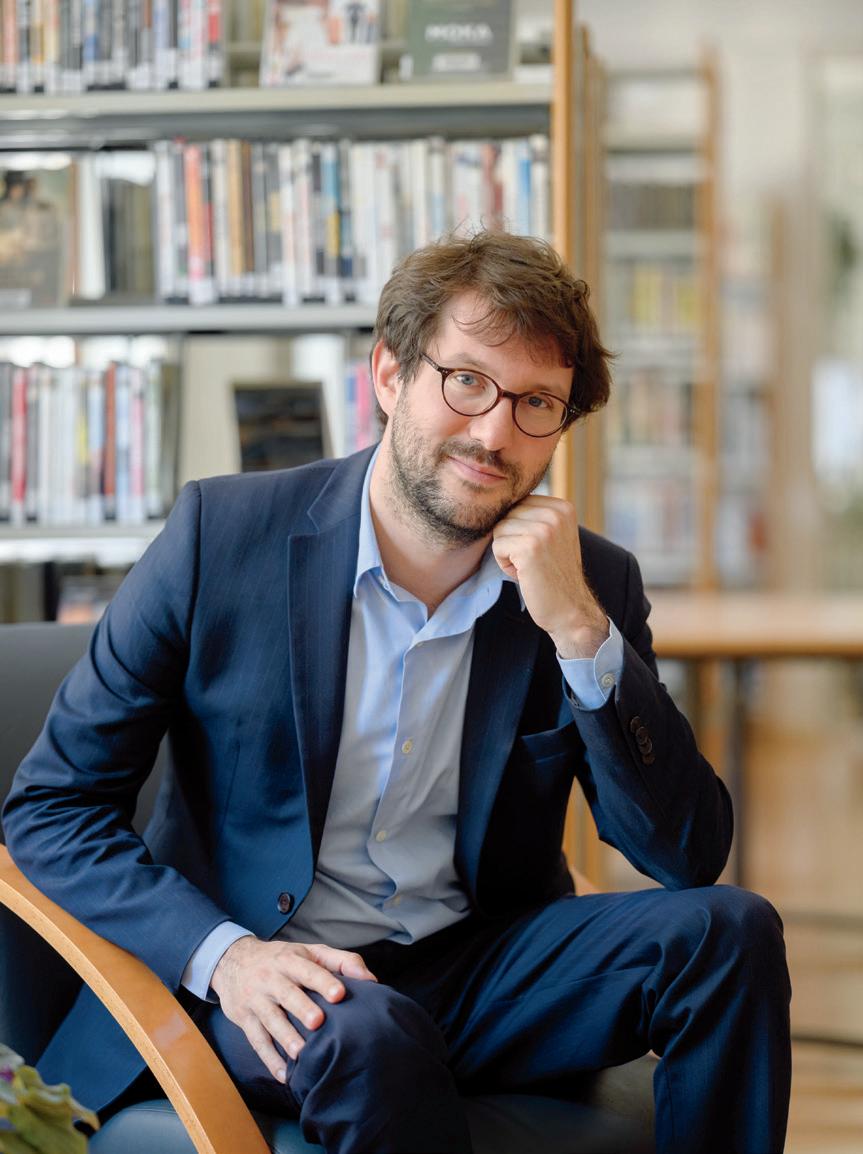
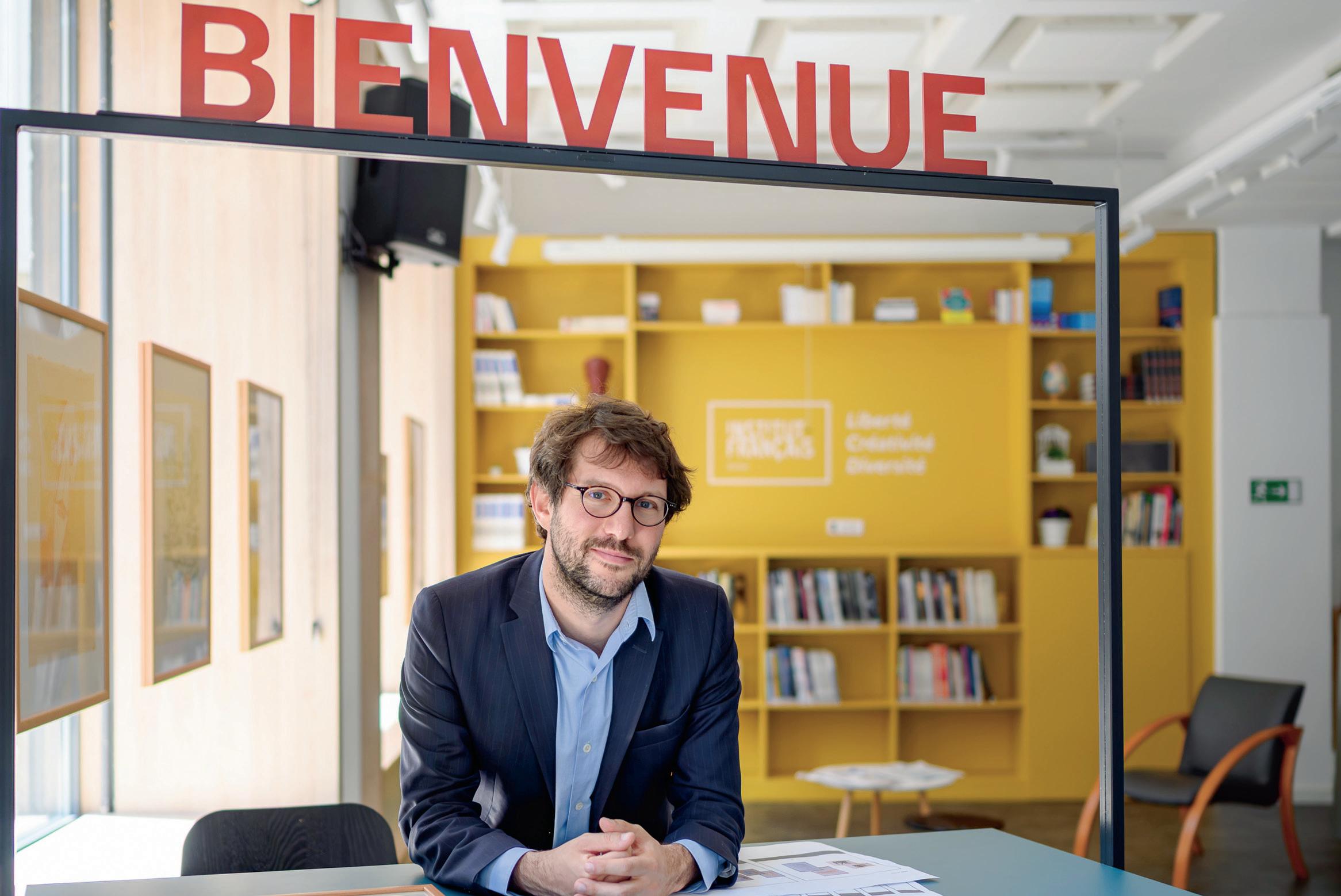
At a time of growing geopolitical uncertainty and rapid technological change, cultural diplomacy is taking on a broader role. Under the leadership of Amos Reichman, the French Institute in Serbia is expanding its activities beyond the traditional cultural sphere, bringing together education, science, innovation and public debate. From promoting the French language and academic mobility to supporting sustainability initiatives and regional cooperation, the Institute is positioning itself as a platform for dialogue and a bridge between Serbia, France and Europe.
Mr Reichman, you recently took over as Director of the Institut français de Serbie. What would you identify as your main priorities in strengthening cultural, educational and intellectual ties between France and Serbia in the years ahead?
— France and Serbia share a long-standing friendship. Preserving this legacy is essential if we are to prepare together for the future.
Promoting the learning of French in Serbia is one of my top priorities. French is the fourth most widely spoken language in the world. It is the language of diplomacy and trade, literature and science. We are working to ensure that French continues to be widely spoken and studied in Serbia. I would also like to emphasise the opportunities available to young Serbs to pursue their studies in France. Every year, nearly 650 Serbian students choose France
as their destination for higher education. It is through these exchanges that the future of Franco-Serbian relations is shaped.
Finally, I would like to highlight culture. France and Serbia have much to share. I am thinking particularly of literature, which we celebrate during the Journées Molière; cinema, through our French Film Festival; and the exhibitions we regularly organise at the French Institute.
The French Institute increasingly connects culture with science, innovation and public debate. How do you see the role of cultural institutions in addressing major contemporary issues such as artificial intelligence, sustainability and social change?
— Contemporary issues such as artificial intelligence, climate change and social transformation are not only technological or economic challenges; they are also cultural and ethical questions.
Artificial intelligence, for example, raises issues that extend far beyond technology itself. We have a responsibility to foster informed discussions on these matters, which is precisely what we seek to achieve through events such as the Serbian-French Innovation Forum, dedicated this year to the future of healthcare.
Through projects such as EkoOpština –a competition for cities and schools aimed at promoting sustainable development and combating climate change – we encourage exchanges of expertise between France and Serbia, promote European standards and engage local stakeholders. It is also an
excellent example of how cultural diplomacy can support local action in response to global transitions.
France and Serbia maintain strong cooperation in higher education, research and academic mobility. Which areas of scientific and university collaboration do you believe hold the greatest potential for future development?
— Academic mobility remains at the heart of our partnership.
In line with our strategic priorities, we pay particular attention to students pursuing studies in STEM disciplines – science, technology, engineering and mathematics – as these skills are essential for addressing the transformations shaping our world.
However, I believe the future lies in interdisciplinary fields that address global challenges. Artificial intelligence, for example, requires not only technological innovation, but also expertise in the social sciences, ethics and public policy.
Health sciences and biotechnology represent another strategic area. Bringing together researchers and universities across Europe while investing in the next generation of scientists and innovators is essential to preparing for the future.
Earlier this year, we organised a One Health hackathon with the Science and
Technology Park Belgrade to encourage students from different disciplines to collaborate and develop innovative responses to global health and environmental challenges. Initiatives such as these help prepare the next generation of scientists to work across traditional boundaries.
The French Institute is present not only in Belgrade, but also in Novi Sad and Niš, while many of its programmes have a regional dimension. How important are decentralisation and regional cultural cooperation for the future of French cultural diplomacy in Southeast Europe?
— The strength of the French Institute in Serbia lies in its nationwide presence.
We have a rich programme of events not only in Belgrade, but also in Novi Sad and Niš. I regularly travel throughout the country and was recently in Valjevo and Vranje. Everywhere I go, I encounter that very special bond between France and Serbia, which we continue to nurture.
We are also expanding our activities at a regional level. I am thinking, for example, of Teatroskop, a programme of the French
Serbia lies at the heart of Europe, both geographically and historically. It is these intellectual and human ties between Serbia and Europe that we continually seek to strengthen
Institute that supports the performing arts across Southeast Europe from Belgrade.
We also strive to facilitate the movement of our guests across the region. Recently, the French writer Olivier Guez gave a lecture in Belgrade following an event in Budapest, while historian Bernard Lory travelled to Skopje after delivering lectures in Belgrade and Niš.
We always keep this regional dimension in mind, as many of the challenges faced by countries in Southeast Europe are shared.
In a period marked by geopolitical uncertainty and rapid technological transformation, what role can culture, literature and the exchange of ideas play in preserving dialogue and strengthening European values?
— We are living through a period of considerable uncertainty, which can give rise to anxiety and, at times, fear.
It is precisely in moments such as these that culture, literature and knowledge become more essential than ever. We are heirs to the European Enlightenment, which placed reason and critical thinking at the heart of public life. It is precisely this legacy that we need today. That is why, at the French Institute, we offer a rich programme of debates and strive to organise at least one discussion every month on issues that are essential to understanding our present.
Our focus is also on Serbia’s integration into Europe. Serbia lies at the heart of Europe, both geographically and historically. It is these intrinsic intellectual and human ties between Serbia and Europe that we continually seek to strengthen through the work of the French Institute.
Predictability as the New Competitive Advantage
A predictable business environment, European integration and sustainable business practices are becoming key factors in strengthening Serbia’s competitiveness and maintaining its attractiveness to investors
Investors today are looking not only for market potential, but also for stability, transparent rules and longterm predictability. At the same time, European regulations, ESG standards and digital transformation are becoming an integral part of corporate business strategies. Sanja Ivanić explains how companies in Serbia are adapting to new business requirements and how European integration can further improve the investment climate.
In a period of major economic and geopolitical change, which activities does CCIFS consider most important for improving the business environment and strengthening investor confidence in Serbia?
— We believe that preserving a predictable and stable regulatory environment, continuing structural reforms and strengthening institutional dialogue between businesses and policymakers are essential.
For investors, trust is built through transparency, legal certainty and the consistent implementation of regulations. This is why the French-Serbian Chamber of Commerce and Industry actively works to connect companies, institutions and the professional community in order to identify challenges and propose practical solutions that contribute to a more competitive business environment. At the same time, we believe Serbia’s EU integration process plays a vital role in enhancing the country’s investment attractiveness. Aligning the regulatory framework with EU practices and implementing reforms linked to the accession process sends
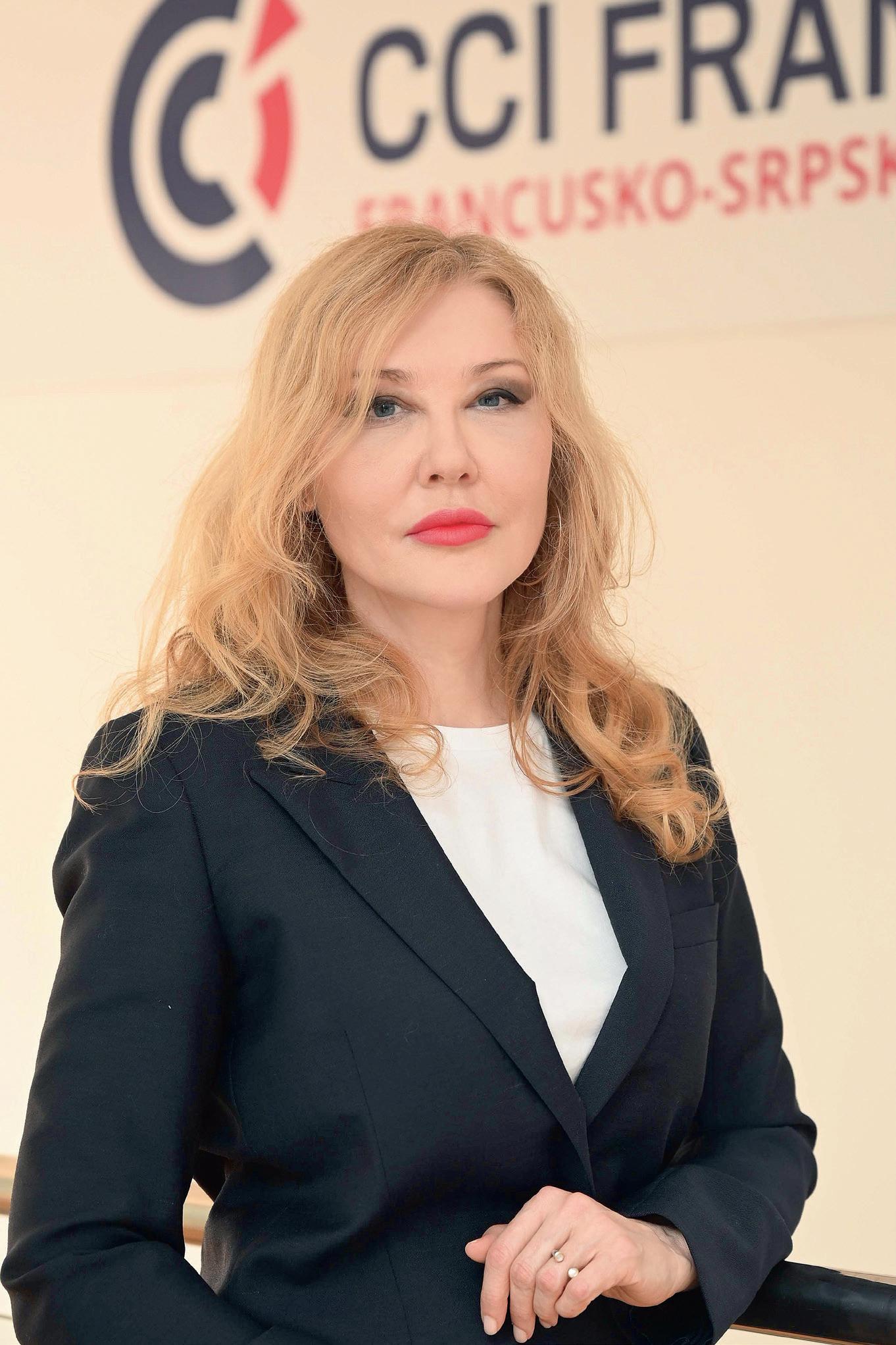
a strong signal to international investors that Serbia remains committed to long-term economic stability and sustainable development.
Our goal is to work together with our members and partners to create an environment that encourages investment, innovation and sustainable growth, while strengthening economic ties between Serbia and France.
European integration remains one of the key frameworks for the development of the Serbian economy. How does CCIFS help its members prepare for alignment with European regulations, particularly in the areas of sustainability, digitalisation and corporate governance?
— European integration provides an important framework for improving competitiveness and modernising business operations in Serbia. That is why one of the Chamber’s priorities is to provide its members with timely information and practical support in aligning with European regulations.
Through workshops, seminars and expert events, we address topics such as sustainability, ESG standards, energy, digital transformation and corporate governance. We also regularly organise educational events on European regulations such as CBAM.
We are particularly active through the Chamber’s ESG Club and Energy Club, which bring together companies interested in sustainability, the energy transition and the implementation of new business standards.
As a member of CEBAC, the Council of European Business Associations and Chambers in Serbia, we also maintain close cooperation with the EU Delegation to Serbia, enabling us to keep our members informed about the latest European initiatives and regulatory developments.
Our goal is to help companies see European regulations not only as an obligation, but also as an opportunity for growth, innovation and enhanced competitiveness.
Sustainability and ESG standards are becoming an integral part of corporate strategy. How far have French compa-
nies in Serbia progressed in this area and which examples of best practice would you particularly highlight?
— French companies have traditionally attached great importance to sustainability and ESG principles, as they have long been embedded in their global business strategies. In Serbia, we see many of them actively investing in energy efficiency, reducing CO₂ emissions, responsible resource management, and the development of local communities and employees.
Importantly, sustainability is no longer simply a matter of regulatory compliance; it is becoming a key element of competitiveness and long-term
Aligning Serbia’s regulatory framework with EU practices sends a strong message to international investors that the country remains committed to long-term economic stability and sustainable development
business development. Among our members, there are numerous examples of best practice in green energy, corporate social responsibility and corporate governance. Companies such as Veolia, Belgrade Airport and Schneider Electric demonstrate that sustainability has become an important driver of longterm growth.
Business resilience today means being able to adapt to changes coming from different directions – from market disruptions to technological transformation. How would you assess the readiness of companies in Serbia to respond to these challenges?
— Over recent years, companies in Serbia have demonstrated considerable resilience and adaptability in responding to various crises and changes. However,
they are increasingly facing the challenge of an unpredictable business environment, which makes long-term planning and investment decisions more difficult.
The issue is not only market or technological change, but also the fact that certain rules and measures are sometimes introduced unexpectedly, without sufficient time for companies to adapt or without prior consultation with the business community. There are situations in which companies only learn about new import restrictions at the border or new measures are introduced overnight, creating additional uncertainty and operational challenges.
That is why we believe that, alongside companies’ ability to adapt, a predictable regulatory environment and continuous dialogue between businesses and institutions are of crucial importance. Such an approach strengthens business resilience, preserves investor confidence and supports long-term economic development.
EXPO 2027 represents a unique opportunity to promote Serbia and the region. How are CCIFS members preparing for this event and where do you see the greatest potential for new investments and Franco-Serbian partnerships?
EXPO 2027 represents an exceptional opportunity to promote Serbia, attract new investment and strengthen international business links. The French-Serbian Chamber of Commerce and Industry is partnering with COFREX, the French state agency responsible for organising the French Pavilion, and we are actively informing our members about the event itself, as well as the tenders and business opportunities published by COFREX and other organisations involved in EXPO.
— We are also planning a series of activities during the exhibition in cooperation with our members. We see EXPO as an excellent opportunity to further promote Serbia among French companies and investors, while also creating new partnerships and connections between French companies already operating in Serbia and domestic and international business stakeholders.
The Woman Who Gave Cartier Its Soul
Fifty years after her death, Jeanne Toussaint remains one of the most influential women in the history of luxury, transforming Cartier from a celebrated jeweller into a global symbol of French elegance, artistic freedom and timeless savoir-faire
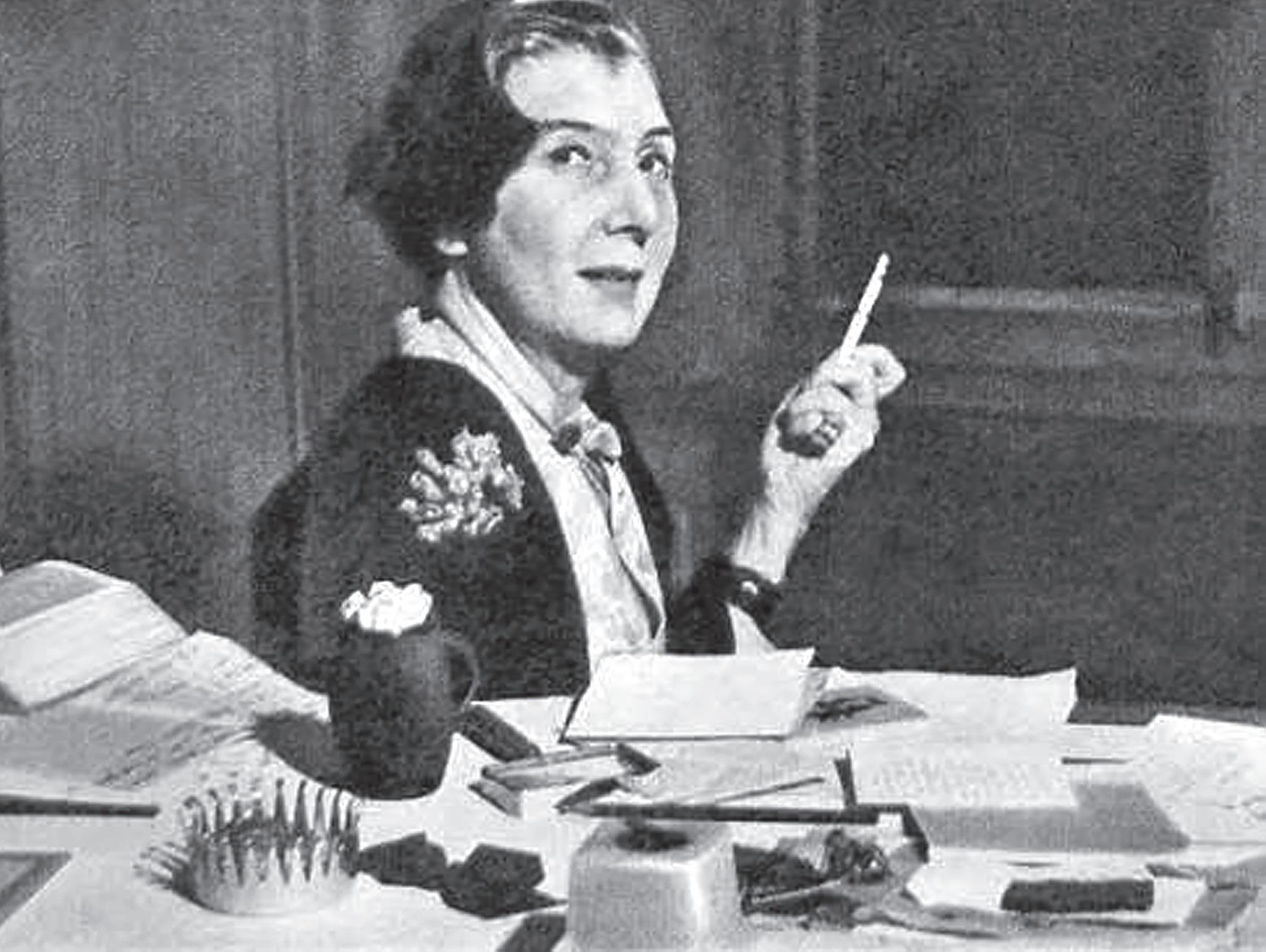
Few people outside the world of high jewellery recognise the name Jeanne Toussaint. Yet few individuals have left a deeper mark on the identity of modern luxury. Half a century after her death, the woman who transformed Cartier’s creative vision continues to shape the way the world understands French elegance. Her greatest creation was not a single jewel or the famous panther that became
synonymous with the Maison. It was an enduring philosophy: that true luxury is born where exceptional craftsmanship meets imagination, courage and timeless design.
Born in Belgium in 1887, Jeanne Toussaint arrived in Paris at the dawn of the twentieth century, when the French capital was becoming the undisputed centre of fashion, art and culture. Intelligent, independent and blessed with remarka-
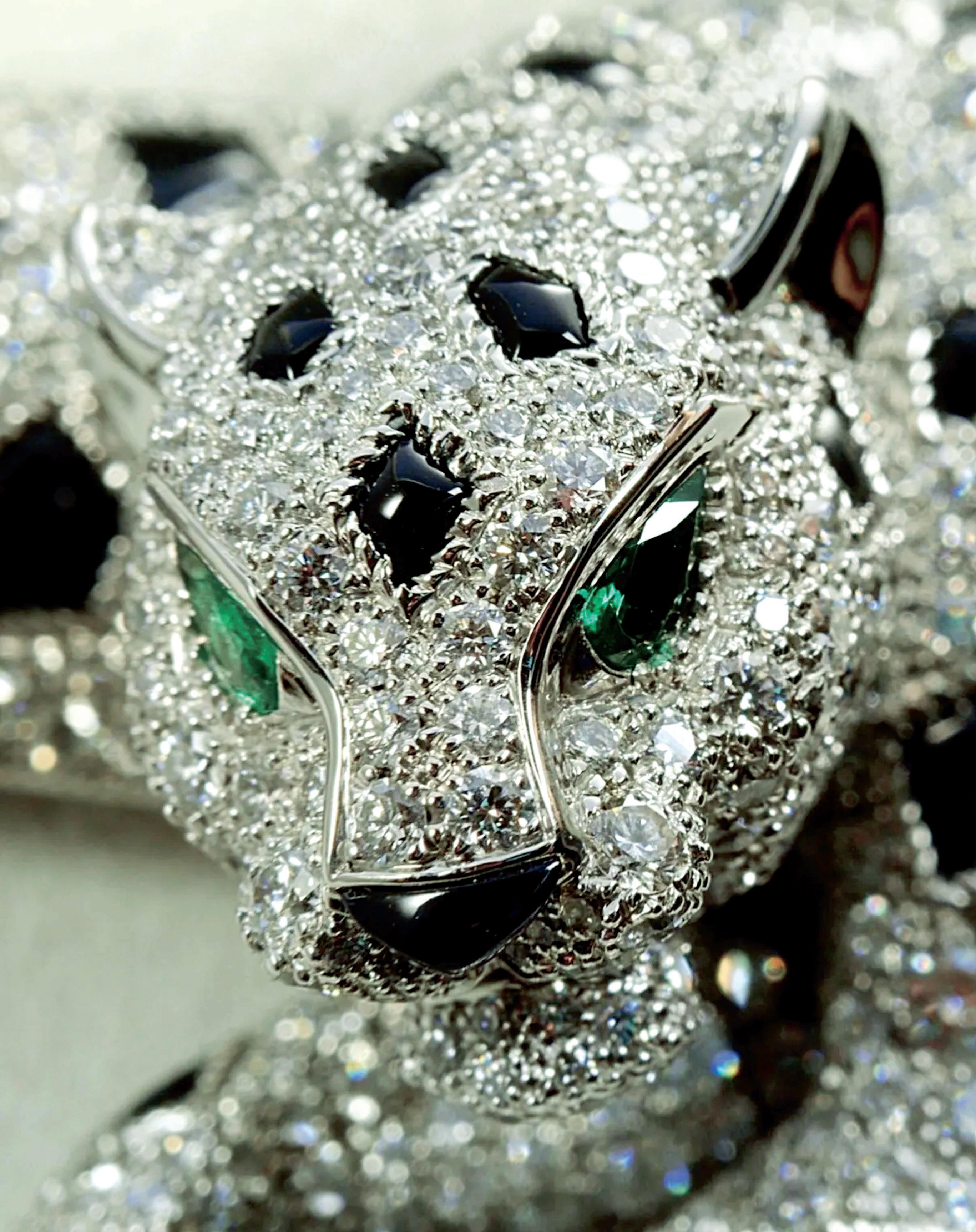
Cartier Panthère Courtesy of Cartier
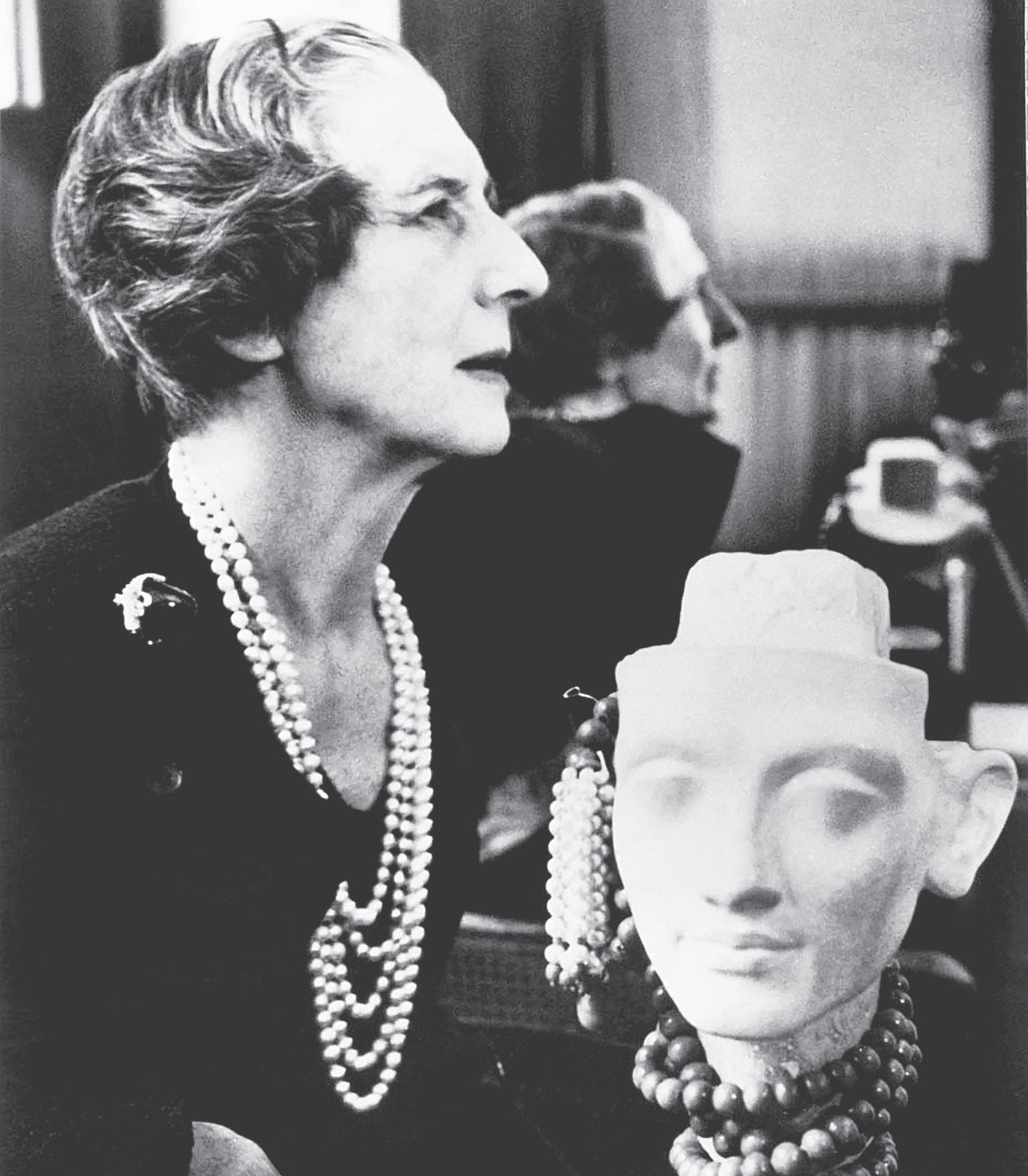
ble aesthetic instincts, she soon attracted the attention of Louis Cartier. Their personal relationship eventually ended, but their creative partnership would redefine the history of one of France’s greatest luxury houses.
In 1933, at a time when very few women occupied senior leadership positions in major com-
panies, Louis Cartier appointed Toussaint Creative Director of Cartier Fine Jewellery. The decision was revolutionary. Luxury houses were still overwhelmingly shaped by men, yet Cartier entrusted its artistic future to a woman whose confidence, intuition and uncompromising standards had already become legendary.
She brought an entirely new language to jewellery.
Inspired by nature, architecture, distant cultures and modern art, Toussaint rejected excessive ornamentation in favour of bold sculptural forms, vivid gemstones and unexpected colour combinations. Her creations reflected movement rather than symmetry, personality rather than convention. Jewellery was no longer sim -
The greatest luxury is not a jewel, but the vision that allows beauty, craftsmanship and imagination to become timeless
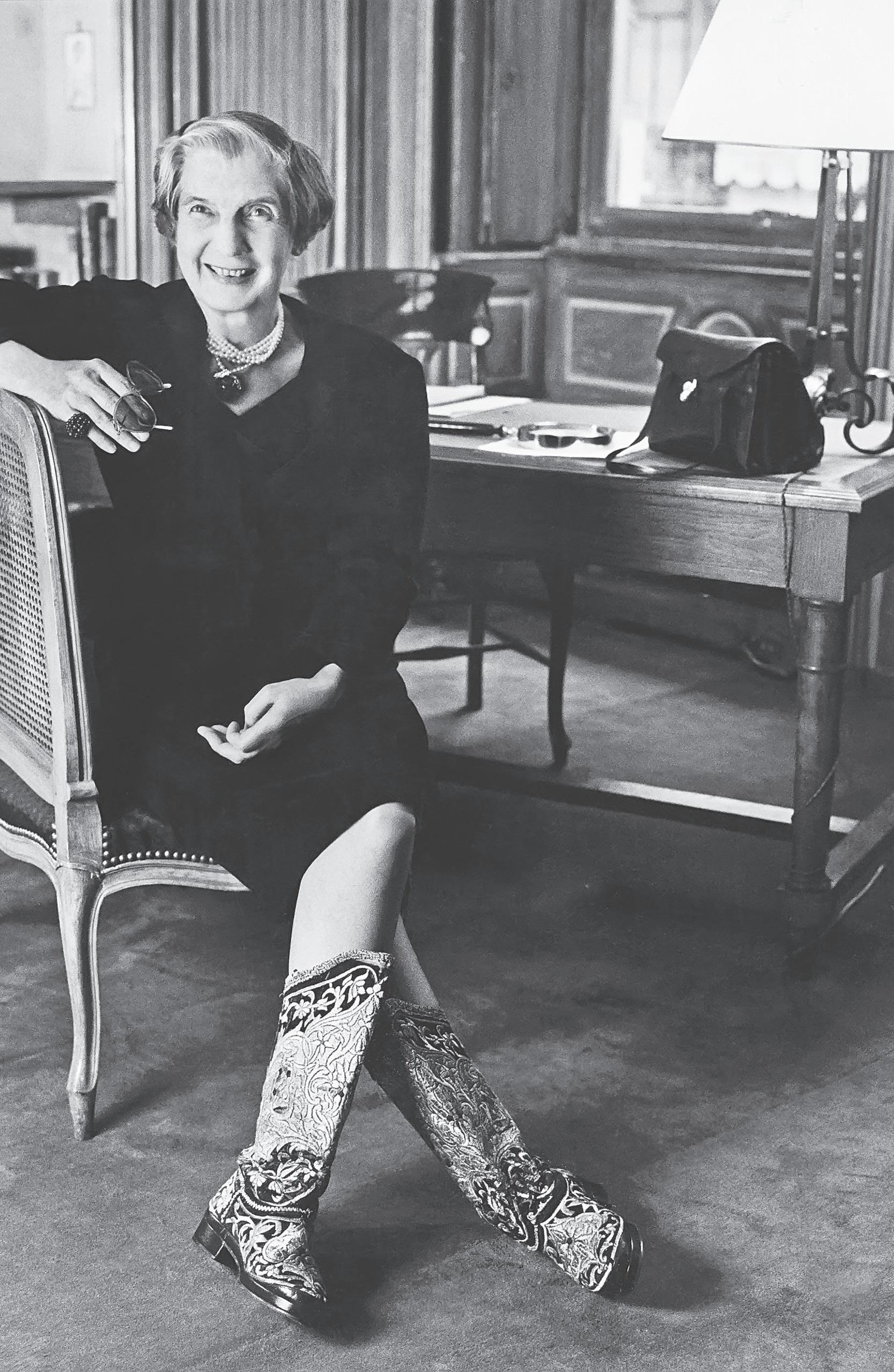
ply an object of wealth; it became an expression of character.
Nothing symbolised that transformation more than the panther.
Originally introduced as a decorative motif in the early twentieth century, it was Jeanne Toussaint who transformed the panther into Cartier’s defining emblem. Under her direction, the animal evolved into a three-dimensional work of art—powerful yet elegant, fierce yet graceful. Over the decades it became inseparable from the Maison itself, embodying confidence, independence and refined strength.
The panther also attracted extraordinary women.
Among its most devoted admirers was the Duchess of Windsor, Wallis Simpson, whose spectacular commissions helped establish Cartier as the jeweller of royalty, aristocracy and international high society. Royal families, Maharajas, Hollywood stars and collectors from around the world sought creations that carried Toussaint’s unmistakable signature—pieces that balanced artistic daring with impeccable craftsmanship. Her influence extended far beyond individual commissions.
Leading Cartier through the difficult years surrounding the Second World War, Jeanne Toussaint safeguarded the Maison’s creative identity at a time when Europe itself was being transformed. She demonstrated that innovation need not abandon tradition; rather, tradition could become the foundation for continuous reinvention. That philosophy remains at the heart of French luxury today.
In many ways, Toussaint anticipated the modern creative director. Long before the term became fashionable, she understood that great luxury brands are built not only on products but on stories, symbols and emotional connection. The most valuable asset of a maison is often not what it produces, but what it represents.
That insight continues to define Cartier nearly a century later.
Today, the panther remains one of the world’s most recognisable luxury symbols, while Cartier itself stands as an ambassador of French excellence, craftsmanship and artistic heritage. Although generations have passed since Jeanne Toussaint last entered the Maison’s workshops on Rue de la Paix, her creative vision continues to inspire every new collection.
Fifty years after her death, Jeanne Toussaint’s legacy is measured not only in extraordinary jewels, but in something far more enduring. She proved that true leadership is often quiet, that elegance can be revolutionary, and that the soul of a great brand is created not by marketing, but by vision.
CULTURAL HERITAGE

When Paris Dreamed in Belgrade
Long before Paris and Belgrade became strategic partners, they were connected by something far more elusive: imagination
Amajor exhibition at the French Institute in Belgrade offers a timely reminder of a remarkable cultural connection: one of the most important chapters of European Surrealism was written not only in Paris, but also in Belgrade.
The history of Franco-Serbian relations is often told through diplomacy, political alliances and economic cooperation. Yet one of their most fascinating connections emerged in a far less expected realm – Surrealism.
This summer, the exhibition Surrealism on Paper: The Eye in a Wild State, currently on view at the French Institute in Belgrade until 10 July, offers a unique opportunity to revisit that extraordinary chapter of European cultural history. Conceived around the legacy of André Breton, the founder of Surrealism, the exhibition presents not only masterpieces of the historical movement, but also reveals a lesser-known truth: Belgrade was
one of the few European cities outside France to develop an authentic Surrealist movement of its own.
That fact may surprise many today.
When Surrealism emerged in Paris in the early 1920s, Europe was still recovering from the devastation of the First World War. André Breton, poet, writer and theorist, envisioned a new artistic language that would liberate the human mind from the constraints of reason. Drawing inspiration from Sigmund Freud’s theories of the unconscious, Surrealism embraced dreams, automatic writing, unexpected associations and radical freedom of expression.
It quickly became one of the most influential artistic and intellectual movements of the twentieth century.
But unlike many avant-garde movements that remained confined to their country of origin, Surrealism travelled remarkably well. And nowhere did it take root more naturally than in Belgrade.
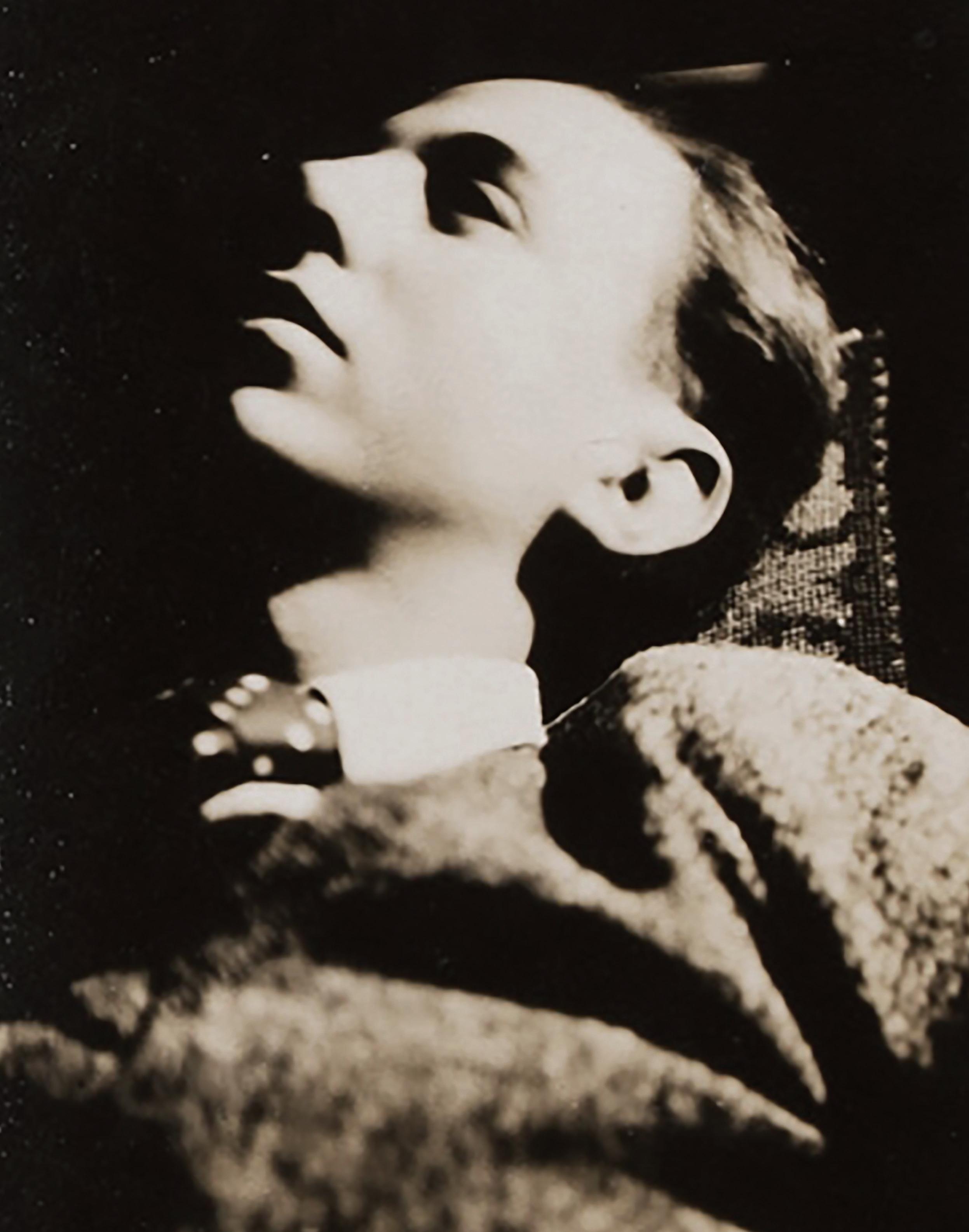
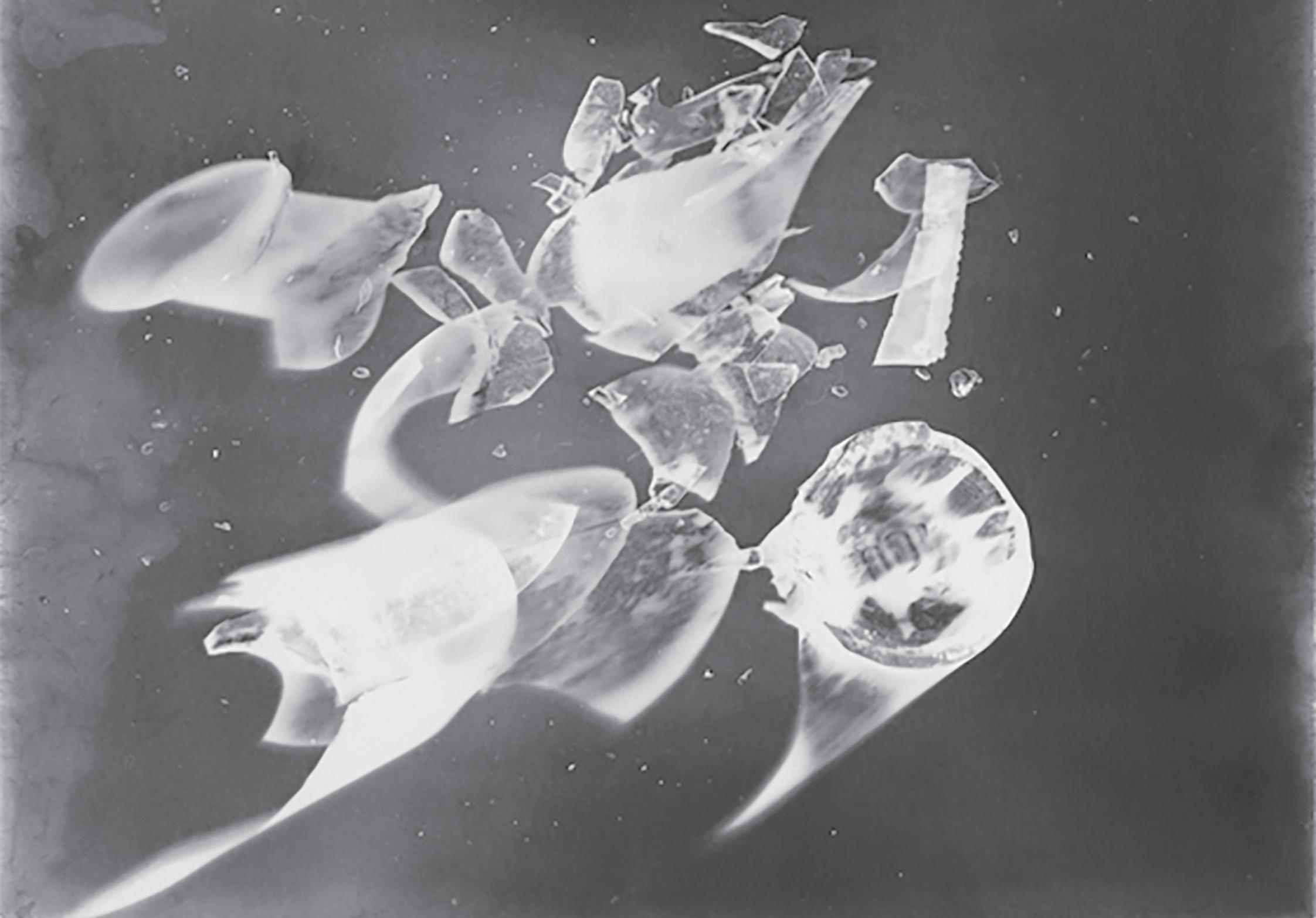
During the 1930s, a group of young Serbian artists, writers and intellectuals developed a distinct Surrealist scene that entered into direct dialogue with Paris. Far from being mere followers of Breton’s ideas, they created an original artistic language while maintaining close ties with their French counterparts.
Among them, one figure stands out: Stevan Živadinović Vane Bor.
Today regarded as one of the most important representatives of Serbian Surrealism, Vane Bor occupies a unique place in the history of European avant-gardes. His work embodies the intense artistic exchanges between Paris and Belgrade and reminds us that cultural innovation rarely respects national borders.
The current exhibition, realised in cooperation with the Museum of Contemporary Art in Belgrade, features six of his works, placing him alongside some of the greatest names associated with Surrealism – André Masson, Max Ernst, Salvador Dalí, Roberto Matta, Hans Bellmer, Leonor Fini and many others.
Few people realise that Belgrade was one of the rare European cities outside Paris to develop an authentic Surrealist movement of its own
Yet perhaps the exhibition’s greatest achievement lies elsewhere.
Rather than presenting Surrealism as a historical phenomenon confined to museums and archives, it demonstrates its extraordinary ability to reinvent itself. The exhibition traces its evolution from the historical movement to its post-war transformations, revealing its enduring influence on abstraction, experimental photography, informal art and contemporary visual languages.
Paper itself occupies a central role in this story. More than a simple medium, it became a space of artistic freedom, allowing artists to explore automatic writ-
ing, collage, drawing and the spontaneous expression of the unconscious. Its fragility became its strength.
This year also marks two important anniversaries – 130 years since the birth and 60 years since the death of André Breton (1896–1966). Yet his legacy feels remarkably contemporary. In an age dominated by algorithms, artificial intelligence and endless streams of information, Surrealism’s invitation to embrace imagination, ambiguity and uncertainty may be more relevant than ever. Perhaps this is why the exhibition resonates so strongly today.It reminds us that Surrealism was never merely an artistic movement. It was a way of thinking, a method of questioning reality and an invitation to see the world differently.
And it also reminds us that, long before contemporary notions of cultural diplomacy entered our vocabulary, France and Serbia were already connected through a shared intellectual adventure.
Paris may have invented Surrealism, but Belgrade helped give it another home.