All rights reserved alliance international media 2026
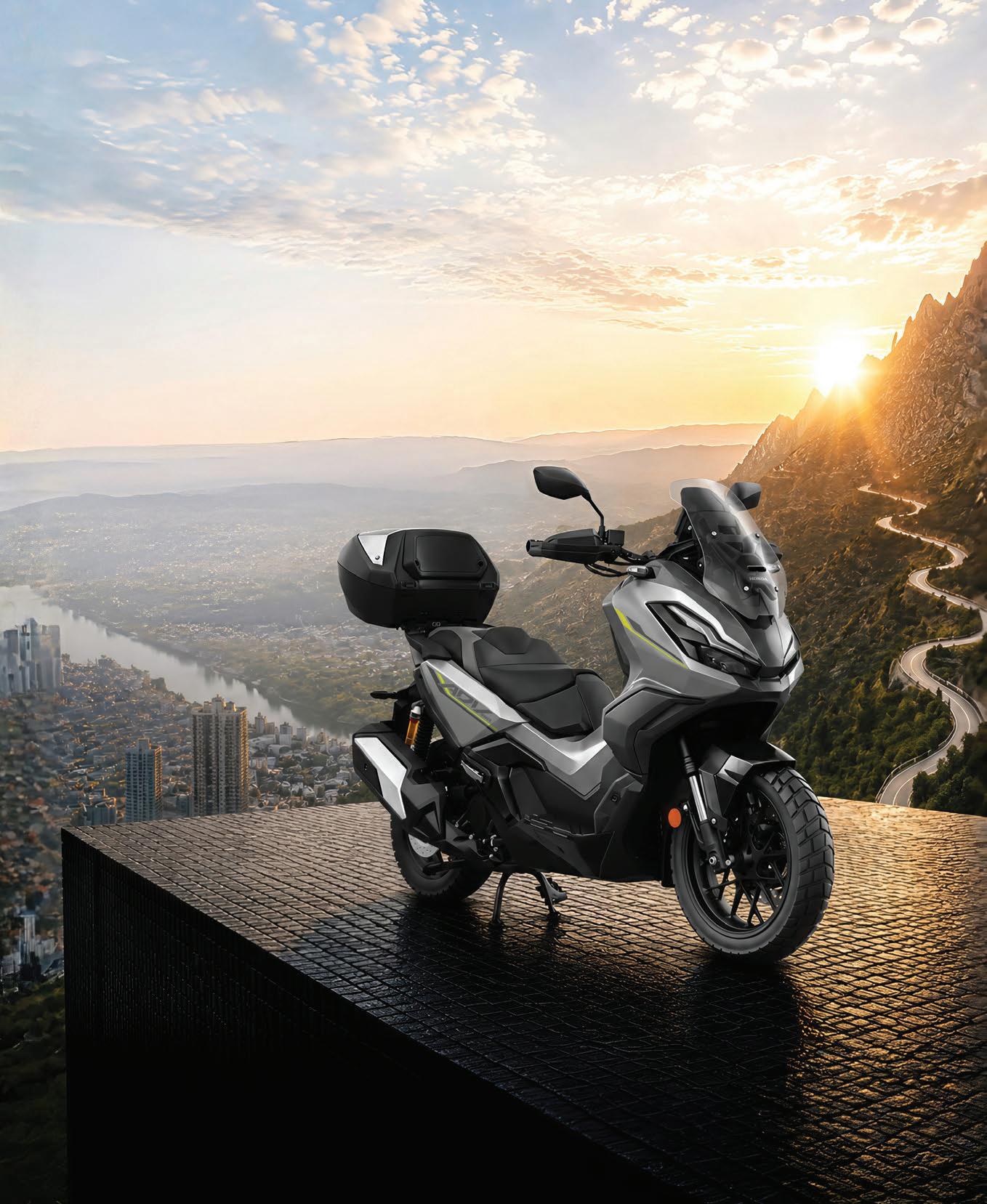
Tvoj već danas.
00%% KAMATE
FIKSNA RATA MESEČNO 22.999 RSD UČEŠĆA
HONDA ADV350: cena 919.960,00 RSD; učešće 0,00 RSD; iznos kredita 919.960,00 RSD; period otplate 40 meseca; NKS godišnje 0% p.a.; mesečni anuitet 22.999,00 RSD; EKS 0,02% p.a.; Kamata stopa je fiksna tokom celog perioda otplate kredita. U EKS ulazi trošak obrade zahteva 0,00%, naknada za vođenje iRačuna 0,00 RSD, trošak menice: 50,00 RSD, trošak povlačenja izveštaja kreditnog biroa: 246,00 RSD. Ponuda je primenljiva isključivo na vozila za koje je oglašeno beskamatno finansiranje. ’Budite odgovorni, pozajmljivanje novca košta.
COMMENT
The Hidden Costs of Conflict
While
financial markets have largely shrugged off the recent Iran conflict, its deeper consequences are likely to reshape energy markets, supply chains and economic prospects far beyond the Middle East
he ceasefire between Iran and Israel may have eased immediate fears of a wider regional war, but it has done little to dispel the uncertainty hanging over the global economy. If anything, the conflict has highlighted a growing paradox of our time: financial markets recover quickly, while the economic consequences of geopolitical crises often unfold slowly and are felt far from the battlefield.
TOil prices reacted sharply to every military escalation and diplomatic announcement before stabilising once the immediate threat appeared to subside. Equity markets, particularly in the United States, continued their upward trajectory, fuelled by investor optimism surrounding artificial intelligence and expectations of resilient econom-
ic growth. Such resilience, however, can create a misleading impression that the global economy has escaped largely unscathed.
History suggests otherwise. Energy markets remain exceptionally sensitive to disruptions affecting the Gulf region, through which a significant share of global oil and liquefied natural gas supplies continues to pass. Even temporary interruptions increase costs throughout supply chains, affecting transport, manufacturing, agriculture and countless industries that rely directly or indirectly on energy-intensive production.
The impact is particularly significant for developing economies. Unlike advanced countries, many lack the fiscal capacity to cushion households and businesses against higher energy prices or to absorb prolonged supply disruptions. Rising fuel costs quickly translate
Markets may recover quickly from geopolitical shocks, but economies often bear their consequences for years
into more expensive food, fertilisers, transport and industrial inputs, placing additional pressure on economies that are still recovering from the effects of the pandemic, inflation and tighter global financial conditions.
The consequences extend well beyond energy itself. Modern manufacturing depends on complex global supply chains whose stability increasingly determines economic competitiveness. Every geopolitical shock reinforces the trend towards diversification of suppliers, greater investment in strategic infrastructure and the search for more
resilient trade routes. While these adjustments strengthen long-term security, they also require substantial investment and inevitably increase costs in the short term.
For Europe, the crisis reinforces the importance of energy diversification and strategic resilience. For emerging economies, it serves as another reminder that geopolitical instability carries an economic price that cannot easily be avoided. And for businesses everywhere, the lesson is equally clear: resilience has become as important as efficiency
For Southeast Europe and the Western Balkans, the implications are equally significant. Although geographically removed from the conflict, the region remains highly exposed to fluctuations in energy prices, disruptions to European supply chains and shifts in investment sentiment. Strengthening regional connectivity, diversifying energy sources and accelerating economic integration with the European Union will therefore remain essential to long-term resilience.
The events of recent weeks demonstrate that the world’s economic challenges no longer arise solely from inflation, interest rates or technological disruption. Increasingly, they are shaped by geopolitical uncertainty, fragmented supply chains and the growing intersection between security and economics. Markets may adjust rapidly to each new headline, but governments, companies and citizens must prepare for a future in which geopolitical risk is no longer an exception—it has become a defining feature of the global economy.
— CorD Editorial
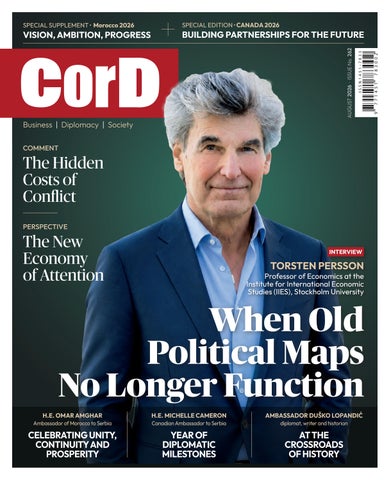
When Old Political Maps No Longer Function
The work of Professor Torsten Persson reveals why new political parties emerge when social conflicts no longer fit the familiar lines of political competition, and how their arrival can turn neglected demands into new struggles over power, policy and representation
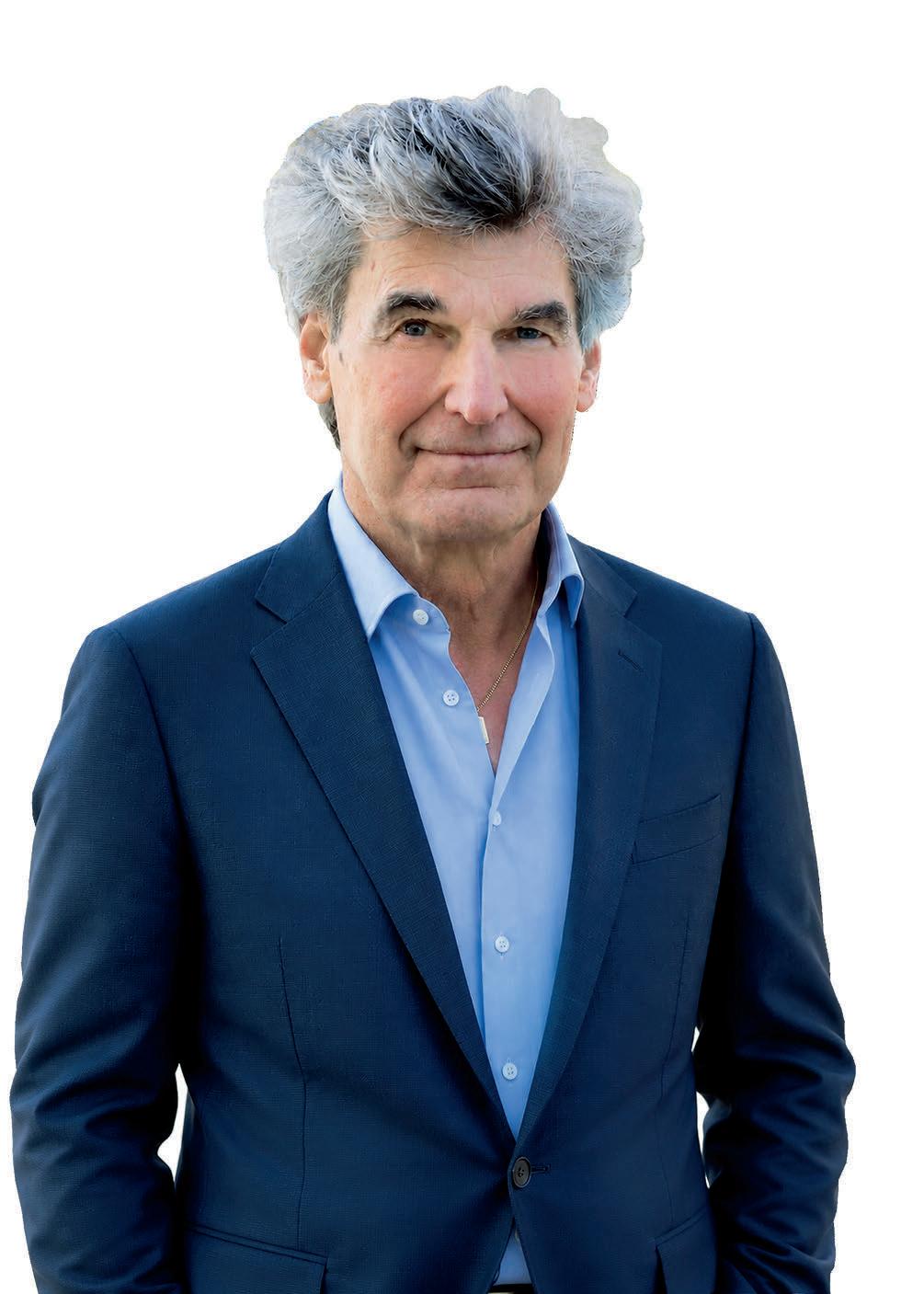
Torsten Persson Professor of Economics at the Institute for International Economic Studies (IIES), Stockholm University
By Tanja Jakobi
Over the past decade and a half, new political forces have moved from the margins towards the centre of European politics, entering parliaments, reshaping coalitions and forcing onto the agenda issues that established parties had struggled to absorb. From sovereignty and climate to inequality, corruption and cultural identity, their rise suggests that older political divides no longer explain enough about how citizens vote, what they demand and whom they trust.
This is the kind of change that Stockholm University’s Professor Torsten Persson has spent years modelling. Working often with Tim Besley, he has approached party entry as a problem in political economics, seeking to answer why new actors appear, whose interests they carry into the arena, and how their presence alters the bargaining among parties once votes are counted.
When social groups feel that existing parties no longer represent their views, the entry of new political actors may be a sign that democracy is trying to correct itself
In Belgrade, Persson placed party entry in a longer historical framework. New parties, he argued, tend to appear when existing divisions no longer capture what voters care about. In the 20th century, the rise of new leftist parties helped make economic class the central axis of competition. The picture today is layered: economic conflict has not gone away, but it increasingly runs alongside culture, the environment and migration, and which ways a culturally defined group leans on redistribution deter-
mines where a new party can find leverage.
Ultimately, the significance of new parties lies less in the votes they win than in their ability to reshape governing coalitions and influence policy priorities.
Speaking in this interview for CorD, Professor Persson reflects on whether new political actors point to democratic failure or democratic renewal, how economic and cultural conflicts interact, and what their ri se means for governance and institutional trust.
New parties have emerged in many countries by mobilising conflicts around globalisation, migration, sovereignty, inequality and identity. From the perspective of your work, should these parties be understood as a symptom of democratic failure or as a form of democratic correction?
CONVERGENCE
New parties become stronger when economic insecurity and cultural identity push the same groups in the same political direction
REALIGNMENT
Political systems adapt to major shocks differently, with flexible systems allowing new parties to emerge and entrenched systems forcing change within existing parties
PUSHBACK
Economic policy cannot fully address political backlash when people want not only compensation, but also secure jobs, social status and greater national control
— There is no single answer, independent of country and time context. My work with Tim Besley suggests that party entry may reflect the fact that certain groups in society do not feel that their views are well represented by existing parties. Descriptive work in political science suggests that this applies to new political parties, whether they are green or radical-right in orientation.
Is the rise of new parties today driven more by material insecurity, cultural identity, or the way these two dimensions interact and align?
— I believe that the two conflicts interact, depending on whether those who hold certain culturally motivated views, on average, lean left or right on traditional redistributive issues. This interplay will determine in which kind of coalitions a new party can gain most influence on policymaking.
New political actors can give voice to groups excluded from established institutions, but their rise also raises difficult questions regarding governing capacity, trust and political responsibility
Much economic analysis assumes that political backlash to globalisation or technological change can be managed through redistribution. But if voters are also responding to concerns about status, belonging and national control, what can economic policy realistically address in such contexts? — Indeed, traditional arguments about redistribution and compensation may not take those motives into account. Such social concerns suggest one way to understand popular demands for “pre-distribution” – i.e., demands to
preserve gross (rather than net) incomes, by saving the jobs threatened by, say, trade or technology shocks.
New parties often give voice to groups that feel excluded from established institutions. Does this strengthen democratic representation, or does it also create risks for governing capacity and institutional trust?
— It can do both at the same time! Our own research (Dal Bo et al, Review of Economic Studies 90, 675–706, 2023) on the Sweden Democrats – a populist radical-right party in Sweden –suggests that this party has given increased representation to previously underrepresented economic and social outsider groups in Sweden. At the same time, these new politicians have lower education, less experience, lower public-service motivation, and worse morals than politicians from traditional parties.
Are smaller or less institutionally entrenched democracies more vulnerable to disruptive political realignment, or can more flexible party systems adapt more effectively to emerging conflicts?
— As you suggest, dealing with large shocks may require political realignment. In countries with lower barriers to political entry, we often see multiparty systems (due to proportional representation elections). There, realignments may involve the entry of new parties and new political coalitions. In countries with higher barriers, we sometimes have two-party systems (due to majoritarian elections). In such cases, realignments may have to occur within parties, which in turn may require large adjustments of party memberships, or leaderships.
Year of Diplomatic Milestones
The 85th anniversary of diplomatic relations between Ottawa and Belgrade provides an excellent opportunity to reflect on a relationship marked by mutual respect, strong peopleto-people ties, and a long tradition of dialogue. Our countries cooperate across trade, investment, education, science, culture and multilateral engagement ~ Michelle Cameron
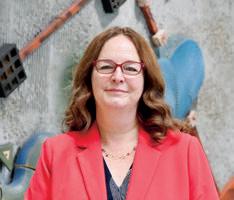
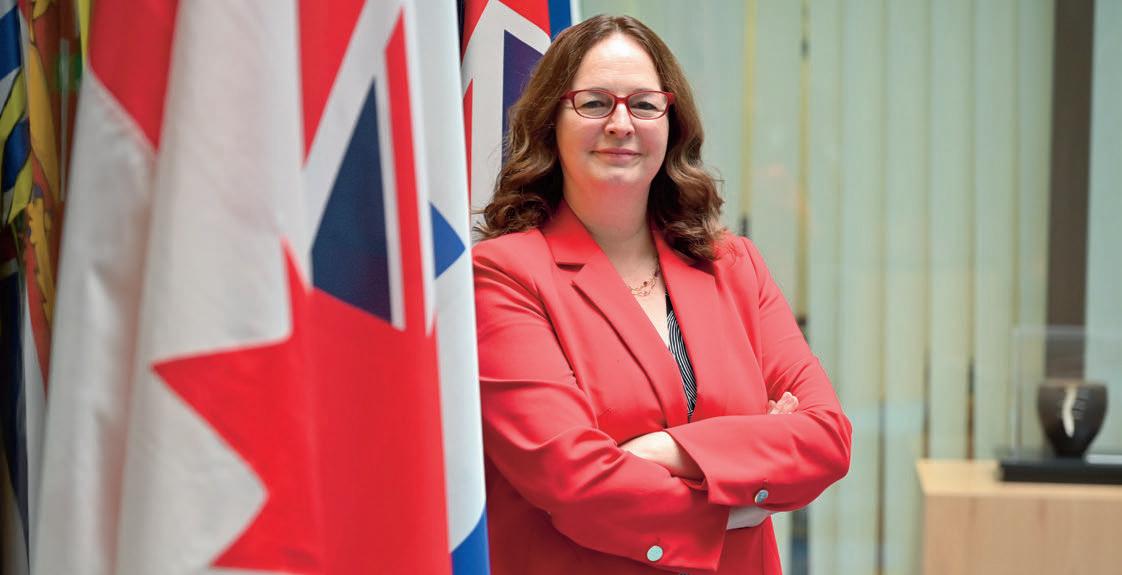
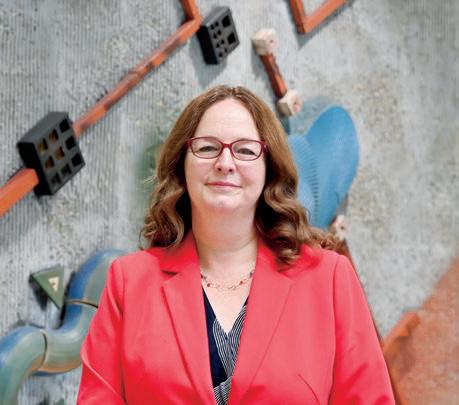
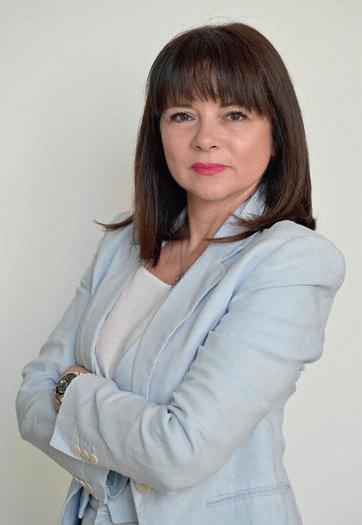
H.E. Michelle Cameron Canadian Ambassador to Serbia
By Ljubica Gojgić
In this year marking an anniversary of the establishing of bilateral diplomatic relations, cooperation between Serbia and Canada is also strengthening on the economic front. Still, a section of the Serbian public is critical of potential Canadian investments in mining, concerned over the pollution associated with the industry. Speaking in this CorD Magazine interview, the Canadian ambassador notes Serbia’s long mining tradition and the obligation of Canadian companies to adhere to the country's laws and achieve high standards. “My response isn’t to dismiss the concerns - it’s to say that they should be brought to the table, examined publicly, and answered with real factual information,” says ambassador Cameron
Your Excellency, this year marks the 85th anniversary of diplomatic relations between Ottawa and Belgrade. After nearly two years in Belgrade, how would you assess the current state of bilateral relations?
— The past year has been a spectacular one for our relationship! We’ve celebrated so many milestones: the 85th anniversary of diplomatic relations between Ottawa and Belgrade; establishment of Canada-Serbia Parliamentary friendship groups in both countries, a ministerial visit, increases in trade, the re-establishment of a direct flight, and so much more!
So, a short response would be to say that the state of bilateral relations has been invigorated, with positive forward momentum. After nearly two years in
MOMENTUM
Our bilateral relationship has been invigorated, with positive forward momentum and remains full of potential
Belgrade, I would describe our relations as positive, constructive, and full of potential.
And, yes, the 85th anniversary of diplomatic relations provides an excellent opportunity to reflect on a relationship marked by mutual respect, strong people-to-people ties, and a long tradition of dialogue. Our countries cooperate in trade, investment, education, science, culture, and multilateral engagement. We are also connected by a vibrant Serbian-Canadian community, whose contributions continue to strengthen our links.
I’ve been encouraged by the growing interest in working together among businesses, universities, innovators and institutions in both countries. There’s a clear recognition that practical cooperation based on shared interests can create benefits for both sides.
While anniversaries are an opportunity to reflect on the past, they’re also a chance to look ahead. I believe our bilateral relationship is well positioned to continue growing in ways that create opportunities for citizens and businesses in both countries.
You stated recently that you would work with “relentless determination” to strengthen partnerships between “high-quality Canadian companies and Serbian expertise”. What do you see as the main reasons for Canadian companies’ increasing interest in investing in Serbia?
— This is a very exciting part of the work of the embassy – assisting companies and investors in both countries to find win-win partnerships.
I’ve had the honour of interacting with CEOs of Canadian companies who explain that they are attracted to Serbia for several reasons. Most quickly mention Serbia’s workforce – dedicat-
TRANSPARENCY
Concerns should be brought to the table, examined publicly, and answered with real factual information
DIALOGUE
Durable progress is most often achieved through engagement, cooperation and a commitment to finding practical solutions
ed, team players and highly skilled, especially in engineering, IT, advanced manufacturing, agriculture and other technical fields.
Companies also appreciate the country’s geographic position and excellent connectivity, making it an important gateway to regional and European markets. Investors value access to supply chains, direct flights, infrastructure, and a growing network of capable local partners.
Canadian businesses are often impressed by Serbia’s entrepreneurial spirit. They find talented professionals, innovative companies and partners able to compete successfully on international markets. We expect Canadian companies to uphold high standards of
Healthy public debate depends on diverse viewpoints and an environment in which journalists can work freely and safely
governance, transparency, environmental stewardship and community engagement. The most successful investments are those that create lasting value for both investors and local communities.
Plans for new Canadian investments in Serbia’s mining sector have prompted concern among members of the public and criticism from some experts, who point to a lack of transparency in business arrangements and potential environmental risks. One such example is the proposed gold mine in the Homolje Mountains, which some perceive as the kind of foreign investment that risks reducing Serbia to little more than a source of raw materials. How do you respond to these concerns?
— Public interest in major investment projects is both natural and legitimate, particularly when natural resources and environmental considerations are involved. Canadian companies operating abroad are expected to follow local laws and meet high standards –not because we’re imposing our values on another country, but because responsible resource development is simply better business in the long run — for investors, for host communities, and for the environment.
Canada has extensive mining experience, and responsible Canadian companies understand that economic success and environmental protection must go hand in hand. Decisions regarding the approval and regulation of projects are matters for the competent Serbian authorities, acting in accordance with Serbian laws and regulations.
On the broader concern that Serbia risks becoming simply a source of raw materials rather than a partner in a more integrated value chain, this is definitely worthy of discussion. This proud country has a long mining tradition and expertise in ensuring that communities and the country benefit from any activity on this land. Mining is no different, and Canadian companies have well-established track records in working locally for the benefit of all. Communities need to look at the facts of any development, rather than relying on misinformation or fear around any new endeavour.
So, my response isn’t to dismiss the concerns — it’s to say that they should be brought to the table, examined publicly, and answered with real factual information. Many countries around the world, including Canada, have successfully managed mining projects for the greater good – Serbia is also capable of this!
Despite coming from another continent, you’ve expressed strong support for Serbia’s European integration. However, the country’s accession process has progressed slowly, while the opening of new negotiating clusters remains uncertain. How do you view EU concerns regarding the rule of law, particularly media freedom, given your own background in television journalism?
— Canada has consistently supported Serbia’s European integration efforts, because we believe the enlargement process has contributed to shared prosperity, stability, and cooperation across Europe. At the same time, the accession process is fundamentally a matter between Serbia and the EU.
More generally, strong institutions, an independent judiciary, and a free and professional media are important elements of any democratic society. As someone who worked in media before entering diplomacy, I have seen firsthand the important role that independent and ethical media can play in informing citizens and fostering public trust.
Healthy public debate benefits from a diversity of viewpoints and an environment in which journalists can work freely and safely. These are principles that are relevant not only in Europe, but worldwide. Canada encourages all countries to protect journalists and create a public environment that encourages professional reporting, even when the message is difficult.
Canada’s approach is to engage constructively and respectfully with partners, while supporting democratic institutions, the rule of law and media professionalism.
As ambassador to Serbia, Montenegro and North Macedonia, you have a unique perspective on the Western Balkans. How do you assess the region’s prospects at a time when some analysts continue to describe it as a potential geopolitical flashpoint?
— That’s a big question, and I’ll admit I resist the “flashpoint” framing, though I understand it.
Let’s start with the positives: the Western Balkans is a region of remarkable talent, resilience, and opportunity, not to mention a long and rich history. Travelling around this region, I’ve met dynamic entrepreneurs, innovative young people and dedicated professionals who are contributing to continuing their countries’ development and successes.
There are real issues, however, including unsettled disputes. Contested historical narratives, unresolved status questions, fragile institutions in places, and a neighbourhood where external powers are actively looking for openings. Anyone who’s spent time here knows those risks are not hypothetical. We’ve seen violent flare-ups, political tensions, and periodic spikes in rhetoric across
the region that can rattle everyone, including people living here day to day. Like many regions, the Western Balkans face complex challenges. However, it’s important not to view the region solely through the lens of risk or geopolitical competition. There has also been significant progress, and considerable opportunities lie ahead.
The region undoubtedly faces challenges, many of which are familiar to countries around the world: strengthening institutions, creating opportunities for young people, attracting investment and addressing complex political questions. Yet I also see significant opportunities. Economic integration, improved connectivity, stronger education-
al partnerships and closer cooperation among neighbouring countries all have the potential to generate growth and enhance stability.
From Canada’s perspective, dialogue remains essential. Durable progress is most often achieved through engagement, cooperation and a commitment to finding practical solutions. We support initiatives that encourage regional cooperation, inclusion, economic development and stronger people-to-people ties.
Canada is set to join the Eurovision Song Contest in 2027, becoming part of Europe’s most popular music competition. Against the backdrop of today’s geopolitical realities, could it also be said that Canada has, in recent years, moved politically closer to Europe than to the U.S., its closest neighbour and longstanding ally?
— I’m thrilled that Canadian talent will officially be participating in Eurovision! Canadians have participated before, but for other countries – our national treasure, Celine Dion, even won the 1988 Eurovision for Switzerland! And, yes, you are correct in noting that it seems Canada is close to Europe. This is not new, but might be more public than previously seen. As a multicultural country with deep ties to Europe, Canadians naturally take a strong interest in European cultural events. That said, I wouldn’t frame Canada’s relationships as a choice between Europe and the U.S. Canada maintains deep and enduring partnerships with both. The Canada–United States relationship remains one of the world’s closest and most comprehensive bilateral relationships.
At the same time, Canada works very closely with European partners on a wide range of global issues. In today’s interconnected world, successful diplomacy isn’t about choosing one partner over another; it is about building strong and productive relationships across regions.
From Canada’s perspective, strong transatlantic ties benefit everyone. Cultural initiatives like Eurovision can foster mutual understanding, but they’re only part of a much broader network of international cooperation.
THE FUTURE IS SMART
Epiroc Group
- Get to know us better
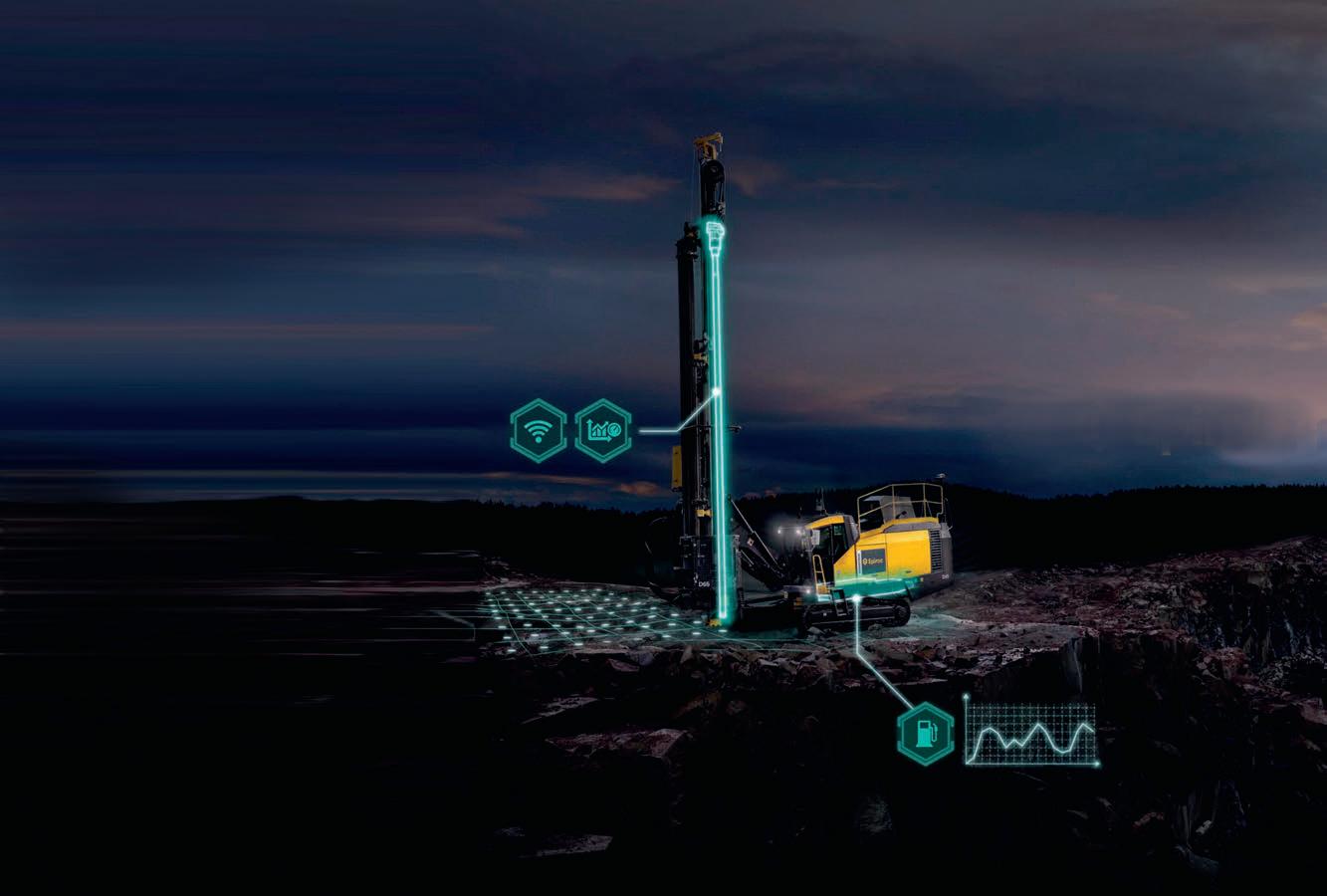
Epiroc is a vital part of sustainable society and is a global productivity partner for mining and construction customers. We develop and supply innovative and safe equipment and offer world-class service and other aftermarket support, as well as solutions for automation, digitalization and electrification. The Group has two Business Areas: Equipment & Service and Tools & Attachments.
EPIROC IN NUMBERS
Epiroc's leadership position is made possible by its approximate 19 000 passionate employees that serve customers in around 150 countries
What we strive for - Accelerate the transformation
The world needs metals and minerals for the energy transition and our cities and infrastructure must be developed to serve a growing population. To succeed, we need to speed up the shift towards a more sustainable mining and construction industry. We at Epiroc accelerate this transformation.
Global Diary
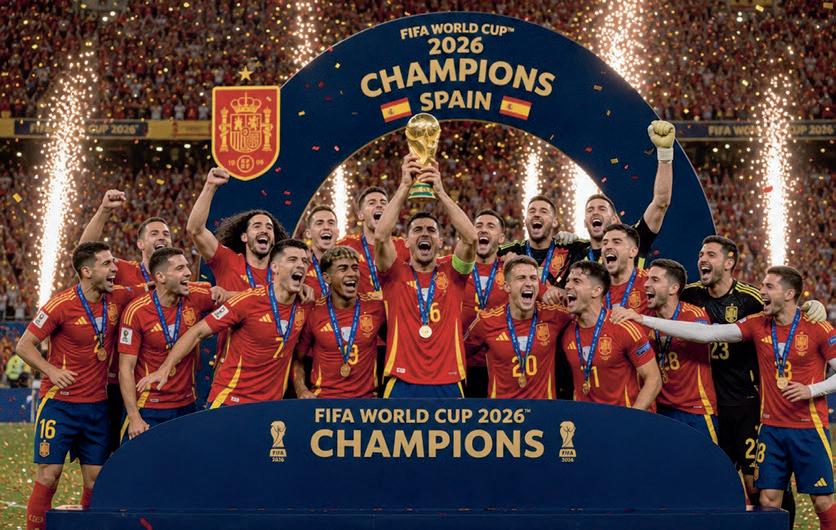
Spain Crowned World Champions
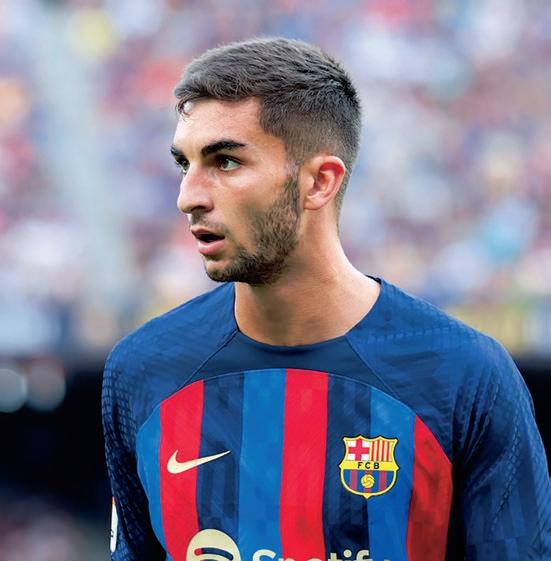
Spain defeated Argentina 1–0 after extra time to win the 2026 FIFA World Cup, securing its second world title before a global television audience. Ferran Torres scored the decisive goal after a tightly contested final that showcased Spain’s disciplined, possession-based football. The tournament concluded with record global viewership and reinforced football’s status as the world’s most influential sporting event.
“In politics, nothing happens by accident. If it happens, you can bet it was planned that way.”
Franklin D. Roosevelt
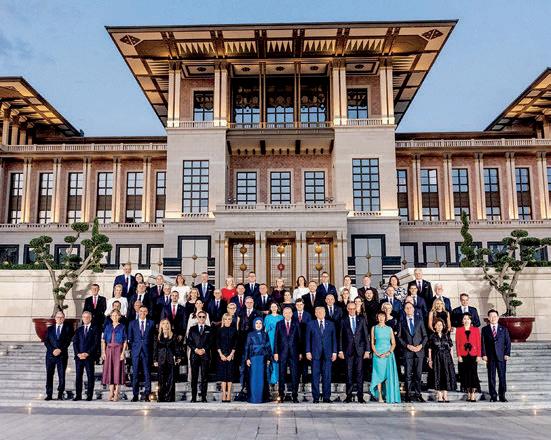
NATO Summit Reinforces Support for Ukraine
NATO leaders gathered in Ankara on 7–8 July to reaffirm longterm support for Ukraine while agreeing to strengthen European defence capabilities. Discussions centred on increasing defence spending, expanding military production and improving allied readiness amid continued Russian aggression. The summit underscored NATO’s determination to adapt to a rapidly changing security environment.
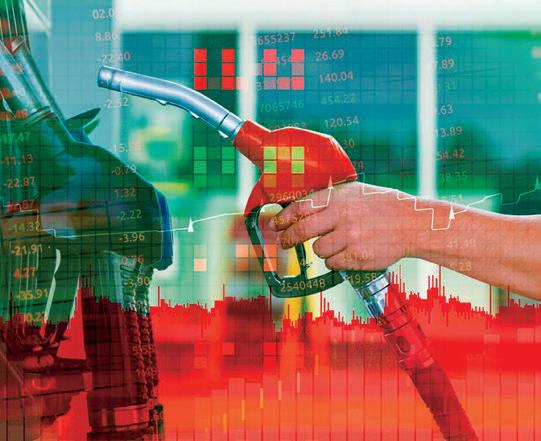
US–Iran Conflict Pushes Oil Markets Higher
Fighting between the United States and Iran intensified throughout July, with continued strikes, threats to shipping routes and growing concerns over the security of the Strait of Hormuz. Rising tensions pushed oil prices higher and renewed fears of inflation and supply disruptions across the global economy. Governments worldwide called for de-escalation as one of the world’s most critical energy corridors came under pressure.
“Diplomacy is the art of letting somebody else have your way.”
David Frost
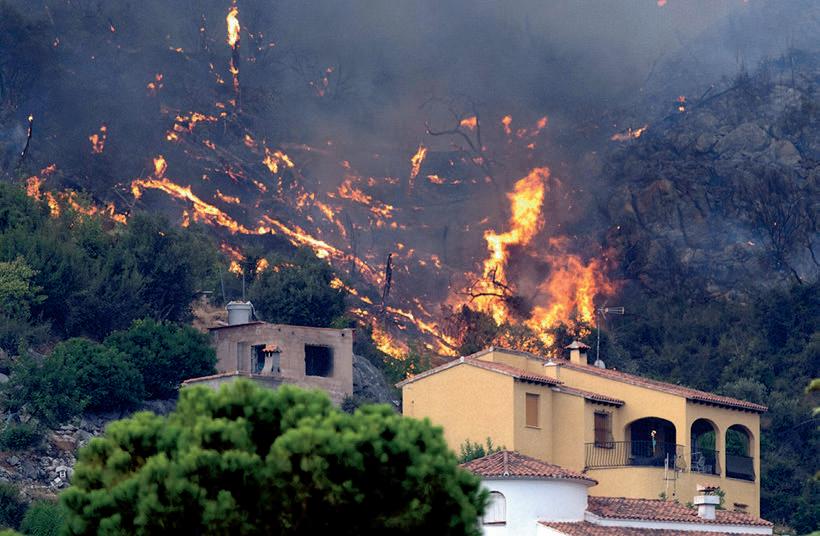
Europe Struggles With Extreme Heat and Wildfires
Large parts of Southern Europe experienced record temperatures during July, while devastating wildfires spread across several Mediterranean countries. Authorities in Portugal, Spain, France and Italy deployed thousands of firefighters as heatwaves placed growing pressure on energy systems and public health services. Scientists warned that the frequency and intensity of extreme weather events continues to increase.
France and UK Strengthen Security Cooperation
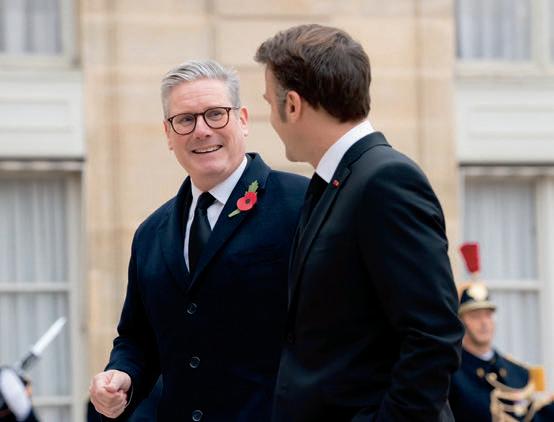
French President Emmanuel Macron and British Prime Minister Keir Starmer issued a joint declaration on the Strait of Hormuz, pledging closer military cooperation to safeguard one of the world’s most important maritime trade routes. The two countries also agreed to work with Oman and international partners to protect freedom of navigation amid heightened tensions with Iran. The announcement highlighted renewed Franco-British coordination on European and Middle Eastern security.
Montenegro Closes Another EU Negotiating Chapter
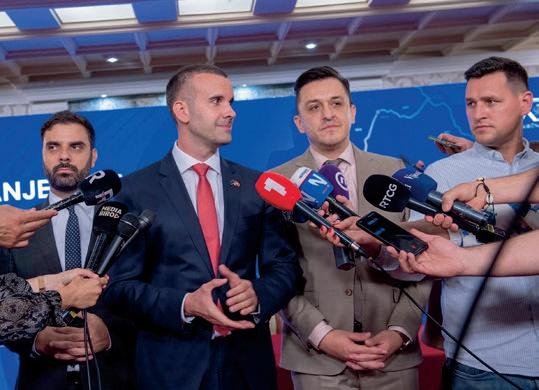
Montenegro reached another important milestone in its European Union accession process by provisionally closing Chapter 5 on Public Procurement during the Intergovernmental Conference in Brussels. The achievement reaffirmed the country’s position as the Western Balkans’ most advanced EU candidate and was welcomed by EU officials as further evidence of continued reform progress. The move strengthened expectations that Montenegro could become the next member state to join the European Union.
WHO IS BUYING AND SELLING OUR ATTENTION TODAY – AND HOW DOES THAT MARKET WORK?
The New Economy of Attention
Attention has become a marketable human resource over which individuals exercise diminishing control, while platforms and algorithms increasingly measure, direct and monetise our focus—often without us fully understanding how this process works
Who commands our attention today, why do we choose to give it to them, and who ultimately profits from it?
In a world where media outlets, digital platforms, brands, politicians and algorithms are all competing for our focus, attention has become one of the scarcest resources,
even as our capacity to sustain it continues to diminish.
The question, therefore, is no longer simply who is buying and selling our attention, but why we, as its rightful owners, are often the least informed about how it is measured, directed and monetised. Will the atten-
tion economy ultimately leave us with ever more fragmented attention spans, increasingly sophisticated forms of behavioural influence, or are we entering a new era in which attention will once again have to be earned through trust? We put these questions to our contributors.
Aleksandra Krstić Professor, Faculty of Political Sciences, University of Belgrade
Attention Is Now a Scarce Resource
An ever-growing number of actors compete for our time and focus, while an overabundance of content, algorithms and constant digital stimuli are steadily eroding our ability to pause, understand and reflect on the information presented to us
Nothing is sacred, everything is measured in gross and net, everything is entertainment...” These lyrics from a well-known song by the Croatian punk rock band Hladno Pivo are the first thing that comes to mind when I try to answer this timely and important question. The answer is far from simple, although it may appear obvious at first glance: attention has value.
Before anything else, we should ask ourselves what attention actually is. Do we still possess it in the way we once did? How long does it last, how can it be measured, and how do we preserve it in today’s media and communications environment?
There is little doubt that algorithms, media convergence, the cacophony of the public sphere and the overwhelming volume of information surrounding us every day have fundamentally changed the way communication works. Increasingly, we are addressed not as citizens, but as consumers, audiences, micro-target groups, fragmented market segments—hyper-individualised and hyper-personalised.
Today, it is not only multinational corporations and global brands that compete for our attention. Influencers, TikTok creators, fashion houses, politicians, public figures, traditional media and social media platforms are all vying for the same finite resource.
When editors of Serbia’s leading news portals tell us that readers devote no more than “two scrolls” to a news story, while short-form videos retain viewers’ attention for only a matter of seconds, it becomes clear just how difficult it has become to persuade people to stop, read, understand and reflect on what they are seeing.
Against that backdrop, it is hardly surprising that the Reuters Institute’s Digital News Report has, for years, documented a growing global trend of news avoidance, revealing that audiences are becoming increasingly disengaged from news altogether.
The contemporary attention market is deliberately designed to lure us from those “two scrolls” into endless scrolling—a system with no natural endpoint, constantly encouraging us to stay just a little longer because another Reel, another post or another piece of content is always waiting. Endless notifications continually pull us back unless we consciously choose to disable them.
Then there are clickbait headlines, highly personalised content and increasingly compelling short-form videos, all tailored to our individual interests and carefully engineered to stimulate dopamine—the neurotransmitter associated
The digital marketplace monetises our sense of connection with strangers, while likes, views and shares increasingly draw us away from the real world, genuine relationships and the people who deserve our time and attention
with anticipation and reward. Every time we refresh our screens without knowing what will appear next, that uncertainty itself becomes part of the attraction.
The digital marketplace also monetises oxytocin—our sense of connection with people, places and experiences that are, in reality, distant and often entirely unfamiliar. We compulsively refresh our feeds to check who has viewed our stories, how many likes and shares we have received, or whether someone has reposted our content. Gradually, these mechanisms distort our attention to such an extent that we lose sight of ourselves, while our connection with the real world, genuine relationships and meaningful human interaction steadily weakens.
Galjina Ognjanov Professor, Faculty of Economics, University of Belgrade
Defending Our Attention
Advertisers are competing ever more fiercely for people’s attention, yet attention itself is becoming increasingly scarce amid an overwhelming abundance of content. Selective perception has therefore become our primary defence against messages we would rather ignore
The important thing is to be noticed” was the slogan displayed on one of Serbia’s earliest roadside billboards. This long-standing advertising maxim reflects a universal truth of marketing: attention is the most valuable resource, without which the ultimate objective— making a sale—cannot be achieved.
In their quest to capture our attention, advertisers are constantly searching for more effective ways to deliver their messages. Their greatest obstacle, however, is that attention has become an exceptionally limited resource as individuals are exposed to an overwhelming volume of competing content every day. Selective perception helps shield us from messages we do not wish to receive, yet this very psychological mechanism creates new challenges for advertisers, forcing them to find alternative ways of being noticed. As a result, they now follow potential customers throughout the entire customer journey, hoping to capture their attention at one or more customer touchpoints along the way.
In advertising practice, every potential communication channel is considered a touchpoint. Broadly speaking, everything has become a medium—from traditional mass media, outdoor and indoor advertising spaces, billboards and digital displays to online platforms, social media and digital publishers. For advertisers, all of these represent potential channels through which to deliver their message.
Under the traditional advertising model, media organisations sold advertising space by effectively selling advertisers access to the attention of their audiences, who had first been attracted by editorial content. Given the continuing rise in advertising costs, this segment of the media market remains highly significant, particularly in electronic media. Nevertheless, there has been a clear and sustained shift in advertising expenditure towards digital communication channels.
Alongside advertisers, agencies and media companies, the market is now increasingly shaped by digital platforms
The
that own the software and algorithms—as well as specialised ad-tech companies—which effectively buy and sell our attention for advertising purposes.
In this new digital ecosystem, content publishers no longer simply sell advertising space. Instead, they offer advertisers the opportunity to place an advertisement in real time under predefined conditions. Advertisers, in turn, purchase the opportunity to present an advert to an individual who is consuming particular content at that precise moment. Importantly, the algorithms are not primar-
digital advertising ecosystem increasingly revolves around data, behavioural prediction and automated auctions, yet audiences continue to respond most strongly to what has always mattered most: high-quality media content
ily analysing the content itself, but rather the behaviour of the individual consuming it.
In this way, an individual’s attention throughout the decision-making process becomes a commodity traded by digital platforms and ad-tech companies, including Google, Meta, Trade Desk, Magnite, PubMatic and Criteo. From a technical perspective, this marketplace increasingly resembles a marketplace for data, behavioural prediction and automated auctions, rather than the traditional buying and selling of advertising space.
Even so, there is little reason for pessimism about the future of the media industry. Ultimately, what continues to capture and retain our attention more effectively than anything else is high-quality media content.
Marko Živković Head of Marketing and PR, Infostud Group
Our Data, Someone Else’s Rules
Platforms know almost everything about us, advertisers know enough to target us effectively, while we know remarkably little about how the system uses our data
Every time you unlock your phone and open an app or website, an auction takes place within milliseconds to determine which advertisement you will see. Multiple bidders compete, the price is calculated in real time, and the only person unaware that an auction has even taken place is you—even though it is your attention that is being bid for. That asymmetry is not a flaw in the system; it is the system.
Having spent two decades in the media buying industry, I have never paid simply for someone to see a message. I paid for the probability that a person would click, make a purchase, stay engaged for longer or even change their opinion. The more a platform knows about you, the more accurately it can assess the value of that opportunity. None of us consciously sells our attention, yet we willingly exchange it for entertainment and the reassurance of having our own views confirmed.
Knowledge is distributed unequally. Google, Meta and similar platforms know the most; advertisers know enough to identify and target their audiences; users know the least. Yet with every click we teach the system what to show us next.
That is where marketing ends and a broader social issue begins. Social media platforms, mobile applications and advertising systems are all designed to keep us engaged for as long as possible because more time spent online generates more data and more advertising revenue. Algorithms are therefore not concerned with whether a message is accurate or important, but with how strong a reaction it will provoke. Anger, fear and confirmation of our existing beliefs perform far better than calm explanation.
Technology companies did not invent the mechanisms through which emotion, repetition and a sense of belonging shape our beliefs. Families, schools, the media, politics, religion and the people closest to us have always influenced the way we think. What digital platforms have done is measure those mechanisms, automate them and personalise them
for every individual. Influence is now continuously adjusted according to our habits and responses.
The problem is not influence itself, but the fact that we are often unaware of who is influencing us, on what basis and with what intention. That does not mean we have no choice. We still make choices, but within an environment that someone else has carefully designed. We can choose our sources of information and limit the time we spend on social media. That certainly helps, but it is not enough when the environment itself has been engineered to keep us engaged.
The challenge is not influence itself, but the fact that we are often unaware of who is influencing us, how and why. We still make choices—but within an environment carefully designed by someone else to keep us engaged for as long as possible
Artificial intelligence is dramatically reducing the cost of content creation. When virtually anyone can produce text, images or videos, the real challenge is no longer creating content but recognising what is genuinely valuable. The most trusted sources will therefore be those capable of identifying what truly matters, explaining it clearly and respecting their audience’s time. Provocation without substance is simply noise, while attention earned through usefulness possesses a quality that purchased attention never does—it returns of its own accord.
Today, producing a message is almost free, and distributing it to mass audiences has become remarkably inexpensive. The real challenge—and the greatest expense—is earning the trust of your audience and retaining it once the algorithm is no longer working in your favour. Everything else is simply paid distribution.
Mihailo Ponjavić Media Director, Mediahouse
The Next Metric Is Attention
The future of advertising will not lie in buying the cheapest reach or the highest number of impressions, but in measuring genuine attention: who actually saw the message, in what environment, and what effect it truly produced
The net value of Serbia’s advertising market was estimated at €295.6 million in 2025. Television retained a 44.9% share, digital media reached 32.1%, while out-of-home (OOH) advertising accounted for 13.3%.
According to Nielsen measurements, people aged 18 to 65 spend more than five hours a day watching television, while TGI research shows they spend almost three hours online.
Why does all this matter? Attention has long been the media industry’s most sought-after commodity, closely linked to its measurable decline over the past 20 years. The number of communication platforms, particularly in the online environment, has grown enormously, while people’s capacity to process all that content has failed to keep pace. Artificial intelligence opens yet another Pandora’s box through AI-generated content, or so-called AI slop.
Attention is not bought only by advertisers, nor is it sold only by media organisations. Brands, political organisations, retailers and apps all buy it, while television stations, news portals, platforms, influencers and every system capable of turning our gaze, click or time spent into data sell it. Particularly online, vast ad-tech infrastructures assess, within a fraction of a second, the value of the opportunity to show each of us a particular message. They are also the systems that measure viewing time, patterns of consumption and, ultimately, campaign performance.
The share of advertising budgets has long ceased to reflect the share of audience attention. In the online environment, advertising investment should go where identity, content and transaction are integrated within the same system. In reality, however, advertisers usually pay for an impression, and an impression merely confirms that an advert has been delivered—not that anyone has actually looked at it. Visibility and attention are not the same thing. If they were, the two metrics would move together when measuring effectiveness, but they clearly do not. It is also important to note that digital platforms shape their own
performance metrics, which may appear superior without delivering any real business effect.
The consequences of the overwhelming volume of communication can be seen in the numbers. RED C and Amplified Intelligence measured real-time active attention in online feeds: Facebook, Instagram and X receive around two seconds of active attention, while YouTube receives 3.3 seconds. That amounts to only around 7% active attention. Neither creative execution nor advert length makes a significant difference.
Spending more time on digital platforms does not necessarily mean greater attention. Television, video on demand and, above all, cinema retain active audience attention far more effectively than content consumed through online feeds
What matters is that the same research shows large screens winning the battle for attention. Linear television captures 67% of active attention, while video on demand reaches as much as 70%. Cinema performs even better: Lumen and Dentsu measured attention scores four to seven times higher than those achieved by any other video distribution channel.
In my view, the next phase of media buying will no longer focus on finding the cheapest reach. The key currencies will become measurable attention metrics, supported by advanced technologies capable of proving that a message has genuinely been noticed. The winners will not be those who buy the greatest number of impressions, but those who understand whose attention they are buying, in what environment, and how much of that attention has actually produced an effect.
INataša Pavlović Bujas Founder and CEO, Blumen Group; Former President of the International Public Relations Association (IPRA)
The Next Economy Will Be an Economy of Trust
In
a world of virtually limitless content, attention is becoming increasingly expensive, yet trust and credibility are becoming even more valuable because they cannot be bought—they
t was once said that information is power. Today, attention has become the new global currency. Information has value only if it succeeds in attracting our attention, holding it long enough and influencing our decisions. In the economy of the twenty-first century, it is no longer only products, services or ideas that compete – it is the seconds of our attention.
The attention market has become the world’s largest and most valuable marketplace. Its main players are no longer only media organisations and advertisers. Today, our attention is bought by technology platforms, companies, political movements, influencers, algorithms and artificial intelligence. At the same time, we all unknowingly sell it – with every click, like, search, comment and every second spent in front of a screen.
The greatest paradox of the digital economy is that we are no longer merely users of platforms. We have also become their product. Our habits, interests, emotions and patterns of behaviour are transformed into data that provides the basis for accurately predicting our future decisions. The battle today is therefore no longer about information, but about predicting human behaviour.
Artificial intelligence is further changing the rules of the game. Algorithms no longer analyse only what we want today; they are trying to predict what we will want tomorrow. The attention market is evolving into an intention market. Companies are no longer buying advertising space alone – they are buying the opportunity to be present at the moment when an algorithm determines that we are most likely to make a particular decision.
This also raises serious ethical questions. Where does personalisation end and manipulation begin? How freely do we make decisions if digital systems shape the information we see? Are we still citizens capable of making independent decisions, or are we becoming consumers whose behaviour can be predicted with a high degree of certainty?
have to be earned
At the same time, the attention market is undergoing another transformation. Until recently, companies wanted to appear first in Google search results. Today, they want to become the first answer generated by ChatGPT or another AI assistant. This means that communication is moving from the world of search to the world of conversations with machines. A company’s reputation is no longer built solely through the media and social networks, but also through the answers generated by artificial intelligence.
Artificial
intelligence is shifting the attention market towards an intention market, in which algorithms no longer track only what we want today, but increasingly seek to predict what we will want – and decide – tomorrow
In such a world, trust becomes the most valuable asset. Attention can be bought, but trust cannot. It is built over time through consistency, transparency and responsibility. That is why communication will play a much broader role in the future than ever before. Its primary mission will be to protect the credibility of organisations, institutions and society as a whole.
I believe that the coming decade will bring about a new economy – an economy of trust. In that economy, the most successful organisations will not be those that seek to attract the greatest amount of attention, but those that earn the greatest degree of trust. In a world where artificial intelligence will generate an almost limitless volume of content, attention will become increasingly expensive, while truth will become the rarest and most valuable commodity of all.
Justice Is Not a Privilege
After serving two terms as Serbia’s Commissioner for the Protection of Equality, Brankica Janković reflects on a generation of young people reshaping the country, declining trust in institutions, political polarisation, and why equality before the law remains the cornerstone of every democratic society
Brankica Janković
Former
Commissioner
for the Protection of Equality and Founder of the Centre for Equality and Security
Brankica Janković has long been one of Serbia’s most respected voices on human rights, equality and the role of democratic institutions. Today, through the Centre for Equality and Security, she continues to explore the relationship between human rights, democ-
racy and security at a time when public trust in institutions and meaningful social dialogue have become some of the greatest challenges facing contemporary society.
How do you view the generation of students that has emerged as one of the driving forces behind social change, and what do their messages reveal about the state of Serbian society and public trust in institutions?
— I have always maintained that equality before the law and public institutions is the foundation upon which both the state and society must be built. Without it, there can be no rule
of law, and institutions lose their very purpose if they fail to uphold fundamental human rights and serve the public interest.
People may not remember who spoke out or what was done to prevent the crisis we are facing today, but many of us did raise our voices and warned about the problems with both conviction and expertise. The truth is simply that there were not enough of us until young people themselves stood up against what causes the greatest public resentment: injustice and the indifference of political elites that have become detached from the citizens they are meant to serve.
I am not surprised by the strength of this younger generation. What surprises me are those who are. Do they not listen to their own children or to the young people around them?
I have been deeply impressed by their creativity, their ability to connect, and the maturity with which they understand the world around them. Unlike my own generation, they will not accept authority simply because it is imposed upon them. Authority today has to be earned through credibility, empathy, knowledge and genuine understanding.
I feel privileged to work with them and to continue learning from them. Despite decades of attempts—some regrettably quite successful—to weaken and undermine our education system, it has nevertheless produced a generation capable not only of critical thinking and questioning reality, but also of organising effectively and becoming a genuine force for social change.
The ability to express disagreement in different ways is essential to the development of any democratic society. Political leaders who truly claim to act in the interests of their country should welcome such engagement rather than fear it.
I am proud of our young people. I often say that today some of Europe’s strongest voices come from the heart of the Western Balkans—a region that is so often misunderstood, underesti-
mated and unfairly dismissed. Despite the heavy burden of our shared past, these young people continue to defend European and universal values.
How closely are democracy, human rights and security connected today? Can one exist without the others?
— Around the world, we increasingly witness entire “security theatres”— states that have become a source of insecurity for their own citizens instead of guaranteeing their rights and freedoms. In many cases, governments create or deepen crises only to present themselves afterwards as the sole providers of safety and stability. Citizens therefore need to be both media-literate and security-literate if they are to recognise these patterns
Trust is earned slowly—through years of acting consistently, acknowledging mistakes and having the courage to correct them
and avoid the temptation of surrendering responsibility for their rights, financial resources and other important aspects of both private and public life to those in power. That is not democracy. It is its very opposite.
Viewing security solely through the lens of traditional security doctrines no longer reflects the realities of the twenty-first century. Any serious observer understands that democracy and human rights are themselves fundamental pillars of security, and that the human dimension of security is equally important.
We must remain vigilant against attempts by those in power to justify violations of human rights by invoking external threats, or to persuade citizens that restrictions on their rights and freedoms are somehow necessary for their own security—or even for their happiness and prosperity.
Preventing conflict and reducing insecurity begins with the protection of human rights, the building of inclusive and resilient societies, and stronger regional cooperation.
Nor should we ever overlook the gender dimension of security. That is precisely why I founded the Centre for Equality and Security, an organisation dedicated to placing these issues firmly at the centre of public debate.
How closely is public trust in institutions linked to legal certainty and equality before the law, and what would it take to restore that trust? — Public trust in institutions is essential to both legal certainty and people’s sense of security, and equality before the law is the first prerequisite for building that trust. Unfortunately, this is not the reality in Serbia. We often see ordinary people punished for a single inappropriate remark, while those who openly promote hate speech and repeatedly violate the law remain beyond the reach of the justice system. Unequal treatment based on political affiliation or belief has become a persistent feature of our society. When it comes to rebuilding trust, I can only repeat what I once wrote in
Vreme. Trust is earned slowly. It requires years of acting in accordance with one’s words, acknowledging mistakes and correcting them, apologising for errors and ill-considered—let alone offensive—statements, behaving consistently and predictably, standing by people when they need support, refraining from language that fuels fear and division, avoiding prejudice, and never undermining confidence in educational and democratic institutions. Those are just some of the lessons I have learned from both people and books.
I have also learned that no one deserves trust indefinitely. Life teaches us all that trust can be lost. No one’s authority is permanent or beyond question, and it is often the loss of trust that ultimately challenges it. We are all under constant scrutiny.
Across Europe and beyond, populism is on the rise while confidence in democratic institutions is declining. To what extent are these trends visible in Serbia, and how can they be addressed?
— Across Europe, we have seen the strengthening not only of right-wing political parties but also of radical nationalist movements. Many European citizens are deeply dissatisfied with current policies and are clearly signalling that they want change. I hope democratic forces will understand that message and respond accordingly.
Every part of society has a role to play. Academia, the business community, civil society and public institutions must all raise their voices. A broad social dialogue will eventually have to take place, but it can only succeed if all participants are treated equally and if we put an end to the attacks, humiliation and public disparagement that too often come not only from political actors but also from state-controlled media.
We already have an opportunity to demonstrate this in the ongoing debate over the Regulatory Authority for Electronic Media (REM). Those who
spread hate speech, insult others and deliberately disseminate disinformation should not be allowed to dominate the public space without consequences. That is precisely why REM should consist of nine independent members—not four.
Instead, we have once again accepted the narrative that society and its institutions are inevitably polarised, and people now argue that having at least four independent members is somehow a success. But what does that imply? That the remaining members are free to disregard the law? I often ask myself how we came to accept such standards.
We must stop legitimising polarisation as an excuse for unlawful conduct. The rule of law applies equally to everyone. Academia and the busi-
Today, some of Europe’s strongest voices come from young people in the Western Balkans, who continue to defend European and universal values
ness community, in particular, can play a decisive role in rebuilding public trust in the years ahead.
How can Serbia emerge from its current social and institutional crisis, and what do you see as the first step towards rebuilding trust between citizens and public institutions? — The current deadlock, characterised by parallel realities, parallel institutions created by parts of the political establishment, and a growing d ivide between privileged citizens and everyone else, cannot continue. No society should be divided over basic principles of common sense and fundamental values.
People want to live in a stable and orderly country—one that respects diversity, upholds the rule of law and treats everyone equally. The first step must be genuinely free elections and the normalisation of democratic trans-
fers of power. Elections should also provide an opportunity for institutions to take clear and unequivocal steps towards rebuilding public trust. They are, in many ways, the ultimate test of political maturity.
Citizens also need justice—justice applied equally to everyone. Institutionally, this depends on impartial judges and public officials who themselves feel secure enough to carry out their duties independently. Serbia does not need yet another judicial reform. It needs court rulings capable of changing the course of society, just as landmark judicial decisions have done throughout history after periods of profound crisis.
We also need people who are prepared to work with those whose views differ from their own while remaining committed to shared goals grounded in commonly agreed values. In that sense, Serbia needs a new social contract.
That new contract should be built upon human rights, justice as a shared social value rather than a privilege reserved for the powerful, equality, respect for diversity, solidarity, an economy centred on people’s needs rather than profit alone, environmental responsibility, and a state that protects freedom and human rights instead of becoming complicit in violence or their violation. It should also recognise culture and education as the foundations of long-term social development.
These principles form the basis of our Women’s Platform for the Development of Serbia. We have set them out in our Manifesto and continue to promote them through dialogue with all relevant stakeholders.
Ultimately, genuine democracy and lasting stability require effective institutions, a safe environment for civil society, free and sustainable media, continuous dialogue among all sectors of society with meaningful representation, responsible political parties, the normal democratic alternation of power through elections, and, above all, free citizens.
Building Partnerships for the Future
CELEBRATING 85 YEARS of Diplomatic Relations with Serbia
Building on Trust
Eighty-five years after establishing diplomatic relations, Serbia and Canada are expanding their partnership through trade, investment, innovation and responsible resource development. As economic ties continue to strengthen, both countries are finding new opportunities in sectors ranging from professional services and advanced technologies to mining and engineering
his year marks two important milestones in relations between Serbia and Canada. Canada Day, celebrated on 1 July, marked the 159th anniversary of Canadian Confederation, while the two countries also celebrated 85 years of diplomatic relations—a partnership built on mutual respect, shared democratic values and strong people-to-people ties.
TToday, bilateral relations are increasingly shaped by practical economic cooperation. Total merchandise trade reached €108.3 million in 2025, with Serbian exports amounting to €62.1 million and imports from Canada standing at €46.2 million. Canadian companies are expanding their presence in Serbia, while Serbian businesses are increasingly finding opportunities in the Canadian market. Beyond trade and investment, the relationship also benefits from strong academic, scientific and cultural cooperation, supported by a vibrant Serbian community in Canada.
The interviews presented in this special section reflect several dimensions of this evolving relationship. They highlight the importance of creating a predictable business environment, accelerating digital transformation and developing
highly specialised professional services that enable companies to compete globally. They also underline the growing role of knowledge-intensive industries, where expertise is becoming the most valuable competitive advantage.
Mining and geology occupy a special place in today’s dialogue between Serbia and Canada. As the global transition towards cleaner energy accelerates demand for critical minerals, both countries recognise the strategic importance of responsible resource development. At the same time, the discussion is no longer limited to geological potential alone. Public trust, environmental responsibility, transparent regulation and the application of the highest ESG standards have become equally important prerequisites for sustainable growth.
Perhaps most importantly, this anniversary reminds us that successful bilateral relations are built gradually. Eighty-five years of diplomatic ties have created a solid foundation, but their real value lies in the ability to adapt to changing economic realities. Innovation, advanced technologies, sustainable resource development and knowledge-based industries are shaping a partnership that is firmly focused on the future.
Strong partnerships are built over time, but they grow through shared expertise, innovation and mutual trust
Potential with Responsibility
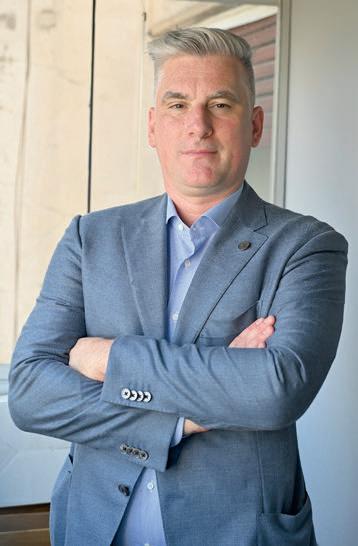
Slobodanka Lazarev Director, Jantar Group
Serbia’s geological resources represent a major development opportunity, but only responsible resource management can turn that potential into lasting economic, social and environmental value
Critical minerals have become central to Europe’s industrial and energy agenda, giving Serbia an opportunity to turn its geological resources into a strategic advantage. Slobodanka Lazarev, Director of Jantar Group, discusses how responsible resource management, international cooperation and the highest professional standards can support the development of a modern mining sector.
Critical minerals have become a major focus of global economic and geopolitical interest in recent years. How do you assess Serbia’s potential to become an important part of Europe’s critical minerals supply chain, and what conditions must be met to realise that potential? — Serbia has significant geological potential in critical minerals, while its location and mineral resources offer an important opportunity within Europe’s strategy to strengthen secure and sustainable supply chains. However, geological potential alone is not enough. Realising it requires a predictable regulatory framework, effective institutional coordination and the consistent application of the highest environmental standards. Equally important is transparent dialogue between government, investors, the professional community and local communities, as this is the only way to build the trust needed
for responsible long-term mining projects. One possible improvement would be better coordination between the relevant authorities through a one-stop-shop system, enabling a more transparent and predictable permitting process while maintaining all necessary safeguards.
Canada is recognised as a global leader in geology, mining and responsible mineral resource management. As a member of the Canadian-Serbian Business Association, where do you see the greatest opportunities for cooperation between Serbian and Canadian companies and for the exchange of knowledge and technology?
— The greatest strength of the Canadian model lies not only in its mineral wealth, but in
Geological potential alone is not enough. Realising it requires a predictable regulatory framework, effective institutional coordination and the consistent application of the highest environmental standards
the way Canada has developed responsible mining over decades through advanced technologies, a stable regulatory framework and close cooperation with local communities. That is where I see the greatest potential for
stronger cooperation between Serbian and Canadian companies. Alongside the exchange of expertise in geological exploration, mining and mineral processing, Canada’s experience in environmental protection, community engagement and open stakeholder dialogue is particularly valuable. Such cooperation strengthens not only individual projects, but also professional capacity and the adoption of international business standards.
Modern mining increasingly requires a balance between economic development, environmental protection and social responsibility. How is Jantar Group responding to these challenges, and how important are sustainability and transparency in attracting investment and developing new projects?
— Sustainable mining is not a choice between economic development and environmental protection—it depends on both. At Jantar Group, we strive to be a reliable partner to investors, public institutions and local communities through a professional, responsible and transparent approach. Our experience shows that successful projects depend on sound preparation, transparent communication and full compliance with legal and environmental standards. Only through partnership between all stakeholders can mining projects create lasting value for the economy, society and the environment.
Trust Built on Knowledge
Rastko Petrović Director, TASH GROUP
Geology and mining are once again in focus as global demand for critical raw materials continues to grow. Rastko Petrović, Director of TASH GROUP, believes the future of Serbia’s mining sector will depend on expertise, responsible management and public trust
s critical raw materials become strategic resources, responsible management, professional expertise and public trust are becoming as important as the deposits themselves.
AThe energy transition and growing global demand for critical raw materials have placed geology and mining back at the centre of strategic economic policy. How do you assess Serbia’s potential in this context and what is needed for the domestic mining sector to become more competitive and attract responsible investment?
— Historically, Serbia was strongest when its mining industry was strong. The energy transition now offers the country an exceptional opportunity to position itself as a key European partner by reviving this sector and making full use of its resources and competitive workforce. Creating a healthy business environment that attracts responsible investment requires, on the one hand, a predictable legal framework ensuring long-term certainty, consistent application of the highest ESG standards and open dialogue with local communities. On the other hand, the industry needs renewal and depoliticisation so that sensitive issues are finally discussed by qualified professionals, through facts and arguments, rather than by laypeople or experts from unrelated fields driven by emotion.
TASH GROUP is involved in projects covering geology, engineering, permitting
Integrated knowledge and services under one roof will become the key competitive advantage in the years ahead
and project management. How do you see the development of mining consultancy services, and will a multidisciplinary approach become the industry’s key competitive advantage?
— According to the theory of evolution, survival depends not on strength, but on the ability to adapt. In Serbia’s business environment, particularly during the transition period, consultants have been forced
to offer not only specialist solutions, however innovative, but also a range of related services supporting each project. This requires a thorough understanding of business processes and the role of every activity within them. Ideally, consultancy should be combined with operational services, creating a complete solution. In the years ahead, integrated knowledge and services under one roof will be the key competitive advantage.
During your career, you have worked on geological and mining projects ranging from mineral exploration to the development and management of complex projects. Which experiences have shaped your professional approach the most, and what changes would you like to see in the way geological exploration and mining are developing in Serbia today?
— My professional approach has been shaped by the problems I faced and the challenges I accepted. My natural persistence never allowed me to give up, so today I am grateful for every difficult situation that helped build my character.
I believe Serbia most needs a better understanding of geological exploration, mining and their importance to society. I would like to see positive real-life examples become part of primary and secondary education. Besides helping build a more responsible society, this could encourage more young people to study these fields, increasing competition and raising quality overall. The knowledge is still there to restore the industry’s former strength and international reputation. Ultimately, it is up to all of us to become better—not only for ourselves, but because only then can the industry give more back to society.
CANADA AT A GLANCE
Inovation. Stability. Opportunity.
2nd €108.3M
AI LEADER Partnership
YEARS
of diplomatic relations between Serbia and Canada.
TRADE
Bilateral merchandise trade, reflecting steady growth and expanding opportunities.
ECONOMY
Canada is a G7 economy with strong institutions, macroeconomic stability and a highly skilled workforce.
LARGEST COUNTRY
The world`s second-largest country by area, rich in natural resources and global connections.
INNOVATION
A global leader in AI, life sciences, clean technologies and advanced manufacturing.
LOOKING AHEAD
Knowledge, technology and responsible investment are shaping the future of Serbia-Canada relations.
Knowledge Driving Growth
Ivana Janković Managing Director for Serbia & Partner at Unija ETL Accounting
A stable and predictable business environment, digital transformation and knowledge sharing are key drivers of competitiveness today. We spoke with Ivana Janković about how Serbia can further improve its investment climate and where the greatest opportunities lie for stronger economic cooperation with Canada
Doing business internationally today requires more than knowledge of regulations and administrative procedures. Companies need partners who understand local markets while following global standards and trends in accounting, taxation and human resources. This is why expert support has become a key factor in sustainable growth and successful business expansion.
Unija ETL operates in several European markets and works with international companies. How do you assess Serbia’s business environment from the perspective of foreign investors, and what changes would further improve its competitiveness?
— Serbia offers a number of important advantages for foreign investors: a skilled and educated workforce, an excellent geographical position, developed infrastructure and access to the European Union and the wider regional market. Domestic companies have gained extensive experience working with international businesses and have adapted to their standards, deadlines and expectations. At the same time, investors need long-term predictability. I see the greatest room for improvement in a more stable regulatory framework, simpler administrative procedures and greater digitalisation of public services. I believe Serbia’s ability to provide a stable, efficient and predictable business environment will remain one of the main reasons why foreign investors continue to choose our country for expanding their operations.
Digital transformation is not just about introducing new technologies; it is about changing the way organisations work and make decisions
More and more companies are transforming their financial and administrative processes. What are the biggest challenges and benefits of digitalising accounting, tax and HR functions?
— The biggest challenge of digital transformation is usually not technology, but changing the way people think and work. Introducing new systems requires standardised process-
es, employee training and a willingness to review established practices. Data quality and security are also major challenges, as financial and HR information is among the most sensitive in any organisation. When implemented properly, digitalisation reduces errors, speeds up document processing and allows employees to spend less time on routine tasks and more on analysis, advisory work and business support. Accounting, tax advisory and HR thus become strategic partners to management, while professionals play a greater role in interpreting data, managing risk and supporting better decisions.
Unija ETL has positioned itself as a partner to companies expanding internationally. Where do you see the greatest opportunities for stronger economic cooperation between Serbia and Canada, and which sectors have the strongest potential in the years ahead?
— Serbia and Canada have significant potential to strengthen economic cooperation, particularly where Canadian capital, expertise and international experience can be combined with Serbia’s skilled workforce, technological potential and regional position. I see major opportunities in information technology, energy, mining, agriculture and the food industry, as well as professional and business services. Serbia has a strong base of experts in finance, accounting, technology, engineering and administration, making it a good location for regional business support centres and high-value services. I believe the greatest potential lies in cooperation based on knowledge and technology transfer.
Business Dialogue
LEADERS’ MEETING POINT
Director, RB GLOBAL
Nelt Group Showcases Logistics Expertise in China
“Serbia is on the European path but not bound by the full EU acquis, a window others no longer have.”
Bogdan Gecić Gecić Law
Erste Named Best Bank in Central and Eastern Europe
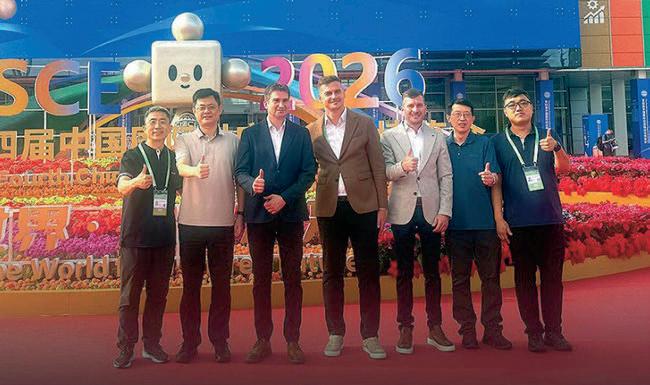
Nelt Group participated in the China International Supply Chain Expo –CISCE 2026 – in Beijing for the second consecutive year, representing Serbia at one of the world’s leading events dedicated to global supply chains and logistics. As part of the Serbian national pavilion, Nelt presented its logistics capabilities and explored new opportunities for cooperation with Chinese companies and international partners. The company’s delegation included Predrag Matić, Business Leader for Logistics Centre and Automation, Đorđe Marković, Contract Logistics Development Manager, and Lazar Dragaš, LSP Manager at Nelt Montenegro.
Mercedes-Maybach Unveils New S-Class
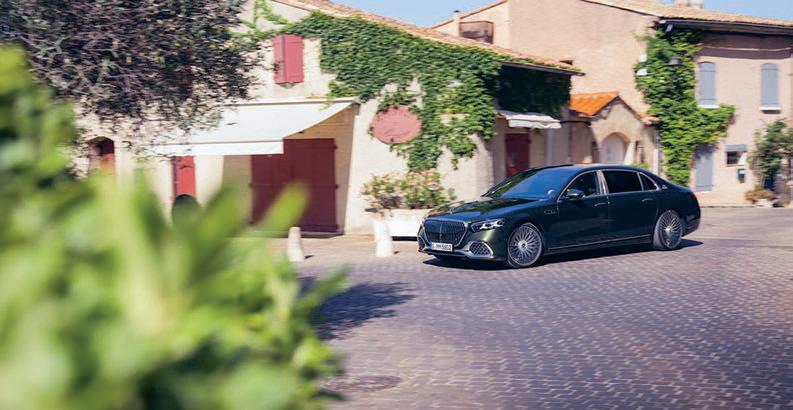
Mercedes-Maybach has introduced the new S-Class with the ambition of redefining the luxury limousine through advanced technology and exceptional comfort. For the first time in a Mercedes-Maybach model, the vehicle features the MercedesBenz Operating System (MB.OS), delivering a more intuitive and intelligent digital experience. The launch comes as Mercedes-Benz prepares to celebrate 140 years since the invention of the automobile in 2026, continuing the Maybach tradition of combining engineering excellence with exclusive luxury.
For the third consecutive year, Erste Group has been named Best Bank in Central and Eastern Europe at Euromoney’s Awards for Excellence. The group also received the award for Best Bank for Large Corporates in the region, while its subsidiaries in Austria and Romania were recognised as the best banks in their respective markets. Erste banks in Poland, the Czech Republic and Slovakia won six additional awards for excellence in retail banking, digital banking, investment banking, customer experience and ESG.
“We remain committed to supporting the development of a more sustainable value chain in Serbia.”
Saša Marković
Coca-Cola HBC Serbia and Montenegro
HEINEKEN Serbia Appoints Two Directors
HEINEKEN Serbia has appointed Aleksandar Antić as Sales Director for Serbia and Dejan Josić as Supply Chain Director. Antić will focus on strengthening sales performance, customer partnerships and team development, while Josić will lead supply chain operations and support the company’s EverGreen strategy at its breweries in Novi Sad and Zaječar. The appointments are part of HEINEKEN Serbia’s ongoing leadership development and organisational growth.
Delta Holding Reports ESG Progress
Delta Holding has presented its 17th Sustainability Report, outlining its 2025 achievements in environmental protection, employee development, community support and corporate governance. The company reduced greenhouse gas emission intensity by 39% compared with its 2022 baseline, while absolute emissions fell by 10% despite business growth. The report was prepared in line with GRI methodology and the European Sustainability Reporting Standards (ESRS).
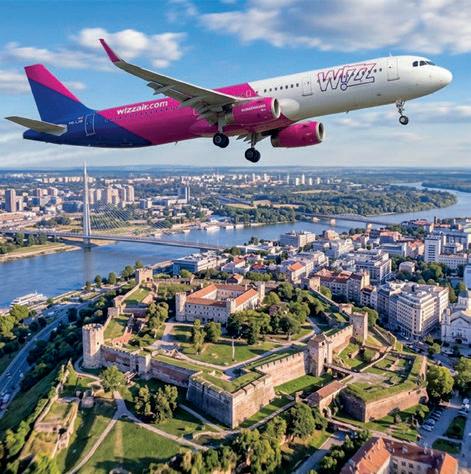
Wizz Air Submits Over 21,000 Signatures to Preserve Belgrade Base
Wizz Air has submitted more than 21,000 signatures collected through a public petition urging the preservation of its base and continued operations in Belgrade, highlighting strong public support for maintaining the airline’s presence in Serbia. The petition was delivered to the Ministry of Construction, Transport and Infrastructure, as well as other relevant institutions, with supporters arguing that Wizz Air’s operations have significantly improved connectivity, expanded travel options and contributed to more affordable air transport for Serbian citizens.
“Fortune favours the bold.”
Virgil
Uber Launches Bid for Delivery Hero
Uber launched a public takeover offer for Germany’s Delivery Hero valued at approximately $14.8 billion. If completed, the transaction would create the world’s largest food-delivery company outside China and significantly strengthen Uber’s global delivery business. The proposed acquisition reflects continued consolidation in the fast-growing online food delivery market.
PayPal Rejects Stripe Bid
PayPal rejected a $53 billion takeover proposal from rival Stripe and private equity firm Advent International, arguing that the offer undervalued the company. The board also raised concerns about regulatory approval and financing risks. The decision leaves the door open for further negotiations in one of the year’s biggest potential fintech deals.
EQT Raises Bid for Perpetual
Swedish investment firm EQT increased its takeover offer for Australian wealth manager Perpetual to A$2.5 billion, its second proposal within weeks. Perpetual again rejected the bid, saying it failed to reflect the company’s long-term value. The takeover battle is among Australia’s largest financial-sector deals this year.
From Tradition to a Global Brand
Ivan Bogdanović Director, RB GLOBAL
Thirty years of Stara Sokolova is a story of authenticity, quality and Serbian rakija winning recognition worldwide
From a small family distillery with its own aged reserves, Stara Sokolova has, over more than three decades, grown into Serbia’s leading exporter of premium fruit rakija through its dedication to tradition and uncompromising quality. At the same time, it has become one of the strongest ambassadors of Serbian rakija worldwide, helping establish it as Serbia’s authentic premium spirit.
Stara Sokolova celebrated its 30th anniversary last year. What does this milestone mean for the company and the people behind the brand?
— Our production is based on a family tradition of fruit rakija-making passed down through generations. Through years of consistent quality and the highest production standards, Stara Sokolova has become a globally recognised brand. Our jubilee year was no exception when it came to international success.
Stara Sokolova won three awards at the prestigious US Spirits Ratings competition. Stara Sokolova 12-Year-Old Plum Rakija received a Gold Medal and was named the highest-rated fruit spirit, while Stara Sokolova 7-Year-Old also won Gold and our Quince Rakija received Silver.
Today, Serbian rakija stands alongside the world’s finest distilled spirits.
For more than two decades, Stara Sokolova has exported most of its bottles to North America. How important are international markets for a Serbian brand?
— Stara Sokolova is exported worldwide, from Australia, Asia and Europe to all the countries of the former Yugoslavia, Canada and the United States.
Canada and the US remain our most important export markets, accounting for our largest sales for more than twenty years. This confirms that consumers recognise the authenticity and quality of a product from Serbia. The recent increase in US tariffs on
Stara Sokolova is the story of a region, a family and a country that presents its finest values to the world through an authentic product
Serbian goods presents a challenge, but loyal lovers of premium rakija remain with us. Those who try Stara Sokolova return to it.
Stara Sokolova is the market leader in premium fruit rakija. As such, it is expected to lead through innovation as well. What is new in your portfolio?
Alongside our range of premium fruit rakijas, we have introduced a new catego-
ry this year – Grape brandies. These premium digestifs are comparable in quality to the finest French cognacs.
Blind tastings confirmed that their quality, aroma, colour and bouquet satisfy even the most demanding connoisseurs. As a result, Stara Sokolova VSOP Grape brandy is now available in selected leading restaurants.
Today, Stara Sokolova is more than a rakija brand – it has become part of Serbia’s cultural identity. How do you see that role?
— Rakija is part of Serbia’s heritage, customs and identity, and we wanted to preserve and present the story behind Stara Sokolova.
Research by the Department of Anthropology and Ethnology at the Faculty of Philosophy in Belgrade confirmed that the Bogdanović family, founders of Stara Sokolova, is the only family to have transformed seven generations of traditional rakija production into a globally recognised brand.
At the Stara Sokolova Museum in Kostojevići and our Heritage Museum in Krivaja, we preserve artefacts of traditional rakija-making as testimony to a way of life and a rich tradition. Three years ago, UNESCO inscribed this tradition on its Representative List of the Intangible Cultural Heritage of Humanity.
We believe the future belongs to brands that know their roots and have the vision to present them to the world. Stara Sokolova is exactly that – a story of Serbia, its people and values that stand the test of time.
Karp
Co-Founder and Chief Executive Officer of Palantir Technologies
Alex
The Philosopher Building the AI Age
Alex
Karp
believes
technology
should not only make business more efficient—it should help democracies survive
There are entrepreneurs who build products, entrepreneurs who create markets, and entrepreneurs who quietly change how governments and industries make decisions. Alex Karp belongs to the third category.
As co-founder and Chief Executive Officer of Palantir Technologies, Karp has spent more than two decades developing software that helps governments, armed forces and multinational corporations analyse vast amounts of data, identify patterns and make faster, better-informed decisions. Once known primarily for its work with intelligence agencies, Palantir has evolved into one of the world’s leading artificial intelligence companies, supplying advanced software to sectors ranging from healthcare and manufacturing to energy and defence.
It is a business built on a simple premise: in an increasingly complex world, information alone is no longer enough. The real advantage lies in understanding it before anyone else.
An Unconventional Entrepreneur
Unlike many Silicon Valley founders, Karp never set out to build the next consumer technology giant. Trained as a lawyer and holding a doctorate in social theory, he spent years studying philosophy before entering the technology industry.
Unlike many Silicon Valley founders, Karp never set out to build the next consumer technology giant
That background still shapes his leadership today.
Rather than speaking about disruption or rapid growth, Karp frequently discusses ethics, democracy and the responsibility that comes with developing technologies capable of influencing geopolitical outcomes. His approach has often made him an outsider in Silicon Valley, where technology companies traditional-
ly preferred neutrality. Karp has argued the opposite—that technology companies inevitably shape society and therefore cannot avoid taking positions on issues that affect democratic institutions and national security.
Building the Operating System for Decisions
Founded in 2003, Palantir initially focused on helping intelligence agencies detect hidden relationships within enormous datasets.
The company later expanded into commercial markets, applying the same capabilities to supply chains, financial services, healthcare, manufacturing and energy.
Today, Palantir’s artificial intelligence platforms allow organisations to combine data from multiple sources, simulate scenarios and support decision-making in real time.
As artificial intelligence moves from experimental technology to everyday business infrastructure, companies increasingly require systems that can integrate AI into complex oper-
Karp’s rise reflects a broader transformation taking place across the global economy.
ations rather than simply generate text or images.
That is precisely where Palantir has established its competitive advantage.
Technology in a Changing World
Karp’s rise reflects a broader transformation taking place across the global economy.
Artificial intelligence is no longer viewed solely as a productivity tool. It has become a strategic asset influencing economic competitiveness, national security and geopolitical influence.
Governments are investing billions in digital infrastructure, cybersecurity and AI capabilities. Businesses are seeking technologies that improve resilience, strengthen supply chains and accelerate decision-making in increasingly uncertain markets.
Palantir operates at the centre of those trends.
Its software is used not only to improve operational efficiency but also to support critical infrastructure, disaster response, defence planning and industrial production.
Leadership Through Conviction
Karp has never attempted to fit the traditional image of a corporate chief executive. His public appearances often combine discussions of philosophy, economics and geopolitics rather than quarterly earnings or shareholder returns.
He has repeatedly argued that longterm value comes from solving the most difficult problems rather than pursuing the fastest commercial opportunities. That philosophy has shaped Palantir’s culture, encouraging engineers and developers to work on challenges that carry significant public impact alongside commercial potential.
Entrepreneurship
Beyond Silicon Valley
Alex Karp represents a different model of entrepreneurship.
His success has not been built on creating the next consumer application or social media platform. Instead, he has built the digital infrastructure that enables governments and businesses to navigate an increasingly uncertain world.
As artificial intelligence becomes embedded in every sector of the global economy, entrepreneurs like Karp are likely to play a growing role in determining not only how companies compete, but also how societies function.
For Alex Karp, artificial intelligence is not simply the next technological revolution.
It is the foundation of a new strategic era—one in which information, judgement and trust become the most valuable assets of all.
Celebrating Unity, Continuity and Prosperity
As Morocco celebrates the Glorious Throne Day, Ambassador H.E. Omar Amghar reflects on the Kingdom’s transformation, its enduring partnership with Serbia, and the opportunities ahead as the two countries approach the 70th anniversary of diplomatic relations
It is with a profound sense of honour and responsibility that I address the readers of this special edition of CorD magazine, marking the 27th anniversary of the Glorious Throne Day, only a few months after assuming my duties as Ambassador of His Majesty the King to the Republic of Serbia.
This first celebration of our National Day within the framework of my mission in Belgrade holds particular significance for me. It provides an opportunity to share the richness of a Morocco that is constantly evolving while remaining deeply rooted in its millennial history, firmly attached to its values, and resolutely committed to the future under the enlightened leadership of His Majesty King Mohammed VI, May God Assist Him.
Our shared ambition is to transform the many opportunities between Morocco and Serbia into concrete projects that benefit both our peoples
Throne Day is far more than a national celebration: it embodies the unique bond that unites the Throne and the Moroccan people, a bond built on continuity, trust and a shared ambition. It reflects the vision of a Kingdom committed to peace, stability, dialogue and inclusive development, both nationally and internationally.
Building on its exceptional geostrategic position at the crossroads of Europe, Africa and the Arab world, Morocco has established itself as a pillar of stability and a trusted partner on the regional and international stage. This trajectory is underpinned by continuous institutional reforms, an attractive investment climate, an active and balanced diplomacy, and a steadfast commitment to international peace and securi-
ty. The Kingdom contributes to United Nations peacekeeping operations, participates in global efforts to combat terrorism and extremism, and promotes intercultural and interfaith dialogue, as well as the values of tolerance and moderation. This stability has enabled Morocco to embark on a profound economic and industrial transformation, driven by a vision of balanced territorial development across its twelve regions. Today, the Kingdom stands as a leading African country in the automotive industry, a major player in the aerospace sector, and an international logistics hub, thanks in particular to the Tanger Med port complex. The development of the Dakhla Atlantic Port will further strengthen Morocco’s role as a platform connecting Africa with global markets.
This dynamic is supported by world-class infrastructure, an extensive network of free trade agreements, and an ambitious strategy in the fields of renewable energy and green hydrogen. The agricultural and fisheries sectors continue their modernisation through the “Green Generation” and “Halieutis” strategies, while tourism is experiencing remarkable growth, driven by the Kingdom’s attractiveness and the opportunities presented by the upcoming FIFA World Cup 2030.
Africa occupies a central place in Morocco’s international vision. In line with the High Royal Directives, the Kingdom regards South-South cooperation as a strategic choice based on solidarity, the sharing of expertise and co-development. The Royal Atlantic Africa Initiative, together with the Morocco-Nigeria African Gas Pipeline project, reflects this ambition to foster regional integration, energy security and shared prosperity. Human development remains at the heart of this momentum through investment in human capital, the modernisation of education, the strengthening of vocational training, support for research and innovation, and the promotion of
Morocco’s rich cultural heritage, craftsmanship and creative industries.
Relations between Morocco and Serbia fully reflect this spirit of openness and cooperation. They are founded on friendship, trust, mutual respect, respect for the territorial integrity of both states, and a convergence of views on several issues of common interest. The year 2027 will mark an important milestone with the celebration of the 70th anniversary of the establishment of diplomatic relations between our two countries. It will provide a valuable opportunity to further strengthen political dialogue, consolidate the legal framework, and expand economic, cultural and people-to-people exchanges.
Numerous opportunities exist in promising sectors such as the automotive and aerospace industries, renewable energy, agriculture, digital technologies, sports and information and com-
Political stability, economic transformation and international openness continue to shape Morocco's development journey
munications technology (ICT), as well as tourism. Our shared ambition is to transform these opportunities into concrete projects that will benefit both our peoples.
On the occasion of this Glorious Throne Day, I would also like to express my sincere gratitude to the Serbian authorities and people for the warm welcome extended to me since my arrival in Belgrade. I wish for the friendship between Morocco and Serbia to continue to grow stronger, and for the years ahead to bring new shared achievements in a spirit of trust and solidarity, guided by our mutual interests and our enduring partnership.
AFRICAN ATLANTIC ENERGY CORRIDOR
The Nigeria–Morocco African Atlantic Gas Pipeline, launched by His Majesty King Mohammed VI, is one of Africa’s most ambitious strategic infrastructure projects. Stretching 6,800 kilometres along the Atlantic coast, it will connect Nigeria with Morocco before linking to the European gas network. With an annual transport capacity of 30 billion cubic metres of natural gas, including up to 15 billion cubic metres destined for Morocco and Europe, the pipeline is expected to strengthen energy security, promote regional integration and support industrial development across West Africa. The ECOWAS member states expressed their endorsement for this project during their last summit held in Sierra Leone on July 19th 2026.
Rising Star of Global Tourism
A bold vision, sustained investment and the Kingdom’s extraordinary diversity have transformed Morocco into Africa’s leading tourism destination, creating new opportunities for visitors, investors and local communities alike
Bold”. If I had to choose one word to describe Morocco’s tourism policy over the past few years, that would be it.
But before that, let me start with what makes Morocco unique. I often like to illustrate it with a very simple example. Where else can you ski in the morning, surf in the afternoon and wander through a thousand-year-old medina in the evening? One place: Morocco.
Of course, having extraordinary assets is not enough. In 2021, Morocco faced the same reality as every other tourism destination in the world. Borders were closed. Aircraft were grounded. An entire industry came to a standstill. The starting point was the same for everyone.
Which is why luck cannot explain where Morocco stands today.
Nearly 20 million tourists visited our country in 2025. Morocco is now Africa’s leading tourism destination and has climbed 12 places in the global tourism rankings compared to 2019. What made the difference was a vision, a clear ambition and a strong belief in what our country could achieve. Most importantly, we backed that ambition with action.
In 2023, our government launched an ambitious 2023–2026 tourism roadmap designed not simply to grow tourism, but to transform it. Over the past four years, we have expanded our air connectivity, increased accommodation capacity, strengthened our leisure offering and invested heavily in human capital.
Our objective has been clear: to build a stronger, more competitive and more integrated tourism industry, where every component contributes to creating value and delivering a better experience for visitors.
Today, the results are visible and the momentum is real. To the readers of CorD, there is only one way to truly understand what Morocco is: come and experience it for yourselves.
If you are an investor, Morocco offers a stable environment, modern infrastructure, a clear long-term vision for tourism development and attractive investment incentives.
If you are a traveller, Morocco offers something increasingly rare: diversity, authenticity and hospitality, all within a single journey. The world is discovering Morocco at an unprecedented pace. We invite you to discover why.
Hassan Tower
Transforming Agriculture
Water, innovation and market access are driving Morocco’s agricultural transformation, strengthening resilience, competitiveness and sustainable growth while creating new opportunities for international partnerships
In Morocco, the future of agriculture rests on efficient water management and resilient, competitive, value-creating production models.
Over the past two decades, the Kingdom of Morocco has undertaken a far-reaching transformation of its agricultural model. From the Green Morocco Plan to the Generation Green 2020–2030 strategy, this transformation has gathered pace around a shared ambition: to place farmers, climate resilience, innovation and value creation at the heart of public policy, enabling the country to produce more with fewer resources while improving product quality and securing sustainable incomes for farmers.
In the face of mounting water stress, Morocco regards efficient water use as essential to its food sovereignty, the long-term viability of investment and the competitiveness of its agriculture. By 2025, more than 900,000 hectares—56% of the country’s irrigated land—had been equipped with modern irrigation technologies, bringing Morocco closer to its target of one million hectares by 2030.
This policy forms part of an integrated approach combining localised irrigation, digitalisation, inter-basin water transfers, the reuse of treated wastewater and desalination. In Chtouka, a desalination plant with a capacity of approximately 100 million m³ helps secure irrigation for 15,000 hectares of horticultural crops.
This modernisation underpins a diversified and competitive agricultural sector. Fresh fruit and vegetables, citrus fruit, berries, olive oil and seafood meet international standards for quality, food safety, traceability and sustainability. In 2024, agricultural and fisheries exports reached nearly USD 9 billion.
This performance is also supported by active economic diplomacy. Twelve free trade agreements provide access to nearly 100 countries, representing approximately 2.5 billion consumers, notably across the European Union, the United States, Türkiye and the Arab countries, as well as throughout the African continent through the AfCFTA. Morocco’s strategic location, world-class port and logistics infrastructure, and well-developed agro-industrial ecosystem foster investment, economic cooperation and the development of high-value-added projects.
It is against this backdrop that cooperation between Morocco and Serbia takes on particular significance. Our economies possess complementary strengths. Serbia has recognised expertise in arable farming, seeds, livestock and the food industry. Morocco, for its part, has developed extensive experience in irrigation, water management, fruit and vegetable production, and the advancement of climate-resilient agriculture.
Our vision is to build alliances with partners and investors in priority areas such as smart irrigation, agricultural research, resilient seeds, animal and plant health, agri-food processing, the cold chain and logistics. Morocco offers an enabling environment for projects that combine technology, training and market access.
Our ambition is to take this partnership to a new level by advancing co-investment and co-innovation—producing together, processing more locally and strengthening our integration into resilient, inclusive and competitive global value chains.
Within this vision, Serbia is ideally positioned to build with Morocco a lasting, value-creating partnership that advances food security.
Moving from trade to co-investment and co-innovation
900,000 ha equipped with modern irrigation technologies by the end of 2025 USD 9 billion in agricultural and fisheries exports in 2024 12 agreements free trade agreements: nearly 100 countries and 2.5 billion consumers
Sport Driving Progress
Morocco is using sport as a strategic driver of economic transformation, infrastructure development and international influence, demonstrating how major sporting events can accelerate growth, strengthen partnerships and enhance the Kingdom’s global standing
A New Paradigm for the Global South
Morocco is challenging conventional development models by making sport a cornerstone of its national strategy, leveraging it as a powerful instrument of economic development, infrastructure modernisation and geopolitical influence under the leadership of His Majesty King Mohammed VI, who has elevated sport to a constitutionally enshrined fundamental right. The Kingdom offers valuable lessons for transitional economies and stakeholders across the Global South on how sport can accelerate infrastructure development, attract international investment and strengthen diplomatic influence.
This strategic reorientation comes into sharp focus as Morocco prepares to co-host the 2030 FIFA World Cup alongside Spain and Portugal, building on the momentum of hosting the 2025 Africa
For Morocco, sport is not merely a competition—it is a strategic driver of economic transformation, infrastructure development and international influence
Cup of Nations (AFCON). These milestones are far more than prestigious sporting events; they are strategic catalysts transforming the Kingdom into a global hub for innovation, connectivity and cultural exchange.
Building a Sporting Legacy: From vision to execution
The significance of Morocco’s sporting ambitions lies not in athletic achievement alone, but in the transformative momentum they generate across infrastructure, human capital development and international positioning.
The Kingdom has firmly established itself as a leading sporting nation. Its trajectory reached a defining milestone during the 2022 FIFA World Cup, when Morocco’s national football team became the first African and Arab nation to reach the tournament’s semi-finals. Beyond the sporting achievement itself, this historic success projected an image of ambition, resilience and excellence that resonated far beyond the football pitch.
Morocco’s growing stature is equally evident at the continental level. Through the proactive en-
gagement of the Royal Moroccan Football Federation, the Kingdom has established cooperation frameworks with more than 40 African football associations, contributing to capacity building, technical assistance and knowledge transfer across the continent. These partnerships reflect a broader vision of sports diplomacy, positioning Morocco not only as a leading football nation, but also as a trusted partner in advancing the development and governance of African sport.
As the Kingdom prepares to host major international sporting events and continues its long-term investment in football infrastructure and expertise, its sporting project increasingly stands as a model of how strategic ambition, institutional commitment and international cooperation can converge to create a lasting impact that extends well beyond the world of sport.
A Vision for 2030 and Beyond
Morocco’s successful preparation for and organisation of major sporting events is increasingly being viewed through a broader strategic lens. While the 2025 Africa Cup of Nations (AFCON) serves as a critical operational rehearsal for the 2030 FIFA World Cup, the Kingdom’s sporting agenda extends well beyond event management. It represents a carefully designed long-term strategy that transforms temporary tournaments into lasting socio-economic assets.
The construction of the Grand Stade Hassan II in Benslimane, with a capacity of 115,000 spectators, is progressing steadily and remains on track to become the world’s largest football stadium upon its completion in 2028, symbolising Morocco’s global ambitions. This flagship development is complemented by extensive modernisation projects across the Kingdom’s major sporting hubs, including Rabat, Casablanca, Marrakech, Agadir, Fez and Tangier. Together, these investments illustrate an increasingly influential development model for the Global South, in which strategic infrastructure projects serve multiple objectives simultaneously: strengthening technical capabilities, creating employment, enhancing international competitiveness and generating transferable expertise. Unlike many largescale sporting projects elsewhere, Morocco’s approach is firmly anchored in long-term utilisation and economic integration, ensuring that these facilities remain valuable national assets long after the events they are designed to host.
The Kingdom’s investment strategy also extends to human capital development. Continued support for football academies, technical training programmes and sports science institutions is helping to cultivate the next generation of athletes, coaches, referees, analysts and sports management pro-
fessionals. This commitment to capacity building is further reflected in Morocco’s selection as host of five consecutive FIFA Women’s U-17 World Cups beginning in 2025, underlining its determination to advance women’s participation and leadership in sport.
Importantly, Morocco increasingly views its sporting expertise as an exportable asset. The experience gained in stadium construction, turf management, event organisation and sports governance is expected to support broader South-South cooperation initiatives, particularly across Africa, further reinforcing the Kingdom’s role as a regional platform for knowledge sharing and technical assistance.
Tourism, Investment and International Visibility
The synergy between sport and tourism has become one of the defining pillars of Morocco’s development strategy. Major sporting events have signif-
Olympic champion Soufiane El Bakkali
Grand Hassan II Stadium, Benslimane (artist's rendering)
icantly enhanced the Kingdom’s international visibility, while sustained investment in connectivity and hospitality continues to strengthen its appeal as a year-round destination.
This momentum is reflected in tourism performance. Morocco welcomed nearly 20 million visitors in 2025, representing a 14% increase compared with 2024, while tourism revenues reached a record MAD 138.6 billion by the end of the year, up 21% on 2024 and consolidating the Kingdom’s position as Africa’s leading tourism destination.
The upward trajectory continued into 2026. By May, Morocco had welcomed 7.7 million tourists, a further 7% increase compared with the same period in 2025, confirming the sector’s resilience and growing competitiveness.
The legacy of Morocco’s sporting ambitions therefore extends well beyond stadiums. It encompasses the modernisation of airports, the expansion of the high-speed rail network, the upgrading of hotel infrastructure, enhanced digital connectivity, and the diversification of cultural, sporting and leisure experiences available to international visitors. Collectively, these developments contribute to a more integrated and sophisticated tourism offering capable of generating sustainable regional growth and employment.
For international investors and policymakers, Morocco’s transformation presents significant opportunities across a wide range of sectors, including
engineering, transport, digital technologies, renewable energy, hospitality and sustainable urban development. The Kingdom’s co-hosting of the 2030 FIFA World Cup alongside its European partners further reinforces its unique position as a bridge between Africa and Europe, demonstrating its capacity to foster innovative models of transcontinental cooperation.
Beyond Football:
A Multifaceted Sporting Nation
While football remains the flagship of Morocco’s sporting renaissance, the Kingdom’s international appeal is increasingly shaped by the diversity of its sporting landscape. Prestigious events such as the Hassan II Golf Trophy and the Lalla Meryem Golf Cup, a tournament on the Ladies European Tour, have strengthened Morocco’s position as a leading sports tourism destination, attracting elite players and high-profile visitors.
Athletics remains another pillar of the nation’s sporting identity, building on a distinguished legacy shaped by Olympic champions including Nawal El Moutawakel, Said Aouita, Hicham El Guerrouj and, more recently, Soufiane El Bakkali. Events such as the Marrakech International Marathon further reinforce the Kingdom’s standing within the global athletics community.
Along the Atlantic coast, destinations such as Taghazout and Agadir have become renowned surfing centres, while Dakhla has earned international recognition as one of the world’s premier kitesurfing destinations, regularly hosting elite competitions and attracting a growing community of enthusiasts from around the globe.
For investors and industry stakeholders, these diverse sporting assets offer compelling opportunities in hospitality, event management and sustainable tourism infrastructure.
Shaping the Future Through Sport
Morocco’s sporting ambitions extend far beyond the pursuit of athletic excellence; they represent a blueprint for sustainable development and stronger global connectivity. By harnessing the power of sport to drive tourism, empower young people and strengthen international partnerships, the Kingdom is building a legacy that reaches well beyond its borders.
Morocco’s trajectory offers a compelling case for deeper international cooperation, bringing together shared interests in innovation, investment and cultural exchange. As the Kingdom continues to strengthen its position on the global sporting and tourism map, its vision invites partners around the world to help shape a dynamic and prosperous future.
CAF President Patrice Motsepe, FIFA President Gianni Infantino and FRMF President Fouzi Lekjaa underscore Morocco's growing role in global football
Mohammed VI Football Academy
Time Is the Only Measure of Culture
A cultural institution is not defined by the number of its visitors or the size of its collection. Its true value is measured by the passage of time
Nothing confirms cultural value more convincingly than time. It separates the ephemeral from the enduring, fashion from lasting worth, revealing which ideas are strong enough to outlive their age. That is why I see every work of art as an expression of humanity’s desire to give meaning to transience, and every cultural institution as a guardian entrusted with preserving that legacy for future generations.
Madlena Art Palace was founded on this very understanding of culture. It was never conceived merely as a place where art is preserved, but as a space where it continues to engage contemporary society. Its permanent Museum of Antiquities exhibition, contemporary art shows, concerts, literary events and programmes dedicated to other cultures all reflect the same belief: that art is a place of encounter, education and dialogue.
The vision behind the Palace is inseparable from the life philosophy of Mrs Madlena Zepter. I have always regarded her patronage as far more than support for the arts. It reflects a profound belief that cultural heritage fulfils its purpose only when it is shared. From that vision emerged a cultural institution that continues to connect artistic traditions, cultures and audiences while demonstrating how private initiative can make a lasting contribution to public cultural life.
I had the privilege of spending almost two decades developing pro -
Zorica Rakić Director of Madlena Art Palace
fessionally alongside Mrs Madlena Zepter. That experience taught me that institutions are built not overnight, but through trust, consistency and a clear system of values. Their greatest legacy lies not in individual projects, but in their abil -
ity to grow, endure and serve the community.
My education in organisational sciences gave me an understanding of management, while my work in culture taught me that institutions are sustained above all by people. The trust of artists, partners and audiences is earned over time, and every decision becomes part of an institution’s identity.
Today, as Director of Madlena Art Palace, I seek to uphold that responsibility through programmes that connect the past with the present, promote international cultural cooperation and celebrate diverse artistic traditions. Every exhibition, concert and literary event should contribute to a broader understanding of culture as a shared public good.
Cultural diplomacy is central to that mission. At the Palace, art often becomes the first meeting point between countries, traditions and per-
Institutions are built not overnight, but through trust, consistency and a clear system of values
spectives. Such encounters may not produce immediate results, but they build something far more valuable –mutual trust. In a world increasingly shaped by political and economic interests, culture remains one of the few universal languages capable of bringing people together. It is not simply a companion to diplomacy; it is one of its most enduring foundations.
If our task is to preserve the beauty of the past, give voice to the art of the present and leave the door open for future generations, then culture fulfils its highest purpose. Time will always be the ultimate judge of what we create. That is why I believe every cultural institution has a responsibility to leave behind values that will endure beyond its own generation.
Photo by Marko
Krunić
Belonging The of Language
Farid Belkahia transformed Morocco’s symbols, materials and ancestral traditions into a visual language that speaks across cultures, proving that the most universal art is often rooted in the deepest sense of place
Few artists have reshaped a nation’s visual identity as profoundly as Farid Belkahia. At a time when many newly independent countries looked to Europe for artistic direction, Belkahia chose a different path. He believed that mo-
dernity could emerge not from imitation but from rediscovering one’s own cultural roots. Through leather, copper, natural pigments and Amazigh symbols, he created a visual language in which every line, spiral and geometric form became part of a larg-
er conversation about memory, identity and belonging.
Born in Marrakesh in 1934, Belkahia studied at the École des Beaux-Arts in Paris before continuing his education at the Academy of Fine Arts in Prague. Like many artists of his generation, he absorbed the visual languages of European modernism, yet he resisted becoming merely another follower of Western artistic movements. Instead, he returned to Morocco convinced that genuine artistic innovation could only emerge from an authentic engagement with his own country’s history, landscapes and craft traditions.
That conviction shaped not only his own work but also the future of Moroccan art. Appointed Director of the Casablanca School of Fine Arts shortly after Morocco gained independence, Belkahia became one of the leading figures of what later became known as the Casablanca Art School. Together with fellow artists and intellectuals, he sought to redefine modern art from a distinctly North African perspective. Their ambition was neither nostalgic nor nationalist in a narrow sense. Rather, they argued that contemporary artistic expression should evolve from local cultural memory instead of rep-
licating European models inherited from the colonial period.
Perhaps Belkahia’s boldest decision was to abandon the conventional canvas altogether. He began working on leather, a material deeply rooted in Morocco’s artisanal heritage, treating it not simply as a surface but as an essential part of the artistic experience. Copper, henna, natural dyes and tra-
Belkahia proved that the path to modernity does not begin by abandoning tradition, but by rediscovering it
ditional pigments became equally important elements of his creative vocabulary. These materials carried their own histories and associations, allowing the artist to build works that felt simultaneously ancient and remarkably contemporary.
His compositions rarely depict recognisable scenes or figures. Instead, they rely on abstraction inspired by Amazigh signs, Arabic calligraphy, geometry and organic forms. Yet Belkahia’s paintings never become decorative exercises. Beneath their elegant simplicity lies an exploration of identity, memory and humanity’s enduring relationship with nature. His symbols
invite contemplation rather than explanation, creating works that speak across cultures without surrendering their unmistakably Moroccan character. He believed that tradition was not something to be preserved behind museum glass but a living source of creativity. In an era increasingly shaped
by globalisation, his work offered a different understanding of modernity—one in which cultural confidence grows through dialogue with the past
His art speaks a universal language precisely because it never stopped speaking with a Moroccan voice
and the demands of the international art market never distracted him from the central question that animated his work throughout his life: how can an artist remain open to the world without losing the language of home?
rather than by rejecting it. This philosophy resonates strongly today, as artists across the world continue to explore questions of belonging, heritage and identity in increasingly interconnected societies.
International recognition followed naturally. His work entered prestig-
ious public and private collections, and major museums devoted increasing attention to the Casablanca Art School as one of the most original artistic movements to emerge from the post-colonial world. Yet Belkahia himself remained remarkably consistent in his artistic vision. Fashion, trends
Farid Belkahia’s legacy extends well beyond Morocco. He demonstrated that cultural authenticity and artistic innovation are not opposing forces but complementary ones. At a time when many societies continue to debate the relationship between identity and globalisation, his work reminds us that the most universal forms of art often emerge from the deepest understanding of place. His paintings remain not only landmarks of modern Moroccan art but enduring expressions of a culture speaking in its own visual language. Farid Belkahia did not paint Morocco as it looked. He gave visual form to the language through which it remembered itself.
At the Crossroads of History
From the Sorbonne to Brussels, from the collapse of Yugoslavia to European integration, Duško Lopandić provides his testimony on the people who changed the course of history
Ambassador Duško Lopandić diplomat, writer and historian
By Neda Lukić
Few Serbian diplomats have been both direct participants in major European events and the careful chroniclers of those same events, but Duško Lopandić certainly belongs to that exclusive circle. A Belgrade law graduate, he earned his master’s and doctorate in international law at the Sorbonne, where he studied at a time when Paris was one of Europe’s most important intellectual centres. His diplomatic career began in the mid1980s and saw him posted to the Mission of Yugoslavia to the European Community in Brussels in 1988, where he closely monitored the events that changed Europe and led to the disintegration of the country he represented. He has returned to Brussels during different periods, from those of Yugoslavia to the Republic of Serbia, participating in some key European negotiationsfrom the CEFTA and the World Trade Organization agreements, to the Stabilisation and Association Agreement
and Serbia’s EU accession process. Having served as Serbia’s ambassador to Portugal and head of Serbia’s mission to the EU, he remains one of our country’s top experts on European law and diplomacy.
In parallel with his diplomatic career, he developed a rich scientific and literary oeuvre. He is the author of books on the history of diplomacy, European dynasties, the Nemanjićs and the development of Serbian statehood, with standout works including Words are the Shadows of Deeds and The Rise and Fall of the Embajadas, in which he looks back on the history of diplomacy through people, their characters, decisions and misconceptions, showing how often individuals have changed the course of history. His works connect European and Serbian history, while his rich diplomatic experience gives his books the authenticity that comes from direct participation in the events about which he writes.
Today, as vice-president of the European Movement in Serbia and president of the European Movement’s Forum for International Relations, he continues to participate actively in public debates on Serbia’s place in Europe and the world.
You hail from a family of educators, in which books and knowledge hold a special place. To what extent did your parents shape you as a man, and as a diplomat?
— My parents, who were educators, undoubtedly had the main influence on my life’s path. Books had cult status in our house. I remember the library that occupied an entire wall in our modest apartment and my father, who often acquired new books. Knowledge, like work, was respected as a special value, and my parents supported my progress, but did so discreetly, without shows of excessive ambition. Their praise, of course, meant a lot to me.
You wanted to study history, but completed law studies. Did history nonetheless find you in a different way?
— I’ve always loved history. I wrote my first historical paper as a high school student, on the topic of the Hundred Years’ War between France and England. However, at the urging of my history professor, who was a wise man, I decided not to study history, but instead law, as a kind of trade that facilitates professional engagements in various fields. I also studied sociology in France, because I was interested in all sorts of things. For a young man, destiny is like a road with paths heading in different directions. He chooses his own destiny himself a bit, while to an extent destiny, as we would say, awaits him around the corner. History is never far from diplomacy, because no social phenomenon can be understood without knowing its origin and how it emerged. It was in middle age that I decided to start writing the kind of historical texts I’d liked to read, such as the biographies written by the great Zweig or the example of some English historians, starting with Gibbon, who retold history like an exciting novel.
How much did Paris and the Sorbonne define you as an intellectual and a future diplomat?
— It was a coincidence that I went to France. My father got a job as a lecturer of the Serbo-Croatian language at the University of Clermont-Ferrand, and I moved to Paris once I’d mastered French.
The ability to adapt is a basic human talent, and development in life is a kind of obstacle course race. For a man aged around 20, living and studying in another country changes his worldview and contributes to shaping his identity.
Thanks to globalisation and the internet, this is a much more common experience today than it was in the late 1970s, when such opportunities were rare. Paris was one of Europe’s largest intellectual hubs at that time.
For a young man, destiny is like a road with paths heading in different directions. He chooses his own destiny himself a bit, while to an extent destiny awaits him around the corner
The Sorbonne enabled you to listen to some of the biggest names – not only in law, but in other social sciences too.
My professors included Pierre-Henri Teitgen, one of the founders of the Council of Europe, as well as Collier and other distinguished experts of international and European law.
My choice of European law was more intuitive than it was planned. The socialist, non-aligned Yugoslavia was a long way from European integration back then, but it already had well-developed relations with the European Economic Community, including a diplomatic mission in Brussels and the Cooperation Agreement signed in 1980. It was only much later that I realised how much this knowledge would determine my entire professional life.
Your first diplomatic posting was in Brussels in 1988, when Europe was entering a period of great change. How do you recall those first years of your diplomatic career?
— I’ve known Brussels since my student days, because I spent half a year as an intern at the European Commission in the early ‘80s. However, it was a very different experience as a diplomat working for my country.
My first term at the SFRY Mission to the EEC can be divided into two distinct periods. For the first three years, until the escalation of the Yugoslav crisis in late 1991, relations with Brussels were exceptional. We negotiated new trade privileges and a major financial protocol. I dealt mainly with economic issues and cooperated with our large companies that were doing business with European Community institutions. I was also secretary of the Council for Cooper-
ation between the SFRY and the EEC, which met annually.
But dark clouds were already gathering. As the Yugoslav crisis deepened, economic topics were replaced by political ones. At the end of 1991, we spent almost an entire night at the EEC Council of Ministers waiting, together with journalists, for the decision to recognise the Yugoslav republics. I also remember the day the European Community suspended the Cooperation Agreement with Yugoslavia, about which I published a book in France.
I thought at the time about how much time and effort it had taken to construct such an agreement, and how little was required to demolish it all. Due to circumstances, in 1992 I became chargé d’affaires, or the temporary head of Mission, during the toughest period.
Negotiations remain a fusion of masked theatre and real-life drama, which should ideally end in the reaching of agreement
It was from Brussels that you monitored the collapse of the state you represented. How much did that experience alter your understanding of diplomacy?
— A diplomat has a complex assignment that oscillates between two extremes. On the one hand, as an ambassador, he symbolises the country he represents, while on the other, he serves as a civil servant responding to his country’s very tangible needs.
The role of a diplomat today implies combining the roles of state representative, negotiator, analyst and organiser. His success always depends on the work of a much wider team. Diplomacy has changed significantly over the last three decades. It has become less about protocol, more open towards the public and significantly more professional. International relations today encompass a much broad-
er range of topics – from energy and transport, to trade, security and new technologies. I monitored all those changes, including changes to the state I represented, though throughout my entire career I remained a civil servant at the same address of 24 Kneza Miloša Street. In parallel, I continued dealing with scientific work, writing and holding lectures.
During your career, you translated conversations between the most senior Yugoslav officials and European leaders, meeting many historical figures. Which particular encounters have remained in your memory?
— Jacques Delors left a strong impression, with his authority and a certain quiet wisdom. Given that I spoke French well, on several occasions I was assigned to translate our highest officials’ conversations with him. At one point, he asked that I alone continue to translate, which naturally also had an impression on our delegation. I remember in particular Milan Panić’s surprise visit to Brussels in 1993. Panić was a successful businessman from the U.S. who’d accepted to become the prime minister of FR Yugoslavia in an attempt to halt the war. He arrived on a large JAT plane, together with a delegation that included many members who had American passports. It was an almost unreal situation: the country was under the harshest UN sanctions, and the Prime Minister and part of his delegation were traveling with American passports. Panić was well-intentioned, but it was clear that even he couldn’t stop the storm that was then gripping the country.
You participated in negotiations on the CEFTA agreement, membership in the World Trade Organization and Serbia’s European accession process. What does the public understand the least when it comes to serious international negotiations? — Conducting international negotiations, particularly multilateral ones
like those of CEFTA or accession to the WTO and EU, is extremely complex work involving a large number of people and institutions.
Negotiations are always easier when they’re not under constant public pressure, as every agreement implies both sides granting certain concessions.
While I was working in Brussels, we often held collegiums lasting until midnight, depending on the dynamics of negotiations and visits. I’m sorry that to this day we still haven’t concluded negotiations on our country’s EU and WTO membership. However, I don’t view that as a failure of diplomacy as a profession, but rather primarily as a consequence of political decisions that have often distanced Serbia from international trends over recent decades.
Following your rich diplomatic career, you began to write about history and diplomacy more intensively. When did you realise that you wanted to translate your experience into books?
— “The history of the world is but a biography of great men”, wrote Thomas Carlyle. Diplomacy is the same, and throughout history has included the participation of exceptional peoplefrom statesmen to writers.
Diplomacy has today largely been reduced to clerical work, but it remains an area that has influenced the destinies of nations decisively. As François de Callières – whose work The Art of Negotiating with Sovereign Princes I translated into Serbian – wrote, a successful negotiator can sometimes change the course of history more than war or revolution.
The story of Prota Mateja, who visited the offices of the great powers at the Congress of Vienna, pleading for support for the Serbian uprising, symbolises the position of small nations in international relations, which has resembled a jungle filled with dangerous beasts in almost every era.
I began my story about the development of world diplomacy with Machiavelli and have to date written about
more than thirty individuals – not only statesmen and diplomats, but also writers, painters, professors and other people who’ve shaped history in various ways.
In your books, history isn’t composed of great events, but primarily people. What is it about their destinies that attracts you the most?
— Serbian history during the 19th and 20th centuries had an unusual trajectory – from rising, through wars, to the two Yugoslavias and their dramatic collapse.
Geography is destiny, as Napoleon noted, and this is particularly true for Serbia. After 1992, our position more resembled that of Serbia at the start of the 20th century than Yugoslavia, to
which we belonged. Of course, today’s challenges aren’t the same as those of 150 years ago, but certain geopolitical parallels always exist.
However, what doesn’t change is the position of the individual in the river of history. We alternate between
periods of shining brilliance and times of darkness, and each man strives to find the meaning of his existence, and to understand the messages of his own destiny.
In the destinies of our statesmen and diplomats – from Garašanin, Jovan Ristic and Prince Mihailo, to Prince Pavle, Slobodan Jovanović and Vladimir Velebit – I’ve tried to show precisely that interweaving of personal and collective destiny.
8
Given everything you’ve studied and experienced personally, what would you say has changed in diplomacy over the last few centuries, and what has remained the same? — Diplomacy has been changed by the speed of communication more than anything else. Until the advent of the railroad and the telegraph, news travelled almost as fast as it did during the time of Julius Caesar. Prince Miloš had special couriers – Tatars –who were tasked with getting to Constantinople and returning with news as quickly as possible.
Information travels instantly today, and its collection and processing have surpassed anything that was previously possible. It used to be important to write a good diplomatic cable, while today it’s much more important to be concise, clear and fast, while artificial intelligence will soon help in its analysis.
However, the essence of diplomacy hasn’t changed. Negotiations remain a fusion of masked theatre and real-life drama, which should ideally end in the reaching of agreement. At the foundation of everything remain the same human motives: interests, emotions, ambitions and fears. Diplomacy is about trying to find the right answers for those motives.
We alternate between light and darkness, each striving to find meaning and understand the messages of our own destiny
Diplomacy implies frequently relocating to new countries and constant change. To what extent were you supported during those years by your wife and sons?
Diplomacy is rarely glamorous and is much more often demanding work that includes numerous challenges. A diplomat’s family endures constant relocations, temporary residences, changes in surroundings, language and habits. The wife often sacrifices her own career, while the children change schools, friends and locations.
My wife and sons were simultaneously my greatest pillars of support, while also perhaps being the biggest victims of my profession. I dedicated some of my books to them and, of course, all my love.
My sons are today adults who choose their own path, with all its crossroads. Life is ultimately always an adventure. Sometimes we choose our own destiny, but much more often it chooses us.
After almost four decades in diplomacy, how do you view Serbia’s current place in Europe? How much does it differ compared to when you began your career? — Serbia must participate in organisations and processes in which relations in Europe are shaped and decisions that impact the daily lives of citizens, the economy and society as a whole are made. We are not an island.
That’s why I’ve always considered Serbia’s place as being in the EU, as one of the most important organisations contributing to peace, cooperation, prosperity and security across the European continent.
Those who oppose Serbia’s EU membership remind me of an ostrich that thinks it can avoid an approaching lion by burying its head in the sand.
After writing a series of books on the history of diplomacy, you are now preparing a new edition for Zepter Book World. Could you tell CorD’s readers what it’s about? — I’m currently working on two completely different books. One is dedicated to great French comedian Molière and Mikhail Bulgakov, who wrote a biography and play about Molière’s life. The other represents a continuation of my story about the development of European and world diplomacy – from the time of Machiavelli until modern times.
If you could give one piece of advice to that 29-year-old Duško Lopandić, who is just entering diplomacy, what would you say? — I started working at the Yugoslav Federal Secretariat for Foreign Affairs in 1986, at the age of 29. Today, I would wish that young man luck and tell him to remain persistent and dedicated, but also not to take everything in life too seriously. To have a little more fun and work a little less, to wait before making major life decisions and not to try planning everything in advance. Life will always surprise him in unexpected ways.
SINNER RULES WIMBLEDON
Jannik Sinner captured his first Wimbledon title by defeating Carlos Alcaraz in the men’s final. In the women’s championship match, Iga Świątek claimed her maiden Wimbledon crown with a commanding victory over Amanda Anisimova. The championships once again showcased a new generation firmly in control of tennis’s biggest stage.
THE ODYSSEY SETS SAIL
Christopher Nolan’s long-awaited adaptation of The Odyssey premiered in cinemas on 17 July. Starring Matt Damon as Odysseus alongside Tom Holland, Anne Hathaway and Zendaya, the epic was filmed entirely with IMAX cameras. The release immediately became one of the biggest cinematic events of the summer.
FERRAN TORRES DELIVERS SPAIN’S FINEST HOUR
Spain defeated Argentina 1–0 after extra time to lift the 2026 FIFA World Cup trophy. Ferran Torres scored the decisive goal in the 112th minute, securing Spain’s second world title. The striker finished the tournament as one of Spain’s standout performers, with his winning goal becoming the defining moment of the final.
MUSIC MEETS FOOTBALL’S BIGGEST STAGE
The 2026 FIFA World Cup final made history by introducing the tournament’s first-ever halftime show. Madonna, Shakira and BTS headlined the performance, joined by Justin Bieber, while the pre-match ceremony featured Robbie Williams, Nicole Scherzinger, Laura Pausini, Post Malone and Jennifer Hudson. The landmark production blended football and live entertainment on an unprecedented scale.
TAYLOR SWIFT SAYS ‘I DO’
Taylor Swift and NFL star Travis Kelce were married during a star-studded celebration in New York over the Fourth of July weekend. The event attracted hundreds of guests and quickly became one of the year’s biggest entertainment stories. After months of speculation, one of pop culture’s most watched couples officially tied the knot.
EXIT OPENS A NEW CHAPTER
EXIT launched its 2026 edition in Montenegro with a three-day festival on Long Beach in Ulcinj, attracting more than 50,000 visitors. The event marked the beginning of EXIT’s new partnership with Montenegro, with a second chapter scheduled for Budva later in the summer. After a quarter-century in Novi Sad, one of Europe’s best-known festivals has entered a new era.
Kartell Componibili
Anna Castelli Ferrieri’s modular storage system has been furnishing homes and offices since 1969.
DESIGN ICONS
Ten objects whose design has
Bang & Olufsen Beolab 8
A contemporary example of sculptural audio design where engineering meets art.
Bialetti Moka Express
An Italian classic that transformed home coffee making and remains almost unchanged since 1933.
Flos Arco Floor Lamp
Designed by Achille and Pier Giacomo Castiglioni in 1962, it is one of the most celebrated lighting designs ever created.
Alessi Juicy Salif
Montblanc Meisterstück 149
For a century, it has remained the fountain pen associated with diplomacy, leadership and the written word.
Rimowa Original Cabin
Its grooved aluminium shell has become synonymous with premium travel.
Philippe Starck’s citrus squeezer blurred the line between household object and sculpture, becoming one of the most recognizable pieces of contemporary design.
Braun BC02 Alarm Clock
Minimal, intuitive and unmistakably Dieter Rams— proof that great design often says the least.
Braun ET66 Calculator
Designed by Dieter Rams and Dietrich Lubs, the ET66 became one of the defining objects of modern industrial design and inspired generations of consumer electronics.
Seventy years after its introduction, it is still regarded as the benchmark for modern lounge seating.
Herman Miller Eames Lounge Chair & Ottoman
CONCERT: NICK CAVE & THE BAD SEEDS RETURN TO BELGRADE
7 August – Kalemegdan Fortress, Lower Town, Belgrade
After a nine-year absence, Nick Cave & The Bad Seeds return to Belgrade for a major open-air concert at the Lower Town of Kalemegdan Fortress. Part of the band’s extensive 2026 European summer tour, the performance will feature songs spanning their four-decade career, including material from the critically acclaimed Wild God, which topped album charts across Europe. Renowned as one of the world’s most compelling live acts, Nick Cave & The Bad Seeds are expected to draw thousands of fans for what promises to be one of the summer’s standout music events. The current line-up includes Warren Ellis, Colin Greenwood, Jim Sclavunos, George Vjestica, Larry Mullins and Carly Paradis alongside Nick Cave.
EXHIBITION: UNIVERSAL DICTIONARY
OF SPACE
Until 8 August – B2 Gallery, Belgrade
B2 Gallery presents Universal Dictionary of Space, a solo exhibition by emerging Serbian artist Katarina Drenjanin. Through spatial installations and watercolours inspired by everyday objects such as wardrobes, drawers and chests, the exhibition explores the intimate spaces of memory, identity and belonging. Treating familiar objects as vessels of personal and collective experience, Drenjanin invites viewers to reflect on the meanings of home, transience and refuge in contemporary life. The exhibition runs until 8 August.
CONCERT: BLACK COUNTRY, NEW ROAD LIVE IN BELGRADE
12 August – Dorćol Platz, Belgrade
Acclaimed British alternative rock band Black Country, New Road will perform in Belgrade this August, bringing their distinctive blend of alternative rock, folk and baroque pop to Dorćol Platz. Rising to prominence on South London’s underground music scene with their Mercury Prize-nominated debut, For the First Time and the critically acclaimed Ants From Up There, the band has continued to evolve following the departure of original frontman Isaac Wood, embracing a collaborative approach to songwriting and vocals. Audiences can expect material from the group’s latest chapter, shaped in collaboration with producer James Ford, known for his work with Arctic Monkeys and Fontaines D.C., alongside the band’s signature emotionally charged and adventurous sound.
EXHIBITION: SIORANOVA FAMILY
Until 15 September – Slavoljubbar Art Café Gallery, Belgrade
The Slavoljubbar Art Café Gallery is hosting Sioranova Family, an exhibition by Ljiljana Tešanović and Marko Kulinović, conceived as an authorial project by Ana Marinović. On view until 15 September, the exhibition brings together the distinctive artistic expressions of the two artists in a project that explores family, identity and contemporary visual narratives within the intimate setting of one of Belgrade’s independent gallery spaces.
CONCERT: OBOJENI PROGRAM RETURNS TO KST GARDEN
20 August – KST Garden, Belgrade
Legendary Serbian alternative rock band Obojeni Program returns to the KST Garden for the first time in 34 years, revisiting a venue closely associated with the band’s history. From their memorable performance in the summer of 1992 to later appearances that became part of KST folklore, the group has remained one of the defining names of the regional alternative music scene. The 20 August concert promises an evening of powerful live music, bringing together generations of fans for a long-awaited return to one of Belgrade’s most iconic concert spaces.
CONCERT: JUDAS PRIEST LIVE AT UŠĆE
28 August – Ušće Park, Belgrade
Heavy metal icons Judas Priest will perform at Ušće Park this August, bringing one of the year’s most anticipated rock concerts to Belgrade. Led by legendary frontman Rob Halford, whose remarkable vocal range helped define the genre, the band continues to captivate audiences more than five decades into its career. Organised by Skymusic and Live Nation, the concert will feature timeless classics including Breaking the Law, Living After Midnight and Painkiller, promising an unforgettable night of powerful music and spectacular live performance.
EXHIBITION: I U ROPSTVU SLOBODA! (FREEDOM EVEN IN CAPTIVITY)
4 August–20 September – SANU Gallery, Belgrade
The SANU Gallery presents I u ropstvu sloboda!, an exhibition curated by Dr Irina Tomić that explores Serbian art created during the Second World War. Examining how artists preserved their creative freedom and cultural identity despite the hardships of occupation, the exhibition features paintings, drawings, sculptures and archival material, shedding light on one of the most challenging yet resilient periods in Serbia’s artistic history.
SPIG 2026: INTERNATIONAL SYMPOSIUM ON THE PHYSICS OF IONIZED GASES
25–28 August – Serbian Academy of Sciences and Arts, Belgrade
The Serbian Academy of Sciences and Arts (SANU) will host the 33rd Summer School and International Symposium on the Physics of Ionized Gases (SPIG 2026), bringing together researchers, academics and young scientists from around the world. One of the longest-running scientific meetings in the field, the symposium provides a forum for the exchange of the latest research on plasma physics, ionised gases and related disciplines, while the accompanying summer school offers advanced training for early-career researchers. The symposium will be formally opened on 26 August in SANU’s Ceremonial Hall.
Faces & Places
Belarus Marks National Day in Belgrade
1. 7.
The Embassy of the Republic of Belarus in Serbia marked Belarus’ National Day with a reception hosted by Ambassador Siarhei Malinouski, welcoming Serbian officials, diplomats and representatives of the business community. The event celebrated the longstanding relations between Belarus and Serbia and provided an opportunity to reaffirm cooperation in areas of mutual interest. Guests gathered in a festive atmosphere, highlighting the importance of continued dialogue and bilateral engagement between the two countries.
Egypt Marks National Day in Belgrade
13. 7.
The Embassy of the Arab Republic of Egypt in Serbia marked Egypt’s National Day with a reception hosted by Ambassador Ahmed Salama Suleiman, bringing together Serbian officials, diplomats and members of the business community. In his address, Ambassador Suleiman highlighted Egypt’s ambitious national development projects and the country’s ongoing economic transformation, while reaffirming its role as a reliable regional partner. He also underlined the strengthening strategic partnership between Egypt and Serbia, noting that the Free Trade Agreement has opened new opportunities for expanding trade, investment and bilateral cooperation.
United States Marks Independence Day in Belgrade
2. 7.
The Embassy of the United States in Serbia celebrated U.S. Independence Day with a reception held at Ložionica, hosted by Chargé d’Affaires Alexander Titolo. The event brought together Serbian officials, diplomats, business leaders and representatives of civil society to mark the longstanding partnership between the United States and Serbia. In his address, Titolo highlighted the importance of strengthening bilateral cooperation, shared values and continued engagement across a wide range of fields.
Faces & Places
France Celebrates Bastille Day in Belgrade
14. 7.
The Embassy of France in Serbia marked French National Day with a reception hosted by H.E. Florence Ferrari, bringing together government officials, diplomats, business leaders and friends of France. During the evening, guests were presented with the latest issue of CorD magazine, featuring a special edition dedicated to France and the strong partnership between the two countries. The celebration continued with a live screening of the 2026 FIFA World Cup Final between France and Spain, adding a festive sporting atmosphere to the occasion.
Belgium Marks National Day in Belgrade
16. 7.
The Embassy of Belgium in Serbia celebrated Belgium’s National Day with a reception hosted by Ambassador Frederik Develter, bringing together Serbian officials, diplomats and partners of the embassy. Guests enjoyed traditional Belgian specialities, including fries, Flemish carbonade, Belgian beer and ice cream, in a festive summer atmosphere. The celebration highlighted the enduring friendship and strong bilateral ties between Belgium and Serbia.
Faces & Places
Spanish Embassy Hosts Summer Reception
17. 7.
The Embassy of Spain in Serbia hosted its traditional Summer Party in Belgrade, welcoming diplomats, government officials, business representatives and friends of Spain. Hosted by Ambassador José Sanz Aparicio, the reception celebrated the close friendship and growing cooperation between Spain and Serbia in a relaxed and festive atmosphere. The evening provided an opportunity for guests to strengthen professional and personal ties while celebrating Spanish culture and hospitality.