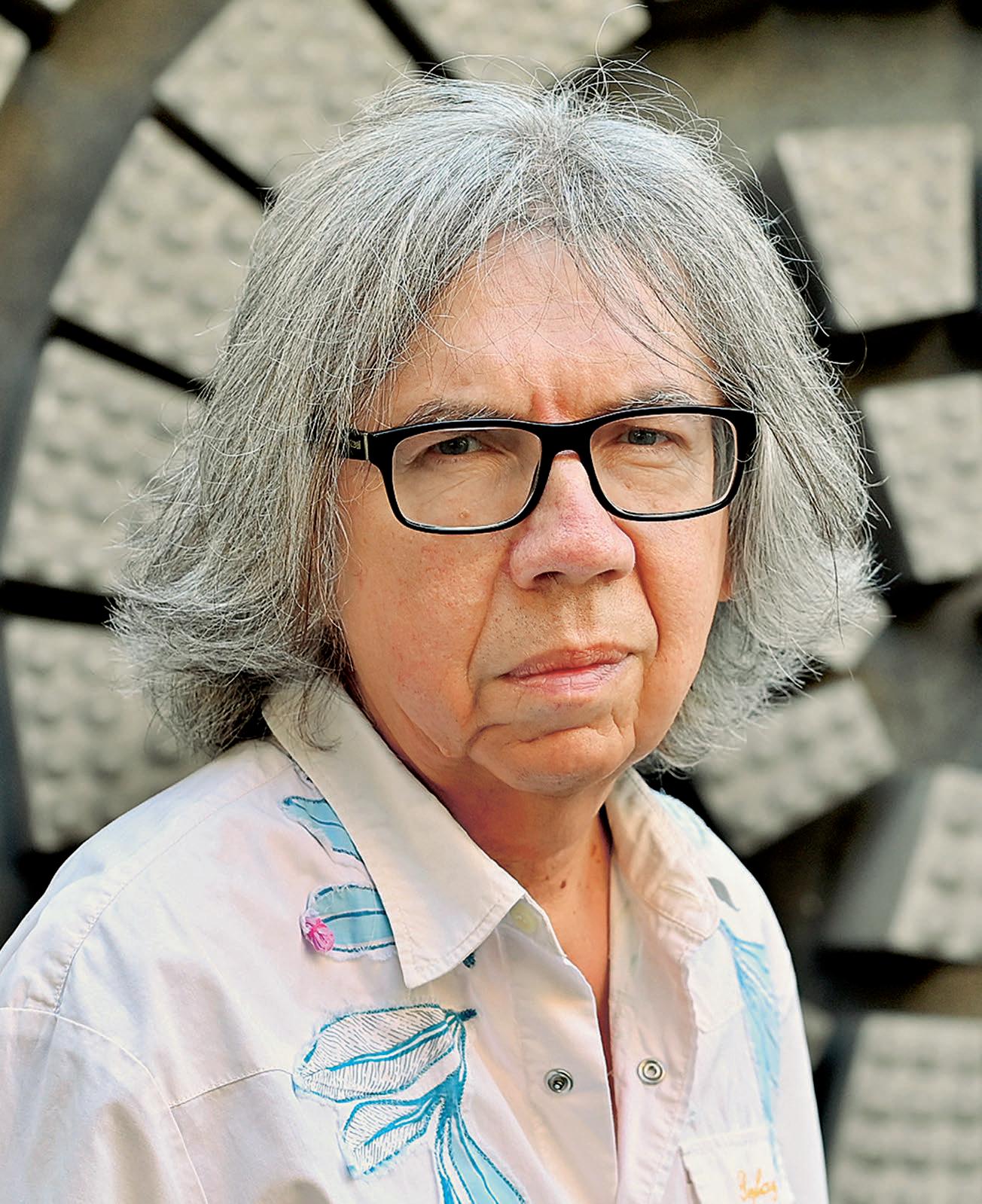
Art Historian, Curator and Director of the Museum of Contemporary Art in Belgrade 108 AN AMERICAN MUSE OF FRANCE CULTURAL ICONS 114 THE PEOPLE DESERVE MORE DRAGAN AMBROZIĆ music critic, essayist and concert organiser/promoter
“CorD - 23 Years of Independent Thought and Inspiration”
CEO: Ana Novčić a.novcic@cordmagazine.com
COO: Ivana Jovanović i.jovanovic@aim.rs
PUBLISHER: Ivan Novčić i.novcic@aim.rs
PRINTING: Rotografika d.o.o. Segedinski put 72, Subotica CorD is published by: alliance international media d.o.o.
Resavska 1/III, 11111 Belgrade 17, PAK 125806, Serbia Phone: +(381 11) 2450 508
ISSN no: 1451-7833 All rights reserved alliance international media 2026
The Winds of History Have Shifted
Ivan Vejvoda, Political Scientist
Despite everything, and given the overt animosities in the transatlantic arena, the transatlantic relationship remains – unbeknownst to many – the world’s most integrated market
he American and French revolutions of the late 18th century ushered in the modern democratic spirit and inspired the struggle for freedom around the world. Moved by the ideas of the Enlightenment, summarised in the motto ‘liberty, equality, fraternity’ (today one would say solidarity), nations sought to secure their own sovereignty and freedom during the 19th and 20th centuries.
TThe U.S. war of independence also represented the world’s first successful anti-colonial war of independence. Liberation from the yoke of British imperialism created a nation that declared, among all else, that all men are created equal and that they have inalienable rights such as life, liberty, and the pursuit of happiness. Not everything was true to those noble intentions, especially when it came to racial issues.
These are nonetheless the values that led to the forging of a strong bond between the U.S. and Europe, enshrined in their shared firm belief in democracy, the rule of law, the separation of powers, freedom of speech and assembly, and human rights.
The post-World War II period fortified those ties in terms of security, trade and investments, not to mention scientific and academic ties. Europe developed under the umbrella of U.S. security, becoming entirely depended on this Western superpower for its defence during and after the Cold War. This helped to create the international rules-based order – an order that no longer exists today.
Russia’s full-scale invasion of Ukraine changed that, as did the election of the U.S.’s 47th President. This has resulted in disruption and uncertainty in world affairs defining the current juncture.
Europe, or the European Union, awakened from its complacency and realised that, under the new U.S. administration,
Europe understands that the winds of history have shifted and that nothing will ever be the same again
it can no longer rely on America to defend the continent. The U.S. has actually become overtly hostile towards Europe –not only in terms of the imposing of tariffs or the curtailing of the use of certain AI tools, or the attempt to seize Greenland, but because it declares Europe as being culturally doomed to civilisational erasure. The existence of NATO, as the basis of the transatlantic security system, is being brought into question, while the U.S. announces the withdrawal of large segments of its forces from the continent.
The EU has initiated decisive steps to seek strategic autonomy and is invest-
ing seriously in its own defence. That’s because Europe understands that the winds of history have shifted and that nothing will ever be the same again. But Europe isn’t doomed, despite all the talk of the continent’s final demise.
Despite everything, and given the overt animosities in the transatlantic arena, the transatlantic relationship remains – unbeknownst to many – the world’s most integrated market. Bilateral trade in goods and services between the EU and the U.S. exceeds 1.7 trillion euros. This deep partnership accounts for nearly a third of global trade, with daily exchanges frequently amounting to around two billion euros. The same goes for the intensity of foreign direct investments. Nothing compares to the current strength of economic ties between the two sides of the Atlantic.
And where is Southeast Europe, the Western Balkans and Serbia in these times of geopolitics and power politics? Geography matters, and if Serbia is to thrive, it should do everything to join the continental family that is the European Union as soon as it’s able. Serbia has drifted into an elective authoritarian cul-de-sac and is merely pretending to aspire to join the EU, while disrespecting its fundamental values of democracy. A mighty student and civic movement has aroused the country from its complacency. This broad-based movement could lead to peaceful change through elections and a much more decisive turn towards the restoration of the rule of law, and thus to reforms leading to EU accession.
Business Alcazar of Adria
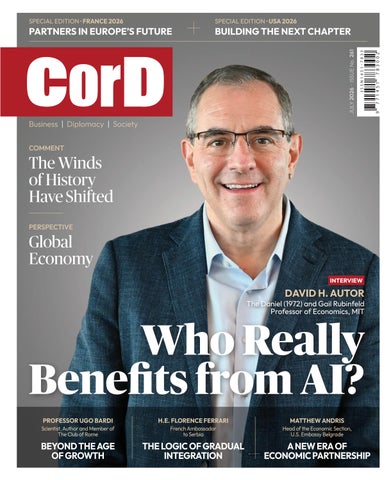
Who Really Benefits from AI?
The future of work is becoming a question of ownership, as well as employment: who controls knowledge, who captures its value, and whether public policy can ensure that AI expands opportunity, rather than concentrating it further
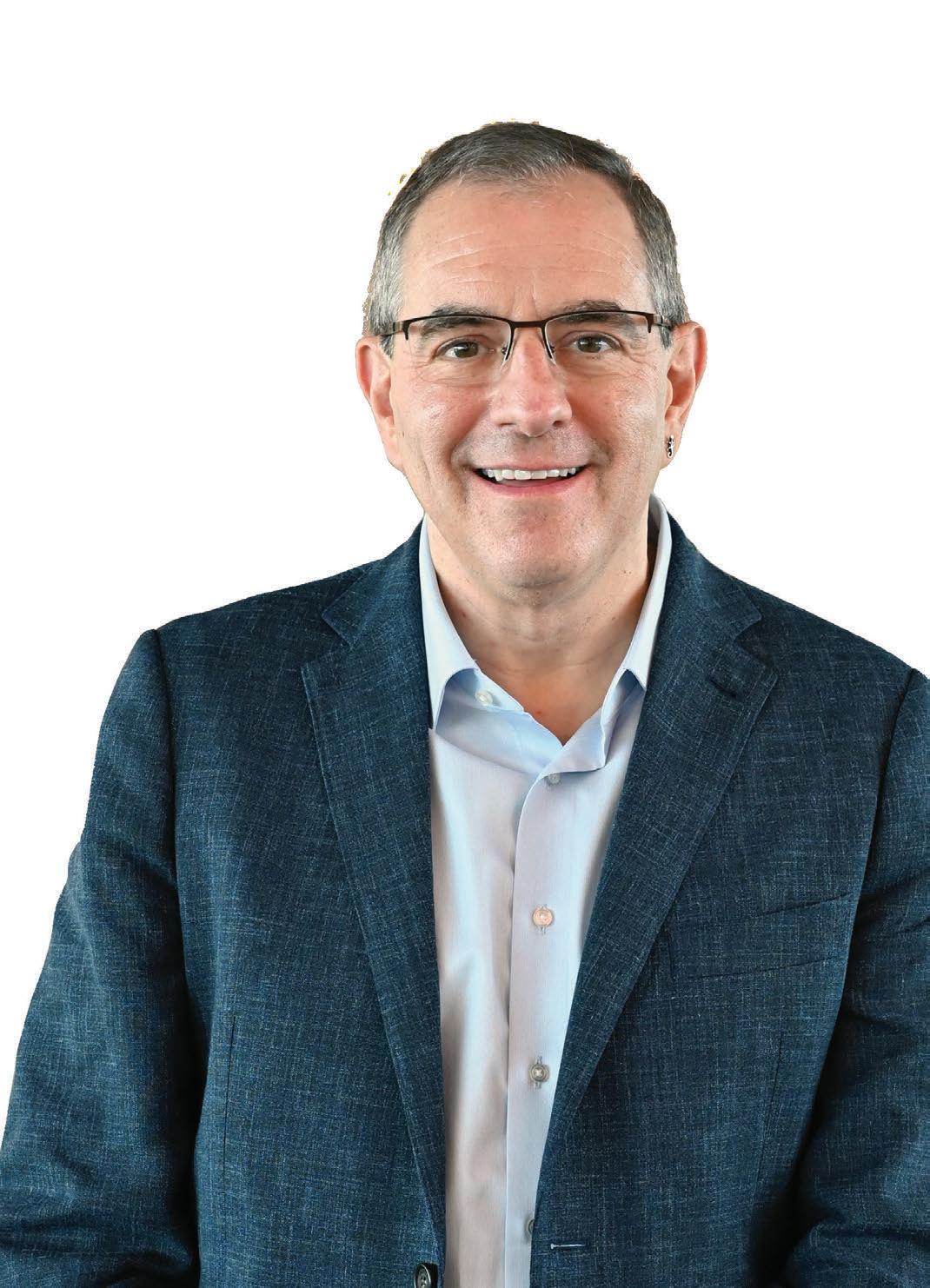
David H. Autor
the Daniel (1972) and Gail Rubinfeld Professor of Economics, MIT
By Tanja Jakobi
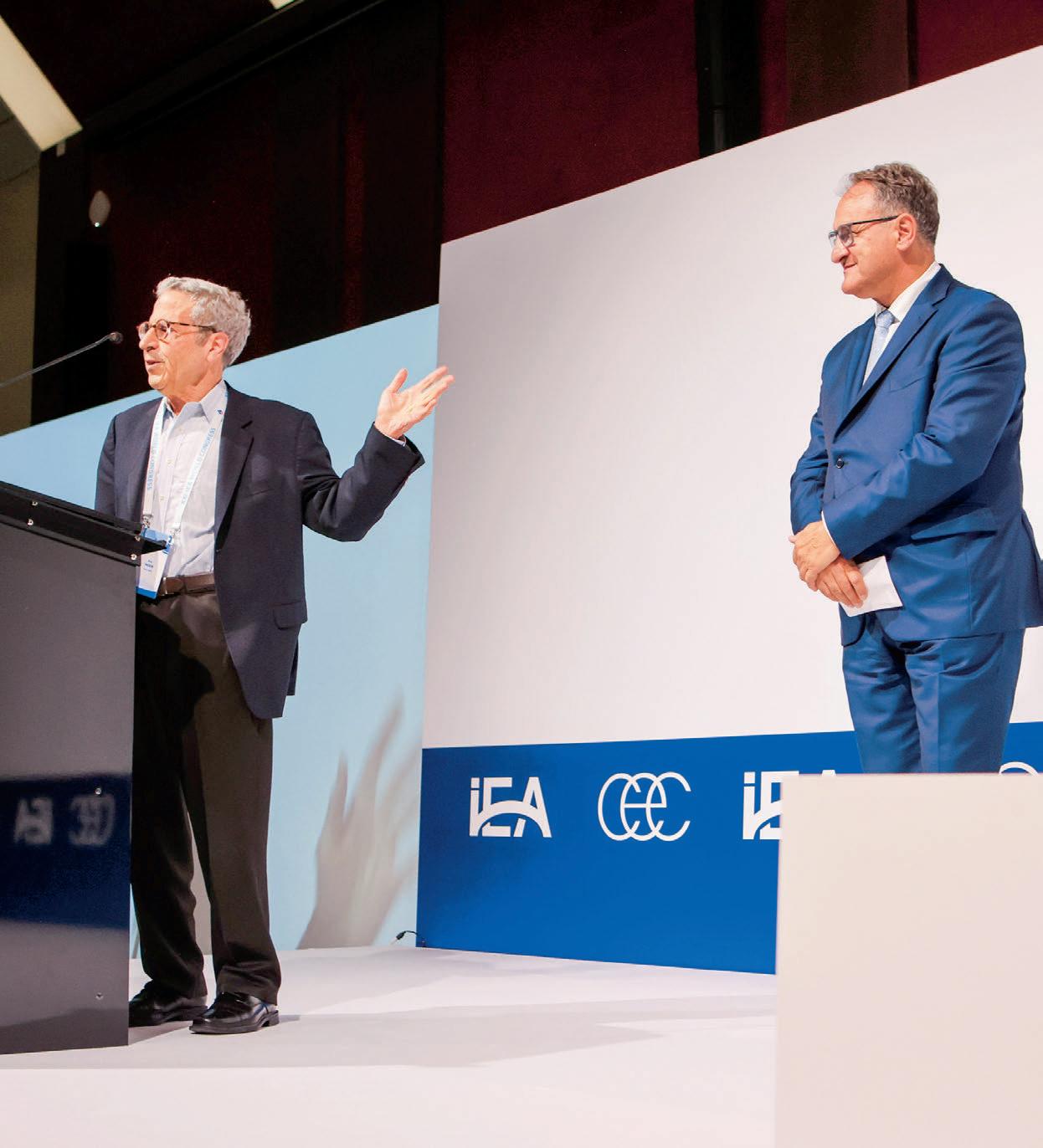
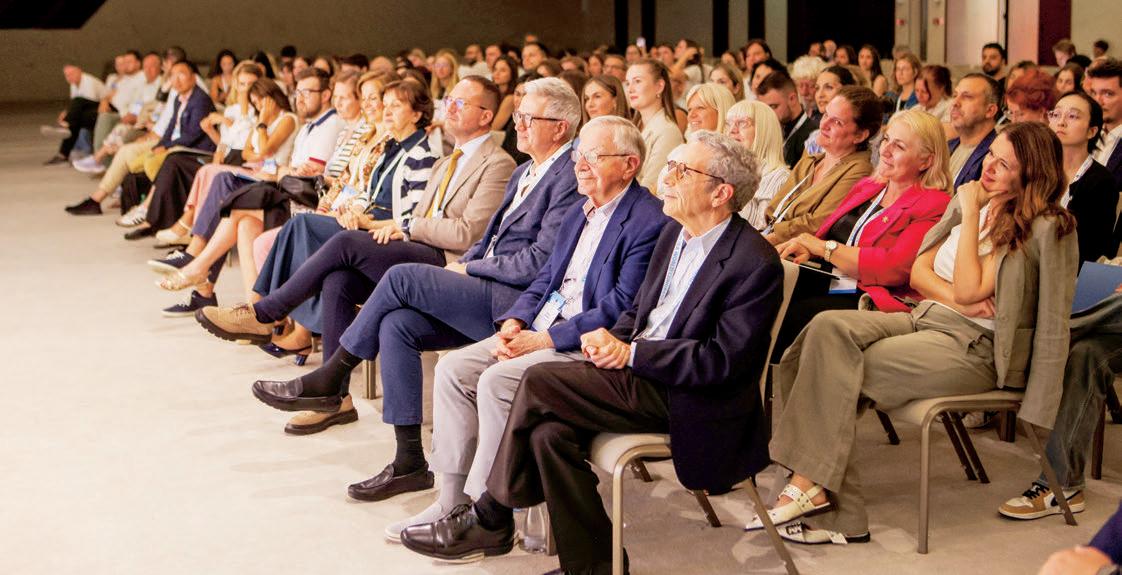
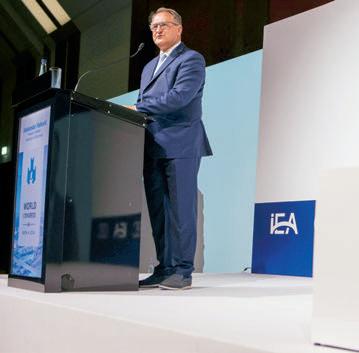
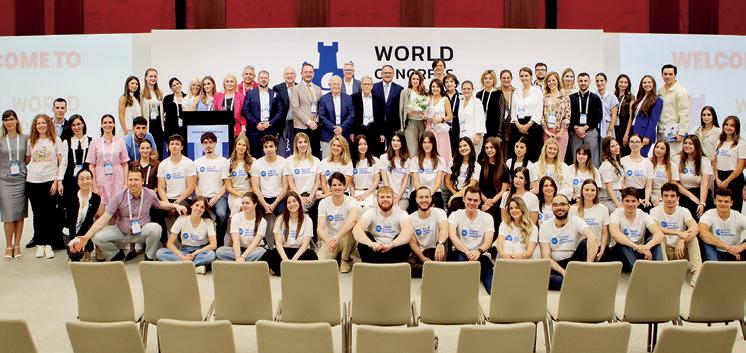
The debate on AI and work has moved beyond broad predictions about jobs lost or jobs created. At the 21st World Congress of the International Economic Association, held in Belgrade, David H. Autor, the Daniel (1972) and Gail Rubinfeld Professor of Economics at MIT, focused on the choices that will shape the ways AI enters the labour market: who gains access to expertise, who owns the value created by technology, and who shares in its rewards.
In this conversation with CorD, Autor explains why AI can both create and destroy opportunities, why the worker’s voice and public policy matter, and why the future of work will depend less on technology alone, and more on the institutions built around it.
For much of your career, your work helped explain how automation and globalisation hollowed out middle-skill, middle-class jobs. Yet your recent work suggests that AI could, under the right conditions, help rebuild parts of that middle. What would those conditions have to be?
— The key condition is that we use this tool to create opportunities for people who don’t have an elite education to do high-value work – in health, law, software, design, contracting or skilled repair.
That is feasible because the tools we now have can support decision-making. Experts make high-stakes, one-off decisions: how to care for a patient; how to architect a piece of software; how to land a plane. They have a large base of knowledge, but their decisions
are often made one by one. That is why we rely so heavily on highly educated experts: it matters that they make good choices.
AI is a tool that can enable more people to make good decisions in highstakes situations. If we use it well, it can reduce entry barriers to professional work. That doesn’t mean people would no longer need training or education, but they may be able to go further with a nursing degree, a nurse practitioner degree, or another kind of medical or technical qualification. We already see this happening in software. On the one hand, parts of software work are becoming more elite and specialised. On the other, many more people are now able to write apps and code with less training and better tools.
The central issue of your recent work isn’t simply whether AI destroys jobs, but whether it changes the value of human expertise. If AI makes some forms of expert knowledge cheaper and more widely available, is that democratising expertise, devaluing expertise, or both at the same time?
— It is both at the same time, but it can also make some forms of expertise more scarce and more valuable.
What I was talking about with regard to the legal profession, for example, is democratising expertise. It means lowering barriers to professional work by giving people better tools. Obviously, incumbents don’t always like that. Everybody loves free markets. Nobody actually likes competition.
However, in other cases, that goes in the opposite direction. AI can make more specialised skills even more valuable. So, it isn’t simply one or the other. The important thing to remember is that this isn’t a fixed pie. The slice isn’t just being redivided. If people become more productive, the pie can grow.
So, it is quite possible for more people to do a certain type of work and still have everyone making a very good living from that work. Right now, however, too much expertise in rich countries is concentrated among highly educated people. They command an overwhelming share of income and own an overwhelming share of capital. I’m not saying they don’t deserve the fruits of their labour, but they are a minority, and everybody else is paying for that education, healthcare, law, software, contracting, design and so on. That is not conducive to shared prosperity.
It would be better if there were broader access. But I want to be clear: this doesn’t mean the end of expertise. There will still be people at the frontier of every field, and they will use these tools in very specialised ways. That will be valuable too. Some of them will be doing work that doesn’t even exist yet.
AI can push some work towards greater specialisation, while opening parts of that same work to more people who have less training and better tools
Your research on trade shocks showed that economists and policymakers can recognise the aggregate gains of economic change while underestimating the depth and persistence of its costs for particular workers and communities. Are we at risk of making the same mistake with AI, or is this a fundamentally different kind of labour-market disruption?
— We are at risk of making the same mistake, even if the disruption is somewhat different.
I don’t think the impact of AI on the labour market will be nearly as
localised, because trade is very regional. I also don’t think AI will affect the labour market by wiping out entire industries in the same way. It is more likely to impact occupations and roles.
And I think it will be more profitable. The trade shocks caused many firms to collapse because they were no longer profitable. AI is different in that respect. But it will still displace workers. It will still devalue expertise, in some cases very rapidly.
If we aren’t set up to support adjustment, to support skills reinvestment, and to give people ownership stakes in the upside, then we will be making the same mistakes we made with the China trade shock.
Together with Daron Acemoglu and Simon Johnson, you argue for pro-worker AI. But today’s AI race is largely driven by firms seeking scale, speed and cost reduction.
ACCESS
AI could lower barriers to high-value work, but only if it is used to support human judgement, rather than to simply cut labour costs
RIGHTS
Worker knowledge used to be inseparable from the worker. AI changes that, and existing law has not yet caught up
DIVIDEND
If AI makes societies richer, more people should share in the gains through training, wage insurance and ownership
What public policies, institutions or forms of worker voice could shift the development of AI in a more pro-worker direction?
— That is a great question. Some of it can be done through public spending and public steering. Healthcare and education, for example, are largely public services. The government spends a lot of money there, and it can say ‘we want to structure these tools in this way. This is how we want them to be used’.
Beyond that, it is much harder to influence. But you mentioned the worker voice, and that is central. A lot of the rights now being claimed by owners, or by people using AI, were previously held by workers.
For example, if a company uses AI to monitor what you do, learn what you do, and then fire you, that is a profound change. It used to be that your knowledge was inalienable. It could not be taken away from you. It was intrinsic to you. That is no longer true if AI can train on what you do.
We don’t have laws regulating this, because it was never something we had to consider. But it is a kind of unilateral usurpation of rights, and that is a real problem.
Markets aren’t set up to deal with that. Markets work when you have well-defined property rights. If there’s a property right that isn’t explicitly owned, and all of a sudden someone says ‘this thing you thought was yours is now mine’, markets aren’t built for that. We need clear property rights.
This is where policy has to play a role. It has to steer that division. If it fails to do so, those rights will very likely be claimed by the companies that have the technology to do so.
If AI makes societies more productive and affluent, the gains should not remain concentrated among those who already own the technology
You have argued that, even when technological change creates new work, the workers who benefit often aren’t the people whose existing expertise has lost value. How should societies deal with those transition costs, particularly when the losses are concentrated around specific occupations, communities or generations?
That is exactly right. There is new work, and there is work that is displaced, and it is usually not the same people who benefit.
We should recognise that if we use this technology well, we will be more productive and more affluent. We should use those resources to create an AI dividend, something from which everybody benefits. And that has to take many forms. I don’t just mean writing a cheque.
One part is investing in workers who have to make transitions. That could include something like wage insurance, where if you have to move from a higher-paid job to a lower-paid job, part of the difference is made up temporarily while you search for better work. Another part is modernised training, which is much more directed towards new opportunities.
It can also include shared ownership, something like universal basic capital. Give people ownership rights in capital markets at birth, which they can invest in and cannot liquidate until they are adults. We already have something like this starting in the United States, called Trump Accounts. They have many problems, as you could guess from the name, but it is the right idea.
This isn’t just a nice thing to do. It isn’t only that it seems just. It is also unwise not to do it. If publics become sufficiently concerned about how the technology is used, that will stand in the way of progress. It will create disruption. It will create the kind of political damage we saw from the China shock. So, it is in our own self-interest to make sure that more people benefit from the changes we are going through.
The Logic of Gradual Integration
France continues to support the opening of Cluster 3 with Serbia… Serbia can, and needs, to accelerate the pace of reforms in every sector of the enlargement process, particularly in the domain of political fundamentals. Media freedom, the fight against corruption, fundamental rights, enforcement of ODIHR recommendations. These reforms are crucial and accession negotiations provide a clear framework for dealing with all of them – Florence Ferrari
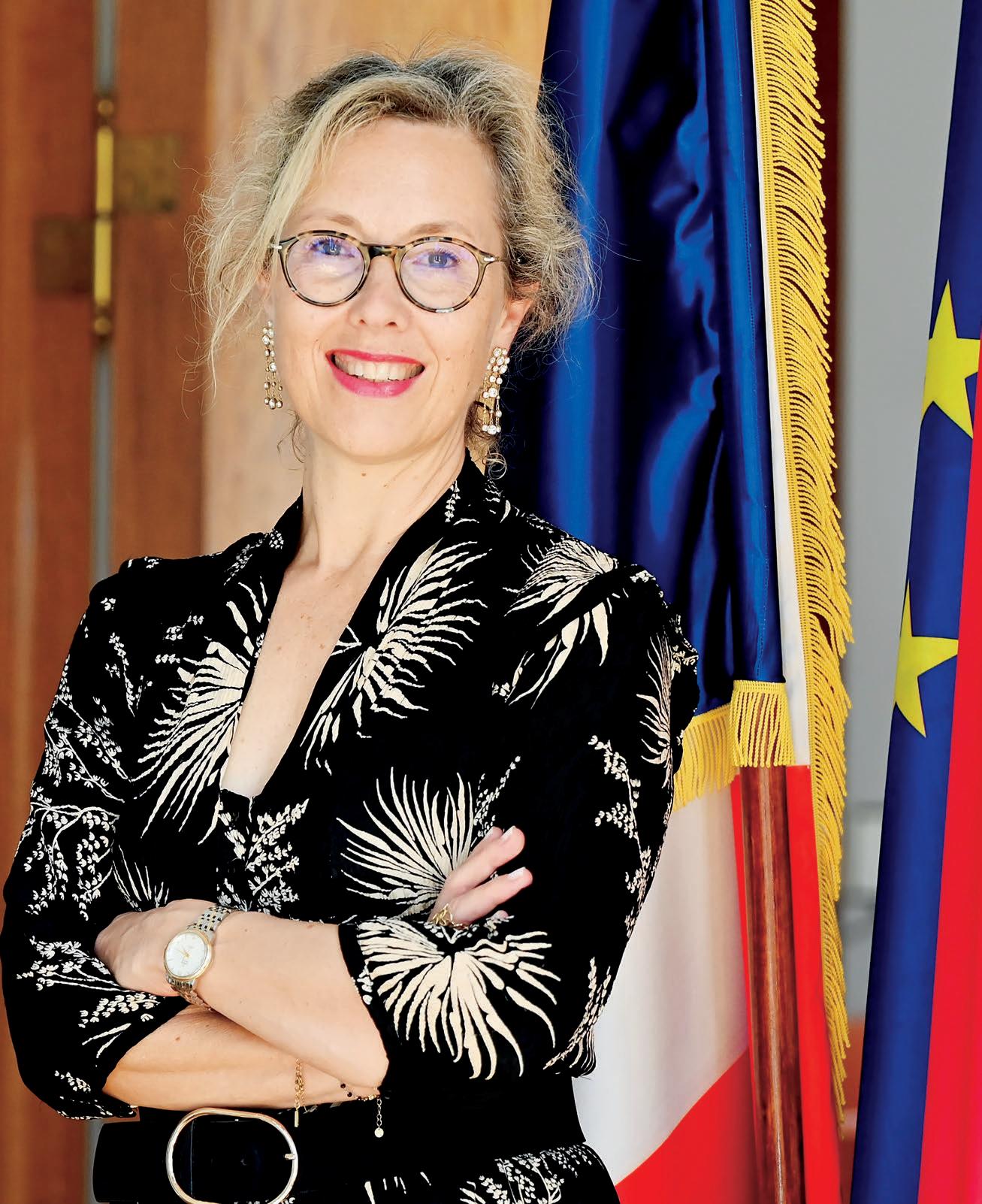
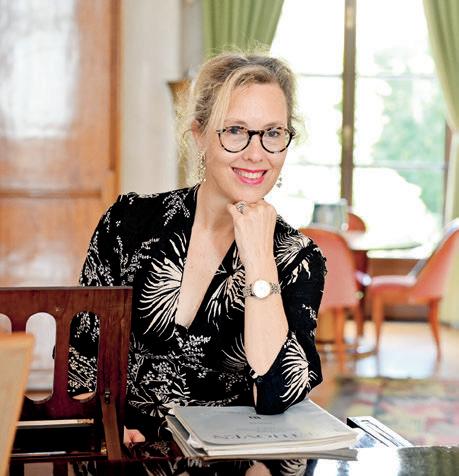
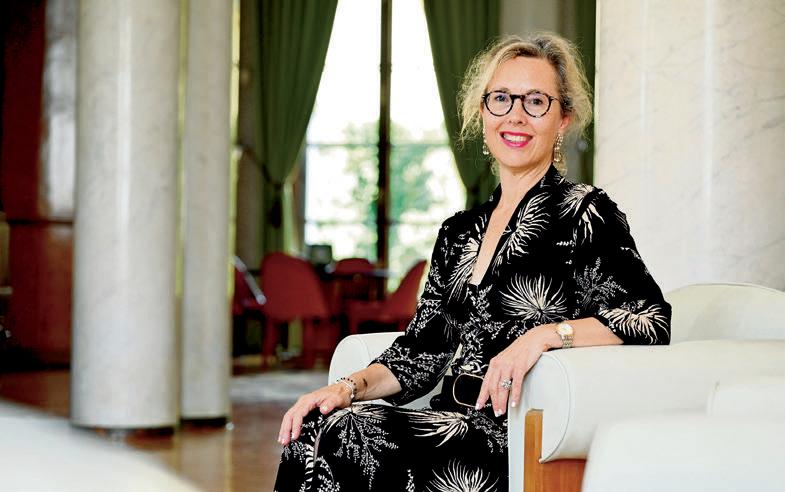
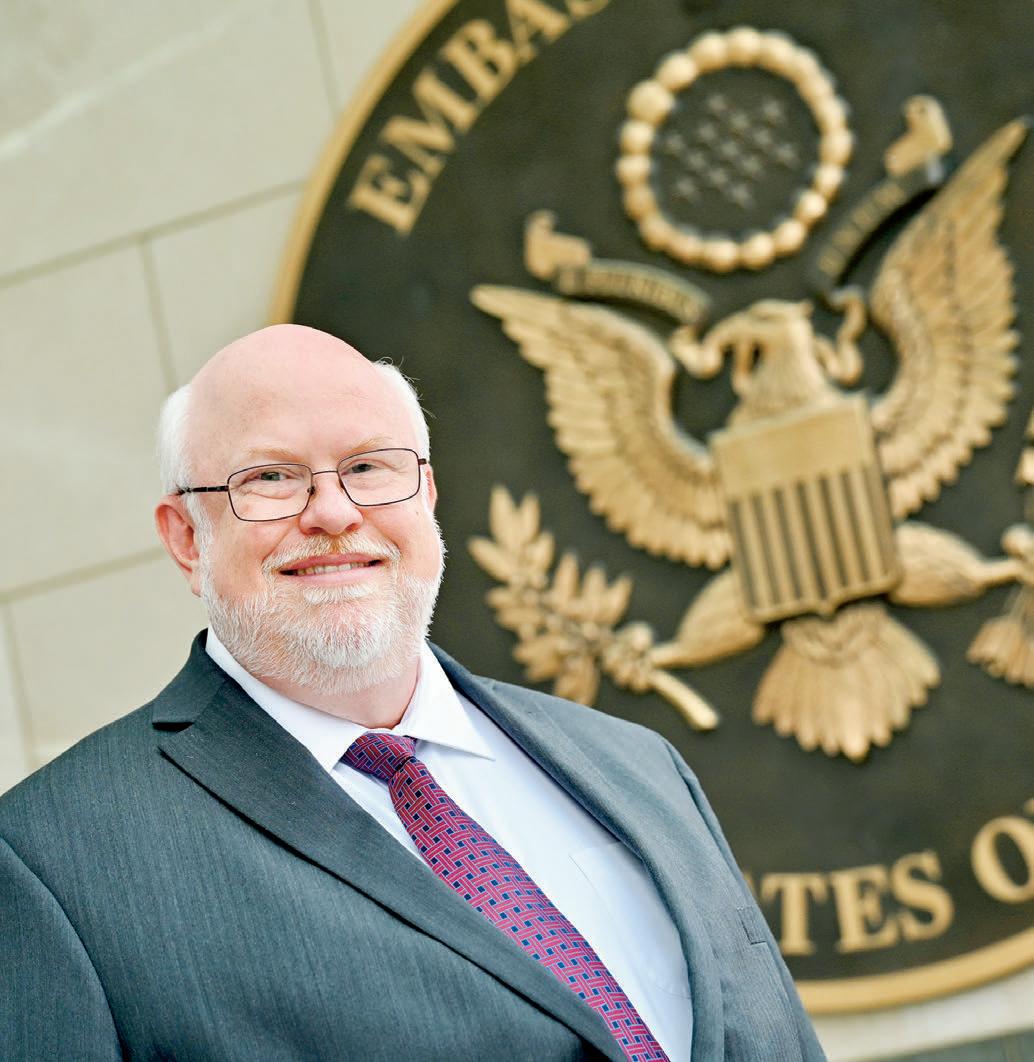
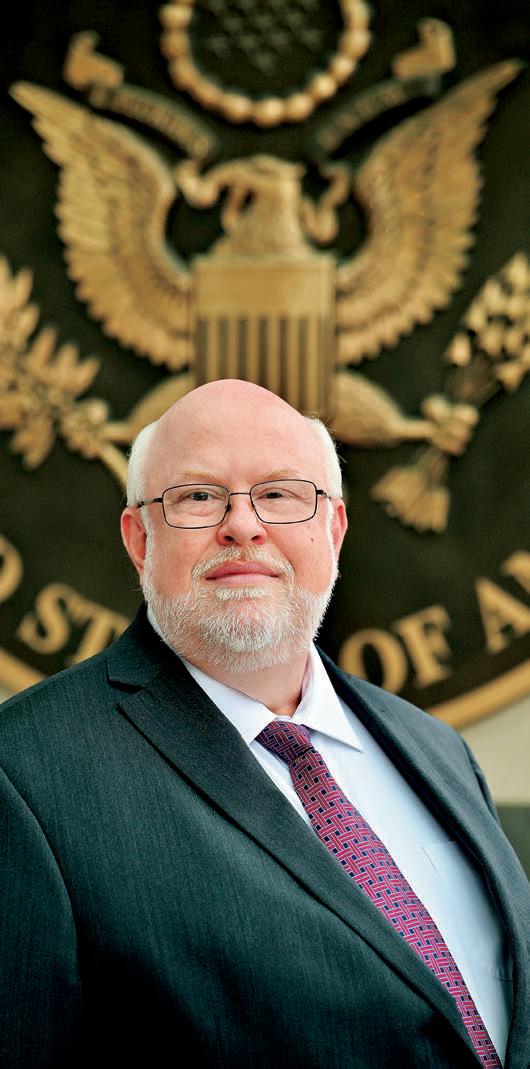
H.E. Florence Ferrari
French Ambassador to Serbia
By Ljubica Gojgić
France wants to see Serbia among the countries that are “capitalising on the current positive momentum regarding enlargement,” says Ambassador Florence Ferrari, speaking in this interview for CorD Magazine. Commenting on the latest model aimed at bringing candidate countries closer to the European Union, which was jointly proposed at the recent summit in Montenegro by the French President and the German Chancellor, she says that this proposal “acknowledges and takes stock of the frustration of the candidate countries regarding an enlargement process that can be perceived as long and fastidious. It aims to give a new impetus to the process, by placing the log-
ic of gradual integration at the centre“. She considers such an approach as being “a key tool to support the political will of candidate countries, encourage them to accelerate the pace of expected reforms and bring them effectively closer to the EU”.
Your Excellency, it was fifteen years ago that the 2011 Strategic Partnership Agreement elevated relations between France and Serbia to a new level. What has this partnership delivered and how do you assess bilateral relations today?
— We indeed signed a Strategic Partnership Agreement 15 years ago, and last January’s visit to Belgrade of our Foreign Affairs Minister Jean-Noël Bar-
rot was an occasion to take stock of what has been achieved since then. Cooperation between France and Serbia has been strengthened in all fields. We have excellent bilateral relations, as well as constant and high-level political dialogue. Our economic relations are also significantly on the rise: bilateral trade has tripled since 2010 and French companies are involved in strategic projects. The French Development Agency opened a regional office in Belgrade in 2019 and has already committed nearly a billion euros to key sectors. As regards culture, language and education, the French Institute is very active, organising numerous events, in close relations with Serbian partners.
The visit of Minister Barrot also provided the occasion to discuss new avenues for cooperation between our two countries. We are currently in the process of drafting a French-Serbian roadmap, which I’m sure will update and make our strategic partnership even broader and more significant.
It is often argued that the personal relationship between the presidents of France and Serbia has been a key driver of the strengthening of ties between the two countries. As both leaders are approaching the end of their respective mandates, can we expect future French leaders to continue this trend of deepening relations with Serbia?
— It is of public knowledge and true that our presidents have a special personal relationship. They meet and exchange regularly, maintaining a friendly dialogue that’s also frank and demanding. President Macron’s two official visits to Serbia have been key milestones in the renewal and reinvigoration of our longstanding friendship. But the state of relations between two countries isn’t just about the interpersonal connection between two leaders, even if this can, of course, play a key role. At the core of the relationships remain the common interests and shared values between the two countries and populations, and the concrete partnerships and projects implemented together. France deeply values its close relationship with Serbia, because of our shared history, but also because we are convinced that we do have a shared future within the EU. These elements form the backbone of our bilateral relations, while they also set the course for their future densification and deepening.
The past two decades have seen a significant expansion of economic cooperation between France and Serbia. The Serbian public associates this cooperation with projects such as Vinci Airports’ concession for Belgrade Airport, the Belgrade Metro project and, most
recently, Serbia’s acquisition of Rafale fighter aircraft. Could you tell us how the implementation of this agreement is progressing, given that France is acting not only as the supplier, but also – in part – as a financial partner?
— All the projects you mention, which mobilised French companies, are structuring projects for the development of the country and are meant to bring Serbia closer to EU standards. Ensuring that Serbia is advancing as fast and as tangibly as possible on this path is a central element of France’s policy. This includes strengthening coopera-
The European Commission has considered Cluster 3 technically ready to be opened for several years, and France continues to support its opening
tion in the defence sector. In this regard, we welcome Serbia’s choice of the Dassault Aviation Rafale for the modernisation of its fleet. The schedule agreed between the Serbian government and the manufacturers involved in the production of the aircraft and their equipment envisages the arrival of the first Rafale by mid-2028.
At a time when countries are seeking reliable and secure energy supplies, France has been mentioned as a potential partner in Serbia’s plans to develop its first nuclear power plant. In the meantime, Serbia has signed cooperation agreements in this field with several other countries, including Russia, China and South Korea. Do you still see France playing a role in these projects?
— Our partnership with Serbia on civil nuclear energy is based on France’s conviction that civil nuclear energy is an essential component of our global need to reduce greenhouse gas emissions, ensure a just and sustainable energy transition, and foster energy security and diversification.
France is a leader in this sector of civil nuclear energy. We recently launched a major programme to build a new series of large European Pressurised Reactors.
Our cooperation with Serbia in this sector is based on concrete agreements between French company EDF and the Serbian Ministry of Energy. Under the framework of the Letter of Intent signed in March 2026, EDF will continue to support Serbia’s sovereign choice for a secure, low-carbon energy future.
At the recent summit of EU–Western Balkans leaders in Montenegro, the President of France and the Chancellor of Germany presented a joint proposal aimed at revising the current EU accession model for the countries of the region. Their position paper suggests that the fulfilment of specific criteria could be rewarded through privileged access to the EU Single Market and participation in European institutions as observers. This initiative has met with mixed reactions in Serbia. While some have interpreted it as support for Serbia’s accelerated accession to the EU, others have described it as merely another ‘European carrot’ for a region stalled in the accession process. How do you view these differing interpretations, and
PARTNERSHIP
Bilateral trade between France and Serbia has tripled since 2010, while cooperation continues to deepen
GRADUAL INTEGRATION
France and Germany advocate closer integration of candidate countries before full EU membership
REFORMS
Media freedom, anti-corruption efforts and fundamental rights remain key priorities on Serbia’s EU path
what is the real significance of this proposal?
— The fact that France and Germany chose the occasion of the EU-Western Balkans Summit to make these propositions is, in my opinion, very significant. It is indeed a very concrete sign of our joint commitment to the EU integration of the Western Balkan countries. This proposal acknowledges and takes stock of the frustration of the candidate countries regarding an enlargement process that can be perceived as long and fastidious. It aims to give a new impetus to the process, by placing the logic of gradual integration at the centre. We see gradual integration as a key tool to support the political will of candidate countries, encourage them to accelerate the pace of expected reforms and bring them effectively closer to the EU. We want to be instrumental and help things move forward.
As you have previously noted, France actively supported Serbia’s efforts to open Cluster 3 in its EU acces-
Media freedom and freedom of expression are not technical criteria, but fundamental values at the heart of Serbia’s European path
sion negotiations, though without success. This would have marked the first such step in five years and helped revive the enlargement process. From your perspective, how would you assess Serbia’s current position on its European path? — France continues to support the opening of Cluster 3 with Serbia. The European Commission has considered it technically ready to be opened for several years. We truly believe that it would contribute to materialising the credibility of Serbia’s EU perspective. That being said, the pace of the enlargement process depends essentially on Serbia’s efforts to meet the EU accession criteria and implement the neces-
sary reforms, in accordance with the merit-based approach. It is not a simple path. It is long and sometimes has hurdles, but Serbia can, and needs, to accelerate the pace of reforms in every sector of the enlargement process, in particular in the domain of political fundamentals. Media freedom, the fight against corruption, fundamental rights, enforcement of ODIHR recommendations... These reforms are crucial and the accession negotiations provide a clear framework to deal with all of them. Other candidate countries, such as Montenegro and Albania, are capitalising on the current positive momentum regarding enlargement. France wants to see Serbia to the fore as well, and stands ready to keep supporting Serbia on this path.
Your mandate has begun at a time when Serbia is facing a profound social and political crisis. Concerns regarding media freedom and the alleged excessive use of force by police during public gatherings involving citizens and students have been highlighted in reports by United Nations experts, the Council of Europe and resolutions adopted by the European Parliament. Do you share these concerns, and how do you view the current situation? — Our job as diplomats is to try to have the most complete vision of a country: this means listening to, and meeting with, all parties. We are reading the analyses and reports of all the institutions you mentioned closely. Pressure, threats and attacks against journalists are unacceptable. All incidents must be investigated and adequately addressed by the competent authorities. Freedom of expression and media freedom are key values for Serbia’s path towards EU membership, which France supports strongly.
Global Diary
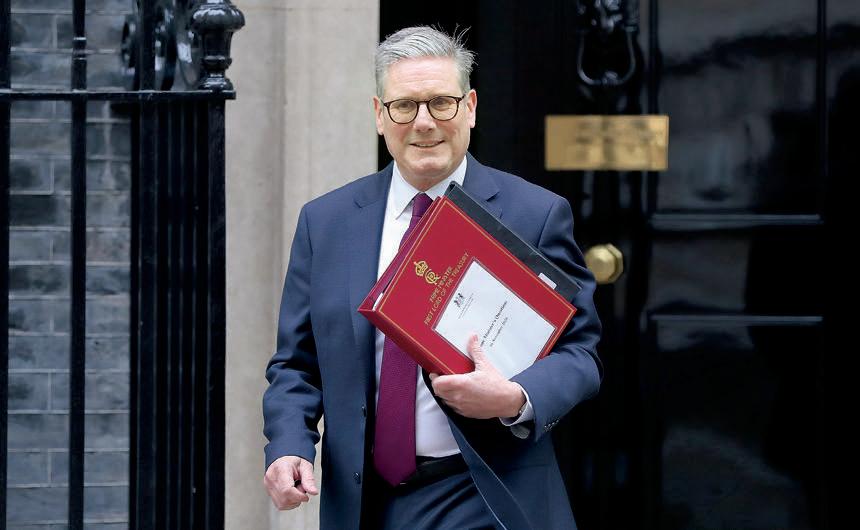
Starmer
Steps Down
UK Prime Minister Keir Starmer announced his resignation on 22 June after mounting pressure within the Labour Party following disappointing election results. He will remain in office until a new Labour leader is chosen, with Andy Burnham widely expected to succeed him. The resignation ends one of the shortest premierships in modern British history and opens a new chapter in UK politics.
“Leadership is the art of getting someone else to do something you want done because he wants to do it.”
Dwight D. Eisenhower
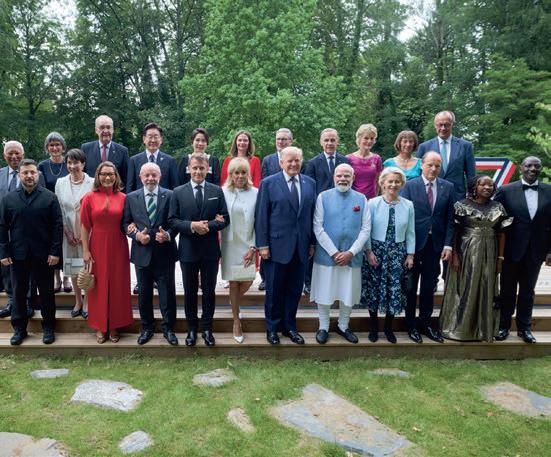
G7 Meets in France
French President Emmanuel Macron welcomed G7 leaders to Évian-les-Bains from 15 to 17 June, hosting Donald Trump, Mark Carney, Friedrich Merz, Giorgia Meloni, Shigeru Ishiba and Keir Starmer. Discussions focused on the conflicts in Ukraine and the Middle East, global trade and artificial intelligence. The summit concluded with renewed commitments to support Ukraine and strengthen cooperation on emerging technologies.
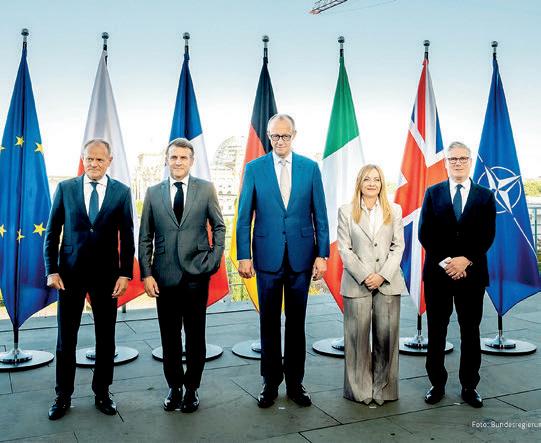
Europe’s Leaders Meet in Berlin
German Chancellor Friedrich Merz hosted Emmanuel Macron, Donald Tusk, Giorgia Meloni and Keir Starmer in Berlin to coordinate Europe’s response to growing security and geopolitical challenges. The leaders discussed support for Ukraine, European defence cooperation and transatlantic relations ahead of upcoming international summits. The meeting demonstrated Germany’s increasingly central role in shaping European policy.
“The greatest danger in times of turbulence is not the turbulence—it is to act with yesterday’s logic.”
Peter Drucker
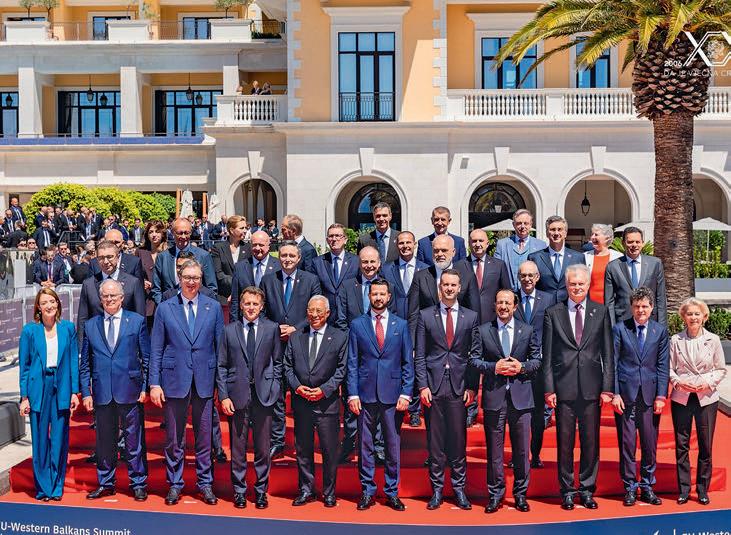
EU Reaffirms Western Balkans Path
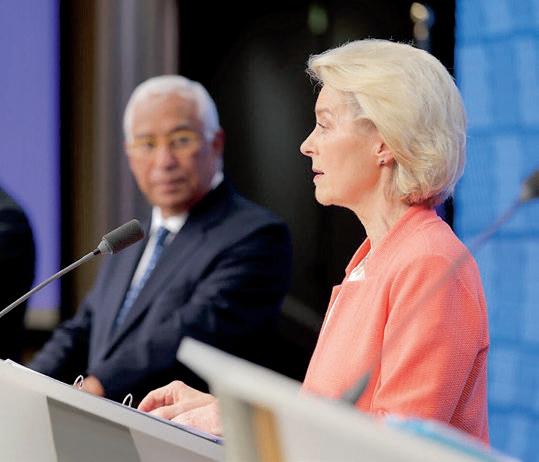
European Commission President Ursula von der Leyen, European Council President António Costa and High Representative Kaja Kallas met Western Balkan leaders in Tivat, Montenegro, for the annual EU–Western Balkans Summit. The gathering brought together the leaders of Albania, Bosnia and Herzegovina, Kosovo, Montenegro, North Macedonia and Serbia, with enlargement, economic integration and implementation of the EU Growth Plan topping the agenda. EU leaders reiterated that the future of the Western Balkans lies within the European Union, while calling on the region to accelerate reforms and strengthen regional cooperation.
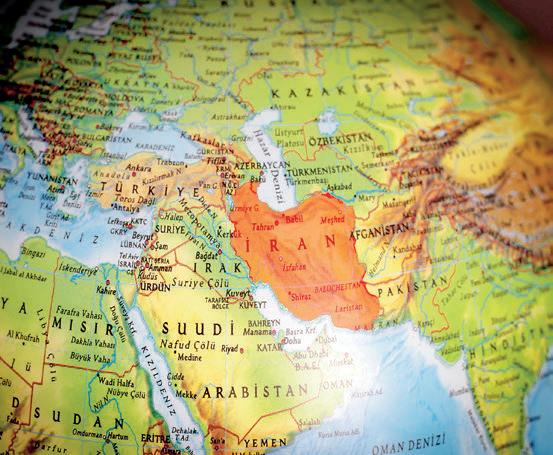
Iran–Israel Ceasefire Holds
The ceasefire between Iran and Israel remained in place after diplomatic efforts led by the United States and regional mediators helped halt nearly two weeks of fighting. The conflict had raised fears of a broader regional war following strikes on military and nuclear facilities. The truce eased pressure on global energy markets, although negotiations on a lasting settlement continue.
EU–UK Summit Postponed
The European Union postponed its planned summit with the United Kingdom following Keir Starmer’s resignation. Ursula von der Leyen and António Costa praised Starmer’s efforts to rebuild relations after Brexit, while indicating they would work closely with his successor. The delay comes at a sensitive moment in negotiations over trade, defence and broader UK-EU cooperation.
GLOBAL ECONOMY
Trade Holds Strong, But Gaps May Increase
Global trade has proved to be more resilient than is often suggested by the current political rhetoric. However, its routes, rules and rewards are changing, and the next phase may widen the gaps between countries, especially as AI investment and technological capacity remain concentrated in just a few places
By Tanja Jakobi
The future of global trade has long been the subject of intense debate, with sharply contrasting views on how globalisation is changing, who benefits from it, and how its risks and rewards are distributed. These questions are today further complicated by tariffs, geopolitical tensions, regional blocs, AI and automation. At the 21st World Congress of the Internation-
al Economic Association, held in Belgrade under the theme “Contrasting World Visions: Globalism v Nationalism, Multilateralism v Bilateralism, and Democracy v Autocracy”, we spoke with five leading economists: Ralph Ossa, Gene Grossman, Hélène Rey, Arnaud Costinot and Justin Yifu Lin.
They discussed the state of global trade beyond the headlines: how resilient the
rules-based system remains, whether the Trump administration’s tariff offensive marks a structural rupture or a politically amplified shock, how smaller economies can navigate a world shaped by the U.S., China and regional blocs, and whether AI will widen the gap between countries that produce technology and those that mainly use it.
WHélène Rey
Lord Bagri Professor of Economics at the London Business School
Geopolitics is Rewriting Globalisation
We are entering an era of geoeconomics, in which geopolitical alignment increasingly shapes trade, finance, investment and payment systems
hat’s happening to globalisation? There are different types of globalisation: globalisation in trade and globalisation in finance. In both cases, globalisation seems to have slowed down to some extent, but in an interesting way. Geopolitics has emerged as a very important factor in the global economy. In trade, we have seen a reorganisation of supply chains, with significant geopolitical fragmentation. There is also a localisation of some key inputs in friendly economies. If we look only at the aggregate volume of trade, we may not see dramatic change. Trade growth has slowed, and this has been visible for some time. We could already see the phenomenon of slowing globalisation after 2008. However, the aggregate quantity of trade doesn’t seem to have fallen that much. What has changed is the way trade is conducted.
The most famous example is trade between the U.S. and China. Direct trade between the two appears to have declined, but much of it has been intermediated by third countries, the so-called connector countries. Trade now goes through Mexico, Vietnam, perhaps Morocco, and a number of other economies that are playing an intermediary role in international trade.
Whether this trend continues will depend heavily on geopolitics. We see something similar happening in finance. There is some fragmentation in payment systems, with a number of countries seeking alternatives to the dollar-based payment system. This fragments payments and may not be good for global liquidity.
Trade volumes may not show dramatic decline, but the way trade is organised has shifted, with supply chains being rerouted through “connector countries” like Mexico, Vietnam or Morocco
There are also issues related to foreign direct investment, connected to what I said earlier about trade. Questions of national security and geopolitical alignment are becoming more important. So, fragmentation is definitely on the rise, and where we go from here depends a great deal on geopolitics.
Gene Grossman
Jacob Viner Professor of International Economics at Princeton University
Rocky Road Back to Globalisation
The benefits of open trade are still compelling, yet the road back to smoother globalisation is likely to be slow and politically difficult
It’s very hard to predict where the world is going in terms of globalisation. My gut instinct is that the benefits of globalisation have been so great that they will eventually win out again, but I think we are going to experience a rocky period.
Public opinion has certainly turned against globalisation. And yet, as Professor Elhanan Helpman said recently, if the question posed is whether trade offers more opportunities than risks, I think that, by and large, this view hasn’t changed much over time. So, I am hopeful that we will get back to a world of smoother globalisation, but it will take a while. And the current U.S. government certainly isn’t going to be the one that brings globalisation back.
To a certain extent, I think large and small economies do face different risks, although the right strategy for small countries is to coalesce and cooperate with one another. The EU is a good example: France, Germany, Denmark and the Netherlands are smaller economies, and the way for them to balance the power of the U.S. and China is to cooperate mutually.
In terms of overall economic strategy, I think that specialising according to comparative advantage is still the right answer for all countries under most circumstances.
As AI and automation spread globally, I think there is a risk that they will widen the gap between coun-
Smaller economies cannot balance the power of the U.S. and China alone, which is why their best strategy is to cooperate and act collectively
tries at different levels of development. Major investments in AI are being made in a small number of places, and smaller countries, and certainly lower-income ones, are going to be reliant on them. Everyone is going to be using AI, but only a few places are going to be producing it. So, I do think it is going to widen gaps, at least in the medium term.
SJustin Yifu Lin Professor of Economics at Peking University, former Chief Economist of the World Bank (2008 to 2012)
Slower Growth Matters More Than Deglobalisation
The slowdown in global trade is related to slower economic growth much more than it’s related to deglobalisation, de-risking or decoupling
ome countries have certainly imposed high tariff rates on almost every other country. But, apart from that, most countries have some concerns regarding security issues and are attempting to de-risk. Overall, however, trade is still continuing, although it may not be able to grow as fast as it did in the past.
The reason trade hasn’t grown so fast is not so much trade policy, but rather the fact that most countries have slower growth. When growth is slow, all activities are reduced, including trade. I think this has a greater impact on trade flows than so-called de-risking, decoupling or deglobalisation. Overall, trade is a win-win for all parties involved, and I’m sure that trade remains the best option for almost every country
I think trade and globalisation represent a win-win solution for every country, as they can increase market scope, productivity and job opportunities for everyone. But some countries may want to maintain their political dominance, and they are willing to sacrifice economic gains by reducing trade. But I think those of us that don’t pursue political hegemony should embrace trade.
If AI and automation spread globally, will they widen or narrow the gap between countries at different levels of development? I think that depends. If technology is open, then some adjustment will certainly be needed. However, in the end, everyone can benefit from these new technologies. But if technology isn’t open, then some groups of peo-
I’m sure that most countries will find continuing to open up and engage in trade is good for them, but also for the rest of the world
ple will have the privilege of owning that technology, raising their productivity and increasing their competitiveness vis-à-vis others.
I, thus, think that we should embrace the new technological revolution, because that’s the way to raise productivity, increase opportunities for everyone and create a better life in the future. But this relies on the assumption that technology is open to everyone.
Arnaud Costinot Professor of Economics at the Massachusetts Institute of Technology
New Pressures, Old Economic Lessons
The world hasn’t turned away from trade, but the period of rapidly expanding openness has ended. And this requires the careful adaptation of existing institutions
I
think that, if you look at the data, it is undeniable that there has been a flattening in terms of openness to trade around the world. From the end of World War II all the way to around 2010, there was an accelerating pace: the world was becoming more open. But for the last 10 or 15 years, we can see in the data that there has been a flattening of openness.
So, it isn’t quite that there has been a reversal of globalisation. We haven’t seen that. But the last 15 years don’t look like what we had learned from the second half of the 20th century. Predicting the future is always hard. I certainly wouldn’t imagine a full reversal to the world we had before, as there are new challenges, but there is hope that the institutions we designed, and the world trading system we have, may survive the current challenges, and that the world may still be able to benefit from international trade.
I think the new challenges you mention will definitely have a profound impact on various economies. Again, predicting the future is always hard. Which jobs are going to be hardest hit by automation and AI? We don’t yet know. We wish we knew, but we don’t.
The interesting question for economists at this point is whether these challenges call for different
answers, and why. Some of the economic ideas we have in our toolbox continue to apply. For example, if you have a domestic problem, deal with it using a domestic policy instrument. Don’t deal with it using tariffs. That is going to continue to apply.
AI is going to have a profound effect. Does that change the way we should think about the world trading system? Probably not. Geoeconomic consid-
New pressures, such as AI and geoeconomics, matter, but they don’t automatically justify protectionism; domestic problems should still be addressed using domestic policy tools, and not tariffs
erations may do so, depending on what exactly those considerations are. But I think this is a very interesting area for researchers to invest in: to develop these ideas and think about how we might amend the world trading system at the margins, so that it can respond to these new challenges.
Ralph Ossa Professor of Economics at the University of Zurich and former Chief Economist of the World Trade Organization
The Trading System is Stronger Than it Looks
The rules-based trading system remains far stronger than public debate often suggests, but it now needs deliberate political protection
The era of globalisation definitely isn’t over.
Of course, globalisation is under threat at the moment, particularly because of the high tariffs imposed by the U.S., but we still have a level of trade integration that is higher than almost ever before in history.
This isn’t surprising and the reason is that the multilateral, rules-based trading system underpinning globalisation is still functioning relatively well. Despite much of what you read in the news, 72% of world trade is still conducted under rules that have been negotiated at the WTO. An additional 14% is conducted under preferential trade agreements that are also consistent with multilateral trade agreements.
So, only a small minority of world trade - around 5% - is conducted outside of those rules. We just need to make sure that we preserve this system.
The real danger isn’t that global trade has already collapsed, but that the rulesbased system could be weakened if countries stop defending it actively
Beyond the Age of Growth
As fertility declines and resource constraints intensify, humanity faces a historic transition that challenges many of the assumptions upon which modern economies and societies have been built
Professor Ugo Bardi Scientist, Author and Member of The Club of Rome
Professor Ugo Bardi, scientist, author and member of The Club of Rome, visited Belgrade in early June to present his latest book, The End of Population Growth: Reaching Humankind’s Planetary Limits. Published as a report to The Club of Rome, the book revisits one of the central questions raised by the landmark 1972 report The Limits to Growth: can economic and population growth continue indefinitely on a finite planet? Drawing on decades of research into complex systems, demographic trends and environmental constraints, Bardi argues that humanity is entering a new phase defined not by expansion, but by adaptation to ecological realities.
Professor Bardi, your new book, The End of Population Growth,
suggests that humanity may be entering a fundamentally different era. Is the end of population growth primarily a demograph -
The challenges we face are deeply interconnected and cannot be solved by addressing individual problems in isolation
ic phenomenon, or a symptom of deeper economic, ecological and civilisational limits?
— The book examines the current situation by seeing humankind as a complex system reacting to a perturbation caused by having reached our physical limits on Earth. Global warming, resource depletion, pollution and other factors lie at the root of this trend.
Then, at the individual level, the perception of overcrowding and the loss of future perspectives causes people to decide that they don’t want children, or that they want small families. But that’s not the only factor, and perhaps not even the most important. Chemical pollution is also affecting the human reproductive system, causing a measurable decline in fertility. Other factors are pushing in the same direction: stress, the declining quality of the diet, the widespread use of drugs, and more. Warming has also been shown to have a negative effect on fertility. There is no single cause for the epochal reversal of the past growth trends.
For more than two centuries, modern societies have been built on the assumption of continuous growth. What are the likely consequenc-
es if both population growth and economic growth begin to slow simultaneously?
— The classical school of economists, developed about two centuries ago, was not focused on growth, but saw the economy as tending to reach stability. It was only in relatively recent times, after World War II, that “growth” became the widespread totem that all economists revered. Understandably, because the great economic expansion that took place in the West after the war appeared, for a while, to be the natural state of things. But it is a basic law of nature that when something cannot last forever, eventually it will have to stop. It is happening. It is not so different from what happens when you climb a mountain. The old Zen koan tells you to keep climbing, but in the real world this is a little difficult. So, you have to walk down. The consequences depend only on how steep the path is: if it is not too steep, it is a pleasant walk. If it is too steep, it is a fall, and someone may get hurt. This is the main point I try to make in my book.
Throughout your work, you connect declining fertility, pollution, biodiversity loss and climate change. Should these be viewed as separate challenges, or as different manifestations of a single systemic crisis?
— As I mentioned in response to Question 1, this is the central point of an analysis based on 50 years of work by The Club of Rome. In a complex system, there are no single causes and effects. There are only forcings and feedbacks. To explain, think of a typical complex system: a cat. Its behavior is approximately predictable, and you know what happens when you shake the box with the kitty treats. But if you pet a cat you don’t know, you can’t predict whether it will purr in happiness, or turn around and bite you. This is the essence of the science of complex systems. The problems we are seeing in front of us are all connected, and cannot be solved acting on single ones.
In your work, collapse is often presented not as a failure of a system, but as a natural consequence of accumulated stresses and the laws of thermodynamics. If environmental pollution also affects human health, fertility and cognitive performance, could it be weakening
We’ll go down for a while, and then come back. Maybe there is a stable future after this cycle, but nothing lasts forever.
If you were advising today’s political and business leaders, what is the one assumption about the
Population decline is deeply embedded in the structure of modern societies, and it is extremely difficult to reverse a trend of fertility decline that has been ongoing for decades almost everywhere
society’s capacity to recognise and manage the very risks that threaten its long-term stability?
— The universe changes not along smooth lines, but through cycles of growth and decline. If we can recognise what we are facing and manage it well, it may even be a slow and relatively gentle decline. If we don’t, it will not be pleasant at all. But the final result doesn’t change so much.
future that they should abandon, and what is the one principle they should embrace in order to build more resilient societies?
— Tolstoy is reported to have said that “a king is a slave of history.” It means that leaders don’t have much more decisional power than we, humble commoners, do. So, advising leaders is as effective as stopping a tsunami with a teaspoon. Change does not occur because leaders want it. They normally see their business as exactly the opposite: stopping change as much as they can. Revolutions are started when someone thinks that it is time to put a good idea into practice. It doesn’t work every time, but trying new ideas is the way we move toward the future. And we must move in that direction, no matter whether we like it or not.
Partners in Europe’s Future
Miodrag
Petar
Nataša
SAP
Đorđe
Sanja
Partnership Beyond Tradition
Every national day is an opportunity to celebrate history. Yet the strongest partnerships are never built on history alone. They endure because they continue to evolve, finding new relevance in a
Relations between France and Serbia offer precisely such an example. Rooted in a friendship forged more than a century ago, they have gradually developed into a broad strategic partnership that today extends well beyond diplomacy. Political dialogue remains strong, economic cooperation continues to deepen, while cultural exchange, education, innovation and scientific collaboration have become equally important pillars of the relationship.
This broader understanding of partnership has become one of the defining characteristics of France’s engagement with Serbia.
For France, these dimensions have long been inseparable. Economic competitiveness is linked to education. Innovation relies on research. Sustainable growth depends on responsible industrial policy. Culture, meanwhile, remains an essential form of diplomacy, creating understanding where political dialogue alone is often insufficient.
These themes resonate throughout this special feature.
They are reflected in discussions on European competitiveness and sustainable investment, in the growing cooperation between French and Serbian businesses, in joint efforts to accelerate the energy transition and digital transformation, and in preparations for EXPO 2027, which promises to open new opportunities for cooperation between the two countries.
They are equally visible in the work of the French Institute in Serbia, whose activities increasingly bring together culture, science, education and public debate. Whether through academic exchanges, innovation forums, literary events or film festivals, these initiatives continue to demonstrate that the strongest international partnerships are ultimately built through people.
This combination of strategic cooperation and cultural openness explains why Franco-Serbian relations continue to develop with confidence. Major infrastructure projects, investments in sustainable technologies, expanding business cooperation and growing educational exchanges are not isolated
France’s enduring influence lies not only in its history, but in its continued ability to connect culture, innovation and economic progress
achievements. Together, they form part of a broader vision of partnership that looks beyond immediate interests towards long-term development.
As France celebrates Bastille Day, this enduring partnership serves as a reminder that the strongest international relationships are those capable of continually renewing themselves. They honour a shared history while remaining firmly focused on the future.
Competitiveness Through Partnership
Energy transition, innovation and European competitiveness are opening a new chapter in French-Serbian economic cooperation, where long-term partnerships and knowledge transfer are proving more valuable than short-term business cycles
The global economy is undergoing profound changes that are reshaping the way companies invest, manufacture and plan for the future. The energy transition, technological innovation and the reconfiguration of supply chains represent both a challenge and an opportunity for countries seek-
European values should not be seen as a constraint, but as a competitive advantage that contributes to the long-term sustainability of economic development
ing to strengthen their competitiveness. Alexis Brierre discusses the future of French investment in Serbia, as well as the role that innovation, sustainability and EXPO 2027 can play in further deepening economic ties between the two countries.
Having recently assumed the presidency of CCIFS, what will your key priorities be in strengthening the Chamber’s role and supporting the French business community in Serbia over the coming years?
— My priority in the coming years will be to further strengthen the French-Serbian business community and reinforce the role of the French-Serbi-
an Chamber of Commerce and Industry as a platform for connecting companies and creating new business opportunities.
We will place particular emphasis on increasing the visibility of our members and the French economic presence in Serbia by promoting their achievements and their contribution to the country’s economic development. We will also continue to position ourselves as a key point of contact for French companies looking to establish or expand their operations in Serbia.
At the same time, the Chamber will continue to serve as a reliable interlocutor and facilitator of dialogue between the business community and institutions, with the aim of improving the business environment and creating even better conditions for our members to operate.
The energy transition has become one of the defining challenges for European economies. How do you assess Serbia’s potential in this area, and what role can French companies play in supporting its green transition?
— The energy transition represents one of Serbia’s key development opportunities, both in terms of modernising its energy system and strengthening the competitiveness of its economy. Serbia has significant potential, particularly in renewable energy and energy efficiency.
French companies operating in Serbia can play an important role in this process, as they bring advanced expertise and proven business models from their global operations. In doing so, they not only invest, but also transfer knowledge and standards to their local subsidiaries, contributing to the long-term sustainability of projects.
French companies can therefore serve as examples of best practice and as partners in accelerating Serbia’s green transition through projects focused on renewable energy, energy efficiency and sustainable technologies.
Sustainability is increasingly shaping investment decisions and corporate strategies. Which sectors in Serbia do you believe offer the greatest opportunities for sustainable growth and long-term French investment?
— Energy and environmental protection are certainly among the most promising sectors.
French companies already have a strong presence in these areas. Veolia, for example, is developing projects in waste management and waste-to-energy production, directly contributing to the circular economy and sustainable resource management. Schneider Electric is also a key player in digitalisation and energy efficiency, both of which are essential for modernising Ser-
bia’s energy system and industrial base. In addition, EDF is engaged in discussions with relevant institutions regarding the potential development of nuclear energy as part of the country’s longterm energy strategy.
I also see significant opportunities in infrastructure and smart cities, where digital solutions, modern construction methods and the optimisation of public services can contribute to long-term sustainability and a better quality of life.
UNITY
A more coordinated European approach is essential for strengthening competitiveness
OPPORTUNITY
EXPO 2027 will create new opportunities for investment, innovation and stronger FrenchSerbian economic cooperation
INNOVATION
French expertise and Serbian talent can create sustainable, long-term value
All of these sectors demonstrate that Serbia has the potential to become an important destination for sustainable investment, while French companies can play a key role in transferring knowledge, innovation and best practice.
Europe is currently facing growing competitive pressure from both the United States and Asia. In your view, what steps are needed to strengthen European competitiveness while preserving the values of sustainability and social responsibility?
— A key prerequisite for strengthening European competitiveness is greater unity within the European Union, not only in terms of economic policy and regulatory frameworks, but also investment priorities.
A fragmented approach weakens Europe’s overall position, whereas coordinated action enables faster decision-making, greater investment in innovation and a stronger presence in global markets.
In addition, further investment is needed in innovation, digitalisation and the green transition, but in a way that does not undermine Europe’s industrial base. It is equally important to foster a competitive and predictable business environment that enables companies to grow and invest while maintaining high standards of environmental protection and social responsibility.
In this context, European values should not be seen as a constraint, but as a competitive advantage that contributes to the long-term sustainability of economic development.
Innovation is often cited as a key driver of future economic growth. How can French and Serbian companies deepen their cooperation in areas such as digital technologies, artificial intelligence, advanced manufacturing and research?
— This can be achieved through joint research and development projects, partnerships between companies and universities, and stronger links between startup ecosystems. Particularly important are fields such as digital technologies, artificial intelligence and advanced manufacturing,
where French companies bring considerable expertise, while Serbia offers a highly skilled engineering workforce and a growing IT sector.
It is equally important to encourage knowl-
Long-term partnerships, knowledge transfer and strategic investments will be the key drivers of future Franco-Serbian economic cooperation
edge exchange and integrate Serbian teams into the global innovation networks of French companies, thereby creating long-term, sustainable partnerships built on shared development.
With EXPO 2027 approaching, what opportunities do you see for expanding Franco-Serbian economic cooperation, and which sectors are likely to benefit most from the increased international attention the event will bring?
— EXPO 2027 in Belgrade represents an exceptional opportunity to further strengthen Franco-Serbian economic cooperation and increase the visibility of French companies in Serbia and the wider region.
CCIFS and COFREX have signed a cooperation agreement for EXPO 2027, and I expect the greatest benefits to be seen in infrastructure and construction, as well as in digital technologies and innovation. These are areas in which French companies already possess considerable expertise and can make a significant contribution to the implementation of complex projects related to EXPO 2027.
The event will also serve as an important platform for new investments, partnerships and longterm cooperation between companies from both countries, further strengthening economic ties and knowledge exchange.
At a time of profound changes in the global economy, from supply chain reconfiguration to new geopolitical realities, how do you see the future of French investment in Serbia and the wider Western Balkans region?
— Against the backdrop of profound changes in the global economy, from the reconfiguration of supply chains to new geopolitical realities, I believe French investment in Serbia and the wider Western Balkans region rests on a solid foundation for long-term growth.
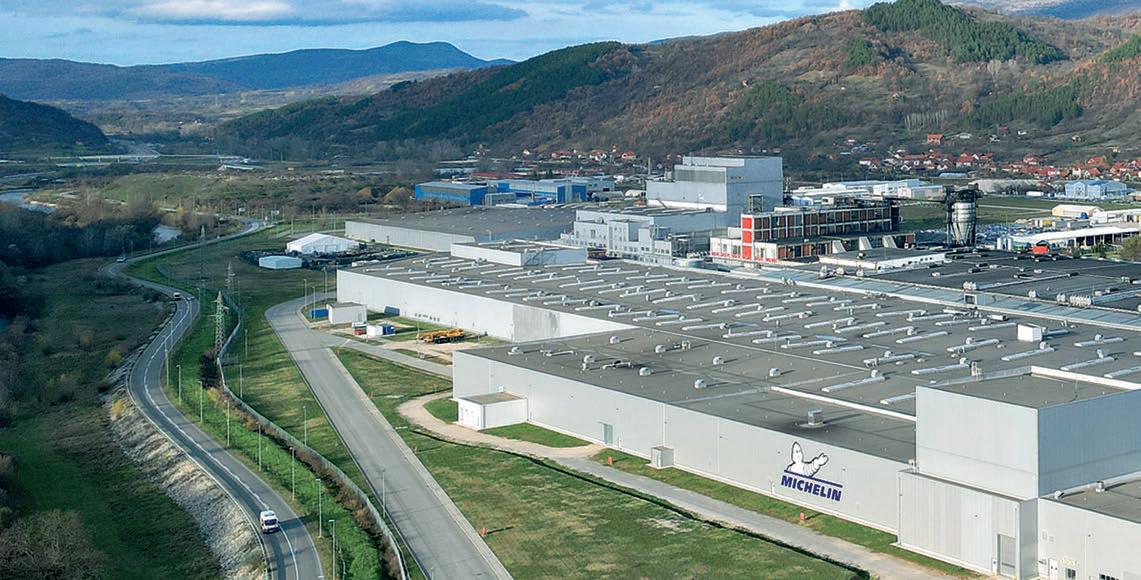
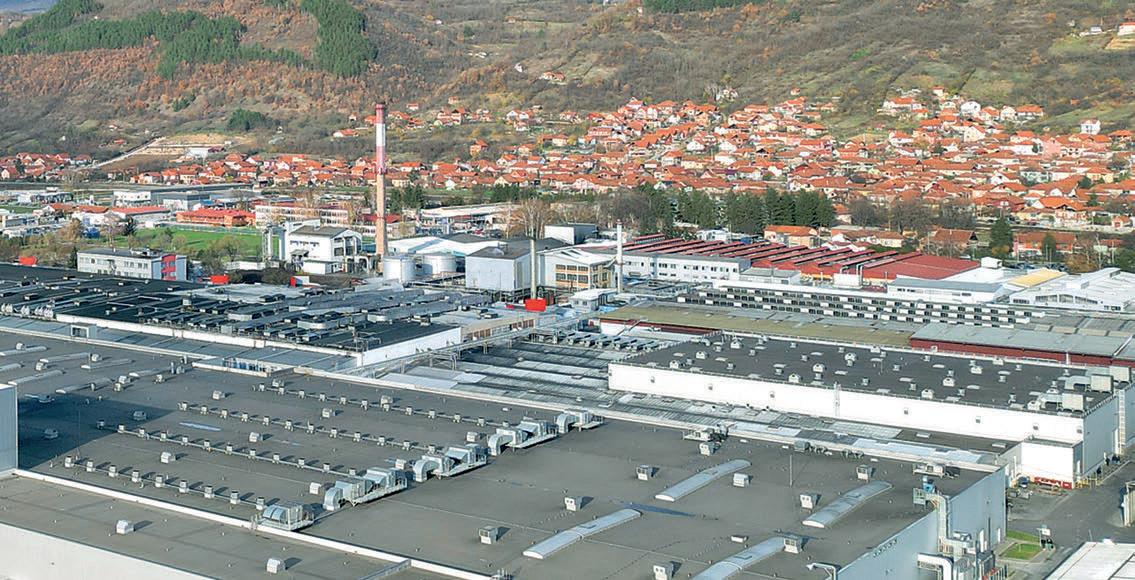
French companies already have substantial operations in Serbia and continue to invest in the country, as demonstrated by Tiger Tyres (Michelin) and Hutchinson (TotalEnergies).
Serbia and France already enjoy excellent relations at both governmental and business levels, which is clearly reflected in the implementation of major infrastructure projects involving French companies, such as Belgrade Airport, the Vinča waste management project and the Belgrade Metro. These projects stand as strong evidence of mutual trust and a strategic partnership.
I believe it is essential to nurture existing relationships and successful models of cooperation while continuously seeking new partnerships and expanding joint projects. The continuity and further development of such cooperation represent the best response to global challenges and an important opportunity to strengthen French investment across the region.
French Expertise for the Future of Food
By combining French expertise with local knowledge, Lesaffre helps producers across Serbia and the region respond to growing demands for sustainability, clean-label products, digitalisation and higher-value food production
With a 170-year legacy, Lesaffre has evolved from a yeast producer into a strategic partner supporting the transformation of the food industry.
Miodrag Jelić, General Manager of Lesaffre for Serbia, Romania, Bulgaria and Moldova, discusses the importance of French industrial heritage, changing consumer habits and the region’s potential to become a hub for sustainable and innovative food production.
How do you assess the importance of French industrial heritage for the development of the food industry in the region?
— When we speak about French expertise in fermentation, we are talking about a philosophy that combines scientific rigour with innovation. In Serbia, Romania, Bulgaria and Moldova, Lesaffre is much more than a supplier of yeast and baking ingredients – we are a partner that understands local challenges and offers practical solutions.
For example, we have implemented liquid yeast systems with major bakery chains in Serbia, significantly reducing waste and CO₂ emissions. This is particularly important for producers aiming to export to the EU, where environmental standards are becoming increasingly demanding.
Climate change and stricter regulations are also affecting raw material quality. That is why we have developed natural baking solutions, including enzymes and plant extracts, that help ensure sta-
ble fermentation and reduce dependence on synthetic additives.
Sustainability is at the heart of everything we do. Our facilities use yeast produced from by-products such as molasses, recycle water and energy, and develop solutions that minimise waste. This is no longer just good practice – it is the future of the food industry.
Consumers are increasingly looking for clean-label products, natural ingredients and additional nutritional value. Which trends do you consider the most important?
— Consumers have become much more sophisticated. They no longer want food that is simply tasty; they want to know what is in it, where it comes from and how it contributes to their wellbeing.
The most important trend is undoubtedly the demand for clean-label products. Consumers expect shorter, more transparent ingredient lists, which is why we continue to develop natural solutions that can replace synthetic additives without compromising quality.
Sustainability and transparency are equally important. Consumers want reassurance that their food has a lower environmental impact and that its origin can be traced. Digital tools, QR-code traceability systems and solutions such as the Lesaffre Baking App help improve efficiency, reduce waste and strengthen communication throughout the value chain.
How do you assess the business environment in the region and the prospects for future cooperation?
— I am very optimistic about the region’s prospects. Serbia has proven to be a reliable partner for French companies and remains an attractive investment destination thanks to its strong agricultural base, competitive operating costs and excellent connections with EU and Southeast European markets.
The greatest opportunity lies in moving beyond the export of raw materials and increasing the production of higher-value food products. This is an area where Lesaffre can provide significant support.
Digitalisation will be one of our main priorities in the coming years.
Southeast Europe has enormous potential to become a leader in healthy, sustainable and innovative food production, and Lesaffre intends to be a key partner in that transformation.
People as the Driving Force of Transformation
As industry undergoes profound transformation, Michelin Serbia continues to invest in people, knowledge and long-term sustainability as the foundations of future growth.
The purpose of the Michelin Group is to provide people with a better way to move forward. We will continue to create and deliver innovations that are accessible to many, generating value for people, profit and the planet, says Petar Nikolić, General Director of Michelin Serbia. In this interview, he explains why employees remain the key driving force behind organisational resilience at a time when change has become the only constant.
The industrial world is rapidly changing. How do you view corporate transformation today?
— Today, transformation is no longer seen as a project with a clear beginning
and end. It has become a way organisations operate – a way of thinking, learning and making decisions in a constantly changing environment.
I’m primarily referring to a period of heightened uncertainty, from geopolitical developments and the growing role of artificial intelligence to shifts in financial markets.
Technology and digitalisation are important, but they are not the essence.
They bring speed and efficiency, but they cannot replace contextual understanding, experience and the ability to make the right decisions at the right time. That is why people continue to make the difference in the long term – not only in what they do, but in how they think and make decisions. Today, competitiveness depends on flexibility, productivity and innovation.
In that context, where do you see the role of employees?
— At the centre of it.
In industry, we sometimes tend to focus on tools, machines and automation. But without people who know how to use them – and when not to – those tools do not create value.
Employees are given opportunities to learn, grow and develop every day. Through our innovations, we contribute significantly to human progress and a more sustainable world. We produce tyres that, once fitted to a vehicle, enable mobility and progress.
Michelin Serbia employs 4,000 people. Salary is just one element of a comprehensive benefits package, which includes voluntary health insurance, group life insurance, discounted tyre purchases, a dedicated budget for employee prevention and rehabilitation, as well as the opportunity to purchase Michelin Group shares under favourable conditions.
We also provide additional benefits, including financial support for the birth of a child, four weeks of leave for the second parent, a day off for a child’s first day of school, three days of leave for voluntary blood donors, access to the Employee Assistance Programme (EAP), and milestone awards recognising 10, 20 and 30 years of service, as well as retirement.
Today, the role of employees is clearer than ever: they drive both the stability and development of the organisation. Without competent and engaged people, there are no reliable processes, no
It is not the tools that make the difference in industry, but the people who know how – and when – to use them
quality and no continuity. That is why people development is not a separate topic for us – it is an integral part of our business model.
How are digitalisation and artificial intelligence changing the way we work?
— They are fundamentally changing the way we work, but not its foundations.
AI can analyse, suggest and optimise. However, it cannot replace human judgement. That is precisely why the human role is becoming more complex.
It is important that employees are not merely users of technology, but that they understand its logic, value and limitations. That is, and will continue to be, the foundation of competence.
There is a lot of discussion about talent today. How do you approach this issue?
— Our approach is long-term and practical.
Talent challenges cannot be addressed through recruitment alone. Talent is built over time, through experience and within an environment that sets clear standards.
We believe in internal development. Careers are not handed out; they are built through work, learning and a willingness to take the next step.
For us, continuous learning is the foundation of growth – not a phase, but a way of working.
Our company places exceptional importance on continuous learning. Last
year alone, each employee completed an average of 33.5 hours of training (27.2 hours for BC and 54.2 hours for WC categories).
How important is the employee voice in the transformation process?
— Very important, but in a meaningful way – not merely as a formality.
You cannot understand an organisation without understanding the people within it. That is why we use tools such as the Moving Forward Together engagement survey to gain clear insights. As many as 94% of employees participated, which clearly demonstrates their commitment and engagement.
However, the key is not collecting information, but what you do with it. Do you translate feedback into concrete action plans, and do those actions create visible impact?
Trust is built through consistency and through decisions that demonstrate that employees’ voices are genuinely heard.
This also requires an environment where people feel comfortable speaking openly, raising concerns and suggesting improvements. Without this, meaningful dialogue and high-quality solutions cannot exist.
For us, social dialogue is part of everyday work, not a formal process, because organisational stability is built through understanding and a shared approach to challenges.
How important is it to share corporate values beyond the factory?
— It is a natural extension of what we do internally.
A company cannot be sustainable in the long term if it is disconnected from the community in which it operates. That is why we strive to extend our internal values beyond the organisation itself.
We do this through initiatives focused on education, safety and environmental protection. For example, our Health & Safety Family Day in Pirot brings together more than 6,000 employees and their families, because for us, safety is not limited to the workplace – it is a culture we live every day.
At the same time, through the Growing Together initiative, we support local communities in education, healthcare, road safety and environmental protection.
We are also proud of our employees’ volunteer work. Through Family Afforestation Day, our employees have planted more than 8,000 trees. This project received special recognition from the French-Serbian Chamber of Commerce, earning the 2025 award for Best Environmental Protection Project. In addition, at the Manufacturing Days Europe event, our company received the 2026 MOEU Award in the Planet category for this initiative.
An organisation is defined not only by its processes and results, but also by the relationships it builds with people and the wider community.
How do you ensure stability in times of constant change?
— Stability does not come from avoiding change; it comes from knowing how to navigate through it.
It requires discipline, clear principles and an organisation that knows how to learn. Change itself is not the problem; the problem arises when there is no structure to manage it.
That is why we insist on clarity and on people who know how to apply that clarity in practice. We believe stability is built not only through processes, but also through the quality of relationships and trust within the organisation.
What are the key principles guiding your transformation?
— Our principles are clear and straightforward:
• Str ength – knowledge, experience and trust
• Speed – the ability to understand and respond in a timely manner
• Success – sustainable results that build credibility
The challenge is not defining these principles, but applying them consistently every day.
How do you see the period ahead?
— The period ahead will be more demanding and, therefore, even more important.
Expectations are rising across the board – in terms of competitiveness, sustainability and the way companies contribute to society. For Michelin, the direction remains clear: long-term thinking, consistent performance and responsible growth.
In Serbia, we have strong foundations – an established industrial base, experienced teams and a culture built on reliability and continuous learning. These are real advantages at a time when adaptability is becoming increasingly critical.
At the same time, the role of our people is evolving. It is no longer only about efficiency; it is about understanding change, adapting quickly and continuously improving. That is why we continue to invest in skills and development as a core priority.
Looking ahead, the companies that will stand out will be those that successfully combine technology with strong human capabilities and clear principles.
Finally, what key message would you highlight?
— The Michelin Group’s strategy is based on balancing three interconnected components: People, Profit and Planet.
Profit enables the company to grow and prosper, which in turn improves living and working conditions and supports people’s development. And we, as people, are the ones who can protect our planet.
This is part of Michelin’s broader All Sustainable approach, under which every decision is assessed through its human, economic and environmental impact.
That is why our approach connects people development, performance and environmental responsibility. In this model, people are not simply part of the system – they actively shape it. That is the foundation of long-term competitiveness.
That is why we remain committed to developing people, strengthening teams and driving sustainable growth.
Strength. Speed. Success. Not just a message – a standard
A New Era of ERP Systems
How artificial intelligence is redefining modern business: ERP systems have moved well beyond passive data recording to become intelligent systems that analyse data, recommend solutions and increasingly participate in decision-making and process execution.
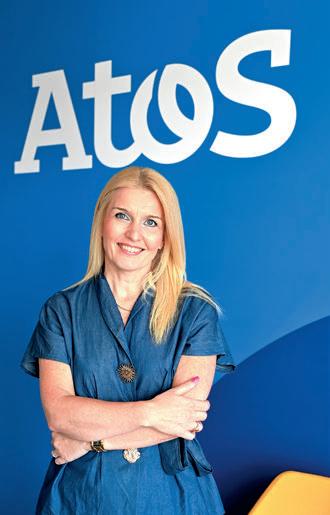
Artificial intelligence is rapidly changing the way companies operate and use their data. This transformation is also reshaping the role of ERP systems, which are evolving from traditional business management tools into intelligent platforms capable of analysing information, predicting scenarios and supporting decision-making in real time. Nataša Radić, SAP Head at Atos IT Solutions and Services, explains how AI is shaping the next generation of ERP solutions, the role of tools such as SAP Joule and why timely modernisation is essential for longterm business competitiveness.
Why is artificial intelligence such a key topic today and how is it changing the role of ERP systems in business?
— In a world shaped by digital technologies, artificial intelligence is no longer a novelty, but a standard feature of modern business. Organisations are no longer looking only for ways to optimise processes, but also for ways to turn their data into a key competitive advantage.
This shift is also transforming ERP systems. For decades, they served as systems of record – places where information about past events was stored. Today, in the age of artificial intelligence, ERP is becoming a system of execution. Software no longer waits for users to make decisions; instead, it actively analyses data, proposes actions and, increasingly, executes processes independently.
What do AI-enabled ERP systems offer compared to traditional systems?
— In practice, this means that companies operating in the latest SAP environment can consolidate data and make decisions based on a single, integrated view of their business, almost in real time. At the same time, innovation is delivered
ERP systems no longer wait for users
– they analyse data, recommend solutions and increasingly execute processes independently
through regular quarterly system upgrades that introduce new AI capabilities, such as SAP Joule. These functionalities can be activated quickly and easily, without complex projects, additional resources or significant budgets.
Where is the impact of artificial intelligence most visible in modern ERP systems today?
— The impact of artificial intelligence is particularly evident in finance, one of
the first areas moving towards autonomous operations. AI not only automates routine tasks but, more importantly, delivers advanced analytics and real-time recommendations.
In accounting, AI can autonomously post entries and close accounting periods; in planning, it generates scenarios and decision proposals; while in risk management, it analyses entire data sets and quickly identifies anomalies. In treasury operations, it accurately forecasts liquidity and recommends next steps.
You mentioned SAP Joule. What role does it play in everyday work?
— SAP Joule is SAP’s integrated AI copilot, enabling employees and SAP S/4HANA users to initiate processes, generate advanced insights and access reports through simple conversational prompts, without interrupting their daily work. This means employees no longer need to master complex processes or interfaces, or wait for a new report to be developed. Instead, they can simply describe a business request in plain language, and the system will interpret and execute it.
This approach boosts productivity and accelerates decision-making by removing barriers between users and technology.
What would you say to companies considering the role of artificial intelligence in ERP modernisation?
— The most important thing to understand is that artificial intelligence is not an add-on to existing systems, but a natural continuation of ERP modernisation. Companies that recognise this shift early will not only reduce costs, but also create a foundation for long-term agility and growth.
French Cinema Under the Serbian Sky
The eighth French Film Festival once again brought contemporary French cinema to audiences across Serbia, reaffirming the enduring cultural ties between the two countries and the growing appeal of French film beyond traditional cinema venues
Held across six Serbian cities and twelve open-air locations, this year’s festival presented a carefully curated selection of nine recent French productions, ranging from historical dramas and psychological thrillers to intimate family stories and award-winning comedies.
Screenings took place in Belgrade, Novi Sad, Niš, Zrenjanin, Gornji Milanovac and Užice, transforming public spaces into vibrant cultural meeting points. The programme reflected the diversity of contemporary French filmmaking. Among the highlights was Xavier Giannoli’s historical drama Les Rayons et les Ombres, starring Jean Dujardin, which explores Europe on the eve of and during the Second World War through themes of friendship, politics and collaboration. Audiences also welcomed Le Roi Soleil, a Cannes Midnight Screenings selection that exam-
Now firmly
established on Serbia’s cultural calendar, the French Film Festival continues to strengthen cultural ties between France and Serbia through the universal language of cinema
ines greed and morality through the story of a winning lottery ticket, alongside Guillaume Nicloux’s psychological thriller Mi Amor, set against the contrasting beauty and darkness of the Canary Islands.
The festival also showcased films exploring identity, family and personal transformation, including Leïla Bouzid’s À voix basse and David Roux’s La femme de. Literary heritage and the performing arts were celebrated in Pascal Bonitzer’s Hugo, while the award-winning comedy De La Comédie Française offered an entertaining look behind the
scenes of France’s most prestigious theatre. Completing the programme was Le rêve américain, an inspiring sports drama based on the true story of two friends who rise from modest beginnings to become NBA agents.
Now in its eighth edition, the French Film Festival has become an important fixture on Serbia’s cultural calendar, offering audiences an opportunity to experience the richness, diversity and creative vitality of contemporary French cinema while further strengthening the longstanding cultural dialogue between France and Serbia.
More Than a Manufacturing Centre
One of the longest-standing French investments in Serbia, Tarkett supplies international markets from its Bačka Palanka manufacturing centre while managing operations across Southeast Europe and the Caucasus, supported by continuous investment in sustainability, innovation and people
For more than two decades, Tarkett has been strengthening its presence in Serbia, with its Bačka Palanka manufacturing centre becoming one of the company’s key production sites in Europe. Today, the Serbian operation manages business across Southeast Europe and the Caucasus, while continuing to invest in sustainable manufacturing, innovation and the development of its people.
Tarkett is one of the longest-standing French investments in Serbia and an important part of the company’s global manufacturing network. What role does Serbia play in Tarkett’s business today?
— Serbia is far more than a manufacturing location for Tarkett. It is one of the cornerstones of our European operations, with a long industrial heritage. Our Bačka Palanka manufacturing centre has been supplying customers across Europe and beyond for decades, while also serving as the management centre for our operations in Southeast Europe and the Caucasus.
Our people are our greatest asset. Their expertise, commitment and ability to embrace change have enabled Serbia to become recognised not only as an important manufacturing centre, but also as a place where new solutions are developed and key business decisions are made.
Serbia has been strengthening its position as a regional industrial centre. What will be needed for the country to realise its full potential?
— I believe Serbia has all the prerequisites to further strengthen its position as a regional industrial centre.
The next phase of development will depend on continued investment in energy infrastructure, renewable energy, digitalisation and education. The industry of the future will be defined not only by technology, but also by sustainability, efficiency and innovation. Serbia has the potential to become one of the regional leaders in that transformation.
The energy transition, new regulatory requirements and changes in supply chains are reshaping European industry. How is Tarkett responding to these developments?
— Our industry is undergoing one of its most significant transformations in decades. We see these changes not as obstacles, but as opportunities to become stronger and more competitive.
We are investing in energy efficiency, the decarbonisation of production and more resilient supply chains through regionalisation and stronger local partnerships. At the same time, increasingly demanding sustainability standards are encouraging us to accelerate innovation and develop products with a reduced environmental impact.
Sustainability and the circular economy have become central priorities for modern manufacturing. How are these principles embedded in Tarkett’s operations in Serbia?
At Tarkett, sustainability is not a separate initiative; it is embedded in the way we do business. As a signatory to the Paris Agreement, we are committed to reducing carbon emissions, using resources responsibly and developing products that can be recycled and reused.
In Bačka Palanka, we continue to invest in energy efficiency and renewable energy while returning materials to the production cycle through our flooring collection and recycling programmes.
French companies have long contributed to Serbia’s economic development through investment, technology transfer and skills development. Where do you see the greatest potential for further strengthening economic cooperation between Serbia and France?
— France and Serbia have a long tradition of successful economic cooperation, and I believe its greatest potential still lies ahead. The most promising opportunities are in green energy, sustainable manufacturing, digitalisation, innovation, artificial intelligence and education—areas that will shape the future of the European economy. French companies bring technological expertise and high business standards, while Serbia offers a skilled workforce, a strong industrial base and a strategic location. Together, these strengths provide an excellent foundation for new investment, innovation and long-term partnerships.
Connecting People, Ideas, and Europe
France and Serbia share a long tradition of cultural and intellectual exchange. In this interview, Amos Reichman explains how language, education, innovation and public debate are becoming increasingly important tools for strengthening bilateral ties and reinforcing Serbia’s place within the wider European community
At a time of growing geopolitical uncertainty and rapid technological change, cultural diplomacy is taking on a broader role. Under the leadership of Amos Reichman, the French Institute in Serbia is expanding its activities beyond the traditional cultural sphere, bringing together education, science, innovation and public debate. From promoting the French language and academic mobility to supporting sustainability initiatives and regional cooperation, the Institute is positioning itself as a platform for dialogue and a bridge between Serbia, France and Europe.
Mr Reichman, you recently took over as Director of the Institut français de Serbie. What would you identify as your main priorities in strengthening cultural, educational and intellectual ties between France and Serbia in the years ahead?
— France and Serbia share a long-standing friendship. Preserving this legacy is essential if we are to prepare together for the future.
Promoting the learning of French in Serbia is one of my top priorities. French is the fourth most widely spoken language in the world. It is the language of diplomacy and trade, literature and science. We are working to ensure that French continues to be widely spoken and studied in Serbia. I would also like to emphasise the opportunities available to young Serbs to pursue their studies in France. Every year, nearly 650 Serbian students choose France
as their destination for higher education. It is through these exchanges that the future of Franco-Serbian relations is shaped. Finally, I would like to highlight culture. France and Serbia have much to share. I am thinking particularly of literature, which we celebrate during the Journées Molière; cinema, through our French Film Festival; and the exhibitions we regularly organise at the French Institute.
The French Institute increasingly connects culture with science, innovation and public debate. How do you see the role of cultural institutions in addressing major contemporary issues such as artificial intelligence, sustainability and social change?
— Contemporary issues such as artificial intelligence, climate change and social transformation are not only technological or economic challenges; they are also cultural and ethical questions.
Artificial intelligence, for example, raises issues that extend far beyond technology itself. We have a responsibility to foster informed discussions on these matters, which is precisely what we seek to achieve through events such as the Serbian-French Innovation Forum, dedicated this year to the future of healthcare.
Through projects such as EkoOpština –a competition for cities and schools aimed at promoting sustainable development and combating climate change – we encourage exchanges of expertise between France and Serbia, promote European standards and engage local stakeholders. It is also an
excellent example of how cultural diplomacy can support local action in response to global transitions.
France and Serbia maintain strong cooperation in higher education, research and academic mobility. Which areas of scientific and university collaboration do you believe hold the greatest potential for future development?
— Academic mobility remains at the heart of our partnership.
In line with our strategic priorities, we pay particular attention to students pursuing studies in STEM disciplines – science, technology, engineering and mathematics – as these skills are essential for addressing the transformations shaping our world.
However, I believe the future lies in interdisciplinary fields that address global challenges. Artificial intelligence, for example, requires not only technological innovation, but also expertise in the social sciences, ethics and public policy.
Health sciences and biotechnology represent another strategic area. Bringing together researchers and universities across Europe while investing in the next generation of scientists and innovators is essential to preparing for the future.
Earlier this year, we organised a One Health hackathon with the Science and
Technology Park Belgrade to encourage students from different disciplines to collaborate and develop innovative responses to global health and environmental challenges. Initiatives such as these help prepare the next generation of scientists to work across traditional boundaries.
The French Institute is present not only in Belgrade, but also in Novi Sad and Niš, while many of its programmes have a regional dimension. How important are decentralisation and regional cultural cooperation for the future of French cultural diplomacy in Southeast Europe? — The strength of the French Institute in Serbia lies in its nationwide presence.
We have a rich programme of events not only in Belgrade, but also in Novi Sad and Niš. I regularly travel throughout the country and was recently in Valjevo and Vranje. Everywhere I go, I encounter that very special bond between France and Serbia, which we continue to nurture.
We are also expanding our activities at a regional level. I am thinking, for example, of Teatroskop, a programme of the French
Serbia lies at the heart of Europe, both geographically and historically. It is these intellectual and human ties between Serbia and Europe that we continually seek to strengthen
Institute that supports the performing arts across Southeast Europe from Belgrade.
We also strive to facilitate the movement of our guests across the region. Recently, the French writer Olivier Guez gave a lecture in Belgrade following an event in Budapest, while historian Bernard Lory travelled to Skopje after delivering lectures in Belgrade and Niš.
We always keep this regional dimension in mind, as many of the challenges faced by countries in Southeast Europe are shared.
In a period marked by geopolitical uncertainty and rapid technological transformation, what role can culture, literature and the exchange of ideas play in preserving dialogue and strengthening European values?
— We are living through a period of considerable uncertainty, which can give rise to anxiety and, at times, fear.
It is precisely in moments such as these that culture, literature and knowledge become more essential than ever. We are heirs to the European Enlightenment, which placed reason and critical thinking at the heart of public life. It is precisely this legacy that we need today. That is why, at the French Institute, we offer a rich programme of debates and strive to organise at least one discussion every month on issues that are essential to understanding our present. Our focus is also on Serbia’s integration into Europe. Serbia lies at the heart of Europe, both geographically and historically. It is these intrinsic intellectual and human ties between Serbia and Europe that we continually seek to strengthen through the work of the French Institute.
Predictability as the New Competitive Advantage
A predictable business environment, European integration and sustainable business practices are becoming key factors in strengthening Serbia’s competitiveness and maintaining its attractiveness to investors
Investors today are looking not only for market potential, but also for stability, transparent rules and longterm predictability. At the same time, European regulations, ESG standards and digital transformation are becoming an integral part of corporate business strategies. Sanja Ivanić explains how companies in Serbia are adapting to new business requirements and how European integration can further improve the investment climate.
In a period of major economic and geopolitical change, which activities does CCIFS consider most important for improving the business environment and strengthening investor confidence in Serbia?
— We believe that preserving a predictable and stable regulatory environment, continuing structural reforms and strengthening institutional dialogue between businesses and policymakers are essential.
For investors, trust is built through transparency, legal certainty and the consistent implementation of regulations. This is why the French-Serbian Chamber of Commerce and Industry actively works to connect companies, institutions and the professional community in order to identify challenges and propose practical solutions that contribute to a more competitive business environment. At the same time, we believe Serbia’s EU integration process plays a vital role in enhancing the country’s investment attractiveness. Aligning the regulatory framework with EU practices and implementing reforms linked to the accession process sends
a strong signal to international investors that Serbia remains committed to long-term economic stability and sustainable development.
Our goal is to work together with our members and partners to create an environment that encourages investment, innovation and sustainable growth, while strengthening economic ties between Serbia and France.
European integration remains one of the key frameworks for the development of the Serbian economy. How does CCIFS help its members prepare for alignment with European regulations, particularly in the areas of sustainability, digitalisation and corporate governance?
— European integration provides an important framework for improving competitiveness and modernising business operations in Serbia. That is why one of the Chamber’s priorities is to provide its members with timely information and practical support in aligning with European regulations.
Through workshops, seminars and expert events, we address topics such as sustainability, ESG standards, energy, digital transformation and corporate governance. We also regularly organise educational events on European regulations such as CBAM.
We are particularly active through the Chamber’s ESG Club and Energy Club, which bring together companies interested in sustainability, the energy transition and the implementation of new business standards.
As a member of CEBAC, the Council of European Business Associations and Chambers in Serbia, we also maintain close cooperation with the EU Delegation to Serbia, enabling us to keep our members informed about the latest European initiatives and regulatory developments.
Our goal is to help companies see European regulations not only as an obligation, but also as an opportunity for growth, innovation and enhanced competitiveness.
Sustainability and ESG standards are becoming an integral part of corporate strategy. How far have French compa-
nies in Serbia progressed in this area and which examples of best practice would you particularly highlight?
— French companies have traditionally attached great importance to sustainability and ESG principles, as they have long been embedded in their global business strategies. In Serbia, we see many of them actively investing in energy efficiency, reducing CO₂ emissions, responsible resource management, and the development of local communities and employees.
Importantly, sustainability is no longer simply a matter of regulatory compliance; it is becoming a key element of competitiveness and long-term
Aligning Serbia’s regulatory framework with EU practices sends a strong message to international investors that the country remains committed to long-term economic stability and sustainable development
business development. Among our members, there are numerous examples of best practice in green energy, corporate social responsibility and corporate governance. Companies such as Veolia, Belgrade Airport and Schneider Electric demonstrate that sustainability has become an important driver of longterm growth.
Business resilience today means being able to adapt to changes coming from different directions – from market disruptions to technological transformation. How would you assess the readiness of companies in Serbia to respond to these challenges?
— Over recent years, companies in Serbia have demonstrated considerable resilience and adaptability in responding to various crises and changes. However,
they are increasingly facing the challenge of an unpredictable business environment, which makes long-term planning and investment decisions more difficult.
The issue is not only market or technological change, but also the fact that certain rules and measures are sometimes introduced unexpectedly, without sufficient time for companies to adapt or without prior consultation with the business community. There are situations in which companies only learn about new import restrictions at the border or new measures are introduced overnight, creating additional uncertainty and operational challenges.
That is why we believe that, alongside companies’ ability to adapt, a predictable regulatory environment and continuous dialogue between businesses and institutions are of crucial importance. Such an approach strengthens business resilience, preserves investor confidence and supports long-term economic development.
EXPO 2027 represents a unique opportunity to promote Serbia and the region. How are CCIFS members preparing for this event and where do you see the greatest potential for new investments and Franco-Serbian partnerships?
EXPO 2027 represents an exceptional opportunity to promote Serbia, attract new investment and strengthen international business links. The French-Serbian Chamber of Commerce and Industry is partnering with COFREX, the French state agency responsible for organising the French Pavilion, and we are actively informing our members about the event itself, as well as the tenders and business opportunities published by COFREX and other organisations involved in EXPO.
— We are also planning a series of activities during the exhibition in cooperation with our members. We see EXPO as an excellent opportunity to further promote Serbia among French companies and investors, while also creating new partnerships and connections between French companies already operating in Serbia and domestic and international business stakeholders.
The Woman Who Gave Cartier Its Soul
Fifty years after her death, Jeanne Toussaint remains one of the most influential women in the history of luxury, transforming Cartier from a celebrated jeweller into a global symbol of French elegance, artistic freedom and timeless savoir-faire
Few people outside the world of high jewellery recognise the name Jeanne Toussaint. Yet few individuals have left a deeper mark on the identity of modern luxury. Half a century after her death, the woman who transformed Cartier’s creative vision continues to shape the way the world understands French elegance. Her greatest creation was not a single jewel or the famous panther that became
synonymous with the Maison. It was an enduring philosophy: that true luxury is born where exceptional craftsmanship meets imagination, courage and timeless design.
Born in Belgium in 1887, Jeanne Toussaint arrived in Paris at the dawn of the twentieth century, when the French capital was becoming the undisputed centre of fashion, art and culture. Intelligent, independent and blessed with remarka-
Cartier Panthère Courtesy of Cartier
ble aesthetic instincts, she soon attracted the attention of Louis Cartier. Their personal relationship eventually ended, but their creative partnership would redefine the history of one of France’s greatest luxury houses.
In 1933, at a time when very few women occupied senior leadership positions in major com-
panies, Louis Cartier appointed Toussaint Creative Director of Cartier Fine Jewellery. The decision was revolutionary. Luxury houses were still overwhelmingly shaped by men, yet Cartier entrusted its artistic future to a woman whose confidence, intuition and uncompromising standards had already become legendary.
She brought an entirely new language to jewellery.
Inspired by nature, architecture, distant cultures and modern art, Toussaint rejected excessive ornamentation in favour of bold sculptural forms, vivid gemstones and unexpected colour combinations. Her creations reflected movement rather than symmetry, personality rather than convention. Jewellery was no longer sim -
The greatest luxury is not a jewel, but the vision that allows beauty, craftsmanship and imagination to become timeless
ply an object of wealth; it became an expression of character.
Nothing symbolised that transformation more than the panther.
Originally introduced as a decorative motif in the early twentieth century, it was Jeanne Toussaint who transformed the panther into Cartier’s defining emblem. Under her direction, the animal evolved into a three-dimensional work of art—powerful yet elegant, fierce yet graceful. Over the decades it became inseparable from the Maison itself, embodying confidence, independence and refined strength.
The panther also attracted extraordinary women.
Among its most devoted admirers was the Duchess of Windsor, Wallis Simpson, whose spectacular commissions helped establish Cartier as the jeweller of royalty, aristocracy and international high society. Royal families, Maharajas, Hollywood stars and collectors from around the world sought creations that carried Toussaint’s unmistakable signature—pieces that balanced artistic daring with impeccable craftsmanship.
Her influence extended far beyond individual commissions.
Leading Cartier through the difficult years surrounding the Second World War, Jeanne Toussaint safeguarded the Maison’s creative identity at a time when Europe itself was being transformed. She demonstrated that innovation need not abandon tradition; rather, tradition could become the foundation for continuous reinvention. That philosophy remains at the heart of French luxury today.
In many ways, Toussaint anticipated the modern creative director. Long before the term became fashionable, she understood that great luxury brands are built not only on products but on stories, symbols and emotional connection. The most valuable asset of a maison is often not what it produces, but what it represents.
That insight continues to define Cartier nearly a century later.
Today, the panther remains one of the world’s most recognisable luxury symbols, while Cartier itself stands as an ambassador of French excellence, craftsmanship and artistic heritage. Although generations have passed since Jeanne Toussaint last entered the Maison’s workshops on Rue de la Paix, her creative vision continues to inspire every new collection.
Fifty years after her death, Jeanne Toussaint’s legacy is measured not only in extraordinary jewels, but in something far more enduring. She proved that true leadership is often quiet, that elegance can be revolutionary, and that the soul of a great brand is created not by marketing, but by vision.
CULTURAL HERITAGE
When Paris Dreamed in Belgrade
Long before Paris and Belgrade became strategic partners, they were connected by something far more elusive: imagination
Amajor exhibition at the French Institute in Belgrade offers a timely reminder of a remarkable cultural connection: one of the most important chapters of European Surrealism was written not only in Paris, but also in Belgrade.
The history of Franco-Serbian relations is often told through diplomacy, political alliances and economic cooperation. Yet one of their most fascinating connections emerged in a far less expected realm – Surrealism.
This summer, the exhibition Surrealism on Paper: The Eye in a Wild State, currently on view at the French Institute in Belgrade until 10 July, offers a unique opportunity to revisit that extraordinary chapter of European cultural history. Conceived around the legacy of André Breton, the founder of Surrealism, the exhibition presents not only masterpieces of the historical movement, but also reveals a lesser-known truth: Belgrade was
one of the few European cities outside France to develop an authentic Surrealist movement of its own.
That fact may surprise many today.
When Surrealism emerged in Paris in the early 1920s, Europe was still recovering from the devastation of the First World War. André Breton, poet, writer and theorist, envisioned a new artistic language that would liberate the human mind from the constraints of reason. Drawing inspiration from Sigmund Freud’s theories of the unconscious, Surrealism embraced dreams, automatic writing, unexpected associations and radical freedom of expression.
It quickly became one of the most influential artistic and intellectual movements of the twentieth century.
But unlike many avant-garde movements that remained confined to their country of origin, Surrealism travelled remarkably well. And nowhere did it take root more naturally than in Belgrade.
During the 1930s, a group of young Serbian artists, writers and intellectuals developed a distinct Surrealist scene that entered into direct dialogue with Paris. Far from being mere followers of Breton’s ideas, they created an original artistic language while maintaining close ties with their French counterparts.
Among them, one figure stands out: Stevan Živadinović Vane Bor.
Today regarded as one of the most important representatives of Serbian Surrealism, Vane Bor occupies a unique place in the history of European avant-gardes. His work embodies the intense artistic exchanges between Paris and Belgrade and reminds us that cultural innovation rarely respects national borders.
The current exhibition, realised in cooperation with the Museum of Contemporary Art in Belgrade, features six of his works, placing him alongside some of the greatest names associated with Surrealism – André Masson, Max Ernst, Salvador Dalí, Roberto Matta, Hans Bellmer, Leonor Fini and many others.
Few people realise that Belgrade was one of the rare European cities outside Paris to develop an authentic Surrealist movement of its own
Yet perhaps the exhibition’s greatest achievement lies elsewhere.
Rather than presenting Surrealism as a historical phenomenon confined to museums and archives, it demonstrates its extraordinary ability to reinvent itself. The exhibition traces its evolution from the historical movement to its post-war transformations, revealing its enduring influence on abstraction, experimental photography, informal art and contemporary visual languages.
Paper itself occupies a central role in this story. More than a simple medium, it became a space of artistic freedom, allowing artists to explore automatic writ-
ing, collage, drawing and the spontaneous expression of the unconscious. Its fragility became its strength.
This year also marks two important anniversaries – 130 years since the birth and 60 years since the death of André Breton (1896–1966). Yet his legacy feels remarkably contemporary. In an age dominated by algorithms, artificial intelligence and endless streams of information, Surrealism’s invitation to embrace imagination, ambiguity and uncertainty may be more relevant than ever. Perhaps this is why the exhibition resonates so strongly today.It reminds us that Surrealism was never merely an artistic movement. It was a way of thinking, a method of questioning reality and an invitation to see the world differently.
And it also reminds us that, long before contemporary notions of cultural diplomacy entered our vocabulary, France and Serbia were already connected through a shared intellectual adventure.
Paris may have invented Surrealism, but Belgrade helped give it another home.
Business Dialogue
LEADERS’ MEETING POINT
Tradition Driving Growth
ZORAN BOGDANOV CEO, Žito-Bačka, Žitoprodukt and ASA Trading
Tradition Driving Growth
Zoran Bogdanov CEO, Žito-Bačka, Žitoprodukt and ASA Trading
With the support of ASA Group, Žito-Bačka is entering a new phase of development, building on its 110-year heritage, significant investments and ambitious plans to expand across regional and European markets
This year, Žito-Bačka marks its 110th anniversary, while its integration into ASA Group has opened a new chapter in the company’s development. In this interview, Zoran Bogdanov, CEO of Žito-Bačka, Žitoprodukt and ASA Trading, explains how tradition and modern business models can successfully work hand in hand, outlines the investments already made and shares the company’s plans for further strengthening its position in both domestic and international markets.
Žito-Bačka is celebrating its 110th anniversary this year. How significant is it for you to lead a company with such a long tradition, and how do you intend to combine its heritage with the demands of today’s market?
— A 110-year tradition is clear evidence of a company’s quality and resilience across generations, but it also brings with it a great responsibility when it comes to leadership
and defining future strategies. More than a century of history demonstrates that Žito-Bačka has successfully overcome numerous historical and economic challenges, remaining synonymous with quality and reliability in our region.
Leading such a company means honouring the generations that built it while constantly looking ahead. Combining a long-established and recognisable brand with a modern approach to market realities is a winning formula for sustainable growth in the years to come.
The break-up of Yugoslavia significantly reduced the market for milling products, from 20 million consumers to just seven million consumers in Serbia. Over the past 35 years, this change has led to the closure of many smaller mills and completely transformed the industry in favour of larger processors such as ourselves. Alongside the reduced consumer base, changing dietary habits have also contributed to lower overall flour consumption.
Last year was particularly important for the company following its integration into ASA Group. How has this acquisition contributed to Žito-Bačka’s development and what new opportunities has it created?
— Becoming part of ASA Group marked a turning point and the beginning of an entirely new chapter for Žito-Bačka. This acquisition has brought the corporate stability of a major regional system, while also providing strong momentum for the implementation of our infrastructure and market expansion plans.
By joining forces with our sister company, Žitoprodukt from Bačka Palanka, we have created a powerful system for the procurement, storage and processing of wheat and maize.
We have set ourselves several ambitious goals that we intend to achieve as quickly as possible. One of our key priorities is to become a recognised regional leader in the small-packaging segment, not only in Serbia but across markets throughout the region.
Since the acquisition, the company has completed a significant investment cycle. Which areas have received the greatest investment and what results are already visible in terms of efficiency, product quality and market competitiveness?
— Exactly one year ago, we took over ownership of the mill and I am proud to say that we have achieved exceptional results in a very short period of time. Our primary objective was a swift and stable return to the m arket, and we have fully succeeded in doing so. We have significantly increased sales volumes and restored production to full capacity.
This required simultaneous investment in the two key pillars of every successful organisation – people and modern technology. We strengthened our highly skilled and experienced workforce by bringing in new colleagues who have contributed valuable
industry expertise and successfully integrated it into our operations.
We also invested in a new flour packaging line for retail products, with the capacity to fully support both our current sales levels and future growth ambitions.
Furthermore, we intend to expand wheat processing capacity at our Kula facility from the current 220 tonnes per day to more than 300 tonnes, while increasing automation and optimising packaging processes.
Our production focus is currently on high-quality speciality flours that command premium market prices and are produced from superior-quality wheat, which is becoming increasingly represented in the sowing structure of Serbian agriculture.
The company has recorded strong sales growth and expanded into new markets. What have been the key drivers behind these results and where do you see the greatest potential for further expansion?
— The fact that we have doubled our sales volume within a single year speaks volumes about the pace of our growth. Our monthly output of finished products has now reached a stable level of between 5,000 and 6,000 tonnes, which is an exceptional achievement in such a short timeframe.
We see significant opportunities for further expansion in EU markets and will be working intensively towards this objective in the coming period. At the same time, we remain focused on further strengthening our position in the domestic market, where we aim to remain an indispensable partner to the bakery, confectionery and food industries.
Combining a longestablished and recognisable brand with a modern approach to market realities is a winning formula for sustainable growth in the years to come
I would also emphasise that, thanks to careful raw material selection and consistently high product quality, our mills closely follow global price movements and use appropriate hedging strategies to provide stable pricing for our longterm partners.
We offer our partners the possibility of linking raw material and finished product prices to movements in global indices on the Paris and Chicago exchanges, enabling them to plan more effectively and achieve their budgeted targets.
Today, both Žito-Bačka in Kula and Žitoprodukt in Bačka Palanka operate within ASA Group. How does the synergy between these two mills strengthen the Group’s position in domestic and international food industry markets?
— The acquisition of Žito-Bačka was a logical step in expanding our operations in the agri-business sector. After acquiring Žitoprodukt in 2018 and successfully stabilising its operations, we recognised the need for further strategic expansion of our capacities.
Today, the two mills jointly process around 9,000 tonnes of wheat and maize each month, positioning us among the major and highly reliable suppliers to leading brands such as Bambi, Jaffa, Soko Štark, Carlsberg and Molson Coors, among many others.
The quality requirements imposed by these companies are extremely rigorous, and our ability to meet them consistently is proof that we operate at the highest level of the milling industry.
Business Dialogue
LOCAL NEWS
MK Group Completes Acquisition of Dijamant
“EXPO 2027 represents a once-in-a-generation opportunity for Serbia.”
Marko Čadež President of the Serbian Chamber of Commerce
MPC Properties Expands Bojan Jevremović’s Role
Serbia’s MK Group has completed the acquisition of Dijamant from Fortenova Group, finalizing a transaction that was announced earlier this year. With the takeover now complete, Dijamant officially becomes part of MK Group’s business portfolio.Dijamant, one of Serbia’s best-known food producers, is a leading manufacturer of edible oils, margarines and other food products. The acquisition strengthens MK Group’s position in the agribusiness and food-processing sectors, areas that already represent a significant part of the company’s operations.
Generali Launches New Global Care Brand
Generali has launched Redion, a new global brand that brings together Europ Assistance and Generali Employee Benefits under a single international care platform. The move strengthens the group’s position in health, employee benefits, travel insurance and assistance services, sectors undergoing rapid transformation driven by technology, demographic change and evolving workforce needs. Operating in more than 190 countries, Redion employs over 12,000 people and generated €5.8 billion in business volume during 2025.
MPC Properties has appointed Bojan Jevremović as Director of Retail and Office Leasing, expanding his responsibilities to oversee the company’s entire leasing portfolio. In addition to leading office leasing operations, he will now manage the retail portfolio, with a focus on strengthening tenant relationships and attracting leading international and domestic brands. The appointment reflects MPC Properties’ continued commitment to enhancing its leasing platform and supporting the long-term growth of its business and retail destinations.
“The success of large companies should be measured by what they leave to future generations.”
Milka Vojvodić CEO, Delta Holding
HEINEKEN Serbia Marks Five Years of Road Safety Campaign
EBRD and ProCredit Expand SME Financing in Serbia
The European Bank for Reconstruction and Development (EBRD), with the support of the European Union, signed a €100 million portfolio risk-sharing agreement with ProCredit Bank to improve access to finance for small and medium-sized enterprises in Serbia. Under the arrangement, the EBRD will provide a €50 million guarantee covering half of the credit risk on new SME loans. The initiative will enable ProCredit Bank to expand lending to businesses across Serbia, including outside the country’s largest urban centres.
HEINEKEN Serbia and the Automobile and Motorcycle Association of Serbia (AMSS) marked the fifth anniversary of their “Kad ide tura, ne ide gas” campaign with an event at Gastrošor. The campaign once again promoted the ZERO HERO message, encouraging drivers to adopt zero tolerance towards driving under the influence of alcohol, regardless of the circumstances. The initiative continues to raise awareness that responsible driving begins with the decision not to get behind the wheel after drinking.
Nelt Highlights Quality as Competitive Advantage
Nelt Group, in cooperation with the Chamber of Commerce and Industry of Serbia, brought together leading FMCG companies to examine the future of quality management and supply chain resilience. Representatives of major international and regional brands discussed how digital transformation, food safety, regulatory compliance and innovation are reshaping the sector, with quality increasingly recognised as a key competitive advantage. The discussions underscored the importance of stronger collaboration across the supply chain to improve efficiency, resilience and long-term business performance.
Economics at a Turning Point
The XXI World Congress of the International Economic Association brought more than a thousand economists, Nobel laureates, academics and policymakers to Belgrade, where discussions extended far beyond economic theory to address the geopolitical, technological and institutional forces reshaping the global economy
For five days, Belgrade stood at the centre of one of the world’s most important global conversations about the future of the world economy. From 22 to 26 June, the Serbian capital hosted the XXI World Congress of the International Economic Association (IEA), b ringing together more than 1,000 participants from over 80 countries.
Far more than a scientific conference, the Congress became a forum for examining how profound geopolitical shifts, technological disruption and changing patterns of global cooperation are redefining economic thinking. Under the central theme “Competing Visions of the World: Globalism or Nationalism, Multilateralism or Bilateralism, Democracy or Autocracy”, discussions reflected the growing understanding that economics can no longer be analysed in isolation from politics, security, climate policy and technological transformation.
For Serbia, the event carried particular significance. Organised by the Serbian Association of Economists, it marked the first time that the World Congress had been held in Southeast Europe and represented the Congress’s return to Europe after almost two decades. As Serbian Association of Economists President Aleksandar Vlahović
noted, hosting such a prestigious gathering confirmed both the country’s organisational capacity and the recognition that Serbian economic institutions have gained within the international academic community.
A WORLD ECONOMY IN TRANSITION
If one message resonated throughout the Congress, it was that the global economy has entered a fundamentally different phase from the one that
The Congress confirmed that economics can no longer be separated from
geopolitics, technology, climate policy and institutional resilience
shaped economic policy over the past three decades.
While globalisation has not disappeared, many speakers argued that its character has changed profoundly. The emphasis has shifted away from efficiency alone towards resilience, security and strategic autonomy. Supply chains, once optimised almost exclusively around cost, are increasingly being redesigned to reduce geopo -
Eric Maskin, newly elected President of the International Economic Association, with Aleksandar Vlahović, President of the Serbian Association of Economists and newly elected member of the IEA Advisory Board
litical risks and strengthen economic resilience.
This transformation has altered the relationship between economics and geopolitics. Trade policy, industrial development, energy security and technological leadership are now viewed as interconnected elements of national competitiveness rather than separate policy domains.
Throughout the plenary sessions and more than 200 parallel discussions, participants explored how governments and businesses are adapting to this new reality, where uncertainty has become a structural feature rather than a temporary disruption.
THE RETURN OF INDUSTRIAL POLICY
One of the dominant themes of the Congress was the remarkable return of industrial policy.
After decades during which market mechanisms were widely regarded as the most effective drivers of economic development, governments around the world are once again taking an active role in shaping strategic sectors. Whether through the United States’ Inflation Reduction Act and CHIPS
Aleksandar Vlahović with Andrea Cavallo, IEA General Manager
Act, European industrial initiatives or China’s long-standing state-led development model, industrial policy has re-emerged as a central instrument of economic strategy.
Speakers agreed that governments have legitimate reasons to support sectors considered essential for technological sovereignty, energy transition and economic security. At the same time, they stressed that successful industrial policy requires clear objectives, transparent governance and rigorous evaluation to avoid becoming little more than disguised protectionism.
Rather than replacing markets, the
new generation of industrial policies seeks to complement them by addressing market failures in areas such as innovation, research, clean technologies and strategic manufacturing.
ARTIFICIAL INTELLIGENCE IS RESHAPING ECONOMIC THINKING
Artificial intelligence featured prominently throughout the Congress, not as a distant technological prospect but as a force already transforming economies.
Economists discussed how AI is expected to influence productivity, labour markets, education, scientific research and international competitiveness. While technological innovation has historically generated new opportunities alongside disruption, many participants noted that AI presents challenges of unprecedented scale due to its ability to automate cognitive as well as routine tasks.
The debate therefore extended beyond productivity gains to questions of regulation, market concentration, ethical governance and the future distribution of income. Several sessions also examined how universities and
education systems will need to adapt to prepare future generations for a labour market increasingly shaped by intelligent technologies.
CLIMATE POLICY HAS BECOME ECONOMIC POLICY
Climate transition also emerged as a central economic issue rather than simply an environmental concern. Participants repeatedly emphasised that decarbonisation now influences industrial competitiveness, fiscal sustainability, investment decisions and energy security. The transition towards low-carbon economies is creating both opportunities and significant policy challenges, particularly for emerging economies that must balance environmental objectives with economic development.
Rather than signalling the end of globalisation, the discussions in Belgrade pointed to the emergence of a new economic model built on resilience, strategic autonomy and technological leadership
al macroeconomics. Discussions explored institutional quality, inequality, gender participation in labour markets, democratic resilience and legal reforms, reflecting a broader evolution within economic research itself.
Special attention was devoted to women’s participation in economics and to institutional reforms that support greater inclusion within la-
Many speakers argued that successful climate policies will require greater international cooperation while recognising that countries at different stages of development cannot reasonably be expected to bear identical responsibilities or costs.
BEYOND GROWTH
Another important feature of this year’s Congress was the breadth of issues addressed beyond tradition-
bour markets and public life. These sessions demonstrated how contemporary economics increasingly incorporates questions of governance, social cohesion and equal opportunity alongside growth and productivity.
NOBEL LAUREATES AND GLOBAL
THOUGHT LEADERS
The Congress attracted some of the world’s most influential economists.
Among the keynote participants were Nobel laureates Eric Maskin, Esther Duflo and Jean Tirole, whose lectures drew considerable attention, alongside internationally renowned scholars including Dani Rodrik, Hélène Rey, David Autor, Gene Grossman, Arnaud Costinot, Justin Yifu Lin, Ralph Ossa, Elhanan Helpman, Torsten Persson and many others representing institutions such as Harvard, MIT, Princeton, Stanford, Yale, Oxford, Columbia, Tsinghua University, Peking University and the London School of Economics.
Running in parallel with the main programme, the RIDGE Summer School provided young researchers and doctoral students from around the world with an opportunity to present their work, receive feedback from leading scholars and become part of an international academic network.
WHY BELGRADE MATTERS
Hosting the XXI World Congress represented far more than an organisational achievement for Serbia.
It demonstrated that Belgrade can serve as a platform for global intellectual exchange at a time when economic policy is increasingly shaped by cross-border challenges that no country can address alone.
As established economic models continue to evolve under the combined pressures of geopolitical fragmentation, technological disruption and climate transition, the Congress offered no simple answers. Instead, it reinforced something perhaps even more important: the need for dialogue between academia, policymakers, international institutions and the business community.
In that sense, the XXI World Congress of the International Economic Association did more than review the state of the global economy. It highlighted how economics itself is changing—and why understanding the interaction between markets, institutions and geopolitics will be essential in shaping the next chapter of global development.
Dani Rodrik delivered a lecture at the Palace of Science in Belgrade
Business Dialogue
“The most realistic outcome is a networked regional market.”
Ivana Gažić President, Zagreb Stock Exchange
BiH Trade Reaches BAM 11.41 Billion in First Quarter
According to official data, exports in the January–March period amounted to BAM 4.21 billion, while imports reached BAM 7.20 billion. As a result, the country posted a trade deficit of approximately BAM 2.99 billion, highlighting the persistent gap between the value of goods sold abroad and those imported into the domestic market. The EU remained Bosnia and Herzegovina’s most important trading partner, accounting for the majority of both exports and imports.
Montenegro CFO Association Elects Its First President
The Association of Managers of Montenegro (AMM) has taken another step in strengthening its role as the country’s leading business leadership organisation by appointing Damir Ivaštinović as the first President of the CFO Association of Montenegro and expanding its Presidency with the election of Ivan Šoć and Dr Dražen Raičković.
Radenska Loses PepsiCo Licence
Radenska, the producer of Slovenia’s iconic mineral water brand, will lose its long-standing licence to bottle and distribute PepsiCo beverages at the end of 2026, prompting concerns among employees and fueling speculation about the company’s future under Czech beverage group Kofola. Radenska has bottled and distributed Pepsi, 7Up and Mirinda since 1990, but the agreement with PepsiCo is set to expire at the end of the year, with no extension announced so far.
“The limiting factor isn’t money; it’s the number of fully investment-ready projects.”
Slađana Ćosić Head of the EIB Croatia
One Marks 30 Years at Lovćen
Montenegrin telecommunications operator One Crna Gora celebrated its 30th anniversary with a special event at the foot of Lovćen, bringing together employees and partners to mark three decades of growth and innovation. The celebration featured a performance by the rock band Perper, accompanied by a symphony orchestra overlooking the Bay of Kotor. The evening honoured the people behind the company’s success and its contribution to the development of mobile telecommunications in Montenegro
Bosqar Raises €150M in Largest Equity Offering in Croatian Market History
Bosqar Invest has completed a €150 million capital raise, marking the largest secondary public offering ever conducted on the Croatian capital market. Investor demand significantly exceeded the targeted amount, with subscriptions reaching nearly €178 million during the offering period between June 1 and June 15. As the company had capped the issue at 5.89 million new shares, Bosqar ultimately allocated 5.88 million shares at a final price of €25.50 per share. The transaction generated almost exactly €150 million in fresh capital.
NIS Concludes Negotiations With MOL
Under the proposed arrangement, if Russia’s Gazprom Neft agrees to sell its 56.15% stake in NIS to MOL and the transaction receives approval from the U.S. Office of Foreign Assets Control (OFAC), the Serbian state will acquire an additional 5% stake in the company. This would strengthen Belgrade’s position in key corporate decision-making processes and provide greater authority to support or block decisions deemed contrary to Serbia’s national interests.
“Strategy is about making choices, trade-offs; it’s about deliberately choosing to be different.”
Michael Porter
Anta Buys Puma Stake
China’s Anta Sports agreed to acquire a 29% stake in German sportswear company Puma from the Pinault family for approximately $1.8 billion. The deal makes Anta Puma’s largest shareholder, although the Chinese group said it has no plans to launch a full takeover. The investment strengthens Anta’s international expansion strategy and deepens its presence in the global sportswear market.
Bending Spoons Files for IPO
Italian technology company Bending Spoons, owner of Vimeo and WeTransfer, announced plans for a US initial public offering seeking to raise up to $1.62 billion. The Milan-based company could achieve a valuation of around $19 billion, making it one of Europe’s biggest technology listings of the year. The IPO reflects renewed investor confidence in the global technology sector.
Prologis Targets Segro
US logistics property giant Prologis launched a £12.6 billion takeover approach for UK warehouse developer Segro. Segro’s board rejected the proposal, saying it significantly undervalued the company despite offering a substantial premium. The bid highlights growing international interest in European logistics and data-centre real estate.
“The biggest risk is not taking any risk.”
Mark Zuckerberg
SpaceX Enters Bond Market
Following its landmark stock market debut, SpaceX announced plans to raise around $20 billion through its first-ever bond offering. The proceeds will be used to refinance existing debt and support future growth initiatives. The move marks another milestone in the company’s evolution into one of the world’s largest publicly traded technology businesses.
AbbVie Buys Apogee
US pharmaceutical company AbbVie agreed to acquire biotech firm Apogee Therapeutics in an $11 billion deal. The acquisition strengthens AbbVie’s pipeline in immunology and expands its portfolio of next-generation therapies. The transaction ranks among the largest healthcare acquisitions announced this year.
PPHE Receives £921 Million Offer
Hotel owner PPHE Hotel Group received a £920.9 million takeover offer from Israel’s Fattal Hotels. The proposal would take the London-listed hospitality company private, subject to shareholder approval. The bid reflects continued consolidation in the European hotel sector as travel demand remains strong.
Building the Future of Defence
Palmer Luckey’s second act may prove even more consequential than his first
Palmer Luckey Founder of Anduril Industries
There are entrepreneurs who create products, and there are entrepreneurs who redefine entire industries. Palmer Luckey belongs firmly to the second category.
Before turning 25, he had already changed the future of virtual reality. As the founder of Oculus VR, he reignited global interest in immersive technologies and sold his company to Meta for approximately $2 billion in one of Silicon Valley’s defining acquisitions. For many entrepreneurs, that would have been the story.
For Luckey, it was only the beginning.
Today, he is the founder of Anduril Industries, one of the fastest-growing defence technology companies in the world. Instead of building the next consumer device, he is developing autonomous systems, artificial intelligence and advanced surveillance technologies designed to redefine how nations protect their borders and defend their interests.
It represents one of the most striking career shifts in modern entrepreneurship.
From Virtual Reality to National Security
Luckey’s fascination with technology began long before Silicon Val ley discovered him. As a teenager, he experimented with virtual real ity headsets in his parents’ garage, con vinced that existing technolo gy could be dramatically improved.
That conviction led to Oculus, a company that quickly became the centre of the virtual reality revolution. Its acquisition by Meta in 2014 established Luckey as one of the most promising technology entrepreneurs of his generation.
Two years later, his career appeared to take an unexpected turn when he left Meta following political controversy. Many assumed his entrepreneurial journey had reached its peak. Instead, he started again.
The New Defence Industry
In 2017, Luckey founded Anduril with a simple but ambitious premise: defence innovation had become too slow.
For decades, military procurement had been dominated by a handful of
It represents one of the most striking career shifts in modern entrepreneurship
established contractors working on lengthy development cycles. Luckey believed software companies could move faster, innovate more effectively and deliver better technology.
Rather than focusing on traditional weapons systems, Anduril develops autonomous drones, AI-powered surveillance platforms, underwater vehicles and software that enables military operators to make decisions more quickly and accurately.
Artificial intelligence sits at the centre of that vision.
The company sees software not as an addition to defence hardware, but as its defining capability.
Entrepreneurship Meets Geopolitics
Luckey’s success reflects a broader transformation taking place across the global economy.
As geopolitical competition intensifies, governments are investing heavily in technologies that strengthen national resilience and strategic autonomy. Artificial intelligence, robotics and autonomous systems have
become essential not only to commercial innovation but also to national security.
This convergence has created an entirely new generation of technology companies—businesses that combine Silicon Valley’s speed with missions traditionally associated with governments.
Anduril has become one of the most prominent examples of that shift.
Building at Startup Speed
One of Luckey’s defining ideas is that innovation in critical industries should move at the pace of startups rather than bureaucracies.
His teams are encouraged to develop, test and deploy technologies rapidly, reducing development cycles that traditionally stretched over many years.
This philosophy has enabled Anduril to grow at remarkable speed while securing major contracts and attracting billions of dollars in investment.
It has also challenged long-held assumptions about who can lead defence innovation.
A Different Kind of Entrepreneur
Luckey rarely fits the mould of the polished corporate executive. He is known for his informal style, outspoken opinions and willingness to challenge established thinking.
Yet beneath that unconventional image lies a disciplined entrepreneur with an exceptional ability to identify industries approaching fundamental change.
First, it was virtual reality.
Now, it is defence technology.
Whether history ultimately remembers Palmer Luckey as the entrepreneur who reinvented virtual reality or the one who transformed defence may depend on what happens over the next decade.
But one thing is already clear.
His greatest company may not be the one that made him famous. It may be the one that is quietly reshaping the future of security, technology and global power.
Artificial intelligence sits at the centre of that vision
Ana Drašković
Bogdan
Ivan Smiljković Member of the Management Board, Procredit Bank
Nemanja Antić Economist and Entrepreneur
Nada Begenišić
Igmako Smart Solutions
Kevin
Saša Marković
General Manager, Coca-Cola Hbc Serbia and Montenegro
Nenad Đurđević
Commercial Director for Southeast Europe, Türkiye and the CIS, Ball Corporation
Stefan Josimov
VP Business Development for Cooperation with State Administration, SBEH
Vera Nikolić Dimić Executive Director, AmCham Serbia
Chad Blewitt Managing Director of the Jadar Project, Rio Tinto
Nenad Đorđević co-founder & Director, Djordjevic
Diego Rodas
Senior S&CS Manager – Federal Public Sector, Schweitzer Engineering Laboratories (SEL)
America Through Its National Parks
Miloš Jauković
General Manager, Dr.Max Serbia
100 Years of the University Library in Belgrade
America at
MORE THAN A BIRTHDAY CELEBRATION
As the United States marks the 250th anniversary of its independence in 2026, the celebration extends far beyond fireworks and patriotic symbolism. America250 has become a nationwide conversation about history, identity, innovation, and the values that will shape the country’s next chapter
On July 4, 2026, the United States will commemorate 250 years since the adoption of the Declaration of Independence, signed in Philadelphia in 1776. Known as the Semiquincentennial, the anniversary is being marked through the nationwide America250 initiative, established by Congress to engage Americans in reflecting on the country’s past while looking ahead to its future.
Unlike the Bicentennial celebrations of 1976, which largely focused on patriotic symbolism and national pride, America’s 250th anniversary has evolved into a broader civic project. Its ambition is not merely to celebrate historical achievements, but to encourage a more nuanced conversation about the American experience in all its complexity.
The 250th anniversary is not only a celebration of America’s founding, but an invitation to reflect on who Americans are today and what kind of future they want to build
The official theme revolves around three ideas: honoring the past, engaging the present, and inspiring the future. Throughout 2026, every state, territory, and numerous institutions will host events designed to involve citizens of all generations.
A NATIONWIDE EFFORT
The scope of the initiative is unprecedented. Museums, libraries, universities, cultural institutions, businesses, and local communities are all participating. Major exhibitions are being organized by the Smithsonian Institution, which has launched its “Our Shared Future: 250” program, encouraging Americans to reflect not only on the country’s accomplishments, but also on the challenges and contradictions that have shaped its development.
The National Park Service is also preparing special programming at some of America’s most significant historical sites, while Philadelphia — the birthplace of American independence — will host many of the flagship events surrounding July 4, 2026. A nationwide time capsule project, featuring contributions from all 50 states and U.S. territories, will preserve artifacts representing contemporary American life and will remain sealed until 2276.
TELLING A MORE INCLUSIVE AMERICAN STORY
Perhaps the most significant difference between this anniversary and previous commemorations lies in its inclusiveness.
The conversation now deliberately incorporates perspectives that were historically underrepresented, including those of Native Americans, immigrant communities, African Americans,
and other groups whose stories are essential to understanding the nation’s development.
Rather than presenting a single narrative, America250 seeks to acknowledge that the American story is both inspiring and complex — one shaped by ideals of liberty and democracy, but also by difficult chapters that continue to inform contemporary debates. This approach reflects a broader cultural shift
in the United States, where institutions increasingly view history not as a static account of the past, but as an ongoing dialogue about identity, citizenship, and shared responsibility.
AMERICA’S SOFT POWER ON DISPLAY
The anniversary also serves as an exercise in American soft power. Through cultural diplomacy, educa -
tional exchanges, public events, and international partnerships, the United States is using the milestone to reinforce its global image as a country built on innovation, diversity, and democratic values.
Tourism campaigns, international exhibitions, and partnerships with communities abroad are all part of this effort, transforming a national anniversary into a global conversation.
FREEDOM 250 IN SERBIA
Serbia also took part in the celebration.
The U.S. Embassy in Belgrade launched Freedom 250, a year-long initiative running throughout 2026 that brought together events across Serbia dedicated to music, film, education, business, and cultural exchange. The program was designed to strengthen people-to-people ties and highlight the enduring partnership between Serbia and the United States.
The initiative included high-profile cultural events, such as a gala concert of American jazz organized in partnership with the Ilija M. Kolarac Endowment, which brought together artists, diplomats, and members of the broader Serbian public.
Rather than simply exporting a celebration, Freedom 250 was conceived as a dialogue — an opportunity to explore shared values, deepen cultural understanding, and foster new connections between the two countries.
LOOKING BEYOND 2026
Ultimately, America’s 250th anniversary is not about commemorating a date alone.
It is an opportunity for a nation of more than 340 million people to ask fundamental questions: What does freedom mean today?
How can democratic institutions remain resilient in an era of rapid technological and geopolitical change? And what legacy will today’s generation leave for the next 250 years?
Two and a half centuries after 1776, the United States is discovering that anniversaries are not only about remembering the past — they are also about imagining the future.
A New Era of Economic Partnership
The next phase of U.S.-Serbia relations is about turning economic potential into practical results: stronger competitiveness, better institutions and lasting growth.
Serbia’s size and geographic position have long shaped its economic role in the region, but its future potential will increasingly depend on investments in energy security, human capital, new technologies and strategic partnerships. The United States is ready to support Serbia on that path, says Matthew Andris, Head of the Economic Section at the U.S. Embassy in Belgrade.
Recent U.S. policy toward the Western Balkans has emphasized stability, prosperity, and the advancement of American economic interests. What does this mean in practical terms for U.S.-Serbia economic cooperation in the years ahead?
— We are forging a new, promising era in U.S.-Serbia relations, and President Trump has demonstrated commitment to deepening our bilateral ties. Economic and business cooperation is of course an important part of this. Our hope is this cooperation translates into increased trade, more investments, further innovation, and greater productivity for both our countries. Expanding the U.S.-Serbia economic relationship is mutually beneficial and will result in economic growth and higher standards of living. We have already seen how U.S. companies can directly contribute to the Serbian economy. Ball Packaging, Coca-Cola, Microsoft, NCR Atleos, NCR Voyix, Rivian, and other U.S. companies employ thousands of Serbians in high-paying jobs in high-value-added industries, the kinds of jobs that represent Serbia’s future. At the same time, these companies benefit from Serbian creativity and expertise, which contribute to the success of their global operations. We would like to see more of that.
But this won’t happen automatically. U.S. companies won’t do business in Serbia just because we want them to. Foreign investors have choices, and they need the right kind of business environment, one that is predictable and transparent. This will enable Serbia to grow. Ultimately, economic cooperation means bringing together everyone – Serbians, Americans, public sector, private sector, academics – to focus on building an ecosystem in which all companies, both foreign and Serbian, can thrive.
Washington increasingly appears to view the Western Balkans not only through a political lens, but also as a geoeconomic region shaped by transportation corridors, energy networks, skilled talent, and technological potential. Where does Serbia fit into this evolving economic landscape?
MOMENTUM
We are entering a promising new phase in U.S.Serbia relations, and President Trump has made clear his commitment to deepening bilateral ties.
SECURITY
The United States is committed to helping Serbia diversify supply, strengthen energy independence and build a more resilient economic future.
PREDICTABILITY
Foreign investors look first for predictability, rule of law and transparency, supported by reliable infrastructure, strong skills and stable economic conditions.
— Serbia lies at the heart of the Western Balkans, both geographically and economically. It sits on vital north-south and east-west transportation corridors, and it has the region’s largest workforce. Historically, this has meant Serbia has also had the region’s largest economy and greatest potential for economic growth. However, we are moving into an era where economic potential is more closely linked to energy security, improvements in human capital, and productivity gains made possible by emerging technologies. Increasingly, these factors will allow any country to compete globally, and Serbia’s economic opportunities in the future will depend largely on the investments, policy decisions, and partnership choices it makes today. The United States is eager to encourage Serbia to develop its full potential in this area.
Energy security has become a central pillar of U.S. engagement across the region. How do you assess Serbia’s progress toward greater energy diversification, and where could American expertise, companies, or institutions make the most meaningful contribution?
— The United States is committed to working with the Serbian government on energy security and diversification that will allow Serbia to re-
Economic cooperation means bringing together
Serbian and American partners from government, business and academia to build an ecosystem where all companies can thrive
alize energy independence, which will lead to a stronger economic future. In the Serbia 2030 development strategy, Serbia’s government laid out an ambitious plan to invest in the future of its energy sector. It is a robust strategy that promises over €14 billion in investments in natural gas infrastructure, hydropower facilities, energy storage facilities, and nuclear power, among other things. The United States is home to companies that excel in all of these areas, and we will be looking for opportunities for them to provide the world’s best technology, equipment, and services to enable Serbia to realize its energy security goals.
Looking beyond traditional investment, which sectors or forms of cooperation offer the great-
est potential for strengthening the U.S.-Serbia economic partnership?
— The United States is particularly focused on the energy sector, emerging technologies (including artificial intelligence), and the health technolo-
gy sector. This is partly because these are areas where U.S. companies have the strongest competitive advantages globally. However, this is also because investments in these sectors represent longterm commitments, and building links in these areas will pay dividends in terms of strengthening the U.S.-Serbia relationship for many years.
Focusing on these sectors also demonstrates a commitment to Serbia’s economic future. By focusing on energy, technology, and healthcare, we aim to support high-value, high-productivity industries where wages can grow along with the economy.
U.S. companies can bring world-class technology, equipment and services to help Serbia strengthen energy security and deliver its planned investments in gas, hydropower, storage and nuclear energy
The current U.S. approach suggests that countries in the Western Balkans will be expected to take greater responsibility for strengthening their own economic and institutional resilience. What reforms or improvements would most help Serbia attract higher-value American investment and position itself as a more predictable and competitive business partner?
— Predictability is the gold standard for foreign investors. Before they make an investment decision, sophisticated investors need a high degree of confidence that the regulatory landscape will not change abruptly, that contracts will be upheld and enforced, and that their interactions with the public sector will be characterized by efficiency and fairness. Efforts made by any country in improving rule of law, transparency, and fair business practices therefore have an outsized impact in attracting foreign investment.
Beyond that, foreign investors are looking for reliable infrastructure (both physical and technological), strong human capital, and stable economic conditions. Serbia already scores regionally well on these issues, but even more investments in infrastructure and education will support Serbia’s aspirations to become more competitive within the global economy.
Partnerships That Build the Future
Long-term development does not come from individual investments or short-term measures, but from systems that encourage initiative, reward innovation and ensure a level playing field for all market participants – Ana Drašković
For 25 years, the American Chamber of Commerce in Serbia has grown into one of the country’s most influential partners in improving the business environment and advancing reforms. In a year marked by two major milestones – 25 years of AmCham Serbia and 250 years of American independence – Ana Drašković discusses the future of Serbian-American economic relations, strengthening Serbia’s competitiveness, developing talent, and the role of innovation and artificial intelligence in the global economy.
AmCham Serbia is celebrating its 25th anniversary this year, and you are assuming the role of Chairwoman of the Board. What will be AmCham’s key priorities in the years ahead? — It would not be an overstatement to say that, over the past 25 years, AmCham has grown into the strongest business association in Serbia. Today, we bring together more than 260 American, international and domestic companies that have invested over €14 billion in Serbia and employ more than 119,000 people.
Throughout its 25 years in Serbia, AmCham has established itself as a consistent and reliable partner to the government in implementing reforms and improving the business environment. This anniversary is an opportunity not only to reflect on our achievements, but, more importantly, to reaffirm the importance of continuous public-private dialogue and partnership in creating greater predictability and stability for investors.
In this context, it is important to emphasize that Serbia’s EU integration process remains one of the key reform frameworks, as it strengthens institutions, reinforces the rule of law, improves legal certainty and aligns market rules with EU standards.
There is still much work ahead. AmCham’s priorities will therefore remain focused on areas critical to Serbia’s long-term competitiveness: im-
proving the overall business environment through a predictable and enforceable regulatory framework, strengthening institutions and the rule of law, developing and retaining talent, and increasing the economy’s resilience to global economic and geopolitical disruptions.
Particular emphasis will be placed on encouraging higher-value investments, fostering innovation and productivity, advancing the digital and green transitions, and strengthening Serbia’s innovation ecosystem so that the country can fully realize its potential in an increasingly dynamic global environment.
How do you assess Serbian-American economic relations today, and where do you see the greatest opportunities for further growth?
— Economic relations between Serbia and the United States are considerably stronger than they are often perceived to be. For decades, American companies have invested in Serbia, bringing new technologies, management expertise and international business standards, while domestic companies have also developed successful partnerships with American counterparts.
However, the potential is far greater than the current level of cooperation. We see particular opportunities in energy, the digital economy, artificial intelligence, health technologies, research and development, and in connecting the innovation ecosystems of the two countries. At a time when global value chains are being reorganized, Serbia has an opportunity to further strengthen its position as a regional hub for investment, knowledge and innovation.
AmCham’s research has consistently highlighted the priorities of the business community. Which reforms do you consider most important for strengthening Serbia’s competitiveness in the next phase of development?
— Every year, AmCham’s investor satisfaction survey, Lap Time, provides a comprehensive overview of the investment environment and identifies the business community’s reform priorities. Our members consistently emphasize the need to accelerate institutional reforms aimed at strengthening the rule of law, improving institutional efficiency, ensuring consistent implementation of regulations and creating a level playing field for all market participants.
In the past year, Medtronic therapies improved the lives of 79 million+ people. That’s two people every second of every hour of every day — and counting
These are not merely legal issues; they are key drivers of investment competitiveness. In addition, reforms aimed at reducing corruption and the gray economy, lowering administrative burdens, improving public administration, modernizing the regulatory framework and accelerating alignment with European standards must continue.
The countries that attract the highest-quality investments today are not necessarily those with the lowest costs, but those that provide strong institutions, legal certainty, a predictable business environment and clear rules of the game.
American companies are among the leading drivers of innovation and business standards in Serbia. What role can they play in accelerating the digital and green transformation of the economy?
— American companies are often the first to introduce new technologies, business models and management standards. Their role extends beyond investment itself, as the knowledge they transfer remains within the local economy.
The countries that attract the highest-quality investments today are not necessarily those with the lowest costs, but those that provide strong institutions, legal certainty and a predictable business environment
When it comes to digital and green transformation, the focus must shift from individual projects to systemic change. This requires regulatory frameworks that encourage innovation and the adoption of new technologies, investment in the energy transition, further development of digital and transport infrastructure, and the removal of barriers to deploying advanced technologies across all sectors. The private sector can be a strong partner to the government, but long-term policy predictability and continuous dialogue between institutions and businesses are essential.
Artificial intelligence has become one of the defining issues for business leaders worldwide. How will AI transform the way companies operate, and what should Serbia do to unlock its full potential?
— Artificial intelligence is more than a new technology; it represents a shift in the economic model and is comparable to the digital revolution. Companies that successfully integrate AI will achieve
higher productivity, faster decision-making and greater global competitiveness.
For Serbia, the most important thing is to view AI as a development opportunity rather than simply a technological trend. We have a strong IT sector, highly skilled engineers and a well-developed startup community. The next step is to invest in education, develop digital skills, strengthen links between academia and industry, and create a regulatory and infrastructure environment that supports innovation. Otherwise, we risk becoming users rather than creators of new technologies.
One of the biggest challenges facing economies today is developing and retaining talent. How can companies meet the expectations of younger generations while remaining competitive? — Talent has become a question of a country’s long-term competitiveness. Companies are no longer competing only for market share, but for people.
Younger generations expect more than a traditional employer-employee relationship. They seek opportunities for growth, flexibility, continuous learning, quality of life and a culture built on trust. At the same time, rapid technological change requires constant upskilling and reskilling. That is why developing and retaining talent must become a shared priority for government, the education system and businesses. Improving quality of life, healthcare and environmental protection, while continuously investing in AI-era skills, is essential for attracting, retaining and empowering talent. The countries that succeed in developing talent and creating high-quality jobs will be the most competitive economies of the next decade.
This year also marks the 250th anniversary of American independence. Which lessons from the American tradition of entrepreneurship, innovation and business leadership are particularly relevant for Serbia today?
America’s economic success is not simply the result of market size or access to capital. It is built on strong institutions, the protection of private property, competition, openness to innovation and a culture that encourages entrepreneurship.
The most important lesson is understanding that long-term development does not come from individual investments or short-term measures, but from systems that encourage initiative, reward innovation and ensure a level playing field for all market participants. These are universal principles that remain just as relevant today as they were decades ago and continue to form the foundation of sustainable economic development.
Building Community, Not Just a Workforce
By shifting the focus from job openings to authentic human connections, McDonald’s Serbia transformed its approach to youth recruitment, increased applications by 63%, and earned an Effie Award for marketing effectiveness
In today’s competitive labor market, attracting young talent has become one of the greatest challenges facing employers across industries. This trend is particularly evident in sectors that rely heavily on younger workers, where companies compete not only on salaries and benefits, but increasingly on culture, belonging, and purpose.
It was precisely this challenge that earned McDonald’s Serbia one of the highest honors in marketing effectiveness: an Effie Award. The winning campaign, Moja Ekipa (“My Crew”), demonstrated how a globally recognized American brand can successfully adapt to local market realities while remaining true to its core values.
Like many employers in the quick-service restaurant industry, McDonald’s faced a growing shortage of job applicants. The company operates nearly 40 restaurants across Serbia and employs approximately 1,300 people, making it one of the country’s largest employers in its category. Yet despite offering flexible schedules and valuable opportunities for first-time workers, recruitment became increasingly difficult as competition for young employees intensified.
Research uncovered a critical insight: the challenge was not the job itself, but how young people perceived it. While many viewed restaurant work as demanding and highly structured, existing employees described a very different experience — one defined by friendship,
teamwork, mutual support, and a strong sense of belonging.
That insight prompted a strategic shift. Instead of promoting employment conditions, McDonald’s chose to highlight the people behind the brand. The campaign repositioned McDonald’s from simply being a workplace to becoming a community where young people can find their team, develop skills, and build confidence through their first professional experiences.
The results were impressive. During the campaign period, job applications increased by 63% compared to the previous year, while perceptions of McDonald’s as a desirable employer improved significantly among young people. The campaign also generated millions of video views and exceptionally high engagement rates, confirming that authenticity remains one of the most powerful tools in modern communication.
The execution was equally innovative. Rather than relying on traditional recruitment advertising, the company launched a TikTok-first campaign featuring real employees as both creators and protagonists. Through authentic short-form videos, humor, personal stories, and everyday interactions, young workers offered an inside look at life at McDonald’s in a language their peers could genuinely relate to.
Today’s young professionals are looking for more than a job — they want a sense of belonging, meaningful connections, and a place where they can grow
Beyond the award itself, the success of Moja Ekipa reflects a broader shift in how organizations engage with Generation Z. For today’s young professionals, employment decisions are increasingly influenced by workplace culture, social connections, and a sense of belonging. Companies that recognize these priorities — and communicate them credibly — gain a distinct competitive advantage. For McDonald’s, the Effie Award represents more than recognition for an effective campaign. It serves as a reminder that, even in a rapidly evolving labor market, understanding people remains at the heart of long-term business success.
A Long-Term Partner to Local Communities
Each direct job within the Coca-Cola system generates 11 additional jobs in the value chain, representing a tangible contribution to the local economy
In a year marked by major anniversaries, the Coca-Cola brand celebrates 140 years since the creation of one of the world’s most recognisable beverages. In Serbia, Coca-Cola has been bottled at the same site in Zemun for almost sixty years where production continues today as part of the Coca-Cola HBC Group. Through decades of investment, the development of local partnerships, and sustainable business practices, the company has become an im-
portant economic partner for Serbia. Saša Marković, General Manager of Coca-Cola HBC Serbia and Montenegro, explains how the strength of a global system contributes to the local community.
Coca-Cola arrived in socialist Yugoslavia in 1968 as a symbol of the country’s economic opening. What does continuity mean for Coca-Cola HBC Serbia, which operates according to the highest standards of corporate governance?
In
the past five years alone, we have invested nearly €150 million in capacity modernisation, logistics, digitalisation and sustainable solutions, creating long-term value for the communities in which we operate
— Continuity, for us, means continued growth. Today, we operate three bottling plants across Serbia, with nine distribution centres.
We employ more than 1,200 people, work with more than 25,000 retail customers and partners and serve 41,000 outlets nationwide. As part of the Coca-Cola HBC Group, globally recognised as a sustainability leader in our industry, we bring world class corporate governance standards and best industry practices, which we apply daily in Serbia. This delivers concrete results, but above all trust, which our customers and consumers confirm through their choices. Over the last 60 years, there have been inevitable changes in market conditions, consumer habits, technology, and business scale. However, certain values remain the same, such as responsible management, transparency, and a longterm commitment to investment in this market.
Which indicators best reflect your economic and social impact in Serbia?
— We are proud of our positive impact on the local community and it is important for us that the results are achieved by working with all participants across our value chain. The latest Socio-Economic Impact Study of the Coca-Cola system and Bambi, presented last year, shows that we generate €633 million1 in added value, accounting for around 0.9% of Serbia’s GDP. This impact has almost doubled in the last two years. Across the value chain, we support 22,600 jobs, with each direct job within the Coca-Cola system generating 11 additional jobs in the wider economy.
In the past five years alone, we have invested nearly €150 million in capacity modernisation, logistics, digitalisation, and sustainable solutions. This ensures business stability, contributes to strengthening the domestic economy, and creates long-term value for the communities in which we operate.
How do you see the role of your company in regional development, given that Coca-Cola HBC Serbia also operates bottling plants outside Belgrade – in Vlasina and Neresnica?
— Our investments in Vlasinka and Neresnica are part of a long-term strategy with a clear understanding of the market. Our people live and work in the municipalities of Kučevo and Surdulica, and we believe our role makes a tangible, positive impact. For example, when we took over the “Vlasinka” water factory in Surdulica in 2005, it employed only around 30 people; today, it has more than 140. We have built a long-standing partnership around the “Vlasina – Pure Love” initiative with UNDP (United Nations Development Programme), supported by the relevant government ministry, the municipality of Surdulica, and the local tourist organisation. Over five years, it has grown into one of the most significant development projects in the region, promoting sustainable tourism and advancing biodiversity protection, environmental education, and long-term community support.
What is your investment plan for the upcoming period?
— Our focus is on infrastructure and improvements that deliver cost efficiencies and reductions in carbon emissions. The High Bay warehouse currently under construction will increase storage capacity in Zemun by 70%. This expansion will enable us to operate faster and more efficiently and provide a more stable and flexible distribution network for our customers. We are supporting the development of low-emission logistics by introducing electric trucks on our longest domestic transport route, Belgrade–Vlasina–Belgrade, where they are expected to reduce CO₂ emissions by more than 200 tonnes annually.
We remain committed to supporting the development of a more sustainable value chain in Serbia and contributing to the Coca-Cola HBC Group’s Net Zero 2040 ambition through accelerated decarbonisation.
In parallel, we are scaling AI across our value chain to enable smarter decision-making, accelerate and streamline operations, and enhance both customer and employee experiences. This is making our operations more agile, efficient, and resilient, while gradually shifting us toward more predictive and increasingly data-driven models, with customers and consumers at the centre.
Taken together, these initiatives demonstrate how measurable progress has already been achieved, while building a more resilient and future-ready organisation.
How does leadership in the company reflect on organisational culture?
— Our employees are the foundation of our success, which is why we believe that long-term business results can only be built in an environment where people have the opportunity to
Coca-Cola HBC Serbia and Montenegro today: 3 bottling plants, 9 distribution centres, 1,200 employees in Serbia alone, and €633 million1 in generated added value – 0.9% of national GDP. Behind nearly six decades of presence in the region stands a global system deeply rooted in the community where it operates, playing an important role in supporting regional development –from Zemun, through Neresnica and Vlasina, to other regional markets within the Serbia and Montenegro business unit.
grow and stay motivated. We continuously invest in our people’s development through various learning programmes, internal mobility, and advancement opportunities within the Coca-Cola system. Last year, nine colleagues continued their careers within the Coca-Cola system, while nearly 40 employees were promoted within our business unit.
The working environment is inclusive, modern, and adapted to different employee needs, from flexible work models to enhanced workspaces and overall employee experience. It is especially important to us that young talent has space to develop. The results of the recent Talent X survey, conducted by Infostud, show that among 11,000 respondents, younger generations recognise us as the most desirable employer, which is an important confirmation that our culture is future-oriented and aligned with the expectations of young talent.
1 Results of the Socio-Economic Impact Study of the Coca-Cola System and Bambi Company for 2023
Intense and Rewarding Experience
Although the project has not yet materialized, Jadar has already made a lasting contribution to scientific knowledge and mining practice, particularly by integrating sustainability into project design from the earliest stages
At the close of his mandate as Managing Director of Rio Tinto’s Jadar Project, Chad Blewitt reflects on three demanding years in Serbia, the work of the Jadar team, and the project’s place within Rio Tinto’s expanding lithium portfolio.
In this interview, he discusses Jadar’s technical significance, the challenges of operating in a highly contested public environment, and the professional and personal impressions he will take with him from Serbia.
At the close of your mandate as Managing Director of the Jadar Project, how would you reflect on this chapter of Rio Tinto’s work in Serbia?
— I would describe it as an intense, yet extremely rewarding, three years of my professional career. I am immensely proud of both the team I led and the Jadar Project itself. Jadar is truly a worldclass project, and that is not just my opinion. The European Commission designated it a Strategic Critical Raw Materials Project, recognizing its high technical and environmental standards, as well as its significant development potential for the local community.
That said, it has also been a very challenging period, particularly because the project has become increasingly politicized over the past several years. We have done everything in our power to engage in public dialogue and provide all the necessary information, while acknowledging and respecting citizens’ legitimate concerns.
We have remained committed to transparency and constructive engagement, but it is difficult to have factbased conversations when some project opponents are unwilling to participate in a constructive, evidence-based, and scientifically grounded discussion.
What would you identify as the key achievements of the Jadar Project team during this period?
— From a technical perspective, the Jadar Project is undoubtedly one of the most thoroughly studied lithium projects in Europe. This extensive body of research enabled us to develop a project that meets the highest environmental protection standards across all aspects of its design and operation.
The numerous studies we conducted in cooperation with scientific institutions in Serbia and abroad, involving around 100 independent experts and 40 university professors from more than ten faculties, allowed us to continuously improve the project and develop new solutions that further reduced its environmental footprint, even when previous solutions had already met the highest standards.
This process of continuous improvement has been an exceptionally rewarding professional experience. It is also a common feature of mining and geological projects and one of the aspects that makes this profession so exciting.
The moment the European Commission included Jadar among a limited number of Strategic Projects under its Critical Raw Materials framework was particularly significant. At the time, the project was facing considerable unfounded and politically motivated criticism from certain segments of the professional community in Serbia.
The fact that we succeeded in designing a sustainable project with the potential to transform Serbia’s economic landscape, while creating the foundations for an entire electric vehicle value chain based on advanced technologies, is something that will always make me proud.
From the early exploration work in western Serbia to the identification of the Jadar deposit, what made this
discovery scientifically and technically significant?
— The Jadar Project is one of the most promising and thoroughly researched lithium projects in Europe. Over more than two decades of development, it has evolved considerably. The project we have today is significantly different from the one we had ten years ago, which is entirely consistent with the normal development process for projects of this scale and complexity.
Through extensive scientific research and engineering work, we have demonstrated that lithium extraction from jadarite, a unique mineral, can be carried out in a way that complies with both EU and Serbian environmental standards under all operating conditions. Our analyses have shown that all key environmental parameters remain within regulatory limits, even under highly unlikely adverse scenarios.
In this respect, the Jadar Project represents a lasting contribution to both scientific knowledge and the broader mining industry, particularly in advancing approaches that place sustainability at the center of project design and implementation.
What has the Jadar Project represented for Rio Tinto within its broader global portfolio, both as a significant mineral discovery and as a complex project shaped by local, institutional, and social dynamics?
— For more than 150 years, Rio Tinto has supplied the raw materials the world needs. The Jadar Project has also provided
strong institutional support and unwavering adherence to the highest technical, environmental, and governance standards. Projects of this magnitude should be guided by facts, scientific evidence, and a long-term vision for economic and social development.
We are also witnessing how access to natural resources, particularly strategic minerals, is becoming an increasingly important geopolitical issue. The Jadar Project offers Serbia greater autonomy over a critical raw material that is in significant global demand.
As you complete this assignment, what professional or personal lessons from your time in Serbia will you take with you?
— Above all, it has been a tremendous privilege to work alongside outstanding professionals, and I believe Serbia can be genuinely proud of the expertise it possesses in this field.
I will also remember my relationships with the local community as one of the most rewarding aspects of this experience. In particular, I appreciated what I would describe as the “silent majority” of people who supported the project and followed its development with an open mind and a willingness to engage with the facts.
While the professional context has at times been challenging, it has not defined my overall experience of the
For Rio Tinto, Jadar became an important source of knowledge in lithium development at a time when critical raw materials are reshaping industrial strategy and geopolitical competition
us with invaluable knowledge in relation to lithium, which is undoubtedly one of the defining materials of the future.
This is particularly important as Rio Tinto has significantly expanded its lithium portfolio in recent years and now ranks among the world’s three largest lithium producers.
At the same time, an entire ecosystem is needed to support these industrial transformations. Large-scale strategic projects with the potential to reshape a national economy require
country. Having grown up in Australia surrounded by many people of Serbian heritage, I developed an appreciation for Serbian culture and values long before I came here.
I see Serbians as warm-hearted people with a strong competitive spirit, a deep love for their country, and a strong sense of family and community. These are qualities I have long admired and that have only been reinforced through my personal and professional experiences in Serbia.
The American model, built on the rule of law, meritocracy and strong institutions, has shaped global business standards for decades. Bogdan Gecić explains how these values can translate into sustainable development across Serbia and the region, strengthen the investment climate and create new opportunities in an era of artificial intelligence and rapid regulatory change.
As a Harvard lawyer who built a European-recognized firm, how important are American business culture and professional standards for the region? — Harvard was never a credential — it was a method: clarity, rigor, integrity. Method rests on something deeper: the rule of law, meritocracy, and institutions that serve people, not the reverse. That is America’s most enduring export — not capital, but a model for organizing a free, democratic and accountable society. For our region, partnership with the United States is a cornerstone of modernization. American business culture set the bar for accountability and merit — accelerating local talent, not displacing it. Combine the two and you get Gecić Law — three-time Law Firm of the Year at The Lawyer European Awards. It is also why I serve as Vice Chair for Europe of TerraLex and Vice President of the Harvard Law School Association of Europe —
Law as Infrastructure for Development
Bogdan Gecić discusses American education, the rule of law, investment certainty, artificial intelligence and the role of Serbia and the region in the global economy
bridges reconnecting our region to America and the globe. Capital follows confidence, and confidence follows rules that work — what AmCham has built over 25 years in Serbia.
How important are legal certainty and compliance in attracting U.S. and other developed-market investors to the region?
— American investors don’t expect a frictionless market — they expect to understand, measure and manage risk. That is where legal certainty and compliance become assets, not formalities. Our advantage is often misread as weakness: Serbia is on the European path but not bound by the full EU acquis — a window others no longer have. We adopt the highest standards by choice, pairing European rigor with a deeper U.S. partnership — not choosing America over Europe, but aligning intelligently with the U.S. while keeping flexibility over our own posture. The evidence is here: the region’s largest-ever Eurobond, heavily oversubscribed with strong U.S. demand, and U.S. EXIM Bank financing for 5G. Brussels, for
America’s most enduring export is not capital, but a model for organizing a free, democratic and accountable society
us, isn’t a prestigious address — it’s infrastructure: EU rules shape business far beyond the Union.
Your firm was early to AI, ESG and trade — which trends will most shape Serbia’s and the region’s ties to global markets?
— Regulation no longer arrives after the fact — it is part of the process from day one. AI is the clearest example, and I’ll admit I’m an enthusiast: the question is not whether to adopt it but how — responsibly, with governance and oversight. But the macro picture is sobering. America is racing ahead on AI and market capitalization while Europe lags — the NYSE alone outweighs all of Europe’s major exchanges combined. I believe in competitiveness and agree with the Draghi report: Europe needs a serious reset. For our region, the lesson is to compete harder and align with the U.S. growth engine — across AI, competitiveness and trade. That conviction drives my work beyond the firm: through 0to1.global, our strategic platform, we advise on positioning, governance and U.S.-market entry. This included support for the expansion of Newsmax across the Balkans, Poland, Germany, and Italy. A region grounded in the rule of law, freedom, democracy and meritocracy need not invent from scratch — its advantage is velocity, the defining opportunity of this decade.
Photo by Nebojša
Babić
25 Years of Responsible Banking
For a quarter of a century, ProCredit Bank has been building long-term partnerships with small and medium-sized enterprises, guided by the principles of responsible banking, sustainable development and modern financial solutions
Modern banking today encompasses far more than financing businesses – it requires a deep understanding of the market, support for business transformation and a long-term vision for growth. We spoke with Ivan Smiljković, Member of the Management Board of ProCredit Bank, about the evolving needs of businesses and the greatest opportunities ahead for Serbian companies.
ProCredit Bank is celebrating 25 years in Serbia. What have been the key milestones in your development?
— Since our founding, we have remained committed to being a reliable financial partner to small and medium-sized enterprises, guided by a clearly defined concept of responsible banking. Our business model has been built on transparency, long-term partnerships and a deep understanding of entrepreneurs’ needs.
Our growth has been driven by investment in people, efficient processes and technologies that meet clients’ evolving expectations. Our greatest achievement has been preserving our identity as a bank that understands its clients and grows with them.
SMEs are at the heart of your business model. How have their needs evolved over time?
— Today, SMEs operate in a far more dynamic and complex environment than in the past. Clients expect fast, reliable and digitally accessible services, but also a bank that understands the broader context of their business.
While access to financing was once the priority, companies today seek comprehensive support – from process optimisa-
Businesses that invest in technology, energy efficiency and innovation will have a clear advantage in an increasingly competitive market
tion to investment planning and growth strategies. In other words, the role of banks has evolved from financiers to development partners.
What are the biggest challenges currently facing SMEs in Serbia, and how does ProCredit support them?
— SMEs face challenges such as global economic uncertainty, rising operating costs, productivity pressures and the need for accelerated technological and digital transformation.
Our answer is a long-term partnership model built on trust. We provide investment financing, advanced digital solutions
and support for energy-efficiency projects. Thanks to modernised infrastructure and streamlined processes, we are able to deliver faster and higher-quality services while helping clients make strategic decisions. In today’s environment, trust is just as important as capital.
How do you see AmCham’s role in strengthening the business environment and supporting your clients?
— AmCham plays an important role in promoting transparency, improving the business environment and advancing modern business practices in Serbia. For our clients, this means easier access to international markets and closer alignment with global business standards.
Such cooperation strengthens the competitiveness of Serbia’s economy and creates new investment opportunities. Partnerships like these help domestic companies align with international standards faster.
Looking ahead, where do you see the greatest growth opportunities for SMEs, and what role does ProCredit aim to play in the next stage of development?
— We see the greatest opportunities in further digitalisation, accelerating the green transition and strengthening the export potential of Serbian companies. Businesses that invest in technology, energy efficiency and innovation will gain a competitive edge.
Our goal is to remain a reliable partner that supports long-term economic development through modern banking solutions and sustainable financing. We believe that a successful bank today is not one that simply follows change, but one that helps shape it.
Skills That Will Shape the Next Decade
In an era of rapid technological change, financial literacy, long-term thinking and adaptability are becoming essential prerequisites for the sustainable development of individuals, companies and entire economies, says economist, entrepreneur and financial educator Nemanja Antić
The business world is undergoing one of its most profound transformations in decades. Artificial intelligence, automation, geopolitical shifts and changing labour market dynamics are redefining how companies operate and how individuals make financial and professional decisions. In such an environment, financial literacy, continuous learning and long-term planning are no longer optional – they are essential tools for resilience and sustainable growth. We spoke with Nemanja Antić about changing business mindsets in Serbia and the Western Balkans, the skills that will define future leaders and the lessons the region can adopt from American business culture.
sions. For years, discussions about money, investing and entrepreneurship in our region were either overly academic or reduced to simplistic narratives about quick success. My goal has been to make these topics practical and accessible and to show that sustainable success is built on discipline, long-term planning and personal responsibility. More and more people are realising that they cannot wait for circumstances to improve on their own; they have to take control of their financial future.
Which skills will determine the success of individuals and companies in the coming decade?
— Adaptability, technological literacy
Financial literacy, adaptability and long-term thinking will define the leaders of the next decade
Over the past few years, you have actively promoted financial literacy and entrepreneurship through books, mentoring programmes, educational initiatives and public appearances. Why have these topics become so important for individuals, businesses and society as a whole?
Financial literacy is no longer an additional skill – it is a prerequisite for making sound personal and business deci-
and lifelong learning will be essential. Artificial intelligence and automation are already reshaping the way we work, and this process will only accelerate. At the same time, the ability to manage risk and invest strategically will become increasingly important. We live in an era of constant geopolitical and economic disruption, and success will belong to those who understand the difference between speculation and long-term investing. Emotional intelligence, discipline and strong execution skills will also become critical competitive advantages.
The Western Balkans is undergoing significant changes in business culture and entrepreneurship. Where do you see the region’s greatest potential and what is still holding it back?
— I see very positive developments, particularly among younger generations who are increasingly interested in creating their own value rather than seeking traditional job security. However, short-term thinking and the expectation of immediate results continue to slow us down. The greatest opportunities lie in the digital economy, regional integration and the modernisation of traditional family-owned businesses. The Western Balkans is a dynamic market with enormous untapped potential, especially through digitalisation, logistics and stronger regional cooperation.
The American market and business culture have long been synonymous with innovation and entrepreneurship. Which lessons could Serbia and the region successfully adopt?
— First, we need to change our relationship with failure. In developed economies, failure is often seen as part of the learning process, whereas in our region it is still perceived as a permanent setback. Second, we need to build a stronger culture of investing. Capital should not remain idle; it should actively create value. Finally, businesses need to become scalable systems rather than organisations that depend entirely on one individual. Sustainable companies are built on processes, structure and the ability to adapt to change.
Building Trust Through Technology
Advanced authentication and traceability solutions are helping governments protect public revenue, secure supply chains, and strengthen consumer confidence. Kevin McKenna, President & CEO of Authentix, discusses the company’s global approach to fighting illicit trade and explains why Serbia has become a regional success story
Counterfeiting, smuggling, and supply chain fraud cost governments and businesses billions of dollars each year while eroding consumer confidence. By combining advanced authentication technologies with digital traceability, Authentix helps governments, central banks, and global brands protect products, public revenue, and supply chain integrity. In this interview, Kevin McKenna explains the company’s integrated approach and highlights Serbia as an example of how technology can transform an entire market.
How does Authentix help governments and businesses combat illicit trade and protect supply chains?
— At Authentix, we are in the business of trust. For more than 20 years, we have helped governments, central banks, and leading global brands answer one essential question: Is this genuine? Whether it is fuel, pharmaceuticals, consumer goods, or currency, authenticity is fundamental to protecting revenue, brands, and consumers.
Our business is built around four complementary capabilities. We help governments safeguard public revenue through fuel integrity programs and digital tax stamp and track-and-trace solutions. We protect global brands against counterfeiting, diversion, and warranty fraud using authentication, digital security, traceability, and online monitoring. We also pro-
Authentication is
no longer just
about preventing fraud—it
has
become a strategic tool for protecting public finances, strengthening legitimate markets, and building long-term consumer confidence
vide central banks with advanced banknote security technologies and manufacture secure tax stamps, IDs, postage, and other protected documents.
What sets Authentix apart is our customer-first approach. Rather than applying a single technology to every challenge, we begin with each customer’s objectives and integrate the right technologies, data, field detection, and program management to deliver measurable results. The
outcome is stronger supply chains, higher government revenues without increasing taxes, safer products, and greater consumer confidence.
How do you assess Serbia’s progress, and what opportunities do you see across Southeast Europe?
— Serbia has become one of our strongest examples of how authentication technology can transform a market. As a major transit corridor, the country faced significant fuel fraud, including smuggling, adulteration, and lost excise revenue.
Working with SGS as program leader and our Belgrade-based partner Nanoinspekt, Authentix introduced its proprietary fuel marking and detection technology, helping authorities significantly increase legitimate fuel sales and recover substantial excise revenue. More importantly, the program demonstrated that authentication is far more than a compliance tool— it changes market behavior.
As Serbia modernizes its excise system and moves toward QR-enabled tax stamps and fully digital traceability, we see tremendous opportunities for continued cooperation. Similar priorities exist across Southeast Europe, where governments are strengthening revenue protection while aligning with EU standards. With fuel marking programs now expanding into Bosnia and Herzegovina and Montenegro, we also see strong potential to extend these solutions to tobacco, alcohol, and broader track-and-trace programs. Serbia has shown that supply chain integrity can become a strategic national asset rather than simply a regulatory requirement.
Building Global Value
For two decades, Ball Corporation has been expanding its manufacturing operations in Serbia, supplying around 20 international markets from its Belgrade facility. In this interview, Nenad Đurđević, Commercial Director for Southeast Europe, Türkiye and the CIS, discusses the role of the Serbian plant within Ball’s global network, as well as the company’s approach to sustainability and innovation
Ball Corporation, one of the world’s leading manufacturers of aluminum beverage packaging, has operated in Serbia since 2005, when it established what was then the largest U.S. greenfield investment in Southeast Europe. Today, its Belgrade plant is one of the company’s key manufacturing and export hubs in Europe, employing more than 600 people and supplying customers across numerous international markets while continuing to invest in technology, innovation, and sustainability.
Ball Corporation has entered its third decade of successful operations in Serbia. Looking back on more than 20 years of growth, how would you de -
scribe the role of the Belgrade plant within your global network?
— We have enjoyed more than two decades of stable, long-term operations in Serbia, built on continuous investment, technological leadership, and outstanding people. Today, the Belgrade plant is one of Ball Corporation’s key manufacturing and export centers in Europe. It operates to the same highest technological standards as our more than 65 plants worldwide. Our advanced production capabilities enable us to manufacture billions of cans each year with speed, safety, and exceptional flexibil-
ity. We are especially proud of the stability of our team. Many of our employees have been with us from the very beginning, and the expertise they have developed in Belgrade is now so highly regarded that our specialists regularly support the launch of new Ball investments around the world.
As Commercial Director for Southeast Europe, Türkiye and the CIS, how do you assess the competitiveness and market reach of production in Serbia? Which markets are supplied from the Belgrade plant today?
— The market reach and export potential of our Serbian operation are outstanding. Today, the Belgrade plant directly supplies around 20 international markets, including Central and Eastern Europe, Southeast Europe, Türkiye, the CIS, and the broader European market. More than half of our total production is exported, making us one of Serbia’s largest industrial exporters. This clearly demonstrates that products manufactured in Serbia meet the highest global standards of quality, safety, and sustainability. At the same time, we continue to expand our network of local suppliers, strengthening the domestic economy and building a robust manufacturing ecosystem around our plant.
Demand for aluminum packaging continues to grow, while the industry is rapidly adapting to the EU’s new Packaging and Packaging Waste Regulation (PPWR). Why is the aluminum can the right choice for customers and the market in this context?
— Aluminum offers ready-made solutions to the challenges posed by the PPWR. The aluminum beverage can is a champion of the circular economy through the “can-tocan” model, where a used can can return to store shelves as a new one in just 60 days with virtually no loss of quality. Remarkably, around 75% of all aluminum ever produced is still in use today. From an economic standpoint, aluminum retains significant value as recyclable material, while recycling it requires up to 95% less energy than primary production. In light of eco-modulation and the new regulatory framework, materials that are easier to recycle generate direct financial savings and greater value, making the aluminum can the smartest and most future-proof choice for our customers.
In today’s highly competitive marketplace, purchasing decisions are made in seconds. How does Ball help brands stand out on the shelf through printing innovations such as Dynamark™ Advanced Pro?
— Innovation and premium design are essential tools for market differentiation. Our portfolio ranges from standard formats to highly innovative packaging solutions. Dynamark™ Advanced Pro gives brands exceptional creative freedom by enabling multiple graphic designs within a single production run, making it ideal for personalized campaigns. The technology reflects Ball’s
More than half of the Belgrade plant’s production is exported, demonstrating that products made in Serbia meet the highest global standards of quality, safety, and sustainability
commitment to understanding consumer behavior and responding to changing market demands. Consumers make purchase decisions in less than six seconds, and around 80% of those decisions are influenced by shelf appearance.
Dynamark™ Advanced Pro is a powerful tool for brands seeking to capture consumers’ attention by combining aesthetics with functionality, fully aligned with Ball’s commitment to excellence. It enables companies to push creative boundaries through
multiple frames, graphic elements, colors, halftones, and many other design features, setting a new benchmark for packaging design, consumer engagement, and brand expression.
Sustainability is at the heart of Ball’s Climate Transition Plan, which targets a 90% recycling rate by 2030. What results have you achieved in Serbia through the “Every Can Counts” initiative?
— We are proud that Ball has been recognized among Europe’s three most sustainable companies in the field of circular packaging. However, achieving our ambitious 2030 targets, including 85% recycled content in every can, requires active community participation. That is why we have been implementing the Every Can Counts initiative in Serbia for the past 15 years. The results have been outstanding. Since 2010, the initiative has collected more than [number missing in original] million cans. Last year alone, more than 900,000 cans were collected for recycling at festivals, sporting events, and public gatherings across Serbia. This clearly demonstrates that through education and direct engagement, we are successfully raising awareness that aluminum is a valuable resource that can be recycled endlessly.
How important are people, expertise, and corporate culture in maintaining the same level of quality and reliability across a global organization?
— At Ball Corporation, quality begins with people.
Our global standards are identical across all our facilities, but it is our people who ensure those standards are consistently put into practice every day.
We are especially proud of our team in Serbia. Over the years, we have developed experts who now contribute to international projects, the launch of new facilities, and knowledge sharing throughout the Ball network. That speaks not only to the quality of our people, but also to a corporate culture that encourages development, continuous learning, and accountability.
We believe that the knowledge, experience, and commitment of our employees are among the key reasons why Ball consistently delivers the same high level of quality, reliability, and customer support across every market.
Wine with a Sense of Place
Djordjevic Estate Winery combines premium wines with authentic hospitality, creating memorable experiences while showcasing Serbia’s growing appeal as a wine and gastronomic destination
Following a successful international career, Nenad Đorđević returned to his family’s roots to create a winery that blends heritage with contemporary winemaking. In this interview, he discusses the philosophy behind the Djordjevic Estate brand, the launch of the new Via Diagonalis wine collection and Serbia’s potential as an emerging destination for wine tourism.
Djordjevic Estate Winery offers far more than premium wines. What defines your brand and the experience you want guests to take away?
— Throughout our decades in the U.S. insurance industry, we always built our companies around a strong identity reflected in the company name and a slogan that captured our business purpose. For the first time, however, one of our businesses—this winery—carries our family name, Đorđević. That naturally makes the brand deeply personal, especially knowing that our ancestors cultivated vineyards on this very site.
Our identity has two distinct dimensions. One is Serbian, deeply rooted in tradition, faith and family heritage. The other is American—dynamic, forward-looking and always ready to embrace innovation.
Interestingly, our international guests often speak about the beauty of the mornings here—the sunrise viewed from our terraces and the mist embracing the villages of Resava and the Morava River valley. Our Serbian guests, on the other hand, enjoy relaxed evenings with acoustic music that creates atmosphere without overwhelming conversation, accompanied, of course, by good wine and fine food.
Our identity is built on the meeting of Serbian tradition and the American entrepreneurial spirit, while our family heritage inspires us to create something that will endure
We have already hosted a number of themed events, ranging from art gatherings to special wine tastings, with many more planned. We are proud of our region and our local community, and we enjoy creating opportunities for people to meet, connect and build lasting friendships here.
You are preparing a new premium wine collection. What can you tell us about it?
— We are delighted to announce our new premium wine collection, Via Diagonalis, named after the ancient Roman road that once passed alongside our winery.
The inaugural release will feature two varietals—Merlot and Cabernet Sauvi-
gnon—from the 2024 vintage, aged in both French and American oak barrels.
Via Diagonalis was the principal route connecting Rome and Constantinople, linking East and West through trade, communication and the exchange of ideas. For centuries, travelers and history itself passed by our vineyards. Our wish is that every guest who enjoys the Via Diagonalis collection at Djordjevic Estate Winery creates memories of their own that will last a lifetime.
How does Djordjevic Estate Winery contribute to promoting Serbia as an international wine and culinary destination?
— Serbia’s wine and gastronomy scene is like a beautiful mosaic, made up of countless unique pieces. Some are immediately visible, while others reveal themselves only to those willing to look a little deeper. As a young winery, we are proud to contribute our own piece to that picture.
Through our activities in the United States, we actively introduce international audiences to Serbia’s wine culture and encourage them to visit.
We welcome guests at the airport in luxury vehicles, offer accommodation in four elegant suites at the winery, and our multilingual team ensures they feel at home from the moment they arrive. Most importantly, together with our colleagues, we organize visits to other Serbian wineries so guests can discover a wide range of local producers and grape varieties. International visitors are often genuinely surprised by the quality of Serbian wines, as well as by the professionalism, knowledge and hospitality of Serbia’s winemakers.
PREMIUM WINES FROM THE HEART OF SERBIA
Djordjevic Estate Winery is a family-owned boutique winery located in Lapovo, just one hour from Belgrade. Our estate spans 12.5 hectares, with 10 hectares of vineyards planted with indigenous and international varietals.
Guided by tradition and driven by innovation, we craft elegant, expressive wines that reflect the unique terroir of Šumadija and the Morava River valley.
VISITORS CAN ENJOY:
Wine tastings & cellar tours
Gourmet restaurant with terrace and panoramic views
Luxury accommodation in 5 exclusive suites
Event spaces for private and corporate gatherings
Wine shop & premium local products
Building a More Resilient Grid
As Southeast Europe modernises its power infrastructure, advanced protection, automation and cybersecurity are becoming essential for
a
more secure, reliable and sustainable energy future
s power systems become increasingly complex, utilities face the challenge of integrating renewable energy while maintaining stability, resilience and cybersecurity. Diego Rodas, Senior S&CS Manager – Federal Public Sector at Schweitzer Engineering Laboratories (SEL), explains how advanced protection, automation and control technologies can help modernise energy infrastructure, strengthen grid resilience and support the transition to a more sustainable power system.
ASEL is recognised globally for technologies that make electric power safer, more reliable and more economical. How would you describe the company’s mission today, particularly in the context of accelerating energy transition and growing pressure on power grids?
— SEL has been an innovation force in the power industry since its earliest days, developing technologies for the protection and control of electrical energy while maintaining an unwavering commitment to quality, reliability and engineering excellence.
SEL’s mission remains remarkably relevant today: making electric power safer, more reliable and more economical. What has changed is the scale and complexity of the challenge. SEL has always
focused on protecting and controlling the power system, but today that mission is increasingly linked to enabling the global energy transition while maintaining grid resilience in a rapidly changing environment.
As utilities integrate more renewable generation, distributed energy resources, battery storage, electric vehicles and digital technologies, power grids are becoming more dynamic and decentralised. The growing use of inverter-based generation introduces new challenges for transmission system operators, making the challenge no longer simply delivering electricity reliably, but ensuring stability,
security and operational visibility across a far more complex system. SEL’s expertise in protection, automation, communications and cybersecurity directly addresses these needs.
Whether preventing blackouts, shortening outages, improving situational awareness, protecting critical infrastructure from cyber threats or helping utilities modernise substations and grid operations, SEL enables customers to adopt new technologies without compromising reliability.
What stands out is that SEL approaches innovation pragmatically. The company focuses on solving real customer challenges while ensuring that evolving power systems continue to deliver dependable, secure and affordable electricity to communities, industries and critical services. This makes SEL not only a technology leader, but also an important enabler of sustainable economic growth and quality of life for future generations.
The Western Balkans is working to modernise its power infrastructure, integrate more renewables and strengthen energy security. Where do you see the greatest opportunities for SEL’s protection, automation and smartgrid solutions in this region?
— One of the greatest opportunities lies in helping transmission operators improve grid stability across an increasingly interconnected regional power system. As renewable generation grows and cross-border electricity flows become more dynamic, operators need greater visibility and faster decision-making than traditional SCA-
DA systems can provide. Wide Area Situational Awareness (WASA), using synchrophasor technology, enables real-time monitoring of voltage, frequency, power-angle differences and system oscillations, which is especially valuable in the Western Balkans, where disturbances in one country can quickly affect neighbouring systems.
Beyond visibility, automated Remedial Action Schemes (RAS) help utilities respond within milliseconds to congestion, voltage instability, frequency excursions or the loss of major assets, reducing the risk of cascading failures and outages. Advanced analytics and real-time alarming turn grid data into actionable intelligence, allowing operators to identify risks early and act proactively. Another major opportunity is substation modernisation and digitalisation, where SEL’s expertise in protection, control, communications and IEC 61850 architectures can improve efficiency, reduce outages and prepare networks for future smart-grid needs. Energy security and cyber resilience are equally important, and SEL aims to be a long-term strategic partner, delivering practical solutions that help utilities build smarter, more resilient power systems while integrating more renewable energy without compromising stability or reliability.
SEL’s work with Georgian State Electrosystem showed how advanced emergency control systems can help stabilise a national power grid in real time. What lessons from such projects could be relevant for countries in Southeast Europe?
— The key lesson is that grid operators should not wait for instability to occur before acting. Instead, they should build systems capable of detecting, analysing and responding to disturbances in real time.
SEL’s Emergency Control System for Georgian State Electrosystem demonstrated how automated protection can prevent cascading outages by responding to critical events within milliseconds. Equally important is providing operators
with wide-area visibility through synchrophasor-based monitoring, enabling them to identify emerging risks across the interconnected transmission network and make faster, better-informed decisions.
Similar experience from renewable integration projects elsewhere in Europe has shown that expanding wind and solar generation must be accompanied by investments in grid intelligence, automation and real-time monitoring. As Southeast Europe becomes increasingly interconnected while expanding renewable generation, situational awareness, faster automation and coordinated control will become just as important as physical infrastructure in maintaining reliability and energy security. Ultimately, resilient power systems will depend not only on stronger grids, but also on smarter technologies that enable operators to anticipate and respond to system events in real time.
E3 International has highlighted its close cooperation with SEL on smartgrid projects in North Africa and the Western Balkans. How important are strong local and regional partnerships
and operating conditions. Together, they reduce project risks and ensure successful implementation.
Equally important is knowledge transfer. Utilities are looking for long-term capabilities, not just new technology. By working closely with local engineering teams, partnerships help build expertise that continues to deliver value long after a project is completed.
As power systems become increasingly interconnected and renewable generation expands, regional cooperation is more important than ever. The most successful projects combine advanced technology, strong local expertise, and long-term customer trust to build more resilient, secure, and sustainable power grids.
As a U.S.-headquartered, employee-owned engineering company, SEL has built its reputation on long-term thinking, innovation and customer focus. What elements of the American engineering and business culture do you believe are most valuable for partners in emerging energy markets?
— The elements I find most valuable are customer focus, long-term thinking,
Innovation has value only when it solves real operational challenges while ensuring that evolving power systems remain reliable, secure and affordable
when implementing complex energy infrastructure solutions?
— Strong partnerships are essential for delivering complex energy infrastructure projects. Smart-grid solutions involve far more than equipment—they require integration with existing systems, regulatory compliance, communications, and utility operations.
This is why the cooperation between SEL and regional partners such as E3 International is so valuable. SEL contributes global expertise in protection, automation, and grid control, while local partners bring in-depth knowledge of regional regulations, utility requirements,
practical innovation and a strong culture of ownership. Utilities in emerging energy markets need trusted partners committed to delivering reliable outcomes over the long term, not simply completing projects.
SEL’s employee-owned culture, engineering rigor and commitment to solving real customer challenges create exactly that type of partnership. In my view, these values are particularly important today as utilities modernise their grids, integrate renewable energy, strengthen energy security, and manage growing system complexity while making the most of limited resources.
The New Role of Pharmacies
As healthcare systems face growing pressure from aging populations and the rising prevalence of chronic diseases, pharmacies are evolving into accessible centers for prevention, patient counseling and continuous care
BAging populations, the growing burden of chronic diseases and rapid digital transformation are redefining the role of pharmacies within modern healthcare systems. Miloš Jauković, General Manager of Dr.Max Serbia, discusses how pharmacies are evolving be-
yond dispensing medicines to become accessible centers for prevention, professional advice and personalized patient care.
Dr.Max has quickly become one of the largest investors in Serbia’s pharmaceutical retail sector. In your view,
what has driven the success of this business model, and what makes the Serbian market attractive for longterm investment?
— Large investments depend on two key factors. First, investors must have confidence in the market they are entering. Second, the organization must be flexible enough to integrate acquisitions quickly and create value. By successfully integrating different pharmacy networks into our organization, we have built a competitive advantage while strengthening the company as a whole. From the very beginning, we have remained firmly focused on our patients and their needs, and I believe that commitment has been a key factor in our success.
In previous interviews, you have described pharmacies as the “first line of healthcare.” How is that role evolving as populations age, chronic diseases become more widespread and patients place greater emphasis on prevention and professional guidance?
— Pharmacies are rapidly becoming trusted sources of healthcare information and professional advice simply because they are the most accessible part of the healthcare system. As populations age, hospitals and primary care providers face growing pressure, making pharmacies the natural point of contact between doctor visits. I believe pharmacies will increasingly provide basic health screenings, ongoing therapy counseling, lifestyle guidance and support for managing chronic conditions.
In the future, pharmacists will become a key link between patients and the healthcare system, supported by digital tools and artificial intelligence, while preserving the irreplaceable value of personal professional care
Global experience clearly shows that healthcare systems must adapt to demographic change, while technology is making that transformation faster and more effective. At Dr.Max, we have already introduced a range of preventive health services—including body composition analysis, skin and hair diagnostics—through our Super Dr.Max pharmacies. I believe this is only the beginning. Across other Dr.Max markets, we already provide additional services that could be introduced in Serbia as regulations continue to evolve in line with patients’ needs and the growing role of pharmacies.
Digitalization and artificial intelligence are transforming healthcare. How do you expect AI, data analytics and personalized services to reshape pharmacies over the next five to ten years?
— AI is still at an early stage in healthcare, but its adoption is expected to accelerate rapidly through AI-assisted diagnostics, faster clinical trials, more efficient healthcare protocols and other advanced applications. At the same time, this transformation will require a clear and modern regulatory framework.
At Dr.Max, we are already preparing to introduce AI as a tool for expanding personalized services. AI will enable faster communication with patients and improve access to essential health information. However, technology should complement—not replace— the expertise of pharmacists. The highest quality of care will always depend on the professional judgment and personal interaction that only pharmacists can provide.
Dr.Max operates across numerous European markets. Which international best practices have proven most valuable in Serbia, and in which areas could Serbia serve as a model for other countries within the Group?
— In Serbia, Dr.Max has successfully implemented international service standards, private-label development and digital solutions inspired by more mature markets across the Group. We also place strong emphasis on advanced logistics
Pharmacies are increasingly seen less as places for dispensing medicines and more as accessible points of healthcare support, prevention, and everyday patient counseling
and data-driven insights that help us better understand patients’ needs. At the same time, Serbia stands out for its agility and the speed with which new initiatives are implemented. Our pharmacists build strong personal relationships with patients, creating an important competitive advantage while strengthening both business performance and patient trust.
Healthcare today faces challenges that extend well beyond access to medicines—from antibiotic resistance and drug shortages to improving public health literacy. What role can large pharmacy chains play in addressing these challenges, and how do you see Dr. Max Serbia evolving in the years ahead?
— Large pharmacy chains play an important role by ensuring responsible procurement and inventory management, helping reduce medicine shortages while educating patients about the responsible use of medicines, particularly antibiotics. They also contribute to improving health literacy through professional counseling, preventive programs and digital tools that provide reliable health information.
Because pharmacies are widely accessible and highly trusted, they serve as an important link between the healthcare system and the public. In the years ahead, Dr.Max Serbia will continue expanding services focused on prevention, personalized care and the digital patient experience. Our ambition is to be more than a place where medicines are dispensed—we aim to be a trusted partner in protecting every patient’s health.
Digital Corridors for the Future
As artificial intelligence, the energy transition and geopolitical shifts reshape the global economy, investment in digital infrastructure is becoming a critical driver of economic growth, technological advancement and long-term regional competitiveness
Digital infrastructure has evolved far beyond technological support for business. Today, it is a strategic asset that underpins economic resilience, national security and investment attractiveness.
Nada Begenišić of Igmako Smart Solutions discusses how the Western Balkans can leverage its geographic position to develop new digital corridors and prepare its infrastructure for the AI era.
Which investments will have the greatest impact on Serbia’s and the region’s digital transformation?
– Europe is undergoing a historic transformation driven by energy and data, while the Western Balkans is emerging as a key junction for new digital corridors. This is no longer about technological prestige—it is about economic sovereignty and national security.
The greatest progress will come from investments that combine reliable energy sources with ultra-fast fibre-optic networks. Their absence is currently the main bottleneck to AI infrastructure development. The region’s strategic position and its ability to attract new investment depend on the development of digital corridors, including:
•The Western Balkans as a new low-latency corridor: Thanks to its strategic location, Serbia and the wider region are becoming a digital bridge connecting the Mediterranean and the Middle East with the DACH region.
•The convergence of transport, energy and digital infrastructure: Devel-
oping digital corridors alongside motorways, railways and gas pipelines, while linking them to stable energy sources, will position the Western Balkans as an attractive destination for AI infrastructure investment. Through a network of strategic partnerships, Igmako Smart Solutions designs and delivers solutions that prepare regional infrastructure for the demands of the AI era.
What will separate tomorrow’s technology leaders from those that fall behind?
— We are witnessing the transition from a digital economy to an autonomous one. Technology is becoming a pillar of national security, and competitive advantage will increasingly depend on technological capability and capacity. The greatest limitation of the digital era has been fragmented information and disconnected systems. The transi-
tion to autonomous systems requires a sustainable, interoperable data ecosystem, regulatory sovereignty and compliance with global standards, supported by close cooperation between business, academia and the public sector.
In this environment, Igmako Smart Solutions is no longer simply a technology provider—it is a strategic partner ensuring the stability and sovereignty of critical infrastructure. The difference between future leaders and those left behind will be their willingness to invest in technologies that prepare the environment for autonomous systems while safeguarding regulatory sovereignty.
What will drive Igmako Smart Solutions’ next phase of growth?
— Digitally connected, sustainable and interoperable transport, energy and telecommunications infrastructure has become a cornerstone of economic sovereignty and national security across the Western Balkans. Accordingly, Igmako Smart Solutions will continue to focus on technologies that prepare infrastructure for the coming era of autonomy while contributing to environmental, social and economic sustainability. These include 5G and Open RAN technologies, high-capacity optical networks, artificial intelligence, and digitally connected transport and energy systems.
We believe these technologies will ensure that the Western Balkans remains competitive, secure and fully integrated into European and global technology and investment flows.
Powering Southeast Europe
As Southeast Europe emerges as one of Europe’s most attractive renewable energy markets, SBEH is helping international investors turn opportunities into bankable energy projects through local expertise, strategic partnerships and end-to-end development support
The global energy transition is reshaping investment priorities, positioning Southeast Europe as one of Europe’s most promising renewable energy markets. Turning that potential into successful projects, however, requires more than capital. It requires local expertise, regulatory insight and a partner with a proven ability to navigate complex development processes.
SBEH is an independent renewable energy development company focused on utility-scale solar, battery energy storage (BESS) and hybrid energy projects. The company supports international investors throughout the entire development cycle, from project origi-
SBEH – Connecting Global Capital with Regional Energy Opportunities
nation and permitting to grid integration, strategic structuring and investment readiness.
Rather than acting solely as a project developer, SBEH works as a long-term strategic partner to global energy companies, infrastructure funds and institutional investors seeking opportunities across Southeast Europe. Combining international business standards with extensive regional experience, the company helps reduce development risk, streamline project delivery and create lasting value for investors and local communities alike.
As the region’s renewable energy sector continues to expand, successful projects will increasingly depend on strong local partnerships and a clear understanding of market dynamics. SBEH’s objective is to develop bankable energy infrastructure while contributing to energy security, economic growth and the transition towards a more sustainable energy future.
Competitiveness for a New Era
Competitiveness is increasingly determined not by individual advantages, but by the overall quality of the ecosystem in which companies operate – Vera Nikolić Dimić
Over the past 25 years, AmCham Serbia has played an active role in improving the regulatory framework and modernizing Serbia’s business environment. At a time of accelerating technological, energy and geopolitical shifts, Vera Nikolić Dimić discusses reform priorities, European integration, the digital and green transitions, and the factors that will shape Serbia’s competitiveness in the decade ahead.
As AmCham Serbia celebrates its 25th anniversary this year, what do you see as the most significant changes in Serbia’s business environment
over the past two and a half decades, and what should be the priorities for the country’s next phase of economic development?
— Over the past 25 years, Serbia’s business environment has evolved significantly, both institutionally and in terms of market development, moving from a period of stabilization and the attraction of initial large-scale investments toward a more complex and competitive economy that is now more deeply integrated into global trends.
During this period, AmCham has established itself as one of Serbia’s most influential business associations, actively contributing to the improvement
of more than 300 regulations and their implementation in practice. Our members have helped modernize the tax, financial and inspection frameworks, digitalize public administration, remove barriers to e-commerce, strengthen intellectual property protection, advance the green and energy transitions, and improve access to modern therapies for patients in Serbia.
The next phase of development naturally shifts the focus toward deeper structural issues – primarily strengthening the rule of law, ensuring consistent implementation of regulations, improving institutional efficiency, developing and retaining talent, boosting innovation ca-
pacity and creating conditions for higher-value investments, while further aligning domestic legislation, standards and business practices with European rules and the process of accession to the EU Single Market.
Equally important is strengthening the resilience of the economy to global economic and geopolitical disruptions through the diversification of energy sources and trade flows, as well as further development of digital and transport infrastructure.
American companies have long been an important part of Serbia’s investment and business community. How do you assess Serbian-American economic relations today, and where do you see the greatest potential for further growth?
— Economic relations between Serbia and the United States can be described as stable, with steady growth in both trade and the presence of American companies in Serbia. According to available data, bilateral trade has reached approximately $1.5 to $2 billion annually in recent years, with a gradual diversification of its structure and a growing share of higher-value products and services.
Beyond economic activity itself, American companies make an important contribution through the transfer of knowledge, technology and business standards based on competitiveness, transparency and entrepreneurship, all of which support the long-term modernization of Serbia’s economy.
Looking ahead, the greatest potential lies in high-value sectors, including information and communication technologies, digital services and advanced manufacturing, as well as energy, particularly in the areas of energy transition, diversification of supply sources and energy security. These sectors offer the greatest opportunities for sustained growth and deeper economic cooperation.
AmCham Serbia actively participates in discussions on the economic aspects of European integration and the alignment of domestic legislation with EU law. Which reforms does the business community consider most important for strengthening Serbia’s com-
petitiveness and its gradual integration into the European market?
— The European integration process remains one of the most important reform frameworks for strengthening Serbia’s competitiveness, as it establishes clear standards in the areas of institutions, market rules and legal certainty. From the business community’s perspective, the key priorities are strengthening the rule of law, improving regulatory predictability and ensuring the consistent implementation of existing regulations.
Beyond formal legislative alignment, businesses expect more efficient enforcement of contractual obligations, reduced administrative burdens and a level playing field for all market participants.
Countries seeking longterm competitiveness must simultaneously strengthen institutions, develop talent and build resilient economies
Further alignment with European rules in the areas of competition, the digital economy and the green transition is particularly important, as these areas directly affect companies’ integration into the EU Single Market. The quality and consistency of implementation are just as important as the formal adoption of reforms.
The global economy is entering a period of simultaneous technological,
energy and geopolitical change. How are companies in Serbia responding to these challenges, and which factors will be most important for maintaining competitiveness in the coming decade?
— Companies in Serbia increasingly operate in an environment that requires simultaneous adaptation to technological, energy and geopolitical changes, driving a rapid transformation of business models. In practice, this means greater investment in digitalization, increased flexibility and supply chain diversification, and a stronger focus on efficiency and resilience.
In the coming decade, competitiveness will depend on the ability to adapt quickly, access to skilled talent and the capacity for innovation, but also on the existence of a stable, predictable and enforceable regulatory framework, efficient institutions and open public-private dialogue.
In this environment, competitiveness is increasingly determined not by individual advantages, but by the overall quality of the ecosystem in which companies operate.
Sustainability, digitalization and talent development are increasingly shaping investment decisions and business strategies. How far have companies in Serbia progressed in these areas, and where do you see the greatest opportunities to accelerate economic transformation?
— Companies in Serbia have made noticeable progress in their approach to sustainability, digitalization and talent development, particularly within larger and internationally integrated systems. These issues are no longer viewed as add-ons to business operations, but as integral components of strategy and long-term resilience.
Nevertheless, there is still significant room for acceleration, particularly in the systemic development of skills, broader adoption of advanced digital solutions, and more consistent implementation of sustainable business principles and the green transition across industries.
In the long term, these areas hold the key to transitioning toward a higher-value economy, creating quality jobs and strengthening Serbia’s global competitiveness.
BUILDING SERBIA’S TALENT ECOSYSTEM
From Fulbright to AI
Long before artificial intelligence and digital transformation became global priorities, educational exchange, entrepreneurship and knowledge transfer were already building bridges between Serbia and the United States
When discussing Serbian-American relations, attention is often focused on trade, investment and geopolitical cooperation. Yet one of the most enduring dimensions of the partnership has been built through people – through education, academic exchange, scientific collaboration and the development of talent.
Long before artificial intelligence, biotechnology and the digital economy became defining global trends, educational ties between Serbia and the United States were already helping shape generations of professionals, researchers and future leaders. Among the most important pillars of this coopera-
tion is the Fulbright Program, one of the world’s most prestigious international academic exchange initiatives. Established in 1946, the program continues to operate actively in Serbia through the U.S. Embassy in Belgrade, offering opportunities for graduate students, researchers, university professors and doctoral candidates to study, teach and conduct research at American universities. New competitions for the 2026–2027 academic year were launched in 2025, reaffirming the long-term commitment to academic cooperation between the two countries.
The importance of these exchanges extends far beyond individual careers. Participants return with new knowledge,
professional networks and practical experience that strengthen Serbian institutions, universities and businesses. Over time, these exchanges have contributed to the development of a community of professionals who understand both local realities and global standards.
The ecosystem surrounding these exchanges continues to grow. Serbia today also has an active Fulbright alumni network, bringing together former participants and promoting broader academic and professional cooperation between Serbia and the United States.
At the same time, American companies operating in Serbia have become important contributors to the country’s transformation. Their role extends well
beyond investment itself. Through the transfer of knowledge, modern management practices and technological expertise, they have helped strengthen Serbia’s innovation capacity and accelerate the development of new industries.
This partnership is now entering a new phase. Artificial intelligence, biotechnology, advanced manufacturing, data science and digital services are creating new opportunities for collaboration. Serbia’s growing startup ecosystem, expanding research infrastructure and initiatives such as the BIO4 campus reflect the country’s ambition to move from a cost-based economy toward one driven by knowledge and innovation.
The future of Serbian-American cooperation will increasingly be defined not by capital alone, but by the ability to develop talent, share knowledge and build innovation together
However, the greatest challenge facing Serbia today is one shared by many developed economies: attracting, developing and retaining talent.
In an era of rapid technological change, competitiveness depends less
on natural resources and more on a country’s ability to educate, empower and connect its people.
This is where Serbian-American cooperation may have its greatest longterm impact.
A century ago, an American donation helped build the University Library in Belgrade, creating a lasting symbol of investment in knowledge. Today, educational exchanges, scientific partnerships and artificial intelligence may become the defining symbols of a new era of cooperation between Serbia and the United States.
If the twentieth century was shaped by institutions, the twenty-first century will increasingly be shaped by talent.
AMERICA THROUGH ITS NATIONAL PARKS
Yosemite National Park, California
Towering granite cliffs, ancient forests and breathtaking valleys have made Yosemite one of America’s most iconic landscapes. Protected for more than a century, it reflects a vision that has inspired conservation efforts around the world. As the United States marks 250 years of independence, Yosemite remains one of the country’s most enduring natural treasures.
The Monument of American Philanthropism in Serbia
The University Library, opened a century ago, stands as one of the most significant examples of early Serbian-American cooperation and a lasting investment in education, institutions and future generations
The University Library in Belgrade stands as a lasting testament to Serbian-American cooperation during and immediately after the First World War. Built with a donation from the Carnegie Endowment for International Peace, it remains one of the most significant examples of America’s contribution to Serbia’s post-war recovery and modernization.
The cornerstone of the library was laid on June 23, 1921, by Prince Regent Alexander. Reporting on the occasion, The New York Times later wrote that the day “was made a real American day” and represented “the heartfelt, dignified response of a proud people … to an American effort to help lessen the demoralizing devastation of war.” The library officially opened on May 24, 1926, St. Cyril and Methodius Day, ex-
actly one hundred years ago. A new bilingual book by Serbian publicist and diplomat Dragan Bisenić, Furore Teutonico, DonoAmericanoRestituta:Carnegie,the Library,AmericaandSerbia(1919–1926), published by Klub Plus, sheds fresh light on the story behind the project and its broader historical significance.
The study shows that the Carnegie Endowment viewed the library not merely as a building, but as an investment in Serbia’s future and a contribution to both its Europeanization and its modernization. Belgrade was one of only three European cities selected to receive a library grant after the First World War, alongside Leuven and Reims.
The book also highlights the extraordinary commitment of Belgrade’s academic community and the considerable
efforts required to secure the necessary state funding to complete the project.
For Serbia’s academic community, the library’s opening was a landmark moment. The then rector of the University of Belgrade, Pavle Popović, described it as “the most beautiful thing in Belgrade”, adding that it “will bring immense benefits to countless generations”.
A century later, the University Library remains far more than an architectural landmark. It is a powerful reminder that one of the strongest foundations of Serbian-American relations was built not through geopolitics, but through a shared belief in education, institutions and knowledge as engines of progress.
Prof. Slobodan G. Markovich, University of Belgrade
by Zoran Cvetković
Photo
The Power of Art to Connect
I believe that art is one of the most sophisticated forms of soft power. Its strength lies not in imposing the power, but in its ability to inspire, connect and transform the way we understand ourselves, others and the world around us
Marijana Kolarić
Art Historian, Curator and Director of the Museum of Contemporary Art in Belgrade
In a time marked by growing social divisions and global challenges, culture and art remain among the few spaces where meaningful dialogue is still possible. They encourage us to embrace different perspectives and find common ground, even when differences appear insurmountable. For this reason, I see cultural institutions not merely as custodians of heritage, but as active participants in shaping contemporary society.
As an art historian, curator and Director of the Museum of Contemporary Art in Belgrade, I have had the privilege of witnessing how art transcends the boundaries of language, geography and individual experience. Collaborations with international institutions and artists have enabled the Museum to become part of important cultural conversations on both the European and global stage.
The exhibition David Hockney: From Paper to Screen, dedicated to one of
the most influential artists of our time, demonstrated how art can bring together different generations through universal themes of creativity, innovation and human experience. Likewise, our long-standing partnership with the Museum of Contemporary Art in Lyon, culminating in the exhibition Personal Stories / Political Realities, reaffirmed the value of knowledge exchange and institutional collaboration in fostering a deeper understanding of different cultural and social contexts. These experiences have strengthened my conviction that art remains one of the most important spaces for connection and mutual understanding.
Today, I no longer see museums simply as places where artworks are preserved. They are vibrant spaces for encounter, learning and the exchange of ideas, where art stimulates public dialogue and encourages us to reflect on the world we live in. Their value lies in their ability to remain relevant, acces-
sible and closely connected to the communities they serve.
I am particularly inspired by the opportunity to strengthen Serbia’s cultural ties with the world through international projects and to enhance its visibility on the global cultural map. Every exhibition, institutional partnership and encounter represents an opportunity to build trust and deepen mutual understanding. In this sense, culture and art are among the most powerful forms of contemporary diplomacy – a quiet yet enduring force that connects people, institutions and communities. Through collaborations with partners from France, the United Kingdom and many other countries, we continue to demonstrate that art can transcend borders and create space for dialogue, even where dialogue is difficult to establish. My professional philosophy is rooted in curiosity, responsibility and openness to new ideas. I believe that leadership in culture means creating an environment in which creativity, critical thinking and freedom of expression can flourish. Art teaches us to see the world from different perspectives, and understanding diversity is one of the defining challenges of our time.
Culture and art are among the most powerful forms of contemporary diplomacy – a quiet
yet enduring force that connects people, institutions and communities
Together with my team, I strive to develop the Museum of Contemporary Art in Belgrade as a place of encounter – between art and society, the local and the global, history and the future. I firmly believe that investing in culture is not merely an investment in cultural identity, but in a society that is open, inquisitive and willing to grow through dialogue and the exchange of ideas. Because art may not speak the loudest, but it often leaves the deepest mark.
Photo by Mika Knežević
Muse France American An of
Born in St. Louis and immortalised in Paris, Josephine Baker remains one of the most extraordinary figures of the 20th century – a performer, resistance heroine and a symbol of the enduring cultural dialogue between France and America. As 2026 marks 120 years since her birth, her remarkable journey offers a timely reminder that art can transcend borders, politics and generations, forging connections that endure long after the final curtain falls
Long before the concepts of cultural diplomacy and soft power entered the global lexicon, Josephine Baker was already embodying them. Few figures in modern history have moved so effortlessly between continents, identities and roles, transforming themselves from entertainers into symbols of freedom and shared values.
Born Freda Josephine McDonald in St. Louis, Missouri, in 1906, she grew
up in an America still deeply scarred by racial segregation. Her childhood was marked by poverty and hardship, yet from an early age she displayed a remarkable talent for performance. By her late teens, she had joined touring dance companies, but it was only after arriving in Paris in
America gave her birth, but France gave her a nation
1925 that her extraordinary destiny truly began to unfold.
France embraced Josephine Baker in a way America had not. Paris in the Roaring Twenties was a magnet for artists, writers and musicians from around the world, and Baker quickly became its brightest star. Her performances captivated audiences, her charisma transcended language barriers and her image became synonymous with the exuberance and ar-
A 2021 illustration by artist JipéDan in support of the effort to reinter Baker in the Panthéon
Her greatest achievement was becoming something far rarer than a
tistic freedom of the era. More than a performer, she became an icon. Artists, photographers and fashion designers immortalised her distinctive silhouette, while her bold stage presence redefined conventional notions of beauty and femininity. To many Europeans, Josephine Baker represented modernity itself – fearless, cosmopolitan and impossible to categorise.
Yet her legacy extends far beyond the stage.
During the Second World War, Baker put her fame at the service of a greater cause. She joined the French Resistance, using her international status to gather intelligence and support Allied efforts. Often travel-
ling under the guise of a celebrated performer, she transported secret messages hidden in sheet music and used her access to influential circles to aid the resistance movement. For her contributions, France awarded her some of its highest honours, including the Croix de Guerre and the Legion of Honour.
Her commitment to equality did not end with the war. In the United States, she became an outspoken supporter of the Civil Rights Movement and was one of the few women invited to speak at the historic March on Washington in 1963, where Martin Luther King Jr. delivered his “I Have a Dream” speech.
Throughout her life, Baker refused to accept the divisions imposed by race, nationality or social convention. Together with her fourth husband, she created what she called her “Rainbow Tribe”, adopting twelve children from different countries and backgrounds in an ambitious, if idealistic, attempt to demonstrate that people of diverse origins could live together in harmony.
She spent much of her later life at Château des Milandes in southwestern France, transforming it into a home that reflected her belief in universal brotherhood. While the project eventually became financially unsustainable, it remains one of the most endur-
A stylized depiction of Baker in a poster by Jean Chassaing, from 1931
1930 drawing by Louis Gaudin [fr], depicting Baker being presented a flower bouquet by a cheetah
Long before ‘soft power’ became a diplomatic term, Josephine Baker was already its most compelling embodiment
ing symbols of her vision of a world without barriers.
Perhaps no figure better embodies the cultural relationship between France and the United States. America gave Josephine Baker her beginnings, while France offered her a stage upon which she could fully realise her potential. In return, she gave both nations some-
Baker in Havana, Cuba, in 1950
Baker in uniform, 1948
thing far greater than artistic achievement: a shared story about freedom, courage and belonging. Her symbolic significance continues to grow. In 2021, she became the first Black woman to enter France’s Panthéon, joining the ranks of the nation’s most revered historical figures. It was a powerful gesture that acknowledged not only her artistic contributions, but also her unwavering commitment to human dignity and democratic values.
Nearly fifty years after her death, Josephine Baker remains impossible to define through a single title. She was a dancer, singer, actress, activist, re-
sistance heroine and humanitarian. Yet perhaps her greatest achievement was becoming something far rarer: a bridge between two cultures that continue to shape the modern world.
In an era increasingly defined by division, her story serves as a reminder that identity need not be singular and that art, at its best, can become a language that transcends borders. Born in America, embraced by France and admired across the world, Josephine Baker remains one of the most compelling examples of how culture can unite nations more profoundly than politics ever could.
Baker with ten of her adopted children, 1964
Baker at the Château des Milandes, 1961
music critic, essayist and concert organiser/promoter
Dragan Ambrozić
Deserve More People The
I’ve always believed in people. I think they are the answer to all our questions – and if we don’t invest in them, we only impoverish our living environment
F
ew people have so consistently shaped Serbia’s contemporary music and culture scene, while remaining almost always far from the spotlight. Over four decades, Dragan Ambrozić has written thousands of essays on music and popular culture, as well as organising around 3,000 concerts. One of the founders of cult magazine Ritam, he headed the B92 Concert Agency and participated in the creation of the programme of the EXIT festival. He has edited the music programme of the Belgrade Youth Centre for more than two decades and in 2024 received the Tanja Petrović Foundation’s Award for Outstanding Contribution to the Affirmation of Culture and Art in the Media.
Thanks to his work, the Serbian public has been familiarised with some
of the world’s most important musicians, while his reviews and essays have shaped understanding of popular culture in Serbia.
Nevertheless, Ambrozić has never viewed music as an end in and of itself. He has always seen it as a way to better understand people, society and the times in which we live. That’s why his story isn’t just a story about music, but about culture as a driver of society, critical thinking, and the need to preserve the space of freedom despite all circumstances. In this interview for My Life, he discusses Belgrade, his faith in people, art as a space for getting better acquainted with self and the responsibility for each generation to leave behind something more valuable than the things it inherited.
How have you remained convinced, over all these years, that culture can change people and society?
— I’ve always believed in people. I think they are the answer to all our questions – and if we don’t invest in them, we only impoverish our living environment. I’ve also always been certain that Belgrade has much greater potential. In every sense: its incredible history and the events it’s experienced, and particularly the unique people who’ve contributed to its spirit and greatness, wherever they’ve come from... Stories about Belgrade simply have that charge of universal truths, and it’s crucial that we find a way to tell them ourselves. This city is clearly one of Europe’s most important strategic hubs, which is why it must one day also become a key cultural hub. There’s something that
makes this place very special. Ultimately, just the view from Kalemegdan of the constant merging of the largest river in the Balkans and the largest in Europe serves to assure us that we live in a place with a special destiny. And we swim with that destiny, knowingly or not.
My grandfather was a Danube fisherman. We’ve always lived in Dorćol – I practically grew up on the confluence, observing it almost daily. As soon as you sit beside the river, which flows to and from time immemorial, you become a part of great events… you are always part of them in some small way, simply because you live here. The only question is whether you recognise that.
So, I’ve never doubted that the people here deserve more than they’re currently offered, and I’ve sought to
share that belief. I’ve also encouraged them to contribute by doing something of their own. I think I’ve directly trained, or at least mentored, around a dozen promoters who today work on our market. I also give information and advice, often and gladly, to everyone who wants to deal with the organisation of concerts - with a desire for there to be as many as possible, because each concert brings some new artistic universe and the spirit of free-
Authentic artists express something that’s the pinnacle of humanity – it is in their peculiarity that we recognise our own peculiarity on this planet
Dragan and Howe Gelb of Giant Sand (right), at Belgrade Youth Centre, 2023
Photo
Photo
Dragan with Femi Kuti at Barutana, 2023
Dragan and Maxim of The Prodigy at EXIT 2023
Dragan and Gilles Peterson, Dom omladine 2023
Dragan with Jean-Jacques Burnel and Baz Warne of The Stranglers, 2018
Stories about Belgrade simply have that charge of universal truths, and it’s crucial that we find a way to tell them ourselves
dom to our region. I sometimes think my greatest achievement is actually that I’ve used my work and contacts to convince people with much more money than me that it’s worth dealing with foreign concerts in Serbia, as a business activity. I remember when there were no such concerts, or very few, and I don’t want that to happen ever again. I’m not important. What’s ultimately important is what is done. And we are all important together, because we share that great inner need
to experience something greater and more beautiful in this life.
Studies of psychology and communication, journalism and music weren’t developed as separate disciplines with you, but rather as a unique way of understanding people and society. When did you realise that culture can become a tool for understanding the world, and not just a space for artistic expression?
— I initially dealt with writing, or rather – like everyone else – trying to write about my thoughts and feelings. My first story was practically published immediately: I wrote it at the age of 15 and it was bought at the Yugoslav contest for the best sci-fi story of the Andromeda almanac and published in Galaksija, a magazine for the popu-
larisation of science, in 1978. Thinking about it now, my topic back then was also the extent to which music helps us understand the nature of society. Music was always my main source of inspiration. I constantly bought records back then, but didn’t even consider writing about music, as I believed I had no idea... I’ve never stopped writing things for myself that have no direct connection to music. From that unseen writing, which still serves as a way for me to consider and explain to myself what’s happening around me, comes everything I’ve ever done on the public scene.
That experience of writing constantly, but also encounters with multiple musicians, taught me to understand culture as a domain where new ideas circulate constantly. Those are ideas that shed light on our understand-
Photo Private Archive
Photo Private Archive
Zorica Kojić, Wattie Buchan of The Exploited and Dragan Ambrozić, EXIT 2024
Dragan with Liam Howlett and Maxim Reality of The Prodigy at EXIT 2025
ing of what’s happening to us, as well as mutual understanding, sometimes in totally unexpected ways. I maintain that there can be no progress without art and creation. That is also the foundation of self-knowledge. It is enough for us to participate in art as observers/experiencers to gain deeper insight into ourselves… Providing others with ground for that self-reflection, which brings awareness of ourselves and our place and role in the world, also gives us the opportunity to recognise our own path. That’s why it became an obligation for me; a self-imposed mission that extends to infinity. Essays about popular music are one way. Concerts of exceptional artists are another, and they’ve both proven to be key shortcuts to doing something on that front in Belgrade. And now I’m in that unique role of simultaneously writing about music and organising musicians’ performances actively – which is really rare in the world. But I couldn’t separate them, as I believe that my words must be followed by action, and that action must be supported by words. Theory and practice can’t be separated, nor can the experience and the “clarification” of that experience.
You’ve spent your career presenting to the public artists who’ve often been far ahead of their time. According to which criteria do you choose what deserves attention; what do you recognise in an artist, work or idea as something that can change people permanently? — That’s something elusive that overwhelms and transforms you, changing the way you view yourself and the world around you, and that leaves an enduring mark. That’s the basic way of measuring it. Only then comes the art of performing. As with any art form, technique is a given, but what’s essential is that you have something to say. Something that’s meaningful to others and maybe spiritualises them. The careers of all fatefully important artists have been erected on that.
This is about true authenticity that cannot be defined; about something
that only one person brings to the world and that will be forever erased with their departure. Authentic artists thereby express something that I think is the pinnacle of humanity – it is in their peculiarity that we recognise our own peculiarity on this planet.
You’ve spent decades bringing the world’s most important alternative and avant-garde artists to Serbia, often during times when the country was internationally isolated. Do you have the impression that society has today grasped the importance of that work, or does culture continue to be something that’s only implied when we realise it isn’t there?
— It isn’t worth wondering whether others have understood you. It’s enough to do what you believe in. My favourite response to this dilemma is to claim that I write texts for one special female reader in the future. Everything will be clear to her. And that faith keeps me going.
The production of culture can’t be suppressed and disappear, because it is an authentic result of the constant human need to make sense of one’s own existence. I believe I’ve contributed as much as I could to that process in our lands, in a way that suited this period, most often through rock’n’roll.
You’ve witnessed several generations of musicians, but also profound changes to global culture. What’s happening to the world today; are we living in a period of extraordinary creativity or a time of uniformity, algorithmic predictability and loss of cultural courage?
— We live in a world in which the struggle between authenticity and inauthenticity has intensified at a much higher level than could even have been imagined by the generation that created rock culture in the ‘60s, when this problem was first identified and properly named. The word algorithm is just a mechanical term for the same guidance towards desirable scenari-
os that we had before, i.e., the route to a fake existence. However, the nature of true art is that its very existence and testimony exposes lies and manipulation, wherever and whenever they occur.
You had the opportunity to directly observe the collapse of Yugoslavia, the 1990s, transition, globali-
I wrote my first story at the age of 15. It was bought at the Yugoslav contest for the best scifi story and published in Galaksija magazine in 1978
Max Cavalera (Soulfly) and Dragan at EXIT 2024
Photo Private Archive
sation and the digital revolution. If you had to explain what Serbia’s undergone over the past 40 years, what would you single out as its biggest missed opportunities and most persistent misconceptions?
— I really don’t like to sound like one of those intellectuals who overpopulate the public space and are mostly known for having an opinion on everything. I also despise such declarations. We each had our own experience of the aforementioned fractures –my insight is no more important than yours or someone else’s. The only thing I’m really sure of is that the collapse of Yugoslavia and its consequences have marked our lives over the past few decades.
You’ve dedicated a large part of your work to creating spaces of encounters – through the media, institutions, festivals and concerts. Have we given up on the public space as a society, and given it over to base noise, superficiality and the constant production of conflict?
— I think mutual understanding and building community is a deep need among all people… Music has always preserved that need, helping to structure rituals that hold society together. The fact that I’m happiest when I organise something and succeed in achieving the feeling that it’s nice for everyone, testifies to me probably having correctly understood my role as an organiser. The fact that taking that route also led to me meeting my wife, music critic Zorica Kojić, with whom I’ve been designing and working on these kinds of projects for years, assures us both that musical events will always be the meeting point that we all need.
The generations that grew up in the 1980s, the ‘90s and today differ in terms of the way they discover the world, communicate and construct their identities. Is it more difficult for today’s young people to develop authentic taste and critical thinking, or are they simply
discovering new routes to knowledge and inspiration?
— That has always been the main question, for every generation. Admittedly, we used to struggle with a lack of information, while today we have an excess. But the constant burning issue for a young person has always been how to recognise their own path. And there’s no right answer to that question, except the one we give ourselves. Fortunately, people are given the possibility to doubt. That forms the basis for us to overcome ourselves and turn the world into something better. And that’s actually our main job, regardless of the generation we belong to and the circumstances under which we work. It is precisely because I doubt everything and think we
True art, with its very existence and testimony, exposes lies and manipulation, wherever and whenever they occur
have a constant need to prove ourselves that I consider every next concert and next text as an opportunity for us to discover some better part of ourselves.
Of course, one shouldn’t take oneself too seriously, or believe in one’s own myth… Vanity only gets in the way of work and prevents us from realistically seeing our place in the world. We exist only with, for and alongside other people.
Observing society through the prism of culture, education and several generations of young people, what still inspires and gives you reason for optimism today, despite all the challenges of our time?
— The fact that I think we can and must always do better, because there’s someone to do that for. Belgrade still surprises me, and will continue to surprise me with its original worldliness.
EXIT 2025 Dragan, Bob Geldof and Zorica Kojić
Jazz diva Cécile McLorin Salvant and Dragan, October 2024, Belgrade Jazz Festival
Photo Stefan Milivojev
Photo Zorica Kojić
WIMBLEDON ENTERS ITS TECH ERA
Wimbledon 2026 begins on 29 June and runs until 12 July at the All England Club. For the first time, players will be able to request video reviews of certain umpire judgement calls on six show courts. The oldest Grand Slam is keeping its traditions, but the officiating is getting a very modern upgrade.
APPLE MAKES SIRI SMARTER AT WWDC
Apple used WWDC26 on 8 June to unveil the next generation of Apple Intelligence and a more capable Siri AI. The company also announced software updates across iPhone, iPad, Mac, Apple Watch, Vision Pro and Apple TV. After lagging behind rivals in the AI race, Apple is trying to make its ecosystem feel smarter without making it feel unfamiliar.
TRIBECA MARKS 25 YEARS WITH NEW WINNERS
The 2026 Tribeca Festival announced its winners in June, with Cotton Fever, Labrador – Autopsy of Silence and Jail Time Records taking top awards. The festival ran from 3 to 14 June in New York and marked its 25th anniversary. Its winners showed Tribeca still likes stories from the margins more than obvious red-carpet bait.
ART BASEL BRINGS THE MARKET BACK TO BASEL
Art Basel’s 2026 flagship fair took place from 18 to 21 June, with invitation-only days on 16 and 17 June. The fair brought together 290 galleries from 43 countries and territories. Once again, Basel became the place where art, money and status quietly shake hands.
FIFA WORLD CUP TAKES OVER THREE COUNTRIES
The 2026 FIFA World Cup opened on 11 June, with Mexico hosting South Africa in the first match in Mexico City. This is the first World Cup staged across three countries — the United States, Canada and Mexico — and the first with 48 teams. With 104 matches on the calendar, it is also the largest edition in the tournament’s history.
THE BOX WINS MUSEUM OF THE YEAR
The Box in Plymouth won the 2026 Art Fund Museum of the Year award in June. The museum received £120,000, with judges praising its exhibitions, community work and role in telling the city’s story. It beat finalists including the Fitzwilliam Museum and the National Gallery.
UNDER THE SUN
Travel
Fragrance
Acqua di
Parma Colonia
Travel Spray
A citrus classic that belongs in every summer suitcase.
Colour, craftsmanship and unmistakable Italian style.
Leather Sandals
Hermès Izmir Sandals
Effortless elegance, from marina to evening terrace.
Water Bottle
OutIn Nano
Portable Espresso Machine
Fresh espresso wherever the day
Dive Watch
Blancpain
Fifty Fathoms Automatique
Weekender Bag
Métier Private Eye Weekender
Elegant, functional and genuinely unisex.
The watch that pioneered modern dive watch design.
The Great Gatsby
A timeless novel that feels perfectly at home beside the sea.
Sunglasses
Oliver Peoples Cary Grant Sun
Classic frames inspired by one of Hollywood’s greatest style icons. Summer Read
Travel Fragrance
Le Labo Santal 33
One of the defining unisex fragrances of the past decade.
CONCERT: A MUSICAL ENCOUNTER BETWEEN THE USA AND SERBIA
5 July – Belgrade Philharmonic Hall, Belgrade
The Kalamazoo Junior Symphony Orchestra from the United States and Serbia’s Children’s Philharmonic Orchestra will join forces for a special concert on 5 July at the Belgrade Philharmonic Hall. Bringing together more than 100 young musicians from both countries, the programme will feature works by Mozart, Tchaikovsky, Hristić, Rimsky-Korsakov and Charpentier, under the baton of Andrew Koehler and Ljubiša Jovanović. The concert will also feature solo performances by cellist Igor Ćetković, pianist David Božić and bouzouki player Mihailo Marjanović, highlighting the exceptional talent of young musicians from Serbia and the United States. Founded in 1939, the Kalamazoo Junior Symphony Orchestra is one of America’s oldest youth orchestras, while Serbia’s Children’s Philharmonic Orchestra has spent nearly two decades inspiring young performers and promoting classical music.
NIGHT SCIENCE EXPEDITION: MISSION – JOURNEY TO THE MOON
4–5 July – Palace of Science, Belgrade
The Palace of Science invites children aged 8–12 to a unique overnight adventure combining science, creativity and space exploration. Night Science Expedition: Mission – Journey to the Moon offers young participants an immersive programme of treasure hunts, planetarium shows, interactive workshops and educational games, all inspired by the wonders of the cosmos. After an evening of scientific challenges, aspiring astronauts will spend the night at the Palace before completing their mission the following morning. Designed for just 20 participants, the event provides a memorable hands-on experience that encourages curiosity, teamwork and a passion for science.
CONCERT: SKUNK ANANSIE
17 July – Luka Beograd, Belgrade
British alternative rock icons Skunk Anansie will return to Belgrade on 17 July for a concert at Luka Beograd, organised by Long Play. The show marks the band’s return to the Serbian capital following their memorable 2010 performance, while their most recent appearance in Serbia was as headliners of Arsenal Fest in Kragujevac in 2016. Formed in London in 1994, Skunk Anansie have built an international reputation with their explosive fusion of rock, metal, punk and funk, driven by the unmistakable voice and magnetic stage presence of frontwoman Skin. Alongside Skin, the line-up also features Cass (bass, backing vocals), Ace (guitar, backing vocals) and drummer Mark Richardson.
EXHIBITION: INSIDE AND BEYOND THE MATRIX
Until 17 July – DOB Gallery, Belgrade
DOB Gallery is presenting Inside and Beyond the Matrix, a solo exhibition by Serbian visual artist Anđela Kopanja, curated by Minja Jovičin. Conceived as a site-specific installation, the exhibition transforms the gallery into an immersive environment centred on a five-screen animated work created from 250 handmade frames. Exploring themes of identity, adaptation and transformation, the exhibition examines how individuals navigate and reshape themselves within contemporary social frameworks. The project is complemented by a series of curatorial texts and audio works, creating a dialogue between visual art, literature and sound.
CONCERT: THIEVERY CORPORATION
18 July – Luka Beograd, Belgrade
Acclaimed American electronic music act Thievery Corporation will perform on 18 July at Luka Beograd Open Air Corner, in a concert organised by Long Play. The internationally renowned duo return to Belgrade following memorable performances in 2019 and 2024, while Serbian audiences also remember their acclaimed appearances at Arsenal Fest in Kragujevac.
Founded in Washington, D.C., by Rob Garza and Eric Hilton, Thievery Corporation have earned worldwide recognition for their distinctive fusion of downtempo, trip-hop, dub, bossa nova, reggae, soul and jazz. Since the release of their debut album, Sounds from the Thievery Hi-Fi (1996), they have become celebrated for their sophisticated production, socially conscious themes and immersive live performances, cementing their reputation as one of the most influential acts on the international electronic music scene.
CONCERT: KRAFTWERK
19 July – Luka Beograd, Belgrade
Electronic music pioneers Kraftwerk will perform on 19 July at Luka Beograd Open Air Corner, in a concert organised by Long Play. The legendary German group return to Belgrade for the first time in eight years with their acclaimed multimedia live show.
Founded in Düsseldorf in 1970 by Ralf Hütter and the late Florian Schneider, Kraftwerk transformed modern music by combining electronic sound, computer-generated visuals and performance art. Their pioneering use of synthesisers, robotic aesthetics and digital technology laid the foundations for genres ranging from electro and hiphop to techno and synth-pop. Their influential catalogue includes classics such as The Model, while their immersive 3D performances have been presented at leading cultural institutions including New York’s MoMA and London’s Tate Modern. Kraftwerk were inducted into the Rock & Roll Hall of Fame in 2021.
CHILDREN’S THEATRE: ASKA AND THE WOLF
20 July – Gardoš Summer Stage, Belgrade
As part of the popular Summer at Gardoš 2026 festival, the children’s theatre production Aska and the Wolf, inspired by Aska and the Wolf, will be performed on 20 July at the Gardoš Summer Stage in Zemun. One of the highlights of this year’s family programme, the performance brings the celebrated story to life through music, dance and engaging stage effects, offering an entertaining and imaginative theatre experience for audiences of all ages. The event forms part of the long-running Summer at Gardoš festival, which presents a varied programme of theatre, music and children’s performances throughout July and August.
EXHIBITION: PERSONAL STORIES / POLITICAL REALITIES
Until 20 September – Museum of Contemporary Art, Belgrade
The Museum of Contemporary Art in Belgrade is hosting Personal Stories / Political Realities, a major international exhibition developed in collaboration with the Museum of Contemporary Art of Lyon (macLYON). Bringing together more than 70 works by leading Serbian, regional and international artists, the exhibition explores the complex relationship between personal experience and the political realities that shape contemporary society.
Rather than following a chronological approach, the exhibition is organised thematically, inviting visitors to reflect on identity, memory, freedom, social responsibility and collective experience through a diverse range of artistic practices. Featuring works by artists including Marina Abramović & Ulay, Bruce Nauman, Sophie Calle, Steve McQueen, Nam June Paik and Jasmina Cibic, the exhibition highlights the universal dialogue between individual narratives and broader historical and social processes.
Faces & Places
Slovenian Business Club Hosts Energy Breakfast
30/5
The Slovenian Business Club hosted a business breakfast in Belgrade focused on energy stability and business strategies in times of market uncertainty, bringing together representatives of companies, institutions and the energy sector. Discussions centred on energy efficiency, sustainable business models and the importance of regional cooperation between Serbia and Slovenia. Radoš Popadić, Acting Assistant Minister of Mining and Energy, outlined Serbia’s priorities in strengthening energy security, infrastructure development and the diversification of energy sources.
AHK Presents 2026 Business Climate Survey
1/6
The German-Serbian Chamber of Commerce (AHK) presented the results of its 2026 Business Climate Survey, highlighting the continued confidence of German investors in Serbia. The survey showed that more than 900 German companies operate in the country, employing around 80,000 people and generating €10 billion in bilateral trade. Despite global economic challenges, 28% of surveyed companies plan to increase employment this year, underlining their long-term commitment to the Serbian market.
Nordic Business Alliance Hosts Sweden Investment Forum
2/6
The Nordic Business Alliance, in partnership with the Embassy of Sweden in Serbia and Nikčević i Kapor, hosted the “Serbia as a Destination for Swedish Capital” investment forum in Belgrade. The event brought together business leaders, policymakers and legal experts to discuss Serbia’s investment potential, with a focus on EU integration, regulatory reforms and strengthening the legal framework for foreign investors. Participants highlighted transparency, political stability and alignment with EU standards as key factors for attracting more Swedish investment to Serbia.
Italy Marks National Day in Belgrade
2/6
The Embassy of Italy in Serbia marked Italy’s National Day with a reception hosted by Ambassador Luca Gori, bringing together Serbian officials, diplomats, business leaders and members of the Italian community. In his address, Ambassador Gori highlighted the strong political, economic and cultural ties between Italy and Serbia, reaffirming Italy’s support for Serbia’s European integration. The reception celebrated the long-standing friendship between the two countries and their growing cooperation across a wide range of sectors.
UK Technology Mission Expands Innovation Partnerships
6/6
The UK Technology Mission brought British technology firms together with business leaders from across the Western Balkans to strengthen cooperation in AI, digitalisation and innovation. The initiative reflected growing British interest in the region’s technology ecosystem and its investment potential. Participants explored opportunities for collaboration in areas ranging from digital transformation to skills development and emerging technologies.
World Congress of Economists Concludes in Belgrade
18/6
The 21st World Congress of Economists concluded in Belgrade after bringing together more than 1,000 participants from around the world, marking the first time the event was held in Southeast Europe. Organised by the Serbian Association of Economists under the auspices of the International Economic Association, the congress featured more than 600 academic papers and lectures by Nobel laureates Jean Tirole, Esther Duflo and Eric Maskin, alongside leading scholars from Harvard, Yale, Princeton, MIT and the London School of Economics. The event was described as the largest international economics conference ever held in Serbia. AIM, publisher of CorD magazine, prepared the official congress publication, supporting one of the most significant global economic gatherings hosted in the country.
King’s Birthday Marked in Belgrade
18/6
The British Embassy in Serbia marked His Majesty The King’s Birthday with a reception at the Ambassador’s Residence, hosted by Ambassador Edward Ferguson. The event gathered Serbian officials, diplomats, business representatives and partners of the embassy to celebrate the United Kingdom’s national occasion and its close ties with Serbia. Ambassador Ferguson highlighted the strength of bilateral relations and opportunities for further cooperation across business, culture, education and security.
Afro Festival Celebrates African Cultures in Belgrade
21/6
The Museum of African Art hosted Afro Festival 2026, bringing together diplomats, artists and visitors for Serbia’s largest celebration of African cultures. The two-day programme featured music, dance, exhibitions, workshops and the traditional Durbar, with the participation of numerous African embassies, while Joseph Kalala Mulamba, Ambassador of the Democratic Republic of the Congo, highlighted the festival’s role in strengthening cultural dialogue between Africa and Serbia. A special moment was the donation of a traditional Moroccan caftan to the museum’s collection, while the festival concluded with a performance by the acclaimed collective Les Amazones d’Afrique, celebrating women’s empowerment through music.
Faces & Places
Canada Day Celebrated at Ambassador’s Residence
24/6
The Embassy of Canada in Serbia marked Canada Day with a reception at the Ambassador’s Residence, hosted by Ambassador Michelle Cameron. The event brought together Serbian officials, diplomats, business leaders and representatives of the Canadian community to celebrate the strong and growing partnership between Canada and Serbia. In her address, Ambassador Cameron highlighted the importance of bilateral cooperation, shared democratic values and expanding ties in trade, innovation and education.
Strategic Streams 2026 Held in Belgrade
30/6
The Embassy of the Republic of Korea in Serbia and the Forum for Strategic Studies (FORST) hosted the international conference “Strategic Streams 2026: Between Conflict and Order – Small and Middle Powers in a Fragmenting World” in Belgrade. The event brought together diplomats, academics and security experts to discuss the evolving role of small and middle powers amid growing geopolitical uncertainty. Participants examined the challenges facing international cooperation and the importance of strategic dialogue in an increasingly fragmented global order.